Preprint
Review

This version is not peer-reviewed.

Managerial Infophysics Unveiled: A Systematic Literature Review on the Amalgamation of Business Process Management and Information Entropy Analysis

Submitted:

21 January 2025

Posted:

22 January 2025

You are already at the latest version

Abstract

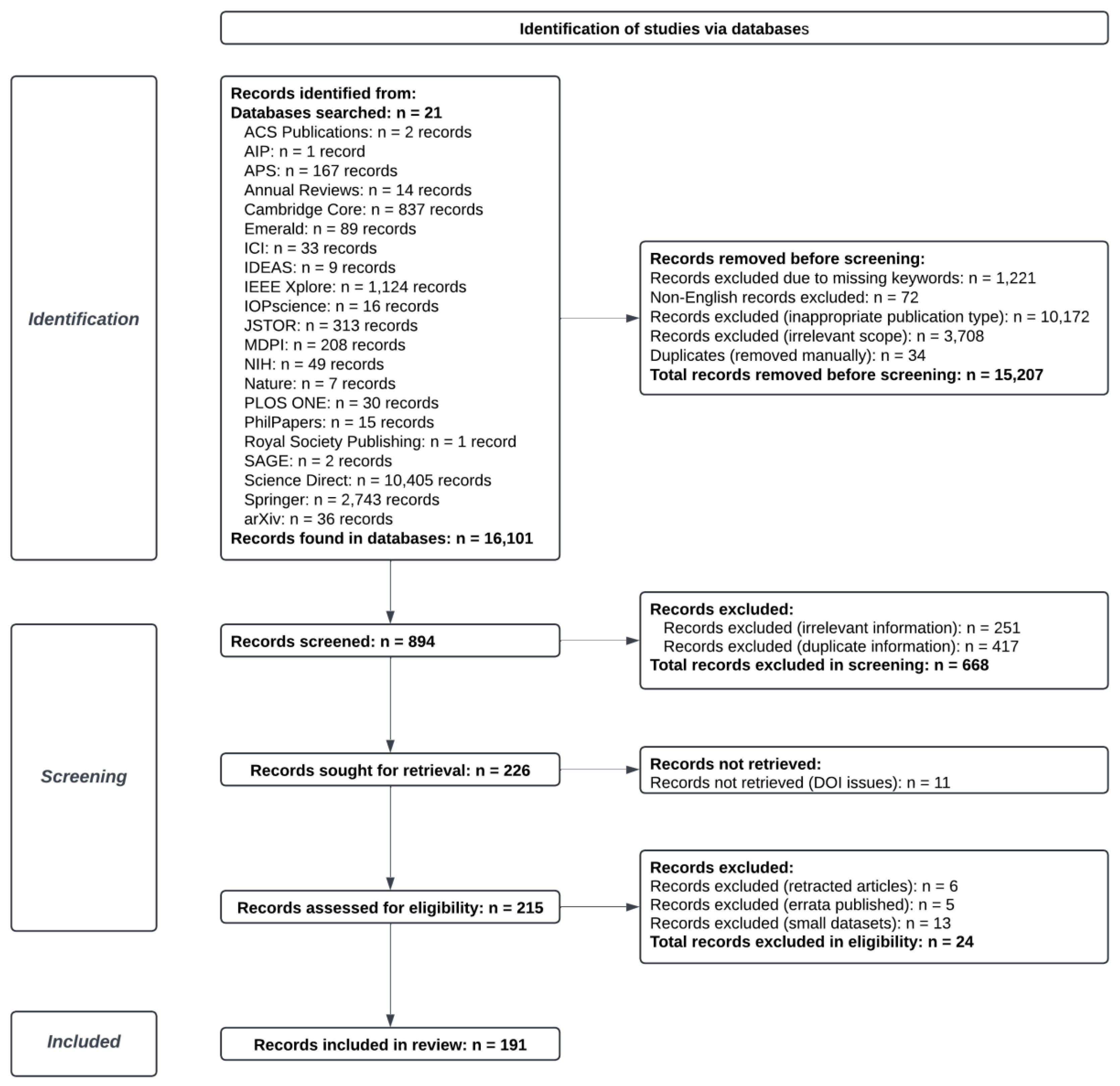
This systematic literature review introduces managerial infophysics, a novel framework and metaparadigm that integrates Business Process Management (BPM) principles with entropy-based metrics to address organizational uncertainty and enhance decision-making in complex environments. Employing the PRISMA methodology, the review spans research from 2018 to 2024, drawing on a comprehensive search across 21 databases, each selected for its focus on peer-reviewed content in BPM, econophysics, and informatics. The identification stage yielded 16,101 records, which were rigorously evaluated to ensure the inclusion of the most current and valid research on these topics. This review highlights the potential for entropy-based metrics to quantify process variability, offering a dynamic alternative to traditional KPIs. Through an interdisciplinary synthesis, managerial infophysics is proposed as a metaparadigm, presenting a unified approach to managing complexity and uncertainty within structured organizational processes. Findings suggest that entropy-enhanced BPM frameworks not only improve operational predictability and resource allocation but also extend BPM's applicability to sectors with high variability, such as healthcare and finance. Despite challenges in aligning BPM’s efficiency orientation with entropy’s probabilistic insights, the curated evidence supports this interdisciplinary framework's role in fostering organizational resilience and adaptability. This review establishes managerial infophysics as a promising conceptual model, inviting further empirical validation for broader application.

Keywords: 
;  ;  ;  ;  ;  ;  ;  

1. Introduction

BPM frameworks play an essential role in optimizing organizational workflows, reducing inefficiencies, and managing process complexity in modern business environments [1,2,3,4,5,6,7,8,9,10,11,12,13,14,15]. As organizations face rising complexity and unpredictability, the integration of concepts from information theory, specifically entropy, has garnered attention for its potential to quantify uncertainty and improve decision-making across various fields, including finance, social sciences, and, more recently, managerial science [9,16,17,18,19,20,21,22,23,24,25,26,27,28,29,30,31,32,33]. This paper proposes a novel framework and metaparadigm, termed managerial infophysics, that combines BPM principles with information entropy to provide a more comprehensive approach for managing uncertainty.
Developing a framework for assessing new modeling methods could bridge academia and industry by focusing on real-world relevance, comprehensive documentation, and collaborative research, ultimately enhancing BPM’s practical applicability [1,4,6,10,11,34,35]. Research into entropy-based metrics promises a shift from traditional KPIs, enabling optimized resource allocation and more manageable, predictable models tailored to specific sectors [3,6,16,29,36,37,38]. However, BPM research currently lacks a systematic framework that incorporates these principles to address inherent process variability [3,6,11,32,33,36,39,40]. The systematic literature review conducted here identifies this research gap, emphasizing the potential benefits of combining BPM’s structured approach with entropy’s focus on complexity and unpredictability, thus providing a solid foundation for managerial infophysics.
In academic discourse, entropy has demonstrated its utility across various fields, from quantifying market dynamics in finance to managing resource allocation in healthcare [9,21,26,40,41,42]. Its interdisciplinary applications show how entropy, particularly Shannon entropy, can measure complexity, assess uncertainty, and optimize processes by reducing variability in different contexts [9,17,20,21,26,29,36,43]. The use of entropy in BPM could offer similar benefits, allowing managers to identify inefficiencies and streamline operations. The versatility of entropy across fields reinforces its applicability in BPM, where variability often leads to inefficiencies that disrupt process flows and impact organizational outcomes [4,9,17,20,26,29,36,43,44].
However, integrating BPM and information entropy is not without challenges. Divergent focuses, BPM on operational efficiency and entropy on managing unpredictability, pose questions regarding their compatibility [2,3,6,9,17,26,29,43,45]. Moreover, applying theoretical entropy models in real-world business scenarios requires empirical validation to ensure that the framework effectively enhances decision-making without adding undue complexity [3,9,11,17,20,26,29,45,46]. Despite these challenges, interdisciplinary studies underscore the potential for entropy-based models to provide robust, actionable insights for business process optimization. For instance, studies in econophysics demonstrate how entropy-based methods enhance resource allocation, support strategic planning, and foster adaptability, qualities that could significantly benefit BPM frameworks [9,16,20,23,29,36,44,47,48,49,50].
The main aim of this paper is to develop and validate the managerial infophysics framework through a systematic literature review, employing the PRISMA framework [51] for a thorough analysis. This systematic review explores the integration of BPM, econophysics, and information theory, establishing a foundation for a unified framework. By synthesizing research from 2018 to 2024, it highlights how entropy-based metrics can enhance BPM models, helping decision-makers manage process uncertainty more effectively. The anticipated findings suggest that combining BPM's systematic methodologies with entropy's probabilistic approaches could lead to a more resilient, adaptable framework for process management [3,6,9,32,33,44,49].
The hypothesis posits that the integration of BPM principles with information entropy leads to the formation of a cohesive managerial framework which will enhance managerial decision-making by balancing process efficiency with informational complexity. The PRISMA-based literature review is expected to reveal instances where entropy-based metrics have successfully managed complexity in other fields, reinforcing the viability of this interdisciplinary approach for BPM. If supported, this hypothesis would substantiate managerial infophysics as a unified approach to organizational management, emphasizing adaptability and optimization in fluctuating environments. As such, an appropriate, qualitative lemma will be presented in the Discussion section, encapsulating the anticipated finding of the literature review serving as the core substantiation of the proposed hypothesis. The purpose of this systematic review is to synthesize the inductive reasoning drawn from the literature, indicating that the integration of BPM and information entropy is not only theoretically sound but also practically observable within the reviewed studies.
For falsifiability, the hypothesis would be rejected if theoretical models and empirical studies fail to demonstrate a conceptual overlap between BPM and entropy principles, or if entropy-based metrics do not show measurable improvements in BPM outcomes. Conversely, validation would occur if case studies indicated that organizations applying entropy-based BPM experience enhanced efficiency and adaptability, reflecting the framework's practical benefits. Evidence of interdisciplinary adoption would further support its applicability across different organizational settings, underscoring the framework’s broad potential.
In conclusion, the introduction of information entropy into BPM represents a promising avenue for advancing organizational management, enhancing decision-making, and optimizing resource allocation. The managerial infophysics framework leverages entropy to quantify uncertainty and drive process efficiency, potentially setting a new standard for process management in complex, adaptive environments.

2. Materials and Methods

2.1. Research Design and PRISMA Framework

Systematic reviews are necessary in the synthesis of current knowledge, the prioritization of future research, the identification of primary research issues, and the evaluation of theories [52]. To render a systematic review beneficial to a wide range of users, authors should provide a comprehensive, detailed, and clear description of its objectives, methodologies, and findings. Researchers have the capacity to achieve this with the support of reporting guidelines [53].
The PRISMA statement establishes a structural framework for the aforementioned type of reporting guidelines; its principal objective is to enhance the standards for reporting systematic reviews [51]. The recent iteration of the statement has been extensively referenced in interdisciplinary literature; it has been cited in more than sixty thousand papers and has received recognition from two hundred journals and review organizations [51]. Based on observational research, the utilization of the statement results in improved reporting [54]. Since the previous iteration, systematic review practices have changed considerably. The statement’s evolution was made possible and necessary by certain technological advancements. For instance, deep machine learning and natural language processing rendered it less difficult to identify and evaluate research systematically [55]. Certain approaches have been devised [56] to facilitate the synthesis and presentation of findings in situations where conducting a meta-analysis is problematic [57]. In addition, the understanding of bias sources has improved systematic review assessment methodologies [58]. Recent modifications in review systems have changed the emphasis from high quality evidence to reliable evidence [59].
The statement’s latest version is termed PRISMA 20201. The primary emphasis of PRISMA 2020 is on conducting systematic reviews of health practices. However, other fields may also utilize and benefit from its checklist. The most recent version of the statement is encompassing of meta-analyses and other synthesis methodologies, irrespective of the subject of study. This methodology can be utilized in mixed-methods reviews, although the presentation and analysis of qualitative data may need to adhere to supplementary criteria [51]. It is noteworthy to mention, however, that the statement is not necessary to serve as a guide for conducting systematic reviews, when such a task can be accomplished with the assistance of extensive, peer reviewed resources [61]. Figure 1 represents the general schematic of the PRISMA flow diagram which has been used as the basic literary tool for conducting this review.
Even though its fundamental structure should remain unchanged, it can be altered in accordance with the pertinent details of the research at hand. However, the authors mention the following considerations:
  • If possible, the number of records found in each database or registration searched should be reported rather than the total;
  • The number of excluded records (either manually or automatically) should be indicated.
This systematic review follows the PRISMA framework to ensure a transparent and replicable review process. The study, conducted from 2018 to 2024, involved three research cycles, each focusing on distinct, overarching thematic units:
  • BPM: Focusing on optimization through modeling, quality standards, and data-driven decision-making;
  • Econophysics and Financial Networks: Integrating complex systems theory and machine learning within economic and ethical contexts;
  • Thermodynamics, Entropy, and Information Theory: Their applications in industrial settings, complex systems, and interdisciplinary scientific advancements.
Each research cycle was designed to assess whether a convergence of ideas could be identified across the literature, spanning multiple disciplines. To ensure thorough coverage of relevant literature, this review employed primary queries and sub-queries, with the primary queries targeting broad research themes and sub-queries allowing for a deeper investigation within those themes.

2.2. Database Selection and Search Strategy

A total of 21 databases were selected, each specializing in peer-reviewed content relevant to the thematic areas under investigation. The following key databases were utilized: ACS Publications: 2 times, AIP: 1 time, APS: 2 times, Annual Reviews: 1 time, Cambridge Core: 1 time, Emerald: 8 times, ICI: 1 time, IDEAS: 2 times, IEEE Xplore: 10 times, IOPscience: 2 times, JSTOR: 1 time, MDPI: 47 times, NIH: 9 times, Nature: 1 time, PLOS ONE: 1 time, PhilPapers: 1 time, Royal Society Publishing: 1 time, SAGE: 1 time, Science Direct: 47 times, Springer: 26 times, arXiv: 14 times.
The identification process began with the formulation of 179 primary queries and 62 sub-queries, resulting in 241 total queries across the three research cycles. These queries targeted a wide range of identification terms, 435 in total, which can be further categorized in the following segments. For a detailed thematic categorization of the identification terms used in this study, please refer to Table A1 in Appendix A.

2.3. Inclusion and Exclusion Criteria

At the identification stage, a total of 16,101 records were retrieved from the selected databases. These records were filtered based on specific criteria:
  • Inclusion Criteria: Records were considered if they were peer-reviewed articles, review papers, or studies that directly addressed the research themes, such as BPM optimization, entropy in complex systems, or econophysics;
  • Exclusion Criteria: Records were excluded if they did not contain relevant keywords, were non-English, were not suitable peer-reviewed types (e.g., conference abstracts or non-academic publications), were irrelevant to the core themes of the study, or were duplicates. Specifically, 1,221 records were excluded for missing relevant keywords when a narrowing down of the scope was necessary, 72 non-English records were removed to focus on English-language publications, 10,172 records were excluded for being inappropriate peer-reviewed types, and 3,708 records were excluded for irrelevance to the study’s main themes. Additionally, 34 duplicate records were removed manually.
In total, 15,207 records were excluded before the screening stage, substantially reducing the initial pool of potential sources. Details on the exclusion and inclusion criteria can be found in Table A2 in Appendix A.

2.4. Screening Stage

During the screening phase, 894 records were examined based on their relevance to the thematic units and their contribution to the research objectives. Two sets of exclusion criteria were applied: 251 records were excluded for containing irrelevant information, and 417 records were excluded for containing redundant information already found in other sources. Thus, a total of 668 records were excluded during this phase, narrowing the literature to studies that met the thematic and methodological criteria.
During this stage, it was essential to delineate a clear division of citations, with twelve citations, specifically [32,33,40,62,63,64,65,66,67,68,69,70] excluded from the PRISMA framework because they did not meet the imposed research criteria. However, these citations were deemed valuable by the authors for providing foundational context and additional insights that supported the thematic units being studied. Furthermore, one cross-reference is used to highlight some key findings to ensure transparency in tracking the development of thematic concepts, namely, the concept explored in reference [71] which was cross-referenced through a newer paper (reference [71] on page thirteen of [72]), allowing readers to trace the development of this idea from its origins. This thorough process helped streamline the review and maintain focus on the most unique and relevant information for further assessment.

2.5. Eligibility Stage

During the eligibility phase, a closer examination was conducted on 226 records that had passed the initial screening. However, 11 records could not be retrieved due to issues with their Digital Object Identifiers (DOIs). Further exclusions were made based on specific criteria: 6 records were excluded due to retractions, 5 were excluded because of errata published after their initial release, and 13 were excluded for relying on small datasets that limited the generalizability of their conclusions. In total, 24 records were excluded, leaving 191 records eligible for the systematic review.

2.6. Data Extraction and Synthesis

Following the eligibility stage, data extraction was conducted on the remaining 191 records. Key information, including the relevant database, query and sub-query numbers, identification terms, total records found, database hits that aligned with the inclusion criteria or lacked exclusion criteria, and the number of records selected for screening, was extracted, and categorized according to the three primary thematic units mentioned in 2.1. Research Design and PRISMA Framework on the data extraction and synthesis process are provided in Table A3 in Appendix A.
These records were deemed to be the most relevant and reliable, meeting all eligibility criteria established in the earlier stages. The PRISMA process ensured that the systematic review was grounded in a robust methodological approach, meticulously filtering records through various layers of scrutiny to achieve the highest standards of research quality.

2.7. Query Formulation

The search strategy used can be described as a segmentation strategy. The emphasis was on the use of well-defined identification terms and exclusion criteria to narrow down the search results, ensuring only relevant records are selected for further screening. This approach focuses on refining the search in two stages:
  • Pre-Screening: Removing records not meeting all of the inclusion criteria;
  • Detailed Screening: Removing records fοr meeting all the exclusion criteria for in-depth review.
Structured Boolean operators (AND, OR) were used in stages 1 and 2 for each query to ensure a thorough retrieval of relevant studies, as shown in Table A3. For instance, query 2 was conducted on Science Direct to explore use cases and process management in technology-assisted applications. The search string included the terms: industrial internet of things, IoT, integrating process management, system, architecture, event processing, use cases, integration, application scenarios, and BPM, yielding 20 records. By filtering for research papers, 4 were excluded, leaving 16. Since research papers were needed for their in-depth, peer-reviewed analyses, theoretical frameworks, and case studies—critical for understanding complex technical fields—the initial 16 publications were skimmed on a surface level. However, to focus more precisely on use cases and process management, a sub-query (2b) was performed, filtering for the term "use cases," which reduced the results to 12. This remaining result passed the PRISMA process and was eventually included in the systematic review as the relevant citation [15].
The process starts with defining relevant the relevant identification terms (ID Terms) and running the query in a database. Even though the queries presented in Table A3 are in chronological order, searches on other databases for the same ID Terms which did not yield any useful results were not included in this table to avoid extensive tables which would confuse the reader. This process, overall, ensured that only highly relevant information would be presented in this review. Essentially, this review’s segmentation strategy involves breaking down search results by specific publication inclusion criteria such as filtering for relevance to certain academic disciplines (e.g., business, management, and accounting). This approach allowed for both extremely broad searches and specific, nuanced searches that captured detailed aspects of each theme. Furthermore, synonyms and variants were included throughout this process to ensure completeness (e.g., Artificial Intelligence vs. Machine Intelligence, AI).

2.8. Data Summary and PRISMA Flowchart Construction

To construct the PRISMA flowchart, it was essential to summarize the data in a clear and concise manner, as presented in Table 1. For clarity, the "records found in databases" refers to the total number of records retrieved after applying the exclusion criteria, encompassing all records that were not excluded as well as those that met the inclusion criteria.
Additionally, the categorization of records by database is detailed in Figure 2, which depicts the PRISMA flowchart used in this systematic review.
Detailed information on the frequency of each database's usage and the number of records retrieved for publications included in the review is provided in Table A4.

2.9. Data Availability and Ethical Considerations

All data associated with this systematic review, including the raw search queries, and data extraction forms have been deposited in a publicly available repository [https://www.dropbox.com/scl/fi/66entykq9s1oas6ypsbmb/Prisma-Query-Tables.xlsx?rlkey=3n8e2md3xzf1euf5i3t38esb0&st=d7jbzh1t&dl=0]. The accession numbers for the data will be available upon request to ensure full transparency and reproducibility of the review’s findings. It should be noted that up until the publication of this review certain query results in the databases will yield more results since new papers are published daily. Lastly, this review did not involve any interventionary studies involving humans or animals; thus, ethical approval was not required.

2.10. Data Synthesis and Analysis

Given the nature of this systematic literature review, the analysis primarily focused on qualitative synthesis. Studies were grouped based on thematic units, including BPM, Econophysics, Theory of Complex Systems and Entropy and Information Theory. The goal was to identify recurring patterns, themes, gaps in the literature, and a potential convergence of diverse scientific fields pertinent to the scope of this review.
A meta-analysis was not conducted due to the diverse methodologies and outcomes across the selected studies. However, a structured narrative synthesis was used to summarize the key findings. No formal bibliometric or citation analysis was performed, as the scope of this review was to assess the content and findings of the included studies rather than their citation impact or publication trends.
By using a structured approach, the PRISMA framework enabled the systematic review to narrow down a vast amount of literature from various databases, arriving at a final body of research that was both comprehensive and relevant to the subject areas under investigation. The process, from identification through inclusion, ensured that the data supporting this review was carefully curated and highly reliable, contributing to a well-founded analysis of the selected topics.

3. Results

3.1. BPM Overview: Concepts and Evolution

3.1.1. BPM Ontology

BPM is a collection of activities taken by an organization to define, plan, implement, document, measure, monitor, control, and enhance its processes to achieve its goals [1]. It is essentially a series of actions that are coordinated to produce a desired outcome. BPM offers a framework for managing and transforming organizational processes [73]. According to the Supplier, Input, Process, Output, Customer (SIPOC) methodology, a process may be understood as a set of procedures that utilize inputs (resources) to create outputs (deliverables) [2].
Standardized process management frameworks provide consistency which is especially important in organizations that need strict adherence to standards like EFQM3 or ISO Standards4 [74]. A comprehensive BPM system is particularly significant for enterprises as it allows for clear and distinct processes, which promote uniformity and long-term customer loyalty [75].

3.1.2. BPM Life Cycle

A standard BPM life cycle consists primarily of the following stages: (re)design, implementation/configuration, operation, and control [3]. During the (re)design stage, a process model is developed, followed by the stage of implementation/configuration, where the model is integrated into a functional system. During the second stage, non-recurring performance issues may arise, which are often caused by design flaws, whereas recurring issues are frequently caused by execution errors. Addressing design flaws often requires thorough process reconstruction [4]. On the other hand, execution errors may contribute to extreme variations in specific operations due to a lack of end-to-end processes, especially in areas like product development and customer engagement [34]. Following appropriate BPM system interventions, results are analyzed, and the cycle iterates in accordance with the Plan, Do, Check, Act (PDCA) model. Well-designed business processes, ensuring interdependent procedures work seamlessly to achieve goals, are crucial for customer satisfaction, and operational efficiency [5], which are key factors for organizational sustainability.

3.1.3. Process Classifications

Given the current integration of business processes and information [6], two scopes seem to be more suitable for the purposes of this review. It is important to note, however, that given the abundance of relevant literature on the topic, a different focus will result in a different set of taxa.
The first classification system originates from a classical BPM perspective. It considers the presence or absence of information regarding the execution or execution method prior to the operation [76]. This results in a classification of static, structured with ad hoc exceptions, unstructured with pre-defined fragments, semi-structured and unstructured processes. Static processes optimize their route before execution, while structured processes allow for ad hoc exceptions and accommodate one-time tasks. Semi-structured processes include structured processes with exceptions and unstructured processes with specific components. Unstructured processes can establish objectives, performance metrics, and execution constraints, but only provide comprehensive flow descriptions for specific segments and not an explicit articulation of a sequence of actions.
The second classification system concern Process Aware Information Systems (PAIS). In PAIS, business processes can be broadly categorized into three types: peer to peer, person to application, and application to application [71,72]. Peer-to-peer processes involve extensive human interaction, with modern examples like Meta and X, necessitating BPM systems capable of integrating computer-mediated human interactions. Person to application processes combine human operations with autonomous applications, aiming for seamless user-application integration in information systems. Application to application processes involve actions performed by automated software systems. Strict boundaries between these classifications are unclear, with a spectrum of procedures, and methodologies spanning from peer-to-peer manual intervention to application-to-application automated operations.

3.1.4. BPM Principles

Multiple decisions in managing complicated processes can influence the evolution and outcome of its component procedures [77]. Even though an influential and empirically driven set of ten principles for a good BPM system exists [7], to perform an effective review that includes a wide variety of overarching topics, BPM's principles will be condensed into more precise and interrelated concepts, categorized as:
  • Value Creation: Organizations deploy various processes, from employee management to financial reporting, to create value for stakeholders [8]. Managing a collective of processes in a business setting should eventually promote the creation of value;
  • Process Optimization: Effective process design methodologies with integrated maturity assessment procedures are essential; leveraging new information technologies is advisable [78]. Without well-defined process designs, regardless of mode of representation, a system will experience a propensity towards destabilization, thus, hindering overall performance [9];
  • Process Standardization: Standardized processes enhance efficiency and consistency, yielding cost efficiency [74];
  • Effective Management: Having established a fundamental process conceptualization in [2], it may be deduced that managing processes is not feasible without managing procedures. BPM, encompassing processes such as risk management and strategic planning, is an essential component of governance, similar to Project Management [79]. For a BPM system to merely possess effective design or standards is not enough; thorough execution management is essential for achieving continuous improvement [80]. Overseeing each updated BPM cycle is crucial for maintaining performance as operational efficiency may decline over time due to changing conditions.

3.1.5. BPM Paradigms

By attempting to identify the most important BPM concepts, it is obvious that intensive BPM research has resulted in multiple methodologies, strategies, and approaches to facilitate the formulation, execution, supervision, and evaluation of business processes [81]. To precisely identify the most important milestones in the formation of BPM paradigms is challenging, if not arbitrary, due to the complexity, interconnectedness, and density of historical events, such as World War II. Nonetheless, literature formulates a basic outline based on distinct historical eras in which they took place.
First, F. W. Taylor developed the concept of scientific management, which was based on A. Smith's description of the benefits of breaking down work into tasks and emphasized efficiency and productivity [82].
Subsequently, W. A. Shewhart and W. E. Deming made significant contributions to statistical process control, emphasizing the importance of evaluating outcomes using statistical techniques to address performance issues [83].
Currently, contemporary BPM frameworks find common application within traditional information systems [6], indicating a maturation in BPM practices embraced by various professionals and scholars [84]. Integrating emerging technologies such as blockchain, artificial intelligence, and big data are anticipated to transform inter-organizational operations, but with hurdles and opportunities for integration and applicability outside the constraints of a given organization's process system [85,86,87]. These technologies are poised to transform transactional paradigms, prompting organizations to adapt their business processes accordingly.
Thus, by examining the evolution of BPM concepts in their historical context, this review identifies three main paradigms of BPM, fostered by tautologically equivalent intellectual streams: quality control, epistemic management, and information technology.

Quality Control

World War II acted as a catalyst for the quality control movement; following the war, the movement established the American Society for Quality (ASQ) to provide a platform for professionals and manufacturers to continue quality improvement methods developed during the war [10], with J. M. Juran becoming a leading figure [88]. Concurrently, Japanese organizations embraced the movement, influenced by Deming whose work inspired key figures such as S. Shingo and T. Ohno, the pioneers of lean philosophy and lean manufacturing [89]. Total Quality Management (TQM) dominated the seventies but gave way to Six Sigma (6σ) in the late eighties, popularized by Motorola [89]. ASQ established a 6σ system at the start of the twenty-first century, signaling a transition towards lean 6σ methodologies, epitomized nowadays by companies like Walmart, Amazon, and Costco [90]. Up until the nineties, the quality control movement continued to evolve by including specialized developments like the Capability Maturity Model (CMM), addressing software quality concerns [91].

Epistemic Management

As previously stated, epistemic management may be traced back to Taylor's conception of scientific management in the early twentieth century [82]. The sub-field of quality management may be traced to Juran who highlighted the stable post-World War II production capacity of the United States, attempted to track the main reasons for product inadequacies, and conceptualized the cost of quality [89].
In the eighties, M. Porter, a significant figure in management theory influencing and influenced by Japanese enterprises, characterized a corporation's strategic orientation and internal operations as value chains, demonstrating a departure from conventional strategy theories [92]. Porter's analyses are still relevant today, as evidenced by contemporary research [93,94]. This highlights patterns and persistent themes, emphasizing the trend of emulating effective methods in the face of declining profit margins, the challenge of achieving long-term competitive advantage, and the importance of prioritizing a distinct strategic position over operational effectiveness.
A significant milestone in the early nineties was the paradigm shift towards adopting performance metrics that encompassed more than just financial information. This shift was embodied in the concept of the Balanced Scorecard (BSC), first introduced by D. Norton and R. Kaplan, which aligned operational metrics with organizational goals alongside financial performance [95]. BSC is still widely employed in management, with current literature indicating the interest on the subject increasing over the past ten years [95].

Information Technology

The third paradigm involves leveraging computerized systems to streamline operational processes, with the concept of Business Process Re-engineering (BPR), developed by M. Hammer and J. Champy, serving as the catalyst for integrating information technology applications extensively into BPM [11,96]. In recent decades, BPR has emerged as a crucial tool for improving business productivity and enhancing economic sectors, challenging TQM since the early nineties, despite its high failure rate [97]. Presently, business executives and ERP developers focus on implementing effective business strategies and methodologies, facilitated by BPM platforms that address complexity issues by transforming ERP systems into process-based structures [98].

3.1.6. Business Process Modeling (BPMo)

When discussing process models, it is important to distinguish between the frameworks used to contextualize process systems and the methodologies employed to depict them. In the context of frameworks, the term signifies the alignment of a BPM system with the quality criteria of institutions like EFQM [99]. As a depiction methodology, BPMo employs standardized notations, such as Business Process Model and Notation (BPMN), to visually represent business processes, providing a clearer and more efficient understanding of process inputs, procedures, and outputs compared to text-based descriptions [12].
A key feature of the BPMo approach is its capacity to assess process systems. This assessment may encompass a variety of dimensions, including, but not limited to the efficiency and efficacy of business ventures in practice and in academia [100], the analysis and verification of time limitations [101] and run time constrictions [102], and the ability to generate data for assessing the relationship between business process performance and financial performance, as demonstrated in contemporary empirical research [13].
In this review, models and modeling refer to methodologies for representing processes. Their ability to structure process systems is crucial for the amalgamation discussed later.

3.1.7. Business Process Modeling Languages (BPMLs)

BPM systems have benefited from various process modeling methodologies since the advent of information systems. The first formal attempts at modeling using a generic notation system are attributed to A. Turing in 1949 [14].
By examining practical business use cases, BPM can evaluate and optimize processes with the assistance of modeling and analysis tools. Use cases demonstrate how process modeling integrates with event processing by outlining how to combine multiple scenarios into composite events that approximate actual BPMo applications, such as event data diagnostics and process execution assessments [15].
The contemporary BPM landscape features a diverse array of models that vary in complexity and understandability. Two of the most influential BPMLs, which can be easily integrated with Petri nets, Enterprise Resource Planning (ERP) applications, and other BPMLs, are the Event-driven Process Chains (EPC) [103] and, more notably, BPMN, as observed in [1,3,12,101].
EPC is a classic BPML, well-known for its ability to integrate with the ARIS5 platform and the SAP6 reference model, making it widely used in practice. The ARIS platform and SAP process library include approximately six hundred EPC-based process models, emphasizing three key aspects: data, function, and organization [103].
BPMN is an effective visual tool for representing complex business processes. While the primary objective of BPMN is to facilitate business process modeling, the framework does include an extension mechanism that enables its application for other purposes as well [104].
The Object Management Group7 has established the latest iteration of BPMN, namely, the BPMN 2.0 standard. Concurrent research [105] on automating the BPMN 2.0 guidelines verification process resulted in a comprehensive list of fifty guidelines based on relevant literature assessment and synthesis for specific modeling objectives such as process learning or information system development. In the same research paper, the authors developed an open-source tool called BEBoP (understandaBility vErifier for Business Process models) which is able to automatically verify thirty-four of the fifty guidelines, making it the first open-source tool to check a substantial set of modeling guidelines [105].
Contemporary evidence [106] highlights BPMN 2.0 as a leading BPML, favored for its extensive features essential for both practitioners and academics. It currently supports more than eighty percent of BPM features deemed important in the decision-making process for selecting an appropriate modeling language [106].
BPMo can often be challenging considering the growing number of BPMLs; the selection of the most appropriate language for a task can result in issues such as increased complexity and decreased understandability. This results in decision makers depending on familiarity rather than pertinent quality attributes [106].
Overall, the fundamental factor influencing the success of a BPM initiative is the underlying rationale for its implementation [107]. Establishing clear targets when modeling processes is essential, particularly in the context of identifying BPM life cycles via the contextualization of acknowledged BPM principles [7]. Nevertheless, many organizations fail to articulate distinct objectives. Defined goals enable organizations to evaluate process performance post-(re) design effectively [3]. Continuous process improvement is an ongoing endeavor, making performance measurement vital for sustainable enhancement. Although the concept of continuous improvement is familiar to most organizations, several challenges arise concerning continuous measurement. From a strategic perspective, one significant issue with BPM is the use of diverse tools by the BPM team to model processes for varying purposes [107].

3.1.8. Process Metrics

Various parameters, such as time, cost, and quality, are used to assess process or organizational effectiveness, each with distinct KPIs [16]. Time-related metrics include lead time, service time, waiting period, and synchronization time, which collectively offer insights into process efficiency. Costing frameworks like Activity-Based Costing (ABC) and Resource Consumption Accounting (RCA) help gauge expenses, considering resource allocation and task completion duration with feasible integration into BPMN 2.0 process systems [39]. Quality metrics focus on product delivery and require tailored evaluation criteria for knowledge-based procedures [108]. Although several businesses have quantitative criteria, KPIs may vary by industry, process, and occupation, highlighting the need for specific evaluation methods. Existing research [109] indicates that determining suitable KPIs is more intricate than simply selecting them. Once KPIs are defined, the next phase involves identifying strategies to enhance their effectiveness or making necessary adjustments to achieve established objectives. The optimal approach to organizational restructuring in a given setting may remain ambiguous. Therefore, future research should focus on improving the understanding of (re)design and implementation methodologies. For example, by leveraging novel AI tools alongside traditional BPMo and BPMLs, emphasis could be placed on process-oriented approaches, where business processes are examined via the scope of information exchange and, ideally, enhanced in real-time.
With advancements in computational resources, it is possible to determine the level of uncertainty pertaining to the completion of procedural tasks in a given process. Uncertainty can be quantified as a probability distribution [17]. Furthermore, according to [110], the level of uncertainty increases in direct proportion to how evenly execution scenarios are distributed, while complexity is generally associated with the logical gateway elements present in a BPMo. Uncertainty may be deemed as one of the core characteristics of business processes – a part of their foundational nature [76]. Hence, the occurrence of process uncertainty may be embodied by the concept of entropy, and more specifically, by information entropy.
The amalgamation of BPM and information entropy begins with the foundational concept, which will be further explored through real-life applications in 3.4. Epistemological Frontiers of Information Entropy in BPM, covering both pre- and post-scope periods of this review. To facilitate a smoother transition between BPM and process entropy, it is essential to recognize how process KPIs—typically centered on time, cost, and quality—can be complemented by entropy-based metrics. Empirical evidence suggests that process entropy can gauge similar parameters by addressing variability and uncertainty in execution. For example, [32] links higher entropy in business process models with increased unpredictability in task execution and greater difficulty in scheduling and resource allocation, while lower entropy leads to more efficient planning and reduced delays. Similarly, [33] introduces an entropy-based measure to quantify uncertainty in process models, emphasizing that reducing entropy improves predictability, thus optimizing both cost and time. This complements traditional KPIs, which act as static snapshots of performance rather than dynamic indicators of process variability. Finally, [42] applies entropy in device performance management to enhance short- and long-term performance predictions, which could be extended to BPM for real-time monitoring and optimization. To fully grasp these discussions, a clearer understanding of entropy, particularly information entropy, is crucial.
Information entropy, also known as Shannon8 entropy, is an essential concept in information theory that measures the level of uncertainty or information contained within a given set of possible outcomes [18,111]. It is used to describe a discrete random variable that has a set of potential outcomes, each of which is associated with a probability. Shannon entropy is commonly depicted as:
H X = i = 1 n P x i u x i = K i = 1 n P x i log 2 P x i .
H X is the information entropy, where X is a discrete random variable with possible states x 1 , x 2 , , x n   with corresponding probabilities P x 1 , P x 2 , P x n , and i = 1 , , n is the index of the states. In this equation, entropy represents the expectation of the uncertainty u x i which is associated with each possible state x i ; uncertainty (or information) for each state is represented by u x i = log 2 P x i . Typically, K is set to 1 and can be thus omitted, and l o g 2 is used to calculate entropy in bits (as Shannon entropy is usually measured in bits when using base-2 logarithms). Information entropy is a fundamental, quantitative metric used to assess the level of uncertainty present within a given dataset. As the distribution of states becomes more uniform, there is a corresponding increase in entropy.

3.2. Physics and Information in Social Sciences

3.2.1. Interdisciplinary Synergies

To synthesize diverse epistemological and methodological frameworks into a cohesive theoretical model, it is essential to map out the intersections and complementarities among different theories. This process involves highlighting how insights from one discipline can fill gaps or offer new perspectives in another, ultimately creating a unified model that integrates these diverse insights [19].
Recent bibliometric research underscores how interdisciplinarity enhances innovation and problem-solving by integrating diverse perspectives and methodologies, specifically, the integration of physics with information or social sciences which leads to a more comprehensive understanding of complex phenomena [112]. This combination allows for the application of quantitative and analytical methods from physics to tackle intricate problems in social sciences, resulting in more effective and innovative solutions.
The potential for interdisciplinary approaches in managerial practices and physics, akin to those in financial economics and social sciences, can be realized by examining four key factors: big data statistics, challenging established norms, academic momentum, and epistemological convergences.

Big Data Statistics

B. B. Mandelbrot’s work influenced financial economists like E. F. Fama, who applied contemporary probability theory, specifically the martingale model, to develop the notion of efficient markets [113].
Financial data closely resemble exponential functions and are distinguishable only through extensive empirical evidence, necessitating the use of statistical distributions [114]. Observations akin to this led to the incorporation of contemporary probability theory for financial market assessment, which coincided with a significant breakthrough in the sixties: the creation of comprehensive databases. Advancements in information sciences, big data, and machine learning have enhanced databases, enabling extensive aggregation of historical stock market data. Financial economics now produces large amounts of scientific data, aligning with statistical physics norms, due to market computerization and automation. The availability of big and intraday data has introduced new trend detection techniques, revealing occurrences that were previously undetectable with monthly or daily data [115].

Challenging Norms

From a phenomenological standpoint, stylized facts, persistent macro-regularities unexplained by microeconomic theory, can be understood through the multiple realizability argument, which suggests too many microscopic configurations exist to define individuals precisely [116]. Similar to how different levels of nature can be examined at varying resolutions [117], complex systems can be understood through different scales or layers, each offering unique insights. This multi-scale approach acknowledges that diverse processes and interactions are significant at various levels, enhancing our understanding of natural phenomena. Adaptive decision-making simulations are used to study these stylized facts, providing the micro-foundations of macro-level statistical regularities in economic systems [118]. Based on this observation, it is logical to assume that deep learning algorithms may redefine agent behavior models by refining the characterization of component heterogeneity, improving the accuracy of macro-patterns in statistical models.

Academic Momentum

Econophysics has become a widely researched subject, endorsed by respected academic institutions and physics journals. First used in financial markets and macroeconomics, it now also addresses energy and environmental economics, showing its increasing importance in solving economic problems [47]. The integration of econophysics into curriculums, papers in peer reviewed journals, and academic programs, provided new access points to the field which led to development of further interest in the concept of scientific interdisciplinarity [119].
A recent bibliometric study [48] identified publication patterns in econophysics by examining collaboration networks from 2000 to 2019. Key works include empirical characterization of financial time series, market crash predictions, and network analysis of money markets, world trade, and equities. The study found that self-citations significantly influence overall citations, peaking early and decreasing over time with physics contributing most to the field, followed by economics.
A more recent review has examined how sociophysics and network science might be integrated into academic programs [120]. This study demonstrates how sociophysics is widely acknowledged in academic research and education due to its interdisciplinary approach, which draws on physics, mathematics, economics, and social sciences. However, further advances are required to represent social reality more accurately by linking theoretical models to real-world social complexities.

Epistemological Convergences

Contemporary research showcases this diverse amalgamation of finance and economic systems with statistical physics [121], diverse aspects of social sciences like sociophysics [122] and socioeconomics [123], and network science [124]. Statistical physics' theoretical ability to explain continuous phase transition dynamics and apply renormalization group techniques to stock market scaling was a major milestone in the field's history [125]. Moreover, statistical mechanics effectively explains phenomena where the interaction between microscopic properties and macroscopic behavior is significant [20].
Since the beginning of the twenty-first century, physicists have seen the application of statistical mechanics to the study of social phenomena, including economic systems, as both promising and precarious [126,127]. Numerous economists have employed statistical mechanics to address various economic challenges. For example, the influence of thermodynamics in shaping neoclassical economics is evident for approximately one hundred fifty years [20]. Specific aspects of social sciences, which have traditionally generated a moderate volume of data, are currently witnessing a significant surge in data [128].

3.2.2. Econophysics

R. N. Mantegna and H. E. Stanley define econophysics as the practice of physicists applying innovative methods from the physical sciences to economic problems to test and analyze them [47].
Econophysics as a science can be traced back to the work of Mandelbrot [49], who combined mathematics and topography to create the field of fractal geometry. His work demonstrated that seemingly irregular and complex forms can exhibit mathematical regularity and self-similarity. Fractals have applications in physics, biology, and finance, dramatically influencing the body of knowledge of natural occurrences and complicated systems [129]. The emergence of econophysics occurred through a cognitive process of analogical reasoning, establishing correlations with widely recognized academic fields.
Essentially, econophysics is a field that investigates economics and finance by employing the principles of statistical and theoretical physics. This cross-disciplinary approach enables the transfer of concepts to produce refined insights across varied fields of study [130]. Over the past twenty years, as scientific collaborations have significantly increased and may be considered essential for high-quality research, econophysics has made substantial advancements, offering new perspectives on financial markets and their dynamics [48].
In this context, it may be inferred that econophysical collaborations imply a tendency among practitioners from diverse fields to seek prospects in financial markets and vice versa. Indeed, such a trend is observable in the employment of physicists in trading or consultancy roles, where they apply their expertise to analyze complex financial systems. [131,132].
Given the intricate nature of financial markets, it is essential to acknowledge that physics provides a more straightforward approach to navigating these complex systems. Consequently, it is crucial to emphasize the importance and application of econophysics principles and methodologies in complex exchanges. As demonstrated, economists and physicists are increasingly recognizing the effectiveness of econophysics in addressing various economic phenomena. This recognition is driving a natural evolution within the scientific community, namely, incorporating econophysics into diverse and seemingly unrelated fields.

3.2.3. Sociophysics

Mantegna published one of the first econophysics papers, demonstrating the breakdown of the central limit theorem in the stock market [133]. Sociophysics may be viewed as a different manifestation of econophysics and can be understood as the study and prediction of social and behavioral events using mathematical and physical models [120]. It uses statistical physics concepts like phase transitions to examine social systems, focusing on principles such as opinion dynamics, knowledge diffusion, and group decision-making. The field examines social interactions, crowd behavior, and the dissemination of information using empirical data and complex network models [134].
Sociophysics and econophysics differ in that only a holistic approach to economic phenomena, integrating psychology, social psychology, and sociology, can properly describe and understand socio-economic life, including financial markets. Econophysics uses quantitative data to study economic activity, while sociophysics explores a wider array of social phenomena. Despite their distinct boundaries, these fields may support each other. For example, the interaction between econophysics, sociophysics, and the application of leadership could be considered for a more comprehensive analysis in each of these domains as explained in [125].

3.2.4. Network Science

A rather challenging concept in science today is complexity, whether examined from a philosophical, computational, or mathematical perspective [135]. Over the past fifteen years, statistical physics, with robust methodologies for analyzing complexity, has undoubtedly played a vital role in fostering innovations in network research, as is the case, for example, with geometric deep learning and the development of potential applications to quantum networks for communications [136].
Network science has significantly impacted econophysics, leading to novel tools for analyzing complex financial and economic systems. For example, the proximity-based network concept in econophysics studies direct interactions like loans, similarities such as co-ownership, and higher-order relations involving multi-party contracts or multilayer connections [132].
The field now includes a broad range of research, with the study of intra-network interactions being highly significant. According to [137], networks represent both symmetric and asymmetrical links between discrete items in the real world. Common network analysis activities include node categorization, connection prediction, clustering, and visualization, however, as data science and network science advance, network data becomes richer and more diverse.
In quantized information analysis, evidence suggests that network information operators form a proper statistical ensemble, with their superposition creating a density matrix for complex dynamics research [138]. The authors demonstrated that the ensemble's von Neumann entropy can quantify the functional diversity of complex systems, defined by the functional differentiation of higher-order interactions among their components.
Another field of research involves investigating the statistical physics of bionetworks that aggregate or correlate, such as the synchronization of brain activity in socially interacting organisms. Research indicates that these networks demonstrate coalescence phenomena, where smaller units combine to form larger networks [139]. By applying the principle of maximum entropy, these processes can be represented as operations involving density matrices, allowing for the derivation of their entropy additivity and extensivity. This helps differentiate processes that reduce the functional variety of systems.
Association networks are derived by conducting statistical tests to evaluate the impact or interplay among each pair of nodes. They can be obtained through the application of statistical analyses on various combinations of economic actors, especially when regarded macro-economically, including but not limited to Granger causality tests [140].
Due to system interactions and the complexity associated with vast networks, the assessment of pair similarity or pair influence estimation necessitates the inclusion of a statistical examination. To obtain these statistical data, it is crucial to perform tests which encompass all conceivable combinations of nodes. This indicates that the management of multiple tests is required for every basic type of network described above. The inherent nature of complex systems necessitates that an adequate number of tests increases exponentially in direct proportion to the number of nodes [141], a phenomenon under study currently in the field of big data.
Contemporary literature offers valuable insights into the implementation of efficient information filtering strategies within networks, such as a widely utilized approach that involves the information filtration process based on the minimum spanning tree [142].
The examination of networks in economics has an extensive history, but only recently has the integration of network science techniques into economic and financial studies gained recognition as a fundamental research component [143]. Certainly, the early empirical investigations into financial systems in terms of networks were undertaken by econophysicists or by interdisciplinary collectives consisting of scholars, including physicists [36].
The interdisciplinarity and inclusion of network concepts and methodologies is indispensable in addressing systemic risk, as evidenced by current research conducted in various disciplines [144].

3.2.5. Infophysics

Informatics integrates information theory, systems engineering, and specialized knowledge applications in various sectors, such as healthcare. For example, [145] demonstrates how medical and biological informatics are significant domains advancing research, particularly as new technologies enhance existing tools and methodologies. A review of advancements in medical imaging informatics [146] focuses on data management and AI-based methods, such as three-dimensional reconstruction, to improve diagnosis, prognosis, and therapy planning. While these advancements have greatly aided in automating the detection of variance in medical practices, less attention has been paid to addressing the root causes of this variation [147].
Informatics has also become increasingly important in other scientific domains, such as bioinformatics, where vast amounts of data are generated through advanced technologies like high-throughput synthesis and sequencing [148]. For instance, bioinformatics research has identified subtle sequence variations in DNA/RNA that conventional methods could not detect, revealing novel relationships between sequences and greatly advancing the field [149].
Moreover, informatics has applications in the social sciences, as demonstrated by shifts in urban informatics [150], where smart urbanism and participatory city-making are driving new paradigms. This shift is motivated by the need for more participatory approaches in urban environments, moving beyond traditional human-computer interaction. Additionally, ethical considerations are paramount as new technologies and AI continue to evolve. There is a growing need for ethical principles and legal frameworks to ensure these innovations benefit society while addressing concerns over privacy, security, and job displacement [151].
In its managerial dimensions, informatics emphasizes continuum thinking to manage the complexity of information governance, especially in the context of big data. With data generation rapidly outpacing governance structures, harmonized governance across interconnected fields is necessary [152]. For example, [46] discusses the integration of ecological science, management, and information and communication technology to handle complex datasets. Similar to other disciplines, ecological data require structured, computer-based management to enhance integration, analysis, and dissemination.
The literature on informatics highlights the creation of widely accepted frameworks, the establishment of specialized platforms for interdisciplinary discourse, and the use of multidisciplinary techniques. This approach is essential for advancing research across diverse fields, combining experimental data with interdisciplinary information science [148]. The need for transdisciplinary and agile thinking is particularly crucial when navigating various levels of granularity, as seen in the application of statistical physics principles from micro to macro systems [150]. Despite technological advancements, challenges in managing information persist, necessitating innovative approaches for effective information management [152].
To fully leverage the potential synergy between BPM and information entropy and promote interdisciplinarity, a term like infophysics allows for a broader understanding and a unified reference point across fields. Considering this review, infophysics can be defined as an interdisciplinary field that merges information theory and physics to study complex systems. The field integrates concepts from information entropy and data compression [18,67,111] with principles from thermodynamics and statistical mechanics to explore the dynamics, efficiency, and effectiveness of information networks. Infophysics aims to leverage physical laws and mathematical models, where applicable, to understand the creation, processing, and dissemination of information across structured systems.
In the context of BPM and entropy, leveraging interdisciplinarity through umbrella terms like infophysics offers the opportunity to create a common framework. This framework, in turn, can serve as a bridge between disciplines, enabling the seamless integration of information theory, physics, and process management. The concept of infophysics, as proposed here, seeks to harness the principles of information entropy alongside those from thermodynamics and statistical mechanics to understand and optimize the dynamics, efficiency, and effectiveness of information-driven processes.
By establishing this conceptual umbrella, infophysics opens pathways for incorporating BPM into its framework. This paves the way for a new sub-field, which would focus on the application of entropy and physical principles to business processes. This sub-field would aim to improve process predictability, optimize resource allocation, and enhance system efficiency by viewing managerial processes through the lens of physical laws and mathematical models. Further discussion on this topic will be the focal point of the Discussion section.

3.2.6. Entropy Generalization

Use of the concept of equilibrium may be observed in diverse disciplines via the combination of mathematical formalism with the discipline’s pertinent principles as is evidenced, for example, in the development of the random walk theory [44].
To provide an explanatory framework for empirical results and confidence intervals, a complex open system, near or at equilibrium, should be modeled under specific assumptions; even organizational systems, such as an organization's accounting processes, can be understood thermodynamically as open systems, which may initially seem unconventional [9]. The accuracy of open system modeling is empirically dependent on the model and the assumptions about the stochastic processes defining the system's evolution [20]. Information entropy can be seen as a reliable and versatile approach that offers multifaceted methodological frameworks. For example, by using Kullback-Leibler entropy it is possible to enable signal detection and information filtering in multivariate systems, allowing the extraction of meaningful structures, such as the minimum spanning tree, from correlation matrices of financial asset returns [20].
As mentioned, the model's accuracy depends on assumptions about the stochastic processes characterizing the system's progress toward equilibrium [20]. Examining the statistical interpretation of Granger causality across various domains, such as physical interactions and information exchange [153] or even social systems [154], reveals that the information content of these stochastic processes can be effectively understood through this perspective. The development of nonlinear generalizations of Granger causality in physics, and its equivalence to transfer entropy for Gaussian variables [155], has highlighted the interdisciplinary nature of entropy, bridging physics, statistics, finance, and information theory.
[50] describes how N. Georgescu-Roegen proposed incorporating the concept of energy exchange and its inherent constraints, in accordance with the concept of entropy, to encompass a broader spectrum of resource inputs. This paved the way for the concept to be used in economics, arguing that economic processes are inherently entropic. Emphasis is placed on the idea that energy transformations within economic activities are irreversible, leading to the degradation of useful energy into less useful forms. This perspective highlights the finite nature of resources and the inevitable increase in disorder, challenging the sustainability of continuous economic growth.
Recent studies have shown an increasing use of entropy in the study of financial market dynamics. Examples of entropy applications in this field include analyzing the dynamics of cryptocurrencies [21], predicting stock market directions [22],[23], examining discrepancies in interlinked financial time series, especially during abnormal market events like the COVID-19 pandemic [156], and developing innovative applications within econophysics related to financial markets [24]. However, some restrictions also persist. For instance, power law distribution of stock market fluctuations extends beyond Lévy processes, showing persistent price variability correlations across time scales. Earlier explanations using stable and exponentially truncated Lévy processes do not fit the empirical evidence well [25]. Nonetheless, a more in-depth analysis would involve examining the phenomenon from a microscopic perspective in conjunction with the emergence of macroscopic properties.

3.3. The Involutional Nexus of Entropy

3.3.1. Entropy's Emergence

The concept of entropy emerged from the understanding of energy in thermodynamics. Initially, energy was introduced to measure interactions in matter and radiation, with its conservation remaining a fundamental law [157]. During the Industrial Revolution, engineers recognized that mechanical work could convert into thermal energy, challenging earlier caloric theories [157]. R. Clausius expanded on this, emphasizing the conversion of heat into work, which led to the formulation of entropy. This shift from caloric to kinetic theory paved the way for modern thermodynamics and statistical mechanics [158].
The drive for industrial efficiency during the First Industrial Revolution [159] spurred the careful study of engine performance, shaping the development of thermodynamics [160]. Engineers like J. Watt and S. Carnot emphasized precise measurement of heat and work, while figures like J. P. Joule and J. R. von Mayer contributed to energy understanding despite facing criticism [161]. This blend of technological advances and evolving philosophical views laid the foundation for modern thermodynamics [162].

3.3.2. Entropy Defined

Entropy is commonly defined as the measure of thermal energy in a system that cannot be effectively utilized, thus limiting process efficiency [26]. The term system pertains to the definition of a thermodynamic system as being classified into three main categories: isolated, closed, and open systems [163]. Defining entropy in nonequilibrium conditions poses challenges [164]. It quantifies uncertainty or disorder, representing possible molecular arrangements and energy distribution [165,166]. Clausius described entropy as measuring the portion of energy that cannot be converted into work, indicating energy degradation [167]. In chemical thermodynamics, it reflects the dispersion of energy among atoms and molecules during reactions [168]. Academic literature identifies at least three main ways to conceptualize entropy: as a thermodynamic property of physical systems, as a metric for quantifying information generation by ergodic sources, and as a method for statistical inference in multinomial distributions, based on nearly two decades of bibliometric analysis [169].
Clausius was essentially able to provide a comprehensive explanation of why thermal engines perform sub-optimally. He conceptualized entropy as a state function of a system, akin to energy articulating in a precise manner the first and second laws of thermodynamics on the last page of his publication [68] as “Die Energie der Welt ist constant” and “Die Entropie der Welt strebt einem Maximum zu”, which may be translated as “The energy of the world is constant” and “The entropy of the world tends towards a maximum”.

3.3.3. Interdisciplinary Entropy

Clausius recognized entropy as governing transformations [167] within Carnot’s reversible cycle, involving isothermal and adiabatic steps where heat and entropy changes occur [170]. Clausius revisited Carnot's work to understand irreversible processes, proposing heat transfer from high to low temperatures, which became the basis of his heat-work theory [37]. Entropy bridges macroscopic and microscopic phenomena, influencing systems in equilibrium or near-equilibrium [43]. Its application spans contemporary physics [171], statistical mechanics [27], cosmology [172], life sciences [173], geosciences [174], social sciences [41], linguistics, economics [20], chemistry [175] and information theory [26]. Especially with regards to information entropy, there is a plethora of interdisciplinary research studying the topic in chemistry [176], geostatistical models [38], finance [23], accounting business processes [9], machine learning [177] and, of course, organizational management [28,178,179]. However, its broad usage across these fields has led to differing interpretations and misunderstandings [26] requiring more rigorous analysis.

3.3.4. Foundations and Universality of Entropy

Clausius introduced entropy as a fundamental thermodynamic property indicating energy dissipation, while L. E. Boltzmann and J. W. Gibbs developed mathematical models, contributing key concepts like the Boltzmann constant and distribution [180].
Statistical mechanics problems focus on integrating molecular interactions to analyze overall system averages, like determining temperature from molecular motion in a specific area [181]. In the analysis of entropy, it is imperative to delineate precise variables. In this given context, entropy is denoted by the symbol S , the Boltzmann constant is represented by k B , and the statistical weight of the macroscopic state of the system is signified by W . These variables are connected via the famous equation:
S = k B l n W .
A key aspect of entropy is that it relies on a foundational set of principles that are universally applicable, independent of specific statistical frameworks or the existence of atoms and molecules. This universality is what allows the concept of entropy to be relevant across various scientific fields as exemplified in [167]. Consequently, any diverse approaches used to measure or compute entropy must yield consistent and epistemologically sound outcomes to maintain their scientific validity [182,183]. The concept of entropy is independent of any entropic formulation that incorporates probabilities of microstates. Instead, it embodies the inherent probabilistic phenomena observed and measured within the natural world. Entropy is a result of the accumulation of pairs of points in a sequence of events as in an operational process, with each pair preceding the next point in the progression of the unfolding process. The relationship between the process parameters should exhibit logical behavior when considering the configuration and magnitude of variables.

3.3.5. From Thermodynamics to Information

Boltzmann, expanding on J. C. Maxwell's work, contributed to statistical mechanics by modeling gas molecules as point masses, simplifying the study of molecular interactions. In the seminal 1872 publication [69], Boltzmann introduced kinetic gas theory, offering a statistical basis for the second law and showing how probability theory in statistical mechanics helps calculate macroscopic properties like temperature and pressure. Boltzmann's lifetime work has been instrumental in bridging classical and quantum physics, and in shaping key concepts like statistical entropy in thermodynamics [184,185], paving the way for understanding entropy not only in terms of thermodynamic heat engines but also within broader contexts.
The statistical weight of a macrostate quantifies the possible configurations of an ideal gas's molecules across its microstates [181]. Given N molecules, the total number of microstates can be expressed as [186]:
W = N ! / N i ! .
From (2) and (3), Boltzmann’s equation for entropy is derived as:
S = k B l n ( N ! / N i ! ) .
This principle extends to information theory, where entropy measures uncertainty in the distribution of states. The probability distribution H of states of informational uncertainty is given by Jane’s equation [187]:
H p 1 p n = k B Σ p i l n p i .
This alternative measure of entropy complements Boltzmann's work, highlighting the probabilistic nature of entropy in both physical and informational contexts. As the number of microstates increases, entropy increases, reflecting greater disorder and uncertainty. The probability of each microstate i is given by:
p i = e ε i / k B θ / j = 1 N e ε j / k B θ .
where p i is the probability of the microstate i , ε i is the energy of the microstate i , k B is Boltzmann’s constant, and θ represents the temperature.
At this point, it becomes clear how the Gibbs entropy equation enables the calculation of a system’s entropy through a probabilistic interpretation of Boltzmann’s entropy formula. According to the principle of equal a priori probabilities, every microstate of a given macrostate has an equal probability of occurrence because there are no factors or hidden variables that would assign different probabilities to specific microstates [184,188,189]. By denoting Ω as the total number of possible microstates, and since the probabilities of all microstates must sum to 1, the probability of each individual microstate i will be equal to 1 / Ω . Substituting this into (6), the Boltzmann equation is obtained:
S = k B i = 1 Ω p i l n p i = k B i = 1 Ω 1 Ω l n 1 Ω = k B Ω 1 Ω l n 1 Ω = k B l n Ω ,
which is widely recognized in the form of (2). The Gibbs entropy equation extends Boltzmann's approach by linking entropy to the probability distribution of microstates, showing that the total entropy depends on the number of possible configurations in a macrostate. Systems naturally favor states of maximum disorder due to the greater number of disordered microstates [190]. Boltzmann and Gibbs demonstrated that in statistical mechanics, macroscopic properties arise from the probabilistic behavior of individual particles, fundamentally connecting thermodynamic and information entropy.

3.3.6. Information and Entropy

Contemporary research highlights the fundamental role of information entropy in various physical, biological, and theoretical contexts. Literature weaves together the role of information entropy across domains, showing its centrality in understanding complex systems, communication, and thermodynamics. In colloidal dispersions, entropy drives the formation of ordered structures, even without direct energetic interactions [191]. Similarly, in biomolecular systems, information entropy manages complexity, especially in non-equilibrium states [29]. Finally, information entropy is crucial for quantifying uncertainty in risk analysis, providing a powerful framework for enhancing risk management strategies across different fields [30]. Collectively, these studies underscore the centrality of information entropy in analyzing and understanding order, complexity, and uncertainty across a wide range of scientific and engineering applications.
Shannon's work in communication theory established a mathematical framework for information transmission, akin to thermodynamic principles, emphasizing the encoding and efficient transmission of data [192]. Shannon identified challenges in communication—capacity limits and noise interference—outlining measurable upper limits for message transmission rates [193]. Using Maxwell's demon as a metaphor, Shannon illustrated how information influences system behavior, emphasizing that knowledge and context significantly impact the amount of information required for accurate communication [194]. Despite starting from different disciplines, Shannon and Boltzmann arrived at similar mathematical expressions, underscoring the parallel between statistical mechanics and information theory, where both entropy concepts measure uncertainty and possible system states [31].
Boltzmann’s equation (2) for entropy, applies in statistical mechanics and information theory, where entropy measures uncertainty in probability distributions [195]. Statistical entropy measures the number of possible microstates, while information entropy quantifies uncertainty in data transmission. L. Brillouin proposed that information is equivalent to negative entropy, or negentropy, to resolve Maxwell's demon paradox [196]. However, since thermal entropy cannot be negative, and information must remain positive as it is transmitted through physical media; this concept may not be physically valid. This raises questions about Brillouin's assumption and the connection between entropy and information, as equating information to negentropy remains debated [196].
Landauer’s principle further connects entropy with information, asserting that irreversible operations, such as data erasure, result in physical irreversibility and heat generation [197,198,199]. E.T. Jaynes extended information theory to thermodynamics, proposing that entropy measures missing information about a system’s microstates, bridging macroscopic thermodynamic laws and microscopic statistical descriptions [26,27,199]. While information entropy and thermodynamic entropy are not equivalent in all contexts, they share conceptual similarities and can be expressed in the same units (bits) [26,45]. D. Layzer’s work proposed that a system’s total information includes both known and uncertain information (entropy), reinforcing the conceptual relationship between entropy and information [200]. This view implies that any increase in systemic information (knowledge) corresponds to a decrease in entropy (uncertainty) [201], which resonates with an analogy of reading a manuscript: as understanding increases, the unknown information and entropy decrease.
Landauer’s principle states that information loss invariably increases entropy, expressed as:
Δ S i n f = Ξ k B l n ( 2 ) ,
where Ξ represents the number of bits lost [197,198]. The relationship between entropy production and information modification applies not only within a system but also in the system’s external environment. By integrating these concepts, it may be concluded that total entropy and information in the universe remain balanced [202,203].

3.3.7. Information Entropy

As previously noted, Shannon's seminal work introduced the amount of information and information entropy [67]. If I represents the total amount of information in a message, k is a constant for converting between logarithmic bases or switching units of information, and M denotes the number of possible messages from a finite source, then Shannon’s measure of the information that can be successfully transmitted is:
I = k l n M .
For instance, consider an electrical system that can only switch a motor on or off. Such binary systems, exemplified by relay contactors, have two possible states (on/off). For N relay circuits, there are 2 N possible states, transforming the system into a binary representation. The information in such a system is:
I = l o g 2 2 N = N .
Shannon entropy is typically defined as the average amount of information or uncertainty per symbol in a message, unifying probabilistic entropy formulations [26,27,204,205]. Its foundational principles can be understood through Boltzmann's entropy, expressed probabilistically as:
S = K i = 1 n p i l n p i ,
where p i is the probability of successfully transmitting symbol i . The amount of information is the product of bits in a message and the Shannon entropy.
Recently, the concept of Cumulative Residual Entropy (CRE) was introduced as an alternative to Shannon entropy [206]. CRE has been extended to fractional-order scenarios, resulting in a non-linear, positively concave, and non-additive entropy function. It has been shown to effectively calculate the information content of datasets, including those in financial systems with non-parametric data; both CRE and information entropy are effective tools for evaluating data with historical dependencies.
Furthermore, they share a close connection with residual entropy observed in physical systems, such as imperfect crystals near absolute zero [207,208]. Even in a low-energy state, an imperfect crystal retains some disorder, similar to residual entropy. For example, a string of binary data representing information in this system could be:
I 1 = 011011100111010001110010011011110111000001111001 .
At minimal energy, entropy and energy are minimized, and information is maximized. However, with increasing thermal effects, information components may dissipate, shifting the system to a higher-entropy state, such as:
I 2 = 0111010001110010011011110111000001111001 .
The missing segment from I 1 represents lost information, which dissipates into the environment, increasing the system's entropy. This transformation from an ordered state (low entropy) to a disordered state (high entropy) resembles the transition of an imperfect crystal from solid to gas, where increased molecular motion leads to rising entropy.
Shannon and residual entropy exhibit similarities, both relying on probabilistic principles and statistical frameworks. However, as [70] suggests, entropy has distinct manifestations across different fields, including material sciences (thermal and residual entropy) and information theory (information entropy) [209,210]. In material sciences, thermal and residual entropy are measured in Joules per Kelvin while information entropy is quantified in bits. Despite their differences, these forms of entropy can be categorized into three primary frameworks:
1.
Thermal Entropy:
S t h e r m a l = k B i = 1 W p i l n p i = k B l n W ,
where W represents the number of unaligned particles;
2.
Residual Entropy:
S r e s i d u a l = k B i = 1 W p i l n p i ;
3.
Information Entropy:
S i n f o r m a t i o n = K i = 1 n p i l n p i .
The minus sign in the entropy formula arises because probabilities lead to negative logarithms, since p i [ 0,1 ] , ensuring entropy remains non-negative. Entropy increases with uncertainty, and since x l n x is a concave function as shown in Figure 3, it follows that S 0 .
Logarithmic probabilities are practical for computational models in information theory, simplifying large-scale probability operations. For example, the product of two probabilities p ( a ) and p ( b ) , becomes additive in logarithmic space, simplifying calculations:
l o g ( p a p ( b ) ) = l o g p ( a ) + log p ( b )
Although Clausius's classical entropy can be negative in some continuous probability distributions, these cases often do not correspond to natural phenomena.
In summary, Shannon and information entropy provide valuable insights into the relationship between disorder, uncertainty, and information. As highlighted in Popovic's review [70] and related literature, the categorization of entropy into thermal, residual, and information entropy remains valid and underscores its wide-ranging applications, from material sciences to information theory. This multifaceted understanding of entropy forms a solid foundation for comprehending both physical systems and information processes, paving the way for its integration into BPM.

3.4. Epistemological Frontiers of Information Entropy in BPM

3.4.1. Foundational Empirical Implementations and Applications

The systematic review, conducted via the PRISMA framework, revealed that the concept of process information entropy was introduced before 2018, with the initial idea presented by J.Y. Jung in 2008 [32]. In this work, entropy was applied to assess uncertainty in BPMOs, particularly in task execution and control flows, highlighting how control flow constructs introduce uncertainty in task execution. This provided a mathematical method to calculate entropy in various process patterns, aiding resource assignment and workflow scheduling. Following this, the idea was further expanded in [33], where the authors proposed a method to quantify uncertainty in BPMOs using an entropy-based measure. Focusing on process variability and uncertainty, this paper captured dynamic process behavior using information entropy, providing explicit forms for various control-flow patterns, and enhancing process design and management.
The next pertinent study [40], focuses on improving resource allocation in BPM by introducing an entropy-based clustering ensemble approach. This method analyzes task preferences and recommends appropriate resources by examining past executions through process mining, identifying key resource characteristics like time, cost, and cooperation to optimize task assignment. The study also addresses dynamic resource allocation, optimizing resource utility and minimizing execution time in concurrent process environments. The approach was evaluated using a real e-healthcare process in a Chinese hospital, showing notable improvements in resource utilization and workload balancing. Specifically, the entropy-based clustering ensemble method (MCRR) and the Utility-Availability Trade-off Model (UATM), which optimizes resource utility and workload balancing by factoring in task preferences and availability, significantly outperformed existing methods. MCRR achieved high accuracy in predicting task preferences, surpassing k-means, and the Hidden Markov Model (SAHMM), which focuses on proficiency and cooperation. UATM also exceeded strategies like the Reinforcement Learning-based Resource Allocation Model (RLRAM), which optimizes flow time without task preferences, and heuristic methods such as Shortest Queue (SQ) and Shortest Processing Time (SPT), which base allocation on queue length and speed. Unlike these methods, the proposed approach offered a more comprehensive solution by considering multiple factors like task preferences, utility, and workload.

3.4.2. PRISMA-Based Empirical Implementations and Applications

As the pertinent literature fell within the scope of this systematic review, the seminal [9] thoroughly examined how entropy correlated with business information in organizational accounting processes. The study highlighted entropy's impact on non-formal aspects of organizations, such as culture, decision-making, and communication. Using the Scopus database, the researchers analyzed nine hundred eighty articles published between 1974 and 2020. The distribution of articles showed increasing interest in the topic, with sixty-six percent published after two thousand eleven and twelve percent in two thousand twenty alone. The research emphasized that open business organizations, which promoted the flow and exchange of information, were better equipped to handle chaos and uncertainty, thus enhancing adaptability. Five key research lines were identified, including information theory, maximum entropy, decision-making, and business model evaluation systems. The study underscored growing academic interest in the role of entropy in decision-making, resource allocation, and organizational management in an increasingly uncertain business environment.
Another empirical example was presented in [211]. Although the connection to BPM was not explicitly made, the study inferred similar principles by managing the learning process to reduce entropy and enhance resource use. The authors explored how the COVID-19 pandemic influenced the evolution of real-time online courses (RTOCs), showing how social media platforms, initially unsuitable for education, were essential in maintaining learning processes. These platforms facilitated hybrid-learning models combining traditional and online education. A key concept was information entropy, referring to the uncertainty caused by inconsistent content delivery across platforms like Zoom and Moodle. The study highlighted that reducing entropy through better integration significantly improved learning by reducing chaos. The real-life application in hospitality programs across Mainland China, Hong Kong, and Macau demonstrated how managing entropy in education ensured better resource allocation and outcomes, paralleling BPM’s focus on process optimization in times of crisis.
The most recent example up to the finalization of this review can be found in [42]. The authors present a method for evaluating and predicting real-time mobile device performance using Technique for Order Preference by Similarity to Ideal Solution (TOPSIS) combined with the entropy weighting method and time series models. Information entropy is used to measure uncertainty within performance data, assigning greater weight to more variable indicators. This reduces uncertainty, allowing for more accurate real-time performance evaluations and dynamic adjustments to optimize user experience. The use of entropy to streamline device performance management showcases the universality of the significance of reducing variability and improving predictability which are key to optimizing workflows similarly to the principles of BPM and process efficiency.

3.4.3. Analogical Inductions in BPM through Information Entropy

An invaluable insight from the examination of pertinent literature, is that the principle of adiabatic partitioning and recombination stability, which allows a system to be partitioned into components and recombined without altering its fundamental state, could be translated into BPM by ensuring that processes can be broken down into smaller, manageable parts like sub-processes or procedures and later reassembled without losing overall efficiency or stability. This approach could help in optimizing workflows, improving flexibility, and maintaining system integrity even when changes or disturbances occur. As is the case, the act of conceptualizing business operations as systems similar to those where information entropy may be measured, reduces uncertainty during the implementation phase, as the model delineates the precise activities and control mechanisms that can be executed. The entropy of BPMOs functions as a measure for quantifying the degree of uncertainty associated with process execution.
By using inductive reasoning and more specifically, analogical induction, when studying the pertinent literature presented in this review, when a methodology A has been successfully implemented in context Β, it is worth investigating whether A may also be applicable in context Γ [212,213]. This statement suggests that similarities between contexts Β and Γ make it plausible that A could work in Γ, although this is not guaranteed as this form of reasoning does not offer deductive certainty but instead provides a probabilistic justification for further exploration or investigation.
Building upon the foundational works and empirical implementations discussed in the preceding sections, a clear analogical induction between the use of information entropy in other domains and its application in BPM may be established. The systematic review highlights how information entropy has been employed to manage and optimize processes in diverse fields, from resource allocation in healthcare [40] to real-time performance evaluation in mobile devices [42]. These implementations reveal common principles: reducing uncertainty, optimizing resources, and improving process efficiency, all of which are central to BPM.
For example, the study in [32] laid the groundwork for applying entropy to BPM, using it to measure uncertainty in task execution and control flows, with a focus on process variability. Similarly, the work in [33] quantifies this uncertainty through explicit mathematical measures, capturing the dynamic nature of processes. These approaches align with BPM’s need for efficient resource management and workflow optimization, making a strong case for the utility of entropy in process management. [9] thoroughly examined how entropy correlated with business information in organizational accounting processes. Moreover, [40] presents a successful empirical application of entropy-based resource allocation in a real-world BPM scenario, where the method significantly improved resource utilization and reduced execution time. By analyzing task preferences and characteristics like time and cost, this entropy-based method achieved more accurate resource assignment than traditional models, directly supporting BPM’s core objectives of efficiency and optimization.
Building on these examples, it becomes clear that analogical induction can be applied effectively in this context. The principles of information entropy, as demonstrated in various domains, provide a theoretical and empirical foundation for enhancing BPM. Entropy allows for the measurement and reduction of uncertainty, which in turn optimizes processes—whether in managing resources, enhancing performance, or streamlining decision-making. This inductive reasoning suggests that the application of entropy-based models in BPM can lead to more efficient, predictable, and adaptable business processes, just as it has improved outcomes in healthcare, mobile performance, and other fields.
So far, this systematic review has established a comprehensive foundation in BPM concepts and methodologies, explored interdisciplinary approaches involving information theory and entropy, and elaborated on the scientific principles of entropy in a way that can be applied to BPM. In the next section, the focus will shift to expanding on the application of entropy within BPM, reflecting on the synergy between the two to manage uncertainty and variability in processes. Additionally, future directions will be discussed, emphasizing how BPM can leverage entropy in areas such as risk assessment, process optimization, and complex systems modeling. While acknowledging the limited empirical evidence in this field, the research will propose suggestions for future studies and potential interdisciplinary advancements. By exploring these theoretical insights, the integration of information entropy into BPM presents an innovative path for advancing research in this emerging area.

4. Discussion

4.1. Interpretation of Findings

4.1.1. Alignment with Previous Studies

The review proposes a framework that integrates process management by merging BPM principles with complex systems analysis, complexity theory, information entropy, and physics. Standardized BPM frameworks improve consistency and efficiency, while recent technologies (e.g., blockchain, AI, big data) expand BPM's relevance to modern business challenges [1,2,5,85,86,87].
Entropy, based on Shannon's information theory, serves as a metric for process variability, offering insights beyond standard KPIs [17,32,40,110]. These metrics indicate efficiency and predictability dynamically, with hypothetical applications in fields like healthcare, enhancing resource distribution and workload balance [40]. Popovic’s entropy categorization (thermal, residual, information) enriches BPM by capturing different types of process variability [70].
Interdisciplinary approaches from statistical mechanics and econophysics introduce models that optimize BPM for complex economic and social systems [20,47,49,121]. This review suggests managerial infophysics as a framework using entropy to enhance resource allocation and performance, especially in dynamic fields like healthcare, where traditional metrics are insufficient [17,32,33,40].

4.1.2. Evaluation of Working Hypothesis

Hypothesis

The working hypothesis suggests that integrating BPM with information entropy principles could create a cohesive managerial framework, termed managerial infophysics, aimed at enhancing process efficiency through physical principles. This research systematically reviewed literature using the PRISMA framework [51] to validate this integration, revealing a robust theoretical foundation and initial practical applications. Key findings, supported by empirical evidence and theoretical models, confirm the synergy between BPM and entropy, highlighting this framework's potential to optimize business processes, as previously detailed.

Validation and Falsification Criteria

Integrating information entropy into BPM provides a framework to address uncertainties in standardized processes [74,107]. By quantifying variability, entropy reflects process unpredictability, impacting resource allocation and scheduling [17,32,110]. Lower entropy improves efficiency, as shown in BPM models across sectors like mobile performance and healthcare, illustrating entropy's role in real-time optimization [33,48].
This review validates the hypothesis that BPM, combined with entropy, forms a cohesive framework for managing variability and uncertainty. Interdisciplinary insights from econophysics and statistical mechanics confirm entropy's broad applicability, supporting its theoretical and practical integration in BPM [20,28,126,178]. These findings support managerial infophysics as a unifying framework for efficiency and adaptability across industries.
After establishing the evaluation criteria, a qualitative lemma can be proposed to encapsulate the findings of this systematic review and serve as key support for the hypothesis. The lemma is as follows:
Lemma 1. 
Literary evidence across BPM and information entropy shows a clear converging pattern. When analyzed using inductive reasoning, this pattern supports the unification of these fields under the conceptual metaparadigm of managerial infophysics.
Lemma 1 synthesizes the inductive insights from the literature, demonstrating that the integration of BPM and information entropy is not only theoretically sound but also observable in practice across the reviewed studies. By defining managerial infophysics as a unified framework, which can be also characterized as a metaparadigm [214], the lemma provides a strong foundation for validating the hypothesis and illustrates how these two disciplines converge under a cohesive conceptual model.

Emergent Research Questions and Expected Outcomes

Automation in BPM could enhance resource allocation and reduce errors, creating a more adaptable system [15]. Integrating econophysics could refine economic theories, offering insights into financial systems and fostering collaboration [35,47,52,118,125,215,216]. In risk management, econophysical models may improve financial resilience, and new statistical methods could deepen understanding of social dynamics, aiding strategic decisions in entropy-based BPM frameworks [35,36,47,125,132,144]. As such, the following research questions emerge with their corresponding emergent expected outcomes:
ERQ1: How can comprehensive BPM frameworks tailored to specific industry sectors improve process synchronization and reduce fragmentation within organizations?
EEO1: Enhanced BPM frameworks reduce fragmentation and promote synchronization across industries, boosting operational consistency and efficiency in sector-specific contexts.
ERQ2: In what ways can the integration of automation technologies into BPM reduce manual processes, optimize resource allocation, and enhance process accuracy?
EEO2: Reducing manual processes in BPM, optimizing resource use, and ensuring accurate implementations create a more adaptable, advanced BPM environment with actionable insights for businesses.
ERQ3: How can applying econophysical models in risk management enhance financial resilience and improve risk assessments, and what statistical methods could analyze intraday data effectively to provide insights into social systems and organizational behavior?
EEO3: Applying econophysical models in risk management fosters innovative methods that enhance financial resilience by merging economic and management insights for stronger risk assessments. Advanced statistical methods for intraday data analysis also provide nuanced insights into social systems, benefiting organizational and economic analysis.

4.2. Broader Context and Implications

4.2.1. Advancing BPM through Transdisciplinary Insights and Uncertainty Management

Using the PRISMA framework, this review identifies key BPM publications, outlining a standard BPM life cycle—(re)design, implementation, operation, and control—focused on fostering customer satisfaction and sustainability [3,5]. Integrated processes are classified by classical pre-operational information and PAIS types: peer-to-peer, person-to-application, and application-to-application [6,71].
Core BPM principles emphasize Value Creation, Process Optimization, Standardization, and Effective Management, with historical BPM advancements linked to quality control, epistemic management, and IT paradigms [2,8,74,78,79,80]. Milestones include post-WWII models like TQM and Six Sigma, which introduced frameworks such as the CMM, while IT advancements through BPR and ERP systems have enhanced productivity [10,11,82,83,88,89,90,91,96,97,98].
BPM languages, notably BPMN, support decision-making in diverse cases [103,106]. Probabilistic models employing historical data are able to predict process uncertainty, while complexity metrics and cognitive weights are needed to control structural complexity for emerging synergies like market efficiency and information loss [9,32,217,218,219].
Transdisciplinary trends merge fields, with entropy now applied to organizational analysis, examining resource and energy relationships [33,220]. Entropy-based frameworks reveal universal law interconnectedness, with recent research advancing models for energy dissipation in process-oriented entities [215,221,222].

4.2.2. Integration Challenges, Limitations and Opportunities

Entropy-Based BPM

[223] highlights a lack of strategic frameworks in applying entropy to business management, despite its fundamental role in addressing organizational unpredictability. Many studies highlight practical obstacles in leveraging entropy, advocating for foundational concepts to assist its integration in organizational management. Creating process-oriented models or paradigms that incorporate physics-based ideas like entropy into operations requires further empirical confirmation.
Managerial infophysics seeks to boost resource flexibility across sectors, moving from theory to practical applications, such as managing entropy in processes. BPM’s alignment with entropy principles, via energy exchanges and internal structures, makes it a tool to counter entropy-driven unpredictability impacting operations [33]. Structural entropy, as a topological organizational trait, can lead to inefficiencies, underscoring BPM's role in managing entropy.

Entropy-Driven Management

The connection between process model uncertainty and Shannon’s entropy reveals disorder in business systems, where organizational entropy often leads to inefficiencies due to poor structure [33,224,225]. Closed systems, prone to inefficiency, contrast with resilient open systems that enhance adaptability through energy exchanges [226,227,228]. This entropy-driven, interdisciplinary approach, including econophysics, refines BPM strategies for more adaptive models [229].
Integrating entropy with BPM helps quantify process uncertainty, enabling organizations to better assess performance metrics and inefficiencies. However, challenges in managing diverse activities arise as BPM’s component-focused tools can lead to fragmentation [17,18,32,107]. Additionally, consistency and quality are complicated by constructs like the OR-join, which often cause ambiguity and hinder integration [9,15,74,104].
Literature underscores BPM challenges due to outdated methodologies and inconsistent terminology, with terminology variations creating confusion and limiting the efficacy of BPM implementations [5,6,230]. Furthermore, insufficient consideration of human interactions within BPM contributes to inefficiencies, ultimately affecting project success [71,72].

Innovation-Focused BPM

Recent research suggests BPM must become more innovation-driven, moving beyond its traditional focus on operational excellence [216]. BPM prioritizes operational stability, yet balancing standardization with exploration encourages innovation, allowing firms to adopt new technology and business models without sacrificing efficiency [216].
A key challenge is achieving seamless communication between production control systems and PAIS, especially within IIoT environments, where runtime data flow is limited [15]. BPM-IIoT systems currently face scalability and adaptability issues and lack standardized interfaces, highlighting the need for a unified architecture across the BPM lifecycle [15].
Sensor event integration with BPM may enhance control and performance indicators, yet maintaining modeling consistency as new data emerges is complex. Socio-technical barriers also limit data-driven insights, as shown by BPM’s limitations during the COVID-19 pandemic [231]. While Digital Process Twins (DPTs) are promising for optimization, balancing predictive accuracy with computational efficiency remains a challenge [231].

Evolving Challenges and Adaptations in BPM

A core BPM challenge is the lack of standardized process descriptions, resulting in inconsistent terminology and detail, particularly in knowledge-intensive areas where granularity is difficult [231]. Additionally, digital transformation disrupts traditional frameworks, as rapid changes create gaps between modeled and actual processes, affecting technology integration [232].
Efficient information processing aligns with business goals by reducing redundancy and enhancing efficiency if structured processing with the right infrastructure improves capabilities through streamlined flow. Sustainable change implementation remains complex, requiring resource allocation to improve KPIs like time, cost, and quality [109].
Applying thermodynamics, particularly entropy, provides a framework to assess BPM system uncertainty, including elements like culture and engagement [9,33]. However, new modeling languages often lack relevance, becoming outdated by emphasizing context over problem-solving [233]. Real-time data integration remains challenging, as current BPM tools simulate without actionable outcomes, creating inefficiencies [231,234]. Efforts to measure uncertainty with entropy are complex, as efficiency initiatives can increase complexity and bottlenecks [32,33,235,236].
Interest in expanding econophysics and sociophysics has grown, applying network science to market and social dynamics. Econophysics research covers wealth distribution, market behavior, and risks, while sociophysics improves understanding of hierarchical interactions and social systems through empirical models [47,237,238]. Applications to urban segregation and traffic dynamics, for example, indicate potential for predicting complex phenomena, though further refinement is needed for practical use [239,240].
Empowering process owners is reshaping management, with managers handling resources while leaders advocate client needs to process owners. Unified operations often use shared services or third-party vendors. End-to-end process management enterprises have to involve varied agents to integrate service-oriented architecture with data management. However, structured guidelines are limited, making cross-boundary collaboration essential [232].

Methodological Divergence

As [49] explains, physics and finance economics treat data differently. Physics, with high signal-to-noise ratios and conserved quantities, often requires little statistical validation. In contrast, finance lacks conservation rules and relies on a micro-founded perspective that focuses on agent behavior [241]. Econophysicists, however, assume heterogeneous agent behaviors, where social interactions drive global phenomena. This phenomenological approach uses micro-indeterminism to establish macro-determinism, reducing heterogeneity to collective macro-scale activity [49].
In physical sciences, the coarse-graining technique is well-known and widely applicable [242]; however, it is less prevalent in social sciences, where agents are endowed with intentions. Based on these observations, it can be induced that similar insights can be pursued in related scientific fields, particularly in process management, owing to the apparent connections between intricate financial systems and complex social structures. Following the global financial crisis, research activities increased significantly as traditional economic frameworks were scrutinized for their failure to anticipate such events [243].
Econophysicists have since endeavored to develop innovative frameworks that capture the inherent complexity and nonlinearity of financial systems. Their contributions span diverse fields demonstrating efforts to promote that advancing isolated domains may face challenges without insights from multiple disciplines, highlighting the importance of a multidisciplinary approach [144].

Postulations for Novel BPM Development

Building on a systematic review of relevant literature using the PRISMA framework, this work constructs a robust BPM framework aimed at guiding professionals. This approach enhances innovation, promotes a shared understanding of BPM, and supports effective implementation beyond traditional practices [244]. Thus, a comprehensive framework should adhere to the following postulations for novel BPM methodologies:
  • Tailor to context-specific factors and maintain alignment with organizational culture to ensure continuity and relevance;
  • Identify key competencies and establish governance structures, metrics, and strategies that support effective and measurable outcomes;
  • Involve individuals actively in process design, promoting stakeholder understanding and cognitive clarity to foster adoption;
  • Ensure customization, simplicity, and cost-effective technological compatibility to meet goals and address potential implementation challenges;
  • Provide ongoing feedback on system evolution, driven by dynamic changes to support adaptability and complexity management.
These postulations align BPM with managerial infophysics by emphasizing adaptability, context-awareness, and stakeholder engagement, essential for merging traditional methodologies with complex systems analysis. Integrating information entropy and interdisciplinary insights from physics fosters a dynamic, holistic approach, expanding BPM to meet complex, evolving business needs.

4.3. Future Research Directions

4.3.1. Enhancing BPM Predictive Models Through Entropy and Interdisciplinary Methods

The intersection of BPM and information entropy reveals critical research gaps, especially in developing adaptive predictive models to assess organizational change impacts pre-implementation. These models, enhanced by interdisciplinary approaches such as data analytics, machine learning, and complexity theory, are essential for managing resource, energy, and information exchanges within organizations [245,246].
Entropy-driven models, proven useful in evaluating organizational performance and growth, underscore the need for sophisticated, adaptable frameworks to handle decision-making uncertainties and support sustainable change [109,227]. Future research should refine entropy-based models to quantify predictability, manage systemic risks, and enhance BPM’s applicability across dynamic environments through advanced tools that promote efficiency and reduce complexity [33,247,248].

4.3.2. Evolving BPM for Adaptive Strategy and Innovation Integration

Advancements in BPM are crucial for organizations to navigate instability and adapt to change, with open communication and effective data management enhancing decision-making and adaptability [228]. The evolution of BPM, especially through scientific and technological integration, supports more adaptive strategies to counteract disorder in complex systems.
Explorative BPM introduces an outside-in focus, prioritizing environmental scanning and innovation over traditional internal optimization [216]. This shift encourages the development of frameworks for trend identification and evaluation within BPM practices, aligning with managerial infophysics. Research should further establish tools, evaluation criteria, and methodologies that enhance explorative BPM across different contexts, examining factors such as culture, governance, and leadership essential to support innovation [216].
Maintaining alignment between BPM strategies and changing business environments is a primary challenge, as misalignment can hinder performance. Future studies should investigate methods to keep BPM strategies aligned with evolving objectives and improve adaptability [81].
Additionally, advanced methodologies integrating real-time event data from IIoT with BPM could optimize real-time decision-making, especially through Complex Event Processing (CEP). Enhancing CEP with data analytics and machine learning could improve process execution, insights, and automation potential [15].

4.3.2. Explorative BPM: Innovation and Entropy Modeling

Research on explorative BPM is limited, highlighting the need for practical frameworks to enhance core capabilities and adapt metrics like time, cost, and quality, despite modeling limits [216,249]. Improved simulation models capturing real-time dynamics and human variability are essential [32]. Organizational entropy, key for BPM efficiency, benefits from Semi-Markov models, while entropy integration supports sustainability, though empirical validation is needed [228,250,251,252,253]. Interdisciplinary insights, such as from econophysics, help address BPM issues like information loss using tools like Blockchain [254,255].
Future research should focus on entropy metrics for performance and address BPM tool limitations, ensuring standardized frameworks that incorporate human-system interactions [230]. As literature indicates, innovation-driven BPM promotes adaptability, balancing exploration with efficiency [15,216] and knowledge-augmented process mining further improves data reliability and reduces redundancy [231].
Digital transformation requires flexible BPM logics, adopting light-touch processes and adaptable infrastructures [232]. Empowering mindful actors boosts responsiveness, with methods like fractal geometry offering insights into complex social systems [256,257]. Empirical testing is needed for concepts like managerial infophysics, aligning entropy data-driven methods with practice [258]. While entropy-based systems have a solid theoretical foundation, practical applications are limited. Standardized BPM frameworks can reduce fragmentation and improve coordination in smart factory tasks, but enhanced documentation and real-time tools are essential to bridge theory and implementation [84,96,231,233,259,260,261].

4.4. Limitations

4.4.1. Scope, Complexity, and Generalizability Challenges

The integration of entropy into BPM frameworks faces scalability and adaptability challenges due to its theoretical nature, which limits generalizability and necessitates further empirical validation across organizational settings [9,262]. Existing BPM tools struggle to manage the complexities and unpredictability of modern processes, often constrained by limited handling of variability and real-world inconsistencies, especially in complex industries [17,32,33,74,107,110].
Scholars highlight BPM’s lack of attention to human elements and strategic alignment, with misalignment between BPM practices and organizational goals impacting effectiveness [71,72,81]. Furthermore, the traditional internal focus of BPM limits its adaptability for exploratory innovation, as the lack of structured methodologies restricts BPM’s ability to respond to external opportunities and evolving organizational needs [216].

4.4.2. Rigidity, Scalability, and Industry-Specific Adaptations

The rise of PAIS and hyper-automation presents BPM scalability challenges, as manual, design-focused tasks place high cognitive demands [263]. Scaling BPM for both vertical and horizontal automation while preserving structural integrity is essential, yet current architectures often struggle with modern manufacturing complexities and cross-industry applications due to inconsistent terminology and rigid models [231,259,264].
Traditional BPM models, designed for stability, struggle to adapt to the real-time demands of digital transformation, limiting flexibility and scalability in rapidly changing environments [232]. While entropy offers valuable insights into process uncertainty, challenges in its integration within BPM arise from structural and measurement complexities, calling for further refinement to improve its scalability and applicability [33,206,265].
The emphasis on isolated components over holistic frameworks in traditional BPM limits its adaptability in managing interconnected, cross-organizational processes. Research should aim to develop more adaptable BPM frameworks that meet the needs of dynamic, evolving industrial contexts.

4.4.3. Data and Methodological Constraints

This study’s findings are constrained by data and methodological limitations, particularly in detecting empirical research on quantifying entropy within organizations due to its abstract nature, impacting the robustness of entropy-based models [9]. Future research should focus on advanced modeling and data collection to validate these models. Traditional BPM frameworks often fall short, as static methods overlook the component of uncertainty, highlighting the need for adaptive economic, managerial, and technological integration [266,267].
BPM also faces socio-technical challenges, particularly in cross-organizational data sharing, where inflexible tools restrict adaptive granularity [231]. Adapting BPM for digital transformation requires evolving infrastructures and real-time responsiveness [232]. Effective entropy integration needs standardized metrics and tools to enhance reliability [255].
Prototype obsolescence highlights the need for robust model guidelines, while hyper-automation introduces additional cognitive risk, suggesting that sustainable and scalable frameworks are essential for BPM’s broad industry application [231,266].

5. Conclusions

Originally, this review aimed to identify literary evidence for merging econophysics and managerial science. However, as the review progressed, it became clear that a more comprehensive framework was needed. The convergence of physics and managerial science, particularly regarding information entropy, also necessitates incorporating informatics—specifically, the intersection of physics and information science. Therefore, after presenting preliminary findings at the 33rd European Conference on Operational Research [268] for feedback, the study's title was revised to better reflect the broad, interdisciplinary scope of these findings in a precise and academically rigorous way.
The findings and trends in this systematic literature review are primarily guided by the PRISMA framework, with select out-of-scope works included for context and historical perspective. Analogous to physics, which often focuses on homogeneous systems in thermal equilibrium yet also values the study of heterogeneous systems near or out of equilibrium exhibiting stationary or quasi-stationary statistical regularities, BPM can similarly examine open, dynamic, and complex systems through the lens of information entropy.
In this review, analogical induction is used as a valid reasoning approach for proposing new interdisciplinary ideas. By identifying parallels between established applications of a concept in one field and suggesting its utility in another, this method supports interdisciplinary innovation, as many breakthroughs arise from transferring concepts across domains. Analogical induction enables reasoned hypothesis formation, allowing plausible suggestions based on success in a different context without claiming certainty. This method is historically grounded, with examples like thermodynamic principles applied to economics or biological models inspiring technology. Recognizing its limitations, this approach proposes ideas that, while plausible, still require empirical validation in the new field.
Analogical induction serves as a valid reasoning tool in this review to propose new interdisciplinary ideas by drawing parallels between concepts across fields [212,269]. This approach supports interdisciplinary innovation, as transferring established concepts often drives breakthroughs [116,118]. For instance, thermodynamic principles applied to economics or biological models inspiring technology exemplify how such transfer leads to new insights [125,157]. Analogical induction enables the formation of reasoned hypotheses based on success in different contexts, suggesting potential applicability without asserting certainty [32,135]. However, limitations are acknowledged: these interdisciplinary hypotheses still require empirical validation in when novel domains are concerned [226]. This methodological approach, therefore, allows the proposal of plausible connections while maintaining academic rigor and historical precedent.
Applying entropy-based metrics in BPM to measure execution uncertainty represents an innovative use of analogical induction. Entropy, commonly used in fields like thermodynamics, information theory, and economics to quantify uncertainty, could similarly assess variability and unpredictability in business processes [33]. This systematic literature review supports this approach by showing entropy’s effectiveness in measuring uncertainty in comparable structured systems, while identifying gaps in BPM research, thus justifying entropy’s novel application in this context [6,9,18,20,32,33,111,176,270]. Developing a tool for empirically measuring uncertainty with entropy-based metrics would not only test this metaparadigm but also provide a standardized, quantitative approach to enhancing process efficiency. This tool could reveal how execution uncertainty impacts process inefficiency, offering actionable insights for optimization, particularly in dynamic or frequently changing workflows. While analogical induction requires validation due to inherent differences between physical and business systems, this approach’s feasibility is strengthened by the adaptable nature of entropy. Implementing and testing such a tool would provide the empirical foundation needed to validate its value and practical relevance in BPM.
Entropy is commonly utilized in several philosophical and scientific domains; however, it is not uncommon to come across misconceptions regarding its application in literature [26,38,41,157,163,166,167,168,177]. There are different forms of entropy, including thermodynamic entropy, residual entropy, and information entropy [70]. Information entropy relates to symbol arrangements and structures in communication theory; nonetheless, its overarching nature allows for the utmost diversification in theoretical and applicable frameworks [29,31,45,68,191,195,196,197,204,261].
Entropy serves as a bridge between theoretical understanding and practical application, with potential applications in managerial science, where it supports risk management and informs strategic decisions by assessing resource allocation and variability in systems [9,167,169]. In BPM, entropy evaluates characteristics like density, cohesiveness, and complexity, helping identify process uncertainty. Although Shannon entropy and related measures can assess structural complexity via the flow of information, they also have limitations, necessitating ongoing research [29,32,204]. Reducing variability and enhancing predictability are essential in business processes, as uncertainty can lead to discrepancies in outcomes [18,20]. Researchers are now developing models that incorporate cognitive weights and complexity measures, aiming to improve resource allocation and streamline internal processes [6,270].
Econophysics—a blend of economics and physics—offers insights into financial systems but faces challenges in BPM applications, where practical implementation often lags [9,125]. Entropy-based metrics, while illuminating uncertainty in business models, reveal areas in need of further exploration [33,111]. Frameworks that boost process efficacy by optimizing resources and identifying disorder can significantly enhance business operations. Moreover, integrating ideas from econophysics and social sciences offers fresh perspectives for understanding complex social and financial systems [47,110].
For BPM professionals, contextual frameworks that foster innovation, align with organizational needs, and provide feedback on complexity are essential. Simulation and process mining hold potential for overcoming tool limitations and training gaps, as they clarify relationships between models and event data [269]. Information entropy can thus provide a systematic approach to assessing organizational dynamics, underscoring the importance of transdisciplinary standardization [163].
Entropy is also vital in shaping organizational ethos, decision-making, and teamwork, helping businesses adapt to market demands through resource flexibility [38,41]. Structured approaches to quantifying process entropy assist BPM, while Managerial Infophysics suggests a unified framework for measuring disorder and embedding it into business models [132]. To ensure these methods meet industry standards, they require validation against established benchmarks in actual business environments [226].
Managerial infophysics serves as a metaparadigm that views processes as interconnected activities whose outputs define their essential nature. This perspective offers an epistemological basis for BPM, asserting that processes are shaped not only by inherent characteristics but also by the dialectical elements within organizational settings. Managers play a key role in assessing limitations and identifying necessary adjustments. As a philosophical framework, managerial infophysics explores the role of induction in management, emphasizing the mathematical properties of formal and artificial languages, as well as universal qualities of reality, while aiming for formal validity in organizational structures. Its soundness depends on aligning cognitive logic with empirical data, though its speculative nature and lack of empirical study add complexity to its analysis.

Data Availability Statement

The data presented in this study are openly available at: https://www.dropbox.com/scl/fi/66entykq9s1oas6ypsbmb/Prisma-Query-Tables.xlsx?rlkey=3n8e2md3xzf1euf5i3t38esb0&st=d7jbzh1t&dl=0.

Appendix A

Table A1. Thematic Categorization of Identification Terms for PRISMA-Based Research.
Category Terms
Business and Management Concepts Business analytics, Actionable guidelines, Adoption of change, Agent-based models (ABM), Automated planning, Balanced Scorecard, BPM (Business Process Management), BPMN (Business Process Modeling Notation), Business excellence models, Business process modeling, Business process performance, Business process re-engineering, Capability maturity model integration, Change adoption, Change agents, Efficient business processes, Future business process management capabilities, Integrating process management, Process-aware information systems, Process models, Quality awards, Quality measurement, Quality requirements, Re-engineering, Reversibility, SIPOC, Systematic literature review, Unified BPM methodologies, Use cases, Value chain processes, Value network.
Corporate Excellence and Strategies ASQ, Baldrige criteria, Corporate communication, Competitive advantage, Firm performance, Kaplan, Key performance indicators (KPIs), Management, Management theory, Market efficiency, Performance excellence, Porter models, Porter's value chain framework, Quality standards, Scientific management, TQM literature review.
Artificial Intelligence, Machine Learning, and Informatics Artificial Intelligence (AI), Machine learning (ML), Deep learning, Convolutional Neural Networks (CNN), Long Short-Term Memory (LSTM), Recurrent Neural Networks (RNN), Neural networks, Simulation algorithms, Simulation-based estimations.
Informatics and Data Bioinformatics, Medical informatics, Nursing informatics, Neuroinformatics, Urban informatics, Data analysis, Data science, Data uncertainty, Information systems, Future ERP, Software engineering language selection, Industrial Internet of Things (IIoT).
Entropy, Thermodynamics, and Physics Aleatoric, Barrow entropy, Basic concepts of classical thermodynamics, Bayesian inference, Boltzmann, Boltzmann entropy, Boltzmann equation, Carnot cycle, Clausius, Diffusion entropy, Disorder, Entanglement entropy, Entropic uncertainty relation, Entropy, Entropy economics, Entropy growth, Entropy maximization, Entropy measures, Entropy research, Equilibrium for a low-density gas, First law of thermodynamics, Finite-time thermodynamic process, Gibbs and Boltzmann entropy, Gibbs free energy, H-theorem, Irreversible entropy production, Landauer’s principle, Maximum entropy, Modified cosmology, Renyi entropy, Residual entropy, Second law of thermodynamics, Shannon entropy, Statistical entropy, Statistical mechanics, Thermodynamic entropy, Third law of thermodynamics, Transfer entropy, Von Neumann entropy.
Classical and Modern Physics A mathematical theory of communication, Alan Turing legacy, Brillouin, Classical mechanics, Claude Shannon, Coalescence processes, Confined quantum systems, Conservation of information, Contributions of Shewhart and Deming, Crystallization, Diffusion rate, Einstein, Heisenberg, Hilbert space, Irreversibility, Ising model, Jaynes, Josiah Willard, Joule, Mayer, Quantum cosmology, Quantum mechanics, Rudolf Clausius, Symmetry, Thomson.
Statistical and Mathematical Modeling Abductive theory, Algorithmic complexity, Bayesian inference, Complex methods, Complex networks, Complex systems, Complexity economics, Comparative research, Comparative study, Continuous stochastic volatility models, Decision models, Determinism, Dynamic controllability, Dynamical stability, Fat-tailed distributions, Fractional cumulative residual entropy, Geometry, Geostatistical models, Granger causality, Macroscopic behavior, Mathematical modeling, Multivariate probability density, Network analysis, Network structure, Probabilities, Probability, Stochastic processes, Temporal process modeling.
Information Theory and Entropy Information dynamics, Information entropy system model, Information gain, Information governance, Information theory, Entropy measures, Shannon entropy, Negentropy.
Econophysics and Financial Systems Economic complexity, Econophysics, Financial economics, Financial inclusion, Financial networks, Financial system networks, Physics of financial networks, Risk, Portfolio allocation.
Decision-Making and Management Decision models, Decision support systems, DebtRank, Delphi study, MCDM (Multi-Criteria Decision Making), TOPSIS, PDCA.
Technological Innovations Industry 3.5, 4.0, 5.0, Industrial revolution, Lean Philosophy, Circular value chain, Renewable energy resources, Digital transformation.
Process and System Improvements BPMN (Business Process Modeling Notation), Event processing, Process-oriented systems, Re-engineering, iBPM (Intelligent BPM), Integration, Techniques.
Communication Models and Theories A mathematical theory of communication, Communication, Interactive communication, Message transmission, Corporate communication.
Information and Knowledge A priori knowledge, Application research, Application scenarios, Bibliometric analysis, Information theory, Information systems, Knowledge-based systems.
Philosophical and Ethical Concepts Ethical challenges, Ethical concerns, Ethical interventions, Ethics in technology, Philosophical frameworks, Philosophy of economics, Philosophy of physics, Scientific pluralism, Scientific revolution, Scientific method, Scientific transformations.
Historical and Legacy Contributions Alan Turing legacy, Contributions of Shewhart and Deming, Historical evolution, Historical interpretation, History of management, History of thermodynamics, Michael Porter, Robert Batterman, Rudolf Clausius, Eugene Stanley, Jaynes, Rosario Nunzio Mantegna, Taylorism.
Health Systems and Models COVID-19 pandemic, Epidemiological models, Healthcare informatics, Biosystems, Biocomplexity.
Miscellaneous Concepts and Theories Chapman–Jouguet condition, Constantino Tsallis, Field theories, Glasses, Historical overview, Micro-founded approach, Operating organized systems, Social influence dynamics, Sociophysics, Synchronization.
Table A2. Inclusion and Exclusion Criteria Details.
Criteria Details Auxiliary Information
Missing Keywords H-Theorem, ASQ, Alan Turing, BPM life cycle, Baldrige, Bibliometric analysis, Biocomplexity, Boltzmann entropy, Coalescence processes, Continuum informatics, DMAIC, Deming, Deming cycle, Deming prize, EFQM, Eco-informatics, Embedding, Empirical study, Enterprise applications, Financial, Financial networks, Granger, Group transfer entropy, Guidelines, ISO, Industrial revolutions, Informatics, Information dynamics, Japan, Juran, M. Porter, Nursing informatics, Ohno, PDCA, Philosophical, Process, Review, Shannon, Shingo, Survey, Systematic literature review, Ten principles of good BPM, Understandable BPMN, Use cases, Automated planning, Business analytics, Dynamic controllability, Modeling.
Appropriate Publication Type Articles, Articles Compiled into Handbooks or Book Chapters, Entry, Journal Articles, Journals, Research Articles, Review Articles.
Relevant Scope Applied Software Computing, Artificial Intelligence, Author: Schinckus, Big Data, Business, Chemistry and Earth Sciences, Computer Science, Cosmology, Decision Sciences, Earth Sciences, Econometrics and Finance, Economics, Engineering, History and Philosophical Foundations of Physics, Information Technology, Management, Managerial Accounting, Mathematics, Networks, Philosophy, Philosophy of Science, Physics, Physics and Astronomy, Quantitative Finance, Research and Analysis Methods, Software Engineering, Statistical physics and dynamical systems, Statistics, Statistics for Engineering, Thermodynamics
Table A3. Data Extraction and Synthesis Process.
DB Query No. ID Terms Records Records Removed (Pre-Screening) Exclusion Criteria (AND) Inclusion Criteria (AND) Records Found Chosen for Screening
Science Direct 1 business analytics, business process performance bper, resource-based view, firm performance 3 2 Record did not include the keywords: business analytics 1 1
Science Direct 2a industrial internet of things, IoT, integrating process management, system, architecture, event processing, use cases, integration, application scenarios, BPM 20 4 Research Articles 16 1
2b 15 Record did not include the keywords: use cases 1
Science Direct 3a process models, efficient business processes, synchronizations, automated planning, control flow patterns 1.465 935 Computer Science 530 1
3b 242 Research Articles 288
3c 287 Record did not include the keywords: automated planning 1
Science Direct 4 time aware BPMN, temporal verification, BPMN processes, dynamic controllability, temporal process modelling, temporal constraints 70 69 Software Publication 1 1
Science Direct 5 Porter, circular value chain, value chain processes, Porter's value chain framework, competitive advantage 553 491 Review Articles 62 62
Science Direct 6 project management, enterprise applications 17 8 Record did not include the keywords: enterprise applications 9 9
Science Direct 7 Juran, ASQ 22 20 Review Articles 2 2
Science Direct 8a bpm definition 5.911 1.658 Research Articles 4.253 168
8b 3.644 Review Articles 609
8c 441 Business, Management and Accounting 168
Science Direct 9a PDCA, Deming cycle 192 66 Non-English 126 4
9b 18 Research Articles 108
9c 85 Review Articles 23
9d 19 Record did not include the keywords: PDCA, Deming cycle 4
Science Direct 10a SIPOC, DMAIC Methodology 69 8 Non-English 52 3
10b 4 Research Articles 47
10c 0 Review Articles 5
10d 54 Record did not include the keywords: DMAIC 3
Science Direct 11a quality standards, EFQM, ISO 99 46 Research Articles 53 1
11b 35 Review Articles 11
11c 17 Record did not include the keywords: EFQM, ISO 1
Science Direct 12a bpm life cycle approach, process life cycle, design, implementation, integration 719 337 Research Articles 382 2
12b 246 Review Articles 136
12c 134 Record did not include the keywords: bpm life cycle 2
IEEE Xplore 13a processing real-time big data stream ,review 963 776 Journals 187 1
13b 94 Big Data 93
13c 92 Record did not include the keywords: review 1
IEEE Xplore 14 PDCA, Deming cycle 11 9 Journals 2 2
IEEE Xplore 15 peer to peer, person to application, and application to application, process aware information systems 137 118 Journals 19 19
IEEE Xplore 16 capability maturity model integration, systematic literature review 7 6 Record did not include the keywords: systematic literature review 1 1
IEEE Xplore 17 Event-Driven Process Chain, systematic literature review 1 0 1 1
Springer 18 future business process management capabilities, BPM frameworks, traditional information systems, Delphi study 41 31 Research Articles 6 10
Book Chapters 4
Springer 19 systematic review, unified, bpm methodologies 17 15 Engineering 2 2
Springer 20a history of ASQ 528 4 Non-English 524 2
20b 479 Business, Management 45
20c 43 Record did not include the keywords: Juran, ASQ, Deming 2
Springer 21 Lean Philosophy, Japan, Deming, Shingo, Ohno 18 17 Record did not include the keywords: Japan, Deming, Shingo, Ohno 1 1
Springer 22 Michael Porter, management theory, porter models, value chain, Japanese 170 167 Review Articles 3 3
Springer 23a value chain, value network, Systematic literature review, Porter, evolution, intangible assets 80 57 Articles 23 1
23b 10 Business, Management 13
23c 12 Record did not cite: M. Porter 1
Springer 24 future ERP, big data, iBPM, process oriented 3 2 Articles 1 1
Springer 25 impact of Alan Turing, formal methods, Andrew Hodges, Alan Turing legacy 3 2 Record did not include the keywords: Alan Turing 1 1
Springer 26a business process modeling, BPM and software engineering language selection, decision models, decision making, decision support systems, case study research, language selection problem, BPMN, EPC 12 3 Articles 9 5
26b 4 Computer Science 5
Cambridge Core 27a Lean Philosophy, Japan, Deming, Shingo, Ohno 837 744 Book Chapters 93 31
27b 62 Management 31
NIH 28 comprehensive, Balanced Scorecard, Kaplan 2 0 2 2
NIH 29 re-engineering, Hammer, Champy, IT 5 3 Medical 2 2
NIH 30 business information-entropy correlation 9 0 9 9
NIH 31 contributions of Shewhart and Deming, TQM literature review 2 0 2 2
NIH 32 Taylor contributions, Taylorism, scientific management, efficiency, history of management 10 0 10 10
MDPI 33a process scheduling, dynamic controllability 100 4 Articles 96 1
33b 95 Record did not include the keywords: dynamic cotrollability 1
MDPI 34a business process re-engineering, literature review 4 2 Articles 2 1
34b 1 IT 1
Emerald 35a ten principles of good BPM, vom Brocke 59 1 Articles 58 1
35b 57 Record did not include the keywords: ten principles of good BPM 1
Emerald 36 business excellence models, Baldrige criteria, performance excellence, EFQM, Deming prize, quality awards, comparative study, Europe, Japan, compare, Crosby 3 2 Record did not include the keywords: Baldrige, EFQM, Deming prize, Japan 1 1
Emerald 37 BPMN, communication, cognitive, process modeling, corporate communication, visualization 10 7 Record did not include the keywords: process, modeling 3 3
Science Direct 38a understandable BPMN, guidelines, Business Process Modelling Notation 2.0, object management group, BPMN models 63 14 Research Articles 49 1
38b 40 Engineering 9
38c 8 Record did not include the keywords: understandable BPMN, guidelines 1
Springer 39a business process modeling language selection, BPM languages, decision models and multi-criteria decision-making, decision support systems, Software Engineering, BPMN 26 12 Articles 14 5
39b 6 Computer Science 8
39c 3 Software Engineering 5
Emerald 40 BPM success factors, BPM pitfalls, integrated frameworks, actionable guidelines 4 0 4
Science Direct 41a KPIs management, KPI taxonomy, key performance indicators management, taxonomy development, qualitative attributes 147 126 Review Articles 21 6
41b 15 Decision Sciences 6
MDPI 42 Time-Driven Activity-Based Costing, business process management 2 0 2
Science Direct 43 quality measurement, quality requirements, quality requirements management, quality-related indicators, non-functional requirements, quality indicators metrics, systematic mapping, ARSD 2 1 Research Articles 1 1
MDPI 44 organizational changes, key performance indicators, measures, methods, and techniques 1 0 1
Science Direct 45a uncertainty quantification, review, ensembles, evidence lower bound, aleatoric, data uncertainty, deep learning, artificial intelligence, applications, Bayesian, research gaps, machine learning 21 15 Review Articles 6 4
45b 2 Computer Science 4
MDPI 46 algorithmic complexity, Shannon entropy, decomposition 4 3 Review Articles 1 1
Science Direct 47 Shannon entropy, dynamical stability, diffusion rate, physical instabilities, dynamical indicator, chaos indicators 15 10 Research Articles 5 5
Science Direct 48 econophysics, ising model 1 0 Author: Schinckus 1 1
Springer 49 econophysics, bibliometric analysis, bibliometrics 4 2 Articles 2 2
Science Direct 50a financial economics, role of econophysics 4 0 Author: Schinckus 4 3
50b 1 Research Articles 3
Science Direct 51 stock markets, micro-founded approach, simulation-based estimations, herding behavior, spurious herding, agents-based models 5 2 Research Articles 3 3
Science Direct 52 numerical simulations, coarse-grained bonded particle model, CG-BPM 2 0 2 2
Science Direct 53 macro-theories, micro-theories, macro-level phenomena, Robert Batterman, philosophy of physics for economics 2 1 Research Articles 1 1
arXiv 54 philosophy of physics, indeterminism, determinism, classical physics 7 0 7 7
Emerald 55 ABM, economic complexity, econophysics, perfectly rational ABM 1 0 1 1
JSTOR 56a interdisciplinary synergies, comparative research, interdisciplinary research 313 131 Journal Articles 182 180
56b 2 Non-English 180
Science Direct 57a the role of econophysics, financial economics, physics, mutual influence, 23 6 Research Articles 17 12
57b 5 Economics, Econometrics and Finance 12
Springer 58 Benoit Mandelbrot, fractal geometry, nature, Physics Wolf Prize, general topology 9 8 Articles 1 1
PLOS ONE 59 interdisciplinarity in physics, PACS 30 15 Research and Analysis Methods 15 15
MDPI 60 comprehensive survey, continuous stochastic volatility models 1 0 1 1
Science Direct 61 big data, finance, evidence challenges, machine learning, neural network, big data-based evidence, literature review, vector autoregression framework 52 44 Review Articles 8 8
Science Direct 62 Lomax model, Pareto Type-II, arc-sine exponentiation Lomax model 1 0 1 1
MDPI 63 big data, complex phenomena, networks, econophysics 1 0 1 1
Springer 64a institutionalization, interdisciplinarity, research studies 294 273 Philosophy 21 10
64b 11 Philosophy of Science 10
Springer 65 econophysics dynamics, bibliometric analysis, network analysis 10 4 Articles 6 6
arXiv 66 physics of financial networks, complex networks, statistical physics, DebtRank 2 0 2 2
MDPI 67 exponentially decaying coefficients, multivariate HAR model in stock markets 1 0 1 1
Science Direct 68 heterogeneous agent-based two-state sociophysics model, financial markets simulation 8 3 Research Articles 5 5
MDPI 69 systematic review, socio-economic development, financial inclusion, 2 0 2 2
Science Direct 70 change adoption, change agents, organizational networks, adoption of change, change management scenaria 2 0 2 2
Science Direct 71 econophysics and sociophysics, review, Eugene Stanley, Rosario Nunzio Mantegna 1 0 1 1
MDPI 72 Tsallis entropy, Landau–Ginzburg equation, complex systems 1 0 1 1
MDPI 73 sociophysics, complex networks 3 0 3 3
MDPI 74 entropy economics, econophysics, complexity economics 3 0 3 3
MDPI 75 big data, ethical concerns, social sciences 3 0 3 3
Science Direct 76a non-Gaussian distributions, financial returns, simulation, fat-tailed distributions, leptokurtic distribution 88 5 Research Articles 83 8
76b 54 Mathematics 29
76c 21 Record did not include the keywords: financial 8
MDPI 77 depolarization, sociophysics 1 0 1 1
Science Direct 78a biocomplexity, complexity, complex systems, complexity paradigm, philosophy 7 4 Review Articles 3 1
78b 2 Record did not include the keywords: biocomplexity 1
IOPscience 79a network entropy, statistical physics, heterogeneity, modularity, network structure, information theory, information dynamics, complexity, quantum networks, machine learning 9 5 Articles 4 1
79b 3 Record did not include the keywords: information dynamics 1
Nature 80a physics of financial networks, financial system networks, time-dependent, maximum entropy, statistical mechanics 7 4 Review Articles 3 1
80b 2 Record did not include the keywords: financial networks 1
Science Direct 81a network science, taxonomies, applications, complex systems, network embedding techniques, network evolvement, granularity, heterogeneity, static, dynamic 146 96 Review Articles 50 1
81b 49 Record did not include the keywords: embedding 1
Springer 82a big data, data science, statistics, time series, multivariate data, machine learning, sparse model selection 559 131 Articles 428 4
82b 424 Artificial Intelligence, Statistics 4
APS 83a statistical physics, complex information dynamics, emergent phenomena, information dynamics, von Neumann entropy 136 21 Articles 115 8
83b 107 Networks 8
Science Direct 84a maximum entropy networks, coalescence processes, complex networks, von Neumann entropy, entropy of network states 22 18 Research Articles 4 1
84b 3 Record did not include the keywords: coalescence processes 1
Royal Society Publishing 85 cointegration modelling, Granger causality network modelling, financial equilibrium, financial diffusion paths 1 0 1 1
Science Direct 86a computational intelligence, time-series studies, financial time series forecasting, RNN based DL models, CNN, LSTM, RNN, deep learning, systematic literature review 159 104 Research Articles 55 3
86b 34 Computer Science 21
86c 18 Applied Software Computing 3
MDPI 87 multimodal approach, economic growth, multiplex network analysis 1 0 1 1
MDPI 88 macroscopic complexity, microscopic modelling, econophysics 1 0 1 1
arXiv 89a financial networks, systemic risk, systematic risk, taxonomy, portfolios, correlated portfolios, review, survey 12 0 Quantitative Finance 12 1
89b 11 Record did not include the keywords: survey 1
NIH 90 nursing informatics, survey, education, open-ended questionnaires 17 14 Record did not include the keywords: nursing informatics 3 3
IEEE Xplore 91 AI, medical informatics, current challenges, integrative analytics 1 0 1 1
Science Direct 92 informatics literature, MPV studies, medical informatics, review, medical practice variation 20 19 Review Articles 1 1
ACS Publications 93 informatics, chemistry, biology, biomedical sciences, bioinformatics discipline, pharmacoinformatics, neuroinformatics 1 0 1 1
MDPI 94 mathematical modeling, bioinformatics, symmetric distance matrix 1 0 1 1
Emerald 95 urban informatics, citizen-ability 8 6 Record did not include the keywords: informatics 2 2
Science Direct 96a informatics, ethics, artificial intelligence, super intelligence, ethical challenges, ethical interventions, ethics in technology, 66 55 Review Articles 11 5
96b 6 Computer Science 5
Emerald 97 monistic diversity, continuum informatics, informatics, ethics, information governanc 2 1 Record did not include the keywords: continuum informatics 1 1
Emerald 98 eco-informatics, ecological data management 2 1 Record did not include the keywords: eco-informatics 1 1
MDPI 99 social infuence dynamics, sociophysics models 14 13 Review Articles 1 1
MDPI 100 bibliometric analysis, Granger causality studies 3 2 Record did not include the keywords: bibliometric analysis 1 1
Science Direct 101 P2P lending, profile modelling methods, random walk, financing platforms 7 1 Research Articles 6 6
Science Direct 102 Granger Geweke causality, interpersonal physical interactions, information, information exchange, information flow 1 0 1 1
Annual Reviews 103a Granger causality, review, mixed-frequency time series, multivariate time series 14 4 Articles 10 1
103b 9 Record did not include the keywords: Granger 1
MDPI 104 Reissner–Nordström, entropy, black hole, Roegenian economics 2 0 2 2
Science Direct 105a Granger-causality tests, group transfer entropy, cryptocurrencies, nonlinear, vector autoregressions 6 1 Research Articles 5 1
105b 4 Record did not include the keywords: group transfer entropy 1
Springer 106 financial time series forecasting, Boltzmann entropy, neural networks, regressive models, agent-based model 3 2 Record did not include the keywords: Boltzmann entropy 1 1
IEEE Xplore 107 effective transfer entropy, machine learning techniques, stock markets 1 0 1 1
Science Direct 108 transfer entropy, option implied volatility, multi variate GARCH forecast, financial assets, portfolio allocation, implied volatility, realized variance, 6 4 Research Articles 2 2
Science Direct 109 transfer entropy, diffusion entropy, normal transfer entropy, nonlinear correlations, short time sequences, stock markets, minimum spanning tree, complex networks 39 36 Research Articles 3 3
IEEE Xplore 110 stock market forecasting, deep learning, systematic review, complex time series 1 0 1 1
MDPI 111 history of thermodynamics, Carnot, Clapeyron, Thomson 1 0 1 1
MDPI 112 Clausius, Second Law of Thermodynamics, equivalence of the transformation of heat to work 1 0 1 1
Science Direct 113a overview of all industrial revolutions, social impacts, historical overview, industry 3.5, 4.0, 5.0, scientific transformations, automation theories 50 39 Research Articles 11 1
113b 10 Record did not include the keywords: industrial revolutions 1
IDEAS 114 scientific revolution, industrial revolution, Habbakuk thesis 3 3 3
Springer 115 energy concept, Mayer, Joule, conservation principle, Thomson, Young, Davy 13 10 Articles 3 3
ICI 116 Interdisciplinary ApproachesHistorical InterpretationPhilosophical Frameworks 33 31 Record did not include the keywords: philosophical 2 2
MDPI 117 thermodynamics, information, entropy, Industrial Revolution 2 0 2 2
Springer 118a first law of thermodynamics, basic concepts of classical thermodynamics, energy transfer quantities, reversibility and irreversibility 45 14 Chapters 31 4
118b 27 Thermodynamics, Physics, Statistical physics and dynamical systems 4
MDPI 119 nonequilibrium temperature, irreversibility, Gouy–Stodola theorem 1 0 1 1
SAGE 120 entropy measures, , uncertainty quantification, stochastic processes, review, probabilistic nature, disorder, process, Shannon entropy, Renyi entropy, Tsallis entropy, 2 0 2 2
Springer 121a entropy maximization, entropy, self-assembly, colloidal systems, colloidal particles, crystals 21 2 Articles 19 1
121b 18 Physics 1
MDPI 122 entropy universe, information theory 1 0 1 1
MDPI 123 crystallization, entropy, Kauzmann paradox 3 0 3 3
MDPI 124 entropy research, bibliometric 1 0 1 1
MDPI 125 Carnot cycle, reversibility, entropy 1 0 1 1
arXiv 126 Eisenhart lift, field theories 2 0 2 2
arXiv 127 irreversible entropy production, finite-time thermodynamic process 1 0 1 1
MDPI 128 black hole entropy, complex systems 3 0 3 3
MDPI 129 entropy, Constantino Tsallis 17 16 Entry 1 1
arXiv 130 Barrow entropy, modified cosmology 3 0 3 3
MDPI 131 statistical entropy, biosystems, Schrödinger, negentropy 1 0 1 1
MDPI 132 maximum entropy model, geoscience data, information systems 1 0 1 1
MDPI 133 social entropy, normative networks 1 0 1 1
MDPI 134 partitioning entropy, chemical potentials 1 0 1 1
MDPI 135 information entropy in chemistry 8 7 Review Articles 1 1
Springer 136a entropy, information, geostatistical models, multivariate probability density, simulation algorithms 53 38 Earth Sciences, Statistics for engineering, physics, computer science, chemistry and earth sciences 15 13
136b 2 Articles 13
MDPI 137 forecasting, entropy, machine-learning 2 0 2 2
IEEE Xplore 138 information-based society, information society, sustainable business development 1 0 1 1
IEEE Xplore 139 evaluation method, cost-effectiveness, data, cost management, Entropy Weight Method 1 0 1 1
MDPI 140 hierarchical information entropy, information entropy system model 1 0 1 1
ACS Publications 141 history of thermodynamics, Rudolf Clausius, Josiah Willard 1 0 1 1
Springer 142a Boltzmann equation, H-Theorem, equilibrium for a low-density gas, entropy 719 306 Chapters 413 1
142b 185 Physics 228
142c 206 History and philosophical foundations of physics 22
142d 21 Record did not include the keywords: H-Theorem 1
Springer 143a COVID-19 pandemic, scientific pluralism, epidemiological models 52 43 Philosophy of Science 9 7
143b 2 Articles 7
PhilPapers 144 exploratory models, exploratory modeling, science 15 0 15 15
arXiv 145 Gibbs and Boltzmann entropy, classical mechanics, quantum mechanics 1 0 1 1
IOPscience 146 entropy in classical physics, entropy in quantum physics, mathematical definition, historical evolution, Neumann, entanglement entropy, Hilbert space, complexity, Heisenberg, chaotic systems 7 5 Articles 2 2
MDPI 147 statistical mechanics, discrete multicomponent fragmentation 1 0 1 1
IDEAS 148 entropy, generalized maximum entropy 6 0 6 6
MDPI 149 entropy, information, probabilities, Bayesian inference 1 0 1 1
arXiv 150 Bayesian interpretations, quantum mechanics theory 1 0 1 1
arXiv 151 macroscopic behavior, microscopic behavior 2 0 2 2
Science Direct 152a Shannon entropy, entropic uncertainty relation, confined systems, information theory, confined quantum systems 70 48 Research Articles 22 19
152b 3 Physics and Astronomy 19
Science Direct 153 renewable energy resources, RES, Shannon entropy, MCDM, EDAS 17 16 Record did not include the keywords: Shannon 1 1
NIH 154 Shannon entropy, quantifying uncertainty, quantifying risk 1 0 1 1
Springer 155 IT, Shannon’s entropy and information, Claude Shannon, entropy power inequality 28 21 Physics 7 7
Science Direct 156 interactive communication, unknown noise rate, prior knowledge, a priori knowledge, Haeupler 1 0 1 1
MDPI 157 mechanical Maxwell’s Demon 2 0 2 2
MDPI 158 Boltzmann, Zipf, Shannon, Jaynes 1 0 1 1
MDPI 159 entropy, Carnot cycle, information theory 1 0 1 1
MDPI 160 Maxwell’s demon, information theory, market efficiency, Brillouin 1 0 1 1
MDPI 161 entropy, information, symmetry, Landauer principle 1 0 1 1
Springer 162 physical foundations, Landauer’s principle, loss of information, thermodynamic entropy, transfer of entropy, correlated information 4 0 4 4
Springer 163 entropy, information, probability, statistical mechanics, Landauer-Bennett, Maxwell’s demon 25 18 Philosophy 7 7
MDPI 164 conservation of information, entropy, misunderstandings 1 0 1 1
AIP 165 entropy growth, information gain, operating organized systems, negentropy, Boltzmann 1 0 1 1
NIH 166 evolution of biomolecular communication, message transmission, bioinformatic 1 0 1 1
APS 167 boundary conditions, closed cosmologies, Gibbons-Hawking-York, geometry, covariant boundary action, quantum cosmology, information 31 23 Cosmology 8 8
arXiv 168 bouncing cosmology, inhomogeneity problems 1 0 1 1
arXiv 169 similarity theory, Shannon entropy, big data 1 0 1 1
MDPI 170 Boltzmann, Gibbs, Shannon, nonadditive entropies 1 0 1 1
Science Direct 171 fractional cumulative residual entropy, CRE 21 14 Research Articles 7 7
arXiv 172 residual entropy, glasses, third law 1 0 1 1
Science Direct 173 entropy, perfect crystals, imperfect crystals, enthalpy, third law, Gibbs free energy, Boltzmann equation, thermodynamic, Boltzmann equation, isothermal 29 26 Research Articles 3 3
arXiv 174 thermodynamic criterions, self-assembly processes 1 0 1 1
MDPI 175 information theory, applications, A Mathematical Theory of Communication 3 0 3 3
arXiv 176 application research, TOPSIS, entropy weighting method 1 0 1 1
Science Direct 177a COVID-19 pandemic, information entropy, Shannon, empirical study, management 161 31 Research Articles 130 2
177b 128 Record did not include the keywords: empirical study 2
NIH 178 existing knowledge, inductive reasoning 2 0 2 2
Springer 179 scientific method, abductive theory, complex methods, empirical phenomena, explanatory theories, data analysis, analogical modelling, competing explanations 6 2 Philosophy 4 4
Table A4. Data Extraction and Synthesis Process.
Details Auxiliary Information
Databases and Searches per Database ACS Publications: 2 times, AIP: 1 time, APS: 2 times, Annual Reviews: 1 time, Cambridge Core: 1 time, Emerald: 8 times, ICI: 1 time, IDEAS: 2 times, IEEE Xplore: 10 times, IOPscience: 2 times, JSTOR: 1 time, MDPI: 47 times, NIH: 9 times, Nature: 1 time, PLOS ONE: 1 time, PhilPapers: 1 time, Royal Society Publishing: 1 time, SAGE: 1 time, Science Direct: 47 times, Springer: 26 times, arXiv: 14 times.
Databases and Records per Database ACS Publications: 2 records, AIP: 1 record, APS: 167 records, Annual Reviews: 14 records, Cambridge Core: 837 records, Emerald: 89 records, ICI: 33 records, IDEAS: 9 records, IEEE Xplore: 1124 records, IOPscience: 16 records, JSTOR: 313 records, MDPI: 208 records, NIH: 49 records, Nature: 7 records, PLOS ONE: 30 records, PhilPapers: 15 records, Royal Society Publishing: 1 record, SAGE: 2 records, Science Direct: 10405 records, Springer: 2743 records, arXiv: 36 records

Notes

1
Additional information and editable extensions, such as flowcharts and checklists, may be retrieved at the official PRISMA [60] website: https://www.prisma-statement.org/.
2
Thus, query number 2 becomes 2a and the sub-query becomes 2b (1 primary query and 1 sub-query totaling to 2 queries).
3
The European Foundation for Quality Management is a nonprofit membership organization established in nineteen eighty-nine. In its initial phase, the policy document for organizational excellence garnered the support of sixty-seven CEOs and presidents from prominent European companies, reaffirming their commitment to upholding EFQM's missions and values. EFQM partners with an extensive network of over fifty thousand enterprises across Europe and beyond, encompassing notable organizations such as BMW, Siemens, and Huawei [62].
4
The International Organization for Standardization is a globally recognized establishment responsible for the development of international standards, comprising delegates appointed by the national standards organizations, affiliated with members all over the world [63].
5
The Architecture of Integrated Information Systems (ARIS) platform is a BPM toolset, allowing organizations to model, analyze, and optimize their processes effectively [64].
6
The Systems, Applications, and Products in Data Processing (SAP) reference model is a collection of predefined processes and best practices designed to help organizations implement and manage their enterprise resource planning systems efficiently [65].
7
The Object Management Group (OMG) is an international, open membership, non-profit technology standards group that formed to develop standards for a variety of industries [66].
8
In 1948, C. Shannon published "A Mathematical Theory of Communication" [67] which revolutionized information theory. Shannon's development of the concept of entropy in information theory led to a dramatic shift in the comprehension and measurement of information and uncertainty.

References

  1. Nousias, N., Tsakalidis, G., & Vergidis, K. Not yet another BPM lifecycle: A synthesis of existing approaches using BPMN. Inf. Softw. Technol. 2024, 171, 107471. [CrossRef]
  2. Nandakumar, N.; Saleeshya, P.G.; Harikumar, P. Bottleneck Identification And Process Improvement By Lean Six Sigma DMAIC Methodology. In Proceedings of the International Conference on Advances in Materials and Manufacturing Applications, IConAMMA 2018, 16th-18th August 2018, India. [CrossRef]
  3. Ben Haj Ayech, H., Ayachi Ghannouchi, S., & Ammar El Hadj Amor, E. Extension of the BPM lifecycle to promote the maintainability of BPMN models. Proc. Comput. Sci. 2021, 181, 852-860. [CrossRef]
  4. Tomaskova, H., Babaee Tirkolaee, E., & Raut, R.D. Business process optimization for trauma planning. J. Bus. Res. 2023, 164, 113959. [CrossRef]
  5. Arredondo-Soto, K.C., Blanco-Fernández, J., Miranda-Ackerman, M.A., Solís-Quinteros, M.M., Realyvásquez-Vargas, A., & García-Alcaraz, J.L. A Plan-Do-Check-Act Based Process Improvement Intervention for Quality Improvement. IEEE Access 2021, 9, 132779-132790. [CrossRef]
  6. Kerpedzhiev, G.D.; König, U.M.; Röglinger, M. An Exploration into Future Business Process Management Capabilities in View of Digitalization. Bus. Inf. Syst. Eng. 2021 63, 83-96. [CrossRef]
  7. Badakhshan, P., Scholta, H., Schmiedel, T., vom Brocke, J. A measurement instrument for the “ten principles of good BPM”. Bus. Process Manag. J. 2023, 29, 1762–1790. [CrossRef]
  8. Brinch, M.; Gunasekaran, A.; Fosso Wamba, S. Firm-level capabilities towards big data value creation. J. Bus. Res. 2021, 131, 539-548. [CrossRef]
  9. Abad-Segura, E.; González-Zamar, M.D.; Squillante, M. Examining the Research on Business Information-Entropy Correlation in the Accounting Process of Organizations. Entropy 2021, 23, 1493. [CrossRef]
  10. Ibidapo, T. A. Dynamics of Quality. In: From Industry 4.0 to Quality 4.0. Management for Professionals. 1st ed.; Springer, Cham: Switzerland, 2022; pp. 433-471. [CrossRef]
  11. Grisold, T., Groß, S., Stelzl, K., vom Brocke, J., Mendling, J., Röglinger, M., Rosemann, M. The Five Diamond Method for Explorative Business Process Management. Bus. Inf. Syst. Eng. 2022, 64, 149-166. [CrossRef]
  12. Pufahl, L., Zerbato, F., Weber, B., Weber, I. BPMN in healthcare: Challenges and best practices, Inf. Syst. 2022, 107, 102013. [CrossRef]
  13. Aydiner, A. S., Tatoglu, E., Bayraktar, E., Zaim, S., Delen, D. Business analytics and firm performance: The mediating role of business process performance, J. Bus. Res. 2019, 96, 228-237. [CrossRef]
  14. Bowen, J. P. The Impact of Alan Turing: Formal Methods and Beyond. In Engineering Trustworthy Software Systems. SETSS 2018. Lecture Notes in Computer Science; Bowen, J., Liu, Z., Zhang, Z., Eds.; Springer: Cham, Switzerland, 2019; Volume 11430, pp. 202-235. [CrossRef]
  15. Seiger, R.; Malburg, L.; Weber, B.; Bergmann, R. Integrating process management and event processing in smart factories: A systems architecture and use cases. J. Manuf. Syst. 2022, 63, 575-592. [CrossRef]
  16. Domínguez, E.; Pérez, B.; Rubio, Á. L.; Zapata, M. A. A taxonomy for key performance indicators management. Comput. Stand. Interfaces 2019, 64, 24-40. [CrossRef]
  17. Abdar, M.; Pourpanah, F.; Hussain, S.; Rezazadegan, D. A Review of Uncertainty Quantification in Deep Learning: Techniques, Applications and Challenges. Inf. Fusion 2021, 76, 243-297. [CrossRef]
  18. Zenil, H.; Hernández-Orozco, S.; Kiani, N.A.; Soler-Toscano, F.; Rueda-Toicen, A.; Tegnér, J. A Decomposition Method for Global Evaluation of Shannon Entropy and Local Estimations of Algorithmic Complexity. Entropy 2018, 20, 605. [CrossRef]
  19. Roux, T. Interdisciplinary synergies in comparative research on constitutional judicial decision-making. Verfassung Recht Übersee 2019, 52, 413-438. https://www.jstor.org/stable/27005200.
  20. Jakimowicz, A. The Role of Entropy in the Development of Economics. Entropy 2020, 22, 452. [CrossRef]
  21. Dimpfl, T., Peter, F. J. Group transfer entropy with an application to cryptocurrencies. Phys. A: Stat. Mech. Appl. 2019, 516, 543-551. [CrossRef]
  22. Grilli, L., Santoro, D. Forecasting financial time series with Boltzmann entropy through neural networks. Comput. Manag. Sci. 2022, 19, 665-681. [CrossRef]
  23. Kim, S., Ku, S., Chang, W., Song, J. W. Predicting the direction of US stock prices using effective transfer entropy and machine learning techniques. IEEE Access. 2020, 8, 111660-111682. [CrossRef]
  24. Qiu, L., Yang, H. Transfer entropy calculation for short time sequences with application to stock markets. Phys. A: Stat. Mech. Appl. 2020, 559, 125121. [CrossRef]
  25. Li, A. W., Bastos, G. S. Stock market forecasting using deep learning and technical analysis: A systematic review. IEEE Access. 2020, 8, 185232-185242. [CrossRef]
  26. Natal, J.; Ávila, I.; Tsukahara, V.B.; Pinheiro, M.; Maciel, C.D. Entropy: From Thermodynamics to Information Processing. Entropy 2021, 23, 1340. [CrossRef]
  27. Tsallis, C. Entropy. Encyclopedia 2022, 2, 264-300. [CrossRef]
  28. Filina, E.; Shindina, T. Organization of Support and Education for Adults in the Context of Transition to the Concept of Information Society. In Proceedings of the 2024 7th International Conference on Information Technologies in Engineering Education (Inforino), Moscow, Russian Federation, 2024; pp. 1–4. [CrossRef]
  29. Yazdani, M.; Torkayesh, A.E.; Santibanez-Gonzalez, E.D.R.; Otaghsara, S.K. Evaluation of renewable energy resources using integrated Shannon Entropy—EDAS model. Sustain. Oper. Comput. 2020, 1, 35-42. [CrossRef]
  30. Mishra, S.; Ayyub, B.M. Shannon Entropy for Quantifying Uncertainty and Risk in Economic Disparity. Risk Anal. 2019, 39, 2160–2181. [CrossRef]
  31. Corral, Á.; García del Muro, M. From Boltzmann to Zipf through Shannon and Jaynes. Entropy 2020, 22, 179. [CrossRef]
  32. Jung, J.-Y. Measuring Entropy in Business Process Models. In Proceedings of the 2008 3rd International Conference on Innovative Computing Information and Control, Dalian, China, 18-20 June 2008. [CrossRef]
  33. Jung, J.-Y.; Chin, C.-H.; Cardoso, J. An Entropy-Based Uncertainty Measure of Process Models. Inf. Process. Lett. 2011, 111. [CrossRef]
  34. Mehmood, E., & Anees, T. Challenges and Solutions for Processing Real-Time Big Data Stream: A Systematic Literature Review. IEEE Access 2020, 8, 119123-119143. [CrossRef]
  35. Guimarães, M.H.; Pohl, C.; Bina, O.; Varanda, M. Who is doing inter- and transdisciplinary research, and why? An empirical study of motivations, attitudes, skills, and behaviours. Futures 2019, 112, 102441. [CrossRef]
  36. Smolyak, A.; Havlin, S. Three Decades in Econophysics—From Microscopic Modelling to Macroscopic Complexity and Back. Entropy 2022, 24, 271. [CrossRef]
  37. Finn, K.; Karamitsos, S.; Pilaftsis, A. Eisenhart lift for field theories. Phys. Rev. D 2018, 98, 016015. [CrossRef]
  38. Hansen, T.M. Entropy and Information Content of Geostatistical Models. Math Geosci 2021, 53, 163–184. [CrossRef]
  39. Kissa, B.; Gounopoulos, E.; Kamariotou, M.; Kitsios, F. Business Process Management Analysis with Cost Information in Public Organizations: A Case Study at an Academic Library. Modelling 2023, 4, 251-263. [CrossRef]
  40. Zhao, W.; Liu, H.; Dai, W.; et al. An Entropy-Based Clustering Ensemble Method to Support Resource Allocation in Business Process Management. Knowl. Inf. Syst. 2016, 48, 305-330. [CrossRef]
  41. Dinga, E.; Tănăsescu, C.-R.; Ionescu, G.-M. Social Entropy and Normative Network. Entropy 2020, 22, 1051. [CrossRef]
  42. Wang, Z.; Wang, Z.; Wu, J.; Xiao, W.; Chen, Y.; Feng, Z.; Yang, D.; Liu, H.; Liang, B.; Fu, J. Application Research On Real-Time Perception Of Device Performance Status. arXiv 2024, 2409.03218. [CrossRef]
  43. Landi, G.T.; Paternostro, M. Irreversible entropy production: From classical to quantum. Rev. Mod. Phys. 2021, 93, 035008. [CrossRef]
  44. Liu, Y.; Ma, H.; Jiang, Y.; Li, Z. Learning to Recommend via Random Walk with Profile of Loan and Lender in P2P Lending. Expert Syst. Appl. 2021, 174, 114763. [CrossRef]
  45. Çengel, Y.A. On Entropy, Information, and Conservation of Information. Entropy 2021, 23, 779. [CrossRef]
  46. Arhami, M.; Desiani, A.; Munawar; Hayati, R. Eco-informatics: The Encouragement of Ecological Data Management. In Proceedings of MICoMS 2017 (Emerald Reach Proceedings Series, Vol. 1), Emerald Publishing Limited, Leeds, pp. 555-561. [CrossRef]
  47. Ferreira, P.; Pereira, É.J.A.L.; Pereira, H.B.B. From Big Data to Econophysics and Its Use to Explain Complex Phenomena. J. Risk Financial Manag. 2020, 13, 153. [CrossRef]
  48. Sharma, K.; Khurana, P. Growth and Dynamics of Econophysics: A Bibliometric and Network Analysis. Scientometrics 2021, 126, 4417-4436. [CrossRef]
  49. Jovanovic, F.; Mantegna, R.N.; Schinckus, C. When financial economics influences physics: The role of Econophysics. Int. Rev. Financ. Anal. 2019, 65, 101378. [CrossRef]
  50. Udriste, C.; Ferrara, M.; Tevy, I.; Zugravescu, D.; Munteanu, F. Entropy of Reissner–Nordström 3D Black Hole in Roegenian Economics. Entropy 2019, 21, 509. [CrossRef]
  51. Page, M.J.; McKenzie, J.E.; Bossuyt, P.M.; Boutron, I.; Hoffmann, T.C.; Mulrow, C.D.; Shamseer, L.; Tetzlaff, J.M.; Akl, E.A.; Brennan, S.E.; Chou, R.; Glanville, J.; Grimshaw, J.M.; Hróbjartsson, A.; Lalu, M.M.; Li, T.; Loder, E.W.; Mayo-Wilson, E.; McDonald, S.; McGuinness, L.A.; Stewart, L.A.; Thomas, J.; Tricco, A.C.; Welch, V.A.; Whiting, P.; Moher, D. The PRISMA 2020 statement: An updated guideline for reporting systematic reviews. Int. J. Surg. 2021, 88, 105906. [CrossRef]
  52. Gough, D.; Thomas, J.; Oliver, S. Clarifying differences between reviews within evidence ecosystems. Syst. Rev. 2019, 8, 1-15. [CrossRef]
  53. Moher, D. Reporting guidelines: doing better for readers. BMC Med. 2018, 16, 1-3 (2018). [CrossRef]
  54. Leclercq, V.; Beaudart, C.; Ajamieh, S.; Rabenda, V.; Tirelli, E.; Bruyère, O. Meta-analyses indexed in PsycINFO had a better completeness of reporting when they mention PRISMA. J. Clin. Epidemiol. 2019, 115, 46-54. [CrossRef]
  55. Marshall, I.J.; Wallace, B.C. Toward systematic review automation: a practical guide to using machine learning tools in research synthesis. Syst. Rev. 2019, 8, 163. [CrossRef]
  56. McKenzie, J.E.; Brennan, S.E. Synthesizing and presenting findings using other methods. In Cochrane Handbook for Systematic Reviews of Interventions, 2nd ed.; Higgins, J.P.T., Thomas, J., Chandler, J., Cumpston, M., Li, T., Page, M.J., Welch, V.A., Eds.; The Cochrane Collaboration and John Wiley & Sons Ltd: Oxford, UK, 2019; Chapter 12, pp. 321-346. [CrossRef]
  57. Higgins, J.P.T.; López-López, J.A.; Becker, B.J., et al. Synthesising quantitative evidence in systematic reviews of complex health interventions. BMJ Global Health 2019, 4, e000858. [CrossRef]
  58. Shea, B.J.; Reeves, B.C.; Wells, G. AMSTAR 2: a critical appraisal tool for systematic reviews that include randomised or non-randomised studies of healthcare interventions, or both. BMJ 2017, 358, j4008. [CrossRef]
  59. Hultcrantz, M.; Rind, D.; Akl, E.A. The GRADE Working Group clarifies the construct of certainty of evidence. J. Clin. Epidemiol. 2017, 87, 4-13. [CrossRef]
  60. PRISMA. Available online: https://www.prisma-statement.org/ (accessed on 15 March 2024).
  61. Dekkers, O.M.; Vandenbroucke, J.P.; Cevallos, M.; Renehan, A.G.; Altman, D.G.; Egger, M. COSMOS-E: Guidance on Conducting Systematic Reviews and Meta-Analyses of Observational Studies of Etiology. PLoS Med. 2019, 16, e1002742. [CrossRef]
  62. EFQM. Available online: https://efqm.org/about/ (accessed on 25 July 2023).
  63. ISO. Available online: https://www.iso.org/about-us.html (accessed on 25 July 2023).
  64. ARIS. Available online: https://www.softwareag.com/en_corporate/platform/aris.html (accessed on 6 June 2024).
  65. SAP. Available online: https://community.sap.com/ (accessed on 6 June 2024).
  66. Object Management Group. Available online: https://www.omg.org/about (accessed on 25 June 2024).
  67. Shannon, C.E. A Mathematical Theory of Communication. Bell Syst. Tech. J. 1948, 27, 379-423, 623-656. [CrossRef]
  68. Clausius, R.J.E. Ueber verschiedene für die Anwendungen bequeme Formen der Hauptgleichungen der mechanischen Wärmetheorie. Annalen der Physik 1865, 125, 353-400. [CrossRef]
  69. Boltzmann, L. Weitere Studien über das Wörmegleichgewicht unter Gasmolekülen. Sitzungsberichte Akad. Wiss., Vienna, part II, 66, 275–370 (1872); reprinted in Boltzmann's Wissenschaftliche Abhandlungen, Vol. I, J.A. Barth: Leipzig, Germany, 1909, pp. 316-402. [CrossRef]
  70. Popovic, M. Researchers in an Entropy Wonderland: A Review of the Entropy Concept. arXiv 2017. [CrossRef]
  71. Dumas, M.; van der Aalst, W.; ter Hofstede, A.H.M.; Oberweis, A.; Ellis, C.A.; Barthelmess, P.; Chen, J.; Wainer, J.; Bussler, C. Process-Aware Information Systems: Bridging People and Software Through Process Technology, 1st ed.; John Wiley & Sons, Inc.: Hoboken, New Jersey, 2005; pp. 3-82. [CrossRef]
  72. Schwerz, A.L.; Liberato, R.; Pu, C.; Ferreira, J.E. Robust and Reliable Process-Aware Information Systems. In IEEE Transactions on Services Computing, vol. 14, no. 3, pp. 820-833, 1 May-June 2021. [CrossRef]
  73. Borkowski, M.; Fdhila, W.; Nardelli, M.; Rinderle-Ma, S.; Schulte, S. Event-based failure prediction in distributed business processes. Info. Syst. 2019, 81, 220-235. [CrossRef]
  74. Rodríguez-Mantilla, J.M.; Martínez-Zarzuelo, A.; Fernández-Cruz, F.J. Do ISO:9001 standards and EFQM model differ in their impact on the external relations and communication system at schools? Eval. Program Plann. 2020, 80, 1-7. [CrossRef]
  75. Niknejad, N., Ismail, W., Ghani, I., Nazari, B., Bahari, M., & Hussin, A.R.B.C.. Understanding Service-Oriented Architecture (SOA): A systematic literature review and directions for further investigation. Inf. Syst. 2020, 91, 1-27. [CrossRef]
  76. Szelągowski, M. Practical assessment of the nature of business processes. Inf. Syst. e-Bus. Manag. 2021, 19, 541-566. [CrossRef]
  77. Hasić, F.; De Smedt, J.; Vanthienen, J. Augmenting processes with decision intelligence: Principles for integrated modeling. Decis. Support Syst. 2018, 107, 1-12. [CrossRef]
  78. Corallo, A.; Crespino, A.M.; Del Vecchio, V.; Gervasi, M.; Lazoi, M.; Marra, M. Evaluating maturity level of big data management and analytics in industrial companies. Technol. Forecast. Soc. Change 2023, 196, 122826. [CrossRef]
  79. Shivakumar, S.K. Project Management for Enterprise Applications. In Architecting High Performing, Scalable and Available Enterprise Web Applications, 2nd ed.; Shivakumar, S.K., Ed.; Morgan Kaufmann: San Francisco, USA, 2015; Volume 3, pp. 199–219. [CrossRef]
  80. Froger, M.; Bénaben, F.; Truptil, S.; Boissel-Dallier, N. A non-linear business process management maturity framework to apprehend future challenges. Int. J. Inf. Manag. 2019, 49, 290-300. [CrossRef]
  81. Ubaid, A. M.; Dweiri, F. T. Business process management (BPM): terminologies and methodologies unified. Int. J. Syst. Assur. Eng. Manag. 2020, 11, 1046-1064. [CrossRef]
  82. Kanger, L., & Sillak, S. Emergence, consolidation and dominance of meta-regimes: Exploring the historical evolution of mass production (1765-1972) from the Deep Transitions perspective. Technol. Soc. J. 2020, 63, 101393. [CrossRef]
  83. Endalamaw, A., Khatri, R.B., Mengistu, T.S., Erku, D., Wolka, E., Zewdie, A., & Assefa, Y. A scoping review of continuous quality improvement in healthcare system: conceptualization, models and tools, barriers and facilitators, and impact. BMC Health Serv. Res. 2024, 24, 487. [CrossRef]
  84. Goni, J. I. C.; Van Looy, A. Towards a Measurement Instrument for Assessing Capabilities When Innovating Less-Structured Business Processes. In Business Process Management Workshops. BPM 2023. Lecture Notes in Business Information Processing, Revised ed.; De Weerdt, J., Pufahl, L., Eds.; Springer: Cham, Switzerland, 2024; Volume 492, pp. 229-240. [CrossRef]
  85. Nawari, O. N.; Ravindran, S. Blockchain and the built environment: Potentials and limitations. J. Build. Eng. 2019, 25, 100832. [CrossRef]
  86. Romero, M.; Guédria, W.; Panetto, H.; Barafort, B. A hybrid deep learning and ontology-driven approach to perform business process capability assessment. J. Ind. Inf. Integr. 2022, 30, 100409. [CrossRef]
  87. Sejahtera Surbakti, F. P.; Wang, W.; Indulska, M.; Sadiq, S. Factors influencing effective use of big data: A research framework. Inf. Manag. J. 2020, 57, 103146. [CrossRef]
  88. Aggarwal, A.; Aeran, H.; Rathee, M. Quality management in healthcare: The pivotal desideratum. J. Oral Biol. Craniofac. Res. 2019, 9, 180-182. [CrossRef]
  89. Pakdil, F. Overview of Quality and Six Sigma. In: Six Sigma for Students. 1st ed.; Palgrave Macmillan, Cham: Switzerland, 2020; pp. 3-40. [CrossRef]
  90. Janoski, T.; Lepadatu, D. Mass Merchandizing and Lean Production at Walmart, Costco, and Amazon. In: The Cambridge International Handbook of Lean Production: Diverging Theories and New Industries around the World, 2nd ed.; Janoski, T., Lepadatu, D., Eds.; Cambridge University Press: Cambridge, United Kingdom, 2021; pp. 350-374. [CrossRef]
  91. Hidayati, A.; Purwandari, B.; Budiardjo, E. K.; Solichah, I. Global Software Development and Capability Maturity Model Integration: A Systematic Literature Review. In Proceedings of the Third International Conference on Informatics and Computing (ICIC), Palembang, Indonesia, 17-18 October 2018. [CrossRef]
  92. Westney, E. Reflecting on Japan’s contributions to management theory. Asian Bus. Manag. 2020, 19, 8-24. [CrossRef]
  93. Ricciotti, F. From value chain to value network: a systematic literature review. Manag. Rev. Q. 2020, 70, 191-212. [CrossRef]
  94. Eisenreich, A., Füller, J., Stuchtey, M., & Gimenez-Jimenez, D. Toward a circular value chain: Impact of the circular economy on a company's value chain processes. J. Clean. Prod. 2022, 378, 134375. [CrossRef]
  95. Suárez-Gargallo, C., Zaragoza-Sáez, P. A comprehensive bibliometric study of the balanced scorecard. Eval. Program Plann. 2023, 97, 102256. [CrossRef]
  96. Röglinger, M., Plattfaut, R., Borghoff, V., Kerpedzhiev, G., Becker, J., Beverungen, D., vom Brocke, J., Van Looy, A., del-Río-Ortega, A., Rinderle-Ma, S., Rosemann, M., Santoro, F. M., Trkman, P. Exogenous Shocks and Business Process Management: A Scholars’ Perspective on Challenges and Opportunities. Bus. Inf. Syst. Eng. 2022, 64, 669-687. [CrossRef]
  97. Fetais, A., Abdella, G.M., Al-Khalifa, K.N., Hamouda, A.M. Business Process Re-Engineering: A Literature Review-Based Analysis of Implementation Measures. Inf. 2022, 13, 185. [CrossRef]
  98. Szelągowski, M.; Berniak-Woźny, J.; Lupeikiene, A. The Future Development of ERP: Towards Process ERP Systems? In Marrella, A., et al. Business Process Management: Blockchain, Robotic Process Automation, and Central and Eastern Europe Forum. BPM 2022. Lecture Notes in Business Information Processing, 1st ed.; van der Aalst, W., Mylopoulos, J., Ram, S., Rosemann, M., Szyperski, C., Eds.; Springer: Cham, Switzerland, 2022; Volume 459, pp. 326-341. [CrossRef]
  99. Din, A. Muhammad, Asif, M., Awan, M.U., Thomas, G. What makes excellence models excellent: a comparison of the American, European and Japanese models, TQM J. 2021, 33, 1143-1162. [CrossRef]
  100. Heinrich, B., Krause, F., Schiller, A. Automated planning of process models: The construction of parallel splits and synchronizations, Decis. Support Syst. 2019, 125, 113096. [CrossRef]
  101. Ocampo-Pineda, M., Posenato, R., Zerbato, F. TimeAwareBPMN-js: An editor and temporal verification tool for Time-Aware BPMN processes, SoftwareX 2022, 17, 100939. [CrossRef]
  102. Eder, J., Franceschetti, M., Lubas, J. Dynamic Controllability of Processes without Surprises. Appl. Sci. 2022, 12, 1461. [CrossRef]
  103. Amjad, A.; Azam, F.; Anwar, M. W.; Butt, W. H.; Rashid, M. Event-Driven Process Chain for Modeling and Verification of Business Requirements-A Systematic Literature Review. IEEE Access 2018, 6, 9027-9048. [CrossRef]
  104. Polančič, G.; Orban, B. An Experimental Investigation of BPMN-Based Corporate Communications Modeling. Bus. Process Manag. J. 2023, 29, 1-24. [CrossRef]
  105. Corradini, F.; Ferrari, A.; Fornari, F.; Gnesi, S.; Polini, A.; Re, B.; Spagnolo, G. O. A Guidelines framework for understandable BPMN models. Data Knowl. Eng. 2018, 113, 129-154. [CrossRef]
  106. Farshidi, S.; Kwantes, I. B.; Jansen, S. Business process modeling language selection for research modelers. Softw. Syst. Model. 2024, 23, 137-162. [CrossRef]
  107. Malinova, M.; Mendling, J. Identifying do’s and don’ts using the integrated business process management framework. Bus. Process Manag. J. 2018, 24, 882-899. [CrossRef]
  108. Guilherme, C.; Soares, I.; de Souza, D. Quality Measurement in Agile and Rapid Software Development. J. Syst. Softw. 2021, 111041. [CrossRef]
  109. Krhač Andrašec, E.; Kern, T.; Urh, B. An Innovative Approach to Organizational Changes for Sustainable Processes: A Case Study on Waste Minimization. Sustainability 2023, 15, 15706. [CrossRef]
  110. Elkhovskaya, L.O.; Kshenin, A.D.; Balakhontceva, M.A.; Ionov, M.V.; Kovalchuk, S.V. Extending Process Discovery with Model Complexity Optimization and Cyclic States Identification: Application to Healthcare Processes. Algorithms 2023, 16, 57. [CrossRef]
  111. Cincotta, P.M.; Giordano, C.M.; Silva, R.A.; Beaugé, C. The Shannon entropy: An efficient indicator of dynamical stability. Phys. D 2021, 417, 132816. [CrossRef]
  112. Pluchino, A.; Burgio, G.; Rapisarda, A.; Biondo, A.E.; Pulvirenti, A.; et al. Exploring the Role of Interdisciplinarity in Physics: Success, Talent and Luck. PLOS ONE 2019, 14, e0218793. [CrossRef]
  113. Di Nunno, G.; Kubilius, K.; Mishura, Y.; Yurchenko-Tytarenko, A. From Constant to Rough: A Survey of Continuous Volatility Modeling. Mathematics 2023, 11, 4201. [CrossRef]
  114. Kamal, M., Aldallal, R., Nassr, S. G., Al Mutairi, A., Yusuf, M., Mustafa, M. S., Alsolmi, M. M., Almetwally, E. M. A new improved form of the Lomax model: Its bivariate extension and an application in the financial sector. Alex. Eng. J. 2023, 75, 127-138. [CrossRef]
  115. Subrahmanyam, A. Big data in finance: Evidence and challenges. Borsa Istanbul Rev. 2019, 19, 283-287. [CrossRef]
  116. Woodward, J. Some reflections on Robert Batterman's a middle way. Stud. Hist. Philos. Sci. 2024, 106, 2130. [CrossRef]
  117. Del Santo, F.; Gisin, N. Physics without determinism: Alternative interpretations of classical physics. Phys. Rev. A 2019, 100, 062107. [CrossRef]
  118. Schinckus, C. Agent-based modelling and economic complexity: A diversified perspective. J. Asian Bus. Econ. Stud. 2019, 26, 170-188. [CrossRef]
  119. Parthey, H. Institutionalization, Interdisciplinarity, and Ambivalence in Research Situations. In The Responsibility of Science, 1st ed.; Mieg, H.A., Ed.; Springer: Cham, Switzerland, 2022; Volume 57, pp. 1-20. [CrossRef]
  120. Tsintsaris, D.; Tsompanoglou, M.; Ioannidis, E. Dynamics of Social Influence and Knowledge in Networks: Sociophysics Models and Applications in Social Trading, Behavioral Finance and Business. Mathematics 2024, 12, 1141. [CrossRef]
  121. Hong, W.-T.; Hwang, E. Exponentially Weighted Multivariate HAR Model with Applications in the Stock Market. Entropy 2022, 24, 937. [CrossRef]
  122. Vilela, A.L.M.; Wang, C.; Nelson, K.P.; Stanley, H.E. Majority-vote model for financial markets. Physica A 2019, 515, 762-770. [CrossRef]
  123. Mishra, D.; Kandpal, V.; Agarwal, N.; Srivastava, B. Financial Inclusion and Its Ripple Effects on Socio-Economic Development: A Comprehensive Review. J. Risk Financial Manag. 2024, 17, 105. [CrossRef]
  124. Ioannidis, E.; Varsakelis, N.; Antoniou, I. Change agents and internal communications in organizational networks. Physica A 2019, 528, 121385. [CrossRef]
  125. Kutner, R.; Ausloos, M.; Grech, D.; Di Matteo, T.; Schinckus, C.; Stanley, H.E. Econophysics and sociophysics: Their milestones & challenges. Physica A 2019, 516, 240-253. [CrossRef]
  126. Robledo, A.; Velarde, C. How, Why and When Tsallis Statistical Mechanics Provides Precise Descriptions of Natural Phenomena. Entropy 2022, 24, 1761. [CrossRef]
  127. Vazquez, F. Modeling and Analysis of Social Phenomena: Challenges and Possible Research Directions. Entropy 2022, 24, 491. [CrossRef]
  128. Weinhardt, M. Big Data: Some Ethical Concerns for the Social Sciences. Soc. Sci. 2021, 10, 36. [CrossRef]
  129. Hargittai, I. Remembering Benoit Mandelbrot on his centennial–His fractal geometry changed our view of nature. Struct. Chem. 2024, 1-5. [CrossRef]
  130. Schinckus, C. Ising model, econophysics and analogies. Phys. A 2018, 508, 95-103. [CrossRef]
  131. Jiang, Z.Q.; Xie, W.J.; Zhou, W.X.; Sornette, D. Multifractal Analysis of Financial Markets: A Review. Rep. Prog. Phys. 2019, 82, 125901. [CrossRef]
  132. Bardoscia, M.; Barucca, P.; Battiston, S.; Caccioli, F.; Cimini, G.; Garlaschelli, D.; Saracco, F.; Squartini, T.; Caldarelli, G. The Physics of Financial Networks. Nat. Rev. Phys. 2021, 3, 490-507. [CrossRef]
  133. De Domenico, F.; Livan, G.; Montagna, G.; Nicrosini, O. Modeling and simulation of financial returns under non-Gaussian distributions. Physica A 2023, 622, 128886. [CrossRef]
  134. Sobkowicz, P. Social Depolarization and Diversity of Opinions—Unified ABM Framework. Entropy 2023, 25, 568. [CrossRef]
  135. Kesić, S. Complexity and biocomplexity: Overview of some historical aspects and philosophical basis. Ecol. Complex. 2024, 57, 101072. [CrossRef]
  136. Ghavasieh, A.; De Domenico, M. The physics of complex networks. J. Phys. Complex. 2022, 3, 011001. [CrossRef]
  137. Hou, M.; Ren, J.; Zhang, D.; Kong, X.; Zhang, D.; Xia, F. Network embedding: Taxonomies, frameworks and applications. Comput. Sci. Rev. 2020, 38, 100296. [CrossRef]
  138. Ghavasieh, A.; Nicolini, C.; De Domenico, M. Statistical physics of complex information dynamics. Phys. Rev. E 2020, 102, 052304. [CrossRef]
  139. Ghavasieh, A.; De Domenico, M. Maximum entropy network states for coalescence processes. Physica A 2024, 643, 129752. [CrossRef]
  140. Gao, X.; Huang, S.; Sun, X.; Hao, X.; An, F. Modelling cointegration and Granger causality network to detect long-term equilibrium and diffusion paths in the financial system. R. Soc. Open Sci. 2018, 5, 172092. [CrossRef]
  141. Galeano, P.; Peña, D. Data science, big data and statistics. TEST 2019, 28, 289-329. [CrossRef]
  142. Sezer, O.B.; Gudelek, M.U.; Ozbayoglu, A.M. Financial time series forecasting with deep learning: A systematic literature review: 2005–2019. Appl. Soft Comput. 2020, 90, 106181. [CrossRef]
  143. Batrancea, L.M.; Balcı, M.A.; Akgüller, Ö.; Gaban, L. What Drives Economic Growth across European Countries? A Multimodal Approach. Mathematics 2022, 10, 3660. [CrossRef]
  144. Jackson, M.O.; Pernoud, A. Systemic Risk in Financial Networks: A Survey. arXiv 2020, arXiv:2012.12702. https://arxiv.org/abs/2012.12702.
  145. Liu, J.; Xie, W.; Liu, S. Understanding Nursing Informatics: A Survey of Nurses' Perception. Stud. Health Technol. Inform. 2024, 315, 627-628. [CrossRef]
  146. Panayides, A.S.; et al. AI in Medical Imaging Informatics: Current Challenges and Future Directions. IEEE J. Biomed. Health Inform. 2020, 24, 1837-1857. [CrossRef]
  147. Sohn, S.; Moon, S.; Prokop, L.J.; Montori, V.M.; Fan, J.W. A scoping review of medical practice variation research within the informatics literature. Int. J. Med. Inform. 2022, 165, 104833. [CrossRef]
  148. López-López, E.; Bajorath, J.; Medina-Franco, J.L. Informatics for Chemistry, Biology, and Biomedical Sciences. J. Chem. Inf. Model. 2021, 61, 26-35. [CrossRef]
  149. Bielińska-Wąż, D.; Wąż, P.; Błaczkowska, A.; Mandrysz, J.; Lass, A.; Gładysz, P.; Karamon, J. Mathematical Modeling in Bioinformatics: Application of an Alignment-Free Method Combined with Principal Component Analysis. Symmetry 2024, 16, 967. [CrossRef]
  150. Foth, M. Participatory urban informatics: towards citizen-ability. Smart Sustain. Built Environ. 2018, 7, 4-19. [CrossRef]
  151. Das, K.; Pattanaik, M.; Basantia, S.; Mishra, R.; Das, D.; Sahoo, K.; Paital, B. Informatics on a social view and need of ethical interventions for wellbeing via interference of artificial intelligence. Telemat. Inform. Rep. 2023, 11, 100065. [CrossRef]
  152. Upward, F. The monistic diversity of continuum informatics: A method for analysing the relationships between recordkeeping informatics, ethics and information governance. Records Manag. J. 2019, 29, 258-271. [CrossRef]
  153. Colomer, C.; Dhamala, M.; Ganesh, G.; Lagarde, J. Granger Geweke Causality Reveals Information Exchange During Physical Interaction is Modulated by Task Difficulty. Hum. Mov. Sci. 2023, 92, 103139. [CrossRef]
  154. Shojaie, A.; Fox, E.B. Granger Causality: A Review and Recent Advances. Annu. Rev. Stat. Appl. 2022, 9, 289-319. [CrossRef]
  155. Lam, W.S.; Lam, W.H.; Jaaman, S.H.; Lee, P.F. Bibliometric Analysis of Granger Causality Studies. Entropy 2023, 25, 632. [CrossRef]
  156. Maghyereh, A., Abdoh, H., Awartani, B. Have returns and volatilities for financial assets responded to implied volatility during the COVID-19 pandemic? J. Commodity Mark. 2022, 26, 100194. [CrossRef]
  157. Saslow, W.M. A History of Thermodynamics: The Missing Manual. Entropy 2020, 22, 77. [CrossRef]
  158. Xue, T.-W.; Guo, Z.-Y. What Is the Real Clausius Statement of the Second Law of Thermodynamics? Entropy 2019, 21, 926. [CrossRef]
  159. Groumpos, P.P. A Critical Historical and Scientific Overview of all Industrial Revolutions. IFAC-PapersOnLine 2021, 54, 464-471. [CrossRef]
  160. Kelly, M.; Ó Gráda, C. Connecting the Scientific and Industrial Revolutions: The Role of Practical Mathematics. Working Papers 202017, School of Economics, University College Dublin, 2020.
  161. Lopes Coelho, R. On the Energy Concept Problem: Experiments and Interpretations. Found Sci 2021, 26, 607–624. [CrossRef]
  162. Bhat, R.M.; Kandasamy, S.A.S. Concepts and Contexts: The Interplay of Philosophy and History in Understanding Human Society. EAJMR 2023, 2, 2581–2590. [CrossRef]
  163. Gedde, U.W. An Introduction to Thermodynamics and the First Law. In Essential Classical Thermodynamics; SpringerBriefs in Physics; Springer: Cham, Switzerland, 2020; pp. 1–12. [CrossRef]
  164. Lucia, U.; Grisolia, G. Nonequilibrium Temperature: An Approach from Irreversibility. Materials 2021, 14, 2004. [CrossRef]
  165. Namdari, A.; Li, Z. (Steven). A review of entropy measures for uncertainty quantification of stochastic processes. Adv. Mech. Eng. 2019, 11, 1687814019857350. [CrossRef]
  166. Sciortino, F. Entropy in self-assembly. Riv. Nuovo Cim. 2019, 42, 511-548. [CrossRef]
  167. Ribeiro, M.; Henriques, T.; Castro, L.; Souto, A.; Antunes, L.; Costa-Santos, C.; Teixeira, A. The Entropy Universe. Entropy 2021, 23, 222. [CrossRef]
  168. Schmelzer, J.W.P.; Tropin, T.V. Glass Transition, Crystallization of Glass-Forming Melts, and Entropy. Entropy 2018, 20, 103. [CrossRef]
  169. Li, W.; Zhao, Y.; Wang, Q.; Zhou, J. Twenty Years of Entropy Research: A Bibliometric Overview. Entropy 2019, 21, 694. [CrossRef]
  170. Sands, D. The Carnot Cycle, Reversibility and Entropy. Entropy 2021, 23, 810. [CrossRef]
  171. Tsallis, C. Black Hole Entropy: A Closer Look. Entropy 2020, 22, 17. [CrossRef]
  172. Sheykhi, A. Modified cosmology through Barrow entropy. Phys. Rev. D 2023, 107, 023505. [CrossRef]
  173. Aristov, V.V.; Buchelnikov, A.S.; Nechipurenko, Y.D. The Use of the Statistical Entropy in Some New Approaches for the Description of Biosystems. Entropy 2022, 24, 172. [CrossRef]
  174. Li, B.; Liu, B.; Guo, K.; Li, C.; Wang, B. Application of a Maximum Entropy Model for Mineral Prospectivity Maps. Minerals 2019, 9, 556. [CrossRef]
  175. Kennedy, I.R.; Hodzic, M. Partitioning Entropy with Action Mechanics: Predicting Chemical Reaction Rates and Gaseous Equilibria of Reactions of Hydrogen from Molecular Properties. Entropy 2021, 23, 1056. [CrossRef]
  176. Sabirov, D.S.; Shepelevich, I.S. Information Entropy in Chemistry: An Overview. Entropy 2021, 23, 1240. [CrossRef]
  177. Aghelpour, P.; Mohammadi, B.; Biazar, S.M.; Kisi, O.; Sourmirinezhad, Z. A Theoretical Approach for Forecasting Different Types of Drought Simultaneously, Using Entropy Theory and Machine-Learning Methods. ISPRS Int. J. Geo-Inf. 2020, 9, 701. [CrossRef]
  178. Yu, Z.; Ren, Y.; Wang, N.; Liu, F.; Zhou, Z. Research on the Comprehensive Evaluation Method of Power Grid Production Cost-Effectiveness Based on the Multisource Data. In Proceedings of the 2023 IEEE 11th Joint International Information Technology and Artificial Intelligence Conference (ITAIC), Chongqing, China, 2023; pp. 1307–1311. [CrossRef]
  179. Han, Q.; Yang, D. Hierarchical Information Entropy System Model for TWfMS. Entropy 2018, 20, 732. [CrossRef]
  180. Girolami, G.S. Title of the article. J. Chem. Eng. Data 2020, 65, 298–311. [CrossRef]
  181. Lazarovici, D. Boltzmann Equation and the H-Theorem. In Typicality Reasoning in Probability, Physics, and Metaphysics; New Directions in the Philosophy of Science; Palgrave Macmillan: Cham, Switzerland, 2023; pp. 175-191. [CrossRef]
  182. Gaj, N. Epidemiological Models and Epistemic Perspectives: How Scientific Pluralism may be Misconstrued. Found Sci 2023. [CrossRef]
  183. Fisher, G.; Gelfert, A.; Steinle, F. Exploratory Models and Exploratory Modeling in Science: Introduction. Perspect. Sci. 2021, 29, 355-358. [CrossRef]
  184. Goldstein, S.; Lebowitz, J.L.; Tumulka, R.; Zanghì, N. Gibbs and Boltzmann Entropy in Classical and Quantum Mechanics. In Statistical Mechanics and Scientific Explanation, 2nd ed.; Publisher: Publisher Location, Country, 2020; pp. 519–581. [CrossRef]
  185. Heusler, S.; et al. Aspects of entropy in classical and in quantum physics. J. Phys. A: Math. Theor. 2022, 55, 404006. [CrossRef]
  186. Matsoukas, T. Statistical Mechanics of Discrete Multicomponent Fragmentation. Condens. Matter 2020, 5, 64. [CrossRef]
  187. Al-Nasser, D.; Amjad. The Journey from Entropy to Generalized Maximum Entropy. J. Quant. Methods 2019, 3, 1–7. [CrossRef]
  188. Caticha, A. Entropy, Information, and the Updating of Probabilities. Entropy 2021, 23, 895. [CrossRef]
  189. Beck, J.L. Contrasting Implications of the Frequentist and Bayesian Interpretations of Probability when Applied to Quantum Mechanics Theory. arXiv 2018. https://arxiv.org/abs/1804.02106.
  190. Lebowitz, J.L. Microscopic Origins of Macroscopic Behavior. arXiv 2021. https://arxiv.org/abs/2105.03470.
  191. Nascimento, W.S.; Prudente, F.V. Shannon entropy: A study of confined hydrogenic-like atoms. Chem. Phys. Lett. 2018, 691, 401–407. [CrossRef]
  192. Rioul, O. This is IT: A Primer on Shannon’s Entropy and Information. In Information Theory; Duplantier, B., Rivasseau, V., Eds.; Birkhäuser: Cham, 2021; Progress in Mathematical Physics, Vol. 78, pp. 49–86. [CrossRef]
  193. Dani, V.; Hayes, T.P.; Movahedi, M.; Saia, J.; Young, M. Interactive communication with unknown noise rate. Inf. Comput. 2018, 261, 464–486. [CrossRef]
  194. Lu, Z.; Jarzynski, C. A Programmable Mechanical Maxwell’s Demon. Entropy 2019, 21, 65. [CrossRef]
  195. Martinelli, M. Entropy, Carnot Cycle, and Information Theory. Entropy 2019, 21, 3. [CrossRef]
  196. Brouty, X.; Garcin, M. Maxwell’s Demon and Information Theory in Market Efficiency: A Brillouin’s Perspective. Phys. Sci. Forum 2022, 5, 23. [CrossRef]
  197. Bormashenko, E. Entropy, Information, and Symmetry: Ordered is Symmetrical. Entropy 2020, 22, 11. [CrossRef]
  198. Frank, M.P. Physical Foundations of Landauer’s Principle. In Reversible Computation; Kari, J., Ulidowski, I., Eds.; Springer: Cham, 2018; Lecture Notes in Computer Science, Vol. 11106, pp. 3–33. [CrossRef]
  199. Shenker, O. Information vs. entropy vs. probability. Euro. Jnl. Phil. Sci. 2020, 10, 5. [CrossRef]
  200. Crevecoeur, G.U. Entropy growth and information gain in operating organized systems. AIP Adv. 2019, 9, 125041. [CrossRef]
  201. Caetano-Anollés, G. Agency in evolution of biomolecular communication. Ann. N.Y. Acad. Sci. 2023, 1525, 88–103. [CrossRef]
  202. Brizuela, D.; de Cesare, M. Generalized boundary conditions in closed cosmologies. Phys. Rev. D 2023, 107, 104054. [CrossRef]
  203. Ijjas, A.; Steinhardt, P.J. Bouncing cosmology made simple. Class. Quantum Grav. 2018, 35, 135004. [CrossRef]
  204. She, R.; Liu, S.; Fan, P. Information Measure Similarity Theory: Message Importance Measure via Shannon Entropy. arXiv 2019. [CrossRef]
  205. Tsallis, C. Beyond Boltzmann–Gibbs–Shannon in Physics and Elsewhere. Entropy 2019, 21, 696. [CrossRef]
  206. Xiong, H.; Shang, P.; Zhang, Y. Fractional cumulative residual entropy. Commun. Nonlinear Sci. Numer. Simul. 2019, 78, 104879. [CrossRef]
  207. Shirai, K. Residual Entropy of Glasses and the Third Law Expression. arXiv 2023. [CrossRef]
  208. Johari, G.P. Entropy, enthalpy and volume of perfect crystals at limiting high pressure and the third law of thermodynamics. Thermochim. Acta 2021, 698, 178891. [CrossRef]
  209. Popovic, M. Wanted Dead or Alive Extraterrestrial Life Forms (Thermodynamic criterion for life is a growing open system that performs self-assembly processes). arXiv 2018, 1810.10389. [CrossRef]
  210. Ben-Gal, I.; Kagan, E. Information Theory: Deep Ideas, Wide Perspectives, and Various Applications. Entropy 2021, 23, 232. [CrossRef]
  211. Peng, K.-L.; Lin, P.M.C.; Xu, J.; Wang, X. Realtime online courses mutated amid the COVID-19 pandemic: Empirical study in hospitality program. J. Hosp. Leis. Sport Tour. Educ. 2022, 100379. [CrossRef]
  212. Hayes, B.K.; Heit, E. Inductive reasoning 2.0. Wiley Interdiscip. Rev. Cogn. Sci. 2018, 9, e1459. [CrossRef]
  213. Haig, B.D. An Abductive Theory of Scientific Method. In Method Matters in Psychology; Studies in Applied Philosophy, Epistemology and Rational Ethics, vol 45; Springer: Cham, 2018; pp. 35–64. [CrossRef]
  214. Beauchaine, T.P. Developmental Psychopathology as a Meta-Paradigm: From Zero-Sum Science to Epistemological Pluralism in Theory and Research. Dev. Psychopathol. 2024, 1-13. [CrossRef]
  215. Stokols, D. Toward a science of transdisciplinary action research. Am. J. Community Psychol. 2006, 38, 63–77. [CrossRef]
  216. Grisold, T.; Gross, S.; Röglinger, M.; Stelzl, K.; vom Brocke, J. Exploring Explorative BPM—Setting the Ground for Future Research. In Business Process Management; Hildebrandt, T., van Dongen, B., Röglinger, M., Mendling, J., Eds.; Springer: Cham, Switzerland, 2019; Lecture Notes in Computer Science, Volume 11675. [CrossRef]
  217. Cardoso, J. Evaluating the Process Control-Flow Complexity Measure. In Proceedings of the IEEE International Conference on Web Services (ICWS'05), Orlando, FL, USA, 11–15 July 2005. [CrossRef]
  218. Gruhn, V.; Laue, R. Approaches for Business Process Model Complexity Metrics. In Technologies for Business Information Systems; Abramowicz, W., Mayr, H.C., Eds.; Springer: Dordrecht, The Netherlands, 2007; pp. 13–24. [CrossRef]
  219. Mendling, J.; Reijers, H.A.; Cardoso, J. What Makes Process Models Understandable? In Business Process Management. BPM 2007; Alonso, G., Dadam, P., Rosemann, M., Eds.; Springer: Berlin, Heidelberg, 2007; Lecture Notes in Computer Science, Vol. 4714, pp. 48–63. [CrossRef]
  220. Palagin, O.V. Transdisciplinarity, Informatics and Development of Modern Civilization. Visnik Nacional'noi Akademii Nauk Ukrai'ni 2014, 7, 25–33. [CrossRef]
  221. Jia, H.; Wang, L. Introducing Entropy into Organizational Psychology: An Entropy-Based Proactive Control Model. Behav. Sci. (Basel) 2024, 14, 54. [CrossRef]
  222. CEUR Workshop Proceedings. Available online: https://ceur-ws.org/Vol-2565/paper20.pdf (accessed on 4 October 2024).
  223. Alla, B.; Sergiy, B.; Svitlana, O.; Tanaka, H. Entropy paradigm of project-oriented organizations management. In Proceedings of the 1st International Workshop IT Project Management (ITPM 2020), Slavsko, Lviv region, Ukraine, 18–20 February 2020. https://ceur-ws.org/Vol-2565/paper20.pdf.
  224. Istudor, N.; Ursacescu, M.; Sendroiu, C.; Radu, I. Theoretical Framework of Organizational Intelligence: A Managerial Approach to Promote Renewable Energy in Rural Economies. Energies 2016, 9, 639. [CrossRef]
  225. Carroll, T.L. Do reservoir computers work best at the edge of chaos? Chaos 2020, 30, 121109. [CrossRef]
  226. Rane, S.B. and Narvel, Y.A.M. Re-designing the business organization using disruptive innovations based on blockchain-IoT integrated architecture for improving agility in future Industry 4.0. Benchmarking: An International Journal 2021, 28. [CrossRef]
  227. Bushuyev, S.; Murzabekova, A.; Murzabekova, S.; Khusainova, M. Develop breakthrough competence of project managers based on entrepreneurship energy. In Proceedings of the 12th International Scientific and Technical Conference on Computer Sciences and Information Technologies (CSIT), Lviv, Ukraine, 11-16 September 2017. [CrossRef]
  228. Bondar, A.; Onyshсhenko, S.; Vishnevskyi, D.; Vishnevska, O.; Glovatska, S.; Zelenskyi, A. Constructing and investigating a model of the energy entropy dynamics of organizations. East.-Eur. J. Enterp. Technol. 2020, 3, 50–56. [CrossRef]
  229. Siokis, F.M. Exploring the Dynamic Behavior of Crude Oil Prices in Times of Crisis: Quantifying the Aftershock Sequence of the COVID-19 Pandemic. Mathematics 2024, 12, 2743. [CrossRef]
  230. Ubaid, A.M.; Dweiri, F.T. Business Process Management (BPM): Terminologies and Methodologies Unified. Int. J. Syst. Assur. Eng. Manag. 2020, 11, 1046–1064. [CrossRef]
  231. Beerepoot, I.; Di Ciccio, C.; Reijers, H.A.; Rinderle-Ma, S.; Bandara, W.; Burattin, A.; Calvanese, D.; Chen, T.; Cohen, I.; Depaire, B.; Di Federico, G.; Dumas, M.; van Dun, C.; Fehrer, T.; Fischer, D.A.; Gal, A.; Indulska, M.; Isahagian, V.; Klinkmüller, C.; Kratsch, W.; Leopold, H.; Van Looy, A.; Lopez, H.; Lukumbuzya, S.; Mendling, J.; Meyers, L.; Moder, L.; Montali, M.; Muthusamy, V.; Reichert, M.; Rizk, Y.; Rosemann, M.; Röglinger, M.; Sadiq, S.; Seiger, R.; Slaats, T.; Simkus, M.; Someh, I.A.; Weber, B.; Weber, I.; Weske, M.; Zerbato, F. The Biggest Business Process Management Problems to Solve before We Die. Comput. Ind. 2023, 146, 103837. [CrossRef]
  232. Baiyere, A.; Salmela, H.; Tapanainen, T. Digital Transformation and the New Logics of Business Process Management. Eur. J. Inf. Syst. 2020, 29, 238–259. [CrossRef]
  233. Suša Vugec, D.; Tomičić-Pupek, K.; Vukšić, V.B. Social Business Process Management in Practice: Overcoming the Limitations of the Traditional Business Process Management. Int. J. Eng. Bus. Manag. 2018, 10. [CrossRef]
  234. Gartner. Gartner Top Strategic Technology Trends for 2021. Smarter with Gartner. Available online: https://www.gartner.com/smarterwithgartner/gartner-top-strategic-technology-trends-for-2021 (accessed on 11 October 2024).
  235. Okwir, S.; Nudurupati, S.S.; Ginieis, M.; Angelis, J. Performance Measurement and Management Systems: A Perspective from Complexity Theory. Int. J. Manag. Rev. 2018, 20, 731–754. [CrossRef]
  236. Tatic Kasim; Haracic, M.; Haracic, M. The Improvement of Business Efficiency through Business Process Management. Econ. Rev. J. Econ. Bus. 2018, 16, 31–43. Available online: https://www.econstor.eu/bitstream/10419/193881/1/econ-review-v16-i1-p031-043.pdf.
  237. Galam, S. Sociophysics: A Review of Galam Models. Int. J. Mod. Phys. C 2008, 19, 409-440. Available online: https://doi.org/10.1142/S0129183108012297 (accessed on 14 October 2024). [CrossRef]
  238. Galam, S. Sociophysics: An Overview of Emblematic Founding Models. In Sociophysics; Understanding Complex Systems; Springer: Boston, MA, USA, 2012; pp. 93–100. Available online: https://doi.org/10.1007/978-1-4614-2032-3_5 (accessed on 14 October 2024). [CrossRef]
  239. Barthelemy, M. The Statistical Physics of Cities. Nat. Rev. Phys. 2019, 1, 406–415. [CrossRef]
  240. Kishore, V.; Sonawane, A.R.; Santhanam, M.S. Phys. Rev. E 2013, 88, 014801. [CrossRef]
  241. Meeusen, W. Whither the Microeconomic Foundations of Macroeconomic Theory. Brussels Econ. Rev. 2011, 54, 51–80. https://api.semanticscholar.org/CorpusID:14896629.
  242. Shang, R.; Zhang, Y.; Shi, W.; Wang, X.; Zhang, Y. Fresh Look and Understanding on Carnot Cycle. Energy Procedia 2014, 61, 2898–2901. [CrossRef]
  243. Thakor, A.V. The Financial Crisis of 2007–2009: Why Did It Happen and What Did We Learn? Rev. Corp. Finance Stud. 2015, 4, 155–205. https://apps.olin.wustl.edu/faculty/Thakor/Website%20Papers/Financial%20Crisis__RCFS-MS20140020-2-0%20revision___2015-02-20-AVT.pdf.
  244. vom Brocke, J.; Schmiedel, T.; Recker, J.; Trkman, P.; Mertens, W.; Viaene, S. Ten Principles of Good Business Process Management. Bus. Process Manag. J. 2014, 20, 530–548. [CrossRef]
  245. Zhu, Y.; Augenbroe, G. A Conceptual Model for Supporting the Integration of Inter-Organizational Information Processes of AEC Projects. Autom. Constr. 2006, 15, 200–211. [CrossRef]
  246. Mergel, I.; Kleibrink, A.; Sörvik, J. Open Data Outcomes: U.S. Cities Between Product and Process Innovation. Gov. Inf. Q. 2018, 35, 622–632. [CrossRef]
  247. Blanc, P.; Vieillard, P.; Gailhanou, H.; Gaboreau, S.; Gaucher, E.C.; Fialips, C.I.; Madé, B.; Giffaut, E. A Generalized Model for Predicting the Thermodynamic Properties of Clay Minerals. Am. J. Sci. 2015, 315, 734–780. [CrossRef]
  248. Sharma, B.G.; Agrawal, S.; Sharma, M.; Bisen, D.P.; Sharma, R. Econophysics: A Brief Review of Historical Development, Present Status and Future Trends. arXiv 2011, arXiv:1108.0977. [CrossRef]
  249. van der Aalst, W.M.P. (2010). Business Process Simulation Revisited. In: Barjis, J. (eds) Enterprise and Organizational Modeling and Simulation. EOMAS 2010. Lecture Notes in Business Information Processing, vol 63. Springer, Berlin, Heidelberg. [CrossRef]
  250. Tunç, T. Project and Process Realms: Analysis of Two Strategic Management Means in the Context of Competitive Advantage. 19 Mayıs Sosyal Bilimler Derg. 2022, 3, 58–74. [CrossRef]
  251. Bauer, I.; Ziolkowski, R.; Hacker, J.; Schwabe, G. Why Blockchain: A Socio-technical Perspective on the Motives of Business Consortia Members to Engage with Blockchain Technology. ACM 2023, 2, 3573893. [CrossRef]
  252. Akpinar, H.; Ozer Caylan, D. Modeling Organizational Resilience in Maritime Business: An ISM and MICMAC Approach. Bus. Process Manag. J. 2023, 29, 597–629. [CrossRef]
  253. Lee, J. Generalized Bernoulli Process with Long-Range Dependence and Fractional Binomial Distribution. Dependence Model. 2021, 9, 1–12. [CrossRef]
  254. Gowda, N.; Chakravorty, C. Comparative Study on Cryptocurrency Transaction and Banking Transaction. Glob. Transit. Proc. 2021, 2, 530–534. [CrossRef]
  255. Aloini, D.; Benevento, E.; Stefanini, A.; Zerbino, P. Transforming Healthcare Ecosystems Through Blockchain: Opportunities and Capabilities for Business Process Innovation. Technovation 2023, 119, 102557. [CrossRef]
  256. Blackledge, J.; Lamphiere, M. A Review of the Fractal Market Hypothesis for Trading and Market Price Prediction. Mathematics 2022, 10, 117. [CrossRef]
  257. Chakraborty, T. Role of interdisciplinarity in computer sciences: quantification, impact and life trajectory. Scientometrics 2018, 114, 1011–1029. [CrossRef]
  258. Wang, Y.; Chiew, V. On the cognitive process of human problem solving. Cogn. Syst. Res. 2010, 11, 81–92. [CrossRef]
  259. Seiger, R.; Malburg, L.; Weber, B.; Bergmann, R. Integrating process management and event processing in smart factories: A systems architecture and use cases. J. Manuf. Syst. 2022, 63, 575–592. [CrossRef]
  260. Ahmad, T.; Van Looy, A. Business Process Management and Digital Innovations: A Systematic Literature Review. Sustainability 2020, 12, 6827. [CrossRef]
  261. Helbin, T.; Van Looy, A. Is Business Process Management (BPM) Ready for Ambidexterity? Conceptualization, Implementation Guidelines and Research Agenda. Sustainability 2021, 13, 1906. [CrossRef]
  262. Bernetti, M.; Bertazzo, M.; Masetti, M. Data-Driven Molecular Dynamics: A Multifaceted Challenge. Pharmaceuticals 2020, 13, 253. [CrossRef]
  263. Gartner. Gartner Identifies the Top Strategic Technology Trends for 2021. Available online: https://www.gartner.com/en/newsroom/press-releases/2020-10-19-gartner-identifies-the-top-strategic-technology-trends-for-2021 (accessed on 29 October 2024).
  264. Butt, J. A Conceptual Framework to Support Digital Transformation in Manufacturing Using an Integrated Business Process Management Approach. Designs 2020, 4, 17. [CrossRef]
  265. Zhang, L.; Gao, Q.; Li, T. Dynamic Adaptation Method of Business Process Based on Hierarchical Feature Model. Information 2021, 12, 362. [CrossRef]
  266. Yolles, M. Metacybernetics: Towards a General Theory of Higher Order Cybernetics. Systems 2021, 9, 34. [CrossRef]
  267. Witt, U. Self-Organization and Economics—What Is New? Structural Change and Economic Dynamics 1997, 8, 489–507. [CrossRef]
  268. Mouzakitis, A.; Liapakis, A. Managerial Econophysics Unveiled: A Comprehensive Literature Review on the Amalgamation of Business Process Management (BPM) and Information Entropy Analysis. In Proceedings of the 33rd European Conference on Operational Research (EURO XXXIII), Copenhagen, Denmark, 30 June - 3 July 2024.
  269. Cooper, R., Chenail, R.J., and Fleming, S. A grounded theory of inductive qualitative research education: Results of a meta-data-analysis. The Qual. Rep. 2012, 17, T&L Art. 8. http://www.nova.edu/ssss/QR/QR17/cooper52.pdf.
  270. Goonetillake, J.F.; Ren, G.; Li, H. An Integration of Business Processes and Information Management for Improving the Efficiency and Reliability of Infrastructure. Appl. Sci. 2023, 13, 12974. [CrossRef]
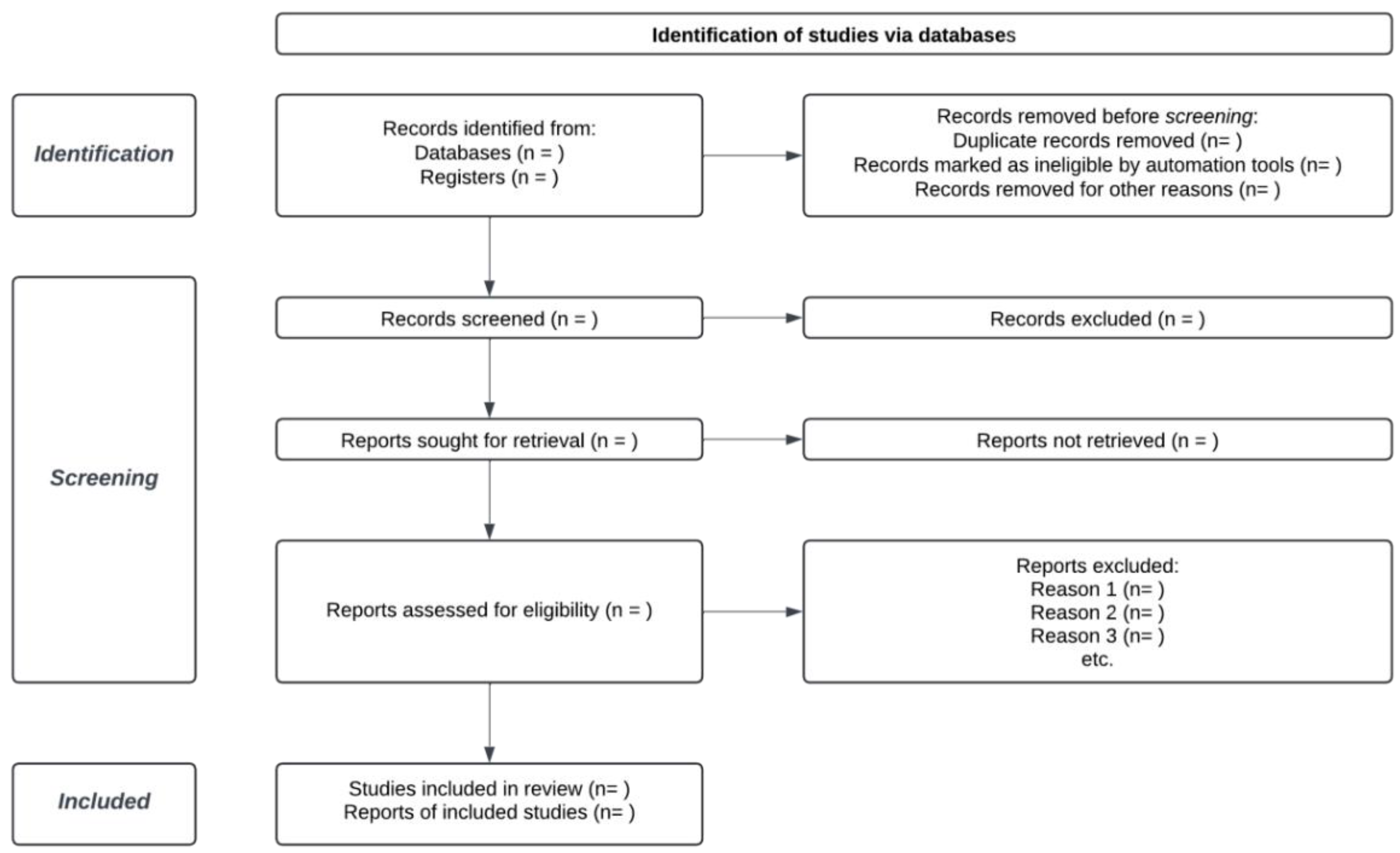
Figure 1. PRISMA 2020 Flow Diagram for Systematic Reviews Using Databases & Registers [51].
Preprints 146799 g001
Figure 2. PRISMA 2020 Flow Diagram.
Preprints 146799 g002
Figure 3. Graphic Representation of x l n x .
Preprints 146799 g003
Table 1. PRISMA Data Summary.
PRISMA Data Summary
Identification Databases searched 21
Records found in databases 16.101
Records excluded due to missing keywords 1.221
Non-English records excluded 72
Records excluded (inappropriate publication type) 10.172
Records excluded (irrelevant scope) 3.708
Duplicates (removed manually) 34
Total records removed before screening 15.207
Screening Records screened 894
Records excluded (irrelevant information) 251
Records excluded (duplicate information) 417
Total records excluded in screening 668
Eligibility Records sought for retrieval 226
Records not retrieved (DOI issues) 11
Records assessed for eligibility 215
Records excluded (retracted articles) 6
Records excluded (errata published) 5
Records excluded (small datasets) 13
Total records excluded in eligibility 24
Included Records included in review 191
Disclaimer/Publisher’s Note: The statements, opinions and data contained in all publications are solely those of the individual author(s) and contributor(s) and not of MDPI and/or the editor(s). MDPI and/or the editor(s) disclaim responsibility for any injury to people or property resulting from any ideas, methods, instructions or products referred to in the content.
Copyright: This open access article is published under a Creative Commons CC BY 4.0 license, which permit the free download, distribution, and reuse, provided that the author and preprint are cited in any reuse.
Prerpints.org logo

Preprints.org is a free preprint server supported by MDPI in Basel, Switzerland.

Subscribe

Disclaimer

Terms of Use

Privacy Policy

Privacy Settings

© 2025 MDPI (Basel, Switzerland) unless otherwise stated