

Submitted:
20 January 2025
Posted:
22 January 2025
You are already at the latest version
Abstract
The research identified key technological parameters for growing paisa on drained lands of Polissia Ecozone. Various criteria, such as productivity, adaptability, energy and nutritional value, and usage potential, were used to assess the feasibility of growing paisa. Pilot studies at the Rivne Region, Ukraine showed significant yields even in adverse weather conditions. Proper sowing timing is crucial, with early sowing risking weed overgrowth and frost damage, while late sowing may hinder germination. The optimal sowing date was determined to be May 15, resulting in 8.1–16.7% more green mass and 2.1–9.6% more dry matter at all growth stages. The research established technological parameters for different growth stages, taking into account critical water availability periods, agronomic practices, and recommended fertilizer norms for peat soils. It found that maintaining soil moisture levels between 65% and 75% is optimal, based on field capacity. Guidelines were also provided for drainage systems to effectively remove excess water and maintain optimal GWL. Climate change in Polissia presents challenges for growing paisa due to uneven rainfall and temperature fluctuations. Planning for water accumulation in reservoirs for irrigation during drought periods is essential to support sustainable crop growth under changing climate.
Keywords:
paisa
; technological parameters of cultivation
; drainage system
; reclaimed lands
; Polissia
; groundwater level
; soil moisture
; water regulation
; climate change
1. Introduction
Climate change significantly affects the direction of land use on drained lands, as it alters the agroclimatic conditions for growing agricultural crops [1,2,3,4,5]. In the context of climate warming, agricultural lands in humid regions become particularly important [6]. In Eastern Europe, including Ukraine and Poland, such a region is the Polissia, where extensive drainage measures and drainage systems have been implemented [7,8,9,10]. Due to increasing anthropogenic pressure and climate change, the importance of rational use of these lands is growing [10,11,12].
Livestock farming remains a promising industry in the humid zone, which is impossible without a reliable feed base [13,14,15,16,17]. Feed production is one of the main directions for the effective use of drained lands. One of the significant reserves for increasing productivity in modern conditions is the introduction of underutilized but highly productive crops capable of outperforming traditional crops in terms of yield, nutrient content, and climate resilience [18,19,20]. Among these crops, multipurpose crops with high adaptive potential play an important role. Among such crops, paisa stands out, generating interest globally and in Ukraine, especially for its potential use on drained lands [20,21,22].
Paisa (Echinóchloa frumentácea) is the most productive high-energy forage crop, serving as feed for poultry and concentrated feed for pigs and cattle. In terms of nutritional value, it is not inferior to oats and barley, containing 93 kg of feed units, 10.5 kg of digestible protein, 5.0% fat, 10.0% fiber, 3.3% ash, 58.6% non-nitrogenous extractive substances, and 0.82% sugar per 100 kg. Paisa grain is rich in phosphorus and silicon, as well as zinc, copper, iodine, and bromine [23,24,25,26,27].
In 100 kg of green paisa mass at the flowering stage, there are 12.8 feed units and 1.5 kg of digestible protein. For every feed unit, there are 117 g of digestible protein. In 100 kg of paisa hay, there are 54 feed units and 10 kg of digestible protein, equivalent to 185 g of digestible protein per feed unit. Paisa contains the highest amount of digestible protein per feed unit compared to other cereal crops. The consumption of green paisa mass ranges from 70% to 80% depending on the stage. Feeding dairy cows with paisa increases milk yield by an average of one and a half times [23].
Paisa ranks first among cereal crops in terms of mineral content. It silages well and produces a more nutritious and high-quality silage compared to traditional corn silage. The dry matter content in paisa silage exceeds 20%. Paisa silage has high organoleptic properties, containing 2.4% protein, 13.5% non-nitrogenous extractive substances, 8.9% fiber, 0.8% fat, and 2.8% ash at 71.6% moisture. The digestibility coefficient of protein is 44%, non-nitrogenous extractive substances - 71%, fiber - 59%, and fat - 60% [28].
Research conducted at the Polissia Institute of Agriculture of the National Academy of Agrarian Sciences of Ukraine showed that paisa outperformed other forage crops such as corn, soybean mixture, oilseed radish, amaranth, white mustard, and yellow lupine in terms of vegetative mass yield and feed unit collection on sod-podzolic soils. The application of mineral fertilizers increased paisa yield by 27%, and lime application by 11%. The maximum vegetative mass yield of paisa reached 30.4 t/ha, which was 17.2% higher than that of corn. Paisa also had a higher energy efficiency coefficient by 2.65.
Global experience in paisa cultivation demonstrates its significant potential in various agroclimatic conditions. In Asian countries such as China and India, paisa has long been used as a multipurpose crop due to its rapid growth, high productivity, and adaptability to various soil conditions. It is often grown in regions with insufficient moisture, where traditional forage crops do not provide stable yields [23,28,29].
In South American countries such as Brazil and Argentina, paisa is introduced as an alternative to traditional forage crops in mixed cropping systems. Its ability to accumulate green mass quickly makes it popular for use in no-till systems, contributing to soil conservation and fertility improvement [30,31,32].
In the USA, paisa is used as an intermediate forage crop and green manure, effectively enriching the soil with nitrogen and improving its structure. Due to these properties, it is included in sustainable agriculture programs aimed at enhancing the ecological resilience of agroecosystems [23,33].
In Europe, particularly in Germany and France, paisa is gaining popularity as a forage crop in organic farming systems. Research in these countries has confirmed that paisa cultivation ensures high yields and improves the nutritional quality of feed. Its rapid vegetative growth is especially valued for multi-cut mowing systems [34,35].
Belarusian scientists note that paisa can be grown on peat soils without waterlogging or lodging. The use of mineral fertilizers, especially nitrogen, in paisa cultivation for seeds and green mass can increase yields by up to 50% [36].
Since paisa is a moisture-loving crop, drained peatlands are favorable for its cultivation, where it can provide green mass yields of over 70 t/ha. According to Professor S.M. Bugay, on drained peat soils of the Sarny Research Station of the Institute of Water Problems and Land Reclamation of the National Academy of Agrarian Sciences of Ukraine, particularly in the drainage system "Chemerne," paisa yield exceeded 80 t/ha of vegetative mass. Research on a reclaimed peat bog showed that without the application of mineral fertilizers, the yield of vegetative mass of paisa variety Lebedina 2 was 70.5 t/ha, and seed yield was 2.2 t/ha [37].
Therefore, among the breeding paisa varieties recommended for cultivation in the Western Polissia zone, the Lebedina 2 variety deserves attention. In production conditions, its yield reaches 40-45 t/ha, with a raw protein content in green mass of 12.9%. This mid-ripening variety is resistant to lodging [38].
The use of paisa grain for poultry feeding is of interest from both an economic and physiological-biochemical perspective. Whole paisa grain can be used in poultry rations without the need for additional energy costs for grinding, preserving the nutritional value of the grains by avoiding nutrient losses during grinding. Introducing whole paisa grain into the feed for laying hens during peak laying instead of 3-10% ground wheat grain increases egg productivity and egg weight. The highest productivity indicators were found in hens fed with feed containing 5% paisa grain. Poultry fed with this feed had 12.5% higher laying capacity and 2.5% higher egg weight.
The conditions of the Polissia region create prospects for successful paisa cultivation. Its adaptability to local climatic and soil conditions, resistance to drought, and ability for multi-cut use make it a valuable resource for strengthening the feed base.
Research shows that increasing paisa productivity on drained lands requires optimization of agronomic practices, including the justification of water management regimes.
The integration of paisa into feed production on drained lands in the Polissia region will ensure stable yields, improve feed quality, and promote the development of sustainable agriculture in the face of climate change.
The suggestion that developing feed production based on underutilized crops like paisa will increase the efficiency of drained lands in the Polissia region requires further investigation. The potential benefits for strengthening the feed base and promoting sustainable agricultural development under changing climate and anthropogenic pressures remain to be adequately demonstrated.
The objectives of this research were to:
- a)
- quantify the timing of key growth stages (phenological development) in Echinóchloa frumentácea (paisa);
- b)
- measure the changes in leaf surface area (ontogeny of leaf area) of Echinóchloa frumentácea throughout the vegetation period, analyzing the rate and extent of leaf surface expansion;
- c)
- determine the maximum rooting depth (vertical distribution of the root system) of Echinóchloa frumentácea.
2. Materials and Methods
The basis of the methodological approaches to conducting experimental research is the use of commonly accepted methods for meteorological observations (temperature, relative humidity, precipitation), determination of soil moisture, biometric characteristics (onset of major phenological phases, leaf index, root system thickness, yield) throughout the vegetation period [39,40,41,42,43,44,45,46,47].
To determine soil moisture by the thermostat-weight method, sub-decadal soil samples are taken from the layers 0-10, 10-20, 20-30, 30-40, and 40-50 cm according to DSTU ISO 11272-2001.
The methodology for conducting field studies on water consumption of paisa is based on determining the parameters of the main factors that determine its magnitude (meteorological factors, groundwater level, soil moisture), and its biological characteristics (requirements for growing conditions, specific developmental phases, individual duration of the vegetation period).
The main methodological features of conducting experimental research and determining water consumption of paisa are based on calculations of the water balance of the active (root) soil layer with a thickness of 0-0.5 m, taking into account meteorological factors (air temperature, atmospheric precipitation) and the amount of capillary feeding of groundwater in the aeration zone [45,48].
Calculations of total water consumption for a certain period are carried out according to the formula:
where E - total water consumption for the given crop for the calculation period, mm; Wstart and Wend - moisture reserves in the active soil layer at the beginning and end of the calculation period, mm; Oeff - amount of effective precipitation for the calculation period, mm; q1 - amount of capillary feeding, mm; q2 - amount of groundwater outflow, mm.
E = (Wstart - Wend) + Oeff + q1 - q2,
It has been established that the crucial factor regulating the yield of green mass and grain of paisa is the sowing methods, while the sowing dates do not have a significant impact on paisa productivity. Growing paisa for different purposes (for green fodder or seeds), as indicated by the research results, requires the study of more effective sowing methods. The study of the nutritional value of green mass and grain of the Nadia paisa variety, as well as silage made from a mixture of green paisa mass with leguminous components, indicates its high vegetative (up to 450-550 c/ha of green mass) and seed (up to 23-35 c/ha) productivity [17,18].
Paisa is characterized by a very wide range of sowing dates. It can be sown within 1-1.5 months - from the beginning of May to mid-June, which allows extending the use of paisa for various fodder needs. Harvesting of green mass can start from the phase of initial ear emergence to the milky-waxy ripeness phase of the grain [20].
Sowing and care for paisa were carried out according to commonly accepted cultivation technologies using mechanisms and tools that are used directly in production conditions.
Before laying the experiments, pre-sowing soil treatment was carried out, which included cultivation and harrowing. The accounting area of the research plots was 12 m2, with three repetitions of the experiments. Mineral fertilizers were applied in spring, once in the rates of N45P60K120, P60K120, P60K90.
Agrochemical and radiological analyses of soil and plant products were carried out, phenological observations of the growth and development of paisa were conducted.
Phenological observations of the growth and development of plants were carried out for all studied fodder crops [29]. The yield was determined by the whole-plot method from the entire accounting area [42].
In addition to the existing paisa varieties (Pauza, Perspektyva, Molodetska, Ussuriyska, Evrika), the Nadia variety (LLC "Vilna Ukraine") was created and zoned, recommended for cultivation in the Forest-Steppe and Polissia zones, and the Lebedyna 2 variety (originator Institute of Agriculture Polissia NAAS), recommended for cultivation in the conditions of the Western Polissia zone [13].
Samples of plant products for determining the content of radionuclides were selected in 10 points of the accounting plot with a mass of 0.15 - 0.2 kg from an area of 1 m2. The height of the plant cut was 3 - 5 cm from the soil surface according to GOST 27262-87. The content of radionuclides in soil and plant products was determined by gamma spectrometry. The activity of radiocesium in soil and plant products was measured in the radiological laboratory of the station using a spectrometer SEG-0.5 with a scintillation detector BDEG-63K-01, in the Marinelli geometry with a volume of 1 liter at an exposure of 3600 seconds [49,50].
Paisa was sown in wide rows with a row width of 45 cm. The sowing rates for crops were 6 kg/ha. Mineral fertilizers were applied in the current year at a rate of N30 P30 K30.
The yield of fodder crops is determined by the whole-plot method from the entire accounting area.
The research plots were established on the drained peat bog massif "Chemerne" of the Sarny Research Station of the Institute of Water Problems and Land Reclamation of the National Academy of Agrarian Sciences of Ukraine (Figure 1).
The meliorative system of the peat bog massif "Chemerne" includes a water receiver, open channels (main, collecting, drainage, catchment) with hydraulic structures, a closed regulating network. The water receiver is the Sluch River, located 5 km from the system [51,52,53].
The meliorative system consists of a main trunk canal and a second-order trunk canal, which flows into the main first-order canal in the eastern part of the massif. The main canals are laid in the lowest places of the bog and the deepest peat layers. Collecting canals are laid perpendicular to the main canals. Their length is 1 - 2 km. The distance between collecting canals is 1 - 2 km depending on the slope of the surface. Collectors are laid parallel to the main canal. Catchment-drainage canals are arranged to intercept surface and groundwater. In total, the meliorative system includes 36 open channels, two of which are main canals. Drainage has been carried out on 289 hectares (tile, plastic, fiberglass, fashin), with a total of 327 collector mouths. The system includes 49 hydraulic structures and one road bridge.
In the upper part of the massif, there is an accumulation reservoir formed on the site of excavated peat quarries (width 120 m, length 1000 m, depth 1 - 1.25 m). The possible water volume in the reservoir is 385 thousand m3.
During heavy rains, groundwater is at a depth of 0.1 - 0.3 m on 10 -25% of the territory. The delay in the start of field work is 11 - 12 days, in some years - up to 14 - 16 days. The area of waterlogging is 23.7% of the total agricultural land area.
The area of drained lands is 207 hectares; on a territory of 205 hectares, it is possible to carry out drainage and irrigation measures; on an area of 27 hectares - irrigation: including 18 hectares - rainfed, 9 hectares - drip irrigation. The water supply source is a water intake with water storage in the reservoir.
The research plot on the peat bog massif "Chemerne" is equipped with 2 sets of tensiometers for measuring moisture at the depth of the root soil layer, and a regulator for providing optimal water regime.
The soils of the research plots of the peat bog massif "Chemerne" are lowland, highly peaty, with thick peat layers fed by groundwater from adjacent mineral, mainly sod-podzolic soils. The main composition of plant-peat-forming plants is hypno-paisa-reed, in the lower layers of peat, remnants of semi-decomposed woody vegetation such as willow, birch, alder, pine, and white moss are often found. The thickness of peat deposits is 1 - 4 m, and towards the periphery of the massif, peat is depleted to 0.3 - 0.5 m, where peat-gley high-ash soils are formed.
The peat soil of the research plot is well decomposed. The basis of peat consists of remains of paisa grass plants, paisas, reeds, hypnum mosses. The depth of peat reaches more than 2 m.
By the degree of ash content, the peat soil of the research plots is medium-ash (ash content is 16 - 18%).
According to agrochemical indicators, the soil is slightly acidic (pHsol - 5.0 - 5.2), well supplied with nitrogen, moderately supplied with phosphorus, and poorly supplied with potassium (availability of mobile forms: N - 65.5 mg/100 g; P2O5 - 18 mg/100 g; K2O - 13 mg/100 g of soil).
3. Results and Discussion
The territory of the peat bog massif "Chemerne" is located in the Northern agroclimatic region in the zone of Western Polissia of Ukraine (northern part of Rivne region) (Fig.1).According to the zoning scheme, this territory belongs to the Stepansky agrosoil region of the Polissia province of the western subzone of chernozem-podzolic soils. According to hydrogeological studies, the research area is located within the Polissia sand plain, which occupies the central and northern parts of the Rivne region. The Polissia lowland, within which a large part of Rivne region is located, is a hilly plain with elevations ranging from150 m to 210 m. A characteristic feature of this region is the high degree of marshiness and the presence of a peat cover on sandy and loamy soils. Marshiness is present both in floodplains and in interfluve areas. In terms of geostucture, the reclaimed lands of the pilot object are located within the eastern part of the Volyn Upland, characterized by developed microrelief forms. Quaternary deposits are represented by a variety of rock complexes that form the unique relief of this territory.
Within the territory of the research area, Quaternary alluvial deposits of the floodplain part of the Horin River have developed, mainly consisting of medium-grained and fine-grained light-gray quartz sands. Sands have been found at depths of up to7.5 m in some boreholes. The sand layer is overlain by modern lake-marsh deposits, consisting of dark-brown, well-decomposed peat, chernozem-carbonate soils. The thickness of peat formations ranges from 0.5 m to 6.5 m. Groundwater has been found at depths ranging from 0.65 m to 1.9 m. Based on the genetic characteristics of water-bearing rocks, groundwater belongs to the water of alluvial deposits of river floodplains and modern lake-marsh deposits. Groundwater of alluvial deposits is distributed in a narrow strip along the Horin, Sluch rivers and their numerous tributaries, and is held in the thickness of fine-grained and medium-grained sands. Floodplain groundwater lies at depths of 3 m to 4 m below the surface and is the first horizon hydraulically connected to the river and to the aquifer horizon lying below in pre-Quaternary rocks. The aquifer horizon of lake-marsh deposits is characterized by a close proximity (from 0.1 m to 1.3 m) of the groundwater level and is associated with peat and silty deposits. The groundwater horizon is fed by atmospheric precipitation and the underlying aquifer horizon, with which it is usually connected. In spring, the groundwater level rises to the surface and, combining with surface waters, creates marshy areas. The groundwater has a hydrocarbonate-calcium composition with a pH ranging from 7.1 to 7.5.
Table 1 shows the granulometric composition of the research area.
In terms of climate. Western Polissia differs from other regions of Polissia located in the east with milder winters. warmer summers. and higher precipitation (from 600 to 700 mm per year). The heterogeneity of this region in both climatic and geomorphological aspects determines the different degree of marshiness and the uneven character of bogs.
Spring begins in the second decade of March and lasts for 70-80 days. Its characteristic feature is the rapid rise in temperature. In the first decade of April. the average daily temperatures do not exceed 5°C. and in the third decade. they reach 10°C. which promotes the intensive growth of most crops. In spring. there are often frosts that damage orchard and garden crops.
Summer is mainly warm. with sufficient moisture. It starts in the third decade of May when the average daily air temperature exceeds 15°C and lasts until early September. In the hottest month. July. the average air temperature ranges from 17°C to 19°C. with maximum temperatures from 36°C to 38°C. Summer showers with thunderstorms and sometimes hail occur. Due to heavy rains. grain crops can lodge. and the topsoil can be washed away. In some years. there may be drought in summer.
Autumn begins at the end of September or early October when the average daily temperature drops below 10°C. Between the end of summer and the beginning of autumn. there is a pre-autumn period - the month of September when the average daily air temperature exceeds 10°C. September is characterized by mostly clear dry weather. The vegetation period ends in late October when the average daily air temperature drops below 5°C.
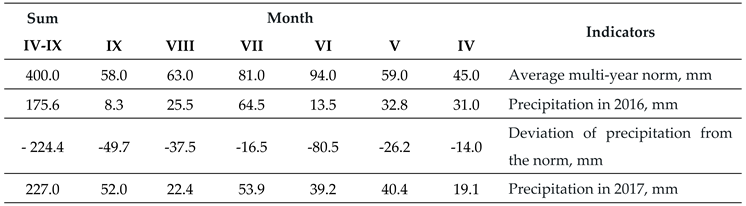
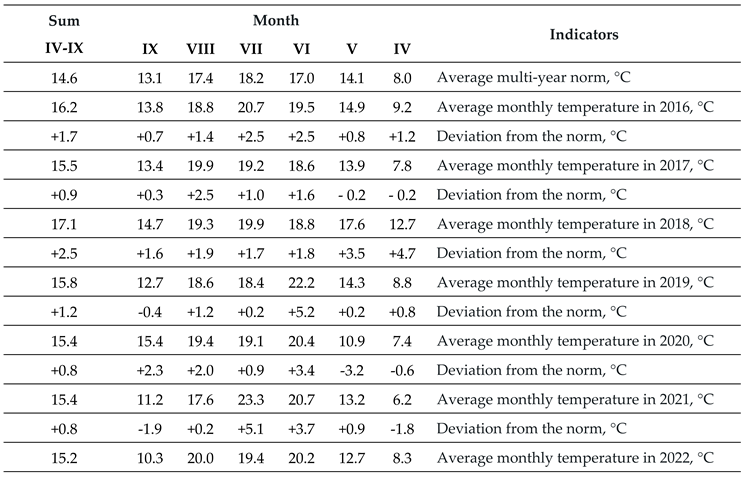
According to the research methodology. meteorological observations were conducted to determine atmospheric precipitation and air temperature on the meliorative system of the peat bog massif "Chemerne" the results of which are presented in Table 2 and Table 3.
According to the methodology, research was conducted to establish the optimal sowing dates that ensure the highest level of productivity realization of paisa. The results of the research during 2016-2024 indicate that the speed of seedling emergence of paisa is influenced by atmospheric precipitation, soil moisture, and temperature. For the biometric characteristics of paisa, we took the year 2020 as a base, as it is an average-dry year according to our research on the average annual precipitation supply from 1980 to 2024.
The onset of the main growth phases of paisa in 2020 in the experimental plot of the peat bog massif "Chemerne" is shown in Table 4.
As the research showed, paisa grows and develops relatively slowly at the beginning of the vegetation period (May-early June). During this period, it requires protection from weeds, as weeds develop intensively on peat soils and can suppress cultivated crops. The most intensive linear growth of vegetative mass of paisa occurs during the period from June 30 to August 20 (Table 5). In the conditions of the vegetation period of 2020, paisa reached a height of 168 cm.
The indicators of leaf surface formation of peas during the vegetation period in 2020 are presented in Table 6. The results obtained indicate that peas have different indicators of leaf surface growth.
The leaf surface of peas at its maximum during the period depending on the fertilization variant was 93.7-101.7 thousand m2/ha. Peas were characterized by slow formation of leaf surface up to 28-30 days after emergence, after which a more rapid increase occurred. The maximum indicators of assimilation surface of peas were noted on the 80-90th day after emergence. The most intensive increase in leaf surface of peas was observed during the period from June 20 to July 20 (Table 6).
The results of the study on the depth of penetration of the root system into the soil during the phases of pea development depending on fertilization are presented in Table 7, Table 8 and Table 9.
The root system of peas is fibrous, sufficiently powerful, and penetrates to a depth of up to 62 cm (Table 7), with the main mass of roots concentrated in the plow layer of soil (0–30 cm). The root system of legumes penetrates the soil deepest (up to 68 cm).
The results of the study on the accumulation of organic residues of the pea root system are presented in Table 8.
The accumulation of organic residues of the root system during the growing season when cultivating peas depending on fertilization ranges from 46.2 to 51.6 t/ha. This is explained by the presence of a sufficiently powerful root system in this crop.
When sown on April 15 and with a soil temperature of 0-10 cm depth at 12.4°C, the "sowing-emergence" phase in paisa lasts for 15 days. When sowing on April 30 and May 15 at soil temperatures ranging from 14.1-19.9°C, paiza seedlings emerge on the 8th-9th day (Table 9).
For seed swelling and germination, the moisture content of the sowing layer of the soil, provided by 30-40 mm of precipitation, is important [7]. The seed imbibition capacity of paisa seeds ranges from 174-260% [15]. Field research results indicate a close relationship between field emergence and sowing dates (Table 10).
Based on the field emergence rate of 62.4%. the late sowing date at a soil temperature of 19.9°C is preferred. With soil temperature fluctuations in the range of 12.4-14.1°C observed during the period from April 15-30. the field emergence was lower at 30.7-46.9%.
To achieve high yields of green mass from high-yielding forage crops. it is essential to create stands with an optimal leaf area capable of remaining active for an extended period. The influence of sowing dates of paisa legumes on aboveground biomass formation was determined. showing that the most favorable conditions for aboveground biomass formation occur when sown on May 15. At all stages of development. there is an accumulation of 8.1-16.7% more green mass and 2.1-9.6% dry matter. The highest accumulation of vegetative mass (3.3 kg) is noted during the flowering phase and dry matter (680 g/m2) during the milk-wax ripeness period (Table 11).
To conduct research on determining optimal water regulation parameters in the reclamation system of the peat bog "Chemerne," liming was carried out at a rate of 5 t/ha CaCO3 to neutralize the increased soil acidity. Calculated rates of mineral fertilizers were applied.
To conduct research on determining the optimal parameters of water regulation in the reclamation system of the peat bog massif "Chemerne," liming was carried out at a rate of 5 t/ha of CaCO3 to neutralize the increased soil acidity. The calculated rates of mineral fertilizers were applied.
According to the research results, during the growing season, the moisture requirements of peas, amaranth, and fodder legumes in the root layer of the soil vary depending on their biological needs and current meteorological conditions. Critical periods for overmoistening are spring floods and summer-autumn floods, typical for the humid zone. In the spring period, timely reduction of the GWL (Groundwater level) to a level that allows the passage of agricultural machinery, pre-sowing soil preparation, and crop sowing is a necessary requirement.
For the cultivation of paisa, permissible deadlines for the reclamation system to remove excess water are established (Table 12).
Recommended GWL and soil moisture norms in the root layer of the soil during the growing season for the cultivation of paisa are also established.
The main technological parameters for the cultivation of paisa, including by development phases of thecrop and taking into account the critical periods of its optimal moisture supply, optimal irrigation regimes (drainage), agronomic practices, and optimal fertilization rates for peat soils are provided in Table 13.
The average yield of paisa depending on fertilization during 2016-2024 is presented in the Table 14.
The greatest decrease in paisa yield was observed in 2019 due to meteorological conditions, which manifested in uneven distribution of precipitation, spikes in average monthly temperature (in June and August, its values exceeded the average long-term norm by 5.2°C and 1.2°C respectively), and abnormally low night temperatures (<10°C) in July and August. Under such meteorological conditions, but with optimal meliorative regimes, the yield of paisa, which is a heat-loving crop by biological characteristics, was the lowest in all fertilization options compared to the average during the period 2016-2024.
Since the research was conducted on radioactively contaminated lands (137Cs contamination density is 48.5 kBq/m2) of the peat bog "Chemerne," a spectrometric analysis of plant samples was also conducted to determine the content of radiocesium in the vegetative mass of paisa. The analysis showed that the vegetative mass of paisa during the years of research had a low content of the radionuclide 137Cs.
Therefore, on drained peat soils with contamination density of radionuclides up to 1 Ci/km2, the vegetative mass of paisa in terms of radionuclide contamination during the research years was within permissible levels and met sanitary-hygienic standards, thus it can be used for animal feeding without restrictions.
4. Conclusions
It was established that when growing paisa on drained lands, it is necessary to adhere to sowing deadlines considering their intended use (green mass, grain), as excessively early sowing dates lead to intensive weed growth and a high probability of damage from spring frosts, while late sowing can result in drying of the topsoil, which is unacceptable during the "germination and emergence of seedlings" phase.
Based on the research results of 2016-2024, the main technological parameters of paisa cultivation were determined, including development phases and critical periods of optimal moisture supply, agronomic practices, and optimal fertilization rates when growing on peat and mineral soils. Permissible terms were established for the meliorative system to ensure drainage of excess water and timely reduction of groundwater levels to recommended values.
It was found that modern climate changes in the humid zone of Ukraine (uneven distribution of precipitation during the growing season, abnormal spikes in average monthly air temperature, and low night temperatures (<10°C) in summer months) affect the cultivation of heat-loving crops, including paisa. In the conditions of climate change, for irrigation measures on reclaimed lands, it is necessary to anticipate the accumulation of necessary water volumes in storage tanks or reservoirs for irrigation of cultivated crops during dry periods of vegetation and to ensure optimal water regulation parameters.
On radioactively contaminated reclaimed lands of the peat bog "Chemerne," the vegetative mass of paisa in terms of radionuclide contamination during the research years was within permissible levels, thus it can be used for animal feeding without restrictions.
References
- Balabukh, V. O. (2023). Yield shortfall of cereals in Ukraine caused by the change in air temperature and precipitation amount. Agricultural Science and Practice, 10(1), 31-53. [CrossRef]
- Degodyuk, S. E., & Degodyuk, E. G. (2008). Specialization of agriculture in Ukraine depending on climate changes. Collection of scientific works of the National Scientific Center “Institute of Agriculture of the Ukrainian Academy of Sciences”. Kyiv: VD. EKMO, (Special issue), 69–77.
- Gladiy, M. V., & Yu, L. (2020). Ya. (2020). Land reform: Modern problems and ways to solve them. Economy of APC, (2), 6–19.
- Guidance on meteorological forecasting (2019). Res. L. Humonenko and others. Ukrainian hydrometeorological center. Kyiv: 2019.
- Irrigation and drainage strategy in Ukraine for the period up to 2030. (2019). Approved by the Cabinet of Ministers of Ukraine, 2019. Nº 688-r. p.
- Ivanyuta, S. P., Kolomiets, O. O., Malinovska, O. A., & Yakushenko, L. M. (2020). Climate change: consequences and adaptation measures: analyst. Report. Kyiv. 110 p.
- Ivashchenko, O. O. (2008). Ways of agricultural adaptation in the conditions of climate change. Collection of scientific works of the National Scientific Center “Institute of Agriculture of the Ukrainian Academy of Sciences”. Kyiv: VD. EKMO, (Special issue), 15–21.
- Parry, M. L., Porter, J. H., & Carter, T. R. (1990). Climatic Change and its Implications for Agriculture. Outlook on Agriculture, 19(1), 9–15. [CrossRef] [PubMed]
- Rokochinskiy, A., Kuzmych, L., & Volk, P. (Eds.). (2023). Handbook of Research on Improving the Natural and Ecological Conditions of the Polesie Zone. IGI Global. [CrossRef]
- Rokochinskiy, A., Kuzmych, L., & Volk, P. (Eds.). (2023). Preface. Handbook of Research on Improving the Natural and Ecological Conditions of the Polesie Zone, p. xxii.
- Saiko, V. F. (2008). Agriculture in the context of climate change. Collection of scientific works of the National Scientific Center “Institute of Agriculture of the Ukrainian Academy of Sciences”. Kyiv: VD. EKMO, 2008(Special issue), 3–14.
- Shevchenko, O. G., & Snizhko, S. I. (2021). Peculiarities of the formation of demand for meteorological products among agricultural producers in modern conditions. Second All-Ukrainian Hydrometeorological Congress: theses of reports. Odesa, October 7-9, 2021. Odesa: Odesa State Environmental University. P. 32−33.
- Romaschenko M.I. (2019) The impact of climate change on the state of Ukraine's provision of water resources. “Water for all”: dedicated to the World Water Resources Day: International. science and practice conference: theses add. Kyiv, 2019. P. 11−12.
- Rokochinskiy A., Korobiichuk I., Kuzmych L., Volk P., Kuzmych A. (2020) The System Optimization of Technical, Technological and Construction Parameters of Polder Systems. AUTOMATION 2020, AISC 1140, PP. 78-86. [CrossRef]
- Prykhodko, N., Koptyuk, R., Kuzmych, L., & Kuzmych, A. (2023) Formation and predictive assessment of drained lands water regime of Ukraine Polesie Zone. Handbook of Research on Improving the Natural and Ecological Conditions. IGI Global of Timely Knowledge. Hershey, Pennsylvania 17033-1240, USA. 2023.– p.51-74. [CrossRef]
- Korobiichuk, I., Drevetsky, V., Kuzmych, L., & Kovela, I. (2020). The method of multy-criteria parametric optimization. Advances in Intelligent Systems and Computing. Volume 1140, 2020. Automation 2020: Towards Industry of the Future. Pages 87-97. . - Available at: https://link.springer.com/chapter/10.1007/978-3-030 -40971-5_9. [CrossRef]
- Korobiichuk, I., Kuzmych L, Kvasnikov, V., Nowak, P. (2017) The use of remote ground sensing data for assessment of environmental and crop condition of the reclaimed land // Advances in intelligent systems and computing (AISC), volume 550, ICA 2017: AUTOMATION 2017, PP 418-424. [CrossRef]
- Kuzmych, L. (2023) “System for Diagnostics of Critical Technical Structures as an Element of Risk Monitoring,” 2023 13th International Conference on Dependable Systems, Services and Technologies (DESSERT), Athens, Greece, 2023, pp. 1-5, Computing Systems: Technology and Applications (IDAACS), Dortmund, Germany, 2023, pp. 47-50. [CrossRef]
- Kuzmych, L., Furmanets, O., Usatyi, S., Kozytskyi, O., Mozol, N., Kuzmych, A., Polishchuk, V., & Voropai, H. (2022). Water Supply of the Ukrainian Polesie Ecoregion Drained Areas in Modern Anthropogenic Climate Changes. Archives of Hydro-Engineering and Environmental Mechanics, 69(1), 79–96. [CrossRef]
- Kuzmych, L., & Voropai, H. (2023) Enviornmentally Safe and Resource-Saving Water Regulation Technologies on Drained Lands. Handbook of Research on Improving the Natural and Ecological Conditions of the Polesie Zone. IGI Global of Timely Knowledge. Hershey, Pennsylvania 17033-1240, USA. 2023. P. 75-96. [CrossRef]
- Kuzmych, L., Voropai, H., Kharlamov, O., Kotykovych, I., & Kuzmych, S. (2023) Study of contemporary climate changes in the Ukrainian humid zone (on the example of the Volyn Region). IOP Conference Series: Earth and Environmental Science, Volume 1269, 3rd International Conference on Environmental Sustainability in Natural Resources Management 2023 20/10/2023 - 20/10/2023 Batumi, Georgia. P. 1-8. [CrossRef]
- Kuzmych, L., Voropai, H., & Kuzmych, S. (2023) Mathematical Modeling of the Groundwater Level Regime for Substantiation of Resource-Saving Technological Parameters of Drained Lands Water Regulation. 2023 IEEE 12th International Conference on Intelligent Data Acquisition and Advanced Computing Systems: Technology and Applications (IDAACS), Dortmund, Germany, 2023, pp. 47-50. [CrossRef]
- Koval S.I., Zosimchuk O.A. (2014). Productivity of fodder crop rotations from rare fodder crops on drained peat soils of Western Polissia. Bulletin of the National University of Water Management and Nature Management. - No. 65 (1). - Rivne, - P. 64 - 72.
- Kuzmych, L., Voropai, H., Moleshcha, N., Kharlamov, O., & Kotykovych, I. (2023). Analysis of the Consequences of the Russian Occupation of Drained Lands of the Sumy Region, Ukraine. International Conference of Young Professionals “GeoTerrace 2023”. [CrossRef]
- Kuzmych, L., Voropai, H., Moleshcha, N., Kharlamov, O., Kotykovych, I., & Voloshin, M. (2023). Study of the features of the water regime formation of drained soils in the current conditions of climate change. 17th International Conference Monitoring of Geological Processes and Ecological Condition of the Environment, p. 1. [CrossRef]
- Kuzmych, L., Voropai, H., Poliakov, V., Furmanets, O., & Kharlamov, O. (2023). Technical and Technological Features of the Drainage Systems Functioning of the Ukrainian Humid Zone During the War and Their Post-War Reconstruction. International Conference of Young Professionals “GeoTerrace 2023”. [CrossRef]
- Kuzmych, L., Voropai, H., Poliakov, V., Furmanets, O., & Kharlamov, O. (2023). Study of contemporary climate changes in the humid zone of Ukraine (on the example of the Rivne region. 17th International Conference Monitoring of Geological Processes and Ecological Condition of the Environment, p. 1. [CrossRef]
- Tsaryk Z.O. Some elements of the variety technology of growing the newly bred variety of paisa Nadia in the conditions of the Western Forest-Steppe of Ukraine / Z.O. Tsaryk, V.O. Grynevich // Feed and Feed Production. - Vinnytsia, 2004. - No. 53. - P. 27-31.
- De Wrachien D, Feddes R. Drainage and Land Reclamation in a Changing Environment: Overview and Challenges. In: Proceeding of the International Conference on Land Reclamation and Water Resources Development; 2003 May 27–29; Mantua, Italy; 2003.
- Gabrijel Ondrasek, Zed Rengel, Dragutin Petosic, Vilim Filipovic. Chapter 13 – Land and Water Management Strategies for the Improvement of Crop Production. In: Parvaiz Ahmad, Saiema Rasool, editors. Emerging Technologies and Management of Crop Stress Tolerance. Academic Press; 2014. p. 291–313. ISBN 9780128008751. [CrossRef]
- Garcia Hernandez, Yessica (2017), ‘Unapologetic Paisa Chingona-ness: Listening to fans’ sonic identities’, Sounding Out Blog!, 28 August, https://soundstudiesblog.com/2017/08/28/paisas-corridos-banda-listening-to-the-sonic-identities-of-fans/. Accessed 11 July 2024.
- Schultz Bart, Zimmer Daniel, Vlotman Willem F. Drainage under increasing and changing requirements. Irrigation and Drainage: The journal of the International Commission on Irrigation and Drainage; 2007:56. S1:S3-S22. [CrossRef]
- Soukup M, Pilná E, Baběradová H. Investigation of Soil Moisture Regime and Pressure Conditions in a Drained Soil Profile. Interdisciplinary approaches in small catchment hydrology: Monitoring and research; 2003: SC.2003/WS/30:99–104.
- Várallyay G. The impact of climate change on soils and on their water management. Agronomy Research; 2010:8(Special Issue II):385–396.
- Wrachien D, Feddes R. Global warming and drainage development: perspective and challenges. Irrigation and Drainage; 2004:53(3):215–224. [CrossRef]
- Lykhatsievich A.P. Irrigation of agricultural crops: Basics of regime in case of unstable natural moisture supply / A.P. Lykhatsievich. - Minsk: Bel. science, 2005. - 278 p.
- Kuzmych, L., Voropay, G., Moleshcha, N., & Babitska, O. (2021). Improving water supply capacity of drainage systems at humid areas in the changing climate. Archives of Hydro-Engineering and Environmental Mechanics., 68(1), 29–40. [CrossRef]
- State Register of plant varieties suitable for dissemination in Ukraine in 2011 / Ministry of Agrarian Policy of Ukraine, State Service of Intellectual Property - Extract as of 15.04.11. - Kyiv: TOV "Alefa", 2011. - 301 p.
- Land reclamation. (2015). Collective monograph (edited by S.A. Balyuk, M.I.Romashchenko, R.S. Truskavetskiy). Kherson: Grin D.S., 2015. 668 p.
- Malézieux. E.. Crozat. Y.. Dupraz. C.. Laurans. M.. Makowski. D.. Ozier-Lafontaine. H. Rapidel. B. De Tourdonnet. S. & Valantin-Morison. M. (2009). Mixing plant species in cropping systems: Concepts. tools and models: A review. Sustainable Agriculture. 329–353.
- Nechyporenko, O. (2008). State and prospects of adaptation of the agrarian sector of the economy of Ukraine to global climate changes. Economist, 2018(11), 10–14.
- Onanko, A. P., Dmytrenko, O. P., Pinchuk-Rugal, T. M., Onanko, Y. A., Charnyi, D. V., & Kuzmych, A. A. (2022). Characteristics of monitoring and mitigation of water resources clay particles pollution by ζ-potential research. 16th International Conference Monitoring of Geological Processes and Ecological Condition of the Environment (Vol. 2022, pp. 1–5). [CrossRef]
- Kuzmych, L., Guryn, V., Radchuk, M., & Kuzmych, S. (2023). Methodology for calculating the stability of the base of riverside slopes reinforced concrete slabs. 4th EAGE Workshop on Assessment of Landslide Hazards and Impact on Communities, Landslide 2023. Volume 2023, p.1 - 5. [CrossRef]
- Kuzmych, L., Voropay, G., Kuzmych, A., Polishchuk, V., & Kuzmych, A. (2022) Concept of creation of the automated system of remote deformation monitoring and control of the technical condition of engineering infrastructure. International Conference of Young Professionals «GeoTerrace-2022», Oct 2022, Volume 2022, p.1 - 5. [CrossRef]
- Slyusar, I. T. (2008). The use of drained lands of the humid zone in the context of global climate changes. Collection of scientific works of the National Scientific Center “Institute of Agriculture of the Ukrainian Academy of Sciences” Kyiv: VD. EKMO, 2008(Special issue), 42–49.
- Slyusar I. T., Hera O. M., Solyanyk O. P., Serbenyuk V. O. (2015). Nature conservation use of drained lands of the humid zone. Zemlerobstvo, 2015. Kyiv. Nº 2. P. 51–55.
- Yakymchuk, A., Kuzmych, L., Skrypchuk, P., Kister, A., Khumarova, N., & Yakymchuk, Y. (2022). Monitoring in Ensuring Natural Capital Risk Management: System of Indicators of Socio-Ecological and Economic Security. 16th International Conference Monitoring of Geological Processes and Ecological Condition of the Environment, Nov 2022, Volume 2022, p.1 – 5. [CrossRef]
- Hadzalo IaM, Stashuk VA, Rokochynskyi AM, editors. [Land reclamation and arrangement of Ukrainian Polissya]. Melioratsiia i oblashtuvannia Ukrainskoho Polissia. Kherson: OLDI-PLJUS; 2017.
- Handbook for radiological services of the Ministry of Agrarian Policy of Ukraine. "Methodology for sampling agricultural products and food products for laboratory analysis for radionuclide content (edited by Prister B.I.)". - Kyiv, 1995 - 126 p.
- Groundwater and unsaturated zone. Definition, designation, and theory: DSTU ISO 15709:2004. - [Effective from 2006-04-01]. - Kyiv: State Standard of Ukraine, 2007. - 8 p. - (National Standard of Ukraine).
- Kuzmych, S., Radchuk, M., Guryn, V., & Kuzmych, L. (2023). Study of the deformation characteristics of the base soil of shore fortification with reinforced concrete slabs. 4th EAGE Workshop on Assessment of Landslide Hazards and Impact on Communities, Landslide 2023. Volume 2023, p.1 - 5. [CrossRef]
- Kvasnikov, V., Kuzmych, L., Yehorova, S., Kuzmych, A., & Guryn, V. (2023) Automated Modeling Verification Complex of the Intelligent Instrument System. 4 ICST 2023 Information Control Systems & Technologies 2023. Proceedings of the 11-th International Conference “Information Control Systems & Technologies” Odesa, Ukraine, September 21–23, 2023. pp. 302-313. chrome-extension://efaidnbmnnnibpcajpcglclefindmkaj/https://ceur-ws.org/Vol-3513/paper25.pdf.
- Guide to DBN V.2.4-1-99 "Reclamation systems and structures" (Chapter 3. Drainage systems) Meteorological support of engineering and reclamation calculations in drainage systems construction and reconstruction projects]. Posibnyk do DBN V.2.4-1-99 «Melioratyvni systemy ta sporudy» (Rozdil 3. Osushuvalni systemy). Meteorolohichne zabezpechennia inzhenerno-melioratyvnykh rozrakhunkiv u proektakh budivnytstva y rekonstruktsii osushuvalnykh system. Kiev: (Vidkryte aktsionerne tovarystvo) VAT «UKRVODPROEKT»; 2008 (in Ukrainian).
Figure 1.
Scheme of the drained peat bog massif "Chemerne" of the Sarny Research Station of the Institute of Water Problems and Land Reclamation of the National Academy of Agrarian Sciences of Ukraine (Polissia Ecoregion, Rivne region, Ukraine).
Figure 1.
Scheme of the drained peat bog massif "Chemerne" of the Sarny Research Station of the Institute of Water Problems and Land Reclamation of the National Academy of Agrarian Sciences of Ukraine (Polissia Ecoregion, Rivne region, Ukraine).
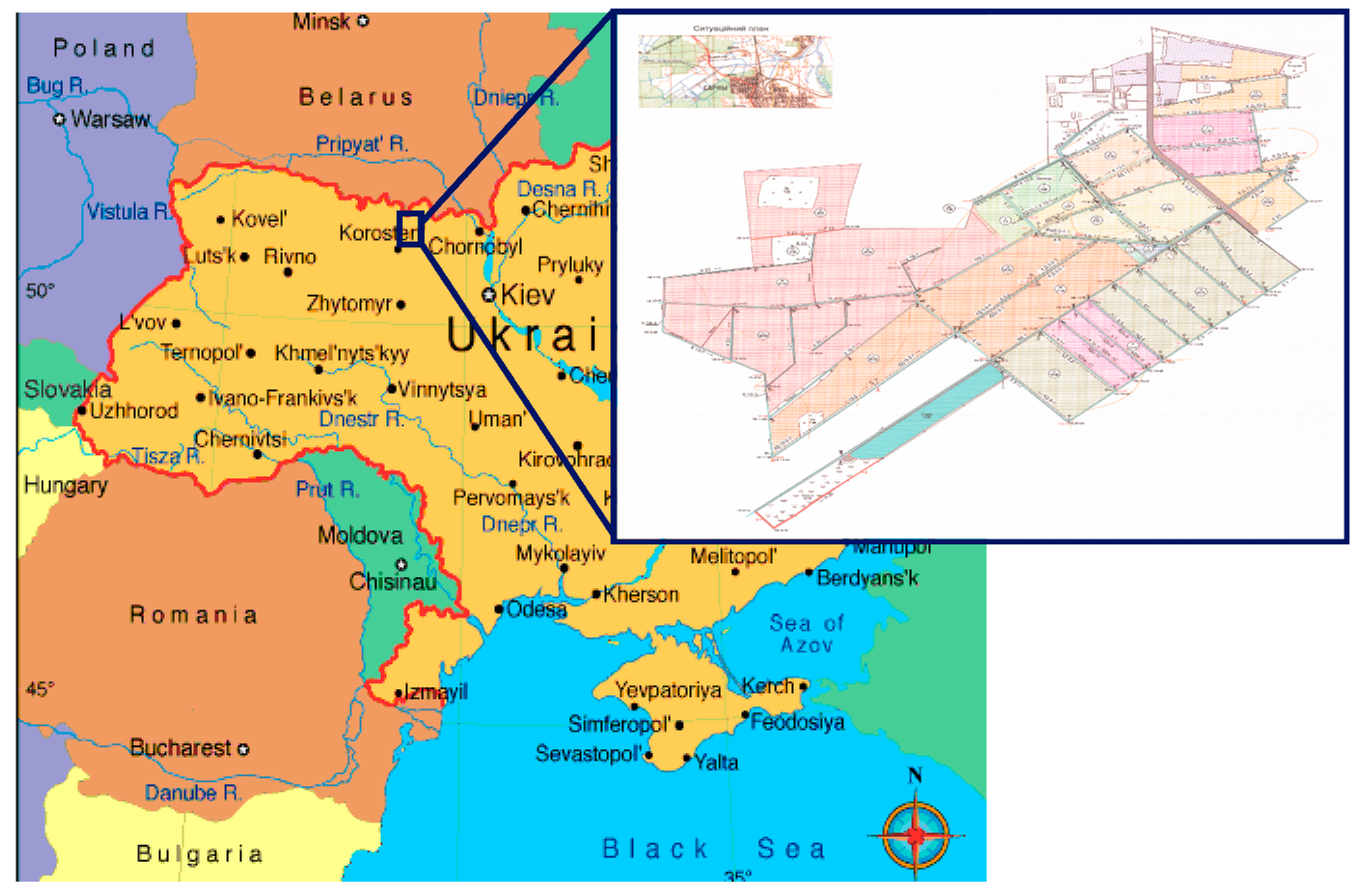

Table 1.
Granulometric composition of soils in the peat bog massif "Chemerne", Rivne region.
| Soil type | Layer, m | Fraction size | ||||
| Gravel | Sand | Silt | Clay | |||
| 1.00-0.25 | 0.25-0.05 | 0.05-0.01 | 0.01-0.005 | 0.005-0.001 | ||
| Derno-carbonate | 0-20 | - | 24.0 | 55.1 | 4.3 | 16.6 |
| 0.20-0.50 | - | 27.6 | 53.4 | 3.3 | 15.7 | |
| 0.50-0.90 | - | 66.0 | 20.3 | 2.7 | 11.0 | |
| 0.9-1.2 | 12.3 | 71.6 | 10.7 | 0.5 | 4.9 | |
| Peat-gley | 0…0.2 | 1.40 | 22.89 | 58.64 | 7.75 | 2.9 |
| 0.2…0.5 | 2.24 | 17.36 | 61.03 | 5.69 | 8.64 | |
| 0.5…0.9 | 1.56 | 17.87 | 60.80 | 3.94 | 5.24 | |
| 0.9…1.2 | 1.20 | 18.47 | 56.16 | 3.59 | 3.35 | |
Table 2.
Atmospheric precipitation and their deviations from the average multi-year indicators, vegetation period 2016-2024, meliorative system of the peat bog massif "Chemerne".
Table 2.
Atmospheric precipitation and their deviations from the average multi-year indicators, vegetation period 2016-2024, meliorative system of the peat bog massif "Chemerne".
 |
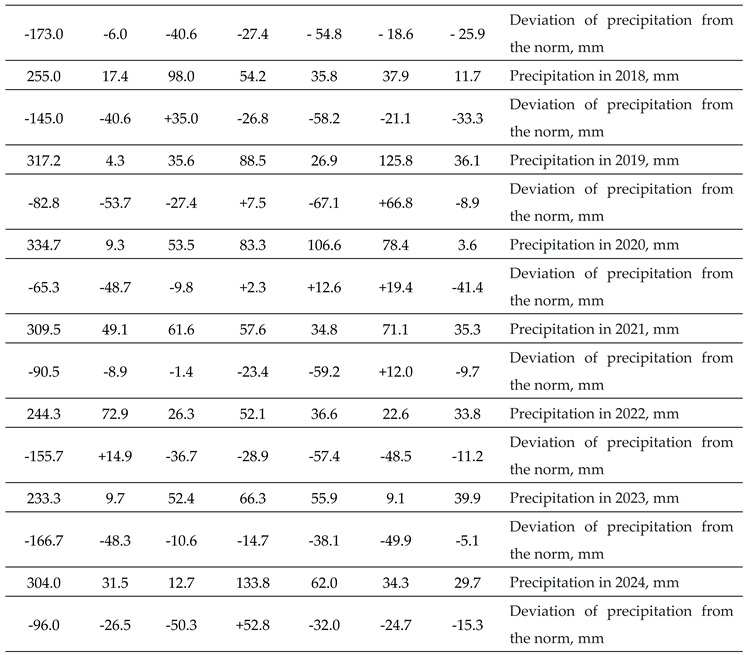 |
Table 3.
Average monthly air temperature and its deviations from the average multi-year indicators, vegetation period 2016-2024, meliorative system of the peat bog massif "Chemerne".
Table 3.
Average monthly air temperature and its deviations from the average multi-year indicators, vegetation period 2016-2024, meliorative system of the peat bog massif "Chemerne".
 |
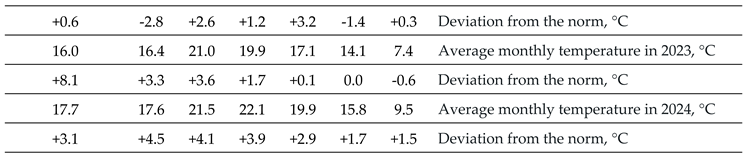 |
Table 4.
Dates of the onset of the main growth phases of paisa, peat bog massif "Chemerne".
| Crop | Sowing | Germination | Appearance of true leaf (seedling) | Budding tillering | Flowering | Seed ripening | |||
| appearance | complete | beginning | full | beginning | full | ||||
| Paisa | 06.05 | 10.05 | 15.05 | 18.05 | 21.07 | 10.08 | 14.08 | 26.08 | 05.09 |
Table 5.
Dynamics of linear growth of peas, cm; peat bog "Chemerne".
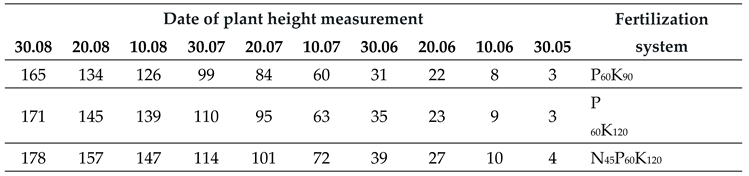 |
Table 6.
Dynamics of leaf surface formation of peas during the vegetation period, thousand m2/ha; peat bog "Chemerne".
Table 6.
Dynamics of leaf surface formation of peas during the vegetation period, thousand m2/ha; peat bog "Chemerne".
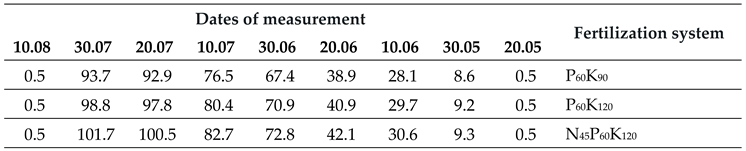 |
Table 7.
Depth of penetration of the pea root system depending on fertilization (average for 2016–2024), cm; peat bog "Chemerne".
Table 7.
Depth of penetration of the pea root system depending on fertilization (average for 2016–2024), cm; peat bog "Chemerne".
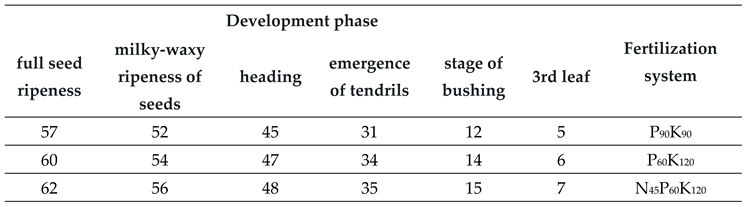 |
Table 8.
Accumulation of organic residues by forage crops depending on fertilization (c/ha of dry matter), peat bog "Chemerne".
Table 8.
Accumulation of organic residues by forage crops depending on fertilization (c/ha of dry matter), peat bog "Chemerne".
 |
Table 9.
Influence of agroclimatic indicators on the duration of the "sowing-emergence" phase in paisa cultivation.
Table 9.
Influence of agroclimatic indicators on the duration of the "sowing-emergence" phase in paisa cultivation.
| Sowing date | Agroclimaticindicatorsfromsowingtoemergence | Duration of "sowing-emergence" phase, days | ||
| average daily air temperature, °C | soil temperature at 0-10 cm depth, °C | precipitation, mm | ||
| April 15 | 11.3 | 12.4 | 8.2 | 18 |
| April 30 | 12.1 | 14.1 | 18.6 | 12 |
| May 15 | 18.5 | 19.9 | 21.0 | 10 |
Table 10.
Average stand density of paisa depending on sowing date (plants/m2).
| Sowing date | Number of plants | Field emergence, % | Plant survival coefficient | |
| at emergence | at harvest | |||
| April 15 | 46 | 37 | 30.7 | 0.80 |
| April 30 | 70 | 54 | 46.9 | 0.77 |
| May 15 | 94 | 74 | 62.4 | 0.79 |
Table 11.
Influence of sowing dates on aboveground biomass accumulation of paisa.
| Sowing date | Development stage | |||||
| budding | flowering | full ripeness | ||||
| Height, cm | daily growth, cm/day | Height, cm | daily growth, cm/day | Height, cm | daily growth, cm/day | |
| April 15 | 1.1 | 177 | 2.8 | 605 | 1.8 | 654 |
| April 30 | 1.3 | 198 | 3.1 | 649 | 1.9 | 668 |
| May 15 | 1.4 | 205 | 3.3 | 660 | 2.0 | 680 |
Table 12.
Deadlines for excess water removal when growing paisa, days.
 |
Table 13.
Main technological parameters for the cultivation of paisa, ), peat bog "Chemerne".
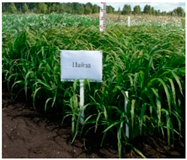
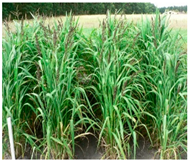
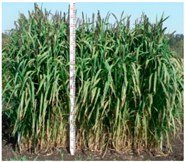
| Vegetation phase | 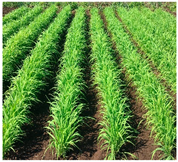 |
 |
 |
 |
 |
| Seedling-bush formation | Exit to the tube | Ear emergence | Flowering | Seed ripening | |
| Duration from the beginning of vegetation (phase) | 7 | 52(45) | 80(28) | 98(18) | 131(33) |
| Periods of optimal moisture supply | 2nd decade of June – 3rd decade of July | ||||
| Recommended GWL, cm (in the numerator - optimal; in the denominator - the minimum permissible in the summer period) |
0,60-0,65 0,65-0,70 |
0,60-0,75 0,75-0,85 |
0,60-0,75 0,75-0,85 |
0,75-0,85 0,90-0,95 |
0,75-0,90 0,9-1,0 |
| Optimal moisture content, % of field capacity | 70-75 | 65-80 | 75-80 | 70-85 | 70-85 |
| Fertilization rate | on drained peat soils – N60P120 (applied once during the main tillage) | ||||
| Agronomic practice | inter-row cultivation | inter-row cultivation | |||
Table 14.
Yield of forage crops depending on fertilization, 2016-2024, meliorative system of the peat bog "Chemerne".
Table 14.
Yield of forage crops depending on fertilization, 2016-2024, meliorative system of the peat bog "Chemerne".
 |
Disclaimer/Publisher’s Note: The statements, opinions and data contained in all publications are solely those of the individual author(s) and contributor(s) and not of MDPI and/or the editor(s). MDPI and/or the editor(s) disclaim responsibility for any injury to people or property resulting from any ideas, methods, instructions or products referred to in the content. |
© 2025 by the authors. Licensee MDPI, Basel, Switzerland. This article is an open access article distributed under the terms and conditions of the Creative Commons Attribution (CC BY) license (http://creativecommons.org/licenses/by/4.0/).
Copyright: This open access article is published under a Creative Commons CC BY 4.0 license, which permit the free download, distribution, and reuse, provided that the author and preprint are cited in any reuse.


