1. Introduction
With the intensification of migration processes and the increase in the number of the foreign students who chose to immigrate to the Republic of Moldova, it became imperative to adopt a systematic and coherent approach to their integration. In Moldova, this topic has not been addressed on a large scale in the specialized literature. There is a significant gap in local research on how sports activities can facilitate the foreign students’ social and cultural integration, thus providing an opportunity to explore the impact of university sport on social cohesion and academic adjustment. This study will bring new perspectives and strategies to support the foreign students’ effective integration in Moldovan universities.
In the international specialized literature, sport is a subject of increased interest, being recognized as a potential tool for the foreign students’ integration and adaptation. Starting from the theory of interculturality, sport is not only a physical activity, but a social space where individuals from different cultural backgrounds can interact, share values and build social relationships [
1]. In this context, the research carried out in Moldova [
2] emphasizes the fact that the foreign students’ participation in sports activities contributes to overcoming language and cultural barriers, thus strengthening the cohesion between students groups. This perspective is also supported by the international studies [
3,
4,
5], which argue that extracurricular activities, especially sports, play a decisive role in the process of social and intercultural integration. These activities create opportunities for the development of interpersonal relationships and for intercultural interaction, thus helping to reduce isolation and improve the sense of belonging to the community.
Another important aspect of this phenomenon is the connection between the students’ social integration, mental and physical well-being. Participating in sports activities not only improves social relationships, but also contributes to maintaining mental health, reducing stress and anxiety associated with the transition to a new cultural environment. This is a conclusion supported by local researchers [
2,
6], who demonstrate how sports can become an effective channel for promoting health and well-being among foreign students.
The analysis of the challenges identified in the research on the foreign students’ participation in university sports highlights the following major problems: language barriers, cultural differences, limited access to resources, discrimination, racism, etc. Each of these challenges has a significant impact on the foreign students’ integration in university sports activities and can affect the participants’ cohesion in the competitions and the sense of belonging to the academic community. Language barriers represent one of the most significant obstacles in the foreign students’ participation in sports activities. Studies [
7,
8] show us that communication difficulties prevent students from effectively integrating into sports activities. They not only have problems in understanding technical instructions, but also in building social relationships with their teammates. These communication barriers can diminish the feeling of inclusion and create a distance between the local and foreign students, affecting the foreign students’ performance and motivation to be actively involved in sports.
Cultural differences are another important factor regarding the foreign students’ participation in sports activities. Studies carried out by researchers [
9,
10] point out that different cultural norms and values can cause tensions and misunderstandings. Each culture has its own norms regarding sports, collaboration and competitiveness. When these norms are in conflict, difficulties may arise in communication and in establishing trusting relationships within different activities. This can negatively affect group cohesion and the sense of foreign students’ belonging, who risk feeling marginalized or excluded.
Limited access to sports resources is another major challenge, especially in small universities or in developing countries such as Moldova. Research done both at the international and national level [
11,
12], emphasizes that limited sports resources, such as the lack of adequate equipment or sports infrastructure, can represent a barrier for the foreign students, who need support to integrate. These limitations can lead to a reduced participation of the foreign students in university sports activities, diminishing their opportunities for socialization and integration.
Analyzing these challenges we can mention that the foreign students’ participation in university sports is affected by complex factors, involving both linguistic and cultural aspects, as well as access to resources. To promote the foreign students’ effective integration, universities should take steps to mitigate these barriers by offering language courses, cultural awareness programs and improving sports infrastructure. Thus, sport can become an appropriate environment for intercultural interaction and social cohesion among students from diverse backgrounds.
The opportunities that sport offers to the foreign students, the specialized literature provides solid evidence that underlines the major benefits of involvement in sports activities, contributing to their integration and well-being [
13,
14].
Social networking is one of the most obvious benefits of participating in sports. Thus, the authors [
15,
16] emphasize the fact that sports facilitate social interactions between the foreign students and their local colleagues, accelerating the integration process. By participating in practices and competitions, the students will not only develop their athletic skills, but also have the opportunity to form strong relationships that provide emotional support and strengthen their sense of community. In the university context, this aspect is particularly important, as the foreign students often face social isolation and lack of a support network, and sport can serve as an essential platform for building these bonds.
The development of intercultural skills is another benefit highlighted by literature [
17,
18]. Thus, we believe that sport will provide an ideal setting for students to interact with people from different cultures and learn about cultural diversity. This interaction will help develop intercultural skills such as empathy, mutual respect and understanding of cultural differences, essential in a globalized world. Sport facilitates an informal cultural exchange [
9], where students can learn through direct experience, developing a better ability to communicate and collaborate with people from different cultural backgrounds. In this sense, sport becomes an unconventional educational environment that prepares students for their future careers in multicultural societies.
Improving physical and mental health is another strong argument in favor of participating in sports activities. According to the authors, Bota and Enachi [
19,
20], regular physical activity is essential for maintaining a state of well-being, especially for the students who face the stress of adapting to a new environment. Cultural changes, language difficulties and academic pressure can create anxiety and stress for the foreign students. Sport not only improves physical health, but plays an essential role in reducing stress and anxiety, contributing to a more balanced mental state [
21]. Participating in sports provides a way for students to better manage the emotional and psychological challenges associated with transitioning into a new cultural environment.
These opportunities underline the fact that sport not only facilitates the foreign students’ integration, but also contributes to the development of essential intercultural competences and to the improvement of their general health. By promoting these activities in the university environment, educational institutions can support the foreign students’ effective integration and increased physical and mental well-being, contributing to their academic and personal success.
In this research we will highlight the complexity of the interaction between sport and sociocultural integration, highlighting both the opportunities it offers and the challenges it entails, providing a stable theoretical framework to understand how participation in sports activities can shape social relations between different communities.
At the same time, analyzing the theoretical sources regarding the foreign students’ socio-cultural integration [
5,
9,
15], we can report that the main deficit of the analyzed or implemented initiatives consists in the lack of an integrated character of the proposed activities. In this context, it is highlighted the need to include, in addition to the standard methods frequently used, an important component dedicated to physical and sports activities. These activities contribute significantly to the integration process due to their unique characteristics, facilitating the reduction of negative effects such as anxiety, low tolerance or "culture shock", supporting the acquisition of communication skills, strengthening self-awareness as an individual and promoting gradual integration in new conditions of life in an adapted and natural way.
The purpose of the study is to analyze the role of university sports activities in facilitating the foreign students’ integration. In this context, special emphasis is placed on the challenges and opportunities that the foreign students encounter in the context of migration, considering the various difficulties they may have in adapting to a new culture and academic environment. At the same time, there is an emphasis on the collaboration between universities and the local community, exploring how sport can act as a connecting tool between students and locals, thus facilitating cultural and social integration.
To achieve the proposed goal, there was formulated the hypothesis that the foreign students’ participation in university sports activities will significantly contribute to facilitating their sociocultural integration. This participation will not only improve their social skills, but also help build stable intercultural relationships, essential for a successful adaptation to a new environment. This idea aligns with the research that demonstrates that sport can be an important catalyst for social integration, fostering collaboration, mutual understanding and community cohesion [
22,
23].
2. Materials and Methods
The study is based on the analysis of legislation on migration, statistical and administrative data [
24], at the same time there was used empirical and analytical material, scientific hypotheses and conclusions presented in the works of the researchers on the problems of the foreign students’ integration.
2.1. Participants
For the selection of study participants, there were applied clear inclusion and exclusion criteria. The inclusion criteria concerned the foreign students registered at a university in Moldova, who expressed their voluntary agreement to participate and provided relevant information for the research objectives. Following the initial survey, the final number of participants was reduced to 134, as a result of some students’ exclusion for various reasons, including failure to meet eligibility criteria (e.g. lack of foreign student status), refusal to participate, incomplete completion of responses or voluntary withdrawal from the study. Of these, 25.4% are students from Ukraine, 15.7% from Romania, 17.9% from Greece, 14.2% from Russia, 26.9% from the Middle East and India, later there were organized 20 interviews with the foreign students to gain a deeper insight into their experiences of participating in sports activities.
Following the analysis of the sociological survey conducted among the foreign students and the various integration processes, they were invited to participate in university competitions alongside their colleagues from the host country, but also in other activities organized within the institution. At the same time, there were monitored the university sports activities carried out during one semester (January - June 2024), in order to observe the social interactions between the foreign and local students.
The activities took place in larger groups, as, in addition to the foreign students, there were also included colleagues from the host country. This approach can be considered an essential condition, which significantly contributed to the efficiency of the integration process. Participation in these activities took place on various platforms, such as classrooms and sports fields, depending on the objectives set for each activity. Special attention was paid to the organization of dynamic and sports games, their selection being adapted to the preferences expressed by the participants.
At the same time, there was applied an online questionnaire to assess the foreign students’ well-being, both in the initial and final stages, with the aim of analyzing the impact of sports activities on their integration process.
For completing the online questionnaires, we provided with instructions explaining that their participation is completely voluntary and anonymous and that there are no right or wrong answers, as we only want to know their perception of socio-cultural in-tegration and the impact of sport activities on the integration process. The estimated average time for completion was 20 minutes. The research protocol was approved by the Ethical Commission of the State University of Physical Education and Sport in Chisinau (Moldova, No 01-14/22/09.01.2024).
2.2. Variables and Measurements
Participation in university sports activities is one of the central variables that re-fers to the degree of involvement of foreign students in sports activities organized within the university, including competitions, training sessions and other similar events. Participation is measured by the frequency and type of activities in which stu-dents have taken part, which can give a clear picture of their interest and willingness to integrate through sport into the university environment. Socio-cultural integration is assessed from multiple perspectives, including the foreign students' adaptation to the cultural and academic context of the university, as well as the interpersonal rela-tions between foreign and local students. It also assesses the impact of sport activities on the integration process, observing whether they contribute to reducing cultural bar-riers and promoting a more open and inclusive environment.
Online questionnaires were used to collect information about foreign students' perceptions of the integration process before and after participating in sport activities. The questionnaires included questions about the impact of the activities on their well-being, cultural integration and interpersonal relationships. In addition, a total of 20 international students were interviewed in order to gain a deeper understanding of their experience of participating in university sport activities. The interviews were useful to explore students' subjective emotions and perceptions, providing a personal perspective on the integration process.
A statistical tool used for organizing and interpreting the questionnaire data is the dendrogram which helped us to identify patterns and groups of students based on their integration characteristics, thus providing a clear picture of the diversity of for-eign students' experiences.
Indicators such as motivation to study, language skills, satisfaction with social interac-tions and access to sports activities were used to assess the level of integration. These indicators allow a detailed measurement of various aspects of the integration process and how sport activities influence these dimensions.
The measures of this study provide a clear insight into the impact of sport activities on the socio-cultural integration of foreign students, highlighting both the benefits and challenges associated with this process.
2.3. Statistical Analyses
To analyze the responses from the questionnaire given to the foreign students, we used the dendrogram, which is an effective tool for organizing and interpreting data according to similarities or differences between them. The difference value was calculated through the clustering method, in our case it is the Euclidean distance, being essential in the dendrogram.
SPSS 15.01 software was used to analyze the questionnaires and to extract descriptive statistics about the participants, while using Microsoft Excel -2010 software, means, standard deviation and correlations were calculated.
3. Results
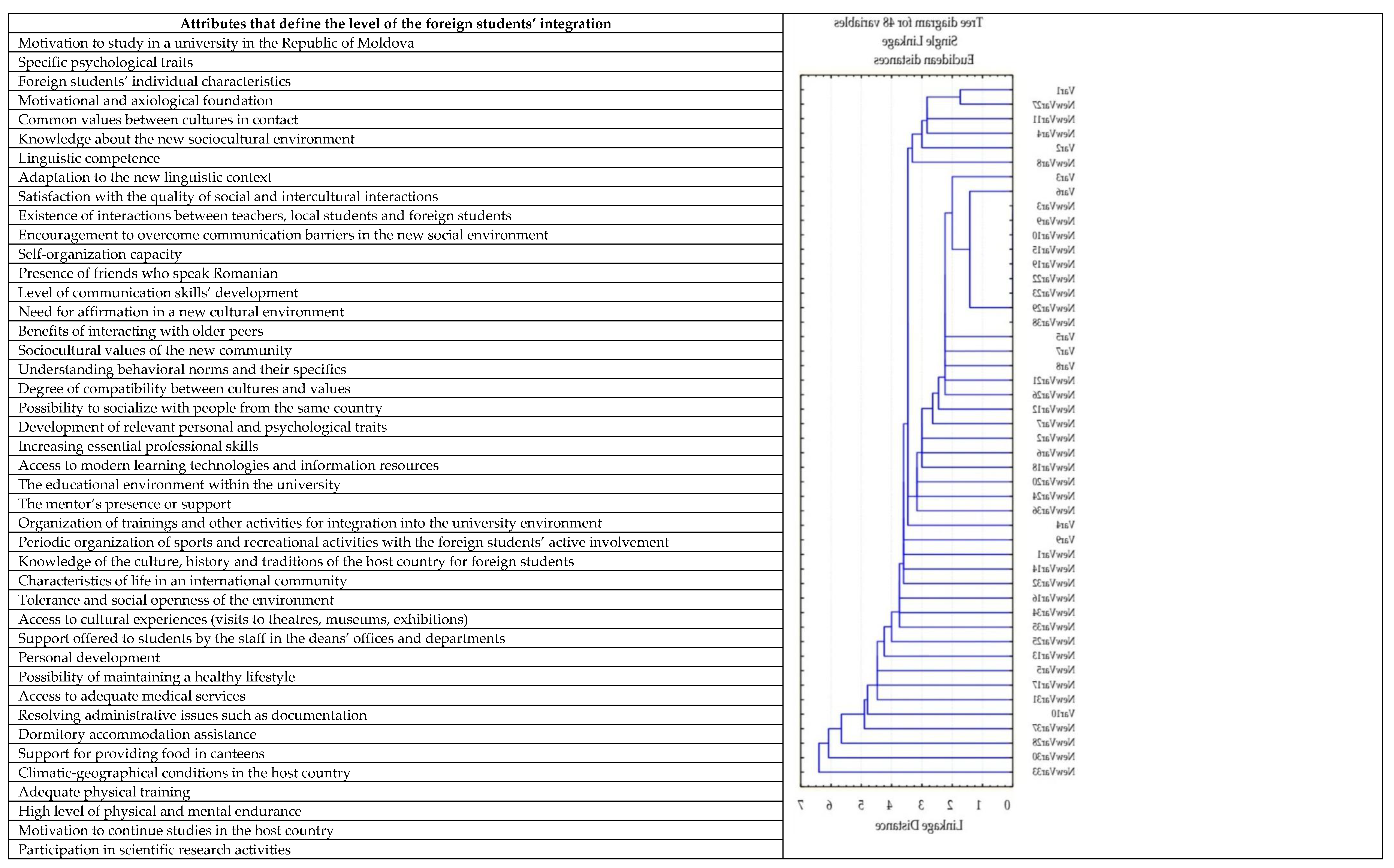
Following the survey, we identified various integration processes that have a significant impact on daily activities, the educational process and the students’ psycho-emotional state (
Figure 1,
Table 1).
To determine the indicators of the foreign students’ integration, clustering algorithms are useful because they allow the students’ grouping according to various characteristics relevant to integration and, at the same time, highlighting the relevant factors that influence the foreign students in the first stages of their studies. The data obtained show that social factors (communication between individuals and social relations) are objective causes of pressure on personality, along with biological factors.
It is important to emphasize that the integration process depends considerably on the way the academic space is organized, the relevance of educational activities for the foreign students and the opportunities for quality interaction between them and the social and educational community. This structuring helps us understand the complex relationships between different factors and establish priorities in order to develop in the future a sustainable integration program through sports, tourism and agreement activities for the foreign students.
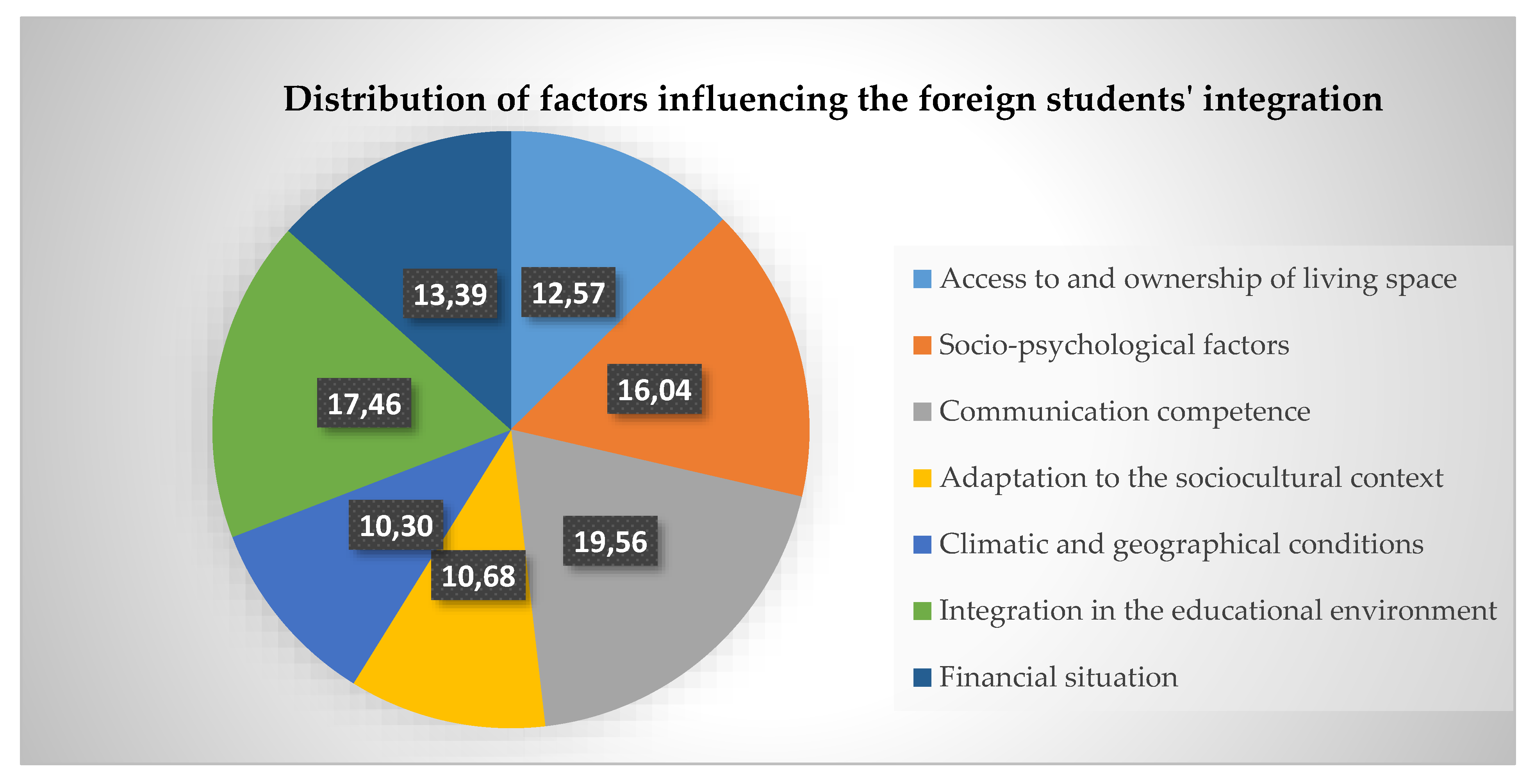
In
Figure 2 and
Table 2 we present the determining factors and the characteristics of the difficulties of integrating the foreign students into the university environment, according to the results of the January 2024 survey.
In this context, from the perspective of the organization of activities, the main mission of higher education institutions is to make optimal use of academic and socio-cultural resources, in order to create favorable conditions for the foreign students’ active involvement in various types of activities. These measures aim at facilitating the completion, with a minimum of difficulties, of one of the most complex stages of their academic training.
The analysis of the presented factors indicates that "integration" involves the assimilation of social experience and personal development through well-structured educational activities, which support the formation of a proactive attitude in the process of learning norms, values, types of activities, social roles and interpersonal relationships [
25,
26]. Thus, for a complete and effective adaptation, it is essential to create conditions that encourage an active involvement of the foreign students, facilitating their harmonious integration into the new social and academic environment.
Following the analysis of the sociological survey conducted among the foreign students and the various integration processes identified, they were invited to participate in university competitions alongside their colleagues from the host country, but also in other activities organized within the institution. The aim was to strengthen the link between sports and academic activities, demonstrating that involvement in sports can contribute to a more balanced and satisfying educational experience. Also, by actively participating in sports events, the foreign students can feel that they are part of the university community.
Between February and April 2024, the National University Championships took place in various sports events [
27]. Higher education institutions from Moldova participated in these competitions, and the events were organized within the Physical Education and Sport institute of Moldova State University. The competitions included a variety of sports events, in which the students from higher education institutions competed at the national level. These events were characterized by a significant intensity and by moments of visual and emotional impact, generating a special reaction among the public.
Table 3 shows the calendar of the National University Championships from Moldova, which provides a clear structure of the competitions and the periods allocated to each sports event.
Among the participating students, most came from Ukraine, migrating due to tensions in their country. Their involvement in the National University Championships, alongside their colleagues from the host country, had a significant impact, both personally and academically. Participating in this event provided everyone with valuable opportunities for social integration, personal development and improving collaboration skills in a multicultural environment, thus contributing to strengthening their intercultural competences and adapting to the university educational context.
In order to gain a detailed perspective on the experience of the foreign students who participated in the sports competitions of the National University Championships, we conducted an interview, which provided us with relevant information. Thus, we identified how well these competitions succeeded in facilitating their integration into the university environment and what impact they had on their cultural and social adaptation. In
Table 4, there are presented the data illustrating the motivation, the level of satisfaction of the foreign students, but also the challenges encountered in sports competitions.
Analyzing the information obtained from discussions with the foreign students, we notice that the motivation to participate in the National University Championships is diverse, including "integration" (the need to adapt to the new environment), "experience," "competition," "health," "activity physical," "socialization," "personal development," etc. These reasons reflect both personal desires (health, experience) and social goals (integration, adaptation, socialization). Likewise, we note that most students rated the experience with high scores (4 or 5), indicating overall positive feedback. Among the main challenges encountered we mention 'language barriers', 'cultural differences', 'competition pressure', 'participation conditions', 'limited support', etc. We state that participation in sports activities has brought multiple benefits for the foreign students, offering them opportunities for integration and personal development, but also challenges related to adapting to a new environment. The high level of satisfaction suggests that, overall, these sports experiences are formative and particularly meaningful.
We believe that sports activities, in addition to influencing the general integration processes, also contributed to the improvement of the foreign students’ psychological state. The verification of the psychological state was carried out by analyzing the data collected from the questionnaire regarding their well-being.
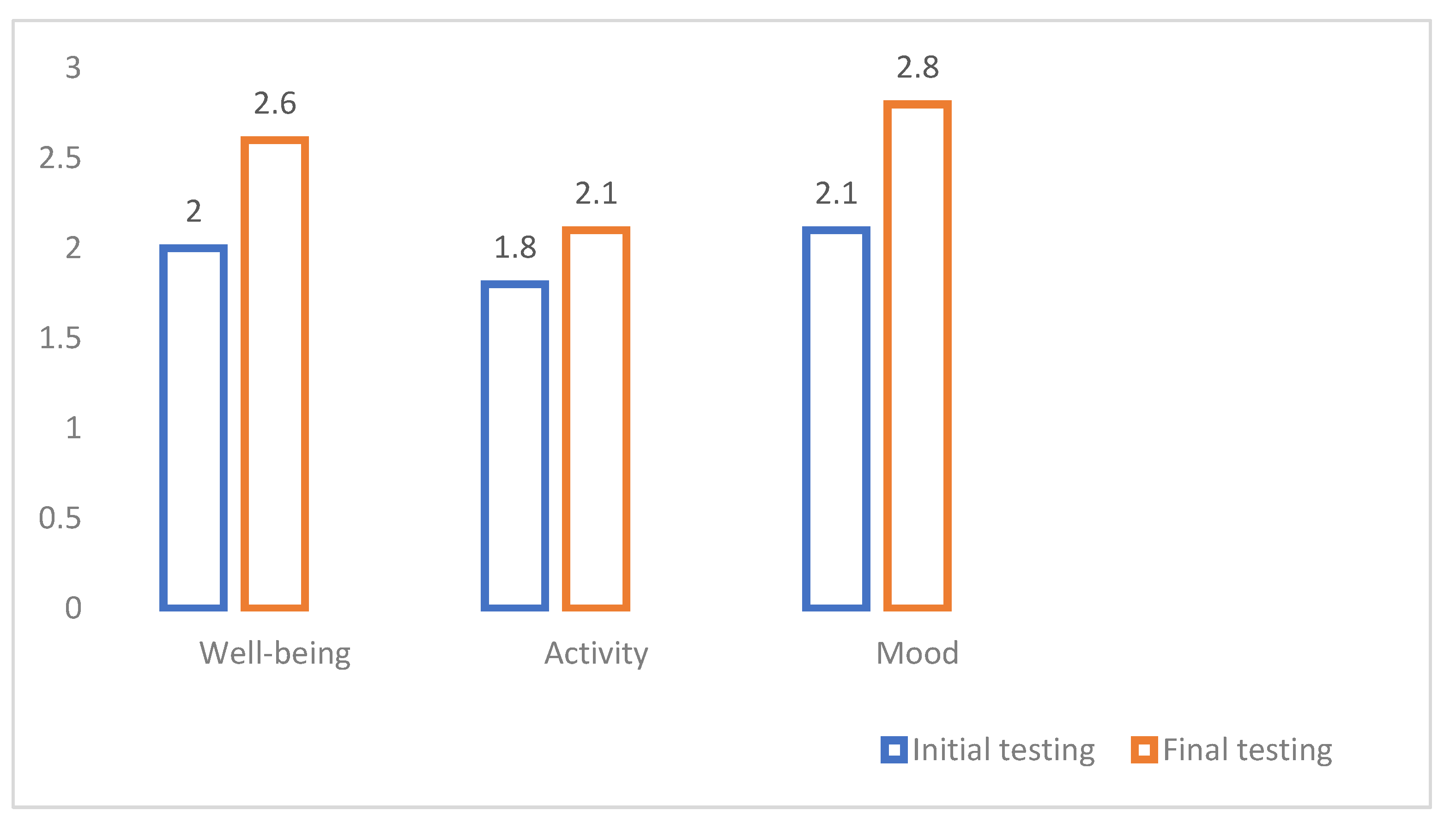
Table 5 and
Figure 3 show the mean values for the three scales (Well-being, Activity, Mood), both at the initial and final stages.
The graph above illustrates the evolution of the mean values for the three scales analyzed, highlighting a moderate increase between the initial and final testing for each scale, confirming a clear impact of sports activities on the foreign students’ integration. In this context, it is important to take into account other relevant factors. First of all, the survey can be considered partially "subjective", since the assessment of the psychological state is, in our opinion, significantly influenced by physiological factors, which can vary according to the degree of fatigue, the health of the subject, the time of testing, meteorological conditions. Also, despite a statistically significant positive trend, the actual increases in mean values are relatively small, the largest increase being 0.7 points (on the mood criterion). These results suggest the need to implement a sociocultural integration program for the foreign students, based on specific sports activities.
4. Discussion
The obtained results suggest that the foreign students’ involvement in university sports activities contributes to facilitating their integration process and supports their personal development, aspects that are consistent with the conclusions of previous studies on their social integration [
28,
29]. Participating in competitions alongside colleagues from the host country provided the foreign students with valuable opportunities for socialization and adaptation, fundamental elements for an effective transition in the new educational environment.
The research identifies major challenges faced by the foreign students such as: language barriers, cultural differences and limited access to resources. These obstacles are consistent with research that has highlighted the negative impact of communication difficulties on the integration of the foreign students [
7,
30]. The specialized literature also highlights cultural differences as a significant factor influencing the integration process [
9,
10,
31]. In our study, it was found that these differences affect their academic performance and can generate interpersonal tensions, thus highlighting the complexity of the dynamics of intercultural interactions.
The quantitative analysis carried out in this study, using a sample of 134 students, highlighted the fact that social factors have a significant impact on the integration process. The obtained data underline the importance of social aspects and communication in the students’ integration in the new academic environment. The results of this analysis demonstrate that social interactions play an essential role in maintaining the international students’ mental and physical well-being.
Previous studies [
30,
32,
33] suggest that, in order to improve the migrants’ experience, the community should implement strategies aimed at alleviating communication, cultural barriers, but also problems regarding discrimination, racism, discrepancies between the norms and values of the society of origin and those of the host society, living conditions in the host country. Our research makes a practical and dynamic contribution to existing integration strategies, demonstrating that the foreign students’ participation in sports activities facilitates social interaction, creates an informal environment conducive to dialogue and promotes intercultural understanding. Through these activities, students benefit from opportunities for cooperation, empathy and relationship development, thus contributing to the reduction of linguistic and cultural differences. In this sense, sport becomes an optimal framework for the development of interpersonal relationships and for improving the sense of belonging in the academic community.
The researchers, D'Angelo and Makarova [
1,
15], emphasize the essential role of sport as a social integration factor for the foreign students, highlighting, at the same time, the challenges encountered in the context of migration. However, the data obtained in this study suggest that their participation in sports activities is associated with positive experiences, characterized by a high level of satisfaction, but also motivation. These results indicate that sport not only facilitates social integration, but also contributes to improving the general perception of adaptation to new cultural and social conditions.
Also, for the most effective integration of the foreign students, it is essential to implement sports activities programs at the level of the local community. They must aim at the active involvement of all decision-makers in promoting an inclusive educational environment that encourages the development of the spirit of tolerance, understanding and acceptance of diversity among the members of the local community.
Thus, in future researches we could investigate in detail how different types of sports events (team vs individual) influence the foreign students’ integration, conducting longitudinal studies for a more comprehensive understanding of the long-term impact of sports activities on their well-being and integration, the examination of gender differences in participation in sports activities and their effects, the training of teaching staff for the development of intercultural competences.
At the same time, we believe that, in order to improve the effectiveness of sports activities in the process of the foreign students’ socio-cultural integration, it is necessary to develop and implement a structured program of sports activities for them, which will be carried out over an extended period of time and provide an increased frequency of physical activities, sports and other events.
Practical Implication
Research results can be used to structure sports programs that foster interaction between foreign and local students, helping to reduce cultural barriers and facilitate intercultural communication. Similarly, higher education institutions can implement measures based on the findings of the study to encourage the active participation of foreign students in sport, tourism and leisure activities. At the same time, this study can be a support for university staff in organizing sports activities that foster integration and support the personal and professional development of foreign students.
Strenght and Limitation
This study faces some limitations that should be addressed in future studies. This study has some shortcomings that should be addressed in future research. Although the study included 134 participants, the relatively small sample size may be a limitation in terms of generalizing the results to the entire population of international students. Consequently, for future research, we propose to significantly expand the sample and focus it on foreign students from all universities in the Republic of Moldova. In addition, the study was conducted in a relatively short period of time (January - June 2024), but we intend to continue the research in the long term in order to assess the effects of sport activities on the integration process of foreign students.
This study represents the first of its kind conducted in the Republic of Moldova, contributing to the development of an effective framework for the integration of foreign students through sport, tourism and leisure activities. Through this approach, we aim to deepen and optimize existing strategies in order to support the integration of future foreign students coming to study in our country.
5. Conclusions
Overall, it can be concluded that the participation of the foreign students in sports activities not only facilitates their integration into the new sociocultural environment, but also contributes to optimizing physical activity, improving physical condition and increasing motivation for systematic exercise and sports. These findings are supported by the data obtained through the questionnaire and the individual interviews with the participants, which highlighted the essential role of physical activity in maintaining a good intellectual and physical capacity, in strengthening health and in preventing fatigue and some related conditions.
We believe that the study makes a valuable contribution to the specialized literature, emphasizing the sport importance as an integration tool and proposing solutions to improve the foreign students’ experiences in Moldovan universities. By implementing these solutions, both the community and the universities will be able to contribute significantly to the creation of an inclusive environment, supporting both the students’ social integration, health and well-being. These findings open new directions for future researches that can explore in depth the complexity of intercultural interactions in the context of university sports.
Author Contributions
Conceptualization, V.L. and M.O.; methodology, V.L. and D.I.A; software, V.L.; validation, V.R., I.V., D.I.A., V.R. and E.L.; formal analysis, V.L. and E.L.; investigation, V.L.; resources, V.L., D.I.A., M.O., V.R. and E.L.; data curation, V.L., I.V. and V.R.; writing—original draft preparation, V.L. and M.O.; writing—review and editing, V.L., M.O., D.I.A., V.R., I.V. and E.L.; visualization, V.L., M.O., I.V., V.R. and D.I.A.; supervision, V.L. and E.L; project administration, V.L.; All authors have read and agreed to the published version of the manuscript.
Funding
This research has received financial support from the Ministry of Education and Research of the Republic of Moldova and will be provided by the State University of Moldova.
Institutional Review Board Statement
"The research protocol was approved by the Ethical Commission of the State University of Physical Education and Sport in Chisinau (Moldova, No 01-14/22/09.01.2024)".
Informed Consent Statement
Informed consent was obtained from all subjects involved in the study.
Data Availability Statement
The data that support the findings of this study are available on request from the corresponding author. The data are not publicly available due to privacy or ethical restrictions.
Acknowledgments
We would like to thank all participants for their understanding and availability and all collaborators and volunteers for their contribution in this study.
Conflicts of Interest
The authors declare no conflict of interest.
References
- D’Angelo, G. Sport and Integration of Migrants: Some Considerations. Journal of Mediterranean Knowledge-JMK, 2019, 4(1), 3-15 − ISSN: 2499-930X DOI: 10.26409/2019JMK4.1.01.
- Leșco, V.; Razmireț, V. The importance of sports activities in the formation of skills for an active and healthy lifestyle in young people. Bulletin of theTransilvaniaUniversity of Braşov Series IX: Sciences of Human Kinetics, 2024, Vol. 17(66) No. 2. [CrossRef]
- Berry, J.; Phinney, J.; Sam, D.; Vedder, P. Immigrant Youth: Acculturation, Identity, and Adaptation. Applied Psychology, 2006, Volume 55, pp. 303-332. [CrossRef]
- Friedkin, N. Social cohesion. Annual Review of Sociology, 2004, 30, 409–425. [CrossRef]
- Ekholm, D. Sport as a Means of Governing Social Integration. Discourses on Bridging and Bonding Social Relations, Sociology of Sport Journal, 2019, 36(2), pp. 152-161. [CrossRef]
- Lesco, V.; Onoi, M.; Razmiret, V.; Lungu, E. Sports, Tourism and Leisure Activities – Factor for Integrating Foreign Students in the University Environment. Revista Romaneasca Pentru Educatie Multidimensionala, 2024, 16(4), pp. 682-695. [CrossRef]
- Rienties, B.; Nolan, E. Understanding friendship and learning networks of international and host students using longitudinal Social Network Analysis. International Journal of Intercultural Relations, 2014, 41, pp. 165–180. [CrossRef]
- Belea, S. Intercultural Communication in the Migration’s Context. Logos Universality Mentality Education Novelty: Social Sciences, 2013, 2(1), pp. 43-55.
- Allen, J.; Drane, D.; Byon, K.; & Mohn, R. Sport as a vehicle for socialization and maintenance of cultural identity: International students attending American universities. Sport Management Review, 2010, 13(4), pp. 421–434.
- https://doi.org/10.1016/j.smr.2010.01.004.
- Doherty, A.; Taylor, T. Sport and physical recreation in the settlement of immigrant youth. Leisure/Loisir, 2007, 31 (1), pp. 27–55.
- Cobourn, S.; Frawley, S. CSR in professional sport: An examination of community models. Managing Sport and Leisure, 2017, 22 (2), pp. 113-126.
- Ciorba, C.; Guţu, V.; Bragarenco, N. Valences of non-formal education in sports, tourism and recreation field (example of the Republic of Moldova). Journal Annals of" Dunarea de Jos" University of Galati. Fascicle XV, Physical Education and Sport Management, 2023, pp. 81-95. [CrossRef]
- Inclusion of Migrants in and through Sports A Guide to Good Practice.
- https://sportinclusion.net/files/SPIN-GPG-SPIN_Inclusion_of_Migrants_in_and_through_Sports.pdf (accessed on 23.08.2024).
- Mabillard, V. Le sport: un facteur d'intégration ou d'exclusion sociale?, 2012.
- Makarova, E.; Herzog, W. Sport as a means of immigrant youth integration: an empirical study of sports, intercultural relations, and immigrant youth integration in Switzerland. Sportwiss, 2014, 44, pp. 1–9. [CrossRef]
- Hertting, K.; Karlefors, I. Sport as a Context for Integration: Newly Arrived Immigrant Children in Sweden Drawing Sporting Experiences. International Journal of Humanities and Social Science, november 2013, 3(18), pp. 35-44.
- Gizem, G.; Soner, P. Level of Intercultural Competence of International Students at Kocaeli University. Universal Journal of Educational Research, 2016, 4(12A), pp. 39-45. [CrossRef]
- Deardorff, D. Identification and assessment of intercultural competence as a student outcome of internationalization. Journal of Studies in International Education, 2006, 10(3), pp. 241–266. [CrossRef]
- Bota, A. Exerciţii fizice pentru viaţă activă, activităţi motrice de timp liber. [Physical exercises for an active life, leisure time motor activities]. Jurnal Activităţi motrice de timp liber. Ed. Cartea Universitară, Bucureşti, 2006, pp.22-24.
- Enache, I. Strategii didactice eficiente de formare a obișnuinţei de practicare independentă a exerciţiilor fizice la studenţi. [Effective Didactic Strategies for Developing the Habit of Independent Physical Exercise Practice Among Students] Doctoral Thesis. University of Pitești. 2012.
- Olanescu, M. Study of Sports Motivation of Students from the Technical University of Cluj-Napoca. Studia Universitatis Babeş-Bolyai Educatio Artis Gymnasticae, 2021. [CrossRef]
- Ghid de educație interculturală.
- https://www.intercultural.ro/wp-content/uploads/2020/02/Ghid-Educatie-Interculturala-web.pdf (accessed on 17.05.2024).
- Interculturalitate în educație. https://www.sutori.com/en/story/interculturalitate-in-educatie--J36NanUVRobcUrZLf4uTM2Td (accessed on 27.06.2024).
- Ministry of Internal Affairs of the Republic of Moldova. Anuar statistic: ,,Imigrarea străinilor, azilul și apatridia în Republica Moldova în anul 2023”. [Statistical yearbook: "immigration of foreigners, asylum and statelessness in the Republic of Moldova in 2023"] 2024; https://igm.gov.md/wp-content/uploads/2024/07/Anuarul-statistic_ed.-2024.pdf (accessed on 06.08.2024).
- Racu, A; Popovici, V.; Popa, O. [et al.]. Incluziunea socială în mediul academic: provocări, oportunităţi, soluţii contemporane: Suport didactic. Chişinău: Pontos. 2019; pp. 155 – 171. ISBN 978-9975-72-412-8.
- Poalelungi, O. Educational immigration to Moldova: opportunities and challenges for participation in the international market of educational services. In: Economy and Sociology, 2022, nr. 1, pp. 115-125. ISSN 2587-4187.
- https://doi.org/10.36004/nier.es.2022.1-10.
- Federația moldovenească a sportului studențesc și a veteranilor sportului. https://www.fmssv.net/home.php (accessed on 05.02.2024).
- Galan, Y.; Iryna, S.; Zoriy, Y.; Briskin, Y.; Pityn, M. Designing an effective approach to sport for the integration in higher education institutions (the effects of yoga practice). Journal of Physical Education and Sport, 2017, 17(1), pp. 509- 518. [CrossRef]
- Glass, C.; Gómez, E.; Urzua, A. Recreation, intercultural friendship, and international students’ adaptation to college by region of origin. International Journal of Intercultural Relations, 2014, 42, pp. 104-117. [CrossRef]
- Mahesh, P.; Balaji, D. Sports and language integration skill development. Salud, Ciencia y Tecnología - Serie de Conferencias 2023; 2:598. https://doi.org/10.56294/sctconf2023598. [CrossRef]
- Barna, L. Gli ostacoli della comunicazione interculturale. Principi di comunicazione interculturale. Franco Angeli, Milano, 2002.
- Poalelungi, O. Integrarea străinilor în Republica Moldova. Între provocări și necesități. In: Economic growth in the conditions of globalization. Scientific session "Migration and demographic change: challenges and public policies": conference proceedings: International Scientific-Practical Conference, XVIIth edition, Chisinau. Chisinau: SEP ASEM, 2023, vol. III, pp. 164-177. ISBN 978-9975-167-22-2 (PDF). [CrossRef]
- Özlü-Erkilic, Z.; Wenzel, T.; Kothgassner, O.D.; Akkaya-Kalayci, T. Transcultural Differences in Risk Factors and in Triggering Reasons of Suicidal and Self-Harming Behaviour in Young People with and without a Migration Background. Int. J. Environ. Res. Public Health, 2020, 17, 6498. [CrossRef]
- Vasquez Diaz, K.; Iqbal, J. Challenges Faced by International Students in Understanding British Accents and Their Mitigation Strategies—A Mixed Methods Study. Educ. Sci. 2024, 14, 784. [CrossRef]
|
Disclaimer/Publisher’s Note: The statements, opinions and data contained in all publications are solely those of the individual author(s) and contributor(s) and not of MDPI and/or the editor(s). MDPI and/or the editor(s) disclaim responsibility for any injury to people or property resulting from any ideas, methods, instructions or products referred to in the content. |
© 2025 by the authors. Licensee MDPI, Basel, Switzerland. This article is an open access article distributed under the terms and conditions of the Creative Commons Attribution (CC BY) license (http://creativecommons.org/licenses/by/4.0/).