Preprint
Article

This version is not peer-reviewed.

Influence of Climate, Soil, and Topography on the Phenotypic Traits of Juglans neotropica Diels Matrix Trees in Natural and Artificial Populations of the Loja and Zamora-Chinchipe Provinces of Ecuador

Submitted:

19 January 2025

Posted:

21 January 2025

You are already at the latest version

Abstract

Zone 7, located in the south of Ecuador, stands out as a megadiverse region due to the combined influence of the distinctive characteristics of the climate, soil, and topography of the Coastal Marine, Andean Sierra, and Eastern Jungle. The research focused on analyzing the impact of climate, soil, and slope on the phenotypic characteristics of the parent trees of J. neotropica populations, both natural and artificial. Six provenances were selected: The Tundo, The Victoria, The Tibio, The Zañe, and The Argelia. It is noteworthy that the latter is a planted forest that has naturalized over time. In the last two decades, a decrease in precipitation, an increase in temperature, relative humidity below 70%, and soil moisture below 60% were observed. Regarding the soil, the physical properties were similar, with mountainous relief and a texture ranging from loam to clay loam to sandy loam, and chemically neutral to slightly acidic. All provenances were found on slopes greater than 45%. Phenology varied by a maximum of one month between provenances in terms of presence, leaf fall, and fruit maturation. The age of the trees varied between provenances, with The Tundo being the oldest at 355 years and The Argelia the youngest at approximately 76 years. The results showed a wide diversity in phenotypic characteristics, ensuring a high adaptability of J. neotropica populations, a key species for the health of mountainous ecosystems.

Keywords: 
;  ;  ;  ;  ;  

1. Introduction

The study of the phenotypic characters of trees is fundamental to understanding the influence of environmental variables on their development and behavior. These studies allow us to identify how factors such as climate, soil, and biological competition affect the growth, shape, and health of trees [1] . Among these variables, climate, soil composition, and terrain slope emerge as critical factors that shape the phenotypic expression of trees [2,3]. This multidimensional analysis offers a comprehensive view of the interaction between forest biology and the environment, providing valuable insights for the sustainable management of forest resources [4].
Climate change has become a global concern, generating direct impacts on biodiversity and ecosystems [5]. In particular, trees face significant challenges due to fluctuations in climatic conditions. Variations in temperatures, rainfall patterns, and the occurrence of extreme weather events have triggered notable phenotypic responses in these plant organisms. Recent studies have documented how climate change influences the physiology and behavior of trees, affecting their geographical distribution and the timing of seasonal events [6]. Additionally, an increase in the frequency and intensity of phenomena such as wildfires and droughts has been observed, further exacerbating the impacts on forests and their ability to adapt [5]. A report by the NGO Manos Unidas highlights that rising temperatures, stronger storms, and increased droughts are some of the climate change impacts that directly affect the health and development of trees [7,8].
The global increase in temperature represents a significant threat to the world’s flora, with adverse effects extending to the survival and development of trees, which are fundamental to terrestrial ecosystems. As sessile organisms, trees are particularly subject to the impacts of climate change, as their growth and reproduction are intrinsically linked to environmental conditions. According to [9,10], factors such as solar radiation, relative humidity, and ambient temperature directly influence the productive performance of trees. Thermal stress, exacerbated by climate change, and alterations in precipitation patterns, as suggested in a recent study [11], constitute critical factors that can trigger significant challenges for the health and development of trees. These environmental changes can disrupt the natural cycles of growth, flowering, and fruiting, which in turn can negatively impact the phenotypic expression of trees, as noted by [12,13].
Soil plays a fundamental role in determining the phenotypic characteristics of trees. Recent research highlights the relevance of selecting trees based on phenotypic traits linked to soil composition. Aspects such as nutrient availability, soil texture, and water retention capacity are essential elements that directly affect root development, trunk growth, and the production of leaves and fruits. This analysis underscores the intimate interconnection between soil characteristics and tree physiology, highlighting the need to understand this relationship for effective and sustainable forest management [14,15]. The species J. neotropica performs better in fertile, well-drained soils, particularly those with a loam-clay or loam-silt texture and a pH ranging from slightly acidic to neutral. According to [16], these types of soils provide the ideal conditions for the optimal growth of J. neotropica, promoting its healthy development. These conditions are essential to ensure the success in the establishment and maintenance of plantations of this species, as noted by [17]. Therefore, understanding and properly selecting the soil type for the cultivation of J. neotropica is fundamental to maximize its productivity and ensure its longterm viability.
The selection of trees adapted to specific soil characteristics not only optimizes their growth but also significantly contributes to the preservation of biodiversity and resistance to adverse conditions. This intrinsic relationship between soil composition and tree development has been the focus of numerous scientific studies. For example, research highlights the importance of selecting trees based on the appreciation of phenotypic traits related to soil composition [14,15]. Factors such as nutrient availability, soil texture, and water retention capacity are crucial for root development, trunk growth, and the production of leaves and fruits [18,19].
The morphology and structure of trees are intrinsically linked to various geographical factors, among which the slope of the terrain stands out. Soil topography, shaped by the inclination of the terrain, plays a fundamental role in modulating the phenotypic characteristics of trees. This phenomenon is due to its influence on water distribution, soil erosion, and especially the availability of essential nutrients for plant growth and development. [15,16,17,18]. The topography of the terrain exerts a significant influence on the development and phenotypic characteristics of trees. Recent research highlights how soil slope can alter the genetic expression and morphology of these plant organisms [15]. Specifically, it has been observed that on steep slopes, trees may develop more robust root systems and more aerodynamic structures, which confer greater resistance to wind and other adverse climatic conditions.
J. neotropica, known as Andean walnut, is endemic to the montane forests of South America, playing a vital role in the ecology of these ecosystems. Its presence on steep slopes and mountains is essential for stabilizing the soil and facilitating water retention through its intricate root network [17]. In addition to its ecological role, this robust tree, with its characteristic bark and edible fruits, enriches local biodiversity and provides crucial resources for human communities that depend on mountain ecosystems.
Forests are not just a source of timber; they also provide a wide variety of valuable non-timber products. The forest species Juglans neotropica, mentioned in this research, is endangered according to the IUCN. This multipurpose species offers numerous additional benefits. Its seeds are edible; dyes are extracted from its fruits, leaves, and bark; and cough syrups are made from its leaves. Additionally, J neotropica plants are used in urban tree planting, providing shade and improving air quality. To prevent its extinction, it is essential to draw upon various sciences, and horticulture emerges as a viable solution. Horticulture, the science, art, and practice of cultivating plants, encompasses a wide range of activities related to crop management and improvement, garden design, and food production. This comprehensive approach not only contributes to the conservation of species like J. neotropica but also promotes sustainability and environmental well-being. This study explores the importance of J. neotropica in the conservation of montane forests and its interaction with local communities, highlighting its relevance for environmental sustainability and human well-being. Therefore, the objective of this study was to analyze the influence of climate, soil type, and terrain topography on the phenotypic traits of matrix trees in natural and artificial populations of J. neotropica ≥ 0.5 ha. To this end, a comprehensive analysis was conducted on how these environmental variables influence characteristics such as the growth of dendrometric variables, the health, and the reproduction of J. neotropica trees. This study aimed to provide a deeper understanding of the ecophysiology of this tree species, as well as to offer relevant information for the conservation and management of its populations in different environmental settings.

2. Materials and Methods

2.1. Study Area

The research focuses on Zone 7 in southern Ecuador, located between latitudes 3°30′ and 5°0′ south, and longitudes 78°20′ and 80°30′ west. It borders Zones 5 and 6 to the north, Peru to the south and east, and Peru and the Pacific Ocean to the west [20]. This area, recognized for its biological diversity, is distinguished by a variety of topographical, altitudinal, climatic, and edaphic characteristics, which confer it significant ecological importance.
The study focused on the provinces of Loja and Zamora Chinchipe, with a combined area of 21,625.3 km², which constitutes approximately 8.65% of the Ecuadorian territory [20]. Six provenances were selected: The Tundo, The Victoria, The Tibio, The Zañe, and The Argelia. It is noteworthy that the latter is a planted forest that has naturalized over time.These areas host J. neotropica and are recognized for their geographical diversity, especially in the Evergreen Montane Forest, as noted by [21]. The research was conducted through fieldwork in these regions due to their importance in terms of biodiversity and the distribution of this tree species.
The region stands out as an ideal environment to investigate the presence and characteristics of J. neotropica in various ecosystems, taking advantage of its varied topography. The relevance of this study lies in understanding the direct impact of climate, soil, and topography on the habitat of this species. Focusing on these specific provinces aims to provide crucial data for the medium- and long-term conservation of J. neotropica in Zone 7, thus contributing to a comprehensive understanding of this species in its environment [20].

2.2. Climate

In order to analyze the influence of climatic variables, specifically precipitation and temperature, relative humidity, and soil moisture at a depth of one meter, in the areas where the presence of J. neotropica was recorded in southern Ecuador, we implemented a rigorous methodological approach. To obtain reliable data, we used globally renowned sources such as POWER-Data Access, which hosts daily climatological records from 1981 to the present [22]. The verification of these data was carried out by comparing them with climatological information from databases of Municipalities, Provincial Council, and Parish Governments, as well as from both public and private research. These additional sources significantly contributed to illuminating relevant aspects of the climate in the study areas [23]. The data were recorded in natural populations of J. neotropica over an extensive period, from 1981 to 2023. Data collection was carried out using the POWER | Data Access Viewer platform on a daily basis over 12 months, totaling 365 days per year. Over the 42-year period, a total of 15,330 records were collected for each climatic variable. These records present annual average values, providing a comprehensive and detailed view of the climatic conditions experienced by J. neotropica over decades.

2.3. Soil

To obtain detailed information on soil properties in the study area, a technical-administrative approach was implemented using SIGTIERRAS 2022 and the geopedological unit. In the first stage, geopedological mapping at a scale of 1: 25,000 from SIGTIERRAS was used to analyze soil fertility, as well as physical, chemical, and microbiological aspects of the soil. The methodology incorporated the mass valuation of rural lands, following specific guidelines published in the Geoportal del Agro Ecuatoriano in 2017. Additionally, soil and geomorphology data were integrated to conduct a land use capacity analysis, with the active participation of SIGTIERRAS-MAG-IEE. This comprehensive approach provided a complete understanding of soil characteristics, facilitating more effective planning and sustainable management for J. neotropica.
Data collection was carried out using the SIGTIERRAS platform, selecting relevant variables that helped interpret how they affected the phenotypic characteristics of J. neotropica populations in the study area in southern Ecuador; these variables included hydrogen potential (pH), cation exchange capacity (CEC), fertility, morphology, slope, taxonomic order, texture, drainage, depth, stoniness, salinity, temperature, humidity, and organic matter (OM).
To ensure comprehensive information in the selected locations with the presence of the native forest species J. neotropica, a rigorous and scientific methodology proposed by [24] was implemented. This comprehensive methodology supports the acquisition of precise data on the composition and properties of the forest soil, thus establishing a solid scientific basis for subsequent analysis and conclusions. The process is detailed below:

2.3.1. Identification of Representative Areas

Representative areas of the forest were selected, dividing them into homogeneous zones based on predominant vegetation and topography. This classification allowed for precise mapping of the environmental characteristics.

2.3.2. Sample Extraction

Specialized tools, such as a shovel and a cylinder, were used to extract soil samples at various depths, ensuring an exhaustive and representative collection.

2.3.3. Multiple Samples per Zone

Multiple samples were taken in each identified zone to increase the accuracy and representativeness of the data, capturing the soil heterogeneity in the forest.

2.3.4. Detailed Record

Each sample was meticulously labeled and recorded, including information about the exact location, surrounding vegetation, altitude, and site orientation, facilitating subsequent analyses and study replication.

2.3.5. Storage and Biosafety

Samples were stored in airtight containers to prevent contamination, following biosafety practices that ensured their integrity.

2.3.6. Recording of Weather Conditions

Weather conditions, including temperature and humidity, were documented during the collection, enriching the environmental context of the samples for subsequent analysis.

2.3.7. Sample Conservation and Laboratory Shipment

The soil samples collected were preserved following the methodology proposed by [24]. It was ensured that the samples were precisely labeled and recorded, stored under conditions that prevented contamination, and documented with relevant climatic data. These practices ensured the acquisition of accurate data on the composition and properties of the soil, providing a solid scientific basis for future analyses.

2.4. Slope

2.4.1. Topographic Digitization of Localities

To determine the spatial distribution of J. neotropica habitats, a detailed methodological approach was implemented. Initially, a slope map was generated using control points obtained via GPS. Subsequently, the field information was processed using ARCGIS 10.8 software to ensure accuracy and robustness in the results.
The terrain slope was calculated as a percentage using a Digital Elevation Model (DEM), thus establishing a quantitative basis for spatial analysis. Then, a reclassification was applied using previously defined indices, following the methodology proposed by [25] and [26]. Additionally, criteria provided by local professionals and producers from the study areas were integrated, enriching the methodology with practical and local perspectives.
This methodological approach combined technical precision with local experience, providing a comprehensive assessment of the areas of interest (Table 1).
The purpose of this map was to identify and digitize areas with slopes greater than 30% inclination. According to experts and local landowners, exceeding this threshold poses a threat to nature, particularly to the habitats of J. neotropica, when forests are cleared for anthropogenic activities.

2.5. Phenology

To study the phenology of J. neotropica in native forests, acomprehensive methodology was implemented, encompassing various stages [27]. Initially, an exhaustive review of the scientific literature related to the phenology of J. neotropica was conducted, focusing on previous research on native forests in the region of interest. Information was gathered on seasonal patterns, life cycles, and environmental factors influencing the phenology of the selected species. Subsequently, the key species was identified through systematic sampling techniques, using study plots strategically distributed in the native forest.
Once the species of interest was identified, continuous monitoring protocols were established to record phenological events such as flowering, fruiting, and leaf fall. These records were maintained over a representative period of one calendar year to capture monthly variability. To complement direct observation, advanced technologies such as state-of-the-art binoculars or prismatic devices were employed to obtain more detailed and precise data on the phenology of the forest species.
Data collection was complemented with environmental measurements, including climatic variables, soil properties, and topographic characteristics of the study area. This approach allowed for the analysis of the relationship between phenological events and environmental factors, providing a more comprehensive understanding of the processes governing the phenology in the J. neotropica forest. Finally, advanced statistical analyses were applied to identify significant patterns and establish correlations between the different variables collected.
The proposed methodology aimed not only to document the phenology of J. neotropica in native forests but also to understand the complex interactions with the environment. This integrative approach generated fundamental knowledge for the conservation, sustainable management, and restoration of native forests, contributing to the understanding of their dynamics and resilience to environmental changes. The implementation of this methodology was carried out rigorously and systematically, ensuring the collection of reliable and relevant data to advance the understanding of the phenology of J. neotropica in this specific context.

2.6. Determination of the Age of Trees

2.6.1. The Calculation of Transit Time

To determine the reference or approximate age of J. neotropica individuals in the study area, an indirect method was used, focusing on obtaining a cross-section of the trunk (Figure 1) as close to the ground as possible.
The technique, recommended by Gonzaga, 1997 and cited by [28], consisted of following these steps:
a)
From the field database obtained on the dasometric variable DBH at 1.30m above ground level, each tree from the located provenances was divided into respective diameter classes (Table 2).
b)
The Average Current Annual Increment (CAI-A) was calculated for each diameter class.
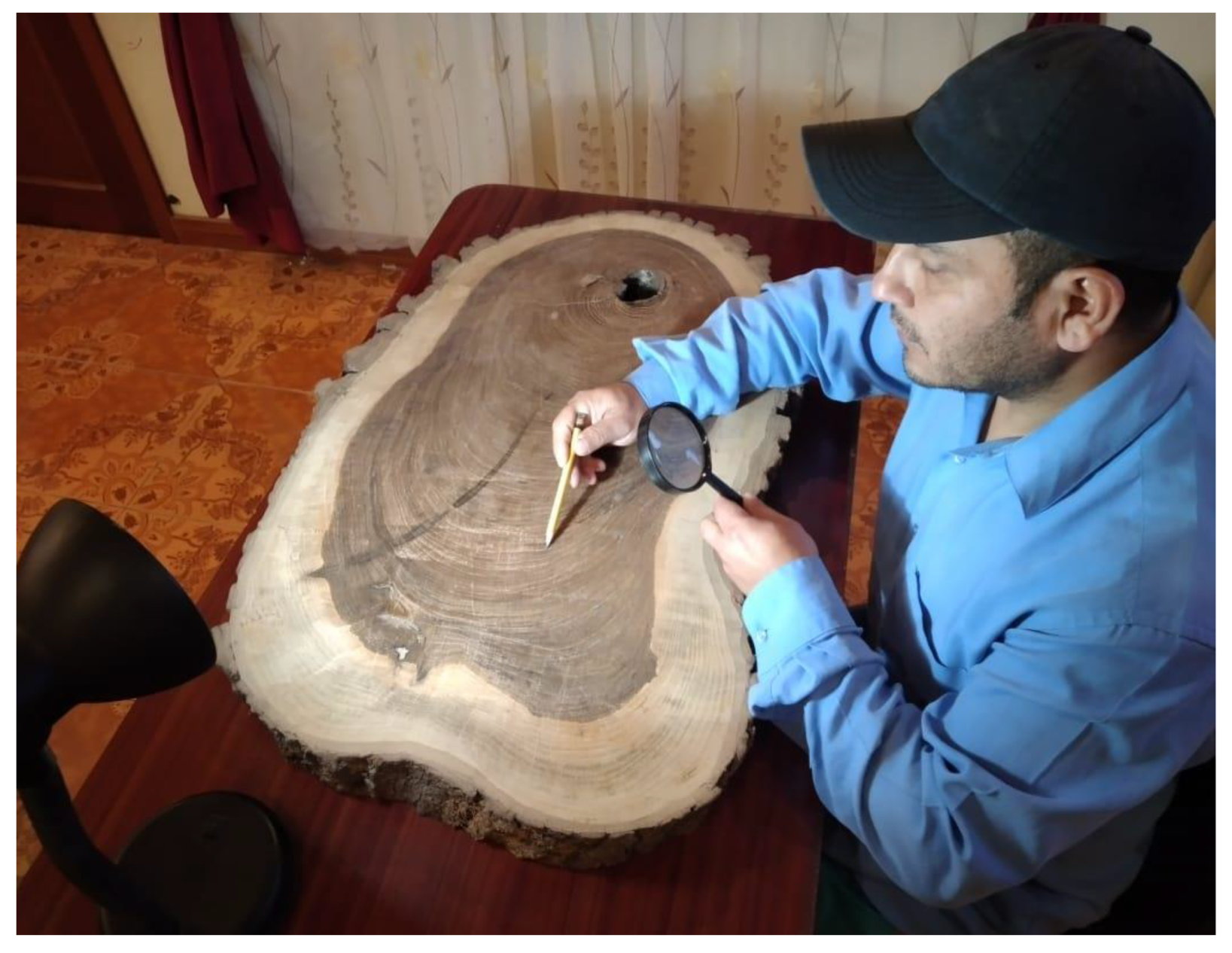
Figure 2. Calculation of the CAI-A in J. neotropica.
Preprints 146591 g002
c)
A curve was drawn through these points, adjusting the CAI-A values corrected by the DBH class.
d)
The amplitude of each class was divided by its respective corrected CAI-A to obtain the passage time, that is, the time required for an average tree to grow from the lower limit to the upper limit of the diameter class.
e)
The passage times were summed to determine the total time required for an average tree to grow from zero to the upper limit of all considered diameter classes.
f)
A curve was drawn through these points, adjusting the CAI-A values corrected by the DBH class.
g)
The amplitude of each class was divided by its respective corrected CAI-A to obtain the passage time, that is, the time required for an average tree to grow from the lower limit to the upper limit of the diameter class.
h)
The passage times were summed to determine the total time required for an average tree to grow from zero to the upper limit of all considered diameter classes.
In cases where sample extraction was impossible, growth estimates were made using data from the literature of similar studies conducted by experts. This approach defined the species’ growth curves, allowing for estimated values that closely approximate reality within a known margin of error.
This method has been widely used in several countries, including Malaysia, Guyana, India, and Thailand, for species such as Ocotea radiaei, Baikiaea plurijuga, and Mora excelsa, with specific adaptations made in its implementation over time [28].

2.7. Data Analysis

For data analysis, climatic variables were examined and graphs were generated using information collected over a 42-year period from the POWER-Data Access platform, covering precipitation, temperature, relative humidity, and soil moisture at root level. Time series analysis techniques were employed to identify trends and patterns over time. The data were preprocessed to eliminate outliers, and descriptive statistical methods were applied, visualizing the results using graphs created in Excel. For the soil variable, detailed information was collected using the SIGTIERRAS platform, including physical and chemical properties such as pH, cation exchange capacity (CEC), fertility, morphology, slope, taxonomic order, texture, drainage, depth, stoniness, salinity, temperature, moisture, and organic matter (O.M.) content. These properties were subjected to principal component analysis (PCA) to identify the main factors influencing soil characteristics, with the PCA results contrasted with physical and chemical laboratory analyses conducted for each study locality. Regarding the slope variable of the terrain, georeferenced information was collected and slope maps of the soil were constructed using ArcGIS 10.8, with a DATUM WGS84 projection and UTM coordinates, zone 17 South. For the phenology variable, phenological information was collected over one year in all localities, and comparative tables documenting the process over twelve months were constructed, covering leaves at 100% and less than 100%, flowering, green fruits, and mature fruits. Finally, for the age variable, descriptive statistical analysis was conducted, including mean, standard deviation, minimum, and maximum values. Additionally, analysis of variance (ANOVA) and mean comparison tests (TUKEY) were performed with a significance level of 0.05% error for the dasometric variable (DBH). This approach allowed determining the age potential effect of trees according to their diameter class in each provenance. The statistical analyses were conducted using the InfoStat/Professional 2023 software.

3. Results

3.1. Climate

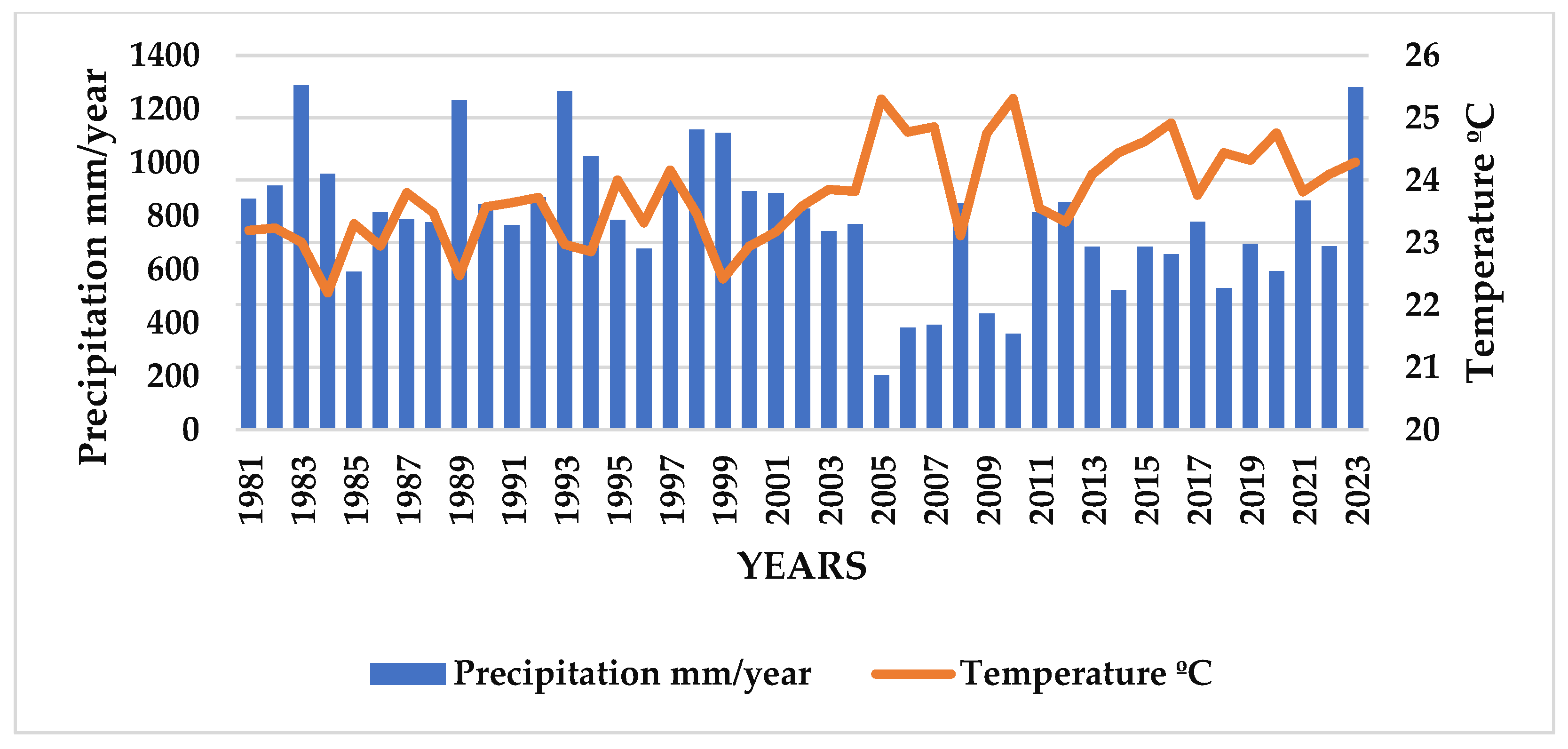
In the localities of The Zañe, The Merced, The Tibio, and The Argelia, precipitation during the years 1981-1984, 1986, 1989-1990, 1992-1994, 1997-2002, 2008, 2011-2012, 2021, and 2023 exceeded 800 mm/year. In contrast, in the years 2005 and 2010, temperatures surpassed 25°C (Figure 3). These data highlight specific climatic patterns that can significantly influence the ecological conditions of these forest areas.
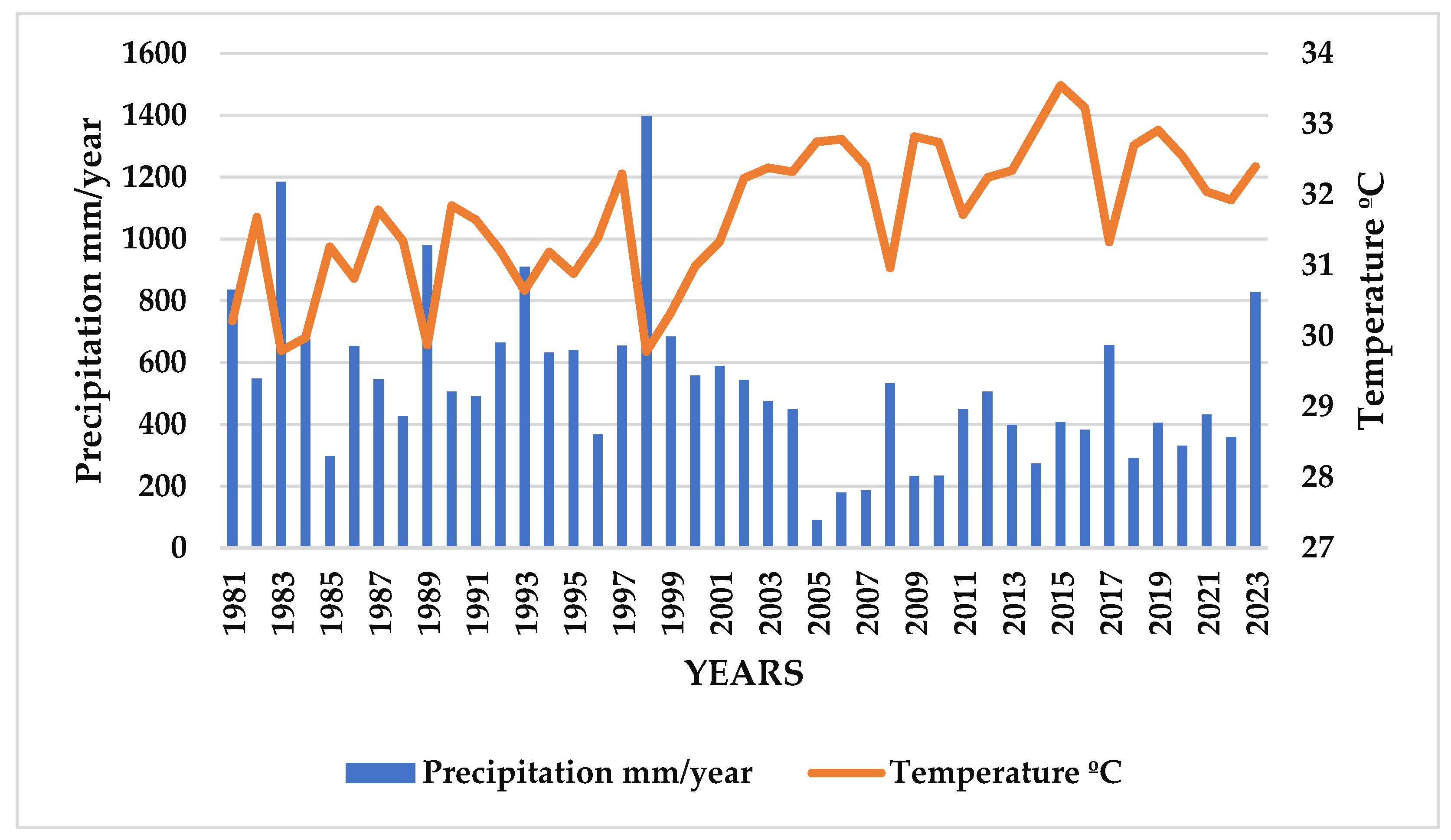
In the localities of The Tundo and The Victoria, precipitation during the periods 1981-1984, 1986-2004, 2008, 2011-2013, 2015-2017, and 2019-2023 exceeded 300 mm/year. In contrast, during the periods 1981-1982, 1985-1988, 1990-1997, and 1999-2023, temperatures exceeded 30°C (Figure 3). These data highlight specific climatic patterns that can significantly influence the ecological conditions of these forest areas.
Figure 4. Precipitation and temperature of J. neotropica provenances from The Tundo and The Victoria.
Preprints 146591 g004

3.2. Precipitation (mm) and Relative Humidity (%)

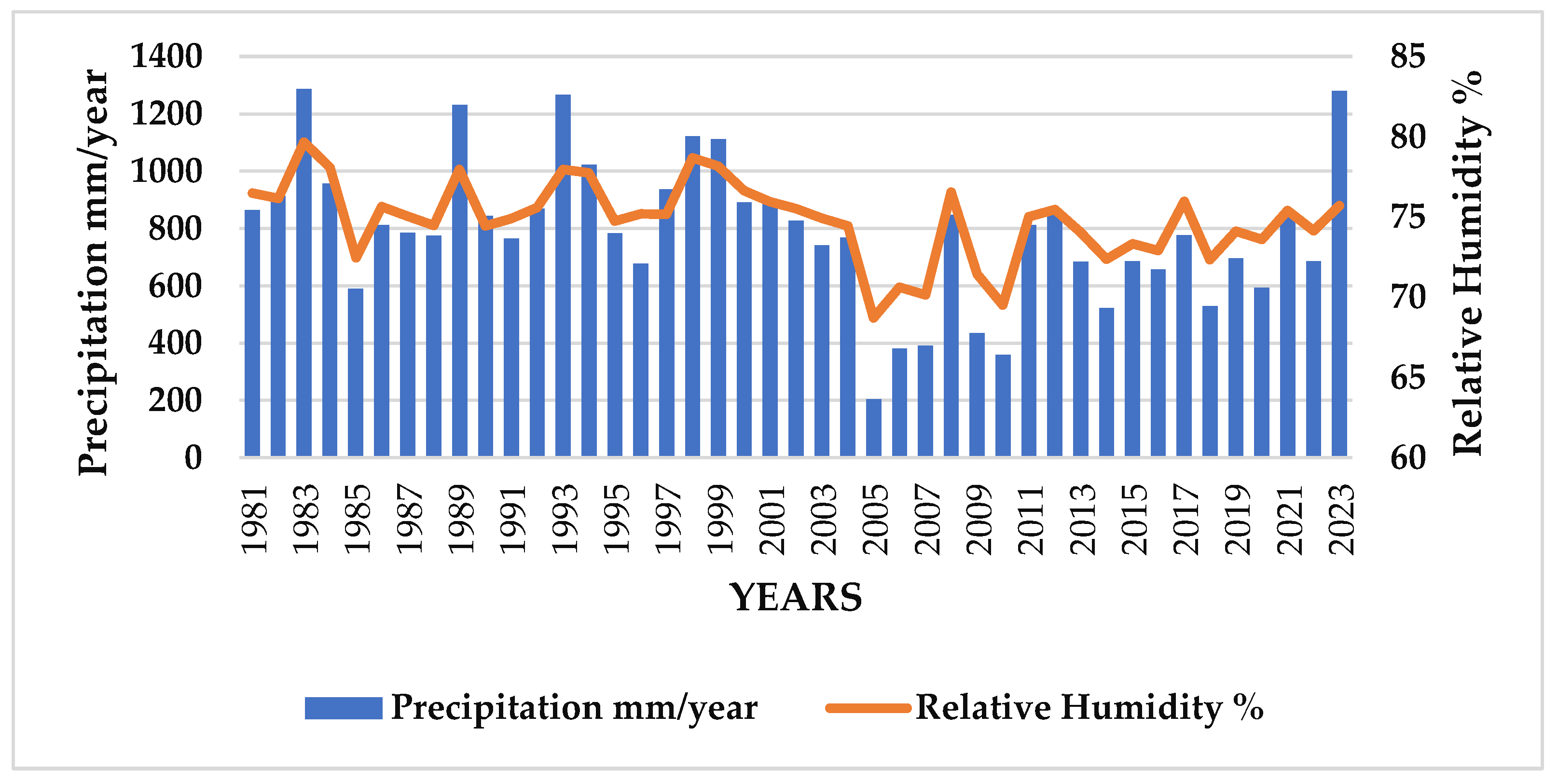
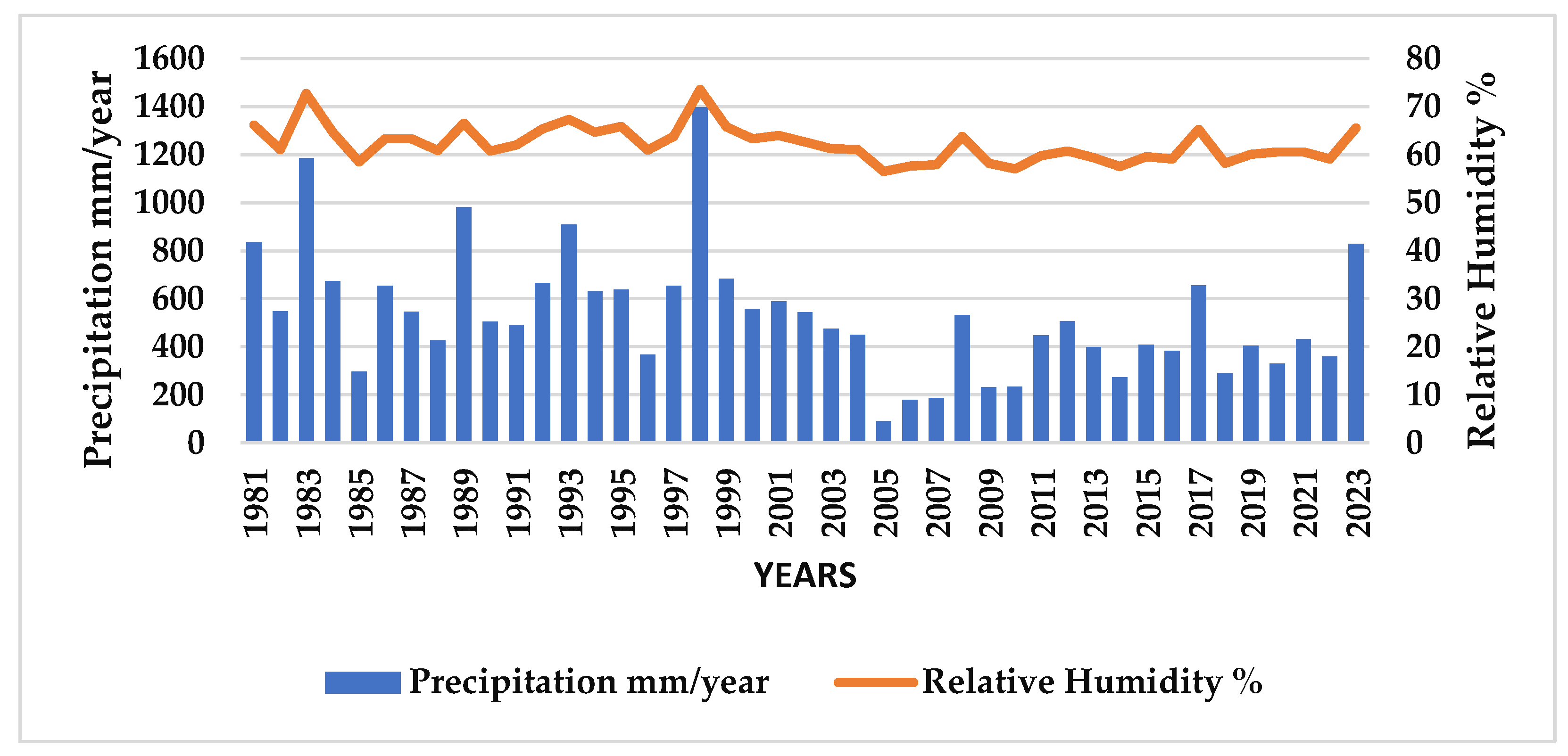
In the localities of The Zañe, The Merced, The Tibio, and The Argelia, relative humidity (%) during the periods 1981-2004, 2006-2009, and 2011-2023 was above 70% (Figure 5). However, in 2005 it significantly dropped to 68.70% and in 2010 to 69.50%.
In the localities of The Tundo and The Victoria, relative humidity was above 60% during the periods 1981-1984, 1986-2004, 2008, 2012, 2017, 2019-2021, and 2023 (Figure 6). However, in the years 1985, 2005-2007, 2009-2011, 2013-2016, 2018, and 2022, relative humidity was below 60%.

3.3. Precipitation (mm) and Soil Moisture at Root Level (m³/m³)
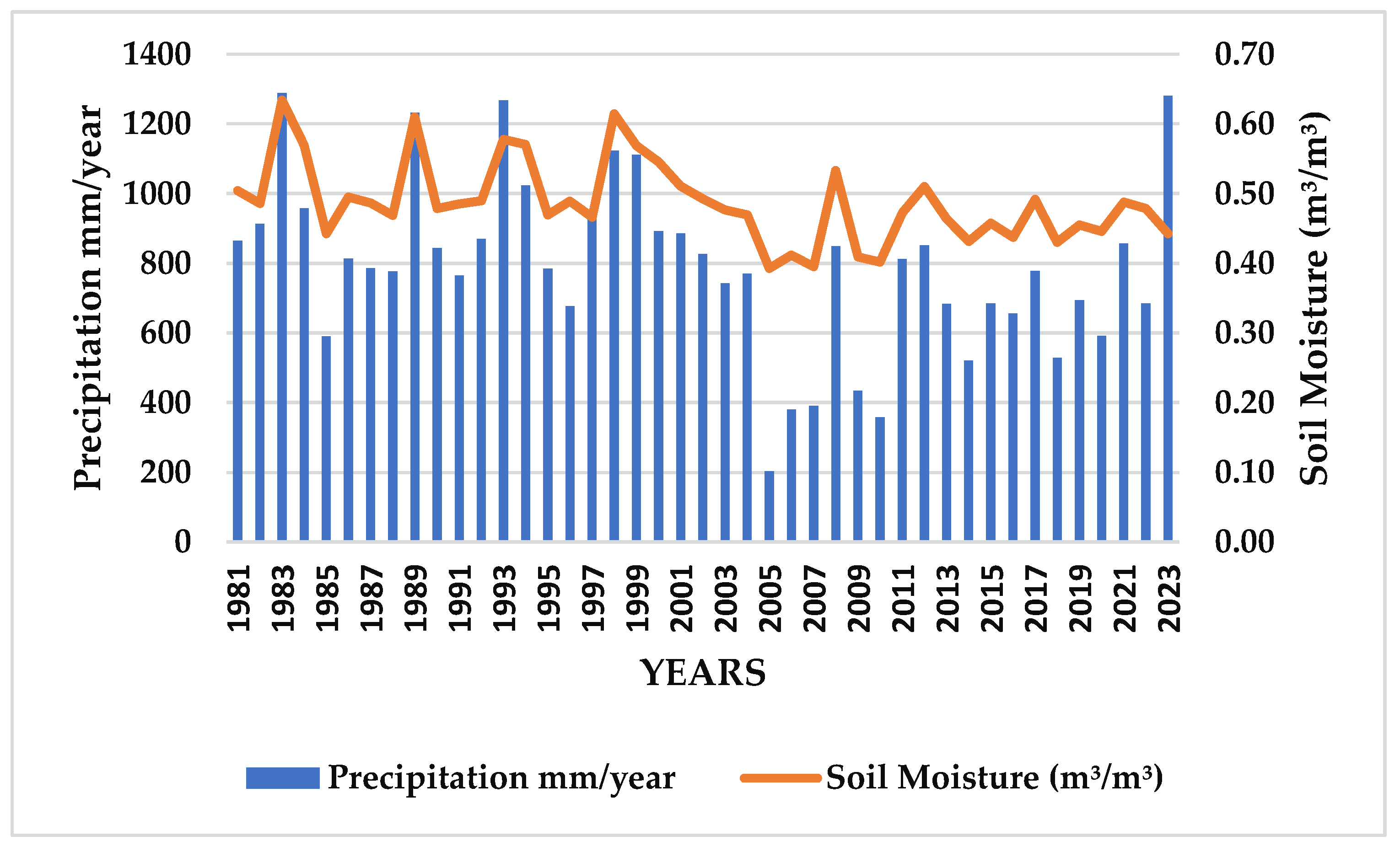
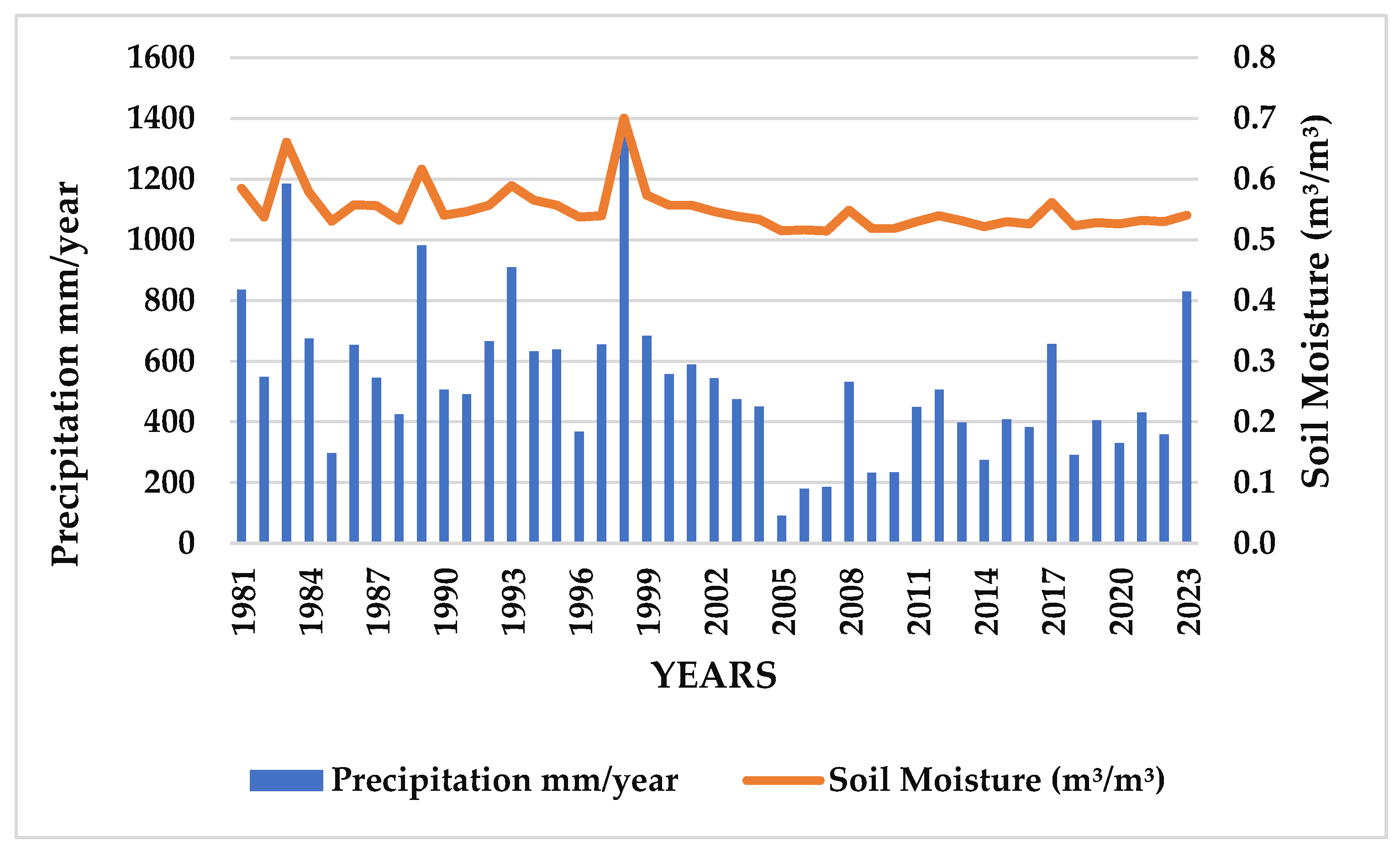
In the localities of The Zañe, The Merced, The Tibio, and The Argelia, soil moisture at root level (m³/m³) was above (60 m³/m³) in the years 1983, 1989, and 1998.
Figure 7. Precipitation and soil moisture of J. neotropica provenances from The Zañe, The Merced, The Tibio, and The Argelia.
Preprints 146591 g007
In The Tundo and The Victoria, soil moisture at root level (Figure 8) remained constant throughout the study period (0.5 - 0.6 m³/m³), with higher moisture levels recorded in the years 1983 (0.66 m³/m³), 1989 (0.62 m³/m³), and 1998 (0.70 m³/m³), decreasing to (0.55 m³/m³) in 2023.

3.4. Soil

The results present the physical and chemical properties of the soil recorded in natural populations of J. neotropica. Data collection was carried out using the SIGTIERRAS platform, selecting relevant variables such as: Hydrogen potential (pH), Cation Exchange Capacity (CEC), fertility, morphology, slope, taxonomic order, texture, drainage, depth, stoniness, salinity, temperature, humidity, Organic Matter (OM), which helped interpret how these factors aid or affect the phenotypic characteristics of J. neotropica populations in the study area in southern Ecuador (Table 3).
In The Tundo, The Victoria, The Zañe, and The Argelia, the soil presented a neutral pH, while in The Merced and The Tibio, it was slightly acidic.
The Victoria and The Zañe had a high Cation Exchange Capacity (CEC); for The Tundo, it was medium; for The Tibio and The Argelia, it was low; and for The Merced, it was very low.
The Victoria, The Zañe had medium fertility; for The Tundo and The Argelia, it was low; and for The Merced and The Tibio, it was very low.
The Tundo, The Victoria, and The Zañe presented a mountainous relief morphology; The Merced had a rectilinear slope; The Tibio had a heterogeneous slope; and The Argelia had a medium hilly relief.
The Tundo, The Victoria, and The Zañe had a very steep slope > 70%; The Merced, The Tibio, and The Argelia had a steep slope of 40 – 70%.
The Tundo and The Victoria had a taxonomic order of Alfisols; The Merced and The Tibio had Inceptisols; and The Argelia and The Zañe had Entisols.
The Tundo, The Victoria, and The Tibio had a clay loam texture; The Merced had a silty clay texture; The Argelia had a sandy loam texture; and The Zañe had a loam texture.
The Tundo had moderate drainage; The Victoria, The Merced, The Tibio, and The Zañe had good drainage, and The Argelia had excessive drainage.
The Tundo, The Victoria, The Merced, and The Tibio had shallow depth; while The Argelia and The Zañe had very shallow depth.
The Argelia and The Zañe had abundant stoniness; The Tundo and The Merced had frequent stoniness; The Victoria had few stones, and The Tibio had none.
Regarding salinity, all locations shared non-saline soil.
Regarding temperature, all locations shared isothermal soil.
The Tundo, The Victoria, and The Argelia had ustic moisture; The Merced, The Tibio, and The Zañe had udic moisture.
The Tibio had high Organic Matter (OM); The Victoria and The Zañe had medium OM; The Tundo, The Merced, and The Argelia had low OM.
Table 3. Physical and chemical properties of soil from different provenances in zone 7 of Ecuador: Tibio (A1), Merced (A2); Tundo (B1), Victoria (B2), Zañe (B3), Argelia (B4).
CODE A1 A2 B1 B2 B3 B4
pH 6.8 6.7 7.0 7.0 7.0 7.0
CEC meq/100g 8.0 4.0 14 22 25 8.0
Fertility Very low Very low Low Medium Medium Low
Morphology Heterogeneous slope Rectilinear slope Mountainous relief Mountainous relief Mountainous relief Medium hilly relief
Slope Steep > 40 - 70 % Steep > 40 - 70 % Very steep >70% Very steep >70% Very steep >70% Steep > 40 - 70 %
Taxonomic Order Inceptisols Inceptisols Alfisols Alfisols Entisols Entisols
Texture Clay loam Silty clay loam Clay loam Clay loam Loam Sandy loam
Drainage Good Good Moderate Good Good Excessive
Depth Shallow Shallow Shallow Shallow Superficial Superficial
Stoniness None Frequent Frequent Few Abundant Abundant
Salinity Non-saline Non-saline Non-saline Non-saline Non-saline Non-saline
Temperature Isothermal Isothermal Isothermal Isothermal Isothermal Isothermal
Moisture Udic Udic Ustic Ustic Udic Ustic
O.M High Low Low Medium Medium Low
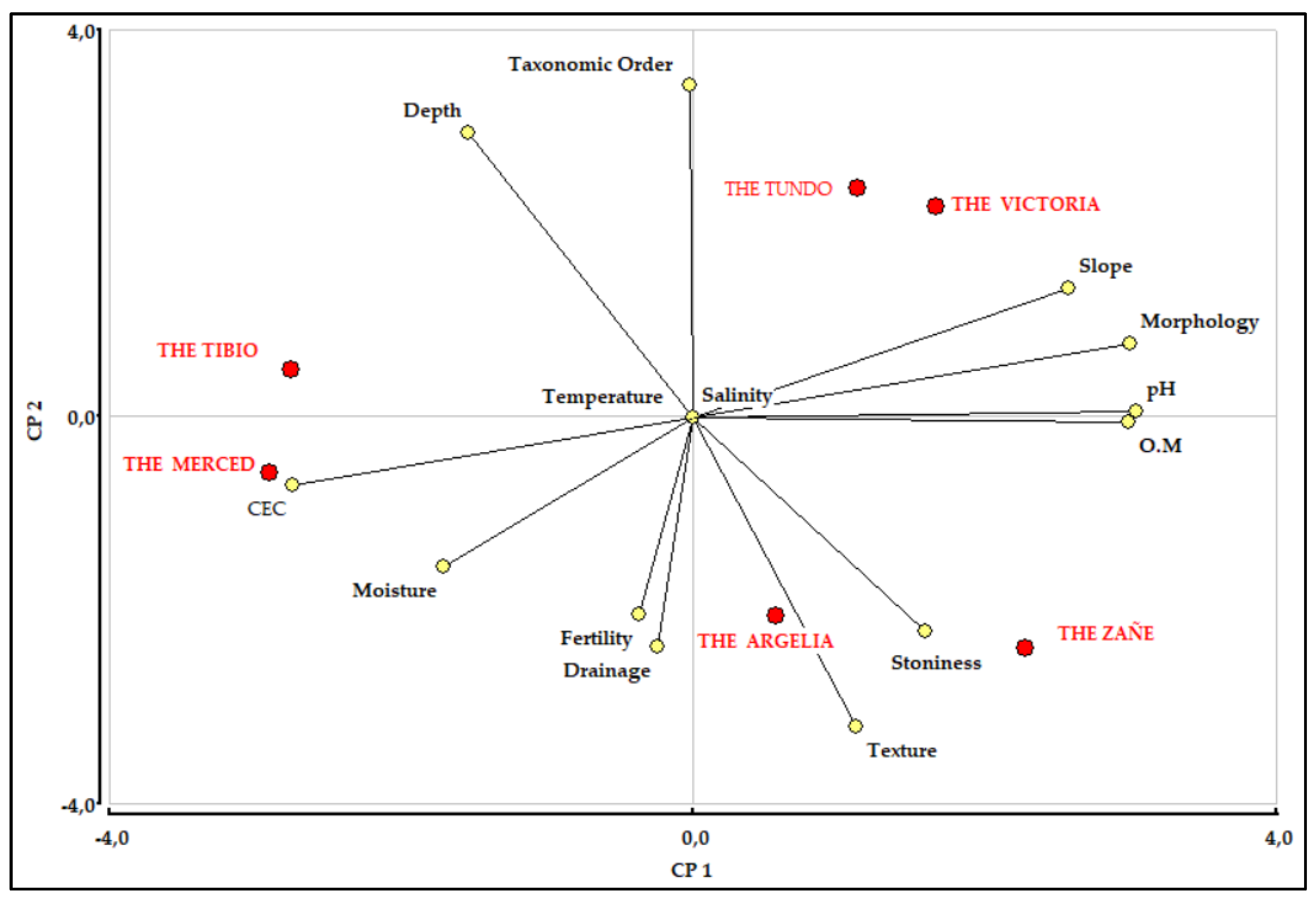
Figure 9. Biplot. Archive of physical and chemical soil properties from different provenances.
Preprints 146591 g009
As observed in the first component (CP1), The Tibio, The Tundo, and The Victoria separate the physical and chemical properties such as: pH, morphology, slope, taxonomic order, and depth. However, The Merced, The Argelia, and The Zañe include the rest of the properties. Observing the second component (CP2), The Tibio and The Merced separate the physical and chemical properties such as: taxonomic order, depth, CEC, moisture, fertility, and drainage; in the same component, the origins of The Tundo, The Victoria, The Argelia, and The Zañe contain the rest of the properties.
When analyzing the physical and chemical properties separately, it can be observed that The Tibio and The Merced closely share the CEC property. The Argelia and The Zañe closely share the texture and stoniness properties. The Tundo and The Victoria also closely share the slope property.
Regarding the soil temperature and salinity properties, all provenances closely share these properties. The similarity of salinity and isothermal properties in soils from different provenances of J. neotropica indicates a significant influence of uniform environmental and climatic factors in the analyzed areas.
For the construction of CP1, the properties with the greatest weight are organic matter (OM), pH, morphology, slope, and CEC. For the construction of CP2, the properties with the greatest weight are taxonomic order, depth, texture, drainage, and fertility.

3.5. Slope

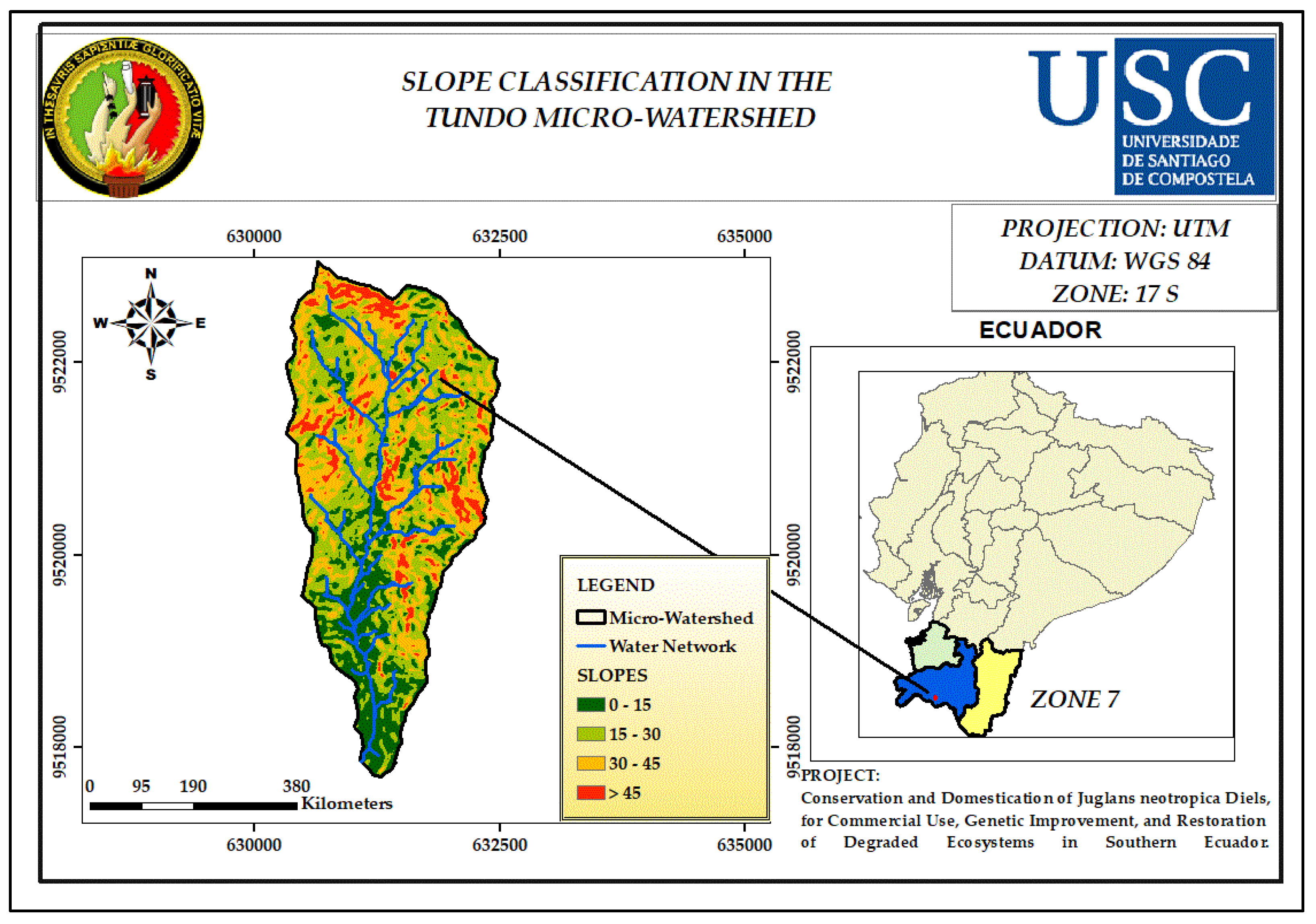
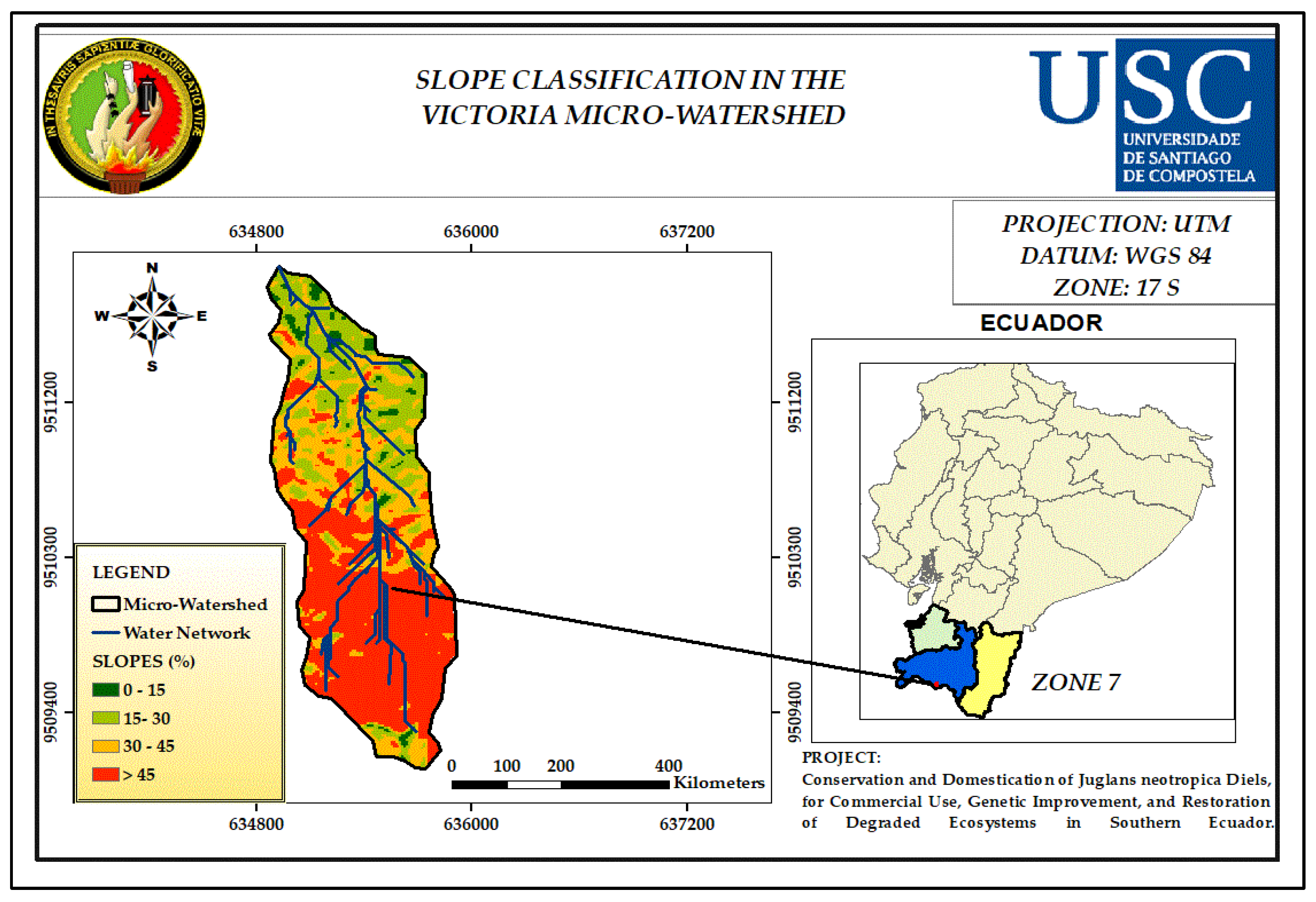
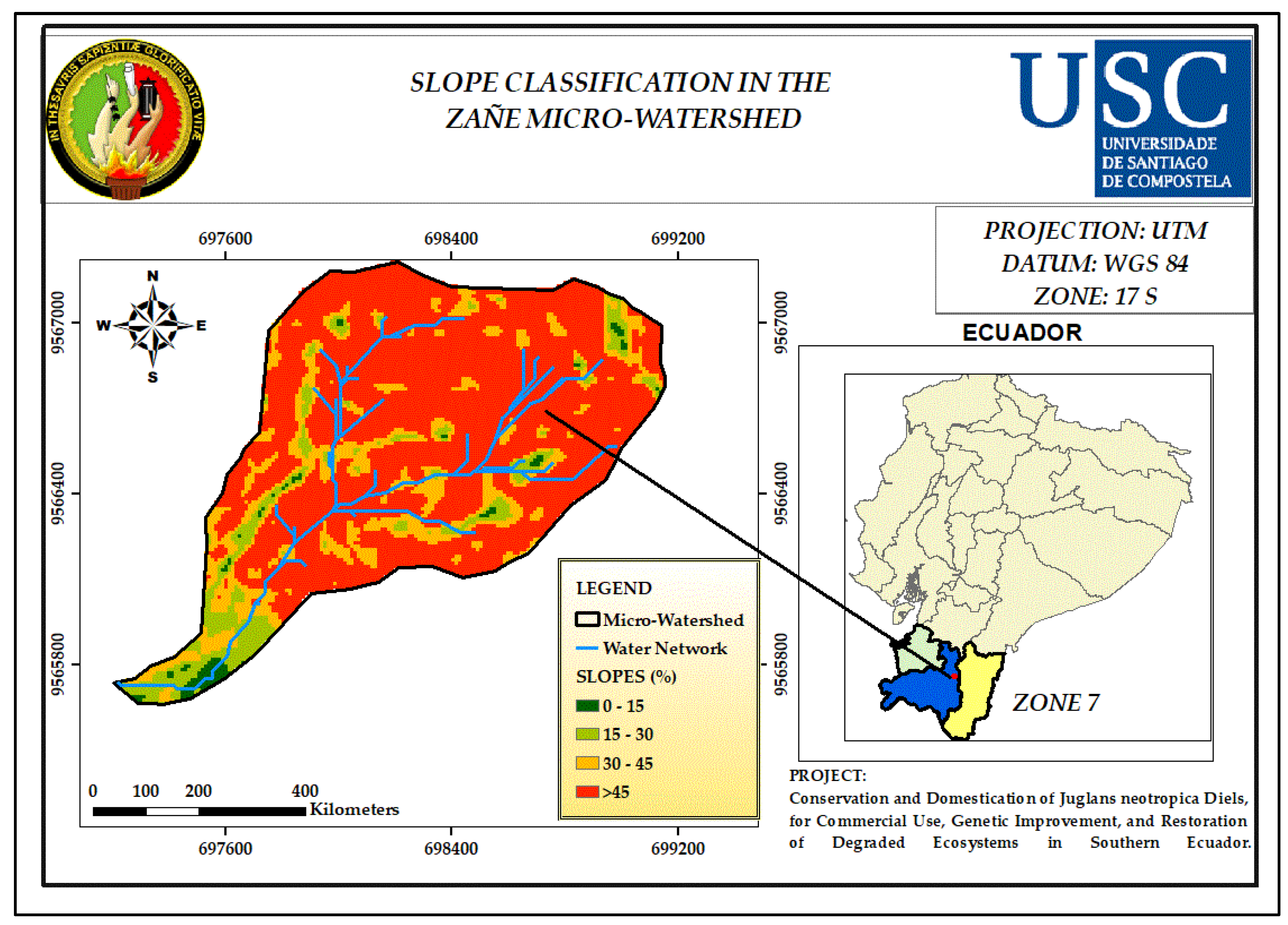
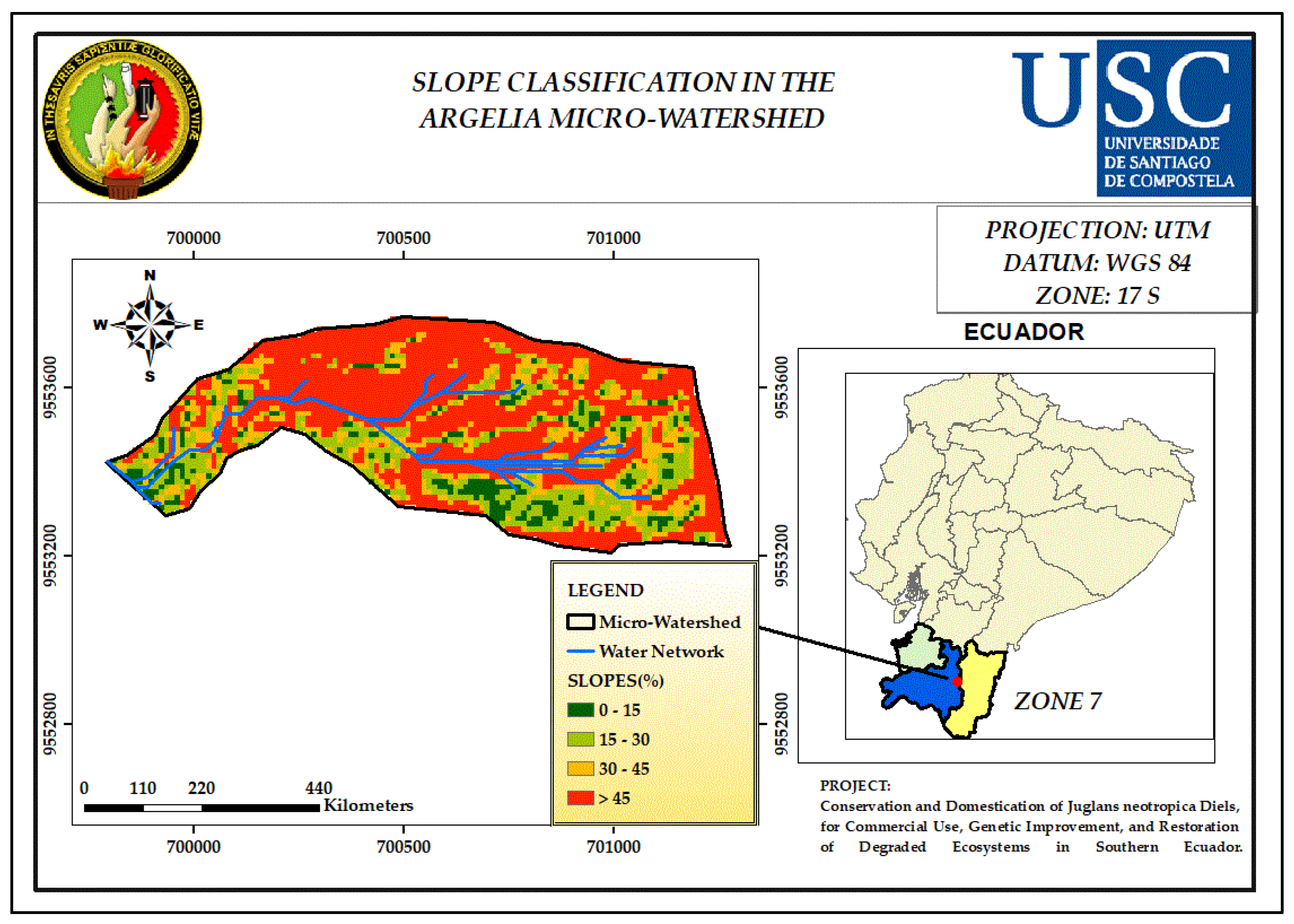
Below are the slope maps of the soils from different origins of J. neotropica populations, which is a crucial factor influencing various aspects of the geographical environment. This topographic characteristic triggers significant impacts on hydrology, soil erosion, and land use planning, and consequently on the phenotypic traits of J. neotropica populations.
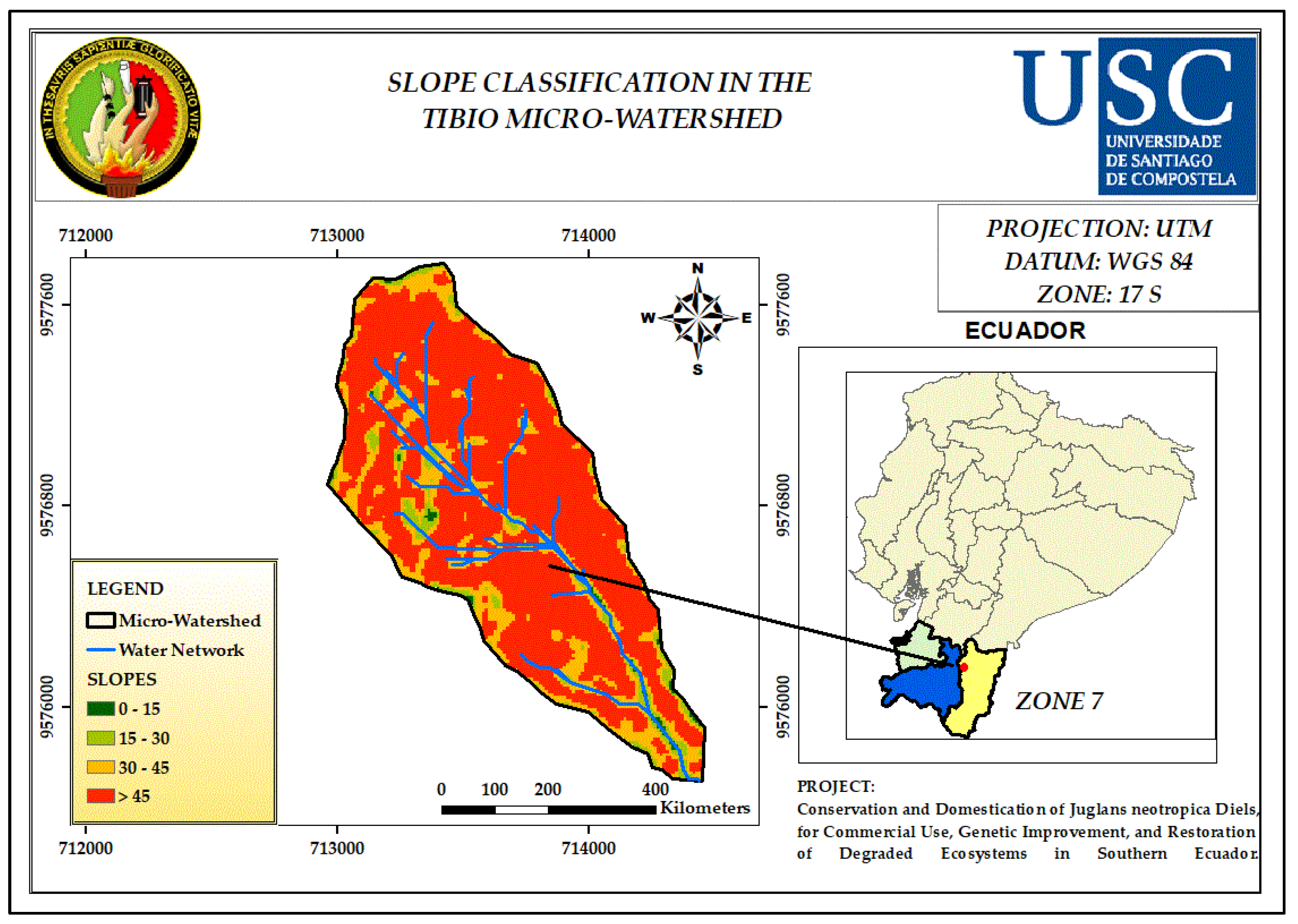
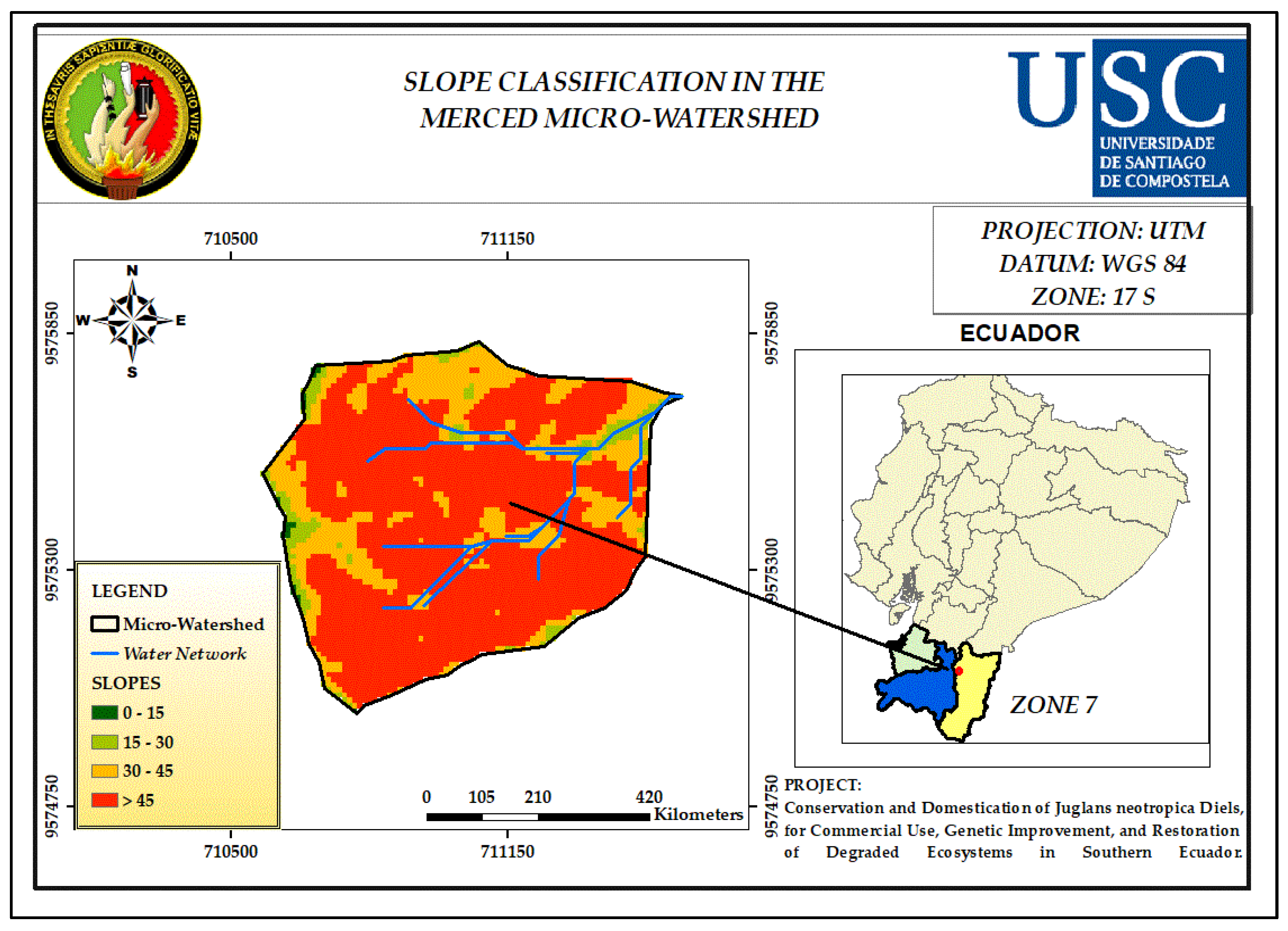
Figure 10, Figure 11, Figure 12, Figure 13, Figure 14, and Figure 15 show the slope maps of all provenances of J. neotropica, reporting that all populations are located on slopes greater than 45%.

3.6. Phenology

The phenology of J. neotropica is presented below, revealing fascinating variations among different provenances of recurrent events in its life cycle. The results obtained from various locations provided a rich and complex view of how environmental factors, such as climate, soil, and geography, influence phenological patterns. By meticulously analyzing these data, unique patterns of flowering, fruiting, and other key events in the species’ development were revealed. This research not only expands our understanding of the species’ adaptability but also highlights the importance of considering geographical variations when addressing issues related to the conservation and management of J. neotropica.
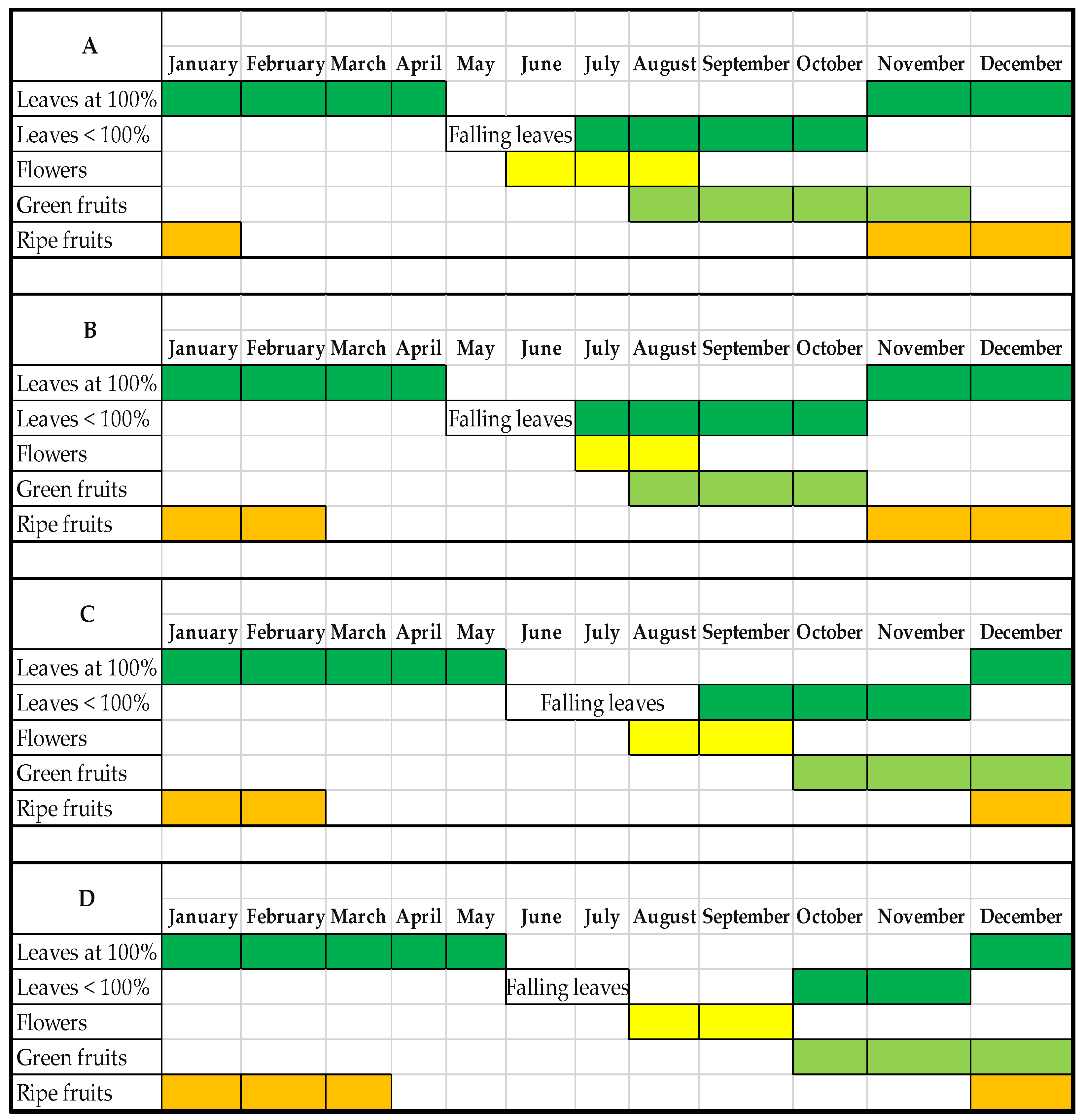
In Figure 16, the phenological calendar of all provenances under study is presented, where a phenological pattern can be observed in all, varying by one month more or less in each evaluated variable.

3.7. Age

Below is an estimation of the age of J. neotropica populations from different provenances using the time passage method. This scientific method was based on the analysis of growth patterns from studies conducted by other researchers, which were used as references to correlate with diameters obtained in the field.
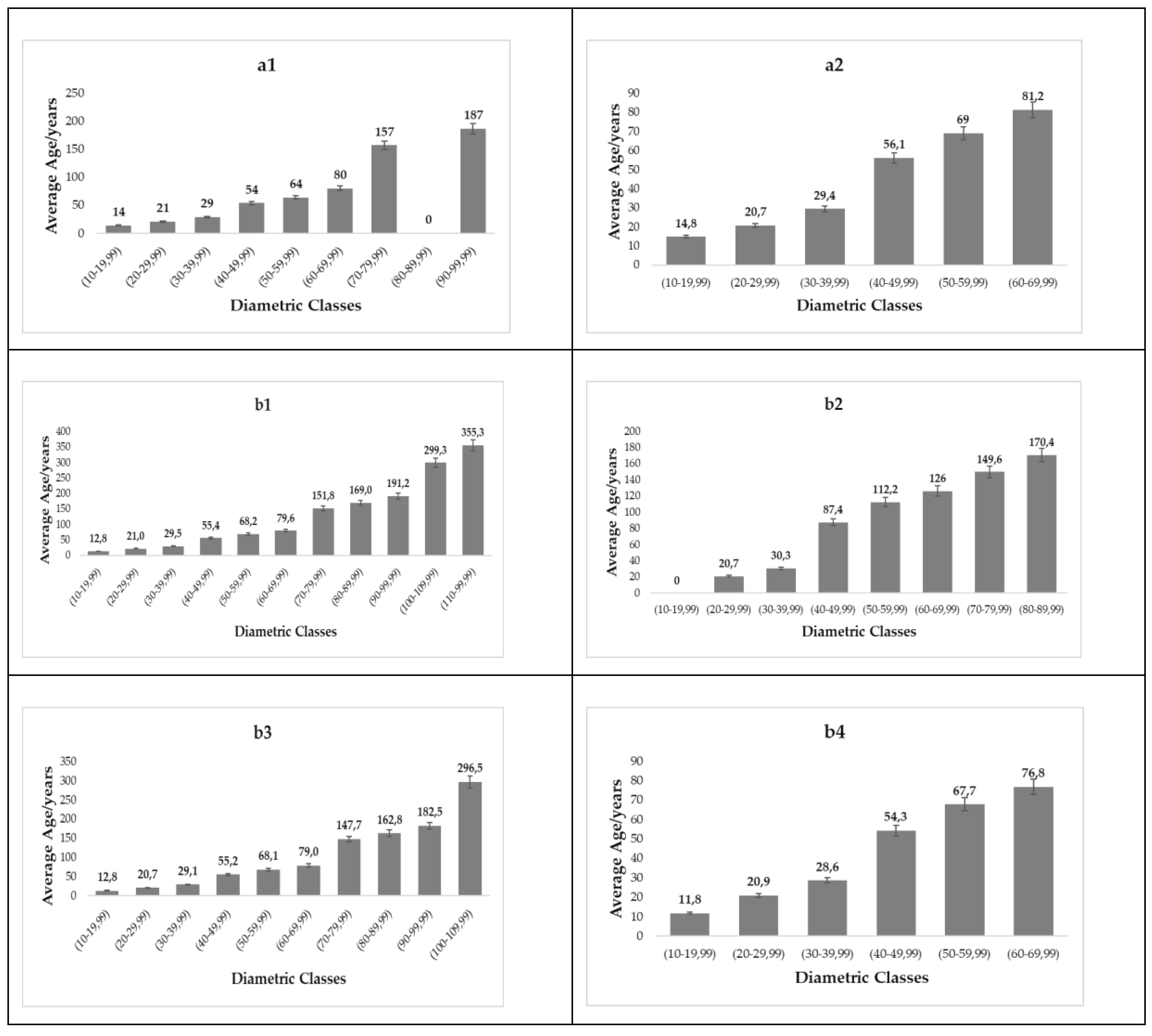
In Figure 17, The Tibio (a1), the approximate average age of the trees is presented, ranging from 14 to 187 years, represented in 9 diameter classes. The Merced (a2), the approximate average age of the trees is presented, ranging from 14.8 to 81.2 years, represented in 6 diametric classes. The Tundo (b1), the approximate average age of the trees is presented, ranging from 12.8 to 355 years, represented in 11 diametric classes. The Victoria (b2), the approximate average age of the trees is presented, ranging from 20.7 to 170.4 years, represented in 8 diametric classes. The first diametric class was not recorded due to the absence of specimens. The Zañe (b3), the approximate average age of the trees is presented, ranging from 12.8 to 296.5 years, represented in 10 diametric classes. The Argelia (b4), the approximate average age of the trees is presented, ranging from 11.8 to 76.8 years, represented in 6 diametric classes.

4. Discussion

4.1. Precipitation and Temperature

The research conducted by [29] in the southern region of Ecuador and northern Peru provides valuable insights into the climatic patterns in this border area. By analyzing data from 40 meteorological stations during the period from 1970 to 2000 using techniques such as orthogonal correlation analysis, a clear trend towards increasing temperatures was observed in all the stations analyzed. This finding is consistent with this research, which shows that more than two decades ago, the average temperature remained below 18 degrees Celsius, while in recent years it has experienced a significant increase.
In contrast, precipitation shows divergent patterns at different altitudes in the study area. While the higher regions show a trend towards decreasing precipitation, the lower regions exhibit an upward trend. The conducted research supports this information by indicating that precipitation remained above 800 mm/year until 2002, projecting a notable decrease until that year and an increase towards 2024 [29].
According to studies conducted by [30],the decrease in precipitation and the increase in temperature have a significant impact on the phenology of broadleaf species. During drought periods, the reduction in water availability can delay budding and decrease plant growth rates. Additionally, the increase in temperature can accelerate certain phenological processes, such as flowering and seed maturation, while also increasing the vulnerability of plants to water stress and various diseases. These combined climatic factors can drastically alter the life cycle of broadleaf forest species, affecting their reproductive capacity and long-term survival. Our findings align with these results, as we have observed a decrease in precipitation and an increase in temperatures, which may be causing shifts in the phenology of different provenances of J. neotropica. This underscores the need to consider both global and local climatic factors in phenology studies and the management of forest species.
It is important to highlight that these climatic trends are influenced by global climatic phenomena, especially the El Niño phenomenon. [31], in their study on coastal flooding due to intense rainfall and the impact of the El Niño phenomenon, provide a broader context for understanding climatic threats in the region. This suggests that local climatic variability is connected to global phenomena that directly affect the border region of Ecuador and Peru, underscoring the importance of considering external factors in the analysis of regional climatic patterns.

4.2. Relative Humidity

The study [32], which analyzes relative humidity during the period from 1980 to 2006, highlights the close relationship of this variable with precipitation and temperature. The results reveal that high relative humidity values coincide with the winter months, while the lowest values are recorded during periods of drought or summer. In particular, the M008 Puyo station, located at an altitude of 920 meters in the Oriente region, shows a constant relative humidity, reaching 90.74% in June (its highest value) and 87.11% in August (its lowest value).
At the national level, relative humidity remains on average above 70% during the analyzed period. In the stations of the Andean region, such as M139 Gualaceo at an altitude of 2,360 meters, lower averages are reported, but always above 70%, such as 79.37% in April and 74.97% in November.
Although this research supports the findings of [32] regarding a constant relative humidity around 70%, notable decreases below 70% are observed in the years 2005 (68.70%) and 2010 (69.50%) for the cantons of Loja and Zamora. In the case of the canton Sozoranga, relative humidity remains constant between 60% and 70%, even dropping below 60% in the years 1985 (58.54%), 2005 (56.51%), 2006 (57.66%), 2007 (57.93%), 2010 (57.07%), 2014 (57.51%), and 2018 (58.23%). These results could indicate significant changes in climatic patterns in these areas over the study period.
Various studies have demonstrated the significant influence of relative humidity on the phenology of broadleaf forest species. For example, [33] analyzed the phenological response of Quercus acuta to meteorological variability and found that high relative humidity can accelerate processes such as budding and flowering, while low humidity levels can delay them. Similarly, [34] investigated the effects of atmospheric and soil dryness on autumn phenology in the Northern Hemisphere, concluding that decreased relative humidity can exacerbate water stress, negatively affecting the phenological development of broadleaf species. These studies highlight the need to consider relative humidity as a critical factor in phenological models and the management of forest ecosystems, as its variability can have profound impacts on the life cycle and adaptation of species.

4.3. Soil Moisture at a Depth of One Meter (m³/m³)

Various studies have demonstrated the significant influence of soil moisture at the root level on the phenology of broadleaf forest species. The study by [35] reveals that soil moisture has a significant impact on vegetation phenology, especially in low-altitude areas with water limitations, using MODIS NDVI data to explore spatiotemporal patterns. Similarly, [36] investigated how precipitation, vegetation, and soil properties affect soil moisture dynamics in desert steppe herbaceous communities under extreme drought, indicating that soil moisture at the root level plays a crucial role in phenology, particularly during periods of depletion and recovery. Additionally, [37]examined how plant root systems influence the dynamic characteristics of clay soil, suggesting that the distribution and density of roots can significantly affect phenology by modifying soil moisture. These studies collectively underscore the need to consider soil moisture at the root level as a critical factor in phenological models and the management of forest ecosystems, as its variability can have a profound impact on the life cycle and adaptation of broadleaf forest species. Figure 7 shows that soil moisture remains stable in the ranges of 0.2 to 0.6 m³/m³, with values exceeding this range in the years 1983 (0.63), 1989 (0.61), and 1998 (0.61), without registering drops below the minimum value for the cantons of Loja and Zamora. However, in Figure 8, for the canton of Sozoranga, it exceeds the highest threshold in the years 1983 (0.66), 1989 (0.63), and 1998 (0.70), stabilizing within the range from 1999 to 2023. This research is consistent with studies conducted by [38], which reported higher soil moisture at depths ranging from 80 cm to 100 cm, as well as studies by [39] and [40], where it fluctuated between 0.49 and 0.54 m³/m³ and the slope between 14% and 20%.

4.4. Soil

Various studies have demonstrated that the physical and chemical properties of the soil have a significant influence on the phenology of broadleaf species. For example, the study by [41] investigated how altitude and soil properties affect species diversity in forest communities in southern China, finding that soil texture and water content are key factors. Another study by [42] analyzed the diversity of understory plants in urban forests of Beijing, concluding that soil organic matter and nitrogen content significantly influence phenological diversity. These observations are consistent with the populations of J. neotropica in Loja and Zamora, which exhibit similarities in various physical and chemical soil properties, significantly influencing the stability and health of these communities. Among the shared physical properties are slope, texture, depth, and soil temperature. Additionally, homogeneity is observed in the chemical properties, including pH and other factors critical to the health of the studied populations. This consistency in soil characteristics suggests an intrinsic connection between the edaphic environment and the presence of J. neotropica across all provenances.
These findings support the idea that soil properties play a crucial role in the distribution and viability of these populations. Studies conducted by [43] and [44] align with some of the physical and chemical properties preferred by the soils where J. neotropica develops, such as slope and pH. In summary, considering soil properties in phenological models and in the management of forest ecosystems is essential, as their variability can have a profound impact on the life cycle and adaptation of broadleaf species.

4.5. Slope

Several studies have demonstrated that soil slope has a significant influence on the phenology of broadleaf species. For instance, the study by [45] investigated how topographic variations affect plant community characteristics and soil factors in alpine grasslands, finding that both the orientation and position of the slope significantly influence species distribution and soil properties. Similarly, the study by [46] analyzed the use of satellite observations to monitor and predict the phenology of the Earth's surface, concluding that soil slope is a crucial factor in the phenological dynamics of plant communities.
The research also highlights the critical importance of natural populations of the species J. neotropica, which are found on slopes greater than 40%. These areas emerge as priorities for conservation due to their suitability in terms of land use [25]. However, when these populations are located on steep slopes, the generation of ecosystem services becomes highly vulnerable, directly impacting ecosystem functionality. Additionally, these areas are highly prone to soil landslides, whether due to natural factors or human activities. The problem is exacerbated by the fact that, despite these evident threats, the inhabitants of these regions continue to expand the agricultural frontier. This action, seemingly unaware of the environmental consequences, intensifies the pressure on these fragile ecosystems. It is imperative to implement conservation and awareness measures in these critical regions, highlighting the need to balance agricultural development with the preservation of biodiversity and land stability [47].

4.6. Phenology

J. neotropica, a species with varied geographical distribution, exhibits distinct phenological patterns throughout its life cycle. Studies highlight the significant influence of geographical factors, such as altitude and latitude, on its phenological events. In low-altitude regions, prolonged phenology is evident, possibly linked to more stable climatic conditions. In contrast, higher altitudes show more synchronized phenological events, susceptible to abrupt variations due to climatic changes. These phenological variations according to provenance have crucial implications for the conservation and management of the species, considering local adaptation and responses to environmental changes. Understanding these variations is vital to anticipate J. neotropica’s responses to future climatic scenarios and its interaction with other species in its distribution areas. [48] emphasizes the importance of knowledge about the reproductive ecology and population dynamics of seed trees, especially in phenology and productivity, facilitating the planning of fruit or seed collection in nurseries without disturbing the ecosystem balance.

4.7. Age

Studies conducted by [49] reveal a complex and significant relationship between age-class structure and intra-annual phenology in temperate broadleaf forests in northeastern China. The observed phenological variation, influenced by both the age of the trees and the species present, underscores the importance of considering multiple biological factors when evaluating the phenological dynamics of forest ecosystems. The fact that the indirect effect of age-class structure on phenology, mediated by tree species, is greater than the inverse effect, highlights the need for a deeper understanding of the underlying ecological interactions. These findings have important implications for sustainable forest management, as they emphasize the importance of maintaining structural and compositional diversity that can promote resilient and adaptable phenology in the face of climate change. Additionally, the use of high-resolution satellite data, such as Sentinel-2, proves to be an effective tool for monitoring and analyzing these complex phenological patterns at a regional scale.
Similarly, studies on J. neotropica have shown that the age of trees can vary significantly depending on their provenance, with the Tundo region housing the oldest trees. Although slow growth has generally been observed in these trees, older provenances, such as Tundo, could be associated with faster growth and more robust development. Detailed research supports this variability in growth. For example, studies conducted by Ecuador Forestal in 2010 reported a Current Annual Increment (CAI) of 1.2 cm, while other studies have recorded varied values such as 0.37 cm [50], 0.648 and 0.834 cm in different provenances [51], and specific data with CAI of 0.602 cm for Tundo, 0.652 cm for Shucos, 0.828 cm for Saraguro, and 0.65 cm for La Argelia. [52] also contributed with a CAI of 0.12 cm. These values, when multiplied by the number of tree rings, offer an approximate estimation of tree age, which aligns with the results of this study in various provenances.

5. Conclusions

The analysis of climatic results shows that temperature, precipitation, and relative humidity are fundamental climatic factors that significantly influence the phenology of broadleaf forest species. Changes in these variables have profound implications for forest management and conservation, especially in the context of global climatic phenomena such as El Niño. It is crucial to continue researching and monitoring these climatic patterns to develop forest management strategies that ensure the resilience and adaptation of species to the challenges of climate change. The findings highlight the importance of considering both global and local climatic factors in phenological studies. Decreased precipitation, increased temperature, and variability in relative humidity can significantly alter the life cycle of forest species, affecting their reproductive capacity, growth, and long-term survival. These results underscore the need to integrate high-resolution meteorological data and ecological models to improve the understanding of phenological dynamics and develop more effective and sustainable forest management measures. Additionally, the research shows that local climatic variability is interconnected with global climatic phenomena, highlighting the importance of a comprehensive approach that considers the interactions between local and global factors. This approach is crucial for predicting and mitigating the effects of climate change on forest ecosystems, ensuring their conservation and sustainability in the future.
Soil's physical and chemical properties significantly influence the phenology of broadleaf species. Factors like soil texture, water content, organic matter, and nitrogen content are key determinants of phenological diversity. Populations of J. neotropica in Loja and Zamora exhibit similarities in these soil properties, suggesting an intrinsic relationship between the edaphic environment and the presence of this species. Considering soil properties in phenological models and forest ecosystem management is essential, as their variability can profoundly impact the life cycle and adaptation of broadleaf species.
When addressing soil slope, it is evident that it has a significant influence on the phenology of broadleaf species. Both the orientation and position of the slope critically affect species distribution and soil properties, as well as the phenological dynamics of plant communities. The natural populations of J. neotropica on slopes greater than 40% are especially important for conservation due to their suitability for land use. However, these areas are extremely vulnerable to landslides, exacerbated by natural factors and human activities. The expansion of the agricultural frontier in these regions, without considering the environmental consequences, increases pressure on these fragile ecosystems. Therefore, it is imperative to implement conservation and awareness measures in these critical areas to achieve a balance between agricultural development, biodiversity preservation, and soil stability, thus ensuring ecosystem functionality.
Consequently, the phenology of J. neotropica shows varied patterns throughout its life cycle due to its wide geographical distribution. Geographical factors such as altitude and latitude significantly influence its phenological events. In low-altitude regions, phenology is more prolonged due to more stable climatic conditions, while at higher altitudes, phenological events are more synchronized and more sensitive to abrupt climatic variations. These phenological variations have crucial implications for the conservation and management of the species, especially concerning local adaptation and responses to environmental changes. Understanding these variations is essential for anticipating the responses of J. neotropica to future climatic scenarios and its interaction with other species in its distribution areas. Moreover, knowledge about the reproductive ecology and population dynamics of seed trees facilitates the planning of fruit or seed collection in nurseries without altering the ecosystem balance.
Finally, phenological variations, influenced by both tree age and the species present, underscore the importance of considering multiple biological factors when evaluating phenological dynamics. These findings have important implications for sustainable forest management, highlighting the need to maintain structural and compositional diversity to promote resilient and adaptable phenology in the face of climate change. Additionally, studies on J. neotropica show that tree age can vary significantly according to its origin. In particular, the locality of El Tundo hosts the oldest trees. Although slow growth is generally observed, some old provenances show faster and more robust growth, supported by detailed investigations into the Current Annual Increment (CAI) in different provenances.

Author Contributions

Conceptualization, methodology, writing, B.P.-H., Review, S.P.-L. and D.P.-C. All authors have read and agreed to the published version of the manuscript.

Funding

This research did not receive external funding.

Data Availability Statement

The original contributions presented in this study are included in the article. Further inquiries can be directed to the corresponding author.

Acknowledgments

Private forest owners as well as government entities. Volunteers from the private research laboratory TROPICAL NEOSILVICULTURE who helped in the acquisition of field data over several years.

Conflicts of Interest

The authors declare no conflict of interest.

References

  1. Chávez-García, Alicia Sagrario, Hernández-Ramos, Jonathan, Muñoz-Flores, Hipólito Jesús, García-Magaña, J. Jesús, Gómez-Cardenas, Martín, & Gutiérrez-Contreras, Maribel. (2022). Plasticidad fenotípica de progenies de árboles de Pinus pseudostrobus Lindl. superiores en producción de resina en vivero. Madera y bosques, 28(1), e2812381. Epub 05 de septiembre de 2022. [CrossRef]
  2. Martínez, H. B., & Hernández, J. V. (2004). Variación fenotípica y selección de árboles en una plantación de melina (Gmelina arborea Linn., Roxb.) de tres años de edad. Revista Chapingo. Serie Ciencias Forestales y del Ambiente, 10(1), 13-19. [Google Scholar].
  3. Jara, L. F. (1995). Mejoramiento forestal y conservación de recursos genéticos forestales. Serie técnica. Manual técnico/CATIE; número 14. [Google Scholar].
  4. Freschet, G.T.; Roumet, C.; Comas, L.H.; Weemstra, M.; Bengough, A.G.; Rewald, B.; Bardgett, R.D.; De Deyn, G.B.; Johnson, D.; Klimešová, J.; et al. Root traits as drivers of plant and ecosystem functioning: current understanding, pitfalls and future research needs. New Phytol. 2020, 232, 1123–1158. [Google Scholar] [CrossRef] [PubMed]
  5. Bellard, C.; Bertelsmeier, C.; Leadley, P.; Thuiller, W.; Courchamp, F. Impacts of climate change on the future of biodiversity. Ecol. Lett. 2012, 15, 365–377. [Google Scholar] [CrossRef] [PubMed]
  6. Anderegg, W.R.L.; Trugman, A.T.; Badgley, G.; Anderson, C.M.; Bartuska, A.; Ciais, P.; Cullenward, D.; Field, C.B.; Freeman, J.; Goetz, S.J.; et al. Climate-driven risks to the climate mitigation potential of forests. Science 2020, 368, 1327. [Google Scholar] [CrossRef] [PubMed]
  7. (Ipcc), I.P.O.C.C. Climate Change 2021 – The Physical Science Basis; Cambridge University Press (CUP): Cambridge, United Kingdom, 2023. [Google Scholar]
  8. Marzilli, P. (2024). Un mundo alterado por las catástrofes y el cambio climático: Uno de los desafíos de la iglesia en el siglo XXI. Revista Interdisciplinaria de Teología, 2(1), 7-19.
  9. Allen, C.D.; Macalady, A.K.; Chenchouni, H.; Bachelet, D.; McDowell, N.; Vennetier, M.; Kitzberger, T.; Rigling, A.; Breshears, D.D.; Hogg, E.H.; et al. A global overview of drought and heat-induced tree mortality reveals emerging climate change risks for forests. For. Ecol. Manag. 2010, 259, 660–684. [Google Scholar] [CrossRef]
  10. Lindner, M.; Maroschek, M.; Netherer, S.; Kremer, A.; Barbati, A.; Garcia-Gonzalo, J.; Seidl, R.; Delzon, S.; Corona, P.; Kolström, M.; et al. Climate change impacts, adaptive capacity, and vulnerability of European forest ecosystems. For. Ecol. Manag. 2010, 259, 698–709. [Google Scholar] [CrossRef]
  11. Reichstein, M.; Bahn, M.; Ciais, P.; Frank, D.; Mahecha, M.D.; Seneviratne, S.I.; Zscheischler, J.; Beer, C.; Buchmann, N.; Frank, D.C.; et al. Climate extremes and the carbon cycle. Nature 2013, 500, 287–295. [Google Scholar] [CrossRef]
  12. Kramer, K.; Leinonen, I.; Loustau, D. The importance of phenology for the evaluation of impact of climate change on growth of boreal, temperate and Mediterranean forests ecosystems: an overview. Int. J. Biometeorol. 2000, 44, 67–75. [Google Scholar] [CrossRef]
  13. Nicotra, A.; Atkin, O.; Bonser, S.; Davidson, A.; Finnegan, E.; Mathesius, U.; Poot, P.; Purugganan, M.D.; Richards, C.; Valladares, F.; et al. Plant phenotypic plasticity in a changing climate. 2010, 15, 684–692. [CrossRef]
  14. DORMLING, I. A. Criterios para valoración selección de árboles plus. [Google Scholar].
  15. Cornejo Oviedo, E. H. , Bucio Zamudio, E., Gutiérrez Vázquez, B., Valencia Manzo, S., & Flores López, C. (2009). Selección de árboles y conversión de un ensayo de procedencias a un rodal semillero. Revista fitotecnia mexicana, 32(2), 87-92.[Google Scholar].
  16. Suk-In, H. , Moon-Ho, L., & Yong-Seok, J. (2004, November). Study on the new vegetative propagation method ‘Epicotyl grafting’in walnut trees (Juglans spp.). In V International Walnut Symposium 705 (pp. 371-374). [Google Scholar].
  17. Toro Vanegas, E. , & Roldán Rojas, I. C. (2018). Estado del arte, propagación y conservación de Juglans neotropica Diels., en zonas andinas. Madera y bosques, 24(1). [Google Scholar].
  18. Weil, R. R. , & Brady, N. C. (2016). The nature and properties of soils, 15th edn., edited by: Fox, D. [Google Scholar].
  19. Marschner, H. Marschner’s Mineral Nutrition of Higher Plants, 3rd ed.; Academic Press: Cambridge, MA, USA, 2011; pp. 135–150. [Google Scholar]
  20. Benítez Narváez, R. M. , Capa Benítez, L. B., & Capa Tejedor, M. E. (2019). La Zona 7-Ecuador hacia el desarrollo de ciudades intermedias. Revista Universidad y Sociedad, 11(5), 356-361. [Google Scholar].
  21. Palacios-Herrera, B. , Pereira-Lorenzo, S., & Pucha-Cofrep, D. (2023). Natural and Artificial Occurrence, Structure, and Abundance of Juglans neotropica Diels in Southern Ecuador. Agronomy, 13(10), 2531. [Google Scholar].
  22. Murray, D. , McWhirter, J., Wier, S., & Emmerson, S. (2003, February). 13.2 the integrated data viewer–a web-enabled application for scientific analysis and visualization. In 19th International Conference on Interactive Information and Processing Systems for Meteorology, Oceanography, and Hydrology. [Google Scholar].
  23. Ochoa, A.; Campozano, L.; Sánchez, E.; Gualán, R.; Samaniego, E. Evaluation of downscaled estimates of monthly temperature and precipitation for a Southern Ecuador case study. Int. J. Clim. 2015, 36, 1244–1255. [Google Scholar] [CrossRef]
  24. Mendoza, R. B. , & Espinoza, A. (2017). Guía técnica para muestreo de suelos. [Google Scholar].
  25. Fernández, D. C. (2001). Clave de bolsillo para determinar la capacidad de uso de las tierras. Araucaria. [Google Scholar] [CrossRef].
  26. Palacios, B. , López, W., Faustino, J., Günter, S., Tobar, D., & Christian, B. (2018). Identificación de amenazas, estrategias de manejo y conservación de los servicios ecosistémicos en Subcuenca “La Suiza” Chiapas, México. Bosques Latitud Cero. Volumen 8, número 1 (Enero-Junio) 2018. [Google Scholar].
  27. Ramírez, F.; Kallarackal, J. The phenology of the endangered Nogal (Juglans neotropica Diels) in Bogota and its conservation implications in the urban forest. Urban Ecosyst. 2021, 24, 1327–1342. [Google Scholar] [CrossRef]
  28. Canizales-Velázquez, P. A. , Aguirre-Calderón, Ó. A., Alanís-Rodríguez, E., Rubio-Camacho, E., & Mora-Olivo, A. (2019). Caracterización estructural de una comunidad arbórea de un sistema silvopastoril en una zona de transición florística de Nuevo León. Madera y bosques, 25(2). [Google Scholar.
  29. Baque, E.E.L.; Granda, V.D.V.; Chávez, M.D.V. Cambios en patrones de precipitación y temperatura en el Ecuador: regiones sierra y oriente. 2021. [Google Scholar] [CrossRef]
  30. Tang, Y. , Zhou, W., & Du, Y. (2023). Effects of temperature, precipitation, and CO2 on plant phenology in China: a circular regression approach. Forests, 14(9), 1844.
  31. Vincenti, S.S.; Puetate, A.R.; Borbor-Córdova, M.J.; Stewart-Ibarra, A.M. Análisis de inundaciones costeras por precipitaciones intensas, cambio climático y fenómeno de El Niño. Caso de estudio: Machala. La Granja 2016, 24. [Google Scholar] [CrossRef]
  32. Farfán, F. P. (2018). Agroclimatología del Ecuador. Editorial Abya-Yala. [Google Scholar].
  33. Park, J.; Hong, M.; Lee, H. Phenological Response of an Evergreen Broadleaf Tree, Quercus acuta, to Meteorological Variability: Evaluation of the Performance of Time Series Models. Forests 2024, 15, 2216. [Google Scholar] [CrossRef]
  34. Dong, K.; Wang, X. Disentangling the Effects of Atmospheric and Soil Dryness on Autumn Phenology across the Northern Hemisphere. Remote. Sens. 2024, 16, 3552. [Google Scholar] [CrossRef]
  35. Cui, X.; Xu, G.; He, X.; Luo, D. Influences of Seasonal Soil Moisture and Temperature on Vegetation Phenology in the Qilian Mountains. Remote. Sens. 2022, 14, 3645. [Google Scholar] [CrossRef]
  36. Zhang, Y. , Lv, H., Fan, W., Zhang, Y., Song, N., Wang, X.,... & Wang, X. (2024). Quantifying the Impacts of Precipitation, Vegetation, and Soil Properties on Soil Moisture Dynamics in Desert Steppe Herbaceous Communities Under Extreme Drought. Water, 16(23), 3490. [Google Scholar].
  37. Shen, Q.; Tang, C.; Zhang, C.; Ma, Y. Experimental Study of Influence of Plant Roots on Dynamic Characteristics of Clay. Appl. Sci. 2025, 15, 495. [Google Scholar] [CrossRef]
  38. Patiño, D. T. , Sánchez, P. C., & Rojas, G. M. (2018). Umbrales en la respuesta de humedad del suelo a condiciones meteorológicas en una ladera Altoandina. Maskana, 9(2), 53-65. [Google Scholar].
  39. Dusek, J.; Vogel, T. Hillslope-storage and rainfall-amount thresholds as controls of preferential stormflow. J. Hydrol. 2016, 534, 590–605. [Google Scholar] [CrossRef]
  40. Sarkar, R.; Dutta, S.; Dubey, A.K. An insight into the runoff generation processes in wet sub-tropics: Field evidences from a vegetated hillslope plot. CATENA 2015, 128, 31–43. [Google Scholar] [CrossRef]
  41. Xue, G.; Zeng, J.; Huang, J.; Huang, X.; Liang, F.; Wu, J.; Zhu, X. Effects of Soil Properties and Altitude on Phylogenetic and Species Diversity of Forest Plant Communities in Southern Subtropical China. Sustainability 2024, 16, 11020. [Google Scholar] [CrossRef]
  42. Meng, X.; Fan, S.; Dong, L.; Li, K.; Li, X. Response of Understory Plant Diversity to Soil Physical and Chemical Properties in Urban Forests in Beijing, China. Forests 2023, 14, 571. [Google Scholar] [CrossRef]
  43. Llivigañay¬, J.A.V.; Herrera, B.G.P. Estructura, productividad de madera y regeneración natural de Juglans neotropica Diels en la Hacienda la Florencia del Cantón y provincia de Loja. 7, 1640. [Google Scholar] [CrossRef]
  44. Cueva, T.P.J.; Herrera, B.G.P. Establecimiento de una plantación de nueve especies forestales con fines de rehabilitación de suelos degradados en la hacienda la Florencia en el Cantón y provincia de Loja. 7, 2036. [Google Scholar] [CrossRef]
  45. Liang, Q.; Zhao, J.; Wang, Z.; Wang, X.; Fu, D.; Li, X. Response of Plant Community Characteristics and Soil Factors to Topographic Variations in Alpine Grasslands. Plants 2024, 14, 63. [Google Scholar] [CrossRef]
  46. Gašparović, M.; Pilaš, I.; Radočaj, D.; Dobrinić, D. Monitoring and Prediction of Land Surface Phenology Using Satellite Earth Observations—A Brief Review. Appl. Sci. 2024, 14, 12020. [Google Scholar] [CrossRef]
  47. Palacios Herrera, B. G. (2012). Análisis participativo de la oferta, amenazas y estrategias de conservación de los servicios ecosistémicos (SE) en áreas prioritarias de la subcuenca” La Suiza”-Chiapas México. [Google Scholar].
  48. Azas, R. D. (2016). Evaluación del efecto de los tratamientos pregerminativos en semillas de nogal (Juglans neotropica Diels) en el recinto pumin provincia de Bolívar. Universidad de las Fuerzas Armadas, Santo Domingo de los Tsáchilas, Ecuador. [Google Scholar] [CrossRef].
  49. Zuo, X.; Xu, K.; Yu, W.; Zhao, P.; Liu, H.; Jiang, H.; Ding, A.; Li, Y. Estimation of Forest Phenology’s Relationship with Age-Class Structure in Northeast China’s Temperate Deciduous Forests. Forests 2024, 15, 2150. [Google Scholar] [CrossRef]
  50. Inga Guillen, J. G. (2011). Turno biológico de corta en Juglans neotropica Diels, a partir del análisis de anillos de crecimiento en selva central del Perú. [Google Scholar].
  51. Córdova, M. E. E. , Mendoza, Z. H. A., Jaramillo, E. V. A., & Cofrep, K. A. P. (2019). Libro de Memorias.
  52. Lojan, I. (1992). El verdor de Los Andes. Árboles y arbustos nativos para el desarrollo forestal altoandino. [Google Scholar] [CrossRef].
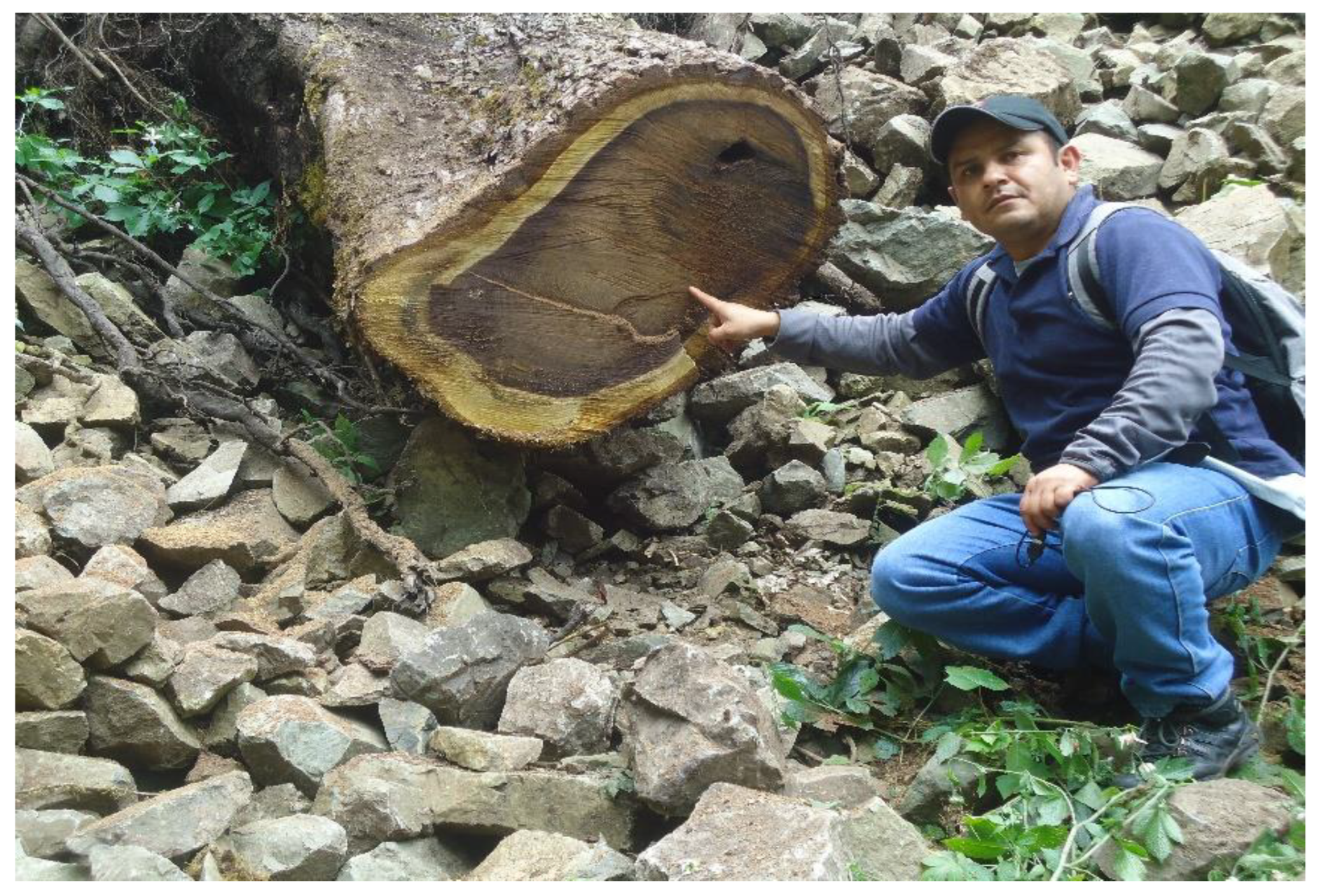
Figure 1. Cross-section of a J. neotropica trunk at 60 cm above ground level.
Preprints 146591 g001
Figure 3. Precipitation and temperature of J. neotropica provenances from The Zañe, The Merced, The Tibio, and The Argelia.
Preprints 146591 g003
Figure 5. Precipitation and relative humidity of provenances from The Zañe, The Merced, The Tibio, and The Argelia.
Preprints 146591 g005
Figure 6. Precipitation and relative humidity of J. neotropica provenances from The Tundo and The Victoria.
Preprints 146591 g006
Figure 8. Precipitation and relative humidity of J. neotropica provenances from The Tundo and The Victoria.
Preprints 146591 g008
Figure 10. Slope map of The Tibio micro-watershed.
Preprints 146591 g010
Figure 11. Slope map of The Merced micro-watershed.
Preprints 146591 g011
Figure 12. Slope map of The Tundo micro-watershed.
Preprints 146591 g012
Figure 13. Slope map of The Victoria micro-watershed.
Preprints 146591 g013
Figure 14. Slope map of The Zañe micro-watershed.
Preprints 146591 g014
Figure 15. Slope map of The Argelia micro-watershed.
Preprints 146591 g015
Figure 16. Phenological calendar of J. neotropica, from different origins in Southern Ecuador: The Tundo (A), The Victoria (B), The Zañe (C), The Argelia (D).
Preprints 146591 g016
Figure 17. Average age of trees by diametric classes in various provenances of zone 7 of Ecuador: Tibio (a1), Merced (a2), Tundo (b1), Victoria (b2), Zañe (b3), and Argelia (b4).
Preprints 146591 g017
Table 1. Indices for classifying slopes in micro-watersheds of different provenances.
Slop (%) Classification Indices
0 - 15 1
15 - 30 2
30 - 45 3
> 45 4
Table 2. Tree registration form by diameter class.
REGISTRATION OF TREES BY DIAMETER CLASS
CLASS I
(10-19,99)

CLASS n…..
Common name Scientific Name DBH (cm) Average
/CAI(cm)
Age/years
1
2
n..
Disclaimer/Publisher’s Note: The statements, opinions and data contained in all publications are solely those of the individual author(s) and contributor(s) and not of MDPI and/or the editor(s). MDPI and/or the editor(s) disclaim responsibility for any injury to people or property resulting from any ideas, methods, instructions or products referred to in the content.
Copyright: This open access article is published under a Creative Commons CC BY 4.0 license, which permit the free download, distribution, and reuse, provided that the author and preprint are cited in any reuse.
Prerpints.org logo

Preprints.org is a free preprint server supported by MDPI in Basel, Switzerland.

Subscribe

Disclaimer

Terms of Use

Privacy Policy

Privacy Settings

© 2025 MDPI (Basel, Switzerland) unless otherwise stated