Preprint
Article

This version is not peer-reviewed.

The Role of Chemotherapy in Patients with Synchronous Colorectal Liver Metastases: A Nationwide Study

A peer-reviewed article of this preprint also exists.

Submitted:

15 January 2025

Posted:

16 January 2025

You are already at the latest version

Abstract

There is still no consensus as to whether patients with upfront resectable synchronous colorectal liver metastases (sCRLM) should receive neoadjuvant treatment prior to liver surgery. Two randomized controlled trials have assessed the role of peri-operative chemotherapy in sCRLM; neither have shown a survival benefit in the neoadjuvant group. The aim of this population-based study was to examine overall survival in patients treated with neoadjuvant chemotherapy and hepatectomy compared to patients who had upfront surgery. This is a retrospective observational study between 2009 and 2017 containing data extracted from two Swedish national registries. Descriptive statistics and Cox regression analyses were employed. Results: 2072 patients with sCRLM were treated with liver surgery between 2009-2017. A majority (n=1238, 60%) were treated with neoadjuvant chemotherapy, and 834 patients (40%) had upfront surgery. Patients in the upfront surgery group were older (median age 70 compared to 65 years, p=<0.001). Median overall survival in the upfront surgery group was 26 months (95% CI 23-29 months) compared to 57 months (95% CI 42-48 months) in the neoadjuvant group, log rank p=<0.001. In the multivariable Cox regression analysis, age ³70 years (HR 1.46, 95% CI 1.25-1.70), T category of primary cancer (HR 1.41, 95% CI 1.09-1.84), lymphatic spread of primary cancer (HR 1.68, 95% CI 1.41-1.99) and number of liver metastases (six or more metastases resulted in HR 2.05, 95% CI 1.38-3.01), negatively influenced overall survival. By contrast, adjuvant therapy was protective (HR 0.80, 95% CI 0-69-0.94), whereas neoadjuvant treatment compared to upfront surgery did not influence overall survival (HR 1.04, 95% CI 0.86-1.26). In conclusion, neoadjuvant treatment in sCRLM did not confer a survival benefit compared to upfront surgery.

Keywords: 
;  ;  ;  ;  ;  ;  

1. Introduction

The role of peri-operative chemotherapy in patients with upfront resectable synchronous colorectal cancer with liver metastases (sCRLM) is not clear. The most common location for metastasis is the liver [1]. Chemotherapy, in combination with surgery may both reduce the risk of relapse and improve overall survival [2,3,4]. Today, three randomized controlled trials exist [5,6,7,8] that have examined the role of chemotherapy in patients with resectable CRLM. In the EORTC Intergroup Trial 40983 [5] an improved progression free survival was seen in the perioperative chemotherapy group with 8.1% at 3 years compared to surgery alone. However, at a median follow-up of 8.5 years no difference could be discerned between the perioperative chemotherapy group versus the surgery alone group in terms of overall survival [6].
As a rational extension of the EORTC trial – also known as the EPOC-trial – another trial, the so-called, new EPOC-trial, randomized patients with KRAS exon 2 wild-type resectable CRLM in a 1:1 ratio to receive chemotherapy with or without cetuximab before and after liver resection [9]. This trial was closed at the interim analysis since it met the protocol-defined futility criteria; since the addition of cetuximab shortened the progression free survival. In a more recent randomized trial (JCOGO603) a modified infusional fluorouracil, leucovorin, and oxaliplatin (FOLFOX6) was added to liver surgery for liver-only metastatic colorectal cancer. This study demonstrated an improved disease-free survival at 5 years (50% versus 39%, p=0.006), in the chemotherapy group, but there was no difference in overall survival [7]. Notably, in the EPOC-trial 63% (n=236) of the patients had metachronous liver metastases, whereas in the JCOGO603 trial 44% (n=133) had metachronous disease. In Sweden, the standard of care has been the treatment plan described in the EORTC Intergroup Trial 40983 (EPOC trial), which includes six cycles of fluorouracil, leucovorin and oxaliplatin before and after surgery.
In our previous study, neoadjuvant chemotherapy did not confer an improved overall survival in patients with a solitary colorectal liver metastasis [10]. The aim of the present study is to examine the role of neoadjuvant and adjuvant chemotherapy in patients with synchronous colorectal liver metastasis (sCRLM) on overall survival.

2. Materials and Methods

2.1. Patients

This nationwide population-based cohort study comprised consecutive patients who underwent a resection for sCRLM and were registered in the National Quality of Registry for Liver, Bile Duct, and Gallbladder cancer (SweLiv) between 1st January 2009 and 31st of December 2017. To obtain information about the primary cancer, data were also retrieved and cross-linked with the Swedish Colorectal Cancer Registry (SCRCR).

2.2. National Quality Registries

Both SweLiv and SCRCR are prospectively maintained quality registries that contain data about the primary colorectal cancer, surgical, oncological and interventional results. SweLiv was established in 2008, and is continuously updated against the Total Population Register at Statistics Sweden, which provides information regarding whether a patient is dead or alive. Both SweLiv and SCRCR have excellent coverage rates when compared with the Swedish Cancer Registry [11,12]. Data that were extracted included demographics, and inter alia information about the primary cancer diagnosis (primary cancer T stage, lymphatic spread of primary cancer), type of liver resection (major or minor), complications according to Clavien-Dindo classification, and information about neoadjuvant and adjuvant treatment.

2.3. Work-Up of Patients

All patients were discussed in colorectal- and liver-specific inter-disciplinary team conferences prior to treatment. Synchronous liver metastases were defined as the presence of metastases at the time of diagnosis or detected during staging of the primary cancer diagnosis. Patients were divided into two groups, those who had upfront surgery without neoadjuvant treatment, and those who had neoadjuvant treatment prior to liver surgery.

2.4. Permissions

The study was approved by the regional ethical board (DnR 2019-00016).

2.5. Statistics

Continuous data are presented with median and interquartile ranges (IQR). Categorical data are presented with proportions and percentages. Categorical variables were compared using Chi Square Test or Fisher’s Exact Test, and continuous variables with the Mann-Whitney-U test. Overall survival was calculated from the date of surgery until death of any cause, or lost to follow-up. Overall survival between the groups were visually compared with Kaplan-Meier curves, and any difference assessed with the log-rank test. In the multivariable Cox regression analyses, backward elimination was used. In the univariable and multivariable analyses hazard rations (HR) are presented with 95% Confidence Intervals (CI). Statistical significance was set as a two-sided p<0.05. Data analyses were performed using SPSS IBM statistics Version 28, 2021.

3. Results

4943 patients were assessed for eligibility. After excluding metachronous CRLM, and patients who had been treated with ablation, 2072 patients with sCRLM were included in the analysis (Figure 1). 1238 patients (60%) were first treated with neoadjuvant chemotherapy before liver surgery. Forty percent (n=834) had upfront surgery. In the neoadjuvant group 755 patients (61%) had adjuvant treatment compared to 245 patients (29%) in the upfront surgery group.
Median age at surgery was 65 years (IQR 57-70 years) in the neoadjuvant group compared to 70 years (IQR 60-71 years) in the upfront surgery group (p=<0.001) (Table 1). Nearly fifty percent (n=404, 48%) were older than 70 years in the upfront surgery group, compared to 28% (n=343) the neoadjuvant group (p<0.001). In both groups the majority of patients were men. Most patients in both groups belonged to ASA classification 2 or 3 (80% in the neoadjuvant group compared to 84% in upfront surgery); a higher proportion of patients in the upfront surgery group belonged to ASA classification 4 (p=0.006). Differences were discerned in the two groups in terms of T category of primary cancer (p<0.027), lymphatic spread of primary cancer (p=<0.006), tumor diameter (p=0.019), and number of liver metastases (p=<0.001). In the neoadjuvant group 26% (n=284) compared to 32% (n=192) in the upfront surgery group had a T4 primary cancer; and 72% (n=805) compared to 67% (n=394) had a N1-N2 lymphatic spread of primary cancer. In the neoadjuvant group 610 patients (51%) had three or more liver metastases, compared to 263 patients (36%) in the upfront surgery group (Table 1).

3.1. Surgical Results and Morbidity

In both groups 12% were treated with an emergency operation because of the primary cancer (Table 2). In the neoadjuvant group 392 patients (32%) compared to 141 patients (17%) had a rectal cancer. In the upfront surgery group 23% (n=194) of the patients had a right colectomy, compared to 19% (n=232) in the neoadjuvant group (p=<0.001). Forty-three percent (n=527) in the neoadjuvant group had a major hepatectomy (3 or more liver segments), compared to 6% (n= 50) in the upfront surgery group (p= <0.001). In the neoadjuvant group 39% (n= 481) had a complete or partial response on the neoadjuvant chemotherapy treatment prior to surgery. In the neoadjuvant group a radical resection (R0) was obtained in 81% (n=898), compared to 80% (n=298) in the upfront surgery group (p=0.390). Rectal resection, and left colectomies were more common in the neoadjuvant group (Table 2). Radical resection was defined as a resection margin of at least 1 millimeter. More patients in the neoadjuvant group experienced a complication graded as Clavien Dindo 3a or greater compared to the upfront surgery group (p<0.001). Eighty-one patients (7%) in the neoadjuvant group were admitted within 30 days compared to 36 patients (4%) in the upfront surgery group (p=<0.001).

3.2. Overall Survival and Cox Regression Analysis

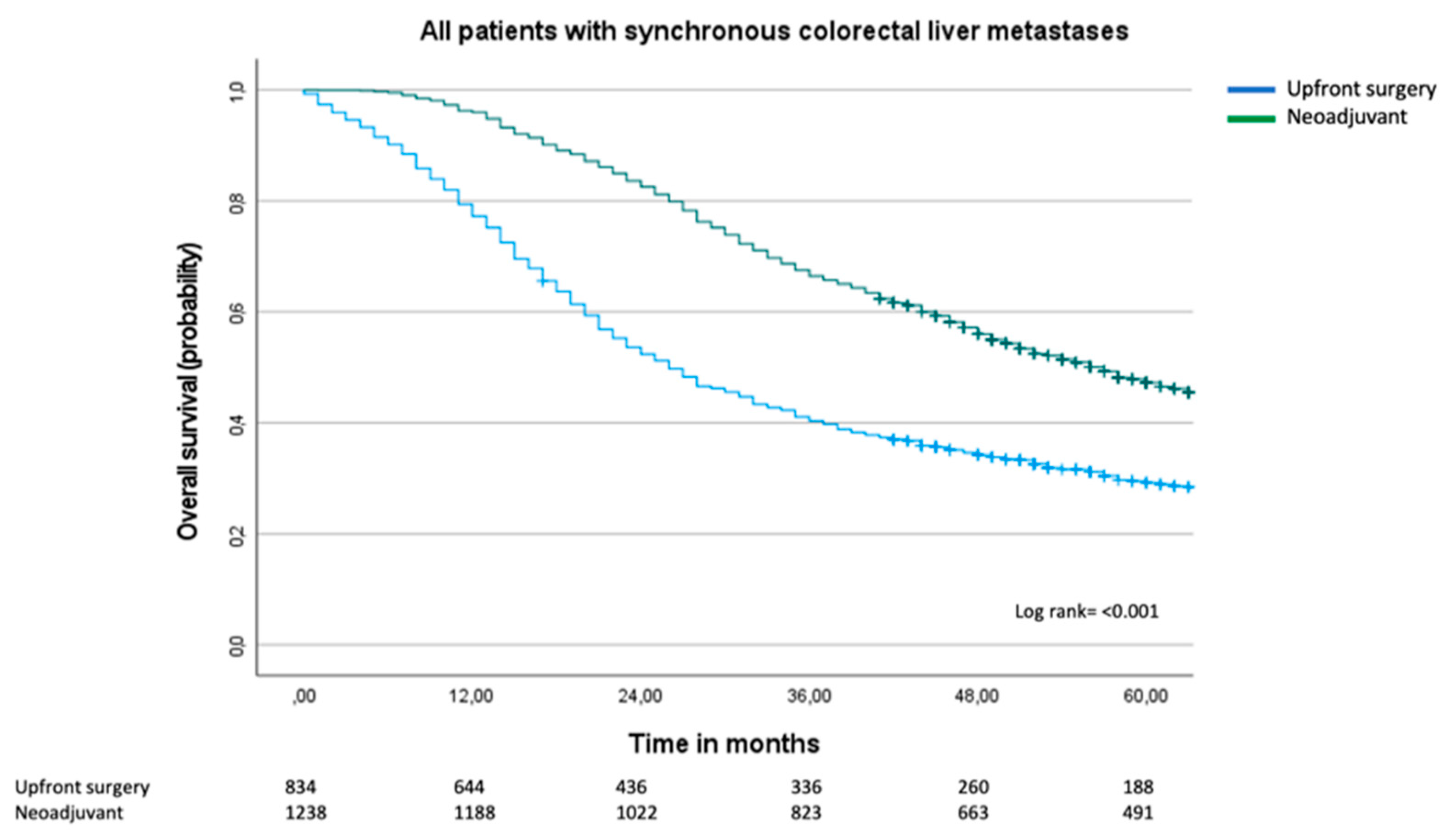
In the univariable analysis several factors negatively influenced overall survival, such as advanced age (above 70 years), ASA classification 3 or 4, T3-T4 category, lymphatic spread of primary cancer, number of liver metastases and upfront surgery (Table 3a). In the Kaplan-Meier analysis there was a clear difference in overall survival between the neoadjuvant group compared to the upfront surgery group (Figure 2). The median overall survival in the neoadjuvant group was 57 months (95% CI 53-61 months), compared to 26 months (95% CI 23-29 months) in the upfront surgery group (log rank p= <0.001).
In the multivariable analyses, however, neoadjuvant treatment (HR 1.04, 95% CI 0.86-1.26) did not confer an overall survival advantage. Adjuvant treatment was protective, and prolonged overall survival (HR 0.80, 95% CI 0.69-0.94). Number of liver metastases strongly influenced overall survival, with more than six liver metastases doubled the risk of dying compared to one metastasis (HR 2.05, 95% CI 1.38-3.01). Moreover, several factors negatively influenced overall survival, including, lymphatic spread (HR 1.68, 95% CI 1.41-1.99) and T3-T4 category of the primary cancer (HR 1.41, 95% CI 1.09-1.84), and age above 70 years (HR 1.46, 95% CI 1.25-1.70) (Table 3a).

3.3. Sub-Group Analyses

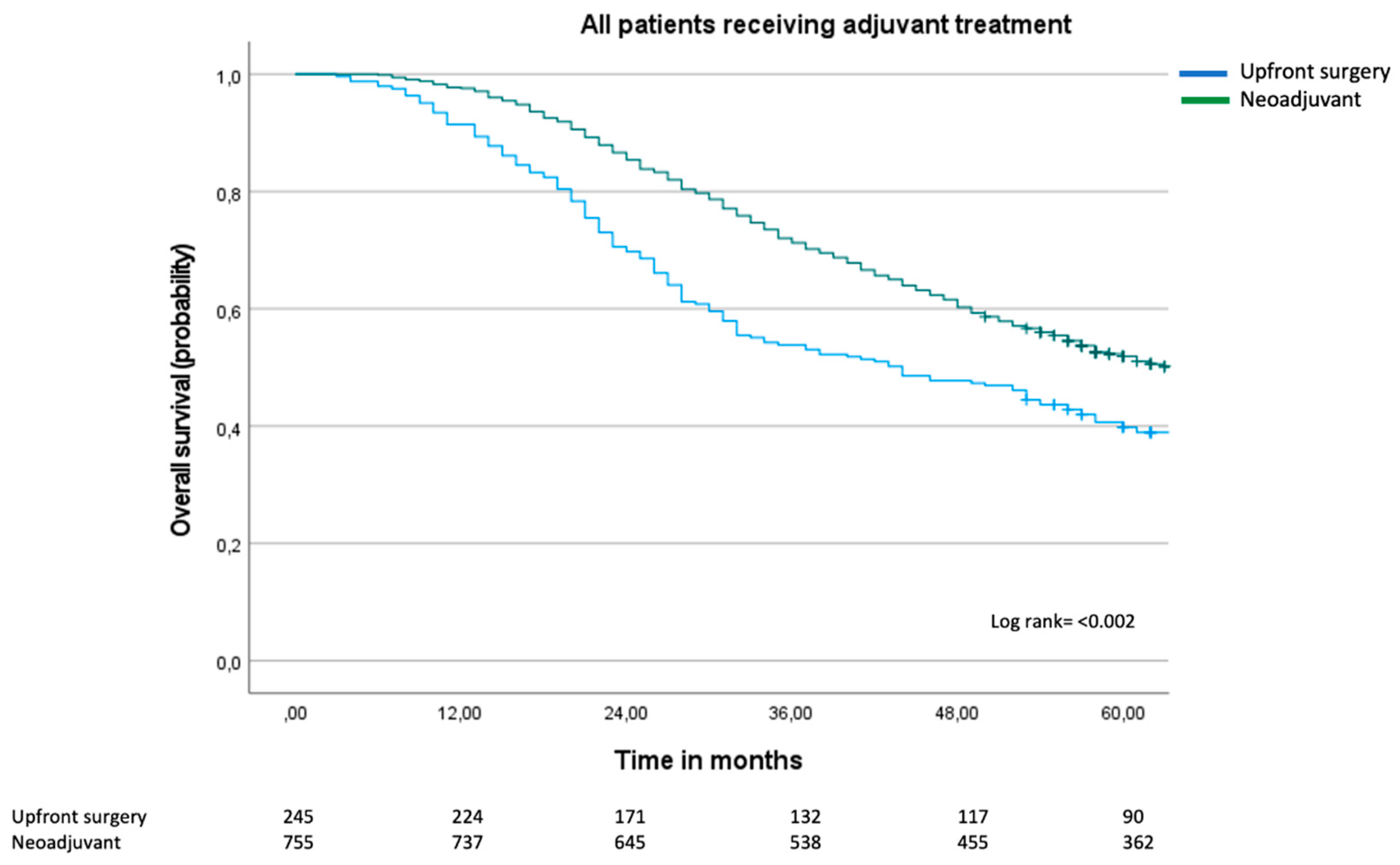
Since the multivariable Cox regression analyses clearly indicated that adjuvant treatment, as opposed to neoadjuvant treatment, conferred improved overall survival, a Kaplan Meier curve was performed comparing all patients that had received adjuvant treatment (Figure 3). In this graph, we can see that the median overall survival improved in both the upfront surgery group and neoadjuvant group, and that there still was a difference in survival (44 months compared to 65 months, log rank test p=<0.002). Visually, a greater improvement was made in the upfront surgery group, with an improvement of 18 months, compared to 8 months in the neoadjuvant group.
To test the hypothesis that neoadjuvant treatment is especially important for patients with extensive liver metastases, we examined its role in patients with six or more liver metastases. In the multivariable analysis of this sub-group of patients (Table 3b) neither neoadjuvant treatment (HR 1.53, 95% CI 0.67-3.53), nor adjuvant treatment (HR 1.06, 95% CI 0.72-1.54) improved overall survival. In this analysis advanced age (HR 1.93, 95% CI 1.30-2.87), ASA classification 3 or 4 (HR 1.58, 95% CI 1.06-2.36), and T3-T4 category of primary cancer of T3-T4 (HR 3.30, 95% CI 1.53-7.11), played an important role on overall survival.

3.4. Supplemental Analysis

To further examine the role of neoadjuvant and adjuvant chemotherapy on overall survival in sCRLM. We performed a multivariable analysis with all patients who had received adjuvant treatment (Table S1). In this subgroup of patients advanced age (≥70 years), lymphatic spread of primary cancer (N1-N2) and number of liver metastases (two or more metastases) negatively influenced overall survival. Neoadjuvant treatment (HR 1.04, 95% CI 0.81-1.34) and T category of primary cancer influenced overall survival in the univariable analysis, but not in multivariable analysis. We also examined the role of chemotherapy on all patients who had received neoadjuvant treatment (Table S2). In this group, advanced age (≥70 years), lymphatic spread of primary cancer, T category of primary cancer, and more than two liver metastases conferred worse overall survival. Notably, adjuvant treatment also positively prolonged overall survival (HR 0.82, 95% CI 0.68-0.97).

4. Discussion

The role of neoadjuvant chemotherapy in patients with resectable sCRLM is not clear. The present nationwide population-based study between 2009 and 2017 aimed to assess the influence of neoadjuvant and adjuvant chemotherapy on overall survival in sCRLM. In the univariable analysis there was a survival advantage in the neoadjuvant group, compared to upfront surgery. In the multivariable analyses, however, no survival benefit was seen in the neoadjuvant group. By contrast, adjuvant treatment appears to confer a survival benefit in the multivariable analyses.
Patients in the neoadjuvant group were younger (median age 65 compared to 70 years), and healthier, since fewer, patients belonged to ASA classification 3 and 4. A greater proportion in the upfront surgery group (32%, n=192) had a T4 primary cancer, compared to 26% (n=284) in the neoadjuvant group (p=0.027). By contrast, 72% (n=805) in the neoadjuvant group compared to 67% (n=394) in the upfront surgery group belonged to N1 or N2 category of the primary cancer (p=0.006). Unfortunately, we only have data from patients who underwent liver surgery. An intention-to-treat analysis is therefore not possible, since we cannot report on the number of patients who were treated with neoadjuvant treatment with the intention of receiving liver surgery, but due to unforeseen reasons, such as progression of the disease, or adverse events of the chemotherapy treatment.
Despite a vast amount of discussion in the literature, there is no consensus on the administration of chemotherapy and its ideal timepoint in resectable CRLM [13,14,15]. To date, there are three randomized controlled trials [5,7,9] that assess the importance of chemotherapy in resectable CRLM. In the EORTC trial 364 patient were randomized to either peri-operative chemotherapy (six cycles before and six cycles after surgery of FOLFOX4) [5]. In this study 35% (n=128) had synchronous CRLM, and they were allowed to have between one to four liver metastases. In fact, more than 50% percent had only one liver metastasis, and only 7% (n=26) had four liver metastases. This, in comparison to the current study where 72% (n=1483) of patients had three or more metastases. In the EORTC trial an improved progression free survival at 3 years of 8.1% was seen in the chemotherapy arm; however, no difference was discerned in overall survival after 8.5 years follow-up [6]. In a more recent RCT, 300 patients were randomly assigned to either hepatectomy, or a combination of hepatectomy and modified infusional fluouracil, leucovorin, and oxaliplatin (mFOLFOX6) [7]. Severe adverse events were reported in approximately half of the patients, and there was no difference in overall survival.
Mitry et al performed a pooled analysis of two phase 3 trials to assess the importance of chemotherapy after hepatectomy. A comparison was made between patients that received surgery alone (n= 140) and patients that were first treated with hepatectomy and thereafter six months of adjuvant chemotherapy [16]. Adjuvant chemotherapy was associated with progression-free survival and overall survival in the multivariable analysis. Araujo et al performed a systematic review and meta-analysis, which included 3 RCTs, and 2 observational comparative studies [2]. This study performed Forest plots both for recurrence-free survival, and overall survival (surgery + chemotherapy versus surgery alone), and concluded that chemotherapy improved overall survival (HR 0.77, 95% CI 0.67-0.88) and recurrence-free survival (HR 0.71, 95% CI 0.61-0.83). In a recent multicenter retrospective observational study by Di Martino and colleagues, which included 252 patients between 2010 and 2015, concluded that peri-operative chemotherapy for resectable CRLM, was beneficial compared to neoadjuvant only, in terms of overall survival and recurrence-free survival [17].
To assess the role of neoadjuvant therapy on patients with multiple liver metastases, we performed a sub-group analysis. In this analysis we examined the role of neoadjuvant treatment on all patients with six or more liver metastases. To our surprise, not even in this group did neoadjuvant treatment prolong overall survival in the multivariable analysis. The assessment of whether a patient would benefit from peri-operative chemotherapy is complex, and requires risk stratification and be determined individually in a multidisciplinary team conference [18]. Patients with resectable CRLM with a low risk of recurrence are likely to benefit from upfront surgery, and the role of adjuvant treatment post-operatively is not always easy to determine. By contrast, patients with resectable disease with a high risk of recurrence may benefit from peri-operative chemotherapy, since a course of neoadjuvant treatment may function as a test of biology, where patients who clearly progress during the course of treatment are likely not to benefit from surgery. Treatment decisions in metastatic colorectal cancer need to be influenced by a rigorous understanding of the unique tumor characteristics of the primary cancer and the metastasis, such as molecular profiling, presence or absence of microsatellite instability, extent of tumor involvement and previous treatment, as well as each patient’s underlying co-morbidity [19]. Patients with metastatic colorectal cancer are highly heterogeneous. With advancements in surgical technique, the definition of resectability is also becoming more elusive. Today, technically, resectability is not determined by number and extent of liver metastases or bilobar disease, as long as sufficient future liver remnant is preserved (≥30% of remnant liver) [15]. We today perform more complex liver surgery on elderly patients and have acquired an improved understanding of the molecular biology of colorectal cancer [19,20]. We should therefore become better at stratifying patients into low-medium-high risk groups, and weigh this information against oncological criteria, concerning prognostic factors, and the biology of the disease, for each patient.
One limitation of the study is the fact that the registers do not allow us to differentiate between patients with primarily unresectable disease, who became resectable as a result of neoadjuvant treatment, from those who were resectable from the outstart. Although, the definition of resectability is prima facie easy to define, what exactly constitutes resectable disease is highly influenced by local practices [21] and constantly evolving. Unfortunately, the registers do not allow us to provide detailed information on type of chemotherapy, or number of cycles [22,23]. On the other hand, the aim of the study was, not to assess specific treatment responses or tolerability to oncological agents, but to examine real-word data. Lastly, although the registers show high accuracy and validity, there was a degree of missing data for some variables.
One strength of the present study is its population-based design. Moreover, data obtained for the study come from national quality registers with high accuracy and validity. The long follow-up period entails that few patients have been censored, which adds stability to the overall survival analyses. Another advantage of the present study, is that it focus solely on synchronous CRLM, which makes the study population somewhat more homogenous. Although, our study is a population-based study, and there might be a risk of unmeasured confounding variables; we believe the results suggest a more cautionary approach in administrating peri-operative treatment to all patients with resectable sCRLM. This position is convincingly presented by Booth and Berry [24], when reflecting on the findings presented in the RCT by Kanemitsu et al (JCOG0603) [7]. According to them, the JCOG0603 trial ‘signals’ the ‘end of an era’ in which perioperative and postoperative chemotherapy can be viewed as the ‘default standard for patients with resectable CRLM’ [24]. Since, chemotherapy may only delay recurrence, without any clear evidence that it prolongs survival; a six months chemotherapy treatment period with frequent clinic visits, and the risk of severe adverse events may be questioned.

5. Conclusions

To our knowledge this is the largest population-based study to examine the role of chemotherapy on resectable synchronous CRLM and overall survival. In the present study an association between adjuvant chemotherapy and overall survival was found; this was not the case for neoadjuvant treatment.

Author Contributions

Conceptualization, P.F.; methodology, P.F.; software, P.F.; validation, P.F. H.S; formal analysis, P.F., H.S., S.R., S.S., F.B. C.M.; investigation, P.F.; resources, P.F.; data curation, P.F.; writing—original draft preparation, P.F.; writing—review and editing, P.F., H.S., J.U. C.M., F.B., S.R., S.S. J.Un; visualization, P.F. .; supervision, P.F.; project administration, P.F.; funding acquisition, P.F. All authors have read and agreed to the published version of the manuscript.

Funding

Funding from Research & Development Fund, Uppsala University.

Institutional Review Board Statement

The study was conducted in accordance with the Declaration of Helsinki, and approved by regional ethical board DnR 2019-00016. .

Informed Consent Statement

Patient consent was waived after approval from the regional ethical board DnR 2019-00016.

Data Availability Statement

The data may be available from the corresponding author based on reasonable request.

Conflicts of Interest

The authors declare no conflicts of interest.

Appendix A

The appendix is an optional section that can contain details and data supplemental to the main text—for example, explanations of experimental details that would disrupt the flow of the main text but nonetheless remain crucial to understanding and reproducing the research shown; figures of replicates for experiments of which representative data is shown in the main text can be added here if brief, or as Supplementary data. Mathematical proofs of results not central to the paper can be added as an appendix.

Appendix B

All appendix sections must be cited in the main text. In the appendices, Figures, Tables, etc. should be labeled starting with “A”—e.g., Figure A1, Figure A2, etc.

References

  1. Hackl, C.; Neumann, P.; Gerken, M.; Loss, M.; Klinkhammer-Schalke, M.; Schlitt, H.J. Treatment of colorectal liver metastases in Germany: a ten-year population-based analysis of 5772 cases of primary colorectal adenocarcinoma. BMC Cancer. 2014, 14, 810. [Google Scholar] [CrossRef] [PubMed]
  2. Araujo, R.L.; Gönen, M.; Herman, P. Chemotherapy for patients with colorectal liver metastases who underwent curative resection improves long-term outcomes: systematic review and meta-analysis. Ann Surg Oncol. 2015, 22, 3070–3078. [Google Scholar] [CrossRef] [PubMed]
  3. Brandi G, De Lorenzo S, Nannini M, Curti S, Ottone M, Dall'Olio FG, et al. Adjuvant chemotherapy for resected colorectal cancer metastases: Literature review and meta-analysis. World J Gastroenterol. 2016, 22, 519–533. [Google Scholar] [CrossRef]
  4. Wang, Z.M.; Chen, Y.Y.; Chen, F.F.; Wang, S.Y.; Xiong, B. Peri-operative chemotherapy for patients with resectable colorectal hepatic metastasis: A meta-analysis. Eur J Surg Oncol. 2015, 41, 1197–1203. [Google Scholar] [CrossRef]
  5. Nordlinger B, Sorbye H, Glimelius B, Poston GJ, Schlag PM, Rougier P, et al. Perioperative chemotherapy with FOLFOX4 and surgery versus surgery alone for resectable liver metastases from colorectal cancer (EORTC Intergroup trial 40983): a randomised controlled trial. Lancet. 2008, 371, 1007–1016. [Google Scholar] [CrossRef]
  6. Nordlinger B, Sorbye H, Glimelius B, Poston GJ, Schlag PM, Rougier P; et al. Perioperative FOLFOX4 chemotherapy and surgery versus surgery alone for resectable liver metastases from colorectal cancer (EORTC 40983): long-term results of a randomised, controlled, phase 3 trial. The Lancet Oncology. 2013, 14, 1208–1215. [Google Scholar] [CrossRef] [PubMed]
  7. Kanemitsu Y, Shimizu Y, Mizusawa J, Inaba Y, Hamaguchi T, Shida D; et al. Hepatectomy Followed by mFOLFOX6 Versus Hepatectomy Alone for Liver-Only Metastatic Colorectal Cancer (JCOG0603): A Phase II or III Randomized Controlled Trial. J Clin Oncol. 2021, JCO2101032.
  8. Primrose J, Falk S, Finch-Jones M, Valle J, O'Reilly D, Siriwardena A; et al. Systemic chemotherapy with or without cetuximab in patients with resectable colorectal liver metastasis: the New EPOC randomised controlled trial. Lancet Oncol. 2014, 15, 601–611. [Google Scholar] [CrossRef]
  9. Primrose, J.N. Cetuximab for resectable colorectal liver metastasis: new EPOC trial--author's reply. Lancet Oncol. 2014, 15, e306. [Google Scholar] [CrossRef]
  10. Fruhling, P.; Urdzik, J.; Isaksson, B. Chemotherapy in patients with a solitary colorectal liver metastasis - A nationwide propensity score matched study. Eur J Surg Oncol. 2022. [CrossRef] [PubMed]
  11. Kodeda K, Nathanaelsson L, Jung B, Olsson H, Jestin P, Sjovall A; et al. Population-based data from the Swedish Colon Cancer Registry. Br J Surg. 2013, 100, 1100–1107. [Google Scholar] [CrossRef]
  12. 2024. Available online: https://cancercentrum.se/samverkan/cancerdiagnoser/lever-och-galla/statistik/.
  13. Benson AB, Venook AP, Al-Hawary MM, Azad N, Chen YJ, Ciombor KK; et al. Rectal Cancer, Version 2.2022, NCCN Clinical Practice Guidelines in Oncology. J Natl Compr Canc Netw. 2022, 20, 1139–1167. [Google Scholar] [CrossRef]
  14. NICE guideline NG151, 2020. Available online: https://www.nice.org.uk/guidance/ng151 (accessed on 9 December 2024).
  15. Cervantes A, Adam R, Roselló S, Arnold D, Normanno N, Taïeb J; et al. Metastatic colorectal cancer: ESMO Clinical Practice Guideline for diagnosis, treatment and follow-up. Ann Oncol. 2023, 34, 10–32. [Google Scholar] [CrossRef] [PubMed]
  16. Mitry E, Fields AL, Bleiberg H, Labianca R, Portier G, Tu D; et al. Adjuvant chemotherapy after potentially curative resection of metastases from colorectal cancer: a pooled analysis of two randomized trials. J Clin Oncol. 2008, 26, 4906–4911. [Google Scholar] [CrossRef]
  17. Di Martino M, Primavesi F, Syn N, Dorcaratto D, de la Hoz Rodríguez Á, Dupré A; et al. Long-Term Outcomes of Perioperative Versus Neoadjuvant Chemotherapy for Resectable Colorectal Liver Metastases: An International Multicentre Propensity-Score Matched Analysis with Stratification by Contemporary Risk-Scoring. Ann Surg Oncol. 2022, 29, 6829–6842. [Google Scholar] [CrossRef]
  18. Chan, G.; Chee, C.E. Perioperative Chemotherapy for Liver Metastasis of Colorectal Cancer. Cancers (Basel). 2020, 12. [Google Scholar] [CrossRef]
  19. Eng C, Yoshino T, Ruíz-García E, Mostafa N, Cann CG, O'Brian B; et al. Colorectal cancer. Lancet. 2024, 404, 294–310. [Google Scholar] [CrossRef] [PubMed]
  20. Guinney J, Dienstmann R, Wang X, de Reynies A, Schlicker A, Soneson C; et al. The consensus molecular subtypes of colorectal cancer. Nat Med. 2015, 21, 1350–1356. [Google Scholar] [CrossRef] [PubMed]
  21. Ignatavicius P, Oberkofler CE, Chapman WC, DeMatteo RP, Clary BM, D'Angelica MI; et al. Choices of Therapeutic Strategies for Colorectal Liver Metastases Among Expert Liver Surgeons: A Throw of the Dice? Annals of surgery 2020, 272, 715–722. [Google Scholar] [CrossRef] [PubMed]
  22. Kim, H.S.; Lee, S.; Kim, J.H. Real-world Evidence versus Randomized Controlled Trial: Clinical Research Based on Electronic Medical Records. J Korean Med Sci. 2018, 33, e213. [Google Scholar] [CrossRef] [PubMed]
  23. Nazha, B.; Yang, J.C.; Owonikoko, T.K. Benefits and limitations of real-world evidence: lessons from EGFR mutation-positive non-small-cell lung cancer. Future Oncol. 2021, 17, 965–977. [Google Scholar] [CrossRef] [PubMed]
  24. Booth, C.M.; Berry, S.R. Perioperative Chemotherapy for Resectable Liver Metastases in Colorectal Cancer: Do We Have a Blind Spot? J Clin Oncol. 2021, JCO2101972. [Google Scholar] [CrossRef]
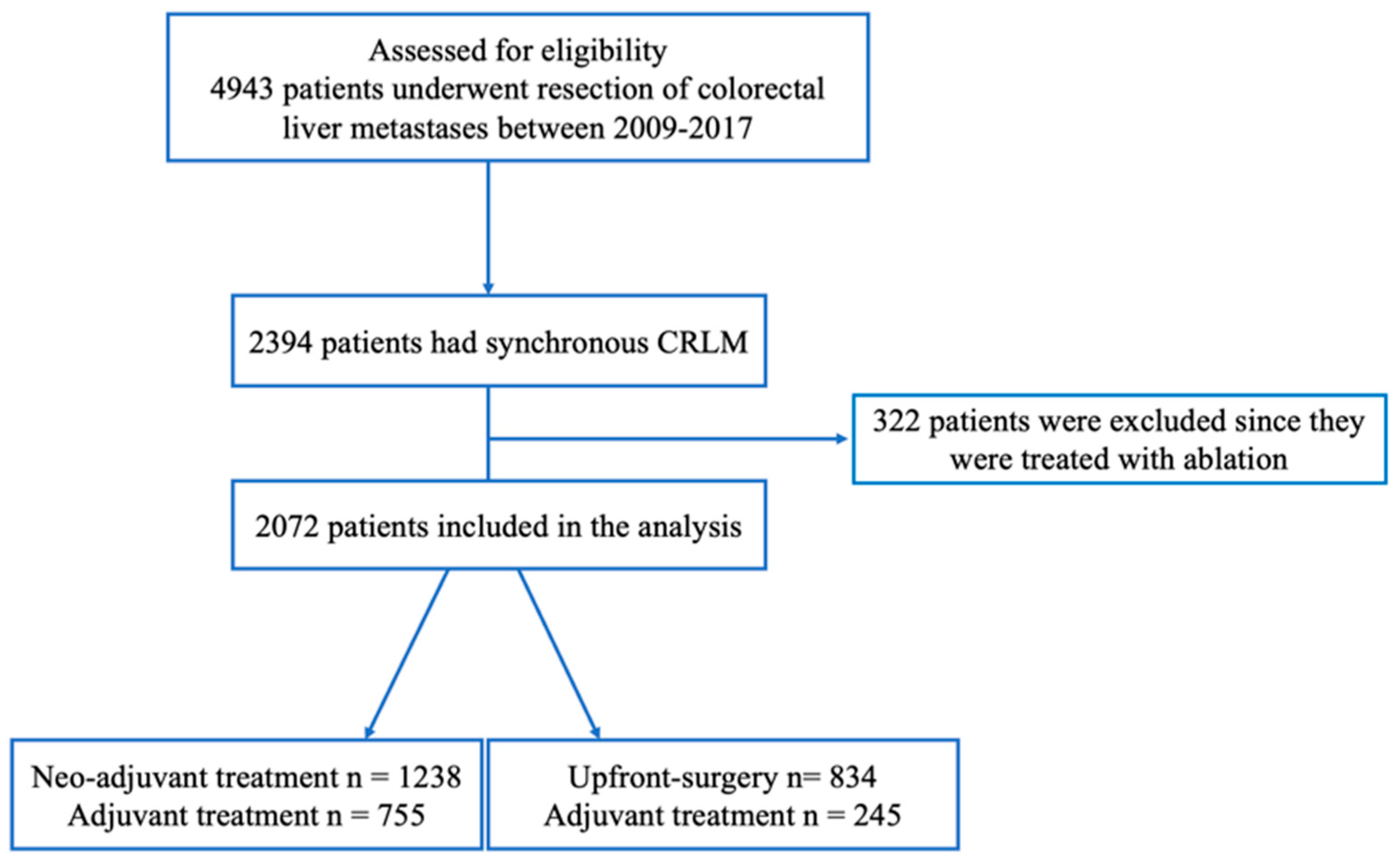
Figure 1. A flowchart of the study population.
Preprints 146245 g001
Figure 2. Overall survival including all patients with synchronous colorectal liver metastases. Median overall for the upfront surgery group was 26 months (95% CI 23-29 months), and for the neoadjuvant group 57 months (95% CI 53-61 months), log rank= p<0.001.
Preprints 146245 g002
Figure 3. Overall survival including all patients with synchronous colorectal liver metastases who received adjuvant treatment. Median overall for the upfront surgery group was 44 months (95% CI 32-56- months), and for the neoadjuvant group 65 months (95% CI 58-72 months), log rank= p<0.002.
Preprints 146245 g003
Table 1. Baseline characteristics of study population.
No. Patients
N= 2072
Neoadjuvant
N=1238
Upfront surgery
N=834
p Value
Age (years)
Median (IQR)
Age >70

66 (58-72)
747 (36)

65 (57-70)
343 (28)

70 (60-71)
404 (48)

<0.001
<0.001
Sex
Men
Women

ASA
1
2
3
4
Missing

T category of primary cancer
T1
T2
T3
T4
Tx/missing 592

Lymphatic spread of primary cancer
N0
N1
N2
Nx/missing

Tumor diameter (mm)
Median (IQR)
1269 (61)
803 (39)


289 (17)
947 (57)
419 (25)
21 (1)
396


21 (1)
137 (8)
1045 (62)
476 (29)
393


503 (30)
642 (38)
557 (32)
370

20 (13-33)
765 (62)
473 (38)


206 (19)
631 (57)
249 (23)
12 (1)
140


13 (1)
98 (9)
692 (64)
284 (26)
151


308 (28)
449 (40)
356 (32)
125

20 (14-35)
504 (60)
330 (40)


83 (14)
316 (55)
170 (29)
9 (2)
256


8 (1)
39 (7)
353 (60)
192 (32)
242


195 (33)
193 (33)
201 (34)
245

20 (13-30)

0.282


0.006


0.027


0.006


0.019
Number of liver metastases
1
2
3-5
6
>6
Missing
666 (35)
372 (19)
502 (26)
253 (13)
118 (6)
161
328 (28)
249 (21)
373 (31)
181 (15)
56 (5)
51
338 (47)
123 (17)
129 (18)
72 (10)
62 (9)
110
<0.001


Table 2. Details of primary cancer resection, hepatectomy and surgical results.
Neoadjuvant
N=1238
Upfront surgery
N=834
p Value
Emergency primary cancer operation

Type of colorectal resection
Rectal resection
Left colectomy
Right colectomy
Colectomy, other
Unspecified
Laparotomy only
144 (12)

392 (32)
423 (34)
232 (19)
62 (5)
117 (10)
42 (1)
99 (12)


141 (17)
195 (23)
194 (23)
37 (4)
225 (27)
42 (5)
0.059


<0.001

Major hepatectomy
3 or more liver segments

Intraoperative blood loss
Median (IQR)

Response on neoadjuvant treatment
Complete/partial
Stable disease
Progress
Unclear

Liver resection
R0
R1
Unclear
Missing

Post-operative complications
Re-admission within 30 days

Clavien Dindo 3a
Clavien Dindo 3b
Clavien Dindo 4a
Clavien Dindo 4b
Clavien Dindo 5


527 (43)


600 (300-1100)


481 (39)
98 (8)
34 (3)
625 (50)


898 (81)
125 (11)
89 (8)
126


81 (7)

87 (7)
41 (3)
15 (1)
4 (0)
5 (0)


50 (6)


300 (125-475)


N/A


298 (80)
36 (10)
37 (10)
463


36 (4)

25 (3)
16 (2)
5 (1)
2 (0)
2 (0)


<0.001


0.083


0.390


<0.001

<0.001

Table 3. a. Cox regression analyses and overall survival; b. Cox regression model for overall survival for patients with six or more than six liver metastases.
a. Cox regression analyses and overall survival.
Univariable
HR, 95% CI
P value Multivariable
HR, 95% CI
P value
Age (years)
<70
≥70

Gender
Women
Men

ASA
1-2
3-4

Reference
1.38 (1.26-1.56)


Reference
1.05 (0.90-1.11)


Reference
1.26 (1.09-1.46)


<0.001


0.931


0.002

Reference
1.46 (1.25-1.70)


Reference
1.03 (0.89-1.19)


Reference
1.16 (0.98-1.38)


0.007


0.719


0.087
T category of primary cancer
T1-T2
T3-T4

Lymphatic spread of primary cancer
N0
N1-N2

Number of liver metastases
1
2
3-5
6
>6

Chemotherapy
Upfront surgery
Neoadjuvant

No adjuvant
Adjuvant

Reference
1.91 (1.53-2.39)


Reference
1.89 (1.64-2.16)


Reference
1.33 (1.13-1.56)
1.40 (1.21-1.63)
1.80 (1.51-2.15)
3.04 (2.44-3.79)


Reference
0.56 (0.51-0.63)

Reference
0.62 (0.55-0.69)


<0.001


<0.001


<0.001
<0.001
<0.001
<0.001


<0.001


<0.001

Reference
1.41 (1.09-1.84)


Reference
1.68 (1.41-1.99)


1.52 (1.26-1.84)
1.38 (1.14-1.66)
1.54 (1.22-1.96)
2.05 (1.38-3.01)


1.04 (0.86-1.26)


0.80 (0.69-0.94)


0.010


<0.001


<0.001
<0.001
<0.001
<0.001


0.681


0.007
b. Cox regression model for overall survival for patients with six or more than six liver metastases.
Univariable
HR, 95% CI
P value Multivariable
HR, 95% CI
P value
Age (years)
<70
≥70

Gender
Women
Men

ASA
1-2
3-4

Reference
1.61 (1.25-2.07)


Reference
0.99 (0.78-1.25)


Reference
1.33 (0.95-1.86)


<0.001


0.928


0.094

Reference
1.93 (1.30-2.87)


Reference
1.21 (0.82-1.76)


Reference
1.58 (1.06-2.36)


0.002


0.335


0.026

T category of primary cancer
T1-T2
T3-T4

Lymphatic spread of primary cancer
N0
N1-N2


Chemotherapy
Upfront surgery
Neoadjuvant

No adjuvant
Adjuvant


Reference
3.81 (1.87-7.73)


Reference
1.94 (1.33-2.83)


Reference
0.301 (0.24-0.38)

Reference
0.70 (0.54-0.90)


<0.001


<0.001


<0.001

0.005


Reference
3.30(1.53-7.11)

Reference
1.34 (0.82-2.17)


Reference
1.53 (0.67-3.53)

Reference
1.06 (0.72-1.54)


0.002


0.241


0.314


0.778
Disclaimer/Publisher’s Note: The statements, opinions and data contained in all publications are solely those of the individual author(s) and contributor(s) and not of MDPI and/or the editor(s). MDPI and/or the editor(s) disclaim responsibility for any injury to people or property resulting from any ideas, methods, instructions or products referred to in the content.
Copyright: This open access article is published under a Creative Commons CC BY 4.0 license, which permit the free download, distribution, and reuse, provided that the author and preprint are cited in any reuse.
Prerpints.org logo

Preprints.org is a free preprint server supported by MDPI in Basel, Switzerland.

Subscribe

Disclaimer

Terms of Use

Privacy Policy

Privacy Settings

© 2025 MDPI (Basel, Switzerland) unless otherwise stated