
Submitted:
09 January 2025
Posted:
09 January 2025
You are already at the latest version
Abstract
Fujian Tulou was designated a UNESCO World Heritage site in 2008. Recently, many Tulou Villages have been facing aging challenges, including a shortage of age-friendly resources due to the hollowing-out phenomenon. The neighborhood open spaces in these villages are crucial for aging in place, but surveys show these spaces have underutilized resources, incomplete functionality, and insufficient senior-friendliness. The facility layouts ignore elderly usage habits, and services fail to meet their diverse needs. This research uses a mixed-methods approach to examine their behavior and needs in these spaces. The findings indicate that elderly behavior is diverse, and characterized by regularity, habituality, and coordination. They cluster in multiple sites, with strong social behavior preferences and a pronounced sense of cultural identity; Elderly needs in these spaces fall into primary and secondary categories. In terms of needs importance, "functionality," "safety," and "cultural characteristics" carry the highest weight, supporting activities and identity recognition. "Elderly services" and "facilities" follow, enhancing spatial comfort. "Accessibility" and "landscape" have lower weights but have a significant impact on elderly satisfaction. These features are influenced by the spirit of place in neighborhood open spaces, the sense of community in Tulou villages, and the clan-based social order of Hakka culture.
Keywords:
Fujian Tulou
; the neighborhood open space
; behavioral pattern
; categories of needs
; age-friendly renewal
1. Introduction
Fujian Tulou, the primary residence for the Hakka people in Fujian for centuries, is a village that features rich natural resources and cultural heritage that integrate with the surrounding environment. These factors drive elderly people to age in place in their ancestral homes. The western region of Fujian Province is home to Tulou Villages. However, with the outflow of young labor, the declining birth rates, and longer life expectancies, the Tulou Villages are facing a severe aging population problem, bringing many challenges to age in place. The outdoor environment of Tulou Village serves as a critical support for aging in place, while the neighborhood open spaces (NOSs) [1], as the core space for fostering village cohesion, is the central spatial resource for activities and interactions within the Tulou Village. Therefore, studying the age-friendly renewals of Tulou Villages NOSs is a significant topic. By researching the behavioral characteristics and needs profile of the elderly in Fujian Tulou Village NOSs, we can better understand their actual needs in these spaces. The government and designers can also use this as a basis to fully leverage the existing resource advantages of Tulou Villages, thereby promoting the development of age-friendly outdoor environments in Tulou Villages.
The behaviors of elderly people are influenced not only by physiological and psychological characteristics but also by various factors such as culture, built environment. There has been considerable research on the behavioral characteristics of elderly people. In the field of elderly behavior studies, Zhang Z. Q. et al. based on the gathering behavior patterns of elderly people in rural China, used behavior mapping to identify two kinds of aggregation phenomena in rural public spaces [2]. Li B., Wang Y., and Li X. conducted observations and interviews with elderly residents in three village environments in Shanghai, using cluster analysis to reveal the characteristics and influencing factors of elderly walking behavior, also explore the relationship between walking behavior and the environment [3]. Ren W. M. and Zhang X. C. analyzed the current state of elderly behavior patterns and spatial needs to explore age-friendly renewal strategies for the open space in the Cave Dweling Villages of Lüliang City [4]. Xiao J. et al. integrated space syntax and cognitive surveys to establish an evaluation framework for the “publicness” of rural NOSs. He then used this framework to analyze elderly behavior patterns and the mechanisms influencing publicness [5]. Basu R. and Sevtsuk A. explored pedestrian behavior preferences across various route attributes in Boston, Massachusetts, using a large GPS trajectory dataset [6]. These studies focus on various aspects of elderly behavior, such as specific behaviors and behavior patterns. In terms of the factors influencing elderly behavioral characteristics, Qu Y. used a behavioral observation method to investigate the temporal and spatial characteristics of elderly leisure behavior across the four seasons in Shenyang Baicao Park. The study analyzed the impact of seasonal climate factors on elderly leisure behavior and, based on these findings, proposed spatial optimization design strategies for open parks in northern cities [7]. Cai Y. Q. and Wang Y. M. conducted observations and interviews to study the behavioral characteristics of elderly people in residential streets during the winter in Shanghai, as well as the use of street space. They revealed the usage patterns of street spaces by the elderly [8]. He S. Y. et al. approached the study from the perspective of villagers’ spatial behavior, using the comparative case study method combined with the questionnaire survey and the depth interview. They explored the impact of built environment elements on villagers’ spatial behavior [9]. Liu C et al. based on survey data from rural China, found that family clan culture can reduce depressive behaviors in elderly people, with this effect being independent of gender [10]. Mika Moran et al. conducted a literature review to identify five physical environmental factors that influence elderly physical activity. She then used qualitative methods to determine the most relevant factors [11]. Xu, Hong-Chao et al. used qualitative research methods to analyze the elderly behavior characteristics in NOSs within urban communities in Wuhan. The factors influencing elderly behavior were categorized into two types: objective factors and subjective factors [12]. Tanja Schmidt et al. conducted field survey to investigate the characteristics of village open spaces, and then evaluated the relationship between the identified characteristics and elderly social interactions and walking behaviors [13]. Koo, B. W. et al. applied computer vision technology to quantify street-level factors in street view images from Atlanta, Georgia. He examined how these factors relate to walking behavior patterns [14]. The above studies examine how climate, culture, and physical environments influence behavior of the elderly.
The elderly needs in public spaces are diverse, influenced by a variety of factors. Senetra, A. et al. conducted a study comparing elderly needs in “age-friendly housing communities” across different countries. The research found that while there were some variations in needs based on age and gender, cultural habits had a significant influence on the elderly needs [15]. Li J. Q. first identified the public space demand factors for the elderly population in nursing institutions in Nanjing through standard and standardized research, as well as interview studies. Then, using the segmented KANO Model, she prioritized the elderly’s needs in public spaces [16].Wan Ziliang et al. through a field survey of the NOSs in an old community in Beijing, analyzes the outdoor activity needs of the elderly and the age-friendliness of the built environment in the NOSs [17].Wang Huanhuan et al. through questionnaires and interviews, analyzed the needs of elderly individuals with varying levels of physical ability in Hainan Century Park, proposing urban public space renovation strategies to accommodate these varying needs [18].Zhang, H. et al. used the grounded theory approach, conducted interviews with elderly residents in four residential communities in China. The study analyzed their preferences regarding the acoustic needs of the community outdoor environment [19]. Lim, X. J. et al. conducted interviews with elderly residents in Ipoh, Malaysia, using a semi-structured questionnaire to explore the unmet needs of the elderly. The study analyzed these unmet needs from multiple levels using the Active Aging 5P framework [20].
As the studies show, existing research mainly focuses on urban elderly communities, elderly care facilities, and urban parks, with limited studies on rural areas, especially cultural heritage villages. In addition, most research targets specific elderly behaviors, such as social leisure and physical health, and lacks a comprehensive understanding of elderly behavior throughout the day. From the above studies, it is clear that existing research on the needs of the elderly in public spaces primarily focuses on urban elderly populations, with a primary emphasis on public spaces within elderly communities, nursing home public spaces, and age-friendly parks. Research on NOSs in rural areas, particularly in villages, is relatively scarce.
Based on the in-depth analysis above, this research primarily has three objectives and three significances. The objectives are as follows:1) To collect behavioral data of the elderly in Taxia Village NOSs, analyze and construct an assessment model for the behavioral activity of the elderly in the NOSs, and identify high-activity NOSs; 2) To collect and refine both behavioral and needs data of the elderly in Taxia Village within high-activity NOSs, and to analyze their behavioral characteristics and needs profile using a mixed-methods approach; 3) Based on the findings, to propose recommendations for the age-friendly renewals in Fujian Tulou Village NOSs, promoting the development of elderly-friendly outdoor environments in these villages. The significance of this research is as follows:1) Exploring the behavioral characteristics and needs profile of the elderly in Taxia Tulou Village NOSs, enriching research on elderly behavior and needs theory in specific cultural and regional contexts; 2)Providing some theoretical references for local governments in formulating age-friendly renovation policies and for design companies involved in age-friendly renewals; 3) Enhancing public awareness of the behaviors and needs of the elderly, promoting the shift from “elderly care” to “elderly inclusion” mindset, and advancing the development of an elderly-friendly and positive aging rural environment.
2. Research scope, research methodology and data collection
2.1. Research scope
The object of this study is Taxia Village, located in Nanjing County, Fujian Province, China. The village is divided into Area A and Area B (Figure 1). The villagers in both areas belong to the same Zhang family clan. The village is surrounded by mountains on three sides and is built along a river, with a well-preserved spatial layout. As of October 2023, the registered population of the village is 1,436, with a permanent population of approximately 500, including 285 elderly individuals aged 60 and above. The research focuses on elderly individuals aged 60 and above in Taxia Village, specifically independent elderly and device-aided elderly, with the term “elderly” referring to this group throughout the text. The preliminary research scope includes all NOSs in the village, defined as outdoor open spaces within the village boundaries where public activities and interactions occur. By collecting behavioral data on the elderly in these spaces, the study analyzes their behavioral activity levels. High-activity NOSs are then identified as the primary research subject, forming the study’s focus. In this study, “the elderly” refer to these two groups. The scope of the research object is Taxia Village NOSs. Taxia Village was selected for two main reasons: first, it is a typical representative of Fujian Tulou Village. Second, the architecture and layout of the NOSs are well-preserved.
2.2. Research Methodology
Data Collection Phase:1) Preliminary research phase: The purpose of this phase has three main objectives. First, it aims to investigate the current status in Taxia Village NOSs, analyze the activity patterns of the elderly, and collect behavioral data on the elderly in these NOSs. Second, it involves collecting and analyzing the assessment factors for the Behavioral Activity Level of the Elderly in NOSs, in order to construct an assessment model for the Behavioral Activity Level. Third, it aims to assess the Behavioral Activity Level of the Elderly in NOSs and define the scope of the research areas. To achieve these objectives, we begin by collecting current information on the layout, functions, and quantity of NOSs in Taxia Village through literature review, field surveys, and drone aerial photography. Next, we use semi-structured interviews and field observations to collect data on the daily movement patterns of the elderly in Taxia Village, determining the appropriate time for collecting behavioral data in NOSs. We also use the non-participatory photography method to capture behavioral data on elderly individuals throughout the day, thereby establishing the Taxia Village elderly NOSs behavior database, DATE1. Finally, we determine the assessment indicators for the Behavioral Activity Level of the Elderly in NOSs through literature review and field research, and use these to construct an assessment model for the elderly’s behavioral activity level in these spaces. 2) In-depth research phase: The purpose of this phase is to collect behavioral data and spatial needs of the elderly in the NOSs. To achieve this, we first use the on-site counting method combined with the non-participatory photography method to collect behavioral data of the elderly in NOSs with a high behavioral activity level throughout the day, thereby establishing the Taxia Village elderly NOSs behavior database, DATE2. Next, we employ field surveys, literature review, and the KANO questionnaire method to collect and filter the elderly’s diverse needs regarding NOSs, and then classify these diverse needs into categories.
Data Analysis Phase:1) Assessment of the ehavioral Activity Level of the Elderly in NOSs: First, based on the behavioral data of the elderly in NOSs collected during the preliminary research phase and the constructed assessment model for the Behavioral Activity Level of the Elderly in NOSs, we use this model to assess the behavioral activity level of the elderly in each space. Then, NOSs with a high behavioral activity level are selected as the focus of further study. 2) Behavioral characteristics analysis: First, we used Nvivo software to code the daily behavioral data of the elderly in the NOSs with high behavioral activity levels, collected on two separate occasions. Then, we calculated the average values of the coded behavioral data and used Nvivo software and Excel to generate visual charts. Finally, we analyzed the behavioral characteristics through these visual charts. (3) Needs profile analysis: First, we use KANO Model to filter and classify the diverse elderly needs in NOSs. Then, we analyze the types of needs the elderly have in these spaces. Lastly, we apply the AHP (Analytic Hierarchy Process) method to evaluate the importance of the different needs of the elderly in NOSs and analyze the importance of these needs.
2.3. Data collection
2.3.1. Survey of the NOSs and behavior coding of the elderly in Taxia Village
We aim to collect data on the current state in Taxia Village Area A NOSs and Area B NOSs, as well as the behavioral data of the elderly in these spaces. Since Fujian Tulou is located in a tropical monsoon climate region, characterized by warm winters and cool summers, we have selected spring and summer as the representative seasons for data collection. The goal is to obtain comprehensive behavioral data.
The preliminary research was conducted during the spring season, from April 1, 2024, to April 7, 2024. First, we compiled and analyzed Taxia Village NOSs through literature review and field survey. And based on architectural typology theory [21], we classified the NOSs, the results are shown in Figure 2. At the same time, we used the non-participatory photography method to record the behavioral activities of the elderly in the village, with data collected from 6:00 AM to 9:00 PM. Additionally, Semi-structured interviews were conducted to understand the daily travel patterns of the elderly. Also, the interviews focused on collecting information such as the respondents’ daily travel times and the types of activities they engage in at the NOSs. A total of 230 questionnaires were distributed, and 217 were returned. Next, we statistically analyzed the collected photos and questionnaire data and created the “Daily NOSs behavior-time correspondence chart (abbreviated as, i.e., A-t Chart).” Considering the comprehensiveness of data collection and operational feasibility, in this study, we defined one hour as a time cutoff to record the daily travel patterns of the elderly, collecting data every hour. Based on the activity patterns observed in the A-t chart, we excluded the low-activity time cutoffs of 12:00–14:00 and 19:00–21:00. The following time segments were selected for collecting behavioral data of the elderly in the NOSs: 6:00–7:00, 7:00–8:00, 8:00–9:00, 9:00–10:00, 10:00–11:00, 11:00–12:00, 14:00–15:00, 15:00–16:00, 16:00–17:00, 17:00–18:00, and 18:00–19:00. Meanwhile, based on field surveys and questionnaires, we assessed the usage of NOSs and created layout map of NOSs in Taxia Village Area A (Figure 3), and Taxia Village Area B (Figure 4). Finally, we used Nvivo software to code the photos of elderly behaviors in NOSs that were collected. The behavioral coding diagram is shown in Figure 5. Based on the statistical data from the questionnaire interviews, observations, and photographs, and referring to the works of Gillian [22] and Li B [23], we classified the 36 types of elderly behaviors in Taxia Village NOSs into seven categories: leisure behavior, social behavior, passive observation behavior, transaction behavior, necessary behavior, domestic work behavior, and folk customs and religious behavior, as shown in Table 1.”leisure behavior” refers to activities that elderly individuals engage in freely to achieve physical and mental pleasure and relaxation. It is divided into three subcategories: Exercising, hobbies and interests, and entertainment. “Social behavior” refers to activities through which elderly individuals participate in community life. This is divided into two subcategories: neighborhood interaction and group activities. “Passive observation behavior” refers to static behaviors such as daydreaming, observing, and taking short rests. This category is divided into two subcategories: rest and observation.” Transaction behavior” refers to activities related to the buying and selling of goods or services in the daily life of elderly individuals. This is divided into two subcategories: Buying and selling and lifestyle services.” Domestic work behavior” refers to activities where elderly individuals share household responsibilities, such as look after children, cleaning, and prepare the vegetables. This is divided into two subcategories: Looking after and physical labor. “Folk customs and religious behavior” refer to behaviors related to the customs and folk beliefs of Fujian Tulou Village. This is divided into two subcategories: Belief and traditional customs.
2.3.2. Assessment of the behavioral activity level and definition of the research scope
Through literature review, field research, we introduce three assessment indicators to assess the Behavioral Activity Level of the Elderly in NOSs (denoted as P): Space Usage Frequency (denoted as P1), Spatial Function Complex Degree (denoted as P2), and Space Usage Time Ratio (denoted as P3) [24,25]. Specifically, P1 is calculated as the ratio of the Number of Behavioral Statistics (denoted as NB) within a space during a day to the total number of behavioral statistics across all spaces. P2 is calculated as the ratio of the Categories of Behavior Statistics (denoted as CB) within a space to the total number of behavior category across all spaces (a total of 36 categories). P3 is calculated as the ratio of the Total Duration of Behavior (denoted as DB) within a space to the total time (a total of 11 hours) during which behavior data was collected. Therefore, P equals the sum of P1, P2, and P3. In other words,
where k1,k2,k3 are the weight coefficients for the three indicators. In this study, we assume that the weights for the three indicators are equal in evaluating the Behavioral Activity Level of the Elderly in NOSs, thus assigning .
The data collection for this study took place from April 6 to April 20, 2024, during the spring season. First, we divided the research team into two groups, each consisting of four members, with each group responsible for one of the two areas. Based on the layout map of Taxia Village NOSs, we employed the on-site counting method combined with the non-participatory photography method. During the pre-determined time segments, we collected data on the elderly’s behavioral activities every hour, resulting in the creation of the elderly NOSs behavior database DATE1. Next, we used Nvivo software to code the data of the elderly in different NOSs. We then calculated the average values of the three assessment indicators over the fifteen-day from April 6, 2024, to April 20, 2024. The statistical results shown in Figure 6. Finally, the behavioral activity level of the elderly in each space was calculated using the assessment model. The assessment results are shown in Figure 7. The results indicate that P1, P2, and P3 were relatively low in the farm green space, village parking lot, and pedestrian streets, and P remained consistently low in these spaces. Although the elderly behavioral activity level in the external space of the ancestral temple and folk belief spaces was low overall, their values were higher during special festivals. Additionally, some road spaces consistently exhibited low behavioral activity level of the elderly. Therefore, this study excluded the farm green space, village parking lot, and pedestrian streets, as well as sections of the waterfront walkway and mixed-use traffic, and focused on the remaining NOSs. The study area is shown in Figure 8 and Figure 9.
2.3.3. Assessment of the behavioral activity level and definition of the research scope
The data collection for this study took place during the summer, from July 1, 2024, to July 15, 2024. Similarly, we divided the research team into two groups, each consisting of four members, with each group responsible for one of the two areas. Based on the layout map of Taxia Village NOSs, we employed the on-site counting method combined with the non-participatory photography method. Behavioral activity data of the elderly was collected at designated time intervals, with data being recorded every hour, resulting in the elderly NOSs behavioral database DATE2.Additionally, we coded the recorded behavioral data of the elderly individually by using Nvivo software. It is important to note that, on the one hand, to minimize the impact of data collection on the elderly’s behavior, each research group was assigned one member who was required to accurately record the elderly’s activities in the NOSs. On the other hand, to reduce the influence of factors such as the randomness of the elderly’s travel activities and seasonal variations, the behavioral data collected from the highly active NOSs in both rounds were separately coded and then integrated. This approach allowed for the maximization of data collection and utilization, thereby facilitating a better understanding of the elderly’s behavioral characteristics in specific time periods and in highly active NOSs.
2.3.4. Collection and sorting of the elderly’s needs in the NOSs
Research on the needs profile of the elderly in Fujian Tulou Village NOSs: The key focus is on the categories and the importance of needs. Therefore, we first need to collect data on the categories of the elderly needs in these NOSs, and then further assess their importance. We initially selected 32 types of needs of the elderly in the NOSs through questionnaire interviews, field surveys, and literature research. Based on the attributes of these needs, we consolidated them into 7 categories, referred to as primary needs, with the 32 specific needs categorized as secondary needs, as shown in Table 3. We then applied the KANO Model to further select and sort these needs. Then, we conducted a second round of sorting and classification of these needs using the KANO Model. Currently, there is no unified standard for categorizing the elderly’s needs in the research field. Therefore, based on the original questionnaire data, this study uses the KANO Model to sort out the associated factors that do not affect the subsequent evaluation of NOSs needs. The KANO Model, proposed by Noriaki KANO, categorizes people’s needs for a product or service into five types: must-be needs, one-dimensional needs, attractive needs, indifferent needs, and reverse needs [26]. In this study, the KANO categories of the elderly’s needs for Taxia Village NOSs are as follows: 1) Must-be needs: These are the needs that must be considered when evaluating the elderly’s needs for the NOSs. While satisfying these needs may not necessarily increase satisfaction, their absence would cause significant inconvenience and even be intolerable for the elderly. 2)One-dimensional needs: These are the types of needs that the elderly expects to fulfill in NOSs. Fulfilling these needs will lead to satisfaction for the elderly.3) Attractive needs: These are unexpected needs that surprise and delight the elderly. Fulfilling these needs can significantly improve the elderly’s needs satisfaction with the NOSs.4) Indifferent needs: These are needs that the elderly does not focus on. Whether or not these needs are met has little impact on the elderly.5) Reverse needs: These are needs that the elderly does not want to have. The specific approach is as follows: First, a questionnaire on the elderly’s needs for the NOSs was designed based on the KANO Model, using 32 factors that had been preliminary selected as the survey questions. Each factor was asked in both positive and negative forms, with answer options as shown in in Table A1. Each question has a fixed set of response combinations, and each combination corresponds to a specific KANO category. The KANO categories were designed based on these response combinations, as shown in Table A2. The categories are as follows: “M” represents must-be needs, “O” represents one-dimensional needs, “A” represents attractive needs, “I” represents indifferent needs, “R” represents reverse needs, and “Q” represents questionable needs (needs that are unclear or uncertain to the elderly). The questionnaire survey was conducted from July 16, 2024, to July 25, 2024. The survey targeted elderly individuals aged 60 and above in Taxia Village, including both independent and device-aided elderly residents. A total of 228 questionnaires were distributed, with all 215 being valid. In practice, a combination of interviews and questionnaires was used to inquire about and discuss each question in the survey. The questionnaires were then organized, and according to the KANO evaluation table, the needs of each elderly participant for the 32 factors were counted. For each factor, the total number of responses in each KANO category was tallied, and the category with the highest count was determined to be the final classification for that factor.

Table 2.
The preliminary selected list of elderly needs in the NOSs.
| Number | Primary needs | Secondary needs | Contents |
| 1 | Cultural Characteristics | Family clan culture | Ancestor worship |
| 2 | Folk belief culture | Folk deity worship | |
| 3 | Agrarian culture | Agricultural and tea culture | |
| 4 | Functionality | Physical exercise | Exercise equipment venues |
| 5 | Leisure and entertainment | Chess and card leisure venues | |
| 6 | Social clustering | Social clustering venues | |
| 7 | Production and daily life | Production and daily life venues | |
| 8 | Facilities | Public restroom | Outdoor activity use |
| 9 | Bench | Rest and stay | |
| 10 | Convenience store | Daily shopping | |
| 11 | Landscape pavilion | Rest and sightseeing | |
| 12 | Waterside boardwalk | Strolling | |
| 13 | Square | Group activities | |
| 14 | Accessibility | Accessibility facilities | Ramp handrails |
| 15 | Road | Safe passage routes | |
| 16 | Terrain | Flat or steep | |
| 17 | Elderly Services | Haircut | Barbershop |
| 18 | Healthcare services | Health clinic | |
| 19 | Grocery shopping | Small vegetable market | |
| 20 | Transportation services | Bus stop | |
| 21 | Mail services | Express delivery station | |
| 22 | Education services | Calligraphy and painting | |
| 23 | Meal delivery services | Affordable nutritious meals | |
| 24 | Home care services | Providing daily living services | |
| 25 | Safety | Surveillance | Security monitoring |
| 26 | Street lamps | Night lighting | |
| 27 | Roadblock signage | Safety Tips | |
| 28 | Guardrail | Protective measures | |
| 29 | Landscape | Landscape of mountains and water | Stream pond and mountain |
| 30 | Plant landscape | Flora | |
| 31 | Rural landscape | Farm garden | |
| 32 | Architectural landscape | Traditional Hakka architecture |
3. Results
3.1. Analysis of behavior characteristics and results in the NOSs
3.1.1. Behavior types
There are 36 types of behaviors exhibited by the elderly in Taxia Village NOSs, categorized into 7 groups. From the perspective of needs, these behaviors include: exercising, rest, consuming, lifestyle services, and observation behaviors that satisfy the elderly’s basic physiological needs; hobbies and interests, buying and selling, looking after others, and physical labor behaviors that fulfill self-actualization needs; neighborhood interaction, group activities, and entertainment behaviors that meet social needs; and belief and traditional customs behaviors that address the need for respect. Regarding behavioral preferences, as shown in the behavior mapping and the elderly’s average behavior frequency statistics chart-as shown in Figure 10, note: the behavior frequency in the figure refers to the ratio of the frequency of a specific behavior by the elderly during the day to the total frequency of all behaviors. The most frequent behaviors of the elderly in the NOSs are as follows: entertainment behaviors, neighborhood interaction behaviors, observation behaviors, physical labor behaviors, and caregiving behaviors, with frequencies of 21.4%, 14.1%, 14.0%, 12.7%, and 7.3%, respectively. Among them, strolling is the most common entertainment behavior, gathering and chatting is the most common neighborhood interaction behavior, watching others is the most common observation behavior, washing is the most physical labor behavior, and look after children is the most common looking after behavior. Although exercising and belief-related behaviors have lower frequencies, they are still important activities in the lives of the elderly. Exercising is a regular and fixed activity, while belief-related behaviors are activities that nearly all elderly individuals engage in.
In Fujian Hakka Tulou villages NOSs, the elderly exhibits a diverse range of behaviors, reflecting their rich behavioral needs and significant community involvement. According to Maslow’s hierarchy of needs, these behaviors fulfill four levels of the elderly’s needs, except for safety. In terms of behavior frequency, the high-frequency behaviors of “entertainment,” “neighborhood interaction,” and “observation” all demonstrate strong community engagement. Among them, “strolling,” as the most common form of entertainment behavior, primarily serves the purpose of seeking opportunities for social gatherings. “Gathering and chatting” is the most frequent neighborhood interaction behavior, while “watching others” is the most prevalent observation behavior, typically occurring during group activities. Additionally, activities such as playing Chinese chess, and engaging in folk and ancestral beliefs also show high levels of community participation. These behaviors reflect the elderly’s strong desire for community involvement.
3.1.2. Behavior patterns
The behaviors of the elderly in Taxia Village NOSs can be categorized into 14 subtypes. According to the survey statistics and analysis (Figure 11), the behavioral patterns of the elderly in the NOSs include individual pattern, group pattern, team pattern [27], and collective pattern. The individual pattern primarily involves activities carried out independently, aimed at satisfying physiological needs, such as exercising, entertainment (e.g., strolling, playing on the phone), hobbies (e.g., reading), resting, observing, physical labor, eating, and personal hygiene. Some hobbies, such as fishing and net fish, are also done independently, though with a few onlookers. The small group pattern generally involves groups of four or fewer, focused on participatory behaviors. The characteristic of this pattern is that the participants are the main participants, while the onlookers are in the minority. Examples include neighborhood interaction, hobbies (e.g., playing an instrument), entertainment (e.g., Chinese Chess and card, with a few onlookers), and group activities (e.g., group walking). The team pattern primarily refers to gathering behaviors involving five to ten participants, with two or more participants and a majority of onlookers. These activities mainly include entertainment (e.g., Chinese chess, with many onlookers) and buying and selling (grocery shopping, forming social gatherings). The collective pattern refers to large-scale activities that take place within the village area. The key features of this pattern are the large number of participants and its organized nature. This includes belief-related behaviors, folk activities, and collective activities (e.g., dancing).
In Fujian Tulou Village NOSs, the elderly exhibits four main behavior patterns: the individual pattern, which is carried out independently; the small group pattern, which involves interactive participation; the team pattern, which involves collective gatherings; and the collective pattern, which is organized. From the analysis of these patterns, it is evident that, aside from the individual pattern, the small group, team, and collective patterns all exhibit high levels of community participation. These behavior patterns are relatively fixed and habitual, such as playing Chinese chess and gathering to chat, which are the most common forms of community participation. These behaviors enliven the Tulou Villages NOSs. Other behaviors, such as folk belief activities, also reflect organized group behaviors with high participation levels. Interviews and observations revealed that although the individual pattern is completed independently, these activities often involve bystanders or interact with other activities.
3.1.3. Temporal and spatial characteristics of behaviors
(1) Temporal dimension
By analyzing the average instantaneous frequency of various behaviors of the elderly in NOSs across different time segments (Figure 12), we can observe the following. Note: In this figure, the instantaneous behavior frequency is defined as the ratio of the frequency of a specific behavior within a fixed time segment to the total frequency of that behavior throughout the day. The average instantaneous behavior frequency is the mean value of the calculated instantaneous behavior frequencies. Based on their temporal characteristics, elderly behaviors can be classified into regular behaviors, habitual behaviors, and collaborative behaviors. Regular behaviors include exercising (e.g., walking), group activities (e.g., group walking), personal hygiene, and eating. These behaviors are strongly governed by physiological rhythms and are concentrated around the three main mealtimes: breakfast, lunch, and dinner. Habitual behaviors include resting (e.g., taking a short nap), lifestyle services (e.g., visiting a doctor), hobbies (e.g., fishing and playing an instrument), beliefs, and customs. Rest, lifestyle services, physical labor, and hobbies occur mainly during relatively fixed time periods, while customs and belief-related behaviors, rooted in long-standing folk conventions, also exhibit specific habitual patterns. These behaviors are characterized by strong habitual traits. Collaborative behaviors include entertainment (e.g., strolling), observation (e.g., watching others), buying and selling (e.g., grocery shopping), and neighborhood interaction. These behaviors involve more participants, with a significant overlap in both time and space, and behaviors influence and promote each other.
In Fujian Tulou Village NOSs, the elderly’s behaviors can be classified into three types based on temporal characteristics: regular behaviors, habitual behaviors, and collaborative behaviors. The temporal characteristic of regular behaviors is influenced by physiological patterns, with a focus on individual patterns of behavior. Habitual behaviors are influenced by personal habits and folk customs, and these behaviors primarily occur in small group and collective patterns. Collaborative behaviors are characterized by significant temporal and spatial overlap, with behaviors influencing one another, mainly occurring in small group and team patterns.
(2) Spatial dimension
We first used Nvivo software to analyze the daily behavioral data of the elderly in different NOSs from two databases, DATA1 and DATA2. Specifically, we extracted the daily statistics for each behavior across different NOSs. Afterward, we consolidated the data and calculated the average values. Finally, we computed the frequency of each behavior for the different NOSs. To study the overall performance of different behaviors in the primary NOS and their specific performance in the secondary NOSs, this study utilized Nvivo software combined with Excel to draw the clustered bar chart of spatial behavior frequency for the primary NOSs in Taxia Village from 30-day data sample (Figure 13), and the stacked bar chart of spatial behavior ratio for the secondary NOSs in Taxia Village from 30-day data sample (Figure 14).In the figures, Spatial Behavior Frequency (denoted as SBF) refers to the ratio of the frequency of a specific behavior in a given primary NOSs on a particular day to the total frequency of all behaviors recorded across all NOSs. Spatial Behavior Intensity (denoted as SBI) refers to the ratio of the total frequency of all behaviors in a primary/secondary NOSs on a given day to the total frequency of all behaviors recorded in all NOSs. Spatial Behavior Ratio (denoted as SBR) refers to the ratio of the frequency of a specific behavior in a secondary NOSs on a particular day to the total frequency of all behaviors recorded in that secondary NOSs. Due to the temporal specificity of the external space of the ancestral temple and folk belief spaces, the public building NOS is divided into parts C1&C2&C3 and C4&C5 for separate analysis. From the perspective of SBI across different NOSs, the Fujian Tulou NOSs and the road space have relatively high SBI, at 30.7% and 25.9%, respectively (Figure 13). Among them, the Mixed-Use traffic, Tulou courtyard, Waterfront walkway, Tulou eaves space, and Tulou hallway have SBI of 18.1%, 11.9%, 7.8%, 7.3%, and 6.5%, respectively (Figure 13). Various behaviors can occur in these spaces, indicating that these spaces are multifunctional and have a high spatial function complexity, making them important spaces for the elderly ’s daily lives. The landscape and facilities node space, public building outdoor space C1&C2&C3, and ordinary residential outdoor public spaces have secondary behavior intensities, at 14.7%, 13.2%, and 12.1%, respectively. Among these, the Tulou front square, The Village Committee, as well as the potential elderly care resources [28] such as bridges, landscape pavilion, and the convenience store outdoor space have relatively low SBI. However, these spaces exhibit higher frequencies of various spatial behaviors, indicating that they have some appeal for the elderly. Nevertheless, the existing functions are not sufficient to meet the needs of elderly people in the Tulou Village. The SBI of public building NOSs C4&C5 is 3.4%, with these spaces being rarely used in daily life but exhibiting higher spatial behavior intensity during special holidays. According to on-site interviews, although the external space of the ancestral temple and folk belief spaces are not frequently used by the elderly, they are important ritual spaces [29]. Thus, belief spaces are highly functional and spiritual in nature. From the perspective of SBR in different secondary NOSs (Figure 13), social behavior (mainly neighborhood interaction) is distributed widely and has similar SBR, indicating that social behavior requires less specific spatial conditions and is likely to occur easily. Leisure behavior (mainly entertainment activities) occurs in multiple spaces but is mainly found in the Tulou outdoor public spaces and road spaces, indicating that leisure behavior tends to take place in Tulou NOSs and road spaces. Transaction behavior, passive observation behavior, and domestic work behavior exhibit higher SBR in several spaces, and in some specific spaces, their SBR are particularly prominent, suggesting that these types of behavior have specific spatial requirements. Folk customs and religious behavior, as well as necessary behaviors, show lower SBR and mainly occur in public building NOSs C4&C5 and Tulou courtyards, indicating that these behaviors are more selective in terms of the spatial environments in which they occur. The functional complexity of the Tulou outdoor public space and the Mixed-Use traffic road, combined with the incomplete functionality of elderly care resources and potential elderly care resources, jointly contribute to the elderly’s multi-point aggregation of behaviors centered around the Tulou public space and Mixed-Use traffic road. The high frequency of social behavior (16.6%) and leisure behavior (32.4%), along with the high participation rate in folk customs and religious behavior, reflects the elderly’s significant demand for social interaction and leisure in the Tulou outdoor public space, as well as their sense of cultural and identity recognition.
In Fujian Tulou Village NOSs, elderly people exhibit a characteristic of behavioral clustering at multiple points in the spatial distribution of their activities. In terms of spatial needs, they show a marked inclination for social and leisure activities, while in terms of spatial spirit, there is a strong sense of cultural and identity recognition. The clustering occurs mainly in functionally mixed spaces, centered around Fujian Tulou NOSs and road spaces. The functional diversity of these spaces, combined with the incomplete functionality of certain elderly care resources and potential elderly care space resources, has contributed to the multi-point concentration of activities in the spatial distribution. Social and leisure behaviors are the most frequently engaged activities among the elderly, and these can occur in various spaces, indicating a significant tendency for social and leisure in Fujian Tulou NOSs. Folk customs and religious behaviors form organized group patterns, with high participation rates among the elderly. These activities provide a strong sense of cultural and identity recognition for them.
3.2. Analysis of elderly needs profile and results in the NOSs
3.2.1. Analysis of elderly needs categories and results
The needs of the elderly in the NOSs, sorted by the KANO Model (Figure 15). The results are as follows:1) Must-be Needs: These include seven categories such as “family clan culture,” “folk belief,” and “Convenience store.” Among these, “Street lamps” enhances the sense of safety in the NOSs. “Family clan culture,” “folk belief,” and “architectural landscape” act as bridges connecting the elderly to the community, forming the foundation of their self-identity. “Roads” increase the randomness of elderly activities in NOSs and strengthen their connection to the community. 2)One-dimensional Needs: These include three categories: “leisure and entertainment,” “bench,” and “haircuts.” These needs reflect the elderly’s desire for NOSs to provide more leisure and entertainment facilities, comfortable environments, and comprehensive services.3) Attractive Needs: These include 16 categories such as “physical exercise,” “social clustering,” and “production and daily life.” Meeting these needs can increase the elderly’s satisfaction with NOSs. In particular, improving spaces for exercise and social gatherings can promote elderly health and enrich their social lives. Enhanced services and better-quality facilities also contribute to a greater sense of fulfillment among the elderly. 4)Indifferent Needs: These include “Agricultural and tea culture,” “education services,” “terrain,” “surveillance,” “Roadblock signage,” and “plant landscapes.” There were no reverse or questionable needs identified. Since indifferent and reverse needs were not relevant to the evaluation of elderly needs in NOSs, they were selected from the analysis. The final statistics reveal a total of 26 needs, including must-be needs, one-dimensional needs, and attractive needs, as shown in Table 3.
The needs of the elderly in Fujian Tulou Village NOSs can be categorized into seven major types, comprising a total of 26 needs. These types include “cultural characteristics,” “functionality,” “facilities,” “services,” “accessibility,” “safety,” and “landscape.” These needs are further sorted into must-be needs, one-dimensional needs, and attractive needs through the KANO Model. Among them, must-be needs include six categories of needs, such as “family clan culture,” “folk beliefs culture,” and “convenience stores”; one-dimensional needs include three categories of needs, such as “leisure and entertainment,” “bench,” and “haircut”; and attractive needs include sixteen categories of needs, such as “physical exercise,” “social clustering,” “production and daily life,” and “public restroom.” Based on the survey and needs analysis, the following conclusions can be drawn: First, elderly individuals place particular importance on “family clan culture” and “folk belief culture,” with “convenience store” and “street lamps” being fundamental needs for daily activities. Additionally, elderly people consider the beautiful landscape environment of NOSs indispensable. Second, providing spaces for “leisure and entertainment” and “haircuts” as well as appropriately increasing the number of “benches” would significantly improve elderly people’s satisfaction. Finally, the functional needs of “sports and fitness,” “social gatherings,” “production and daily life,” and service needs such as “medical care,” “meal delivery,” and “nursing” fall into the category of attractive needs. These are the current gaps in the village NOSs, and addressing them would greatly enhance elderly people’s satisfaction with these spaces.
3.2.2. Analysis of elderly needs importance and results
The KANO Model primarily assesses the degree of demand for a project from the users’ perspective. However, this classification does not objectively distinguish the differences among elements within the same level. Therefore, we will use the AHP (Analytic Hierarchy Process) to evaluate the importance of spatial needs for the elderly in Taxia Village NOSs, after secondary sorting. The AHP method was proposed in the mid-1970s by the renowned American operations researcher and professor at the University of Pittsburgh, Thomas L. Saaty [30]. Since the structure of the elderly’s needs in NOSs corresponds to this evaluation framework, we employed this method to assess the importance of these needs, designating primary needs and secondary needs as the evaluation factors and evaluation criteria, respectively, within the framework. The specific steps are as follows:1) Constructing the evaluation model: We established a two-tier hierarchical structure using the 26 evaluation criteria and their associated 7 evaluation factors obtained after secondary sorting. In this structure, the evaluation factors form the criterion level, and the evaluation criteria form the sub-criterion level. 2) Collecting the questionnaire data: We distributed questionnaires to ten experts, including five scholars in the field of architecture and five senior professional architects. The experts conducted pairwise comparisons of the importance of each element at the criterion and sub-criterion levels. The relative importance data for each element was collected, and judgment matrices for both the criterion and sub-criterion levels were constructed.3) Processing the questionnaire data: A total of 10 expert responses were collected. The weight of each data set was calculated, followed by a consistency test. The expert data that passed the consistency test were geometrically averaged to reconstruct the judgment matrix, which was then used as valid data for subsequent weight calculation.4) Calculating the weight: Using the AHP method in SPSSAU software, the valid data were input, and the weights for the criterion level (Ws) and sub-criterion level (Wf) was calculated. The final comprehensive weight results (Wt) were obtained, as shown in Table 3.
The results show that the weight ranking of the evaluation factors is as follows: functionality, safety, cultural characteristics, services, facilities, accessibility, and landscape. The weight ranking of the evaluation criteria is as follows: street lamps, social clustering, family clan culture, leisure and entertainment, etc. Importance of needs analysis:1) Evaluation factors: “functionality” is the most important, indicating that the spatial standards in modern society place significant emphasis on the functionality of spaces. Meeting the “functional” needs of NOSs can greatly enhance the diversity and vitality of the elderly’s lives. “Safety” follows closely, as safety is the fundamental guarantee for the behavioral activities of the elderly. “Cultural characteristics” are relatively important, suggesting that in modern spatial standards, “cultural characteristics” rank just below “functionality” and “safety” in importance. “Services” and “facilities” are of relatively high importance, indicating that modern spatial standards are no longer limited to “functionality” and “safety”; they also emphasize the “services” and “facilities” that space can offer. Meeting these needs can improve the convenience and comfort of the elderly’s lives. “Accessibility” and “landscape” have relatively lower importance, but this does not mean that the importance of “accessibility” and “landscape” in modern spatial standards is low. On the contrary, this suggests that fulfilling these needs can make elderly travel more convenient and provide a better spatial experience.2) Evaluation criteria: The weight ranking of the must-be needs is as follows: street lamps, family clan culture, folk belief, architectural landscape, roads, convenience stores, and landscape of mountains and water. The relatively high weights of “street lamps,” “family clan culture,” and “folk belief” suggest that modern spatial standards emphasize not only “safety” but also the importance of “cultural characteristics.” The lower weight of “landscape of mountains and water” indicates its relatively lower importance. The weight ranking of the one-dimensional needs is as follows: leisure and entertainment, benches, and haircuts. The relatively high weight of “leisure and entertainment” indicates that modern spatial standards consider meeting the “leisure and entertainment” function of neighborhood pen spaces to be crucial for fulfilling the expectations of the elderly. Similarly, optimizing the “benches” facility and providing services like “haircuts” are equally important. The weight ranking of the attractive needs is as follows: social clustering, physical exercise, healthcare services, accessibility facilities, and production and daily life. Among these, “social clustering,” “physical exercise,” “healthcare,” and “accessibility facilities” have relatively high weights, suggesting that fulfilling these needs can significantly improve elderly people’s satisfaction with outdoor public spaces.
In Fujian Tulou Village NOSs, the evaluation results of the elderly’s needs importance are as follows. The relative importance ranking of the evaluation factors is: functionality, safety, cultural characteristics, elderly services, facilities, accessibility, and landscape. The relative importance ranking of the evaluation criteria is: street lamps, social clustering, family clan culture, leisure and entertainment, physical exercise, healthcare services, and so on. The analysis shows that the importance of elderly’s needs has the following characteristics: On one hand, “functionality” is the most important need, followed by “safety” and “cultural characteristics”, with these three factors having significantly higher weights than other needs. They are key to meeting the elderly’s needs in the NOSs. The importance of “elderly services” and “facilities” is also relatively high, as they play an important role in improving the comfort of the NOSs. The importance of “accessibility” and “landscape” is lower, but they still have a significant impact on enhancing satisfaction with the NOSs. On the other hand, the importance of the elderly’s spatial needs is relative. The importance of the evaluation factors in the evaluation criteria does not always align with the importance of the evaluation criteria themselves. For example, in the evaluation criteria for “cultural characteristics”, “family clan culture” is rated higher than the evaluation criteria for “functionality”, such as “leisure and entertainment” and “physical exercise”. Each evaluation factor and evaluation criterion play an important role in enhancing the elderly’s satisfaction with the NOSs.
4. Discussion
This study primarily examines the behavioral characteristics and needs profile of the elderly in Fujian Tulou Village NOSs. Secondly, it provides theoretical references for age-friendly renewals of these spaces based on the behavioral characteristics and needs profile of the elderly. Additionally, the study proposes design recommendations for renewing NOSs, addressing common issues observed across these spaces.
Before discussing the socio-cultural environmental factors influencing the behavioral characteristics and needs profile of the elderly in Fujian Tulou Village NOSs, we need to summarize the common features of Fujian Tulou Village NOSs. Through field surveys and literature review of several typical Fujian Tulou Village, the following common characteristics of NOSs can be identified:1) Organic and unified spatial layout: Fujian Tulou Village NOSs consist of both the orderly Tulou NOSs and the organically combined external Tulou NOSs. The Tulou NOSs is closely linked with the individual Tulou units, serving each Tulou settlement while connecting to the surrounding external space. The external Tulou NOSs are seamlessly integrated with the natural environment, while also flexibly organizing the functions of the external space of the Tulou, serving the entire family clan settlement. Tulou Villages NOSs blend well into the surrounding environment, taking into account the pros and cons of the natural environment and successfully uniting the whole family clan settlement;2) Reproduction of cultural thought and clan ideology: On one hand, the organization of Fujian Tulou NOSs not only aligns with the natural landscape but is also deeply influenced by traditional rites and feng shui concepts, thereby imbuing these spaces with a rich cultural atmosphere. On the other hand, due to the family-based living habits and defensive needs, families could only live and reproduce within a certain territorial range in the form of Tulou clusters. The distribution of Tulou settlements and the expansion of NOSs are directly influenced by the ideology of bloodline and clan. These spaces reflect the distribution of clans and the expansion of family lineages in spatial terms; [31] 3) Continuity of place and community identity: As important living spaces, Fujian Tulou Village NOSs not only carry the collective functions and memories of generations, such as production, daily life, folk beliefs, and customs, but also profoundly reflect the core values of mutual support among clan members and community participation. These spaces maintain a significant level of vitality, representing the continuation of both place spirit and community identity. Next, we will first discuss the socio-cultural environmental factors that influence the behavioral characteristics and needs profile of elderly people, and then, based on the research findings and the common issues observed in NOSs, propose recommendations for the age-friendly renewals of these spaces.
4.1. The socio-cultural environmental factors influencing the behavioral characteristics and needs profile of the elderly
- The spirit of place and cultural identity in Fujian Tulou Village NOSs
Fujian Tulou Village NOSs are not only physical spaces, but also carry strong place identity and cultural spirit. In these open spaces, such as courtyards, squares, and bridges, villagers engage in social interaction, mutual assistance, and the transmission of local traditions. Through shared activities and communication, the villagers develop a sense of belonging to the place. These activities are closely tied to the spaces that serve as cultural carriers, imbuing these spaces with spiritual significance. [32] Field research indicates that in these spaces, elderly people exhibit a strong sense of community identity. They actively participate in belief-related management activities, following common cultural principles, and adhering to similar thought patterns and behavioral norms. [33,34]
- The strong community attributes in the clan-based settling culture of Fujian Hakka Tulou Villages
Fujian Tulou is the primary form of residence for the Hakka people in Fujian. This housing style facilitates defense and mutual assistance, and it is the result of the interaction between cultural and geographical conditions. The close connection between individuals and the community, along with the rich folk belief activities, plays a crucial role in uniting the clan. Together, they create a friendly residential atmosphere and a family survival ethos based on mutual help. [35] This culture of settlement and community identity is well-preserved, influencing the behavioral norms and needs characteristics of the elderly.
- The clan-based social order in Fujian Hakka Tulou Villages
The Hakka people of Fujian migrated from the Central Plains to the western region of Fujian. The spatial forms of the Tulou villages they constructed, the architectural layouts, and the behaviors and psychology of the elderly are influenced by various factors, including Central Plains culture, the cultural characteristics formed through migration, and the natural and geographical environment of western Fujian. However, “clan” culture serves as the internal force driving the “social-cultural” dynamics within Fujian Tulou Village. The social order of the village, shaped by clan influence, profoundly affects the villagers’ thoughts and behavioral norms [36].
4.2. Design recommendations for age-friendly update of the NOSs
Through field research on multiple typical Fujian Tulou Village, combined with the study of the behaviors and needs of the elderly in Taxia Village, we identified the following issues in Fujian Tulou Village NOSs:1) Underutilization of advantageous resources. Fujian Tulou Village possess natural environmental advantages, such as good air quality, water sources, and sound environment, all of which are potential elderly care resources for aging in place. Additionally, there is a strong clan culture among the elderly in these villages, with family members showing solidarity and mutual support, creating a strong community atmosphere. Moreover, the villages have abundant spatial resources, such as the Tulou NOSs. However, these advantageous resources have not been fully leveraged.2) Incomplete spatial functionality and poor senior-friendliness. Due to insufficient or outdated facilities, the functions of Fujian Tulou Village NOSs have not been fully realized, resulting in low behavioral activity level of the elderly.3) Inefficient facility layout, not considering elderly usage habits. The survey results indicate that the behavior patterns, behavior types, and spatiotemporal characteristics of the elderly in the Fujian Tulou Village have local-specific traits. These behaviors are influenced by factors such as culture, spatial form, elderly needs, and physical characteristics. Therefore, the layout of the facilities should be adjusted according to the behavior and needs of the elderly to improve convenience and comfort in their usage.4) Services cannot meet the diverse needs of the elderly. With improvements in living standards, the categories of elderly needs in the Fujian Tulou Village have become more diverse. However, the current services provided in the NOSs do not better meet the increasing and diversified elderly needs. Based on the identified issues in the NOSs and considering the behavioral characteristics and needs profile of the elderly in Taxia Village, we propose the following recommendations for the age-friendly renovation of the Fujian Tulou Village NOSs.
- Fully utilize advantageous resources.
Micro-renovations should be made to the existing environment and spatial resources to better meet the needs of the elderly. In the Fujian Tulou Village, elderly people have a strong sense of family identity, with family members united and supportive, actively participating in community activities. This provides a solid foundation for the implementation of mutual aid elderly care [37]. The “time bank” [38] program can be introduced to encourage mutual assistance among the elderly and promoting active aging.
- Optimize space functions and improve age-friendliness standards.
Based on the diverse behavior patterns and elderly needs, flexibly arrange the more frequently used NOSs. For example, integrate the Tulou front square and eaves spaces, and add necessary facilities for the elderly to meet their various activity needs. Space upgrading and facility layout should fully consider the usage habits of the elderly, such as seating arrangements that consider density, back support, and armrests. [39] The design of accessible pathways should prioritize the actual needs and habits of the elderly.
- Optimize facility configuration.
The behavior of the elderly tends to cluster at multiple points. By analyzing the functions of these behavior clustering points, facility resources can be strategically allocated to best meet the needs of the elderly.
- Improve community services.
Add elderly service stations in underused spaces near clustering points in the NOSs, such as “convenience stores” or “bus stops.” These stations could offer services like meal delivery, haircuts, and health consultations, gradually improving the facility service network that increases social opportunities and enhances the well-being of the elderly [41].
- Emphasize cultural continuity.
The NOSs can organize cultural activities led by elderly volunteers, such as small cultural classes, to spread excellent cultural traditions, thus enhancing the elderly’s self-identity and sense of belonging to the community [41].
- Optimize space design based on needs priority.
Following the priority of needs, the renewals should first focus on meeting the elderly’s needs for safety, convenient outdoor activities, and cultural identity. Second, enhance the comfort of the space, such as by adding benches and shade facilities. Lastly, improve transportation connectivity and design pleasant landscape elements to enhance the overall livability of the space.
Author Contributions
Conceptualization, Pei Huifeng; methodology, Pei Huifeng; software, Pei Huifeng; validation, Pei Huifeng, Zhang Jun; formal analysis, Pei Huifeng; investigation, Pei Huifeng; resources, Pei Huifeng; data curation, Pei Huifeng; writing—original draft preparation, Pei Huifeng; writing—review and editing, Zhang Jun; Zhang Jun, Pei Huifeng; visualization, Pei Huifeng; supervision, Zhang Jun; project administration, Zhang Jun; funding acquisition, Zhang Jun.
Funding
This research was funded by RESEARCH ON THE AGE-FRIENDLY RENOVATION STRATEGY FOR OLD COMMUNITIES BASED ON THE EMBEDDED ELDERLY CARE CONCEPT: A CASE STUDY OF XIAMEN, grant number: 20221XD036.
Institutional Review Board Statement
Not applicable.
Informed Consent Statement
Not applicable.
Acknowledgments
We deeply appreciate Mr. Zhang Rumao, the former village secretary of Taxia Village in Nanjing County, and Ms. Han, a staff member of the Women’s Federation, for their assistance during the field data collection process. We also wish to express our sincere gratitude to Mr. Zhang Xianyao, a traditional Fujian Tulou architectural technique inheritor, for sharing his expertise on Tulou construction and the spatial layout of Tulou villages. Finally, we would like to express our heartfelt thanks to the residents of Taxia Village and the three other students for their full cooperation during the data collection for this research.
Conflicts of Interest
The authors declare no conflicts of interest. The funders had no role in the design of the study; in the collection, analyses, or interpretation of data; in the writing of the manuscript; or in the decision to publish the results.
Abbreviations
The following abbreviations are used in this manuscript:
| NOS | Neighborhood Open Space |
| P1 | Space Usage Frequency |
| P2 | Spatial Function Complex Degree |
| P3 | Space Usage Time Ratio |
| NB | Number of Behavioral Statistics |
| CB | Categories of Behavior Statistics |
| DB | Total Duration of Behavior |
Appendix A
Table A1.
KANO questionnaire sample questions. This appendix section shows the types of interviewees needs formed by the combinations of responses to the KANO questionnaire.
Table A1.
KANO questionnaire sample questions. This appendix section shows the types of interviewees needs formed by the combinations of responses to the KANO questionnaire.
| Positive Questioning | Q: How do you feel about the idea of setting up public toilets in the village neighborhood open spaces? | ||||
| I like it. | It should be. | It doesn’t matter. | don’t like it, but I can accept it. | I can’t tolerate it. | |
| Negative Questioning |
Q: How do you feel about the idea of not setting up public toilets in the village neighborhood open spaces? | ||||
| I like it. | It’s only natural not to set it up. | It doesn’t matter. | Not satisfied, but can accept it. | It’s essential, so I can’t tolerate it. | |
Table A2.
KANO Model evaluation matrix. This appendix section shows KANO questionnaire ample question.
Table A2.
KANO Model evaluation matrix. This appendix section shows KANO questionnaire ample question.
| Positive and Negative Question Options | Do not meet this nee | |||||
| I like it. | It should not be. | It doesn’t matter. | Not satisfied, but can accept it. | It’s essential, so I can’t tolerate it. | ||
| Meet this need | I like it. | Q | A | A | A | O |
| It should be. | R | I | I | I | M | |
| It doesn’t matter. | R | I | I | I | M | |
| Don’t like it, but I can accept it. | R | I | I | I | M | |
| I can’t tolerate it. | R | R | R | R | Q | |
References
- Aspinall, P.A.; Thompson, C.W.; Alves, S.; Sugiyama, T.; Brice, R.; Vickers, A. Preference and relative importance for environmental attributes of neighbourhood open space in older people. Environ. Plan. B: Plan. Des. 2010, 37, 1022–1039. [Google Scholar] [CrossRef]
- Zhang, Z.Q.; Wang, Z.; Qiu, Z. A study on the Aggregation Behavior and Spatial Preferences of the Elderly in Rural Areas. Archit. J. 2018, 2, 85–89. [Google Scholar]
- Li, B.; Wang, Y.; Li, X. The walking behavior category and setting of the elderly in community. Archit. J. 2018, S1, 1–6. [Google Scholar]
- Ren, W.B.; Zhang, X.C. Study on the behavior modle of outdoor public space for the elderly in Cave Dweling Villages of Lvliang City. Design 2021, 34, 34–37. [Google Scholar]
- Xiao, J.; Qian, Y.; Chen, S.; et al. Research on Publicness Evaluation and Behavioral Characteristics in Traditional Villages—A Case Study of Chongqing Hewan Village. Buildings 2024, 14, 1759. [Google Scholar] [CrossRef]
- Basu, R.; Sevtsuk, A. How do street attributes affect willingness-to-walk? City-wide pedestrian route choice analysis using big data from Boston and San Francisco. Transp. Res. Part A: Policy Pract. 2022, 163, 1–19. [Google Scholar] [CrossRef]
- Qu, Y.; Zhang, R.; Liu, C.; et al. Strategies of spatial optimization for open urban parks in north China an investigation of the behaviors of the elderly at all seasons in bainiao park in shenyang. Archit. J. 2018, 2, 106–111. [Google Scholar]
- Cai, Y.Q.; Wang, Y.M. Study on the Features of Life Behaviors and Space Utilization of the Elderly in Residential Streets in Winter. Design Community 2023, 03, 27–32. [Google Scholar]
- He, S.Y.; Tang, C.J.; Liu, Y.L.; et al. Research on the relationship between the settlement build environment for rural and the villagers’ behavior of spatial-A Case Study in Hunan. Archit. J. 2017, S2, 19–23. [Google Scholar]
- Liu, C.; Yi, F.; Xu, Z.; et al. Do living arrangements matter?—Evidence from eating behaviors of the elderly in rural China. J. Econ. Ageing 2021, 19, 100307. [Google Scholar] [CrossRef]
- Moran, M.; Van Cauwenberg, J.; Hercky-Linnewiel, R.; Cerin, E.; Deforche, B.; Plaut, P. Understanding the relationships between the physical environment and physical activity in older adults: A systematic review of qualitative studies. Int. J. Behav. Nutr. Phys. Act. 2014, 11, 1–12. [Google Scholar] [CrossRef] [PubMed]
- Xu, H.C.; Jang, W.S.; Pan, Y.H. Study on the improvement of elderly activity demand in outdoor public space in urban communities-A case study of wuhan in China. J. Korea Converg. Soc. 2020, 11, 141–150. [Google Scholar]
- Schmidt, T.; Kerr, J.; Schipperijn, J. Associations between Neighborhood Open Space Features and Walking and Social Interaction in Older Adults—A Mixed Methods Study. Geriatrics 2019, 4, 41. [Google Scholar] [CrossRef]
- Koo, B.W.; Guhathakurta, S.; Botchwey, N. How are Neighborhood and Street-Level Walkability Factors Associated with Walking Behaviors? A Big Data Approach Using Street View Images. Environ. Behav. 2021, 54, 211–241. [Google Scholar] [CrossRef]
- Senetra, A.; Czaplicka, M.; Dudzińska, M.; Dawidowicz, A. Functional and Aesthetic Factors for Well-Being in Age-Friendly Residential Areas (AFRA) in Poland: An International Comparative Perspective. Sustainability 2024, 16, 8571. [Google Scholar] [CrossRef]
- Li, J.Q.; Zhang, Y. Public Space Demand in Elderly Care Institutions and Influencing Factors: An Analysis Based on the Kano Model. South Archit. 2021, 6, 76–84. [Google Scholar]
- Wang, Z.L. Research on the Renovation Design of Outdoor Activity Spaces in Aging Communities Based on Elderly Residents’ Usage Needs. Art Education 2022, 01, 245–248. [Google Scholar]
- Wang, H.H.; Chen, H.X.; Chen, Z.C. Research on Urban Public Space Renewal Strategies Based on the Needs of the Elderly with Different Behavioral Abilities: A Case Study of Century Park in Haikou. Guangdong Landsc. Archit. 2024, 46, 28–34. [Google Scholar]
- Zhang, H.; Kang, J. Acoustic Needs of Older People in the Outdoor Environment of Residential Communities: A Case Study in China. Int. J. Acoust. Vib. 2022, 27, 106–111. [Google Scholar] [CrossRef]
- Lim, X.J.; Chew, C.C.; Chang, C.T.; et al. Perceived unmet needs of an age-friendly environment: A qualitative exploration of older adults’ perspectives in a Malaysian city. PLoS ONE 2023, 18, e0286638. [Google Scholar] [CrossRef]
- Wei, C.Y. Architectural typology research. Huazhong Arch. 1990, 02, 81–96. [Google Scholar]
- Ice, G.H. Daily life in a nursing home: Has it changed in 25 years? J. Aging Stud. 2002, 16, 345–359. [Google Scholar]
- Li, B.; Li, Q.L. Comparison of spatial structure and living behavior in elderly facilities. Archit. J. 2011, S1, 153–159. [Google Scholar]
- Hu, Y.; Gan, Y.; Kang, Z. Spatial Vitality and Influencing Factors at Corners of Commercial Streets: A Tianjin Case Study. South Archit. 2023, 40–48. [Google Scholar]
- He, Z.Y.; Li, Y.H. The temporal-spatial characteristics of usage active-eness of urban parks in Shanghai based on open data. Chin. Landsc. Archit. 2020, 36, 45–50. [Google Scholar]
- Kano, N.; Seraku, N.; Takahashi, F.; et al. Attractive quality and must-be quality. J. Japan. Soc. Qual. Control. 1984, 14, 0–0. [Google Scholar]
- Wan, B.W. Research on the Behavioral and Activity Characteristics of Elderly People. New Archit. 1994, 04, 23–26. [Google Scholar]
- Ye, L.T. Study and Research of Elderly-oriented Transformation on ‘Potential Endowment Resource’ in Rural Area of North Zhejiang. Master’s Thesis, Zhejiang University, China, 2017. [Google Scholar]
- Sun, Y.; Xiao, D.W.; Wang, Y.S. A study on deconstruction and protection of the humanity’s historical space of the historical and cultural villages in Hakka area: Taking Qiaoxiang village in Meixian as an example. Archit. J. 2014, S1, 103–107. [Google Scholar]
- Deng, X.; Li, J.; et al. Research on computation methods of AHP wight vector and its applications. Math. Pract. Theory. 2012, 42, 93–100. [Google Scholar]
- Pan, H.O.; Zhang, B.H.; Peng, L. The Ethical Function of Fuiian Tulou Settlements and the Reconstruction of Cultural Space. Huazhong Archit. 2023, 41, 149–153. [Google Scholar]
- Zhang, X.Y. Tulou jiushi; Straits Literary and Art Publishing House: Fujian Province, China, 2013; pp. 17–189. [Google Scholar]
- Cui, X.J. Cultural Identity and Its Roots. J. Beijing Normal Univ. 2004, 04, 102–104. [Google Scholar]
- Freedman, M. Lineage organisation in South-eastern China; Shanghai People’s Publishing House: China, 2000; pp. 24–130. [Google Scholar]
- Zeng, X.Z. Community Building in Taiwan; Far Eastern Publishing: Taipei, China, 2007; pp. 58–160. [Google Scholar]
- Ying, S. Research on spatial morphology of the Hakka traditional villages in Meizhou area; South China University of Technology: Guang Zhou, 2015. [Google Scholar]
- Yu, W.; Wang, Q.; Qiao, Z. Study on the time and scale of mutual aid for aging care under the background of active aging. Front. Public Health. 2024, 11, 1196411. [Google Scholar] [CrossRef]
- Ng, T.K.C.; Yim, N.T.S.; Fong, B.Y.F. Time banking for elderly in hong kong: Current practice and challenges. Asia Pac. J. Heal. Manag. 2020, 15, S23–S29. [Google Scholar] [CrossRef]
- Lin, J.; Li, X.; Lin, J. Evaluation of Age-Appropriate Public Seats in Comprehensive Parks and Sustainable Design Strategies Based on the Kano-Importance–Performance Analysis Model. Sustainability 2024, 16, 6914. [Google Scholar] [CrossRef]
- Zeng, P.; Li, Y.Y.; Li, J.X. Research on the Evolution Mechanism and Governance Strategy of the Adaptive Aging Renewal of Japanese Settlements. Urban Plann. Int. 2022, 37, 53–62. [Google Scholar]
- McMillan, D.W.; Chavis, D.M. Sense of community: A definition and theory. J. Community Psychol. 1986, 14, 6–23. [Google Scholar] [CrossRef]
Figure 1.
(a) The location of Fujian in China; (b) The location of Zhangzhou in Fujian Province; (c) The location of Taxia Village in Nanjing County.
Figure 1.
(a) The location of Fujian in China; (b) The location of Zhangzhou in Fujian Province; (c) The location of Taxia Village in Nanjing County.
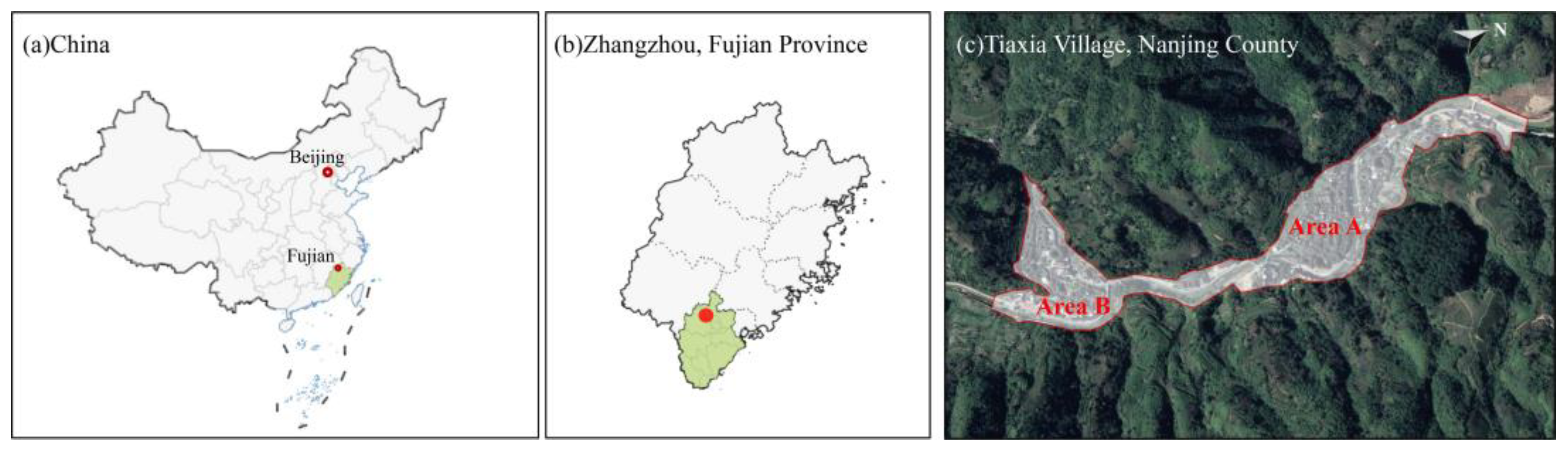
Figure 2.
Survey and classification of the current status of Taxia Village NOSs.
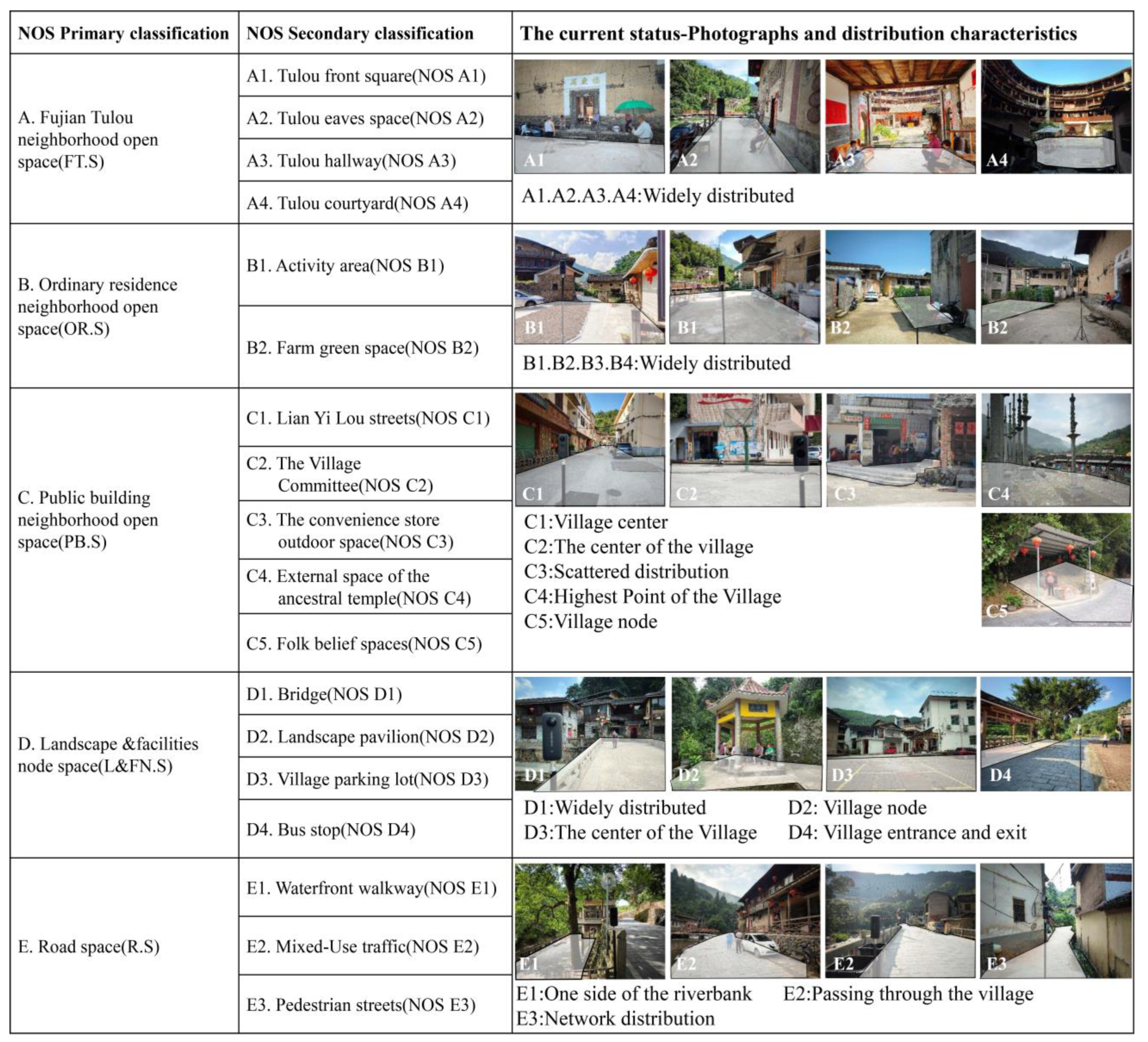
Figure 3.
Layout map of NOSs in Taxia Village Area A.
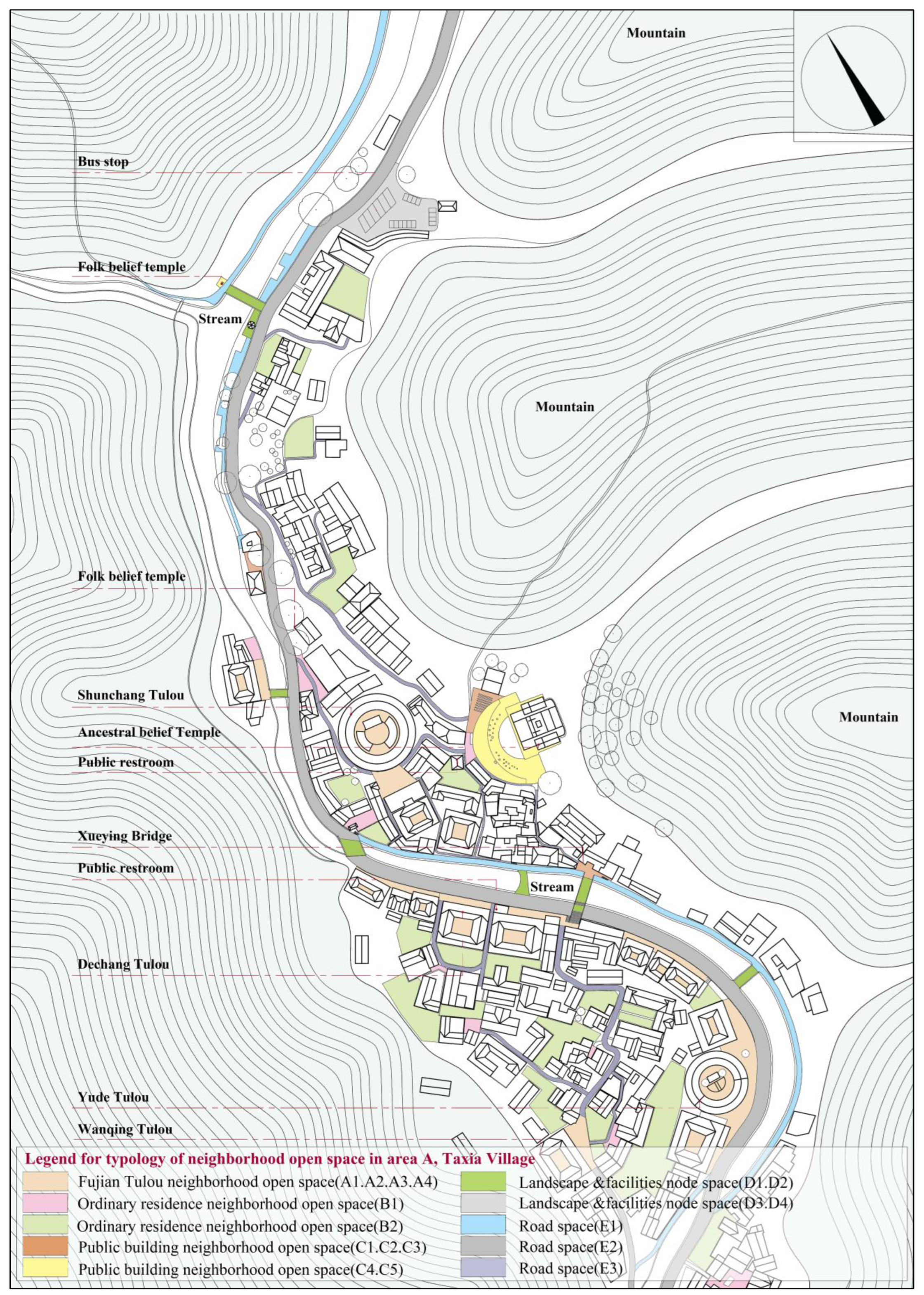
Figure 4.
Layout map of NOSs in Taxia Village Area B.
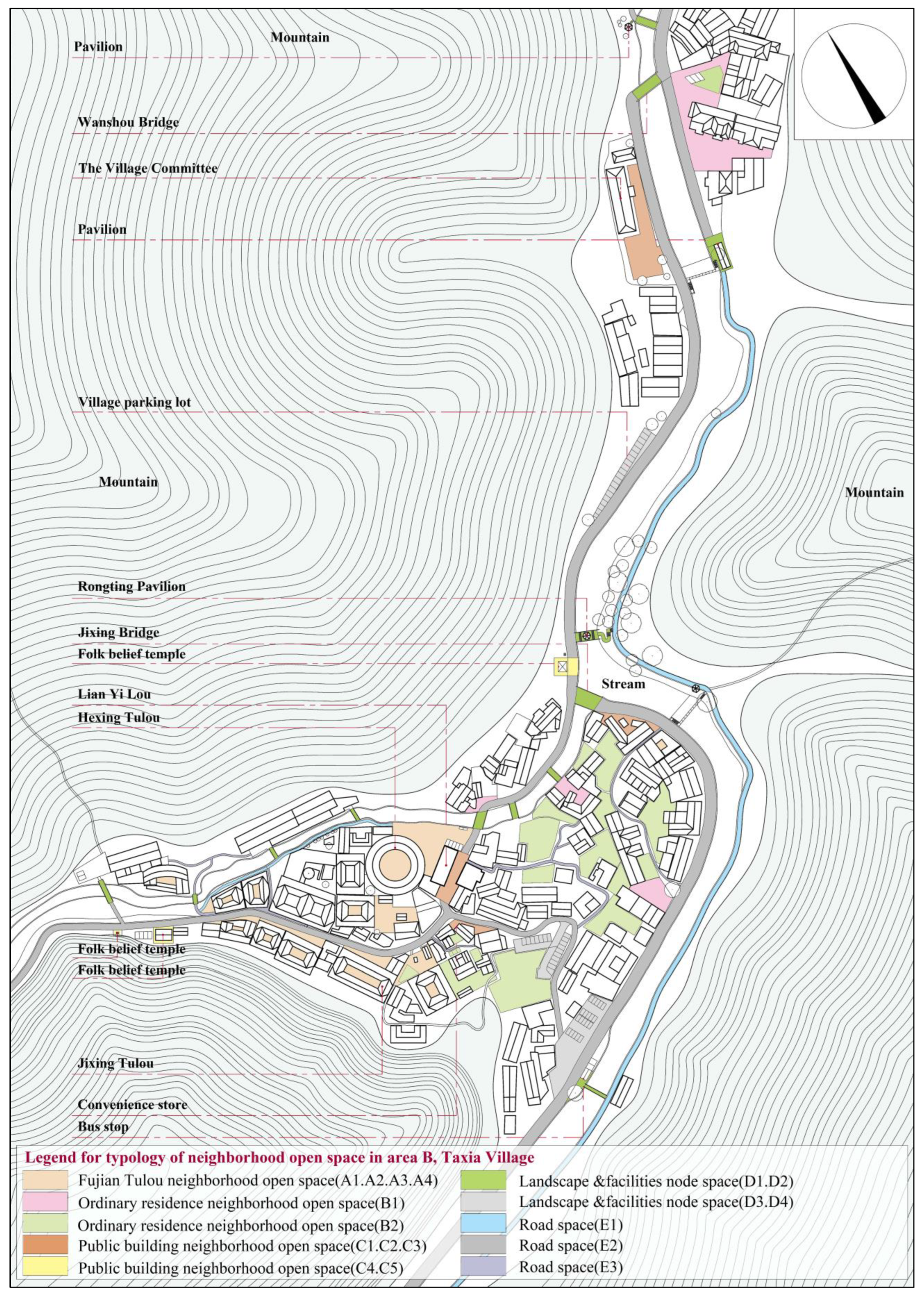
Figure 5.
Behavioral coding diagram.
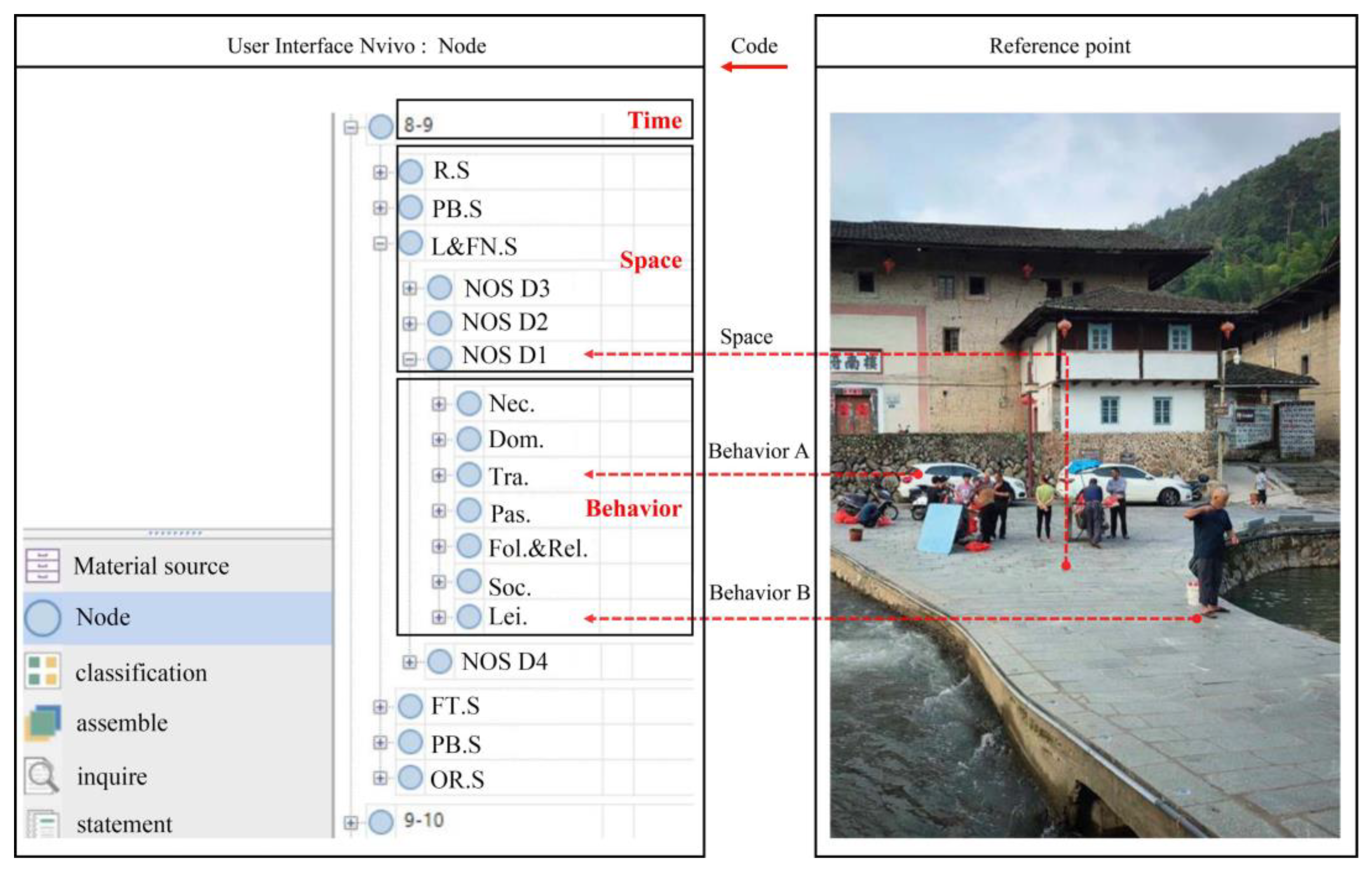
Figure 6.
Average behavioral assessment indicators for the elderly (April 6, 2024 - April 20, 2024).
Figure 6.
Average behavioral assessment indicators for the elderly (April 6, 2024 - April 20, 2024).
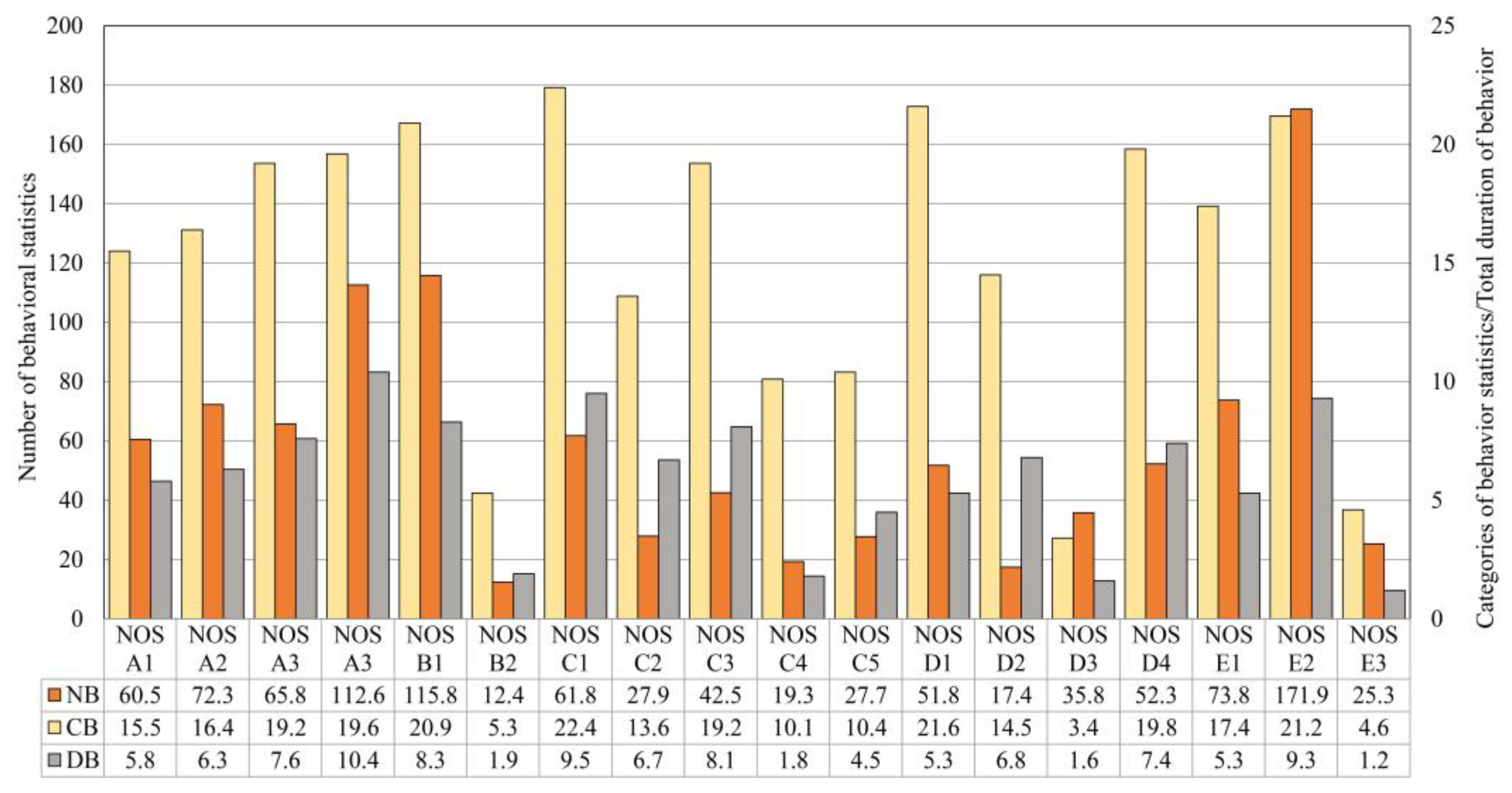
Figure 7.
Average behavioral activity level of the elderly in the NOSs (April 6, 2024 - April 20, 2024).
Figure 7.
Average behavioral activity level of the elderly in the NOSs (April 6, 2024 - April 20, 2024).
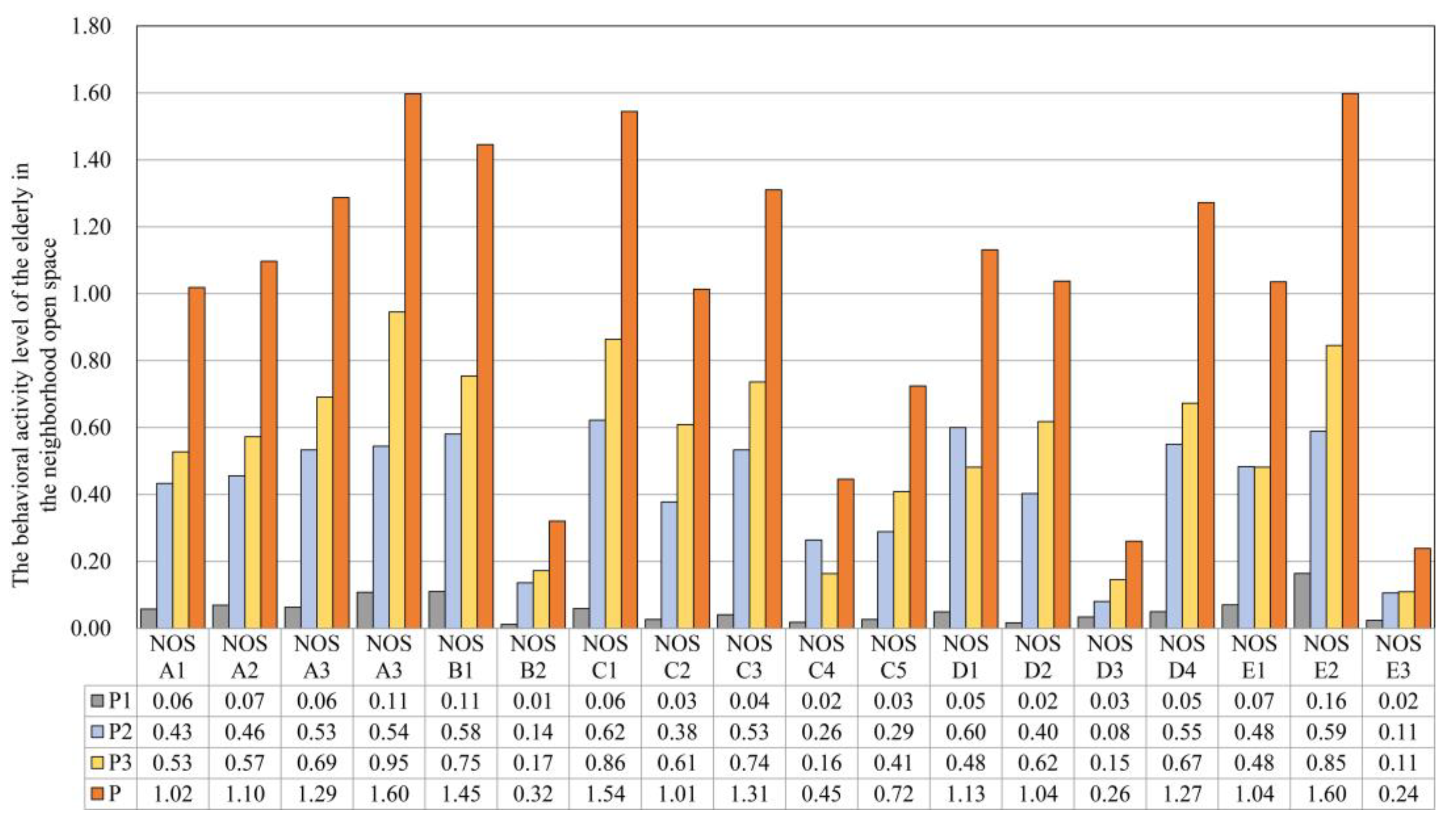
Figure 8.
The distribution map of NOSs with a high behavioral activity level in Area A.
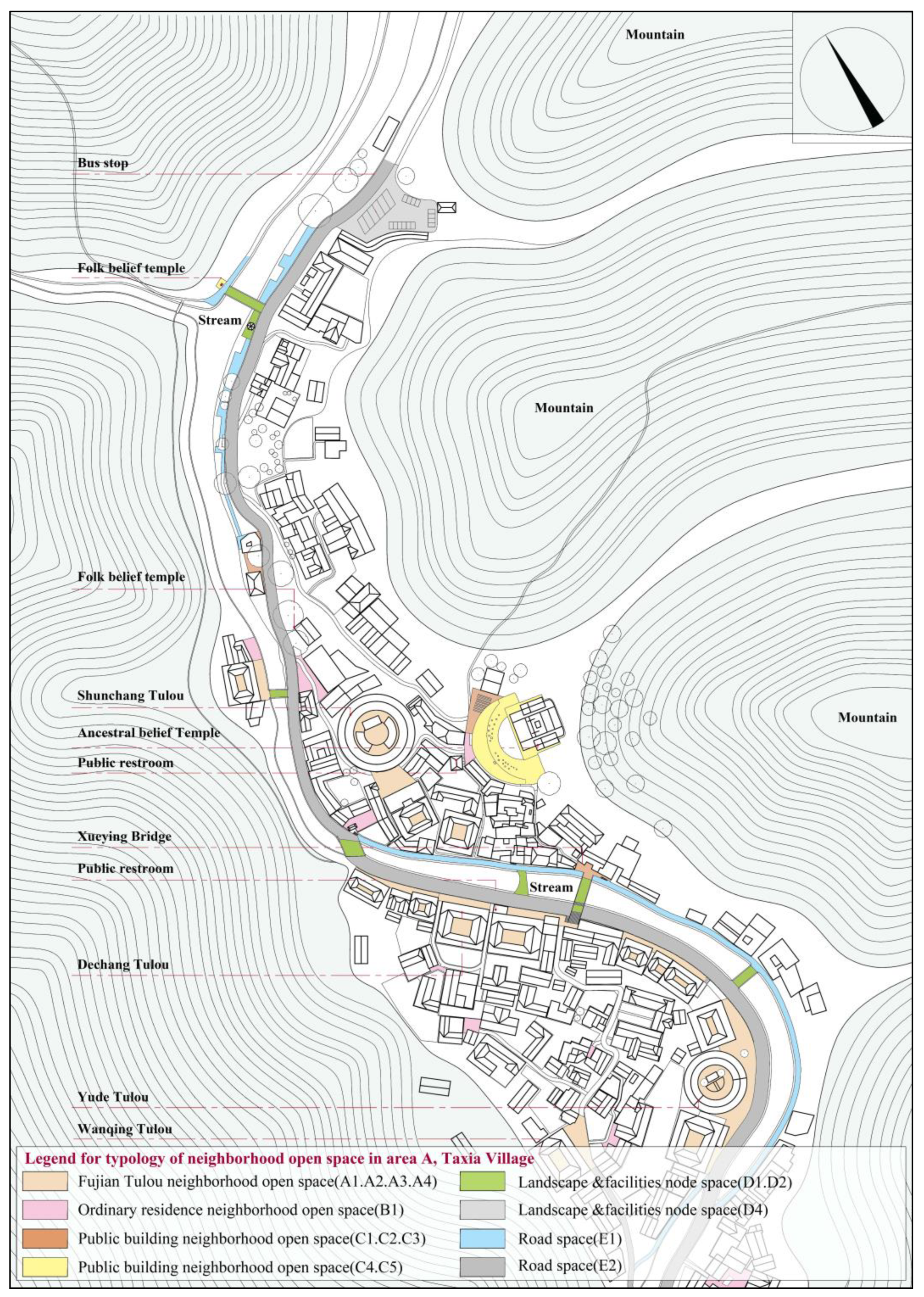
Figure 9.
The distribution map of NOSs with a high behavioral activity level in Area B.
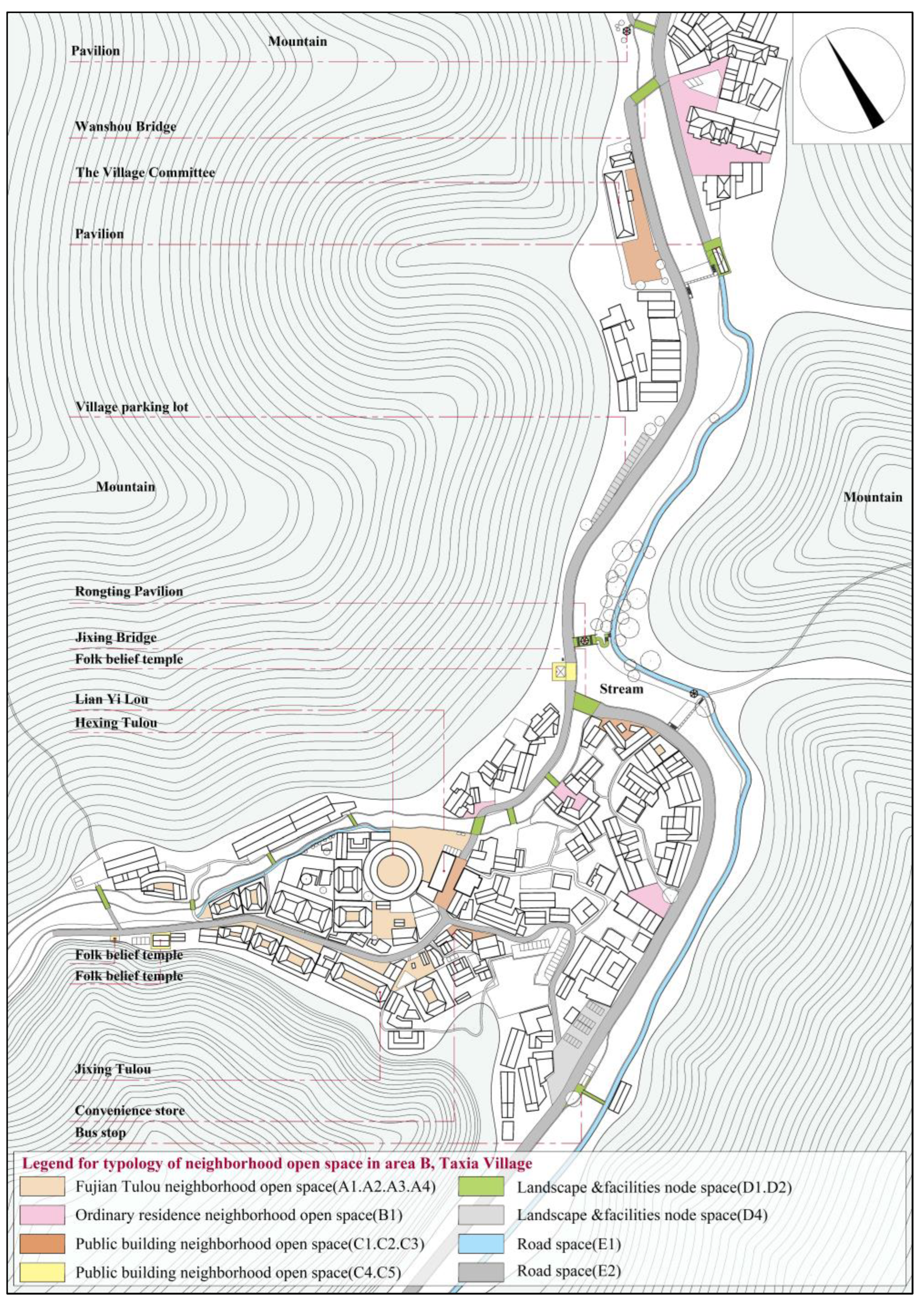
Figure 10.
Elderly’s average behavior frequency statistics chart from 30-day data sample.
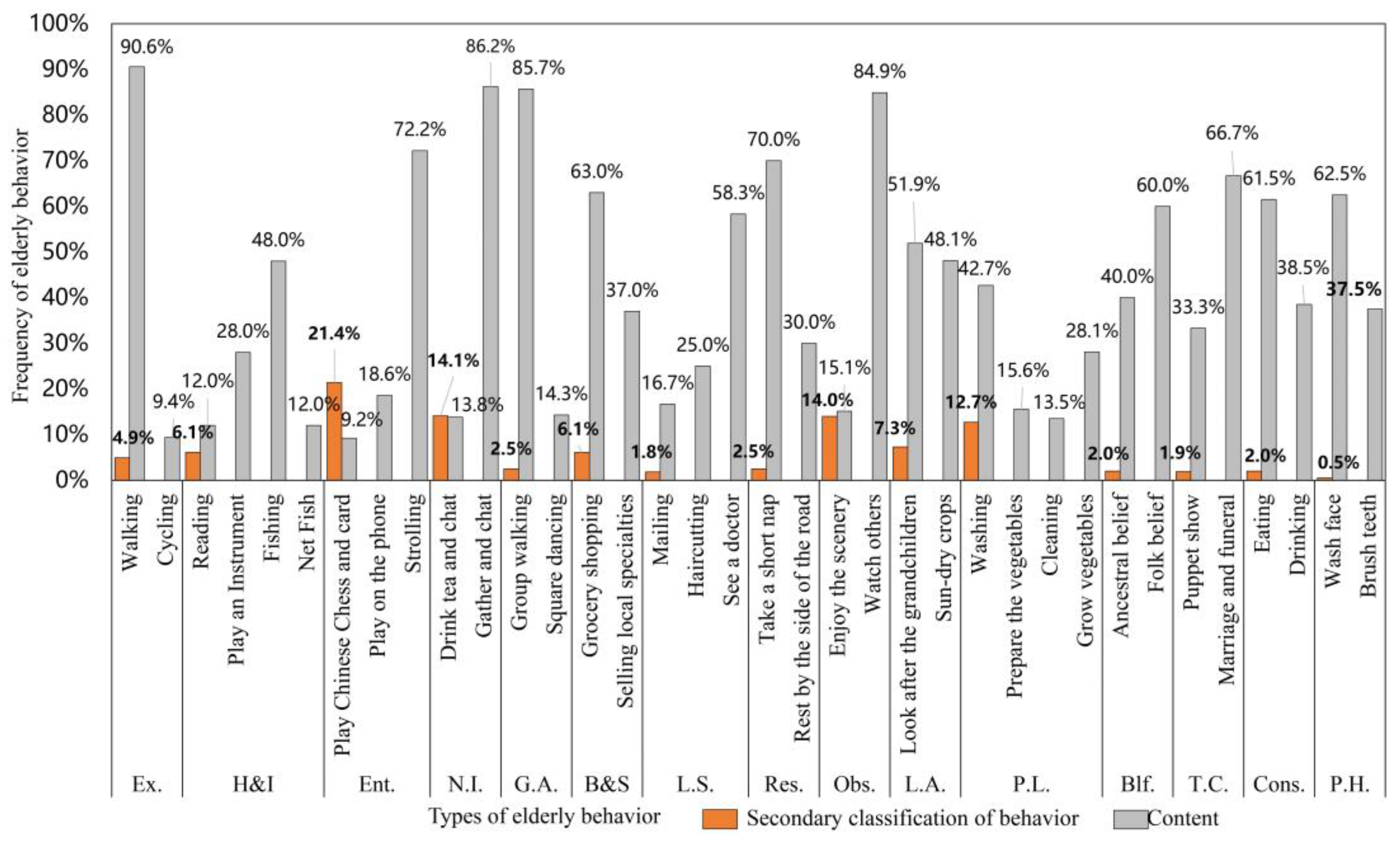
Figure 11.
Analysis of elderly behavior patterns.
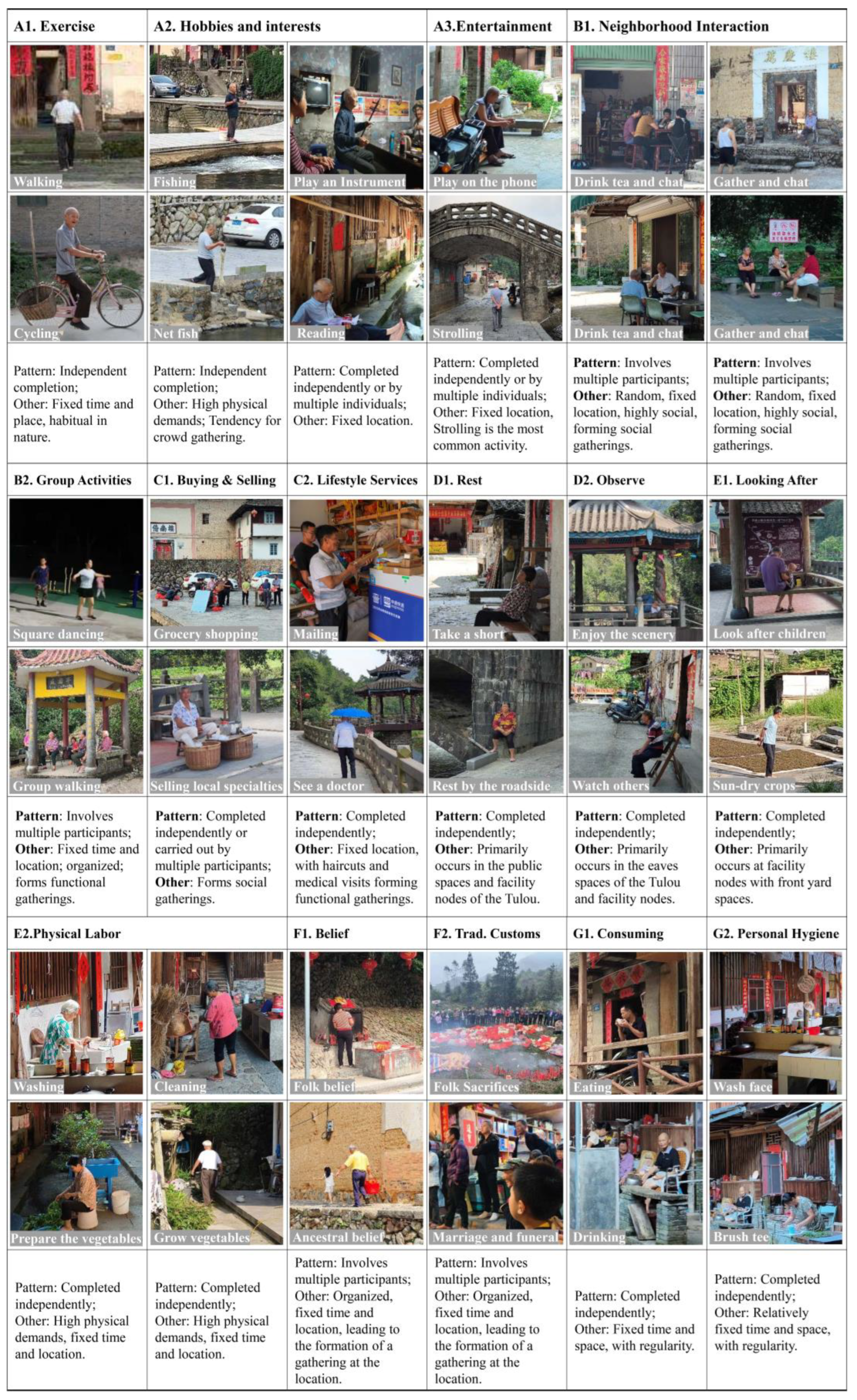
Figure 12.
Time-average instantaneous behavior frequency curve of the elderly from 30-day data sample.
Figure 12.
Time-average instantaneous behavior frequency curve of the elderly from 30-day data sample.
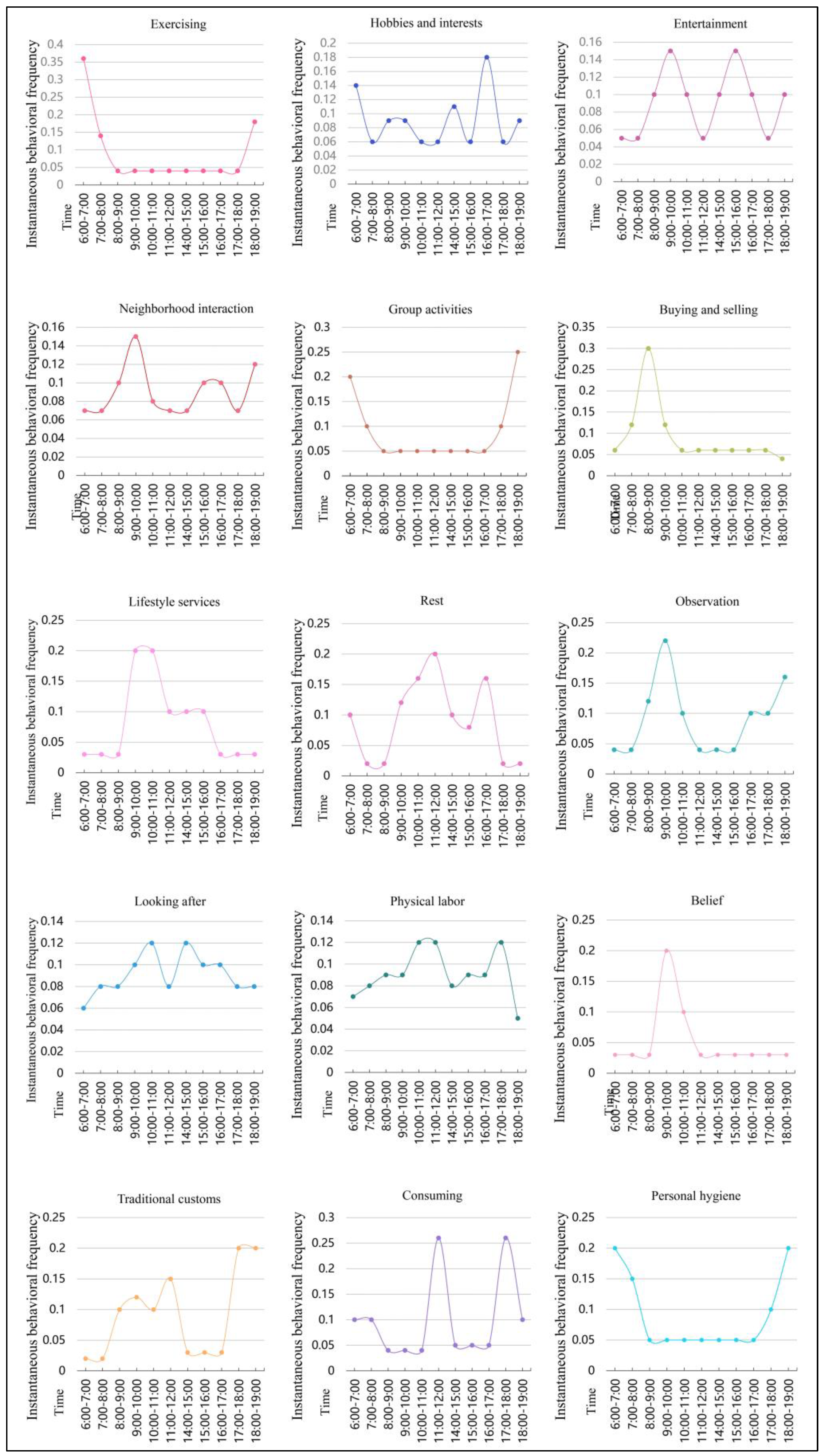
Figure 13.
The clustered bar chart of SBF for the primary NOSs from 30-day data sample.
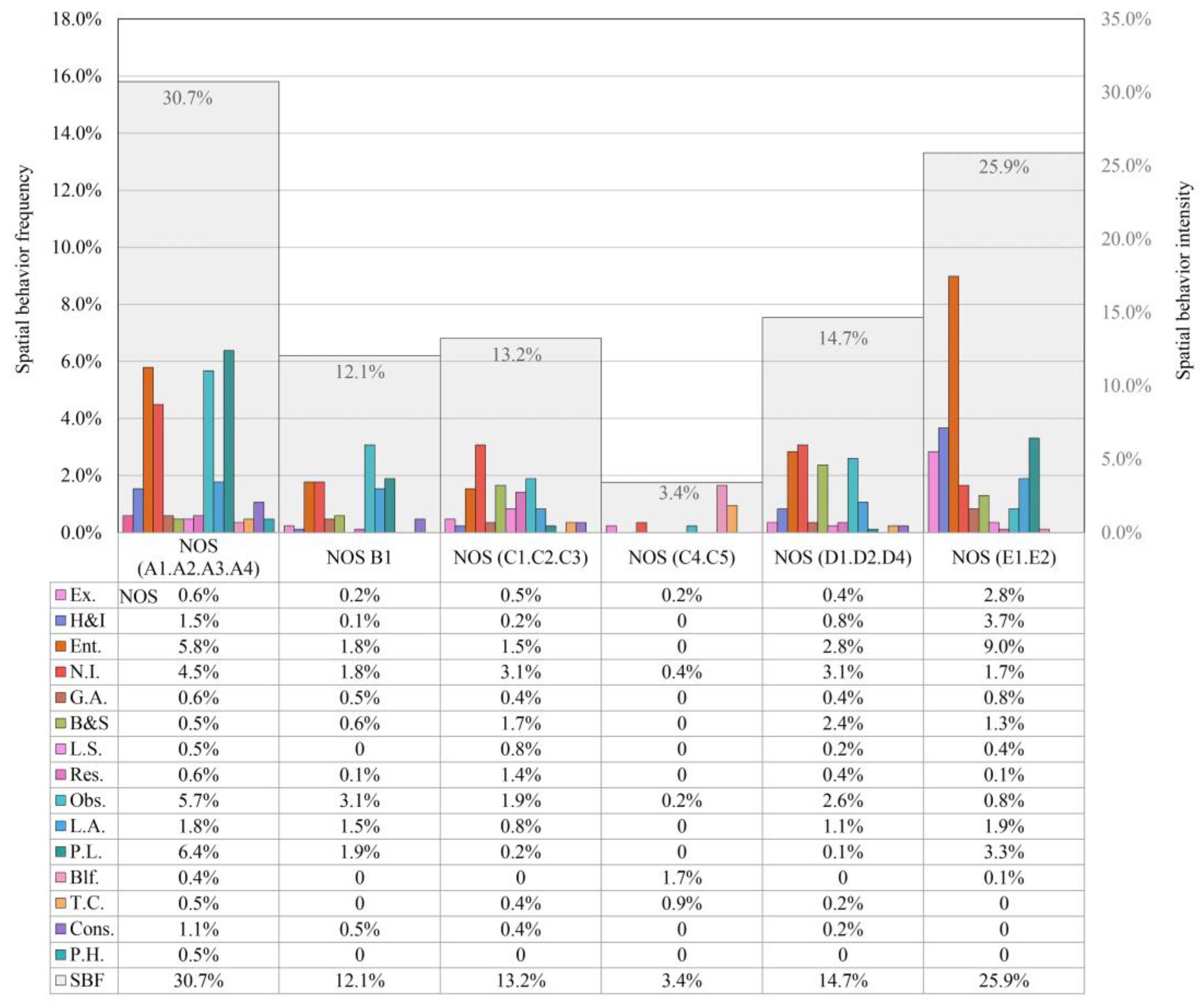
Figure 14.
The stacked bar chart of SBR for the secondary NOSs from 30-day data sample.
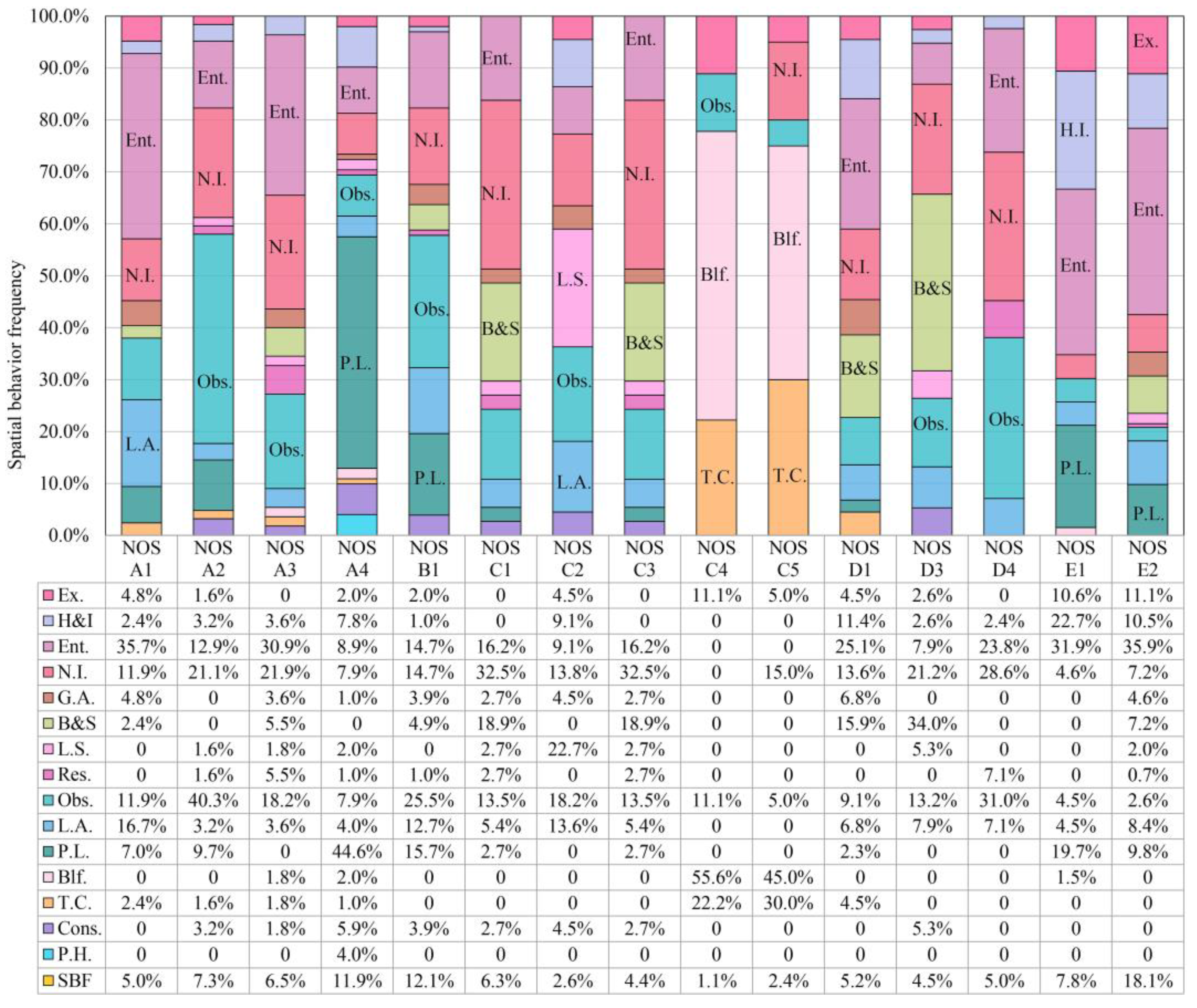
Figure 15.
Results of the KANO Model questionnaire survey on elderly needs in the NOSs.
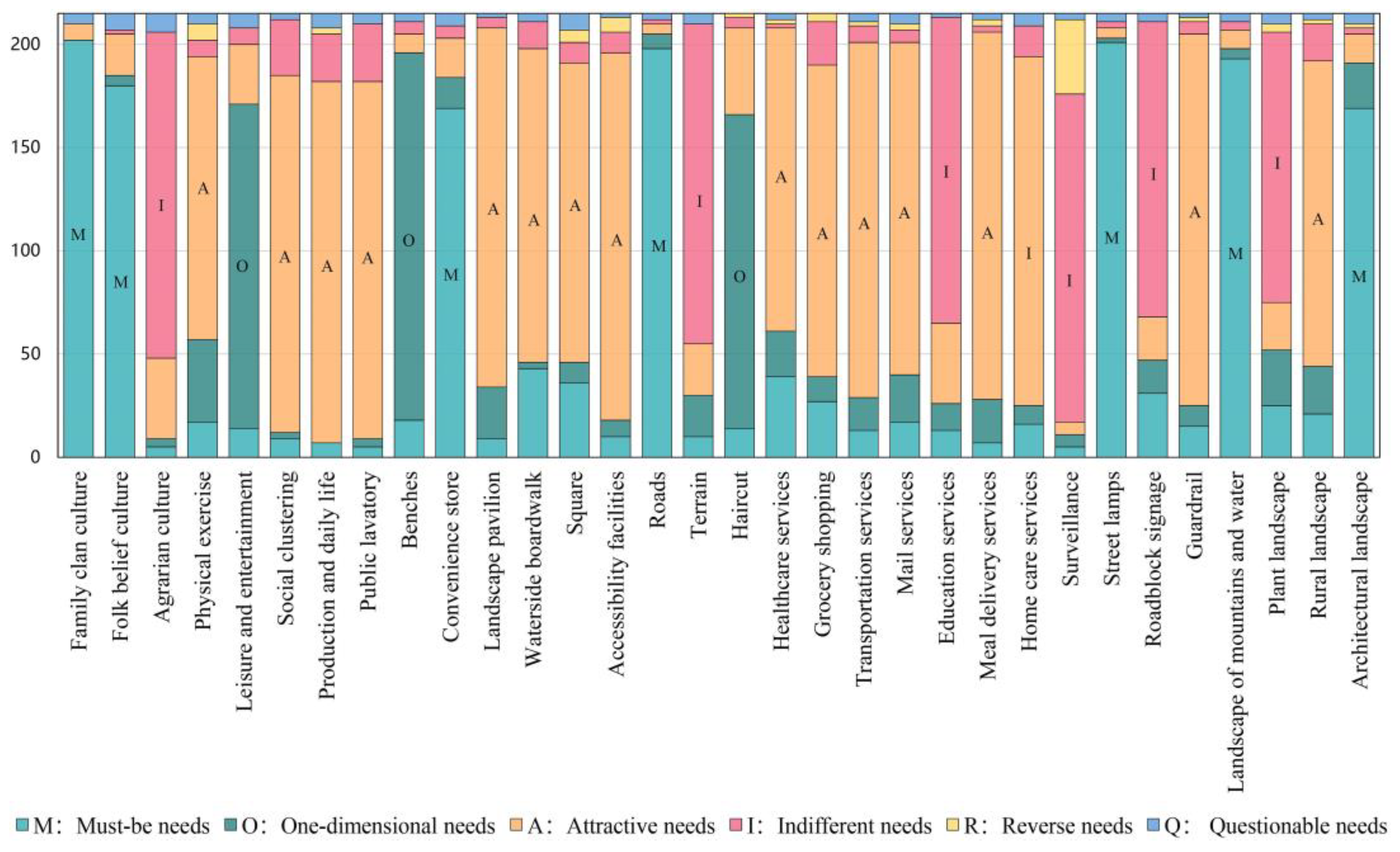
Table 1.
Behavioral classification of the elderly in Taxia Village NOSs.
| Research Subjects | Primary classification of behavior | Secondary classification of behavior | Content |
| Including elderly individuals aged 60 and above, both independent and device-aided types | A. Leisure behavior (Lei.) | A1. Exercising (Ex.) | Walking |
| Cycling | |||
| A2. Hobbies and interests(H&I) | Reading | ||
| Play an Instrument | |||
| Fishing | |||
| Net Fish | |||
| A3. Entertainment (Ent.) | Play Chinese Chess and card | ||
| Play on the phone | |||
| Strolling | |||
| B. Social behavior (Soc.) | B1. Neighborhood interaction (N.I.) | Drink tea and chat | |
| Gather and chat | |||
| B2. Group activities (G.A.) | Group walking | ||
| Square dancing | |||
| C. Transaction behavior (Tra.) | C1. Buying and selling(B&S) | Grocery shopping | |
| Selling local specialties | |||
| C2. Lifestyle services (L.S.) | Mailing | ||
| Haircutting | |||
| See a doctor | |||
| D. Passive observation behavior (Pas.) | D1. Rest (Res.) | Take a short nap | |
| Rest by the roadside | |||
| D2. Observation (Obs.) | Enjoy the scenery | ||
| Watch others | |||
| E. Domestic work behavior (Dom.) | E1. Looking after (L.A.) | Look after children | |
| Sun-dry crops | |||
| E2. Physical labor (P.L.) | Washing | ||
| Prepare the vegetables | |||
| Cleaning | |||
| Grow vegetables | |||
| F. Folk customs and religious behavior (Fol. &Rel.) |
F1. Belief (Blf.) | Ancestral belief | |
| Folk belief | |||
| F2. Traditional customs (T.C.) | Agricultural folk rituals | ||
| Marriage and funeral | |||
| G. Necessary behavior (Nec.) | G1. Consuming (Cons.) | Eating | |
| Drinking | |||
| G2. Personal hygiene (P.H.) | Wash face | ||
| Brush teeth |
Table 3.
Elderly needs list and weight calculation results after secondary sorting.
| Number | Evaluation Factor | Criterion Layer Weight | Evaluation Criteria | Sub-Criterion Layer Weight | Overall Weight |
| 1 | Cultural Characteristics | 0.172 | Family Clan Culture | 0.800 | 0.138 |
| 2 | Folk belief culture | 0.200 | 0.034 | ||
| 3 | Functionality | 0.341 | Physical exercise | 0.150 | 0.051 |
| 4 | Leisure and entertainment | 0.309 | 0.105 | ||
| 5 | Social clustering | 0.435 | 0.148 | ||
| 6 | Production and daily life | 0.106 | 0.036 | ||
| 7 | Facilities | 0.107 | Public restroom | 0.132 | 0.014 |
| 8 | Benches | 0.442 | 0.047 | ||
| 9 | Convenience store | 0.066 | 0.007 | ||
| 10 | Landscape pavilion | 0.229 | 0.025 | ||
| 11 | Waterside boardwalk | 0.034 | 0.004 | ||
| 12 | Square | 0.097 | 0.010 | ||
| 13 | Elderly Services | 0.074 | Haircut | 0.115 | 0.009 |
| 14 | Healthcare services | 0.364 | 0.027 | ||
| 15 | Grocery shopping | 0.154 | 0.011 | ||
| 16 | Transportation services | 0.036 | 0.003 | ||
| 17 | Mail services | 0.089 | 0.007 | ||
| 18 | Education services | 0.132 | 0.010 | ||
| 19 | Meal delivery services | 0.110 | 0.008 | ||
| 20 | Accessibility | 0.050 | Accessibility facilities | 0.750 | 0.038 |
| 21 | Roads | 0.250 | 0.013 | ||
| 22 | Safety | 0.232 | Street lamps | 0.857 | 0.199 |
| 23 | Guardrail | 0.143 | 0.033 | ||
| 24 | Landscape | 0.024 | Landscape of mountains and water | 0.206 | 0.005 |
| 25 | Rural landscape | 0.078 | 0.002 | ||
| 26 | Architectural landscape | 0.716 | 0.017 |
Disclaimer/Publisher’s Note: The statements, opinions and data contained in all publications are solely those of the individual author(s) and contributor(s) and not of MDPI and/or the editor(s). MDPI and/or the editor(s) disclaim responsibility for any injury to people or property resulting from any ideas, methods, instructions or products referred to in the content. |
© 2025 by the authors. Licensee MDPI, Basel, Switzerland. This article is an open access article distributed under the terms and conditions of the Creative Commons Attribution (CC BY) license (http://creativecommons.org/licenses/by/4.0/).
Copyright: This open access article is published under a Creative Commons CC BY 4.0 license, which permit the free download, distribution, and reuse, provided that the author and preprint are cited in any reuse.


