

Submitted:
17 October 2024
Posted:
21 October 2024
You are already at the latest version
Abstract
Aging is a common global challenge. The World Health Organization has released the guide “Global Age-Friendly Cities: An equitable, inclusive and sustainable place” in which it is stated that age-friendly recreational landscapes are one of the important elements for cities and communities to create suitable leisure and social activities for older people. As a healthy green living room at the doorstep, residential green space is of great significance for building age-friendly recreational landscapes in residential green spaces. In this paper, based on the perspective of the demand of older adults for residential green space recreational landscapes, we use the systematic literature review method to comprehensively and deeply comb and summarize the existing research results and put forward China’s future key research directions in this field in a comparative analysis. The study found that: 1. The research heat in this direction has been high in the past five years, and the amount of literature in China and the United States is the highest. 2. The main disciplines involved in the study are landscape architecture, public health, and sociology, and the amount of literature in the direction of public health in international journals is the most, and the papers in the direction of landscape architecture in China are the most. 3. The main research methods used are quantitative research, which accounts for 58% of the literature, and questionnaire surveys, which account for 51% of the literature. 4. The main independent variables involved are green space area, walking environment, recreational and health facilities, community participation, etc., and the main dependent variables are satisfaction, frequency of green space use, physical and mental health, community cohesion, and sense of well-being. 5. The five main theories involved are demand theory, ecology theory, health promotion theory, environmental psychology, and environmental gerontology theory. International literature is mostly studied from health promotion theory and ecological theory, and Chinese literature is mostly studied from the perspective of need theory. 6. Measurement indexes are different in diverse disciplines, among which the direction of landscape architecture mainly explores the influence of green space safety, accessibility, multi-functionality, environmental aesthetics, and recreational facilities on the satisfaction, and happiness of older adults from the perspective of green space planning and design. In the direction of public health, the impact of green space on the physical, psychological, and social health of older adults is mainly explored from the perspectives of green space areas, neighborhood environments, and community participation.
Keywords:
Aging-friendly Recreational Landscapes
; Livable Living Environment
; Residential Green Spaces
; Research Methodology
1. Introduction
The Report on World Population Trends, released at the 51st meeting of the United Nations Commission on Population and Development, points out that the global population will reach 9.8 billion by 2050, and that the population of older persons over 65 years of age will account for 16 % of the total population. How to cope with aging has become a common global challenge. Across different disciplines, studies have shown that older people are dependent on residential green spaces (Hu, 2021) and that residential green spaces can improve the health and well-being indices of older people (Aerts et al., 2022; Molina-Martínez et al., 2022; Phillips et al., 2010; Su & Zhou, 2022a; Yeo & Heshmati, 2014). As one of the most important spaces in the daily lives of older people, residential green spaces carry the functions of leisure, recreation, and social activities (Verderber et al., 2023). It has been shown that residential green space has a significant effect on microclimate creation (Mei et al., 2022), air pollution (Mohr-Stockinger et al., 2023), noise mitigation (Chen et al., 2021), and physiological and psychological diseases (He et al., 2021). Therefore, constructing age-friendly recreational landscapes in residential green spaces is one of the important measures to cope with the social problems of aging.
Aging-friendly recreational landscapes are outdoor areas within residential neighborhoods that are specifically designed for older people and are suitable for their leisure and recreation (Hansen, 2021; Segura Cardona et al., 2022). Spaces are intended to provide comfortable, safe, and convenient open spaces (Van Der Zee, 1990) in which older adults can enjoy spending leisure time and interact socially with other community members (Zhong et al., 2020). Post-COVID-19 older adults are particularly concerned about the health benefits of green spaces (Li et al., 2022; Venter et al., 2021). Residential green space is the form of green space that older people are in direct contact with, and it is a health benefit of outdoor activities for older people. Residential green space has been associated with blood glucose (Yang et al., 2023), blood pressure (Mei et al., 2022), diabetes (Yang et al., 2023), chronic kidney disease (M. Liu et al., 2023), depression (Fastame et al., 2015), and mortality (Villeneuve et al. 2012), etc. have positive correlations. Sound and light in residential green spaces also affect the rest of older people (Mueller et al., 2020). Therefore, age-friendly recreational landscapes should not only be able to meet the basic needs of older adults for activities, socialization, and recreational facilities but should also consider the health benefits of residential green spaces for older adults.
To realize the needs of older adults for friendly and livable living environments, it is necessary to carry out a systematic analysis of the literature related to age-friendly recreational landscapes in existing residential green spaces. This is an important reference value for promoting the development of an age-friendly society in the context of an aging society. As an important group of people who use residential green space for the longest and most frequent period, the needs of older adults for residential green space tend to be somewhat universal. In terms of spatial needs, intergenerational interaction, and older adults wellness needs are the common needs of older adults (Zhong et al., 2020). Therefore, the common spatial needs of residential green space open space for older adults can be summarized as the following six types of space: Fitness activity area, leisure walking area, small communication activity area, children’s recreation area, waterfront viewing area, and non-motorized parking area (Zhou & Liu, 2013). In such landscape spaces, the following features are usually included: Accessibility, rest and shade facilities, health promotion facilities, social interaction spaces, natural elements and aesthetics, diverse activities, and cultural inclusiveness (Hu, 2021).
To have a more comprehensive understanding of the current situation of age-friendly recreational landscapes in residential green spaces, the article searched and analyzed the relevant literature in SCOPUS, WOS (web of Science), and CNKI (China National Knowledge Infrastructure) databases. It was found that this is the first systematic literature review on age-friendly recreational landscapes in residential greenspaces, and most of the existing literature reviews focus on the health benefits of residential greenspaces, such as the association between residential greenspaces and type 2 diabetes mellitus (Yang et al., 2023), and the relationship between residential greenspaces and physiological and psychological health, such as mortality, depression, dementia, and Alzheimer’s disease (Golant, 2020; Lee & Maheswar, 2020; Lee & Maheswar, 2020). 2020; Lee & Maheswaran, 2011; Seo et al.) There is also literature that focuses on the impact of the living environment on the health of older adults, but the content involved encompasses architecture, environmental amenities, and indoor space (Burton et al., 2011). Based on this, this paper uses a systematic literature review approach to target, analyze, summarize, and answer the following questions:
What is the current state of research on aging-friendly recreational landscapes in residential green spaces?
What are older people’s preferences for aging-friendly recreational landscapes in residential green spaces?
What are the main theories involved in aging-friendly recreational landscapes?
What are the main research methods adopted by existing studies on aging-friendly recreational landscapes in residential green spaces?
2. Research Design
2.1. Research Methodology
In this paper, a systematic literature review method was used to conduct the study. This method uses clear and reproducible search techniques and strategies to assess relevant literature (Xiao & Watson, 2019). Afterward, the literature is screened and selected based on predetermined criteria to gain an accurate understanding of the current status and trends of the research topic to address the specific research question (Torres-Carrion et al., 2018). The systematic literature review approach is rigorous and transparent. It covers a clear research question, a comprehensive search strategy, clear literature criteria, high-quality assessment methods, comprehensive data analysis, and reliable findings. Compared to traditional research methods, the review method can overcome problems such as subjectivity and bias (Zabelskyte et al., 2022).
2.2. Sample Acquisition
2.2.1. Literature Search Strategy
To understand the research on aging-friendly recreational landscapes in residential green spaces, and to propose future research trends in this direction in China by comparative analysis. In this paper, three databases, namely SCOPUS, WOS, and CNKI, were selected for searching. To have a more in-depth understanding of the existing theoretical content of this direction and the research results of the previous researchers, the literature search only set the deadline as 30 June 2023. The search formula of the SCOPUS database is: (TITLE-ABS-KEY (“residential green space” OR “group green space” OR “ residential landscape” OR “residential environment”) AND TITLE-ABS-KEY(“age*” OR aging* OR older adults) AND TITLE-ABS-KEY(“recreation* landscape” OR health* OR well* OR Leisure* OR Entertain*)). The WOS database search formula is TS= (“residential green space” OR “group green space” OR “residential landscape” OR “ residential environment”) AND TS=(“age*” OR aging* OR older adults ) AND TS=(“recreation* landscape” OR health* OR well* OR Leisure* OR Entertain*). CNKI The database search equation is: (SU % ‘residential green space’ OR SU % ‘group green space’ OR SU % ‘residential landscape’ OR SU % ‘residential environment’) AND (SU % ‘age*’ OR SU % ‘aging*’ OR SU % ‘older adults’) AND (SU % ‘recreation* landscape’ OR SU % ‘health*’ OR SU % ‘well*’ OR SU % ‘Leisure*’ OR SU % ‘Entertain*’).
2.2.2. Literature Screening Criteria
The study follows the research idea of a systematic literature review and meta-analysis method, which contains 27 indicators and 4 stages, and each stage needs to present the process and reasons for literature identification, screening, inclusion, or exclusion (Xiao & Watson, 2019). To ensure the quality of the literature and accuracy and reliability of the literature, only core journal articles were selected for the CNKI database, only journal articles in English were selected for SCOPUS and WOS database literature, and only core ensembles were selected for the WOS database. After the screening, SCOPUS retrieved 511 articles, the WOS database retrieved 576 documents, and the CNKI database retrieved 420 documents, totaling 1507 articles. After placing the literature in an Excel sheet for de-duplication, the title and abstract of each article were read and screened. After determining that the title and abstract were related to the topic, the articles were read through, and 52 articles were identified as consistent with the study in this paper, and 3 articles related to this study were screened from the references in the relevant literature, for a total of 55 articles included in this analysis. Figure 1 shows the process of literature-specific screening.
2.2.3. Literature Coding
To understand the literature time, country, research methodology, and research theory. In this paper, the relevant literature searched is subdivided to determine the details of each article and code. The coding method is as follows: SCOPUS database is represented by the initial letter S, and the serial number of the article is J01, according to the chronological order of publication of the article from SJ01 in this coding order. Similarly, the WOS database is coded as WJ01, and the CNKI database is coded as CJ01, according to the chronological order of publication of the article. The specific codes and contents are shown in Table 1, Table 2, and Table 3.
3. Results
3.1. Characteristics of Literature Distribution
The distribution of literature reflects the research intensity and importance of a country in a particular research direction and also reflects the degree of aging in the country and the response measures from the perspective of residential green space. In this paper, the first author is taken as the unit of analysis in the data statistics, and 41 articles in SCOPUS and WOS databases are analyzed, it is found that the authors are from 15 countries in total, and the regional distribution is shown in Table 4. In terms of the number of authors, 15 articles were published in China, 5 in the U.S.A, 3 in Belgium, and 3 in Australia, and 14 articles related to this topic were retrieved from the CNKI database, i.e., the three databases showed a total of 29 articles in Chinese literature. In terms of regional distribution, Chinese scholars have paid much attention to the issue of aging, and according to China’s seventh population census, 13.5% of China’s population is over 65 years old. China’s National Health and Wellness Commission predicts that by 2030, China’s older adult population aged 65 and above will increase to about 340 million, by which time the proportion of the older adult population will be close to 25%, and it will enter a super-aging society. Nowadays, China’s aging problem and countermeasures are the focus of much attention in society.
3.2. Distribution of Subject Areas
From the literature review, most of the literature was not labeled with the author’s specific research direction, and most of the articles were only labeled with the author’s unit. The author examined the articles one by one through the information in the literature, such as research content, research conclusions, research methodology, applied theories, and author units, to determine the disciplinary field in which the literature is located. The analysis found that the research in this direction involves disciplines such as public health, medicine, psychology, sociology, landscape architecture, computer science, etc. In particular, there are more researchers in the direction of public health and medicine, which pay more attention to the health benefits of residential green space for the older adults. As can be seen from Table 5, the main disciplines involved in international literature are public health, psychology, sociology, and geography. The Chinese literature mainly focuses on the direction of landscape architecture. The data show that international research focuses on interdisciplinary integration, proposing the correlation between residential green space and the physical and mental health of the older adults from different disciplinary perspectives. The scientific basis is presented from an empirical point of view, offering the possibility of age-friendly recreational landscapes. From the CNKI database literature, China is the relatively single discipline in this research direction, mainly from the perspective of landscape architecture to put forward construction strategies, methods, principles, and responses to the aging problem in specific regions, empirical is not very strong, most of them are based on theoretical thinking (Chen et al., 2021).
3.3. Temporal Distribution
The temporal distribution of research in the existing literature represents the development history and trend of the research field. It can show the changes in research focus, hotspots, and trends in the field in different periods. Figure 2 shows the temporal distribution of related literature, and the line graph shows the rapid increase of literature in this direction in 2020. During COVID-19, residential green space is the form of green space that people are in direct contact with, and empirical and theoretical research on the impact of residential green space on health has been emphasized (Venter et al., 2021), and the topic of health has received unprecedented attention. In addition, the social status of global aging and the cultural context of aging in place (Chen et al., 2022) are also important reasons for the researchers’ turn toward the study of age-friendly open spaces in residential green spaces.
3.4. Analysis of Research Methodology
Research methodology can ensure the credibility, scientificity, and non-replicability of research results (Mohajan, 2018). Reasonable research methods can help researchers avoid subjective bias, design rigorous research steps, reduce the influence of subjective factors on research results, and ensure the objectivity and fairness of research conclusions. Different research methods can explain problems from different perspectives and promote academic communication and theoretical progress (Fletcher, 2017). As can be seen from Table 6 and Figure 3 the existing residential green space aging-friendly recreational landscape is mostly carried out by quantitative research, accounting for 58%. Quantitative research is dominated by research questionnaires, with 51% of research in the form of questionnaires. Qualitative research is mostly based on theoretical studies and literature reviews, which accounted for 18%. Interviews are also an important method for qualitative research, accounting for 4%. Interviews are mostly conducted in the form of semi-structured interviews, telephone interviews, and group interviews. Research on the comfort of residential green space often generates data by software simulation, using the software Autodesk Ecotect Analysis, Dethmap, Ecotect, and phonics for the simulation of microclimate, such as sunshine, wind, and light (Li et al.). A comfortable environment creation method based on local climate is proposed using software simulation.
3.5. Analysis of Relevant Theories
Research on aging-friendly recreational landscapes in residential green spaces involves several subject areas. As can be seen from Table 7, the main theories involved in the existing related literature are demand theory, environmental psychology theory, ecology theory, health promotion theory, etc. The needs theory of older adults focuses on the physiological, psychological, and social needs of older adults and explores the satisfaction and well-being that older adults seek in recreational activities (Krols et al., 2022; Padeiro et al., 2022; Su & Zhou, 2022b; Tan & Lee, 2022). Based on this theory, researchers can understand the needs and preferences of older adults for recreational landscapes and provide a reference for optimizing the design of recreational landscapes. Environmental psychology focuses on the interaction between humans and the environment, which can help researchers understand the perception, cognition, and emotional experience of older adults toward the environment, and enhance the recreational experience of older adults (Liu et al., 2022; Su & Zhou, 2022b). Ecosystem services theory emphasizes the value and role of natural environments to humans and can be used to explore the ecopsychological benefits of green spaces for older people, such as the positive effects of natural green spaces on psychological relaxation and physical and mental health of older people (Segura Cardona et al., 2022; Taylor et al., 2022). Health promotion theory, which focuses on the enhancement of health and quality of life, can be used to assess the positive effects of green space recreation on the health of older adults by exploring their physical and mental health in recreational landscapes (Zhong et al., 2020; Wang & Yang, 2020; Shu & Yin, 2020). Literature has thoroughly studied the recreational needs and recreational experiences of older adults from different disciplinary perspectives, providing a scientific basis for optimizing age-friendly open space landscapes.
3.6. Analysis of Impact Factors
Through a comprehensive reading of the relevant literature, this paper is categorized according to the main concerns of the literature. As shown in Table 8, the concerns of age-friendly recreational landscapes in residential green spaces are mainly classified into four major categories: green space planning and design, community participation, sensory environment, and residential area management. Firstly, in terms of green space planning and design, the primary concern of research is the area of green space, and most of the related articles focus on the direction of public health, research has concluded that green space is positively correlated with the physiological and psychological health of the older adults (Hautekiet et al., 2020; He et al., 2021; Noordzij et al., 2020). Secondly, the study focuses on the walking environment and recreational facilities in green spaces (S. Zhong et al., 2020), as most older people choose leisure walking as a way of exercising their bodies, and have a high demand for slow walking systems in residential green spaces. As older people’s bodies gradually age, their health awareness increases, placing higher demands on the completeness and accessibility of recreational facilities in residential green spaces (Burton et al., 2011; Noordzij et al., 2020; Vogt et al., 2015). Finally, the multifunctionality of residential green spaces is also a key concern, with multifunctional green spaces favoring more possibilities for recreational activities for older people, thus increasing their opportunities for social interaction (Fastame et al., 2015; Žalik & Zalar, n.d.). In terms of community participation, gardening activities, and neighborhood social environments have been identified as ways in which older people can effectively participate in society (Yin et al., 2007; Shu & Yin, 2020). Neighborhood environments are conducive to community cohesion (Lu et al., 2021; Zhang & Zhang, 2017), are a safeguard for community interactions, and have a positive impact on older people’s emotional and psychological well-being. In terms of sensory environments, although not easily measured, it has been shown that sensory environments influence older adults’ propensity to make environmental choices. Comfortable natural environments have a rehabilitative effect on the senses of older people (Zhong et al., 2021; Wu, 2010). The above findings provide useful references and guidance for the planning and design of age-friendly recreational landscapes in residential green spaces in the future.
3.6. Aging-Friendly Recreational Landscapes
Analysis of the existing literature shows that age-friendly recreational landscapes in residential green spaces are influenced by socio-demographics, attributes of established residential green spaces, social participation, environmental perception, and community management (Bauwelinck et al., 2021; Golant, 2020; Roberts & Helbich, 2021; Taylor et al. 2022). Research addressing satisfaction with age-friendly recreational landscapes in residential green spaces can be examined from these five perspectives (Phillips et al., 2010; Ta et al., 2021). Individual attributes such as socio-demographics have a greater impact on satisfaction, for example, in terms of age, older people are more likely to be affected by neighborhood stressors such as poor living conditions, poor accessibility, and insecurity, and will vary in their satisfaction with the environment (Hill & Maimon, 2013). Indicators related to built-up residential green space are strongly associated with the health of residents, with green space area positively correlated with mortality (Bauwelinck et al., 2021; Taylor et al., 2022), and green space correlated with physical and mental illnesses such as diabetes, Alzheimer’s disease, and depression (Astell-Burt et al., 2022; Hautekiet et al., 2020; Jin et al., 2021), and walking environment, green space accessibility, and ease of transport affect residents’ perception of residential green space use (Liu et al., 2017; Yeo & Heshmati, 2014). Neighborhood environment, horticultural activities, and intergenerational interactions (Zhong et al., 2020) are important neighborhood interactions that are effective ways for residents to engage in the use of residential green space. The climatic environment in which the residential green space is located and the microclimate environment formed by the residential green space have an impact on influencing spatial comfort (Harlan et al., 2006; Vanos, 2015). In summary, the theoretical framework of age-friendly recreational landscapes suitable for residential green spaces is shown in Figure 4.
4. Focus of Future Research on Aging-Friendly Recreational Landscapes in China’s Residential Green Spaces
By comparing the differences in research methods, findings, and concerns between international and Chinese literature, it can be found that China is gradually establishing theory-based principles, methods, and strategies in the study of age-friendly recreational landscapes in residential green spaces. However, the empirical studies in the relevant literature are relatively limited, and most of the existing empirical studies focus on specific regions in China and lack general applicability. In addition, the distribution of disciplines in Chinese literature mainly focuses on the discipline of landscape architecture, which is relatively homogeneous, and the theoretical basis of the research is mainly dominated by the theory of the needs of older adults and the theory of health promotion. Based on the above problems, it is proposed that China should focus on the following four aspects in future research on age-friendly recreational landscapes in residential green spaces.
4.1. Multidisciplinary
Focus on multidisciplinary cross-collaboration. Integrate the theories and methods of sociology, psychology, public health, and other disciplines to explore the complexity and diversity of the leisure behavior of older adults. Landscape architecture is the core discipline in the study of age-friendly recreational landscapes in residential green spaces, and age-friendly green space design and planning can be carried out based on the research results of other disciplines, focusing on shaping the space from the perspective of the user’s psychology and planning rehabilitative nodes from the perspective of health promotion. Neighborhood environments affect the social participation of older people, and methods for creating good neighborhood social environments can be studied from a sociological perspective. Sociological methods can collect older people’s perceptions and experiences of residential green space recreational landscapes. Psychological questionnaires and experimental designs can be used to assess the well-being and life satisfaction of older people, and public health surveys and statistical methods can help to understand the health status of older people. Human geography can examine the spatial behaviors and activity patterns of older people in residential green spaces and study their preferences and spatial needs for the use of green spaces. The spatial analysis methods of human geography can help optimize the spatial layout of green spaces. Cultural studies can study the impact of the cultural values of the older adults on residential green space recreation and gain a deeper understanding of the cultural needs of the older adults. All of the above disciplinary directions are covered in the international literature, which provides a research reference for future interdisciplinary cooperation.
4.2. Expanding the Scope of Empirical Research
Strengthen the empirical research to cover a wider geographical area and different types of residential green spaces. Expand the research sample to cover residential green spaces in different areas. Conduct surveys in different cities, villages, and other regions to obtain more comprehensive research results. This will enable us to understand the differences in the demand for residential green space recreational landscaping by older people in different geographical areas and provide more universal conclusions. Not only focusing on community residents, the recreational experience of older adults in different residential environments such as nursing homes and homes for the aged should also be examined. At the same time, it can include older people of different age groups, as well as those with different lifestyles and health conditions, to better reflect the diversity of the older adult population. Conduct long-term follow-up studies for specific areas to continuously observe the recreational behavior and experience of older people in residential green spaces. Through long-term data collection, it is possible to understand the changes and trends in older people’s recreational behavior and the long-term impact of residential green spaces. Promote multi-disciplinary cooperation, including cooperation among academics, government departments, and social organizations. The government can provide data support and policy background, social organizations can provide field resources, and academics can provide research methodology and theoretical support to jointly promote the in-depth development of empirical research.
4.3. Strengthening Theoretical Construction
Expand the theoretical basis of the study and build a more comprehensive research framework by combining factors such as social participation and cultural values of older adults. Theoretical perspectives from other subject areas, such as cognitive psychology and environmental psychology, can be introduced to explore the cognitive and emotional responses of older people’s recreational experiences in residential green spaces. This can enrich the research from a new perspective. Conduct an in-depth qualitative study to conduct in-depth interviews for different roles, such as policymakers, researchers, designers, users, etc., to understand older people’s perceptions of and needs for recreational landscapes in residential green spaces. Through in-depth qualitative research, more detailed data can be obtained to enrich theory building. Empirical research is strengthened to collect a large amount of data through questionnaires and field observations to verify and support theoretical assumptions. Empirical research can make theory-building more scientific and credible.
4.4. Focus on Sustainable Development
The concept of sustainable development should be incorporated into the research to explore the eco-friendliness of age-friendly recreational landscapes and the sustainable use of resources. Research should focus on the impact of age-friendly recreational landscapes on the ecological environment, emphasizing green space protection, ecological restoration, and biodiversity conservation (Mohr-Stockinger et al., 2023). Optimizing the layout and use of green spaces improves the efficiency of resource use and reduces energy consumption and resource waste. Age-friendly recreational landscapes should provide equal opportunities for all older people to participate, and at the same time should take into account the needs of different groups, improve social inclusiveness, and realize age-friendly all-consuming landscapes. The study should focus on community participation, encouraging older people and community residents to participate in green space planning, design, and management to form a shared situation and provide opportunities for neighborhood social environment creation. Community participation can enhance older people’s sense of belonging to and responsibility for green spaces (Phillips et al., 2010) and improve the sustainability of green spaces.
5. Limitations of the Study
This paper is mainly based on three databases: SCOPUS, WOS, and CNKI for literature search and screening, the database coverage is not comprehensive enough, and there may be some omissions in the literature. In the process of downloading and reading the literature, it was found that the SCOPUS and WOS databases have restricted access to certain literature, which may lead to the omission of relevant research ideas and affect the comprehensiveness and representativeness of the review. The literature search in SCOPUS and WOS databases mainly focuses on English literature, and some important non-English literature may be overlooked, which affects the international perspective and cross-cultural comparison of the review. In the process of selecting the literature and the accuracy of the literature, there may be some bias, which tends to select the literature that is consistent with one’s research problem, ignoring other views or opposing research results. For some of the articles with shorter literature, which were not included in this literature screening, some innovative ideas may have been missed. Finally, as the study is based on the analysis of the results of existing literature, it cannot cover the development and latest results of subsequent research, and there is a certain degree of timeliness in the compilation of content and viewpoints (Xiao & Watson, 2019).
6. Summary
In the context of global aging, research on age-friendly recreational landscapes in residential green spaces has received much attention in recent years. In terms of the distribution at the time of publication, the amount of literature in the last five years exceeds the total amount of all previous literature, reflecting the increased attention to the quality of life of older adults in the context of an aging society. From the distribution of disciplines, this research field is characterized by multidisciplinary cooperation, cross-cultural comparison, and sustainable development. In terms of research methodology, it covers field surveys, questionnaires, in-depth interviews, and document analyses. International research focuses on empirical research, mostly in the form of questionnaires and interviews. Chinese research in this direction is weakly interdisciplinary, favoring theoretical research and lacking empirical research that integrates multiple theories. Literature focuses on four main aspects: green space planning and design, social participation, sensory environment, and residential management. Green space planning and design elements are the key factors affecting age-friendly recreational landscapes, which involve a wide range of elements, among which green space area, walking environment, multifunctionality, and recreational and health facilities are the important influencing variables (Astell-Burt et al., 2022; Burton et al., 2011; Duffy & Willson, 1985; Guo et al. 2019; Molina-Martínez et al., 2022). Research has shown that there is a significant association between neighborhood social environments on older people’s self-perception of aging (Zhang & Zhang, 2017), which affects older people’s social participation. Therefore, the above important factors should be fully considered in the study of aging-friendly recreational landscapes in residential green spaces to meet the satisfaction of older adults with residential green spaces. After comparing the focus of Chinese literature and international literature, we propose that future research in China in the direction of age-friendly recreational landscapes should focus on four aspects: multidisciplinary intersections, expanding the scope of empirical research, strengthening theoretical assumptions, and focusing on sustainable development.
Funding
This research did not receive any specific grant from funding agencies in the public, commercial, or not-for-profit sectors.
References
- Astell-Burt, T.; Hartig, T.; Eckermann, S.; Nieuwenhuijsen, M.; McMunn, A.; Frumkin, H.; Feng, X. More green, less lonely? A longitudinal cohort study. Int. J. Epidemiol. 2022, 51, 99–110. [Google Scholar] [CrossRef] [PubMed]
- Bauwelinck, M.; Casas, L.; Nawrot, T.S.; Nemery, B.; Trabelsi, S.; Thomas, I.; Aerts, R.; Lefebvre, W.; Vanpoucke, C.; Van Nieuwenhuyse, A.; Deboosere, P.; Vandenheede, H. Residing in urban areas with higher green space is associated with lower mortality risk: A census-based cohort study with ten years of follow-up. Environ. Int. 2021, 148, 106365. [Google Scholar] [CrossRef] [PubMed]
- Burton, E.J.; Mitchell, L.; Stride, C.B. Good places for aging in place: Development of objective built environment measures for investigating links with older people’s wellbeing. BMC Public Health 2011, 11, 839. [Google Scholar] [CrossRef]
- Chen, X.; Giles, J.; Yao, Y.; Yip, W.; Meng, Q.; Berkman, L.; Chen, H.; Chen, X.; Feng, J.; Feng, Z.; Glinskaya, E.; Gong, J.; Hu, P.; Kan, H.; Lei, X.; Liu, X.; Steptoe, A.; Wang, G.; Wang, H.; … Zhao, Y. The path to healthy aging in China: A Peking University–Lancet Commission. Lancet 2022, 400, 1967–2006. [Google Scholar] [CrossRef] [PubMed]
- Chen, C.; Luo, W.; Li, H.; Xia, Y.; Xie, C. Advances in the relationship between residential landscape environment and health of the elderly. South. Archit. 2021, 3, 22–28. [Google Scholar]
- Duffy, M.; Willson, V.L. The Role of Design Factors of the Residential Environment in the Physical and Mental Health of the Elderly. J. Hous. Elder. 1985, 2, 37–46. [Google Scholar] [CrossRef]
- Fastame, M.C.; Hitchcott, P.K.; Penna, M.P. Do self-referent metacognition and residential context predict depressive symptoms across late-life span? A developmental study in an Italian sample. Aging Ment. Health 2015, 19, 698–704. [Google Scholar] [CrossRef]
- Fletcher, A.J. Applying critical realism in qualitative research: Methodology meets method. Int. J. Soc. Res. Methodol. 2017, 20, 181–194. [Google Scholar] [CrossRef]
- Guo, Y.; Chan, C.H.; Chang, Q.; Liu, T.; Yip PS, F. Neighborhood environment and cognitive function in older adults: A multilevel analysis in Hong Kong. Health Place 2019, 58, 102146. [Google Scholar] [CrossRef]
- Harlan, S.L.; Brazel, A.J.; Prashad, L.; Stefanov, W.L.; Larsen, L. Neighborhood microclimates and vulnerability to heat stress. Soc. Sci. Med. 2006, 63, 2847–2863. [Google Scholar] [CrossRef]
- Hautekiet, P.; Nawrot, T.S.; Demarest, S.; Van der Heyden, J.; Van Overmeire, I.; De Clercq, E.M.; Saenen, N.D. Environmental exposures and health behavior in association with mental health: A study design. Arch. Public Health 2020, 78, 105. [Google Scholar] [CrossRef] [PubMed]
- He, Q.; Liu, L.; Chang, H.-T.; Wu, C.-D.; Ji, J.S. Residential green space structures and mortality in an elderly prospective longitudinal cohort in China. Environ. Res. Lett. 2021, 16, 094003. [Google Scholar] [CrossRef]
- Hill, T.D.; Maimon, D. Neighborhood Context Mental Health. In Handbook of the Sociology of Mental Health; Aneshensel, C.S., Phelan, J.C., Bierman, A., Eds.; Springer: Netherlands, 2013; pp. 479–501. [Google Scholar] [CrossRef]
- Jin, X.; Shu, C.; Zeng, Y.; Liang, L.; Ji, J.S. Interaction of greenness and polygenic risk score of Alzheimer’s disease on risk of cognitive impairment. Sci. Total Environ. 2021, 796, 148767. [Google Scholar] [CrossRef] [PubMed]
- Krols, J.; Aerts, R.; Vanlessen, N.; Dewaelheyns, V.; Dujardin, S.; Somers, B. Residential green space, gardening, and subjective well-being: A cross-sectional study of garden owners in northern Belgium. Landsc. Urban Plan. 2022, 223, 104414. [Google Scholar] [CrossRef]
- Li, C.; Yu, M.; Li, C. Study on the renewal of old residences in Shenyang based on comfort optimization - A case study of Xiushan District. China Gard. 2019, 35. [Google Scholar]
- Liu, Y.; Dijst, M.; Faber, J.; Geertman, S.; Cui, C. Healthy urban living: Residential environment and health of older adults in Shanghai. Health Place 2017, 47, 80–89. [Google Scholar] [CrossRef]
- Liu, Y.; Jia, L.; Xiao, J.; Chen, Q.; Gan, Q.; Huang, J.; Zhu, X.; Zhang, C.; Wan, C. The Subjective Well-Being of Elderly Migrants in Dongguan: The Role of Residential Environment. Trop. Med. Infect. Dis. 2022, 7, 199. [Google Scholar] [CrossRef]
- Lu, S.; Liu, Y.; Guo, Y.; Ho, H.C.; Song, Y.; Cheng, W.; Chui CH, K.; Chan, O.F.; Webster, C.; Chiu RL, H.; Lum TY, S. Neighborhood physical environment, intrinsic capacity, and 4-year late-life functional ability trajectories of low-income Chinese older population: A longitudinal study with the parallel process of latent growth curve modeling. EClinicalMedicine 2021, 36, 100927. [Google Scholar] [CrossRef]
- Mohajan, H.K. Qualitative research methodology in social sciences and related subjects. J. Econ. Dev. Environ. People 2018, 7, 23. [Google Scholar] [CrossRef]
- Mohr-Stockinger, S.; Sanft, S.J.; Büttner, F.; Butenschön, S.; Rennert, R.; Säumel, I. Awakening the sleeping giant of urban green in times of crisis—Coverage, co-creation, and practical guidelines for optimizing biodiversity-friendly and health-promoting residential greenery. Front. Public Health 2023, 11, 1175605. [Google Scholar] [CrossRef]
- Molina-Martínez M, Á.; Marsillas, S.; Sánchez-Román, M.; Del Barrio, E. Friendly Residential Environments and Subjective Well-Being in Older People with and without Help Needs. Int. J. Environ. Res. Public Health 2022, 19, 15832. [Google Scholar] [CrossRef] [PubMed]
- Noordzij, J.M.; Beenackers, M.A.; Oude Groeniger, J.; Van Lenthe, F.J. Effect of changes in green spaces on mental health in older adults: A fixed effects analysis. J. Epidemiol. Community Health 2020, 74, 48–56. [Google Scholar] [CrossRef] [PubMed]
- Padeiro, M.; de São José, J.; Amado, C.; Sousa, L.; Roma Oliveira, C.; Esteves, A.; McGarrigle, J. Neighborhood Attributes and Well-Being Among Older Adults in Urban Areas: A Mixed-Methods Systematic Review. Research on Aging 2022, 44, 351–368. [Google Scholar] [CrossRef] [PubMed]
- Phillips, D.R.; Cheng KH, C.; Yeh AG, O.; Siu, O.-L. Person—Environment (P—E) Fit Models and Psychological Well-Being Among Older Persons in Hong Kong. Environ. Behav. 2010, 42, 221–242. [Google Scholar] [CrossRef]
- Segura Cardona, A.; Cardona Arango, D.; Segura Cardona, A.; Robledo Marín, C.; Muñoz Rodríguez, D. Friendly Residential Environments That Generate Autonomy in Older Persons. Int. J. Environ. Res. Public Health 2022, 20, 409. [Google Scholar] [CrossRef]
- Su, L.; Zhou, S. Long-Term Residential Environment Exposure and Subjective Wellbeing in Later Life in Guangzhou, China: Moderated by Residential Mobility History. Int. J. Environ. Res. Public Health 2022, 19, 13081. [Google Scholar] [CrossRef]
- Shu, P.; Yin, R. Outdoor Space Renewal Strategies for Tianjin’s Old Settlements from a Healing Perspective. J. Archit. 2020, S2, 67–72. [Google Scholar]
- Ta, N.; Li, H.; Zhu, Q.; Wu, J. Contributions of the quantity and quality of neighborhood green space to residential satisfaction in suburban Shanghai. Urban For. Urban Green. 2021, 64, 127293. [Google Scholar] [CrossRef]
- Tan, T.H.; Lee, J.H. Residential environment, third places and well-being in Malaysian older adults. Soc. Indic. Res. 2022, 162, 721–738. [Google Scholar] [CrossRef]
- Taylor, D.; Amare, A.T.; Edwards, S.; Inacio, M.; Visvanathan, R. A vulnerable residential environment is associated with a higher risk of mortality and early transition to permanent residential aged care for community dwelling older South Australians. Age Ageing 2022, 51, afac029. [Google Scholar] [CrossRef]
- Vanos, J.K. Children’s health and vulnerability in outdoor microclimates: A comprehensive review. Environ. Int. 2015, 76, 1–15. [Google Scholar] [CrossRef] [PubMed]
- Venter, Z.S.; Barton, D.N.; Gundersen, V.; Figari, H.; Nowell, M.S. Back to nature: Norwegians sustain increased recreational use of urban green space months after the COVID-19 outbreak. Landsc. Urban Plan. 2021, 214, 104175. [Google Scholar] [CrossRef]
- Vogt, S.; Mielck, A.; Berger, U.; Grill, E.; Peters, A.; Döring, A.; Holle, R.; Strobl, R.; Zimmermann, A.-K.; Linkohr, B.; Wolf, K.; Kneißl, K.; Maier, W. Neighborhood and healthy aging in a German city: Distances to green space and senior service centers and their associations with physical constitution, disability, and health-related quality of life. Eur. J. Ageing 2015, 12, 273–283. [Google Scholar] [CrossRef] [PubMed]
- Wu, Y. Landscape design of residential areas based on the psychological needs of the elderly. J. Wuhan Univ. Technol. 2010, 32, 56–59. [Google Scholar]
- Wang, S.Y.u.e.; Yang, D.F. How the built environment affects the frequency of green space use by the elderly - Based on the dual perspectives of accessibility and attractiveness. Chin. Gard. 2020, 36, 62–66. [Google Scholar] [CrossRef]
- Xiao, Y.; Watson, M. Guidance on Conducting a Systematic Literature Review. J. Plan. Educ. Res. 2019, 39, 93–112. [Google Scholar] [CrossRef]
- Yin, L.; Hu, Q.X.; Yao, Z.Y. A discussion on the construction of health-care landscaping in residential areas. North. Hortic. 2007, 4, 152–154. [Google Scholar]
- Yeo, M.; Heshmati, A. Healthy Residential Environments for the Elderly. J. Hous. Elder. 2014, 28, 1–20. [Google Scholar] [CrossRef]
- Žalik, E.; Zalar, B. Differences in mood between elderly persons living in different residential environments in slovenia. Psychiatr. Danub. 2013, 25, 40–48. [Google Scholar]
- Zhang, Z.; Zhang, J. Perceived residential environment of neighborhood and subjective well-being among the elderly in China: A mediating role of sense of community. J. Environ. Psychol. 2017, 51, 82–94. [Google Scholar] [CrossRef]
- Zhong, S.; Lee, C.; Lee, H. Community Environments That Promote Intergenerational Interactions vs. Walking Among Older Adults. Front. Public Health 2020, 8, 587363. [Google Scholar] [CrossRef] [PubMed]
- Zhong, W.; Suo, J.; Ren, X.; Li, G. The Influence of Emotional Health on the Activity Characteristics of the Elderly and the Selection of Environmental Quality Factors in Residential Areas. Int. J. Environ. Res. Public Health 2021, 18, 12618. [Google Scholar] [CrossRef] [PubMed]
Figure 1.
PRISMA Flow Diagram.
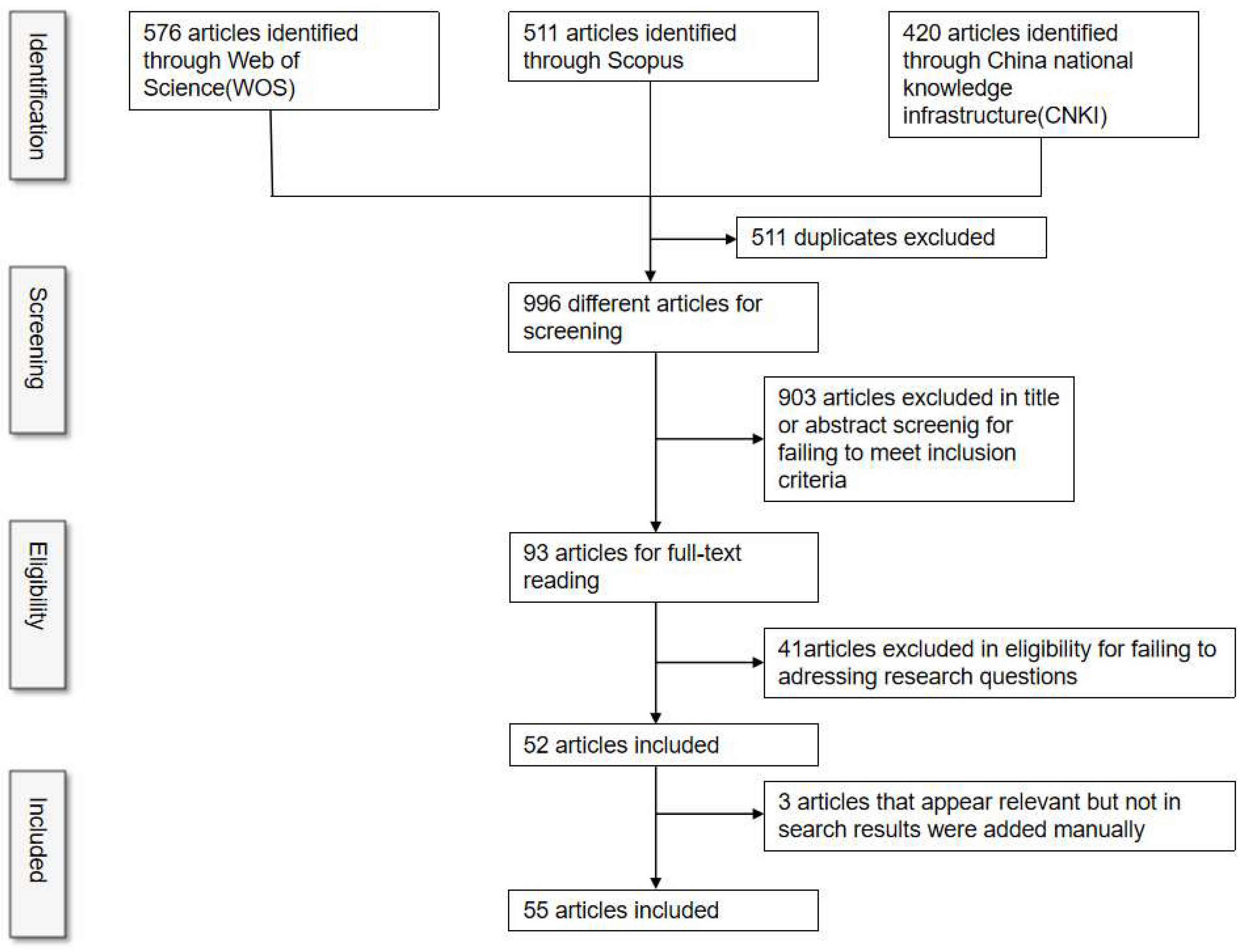
Figure 2.
Publication trends in recent years.
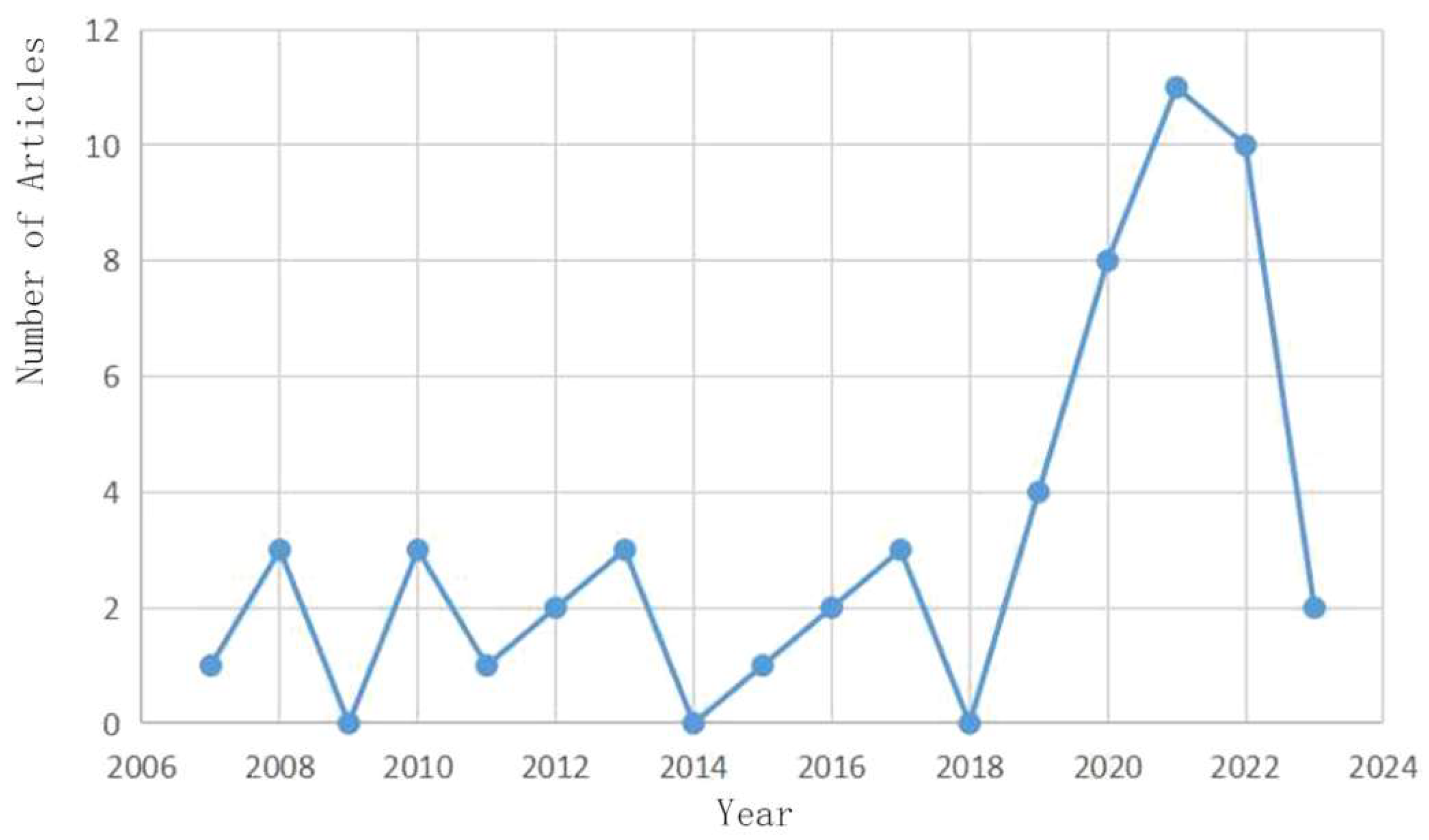
Figure 3.
Specific Classification of Research Methods.
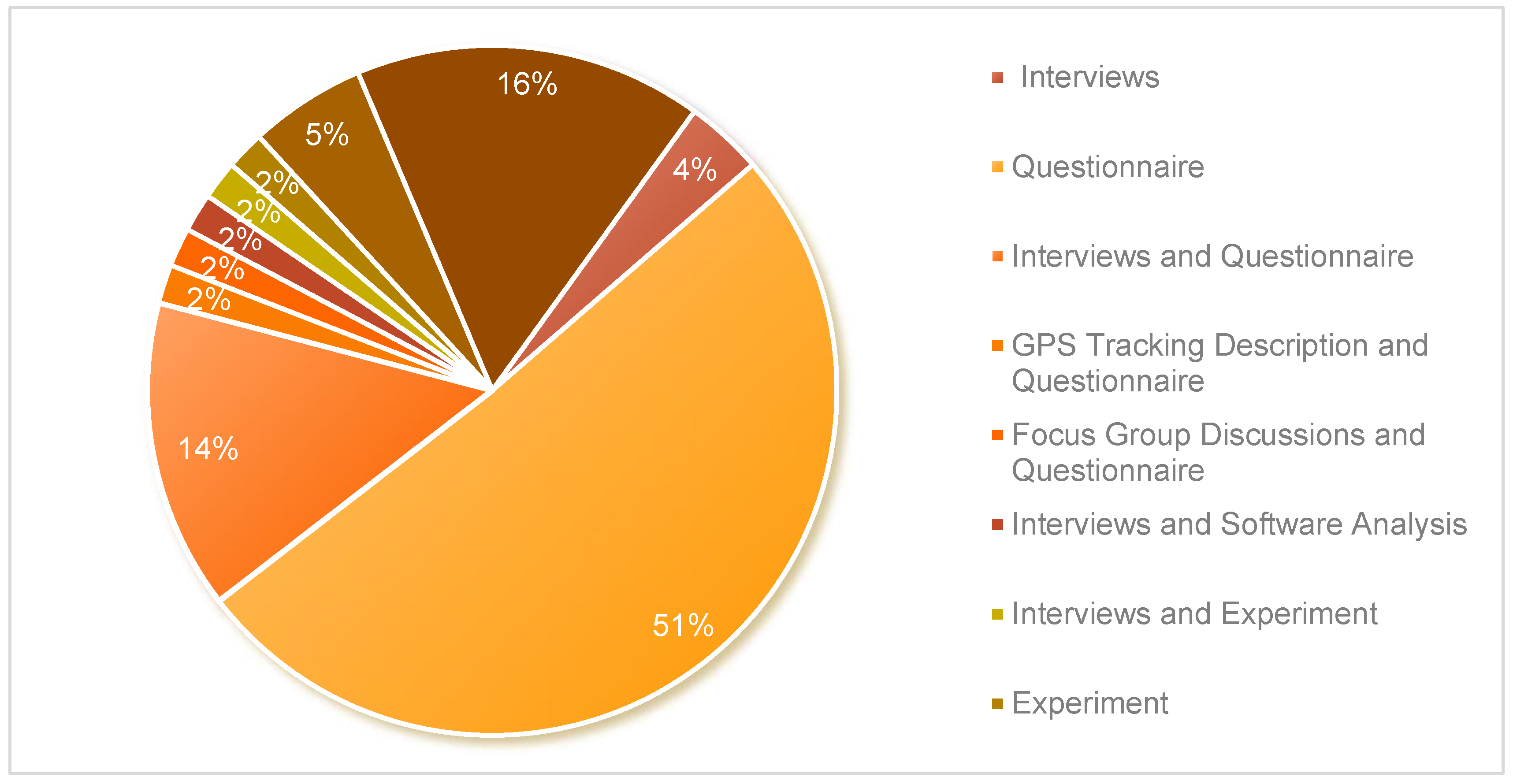
Figure 4.
The theoretical framework for aging-friendly recreational landscape satisfaction in residential green spaces.
Figure 4.
The theoretical framework for aging-friendly recreational landscape satisfaction in residential green spaces.
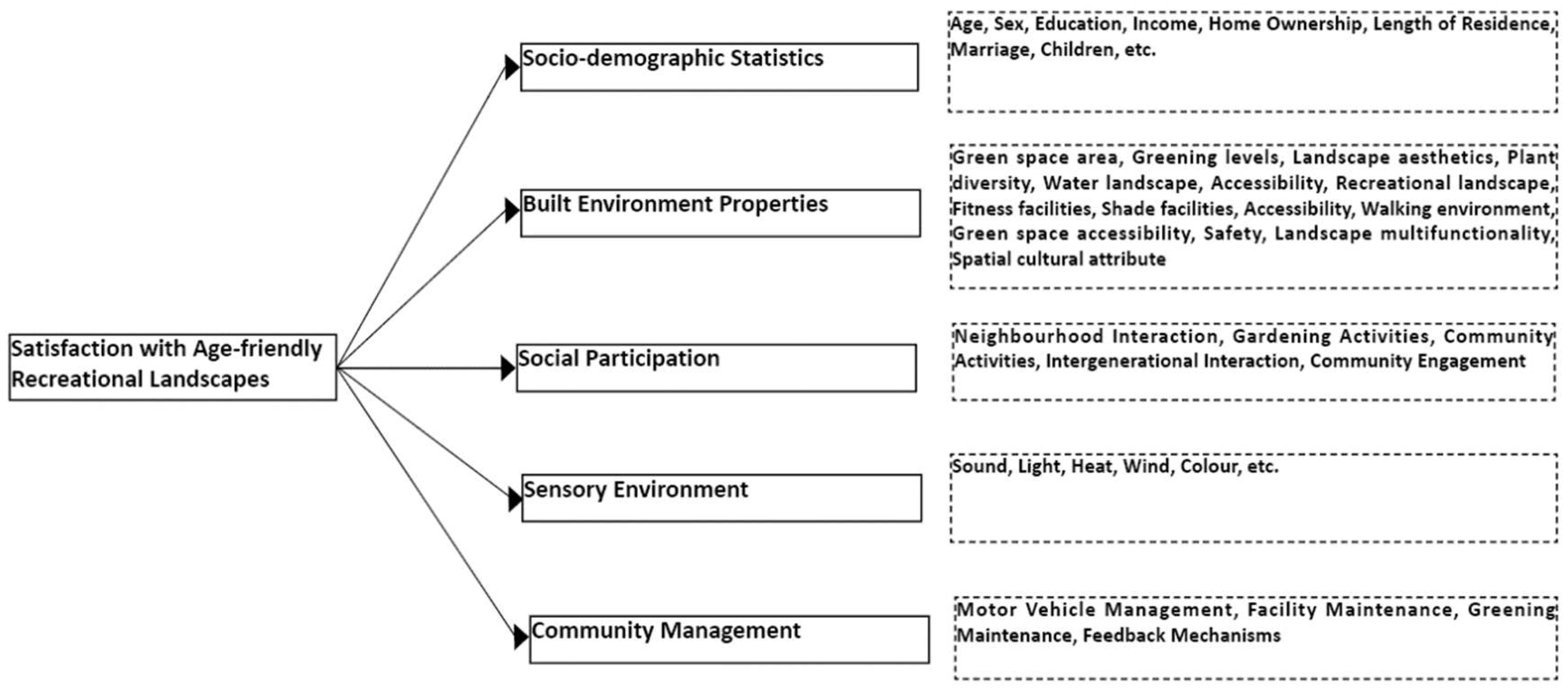

Table 1.
Relevant literature codes in the SCOPUS database.
| No | Authors | Year | Title | Country | Methodology | Method Introduction | Findings | |||
|---|---|---|---|---|---|---|---|---|---|---|
| Qualitative | Quantitative | Field research | Application tools | |||||||
| SJ01 | Mohr-Stockinger et al. | 2023 | Awakening the sleeping giant of urban green in times of crisis coverage, co-creation, and practical guidelines for optimizing biodiversity-friendly and health-promoting residential greenery | Germany | √ symposium | √ Questionnaire | √ | Research using questionnaires and co-creation workshops. | Residents’ needs and expectations regarding the greening of residential areas are related to biodiversity and health-related factors. These factors should be considered in planning and design. | |
| SJ02 | Choi et al. | 2023 | Neighborhood Social Environment and Self-Perceptions of Aging | USA | √ Questionnaire | A multilevel linear regression model was used to explore the relationship between neighborhood social-environmental factors and older adults’ perceptions of self-perceived aging. | There is a significant association between neighborhood social environment factors and older people’s self-perception of aging, with neighborhood social capital and neighborhood age composition being the most important factors. The better the neighborhood social environment, the more positive the older adults’ self-perception of aging. |
|||
| SJ03 | Xin Hu | 2021 | Environmental sustainability and the residential environment of the elderly: A literature review | Australia | √ Literature Review | The study used the qualitative content analysis method to review 54 historical explorations in the field. | Four main research topics were identified, including energy consumption, efficiency, and management, environmental sustainability in an institutional environment, application of sustainable technologies, and sustainable home modifications. The search framework was proposed to depict the research topics, research gaps, and future research directions in the field. |
|||
| SJ04 | Roberts Lavigne et al. | 2021 | Residential Street Block Disorder and Biological Markers of Aging in Older Adults: The National Health and Aging Trends Study | USA | √ Interviews | √ Experiment | The article utilized a longitudinal survey research methodology, using data from the National Health and Aging Trends Study (NHATS). | Older people living in any neighborhood with problems have higher levels of biomarkers of physiological aging compared to those living in a neighborhood without problems. | ||
| SJ05 | Zhong et al. | 2021 | The Influence of Emotional Health on the Activity Characteristics of the Elderly and the Selection of Environmental Quality Factors in Residential Areas | China | √ Questionnaire | √ | ArcMap | Based on the investigation of four types of typical residential environments in the Dalian residential area, a hierarchical linear model (HLM) has been constructed to reveal the influence of the emotional status of older adult persons on their activity characteristics and the selection of environmental quality factors. | The emotional well-being of older people is closely related to health status and life satisfaction. The built and natural environments had a significant effect on emotional well-being, while factors such as the size of the activity space, environmental cleanliness, quality of greenery, and acoustic environment were found to be important factors affecting the emotional state of older people. |
|
| SJ06 | Stephen M. Golant | 2020 | The distance to death perceptions of older adults explain why they age in place: A theoretical examination | USA | √ Literature Review | The thesis used a literature review and theoretical analysis to develop the study. | The impact of older people’s perceived distance to death on their choice to age in place explores the mechanisms and theoretical explanations for this impact. |
|||
| SJ07 | Zhong et al. | 2020 | Community Environments That Promote Intergenerational Interactions vs. Walking Among Older Adults | USA | √ Questionnaire | GIS | The process of the research methodology consisted of four phases. The first stage was a pilot study to seek input on the initial questionnaire design and content through focus groups. The second phase was a small-scale pre-testing of the initial online and paper-based questionnaire. The third phase was to test the final questionnaire instrument and retest the reliability assessment. The final stage was actual data collection using the final questionnaire instrument. | Older adults’ social interactions and walking activities are related to multiple aspects of the living environment, including community accessibility, safety, landscaping, and community amenities. | ||
| SJ08 | Li et al. | 2020 | Residential environment and depressive symptoms among Chinese middle and old-aged adults: A longitudinal population-based study | China | √ Questionnaire | The article used multilevel mixed effects logistic regression models and Cox proportional risk regression models to examine the relationship between residential environment and depressive symptoms. | Residential external architectural features, indoor spatial layout, home amenities, and indoor environment have a significant impact on depressive symptoms in older adults. Therefore, residential environmental interventions, such as external built environment promotion, rational spatial layout, and indoor home facilities improvement, could be an effective way to reduce the risk of depressive symptoms and the associated public health burden among middle-aged and older adults in China. | |||
| SJ09 | Chen et al. | 2020 | Residential Greenness and Cardiovascular Disease Incidence, Readmission, and Mortality | Canada | √Interviews | √ Software Analysis | ArcGIS(version 10.4) | Satellite imagery and geographic information system (GIS) technology were used to assess the degree of greenery in residential areas and to compare it with the incidence of cardiovascular disease. | The greener the living area, the lower the incidence of cardiovascular disease. | |
| SJ10 | YEO et al. | 2019 | Healthy Residential Environments for the Elderly | South Korea | √ Literature Review | A comparative analysis of cases based on health theories. | A difference in this study compared with previous studies is that the salutogenic theory was applied to the residential environment for older adults people to compare and analyze the residential environment for older adults people in South Korea, Japan, and Sweden, which are countries that are experiencing population aging. |
|||
| SJ11 | Guo et al. | 2019 | Neighborhood environment and cognitive function in older adults: A multilevel analysis in Hong Kong | China | √ Interviews | √ Questionnaire | Standardized and structured interviews and comprehensive clinical examinations of older people and the use of questionnaires such as the Mini-Mental State Examination (MMSE) to measure cognitive function. | There is a significant association between community environmental factors, such as community facilities, transport, and green spaces, and cognitive decline and dementia in older adults. | ||
| SJ12 | Feng et al. | 2017 | The impact of neighborhood environments on quality of life of elderly people: Evidence from Nanjing, China | China | √ Questionnaire | A systematic sampling method was used for the study. The questionnaires covered aspects of quality of life, living environment, social interaction, and transport status of the older adults. The study used Structural Equation Modelling (SEM) to analyze the data to explore the impact of the living environment on the quality of life of the older adults. | The study concludes that the quality of the living environment is closely related to the quality of life of older people. The quality of life of older people is affected by several aspects of the living environment, including housing conditions, social interactions, and transport conditions. Older people’s quality of life is also affected by factors such as age, gender, education, income, household, living with children, living with parents, and so on. |
|||
| SJ13 | Phillips et al. | 2010 | Person-Environment (P–E) Fit Models and Psychological Well-Being Among Older Persons in Hong Kong | China | √ Interviews | √ | GIS | The study utilized a multi-stage quota area sampling methodology and then selected specific buildings and flats within these areas for interviews. During the interviews, the researcher used a detailed questionnaire that included questions on personal information, living environment, and mental health of the older adults. | There is a significant association between older people’s adaptation to the residential environment and their mental health, which is influenced by cultural, social, and individual factors. | |
| SJ14 | Duffy & Willson | 2008 | The Role of Design Factors of the Residential Environment in the Physical and Mental Health of the Elderly | USA | √ Questionnaire | √ | Participants in the study were 171 older adults aged 60 years or older living in public and private housing. The study used a battery of instruments measuring social interaction and architectural design factors, as well as measures of subject morale and physical health. | The study concludes that architectural design can influence social interactions and physical and mental health in older adults, but other social interaction variables may not have an impact on physical and mental health in older adults. | ||
| SJ15 | Scopelliti & Giuliani | 2008 | Restorative Environments in Later Life: An Approach to Well-Being from the Perspective of Environmental Psychology | Italy | √ Questionnaire | The researchers manipulated two variables, social interaction and type of activity, by describing the context and then measuring the restorative nature of the environment. | The results of the study showed that the natural environment was more restorative than the built environment. In addition, social interaction and type of activity also had an impact on the restorative properties of the environment. The study also found that different environments had different effects on the four dimensions of restorative properties. |
|||
| SJ16 | Fernández-Mayoralas Fernández et al. | 2008 | Components of the Residential Environment and SocioDemographic Characteristics of the Elderly | Spain | √ Questionnaire | The article used a telephone survey of 1,148 of the 465,697 persons aged 65 to 84 years in the city of Madrid. The data were taken from the 1997 register of inhabitants of the city of Madrid. | There is a correlation between older people’s satisfaction with their living environment and their demographic and socio-economic characteristics. | |||
| SJ17 | Nielsen & Hansen | 2007 | Do green areas affect health? Results from a Danish survey on the use of green areas and health indicators | Denmark | √ Questionnaire | The study was conducted by sending questionnaires to 2000 Danish adults. The questionnaire mainly used categorical or ordinal scales. The researchers analyzed the data using polynomial regression models to determine the effect of distance to green spaces and formal visits to green spaces on experienced stress and body mass index. | The further away from public green spaces, the more stress individuals experience and the higher their body mass index. In addition, the article found that residents with private gardens or shared green spaces experienced less stress and lower body mass indexes relative to those without these green spaces. | |||
Table 2.
Relevant literature codes in the WOS database.
| No | Authors | Year | Title | Country | Methodology | Method Introduction | Findings | |||
|---|---|---|---|---|---|---|---|---|---|---|
| Qualitative | Quantitative | Field research | Application tools | |||||||
| WJ01 | Taylor et al. | 2022 | A vulnerable residential environment is associated with a higher risk of mortality and early transition to permanent residential aged care for community-dwelling older South Australians | Australia | √ Questionnaire | The study was a retrospective cohort study. The study used statistical methods to analyze the association between the vulnerability of the living environment (using the HAVEN index) and the risk of death and the transfer of older persons to permanent residential care. | There is a significant correlation between the vulnerability of the living environment and the risk of death among the older adults. The HAVEN index can be used to assess the vulnerability of the living environment, which considers a combination of social and environmental factors. | |||
| WJ02 | Chen & Zhang | 2022 | Community Participation and Subjective Well-Being of Older Adults: The Roles of Sense of Community and Neuroticism | China | √ Questionnaire | The article used regression analysis to examine the relationship between community involvement, sense of community, neuroticism, and subjective well-being. | The study found that community participation is positively associated with subjective well-being among older adults, and this relationship is moderated by neuroticism. | |||
| WJ03 | Liu et al. | 2022 | The Subjective Well-Being of Elderly Migrants in Dongguan: The Role of Residential Environment | China | √ Questionnaire | √ | The researcher used a multiple linear regression model to analyze the data to determine the impact of the living environment on the subjective well-being and satisfaction of older migrants. | The residential environment has a significant effect on the subjective well-being and satisfaction of older migrants, with community support, social networks, quality of the residential environment, and health status being among the influencing factors. |
||
| WJ04 | Mei et al. | 2022 | Residential greenness attenuated association of long-term air pollution exposure with elevated blood pressure: Findings from polluted areas in Northern China | China | √ Experiment | The article used a prospective cohort study method. It explored the relationship between the degree of greenery in residential areas and the effects of long-term air pollution exposure and blood pressure through a long-term survey and monitoring of residents in northern China. | The more green a residential area is, the more it reduces the negative effects of air pollution on blood pressure. | |||
| WJ05 | KROLS et al. | 2022 | Residential green space, gardening, and subjective well-being: a cross-sectional study of garden owners in northern Belgium | Belgium | √ Questionnaire | A cross-sectional research method was used to investigate the relationship between residential green space, gardening, and subjective well-being through an online questionnaire among gardeners in the Flemish region of Belgium. | People with more green space reported fewer symptoms of stress and depression, and those involved in gardening activities reported higher subjective well-being. | |||
| WJ06 | Tan & Lee | 2022 | Residential environment, third places and well-being in Malaysian older adults | Malaysia | √Interviews | √ Questionnaire | √ | The researcher used Partial Least Squares Structural Equation Modeling (PLS-SEM) for the analysis and obtained the path coefficients and their significance by bootstrap procedure. | There is a significant relationship between the quality of the community environment, housing satisfaction, cultural and education-related places, shopping-related places, and health and life satisfaction. The effect of cultural and education-related places and shopping-related places is similar to the effect of health on life satisfaction. |
|
| WJ07 | Huang et al. | 2022 | Non-linear association between residential greenness and general health among old adults in China | China | √ Questionnaire | This study explored the association between residential greenness and older adults’ self-rated general health (SGH) in China, particularly focusing on the potential non-linear association, using the microdata sample from the Chinese one-percent national population sample survey. | Providing green infrastructure in the living environment can promote the health of older persons. | |||
| WJ08 | Su & Zhou | 2022 | Long-Term Residential Environment Exposure and Subjective Wellbeing in Later Life in Guangzhou, China: Moderated by Residential Mobility History | China | √ Questionnaire | An ordered logistic regression model was used to investigate the relationship between long-term residential exposure and the subjective well-being of older adults, taking into account the effect of residential migration history. | Subjective well-being was higher among older people who had lived in the center of the city for a long period, while it was lower among those who had lived in the peripheral areas of the city. Meanwhile, residential migration history had an impact on the relationship between long-term residential environmental exposure and the subjective well-being of older adults. |
|||
| WJ09 | Bauwelinck et al. | 2021 | Residing in urban areas with higher green space is associated with lower mortality risk: A census-based cohort study with ten years of follow-up | Belgium | √ Questionnaire | A retrospective cohort study design was used to compare mortality rates among people living in areas with different levels of urban green space coverage. | The higher the urban green space coverage, the lower the overall mortality rate of the population, especially for cardiovascular and respiratory diseases. | |||
| WJ10 | Lu et al. | 2021 | Neighborhood physical environment, intrinsic capacity, and 4-year late-life functional ability trajectories of low-income Chinese older population: A longitudinal study with the parallel process of latent growth curve modeling | China | √ Questionnaire | √ | A parallel-process potential growth curve modeling technique was used to investigate the relationship between neighborhood physical environment, intrinsic capacity, and 4-year late functional capacity trajectories of low-income Chinese older adults. | Neighborhood physical environment and intrinsic ability had significant effects on late functional ability trajectories. Specifically, improvements in both neighborhood physical environment and intrinsic ability were associated with better late functional ability trajectories. | ||
| WJ11 | Padeiro et al. | 2021 | Neighborhood Attributes and Well-Being Among Older Adults in Urban Areas: A Mixed-Methods Systematic Review | Portugal | √ | √ | PRISMA | The article used a mixed research methodology, including qualitative and quantitative research. Thematic analysis was used for qualitative data, while synthesis was used for quantitative data. | Older people are more likely to be happy in neighborhoods with a beautiful natural environment, a strong sense of community, easy access to public transport, urban furniture, and accessible health care. |
|
| WJ12 | Roberts et al. | 2021 | Multiple environmental exposures along daily mobility paths and depressive symptoms: A smartphone-based tracking study | Netherlands | √ | √ Questionnaire | GPS | The article used a mixed research method combining questionnaires and data collection from a GPS-tracking smartphone app. | Individuals who spent more time in green spaces each day had a lower risk of depression compared to those who were less exposed. | |
| WJ13 | Astell-Burt et al. | 2021 | More green, less lonely? A longitudinal cohort study | Australia | √ Questionnaire | A longitudinal cohort study was used to explore the effects of a green environment on loneliness and social cohesion through two questionnaires administered to adults in Australia. | Studies have found that more exposure to green environments can reduce loneliness and increase social cohesion. | |||
| WJ14 | Jin et al. | 2021 | Interaction of greenness and polygenic risk score of Alzheimer’s disease on risk of cognitive impairment | China | √ Questionnaire | A prospective cohort study approach was used to investigate the effects of residential area greenness and Alzheimer’s disease polygenic risk score on the risk of cognitive impairment through a long-term follow-up of Chinese older adults. | Both residential area greenness and polygenic risk scores were associated with the risk of cognitive impairment, but the protective effect of greenness could not overcome genetic susceptibility to Alzheimer’s disease. | |||
| WJ15 | Hautekiet et al. | 2020 | Environmental exposures and health behavior in association with mental health: a study design | Belgium | √Interviews | √ Questionnaire | Data from the Belgian Health Survey (BHIS) and the Belgian Environment and Health Study (BELHES) were used. | There is an association between environmental exposures such as air pollution, residential green spaces, and smoking and mental health. | ||
| WJ16 | Liu et al. | 2019 | Nothing Like Living with a Family: A Qualitative Study of Subjective Well-Being and its Determinants among Migrant and Local Elderly in Dongguan, China | China | √Interviews | √ | The article used a qualitative research methodology and collected data through in-depth interviews. | To further enhance the subjective well-being of older migrants, there is a need to promote social services, welfare, and recreational activities and to strengthen health-care reimbursement in their new homes. | ||
| WJ17 | Noordzij et al. | 2019 | Effect of changes in green spaces on mental health in older adults: a fixed effects analysis | Netherlands | √Questionnaire | A fixed-effects model was used to examine the impact of green space on the mental health of older adults, using individual-level green space exposure data. | The accessibility and availability of green space are associated with the mental health status of older people. However, the study did not find an impact of changes in the availability of green space on the mental health of older people. | |||
| WJ18 | Zhang & Zhang | 2 | Perceived residential environment of neighborhood and subjective well-being among the elderly in China: A mediating role of sense of community | China | √ Questionnaire | √ | A questionnaire research method was used to survey older adults in an urban area of China. Structural equation modeling (SEM) was used to analyze the relationship between older people’s perceptions of the living environment, sense of community, and subjective well-being. | There was a significant positive relationship between older adults’ perceptions of the living environment and subjective well-being, with a sense of community mediating this relationship. | ||
| WJ19 | Yafei Liu, Martin Dijst, Jan Faber, Stan Geertman, Can Cui | 2017 | Healthy urban living: Residential environment and health of older adults in Shanghai | China | √ Questionnaire | The article used a cross-analytic design research method to analyze data from a survey of 1,035 older adults people in Shanghai to derive the direct and indirect effects of the living environment on the health of the older adults. | The physical and social characteristics of the living environment have a significant impact on the health of older people, while physical and social activities play an important role in the indirect impact of the living environment on the health of older people. | |||
| WJ20 | Vogt et al. | 2015 | Neighborhood and healthy aging in a German city: distances to green space and senior service centers and their associations with the physical constitution, disability, and health-related quality of life | Germany | √Interviews | √ Questionnaire | The article uses a multilevel logistic regression model to examine the relationship between the health status of older people living in the city of Augsburg, Germany, and the neighborhood environment. | Older people living closer to green spaces and older adults service centers have better physical conditions higher physical disability and health-related quality of life. | ||
| WJ21 | Fastame et al. | 2014 | Do self-referent metacognition and residential context predict depressive symptoms across the late life span? A developmental study in an Italian sample | Italy | √Interviews | √ Questionnaire | The study used a range of instruments, including questionnaires to collect data on participants’ socio-demographic characteristics and lifestyles, and self-referenced measures of depression to assess depressive symptoms in late adulthood. | Social desirability was negatively correlated with self-reported negative affect, suggesting that participants who attempted to impress the experimenter reported fewer depressive symptoms. The study also found that metacognition and residential environment did not have a significant effect on self-referenced depression measures. | ||
| WJ22 | Estera Žalik & Bojan Zalar | 2012 | DIFFERENCES IN MOOD BETWEEN ELDERLY PERSONS LIVING IN DIFFERENT RESIDENTIAL ENVIRONMENTS IN SLOVENIA | Slovenia | √Interviews | √ Questionnaire | The article used structured interviews. The subjects’ depression, anxiety, and cognitive functioning were also assessed using the Zung Self-Assessment Depression Inventory and Self-Assessment Anxiety Inventory, as well as the Mini-Intellectual Status Checklist. | There are differences in the severity of depression and anxiety symptoms among older adults in different residential settings and differences in cognitive functioning among older adults. | ||
| WJ23 | Villeneuve et al. | 2012 | A cohort study relating urban green space with mortality in Ontario, Canada | Canada | √ Questionnaire | The study used a cohort study approach, following approximately 575,000 Ontario residents for 22 years, to explore the association between urban green space and mortality. | There is a significant negative correlation between urban green space and mortality, i.e., the more urban green space there is, the lower the mortality rate. | |||
| WJ24 | Burton et al. | 2011 | Good places for aging in place: development of objective built environment measures for investigating links with older people’s wellbeing | UK | √Interviews | √ Questionnaire | The article used a self-completion questionnaire and an objective measurement tool, the NeDeCC, to study 200 older people in two cities in the UK. | The well-being of older people is related to many aspects of the living environment, including accessibility, safety, socialization, and the environmental quality of the community. | ||
Table 3.
CNKI database-related literature coding.
| No | Authors | Year | Title | Country | Methodology | Method Introduction | Findings | |||
|---|---|---|---|---|---|---|---|---|---|---|
| Qualitative | Quantitative | Field research | Application tools | |||||||
| CJ01 | Liu et al. | 2022 | Research on the mechanism of influence of residential environment on residents’ subjective well-being --Taking a mixed residential area in Shenzhen as an example |
China | √Interviews | √ Questionnaire | √ | Mplus | Field research interviews, online and offline combined questionnaires, and software to analyze the data. | The residential environment has a significant direct effect on residents’ subjective well-being; the social environment indirectly affects subjective well-being by establishing residents’ sense of place. |
| CJ02 | Yuan et al. | 2022 | A study on the impact of green space activity behaviour on the mental health of older people in winter settlements | China | √ Questionnaire | √ | Using a combination of field research and questionnaires to survey 226 older adults residents in six sample settlements in Harbin City, the relationship between activity behavior and mental health was explored using multiple linear regression analysis. | Settlement green space activity behavior positively moderates the mental health status of older people. Activity behavior in residential green spaces is driven by several factors, with green space environment characteristics having a greater influence on the frequency, duration, and type of activity. The characteristics of the green space environment have a greater impact on the frequency, duration, and type of activities. |
||
| CJ03 | Yin et al. | 2021 | Research on healthy landscapes in residential areas of Wuhan in the post-epidemic era and thoughts on their construction | China | √ Questionnaire | √ | We screened 15 first “high-risk” districts in Wuhan during the home quarantine period in February 2020 as samples, and adopted a research method combining “online questionnaire + offline observation interviews”. | The enhancement of the health landscape of residential green areas is mainly based on the “application of plants in green areas” and the “construction of fitness facilities and venues”. | ||
| CJ04 | Chen et al. | 2021 | Advances in research on the relationship between residential landscape environments and the health of older people | China | √ Software Analysis | CiteSpace | Literature was econometrically analyzed using CNKI and WOS databases with their analysis tools, scientific and technical text mining, and CiteSpace software. | Overseas research disciplines mainly focus on public health and geriatrics, while domestic research focuses on building science and sports. The existing studies mainly adopt subjective or objective measurement methods such as questionnaires, health scales, environmental measurements, and physiological indicators. | ||
| CJ05 | Shu & Yin | 2020 | Strategies for the regeneration of outdoor spaces in old settlements in Tianjin from a healing perspective | China | √ Software Analysis | √ | Researching the old settlements in Tianjin and classifying them into four categories based on statistical data using the K-Means algorithm. | Three improvement objectives are proposed: pedestrian space to ensure site safety, green landscape to enhance healing efficiency, and activity space to meet residents’ needs. It also explores improvement strategies such as opening up small and micro activity spaces, residents’ participation in green planting, and multi-dimensional enhancement of green visibility. | ||
| CJ06 | Wang & Yang | 2020 | How the built environment affects the frequency of green space use by older people -- a dual perspective based on accessibility and attractiveness | China | √ Questionnaire | √ | GIS、BIGMAP | Random visits were made to the settlements in the study area to obtain the time, place, and frequency of activities of the older adults, and 204 valid questionnaires were obtained. A database of environmental characteristics was obtained through relevant technical software. | The physical accessibility of green spaces has a more significant impact on the activities of older persons than spatial proximity. Different types of green space affect the frequency of use by older persons, with community parks and gardens being important places for high-frequency physical activity. | |
| CJ07 | Zhang et al. | 2020 | A study of outdoor public spaces in existing settlements based on the daily interaction and behavioral activities of older people | China | √ (Questionnaire) | √ | We used questionnaire research, on-site counting, map marking, and video recording methods to collect data. Through behavioral scene analysis, we superimposed and reproduced daily life scenes, analyzed their phenomenal characteristics, and explored the patterns of outdoor space use by older adults in existing residential areas. | Public participatory planning and design for the renewal and regeneration of existing neighborhoods is an essential element in enhancing the overall vitality of the community and improving the community’s aging system. | ||
| CJ08 | Li Li | 2016 | General design guidelines and evaluation criteria for the external environment of residential areas in an aging society | China | √Literature Review | Summary based on existing standard specifications | Taking into account the existing technical specifications and the seven principles of universal design, reference standards for universal design will be drawn up according to the four systems of road traffic, landscape elements, open space and ancillary facilities, and public service facilities within a residential area. | |||
| CJ09 | Li et al. | 2016 | A study on aging-friendly landscape renewal in old residential districts in Shenyang based on comfort optimization, taking Xiushan District as an example | China | √ Software Analysis | √ | Autodesk Ecotect Analysis, Dethmap, Ecotect, phonics | Optimization of outdoor spaces for older adults through micro-environmental analysis and simulation, parametric design processes, and low-tech landscaping. | A method for evaluating the aging of the landscape environment by superposition of microclimate environmental impact and spatial dynamics of urban settlements is proposed. Linearised evaluation criteria for the outdoor activities of older adults are proposed for the high-density environmental characteristics of urban settlements in cold regions. A landscape space evaluation model based on the physiological and psychological environmental tolerance of older adults is proposed through the feedback survey method. | |
| CJ10 | Lin & Zhang | 2013 | Environmental design of pedestrian spaces in residential areas in an aging society | China | √Literature Review | Summary based on the literature base | Suggest design elements for an age-friendly pedestrian space environment. | |||
| CJ11 | Zhou & Liu | 2013 | Age-appropriate design of outdoor environments in residential areas | China | √Literature Review | Based on the existing norms the causes of aging problems are analyzed to propose the corresponding principles and design points. | To analyze the causes of problems in the design of aging residential areas from the perspective of different subjects such as developers, designers, and buyers. | |||
| CJ12 | Yao & Yin | 2010 | The outdoor environment and landscape design in residential areas for older adults | China | √Literature Review | A summary based on the literature base. | The main points of the design of the outdoor environment for older adults are summarized in terms of interaction space, activity space, green space, and detailed design. | |||
| CJ13 | Yiqu Wu | 2010 | Landscape design of residential areas based on the psychological needs of older adults | China | √Literature Review | Starting from analyzing the social and psychological characteristics of the older adults, the principles of landscape design for the older adults, the overall design, and the specific detail design are studied in depth. | Constructing landscapes for senior living areas from a humane, high-quality, and personalized perspective. | |||
| CJ14 | Wang & Li | 2006 | A study on the environmental and ecological factors of outdoor activity areas for older adults in the community -Take six residential areas in Wuhan as an example |
China | √(Questionnaire) | √ | Field research questionnaires. A total of 160 questionnaires were distributed and 142 were returned, of which 130 met the requirements (53.1 percent men and 46.9 percent women), with a return rate of 81.3 percent. | Suggested improvement strategies: create a very friendly green environment outside the neighborhood; improve sunlight conditions, strengthen management, and improve hygiene and noise conditions. | ||
Table 4.
Distribution statistics of literature related to SCOPUS, WOS database.
| Country | Scopus | Wos | Total | % |
|---|---|---|---|---|
| China | 5 | 10 | 15 | 36.59% |
| USA | 5 | 0 | 5 | 12.20% |
| Belgium | 0 | 3 | 3 | 7.32% |
| Australia | 1 | 2 | 3 | 7.32% |
| Italian | 1 | 1 | 2 | 4.88% |
| Germany | 1 | 1 | 2 | 4.88% |
| Netherlands | 0 | 2 | 2 | 4.88% |
| Portugal | 0 | 1 | 1 | 2.44% |
| Malaysia | 0 | 1 | 1 | 2.44% |
| Spain | 1 | 0 | 1 | 2.44% |
| Denmark | 1 | 0 | 1 | 2.44% |
| Slovenia | 0 | 1 | 1 | 2.44% |
| Canada | 1 | 1 | 1 | 2.44% |
| UK | 0 | 1 | 1 | 2.44% |
| South Korea | 1 | 0 | 1 | 2.44% |
| Total | 17 | 24 | 41 | 100.00% |
Table 5.
Statistics on the distribution of disciplines.
| Subject | SCOPUS | WOS | CNKI | Total | % |
|---|---|---|---|---|---|
| Landscape architecture | 4 | 0 | 13 | 17 | 30.91% |
| Public health | 5 | 8 | 0 | 13 | 23.64% |
| Psychology | 3 | 5 | 0 | 8 | 14.55% |
| Geography | 1 | 4 | 1 | 6 | 10.91% |
| Sociology | 2 | 4 | 0 | 6 | 10.91% |
| Management | 0 | 2 | 0 | 2 | 3.64% |
| Statistics | 0 | 1 | 0 | 1 | 1.82% |
| Economics | 1 | 0 | 0 | 1 | 1.82% |
| Ecology | 1 | 0 | 0 | 1 | 1.82% |
| Total | 17 | 24 | 14 | 55 | 100.00% |
Table 6.
Related Literature Research Methods Statistics.
| Database | No. of articles | Qualitative | Quantitative | Mixed Methods |
|---|---|---|---|---|
| CNKI | 14 | 5 | 8 | 1 |
| SCOPUS | 17 | 4 | 9 | 4 |
| WOS | 24 | 1 | 15 | 8 |
| Total | 55 | 10 | 32 | 13 |
| % | 18% | 58% | 24% |
Table 7.
Relevant theoretical statistics.
| Theoretical | Literature Sources | % | ||
|---|---|---|---|---|
| SCOPUS | WOS | CNKI | ||
| Ecological Theory | 3(SJ01.SJ02.SJ09) | 7(WJ03.WJ04.WJ05.WJ08.WJ09.WJ12.WJ23) | 18.18% | |
| Health Promotion Theory | 3(SJ04.SJ07.SJ010) | 3(WJ01.WJ07.WJ21) | 4(CJ03.CJ04.CJ06.CJ07) | 18.18% |
| Demand Theory | 2(SJ05 SJ16) | 7(CJ08.CJ09.CJ10.CJ11.CJ12.CJ13.CJ14) | 16.36% | |
| Environmental Psychology | 6(WJ14.WJ15.WJ17.WJ18.WJ22.WJ24) | 10.91% | ||
| Social Ecology | 1(SJ08) | 3(WJ02.WJ19.WJ20) | 7.27% | |
| Environmental Gerontology Theory | 2(SJ03.SJ011) | 1(WJ06) | 5.45% | |
| Socio-emotional Choices | 1(SJ06) | 2(WJ11.WJ13) | 5.45% | |
| Subjective Well-being Theory | 1(SJ012) | 1(CJ01) | 3.64% | |
| Human-environment Adaptation Model | 1(SJ013) | 1(CJ02) | 3.64% | |
| Sociocentric-Marginal Dimension Theory | 1(SJ14) | 1.82% | ||
| Restorative Theory | 1(SJ15) | 1.82% | ||
| Distance Attenuation Theory | 1(SJ17) | 1.82% | ||
| Endogenous Capacity Theory | 1(WJ10) | 1.82% | ||
| Social Support Theory | 1(WJ16) | 1.82% | ||
| Natural Therapy | 1(CJ05) | 1.82% | ||
| Total | 17 | 24 | 14 | 100.00% |
Table 8.
Classification of indicator elements.
| Classification | Focus | SCOPUS | WOS | CNKI |
|---|---|---|---|---|
| Green Space Planning and Design | Green Space Area | SJ09.SJ11.SJ17 | WJ04.WJ05.WJ08.WJ09.WJ12.WJ13.WJ14.WJ15.WJ23 | CJ01.CJ03.CJ11 |
| Indicators of Green Space Vegetation Characteristics, e.g., Green Visibility, Green 3D Volume, Enhanced Vegetation Index, etc. | WJ14.WJ15 | |||
| Biodiversity of Green Space | SJ01 | WJ07 | ||
| Water Body Landscape | ||||
| Open Space | ||||
| Barrier-free Facilities | SJ11 | CJ01 | ||
| Leisure Seating | ||||
| Shade Facilities | ||||
| Beautiful Environment | SJ08 | CJ01 | ||
| Convenient Transport | SJ11.SJ12 | WJ11 | CJ01.CJ08 | |
| Walking Environment | SJ07 | CJ01.CJ09.CJ10.CJ13 | ||
| Recreational Facilities | SJ07.SJ10 | CJ01.CJ03.CJ08.CJ11 | ||
| Green Space Accessibility | SJ07 | WJ17.WJ20.WJ24 | CJ06 | |
| Safety | SJ07.SJ10 | WJ24 | ||
| Multifunctionality | WJ17.WJ19.WJ21.WJ22 | CJ06.CJ11 | ||
| Cultural | WJ06 | |||
| Social Participation | Leisure Activity Area | SJ05 | CJ07.CJ13 | |
| Gardening Activities | CJ03.CJ05.CJ11 | |||
| Neighborhood Social Environment | SJ02 | WJ10.WJ18 | CJ07.11 | |
| Intergenerational Interaction | CJ07 | |||
| Community Involvement | SJ12.SJ15 | WJ02.WJ03.WJ24 | CJ07 | |
| Sensory Environment | Sound | SJ05 | ||
| Odor | ||||
| Wind | CJ09.13 | |||
| Light | CJ09.13 | |||
| Heat | CJ09.13 | |||
| Color | ||||
| Settlement Management | Order, Health, Vehicles, Human Care, etc. | SJ04.SJ05 | WJ03.WJ16 |
Disclaimer/Publisher’s Note: The statements, opinions and data contained in all publications are solely those of the individual author(s) and contributor(s) and not of MDPI and/or the editor(s). MDPI and/or the editor(s) disclaim responsibility for any injury to people or property resulting from any ideas, methods, instructions or products referred to in the content. |
© 2024 by the authors. Licensee MDPI, Basel, Switzerland. This article is an open access article distributed under the terms and conditions of the Creative Commons Attribution (CC BY) license (http://creativecommons.org/licenses/by/4.0/).
Copyright: This open access article is published under a Creative Commons CC BY 4.0 license, which permit the free download, distribution, and reuse, provided that the author and preprint are cited in any reuse.


