

Submitted:
08 January 2025
Posted:
10 January 2025
You are already at the latest version
Abstract
BIOPEP-UWM, a peptide database, contains 5128 peptides from a myriad of resources. Five listed peptides are Angiotensin-I-converting enzyme (ACE-1; EC3.4.15.1) inhibitory peptides derived from a red alga, while two from Chlorella vulgaris have anti-cancer and antioxidative bioactivities. Microalgae are a future protein source and support several UN sustainable development goals (SDGs) including, 2, Zero Hunger and 3, Good Health and Well-being and 13, Climate Action. Herein, we describe a process combining hydrolysis and filtration to generate protein-rich, bioactive peptide-containing hydrolysates from mixed species of Chlorella sp. and Scenedesmus sp. The potential of generated algal hydrolysates to act as food ingredients was determined by assessment of their techno-functional (foaming, emulsification, solubility, water holding and oil holding capacity) properties. Bioactive screening of hydrolysates in vitro combined with mass spectrometry (MS), and in silico, predictions identified bioactive and functional hydrolysates and six novel peptides. Peptides derived from Chlorella sp. have the sequences YDYIGNNPAKGGLF and YIGNNPAKGGLF with predicted anti-inflammatory (medium confidence) and umami potential. Peptides from Scenedesmus sp. have sequences IEWYGPDRPKFL, RSPTGEIIFGGETM, TVQIPGGERVPFLF and IEWYGPDRPKFLGPF with predicted anti-inflammatory, anti-diabetic and umami attributes. Such microalgal hydrolysates could provide essential amino acids to consumers as well as tertiary, health benefits to improve human global health.
Keywords:
microalgae
; hydrolysis
; bioactive peptides
; anti-inflammatory
; anti-hypertensive
; anti-oxidative
; health
; techno-functional activities
; foaming
; oil holding capacity
1. Introduction
Proteins are necessary for adequate human nutrition. Global demand for protein is expected to double by 2050, mainly due to population growth and changes in dietary habits [1]. Most proteins traditionally consumed are of animal origin, such as meat, eggs and dairy products [2]. The production of traditional protein sources requires large areas of land for animal livestock and feed production, which contributes to deforestation in favour of agricultural land. Moreover, the production of animal feed requires high water and nitrogen consumption for fertilisers [2]. In addition, emissions from livestock farming also have a negative impact on the environment and production of meat proteins is known to contribute to greenhouse gas emissions (GHGs). Currently approximately 12% of GHG emissions result from livestock farming [3]. Satisfying the world's growing demand for proteins only using animal products does not appear to be sustainable, which is why researchers have set out to find new, alternative proteins.
Microalgae are a source of protein with potential for use in foods to provide adequate nutrition. They are known to be rich in proteins [4, 5] containing all the essential amino acids needed for human growth and nutrition [5]. In addition to their nutritional value, microalgae can synthesise bioactive molecules such as peptides, vitamins and antioxidant compounds [5]. Species such as Chlorella vulgaris, Scenedesmus obliquus and Spirulina platensis may contain between 51-58%, 48%-60/71% proteins, respectively, on a dry weight basis [6]. Microalgal protein productivity can reach 4–15 tonnes protein/ha/year compared to other terrestrial crops including soybean, pulse legumes, and wheat, which can yield 0.6–1.2 tons/ha/year, 1–2 tonnes/ha/year, and 1.1 tonnes/ha/year, respectively [7]. Moreover, microalgae sequester carbon dioxide converting it to organic carbon through photosynthesis [8].
However, microalgal digestibility values are generally low in comparison to proteins of animal origin like dairy, fish, and beef and plant proteins like soy [9]. The low digestibility of microalgal proteins affects their uptake in the human or animal body. It is mainly caused by the tough cell walls of microalgae, most of which are indigestible to monogastric animals and humans [10]. The best way to improve cell digestibility is to apply cell disruption techniques to the biomass to make the proteins more readily available. Therefore, the digestibility value of algal proteins depends on the downstream process applied to the biomass [11]. To confirm this statement, several studies highlight an increase in digestibility of treated microalgal biomass compared to whole biomass. For example, Wang and colleagues reported an increase in the digestibility of the disrupted biomass of Chlorella vulgaris and Chlorella sorokinina after cell wall disruption using micro-fluidization with respect to the untreated biomasses [12]. A similar result was reported for Nannochloropsis oceanica, C. vulgaris, and Tetraselmis sp. after mechanical and enzymatic processes [13]. The same results were obtained for recalcitrant cells such as Galdieria sulphuraria treated with Viscozyme [13]. Other than digestibility, some properties of microalgae are detrimental to their incorporation in food products. Nowadays, the use of microalgae biomass as ingredients is hampered by their powdery texture, dark green colour, and slightly fishy smell [14]. The addition of more than 10% whole microalgae into a food product negatively affects the sensory properties changing the taste and the texture of the final product [2]. Again, applying a refining step to microalgae helps to mitigate these deleterious properties of whole, dry biomass and improves the organoleptic features of microalgae ingredients. It is important to note that protein extraction and food processing are often accompanied by protein denaturation, which affects protein bioactivity [15]. On this basis, it is mandatory to study, in depth, the techno-functional properties of algal extracts.
One of the mildest methods to treat the microalgae biomass in order to release protein is to produce a hydrolysate by using enzymes [16]. Other than mildness and easy scalability, the point of strength of this technique are low energy consumption and low capital investments. On the other hand, it requires a long production time, and the enzyme costs can be high [17]. The employment of enzymes such as lipase, phospholipase, protease and cellulases to C. vulgaris resulted in a protein extract containing with a protein content of 68% [18]. Microalgal hydrolysates rich in protein can be used actively for their positive features in food formulation due to their techno-functional properties. As sources rich in protein, they are good candidates to act as meat substitutes due to their ability to enhance mouth feel, emulsion and foam stability and shelf life and they can find applications as ingredients for products including ice creams, mayonnaises and creams [19]. Techno-functional properties of microalgal hydrolysates can influence organoleptic characteristics such as texture and mouthfeel and they can impact physicochemical properties such as foaming, emulsifying, solubility and water and oil holding capacity [20]. Microalgal proteins are mostly employed for their promising functionality as foaming and emulsifying agents at neutral pH [21].
Bioactive peptides often generated during the manufacture of protein hydrolysates have numerous health-promoting benefits including antioxidant, antihypertensive and anticancer properties [22]. Peptides are formed from proteins after enzymatic hydrolysis, which can occur through gastrointestinal digestion, fermentation or the use of exogenous enzymes in food processing [23]. Each proteolytic enzyme has a preferential cleavage site for the selected protein, making the enzyme choice relevant [24]. Antioxidant activities of microalgal protein extracts were previously reported. For example, the free radical scavenging activities of peptides extracted from Chlorella ellipsoidea towards DPPH, hydroxyl, and peroxyl radicals were investigated and compared with the activity of synthetic antioxidants such as BHT [25, 26]. Both studies found that the antioxidant activity of microalgal derived peptides and the synthetic antioxidant were similar, suggesting that C. ellipsoidea peptides are excellent antioxidants.
Angiotensin converting enzyme (ACE-1) inhibitory activities were also reported previously for microalgal-derived peptides. ACE-1 is responsible for vasoconstriction, which, together with oxidative stress, is the main cause of hypertension and cardiovascular disease [27]. Peptides extracted from C. vulgaris [28, 29] displayed ACE-1 inhibitory activities previously. In particular, the ACE-1 inhibition capacity of different strain of Chlorella species were identified previously in several studies [30-33]. In addition, the anti-diabetic (T2D inhibition) potential of several microalgae and peptides were also investigated recently and results indicate that they may be candidates for product development for prevention of T2D.
The aim of this work was to produce bioactive peptide containing protein hydrolysates from the selected microalga Chlorella sp. and Scenedesmus sp. using a two-step hydrolysis process. The potential health benefits and techno-functional attributes of generated hydrolysates were assessed in vitro using a selection of bioassays and techno-functional assays. The bioactive peptides contained in bioactive hydrolysates were characterised using mass spectrometry and in silico prediction analysis as described previously [34-38] was used to determine additional health benefits for selected peptides.
2. Results
Several studies performed enzymatic hydrolysis on Chlorella sp. and Scenedesmus sp. algal strains previously [39, 40]. Enzymatic hydrolysis is a mild extraction method used mostly to extract proteins and peptides and to preserve extract features and health benefits as much as possible [41]. The enzymes employed in our work included a carbohydrase, capable of digesting the carbonaceous cell wall of algal and vegetable cells, and a protease, able to degrade the proteins to peptides.
2.1. Hydrolysate Generation and Proximate Analysis
A two-step enzymatic hydrolysis process using commercially available enzymes Viscozyme and Alcalase were applied to the dried, microalgal biomass, which was supplied by the IDEA project partner FZJ Jülich, Germany. Viscozyme, a carbohydrase, was used for initial hydrolysis to partially break the algal cell wall and release the intracellular material, including proteins. Alcalase was then applied to break down proteins into bioactive peptides. After hydrolysis with Viscozyme, a degree of hydrolysis (DH) of 25.4% and 27.46% was obtained following application to Chlorella sp. and Scenedesmus sp., respectively. Subsequent hydrolysis with the Alcalase enzyme resulted in a DH of 48.44 % and 46.35% when applied to Chlorella sp. and Scenedesmus sp., respectively. The results obtained for the Scenedesmus sp. biomass are coherent with results obtained by Romero-García and their co-worker [42] that performed a 3-step enzymatic hydrolysis procedure on Scenedesmus almeriensis using Viscozyme, Alcalase and Flavourzyme and obtained a DH of 42%.

Table 1.
The Degree of hydrolysis (DH) obtained by processing Chlorella sp. and Scenedesmus sp. with the selected enzymes.
Table 1.
The Degree of hydrolysis (DH) obtained by processing Chlorella sp. and Scenedesmus sp. with the selected enzymes.
| Substrate | Enzyme | DH% |
|---|---|---|
| Chlorella sp. | Viscozyme | 25.41 |
| Chlorella sp. | Viscozyme + Alcalase | 48.44 |
| Scenedesmus sp. | Viscozyme | 27.46 |
| Scenedesmus sp. | Viscozyme + Alcalase | 46.35 |
The proximate compositional analysis results for whole, algal biomass, the whole hydrolysates, permeate and retentate fractions generated in the two-step hydrolysis process are shown in Table 2.
The protein content of both 3-kDa molecular weight cut off (MWCO) permeates generated independently from the two algal strains was significantly greater than the protein content of the starting biomass. The permeate protein content was 44.73% and 41.14 % for Chlorella sp. and Scenedesmus sp., respectively, larger than the starting protein content for whole biomasses of 38.02% and 37.81 % for Chlorella sp. and Scenedesmus sp., respectively. Filtration with 3-kDa MWCO membranes also reduced the fat content of both algal 3kDa-permeates compared to the whole biomasses and hydrolysates, respectively. The ash content of both 3-kDa permeates were significantly greater than the whole biomass or generated hydrolysates. For example, the ash content of the Chlorella sp. 3-kDa permeate (10.10% ash) fraction almost doubled compared to the whole biomass (4.85% ash) and generated hydrolysate (5.27 % ash), respectively. An increase in ash content was also observed for the 3-kDa Scenedesmus sp. permeate where the ash content was determined as 7.50% compared to the whole biomass that was found to contain 2.03% ash and the Scenedesmus sp. hydrolysate which was found to contain 4.53% ash. The protein content of both algal 3-kDa retentates suggests that many of the proteins & peptides generated during hydrolysis were greater than 3-kDa in size (80.22 % for Chlorella sp. retentate and 71.77 % for Scenedesmus sp. retentate, respectively). Most of the fat fraction of algal hydrolysates remained in the retentate fraction, additionally.
2.2. Techno-Functional Analysis
2.2.1. Protein Solubility
Not all the proteins extracted from microalgal biomass have a positive effect on the techno-functional properties of the ingredient. Only the soluble fraction of protein works at the oil-water interphase. Therefore, to see the efficiency of the extraction, it is necessary to assess the percentage of soluble proteins in the extract. The pH of the solution affects the solubility of the proteins. At their isoelectric point (pI), proteins show a neutral net charge, making them less soluble in water [43]. The protein solubility of generatedmicroalgal hydrolysates was performed at different pH values. There was no clear minimum solubility value determined for either of the two investigated hydrolysates. This result is likely due to the wide spectrum of proteins present in the hydrolysate that present different pI values (Figure 1). Chlorella sp. hydrolysate had maximum solubility at pH=2 (65.65%) and a minimum at pH=6 (60.30%) very close to the solubility at pH=8 (60.41%), suggesting the presence of the isoelectric point of the hydrolysate between pH=6 and 8. The minimum solubility for Scenedesmus sp. hydrolysate was 57.33% at pH=2 rising to a maximum of 62.70% at pH=6.
2.2.2. Water Holding Capacity (WHC) and Oil Holding Capacity (OHC)
Water holding capacity and oil holding capacity (WHC and OHC) refer to the ability of an ingredient to retain water or oil, respectively. A high capability to retain water is an indicator of a better shelf life for a final product/ingredient because it relates to limited moisture loss during storage [44]. On the customer acceptability side, good WHC improves the texture of food products and ensures thickness and viscosity of the final product [45]. A high OHC improves the palatability of an ingredient/product and it is useful for retention of flavours in the food product [46]. A high WHC reflects a lower concentration of water-soluble proteins [47]. The WHC results determined for Chlorella sp. and Scenedesmus sp. in this study were 1.83 and 1.78 g of water/g of hydrolysate, respectively (Figure 2). The WHC of the microalgal hydrolysates examined in this work are less than those reported previously for other whole algae. For example, Spirulina platensis demonstrated a WHC of between 2.53 and 16.6 g of water/ g of sample. Variations observed related to the pH of the sample [48]. In addition, the WHC of Porphyridium cruentum species was reported as 8.16 g of water/ g of sample, previously [49]. There is no statistical difference between the OHC of the two studied biomass hydrolysates and data does not show a significant difference between the OHC when different oils were used (Figure 2).
The OHC is an index of the non-polar protein fractions’ capacity to bind oil [50]. In this work, sunflower oil and rapeseed oil were used to determine the OHC of the microalgal hydrolysates. Chlorella sp. hydrolysate had an OHC of 5.12 g of sunflower oil/ g of hydrolysate and 4.24 g of rapeseed oil/ g of hydrolysate. Scenedesmus sp. hydrolysate had an OHC of 5.32 g of sunflower oil/ g of hydrolysate and 4.88 g of rapeseed oil/ g of hydrolysate. Scenedesmus sp. hydrolysate demonstrated greater OHC than the Chlorella sp. hydrolysate, especially for rapeseed oil (Figure 2) but this was not statistically significant.
2.2.3. Emulsion Activity and Heat Stability
The emulsion activity (EA) and the emulsion heat stability (EHS) values of both microalgal hydrolysates were evaluated. EA and ES were evaluated at different pH between 2 and 10, as emulsion properties are influenced by solubility, which in turn is influenced by pH. The obtained results are reported in Figure 3.
2.3. Bioactivity Assessment of 3-kDa Microalgal Permeates
2.3.1. ACE-1 Inhibition
The bioactivities of generated microalgal 3-kDa permeates were assessed in vitro using a suite of bioassays including the alpha-amylase inhibition assay, the Angiotensin-1-converting enzyme (ACE-1) inhibition assay and additionally permeates were assessed for their potential antioxidant activities using the ABTS scavenging assay. The studied 3-kDa algal permeates demonstrated ACE-1 inhibitory activity in vitro. When assayed at a concentration of 1 mg/mL the permeates from Chlorella sp. hydrolysate and Scenedesmus sp. hydrolysates inhibited ACE-1 by 88.07 ± 1.69 % and 86.24 ± 2.89 % compared to the commercial control Captopril® assayed at a concentration of 0.05 mM, which inhibited ACE-1 by 97.88%. Previous studies by Li and colleagues [51] demonstrated the ACE-1 inhibitory effect of a 3-kDa Chlorella pyrenoidosa permeate where the activity reported was 84.2 ± 0.37% [51]. In addition, Tejano and colleagues previously reported that a 5-kDa protein fraction from C. sorokiniana inhibited ACE-1 by 34.29% ± 3.45% [52]. Both microalgal hydrolysates generated in this work displayed greater inhibition of ACE-1 than results reported previously.
2.3.2. ABTS Radical Scavenging Effect
The antioxidant effect of generated microalgal-3-kDa permeates were assessed using the ABST scavenging assay. When both algal permeates were assessed at 1 mg/mL concentrations using the positive control Resveratrol the ABTS-antioxidant activity percentage values obtained were 72.54 % and 76.17% for the 3-kDa permeates generated from the Chlorella sp. and Scenedesmus sp. hydrolysates, respectively (Table 3). The antioxidant activities of microalgal hydrolysates was reported previously. Alzahrani and colleagues assessed the antioxidant activity of Chlorella vulgaris biomass hydrolysed with Alcalase previously. This study identified an ABTS radical scavenging activity value of 63% [53]. Additionally, Afify and colleagues report an ABTS radical scavenging activity for S. obliquus hydrolysed with Papain of 87.03% [54].
2.3.3. α-Amylase Inhibitory Activity
The α-amylase inhibitory potential of generated algal 3-kDa permeates was also assessed and a 71.32 ± 12.30 % value was obtained for the Chlorella sp. 3-kDa permeate fraction. Table 3 collates the bioactivity results obtained for the 3-kDa permeate fractions generated from Chlorella sp. and Scenedesmus sp. Viscozyme and Alcalase hydrolysates, respectively.
2.4. MS and In Silico Analysis of 3-kDa Permeate Fractions Generated from Chlorella sp. and Scenedesmus sp. Viscozyme and Alcalase Hydrolysates
MS sequencing results of the 3-kDa permeate generated from Chlorella sp. Viscozyme and Alcalase hydrolysate identified thirty peptides with confidence levels ranging from 16.67-99.9 %. Only two peptides had confidence levels of 95-99.9%. These peptides had the sequences YDYIGNNPAKGGLF and YIGNNPAKGGLF. 284 peptides were identified from the 3-kDa permeate fraction generated from the Scenedesmus sp. Viscozyme and Alcalase hydrolysate and only four peptides had confidence levels equal to 99.9 %. Peptides identified from the Scenedesmus sp. 3-kDa permeate included those with the sequences IEWYGPDRPKFL, RSPTGEIIFGETM, TVQIPGGERVPFLF and IEWYGPDRPKFLGPF. Further details regarding the protein origin of these peptides are shown in Table 4.
In silico analysis was carried out on identified peptide sequences to predict further bioactivities associated with these peptides. Peptides were ranked in terms of their potential bioactivities using an in silico approach published by our group previously [55]. Briefly, the peptide ranker programme (accessed on the 10th August 2024) was used to predict the potential bioactivity of peptide sequences based on amino acid charge and peptide structure [56]. PreAIP http://kurata14.bio.kyutech.ac.jp/PreAIP/ (accessed on 10th of August 2024) [57] was used to predict potential anti-inflammatory activity of individual peptides and the collected group of peptides. In Table 4 and Table 5, Scores ≥ 0.468 indicate high confidence that the selected algal-derived peptide is anti-inflammatory, values between 0.468 and ≥ 0.388 indicate medium confidence that the peptide is anti-inflammatory and values of 0.388 to 0.342 indicates that the peptide has a low probability of having anti-inflammatory activity [57]. The novelty of the algal-derived peptides was determined by a search in the database BIOPEP-UWM and the potential of peptides to impart Umami flavours was predicted using Umami-MRNN https://umami-mrnn.herokuapp.com/ (accessed on the 10th of August 2024) [58]. In addition, the umami and bitterness of the peptides identified from algae and listed in Table 4 was assessed using Umami_YYDS 2.0 BETA an Umami/Bitterness Judgment Model Based on Machine Learning and Chemical Descriptors. The peptide YDYIGNNPAKGGLF, classifier is Umami and the probability is 1.0. The peptide IEWYGPDRPKFL, classifier is Umami and the probability is also 1.0 and the peptide TVQIPGGERVPFLF, classifier is Umami, with the probability being 0.8326 (accessed on 30th December 2024).
AntiDMPpred, http://i.uestc.edu.cn/AntiDMPpred/cgi-bin/AntiDMPpred.pl (accessed on 10 August 2024), was used to identify the anti-diabetes type 2 inhibitory potential of microalgal derived peptides [59].
3. Discussion
3.1. Hydrolysate Generation
The commercial enzymes Alcalase and Viscozyme were combined, and used to generate protein hydrolysates from the microalgal mixed cultures supplied to Teagasc by FZJ-Jülich. This enzyme combination was selected based on previous work carried out by Naseri and colleagues [60] who extracted over 90% of the protein from the red seaweed Palmaria palmata using this combination of enzymes followed by alkaline extraction. Our work increased the content of protein by employing MWCO filtration post hydrolysis. The protein content increased from 38.02% to 44.73 % for Chlorella sp. and from 37.81 to 41.14 % for Scenedesmus sp., respectively when MWCO filtration was applied to the individual hydrolysates.
3.2. Techno-Functional Activities
3.2.1. Solubility
Both hydrolysates had solubility values similar to those reported previously for algal extracts. Maximum solubility for the Chlorella sp. protein extracts were found at pH2 and pH 6 for the Scenedesmus sp. protein extract. It is likely that the Chlorella sp. protein extract is similar to the protein casein in terms of solubility. Casein, at low pH values like pH2, has a net positive charge due to protonation of basic side chains (—NH3 +). Because casein is ionized at low pH values, casein is also soluble in strongly acidic solutions. The Scenedesmus sp. protein is most soluble at pH 6 – similar to pea protein [61]. After statistical evaluation of the result collected, clear difference were not observed at different pH values between the Scenedesmus mixture and Chlorella mixture. The results obtained are likely due to the wide spectrum of proteins present in the hydrolysates that present different pI values
3.2.2. Water and Oil Holding Capacities of Microalgal Hydrolysates
Oil and water holding capacities impact flavour, texture and mouthfeel of food products. A high WHC value can delay staling of food products and can help to preserve moisture and freshness in baked goods [62]. A high OHC can be useful in the production of products like mayonnaise. WHCs for Chlorella protein extracts reported previously ranged from 1.7 to 5.1 g of water/g of protein hydrolysate. The values obtained for the Chlorella sp. and Scenedesmus sp. hydrolysates in this study compare favourably (1.83 g of water/g of protein hydrolysate and 1.78 g of water/g of protein hydrolysate) [62].
OHC values observed ranged from 5.12 g of sunflower oil/ g of hydrolysate to 5.32 g of sunflower oil/g hydrolysate. These values compare favourably with OHC values for Spirulina platensis protein hydrolysates, which range from 5.3 to 7 g of soybean oil per gram of protein hydrolysates [63].
3.2.3. Emulsion Activity and Stability
Amphiphilic proteins can be used as emulsifiers in food systems to reduce interfacial tension and stabilize the oil/water interface. Oil-in-water emulsions are found in milk, salad dressings, ice cream, butter, and may be used as delivery systems to protect and functional ingredients like omega-3 oils [64]. Both protein hydrolysates demonstrated the highest emulsification activities at alkaline pH values in sunflower oil (pH 8 for Chlorella sp. and pH10 for Scenedesmus sp.). The emulsion stability of these microalgal protein extracts indicate that they are stable over a broad pH range (pH 2 – pH 10) meaning they could find application in several food products as emulsifiers, for example, in salad dressings or mayonnaise.
3.3. Bioactivity Assessments
3.3.1. ACE-1 Inhibition
The observed ACE-1 inhibitory benefits of the 3-kDa fractions are reported in Table 3. When assayed at concentrations of 1 mg/mL Chlorella sp. 3-kDa permeate and Scenedesmus sp. 3-kDa permeate inhibited ACE-1 by 88.07% and 86.04%, respectively. MS work combined with in silico work identified a number of novel bioactive peptides in these permeate fractions (Table 3). Many of the peptides listed have bulky-side chain aromatic amino acids at the C-terminal of the peptide sequence and this is an indicator of ACE-1 inhibitory activity [65].
3.3.2. Alpha-Amylase Inhibition
The α-amylase inhibitory potential of generated algal 3-kDa permeates were determined as 71.32 ± 12.30 % for the Chlorella sp. 3-kDa permeate fraction. This result is not surprising, as algae have garnered great interest as a source of new drug for prevention of type-2 diabetes. Indeed, a recent study by Sahoo and colleagues found active compounds in methanolic extracts from Chlorella vulgaris. These extracts had α-amylase IC50 values of 2.66 µg/mL compared to a positive control Acarbose that had an IC50 value of 2.85 µg/mL [66]. Acidified methanol extractions perform best for proteomics analysis [67] so it is likely that peptides are inhibiting α-amylase in the methanol extracts generated by Sahoo and colleagues and these could be similar to those identified herein [66].
3.3.3. Antioxidant Activities
ABTS-antioxidant activity percentage values of 72.54 % and 76.17% were identified for Chlorella sp. and Scenedesmus sp. hydrolysates respectively. Previously, the antioxidant peptide with amino acid sequence VECYGPNRPQF was identified from Chlorella vulgaris [68]. The antioxidant activity of identified peptides from both hydrolysates were not explored further as part of this paper and the peptide VECYGPNRPQF was not identified in the Chlorella sp. hydrolysate. A recent study concerning Scenedesmus obliquus protein hydrolysates identified their potential for use as antioxidative, functional food ingredients [69], however, identified peptides in this work were not characterised for antioxidant potential in this work.
3.4. MS and In Silico Analysis
Over 70 peptides were identified from both algal 3-kDa permeate fractions, however, few had protein sequence similarity percentage values greater than 95% and those that had, are listed in Table 3. Identified peptides have sequence similarity to Photosystem proteins (peptides, YDYIGNNPAKGGLF and YIGNNPAKGGLF derived from the Chlorella sp. hydrolysate and peptide RSPTGEIIFGGETM derived from the Scenedesmus sp. hydrolysate). The Photosystem protein derived peptides identify as potential anti-inflammatory and anti-diabetic peptides, particularly the peptide RSPTGEIIFGGETM derived from the Scenedesmus sp. hydrolysate. This peptide was identified as having medium potential anti-inflammatory activity and potential to be a T2D enzyme inhibitor using the programmes PreAIP http://kurata14.bio.kyutech.ac.jp/PreAIP/ (accessed on 10th of August 2024) and http://i.uestc.edu.cn/AntiDMPpred/cgi-bin/AntiDMPpred.pl (accessed on 10 August 2024), respectively.
3.5. Cyclooxygenase-2 (COX-2) inhibitory activity
Two peptides, peptide IEWYGPDRPKFSPF and TVQIPGGERVPFLF were chemically synthesized and tested for their anti-inflammatory activity using the Cyclooxygenase-2 (COX-2; EC 1.14.99.1) inhibition assay. Peptides were assessed for their ability to inhibit COX-2 at a concentration of 1 mg/mL compared to a positive control (Diclofenc – a commercial drug). Both peptides inhibited COX-2 minimally – by 23.07 % and 20.39% respectively. It is likely that these peptides have a different mechanism of anti-inflammatory/anti-pain action and they warrant further examination using assays including Monoacylglycerol lipase (MAGL) inhibition as well as cell line work examining up or down-regulation of inflammatory markers like IL-6, TNF-α and others.
4. Materials and Methods
4.1. Biomass
FZJ Jülich, Germany as part of the IDEA project, supplied two mixed algal biomass samples to Teagasc. The first sample, harvested in June 2018, called Chlorella mix, was composed of Chlorella sp. (92.5%, w/w), Scenedesmus sp. (5%, w/w) and Chlorocococcus sp. (2.5% w/w). The second sample, harvested in May 2018, termed Scenedesmus mix, is mainly composed of Scenedesmus sp. and included Chlorella sp. and other diatoms (Table 5). All biomass was provided in a spray-dried powder form. The composition of each sample was determined by microscopy by Bärbel Ackermann (FZJ Julich, Germnay.
4.2. Chemicals
The following enzymes and chemicals were used to generate hydrolysates and characterise hydrolysates and permeate generated from microalgae. The enzymes Viscozyme and Alcalase were supplied by Merck (Dublin, Ireland) as well as trichloroacetic acid (TCA), Dimethylsulfoxide (DMSO), Resveratrol and Captopril©. NBS Biologicals Ltd. (Cambridgeshire, England, UK) supplied the ACE-1 inhibition assay kit. Zen-Bio, Inc. (Research Triangle Park, NC, USA) supplied the ABTS antioxidant kit and the α-Amylase kit was purchased from Abcam (Cambridge, UK).
4.3. Protein Extraction Using Hydrolysis
To obtain algal hydrolysates (Figure 4), freeze-dried microalgal mixtures were suspended in ddH2O (10%w/w) and placed in a Grant JB Aqua 12 water bath (Grant instrument, England, UK) at 80°C for 10 min to deactivate the enzymes already present in the biomass. After adjusting the pH using 1M HCL to obtain a pH between 3 and 5, Viscozyme enzyme (1% w/w) was added to the sample and the mixture was subsequently incubated at 45°C x 2h x 220 rpm. The samples were heat-deactivated in a water bath at 80°C x 10 min. The same procedure was performed subsequently with the enzyme Alcalase post adjustment of the pH using 1 M NaOH to obtain a pH of 8-8.5. Hydrolysates were filtered through a 3-kDa cellulose molecular weight cut off (MWCO) filter to produce a permeate fraction less than 3-kDa in size.
To assess the efficiency of the enzymatic process, the permeate yield, the protein recovery and the degree of hydrolysis were calculated as follows:
and
The degree of hydrolysis (DH) was calculated at the end of each hydrolysis stage using the TCA method described by Hoyle [70]. A sample of 1 mL of hydrolysate was collected after the deactivation step and added to 1mL of 20% (w/v) trichloroacetic acid (TCA). The solutions were left to settle for 30 minutes and then centrifuged 7800g x 15 min. The percentage of proteins in the supernatant and the hydrolysate sample were assessed using the QuantiPro BCA Assay kit (Sigma, St. Louis, MO, USA) as per the manufacturer’s instructions, so as to calculate the DH:
The hydrolysate obtained was filtrated using a 3-kDa molecular weight cut-off (MWCO) membrane filter (Millipore, Tullagreen, Carrigtwohill, Co. Cork, Ireland), obtaining a permeate and a retentate. The extraction was performed in duplicate for each microalgae strain.
4.4. Proximate Compositional Analysis
Proximate analysis was performed on fractions generated at each step of the protein extraction process (Figure 4). Whole microalgae, whole hydrolysates, the retentate and permeate samples were frozen at -80°C and freeze-dried using an industrial scale FD 80 freeze-drier (Cuddon Engineering, Marlborough, New Zealand) prior to analyses. The protein content was obtained based on nitrogen content of samples. The nitrogen percentage in the samples was determined using the LECO FP628 Protein analyser (LECO Corp., MI, USA) with the Dumas method, according to AOAC method 992.15 (1990) [71]. The protein content was calculated using a conversion factor of 6.25. To determine the moisture content of samples the difference in weights after drying samples in a Gallenkamp Air Oven set at 105°C overnight was measured. Fat content was assessed using the Oracle NMR Smart Trac rapid Fat analyser (CEM Corporation, USA) using AOAC official methods 985.14 as described previously. The ash content of samples was determined by measuring the difference in weights of samples post drying in a furnace at 600°C overnight.
4.5. Mass Spectrometry in Tandem Analysis
1 µL of every sample were quantified by nanoDrop (A 280 nm, e= 1mg/mL). For every sample, the volume corresponding to 190 ng was diluted in 20 µL with 0.1% FA and loaded in an Evotip pure tip (EvoSep) according to the manufacturer instructions. Tandem mass spectrometry analysis (LC–MS/MS) was performed in a Tims TOF fleX mass spectrometer (Bruker). The sample loaded in the Evotip pure tip was eluted to an analytical column (EvoSep 15 cm x 150 µm, 1.5 µm; Evosep) by the Evosep One system, and solved with the 30 SPD chromatographic method defined by the manufacturer. Eluted peptides were ionized in a captive Spray with 1700 V at 200 ºC, and analyzed using ddaPASEF mode with the following settings: TIMS settings Mode: custom; 1/K0: 0.7-1.76 V.s/cm2; ramp time: 100 ms; Duty Cycle: 100%; Ramp Rate: 9.42 Hz; Ms Averaging:1; Auto Calibration: off. MS settings Scan: 100-1700 m/z; Ion Polarity: Positive; Scan Mode: PASEF MS/MS Number of PASEF ramps: 4; Total Cycle time: 0.5 s; Charge Minimun:0 (unknown); Charge maximum: 5;Scheduling: target Intensity: 12500, Intensity Threshold: 1000. Active exclusion: ON. The system sensitivity was controlled with 20 ng of HELA digested proteins.
4.5.1. Peptide Identification
MSFragger searches were performed (via FragPipe) for the identification of non-tryptic peptides. Single databases were generated using Uniprot Microalgal proteins. Every sample was analyzed with the adequate database.
4.6. Bioactivity Assays
Bioactivity assays were performed on the 3-kDa permeates generated from both microalgal samples. Where enzyme inhibitory activity greater than 50% was observed for algal permeates, enzyme inhibitory IC50 values were also determined.
4.6.1. ACE-1 Inhibition
The ACE-1 inhibitory assay was performed following the manufacturer’s instructions (Caymann Chemical Company). Samples were prepared in triplicate by re-suspending freeze-dried 3-kDa permeates in ddH2O to achieve a concentration of 1 mg/mL. Captopril© was used as the positive ACE-1 inhibitory control at a concentration of 1 mg/mL. Blank 1 and Blank 2 were prepared as the ACE-1 inhibitor control and reagent blank, respectively. The absorbance of each well was measured using a FLUOstar Omega microplate reader (BMG LABTECH GmbH, Offenburg, Germany) with a wavelength of 450 nm. Following the manufacturer’s instructions, ACE-1 inhibitory percentage values were calculated using the equation:
ACE-1 IC50 values for both algal permeate samples were determined by plotting the ACE-1 inhibition percentage values as a function of the sample concentration and solving the obtained function for 50% inhibition.
4.6.2. ABTS Radical Scavenging Capacity
Samples were prepared in triplicate by suspending the microalgal 3-kDa permeate in DMSO to obtain a concentration of 1 mg/mL. A resveratrol/DMSO solution (1 mg/mL) was used as the positive control. The assay was performed in accordance with the manufacturer’s instructions (Caymann Chemical Company). Trolox (supplied in the kit) was used to plot the standard curve. The absorbance of each well was measured using a FLUOstar Omega microplate reader (BMG LABTECH GmbH, Offenburg, Germany) with a wavelength of 405 nm. The antioxidant concentration was calculated using the equation:
Where q and m refer to the y-intercept and the slope of the standard curve obtained using the Trolox standard, respectively. The antioxidant concentrations obtained were compared to the Resveratrol antioxidant concentration values to obtain percentages of antioxidant activity values for the samples, with respect to the positive control.
4.6.3. α-Amylase Inhibition
The α-amylase inhibitory activity of the algal permeates was assessed using a colourimetric assay kit supplied by Abcam Ltd. (Abcam, Cambridge, UK). The assay was performed according to the manufacturer's instructions. 1 mg/ml of each permeate sample was dissolved in assay buffer and the absorbance of each well at 405 nm at time 0, 10 and 25 minutes was measured using a FLUOstar Omega microplate reader (BMG LABTECH GmbH, Offenburg, Germany). The slope of the kinetic profile obtained (using linear regression on three-time points or assuming that the linear portion of the kinetic is between 0 and 10 minutes) was used to calculate the percentage relative α-amylase inhibition values using the formula:
Where; EC is the enzyme control.
4.6.4. Cyclooxygenase inhibitory activity assessment
Peptides IEWYGPDRPKFSPF and TVQIPGGERVPFLF identified as being anti-inflammatory using the in silico methodology outlined were chemically synthesized and tested in vitro for their potential anti-inflammatory/anti-pain activity using the Cyclooxygenase-2 (COX-2; EC 1.14.99.1) inhibition assay. Selected peptides were chemically synthesised by GenScript Biotech (Leiden, The Netherlands). GenScript also verified the purity of the peptide by analytical RP-HPLC–MS. Peptides were assessed for their ability to inhibit Cyclooxygenase 2 (COX-2) at a concentration of 1 mg/mL compared to a positive control (Diclofenc – a commercial drug, Merck, Dublin, Ireland) using the Cyclooxygenase-2 assay method according to the manufacturers’ instructions (Cayman Chemicals, Hamburg, Germany). Briefly, the synthesised peptides were incubated independently with human recombinant COX-2 (Cayman Chemicals, Hamburg, Germany). The assay was carried out in accordance with the manufacturer’s instructions. Both peptides inhibited COX-2 minimally – by 23.07 % and 20.39% respectively.”
4.7. Techno-Functional Activities
4.7.1. Solubility
The protein solubility of the generated microalgae hydrolysates was determined using the protocol described by Beuchat and colleagues with some slight modifications [72]. The samples were prepared in quadruple by suspending the hydrolysates independently in ddH2O (1% w/v). The pH was adjusted to obtain pH values of 2, 4, 6, 8, and 10 using 1M HCl and 1M NaOH. Samples were subsequently shaken for 45 minutes and centrifuged for 30 minutes at 4000-x g. The supernatants were collected and the protein content of the suspended sample (Ctot) and the supernatants (Csup) was measured using the QuantiPro BCA Assay kit (Sigma, St. Louis, MO, USA) as per the manufacturer’s instructions. The percentages of soluble proteins (S %) present in the hydrolysates was determined using the formula:
4.7.2. Water Holding (WHC) and Oil Holding Capacity (OHC)
The water holding capacity (WHC) and oil holding capacity (OHC) of hydrolysates were determined following the method described by Bencini [73]. Briefly, 1g of dry microalgal hydrolysate was weighed and suspended in 10 mL of liquid (water for the WHC calculation and sunflower and rapeseed oil for OHC calculations). The samples were mixed for 1 min using a vortex mixer (Henry Troemner, Thorofare, NJ, USA) and then centrifuged at 2200-x g for 30 minutes. The supernatant was decanted and the remaining pellet was weighted. The WHC and the OHC were then calculated using the formula:
Where W0 is the mass of the dry sample, W1 is the mass of dry sample in addition to that of the tube and W2 is the mass of the tube plus the pellet.
4.7.3. Emulsion Activity
The emulsion activity was evaluated using the method proposed by Naczk and colleagues [74] with slight modifications. A suspension of 0.01g/mL of microalgal hydrolysate in ddH2O was prepared and the pH was adjusted to obtain pH values of 2, 4, 6, 8, and 10 using 0.1M HCl and 0.1M NaOH. The samples were homogenized using a T25 Ultra-Turrax homogenizer (IKA®, Staufen im Breisgau, Germany) for 30 seconds at 14000 rpm. Sunflower oil was used to create an emulsion (ratio of 3:2 oil: sample (v: w). The oil was added in two steps, after the first addition the samples were homogenized for 30 seconds at 14000 rpm, and then the rest of the oil was added and homogenized for one last time for 90 seconds at 14000 rpm. The emulsion that formed was centrifuged at 1100g x 5 minutes. The emulsion activity (EA) was calculated as:
Where; VE is the volume of the emulsion after the centrifugation step and VT is the total volume of the sample inside the tube.
Emulsion heat stability (EHS) was determined by heating the emulsion previously prepared at 85°C for 15 min, and incubating at room temperature for 30 min followed by centrifugation at 1100g x 5 minutes. The EHS was calculated as:
Where; VH is the volume of the emulsion after heating and VO is the volume of the original emulsion.
4.8. Statistical analysis
Experimental work was performed in triplicate, and results are expressed as the mean ± standard deviation (SD) of the replicates using EXCEL 2010. Measurements were performed in triplicate (n = 3) or (n = 9). Statistical analysis was conducted with Excel 2010. one-way ANOVA and a post hoc Tukey’s HSD test was applied - statistical significance was p < 0.05.
5. Conclusions
Novel hydrolysates with demonstrated in vitro bioactivities as well as several new peptides generated from these Chlorella sp. and Scenedesmus sp. hydrolysates were identified including peptides YDYIGNNPAKGGLF, YIGNNPAKGGLF, IEWYGPDRPKFL, RSPTGEIIFGGETM, TVQIPGGERVPFLF and IEWYGPDRPKFLGPF. Combining hydrolysis of algae with two enzymes with MWCO filtration increased the content of protein. This approach also adds value to the resulting hydrolysates as it increases their bioactivities and potential health benefits. Hydrolysates generated have demonstrated anti-ACE-1, anti-amylase and antioxidant activities as well as techno-functional properties including emulsifying and OHC and WHC potential. This makes the hydrolysates suitable ingredients for use as ingredients to improve product functionality and health benefits. The identified bioactive peptides have predicted anti-inflammatory, anti-diabetic and umami attributes. Such microalgal hydrolysates could provide essential amino acids to consumers as well as tertiary, health benefits to improve human global health. MS combined with in silico analysis and in vitro bioassays are useful tools in drug discovery and production of marine drugs.
Author Contributions
Conceptualization, M.H. and E.A.; methodology, E.A, M.H, L.M.; software, M.H. L.M.; validation, E.A., M.H. and L.M.; formal analysis, M.H, E. A..; investigation, E.A.; resources, M.H.; data curation, M.H, E.A..; writing—original draft preparation, E.A, M.H.; writing—review and editing, A.M, M.H. L.M..; visualization, M.H, E. A..; supervision, M.H.; project administration, M.H.; funding acquisition, M.H. All authors have read and agreed to the published version of the manuscript.
Funding
This research was funded by EU Interreg, North West Europe (NWE), grant number NWE639, as part of the Implementation and development of economic viable algae-based value chains in Northwest Europe (IDEA) project coordinated by VITO, Flanders, Belgium.
Institutional Review Board Statement
“Not applicable”.
Data Availability Statement
Data generated is available from the corresponding author and all data is presented in this pape.
Acknowledgments
We would like to acknowledge Leen Bastiaens and Joran Verspreet for coordinating IDEA activities. Proteomic analysis was performed in the proteomics facility of SCSIE University of Valencia - a member of Proteored.
Conflicts of Interest
The authors declare no conflicts of interest.
References
- Smith, K., Watson, A.W., Lonnie, M. et al. Meeting the global protein supply requirements of a growing and ageing population. Eur J Nutr 2024, 63, 1425–1433. [Google Scholar] [CrossRef] [PubMed]
- Bedsaul-Fryer JR, Monroy-Gomez J, van Zutphen-Küffer KG, Kraemer K. An Introduction to Traditional and Novel Alternative Proteins for Low- and Middle-Income Countries. Curr Dev Nutr. 2023, 8 (Suppl 1), 102014. [CrossRef] [PubMed]
- Henchion M, Hayes M, Mullen AM, Fenelon M, Tiwari B. Future Protein Supply and Demand: Strategies and Factors Influencing a Sustainable Equilibrium. Foods. 2017, 6, 53. [Google Scholar] [CrossRef] [PubMed] [PubMed Central]
- Mosibo, O.K.; Ferrentino, G.; Udenigwe, C.C. Microalgae Proteins as Sustainable Ingredients in Novel Foods: Recent Developments and Challenges. Foods 2024, 13, 733. [Google Scholar] [CrossRef] [PubMed]
- Wang Y, Tibbetts SM, McGinn PJ. Microalgae as Sources of High-Quality Protein for Human Food and Protein Supplements. Foods. 2021, 10, 3002. [Google Scholar] [CrossRef] [PubMed] [PubMed Central]
- Phusunti, N., and Cheirsilp, B. Integrated protein extraction with bio-oil production for microalgal biorefinery. Algal Research 2020, 48. [Google Scholar] [CrossRef]
- Bleakley S, Hayes M. Algal Proteins: Extraction, Application, and Challenges Concerning Production. Foods. 2017, 6, 33. [Google Scholar] [CrossRef] [PubMed] [PubMed Central]
- Appel, J., Hueren, V., Boehm, M.,; Gutekunst, K. Cyanobacterial in vivo solar hydrogen production using a photosystem I–hydrogenase (PsaD-HoxYH) fusion complex. Nature Energy 2020, 5, 458–467. [Google Scholar] [CrossRef]
- Soto-Sierra, L.; Stoykova, P.; Nikolov, Z.L. Extraction and Fractionation of Microalgae-Based Protein Products. Algal Res. 2018, 36, 175–192. [Google Scholar] [CrossRef]
- Coelho, D., Lopes, P.A., Cardoso, V. et al. Novel combination of feed enzymes to improve the degradation of Chlorella vulgaris recalcitrant cell wall. Sci Rep 2019, 9, 5382. [Google Scholar] [CrossRef]
- Bauer, L.; Ranglová, K.; Masojídek, J.; Drosg, B.; Meixner, K. Digestate as Sustainable Nutrient Source for Microalgae—Challenges and Prospects. Appl. Sci. 2021, 11, 1056. [Google Scholar] [CrossRef]
- Wang Y, Tibbetts SM, Berrue F, McGinn PJ, MacQuarrie SP, Puttaswamy A, Patelakis S, Schmidt D, Melanson R, MacKenzie SE. A Rat Study to Evaluate the Protein Quality of Three Green Microalgal Species and the Impact of Mechanical Cell Wall Disruption. Foods. 2020, 9, 1531. [Google Scholar] [CrossRef] [PubMed] [PubMed Central]
- Blanco-Llamero, C.; García-García, P.; Señoráns, F.J. Combination of Synergic Enzymes and Ultrasounds as an Effective Pretreatment Process to Break Microalgal Cell Wall and Enhance Algal Oil Extraction. Foods 2021, 10, 1928. [Google Scholar] [CrossRef] [PubMed]
- Verni M, Demarinis C, Rizzello CG, Pontonio E. Bioprocessing to Preserve and Improve Microalgae Nutritional and Functional Potential: Novel Insight and Perspectives. Foods. 2023, 12, 983. [Google Scholar] [CrossRef] [PubMed] [PubMed Central]
- Zhao, X. , Fu, Y., Song, C. (2021). Proteins. In: Kan, J., Chen, K. (eds) Essentials of Food Chemistry. Springer, Singapore. [CrossRef]
- Kose, A., Oncel,S. S. Properties of microalgal enzymatic protein hydrolysates: Biochemical composition, protein distribution and FTIR characteristics. Biotechnology Reports 2015, 6, 137–143. [Google Scholar] [CrossRef]
- Molina-Peñate, E. , Artola, A., & Sánchez, A. Exploring biorefinery alternatives for biowaste valorization: a techno-economic assessment of enzymatic hydrolysis coupled with anaerobic digestion or solid-state fermentation for high-value bioproducts. Bioengineered 2024, 15. [Google Scholar] [CrossRef]
- Coelho, D., Lopes, P.A., Cardoso, V. et al. Novel combination of feed enzymes to improve the degradation of Chlorella vulgaris recalcitrant cell wall. Sci Rep 2019, 9, 5382. [Google Scholar] [CrossRef]
- Yaşar Durmaz, Mahmut Kilicli, Omer Said Toker, Nevzat Konar, Ibrahim Palabiyik, Faruk Tamtürk, Using spray-dried microalgae in ice cream formulation as a natural colorant: Effect on physicochemical and functional properties. Algal Research 2020, 47. [CrossRef]
- E. Suarez Garcia, J. J. A. van Leeuwen, C. Safi, L. Sijtsma, L. A. M. van den Broek, M. H. M. Eppink, R. H. Wijffels, and C. van den Berg. Journal of Agricultural and Food Chemistry 2018, 66, 7831–7838. [CrossRef]
- Bertsch, P., Böcker, L., Mathys, A., Fischer,P. Proteins from microalgae for the stabilization of fluid interfaces, emulsions, and foams. Trends in Food Science & Technology 2021, 108, 326–342. [Google Scholar] [CrossRef]
- Peighambardoust SH, Karami Z, Pateiro M, Lorenzo JM. A Review on Health-Promoting, Biological, and Functional Aspects of Bioactive Peptides in Food Applications. Biomolecules. 2021, 11, 631. [Google Scholar] [CrossRef] [PubMed] [PubMed Central]
- Toldrá,F., Mora, L. Chapter One - Peptidomics as a useful tool in the follow-up of food bioactive peptides, Editor(s): Fidel Toldrá, Advances in Food and Nutrition Research. Academic Press 2022, 100, 1–47. [Google Scholar] [CrossRef]
- Mótyán JA, Tóth F, Tőzsér J. Research applications of proteolytic enzymes in molecular biology. Biomolecules. 2013, 3, 923–42. [Google Scholar] [CrossRef] [PubMed] [PubMed Central]
- Seok-Chun Ko, Daekyung Kim, You-Jin Jeon. Protective effect of a novel antioxidative peptide purified from a marine Chlorella ellipsoidea protein against free radical-induced oxidative stress, Food and Chemical Toxicology. 2012, 50, 2294–2302. [Google Scholar] [CrossRef]
- Solomon Abebaw Tadesse, Shimelis Admassu Emire, Production and processing of antioxidant bioactive peptides: A driving force for the functional food market. Heliyon 2020, 6, 8. [CrossRef]
- Alcocer LA, Bryce A, De Padua Brasil D, Lara J, Cortes JM, Quesada D, Rodriguez P. The Pivotal Role of Angiotensin-Converting Enzyme Inhibitors and Angiotensin II Receptor Blockers in Hypertension Management and Cardiovascular and Renal Protection: A Critical Appraisal and Comparison of International Guidelines. Am J Cardiovasc Drugs. 2023, 23, 663–682. [CrossRef] [PubMed] [PubMed Central]
- Sheih, I.C.; Wu, T.K.; Fang, T.J. Antioxidant Properties of a New Antioxidative Peptide from Algae Protein Waste Hydrolysate in Different Oxidation Systems. Bioresour. Technol. 2009, 100, 3419–3425. [Google Scholar] [CrossRef]
- Suetsuna, K.; Chen, J.-R. Identification of Antihypertensive Peptides from Peptic Digest of Two Microalgae, Chlorella Vulgaris and Spirulina Platensis. Mar. Biotechnol. 2001, 3, 305–309. [Google Scholar] [CrossRef]
- Verspreet J, Soetemans L, Gargan C, Hayes M, Bastiaens L. Nutritional Profiling and Preliminary Bioactivity Screening of Five Micro-Algae Strains Cultivated in Northwest Europe. Foods. 2021, 10, 1516. [Google Scholar] [CrossRef] [PubMed] [PubMed Central]
- Yilin Fang, Yihui Cai, Qi Zhang, Roger Ruan, Ting Zhou. Research status and prospects for bioactive compounds of Chlorella species: Composition, extraction, production, and biosynthesis pathways. Process Safety and Environmental Protection 2024, 191(Part A) 355, 345. [Google Scholar] [CrossRef]
- Li, Y.; Aiello, G.; Fassi, E.M.A.; Boschin, G.; Bartolomei, M.; Bollati, C.; Roda, G.; Arnoldi, A.; Grazioso, G.; Lammi, C. Investigation of Chlorella pyrenoidosa Protein as a Source of Novel Angiotensin I-Converting Enzyme (ACE) and Dipeptidyl Peptidase-IV (DPP-IV) Inhibitory Peptides. Nutrients 2021, 13, 1624. [Google Scholar] [CrossRef] [PubMed]
- Jiang Q, Chen Q, Zhang T, Liu M, Duan S, Sun X. The Antihypertensive Effects and Potential Molecular Mechanism of Microalgal Angiotensin I-Converting Enzyme Inhibitor-Like Peptides: A Mini Review. Int J Mol Sci. 2021, 22, 4068. [Google Scholar] [CrossRef] [PubMed] [PubMed Central]
- Hayes, M.; Naik, A.; Mora, L.; Iñarra, B.; Ibarruri, J.; Bald, C.; Cariou, T.; Reid, D.; Gallagher, M.; Dragøy, R.; et al. Generation, Characterisation and Identification of Bioactive Peptides from Mesopelagic Fish Protein Hydrolysates Using In Silico and In Vitro Approaches. Mar. Drugs 2024, 22, 297. [Google Scholar] [CrossRef] [PubMed]
- Hayes, M.; Aluko, R.E.; Aurino, E.; Mora, L. Generation of Bioactive Peptides from Porphyridium sp. and Assessment of Their Potential for Use in the Prevention of Hypertension, Inflammation and Pain. Mar. Drugs 2023, 21, 422. [Google Scholar] [CrossRef]
- Hayes, M.; Mora, L.; Lucakova, S. Identification of Bioactive Peptides from Nannochloropsis oculata Using a Combination of Enzymatic Treatment, in Silico Analysis and Chemical Synthesis. Biomolecules 2022, 12, 1806. [Google Scholar] [CrossRef]
- Morena, F.; Cencini, C.; Calzoni, E.; Martino, S.; Emiliani, C. A Novel Workflow for In Silico Prediction of Bioactive Peptides: An Exploration of Solanum lycopersicum By-Products. Biomolecules 2024, 14, 930. [Google Scholar] [CrossRef]
- Fernando, R.; Sun, X.; Rupasinghe, H.P.V. Production of Bioactive Peptides from Microalgae and Their Biological Properties Related to Cardiovascular Disease. Macromol 2024, 4, 582–596. [Google Scholar] [CrossRef]
- Marcella Fernandes de Souza, Marcoaurelio Almenara Rodrigues, Suely Pereira Freitas, Elba Pinto da Silva Bon. Effect of milling and enzymatic hydrolysis in the production of glucose from starch-rich Chlorella sorokiniana biomass, Algal Research 2020, 50. [CrossRef]
- Jose Luis Garcia-Moscoso, Wassim Obeid, Sandeep Kumar, Patrick G. Hatcher, Flash hydrolysis of microalgae (Scenedesmus sp.) for protein extraction and production of biofuels intermediates, The Journal of Supercritical Fluids 2013, 82, 183–190. [Google Scholar] [CrossRef]
- Vogelsang-O'Dwyer M, Sahin AW, Arendt EK, Zannini E. Enzymatic Hydrolysis of Pulse Proteins as a Tool to Improve Techno-Functional Properties. Foods. 2022, 11, 1307. [Google Scholar] [CrossRef] [PubMed] [PubMed Central]
- Romero-García, J.M.; González-López, C.V.; Brindley, C.; Fernández-Sevilla, J.M.; Acién-Fernández, F.G. Simulation and Techno-Economical Evaluation of a Microalgal Biofertilizer Production Process. Biology 2022, 11, 1359. [Google Scholar] [CrossRef]
- Tokmakov AA, Kurotani A, Sato KI. Protein pI and Intracellular Localization. Front Mol Biosci. 2021, 8, 775736. [Google Scholar] [CrossRef] [PubMed]
- Heinz-Dieter Isengard. Water content, one of the most important properties of food. Food Control 2001, 12, 395–400. [Google Scholar] [CrossRef]
- Ummul Fadillah, Andi Dirpan, Adiansyah Syarifuddin. Fat replacers in food system: A focus on ingredients, fabrication methods, and applications in food products. Future Foods 2024, 10. [Google Scholar] [CrossRef]
- Liu S, Sun H, Ma G, Zhang T, Wang L, Pei H, Li X, Gao L. Insights into flavor and key influencing factors of Maillard reaction products: A recent update. Front Nutr. 2022, 9, 973677. [Google Scholar] [CrossRef] [PubMed] [PubMed Central]
- Kai Kai Ma, Lutz Grossmann, Alissa A. Nolden, David Julian McClements, Amanda J. Kinchla, Functional and physical properties of commercial pulse proteins compared to soy derived protein. Future Foods 2022, 6. [Google Scholar] [CrossRef]
- Ramírez-Rodrigues, M.M.; Estrada-Beristain, C.; Metri-Ojeda, J.; Pérez-Alva, A.; Baigts-Allende, D.K. Spirulina platensis Protein as Sustainable Ingredient for Nutritional Food Products Development. Sustainability 2021, 13, 6849. [Google Scholar] [CrossRef]
- Karabulut, Gulsah, Aleksandra Purkiewicz, and Gulden Goksen. "Recent developments and challenges in algal protein and peptide extraction strategies, functional and technological properties, bioaccessibility, and commercial applications.". Comprehensive Reviews in Food Science and Food Safety 2024, 23, e13372. [Google Scholar]
- Zayas, J.F. (1997). Oil and Fat Binding Properties of Proteins. In: Functionality of Proteins in Food. Springer, Berlin, Heidelberg. [CrossRef]
- Li Y, Aiello G, Fassi EMA, Boschin G, Bartolomei M, Bollati C, Roda G, Arnoldi A, Grazioso G, Lammi C. Investigation of Chlorella pyrenoidosa Protein as a Source of Novel Angiotensin I-Converting Enzyme (ACE) and Dipeptidyl Peptidase-IV (DPP-IV) Inhibitory Peptides. Nutrients. 2021, 13, 1624. [Google Scholar] [CrossRef] [PubMed] [PubMed Central]
- Tejano, L. A., Peralta, J. P., Encarnacion Emilia S. Yap, Yu-Wei Chang. Bioactivities of enzymatic protein hydrolysates derived from Chlorella sorokiniana. Food Science and Nutrition 2019. [Google Scholar] [CrossRef]
- Alzahrani, Mona. Proteins and Their Enzymatic Hydrolysates from the Marine Diatom Nitzschia laevis and Screening for Their In Vitro Antioxidant, Antihypertension, Anti-Inflammatory and Antimicrobial Activities. Diss. ResearchSpace@ Auckland, 2018.
- Afify AEMR, El Baroty GS, El Baz FK, Abd El Baky HH, Murad SA. Scenedesmus obliquus: Antioxidant and antiviral activity of proteins hydrolyzed by three enzymes. J Genet Eng Biotechnol. 2018, 16, 399–408. [Google Scholar] [CrossRef] [PubMed] [PubMed Central]
- Lafarga T, O'Connor P, Hayes M. Identification of novel dipeptidyl peptidase-IV and angiotensin-I-converting enzyme inhibitory peptides from meat proteins using in silico analysis. Peptides. 2014, 59, 53–62. [Google Scholar] [CrossRef] [PubMed]
- Mooney C, Haslam NJ, Pollastri G, Shields DC Towards the Improved Discovery and Design of Functional Peptides: Common Features of Diverse Classes Permit Generalized Prediction of Bioactivity. PLoS ONE 2012, 7, e45012. [CrossRef]
- Khatun MS, Hasan MM, Kurata H. PreAIP: Computational Prediction of Anti-inflammatory Peptides by Integrating Multiple Complementary Features. Front Genet. 2019, 10, 129. [Google Scholar] [CrossRef] [PubMed] [PubMed Central]
- Liu Z, Zhu Y, Wang W, Zhou X, Chen G, et al. Seven novel umami peptides from Takifugu rubripes and their taste characteristics. Food Chemistry 2020, 330, 127204. [Google Scholar] [CrossRef]
- Xue Chen, Jian Huang, Bifang He. AntiDMPpred: a web service for identifying anti-diabetic peptides.
- Alireza Naseri, Gonçalo S. Marinho, Susan L. Holdt, Josephina M. Bartela, Charlotte Jacobsen. Enzyme-assisted extraction and characterization of protein from red seaweed Palmaria palmata. Algal Research 2020, 47. [Google Scholar] [CrossRef]
- Liu S, Low NH, Nickerson MT. Effect of pH, salt, and biopolymer ratio on the formation of pea protein isolate-gum arabic complexes. J Agric Food Chem. 2009, 57, 1521–6. [Google Scholar] [CrossRef] [PubMed]
- Mosibo, O.K.; Ferrentino, G.; Udenigwe, C.C. Microalgae Proteins as Sustainable Ingredients in Novel Foods: Recent Developments and Challenges. Foods 2024, 13, 733. [Google Scholar] [CrossRef]
- Ramírez-Rodrigues, M.M.; Estrada-Beristain, C.; Metri-Ojeda, J.; Pérez-Alva, A.; Baigts-Allende, D.K. Spirulina platensis Protein as Sustainable Ingredient for Nutritional Food Products Development. Sustainability 2021, 13, 6849. [Google Scholar] [CrossRef]
- Padial-Domínguez M, Espejo-Carpio FJ, Pérez-Gálvez R, Guadix A, Guadix EM. Optimization of the Emulsifying Properties of Food Protein Hydrolysates for the Production of Fish Oil-in-Water Emulsions. Foods. 2020, 9, 636. [Google Scholar] [CrossRef] [PubMed] [PubMed Central]
- Daskaya-Dikmen C, Yucetepe A, Karbancioglu-Guler F, Daskaya H, Ozcelik B. Angiotensin-I-Converting Enzyme (ACE)-Inhibitory Peptides from Plants. Nutrients. 2017, 9, 316. [Google Scholar] [CrossRef] [PubMed] [PubMed Central]
- Sahoo S, Samantaray M, Jena M, Gosu V, Bhuyan PP, Shin D, Pradhan B. In Vitro and in silico studies to explore potent antidiabetic inhibitor against human pancreatic alpha-amylase from the methanolic extract of the green microalga Chlorella vulgaris. J Biomol Struct Dyn. 2024, 42, 8089–8099. [Google Scholar] [CrossRef] [PubMed]
- Keller C, Wei P, Wancewicz B, Cross TL, Rey FE, Li L. Extraction optimization for combined metabolomics, peptidomics, and proteomics analysis of gut microbiota samples. J Mass Spectrom. 2021, 56, e4625. [Google Scholar] [CrossRef] [PubMed] [PubMed Central]
- Sheih IC, Fang TJ, Wu TK, Lin PH. Anticancer and antioxidant activities of the peptide fraction from algae protein waste. J Agric Food Chem. 2010, 58, 1202–7. [Google Scholar] [CrossRef] [PubMed]
- Monique Ellen Torres da Silva, Mithyzi Andrade Leal, Michael de Oliveira Resende, Marcio Arêdes Martins, Jane Sélia dos Reis Coimbra, Scenedesmus obliquus protein concentrate: A sustainable alternative emulsifier for the food industry. Algal Research 2021, 59. [CrossRef]
- Hoyle NT, Merrltt JOHN. Quality of fish protein hydrolysates from herring (Clupea harengus). J Food Sci. 1994, 59, 76–79. [Google Scholar] [CrossRef]
- Jeffrey C. Moore, Jonathan W. DeVries, Markus Lipp, James C. Griffiths and Darrell R. Abernethy: Total Protein Methods and Their Potential Utility to Reduce the Risk of Food Protein Adulteration. Comprehensive Reviews in Food Science and Food Safety 2010, 9, 330–357. [Google Scholar] [CrossRef]
- BEUCHAT, L. R., CHERRY, J. F., and QUINN, M. R. Physicochemical properties of peanut flour as affected by proteolysis. J. Agric. Food Chem. 1975, 23, 617. [Google Scholar]
- M. Bencini, Functional properties of drum-dried chickpea (cicer arietinum L.) flours. Journal of Food Science 1986, 51, 1518–1521. [CrossRef]
- Naczk, M., F. Shahidi and A. Sullivan. “Current Research Developments on Polyphenolics of Rapeseed/Canola: A Review,”. Food Chemistry 1998, 62, 489–502. [Google Scholar] [CrossRef]
Figure 1.
The percentage of soluble proteins found in microalgal hydrolysates generated using Viscozyme and Alcalase applied independently to Chlorella sp. and Scenedesmus sp. biomass.
Figure 1.
The percentage of soluble proteins found in microalgal hydrolysates generated using Viscozyme and Alcalase applied independently to Chlorella sp. and Scenedesmus sp. biomass.
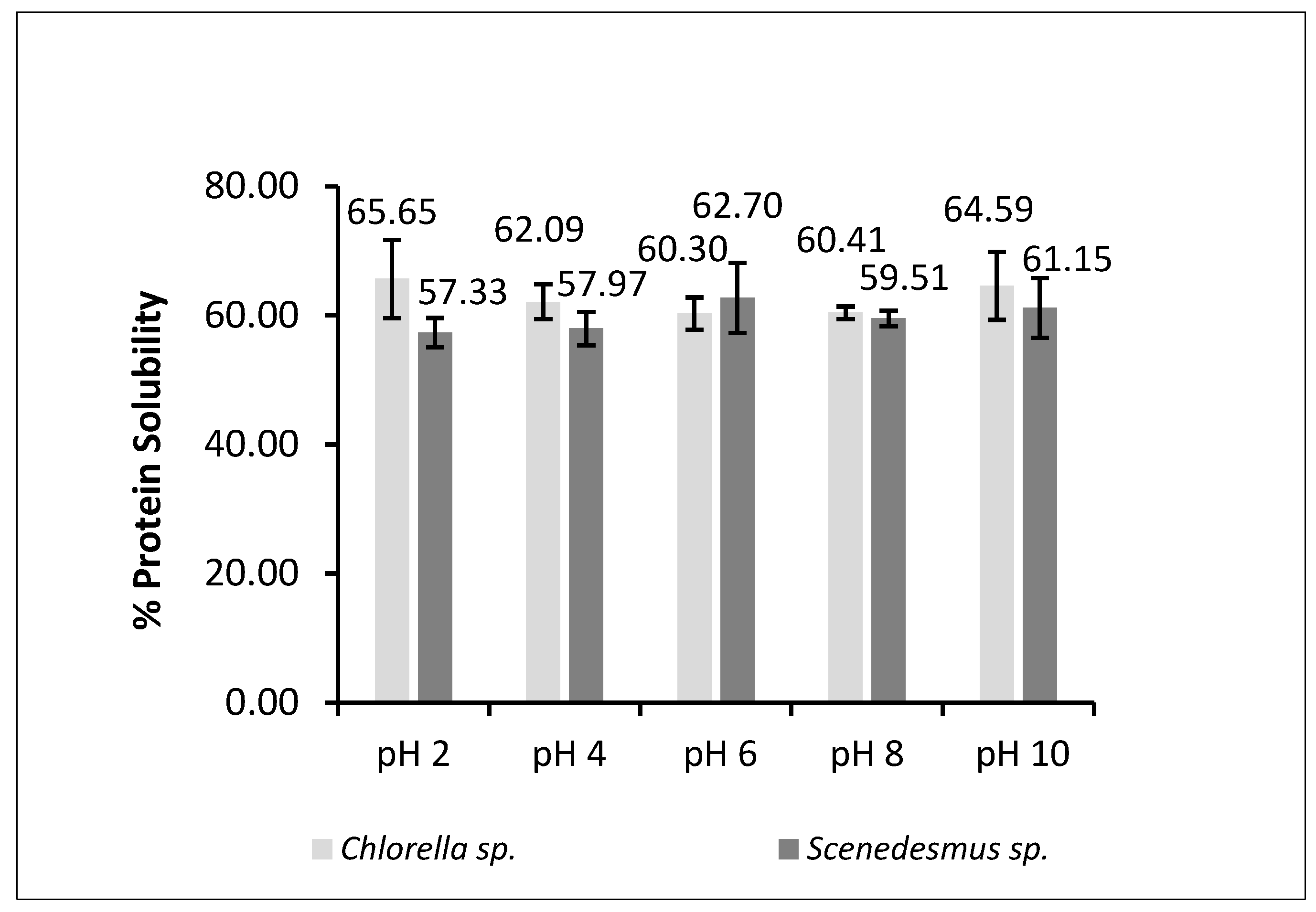
Figure 2.
The WHC and OHC in sunflower and rapeseed oils of microalgae hydrolysates produced from Chlorella sp. and Scenedesmus sp.
Figure 2.
The WHC and OHC in sunflower and rapeseed oils of microalgae hydrolysates produced from Chlorella sp. and Scenedesmus sp.
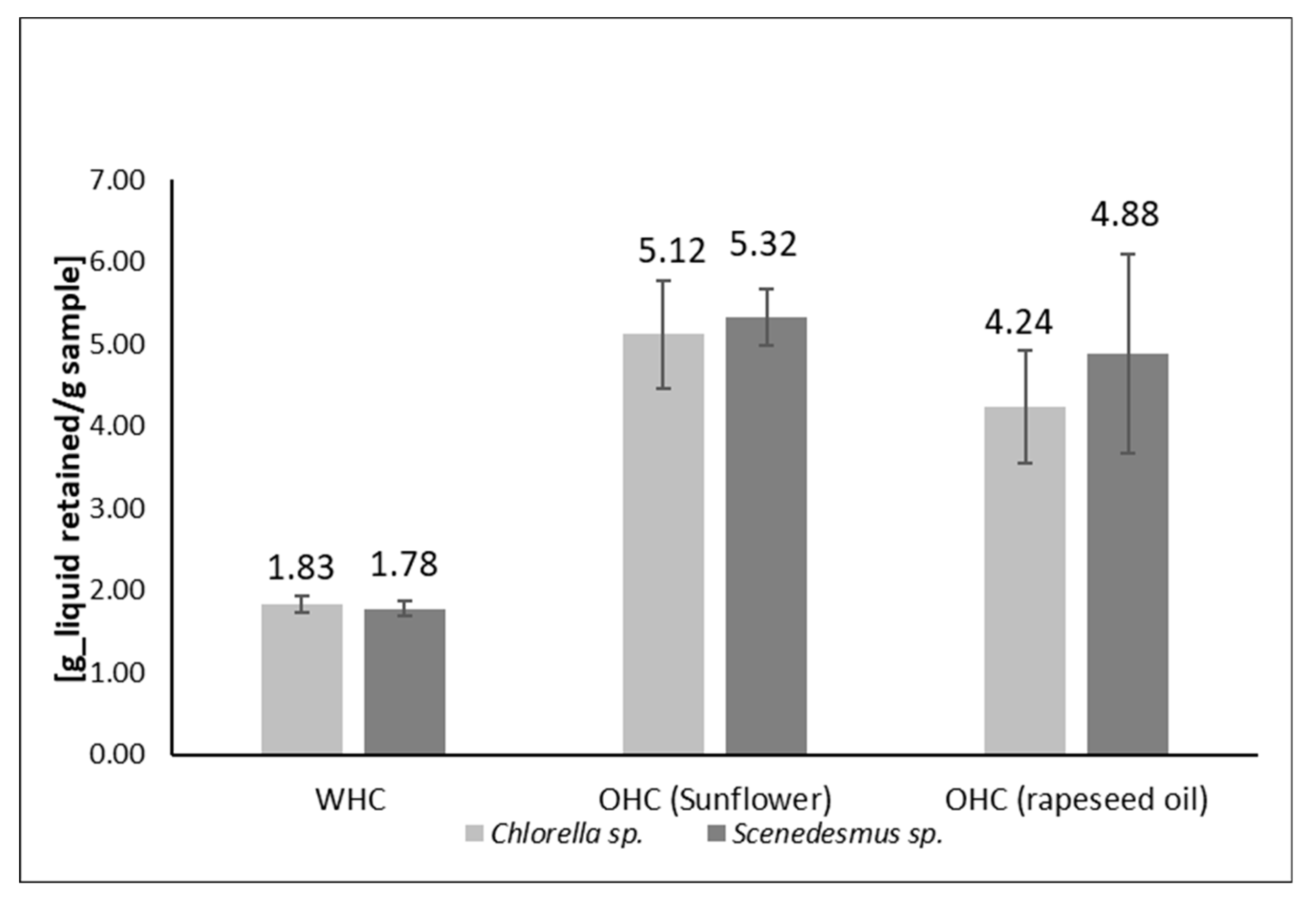
Figure 3.
Emulsion activity (EA) and emulsion heat stability (EHS) of Chlorella sp. (A,B) and Scenedesmus sp. hydrolysate (C, D) assessed at different pH. Column with (*) differ from each other by Tukey test at 5% probability.
Figure 3.
Emulsion activity (EA) and emulsion heat stability (EHS) of Chlorella sp. (A,B) and Scenedesmus sp. hydrolysate (C, D) assessed at different pH. Column with (*) differ from each other by Tukey test at 5% probability.
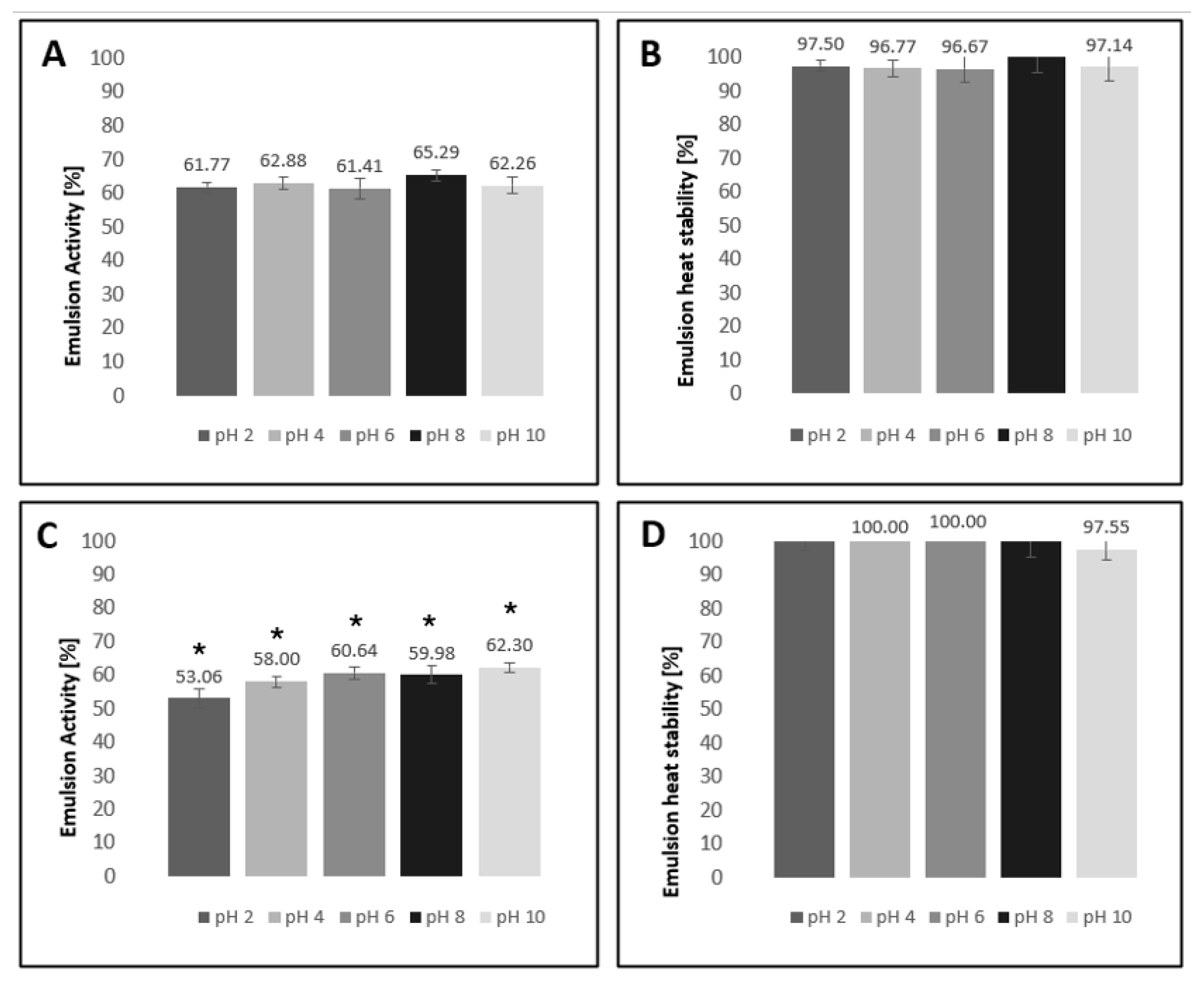
Figure 4.
Process used to produce algal protein hydrolysates.
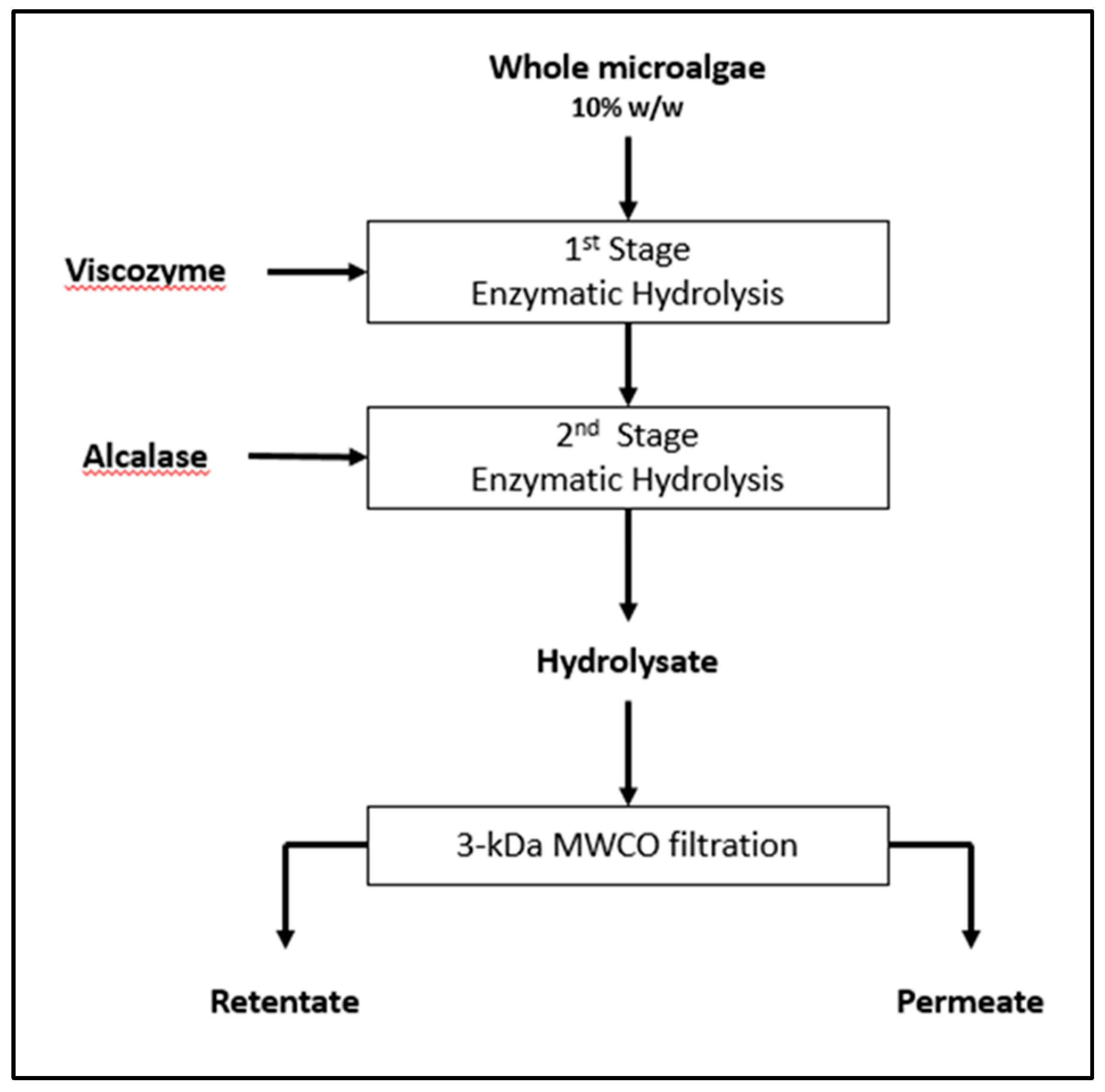
Table 2.
Proximate compositional analysis for whole algal biomass, produced hydrolysates, permeates, and retentates.
Table 2.
Proximate compositional analysis for whole algal biomass, produced hydrolysates, permeates, and retentates.
| Chlorella sp. fractions | ||||
|---|---|---|---|---|
| Chlorella sp. whole biomass | Chlorella sp. hydrolysate | Chlorella sp. permeate | Chlorella sp. retentate | |
| Protein % | 38.02 | 35.80 | 44.73 | 28.72 |
| Fat % | 13.95 | 13.61 | 0.65 | 12.05 |
| Moisture % | 7.93 | 8.85 | 16.16 | 8.16 |
| Ash % | 4.85 | 5.27 | 10.10 | 10.33 |
| Scenedesmus sp. fractions | ||||
| Scenedesmus sp.whole biomass | Scenedesmus sp. hydrolysate | Scenedesmus sp. permeate | Scenedesmus sp. retentate | |
| Protein % | 37.81 | 36.74 | 41.14 | 26.37 |
| Fat % | 10.16 | 6.32 | 1.07 | 5.58 |
| Moisture % | 12.96 | 12.48 | 16.93 | 31.35 |
| Ash % | 2.03 | 4.53 | 7.50 | 2.08 |
Table 3.
Summary of in vitro bioassay results obtained for Chlorella sp. and Scenedesmus sp. hydrolysate 3-kDa permeates.
Table 3.
Summary of in vitro bioassay results obtained for Chlorella sp. and Scenedesmus sp. hydrolysate 3-kDa permeates.
| Sample | ACE-1 inhibition (%) | Antioxidant activity (%) | Relative α-Amylase inhibition (%) |
|---|---|---|---|
| Chlorella sp. 3-kDa Permeate | 88.07 ± 1.69 | 72.54 ± 18.16 | 71.32 ± 12.30 |
| Scenedesmus sp. 3-kDa Permeate | 86.24 ± 2.89 | 76.17 ± 8.92 | 28.78 ± 0.77 |
Table 4.
Peptide sequences identified from Chlorella sp. and Scenedesmus sp. hydrolysate permeate fractions generated using Viscozyme, Alcalase, and bioactivities of peptide fragments obtained after simulated gastrointestinal digestion.
Table 4.
Peptide sequences identified from Chlorella sp. and Scenedesmus sp. hydrolysate permeate fractions generated using Viscozyme, Alcalase, and bioactivities of peptide fragments obtained after simulated gastrointestinal digestion.
| Peptide sequence | Protein of origin | Peptide Ranker | BIOPEP-UWM search | PreAIP | Umami-MRNN | Anti-DMP-Pred | Microalgal biomass origin |
|---|---|---|---|---|---|---|---|
| YDYIGNNPAKGGLF (99%) | Photosystem II CP47 reaction center protein OS=Pdinomonas minor OX=3159 GN=pbB PE=3 SV=1; | 0.735 | Novel | 0.428 (medium confidence anti-inflammatory peptide (AIP)) | non-umami | 0.49 (Not an anti-diabetic peptide) | Chlorella sp. mix derived peptide |
| YIGNNPAKGGLF (95%) | Photosystem II CP47 reaction center protein OS=Pdinomonas minor OX=3159 GN=pbB PE=3 SV=1; | 0.806 | Novel | 0.374 (low confidence AIP) | Umami, predicted threshold: 29.685139mmol/L | 0.46 (Not an anti-diabetic peptide) | Chlorella sp. mix derived peptide |
| IEWYGPDRPKFL (99%) | Chlorophyll a-b binding protein, chloroplastic OS=Chlamydomonas reinhardtii OX=3055 GN=LhcII-3 PE=1 V=1 | 0.811 | Novel | 0.627 (High confidence AIP) | non-umami | 0.33 (Not an anti-diabetic peptide) | Scenedesmus sp. mix derived peptide |
| RSPTGEIIFGGETM (99%) | Photosystem II CP47 reaction center protein OS=Pdinomonas minor OX=3159 GN=pbB PE=3 SV=1; | 0.258 | Novel | 0.451 (Medium confidence AIP) | umami, predicted threshold:10.636716 mmol/L | 0.6 (likely to have anti-diabetic properties) | Scenedesmus sp. mix derived peptide |
| TVQIPGGERVPFLF (99%) | Oxygen-evolving enhancer (Fragment) OS=Cyanidioschyzon merolae OX=45157 GN=pbO PE=3 SV=1 | 0.592 | Novel | 0.522 (High confidence AIP) | umami, predicted threshold: 19.447886 mmol/L | 0.57 (likely to have anti-diabetic properties) | Scenedesmus sp. mix derived peptide |
| IEWYGPDRPKFLGPF (99%) | Chloropyll a-b binding protein, chloroplastic OS=Chlamydomonas reinhardtii OX=3055 GN=LhcII-3 PE=1 V=1 | 0.904 | Novel | 0.472 (High confidence AIP) | non-umami | 0.43 (Not an anti-diabetic peptide) | Scenedesmus sp. mix derived peptide |
Table 5.
Details of the microalgal mixtures, their composition and delivery format.
| Algal mixture name | Composition | (%) | Form delivered |
|---|---|---|---|
| Scenedesmus mixture | Scenedesmus sp. | 80 | Spray-dried |
| Diatomee | 17 | ||
| Chlorella sp. | 3 | ||
| Chlorella mixture | Chlorella sp. | 92.5 | Spray-dried |
| Scenedesmus sp. | 5 | ||
| Chlorococcum | 2.5 |
Disclaimer/Publisher’s Note: The statements, opinions and data contained in all publications are solely those of the individual author(s) and contributor(s) and not of MDPI and/or the editor(s). MDPI and/or the editor(s) disclaim responsibility for any injury to people or property resulting from any ideas, methods, instructions or products referred to in the content. |
© 2025 by the authors. Licensee MDPI, Basel, Switzerland. This article is an open access article distributed under the terms and conditions of the Creative Commons Attribution (CC BY) license (http://creativecommons.org/licenses/by/4.0/).
Copyright: This open access article is published under a Creative Commons CC BY 4.0 license, which permit the free download, distribution, and reuse, provided that the author and preprint are cited in any reuse.


