
Preprint
Article

This version is not peer-reviewed.

Uncovering Subclinical Cardiac Involvement in Vedoss: An Echocardiographic Driven Study

A peer-reviewed article of this preprint also exists.

Submitted:

03 January 2025

Posted:

06 January 2025

Read the latest preprint version here

Abstract

Background: The 2011 Very Early Diagnosis of Systemic Sclerosis (VEDOSS) criteria include patients at risk of progression and those with mild, non-progressive forms of SSc. Early diastolic and systolic dysfunction can indicate myocardial fibrosis in SSc patients, yet data on myocardial impairment in the VEDOSS population are limited. Objectives: This study aimed to identify subclinical echocardiographic changes and predictive markers of cardiac dysfunction in both very early and mild-longstanding forms of VEDOSS. Methods: We conducted a cross-sectional ob-servational study involving 81 patients meeting VEDOSS criteria followed up regular-ly within our Scleroderma referral center. Patients were categorized as early VEDOSS (e-VEDOSS) or mild-longstanding VEDOSS (ml-VEDOSS) based on disease duration (≥10 years). We analyzed clinical and demographic data, focusing on echocardio-graphic parameters such as the E/A ratio and left ventricular (LV) thickness. Statistical analyses included Chi-square, Fischer exact, and Student's T tests, with a significance threshold of p<0.05. Results: ml-VEDOSS patients were older and had longer diagnostic delays, with a higher burden of comorbidities. Autoantibody-positive patients exhibited lower E/A ratios and increased left atrial size. Notably, patients with reduced E/A ratios were older, had more comorbidities, and lower DLCO% values. Multivariable analysis confirmed DLCO% as the sole predictor of both diastolic and systolic impairment in both groups. Conclusion: Careful Monitoring of cardiac function in VEDOSS patients is crucial as subclinical alterations may occur even in the absence of symptoms. DLCO% emerged as an important predictor of diastolic dysfunction.

Keywords: 
;  ;  ;  ;  ;  

1. Introduction

Systemic sclerosis (SSc) is a rare autoimmune disease characterized by the classical triad of microvascular damage, autoimmune dysregulation and fibrosis of the skin and internal organs [1]. The extensive fibrotic process of vital organs, including the lungs and heart, is significantly associated with a high burden of morbidity and mortality [2]. In this context, it is essential to perform a prompt diagnosis to shape the trajectories of potentially progressive disease [3]. Currently, SSc diagnosis can be oriented by consolidated classification criteria such as those proposed by LeRoy and Medsger in 2001 [4], together with the 2013 ACR/EULAR guidelines [5]. According to the LeRoy classification, SSc is primarily categorized into two main forms: diffuse cutaneous systemic sclerosis (dcSSc) and limited cutaneous systemic sclerosis (lcSSc) [4]. However, it is well recognized that this classification does not encompass all patients within the broader scleroderma spectrum, particularly in the earlier stages of the disease [6]. The 2011 criteria for a Very Early Diagnosis of Systemic Sclerosis (the VEDOSS criteria) and their validation in 2021, have enhanced clinicians' ability to identify the disease in its initial phase [7,8]. The VEDOSS criteria define a two steps model. The first step encompasses three hallmark features: positivity for antinuclear antibodies (ANA), the presence of Raynaud’s phenomenon (RP) and puffy hands. The second step is defined by the additional positivity for SSc-specific antibodies, such as anticentromere antibodies (ACA) and/or anti-topoisomerase I antibodies (ATA), or the identification of changes in nailfold Videocapillaroscopy (NVC) [9]. Since RP and puffy hands are both frequently reported as the initial symptoms in patients at risk of SSc development, they represent two facets of the same underlying mechanism, the SSc-related vasculopathy. Indeed, it is well recognized that the ongoing processes of endothelial dysfunction and capillary leakage may contribute to potential disease progression toward irreversible skin fibrosis [10]. In this context, NVC represents a valuable diagnostic tool that allows clinicians to detect early microvascular alterations in VEDOSS, that may precede more extensive vascular damage [11], alongside some authors suggested that as the severity of microvascular injury increases, so does the risk of organ involvement [12]. Furthermore, autoimmunity plays also a crucial role in shaping the progressive trajectories of SSc patients. It is well established that certain autoantibodies are associated with skin fibrosis extension. For instance, ACA are linked to lcSSc, while ATA to dcSSc [13]. Interestingly, as reported by Bellando-Randone et al., SSc-specific antibodies are the best isolated predictor of progression of VEDOSS to definite SSc, while negativity for ANA at baseline has a strong negative predictive value [14].
Thus, it should be recognized that VEDOSS patients may represent the early stage of SSc, although they might also reflect a milder form that remains stable over time and does not progress to clinically established disease. Currently, there are no validated criteria to distinguish between very early, potentially progressive and very mild, non-progressive forms of the disease [15].
In summary, VEDOSS represents a critical stage in the scleroderma continuum, where identification of early organ involvement, regardless of disease duration, is crucial for improving patient outcomes [16].
While some organs, such as the gastrointestinal tract have been investigated in VEDOSS [17], cardiac involvement remains a neglected area. All layers of the heart - endocardium, myocardium, and pericardium - can be affected by the pathogenic processes of SSc, with myocardial fibrosis being the predominant pathological finding in postmortem studies [18]. Subclinical left ventricular (LV) diastolic and systolic impairments represent the initial expression of myocardial fibrosis, which may often be asymptomatic [19]. However, several echocardiographic parameters, such as mitral early diastolic inflow velocity (E wave), mitral late filling peak velocity (A wave), early diastolic annular velocity (E’), as well as the E/A and E/E’ ratios may enable the detection of early myocardial involvement in asymptomatic SSc patients. For instance, an E/A ratio less than 1.0 and E/E’ ratio ≥15 indicate elevated filling pressure and predict the development of diastolic heart failure [20]. Moreover, given that cardiac involvement in SSc is highly predictive of poor prognosis and mortality [21], detecting subclinical echocardiographic signs of systolic and diastolic dysfunction seems to be fundamental even in the VEDOSS population.
The aim of the present study is to identify subclinical echocardiographic alterations in VEDOSS patients by analyzing certain clinical, serological and functional predictive markers of systolic and diastolic dysfunction in both mild-longstanding cases and the very early form of SSc, offering insights into the progression and early detection of cardiac involvement in this patient group.

2. Materials and Methods

2.1. Sample Definition

We conducted a cross-sectional observational study involving a cohort of VEDOSS patients attending the Scleroderma Unit of ASST Ovest Milanese (Italy). Participants were selected based on their fulfillment of the 2011 preliminary VEDOSS criteria [22] while not meeting the 2013 ACR/EULAR and/or 2001 LeRoy and Medsger criteria for a definitive diagnosis of SSc [4,5]. Patients with severe heart failure, a positive history of congenital heart disease, severe chronic obstructive pulmonary disease, pulmonary thromboembolism and individuals who underwent cardiac surgery, percutaneous coronary intervention (PCI) and pacemaker implant were excluded from the study. The presence of other autoimmune disease-related antibodies and/or the fulfillment of additional classification criteria for any systemic autoimmune disease served as further exclusion criteria.
Written informed consent was obtained from each participant, and the study was conducted in accordance with the ethical guidelines of the Declaration of Helsinki, with approval from the hospital’s ethics committee.

2.2. Data Collection

Data collection was conducted by experienced rheumatologists and spanned between June and December 2024. Demographic data including sex, age at enrollment, alcohol consumption or smoking habit, age at the first appearance of RP and age at VEDOSS diagnosis were extracted from medical records. Diagnostic delay was calculated as the time interval between the onset of the first VEDOSS symptom and the confirmation of a definitive VEDOSS diagnosis.
Key clinical and anthropometric parameters were recorded at last follow up, including height, weight, body mass index (BMI) and body surface area (BSA). The presence of RP and puffy hands was noted, along with the presence of any gastrointestinal complaints that could be attributed to VEDOSS. Additionally, for the main purpose of the study, the absence of skin fibrosis, sclerodactyly, digital ulcers, pitting scars, calcinosis and telangiectasias was documented. Therefore, physical evaluation involved a comprehensive assessment for dyspnea and other heart-related symptoms, with a focus on excluding unexplained dyspnea, established interstitial lung disease (ILD) and pulmonary arterial hypertension (PAH) as potential underlying causes of echocardiographic alterations within this population.
Data on current comorbidities were collected, including cardiovascular conditions such as chronic systemic arterial hypertension and atrial fibrillation, as well as thyroid disorders, pulmonary diseases, gastrointestinal disorders, renal diseases, malignancies, hematological conditions and psychiatric and neurological issues.
Moreover, data from pulmonary function tests (PFTs), including predicted forced vital capacity (FVC%), predicted diffusing capacity for carbon monoxide (DLCO%), and the FVC/DLCO% ratio, were obtained from the most recent available assessments. Analogously, all patients underwent nailfold Videocapillaroscopy (NVC) at the last follow-up visit, with the NVC results been reported according to Cutolo classification [23].
Laboratory detections of antinuclear antibodies (ANA), anticentromere antibodies (ACA), and anti-topoisomerase I antibodies (ATA) were performed using standardized methods during the initial clinical evaluation.
Data concerning treatment modalities were registered, encompassing the administration of Iloprost infusions, the use of calcium channel blockers (CCBs) and low-dose aspirin (LDA). Additionally, treatments employed for managing cardiovascular comorbidities with a known influence on microvascular system were documented, such as angiotensin-converting enzyme inhibitors (ACE-Is), angiotensin receptor blockers (ARBs), beta-blockers and diuretics. Immunosuppressive therapies and the use of hydroxychloroquine were also recorded.

2.3. Echocardiography Procedure

Echocardiographic parameters were available in 61 out of 81 VEDOSS subjects and were collected at the last follow-up visit. All selected patients were imaged by transthoracic echocardiography (TTE) in the left lateral decubitus position by experienced cardiologists at the same hospital. All images and measurements were obtained from the standard views with stable Electrocardiograph (ECG). The following parameters were measured: interventricular septum (IVS) thickness (mm), posterior wall at end diastole (PWED) thickness (mm), left ventricular (LV) volumes and diameters in both end systole and end diastole, aorta diameter at sinuses, along with right and left atrial (RA and LA) volumes at end systole in monoplane apical 4 chamber (4CH) view through both Simpson and indexed methods, RA and LA end systolic diameters were measured via monoplane 4CH view in the longitudinal side (superior-inferior) direction as well as RA and LA end systolic area was assessed in cm2. Left ventricular (LV) ejection fraction (EF) was measured with the modified biplane Simpson’s method from the apical 4CH [24].
Left ventricular (LV) mass was calculated according to the Devereux formula [25]. Pathological thickening of both IVS and PWED was defined as IVS thickness > 10 mm and PWED thickness > 9 mm. Additionally, the systolic pulmonary artery pressure (sPAP) was estimated using modified Bernoulli’s formula [26]. The tricuspid annular plane systolic excursion (TAPSE) was measured by placing the M-mode line at the junction of the tricuspid valve annulus and the RV free wall [27]. Tricuspid regurgitation and the Tricuspid maximum regurgitation pressure gradient were also assessed. Doppler echocardiographic measurements included: Trans-mitral early diastolic inflow velocity (E), trans-mitral late filling peak velocity (A), and E/A ratio measured in the apical 4-CH view [28]. Tissue Doppler imaging was used to measure the early diastolic annular velocity (E’). Left ventricular dysfunction was defined as mitral E/A ratio <1.0 and E/E’ ratio ≥15 [29]. Additionally, the presence of mitral, aortic, and tricuspid valve insufficiencies were evaluated by the color Doppler method, along with any noted sclerosis of the aortic and mitral valve leaflets and then reported according to the 2020 ACC/AHA guideline for the management of patients with valvular heart disease [30]. Lastly, the presence of pericardial effusion was identified by the appearance of an echo-free space between the two layers of the pericardium.

2.4. Statistical Analysis

Patients' data were summarized as mean and standard deviation for normally distributed variables or as median and interquartile range (IQR) for skewed ones. Discrete or qualitative variables were summarized as counts and percentages. Mean differences of continuous variables were assessed using Student’s t-test or Mann-Whitney U-test, depending on whether the data followed a parametric or non-parametric distribution. Chi-squared and Fisher’s exact tests were used to compare categorical variables based on parametric and non-parametric distributions, respectively.
Based on their established relevance on SSc progression and heart involvement, several clinical determinants - such as BMI, age at VEDOSS diagnosis, DLCO% predicted, ACA/ATA positivity, late NVC patterns and puffy hands were included in the multiple general regression model to assess their independent contribution on left ventricular diastolic and systolic dysfunction (evaluated through E/A ratio, IVS thickness, and PWED thickness).
A p-value of ≤0.05 or a 95% confidence interval not crossing zero were considered statistically significant. All statistical analyses were performed using IBM SPSS Statistics version 27 (IBM SPSS Software, Armonk, NY, USA).

3. Results

3.1. Overall Patients’ Characteristics

The whole study cohort consisted of 81 participants, with a female predominance (76 out of 81 - 93.8%). Based on VEDOSS disease duration, patients were distributed into two subgroups: mild longstanding VEDOSS with a disease duration ≥ 10 years (ml-VEDOSS, 30/81 - 37%) and early VEDOSS group with a disease duration < 10 years (e-VEDOSS, 51/81 - 63%) [Table 1].
The mean age at enrollment was significantly higher in the ml-VEDOSS group compared to the e-VEDOSS group (64.3±14.1 vs 53.2±15.6 years; p=0.002). As expected, the disease durations for VEDOSS and RP were substantially longer in the ml-VEDOSS group (p<0.001 and p=0.002, respectively). The clinical features were largely comparable between the groups, along-with autoantibodies positivity.
A greater mean comorbidity count was observed in the ml-VEDOSS group compared to the e-VEDOSS group (3.4±2.0 vs 2.1±1.9; p=0.003), including a higher prevalence of cardiovascular diseases (25.9% vs 19.8%; p=0.01). Furthermore, the late NVC pattern was significantly more common within the same group (p=0.003). Similarly, treatment modalities displayed notable variations between the groups. The use of Hydroxychloroquine and ACE-Is or ARBs was more common in the ml-VEDOSS group compared to the e-VEDOSS group (16% vs 12-3%, p=0.04 and 18.5% vs 9.9%, p=0.002, respectively). Immunosuppressants were prescribed only in 3 out of 81 patients, two of which were receiving methotrexate due to musculoskeletal symptoms, while 1 patient received azathioprine for a concurrent diagnosis of autoimmune hepatitis.

3.2. Subclinical Echocardiographic Findings

Main echocardiographic findings of the entire population are reported in Table 2.
Since the comparison between e-VEDOSS and ml-VEDOSS group did not reveal any statistical difference on echocardiographic parameters [Supplementary Table S5], we further focused on assessing these findings within three intergroups, by selecting late NVC pattern, SSc specific autoantibodies positivity and puffy hands as compelling variables [Table 3].
Notably, the prevalence of patients exhibiting PWED thickness >9 mm was significantly greater in the late NVC pattern group (66.7% vs 23.6 %, p=0.04). Furthermore, the presence of aortic valve insufficiency (66.7% vs 18.2%, p=0.02) and sclerosis (66.7% vs 16.4%, p=0.01) were significantly more prevalent in the same group. Moreover, the E/A ratio was significantly lower in the ACA/ATA+ group (0.84±0.27 vs 1.08±0.42, p=0.02) by exhibiting a longer A wave measurement (0.84±0.20 vs 0.70±0.15 m/s, p=0.006). Additionally, IVS thickness was greater in the same group (9.9 ± 1.3 vs 8.9 ± 1.9 mm, p=0.03). Further significant differences were noted in the LA end systolic (LAES) volume, even indexed for BSA, which were significantly higher in the ACA/ATA+ group (p=0.01 for both). Likewise, the LAES diameter (49.7±5.9 vs 45.0±8.4 mm/m², p=0.04) and the relative wall thickness (0.48±0.09 vs 0.42±0.10, p=0.04) were significantly larger in the ACA/ATA+ group. Additionally, ACA/ATA+ group revealed a greater proportion of both aortic and mitral valve insufficiency and sclerosis of valve leaflets. Lastly, in the puffy hands group, E deceleration time was significantly longer compared to the non-puffy hands group (194.4±47.9 vs 230.5±52.8 m/s, p=0.02). Lastly, any differences in RV and RA function parameters emerged from the intergroup comparisons of TAPSE, sPAP, and the tricuspid maximum regurgitation gradient, along with RAES volumes and diameters.

3.3. Comparative Analysis Between Patients with Ad Without LV Diastolic Dysfunction (E/A Ratio Less than <1.0)

We further investigated the clinical characteristics of patients with reported diastolic dysfunction, as indicated solely by the E/A ratio, since no patients exhibited an E/E' ratio greater than 15. Accordingly, patients were consecutively stratified by an E/A ratio less than 1.0 (n=37) and greater/equal than 1.0 (n=24) [Table 4].
The results revealed significant differences regarding age at enrollment (66.3±9.6 vs 46.5±13.8 years), age at VEDOSS diagnosis (56.8±10 vs 37±14.2 years) and at RP onset (48.5±15.9 vs 31.8±14.8 years), with the group with E/A <1.0 reporting significant higher values (p<0.001 for all). Moreover, patients with E/A<1.0 exhibited a higher comorbidity count (3.5±2.2 vs 1.9±1.6, p=0.007) with a significant proportion of patients having more than three comorbidities (70.3% vs 37.5%, p=0.01) and more than five comorbidities (27% vs 4.2%, p=0.005). E/A<1.0 patients were also more likely to exhibit mitral valve sclerosis (p = 0.004) and aortic valve sclerosis (p=0.02).
Figure 1 shows the main differences regarding comorbidities distribution among the two groups, highlighting that E/A < 1.0 patients presented a greater prevalence of cardiovascular [22/37 (59.5%) vs 7/24 (29.2%), p=0.015], gastrointestinal [22/37 (59.5%) vs 8/24 (33.3%), p=0.029] and lung diseases [11/37 (29.7%) vs 2/24 (8.3%), p=0.043].
PFTs results indicated a significant prevalence of impaired DLCO in the E/A <1.0 group, with 48.6% of patients having a DLCO<80% and increased FVC/DLCO ratio>1.5 (p =0.03, for both). Interestingly, smokers and ANA negative patients were more frequent in the E/A>1.0 group (p=0.02 and p=0.03, respectively). In terms of treatment, a notable difference was observed in the use of ACE-Is and ARBs, with 37.8% of patients in the E/A <1.0 group compared to only 12.5% in the E/A >1.0 group (p=0.04). [Table 4].
Additionally, patients receiving ACE-Is/ARBs who underwent echocardiographic assessment (n=17) showed a statistically significant reduction in the E/A ratio compared to those who did not receive these treatments (0.81±0.28 vs 1.06±0.4, p=0.01). This treatment group also exhibited a statistically larger LA diameter measured in the superior-inferior direction at end-systole (49.5±5.8 vs 45.3±8.4 mm/m2, p=0.04) and a greater prevalence of aortic valve leaflets sclerosis (35.3% vs 11.6%, p=0.03).

3.4. General Multivariable Regression Model

Furthermore, E/A ratio, IVS thickness, and PWED thickness were identified as key descriptors of diastolic and systolic LV dysfunction. A general multivariable regression model incorporating BMI, age at VEDOSS diagnosis, DLCO% predicted, ACA/ATA positivity, late NVC patterns and puffy hands as relevant clinical determinants, revealed that only DLCO% emerged as a significant predictor of both IVS thickening (adjusted R²=0.322, p=0.034) and PWED thickening (adjusted R²=0.378, p=0.002). Additionally, ACA positivity was significantly associated with PWED thickening (adjusted R²=0.378, p=0.004). These findings persisted even when the model was applied exclusively to the e-VEDOSS group.

4. Discussion

The present study provides relevant insights into the clinical characteristics, comorbidities and echocardiographic abnormalities of patients meeting the VEDOSS criteria. Firstly, the cohort was divided into mild longstanding VEDOSS (ml-VEDOSS) and early VEDOSS (e-VEDOSS) groups based on disease duration as suggested by Blaja et al. [15]. The authors stated that subjects fulfilling the criteria for VEDOSS encompass a heterogeneous mixture of patients with both early potentially at risk of progression and long standing, very mild diseases. This observation has important implications, as these two subgroups cannot be easily differentiated based on clinical phenotype at first presentation and since patients with mild long-standing disease need different frequencies of follow up and therapeutic considerations [15].
In our analysis, the ml-VEDOSS group exhibited a greater comorbidity count compared to the e-VEDOSS group, reflecting the cumulative burden of disease. This observation is consistent with previous research indicating that prolonged disease duration is correlated with increased morbidity in SSc [31]. Predominantly, these patients demonstrated a higher burden of cardiovascular comorbidities, which can be attributed to subclinical changes in cardiac structures provoked by prolonged chronic inflammation [32]. These findings are particularly relevant given that cardiovascular complications represent a leading cause of mortality in SSc, with SSc patients accounting a five–fold increased mortality rate due to cardiac causes and sudden cardiac death occurring in 21%–54% of cases [21,33]
Interestingly, our echocardiographic findings did not show any discrepancies in RV and RA function, as reported by the similar values of TAPSE, sPAP and Tricuspid maximum regurgitation gradient, as well as RA end systolic volumes and diameter between the two groups. In fact, as demonstrated by Giunta A et al., LV function can reflect heart involvement of SSc more sensitively than RV function [34]
However, notable differences were noticed on LV diastolic function parameters through intergroups analysis. Firstly, VEDOSS patients with late NVC patterns had significantly greater PWED thickness and a higher prevalence of aortic valve insufficiency, indicating structural cardiac changes often associated with myocardial fibrosis and advanced microvascular abnormalities [35]. This aligns with findings of Markusse IM et al., who confirmed the independent association between NVC pattern and heart/lung involvement [36]. Conversely, the observed reductions in the E/A ratio, along with increases in IVS thickness and elevated LA end systolic volumes and diameters among patients positive for ACA or ATA antibodies, provide new evidence on both diastolic and systolic impairment within SSc-related autoantibodies positive patients, aligning with previous research that has shown a relationship between specific autoantibodies and cardiac involvement [37].
Moreover, the observation that patients with an E/A ratio <1.0 exhibited higher comorbidity counts, especially regarding cardiovascular issues, suggests that early diastolic dysfunction may serve as a marker for identifying patients at greater risk for adverse cardiovascular events. Several studies have reported that a decreased E/A ratio is linked to conditions such as hypertension, diabetes mellitus and heart failure, all of which contribute to overall morbidity [38,39]. In line with this observation, several patients reported co-occurring systemic arterial hypertension, while a few presented diabetes and none reported heart failure. This implies that the ongoing chronic inflammation, typically associated with SSc, lead to a cyclical pattern of worsening cardiovascular health also in VEDOSS, especially in patients experiencing longstanding disease [40]. Indeed, the increased use of both ACE-Is and ARBs in both ml-VEDOSS and E/A <1.0 groups point to a proactive approach in mitigating such cardiovascular risk. This strategy is supported by evidence indicating that these medications can improve cardiovascular and renal outcomes in the general population. In fact, ACE-Is and ARBs encompass the same Renin-Angiotensin-Aldosterone System (RAAS) Inhibitors group although exerting different mechanisms of action, including increased bradykinin levels, potentiated bradykinin response and stimulated nitric oxide production with ACE- Is [41].
However, the preventive role of RAAS inhibitors in the early stages of SSc is still debated and their usage should be practiced with caution. In fact, as reported by Bütikofer L. et al. in an EUSTAR cohort analysis, ACE-Is in SSc patients with concomitant arterial hypertension display an independent risk factor for the development of Scleroderma Renal Crisis (SRC) but they still represent the first choice in SRC treatment. This study advocate that ARBs might be a safer alternative than ACE-Is, yet the overall safety of alternative antihypertensive drugs needs to be further investigated [42].
Furthermore, the significant prevalence of DLCO<80% predicted in E/A <1.0 patients emphasized the interconnectedness of pulmonary and cardiac function in VEDOSS. As recently reported by He H. et al in a magnetic resonance guided study, the DLCO% values are inversely correlated with myocardial native T1 values in SSc patients, suggesting that DLCO might be a potential indicator for subclinical myocardial impairment [43]. Analogously, the multivariable analysis, indicating that DLCO% was the only significant predictor of IVS and PWED thickening, reinforced the importance of pulmonary function in uncovering subclinical cardiac changes within our population. Moreover, the association of ACA positivity with PWED thickening highlights the need for careful monitoring for patients with specific autoantibodies profile.
Although the present study adds new evidence on the unexplored occurrence of subclinical cardiac involvement in VEDOSS, it is limited by factors such as sample size, sex discrepancies and the inter-operator variability of the echocardiographic technique. Additionally, as the study was conducted in one center in Italy, the generalizability of these findings may be limited and due to its cross-sectional nature causal inferences cannot be drawn.
In conclusion, we demonstrated that various subclinical echocardiographic alterations occur in both early and mild-longstanding form of VEDOSS, however, we excluded patients initially classified as VEDOSS who further developed an established SSc. Future research is warranted to detect early differences in echocardiographic parameters between progressive and stable forms.

5. Conclusions

This study highlighted critical differences in clinical picture and echocardiographic findings among patients fulfilling VEDOSS criteria. The associations between pulmonary function, cardiac structure, and specific autoantibodies profile underscored the complexity of VEDOSS and the need for comprehensive management strategies. Timely detection of heart involvement, especially in patients with advanced microangiopathy and features of SSc-related autoimmunity, is crucial for predicting disease progression and mortality.

Supplementary Materials

The following supporting information can be downloaded at the website of this paper posted on Preprints.org, Table S1: Echocardiographic findings comparison between e-VEDOSS and ml-VEDOSS.

Author Contributions

E.C.: Conceptualization, Software, Methodology, Validation, Formal analysis, Investigation, Resources, Data curation, Writing – original draft. E.Z.: Conceptualization, Methodology, Software, Validation, Formal analysis, Investigation, Resources, Data curation. I.S.: Resources, Data curation. A.L.: Resources, Data curation, L.C.: Resources. Data curation. E.M. Resources. Data curation. D.B.: Resources. Data curation. AT.: Resources. Data curation. M.I.: Methodology. Supervision. M.S.C.: Methodology. Supervision A.M.: Conceptualization, Validation, Resources, Supervision. Project administration. P.F.: Conceptualization, Validation, Resources, Writing – review & editing, Supervision. Project administration.

Funding

This research received no external funding.

Institutional Review Board Statement

“The study was conducted in accordance with the Declaration of Helsinki and approved by the Ethics Committee of ASST OVEST MILANESE.

Informed Consent Statement

Informed consent was obtained from all subjects involved in the study.

Data Availability Statement

The data supporting this study’s findings are available from the corresponding author upon reasonable request. The data are not publicly available due to ethical restrictions.

Acknowledgments

None.

Conflicts of Interest

The authors declare no conflicts of interest.”

References

  1. Ko, J.; Noviani, M.; Chellamuthu, V.R.; Albani, S.; Low, A.H.L. The Pathogenesis of Systemic Sclerosis: The Origin of Fibrosis and Interlink with Vasculopathy and Autoimmunity. Int J Mol Sci. 2023, 24, 14287. [Google Scholar] [CrossRef] [PubMed]
  2. Rosa, I.; Romano, E.; Fioretto, B.S.; Manetti, M. The contribution of mesenchymal transitions to the pathogenesis of systemic sclerosis. Eur J Rheumatol. 2020, 7, S157–S164. [Google Scholar] [CrossRef] [PubMed]
  3. Herrick, A.L.; Assassi, S.; Denton, C.P. Skin involvement in early diffuse cutaneous systemic sclerosis: an unmet clinical need. Nat Rev Rheumatol. 2022, 18, 276–285. [Google Scholar] [CrossRef] [PubMed]
  4. LeRoy, E.C.; Medsger, T.A., Jr. Criteria for the classification of early systemic sclerosis. J Rheumatol. 2001, 28, 1573–6. [Google Scholar]
  5. van den Hoogen, F.; Khanna, D.; Fransen, J.; Johnson, S.R.; Baron, M.; Tyndall, A.; et al. 2013 classification criteria for systemic sclerosis: an American College of Rheumatology/European League against Rheumatism collaborative initiative. Arthritis Rheum. 2013, 65, 2737–47. [Google Scholar] [CrossRef]
  6. Yang, M.; Goh, V.; Lee, J.; Espinoza, M.; Yuan, Y.; Carns, M.; et al. Clinical Phenotypes of Patients with Systemic Sclerosis With Distinct Molecular Signatures in Skin. Arthritis Care Res (Hoboken). 2023, 75, 1469–1480. [Google Scholar] [CrossRef]
  7. Bellando-Randone, S.; Galdo, F.D.; Lepri, G.; et al. Progression of patients with Raynaud’s phenomenon to systemic sclerosis: a five-year analysis of the European Scleroderma Trial and Research group multicentre, longitudinal registry study for Very Early Diagnosis of Systemic Sclerosis (VEDOSS). The Lancet Rheumatology 2021, 3, e834–43. [Google Scholar] [CrossRef]
  8. Avouac, J.; Fransen, J.; Walker, U.A.; et al. Preliminary criteria for the very early diagnosis of systemic sclerosis: results of a Delphi Consensus Study from EULAR Scleroderma Trials and Research Group. Ann Rheum Dis 2011, 70, 476–81. [Google Scholar] [CrossRef]
  9. Lescoat, A.; Bellando-Randone, S.; Campochiaro, C.; Del Galdo, F.; Denton, C.P.; Farrington, S.; Galetti, I.; Khanna, D.; Kuwana, M.; Truchetet, M.E.; Allanore, Y.; Matucci-Cerinic, M. Beyond very early systemic sclerosis: deciphering pre scleroderma and its trajectories to open new avenues for preventive medicine. Lancet Rheumatol. 2023, 5, e683–e694. [Google Scholar] [CrossRef]
  10. Bruni, C.; Frech, T.; Manetti, M.; et al. Vascular Leaking, a Pivotal and Early Pathogenetic Event in Systemic Sclerosis: Should the Door Be Closed? Front Immunol 2018, 9, 2045. [Google Scholar] [CrossRef]
  11. D'Oria, M.; Gandin, I.; Riccardo, P.; Hughes, M.; Lepidi, S.; Salton, F.; et al. Correlation between Microvascular Damage and Internal Organ Involvement in Scleroderma: Focus on Lung Damage and Endothelial Dysfunction. Diagnostics (Basel). 2022, 13, 55. [Google Scholar] [CrossRef] [PubMed]
  12. Fioretto, B.S.; Rosa, I.; Matucci-Cerinic, M.; Romano, E.; Manetti, M. Current Trends in Vascular Biomarkers for Systemic Sclerosis: A Narrative Review. Int J Mol Sci. 2023, 24, 4097. [Google Scholar] [CrossRef] [PubMed]
  13. Yang, C.; Tang, S.; Zhu, D.; Ding, Y.; Qiao, J. Classical disease-specific autoantibodies in systemic sclerosis: clinical features, gene susceptibility, and disease stratification. Front Med. 2020, 7, 587773. [Google Scholar] [CrossRef] [PubMed]
  14. Bellando-Randone, S.; Galdo, F.D.; Lepri, G.; et al. Progression of patients with Raynaud’s phenomenon to systemic sclerosis: a five-year analysis of the European Scleroderma Trial and Research group multicentre, longitudinal registry study for Very Early Diagnosis of Systemic Sclerosis (VEDOSS). Lancet Rheumatol 2021, 3, e834–843. [Google Scholar] [CrossRef]
  15. Blaja, E.; Jordan, S.; Mihai, C.M.; Dobrota, R.; Becker, M.O.; et al. The Challenge of Very Early Systemic Sclerosis: A Combination of Mild and Early Disease? J Rheumatol. 2021, 48, 82–86. [Google Scholar] [CrossRef]
  16. Ross, R.L.; Caballero-Ruiz, B.; Clarke, E.L.; Kakkar, V.; Wasson, C.W.; Mulipa, P.; et al. Biological hallmarks of systemic sclerosis are present in the skin and serum of patients with Very Early Diagnosis of SSc (VEDOSS). Rheumatology (Oxford). 2024, keae698. [Google Scholar] [CrossRef]
  17. El Aoufy, K.; Melis, M.R.; Bandini, G.; et al. POS1593-HPR GASTROINTESTINAL INVOLVEMENT IS ALREADY REPORTED IN AN ITALIAN VEDOSS COHORT: RESULTS FROM A RHEUMATOLOGICAL NURSE ASSESSMENT. Annals of the Rheumatic Diseases 2023, 82, 1172–1173. [Google Scholar] [CrossRef]
  18. Zhu, L.; Wang, Y.; Zhao, S.; Lu, M. Detection of myocardial fibrosis: Where we stand. Front Cardiovasc Med. 2022, 9, 926378. [Google Scholar] [CrossRef]
  19. Cusmà Piccione, M.; Zito, C.; Bagnato, G.; Oreto, G.; Di Bella, G.; Bagnato, G.; Carerj, S. Role of 2D strain in the early identification of left ventricular dysfunction and in the risk stratification of systemic sclerosis patients. Cardiovasc Ultrasound. 2013, 11, 6. [Google Scholar] [CrossRef]
  20. Lee SW, Choi EY, Jung SY, Choi ST, Lee SK, Park YB. E/E' ratio is more sensitive than E/A ratio for detection of left ventricular diastolic dysfunction in patients with systemic sclerosis. Clin Exp Rheumatol. 2010, 28, S12–7.
  21. Pokeerbux, M.R.; Giovannelli, J.; Dauchet, L.; Mouthon, L.; Agard, C.; Lega, J.C.; Allanore, Y.; Jego, P.; Bienvenu, B.; Berthier, S.; et al. Survival and prognosis factors in systemic sclerosis: Data of a French multicenter cohort, systematic review, and meta-analysis of the literature. Arthritis Res. Ther. 2019, 21, 86. [Google Scholar] [CrossRef] [PubMed]
  22. Avouac J, Fransen J, Walker UA, Riccieri V, Smith V, Muller C, Miniati I, Tarner IH, Randone SB, Cutolo M, Allanore Y, Distler O, Valentini G, Czirjak L, Müller-Ladner U, Furst DE, Tyndall A, Matucci-Cerinic M; EUSTAR Group. Preliminary criteria for the very early diagnosis of systemic sclerosis: results of a Delphi Consensus Study from EULAR Scleroderma Trials and Research Group. Ann Rheum Dis. 2011, 70, 476–81. [Google Scholar] [CrossRef] [PubMed]
  23. Ruaro, B.; Smith, V.; Sulli, A.; Decuman, S.; Pizzorni, C.; Cutolo, M. Methods for the morphological and functional evaluation of microvascular damage in systemic sclerosis. Korean J Intern Med. 2015, 30, 1–5. [Google Scholar] [CrossRef] [PubMed]
  24. Lang, R.M.; Bierig, M.; Devereux, R.B.; Flachskampf, F.A.; Foster, E.; Pellikka, P.A. Recommendations for Chamber Quantification: A Report from the American Society of Echocardiography’s Guidelines and Standards Committee and the Chamber Quantification Writing Group, Developed in Conjunction with the European Association of Echocardiography, a Branch of the European Society of Cardiology. Journal of the American Society of Echocardiography 18, 1440–1463. [PubMed]
  25. Devereux, R.B.; Alonso, D.R.; Lutas, E.M.; Gottlieb, G.J.; Campo, E.; Sachs, I.; Reichek, N. Echocardiographic assessment of left ventricular hypertrophy: comparison to necropsy findings. Am J Cardiol 1986, 57, 450–458. [Google Scholar] [CrossRef]
  26. Pyxaras, S.A.; Pinamonti, B.; Barbati, G.; Santangelo, S.; Valentincic, M.; Cettolo, F.; Secoli, G.; Magnani, S.; Merlo, M.; Lo Giudice, F.; Perkan, A.; Sinagra, G. Echocardiographic evaluation of systolic and mean pulmonary artery pressure in the follow-up of patients with pulmonary hypertension. Eur J Echocardiogr. 2011, 12, 696–701. [Google Scholar] [CrossRef]
  27. Skinner, H.; Kamaruddin, H.; Mathew, T. Tricuspid Annular Plane Systolic Excursion: Comparing Transthoracic to Transesophageal Echocardiography. J Cardiothorac Vasc Anesth. 2017, 31, 590–594. [Google Scholar] [CrossRef]
  28. Nagueh, S.F.; Appleton, C.P.; Gillebert, T.C.; Marino, P.N.; Oh, J.K.; Smiseth, O.A.; et al. Recommendations for the evaluation of left ventricular diastolic function by echocardiography. Eur J Echocardiogr 2009, 10, 165–193. [Google Scholar] [CrossRef]
  29. Schwarz, E.R.; Dashti, R. The clinical quandary of left and right ventricular diastolic dysfunction and diastolic heart failure. Cardiovasc J Afr. 2010, 21, 212–20. [Google Scholar]
  30. Otto, C.M.; Nishimura, R.A.; Bonow, R.O.; Carabello, B.A.; Erwin JP 3rd Gentile, F.; et al. 2020 ACC/AHA Guideline for the Management of Patients with Valvular Heart Disease: Executive Summary: A Report of the American College of Cardiology/American Heart Association Joint Committee on Clinical Practice Guidelines. Circulation 2021, 143, e228. [Google Scholar] [CrossRef]
  31. Volkmann, E.R.; Fischer, A. Update on Morbidity and Mortality in Systemic Sclerosis-Related Interstitial Lung Disease. J Scleroderma Relat Disord. 2021, 6, 11–20. [Google Scholar] [CrossRef] [PubMed]
  32. Alfaddagh, A.; Martin, S.S.; Leucker, T.M.; Michos, E.D.; Blaha, M.J.; Lowenstein, C.J.; Jones, S.R.; Toth, P.P. Inflammation and cardiovascular disease: From mechanisms to therapeutics. Am J Prev Cardiol. 2020, 4, 100130. [Google Scholar] [CrossRef] [PubMed]
  33. Rangarajan, V.; Matiasz, R.; Freed, B.H. Cardiac complications of systemic sclerosis and management: Recent progress. Curr. Opin. Rheumatol. 2017, 29, 574–584. [Google Scholar] [CrossRef] [PubMed]
  34. Giunta, A.; Tirri, E.; Maione, S.; et al. Right ventricular diastolic abnormalities in systemic sclerosis. Relation to left ventricular involvement and pulmonary hypertension. Ann Rheum Dis 2000, 59, 94–8. [Google Scholar]
  35. Bing, R.; Cavalcante, J.L.; Everett, R.J.; Clavel, M.A.; Newby, D.E.; Dweck, M.R. Imaging and Impact of Myocardial Fibrosis in Aortic Stenosis. JACC Cardiovasc Imaging. 2019, 12, 283–296. [Google Scholar] [CrossRef]
  36. Markusse, I.M.; Meijs, J.; de Boer, B.; Bakker, J.A.; Schippers, H.P.C.; Schouffoer, A.A.; Ajmone Marsan, N.; Kroft, L.J.M.; Ninaber, M.K.; Huizinga, T.W.J.; de Vries-Bouwstra, J.K. Predicting cardiopulmonary involvement in patients with systemic sclerosis: complementary value of nailfold videocapillaroscopy patterns and disease-specific autoantibodies. Rheumatology (Oxford). 2017, 56, 1081–1088. [Google Scholar] [CrossRef]
  37. Tsai, C.Y.; Hsieh, S.C.; Wu, T.H.; Li, K.J.; Shen, C.Y.; Liao, H.T.; Wu, C.H.; Kuo, Y.M.; Lu, C.S.; Yu, C.L. Pathogenic Roles of Autoantibodies and Aberrant Epigenetic Regulation of Immune and Connective Tissue Cells in the Tissue Fibrosis of Patients with Systemic Sclerosis. Int J Mol Sci. 2020, 21, 3069. [Google Scholar] [CrossRef]
  38. Russo, C.; Jin, Z.; Homma, S.; Rundek, T.; Elkind, M.S.; Sacco, R.L.; Di Tullio, M.R. Effect of diabetes and hypertension on left ventricular diastolic function in a high-risk population without evidence of heart disease. Eur J Heart Fail. 2010, 12, 454–61. [Google Scholar] [CrossRef]
  39. From, A.M.; Scott, C.G.; Chen, H.H. The development of heart failure in patients with diabetes mellitus and pre-clinical diastolic dysfunction a population-based study. J Am Coll Cardiol. 2010, 55, 300–5. [Google Scholar] [CrossRef] [PubMed] [PubMed Central]
  40. Hinze, A.M.; Perin, J.; Woods, A.; Hummers, L.K.; Wigley, F.M.; Mukherjee, M.; Shah, A.A. Diastolic Dysfunction in Systemic Sclerosis: Risk Factors and Impact on Mortality. Arthritis Rheumatol. 2022, 74, 849–859. [Google Scholar] [CrossRef]
  41. Alcocer, L.A.; Bryce, A.; De Padua Brasil, D.; Lara, J.; Cortes, J.M.; Quesada, D.; Rodriguez, P. The Pivotal Role of Angiotensin-Converting Enzyme Inhibitors and Angiotensin II Receptor Blockers in Hypertension Management and Cardiovascular and Renal Protection: A Critical Appraisal and Comparison of International Guidelines. Am J Cardiovasc Drugs. 2023, 23, 663–682. [Google Scholar] [CrossRef] [PubMed]
  42. Bütikofer, L.; Varisco, P.A.; Distler, O.; Kowal-Bielecka, O.; Allanore, Y.; Riemekasten, G.; Villiger, P.M.; Adler, S.; EUSTAR collaborators. ACE inhibitors in SSc patients display a risk factor for scleroderma renal crisis-a EUSTAR analysis. =Arthritis Res Ther. 2020, 22, 59. [Google Scholar] [CrossRef] [PubMed]
  43. He, H.; Tong, X.; Ning, Z.; Zhou, J.; Du, C.; Wang, Y.; Wang, Q.; Xu, D.; Zeng, X.; He, Z.X.; Zhao, X. Diffusing capacity of lungs for carbon monoxide associated with subclinical myocardial impairment in systemic sclerosis: A cardiac MR study. RMD Open. 2023, 9, e003391. [Google Scholar] [CrossRef] [PubMed]
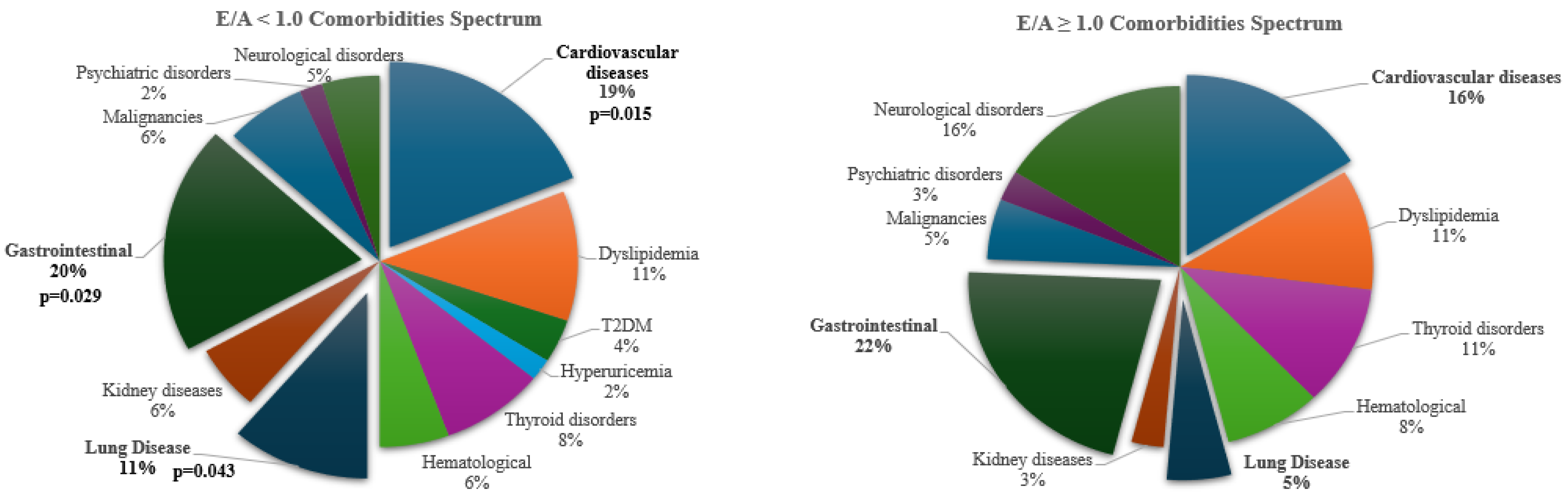
Figure 1. Pie chart showing Comorbidities spectrum in both patients with E/A<1.0 and E/A≥1. Acronyms: E/A ratio =early diastolic filling velocity of the left ventricle/late diastolic filling velocity.
Preprints 145071 g001
Table 1. Patient’s main characteristics according to VEDOSS disease duration.
TOTAL
n=81
e-VEDOSS
n=51
ml-VEDOSS
n=30
p-value
Female, n(%) 76 (93.8) 49 (60.5) 27 (33.3) ns
Male, n(%) 5 (6.2) 2 (2.5) 3 (3.7) ns
Age at enrollment, mean±SD 57.0±15.7 53.2±15.6 64.3±14.1 0.002
Age at VEDOSS diagnosis, mean±SD 48.2±17.9 48.6±15.9 47.5±14.5 ns
Age at RP onset, mean±SD 40.9±17.9 40.0±18.4 42.2±17.3 ns
Disease Duration of VEDOSS, mean±SD 9.4±7.7 4.7±2.8 16.8±7.0 <0.001
Disease duration of RP, mean±SD 16.5±11.8 13.3±11.7 21.7±10.1 0.002
Diagnostic delay, mean±SD 7.4±10.3 8.7±11.2 5.1±8.1 ns
Body Mass Index (Kg/m2), mean±SD 23.4±5.9 22.1±5.9 25.2±5.9 ns
Smoking habits, n(%) 14 (17.3) 11(13.5) 3 (3.7) ns
Alcohol Consumption, n(%) 3 (3.7) 2 (2.5) 1 (1.2) ns
Puffy hands, n(%) 23 (28.4) 12 (14.8) 11 (13.5) ns
ANA (positive) only, n(%) 30 (37.0) 22 (27.2) 7 (8.6) ns
Anticentromere (positive), n(%) 23 (28.4) 11 (13.5) 13 (16.0) ns
Anti-topoisomerase I (positive), n(%) 5 (6.2) 2 (2.5) 3 (3.7) ns
Gastrointestinal tract symptoms, n(%) 36 (44.4) 19 (23.5) 17 (21.0) ns
COMORBIDITIES, n(%)
Cardiovascular diseases, 37 (45.7) 16 (19.8) 21 (25.9) 0.01
Dyslipidemia 21 (25.9) 10 (12.3) 11 (13.6) ns
Hyperuricemia 2 (2.5) 0 (0) 2 (2.5) ns
Type 2 Diabetes Mellitus 4 (4.9) 2 (2.5) 2 (2.5) ns
Thyroid disorders 18 (22.2) 11 (13.5) 7 (8.6) ns
Lung Diseases 14 (17.3) 7 (8.6) 7 (8.6) ns
Kidney Diseases 11 (22.2) 5 (6.2) 6 (7.4) ns
Gastrointestinal diseases 40 (49.4) 21 (25.9) 19 (23.5) ns
Hematological disorders 10 (12.3) 4 (4.9) 6 (7.4) ns
Malignancies 12 (14.8) 6 (7.4) 6 (7.4) ns
Psychiatric disorders 6 (7.4) 4 (4.9) 2 (2.5) ns
Neurological disorders 14 (17.3) 7 (8.6) 7 (8.6) ns
Comorbidities count, mean±SD 2.5±2.0 2.1±1.9 3.4±2.0 0.003
Comorbidities count ≥ 3, n(%) 40 (49.4) 21 (25.9) 19 (23.5) ns
Comorbidities count ≥ 5, n(%) 11 (22.2) 4 (4.9) 7 (8.6) ns
NVC PATTERN, n(%)
Aspecific alterations
Early pattern
Active pattern
Late pattern

7 (8.6)
46 (57.8)
21 (25.)
7 (8.6)

5 (4.9)
31 (38.3)
14 (17.3)
0

3 (3.7)
15 (18.5)
7 (8.6)
7 (7.4)

ns
0.008
ns
0.006
TREATMENT, n(%)
Iloprost 55 (67.) 30 (37.0) 25 (30.9) 0.05
Calcium Channel Blockers 31 (38.3) 14 (17.3) 17 (21.0) ns
Low-dose Aspirin 56 (69.1) 34 (42.0) 22 (27.2) ns
ACE-I/ARBs 23 (28.4) 8 (9.9) 15 (18.5) 0.002
Beta-Blockers 5 (6.2) 2 (2.5) 3 (3.7) ns
Diuretics 2 (2.5) 1 (1.2) 1 (1.2) ns
Hydroxychloroquine 23 (28.4) 10 (12.3) 13 (16.0) 0.04
Immunosuppressants 3 (3.7) 1 (1.2) 2 (2.5) ns
Acronyms: n=number; %=percentage; SD= Standard Deviation; e-VEDOSS= early very early diagnosis of Systemic Sclerosis; ml-VEDOSS=mild longstanding very early diagnosis of Systemic Sclerosis; RP= Raynaud’s Phenomenon; ANA=antinuclear antibodies; ACE-I=Angiotensin Converting Enzyme Inhibitors; Angiotensin Receptor Blockers; ns=not significant; Kg=Kilograms; m2=square meters, NVC= Nailfold Videocapillaroscopy.
Table 2. Echocardiographic findings across the entire population.
ECHOCARDIOGRAPHIC PARAMETERS TOTAL
n=61
E deceleration time (m/s), mean±SD 244.3±281.7
E/E’ ratio, mean±SD 6.9±1.9
E wave, (m/s), mean±SD 0.69±0.17
A wave, (m/s), mean±SD 0.75±0.19
E/A ratio, mean±SD 0.99±0.39
E/A ratio < 1.0, n (%) 37 (60.7)
LVED diameter, (mm), mean±SD 40.3±4.8
PWED thickness, (mm), mean±SD 8.4±1.6
PWED > 9 mm, n(%) 19 (31.1)
IVS thckness, (mm), mean±SD 9.3±1.8
IVS > 10 mm, n (%) 17 (27.9)
LVED volume 4CH Simpson, (ml), mean±SD 67.7±16.6
LVES volume 4CH Simpson, (ml), mean±SD 25.5±11.8
LVED volume 4CH AL, (ml/m2), mean±SD 43.4±8.8
LVES volume 4CH AL, (ml/m2), mean±SD 14.7±4.3
EF%, mean±SD 64.5±4.8
EF%<55% 3 (4.9)
Mass ASE, (g), mean±SD 123.2±123.9
Mass/BSA, (g/m2), mean±SD 66.3±17.3
Relative wall thickness, mean±SD 0.44±0.10
Mass/height, (g/m), mean±SD 65.8±18.2
Aortic diameter, (mm2), mean±SD 29.7±3.9
LAES area, (cm2), mean±SD 15.6±3.6
LAES 4CH Simpson, (ml), mean±SD 40.4±13.7
LAES 4CH ind, (ml/m2), mean±SD 24.4±7.5
LAES diameter sup-inf 4CH, (mm/m2), mean±SD 46.5±7.6
RAES diameter AL, (mm), mean±SD 46.1±5.8
RAES 4CH Simpson, (ml), mean±SD 30.3±8.9
RAES 4CH ind, (ml/m2), mean±SD 18.5±5.0
RAES area, (cm2), mean±SD 13.5±3.1
TAPSE, (mmHg), mean±SD 21.5±3.0
TAPSE < 22 mmHg, n (%) 36 (59.0)
TAPSE < 16 mmHg, n (%) 1 (1.6)
TAPSE/sPAP, mean±SD 0.72±0.32
TAPSE/sPAP < 0.55, n (%) 1 (1.6)
sPAP, (mmHg), mean±SD 27.2±5.3
Tricuspid maximum regurgitation gradient, (mmHg), mean±SD 22.2±6.5
Mitral Valve Insufficiency, n (%) 42 (68.9)
Mitral Valve Sclerosis, n (%) 25 (40.9)
Tricuspid Valve Insufficiency, n (%) 33 (54.1)
Aortic Valve Insufficiency, n (%) 13 (21.3)
Aortic Valve Sclerosis, n (%) 11 (18.0)
Pericardial Effusion, n (%) 4 (6.6)
Acronyms: SD= Standard deviation. ACA= Anti-centromere autoantibodies; ATA= Anti Topoisomerase I autoantibodies; E wave= early diastolic filling velocity of the left ventricle; E’= early diastolic tissue velocity of the mitral annulus; A=late diastolic filling velocity; LVED= Left ventricular end diastolic; LVES= Left ventricular end systolic; PWED=Posterior wall end diastolic; IVS=Interventricular septum; LAES= Left atrial end systolic; RAES= Right Atrial End Systolic; TAPSE= Tricuspid Annular Plane Systolic Excursion; sPAP= systolic Pulmonary Artery Pressure; 4CH=4 chamber; AL=anterolateral; EF= ejection fraction; %= percentage; BSA=Body Surface Area; ASE= American Society of echocardiography; ind= indexed; sup-inf= superior – inferior; m/s= meter/seconds; mm= millimeters; g= grams; g/m2= grams/square meters; cm2= square centimeters; mmHg= millimeters of mercury.
Table 3.

Late pattern
N=6
No late pattern
N=55

p-value
ACA/ATA+
N=24
ACA/ATA-
N=37

p-value
Puffy Hands
N=18
No Puffy hands
N=43

p-value
E deceleration time (m/s), mean±SD 225-2±46-1 246.7±298.9 0.86 213.4±56.2 261.6±349.9 0.55 230.5±52.8 194.4±47.9 0.02
E/E’ ratio, mean±SD 7.55±1.37 6.92±1.90 0.52 7.6±1.8 6.7±1.8 0.12 7.0±1.3 6.8±1.9 0.77
E wave, (m/s), mean±SD 0.70±0.22 0.68±0.16 0.86 0.71±0.17 0.65±0.17 0.27 0.68±0.19 0.69±0.16 0.78
A wave, (m/s), mean±SD 0.81±0.17 0.75±0.19 0.46 0.84±0.20 0.70±0.15 0.006 0.79±0.20 0.74±0.18 0.38
E/A ratio, mean±SD 0.92±0.40 1.0±0.39 0.61 0.84±0.27 1.08±042 0.02 0.92±0.4 1.02±0.39 0.39
E/A ratio < 1.0, n (%) 3 (50) 34 (61.8) 0.12 18 (75) 19 (51.4) 0.11 10 (55.6) 27 (62.8) 0.77
LVED diameter, (mm), mean±SD 38.5±3.6 40.5±4.9 0.34 39.4±5.6 40.8±4.4 0.45 40.2±6.2 40.4±4.07 0.86
PWED thickness, (mm), mean±SD 8.4±1.5 8.3±1.6 0.89 8.6±1.2 8.2±1.8 0.31 8.5±1.5 8.3±1.7 0.63
PWED > 9 mm, n(%) 4 (66.7) 13 (23.6) 0.04 9 (37.5) 8 (21.6) 0.24 8 (44.4) 9 (20.9) 0.11
IVS thckness, (mm), mean±SD 9.9±1.6 9.3±1.8 0.37 9.9±1.3 8.9±1.9 0.03 9.4±1.6 9.4±2.0 0.90
IVS > 10 mm, n (%) 2 (33.3) 20 (36.4) 0.39 10 (41.7) 12 (32.4) 0.58 6 (33.3) 16 (37.2) 1.0
LVED volume 4CH Simpson, (ml), mean±SD 69.7±22.2 67.5±16.1 0.76 66.9±17.3 68.3±16.4 0.75 24.8±3.5 85.3±363.2 0.49
LVES volume 4CH Simpson, (ml), mean±SD 24.8±9.7 25.6±12.1 0.88 24.0±9.9 26.4±12.8 0.46 68.3±17.8 68.7±16.3 0.93
LVED volume 4CH AL, (ml/m2), mean±SD 41.3±12.4 43.6±8.4 0.88 41.7±10.3 44.3±7.8 0.29 25.7±10.9 26.0±12.7 0.92
LVES volume 4CH AL, (ml/m2), mean±SD 14.8±5.6 14.7±4.2 0.54 14.7±6.2 14.7±2.9 0.92 43.1±10.5 44.3±8.2 0.64
EF%, mean±SD 64.5±6.8 64.6±4.6 0.92 64.9±5.7 64.4±4.3 0.64 15.6±6.2 14.6±3.2 0.42
EF%<55% 1 (16.7) 2 (3.6) 0.27 2 (8.3) 1 (2.7) 0.55 2 (11.1) 1 (2.3) 0.21
Mass ASE, (g), mean±SD 108.3±30.9 124.9±130.8 0.96 129.1±153.4 112±30.3 0.63 63.5±5.7 65.1±4.5 0.26
Mass/BSA, (g/m2), mean±SD 65.5±17.0 66.4±17.0 0.90 68.8±17.4 64.9±17.4 0.42 163.3±217.5 107.3±36.9 0.14
Relative wall thickness, mean±SD 0.48±0.08 0.44±0.1 0.35 0.48±0.09 0.42±0.10 0.04 68.3±19.5 66.5±17.0 0.73
Mass/height, (g/m), mean±SD 69.2±21.8 65.5±17.9 0.64 68.1±20.3 64.7±17.2 0.51 0.45±0.12 0.44±0.09 0.65
Aortic diameter, (mm2), mean±SD 29.7±2.4 29.6±4.1 0.96 29.7±3.7 29.6±4.1 0.94 65.3+20.6 67.5±17.8 0.68
LAES area, (cm2), mean±SD 16.1±2.7 15.6±3.7 0.75 16.7±4.1 15.1±3.2 0.11 28.5±2.5 30.0±4.3 0.19
LAES 4CH Simpson, (ml), mean±SD 41.6±10.5 40.3±14.3 0.83 46.7±18.7 37.2±8.9 0.01 15.4±3.3 16.1±3.8 0.52
LAES 4CH ind, (ml/m2), mean±SD 24.6±5.7 24.4±7.8 0.95 27.7±10.2 22.6±5.1 0.01 42.3±13.2 40.8±14.2 0.73
LAES diameter 4CH, (mm/m2), mean±SD 50.3±5.8 46.1±8.1 0.27 49.7±5.9 45.0±8.4 0.04 25.6±8.3 24.6±7.3 0.68
RAES diameter AL, (mm), mean±SD 47.2±1.7 46.0±6.1 0.74 47.8±45.4 45.4±5.8 0.22 46.9±6.0 46.7±9.1 0.91
RAES 4CH Simpson, (ml), mean±SD 32.9±9.6 30.0±8.9 0.55 30.1±8.1 30.5±9.5 0.91 44.8±4.5 47.0±6.2 0.27
RAES 4CH ind, (ml/m2), mean±SD 19.1±5.4 18.4±5.1 0.78 18.5±3.6 18.5±5.6 0.98 28.4±7.9 31.7±9.5 0.33
RAES area, (cm2), mean±SD 13.8±2.5 13.5±3.2 0.83 14.4±2.9 13.0±3.2 0.12 17.9±4.8 18.9±5.4 0.59
TAPSE, (mmHg), mean±SD 22.0±4.9 21.5±2.9 0.70 21.9±3.7 21.4±2.7 0.61 13.1±2.2 13.8±3.6 0.43
TAPSE < 22 mmHg, n (%) 4 (66.7) 32 (58.2) 1.0 14 (58.3) 22 (59.4) 1.0 12 (66.7) 23 (53.5) 0.40
TAPSE < 16 mmHg, n (%) 0 (0) 1 (1.8) 1.0 1 (4.2) 0 (0) 0.39 0 (0) 1 (2.3) 1.0
TAPSE/sPAP, mean±SD 0.98±0.31 0.69±0.32 0.24 0.71±0.38 0.72±0.29 0.92 21.8±3.3 21.3±2.8 0.59
TAPSE/sPAP < 0.55, n (%) 1 (16.7) 3 (5.5) 0.35 1 (4.2) 3 (8.1) 1.0 1 (5.6) 3 (7.0) 1.0
sPAP, (mmHg), mean±SD 28.0±4.2 27.1±5.5 0.83 26.7±4.4 27.7±6.2 0.63 0.7+±.36 0.69±0.33 0.29
Tricuspid maximum regurgitation gradient, (mmHg), mean±SD 21.9±3.4 22.2±6.7 0.93 22.4±4.8 22.1±7.4 0.88 27.7±3.9 26.8±6.3 0.75
Mitral Valve Insufficiency, n (%) 5 (83.3) 37 (67.3) 0.66 21 (87.5) 21 (56.8) 0.01 12 (66.7) 30 (69.8) 1.0
Mitral Valve Sclerosis, n (%) 3 (50) 22 (40) 0.68 17 (70.8) 8 (21.6) <0.001 9 (50) 16 (37.2) 0.40
Tricuspid Valve Insufficiency, n (%) 3 (50) 30 (54.5) 1.0 15 (62.5) 18 (48.6) 0.31 10 (55.6) 23 (53.5) 1.0
Aortic Valve Insufficiency, n (%) 4 (66.7) 10 (18.2) 0.02 10 (41.7) 4 (10.8) 0.01 5 (27.8) 9 (20.9) 0.74
Aortic Valve Sclerosis, n (%) 4 (66.7) 9 (16.4) 0.01 9 (37.5) 4 (10.8) 0.02 5 (27.8) 8 (18.6) 0.49
Pericardial Effusion, n (%) 0 (0) 4 (7.3) 1.0 1 (4.2) 3 (8.1) 1.0 2 (11.1) 2 (4.7) 0.57
Acronyms: SD= Standard deviation. ACA= Anti-centromere autoantibodies; ATA= Anti Topoisomerase I autoantibodies; E wave= early diastolic filling velocity of the left ventricle; E’= early diastolic tissue velocity of the mitral annulus; A=late diastolic filling velocity; LVED= Left ventricular end diastolic; LVES= Left ventricular end systolic; PWED=Posterior wall end diastolic; IVS=Interventricular septum; LAES= Left atrial end systolic; RAES= Right Atrial End Systolic; TAPSE= Tricuspid Annular Plane Systolic Excursion; sPAP= systolic Pulmonary Artery Pressure; 4CH=4 chamber; AL=anterolateral; EF= ejection fraction; %= percentage; BSA=Body Surface Area; ASE= American Society of echocardiography; ind= indexed; sup-inf= superior – inferior; m/s= meter/seconds; mm= millimeters; g= grams; g/m2= grams/square meters; cm2= square centimeters; mmHg= millimeters of mercury.
Table 4. Comparative analysis of patients according to E/A ratio values.
E/A <1.0
N=37
E/A>1.0
N=24
P-VALUE
Female, n (%) 35 (94.6) 23 (95.8) 1.0
Male, n (%) 2 (5.4) 1 (4.2) 1.0
Age at enrollment, mean±SD 66.3±9.6 46.5±13.8 <0.001
Age At VEDOSS Diagnosis, mean±SD 56.8±10.0 37.0±14.2 <0.001
Age At RP Onset, mean±SD 48.5±15.9 31.8±14.8 <0.001
Disease Duration of VEDOSS, mean±SD 10.5±7.5 9.7±8.7 0.70
Disease Duration of RP, mean±SD 17.5±12.4 15.4±10.8 0.52
Diagnostic Delay, mean±SD 7.3±11.3 5.9±7.3 0.64
Body Mass Index, (Kg/m2), mean±SD 24.6±5.7 22.1±6.4 0.15
Raynaud’s Phenomenon > 10 Years, n (%) 26 (70.3) 14 (58.3) 0.41
VEDOSS > 10 Years, n (%) 18 (48.6) 8 (33.3) 0.29
Smoking habits, n (%) 2 (5.4) 7 (29.2) 0.02
Alcohol consumption, n (%) 2 (5.4) 1 (4.2) 1.0
Raynaud’s Phenomenon, n (%) 34 (91.9) 22 (91.7) 1.0
Puffy Hands, n (%) 11 (29.7) 8 (33.3) 0.78
ANA (positive) only, n (%) 14 (37.8) 7 (29.2) 0.58
ANA (negative), n (%) 6 (16.2) 10 (41.7) 0.03
SSc Specific Antibodies (positive), n (%) 17 (45.9) 7 (29.2) 0.28
Comorbidity Count, mean±SD 3.5±2.2 1.9±1.6 0.007
Comorbidity Count>3, n (%) 26 (70.3) 9 (37.5) 0.01
Comorbidity Count>5, n (%) 10 (27) 1 (4.2) 0.005
PFTs Measurement, n (%)
FVC/DLCO > 1.5 18 (48.6) 5 (20.8) 0.03
DLCO < 80% 18 (48.6) 5 (20.8) 0.03
FVC < 80% 1 (2.7) 1 (4.2) 1.0
NFC PATTERN, n (%)
Aspecific NFC alterations 6 (16.2) 1 (4.2) 0.23
Early 21 (56.8) 15 (62.5) 0.79
Active 7 (18.9) 5 (20.8) 1.0
Late 3 (8.1) 3 (12.5) 1.0
TREATMENTS, n (%)
Iloprost 28 (75.7) 16 (66.7) 0.56
Calcium Channel Blockers 14 (37.8) 8 (33.3) 0.78
Low dose Aspirin 22 (59.5) 16 (66.7) 0.60
ACE-I/ARBs 14 (37.8) 3 (12.5) 0.04
Beta-Blockers 4 (10.8) 0 (0) 0.28
Diuretics 1 (2.7) 1 (4.2) 1.0
Hydroxychloroquine 14 (37.8) 5 (20.8) 0.25
Immunosuppressants 1 (2.7) 2 (8.3) 0.55
Acronyms: E/A ratio =early diastolic filling velocity of the left ventricle/late diastolic filling velocity; n= number; % percentage; SD= Standard Deviation; VEDOSS= very early diagnosis of systemic sclerosis; RP= Raynaud’s Phenomenon; Kg/m2=Kilograms/square meters; ANA= Antinuclear antibodies; SSc=Systemic Sclerosis; FVC= Forced Vital Capacity; DLCO=Diffusing Capacity of the Lung for Carbon Monoxide; NFC= Nail-fold Videocapillaroscopy; ACE-I= Angiotensin Converting Enzyme Inhibitors; ARBs= Angiotensin Receptor Blockers;.
Disclaimer/Publisher’s Note: The statements, opinions and data contained in all publications are solely those of the individual author(s) and contributor(s) and not of MDPI and/or the editor(s). MDPI and/or the editor(s) disclaim responsibility for any injury to people or property resulting from any ideas, methods, instructions or products referred to in the content.
Copyright: This open access article is published under a Creative Commons CC BY 4.0 license, which permit the free download, distribution, and reuse, provided that the author and preprint are cited in any reuse.
Prerpints.org logo

Preprints.org is a free preprint server supported by MDPI in Basel, Switzerland.

Subscribe

Disclaimer

Terms of Use

Privacy Policy

Privacy Settings

© 2025 MDPI (Basel, Switzerland) unless otherwise stated
