
Submitted:
03 January 2025
Posted:
04 January 2025
You are already at the latest version
Abstract
Fusarium wilt disease as one of the most serious soil-borne hazards is a threat to the development of melon (Cucumis melo L.) production in southern China. Grafting is a promising approach to control melon fusarium wilt disease, but it often leads to a deterioration in fruit quality. An ideal rootstock for grafting should not only effectively control melon fusarium wilt disease but also enhance both yield and fruit quality, at least without causing significant adverse effects. As seed companies continue to extend the rootstock varieties, selecting the most suitable rootstock for the primary melon cultivars is very important for the development of the melon industry. Using two primary muskmelon cultivars ‘ZheTian 105’ (ZT105) and ‘ZheTian 401’ (ZT401) in Zhejiang Province as scion, and taking one squash (interspecific hybrids between Cucurbita maxima and Cucurbita moschata) ‘Sizhuang No.12’ (SZ12) and four melon ‘YongZhen No 9’(YZ9), ‘XiaTe’ (XT), ‘ZhenTian No 1’ (ZT1) and ‘T1-151’ (T1) as rootstock, the yield and fruit quality including total soluble solid content(SSC), flesh texture and flavor of grafted melon were measured, compared with non-grafted melon. The results indicated there was no significant difference in single fruit weight among the grafted melon and non-grafted melon, while the yield of most grafted melon was significantly higher than that of non-grafted melon. No significant differences were observed in SSC and flesh texture among the grafted and non-grafted melon. The fruit of the “ZT401/SZ12” combination exhibited peculiar odors reminiscent of pumpkin flavor, negatively affecting edibility, whereas the fruit of the “ZT105/SZ12” combination did not. Considering both yield and fruit quality, the results indicated that the squash rootstock “SZ12” and the melon rootstocks “ZT1” are suitable for grafting with the muskmelon cultivar “ZT105”, while the melon rootstocks “ZT1” and “T1” are appropriate for grafting with the muskmelon cultivar “ZT401”.
Keywords:
Cucumis melo L.
; fusarium wilt
; continuous cropping
; rootstock selection
; grafting
; fruit yield
; total soluble solid content
; flavor
1. Introduction
Melon (Cucumis melo L.) is one of the most economically important horticultural crops belonging to the Cucurbitaceae family. It is widely grown in many countries. Unfortunately, melon is highly susceptible to various abiotic and biotic stresses. Among the various stresses affecting melon production, Fusarium wilt is one of the most destructive diseases resulting in considerable losses [1,2,3,4,5]. Enhancing melon resistance to pathogens through breeding is an environmentally sustainable approach to disease management and loss minimization [6]. Nevertheless, breeding new melon cultivars with desirable traits and resistance is time-consuming and carries the risk of these resistant cultivars becoming susceptible to new pathogen races, as pathogen populations can mutate to evade or overcome resistance[7].
Grafting has proven to be the most effective approach for controlling soil-borne diseases and overcoming abiotic stresses in the production of Cucurbitaceous vegetables. Grafting melon seedlings onto cucurbit rootstocks has been widely practiced in several countries, including Israel, Greece, Spain, Japan, and South Korea[1,2,4,7,8,9,10]. The ratio of the production area using grafted plants accounted for nearly 40–50% of the total production area for melons in southern Greece two decades ago[7]. Grafted melon has been reported to resist infection by the soil-borne pathogens and pests, such as Fusarium wilt, Monosporascus root rot, and the southern root-knot nematode (RKN, Meloidogyne incognita) in China. [11,12,13,14,15,16,17,18].
In addition to providing resistance to diseases caused by soil-borne pathogens, the rootstocks should have a wide range of compatibility with various melon cultivars. Rootstocks derived from interspecific hybrid squash (Cucurbita maxima × C. moschata) [3,4,5,7,8,9,11,12,13,14,15,16,17,18,19,20,21] and resistant melon cultivars [5,10,21,22] are most commonly used in melon grafting. Many studies suggested that interspecific hybrid squash (Cucurbita maxima × C. moschata) had good compatibility for grafting to melons[5,7,11,12,13,15,16,17,18,21,23]. However, the Spanish Piel de Sapo type (Cucumis melo L. var. sacharinus Chaud.) cultivar ‘Ricura’ had limited compatibility with the Cucurbita maxima × C. moschata hybrids ‘Shintoza’ used as rootstocks. Double grafting can be used to improve compatibility between rootstock and scion by using intermediate rootstock ‘Sienne’(Cucumis melo var. cantalupensis)[2]. A high degree of graft compatibility was observed in thin-skin melon scions grafted onto Lagenaria siceraria rootstocks[21]. In contrast, the Xinjiang local melon cultivar ‘Akekekouqi’ exhibited incompatibility when grafted onto Lagenaria siceraria rootstocks [24]. Furthermore, the graft compatibility of melon grafted onto Cucurbita moschata, Cucurbita maxima, Cucurbita ficifolia, Luffa aegyptiaca, and Benincasa hispida has been reported[11,22,24].
Moreover, ideal rootstocks for melon grafting not only exhibit no significant adverse effects on fruit yield and quality but also enhance both yield and fruit quality. Numerous studies have reported that grafting with specific rootstocks improved melon fruit yield and size, or at least, showed no significant difference [2,3,8,12,16,17,18,19,20], but reducing the soluble solids content of the fruit [11,12,14,17,18,20]. Conversely, other researchers have reported that grafting enhanced the soluble solids content of melon fruit [2,19]. The results varied in terms of the degree of yield increase and the effect on soluble solids content, with no clear trends identified among different rootstock-scion combinations [4,5,7,8,16]. The performance of grafted melon varied among different rootstock-scion combinations, which can be attributed to specific scion-rootstock interactions. Therefore, suitable rootstocks should be evaluated and selected for specific melon cultivars.
Besides sweetness, size, shape, and flesh color of melon as pivotal factors for consumers' purchase intention, fruit texture and flavor which ultimately relates to its taste deserve more attention in melon production as they are often marketed for outstanding taste and unique flavor[4,5,9,25,26]. Currently, quality is more important to consumers than price when the latter varies within the anticipated range. Therefore, many studies have been conducted regarding the effects of rootstock on consumer sensory properties including texture and flavor. Off-flavor have been detected in some melon cultivars grafted onto specific hybrid squash rootstock[5,17,22].
In southern China, melon cultivation in plastic film greenhouses has become a common practice due to increased market demand and prices, which reduces or eliminates the potential for traditional crop rotation[27]. However, protected cultivation without crop rotation leads to increased disease pressure, particularly from soil-borne pathogens, which can become problematic with successive cropping. Grafted melon is increasingly being used as a means to reduce damage caused by soil-borne diseases. Interspecific hybrids (Cucurbita maxima × C. moschata) are the most commonly employed rootstocks for Cucurbitaceae crops[28]. Grafting melon onto vigorous Cucurbita maxima × C. moschata can increase resistance significantly but may cause a decrease in scion fruit quality. The scion-rootstock interactions in conjunction with rootstock-mediated effects on scion fruit quality pose significant challenges for the widespread application of grafting in the melon industry. Compromised fruit quality is a more frequent issue in melon grafting compared to watermelon grafting, further complicated by the considerable variability among melon genotypes. Resistant melon rootstocks are increasingly utilized to against soil-borne pathogens in melon cultivation, as melon rootstocks had almost no impact on the fruit quality of grafted plants[5,10]. However, the lack of information on commercially available melon rootstock cultivars and their combinations with popular scions is currently a major barrier to melon production.
Using two primary muskmelon cultivars ‘ZheTian 105’ (ZT105) and ‘ZheTian 401’ (ZT401) in Zhejiang Province as scion, and taking one interspecific hybrid (Cucurbita maxima × C. moschata) ‘Sizhuang No.12’ (SZ12) and four melon ‘YongZhen No 9’(YZ9), ‘XiaTe’ (XT), ‘ZhenTian No 1’ (ZT1) and ‘T1-151’ (T1) as rootstock, the yield and fruit quality including total soluble solid content(SSC), flesh texture and flavor of grafted melon were assessed and compared with those of non-grafted melons. This research aimed to provide information on the response of popular melon cultivars to grafting with different rootstocks, assisting growers in selecting the optimal rootstock-scion combinations to enhance resistance, increase yield, and achieve high fruit quality attributes.
2. Materials and Methods
2.1. Plant Material
Two primary melon cultivars “ZT105” and “ZT401” (Hangzhou Seed Industry Group Co., Ltd, China) were used as the melon scions. These two cultivars are extensively cultivated in the commercial production of melons in southern China, particularly in Zhejiang Province. One interspecific squash hybrid rootstock (Cucurbita maxima × C. moschata) “SZ12”, along with two melon rootstocks, "YZ9" and "ZT1" (Ningbo Fengdeng Seed Industry Technology Co., Ltd.), were provided by Ningbo Academy of Agricultural Sciences. Melon rootstocks, “XT” (Shanghai Wells Seed Co., Ltd.) and “T1” (Guangdong Golden Crops Agricultural Science & Technology Co., Ltd.), were purchased. All seeds were commercially available.
Seeds of squash and melon rootstocks were germinated on February 11 and February 9, 2024, respectively. Subsequently, the seeds were placed into 50-cell plug trays filled with a commercially available pre-moistened substrate composed of vermiculite, peat moss, perlite, and starter nutrients. The scion seeds were sown in 72-cell plug trays on February 13. The plants were grafted using the hole-insertion grafting method on February 20. Non-grafted scion seeds were sown in 50-cell plug trays on February 16 as controls. A growth chamber was utilized for both seed germination and the healing of grafted plants. The growth chamber settings included day/night temperatures of 25°C/22°C for 12 hours each, fluorescent lighting for a 16-hour photoperiod, and 95% relative humidity.
2.2. Experimental Design and Field Establishment
Grafted and non-grafted (control) melon seedlings with three true leaves were transplanted to the plastic greenhouse at Changxing Sub-station of Zhejiang University (Huzhou, Zhejiang Province), where melon had been continuously cultivated for the previous two years, on March 6, 2024. The soil texture is loamy sands. A fertilizer containing 15N-15P2O5-15K2O (375 kg ha⁻¹) and farm manure (15,000 kg ha⁻¹, organic matter > 40%, pH 8.0–9.0) was applied prior to transplantation. The bed spacing and in-row spacing were set at 200 cm and 50 cm, respectively. Each bed consisted of two rows. A randomized complete block designed with three replications, consisting of 20 plants per replication per treatment, for the grafting experiments. Two independent experiments, designated as A and B, corresponding to two melon scion cultivars, are listed in Table 1. The main vine was trained with strings. One fruit was kept for ZT105, while two fruits were kept for ZT401, both above the 12th node on each plant. Standard local practices for melon cultivation were carried to regarding irrigation, fertilization, and pest control, with the exception of Fusarium wilt management.
2.3. Sample Preparation and Measurement
The transplanting, flowering, fruit setting, and harvest dates for each plant were labeled and recorded. The flowering time and fruit development durations were calculated.
The number of dropped and retained fruits was recorded on the day before harvest. The percentage of fruit drop was calculated by using the formula: Percentage of fruit drop= (Number of dropped fruits per plot/Total number of fruits per plot) ×100
All melon plants were visually assessed for the presence of typical external and internal symptoms of Fusarium wilt in each plot. External symptoms corresponded to initial marginal yellowing, followed by general yellowing of the older leaves, and then wilting, or sudden collapse occurred. Internal symptoms were observed by making a cut in the stem to verify brown or black discoloration in the vascular tissue. If both external and internal symptoms were present, the plant was considered as diseased. The number of diseased plants in each plot was recorded, and the estimated incidence was calculated using the following formula: Fusarium wilt incidence = (Number of diseased plants per plot/total number of plants per plot) ×100.
All fruits were hand-harvested at the optimal commercial maturity stage based on some reliable and practical harvest indices. The harvest indices included: (1) visible cracking at the base of the peduncle; (2) change in rind color towards a lighter color; (3) browning and drying of tendrils and leaves nearest the fruit.
Fruits were transported to the laboratory, and then single fruit weight (kg) and total commercial fruit weight were measured with an electronic scale. Fruit length (cm) from stem to blossom end, maximum fruit diameter (cm), flesh thickness(cm) and peduncle length (cm) were determined by caliper. A central core of tissue (approximately 10 g) was cut from the half, squeezed onto a digital refractometer (Atago Pal-1), and total soluble solids content (%) was determined.
Melon fruits were inspected and those without visible signs of damage were randomized and stored at 4 °C for one day before sensory evaluation. Fruits from each treatment were divided into 3 groups (replicates). The blossom and stem ends were removed, and each fruit was cut in half longitudinally. Seeds and placental tissues were removed, and each half was sliced into 5–6 pieces. Each slice was cut into trapezoidal-shaped pieces (width≈2 cm; height≈1.5 cm). The sensory evaluation method was performed according to the methods of previous studies with minor modifications. The following four descriptors including, sweetness, pumpkin flavor, texture, and aroma were assessed by panelists using quantitative descriptive analysis. A panel of 10 consumer panelists (six females and four males) were recruited with prior training of descriptive analysis techniques for fresh produce. The panelists evaluated each descriptor by assigning a score between 1(absence of sensation), 3 (very weak), 5 (slight), 7 (intense), and 9 (extremely intense) indicating the intensity of a particular descriptor [29]. Fruits were presented in a randomized order to the panelists.
2.4. Statistical Analysis
Analysis of variance was performed using the EXCEL 2016. New Multiple-Range test was conducted for multiple comparisons of different measurements among treatments.
3. Results and Discussion
3.1. Fusarium Wilt Incidence
Fusarium wilt, caused by Fusarium oxysporum f. sp. melonis, is a devastating disease of melon which causes severe yield losses. Grafting with resistant Cucurbitaceae rootstocks represents an effective strategy for managing this disease. The highest incidence of Fusarium wilt was observed in non-grafted plants, with the incidence for the non-grafted “ZT105” and “ZT401“reaching 21.67% and 26.67%, respectively. The Fusarium wilt incidence among the grafted plants was reduced significantly compared to that of non-grafted control, ranging from 0 to 3.33%. “ZT105” grafted onto “XT” and “T1” rootstocks exhibited no symptoms of Fusarium wilt, nor did “ZT401“grafted onto “XT” rootstocks (Figure 1).
Long-term continuous cropping has resulted in a frequent occurrence of Fusarium wilt in melon crops [3,18]. The primary motive for using grafting is to avoid damage caused by soil-borne pests and pathogens [1,19]. Therefore, the disease resistance of grafted plants should be tested and evaluated in the environment where they will be cultivated. However, limited information is available regarding the disease resistance performance of rootstocks in melon grafting [8,9]. In the present study, the incidence of Fusarium wilt among grafted plants ranged from 0 to 3.33%, which is considered acceptable, given that the trial fields had been continuously cropped with melon for two years.
3.2. Mature Fruit Abscission
Mature fruit abscission (MFA) is an important trait that can affect the production and economic value of melon. The patterns of mature fruit abscission vary among different cultivars. Certain melon cultivars, such as "XT" and "YZ9", exhibit massive natural fruit abscission at maturity, whereas others, including "ZT401", "ZT105", "ZT1", and "T1", exhibit no such abscission. Natural fruit abscission does not occur in non-grafted ZT401 and ZT105 plants, even when the fruit is commercially mature or over-mature. The data in Figure 2 graphically illustrated that the maximum percentage of fruit drop was recorded in the "ZT105/XT" combination (31.67%), followed by the "ZT401/XT" combination (10.00%) and the "ZT401/YZ9" combination (6.67%). The remaining grafted combinations, as well as the non-grafted plants, exhibited no mature abscission. The observed fruit drop phenomenon suggested that the occurrence of mature fruit abscission in grafting combinations involving "XT" was not incidental. Nevertheless, the mechanisms of mature fruit abscission in melon have not been fully characterized. To date, no information regarding the impact of grafting rootstock on mature fruit abscission in melon is available, this area needs to be further explored.
3.3. Flowering and Fruit Maturity
Grafted plants exhibited only slight differences in pistillate flowering time and fruit development periods compared to non-grafted plants. Melon plants grafted onto “SZ12” produced pistillate flowers up to 2-3 days later than non-grafted melon plants. In contrast, melon plants grafted onto “XT” produced pistillate flowers 1 day earlier than non-grafted melon plants. No delay in flowering was observed in melon plants grafted onto other melon rootstocks compared to non-grafted plants. The fruit development period for melons grafted onto “SZ12” was also 2 to 3 days longer than that of non-grafted melons, while the period from flowering to fruit maturity for melons grafted onto “XT” was 1 day shorter than that of non-grafted melons. These results suggest that melons grafted onto interspecific hybrid rootstocks delay the anthesis of female flowers and the harvest date. Enhanced vegetative growth was observed in grafted plants with “SZ12” rootstocks, suggesting that hybrid squash rootstocks and melon rootstocks differ in their effects on plant growth, namely that non-grafted plants and melon-grafted plants had greater early vegetative growth and earlier pistillate flowering than those grafted onto interspecific hybrid rootstocks. Previous studies have indicated that watermelons grafted onto hybrid squash rootstocks exhibited delayed blooming of female flowers [30,31]. However, there is not a comprehensive understanding of how grafting can affect flowering in melon. One of the main explanations for increased vigor and hormones translocated from the interspecific rootstocks can affect the anthesis of female flowers [32]. Further research is necessary to achieve a more comprehensive understanding of the effects of grafting on flowering and fruit development.

Table 2.
Flowering and fruit maturity as affected by grafted with different rootstocks
| Grafted combinations | Days to pistillate flowering (days after transplant DAT) |
Days to commercial ripening (days after pollination DAP) |
|---|---|---|
| ZT105/YZ9 | 41 | 40 |
| ZT105/XT | 39 | 38 |
| ZT105/ZT1 | 40 | 39 |
| ZT105/T1 | 40 | 39 |
| ZT105/SZ12 | 42 | 42 |
| ZT105 | 40 | 39 |
| ZT401/YZ9 | 42 | 43 |
| ZT401/XT | 41 | 42 |
| ZT401/ZT1 | 42 | 43 |
| ZT401/T1 | 42 | 43 |
| ZT401/SZ12 | 44 | 45 |
| ZT401 | 42 | 43 |
3.4. Fruit External Characteristics
3.4.1. Peduncle Length
The appearance of fresh fruits serves as a primary criterion for purchasing decisions. Melon fruits are typically sold with their peduncles. Peduncle length is a morphological trait playing an important role in consumer preference. Excessively long or short peduncle lengths are considered undesirable. Grafting significantly affected peduncle length in almost all the combinations tested. In the "ZT105/XT" combination, the peduncle length was approximately 93% longer than that of the non-grafted "ZT105" and significantly longer than that of the other grafted combinations. However, the peduncle length of grafted “ZT401” exhibited varying degrees of decrease compared with non-grafted control. The peduncle length in grafted plants was significantly lower than that in non-grafted plants, with the exception of the "ZT401/SZ12" combination. Notably, the grafted combination "ZT401/XT" exhibited the shortest peduncle length (Figure 3). Similar results have been reported in our previous studies[5]. However, no additional information regarding peduncle length in grafted melons was available. The mechanism that rootstock types affected peduncle length was still unknown.
3.4.2. Fruit Size and Fruit Shape
Perceived external quality such as fruit morphology constitute decisive first-level traits linked to consumer preference. The fruit shape governed predominantly by genotype and little affected by environmental or cultural factors constitutes external quality parameters linked to melon fruit morphology, which are highly variable among types and cultivars[33]. Similar results were found in the present study. Grafting did not significantly influence the physical parameters such as fruit length, diameter, fruit shape, and flesh thickness, with the exception of the fruit length in the “ZT105/T1” combination (Table 3). In addition, variation in rind color could not be distinguished between the grafted melon and non-grafted melon.
3.5. Fruit Internal Quality
3.5.1. SSC and Sensory Sweetness
SSC is an important quality indicator that represents the sweetness of the fruit. The SSC of melon serves as an industry standard for assessing fruit quality. Typically, for crisp-type melon, an SSC of ≥16% measured at the middle point of the fruit flesh is considered as high quality in China, while an SSC of ≥17% is required for soft-type melon. The results indicated that the SSC of all grafted melons, as well as non-grafted melons, was ≥17%. Statistically, no significant differences were observed among the various grafting combinations and non-grafted plants (Table 4). The SSC of fruits grafted onto the interspecific hybrid rootstock “SZ12” was slightly inferior to that of non-grafted plants; conversely, the highest SSC was recorded for melons grafted onto the “YZ9” rootstock. Previous studies have demonstrated that the SSC of melon fruit is influenced by a wide range of scion-rootstock interactions[34,35]. In contrast, numerous studies have reported an absence of effect of grafting on melon SSC [36,37,38]. The contradictory results might derive from non-standardized harvest maturity and varying cultural practices and climatic conditions affecting flowering and fruit setting events.
Sensory quality has key importance in terms of taste, and consumer choice and preference for buying melons depends on it. Sweetness is the overriding factor in consumer acceptance of melons. No significant difference was observed in sensory sweetness between non-grafted and grafted fruits. The sensory sweetness showed few significant differences among the treatments in agreement with SSC values (Table 4). Therefore, the effect of grafting on melon SSC and sweetness does not compromise overall quality and marketability.
3.5.2. Fruit Texture
Fruit texture is a critical factor influencing consumer preferences for fruit quality and assessments of postharvest shelf life. Some studies have indicated that honeydew melons with firmer flesh receive higher consumer ratings for texture and overall eating quality compared to cantaloupes[39]; however, other studies have reported that consumers prefer tender melon varieties [40]. Thus, melons with both soft and firm flesh may be differentially favored by specific consumer groups. Deterioration of fruit texture in response to grafting has been a more frequent problem with melon than with watermelon[41]. Unlike watermelon grafting, which rather consistently increases pulp firmness[42,43,44], the effects of grafting on melon texture appear to be more complex. Several studies have reported that grafting increased melon pulp firmness [45]. Conversely, other studies have indicated that melon grafting either reduced pulp firmness or had no effect [46]. In the present study, fruits obtained from melon plants grafted onto “SZ12” exhibited higher flesh firmness compared to all other grafting combinations employed. However, no significant differences were observed in fruit texture of fruit from grafted plants compared to those from non-grafted plants, even if the grafting could influence these parameters in an important way [47].
3.5.3. Flavor Quality
Flavor is the multidimensional set of taste, aroma attributes perceived from a fruit in the mouth. Aroma serves as an important indicator of the flavor quality of melon fruits. Previous studies have reported that different rootstock types significantly affected the aroma of melon, while grafting with muskmelon rootstocks had little impact on fruit aroma[14,25,37,48]. Melon fruits grafted onto the “XT” rootstock exhibited significantly higher aroma intensity compared with those of fruits harvested from the other grafting combinations in the present study (Table 4). It was assumed that the differences were raised from the rootstock “XT”, as all fruit samples were produced under the same environmental conditions. Melon fruits grafted onto the “SZ12” rootstock exhibited the highest pumpkin flavor scores of 1.13 and 4.53, respectively, while the pumpkin flavor intensity of the other grafted combinations was the same as the control mainly due to the absence of pumpkin flavor. These results suggested that grafting with inappropriate rootstocks, such as squash rootstocks, leads to a deterioration in melon flavor quality, characterized by the emergence of undesirable odors (pumpkin flavor), which negatively impacts consumer perception. Evidence from previous investigations also indicated that specific Cucurbita rootstocks may significantly deteriorate fruit quality, and the effects on quality are dependent on the scion-rootstock interactions [5,17,22,49]. Choosing muskmelon rootstock is more beneficial than squash rootstocks for improving fruit quality, potentially due to enhanced grafting compatibility. Furthermore, the undesirable pumpkin odor is strongly dependent on maturity, as the maturity of melon increases, the unpleasant odor decreases. Therefore, further research on grafting related to this important sensory aspect of melon quality, as well as the verification of these results under standardized maturity conditions is warranted.
3.6. Fruit Yield
3.6.1. Single Fruit Weight
Vertically trained melon cultivation with 1 or 2 fruits per plant was best for melon quality. Currently, for good quality, the majority of melon cultivars, such as “ZT105”, maintain 1 fruit per plant, while a few cultivars, such as “ZT401” allow for two fruits per plant in China. Yield was positively correlated with both single fruit weight and the number of commercial fruits. No statistically significant differences were observed in single fruit weight among the grafted and non-grafted plants (Table 5). These results were in agreement with different authors who demonstrated that single fruit weight is a trait generally not influenced by Cucumis melo and Cucurbita interspecific rootstocks[25,37,50]. Inconsistent with the above findings, single fruit weight was significantly increased by the application of several outstanding rootstocks[34,35]
3.6.2. Fruit Number and Yield
The number of commercial fruits harvested from grafted plants was significantly higher than that from non-grafted plants, with the exception of grafting combinations involving "XT". The total number of commercial fruits for the "ZT105/XT" combination was similar to that of the non-grafted control but significantly lower than that of the other grafted combinations. Similarly, the total number of commercial fruits for the "ZT401/XT" combination was significantly lower than that of the other grafted combinations but higher than that of the non-grafted control (Table 5). The decrease in the total number of commercial fruits was attributed to a significant increase in Fusarium wilt incidence in non-grafted plants (Figure 1) and massive natural fruit abscission at maturity in grafting combinations involving "XT" (Figure 2). In the present study, the total number of commercial fruits was the principal factor determining the final yield. Since no significant difference was observed in the average fruit weight between grafted and non-grafted plants. A consistent increase and decrease in fruit yield were observed in grafted plants compared to non-grafted plants, corresponding to variations in the total number of commercial fruits. The fruit yield of melon grafted onto "XT" rootstock was similar to that of non-grafted plants due to a reduction in commercial fruits caused by natural fruit abscission. All other grafting combinations exhibited significant improved yields compared to non-grafted plants. The highest yields of grafted varieties "ZT105" and "ZT401" were 27.3% and 21.2% higher than those of non-grafted plants, respectively.
4. Conclusions
Grafting is an established practice in commercial melon production, particularly in regions where intensive cultivation and shortage of arable land cannot facilitate broad rotation schemes. Given the increased costs associated with grafted seedlings, it is vital to trial scion-rootstock combinations with a focus on popular cultivars in specific region to verify the degree of grafting success.
Continuous cultivation of melons in the same soil leads to low yields and poor quality, primarily caused by a severe incidence of Fusarium wilt disease. In the present study, the incidence of Fusarium wilt in non-grafted melon reached 21.67-26.67% after two years of continuous cultivation. The incidence of Fusarium wilt was significantly reduced in the same fields through grafting with various rootstocks, indicating that all five rootstocks provide effective resistance to Fusarium wilt. The improvement of Fusarium wilt resistance by grafting did translate into yield enhancements. Almost all grafted plants, except those grafted onto “XT”, exhibited significantly improved yields compared to non-grafted plants, particularly those grafted onto “ZT1” and “SZ12”.
Currently, hybrid Cucurbita rootstocks are preferred in commercial melon production due to their strong resistance and the development of long, thick hypocotyls that facilitate grafting. However, the challenge is remaining, as the excessive vigor of hybrid Cucurbita rootstocks can delay the flowering and ripening processes in grafted plants[34], and often impact fruit quality negatively [4,47]. No significant differences in fruit development and quality were observed between non-grafted plants and those grafted onto melon rootstocks in the present study. However, grafting onto the squash rootstock “SZ12” did delay pistillate flowering and fruit ripening. Additionally, a noticeable unpleasant odor was observed in the 'ZT401/SZ12' combination, while it was only slightly noted in the "ZT105/SZ12" combination by only one panelist from the panel. The result suggested that squash rootstocks may be suitable for certain crisp-type melon cultivars.
Considering all the factors, including productivity, resistance, sensory characteristics, melon rootstocks “ZT1” and squash rootstocks “SZ12” were the ideal rootstocks for the "ZT105" cultivar, and the melon rootstocks “ZT1” and “T1” are to be recommended for melon “ZT401” grafting.
Author Contributions
H.Y. and C.Z. conceived of and designed the research. H.Y. and B.W. analyzed the data and wrote the paper. All authors have read and agreed to the published version of the manuscript.
Funding
This research was funded by the New Variety Breeding Project of the Major Science and Technology Projects of Zhejiang under Grant No. 2021C02065-3-3 and the Agricultural Science and Technology Innovation Team of Huzhou under Grant No. 2022HN03.
Data Availability Statement
The raw data supporting the conclusions of this article will be made available by the authors upon request.
Conflicts of Interest
The authors declare no conflicts of interest.
Abbreviations
The following abbreviations are used in this manuscript:
| SSC | total Soluble Solid Content |
| MFA | Mature fruit abscission |
References
- Cohen, R.; Burger, Y.; Horev, C.; Koren, A.; Edelstein, M. Introducing grafted cucurbits to modern agriculture: the israeli experience. Plant Dis. 2007, 91, 916–923. [Google Scholar] [CrossRef] [PubMed]
- San Bautista, A.; Calatayud, A.; Nebauer, S.G.; Pascual, B.; Maroto, J.V.; López-Galarza, S. Effects of simple and double grafting melon plants on mineral absorption, photosynthesis, biomass and yield. Sci. Hortic. 2011, 130, 575–580. [Google Scholar] [CrossRef]
- Zhou, X.; Wu, Y.; Chen, S.; Chen, Y.; Zhang, W.; Sun, X.; Zhao, Y. Using cucurbita rootstocks to reduce fusarium wilt incidence and increase fruit yield and carotenoid content in oriental melons. Hortscience 2014, 49, 1136–1365. [Google Scholar] [CrossRef]
- Guan, W.; Zhao, X.; Huber, D.J.; Sims, C.A. Instrumental and sensory analyses of quality attributes of grafted specialty melons. J. Sci. Food. Agric. 2015, 95, 2989–2995. [Google Scholar] [CrossRef] [PubMed]
- Hai, R. Study on grafting seedling technology of muskmelon. MA thesis, Zhejiang University, Hangzhou, Zhejiang.
- Tian, S.; Diao, Q.; Cao, Y.; Yao, D.; Zhang, W.; Zhang, H.; Du, X.; Zhang, Y. Overview of research on virus-resistant breeding of melon. Front. Plant Sci. 2024, 15, 1–15. [Google Scholar] [CrossRef] [PubMed]
- Traka-Mavrona, E.; Koutsika-Sotiriou, M.; Pritsa, T. Response of squash (cucurbita spp.) As rootstock for melon (cucumis melo l.). Sci. Hortic. 2000, 83, 353–362. [Google Scholar] [CrossRef]
- Sánchez, E.; Pollock, R.; Elkner, T.; Butzler, T.; Di Gioia, F. Fruit yield and physicochemical quality evaluation of hybrid and grafted field-grown muskmelon in pennsylvania. Horticulturae 2021, 7, 69. [Google Scholar] [CrossRef]
- Lecholocholo, N.; Shoko, T.; Manhivi, V.E.; Maboko, M.M.; Akinola, S.A.; Sivakumar, D. Influence of different rootstocks on quality and volatile constituents of cantaloupe and honeydew melons (cucumis melo. L) grown in high tunnels. Food Chem. 2022, 393, 133388. [Google Scholar] [CrossRef] [PubMed]
- Fita, A.; Picó, B.; Roig, C.; Nuez, F. Performance of cucumis melo ssp.agrestis as a rootstock for melon. The Journal of Horticultural Science and Biotechnology 2007, 82, 184–190. [Google Scholar] [CrossRef]
- Shang, J.; Wang, J.; Li, N.; Ma, S. Research on the compatibility of grafted melon of different stocks. China Cucurbits Veg 2016, 29, 38–40. [Google Scholar]
- Liang, L.; Li, R.; Zeng, N.; Zhang, L.; Gao, P.; Li, P.; Liu, P.; Zhang, S.; Zhang, S. Evaluation of squash rootstocks for muskmelon production. J. Northern Agric 2016, 44, 38–41. [Google Scholar]
- Wang, Y.; Yan, L.; Xing, N.; Gu, B.; Huang, Y.; Wang, Y. Effects of grafting on the prevention of monosporascus cannonballus and fruit quality in melon. J. Zhejiang Agric. Sci 2021, 62, 2051–2053. [Google Scholar] [CrossRef]
- Zhang, X.; Fu, Q.; Zhu, H.; Wang, B. Effects of grafting on melon fruit growth and quality. China Veg 2014, 6, 13–19. [Google Scholar]
- Li, J.; Lin, T.; Zhang, K.; Jiang, S.; Ma, G. Effects of different rootstocks on the growth and fruit quality of melon. Acta Agric. Shanghai 2023, 39, 40–46. [Google Scholar] [CrossRef]
- Wang, H.; Mao, J.; Li, J.; Zhai, W. Effects of different rootstock grafting on the growth, yield and fruit quality of muskmelon. Xinjiang Agricultural Sciences 2021, 58, 1048–1105. [Google Scholar] [CrossRef]
- Yu, B.; He, K.; Hong, M.; Zhang, S.; Yan, S. Effects of different grafting rootstocks on growth, yield and fruit quality of melon. J. Zhejiang Agric. Sci 2024, 65, 1088–1091. [Google Scholar] [CrossRef]
- Wang, C.; Cheng, F.; Sun, L.; Ji, G.; Li, P.; Huang, T.; Li, M. Effects of grafting with different rootstocks on growth and fruit quality of cucumis melo under continuous cropping. Shandong Agric. Sci 2023, 55, 96. [Google Scholar]
- Bletsos, F.A. Use of grafting and calcium cyanamide as alternatives to methyl bromide soil fumigation and their effects on growth, yield, quality and fusarium wilt control in melon. J. Phytopathol. 2005, 153, 155–161. [Google Scholar] [CrossRef]
- Dong, Y.; Wang, C.; Zhao, X.; Xiao, S.; Chen, W.; Sun, J.; Jiao, Z. Influences of different grafting methods on the plant growth and fruit characters of muskmelon. China Cucurbits Veg 2017, 30, 34–37. [Google Scholar]
- Dai, J.; Wang, J.; Li, N.; Li, D.; Xu, D. Effects of different rootstock grafting on the growth characteristics of thin skin melon. China Cucurbits Veg 2024, 37, 88–93. [Google Scholar] [CrossRef]
- Wang, Y.E.; Zhang, H.F.; Ying, Q.S.; Yan, Y.L.; Wang, Y.H. Screening of rootstocks for autumn production “xuelihong’’ melon in ningbo. China Cucurbits Veg 2012, 25, 33–35. [Google Scholar]
- Kandemir, D. The selection of intra-inter specific cucurbita rootstocks for grafted melon seedlings. Emir. J. Food Agric. 2023, 35, 826–838. [Google Scholar] [CrossRef]
- Xiong, M.; Liu, C.; Guo, L.; Wang, J.; Wu, X.; Li, L.; Bie, Z.; Huang, Y. Compatibility evaluation and anatomical observation of melon grafted onto eight cucurbitaceae species. Front. Plant Sci. 2021, 12, 1–12. [Google Scholar] [CrossRef] [PubMed]
- Condurso, C.; Verzera, A.; Dima, G.; Tripodi, G.; Crinò, P.; Paratore, A.; Romano, D. Effects of different rootstocks on aroma volatile compounds and carotenoid content of melon fruits. Sci. Hortic. 2012, 148, 9–16. [Google Scholar] [CrossRef]
- Esteras, C.; Rambla, J.L.; Sánchez, G.; López Gresa, M.P.; González Mas, M.C.; Fernández Trujillo, J.P.; Bellés, J.M.; Granell, A.; Picó, M.B. Fruit flesh volatile and carotenoid profile analysis within thecucumis melo l. Species reveals unexploited variability for future genetic breeding. J. Sci. Food. Agric. 2018, 98, 3915–3925. [Google Scholar] [CrossRef] [PubMed]
- Huang, Y.; Li, W.; Zhao, L.; Shen, T.; Sun, J.; Chen, H.; Kong, Q.; Nawaz, M.A.; Bie, Z. Melon fruit sugar and amino acid contents are affected by fruit setting method under protected cultivation. Sci. Hortic. 2017, 214, 288–294. [Google Scholar] [CrossRef]
- Davis, A.R.; Perkins-Veazie, P.; Hassell, R.; Levi, A.; King, S.R.; Zhang, X. Grafting effects on vegetable quality. Hortscience 2008, 43, 1670–1672. [Google Scholar] [CrossRef]
- Kaleem, M.M.; Nawaz, M.A.; Ding, X.; Wen, S.; Shireen, F.; Cheng, J.; Bie, Z. Comparative analysis of pumpkin rootstocks mediated impact on melon sensory fruit quality through integration of non-targeted metabolomics and sensory evaluation. Plant Physiol. Biochem. 2022, 192, 320–330. [Google Scholar] [CrossRef]
- Sakata, Y.; Ohara, T.; Sugiyama, M. The history and present state of the grafting of cucurbitaceous vegetables in japan. PROCEEDINGS OF THE IIIRD INTERNATIONAL SYMPOSIUM ON CUCURBITS 2007, 159. [Google Scholar] [CrossRef]
- Davis, A.R.; Perkins-Veazie, P.; Sakata, Y.; López-Galarza, S.; Maroto, J.V.; Lee, S.; Huh, Y.; Sun, Z.; Miguel, A.; King, S.R.; et al. Cucurbit grafting. Crit. Rev. Plant Sci. 2008, 27, 50–74. [Google Scholar] [CrossRef]
- Devi, P.; Perkins-Veazie, P.; Miles, C. Impact of grafting on watermelon fruit maturity and quality. Horticulturae 2020, 6, 97. [Google Scholar] [CrossRef]
- Kyriacou, M.C.; Leskovar, D.I.; Colla, G.; Rouphael, Y. Watermelon and melon fruit quality: the genotypic and agro-environmental factors implicated. Sci. Hortic. 2018, 234, 393–408. [Google Scholar] [CrossRef]
- Soteriou, G.A.; Papayiannis, L.C.; Kyriacou, M.C. Indexing melon physiological decline to fruit quality and vine morphometric parameters. Sci. Hortic. 2016, 203, 207–215. [Google Scholar] [CrossRef]
- Colla, G.; Suarez, C.M.C.; Cardarelli, M.; Rouphael, Y. Improving nitrogen use efficiency in melon by grafting. Hortscience 2010, 45, 559–565. [Google Scholar] [CrossRef]
- Zhang, S.; Nie, L.; Zhao, W.; Cui, Q.; Wang, J.; Duan, Y.; Ge, C. Metabolomic analysis of the occurrence of bitter fruits on grafted oriental melon plants. PLoS One 2019, 14, 13. [Google Scholar] [CrossRef] [PubMed]
- Verzera, A.; Dima, G.; Tripodi, G.; Condurso, C.; Crinò, P.; Romano, D.; Mazzaglia, A.; Lanza, C.M.; Restuccia, C.; Paratore, A. Aroma and sensory quality of honeydew melon fruits (cucumis melo l. Subsp. Melo var. Inodorus h. Jacq.) In relation to different rootstocks. Sci. Hortic. 2014, 169, 118–124. [Google Scholar] [CrossRef]
- Camalle, M.D.; Pivonia, S.; Zurgil, U.; Fait, A.; Zur, N.T. Rootstock identity in melon- pumpkin graft combinations determines fruit metabolite profile. Front. Plant Sci. 2023, 13, 10. [Google Scholar] [CrossRef]
- Saftner, R.; Abbott, J.A.; Lester, G.; Vinyard, B. Sensory and analytical comparison of orange-fleshed honeydew to cantaloupe and green-fleshed honeydew for fresh-cut chunks. Postharvest Biol. Technol. 2006, 42, 150–160. [Google Scholar] [CrossRef]
- Pardo, J.E.; Alvarruiz, A.; Varón, R.; Gómez, R. Quality evaluation of melon cultivars. Correlation among physical-chemical and sensory parameters. J. Food Qual. 2000, 23, 161–170. [Google Scholar] [CrossRef]
- Kyriacou, M.C.; Rouphael, Y.; Colla, G.; Zrenner, R.; Schwarz, D. Vegetable grafting: the implications of a growing agronomic imperative for vegetable fruit quality and nutritive value. Front. Plant Sci. 2017, 8, 1–23. [Google Scholar] [CrossRef]
- Yetışır, H.; Sari, N.; Yücel, S. Rootstock resistance to fusarium wilt and effect on watermelon fruit yield and quality. Phytoparasitica 2003, 31, 163–169. [Google Scholar] [CrossRef]
- Soteriou, G.A.; Siomos, A.S.; Gerasopoulos, D.; Rouphael, Y.; Georgiadou, S.; Kyriacou, M.C. Biochemical and histological contributions to textural changes in watermelon fruit modulated by grafting. Food Chem. 2017, 237, 133–140. [Google Scholar] [CrossRef] [PubMed]
- Dabirian, S.; Inglis, D.; Miles, C.A. Grafting watermelon and using plastic mulch to control verticillium wilt caused by verticillium dahliae in washington. Hortscience 2017, 52, 349–356. [Google Scholar] [CrossRef]
- Colla, G.; Rouphael, Y.; Cardarelli, M.; Massa, D.; Salerno, A.; Rea, E. Yield, fruit quality and mineral composition of grafted melon plants grown under saline conditions. J. Horticult. Sci. Biotechnol. 2006, 81, 146–152. [Google Scholar] [CrossRef]
- Guan, W.; Zhao, X.; Dickson, D.W.; Mendes, M.L.; Thies, J. Root - knot nematode resistance, yield, and fruit quality of specialty melons grafted onto cucumis metulifer. Hortscience 2014, 49, 1046–1051. [Google Scholar] [CrossRef]
- Rouphael, Y.; Schwarz, D.; Krumbein, A.; Colla, G. Impact of grafting on product quality of fruit vegetables. Sci. Hortic. 2010, 127, 172–179. [Google Scholar] [CrossRef]
- Xiao, S.; Zhao, S.; Wang, C.; Dong, Y.; Jiao, Z.; Sun, S.X.E. Influences of grafting on aromatic compounds in muskmelon by solid phase microextraction with gc-ms. In IV International Symposium on Cucurbits, 2010365–375.
- Lee, J.M.; Oda, M. Grafting of herbaceous vegetable and ornamental crops. Horticultural Reviews 2003, 28, 61–124. [Google Scholar]
- Crino, P.; Bianco, C.L.; Rouphael, Y.; Colla, G.; Saccardo, F.; Paratore, A. Evaluation of rootstock resistance to fusarium wilt and gummy stem blight and effect on yield and quality of a grafted 'inodorus' melon. Hortscience 2007, 42, 521–525. [Google Scholar] [CrossRef]
Figure 1.
Comparison of incidence of Fusarium wilt of 2 muskmelon cultivars grafted onto different rootstocks. Values are means of three replicates (±SE). Different letters indicate LSR p< 0.05 within a muskmelon cultivar.
Figure 1.
Comparison of incidence of Fusarium wilt of 2 muskmelon cultivars grafted onto different rootstocks. Values are means of three replicates (±SE). Different letters indicate LSR p< 0.05 within a muskmelon cultivar.
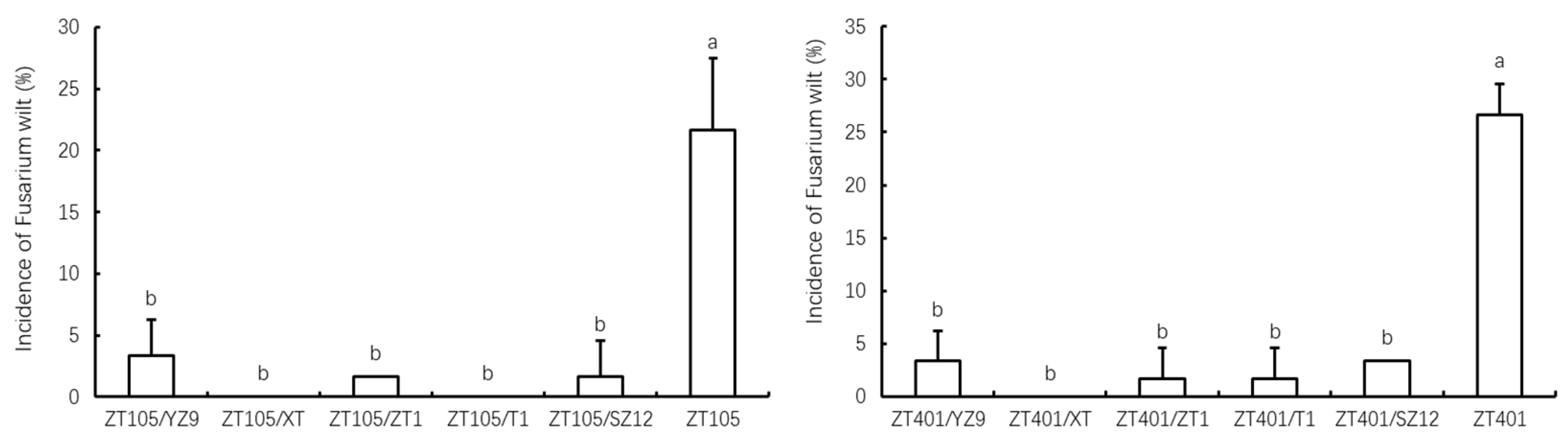
Figure 2.
Comparison of the percentage of fruit drop of 2 muskmelon cultivars grafted onto different rootstocks. Values are means of three replicates (±SE). Different letters indicate LSR p< 0.05 within a muskmelon cultivar.
Figure 2.
Comparison of the percentage of fruit drop of 2 muskmelon cultivars grafted onto different rootstocks. Values are means of three replicates (±SE). Different letters indicate LSR p< 0.05 within a muskmelon cultivar.
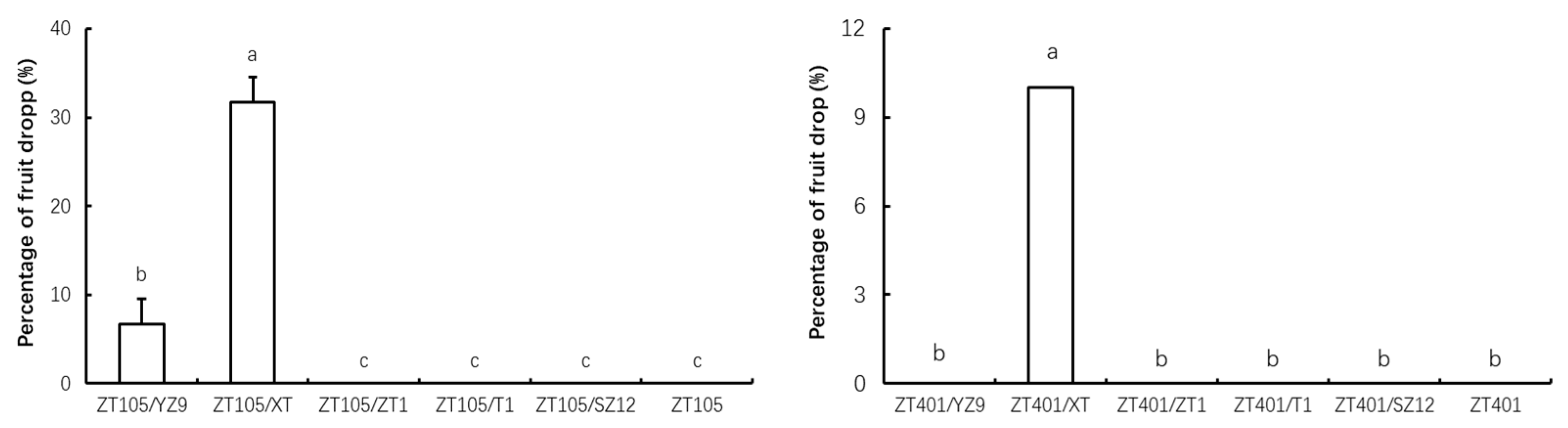
Figure 3.
Comparison of peduncle length of 2 muskmelon cultivars grafted onto different rootstock. Values are means of three replicates (±SE), each replication contains 5 fruits. Different letters indicate LSR p< 0.05 within a muskmelon cultivar.
Figure 3.
Comparison of peduncle length of 2 muskmelon cultivars grafted onto different rootstock. Values are means of three replicates (±SE), each replication contains 5 fruits. Different letters indicate LSR p< 0.05 within a muskmelon cultivar.
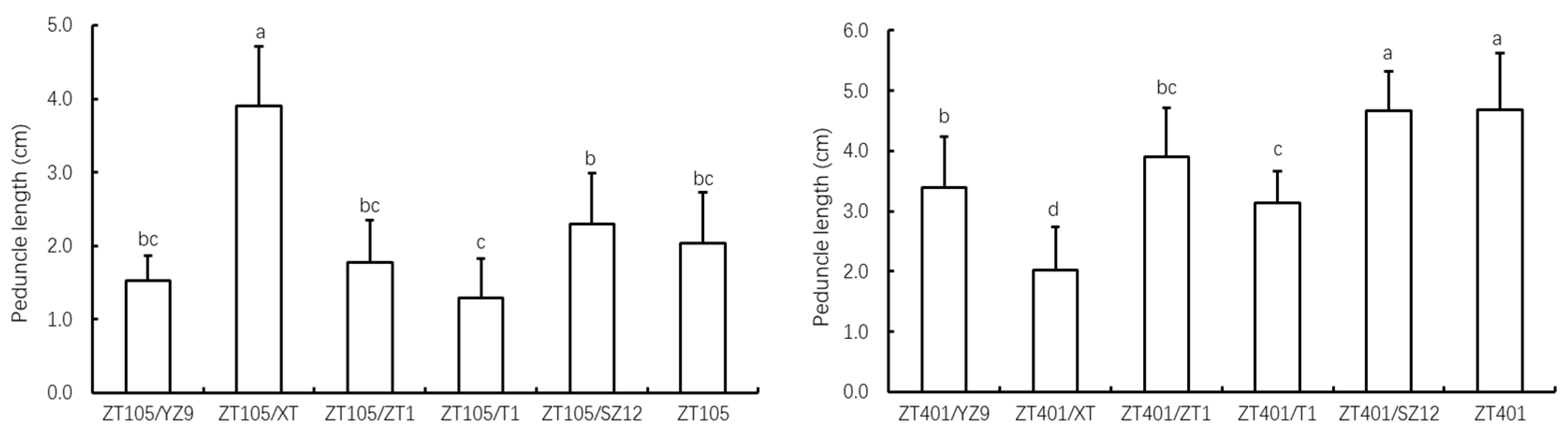
Table 1.
Plant material used in the experiment
| Experiment | Muskmelon cultivars | Rootstocks | Grafted combinations |
|---|---|---|---|
| A | ZT105 | YZ9 | ZT105/YZ9 |
| ZT105 | XT | ZT105/XT | |
| ZT105 | ZT | ZT105/ZT | |
| ZT105 | T1 | ZT105/ZT | |
| ZT105 | SZ12 | ZT105/SZ12 | |
| ZT105 | - | ZT105 (control) | |
| B | ZT401 | YZ9 | ZT401/YZ9 |
| ZT401 | XT | ZT401/XT | |
| ZT401 | ZT | ZT401/ZT | |
| ZT401 | T1 | ZT401/ZT | |
| ZT401 | SZ12 | ZT401/SZ12 | |
| ZT401 | - | ZT401 (control) |
Table 3.
Comparison of fruit size, fruit shape, and flesh thickness of 2 muskmelon cultivars grafted onto different rootstock.
Table 3.
Comparison of fruit size, fruit shape, and flesh thickness of 2 muskmelon cultivars grafted onto different rootstock.
| Grafted combinations | fruit length | fruit diameter | fruit shape | flesh thickness |
|---|---|---|---|---|
| ZT105/YZ9 | 17.93±0.81 ab | 12.87±0.45 a | 1.40±0.09 a | 4.05±0.33 a |
| ZT105/XT | 18.55±0.69 a | 12.83±0.49 a | 1.45±0.08 a | 4.15±0.28 a |
| ZT105/ZT1 | 18.84±0.90 a | 12.87±0.52 a | 1.47±0.08 a | 4.21±0.40 a |
| ZT105/T1 | 17.67±0.66 b | 12.55±0.54 a | 1.41±0.05 a | 4.08±0.62 a |
| ZT105/SZ12 | 18.71±0.89 a | 12.68±0.48 a | 1.48±0.08 a | 4.25±0.31 a |
| ZT105 | 18.71±0.56 a | 12.68±0.57 a | 1.48±0.05 a | 4.15±0.31 a |
| ZT401/YZ9 | 17.17±0.93 a | 11.63±0.37 a | 1.48±0.09 a | 3.82±0.29 a |
| ZT401/XT | 16.86±1.04 a | 12.17±0.60 a | 1.39±0.07 a | 3.81±0.13 a |
| ZT401/ZT1 | 17.32±1.13 a | 12.02±0.42 a | 1.44±0.08 a | 3.88±0.27 a |
| ZT401/T1 | 17.44±1.15 a | 11.84±0.44 a | 1.47±0.10 a | 3.71±0.30 a |
| ZT401/SZ12 | 17.17±0.71 a | 12.14±0.41 a | 1.41±0.04 a | 3.89±0.20 a |
| ZT401 | 18.14±0.97 a | 12.25±0.50 a | 1.48±0.06 a | 3.79±0.18 a |
Values are means of three replicates (±SE), each replication contains 5 fruits. Different letters indicate LSR p< 0.05 within a muskmelon cultivar.
Table 4.
Comparison of average fruit weight, fruit number, and fresh weight yield among non-grafted and grafted treatments.
Table 4.
Comparison of average fruit weight, fruit number, and fresh weight yield among non-grafted and grafted treatments.
| Grafted combinations |
SSC (%) | Sweetness | Texture | Pumpkin flavor |
Aroma |
|---|---|---|---|---|---|
| ZT105/YZ9 | 19.13±1.14 a | 8.33±0.96 a | 8.00±1.02 a | 1.00±0.00 b | 1.07±0.37 b |
| ZT105/XT | 18.13±0.85 a | 8.27±1.11 a | 7.87±1.01 a | 1.00±0.00 b | 3.27±1.01 a |
| ZT105/ZT1 | 18.34±0.70 a | 8.20±1.13 a | 8.07±1.01 a | 1.00±0.00 b | 1.00±0.00 b |
| ZT105/T1 | 18.39±1.07 a | 8.07±1.01 a | 7.93±1.11 a | 1.00±0.00 b | 1.00±0.00 b |
| ZT105/SZ12 | 18.11±0.86 a | 8.00±1.02 a | 8.33±0.96 a | 1.13±0.51 a | 1.00±0.00 b |
| ZT105 | 18.65±0.69 a | 8.27±1.11 a | 8.20±1.00 a | 1.00±0.00 b | 1.00±0.00 b |
| ZT401/YZ9 | 18.28±0.55 a | 7.87±1.01 a | 4.00±1.02 a | 1.00±0.00 b | 1.00±0.00 b |
| ZT401/XT | 18.01±0.74 a | 7.53±1.04 a | 3.80±1.00 a | 1.00±0.00 b | 1.27±0.69a |
| ZT401/ZT1 | 18.00±1.05 a | 7.80±1.00 a | 3.93±1.01 a | 1.00±0.00 b | 1.00±0.00 b |
| ZT401/T1 | 17.68±1.07 a | 7.67±1.09 a | 3.87±1.01 a | 1.00±0.00 b | 1.00±0.00 b |
| ZT401/SZ12 | 17.42±0.97 a | 7.60±0.93 a | 4.20±1.00 a | 4.53±1.80 a | 1.00±0.00 b |
| ZT401 | 17.56±0.61 a | 7.73±0.98 a | 4.00±1.02 a | 1.00±0.00 b | 1.00±0.00 b |
SSC values are means of three replicates (±SE), each replication contains 5 fruits. Values of sweetness, texture, pumpkin flavor, and aroma are means of three replications. Different letters indicate LSR p< 0.05 within a muskmelon cultivar.
Table 5.
Comparison of average fruit weight, fruit number, and fresh weight yield among non-grafted and grafted treatments.
Table 5.
Comparison of average fruit weight, fruit number, and fresh weight yield among non-grafted and grafted treatments.
| Grafted Combinations |
Average Fruit Weight (kg) | Fruit Number Per Plot |
Fresh Weight Yield Per Plot(kg) |
|---|---|---|---|
| ZT105/YZ9 | 1.59±0.15 a | 17.00±1.0 b | 25.71±1.45 b |
| ZT105/XT | 1.67±0.11 a | 13.00±1.0 c | 21.18±1.15 c |
| ZT105/ZT1 | 1.62±0.15 a | 18.33±0.6 ab | 28.41±0.63 a |
| ZT105/T1 | 1.54±0.13 a | 18.67±0.6 a | 25.97±1.60 ab |
| ZT105/SZ12 | 1.67±0.13 a | 17.67±0.6 ab | 28.01±1.69 ab |
| ZT105 | 1.62±0.09 a | 14.33±0.6 c | 22.30±0.35 c |
| ZT401/YZ9 | 1.19±0.14 a | 35.00±1.0 a | 40.46±1.55 b |
| ZT401/XT | 1.31±0.11 a | 30.67±1.2 b | 39.35±1.76 bc |
| ZT401/ZT1 | 1.28±0.11 a | 35.33±0.6 a | 43.35±1.38 a |
| ZT401/T1 | 1.21±0.06 a | 36.67±1.5 a | 42.64±1.40 ab |
| ZT401/SZ12 | 1.30±0.10 a | 36.00±1.0 a | 44.53±0.64 a |
| ZT401 | 1.32±0.13 a | 29.00±1.0 c | 36.73±1.18 c |
Average fruit weight is the means of three replicates (±SE), each replication contains 5 fruits. Fruit number and fresh weight yield are means of three replications. Different letters indicate LSR p< 0.05 within a muskmelon cultivar.
Disclaimer/Publisher’s Note: The statements, opinions and data contained in all publications are solely those of the individual author(s) and contributor(s) and not of MDPI and/or the editor(s). MDPI and/or the editor(s) disclaim responsibility for any injury to people or property resulting from any ideas, methods, instructions or products referred to in the content. |
© 2025 by the authors. Licensee MDPI, Basel, Switzerland. This article is an open access article distributed under the terms and conditions of the Creative Commons Attribution (CC BY) license (http://creativecommons.org/licenses/by/4.0/).
Copyright: This open access article is published under a Creative Commons CC BY 4.0 license, which permit the free download, distribution, and reuse, provided that the author and preprint are cited in any reuse.


