

Submitted:
31 December 2024
Posted:
03 January 2025
You are already at the latest version
Abstract
Thermal comfort in educational environments affects not only students' well-being but also their concentration and academic performance. In the context of climate change, university classrooms in Mediterranean climates face particular challenges due to higher and more variable temperatures. This study evaluates thermal comfort in classrooms in southern Portugal, comparing natural ventilation (NV) and air conditioning (AC) modes. Through environmental measurements and student surveys, thermal perceptions, preferences and factors such as position within the classroom were analysed. The results reveal that NV classrooms offer sustainable benefits, but their effectiveness decreases when outside temperatures exceed 28°C, increasing thermal discomfort. In contrast, AC classrooms maintain more stable and comfortable conditions, although they have thermal gradients that affect specific zones, such as areas near windows or air vents. This study highlights the need for hybrid strategies that prioritise NV in moderate temperatures and use AC as a support in extreme conditions. Furthermore, it underlines the importance of appropriate architectural design and specific adaptive models for Mediterranean climates, balancing thermal comfort and energy efficiency.
Keywords:
thermal sensation
; higher education
; indoor environment
; adaptive strategies
; energy saving strategies
1. Introduction
Thermal comfort, understood as the sensation of thermal well-being experienced by people in a given space [1,2], has increasingly relevant implications for buildings in the context of climate change [3,4]. Rising global temperatures and the increasing frequency of extreme weather events increase the demand for energy to maintain adequate indoor thermal conditions [5]. This phenomenon is particularly relevant in Mediterranean regions, whose climate is characterised by very hot and dry summers and cold and wet winters [6]. This type of climate can pose certain challenges, as the interaction between outdoor climatic conditions and indoor thermal environments can profoundly affect energy consumption patterns, contributing significantly to operating costs and greenhouse gas (GHG) emissions, as well as occupant well-being [7]. Energy used for heating, ventilation and air-conditioning (HVAC) systems accounts for a considerable share of global energy consumption [8], with estimates suggesting that it can account for up to 60-70% of total building energy use [9].
In specific spaces, such as schools, thermal comfort becomes even more critical, as an inadequate indoor environment can be detrimental to students' health, concentration and, consequently, learning outcomes [10,11]. Unlike other types of spaces, classrooms are characterised by the fact that they concentrate on large groups of people for prolonged periods in an enclosed environment [12]. This generates particular thermal demands related both to the need to maintain a stable and comfortable temperature and to adequate ventilation to ensure indoor air quality (IAQ) [13]. In this regard, IAQ has become even more relevant since the emergence of COVID-19, as a well-ventilated environment is essential to reduce the spread of respiratory viruses and improve the general well-being of occupants [12,14].
In many areas with a Mediterranean climate, schools often lack HVAC systems, especially air-conditioning (AC), due to the high costs associated with their installation, operation and maintenance [15,16]. Moreover, it was traditionally considered unnecessary, as the periods of exceptionally high temperatures mostly coincided with the summer holidays outside the school calendar. However, changes in weather patterns, with high outdoor temperatures generally recorded in the early and late months of the academic year, have increased the importance of ensuring adequate thermal comfort in spaces where air conditioning is unavailable or not feasible [17].
In these cases, natural ventilation (NV) strategies can offer effective and sustainable solutions. Designs that encourage cross-ventilation through the strategic placement of operable openings, together with appropriate building orientation, help to maintain more suitable indoor temperatures throughout the year [18]. However, as most classrooms lack cooling systems, the incorporation of shading elements (blinds, curtains, etc.) and other solutions can significantly reduce the thermal discomfort of the occupants [7,19]. Although these strategies do not always completely replace air conditioning systems in more extreme weather conditions, they are very effective most of the year, reducing energy dependency [20].
In addition to possible measures taken in buildings, behavioural adaptations among occupants also play a vital role in achieving thermal comfort. Research has shown that people can adjust their clothing, activity levels, and comfort expectations depending on environmental conditions [21,22]. This adaptive approach can be especially beneficial in university classrooms, where diverse student populations may have different preferences and comfort tolerances [23,24]. Understanding these dynamics is essential to developing effective strategies that not only address the physical aspects of thermal comfort but also take into account the psychological and social dimensions that influence occupant satisfaction [8,21].
The assessment of thermal comfort in naturally ventilated versus air-conditioned university classrooms is key, especially in regions with variable climatic conditions, such as the Mediterranean. This analysis reveals significant differences in occupant satisfaction, adaptive behaviours and indoor environmental quality. Classrooms with natural ventilation tend to offer a more adaptive environment for occupants, allowing them to experience a wider range of thermal comfort due to their ability to adapt to changing environmental conditions [25]. For example, Dias Pereira et al. noted that occupants in naturally ventilated environments can adjust to a greater diversity of microclimatic conditions, demonstrating remarkable thermal adaptability compared to air-conditioned spaces, where conditions are more controlled [26]. This flexibility is reinforced by the findings of Miao, who noted that students in naturally ventilated classrooms employed a variety of adaptive behaviours that improved their thermal comfort, especially during seasonal fluctuations typical of Mediterranean climates [27]. In addition, Subhashini et al. emphasised that natural ventilation contributes to thermal comfort and indoor air quality, although it may be less effective in conditions of low air velocity or high outdoor temperatures [28]. In terms of energy efficiency, Buonocore et al. indicated that indoor temperatures up to 26°C do not compromise thermal comfort, which could help attempts to minimise cooling energy consumption in hot climates [29]. Similarly, Romero-Lara et al. found that strategies such as cross-ventilation in naturally ventilated classrooms significantly improved thermal comfort during the warmer months, achieving optimal conditions in approximately 51% of the occupancy periods [30]. However, very few studies have analysed thermal comfort in air-conditioned classrooms in these regions, despite the growing relevance of these systems due to the increase in global temperatures and the extension of warm periods in this area, as already mentioned. In such work, it has been observed that refrigerated spaces offer a more stable thermal environment, which can be advantageous in meeting established comfort standards [2]. Thus, Shaari et al. concluded that these classrooms consistently remain within the defined comfort limits, which is not always the case in naturally ventilated classrooms during the highest summer temperatures [31]. Also, Marino et al. noted that HVAC systems are effective in keeping indoor temperatures within comfortable ranges, which improves the learning environment [32]. In line with this, Aparicio-Ruiz et al., in a study conducted in southern Spain, found that students preferred air conditioning when outdoor temperatures exceeded 25°C [33].
Similarly, no research has been found that specifically analyses the influence of student position within these spaces as a function of mode of operation (AC or NV). This gap in the literature represents an opportunity to explore how factors such as proximity to windows, doors or air conditioning vents affect the thermal experience of occupants. The lack of studies on this topic is particularly relevant, as positions within the classroom generate significant thermal gradients, which impact individual perceptions of comfort and the effectiveness of air conditioning strategies in ensuring a thermally adequate environment.
In this context, it is key to adopt a perspective that combines practical and sustainable solutions to improve thermal comfort in educational spaces, considering both the environmental characteristics and the specific needs of students. This involves not only optimising the design of buildings and taking advantage of passive strategies, such as natural ventilation but also understanding how students perceive and adapt to thermal conditions. Ensuring a comfortable and healthy classroom environment not only promotes physical well-being but also improves concentration and academic performance.
This work will analyse the thermal comfort in university classrooms in Portugal, with natural ventilation and air conditioning, using environmental measurements and surveys addressed to students. These tools will allow us to evaluate their thermal sensations and preferences and their degree of comfort with the thermal environment. Likewise, neutral and comfort temperatures will be calculated, and the results obtained will be compared with the applicable regulations in force. In addition, the influence of the position of the students inside the classroom, an aspect that is little addressed in the literature, and how this variable affects the thermal perception of the occupants will be studied. This analysis will identify variations in thermal sensations associated with proximity to windows, doors and air conditioning vents, providing key information to propose strategies for improving the design and operation of these spaces. Through an approach combining objective and subjective data, this study will generate a solid basis for optimising thermal comfort and energy efficiency in university classrooms, particularly in Mediterranean climates where extreme temperatures are increasingly frequent.
2. Materials and Methods
As mentioned above, this study has focused on assessing the thermal comfort in classrooms in two university buildings in a Mediterranean climate zone during the transition between spring and summer 2022. For this purpose, two modes of operation were analysed: natural ventilation and air conditioning. Environmental measurements were taken indoors and outdoors, collecting data on temperature, relative humidity and air velocity. In addition, surveys were administered to students that included personal variables, subjective thermal perceptions, questions about their position in the classroom and academic aspects. All data collected were subjected to descriptive analysis and calculation of key thermal parameters, complemented by a case study focusing on the spatial distribution within the classrooms, allowing comparison of the two modes of operation and concluding thermal comfort in educational environments.
A schematic diagram summarising the methodology used in this work is shown in Figure 1.
2.1. Location and Climatic Conditions
Beja is located in the southern interior of Portugal (38°00'56‘’N, 7°51'55‘’W) and, according to the Köppen-Geiger climate classification, it belongs to the Csa category, corresponding to a Mediterranean climate with dry summers and mild winters [6]. Average monthly temperatures can exceed 35°C in summer, while in winter, they rarely fall below 10°C, reflecting a moderate annual temperature range [18]. Annual rainfall is low and mainly concentrated in the winter months. Figure 2 shows the temperature profile, air velocity and precipitation in 2022 in Beja.
2.2. Description of Selected Buildings ans Classrooms
This study was carried out at the Higher School of Education (ESE) and the Higher School of Health (ESS), both belonging to the Polytechnic Institute of Beja (IPBeja).
The Higher School of Education, built in 1986, has three floors: floor -1, the ground floor and the first floor. For this study, 11 tests were carried out in 9 of the 12 classrooms available, distributed between the ground floor and the first. The classrooms have an average surface area of approximately 40 m² and a height of 3 metres. They all have opening windows located on the left-hand side to avoid glare while students are writing. The predominant orientation of the windows is north-west, although some face east or south-east. La puerta de entrada está situada en la pared opuesta a las ventanas, al inicio del aula. De las 9 aulas analizadas, 4 contaban con equipos de aire acondicionado tipo Split. Finally, the average occupancy was 17.40 people, with a maximum of 42 students and a minimum of 6 students.
The Higher School of Health, built in 2006, has two floors: ground and first. The six classrooms of the building are located on the first floor and share identical characteristics in terms of surface area (85 m²), height (2.80 metres), orientation (south-east), window design (openable and located on the left-hand side) and number and arrangement of desks (35 desks). All classrooms are equipped with cassette air conditioning systems installed in the centre of the ceiling. However, during the analysis, only two of the four classrooms studied had air conditioning in operation, while natural ventilation strategies were implemented in the other two. The average occupancy during the measurements was 20.75 persons, with a maximum of 30 and a minimum of 13 students.
2.3. Thermal Comfort Questionnaire
The thermal comfort assessment questionnaire was distributed to the students in the classrooms in paper format and translated into Portuguese (the official language of the country) and consisted of the following parts: (1) collection of personal and demographic information (age, gender, etc.); (2) level of insulation level of clothing, expressed in clo, according to the ISO 7730:2005 Standard [34]; (3) analysis of the thermal sensation (TS), comfort level (TC) and thermal preference (TP) of the respondents; (4) educational questions regarding the actions taken by the students if they feel thermal discomfort; and (5) position of the occupants in the classrooms.
The thermal sensation was evaluated with the seven-point thermal scale according to the ASHRAE 55 Standard, ranging from “Cold” (-3) to “Hot” (3) [2], while the five-point scale for thermal comfort was used to quantify the responses from “Very comfortable” (1) to “Very uncomfortable” (5) adopted by McCartney and Nicol [35]. For thermal preference, a three-point scale was used to indicate whether students wanted the classroom temperature to be cooler (-1), the same (0) or warmer (1) [36,37]. Table 2 shows the scales used in the subjective thermal questionnaire.
About the actions students take in the face of thermal discomfort, two specific questions were asked. The first question asks how this discomfort affects following the class, with response options ranging from “I don't mind, I continue as normal” to “The discomfort makes me miss the class”. The second question focuses on who they address their complaints to in situations of thermal discomfort, with options such as: “I do not make any kind of statement”, “I complain to the teacher during class”, “I complain to the class delegate” and “I raise my complaint to the Management Team or Student Council”.
2.4. Application of Questionnaires and Indoor Thermal Measurements
The data collection, which included both environmental measurements and the application of questionnaires, was carried out during the last weeks of the 2021-2022 academic year, specifically from 6 to 17 June, during class hours (9:00 a.m. to 4:00 p.m.). The questionnaires were distributed and explained at the beginning of the lessons but were completed at the end so that the participants could evaluate how they had felt during the class.
Measurements of indoor environmental parameters were performed close to the students, avoiding any disturbance to the normal course of the classes [38]. Air temperature (Ta), relative humidity (RH) and air velocity (va) were measured using an HD32.1 thermal environment analyser (DeltaOhm), which complies with the accuracy ranges of ISO 7726:1998 [39]. The mean radiant temperature (Tmrt) was calculated, following the recommendations of ASHRAE 55 [2], with equation (1). This calculation was based on the globe temperature measurement (Tg) obtained using a black globe thermometer with a diameter of 150 mm.
where ε is the emissivity of the surface of the globe thermometer and D is its diameter, being 0.95 and 0.150 metres, respectively.
Table 3 provides the technical specifications of the equipment used for the measurements of indoor environmental conditions.
On the other hand, the comfort temperature (Tc) is related to the operative temperature (Top) and the average outdoor operating temperature (Trm). As shown in equation (2), the calculation of Top considers air temperature (Ta), mean radiant temperature (Tmrt), convective heat transfer coefficient (hc) and radiant heat transfer coefficient (hr) [2,40]. For hr, a constant value of 4.7 W/m2°C was taken, while hc is calculated according to the ASHRAE Handbook [41].
2.5. Adaptive Model and Comfort Parameters
In this study, comfort parameters for building thermal conditioning (temperature, relative humidity and air velocity) were determined, and an adaptive thermal comfort model has been proposed for AC and NV modes of operation. The comfort zone and neutral temperature (Tn) have been determined based on TSV and Top, and the temperatures are calculated using the Griffiths method [18,38,40]. P For TSV, 90% and 80% of the thermal acceptability are between -0.5 and 0.5 and -1 to 1, respectively, on the ASHRAE seven-point scale [2,38].
The adaptive thermal comfort model is established through linear regression analysis, considering two different approaches. In the first, Top is used as the independent variable and TSV as the dependent variable. In the second, Trm acts as the independent variable, while Tc, calculated using Griffiths' method according to equation (4), is defined as the dependent variable.
2.6. Description of Case Studies on the Spatial Distribution of Students and Other Associated Factors
This case study focused on assessing in detail how the specific position of each student within the classroom influences their thermal perception, considering the effects of different modes of operation and the level of thermal insulation of their clothing. Four classrooms were selected from the Higher School of Health (ESS), designed identically in their construction and layout, ensuring comparability between them. The tests, conducted under similar outdoor temperature conditions, included two air-conditioned and two naturally ventilated classrooms: one with only the door open and one with both door and window open. This approach allowed a thorough analysis of the differences in thermal sensation derived not only from the general environmental conditions but also from the particularities associated with the specific position of each student within the space.
3. Results
3.1. Study Sample Characterisation
As shown in Table 4, a total of 276 questionnaires were completed, of which 274 were valid: 191 in ESE and 83 in ESS. The remaining two questionnaires were discarded due to inconsistencies in the responses. Regarding gender, in ESE, 44.50% were male, 55% were female, and 0.50% were identified in another category. In the case of ESS, 6% were male and 93% female. Regarding age, the majority of students (83.8% in ESE and 86.7% in ESS) were between 18 and 24 years old. All the students surveyed remained seated during the lessons given by the teachers, which made it possible to establish a metabolic rate of 70 W/m² (1.2 met), as stipulated in ASHRAE Standard 55 [2]. The average clothing insulation (Iclo) was slightly higher for ESE students (0.33 clo) compared to ESS students (0.25 clo). In both schools, the most common clothing combination included long trousers, tank tops for females, and short-sleeved T-shirts or shirts for males, complemented by trainers. In many cases, they also chose to wear shorts.
3.2. Outdoor and Indoor Environmental Conditions
The outdoor environmental conditions during the trials showed significant variations (Table 5). The average temperature was 28.24°C, with a maximum of 33.29°C, recorded during a test at ESS, and a minimum of 21.49°C, measured in the early morning during a test at ESE. Relative humidity ranged from 33.33% to 76.15%, with an average of 50.62%, reflecting temporal variations in the timing of the measurements. Air velocity averaged 12.80 km/h, ranging from 9.49 km/h to 16.38 km/h.
Table 6 compiles the average indoor environmental conditions in each of the tests carried out in the two selected university centres, classified according to the number of occupants (N), the state of doors and windows (CW: windows closed, OW: windows open, CD: doors closed, OD: doors open) and the mode of operation (AC: air conditioning, NV: natural ventilation).
Overall, the classrooms showed an average Top of 25.90°C, with a maximum of 31.33°C (ESS03) and a minimum of 22.94°C (ESS04). RH averaged 49.02%, with extreme values of 63.11% (ESE07) and 32.75% (ESE03). Air velocity (va) is low in general, with an average of 0.03 m/s, a maximum of 0.08 m/s (ESE02 and ESS04) and a minimum of 0.00 m/s in several tests (ESE06, ESE09, ESE10 and ESS02).
When comparing the results of the AC and NV tests with international thermal comfort standards, such as ASHRAE 55 [2] or EN 16798-1:2019 [48], relevant differences emerge. On the one hand, these regulations recommend operative temperatures in the range of 23 to 26°C [2,48] to be considered a comfortable environment. As can be seen, in the AC classrooms, this criterion was met, with an average Top of 24.41°C, while in the NV classrooms, the upper limit was exceeded by almost 1°C, with an average Top of 26.90°C. Specifically, this limit was exceeded in 5 of the 9 tests conducted under this mode of operation. In studies carried out in educational buildings with both modes of operation and during the same seasons and climatic zones, indoor temperatures generally similar to those measured in this study were recorded [18,33,49,50,51].
As for relative humidity, the Standards suggest keeping it between 30 and 60% to avoid discomfort and health problems related to dry or excessively humid air [2,48]. Both categories of classrooms meet this criterion, although NV classrooms have slightly lower values on average (47.70%) than AC classrooms (50.99%). Finally, regarding air velocity, it is recommended that it should be below 0.10 m/s to provide adequate ventilation without generating annoying draughts [48]. As can be seen, the va in all cases was below the proposed level. However, in general, higher va were measured in the OW/OD tests, especially in the case of ESE02, ESE03 and ESS04.
3.3. Subjective Thermal Responses
This section analyses the subjective responses on thermal sensation and preference and degree of comfort of the 274 students surveyed (195 with NV and 79 with AC).
3.3.1. Thermal Sensation, Comfort and Preference Votes
Table 5 presents a summary of the average ratings for each thermal category analysed in the different classrooms, together with the mode of operation and the indoor operative temperature.
As can be seen, classrooms with natural ventilation (NV) presented, on average, a TSV of 1.33, indicating a thermal sensation between slightly warm and hot, accompanied by a TCV of 3.35, suggesting a level above slightly uncomfortable. In these classrooms, only 13.33% of occupants reported a "Neutral" thermal sensation. On the other hand, the average TPV was -0.76, reflecting an inclination towards cooler conditions. In contrast, in the air-conditioned (AC) classrooms, the average TSV was -0.42, indicating a thermal sensation in the neutral range [2], while the TCV was 2.55, suggesting that students were more comfortable with this mode of operation. The mean TPV of 0.20, in this case, showed the students' preference for maintaining almost the same thermal conditions in the classrooms. These results show that, although air conditioning generates a somewhat cooler thermal perception, it provides a higher level of comfort than NV classrooms, possibly due to the ability of this system to maintain more stable conditions and closer to the range preferred by students. NV classrooms, perceived as warmer, are more uncomfortable, probably influenced by exposure to thermal fluctuations and outdoor environmental conditions.

Table 7.
Average values of subjective votes.
| University | Classroom code | Operation mode | Top (°C) | TSV (SD) | TCV (SD) | TPV (SD) |
|---|---|---|---|---|---|---|
| ESE | ESE01 | NV | 25.51 | 0.75 (±0.68) | 2.63 (±0.50) | -0.63 (±0.50) |
| ESE02 | NV | 26.41 | 1.15 (±0.76) | 3.31 (±0.82) | -0.84 (±0.37) | |
| ESE03 | NV | 26.69 | 1.19 (±0.93) | 3.24 (±0.99) | -0.76 (±0.44) | |
| ESE04 | AC | 22.94 | -0.33 (±0.52) | 2.67 (±0.52) | 0.17 (±0.41) | |
| ESE05 | NV | 25.33 | 0.95 (±0.82) | 3.00 (±0.88) | -0.69 (±0.47) | |
| ESE06 | NV | 25.58 | 1.00 (±0.67) | 3.10 (±0.87) | -0.80 (±0.42) | |
| ESE07 | NV | 26.25 | 1.50 (±0.88) | 3.45 (±0.98) | -0.75 (±0.44) | |
| ESE08 | NV | 25.41 | 1.00 (±0.82) | 3.00 (±0.82) | -0.62 (±0.51) | |
| ESE09 | AC | 24.60 | -0.59 (±0.87) | 2.35 (±0.49) | 0.23 (±0.44) | |
| ESE10 | AC | 24.80 | -0.55 (±0.53) | 2.56 (±0.53) | 0.56 (±0.53) | |
| ESE11 | AC | 25.17 | -0.71 (±0.83) | 2.57 (±0.76) | 0.21 (±0.43) | |
| ESS | ESS01 | AC | 24.62 | -0.20 (±0.69) | 2.40 (±0.60) | 0.15 (±0.49) |
| ESS02 | AC | 24.31 | -0.15 (±0.80) | 2.77 (±0.93) | -0.15 (±0.69) | |
| ESS03 | NV | 31.33 | 2.70 (±0.73) | 4.70 (±0.73) | -0.95 (±0.22) | |
| ESS04 | NV | 29.62 | 1.73 (±1.01) | 3.70 (±1.06) | -0.80 (±0.41) |
When comparing the results of this study with those reported by other authors, significant differences are observed for the same operating temperature ranges measured in this study. For example, Guevara et al. researched thermal comfort in three climatic zones in Ecuador. In that study, it was found that students in AC classrooms indicated cooler thermal sensations (TSV=-0.35) and showed a higher level of comfort in NV classrooms, with a TCV of 1.44. Thus, almost half of the occupants (49.37%) experienced thermal neutrality. Also, in terms of thermal preference (TPV), students were more inclined towards warmer environments [38]. Similar trends were observed in the work of López-Pérez et al., who found patterns consistent with the aforementioned results, also reflecting a relationship between the type of ventilation and the thermal sensations reported by the students [40]. These differences can be explained by the higher heat tolerance of people living in hot and humid climatic zones, who tend to adapt more effectively to the usual thermal conditions of their environment, even when these exceed the established standards [46,52]. On the other hand, Fabozzi and Dama carried out an investigation in an Italian university in the same climatic zone as the present study and obtained similar results in terms of thermal sensation for classrooms with NV (TSV=1.49) and with AC (TSV=-0.46) [53]. Finally, the work of Aparicio-Ruiz et al., carried out in southern Spain with primary school students, showed that most children felt comfortable and preferred cooler environments for both modes of operation studied [33]. This preference for cooler environments in children living in temperate climate zones has been reported by other authors [51,52,54].
To continue, Figure 4 compares the thermal comfort ratings (TCV) as a function of perceived thermal sensations in the two modes of operation. In AC mode (Figure 4a), the average TCV was 2.55, indicating that the majority of students were positioned between the "Comfortable" and "Slightly uncomfortable" categories. The results show that 53.85% of the students who experienced neutral thermal sensations (0) felt comfortable, while 38.46% reported being very comfortable. In addition, 18.52% of students reported comfort under slightly cool sensations (-1). However, more extreme sensations, such as cold (-2), registered an increase in discomfort levels, with 33.33% of the votes placed in the uncomfortable category. When students voted cold thermal sensations (-2) they presented the highest levels of discomfort (33.33%). In contrast, the NV mode of operation (Figure 4b) had an average TCV of 3.45, indicating that students felt slightly uncomfortable to mostly uncomfortable. Thermal comfort was mainly concentrated in neutral thermal sensations (0), while as thermal sensations became warmer, the level of discomfort increased significantly. In particular, warm thermal sensations (3) reached 100% of votes in the very uncomfortable category. These results are consistent with those reported by Guevara et al. for NV classrooms in a tropical climate zone [38]. Similarly, Romero et al. showed that the majority of students who voted a TSV of "Warm" (approximately 90%) felt very uncomfortable [18]. The results indicate that the AC mode offers better performance in maintaining acceptable thermal comfort over a wider range of thermal sensations, although it does not always guarantee comfort, especially if students feel cold. On the other hand, NV mode shows higher acceptance in neutral thermal conditions, but its effectiveness decreases significantly as thermal sensations become warmer [53,55].
In this case, Figure 5 presents the cross-tabulation of the thermal preference votes about the perceived thermal sensations in both modes of operation. In AC mode (Figure 5a), the mean TPV was 0.19. In neutral thermal sensations (0), most students voted for "No change", indicating satisfaction with the perceived temperature. However, in slightly cool thermal sensations (-1), a little more than half of the students (51.85%) preferred a "Warmer" environment. For cold thermal sensations, this percentage rises to 100%. For slightly warm thermal sensations (1), a significant percentage expressed a preference for a "Cooler" environment. For the NV mode (Figure 5b) the average TCV was -0.76, indicating that, in general, students preferred a "Cooler" thermal environment. For neutral thermal sensations (0), most students preferred "No change", indicating that these conditions are perceived as adequate. As the thermal sensations become warmer (1, 2 and 3), the preference for a "Cooler" environment increases dramatically, reaching 100% for extreme heat sensations (3). Overall, the results indicate that the AC mode allows a more consistent balance of thermal preferences to be maintained, as it satisfies the majority of occupants in neutral and moderately warm conditions. In contrast, the NV mode shows a clear tendency towards thermal dissatisfaction when temperatures rise, evidenced by a predominant preference for cooler environments in warm thermal sensations.
In the study conducted by Guevara et al. in a tropical climate zone, greater variability was observed in the distribution of thermal comfort (TCV) and thermal preferences (TPV) under natural ventilation (NV) conditions, particularly in the range of thermal sensations considered comfortable (-1 to 1) [2]. In contrast, in classrooms with air conditioning (AC) systems, the results showed more consistent patterns similar to those obtained in the present study. This suggests that natural ventilation strategies are more influenced by individual differences in thermal perception, whereas air-conditioning systems tend to provide more uniform and predictable control over occupants' thermal responses [38]. Similar findings have been reported by Talukdar et al. in tropical climates [46].
3.4. Comfort Temperature
In this study, a linear regression model was used in conjunction with the Griffiths method to calculate both the neutral and comfort temperature.
3.4.1. Linear Regression Method
The application of linear regression between thermal sensation votes and operating temperature facilitates the analysis of how variations in interior temperature affect occupants' thermal perception [18,38]. Thus, Figure 6 shows the relationship between TSV and Top in each test, according to the thermal responses of the respondents in both modes of operation. From the linear equation, our temperature (Tn) and the temperature range where the votes are within the comfort range have been determined.
As can also be seen in Table 8, the slope of the linear regression line for the NV mode was slightly steeper than that for the AC mode. This suggests that occupants are more sensitive to changes in operative temperature when natural ventilation is used. This increase in slope is attributed to the higher percentage of people who experienced discomfort, as assessed by the TSV scale. The slope values obtained in this study are consistent with those reported in research conducted in Mediterranean climate zones during the same time of year [18,56,57,58]. However, they were lower than those observed in research conducted in warmer and more humid climates, highlighting the higher adaptation of students in these regions to higher temperatures. These findings highlight how regional climatic characteristics influence the relationship between operative temperature and users' thermal perception [28,38,40,59].
In the AC tests, the Tn defined as the operative temperature at which the mean TSV is zero, was 25.80°C. According to the 7-point scale of the ASHRAE 55 standard, the thermal acceptance range for 90% of the participants is between -0.5 and 0.5, which corresponded to a temperature range between 24.20 and 27.40°C. For 80% acceptability, the range extends from -1 to 1, with temperature limits for this case between 22.60 and 29.00°C. While in the NV mode, the Tn was 22.00°C, with a comfort range of 90% acceptability between 20.00 and 24.00°C and 80% acceptability between 18.00 and 26.00°C. As can be seen, the Tn calculated for the AC tests is significantly higher compared to the NV tests. This could reflect that, in controlled environments, users have a higher tolerance to slightly higher temperatures [60,61]. In the research carried out by Haddad et al. [62] and Teli et al. [57] in this type of climate and with NV, temperatures very similar to those calculated in this work were obtained.
Finally, the coefficients of determination (R²) were 0.2762 for the AC mode and 0.4754 for the NV mode, while the significance (p) values were less than 0.001 in both cases, indicating that the correlations between operative temperature and wind chill votes were statistically significant and adequate.
Table 8.
Summary of TSV regression equations.
| Operation mode | Equation | Tn (°C) | 90% | 80% | R² | p-value |
|---|---|---|---|---|---|---|
| AC | TSV=0.2729·Top-7.0719 | 25.80 | ±1.60 | ±3.20 | 0.2762 | <0.001 |
| NV | TSV=0.2864·Top-6.2608 | 22.00 | ±2.00 | ±4.00 | 0.4754 |
3.4.2. Griffiths Method
La Table 9 presenta una comparación de las temperaturas de confort (Tc) calculadas utilizando el método de Griffiths, considerando tres valores de la constante α aplicados a la escala de TSV en los modos de operación AC y NV. Los valores de la constante α utilizados fueron 0.25, 0.33 y 0.50, conforme a las recomendaciones de múltiples autores [45,46,47,63].
In the AC mode, Tc decreased slightly with increasing α, from 26.23°C (α=0.25) to 25.42°C (α=0.50). In addition, the standard deviations also decreased significantly, decreasing from ±3.18°C to ±1.71°C. These results indicate that higher α values generate more consistent Tc estimates with less scatter. In the case of the NV mode, similar behaviour occurred, with Tc increasing from 21.42°C (α = 0.25) to 24.14°C (α = 0.50). Standard deviations also decreased as α increased, from ±3.52°C to ±2.15°C. However, compared to the AC mode, the NV mode exhibited greater variability in Tc p estimates for all α values. This is due to the more significant fluctuations in environmental conditions, which directly affect the thermal perception of occupants in naturally ventilated spaces [38,40,53].
Overall, the results show that the AC mode provides higher comfort temperatures with less variability compared to the NV mode, reflecting a more controlled environment. The choice of α equal to 0.50 stands out as the most suitable for calculating Tc since it provides the most consistent and accurate estimates in both modes of operation. For this reason, this value was selected for all calculations performed in this study. It is important to note that numerous previous studies have also recommended the use of this value, supporting its applicability and reliability in the analysis of comfort temperatures [18,38,40,63,64].
The comfort temperature was calculated using 0.50 as the regression coefficient was very similar to the neutral temperature (25.80°C) calculated from the linear regression of the thermal votes observed in the AC tests. In this case, uniformity in thermal conditions minimises discrepancies, as occupants more consistently perceive temperatures close to neutral. Whereas, in NV classrooms, the comfort temperature estimated through Griffith's method has a difference of more than 2°C with the neutral temperature (22.00°C). This difference is because, at higher temperatures, students tend to experience feelings of thermal comfort at slightly lower values than the measured temperatures [18,46].
In previous studies conducted in classrooms with AC systems, the calculated Tc showed minimal variations compared to the results obtained in this work [38,40]. n contrast, research carried out in Mediterranean climate regions during the spring and summer seasons, under NV conditions, reported Tc approximately 3°C lower than those observed [65,66,67]. This difference could be attributed to the impact of higher recorded outdoor temperatures on indoor temperatures [18,68].
3.5. Adaptive Thermal Comfort Model
Figure 7 shows a scatter plot of the linear regression between Tc and Trm, in both modes of operation.
Equations (4) and (5) represent the adaptive thermal comfort model for AC and NV mode, respectively.
For the AC mode, the average predicted Tc was 25.83 ± 1.00°C, ranging from a maximum value of 27.31°C to a minimum of 24.60°C. For the NV mode, the average predicted Tc was 24.14 ± 2.15°C, with temperatures ranging from a maximum of 31.32°C to a minimum of 19.10°C. As can be seen, for both modes of operation, the proposed models predict temperature values in the comfort zone [40].
Figure 8 shows the distribution of comfort temperatures according to the two operating modes studied.
In NV mode, the most represented comfort range was 24-26°C, followed by the 22-24°C and 26-2°C ranges, while the extreme ranges (18-20°C and 30-32°C) were much less represented. Similarly, in AC mode, the predominant comfort range was also 24-26°C, followed by the 26-28°C range. However, in AC mode, comfort temperatures were more strongly concentrated in these ranges, evidencing greater consistency and a more limited range compared to NV mode, which shows greater variability in thermal preferences due to environmental conditions and individual differences in thermal perception [53]. Buonocore et al. found that the most comfortable temperature ranges in university classrooms were 24-26°C in NV mode and 23-24°C in AC mode, with greater variability also in naturally ventilated classrooms [29].
3.5.1. Comparison with International Standards
Figure 9 presents a comparison between the comfort temperature and the comfort zone using different approaches: the proposed model, the ASHRAE 55 Standard [2] (Figure 9a), Norm EN 16798-1:2020 [48] (Figure 9b) and the CIBSE guide [69] (Figure 9c). The dashed lines in the graph indicate the limits of the comfort ranges set by the mentioned standards, while the grey solid lines represent the Tc defined by these standards. The yellow (for NV mode) and blue (for AC mode) solid lines reflect the comfort temperature calculated according to the model proposed in this study.
First, Figure 9a compares the proposed model with the ASHRAE 55 standard, whose equation for the NV mode of operation is defined as Tc=0.31·Tpma(out)+17.8 [2]. To simplify the analysis, the average prevailing outdoor air temperature (Tpma(out)) was assumed to be equivalent to Trm [40]. According to the acceptability zones established by this standard, 50% of the measurements made were found to be within the 90% comfort level (black dashed line), 73.33% within the 80% comfort zone (green dashed line) and 26.67% outside the acceptable zones. Applying the adaptive equation of the ASHRAE 55 standard, the average comfort temperature obtained was 26.11±1.11°C, with extreme values of 28.12 and 24.46°C. In comparison, the model proposed in this study generated a Tc approximately 2°C lower than that calculated according to the ASHRAE 55 standard, suggesting significant differences in the prediction of thermal comfort under specific NV conditions. In this regard, previous studies have pointed out that the ASHRAE 55 adaptive equations tend to underestimate comfort in hot climates [70,71,72].
Figure 9b shows the model proposed in this work against the adaptive model of EN 16798-1:2020 expressed with the equation Tc=0.33·Trm+18.8, also for the NV mode. When analysing the acceptability zones, it was observed that 76.67% of the sample was within the ±4°C thermal comfort zone (represented by the blue dashed line), 60.00% within the ±3°C zone (green dashed line), and 40.00% in the more restricted ±2°C zone (black dashed line). However, 23.33% of the sample fell outside any defined comfort range. For this adaptive model, the mean Tc was 26.77±0.71°C, with maximum and minimum temperatures of 29.14 and 25.10°C, respectively. Thus, the proposed model temperatures were about 2.50°C lower. These results are in line with several works that have shown that European standards may not adequately reflect thermal comfort needs in hot regions, where user expectations and environmental conditions differentiate thermal preferences. This finding reinforces the importance of developing localised adaptive models that are more representative of real conditions [72,73].
Finally, and in line with the previous cases, Figure 9c shows the Tc according to the model proposed for the AC tests and according to the CIBSE guide (Tc=0.09·Trm+22.7). In this case, 69.23% of the cases were within the only existing comfort zone, while the remaining 30.77% were outside it. According to this adaptive model, the mean Tc was 25.27±0.12°C, with a maximum temperature of 25.53°C and a minimum temperature of 25.17°C. In this case, and contrary to the NV tests, the Tc calculated with the model of this work was slightly higher. In this context, several studies have pointed out that comfort predictions in controlled systems (such as AC) tend to be more accurate, as occupants are less dependent on physiological or behavioural adaptations to achieve comfort [40,47,53].
3.6. Impact of Thermal Discomfort on Educational Behaviour and Communicative Actions
This section analyses students' responses to thermal discomfort in two respects: how it affects the following of lessons and the communicative actions they take in this respect, differentiating between AC and NV modes of operation.
In terms of following the lessons (Figure 10), in AC mode, the majority of students (65%) reported that "I don't give it a thought, I carry on as normal". In comparison, in NV mode, only 45% of students reported this attitude, while a higher percentage (35%) stated: "Make a greater effort to get the most out of the lesson", suggesting that in hot thermal environments, NV may not be sufficient to reduce the impact of discomfort on their academic performance, students need to make a higher cognitive and physical effort to stay attentive [74]. It is important to note that, in NV mode, 20% of students indicated that they "Do not get the most out of the lesson" or that they "Waste the class", while in AC, these responses accounted for less than 5%.
Figure 11 refers to the communicative actions taken by students if they feel thermal discomfort. The results show that a significant majority of students, both in AC mode (80%) and NV mode (70%), prefer not to express their discomfort explicitly ("I don't show it in any way"). However, in NV mode, an increase in complaints to teachers during class was observed (15% compared to 5% in AC). On the other hand, the use of formal channels, such as complaints to the class delegate or the student management team, was almost non-existent (<5% in both modes). This reflects a general tendency not to channel discomfort through structured means, which could limit the identification and resolution of problems related to the thermal environment in classrooms.
Ultimately, this analysis reveals that the AC mode has more effectively mitigated the impact of thermal discomfort on class tracking, allowing students to continue their academic performance more consistently. In contrast, NV mode has a higher proportion of students experiencing difficulty concentrating and requiring extra effort to stay focused. In addition, the differences in communicative actions between the two modes reflect that, although discomfort in NV is more evident, students prefer not to express it formally, which may reflect a perceived lack of expectation that significant changes in thermal conditions will not be implemented.
3.7. A Case Study on the Spatial Distribution of Students and Associated Factors
The results of the analysis of the TSV distribution and thermal insulation levels of clothing, measured in clo, in the four classrooms studied at the Higher School of Health (ESS) of Beja (Portugal), are shown below, with an evaluation focused on the influence of the occupants' positions within the space. The study highlights how spatial distribution, in terms of proximity to windows, doors and air conditioning vents, significantly affects the thermal perception of students, generating spatial gradients of thermal comfort. In addition, patterns associated with classroom modes of operation, AC (Figure 12) and NV (Figure 13), as well as interactions between positions and individual characteristics, such as clothing levels, are observed. This approach allows us to identify how architectural factors and operational conditions contribute to differences in occupants' thermal experience.
The classrooms with AC (ESS01 and ESS02) had a mean Top of 24.46°C. In these classrooms, most students reported thermal sensations within the range of "Neutral" to "Slightly cool", reflecting an overall distribution of adequate thermal comfort. However, occupants located closer to the air conditioning vents (area highlighted in light blue) experienced predominantly cooler sensations than the rest, which is evidence of a localised effect of the system. This pattern can be explained by the higher intensity of the cold airflow in the vicinity of the outlets, which generates a more direct and perceptible cooling in these positions [75,76,77]. In contrast, the cases where students reported thermal sensations of "Slightly warm" were mainly concentrated in positions close to closed windows with south-east orientation. These areas are more exposed to direct solar radiation, which probably increases the surface temperature of the glass and surrounding areas, contributing to a localised increase in thermal perception. The outside temperature, which reached approximately 32°C during the measurements, may also have intensified heat transfer through the windows, despite being closed, negatively affecting the thermal comfort of students in these areas [78,79]. This phenomenon is consistent with the limited ability of air conditioning systems to counteract the heat generated by solar radiation in specific areas [80]. One particular case is that of a student who reported a thermal sensation of "Slightly warm" despite not being in the area of influence of the windows. This case could be related to individual factors, such as physiological differences in thermal perception. Specifically, previous research has indicated that males tend to report greater thermal discomfort due to a higher basal metabolic rate compared to females [58,81].
In the NV classrooms (ESS03 and ESS04), whose mean Top was 30.48°C, the influence of position on thermal perception was even more significant than in the AC tests [28]. Natural ventilation, dependent on proximity to open windows and doors, generated an uneven distribution of thermal comfort, creating a marked thermal gradient in the classroom. Students near the openings (light blue area) tended to experience thermal sensations closer to neutral or "Slightly warm". This can be attributed to the more constant airflow in these areas, which facilitates the dissipation of body heat and reduces the feeling of thermal discomfort [82,83]. On the other hand, students in positions further away from the openings, especially in the centre and at the back of the classrooms, reported predominantly "Warm" or even "Hot" sensations. In these areas, cross ventilation is insufficient to maintain a constant airflow, which leads to heat build-up due to a lack of effective circulation. In ESS03, this inequality is particularly evident, as the range of TSV varied from "Neutral" in the vicinity of the open windows and doors to "Hot" in the central and rear areas. This may be because this classroom had fewer openings available, and the existing ones are poorly distributed, limiting the ability to evenly ventilate the entire space. In contrast, ESS04 showed a more balanced thermal perception due to the higher number of open windows and doors, which increased the cross-ventilation effectiveness. In this case, areas close to the openings maintained "Slightly warm" or "Neutral" sensations, while in the centre and back of the classroom "Warm" sensations were less frequent compared to ESS03. This highlights the importance of the number and location of openings to improve airflow distribution in naturally ventilated classrooms [84]. In addition, the variability in thermal perception in these classrooms reflects not only the structural limitations of natural ventilation but also the impact of other factors, such as classroom occupancy and heat generation by students, which may contribute to greater heat build-up in less ventilated areas [57]. Also, the orientation of windows and doors concerning the prevailing air may have played a key role, as poor alignment with external air currents could reduce the effectiveness of cross-ventilation, especially in ESS03.
Finally, despite the differences in environmental conditions created by the modes of operation, clothing insulation values show a similar trend in both cases, ranging from 0.11 to 0.40 clo. However, there are subtle but relevant differences between men and women that impact their thermal perception. In general, men tend to wear slightly more insulating clothing than women, with average clo values close to 0.35 versus 0.30 for women. This pattern is related to cultural norms in Portugal, where male students tend to dress more formally in educational settings [18]. This higher level of dress could affect their perception of thermal comfort, especially in warmer environments, such as areas away from windows in NV or areas less influenced by air vents in AC.
5. Conclusions
Thermal comfort is an essential factor in the design and operation of educational spaces, as it directly affects students' well-being, concentration and academic performance. In Mediterranean regions, where high temperatures during the summer and variable conditions during the rest of the year present particular challenges, it is essential to address thermal comfort in a context that also considers energy efficiency and the impact of climate change. Air conditioning systems provide thermal stability, but their energy consumption underlines the importance of using more sustainable strategies such as natural ventilation where possible.
This paper assessed thermal comfort in university classrooms in southern Portugal with different modes of operation (natural ventilation and air conditioning). Through environmental measurements and subjective student surveys, thermal perceptions and preferences were analysed, as well as the influence of factors such as classroom position and individual characteristics, including differences in the thermal insulation of clothing. In addition, neutral and comfort temperatures were calculated, and the results were compared with current standards. After carrying out the analyses, the following conclusions can be drawn:
- In NV classrooms, indoor temperatures were maintained in the range of 25-32°C. It was observed that thermal comfort conditions can be achieved if the outside temperature does not exceed 28°C, provided that appropriate strategies such as cross-ventilation, good distribution of openings and adequate clothing are designed. However, when the outside temperature reaches higher values, thermal discomfort increases significantly.
- In classrooms with AC, indoor temperatures ranged from 22-26°C, maintaining mostly ‘Neutral’ to ‘Slightly cool’ thermal sensations. However, cold areas were identified near air vents and warm areas near windows exposed to the sun, highlighting the importance of a design that minimises the thermal gradient.
- Occupants' habits play a crucial role in thermal comfort. Choosing appropriate clothing for the environment and adopting adaptive behaviours (such as adjusting windows or positioning oneself strategically) can mitigate discomfort.
- Differences in clothing levels between men and women reflect the importance of considering cultural and social characteristics when assessing thermal comfort. Promoting climate-appropriate clothing habits can improve the well-being of occupants.
The results of this work underline the importance of designing classrooms that balance thermal comfort and energy efficiency. In this sense, a mixed approach is proposed that prioritises natural ventilation as the principal solution on days with moderate temperatures, with air conditioning only being used when outside temperatures exceed comfort limits.
Future lines of research will include the analysis of hybrid strategies combining NV with passive and active systems, as well as the evaluation of the seasonal impact on thermal comfort. It will also be crucial to develop localised adaptive models for Mediterranean climates, which integrate not only environmental conditions, but also cultural factors, such as clothing habits, and adaptive behaviours of students. These approaches will contribute to designing sustainable educational spaces that optimise occupant well-being and minimise environmental impact.
Author Contributions
Conceptualization, P.R., M.T.M. and V.V.; methodology, P.R., M.T.M. and V.V.; validation, P.R., M.T.M., R.I., J.I.A. and V.V.; formal analysis, P.R., M.T.M. and V.V.; investigation, P.R., M.T.M., R.I., J.I.A. and V.V.; resources, P.R., M.T.M., R.I., J.I.A. and V.V.; data curation, P.R., M.T.M., R.I., J.I.A. and V.V.; writing—original draft preparation, P.R.; writing—review and editing, M.T.M. and V.V.; supervision, M.T.M. and V.V. All authors have read and agreed to the published version of the manuscript.
Funding
This research was funded by the grants to research groups in Extremadura (GR21021) and by the General Direction of Employment of the Regional Government of Extremadura within the framework of the “University Master’s Degree in Occupational Risk Prevention”.
Institutional Review Board Statement
The study was conducted in accordance with the Declaration of Helsinki, and approved by the Institutional Review Board of Energy Group of Thermal Machines and Motors Area-UEx (ENERMYT) (protocol code ENER18/04/04 approved 4 April 2018).
Informed Consent Statement
Informed consent was obtained from all subjects involved in the study.
Data Availability Statement
The raw data supporting the conclusions of this article will be made available by the authors on request.
Acknowledgments
The undersigned researchers would like to thank the management team, teachers and students of the Higher School of Education (ESE) and the Higher School of Health (ESS) of the Polytechnic Institute of Beja (IPBeja) for their support, collaboration and participation in carrying out this study. We would also like to thank the Regional Government of Extremadura for supporting the research groups (GR21021) and the Directorate General of Labour of the Regional Government of Extremadura for funding the ‘Master's Degree in Occupational Risk Prevention’.
Conflicts of Interest
The authors declare no conflicts of interest.
References
- Tola, A.; Veleshnja, J.; Meunier, P.L.; Bisha, G. Impact of shade on outdoor thermal comfort, in the case of a Mediterranean Promenade. J. Phys. Conf. Ser. 2023, 2600, 092023. [Google Scholar] [CrossRef]
- American Society of Heating Refrigerating and Air-Conditioning Engineers (ASHRAE) ANSI/ASHRAE Standard 55-2023: Thermal Environmental Conditions for Human Occupancy; 2023;
- Sánchez-García, D.; Bienvenido-Huertas, D. Energy Implications of Thermal Comfort in Buildings Considering Climate Change. Appl. Sci. 2023, 13, 10708. [Google Scholar] [CrossRef]
- de Dear, R.J.; Akimoto, T.; Arens, E.A.; Brager, G.; Candido, C.; Cheong, K.W.D.; Li, B.; Nishihara, N.; Sekhar, S.C.; Tanabe, S.; et al. Progress in thermal comfort research over the last twenty years. Indoor Air 2013, 23, 442–461. [Google Scholar] [CrossRef] [PubMed]
- Henna, K.; Saifudeen, A.; Mani, M. Resilience of vernacular and modernising dwellings in three climatic zones to climate change. Sci. Rep. 2021, 11, 9172. [Google Scholar] [CrossRef]
- Beck, H.E.; Zimmermann, N.E.; McVicar, T.R.; Vergopolan, N.; Berg, A.; Wood, E.F. Present and future Köppen-Geiger climate classification maps at 1-km resolution. Sci. Data 2018 51 2018, 5, 1–12. [Google Scholar] [CrossRef]
- Berkouk, D.; Bouzir, T.; Mazouz, S.; Boucherit, S.; Mokhtari, N. Studying the influence of shading devices on indoor thermal comfort in desert and Mediterranean climates. IOP Conf. Ser. Earth Environ. Sci. 2022, 992, 012004. [Google Scholar] [CrossRef]
- Manzano-Agugliaro, F.; Montoya, F.G.; Sabio-Ortega, A.; García-Cruz, A. Review of bioclimatic architecture strategies for achieving thermal comfort. Renew. Sustain. Energy Rev. 2015, 49, 736–755. [Google Scholar] [CrossRef]
- Du, C.; Li, B.; Yu, W.; Liu, H.; Yao, R. Energy flexibility for heating and cooling based on seasonal occupant thermal adaptation in mixed-mode residential buildings. Energy 2019, 189, 116339. [Google Scholar] [CrossRef]
- Niza, I.L.; da Luz, I.M.; Broday, E.E. Thermal Comfort Assessment in University Classrooms: A Discriminant Analysis for Categorizing Individuals According to Gender and Thermal Preferences. Atmosphere (Basel). 2023, 14, 1325. [Google Scholar] [CrossRef]
- Bluyssen, P.M.; Zhang, D.; Kurvers, S.; Overtoom, M.; Ortiz-Sanchez, M. Self-reported health and comfort of school children in 54 classrooms of 21 Dutch school buildings. Build. Environ. 2018, 138, 106–123. [Google Scholar] [CrossRef]
- Miranda, M.T.; Romero, P.; Valero-Amaro, V.; Arranz, J.I.; Montero, I. Ventilation conditions and their influence on thermal comfort in examination classrooms in times of COVID-19. A case study in a Spanish area with Mediterranean climate. Int. J. Hyg. Environ. Health 2022, 240, 113910. [Google Scholar] [CrossRef] [PubMed]
- Albertin, R.; Pernigotto, G.; Gasparella, A. A Monte Carlo Assessment of the Effect of Different Ventilation Strategies to Mitigate the COVID-19 Contagion Risk in Educational Buildings. Indoor Air 2023, 2023, 1–24. [Google Scholar] [CrossRef]
- Ding, E.; Zhang, D.; Hamida, A.; García-Sánchez, C.; Jonker, L.; de Boer, A.R.; Bruijning, P.C.J.L.; Linde, K.J.; Wouters, I.M.; Bluyssen, P.M. Ventilation and thermal conditions in secondary schools in the Netherlands: Effects of COVID-19 pandemic control and prevention measures. Build. Environ. 2023, 229, 109922. [Google Scholar] [CrossRef] [PubMed]
- Almeida, R.M.S.F.; de Freitas, V.P. Indoor environmental quality of classrooms in Southern European climate. Energy Build. 2014, 81, 127–140. [Google Scholar] [CrossRef]
- Figueroa-Lopez, A.; Oregi, X.; Almeida, M.; Hernández-Minguillón, R.J. Evaluation of hygrothermal comfort in educational centres by monitoring three case studies with different ventilation systems in Vitoria, Spain. J. Build. Eng. 2023, 65, 105591. [Google Scholar] [CrossRef]
- Domínguez-Amarillo, S.; Fernández-Agüera, J.; González, M.M.; Cuerdo-Vilches, T. Overheating in Schools: Factors Determining Children’s Perceptions of Overall Comfort Indoors. Sustainability 2020, 12, 5772. [Google Scholar] [CrossRef]
- Romero, P.; Valero-Amaro, V.; Isidoro, R.; Miranda, M.T. Analysis of determining factors in the thermal comfort of university students. A comparative study between Spain and Portugal. Energy Build. 2024, 308, 114022. [Google Scholar] [CrossRef]
- Çağlak, S.; Türkeş, M. Spatial Distribution and Future Projections of Thermal Comfort Conditions during the Hot Period of the Year in Diyarbakır City, Southeastern Turkey. Sustainability 2023, 15, 10473. [Google Scholar] [CrossRef]
- O’ Donovan, A.; Murphy, M.D.; O’Sullivan, P.D. Passive control strategies for cooling a non-residential nearly zero energy office: Simulated comfort resilience now and in the future. Energy Build. 2021, 231, 110607. [Google Scholar] [CrossRef]
- Lamsal, P.; Bajracharya, S.B.; Rijal, H.B. Adaptive thermal comfort for energy saving office building design- A literature review. E3S Web Conf. 2023, 396, 01083. [Google Scholar] [CrossRef]
- Zhang, S.; Lin, Z. Extended predicted mean vote of thermal adaptations reinforced around thermal neutrality. Indoor Air 2021, 31, 1227–1227. [Google Scholar] [CrossRef] [PubMed]
- Nico, M.A.; Liuzzi, S.; Stefanizzi, P. Evaluation of thermal comfort in university classrooms through objective approach and subjective preference analysis. Appl. Ergon. 2015, 48, 111–120. [Google Scholar] [CrossRef] [PubMed]
- Jowkar, M.; Rijal, H.B.; Brusey, J.; Montazami, A.; Carlucci, S.; Lansdown, T.C. Comfort temperature and preferred adaptive behaviour in various classroom types in the UK higher learning environments. Energy Build. 2020, 211, 109814. [Google Scholar] [CrossRef]
- Custódio, D.A.; Ghisi, E.; Rupp, R.F. Thermal comfort in university classrooms in humid subtropical climate: Field study during all seasons. Build. Environ. 2024, 258, 111644. [Google Scholar] [CrossRef]
- Dias Pereira, L.; Raimondo, D.; Corgnati, S.P.; Gameiro da Silva, M. Assessment of indoor air quality and thermal comfort in Portuguese secondary classrooms: Methodology and results. Build. Environ. 2014, 81, 69–80. [Google Scholar] [CrossRef]
- Miao, S.; Gangolells, M.; Tejedor, B. A Comprehensive Assessment of Indoor Air Quality and Thermal Comfort in Educational Buildings in the Mediterranean Climate. Indoor Air 2023, 2023, 1–25. [Google Scholar] [CrossRef]
- Subhashini, S.; Kesavaperumal, T.; Noguchi, M. An adaptive thermal comfort model for naturally ventilated classrooms of technical institutions in Madurai. Open House Int. 2021, 46, 682–696. [Google Scholar] [CrossRef]
- Buonocore, C.; De Vecchi, R.; Scalco, V.; Lamberts, R. Thermal preference and comfort assessment in air-conditioned and naturally-ventilated university classrooms under hot and humid conditions in Brazil. Energy Build. 2020, 211, 109783. [Google Scholar] [CrossRef]
- Romero-Lara, M.J.; Comino, F.; Ruiz de Adana, M. Seasonal Analysis Comparison of Three Air-Cooling Systems in Terms of Thermal Comfort, Air Quality and Energy Consumption for School Buildings in Mediterranean Climates. Energies 2021, 14, 4436. [Google Scholar] [CrossRef]
- Shaari, N.A.; Zaki, S.A.; Mat Ali, M.S.; Abd Razak, A. Investigation of the PMV and TSV Models of Thermal Comfort in Air-Conditioned University Classrooms in Malaysia. Appl. Mech. Mater. 2016, 819, 207–211. [Google Scholar] [CrossRef]
- Marino, C.; Minichiello, F.; Ronga, P. Thermal-Hygrometric and Energy Performance Analysis of HVAC Systems for Educational Buildings in Southern Europe. Int. J. Heat Technol. 2016, 34, S573–S580. [Google Scholar] [CrossRef]
- Aparicio-Ruiz, P.; Barbadilla-Martín, E.; Guadix, J.; Muñuzuri, J. A field study on adaptive thermal comfort in Spanish primary classrooms during summer season. Build. Environ. 2021, 203, 108089. [Google Scholar] [CrossRef]
- International Organization for Standardization (ISO) ISO 7730:2005. Ergonomics of the thermal environment - Analytical determination and interpretation of thermal comfort using calculation of the PMV and PPD indices and local thermal comfort criteria; 2005.
- McCartney, K.J.; Fergus Nicol, J. Developing an adaptive control algorithm for Europe. Energy Build. 2002, 34, 623–635. [Google Scholar] [CrossRef]
- Rodríguez, C.M.; Coronado, M.C.; Medina, J.M. Thermal comfort in educational buildings: The Classroom-Comfort-Data method applied to schools in Bogotá, Colombia. Build. Environ. 2021, 194, 107682. [Google Scholar] [CrossRef]
- Rodriguez, C.M.; Coronado, M.C.; Medina, J.M. Classroom-comfort-data: A method to collect comprehensive information on thermal comfort in school classrooms. MethodsX 2019, 6, 2698–2719. [Google Scholar] [CrossRef] [PubMed]
- Guevara, G.; Soriano, G.; Mino-Rodriguez, I. Thermal comfort in university classrooms: An experimental study in the tropics. Build. Environ. 2021, 187, 107430. [Google Scholar] [CrossRef]
- International Organization for Standardization (ISO) ISO 7726:1998. Ergonomics of the thermal environment - Instruments for measuring physical quantities; 1998.
- López-Pérez, L.A.; Flores-Prieto, J.J.; Ríos-Rojas, C. Adaptive thermal comfort model for educational buildings in a hot-humid climate. Build. Environ. 2019, 150, 181–194. [Google Scholar] [CrossRef]
- American Society of Heating Refrigerating and Air-Conditioning Engineers (ASHRAE) ASHRAE Handbook: Fundamentals; American Society of Heating Refrigerating and Air-Conditioning Engineers (ASHRAE), 2013.
- Nicol, F.; Humphreys, M. Derivation of the adaptive equations for thermal comfort in free-running buildings in European standard EN15251. Build. Environ. 2010, 45, 11–17. [Google Scholar] [CrossRef]
- Mishra, A.K.; Ramgopal, M. Thermal comfort in undergraduate laboratories — A field study in Kharagpur, India. Build. Environ. 2014, 71, 223–232. [Google Scholar] [CrossRef]
- Nicol, F.; Humphreys, M.; Roaf, S. Adaptive thermal comfort: principles and practice; Routledge, 2012.
- Zaki, S.A.; Damiati, S.A.; Rijal, H.B.; Hagishima, A.; Abd Razak, A. Adaptive thermal comfort in university classrooms in Malaysia and Japan. Build. Environ. 2017, 122, 294–306. [Google Scholar] [CrossRef]
- Talukdar, M.S.J.; Talukdar, T.H.; Singh, M.K.; Baten, M.A.; Hossen, M.S. Status of thermal comfort in naturally ventilated university classrooms of Bangladesh in hot and humid summer season. J. Build. Eng. 2020, 32, 101700. [Google Scholar] [CrossRef]
- Mustapa, M.S.; Zaki, S.A.; Rijal, H.B.; Hagishima, A.; Ali, M.S.M. Thermal comfort and occupant adaptive behaviour in Japanese university buildings with free running and cooling mode offices during summer. Build. Environ. 2016, 105, 332–342. [Google Scholar] [CrossRef]
- International Organization for Standardization (ISO) EN 16798-1:2020. Energy performance of buildings - Ventilation for buildings - Part 1: Indoor environmental input parameters for design and assessment of energy performance of buildings addressing indoor air quality, thermal environment, lighting and acou; 2020.
- Llanos-Jiménez, J.; Suárez, R.; Alonso, A.; Sendra, J.J. Objective and Subjective Indoor Air Quality and Thermal Comfort Indices: Characterization of Mediterranean Climate Archetypal Schools After the COVID-19 Pandemic. Indoor Air 2024, 2024. [Google Scholar] [CrossRef]
- Korsavi, S.S.; Montazami, A. Children’s thermal comfort and adaptive behaviours; UK primary schools during non-heating and heating seasons. Energy Build. 2020, 214, 109857. [Google Scholar] [CrossRef]
- Teli, D.; Jentsch, M.F.; James, P.A.B. Naturally ventilated classrooms: An assessment of existing comfort models for predicting the thermal sensation and preference of primary school children. Energy Build. 2012, 53, 166–182. [Google Scholar] [CrossRef]
- Romero, P.; Miranda, M.T.; Montero, I.; Sepúlveda, F.J.; Valero-Amaro, V. Critical Review of the Literature on Thermal Comfort in Educational Buildings: Study of the Influence of the COVID-19 Pandemic. Indoor Air 2023, 2023, 1–36. [Google Scholar] [CrossRef]
- Fabozzi, M.; Dama, A. Field study on thermal comfort in naturally ventilated and air-conditioned university classrooms. Indoor Built Environ. 2020, 29, 851–859. [Google Scholar] [CrossRef]
- Zomorodian, Z.S.; Tahsildoost, M.; Hafezi, M. Thermal comfort in educational buildings: A review article. Renew. Sustain. Energy Rev. 2016, 59, 895–906. [Google Scholar] [CrossRef]
- Peng, Y.; Antanuri, N.; Lau, S.-K.; Jebelli, B.; Jusuf, S.K.; Miller, C.; Teo, Y.T.; Chua, Y.X.; Chong, A. Experimental assessment of thermal and acoustics interactions on occupant comfort in mixed-mode buildings. Build. Environ. 2023, 238, 110342. [Google Scholar] [CrossRef]
- Torriani, G.; Lamberti, G.; Fantozzi, F.; Babich, F. Exploring the impact of perceived control on thermal comfort and indoor air quality perception in schools. J. Build. Eng. 2023, 63, 105419. [Google Scholar] [CrossRef]
- Teli, D.; James, P.A.B.; Jentsch, M.F. Thermal comfort in naturally ventilated primary school classrooms. Build. Res. Inf. Inf. 2013, 41, 301–316. [Google Scholar] [CrossRef]
- Jowkar, M.; Rijal, H.B.; Montazami, A.; Brusey, J.; Temeljotov-Salaj, A. The influence of acclimatization, age and gender-related differences on thermal perception in university buildings: Case studies in Scotland and England. Build. Environ. 2020, 179, 106933. [Google Scholar] [CrossRef]
- Ramprasad Vittal; Subbaiyan Gnanasambandam Perceived Thermal Environment of NaturallyVentilated Classrooms in India. Creat. Sp. 2016, 3, 149–165. [CrossRef]
- Carneiro Lucas, R.E.; da Silva, L.B.; de Souza, E.L. Quantitative analysis of the influence of air temperature variability on thermal perception of Brazilian university students. Work 2023, 74, 955–966. [Google Scholar] [CrossRef] [PubMed]
- Wu, Y.; Yuan, M.; Li, C.; Cheng, Y.; Liu, H. The effect of indoor thermal history on human thermal responses in cold environments of early winter. J. Therm. Biol. 2019, 86, 102448. [Google Scholar] [CrossRef]
- Haddad, S.; Osmond, P.; King, S. Metabolic rate estimation in the calculation of PMV for children. In Proceedings of the 47th International Conference of the Architectural Science Association; 2013.
- Humphreys, M.A.; Rijal, H.B.; Nicol, J.F. Updating the adaptive relation between climate and comfort indoors; new insights and an extended database. Build. Environ. 2013, 63, 40–55. [Google Scholar] [CrossRef]
- Singh, M.K.; Kumar, S.; Ooka, R.; Rijal, H.B.; Gupta, G.; Kumar, A. Status of thermal comfort in naturally ventilated classrooms during the summer season in the composite climate of India. Build. Environ. 2018, 128, 287–304. [Google Scholar] [CrossRef]
- Dorizas, P.V.; Assimakopoulos, M.-N.; Santamouris, M. A holistic approach for the assessment of the indoor environmental quality, student productivity, and energy consumption in primary schools. Environ. Monit. Assess. 2015, 187, 259. [Google Scholar] [CrossRef]
- Montazami, A.; Gaterell, M.; Nicol, F.; Lumley, M.; Thoua, C. Impact of social background and behaviour on children’s thermal comfort. Build. Environ. 2017, 122, 422–434. [Google Scholar] [CrossRef]
- Almeida, R.M.S.F.; de Freitas, V.P. IEQ Assessment of Classrooms with an Optimized Demand Controlled Ventilation System. Energy Procedia 2015, 78, 3132–3137. [Google Scholar] [CrossRef]
- Haddad, S.; Osmond, P.; King, S. Relationship between children’s comfort temperature and outdoor climate: Some methodological issues. Proc. - 9th Int. Wind. Conf. 2016 Mak. Comf. Relev. 2016, 1270-1283.
- CIBSE Chartered Institution of Building Services Engineers; CIBSE, 2021.
- Brager, G.S.; de Dear, R.J. Thermal adaptation in the built environment: a literature review. Energy Build. 1998, 27, 83–96. [Google Scholar] [CrossRef]
- de Dear, R.J.; Brager, G.S. Thermal comfort in naturally ventilated buildings: revisions to ASHRAE Standard 55. Energy Build. 2002, 34, 549–561. [Google Scholar] [CrossRef]
- Bienvenido-Huertas, D.; Rubio-Bellido, C. Adaptive Thermal Comfort Models for Buildings. En Adaptive Thermal Comfort of Indoor Environment for Residential Buildings; 2021; pp. 13–33.
- Nicol, J.F.; Humphreys, M.A. Adaptive thermal comfort and sustainable thermal standards for buildings. Energy Build. 2002, 34, 563–572. [Google Scholar] [CrossRef]
- Romero, P.; Valero-Amaro, V.; Rubio, S.; Miranda, M.T. An Analysis of Thermal Comfort as an Influencing Factor on the Academic Performance of University Students. Educ. Sci. 2024, 14, 1340. [Google Scholar] [CrossRef]
- Tripathi, B.; Moulic, S.G. Investigation of Air Drafting Pattern Obtained from the Variation in Outlet Positions inside a Closed Area. J. Appl. Fluid Mech. 2012, 5. [Google Scholar] [CrossRef]
- Kabanshi, A.; Wigö, H.; Ljung, R.; Sörqvist, P. Human perception of room temperature and intermittent air jet cooling in a classroom. Indoor Built Environ. 2017, 26, 528–537. [Google Scholar] [CrossRef]
- Suhaila, H.; Suhaimi, I.; Mohamed, M.A.S.; Mustaffa, M.T.; Kartini, A.; Atikah, A. Thermal Comfort Study of a Classroom in Northern Malaysia: A CFD Approach. IOP Conf. Ser. Mater. Sci. Eng. 2019, 670, 012011. [Google Scholar] [CrossRef]
- Kim, S.-K.; Ryu, J.-H.; Seo, H.-C.; Hong, W.-H. Understanding Occupants’ Thermal Sensitivity According to Solar Radiation in an Office Building with Glass Curtain Wall Structure. Buildings 2022, 12, 58. [Google Scholar] [CrossRef]
- Chaiyapinunt, S.; Khamporn, N. Effect of solar radiation on human thermal comfort in a tropical climate. Indoor Built Environ. 2021, 30, 391–410. [Google Scholar] [CrossRef]
- Wang, Y.; Li, Y.; Sabatino, S. Di; Martilli, A.; Chan, P.W. Effects of anthropogenic heat due to air-conditioning systems on an extreme high temperature event in Hong Kong. Environ. Res. Lett. 2018, 13, 034015. [Google Scholar] [CrossRef]
- Lan, L.; Lian, Z.; Liu, W.; Liu, Y. Investigation of gender difference in thermal comfort for Chinese people. Eur. J. Appl. Physiol. 2008, 102, 471–480. [Google Scholar] [CrossRef] [PubMed]
- Aguilar, A.; de la Hoz-Torres, M.; Martínez-Aires, M.; Ruiz, D. Thermal Perception in Naturally Ventilated University Buildings in Spain during the Cold Season. Buildings 2022, 12, 890. [Google Scholar] [CrossRef]
- Chu, J. Evaluation of the Effects of Airflow Patterns on Human Thermal Perception. Highlights Sci. Eng. Technol. 2023, 51, 34–41. [Google Scholar] [CrossRef]
- Bayoumi, M. Improving Indoor Air Quality in Classrooms via Wind-Induced Natural Ventilation. Model. Simul. Eng. 2021, 2021, 1–14. [Google Scholar] [CrossRef]
Figure 1.
Study methodology.
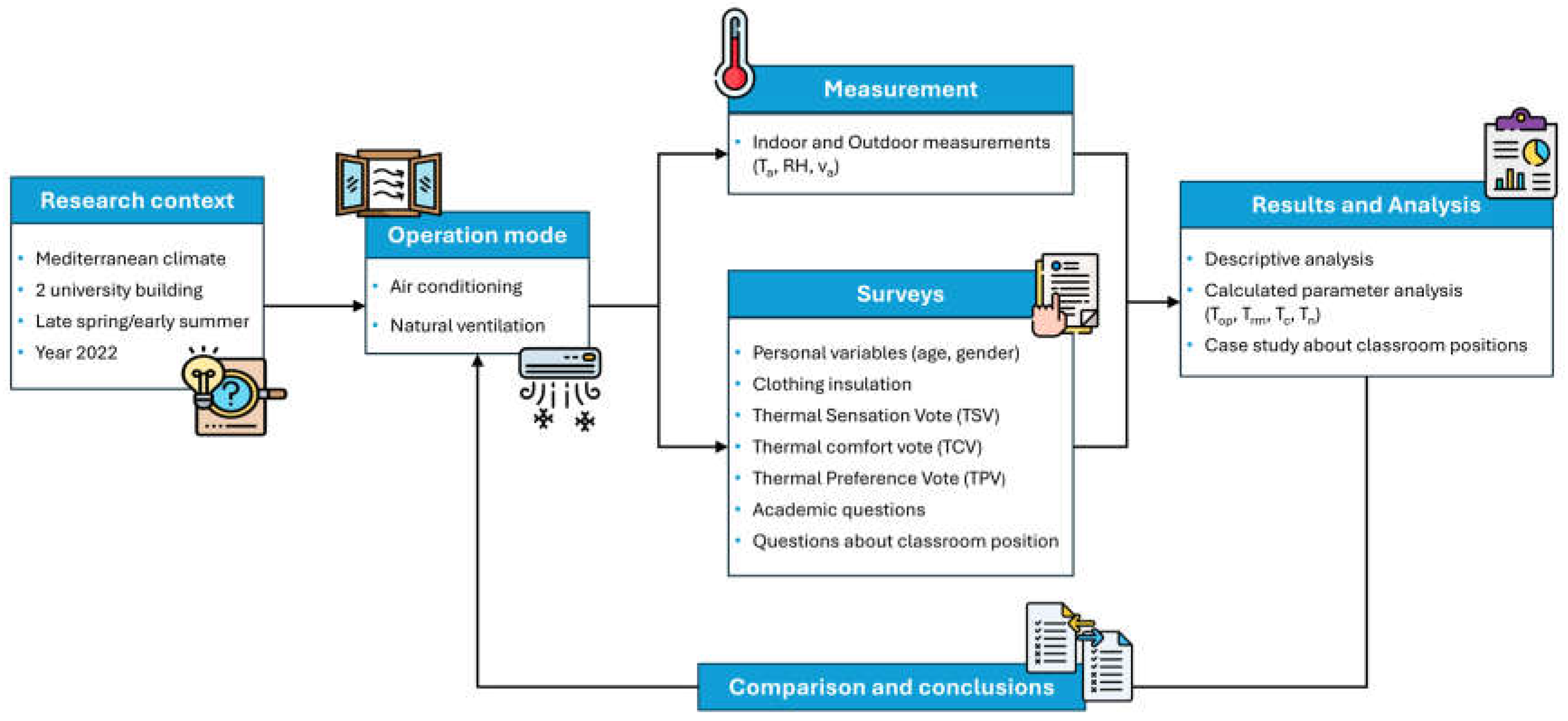
Figure 2.
Average monthly climate data for Beja in the year 2022.
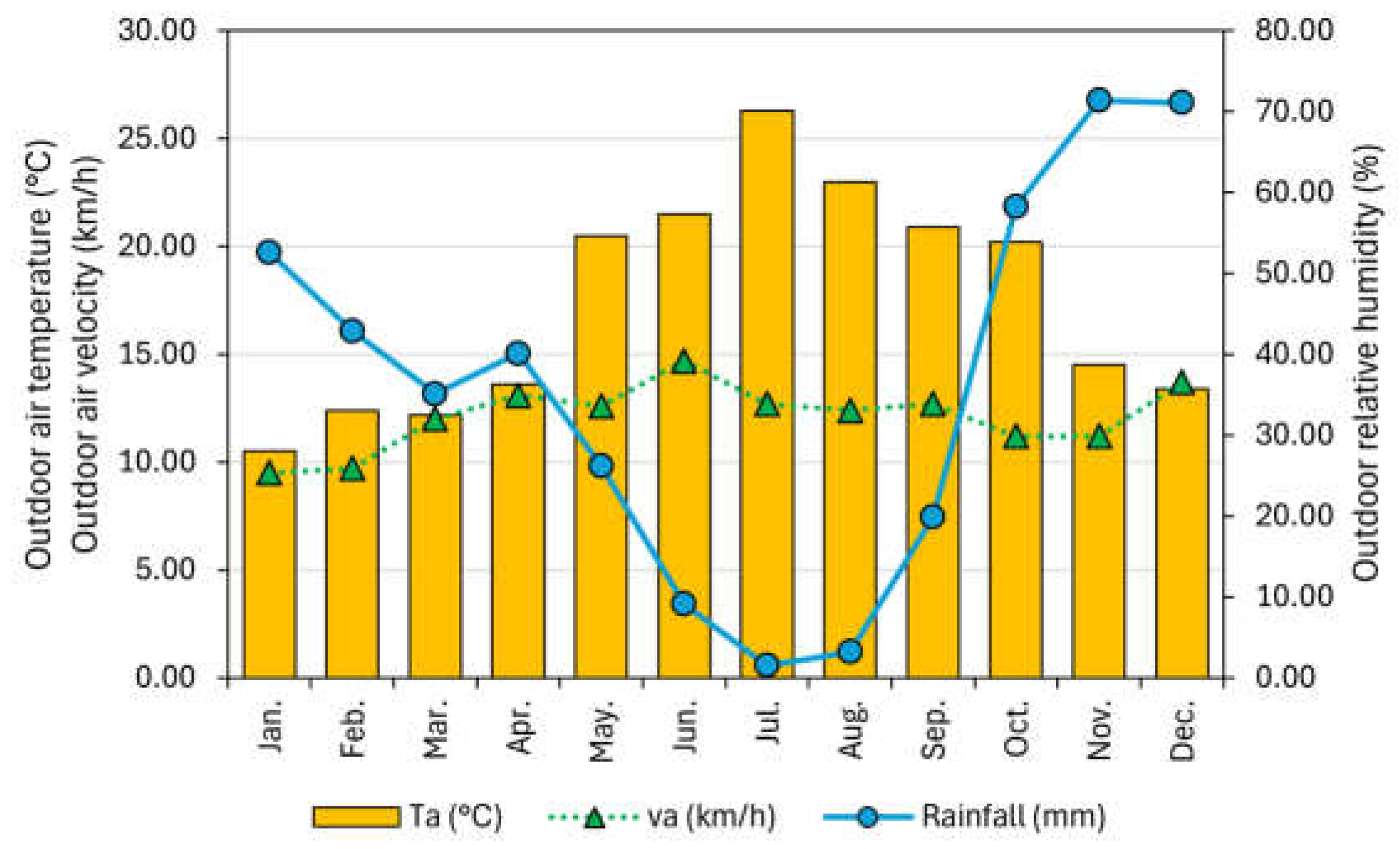
Figure 3.
(a) Location of study; (b) Higher School of Education; (c) Higher School of Health.
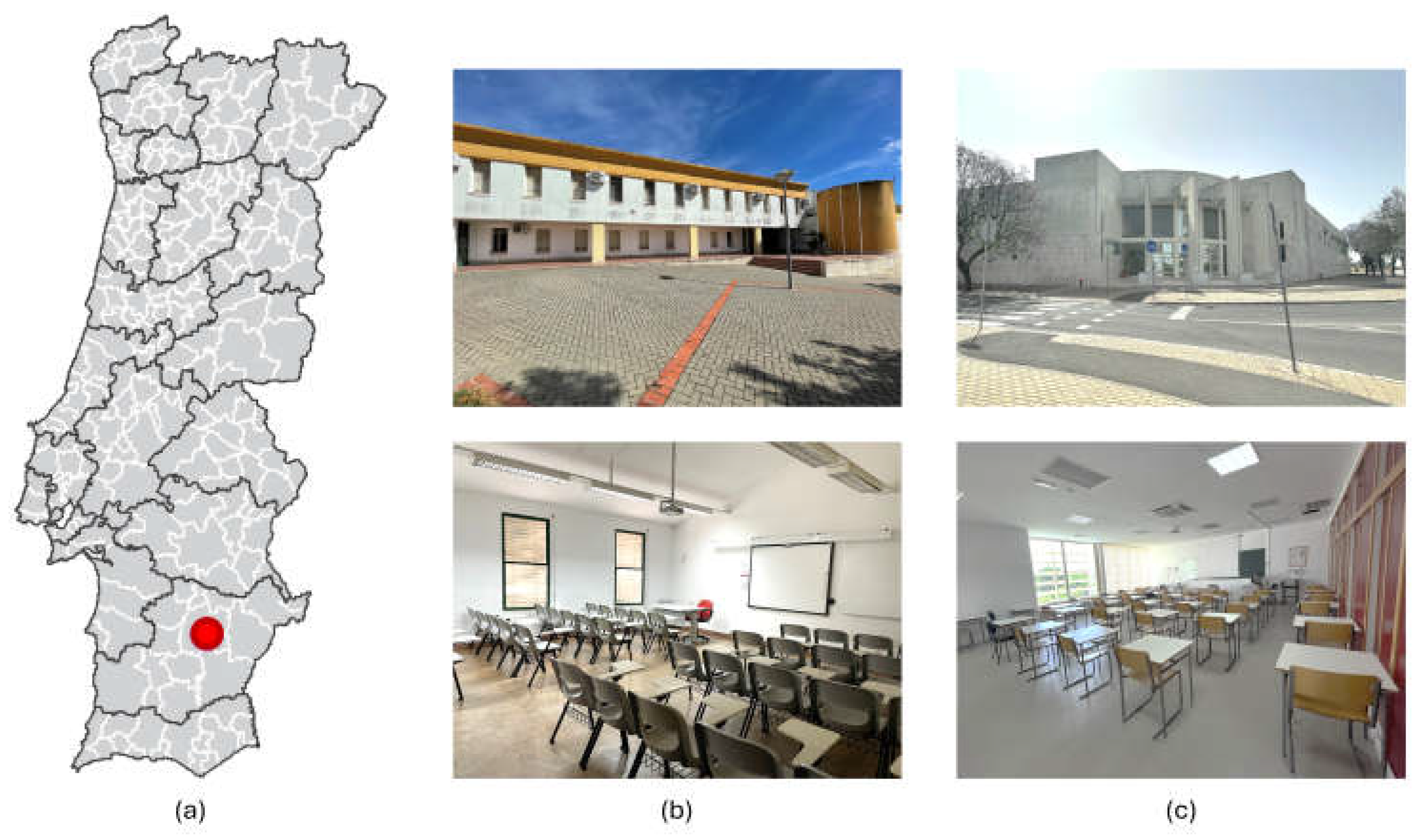
Figure 4.
Cross-tabulation of thermal comfort votes on thermal sensation scale for (a) AC mode and (b) NV mode.
Figure 4.
Cross-tabulation of thermal comfort votes on thermal sensation scale for (a) AC mode and (b) NV mode.
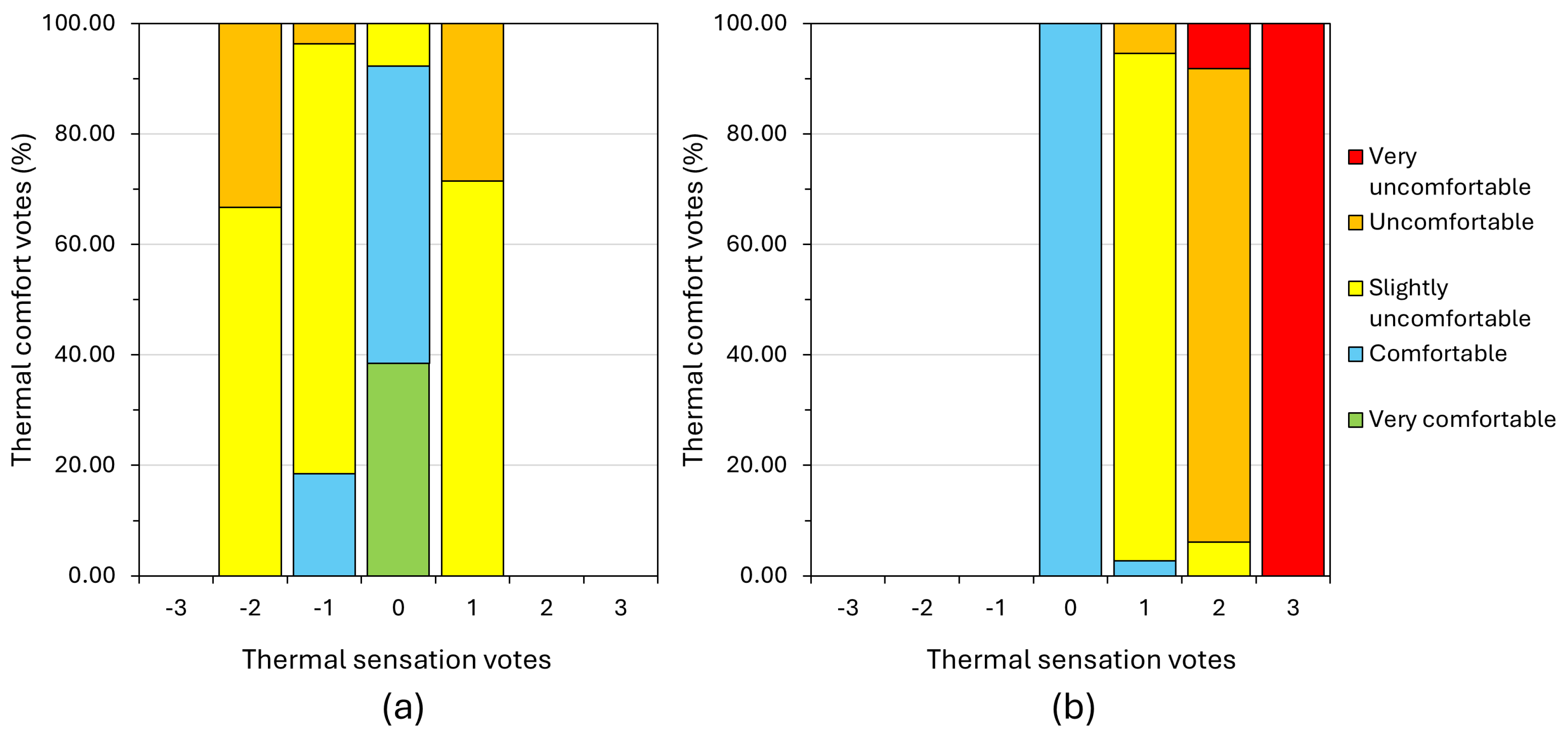
Figure 5.
Cross-tabulation of thermal preference votes on thermal sensation scale for (a) AC mode and (b) NV mode.
Figure 5.
Cross-tabulation of thermal preference votes on thermal sensation scale for (a) AC mode and (b) NV mode.
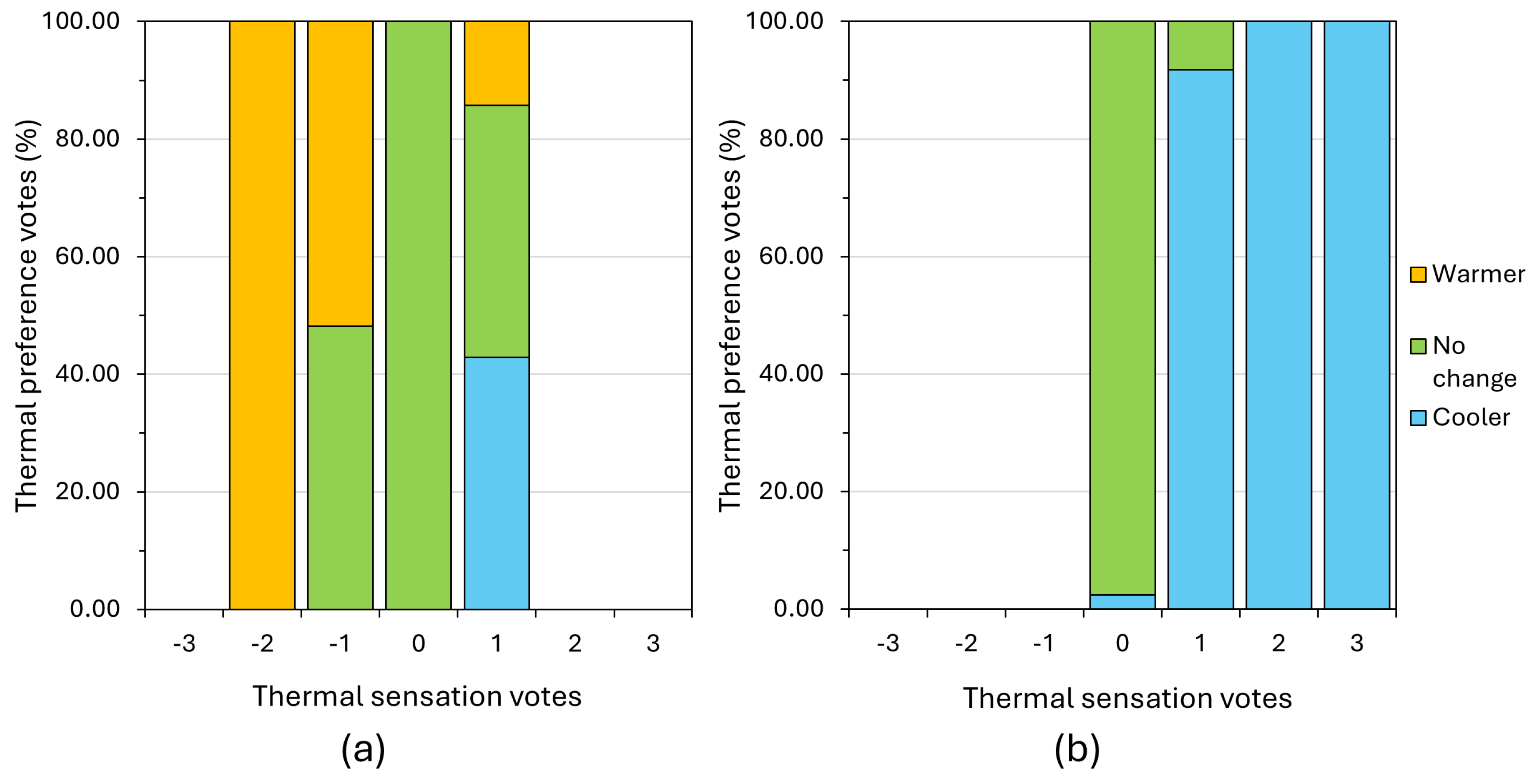
Figure 6.
Linear regression between the thermal sensation vote and operating temperature in (a) AC mode and (b) NV mode.
Figure 6.
Linear regression between the thermal sensation vote and operating temperature in (a) AC mode and (b) NV mode.
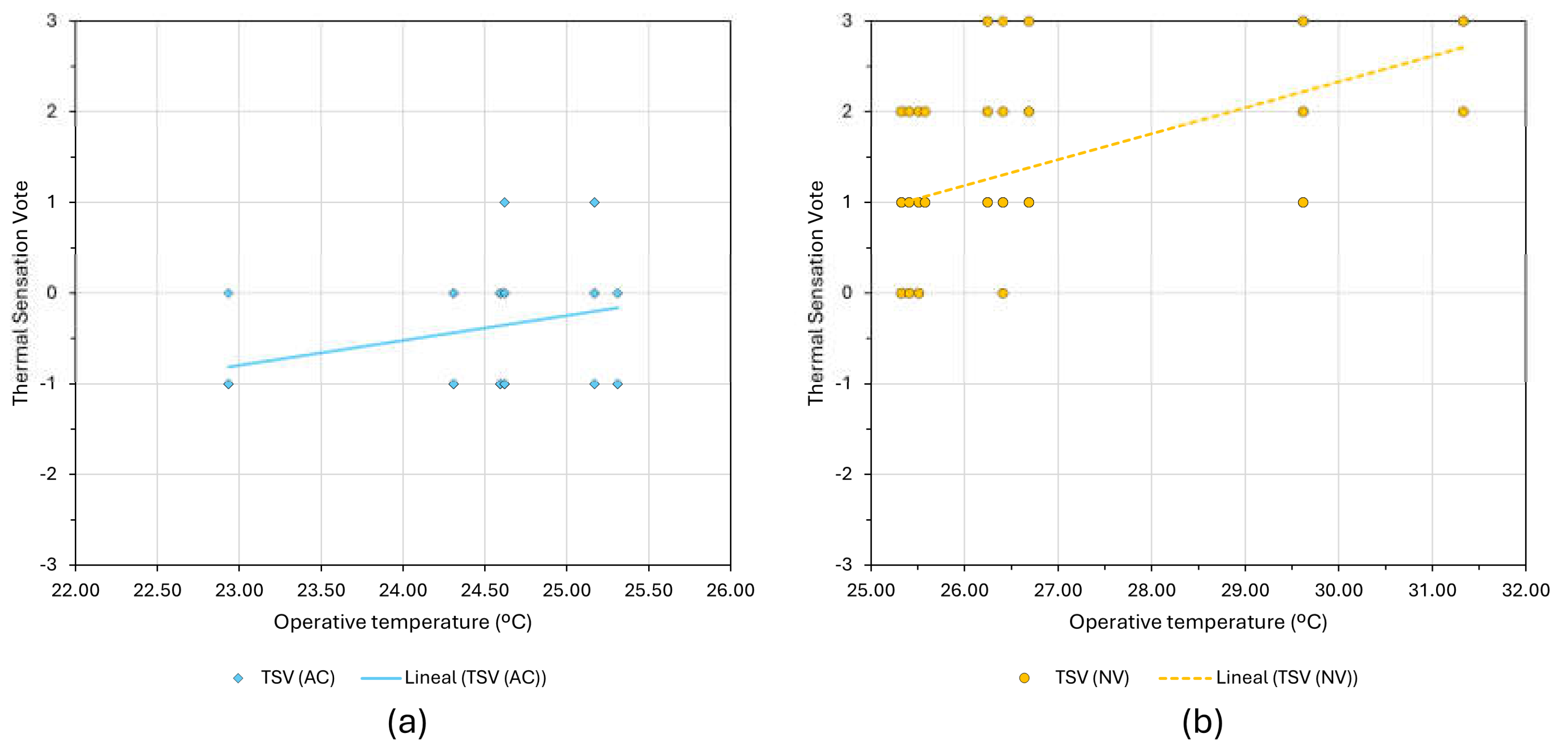
Figure 7.
Adaptive thermal comfort model for AC and NV mode.
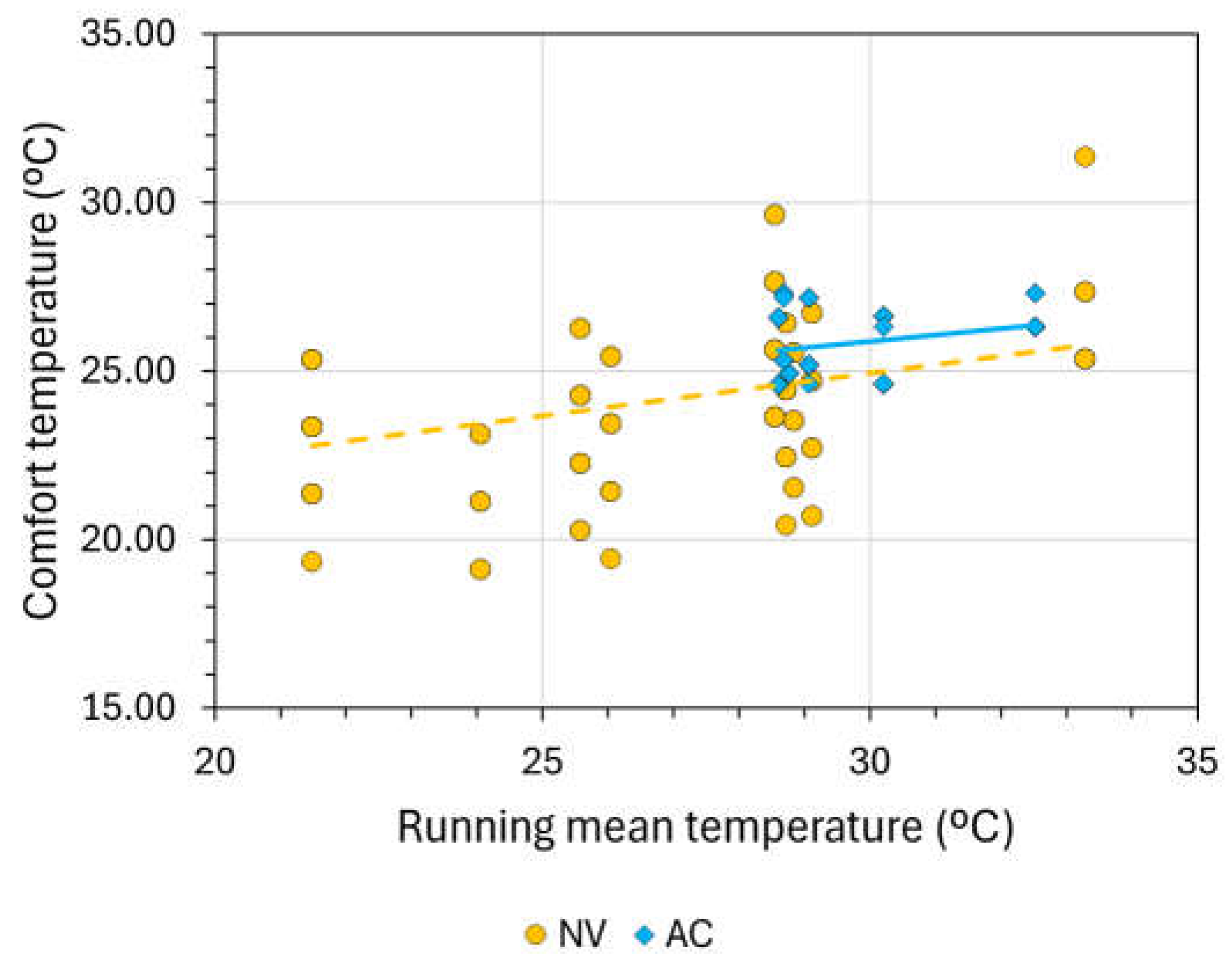
Figure 8.
Comfort temperature distribution according to operating mode (NV and AC).
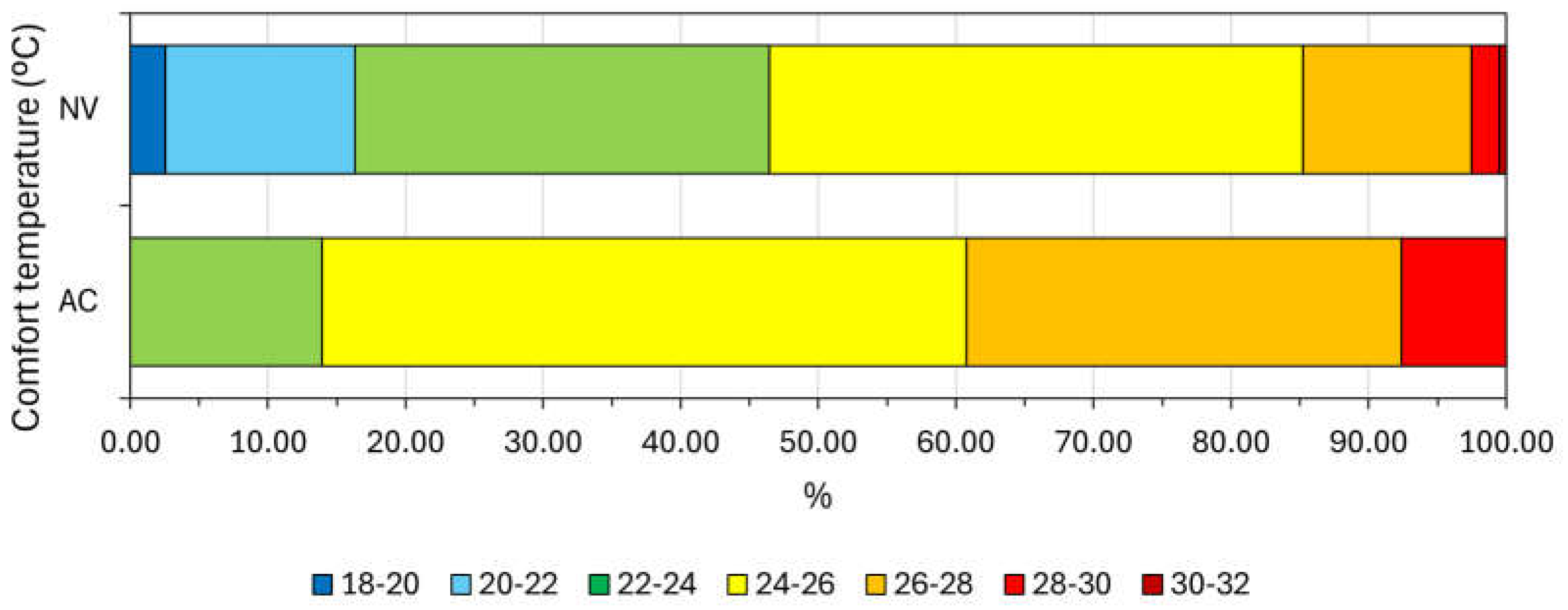
Figure 9.
Comparison of the adaptive thermal comfort model with standards: (a) NV mode and ASHRAE Standard 55, (b) NV mode and EN 16798-1:2020, and (c) AC mode and CIBSE guide.
Figure 9.
Comparison of the adaptive thermal comfort model with standards: (a) NV mode and ASHRAE Standard 55, (b) NV mode and EN 16798-1:2020, and (c) AC mode and CIBSE guide.
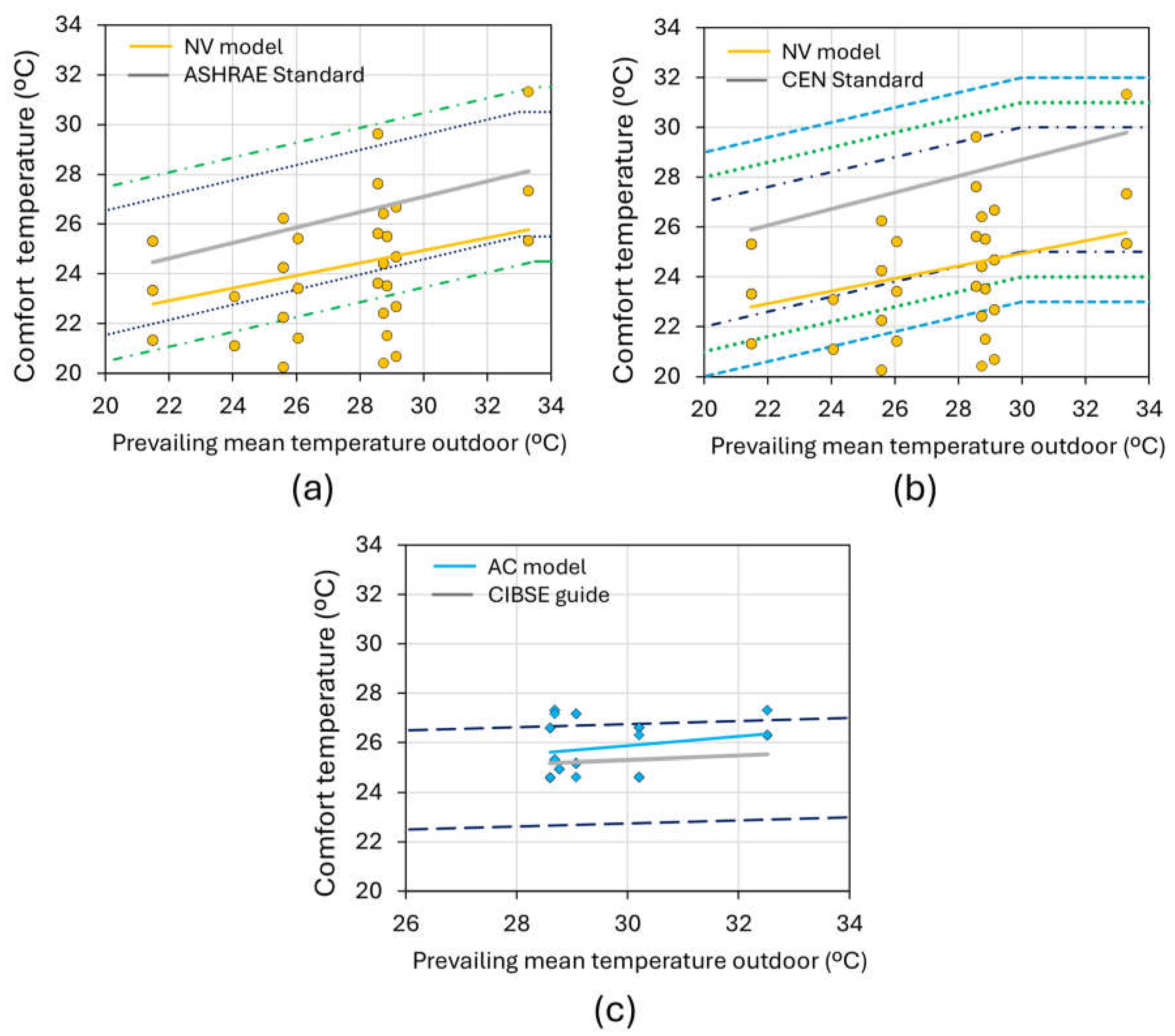
Figure 10.
Effect of thermal discomfort on class performance in AC and NV modes of operation.
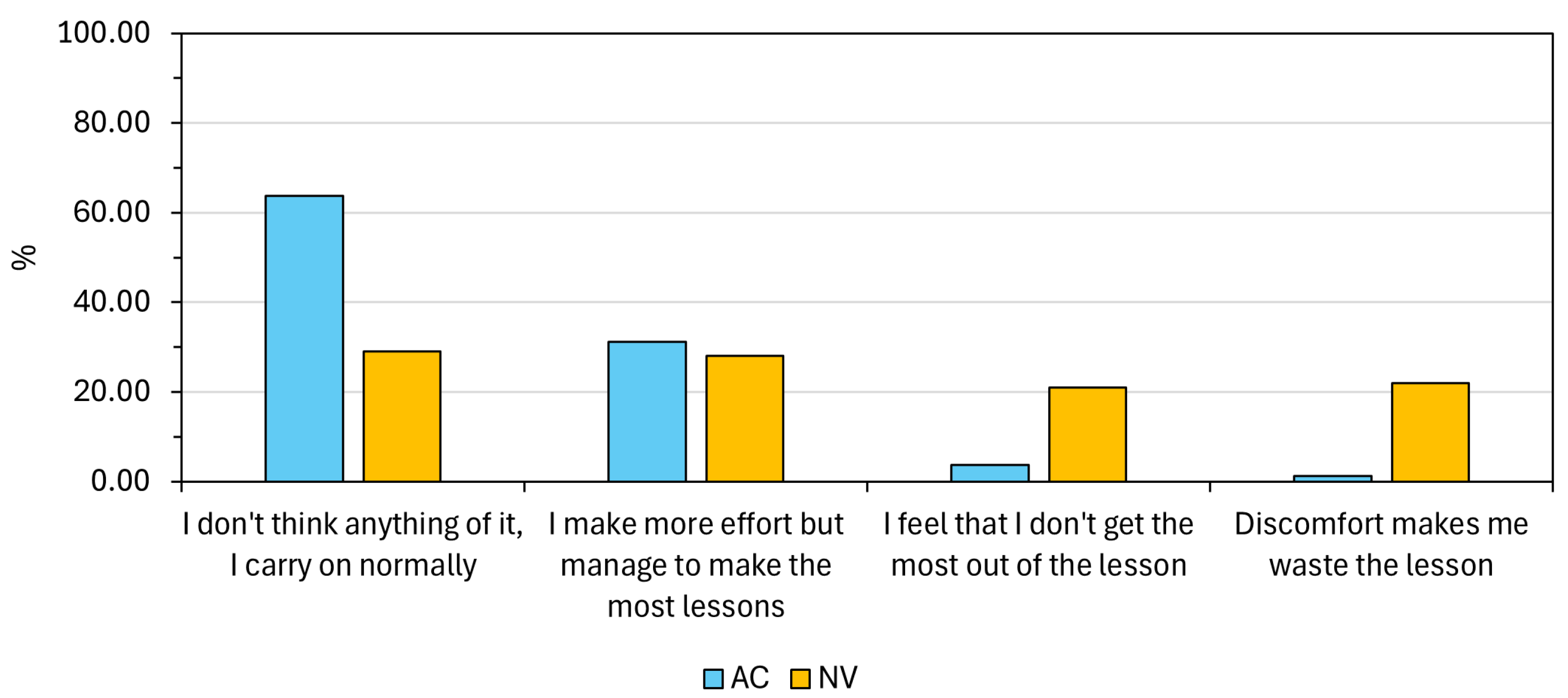
Figure 11.
Students' communicative actions in response to thermal discomfort in AC and NV modes of operation.
Figure 11.
Students' communicative actions in response to thermal discomfort in AC and NV modes of operation.
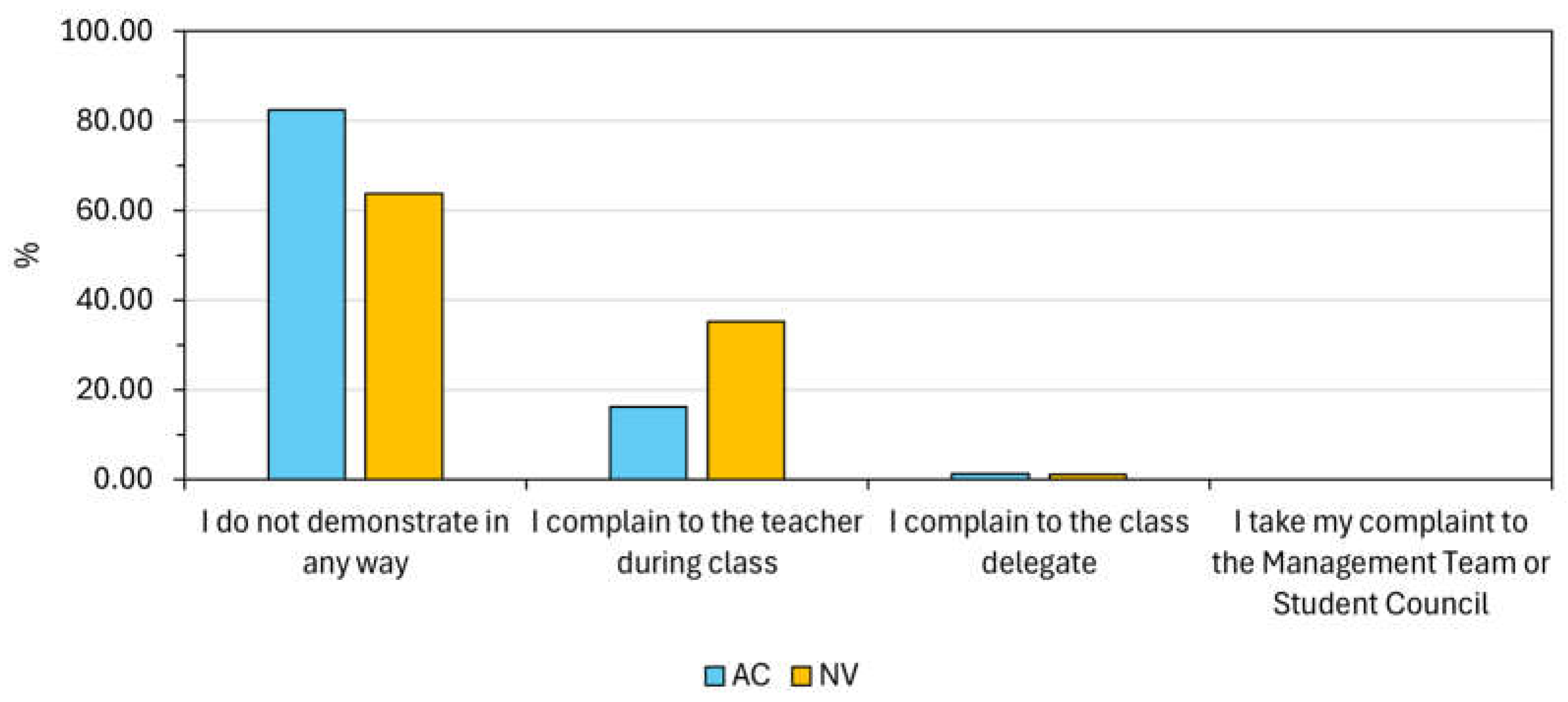
Figure 12.
Distribution of TSVs, according to position and level of clothing in classrooms with AC.
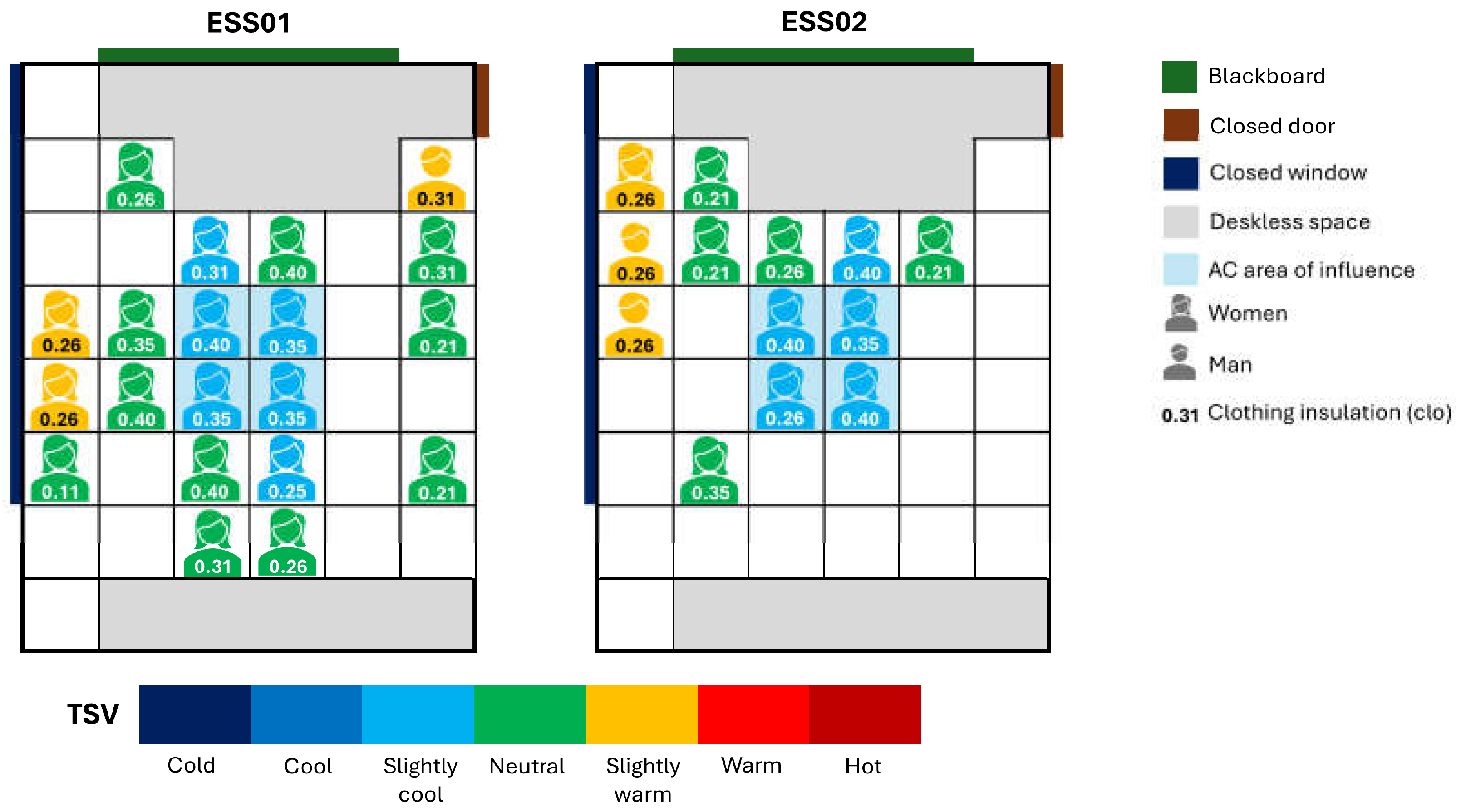
Figure 13.
Distribution of TSVs, according to position and level of clothing in classrooms with NV.
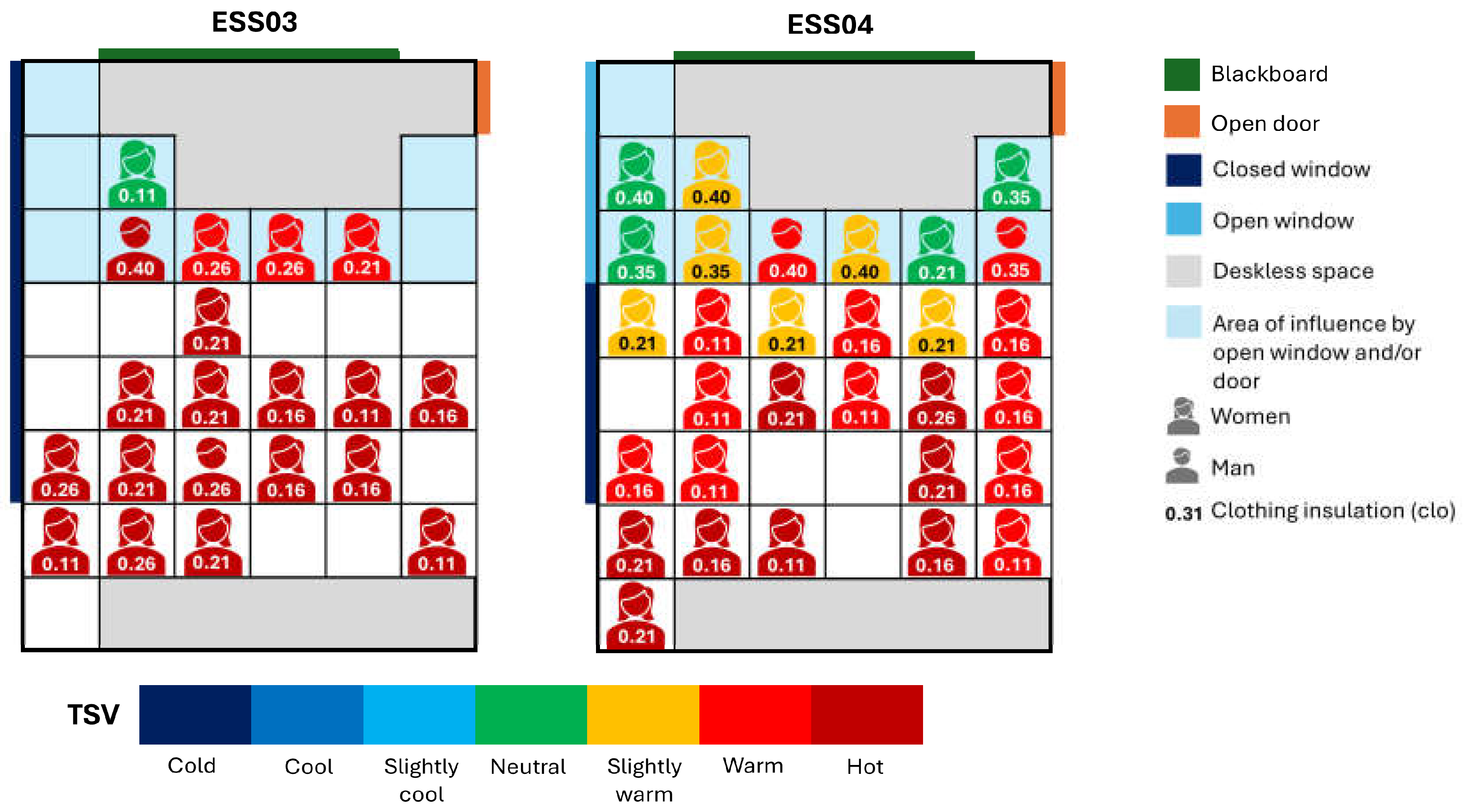
Table 1.
Summary of the classrooms in the study.
| University | No. of classrooms studied | No. of students | Operation mode | |
|---|---|---|---|---|
| Max. | Min. | |||
| ESE | 7 | 42 | 9 | NV |
| 4 | 17 | 6 | AC | |
| ESS | 2 | 30 | 20 | NV |
| 2 | 20 | 13 | AC | |
Table 2.
Subjective thermal comfort scales.
| Scale | Thermal Sensation (TS) | Thermal Comfort (TC) | Thermal Preference (TP) |
|---|---|---|---|
| -3 | Cold | ||
| -2 | Cool | ||
| -1 | Slightly cool | Cooler | |
| 0 | Neutral | No change | |
| 1 | Slightly warm | Very comfortable | Warmer |
| 2 | Warm | Comfortable | |
| 3 | Hot | Slightly uncomfortable | |
| 4 | Uncomfortable | ||
| 5 | Very uncomfortable |
Table 3.
Specification of the equipment and probes used.
| Equipment | Parameter | Probe | Range | Accuracy |
|---|---|---|---|---|
| Thermal microclimate HD32.1 instrument (Delta Ohm) |
Ta (°C) | HP3217R | -40 to 100°C | 1.5+1.5% measure (15 to 35°C) |
| Tg (°C) | TP3275 | -30 to 120°C | ||
| RH (%) | HP3217R | 0 to 100% RH | ±1.5% RH (0 to 90% RH) ±2%RH (90 to 100% RH) |
|
| va (m/s) | AP3203 | 0.02 to 5 m/s |
Table 4.
Subject information.
| University | Sample | Gender | Age | Iclo (clo) | Activity (W/m2) | ||||
|---|---|---|---|---|---|---|---|---|---|
| Male | Female | Other | 18-24 | 24-30 | +30 | ||||
| ESE | 191 | 85 | 105 | 1 | 160 | 27 | 4 | 0.33 | 70.00 |
| ESS | 83 | 6 | 77 | 0 | 72 | 8 | 3 | 0.25 | |
Table 5.
Summary of outdoor conditions.
| Air temperature (°C) | Relative humidity (%) | Air velocity (km/h) | |
|---|---|---|---|
| Mean | 28.24 | 50.62 | 12.80 |
| SD | 2.99 | 10.91 | 2.08 |
| Max | 33.29 | 76.15 | 16.38 |
| Min | 21.49 | 33.33 | 9.49 |
Table 6.
Summary of indoor conditions.
| University | Classroom code | N | Windows/Doors | Operation mode | Ta (°C) |
Tg (°C) |
Tmrt (°C) |
Top (°C) |
RH (%) |
va (m/s) |
|---|---|---|---|---|---|---|---|---|---|---|
| ESE | ESE01 | 16 | CW/OD | NV | 26.14 | 25.56 | 24.88 | 25.51 | 48.96 | 0.03 |
| ESE02 | 19 | OW/OD | NV | 27.03 | 26.22 | 25.79 | 26.41 | 33.99 | 0.08 | |
| ESE03 | 21 | OW/OD | NV | 27.32 | 26.49 | 26.06 | 26.69 | 32.75 | 0.07 | |
| ESE04 | 6 | CW/CD | AC | 22.38 | 22.82 | 23.49 | 22.94 | 48.02 | 0.01 | |
| ESE05 | 42 | OW/OD | NV | 25.39 | 25.29 | 25.26 | 25.33 | 57.54 | 0.04 | |
| ESE06 | 10 | CW/OD | NV | 25.59 | 25.56 | 25.57 | 25.58 | 51.60 | 0.00 | |
| ESE07 | 24 | CW/OD | NV | 26.69 | 26.28 | 25.80 | 26.25 | 63.11 | 0.04 | |
| ESE08 | 13 | CW/OD | NV | 25.57 | 25.31 | 25.25 | 25.41 | 53.22 | 0.01 | |
| ESE09 | 17 | CW/CD | AC | 24.95 | 24.42 | 24.24 | 24.60 | 59.44 | 0.00 | |
| ESE10 | 9 | CW/CD | AC | 24.96 | 25.29 | 24.66 | 24.80 | 59.36 | 0.00 | |
| ESE11 | 14 | CW/CD | AC | 24.48 | 26.19 | 24.86 | 25.17 | 53.44 | 0.01 | |
| ESS | ESS01 | 20 | CW/CD | AC | 24.67 | 24.59 | 24.57 | 24.62 | 47.00 | 0.02 |
| ESS02 | 13 | CW/CD | AC | 24.47 | 24.27 | 24.15 | 24.31 | 38.67 | 0.00 | |
| ESS03 | 20 | CW/OD | NV | 31.24 | 31.33 | 31.42 | 31.33 | 39.40 | 0.05 | |
| ESS04 | 30 | CW/OD | NV | 29.73 | 29.63 | 29.51 | 29.62 | 48.74 | 0.08 |
Table 9.
Comfort temperature based on the Griffiths method for AC and NV operation mode.
| Operation mode | N | Tc (°C) | ||
|---|---|---|---|---|
| α=0.25 | α=0.33 | α=0.50 | ||
| AC | 79 | 26.23 (±3.18) | 25.84 (±2.46) | 25.42 (±1.71) |
| NV | 195 | 21.42 (±3.52) | 22.74 (±2.76) | 24.14 (±2.15) |
Disclaimer/Publisher’s Note: The statements, opinions and data contained in all publications are solely those of the individual author(s) and contributor(s) and not of MDPI and/or the editor(s). MDPI and/or the editor(s) disclaim responsibility for any injury to people or property resulting from any ideas, methods, instructions or products referred to in the content. |
© 2025 by the authors. Licensee MDPI, Basel, Switzerland. This article is an open access article distributed under the terms and conditions of the Creative Commons Attribution (CC BY) license (http://creativecommons.org/licenses/by/4.0/).
Copyright: This open access article is published under a Creative Commons CC BY 4.0 license, which permit the free download, distribution, and reuse, provided that the author and preprint are cited in any reuse.


