Preprint
Article

This version is not peer-reviewed.

Polymer Composite Films with P(VDF-TrFE) and Molecular Ferroelectric Tri(hydroxymethyl) Nitromethane: Their Ferroelectric and Dielectric Properties

A peer-reviewed article of this preprint also exists.

Submitted:

23 December 2024

Posted:

24 December 2024

You are already at the latest version

Abstract

Polymer composites of P(VDF-TrFE) and Tri(hydroxymethyl) nitromethane as filler material with different concentrations have been prepared. Tri(hydroxymethyl) nitromethane is an organic ferroe-lectric material with low preparation cost, lightweight, and easy processing. Its properties enable it to be a potential candidate for use as filler material in polymers to improve their ferroelectric, dielec-tric, and piezoelectric properties. We investigated the effect of filler content on the ferroelectric and dielectric properties of the polymer. Our results show that Tri(hydroxymethyl) nitromethane retains its crystallinity after embedding it in the polymer matrix. It does not alter the crystalline ferroelectric β-phase of the polymer. All composites possess higher polarization compared to pure P(VDF-TrFE). Up to 11.4 µC/ cm2 remnant polarization and a dielectric constant of 14 at 1000 Hz have been ob-tained with the free-standing 10 wt% composite film.

Keywords: 
;  ;  ;  ;  

1. Introduction

Polymer composites can fill the application gap where ceramics and other materials do not fulfil the device requirements. They possess advantages like flexibility, toughness, light weight, and high dielectric breakdown strength. Polymer composites enable the utilization of the combined advantages of the polymer matrix and the filler material and are used in different fields. Among polymers for energy applications, P(VDF-TrFE) is one of the most investigated ones due to its chemical stability, biocompatibility, ferroelectric nature, large spontaneous polarization, and low leakage current. Ferroelectric β-phase P(VDF-TrFE) is a semi-crystalline material with an amorphous matrix where the fluorine atoms form polar point groups in the molecule, which is the basis requirement for ferroelectricity. It finds applications in energy harvesters, sensors, batteries, non-volatile random access memory, transistors, tissue engineering, among others, etc. [1,2,3]. One way to improve its chemical or physical properties is the preparation of polymer composites. Intensive research has been performed by preparing P(VDF-TrFE) composites with functional fillers. The used filler materials are mostly inorganic ceramic particles like BaTiO3, PZT (lead zirconate titanate), and others. [2,4] but their preparation includes high-temperature calcination steps, which are controversial in the global demand for CO2 reduction. In this sense, using organic single-component ferroelectrics (molecular ferroelectrics) as filler material becomes a potential alternative. Organic single-component materials are attracting more research interest due to their easy process ability, low-cost preparation, biocompatibility, homo-chirality, and tunable chemical structure. In recent years, many organic single-component ferroelectric materials with excellent properties have been reported [5,6,7,8], namely pure organic compounds and hybrid organic-inorganic compounds. Few contributions of polymer composites with molecular ferroelectrics can be found in the literature. Recently, researchers prepared P(VDF-TrFE)/MDABCO-NH4I3 composites and found an increase in the relative permittivity and remnant polarization compared to the pure polymer [9]. Also, Baptista et al. fabricated different MDABCO-NH4I3/polymer composites as potential flexible energy harvesters [10]. Ai et al. reported the properties of an interesting molecular ferroelectric, namely 2-(Hydroxymethyl)-2-nitro-1,3-propanediol (Tri(hydroxymethyl) nitromethane, THNM) [11] with a Curie temperature at around 362 K. The molecules of this compound are loosely connected to each other by hydrogen bonds formed between their hydroxyl groups. Its ferroelectricity originates from the alignment of C-N bonds in the crystal structure. It possesses a 6-fold vertex domain structure, good piezoelectric properties, and multiple crystallographic equivalent polarization directions. Materials with several polarization directions are strong candidates for thin film applications and filler material in polymer composites. Combining THNM and P(VDF-TrFE), new metal-free composites with improved ferroelectric, dielectric, and piezoelectric properties can be prepared.
The present study use the solution casting method to prepare flexible organic ferroelectric composite films based on THNM with P(VDF-TrFE) as a polymer matrix. We investigated the film morphology, crystallinity, and the ferroelectric-, and dielectric properties.

2. Materials and Methods

Commercial tri(hydroxymethyl) nitromethane (THNM, Sigma Aldrich 98% purity) was recrystallized in methanol before its use as polymer filler. Free-standing composite films were prepared by mixing P(VDF-TrFE) (Piezotec FC30) and THNM (previously dissolved separately in a DMSO/ acetone mixture) at room temperature. The mixture was stirred briefly and cast onto a glass substrate. The glass substrate was heated and kept at 60 °C for 4 hours on a hot plate. Then, it was heated further and kept at 100 °C for 8 h in a vacuum oven at 100 mbar. After natural cooling, the polymer film was carefully removed from the glass substrate. Silver electrodes were sputtered onto both sides of the films (Cressington 208 HR Turbo-Sputter Coater). A Solartron 1260 Impedance Analyser was used for dielectric measurements and aixACCT Systems (TF Analyzer 3000) for polarization measurements (bipolar triangular waveform). An electron microscope (Philips XL 30) and a digital microscope (Keyence VHX-7000) were used for the film morphology analysis. Material phase analysis was performed by XRD using a Panalytical Empyrean diffractometer (Cu Kα radiation). A Linseis calorimeter was used for the DSC analysis.

3. Results and Discussion

3.1. Analytical Characterization

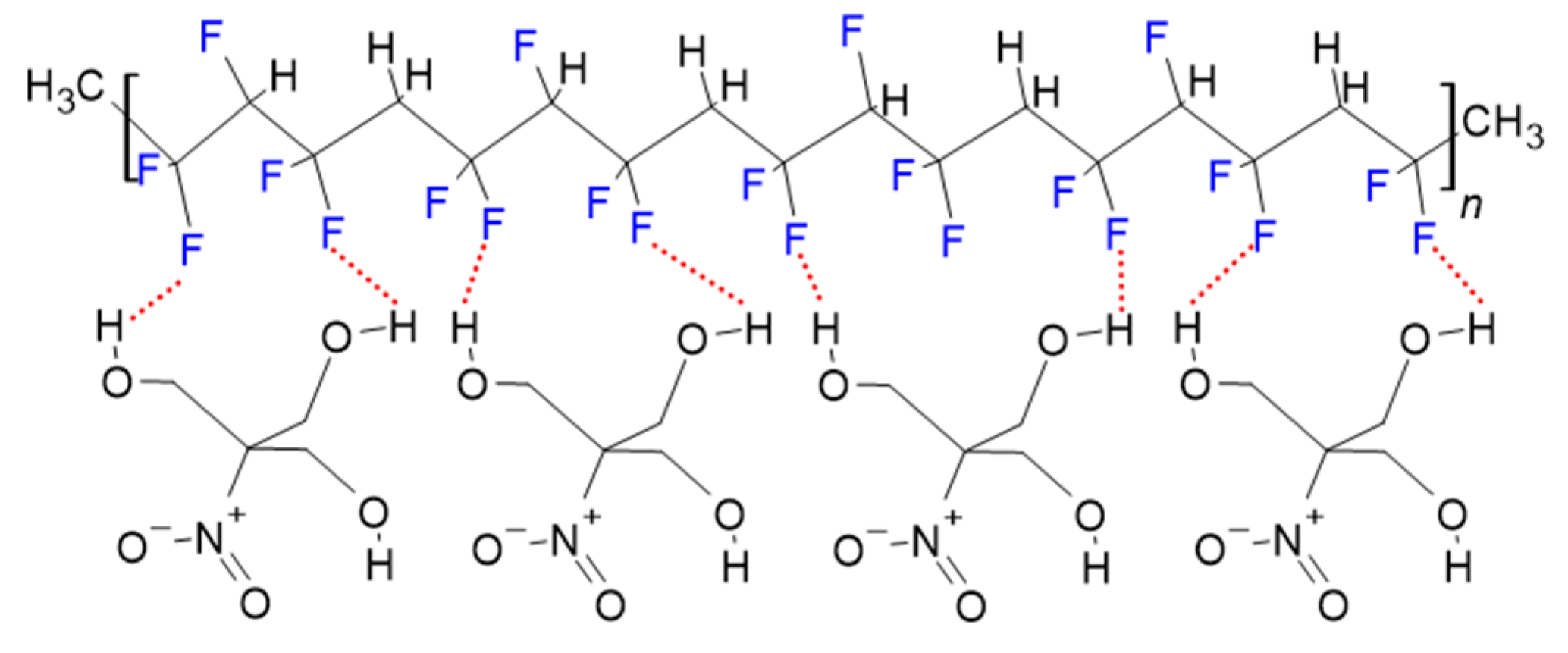
The morphology of the films was investigated using a scanning electron microscope (SEM) and a digital microscope in transmission mode. The images are shown in Figure 1. The polymer films show characteristics of dendrite-like structures on the surface (Figure 1 a, b) that are typical of this polymer [4,12]. Transmission images of the composites (Figure 1 c, d) show that the THNM filler is homogeneous distributed in the polymer matrix. These dots are different in size, from 8 to <1 µm diameter, and have a low connection area between them. Due to the presence of fluorine atoms and hydroxyl groups in the polymer and the filler material, hydrogen bonds between these groups are formed (-F---HO-). This strong interaction between the THNM and the polymer matrix guarantees interface compatibility (Figure 2). This characteristic is advantageous when compared with inorganic filler materials with no interface compatibility to polymers. No macroscopic cracks have been found in all films, having flexibility and mechanical stability. The average film thickness was around 30-40 µm.
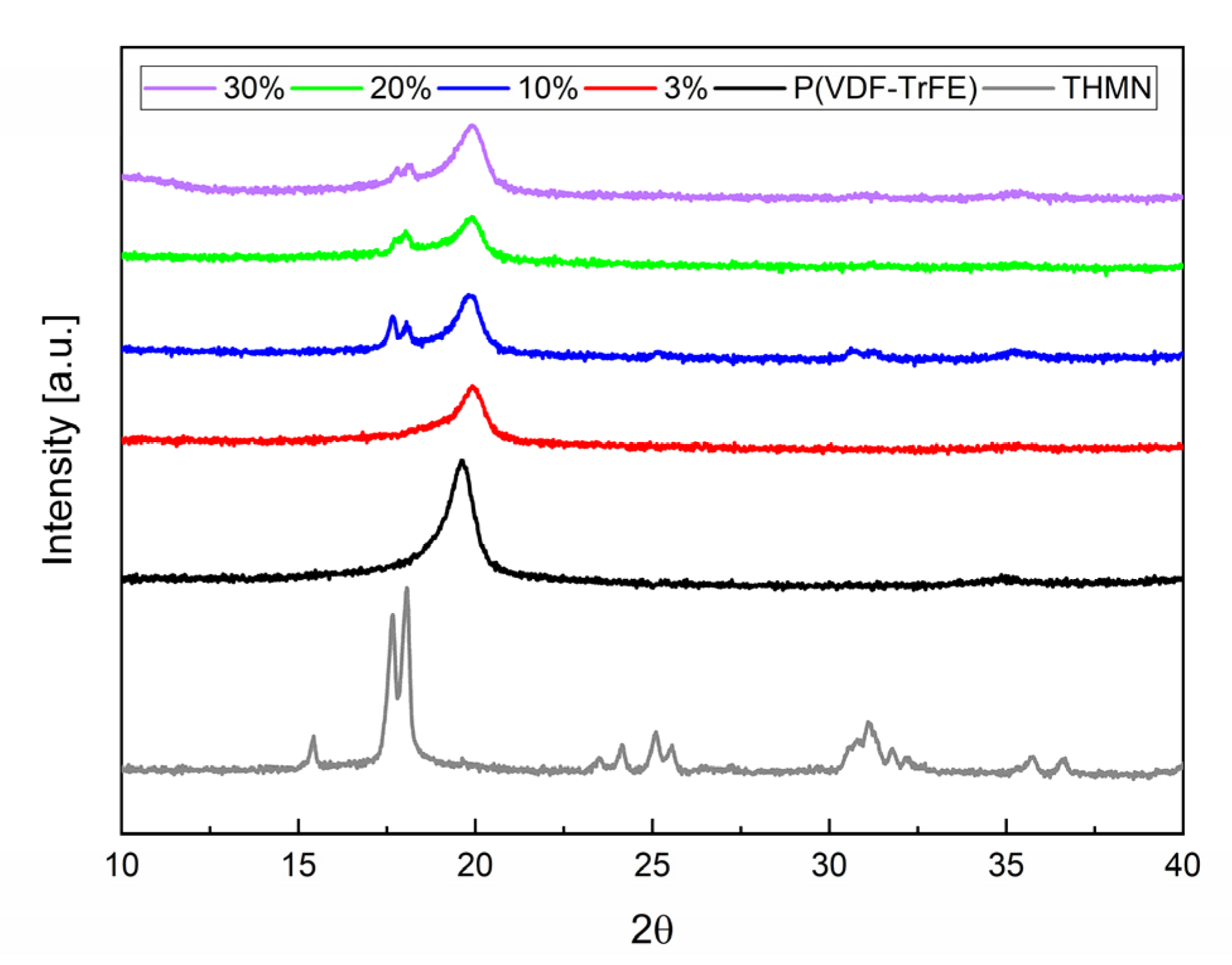
The crystallinity of the films was analyzed by XRD measurements (Figure 3). XRD-signals of THNM are intense, showing high crystalline behavior. It crystallizes in the triclinic system with the polar space group P1 and is not centrosymmetric [11]. Meanwhile, P(VDF-TrFE) possesses one main peak at around 19.5°, characteristic of the ferroelectric β –phase [12]. the composite diffractograms clearly show the main peaks of the P(VDF-TrFE) and the THNM filler at around 19° and 17.5° respectively, which means that the film preparation process does not affect the chemical stability and crystalline nature of both materials. This is an important fact since the THNM, whose molecules are connected only by hydrogen bonds, was dissolved together with the polymer in an organic solvent during the film preparation process, and it recrystallizes after evaporation of the solvent.
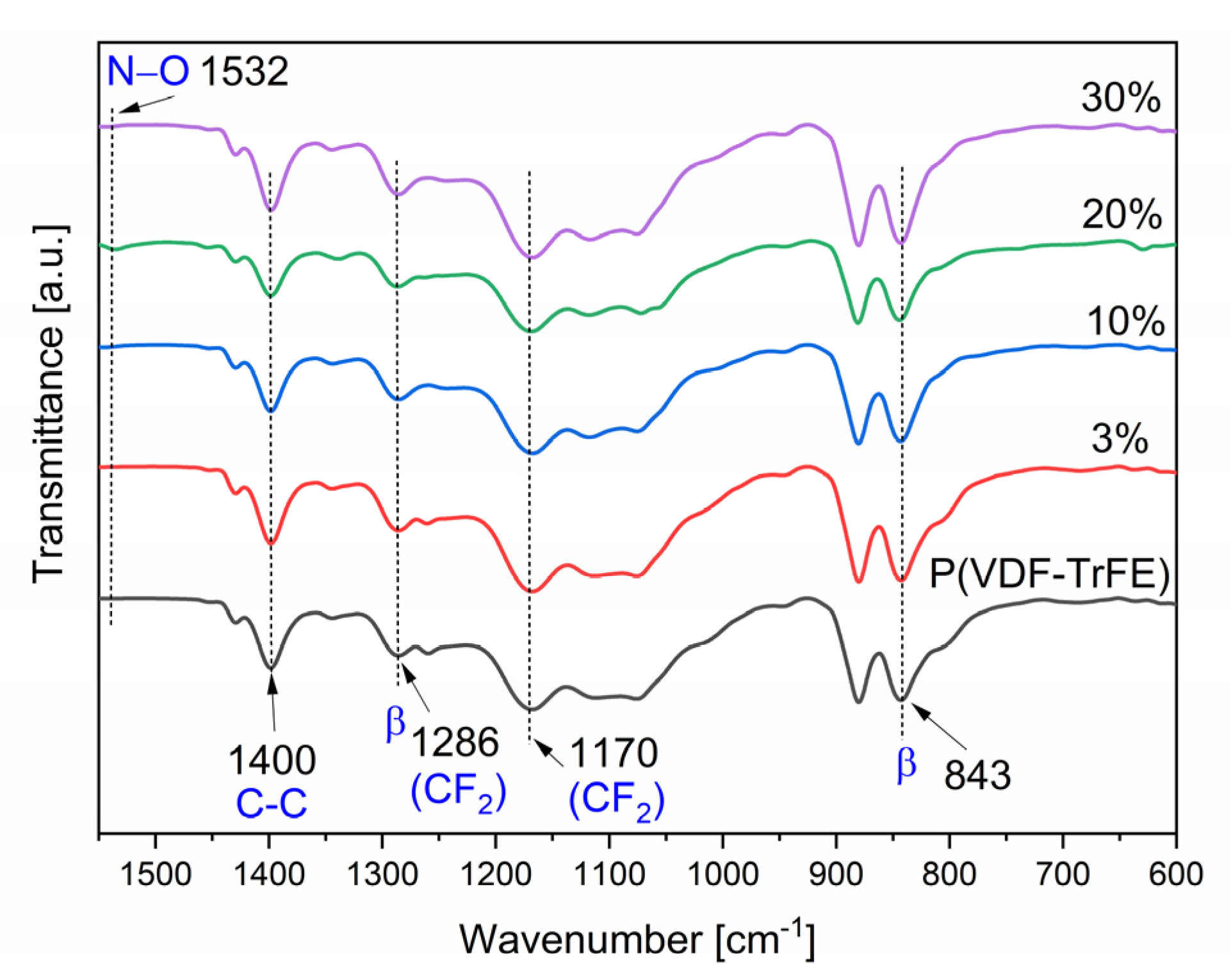
Filler inclusion in the P(VDF-TrFE) matrix to enhance the β-phase formation and increase the crystallinity has been a focus of many research works [12]. FTIR measurements were performed to prove the effect of THNM on the polymer β-phase (Figure 4). Characteristic peaks for the ferroelectric β-phase are 843 and 1286 cm-1. Both signals are associated with trans-isomer sequences longer than TTTT and TTT units, respectively [13,14]. The transmission peak at 1286 cm-1 corresponds to the symmetric stretching vibration of CF2 [15]. The peak at around 1170 cm-1 is characteristic of the antisymmetric stretching and rocking vibration of CF2 units [15]. The strong peak at 1400 cm-1 is related to the –CH2 wagging frequency [15]. These peaks are present in all spectra, confirming that the ferroelectric β-phase in the polymer remains after adding THNM. No clear enhancement of β-phase in the polymer can be seen from the FTIR data. The characteristic peak at 1532 cm-1 corresponds to N–O stretching vibration of the nitro group in THNM [16], which is absent in pure P(VDF-TrFE).
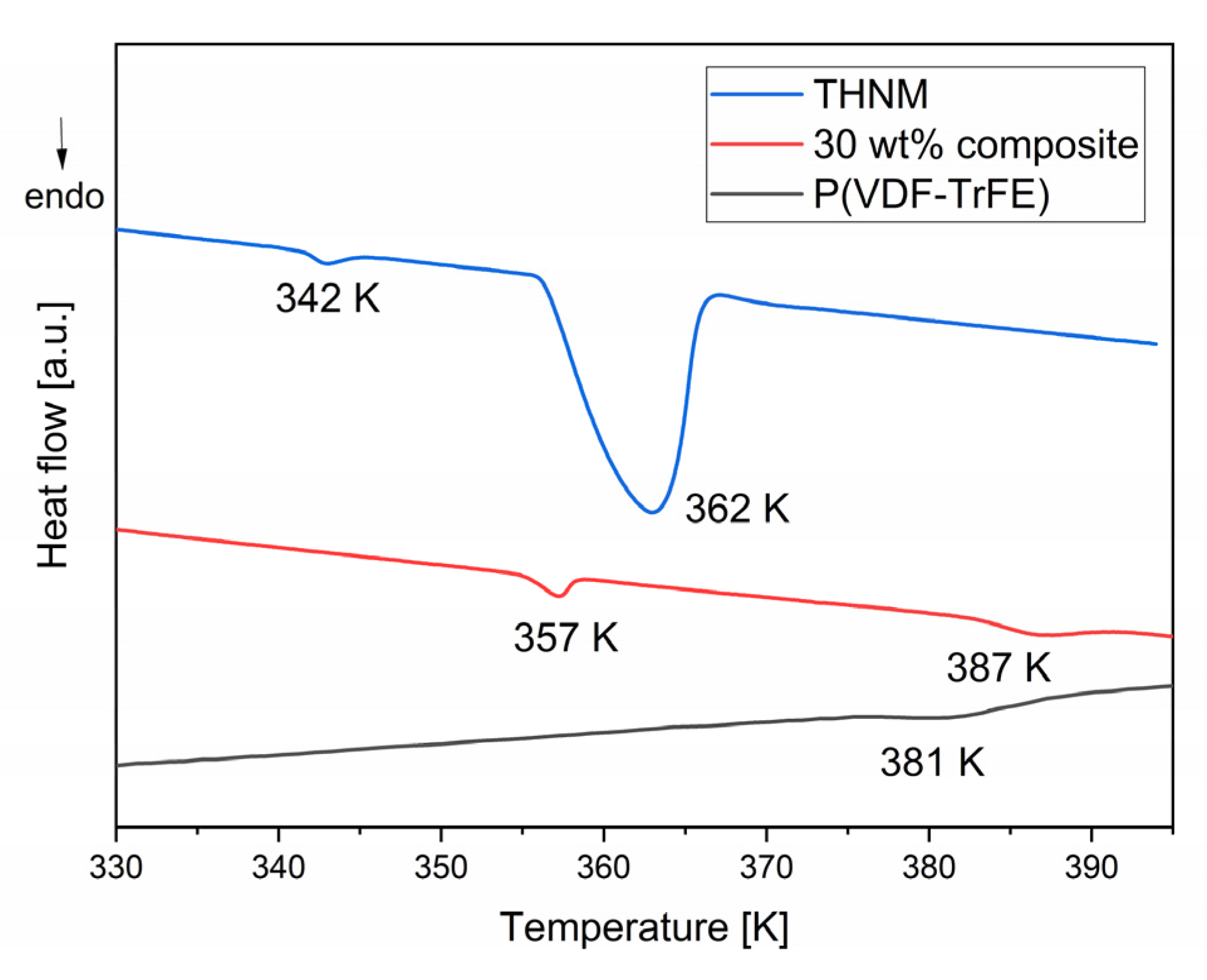
According to DSC measurements (Figure 5), THNM possesses two structural phase transitions at 342 K and 362 K. Ai et al. demonstrated that the ferroelectric–paraelectric phase transition is due to the change in degree of order-disorder of the THNM molecules. At a temperature higher than 362 K, the molecules freely rotate, yielding a highly symmetric structure with a face-centered cubic lattice. No polarization in any direction can be detected above this temperature. P(VDF-TrFE) has one phase transition at around 381 K, corresponding to its Curie temperature. Two characteristic peaks can be detected in the composites, at 357 K corresponding to THNM and 387 K, which can be attributed to the polymer phase transition.

3.2. Electrical Properties and Polarization

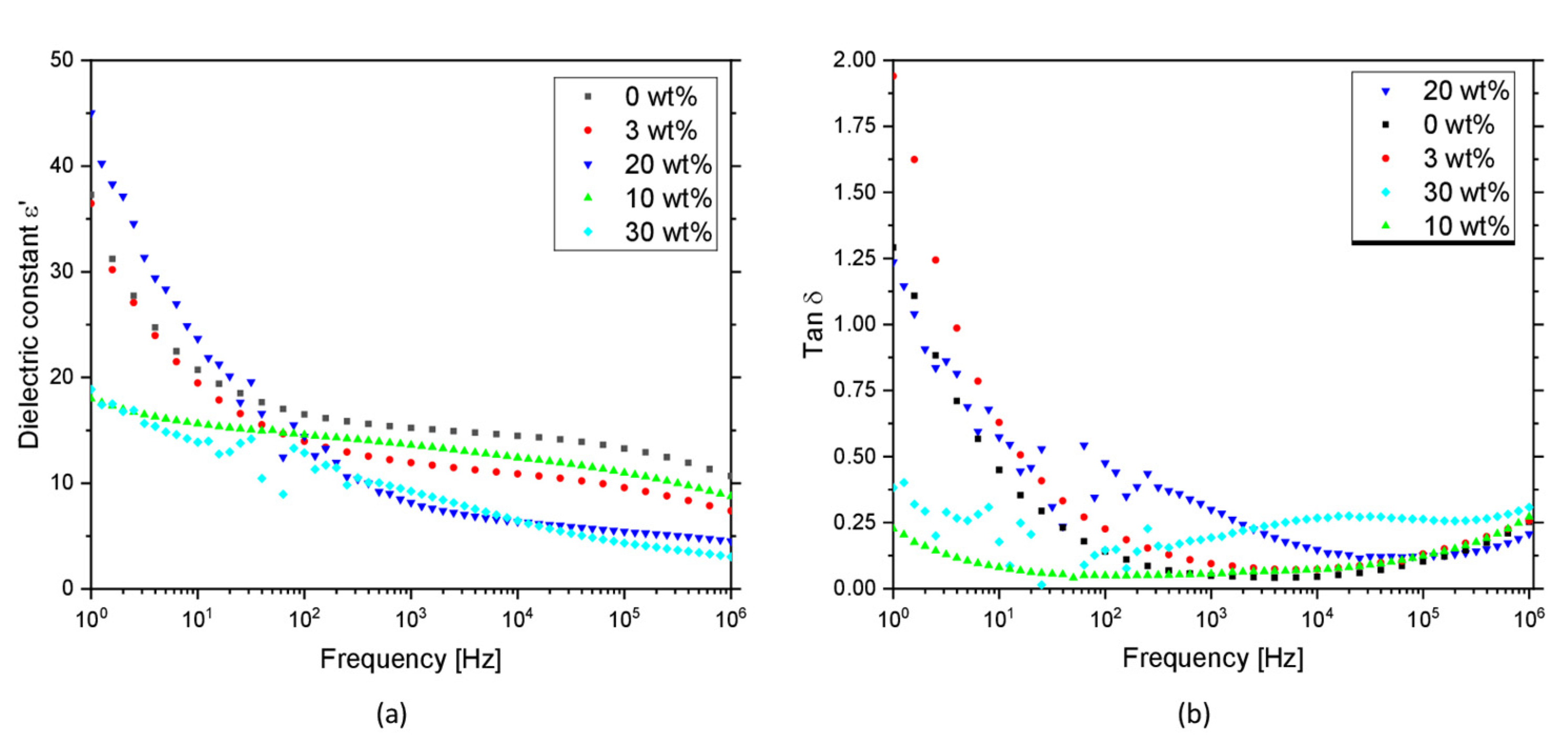
The composite system possesses different types of polarization. For multicomponent polymers, the Maxwell-Wagner relaxation generates interfacial polarization [17]. P(VDF-TrFE) and THNM are polar materials whose permanent dipoles rotate by applying an electric field generating dipole polarization. Additionally, all polymers show electron- and atomic (vibrational) polarization [17]. The dielectric constant at frequencies lower than 10 shows interfacial polarization mechanisms, while at frequencies below 109 Hz dipole polarization processes involve the movement of molecules. Figure 6a summarizes the results of the frequency dependence of the dielectric constant (ε’) at room temperature. The real part of the dielectric constant of the film ε’ decreases with increasing frequency, characteristic of composites with dipole- and interfacial polarization [17] and for a dipolar relaxation of the -CF2-CH2- groups in the polymer [18]. Adding THNM as filler material lowers the ε’ of the composites in comparison to pure P(VDF-TrFE); this effect can be attributed to the influence of the THNM filler, which has a lower ε’ than the polymer, its value is approximately 6 at room temperature [11]. The smooth values change under 10 Hz for 10 wt% and 30 wt% composite indicates that the interfacial polarization effect between filler and polymer matrix is low [18] due to the low ε’ difference between the filler and the polymer [17] and the hydrogen bonds between the polymer's fluorine atoms and the filler material's hydroxyl groups (-F----HO-). These hydrogen bonds avoid an abrupt change at the polymer-filler interface. However, for the other samples (0 wt%, 3 wt%, 20 wt%), ε’ values change more significantly in this frequency range, probably originating from the interface effect between composite-electrode. The dielectric loss (tan δ) in the composites under 10 Hz follows a similar trend to the ε’ values (Figure 6 b). In the range of 10 and 105 Hz tan δ of 20 wt% and 30 wt% follow a different trend; it could be attributed to the formation of conduction pathways along the filler material in the composites, especially at filler concentrations of 30 wt%, which enhances the DC conductivity and also the dielectric loss. Comparing the tan δ values of all composites, the sample with 10 wt% filler content shows a small tan δ, and it is relatively constant in the whole frequency range.
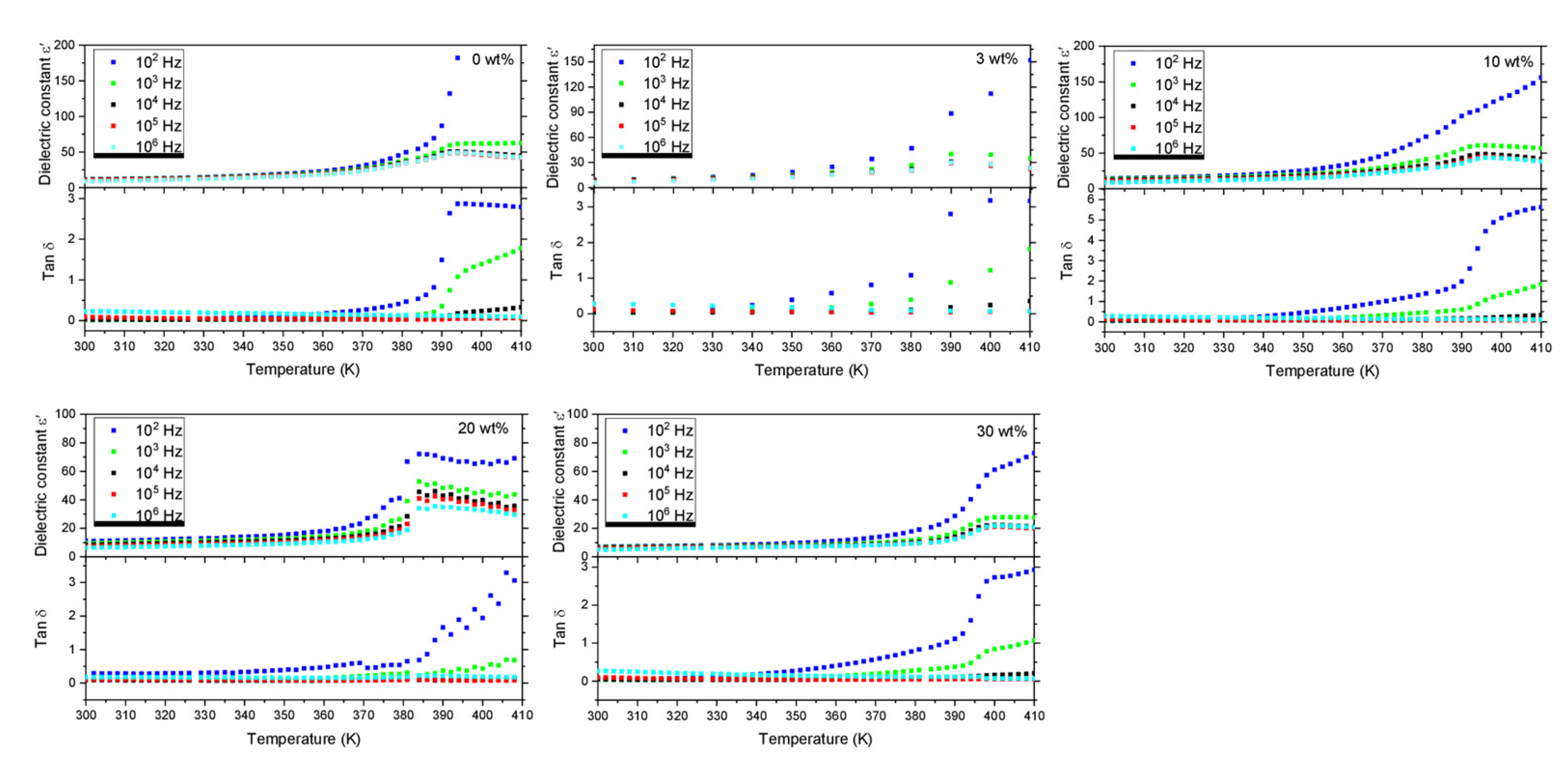
The temperature dependence of ε’ can be seen in Figure 7. We observe a steady relative permittivity in all films in the frequency range of 103 to 106 Hz and temperature range of 300 K-370 K. At 102 Hz, the conduction process is more pronounced and increases ε’ at higher temperatures. All films' peak maxima at around 390 K can be assigned to the polymer ferroelectric-paraelectric phase transition. Also, in the temperature dependence of tan δ graphs, steady values can be seen at frequencies higher than 103 Hz for all films. Only at higher temperatures do the tan δ values increase at the temperature range of the polymer phase transition.
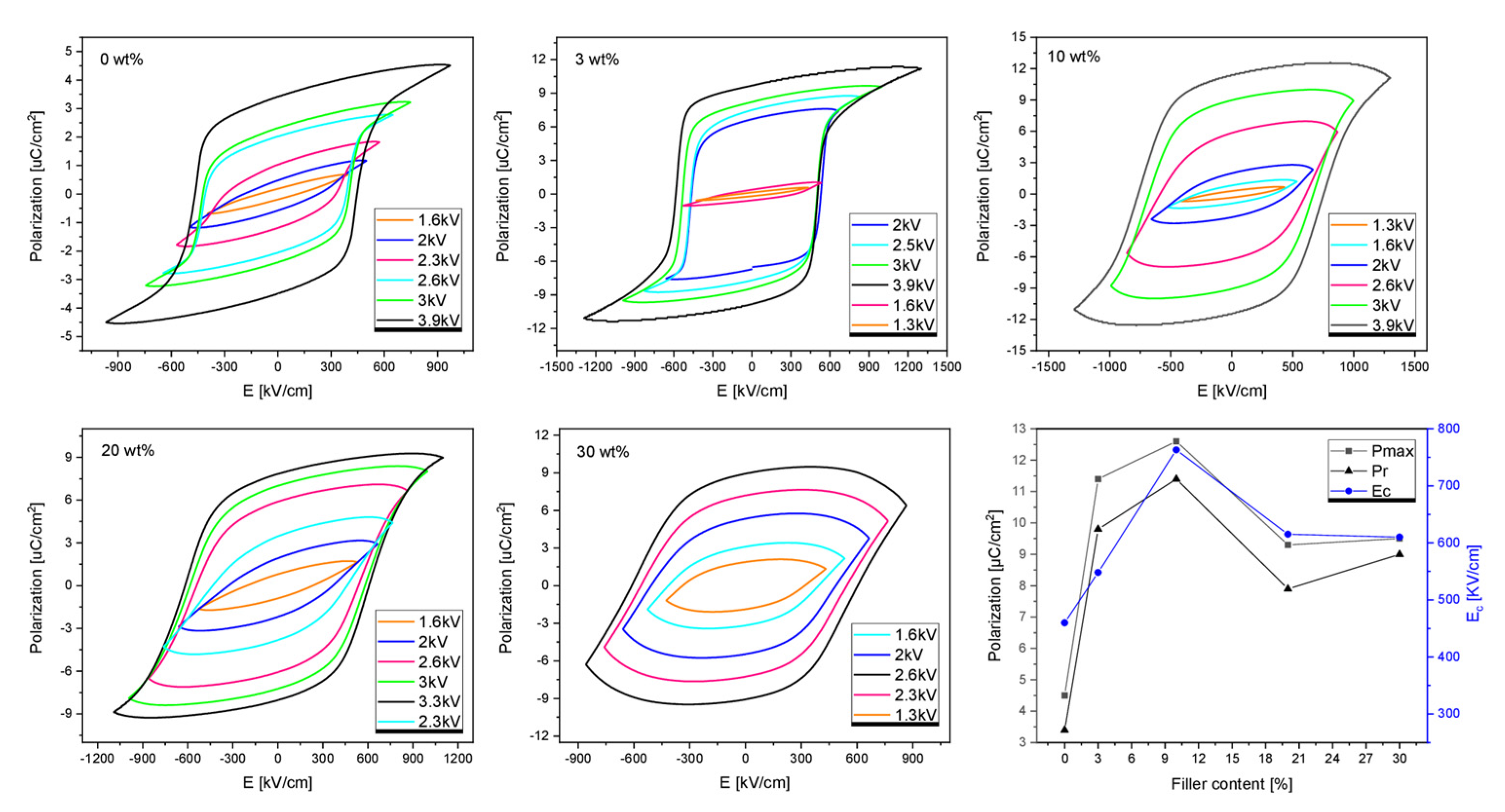
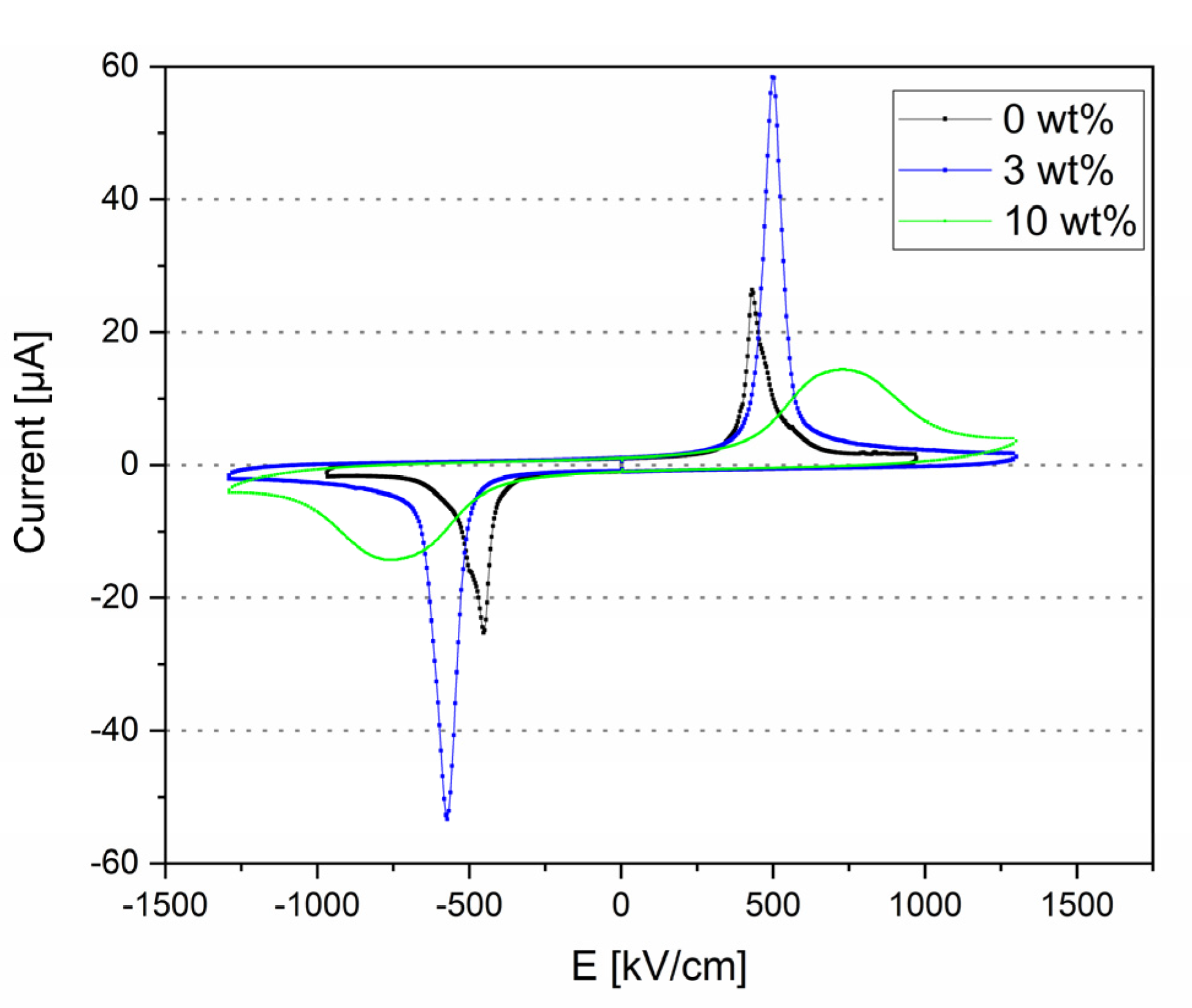
Typical room temperature P-E hysteresis loops were obtained for all films (Figure 8) displaying the ferroelectric nature of the films. The addition of THNM filler significantly enhances the maximal polarization (Pmax) of all composites, the 10wt% composite having the highest Pmax and the highest remnant polarization (Pr) of 12.6 µC/cm2 and 11.4 µC/ cm2, respectively. Comparing the polarization loops, it is clear that the ferroelectric domain switching in the pure polymer needs approximately 570 kV/cm, which is higher than for the 3 wt% (537 kV/cm) and 10 wt% (526 kV/cm) composites. In literature, several authors reported much higher fields than 700 kV/cm for the start of domain switching in pure P(VDF-TrFE) [3,19] so that we can conclude that adding the THNM filler lowers the necessary field to switch the ferroelectric domains in the P(VDF-TrFE) matrix. The corresponding I-E loop in the pure polymer (Figure 9) follows a simple reversal response. It originates from the cooperative switching of the CF2- and CF3 units in the P(VDF-TrFE) chain [20]. The I-E loop of the 3 wt% composites follows a similar response, but the leakage current increases for the other composites (10 wt%, 20 wt%, 30 wt%). In comparison, the 3 wt% and 10 wt% composites were stable under applying a field of up to 1300 kV/cm, whereas the 20wt% and 30 wt% composites break down using fields higher than 1100 kV/cm and 870 kV/cm, respectively. Leakage current in the composites with high filler content can stem from forming ionizable hydroxyl groups that can create charge-conduction pathways. However, the 3 wt% composite showing well-saturated hysteresis loops with Pmax of 11.4 µC/ cm2, Pr of 9.8 µC/ cm2, 548 kV/cm coercive field, and low leakage current is the sample with the best results in our study in the sense of ferroelectricity.
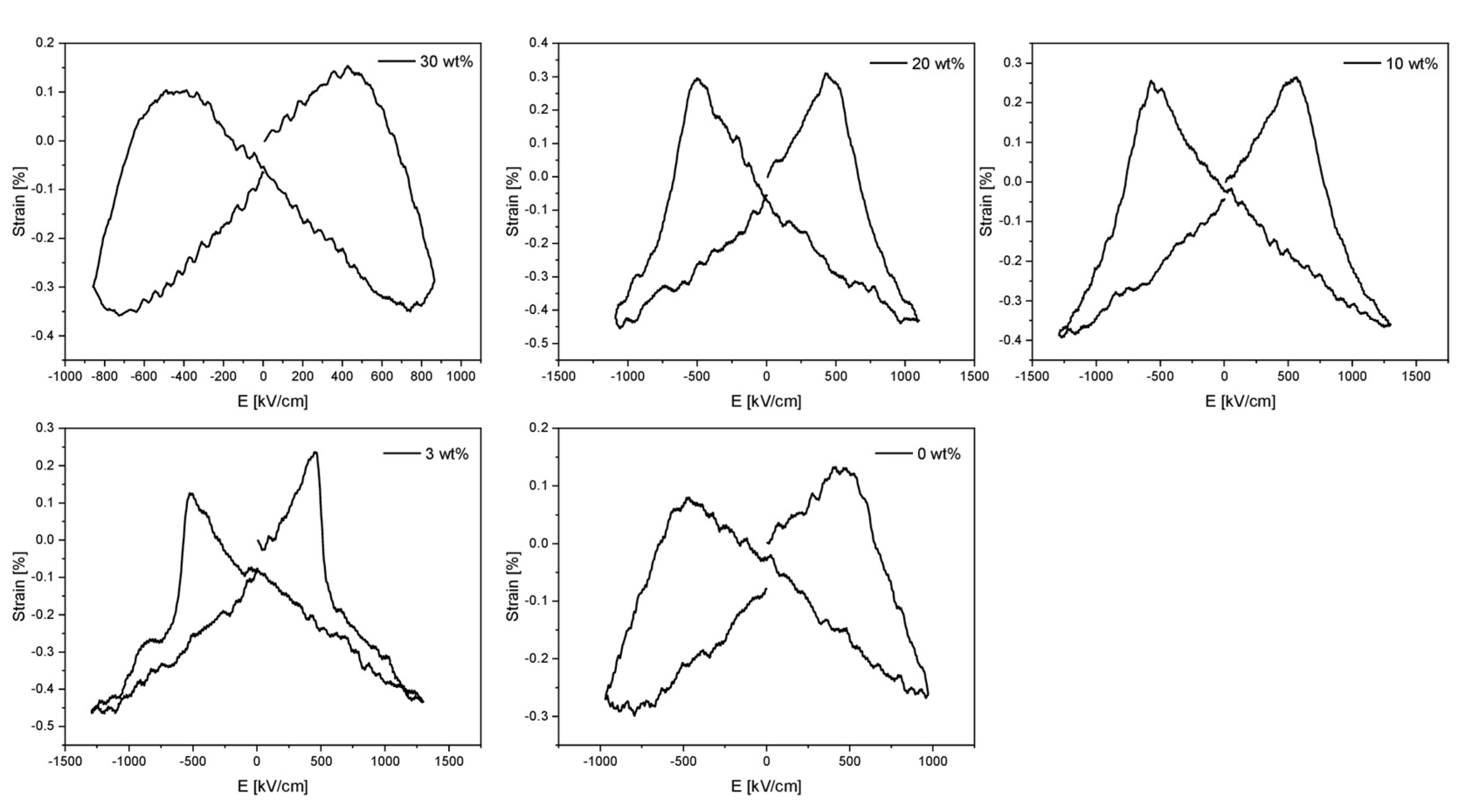
All films show a reverse butterfly bipolar shape (Figure 10), typical of piezoelectric materials with a negative piezoelectric coefficient d33. From the loops, one can see that the strain value of the composite tends to be higher than the pure P(VDF-TrFE). Since strain is correlated to the piezoelectric coefficient d33, its improvement could also be interesting for flexible piezoelectric devices. However, this behavior will be investigated in detail in future work.

4. Conclusions

Free-standing, flexible P(VDF-TrFE) composite films with metal-free molecular ferroelectric THNM as filler material were prepared using the solution casting method. Analysis of their dielectric and ferroelectric properties was performed. The polymer composites with approximately 30-40 µm thickness show mechanical stability, and their crystalline nature was confirmed by XRD, DSC and FTIR analysis. All composites show improved ferroelectric properties compared to pure P(VDF-TrFE). The 3 wt% composite with the lowest leakage current had a Pmax of 11.4 µC/ cm2, Pr of 9.8 µC/ cm2 at an applied electric field of 1300 kV/cm. By preparing these polymer composites, we have demonstrated that metal-free organic ferroelectric materials can be an alternative to inorganic ceramic fillers. The films could have potential applications in flexible energy harvesting devices.

Author Contributions

Conceptualization, MEC; methodology, MEC; formal analysis, SD; data curation, MEC; writing—original draft preparation, MEC; writing—review and editing, DCL. All authors have read and agreed to the published version of the manuscript.”.

Funding

This research received no external funding.

Acknowledgments

The authors acknowledge the data analysis software of M.Sc. Sobhan Mohammadi Fathabad. We also acknowledge the institute's technical staff for guiding through the instrumental devices.

Conflicts of Interest

The authors declare no conflicts of interest.

Abbreviations

The following abbreviations are used in this manuscript:
P(VDF-TrFE) Poli(vinylidene fluoride-co-trifluoroethylene)
THNM Tri(hydroxymethyl) nitromethane

References

  1. Qian, X. , Xin Chen, Lei Zhu, Q. M. Zhang. Fluoropolymer ferroelectrics: Multifunctional platform for polar-structured energy conversion. Science 2023, 380, 596. [Google Scholar] [CrossRef] [PubMed]
  2. Priya, L.P.S.; Swain, B.; Rajput, S.; Behera, S.; Parida, S. Advances in P(VDF-TrFE) Composites: A Methodical Review on Enhanced Properties and Emerging Electronics Applications. Condens. Matter 2023, 8, 105. [Google Scholar] [CrossRef]
  3. Abdolmaleki, H. , Astri Bjørnetun Haugen, Kristian Birk Buhl, Kim Daasbjerg, and Shweta Agarwala. Interfacial Engineering of PVDF-TrFE toward Higher Piezoelectric, Ferroelectric, and Dielectric Performance for Sensing and Energy Harvesting Applications. Adv. Sci. 2023, 10, 2205942. [Google Scholar] [CrossRef] [PubMed]
  4. Shanshan G., M. Escobar Castillo, V. V. Shvartsman, M. Karabasov and D.C. Lupascu. (2019). Electrocaloric effect in P(VDF-TrFE)/ barium zirconium titanate composites. In proceedings of ISAF, Lausanne, Switzerland, 14-19 July 2019. [Google Scholar] [CrossRef]
  5. Zhang, T. , Ke Xu, Jie Li, Lei He, Da-Wei Fu, Qiong Ye, Ren-Gen Xiong. Ferroelectric hybrid organic–inorganic perovskites and their structural and functional diversity. National Science Review 2023, 10, nwac240. [Google Scholar] [CrossRef]
  6. Bergentti, I. Recent advances in molecular ferroelectrics, J. Phys. D: Appl. Phys. 2022, 55, 033001. [Google Scholar] [CrossRef]
  7. Zhi-Xu Zhang, Hao-Fei Ni, Jing-Song Tang, Pei-Zhi Huang, Jia-Qi Luo, Feng-Wen Zhang, Jia-He Lin, Qiang-Qiang Jia, Gele Teri, Chang-Feng Wang, Da-Wei Fu, and Yi Zhang. Metal-Free Perovskite Ferroelectrics with the Most Equivalent Polarization Axes. J. Am. Chem. Soc. 2024, 146, 27443–27450. [Google Scholar] [CrossRef] [PubMed]
  8. Liu, H.Y. , Han-Yue Zhang, Xiao-Gang Chen, and Ren-Gen Xiong. Molecular Design Principles for Ferroelectrics: Ferroelectrochemistry. J. Am. Chem. Soc. 2020, 142, 15205–15218. [Google Scholar] [CrossRef] [PubMed]
  9. Chaoyang Li, Yichen Cai, Yongfa Xie, Chenxu Sheng, Yajie Qin, Chunxiao Cong, Zhi-Jun Qiu, Ran Liu, and Laigui Hu. Enhanced dielectric/ferroelectric properties of P(VDF-TrFE) composite films with organic perovskite ferroelectrics. App. Phys. Express 2023, 16, 031008. [Google Scholar] [CrossRef]
  10. Baptista, R.M.F.; Moreira, G.; Silva, B.; Oliveira, J.; Almeida, B.; Castro, C.; Rodrigues, P.V.; Machado, A.; Belsley, M.; de Matos Gomes, E. Lead-Free MDABCO-NH4I3 Perovskite Crystals Embedded in Electrospun Nanofibers. Materials 2022, 15, 8397. [Google Scholar] [CrossRef] [PubMed]
  11. Ai, Y. , Yu-Ling Zeng, Wen-Hui He, Xue-Qin Huang, and Yuan-Yuan Tang. Six-Fold Vertices in a Single-Component Organic Ferroelectric with most Equivalent Polarization Directions. J. Am. Chem. Soc. 2020, 142, 13989–13995. [Google Scholar] [CrossRef] [PubMed]
  12. Wu, Liangke, Jin, Zhaonan, Liu, Yaolu, Ning, Huiming, Liu, Xuyang, Alamusi, and Hu, Ning. Recent advances in the preparation of PVDF-based piezoelectric materials. Nanotechnology Reviews 2022, 11, 1386–1407. [CrossRef]
  13. Ryu, J. , No, K., Kim, Y. et al. Synthesis and Application of Ferroelectric Poly(Vinylidene Fluoride-co-Trifluoroethylene) Films using Electrophoretic Deposition. Sci Rep 2016, 6, 36176. [Google Scholar] [CrossRef] [PubMed]
  14. Arrigoni, Alessia, Brambilla, Luigi, Bertarelli, Chiara, Serra, Gianluca, Tommasini, Matteo, Castiglioni, Chiara. P(VDF-TrFE) nanofibers: structure of the ferroelectric and paraelectric phases through IR and Raman spectroscopies. RSC Adv. 2020, 10, 37779. [Google Scholar] [CrossRef] [PubMed]
  15. Liew, W. , Mirshekarloo, M. , Chen, S. et al. Nanoconfinement induced crystal orientation and large piezoelectric coefficient in vertically aligned P(VDF-TrFE) nanotube array. Sci Rep 2015, 5, 09790. [Google Scholar] [CrossRef]
  16. Becker, H.; Berger, W.; Domschke, G.; Fanghänel, E.; Faust, J.; Fischer, M.; Gentz, F.; Gewals, K.; Gluch, R.; Mayer, R.; Müller, K.; Pavel, D.; Schmidt, H.; Schollberg, K.; Schwetlick, K.; Seiler, E.; Zeppenfeld, G. Organikum, 15th ed.; Publisher: VEB Deutscher Verlag der Wissenschaften, Berlin, Germany, 1977; pp. 122–123. [Google Scholar]
  17. Wang L, Yang J, Cheng W, Zou J and Zhao D. Progress on Polymer Composites With Low Dielectric Constant and Low Dielectric Loss for High-Frequency Signal Transmission. Front. Mater. 2021, 8, 774843. [Google Scholar] [CrossRef]
  18. Mayeen, Anshida, M. S., Kala, M. S., Jayalakshmy, Thomas, Sabu, Philip, Jacob, Rouxel, Didier, Bhowmik, R. N., Kalarikkal Nandakumar. Flexible and self-standing nickel ferrite–PVDF-TrFE cast films: promising candidates for high-end magnetoelectric applications. Dalton Trans. 2019, 48, 16961–16973. [Google Scholar] [CrossRef] [PubMed]
  19. Zhang, Xiofan. , Xia, W., Ping, Y. et al. Dielectric, ferroelectric, and energy conversion properties of a KNN/P(VDF-TrFE) composite film. J Mater Sci: Mater Electron 2022, 33, 12941–12952. [Google Scholar] [CrossRef]
  20. Tsutsumi, N. , Okumachi, K., Kinashi, K., Sakai, W. Re-evaluation of the origin of relaxor ferroelectricity in vinylidene fluoride terpolymers: An approach using switching current measurements. Sci Rep 2017, 7, 15871. [Google Scholar] [CrossRef] [PubMed]
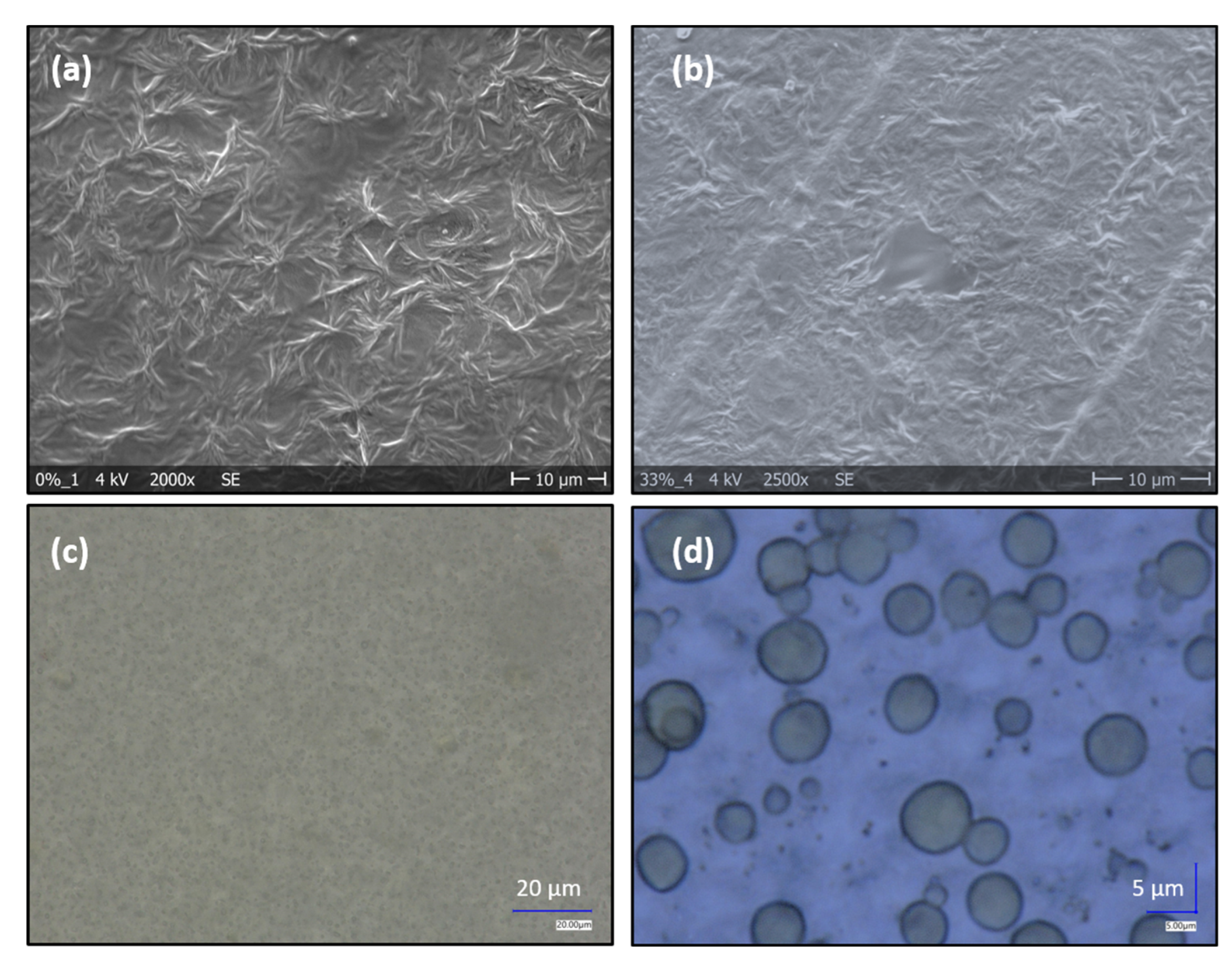
Figure 1. SEM (a, b) and digital microscope images (c, d). P(VDF-TrFE) (a) and 10 wt% composite (b, c, d). Digital images were taken in transmission mode.
Preprints 143874 g001
Figure 2. Hydrogen bond interaction between the polymer’s fluorine atoms and the -OH groups of THNM allows a smooth transition from one phase to the other.
Preprints 143874 g002
Figure 3. XRD diffractograms of the polymer composites containing different wt% of THNM.
Preprints 143874 g003
Figure 4. FTIR spectra of the composites containing different wt% of THNM.
Preprints 143874 g004
Figure 5. DSC analysis of the material phase transitions.
Preprints 143874 g005
Figure 6. Dielectric constant (a) and dielectric loss (b) of the composites.
Preprints 143874 g006
Figure 7. Temperature dependence of the dielectric constant.
Preprints 143874 g007
Figure 8. Polarization hysteresis loops of the composites with different filler content measured at 1 Hz.
Preprints 143874 g008
Figure 9. Current density curves of the films at 1 Hz.
Preprints 143874 g009
Figure 10. Strain-Field hysteresis loops displaying the electrostrictive response of the material.
Preprints 143874 g010
Disclaimer/Publisher’s Note: The statements, opinions and data contained in all publications are solely those of the individual author(s) and contributor(s) and not of MDPI and/or the editor(s). MDPI and/or the editor(s) disclaim responsibility for any injury to people or property resulting from any ideas, methods, instructions or products referred to in the content.
Copyright: This open access article is published under a Creative Commons CC BY 4.0 license, which permit the free download, distribution, and reuse, provided that the author and preprint are cited in any reuse.
Prerpints.org logo

Preprints.org is a free preprint server supported by MDPI in Basel, Switzerland.

Subscribe

Disclaimer

Terms of Use

Privacy Policy

Privacy Settings

© 2025 MDPI (Basel, Switzerland) unless otherwise stated