
Submitted:
20 December 2024
Posted:
23 December 2024
You are already at the latest version
Abstract
Forest fires have a significant impact on forest fauna. Not only mammals and birds die in forest fires, but also less noticeable representatives of forest fauna - insects. There are now enough studies on the impact of forest fires on the population of mammals and birds, but at present there is still insufficient data available and the impact of fires on the insect population in the forest. This study is intended to partially fill this gap. It was studied how fires affect the mosquito population. Mosquitoes are an important starting point of the existing forest food chain and are part of the biomass that feeds various representatives of forest fauna, including fish, birds and amphibians. Changes in the mosquito population can lead to disruption of the food balance in the forest ecosystem, all this determines the relevance of the work. The study was conducted in the forests of Eastern Siberia. Experimental data were obtained from ten forest sites. Comparison of data from forest sites exposed to and not exposed to fires allowed us to establish the degree of impact of forest fire on the mosquito population.
Keywords:
fire
; forest
; northern regions
; impact on fauna
; mosquitoes
1. Introduction
One of the most common insects in forests are mosquitoes. Forest fires can affect the number of mosquitoes both by killing mosquitoes in flight and those on vegetation. Fires can affect the number of mosquito larvae in puddles and water bodies by contaminating the liquid in which the larvae are located with combustion products such as soot [28].
This paper examines the impact of forest fires and their consequences on mosquito numbers in the forests of Eastern Siberia.
The study was conducted in the forests located in the Republic of Sakha (Yakutia), these forests are the main component of the forests of Eastern Siberia. Yakutia is the largest forest region in the world [36]. Yakutia is one of the most prone to forest fires on the planet [39]. The largest known forest fire in the history of the planet occurred in Yakutia in 2003 [37], in which 55 million acres of forest burned. The average area of forests devastated by fires annually in Yakutia is 3-6 million hectares.
Forest fires, and especially mega-firesin which the area within a radius of tens of kilometers often ends up burnt out, have a global impact on the flora and fauna of forests [5,9]. Thus, according to[4,5,6]the average maximum temperature during a forest fire on the surface of mineral soil reaches 128°C. The speed of forest fire spread can reach up to 250 m/min[40]. The rapid spread of forest fires is often facilitated by strong winds. Under wind conditions, atmospheric turbulence will be significantly stronger, causing “flying fire”, which often forms a new source of fire outside the fire field [40,41].
Fires have accompanied forests throughout their history [1]. Forest fires are one of the main factors influencing the ecology of Eastern Siberia. The nature of Eastern Siberia is a complex and fragile structure, such external interventions as forest fires threaten to lead to irreversible changes in the ecological balance of both Eastern Siberia and the planet as a whole [7]. Forests of Eastern Siberia play an important role as absorbers of atmospheric CO2 [21], while forest fires and especially megafires lead to global carbon emissions into the planet's atmosphere [22], which directly affects the Earth's carbon balance. According to research [6], approximately 40%Emissions of black carbon, consisting of a mixture of liquid droplets and a mixture of solid particles, as well as carbon monoxide and hydrocarbons, enter the atmosphere as a result of forest fires, a significant portion of which occur in the forests of Eastern Siberia on the planet. Such carbon emissions also lead to the melting of glaciers in the Arctic. Carbon particles from forest fires settle on the surface of glaciers, which leads to darkening, heating and melting of the ice [23].
The forests of Eastern Siberia are mostly boreal forests, also known as taiga [4]. This zone extends in two transcontinental belts across North America and Eurasia over an area of 12 million square kilometers in Scandinavia and Russia (two-thirds), Canada and Alaska (one-third), mainly between 70° and 45° north latitude [4]. The forests of Eastern Siberia are important not only for the ecology of the planet, but are also of global significance for the economy of circumpolar countries [2], largely related to the processing and use of wood. The structure of the northern forest is dominated by coniferous trees such as pine (Pinus), spruce (Picea), fir (Abies), larch (Larix), mixed with fewer deciduous trees such as birch (Betula), poplar (Popolus), etc. [4]. "Forests of this kind are particularly liable to destruction by fire" [2]. The ground under the trees in the summer months is covered with dry grass and dry reindeer moss, such moss is very susceptible to combustion, which contributes to the rapid spread of fire. The resin secreted by coniferous trees is a highly flammable material that releases a significant amount of heat during combustion. All this creates ideal conditions for the occurrence of forest mega-fires in Eastern Siberia, destroying forest flora and fauna and releasing millions of tons of carbon into the planet's atmosphere. "The conflagration kills trees and consumes all the foliage and twigs, but leaves the charred trunks and branches standing. It also burns off the moss and much of the loamy soil" [2]. Northern forests are usually located in permafrost areas, the nutrient soil layer there is thinner, and forest fires lead to the fact that the soil nutrients are not restored after burning even several years after the fire [3], which negatively affects the growth of vegetation.
The two main causes of forest fires in northern regions are natural factors such as dry weather and lightning, and human-induced factors [19,20], including unsexing unshed campfires, agricultural fires, deliberate arson by illegal loggers, grass fires from discarded glass bottles, sparks from power lines, etc.
Forest fires have an impact on the reduction of forest fauna. "Not all animals can escape from the flames. They can be burned, affected by smoke, dehydration, heat exhaustion, or suffer traumatic injuries when running the flames. Some die burned or due to smoke inhalation" [10]. Studies [10,11,12,13,14,15,16,17,18] have examined the impact of forest fires on the reduction of mammal and bird populations, but at present there is insufficient data on the impact of fires on the number of insects living in forests.
The most common insects in the forest are mosquitoes.
Mosquitoes are an important part of the food chain in nature [32,33]. Mosquitoes are part of the biomass that serves as food for such representatives of nature as fish, birds and amphibians, which in turn serve as food for larger representatives of the forest.
Mosquitoes can also have a negative impact on the environment, according to [34,35] "mosquitoes are the deadliest animals, whose bites kill hundreds of thousands of people and sicken millions every year"[34,35]. Mosquitoes can transmit arbo viruses [29], as well as flavi viruses, which pose a significant risk to the life and health of humans and animals [26,27,29]. This group of pathogens includes:
- dengue virus (DENV);
- yellow fever virus (YVF);
- japanese encephalitis virus (JEV);
- west Nile virus (WEV);
The risk that mosquitoes pose to humans and animals also makes it important to study factors that can influence mosquito population sizes.
2. Materials and Methods
This paper studies the impact of forest fires on mosquitoes, which are an important element of the fauna of the forests of Eastern Siberia. This insect is widespread not only in Eastern Siberia, but also in almost all forests of the northern regions of the planet.
Currently, fifteen species of mosquitoes of the Culicidae family are known in Eastern Siberia [27], which belong to the following genera:
- Culiseta;
- Aedes;
- Anopheles.
The average number of mosquito larvae in samples taken in the forests of Eastern Siberia: 75–130 specimens/m2.
The presence of mosquitoes in the forests of Eastern Siberia is noted in the warm period of the year, from May to September, on average, during the period of 121-125 days. The capture and counting of mosquitoes was carried out during the daytime. The capture was carried out five times a day with a break of 1-2 hours, during the period when mosquitoes have the greatest flight activity.
A special entomological net was used to collect mosquitoes, placing the captured mosquitoes in removable bags. The mosquito abundance index during capture was calculated using the following method: 10 swings of the net (figure-eight movement), repeating with each capture [31].
The study of the impact of forest fires on mosquito numbers was conducted in ten forest areas located in the territory Republic of Sakha (Yakutia), part of Eastern Siberia. Five of the ten plots were affected by forest fires in the period from 1 to 7 days before the measurements, the other five plots had not been affected by forest fires for at least the previous five years. A total of 5 groups of forest plots were compiled, each consisting of one plot affected by a fire and one plot not affected by a fire. The plots in each group are located in close proximity and border each other. This comparison allows us to determine the impact of forest fires on mosquito numbers in the forests of Eastern Siberia. The distance from the measurement point to the edge of the plot was at least 10 km. The measurements were carried out in 2024, in the summer months.
The methodological matrix of the experiment is presented in Table 1.
3. Results
In this experiment, data were obtained regarding the impact of forest fires on mosquito numbers in the forests of Eastern Siberia. Data obtained in forest areas affected by fires were compared with data obtained in forest areas not affected by such fires.
3.1. Comparison of Data from Selected Forest Areas
Data obtained from the first group of forest areas, as shown in Figure 1.
Data obtained from the second group of forest areas, as shown in Figure 2.
Data obtained from the third group of forest plots, as shown in Figure 3.
Data obtained from the fourth group of forest plots, as shown in Figure 4.
Data obtained from the fifth group of forest plots, as shown in Figure 5.
3.2. Processing the Experimental Results
To perform an analysis of variance on the observation results, we took the median value for the number of mosquitoes from each forest area (Table 2).
The reduction in numbers according to the data from Table 2 is: first pair – 92.1%, second pair – 93.9%, third pair – 91.6%, fourth pair – 86.6%, fifth pair – 89.5%. The median value for all five pairs of measurements is: 90.7%.
4. Discussion
This paper presents data on the impact of forest fires and their consequences on mosquito populations in the forests of Eastern Siberia. The data confirm that fires have a significant impact on mosquito populations in forests. All five sets of measurements showed a reduction in mosquito populations in fire-affected areas, ranging from 86.6 to 93.9%, relative to mosquito populations in nearby unaffected areas. The limitations of the obtained data are the region and measurement conditions.
The need to take into account the presented data is due to the fact that as a result of the decrease in the number of mosquitoes, a domino effect may occur, causing further changes in the forest fauna. Considering that forest fires in Eastern Siberia occur annually and reach millions of hectares in area, the total impact on the fauna can be quite significant. At the same time, it is also necessary to understand that a decrease in the number of mosquitoes can also have a positive effect, since these insects are carriers of deadly diseases, in addition, mosquitoes are a factor in reducing the attractiveness of ecological tourism in forest regions, as well as a factor that creates negative impacts on farm animals. It should be noted that forest fires that destroy the vegetation that protects the soil from the thermal effects of the sun ultimately lead to the melting of permafrost. Melting of permafrost, on which the forests of Eastern Siberia are located, leads to an increase in the number of reservoirs and swampy soil, which in turn expands the base for the reproduction of mosquitoes [2,3,38]. Therefore, the impact of forest fires on mosquito populations may be longer lasting and may eventually lead to the opposite effect of increasing mosquito populations.
5. Conclusions and Future Work
This paper presents data on the impact of forest fires on mosquito numbers in the forests of Eastern Siberia. The data is primarily aimed at researchers working in wildlife conservation or agriculture, but may also be useful for researchers and organizations involved in forest fire prevention. The obtained data can be used in ecological programs for assessing changes in fauna as a result of external factors, as well as in conducting research aimed at reducing the number of mosquito populations, including for combating epidemics of dangerous diseases, research aimed at developing agriculture and ecotourism. The work that has been started can be continued based on the study of the impact of forest fires on other insect species, as well as on the development of new technologies in fire fighting that can help in early detection [24] and remote control of forest fires [25]. The scope of the work that has been started can also be expanded by studying the dynamics of restoration of fauna affected by forest fires.
Author Contributions
Conceptualization, methodology, software, validation, formal analysis, investigation, data curation, writing—original draft preparation, writing—review and editing, visualization, and supervision AVS Authors have read and agreed to the published version of the manuscript.
Funding
This research received no external funding.
Institutional Review Board Statement
Not applicable.
Informed Consent Statement
Not applicable.
Data Availability Statement
The dataset used in this study is available permitted on request.
Conflicts of Interest
The authors declare no conflicts of interest.
References
- Ash WW. Forest fires: their destructive work, causes and prevention. 1895; Available from: http://dx.doi.org/10.5962/bhl.title.34531. [CrossRef]
- Bell, R. Forest Fires in Northern Canada. fire ecol 8, 3–10 (2012).https://doi.org/10.1007/BF03400621. [CrossRef]
- Li X, Jin H, Wang H, Wu X, Huang Y, He R, et al. Distributive features of soil carbon and nutrients in permafrost regions affected by forest fires in northern Da Xing'anling (Hinggan) Mountains, NE China. CATENA [Internet]. 2020 Feb;185:104304. Available from:http://dx.doi.org/10.1016/j.catena.2019.104304. [CrossRef]
- Stocks B.J. The Extent and Impact of Forest Fires in Northern Circumpolar Countries. Global Biomass Burning [Internet]. 1991 Nov 27;197–202. Available from:http://dx.doi.org/10.7551/mitpress/3286.003.0030. [CrossRef]
- Richardson E, Stirling I, Kochtubajda B. The effects of forest fires on polar bear maternity denning habitat in western Hudson Bay. Polar Biology [Internet]. 2006 Aug 17;30(3):369–78. Available from:http://dx.doi.org/10.1007/s00300-006-0193-7. [CrossRef]
- Z. Klimont, K. Kupiainen, C. Heyes, P. Purohit, J. Cofala, P. Rafaj, J. Borken-Kleefeld, W. Schöpp. Global anthropogenic emissions of particulate matter including black carbon. Atmos. Chem. Phys., 17 (2017), pp. 8681-8723. [CrossRef]
- McCoy V. Climate change and forest fires in Yukon Territory. Available from:http://dx.doi.org/10.22215/etd/2002-05301. [CrossRef]
- Merino A, Fontúrbel MT, Jiménez E, Vega JA. Contrasting Immediate Impact of Prescribed Fires and Experimental Summer Fires on Soil Organic Matter Quality and Microbial Properties in the Forest Floor and Mineral Soil in Mediterranean Black Pine Forest. 2023; Available from:http://dx.doi.org/10.2139/ssrn.4548571. [CrossRef]
- Sutherland, E.; Dickman, C. Mechanisms of Recovery after Fire by Rodents in the Australian Environment. Wildl. Res. 1999, 26, 405–419. [CrossRef]
- Garcês, A.; Pires, I. The Hell of Wildfires: The Impact on Wildlife and Its Conservation and the Role of the Veterinarian. Conservation 2023, 3, 96-108.https://doi.org/10.3390/conservation3010009. [CrossRef]
- Lyon, L.J.; Crawford, H.S.; Czuhai, E.; Fredriksen, R.L.; Harlow, R. F.; Metz, L.J.; Pearson, H. A.; States, U. Effects of Fire on Fauna: A State-of-Knowledge Review; US Dept. of Agriculture, Forest Service: Washington, DC, USA, 1978; pp. 1–52.
- Wiebe, K. Microclimate of Tree Cavity Nests: Is It Important for Reproductive Success in Northern Flickers? Auk 2001, 118, 412–421. [Google Scholar] [CrossRef].
- Fonseca, F. How Wildfires Impact Wildlife and Their Habitats. Available online:https://www.pbs.org/newshour/science/explainer-how-wildfires-impact-wildlife-their-habitat(accessed on 24 July 2022).
- Certini, G. Effects of Fire on Properties of Forest Soils: A Review. Oecologia 2005, 143, 1–10. [CrossRef]
- Moody, J.A.; Martin, D. A. Initial Hydrologic and Geomorphic Response Following a Wildfire in the Colorado Front Range. Earth Surf. Process. Landf. 2001, 26, 1049–1070. [Google Scholar] [CrossRef]. [CrossRef]
- Brito, D.Q.; Passos, C. J. S.; Muniz, D. H. F.; Oliveira-Filho, EC Aquatic Ecotoxicity of Ashes from Brazilian Savanna Wildfires. Environ. Sci. Pollut. Res. 2017, 24, 19671–19682. [Google Scholar] [CrossRef] [PubMed].
- Goode, JR; Luce, CH; Buffington, J.M. Enhanced Sediment Delivery in a Changing Climate in Semi-Arid Mountain Basins: Implications for Water Resource Management and Aquatic Habitat in the Northern Rocky Mountains. Geomorphology 2012, 139–140, 1–15. [Google Scholar] [CrossRef].
- Fowler, DA Treating Burnt Wildlife. Available online:https://www.ava.com.au/siteassets/library/other-resources/treating-burnt-wildlife-2020-dr-anne-fowler.pdf(accessed on 24 July 2022).
- Latham D, Williams E. Lightning and Forest Fires. Forest Fires [Internet]. 2001;375–418. Available from:http://dx.doi.org/10.1016/b978-012386660-8/50013-1. [CrossRef]
- Charbonneau P. Forest Fires. Natural Complexity [Internet]. 2017 May 16; Available from:http://dx.doi.org/10.23943/princeton/9780691176840.003.0006. [CrossRef]
- Kim Y, Kobayashi H, Nagai S, Ueyama M, Lee BY, Suzuki R. Boreal Forest and Forest Fires. Arctic Hydrology, Permafrost and Ecosystems [Internet]. 2020 Aug 29;615–55. Available from: http://dx.doi.org/10.1007/978-3-030-50930-9_21. [CrossRef]
- Amiro BD et al (2010) Ecosystem carbon dioxide fluxes after disturbance in forests of North America. J Geophys Res 115:G00K92.https://doi.org/10.1029/2010jg001390. [CrossRef]
- Forest fires “are speeding up Arctic ice melt”. Management of Environmental Quality: An International Journal [Internet]. 2006 Nov 1;17(6). Available from:http://dx.doi.org/10.1108/meq.2006.08317fab.003. [CrossRef]
- Kumar, K.; Rajput, N.S.; Shvetsov, A. V.; Saif, A.; Sahal, R.; Alsamhi, SH ID2S4FH: A Novel Framework of Intelligent Decision Support System for Fire Hazards. Fire 2023, 6, 248. https://doi.org/10.3390/fire6070248. [CrossRef]
- Mahmudnia D, Arashpour M, Bai Y, Feng H. Drones and Blockchain Integration to Manage Forest Fires in Remote Regions. Drones [Internet]. 2022 Oct 30;6(11):331. Available from:http://dx.doi.org/10.3390/drones6110331. [CrossRef]
- Waite H. Mosquitoes and Malaria. A Study of the Relation between the Number of Mosquitoes in a Locality and the Malaria Rate. Biometrika [Internet]. 1910 Nov;7(4):421. Available from:http://dx.doi.org/10.2307/2345376. [CrossRef]
- Kolpakova TA Epidemiological survey of the Vilyui district of the YaSSR. L.: Publishing House of the USSR Academy of Sciences, 1933; 12: 292. (In Russ.
- Shtakelberg AA Family Culicidae. Blood-sucking mosquitoes (subfamily Culicinae): Fauna of the USSR. Dipterans. M.-L.: Publishing House of the Academy of Sciences of the USSR, 1937; 3 (4): 258. (In Russ.).
- Qiao J., Liu Q. Interplay between autophagy and Sindbis virus in cells derived from key arbovirus vectors, Aedes albopictus and Aedes aegypti mosquitoes. Cellular Signaling. 2022; 90: 110204. https://doi.org/10.1016/j.cellsig.2021.110204. [CrossRef]
- Isa I., Ndams I. Sh., Aminu M. et al. Genetic diversity of Dengue virus serotypes circulating among Aedes mosquitoes in selected regions of northeastern Nigeria. One Health. 2021; 13: 100348. https://doi. org/10.1016/j.onehlt.2021.100348. [CrossRef]
- Rasnitsyn SP, Kosovskikh VL An improved method to record the mosquito abundance with a net around a person and to compare it with a dark cloth bell. Meditsinskaya parazitologiya i parazitarnyye bolezni = Medical parasitology and parasitic diseases. 1979;1: 18-24. (In Russ.).
- Rueda LM, Debboun M. Taxonomy, Identification, and Biology of Mosquitoes. Mosquitoes, Communities, and Public Health in Texas [Internet]. 2020;3–7. Available from:http://dx.doi.org/10.1016/b978-0-12-814545-6.00001-8. [CrossRef]
- Fang, J. Ecology: A world without mosquitoes. Nature 466, 432–434 (2010).https://doi.org/10.1038/466432a. [CrossRef]
- Kamerow D. The world's deadliest animal. BMJ [Internet]. 2014 May 15;348(may15 2):g3258–g3258. Available from:http://dx.doi.org/10.1136/bmj.g3258. [CrossRef]
- Snyder T. The Mosquito: A Human History of Our Deadliest Predator. Emerging Infectious Diseases [Internet]. 2020 Oct;26(10):2536–2536. Available from:http://dx.doi.org/10.3201/eid2610.202806. [CrossRef]
- Reuters.Smoke from forest fires engulfs city in Russia's far east. Available from:https://www.reuters.com/world/europe/smoke-forest-fires-engulfs-city-russias-far-east-2023-08-09/.
- Igini M. Top 12 Largest Wildfires in History. Earth.Org. Available from:https://earth.org/largest-wildfires-in-history/.
- Aaltonen H, Köster K, Köster E, Berninger F, Zhou X, Karhu K, et al. Forest fires in Canadian permafrost region: the combined effects of fire and permafrost dynamics on soil organic matter quality. Biogeochemistry [Internet]. 2019 Mar;143(2):257–74. Available from:http://dx.doi.org/10.1007/s10533-019-00560-x. [CrossRef]
- Statista.Countries with the largest annual average loss of tree cover by fires worldwide from 2001 to 2022. Available from: https://www.statista.com/statistics/1401419/top-countries-forest-loss-by-fires/#:~:text=Countries%20with%20the%20highest%20average,by%20fires%20worldwide%202001% 2D2022&text=Russia%20has%20had%20the%20highest,cover%20per%20year%20since%202001.
- Wang, X.; Wang, C.; Zhao, G.; Ding, H.; Yu, M. Research Progress of Forest Fires Spread Trend Forecasting in Heilongjiang Province. Atmosphere 2022, 13, 2110.https://doi.org/10.3390/atmos13122110. [CrossRef]
- Tang, X.; Meng, X.; Yi, H. Research progress on forest fire spread model and spread simulation. J. Beijing For. Univ. 2002, 24, 5.
Figure 1.
Data obtained from the first group of sites (blue markers – data from a site not subject to fire, red markers – data from a site subject to fire).
Figure 1.
Data obtained from the first group of sites (blue markers – data from a site not subject to fire, red markers – data from a site subject to fire).
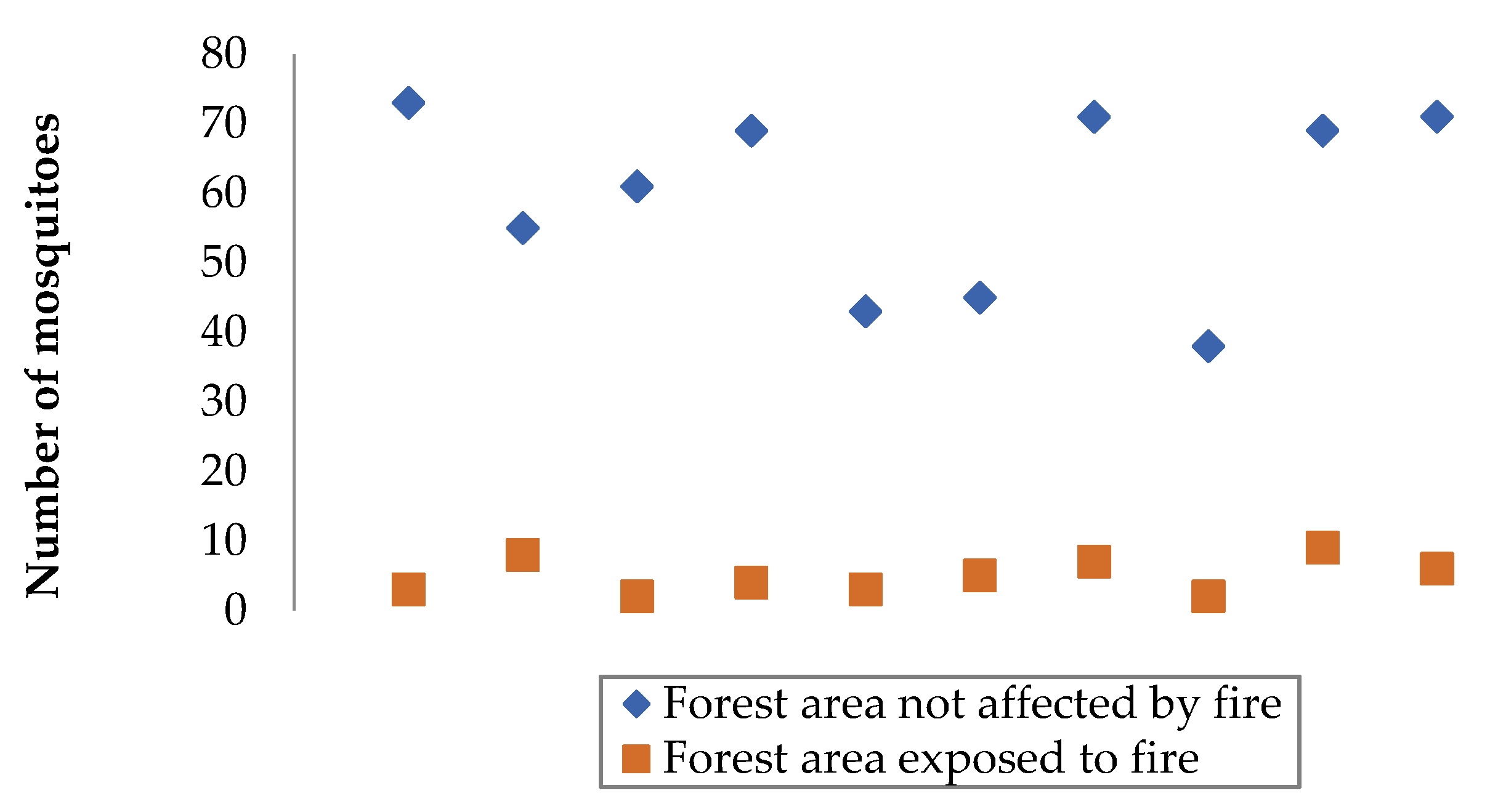
Figure 2.
Data obtained from the second group of sites (blue markers – data from a site not subject to fire, red markers – data from a site subject to fire).
Figure 2.
Data obtained from the second group of sites (blue markers – data from a site not subject to fire, red markers – data from a site subject to fire).
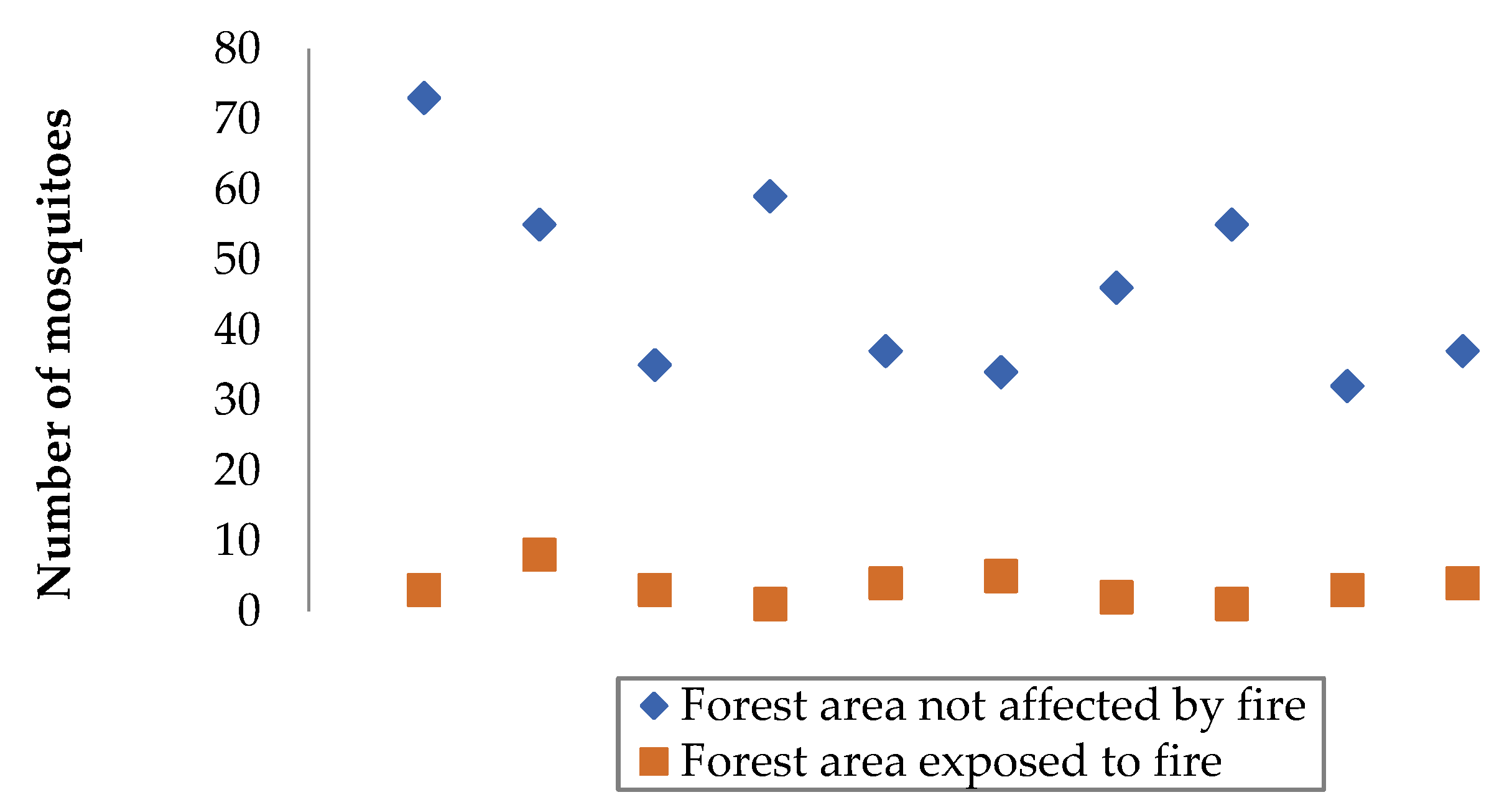
Figure 3.
Data obtained from the third group of sites (blue markers – data from a site not subject to fire, red markers – data from a site subject to fire).
Figure 3.
Data obtained from the third group of sites (blue markers – data from a site not subject to fire, red markers – data from a site subject to fire).

Figure 4.
Data obtained from the fourth group of sites (blue markers – data from a site not subject to fire, red markers – data from a site subject to fire).
Figure 4.
Data obtained from the fourth group of sites (blue markers – data from a site not subject to fire, red markers – data from a site subject to fire).
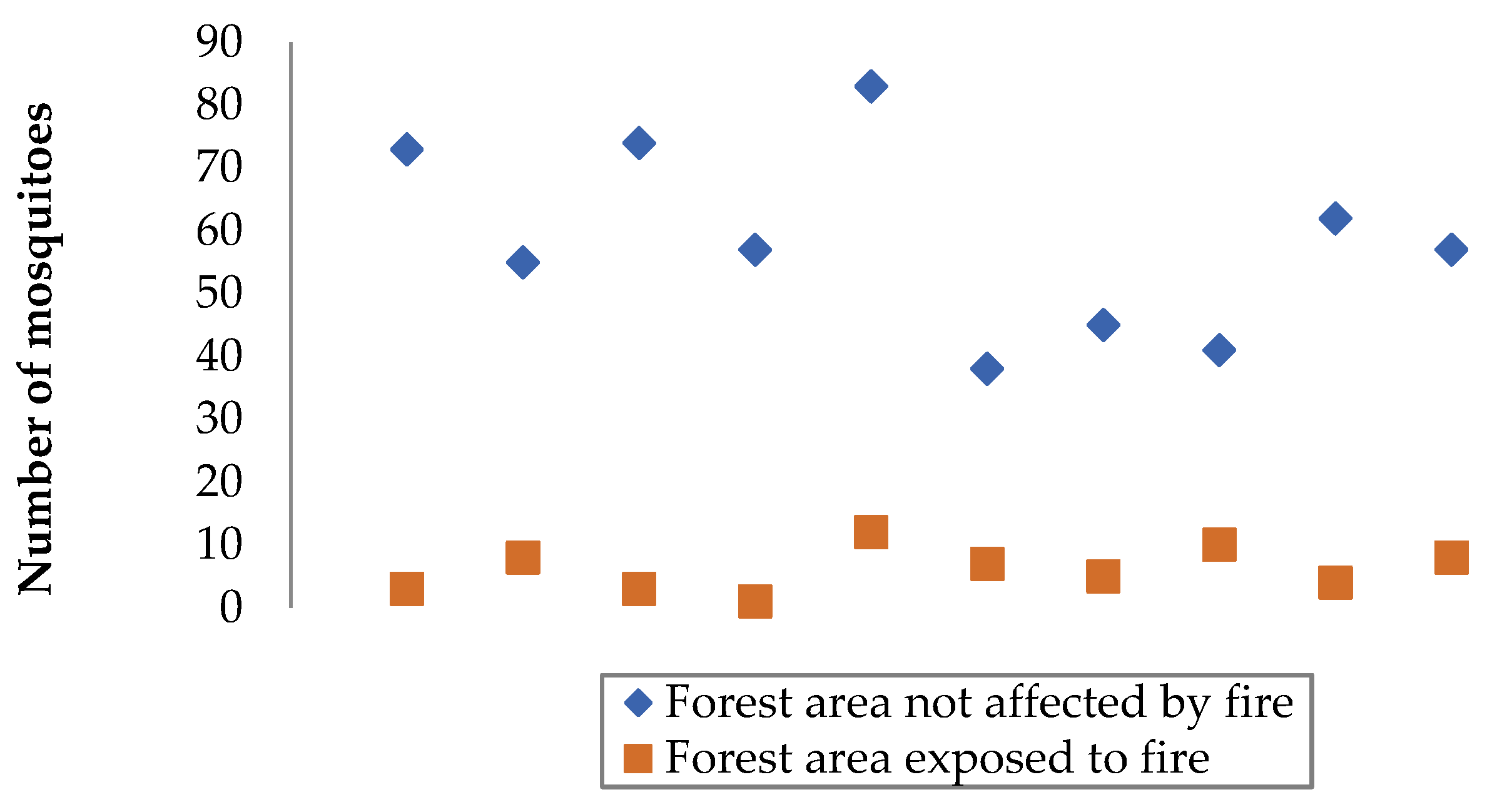
Figure 5.
Data obtained from the fifth group of sites (blue markers – data from a site not subject to fire, red markers – data from a site subject to fire).
Figure 5.
Data obtained from the fifth group of sites (blue markers – data from a site not subject to fire, red markers – data from a site subject to fire).
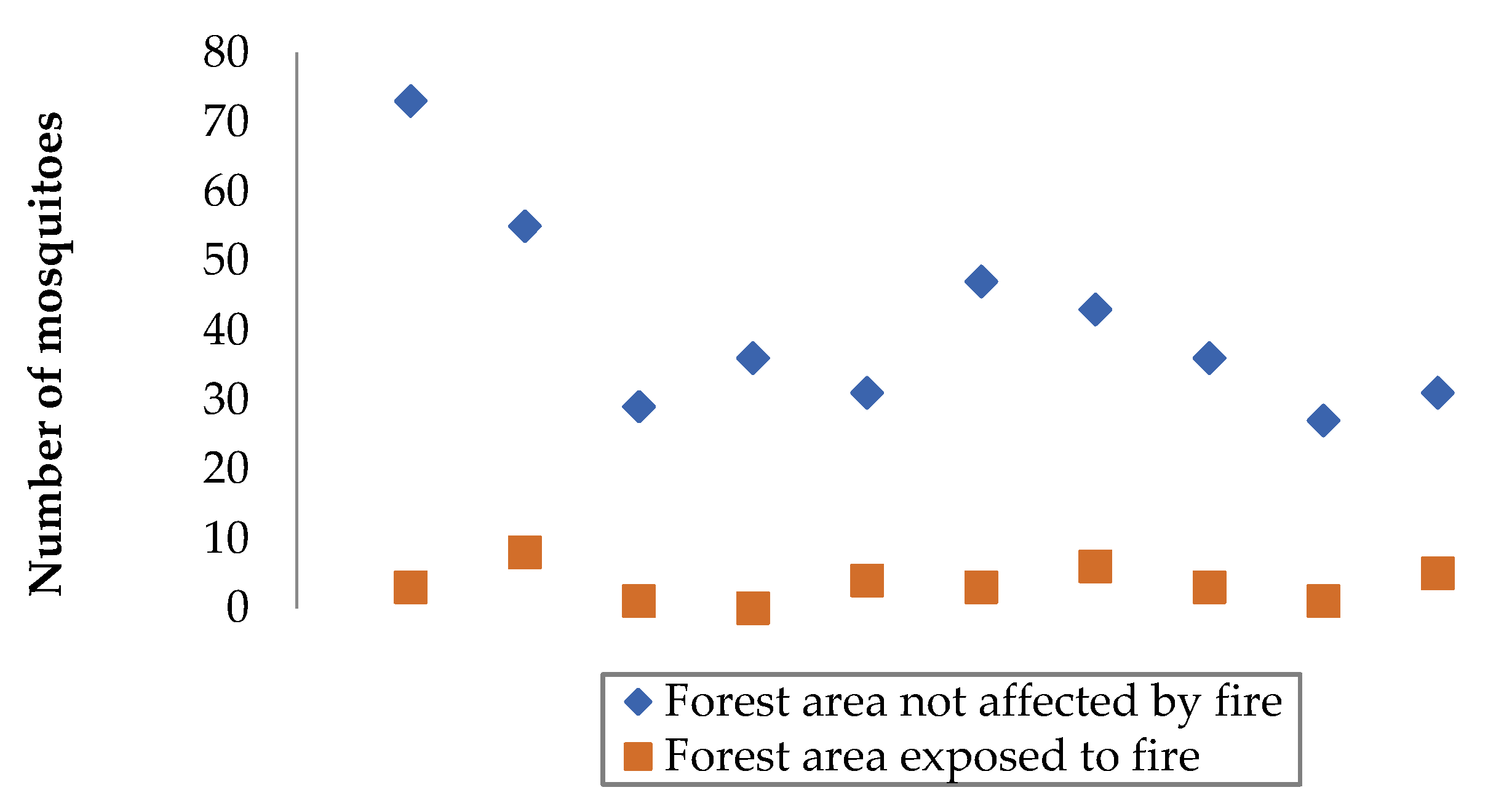

Table 1.
Methodological matrix of the experiment.
| Objective of the experiment | Constant factors | Variable factors | Measured parameter | Number of measurements in a separate section | Total number of observation results |
|---|---|---|---|---|---|
| To determine the degree of impact of fires on the number of mosquitoes in the affected forest areas | Mosquitoes | Fire | Number of mosquitoes | 10 | 100 |
Table 2.
Number of mosquitoes in forest areas.
| A couple of patches of forest | Number of mosquitoes in a forest area exposed to fire, units | Number of mosquitoes in a forest area not affected by fire, units |
|---|---|---|
| First | 63 | 5 |
| Second | 49 | 3 |
| The third | 71 | 6 |
| Fourth | 52 | 7 |
| Fifth | 38 | 4 |
Disclaimer/Publisher’s Note: The statements, opinions and data contained in all publications are solely those of the individual author(s) and contributor(s) and not of MDPI and/or the editor(s). MDPI and/or the editor(s) disclaim responsibility for any injury to people or property resulting from any ideas, methods, instructions or products referred to in the content. |
© 2024 by the authors. Licensee MDPI, Basel, Switzerland. This article is an open access article distributed under the terms and conditions of the Creative Commons Attribution (CC BY) license (http://creativecommons.org/licenses/by/4.0/).
Copyright: This open access article is published under a Creative Commons CC BY 4.0 license, which permit the free download, distribution, and reuse, provided that the author and preprint are cited in any reuse.


