
Submitted:
20 December 2024
Posted:
20 December 2024
You are already at the latest version
Abstract
This study designs the aggregate gradation and calculates the benchmark mix proportion of concrete based on two sets of regression coefficients. Copper-plated micro-steel fibers and graded EPS (expanded polystyrene) particles, with varying volume ratios of cementing materials, were incorporated into concrete specimens of C30, C40, and C50 grades made from fine aggregates and gravel. The specimens underwent compressive strength, flexural strength, and slump tests to investigate and analyze the effects of steel fibers and graded EPS on the mechanical properties of concrete. A modified equation for the similar bending-to-compression ratio coefficient was established, and a method for calculating the extreme value of the similar bending-to-compression ratio under the combined action of graded EPS and steel fibers was proposed, in order to predict the optimal dosage of steel fibers and graded EPS.The results show that for concrete of all grades (fine aggregate and gravel groups), the compressive and bending failure modes exhibited high consistency. After incorporating EPS, the specimens displayed some ductility during compressive failure, and compressive strength was negatively correlated with the volume fraction of EPS. As the volume fraction of EPS increased, the workability of the concrete decreased. At 7 days of curing, the uniaxial compressive strength of the concrete specimens was 60%–75% of the 28-day strength. The tensile failure of graded EPS-steel fiber concrete was divided into four stages. For every 0.25% increase in steel fiber volume fraction, the increase in flexural strength was most likely between 14.35% and 17.61%, with the maximum growth rate being approximately 27%, and the distribution of growth rates was relatively dispersed.When applying the current bending-to-compression ratio model to calculate the flexural strength of concrete under the combined action of graded EPS and steel fibers, a significant deviation from experimental values was observed. By introducing the modified similar bending-to-compression ratio coefficient equation, a conversion relationship between compressive strength and flexural strength was established. The adjusted R-value was 0.989, and a comparison of the predicted values with the experimental results showed high accuracy, offering considerable reference value.
Keywords:
Mix proportion design
; Compressive strength
; Flexural strength;Workability;Modified similar bending-to-compression ratio coefficient equatio
1. Introduction
In modern municipal engineering, facilities such as roads, reservoirs, and firewalls place high demands on the mechanical properties of concrete. With the advancement of technology, the performance requirements for concrete in practical engineering have risen significantly. A key focus of current research is to improve the mechanical properties of concrete while minimizing its self-weight. This has become a major topic in the field today. EPS (expanded polystyrene) foam particles are a high-quality, eco-friendly building material that plays a significant role in enhancing the lightweight and thermal insulation properties of concrete. The use of EPS particles not only helps in reducing waste but also contributes positively to environmental management [1,2,3]. Research has shown that EPS foam particles can improve the water erosion resistance of concrete [4]. When EPS foam particles are used as admixtures to replace some of the components in concrete, the density of the concrete decreases, while its thermal insulation properties are enhanced, and its ability to buffer impact stress waves is significantly improved [5,6]. Srinivas et al. [7] incorporated 15% EPS particles into concrete, and their comparison revealed that this concrete mixture had a 24% reduction in weight compared to ordinary concrete. Patricia et al. [8] found that incorporating a certain volume fraction of EPS particles as aggregates into concrete reduced the material's thermal conductivity, thereby improving its insulation properties.
To achieve the goal of reducing the self-weight of concrete while improving its mechanical performance, researchers have also investigated the addition of fiber materials to concrete, in conjunction with EPS particles, to further enhance its mechanical properties. Zhou Ping et al. [9] studied the effects of fabric fibers (polyester fibers, polypropylene mesh fibers, and polyacrylonitrile fibers) as admixtures. The research demonstrated that polyester fibers can effectively improve the compressive strength, splitting tensile strength, and flexural strength of concrete. Li Qingrui et al. [10,11] proposed, through constitutive models and experiments, that the inclusion of steel fibers in concrete results in improved bending toughness and provided an evaluation method for this property. To address the segregation phenomenon caused by the significantly lower apparent density of EPS particles compared to the density of the cementing materials in concrete, previous studies have used epoxy resins or water-soluble ethylene-vinyl acetate copolymers as binders, effectively resolving this issue [12].
Currently, many researchers focus on using EPS particles of a single particle size as admixtures to prepare lightweight concrete and study its heat resistance and insulation properties [13,14,15,16]. However, there is limited research on the combined effects of graded EPS particles and steel fibers on the mechanical and physical properties of concrete. From a methodological perspective, most researchers treat the admixture as a variable and conduct comparative experiments using a single concrete grade and mix proportion. Few studies have conducted detailed gradation designs for coarse and fine aggregates. In practical engineering, concrete of a single grade is used in different pouring locations, which requires different aggregate particle sizes and gradations, leading to varying mix proportions. Therefore, conclusions drawn from experiments using a single grade and mix ratio may not be sufficient to predict the effects of EPS particles and fibers on the performance of concrete of different grades. This makes it challenging to demonstrate the applicability of the newly developed concrete material under varying working conditions.
Building on previous research, this study selects three concrete grades (C30, C40, and C50) and designs the aggregate gradation in detail. Based on the optimal gradation, two different mix proportions are calculated for each grade of concrete. Graded EPS particles, copper-plated micro-steel fibers, and a small amount of epoxy resin are added according to different cementing material volume fractions. The mixture is then uniformly blended and tested for slump. After completing the slump tests, standard specimens are produced using the same materials and cured for 7 and 28 days before being subjected to compressive and flexural tests. The mechanical properties of the concrete are evaluated, and the effects of graded EPS and steel fiber volume fraction on the mechanical properties of concrete are analyzed. Finally, the bending-to-compression ratio correction model is applied to predict the flexural strength of the concrete.
2. Materials and Methods
2.1. Test Materials
In this experiment, P.O. 42.5 ordinary Portland cement was used, with a density of 3.25 g/cm³ and a specific surface area of 370 m²/kg. The cement was supplied by Huaxin Cement, and its chemical composition is shown in Table 1. The EPS (expanded polystyrene) foam particles had an apparent density of 0.035 g/cm³, with two particle sizes selected: 1 mm and 5 mm. Copper-plated micro-steel fibers were used, with a length of 12 mm, a single filament diameter of 0.25 mm, an elastic modulus of 214 GPa, a density of 7.76 g/cm³, an ultimate elongation of 25%, and a tensile strength of ≥2860 MPa. The appearance of the EPS particles and copper-plated micro-steel fibers is shown in Figure 1. Coarse aggregates consisted of limestone fine aggregates and pebbles, while fine aggregates included either artificial sand or natural sand. The fineness modulus of the artificial sand was within the range of 2.4–2.8, while that of the natural sand was between 2.3 and 3.0. The water-reducing agent selected for this experiment was HT-100 polycarboxylate high-performance superplasticizer, with a main component consisting of polycarboxylate polymers with a molecular weight range of 500–5000. The recommended dosage was 1.5%, with a water reduction rate of 25%. A medium epoxy resin (with an epoxy value between 0.25 and 0.45) was selected as the binder.
2.2. Experimental Plan
The design of the aggregate gradation is completed first to ensure the rationality of the selected concrete aggregates. Then, based on two sets of different regression coefficients, the mix proportions for the premixed C30, C40, and C50 grades of gravel and fine aggregate concrete are calculated. According to previous studies, improvements in the mechanical properties of concrete are most notable when the steel fiber volume fraction ranges from 1.5% to 2.25%, and the EPS (expanded polystyrene) volume fraction is between 10% and 30% [17,18,19]. In this study, the steel fiber and EPS volume fractions were expanded (1.5%, 1.75%, 2.25%) and (15%, 25%, 35%) to set up experimental groups. EPS particles with particle sizes of 1 mm and 5 mm were selected [20], with each particle size occupying 50% of the total volume. The concrete preparation followed the guidelines outlined in the "Premixed Concrete" standard (GB/T14902-2012) [21]. The experiments were conducted according to the standards of "Test Methods for the Mechanical Properties of Ordinary Concrete" (GB/T50081-2019) [22] and "Test Methods for Fiber Reinforced Concrete" (CECS13-2009) [23].
For the compressive strength test, the specimens were 150 mm × 150 mm × 150 mm in size, and a uniform, continuous load was applied until the specimen failed. For the flexural toughness test, the specimens were 150 mm × 150 mm × 550 mm standard beams, tested using a 50-300 kN flexural test machine, applying a two-point load at the third-point location. The loading speed was maintained at 0.05 MPa/s to 0.08 MPa/s until failure. Based on the test results, the variations in compressive and flexural strengths of concrete incorporating steel fibers and graded EPS particles were analyzed.
2.3. Material Grading Curve
The significance of aggregate gradation design lies in the fact that the quality and gradation of aggregates have a critical impact on the performance of concrete. When aggregates contain excessive fine particles, it can lead to issues such as poor workability and the formation of cracks in the concrete. Inadequate gradation distribution can also negatively affect the consistency, strength, and durability of the concrete. Therefore, the rational selection of aggregates and the design of their gradation are crucial to ensuring the reliability of the experiment. In this study, the maximum aggregate particle size is 16 mm. According to the standards, the cumulative sieve passing percentage (%) and the individual sieve passing percentage (%) are calculated using the median value. The aggregate gradation is designed using a planning optimization method, and the detailed parameters are provided in Table 2. The aggregate gradation curve is shown in Figure 2.
From the gradation curve, it can be observed that the combined gradation curve lies between the upper and lower limits of the gradation, meeting the basic design requirements. It is worth noting that the combined gradation curve does not perfectly coincide with the average gradation curve. When the sieve size of the aggregates is in the range of 4.05 mm to 16 mm, the combined gradation curve is positioned above the average gradation curve. In the range of 0.075 mm to 4.05 mm, the combined gradation curve is below the average gradation curve. However, the combined gradation curve closely overlaps with the median gradation curve, indicating that the gradation design is reasonable and close to the optimal state. The mineral proportions of the gradation curve are shown in Table 2.
The fluctuation of the combined gradation curve relative to the average gradation curve, as described above, suggests that the amount of aggregate with a particle size greater than 4.05 mm should be slightly lower than the corresponding value in the median gradation curve, while the amount of aggregate with a particle size smaller than 4.05 mm should be slightly higher than the corresponding value in the median gradation curve. Based on Horsfield’s packing theory, the fluctuation phenomenon of the combined gradation curve can be explained as follows: The intersection point of the combined gradation curve and the median gradation curve occurs at 4.05 mm. In this experiment, 1 mm + 5 mm graded EPS particles are incorporated into the aggregates. When the aggregate particle size exceeds 4.05 mm, the screening rate of the aggregates is increased, reducing the amount of aggregates larger than 4.05 mm, which is compensated by adding some 5 mm EPS particles. As a result, the combined gradation curve sinks, ensuring that it closely overlaps with the median gradation curve. When EPS particles are added, the 5 mm EPS particles form a skeletal structure. By appropriately reducing the screening rate, the quantity of aggregates smaller than 1 mm is increased. This helps fill the voids formed between the 5 mm EPS particles and the aggregates larger than 4.05 mm. As a result, the combined gradation curve rises and closely coincides with the median gradation curve, completing the optimal gradation design and forming the optimal skeletal-dense structure.
2.4. Mix Design
The experiment selected two sets of different regression coefficients to calculate the baseline mix proportions for C30, C40, and C50 fine aggregate concrete and gravel concrete. Then, the water-to-cement ratio of the baseline mix was respectively increased and decreased by 0.03 (maintaining the same water content while increasing or decreasing the cement content) to calculate two additional sets of mix proportions. Under the condition that the slump requirements were met, the concrete density correction factors were calculated. Subsequently, the 28-day compressive strength was used for strength validation, resulting in the optimal mix proportion for the laboratory, thus ensuring the rigor of the experiment. The parameters for the concrete mix calculation and the laboratory mix proportions are shown in Table 3.
The experimental environment for this study is classified as Type IIb, where the maximum water-to-cement ratio is 0.50. The water-to-cement ratio design in Table 3 meets the required specifications. The correction factors in Table 3 are all less than 2%, indicating that this mix design is the optimal mix for the laboratory and does not require further adjustments.
3. Analysis of Experimental Phenomena and Results
3.1. Failure Mode of Compression Test Specimens
Due to the similar phenomena observed in the compressive strength tests of both gravel and fine aggregate concrete specimens at different concrete strength grades, the failure mode of the concrete containing 1.75% volume fraction of steel fibers and graded EPS (Expanded Polystyrene) is selected for analysis, as shown in Figure 3. Overall, the specimens showed no large-scale fragment detachment after compression, due to the buffering effect of the EPS particles on energy absorption. The failure mode of the specimens shifted from the brittle failure typical of conventional concrete to a more ductile failure. However, the failure pattern remained similar to that of ordinary concrete, with vertical, penetrating cracks propagating from top to bottom.
In Figure 3(a), when the volume fraction of graded EPS is 15%, the specimens still tended towards brittle failure, exhibiting numerous wide penetrating cracks and larger volumes of unbroken fragments, with only slight ductility. As the volume fraction of graded EPS increased to 25%, the number and width of penetrating cracks significantly decreased, with most of the cracks being fine vertical, non-penetrating cracks, indicating improved ductility, as shown in Figure 3(b). When the volume fraction of graded EPS increased to 35%, the replacement rate of aggregates with EPS particles was higher. At this stage, the EPS particles, with their strong hydrophobicity, failed to retain free water inside, preventing adequate bonding with the cementitious materials. Additionally, the strength of the EPS particles was much lower than that of conventional aggregates, leading to the formation of wider penetrating cracks, though the number of cracks was fewer compared to the specimens with 15% graded EPS, as shown in Figure 3(c).
3.2. Failure Mode of Flexural Test Specimen
As the results from the flexural tests of specimens with different volume fractions of graded EPS were essentially the same, the side failure modes of the flexural specimens containing 25% graded EPS at different steel fiber volume fractions were selected for reference, as shown in Figure 4. In general, the incorporation of steel fibers enhanced the bonding between the concrete aggregates. When small cracks formed due to loading, the steel fibers took on the main load. Additionally, due to the high tensile modulus of steel fibers, they effectively resisted the tensile stress generated at the crack faces, preventing cracks from rapidly propagating from the bottom of the beam to the top. Therefore, the addition of steel fibers imparted a certain degree of ductility to the concrete during bending failure.
In Figure 4(a), when the steel fiber volume fraction was 1.5%, the cracks at the bottom of the beam were wider, rougher, and rapidly extended toward the top of the beam. In Figure 4(b), when the steel fiber volume fraction was 1.75%, the crack width at the bottom of the beam decreased, and although the crack still extended to the top, it appeared smoother, with no debris formation. There were only a few fine microcracks around the main crack. This phenomenon indicates that the bonding effect between the concrete aggregates was improved when the steel fiber volume fraction was 1.75%. In Figure 4(c), when the steel fiber volume fraction increased to 2.25%, the cracks at the bottom of the beam extended to the centerline of the beam but did not propagate further to the top. No debris appeared, and no fine cracks were present around the main crack. Therefore, a steel fiber volume fraction of 2.25% provided the best bonding effect between the concrete aggregates.
3.3. Evaluation of Compressive Strength and Flowability
Figure 5 presents the relationship between the compressive strength of concrete at different ages and the volume fractions of steel fibers and graded EPS. The uniaxial compressive strength growth patterns of fine and gravel concrete with the incorporation of graded EPS and steel fibers at three different grades under standard curing at 7 and 28 days are generally similar. For example, in Figure 5(a), the linear slope formed by the uniaxial compressive strength values of C50 fine (gravel) concrete at EPS volume fractions of 15%, 25%, and 35% at two different curing ages is discussed. In both 7-day and 28-day curing periods, the slopes are negative, with the absolute value of K1 greater than that of K2, and the absolute value of K3 greater than that of K4. This indicates that, with a constant steel fiber volume fraction, as the graded EPS volume fraction increases, the compressive strength of fine (gravel) concrete decreases at each curing age and grade. The reduction in compressive strength is more significant in the 15%-25% EPS volume fraction range compared to the 25%-35% range. The reactions observed in C30 and C40 concrete are similar to those in C50, so further discussion is omitted here.
The compressive modulus of EPS is much lower than that of concrete, which leads to a reduction in the uniaxial compressive strength of concrete when EPS is added. To explain the slowed rate of compressive strength reduction, the Weymouth particle interference theory [24] is applied. In the experimental concrete, the skeleton formed by coarse aggregates with a nominal particle size greater than 4.75 mm (specifically greater than 5 mm) is filled by finer aggregates and 5 mm EPS particles. The skeleton formed by fine aggregates with a nominal particle size less than 2.36 mm (specifically 2.36 mm to 1.18 mm) is filled by 1 mm EPS particles and mineral powders smaller than 0.075 mm. Additionally, since the designed aggregates are continuously graded, particles of each size are included, ensuring that each skeletal pore is filled with next-level aggregates smaller than the pore size. This process continues until the concrete reaches a dense state. The framework-dense structure, formed by coarse and fine aggregates, graded EPS particles, mineral powder, and cement, is considered an ideal configuration. When the EPS volume fraction increases from 25% to 35%, the filling effect is more pronounced than in the 15%-25% range, which slows down the rate of compressive strength reduction.
By comparing the uniaxial compressive strength values of fine (gravel) concrete at 7 and 28 days for the same EPS and steel fiber volume fractions in Figure 5, it is found that the 7-day compressive strength reaches 60%-75% of the 28-day value. This indicates that curing during the first 7 days is a crucial factor influencing the uniaxial compressive strength of concrete. Longitudinal comparisons of Figure 5(a), (b), and (c), corresponding to the same EPS volume fraction, show that increasing the steel fiber volume fraction leads to a slight increase in compressive strength, though the effect is not significant. For every 0.25% increase in steel fiber volume fraction, the increase in compressive strength is within 5%. Cracks form in the concrete due to internal stress concentrations, with fine cracks appearing at the mortar-aggregate interface. Steel fibers, distributed parallel to the aggregate boundaries, create a wall effect that provides a slight lateral restraint on crack propagation. As stress continues to increase, the internal cracks in the concrete lead to failure, extending into the hardened cement paste. Steel fibers then act as reinforcement, slowing the rate of crack propagation, resulting in a small increase in compressive strength.
It is worth noting that in Figure 5(c), at the 28-day standard curing age, all grades of fine (gravel) concrete specimens with a steel fiber volume fraction of 2.25% and EPS volume fraction of 15% achieve the standard compressive strength of concrete. This indicates that, under these proportions, graded EPS-steel fiber concrete can be directly selected for practical engineering without the need to increase the grade. For other combinations of steel fiber and EPS volume fractions, based on actual engineering requirements for compressive strength, the concrete grade may need to be increased by 1 to 2 grades to meet the design specifications.
The standard test methods for the performance of ordinary concrete mixtures are specified in GB/T 50080-2002. According to this standard, the slump and slump flow values of concrete mixtures are measured in millimeters, with a precision of 1 mm, and the results are expressed to the nearest 5 mm [25]. Since the effects of steel fiber volume fractions of 1.5% and 2.25% on the slump of concrete, after rounding, are consistent with the effect of a 1.75% volume fraction, the steel fiber volume fraction of 1.75% is selected as representative for studying the impact of different graded EPS volume fractions on concrete flowability. The slump values corresponding to various graded EPS volume fractions are shown in Figure 6. The increase in graded EPS volume fraction is negatively correlated with concrete flowability, and the rate of decline accelerates. This trend is more consistent in the fine aggregate group.
The influence of steel fibers and graded EPS on concrete flowability can be attributed to four main reasons:
- Aggregate replacement: The 5 mm particles in graded EPS replace some coarse aggregates, and the 1 mm particles replace part of the fine aggregates. This improves the embedding effect of the concrete matrix structure, increases frictional resistance, and at the same time, the lower density of EPS particles compared to aggregates reduces the vertical and diagonal component forces from the weight of the concrete matrix during the slump test, leading to a decrease in the slump (positive effect).
- Reduced water content: The incorporation of graded EPS reduces the amount of water required for concrete [26], increasing the consistency and reducing the slump (positive effect).
- Hydrophobic nature of EPS particles: EPS particles are hydrophobic, preventing the retention of free water on their surfaces. As a result, there is no liquid bridge connection between EPS particles and fine aggregate particles. According to the Young-Laplace theory, the absence of capillary suction between the two types of particles leads to an increase in the concrete slump (negative effect).
- Steel fiber length: The length of steel fibers is much greater than the diameter of the aggregates. When steel fibers are incorporated, they consume more cement paste to surround them. Additionally, steel fibers may anchor the matrix, improving particle integrity and reducing the concrete slump (positive effect).
Based on these four influencing factors, the addition of graded EPS particles and steel fibers results in a macro response of reduced slump and decreased flowability of concrete.
3.4. Flexural Strength and Failure Mechanism
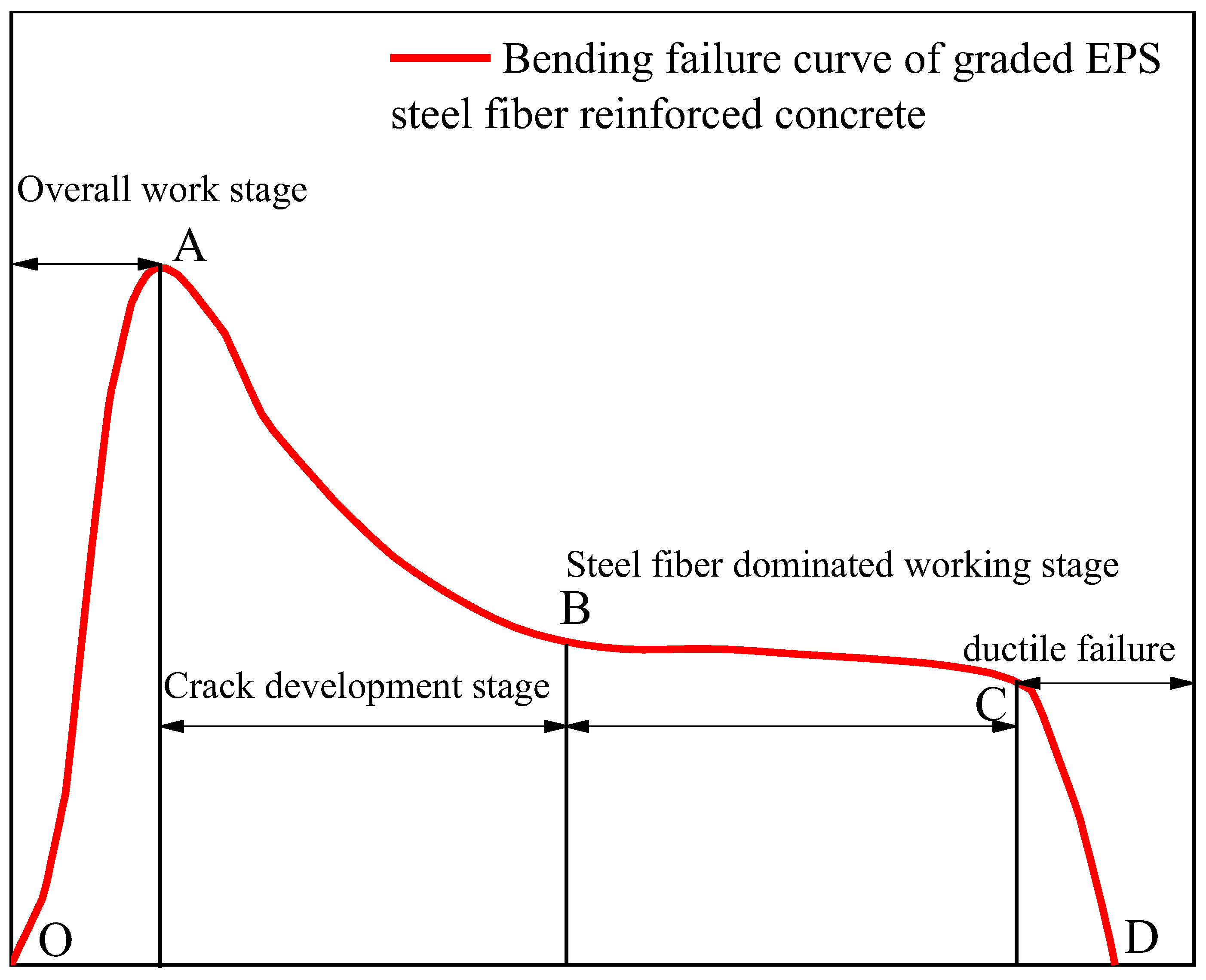
The specimen will experience four distinct stages of deformation as the applied stress changes: the overall working stage (elastic deformation), crack development stage, steel fiber-dominated working stage (significant crack development), and specimen rupture (ductile failure). In the initial stage of loading, the specimen remains in the linear elastic phase. As the three-point loading gradually increases, the stress rises rapidly, and the specimen remains in the elastic phase, where the deformation can recover upon unloading (OA segment). However, as the stress increases quickly to 50%-60% of the peak value at point A, small vertical cracks will appear inside the specimen, with no external visible damage. At this point, the skeleton structure made up of coarse aggregates, fine aggregates, cement, and other materials is under stress. As the tensile stress continues to increase, the EPS and aggregates inside the skeleton are compressed and experience some damage. However, since EPS has good elasticity, the specimen only experiences minor plastic deformation, and fine cracks develop at the bottom.
As the stress continues to increase to the peak point A, the specimen formally enters the crack development stage. The tensile stress generated by the external load exceeds the load-bearing capacity of the skeleton structure. The neutral axis quickly moves upward, and the bottom of the specimen is pulled apart. Developmental cracks emerge and rapidly extend toward the top of the specimen. At this stage, the skeleton structure still dominates the load-bearing capacity, and steel fibers begin to participate in load-bearing (AB segment).
When the strain reaches point B, the cracks at the bottom of the specimen continue to develop. Several smaller micro-cracks appear adjacent to the main crack. As the deformation continues to increase, the main crack extends toward the top of the specimen. From point B onward, the steel fibers play a dominant role in bearing the tensile stress, thereby slowing the rate of development of the micro-cracks (BC segment).
As the strain increases to point C, the tensile stress in the specimen suddenly changes. At this point, the main crack width rapidly increases and extends to the top of the specimen. The specimen is about to rupture completely. However, due to the effect of the steel fibers, the failure is not linear (CD segment), indicating that the failure has a certain degree of ductility.
Figure 7.
Graded EPS steel fiber reinforced concrete bending failure stage.
Based on the load-deflection curves of concrete with different gradations of EPS and steel fiber volume fractions, as shown in Figure 8, it can be observed that for the same grade, fine aggregate concrete reaches the peak stress in the elastic-plastic deformation phase earlier than gravel concrete, and the peak stress is also slightly higher. Additionally, high-grade concrete reaches the peak stress at a larger strain compared to low-grade concrete.
Overall, for all three EPS volume fractions, the flexural strength of each concrete grade increases as the steel fiber volume fraction increases from 1.5% to 2.25%. The change in steel fiber volume fraction has minimal impact on the deflection value at the inflection point A during both the overall working stage (OA segment) and the crack development stage (AB segment). The deflection values at point A for all load-deflection curves fall within the range of (0.48, 1.12) mm, with the exception of the C50 gravel group, where the deflection at point A exceeds 1 mm. The A points for the other grades are more concentrated.
The steel fiber volume fraction is negatively correlated with the deflection value at point B, meaning that as the fiber content increases, the deflection value at point B decreases. However, the steel fiber volume fraction is positively correlated with the length of the BC segment. As a result, the deflection value at the critical failure point C increases, indicating an enhanced ability to resist failure.
The deflection values at point A for each grade of specimen are fairly concentrated, suggesting that changes in the steel fiber volume fraction have little effect on the specimen’s response to tensile stress during the initial bending stage. Therefore, this change does not significantly impact the deflection values. The increase in steel fiber volume fraction leads to a reduction in the deflection value at point B. This occurs because, in the crack development stage, as the steel fiber volume fraction increases, the specimen begins to bear tensile stress earlier and enters the steel fiber-dominated working stage. Due to the excellent tensile properties of the steel fibers, the length of the BC segment increases, and the deflection value at the failure point C increases accordingly.
Table 4 presents the stress peak values and growth rates for concrete with different volume fractions of graded EPS and steel fiber content. It is observed that the stress peak values for all grades of graded EPS-steel fiber concrete are higher than those for the corresponding plain concrete of the same grade [27], indicating a positive enhancement effect.
For an EPS volume fraction of 15%, the growth rate of the flexural strength stress peak for both fine and coarse aggregate concrete lies within the range of (2.55%, 23.32%). At an EPS volume fraction of 25%, the growth rate falls within the range of (6.23%, 26.83%), while at an EPS volume fraction of 35%, it ranges from (2.43%, 24.66%). The standard deviations for each of these intervals are 6.178, 5.524, and 6.923, respectively, with coefficients of variation of 0.413, 0.331, and 0.518. To eliminate outliers, values falling below two standard deviations were discarded for each interval (the lower limit of each interval). After this adjustment, the average growth rates for the peak stress values corresponding to different steel fiber volume fractions under each of the three EPS volume fractions were found to be 16.06%, 17.61%, and 14.35%, respectively. These average values all fall within the 95% confidence interval.
From this data, it can be concluded that for every 0.25% increase in the steel fiber volume fraction, the enhancement in flexural strength is most likely to fall within the range of (14.35%, 17.61%). However, the maximum growth rate is approximately 27%, with a relatively wide distribution of growth rates. This indicates that the distribution of the steel fibers has a significant impact on the improvement of flexural performance [28].
3.5. Conversion Formula and Accuracy of Compression Ratio
There are few existing formulas for calculating the bending strength of graded EPS-fiber-reinforced concrete. Based on the bending strength calculation formula for ordinary concrete, combined with the formula for calculating the bending strength of recycled aggregate graded concrete proposed by Xiao Jianzhuang [28], the () formula was used to predict the bending strength of graded EPS-steel fiber concrete in this study. It was found that the predicted values showed significant deviation from the experimental values. The reason for this discrepancy lies in the differences in aggregates and grading, which cause substantial variations in the concrete skeleton structure, leading to a lower accuracy of the formula. As a result, the prediction formula is no longer effective for estimating the bending strength of graded EPS-steel fiber concrete.
Considering that analyzing graded EPS or steel fibers in isolation cannot accurately predict the impact of their coupling on the bending-to-compression ratio of concrete, a coefficient equation () was introduced. Using the experimental data from this study, the average values of the bending-to-compression ratios corresponding to the gravel group and fine aggregate group were taken. The variation range of the class bending-to-compression ratio [29] () values is within 20%, and merging the data to calculate the average value has minimal impact on the deviation of the results. Through regression analysis, the formula coefficients for the bending-to-compression ratio under the coupled effect of graded EPS and steel fibers were adjusted.
The value of ranges from 1.5 to 2.25, and the value of ranges from 15 to 35.
In the equation, represents the steel fiber volume fraction, represents the graded EPS volume fraction, and is the variable control parameter. The formula for the concrete-like bending-to-compression ratio under the coupling effect of graded EPS and steel fibers is derived through fitting. The resulting formula coefficients are as shown in Equation (2) . The adjusted RRR value is 0.989, indicating a good fit.
Figure 9.
Curve fitting of flexural compression ratio under the coupling effect of graded EPS and steel fibers.
Figure 9.
Curve fitting of flexural compression ratio under the coupling effect of graded EPS and steel fibers.
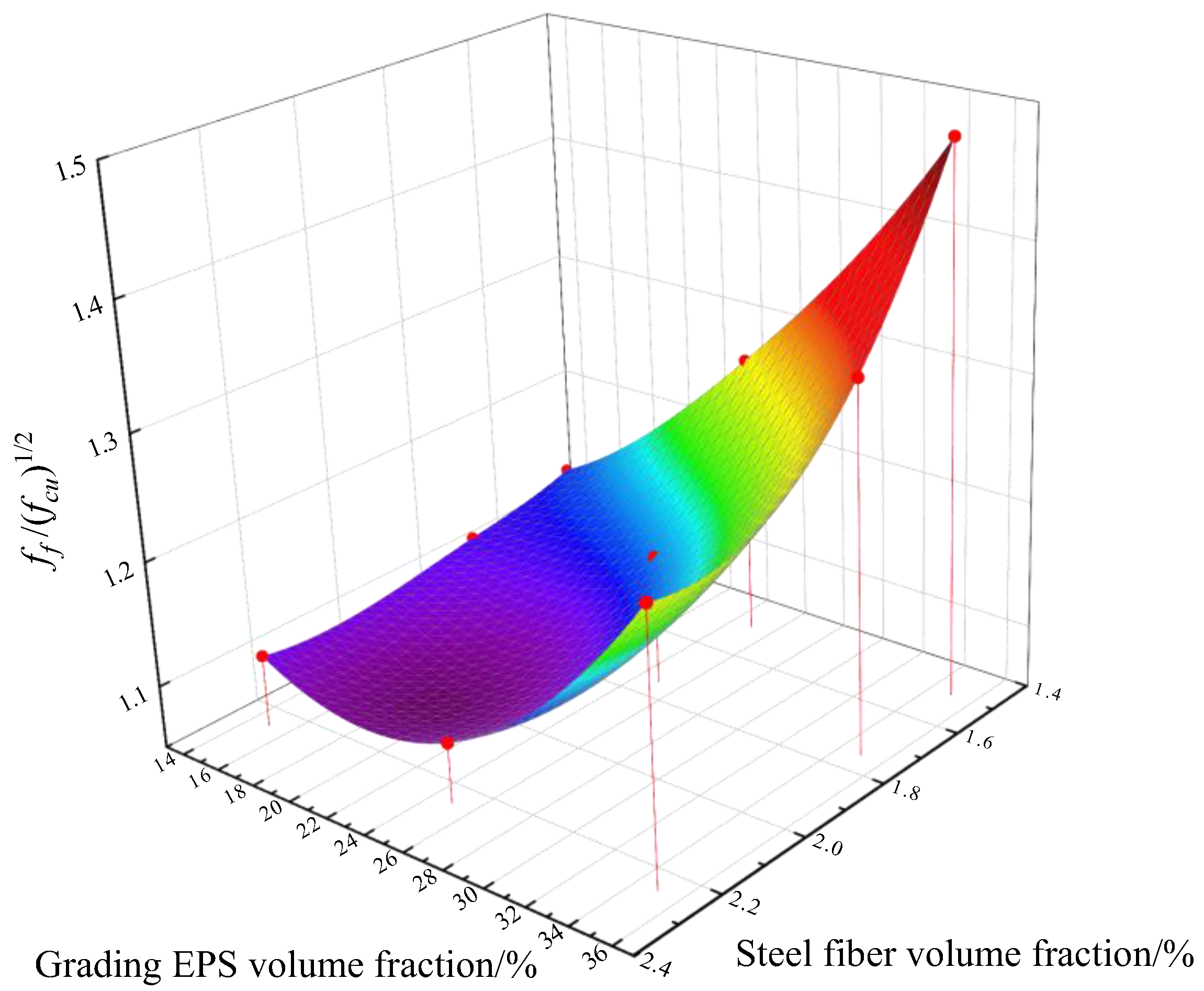
Figure 10.
Prediction accuracy of flexural strength of graded EPS steel fiber reinforced concrete.
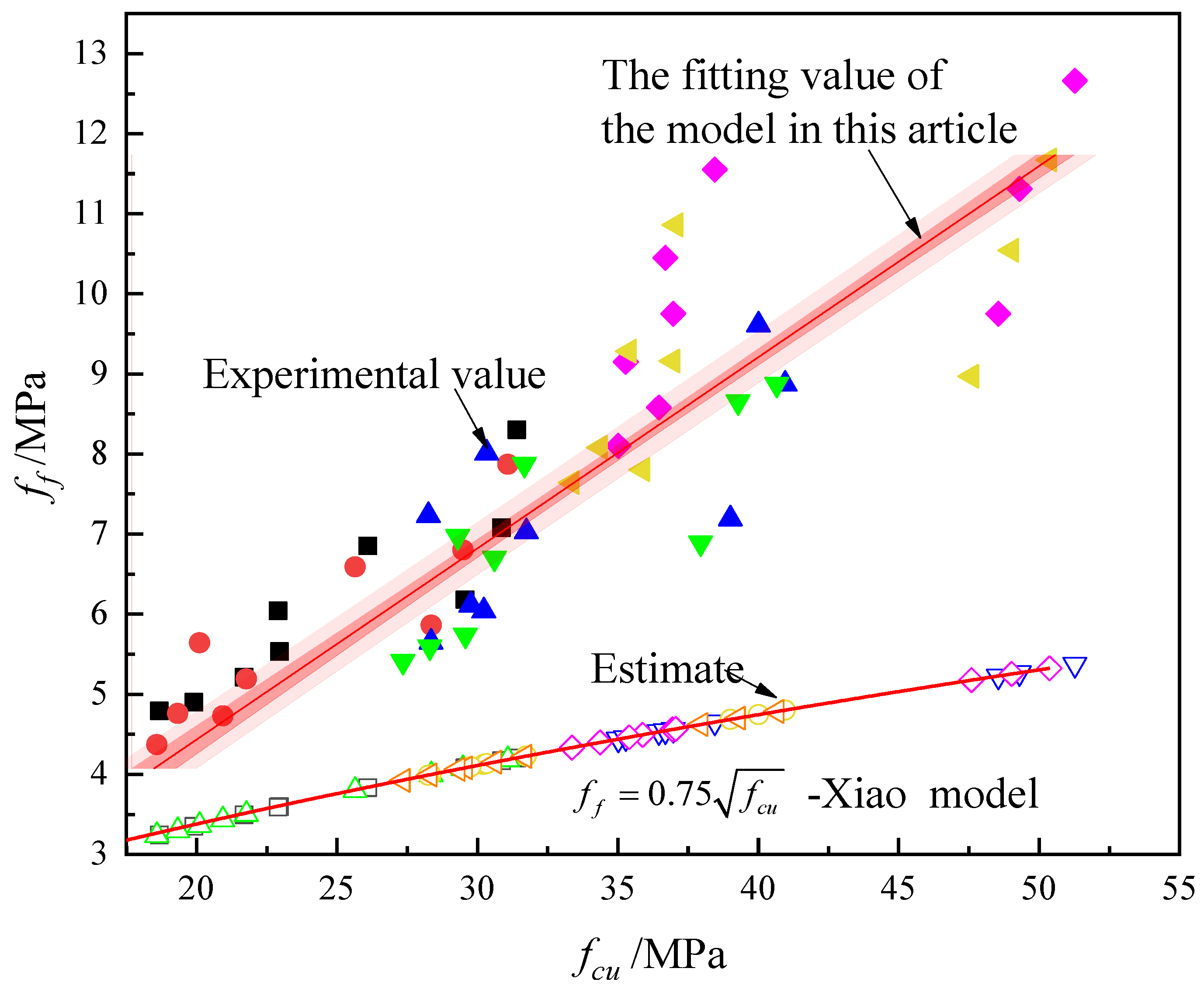
After deriving the specific control parameters, Equation (2) is substituted back into Equation (1) to obtain the modified formula for the flexural strength of graded EPS-steel fiber concrete, which is then validated using the compressive strength test values. By substituting and from Equation (2), the maximum bending-to-compression ratio under the combined effect of graded EPS and steel fibers can be calculated, allowing for the prediction of the optimal volume fraction.
4. Conclusions
In this study, we analyzed the effects of different EPS and steel fiber dosages on the mechanical properties of graded EPS-steel fiber concrete made with gravel and crushed stone of different grades, through compressive and flexural strength tests. The main conclusions are as follows:
(1) The failure modes of graded EPS-steel fiber fine aggregate and gravel concrete under compression and bending are generally similar. The incorporation of graded EPS enhances the ductility of the specimens under compressive failure, with the best ductility observed at a volume fraction of 25%. Steel fibers also contribute to the ductility of the specimens under bending failure, with the optimal ductility observed at a volume fraction of 2.25%.
(2) The volume fraction of graded EPS is negatively correlated with compressive strength, with a more rapid decline in compressive strength observed in the 15%-25% volume fraction range compared to the 25%-35% range. Consistency is observed in both the fine aggregate and gravel groups for all mix grades. The first 7 days of curing play a critical role in influencing the uniaxial compressive strength of the concrete, with the compressive strength at 7 days being 60%-75% of the 28-day strength. Based on design requirements for compressive strength, the grade of graded EPS-steel fiber concrete should be increased by 1 to 2 grades.
(3) The increase in the volume fraction of graded EPS is negatively correlated with the flowability of the concrete, and this relationship follows an accelerated downward trend.
(4) The tensile failure of graded EPS-steel fiber concrete is divided into four stages. The increase in steel fiber volume fraction by 0.25% generally results in an increase in flexural strength, with a probability of the increase falling in the range of 14.35% to 17.61%. The maximum growth rate is approximately 27%, but the distribution of the growth rate is relatively dispersed.
(5) By introducing a modified bending-to-compression ratio coefficient equation, a conversion relationship between the compressive and flexural strengths of graded EPS-steel fiber concrete has been established. The adjusted coefficient of determination (R) is 0.989. Comparing the predicted and experimental values demonstrates good accuracy. A method has been proposed to calculate the maximum bending-to-compression ratio under the combined influence of graded EPS and steel fibers using the corrected equation.
Author Contributions
Conceptualization, Y.W. and X.Z.; methodology, Y.W.; software, Y.W.; formal analysis, Y.W. All authors have read and agreed to the published version of the manuscript.
Funding
The authors appreciate the funding from the National Natural Science Foundation of China (Grant Nos. 51978248).
Institutional Review Board Statement
Not applicable.
Informed Consent Statement
Not applicable.
Data Availability Statement
The data that support the findings of this study are available from the corresponding author upon reasonable request. The data are not publicly available due to privacy.
Conflicts of Interest
The authors declare no competing interests.
Nomenclature
, Regression coefficient
Standard deviation of compressive strength of concrete cube
Sand rate
Quality fraction of cement
Quality score of water
Quality fraction of coarse aggregate
Quality fraction of fine aggregate
Concrete density correction factor
water-cement ratio
References
- Zhang, W.H., Lv, Y.J., Liu, P.Y. (2019). Review on the research progress of EPS concrete. Materials Review, 33(13), 2214-2228.
- Scioti, A., & Fatiguso, F. (2024). Performance characterization and evaluation of innovative cement mortars and concretes made with recycled EPS. Applied Sciences, 14, 1583.
- Subhani, K., Prasad, K., Hameed, N., Nikzad, M., & Salim, N.V. (2024). Expanded polystyrene/tyre crumbs composites as promising aggregates in mortar and concrete. Polymers, 16, 3207.
- Qu, L.L., & Zhang, D.W. (2022). Rheological properties and corrosion resistance analysis of recycled EPS plastic/concrete composites. Plastic Science and Technology, 50(01), 31-35.
- Li, J.H., Tian, Z.J., Tang, T.Y., et al. (2021). Effect of spherical SAP aggregates and EPS aggregates on the mechanical properties of concrete. Concrete, 2021(04), 70-73+77.
- Zhao, D.L., Hu, C.Y., Bo, D.S., et al. (2015). Building energy conservation. 43(3), 116 (in Chinese).
- Srinivas, K., Akula, K.R., & Mahesh, V. (2021). Experimental investigation on lightweight concrete by replacing coarse aggregate with coconut shell and expanded polystyrene beads and using polypropylene fiber. Materials Today: Proceedings, 46, 838-842.
- Patricia, F.B.B., Carmeane, E., & Adilson, S. (2022). Lightweight thermal insulating coating mortars with aerogel, EPS, and vermiculite for energy conservation in buildings. Cement and Concrete Composites, 125, 104283.
- Yu, Z.P., Yang, W.J., Huang, D.K., et al. (2022). Effect of fiber on the mechanical properties of polystyrene particle concrete.Concrete, 2022(11), 68-72+76.
- Li, Q.R., Wei, T., Liu, K.N. (2021). Compressive constitutive model and bending toughness test of steel fiber reinforced recycled concrete.Concrete, 2021(10), 31-35.
- Gao, D.Y., Zhao, L.P., Feng, H., et al. (2014). Bending toughness and evaluation methods of steel fiber concrete. Journal of Building Materials, 17(05), 783-789.
- Cook, D.J. (1973). Expanded polystyrene beads as lightweight aggregate for concrete.Precast Concrete, 4, 691-693.
- Zhang, W.H., Lv, Y.J., Liu, P.Y. (2019). Review on the research progress of EPS concrete. Materials Review, 33(13), 2214-2228.
- Luo, T.T., Liu, W.S., Guo, Y.J., et al. (2021). Review on the application of recycled polystyrene in concrete. Bulletin of the Chinese Ceramic Society, 40(01), 133-145.
- Liu, Y.C., Zhang, L.X., Zhan, J.P., et al. (2013). Strength model of EPS lightweight concrete. Concrete, 2013(02), 36-37+45.
- Zhou, K.K., Chen, B., Chen, L.Z. (2010). Effect of EPS particle gradation on the mechanical properties of EPS concrete. Journal of Harbin Engineering University, 31(02), 195-201.
- Yang, Y.M., Ge, Z.S. (2024). Impact test study on the full lightweight concrete beams with different steel fiber contents. Building Structures, 54(03), 59-64.
- Wu, D.Y., Yao, Q.S., Diao, F., et al. (2023). Bending toughness and impact resistance of steel fiber reinforced recycled concrete. Concrete, 2023(12), 141-144.
- Anjaney, A., Dix, I.T., Sung, H.K. (2019). Lightweight structural cement composites with expanded polystyrene (EPS) for enhanced thermal insulation. Cement and Concrete Composites, 102, 185-197.
- Zhou, K.K., Chen, B., Chen, L.Z. (2010). Effect of EPS particle gradation on the mechanical properties of EPS concrete. Journal of Harbin Engineering University, 31(02), 195-201.
- National Standardization Management Committee of China. (2013). Pre-mixed concrete (GB/T14902-2012) [S]. Beijing: China Standard Press.
- Ministry of Housing and Urban-Rural Development of the People's Republic of China. (2019). Standard for physical and mechanical property testing methods of concrete (GB/T 50081-2019) [S]. Beijing: China Building Industry Press.
- China Engineering Construction Standardization Association. (2010). Test method standards for fiber concrete (CECS 13-2009) [S]. Beijing: China Planning Press.
- Zhang, X.N., Guo, Z.X., Wu, K.H. (1995). Design of asphalt mixtures by volume method. Journal of Harbin University of Architecture, 1995(02), 28-36.
- Standard for performance test methods of common concrete mixes (GB/T 50080-2002) [S]. Beijing: China Building Industry Press.
- Pan, W.L., Deng, D.H., Yuan, T.P., et al. (2006). Effect of EPS lightweight concrete mix ratio on its flowability and mechanical properties. Concrete, 2006(02), 63-65+69.
- Ministry of Transport of the People's Republic of China. (2002). Specification for highway cement concrete pavement design (JTG D40-2002).
- Xiao, J.Z., Lin, Z.B., Zhu, J. (2014). Effect of recycled aggregate gradation on the compressive strength of concrete. Journal of Sichuan University (Engineering Science Edition), 46(04), 154-160.
- Zhang, X.G., Kuang, X.M., Zhang, X.X., et al. (2018). Study on the flexural and compressive strength conversion relationship of lightweight shale aggregate concrete. Bulletin of the Chinese Ceramic Society, 37(07), 2264-2269.
Figure 1.
Appearance of EPS particles and copper coated microfiber steel fibe (a) Graded EPS; (b) Copper plated microfilament steel fiber.
Figure 1.
Appearance of EPS particles and copper coated microfiber steel fibe (a) Graded EPS; (b) Copper plated microfilament steel fiber.
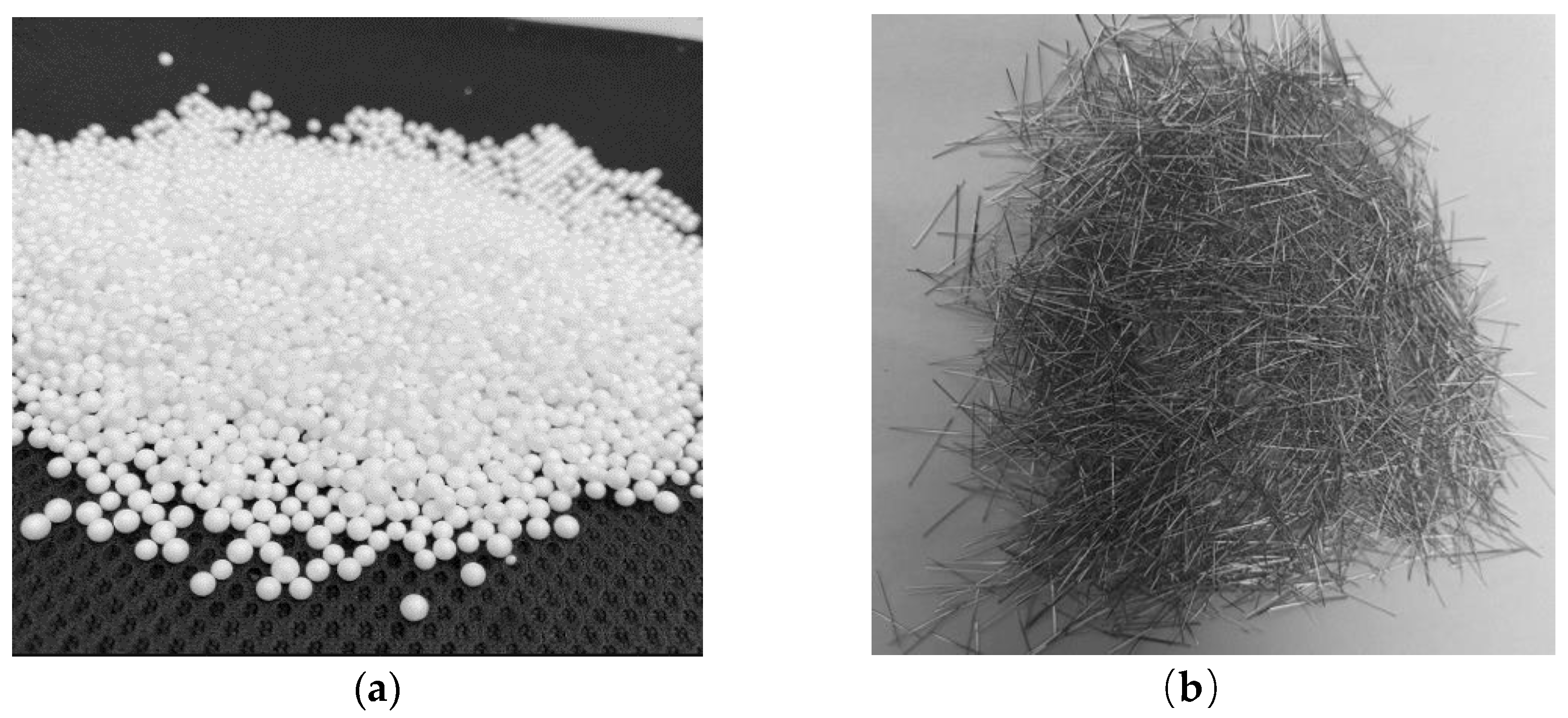
Figure 2.
Grading curve of aggregates.
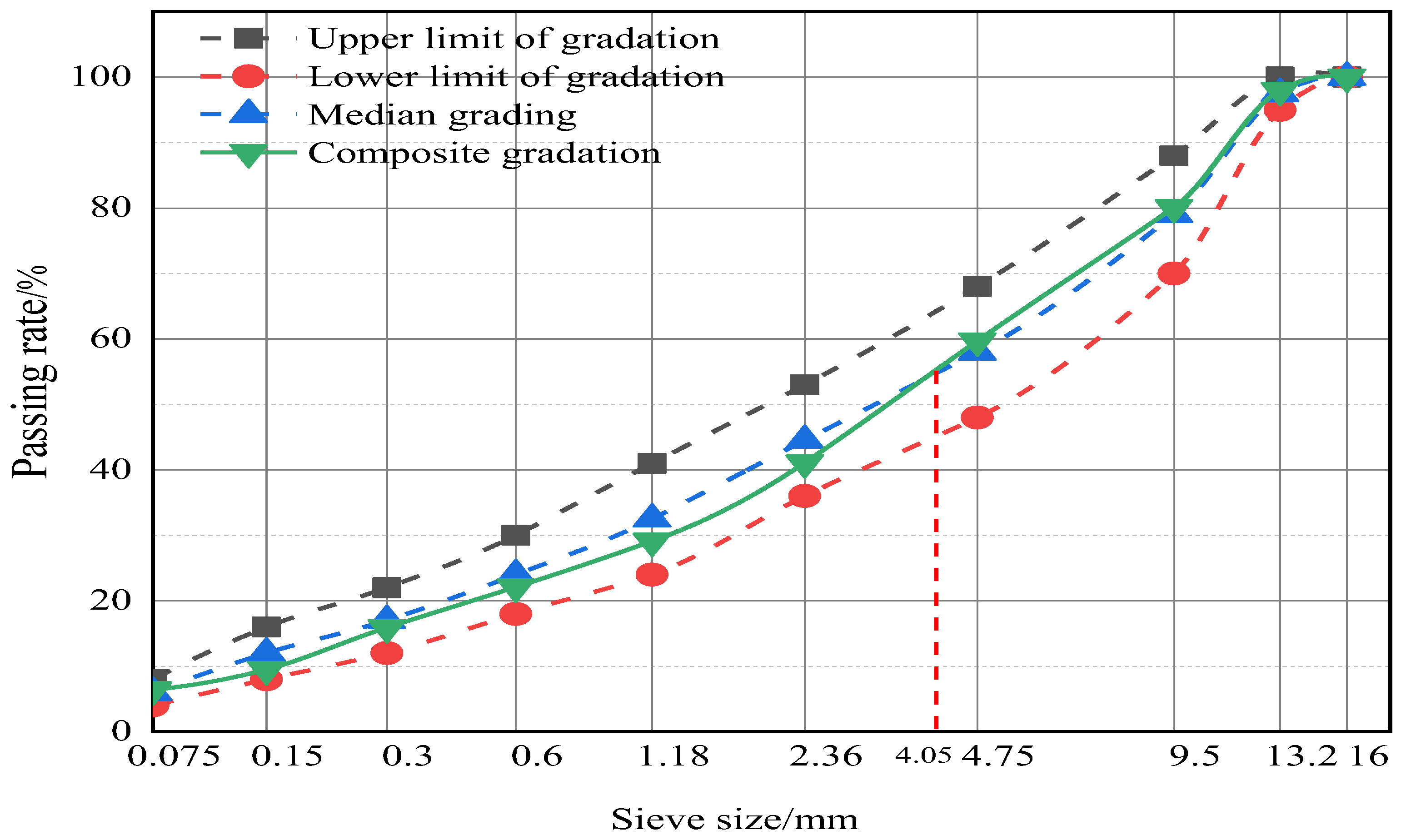
Figure 3.
Compression failure mode of graded EPS steel fiber reinforced concrete specimens.
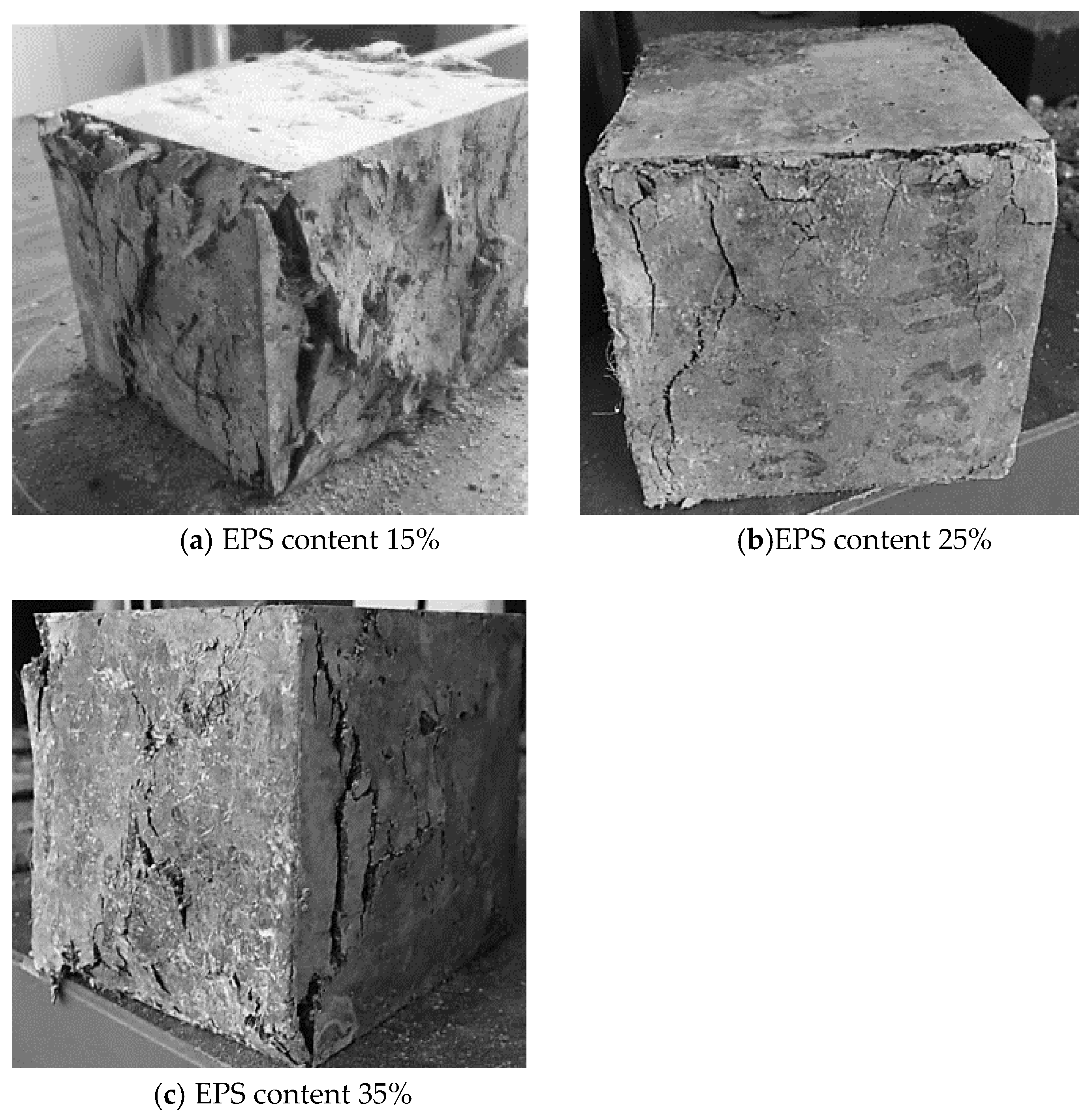
Figure 4.
Lateral cracks in the flexural test of graded EPS steel fiber reinforced concrete specimens.
Figure 4.
Lateral cracks in the flexural test of graded EPS steel fiber reinforced concrete specimens.
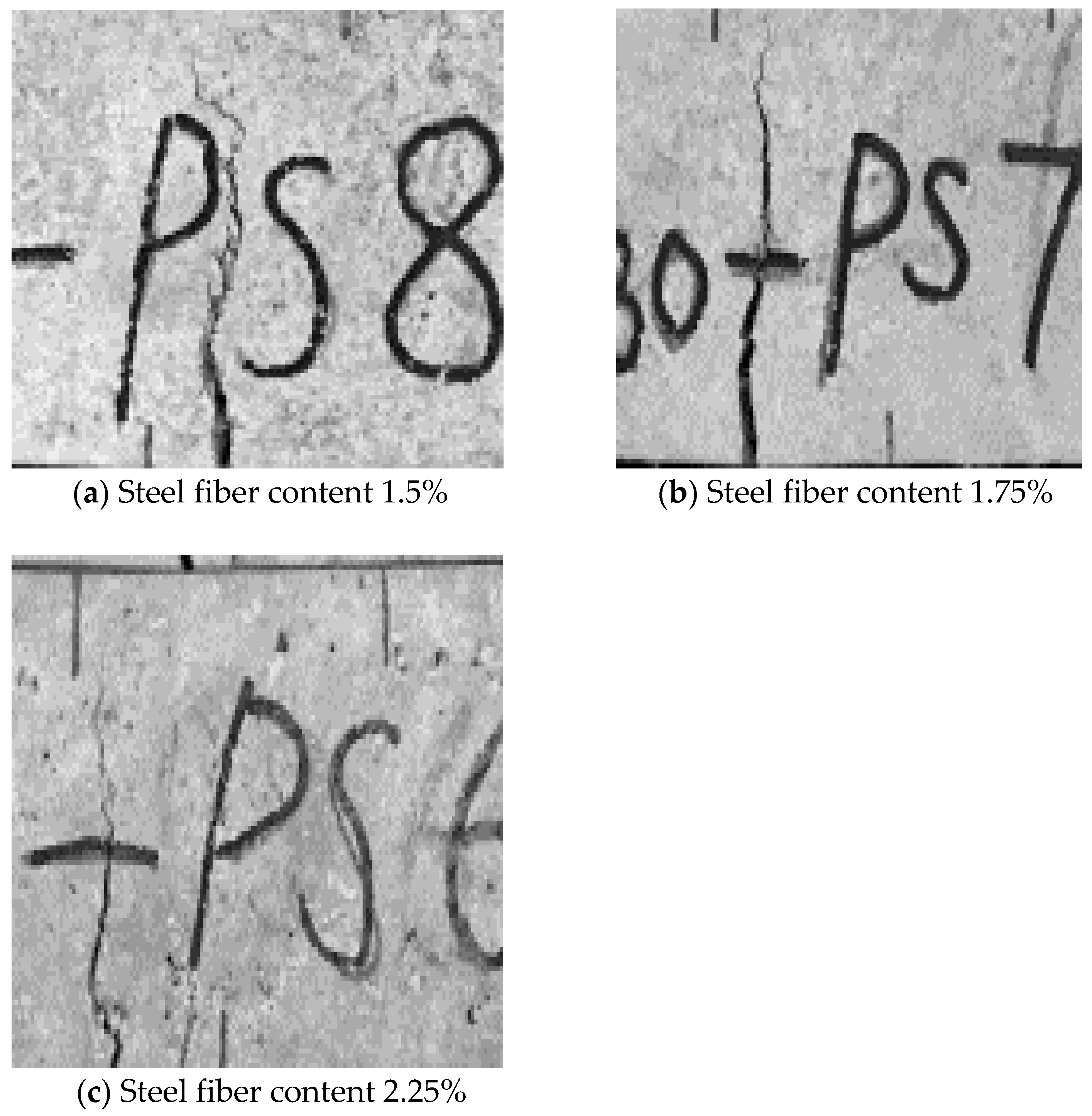
Figure 5.
Compressive Strength of EPS Steel Fiber Reinforced Concrete with Different Age Grades.
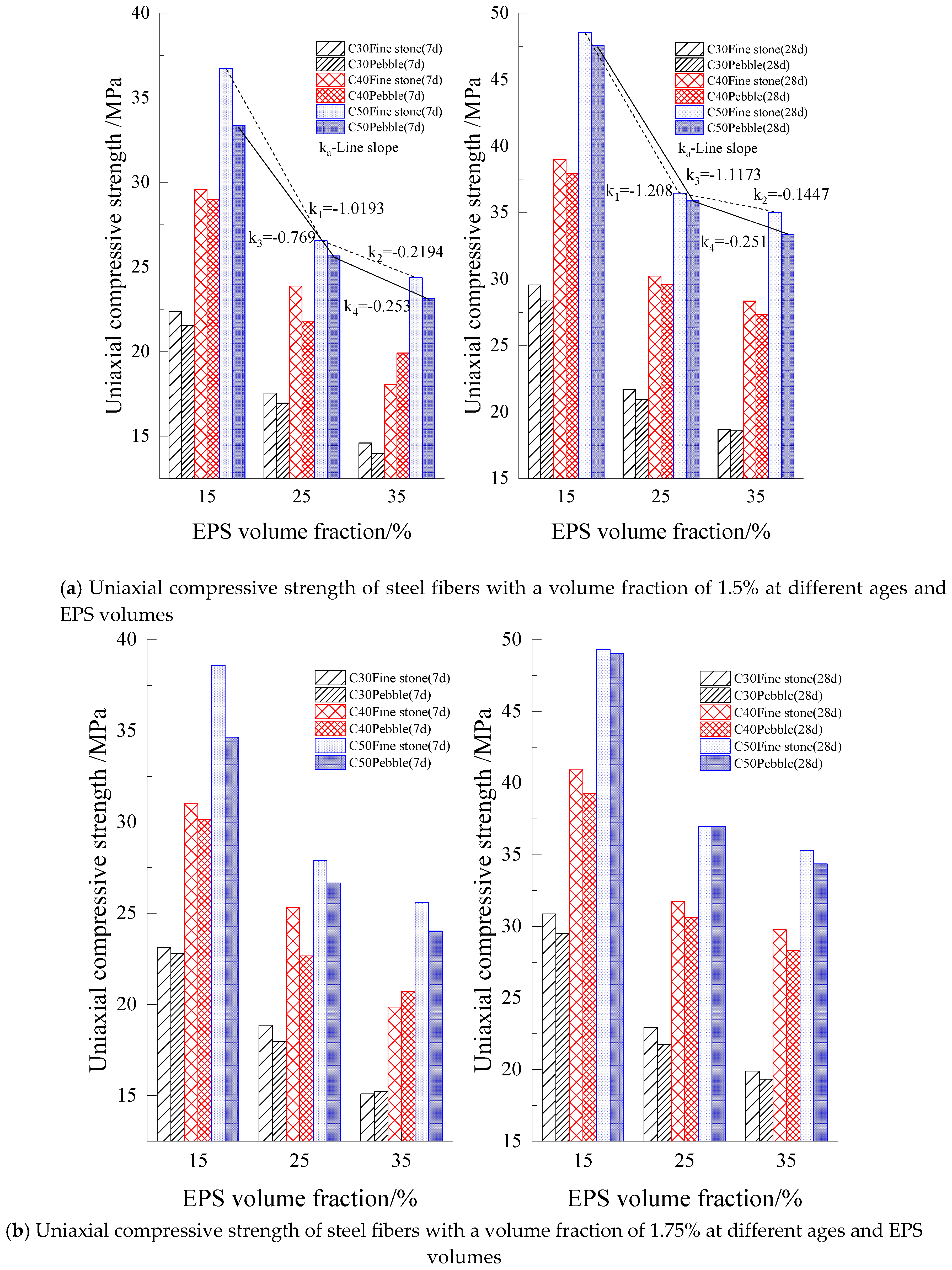
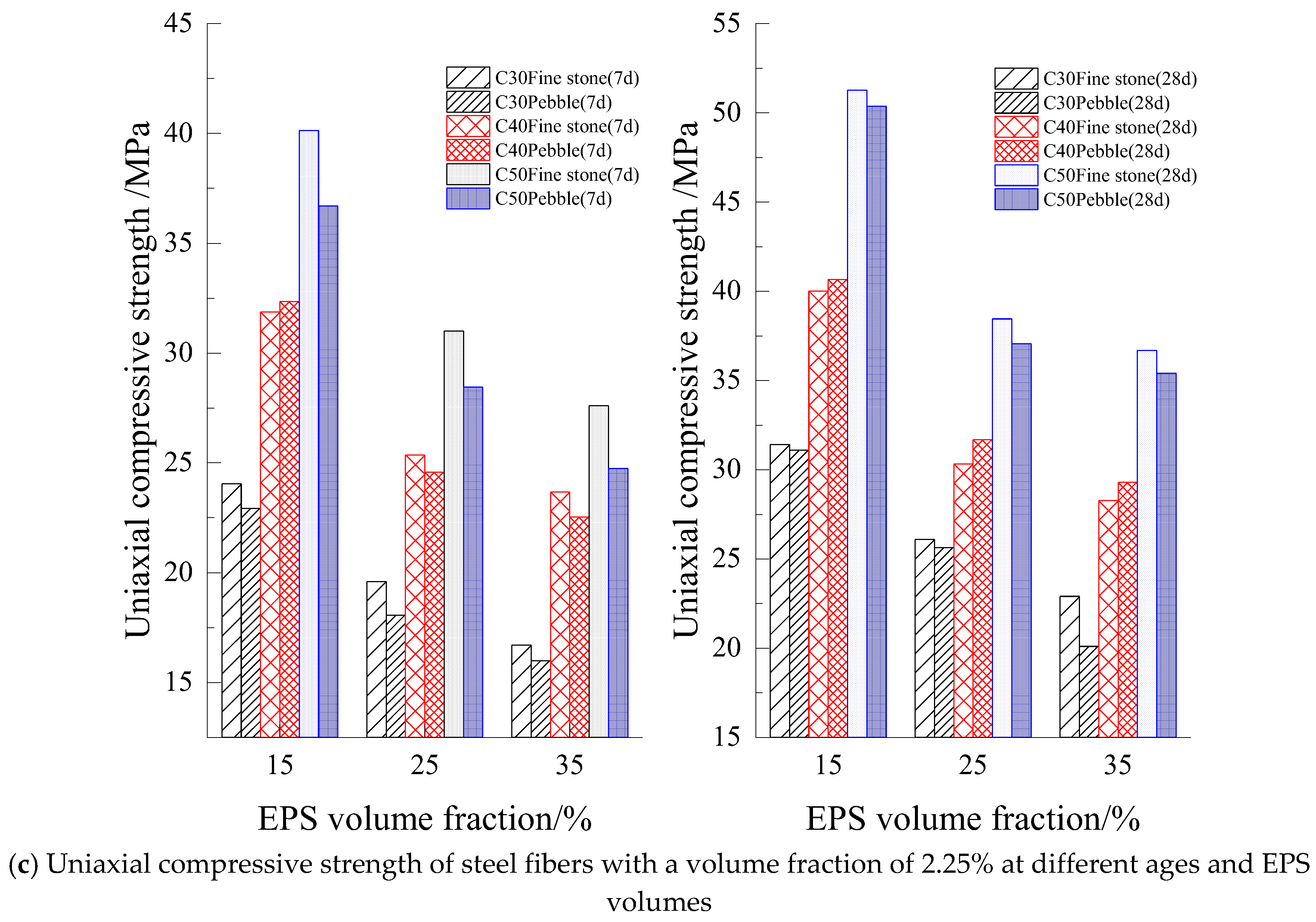
Figure 6.
The effect of graded EPS volume fraction on the fluidity of concrete.
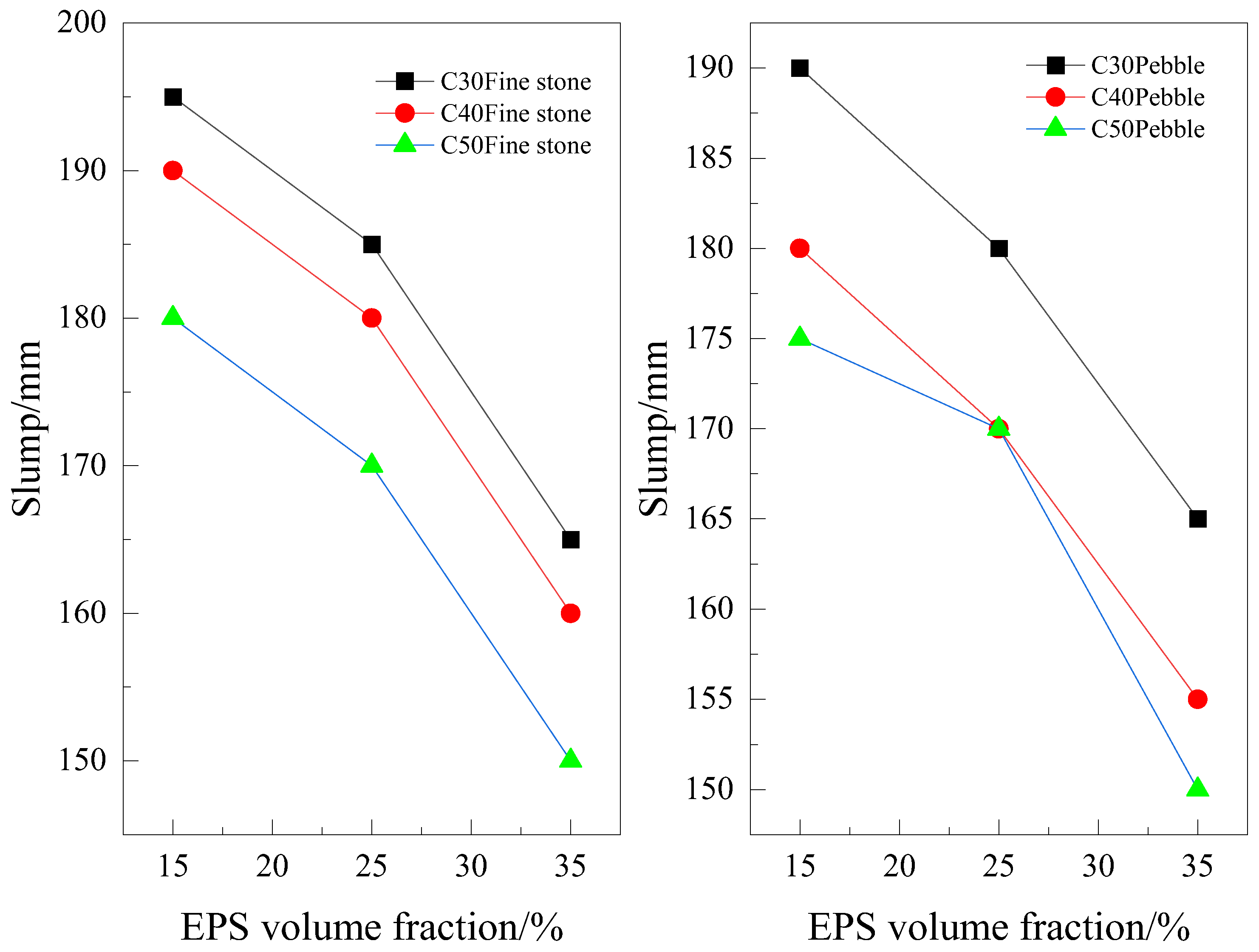
Figure 8.
Load deflection curve of graded EPS steel fiber reinforced concret.
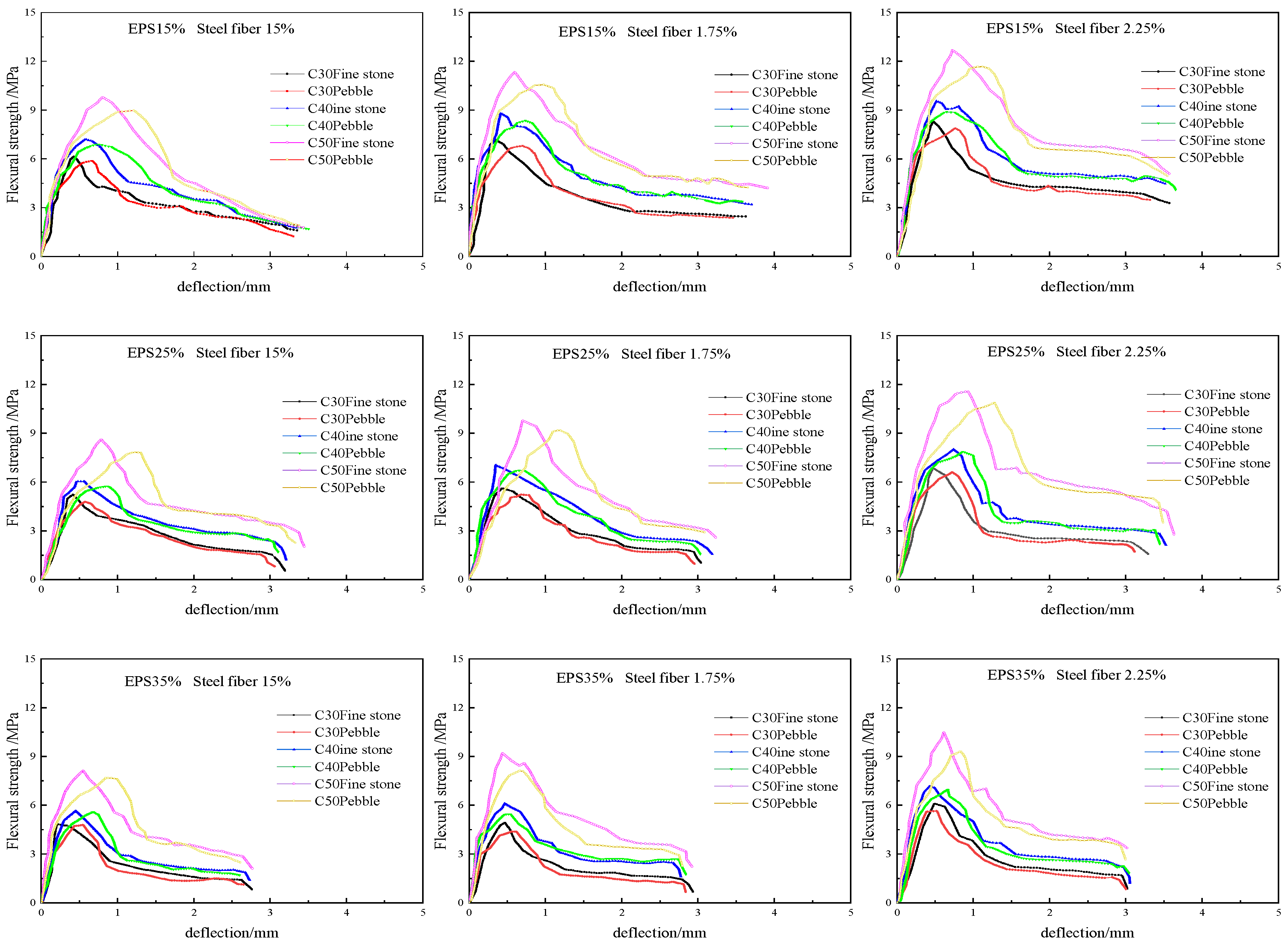

Table 1.
The chemical composition of ordinary Portland cement is as follows.
| Material Composition (%) | SiO2 | Al2O3 | Fe2O3 | CaO | MgO | SO3 |
| P.O 42.5 | 21.85 | 4.75 | 3.15 | 61.50 | 0.95 | 7.5 |
Table 2.
Aggregate Grading Parameters.
| Nominal particle size (mm) | The cumulative sieve residue on the sieve (%) | Mineral aggregate proportion (%) | |||||||||
| 16 | 13.2 | 9.5 | 4.75 | 2.36 | 1.18 | 0.6 | 0.3 | 0.15 | 0.075 | ||
| 11-22 | 100 | 95.3 | 69.1 | 33.1 | 18.0 | 10.0 | 3.01 | 0.90 | 0.39 | 0.15 | 35.6 |
| 6-11 | 100 | 98.2 | 71.1 | 42.2 | 25.6 | 14.2 | 7.10 | 3.10 | 1.35 | 0.68 | 19.2 |
| 3-6 | 100 | 100 | 77.3 | 47.2 | 35.1 | 22.3 | 15.1 | 9.5 | 4.10 | 1.95 | 3.7 |
| 0.075-3 | 100 | 100 | 92.5 | 89.9 | 61.2 | 41.9 | 33.3 | 20.4 | 8.10 | 2.21 | 33.5 |
| <0.075 | 100 | 100 | 100 | 100 | 100 | 100 | 99.7 | 98.4 | 77.5 | 56.5 | 8.0 |
| Upper gradation limit | 100 | 100 | 88 | 68 | 53 | 41 | 30 | 22 | 16 | 8 | / |
| Lower gradation limit | 100 | 95 | 70 | 48 | 36 | 24 | 18 | 12 | 8 | 4 | / |
| Median gradation | 100 | 97.5 | 79 | 58 | 44.5 | 32.5 | 24 | 17 | 12 | 6 | / |
| Combined gradation | 100 | 98.0 | 80.1 | 59.7 | 41.1 | 29.1 | 22.1 | 15.9 | 9.5 | 5.5 | / |
Table 3.
Calculation parameters of concrete mix proportions for each grade and optimal mix proportions in the laboratory.
Table 3.
Calculation parameters of concrete mix proportions for each grade and optimal mix proportions in the laboratory.
| Type | (%) | Superplasticizer | (%) | Experimental environment | ||||||||
| kg/m3 | ||||||||||||
| C30Gravel | 0.49 | 0.13 | 5.0 | 28 | 318 | 147 | 542 | 1388 | 5 | 0.8 | 0.46 | Class IIb |
| C30Fine Aggregate | 0.53 | 0.20 | 5.0 | 33 | 367 | 176 | 604 | 1228 | 5 | 0.5 | 0.48 | |
| C40Gravel | 0.49 | 0.13 | 5.0 | 29 | 349 | 150 | 561 | 1369 | 5 | 0.7 | 0.43 | |
| C40Fine Aggregate | 0.53 | 0.20 | 5.0 | 35 | 368 | 169 | 643 | 1192 | 5 | 0.9 | 0.46 | |
| C50Gravel | 0.49 | 0.13 | 6.0 | 27 | 345 | 145 | 521 | 1408 | 5 | 0.7 | 0.42 | |
| C50Fine Aggregate | 0.53 | 0.20 | 6.0 | 34 | 365 | 164 | 640 | 1230 | 5 | 0.6 | 0.45 | |
Table 4.
Peak stress and growth rate of concrete of different grades under different volume fractions.
Table 4.
Peak stress and growth rate of concrete of different grades under different volume fractions.
| EPS(%) | "steel fiber (%) | stress peak value (MPa) | growth rate (%) | ||||||||||||
| C30A | C30a | C40B | C40b | C50C | C50c | A | a | B | b | C | c | ||||
| 15 | 1.5 | 6.18 | 5.86 | 7.19 | 6.89 | 9.75 | 8.97 | / | / | / | / | / | / | ||
| 1.75 | 7.08 | 6.80 | 8.87 | 8.65 | 11.31 | 10.54 | 14.53 | 16.01 | 23.32 | 25.48 | 15.99 | 17.48 | |||
| 2.25 | 8.30 | 7.87 | 9.61 | 8.87 | 12.66 | 11.67 | 17.25 | 15.66 | 8.33 | 2.55 | 11.93 | 10.74 | |||
| 25 | 1.5 | 5.21 | 4.73 | 6.04 | 5.74 | 8.58 | 7.80 | / | / | / | / | / | / | ||
| 1.75 | 5.53 | 5.19 | 7.03 | 6.70 | 9.75 | 9.16 | 6.23 | 9.89 | 16.33 | 17.39 | 13.71 | 17.38 | |||
| 2.25 | 6.85 | 6.59 | 8.01 | 7.87 | 11.55 | 10.86 | 23.92 | 26.83 | 13.9 | 17.46 | 18.36 | 18.64 | |||
| 35 | 1.5 | 4.79 | 4.37 | 5.65 | 5.41 | 8.10 | 7.64 | / | / | / | / | / | / | ||
| 1.75 | 4.90 | 4.76 | 6.11 | 5.59 | 9.15 | 8.08 | 2.43 | 8.89 | 8.21 | 8.40 | 12.91 | 5.75 | |||
| 2.25 | 6.04 | 5.64 | 7.23 | 6.97 | 10.45 | 9.28 | 23.21 | 18.51 | 18.3 | 24.66 | 14.25 | 14.81 | |||
Note: "A" represents fine aggregate, and "a" represents the gravel group; the same applies for the others.
Disclaimer/Publisher’s Note: The statements, opinions and data contained in all publications are solely those of the individual author(s) and contributor(s) and not of MDPI and/or the editor(s). MDPI and/or the editor(s) disclaim responsibility for any injury to people or property resulting from any ideas, methods, instructions or products referred to in the content. |
© 2024 by the authors. Licensee MDPI, Basel, Switzerland. This article is an open access article distributed under the terms and conditions of the Creative Commons Attribution (CC BY) license (http://creativecommons.org/licenses/by/4.0/).
Copyright: This open access article is published under a Creative Commons CC BY 4.0 license, which permit the free download, distribution, and reuse, provided that the author and preprint are cited in any reuse.


