Preprint
Article

This version is not peer-reviewed.

Diagnostic In Vivo Assay of Glucose on the Real Brain Cells and Fluids by Using with Modified Carbon Nanotube Micro Probe

Submitted:

20 December 2024

Posted:

20 December 2024

You are already at the latest version

Abstract

Background/Objective; In-vivo diabetes detection of glucose were sought using square-wave anodic stripping voltammetry (SW), with bismuth-immobilized carbon nanotube paste electrode (BCE). Methods:The optimum analytical results indicated sensitive peak signals on the BCE. The raw voltammogram was approached within the 1mgL-1-14mgL-1 and 10ugL-1-140 ugL-1, detection limits with preconcentration times of 100 and 200 sec. Results:The relative standard deviation was 0.02 % (n=15) of 10.0 mgL-1 under optimum conditions. The analytical detection limit (S/N) was attained at 8 ugL-1. The handmade microsensor was directly used in vivo on the living fish brain and human urine. Conclusion: The method was applied at real time in vivo, without requiring any pretreatment and other ionic electrolyte solutions. It can be used for medicinal and other materials requiring biological-fluid detection in real time. This study was designed to be suitable for real-time unmanned remote diagnosis and therapeutic drug injection into the body, micro-needle long-term administration, wearable artificial skin tattoo sensor, and real-time control. In addition, the glasses monitor was designed to be suitable for multitasking and multi-user control.

Keywords: 
;  ;  ;  ;  ;  

1. Introduction

Among the in-vivo metabolites, glucose is the main substrate for organic energy [1,2] Muscle sympathetic nerve activity [3] and body cells that generate energy [4] and that contain metabolites are associated with the diabetes & vascular disease, cell growth [5], and physiological fluids [6], and are fuel-cyclic- efficient. Sensitive analytical detection techniques have become an object of considerable interest in biological in-vivo or in -vitro systems [7], such as clinical applications for selective capillary electrophoretic methods [8], high-performance liquid chromatography with refractive index detection [9], and in-vivo near-infrared (NIR) noninvasive blood glucose assay [10]. Spectrophotometrics are in demand for pretreated sample preparation and electric detection systems, but better, simpler, faster, and inexpensive electrochemical techniques have been developed, such as those involving the use of the photopolymeric membrane amperometric biosensor [11], copper based alloy electrodes [12], nickel copper alloy electrodes [13], graphite epoxy screen printable biocomposite sensor [14], ferrocene monocarboxylic-acid composite sol-gel glass electrode [15], and other modified sensors [16,17]. Most of these devices, however, are used only under laboratory conditions and are not usable for in-vivo direct assay. In this study, a simpler, more sensitive, and inexpensive square wave anodic stripping voltammetry (SWASV) method was sought. The objective of the study was to determine the effects of bismuth immobilized onto a carbon nanotube (CNT) structure. CNT can serve as a metal semiconductor and is also called an “electrochemical capacitor [18]. It can perform electron transfer with biomolecules, which have large cylindrical surface areas. Thus, a number of investigations of CNT for catalyst support and electronic equipment have been conducted [19]. In this study, CNT was used for electrical support. Moreover, the bismuth immobilized [20] techniques have already been employed for electrochemical measurements of metal and other biomolecules [21]. As such, CNT-based bismuth [22] paste was prepared for the trace detection of glucose. This method is very simple and can detect low concentration ranges within fast accumulation times. This experiment did not need complicated equipment but only a small electric circuit. It also had a very short accumulation time of only 350 sec and easily detected the metabolites. It can thus be used to detect biological in-vivo and other materials requiring glucose analysis. Also glucose is related to the cancer cell growth, Unlike normal cells, which mainly use glucose in the energy metabolism process, however cancer cells use entirely fatty acids and use oxygen in mitochondria to create adenosine triphosphate ATP. If the use of fatty acids is blocked in the presence of glucose, ATP rapidly drops and only cancer cells die. In addition, animal experiments using mouse cancer models have shown that cancer growth under high-fat diet conditions is 5 times higher than growth under low-fat diet (high-carbohydrate diet) conditions in a calorie-balanced diet with the same total calories. Therefore, glucose diagnosis has a variety of applications, including early diagnosis of diabetes, obesity control, cancer diagnosis and treatment, cranial nerve activity, muscle development, and physical movement control. In addition, in vivo [23] and in vitro sensors [24] can be used for wearable remote diagnostic treatment. The final result of this experiment allows real-time [25] self-diagnosis of the following trace amounts of biological substances and viruses in vivo or in vitro.

2. Materials and Methods

2.1. Apparatus and Reagents

All voltammetric measurements were carried out using a CHI660A Instruments electrochemical workstation (CH Instruments Inc., Cordova, TN, USA). A three-electrode system was used to monitor the SWASV signal. BCE was used as the working electrode, with saturated Ag/AgCl as the reference electrode (3 molL-1KCl). Platinum wire was used as the auxiliary electrode. The working electrode was made of paste, which is a mixture of CNT (Nanostructured & Amorphous Materials, Inc.), bismuth standard (Aldrich 1000 ppm), and mineral oil, in the ratio of 60:30:20. A small amount of mixed paste was inserted into a plastic-needle-type capillary tube with a 1.5 mm diameter and 5 cm length, using a 0.5-m-diameter copper wire connected to the measurement system. All the systems were subjected to room temperature (24±2°C). The reagent solution was prepared from doubly distilled water (18 MOhm.cm-1). The conventional paste electrode was prepared by mixing 70% graphite powder with 20% mineral oil. This mixture was homogenized in a mortar for 30 min. The mixed paste was inserted into a plastic syringe needle with a diameter of 3.0 mm, and a copper wire was connected to the electric system.

2.2. Experimental Procedure

Several electrolyte solutions of acid, base, and buffer (all in 0.1 M) were initially examined in search for a possible supporting electrolyte. Ammonium phosphoric-acid solution was found to be a suitable electrolyte, yielding the best peak separation from the background currents. The effect of the phosphoric-acid concentration was examined within the range of 0.01-0.3 M. In the 0.1M solution, the pH of 4.69 was found to be sensitive. Under this condition, the cyclic peak potential and peak sensitivity were examined using BCE and the common-type CNT paste electrode.

3. Results and Discussion

3.1. Cyclic Voltammetric Property of BCE

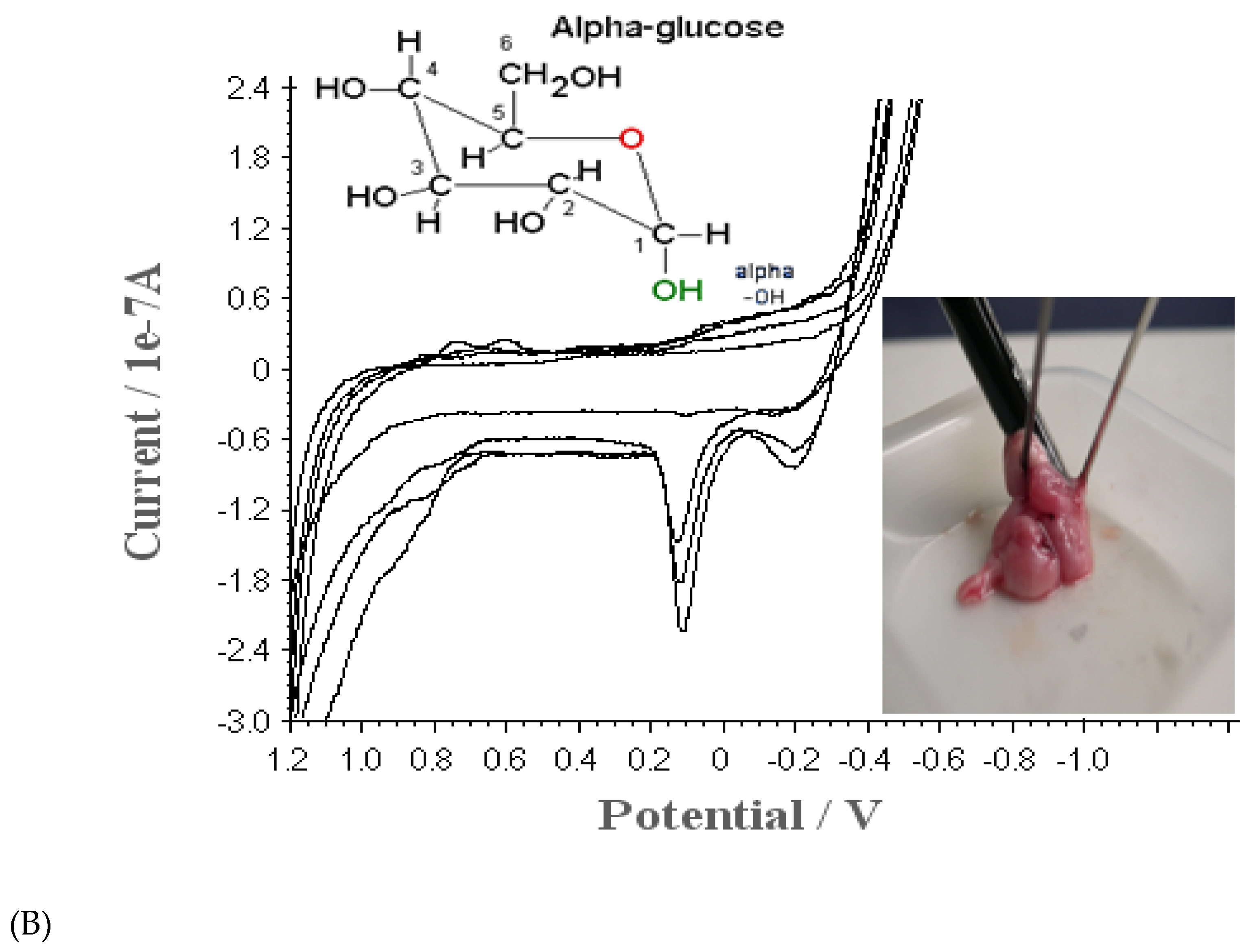
The unit mgL-1 indicated noise signals on the graphite electrode, but the definite peak current on BCE was found to be around 0.1 V. As shown in the bigger graph in the same figure, the currents from BCE grew regularly and visually with 8.78, 12.07, 16.18x10⁻⁶A, and close to a direct proportional graph, whereas the currents from the graphite electrode grew differently from BCE. The peak currents on the graphite electrode grew only slightly at Figure 1(A). Although the graph does not show this, the CNT that was modified through the previous method was also tested for mercury and was electric-metal-immobilized, but the BCE current was more gradual than the other peaks. Through this experiment, BCE was determined to be an effective electrode for the detection of glucose, Figure 1(B) is shown cyclic peak at brain cell of fish. Using BCE, more sensitive SW optimization was performed.

3.2. SW Optimization for BCE

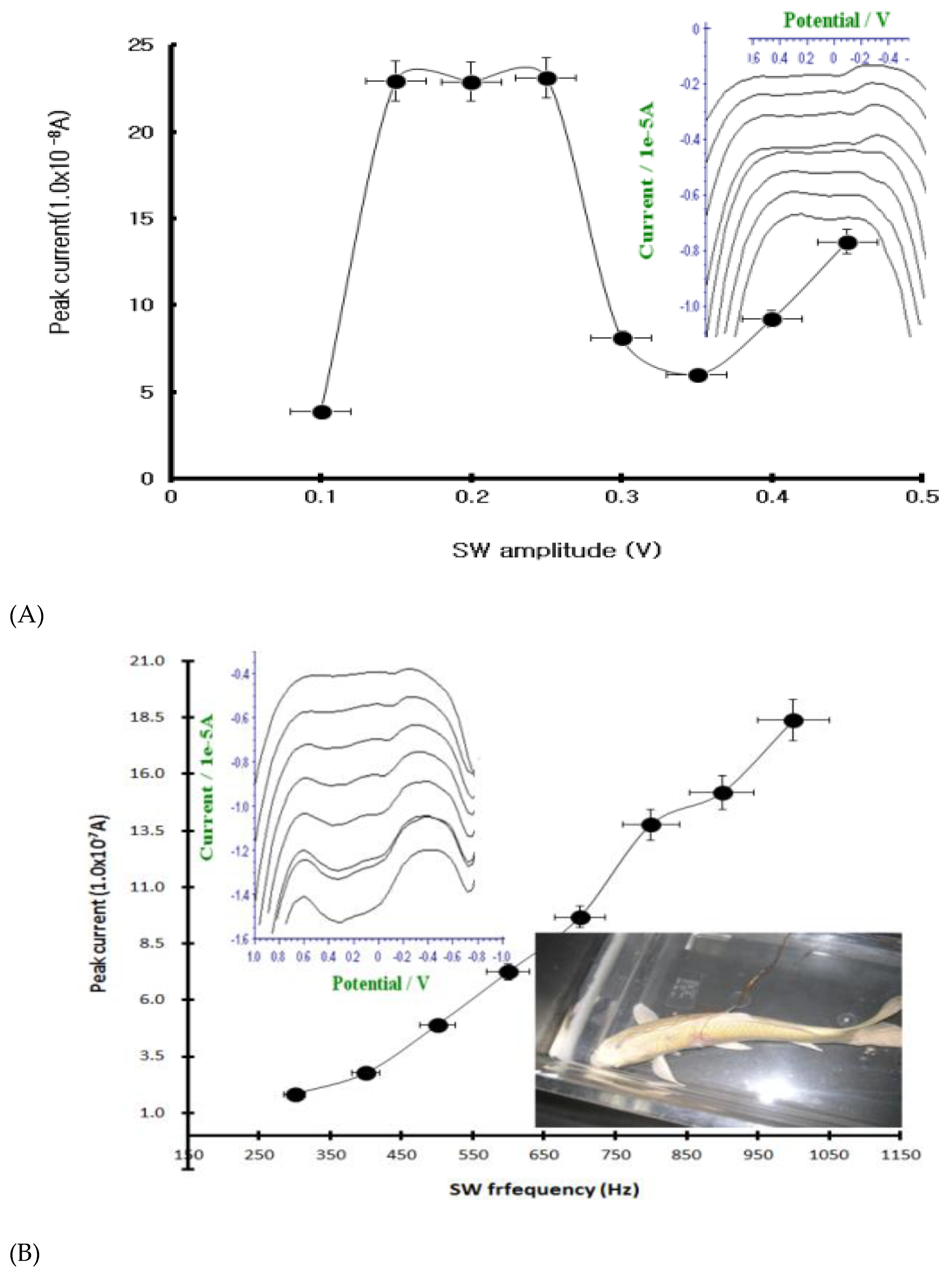
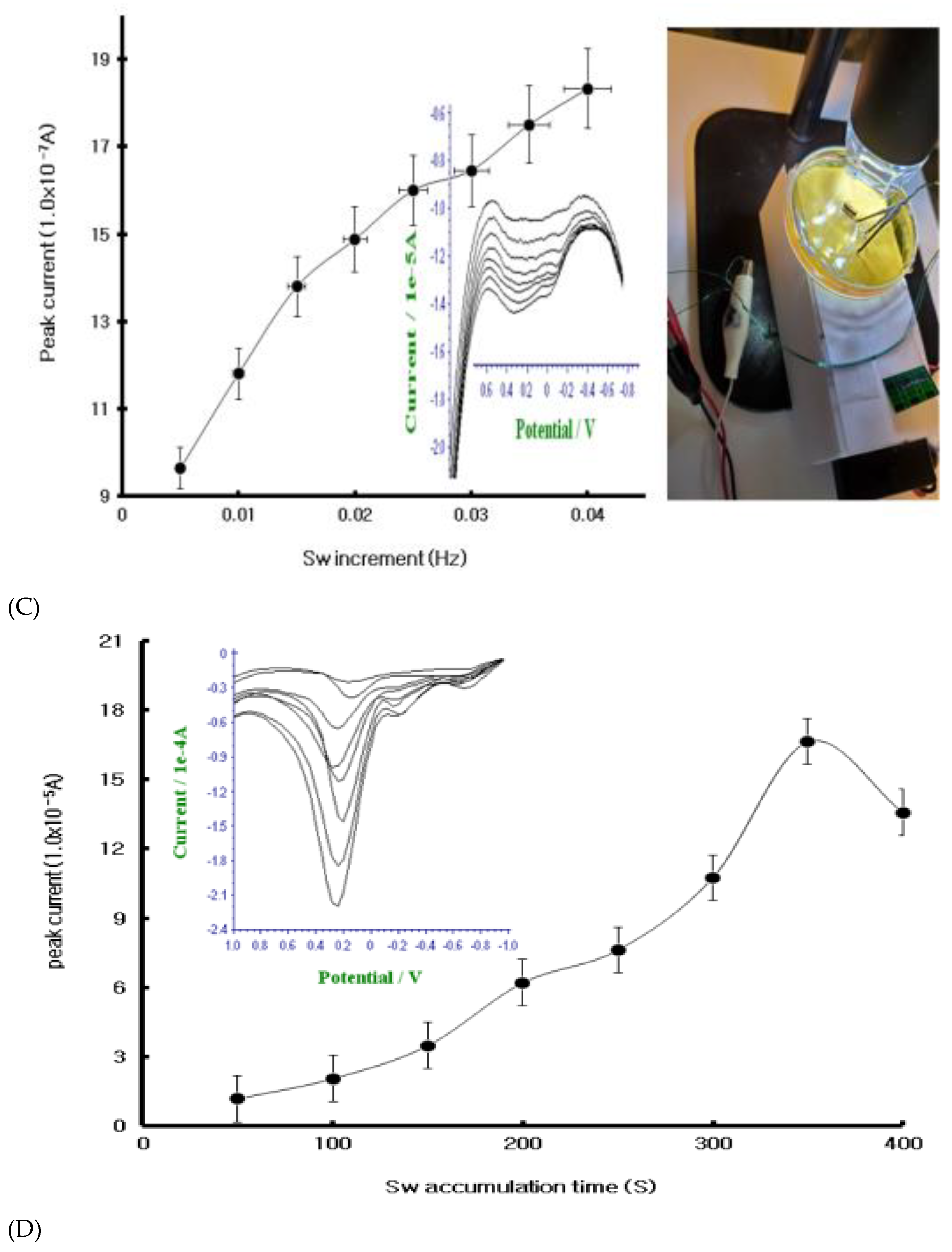
Figure 2(A) illustrates the voltammetric peak current in a 1-mgL-1 glucose concentration as a function of varying square-wave amplitudes. The amplitude range increased very quickly from 0.1 to 0.15 V while the 0.15-0.25 V peak remained very high. The peak, however, again rapidly decreased to 8.11x10⁻⁸A then once again increased to 0.35-0.45 V. At this amplitude, a glucose peak ratio of 23.12x10⁻⁵A:3.85x10⁻⁵A appeared. Here, 0.2 V was fixed. Using this result, the square-wave frequencies for Figure 2(B) were tested at fish brain cell real, and the results within the range gradually increased, except at 800-900 Hz, where the peak decreased from 13.76 to 15.19x10⁻⁷A. The peak current range was 1.83-18.37x10⁻⁷. As such, the optimum frequency was 1000 Hz. Under these conditions, Figure 2(C) shows the results that exhibit the square-wave increment potential. The range was 9.63-18.33x10⁻⁷A, and the highest peak was 0.04 V. The square-wave accumulation time test was also carried out. Figure 2(D) shows the accumulation time test consequence. The test was conducted for 30 sec. Up to 350 sec, the peak current rose, but at 400 sec, the peak current decreased to 13.58. At 300-350 sec, the peak current went up rapidly from 10.75 to 16.64x10⁻⁵A. The range of increase was 1.17-16.64x10⁻⁵A. Therefore, the best peak current was shown to be at 350 sec, by 16.64x10⁻⁵A. The pH was also tested (data not shown). The peak current was highly movable upward and downward. It was tested eight times, at 2.89, 3.33, 4.06, 4.69, 5.11, 6, 6.61, and 7.19 pH. From pH 3.33 to 4.69, the peak current grew steadily, but it rapidly declined at pH 5.11 by 0.6161x10-6. pH 4.69 was found to be suitable by 2.257x10⁻⁶. As such, through this procedure, the optimum conditions of 0.1 V amplitude, 300 Hz frequency, 0.04 V increment potential, 350 sec accumulation time, and 4.69 pH were arrived at. Using these conditions, analytical linear ranges and statistic applications were performed.

3.3. Analytical Working Ranges, Interference, Statistics, and Application

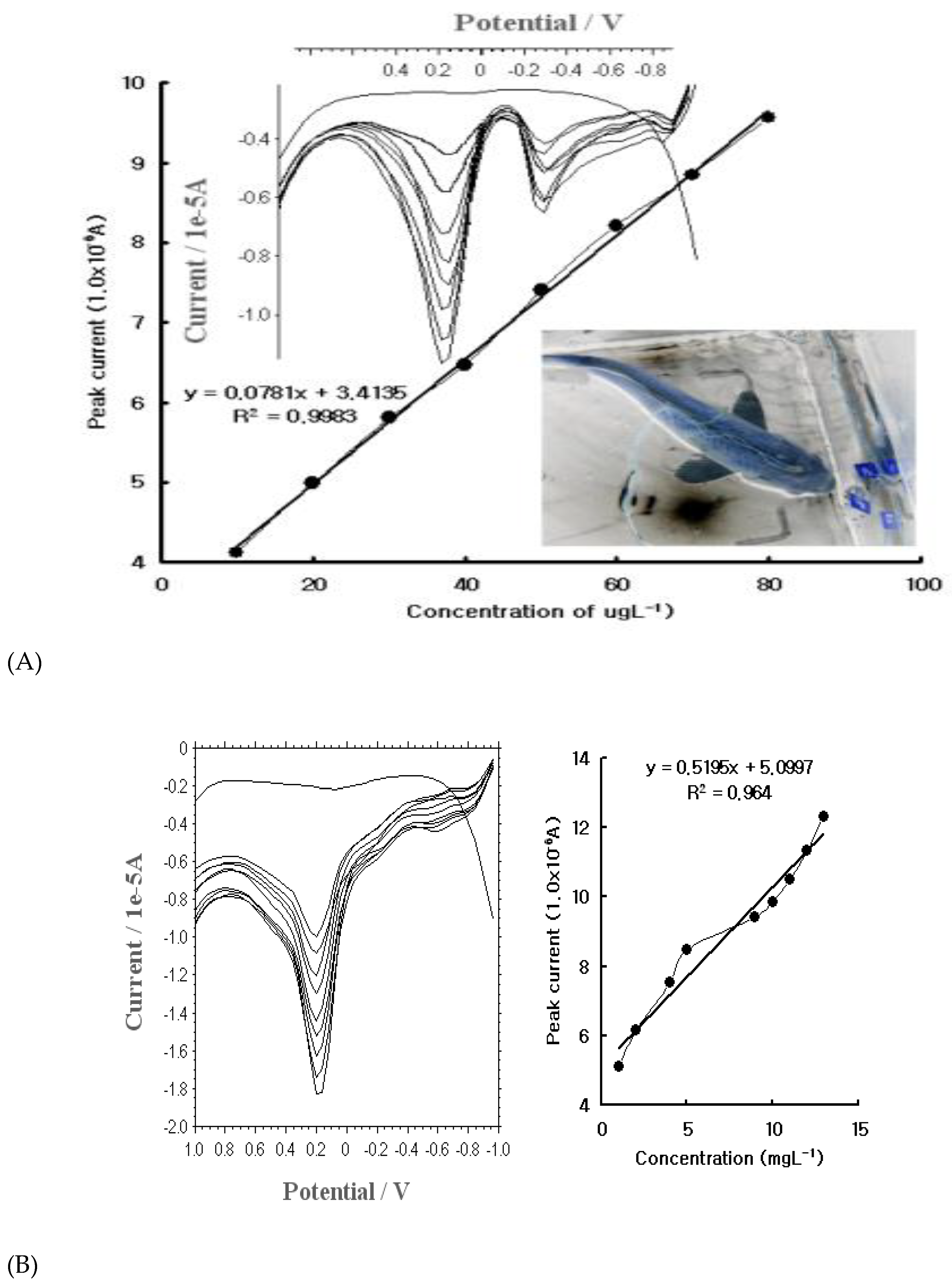
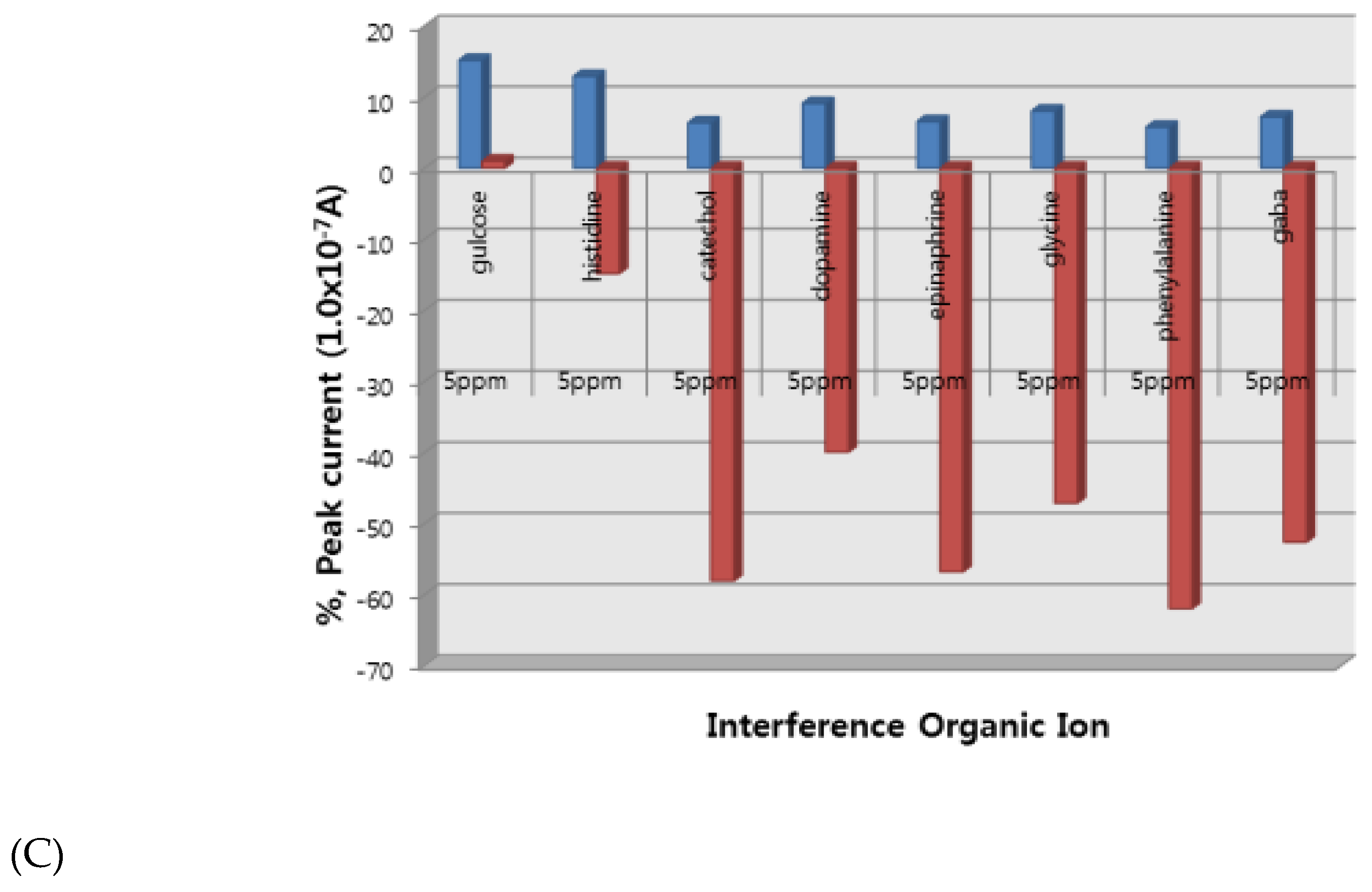
In Figure 3(A), the first curve is shown to have a 100 sec accumulation time and an electrolyte blank. The peak current clearly appeared at around 0.1 V and regularly grew henceforth. The graph is also close to a straight line because each signal gradually increased within the range of 5.11-12.33x10⁻⁶A. In Figure 3(B), glucose was also detected in a lower ugL-1 concentration in the subsequent examination. The last concentration examination was carried out in the mgL-1 concentration. The deposition time was 200 sec. Microranges were recognized, which can be applied to in-vivo fish brain at real or in-vitro cells. After the completion of all the concentration tests, analogy interference tests were carried out. In Figure 3(C), the deposition time for such tests was 50 sec, and the reagents that were used were histidine, catechol, dopamine, epinaphrine, glycine, phenylalanine, and gaba, in the ratio of 5:5 mgL-1. The reagents influenced the concentration of glucose by 100 %, -14.84 %, –58.08 %, –39.97 %, –56.81 %, –47.14 %, –61.98 %, and –52.63 %, respectively. Phenylalanine had the strongest effect on glucose. The presence of other ions was also effectively corrected using standard addition methods.

3.4. Statistics and Application

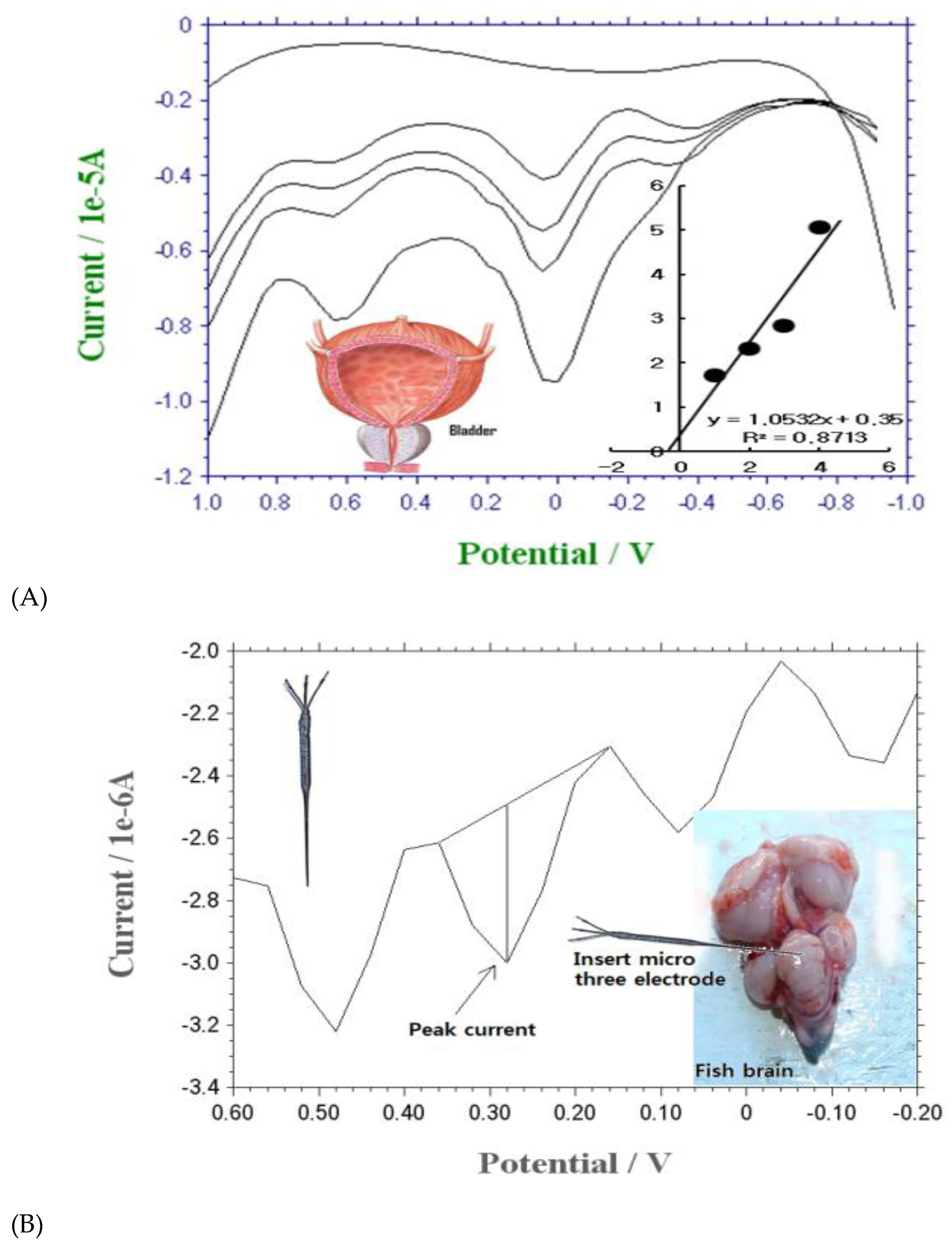
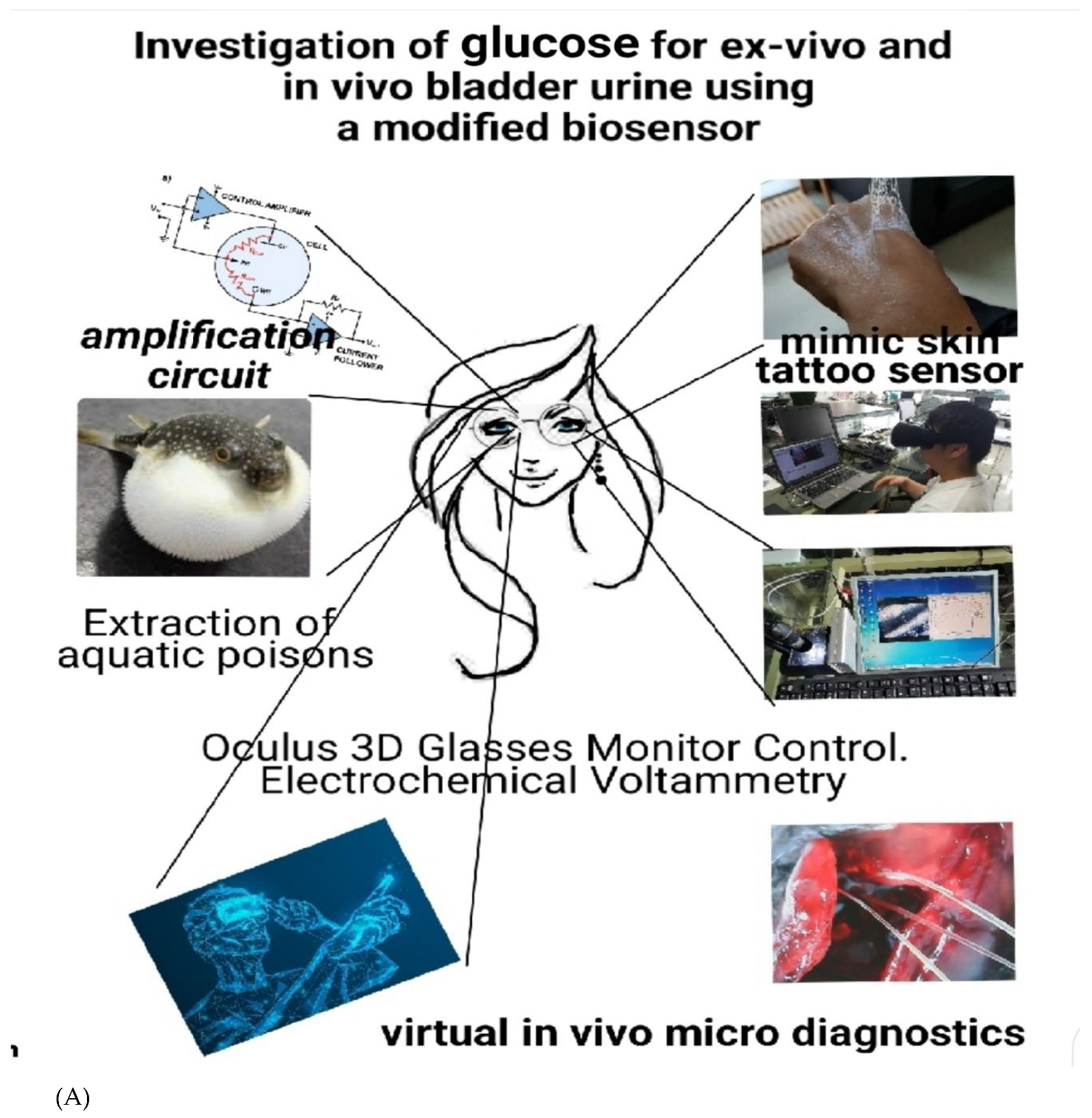
Before the experiments shown in Figure 4(A), (B), and (C) were conducted, glucose detection statistics were obtained. At first, detection was performed in 0.1M ammonium phosphoric electrolyte acid without any glucose, with a deposition time of 50 sec as blank. After that, a 1000-mgL-1 glucose solution of 10 mgL-1 was spiked, and glucose was examined 15 times, with a deposition time of 50 sec. These statistics were gathered to prove that the response of BCE was effective through RSD. The peak current signal clearly appeared at –0.1 V and grew closely and in an orderly way. According to this experiment, the RSD was 0.02. The last experiments were applications of this study. Figure 4(A) shows the human-urine result. Blank solutions are shown, which manifest that no noise signal was obtained and that glucose peak currents were obtained. First of all, human urine’s peak currents were checked. The peak current of the 0.05-ml urine appeared at around 0.1 V, and whenever a 10-ppm reagent was added, the peak current was rechecked. After the addition of a reagent, the peak current check was calibrated three times. As shown by the graph, the peak currents grew one after the other. This first application experiment result shows peak currents of 1.932, 2.265, 3.005, and 3.290x10⁻⁶A. Therefore, glucose can be easily detected by using a small amount of urine. The next test involved the application of plant cells for in vivo implanted sensor, as shown in Figure 4(B). This figure shows the one whose peak currents grew the most in many of the tests. The graph also grew at the same position (around 0.1 V). This experiment was carried out by putting an electrode in the plant cell and fish brain. This test can also detect glucose very precisely at between 0.1 and 0.2 V. In these two tests, glucose was very easily detected in fish and plant tissue even with a very small solution amount, The presentation of related technologies for glucose diagnostic applications is shown in Figure 5(A).
Figure 5(A) shows an example of application in the following order. -Amplification circuit; A coin-sized microcircuit was fabricated and programmed for quantitative Y-axis current, and qualitative X-axis potential on a 2D plane. -Extraction of aquatic poisons: Puffer fish tetrodo toxin extraction experiment, the puffer fish liver was extracted and purified five times, repeated recrystallization was extracted up to the 10-6 impurity level, and animal nerve anesthesia for toxicity application tests of the purified product was confirmed. -Oculus 3D glasses monitor control; It was linked with self-made Oculus monitor glasses. Designed with a portable 10-volt built-in battery and -Vitual in vivo micro diagnostics and-Mimic skin tattoo sensors, here related research is applied technology that has already been published in papers. These are summarized in this picture.

4. Conclusions

The developed methods were fabricated with bismuth-immobilized carbon nanotube paste electrodes using square-wave stripping voltammetry. This method is very simple because it does not need pretreatment and diverse equipment. The test was carried out at an accumulation time of 350 sec, at an amplitude of 0.25 V, at a frequency of 1000 Hz, and at an increment potential of 0.04 V. The electrode response was linearly related to the glucose concentration, which ranged from 10-80 ugL-1 to 10-130 ngL-1 and 10-90 mgL-1. The peak currents reached the maximum at a phosphate buffer electrolyte solution pH of 4.8, and various interference ions were removed using standard addition methods. As the method that was used in this study had a lower detection limit, the analytical applications of human urine, fish cell, and plant tissue were examined. The proposed method can also be applied in other fields requiring glucose detection. Additionally, an artificial skin tattoo sensor was used in the manufactured circuit. And we used wearable circuits. Therefore, it has become possible to diagnose and treat owenself anytime, anywhere, regardless of time and space. In addition, program control was designed so that physical examination results can be judged at the level of an artificial intelligence doctor of medicine.

Author Contributions

Suwyoung Ly: An electrochemical optimization experiment was performed and approved the final manuscript.

Funding

this work was not supported any funding.

Ethics Approval and Consent to Participate

all experiments were performed according to established guidelines for the ethical use.

Data Availability Statement

all materials are available by the corresponding author.

Conflict of Interests

declare no conflicts of interest.

Abbreviations

SWAV: square wave anodic stripping voltammetry, BCE: bismuth-immobilized carbon nanotube paste electrode, CNT: carbon nanotube, NIR: near-infrared.

References

  1. HaoranZhu,YuanZhao,MengmengMi,QiyuZhang,XinFu,YaqingZheng,GuixinQin,LiPan,NanBao. Effects of glucose release kinetics of extruded-maize diet on energy utilization of growing pigs. Animal Feed Science and Technology. 2023, 304. 115747. [CrossRef]
  2. Chengruo Huang, Mingyue Zhang, Chunming Li. A novel non-enzymatic electrochemical glucose sensors based on graphene oxide nanoribbons: Tracking energy expenditure and nutritional intake in sports. Alexandria Engineering Journal, 2024, 89. 184-194. [CrossRef]
  3. Wenran Ren. Jianhui Chen, Wenjing Wang, QingqingLi, Xia Yin, Guanglei Zhuang,Hong Zhou. Wenwen Zeng. Sympathetic nerve-enteroendocrine L cell communication modulates GLP-1 release, brain glucose utilization, and cognitive function.Neuron. 2024, 112 972-990.e8.
  4. Qinying Zhu, Junhong Du,Yi Li, Xue Qin, Ruifen He,HaoMac, Xiaolei Liang, Downregulation of glucose-energy metabolism via AMPK signaling pathway in granulosa cells of diminished ovarian reserve patients. Gene 2025, 933. 148979. [CrossRef]
  5. Fan Zhang, Jinghua Tian, Li Wang, Pingang He, Yong Chen, Correlation between cell growth rate and glucose consumption determined by electrochemical monitoring, Sensors and Actuators B: Chemical, 2011; 156: 416–422. [CrossRef]
  6. Graaf RA, Dijkhuizen RM, Biessels GJ, Braun KPJ, Nicolay K: In Vivo Glucose Detection by Homonuclear Spectral Editing. Magnet Reson Med 2000;43:621-626.
  7. Vojinovic V, Azevedo AM, Martins VCB, Cabral JMS, Gibson TD, Fonseca LP, Assay of H2O2 by HRP catalysed co-oxidation of phenol-4-sulphonic acid and 4-aminoantipyrine: characterisation and optimisation, Journal of Molecular Catalysis B: Enzymatic 2004;28. 129-135. [CrossRef]
  8. Cortacero SR, Segura AC, Cruces CB, Hernainz MBC, Fernandez AG: Analysis of carbohydrates in beverages by capillary electrophoresis with precolumn derivatization and UV detection. Food Chem 2004;87:471-476.
  9. Jorge L. Chávez S, Ana IC, Carmen LS: Analysis of mono- and disaccharides in milk-based formulae by high-performance liquid chromatography with refractive index detection. J Chromatograpy, 2004;1043:211–215.
  10. Katsuhiko M, Mitsuhiro T, Jakusei C, Tomohiro O: Hidenobu A, Yukio Y, Mamoru T, Masataka I, Yukihiro O, Noninvasive Blood Glucose Assay Using a Newly Developed Near-Infrared System. IEEE J Sel Top Quant, 2003;9.2.
  11. PuigLleixa C, Jimenez C, Bartroli J: Acrylated polyurethane Ð photopolymeric membrane for amperometric glucose biosensor construction. Sensor Actuat B-HEM 2001;72. 56-62.
  12. In HY, Dennis CJ: Anodic response of glucose at copper-based alloy electrodes. J Electroanal Chem 2000;484: 157–163.
  13. In HY1, Dennis CJ: Electrochemical response of small organic molecules at nickel–opper alloy electrodes. J Electroanal Chem 2001;495:110–119.
  14. Carlos A. Galan V, Javier M, Carlos D, Salvador A: Glucose biosensor based on a reagentless graphite-epoxy screen-printable biocomposite. Sensor Actuat B-HEM 1997;45.55–62.
  15. Pandey PC, Upadhyay S, Pathak HC: A new glucose sensor based on encapsulated glucose oxidase within organically modified sol-gel glass. Sensor Actuat B-HEM 1999;60:83–89.
  16. Suye S, Matsuura T, Kimura T, Zheng H, Hori T, Amano Y, Katayama H: Amperometric DNA sensor using gold electrode modified with polymerized mediator by layer-by-layer adsorption. Microelectron Eng 2005;81:441–447.
  17. Chuang CL, Wang YJ, Lan HL: Amperometric glucose sensors based on ferrocene-containing B-polyethylenimine and immobilized glucose oxidase. Anal Chim Acta 1997;353:37-44.
  18. Kay HA, Won SK, Young SP, Jeong MM, Dong JB, Seong CL, Young SL, Young HL: Electrochemical Properties of High-Power Supercapacitors Using Single-Walled Carbon Nanotube Electrodes. Adv. Funct. Mater. 2001;11:387-392.
  19. Eugenii K, Itamar W: Biomolecule-Functionalized Carbon Nanotubes: Applications in Nanobioelectronics. ChemPhysChem 2004; 5:1084-1104.
  20. Gunther W, Axel S, Rudiger S, Gerhard W: Glucose oxidation at bismuth-modified platinum electrodes. J Electroanal Chem 1998; 444: 61–73.
  21. Emily AH, Samo BH. Lea M, Bozidar O. Bismuth film electrode for anodic stripping voltammetric determination of tin. Anal Chim Acta 2006; 580: 244-250.
  22. Gunther W, Axel S, Rudiger S, Gerhard W: Glucose oxidation at bismuth-modified platinum electrodes. J Electroanal Chem 1998;444: 61-73.
  23. In Hea Cho, Kwang Jin Choi, Ji Hyun Kim, Kyung Lee, Suw Young Ly. Analysis of Staphylococcus aureus Molecules in Non-Treated Blood Using Mercury Immobilized Carbon Nanotube Sensor. Molecules. 2022,27(6), 1837. [CrossRef]
  24. Dong Ho Kim, Jeeyu Choi, Hyeon Jeong Park, Jeannette Sahnghee Kim, Kyung Lee, SuwYoung Ly, Virtual Rapid Sensing of Covid-19 Virus Antibodies in Patients Blood by Using Platinized Antigen Linking Graphene Probe, Biomedical Journal of Scientific & Technical Research 2022, 42,5, 34021-34028. [CrossRef]
  25. Suw Young Ly, Hwa Jin Heo, Min Jung Kim, Real Time Analysis of Neurotransmitters in the Brain Using a Micro-Electrode, Current Neurovascular Research 7, 2010: 32 - 38. [CrossRef]
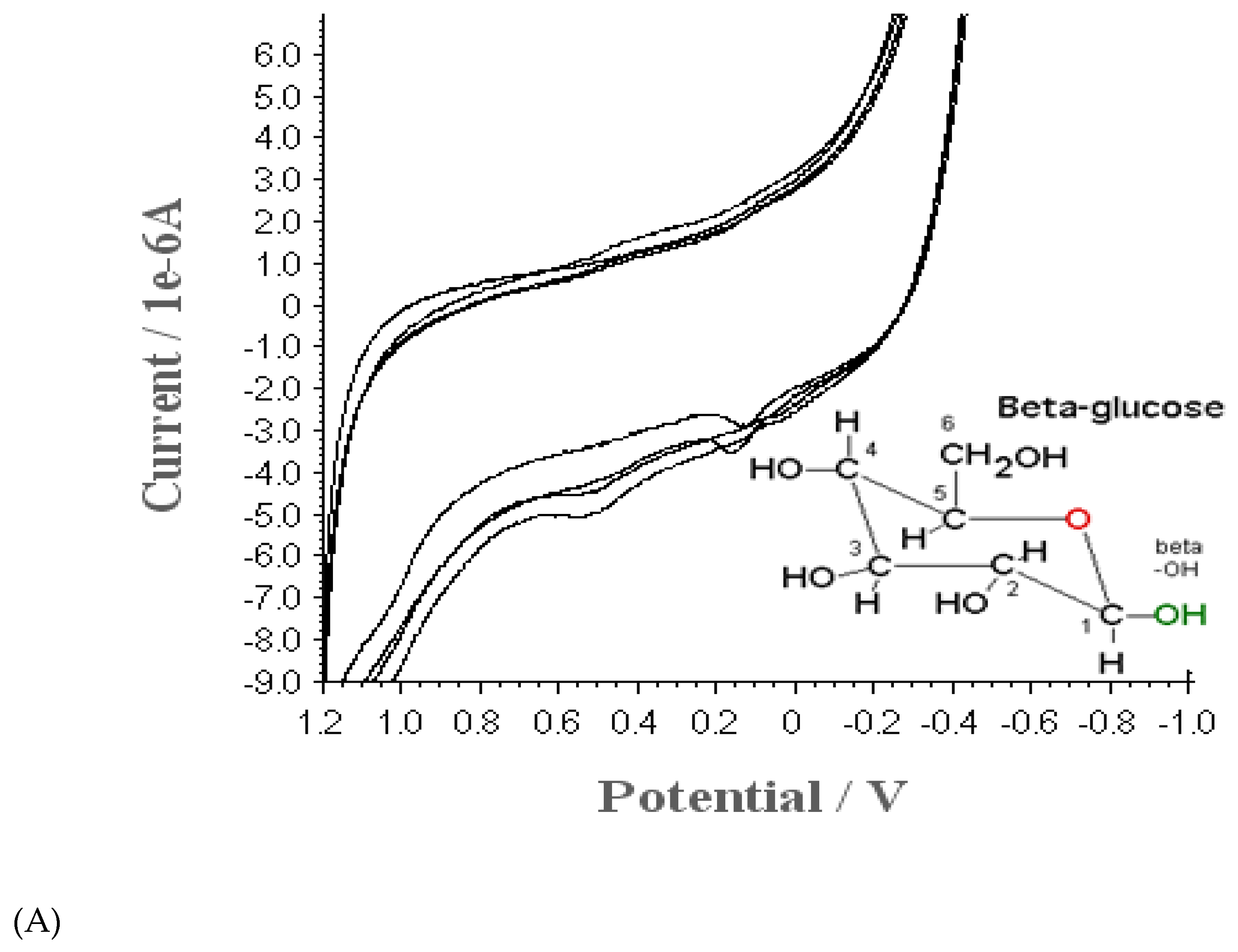
Figure 1. Cyclic effects of BCE. (A) Various concentration effects of 0-, 10-, 20-, and 30-mgL-1 glucose using cyclic voltammogram (CV) as graphite common pencil electrode. (B) BCE at a 0.5 V scan rate, in a 0.1M ammonium phosphate electrolyte solution and extracted brain of fish.
Preprints 143581 g001aPreprints 143581 g001b
Figure 2. (A) SW anodic peak currents for the amplitude variations of 0.1, 0.15, 0.2, 0.25, 0.3, 0.35, 0.4, and 0.45 (V). (B) SW frequencies of 300, 400, 500, 600, 700, 800, 900, and 1000 (Hz). (C) SW increment potentials of 0.005, 0.01, 0.015, 0.02, 0.025, 0.03, 0.035, and 0.04 (V). (D) SW accumulation times of 50, 100, 150, 200, 250, 300, 350, and 400 (sec).
Preprints 143581 g002aPreprints 143581 g002b
Figure 3. (A) SW voltammograms of the 1, 2, 3, 4, 6, 8, 10, 12, and 14 mgL-1 variations. (B) Microranges of 10, 20, 40, 60, 80, 100, 120, and 140 ugL-1 with 100 sec accumulation time and calibration curves, in deep brain fish at real, (C) Interference effects.
Preprints 143581 g003aPreprints 143581 g003b
Figure 4. (A) Analytical application of human-urine spike. (B) Assay of real-time live in-vivo tissue.
Preprints 143581 g004
Figure 5. (A): Related papers such as glucose diagnosis application example, self-developed amplification circuit, puffer fish tetrodo toxin extraction experiment, 3D glasses monitor linkage control, virtual in vivo assay, mimic skin tattoo sensor, etc. were published.
Preprints 143581 g005
Disclaimer/Publisher’s Note: The statements, opinions and data contained in all publications are solely those of the individual author(s) and contributor(s) and not of MDPI and/or the editor(s). MDPI and/or the editor(s) disclaim responsibility for any injury to people or property resulting from any ideas, methods, instructions or products referred to in the content.
Copyright: This open access article is published under a Creative Commons CC BY 4.0 license, which permit the free download, distribution, and reuse, provided that the author and preprint are cited in any reuse.
Prerpints.org logo

Preprints.org is a free preprint server supported by MDPI in Basel, Switzerland.

Subscribe

Disclaimer

Terms of Use

Privacy Policy

Privacy Settings

© 2025 MDPI (Basel, Switzerland) unless otherwise stated