

Submitted:
20 December 2024
Posted:
23 December 2024
You are already at the latest version
Abstract
Subclinical mastitis (SCM) represents a pervasive challenge in dairy farming, particularly in low-and-middle-income countries (LMICs), where its detection and management remain inadequate. The condition, often undetectable without diagnostic tools, compromises milk quality, reduces yields, and imposes significant economic and public health burdens. This review explores key strategies to address SCM by evaluating three diagnostic techniques – California Mastitis Test (CMT), White Side Test (WST), and Draminski Mastitis Detector (DMD) – which are accessible and effective in identifying early-stage infections. Beyond diagnostics, the review delves into the microbiological analysis of bacterial pathogens associated with udder infections and histopathological investigations to identify microscopic tissue changes. By synthesizing these approaches, the review offers a perspective on udder health and its implications for cow welfare and dairy productivity. Although focused on Nigeria, where data on udder health and cow welfare are limited, the findings highlight broader lessons for LMICs with similar challenges. This review emphasizes the importance of integrating early detection, targeted interventions, and evidence-based management to mitigate the impact of SCM, improve cow welfare, and enhance dairy sector sustainability. The recommendations aim to benefit farmers, veterinarians, researchers, and policymakers committed to advancing the productivity and resilience of the dairy industry.
Keywords:
cow welfare
; udder health
; subclinical mastitis
; dairy industry
; mastitis detection
1. Introduction
1.1. Background
The welfare and health of cows are critical to the productivity and sustainability of the dairy industry [1,2]. Cow welfare encompasses various aspects, including nutrition, housing, health care, and overall management practices that impact both the physical and psychological well-being of the animals [3]. Inadequate welfare can lead to stress and disease, ultimately affecting milk production and quality [2,4]. Udder health, particularly the incidence of mastitis, is a significant concern, as it directly influences the quality and quantity of milk produced [5].
Globally, the dairy sector is an integral part of the agricultural economy, providing essential income for farmers and nutritious products for consumers [6,7]. The sector contributes significantly to food security and rural development, with dairy products being a crucial source of protein and other nutrients [8]. Despite its importance, there has been limited research on the welfare and health of dairy cows in Nigeria. Most studies focus on production metrics rather than the conditions affecting cow welfare and udder health [9,10,11].
Poor welfare and udder health can lead to reduced milk production, lower milk quality, and increased susceptibility to diseases, which together threaten the viability of the dairy industry [5,12]. Mastitis an inflammation of the mammary gland, is one of the most prevalent and costly diseases affecting dairy cows globally, and subclinical mastitis (SCM) is an non-symptomatic form of intramammary inflammation that affects up to 20–50% of cows in given herds [13,14]. The typical pathogens isolated from mastitis and SM include but are not limited to Streptococci organisms, S. aureus, coagulase-positive Staphylococci, coagulase-negative Staphylococci, and E. coli [15,16]. SCM can significantly reduce milk yield and alter milk composition [17].
In Nigeria, dairy cows, including the Sokoto Gudali and White Fulani breeds (Figure 1), are primarily raised on farms and in households [18,19]. These settings offer varying levels of resources and management practices, which can impact cow welfare and udder health in different ways.
Economically significant breeds, such as the Sokoto Gudali and White Fulani, along with Red Bororo and other less common breeds (Figure 1, Figure 2 and Figure 3) are frequently used in dairy production While these breeds are well-adapted to the local climate [20,21,22]. , they are often raised in suboptimal conditions that can negatively impact their welfare and health. The particular factors influencing their welfare and udder health have not been thoroughly studied, hindering the development of specific interventions.
There is limited data on cow welfare and udder health in Nigeria, particularly across different settings such as farms, households, markets, and slaughterhouses. This lack of information hinders the development of effective management practices to improve cow welfare and milk production. Without a clear understanding of the current state of cow welfare and udder health, it is challenging to identify risk factors, develop preventive strategies, and enhance overall productivity in the dairy industry. Addressing this gap is essential for improving the health and productivity of dairy cows, ensuring high-quality milk production, and sustaining the economic viability of the dairy sector in Nigeria.
This review seeks to address the knowledge gap on cow welfare and udder health across different environments and cow breeds in Nigeria. By providing a comprehensive overview, we seek to address prevalent issues, understand risk factors, and suggest practical improvements in management practices. These recommendations will be vital for policymakers, veterinarians, and farmers in making informed decisions that enhance the sustainability and productivity of the Nigerian dairy industry.
2. Udder Health
2.1. Impact on Milk Production and Quality
Udder health is a pivotal factor in maintaining high standards of milk production and quality [5,23,24]. Mastitis, particularly in its subclinical form, poses a significant challenge to dairy operations by negatively affecting both milk yield and milk composition [9,25,26]. Understanding these impacts is crucial for effective management and improvement of dairy farm profitability and product quality.
2.1.1. Decrease in Milk Yield
This decrease is primarily due to the inflammatory response triggered by the infection, which disrupts the normal functioning of the mammary gland [27,28]. Research has demonstrated that cows with SCM can experience up to a 20% reduction in milk yield compared to healthy cows [29]. The milk losses ranged from 0.07 to 1.4 Kg/quarter milking according to the pathogen causing SCM [9]. The inflammation affects the milk-secreting cells, leading to a lower volume of milk produced per milking [27]. This reduction in yield not only impacts the daily output of milk but also has cumulative effects over time, contributing to significant economic losses for dairy producers. For SCM, there is a significant increase in somatic cells in the milk leading to changed milk composition, enzymatic activity, increases matrix metalloproteinases (MMPs) and Lipopolysaccharide (LPS) with implications on milk stasis, infection, and micronutrient deficiency [30].
2.1.2. Alterations in Milk Composition and Quality
In addition to reducing milk yield, SCM can alter the composition of the milk. Key components affected are discussed below.
Elevated milk leucocytes or Somatic Cell Count (SCC), a primary indicator of mastitis and reflects the immune response to infection. Normal milk SCC levels are typically below 200,000 cells/mL, but in cases of SCM, SCC can rise significantly, often exceeding 500,000 cells/mL [31,32,33,34,35,36,37,38]. High SCC can affect milk quality and processing characteristics, leading to potential rejection by dairy processors or lower prices for milk [39,40,41,42].
Subclinical mastitis (SCM) can lead to a decrease in milk fat content. Studies have shown that milk from cows with high SCC often has lower fat percentages, which can affect the taste, texture, and quality of dairy products such as cheese and butter [40,43,44,45,46,47,48]. Lower fat content can reduce the yield of dairy products and affect their market value.
Similar to milk fat, milk protein levels can also be impacted by SCM, e.g. lower milk fat content and altered composition can affect the texture and taste of butter and yogurt. Milk from infected cows with altered protein composition, affects the functional properties of milk in dairy products [40,48,49,50,51]. Changes in protein content can influence the quality and texture of cheese and other dairy products, potentially leading to processing challenges.
Subclinical mastitis (SCM) can cause a reduction in lactose levels in milk. Lactose is crucial for the sweetness and texture of dairy products. Reduced lactose content can lead to a decrease in the overall quality and consumer acceptance of dairy products [41,48,52,53].
Altered milk composition can result in defects in texture, flavor, and overall quality of cheese [54,55,56,57,58,59]. The consistency and quality of these products are influenced by the composition of the milk, and SCM can lead to inferior products that may not meet consumer or processor expectations [40,46,47].
3. Economic Implications
The economic impact of SCM extends beyond direct reductions in milk yield and alterations in milk composition.
Lower milk yields and altered milk composition can lead to reduced profitability for dairy producers [60,61]. The financial loss from decreased milk production and potential penalties for poor milk quality can be substantial. In some cases, the cumulative effect of reduced milk yield and altered milk quality can significantly impact the overall financial stability of dairy operations.
The costs associated with managing SCM include veterinary expenses, labor for monitoring and treating affected cows, and potential costs related to culling animals with persistent issues. These additional costs further impact the economic viability of dairy farms [25,62,63,64,65].
Dairy processors may impose penalties for milk with high SCC or altered composition, which can affect the revenue received by dairy producers. The quality of milk is crucial for meeting industry standards and consumer expectations, and any deviations can lead to financial repercussions [41,66]. Specifically, the costs can be apportioned into the following:
3.1. Direct Costs
Direct costs associated with mastitis encompass the immediate expenses incurred in the diagnosis, treatment, and management of the disease.
The costs for veterinary consultations, diagnostic tests (such as SCC measurements and culture tests), and therapeutic interventions (e.g., antibiotics and anti-inflammatory drugs) are significant. These costs can vary depending on the severity of the mastitis, the frequency of veterinary visits, and the specific treatments required [63,67,68,69].
The use of antibiotics and other medications to treat mastitis incurs additional costs. In some cases, prolonged or repeated treatments may be necessary, leading to higher expenses. The cost of medication can also be influenced by factors such as drug resistance and the need for more expensive or specialized treatments [70,71,72,73,74,75].
Managing mastitis cases requires labor for various tasks, including monitoring cows, administering treatments, and maintaining hygiene standards to prevent further infections. The increased labor demands can lead to higher operational costs and may require additional staffing or overtime for existing workers [63,73,76,77,78].
3.2. Indirect Costs
Indirect costs associated with mastitis are less immediate but can have significant long-term effects on the profitability of dairy operations.
Cows with mastitis, especially subclinical mastitis (SCM), often experience reduced milk production. The decrease in milk yield can be substantial, with affected cows producing less milk over both short and extended periods. This reduction in yield directly impacts the revenue from milk sales and overall farm income [50,63].
During the treatment of mastitis, milk from affected cows may need to be discarded or withheld from the market due to the presence of antibiotics or other residues. This results in a loss of potential revenue and increases the cost of production per unit of milk. The financial impact of discarded milk can be significant, particularly in large-scale operations [25,79,80,81,82,83,84,85].
In severe cases of mastitis or when cows do not respond to treatment, culling may be necessary. The decision to cull can result in the loss of valuable animals and the associated costs of replacement, including purchasing new cows and integrating them into the herd. Additionally, the culling of high-yielding cows can further impact milk production and farm profitability [86,87,88,89,90,91,92,93,94].
The effects of mastitis can have long-term consequences on overall herd productivity. Chronic mastitis cases can lead to prolonged reductions in milk yield, persistent alterations in milk composition, and increased vulnerability to other diseases. These long-term impacts can compound the economic losses associated with mastitis [60,88,95,96,97,98,99].
Mastitis can affect the quality of milk, leading to potential penalties from dairy processors or reduced prices for lower-quality milk. Changes in milk composition, such as elevated somatic cell counts (SCC) and altered fat and protein levels, can impact the value of milk and dairy products. This may result in lower revenues and increased costs related to quality control and processing [40,43,80].
4. Economic Estimates and Industry Impact
Estimates of the economic impact of mastitis suggest that it costs dairy producers billions of dollars annually [81,100]. According to recent studies, the total costs associated with mastitis can account for up to 10-20% of a dairy farm’s operating expenses. The high economic burden highlights the need for effective mastitis management strategies and preventative measures to reduce the incidence and severity of the disease [14,101].
Efforts to mitigate the economic impact of mastitis and SCM include implementing comprehensive management practices to reduce incidences and prevalence of pathogens, improving housing and milking procedures, and investing in early detection and treatment technologies. By addressing these factors, dairy producers can reduce the economic burden of mastitis and enhance the overall profitability and sustainability of their operations.
5. Welfare Considerations
Mastitis and SCM has significant welfare implications for dairy cows, impacting their physical health, emotional well-being, and overall quality of life. Addressing udder health effectively is crucial not only for optimizing milk production but also for ensuring humane treatment and meeting ethical standards in dairy farming.
5.1. Physical Discomfort and Pain
Mastitis, particularly when acute or severe, can cause considerable pain and discomfort in dairy cows. The infection leads to inflammation of the udder tissues, which can result in swelling, redness, and tenderness. Affected cows may exhibit signs of distress, such as reluctance to be milked, altered posture, and decreased activity levels [102,103]. Chronic mastitis can lead to persistent discomfort and reduced quality of life for the affected animals.
Severe cases of mastitis can also impact a cow's mobility. Painful udders may make it difficult for cows to walk or lie down comfortably, which can contribute to lameness and further exacerbate their discomfort. Mobility issues can affect a cow’s ability to access feed, water, and shelter, thereby influencing overall health and welfare [102,103].
Mastitis can compromise the immune system, making cows more susceptible to secondary infections and other health issues. For example, cows with mastitis may be more prone to developing hoof problems or respiratory infections due to weakened immune defenses and the stress associated with the disease [102,104].
5.2. Emotional and Behavioral Changes
The pain and discomfort associated with mastitis can lead to increased stress and anxiety in cows. Stressful conditions can be exacerbated by factors such as poor housing, inadequate milking practices, and high milk production demands. Chronic stress can have detrimental effects on overall health and behavior, including reduced social interactions and abnormal behaviors [103,105,106].
Cows suffering from mastitis may display changes in behavior that indicate distress. These changes can include reduced activity levels, altered feeding patterns, and increased aggression or withdrawal from herd mates. Behavioral changes can reflect the cow's discomfort and the challenges in managing mastitis effectively [103,107,108,109].
5.3. Quality of Life and Ethical Considerations
Chronic or severe mastitis can significantly diminish a cow's quality of life. Prolonged pain, discomfort, and decreased ability to perform natural behaviors can lead to a poor overall welfare state. Ensuring that cows receive prompt and effective treatment is essential for improving their quality of life and maintaining ethical standards in dairy farming [2,102,110].
Meeting ethical standards in dairy farming involves not only managing production efficiently but also providing humane care for animals. This includes implementing practices that prevent mastitis, promptly addressing any cases that arise, and ensuring that animals are not subjected to unnecessary suffering. Ethical considerations also extend to the use of antibiotics and other treatments, ensuring that they are used judiciously and in accordance with welfare standards [3,111,112,113].
Effective mastitis management includes preventive measures that aim to reduce the incidence and severity of the disease. This involves maintaining high standards of udder hygiene, optimizing milking practices, and ensuring that cows have access to comfortable and clean housing. Regular monitoring and early detection of mastitis can also help mitigate welfare concerns and enhance the overall well-being of dairy cows [96,102,114].
6. Prevalence of Mastitis
6.1. Global and Regional Prevalence
Mastitis is a pervasive and significant issue in dairy farming, impacting dairy herds worldwide. The prevalence of mastitis varies considerably across different regions and farming systems due to a range of factors including climate, housing systems, and management practices.
6.2. Global Prevalence
Mastitis is a prevalent disease among dairy cattle worldwide. Research indicates a wide variation in its occurrence (Figure 4, Figure 5, Figure 6, Figure 7 and Figure 8), with estimates suggesting that the global prevalence of subclinical mastitis (SCM) is around 42%, while clinical mastitis (CM) affects about 15% of dairy cows [115,116]. These high rates highlight the ongoing difficulties dairy farmers encounter in controlling and preventing the disease.
6.3. Regional Variations
In many Western countries, mastitis control programs have been implemented for decades, leading to a decline in cases of Streptococcus agalactiae and Staphylococcus aureus mastitis, while Streptococcus uberis and Escherichia coli have become more prominent. In some regions, Klebsiella spp. and Streptococcus dysgalactiae are emerging as significant mastitis pathogens. Variations in national legislation, veterinary services, laboratory facilities, and farmers' management practices influence the distribution and impact of these pathogens [117].
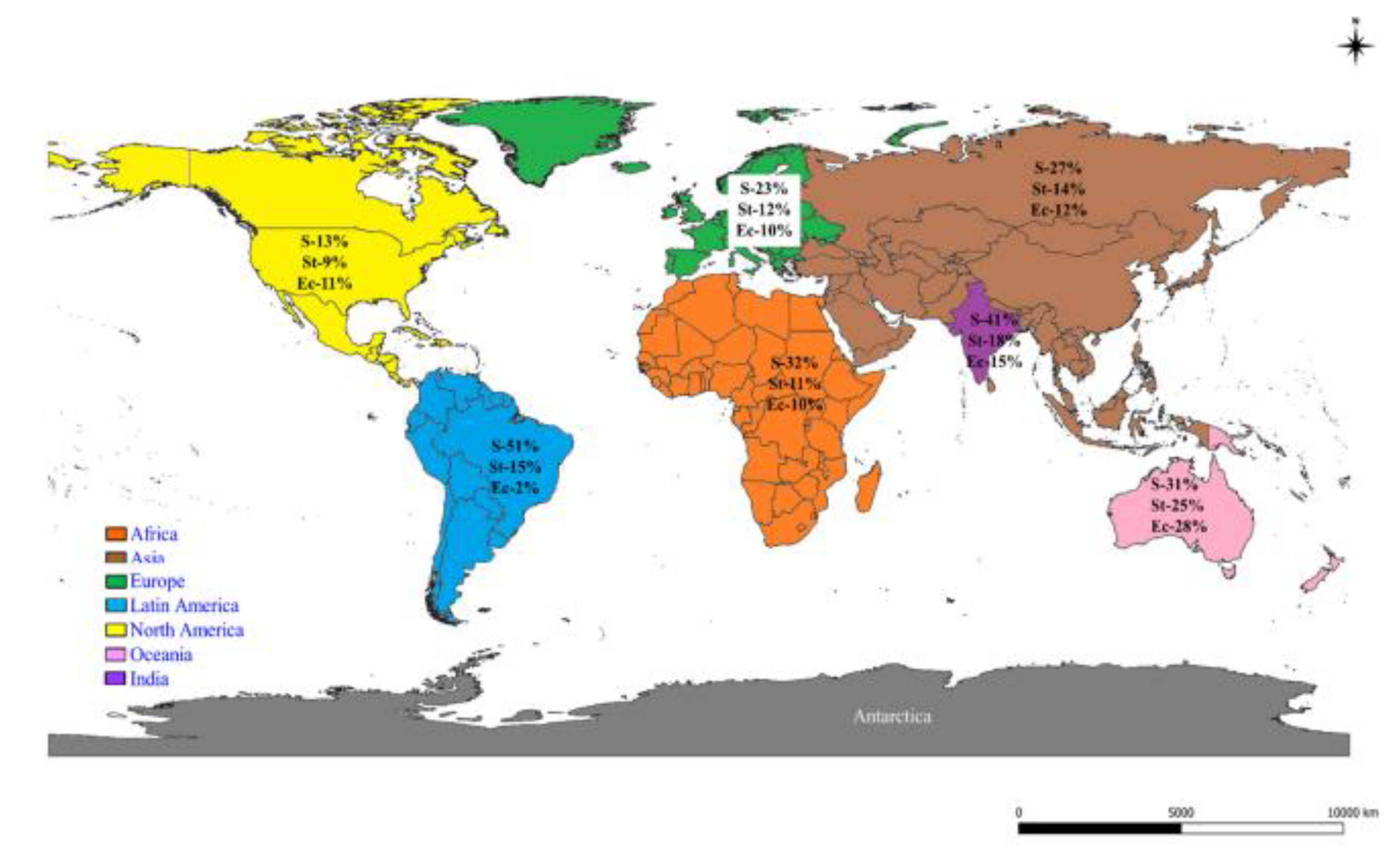
Figure 5.
World map showing the continent-wise prevalence of Staphylococcus species (S), Streptococcus species (St), and Escherichia coli (Ec) [118].
Figure 5.
World map showing the continent-wise prevalence of Staphylococcus species (S), Streptococcus species (St), and Escherichia coli (Ec) [118].
In Europe, the prevalence of mastitis varies by country and region. For instance, studies from the Netherlands and Denmark report lower mastitis prevalence due to stringent animal welfare regulations and advanced management practices [119,120,121,122]. In contrast, regions with less stringent regulations or more intensive production systems may experience higher rates of mastitis [115,118,123,124]. The variation in prevalence can be attributed to differences in housing conditions, milking practices, and climate.
In North America, mastitis prevalence is influenced by factors such as large-scale dairy operations and the use of automated milking systems. Studies in the United States and Canada indicate that while prevalence rates can be high, advancements in milking technology and management practices have helped to mitigate some of the impacts of mastitis [12,125]. However, variations in prevalence exist between different states and provinces, often reflecting differences in climate, farm size, and management practices [126].
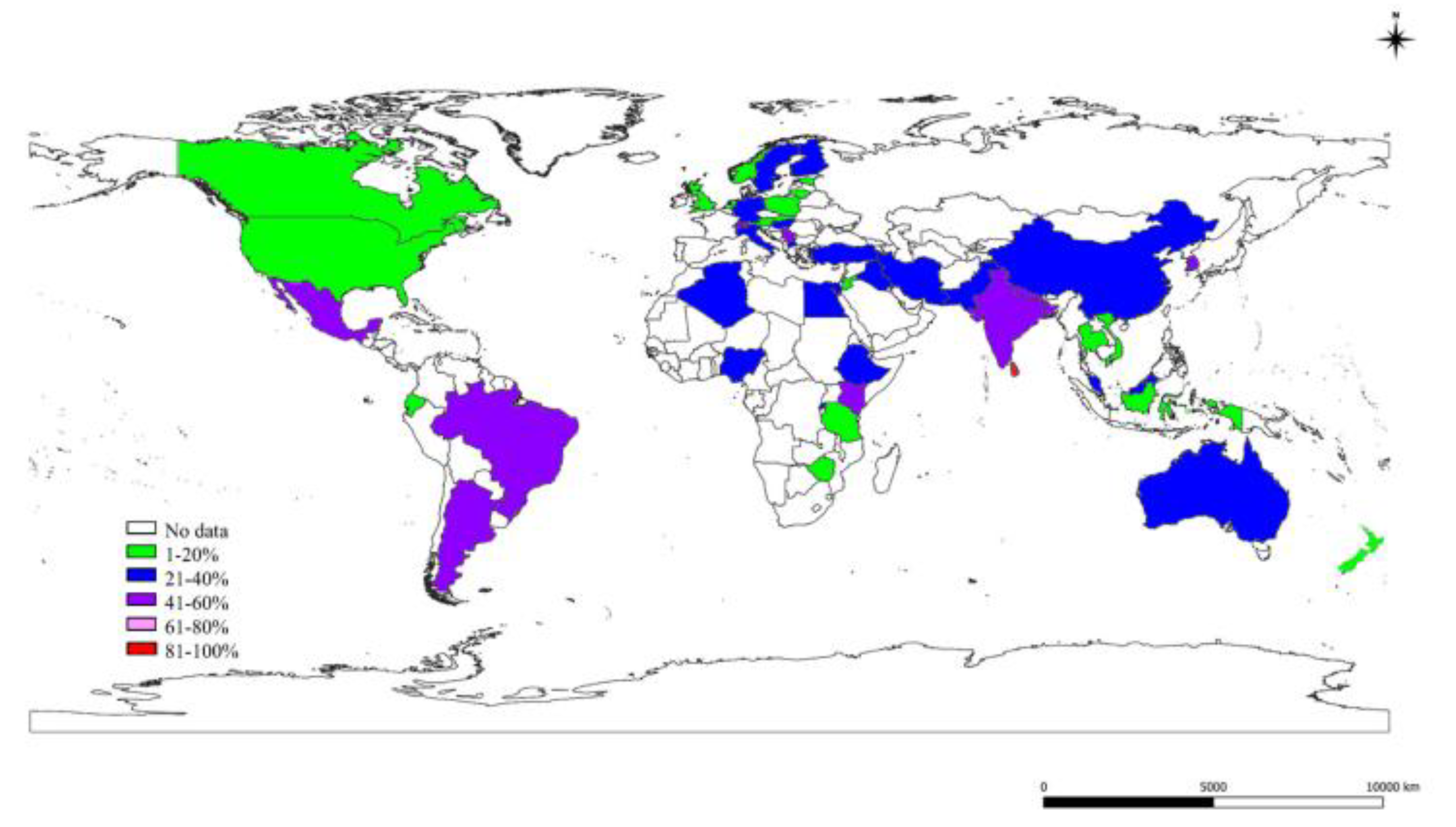
Figure 6.
World map showing the prevalence estimates of Staphylococcus species in different countries [118].
Figure 6.
World map showing the prevalence estimates of Staphylococcus species in different countries [118].
In developing countries, the prevalence of mastitis can be significantly higher due to resource limitations and less advanced management practices (Figure 6, Figure 7, Figure 8, Figure 9, Figure 10 and Figure 11). For example, in regions like sub-Saharan Africa and parts of Asia, mastitis is prevalent due to factors such as inadequate housing, poor nutrition, and limited access to veterinary care [60,127,128,129]. Studies indicate that mastitis prevalence in these regions can exceed 50%, reflecting the challenges faced by smallholder farmers and the need for targeted interventions [130,131].
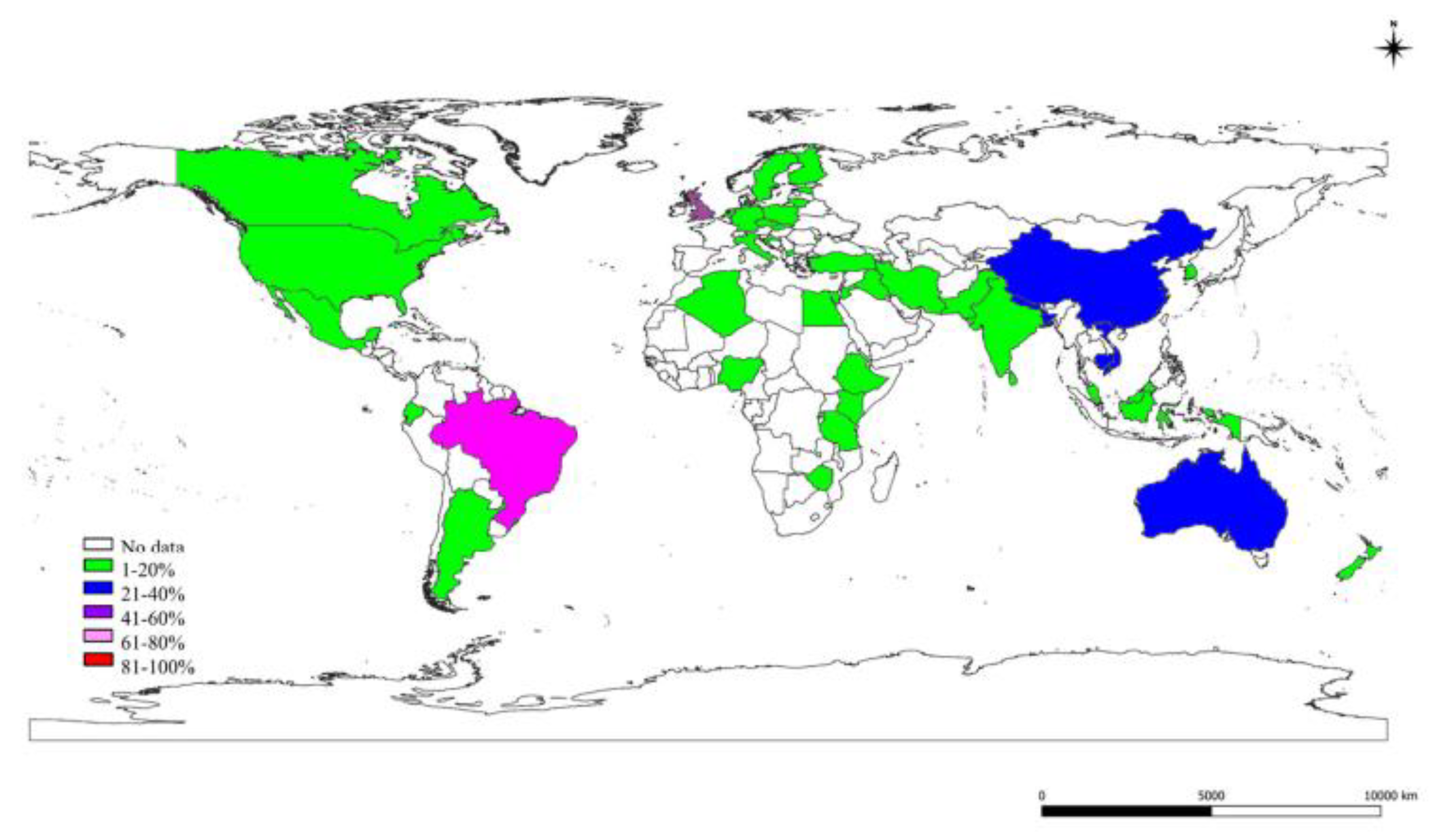
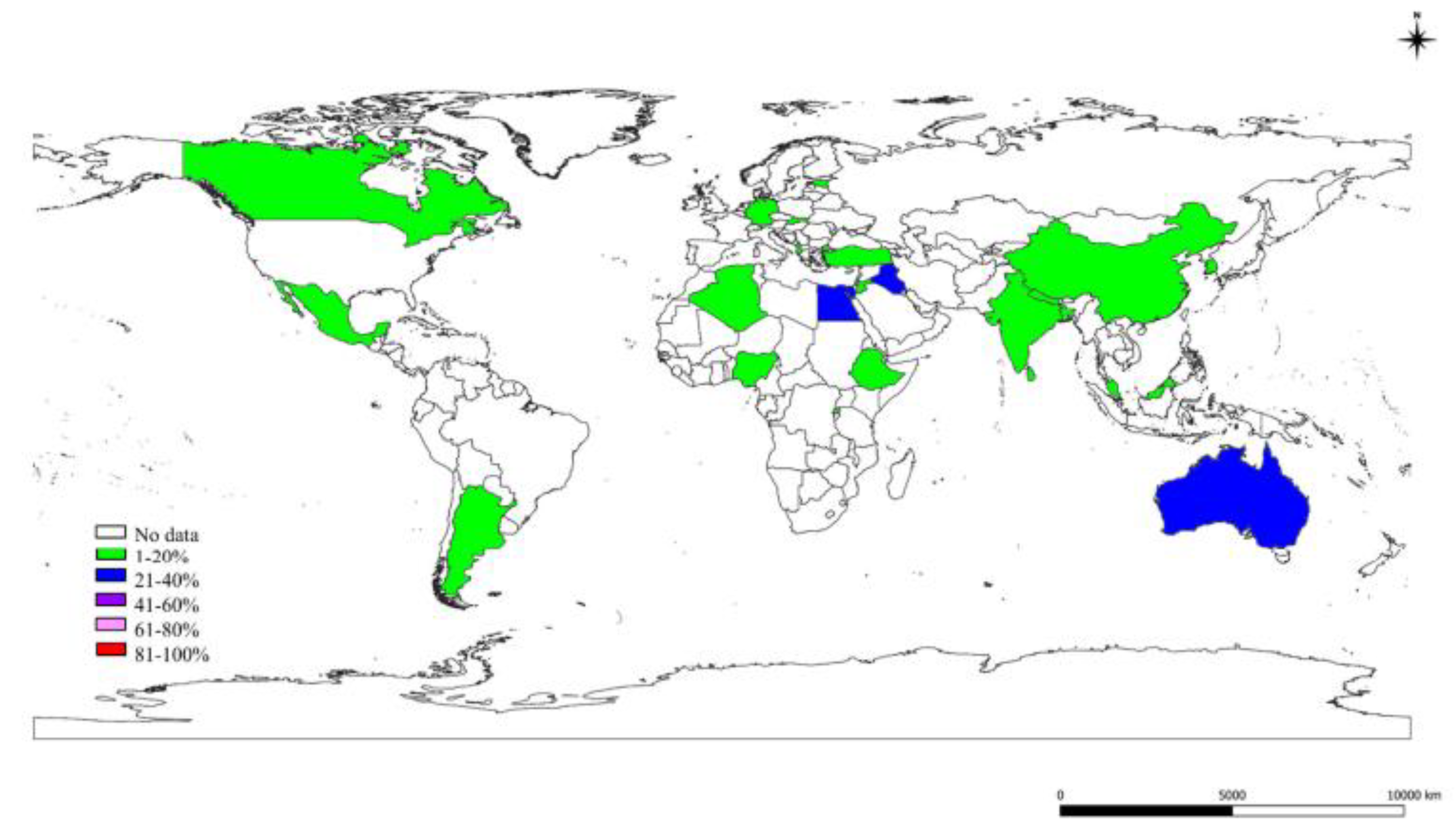
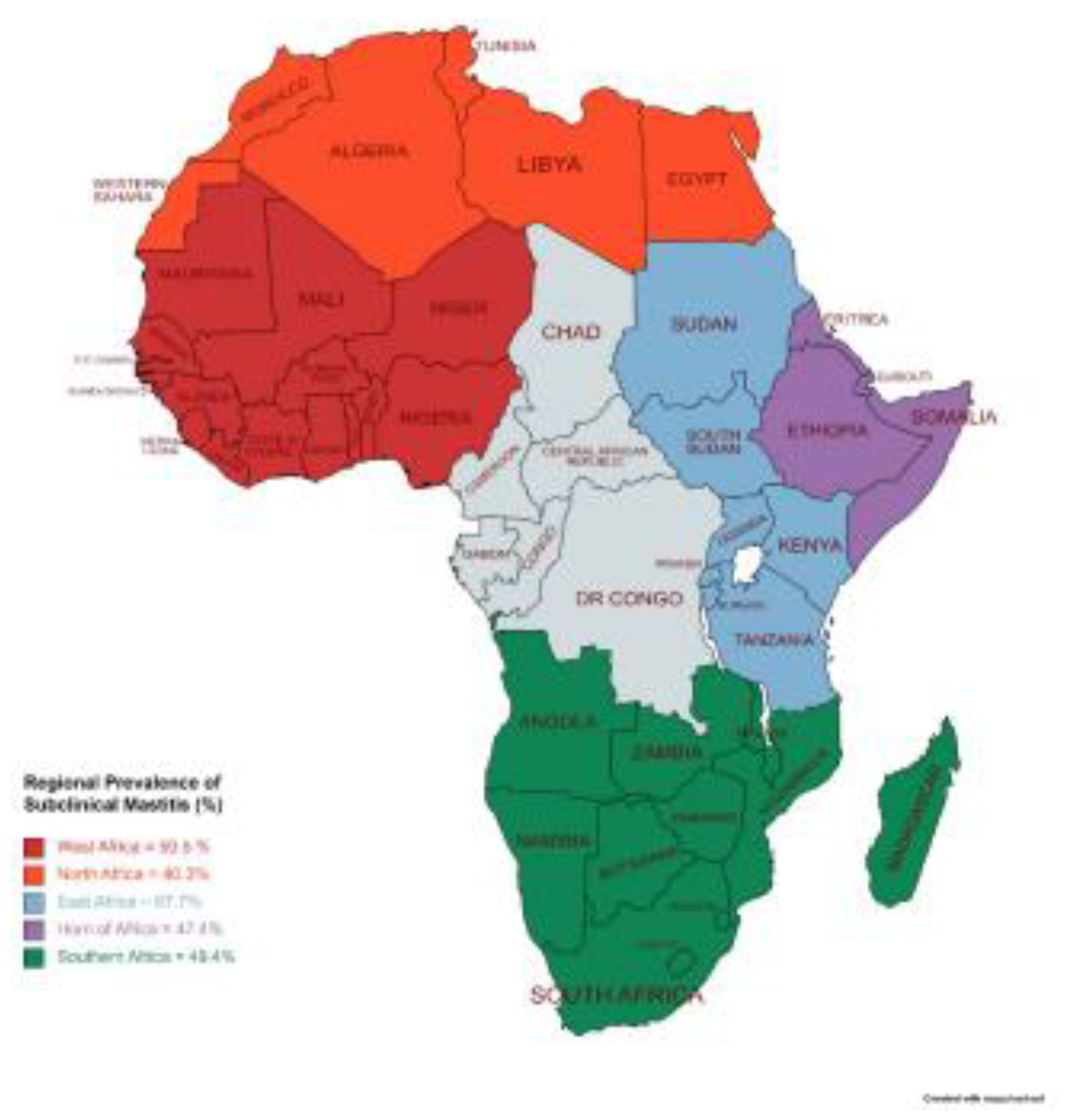
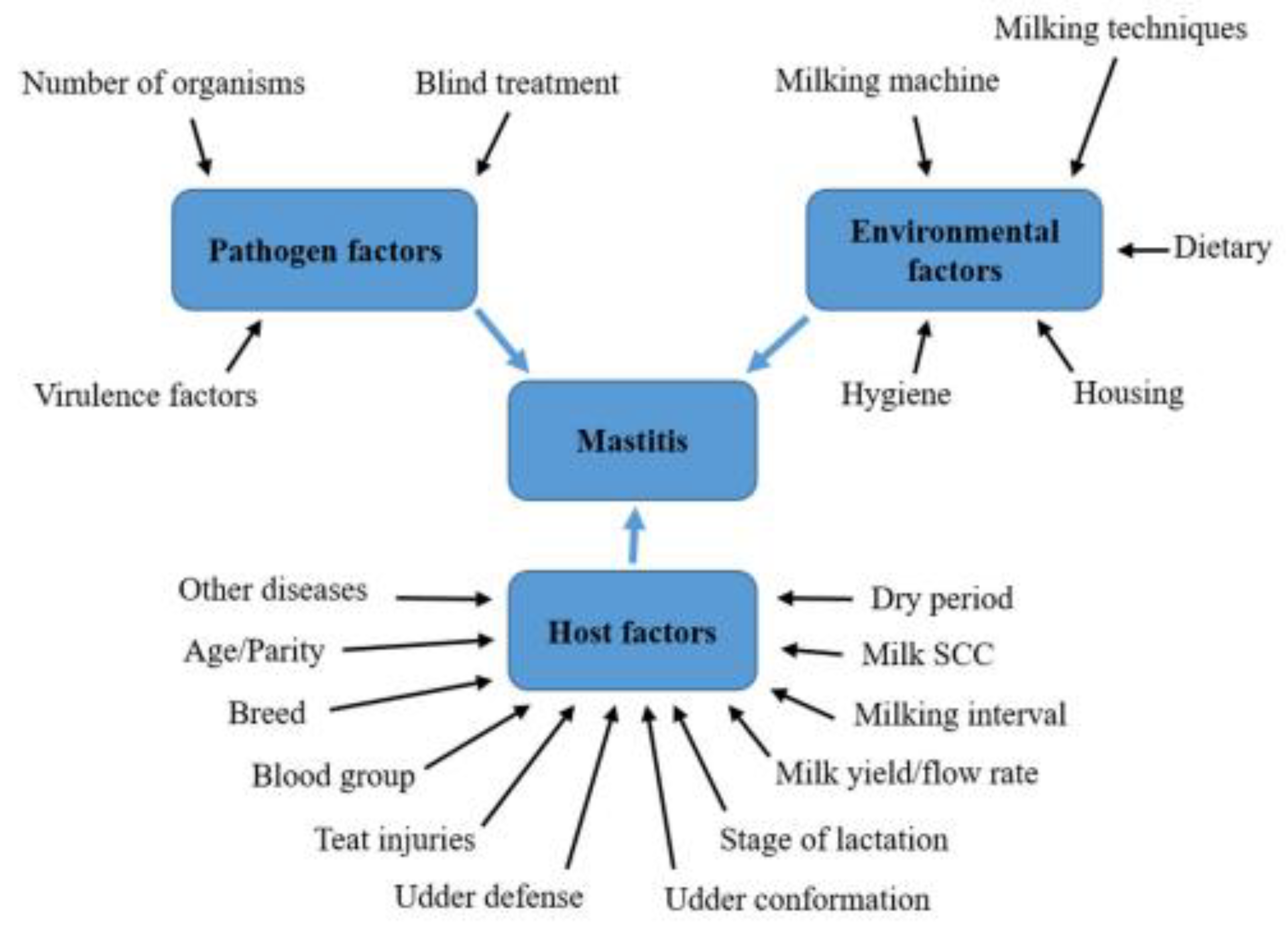
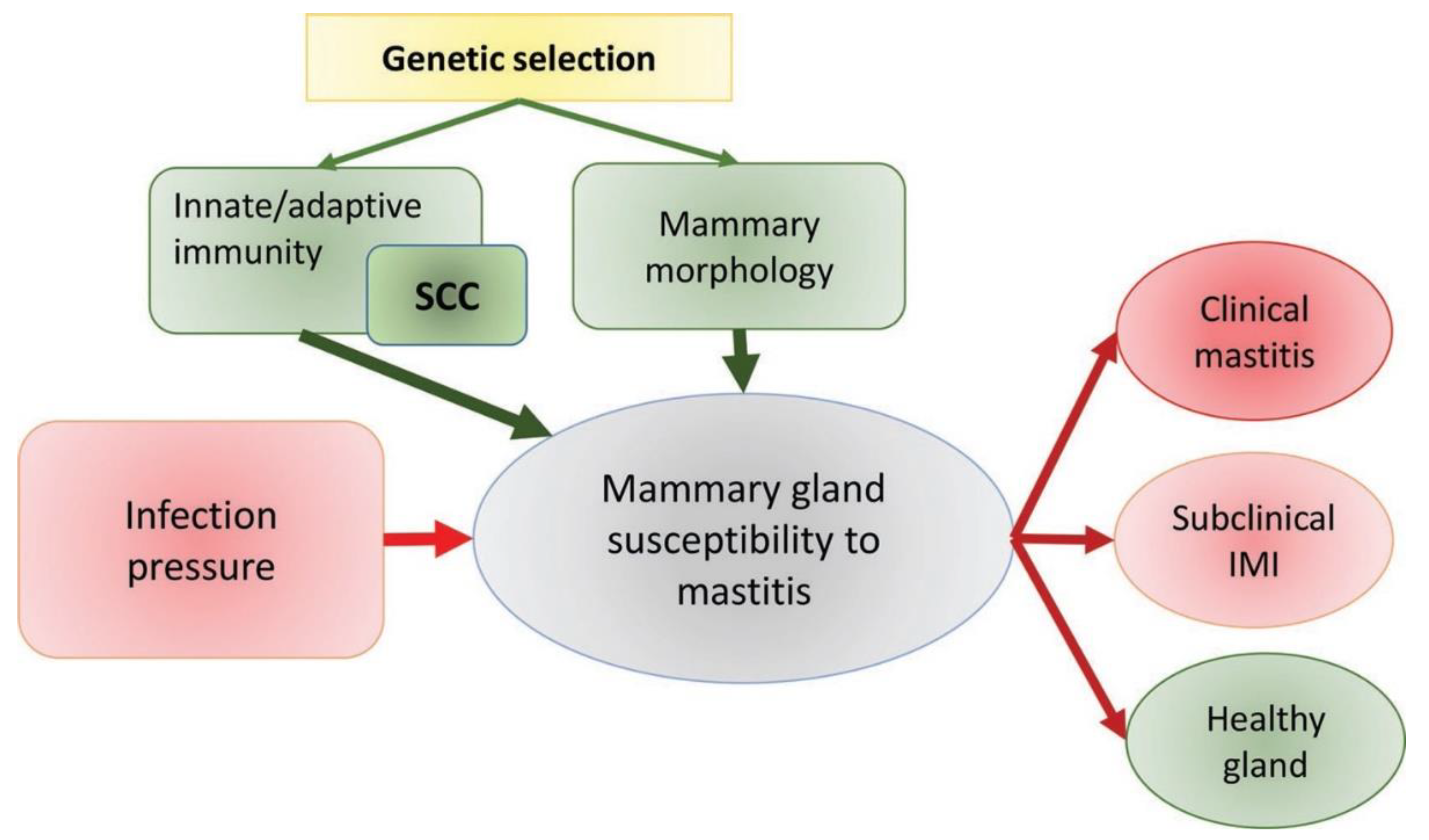
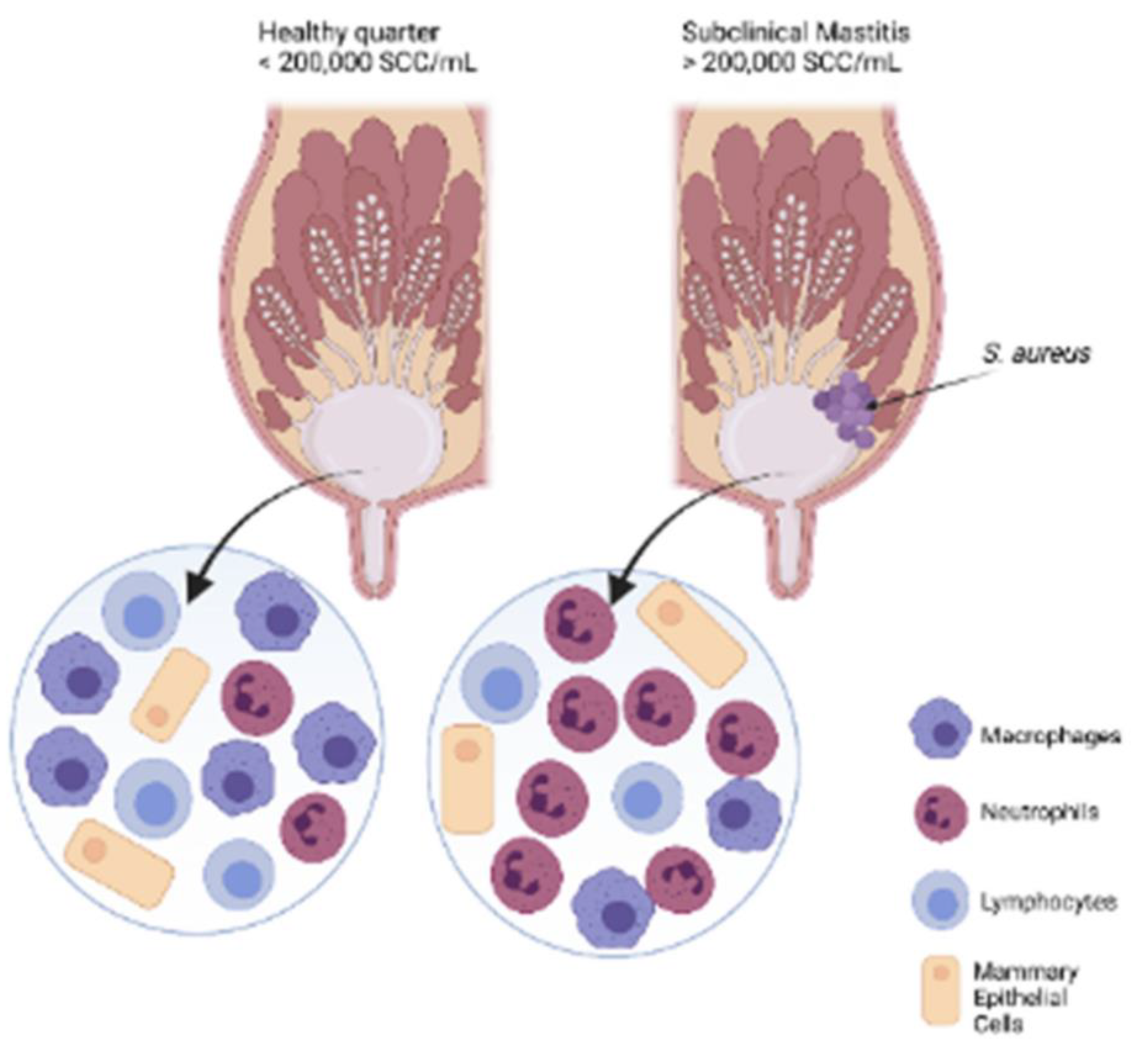
Figure 7.
World map showing the prevalence estimates of Streptococcus species in different countries [118].
Figure 7.
World map showing the prevalence estimates of Streptococcus species in different countries [118].
Figure 8.
World map showing the prevalence estimates of Escherichia coli in different countries [118].
Figure 8.
World map showing the prevalence estimates of Escherichia coli in different countries [118].
Figure 9.
A map showing prevalence estimates for subclinical mastitis among dairy cattle in Africa [128].
Figure 9.
A map showing prevalence estimates for subclinical mastitis among dairy cattle in Africa [128].
Figure 10.
Factors influencing the development of mastitis in dairy cows [114].
Figure 10.
Factors influencing the development of mastitis in dairy cows [114].
Figure 11.
Relationship between some major determinants of the mammary gland health status [33].
Figure 11.
Relationship between some major determinants of the mammary gland health status [33].
Figure 12.
Somatic cell composition in healthy versus infected cow udder quarters. In milk from a healthy udder quarter, macrophages are most prevalent, with smaller proportions of lymphocytes, neutrophils, and epithelial cells. In contrast, milk from an infected quarter, whether with clinical or subclinical mastitis, shows a high concentration of neutrophils along with fewer macrophages, lymphocytes, and epithelial cells [98].
Figure 12.
Somatic cell composition in healthy versus infected cow udder quarters. In milk from a healthy udder quarter, macrophages are most prevalent, with smaller proportions of lymphocytes, neutrophils, and epithelial cells. In contrast, milk from an infected quarter, whether with clinical or subclinical mastitis, shows a high concentration of neutrophils along with fewer macrophages, lymphocytes, and epithelial cells [98].
In Australia and New Zealand, mastitis prevalence is influenced by pasture-based systems and climatic conditions. Research indicates that while pasture-based systems can offer benefits such as improved cow comfort, they can also present challenges such as increased exposure to environmental pathogens. As a result, mastitis prevalence can vary depending on local conditions and management practices [132,133,134,135].
7. Influencing Factors
Climate plays a crucial role in the prevalence of mastitis. Warm and humid conditions can promote the growth of pathogens, increasing the risk of mastitis. Conversely, cold and dry climates may reduce the prevalence of certain pathogens but can introduce other challenges such as frostbite or winter-related injuries [136,137,138].
Housing systems significantly impact mastitis prevalence. Systems with inadequate ventilation, poor bedding, or overcrowding can increase the risk of mastitis. Conversely, well-maintained housing with proper ventilation and hygiene practices can help reduce mastitis incidence [60,139,140,141,142].
Effective management practices, including regular milking equipment maintenance, proper udder hygiene, and timely veterinary interventions, are critical in controlling mastitis. Variations in management practices can lead to significant differences in mastitis prevalence across regions and farms [130,143,144].
8. Factors Influencing Prevalence
The prevalence of mastitis is influenced by a range of factors, each contributing to the likelihood of infection in dairy cattle (Figure 10). Understanding these factors is crucial for developing effective management strategies to control and prevent mastitis. The main factors influencing mastitis prevalence include management practices, environmental conditions, and genetics.
8.1. Management Practices
Poor hygiene is a significant risk factor for mastitis. Dirty environments, including contaminated bedding and milking equipment, can harbor pathogens that cause mastitis. Inadequate cleaning protocols for milking equipment and udder hygiene can increase the incidence of both clinical and subclinical mastitis [127,130]. Ensuring that milking equipment is properly sanitized and that cows' udders are clean before milking are essential practices to reduce mastitis risk.
Incorrect milking procedures, such as improper milking machine settings or failure to detect early signs of mastitis, can contribute to increased mastitis prevalence. Over milking or under-milking can also damage teat tissues and create an environment conducive to infection [114,127]. Regular maintenance and calibration of milking machines, along with training personnel in proper milking techniques, are critical for minimizing mastitis risk.
Overcrowding in housing systems can lead to increased transmission of mastitis-causing pathogens. High stocking densities can result in higher rates of udder contact and increased stress on animals, which may compromise their immune response and make them more susceptible to infection [1,5]. Proper housing design that allows for adequate space per cow and facilitates good ventilation can help reduce mastitis risk.
8.2. Environmental Conditions
Environmental conditions, particularly the quality of bedding, play a crucial role in mastitis prevalence. Damp, soiled, or inadequately managed bedding can create a favorable environment for pathogens such as Streptococcus and Staphylococcus species to thrive. Studies have shown that bedding material that remains wet or soiled can lead to higher rates of mastitis [141,151,152,153,154]. Regular replacement and proper management of bedding materials are essential to maintaining a dry and clean environment.
Climatic conditions also impact mastitis prevalence. In regions with high humidity or frequent rainfall, the risk of mastitis can increase due to the higher likelihood of wet and dirty bedding. Conversely, extreme cold can lead to issues such as frostbite or teat injuries, which can predispose cows to mastitis [136,155,156,157]. Effective climate control and environmental management practices are necessary to mitigate these risks.
The design and maintenance of housing facilities can influence mastitis risk. Poorly designed facilities that do not allow for proper drainage, ventilation, or hygiene can exacerbate mastitis problems. Adequate drainage systems to remove waste and prevent the accumulation of moisture are important for reducing mastitis risk [114,127,158].
8.3. Genetics
Genetic factors play a role in mastitis susceptibility. Certain breeds or genetic lines of dairy cattle may be more predisposed to mastitis than others. For example, studies have shown that some dairy breeds, such as Holsteins, may have a higher prevalence of mastitis compared to others due to differences in udder anatomy or immune response [33,127,146,147,149,159,160,161]. Selective breeding programs can help identify and promote traits that are associated with increased resistance to mastitis.
Genetic selection for traits associated with mastitis resistance can be an effective strategy for reducing prevalence in dairy herds (Figure 11). This includes selecting animals with lower susceptibility to infection and better udder health characteristics. Research has shown that breeding for improved udder conformation and immune response can lead to reduced mastitis incidence [33,149,150,162]. Implementing genetic selection programs requires careful consideration of breeding objectives and monitoring of mastitis incidence over time.
9. Subclinical Mastitis
Subclinical mastitis (SCM) is a prevalent form of mastitis that poses a significant challenge to dairy farming due to its often-inconspicuous nature. Unlike clinical mastitis (CM), which presents with obvious symptoms such as swelling, redness, and changes in milk appearance (e.g., clots or a decrease in milk yield), SCM does not exhibit visible signs. This section elaborates on the characteristics, impact, and detection of SCM, emphasizing its importance in maintaining udder health and optimizing dairy production.
9.1. Characteristics of Subclinical Mastitis
Subclinical mastitis (SCM) is defined by an increase in somatic cell count (SCC) in the milk without any visible clinical signs of infection. The SCC is a measure of the number of white blood cells present in milk, which typically increase in response to an infection or inflammation within the mammary gland. In SCM, the SCC can be elevated to levels that indicate an underlying infection, even though the udder and milk may appear normal [41,163,164].
Research indicates that SCM is responsible for a significant proportion of mastitis cases in dairy herds. Studies have shown that up to 70% of mastitis cases can be classified as subclinical [19,128,165]. Despite the lack of visible symptoms, SCM can have considerable effects on milk production and quality. Elevated SCC associated with subclinical mastitis can lead to reduced milk yield and altered milk composition, which may negatively impact dairy product quality and farm profitability [43,60,166].
The economic impact of subclinical mastitis is substantial. The increased SCC resulting from subclinical infections can lead to milk that is less suitable for processing and sale, affecting both the quality and quantity of milk produced. Additionally, the cost of managing subclinical mastitis includes not only the potential loss in milk production but also the costs associated with testing and monitoring SCC levels, as well as any necessary treatments [41,60,80].
10. Detection and Diagnosis
The detection of subclinical mastitis (SCM) requires specific testing methods, as the condition is not visible through standard visual inspection. Several tests are commonly used to identify elevated SCC and diagnose SCM.
The California Mastitis Test (CMT) is a widely used, rapid, and cost-effective test that measures the SCC in milk. The test principle involves mixing equal volume of CMT reagent (alkyl aryl sulphonate) with milk samples and observing the reaction, which forms a gel-like substance if the SCC is elevated. The CMT reagent interacts with the DNA of the somatic cells in mastitis udder to form gel. The CMT provides a qualitative measure of SCC and helps in identifying cows with subclinical mastitis [167,168,169,170,171].
Similar to the CMT, the White Side Test (WST) is used to assess SCC by mixing milk with a reagent on a white surface. The resulting reaction indicates the level of SCC, with higher levels suggesting the presence of subclinical mastitis. This test is also useful for initial screening of udder health [129,170,172,173].
The Draminski Mastitis Detector (DMD) is an electronic device used for detecting mastitis. It measures electrical conductivity in milk, which increases with elevated SCC. The device provides a quantitative measure of mastitis and is useful for monitoring udder health on a larger scale [129,170,174,175].
11. Conclusions
This review highlights the critical importance of cow welfare and udder health as fundamental components of sustainable dairy farming in Nigeria. The prevalence of subclinical mastitis (SCM) and its detrimental effects on milk quality and production efficiency underscore the need for comprehensive management strategies. The application of diagnostic techniques such as the California Mastitis Test (CMT), White Side Test (WST), and Draminski Mastitis Detector (DMD) is essential for early detection and intervention, which can significantly mitigate the economic losses associated with mastitis.
To enhance cow welfare and udder health, future research should focus on several key areas. Firstly, there is a pressing need for extensive epidemiological studies to assess the prevalence and risk factors associated with mastitis across different dairy farming systems in Nigeria. Such studies would provide valuable data to inform targeted interventions and management practices tailored to local conditions.
Secondly, research should explore the genetic factors influencing mastitis resistance in indigenous cattle breeds. Identifying and promoting breeds with inherent resistance to mastitis could lead to more sustainable dairy production systems. Additionally, integrating modern breeding techniques with traditional practices may enhance the resilience of local cattle populations.
Furthermore, the development and implementation of educational programs for farmers and veterinarians are crucial. These programs should focus on best practices in udder health management, including milking hygiene, nutrition, and housing conditions that promote cow welfare. Training on the use of diagnostic tools and interpretation of results will empower farmers to make informed decisions regarding their herd management.
Lastly, interdisciplinary research that combines veterinary science, animal behavior, and environmental management will be vital in creating holistic approaches to improving cow welfare. Investigating the impact of housing systems, social interactions among cows, and stress reduction techniques can lead to innovative solutions that enhance both animal welfare and productivity.
Addressing the challenges of cow welfare and udder health in Nigeria requires a multifaceted approach that includes robust research, farmer education, and the integration of traditional and modern practices. By prioritizing these areas, the dairy industry can improve the health and productivity of dairy cows, ensuring a sustainable future for dairy farming in the region.
Author Contributions
Conceptualization, A.S., A.I.D., and U.M.C.; methodology, A.S., A.I.D., and F.O.F.; literature search, A.S., M.B.A., A.J., I.I., I.I., N.L., Y.S.B., and H.U.M.; writing - original draft preparation, A.S.; writing - review and editing, A.I.D., F.O.F., B.A., A.H.J., and J.O; supervision, A.I.D., U.M.C., and M.B.A. All authors have read and agreed to the final version of the manuscript.
Funding
We gratefully acknowledge the Tertiary Education Trust Fund (TETFund) for supporting our ongoing research project, titled "Bacterial Pathogens and Histopathological Correlates in the Udder of Slaughtered Cows in Sokoto State," through the Institution Based Research (IBR) grant. This is part of our research group’s ongoing projects focused on ruminant welfare and udder health.
Conflicts of Interest
The authors declare no conflicts of interest. The funders had no role in the design of the study; in the collection, analyses, or interpretation of data; in the writing of the manuscript; or in the decision to publish the results.
Abbreviations
The following abbreviations are used in this manuscript:
| CM | Clinical Mastitis |
| CMT | California Mastitis Test |
| DMD | Draminski Mastitis Detector |
| LMICs | Low-and-middle-income countries |
| LPS | Lipopolysaccharide |
| MMPs | Matrix Metalloproteinases |
| SCC | Somatic Cell Count |
| SCM | Subclinical Mastitis |
| WST | White Side Test |
References
- Arnott, G.; Ferris, C.P.; O’Connell, N.E. Review: Welfare of dairy cows in continuously housed and pasture-based production systems. Animal 2017, 11, 261–273. [Google Scholar] [CrossRef]
- Nielsen, S.S.; Alvarez, J.; Bicout, D.J.; Calistri, P.; Canali, E.; Drewe, J.A.; Garin-Bastuji, B.; Gonzales Rojas, J.L.; Gortázar Schmidt, C.; Herskin, M.; Michel, V.; Miranda Chueca, M.Á.; Padalino, B.; Roberts, H.C.; Spoolder, H.; Stahl, K.; Velarde, A.; Viltrop, A.; De Boyer des Roches, A.; Jensen, M.B.; Mee, J.; Green, M.; Thulke, H.H.; Bailly-Caumette, E.; Candiani, D.; Lima, E.; Van der Stede, Y.; Winckler, C; EFSA Panel on Animal Health and Animal Welfare (AHAW). Welfare of dairy cows. EFSA J. 2023, 21, e07993. [Google Scholar] [CrossRef] [PubMed]
- Ventura, G.; Lorenzi, V.; Mazza, F.; Clemente, G.A.; Iacomino, C.; Bertocchi, L.; Fusi, F. Best farming practices for the welfare of dairy cows, heifers and calves. Animals (Basel) 2021, 11, 2645. [Google Scholar] [CrossRef] [PubMed]
- Abeni, F.; Bertoni, G. Main causes of poor welfare in intensively reared dairy cows. Ital. J. Anim. Sci. 2009, 8, 45–66. [Google Scholar] [CrossRef]
- Neculai-Valeanu, A.S.; Ariton, A.M. Udder health monitoring for prevention of bovine mastitis and improvement of milk quality. Bioengineering (Basel) 2022, 9, 608. [Google Scholar] [CrossRef]
- Brown, K.A.; Venkateshmurthy, N.S.; Potubariki, G. The role of dairy in healthy and sustainable food systems: community voices from India. BMC Public Health 2022, 22, 806. [Google Scholar] [CrossRef]
- Shamsuddoha, M.; Nasir, T.; Hossain, N.U.I. A sustainable supply chain framework for dairy farming operations: A system dynamics approach. Sustainability 2023, 15, 8417. [Google Scholar] [CrossRef]
- FAO. Milk and dairy products in human nutrition; Food and Agriculture Organization of the United Nations (FAO): Rome, 2013. https://www.fao.org/4/i3396e/i3396e.pdf.
- Gonçalves, J.L.; Kamphuis, C.; Martins, C.M.; Barreiro, J.R.; Tomazi, T.; Gameiro, A.H.; Hogeveen, H.; Dos Santos, M.V. Bovine subclinical mastitis reduces milk yield and economic return. Livest. Sci. 2018, 210, 25–32. [Google Scholar] [CrossRef]
- Zachut, M.; Šperanda, M.; De Almeida, A.M.; Gabai, G.; Mobasheri, A.; Hernández-Castellano, L.E. Biomarkers of fitness and welfare in dairy cattle: Healthy productivity. J. Dairy Res. 2020, 87, 4–13. [Google Scholar] [CrossRef]
- Themistokleous, K.S.; Papadopoulos, I.; Panousis, N.; Zdragas, A.; Arsenos, G.; Kiossis, E. Udder Ultrasonography of Dairy Cows: Investigating the Relationship between Echotexture, Blood Flow, Somatic Cell Count and Milk Yield during Dry Period and Lactation. Animals 2023, 13, 1779. [Google Scholar] [CrossRef]
- Barkema, H.W.; von Keyserlingk, M.A.; Kastelic, J.P.; Lam, T.J.; Luby, C.; Roy, J.P.; LeBlanc, S.J.; Keefe, G.P.; Kelton, D.F. Invited review: Changes in the dairy industry affecting dairy cattle health and welfare. J. Dairy Sci. 2015, 98, 7426–7445. [Google Scholar] [CrossRef] [PubMed]
- Forsbäck, L.; Lindmark-Månsson, H.; Andrén, A.; Åkerstedt, M.; Svennersten-Sjaunja, K. Udder quarter milk composition at different levels of somatic cell count in cow composite milk. Animal 2009, 3, 710–717. [Google Scholar] [CrossRef] [PubMed]
- Ubaldo, A.L.; Rivero-Perez, N.; Valladares-Carranza, B.; Velázquez-Ordoñez, V.; Delgadillo-Ruiz, L.; Zaragoza-Bastida, A. Bovine mastitis, a worldwide impact disease: Prevalence, antimicrobial resistance, and viable alternative approaches. Vet. Anim. Sci. 2023, 21, 100306. [Google Scholar] [CrossRef] [PubMed]
- Botrel, M.A.; Haenni, M.; Morignat, E.; Sulpice, P.; Madec, J.Y.; Calavas, D. Distribution and antimicrobial resistance of clinical and subclinical mastitis pathogens in dairy cows in Rhône-Alpes, France. Foodborne Pathog. Dis. 2010, 7, 479–487. [Google Scholar] [CrossRef]
- Hegde, R.; Isloor, S.; Prabhu, K.N.; Shome, B.R.; Rathnamma, D.; Suryanarayana, V.V.; Yatiraj, S.; Prasad, C.R.; Krishnaveni, N.; Sundareshan, S.; Akhila, D.S. Incidence of subclinical mastitis and prevalence of major mastitis pathogens in organized farms and unorganized sectors. Indian J. Microbiol. 2013, 53, 315–320. [Google Scholar] [CrossRef]
- Pakrashi, A.; Ryan, C.; Guéret, C.; Berry, D.P.; Corcoran, M.; Keane, M.T.; Mac Namee, B. Early detection of subclinical mastitis in lactating dairy cows using cow-level features. J. Dairy Sci. 2023, 106, 4978–4990. [Google Scholar] [CrossRef]
- Shittu, A.; Junaidu, A.U.; Chafe, U.M.; Magaji, A.A.; Faleke, O.O.; Salihu, M.D.; Jibril, A.; Mahmud, M.A. A Survey on Current Milk Production and Pricing in Sokoto State, Nigeria. Sokoto J. Vet. Sci. 2008, 7, 53–58. [Google Scholar]
- Shittu, A.; Abdullahi, J.; Jibril, A.; Mahmud, M.A. Sub-clinical mastitis and associated risk factors on lactating cows in the Savannah Region of Nigeria. BMC Vet. Res. 2012, 8, 134. [Google Scholar] [CrossRef]
- Rege, J.E.O.; Tawah, C.L. The state of African cattle genetic resources II. Geographical distribution, characteristics and uses of present-day breeds and strains. Anim. Genet. Resour. Inf. Bull. 1999, 26, 1–26. [Google Scholar] [CrossRef]
- Adeyeye, A.A.; Muhammad, B.I.; Adamu, U. Reproductive Performance and its Associated Factors in Cows Raised in Sokoto, Nigeria. J. Agric. Environ. 2020, 16, 35–42. [Google Scholar]
- Nosike, R.J.; Nwakpu, O.F.; Isaac, U.C.; Akinsola, K.L.; Nwose, R.N.; Onunkwo, D.N. Characterization of indigenous cattle genotypes based on linear body traits in the humid tropics. Nig. J. Anim. Prod. 2020, 47, 41–46. [Google Scholar] [CrossRef]
- Zapata-Salas, R.; Guarín, J.F.; Ríos-Osorio, L.A. Udder health, conceptual construct, and uses of the term: A systematic review from 1962 to 2019. Vet. World 2022, 15, 855–869. [Google Scholar] [CrossRef]
- Böker, A.R.; Bartel, A.; Do Duc, P.; Hentzsch, A.; Reichmann, F.; Merle, R.; Arndt, H.; Dachrodt, L.; Woudstra, S.; Hoedemaker, M. Status of udder health performance indicators and implementation of on-farm monitoring on German dairy cow farms: Results from a large-scale cross-sectional study. Front. Vet. Sci. 2023, 10, 1193301. [Google Scholar] [CrossRef] [PubMed]
- Azooz, M.F.; El-Wakeel, S.A.; Yousef, H.M. Financial and economic analyses of the impact of cattle mastitis on the profitability of Egyptian dairy farms. Vet. World 2020, 13, 1750–1759. [Google Scholar] [CrossRef] [PubMed]
- Abed, A.H.; Menshawy, A.M.S.; Zeinhom, M.M.A.; Hossain, D.; Khalifa, E.; Wareth, G.; Awad, M.F. Subclinical mastitis in selected bovine dairy herds in North Upper Egypt: Assessment of prevalence, causative bacterial pathogens, antimicrobial resistance, and virulence-associated genes. Microorganisms 2021, 9, 1175. [Google Scholar] [CrossRef] [PubMed]
- Ezzat Alnakip, M.; Quintela-Baluja, M.; Böhme, K.; Fernández-No, I.; Caamaño-Antelo, S.; Calo-Mata, P.; Barros-Velázquez, J. The immunology of the mammary gland of dairy ruminants between healthy and inflammatory conditions. J. Vet. Med. 2014, 659801. [Google Scholar] [CrossRef]
- Blum, S.E.; Heller, D.E.; Jacoby, S.; et al. Physiological response of mammary glands to Escherichia coli infection: A conflict between glucose need for milk production and immune response. Sci. Rep. 2020, 10, 9602. [Google Scholar] [CrossRef]
- Goncalves, J.L.; Freu, G.; Garcia, B.L.N.; Barcelos, M.M.; Alves, B.G.; de Freitas Leite, R.; Pedrosa Monteiro, C.; Martins, M.; Tomazi, T.; Hogeveen, H.; Veiga dos Santos, M. Effect of bovine subclinical mastitis on milk production and economic performance of Brazilian dairy farms. Braz. J. Vet. Res. Anim. Sci. 2023, 60, Article–e208514. [Google Scholar] [CrossRef]
- Plummer, P.J.; Plummer, C. Diseases of the Mammary Gland. In Sheep and Goat Medicine; Second Edition, 2012, 442–465. [CrossRef]
- Olde Riekerink, R.G.; Barkema, H.W.; Veenstra, W.; Berg, F.E.; Stryhn, H.; Zadoks, R.N. Somatic cell count during and between milkings. J. Dairy Sci. 2007, 90, 3733–3741. [Google Scholar] [CrossRef]
- Sharma, N.; Singh, N.K.; Bhadwal, M.S. Relationship of somatic cell count and mastitis: An overview. Asian-Aust. J. Anim. Sci. 2011, 24, 429–438. [Google Scholar] [CrossRef]
- Rainard, P.; Foucras, G.; Boichard, D.; Rupp, R. Invited review: Low milk somatic cell count and susceptibility to mastitis. J. Dairy Sci. 2018, 101, 6703–6714. [Google Scholar] [CrossRef] [PubMed]
- Sumon, S.M.M.R.; Parvin, M.S.; Ehsan, M.A.; Islam, M.T. Relationship between somatic cell counts and subclinical mastitis in lactating dairy cows. Vet. World 2020, 13, 1709–1713. [Google Scholar] [CrossRef]
- van den Crommenacker-Konings, L.W.J.H.; van Dam, P.; Everts, R.; Shittu, A.; Nielen, M.; Lam, T.J.G.M.; Koop, G. Dynamics of intramammary infections in suckler ewes during early lactation. J. Dairy Sci. 2021, 104, 5979–5987. [Google Scholar] [CrossRef]
- Taponen, S.; Myllys, V.; Pyörälä, S. Somatic cell count in bovine quarter milk samples culture positive for various Staphylococcus species. Acta Vet. Scand. 2022, 64, 32. [Google Scholar] [CrossRef]
- Williamson, J.; Callaway, T.; Rollin, E.; Ryman, V. Association of milk somatic cell count with bacteriological cure of intramammary infection—A review. Agriculture 2022, 12, 1437. [Google Scholar] [CrossRef]
- Fadillah, A.; van den Borne, B.H.P.; Poetri, O.N.; Hogeveen, H.; Slijper, T.; Pisestyani, H.; Schukken, Y.H. Evaluation of factors associated with bulk milk somatic cell count and total plate count in Indonesian smallholder dairy farms. Front. Vet. Sci. 2023, 10, 1280264. [Google Scholar] [CrossRef] [PubMed]
- Nightingale, C.; Dhuyvetter, K.; Mitchell, R.; Schukken, Y. Influence of variable milk quality premiums on observed milk quality. J. Dairy Sci. 2008, 91, 1236–1244. [Google Scholar] [CrossRef]
- Le Maréchal, C.; Thiéry, R.; Vautor, E. Mastitis impact on technological properties of milk and quality of milk products—A review. Dairy Sci. Technol. 2011, 91, 247–282. [Google Scholar] [CrossRef]
- Dejyong, T.; Chanachai, K.; Immak, N.; Prarakamawongsa, T.; Rukkwamsuk, T.; Tago Pacheco, D.; Phimpraphai, W. An economic analysis of high milk somatic cell counts in dairy cattle in Chiang Mai, Thailand. Front. Vet. Sci. 2022, 9, 958163. [Google Scholar] [CrossRef]
- Carmo, R.M.; Nascimento, L.E.; Leão, P.V.; de Paula, G.H.; Dias, M.B.; Fernandes, P.B.; Mesquita, A.A.; Nicolau, E.S.; Rezende, M.M.; Sousa, W.A. , et al. Influence of somatic cell removal on milk quality and yield. Beverages 2024, 10, 5. [Google Scholar] [CrossRef]
- Malek dos Reis, C.B.; Barreiro, J.R.; Mestieri, L.; Porcionato, M.A.; dos Santos, M.V. Effect of somatic cell count and mastitis pathogens on milk composition in Gyr cows. BMC Vet. Res. 2013, 9, 67. [Google Scholar] [CrossRef] [PubMed]
- Gonçalves, J.L.; Kamphuis, C.; Vernooij, H.; Araújo, J.P., Jr.; Grenfell, R.C.; Juliano, L.; Anderson, K.L.; Hogeveen, H.; dos Santos, M.V. Pathogen effects on milk yield and composition in chronic subclinical mastitis in dairy cows. Vet. J. 2020, 262, 105473. [Google Scholar] [CrossRef] [PubMed]
- Harjanti, D.W.; Sambodho, P. Effects of mastitis on milk production and composition in dairy cows. IOP Conf. Ser.: Earth Environ. Sci. 2020, 518, 012032. [Google Scholar] [CrossRef]
- Youssif, N.H.; Hafiz, N.M.; Halawa, M.A.; Aziz, H.M.; Saad, M.F. Impact of subclinical mastitis on milk quality in different seasons. Int. J. Vet. Sci. 2020, 9, 313–316. [Google Scholar]
- Bentayeb, L.; Akkou, M.; Zennia, S.S.-I.; Titouche, Y.; Doumandji, A.; Megateli, S. Impacts of subclinical mastitis on milk quality, clotting ability, and microbial resistance of the causative Staphylococci. Large Anim. Rev. 2023, 29, 105–111. [Google Scholar]
- Bochniarz, M.; Błaszczyk, P.; Szczubiał, M.; Vasiu, I.; Adaszek, Ł.; Michalak, K.; Pietras-Ożga, D.; Wochnik, M.; Dąbrowski, R. Comparative analysis of total protein, casein, lactose, and fat content in milk of cows suffering from subclinical and clinical mastitis caused by Streptococcus spp. J. Vet. Res. 2023, 67, 251–257. [Google Scholar] [CrossRef]
- Batavani, R.A.; Asri, S.; Naebzadeh, H. The effect of subclinical mastitis on milk composition in dairy cows. Iran. J. Vet. Res. 2007, 8, 20. [Google Scholar]
- Martins, L.; Barcelos, M.M.; Cue, R.I.; Anderson, K.L.; Santos, M.V.; Gonçalves, J.L. Chronic subclinical mastitis reduces milk and components yield at the cow level. J. Dairy Res. 2020, 87, 298–305. [Google Scholar] [CrossRef]
- Saleem, H.D.; Razooqi, M.A.; Gharban, H.A.J. Cumulative Effect of Subclinical Mastitis on Immunological and Biochemical Parameters in Cow Milk. Arch. Razi Inst. 2021, 76, 1629–1638. [Google Scholar] [CrossRef]
- Antanaitis, R.; Juozaitienė, V.; Jonike, V.; Baumgartner, W.; Paulauskas, A. Milk Lactose as a Biomarker of Subclinical Mastitis in Dairy Cows. Animals (Basel) 2021, 11, 1736. [Google Scholar] [CrossRef]
- Portnoy, M.; Barbano, D.M. Lactose: Use, measurement, and expression of results. J. Dairy Sci. 2021, 104, 8314–8325. [Google Scholar] [CrossRef] [PubMed]
- Maristela, R.; Natalia, R.; Gerardo, C.; Jordi, S.; Gabriel, L. Effect of subclinical intramammary infection on milk quality in dairy sheep: I. Fresh-soft cheese produced from milk of uninfected and infected glands and from their blends. Small Rumin. Res. 2015, 125, 127–136. [Google Scholar] [CrossRef]
- Bobbo, T.; Ruegg, P.L.; Stocco, G.; Fiore, E.; Gianesella, M.; Morgante, M.; Pasotto, D.; Bittante, G.; Cecchinato, A. Associations between pathogen-specific cases of subclinical mastitis and milk yield, quality, protein composition, and cheese-making traits in dairy cows. J. Dairy Sci. 2017, 100, 4868–4883. [Google Scholar] [CrossRef] [PubMed]
- Olives, A.M.-D.; Peris, C.; Molina, M.P. Effect of subclinical mastitis on the yield and cheese-making properties of ewe’s milk. Small Rumin. Res. 2020, 184, 106044. [Google Scholar] [CrossRef]
- Bezerra, J.S.; Sales, D.C.; Oliveira, J.; et al. Effect of high somatic cell counts on the sensory acceptance and consumption intent of pasteurized milk and coalho cheese. Food Sci. Technol. 2021, 41 (Suppl. 2), 423–431. [Google Scholar] [CrossRef]
- Ivanova, I.; Ivanova, M.; Ivanov, G.; Bilgucu, E. Effect of somatic cells count in cow milk on the formation of biogenic amines in cheese. J. Food Sci. Technol. 2021, 58, 3409–3416. [Google Scholar] [CrossRef]
- Moradi, M.; Omer, A.K.; Razavi, R.; Valipour, S.; Guimarães, J.T. The relationship between milk somatic cell count and cheese production, quality and safety: A review. Int. Dairy J. 2021, 113, 104884. [Google Scholar] [CrossRef]
- FAO. Impact of mastitis in small-scale dairy production systems. Anim. Prod. Health Work. Pap. 2014, 13. [Google Scholar]
- Silva-Villacorta, D.; Lopez-Villalobos, N.; Blair, H.T.; Hickson, R.E.; MacGibbon, A.K. Production and profitability of dairy farms producing milk with different concentrations of unsaturated fatty acids: A simulation study. N. Z. J. Agric. Res. 2016, 60, 32–44. [Google Scholar] [CrossRef]
- Sinha, M.K.; Thombare, N.N.; Mondal, B. Subclinical mastitis in dairy animals: incidence, economics, and predisposing factors. Sci. World J. 2014, 2014, 523984. [Google Scholar] [CrossRef]
- Aghamohammadi, M.; Haine, D.; Kelton, D.F.; Barkema, H.W.; Hogeveen, H.; Keefe, G.P.; Dufour, S. Herd-Level Mastitis Associated Costs on Canadian Dairy Farms. Front. Vet. Sci. 2018, 5, 100. [Google Scholar] [CrossRef] [PubMed]
- Moru, N.H.; Umoh, J.U.; Maikai, B.V.; Barje, P.P.; Amuta, P. Milk yield losses and cost of clinical mastitis in Friesian × Bunaji crossbred dairy cows in Zaria, Nigeria. Sokoto J. Vet. Sci. 2018, 16. [Google Scholar] [CrossRef]
- Richardet, M.; Solari, H.G.; Cabrera, V.E.; Vissio, C.; Agüero, D.; Bartolomé, J.A.; Bó, G.A.; Bogni, C.I.; Larriestra, A.J. The Economic Evaluation of Mastitis Control Strategies in Holstein-Friesian Dairy Herds. Animals (Basel) 2023, 13, 1701. [Google Scholar] [CrossRef] [PubMed]
- Busanello, M.; Freitas, L.N.; Winckler, J.P.P.; et al. Month-wise variation and prediction of bulk tank somatic cell count in Brazilian dairy herds and its impact on payment based on milk quality. Ir. Vet. J. 2017, 70, 26. [Google Scholar] [CrossRef] [PubMed]
- Senturk, B. Evaluation of the Costs of Clinical Mastitis Treatment in Dairy Farming. World's Vet. J. 2014, 4, 11–14.
- Wilm, J.; Svennesen, L.; Østergaard Eriksen, E.; Halasa, T.; Krömker, V. Veterinary Treatment Approach and Antibiotic Usage for Clinical Mastitis in Danish Dairy Herds. Antibiotics (Basel) 2021, 10, 189. [Google Scholar] [CrossRef]
- de Jong, E.; van der Velden, I.; Smid, A.-M.C.; Ida, J.A.; Reyher, K.K.; Kelton, D.F.; Barkema, H.W. Dairy farmers’ considerations for antimicrobial treatment of clinical mastitis in British Columbia and Alberta, Canada. Front. Vet. Sci. 2024, 11, 1417958. [Google Scholar] [CrossRef]
- Bar, D.; Tauer, L.W.; Bennett, G.; González, R.N.; Hertl, J.A.; Schukken, Y.H.; Schulte, H.F.; Welcome, F.L.; Gröhn, Y.T. The cost of generic clinical mastitis in dairy cows as estimated by using dynamic programming. J. Dairy Sci. 2008, 91, 2205–2214. [Google Scholar] [CrossRef]
- Rollin, E.; Dhuyvetter, K.C.; Overton, M.W. The cost of clinical mastitis in the first 30 days of lactation: An economic modeling tool. Prev. Vet. Med. 2015, 122, 257–264. [Google Scholar] [CrossRef]
- van Soest, F.J.S.; Santman-Berends, I.M.G.A.; Lam, T.J.G.M.; Hogeveen, H. Failure and preventive costs of mastitis on Dutch dairy farms. J. Dairy Sci. 2016, 99, 8365–8374. [Google Scholar] [CrossRef]
- Bonestroo, J.; Fall, N.; Hogeveen, H.; Emanuelson, U.; Klaas, I.C.; van der Voort, M. The costs of chronic mastitis: A simulation study of an automatic milking system farm. Prev. Vet. Med. 2023, 210, 105799. [Google Scholar] [CrossRef]
- de Jong, E.; McCubbin, K.D.; Speksnijder, D.; Dufour, S.; Middleton, J.R.; Ruegg, P.L.; Lam, T.J.G.M.; Kelton, D.F.; McDougall, S.; Godden, S.M.; Lago, A.; Rajala-Schultz, P.J.; Orsel, K.; De Vliegher, S.; Krömker, V.; Nobrega, D.B.; Kastelic, J.P.; Barkema, H.W. Invited review: Selective treatment of clinical mastitis in dairy cattle. J. Dairy Sci. 2023, 106, 3761–3778. [Google Scholar] [CrossRef] [PubMed]
- Leite de Campos, J.; Gonçalves, J.L.; Kates, A.; Steinberger, A.; Sethi, A.; Suen, G.; Shutske, J.; Safdar, N.; Goldberg, T.; Ruegg, P.L. Variation in partial direct costs of treating clinical mastitis among 37 Wisconsin dairy farms. J. Dairy Sci. 2023, 106, 9276–9286. [Google Scholar] [CrossRef] [PubMed]
- Ott, S. Costs of herd-level production losses associated with subclinical mastitis in U.S. dairy cows. Proceedings of the 38th Annual Meeting of National Mastitis Council, Arlington, VA. 1999, 152–156.
- Blowey, R.W.; Edmondson, P. Mastitis Control in Dairy Herds; CABI: 2010; 2nd edition.
- Holland, J.K.; Hadrich, J.C.; Wolf, C.A.; Lombard, J. Economics of Measuring Costs Due to Mastitis-Related Milk Loss. Presentation at the 2015 AAEA & WAEA Joint Annual Meeting, San Francisco, CA, July 26–28, 2015.
- Janzen, J.J. Economic losses resulting from mastitis: A review. J. Dairy Sci. 1970, 53, 1151–1160. [Google Scholar] [CrossRef] [PubMed]
- Geary, U.; Begley, N.; McCoy, F.; O’Brien, B.; O’Grady, L.; Shalloo, L. Estimating the impact of mastitis on the profitability of Irish dairy farms. In Udder Health and Communication; Hogeveen, H., Lam, T.J.G.M., Eds.; Wageningen Academic Publishers: Wageningen, 2011. [Google Scholar] [CrossRef]
- Guimarães, J.L.B.; Brito, M.A.V.P.; Lange, C.C.; Silva, M.R.; Ribeiro, J.B.; Mendonça, L.C.; Mendonça, J.F.M.; Souza, G.N. Estimate of the economic impact of mastitis: A case study in a Holstein dairy herd under tropical conditions. Prev. Vet. Med. 2017, 142, 46–50. [Google Scholar] [CrossRef]
- Sachi, S.; Ferdous, J.; Sikder, M.H.; Azizul Karim Hussani, S.M. Antibiotic residues in milk: Past, present, and future. J. Adv. Vet. Anim. Res. 2019, 6, 315–332. [Google Scholar] [CrossRef]
- He, W.; Ma, S.; Lei, L.; He, J.; Li, X.; Tao, J.; Wang, X.; Song, S.; Wang, Y.; Wang, Y.; Shen, J.; Cai, C.; Wu, C. Prevalence, etiology, and economic impact of clinical mastitis on large dairy farms in China. Vet. Microbiol. 2020, 242, 108570. [Google Scholar] [CrossRef]
- Singh, S.V.; Singh, J.P.; Ramakant, D.N.; Kumar, Y.D.; Rakesh, G.; Maurya, S.K. Analysis of economic losses due to mastitis in cattle of Uttar Pradesh, India. Int. J. Curr. Microbiol. Appl. Sci. 2021, 10, 1571–1576. [Google Scholar] [CrossRef]
- Kebede, N.; Tilahun, A. Review on dairy cow mastitis and its economic impact. Int. J. Adv. Res. Biol. Sci. 2023, 10, 109–125. [Google Scholar] [CrossRef]
- Bascom, S.S.; Young, A.J. A summary of the reasons why farmers cull cows. J. Dairy Sci. 1998, 81, 2299–305. [Google Scholar] [CrossRef]
- Seegers, H.; Beaudeau, F.; Fourichon, C.; Bareille, N. Reasons for culling in French Holstein cows. Prev. Vet. Med. 1998, 36, 257–71. [Google Scholar] [CrossRef]
- Seegers, H.; Fourichon, C.; Beaudeau, F. Production effects related to mastitis and mastitis economics in dairy cattle herds. Vet. Res. 2003, 34, 475–491. [Google Scholar] [CrossRef] [PubMed]
- Olechnowicz, J.; Jaskowski, J.M. Reasons for culling, culling due to lameness, and economic losses in dairy cows. Medycyna Weterynaryjna 2011, 67. [Google Scholar]
- Pinedo, P.J.; Daniels, A.; Shumaker, J.; De Vries, A. Dynamics of culling for Jersey, Holstein, and Jersey × Holstein crossbred cows in large multibreed dairy herds. J. Dairy Sci. 2014, 97, 2886–2895. [Google Scholar] [CrossRef] [PubMed]
- Rilanto, T.; Reimus, K.; Orro, T.; et al. Culling reasons and risk factors in Estonian dairy cows. BMC Vet. Res. 2020, 16, 173. [Google Scholar] [CrossRef]
- Cockram, M.S. Invited Review: The welfare of cull dairy cows. Applied Animal Science. 2021, 37, 334–352. [Google Scholar] [CrossRef]
- Yanga, D.S.; Jaja, I.F. Culling and mortality of dairy cows: why it happens and how it can be mitigated. F1000Res. 2022, 10, 1014. [Google Scholar] [CrossRef]
- Kulkarni, P.S.; Mourits, M.C.M.; Slob, J.; Veldhuis, A.M.B.; Nielen, M.; Hogeveen, H.; Schaik, G.V.; Steeneveld, W. Dutch dairy farmers' perspectives on culling reasons and strategies. Prev. Vet. Med. 2023, 218, 105997. [Google Scholar] [CrossRef]
- Dubuc, J.; Duffield, T.F.; Leslie, K.E.; Walton, J.S.; Leblanc, S.J. Effects of postpartum uterine diseases on milk production and culling in dairy cows. J. Dairy Sci. 2011, 94, 1339–1346. [Google Scholar] [CrossRef]
- De Vliegher, S.; Fox, L.K.; Piepers, S.; McDougall, S.; Barkema, H.W. Invited review: Mastitis in dairy heifers: nature of the disease, potential impact, prevention, and control. J. Dairy Sci. 2012, 95, 1025–1040. [Google Scholar] [CrossRef]
- Carvalho, M.R.; Peñagaricano, F.; Santos, J.E.P.; DeVries, T.J.; McBride, B.W.; Ribeiro, E.S. Long-term effects of postpartum clinical disease on milk production, reproduction, and culling of dairy cows. J. Dairy Sci. 2019, 102, 11701–11717. [Google Scholar] [CrossRef]
- Haxhiaj, K.; Wishart, D.S.; Ametaj, B.N. Mastitis: What It Is, Current Diagnostics, and the Potential of Metabolomics to Identify New Predictive Biomarkers. Dairy. 2022, 3, 722–746. [Google Scholar] [CrossRef]
- Miyata, S.; Fan, L.; Kambe, J.; Qasimi, M.I.; Takemoto, S.; Ito, M.; Li, C.; Yamamoto, Y.; Nagaoka, K. Influence of repeated mastitis on milk production and metabolic status in the subsequent lactation period of dairy cattle. Heliyon. 2024, 10, e29789. [Google Scholar] [CrossRef] [PubMed]
- Rasmussen, P.; Barkema, H.W.; Osei, P.P.; Taylor, J.; Shaw, A.P.; Conrady, B.; Chaters, G.; Muñoz, V.; Hall, D.C.; Apenteng, O.O.; Rushton, J.; Torgerson, P.R. Global losses due to dairy cattle diseases: A comorbidity-adjusted economic analysis. J. Dairy Sci. 2024, 107, 6945–6970. [Google Scholar] [CrossRef]
- Nakada, S.; Fujimoto, Y.; Kohara, J.; Makita, K. Economic losses associated with mastitis due to bovine leukemia virus infection. J. Dairy Sci. 2023, 106, 576–588. [Google Scholar] [CrossRef]
- Cheng, W.N.; Han, S.G. Bovine mastitis: risk factors, therapeutic strategies, and alternative treatments—A review. Asian-Australas. J. Anim. Sci. 2020, 33, 1699–1713. [Google Scholar] [CrossRef]
- Mainau, E.; Llonch, P.; Temple, D.; Goby, L.; Manteca, X. Alteration in Activity Patterns of Cows as a Result of Pain Due to Health Conditions. Animals. 2022, 12, 176. [Google Scholar] [CrossRef]
- Morales-Ubaldo, A.L.; Rivero-Perez, N.; Valladares-Carranza, B.; Velázquez-Ordoñez, V.; Delgadillo-Ruiz, L.; Zaragoza-Bastida, A. Bovine mastitis, a worldwide impact disease: Prevalence, antimicrobial resistance, and viable alternative approaches. Vet. Anim. Sci. 2023, 21, 100306. [Google Scholar] [CrossRef]
- Ataallahi, M.; Cheon, S.N.; Park, G.W.; Nugrahaeningtyas, E.; Jeon, J.H.; Park, K.H. Assessment of Stress Levels in Lactating Cattle: Analyzing Cortisol Residues in Commercial Milk Products in Relation to the Temperature-Humidity Index. Animals. 2023, 13, 2407. [Google Scholar] [CrossRef]
- Jurkovich, V.; Hejel, P.; Kovács, L. A Review of the Effects of Stress on Dairy Cattle Behaviour. Animals. 2024, 14, 2038. [Google Scholar] [CrossRef]
- Siivonen, J.; Taponen, S.S.; Hovinen, M.; Pastell, M.; Lensink, J.; Pyörälä, S.; Hänninen, L. Impact of clinical acute mastitis on cow behaviour. Applied Animal Behaviour Science. 2011, 132, 101–106. [Google Scholar] [CrossRef]
- de Boyer des Roches, A.; Faure, M.; Lussert, A.; Herry, V.; Rainard, P.; Durand, D.; Foucras, G. Behavioral and patho-physiological response as possible signs of pain in dairy cows during Escherichia coli mastitis: A pilot study. J. Dairy Sci. 2017, 100, 8385–8397. [Google Scholar] [CrossRef] [PubMed]
- Dittrich, I.; Gertz, M.; Krieter, J. Alterations in sick dairy cows' daily behavioural patterns. Heliyon 2019, 5, e02902. [Google Scholar] [CrossRef]
- McLennan, K.M. Why pain is still a welfare issue for farm animals, and how facial expression could be the answer. Agriculture 2018, 8, 127. [Google Scholar] [CrossRef]
- von Keyserlingk, M.A.G.; Weary, D.M. A 100-year review: Animal welfare in the Journal of Dairy Science-The first 100 years. J. Dairy Sci. 2017, 100, 10432–10444. [Google Scholar] [CrossRef] [PubMed]
- Temple, D.; Manteca, X. Animal welfare in extensive production systems is still an area of concern. Front. Sustain. Food Syst. 2020, 4, 545902. [Google Scholar] [CrossRef]
- Hernandez, E.; Llonch, P.; Turner, P.V. Applied animal ethics in industrial food animal production: Exploring the role of the veterinarian. Animals (Basel) 2022, 12, 678. [Google Scholar] [CrossRef]
- Zigo, F.; Vasil', M.; Ondrašovičová, S.; Výrostková, J.; Bujok, J.; Pecka-Kielb, E. Maintaining optimal mammary gland health and prevention of mastitis. Front. Vet. Sci. 2021, 8, 607311. [Google Scholar] [CrossRef]
- Krishnamoorthy, P.; Goudar, A.L.; Suresh, K.P.; Roy, P. Global and countrywide prevalence of subclinical and clinical mastitis in dairy cattle and buffaloes by systematic review and meta-analysis. Res. Vet. Sci. 2021, 136, 561–586. [Google Scholar] [CrossRef]
- Çelik Gürbulak, E.; Akçay, A. Meta-analysis of the prevalence of subclinical mastitis in dairy cattle. J. Hellenic Vet. Med. Soc. 2024, 74, 6649–6662. [Google Scholar] [CrossRef]
- Zadoks, R.; Fitzpatrick, J. Changing trends in mastitis. Ir. Vet. J. 2009, 62 (Suppl. 4). [Google Scholar] [CrossRef]
- Krishnamoorthy, P.; Suresh, K.P.; Jayamma, K.S.; Shome, B.R.; Patil, S.S.; Amachawadi, R.G. An understanding of the global status of major bacterial pathogens of milk concerning bovine mastitis: A systematic review and meta-analysis (Scientometrics). Pathogens 2021, 10, 545. [Google Scholar] [CrossRef] [PubMed]
- Miltenburg, J.D.; De Lange, D.; Crauwels, A.P.P.; Bongers, J.H.; Tielen, M.J.M.; Schukken, Y.H.; Elbers, A.R.W. Incidence of clinical mastitis in a random sample of dairy herds in the southern Netherlands. Vet. Rec. 1996, 139, 204–207. [Google Scholar] [CrossRef] [PubMed]
- Norberg, E.; Hogeveen, H.; Korsgaard, I.R.; Friggens, N.C.; Sloth, K.H.; Løvendahl, P. Electrical conductivity of milk: Ability to predict mastitis status. J. Dairy Sci. 2004, 87, 1099–1107. [Google Scholar] [CrossRef] [PubMed]
- Sampimon, O.C.; Barkema, H.W.; Berends, I.M.; Sol, J.; Lam, T.J. Prevalence and herd-level risk factors for intramammary infection with coagulase-negative staphylococci in Dutch dairy herds. Vet. Microbiol. 2009, 134, 37–44. [Google Scholar] [CrossRef]
- Borne, B.H.; Schaik, G.; Lam, T.J.; Nielen, M. Variation in herd-level mastitis indicators between primi- and multiparae in Dutch dairy herds. Prev. Vet. Med. 2010, 96, 49–55. [Google Scholar] [CrossRef]
- Valde, J.P.; Lawson, L.G.; Lindberg, A.; Agger, J.F.; Saloniemi, H.; Osterås, O. Cumulative risk of bovine mastitis treatments in Denmark, Finland, Norway, and Sweden. Acta Vet. Scand. 2004, 45, 201–210. [Google Scholar] [CrossRef]
- Hiitiö, H.; Vakkamäki, J.; Simojoki, H.; et al. Prevalence of subclinical mastitis in Finnish dairy cows: Changes during recent decades and impact of cow and herd factors. Acta Vet. Scand. 2017, 59, 22. [Google Scholar] [CrossRef]
- Jacobs, J.A.; Siegford, J.M. Invited review: The impact of automatic milking systems on dairy cow management, behavior, health, and welfare. J. Dairy Sci. 2012, 95, 2227–2247. [Google Scholar] [CrossRef]
- Olde Riekerink, R.G.; Barkema, H.W.; Kelton, D.F.; Scholl, D.T. Incidence rate of clinical mastitis on Canadian dairy farms. J. Dairy Sci. 2008, 91, 1366–1377. [Google Scholar] [CrossRef]
- Abebe, R.; Hatiya, H.; Abera, M.; et al. Bovine mastitis: Prevalence, risk factors and isolation of Staphylococcus aureus in dairy herds at Hawassa milk shed, South Ethiopia. BMC Vet. Res. 2016, 12, 270. [Google Scholar] [CrossRef]
- Khasapane, N.G.; Byaruhanga, C.; Thekisoe, O.; Nkhebenyane, S.J.; Khumalo, Z.T.H. Prevalence of subclinical mastitis, its associated bacterial isolates, and risk factors among cattle in Africa: A systematic review and meta-analysis. BMC Vet. Res. 2023, 19, 123. [Google Scholar] [CrossRef] [PubMed]
- Iraguha, B. Bovine mastitis control strategies with emphasis on developing countries. Vet. Med. Sci. 2024, IntechOpen. [Google Scholar] [CrossRef]
- Shittu, A.; Abdullahi, J.; Jibril, A.; et al. Sub-clinical mastitis and associated risk factors on lactating cows in the Savannah Region of Nigeria. BMC Vet. Res. 2012, 8, 134. [Google Scholar] [CrossRef] [PubMed]
- Blignaut, D.; Thompson, P.; Petzer, I.M. Prevalence of mastitis pathogens in South African pasture-based and total mixed ration-based dairies during 2008 and 2013. Onderstepoort J. Vet. Res. 2018, 85, e1–e7. [Google Scholar] [CrossRef]
- McDougall, S. Prevalence of clinical mastitis in 38 Waikato dairy herds in early lactation. N. Z. Vet. J. 1999, 47, 143–149. [Google Scholar] [CrossRef]
- Plozza, K.; Lievaart, J.J.; Potts, G.; Barkema, H.W. Subclinical mastitis and associated risk factors on dairy farms in New South Wales. Aust. Vet. J. 2011, 89, 41–46. [Google Scholar] [CrossRef]
- Chung, L.K.; Sahibzada, S.; Annandale, H.C.; Robertson, I.D.; Waichigo, F.W.; Tufail, M.S.; Aleri, J.A. Bacterial pathogens associated with clinical and subclinical mastitis in a Mediterranean pasture-based dairy production system of Australia. Res. Vet. Sci. 2021, 141, 103–109. [Google Scholar] [CrossRef]
- Moscovici Joubran, A.; Pierce, K.M.; Garvey, N.; Shalloo, L.; O'Callaghan, T.F. Invited review: A 2020 perspective on pasture-based dairy systems and products. J. Dairy Sci. 2021, 104, 7364–7382. [Google Scholar] [CrossRef]
- Morse, D.; DeLorenzo, M.A.; Wilcox, C.J.; Collier, R.J.; Natzke, R.P.; Bray, D.R. Climatic effects on occurrence of clinical mastitis. J. Dairy Sci. 1988, 71, 848–853. [Google Scholar] [CrossRef]
- Vitali, A.; Bernabucci, U.; Nardone, A.; Lacetera, N. Effect of season, month and temperature humidity index on the occurrence of clinical mastitis in dairy heifers. Adv. Anim. Biosci. 2016, 7, 250–252. [Google Scholar] [CrossRef]
- Jamali, H.; Barkema, H.W.; Jacques, M.; Lavallée-Bourget, E.M.; Malouin, F.; Saini, V.; Stryhn, H.; Dufour, S. Invited review: Incidence, risk factors, and effects of clinical mastitis recurrence in dairy cows. J. Dairy Sci. 2018, 101, 4729–4746. [Google Scholar] [CrossRef] [PubMed]
- Hogan, J.; Smith, K.L. Managing environmental mastitis. Vet. Clin. North Am. Food Anim. Pract. 2012, 28, 217–224. [Google Scholar] [CrossRef] [PubMed]
- Witkowska, D.; Ponieważ, A. The Effect of Housing System on Disease Prevalence and Productive Lifespan of Dairy Herds—A Case Study. Animals (Basel) 2022, 12, 1610. [Google Scholar] [CrossRef] [PubMed]
- Nogarafr, G.; Garcia, B.L.N.; Tomazi, T.; Di Leo, G.S.; Gheller, L.S.; Bronzo, V.; Moroni, P.; Dos Santos, M.V. Association between Mastitis Occurrence in Dairy Cows and Bedding Characteristics of Compost-Bedded Pack Barns. Pathogens 2023, 12, 583. [Google Scholar] [CrossRef]
- Meçaj, R.; Muça, G.; Koleci, X.; Sulçe, M.; Turmalaj, L.; Zalla, P.; Koni, A.; Tafaj, M. Bovine environmental mastitis and their control: an overview. Int. J. Agric. Biosci. 2023, 12, 216–221. [Google Scholar] [CrossRef]
- LeBlanc, S.J.; Lissemore, K.D.; Kelton, D.F.; Duffield, T.F.; Leslie, K.E. Major advances in disease prevention in dairy cattle. J. Dairy Sci. 2006, 89, 1267–1279. [Google Scholar] [CrossRef]
- Farag, H.S.; Aly, S.S.; Fahim, K.M.; Fayed, A.A.; Abdelfattah, E.M.; El-Sayed, S.M.; Hegazy, Y.M.; ElAshmawy, W.R. Management Practices of Bovine Mastitis and Milk Quality on Egyptian Dairies. Vet. Sci. 2023, 10, 629. [Google Scholar] [CrossRef]
- Shook, G.E.; Schutz, M.M. Selection on somatic cell score to improve resistance to mastitis in the United States. J. Dairy Sci. 1994, 77, 648–658. [Google Scholar] [CrossRef]
- Rupp, R.; Boichard, D. Genetics of resistance to mastitis in dairy cattle. Vet. Res. 2003, 34, 671–688. [Google Scholar] [CrossRef]
- Berry, D.P.; Bermingham, M.L.; Good, M.; et al. Genetics of animal health and disease in cattle. Ir. Vet. J. 2011, 64, 5. [Google Scholar] [CrossRef]
- Weigel, K.A.; Shook, G.E. Genetic Selection for Mastitis Resistance. Vet. Clin. North Am. Food Anim. Pract. 2018, 34, 457–472. [Google Scholar] [CrossRef] [PubMed]
- Brajnik, Z.; Ogorevc, J. Candidate genes for mastitis resistance in dairy cattle: a data integration approach. J. Anim. Sci. Biotechnol. 2023, 14, 10. [Google Scholar] [CrossRef] [PubMed]
- Narayana, S.G.; de Jong, E.; Schenkel, F.S.; Fonseca, P.A.S.; Chud, T.C.S.; Powell, D.; Wachoski-Dark, G.; Ronksley, P.E.; Miglior, F.; Orsel, K.; Barkema, H.W. Underlying genetic architecture of resistance to mastitis in dairy cattle: A systematic review and gene prioritization analysis of genome-wide association studies. J. Dairy Sci. 2023, 106, 323–351. [Google Scholar] [CrossRef]
- Fávero, S.; Portilho, F.V.R.; Oliveira, A.C.R.; Langoni, H.; Pantoja, J.C.F. Factors associated with mastitis epidemiologic indexes, animal hygiene, and bulk milk bacterial concentrations in dairy herds housed on compost bedding. Livest. Sci. 2015, 181, 220–230. [Google Scholar] [CrossRef]
- Patel, K.; Godden, S.M.; Royster, E.; Crooker, B.A.; Timmerman, J.; Fox, L. Relationships among bedding materials, bedding bacteria counts, udder hygiene, milk quality, and udder health in US dairy herds. J. Dairy Sci. 2019, 102, 10213–10234. [Google Scholar] [CrossRef]
- Alanis, V.M.; Zurakowski, M.; Pawloski, D.; Tomazi, T.; Nydam, D.V.; Ospina, P.A. Description of the characteristics of five bedding materials and association with bulk tank milk quality on five New York dairy herds. Front. Vet. Sci. 2021, 8, 636833. [Google Scholar] [CrossRef]
- Nogara, K.F.; Busanello, M.; Tavares, Q.G.; De Assis, J.A.; Freu, G.; Dos Santos, M.V.; Vieira, F.M.C.; Zopollatto, M. Factors influencing milk quality and subclinical mastitis in dairy herds housed in compost-bedded pack barn system. Animals 2023, 13, 3638. [Google Scholar] [CrossRef]
- Biffa, D.; Debela, E.; Beyene, F. Prevalence and risk factors of mastitis in lactating dairy cows in Southern Ethiopia. Int. J. Appl. Res. Vet. Med. 2005, 3, 189–198. [Google Scholar]
- Jingar, S.C.; Mehla, R.K.; Singh, M. Climatic effects on occurrence of clinical mastitis in different breeds of cows and buffaloes. Arch. Zootec. 2014, 63, 473–482. [Google Scholar] [CrossRef]
- Assatbayeva, G.; Issabekova, S.; Uskenov, R.; Karymsakov, T.; Abdrakhmanov, T. Influence of microclimate on ketosis, mastitis, and diseases of cow reproductive organs. Anim. Behav. Biometeorol. 2022, 10, 2230. [Google Scholar] [CrossRef]
- Leso, L.; Barbari, M.; Lopes, M.A.; Damasceno, F.A.; Galama, P.; Taraba, J.L.; Kuipers, A. Invited review: Compost-bedded pack barns for dairy cows. J. Dairy Sci. 2020, 103, 1072–1099. [Google Scholar] [CrossRef] [PubMed]
- Harmon, R.J. Physiology of mastitis and factors affecting somatic cell counts. J. Dairy Sci. 1994, 77, 2103–2112. [Google Scholar] [CrossRef] [PubMed]
- Sender, G.; Korwin-Kossakowska, A.; Pawlik, A.; Abdel Hameed, K.G.; Oprządek, J. Genetic basis of mastitis resistance in dairy cattle – a review. Ann. Anim. Sci. 2013, 13, 663–673. [Google Scholar] [CrossRef]
- Zemanova, M.; Langova, L.; Novotná, I.; Dvorakova, P.; Vrtkova, I.; Havlicek, Z. Immune mechanisms, resistance genes, and their roles in the prevention of mastitis in dairy cows. Arch. Anim. Breed. 2022, 65, 371–384. [Google Scholar] [CrossRef]
- Gutiérrez-Reinoso, M.A.; Aponte, P.M.; García-Herreros, M. Genomic and Phenotypic Udder Evaluation for Dairy Cattle Selection: A Review. Animals (Basel) 2023, 13, 1588. [Google Scholar] [CrossRef]
- Sumon, S.M.M.R.; Parvin, M.S.; Ehsan, M.A.; Islam, M.T. Relationship between somatic cell counts and subclinical mastitis in lactating dairy cows. Vet. World 2020, 13, 1709–1713. [Google Scholar] [CrossRef]
- Williamson, J.; Callaway, T.; Rollin, E.; Ryman, V. Association of Milk Somatic Cell Count with Bacteriological Cure of Intramammary Infection—A Review. Agriculture 2022, 12, 1437. [Google Scholar] [CrossRef]
- Tommasoni, C.; Fiore, E.; Lisuzzo, A.; Gianesella, M. Mastitis in Dairy Cattle: On-Farm Diagnostics and Future Perspectives. Animals (Basel) 2023, 13, 2538. [Google Scholar] [CrossRef]
- Fernandes, J.N.; Hemsworth, P.H.; Coleman, G.J.; Tilbrook, A.J. Costs and Benefits of Improving Farm Animal Welfare. Agriculture 2021, 11, 104. [Google Scholar] [CrossRef]
- Rice, D.N. G81-556 Using the California Mastitis Test (CMT) to Detect Subclinical Mastitis. Historical Materials from University of Nebraska-Lincoln Extension 1981, 483. https://digitalcommons.unl.edu/extensionhist/483.
- Chakraborty, S.; Dhama, K.; Tiwari, R.; Iqbal Yatoo, M.; Khurana, S.K.; Khandia, R.; Munjal, A.; Munuswamy, P.; Kumar, M.A.; Singh, M.; Singh, R.; Gupta, V.K.; Chaicumpa, W. Technological interventions and advances in the diagnosis of intramammary infections in animals with emphasis on bovine population-a review. Vet. Q. 2019, 39, 76–94. [Google Scholar] [CrossRef]
- Menzies, P. Udder Health for Dairy Goats. Vet. Clin. North Am. Food Anim. Pract. 2021, 37, 149–174. [Google Scholar] [CrossRef] [PubMed]
- Huang, C.H.; Kusaba, N. Association between differential somatic cell count and California Mastitis Test results in Holstein cattle. JDS Commun. 2022, 3, 441–445. [Google Scholar] [CrossRef] [PubMed]
- Rust, J.D.; Christian, M.J.; Vance, C.J.; Bolajoko, M.B.; Wong, J.T.; Suarez-Martinez, J.; Allan, F.K.; Peters, A.R. A study of the effectiveness of a detergent-based California mastitis test (CMT), using Ethiopian and Nigerian domestic detergents, for the detection of high somatic cell counts in milk and their reliability compared to the commercial UK CMT. Gates Open Res. 2023, 5, 146. [Google Scholar] [CrossRef] [PubMed]
- Badiuzzaman, M.; Samad, M.A.; Siddiki, S.H.M.F.; Islam, M.T.; Saha, S. Subclinical Mastitis in Lactating Cows: Comparison of Four Screening Tests and Effect of Animal Factors on Its Occurrence. Bangl. J. Vet. Med. 2015, 13, 41–50. [Google Scholar] [CrossRef]
- Tanni, N.S.; Islam, M.S.; Kabir, M.; Parvin, M.S.; Ehsan, M.A.; Islam, M.T. Evaluation of sodium lauryl sulfate for the development of cow-side mastitis screening test. Vet. World 2021, 14, 2290–2295. [Google Scholar] [CrossRef]
- Sheldrake, R.F.; Hoare, R.J. The detection of mastitis in individual quarters using electrical conductivity or somatic cell concentration. N. Z. Vet. J. 1981, 29, 211–213. [Google Scholar] [CrossRef]
- Draminski DRAMINSKI 4QMAST Mastitis Detector for 4 Quarters. Available at https://bestharveststore.com/files/Mastitis%20Detector%20Instruction%20Manual.pdf. Accessed on: 10 September 2024.
Figure 1.
(a) Sokoto Gudali and (b) White Fulani breeds of cow, both commonly used in dairy production in Nigeria. The Sokoto Gudali, or Bokolo, is known for its large frame, short horns, and predominantly white or light-colored coat with black patches. The White Fulani, or Bunaji, features a more slender build, long curved horns, and a white or light grey coat, often with dark spots. Both breeds are valued for milk and meat production in Nigeria.
Figure 1.
(a) Sokoto Gudali and (b) White Fulani breeds of cow, both commonly used in dairy production in Nigeria. The Sokoto Gudali, or Bokolo, is known for its large frame, short horns, and predominantly white or light-colored coat with black patches. The White Fulani, or Bunaji, features a more slender build, long curved horns, and a white or light grey coat, often with dark spots. Both breeds are valued for milk and meat production in Nigeria.
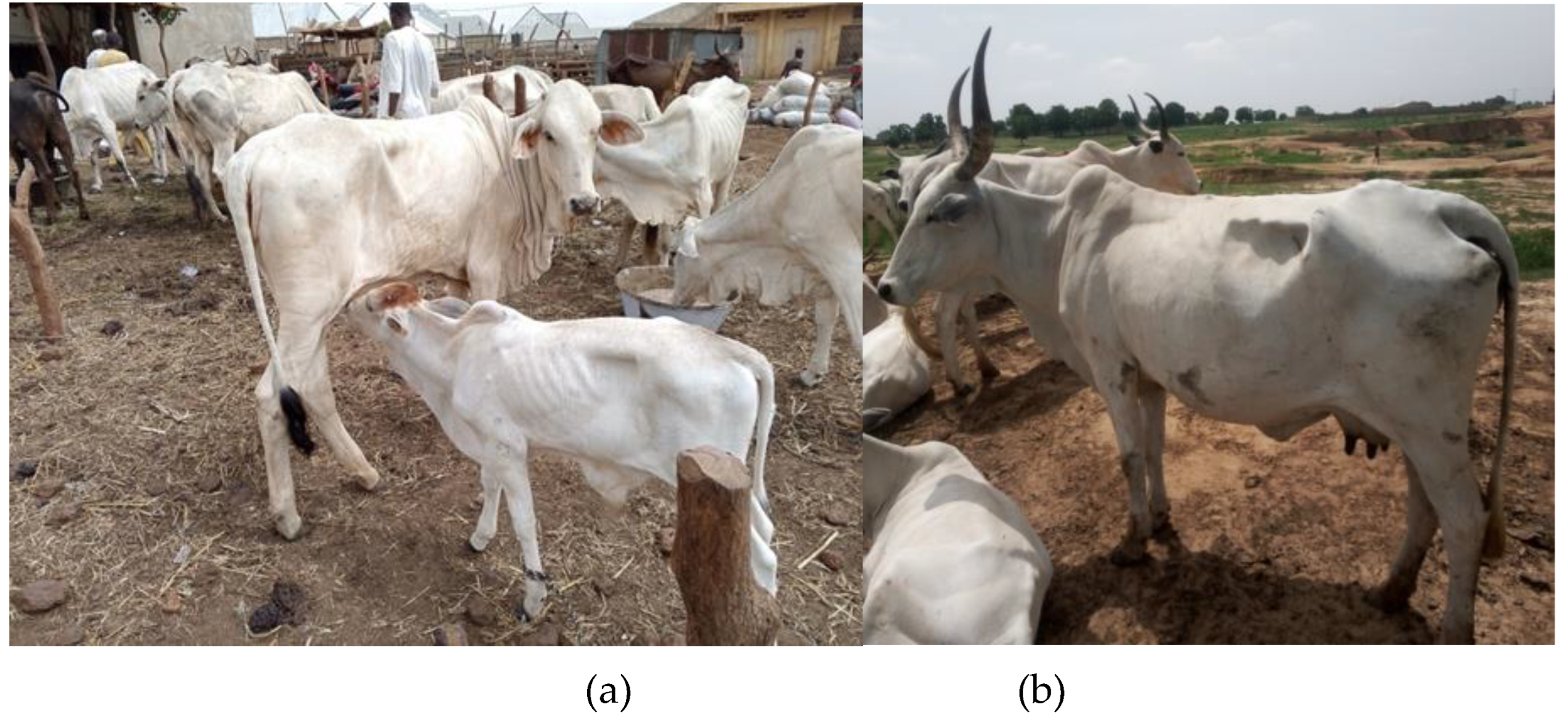
Figure 2.
Photographs depicting two Nigerian cattle breeds: (a) Red Bororo, also known as Rahaji, characterized by its distinctive reddish coat and long, curved horns, known for its hardiness in arid regions; (b) Adamawa Gudali, a breed with a more robust build and shorter horns, typically found in the savanna regions, valued for both milk and meat production.
Figure 2.
Photographs depicting two Nigerian cattle breeds: (a) Red Bororo, also known as Rahaji, characterized by its distinctive reddish coat and long, curved horns, known for its hardiness in arid regions; (b) Adamawa Gudali, a breed with a more robust build and shorter horns, typically found in the savanna regions, valued for both milk and meat production.
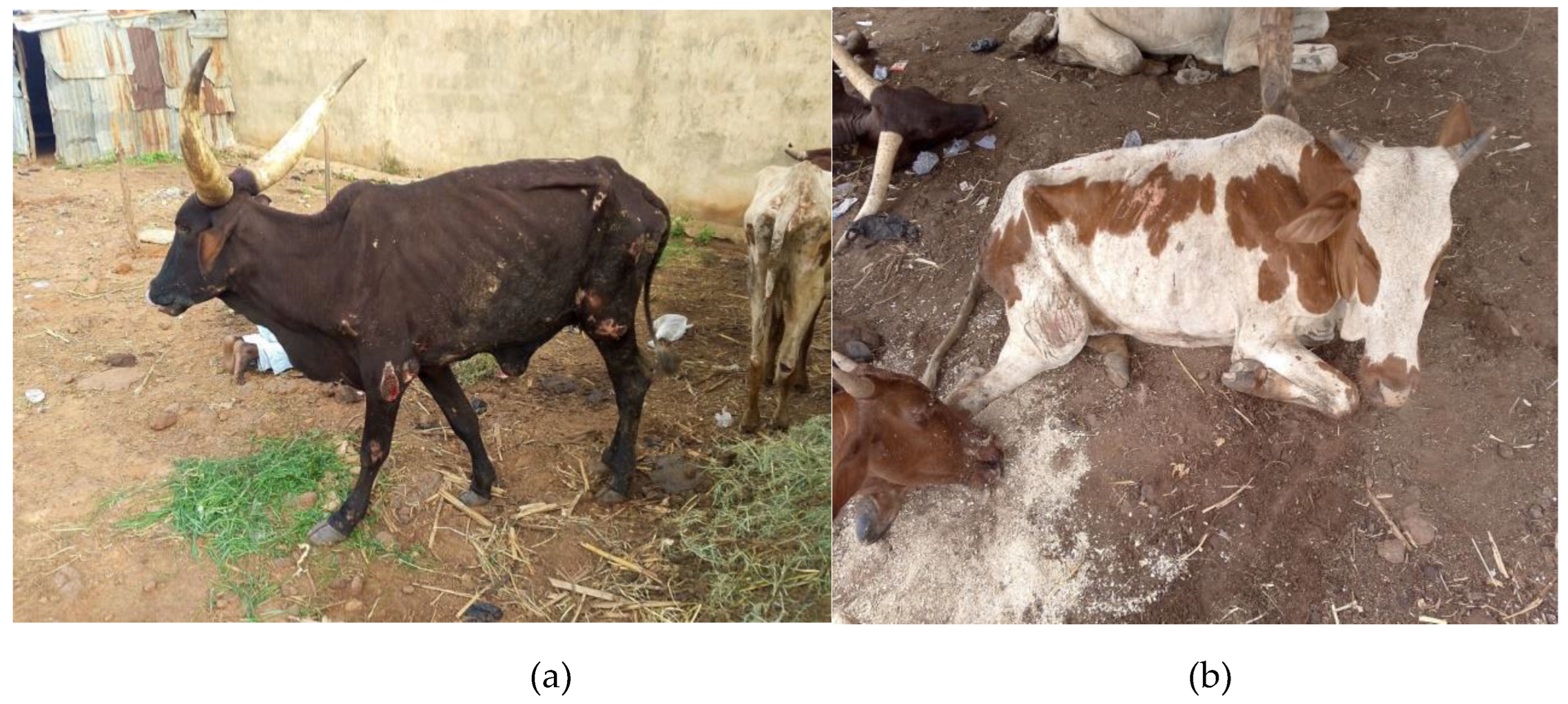
Figure 3.
Photographs showcasing crossbreeds of Sokoto Gudali cattle: (a) Guernsey-Sokoto Gudali, a hybrid exhibiting the Guernsey's distinctive coloring and dairy traits combined with the hardiness of the Sokoto Gudali; (b) Friesian-Sokoto Gudali crossbreed, merging the high milk yield capacity of the Friesian with the adaptability and resilience of the Sokoto Gudali, suited to diverse environmental conditions.
Figure 3.
Photographs showcasing crossbreeds of Sokoto Gudali cattle: (a) Guernsey-Sokoto Gudali, a hybrid exhibiting the Guernsey's distinctive coloring and dairy traits combined with the hardiness of the Sokoto Gudali; (b) Friesian-Sokoto Gudali crossbreed, merging the high milk yield capacity of the Friesian with the adaptability and resilience of the Sokoto Gudali, suited to diverse environmental conditions.
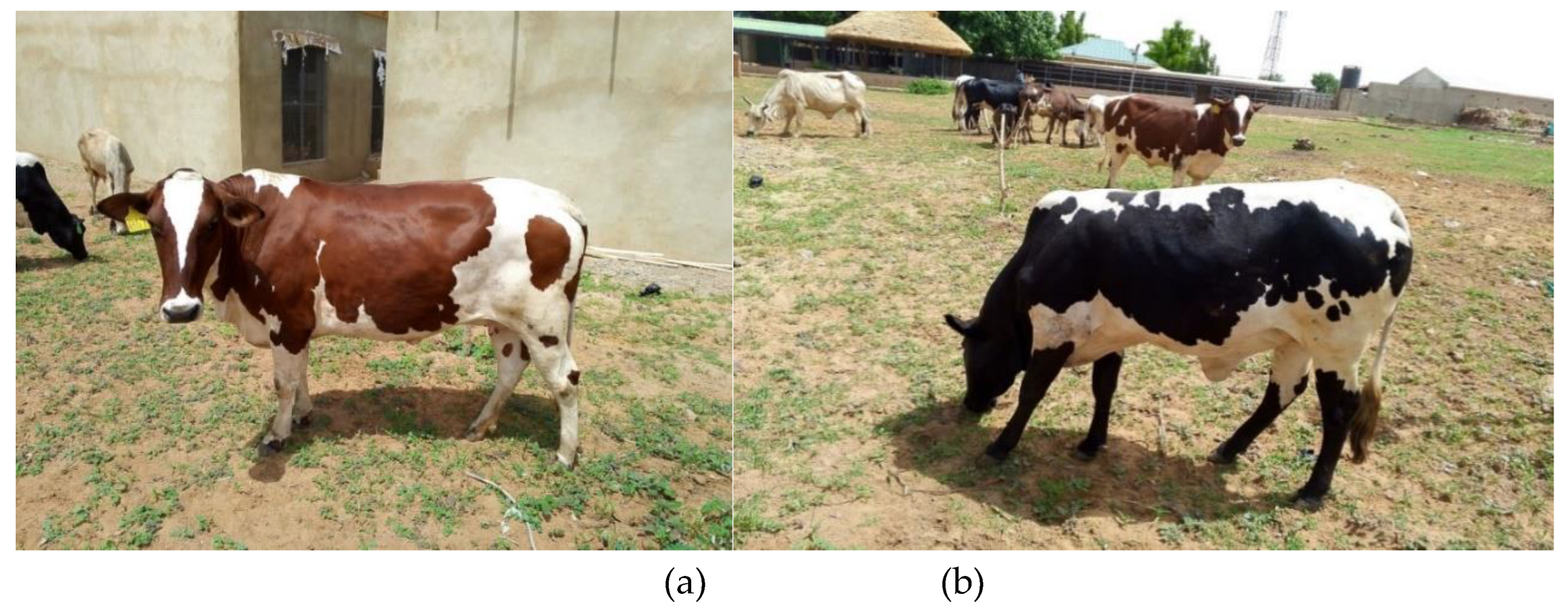
Figure 4.
World map showing prevalence estimates for Subclinical (S) and Clinical (C) mastitis in dairy cattle and buffaloes [115].
Figure 4.
World map showing prevalence estimates for Subclinical (S) and Clinical (C) mastitis in dairy cattle and buffaloes [115].
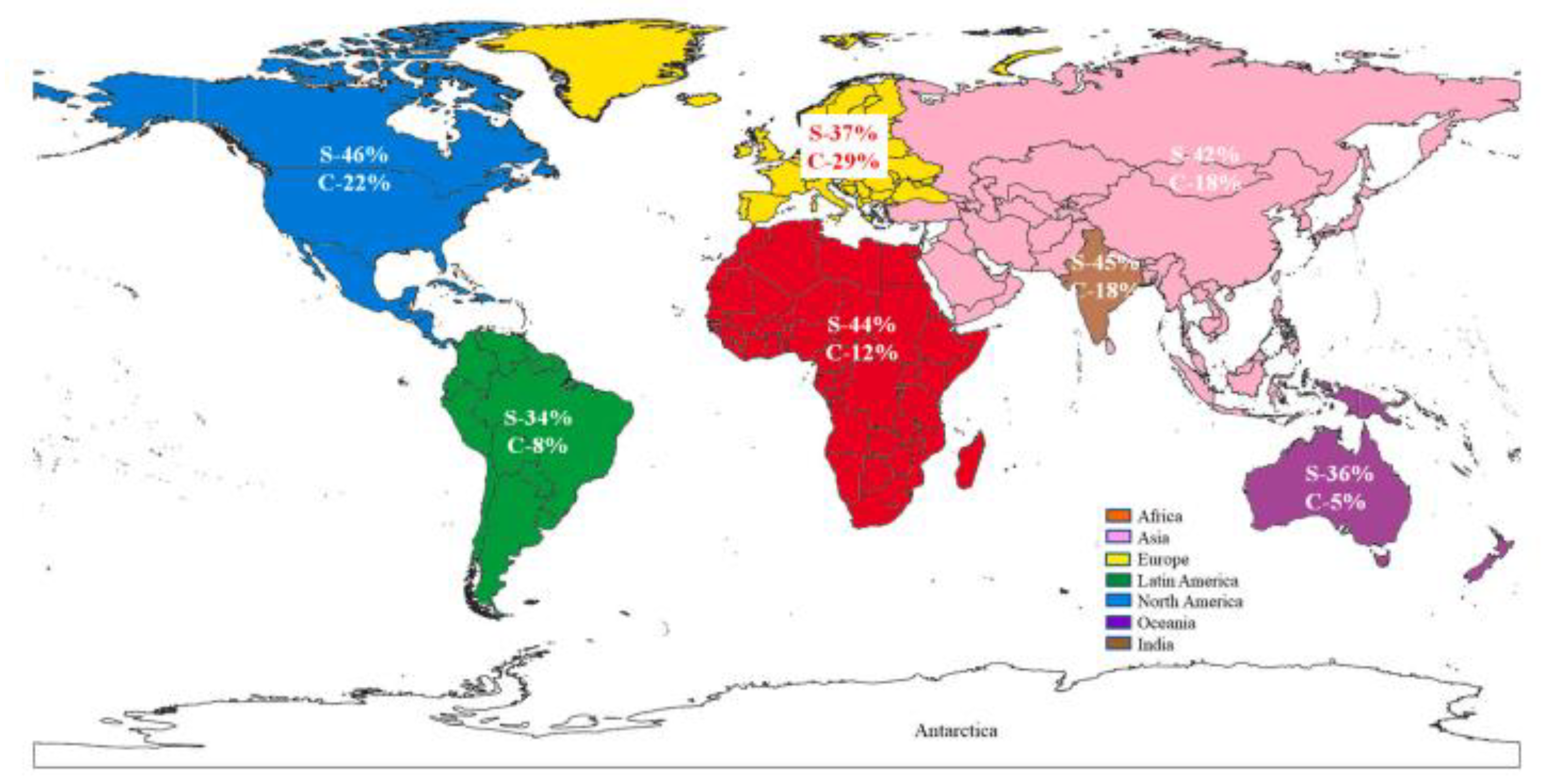
Disclaimer/Publisher’s Note: The statements, opinions and data contained in all publications are solely those of the individual author(s) and contributor(s) and not of MDPI and/or the editor(s). MDPI and/or the editor(s) disclaim responsibility for any injury to people or property resulting from any ideas, methods, instructions or products referred to in the content. |
© 2024 by the authors. Licensee MDPI, Basel, Switzerland. This article is an open access article distributed under the terms and conditions of the Creative Commons Attribution (CC BY) license (http://creativecommons.org/licenses/by/4.0/).
Copyright: This open access article is published under a Creative Commons CC BY 4.0 license, which permit the free download, distribution, and reuse, provided that the author and preprint are cited in any reuse.


