

Submitted:
17 December 2024
Posted:
19 December 2024
Read the latest preprint version here
Abstract
Blockchain technology can completely transform sports, including athlete smart contracts and data management, fan interaction, betting, ticketing, and legitimacy. It can make safe, clear ticketing processes, authenticate sports collectibles, and establish fan loyalty programs. Athlete contracts and payments can be automated via smart contracts, and blockchain-based loyalty schemes can potentially reward fans with digital tokens. Blockchain technology can enhance sports in terms of player identity, scouting, performance, and dynamic price. Though more creative uses are starting to emerge, general adoption is still in its early stages, despite its promise. With this background in mind, a survey was created based on earlier research approved by an ethics commission to examine sports experts' perceptions of the advantages of blockchain in sports performance. Through the use of SEM Smart PLS and a cluster analysis, the research validated the hypothesis that in Romania the implementation of Blockchain Apps in sport fosters trust in blockchain benefits and improves the national and European athlete performance.
Keywords:
blockchain
; sport
; Apps
; SEM
; athletes’ performance
1. Introduction
By 2030, the disruptive technology known as blockchain is predicted to boost the world economy by 1.76 trillion USD. This decentralized, transactional database technology is well-known for its traceability and transparency, propelling advancements across various industries, including supply chain and crowdfunding. Numerous facets of blockchain, including its advantages, difficulties, and possibilities, have been the subject of recent studies. However, a thorough examination of the effects of recent developments on society and their enormous potential across industries has not yet been conducted (Shukla, 2024).
The sports industry is rapidly commercializing, and transforming into entertainment products and services to meet people's growing sports consumption needs. This exploration introduces sports marketing theory, the Internet of Things (IoT) platform, and blockchain technology to establish a sports marketing strategy (Tang, 2023). Sports companies are using tech to adjust to the modern international commercial climate, such as implants, smart pills, and performance-tracking sensors. Advancements in goal-line cameras and video-assisted referees have drawn interest from academics and entrepreneurs (Schmidt, 2020, Chase, 2020, Berkani, 2024)
However, the sports industry faces issues such as a lack of openness, centralized governance, and security issues. Blockchain technology can improve accountability and transparency by moving from centralized to distributed systems, improving license, surveillance, and tracking (Wojda, 2023, Pinto, 2022, Calderone, 2023, Berkani, 2024). Sporting firms have teamed up with elite teams and athletes to provide blockchain-based apps like fan tokens, NFT collectibles, sports tickets, and gambling on sports (Kaur, 2021, FIFA, 2024, Berkani, 2024).
Despite its theoretical benefits, blockchain use in the sports sector is limited due to a lack of research on its application and implications. Agbozo explores blockchain technology's application in sports using computational literature review and bibliometric analysis methodologies, contributing to knowledge and practice in this field (Agbozo, 2024).
Cao proposes a decentralized blockchain-based solution for athlete sports data transmission, using the HMM model for accurate performance prediction (Cao, 2021). Wang explores the integration of smart sensors and blockchain technology in sports data fusion, introducing a hierarchical model and a reliable construction algorithm (Wang, 2023). Vidal-Tomás investigates Socios.com, a blockchain platform integrating token sales with sports fan experience, addressing financial losses and cryptocurrency market influence (Vidal-Tomás, 2024). Li presents a neural network-based sports injury risk analysis system using blockchain and IoT, detecting injury locations in 0.2 seconds and achieving a recovery rate of 94.39% (Li, 2023).
Having in mind all these elements we designed a survey to analyze the manager/sportive opinion regarding the benefits of blockchain and its applicability to sport performance. The survey was based on previous research published regarding blockchain (Guru, 2021) and it was previously validated by an ethics commission. At the beginning of our research, we made 2 assumptions, that we intend to test:
H1: The implementation of Blockchain APPS in sports leads coaches and athletes to trust in Blockchain benefits
H2: The use of Blockchain applications in sports/sports favors the increase of athletes' performance at national and European level
H3. The opinion on the advantages and implementation of blockchain apps differs by user professions
To be able to test these hypotheses we conducted a research literature review regarding the main advantages and applicability of blockchain in sport.
2. Applicability of Blockchain in Sports
2.1. Athlete’s Data Management
Metrics measuring an athlete's condition and performance are essential to their workout regimens, competitiveness, and overall health. However, problems with centrally managed databases include a lack of transparency and manipulation of data. Blockchain is a trustworthy (Al-Breiki, 2020) data bank for athlete performance because of its decentralization, consistency, transparency, and privacy features. Microsoft unveiled "BraveLog," the first sports blockchain, in 2017 to safely track players' performance data and provide a sports resume. Peerspoint, Playmaker Chain, and Ningning are a few more sports tech startups that suggest a blockchain-based games archive system to solve centralized problems such as data manipulation, and lack of openness. Additional technologies that are being considered are health systems for management, data in real-time collecting and administration of athletes' physical fitness, and B-PEIS, a blockchain-based system for safely managing kids' physical education (Naraine, 2021, Yue, 2020, Shan, 2020, Yu, 2021, Berkani, 2024).
To enhance performance prediction in sporting events, a number of solutions incorporating blockchain technology and predictive algorithms have been created. A secure platform for gathering, storing, and analyzing athlete data as well as a collaborative system for real-time performance management with Hyperledger Fabric have both been utilized. A neural network-based sport-related injury rehab surveillance system that can spot patterns and trends for recovery tactics has been presented. In order to enhance fracture diagnosis techniques, the scientists also presented Block-Deep, a hybrid model that combines blockchain and deep learning technology. They have created a supporting system for running conditioning that uses wireless sensor tech to gather heart rate and gait data. Additionally, they created a system that records physiological info in real-time via IoT sensors and stores it on the blockchain (Sarker, 2022).
Additionally, they created a website that tracks Taekwondo belt advancement examinations and uses blockchain technology to guarantee outcomes that are transparent and unchangeable. These studies, however, do not contain any performance assessments (Rahardja, 2020, Cao, 2021, Mohammad, 2023, Song, 2022, Berkani, 2024).
The authors offer a method for cricket performance prediction utilizing the Hidden Markov Model and InterPlanetary File method (IPFS) for data storage. Additionally, they provide a blockchain-based, machine learning-based soccer injury cycle control and surveillance solution. Blockchain technology is used by the system to store data, and machine learning is used to evaluate the data and provide treatment and rehabilitation programs. Enhanced safety of data, thoroughness, and carrying capacity is demonstrated by the experimental findings (Kalakota, 2023).
2.2. Sports Events Management
Sports administration is using blockchain technology more and more to improve privacy and fight fraud. Using a blockchain to tokenize non-fungible tokens (NFTs), sports event organizers may do away with ticket forgeries and add automatic constraints to each ticket. NFTs and smart contracts can help with this, resolving problems like trading and speculation secondary sales (Liu, 2021, Rueden, 2020). It has been suggested that blockchain and RFID be integrated into sports ticketing mechanisms at the 2018 Asian Games. The blockchain would be used to store unbreakable tickets and serve as transaction validators. During the COVID-19 epidemic, this technology would limit physical touch and eradicate ticket forgery (Berkani, 2024)
In order to ensure authenticity and avoid duplication, Regner et al. developed a blockchain-based system whereby tickets for events are digitally issued as NFTs (Regner, 2019). Through the use of an Ethereum smart contract, buyers may obtain tickets straight from the blockchain. This interface gives event organizers complete control over ticket transfers and expedites refund procedures (Rueden, 2020).
2.3. Anti-Doping
The 2016 Olympic Games revealed state-sponsored doping in the former Soviet Union, highlighting the ineffectiveness of existing anti-doping mechanisms. Blockchain's transparency, tamper proof, and privacy, along with smart contracts (Rueden, 2020), offer an innovative platform for sports regulators to combat doping. The World Anti-Doping Agency's Anti-Doping Administration & Management System (ADAMS) faces challenges like over-centralized data management, non-digitalized processes, and insufficient anonymization and privacy. A new design for Therapeutic Use Exemptions is proposed (Regner, 2019, Gremion 2018, Berkani, 2024) Smart contracts, tamper-proofing, openness, and privacy of blockchain provide sports officials with a cutting-edge tool to combat doping. To overcome these issues, the authors suggested redesigning the World Anti-Doping Administration & Management System (ADAMS). (Baker, 2022, Berkani, 2024).
2.4. Sports Collectibles and Products
The market for sports merchandise and memorabilia is plagued by fraud and questionable authenticity procedures. Blockchain technology ensures transparency and immutability, which can help reduce this. A blockchain-powered NBA digital trade card administration system including six stages has been presented by Chang et al. These stages include Manufacturing Authorization, Registration, Review, Issue, Identity Verification and Invoicing, Payment, and Browse and Access. Hyperledger Fabric is the blockchain technology that this system employs to improve security, manage access, and scalability. In order to maximize throughput and guarantee privacy, the authors also presented a reputation-based delegated proof of stake (RDPoS) consensus mechanism. A new class of digital sports collectibles powered by non-fungible tokens (NFTs) is also introduced by blockchain. One example is NBA Top Shot, which enables users to purchase, amass, and trade NBA NFTs. Companies like Pro Exp Media, Stryking.io, and EX Sports have formed partnerships with sports clubs and federations to launch NFT-based digital collectibles (Khaund, 2020, Baker, 2021, Wu, 2022 Berkani, 2024)
2.5. Sports Fan Engagement
Blockchain technology can enhance fan engagement through the use of fan tokens Berkani, 2024. Fans can buy their favorite team's tokens in the form of cryptocurrencies (ERC-20) in exchange for unique benefits like VIP game passes, sports collectibles, and access to meet-and-greet events. Fan tokens empower fans and give them a sense of involvement in the club’s decision-making and governance through voting rights. For example, Chiliz.com/Socios.com is a company that helps top sports clubs reach their fan base and sell their fan tokens to supporters (Carlsson-Wall, 2020).
The FCFL (Fan Controlled Sports League) platform allows fans to buy fan tokens to level up and gain voting rights for their favorite team. The integration of NFTs into sports events presents new avenues for enhancing fan engagement. Proof of Attendance Protocol (POAPs) issues NFTs as verifiable proof of attending an event, allowing fans to redeem these NFTs for real-life experiences, win merchandise, and secure tickets for future events. Blockchain can increase trust and transparency between clubs and fans by creating transparent and accountable platforms for sports news dissemination. A blockchain-based model was proposed to ensure the legitimacy of player transfer deals while guaranteeing club privacy (Liu, 2021, Ante, 2023, Berkani, 2024, Al-Breiki, 2020).
2.6. Sports Financing and Crowdfunding
Blockchain technology offers new opportunities for sports clubs and athletes to unlock new income streams and improve inter-organizational business processes. A study evaluating 200 innovation indicators from 50 sports companies found that companies that employ blockchain technology have a clear edge in innovation efficiency due to their ability to solve fundamental problems in the current business model, such as inefficient centralized paradigm, high fees imposed by intermediaries, and lack of transparency. Smart contracts can be used to manage players' salaries and sponsor contracts, reducing disputes and third-party expenses. PowerAgent is a blockchain platform for creating and managing athlete contracts (Rueden, 2020). Additionally, blockchain can help athletes raise funds to finance their careers, eliminating the lack of transparency and intermediary costs in conventional crowdfunding. Companies like Sportyco.io and Globaltalent.com offer blockchain-based platforms for athletes and clubs to raise funds in exchange for a share of their future earnings. (Jin, 2021 CJarlsson-Wall, 2020, Baker, 2022 Khaund, 2020, Berkani, 2024).
2.7. ESports
Blockchain technology can enhance Esports by introducing cryptocurrencies for in-game transactions and creating decentralized betting and competition platforms. It can also convert in-game intangible assets into NFTs for real-world value. A decentralized computation and token infrastructure for gaming networks, integrating IPFS and Ethereum, can improve performance, transparency, and fraud detection. Smart contracts can mint in-game items and achievements into NFTs for trading outside the game network (Muthe, 2020, Bastos, 2020, Berkani, 2024, Rueden, 2020).
2.8. Sports Gambling and Fantasy Sport
Blockchain technology can address challenges in sports gambling and fantasy sports, such as lack of transparency, trust, and high third-party commissions. Blockchain smart contracts replace bookmakers, ensuring trust, transparency, and anonymity (Al-Breiki, 2020). BetNation, a decentralized application on Ethereum, uses Ethereum smart contracts to manage pools and stakes, enhancing trust and privacy. Fortuna, a decentralized platform, uses staked voting to determine real-world event outcomes in a robust and low-cost manner. Carlsson-Wall et al. found 18 companies offering blockchain-based sports betting platforms, with some focusing on general sports betting and others on Esports competitions (Berkani, 2024, Rueden, 2020).
2.9. Sports Copyrights Protection and Category
Blockchain technology can be used in sports copyright protection, particularly in sports broadcast copyright protection. Its transparency and immutability can confirm content ownership and prevent infringement. Blockchain can facilitate evidence collection in case of copyright violation and reduce copyright management costs. It also offers a new business model for Sports Streaming Services, allowing networks and rights owners to sell content on demand (Khaund, 2020, Jun-Ming, 2021, Wang, 2022, Berkani, 2024).
The SportsTech Matrix by Frevel et al. identifies three user groups: athletes, consumers, and management. Athletes benefit from blockchain for training, performance prediction, recovery, injury prevention, motivation, financing, and fundraising. Consumers engage with sports through fan tokens, collectibles, sports betting, ticketing, and broadcast services. Management, including sports executives, coaches, policymakers, and sponsors, benefits from blockchain integration for league management, club management, and regulatory institutions. The management was the group with the most benefits from the blockchain (Berkani, 2024).
3. Methodology
3.1. The Purpose of the Research and the Instruments Used
The purpose of the study is to examine the advantages of blockchain technology and assess how using blockchain applications affects athletes' performance. To that end, we created an online survey to collect the responses from the sports experts. There were sections in the questionnaire's design. Information is gathered on a certain theme in each section: 1) Blockchain benefits highlight the advantages of integrating blockchain technology into sports; 2) Blockchain Apps discuss how subjects have effectively employed blockchain applications in their job; and 3) Performance collects data on the subjects' level of sports performance. Each section includes multiple questions, which Table 1 lists as subitems. Every component was transformed into a construct and applied in a regression analysis with SmartPls software.
3.2. Design and Research Phase
Google Forms was used to conduct the survey. Athletes were given the survey and its explanations in person, and they were requested to complete the Google Form in the researcher's presence. Academics from the National University of Physical Education and Sports in Bucharest as well as representatives of the Romanian National Sports Federations provide the subjects. The criteria of GDPR were met. Every respondent consented to the anonymous processing of their responses and opinions. Following a thorough data-cleaning procedure, we retained 293 answers (213 – football, 80 - basketball) and eliminated the ambiguous ones.
The survey was based on previous studies done by other authors, (Li 2023, Tedesco, 2022, Beal, 2019), as well as the primary author's personal experience coaching sports and players who employed blockchain technology as collateral tools of their professional activity. The variables were measured on a Likert scale where (-2=totally disagree, -1=disagree, 0=neutral, 1= agree, 2= totally agree).
The variables have been measured, the knowledge-gathering strategy has been defined, the data collection technology has been selected, and the methodological framework to organize the data has been built. The data were assessed using the partial least squares (PLS) structural equation modeling method. PLS enables the simultaneous investigation of interactions between latent, formative, and reflecting variables—even for smaller samples. Two latent reflective constructs are integrated into our model: Blockchain Apps and Blockchain Benefits. All variables are shown in Table 1 along with the description items that go with them.
We generated a Path analysis based on the constructs in Table 1 using the Smart PLS program. The relationship between our constructions, which is highlighted in the three above-mentioned hypotheses, is explained by the Path analysis. Two formative constructs—Performance—and two reflecting constructs—Blockchain Apps and Benefits—are included in our investigation. Our sample is statistically significant for the statistical population. The Cronbach's Alpha coefficients shown in Table 2 verified the questionnaire's coherence and correctitude. For each construct, the Construct Validity and Reliability indicators are displayed in Table 3.
4. Results
4.1. Construct Validity and Reliability of the model
Our sample's age group is extremely well-balanced, meaning that individuals of all ages, from 19 to 55, are included: 35.15% are 14-18 years old, 29,69%= 19-25 years old, 17.75% have 26-35 years old, 15.36% have 36-45 years old, 2.05% have more than 46 years old). In this study 78.55% of participants are men and 21.50% are women, a common characteristic for football and basketball. They were largely employed in urban regions (77.46%) and were, on average, athletes and sports experts with advanced degrees, including faculty (50.23%), master's (35.21%), and PhD (4.23%).
Figure 1.
Descriptive statistics.
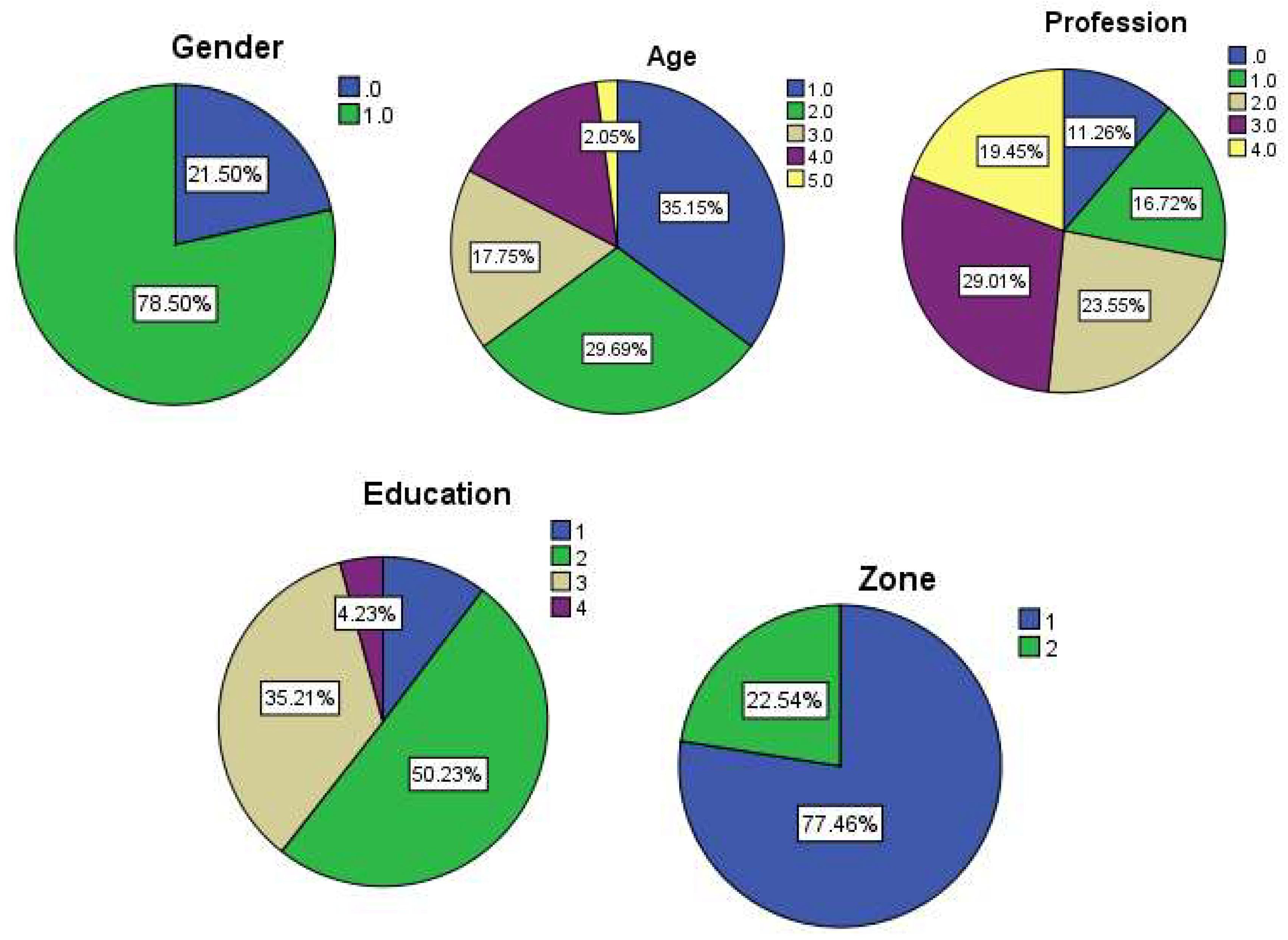
The questions for the two primary constructs—Blockchain Apps and Blockchain Benefits—were rated on a scale based on five Likert points. While we examined team sports, the answers to the Performance items were open-ended but limited to numerical values that represented the number of goals and participation in various events.
Figure 2.
Comparison of Basketball and Football on all variables analyzed.
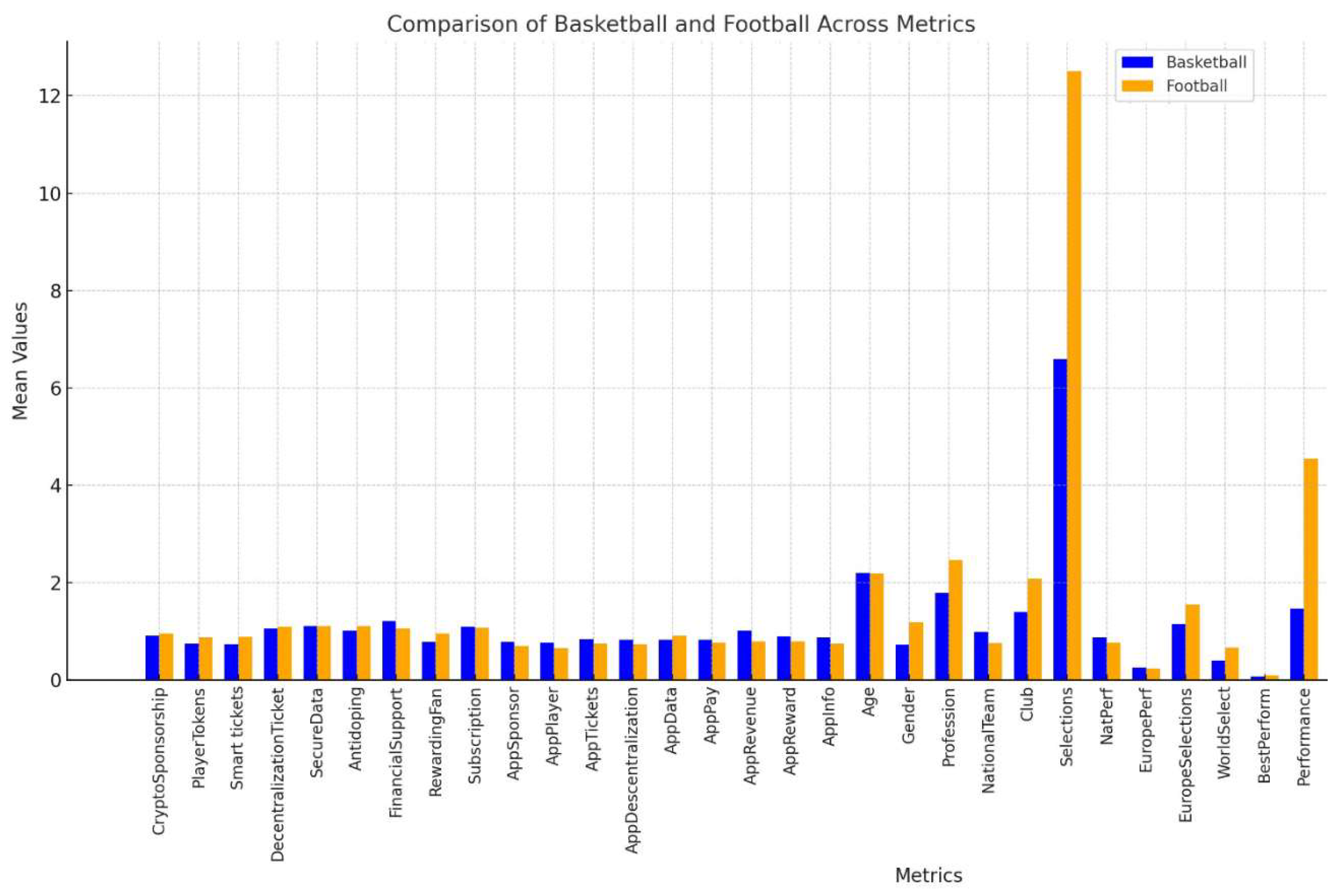
Football generally outperforms Basketball in most categories such as Crypto Sponsorship (0.958 vs. 0.951), Player Tokens (0.87 vs. 0.75), Smart Tickets (0.89 vs. 0.73), Rewarding Fans (0.95 vs. 0.78), Blockchain Advantage (1.03 vs. 0.96). Basketball outpaces Football in: Financial Support (1.21 vs. 1.06), AI in Sport (1.42 vs. 1.35), and Blockchain Apps (0.853 vs. 0.775). Antidoping and Secure Data values are identical or very close for both sports (Fig. 2). Overall, these differences are not representative. We implemented a One-Way ANOVA test that shows that there are no significant differences in sport, gender, age, or profession regarding specialists’ opinions on blockchain advantages and applications implemented in sports. (Table 2).
Figure 3.
Cronbach’s Alpha analysis and Path coefficients. Source: SmartPLS analysis (reprinted from a free version of SmartPLS software, version 3.3.9, created on 30 June 2024) (Hair et.al, 2019)
Figure 3.
Cronbach’s Alpha analysis and Path coefficients. Source: SmartPLS analysis (reprinted from a free version of SmartPLS software, version 3.3.9, created on 30 June 2024) (Hair et.al, 2019)
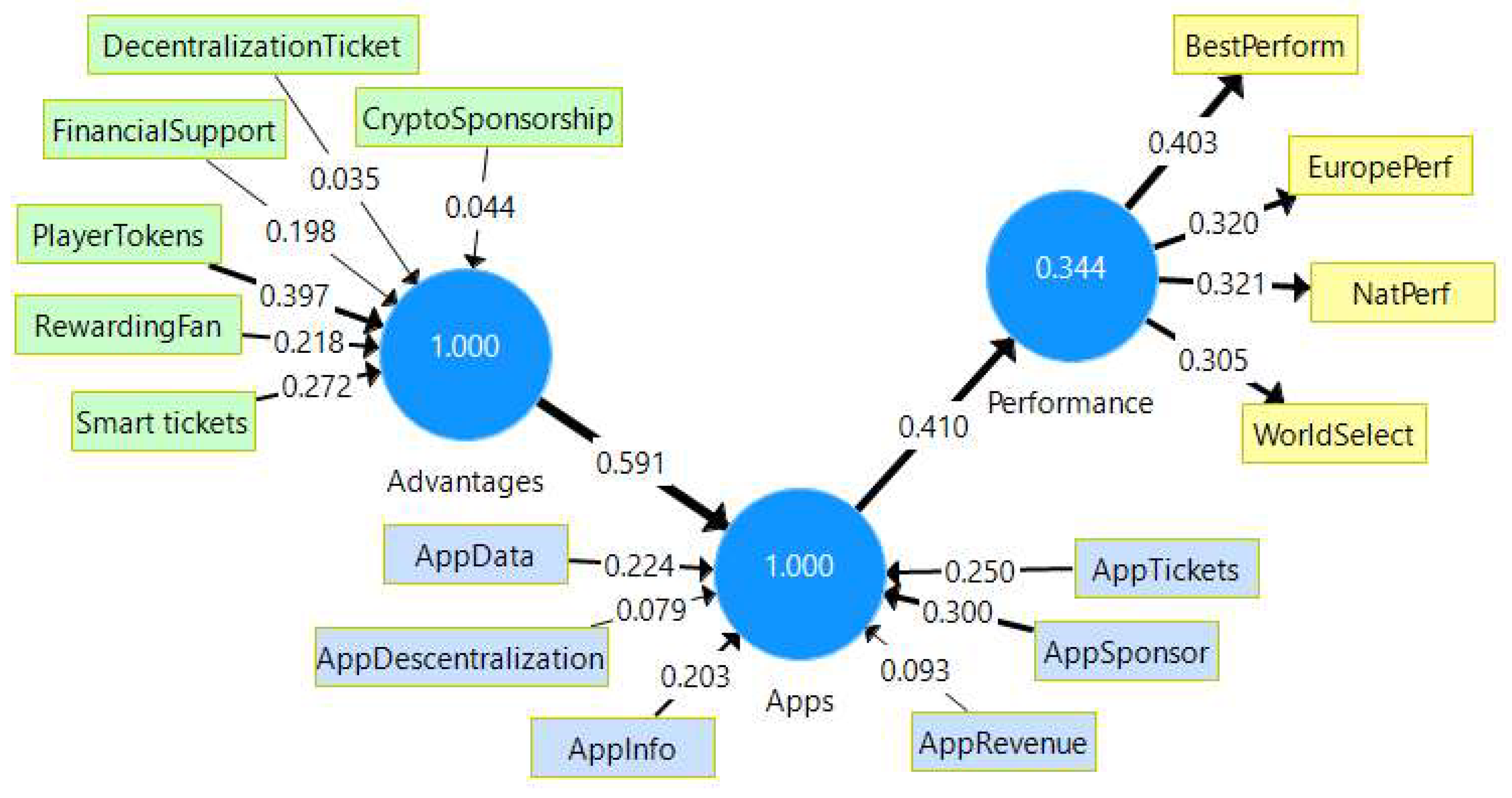
Our analysis includes 2 formative constructs: Blockchain advantages and Blockchain Apps that have the Spearman correlation coefficient rho_A equal to 1, which is normal in SEM regression, and a reflective construct, Performance with rho_A equal to 0.343, meaning a small positive correlation between Blockchain Apps and Performance The thickness of the arrows shows the intensity of outer weight/ loading of each subitem. (Hair et al., 2022). Figure 3 also presents the Path coefficients.
The Path coefficients and the loading factors proved our hypothesis (Fig. 3.):
- H1: The advantages brought by Blockchain influence the type of Blockchain APPS used frequently in sports (Blockchain Benefits → Blockchain Apps). The Path coefficient of 0.591 proves a rather high influence of the Blockchain Benefits over the Blockchain Apps used by sports specialists.
- H2: Using blockchain technologies in sports encourages sportsmen to perform better on a national and European scale (Blockchain Apps → Performance). The Path coefficient of 0.410 proves a medium influence of the blockchain in sports performance.
The numbers on the diagonal of the matrix are bigger than the ones that are below it (in the same row and column), as seen below, so satisfying the Fornell-Larcker discriminating validity requirements. We can therefore claim that our variables differ from one another. (Table 3).
An exceptional match can be explained by the SRMR (0.032), which has a value of less than 0.05 (Diamantopoulos, 2006). The parameters d ULS and d G, which stand for the squared Euclid distance and the geodesic distance, respectively, are utilized to calculate the discrepancy depending on the eigenvalue value (Van Laar, 2002). The estimates for SRMR, d ULS, and Chi-Square (Saturated =137.647 and Estimated=137.718) are greater than the saturated model, which stands in for the threshold when the estimated and saturated values of the models are compared (Table 3). The NFI (0.953) score indicates a consistent model because it is quite near threshold 1.

Table 4.
Model fit.
| Saturated Model | Estimated Model | |
| SRMR | 0.032 | 032 |
| d_ULS | 0.140 | 0.141 |
| d_G | 0.093 | 0.094 |
| Chi-Square | 137.647 | 137.718 |
| NFI | 0.953 | 0.953 |
The degree to which the exceptionally strong correlations between the variables that predicted elevated the variance of the generated coefficients of regression is determined by the variance inflation factor or VIF. There does not exist collinearity among the variables when the VIF is lower than the conventional threshold of 5 (Ringle, 2015). In our case all variable has lower values than 4, meaning that the multicollinearity is not manifest between our variables (Table 5).
The standard errors for the PLS-SEM results are produced using the predictions from the bootstrapping subsamples. When assessing the significance of PLS-SEM data, SmartPLS software computes t-values, confidence intervals, and standard errors (Ringle, 2015). To evaluate the significance of the PLS-SEM results, T-values, p-values, and confidence intervals were produced using the previously mentioned data (Sarstedt, 2022). Model coherence is shown by T-values larger than 1.96 (Sarstedt, 2022), and reduced p-values (less than 0.01) because the first regression Blockchain Benefits -> Blockchain Apps has µ=0.59, DS=0.043. Tstat=13.869 and p=0.00. The H1 and H2 that were previously mentioned have been met. Because of the extremely low standard deviations and p-values, we can confirm the high accuracy of our model.
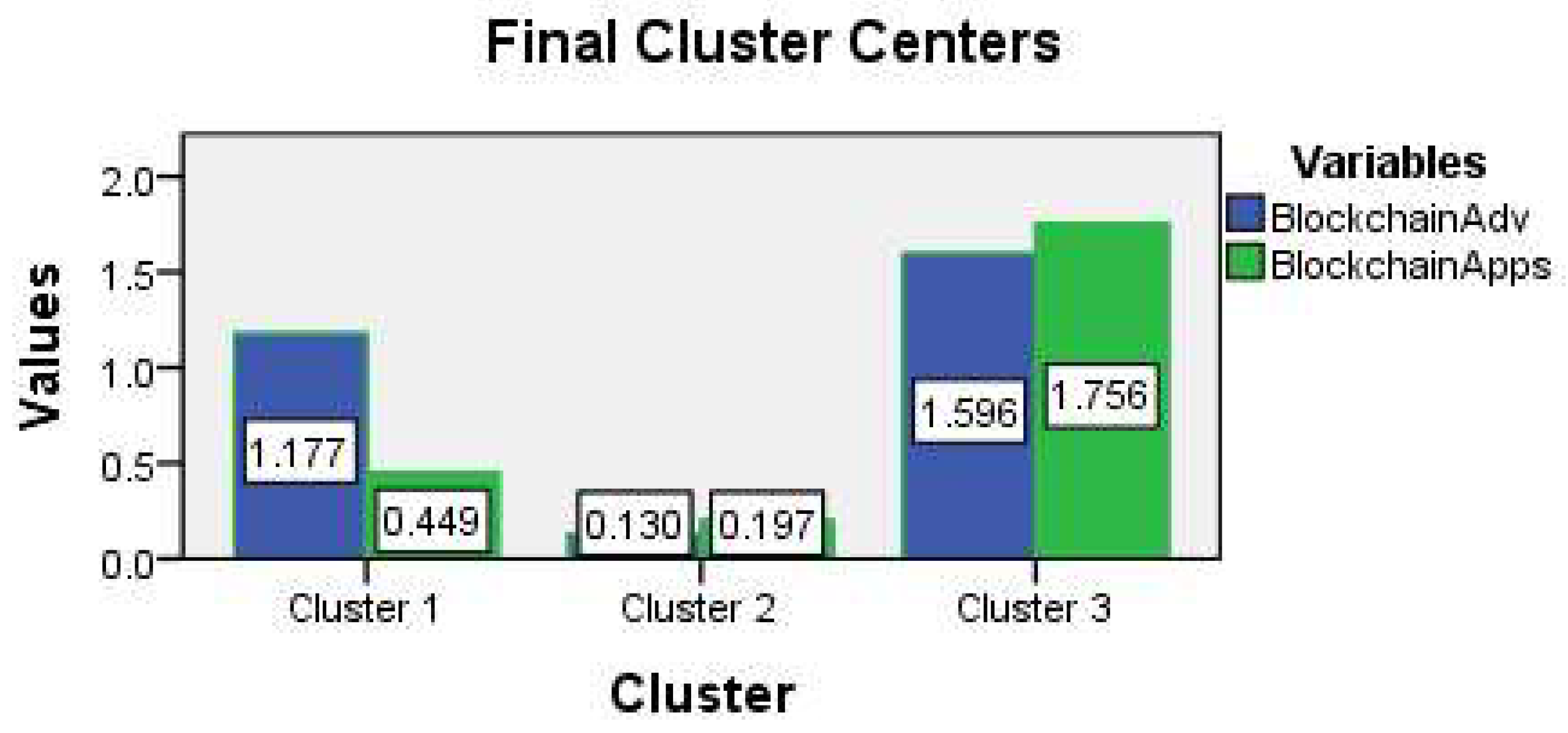
Analyzing the opinion of sports specialists regarding the advantages and implementation of Apps in sports results 3 clusters if applying K-Means clusters, made in SPSS. Cluster 1 contains 30% of athletes and trainers that rather agree with the blockchain advantages as cluster center is 1.17 and neutral regarding using blockchain apps as center is 0.44. Cluster 2 contains 35.2% of athletes and trainers that are rather neutral with the blockchain advantages as cluster center is 0.13 and neutral regarding using blockchain apps as center is 0.19. Cluster 3 contains 34.7% of athletes and trainers that agree with the blockchain advantages as cluster center is 1.59 and agree regarding using blockchain apps as center is 1.75 (Fig.4). The variables were analyzed on a Likert scale where -2 is totally disagreed, 0 -neutral, 2- agree. We may observe that the majority of the 209 subjects (cluster 1 contains 115 subjects -39,24 % and Cluster 3 contains 94 subjects 32,08%) agree with the advantages of blockchain as the final cluster center is higher than 1 very close to a maximum of 2. The subjects in cluster 2 (84 subjects 28.66%) are neutral regarding the implementation of blockchain advantages and apps in sports as the final cluster center is smaller than 0.5 and very close to the neutral value of 0. The difference between our clusters is statistically significant as F calculated has very high values (Blockchain Benefits -273.892, Blockchain Apps - 429.864) and sig is lower than 0.05, thus we may affirm that our third hypothesis is proven (Table 6). Thus, we may observe that many subjects agree that benefits of the blockchain implementation is sports, that has as positive consequence the use of Blockchain Apps. Few of them are neutral but still use it.
Figure 3.
Cluster final centers by profession.
5. Discussions
Blockchain technology has the potential to revolutionize various aspects of the sports industry. Here are some ways in which blockchain is being utilized in sports:
Ticketing: Blockchain can be used to create secure and transparent ticketing systems for sports events. By using blockchain-based ticketing platforms, fans can purchase tickets directly from the organizers, eliminating the risk of counterfeit tickets and ensuring fair pricing. Additionally, blockchain can enable the resale of tickets on a secure and transparent secondary market, allowing fans to buy and sell tickets without the need for intermediaries (Berkani, 2024, Regner, 2019).
Authenticity and provenance: Blockchain can be used to verify the authenticity and provenance of sports memorabilia, such as jerseys, equipment, and collectibles. By recording the ownership history of each item on a blockchain, fans can verify its authenticity and ensure that it has not been tampered with or counterfeited (Wojda, 2023, Pinto, 2022, Calderone, 2023, Berkani, 2024).
Fan engagement: Blockchain can be used to create innovative fan engagement platforms that reward fans for their loyalty and participation. For example, sports teams and leagues can create blockchain-based loyalty programs that reward fans with digital tokens for attending games, purchasing merchandise, or engaging with content on social media. These tokens can be redeemed for exclusive rewards, such as VIP experiences, merchandise discounts, or access to exclusive content (Carlsson-Wall, 2020, Liu, 2021, Ante, 2023, Berkani, 2024).
Athlete contracts and payments: Blockchain can be used to create smart contracts that automate and secure athlete contracts and payments. Smart contracts are self-executing contracts with the terms of the agreement written into code. By using blockchain-based smart contracts, sports teams and athletes can streamline contract negotiations, automate payments, and ensure that all parties fulfill their obligations (Liu, 2021, Berkani, 2024, Regner, 2019, Baker, 2022).
Sports betting: Blockchain can be used to create transparent and decentralized sports betting platforms that eliminate the need for intermediaries and ensure fair and transparent betting outcomes. By using blockchain-based smart contracts and oracles, sports bettors can place bets directly on the blockchain, and the outcomes of the bets can be automatically verified and settled transparently and securely (Berkani, 2024, Muthe, 2020, Bastos, 2020, Berkani, 2024).
Blockchain technology can potentially offer several benefits when applied to sports (soccer). Here are some potential areas where blockchain can improve performance in sports:
Player Performance Tracking: Blockchain can be used to securely track and store player performance data, including statistics from matches and training sessions, as well as health and fitness metrics. This data can be recorded on a blockchain ledger, ensuring its integrity and preventing tampering or manipulation. Coaches and sports scientists can use this data to analyze player performance, identify strengths and weaknesses, and tailor training programs to optimize performance (Naraine, 2021, Yue, 2020, Shan, 2020, Yu, 2021, Berkani, 2024).
Injury Prevention and Management: By securely recording player health data on a blockchain, medical staff can have access to a comprehensive record of a player's medical history, including past injuries, treatments, and rehabilitation programs. This information can help medical staff to better manage player injuries, prevent re-injuries, and optimize recovery times. Additionally, wearable devices equipped with blockchain technology can continuously monitor player health metrics during training and matches, providing early warning signs of potential injuries (Kalakota, 2023, Li, 2023, Cao, 2021, Mohammad, 2023, Song, 2022).
Scouting and Talent Identification: Blockchain can be used to create transparent and decentralized scouting platforms, where player performance data and scouting reports are securely recorded and shared among clubs, agents, and scouts. This can help clubs identify talented players from around the world more efficiently and make more informed decisions when recruiting new players (Jin, 2021 CJarlsson-Wall, 2020, Baker, 2022 Khaund, 2020, Berkani, 2024).
Fan Engagement and Ownership: Blockchain-based fan engagement platforms can provide fans with new ways to interact with their favorite sports clubs. For example, clubs can issue digital tokens or fan tokens on a blockchain, which represent ownership or voting rights in the club. Fans can purchase and trade these tokens, participate in club governance decisions, and access exclusive content and experiences. This can help to deepen fan loyalty and engagement, as well as provide clubs with new revenue streams (Carlsson-Wall, 2020, Liu, 2021, Ante, 2023, Berkani, 2024).
Ticketing and Matchday Experience: Blockchain can be used to create secure and transparent ticketing systems for sports matches, preventing ticket fraud and scalping. Tickets can be issued as digital tokens on a blockchain, with ownership recorded on the ledger. This can also enable features such as dynamic pricing based on demand, as well as the ability to transfer or resell tickets securely and transparently (Carlsson-Wall, 2020, Berkani, 2024, Wojda, 2023, Pinto, 2022, Calderone, 2023).
Our study examines the impact of Blockchain Apps and Blockchain Benefits on team sports in Romania. The sample includes individuals aged 19 to 55, with a majority of men and women. The questionnaire's Cronbach's Alpha Coefficients are greater than the cutoff point of 0.7, indicating its reliability and validity. The model's CR, CA, and rho_A values are all greater than 0.8, indicating its exceptional dependability. The study found that the use of Blockchain Apps in sports and sports has made coaches and players more confident in the advantages of Blockchain. Additionally, the use of Blockchain Apps in sports and sports encourages sportsmen to perform better on a national and European scale. The majority of elements have loading factors higher than 0.6, indicating their significant influence on the model.
The study analyzed sports protectionists' opinions on blockchain applications in sports, revealing three clusters: 30% agree with blockchain advantages, 35.2% neutral, and 34.7% agree. The Likert scale was used to analyze variables. The majority of subjects (64.7) agreed with blockchain advantages, while 65.2 were neutral. The difference between the three clusters was statistically significant, with high values for blockchain benefits and apps. This supports the third hypothesis, as the data supports the benefits of blockchain in sports.
Overall, while blockchain technology holds promise for improving performance in sports, its widespread adoption and implementation in the sport are still in the early stages. As the technology continues to evolve and mature, we can expect to see more innovative applications emerge that enhance various aspects of sports, from player performance to fan engagement. Blockchain technology has the potential to revolutionize various aspects of the sports industry, from ticketing and fan engagement to athlete contracts and sports betting. As blockchain technology continues to evolve, we can expect to see even more innovative use cases emerge in the sports industry.
5.1. Practical Implication of Blockchain in Sport
Blockchain technology has numerous practical applications in sports, including ticketing (NBA teams like the Sacramento Kings and UEFA already experimented), fan engagement (FC Barcelona and Juventus use Sociaos.com, and NBA Top Shot by Dapper Labs offers blockchain-based collectible highlights (digital cards) that fans can buy, sell, and trade), sponsorship (smart contracts to sponsor athletes and sports organizations through SportyCo), athlete management (FutbolCoin facilitate contracts and transactions between sports clubs, players, and agents using smart contract), anti-doping (Athlete Passport - store and verify athletes' biological data), merchandising (Nike CryptoKicks verify the authenticity of sneakers), betting (Augur and Gnosis offer decentralized betting market), and health tracking (Healthereum track athlete health data.). It can combat ticket fraud and scalping by providing a secure and transparent way to issue, transfer, and verify tickets using non-fungible tokens (NFTs). Blockchain can also enable new forms of fan engagement through digital collectibles, fan tokens, and reward systems, increasing fan loyalty and creating new revenue streams. It can also provide transparent and efficient tracking of sponsorship deals and advertising metrics, ensuring both parties receive verifiable data on campaign performance. Blockchain platforms like FutbolCoin facilitate contracts and transactions between sports clubs, players, and agents using smart contracts. It can also improve transparency and trust in anti-doping processes by securely recording test results and ensuring immutability. It can also provide a decentralized and tamper-proof platform for placing and settling bets. This research proved that overall, the use of blockchain Apps in sports brings a lot of benefits reflected in increased performance of the athletes. This performance is associated with an increased return on investment (ROI) having a positive impact on the sportive clubs and countries economy.
Limitations: Although the researchers may have missed papers that could have been pertinent due to the databases they chose (WoS and Scopus), the selection process was carried out to ensure quality and relevance. This study is less relevant to other industries because it is centered on the sports sector. Although the review found theoretical and practical implications, machine learning may lack context and depth, even though it was utilized to eliminate researcher bias and human errors.
It is important to take into account a) the technology's quick development and the growing market acceptance of Blockchain applications, b) the legal requirements for protecting privacy and anonymity while achieving effective transaction information flow, c) the disruption of scalability requirements brought on by transactional boundaries of privacy and anonymity, and d) potential threats associated with scalability systems that could encourage dishonest and fraudulent activity.
6. Conclusions
Our study explores the influence of Blockchain Apps on Romanian team sports, focusing on individuals aged 19-55. The results show high reliability and validity, with Cronbach's Alpha Coefficients exceeding 0.7. The use of Blockchain Apps boosts confidence in the benefits and encourages better performance on national and European scales.
Blockchain technology has the potential to revolutionize various aspects of the sports industry, including ticketing, authenticity, fan engagement, athlete contracts, and sports betting. It can create secure and transparent ticketing systems, allowing fans to purchase tickets directly from organizers, eliminating the risk of counterfeit tickets, and ensuring fair pricing. Blockchain can also verify the authenticity and provenance of sports memorabilia, such as jerseys, equipment, and collectibles, by recording ownership history on a blockchain. Fan engagement platforms can be created using blockchain-based loyalty programs that reward fans with digital tokens for attending games, purchasing merchandise, or engaging with content on social media. Smart contracts can be created to automate and secure athlete contracts and payments, ensuring fair and transparent betting outcomes.
In sports, blockchain can improve performance by securely tracking player performance data, preventing tampering, and enabling injury prevention and management. It can also be used for scouting and talent identification, providing fans with new ways to interact with their favorite clubs and enabling dynamic pricing based on demand. Despite its promise, widespread adoption and implementation in sports are still in the early stages. As blockchain technology continues to evolve, more innovative applications will emerge to enhance various aspects of sports, from player performance to fan engagement. Blockchain technology can enhance the ticketing experience for sports matches by enabling secure, transparent, and dynamic pricing, as well as transparent ticket transfers and reselling.
As a limitation, we may emphasize that our sample has relevance in Romania. Also, the strict compliance with databases (WoS and Scopus) may have led the researchers to overlook papers that would have been pertinent, but the selectivity was put in place to guarantee quality and relevancy.
Conflict of Interest
The authors declare that the research was conducted in the absence of any commercial or financial relationships that could be construed as a potential conflict of interest.
References
- Agbozo, E. and Hayawi, W.M. (2024), A Bibliometric Overview of Blockchain Technology in Sports, Facta Universitatis - Series Electronics and Energetics, 37 (1), 157-168. [CrossRef]
- Al-Breiki H, Rehman M, Salah K, Svetinovic D (2020) Trustworthy blockchain oracles: review, comparison, and open research challenges. IEEE Access 8:85675–85685. [CrossRef]
- Ante L, Schellinger B, Wazinski F (2023) Enhancing trust, efficiency, and empowerment in sports: developing a blockchain-based fan token framework. SSRN Electron J. [CrossRef]
- Baker B, Pizzo A, Su Y (2022) Non-fungible tokens: a research primer and implications for sport management. Sports Innov. J 3:1–15. [CrossRef]
- Bastos N (2020) A change on the horizon for the gaming industry: trends, blockchain technology, and cryptocurrency. UNLV Gaming LJ 10:117.
- Berkani, A.S.., Moumen, H.., Benharzallah, S. et al. (2024). Blockchain Use Cases in the Sports Industry: A Systematic Review. Int J Netw Distrib Comput. [CrossRef]
- Calderone D. (2023) Event management evolution through nonfungible tokens. In: 2023 IEEE International Workshop on sport, technology, and research (STAR), 85–89. [CrossRef]
- Cao P, Zhu G, Zhang Q, Wang F, Liu Y, Mo R (2021) Blockchain-enabled HMM model for sports performance prediction. IEEE Access 9:40255–40262. [CrossRef]
- Cao, P., Zhu, G.Q. (...); Mo, RC (2021) Blockchain-Enabled HMM Model for Sports Performance Prediction, IEEE Access, 9, 40255-40262.
- Carlsson-Wall M, Newland B (2020) Blockchain, sport, and navi gating the sportstech dilemma. In: 21st century sports: how technologies will change sports in the digital age, 205–218. [CrossRef]
- Chase C. (2020) The data revolution: cloud computing, artificial intelligence, and machine learning in the future of sports. In: 21st century sports: how technologies will change sports in the digital age, 175–189. [CrossRef]
- Cintas-Canto A, Mozaffari-Kermani M, Azarderakhsh R, Gaj K (2022) CRC-oriented error detection architectures of post-quantum cryptography Niederreiter key generator on FPGA. In: 2022 IEEE nordic circuits and systems conference, NORCAS 2022—proceedings. [CrossRef]
- FIFA announces partnership with blockchain innovator Algorand. Available online: https://www.fifa.com/about-fifa/president/media-releases/fifa-announces-partnership-with-blockchain-innovator-algorand/ (accessed on 1 May 2024).
- Gremion, G. (2018). On the governance of doping in sport. Int. J. of collaborative research on internal medicine and public health, 10.
- Guru D., Perumal S., Varadarajan V. (2021) Approaches towards blockchain innovation: a survey and future directions. Electronics 10:12–19. [CrossRef]
- Jin X, Wei S, Zhang C et al (2021) Research on the reform prospect of blockchain applied to sports industry. Front Sport Res. [CrossRef]
- Jun-Ming C, Jing P (2021) Research on copyright protection of sports events based on blockchain technology. In: 2021 international conference on information technology and contemporary sports (TCS), pp 455–459. [CrossRef]
- Kalakota S., Harshavardhan R. (2023) Performance prediction of cricket player using blockchain enabled HMM model. [CrossRef]
- Kaur P., Parashar A. (2021) A systematic literature review of blockchain technology for smart villages. Arch Comput. Methods Eng. 29:2417–2468. [CrossRef]
- Li, N. and Zhu, X.Y. (2023) Design and application of blockchain and IoT-enabled sports injury rehabilitation monitoring system using neural network, Soft Computing, 27 (16), 11815-11832. [CrossRef]
- Liu C, Li Z, Liu S, Xie J, Yan C, Huang W (2021) Trusted player transfer evaluation for sport markets based on blockchain and locality-sensitive hashing. IEEE Access 9:87332–87339. [CrossRef]
- Lopez-Barreiro J., Alvarez-Sabucedo L., Garcia-Soidan J., Santos-Gago J. (2022) Use of blockchain technology in the domain of physical exercise, physical activity, sport, and active ageing: a systematic review. Int J Environ Res Public Health 19:8129. [CrossRef]
- Mammadzada K, Iqbal M, Milani F, Garcia L (2020) Blockchain oracles: a framework for blockchain based applications. In: Lecture notes in business information processing, pp. 19–34. [CrossRef]
- Mohammad F., Al-Ahmadi S., Al-Muhtadi J. (2023) Block-deep: a hybrid secure data storage and diagnosis model for bone fracture identification of athlete from X-ray and MRI images. IEEE Access 11:142360–142370. [CrossRef]
- Muthe K, Sharma K, Sri K (2020) A blockchain based decentralized computing and NFT infrastructure for game networks. In: 2020 second international conference on blockchain computing and applications (BCCA), 73–77. [CrossRef]
- Naraine M. (2021) The blockchain phenomenon: Conceptualizing decentralized networks and the value proposition to the sport industry. Int J Sport Commun. 12:313–335. [CrossRef]
- Pinto F., Rahulamathavan Y, Skinner J (2022) Blockchain for doping control applications in sports: a conceptual approach. Future Internet 14:210. [CrossRef]
- Regner F., Urbach N., Schweizer A. (2019) NFTs in practice-non-fungible tokens as core component of a blockchain-based event ticketing application.
- Rueden C. (2020) Smart players need smart contracts: how block chain and smart contracts can revolutionize the sports industry. ILL BUS LJ 25:131.
- Sarker A, Kermani M, Azarderakhsh R (2022) Efficient error detection architectures for postquantum signature Falcon’s sampler and KEM SABER. IEEE Trans Very Large Scale Integr VLSI Syst 30:794–802. [CrossRef]
- Schmidt S.L. (2020) How technologies impact sports in the digital age. In: 21st century sports, how technologies will change sports in the digital age, pp 3–14.
- Shan Y., Mai Y. (2020) Research on sports fitness management based on blockchain and Internet of Things. EURASIP J. Wirel. Commun. Netw. 2020:1–13. [CrossRef]
- Shukla, A. Jirli, P., Mishra, A. Kumar Singh, A. 2024, An overview of blockchain research and future agenda: Insights from structural topic modeling, Journal of Innovation & Knowledge, 9(4). [CrossRef]
- Song B., Tuo P. (2022) Monitoring the physical condition of basketball players using IoT and blockchain. Mob Inf Syst. [CrossRef]
- Tang K. (2023). Optimising sports marketing strategy by the internet of things and blockchain technology, Int. J. of Grid and Utility Comput. 14 (2-3), 229–238. [CrossRef]
- Vidal-Tomás, D. (2024) Blockchain, sport and fan tokens, J. of Economic Studies, 51 (1), 24-38.
- Wang, Y.J., (2023) Fusion analysis of sports data based on smart sensors and blockchain technology, Int. J. of Global Energy Issues, 45 (6), 524-541. [CrossRef]
- Wojda T., Hoffman C., Plaza M. (2023) Utilizing blockchain technology in the realm of sports medicine. In: Technology in sports—recent advances, new perspectives, and application. [CrossRef]
- Wu Z., Zhou C. (2022) Architecture design of intelligent blockchain consensus algorithm in digital development of sports industry chain. In: 2022 international conference on knowledge engineering and communication systems (ICKES), 1–4. [CrossRef]
- Yu S. (2021) Application of blockchain-based sports health data collection system in the development of sports industry. Mob Inf Syst 2021:1–6. [CrossRef]
- Yue R., Zhang J., Xu T. (2020) Analysis of blockchain application to ice and snow sports. In: International conference on computer science and engineering technology (CSET2020). [CrossRef]
Table 1.
Description of variables.
| Blockchain benefits in sports | ||
| Blockchain benefits | Crypto Sponsorship |
Crypto Sponsorships - The Internet is the right medium for publishing and broadcasting detailed information about sports/teams or professional athletes and at the same time allows online payment (Bastos, 2020, Cintas-Canto, 2022, Berkani, 2024) |
| Player Tokens |
Tokenization of young athletes - tokens are obtained for amateurs and lesser-known athletes who are looking for funding to launch their careers. People invest with the hope that in the future they will recoup their investment based on the earnings of the performer or team they financially supported (Kaur, 2021, FIFA, 2024, Berkani, 2024, Rueden, 2020). | |
| Smart tickets |
Blockchain technology can track the smart ticket until it reaches the final seller (Carlsson-Wall, 2020, Berkani, 2024, Wojda, 2023, Pinto, 2022, Calderone, 2023) | |
| Decentra- Lization Ticket |
Smart contracts will ensure that tickets are not resold at a higher price to another person (Carlsson-Wall, 2020, Berkani, 2024, Wojda, 2023, Pinto, 2022, Calderone, 2023, Rueden, 2020) | |
| Secure Data |
Blockchain brings data security. Thanks to this technology, athletes, coaches, and club management employees can share data and personal information without worrying about it being falsified, stolen, or misused by another institution/club (Kalakota, 2023, Li, 2023, Cao, 2021, Mohammad, 2023, Song, 2022, Wojda, 2023, Pinto, 2022, Calderone, 2023, Berkani, 2024, Al-Breiki, 2020) | |
| Antidoping | Blockchain technology can track drug storage, routes, and testing itself and remove any suspicion of the legitimacy of the anti-doping test (Regner, 2019, Gremion 2018, Berkani, 2024, Baker, 2022) | |
| Financial Support |
Financial support can be obtained in an online environment from fans or entrepreneurs who choose to invest in talented young athletes. Their investment will be translated into tokens and smart contracts, which will allow them to recoup their investment in the future when the sponsored athletes are performing at the national, and international levels (Jin, 2021 CJarlsson-Wall, 2020, Baker, 2022 Khaund, 2020, Berkani, 2024, Rueden 2020). | |
| Reward Fan |
The unique identifier algorithm provided by blockchain technology can track all fun activities and reward them with cryptocurrencies that could be turned into an object or other currency (Carlsson-Wall, 2020, Liu, 2021, Ante, 2023, Berkani, 2024). | |
| Subscription | Platforms can offer subscription services and internal updates about different clubs, and the associated values will attract many fans and convince them to pay (Berkani, 2024, Muthe, 2020, Bastos, 2020, ). | |
| Blockchain Apps | App Sponsor |
Crypto sponsorships: SportyCo, eToro Tennis Sponsorship (Bastos, 2020, Cintas-Canto, 2022, Berkani, 2024) |
| AppPlayer | Tokenizing for athletes to keep aspiring: PlayerTokens (Naraine, 2021, Yue, 2020, Shan, 2020, Yu, 2021, Berkani, 2024)) | |
| AppTickets | Smart tickets- Eventchain (Carlsson-Wall, 2020, Berkani, 2024, Wojda, 2023, Pinto, 2022, Calderone, 2023) | |
| App Descentra- lization |
Decentralization of Resale/Share Ticket – Blockparty (Carlsson-Wall, 2020, Berkani, 2024, Wojda, 2023, Pinto, 2022, Calderone, 2023, Rueden 2020, Mammadzada, 2020) | |
| AppData | Securely recording and sharing performer data Daynos.Io (Kalakota, 2023, Li, 2023, Cao, 2021, Mohammad, 2023, Song, 2022) | |
| AppPay | Decentralization of Participation and Payments - No Limit Fantasy Sports, MyDFS (Muthe, 2020, Bastos, 2020, Berkani, 2024) | |
| AppRevenue | Fan Revenue Sharing - Socios (Vidal-Tomás, 2024) | |
| AppReward | Rewarding Fan Interaction - Blocside (Carlsson-Wall, 2020, Liu, 2021, Ante, 2023, Berkani, 2024) | |
| Performance Level | NationalTeam | How many caps do you have as a player on the National Team? |
| BestPerform | What is the best performance achieved at the European level? | |
| NatPerf | What is the best performance achieved at the national level? | |
| EuropePerf | How many caps do you have as a player at European level? | |
| Goals | How many goals did you mark? | |
| WorldSelect | How many caps do you have as a player at World Selections? | |
Table 2.
One-way ANOVA by sport, gender, and profession.
| One-Way ANOVA | By sport | By gender | By profession | |||
| (Welch's) | F | p | F | p | F | p |
| CryptoSponsorship | 0.126 | 0.723 | 0.822 | 0.446 | 1.038 | 0.39 |
| PlayerTokens | 0.867 | 0.354 | 0.979 | 0.384 | 1.194 | 0.317 |
| Smart tickets | 1.2111 | 0.274 | 0.624 | 0.541 | 1.431 | 0.228 |
| DecentralizationTicket | 0.0614 | 0.805 | 0.938 | 0.399 | 0.868 | 0.485 |
| SecureData | 1.87E-06 | 0.999 | 1.088 | 0.346 | 1.671 | 0.161 |
| Antidoping | 0.4816 | 0.489 | 0.764 | 0.472 | 1.431 | 0.228 |
| FinancialSupport | 1.6093 | 0.207 | 0.146 | 0.865 | 1.091 | 0.364 |
| RewardingFan | 1.5903 | 0.21 | 0.618 | 0.544 | 0.535 | 0.71 |
| Subscription | 0.0205 | 0.886 | 0.202 | 0.818 | 0.618 | 0.651 |
| AppSponsor | 0.4666 | 0.496 | 1.277 | 0.289 | 1.401 | 0.238 |
| AppPlayer | 0.8626 | 0.355 | 0.951 | 0.394 | 1.296 | 0.275 |
| AppTickets | 0.5009 | 0.48 | 0.999 | 0.376 | 1.632 | 0.17 |
| AppDescentralization | 0.4468 | 0.505 | 0.208 | 0.813 | 0.901 | 0.465 |
| AppData | 0.3986 | 0.529 | 0.932 | 0.401 | 0.634 | 0.639 |
| AppPay | 0.1783 | 0.674 | 1.505 | 0.233 | 1.797 | 0.134 |
| AppRevenue | 3.544 | 0.062 | 4.249 | 0.02 | 1.476 | 0.214 |
| AppReward | 0.6126 | 0.435 | 1.186 | 0.315 | 2.096 | 0.085 |
| AppInfo | 0.9118 | 0.342 | 0.981 | 0.383 | 0.682 | 0.606 |
Table 3.
Discriminant validity - Fornell-Larcker.
| Variables | Block. Benefits | Block Apps | Performance |
| Blockchain Benefits | |||
| Blockchain Apps | 0.591 | ||
| Performance | 0.264 | 0.410 | 0.339 |
Table 5.
VIF values for each varaibles.
| Variable | VIF | Variable | VIF |
| AppData | 3.06 | DecentralizationTicket | 2.80 |
| AppDescentralization | 3.84 | EuropePerf | 1.15 |
| AppInfo | 3.67 | FinancialSupport | 2.32 |
| AppRevenue | 3.14 | NatPerf | 1.03 |
| AppSponsor | 2.27 | PlayerTokens | 2.65 |
| AppTickets | 3.80 | RewardingFan | 2.69 |
| BestPerform | 1.12 | Smart tickets | 2.85 |
| CryptoSponsorship | 2.14 | WorldSelect | 1.00 |
Table 6.
ANOVA for Cluster analysis.
| Cluster | Error | |||||
| Mean Square | df | Mean Square | df | F | Sig. | |
| BlockchainAdv | 50.222 | 2 | .183 | 290 | 273.892 | .000 |
| BlockchainApps | 65.359 | 2 | .152 | 290 | 429.864 | .000 |
Disclaimer/Publisher’s Note: The statements, opinions and data contained in all publications are solely those of the individual author(s) and contributor(s) and not of MDPI and/or the editor(s). MDPI and/or the editor(s) disclaim responsibility for any injury to people or property resulting from any ideas, methods, instructions or products referred to in the content. |
© 2024 by the authors. Licensee MDPI, Basel, Switzerland. This article is an open access article distributed under the terms and conditions of the Creative Commons Attribution (CC BY) license (http://creativecommons.org/licenses/by/4.0/).
Copyright: This open access article is published under a Creative Commons CC BY 4.0 license, which permit the free download, distribution, and reuse, provided that the author and preprint are cited in any reuse.