

Submitted:
17 December 2024
Posted:
18 December 2024
You are already at the latest version
Abstract
Ichthyophthirius multifiliis, a parasitic ciliate, causes "white spot disease" in freshwater fish and poses a significant threat to global freshwater aquaculture. To eliminating the free-swimming theront stage from the aquaculture environment is a critical measure for controlling I. multifiliis infections. The natural predator of I. multifiliis theronts in fish-farming ponds were identified using fluorescent dye-labelled live theronts and quantitative PCR; meanwhile, the zooplankton community composition in the positive ponds of I. multifiliis detected by quantitative PCR, were analyzed by eDNA metabarcoding assay. The results revealed that predation on theronts by cyclopoid copepods, in-cluding Cyclops vicinus, Thermocyclops taihokuensis, Cyclops sp., Thermocyclops sp., Eucyclops sp., and Mesocyclops sp. from the in-situ predation aquatic ecosystem, and among these copepods, C. vicinus was identified as a natural dominant predator of I. multifiliis in spring and winter. This study provides a scientific basis for further exploration and utilization of natural predators to enhance sustainable and environmentally friendly control strategies against I. multifiliis.
Keywords:
Ichthyophthirius multifiliis
; Cyclops vicinus
; theront
; copepods
; biocontrol
1. Introduction
Ichthyophthirius multifiliis is a parasitic ciliate, causing white spot disease in freshwater fish globally, and its heavy infection on the gills and skin, causes mass mortality in aquaculture [1,2]. The life cycle of I. multifiliis, relatively simple with no intermediate hosts, includes three functionally distinct stages: the infective theront stage, parasitic trophont stage, and reproductive tomont stage [3]. The infective and free-swimming theronts invade the gills and skin of fish, penetrate the epithelium and rapidly transform into trophonts, which feeding on host tissue and growing up to 0.5-1.0 mm white spots in 7-10 days; the mature trophonts leave fish host and form tomonts, which in turn divides by binary fission and produce numerous theronts [1,4,5]. Due to its low host specificity, I. multifiliis infects a wide range of freshwater fish species, and poses a significant threat to global freshwater aquaculture [6,7].
Historically, malachite green, mercuric acetate and their derivatives were used as effective chemical bath treatment against white spot disease in aquaculture, but they soon were banned due to the hazard to environment and consumers [8]. On farms, physical methods such as temperature elevation, ultraviolet irradiation, and water flow are frequently employed to mitigate the occurrence of I. multifiliis infection. However, the efficacy of those approaches is limited [9,10,11]. Formalin and copper sulfate are also used to treat this disease, but the inevitable repeated applications has harmful effect on the water environment and fish health [12,13]. Consequently, there is an urgent need to explore new environment friendly control measures for the prevention and treatment of ichthyophthiriasis [14,15,16].
Biological control is considered as a feasible and benign approach to control fish white spot disease [15,17]. Recently, an indoor co-culture experiment revealed that cyclopoid copepods Thermocyclops taihokuensis, Mesocyclops spp., Macrocyclops sp. Paracyclopina sp. could predate the theronts of I. multifiliis [17]. The predators may be able to ingest the theronts effectively and thereby reduce infection pressure of I. multififiliis in water system. On fish farms, it has been observed that the eutrophic water body with abundant plankton was less susceptible to the disease outbreaks of I. multifiliis, in contrast the oligotrophic water with few plankton, such as indoor recirculating systems, spring water, or river cage cultures had a high risk. In the pelagic food web of freshwater ecosystem, the trophic interactions between ciliates and zooplankton have caught much attentions, and the predation of ciliates by copepods has been widely investigated [18,19]. For example, calanid copepod Calanus sinensis has been found exhibited a selective feeding preference for ciliates, with clearance rates significantly higher for ciliates (>20 μm) [20]. The infective theronts of I. multifiliis with a body size of 20-50 μm, is free-swimming in water to seek fish host. Therefore, the theronts could be predate by the metazooplankton in the aquatic ecosystem.
In this study, authors tracked theronts labeled with the live-cell fluorescent dye CFSE to identify the predators in fish farming pond. The predators were identified by the morphological characteristic and DNA sequences, meanwhile the copepod species diversity in the plankton community was determined by eDNA metabarcoding analyses.
2. Materials and Methods
2.1. Ichthyophthirius multififiliis Isolation and Fluorescence Labeling
I. multififiliis isolates were collected from infected goldfish (Carassius auratus) and maintained in an indoor recirculating water system as described by Cao et al. (2023) [17]. The heavily infected fish were placed in beakers containing aerated tap water and their body surfaces were gently rubbed. Mature trophonts and free-living protomonts were transferred using plastic pipettes to glass culture dishes filled with aerated water and repeatedly washed to remove adhering fish mucus. A final concentration of 1 μM 5-(and 6)-carboxyfluorescein diacetate succinimidyl ester (CFDA-SE) solution was added to the culture dishes, which were then placed in a 23 °C incubator, and keep in darkness for 1 hour. The trophonts were separated from the staining solution by 40 µm cell strainers and transferred to new culture dishes containing aerated water. To detect the stability of fluorescence and vitality of theronts, the culture dishes were then kept at 23 °C in darkness for 16-18 hours, and examined using a fluorescence stereomicroscope (Nikon SMZ18, Japan). The concentration of theronts suspension was determined and adjusted to 2,000 theronts / ml according to the previously described method [21]. The animal study was reviewed and approved by the protocols used on the experimental fish and followed the guidelines of the Institutional Animal Care and Ethics Committee of Nanjing Agricultural University, Nanjing, China (Permit number: SYXK (Su)2011-0036).
2.2. Pond Selection and Collection of Water Samples
A total of 21 ponds at the Nanquan experimental station, freshwater fisheries research center, Chinese academy of fishery sciences, Wuxi, China, were opportunistically chosen based on fish health which had not experienced outbreaks of I. multifiliis disease. Triplicate 2 L pond water was collected from the low layers of each pond. The samples were immediately filtered through a 40-mesh sieve to remove large particles, and transferred to laboratory on ice (0-4 °C). The water samples were immediately vacuum-filtered (5 μm pore size), and the filters were cut into pieces and then stored at -20 °C for further quantitative PCR detection.
2.3. In-Situ Predation Experiment
Three net cages (100 mesh, 0.5 × 0.5 × 0.5 m) were placed in ponds detected as I. multifiliis positive in Section 2.2, and the pond water temperature was 13-15 °C during the experiment period. 125 L water were collected using 230 μm mesh plankton net from the same pond and the filtered plankton were added in each cage separately. Meanwhile one plankton sample set as control group, which was immediately anesthetized with 75% ethanol. About 100,000 fluorescen-labeled theronts were added into the cages, and 3 hours later the plankton were recollected using 0.15-millimeter mesh sieves, immediately anesthetized with 75% ethanol. All samples were then kept on ice and transported to the laboratory. The samples from experimental group were observed under the fluorescence stereomicroscope (Nikon SMZ18) to collect zooplankton carrying fluorescent signals, which were identified based on morphological characteristics according to Shen(1979) [22].
2.4. DNA Extraction and PCR Amplification
Pond water sample DNA were extracted using the E.Z.N.A.® Water DNA Kit (Omega) and detected by quantitative PCR with the I. multifiliis-specific primers qIchR and qIchF as described by Cao et al. (2024) [23]. Briefly, qPCR was conducted in a total reaction volume of 20 μL, which included 10 μL of ChamQ SYBR qPCR Master Mix (Vazyme), 0.4 μL each of forward and reverse primers (10 μmol/L), 7.2 μL of ddH2O, and 2 μL of template DNA. The qPCR reaction program was set as: initial denaturation at 95 °C for 30 s; 40 cycles of 95 °C for 10 s, 60 °C for 30 s for annealing and extension, with signal collection; followed by a melting curve analysis.
Zooplankton from in-situ predation experiment were individually placed in 1.5 mL PE tubes, and 30 μL of Lysis Buffer (TaKaRa) was added to extract the genomic DNA. Quantitative real-time PCR was performed using the I. multifiliis-specific primers qIchR/F to determine whether the zooplankton had ingested theronts, with the reaction system and program as previously described. Additionally, the zooplankton-specific primers ZplankF1/R1 [24] were used to amplify CO1 gene for zooplankton species identification. PCR was conducted in a total reaction volume of 25 μL, which included 12.5 μL of 2× Taq Master Mix (Vazyme), 1.0 μL each of forward and reverse primers, 2 μL of template DNA, and 8.5 μL of ddH2O. The PCR amplification conditions were as follows: initial denaturation at 94 °C for 3 min; 36 cycles of 94 °C for 30 s, 58 °C for 30 s, and 72 °C for 15 s; and a final extension at 72 °C for 7 min. PCR products were identified using 2% agarose gel electrophoresis. Visually positive PCR products were selected and sent to Sangon Biotech (Shanghai) Co., Ltd. for sequencing. Those amplified by zooplankton-specific primers were sequenced with primers M13F/M14R [24]. The Sequences were edited using SeqMan[25] and compared against NCBI.
2.5. DNA Metabarcoding Assay of Zooplankton Diversity
Zooplankton were filtered through a 230 μm mesh size plankton net from the ponds as I. multifiliis infection positive at a depth of 0.5 m. The samples were immediately rinsed into sampling bottles using pond water and transported to the laboratory. The samples were pre-filtered through a 2.0 mm mesh sieve to remove large particulate debris, followed by vacuum filtration using 5 μm filters to concentrate the zooplankton. The collected filters were stored at -80 °C for high-throughput sequencing.
The zooplankton community in fish ponds were investigated using an environmental DNA metabarcoding assay. The DNA extraction, PCR amplification, and high-throughput sequencing of Zooplankton samples were processed at a commercial lab (Shanghai BIOZERON Co., Ltd). The total genomic DNA for each sample was extracted using a PowerWater DNA isolation kit (QIAGEN, CA, USA) according to the manufacturer's instructions. The purity and concentration of DNA was determined using NanoDrop ND-1000 Spectrophotometer (NanoDrop, USA), and the qualified DNA was amplified with the primers mlCOIintF-XT and jgHCO2198 [26] to obtain the variable regions of mitochondrial CO1 gene, approximately 313 base pairs. The amplicon libraries of PCR products were sequenced using MiSeq platform (Shanghai BIOZERON Co., Ltd). After high-throughput sequencing, the raw data were processed to obtain optimized valid sequences. The DADA2 algorithm was employed to calculate ASVs (amplicon sequence variants) and generate representative ASV sequences [27] These sequences were uploaded to the Silva138.1 database for species matching and taxonomic annotation, resulting in the corresponding ASV abundance table.
2.6. Data Statistics and Analyses
Species composition and abundance analyses for plankton diversity were conducted at the species level. For the zooplankton samples collected during the in-situ predation experiment co-culture experiments, relative abundance was defined as the proportion of a particular species' individuals relative to the total individuals within its genus. High-throughput sequencing results were manually curated to exclude non-zooplankton data, and species sequence proportions at each sampling site were calculated to represent relative abundance [28].
3. Results
3.1. Feasibility of Theronts Labeled with CFDA-SE
The CFDA-SE could effectively label the tomonts and theronts of I. multifiliis, which emitted a strong and uniform green fluorescence under fluorescence stereomicroscope. The development of tomonts were not significantly impacted by the CFDA-SE, while over 90% tomonts were able to divide normally, and produced free-swimming theronts after approximately 18 hours. These theronts exhibited good motility and emitted significant green fluorescence (Figure 1).
3.2. High Covert Infection with I. multifiliis in Ponds
According to the quantitative PCR test of environmental DNA samples, in the 21 ponds water samples 6 were tested as I. multifiliis positive (28.6%). And the quantitative PCR Ct values of the six positive samples were between 30.5-35.0, which indicated the abundance of the target gene or I. multifiliis cells were low. Based on the relationship between Ct values and theronts concentration established by Cao et al. (2024) [23], theronts in the pond water were 1-10 cells/L.
3.3. In-Situ Natural Predators of Theronts in Pond
The zooplankton in the control group were not detected the CFDA-SE fluorescence signal. But in the experiment group, marked signal were observed in the digestive tract of zooplankton, and the fluorescence signal was only detected in mature copepods (Figure 2), although lots of cladocerans and rotifers were observed in the plankton community. The quantitative PCR testes further confirmed that copepods with CFDA-SE signal were DNA positive of I. multifiliis (Figure 3).
The CFDA-SE positive copepods were used to amplified the mitochondrial CO1 sequences, and 162 individuals were successfully sequenced. Combining the morphological characteristics and CO1 molecular sequences, 6 copepod species were identified, all belonging to Cyclopoida. Cyclops vicinus was the most dominant predators, accounting for a significant 82.7% of the total predators, followed by Cyclops sp. (6.8%), Thermocyclops taihokuensis (4.9%), Eucyclops sp. (3.7%), Thermocyclops sp. (1.2%), and Mesocyclops sp. (0.6%) (Table 1). Meanwhile, the percentage of C. vicinus in NQ1, NQ2, NQ3 was notably higher than other predatory species. Due to the morphological similarities among zooplankton and limited genetic data, some copepods were only identified to the genus level.
3.4. Zooplankton Composition Based on mt CO1 DNA Metabarcoding Assay
For eDNA metabarcoding, a total of 273,815 reads were obtained, with the number of assigned reads from each site ranging from 82,707 to 98,946 (mean ± SD: 91,271 ± 8,156) in the three positive -I. multifiliis ponds. A total of 78 zooplankton from 2 phyla, 6 orders, 22 families, and 39 genera were recorded by eDNA metabarcoding (Table 2, Table S1). Copepods, cladocerans, rotifers corresponded to 14, 26, and 38 species, accounting for 17.93%, 33.33%, and 48.72%, respectively (Table 2). Regarding the relative abundance of zooplankton, for eDNA metabarcoding, copepods were the main dominant group, accounting for 55.16% of the total abundance, while cladocerans and rotifers accounted for 26.94% and 17.91% respectively. At the order level, Cyclopoida (55.07%), Cladocera (26.94%) and Ploima (14.73%) were the main dominant orders. At the species level, the most abundant species was C. vicinus (35.49%), followed by T. taihokuensis (18.71%), and Chydorus sp. (11.47%) (Figure 4).
For eDNA metabarcoding, 47, 49, and 68 species were obtained in the NQ1, NQ2 and NQ3, respectively (Table 2). In addition, cladocerans were the richest group, accounting for 46.81% and 46.94% of the total species in the NQ1, NQ2, respectively; rotifers were the richest group, accounting for 52.94% in the NQ3 (Table 2). In terms of relative zooplankton abundance for eDNA metabarcoding, copepods were the most dominant group in NQ1 and NQ2, making up 62.59% and 62.69% of the total abundance, while cladocerans and rotifers accounted for 34.90%, 35.77% and 2.51%, 1.55%, respectively. However, rotifers were the most dominant group in NQ3, making up 54.64% of the total abundance, while cladocerans and copepods accounted for 7.49% and 37.87% respectively. At the species level, C. vicinus was the most dominant species in NQ1 and NQ2, accounting for 40.23% and 35.90% of the total abundance, followed by T. taihokuensis with21.96% and 25.39%, Chydorus sp. with 18.30% and 12.18%, and Daphnia pulex with 3.52% and 6.23%. Euchlanis dilatata was the most dominant species in NQ3, accounting for 37.15% of the total abundance, followed by C. vicinus (29.72%), Philodina megalotrocha (9.98%), and T. taihokuensis (7.08%) (Figure 4).
4. Discussion
The ciliate-copepod trophic coupling is well documented from indoor and field investigation, and copepods could significantly impact ciliate population through direct predation [29,30]. The life cycle of I. multifiliis involves a free-swimming theront stage in the water, which exhibits morphological and behavioral similarities to ciliates [31]. These similarities may trigger zooplankton to prey on theronts. However, to our knowledge, very few studies have attempted to use zooplankton to control I. multifiliis infections in aquaculture. In laboratory conditions, co-cultured zooplankton with fluorescently labeled theronts and observed fluorescent signals in the digestive tracts of copepods [17]. Therefore, it is plausible that zooplankton can prey on theronts in wild water body. To more accurately reflect the complex interactions between species in natural environments, this study designed in-situ predation experiment in fish-farming ponds to verify predation of zooplankton on theronts. We tracked significant fluorescent signals in the digestive tracts of numerous mature copepods, consistent with the findings of Cao et al (2023) [17]. Additionally, more direct evidence from this study is the positive -I. multifiliis nucleic acids in fluorescently marked copepods through quantitative fluorescence assays, indicating their predation on theronts. Thus, this study confirms that in natural aquatic environments certain copepods can prey on theronts. Furthermore, the predatory role of zooplankton could be an effective approach in I. multifiliis control strategies. However, due to the high motility, specialized host-seeking behavior, and short free-living stage of theronts [32,33], whether copepods can effectively prey on them remains an open question.
Copepods play a crucial ecological regulatory role in ecosystems [34,35] and may offer a potential natural mechanism for controlling I. multifiliis infections. This study systematically investigated and analyzed the zooplankton communities in three positive -I. multifiliis ponds using eDNA metabarcoding assay. The results indicated that copepods, cladocerans, rotifers corresponded to 14, 26, and 38 species. The relative abundance analysis of zooplankton revealed that copepods accounted for 55.16% of the total zooplankton, while cladocerans and rotifers represented 41.67%. However, all zooplankton identified as predators of theronts were copepods, with no cladocerans or rotifers observed in the in-situ predation experiment. This finding suggests that copepods may be the dominant group preying on theronts. In ecosystems, most rotifers and cladocerans feed by swimming and filtering particles from the water, whereas copepods employ active sensing and ambush strategies to capture larger prey, often exhibiting selective preference for ciliates [17,36]. Additionally, quantitative PCR showed that the gene abundance of I. multifiliis was at a relatively low level, and no ichthyophthiriasis outbreaks were observed before or after the in-situ predation experiments. eDNA metabarcoding assay further showed that copepods were the dominant group in NQ1 and NQ2, comprising over 60%. Although rotifers were the dominant group in NQ3, copepods still accounted for over 30%. This raises the question of whether the high abundance of copepods in these ponds is related to the suppression of I. multifiliis. In previous studies, Cao et al. (2023) found that the presence of zooplankton significantly reduced the intensity of I. multifiliis infections in goldfish [17]. Similarly, Kim Hue et al. (2019) reported that Acanthocyclops robustus (Copepoda: Cyclopoida) effectively eliminated pest ciliates (Sterkiella sp.) in microalgae cultures, reducing ciliate contamination in algal systems [37]. Therefore, we hypothesize that rich copepods in the water may contribute positively to reducing the abundance of I. multifiliis, thereby partially inhibiting its spread and the associated infection risk.
This study identified six zooplankton species capable of preying on theronts, all belonging to the Cyclopoida within the Copepoda, based on morphological characteristics and CO1 molecular sequences. Among these, C. vicinus was the most dominant species, accounting for 82.7% of the predatory zooplankton, whereas T. taihokuensis comprised only 4.8%. Conversely, Cao et al. (2023) identified seven copepod species capable of preying on theronts in the laboratory co-culture predation experiment, with T. taihokuensis being particularly prominent, representing 62.5% of the predators [17]. This discrepancy may be attributed to season of sampling. Seasonal changes significantly influence the community of copepods in aquatic ecosystems, resulting in distinct seasonal fluctuations in their density and biomass [38]. Research indicates that C. vicinus is most active between December and May, thriving in cooler conditions and serving as a dominant species during winter and spring [39,40,41]. In contrast, T. taihokuensis exhibits peak activity from June to November, making it a dominant species in summer and autumn [38,42]. The sampling for this study was conducted in spring (March), and eDNA analyses revealed that C. vicinus exhibited the highest relative abundance among copepods, showing its ecological dominance during this period. Suitability of environmental conditions likely conferred competitive advantages and enhanced predation efficiency to C. vicinus, enabling it to dominate theront predation. Consequently, we hypothesize that C. vicinus serves as the primary predatory natural enemy of I.multifiliis during the winter and spring when outbreaks are most common, while T. taihokuensis assumes this role in autumn. This study provides a scientific basis for further exploration and utilization of natural enemy resources, promoting sustainable and environmentally friendly strategies for the biological control of I. multifiliis.
Recently, biological control has been widely implemented in the prevention and management of aquaculture pests and diseases [43,44]. This study identified a strong spatiotemporal correlation between C. vicinus and I. multifiliis, suggesting that C. vicinus holds significant potential for controlling I. multifiliis. Based on these findings, it is recommended to prioritize the development of pond ecosystem-based strategies for conserving C. vicinus populations or establishing large-scale monoculture systems for C. vicinus. Such approaches could enhance its pest-control efficacy and promote the advancement and application of sustainable, green control technologies for managing I. multifiliis.
Supplementary Materials
The following supporting information can be downloaded at the website of this paper posted on Preprints.org, Table S1: The zooplankton community in fish ponds for eDNA metabarcoding assay.
Author Contributions
Investigation, L.-J.W.; data curation, L.-J.W.; writing—original draft preparation, L.-J.W.; writing—review and editing, B.-W.X., K.C., J.X., L.-K.P.; project administration, B.-W.X.; All authors have read and agreed to the published version of the manuscript.
Funding
This work was supported by the earmarked fund for China Agriculture Research System of MOF and MARA (CARS-45), National Natural Science Foundation of China (32073019) and National Key R&D Program of China (2023YFD2400700).
Data Availability Statement
The authors confirm that the data supporting the findings of this study are available within the manuscript and table. The datasets presented in this study can be found in online repositories. The names of the repository/repositories and accession number can be found below: https://www.ncbi.nlm.nih.gov/, PRJNA1194289 (accessed on 6 Dec 2024).
Acknowledgments
This work was supported by the earmarked fund for China Agriculture Research System of MOF and MARA (CARS-45), National Natural Science Foundation of China (32073019) and National Key R&D Program of China (2023YFD2400700).
Conflicts of Interest
The authors declare no conflict of interest.
References
- Matthews, R.A. Ichthyophthirius multifiliis Fouquet and ichthyophthiriosis in freshwater teleosts. In Advances in Parasitology; Baker, J.R., Muller, R., Rollinson, D., Eds.; Academic Press, 2005; Vol. 59, pp. 159–241.
- Yang, H.; Tu, X.; Xiao, J.; Hu, J.; Gu, Z. Investigations on white spot disease reveal high genetic diversity of the fish parasite, Ichthyophthirius multifiliis (Fouquet, 1876) in China. Aquaculture 2023, 562, 738804. [Google Scholar] [CrossRef]
- Al-Jubury, A.; Yin, F.; Abusharkh, T.; Fuad, M.H.; Kania, P.W.; Buchmann, K. Stationary metal sheets (copper, zinc or brass) in fish tanks prevent Ichthyophthirius multifiliis Fouquet, 1876 infection of rainbow trout: in vivo and in vitro effects. Aquaculture 2023, 577, 739945. [Google Scholar] [CrossRef]
- Dickerson, H. Ichthyophthirius multifiliis and Cryptocaryon irritans (Phylum Ciliophora). Fish Diseases and Disorders 2006, 1, 116–153. [Google Scholar] [CrossRef]
- Saleh, M.; Abdel-Baki, A.-A.S.; Dkhil, M.A.; El-Matbouli, M.; Al-Quraishy, S. Silencing of heat shock protein 90 (hsp90): effect on development and infectivity of Ichthyophthirius multifiliis. BMC Veterinary Research 2023, 19, 62. [Google Scholar] [CrossRef] [PubMed]
- Nguyen, V.V.; Dong, H.T.; Senapin, S.; Kayansamruaj, P.; Pirarat, N.; Rung-ruangkijkrai, T.; Tiawsirisup, S.; Rodkhum, C. Synergistic infection of Ichthyophthirius multifiliis and Francisella noatunensis subsp. orientalis in hybrid red tilapia (Oreochromis sp.). Microbial Pathogenesis 2020, 147, 104369. [Google Scholar] [CrossRef] [PubMed]
- Sheikhzadeh, N.; Ahmadifar, E.; Dawood, M.A.O.; Soltani, M. Dietary sodium propionate enhanced the growth performance, immune-related genes expression, and resistance against Ichthyophthirius multifiliis in goldfish (Carassius auratus). Aquaculture 2021, 540, 736720. [Google Scholar] [CrossRef]
- Shinn, A.P.; Picón-Camacho, S.M.; Bron, J.E.; Conway, D.; Yoon, G.H.; Guo, F.C.; Taylor, N.G.H. The anti-protozoal activity of bronopol on the key life-stages of Ichthyophthirius multifiliis Fouquet, 1876 (Ciliophora). Veterinary Parasitology 2012, 186, 229–236. [Google Scholar] [CrossRef] [PubMed]
- Bodensteiner, L.R.; Sheehan, R.J.; Wills, P.S.; Brandenburg, A.M.; Lewis, W.M. Flowing water: an effective treatment for ichthyophthiriasis. Journal of Aquatic Animal Health 2000, 12, 209–219. [Google Scholar] [CrossRef]
- Gratzek, J.; Gilbert, J.; Lohr, A.; Shotts, E.; Brown, J. Ultraviolet light control of Ichthyophthirius multifiliis Fouquet in a closed fish culture recirculation system. Journal of Fish Diseases 2006, 6, 145–153. [Google Scholar] [CrossRef]
- Forwood, J.M.; Harris, J.O.; Landos, M.; Deveney, M.R. Life cycle and settlement of an australian isolate of Ichthyophthirius multifiliis Fouquet, 1876 from rainbow trout. Folia Parasitol (Praha) 2015, 62, 2015.013. [Google Scholar] [CrossRef] [PubMed]
- Ewing, M.S.; Ewing, S.A.; Zimmer, M.A. Sublethal copper stress and susceptibility of channel catfish to experimental infections with Ichthyophthirius multifiliis. Bull. Environ. Contam. Toxicol. 1982, 28, 674–681. [Google Scholar] [CrossRef] [PubMed]
- Ling, F.; Wang, J.-G.; Liu, Q.-F.; Li, M.; Ye, L.-T.; Gong, X.-N. Prevention of Ichthyophthirius multifiliis infestation in goldfish (Carassius auratus) by potassium ferrate(vi) treatment. Veterinary Parasitology 2010, 168, 212–216. [Google Scholar] [CrossRef] [PubMed]
- Hu, G.-R.; Zhao, W.-S.; Wang, R.-Q.; Zou, H.; Li, W.-X.; Wu, S.-G.; Li, M.; Wang, G.-T. In vitro assessment of copper naphthenate against the free-living stages of Ichthyophthirius multifiliis. Aquaculture Reports 2020, 17, 100404. [Google Scholar] [CrossRef]
- Jørgensen, L. von G. The fish parasite Ichthyophthirius multifiliis – host immunology, vaccines and novel treatments. Fish & Shellfish Immunology 2017, 67, 586–595. [Google Scholar] [CrossRef]
- Zhou, W.; Yang, S.; Huang, K.; Zhao, W.; Zou, H.; Li, W.; Li, M.; Wang, G. Can Chilodonella uncinata induce cross-protection in koi carp (Cyprinus carpio) against Ichthyophthirius multifiliis? Evidence from immune response and challenge experiments. Aquaculture 2024, 579, 740198. [Google Scholar] [CrossRef]
- Cao, Z.-Y.; Xi, B.-W.; Zhou, Q.-J.; Chen, K.; Xie, J. Predation of cyclopoid copepods on the theronts of Ichthyophthirius multifiliis: shedding light on biocontrol of white spot disease. Pathogens 2023, 12, 860. [Google Scholar] [CrossRef]
- Kosiba, J.; Krztoń, W. Insight into the role of cyanobacterial bloom in the trophic link between ciliates and predatory copepods. Hydrobiologia 2022, 849, 1195–1206. [Google Scholar] [CrossRef]
- Li, J.; Yang, K.; Chen, F.; Lu, W.; Fang, T.; Zhao, X.; Li, H.; Cui, K. The impacts of crustacean zooplankton on a natural ciliate community: a short-term incubation experiment. Acta Protozoologica 2017, 56, 289–301. [Google Scholar] [CrossRef]
- Tang, H.-J.; Sun, S. Predation of several dominant copepods on microzooplankton in Changjiang river estuary. OLS 2015, 46. [Google Scholar]
- Fu, Y.-W.; Guo, S.-Q.; Luo, J.-J.; Sang, C.-G.; Lin, D.-J.; Liu, Y.-M.; Zhang, Q.-Z. Effectiveness assessment of plant mixtures against Ichthyophthirius multifiliis in grass carp Ctenopharyngodon idella. Aquaculture 2021, 530, 735742. [Google Scholar] [CrossRef]
- Shen, C.J. Fauna Sinica: Crustacea Freshwater Copepoda; Science Press: Beijing, China, 1979; Volume 10, ISBN 978-7-03-030797-2. [Google Scholar]
- Cao, Z.-Y.; Zhou, Q.-J.; Chen, K.; Xi, B.-W.; Xie, J.; Pan, L.-K.; Mao, Y. Establishment and application of PCR and SYBR Green real-time PCR assays for detection of Ichthyophthirius multifiliis. scxb 2024, 48, 109415–109418. [Google Scholar] [CrossRef]
- Prosser, S.; Martínez-Arce, A.; Elías-Gutiérrez, M. A new set of primers for COI amplification from freshwater microcrustaceans. Molecular Ecology Resources 2013, 13, 1151–1155. [Google Scholar] [CrossRef] [PubMed]
- Swindell, S.R.; Plasterer, T.N. SEQMAN. In Sequence Data Analysis Guidebook; Swindell, S.R., Ed.; Springer New York: Totowa, NJ, 1997; pp. 75–89. ISBN 978-1-59259-556-3. [Google Scholar]
- Wangensteen, O.S.; Palacín, C.; Guardiola, M.; Turon, X. DNA metabarcoding of littoral hard-bottom communities: high diversity and database gaps revealed by two molecular markers. PeerJ 2018, 6, e4705. [Google Scholar] [CrossRef] [PubMed]
- Callahan, B.J.; McMurdie, P.J.; Rosen, M.J.; Han, A.W.; Johnson, A.J.A.; Holmes, S.P. DADA2: high-resolution sample inference from Illumina amplicon data. Nat Methods 2016, 13, 581–583. [Google Scholar] [CrossRef]
- Ji, F.; Han, D.; Yan, L.; Yan, S.; Zha, J.; Shen, J. Assessment of benthic invertebrate diversity and river ecological status along an urbanized gradient using environmental DNA metabarcoding and a traditional survey method. Science of The Total Environment 2022, 806, 150587. [Google Scholar] [CrossRef]
- Hansen, P.J.; Bjornsen, P.K.; Hansen, B.W. Zooplankton grazing and growth: scaling within the 2-2,000-μm body size range. Limnol. Oceanogr. 1997, 42, 687–704. [Google Scholar] [CrossRef]
- Kosiba, J.; Wilk-Wozniak, E.; Krzton, W.; Strzesak, M.; Pociecha, A.; Walusiak, E.; Pudas, K.; Szarek-Gwiazda, E. What underpins the trophic networks of the plankton in shallow oxbow lakes? Microb. Ecol. 2017, 73, 17–28. [Google Scholar] [CrossRef]
- Ni, D.; Li, L. Studies on the morphology and life cycle of Ichthyophthirius nultifliis and its control, with a description of a new species. ssswxb 1960, 0, 197–215. [Google Scholar] [CrossRef]
- Coyne, R.S.; Hannick, L.; Shanmugam, D.; Hostetler, J.B.; Brami, D.; Joardar, V.S.; Johnson, J.; Radune, D.; Singh, I.; Badger, J.H.; et al. Comparative genomics of the pathogenic ciliate Ichthyophthirius multifiliis, its free-living relatives and a host species provide insights into adoption of a parasitic lifestyle and prospects for disease control. Genome Biology 2011, 12, R100. [Google Scholar] [CrossRef]
- Mehlhorn, H. Ichthyophthirius multifiliis. In Encyclopedic Reference of Parasitology: Biology, Structure, Function; Springer: Berlin, Heidelberg, 2001; pp. 303–303. ISBN 978-3-540-29834-2. [Google Scholar]
- Nakano, S.; Manage, P.M.; Nishibe, Y.; Kawabata, Z. Trophic linkage among heterotrophic nanoflagellates, ciliates and metazoan zooplankton in a hypereutrophic pond. Aquat. Microb. Ecol. 2001, 25, 259–270. [Google Scholar] [CrossRef]
- Declerck, S.A.J.; Domis, L.N. de S. Contribution of freshwater metazooplankton to aquatic ecosystem services: an overview. Hydrobiologia 2023, 850, 2795–2810. [Google Scholar] [CrossRef]
- Lu, X.; Weisse, T. Top-down control of planktonic ciliates by microcrustacean predators is stronger in lakes than in the ocean. Sci Rep 2022, 12, 10501. [Google Scholar] [CrossRef] [PubMed]
- Kim Hue, N.T.; Deruyck, B.; Decaestecker, E.; Vandamme, D.; Muylaert, K. Biological control of ciliate contamination in Chlamydomonas culture using the predatory copepod Acanthocyclops robustus. Algal Research 2019, 37, 269–276. [Google Scholar] [CrossRef]
- Wang, S.; Xie, P.; Wu, S.; Wu, A. Crustacean zooplankton distribution patterns and their biomass as related to trophic indicators of 29 shallow subtropical lakes. Limnologica 2007, 37, 242–249. [Google Scholar] [CrossRef]
- Kobari, T.; Ban, S. Life cycles of two limnetic cyclopoid copepods, Cyclops vicinus and Thermocyclops crassus, in two different habitats. J. Plankton Res. 1998, 20, 1073–1086. [Google Scholar] [CrossRef]
- Maier, G. Variable life-cycles in the fresh-water copepod Cyclops vicinus (Uljanin 1875) - support for the predator avoidance hypothesis. Arch. Hydrobiol. 1989, 115, 203–219. [Google Scholar] [CrossRef]
- Choi, J.-Y.; Jeong, K.-S.; Joo, G.-J. Zooplankton community distribution in shallow reservoirs during winter: influence of environmental factors on Cyclops vicinus (copepoda: cyclopoida). Journal of Ecology and Environment 2014, 37, 99–104. [Google Scholar] [CrossRef]
- Chen, L.; Wu, Y.; Jing, Y.; Wang, C.; Zhang, Y. Response of copepod community characteristics to environmental factors in the backshore wetland of expo garden, Shanghai. Huanjing Kexue 2012, 33, 3941–3948. [Google Scholar]
- McEwan, G.F.; Groner, M.L.; Cohen, A.A.B.; Imsland, A.K.D.; Revie, C.W. Modelling sea lice control by lumpfish on atlantic salmon farms: interactions with mate limitation, temperature and treatment rules. Dis. Aquat. Org. 2019, 133, 69–82. [Google Scholar] [CrossRef]
- Li, Y.; Jiang, B.; Mo, Z.; Li, A.; Dan, X. Cryptocaryon irritans (Brown, 1951) is a serious threat to aquaculture of marine fish. Rev. Aquac. 2022, 14, 218–236. [Google Scholar] [CrossRef]
Figure 1.
CFDA-SE labeled tomonts and theronts of I. multifiliis.
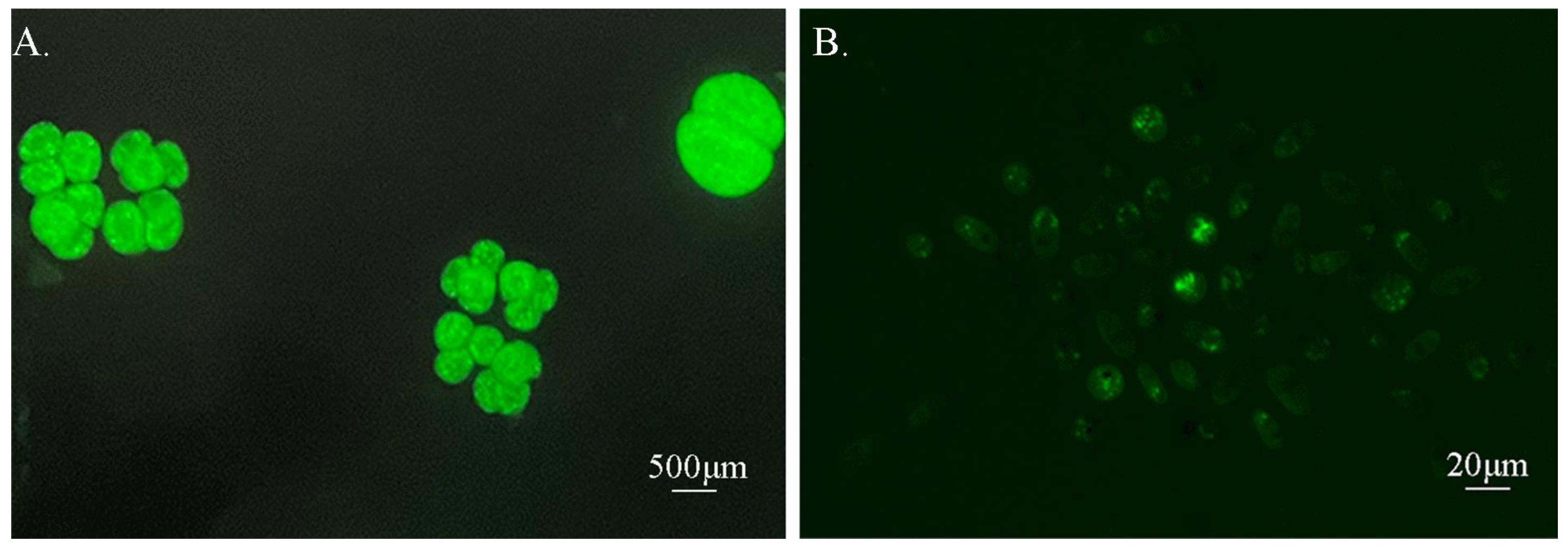
Figure 2.
Significant fluorescent signals in the digestive tract of copepods.
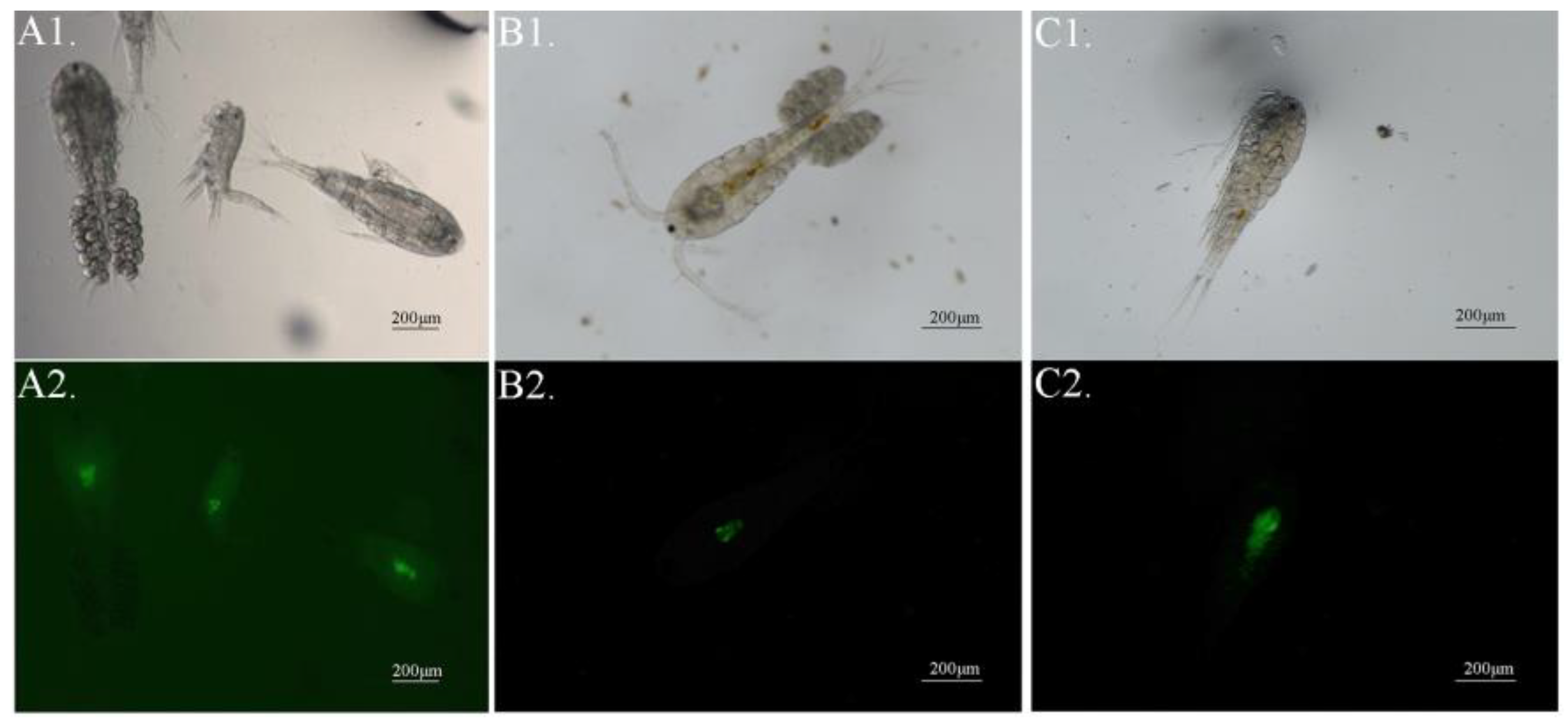
Figure 3.
Copepods with CFDA-SE signal were DNA positive of I. multifiliis. P, positive control; N, negative control.
Figure 3.
Copepods with CFDA-SE signal were DNA positive of I. multifiliis. P, positive control; N, negative control.
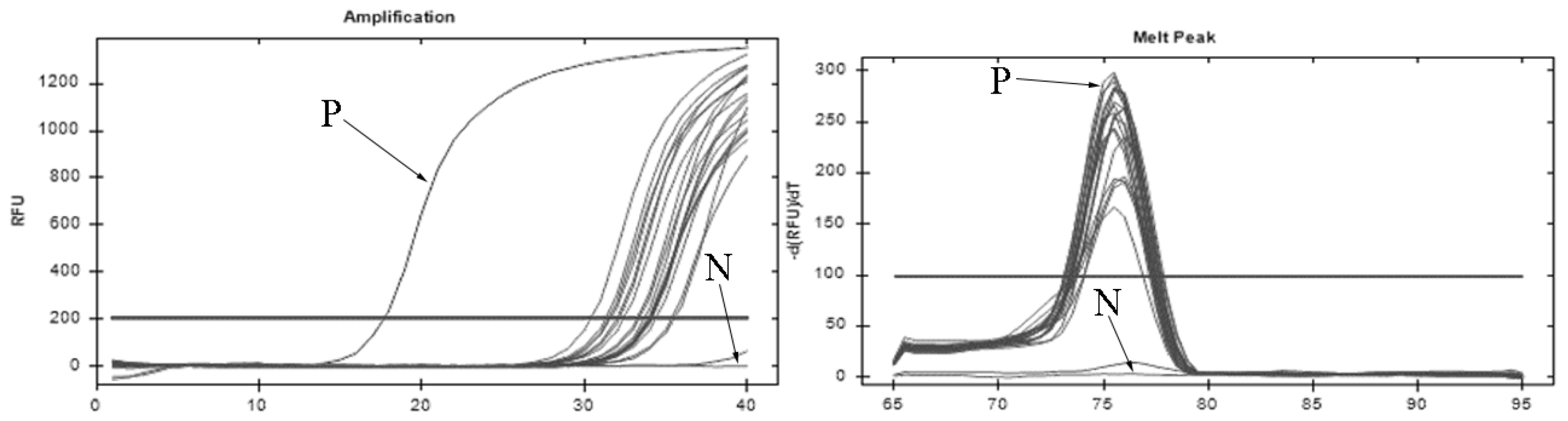
Figure 4.
(A) relative abundance (%) of copepods, cladocerans, rotifers and (B) relative abundance (%) top20 of zooplankton at the species level with eDNA metabarcoding in every fish-farming pond.
Figure 4.
(A) relative abundance (%) of copepods, cladocerans, rotifers and (B) relative abundance (%) top20 of zooplankton at the species level with eDNA metabarcoding in every fish-farming pond.
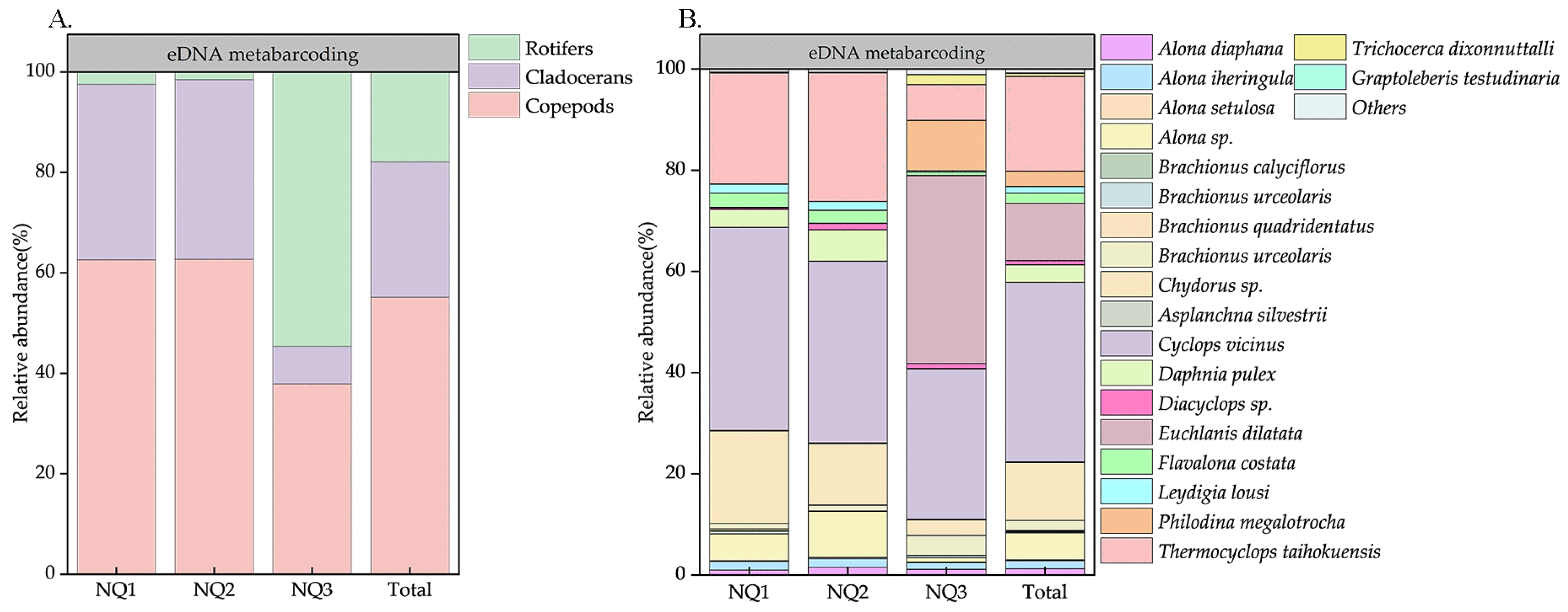

Table 1.
Copepods of theronts of I. multifiliis discovered in this study.
| Source | Species | Numbers | Genbank Similar Species | |
| Species (Acc. No.) | Sequence Similarity | |||
| NQ1 | C. vicinus | 45 | C. vicinus (LC604938) | 99.05% ~ 100% |
| T. taihokuensis | 3 | T. taihokuensis (LC215456) | 99.08% ~ 99.09% | |
| Cyclops sp. | 4 | C. vicinus (LC604938) | 96.36% | |
| Thermocyclops sp. | 2 | T. taihokuensis (LC215458) | 98.02% ~ 98.12% | |
| NQ2 | C. vicinus | 47 | C. vicinus (LC604938) | 99.05% ~ 100% |
| T. taihokuensis | 5 | T. taihokuensis (LC215456) | 99.09% ~ 99.85% | |
| Mesocyclops sp. | 1 | Mesocyclops sp. (KJ020568) | 96.94% | |
| Cyclops sp. | 6 | Cyclops sp. (LC215454) | 84.43% ~ 98.49% | |
| Eucyclops sp. | 2 | Eucyclops sp. (KJ020567) | 98.94% ~ 100% | |
| NQ3 | C. vicinus | 42 | C. vicinus (LC604938) | 99.05% ~ 100% |
| Eucyclops sp. | 4 | Eucyclops sp. (KJ020567) | 98.94% ~ 100% | |
| Cyclops sp. | 1 | Cyclops sp. (LC215454) | 84.83% | |
Table 2.
The number of species identified using eDNA metabarcoding.
| Phylum | Order | Family | Genus | species | |||||||||||
| NQ1 | NQ2 | NQ3 | NQ1 | NQ2 | NQ3 | NQ1 | NQ2 | NQ3 | NQ1 | NQ2 | NQ3 | ||||
| Arthropoda | 3 | 3 | 3 | 7 | 8 | 10 | 18 | 21 | 21 | 32 | 35 | 34 | |||
| Rotifera | 3 | 3 | 3 | 9 | 7 | 11 | 8 | 4 | 15 | 15 | 14 | 34 | |||
| Total | 6 | 22 | 39 | 78 | |||||||||||
Disclaimer/Publisher’s Note: The statements, opinions and data contained in all publications are solely those of the individual author(s) and contributor(s) and not of MDPI and/or the editor(s). MDPI and/or the editor(s) disclaim responsibility for any injury to people or property resulting from any ideas, methods, instructions or products referred to in the content. |
© 2024 by the authors. Licensee MDPI, Basel, Switzerland. This article is an open access article distributed under the terms and conditions of the Creative Commons Attribution (CC BY) license (http://creativecommons.org/licenses/by/4.0/).
Copyright: This open access article is published under a Creative Commons CC BY 4.0 license, which permit the free download, distribution, and reuse, provided that the author and preprint are cited in any reuse.


