Preprint
Article

This version is not peer-reviewed.

Direct Expression of CPT1a Enables a High Throughput Platform for the Discovery of CPT1a Modulators

A peer-reviewed article of this preprint also exists.

Submitted:

16 December 2024

Posted:

17 December 2024

You are already at the latest version

Abstract

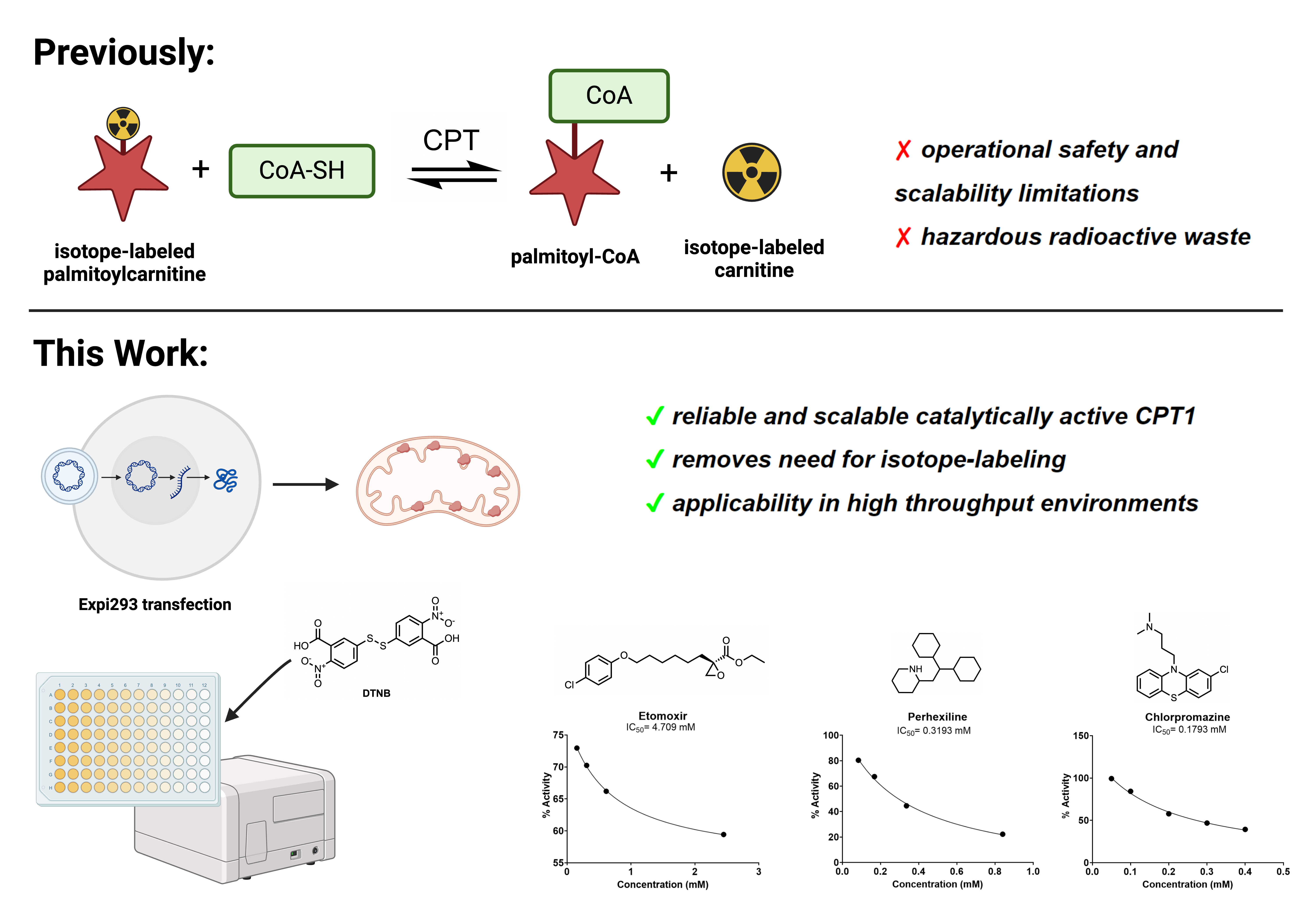
Carnitine palmitoyltransferase 1 (CPT1), which catalyzes the rate-limiting step of fatty acid oxidation, has been implicated in therapeutic approaches to several human diseases characterized by aberrant lipid metabolism. Isoform-specific quantification of CPT1 activity is essential in the characterization of small molecule inhibitors of CPT1, but several existing means to quantify enzymatic activity, including the use of radioisotope labeled carnitine, are not amenable to scalable, high throughput screening. Here, we demonstrate that mitochondrial extracts from Expi293 cells transfected with a CPT1a plasmid are a reliable and robust source of catalytically active human CPT1. Moreover, with a source of catalytically active enzyme in hand, we modified a previously reported colorimetric method of coenzyme A (CoA) easily scalable to a 96-well format for the screening of CPT1a inhibitors. This assay platform was validated by two previously reported inhibitors of CPT1a: R-etomoxir and perhexiline. To further demonstrate the applicability of this method in small molecule screening, we prepared and screened a library of 87 known small molecule APIs, validating the inhibitory effect of chlorpromazine on CPT1.
Keywords: 
;  ;  ;  

1. Introduction

Carnitine palmitoyltransferase 1 (CPT1) catalyzes the rate-limiting step of fatty acid oxidation by shuttling long-chain fatty acids across the mitochondrial membrane [1,2]. This enzyme has been demonstrated to be a druggable target for the treatment of type 2 diabetes [3,4,5]​, cancer [6,7,8,9]​, obesity [10,11]​, and inflammation [12,13,14]. Carnitine acyltransferases catalyze the reversible transfer of acyl groups from acyl-coenzyme A (acyl-CoA) esters to L-carnitine, forming acylcarnitine esters [15,16]​. The CPT system is made up of two separate proteins: CPT1, located in the outer mitochondrial membrane, is predominantly responsible for the forward acyl transfer to acylcarnitine, and CPT2, located in the inner mitochondrial membranes, catalyzes the hydrolysis of acylcarnitine back to acyl-CoA esters into the mitochondrial lumen [17,18,19]​.
To date, three distinct and yet closely related isoforms of CPT1 have been identified that are dissimilarly expressed in different tissues. CPT1a is known as the liver isoform, and is primarily expressed in brain, intestine, kidney, lung, ovary, pancreas, and spleen tissues [18,20]. CPT1a is endogenously inhibited by malonyl-CoA, the first intermediate in fatty acid synthesis [21,22]​. CPT1b is predominantly found in high abundance in skeletal muscle, heart, and brown adipose tissue (BAT) [23]​. Unlike CPT2, which has a well established structural basis from X-ray crystallography, no crystal structures of CPT1 exist to date, which further obfuscates efforts to understand the structural basis for small molecule ligands [24,25]​. The third isoform, CPT1c, is predominantly expressed in the brain [26,27,28]​.
Given the clinical significance of fatty acid metabolism regulation in several indications [29,30,31,32], the CPT1 system has been subject to several small molecule inhibitor discovery campaigns [33]​. Notably, etomoxir [34,35,36], a lipid-like α-epoxy carboxylate small molecule, has been previously identified as a covalent inhibitor of the active site of CPT1 for the treatment of type 2 diabetes mellitus [37] and chronic heart failure [38]​, but was withdrawn from late stage clinical studies due to severe off-target toxicity [39]​. Based on such a background, a more selective CPT1 inhibitor named ST1326 (Teglicar) [40,41]​ was developed as a competitive, reversible, and isoform-selective CPT1 inhibitor with an improved toxicity and PK profile. Teglicar was in phase 2 studies [42]​ for the treatment of type 2 diabetes and has also shown great potential in the treatment of leukemias [43,44]​. Other small molecule inhibitors, including perhexiline [45,46,47,48]​, dexamethasone [49,50]​, amiodarone [42,51,52], metoprolol [53,54], trimetazidine [55,56,57], and oxfenicine [58,59,60]​ have also been described to modulate activity of the CPT1 system.
The success of such small molecule campaigns in identifying lead compounds requires a sensitive and specific CPT1 activity assay. Traditionally, the catalytic activity of CPT1 has been measured through tritium-labeled L-[3H]carnitine [61,62,63,64,65,66]. While exceptionally sensitive, such tritium-based biochemical assays have inherent limitations in operational safety and scalability given the hazards of tritium waste and limited access to the equipment necessary to measure radiolabeled samples. Additionally, while several immunohistochemical approaches to quantify CPT1a concentration exist, specific immunohistochemical assays to measure the enzyme’s activity are not commercially available. Moreover, given the necessity of being in a mitochondrial-membrane environment for proper CPT1a structure and function, recombinant, commercially available sources of CPT1a are typically catalytically inactive, rendering them useless for inhibitor screening.
Rapid and sensitive spectrophotometric and fluorogenic assays for detection of carnitine palmitoyltransferase activity by measurement of released CoA-SH have been previously described [67,68,69,70]​. Bieber et al. reported that the amount of reduced CoA liberated from palmitoyl-CoA by CPT is quantitated using 5,5′-dithiobis-(2-nitrobenzoic acid) (DTNB). This assay measures the initial rates of CoA-SH formation by CPT1-catalyzed deacylation of palmitoyl-CoA. Importantly, Bieber et al. demonstrate that this assay method does not require purification of recombinant human CPT1, but rather crude extracts from Sprague-Dawley rat liver could be directly employed as a reliable and standardizable source of human CPT1 [67,71]​. While this approach circumvented the isolation instability of CPT1 as is typical of membrane-bound proteins, the in vivo source of mitochondrial extracts described therein are not easily sourceable and also potentially contain mixtures of CPT isoforms, among other enzymes present in fresh liver tissue [72].
To address the limited availability of high throughput screening platforms for evaluation of CPT1a activity and its inhibitors, we directly expressed CPT1a as a single isoform through transformation of Expi293 cells and show that the mitochondrial extracts isolated from in-vitro cell culture are a scalable and reliable source of catalytically active CPT1a. Furthermore, we modified a direct, colorimetric CoA detection method for CPT enzyme activity inspired by previous reports from Bieber et al. employing thiol-disulfide exchange from free CoA and DTNB, which leads to the production of 2-thio-5-nitrobenzoic acid (TNB) and an optical readout at 412 nm. We applied this system to the detection of free thiols from the release of CoA from palmitoyl-CoA. This assay detects the concentration of CoA liberated from CPT1 catalysis without the need to purify recombinant human CPT1 and was validated with a series of previously established CPT1 inhibitors. Further, to demonstrate the generalizability of our approach in high throughput small molecule screening campaigns, we applied this platform to screen for potential inhibitors of CPT1 in a sample of 87 small molecules. In accordance with previous reports, chlorpromazine was identified as a part of this high throughput screen to exert inhibitory effects on CPT1 [52,73,74]. The inhibitory effects we viewed in our high throughput screen demonstrate the validity of the modified assay, even when performed in large quantities​.

2. Materials and Methods

Cell Culture

Mammalian Expi293F cells (Gibco, Cat. #A14527) were stably transfected with a human CPT1a expression plasmid with an ExpiFectamine 293 Kit (Gibco, Cat. #A14524) and maintained in Expi293 Expression Medium (Gibco, Cat. #12338018). All cells were cultured in 250 mL bottles, in a humidified incubator at 37°C in 5% CO2.

Human CPT1a Enzyme Expression

To construct a human CPT1a expression plasmid, two expression constructions, CPT1A(NM_001876.3) ORF, which contains the whole human CPT1a sequence, and sp_CPT1A(NM_001876.3) ORF, which contains an N-terminal signal peptide for extracellular release, were each cloned into the vector pcDNA3.1+/C-(K)DYK backbone and purchased from GenScript USA Inc. The plasmid was transformed into TOP10 bacteria and amplified. After plasmid extraction and purification, the inserted CPT1a gene was sequenced. After sequencing confirmation, they were transfected into mammalian Expi293 cell lines. After growing the Expi293 culture, the supernatant and cell pellet were lysed with radioimmunoprecipitation assay (RIPA) buffer, and the protein was harvested. Protein concentration was quantified with a Bradford protein assay kit.

Immunoassay to Quantify CPT1a

ELISA was used to detect the expression level of human CPT1a in the supernatant and pellet, and validate successful transgenic expression of human CPT1a. Briefly, the CPT1a transfected cell pellet and supernatant, which contained 100 μg of total protein, was coated in a coating buffer (NaHCO3-Na2CO3 buffer, pH = 6.4) that was freshly made and aliquoted into 100 μL per well, and was left at 4oC for 18 hours. Following three washes with PBST (Phosphate buffered saline with Tween), 200 μL of blocking buffer was added to each well (2.5% w/v non-fat dry milk powder in PBST, 0.1% Tween-20, VWR Life Science, Cat. #0777-1L) for 1 hour at 18 °C. Following aspiration, mouse anti-human CPT1a monoclonal antibody (Abcam, Cat. #8F6AE9) was added in a 1:1,000 dilution (100 μL per well) and shaken for 2 hours at 18°C. Following a second wash, the goat-anti-mouse HRP secondary antibody (Sino Biological, Cat. #SSA007) was added with the blocking buffer. Subsequently, we added 100 μL of the diluted secondary antibody to each well after washing three times with PBST for 1 hour at 18°C while shaking. Then, 50 μL TMB (3,3',5,5'-Tetramethylbenzidine) substrate (0.4 g/L, Tribioscience, Cat. #TBS5021) was added to each well after washing three times with PBST at 18°C. 100 μL of stop solution (1 M H2SO4) was then added to each well. We measured absorbance at 450 nm after 10 seconds of shaking. The Expi293 cell pellet protein was used as an endogenous control.

CPT Enzyme Activity Assay and Inhibitor Sensitivity Assay

CPT spectrophotometric assay using DTNB was modified from the methods originally reported by Bieber et al. The reaction master mix was prepared with 35 μM Palmitoyl-CoA (Sigma Aldrich, Cat. #P9716), 1.5 mM EDTA (Acros, Cat. #AC118432500), 40 mM HEPES (ThermoScientific, Cat. #15630080), 1.25 mM L-carnitine (AK Scientific, Cat. #J94077), and a stock aliquot of the CPT1-containing mitochondrial extract. 100 mM Tris buffer (pH = 7.5) was used to make the final volume 90 μL. Samples were incubated at 30°C on a Compact Digital Dry Bath/Block Heater (ThermoFisher) for 15 min, at which point, 10 μL of 1 mg/mL DTNB (AK Scientific, Cat. #J92390) in 100 mM Tris buffer was added to each well. The plate was mixed on a plate shaker for 10 minutes and absorbances were recorded at 412 nm (Molecular Devices SpectraMAX). To correlate the appearance of yellow with the absolute concentration of CoA and to determine the dynamic range of the assay, we prepared a standard curve.
Two previously reported CPT1 inhibitors, etomoxir sodium salt (Cayman Chemical, Cat. #11969) and perhexiline (AK Scientific, Cat. #X4611), were used to validate the potential of this assay as a platform to screen for novel CPT1 inhibitors. IC50 calculations were performed on the GraphPad Prism 10 software.

High-Throughput Screening of a Small Molecule Library

To demonstrate the validity of this approach in scalable, high-throughput screening campaigns, 87 small molecule compounds were screened using this platform, with etomoxir as a positive control. The compounds screened were selected from a library of natural products, anti-virals, immunomodulators, and other bioactive compounds. Compounds were diluted to 10 mM in dimethyl sulfoxide (DMSO) (Stellar Chemical, 99.99%) and tested at a final concentration of 0.556 mM. Compounds that exhibited inhibitory effects were run in a serial concentration to create an inhibitory effect curve and determine the IC50.

Data Analysis

All data and statistics (mean, SEM, p-values) were analyzed with GraphPad Prism 10 and Excel. Acquired data are presented as mean ± SEM. P-values of 0.05 were considered statistically significant.

3. Results

3.1. Human CPT1a Enzyme Expression and Protein Isolation

Two human CPT1a gene expression constructions, pcDNA3.1+/C-(K)DYK with CPT1A(NM_001876.3) ORF Clone and sp_CPT1A(NM_001876.3) ORF Clone, were sequenced and aligned to Genbank. The sequences are identical to previously deposited sequences on Genbank. The supernatant and cell pellet proteins were harvested separately after transfection into mammalian cell Expi293 as shown in Figure 1. The normal Expi293 cell pellet proteins were harvested as a control.

3.2. CPT1a Immunogenicity Assay

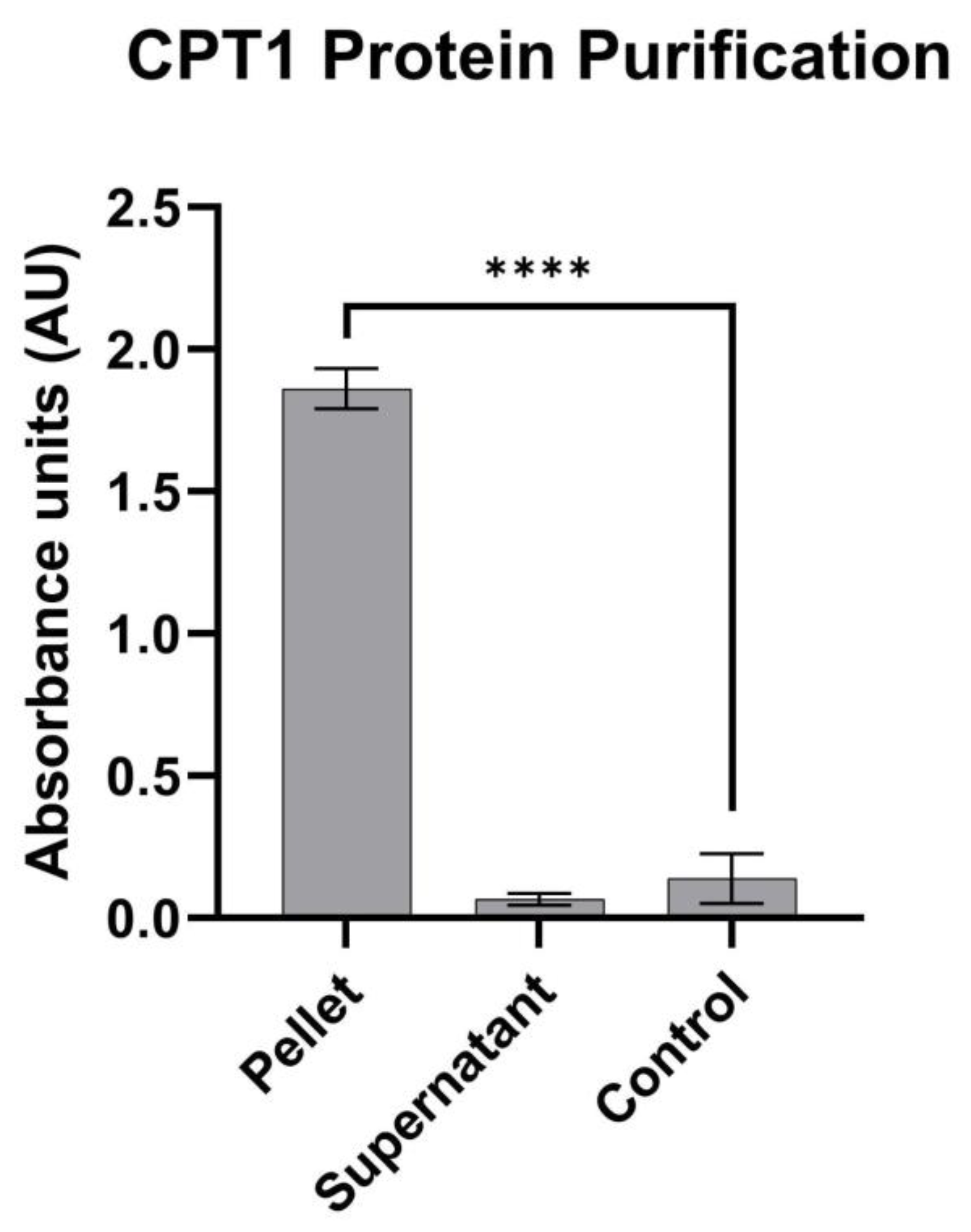
ELISA was used to check the immunity and protein expression level of CPT1a in transfected Expi293 mitochondria. The CPT1 expression level in the CPT1a transgenic cell pellet had a 13-fold increase of control cell pellet, while minimal CPT1 was detected in the supernatant, as shown in Figure 2. The supernatant concentration of CPT1a in cells transfected with a signal peptide fusion protein did not exhibit higher extracellular content of CPT1a, suggesting that CPT1a cannot be secreted out of the cell into the supernatant, potentially because it is very tightly bound to the mitochondrial membrane.

3.3. CPT1 Enzyme Activity Assay Validation

A CoA standard curve with authentic CoA (Cayman Chemical, Cat. #16147) was used to quantify the concentration of CoA being released during the catalysis. The enzyme activity calculation formula: Units/mL enzyme = (ΔA412 nm/min Test-ΔA412 nm/min Blank)(3)(df)(0.0136)(0.05), where: 3 = Total volume (in milliliters) of assay, df = Dilution Factor, 0.0136 = Micromolar extinction coefficient for TNB at 412 nm, 0.05 = Volume (in milliliters) of enzyme used. As a background, the CPT1a cell pellet has a value of 5.02 ± 0.2 μM.
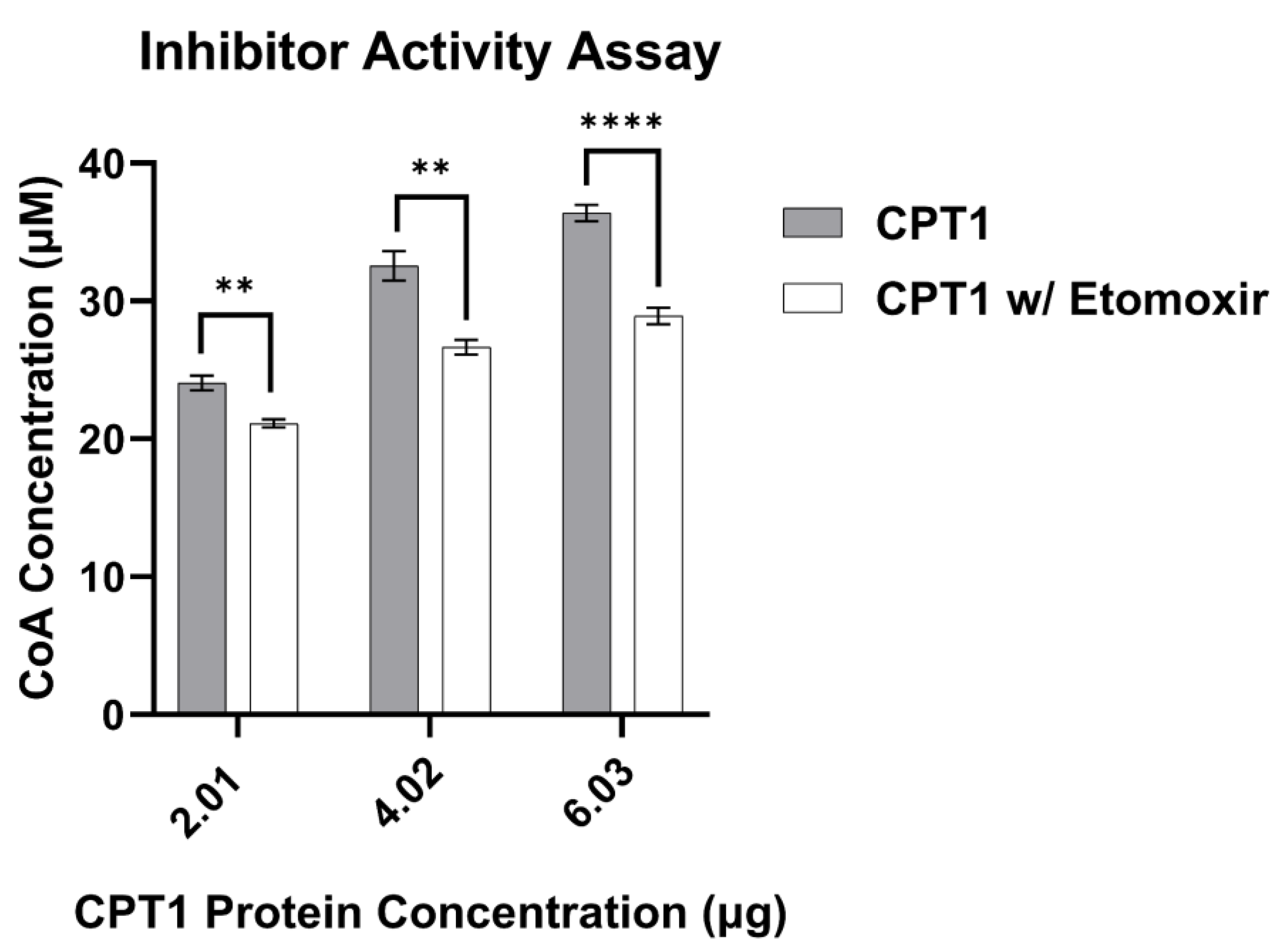
The value of CPT1 enzyme activity is proportional to the concentration of CPT1 enzyme as shown in Figure 3.The inhibition efficacy of etomoxir was calculated by running a serial dilution of etomoxir concentrations in the enzyme activity assay. Replicates of this assay demonstrated nearly identical etomoxir-dependent activity profiles, indicating a high degree of reliability.

3.4. CPT1 Enzyme Inhibitor Sensitivity Assay

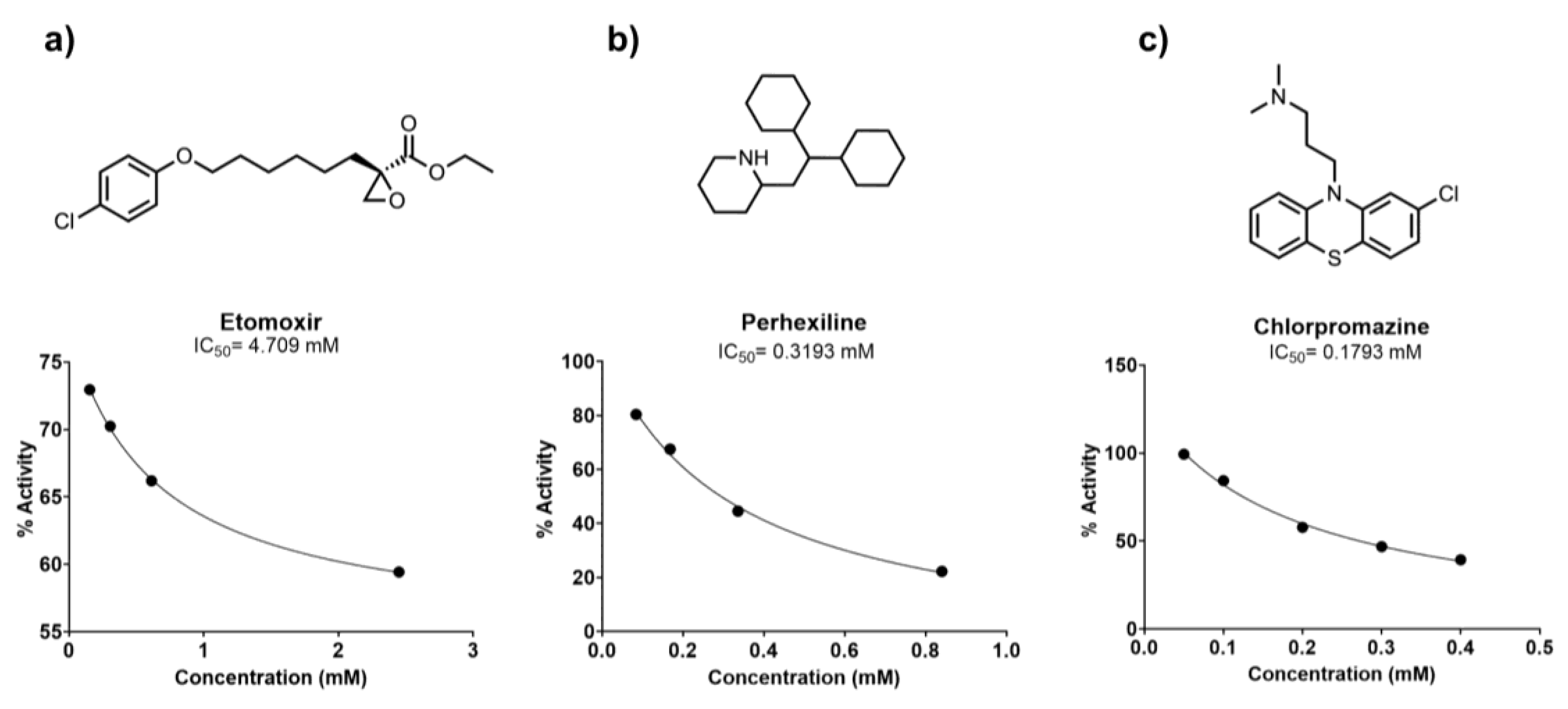
We used the CPT1 enzyme inhibition assay to validate the new protocols that were shown in Figure 3 and Figure 4. The inhibition rate IC50 of etomoxir was 4.709 mM (Figure 5). Another inhibitor, perhexiline, was additionally used to validate this platform.
Both inhibition curves of etomoxir and perhexiline indicate that the new CPT1 enzyme activity assay method can quantify the different effects among different inhibitors.
Application and performance qualification to screen small molecule compounds
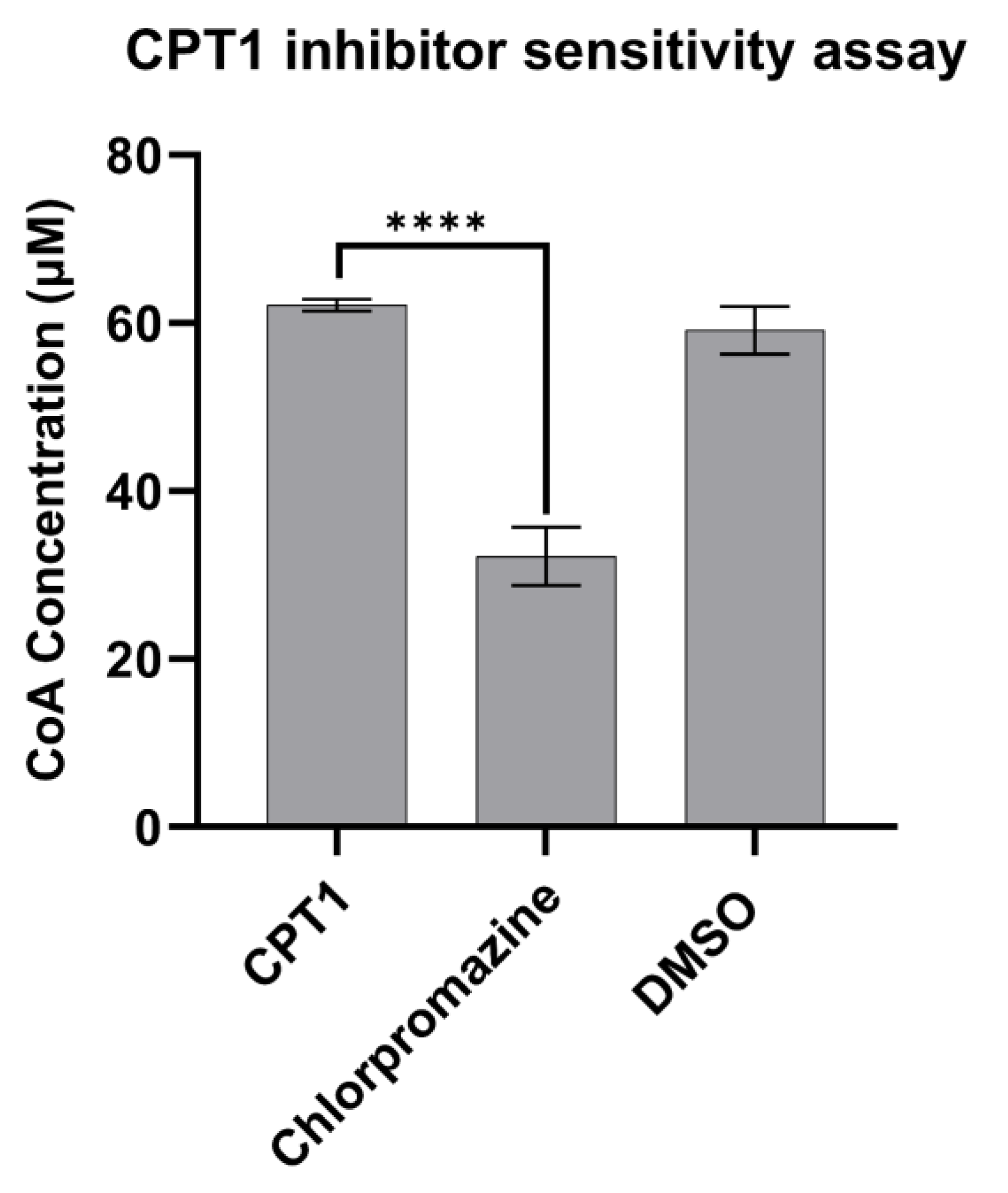
In order to demonstrate the applicability of this system in the high-throughput screening of new CPT1 inhibitors and activators, we prepared and screened a library of 87 small molecule compounds using the new approaches, including several FDA-approved small molecules for different indications, as well as natural products and previously reported preclinical candidates. From this screen, we validated that chlorpromazine, a previously clinically studied antipsychotic small molecule, exhibits inhibitory activity against CPT1a, as shown in Figure 4 and Figure 5. Its IC50 for CPT1a inhibition is 0.1793 mM.

4. Discussion

CPT1 facilitates the transfer of long chain fatty acids into the mitochondria for beta-oxidation, and a lack of regulation promotes the development of various human diseases. Therefore, a highly reproducible, cost-effective method of identifying CPT1 inhibitors paves the way for substantial medical breakthroughs in developing potential treatments for type 2 diabetes and cancer. While highly sensitive and accurate radioisotope-based quantification methods exist for the direct measurement of CPT1a activity, safety limitations and limited access to scintillation equipment pose major drawbacks to the applicability and scalability of 3H-carnitine based assays. Additionally, while commercially available ELISA kits exist for detection of CPT1 through immunogenicity with poly- or monoclonal antibodies, such methods cannot detect the enzyme activity of CPT1.
In summary, we modified and optimized a highly robust assay for the quantification of CPT1 activity. This method allows for the use of the direct cell lysis of human CPT1 transformed Expi293 cells without the need for purification of recombinant proteins. Further, we optimized the spectrophotometric detection of CoA liberated from CPT1 catalysis using a well-established DTNB-based detection of free thiols, which is a proxy for enzyme activity based on the direct relationship between CPT1 catalytic activity and increasing CoA concentration. We then validated this approach by using previously reported CPT1 inhibitors, etomoxir, perhexiline, and chlorpromazine, and found that this assay method provided highly reproducible and dose-responsive quantification for CPT1 activity.
Our approach overcomes the limitations of isotope-based screening methods and is thus suitable for high-throughput applications. Finally, we show that this assay is easily adaptable to a 96-well format, suggesting the feasibility of performing screens on large sets of samples, including the potential for automation. The IC50 of chlorpromazine we reported using this assay is consistent with the IC50 trends published in the first report of chlorpromazine as a CPT1 inhibitor, which used the isotope forward exchange method, further demonstrating the validity of this assay even in high throughput formats​ [73].
Since the reaction of DTNB with the sulfhydryl group on CoA results in an increase in A412nm due to the yellow TNB anion, compounds that absorb in a similar range will interfere with the assay and the data acquisition, and thus are not suitable for screening by this method. This strategy has potential to be further applied to the study of small molecule ligands to other CPT1 isoforms.

Supplementary Materials

The following supporting information is available at the electronic supporting information upload: sequence of novel cloned CPT1 plasmid construct, standard curve for DTNB, high throughput compound library.

Author Contributions

Jason Chen: Data curation, Investigation. Tuyen Tran: Investigation, Resources. Anthony Wong: Data curation, Investigation, Validation, Writing – review & editing. Luofei Wang: Data curation, Investigation, Validation, Writing – review & editing. Pranavi Annaluru: Data curation, Investigation, Methodology, Validation, Writing – review & editing. Vibha Sreekanth: Data curation, Investigation, Methodology, Validation, Writing – review & editing. Samika Murthy: Data curation, Investigation, Methodology, Validation, Writing – review & editing. Laasya Munjeti: Data curation, Investigation, Validation, Writing – review & editing. Tanya Park: Data curation, Investigation, Validation, Writing – review & editing. Utkarsh Bhat: Data curation, Investigation, Methodology, Validation, Writing – review & editing. Glynnis Leong: Data curation, Investigation, Validation, Writing – review & editing. Yumeng Li: Data curation, Investigation, Methodology, Validation, Writing – review & editing. Simeng Chen: Data curation, Investigation, Methodology. Natalie Kong: Formal analysis, Resources, Visualization, Writing – original draft, Writing – review & editing. Rushika Raval: Formal analysis, Resources, Visualization, Writing – original draft, Writing – review & editing. Yining Xie: Formal analysis, Resources, Visualization, Writing – original draft, Writing – review & editing. Shreya Somani: Resources. Aditi Bhambhani: Data curation, Investigation, Validation, Writing – review & editing. Zoey Zhu: Data curation, Investigation, Validation, Writing – review & editing. Landen Chu: Data curation, Investigation, Validation, Writing - Review & Editing. Kimai Dosch: Resources. Edward Njoo: Conceptualization, Funding acquisition, Project administration, Resources, Supervision, Writing – original draft, Writing – review & editing. Zhan Chen: Conceptualization, Funding acquisition, Project administration, Supervision, Writing – original draft, Writing – review & editing. All authors have read and agreed to the published version of the manuscript.

Funding

This research was funded by the Olive Children Foundation.

Institutional Review Board Statement

Not applicable.

Informed Consent Statement

Not applicable.

Data Availability Statement

The raw data supporting the conclusions of this article will be made available by the authors upon request.

Acknowledgments

The authors acknowledge the support of the Aspiring Student Directed Research Program (ASDRP).

Conflicts of Interest

The authors declare no conflicts of interest.

References

  1. Ma, Y.; Temkin, S.M.; Hawkridge, A.M.; Guo, C.; Wang, W.; Wang, X.-Y.; Fang, X. Fatty Acid Oxidation: An Emerging Facet of Metabolic Transformation in Cancer. Cancer Lett 2018, 435, 92–100. [Google Scholar] [CrossRef] [PubMed]
  2. Wang, J.; Xiang, H.; Lu, Y.; Wu, T.; Ji, G. The Role and Therapeutic Implication of CPTs in Fatty Acid Oxidation and Cancers Progression. Am J Cancer Res 2021, 11(6), 2477–2494. [Google Scholar] [PubMed]
  3. Roden, M.; Bernroider, E. Hepatic Glucose Metabolism in Humans—Its Role in Health and Disease. Best Pract Res Clin Endocrinol Metab 2003, 17(3), 365–383. [Google Scholar] [CrossRef] [PubMed]
  4. Park, E.A.; Mynatt, R.L.; Cook, G.A.; Kashfi, K. Insulin Regulates Enzyme Activity, Malonyl-CoA Sensitivity and MRNA Abundance of Hepatic Carnitine Palmitoyltransferase-I. Biochemical Journal 1995, 310(3), 853–858. [Google Scholar] [CrossRef]
  5. Ren, Q.; Guo, M.; Yang, F.; Han, T.; Du, W.; Zhao, F.; Li, J.; Li, W.; Feng, Y.; Wang, S.; Zhang, Y.; Wu, W. Association of CPT1A Gene Polymorphism with the Risk of Gestational Diabetes Mellitus: A Case-Control Study. J Assist Reprod Genet 2021, 38(7), 1861–1869. [Google Scholar] [CrossRef] [PubMed]
  6. Duan, Y.; Liu, J.; Li, A.; Liu, C.; Shu, G.; Yin, G. The Role of the CPT Family in Cancer: Searching for New Therapeutic Strategies. Biology (Basel) 2024, 13(11), 892. [Google Scholar] [CrossRef]
  7. Sadeghi, R.N.; Karami-Tehrani, F.; Salami, S. Targeting Prostate Cancer Cell Metabolism: Impact of Hexokinase and CPT-1 Enzymes. Tumor Biology 2015, 36(4), 2893–2905. [Google Scholar] [CrossRef]
  8. Thupari, J.N.; Pinn, M.L.; Kuhajda, F.P. Fatty Acid Synthase Inhibition in Human Breast Cancer Cells Leads to Malonyl-CoA-Induced Inhibition of Fatty Acid Oxidation and Cytotoxicity. Biochem Biophys Res Commun 2001, 285(2), 217–223. [Google Scholar] [CrossRef]
  9. Joshi, M.; Kim, J.; D’Alessandro, A.; Monk, E.; Bruce, K.; Elajaili, H.; Nozik-Grayck, E.; Goodspeed, A.; Costello, J.C.; Schlaepfer, I.R. CPT1A Over-Expression Increases Reactive Oxygen Species in the Mitochondria and Promotes Antioxidant Defenses in Prostate Cancer. Cancers (Basel) 2020, 12(11), 3431. [Google Scholar] [CrossRef]
  10. Soler-Vázquez, M.C.; Romero, M. del M.; Todorcevic, M.; Delgado, K.; Calatayud, C.; Benitez -Amaro, A.; La Chica Lhoëst, M.T.; Mera, P.; Zagmutt, S.; Bastías-Pérez, M.; Ibeas, K.; Casals, N.; Escolà-Gil, J.C.; Llorente-Cortés, V.; Consiglio, A.; Serra, D.; Herrero, L. Implantation of CPT1AM-Expressing Adipocytes Reduces Obesity and Glucose Intolerance in Mice. Metab Eng 2023, 77, 256–272. [Google Scholar] [CrossRef] [PubMed]
  11. Orellana-Gavaldà, J.M.; Herrero, L.; Malandrino, M.I.; Pañeda, A.; Sol Rodríguez-Peña, M.; Petry, H.; Asins, G.; Van Deventer, S.; Hegardt, F.G.; Serra, D. Molecular Therapy for Obesity and Diabetes Based on a Long-Term Increase in Hepatic Fatty-Acid Oxidation §Δ. Hepatology 2011, 53(3), 821–832. [Google Scholar] [CrossRef] [PubMed]
  12. Calle, P.; Muñoz, A.; Sola, A.; Hotter, G. CPT1a Gene Expression Reverses the Inflammatory and Anti-Phagocytic Effect of 7-Ketocholesterol in RAW264.7 Macrophages. Lipids Health Dis 2019, 18(1), 215. [Google Scholar] [CrossRef] [PubMed]
  13. Malandrino, M.I.; Fucho, R.; Weber, M.; Calderon-Dominguez, M.; Mir, J.F.; Valcarcel, L.; Escoté, X.; Gómez-Serrano, M.; Peral, B.; Salvadó, L.; Fernández-Veledo, S.; Casals, N.; Vázquez-Carrera, M.; Villarroya, F.; Vendrell, J.J.; Serra, D.; Herrero, L. Enhanced Fatty Acid Oxidation in Adipocytes and Macrophages Reduces Lipid-Induced Triglyceride Accumulation and Inflammation. American Journal of Physiology-Endocrinology and Metabolism 2015, 308(9), E756–E769. [Google Scholar] [CrossRef] [PubMed]
  14. Wang, M.; Wang, K.; Liao, X.; Hu, H.; Chen, L.; Meng, L.; Gao, W.; Li, Q. Carnitine Palmitoyltransferase System: A New Target for Anti-Inflammatory and Anticancer Therapy? Front Pharmacol 2021, 12. [Google Scholar] [CrossRef] [PubMed]
  15. JOGL, G.; HSIAO, Y.; TONG, L. Structure and Function of Carnitine Acyltransferases. Ann N Y Acad Sci 2004, 1033(1), 17–29. [Google Scholar] [CrossRef] [PubMed]
  16. Ramsay, R.R.; Gandour, R.D.; van der Leij, F.R. Molecular Enzymology of Carnitine Transfer and Transport. Biochimica et Biophysica Acta (BBA) - Protein Structure and Molecular Enzymology 2001, 1546(1), 21–43. [Google Scholar] [CrossRef]
  17. Kim, C.S.; Hoppel, C.L. Carnitine Palmitoyltransferase Activity in the Rabbit Choroid Plexus: Its Possible Function in Fatty Acid Metabolism and Transport. Neurosci Lett 1992, 140(1), 13–15. [Google Scholar] [CrossRef]
  18. Liang, K. Mitochondrial CPT1A: Insights into Structure, Function, and Basis for Drug Development. Front Pharmacol 2023, 14. [Google Scholar] [CrossRef]
  19. Bonnefont, J. Carnitine Palmitoyltransferases 1 and 2: Biochemical, Molecular and Medical Aspects. Mol Aspects Med 2004, 25(5–6), 495–520. [Google Scholar] [CrossRef] [PubMed]
  20. Schlaepfer, I.R.; Joshi, M. CPT1A-Mediated Fat Oxidation, Mechanisms, and Therapeutic Potential. Endocrinology 2020, 161(2). [Google Scholar] [CrossRef] [PubMed]
  21. Foster, D.W. Malonyl-CoA: The Regulator of Fatty Acid Synthesis and Oxidation. J Clin Invest 2012, 122(6), 1958–1959. [Google Scholar] [CrossRef]
  22. Cook, G.A. Differences in the Sensitivity of Carnitine Palmitoyltransferase to Inhibition by Malonyl-CoA Are Due to Differences in Ki Values. J Biol Chem 1984, 259(19), 12030–12033. [Google Scholar] [CrossRef] [PubMed]
  23. Warfel, J.D.; Vandanmagsar, B.; Dubuisson, O.S.; Hodgeson, S.M.; Elks, C.M.; Ravussin, E.; Mynatt, R.L. Examination of Carnitine Palmitoyltransferase 1 Abundance in White Adipose Tissue: Implications in Obesity Research. Am J Physiol Regul Integr Comp Physiol 2017, 312(5), R816–R820. [Google Scholar] [CrossRef]
  24. Rufer, A.C.; Thoma, R.; Benz, J.; Stihle, M.; Gsell, B.; De Roo, E.; Banner, D.W.; Mueller, F.; Chomienne, O.; Hennig, M. The Crystal Structure of Carnitine Palmitoyltransferase 2 and Implications for Diabetes Treatment. Structure 2006, 14(4), 713–723. [Google Scholar] [CrossRef] [PubMed]
  25. Hsiao, Y.-S.; Jogl, G.; Esser, V.; Tong, L. Crystal Structure of Rat Carnitine Palmitoyltransferase II (CPT-II). Biochem Biophys Res Commun 2006, 346(3), 974–980. [Google Scholar] [CrossRef]
  26. Rodríguez-Rodríguez, R.; Fosch, A.; Garcia-Chica, J.; Zagmutt, S.; Casals, N. Targeting Carnitine Palmitoyltransferase 1 Isoforms in the Hypothalamus: A Promising Strategy to Regulate Energy Balance. J Neuroendocrinol 2023, 35(9). [Google Scholar] [CrossRef] [PubMed]
  27. Brown, N.F.; Weis, B.C.; Husti, J.E.; Foster, D.W.; McGarry, J.D. Mitochondrial Carnitine Palmitoyltransferase I Isoform Switching in the Developing Rat Heart. Journal of Biological Chemistry 1995, 270(15), 8952–8957. [Google Scholar] [CrossRef] [PubMed]
  28. Price, N.T.; van der Leij, F.R.; Jackson, V.N.; Corstorphine, C.G.; Thomson, R.; Sorensen, A.; Zammit, V.A. A Novel Brain-Expressed Protein Related to Carnitine Palmitoyltransferase I. Genomics 2002, 80(4), 433–442. [Google Scholar] [CrossRef]
  29. Shetty, S.S.; Kumari, S. Fatty Acids and Their Role in Type-2 Diabetes (Review). Exp Ther Med 2021, 22(1), 706. [Google Scholar] [CrossRef] [PubMed]
  30. Chen, M.; Huang, J. The Expanded Role of Fatty Acid Metabolism in Cancer: New Aspects and Targets. Precis Clin Med 2019, 2(3), 183–191. [Google Scholar] [CrossRef] [PubMed]
  31. Koundouros, N.; Poulogiannis, G. Reprogramming of Fatty Acid Metabolism in Cancer. Br J Cancer 2020, 122(1), 4–22. [Google Scholar] [CrossRef]
  32. Wakil, S.J.; Abu-Elheiga, L.A. Fatty Acid Metabolism: Target for Metabolic Syndrome. J Lipid Res 2009, 50 Suppl (Suppl), S138–43. [Google Scholar] [CrossRef]
  33. Massart, J.; Begriche, K.; Buron, N.; Porceddu, M.; Borgne-Sanchez, A.; Fromenty, B. Drug-Induced Inhibition of Mitochondrial Fatty Acid Oxidation and Steatosis. Curr Pathobiol Rep 2013, 1(3), 147–157. [Google Scholar] [CrossRef]
  34. Mørkholt, A.S.; Oklinski, M.K.; Larsen, A.; Bockermann, R.; Issazadeh-Navikas, S.; Nieland, J.G.K.; Kwon, T.-H.; Corthals, A.; Nielsen, S.; Nieland, J.D.V. Pharmacological Inhibition of Carnitine Palmitoyl Transferase 1 Inhibits and Reverses Experimental Autoimmune Encephalitis in Rodents. PLoS One 2020, 15(6), e0234493. [Google Scholar] [CrossRef]
  35. Hu, A.; Wang, H.; Xu, Q.; Pan, Y.; Jiang, Z.; Li, S.; Qu, Y.; Hu, Y.; Wu, H.; Wang, X. A Novel CPT1A Covalent Inhibitor Modulates Fatty Acid Oxidation and CPT1A-VDAC1 Axis with Therapeutic Potential for Colorectal Cancer. Redox Biol 2023, 68, 102959. [Google Scholar] [CrossRef] [PubMed]
  36. McGuffee, R.M.; McCommis, K.S.; Ford, D.A. Etomoxir: An Old Dog with New Tricks. J Lipid Res 2024, 65(9), 100604. [Google Scholar] [CrossRef] [PubMed]
  37. Ratheiser, K.; Schneeweif, B.; Waldhausl, W.; Nowotny, P. Inhibition by Etomoxir of Carnitine Palmitoyltransferase I Reduces Hepatic Glucose Production and Plasma Lipids in Non-Insulin-Dependent Diabetes Mellitus. Metabolism 1991, 40(11), 1185–1190. [Google Scholar] [CrossRef] [PubMed]
  38. Bristow, M. Etomoxir: A New Approach to Treatment of Chronic Heart Failure. The Lancet 2000, 356(9242), 1621–1622. [Google Scholar] [CrossRef] [PubMed]
  39. Holubarsch, C.J.F.; Rohrbach, M.; Karrasch, M.; Boehm, E.; Polonski, L.; Ponikowski, P.; Rhein, S. A Double-Blind Randomized Multicentre Clinical Trial to Evaluate the Efficacy and Safety of Two Doses of Etomoxir in Comparison with Placebo in Patients with Moderate Congestive Heart Failure: The ERGO (Etomoxir for the Recovery of Glucose Oxidation) Study. Clin Sci 2007, 113(4), 205–212. [Google Scholar] [CrossRef]
  40. Conti, R.; Mannucci, E.; Pessotto, P.; Tassoni, E.; Carminati, P.; Giannessi, F.; Arduini, A. Selective Reversible Inhibition of Liver Carnitine Palmitoyl-Transferase 1 by Teglicar Reduces Gluconeogenesis and Improves Glucose Homeostasis. Diabetes 2011, 60(2), 644–651. [Google Scholar] [CrossRef]
  41. Giannessi, F.; Pessotto, P.; Tassoni, E.; Chiodi, P.; Conti, R.; De Angelis, F.; Dell’Uomo, N.; Catini, R.; Deias, R.; Tinti, M.O.; Carminati, P.; Arduini, A. Discovery of a Long-Chain Carbamoyl Aminocarnitine Derivative, a Reversible Carnitine Palmitoyltransferase Inhibitor with Antiketotic and Antidiabetic Activity. J Med Chem 2003, 46(2), 303–309. [Google Scholar] [CrossRef] [PubMed]
  42. Liang, K.; Dai, J.-Y. Progress of Potential Drugs Targeted in Lipid Metabolism Research. Front Pharmacol 2022, 13, 1067652. [Google Scholar] [CrossRef] [PubMed]
  43. Gugiatti, E.; Tenca, C.; Ravera, S.; Fabbi, M.; Ghiotto, F.; Mazzarello, A.N.; Bagnara, D.; Reverberi, D.; Zarcone, D.; Cutrona, G.; Ibatici, A.; Ciccone, E.; Darzynkiewicz, Z.; Fais, F.; Bruno, S. A Reversible Carnitine Palmitoyltransferase (CPT1) Inhibitor Offsets the Proliferation of Chronic Lymphocytic Leukemia Cells. Haematologica 2018, 103(11), e531–e536. [Google Scholar] [CrossRef]
  44. Ricciardi, M.R.; Mirabilii, S.; Allegretti, M.; Licchetta, R.; Calarco, A.; Torrisi, M.R.; Foà, R.; Nicolai, R.; Peluso, G.; Tafuri, A. Targeting the Leukemia Cell Metabolism by the CPT1a Inhibition: Functional Preclinical Effects in Leukemias. Blood 2015, 126(16), 1925–1929. [Google Scholar] [CrossRef] [PubMed]
  45. Ashrafian, H.; Horowitz, J.D.; Frenneaux, M.P. Perhexiline. Cardiovasc Drug Rev 2007, 25(1), 76–97. [Google Scholar] [CrossRef]
  46. Dhakal, B.; Tomita, Y.; Drew, P.; Price, T.; Maddern, G.; Smith, E.; Fenix, K. Perhexiline: Old Drug, New Tricks? A Summary of Its Anti-Cancer Effects. Molecules 2023, 28(8), 3624. [Google Scholar] [CrossRef] [PubMed]
  47. Kennedy, J.A.; Unger, S.A.; Horowitz, J.D. Inhibition of Carnitine Palmitoyltransferase-1 in Rat Heart and Liver by Perhexiline and Amiodarone. Biochem Pharmacol 1996, 52(2), 273–280. [Google Scholar] [CrossRef]
  48. Kargman, S.; Wong, E.; Greig, G.M.; Falgueyret, J.-P.; Cromlish, W.; Ethier, D.; Yergey, J.A.; Riendeau, D.; Evans, J.F.; Kennedy, B.; Tagari, P.; Francis, D.A.; O’Neill, G.P. Mechanism of Selective Inhibition of Human Prostaglandin G/H Synthase-1 and -2 in Intact Cells. Biochem Pharmacol 1996, 52(7), 1113–1125. [Google Scholar] [CrossRef]
  49. Wang, X.J.; Song, Z.G.; Jiao, H.C.; Lin, H. Dexamethasone Facilitates Lipid Accumulation in Chicken Skeletal Muscle. Stress 2012, 15(4), 443–456. [Google Scholar] [CrossRef]
  50. Xu, L.; Xia, H.; Ni, D.; Hu, Y.; Liu, J.; Qin, Y.; Zhou, Q.; Yi, Q.; Xie, Y. High-Dose Dexamethasone Manipulates the Tumor Microenvironment and Internal Metabolic Pathways in Anti-Tumor Progression. Int J Mol Sci 2020, 21(5), 1846. [Google Scholar] [CrossRef] [PubMed]
  51. Ceccarelli, S.M.; Chomienne, O.; Gubler, M.; Arduini, A. Carnitine Palmitoyltransferase (CPT) Modulators: A Medicinal Chemistry Perspective on 35 Years of Research. J Med Chem 2011, 54(9), 3109–3152. [Google Scholar] [CrossRef] [PubMed]
  52. Hu, X.; Zhu, X.; Yu, W.; Zhang, Y.; Yang, K.; Liu, Z.; Qiao, X.; Song, Y. A Mini Review of Small-Molecule Inhibitors Targeting Palmitoyltransferases. European Journal of Medicinal Chemistry Reports 2022, 5, 100041. [Google Scholar] [CrossRef]
  53. Sabbah, H.N. Biologic Rationale for the Use of Beta-Blockers in the Treatment of Heart Failure. Heart Fail Rev 2004, 9(2), 91–97. [Google Scholar] [CrossRef] [PubMed]
  54. Sharma, V.; Dhillon, P.; Wambolt, R.; Parsons, H.; Brownsey, R.; Allard, M.F.; McNeill, J.H. Metoprolol Improves Cardiac Function and Modulates Cardiac Metabolism in the Streptozotocin-Diabetic Rat. American Journal of Physiology-Heart and Circulatory Physiology 2008, 294(4), H1609–H1620. [Google Scholar] [CrossRef] [PubMed]
  55. Hamdan, M.; Urien, S.; Le Louet, H.; Tillement, J.-P.; Morin, D. Inhibition of Mitochondrial Carnitine Palmitoyltransferase-1 by a Trimetazidine Derivative, S-15176. Pharmacol Res 2001, 44(2), 99–104. [Google Scholar] [CrossRef] [PubMed]
  56. Zhang, X.; Liu, C.; Liu, C.; Wang, Y.; Zhang, W.; Xing, Y. Trimetazidine and L-carnitine Prevent Heart Aging and Cardiac Metabolic Impairment in Rats via Regulating Cardiac Metabolic Substrates. Exp Gerontol 2019, 119, 120–127. [Google Scholar] [CrossRef]
  57. Kennedy, J.A.; Horowitz, J.D. Effect of Trimetazidine on Carnitine Palmitoyltransferase-1 in the Rat Heart. Cardiovasc Drugs Ther 1998, 12(4), 359–363. [Google Scholar] [CrossRef]
  58. Stephens, T.W.; Higgins, A.J.; Cook, G.A.; Harris, R.A. Two Mechanisms Produce Tissue-Specific Inhibition of Fatty Acid Oxidation by Oxfenicine. Biochemical Journal 1985, 227(2), 651–660. [Google Scholar] [CrossRef] [PubMed]
  59. Maarman, G.; Marais, E.; Lochner, A.; du Toit, E.F. Effect of Chronic CPT-1 Inhibition on Myocardial Ischemia-Reperfusion Injury (I/R) in a Model of Diet-Induced Obesity. Cardiovasc Drugs Ther 2012, 26(3), 205–216. [Google Scholar] [CrossRef] [PubMed]
  60. Bielefeld, D.; Vary, T.; Neely, J. Inhibition of Carnitine Palmitoyl-CoA Transferase Activity and Fatty Acid Oxidation by Lactate and Oxfenicine in Cardiac Muscle. J Mol Cell Cardiol 1985, 17(6), 619–625. [Google Scholar] [CrossRef] [PubMed]
  61. Cambridge, G.; Stern, C.M. The Uptake of Tritium-Labelled Carnitine by Monolayer Cultures of Human Fetal Muscle and Its Potential as a Label in Cytotoxicity Studies. Clin Exp Immunol 1981, 44(1), 211–219. [Google Scholar]
  62. Guzmán, M.; Geelen, M.J.H. Activity of Carnitine Palmitoyltransferase in Mitochondrial Outer Membranes and Peroxisomes in Digitonin-Permeabilized Hepatocytes. Selective Modulation of Mitochondrial Enzyme Activity by Okadaic Acid. Biochemical Journal 1992, 287(2), 487–492. [Google Scholar] [CrossRef] [PubMed]
  63. McGarry, J.D.; Leatherman, G.F.; Foster, D.W. Carnitine Palmitoyltransferase I. The Site of Inhibition of Hepatic Fatty Acid Oxidation by Malonyl-CoA. J Biol Chem 1978, 253(12), 4128–4136. [Google Scholar] [CrossRef]
  64. Bruce, C.R.; Brolin, C.; Turner, N.; Cleasby, M.E.; van der Leij, F.R.; Cooney, G.J.; Kraegen, E.W. Overexpression of Carnitine Palmitoyltransferase I in Skeletal Muscle in Vivo Increases Fatty Acid Oxidation and Reduces Triacylglycerol Esterification. American Journal of Physiology-Endocrinology and Metabolism 2007, 292(4), E1231–E1237. [Google Scholar] [CrossRef] [PubMed]
  65. McGarry, J.D.; Mills, S.E.; Long, C.S.; Foster, D.W. Observations on the Affinity for Carnitine, and Malonyl-CoA Sensitivity, of Carnitine Palmitoyltransferase I in Animal and Human Tissues. Demonstration of the Presence of Malonyl-CoA in Non-Hepatic Tissues of the Rat. Biochemical Journal 1983, 214(1), 21–28. [Google Scholar] [CrossRef] [PubMed]
  66. Bruce, C.R.; Hoy, A.J.; Turner, N.; Watt, M.J.; Allen, T.L.; Carpenter, K.; Cooney, G.J.; Febbraio, M.A.; Kraegen, E.W. Overexpression of Carnitine Palmitoyltransferase-1 in Skeletal Muscle Is Sufficient to Enhance Fatty Acid Oxidation and Improve High-Fat Diet-Induced Insulin Resistance. Diabetes 2009, 58(3), 550–558. [Google Scholar] [CrossRef]
  67. Bieber, L.L.; Abraham, T.; Helmrath, T. A Rapid Spectrophotometric Assay for Carnitine Palmitoyltransferase. Anal Biochem 1972, 50(2), 509–518. [Google Scholar] [CrossRef]
  68. Hassett, R.P.; Crockett, E.L. Endpoint Fluorometric Assays for Determining Activities of Carnitine Palmitoyltransferase and Citrate Synthase. Anal Biochem 2000, 287(1), 176–179. [Google Scholar] [CrossRef]
  69. Tang, M.; Dong, X.; Xiao, L.; Tan, Z.; Luo, X.; Yang, L.; Li, W.; Shi, F.; Li, Y.; Zhao, L.; Liu, N.; Du, Q.; Xie, L.; Hu, J.; Weng, X.; Fan, J.; Zhou, J.; Gao, Q.; Wu, W.; Zhang, X.; Liao, W.; Bode, A.M.; Cao, Y. CPT1A-Mediated Fatty Acid Oxidation Promotes Cell Proliferation via Nucleoside Metabolism in Nasopharyngeal Carcinoma. Cell Death Dis 2022, 13(4), 331. [Google Scholar] [CrossRef] [PubMed]
  70. Tan, Z.; Xiao, L.; Tang, M.; Bai, F.; Li, J.; Li, L.; Shi, F.; Li, N.; Li, Y.; Du, Q.; Lu, J.; Weng, X.; Yi, W.; Zhang, H.; Fan, J.; Zhou, J.; Gao, Q.; Onuchic, J.N.; Bode, A.M.; Luo, X.; Cao, Y. Targeting CPT1A-Mediated Fatty Acid Oxidation Sensitizes Nasopharyngeal Carcinoma to Radiation Therapy. Theranostics 2018, 8(9), 2329–2347. [Google Scholar] [CrossRef] [PubMed]
  71. Faye, A.; Borthwick, K.; Esnous, C.; Price, N.T.; Gobin, S.; Jackson, V.N.; Zammit, V.A.; Girard, J.; Prip-Buus, C. Demonstration of N- and C-Terminal Domain Intramolecular Interactions in Rat Liver Carnitine Palmitoyltransferase 1 That Determine Its Degree of Malonyl-CoA Sensitivity. Biochem J 2005, 387 (Pt 1), 67–76. [Google Scholar] [CrossRef]
  72. Pucci, S.; Zonetti, M.J.; Fisco, T.; Polidoro, C.; Bocchinfuso, G.; Palleschi, A.; Novelli, G.; Spagnoli, L.G.; Mazzarelli, P. Carnitine Palmitoyl Transferase-1A (CPT1A): A New Tumor Specific Target in Human Breast Cancer. Oncotarget 2016, 7(15), 19982–19996. [Google Scholar] [CrossRef] [PubMed]
  73. Zierz, S.; Neumann-Schmidt, S. Inhibition of Carnitine Palmitoyltransferase (CPT) by Chlorpromazine in Muscle of Patients with CPT Deficiency. J Neurol 1989, 236(4), 251–252. [Google Scholar] [CrossRef]
  74. Chen, Z.; Cui, F.; Meng, L.; Chen, G.; Li, Z.; Ma, Z.; Woldegiorgis, G. Carnitine Palmitoyltransferase Inhibitor in Diabetes. Journal of Molecular and Genetic Medicine 2016, 10(4). [Google Scholar] [CrossRef]
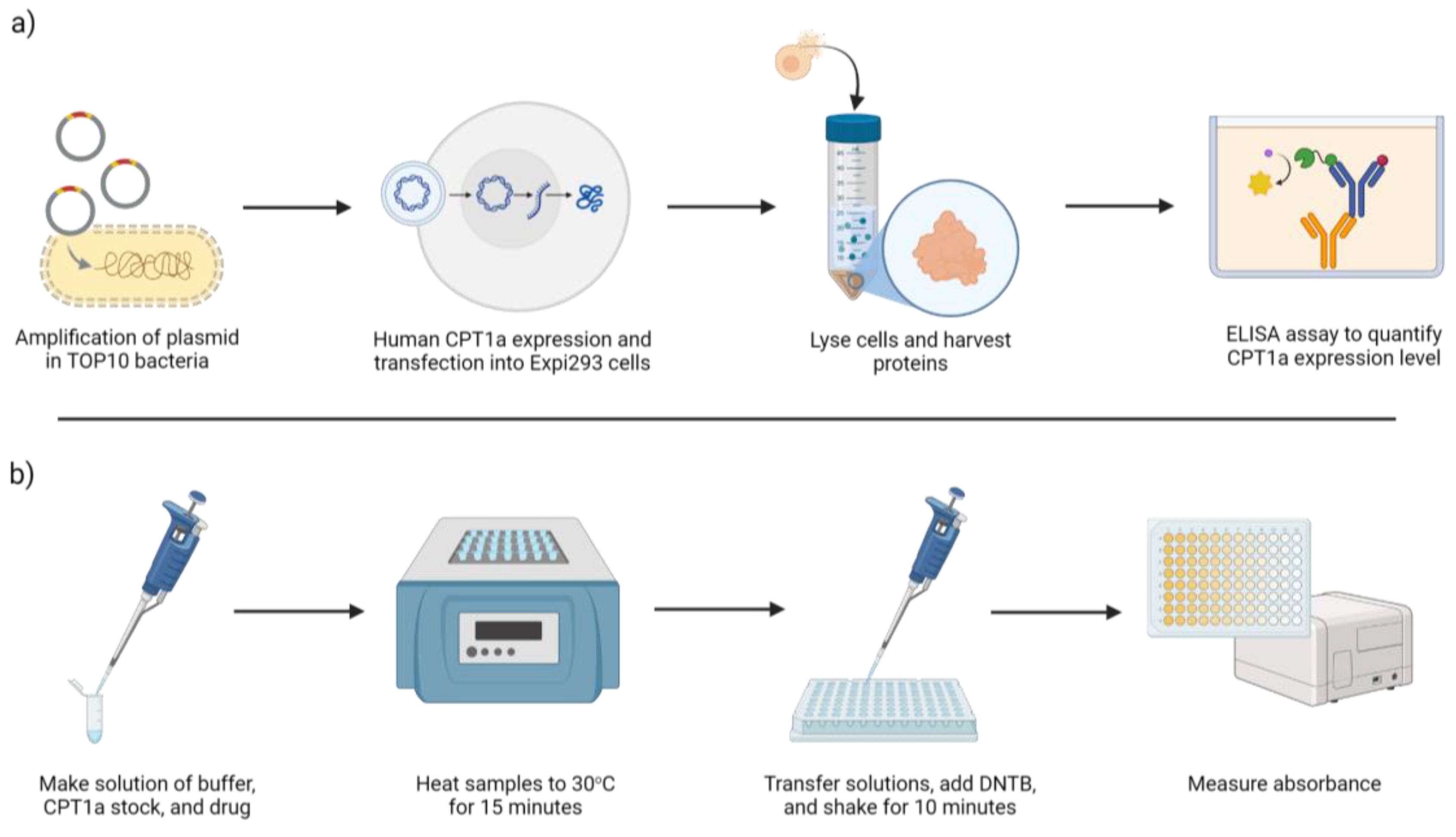
Figure 1. Workflow of CPT1 enzyme expression, protein purification, and activity assay using DTNB. The workflow of purification and quantification of human CPT1a enzyme. First, the plasmid was constructed and transformed into TOP10 bacteria for amplification. Plasmids were extracted and purified before transfected into Expi293 cells, where they were cultured. Cells were then lysed, and the supernatant and pellet were collected for protein quantification by ELISA. b) The CPT1 enzyme activity assay workflow. First, a solution of the buffer reagents, diluted CPT1 stock, and drug was created. The samples were mixed well and warmed to 30oC with a block plate heater for 15 minutes for the reaction to occur. Samples were then transferred to 96-well plates and DTNB was added. The plate was shaken on a cell shaker for 10 minutes before the absorbance was read in a plate reader at 412 nm.
Preprints 143036 g001
Figure 2. ELISA of CPT1a transgenic cell line. CPT1a immunogenicity assay using ELISA. Pellet is the human CPT1a transgenic cell line pellet. Supernatant is the human CPT1a transgenic cell line supernatant. Control is the wildtype Expi293 cell pellet without CPT1a gene transfection. The data is represented as mean ± SEM (n = 4), and significance was calculated using a Welch's t-test (**P < 0.01, ****P<0.0001).
Preprints 143036 g002
Figure 3. CPT activity assay and inhibitor sensitivity assay with varying enzyme concentrations. CPT activity assay and etomoxir inhibitor sensitivity assay. We used 3 μL, 6 μL, and 9 μL of the same cell lysis pellet solution with a protein concentration of 0.67 μg/μL. 2 μL of a 15.58 mM stock solution of etomoxir was added to each group to make a final concentration of 0.306 mM. Data is represented as mean ± SEM (n = 3), and significance was calculated using a Welch's t-test (**P < 0.01, ****P<0.0001).
Preprints 143036 g003
Figure 4. CPT1 inhibitor sensitivity assay for chlorpromazine shows compound-induced CPT1 inhibition. CPT1 inhibitor sensitivity assay using chlorpromazine. We used the same amount of human CPT1a pellet solution at the protein concentration of 0.67 μg/μL, 2 μL each group. 2 μL of 10 mM chlorpromazine as a solution in DMSO was used. 2 μL of DMSO (Fisher Scientific, 99.7%) was used as a negative control. Data is represented as means ± SEM (n = 3), and significance was calculated using a Welch's t-test (**P < 0.01, ****P < 0.0001).
Preprints 143036 g004
Figure 5. IC50 of etomoxir, perhexiline, and chlorpromazine. IC50 of a) etomoxir, b) perhexiline, c) chlorpromazine. A series of concentrations of each compound was used accordingly. We used the same amount of human CPT1a pellet solution with a protein concentration of 0.67 μg/μL, adding 2 μL of protein in each group.
Preprints 143036 g005
Disclaimer/Publisher’s Note: The statements, opinions and data contained in all publications are solely those of the individual author(s) and contributor(s) and not of MDPI and/or the editor(s). MDPI and/or the editor(s) disclaim responsibility for any injury to people or property resulting from any ideas, methods, instructions or products referred to in the content.
Copyright: This open access article is published under a Creative Commons CC BY 4.0 license, which permit the free download, distribution, and reuse, provided that the author and preprint are cited in any reuse.
Prerpints.org logo

Preprints.org is a free preprint server supported by MDPI in Basel, Switzerland.

Subscribe

Disclaimer

Terms of Use

Privacy Policy

Privacy Settings

© 2025 MDPI (Basel, Switzerland) unless otherwise stated