
Submitted:
06 December 2024
Posted:
10 December 2024
You are already at the latest version
Abstract
Background: Currently, the relationship between resilience and emotional intelligence and its influence on military personnel has become an object of research in recent years, since today's combatant faces significant physical and psychological challenges. Therefore, the general objective of this study was to analyze the psychological variables resilience and emotional intelligence in military personnel of the Spanish Army and their relationship as a function of civilian status. Methods: A cross-sectional descriptive study was carried out. The sample consisted of 739 military personnel (officers, non-commissioned officers and troops), with a mean age of 33.29 years (SD = 7.48) (where 87.7% were men and 12.3% women) who filled in the ad hoc questionnaire on soci-odemographic variables and the Resilience Scale (RS) and the Emotional Intelligence Inventory (EQ-i-M20). Results: The results showed the existence of positive relationships between resilience and emotional intelligence. No differences were reported between resilience and emotional in-telligence between men and women, but there were differences with respect to marital status, with Spanish Army military personnel with a married marital status having lower levels of resilience and emotional intelligence than those who were single, married or divorced. In addition, the regression model showed the direct effect of resilience on emotional intelligence. Conclusion: In conclusion, we recommend the design of intervention programs in resilience and emotional in-telligence in military personnel in general given their advantages. In military personnel with widowed marital status, so that they are provided with the resources and psychological strategies to successfully face adverse situations and present greater well-being.
Keywords:
army
; civil status
; emotional intelligence
; military
; resilience
1. Introduction
Currently, the main duty of military personnel is to maintain peace, defending their nation even with their lives if necessary [1]. Among their virtues are readiness, obedience, and accuracy, driven by honor and love for service, as well as the desire to face risky and fatiguing situations [2]. These pressures can lead to psychological and social issues, affecting intrapersonal and interpersonal competencies [3], due to stressors [4]. Since the wars in Afghanistan and Iraq, the Armed Forces have implemented initiatives to enhance psychological resilience and prevent morbidity in over one million soldiers [5]. Members of the Armed Forces must have a solid psychological foundation to manage adverse situations throughout their military careers and maintain good mental health [6].
In Spain, the Armed Forces (FAS), composed of the Army (ET), the Navy, and the Air Force, have an appropriate organization and structure for national defense and security [7], as a result of the modernization process at the beginning of the 21st century when it joined the North Atlantic Treaty Organization (NATO), aligning with the emerging Common Security and Defense Policy of the European Union [8].
However, to provide an efficient response by military personnel, training in social skills and emotional competencies is required to aid in emotional management and proper coexistence [9]. Therefore, it is crucial that military training centers promote ethical principles and standards and develop psychological variables such as resilience and emotional intelligence to improve the professional performance of their members [10].
Resilience in Military Personnel
The relationship between resilience and its influence on military personnel has become a subject of research in recent years, as the modern combatant faces significant physical and psychological challenges [11]. Resilience, traditionally linked to morale, has been crucial for the military, as its success in operations depends on it [12]. The term resilience can be defined as the ability to face adverse situations, grow from them, and prevent them from affecting one’s core [13], and it can be measured by the absence of post-traumatic stress disorder (PTSD) [14]. Military personnel with a resilient profile actively seek social support and maintain high self-esteem, which allows them to adapt to their environment in a positive way [15].
Moreover, an adequate level of resilience is necessary for military personnel to cope with the various stressful situations they encounter in their daily lives [16]. In fact, a high resilience score is negatively correlated with burnout syndrome [17]. This syndrome, caused by high levels of stress and low perceived social support, leads to emotional exhaustion, sleep disorders, apathy, and depressive symptoms (feelings of hopelessness and lack of self-confidence), as revealed by Maddah et col. [18]. At the same time, resilience is also closely related to emotional intelligence (EI), as it has a direct effect on it [19] and predicts self-efficacy, influencing the relationship between stressors and their outcomes [20,21]. According to White et col. [22], high levels of resilience and emotional intelligence can protect against the symptoms of burnout.
Emotional Intelligence in Military Personnel
Emotional intelligence can be understood as the combination of skills, competencies, abilities, and attitudes that determine an individual's behavior, mental state, or reaction to various situations, in a way that favors the peaceful resolution of problems arising from emotions and promotes overall development, including the ability to recognize both one’s own feelings and those of others [23]. Authors such as Bar-On [24] suggest that emotional intelligence consists of mental capacities related to the processing of emotions, as well as personality dimensions such as assertiveness, empathy, and optimism, along with mental and emotional capabilities. Specifically, emotion appears alongside cognition and motivation as an essential element for personal development and optimal performance [25]. The concept of emotion has evolved beyond the traditional focus on anxiety and depression, highlighting the benefits it provides throughout an individual’s life, shaping their adaptive skills and overall well-being [26].
According to Goleman [23], the components that make up emotional intelligence are: 1. Self-awareness (recognizing one’s own emotions); 2. Self-regulation (managing one’s own emotions); 3. Self-motivation (motivating oneself to achieve goals); 4. Empathy (recognizing the emotions of others); 5. Social skills (building good relationships). These components are interrelated and facilitate the emotional process, representing a significant factor in life satisfaction, especially in married individuals [27]. Its importance lies in the fact that emotions drive human behavior, making emotional intelligence a predictor of future success that should be fostered by institutions [28]. Emotional intelligence is a learned ability that can be developed through education in self-perception, self-regulation, self-motivation, empathy, and social skills contributing to personal, social, and professional well-being [30,31].
In particular, a high level of emotional intelligence in service institutions is linked to better performance in these services [32]. The emotional state of workers influences their behavior and professional performance, becoming increasingly relevant in organizations [33]. Emotional intelligence is negatively associated with stress, depression, and negative emotions [34], and positively associated with motivation [35]. The development of emotional competencies, such as empathy, promotes cooperative work [36]. In turn, a high level of emotional intelligence enhances psychological and social functioning, optimizing cognitive, social, emotional, and behavioral processes [37]. Authors like Corzine et col. [38] point out that overcoming emotional deprivation increases the capacity for recovery in difficult situations, allowing for successful handling of adverse scenarios [39]. In addition, Umucu et col. [40] report that a high level of resilience in military personnel is associated with greater optimism, as well as emotional intelligence, conflict resolution skills, and higher self-esteem, which reduces anxiety, depression, and the risk of PTSD [41].
The Present Study
Currently, military institutions must promote the development of resilience and emotional intelligence in their members [42,43] to improve their coping capacity in adverse situations [44] and enhance their well-being [45]. However, no study has yet analyzed the relationship between the marital status of military personnel and their level of resilience and emotional intelligence. Therefore, the main objective of this study is to analyze the psychological variables of resilience and emotional intelligence in Spanish Army personnel and their relationship based on marital status. Specifically, the study aims to: a) establish the relationship between resilience and marital status; b) analyze profiles or groups according to resilience and emotional intelligence levels and marital status; c) identify the predictive role of resilience on emotional intelligence. The initial hypotheses previously outlined for this study are as follows (Figure 1):
Hypothesis 1 (H1): There are positive relationships between resilience and emotional intelligence; H2: There are no mean differences based on gender and levels of resilience and emotional intelligence; H3: Military personnel who are widowed show lower levels of resilience and emotional intelligence compared to those who are single, married, or divorced/separated; and H4: Resilience is a predictor of emotional intelligence.
2. Materials and Methods
2.1. Participants, Procedures, and Instruments
This quantitative study was based on a descriptive cross-sectional design and, therefore, followed the STROBE guidelines for cross-sectional studies [46]. The sample consisted of a total of N = 739 military personnel from the Spanish Army (officers n = 36; 4.9%; non-commissioned officers n = 143; 19.4%; enlisted personnel n = 560; 75.8%), stationed at the same barracks, including both operational units and support units. The average age was 33.29 years (SD = 7.48), with a range from 18 to 66 years. The gender distribution was 87.7% (n = 648) male and 12.3% (n = 91) female, with average ages of M = 33.12 (SD = 7.58) and M = 34.48 (SD = 6.64), respectively (Table 1).
The study was approved by the Ethics Committee of the Central Defense Hospital (Approval Code: 51117). Once this permission was obtained, the purpose of the study was communicated to the military authorities stationed at the King Alfonso XIII Legion Brigade (BRLIEG, Almería, Spain), specifically to the Honorable Colonel Chief of the Alvarez de Sotomayor Services Unit (Chief of the Barracks) and to the Excellency General (Chief of BRILEG). Subsequently, after receiving authorization for the research from these officials, several meetings were held with leaders of different units to inform them about the objectives of the research, ensuring them that data confidentiality would be maintained. During these meetings, a work schedule was developed indicating the day each unit (both operational and support units) was to participate. In this regard, prior to participation in the study, participants were informed about its objective and voluntary nature, both verbally and in writing, outlining the procedure for participation, anonymous treatment, and data confidentiality, adhering to ethical research standards as established by the Helsinki Declaration [47], which guarantees the following criteria:
(a) Confidentiality of collected data and their exclusive use for research purposes.
(b) Anonymity of data.
(c) Professional secrecy in data collection.
After being informed, each participant was then given a questionnaire individually, which was placed in an envelope that they were required to return sealed in their respective envelope after completing it. This process took an average time of 25–30 min.
The author created a booklet containing the already validated instruments along with an ad hoc questionnaire that gathered sociodemographic aspects of the participants (gender, age, and marital status).
To assess resilience, the Resilience Scale (RS) [48] was used. It is one of the few psychometric scales available today that reliably and validly measures levels of psychosocial adaptation to significant life events. The instrument consists of a total of 25 items with a Likert-type response scale ranging from 1 (strongly disagree) to 7 (strongly agree). Examples of the items that make up the scale would be: 1. When I plan something, I do it; or 2. I usually manage one way or another. The scale is structured into two factors: Factor 1: Personal Competence (17 items); Factor 2: Acceptance of Oneself and of Life (8 items). Regarding the reliability of the scale, authors such Wagnild & Young [48], the original authors of the scale, report high reliability (α = .90). In the present study, the scale has a consistency of α = 0.86, with Factor 1 showing α = 0.64 and Factor 2 showing α = 0.90.
On the other hand, to measure emotional intelligence, the Emotional Intelligence Inventory (EQ-i-M20) [49] was used. This is the Spanish adaptation of the Emotional Intelligence Inventory: Youth Version (EQi:YV) [50]. It consists of a total of 20 items with 4 response options on a Likert-type scale, where 1 = Very rarely true for me and 4 = Often true for me. The items in this instrument are grouped into five components: 1. Intrapersonal (4 items); 2. Interpersonal (4 items); 3. Stress Management (4 items); 4. Adaptability (4 items); 5. General Mood: consisting of optimism and happiness (4 items). Regarding the reliability of each factor, Intrapersonal has a Cronbach’s alpha of α = .57, Interpersonal (α = .80), Stress Management (α = .68), Adaptability (α = .81), and General Mood (α = .83). The internal consistency of the scale in the present study is α = 0.75. For the dimensions, the internal consistency is as follows: Intrapersonal (α = 0.78), Interpersonal (α = 0.72), Stress Management (α = 0.65), Adaptability (α = 0.52), and General Mood (α = 0.80).
2.2. Data Analysis
First, Cronbach's alpha [51] was used to measure the internal consistency of the tests or the reliability of the scores [52], as it is one of the most commonly used estimators in classical psychometrics [53]. Next, in order to explore the relationship between the variables, correlation analyses were performed (0.1 small, 0.3 medium, 0.5 large) [54], and descriptive analyses were presented. To compare the means of groups based on the consumption or non-consumption of at least one alcoholic drink daily, a Student’s t-test was conducted, with Cohen's d statistic [55] used to estimate the effect size.
Third, a one-way multivariate analysis of variance (MANOVA) was performed to examine the differences between psychological variables (resilience and emotional intelligence) based on marital status, identifying significant groups. The classification levels for effect size are indicated in the Eta-squared values (η²), specifically: η² = .01 (small), η² = .06 (medium), and η² = .14 (large) [56]. Post hoc contrasts were performed using the Turkey test. Subsequently, using resilience, emotional intelligence, and marital status as input variables to identify different profiles or groupings within the dataset, a two-step cluster analysis was carried out. In this case, the aim was to classify cases according to the mean scores in resilience and emotional intelligence, presenting these results as complementary analysis to the rest of the data.
Furthermore, this technique allows for assessing the quality of the clusters, silhouette cohesion, and cluster separation [57]. In this case, a mean silhouette score of 0.6 was obtained, indicating the quality of the clusters as "adequate." Finally, to understand how the predictor variable (resilience) related to the criterion variable (emotional intelligence), a stepwise linear regression analysis was conducted. In addition to the statistical values of β, the R² statistic was used to measure model fit, where a value of 1 indicates perfect linear fit, as well as the Durbin-Watson statistic (D), where a value of D = 2 indicates no autocorrelation, D < 2 = positive serial correlation, and D > 2 = negative serial correlation.
The processing and analysis of the data were carried out using the SPSS statistical package version 24.0 for Windows ([58], Armonk, New York, United States).
3. Results
Firs, Table 1 presents the results for the sociodemographic variables, where n = 410 (55.5%) fell within the highest age range of 26-35 years, while n = 1 (0.1%) was in the age group over 65 years, which in this case, represented the lowest. Regarding marital status, n = 387 (52.4%) were single, followed by n = 294 (39.8%) who were married, n = 44 (5.9%) who were divorced/separated, and finally, n = 14 (1.9%) who were widowed.
On the other hand, Table 2 presents the correlations found between resilience and emotional intelligence and the factors and components that make up emotional intelligence. The results show statistically significant positive correlations (p < .05) or very significant correlations (p < .01) in most relationships.
Regarding the mean differences (Table 3), the t-test results showed no statistically significant differences between men and women in terms of resilience (t = .46; p = .642; d = .05) nor in emotional intelligence (t = 1.36; p = .171; d = .15). However, statistically significant mean differences were found based on gender in the Stress Management component (t = 2.85; p < .05; d = 0.31), with men showing a higher level (M = 12.41; SD = 2.48) compared to women (M = 11.61; SD = 2.63), as well as in General Mood (t = 2.78; p < .05; d = 0.32), where the male gender also showed a higher mean (M = 12.89; SD = 2.49) compared to the female gender (M = 12.07; SD = 2.63).
The results showed a significant effect according to the post hoc Turkey test regarding the overall resilience level (F = 7.73; p < .001; η² = .030) and overall emotional intelligence (F = 4.17; p < .01; η² = .016) across the different groups: single, married, divorced/separated, and widowed. In all cases, it was the widowed military personnel who showed the lowest mean in both resilience factors and the five components of emotional intelligence, as can be seen in the following Table 4:
Figure 2 illustrates that it is the widowed military personnel who report the lowest levels of both overall resilience and emotional intelligence. In terms of resilience, they are followed by divorced/separated personnel, married personnel, and finally, single personnel, who present the highest level. However, in emotional intelligence, after widowed personnel, the divorced/separated group is followed by single personnel, and lastly, married personnel, who exhibit the highest levels.
The summary of the model obtained in the two-step cluster analysis identified a total of 4 clusters, where the cases were classified based on their scores in resilience and emotional intelligence. The first cluster (c1), with 39.6% of the cases (n = 59), was characterized by scoring below the sample mean in both resilience and emotional intelligence. This was followed by cluster c2 (n = 153), with 31.7% of the cases, cluster c3 (n = 293), with 20.7% of the cases, and finally, cluster c4 (n = 234), with 8% of the cases, as shown in the following Figure 3:
The regression analyses resulted in a model where resilience explains 15% of the variance in emotional intelligence (R² = .15). The results of the linear regression indicated that resilience has a positive impact on emotional intelligence (B = 1.13; SE = 1.09). The coefficients for the predictor variable were greater than 0.05, and the p-values were less than 0.05. The standardized effects of resilience on emotional intelligence were statistically significant and supported (β = 0.39; t = 11.69; p < .001). The Durbin-Watson statistic confirmed the validity of the model (D = 1.98).

Table 5.
This is a table. Tables should be placed in the main text near to the first time they are cited.
Table 5.
This is a table. Tables should be placed in the main text near to the first time they are cited.
| R | R2 | Corrected R2 | Cambios estadísticos | Durbin Watson | ||||||
| Standard error of estimate (SE) | Change in R2 |
Change in F |
Sig. of change in F |
|||||||
| Model | .39 | .15 | .15 | 7.94 | .15 | 136.65 | .00 | 1.98 | ||
| Unstandardized coefficients | Standardized coefficients | t | Sig. | Collinearity | ||||||
| β | Standard error | Beta | ||||||||
| Tolerance | VIF | |||||||||
| .13 | .01 | .39 | 3.32 | .000 | .78 | 1.26 | ||||
Regarding the t-statistic, an association with an error probability lower than 0.05 was found for the variables in the model: resilience on emotional intelligence. The absence of multicollinearity between the variables was confirmed by low tolerance values and high VIF values.
4. Discussion
The results obtained have allowed for the achievement of the general objective set out in this study, which was to analyze the psychological variables of resilience and emotional intelligence in military personnel of the Spanish Army and their relationship based on marital status. Resilience was found to be positively related to the level of emotional intelligence. Being widowed seems to negatively affect the presence of higher levels of resilience and emotional intelligence in military personnel, which results in poorer coping with stressful situations [42] and worse emotional regulation [45]. This could be associated with the presence of PTSD [41], lower optimism [40], and a reduced ability to recognize, manage, and self-motivate emotions, as well as empathize and demonstrate prosocial behaviors [23]. These factors could negatively impact their professional performance [32,33,36].
Regarding the first specific objective of this study, the results report a positive relationship between resilience and emotional intelligence, consistent with findings in other research lines [20], thus supporting the first hypothesis. This suggests that increasing resilience levels positively influences emotional intelligence. Consequently, higher levels of these psychological variables could prevent the onset of emotional burnout in military personnel [17,22] and facilitate better adaptation to different contexts they may [15], promoting higher levels of perceived social support and lower levels of stress and depression [18,34]. On the other hand, in response to the second hypothesis of this study, no significant differences were found in the mean scores for gender and overall resilience or overall emotional intelligence in the t-tests, nor in any of the factors that make up these instruments. Therefore, this second hypothesis is confirmed. This suggests that the current Spanish Army provides educational resources that support the development of psychological strategies to mitigate the underlying effects of stressors related to military service [4].
Regarding the third research hypothesis, the results obtained in the MANOVA analysis indicate that military personnel who are widowed show lower levels of resilience and emotional intelligence compared to those who are single, married, or divorced, supporting this third hypothesis. In this regard, although there is a lack of previous studies related to this line of research, Corzine et col. [38] suggest that this could be a consequence of the absence of the spouse’s emotional support, which may negatively impact both the resilience and emotional intelligence of military personnel [44].
In this direction, it could be inferred that military personnel who are widowed may exhibit lower self-confidence, independence, strength, invincibility, wit, perseverance, and less flexible thinking compared to those with other marital statuses, as well as behavioral patterns of maladaptation [48]. Furthermore, effective problem-solving may be impaired, as they tend to have a less optimistic attitude [50]. Tsirigotis [37] suggests that a good level of emotional intelligence would allow military personnel to optimize cognitive, social, emotional, and behavioral processes, improving not only their psychological functioning but also positively impacting their interpersonal relationships.
Through cluster analysis, four profiles were identified in relation to emotional resilience and resilience, addressing the second specific research objective. On the one hand, the first cluster is made up of military personnel who are widowed, showing lower scores on the psychological variables studied. The second cluster consists of military personnel who are separated or divorced, and in this case, they show higher levels than those who are widowed. The third cluster consists of those who are single, who report higher scores than the first two clusters. Finally, the fourth cluster, which consists of married military personnel, shows the highest scores in both resilience and emotional intelligence.
Regarding the third specific objective, the results found in the linear regression analyses suggest that resilience predicts the level of emotional intelligence in military personnel, confirming this fourth and final research hypothesis. These results align with previous research, which also indicates that resilience mediates perceived stress [19] and life satisfaction [21].
All of the above highlights the importance of resilience and emotional intelligence in the military context, especially considering the professional trajectory that requires confronting multiple challenges. Therefore, designing intervention programs focused on resilient and emotional skills in the military appears to be an effective measure to assist military personnel in dealing with the challenges they face in their professional careers. This would promote the development of personal resilience to successfully cope with adverse situations and enhance their personal and collective well-being [59,60].
This study has significant implications for professional practice, emphasizing the strong relationship between resilience and emotional intelligence, which points towards improving the quality of life for military personnel, enhancing their ability to cope with adversities, and improving emotional stability. This, in turn, strengthens their well-being and professional competence by fostering proactive behaviors, which benefits the achievement of previously established institutional objectives. These findings are likely to contribute to the design of future intervention programs aimed at promoting resilience and emotional intelligence among military personnel.
Among the limitations of this study, it is important to note that the sample evaluated is specific and limited to one type of profession within the military field. The results may not be generalizable to other branches of the military, such as the Navy or Air Force, or to other professions. Furthermore, since this is a cross-sectional design, these findings should be corroborated in studies with longitudinal designs that allow for the establishment of cause-and-effect relationships between the studied variables.
For future research directions, a deeper study of the relationship between resilience and emotional intelligence in this context would be beneficial. Consequently, it would be interesting to implement intervention programs that consider the variables analyzed in this study, allowing for pre-posttest comparisons to draw solid conclusions. Moreover, given the relevance of stress in the development of resilience and emotional intelligence, future studies should include this variable, as well as other variables that promote the proper development of military personnel, to enhance these psychological traits and increase their personal well-being.
5. Conclusions
The most relevant contributions of this work are related to the role of resilience and emotional intelligence in military personnel to promote health and well-being, in line with the United Nations' 2030 Agenda Goals. Resilience and emotional intelligence are positively correlated, with resilience being considered a predictor of emotional intelligence. In particular, resilience enables military personnel to cope with the various adverse situations they may face. At the same time, a good level of emotional intelligence helps military personnel perceive, understand, and properly manage their emotions, which enhances their personal and collective well-being. Therefore, it is essential that future intervention studies take into account the findings of this work in order to foster the successful achievement of institutional objectives and promote the quality of life of personnel in the Spanish Army.
Author Contributions
J.G.S.S. analyzed the data and interpreted data and wrote the manuscript. Edited the manuscript is responsible for the overall project. The author has read and agreed to the published version of the manuscript.
Funding
This research received no external funding.
Institutional Review Board Statement
The study was approved by the Central Defense Hospital (Approval Code: 51117).
Informed Consent Statement
Informed consent was obtained from all subjects involved in the study.
Data Availability Statement
The data supporting the research can be requested from the corresponding author.
Acknowledgments
I would like to express our gratitude to all the staff of the King Alfonso XIII Legion Brigade (Almería) for their interest in participating, as well as to the Ethics Committee of the Central Defense Hospital for approving this study.
Conflicts of Interest
The author declares no conflicts of interest.
References
- Wilén, N.; Williams, P.D. Peacekeeping armies: how the politics of peace operations shape military organizations. Int Aff. 2024, 100, 919–39. [Google Scholar] [CrossRef]
- Royal Decree 96/2009, February 6, approving the Royal Ordinances for the Armed Forces. Official State Bulletin, 6 February.
- Flood, A.; Keegan, R.J. Cognitive resilience to psychological stress in military personnel. Front Psychol. 2022, 13, 809003. [Google Scholar] [CrossRef]
- Orak, U.; Kayaalp, A.; Walker, M.H.; Breault, K. Resilience and depression in military service: Evidence from the National Longitudinal Study of Adolescent to Adult Health (Add Health). Mil Med. 2022, 187. [Google Scholar] [CrossRef]
- Steenkamp, M.M.; Nash, W.P.; Litz, B.T. Post-traumatic stress disorder: review of the Comprehensive Soldier Fitness program. Am J Prev Med. 2013, 44, 507–12. [Google Scholar] [CrossRef] [PubMed]
- McInerney, S.A.; Waldrep, E.; Benight, C.C. Resilience enhancing programs in the U.S. military: An exploration of theory and applied practice. Mil Psychol. 2024, 36, 241–52. [Google Scholar] [CrossRef]
- Calvo, J.L. Estrategia militar de la OTAN: doctrinas y conceptos estratégicos. Recepción en España. Rev Estud Segur Int. 2022, 8, 53–70. [Google Scholar] [CrossRef]
- Puell De La, F. Modernización de las fuerzas armadas durante el reinado de Juan Carlos I. Arauc. 2021, 23, 403–430. [Google Scholar]
- Del Mar, D.D.; Ruíz, A.; Pino, S.; Lazo, T.A.; Pacheco, A.B. La comunicación asertiva en las instituciones educativas militares: una revisión de la literatura científica del 2015-2020. Alpha Centauri. 2021, 2, 13–24. [Google Scholar] [CrossRef]
- Hernández, E.; García, M. Benefits of PsyCap training on the wellbeing in military personnel. Psicoth. 2021, 33, 536–43. [Google Scholar] [CrossRef]
- Trachik, B.; Oakey-Frost, N.; Ganulin, M.L.; Adler, A.B.; Dretsch, M.N.; Cabrera, O.A. Military suicide prevention: The importance of leadership behaviors as an upstream suicide prevention target. Suicide Life Threat Behav. 2021, 51, 316–24. [Google Scholar] [CrossRef] [PubMed]
- Naifeh, J.A.; Mash, H.B.H.; Stein, M.B.; Vance, M.C.; Aliaga, P.A.; Fullerton, C.S. Sex differences in US Army suicide attempts during the wars in Iraq and Afghanistan. Med Care. 2021, 59, 42–50. [Google Scholar] [CrossRef]
- Gouweloos-Trines, J.; Te Brake, H.; Sijbrandij, M.; Boelen, P.A.; Brewin, C.R.; Kleber, R.J. A longitudinal evaluation of active outreach after an aeroplane crash: screening for post-traumatic stress disorder and depression and assessment of self-reported treatment needs. Eur J Psychotraumatol. 2019, 10, 1554406. [Google Scholar] [CrossRef] [PubMed]
- Sun, Z.; Song, J.; Chen, J.; Gan, X.; Li, Y.; Qiu, C. Preventing and mitigating post-traumatic stress: A scoping review of resilience interventions for military personnel in pre deployment. Psychol Res Behav Manag. 2024, 17, 2377–89. [Google Scholar] [CrossRef] [PubMed]
- Cox, M.; Norris, D.; Cramm, H.; Richmond, R.; Anderson, G.S. Public safety personnel family resilience: A narrative review. Int J Environ Res Public Health. 2022, 19, 5224. [Google Scholar] [CrossRef] [PubMed]
- Park, J.; Lee, J.; Kim, D.; Kim, J. Posttraumatic growth and psychosocial gains from adversities of korean special forces: a consensual qualitative research. Curr Psychol. 2023, 42, 10186–99. [Google Scholar] [CrossRef]
- McBride, D.; Samaranayaka, A.; Richardson, A.; Gardner, D.; Shepherd, D.; Wyeth, E. Factors associated with self-reported health among New Zealand military veterans: a cross-sectional study. BMJ Open. 2022, 12, e056916. [Google Scholar] [CrossRef]
- Maddah, Z.; Negarandeh, R.; Rahimi, S.; Pashaeypoor, S. Challenges of living with veterans with post-traumatic stress disorder from the perspective of spouses: a qualitative content analysis study. BMC Psychiatry. 2024, 24, 151. [Google Scholar] [CrossRef]
- Sarrionandia, A.; Ramos-Díaz, E.; Fernández-Lasarte, O. Resilience as a mediator of emotional intelligence and perceived stress: A cross-country study. Front Psychol. 2018, 9, 2653. [Google Scholar] [CrossRef] [PubMed]
- Andrei, F.; Mancini, G.; Agostini, F.; Epifanio, M.S.; Piombo, M.A.; Riolo, M. Quality of life and job loss during the COVID-19 pandemic: Mediation by hopelessness and moderation by trait emotional intelligence. Int J Environ Res Public Health. 2022, 19, 2756. [Google Scholar] [CrossRef] [PubMed]
- Vilca-Pareja, V.; Luque Ruiz de Somocurcio, A.; Delgado-Morales, R.; Medina Zeballos, L. Emotional Intelligence, resilience, and self-esteem as predictors of satisfaction with life in university students. Int J Environ Res Public Health. 2022, 19, 16548. [Google Scholar] [CrossRef]
- White, A.; Zapata, I.; Lenz, A.; Ryznar, R.; Nevins, N.; Hoang, T.N. Medical students immersed in a hyper-realistic surgical training environment leads to improved measures of emotional resiliency by both Hardiness and Emotional Intelligence evaluation. Front Psychol. 2020, 11, 569035. [Google Scholar] [CrossRef] [PubMed]
- Goleman, D. Emotional intelligence. Bantam Books; 1995.
- Bar-On, R. The impact of emotional intelligence on health and wellbeing. In: Emotional Intelligence - New Perspectives and Applications. InTech; 2012.
- Hoffman, S.N.; Taylor, C.T.; Campbell-Sills, L.; Thomas, M.L.; Sun, X.M.; Naifeh, J.A. Association between neurocognitive functioning and suicide attempts in U.S. Army Soldiers. J Psychiatr Res. 2022, 145, 294–301. [Google Scholar] [CrossRef]
- Candeias, A.A.; Galindo, E.; Rocha, A. Adaptation and psychometric analysis of the Emotional Intelligence View Nowack’s (EIV) questionnaire in the Portuguese context. Psicolog. 2021, 35, 11–22. [Google Scholar] [CrossRef]
- Madahi, M.E.; Javidi, N.; Samadzadeh, M. The relationship between emotional intelligence and marital status in sample of college students. Procedia Soc Behav Sci. 2013, 84, 1317–20. [Google Scholar] [CrossRef]
- Casino-García, A.M.; Llopis-Bueno, M.J.; Llinares-Insa, L.I. Emotional intelligence profiles and self-esteem/self-concept: An analysis of relationships in gifted students. Int J Environ Res Public Health. 2021, 18, 1006. [Google Scholar] [CrossRef] [PubMed]
- Goleman, D. El cerebro e inteligencia emocional: nuevos descubrimientos. Ediciones B; 2012.
- Cortellazzo, L.; Bonesso, S.; Gerli, F.; Pizzi, C. Experiences that matter: Unraveling the link between extracurricular activities and emotional and social competencies. Front Psychol. 2021, 12, 659526. [Google Scholar] [CrossRef] [PubMed]
- Thompson, J. NASA resilience and leadership: examining the phenomenon of awe. Front Psychol. 2023, 14, 1158437. [Google Scholar] [CrossRef]
- Srivastava, S.; Misra, R.; Pathak, D.; Sharma, P. Boosting job satisfaction through emotional intelligence: A study on health care professionals. J Health Manag. 2021, 23, 414–24. [Google Scholar] [CrossRef]
- Taylor, C.L.; Ivcevic, Z.; Moeller, J.; Menges, J.I.; Reiter-Palmon, R.; Brackett, M.A. Gender and emotions at work: Organizational rank has greater emotional benefits for men than women. Sex Rol. 2022, 86. [Google Scholar] [CrossRef]
- Cui, Y.; Zhang, X.; Liu, N.; Liu, Q.; Zhang, L.; Zhang, Y. A correlation study of military psychological stress, optimistic intelligence quotient, and emotion regulation of Chinese naval soldiers. Soc Behav Pers. 2022, 50, 1–14. [Google Scholar] [CrossRef]
- Rahman, M.H.; Bin Amin, M.; Yusof, M.F. , Islam, M.A.; Afrin, S. Influence of teachers’ emotional intelligence on students’ motivation for academic learning: an empirical study on university students of Bangladesh. Cogent Educ. 2024, 11, 1–10. [Google Scholar] [CrossRef]
- Liu, L.; Li, X.; Sun, Y.; Luo, N.; Bai, R.; Xu, X. The role of empathy and perceived stress in the association between dispositional awe and prosocial behavior in medical students: a moderated mediation model. Educ Psychol. 2024, 44, 358–76. [Google Scholar] [CrossRef]
- Tsirigotis, K. Division of Clinical Psychology and Psychotherapy, Department of Psychology, Jan Kochanowski University in Kielce, Kielce, Poland. Emotional intelligence, indirect self-destructiveness and gender. Psychiatr Psychol Klin, 21.
- Corzine, E.; Figley, C.R.; Marks, R.E.; Cannon, C.; Lattone, V.; Weatherly, C. Identifying resilience axioms: Israeli experts on trauma resilience. Traum. 2017, 23, 4–9. [Google Scholar] [CrossRef]
- Han, S.C.; Castro, F.; Lee, L.O.; Charney, M.E.; Marx, B.P.; Brailey, K. Military unit support, postdeployment social support, and PTSD symptoms among active duty and National Guard soldiers deployed to Iraq. J Anxiety Disord. 2014, 28, 446–53. [Google Scholar] [CrossRef]
- Umucu, E.; Ghosh, A.; Castruita, Y.; Yasuoka, M.; Choi, H.; Urkmez, B. The impact of army resilience training on the self-stigma of seeking help in student veterans with and without disabilities. Stigm Healh. 2022, 7, 404–13. [Google Scholar] [CrossRef]
- Lee, J.E.; Choi, B.; Lee, Y.; Kim, K.M.; Kim, D.; Park, T.W. The relationship between posttraumatic embitterment disorder and stress, depression, self-esteem, impulsiveness, and suicidal ideation in Korea soldiers in the local area. J Korean Med Sci. 2023, 38, e15. [Google Scholar] [CrossRef]
- Bekesiene, S.; Smaliukienė, R.; Vaičaitienė, R.; Bagdžiūnienė, D.; Kanapeckaitė, R.; Kapustian, O. Prioritizing competencies for soldier’s mental resilience: an application of integrative fuzzy-trapezoidal decision-making trial and evaluation laboratory in updating training program. Front Psychol. 2023, 14, 1239481. [Google Scholar] [CrossRef] [PubMed]
- Nevins, N.A.; Singer-Chang, G.; Dailey, S.F.; Roche, R.; Dong, F.; Peters, S.N. A mixed methods investigation on the relationship between perceived self-Regard, self-efficacy, and commitment to serve among military medical students. Mil Med. 2023, 188. [Google Scholar] [CrossRef]
- Forouzan, M.; Rawat, S.L. Emotional intelligence, resilience and hardiness among military spouses. Int J Psychol. 2023, 58, 751. [Google Scholar]
- Hasan, N.N.; Petrides, K.V.; Hull, L.; Hadi, F. Trait emotional intelligence profiles of professionals in Kuwait. Front Psychol. 2023, 14, 1051558. [Google Scholar] [CrossRef]
- Vandenbroucke, J.P.; von Elm, E.; Altman, D.G.; Gøtzsche, P.C.; Mulrow, C.D.; Pocock, S.J. Strengthening the Reporting of Observational Studies in Epidemiology (STROBE): explanation and elaboration. Int J Surg. 2014, 12, 1500–24. [Google Scholar] [CrossRef]
- Rennie, D. Trial registration: A great idea switches from ignored to irresistible. JAMA, 2004, 292, 1359. [Google Scholar] [CrossRef]
- Wagnild, G.M.; Young, H.M. Development and psychometric evaluation of the Resilience Scale. J Nurs Meas. 1993, 1, 165–78. [Google Scholar]
- Pérez-Fuentes, M.C.; Gázquez, J.J.; Mercader, I.; Molero, M.M. Brief Emotional Intelligence Inventory for senior citizens (EQ-i-M20). Psicoth. 2014, 26, 524–30. [Google Scholar] [CrossRef] [PubMed]
- Bar-On, R.; Parker, J.D.A. Emotional Quotient Inventory: Youth Version (EQ-i:YV): Technical manual. Multi Health Systems; 2000.
- Cronbach, L.J. Coefficient alpha and the internal structure of tests. Psychom. 1951, 16, l297–334. [Google Scholar] [CrossRef]
- Tang, W.; Cui, Y.; Babenko, O. International consistency: Do we really know what it is and how to assess it? J of Psy Behav Scienc. 2014, 2, 205–20. [Google Scholar]
- Tavakol, M.; Dennick, R. Making sense of Cronbach’s alpha. Int J Med Educ. 2011, 2, 53–5. [Google Scholar] [CrossRef] [PubMed]
- Cohen, J. A power primer. Psychol Bull. 1992, 112, 155–9. [Google Scholar] [CrossRef] [PubMed]
- Cohen, J. Statistical power analysis for the behavioral sciences. Erlbaum; 1988.
- Yoo, S.K.; Cotton, S.L.; Sofotasios, P.C.; Matthaiou, M.; Valkama, M.; Karagiannidis, G.K. The fisher–Snedecor $\mathcal F$ distribution: A simple and accurate composite fading model. IEEE Commun Lett. 2017, 21, 1661–4. [Google Scholar] [CrossRef]
- Molero, M.M.; Pérez-Fuentes, M.C.; Soriano, J.G.; Tortosa, B.M.; Oropesa, N.F.; Simón, M.M. Personality and job creativity in relation to engagement in nursing. An Psicol. 2020, 36, 533–42. [Google Scholar] [CrossRef]
- IBM Corp. IBM SPSS Statistics for Windows, Version 24.0, 2016.
- Kerry, A.; Sudom, K.A.; Lee, J.E.C. A Decade of longitudinal resilience research in the military across the technical cooperation program’s five nations. Res Militaris. 2016, 6, 16–7. [Google Scholar]
- Niederhauser, M.; Zueger, R.; Sefidan, S.; Annen, H.; Brand, S.; Sadeghi-Bahmani, D. Does training motivation influence resilience training outcome on chronic stress? Results from an interventional study. Int J Environ Res Public Health. 2022, 19, 6179. [Google Scholar] [CrossRef]
Figure 1.
Hypothesis of the present study.
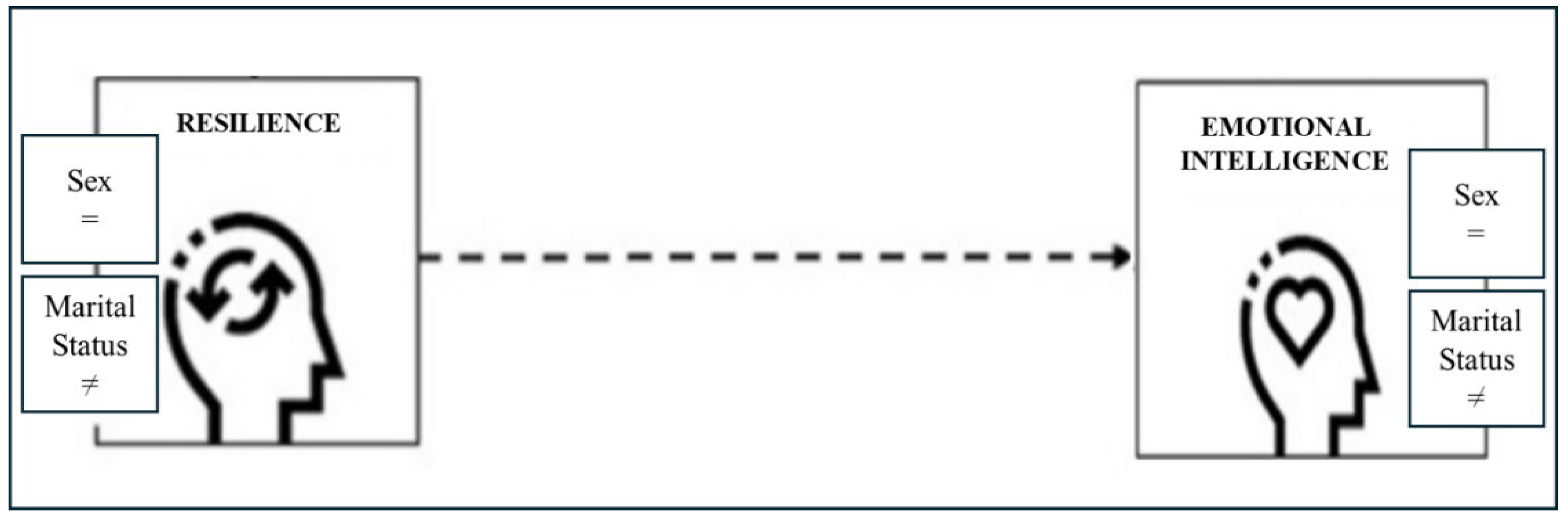
Figure 2.
Estimated measures of Resilience and Emotional Intelligence by Marital Status.
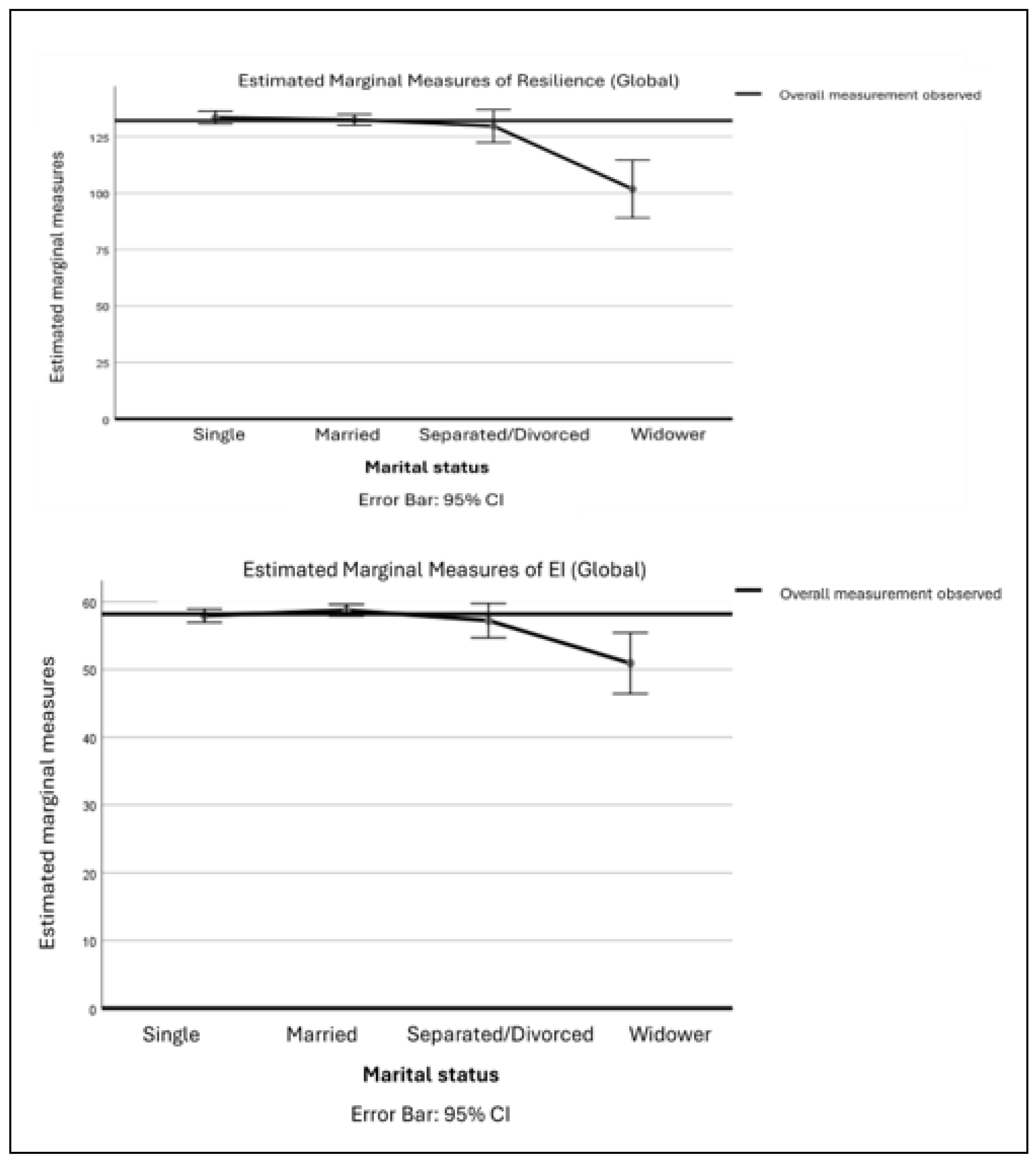
Figure 3.
Classification of clusters according to resilience and emotional intelligence and marital status.
Figure 3.
Classification of clusters according to resilience and emotional intelligence and marital status.
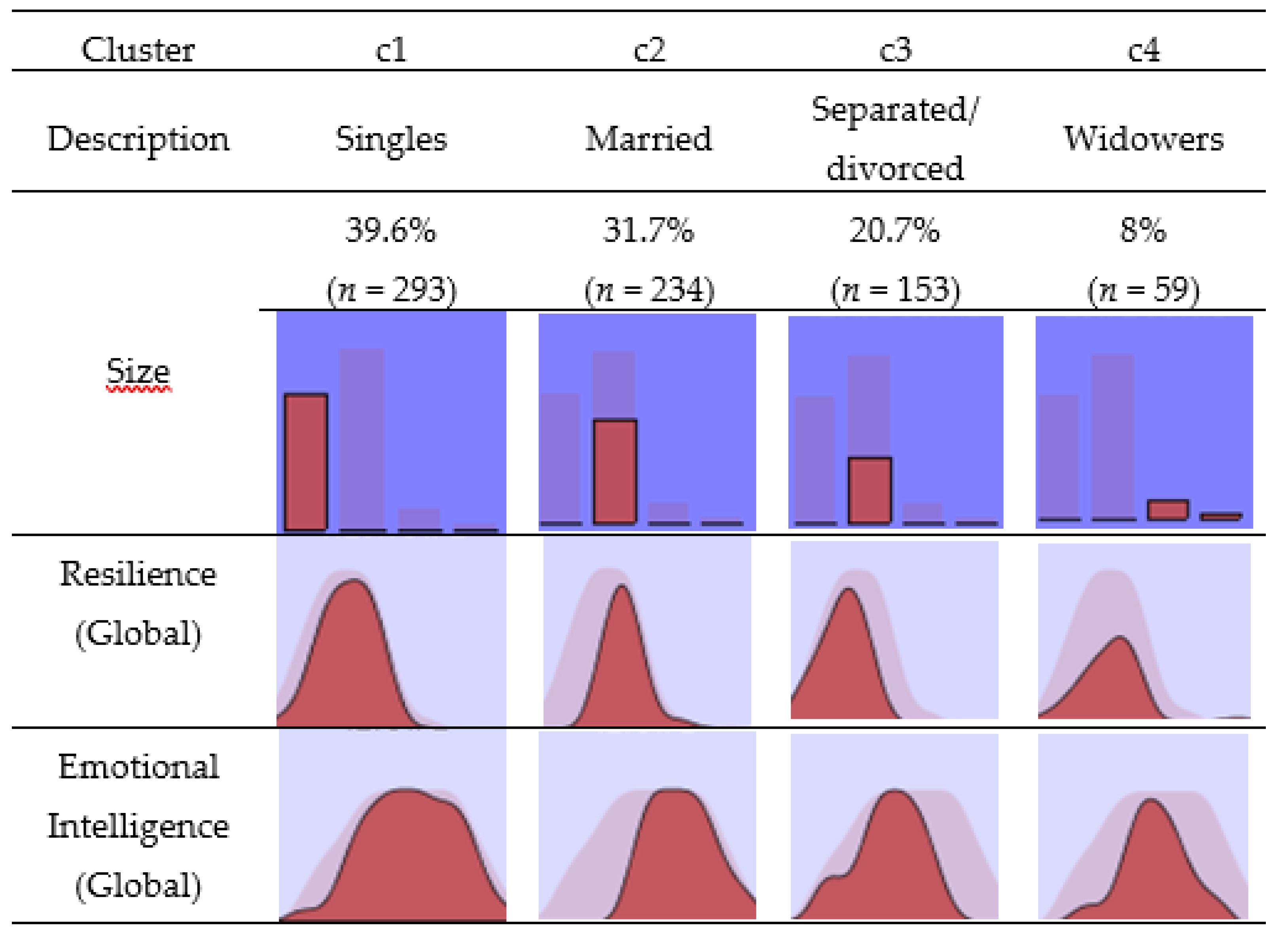
Table 1.
Sociodemographic variables of the study sample.
| Gender | Women | Men | ||||||||
| n | % | n | % | |||||||
| 91 | 12.3 | 648 | 87.7 | |||||||
| n | % | |||||||||
| Age | ||||||||||
| 18-25 | 84 | 11.4 | ||||||||
| 26-35 | 410 | 55.5 | ||||||||
| 36-45 | 201 | 27.2 | ||||||||
| 46-55 | 38 | 5.2 | ||||||||
| 56-65 | 5 | 0.6 | ||||||||
| >65 | 1 | 0.1 | ||||||||
| Military scale | ||||||||||
| Officers | 36 | 4.9 | ||||||||
| Non-Commissioned Officers | 143 | 19.4 | ||||||||
| MPTM | 560 | 75.8 | ||||||||
| Marital status | ||||||||||
| Single | 294 | 39.8 | ||||||||
| Married | 387 | 52.4 | ||||||||
| Separated/divorced | 44 | 5.9 | ||||||||
| Widower | 14 | 1.9 | ||||||||
Table 2.
Bivariate and Descriptive Correlation Matrix (N = 739).
| 1 | 2 | 3 | 4 | 5 | 6 | 7 | 8 | 9 | |
| Intrapersonal | 1 | ||||||||
| Interpersonal | .274* | 1 | |||||||
| Stress Management | .07* | .00 | 1 | ||||||
| Adaptability | .29** | .34** | .13** | 1 | |||||
| General Mood | .29** | .32** | .33** | .40** | 1 | ||||
| Emotional Intelligence (Global) | .63** | .61** | .46** | .71** | .73** | 1 | |||
| Factor 1 (Resilience) | .19** | .31** | .21** | .30** | .43** | .45** | 1 | ||
| Factor 2 (Resilience) | .16** | .26** | .21** | .27** | .42** | .41** | .82** | 1 | |
| Resilience (Gobal) | .13** | .28** | .18** | .27** | .39** | .39** | .91** | .85** | 1 |
| M | 10.54 | 11.06 | 12.31 | 11.52 | 12.75 | 58.19 | 89.65 | 42.32 | 132.15 |
| DT | 2.95 | 2.63 | 2.51 | 2.99 | 2.52 | 8.64 | 15.92 | 7.36 | 24.68 |
Note. ** = significant correlation at the 0.01 level (two-tailed).
Table 3.
Resilience and Emotional Intelligence. Descriptive and t-test by Gender (N = 739).
| n | M | SD | t | p | d | ||
| Factor 1 Resilience |
Man | 648 | 89.79 | 15.69 | .67 | .501 | .07 |
| Woman | 91 | 88.59 | 17.56 | ||||
| Factor 2 Resilience |
Man | 648 | 42.44 | 7.27 | 1.16 | 1.16 | .12 |
| Woman | 91 | 41.48 | 7.98 | ||||
| Resilience (Global) | Man | 648 | 132.31 | 24.45 | .46 | .642 | .05 |
| Woman | 91 | 131.02 | 26.41 | ||||
| EI (Intrapersonal) | Man | 648 | 10.48 | 2.99 | -1.48 | .138 | .17 |
| Woman | 91 | 10.97 | 2.59 | ||||
| EI (Interpersonal) | Man | 648 | 11.03 | 2.39 | -1.02 | .306 | .12 |
| Woman | 91 | 11.33 | 3.94 | ||||
| EI (Stress Management) | Man | 648 | 12.41 | 2.48 | 2.85** | .004 | .31 |
| Woman | 91 | 11.61 | 2.63 | ||||
| IE (Adaptability) | Man | 648 | 11.59 | 3.08 | 1.59 | .112 | .20 |
| Woman | 91 | 11.05 | 2.22 | ||||
| EI (General Mood) | Man | 648 | 12.89 | 2.49 | 2.78** | .005 | .32 |
| Woman | 91 | 12.07 | 2.63 | ||||
| EI (Global) | Man | 648 | 58.36 | 8.59 | 1.36 | .171 | .15 |
| Woman | 91 | 57.03 | 8.89 |
Note. F1 = Factor 1 (Personal Competence); F2 = Factor 2 (Acceptance of Self and Life); EI = Emotional Intelligence. ** = significant correlation at the 0.01 level (two-tailed).
Table 4.
Resilience and Marital Status. Results of the Analysis of Variance.
| Marital status | n | M | SD | MANOVA | Post hoc contrasts | |||
| F | p | η2 | ||||||
| Factor 1 Resilience |
g1 | 294 | 90.33 | 14.80 | 8.09 | .01 | .030 | │g1<g2││g1<g3│ │g1<g4│***│g2<g3│ │g2>g4│***│g3>g4│*** |
| g2 | 387 | 90.01 | 15.94 | |||||
| g3 | 44 | 88.32 | 16.86 | |||||
| g4 | 14 | 68.43 | 15.92 | |||||
| Factor 2 Resilience |
g1 | 294 | 42.85 | 6.51 | 13.45 | .01 | .050 | │g1>g2││g1>g3│ │g1>g4│***│g2>g3│ │g2>g4│***│g3>g4│*** |
| g2 | 387 | 42.46 | 7.56 | |||||
| g3 | 44 | 41.39 | 7.25 | |||||
| g4 | 14 | 30.50 | 9.55 | |||||
| Resilience (Global) | g1 | 294 | 133.52 | 23.76 | 7.73 | .01 | .030 | │g1>g2││g1>g3│ │g1>g4│***│g2>g3│ │g2>g4│***│g3>g4│*** |
| g2 | 387 | 132.48 | 24.86 | |||||
| g3 | 44 | 129.70 | 22.81 | |||||
| g4 | 14 | 101.79 | 31.55 | |||||
| EI (Intrapersonal) | g1 | 294 | 10.47 | 3.12 | .33 | .800 | .001 | │g1<g2││g1<g3│ │g1>g4││g2<g3│ │g2>g4 │ │g3>g4│ |
| g2 | 387 | 10.58 | 2.89 | |||||
| g3 | 44 | 10.80 | 2.28 | |||||
| g4 | 14 | 10.00 | 2.85 | |||||
| EI (Interpersonal) | g1 | 294 | 11.01 | 2.09 | 2.00 | .112 | .008 | │g1<g2││g1<g3│ │g1>g4││g2>g3│ │g2>g4 │ │g3>g4│ |
| g2 | 387 | 11.18 | 3.00 | |||||
| g3 | 44 | 10.91 | 1.89 | |||||
| g4 | 14 | 9.50 | 3.50 | |||||
| EI (Stress Management) |
g1 | 294 | 12.35 | 2.47 | 1.42 | .235 | .005 | │g1<g2││g1>g3│ │g1>g4││g2>g3│ │g2>g4 │ │g3<g4│ |
| g2 | 387 | 12.38 | 2.53 | |||||
| g3 | 44 | 11.61 | 2.40 | |||||
| g4 | 14 | 11.85 | 3.05 | |||||
| IE (Adaptability) | g1 | 294 | 11.43 | 3.39 | 3.21 | .022 | .012 | │g1<g2││g1<g3│* │g1<g4│* │g2>g3│ │g2>g4 │** │g3>g4│ |
| g2 | 387 | 11.67 | 2.72 | |||||
| g3 | 44 | 11.52 | 2.02 | |||||
| g4 | 14 | 9.21 | 3.33 | |||||
| EI (General Mood) |
g1 | 294 | 12.67 | 2.37 | 5.41 | .001 | .021 | │g1<g2││g1>g3│*** │g1>g4││g2>g3│ │g2>g4 │***│g3>g4│ |
| g2 | 387 | 12.94 | 2.52 | |||||
| g3 | 44 | 12.39 | 2.38 | |||||
| g4 | 14 | 10.36 | 4.37 | |||||
| EI (Global) |
g1 | 294 | 57.94 | 8.62 | 4.17 | .006 | .016 | │g1<g2│**│g1>g3│ │g1>g4│** │g2>g3│ │g2>g4 │*** │ g3>g4│ |
| g2 | 387 | 58.76 | 8.58 | |||||
| g3 | 44 | 57.23 | 7.10 | |||||
| g4 | 14 | 50.93 | 11.59 | |||||
Note. (g1) = single; (g2) = married; (g3) = divorced/separated; (g4) = widowed; EI = Emotional Intelligence. ** = significant correlation at the 0.01 level (two-tailed).
Disclaimer/Publisher’s Note: The statements, opinions and data contained in all publications are solely those of the individual author(s) and contributor(s) and not of MDPI and/or the editor(s). MDPI and/or the editor(s) disclaim responsibility for any injury to people or property resulting from any ideas, methods, instructions or products referred to in the content. |
© 2024 by the authors. Licensee MDPI, Basel, Switzerland. This article is an open access article distributed under the terms and conditions of the Creative Commons Attribution (CC BY) license (http://creativecommons.org/licenses/by/4.0/).
Copyright: This open access article is published under a Creative Commons CC BY 4.0 license, which permit the free download, distribution, and reuse, provided that the author and preprint are cited in any reuse.


