

Submitted:
31 January 2023
Posted:
01 February 2023
You are already at the latest version
Abstract
High-level performance in mountain sports would be unlikely unless different emotional factors are taken into account through the analysis of psychological characteristics such as mood, resilience or motivation, among many others. In this study, 788 people with a sports degree from the Spanish Federation of Mountain Sports and Climbing (FEDME) participated, 75.3% are men and 24.5% are women. The mean age of the participants was 49.8 years (±12.8), ranging from 18 to 76 years. The Wong Law Emotional Intelligence Scale (WLEIS-S), the RS-14 Resilience Scale and the Satisfaction with Life Scale (SWLS) instrument were used. The aim of this research was to determine the relationship between the dimensions of emotional intelligence, resilience and life satisfaction. The results showed a relationship between several of the dimensions from the instruments used (p<.01). In terms of gender, higher scores were found for women than for men. The regression model shows that both the dimensions of emotional intelligence [Appraisal of own emotions (β=.104; p<.001); Use of emotions (β=.30; p<.001); Emotional Regulation (β=.103; p<.001)] and resilience [Personal competence (β=.402; p<.001)], are predictors of greater life satisfaction, with 44.1% positively explained by the regression model. Further proposals should extend the results obtained with the analysis of more sports modalities and provide evidence that would complement those extracted in this research.
Keywords:
emotional intelligence
; mountain sports
; life satisfaction
; resilience
1. Introduction
Mountain sports have experienced significant growth worldwide, especially in the last decade. They have a sporting environment with its own characteristics, different from other sports and risky conditions in some cases, which may affect the athletes' profile at a physical level, but above all, psychologically.
There are still few studies that analyse emotional intelligence (EI), resilience and its relationship with life satisfaction in mountain sports. EI and resilience are likely to positively affect sporting performance in extreme conditions. Resilience is defined as the ability to present adaptive responses to adverse situations [1]. It is a factor related to emotions with optimism, well-being and problem-solving ability [2]. Tabibnia [3] considers that among the usual techniques for increasing resilience is exposure to nature and the natural environment through hiking in natural areas. The resilience of mountain athletes has been analysed in relation to addiction to mountain sports [4,5], as well as to emotional regulation for better-integrated risk management [6].
In relation to the concept of EI, Petrides et al. [7] distinguish 2 different constructs of EI: EI as a personality trait, and on the other hand, EI as a capability. Among the studies of practitioners of outdoor sports activities we highlight those that employ emotional regulation strategies [8,9], the influence of EI on performance [10] or climbing [11].
One of the most productive fields of EI research focuses primarily on providing evidence of the relationship with psychological well-being and life satisfaction, both objective and subjective [12]. In this regard, we highlight some studies that have analysed the relationship between life satisfaction and optimism in mountain sports [13], personality and emotional responses in hikers [14]. In other words, different studies point to the existence of a positive correlation between emotional intelligence as a trait and perceived happiness [15]. On the other hand, from the ability model, some research based on Spanish mountaineering and climbing athletes shows that emotional clarity and regulation are positively correlated with life satisfaction [8]. Similarly, the dimensions of personal competence and self- and life acceptance mediate the relationship between EI and life satisfaction [16]. It should be considered that attitudes associated with personal emotions determine the variation in subjective well-being to a large extent. Different research shows that emotional competencies involve an ability that allows mountain and climbing athletes to orient their thoughts and reflect on their emotions, helping them to improve their performance levels [4,5].
Supporting this position, Frochot et al. [17] analysed the satisfaction of practitioners of these mountain sports disciplines and the self-perceived well-being produced by this activity in mountain tourism contexts, finding relationships between them. It has also been shown that outdoor sports activity in a natural environment improves self-esteem and it is more restorative than sports activity in an urban environment [18,19]. Engemann et al. [20] found that the risk of psychological disorders from adolescence to adulthood decreases when there are numerous green spaces near the place of residence. The positive effects of EI and resilience, related to life satisfaction, can promote effective coping strategies in adverse situations [16] as can be seen in Figure 1, where the proposed theoretical model is presented.
Based on these considerations, this paper has three general objectives: (a) To analyse the existence of significant correlations between the dimensions of the instruments considered (WLEIS-S) of EI, (RS-14) of Resilience and (SWLS) Life Satisfaction. (b) To determine the existence of significant differences between each of the dimensions of the instruments used and the sociodemographic variables gender and age. (c) To predict which dimensions explain greater Life Satisfaction.
2. Materials and Methods
2.1. Participants
The participants are 788 people with a sports degree, who took part in this study during the year 2022. All these people had a valid sports licence from the Spanish Federation of Mountain Sports and Climbing (FEDME) and had taken some formal mountain sports training or federative training throughout their lives. With regard to gender distribution, 75.3% are men (593 cases) and 24.5% are women (193 cases) and 2 people (0.3%) consider that they belong to the "other gender" category (binary, etc.). The mean age of the participants is 49.8 years (±12.8), which ranges from 18 to 78 years.
The sample exceeds the minimum number of subjects necessary to infer the sample size for a confidence level of 95% and an estimation error of 4%, the number of estimated subjects is 598, with the number of subjects in the study sample exceeding this value (n=788).
The number of predictors of Life Satisfaction in our model is 2, the results of the statistical power analysis show a power of .948 above 80% and at 5% significance level to observe R2 values of less than 10%. Consequently, no problems related to the adequacy of the sample size were found.
2.2. Instruments
In order to carry out the different analyses, the socio-demographic variables gender and age were included in order to collect relevant information and analyse the existence of significant differences according to these variables.
WLEIS-S. The Spanish version of the Wong Law Emotional Intelligence Scale (WLEIS-S) was used to assess EI [15]. It is based on the Wong and Law EI scale -WLEIS-S [21], consists of 16 items and 4 dimensions: intrapersonal perception (evaluation of one's own emotions), interpersonal perception (evaluation of the emotions of others), assimilation (use of emotions) and emotional regulation. A 7-point Likert-type scale (1 to 7 points) was used, which has a validity and reliability in Spanish contexts of (α =.91). In our studio, the reliability of this scale was Cronbach's α = .906 and McDonald's ω = .909.
Spanish version of the Resilience Scale (RS-14) [22], which was made by Wagnild [23]. It measures the degree of resilience, considered as a positive personality characteristic that allows the individual to adapt to adverse situations. The RS-14 measures two dimensions: personal competence (11 items, self-confidence, independence, decisiveness, resourcefulness and perseverance) and acceptance of self and life (3 items, adaptability, balance, flexibility and a stable outlook on life). The reliability of this scale was Cronbach's α = .899 and McDonald's ω = .906.
Satisfaction with Life Scale. The Satisfaction with Life Scale -SWLS- [24], specifically the version of the Satisfaction with Life Scale by Vázquez et al. [25], was used to assess life satisfaction. It consists of five items where participants must indicate the degree of agreement or disagreement for each of the response options of the instrument. The scale in the Spanish version reports an internal consistency of α=.82. The reliability of this scale was Cronbach's α = .885 and McDonald's ω = .907.
2.3. Procedure
We followed the ethical guidelines promoted and encouraged by national and international regulations for conducting research with people, following the indications of the Declaration of Helsinki [26]. Informed consent and confidentiality and anonymity of the data obtained were guaranteed for each of the participants. The instruments were administered individually through the platform Google (Google forms). The approximate response time for each subject was 15 minutes. This research has the approval of the Human Research Ethics Committee of the University of Jaén (Spain), ID code OCT.22/2 LINE (Line of Research: "Evaluation of emotions throughout the life cycle").
2.4. Data analysis
Descriptive statistics (means and standard deviations) were obtained. The validity, reliability (Cronbach's alpha and Omega coefficient) and internal consistency of each instrument were analysed a priori through Confirmatory Factor Analysis (CFA) to verify the psychometric properties of the questionnaire and to obtain the factor loadings of each item. The normality analysis was carried out by means of multivariate hypothesis testing (being the distribution of the multivariate normal set, each of the marginal variables will meet the criteria of univariate normality, but not vice versa), which resulted in a normal distribution. In relation to the coefficients considered in this study, the Chi-square test (χ2), the degrees of freedom (gl), and the CFI, GFI, SRMR and RMSEA fit indices were used. In this sense, χ2 should be understood from the ratio in relation to the degrees of freedom (χ2/gl). The comparative fit index (CFI) calculates the relative fit of the observed model, whose value should be greater than .90 indicating a good fit. Similarly, the goodness-of-fit index (GFI), above .90, indicates the proportion of variance and covariance of the model data. Similarly, the standardised root mean square residual (SRMR), standardised means of the residuals, i.e. the difference between the observed and model matrix, being less than .10, indicates a good model fit. The root mean square error of approximation per degree of freedom (RMSEA), as a measure of discrepancy, should have results below .08 [27]. A 95% confidence level (significance p<.05) was used in all cases. To achieve a better fit for each of the tests, the data were transformed according to their factor loadings [27]. The correlation between the resulting scores of each of the EI dimensions of the WLEIS-S instrument (Appraisal of own emotions, Appraisal of others' emotions, Use of emotions and Emotional Regulation); Resilience (RS-14) and its dimensions (Personal competence and Acceptance of self and life) and Life satisfaction (SWLS) was analysed with Pearson's r test. Subsequently, to analyse the differences according to gender (men vs. women), Student's t-test for independent samples was used. For age, the ANOVA test for independent samples was performed. Finally, to explore the predictive value of the Life satisfaction variable, a stepwise regression study was carried out respectively. In all cases a 95% confidence level was used (significance p<.05). The analyses were carried out using SPPS Statistics in version 25.0 and jamovi software (The jamovi Project) in Version 1.2.
3. Results
3.1. Descriptive results.
The descriptive values (central tendency and distribution) of the variables that make up the different instruments are also calculated. With respect to skewness and kurtosis, it has been observed that the items of the EI, resilience and life satisfaction dimensions are distributed within the range -2 and 2, according to the criteria established by Bandalos and Finney [28], which presents a good distribution (see Figure 2). The corrected homogeneity index also presents acceptable values above .500.
Bartlett's statistic and the Kaiser-Meyer-Olkin test of sampling adequacy (KMO), reveal a good fit of the data to be subjected to factor analysis, and taking into account the ordinal nature of the data recording (Likert scale from 1 to 7) of the factor extraction in the Exploratory Factor Analysis (EFA), it is convenient to perform it through the robust estimation of unweighted least squares (ULS) and polychoric matrices.
Secondly, we assess whether the data assume the assumption of normality with Mardia's multivariate test to contrast the skewness and kurtosis of the observed variables, which shows that the data follow a normal distribution. The assumptions of multicollinearity, homogeneity and homoscedasticity are analysed to verify that the resulting distribution meets the criteria of dependence between variables.
From the data obtained with each of the instruments (Table 1), a Confirmatory Factor Analysis (CFA) is performed to verify the validity and internal structure of each item. Critical Z-score values using a 99% confidence level (standard deviations) will determine a small p-value to reflect statistically significant spatial structure in the data.
The factor loadings for the items of the EI scale (WLEIS-S), had an adequate fit [29], χ2/df = 3.259, with CFI = 0.973, SRMR = .0380, RMSEA = .067. The reliability of this scale was Cronbach's α = .906 and McDonald's ω = .909.
The factor loadings for the items of the Resilience scale (RS-14), presented an adequate fit [29]; χ2/df = 2.967; with CFI = 0.911; SRMR = .046; RMSEA = .078. The reliability of this scale was Cronbach's α = .899 and McDonald's ω = .906.

Table 3.
Factor loadings (SWLS).
| Latent Factor | Indicator | α | ω | Estimate | SE | Z | p | β | AVE | CR |
|---|---|---|---|---|---|---|---|---|---|---|
| Life satisfaction | Ítem 1 | .835 | .859 | 1.157 | .0292 | 39.7 | < .001 | .901 | .598 | .862 |
| Ítem 2 | .859 | .894 | 0.796 | .0355 | 22.4 | < .001 | .696 | |||
| Ítem 3 | .836 | .860 | 1.146 | .0290 | 39.5 | < .001 | .998 | |||
| Ítem 4 | .858 | .896 | 0.753 | .0354 | 21.3 | < .001 | .668 | |||
| Ítem 5 | .918 | .922 | 0.839 | .0547 | 15.3 | < .001 | .512 |
Note: SE: Standardised error; Z: Z-value at estimation; p: p-value of Z-estimate; β: Standardised estimate; AVE: Average variance extracted; CR: Critical ratio.
The factor loadings for the items of the Life Satisfaction Scale (SWLS), presented an adequate fit [29]; χ2/df = 3.041; with CFI = 0.963; SRMR = .034; RMSEA = .068. The reliability of this scale was Cronbach's α = .885 and McDonald's ω = .907.
To analyse each of the variables observed between all the dimensions that constitute the model (See Table 4), the correlation matrix (Pearson's r) was developed together with the descriptive statistics (means and standard deviations) and the reliability of the scores (Cronbach's alpha and omega coefficient), with the highest correlation established between Personal competence and Use of emotions (r(784)=. 680; p<.001); Personal competence and Acceptance of self and life (r(784)=.683; p<.001); Acceptance of self and life and Life satisfaction (r(784)=.611; p<.001), with a statistically significant relationship in the rest of the variables.
3.2. Differences according to socio-demographic variables
To determine the difference in means in relation to the gender variable, the Student's t-test for independent samples was used (see Table 5).
The results (see Table 5 and Figure 3) indicate that there are only significant differences in the EI variables: Use of emotions (t784=2.182; p<.001); Emotional Regulation (t784=2.888; p<.05), where the scores obtained are higher in men than in women; and Appraisal of others' emotions (t784=4.664; p<.05), where the scores are higher in women. There are also significant differences in the Resilience variable, Acceptance of self and life (t784=1.853; p<.05), with higher values in men.
Three age intervals (18-37 years, 28-57 years and 58-76 years) were established in order to test the homogeneity of the covariance matrices for the variable age of the participants, and ANOVA tests were carried out (see Table 6 and Figure 4).
Statistically significant differences were found in the EI dimensions Appraisal of own emotions (F(2-784)=.5.036; p= .007) and Use of emotions (F(2-784)=6.196; p= .002), with higher values for older participants (58-76 years). Significant differences were also found for Life satisfaction (F(2-784)=3.191; p= .042).
Tukey's HSD test shows significant differences between participants aged 58-76 years. The effect size is small in all cases (η2).
3.3. Linear regression model (step-by-step).
To determine the degree of functional relationship between the variables, a linear regression analysis was carried out, including Life satisfaction as a dependent variable together with the rest of the research variables, which were entered step by step following the theoretical model proposed (see Table 7).
The main contribution is distributed as follows: Appraisal of own emotions (β=.104; p<.001); Use of emotions (β=.30; p<.001); Emotional Regulation (β= .103; p<.001), Personal competence (β=.402; p<.001), which present an adequate level of significance and explain positively the regression model by 44.1%. Appraisal of others' emotions was significant in the initial steps of the analysis, but then lost its significance. Similarly, the variable Acceptance of self and life did not enter the regression model.
4. Discussion and conclusions
The aim of the research was to evaluate the relationship between each of the dimensions of EI (Appraisal of own emotions, Appraisal of others' emotions, Use of emotions and Emotional Regulation), resilience (Personal competence, Acceptance of self and life) and Life satisfaction; and to analyse these associations according to gender and age in mountain and climbing athletes (FEDME), who have taken some formal training in this discipline. The results showed a statistically significant correlation between the dimensions of EI, resilience and life satisfaction, which is consistent with different studies that highlight the benefits of physical activities in the mountains as generators of positive emotions and greater satisfaction with life. This statement is confirmed by studies already conducted on emotions [17,30,31], where physical exercise is a key factor in the increase of serotonin and dopamine that affect emotional state and psychological well-being [18,32]. Similarly, some studies show that satisfying basic psychological needs increases task involvement and effort, which favours internal motivational states [33,34]. From another perspective, Frochot et al. [17] analysed the satisfaction of mountain sports and the subjective well-being produced by this activity in mountain contexts, achieving similar findings to those presented in our study.
The results show significant differences between each of the dimensions of the instruments considered and the socio-demographic variable gender. The results show higher values for women than men in two of the dimensions of EI, on the emotional perception of self and others, and also in the dimension of resilience, personal competence and life satisfaction. However, these results should be taken under caution, as the proportion is higher for women than for men. Different studies corroborate these data, as women practice mountain activities less than men, data that are consistent with global sport statistics [35,36]. Likewise, Salmela-Aro et al. [1], show that women manage their emotions slightly better than men, in agreement with Acebes et al. [37]. Other research such as that of Doyle and Thompson [38] corroborate in their research on stereotypes and EI, better data in men, although they argue that these results may be conditioned by stereotypes generated over time.
In relation to age, significant differences were found in older participants. This is corroborated by other research which argues that as people progress through the different stages of life, different physical, psychological and social changes occur [39], which have an impact on their well-being. Older people may have greater control, emotional maturity and adaptive response than middle-aged people. Similarly, older people use emotional regulatory strategies depending on the obstacles they face [40].
As for the regression analysis, the dimensions predicting greater life satisfaction were Appraisal of own emotions, Use of emotions, Emotional Regulation and Personal competence, i.e., people with high levels of EI are more aware of their emotions and have more developed skills to manage them effectively, which in turn can help them to adapt better to difficult situations [41]. In addition, resilience and EI may contribute to greater life satisfaction. More resilient individuals are able to face and overcome challenges more easily, which may help them feel more confident and able to achieve their goals, which in turn may contribute to greater life satisfaction [15]. This approach provides significant evidence in relation to other research where high scores on Appraisal of own emotions and Emotional Regulation positively and significantly predict higher levels of subjective well-being and better adaptive processes [8,9], or the influence of EI on performance in mountain sports and climbing [10,11].
This study has some limitations. Firstly, it is a descriptive cross-sectional study, which implies that causal relationships between variables cannot be estimated, as well as the bias of dealing with mountain and climbing sportsmen and women nationwide. Secondly, although the sample is large, it is necessary to extend it, as well as to be able to carry out longitudinal or generational studies. Thirdly, the number of participants, mostly men, may have influenced the results found, so caution should be exercised in the generalisation of these data to the general population. Finally, it is suggested that the evaluation of social desirability be considered for future research.
Consistent with the results obtained, we can point out that each of the dimensions of EI and resilience are variables of psychological adjustment associated with well-being [42], key to personal and social growth [43], adaptive processes and personal competence [44].
The results of this research make two main contributions: on the one hand, it shows a statistical relationship between the dimensions of EI, resilience and life satisfaction in mountain and climbing athletes, which reinforces the proposal to analyse the emotional benefits and development of strategies for the development of EI and resilience; and suggests the need to extend the benefits at an early age and more specifically in the training of practitioners of this discipline. On the other hand, this study points to the need to increase the number of studies that respond to the questions about gender, emotional competencies and sports performance in mountain and climbing disciplines.
Author Contributions
Conceptualization, Ó.G.-C., L.M.-T., G.J.-S. and D.M; methodology, Ó.G.-C. and D.M.; software, Ó.G.-C.; writing—original draft preparation, Ó.G.-C. and D.M.; writing-review and editing, L.M.-T., G.S.-J. and D.M.; supervision, Ó.G.-C. and D.M. All authors have read and agreed to the published version of the manuscript.
Funding
This research received no external funding.
Institutional Review Board Statement
The study was conducted according to the guidelines of the Declaration of Helsinki and approved by the Ethics Committee of University of Jaén (Reference: OCT.22/2-LINE).
Informed Consent Statement
Informed consent was obtained from all individual participants included in the study.
Data Availability Statement
The datasets generated during and/or analysed during the current study are available from the corresponding author on reasonable request.
Acknowledgments
The investigation has been possible thanks to the collaboration provided by the Spanish Federation of Mountain Sports and Climbing (Federación Española de Deportes de Montaña y Escalada -FEDME-).
Conflicts of Interest
The authors declare no conflict of interest.
References
- Salmela-Aro, K.; Hietajärvi, L.; Lonka, K. Work Burnout and Engagement Profiles Among Teachers. Front. Psych. 2019, 10, 2254. [Google Scholar] [CrossRef] [PubMed]
- Salanova, M. Resiliencia. ¿Cómo me levanto después de caer? PRISA editors: Madrid, Spain, 2021.
- Tabibnia, G. An affective neuroscience model of boosting resilience in adults. Neuros. Biobeha. Rev. 2020, 115, 321–350. [Google Scholar] [CrossRef] [PubMed]
- Méndez-Alonso, D.; Prieto-Saborit, J. A.; Bahamonde, J. R.; Jiménez-Arberás, E. Influence of Psychological Factors on the Success of the Ultra-Trail Runner. I. J. Environ. Res. Public Health 2021, 18, 2704. [Google Scholar] [CrossRef] [PubMed]
- Niedermeier, M.; Frühauf, A.; Kopp, M. Intention to Engage in Mountain Sport During the Summer Season in Climate Change Affected Environments. Front. Public Health 2022, 10, 828405. [Google Scholar] [CrossRef] [PubMed]
- Habelt, L.; Kemmler, G.; Defrancesco, M.; Spanier, B.; Henningsen, P.; Halle, M.; Sperner-Unterweger, B.; Hüfner, K. Why do we climb mountains? An exploration of features of behavioural addiction in mountaineering and the association with stress-related psychiatric disorders. Eur. Arch. Psychi. Clin. Neuros. 2022, 1–9. [Google Scholar] [CrossRef] [PubMed]
- Petrides, K. V.; Frederickson, N.; Furnham, A. The Role of Trait Emotional Intelligence in Academic Performance and Deviant Behavior at School. Personal. Individ. Differ. 2004, 36, 277–293. [Google Scholar] [CrossRef]
- Castro-Sánchez, M. , Lara-Sánchez, A. J., Zurita-Ortega, F., & Chacón-Cuberos, R. Motivation, Anxiety, and Emotional Intelligence Are Associated with the Practice of Contact and Non-Contact Sports: An Explanatory Model. Sustainability 2019, 11, 4256. [Google Scholar] [CrossRef]
- Nicolas, M.; Martinent, G.; Millet, G.; Bagneux, V.; Gaudino, M. Time courses of emotions experienced after a mountain ultra-marathon: Does emotional intelligence matter? J. Sports Sci. 2019, 37, 1831–1839. [Google Scholar] [CrossRef] [PubMed]
- Laborde, S.; Dosseville, F.; Allen, M. S. Emotional intelligence in sport and exercise: A systematic review. Scand. J. Med. Sci. Sports 2015, 26, 862–874. [Google Scholar] [CrossRef]
- Garrido-Palomino, I.; España-Romero, V. Role of emotional intelligence on rock climbing performance. Rev. I. Cienc. Deporte 2019, 15, 284–294. [Google Scholar] [CrossRef]
- Biswas-Diener, R. Wellbeing research needs more cultural approaches. I. J. Wellbeing, 2022, 12, 20–26. [Google Scholar] [CrossRef]
- Próchniak, P.; Próchniak, A. Future-Oriented Coping with Weather Stress among Mountain Hikers: Temperamental Personality Predictors and Profiles. Behav. Sci. 2021, 11, 15. [Google Scholar] [CrossRef] [PubMed]
- Próchniak, P. Profiles of Wellbeing in Soft and Hard Mountain Hikers. I. J. Environ. Res. Public Health 2022, 19, 7429. [Google Scholar] [CrossRef] [PubMed]
- Extremera, N.; Rey-Peña, L.; Sánchez-Álvarez, N. Validation of the Spanish version of the Wong Law emotional intelligence scale (WLEIS-S). Psicothema 2019, 31, 94–100. [Google Scholar] [CrossRef]
- Gavín-Chocano, Ó.; García-Martínez, I.; Pérez-Navío, E.; Molero, D. Resilience as a mediating variable between emotional intelligence and optimism-pessimism among university students in Spanish universities. J. Furth. High. Educa. 2022. [Google Scholar] [CrossRef]
- Frochot, I.; Elliot, S.; Kreziak, D. Digging deep into the experience – flow and immersion patterns in a mountain holiday. I. J. Cult. Tour. Hospit. Res. 2017, 11, 81–91. [Google Scholar] [CrossRef]
- Schebella, M. F.; Weber, E.; Schultz, L.; Weinstein, P. The wellbeing benefits associated with perceived and measured biodiversity in Australian urban green spaces. Sustainability 2019, 11, 802. [Google Scholar] [CrossRef]
- Valladares, F. More biodiversity to improve our health: The benefits to human well-being of favouring functional and diverse ecosystems. Metode Sci. Stud. J. 2022. [Google Scholar] [CrossRef]
- Engemann, K.; Pedersen, C. B.; Arge, L.; Tsirogiannis, C.; Mortensen, P. B.; Svenning, J. Residential green space in childhood is associated with lower risk of psychiatric disorders from adolescence into adulthood. PNAS 2019, 116, 5188–5193. [Google Scholar] [CrossRef] [PubMed]
- Wong, C. S.; Law, K. S. The effects of leader and follower emotional intelligence on performance and attitude: an exploratory study. Leadership Quartely, 2002, 13, 243–274. [Google Scholar] [CrossRef]
- Sánchez-Teruel, D.; Robles-Bello, M. A. Escala de resiliencia 14 ítems (RS-14): propiedades psicométricas de la versión en español. Rev. Iberoam. Diagn. Evaluación Avaliação Psicol. 2015, 2, 103–113. [Google Scholar]
- Wagnild, G. A Review of the Resilience Scale. J. Nursing Meas. 2009, 17, 105–113. [Google Scholar] [CrossRef]
- Diener, E.; Emmons, R.; Larsen, R. J.; Griffin, S. The Satisfaction with Life Scale. J. Personal. Assess. 1985, 49, 71–75. [Google Scholar] [CrossRef]
- Vázquez, C.; Duque, A.; Hervás, G. Satisfaction with Life Scale in a Representative Sample of Spanish Adults: Validation and Normative Data. Span. J. Psych. 2013, 16, 1–15. [Google Scholar] [CrossRef]
- WMA. Declaration of Helsinki. Ethical Principles for Medical Research on Human Beings (2013 October). 64th General Assembly, Fortaleza (Brazil). Retrieved from https://www.wma.net/wp-content/uploads/2016/11/DoH-Oct2013-JAMA.pdf.
- Kline, R. Principles and practice of structural equation modeling. New York, USA: Guilford Press, 2015.
- Bandalos, D.L.; Finney, S.J. Factor analysis: Exploratory and confirmatory. En G. R. Hancock y R. O. Mueller (Eds.), Reviewer's guide to quantitative methods. New York, USA: Routledge, 2010.
- Hair, J. F.; Sarstedt, M.; Ringle, C.M.; Gudergan, S. P.; Castillo-Apraiz, J.; Cepeda-Carrión, G.A.; Roldán, J. L. Manual Avanzado de Partial Least Squares Structural Equation Modeling (PLS-SEM). Omnia Science, 2021.
- Muñoz-Arroyave, V.; Lavega-Burgués, P.; Costes, A.; Damian, S.; Serna, J. Los juegos motores como recurso pedagógico para favorecer la afectividad desde la educación física. Retos. Nuevas Tend. Educ. Física Deporte Recreación 2020, 38, 166–172. [Google Scholar] [CrossRef]
- Pic, M.; Lavega-Burgués, P.; Muñoz-Arroyave, V.; March-Llanes, J.; Echeverri-Ramos, J. A. Predictive variables of emotional intensity and motivational orientation in the sports initiation of basketball. Cuadernos Psicología Deporte, 2019, 19, 241–251. [Google Scholar] [CrossRef]
- Bisquerra, R. Universo de emociones. Valencia, Spain: PalauGea, 2018.
- Moreno, J.A.; Hellín, G. El interés del alumnado de Educación Secundaria Obligatoria hacia la Educación Física. REDIE, Rev.Electr. Investig. Educ., http://redie.uabc.mx/vol9no2/contenido-moreno.html. 2007, 9, 0. [Google Scholar]
- Niubò-Solé, J.; Lavega-Burgués, P.; Sáenz-López, P. Emotions According to Type of Motor Task, Sports and Gender Experience. Apunts Educación Física Deportes 2022, 148, 26-33. [Google Scholar] [CrossRef]
- Martín-Talavera, L.; Mediavilla-Saldaña, L. Gender differences in the profile and habits of practitioners of outdoor activities. Retos 2020, 38, 713–718. [Google Scholar] [CrossRef]
- Espada, M.; Martín, M.; Jiménez, V.; Moscoso, D.; Jiménez-Beatty, E.; Rivero, A. Leisure sports habits in Spanish adults: gender and social differences. Rev. Cienc. Soc. 2018, 13, 495–513. [Google Scholar] [CrossRef]
- Acebes-Sánchez, J. , Diez-Vega, I., Esteban-Gonzalo, S, & Rodriguez-Romo, G. Physical activity and emotional intelligence among undergraduate students: a correlational study. BMC Public Health 2019, 19, 1241. [Google Scholar] [CrossRef]
- Doyle, R. A.; Thompson, A. E. The influence of stereotype threat and implicit theories of emotion on gender differences in emotional intelligence. J. Men’s Stud. 2021, 29, 131–155. [Google Scholar] [CrossRef]
- Bernaras, E.; Jaureguizar, J.; Soroa, M.; Ibabe, I.; Cuevas, C. Child depression in the school context. Procedia-Soc. Behav. Sci. 2011, 29, 198–207. [Google Scholar] [CrossRef]
- Pulido-Acosta, F.; Herrera-Clavero, F. Relaciones entre rendimiento e inteligencia emocional en secundaria. Tend. Pedagógicas 2018, 31, 165–186. [Google Scholar] [CrossRef]
- Cejudo, J.; López-Delgado, M. L.; Rubio, M. J. Inteligencia emocional y resiliencia: su influencia en la satisfacción con la vida en estudiantes universitarios. Anu. Psicol. 2016, 46, 51–57. [Google Scholar] [CrossRef]
- Guevara, R. M.; Moral-García, J. E.; Urchaga, J. D.; López-García, S. (2021). Relevant Factors in Adolescent Well-Being: Family and Parental Relationships. I. J. Environ. Res. Public Health 2021, 18, 7666. [Google Scholar] [CrossRef]
- Baumsteiger, R.; Hoffmann, J.D.; Castillo-Gualda, R.; Brackett, M. A. Enhancing school climate through social and emotional learning: effects of RULER in Mexican secondary schools. Learn. Environ. Res. 2022, 25, 465–483. [Google Scholar] [CrossRef]
- Brackett, M. A.; Bailey, C. S.; Hofmann, J. D.; Simmons, D. N. RULER: A theory-driven, systemic approach to social, emotional, and academic learning. Educ. Psychol. 2019, 54, 144–161. [Google Scholar] [CrossRef]
Figure 1.
Proposed Theoretical Model.
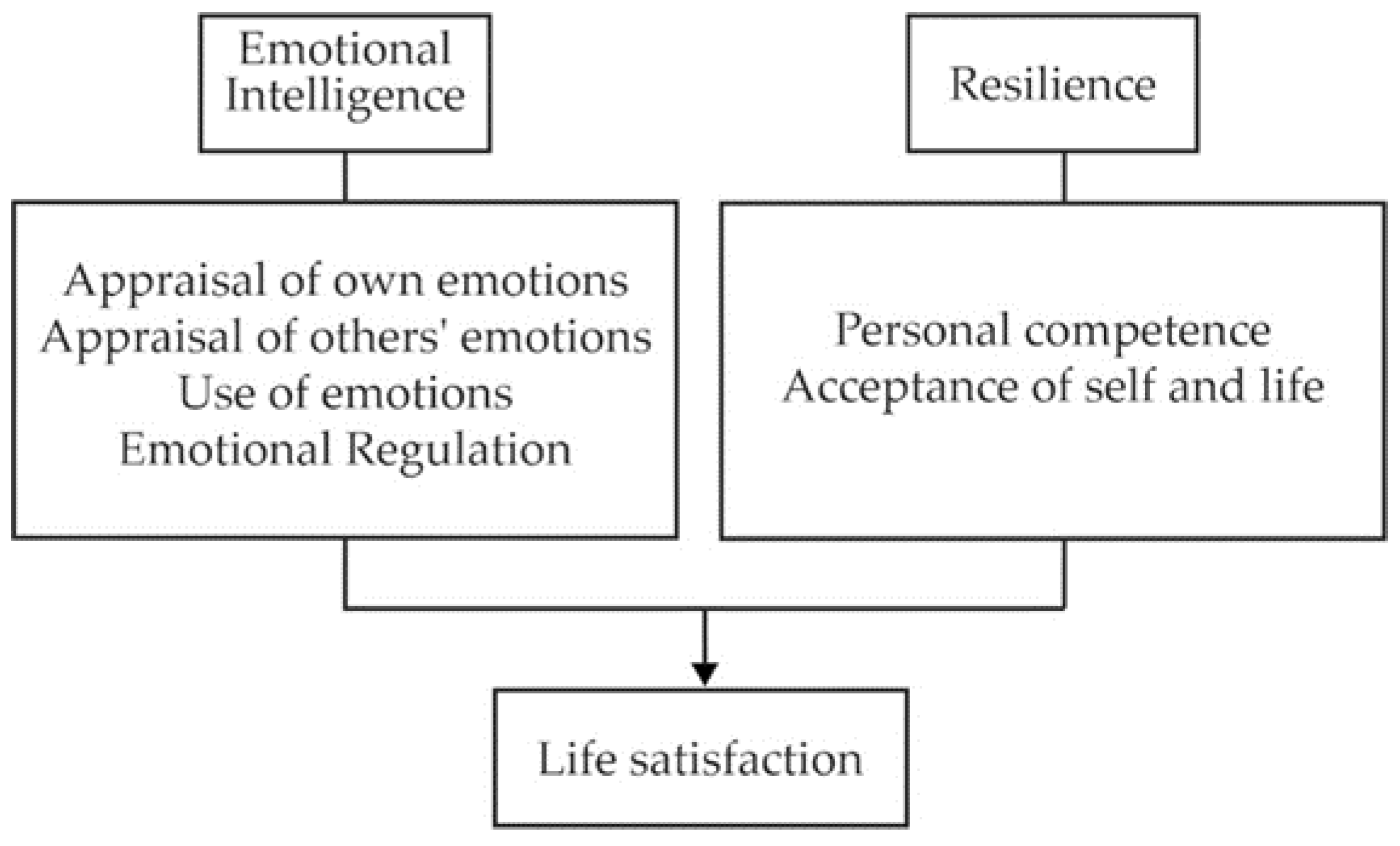
Figure 2.
Sedimentation graph (Emotional Intelligence, Resilience and Life satisfaction).
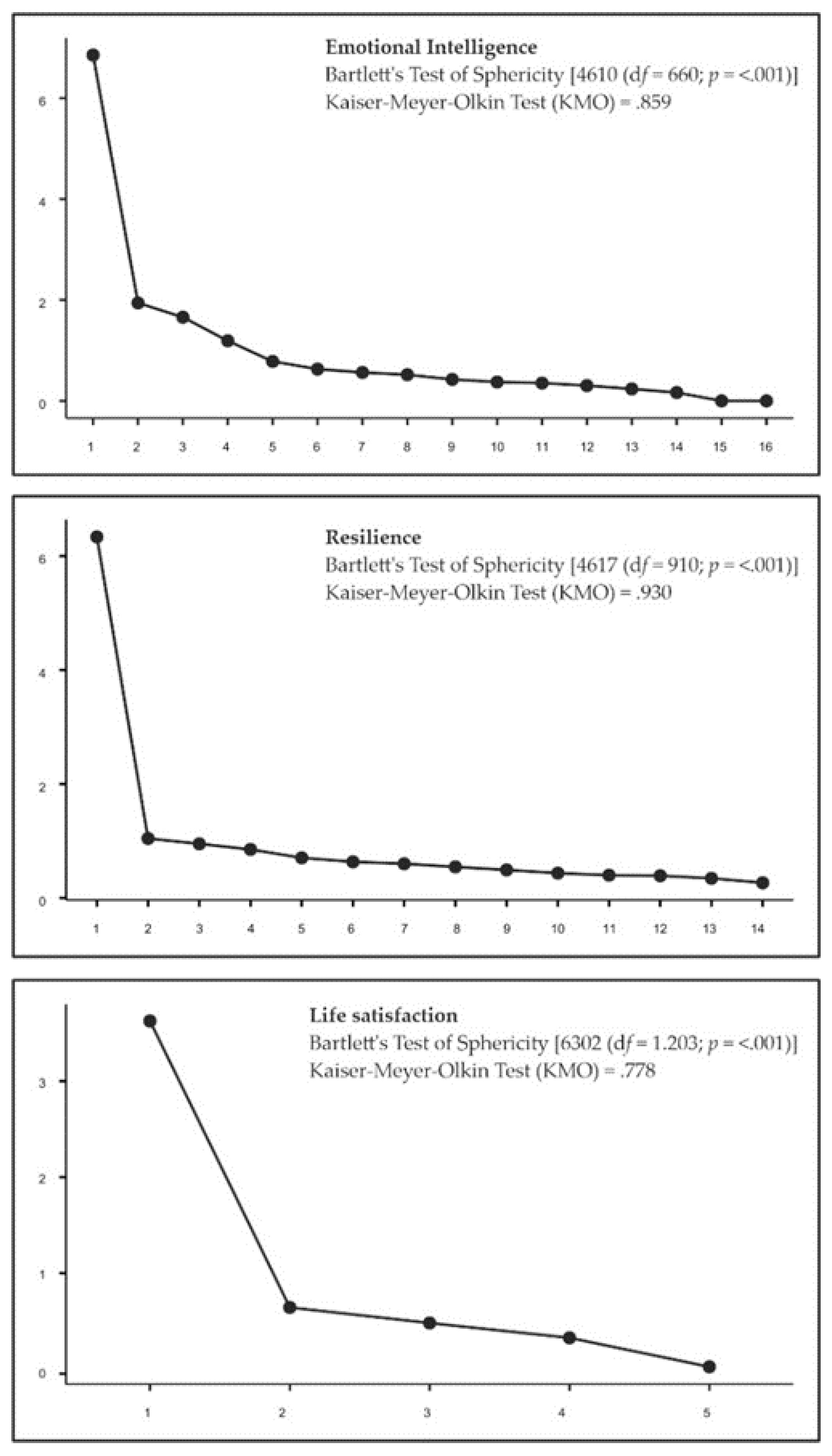
Figure 3.
Mean differences according to gender (mens vs. women) in each dimension.
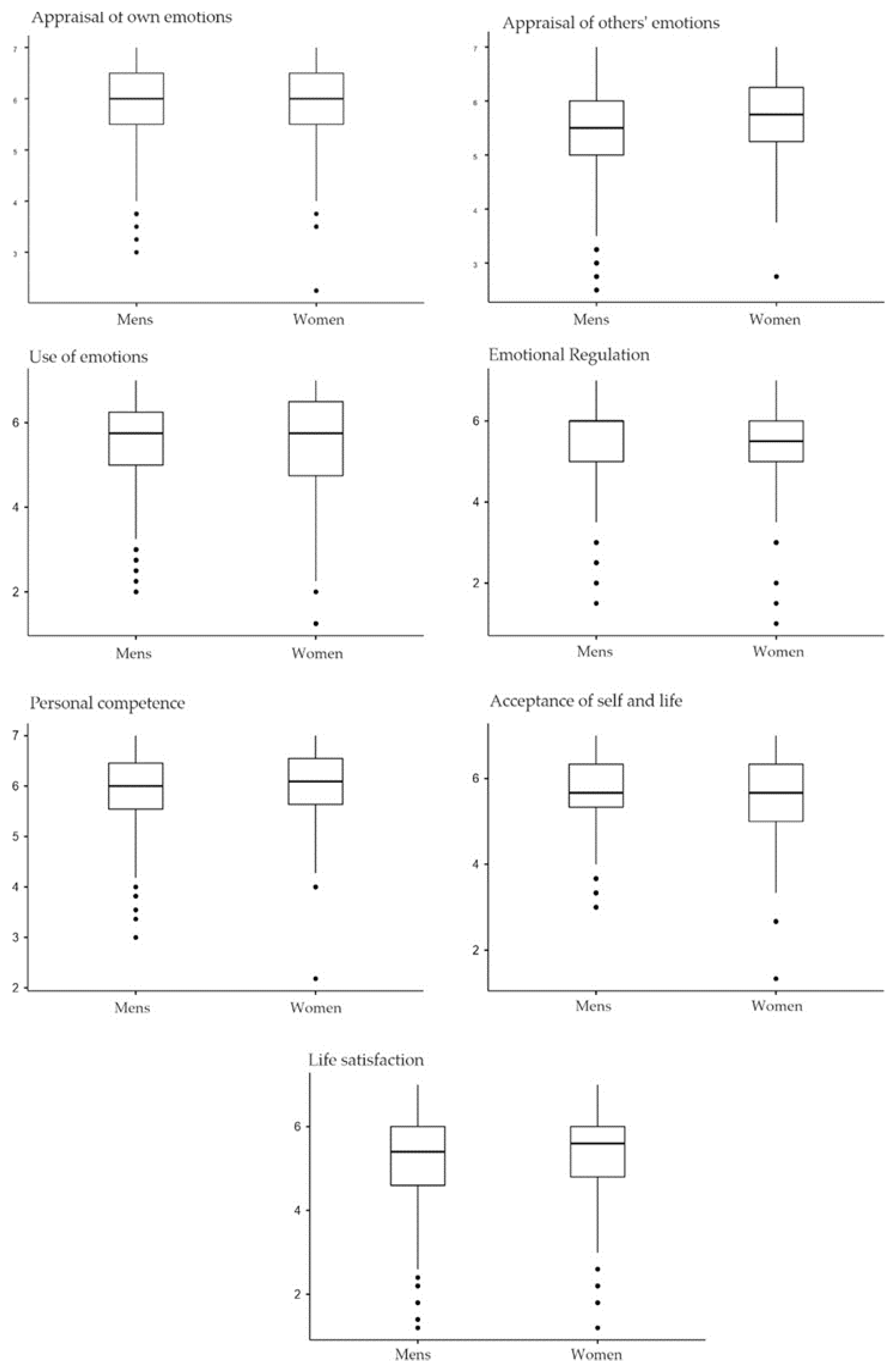
Figure 4.
ANOVA according to age in each dimension.
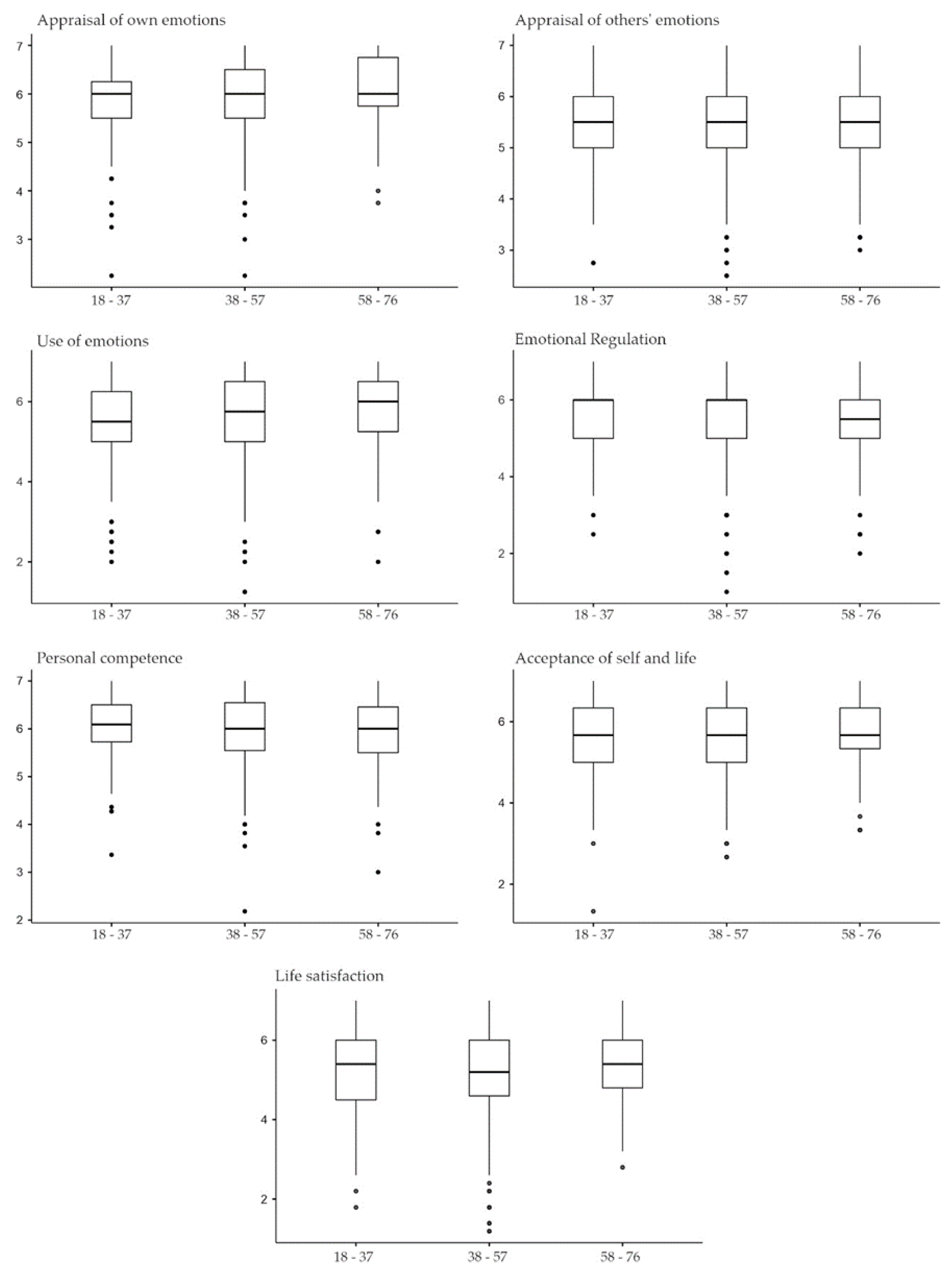
Table 1.
Factor loadings (WLEIS-S).
| Latent Factor | Indicator | α | ω | Estimate | SE | Z | p | β | AVE | CR |
|---|---|---|---|---|---|---|---|---|---|---|
| Appraisal of own emotions | Ítem 1 | .901 | .904 | 0.731 | .0306 | 23.9 | < .001 | 0.756 | .653 | .889 |
| Ítem 2 | .897 | .900 | 0.808 | .0272 | 29.8 | < .001 | 0.879 | |||
| Ítem 3 | .898 | .901 | 0.790 | .0285 | 27.7 | < .001 | 0.839 | |||
| Ítem 4 | .903 | .907 | 0.531 | .0348 | 15.3 | < .001 | 0.533 | |||
| Appraisal-of-others'-emot. | Ítem 5 | .904 | .908 | 0.731 | .0362 | 20.2 | < .001 | 0.690 | .601 | .854 |
| Ítem 6 | .904 | .908 | 0.895 | .0358 | 25.0 | < .001 | 0.817 | |||
| Ítem 7 | .908 | .911 | 0.589 | .0375 | 15.7 | < .001 | 0.566 | |||
| Ítem 8 | .902 | .907 | 0.792 | .0323 | 24.5 | < .001 | 0.809 | |||
| Use of emotions | Ítem 9 | .903 | .907 | 0.740 | .0408 | 18.1 | < .001 | 0.606 | .644 | .874 |
| Ítem 10 | .901 | .905 | 0.916 | .0409 | 22.4 | < .001 | 0.715 | |||
| Ítem 11 | .897 | .902 | 1.095 | .0340 | 32.2 | < .001 | 0.910 | |||
| Ítem 12 | .897 | .902 | 1.065 | .0334 | 31.8 | < .001 | 0.904 | |||
| Emotional Regulation | Ítem 13 | .897 | .901 | 0.803 | .0328 | 24.5 | < .001 | 0.744 | .621 | .856 |
| Ítem 14 | .896 | .899 | 1.085 | .0274 | 39.7 | < .001 | 1.000 | |||
| Ítem 15 | .896 | .899 | 1.079 | .0273 | 39.6 | < .001 | 0.999 | |||
| Ítem 16 | .897 | .901 | 0.731 | .0306 | 23.9 | < .001 | 0.756 |
Note: SE: Standardised error; Z: Z-value at estimation; p: p-value of Z-estimate; β: Standardised estimate; AVE: Average variance extracted; CR: Critical ratio.
Table 2.
Factor loadings (RS-14).
| Latent Factor | Indicator | α | ω | Estimate | SE | Z | p | β | AVE | RC | |
|---|---|---|---|---|---|---|---|---|---|---|---|
| Personal competence | Ítem 1 | 0.894 | .901 | 0.522 | .0300 | 17.4 | < .001 | 0.589 | .613 | .885 | |
| Ítem 2 | 0.892 | .899 | 0.601 | .0314 | 19.2 | < .001 | 0.635 | ||||
| Ítem 3 | 0.891 | .899 | 0.762 | .0392 | 19.4 | < .001 | 0.642 | ||||
| Ítem 4 | 0.886 | .894 | 0.792 | .0326 | 24.3 | < .001 | 0.759 | ||||
| Ítem 5 | 0.897 | .903 | 0.645 | .0427 | 15.1 | < .001 | 0.523 | ||||
| Ítem 6 | 0.893 | .900 | 0.477 | .0272 | 17.5 | < .001 | 0.591 | ||||
| Ítem 7 | 0.895 | .902 | 0.563 | .0338 | 16.6 | < .001 | 0.566 | ||||
| Ítem 8 | 0.886 | .893 | 0.827 | .0319 | 25.9 | < .001 | 0.792 | ||||
| Ítem 9 | 0.892 | .899 | 0.549 | .0282 | 19.5 | < .001 | 0.642 | ||||
| Ítem 10 | 0.890 | .898 | 0.708 | .0329 | 21.5 | < .001 | 0.694 | ||||
| Ítem 11 | 0.889 | .895 | 0.616 | .0257 | 24.0 | < .001 | 0.751 | ||||
| Acceptance-of-self-life | Ítem 12 | 0.900 | .905 | 0.656 | .0450 | 14.6 | < .001 | 0.529 | .545 | .811 | |
| Ítem 13 | 0.888 | .896 | 0.922 | .0391 | 23.6 | < .001 | 0.813 | ||||
| Ítem 14 | 0.898 | .904 | 0.578 | .0415 | 13.9 | < .001 | 0.505 | ||||
Note: SE: Standardised error; Z: Z-value at estimation; p: p-value of Z-estimate; β: Standardised estimate; AVE: Average variance extracted; CR: Critical ratio.
Table 4.
Internal consistency, mean, standard deviation and the Pearsons r correlation.
| Variable | α | ɷ | M (SD) |
(1) |
(2) |
(3) |
(4) |
(5) |
(6) |
(7) |
|---|---|---|---|---|---|---|---|---|---|---|
| Appraisal of own emotions (1) Appraisal of others' emotions (2) Use of emotions (3) Emotional Regulation (4) Personal competence (5) Acceptance of self and life (6) Life satisfaction (7) |
.849 .876 .847 .853 .838 .838 .857 |
.864 .887 .860 .867 .845 .853 .869 |
5.99(±.78) 5.46(±.83) 5.60(±1.03) 5.54(±1.01) 5.98(±.68) 5.67(±.88) 5.23(±.1.04) |
- .403*** .548*** .524*** .602*** .550*** .471*** |
.314*** .331*** .470*** .330*** .309*** |
.471*** .680*** .628*** .509*** |
.562*** .634*** .445*** |
.683*** .611*** |
.537 |
- |
Note: (1) M=Mean, SD=Standard deviation. (2) *** p< .001.
Table 5.
Differences in means according to gender (Student's t-test).
| Variables | Men (n=591) M (SD) |
Women (n=193) M (SD) |
t(784) | p | Effect (d) | 95% CI Lower Upper |
|
|---|---|---|---|---|---|---|---|
| Appraisal of own emotions Appraisal of others' emotions Use of emotions Emotional Regulation Personal competence Acceptance of self and life Life satisfaction |
5.98 (±.75) 5.38 (±.84) 5.64 (±.96) 5.60 (±.97) 5.96 (±.66) 5.70 (±.84 5.21 (±1.01) |
6.00 (±.84) 5.70 (±.74) 5.46 (±1.20) 5.36 (±1.08) 6.00 (±.73) 5.57 (±.97) 5.31 (±1.11) |
-.337 4.664 2.182 2.888 -.638 1.853 1.139 |
.706 < .001*** .029* .004** .524 .064 .255 |
-.0313 -.3867 .1809 .2394 -.0529 .1537 -0.0944 |
-.15169 -.45136 .01864 .07705 -.14745 -.00800 -.26762 |
.1028 -.1840 .3529 .4041 .0751 .2786 .0711 |
Note: (1) M= Mean, SD= Standard deviation. (2) * p< .05, ** p< .01, *** p< .001. (3) The statistical effect size is expressed as Cohen's d value.
Table 6.
Differences in means according to age (ANOVA).
| Variable | 18-37 years M (SD) |
38-57 years M (SD) |
58-76 years M (SD) |
F(784) | p | Effect η2 |
|---|---|---|---|---|---|---|
| Appraisal of own emotions | 5.84 (±.80) | 5.98 (±.80) | 6.09 (±.69) | 5.036 | .007** | .012 |
| Appraisal of others' emotions | 5.51 (±.86) | 5.43 (±.83) | 5.47 (±.79) | 0.563 | .570 | .001 |
| Use of emotions | 5.46 (±1.13) | 5.54 (±1.07) | 5.77 (±.83) | 6.196 | .002** | .013 |
| Emotional Regulation | 5.63 (±.91) | 5.51 (±1.04) | 5.51 (±1.00) | .864 | .422 | .002 |
| Personal competence | 6.06 (±.62) | 5.96 (±.70) | 5.94 (±.68) | 1.643 | .195 | .004 |
| Acceptance of self and life | 5.59 (±.95) | 5.65 (±.89) | 5.74 (±.82) | 1.522 | .220 | .004 |
| Life satisfaction | 5.22 (±1.07) | 5.16 (±1.11) | 5.36 (±.87) | 3.191 | .042* | .007 |
Note: (1) M= Mean, SD= Standard deviation. (2) * p< .05, ** p< .01. (2) The effect size is expressed as the Eta squared value (η2).
Table 7.
Linear regression analysis from the dependent variable Life satisfaction.
| Life Satisfaction | |||||
|---|---|---|---|---|---|
| Model | B | β | t | R2 corrected | p |
|
Step 1 Appraisal of own emotions |
.629 | .471 | 14.959 | .221 | <.001*** |
|
Step 2 Appraisal of own emotions Appraisal of others' emotions |
.553 .179 |
.414 .142 |
12.150 4.184 |
.237 | <.001*** <.001*** |
|
Step 3 Appraisal of own emotions Appraisal of others' emotions Use of emotions |
.321 .130 .350 |
.240 .104 .345 |
6.533 2.202 9.727 |
.319 |
<.001*** <.001*** <.001*** |
|
Step 4 Appraisal of own emotions Appraisal of others' emotions Use of emotions Emotional Regulation |
.238 .104 .304 .189 |
.178 .083 .300 .183 |
4.657 2.573 8.330 5.138 |
.340 |
<.001*** <.001*** <.001*** <.001*** |
|
Step 5 Appraisal of own emotions Use of emotions Emotional Regulation Personal competence |
.139 .132 .106 .614 |
.104 .130 .103 .402 |
2.828 3.361 2.946 9.549 |
.441 |
<.001*** <.001*** <.001*** <.001*** |
Note: (1) *** p<.001.
Disclaimer/Publisher’s Note: The statements, opinions and data contained in all publications are solely those of the individual author(s) and contributor(s) and not of MDPI and/or the editor(s). MDPI and/or the editor(s) disclaim responsibility for any injury to people or property resulting from any ideas, methods, instructions or products referred to in the content. |
© 2023 by the authors. Licensee MDPI, Basel, Switzerland. This article is an open access article distributed under the terms and conditions of the Creative Commons Attribution (CC BY) license (http://creativecommons.org/licenses/by/4.0/).
Copyright: This open access article is published under a Creative Commons CC BY 4.0 license, which permit the free download, distribution, and reuse, provided that the author and preprint are cited in any reuse.


