

Submitted:
06 December 2024
Posted:
06 December 2024
You are already at the latest version
Abstract
Traditional In-Person Semester-Length (IP-SL) courses often struggle with inherent time constraints, lack of flexibility, and geographic limitations, which collectively delay effective learning and accessibility for students. Moreover, the extended duration of the Semester-Length (SL) structure may lead to decreased student focus due to lengthy engagement with multiple subjects simultaneously, increased stress levels, and limited opportunities for timely feedback and assessment. This study evaluates the Online Real-Time Block Model (ORT-BM) as a solution to these issues, focusing on its ability to enhance gender equity and industry relevance while addressing the building industry's demand for a skilled and diverse workforce. Building surveying professionals must stay current with rapidly evolving building codes, regulations, and sustainability practices; however, the rigid structure of IP-SL courses often hinders this, resulting in graduates being less prepared to meet industry needs. Conducting a comparative analysis of a case study: the Bachelor of Building Surveying program at an Australian higher education institution, the research compares three teaching models: IP-SL (2016–2018), In-Person Block Model (IP-BM, 2019–2020), and ORT-BM (2020–2023) using Student Evaluation of Units (SEU) data. The findings indicate that ORT-BM significantly improves student satisfaction, supports gender equity by providing flexible learning options, and enhances accessibility. Furthermore, SEU results quantitatively demonstrate that ORT-BM's innovative strategies and utilization of digital tools have the potential to align building and construction education with rapidly evolving industry standards while addressing gender imbalances. Future research may explore developing hybrid models to optimize cognitive load further, improve accessibility, and enhance flexibility.
Keywords:
Building Surveying Education
; Construction Higher Education
; Digital Learning in Construction
; Gender Equity in Construction
; Intensive Online Teaching
; Student Engagement
1. Introduction
In-Person (IP) Semester-length (SL) education is the most common method in higher education but faces limitations such as logistical constraints, inflexibility, and challenges during unexpected disruptions like lockdowns [1,2,3], which cause stress and time management difficulties among learners, affecting their focus [4,5]. These limitations are especially pronounced in male-dominated fields like construction, where traditional learning models can unintentionally reinforce gender disparities by limiting access for students who may face greater challenges balancing personal and professional responsibilities [6,7,8]. This is particularly relevant for women, who remain underrepresented in the building and construction industry [9,10,11,12,13]. Moreover, the construction industry is experiencing rapid advancements in technology, sustainability practices, and regulatory requirements [14,15]. As a result, educational programs must adapt to ensure that graduates possess the professional skills to meet industry standards and remain competitive, particularly in fields like Building Surveying with a focus on updated regulations.
To address these challenges, researchers have investigated digital solutions like online, blended, and virtual collaborative learning [16,17]. Asynchronous (e.g., pre-recording lectures) and synchronous methods, e.g., live online lectures or Online Real-Time (ORT), have been introduced as alternatives to the IP method [18]. Despite the growing adoption of block models and online learning, there is a lack of comprehensive evaluation of their combined effects on student outcomes, particularly in professional programs like Building Surveying. These alternatives can improve flexibility, learning quality, and student engagement [19], although challenges like technical issues, accessibility concerns, and assessment integrity continue in online content delivery [20,21]. The intensive learning and teaching approach, known as the Block Model (BM), has emerged as an alternative to the SL approach in higher education and tertiary institution settings [22,23,24]. This approach offers an engaging learning experience that accelerates course completion and boosts engagement across diverse student demographics, including first-year and disadvantaged students [25,26]. Although BM demonstrates significant potential in enhancing educational outcomes [27], research on integrating BM with online educational methods remains limited, requiring further investigation into their combined efficacy.
In response to this gap, this paper introduces the Online Real-Time Block Model (ORT-BM), which combines online and intensive delivery methods, and evaluates its impact on teaching and learning environments, gender equity, engagement, and course progression. This research is crucial for informing educational practices in higher education, especially in fields requiring practical, regulatory knowledge like Building Surveying. By understanding the impact of the ORT-BM, institutions can make informed decisions about implementing more effective, accessible, and equitable educational strategies. The focus is on the Bachelor of Building Surveying (NBBS) course at Victoria University, comparing it with two other delivery methods: In-Person Semester-length (IP-SL) and In-Person Block Model (IP-BM), used for the same content and institution. This article comprises six sections. After this introduction, Section 2 reviews the relevant literature, then Section 3 explains the utilized methodology. The case study course and selected units are defined in Section 4. Section 5 presents the results of this study and provides a discussion. Then, the limitations of this study and suggested future topics are introduced in Section 6. Finally, Section 7 draws conclusions based on results and findings.
2. Literature Review
This section addresses two main concerns with traditional IP-SL delivery and reviews existing research on the impacts of online learning and intensive teaching. It evaluates the literature on integrating these methods to identify the effects of developed models and knowledge gaps.
The integration of online learning in higher education has transformed the field, particularly post-COVID-19 [28,29,30]. This shift, characterized by electronic communication, has encouraged researchers to investigate the applications of technology and digitalization in education [31,32,33]. Literature highlights challenges in adapting to new digital technologies and pedagogies, as well as opportunities to enhance student engagement [34,35]. Two main types of online delivery have been studied: asynchronous (pre-recorded lectures) and synchronous, live online lectures or ORT [36].
Asynchronous and synchronous modes offer benefits like flexibility, improved learning quality, student satisfaction, and increased enrolment [37,38,39,40]. However, challenges remain in delivering lab-based content online and managing cognitive load [36,41]. Despite these concerns, both modes are effective in flipped classrooms, collaborative learning, and problem-based learning [40,42,43,44,45]. Asynchronous lectures provide flexibility and accessibility, while synchronous lectures enhance interactivity and peer-centered activities, offering diverse advantages depending on the learning context [46,47,48].
Cognitive Load Theory (CLT) further underscores the importance of designing education models that balance cognitive demands with learner capacity [49,50]. Integrating intensive delivery methods like BM with online strategies has been shown to improve cognitive retention by structuring content into manageable blocks and supporting diverse student demographics, including disadvantaged learners [51]. However, accessibility challenges persist, particularly for students in regional areas or those with limited access to technology, emphasizing the need for institutional support and hybrid strategies [52,53]. Recent innovations, such as virtual reality and AI tools [54,55], offer additional opportunities to enhance ORT-BM’s effectiveness by simulating practical, industry-relevant scenarios.
The literature emphasizes that both pre-recorded lectures and ORT have been successful in distance learning [46,56], with ORT being particularly beneficial for students with disabilities due to the interaction possibilities between students and instructors [57,58,59]. In contrast, ORT methods may result in a lower cognitive load for students [36], highlighting the need for innovative strategies that consider course content, learning outcomes, teaching modes, and student demographics [60,61,62]. Therefore, designing ORT curricula based on these factors and analyzing learner experiences through case studies can contribute to a more learner-centered environment.
The intensive learning and teaching approach, also known as the BM [63,64], immersive scheduling [24,65], or intensive delivery mode [66], has been implemented in various education settings [22,23,67,68,69,70,71], and proven effective, particularly for first-year undergraduates, repeating students, and those from disadvantaged backgrounds [64,72,73,74,75,76]. By condensing content into shorter, focused learning periods, BM enhances engagement, retention, and accessibility [77,78]. Furthermore, its integration with flexible learning models like the ORT-BM has the capability to address systemic barriers in male-dominated fields like construction. Gender equity can considerably benefit from such models, as they provide flexible learning schedules that reduce barriers to participation, particularly for women balancing professional and personal responsibilities [79]. At the same time, the building and construction industry, characterized by rapidly evolving standards, sustainability practices, and regulatory requirements, requires graduates equipped with up-to-date, industry-relevant skills [14,15]. Traditional learning models often fall short of meeting these demands, highlighting the need for innovative curriculum designs. Previous findings confirm BM's effectiveness in improving learning and teaching quality [70,80,81], suggesting that integrating BM with digital and flexible delivery strategies like ORT-BM could address these gaps while advancing inclusivity and preparing students for the challenges of a modern workforce.
Integrating ORT with BM can be a promising development in educational strategies, combining the strengths of both methods, flexibility and accessibility of ORT, engagement, and accelerated completion of BM, while mitigating their limitations. This article examines this integration's performance through a qualitative study on the NBBS course at Victoria University, Melbourne, and highlights how combining ORT and BM enhances educational outcomes and student engagement compared with IP-SL and IP-BM.
3. Methodology
This study employs a case study approach to examine the NBBS program at Victoria University over seven years, analyzing course reviews, monitoring data, and Student Evaluation of the Unit (SEU) feedback to assess instructional methodologies. SEU data was selected due to its comprehensive and consistent collection, providing reliable measures of student engagement, satisfaction, and teaching quality across all instructional models. Ethics approval (ID: HRE23-125) from Victoria University ensured compliance with ethical standards and safeguarded the anonymity of student feedback.
The NBBS program is a part of Victoria University’s Senior College, with first-year students enrolled in the First Year College (FYC) model, introduced in 2018 [82,83]. Four units within this program, two second and two third-year units, were selected as case studies for their representativeness of core competencies in building surveying education. These units were delivered using three instructional methods: IP-SL (2016–2018), IP-BM (2019–2020), and ORT-BM (2020–2023). Descriptive statistics were used to analyze SEU feedback, with averages and variances calculated to compare trends in student engagement, satisfaction, and teaching quality.
Potential methodological limitations include reliance on SEU data, which primarily captures quantitative feedback and may not fully reflect qualitative aspects of the student experience. Moreover, external factors such as the COVID-19 pandemic and changes in student demographics may have influenced the findings. To mitigate these limitations, data was cross-referenced with course monitoring reports to validate trends.
4. Case Study
This section introduces the NBBS course (Section 4.1) and four selected units (Section 4.2).
4.1. Bachelor of Building Surveying (NBBS) Course
The NBBS is a 3-year full-time course established in 2016 after separating from the Construction Management program. Accredited by the Victorian Building Authority (VBA), it meets the knowledge requirements for registration as an Unlimited Building Surveyor in Victoria [84]. The course transitioned from a traditional IP-SL to an intensive IP-BM in 2019, and then to the ORT-BM.
4.2. Selected Units of Subject
Four central units in the NBBS course are discussed: three specific subjects to NBBS and one (NBC3001) shared with the Bachelor of Construction Management and Bachelor of Building Design. These units were delivered in three modes: (1) IP-SL (2016-2018), (2) IP-BM (2019-2020), and (3) ORT-BM (2020-2023).
4.2.1. Building Regulations (NBC2002)
NBC2002 Building Regulations is a foundational unit for second-year students, providing an understanding of the National Construction Code (NCC) of Australia and related regulations for low-rise buildings. This unit transitioned from IP-SL to IP-BM in 2019 and adapted to ORT-BM in 2020 during the COVID-19 lockdown. Post-2022 reopening, NBC2002 became available in both IP-BM and ORT-BM formats. Table 1 provides a summarized overview of these transitions [85].
4.2.2. Performance-based Solutions for Buildings (NBC2109)
NBC 2109 is a core unit for second-year NBBS students, focusing on performance-based solutions through building code reviews and implementation procedures [86]. Performance-based codes offer flexibility in meeting performance requirements, crucial for building surveyors and certifiers [87]. Therefore, educators prioritize this unit as a key topic.
NBC 2109 was offered under the conventional IP-SL approach until it transitioned to IP-BM in 2019 and ORT-BM in 2020. Table 2 summarizes these changes.
4.2.3. High Rise Development and Compliance (NBC3001)
NBC3001 is a core unit for all Built Environment courses, targeting third-year undergraduates and focusing on high-rise construction. It covers specialized construction methods, statutory regulations, and Building Information Modelling or BIM [88].
In 2018, the unit NBC 3001 was offered within NBBS in a traditional IP-SL format. NBC3001 transitioned to IP-BM in 2019 and then to ORT-BM in 2020. Table 3 details the evolution of these teaching methods.
4.2.4. Advanced Building Surveying (NBC3002)
Advanced Building Surveying (NBC3002) covers statutory controls, enforcement proceedings, and the intersection of occupational health and safety, environmental, and heritage legislation with the NCC [89]. Initially offered through IP-SL formats in 2018-2019, NBC3002 transitioned to IP-BM in 2019 and then to ORT-BM in 2020. Details of these transitions are outlined in Table 4
5. Results and Discussion
This section evaluates the NBBS course and its four selected units during transitions from IP-SL (2016-2018) to IP-BM (2019-2020), and then ORT-BM (2020 to present). It explores the effectiveness of ORT-BM in enhancing student learning experiences and outcomes based on Quality Indicators for Learning and Teaching (QILT) [90].
5.1. Bachelor of Building Surveying (NBBS) Course
Transitions to IP-BM and ORT-BM significantly altered the NBBS course landscape. Figure 1 highlights the number of NBBS students and their progress rates from 2016 to the present, calculated based on Passed Equivalent Full-Time Student Load (EFTSL) divided by Assessed EFTSL.
Figure 1 (a) illustrates a significant increase in NBBS students over seven years, with a rise from 55 in 2016 to 145 in 2019-2020 after transitioning from IP-SL to IP-BM. The shift to ORT-BM from 2020 further accelerated this trend, with a peak during the 2020-2021 lockdown. This successful implementation led Victoria University to continue offering NBBS in ORT-BM even after universities reopened in 2022, resulting in a six-fold increase in students since 2016.
The transition from traditional IP-SL teaching and learning to ORT-BM might have addressed another key parameter in the construction industry: gender equity. The analysis of the QILT data, broken down by gender, is presented in Figure 2.
Figure 2 illustrates a significant increase in female students from 10.9% in 2016 to 20.5% after ORT-BM’s introduction in 2020. This rise may be due to ORT-BM's flexibility, allowing students to balance studies and personal responsibilities, and creating a more accessible environment for women male-dominated construction field [91]. On the other hand, the Women Building Surveyors Program, launched with a $6.3 million budget, notably supported this increase, enrolling 40 women through ORT-BM [92]. Victoria University has successfully enrolled 40 Victorian Women through this program [93] since the ORT-BM approach enabled participants from regional Victoria to attend all classes easily. These results demonstrate ORT-BM's capacity to promote gender equity in male-dominated fields.
Over seven years, the NBBS has significantly improved performance metrics, including a substantial rise in annual course completions, Figure 3(a), and a decrease in the average time to complete the course, Figure 3 (b). The introduction of ORT-BM not only streamlined course completion but also equipped students with skills aligned with current industry requirements, such as Building Information Modelling (BIM) and project-based assessments. These trends are evident from NBBS's establishment as a standalone course at Victoria University in 2016.
Figure 3 (a) shows completion numbers rising from 19 in 2017 to 69 in 2022 with the ORT-BM’s implementation. This approach, fully adopted post-2020, increased completions by offering flexibility and online access, removing geographical constraints. The slight decrease to 67 in 2023 suggests the NBBS program has reached maturity, finding its optimal size and format. Figure 3 (b) reflects a reduction in completion times after transitioning from IP-BM in 2019 to ORT-BM in 2020, highlighting ORT-BM's efficiency.
Moreover, Victoria University's Recognition of Prior Learning (RPL) and Advanced Standing policy have significantly shortened degree completion times [94]. Victoria University has created a Credit Calculator page that enables future students to estimate RPL credits based on prior courses [95]. Besides, ORT-BM’s flexible scheduling (e.g., evening sessions), has attracted 71 experienced professionals since 2020, positively impacting completion rates and times.
The Students Experience Survey (SES) from QILT data provides insights into the impact of teaching approaches on student experiences. Although SES data isn't available for individual courses like NBBS, the average feedback across Architecture and Built Environment courses (NBBS, Bachelor of Building Design, and Bachelor of Construction Management) offers a broader perspective. Notably, NBBS continued with ORT-BM after 2022, while others reverted to IP-BM. Figure 4 presents third-year students' SES responses on Learner Engagement (LE), Learning Resources (LR), Skills Development (SD), Student Support (SS), and Teaching Quality (TQ) between 2017 and 2022.
Figure 4 (a) demonstrates the SES survey response rates were lowest in 2017, increasing from 5 to a peak of 18 in 2020, suggesting improved data reliability. Figure 4 (b) reveals that while traditional IP-SL scored well in the SS and LE, it rated poorly in Overall Experience, reflecting a gap between expectations and reality. The shift to IP-BM in 2019 saw declines in LE, LR, and SD, but improved the Overall Experience. With the introduction of ORT-BM in 2020, Teaching Quality has increased, while the Overall Experience remained moderate at around 50%, suggesting a need to enhance the “Sense of belonging”.
To investigate SES results in more detail, each criterion (i.e., LE, LR, SD, SS, and TQ) between 2016 and 2022, the latest available data, are illustrated in Figure 5.
Figure 5 (a) indicates low satisfaction with "Student interaction outside of study," "Sense of belonging", and "Opportunities to interact with local students" under LE, especially after transitioning to ORT-BM in 2020. In response, Victoria University enhanced online platforms with real-time Q&A sessions and established the Built Environment Student Club in 2023 to boost engagement. High satisfaction with "Online learning platform quality" in 2021 and 2022 reflects ORT-BM's technological success. Future implementations could incorporate structured peer collaboration tools, moderated discussion forums, and virtual co-curricular activities to improve these outcomes.
Figure 5(b) shows the lowest satisfaction in "Laboratory or studio equipment – quality" across all teaching approaches, indicating a need to update resources. To address this, the Built Environment team developed VR simulation tools [27,96] integrated into units like Building Development and Compliance. These tools have made complex concepts more tangible and received positive feedback.
Figure 5 (c) reveals low satisfaction in "complex problem solving," "knowledge of study areas," and "critical thinking", key employability skills. Victoria University responded by integrating real-world data and scenarios into assessments and launching the "Industry Collaboration Project", providing hands-on experience with actual industry problems like serving as cadet building surveyors.
Figure 5 (d) shows Student Support consistently lagging in satisfaction. Despite Victoria University's strong employability services [97], low satisfaction suggests students may be unaware of these resources. The Built Environment team initiated online engagements, such as webinars, to facilitate direct interaction with career experts.
Finally, Figure 5 (e) highlights challenges in receiving constructive feedback and intellectual stimulation from teaching staff. However, Teaching Quality improved significantly between 2020 and 2022 under ORT-BM, possibly due to curriculum updates and innovative online feedback mechanisms. Enhanced interactive sessions, including guest lectures and group projects, have stimulated critical thinking and enriched education.
5.2. Selected Units of Subject
This section examines four core units within the NBBS program: 1. NBC2002- Building Regulations, 2. NBC2109- Performance-based Solutions for Buildings, 3. NBC3001- High Rise Development and Compliance, and 4. NBC3002- Advanced Building Surveying over three utilized approaches.
5.2.1. Building Regulations (NBC2002)
This section evaluates the annual SEU response rates across teaching approaches to highlight the impact of pedagogical shifts. Figure 6 illustrates these response rates and the average scores.
Figure 6 (b) shows stable growth across six criteria, Overall Satisfaction, Clarity of Expectations, Learning Activities, Up to Date Learning Resources, Assessment Suitability, and Reasonable Workload, despite minor fluctuations due to transitioning to IP-BM in 2019. From 2020 onwards, scores consistently exceeded 4, reflecting successful adaptation to new learning approaches. The highest satisfaction was in 2022, coinciding with the return to on-campus activities, with notable improvements in Learning Activities, Clarity of Expectations, and Assessment Suitability, enhanced by VR technology and project-based learning.
5.2.2. Performance-based Solutions for Buildings (NBC2109)
This section examines SEU response rates and scores for NBC2109, shown in Figure 7.
Figure 7 (a) depicts SEU response rates for NBC2109 from 2018 to 2023, showing recent improvements. Response rates were moderate under IP-SL in 2018 (17.9%) and IP-BM in 2019 (15.4%), reflecting modest engagement. A significant drop occurred in 2020 (11.1%), with a slight increase in 2021 (11.9%) during the ORT-BM transition. After 2021, rates improved to 32.2% in 2022 and 36.4% in 2023, despite fewer invitations, due to effective engagement strategies like personalized emails, social media outreach, and staff involvement in promoting.
Figure 7 (b) indicates a fall in student satisfaction during the shift from IP-SL in 2018 to IP-BM in 2019, likely due to the challenges of adapting to the more intense BM format. However, satisfaction improved after 2020, with all criteria scoring above 4. ORT-BM particularly enhanced satisfaction in Learning Activities and workload management, reflecting the effective use of digital materials and project-based learning.
In summary, implementing the ORT-BM approach for NBC2109 after the adaptation period in 2020 and 2021 improved student interaction and feedback rates. This progression may suggest the effectiveness of adaptive responsive strategies like personalized online communication and participatory educational environments, such as project-based learning, under ORT-BM.
5.2.3. High Rise Development and Compliance (NBC3001)
This section investigates NBC3001 as another case study. Figure 8 displays the annual average response rate and mean SEU scores.
Figure 8 (a) highlights an increase in response rate after transitioning to ORT-BM in 2020. The anonymous online feedback and extended response time improved the quality of teaching insights, encouraging more honest and constructive feedback, which contributed to enhanced teaching quality.
Figure 8 (b) indicates enhanced overall satisfaction for NBC3001 since 2018. The shift from IP-SL to IP-BM initially increased SEU rates, though they declined with the 2020 transition to ORT-BM. The incorporation of BIM tools like Revit and Navisworks improved student feedback on Learning Activities and Assessment Suitability. This highlights ORT-BM’s strength in preparing students for industry roles requiring advanced technical proficiency. The full implementation of ORT-BM and strategies like introducing BIM applications and revising assignments led to continuous SEU rate increases. From 2021-2023, ORT-BM achieved an average satisfaction score of 4.4, enhancing Learning Activities and access to up-to-date resources. In conclusion, ORT-BM outperformed previous models in student satisfaction, demonstrating the effectiveness of innovative strategies.
5.2.4. Advanced Building Surveying (NBC3002)
This section explores student responses to the SEU for NBC3002. Figure 9 displays the number of SEU responses and the annual average satisfaction across six different criteria.
Figure 9 (a) illustrates no SEU responses in 2018 despite 13 invitations, likely due to ineffective survey distribution. From 2019 to 2023, response rates improved, except for a drop in 2020 during the IP-BM to ORT-BM transition. Rates peaked at 27% in 2021 and 23% in 2023, following personalized invitations and increased instructor encouragement.
Figure 9 (b) indicates continuous improvement in the student experience from 2019 to 2023, particularly after fully implementing ORT-BM in 2021, following a temporary decline during the 2020 lockdown. This improvement is evident in key areas like Up-to-Date Learning Resources, Assessment Suitability, and Clear Expectations, driven by 24/7 access to materials and a well-structured online plan
6. Limitations and Future Directions
This section discusses the limitations of the ORT-BM approach and recommends future research directions. While ORT-BM improves engagement and satisfaction, it may require adjustments for at-risk students, such as non-native English speakers or those with limited technological access. Previous studies by [98] and [99] highlight that intense virtual environments can overwhelm students' cognitive capacities, especially those with special needs. Therefore, adapting ORT-BM to better manage information flow and support these students' unique needs is essential. Besides, using digital platforms might create a digital divide, disadvantaging students without reliable technological access. Educational platforms must be user-friendly and accessible to all, regardless of technical skills or backgrounds.
Future research should explore hybrid learning models that apply CLT principles to balance cognitive demands with user-friendly and flexible environments, making digital learning more inclusive. A scaffolding approach, which breaks down complex tasks and offers structured support, could help mitigate cognitive overload and aid at-risk students in better understanding course materials. Additionally, studies should focus on designing platforms that are accessible and don’t heavily rely on technical skills, ensuring inclusivity for all students.
7. Conclusions
This paper quantitatively evaluates the ORT-BM approach for delivering the NBBS program at Victoria University, comparing it with traditional IP-SL and IP-BM methods. The findings highlight the following key points.
- Higher enrolment and completion rates with ORT-BM demonstrate the effectiveness of this approach in supporting students through to course completion more quickly;
- SEU data shows improvements in student satisfaction, particularly in Learning Activities, Clear Expectations, and Assessment Suitability, likely due to technology integration, 24/7 access to materials, innovative virtual tools like BIM, and real-world project-based assignments; and
- Increased female enrolment suggests ORT-BM’s flexibility and accessibility appeal to women, mitigating gender intimidation issues common in in-person settings and contributing to a more inclusive learning environment.
However, the study also identifies challenges associated with ORT-BM:
- Some students, especially those needing more time or with limited technological access, find the model challenging. Strategies like scaffolding and peer support systems could help mitigate these challenges, ensuring all students benefit from the model; and
- The digital divide remains a concern, requiring institutions to provide necessary tech access or alternatives to ensure equitable learning.
The findings underscore the potential of ORT-BM to reshape higher education by offering a model that not only meets the needs of diverse student populations but also addresses critical industry demands for timely and practical knowledge transfer. By integrating industry-relevant tools and emphasizing gender equity, this model equips graduates with the skills and confidence to succeed in rapidly evolving professional fields. Addressing the identified challenges can promote gender diversity and inclusivity in such areas.
Quantitative evidence supports the scalability and adaptability of ORT-BM across various educational contexts, enhancing access and success in higher education. Future research should explore hybrid learning models that balance cognitive load with accessibility and flexibility, particularly focusing on enhancing the "sense of belonging" through innovative engagement strategies. Incorporating qualitative insights could further enrich the evaluation of ORT-BM by providing a more comprehensive understanding of students' experiences and the nuanced impacts of this approach.
Acknowledgments
During the preparation of this article, the authors used AI tools to improve readability and language. After using these tools, the authors reviewed and edited the content as needed. They take full responsibility for the content of the publication.
References
- Li, X., et al., Applying blended synchronous teaching and learning for flexible learning in higher education: an action research study at a university in Hong Kong. Asia Pacific Journal of Education, 2022. 42(2): p. 211-227. [CrossRef]
- Mushtaha, E., et al., The challenges and opportunities of online learning and teaching at engineering and theoretical colleges during the pandemic. Ain Shams Engineering Journal, 2022. 13(6): p. 101770. [CrossRef]
- Thomas, M., Z. Yager, and H. Widdop Quinton, ‘You need to be flexible normally, and here, even more flexible’: teaching academics’ experiences and perceptions of Covid-19 disruptions to teaching, learning, and assessment. Journal of Further and Higher Education, 2023. 47(2): p. 215-228. [CrossRef]
- French, S., The benefits and challenges of modular higher education curricula. Issues and Ideas Paper. Melbourne: Melbourne Centre for the Study of Higher Education, 2015.
- Seamon, M., Short-and long-term differences in instructional effectiveness between intensive and semester-length courses. Teachers College Record, 2004. 106(4): p. 852-874.
- Huang, X., A Study of STEAM Instruction and Its Impact on Female Students’ Underrepresentation in STEM Fields. 2021, University of Windsor (Canada).
- Carnemolla, P. and N. Galea, Why Australian female high school students do not choose construction as a career: A qualitative investigation into value beliefs about the construction industry. Journal of Engineering Education, 2021. 110(4): p. 819-839. [CrossRef]
- Simon, L. and K. Clarke, Apprenticeships should work for women too! Education+ training, 2016. 58(6): p. 578-596. [CrossRef]
- Sharif, A.A., et al., Gender equality in architecture and construction: An assessment framework at the institutional and sectoral levels in Jordan. Buildings, 2024. 14(3): p. 764. [CrossRef]
- Ghanbaripour, A.N., et al., Retention over attraction: A review of women’s experiences in the Australian construction industry; challenges and solutions. Buildings, 2023. 13(2): p. 490. [CrossRef]
- Yan, D., R.Y. Sunindijo, and C.C. Wang, Analysis of Gender Diversity Initiatives to Empower Women in the Australian Construction Industry. Buildings, 2024. 14(6): p. 1707. [CrossRef]
- Oo, B.L. and B.T.H. Lim, Women Workforces’ Satisfaction with Personal Protective Equipment: A Case of the Australian Construction Industry. Buildings, 2023. 13(4): p. 959. [CrossRef]
- Paramasivam, S.K., K. Mani, and B. Paneerselvam, Unveiling Gender-Based Musculoskeletal Disorders in the Construction Industry: A Comprehensive Analysis. Buildings, 2024. 14(4): p. 1169. [CrossRef]
- Casini, M., Construction 4.0: Advanced technology, tools and materials for the digital transformation of the construction industry. 2021: Woodhead Publishing.
- Vagtholm, R., et al., Evolution and current state of building materials, construction methods, and building regulations in the UK: implications for sustainable building practices. Buildings, 2023. 13(6): p. 1480. [CrossRef]
- Bilal, et al., Virtual learning during the COVID-19 pandemic: A bibliometric review and future research agenda. Risk Management and Healthcare Policy, 2022: p. 1353-1368. [CrossRef]
- Farouk, A.M., et al., Exploring the Economic Viability of Virtual Reality in Architectural, Engineering, and Construction Education. Buildings, 2024. 14(9): p. 2655. [CrossRef]
- Chau, H.T.H., H.P. Bui, and Q.T.H. Dinh, Impacts of online collaborative learning on students’ intercultural communication apprehension and intercultural communicative competence. Education and Information Technologies, 2023: p. 1-18. [CrossRef]
- Naamati-Schneider, L. and D. Alt, Online collaborative Padlet-mediated learning in health management studies. Frontiers in Psychology, 2023. 14: p. 1157621. [CrossRef]
- Gamage, K.A., E.K.d. Silva, and N. Gunawardhana, Online delivery and assessment during COVID-19: Safeguarding academic integrity. Education Sciences, 2020. 10(11): p. 301. [CrossRef]
- Shah, S., et al., Challenges faced by teachers of postgraduate health professions blended learning programs: a qualitative analysis. BMC Medical Education, 2024. 24(1): p. 251. [CrossRef]
- Davies, W.M., Intensive teaching formats: A review. Issues in educational research, 2006. 16(1): p. 1-20.
- Ghapanchi, A., A. Purarjomandlangrudi, and Y. Miao. Does students' adoption of block mode of teaching boost positive learning outcomes in tertiary sector? in Proceedings of the thirty-seventh Information Systems Education Conference ISECON. 2021. Foundation for Information Technology Education.
- Goode, E., S. Syme, and J.E. Nieuwoudt, The impact of immersive scheduling on student learning and success in an Australian pathways program. Innovations in Education and Teaching International, 2022: p. 1-13. [CrossRef]
- Oraison, H., et al. Staff experiences of Victoria University’s First Year College during the implementation of block mode teaching. in 6th International Conference on Higher Education Advances (HEAd’20). 2020. Universitat Politecnica de Valencia.
- Zhang, J. and R. Cetinich, Exploring the learning experience of international students enrolled in the Southern Cross Model. Southern Cross University Scholarship of Learning and Teaching Paper, 2022(4).
- VictoriaUniversity. VU BLOCK MODEL (Experience a smarter, more engaging way to study with the VU Block Model®). 2023. Available online: https://www.vu.edu.au/study-at-vu/why-choose-vu/vu-block-model.
- Coman, C., et al., Online teaching and learning in higher education during the coronavirus pandemic: Students’ perspective. Sustainability, 2020. 12(24): p. 10367. [CrossRef]
- Imran, R., et al., Teaching and learning delivery modes in higher education: Looking back to move forward post-COVID-19 era. The International Journal of Management Education, 2023. 21(2): p. 100805. [CrossRef]
- Martin, F., T. Sun, and C.D. Westine, A systematic review of research on online teaching and learning from 2009 to 2018. Computers & education, 2020. 159: p. 104009. [CrossRef]
- Carrillo, C. and M.A. Flores, COVID-19 and teacher education: a literature review of online teaching and learning practices. European journal of teacher education, 2020. 43(4): p. 466-487. [CrossRef]
- Deroncele-Acosta, A., M.L. Palacios-Núñez, and A. Toribio-López, Digital Transformation and Technological Innovation on Higher Education Post-COVID-19. Sustainability, 2023. 15(3): p. 2466. [CrossRef]
- Kemp, N. and R. Grieve, Face-to-face or face-to-screen? Undergraduates' opinions and test performance in classroom vs. online learning. Frontiers in psychology, 2014. 5: p. 1278. [CrossRef]
- Adtani, R., et al., Embracing ICT in academia: adopting and adapting to the new normal pedagogy. Global Knowledge, Memory and Communication, 2023. [CrossRef]
- Forde, C. and A. OBrien, A literature review of barriers and opportunities presented by digitally enhanced practical skill teaching and learning in health science education. Medical education online, 2022. 27(1): p. 2068210. [CrossRef]
- Hung, C.-T., et al., The evaluation of synchronous and asynchronous online learning: student experience, learning outcomes, and cognitive load. BMC Medical Education, 2024. 24(1): p. 326. [CrossRef]
- Brent, R., M. Prince, and R. Felder, Promoting and managing student-student interactions in online STEM classes. International Journal of Engineering Education, 2021. 37(3): p. 797-813.
- Martínez, P.J., F.J. Aguilar, and M. Ortiz, Transitioning from face-to-face to blended and full online learning engineering master’s program. IEEE Transactions on Education, 2019. 63(1): p. 2-9. [CrossRef]
- Paudel, P., Online education: Benefits, challenges and strategies during and after COVID-19 in higher education. International Journal on Studies in Education (IJonSE), 2021. 3(2). [CrossRef]
- Persada, S.F., et al., How the education industries react to synchronous and asynchronous learning in COVID-19: multigroup analysis insights for future online education. Sustainability, 2022. 14(22): p. 15288. [CrossRef]
- Adhikari, S., R. Mosier, and S. Langar, Challenge of delivering construction courses in an online environment based on faculty experiences. EPiC Series in Built Environment, 2021. 2: p. 451-459.
- Brown, K.T., M.K. Watson, and E. Barrella. Beyond continuity of instruction—Innovating a geomatics course using problem-based learning and open-source software. in American Society for Engineering Education National Conference. 2021.
- Chopra, K. and J. Chitranshi, Developing synchronous and asynchronous online learning models for engineering college students in India: A grounded theory approach. Journal of Engineering Education Transformations, 2022. 35(3): p. 70-81. [CrossRef]
- Jara-Troncoso, V., C. Saavedra-Acuna, and M. Quezada-Espinoza. Analysis of academic performance in continuing education programs: An evaluation of synchronous and asynchronous online platform usage. in 2022 ASEE Annual Conference & Exposition. 2022.
- Shim, E. and S. Inti, Effectiveness of the Synchronous Online Flipped Classroom on Students’ Learning During the COVID-19 Pandemic. EPiC Series in Built Environment, 2022. 3: p. 670-678.
- Alzahrani, H.A., et al., Students’ perception of asynchronous versus synchronous distance learning during COVID-19 pandemic in a medical college, southwestern region of Saudi Arabia. BMC Medical Education, 2023. 23(1): p. 1-6. [CrossRef]
- Fabriz, S., J. Mendzheritskaya, and S. Stehle, Impact of synchronous and asynchronous settings of online teaching and learning in higher education on students’ learning experience during COVID-19. Frontiers in Psychology, 2021. 12: p. 4544. [CrossRef]
- Lytvyn, V., et al., The use of synchronous and asynchronous teaching methods in pedagogical education in COVID-19 terms. International Journal of Health Sciences, 2021. 5(3): p. 617-629. [CrossRef]
- Twigg, S., A. Little, and M. Gallegos, Cognitive Load Theory. Education Theory Made Practical, Volume 4, 2022.
- Barker, R.D., Examining Engineering Students’ Ability to Interpret Information by the Usage of the Students’ Critical Thinking Skills and Cognitive Load. 2023, Northcentral University.
- TimesHigherEducation. How block teaching supports students from underrepresented groups. 2023 [cited 2024 November 11, 2024]. Available online: https://www.timeshighereducation.com/campus/how-block-teaching-supports-students-underrepresented-groups.
- Magunje, C. and A. Chigona, E-learning policy and technology-enhanced flexible curriculum delivery in developing contexts: a critical discourse analysis. Critical Studies in Teaching and Learning (CriSTaL), 2021. 9(2): p. 83-104.
- Alias, N.F. and R.A. Razak, Revolutionizing learning in the digital age: a systematic literature review of microlearning strategies. Interactive Learning Environments, 2024: p. 1-21. [CrossRef]
- Tan, Y., et al., Augmented and virtual reality (AR/VR) for education and training in the AEC industry: A systematic review of research and applications. Buildings, 2022. 12(10): p. 1529. [CrossRef]
- Paszkiewicz, A., et al., Methodology of implementing virtual reality in education for industry 4.0. Sustainability, 2021. 13(9): p. 5049. [CrossRef]
- Scheiderer, J., What’s the difference between asynchronous and synchronous learning. Ohio State Online, 2021. 24.
- Akram, H., et al. Analysis of synchronous and asynchronous approaches in students' online learning satisfaction during Covid-19 pandemic. in 2021 IEEE International Conference on Educational Technology (ICET). 2021. IEEE.
- Dahlstrom-Hakki, I., Z. Alstad, and M. Banerjee, Comparing synchronous and asynchronous online discussions for students with disabilities: The impact of social presence. Computers & Education, 2020. 150: p. 103842. [CrossRef]
- Wang, J. and Y. Wang, Compare synchronous and asynchronous online instruction for science teacher preparation. Journal of Science Teacher Education, 2021. 32(3): p. 265-285. [CrossRef]
- Hershock, C., et al., How effective is asynchronous, online training for graduate and undergraduate student instructors? Journal of Applied Research in Higher Education, 2022.
- Jung, S., et al., Benefits and challenges of online collaborative learning from the perspectives of non-traditional event management students: a comparison between asynchronous and synchronous learning. Journal of Teaching in Travel & Tourism, 2023. 23(2): p. 109-129. [CrossRef]
- Rehman, R. and S.S. Fatima, An innovation in Flipped Class Room: A teaching model to facilitate synchronous and asynchronous learning during a pandemic. Pakistan journal of medical sciences, 2021. 37(1): p. 131. [CrossRef]
- Watson, C., Instructional ideas for teaching in block schedules. Kappa Delta Pi Record, 1998. 34(3): p. 94-98. [CrossRef]
- Loton, D., et al., Introducing block mode to first-year university students: A natural experiment on satisfaction and performance. Studies in Higher Education, 2022. 47(6): p. 1097-1120. [CrossRef]
- Goode, E., et al., Implications of immersive scheduling for student achievement and feedback. Studies in Higher Education, 2023: p. 1-14. [CrossRef]
- Harvey, M., M. Power, and M. Wilson, A review of intensive mode of delivery and science subjects in Australian universities. Journal of biological education, 2017. 51(3): p. 315-325. [CrossRef]
- Ajayan, S. and S. Balasubramanian, Block mode delivery in an andragogic environment: challenges and strategies. International Journal of Management in Education, 2021. 15(2): p. 116-139. [CrossRef]
- Dixon, L. and V. O’Gorman, ‘Block teaching’–exploring lecturers’ perceptions of intensive modes of delivery in the context of undergraduate education. Journal of further and higher education, 2020. 44(5): p. 583-595. [CrossRef]
- Mitchell, M. and S. Brodmerkel, Highly intensive teaching in tertiary education: A review of recent scholarship. Stagnancy issues and change initiatives for global education in the digital age, 2021: p. 190-210. [CrossRef]
- Samarawickrema, G. and K. Cleary, Block mode study: Opportunities and challenges for a new generation of learners in an Australian university. Student Success, 2021. 12(1): p. 13-23. [CrossRef]
- Turner, R., O.J. Webb, and D.R. Cotton, Introducing immersive scheduling in a UK university: Potential implications for student attainment. Journal of Further and Higher Education, 2021. 45(10): p. 1371-1384. [CrossRef]
- Ambler, T., I. Solomonides, and A. Smallridge, Students’ experiences of a first-year block model curriculum in higher education. The Curriculum Journal, 2021. 32(3): p. 533-558. [CrossRef]
- Buck, E. and K. Tyrrell, Block and blend: A mixed method investigation into the impact of a pilot block teaching and blended learning approach upon student outcomes and experience. Journal of Further and Higher Education, 2022. 46(8): p. 1078-1091. [CrossRef]
- Huber, E., Y.C. Davila, and A.C. Thomson, Designing intensive mode science subjects: improving the student and teacher experience. Journal of University Teaching & Learning Practice, 2022. 19(5): p. 04. [CrossRef]
- Klein, R., et al., The VU way: The effect of intensive block mode teaching on repeating students. International Journal of Innovation in Science and Mathematics Education, 2019. 27(9). [CrossRef]
- McCluskey, T., et al., Building on the VU Block foundations: Results from the inaugural first year cohort. 2020.
- Chau, H.-W., E. Jamei, and M. Li, Block mode delivery for studio design teaching in higher education. Innovations in Education and Teaching International, 2023. 60(3): p. 346-356. [CrossRef]
- Thi Thao T, N., A. Purarjomandlangrudi, and A. Ghapanchi, Uncovering Insights Gained from Applying Block Mode of Teaching: Case of Higher Education. Journal of e-Learning and Higher Education, 2022: p. 1-16.
- Parra-Martínez, J., M.-E. Gutiérrez-Mozo, and A. Gilsanz-Díaz, Inclusive higher education and the built environment. A research and teaching agenda for gender mainstreaming in architecture studies. Sustainability, 2021. 13(5): p. 2565. [CrossRef]
- Wilson, E., E. Goode, and T. Roche, Transforming assessment policy: Improving student outcomes through an immersive block model. Southern Cross University Scholarship of Learning and Teaching Paper, 2024(17). [CrossRef]
- Muscat, A. and M. Thomas, Teaching on the Block. Journal of Block and Intensive Learning and Teaching, 2023. 1(2): p. 32-48.
- Howe, S., et al. Trials, tribulations & triumphs of the First Year Model. in STARS Conference Proceedings 2019. 2019. STARS.
- McCluskey, T., J. Weldon, and A. Smallridge, Rebuilding the first year experience, one block at a time. Student Success, 2019. 10(1): p. 1-15.
- VictorianBuildingAuthority(VBA). What is building surveying work? 2018. Available online: https://www.vba.vic.gov.au/registration-and-licensing/building-practitioner-registration/what-is-building-surveying-work.
- VictoriaUniversity. NBC2002 Building Regulations. 2024. Available online: https://www.vu.edu.au/units/building-regulations-nbc2002.
- VictoriaUniversity. NBC2109 Performance Based Solutions for Building. 2024. Available online: https://www.vu.edu.au/units/performance-based-solutions-for-building-nbc2109.
- Scimonello, S., A. Armstrong, and H. Shee, A PERFORMANCE-BASED BUILDING CODE ON STATUTORY MAINTENANCE: EXPLORING THE POLICY FOR CONSUMER SAFETY IN AUSTRALIA. 43RD AUBEA, 2019: p. 489.
- VictoriaUniversity. NBC3001 High Rise Development and Compliance. 2024. Available online: https://www.vu.edu.au/units/high-rise-development-and-compliance-nbc3001.
- VictoriaUniversity, NBC3002 Advanced Building Surveying. 2024.
- QILT, Student Experience Survey (SES), Q.I.f.L.a.T. (QILT), Editor. 2024.
- Alghamdi, A., et al., Online and face-to-face classroom multitasking and academic performance: Moderated mediation with self-efficacy for self-regulated learning and gender. Computers in Human Behavior, 2020. 102: p. 214-222. [CrossRef]
- VictoriaStateGovernment. Women Building Surveyors Program. 2021. Available online: https://www.localgovernment.vic.gov.au/grants/women-building-surveyors-program.
- VictoriaUniversity. VU BACKS PROGRAM TO TRAIN MORE WOMEN FOR CONSTRUCTION ROLES. 2021. Available online: https://www.vu.edu.au/about-vu/news-events/news/vu-backs-program-to-train-more-women-for-construction-roles.
- VictoriaUniversity. APPLYING FOR CREDIT (ADVANCED STANDING). 2024. Available online: https://www.vu.edu.au/study-at-vu/courses/credit-for-skills-past-study/applying-for-credit-advanced-standing.
- VictoriaUniversity. CREDIT CALCULATOR. 2024. Available online: https://www.vu.edu.au/study-at-vu/courses/credit-for-skills-past-study/credit-calculator/#/home.
- VictoriaUniversity. VU Digitalisation in Construction - H&S Education. 2023. Available online: https://www.youtube.com/watch?v=aLg5WB1SKUE&list=PLFw3VaotkpPO7ofiXvYcxTFK1Vr9WqFz9&index=1.
- VictoriaUniversity. VU EMPLOY – CAREERS SERVICE & SUPPORT. 2024. Available online: https://www.vu.edu.au/current-students/careers-opportunities/vu-employ-careers-service-support.
- Skulmowski, A. and K.M. Xu, Understanding cognitive load in digital and online learning: A new perspective on extraneous cognitive load. Educational psychology review, 2022. 34(1): p. 171-196. [CrossRef]
- Errey, C., P. Ginns, and C. Pitts, Cognitive load theory and user interface design: Making software easy to use. The Performance Technologies Group PTG GLOBAL, 2006. 14: p. 1-9.
Figure 1.
NBBS Students Number (a) and Progress Rates (b).
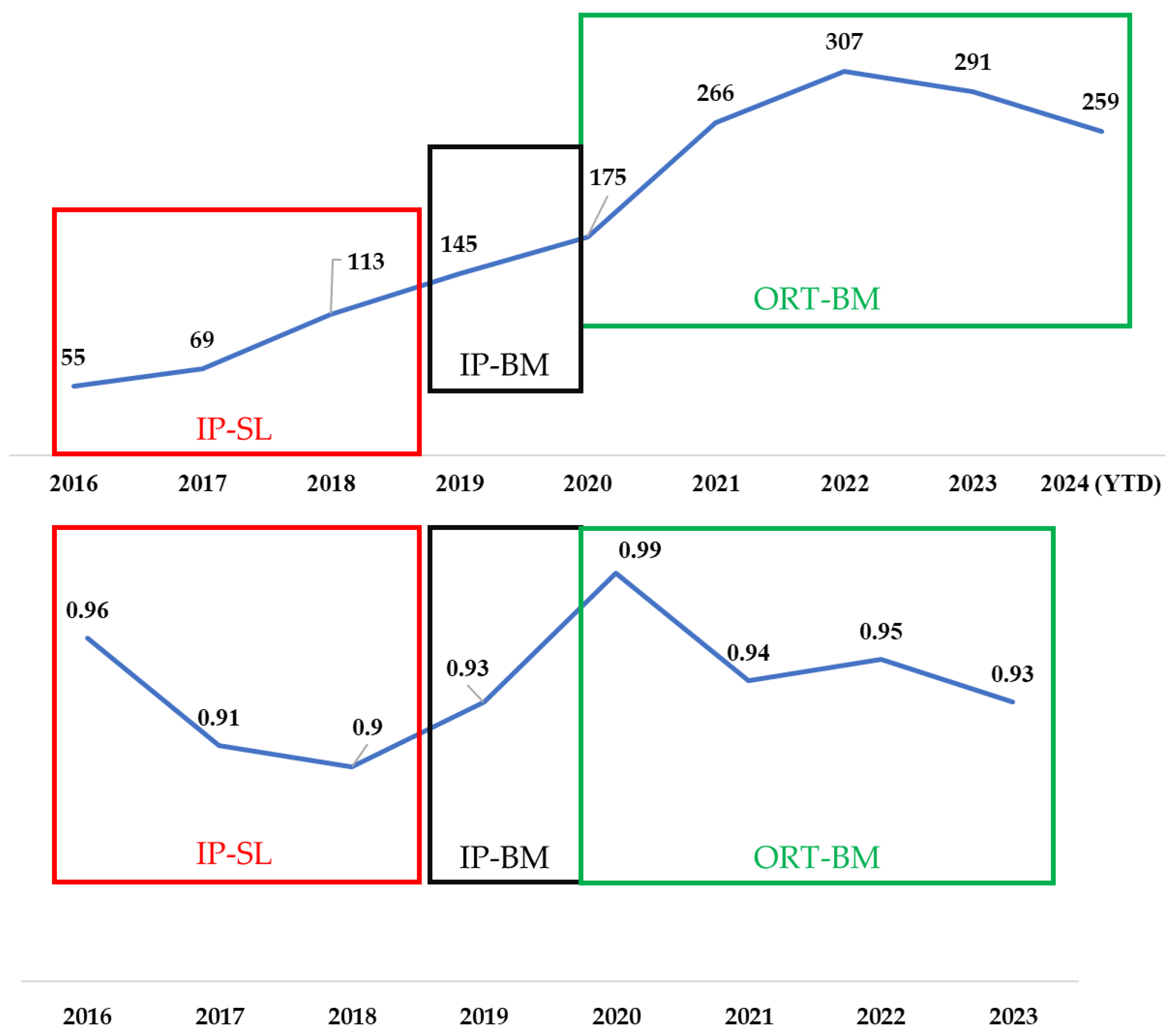
Figure 2.
NBBS Students Percentage by Gender.
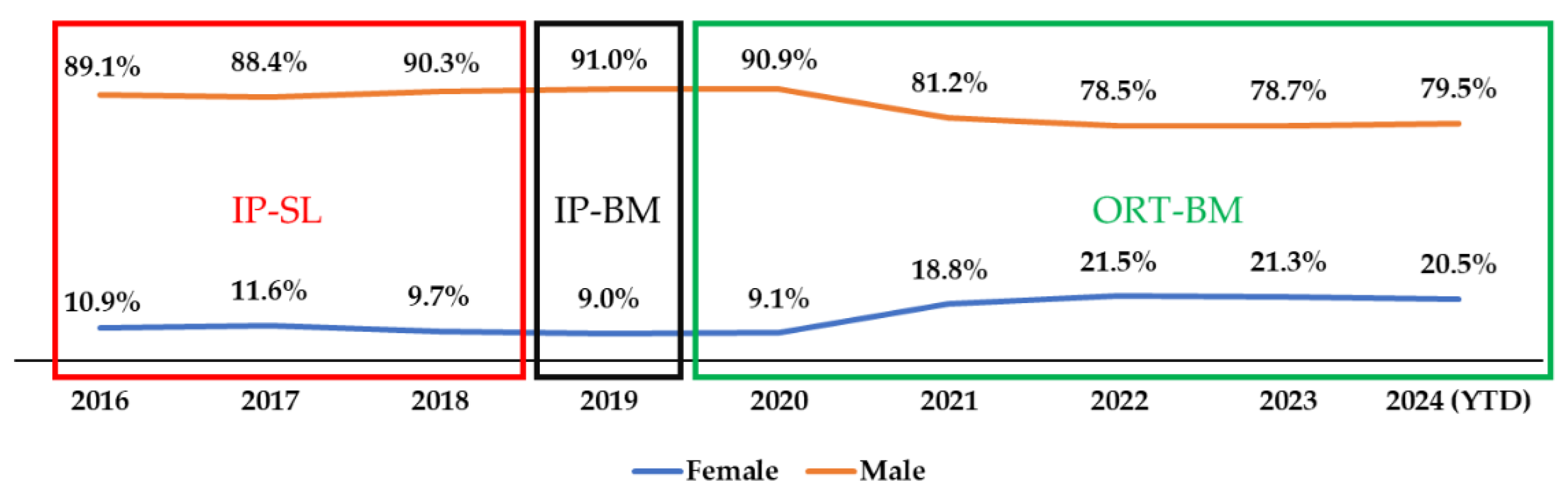
Figure 3.
Completion Number (a) and Average Years to Complete (b) at the NBBS
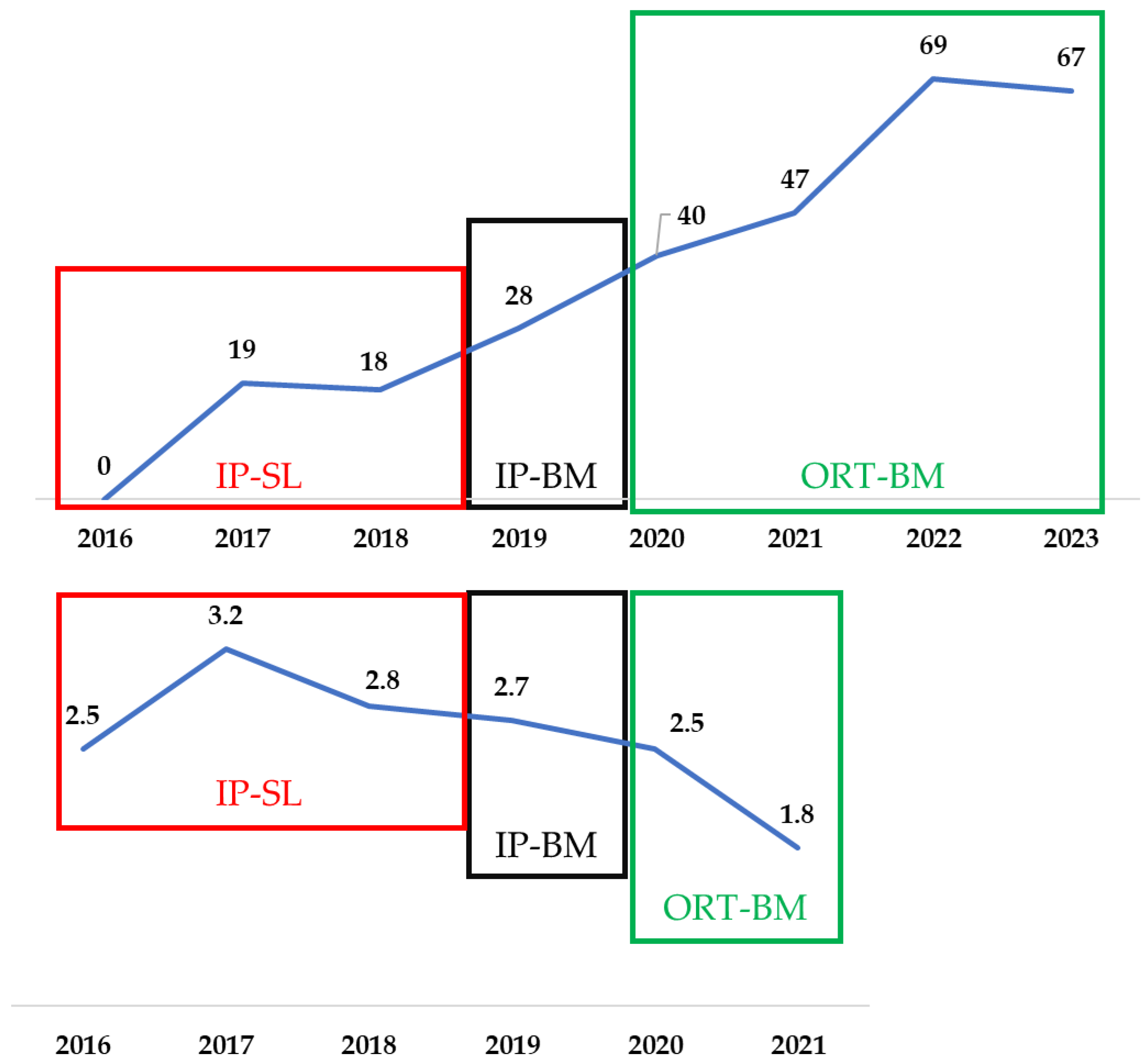
Figure 4.
Number of Completed Surveys (a) and SES Feedback (b).
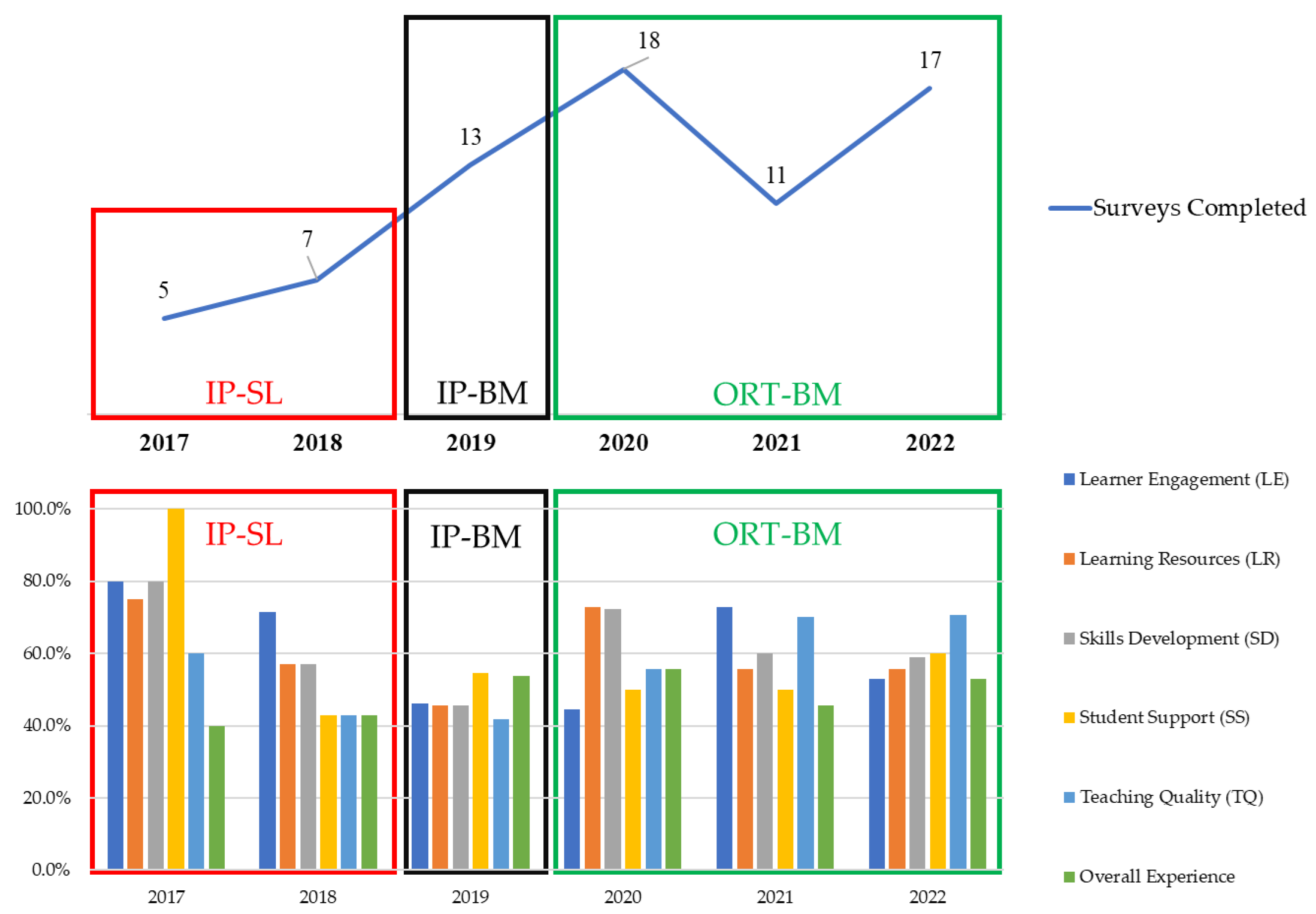
Figure 5.
Completing Students’ Feedback to Five SES Criteria Learner Engagement (a), Learning Resources (b), Skills Development (c), Student Support (d), and Teaching Quality (e) from 2017 to 2022.
Figure 5.
Completing Students’ Feedback to Five SES Criteria Learner Engagement (a), Learning Resources (b), Skills Development (c), Student Support (d), and Teaching Quality (e) from 2017 to 2022.
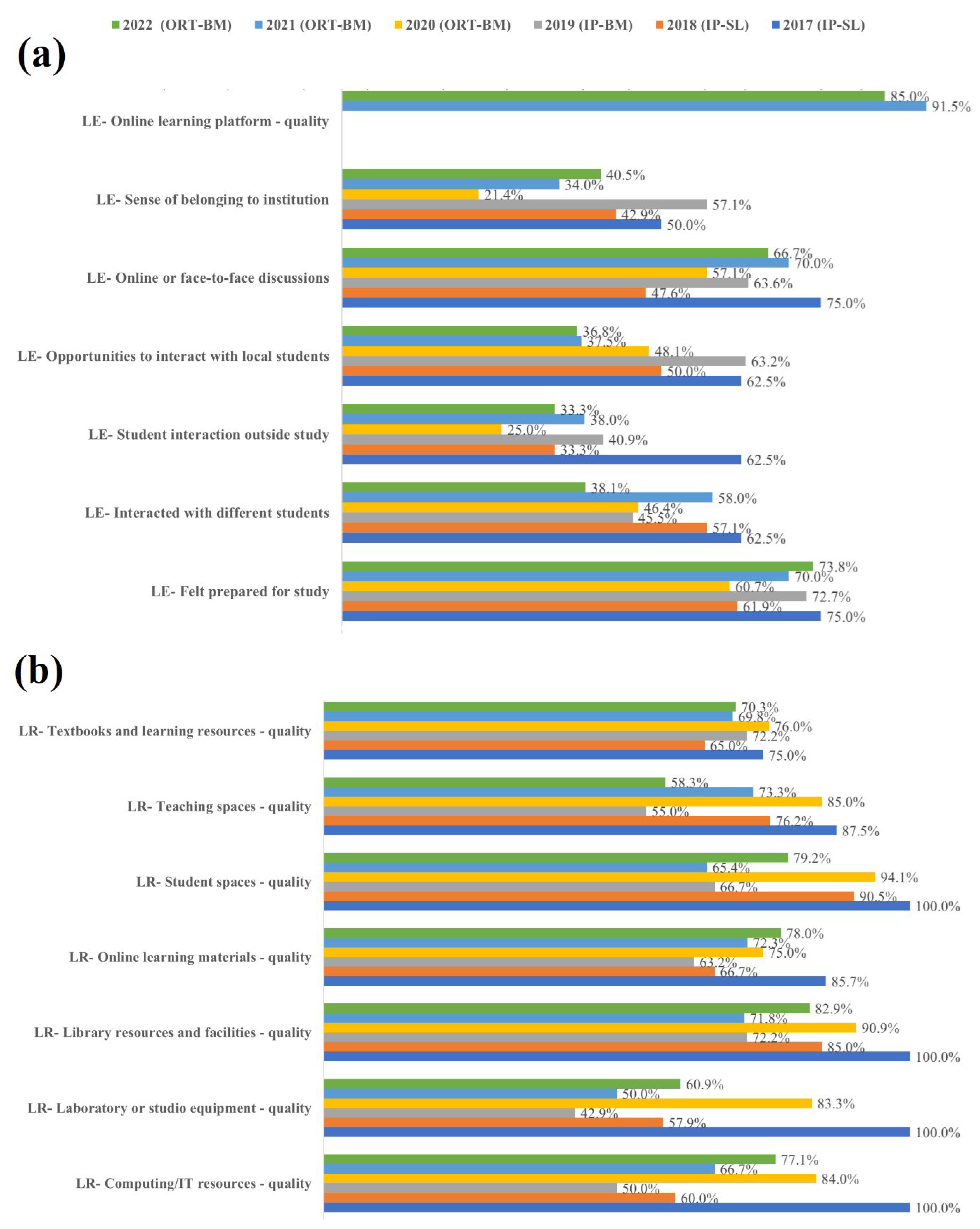
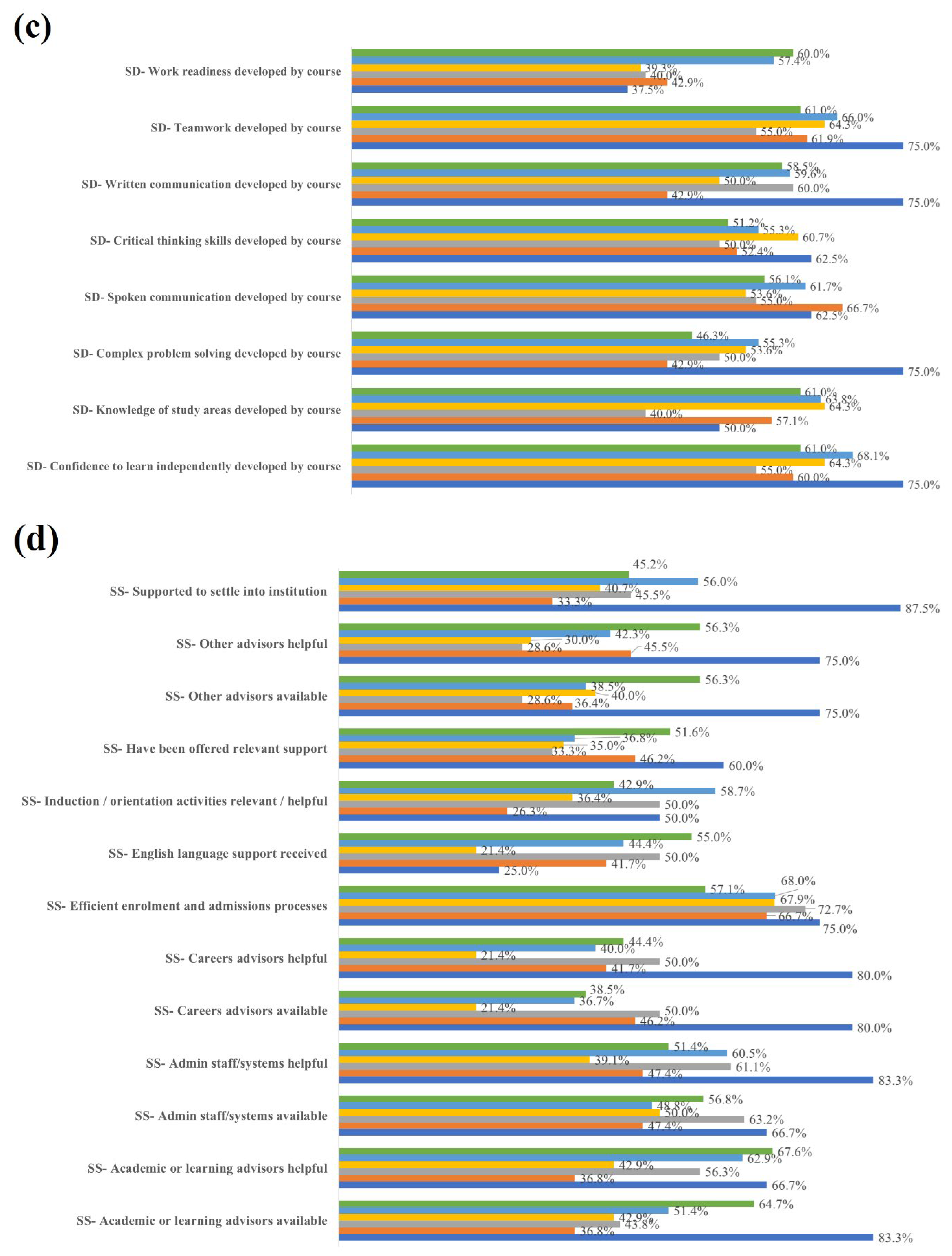

Figure 6.
Response Rate to the SEU (a) and Average of SEU Score (b) for NBC2002.
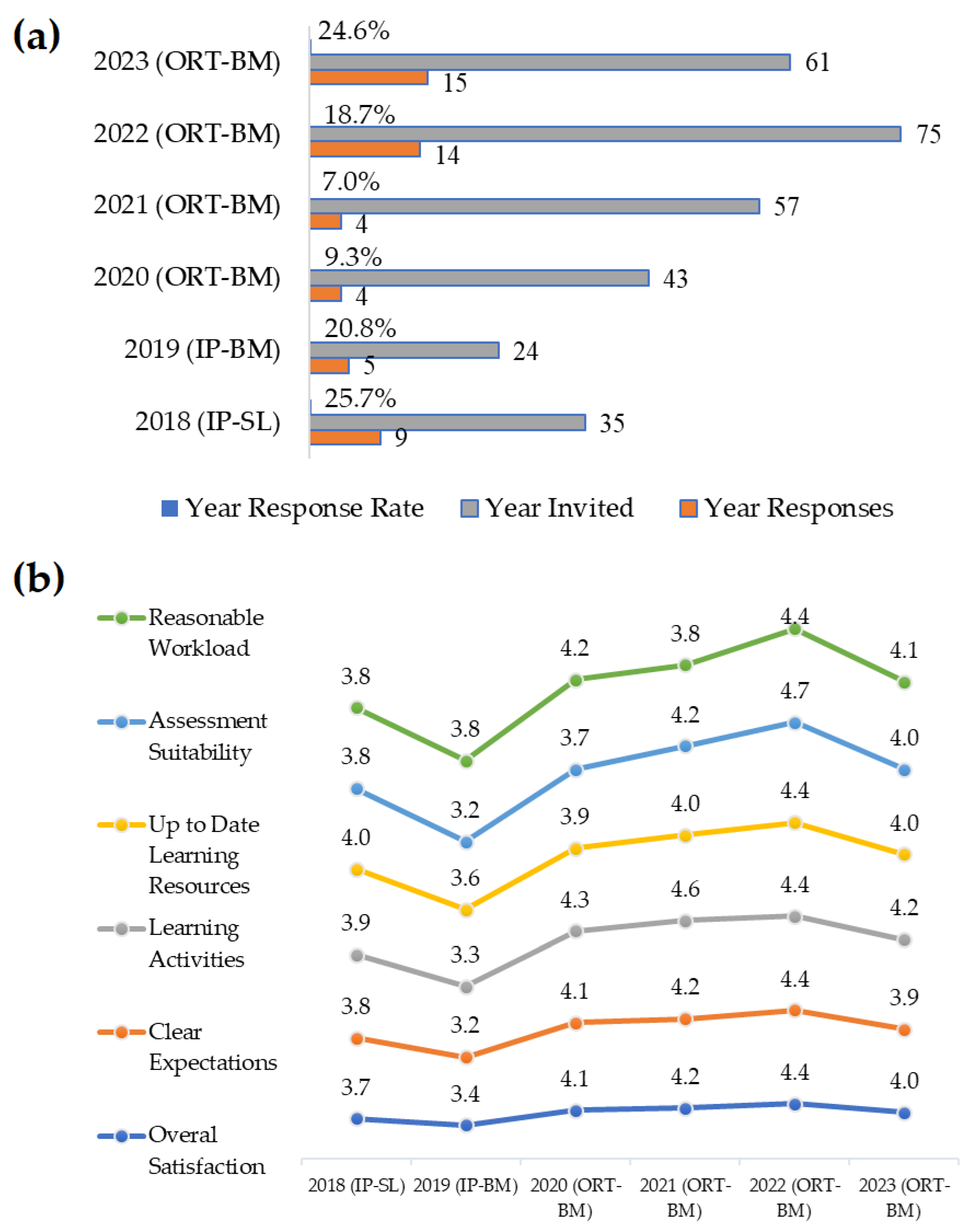
Figure 7.
Response Rate to the SEU (a) and Average of SEU Score (b) for NBC2109.
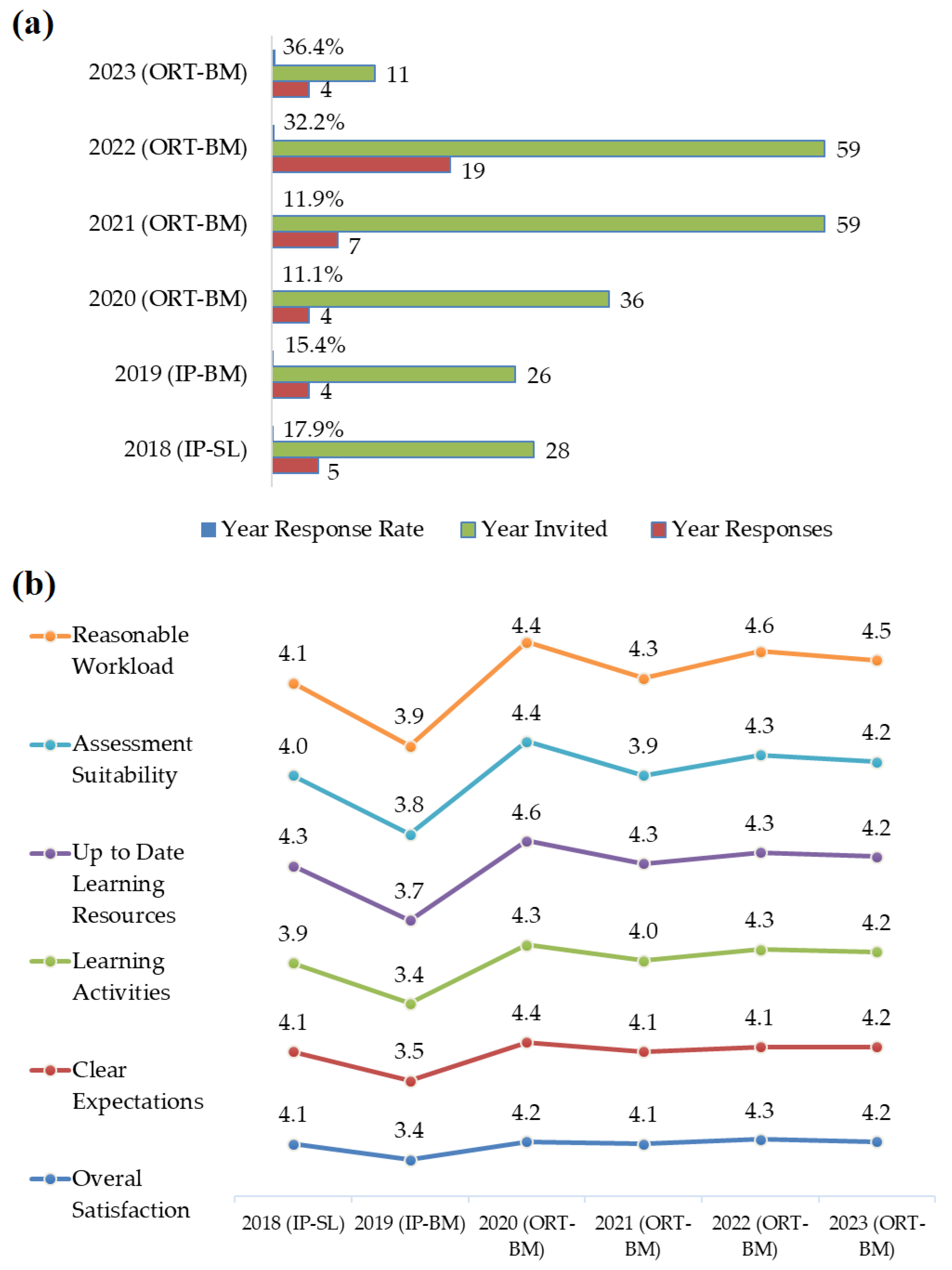
Figure 8.
Response Rate to the SEU (a) and Average of SEU Score (b) for NBC3001.
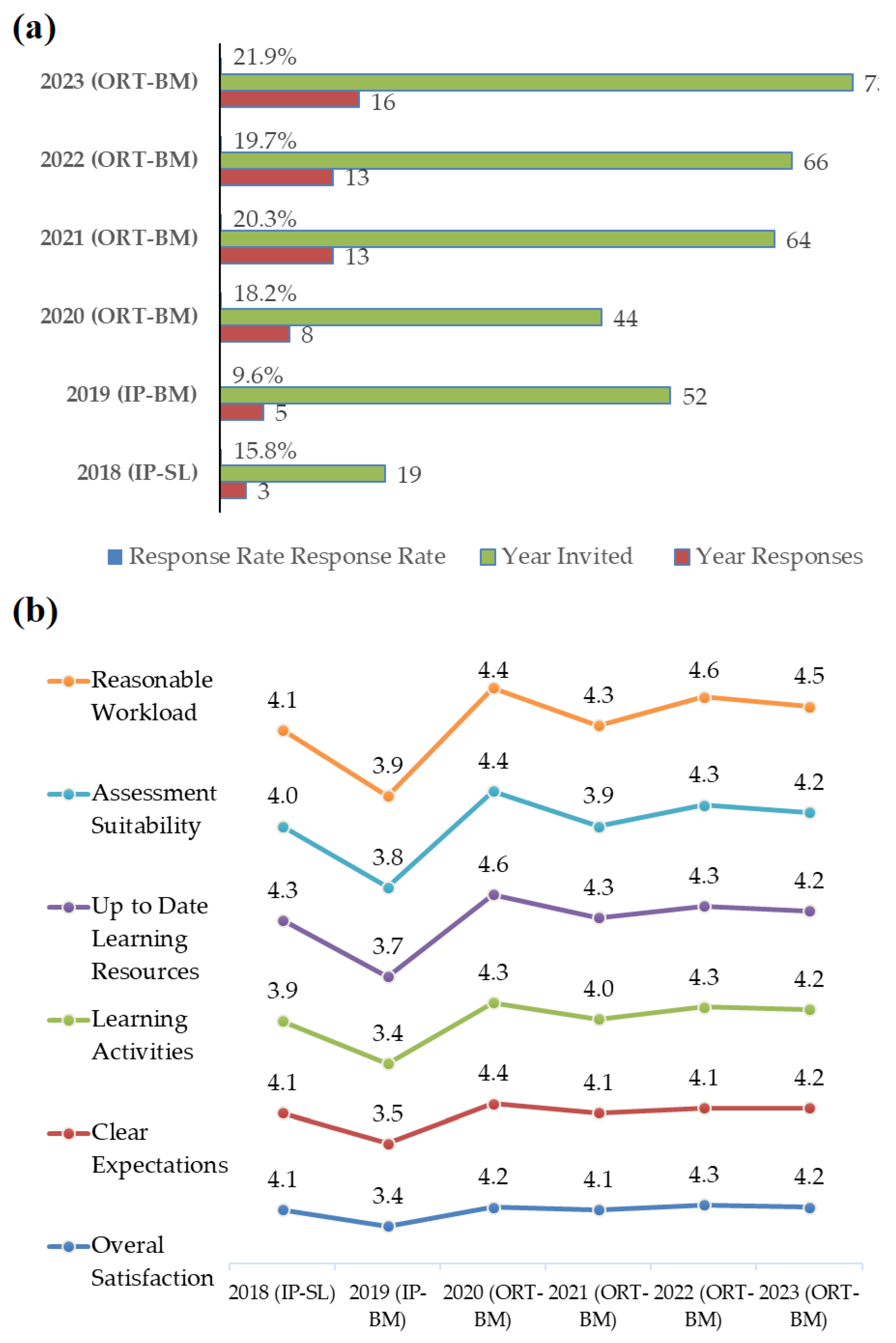
Figure 9.
Response Rate to the SEU (a) and Average of SEU Score (b) for NBC3002.
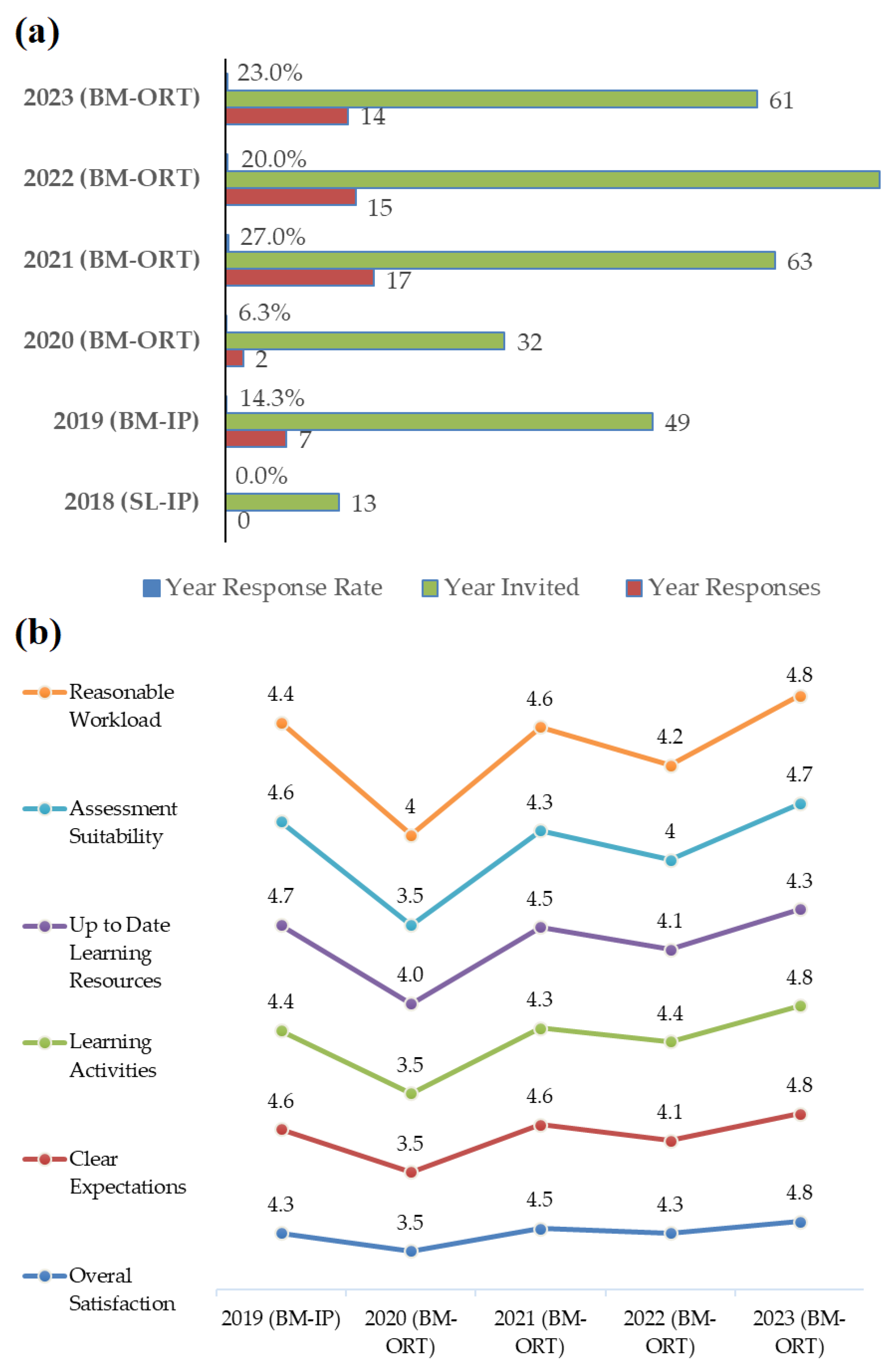

Table 1.
The main changes in delivery, assessments, and key contents of NBC2002.
| Time Range | Delivery | Key Contents |
|---|---|---|
| 2018-2019 | IP-SL: 12 weeks | Understand and interpret the Building Code of Australia, Volume One |
| One-hour lecture per week | Basics of Performance-Based Legislation | |
| Two hours of tutorials per week | Understand Australia Standards | |
| 2019-2020 | IP-BM: Four-week block (11 sessions) | Interpretation of the NCC |
| Heritage Requirements knowledge. | ||
| Three intensive sessions (lectures & tutorials) per week | Enforcement, compliance provisions, and related procedures. | |
| Introduction to Disability Discrimination Act (DDA) and accessibility. | ||
| Fundamentals of Site Inspection and effective communication. | ||
| After 2020 | ORT-BM: Four-week block (11 sessions) under NBBS | Same as from 2019 to 2020 |
| Three intensive sessions (lectures & tutorials) per week. |
Table 2.
The main changes in delivery, assessments, and key contents of NBC2109.
| Time Range | Delivery | Key Contents |
|---|---|---|
| 2016-2018 | IP-SL: 12 weeks | Introduction to Performance-Based Solutions for Buildings |
| One-hour lecture per week | Language & assessment methods for performance-based code | |
| Steps to developing performance solutions. | ||
| Two hours of tutorials per week | Performance-based code Part J | |
| Performance-based code Part B | ||
| 2019-2020 | IP-BM: Four-week block (11 sessions) | Same as 2016-2018 |
| Three intensive sessions (lectures & tutorials) per week | ||
| After 2020 | ORT-BM: Four-week block (11 sessions) under NBBS | Same as 2016-2018. The only change is “Introduction to performance-based code Part C (added since 2022)”. |
| Three intensive sessions (lectures & tutorials) per week. |
Table 3.
The main changes in delivery, assessments, and key contents of NBC3001.
| Time Range | Delivery | Key Contents |
|---|---|---|
| 2016-2018 | IP-SL: 12 weeks | Introduction to Complex Statutory Controls |
| One-hour lecture per week | Analysis & interpretation of construction details | |
| Identification & specification of mandatory regulations Understanding building trades, professions, and authorities | ||
| Two hours of tutorials per week | Specialist construction & statutory controls in multi-unit and high-rise buildings | |
| 2019-2020 | IP-BM: Four-week block (11 sessions) | Same as 2016-2018. The only changes are: (1) Integrated design & development using BIM and (2) Application of regulations in high-rise building design |
| One block offering in this period | ||
| Three intensive sessions (lectures & tutorials) per week | ||
| After 2020 | ORT-BM: Four-week block (11 sessions) under NBBS | Same as 2016-2018. The only changes are (1) BIM application skills (Revit/ArchiCAD, Navisworks/Revisto) & (2) Analysing, interpreting, and presenting construction details using BIM. |
| Three intensive sessions (lectures & tutorials) per week. |
Table 4.
The main changes in delivery, assessments, and key contents of NBC3002.
| Time Range | Delivery | Key Contents |
|---|---|---|
| 2018-2019 | IP-SL: 12 weeks | Interpret Codes and Standards of Class 2 to 9 buildings |
| One-hour lecture per week | Advise on compliance of design documentation | |
| Negotiate construction inspections Communicate effectively with professionals | ||
| Two hours of tutorials per week | Formulate safe practices for permits and on-site inspections | |
| 2019-2020 | IP-BM: Four-week block (11 sessions) | Same as 2018-2019. |
| Three intensive sessions (lectures & tutorials) per week | ||
| After 2020 | ORT-BM: Four-week block (11 sessions) under NBBS | Same as 2018-2019. |
| Three intensive sessions (lectures & tutorials) per week. |
Disclaimer/Publisher’s Note: The statements, opinions and data contained in all publications are solely those of the individual author(s) and contributor(s) and not of MDPI and/or the editor(s). MDPI and/or the editor(s) disclaim responsibility for any injury to people or property resulting from any ideas, methods, instructions or products referred to in the content. |
© 2024 by the authors. Licensee MDPI, Basel, Switzerland. This article is an open access article distributed under the terms and conditions of the Creative Commons Attribution (CC BY) license (http://creativecommons.org/licenses/by/4.0/).
Copyright: This open access article is published under a Creative Commons CC BY 4.0 license, which permit the free download, distribution, and reuse, provided that the author and preprint are cited in any reuse.


