

Submitted:
04 December 2024
Posted:
05 December 2024
You are already at the latest version
Abstract
Accessibility in public transport is essential for fostering inclusive and sustainable urban development, ensuring equitable mobility for all citizens, particularly individuals with physical disabilities or reduced mobility. Globally, over 1.3 billion individuals, including 4.12 million in Spain, live with disabilities. Despite legislative advances, many cities struggle to meet accessibility standards that enable independent and safe use of public transport. This study evaluates the accessibility of 431 bus stops in Burgos, Spain, using a validated, replicable methodology that incorporates on-site observations, critical accessibility assessments, geolocation, and photographic documentation. Findings highlight persistent barriers, including issues with vehicle encroachment prevention, stop locations, bus shelter design, and the availability of accessible formats such as Braille and audio. Overcoming these barriers can significantly enhance urban mobility, reduce environmental impacts, and align with Sustainable Development Goal 11, particularly Target 11.2, which emphasises accessible and sustainable transport systems. This adaptable methodology offers cities worldwide a robust framework to improve public transport accessibility, contributing to global efforts in creating inclusive, resilient, and climate-neutral urban systems.
Keywords:
accessibility
; accessibility policies
; inclusive design
; people with disabilities
; public transport
; sustainable mobility
; transport-related social exclusion
; urban planning
1. Introduction
Transport is essential for human development, as it facilitates access to resources and opportunities [1]. It plays a key role in urban development by connecting people to employment, education, healthcare, leisure, and social participation [2]. According to Miralles-Guasch [3], it is inconceivable to separate the city from transport. Transport and cities are intertwined in a complex relationship involving people, needs, and services. The creation of an accessible and functional public transport network generates significant benefits in terms of economic activity, quality of life, environmental sustainability, and the overall success of interconnected cities [4], while simultaneously addressing critical urban challenges such as social exclusion, sustainability, and the efficient use of public space.
The Sustainable Development Goals (SDGs) [4] represent a global effort to address critical challenges and promote sustainable development across multiple domains. Goal 11 focuses on sustainable cities and communities, aiming to create human settlements that are inclusive, safe, resilient, and sustainable. Specifically, Target 11.2 seeks to ‘ensure universal access to safe, affordable, accessible, and sustainable transport systems and improve road safety by 2030, paying particular attention to the needs of people in vulnerable situations, such as women, children, persons with disabilities, and older persons’. The implementation of these policies not only enhances mobility but also strengthens the resilience and inclusivity of urban environments [5], aligning with the growing need for equitable transport systems.
Public transport is essential for creating sustainable cities by providing accessible mobility, reducing greenhouse gas emissions, and improving air quality. Efficient public transport systems alleviate traffic congestion and optimise the use of urban space [6,7]. Improving accessibility plays a key role in encouraging a modal shift from private vehicles to public transport, thereby reducing noise pollution, CO₂ emissions, and traffic congestion in urban areas [8].
Access to transport is a prerequisite for participation in community life [9], making it essential to ensure that all individuals can fully engage in urban activities [10,11]. Mobility limitations often lead to social exclusion [12,13], with people with disabilities identified as one of the most affected groups [14,15]. Difficulties in accessing public transport are an important cause of this exclusion [16,17]. Improving public transport accessibility is essential not only for people with disabilities but also for other vulnerable groups, such as older adults and pregnant women [18,19].
The Convention on the Rights of Persons with Disabilities [20] promotes the full enjoyment of human rights and fundamental freedoms for persons with disabilities. Article 9 requires States to adopt measures to ensure equal access to the physical environment and transportation. Similarly, the Spanish Constitution [21] calls on public authorities to implement policies that guarantee personal autonomy and social inclusion in universally accessible environments. To achieve independent living and full societal participation, governments must prioritise the elimination of transport accessibility barriers [22]. These efforts are crucial for advancing inclusive and sustainable urban mobility.
Facilitating the accessibility of transport for people with disabilities is critical, as the demand for accessible transport services is expected to increase in the future. Globally, there are 1.3 billion people with disabilities, representing about 16% of the population [23]. In Spain, it is estimated that 4.12 million people have disabilities, accounting for approximately 9% of the total population [24]. Among individuals with disabilities aged six and over, 40.33% experience difficulties using public transportation. The primary barrier cited is ‘getting on or off the vehicle or accessing a seat,’ reported by 81.75% of respondents, followed by ‘access to stations, platforms, and stops’ (67.14%). Orientation difficulties, such as navigating stations, understanding signage, maps, and routes, and identifying the correct stop, affect 54.61% of people with disabilities, while 17.44% reported other types of problems [24].
Additionally, as the population ages, the number of people facing difficulties using public transport is expected to rise. In Spain, individuals over 65 currently represent more than 20% of the population, and this figure is projected to reach 30.5% by 2055 [25]. There is a strong correlation between ageing and disability, as the incidence of disability increases significantly with age [26]. These demographic trends highlight the pressing need to develop accessible and sustainable transport systems that address the growing mobility challenges of an ageing population.
Cities face significant challenges in meeting the requirements of Sustainable Development Goal (SDG) 11, specifically target 11.2, which aims to ensure universal access to safe, affordable, accessible, and sustainable transport systems for all, with particular attention to vulnerable groups, such as persons with disabilities and older adults. The lack of accurate data on accessibility needs and insufficient coordinated governance hinder the implementation of effective solutions [27,28]. Despite legislative efforts to improve accessibility, studies indicate that urban centres continue to pose significant challenges for users with physical disabilities and/or reduced mobility [29,30,31]. The persistent failure to integrate the needs of people with disabilities into urban design highlights the necessity for innovative approaches and collaborative governance to address these barriers effectively [32].
Despite the increase in literature on public transport and disability, research in this area remains relatively scarce. While several authors have explored the topic, publication frequency is low, and studies often lack interconnectedness. There remains a limited amount of work that thoroughly addresses the current state of public transport accessibility. Much of the research relies on the perceptions of people with disabilities [33,34,35,36]. However, recent studies have expanded to include the perspectives of other stakeholders, such as support staff [37], flight attendants [38], drivers [39], transport planners [40], and policymakers [41]. These studies primarily focus on identifying the barriers faced by people with disabilities, yet few propose comprehensive solutions to these challenges. This lack of integrative approaches limits the potential for creating sustainable and inclusive urban transport systems, a critical objective for contemporary urban planning.
Some studies have examined the infrastructure challenges and urban design issues that affect public transport accessibility for people with disabilities [42,43], highlighting the importance of incorporating universal design principles to improve accessibility [44,45]. These approaches align with the goals of inclusive urban development by ensuring that all citizens, regardless of their physical abilities, can access public services equitably. Additionally, there is growing interest in the economic and social impacts of improved public transport accessibility for people with disabilities [18,33,46]. Public transportation also plays a pivotal role in achieving sustainable urban mobility by reducing emissions, traffic congestion, and noise pollution. Compared to private vehicles, public transport generates 95% less CO, 45% less CO₂, and 48% less NO₂, making it a vital component of climate-neutral urban policies [47].
Physical disability is the most common type of disability in society and has therefore received more attention and research than other types. There is also greater social awareness of this type, as physical barriers in public transport networks are more visible and apparent to the general population, such as the lack of ramps or lifts in underground stations or inaccessible buses for wheelchair users. It should be noted that, in some studies, people with physical disabilities, people with reduced mobility, and older adults are analysed together [48,49,50].
The type of disability influences the perceived barriers to using public transport; different disabilities create distinct barriers [18,19,20,21,22,23,24,25,26,27,28,29,30,31,32,33,34,35,36], although there are also commonalities. [35] found that people with visual and physical disabilities experienced a greater number of barriers than those with hearing impairments or other disability categories, highlighting the need for targeted interventions for these populations. The diversity of barriers requires a comprehensive and customised approach in the design of public transport accessibility policies and solutions [18,19,20,21,22,23,24,25,26,27,28,29,30,31,32,33,34,35,36,37,38,39,40,41,42,43,44,45,46,47,48,49,50,51].
Among transportation modes, urban buses are the most extensively researched, with questionnaires, semi-structured interviews, and focus groups being commonly employed tools [34,35,36,37,38,39,40,41,42,43,44,45,46,47,48,49,50,51,52,53,54,55,56]. However, less research has been conducted through direct observation of the accessibility of public bus transport. Direct observation provides a firsthand account of accessibility challenges, capturing real-time issues that might be overlooked in questionnaires or interviews [57]. Studies highlight the importance of direct observation in identifying critical gaps in accessibility and demonstrate the tangible benefits of investing in accessible infrastructure. [58,59]. Other studies have analysed bus stops from different perspectives, such as physical characteristics [60], pedestrian infrastructure [61], impact on safety [62], or impact on travel behaviour [63], but often from the perspective of the general population rather than people with disabilities. Expanding these analyses to include accessibility issues would support the development of more inclusive and efficient transport systems.
Despite research on various aspects of public transport accessibility, there is a gap in studies focusing specifically on compliance with accessibility legislation, a notable deficiency in precise, real-time data on accessibility, and a lack of integration of the perspectives of people with disabilities into the design methodology. The participation of people with disabilities in the planning and design of transport is essential to adequately meet their mobility needs and improve the user experience [43,44,45]. Understanding how the urban environment shapes the travel behaviour of people with disabilities is crucial for informing transport and urban planning decisions that promote their social integration [64,65,66]. Observational studies are often limited to specific infrastructures or sample areas and facilities [67,68]. These field observations are conducted using checklists that are not very comprehensive, with subjective evaluation criteria and no reference to normative texts [58,59,60,61,62,63,64,65,66,67,68,69,70]. Addressing these gaps may contribute to improving transport systems and advancing towards more sustainable and inclusive urban mobility, in line with the Sustainable Development Goals and urban planning frameworks.
The objective of this research paper is to evaluate the accessibility of bus stops in the city of Burgos (Spain) for people with disabilities, identifying existing barriers and opportunities for improvement. This study not only assesses compliance with accessibility standards but also integrates the lived experiences of users with disabilities, offering actionable insights for urban planners and policymakers. Burgos, the second most populated city in Castile and Leon—Europe’s largest region—provides a representative case for medium-sized cities facing similar challenges. While existing research addresses various aspects of public transport accessibility, gaps remain in studies that combine compliance with accessibility legislation and user-centred design methodologies. By using direct observation, this study identifies critical accessibility gaps and highlights the tangible benefits of investing in accessible infrastructure. Such investments not only promote equity and inclusion in urban mobility but also support sustainable urban development by encouraging a shift from private vehicles to public transport, fostering more inclusive and resilient cities. Furthermore, the replicability of this approach offers valuable insights for other urban contexts, advancing inclusive urban mobility on a broader scale.
2. Materials and Methods
2.1. Study Area
Burgos, a Spanish municipality located in the northwestern Iberian Peninsula (Spain and Portugal), is the capital of the province of the same name and belongs to the autonomous community of Castile and Leon. The city is connected to Madrid, Spain’s capital, and its international airport, Adolfo Suárez Madrid-Barajas, by high-speed rail (Figure 1).
Burgos has a population of 173,483 inhabitants [71], ranking as the 37th largest municipality in Spain and the second largest in Castile and Leon. The municipality of Burgos covers an area of 107.1 square kilometers and forms the core of a wider urban area that includes 31 surrounding municipalities. This combined area has a total population of 196,282 inhabitants [71]. The Burgos city bus network connects some of these municipalities to the city center. The population distribution by age shows that 22.73% of the population is over 65 years old. Additionally, there are 27,638 people with recognized disabilities in the province of Burgos, accounting for 7.8% of the population [72]. These data highlight the importance of addressing the mobility needs of this population.
Public transport by bus in Burgos is managed by the ‘Municipal Mobility and Transport Service’ [73]. The city's bus network consists of 28 lines with 149 stops, including special services and night lines (Figure 2). These bus lines cover the entire city and metropolitan area, extending from the Cotar neighborhood in the north to Arcos road in the south, spanning roughly 21 kilometers. The westernmost stop is in the Villalonquejar neighborhood, while the easternmost is in the Castanares neighborhood, with a total distance of approximately 22 kilometers between them. In 2023, 13,296,914 passengers used the urban transport service, marking a 21.1% increase in ridership compared to 2022.
The Municipal Accessibility Plan of the City of Burgos [74] proposes accessibility improvements in four areas: communications, public roads, municipal buildings, and public transportation. Specifically, it defines 12 types of bus stops and allocates an estimated annual budget for the proposed improvements. These efforts are further supported by the Sustainable Urban Mobility Plan (PMUS) approved in 2021, which emphasizes safe, equitable, and environmentally friendly transportation [75]. The PMUS underscores the importance of making public transport stops and stations accessible by establishing design criteria for new bus shelters, adapting signage, and modifying existing infrastructure to ensure compliance with the Accessibility Plan.
Aligned with SDG 11, the PMUS promotes a sustainable urban environment that prioritizes accessibility for vulnerable groups, including people with disabilities and older adults. It identifies improvements in public transport infrastructure as essential to reducing car dependency, lowering emissions, and enhancing social inclusion. This approach incorporates universal design principles across all facilities and includes continuous monitoring to ensure that accessibility meets the community's needs, ultimately supporting a more inclusive and resilient city.
2.2. Data Collection and Methodology
This study applies the methodology proposed by [76] in Valladolid to assess the accessibility of urban bus stops in Burgos. The objective is to evaluate public transport accessibility for people with physical disabilities and/or reduced mobility, with a focus on user autonomy and safety. The methodology integrates both legal parameters established in relevant regulations and legislation, as well as the lived experiences and perspectives of people with disabilities. This dual approach provides a more comprehensive understanding of accessibility, moving beyond a strictly legalistic perspective.
To ensure a holistic and user-centred approach, the authors collaborated with COCEMFE, a non-profit organisation representing 71 member entities, which promotes and defends the rights of people with physical and organic disabilities. COCEMFE's involvement was critical in grounding the evaluation process in the real experiences and challenges faced by people with disabilities.
The first step involved creating an initial list of requirements. This was achieved in collaboration with COCEMFE technicians (as detailed in Table 1), through an analysis of applicable regulations and legislation concerning public transport accessibility.
Primary legal texts, including any modifications and/or amendments, were referenced during this process. The most relevant document in Spain is Royal Decree 1544/2007 [77], which regulates the basic conditions of accessibility and non-discrimination for people with disabilities in accessing and using transportation. The annexes of this decree outline accessibility requirements for various transport modes. During the analysis meetings, additional requirements not specified in normative texts—but which can significantly limit access to public transport for individuals with physical disabilities—were also identified.
The initial list of requirements was verified in two focus groups with COCEMFE users with physical disabilities, whose characteristics are presented in Table 2. The aim was to ensure that the criteria were relevant from their perspective. These focus groups aimed to confirm that the selected criteria accurately reflected the users' needs, ensuring that the evaluation process was both inclusive and practical.
During the focus group discussions, it became evident that some of the initially identified requirements were overly stringent, necessitating adjustments in their benchmarks. However, certain requirements, while not critical for individuals with physical disabilities, were deemed essential for people with other disabilities, such as those with visual or hearing impairments. Consequently, these requirements were retained to ensure a more inclusive approach.
After reaching a consensus in the focus groups, the requirements were categorised as critical or non-critical based on participants' opinions. Critical requirements are those that must always be met to ensure the autonomous and safe use of public transport by people with physical disabilities or reduced mobility. Examples include ramps, sufficient pavement width, and proximity to lowered kerbs. Non-critical requirements, while important according to regulations, can be managed by people with physical disabilities without significantly affecting their autonomy and safety when using public transport. Examples include the availability of information in accessible formats such as Braille or audio.
The classification of requirements was guided by the question: "Does the absence of this requirement impact your ability to use public transport autonomously and safely?"
As a result, a total of 12 critical requirements and 11 non-critical requirements were approved, as detailed in Table 3. Each requirement, whether critical or non-critical, was further categorised based on its position within the accessibility chain, distinguishing whether it pertained to access to the bus stop or the stop itself. To facilitate the evaluation process, each requirement was assigned a unique identifier according to its category: CA (Critical Access to Stop), CS (Critical Stop), NCA (Non-Critical Access to Stop), and NCS (Non-Critical Stop).
The developed checklist was validated through direct observation and completion at bus stops across Castile and León. This validation process involved collaboration with COCEMFE technicians and users with physical disabilities to ensure practicality and relevance. Data were systematically collected using the validated checklist, which was designed to be straightforward, understandable, and free of overly technical language.
The authors, together with COCEMFE staff, conducted the fieldwork, with individuals with physical disabilities participating at selected stops. A systematic procedure ensured a thorough and accurate accessibility assessment of all 431 bus stops in Burgos. Initially, two individuals performed direct observations at each stop, evaluating both critical and non-critical requirements identified in the study methodology. Each stop was examined for approximately 15 minutes, with every requirement assessed and recorded in the checklist. Responses were marked as ‘yes’, ‘no’, or ‘not applicable’, depending on the situation. Detailed observations and additional notes documented any relevant information.
To ensure accurate identification of each stop for future reference, GPS coordinates were used to geolocate each bus stop. Additionally, photographs documented the condition and environment of each stop at the time of assessment. These photographs visually captured the physical state of the stops, highlighting barriers that may not have been immediately evident in written records. Furthermore, the images served as a reference point for subsequent discussions and evaluations, ensuring a consistent understanding of each stop’s condition among all team members.
The collected data were organised and analysed using specifically designed templates in Microsoft Excel. These templates enabled clear and orderly recording of the results, along with automated calculations and graphical representations.
3. Results
A significant number of bus stops are concentrated in the city centre of Burgos. However, depending on the type of area (e.g., old town, suburbs, industrial zone, nearby towns), there are variations in the design, location, distribution, and equipment of these stops. We found that 26 of the stops lacked any form of identification, such as shelters, signage, or information displays, and accessibility features were not assessed for these stops. For the remaining 405 stops, all requirements were reviewed.
3.1. Critical Requirements
Figure 3 shows the results for each of the critical requirements for both access to the stop (CA) and the stop itself (CS).
68.91% of the bus stops meet all the critical requirements for access to the bus stop (CA). This percentage increases to 73.33% when excluding the bus stops that were not analysed because they lacked identification. The infrastructure of the city of Burgos and nearby municipalities generally allows access to the bus stops, although some of them are very difficult to access for people with physical disabilities, such as the stop shown in Figure 4.
The route to the bus stop must be accessible and easy to use for everyone. Slopes must be bridged by ramps or fords to allow wheelchair users to move around independently (CA1). 83.46% of bus stops have ramps and step-free access, allowing individuals with physical disabilities to access the stop independently.
The pavement is an essential element for the accessibility of urban itineraries. It needs to be strong and uniform to withstand the movement and dragging of certain elements, such as a wheelchair (CA2). Irrespective of the type of flooring used, with different sizes, colours, and materials, most stops (88.80%) have flooring that is non-slip, continuous, and compact. Conversely, the remaining stops have surfaces that make it difficult to move around and can cause falls for people with physical disabilities. These stops, such as the one shown in Figure 5, are usually located on the outskirts (where there are no pavements) or in industrial estates.
The sidewalk slope (CA3) is satisfactory in 88.40% of the stops. However, 44 stops exceed the established values (less than or equal to 4% in the direction of travel and 2% in the transverse direction). These stops are primarily located in the upper old town. The slope is particularly important for individuals with physical disabilities to move around with ease and without excessive effort. An example of a bus stop that does not meet this requirement is shown in Figure 6.
The width of pavements is a crucial factor in ensuring the accessibility and safety of urban routes. Pavements must be at least 1.50 metres wide (CA4) to facilitate passage for wheelchair users. However, a significant number of bus stops (14.07%) have pavements that are very narrow and impede passage for people with disabilities. These stops are mostly found in the older parts of the city where pavements tend to be narrower.
The distance from a bus stop to a lowered kerb is critical for a person with a physical disability to access the stop comfortably and safely. Focus groups estimated that 100 metres is a reasonable distance (CA5). 79.01% of the stops meet this requirement, while 85 stops do not, primarily in industrial estates (Figure 7).
Regarding the critical stop requirements (CS), at the time of the study, none of the 431 bus stops met all seven requirements. One critical requirement for people with physical disabilities is the protection of the stop with rigid elements to prevent vehicle encroachment (CS1). A rigid element is a kerb extension or another fixed element that cannot be moved by a person to park in that space, such as a traffic cone or bollard. If this space is occupied or obstructed, the bus will not be able to approach the pavement or deploy the wheelchair ramp.
In Burgos, no bus stop has this type of protection. However, in many cases, as shown in Figure 8a, a platform has been built from the pavement to the traffic lane to ensure a good approach for the bus to the stop. In other cases (Figure 8b), a dedicated lane has been designed, or the area has been marked with road markings.
We considered that 73.33% of bus stops provide a suitable approach for disabled passengers to get on and off the bus. Issues include on-road stop locations, short platforms that hinder bus proximity, and parked vehicles obstructing the designated zone. Figure 10 illustrates how parked cars can make it impossible or dangerous for individuals to access the bus. Additionally, designated parking spaces are often inadequate for large, articulated buses.
The presence of a bus shelter (CS2) at each stop is not a legislative requirement, but it does make the wait more comfortable for passengers and protects them from inclement weather. If a stop has a bus shelter, it must meet specific requirements. The format of the installed bus shelters in Burgos is shown in Figure 10.
As of the date of the study, 34.11% of the stops had a bus shelter, and the degree of compliance with the requirements is very high for access (CS3) and minimum dimensions in width (CS4) and height (CS6). All bus shelters have seats, and 15.65% have ischial supports (CS7) to make it easier for a person on crutches with stability issues to sit while waiting for the bus. Ischial supports are also being installed at stops without bus shelters, such as the one in Figure 11.
None of the installed bus shelters meet the requirement for ‘transparent enclosure signage’ (CS5). This requirement involves the presence of two horizontal bands in a contrasting color to clearly differentiate the glass enclosure and prevent accidental collisions. The current bus shelters have five horizontal bands of smaller width than required.
3.2. Non-Critical Requirements
Non-critical requirements, although not imperative for safety and autonomy, significantly enhance the user experience. Figure 12 shows the results for each of the non-critical requirements.
Manhole covers, grilles, gratings, and tree surrounds can be major obstacles for people with reduced mobility, as they can cause trips and falls. It is important that they are flush with the pavement (NCA1-NCA2), although it is possible to avoid driving over them if there is sufficient space. 94.32% of the stops have manhole covers, grilles, and gratings that are flush with the pavement. However, a significant percentage of tree surrounds (38.2%), as shown in Figure 13, are either not covered or not flush with the pavement.
The tactile-visual paving strip allows visually impaired individuals to detect the presence of a bus stop and orient themselves towards it. This element, shown in Figure 14, is characterised by a textured surface with slight reliefs and a colour that contrasts with the rest of the pavement. 88.54% of bus stops do not have the required 1.20-metre-wide tactile-visual paving strip perpendicular to the direction of travel (NCS1), as mandated by current regulations. However, this is a non-critical requirement for people with physical disabilities.
The latest requirements analysed refer to the existence of a signpost line (NCS3), bus shelter, and bus information display. If these elements are present, they must also meet other requirements such as information in Braille on the signpost or a sound device for the bus information display. Information at stops is totally inadequate. Line identification is absent at many stops, such as the one shown in Figure 15, where there is neither a signpost nor a bus shelter.
At stops where these elements are present, the contrast and size of the letters or numbers indicating the line are often insufficient for easy identification (NCS2). The location and identification of the routes on the existing maps are also very difficult to understand. None of the signposts and bus shelters provide information, names, or routes of the lines in Braille (NCS4-NCS5).
Nine stops (5.81%) have at least armrests on their outboard seats (NCS6). The seat height requirement (NCS7) is met in the majority of cases (98.71%). Sixty-seven bus stops (15.55%) are equipped with bus information displays (NCS8) like the one in Figure 16. None of these stops have an audible announcement system (NCS9) for the visually impaired, nor a control or alternative system for the visually impaired.
4. Discussion
Despite significant advances in the adaptation of public transport in Burgos following the approval of Royal Decree 1544/2007 [77], not all accessibility requirements established in current regulations are being met, nor are the additional criteria identified as necessary for people with physical disabilities to use public transport independently and safely. These findings align with previous studies on public transport accessibility, which have observed that, while some cities have implemented improvements, significant barriers to independent access for people with disabilities persist [2,18,35,51,78]. This highlights the global challenge of translating legislative advancements into practical and effectively applied solutions in urban environments. Continuous efforts to renovate bus stops and shelters demonstrate the city's commitment to enhancing accessibility, but more comprehensive measures are still required to fully meet user needs.
Our study reveals persistent barriers to bus stop accessibility in Burgos, reflecting two core challenges in urban accessibility: structural limitations tied to historical or geographic constraints, and deficiencies in facilities that hinder inclusive design implementation.
While general access to bus stops is good, with wide and well-maintained pavements and mostly accessible routes, a notable percentage of stops are not accessible for various reasons:
- Located in areas of the city where pavements are narrower.
- Located in the upper part of the old town, where the streets are steeper.
- Located in areas where there are intermediate gardens between the pedestrian route and the bus stop.
- Located in industrial areas and on routes that connect the city with neighborhoods far from the city center.
The compliance with critical accessibility requirements at bus stops has a considerable impact on the overall accessibility of the city. The following key actions are necessary to enhance inclusivity for people with physical disabilities or reduced mobility:
- Install protections at the start and end of bus stops to prevent encroachment by other vehicles. Current obstructions often prevent buses from parking correctly, making access difficult or even impossible for people with physical disabilities.
- Ensure that transparent glass enclosures in bus shelters meet the signage requirements established by current regulations, helping visually impaired individuals avoid collisions by clearly distinguishing the glass walls. While some shelters already include signage, these do not meet the required standard of two horizontal lines.
Non-critical requirements are not fully met at any bus stop. While these requirements are not essential for a person with a physical disability to access or remain at the bus stop, these features significantly impact the experience of individuals with visual or hearing impairments. Key areas for improvement include:
- Enhancing the availability of information: Many stops lack line identification. Additionally, existing maps and line numbers often fail to meet the contrast and size requirements (14 cm), making them difficult to read.
- Adding Braille information: No Braille information is available on signposts or bus shelters, limiting accessibility for visually impaired users.
- Providing armrests on bus shelter seats: Armrests, which provide essential support for individuals with mobility impairments, are absent in most shelters.
- Implementing audible information systems: There are no audible information displays at bus stops, which are essential for visually impaired users.
Addressing these interconnected issues is crucial to create a more accessible and equitable public transport system for all users, improving mobility and inclusivity.
The primary limitation of this study is the time elapsed between the fieldwork, data tabulation, analysis, and writing, during which certain changes in the city's infrastructure may have slightly altered the findings. This limitation underscores the importance of continuous monitoring of urban accessibility to maintain relevance and applicability over time. Nevertheless, the methodology developed remains highly adaptable and can be applied to other cities facing similar challenges. This transferability highlights its potential as a practical framework for cities seeking to address barriers in public transportation systems and advance sustainable urban mobility. Future research will expand this work to other cities, including evaluations of major train stations, enabling more comprehensive and cross-modal comparisons. Additionally, it could explore accessibility challenges faced by individuals with sensory or cognitive impairments, thereby broadening the concept of mobility as a fundamental human right. This research could also assess recent infrastructure developments and, through longitudinal studies, evaluate the effectiveness of implemented interventions over time.
This user-centred methodology represents a significant contribution to addressing accessibility challenges in urban mobility systems globally. It aligns with the growing demand for inclusive and sustainable transport solutions, as reflected in the Sustainable Development Goals and urban planning frameworks. As highlighted in [78], comparative studies play a crucial role in monitoring progress, identifying best practices, and adapting strategies to diverse urban contexts. By adopting this approach, future research can provide valuable insights into the effectiveness of accessibility interventions, promoting the widespread adoption of effective strategies. These efforts will drive the development of public transport systems that equitably benefit all citizens. By overcoming accessibility challenges, cities can contribute to more cohesive and equitable urban environments while advancing the inclusive and resilient urban mobility envisioned by global frameworks such as the Sustainable Development Goals.
5. Conclusions
This study evaluates the accessibility of bus stops in the city of Burgos, considering not only compliance with current regulations but also the ability for independent and safe use of public transport by people with physical disabilities or reduced mobility. By adopting a user-centered methodology developed by [76], this research advances a holistic framework for assessing accessibility that not only integrates physical infrastructure analysis but also incorporates the lived experiences of users. Tested and validated in other Spanish cities [76,77,78], it demonstrates adaptability and effectiveness across diverse urban contexts, making it a valuable tool for application in any city.
The results of this study have significant practical implications for transportation policy formulation and urban planning, not only in Burgos but also in other cities facing similar challenges. By applying this methodology, policymakers can identify key areas for improvement and prioritize interventions, contributing to more inclusive and accessible public transport systems. Such targeted actions are critical in addressing the pressing need for equitable urban mobility.
Furthermore, the active involvement of individuals with disabilities in the assessment process not only enriched the findings but also ensured that the recommendations are grounded in lived experiences. Engaging these stakeholders in ongoing planning and decision-making processes is essential for developing truly inclusive urban environments. This participatory approach enhances the legitimacy and relevance of the proposed solutions, fostering greater collaboration between public authorities and civil society.
The implementation of the recommendations derived from this study can significantly enhance the accessibility and usability of Burgos's public transport system, promoting greater inclusion and equity for all users. These actions will not only benefit people with disabilities but also foster a more sustainable urban environment for the entire community. By reducing reliance on private vehicles, alleviating traffic congestion, and decreasing emissions of harmful pollutants, improved public transport accessibility supports the transition towards a more efficient and environmentally friendly transport system. This dual benefit of inclusivity and sustainability positions accessibility as a cornerstone of modern urban development strategies. This approach aligns with the United Nations Sustainable Development Goals (SDGs), particularly SDG 11, which advocates for inclusive and sustainable cities. By prioritizing inclusive transport infrastructure, cities like Burgos can lead the way in demonstrating how urban environments can be made equitable and sustainable for all residents.
Although the study has focused on Burgos, the developed methodology is highly replicable and adaptable to other cities facing similar challenges. This approach can assist other municipalities in identifying priority areas for intervention, fostering a more inclusive and accessible public transport system for all citizens. By embracing these recommendations, cities can ensure that public transport systems not only meet regulatory standards but genuinely serve the needs of all residents, paving the way for more inclusive and resilient urban environments.
Ultimately, this work contributes to the broader discourse on urban accessibility and sustainable development, offering valuable insights for urban planners, policymakers, and disability advocates globally. This study, alongside previous research [76,77,78], supports associations of people with disabilities in advocating for the enforcement of accessibility laws and regulations by public administrations. By shedding light on the barriers to public transport accessibility, these findings collectively raise awareness of the issue and promote greater accountability among policymakers, urban planners, and society.
Author Contributions
Conceptualization, Juan L. Elorduy; Data curation, Yesica Pino; Formal analysis, Juan L. Elorduy and Yesica Pino; Investigation, Juan L. Elorduy, Yesica Pino and Ángel M. Gento; Methodology, Juan L. Elorduy, Yesica Pino and Ángel M. Gento; Project administration, Juan L. Elorduy; Supervision, Juan L. Elorduy; Validation, Juan L. Elorduy; Visualization, Juan L. Elorduy; Writing – original draft, Juan L. Elorduy and Yesica Pino; Writing – review & editing, Juan L. Elorduy. All authors have read and agreed to the published version of the manuscript.
Funding
This research received no external funding.
Institutional Review Board Statement
Not applicable.
Informed Consent Statement
Not applicable.
Data Availability Statement
The data collection sheets, and questionnaire tabulations used in this study are available from the corresponding author upon reasonable request.
Acknowledgments
We would like to express our deepest gratitude to the Organization of People with Disabilities, COCEMFE Castilla y León, and to all the people with disabilities who continuously advocate for their rights.
Conflicts of Interest
The authors declare no conflicts of interest.
References
- Sohil, M.; Maunder, D.; Cavill, S. Effective regulation for sustainable public transport in developing countries. Transp. Policy 2006, 13, 177–190. [Google Scholar] [CrossRef]
- Bezyak, J.L.; Sabella, S.; Hammel, J.; McDonald, K.; Jones, R.A.; Barton, D. Community participation and public transportation barriers experienced by people with disabilities. Disabil. Rehabil 2020, 42, 3275–3283. [Google Scholar] [CrossRef] [PubMed]
- Miralles-Guasch, C. Ciudad y Transporte: El Binomio Imperfecto; Ariel: Barcelona, Spain, 2002. [Google Scholar]
- Transforming our world: the 2030 Agenda for Sustainable Development. Available online: https://sdgs.un.org/2030agenda (accessed on 12 September 2024).
- Rode, P.; da Cruz, N.F. Governing urban accessibility: Moving beyond transport and mobility. Appl. Mobil 2018, 3, 8–33. [Google Scholar] [CrossRef]
- Fujii, S.; Taniguchi, A. Determinants of the effectiveness of travel feedback programs—a review of communicative mobility management measures for changing travel behaviour in Japan. Transp. Policy 2006, 13, 339–348. [Google Scholar] [CrossRef]
- Kubis, Z.; Plocova, K. Transport management in urban areas. In Proceedings of the 23rd International Multidisciplinary Scientific GeoConference SGEM 2023, Albena, Bulgaria, 28 June–7 July 2023; Issue 6.1; Volume 23, pp. 413–420. [Google Scholar] [CrossRef]
- Moslem, S.; Stević, Ž.; Tanackov, I.; Pilla, F. Sustainable development solutions of public transportation: An integrated IMF SWARA and Fuzzy Bonferroni operator. Sustain. Cities Soc. 2023, 93, 104530. [Google Scholar] [CrossRef]
- Jansuwan, S.; Christensen, K.M.; Chen, A. Assessing the transportation needs of low-mobility individuals: case study of a small urban community in Utah. J. Urban Plan. Dev. 2013, 139, 104–114. [Google Scholar] [CrossRef]
- Bocarejo, J.P.; Urrego, L.F. The impacts of formalization and integration of public transport in social equity: The case of Bogota. Res. Transp. Bus. Manag. 2022, 42, 100560. [Google Scholar] [CrossRef]
- Wang, Y.; Cao, M.; Liu, Y.; Ye, R.; Gao, X.; Ma, L. Public transport equity in Shenyang: Using structural equation modelling. Res. Transp. Bus. Manag. 2022, 42, 100555. [Google Scholar] [CrossRef]
- Preston, J.; Raje, F. Accessibility, mobility and transport-related social exclusion. J. Transp. Geogr. 2007, 15, 151–160. [Google Scholar] [CrossRef]
- Priya, T.; Uteng, A. Dynamics of transport and social exclusion: Effects of expensive driver's license. Transp. Policy 2009, 16, 130–139. [Google Scholar] [CrossRef]
- Barnes, C.; Mercer, G. Disability, work, and welfare: Challenging the social exclusion of disabled people. Work Employ. Soc. 2005, 19, 527–545. [Google Scholar] [CrossRef]
- Casas, I. Social exclusion and the disabled: An accessibility approach. Prof. Geogr. 2007, 59, 463–477. [Google Scholar] [CrossRef]
- Kenyon, S.; Rafferty, J.; Lyons, G. Social exclusion and transport in the UK: A role for virtual accessibility in the alleviation of mobility-related social exclusion? J. Soc. Policy 2003, 32, 317–338. [Google Scholar] [CrossRef]
- Wasfi, R.; Steinmetz-Wood, M.; Levinson, D. Measuring the transportation needs of people with developmental disabilities: A means to social inclusion. Disabil. Health J. 2017, 10, 356–360. [Google Scholar] [CrossRef]
- Park, J.; Chowdhury, S. Investigating the barriers in a typical journey by public transport users with disabilities. J. Transp. Health 2018, 10, 361–368. [Google Scholar] [CrossRef]
- Hernandez, D.; Rodriguez, S. Same Network, Same Access to Urban Opportunities? Accessibility Via Public Transportation for Wheelchair Users. J. Disabil. Policy Stud. 2023, 10442073231165773. [Google Scholar] [CrossRef]
- Convention on the Rights of Persons with Disabilities (CRPD). Available online: https://www.ohchr.org/en/instruments-mechanisms/instruments/convention-rights-persons-disabilities (accessed on 16 October 2024).
- Reform of article 49 of the Spanish Constitution, dated February 15, 2024. Available online: https://www.boe.es/eli/es/ref/2024/02/15/ (accessed on day month year).
- Eisenberg, Y.; Heider, A.; Labbe, D.; Gould, R.; Jones, R. Planning accessible cities: Lessons from high quality barrier removal plans. Cities 2024, 148, 104837. [Google Scholar] [CrossRef]
- Global report on health equity for persons with disabilities. Available online: https://www.who.int/publications/i/item/9789240063600 (accessed on 8 September 2024).
- Survey on Disability, Personal Autonomy and Dependency Situations [Data set]. Available online: https://www.ine.es/dyngs/INEbase/es/operacion.htm?c=Estadistica_C&cid=1254736176782&menu=resultados&idp=1254735573175#!tabs-1254736195764 (accessed on 16 September 2024).
- Press Release Population Projections Years 2024-2074. Available online: https://www.ine.es/dyngs/Prensa/PROP20242074.htm (accessed on 12 November 2024).
- Vila, T.D.; Darcy, S.; González, E.A. Competing for the disability tourism market–a comparative exploration of the factors of accessible tourism competitiveness in Spain and Australia. Tour. Manag. 2015, 47, 261–272. [Google Scholar] [CrossRef]
- Levine, K.; Karner, A. Approaching accessibility: Four opportunities to address the needs of disabled people in transportation planning in the United States. Transp. Policy 2023, 131, 66–74. [Google Scholar] [CrossRef]
- Warnicke, C.; Kristianssen, A.C. Safety and accessibility for persons with disabilities in the Swedish transport system–prioritization and conceptual boundaries. Disabil. Soc. 2024, 39, 2357–2374. [Google Scholar] [CrossRef]
- Bromley, R.D.; Matthews, D.L.; Thomas, C.J. City centre accessibility for wheelchair users: The consumer perspective and the planning implications. Cities 2007, 24, 229–241. [Google Scholar] [CrossRef]
- Wennberg, H.; Hydén, C.; Ståhl, A. Barrier-free outdoor environments: Older peoples’ perceptions before and after implementation of legislative directives. Transp. Policy 2010, 17, 464–474. [Google Scholar] [CrossRef]
- Frías-López, E.; Queipo-de-Llano, J. Methodology for ‘reasonable adjustment’ characterisation in small establishments to meet accessibility requirements: A challenge for active ageing and inclusive cities. Case study of Madrid. Cities 2020, 103, 102749. [Google Scholar] [CrossRef]
- Brussel, M.; Zuidgeest, M.; Pfeffer, K.; Maarseveen, M. Access or Accessibility? A Critique of the Urban Transport SDG Indicator. ISPRS Int. J. Geo Inf. 2019, 8, 67. [Google Scholar] [CrossRef]
- Aarhaug, J.; Elvebakk, B. The Impact of Universally Accessible Public Transport—A Before and After Study. Transport Policy 2015, 44, 143–150. [Google Scholar] [CrossRef]
- Ahmad, M. Independent-Mobility Rights and the State of Public Transport Accessibility for Disabled People: Evidence from Southern Punjab in Pakistan. Admin. Soc. 2015, 47, 197–213. [Google Scholar] [CrossRef]
- Bezyak, J.L.; Sabella, S.A.; Gattis, R.H. Public Transportation: An Investigation of Barriers for People with Disabilities. J. Disabil. Policy Stud. 2017, 28, 52–60. [Google Scholar] [CrossRef]
- Sajib, S.H. Identifying Barriers to Public Transport Accessibility for Disabled People in Dhaka: A Qualitative Analysis. Transp. Transp. Sci. 2022, 13, 5–16. [Google Scholar] [CrossRef]
- van Holstein, E.; Wiesel, I.; Legacy, C. Mobility Justice and Accessible Public Transport Networks for People with Intellectual Disability. Appl. Mobil. 2022, 7, 146–162. [Google Scholar] [CrossRef]
- Wang, W.; Cole, S. Perceived Onboard Service Needs of Passengers with Mobility Limitations: An Investigation among Flight Attendants. Asia Pac. J. Tour. Res. 2014, 19, 1239–1259. [Google Scholar] [CrossRef]
- Calle, C.A.; Campillay, C.M.; Araya, G.F.; Ojeda, I.A.; Rivera, B.C.; Dubo, A.P.; Lopez, T.A. Access to Public Transportation for People with Disabilities in Chile: A Case Study Regarding the Experience of Drivers. Disabil. Soc. 2022, 16. [Google Scholar] [CrossRef]
- Levesque, M. Governance Models for Rural Accessible Transportation: Insights from Atlantic Canada. Disabil. Soc. 2022, 37, 684–710. [Google Scholar] [CrossRef]
- Velho, R. Transport Accessibility for Wheelchair Users: A Qualitative Analysis of Inclusion and Health. Int. J. Transp. Sci. Technol. 2019, 8, 103–115. [Google Scholar] [CrossRef]
- Imrie, R. Universalism, Universal Design and Equitable Access to the Built Environment. Disabil. Rehabil. 2012, 34, 873–882. [Google Scholar] [CrossRef]
- Duri, B.; Luke, R. The Structural Barriers to Universally Accessible Transport: The Tshwane (ZAF) Metropolitan Area Study Case. Int. J. Transp. Dev. Integr. 2022, 6, 428–442. [Google Scholar] [CrossRef]
- Zając, A.P. City Accessible for Everyone–Improving Accessibility of Public Transport Using the Universal Design Concept. Transp. Res. Procedia 2016, 14, 1270–1276. [Google Scholar] [CrossRef]
- Cerdan Chiscano, M. Improving the Design of Urban Transport Experience with People with Disabilities. Res. Transp. Bus. Manag. 2021, 41, 100596. [Google Scholar] [CrossRef]
- Brown, V.; Barr, A.; Scheurer, J.; Magnus, A.; Zapata-Diomedi, B.; Bentley, R. Better Transport Accessibility, Better Health: A Health Economic Impact Assessment Study for Melbourne, Australia. Int. J. Behav. Nutr. Phys. Act. 2019, 16, 1–10. [Google Scholar] [CrossRef] [PubMed]
- Shapiro, R.J.; Hassett, K.A.; Arnold, F.S. Conserving Energy and Preserving the Environment: The Role of Public Transportation. Am. Public Transp. Assoc. 2002, 9, 1–39. [Google Scholar]
- Waara, N.; Brundell-Freij, K.; Risser, R.; Stahl, A. Feasible Provision of Targeted Traveler Information in Public Transportation: Segmentation Based on Functional Limitations. Transp. Res. Part A Policy Pract. 2015, 74, 164–173. [Google Scholar] [CrossRef]
- Szewczyk, I. Problems of Collective Transport Management - Obstacles for the Mobility of Elderly and Mobility-Impaired. Probl. Perspect. Manag. 2020, 18, 351–363. [Google Scholar] [CrossRef]
- Tennakoon, V.; Wiles, J.; Peiris-John, R.; Wickremasinghe, R.; Kool, B.; Ameratunga, S. Transport Equity in Sri Lanka: Experiences Linked to Disability and Older Age. J. Transp. Health 2020, 18, 100913. [Google Scholar] [CrossRef]
- Grisé, E.; Boisjoly, G.; Maguire, M.; El-Geneidy, A. Elevating Access: Comparing Accessibility to Jobs by Public Transport for Individuals with and without a Physical Disability. Transp. Res. Part A Policy Pract. 2019, 125, 280–293. [Google Scholar] [CrossRef]
- Starzynska, B.; Kujawinska, A.; Grabowska, M.; Diakun, J.; Wiecek-Janka, E.; Schnieder, L.; Schlueter, N.; Nicklas, J. P. Requirements Elicitation of Passengers with Reduced Mobility for the Design of High Quality, Accessible and Inclusive Public Transport Services. Manag. Prod. Eng. Rev. 2015, 6, 70–76. [Google Scholar] [CrossRef]
- Peña Cepeda, E.; Galilea, P.; Raveau, S. How Much Do We Value Improvements on the Accessibility to Public Transport for People with Reduced Mobility or Disability? Res. Transp. Econ. 2018, 69, 445–452. [Google Scholar] [CrossRef]
- Odame, P.K.; Abane, A.; Amenumey, E.K. Campus Shuttle Experience and Mobility Concerns among Students with Disability in the University of Cape Coast, Ghana. Geo-Geogr. Environ. 2020, 7, e93. [Google Scholar] [CrossRef]
- Cooke, S.; Ryseck, B.; Siame, G.; Nkurunziza, A.; Molefe, L.; Zuidgeest, M. Proximity Is Not Access: A Capabilities Approach to Understanding Non-Motorized Transport Vulnerability in African Cities. Front. Sustain. Cities 2022, 4, 811049. [Google Scholar] [CrossRef]
- Das Neves, B.; Unsworth, C.; Browning, C. ‘Being Treated like an Actual Person’: Attitudinal Accessibility on the Bus. Mobilities 2022, 1, 1–20. [Google Scholar] [CrossRef]
- Jensen, G.; Iwarsson, S.; Ståhl, A. Theoretical Understanding and Methodological Challenges in Accessibility Assessments, Focusing the Environmental Component: An Example from Travel Chains in Urban Public Bus Transport. Disabil. Rehabil. 2002, 24, 231–242. [Google Scholar] [CrossRef]
- Larkins, K.E.; Dunning, A. E.; Ridout, J. S. Accessible Transportation and the Built Environment on College Campuses. Transp. Res. Rec. 2011, 2218, 88–97. [Google Scholar] [CrossRef]
- Kim, J.Y.; Bartholomew, K.; Ewing, R. Another One Rides the Bus? The Connections between Bus Stop Amenities, Bus Ridership, and ADA Paratransit Demand. Transp. Res. Part A Policy Pract. 2020, 135, 280–288. [Google Scholar] [CrossRef]
- Corazza, M.V.; Favaretto, N. A Methodology to Evaluate Accessibility to Bus Stops as a Contribution to Improve Sustainability in Urban Mobility. Sustainability 2019, 11, 803. [Google Scholar] [CrossRef]
- Lakhotia, S.; Rao, K.R.; Tiwari, G. Accessibility of Bus Stops for Pedestrians in Delhi. J. Urban Plan. Dev. 2019, 145, 05019015. [Google Scholar] [CrossRef]
- Akintayo, F.O.; Adibeli, S.A. Safety Performance of Selected Bus Stops in Ibadan Metropolis, Nigeria. J. Public Transp. 2022, 24, 100003. [Google Scholar] [CrossRef]
- Tang, L.; Thakuriah, P. Ridership Effects of Real-Time Bus Information System: A Case Study in the City of Chicago. Transp. Res. Part C Emerg. Technol. 2012, 22, 146–161. [Google Scholar] [CrossRef]
- Schreuer, N.; Plaut, P.; Golan, L.; Sachs, D. The Relations between Walkable Neighbourhoods and Active Participation in Daily Activities of People with Disabilities. J. Transp. Health 2019, 15, 100630. [Google Scholar] [CrossRef]
- Gao, C.; Lai, X.; Li, S.; Cui, Z.; Long, Z. Bibliometric Insights into the Implications of Urban Built Environment on Travel Behavior. ISPRS Int. J. Geo Inf. 2023, 12, 453. [Google Scholar] [CrossRef]
- Park, K.; Esfahani, H.N.; Novack, V.L.; Sheen, J.; Hadayeghi, H.; Song, Z.; Christensen, K. Impacts of Disability on Daily Travel Behaviour: A Systematic Review. Transp. Rev. 2023, 43, 178–203. [Google Scholar] [CrossRef]
- El Naggar, H.; Mossad, G.; Tarabieh, K. Barrier-Free Environment: A Case Study to Evaluate Misr Railway Station for Accessibility. WIT Trans. Ecol. Environ. 2013, 179, 1237–1248. [Google Scholar] [CrossRef]
- Mehmood, A.; Georgakis, P.; Booth, C. Assessing the Accessibility of the Wolverhampton Interchange, UK. Proc. Inst. Civ. Eng.-Munic. Eng. 2015, 168, 54–64. [Google Scholar] [CrossRef]
- Enginöz, E. B.; Şavlı, H. Examination of Accessibility for Disabled People at Metro Stations. Iconarp Int. J. Archit. Plan. 2016, 4, 34–48. [Google Scholar] [CrossRef]
- Hidalgo, D.; Urbano, C.; Olivares, C.; Tinjacá,, N. ; Pérez, J.M.; Pardo, C.F.; Rodríguez, M.; Granada, I.; Navas, C.; Glen, C.; Pedraza, L. Mapping Universal Access Experiences for Public Transport in Latin America. Transp. Res. Rec. 2020, 2674, 79–90. [Google Scholar] [CrossRef]
- Official population figures for Spanish municipalities [Data set]. Available online: https://www.ine.es/dynt3/inebase/es/index.htm?padre=525 (accessed on 30 September 2024).
- State database of persons with assessment of the degree of disability. [Dataset]. Available online: https://imserso.es/el-imserso/documentacion/estadisticas/base-estatal-datos-personas-con-discapacidad (accessed on 24 September 2024).
- City bus - Mobility - aytoburgos.es. Available online: https://movilidad.aytoburgos.es/bus (accessed on 22 July 2024).
- Municipal Accessibility Plan for the City of Burgos 2018-2023. Available online: https://www.aytoburgos.es/plan-de-accesibilidad (accessed on 26 July 2024).
- Sustainable Urban Mobility Plan of the municipality of Burgos. Available online: https://movilidad.aytoburgos.es/pmusburgos (accessed on 8 August 2024).
- Gento, A.M.; Elorduy, J.L. Análisis de la accesibilidad física en el transporte público en autobús en la ciudad de Valladolid. Rev. Esp. Discapacidad 2016, 4, 135–153. [Google Scholar] [CrossRef]
- Royal Decree 1544/2007, of November 23, which regulates the basic conditions of accessibility and non-discrimination for access to and use of modes of transportation for people with disabilities. Available online: https://www.boe.es/eli/es/rd/2007/11/23/1544. (accessed on 30 June 2024).
- Elorduy, J.L.; Gento, A.M. Public Transport and Accessible Tourism: Analysis in a Spanish UNESCO World Heritage City. J. Urban Plan. Dev. 2024, 150, 05023049. [Google Scholar] [CrossRef]
Figure 1.
Location of Burgos on the map of Spain.
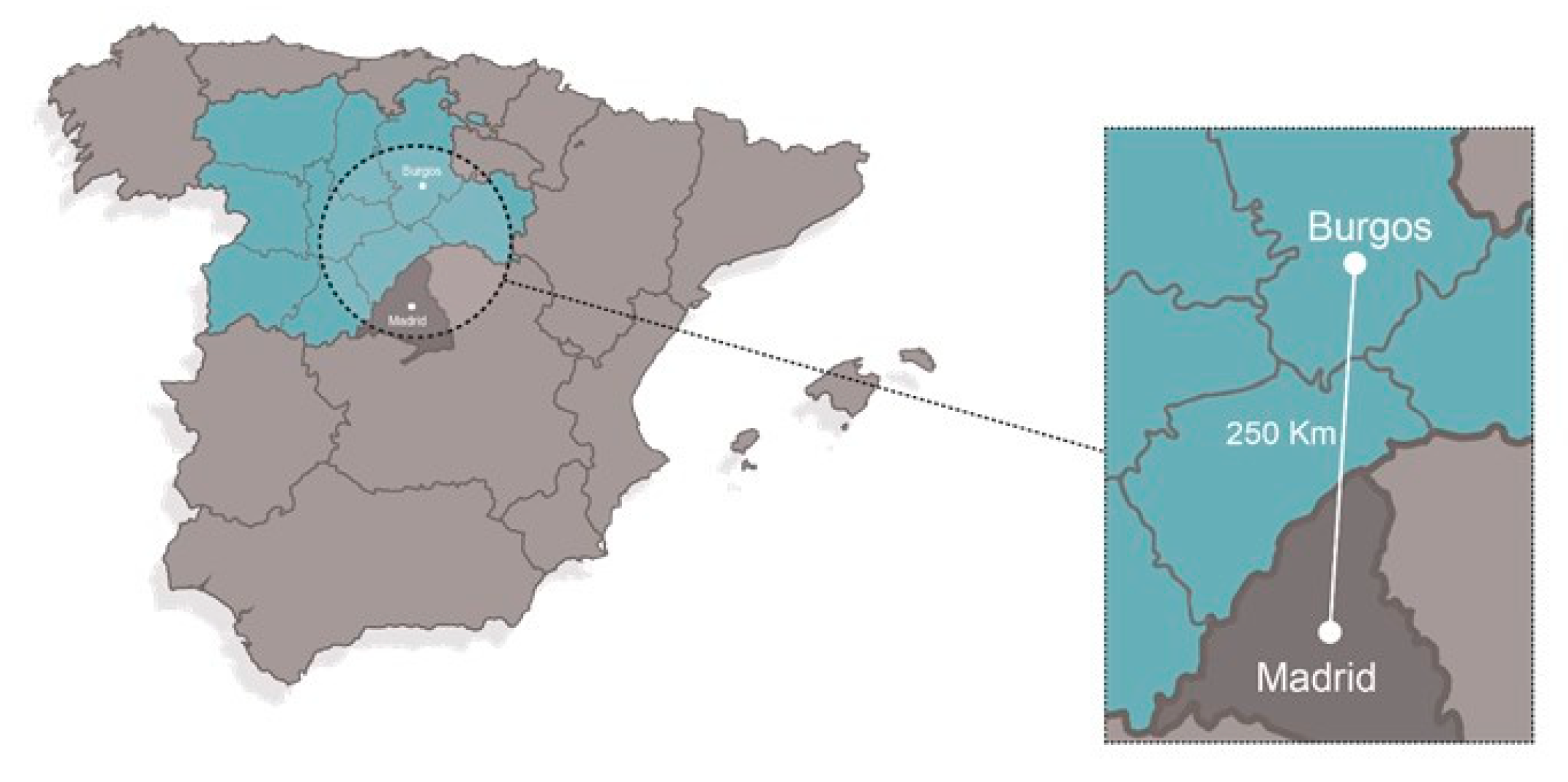
Figure 2.
Network of urban transport lines of Burgos [73].
Figure 2.
Network of urban transport lines of Burgos [73].
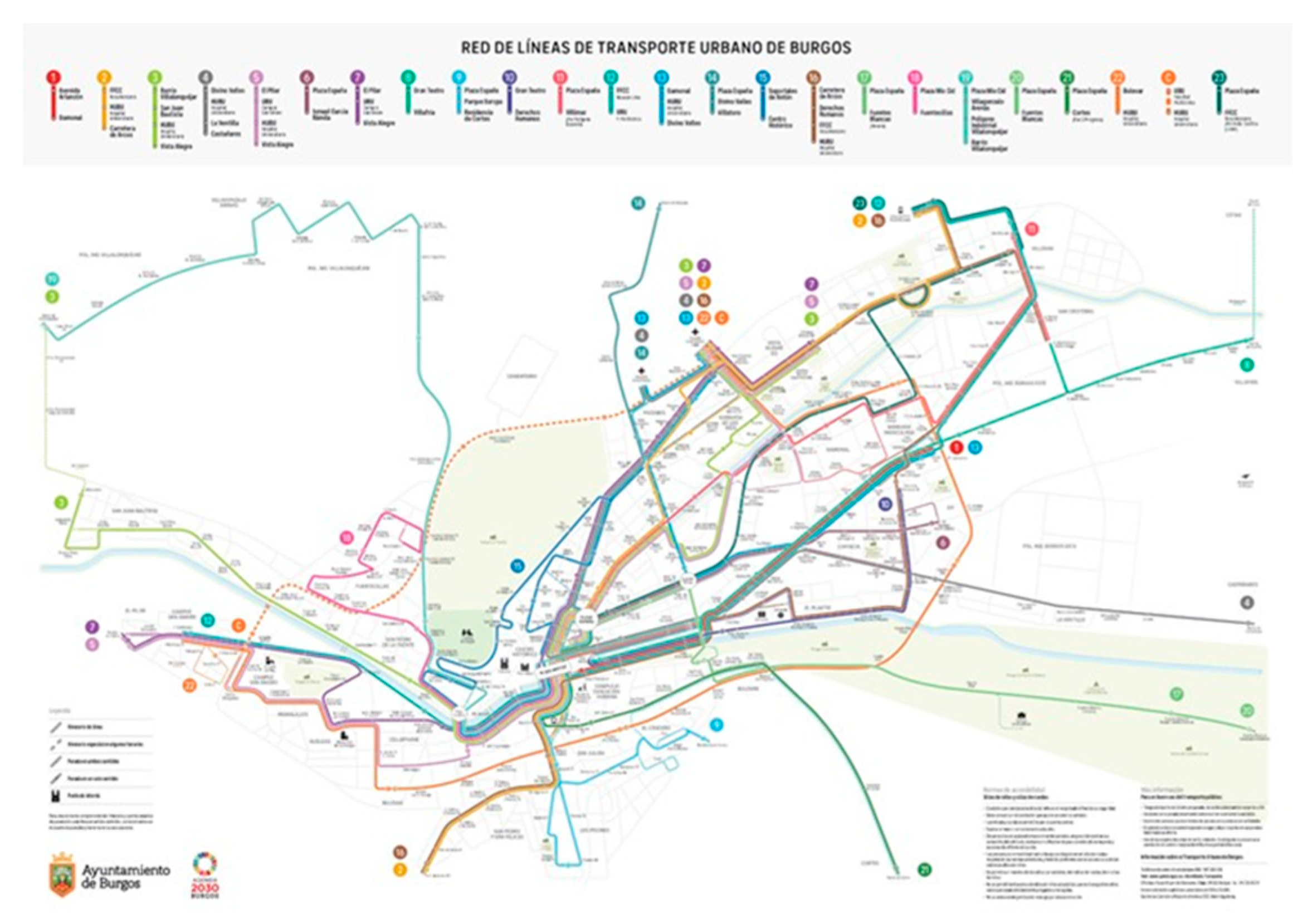
Figure 3.
Results for critical requirements at bus stops.
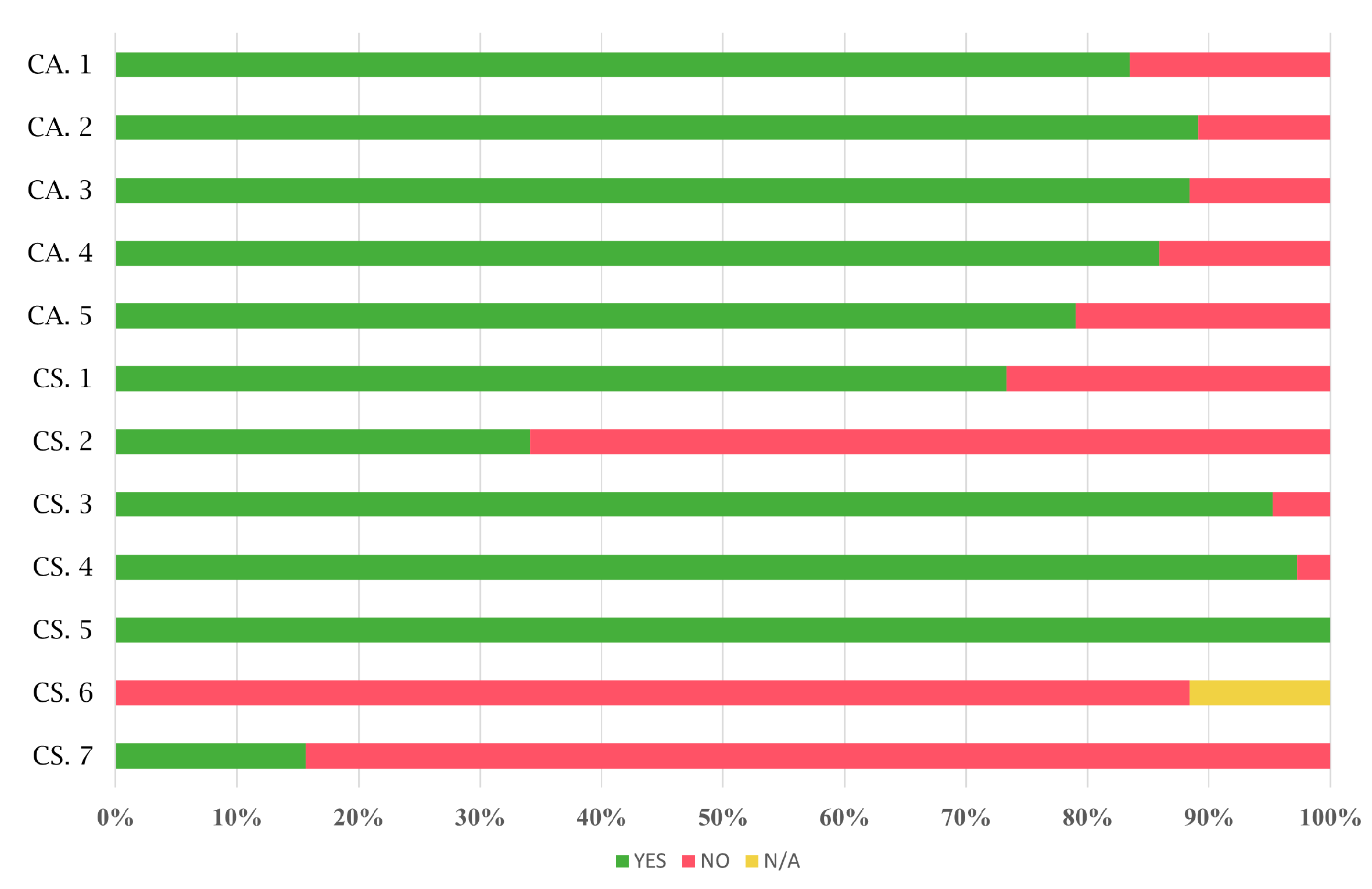
Figure 4.
Inaccessible bus stop.
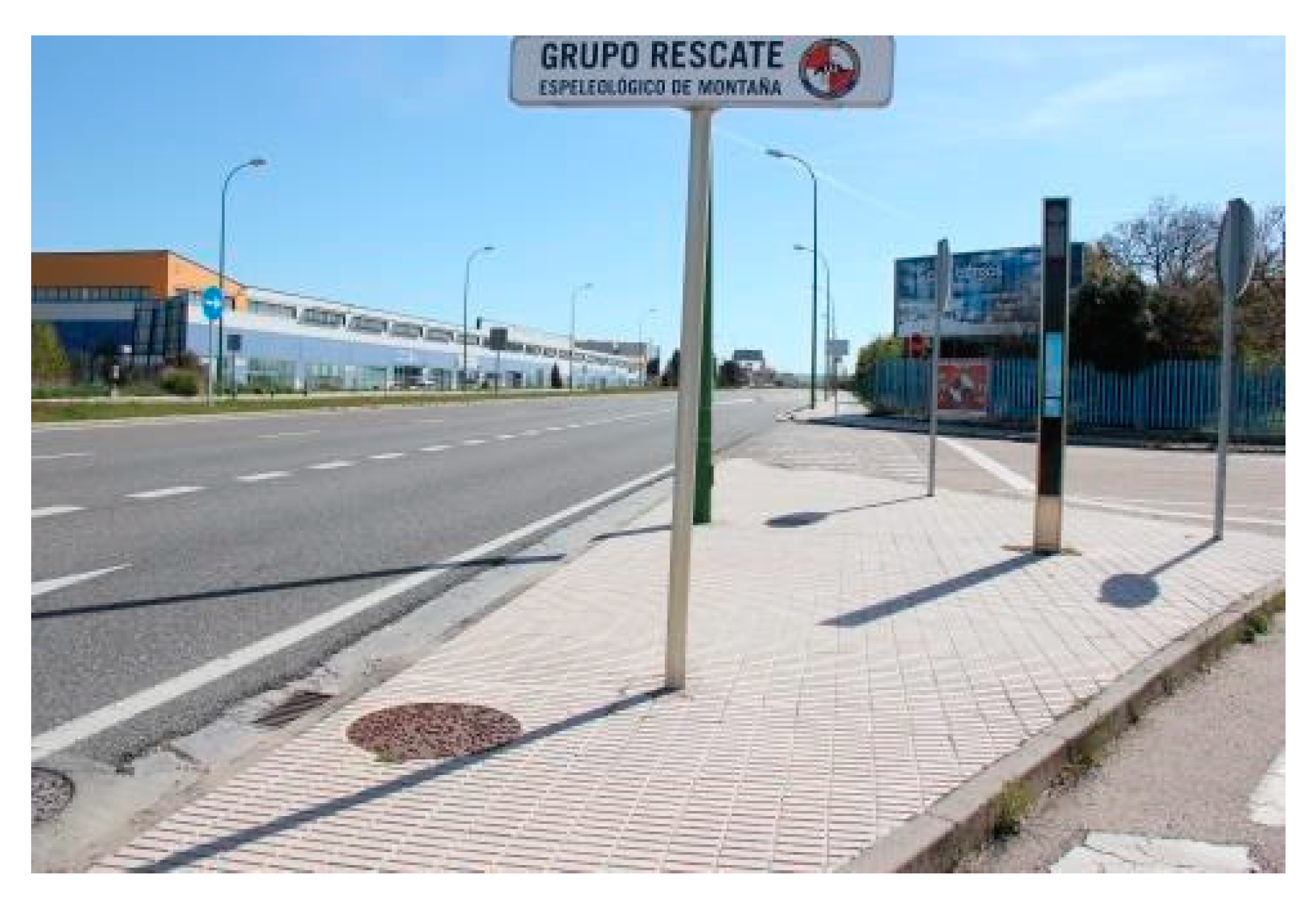
Figure 5.
Bus stop with unsuitable pavement.
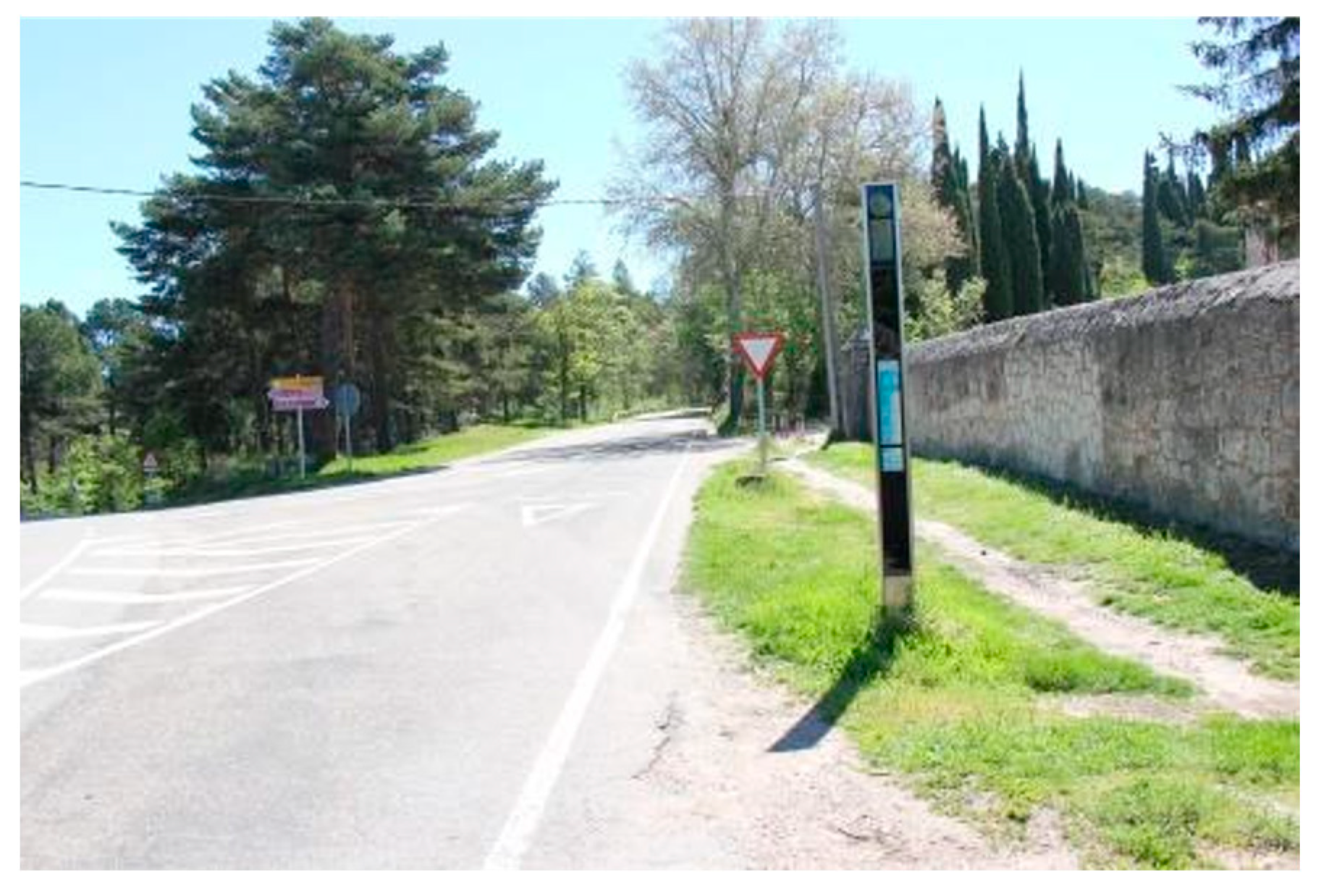
Figure 6.
Bus stop with a steep slope.
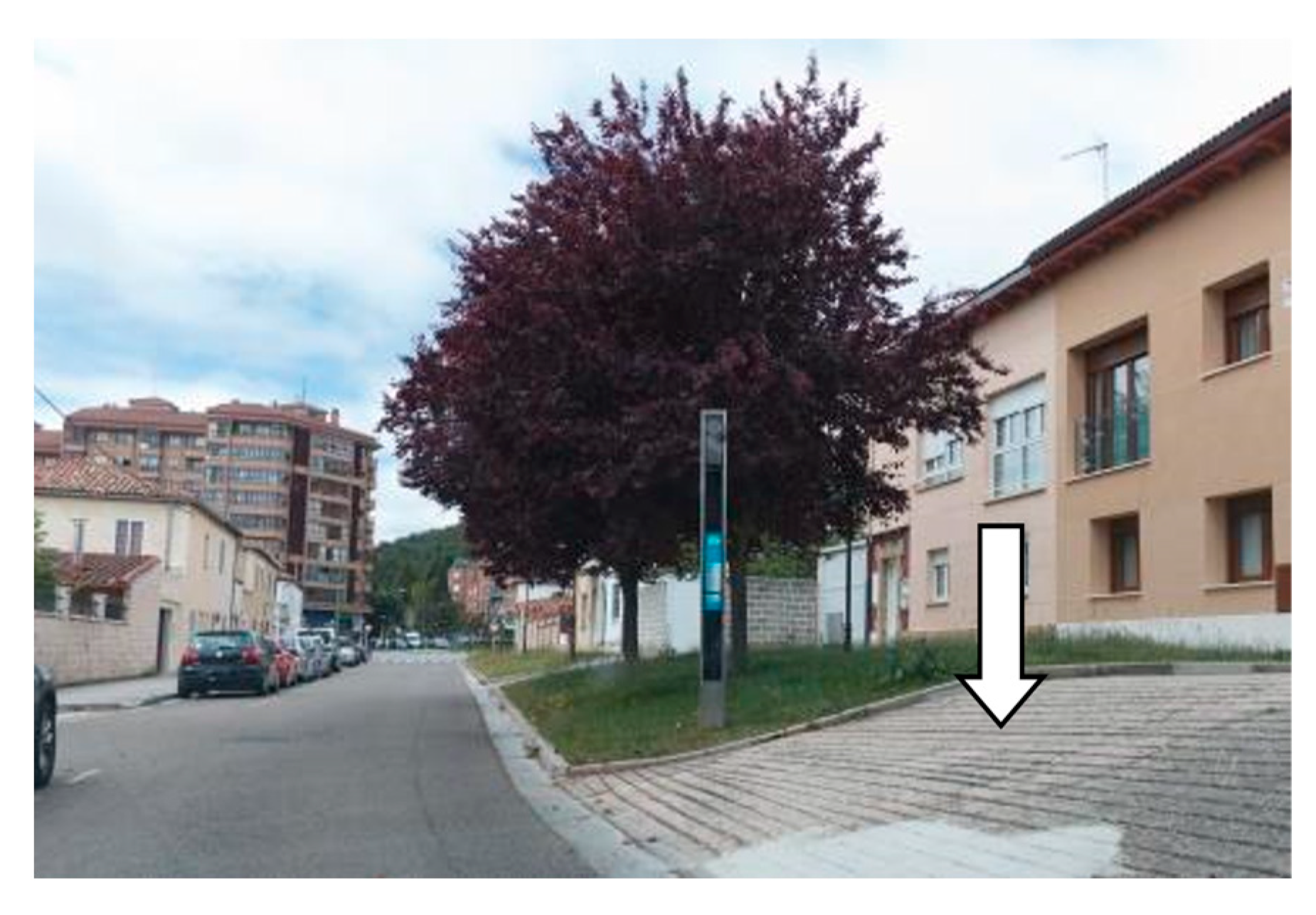
Figure 7.
Bus stop with step-free access located over 100 metres away.
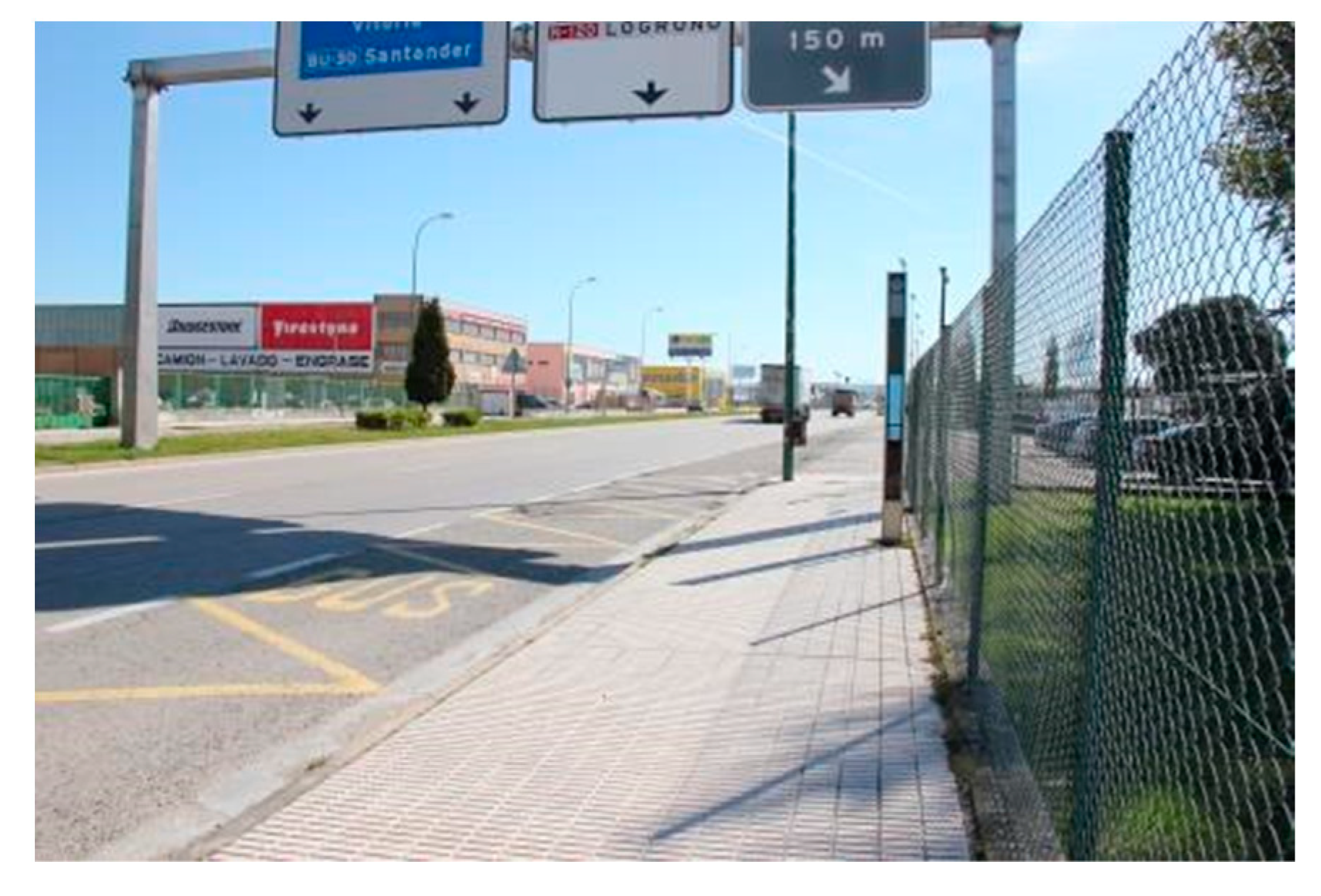
Figure 8.
Protection at bus stops: (a) Platform extending from the sidewalk; (b) Road markings indicating bus stop.
Figure 8.
Protection at bus stops: (a) Platform extending from the sidewalk; (b) Road markings indicating bus stop.
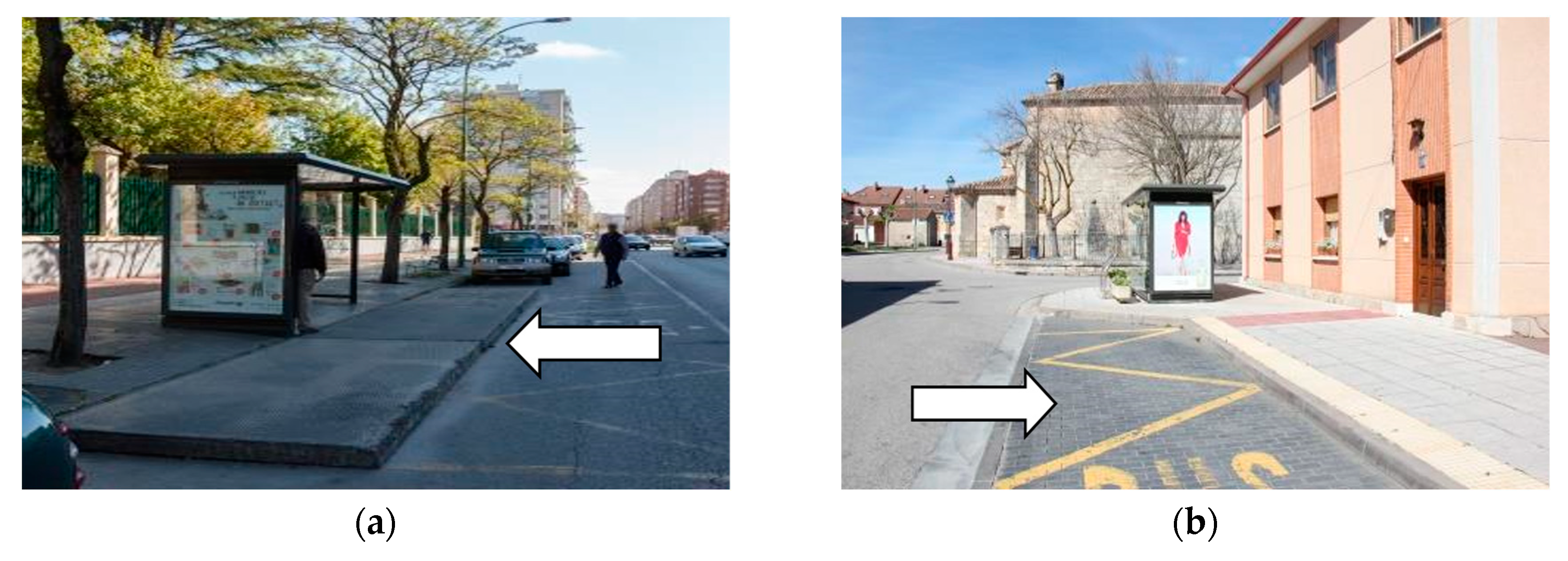
Figure 9.
Vehicles obstructing bus access.
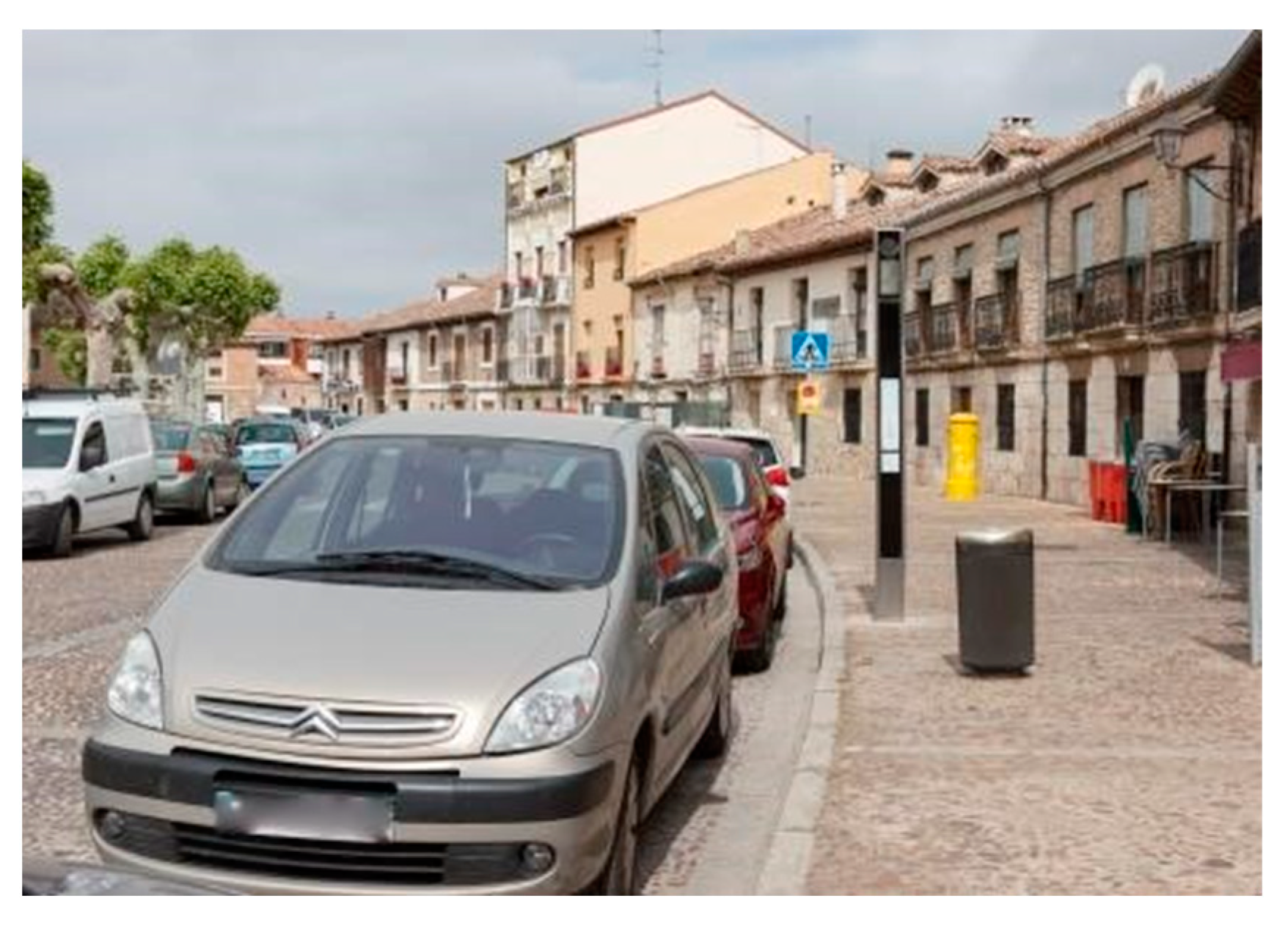
Figure 10.
Bus shelter installed in Burgos.
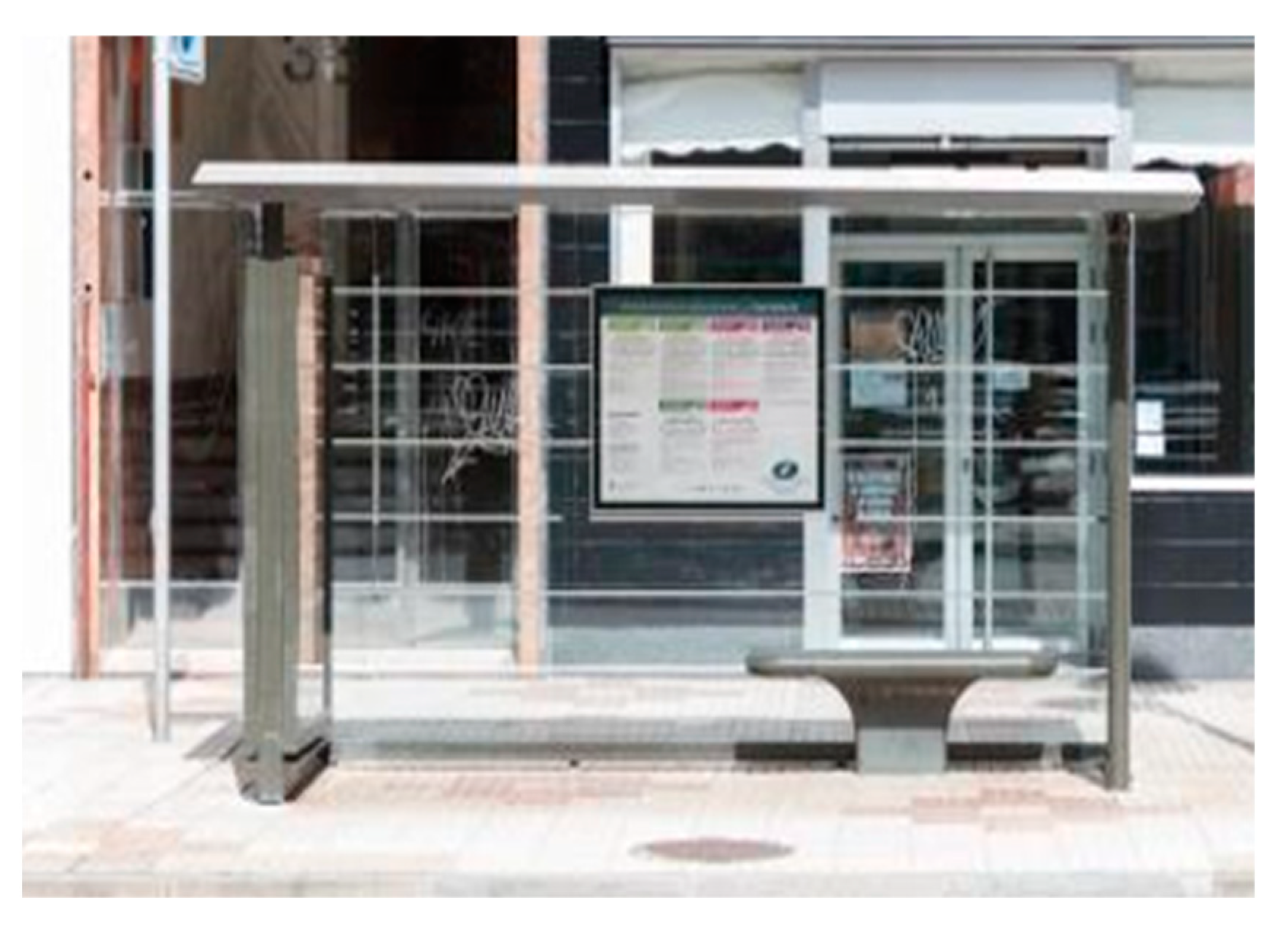
Figure 11.
Bus shelter installed in Burgos.
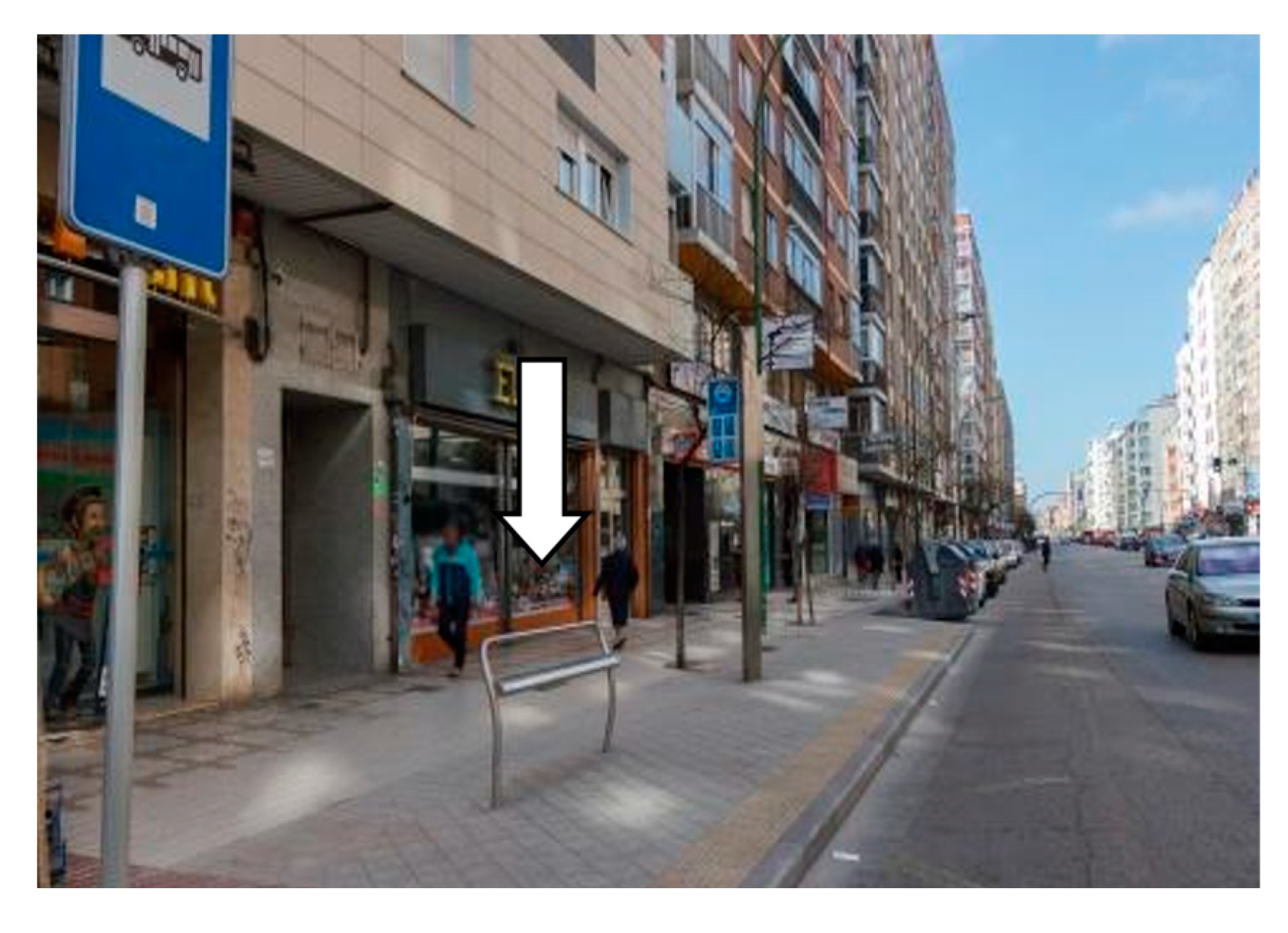
Figure 12.
Results for non-critical requirements at bus stops.
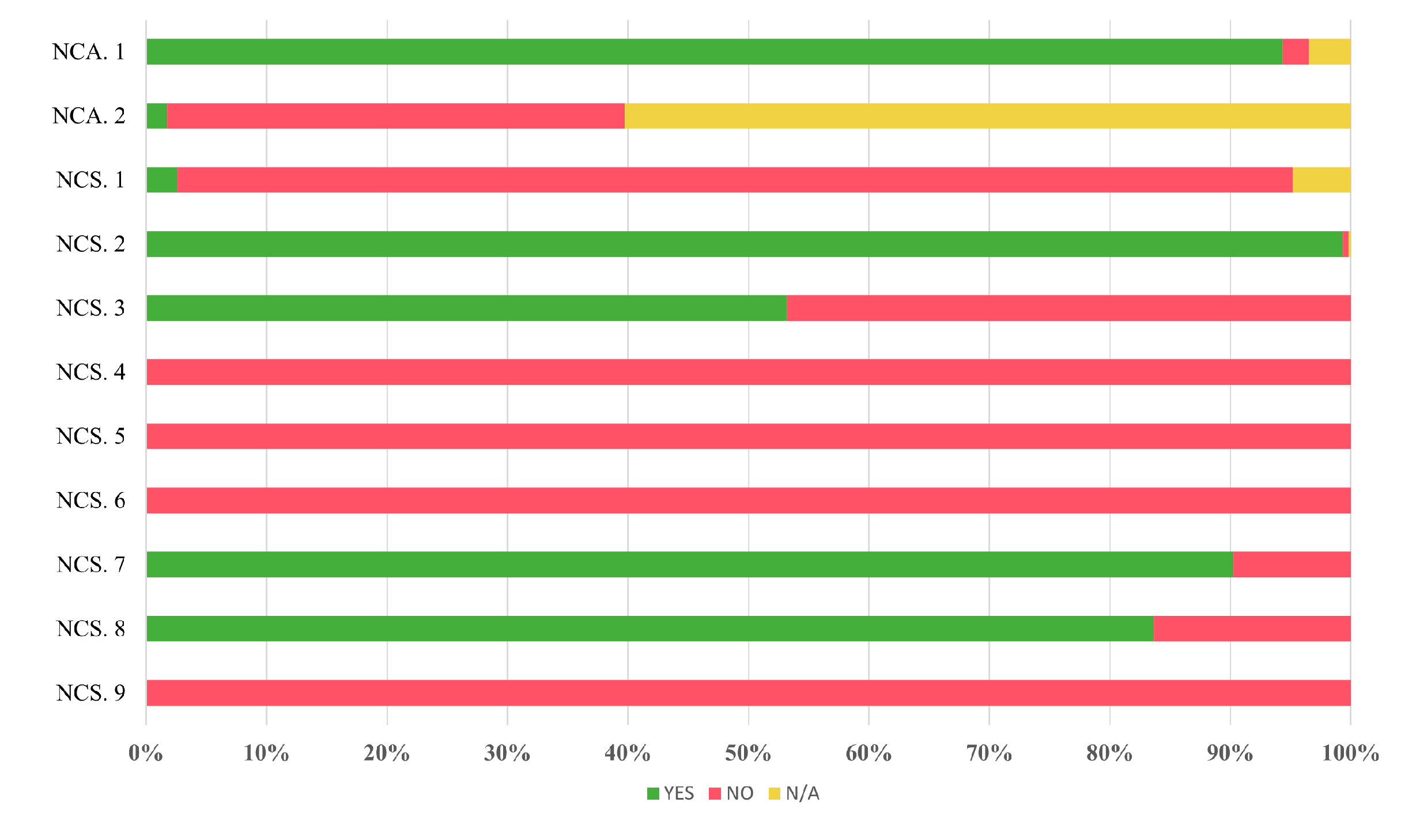
Figure 13.
Tree pits not flush with the pavement.
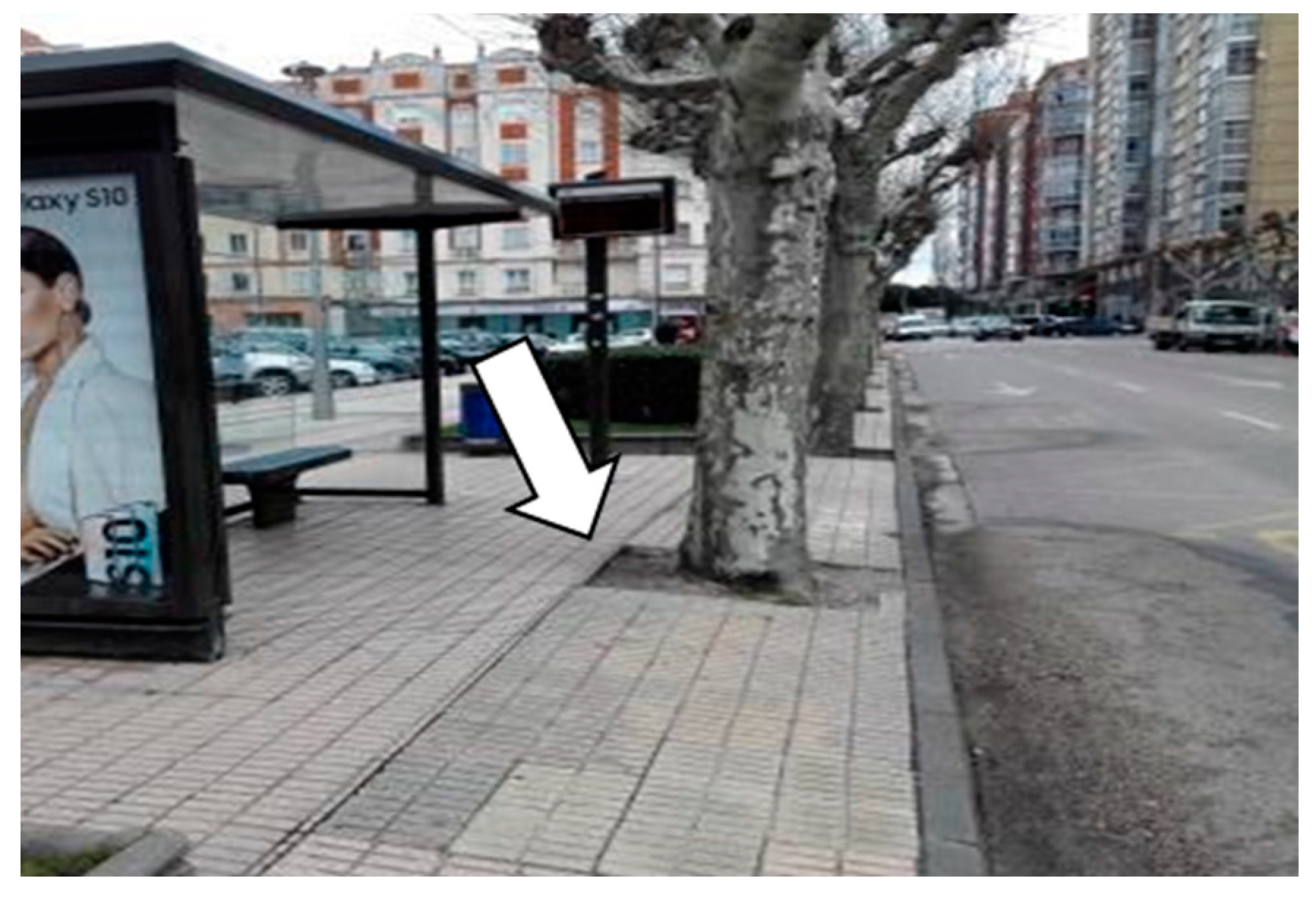
Figure 14.
Tactile-visual pavement stripe.
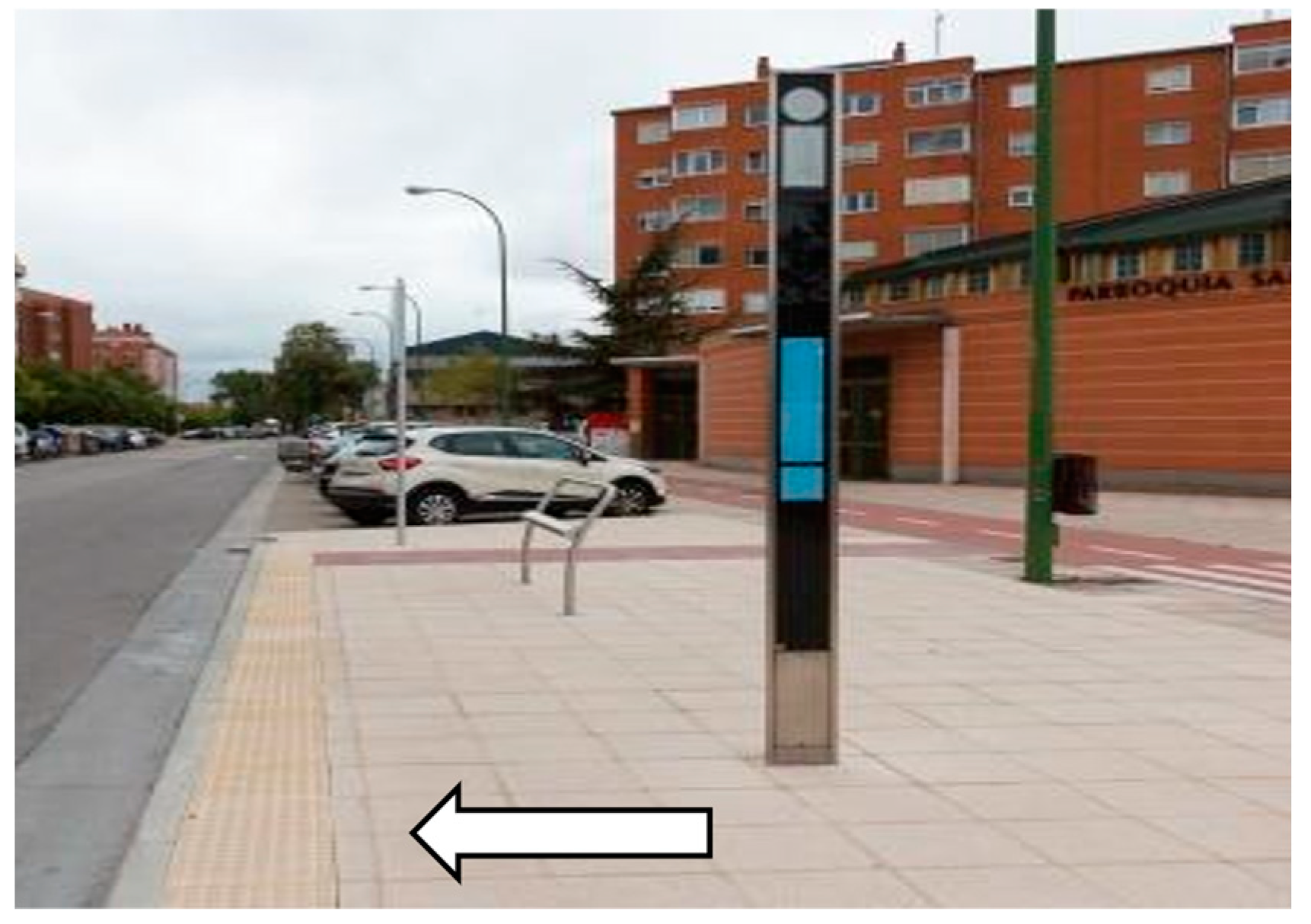
Figure 15.
Stop lacking line identification on bus pole.
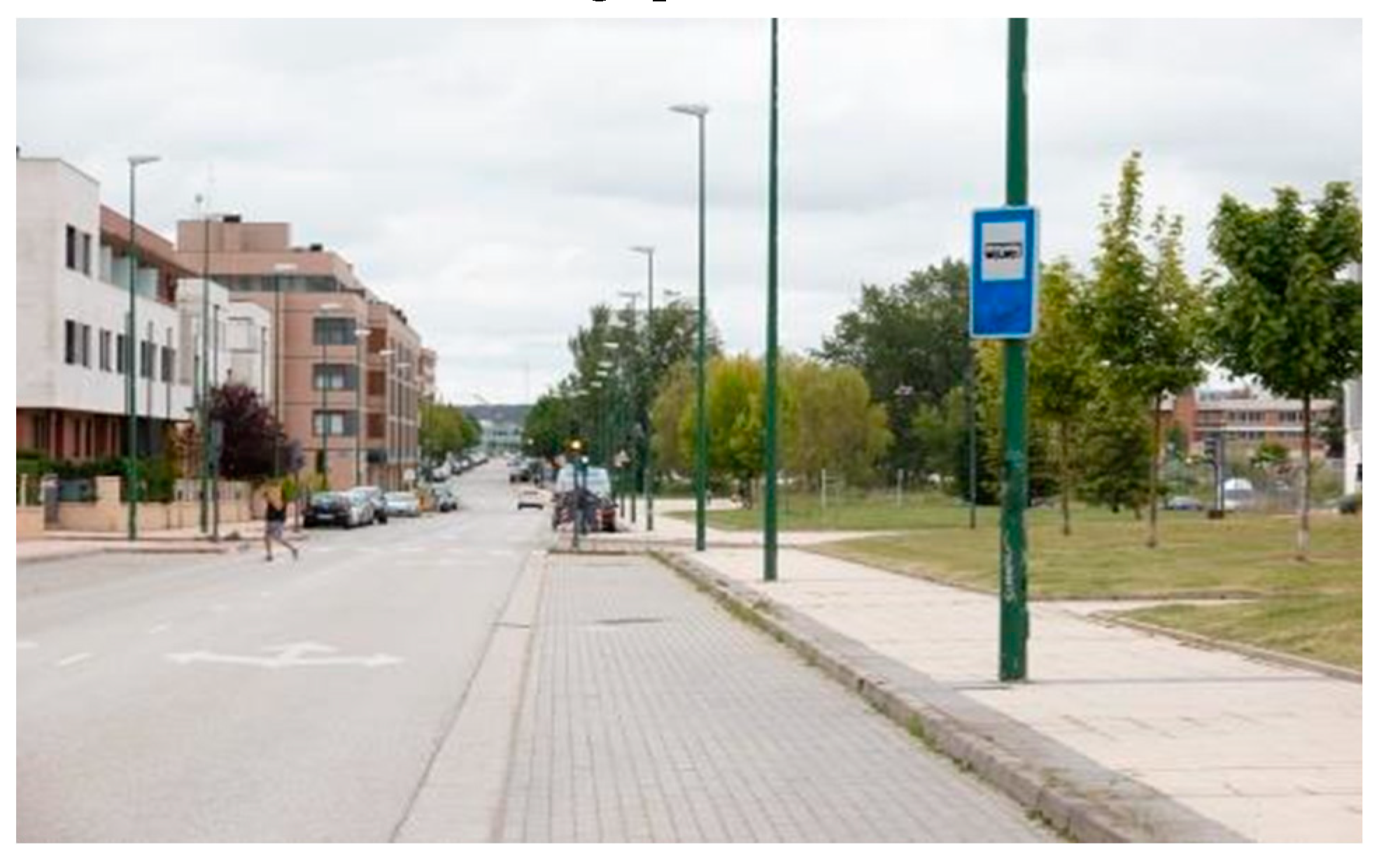
Figure 16.
Stop with an information display.
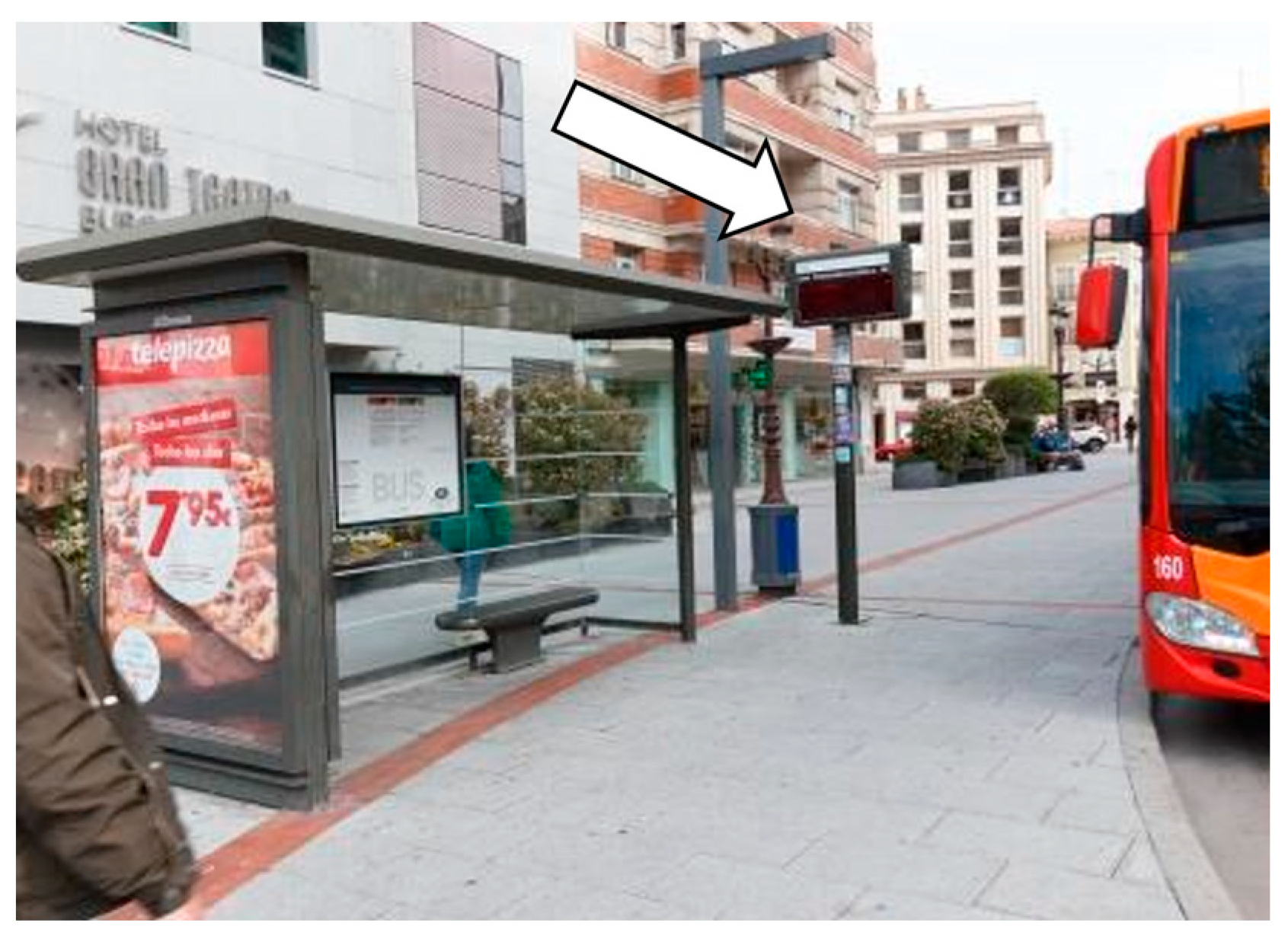

Table 1.
COCEMFE staff collaborating in the process.
| Person | Academic Degree | Position at COCEMFE | Professional experience related to accessibility |
|---|---|---|---|
| M.A.E | Clinical Psychology | Coordinator | Coordination and management in various areas of the organization. Design and management of universal accessibility projects |
| M.A.D | Technical Architect | Accessibility Consultant | Universal accessibility consultant. Accessibility advice for people with disabilities and families. Participation in accessibility projects |
| C.C.V | Technical Architect | Accessibility Consultant | Universal accessibility consultant. Accessibility advice for people with disabilities and families. Participation in accessibility projects |
| R.Z | Technical Architect | Accessibility Consultant | Universal accessibility consultant. Accessibility advice for people with disabilities and families. Participation in accessibility projects |
| R.M.G. | Social Education | Social Educator / Volunteer Coordinator | Regular user of the COCEMFE AccesibilidApp application. Person with physical disability |
Table 2.
People with disabilities participating in focus groups.
| Person | Gender | Age | Degree of disability |
|---|---|---|---|
| A.M.C. | Female | 43 | 53% |
| B.C.Y. | Female | 37 | 82% |
| B.I.M. | Male | 35 | 62% |
| C.D.T. | Male | 31 | 64% |
| G.E.B. | Male | 46 | 67% |
| I.M.O. | Male | 29 | 75% |
| R.F.D. | Male | 38 | 71% |
| R.M.G. | Male | 23 | 78% |
| S.H.P. | Male | 21 | 65% |
| A.M.C. | Male | 43 | 53% |
Table 2.
Requirements analysed Bus [78].
Table 2.
Requirements analysed Bus [78].
| Id. | Requirement |
|---|---|
| CA.1 | Unevenness saved by ramps (no steps) |
| CA.2 | Pavements without parts or loose items, no sliding, solid and continuous |
| CA.3 | Sidewalk wide enough |
| CA.4 | Wide enough pavement |
| CA.5 | Existence of step free access road crossing at a distance less than 100 m |
| CS.1 | Traffic protection at the start / end in the bus stop, preventing other vehicles stopping and blocking access. |
| CS.2 | Existence of bus shelter |
| CS.3 | Bus shelter side / centre, min step access. 0.90 m |
| CS.4 | Bus shelter clear width 1.50 m to 25 cm in height and 1.35 m to 2.10 m and 2.10 m headroom |
| CS.5 | Appropriate and clear identification of transparent or translucent elements present: signalled with 2 horizontal stripes of 5-10 cm in width and at a height of between 0.70 to 0.80 m and 1.40-1.70 m from floor level and made of brightly coloured material |
| CS.6 | Clearance height of 2,10 metres |
| CS.7 | At least 1 ischiatic support and 1 standard seat |
| NCA.1 | Gratings and manhole covers flush with flooring |
| NCA.2 | Tree trenches covered or flush with pavement |
| NCS.1 | Tactile-visual pavement stripe 1.20 metres wide, perpendicular to the direction of travel and from curb to facade, with a minimum visual touch of 40 cm at the curb |
| NCS.2 | Characters Line Identification height 14 cm contrasting colour |
| NCS.3 | Signpost with bus stop number and routes served |
| NCS.4 | Line information: Identification and denomination in Braille on the signpost |
| NCS.5 | Line Information: Identification, name and route in Braille on the marquee bus shelter |
| NCS.6 | Seats with armrests at the end of bus shelter |
| NCS.7 | 0.45 cm seat height clearance from ground +/- 2cm in the shelter |
| NCS.8 | Digital display information panel |
| NCS.9 | Digital display with audible information available |
Disclaimer/Publisher’s Note: The statements, opinions and data contained in all publications are solely those of the individual author(s) and contributor(s) and not of MDPI and/or the editor(s). MDPI and/or the editor(s) disclaim responsibility for any injury to people or property resulting from any ideas, methods, instructions or products referred to in the content. |
© 2024 by the authors. Licensee MDPI, Basel, Switzerland. This article is an open access article distributed under the terms and conditions of the Creative Commons Attribution (CC BY) license (http://creativecommons.org/licenses/by/4.0/).
Copyright: This open access article is published under a Creative Commons CC BY 4.0 license, which permit the free download, distribution, and reuse, provided that the author and preprint are cited in any reuse.


