
Submitted:
02 December 2024
Posted:
03 December 2024
You are already at the latest version
Abstract
It is well known that the angular momentum distribution of the main celestial bodies of the solar system has been a puzzle problem to the astronomy circle. In fact, it is the implied proof that the solar system originated from the Big Bang of the Interstellar Dirty Snow Ball Egg (IDSB Egg). Through the expanding style of Big Bang, more than 99% of the original angular momentum of the Interstellar Dirty Snow Ball Egg (IDSB Egg) was transferred to the outer layer substance, which mostly had evolved to be the eight planets, and the residual angular momentum left to the Sun was only less than 1%. It is a fresh equivalent replacement method for the corresponding relationship between the main celestial bodies of the solar system (excluding the Moon) and the ancient plates group of the Earth. What’s more, it is accepted by the overwhelming majority of the geoscience community that the ancient plates distributed on the planet Earth and wandered by the human race and other animals had evolved from the breaking up of the unique supercontinent about 66 million years ago. Therefore, indirect proof has existed strongly on Earth that the solar system originated from the Big Bang of the Interstellar Dirty Snow Ball Egg (IDSB Egg). The Moon is not the original founder member of the birth of the solar system, and it had only something to do with the breaking up of the unique supercontinent of the planet Earth about 66 million years ago.
Keywords:
Big Bang
; Interstellar Dirty Snow Ball Egg (IDSB Egg)
; the solar system
; the Moon
; angular momentum
; equivalent replacement method
; unique supercontinent
; Hinted Black Hole (HBH)
; astroscience
Introduction
How did the solar system come into being? Did it originate from the Nebular collapse in the universe as popular accepted by the astronomy community?
A negative answer has existed based on the direct proof of the solar system and indirect proofs on the Earth. The peculiar angular momentum distribution of the solar system that puzzled the astronomy community for centuries is actually the direct proof that the solar system originated from the Big Bang of the Interstellar Dirty Snow Ball Egg (IDSB Egg) long long ago. The corresponding relationship between the main celestial bodies of the solar system and the ancient plates group of the Earth implies that the solar system originated from the Big Bang of the Interstellar Dirty Snow Ball Egg (IDSB Egg) since the ancient plates group evolved from the breaking up of the unique supercontinent about 66 million years ago.
Where did the Moon come from? Was the Moon the original founder member of the solar system?
The Moon came from an unknown place out of the solar system in the Milky Way galaxy or even other unknown spiral galaxies. It was not the original founder member of the solar system and had nothing to do with the birth of the solar system.
Text
1.0 the strange and interesting distribution of the mass and angular momentum of the celestial bodies of the solar system.
It has been observed by the astronomers that the angular momentum distribution of the celestial bodies of the solar system does not play a proportional relationship with the mass distribution of them. It is shown by Figure 1 as follows,
However, it is accepted by the majority of astronomers that the biggest celestial body, the Sun, takes up 99.9% of the solar system in mass, its angular momentum only takes up 0.6% of the solar system. It is shown by figure 2 as follows,
It seems that it is a trouble problem that puzzled astronomers for centuries how the strange phenomenon related to the Sun happened in the solar system.
2.0. The Origin of the Solar System: The Big Bang of the Interstellar Dirty Snow Ball Egg(IDSB Egg)
Sometimes, the strange phenomenon would be always direct proof for the deducing of certain inspiration. It is fortune that it applies to the Sun of the solar system. The strange mass and angular momentum distribution of the solar system just implies that it originated from the Big Bang of the Interstellar Dirty Snow Ball Egg (IDSB Egg).
From the formular of the angular momentum L=mωr2, we know that the angular momentum (L) is related to mass (m)、angular velocity (ω) and orbit radius (r). If the Interstellar Dirty Snow Ball Egg (IDSB Egg), which was a little bigger than the Sun in volume and seemed like a mini spot in the universe, expanded to a giant ball as big as the solar system nowadays because of the Big Bang happened to it, then it is not difficult to imagine that more than 99% of the original angular momentum of the Interstellar Dirty Snow Ball Egg (IDSB Egg) was transferred to the outer substance which was evolved to be the planets and other celestial bodies of the solar system. The residual angular momentum of the Interstellar Dirty Snow Ball Egg (IDSB Egg) held by its main body, the Sun, was less than 1%.
It is similar to the angular momentum balance of the dancer dancing on the ice surface, if the dancer extends his or her hands out as far as possible, the dancer would rotate slower because of the transferring of the angular momentum to his or her arms and hands, on the contrary, if the dancer shrinks his or her hands to body, the dancer would rotate faster because of the converging of the angular momentum from his or her hands and arms to body.
In short words, the dispersive redistribution of the angular momentum would make the main body rotate much slower while the converging redistribution of the angular momentum would make the main body rotate much faster.
3.0. The Structure of the Interstellar Dirty Snow Ball Egg (IDSB Egg)
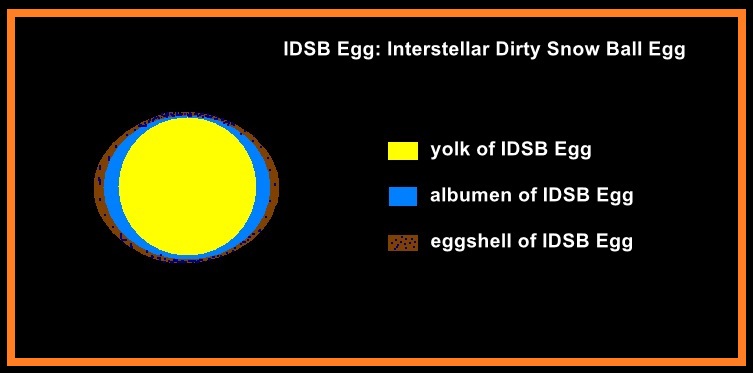
Similar to the structure of an egg, the structure of the Interstellar Dirty Snow Ball Egg was composed of yolk、albumen and eggshell.
- ➢
- The yolk was the main part of the Interstellar Dirty Snow Ball Egg and it was composed of the lightest elements, such as the atomic hydrogen and hydrogen molecule, the raw material evolved to be the star of the Sun;
- ➢
- The albumen was composed of compound,such as H2O、CH4、CO2、H2S and so on, the raw material evolved to be the gas planets of Jupiter、Saturn、Uranus、Neptune;
- ➢
- The eggshell was composed of heavy elements, such as the Ga、Si、Fe、Cu、Zn and so on, the raw material evolved to be the rocky planets of Mercury、Venus、Earth、Mars, and even the inner core of the gas planets;
It is shown by Figure 3 as follows,
4.0. The Evolving Process of the Big Bang of the Interstellar Dirty Snow Ball Egg (IDSB Egg) and the Formation of the Solar System
With the severe collision of the foreign celestial bodies, the Big Bang process happened to the Interstellar Dirty Snow Ball Egg(IDSB Egg) and the yolk part of it was ignited which led to the birth of the new star of the Sun. And the albumen and eggshell part of the IDSB Egg were thrown away to the out layer surrounding the new born Sun. Thus, the lantern structure was formed after the Big Bang of the IDSB Egg. It is shown by Figure 4 as follows,
Then, under the high energy of the solar wind of the new born Sun, the first planet of the new born solar system, Mercury, formed gradually from the interstellar gas and dust surrounding the new born Sun.
5.0. The Evolving of the Second and Third Planet of the New Born Solar System
With the formation of the second and third planet, Venus and Earth, from the interstellar gas and dust surrounding the new born Sun, the volume of the new born solar system expanded gradually under the great pressure of the high energy of solar wind of the new born Sun.
It is shown by Figure 5 as follows,
6.0. The Formation of the New Born Solar System, from Inner to Outer Layer
From inner to outer layer, the main celestial bodies of the planets were formed gradually until the Pluto which symbolized the finishing of the new born solar system.
It is shown by Figure 6 as follows,
7.0. The Corresponding Relationship Between the Celestial Bodies of the Solar System and the Ancient Plates of the Earth
Based on the principle of hot expanding and cold shrinking, it is found that there is a corresponding relationship between the eight planets of the solar system and the eight residual ancient plates of the Earth. Furthermore, it is not difficult to deduce that the Sun corresponds to the biggest ancient plate hidden under the ocean floor of the Northwestern Pacific Ocean. So, the main celestial bodies of the solar system correspond to the ancient plates group of the Earth. It is shown by Figure 7 as follows,
However, the biggest ancient plate hidden under the ocean floor of the Northwestern Pacific Ocean is decorated with geological age distribution of a clam shell, which shows a meaning of Hint Black Hole (HBH) that exists widely in the universe and always acts as the center core of the spiral galaxies. In fact, the special pattern hidden on the ocean floor of the Northwestern Pacific Ocean indicates that the biggest ancient plate is the dominate core of the ancient plate group of the Earth. It is shown by Figure 8 as follows,
8.0. The Jigsaw Recovery of the Unique Supercontinent of the Planet Earth
It is accepted by the overwhelming majority of the geoscience circle that the ancient plate group is evolving from the breakup of the unique supercontinent long long ago. It seems a harder task for the geoscience circle to finish the jigsaw recovery of the unique supercontinent completely. With the biggest ancient plate (X1) hidden under the Hinted Black Hole (HBH), the jigsaw recovery of the unique supercontinent is shown as below by Figure 9.
About 66 million years ago, the unique supercontinent seemed to be a lonely island surrounded by the ancient Atlantic Ocean. It is shown by Figure 10 as follows,
9.0. The Evolving Process of the Unique Supercontinent from 66 Million Years Before
About 66 million years ago, with the incident that happened between the visiting foreign celestial bodies and the unique supercontinent of the planet Earth, the unique supercontinent broke up and the biggest ancient plate (X1) sank to the ocean floor on the equatorial area. During the past 66 million years, the biggest ancient plate (X1) had been rotating anticlockwise and drifting northwards on the ocean floor as slow as a snail moves until it is located at the ocean floor of the Northwestern Pacific Ocean up to now. It is shown by Figure 11 as follows,
What’s more, the drifting destination of the biggest ancient plate (X1) would be the North Pole 65 million years in the future.
10.0. The Similar Evolving Pattern Between the Birth of the Solar System and the Ancient Plates Group of the Earth
The corresponding relationship between the main celestial bodies and the ancient plates group implies that except the Moon, almost all of the celestial bodies of the solar system are evolved from the same target—the Interstellar Dirty Snow Ball Egg (IDSB Egg). And the similar evolving pattern is hinted in the solar system and the ancient plates group of the Earth. It is shown by Figure 12 as follows,
The solar system was born of the Big Bang of the Interstellar Dirty Snow Ball Egg (IDSB Egg) and the biggest part of it became the dominant center core—the Sun. While the ancient plates group of the Earth was evolved from the broke up of the unique supercontinent and the biggest part of it became the dominant center core—the Hint Black Hole(HBH). Most importantly, there is a corresponding relationship between the two dominant center cores, that is the Sun and the HBH (Hint Black Hole).
11.0. The Symbolizing Meaning of Festive Fireworks in Human Activities
During the human festival activities, the fireworks set off are becoming the most important fascinating part. It is shown by Figure 13 as follows,
However, the symbolizing meaning of festive fireworks in human activities is just to rebirth the great brilliant scene of the birth of the Sun, or just to mimic the Big Bang of the Interstellar Dirty Snow Ball Egg (IDSB Egg) long long ago. A tiny spot expands to a giant color ball by exploding and it is not difficult to imagine that more than 99% the original angular momentum of the Interstellar Dirty Snow Ball Egg (IDSB Egg) would be transferred to out layer substance compared to the Big Bang of it long long ago. As a result, the residual angular momentum left to the new born star—the Sun, would be less than 1% that puzzled the Astronomy community for centuries.
12.0. The Special Celestial Body—The Moon
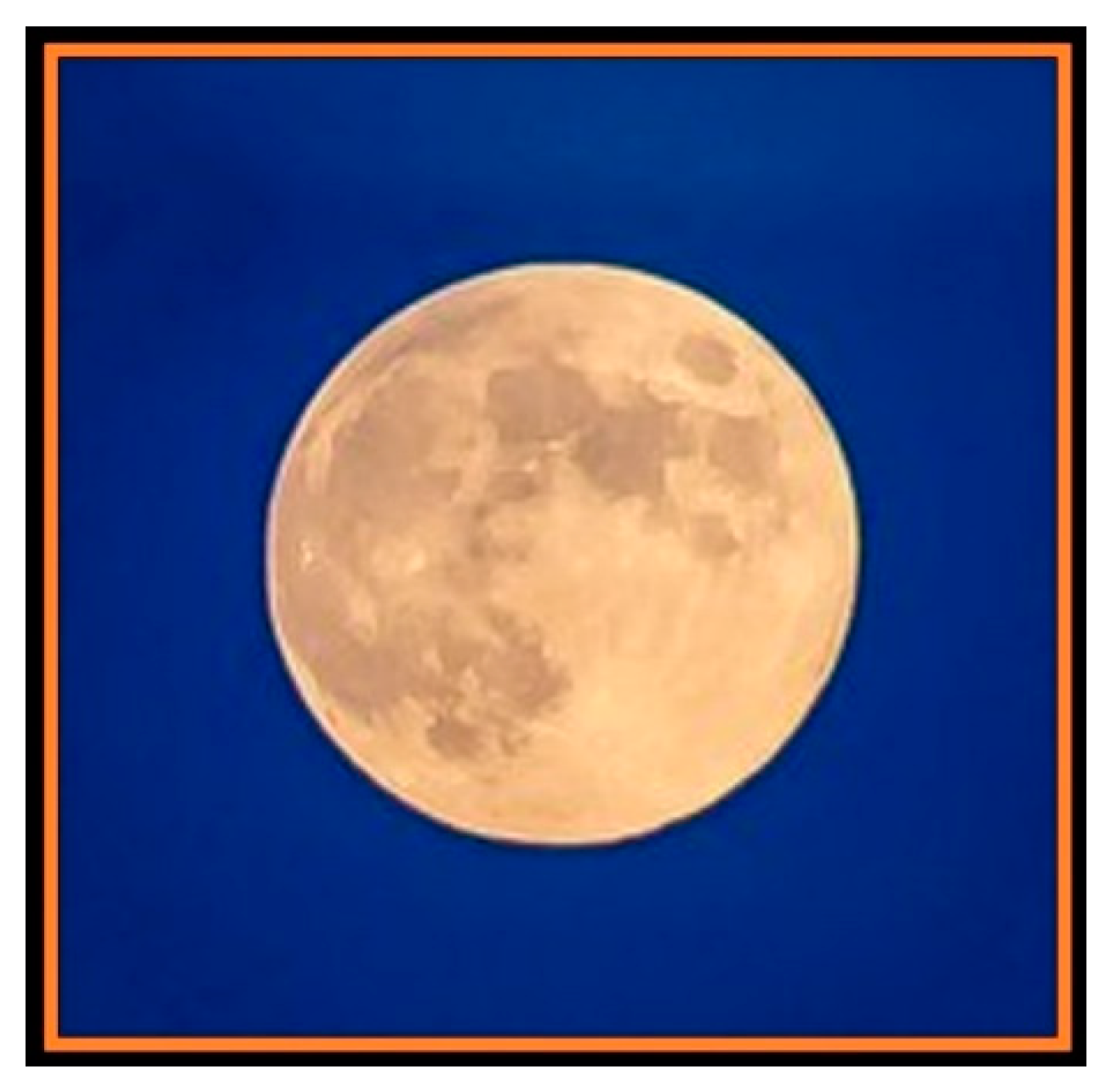
As a special celestial body to the solar system, the Moon was not the original membership of the birth of the solar system and had nothing to do with the original evolution of it. The Moon came from an unknown place out of the solar system in the Milky Way galaxy or even other unknown spiral galaxies long long ago. It only had something to do with the breaking up of the unique supercontinent of the Earth 66 million years ago and accompanied the Earth for almost 66 million years up to date. It is shown by Figure 14 as follows,
Conclusions
The peculiar angular momentum distribution of the main celestial bodies of the solar system is actually strong proof that it originated from the Big Bang of the Interstellar Dirty Snow Ball Egg (IDSB Egg) long long ago. What’s more, an equivalent replacement method has been found to enhance the proof through the corresponding relationship between the main celestial bodies of the solar system (excluding the Moon) and the ancient plates group of the Earth.
Similar to the birth of human babies from head to foot, the evolving sequence of the main celestial bodies of the solar system was from inner to outer, that is from the Sun to Pluto (exclude the Moon).
As the special celestial body of the solar system, the Moon is actually not the original founder member of it. The Moon had only something to do with the breaking up of the unique supercontinent of the Earth 66 million years ago and accompanied the Earth up to nowadays.
Discussion
1. Does it apply to the birth of the solar system for the popular hypothesis that all the stars in the universe originated from the nebular?
No, it is only a hypothesis for the giant stars of first generation in the universe. In fact, as a member of the dwarf star family for the third or fourth generation of stars in the universe, the solar system originated from the Big Bang of the Interstellar Dirty Snow Ball Egg (IDSB Egg) according to the actual proof of peculiar angular momentum distribution of it and the corresponding relationship between the main celestial bodies of it (excluding the Moon) and the ancient plates group of the Earth. So, the birth of the Sun and the solar system should include the pregnancy of the Interstellar Dirty Snow Ball Egg (IDSB Egg) that might last for hundreds of millions of years in the universe.
2. What is the “equivalent replacement method”?
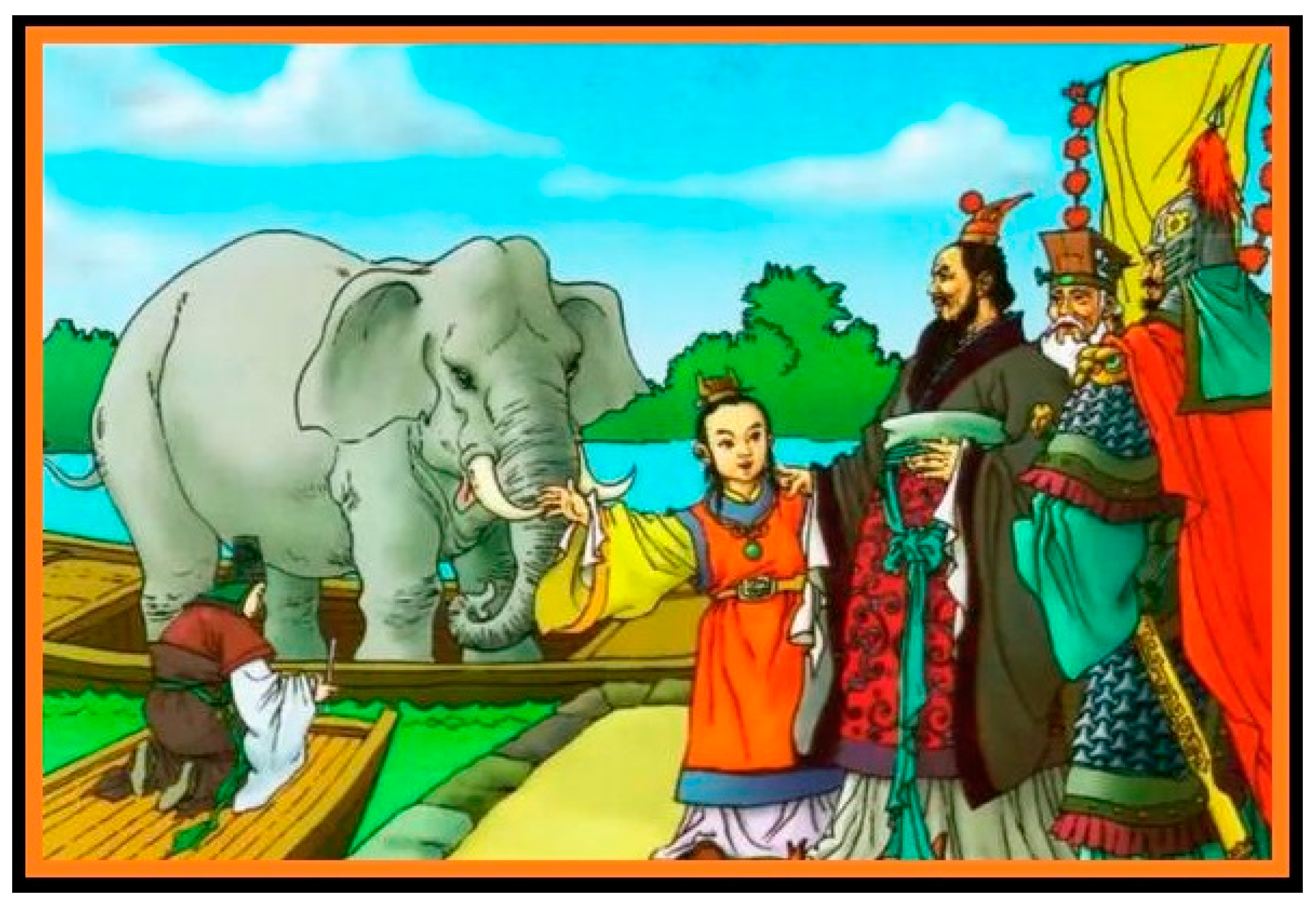
It is a true case happened in the three kingdoms period of ancient China that a Chinese boy of only seven years old, named Caochong, who was hit by an inspiration that the weight of an elephant could be calculated indirectly by weighing the tens of stones each on a boat to match the water line caused by the elephant previously. In simple words, the weight of the elephant was equal to the tens of stones in balance; the elephant was replaced by the tens of stones perfectly. It is shown by figure 15 as follows,
Figure 15.
How to get the weight of an elephant by using the “equivalent replacement method” of a seven-year-old Chinese boy.
Figure 15.
How to get the weight of an elephant by using the “equivalent replacement method” of a seven-year-old Chinese boy.
3. What is the relationship between geoscience and astroscience (astronomical science)?
It is no doubt that the Earth is only one of the common planets in the universe. So, what happened on Earth was actually the micro branch of astronomical science, or the geoscience should be concluded to the astroscience (astronomical science). Inspiration might be waved in their brainstorms for those researchers of geoscience if they take a look at what happened and what is happening in the universe and by the same token for those researchers of astroscience taking a look at what happened and what is happening on Earth. Geoscience should not be isolated from the astroscience artificially for the interest of benefit.
4. How about the popular hypothesis that the Moon was born of the inner material of the Earth collided by an unknown foreign celestial body?
The birth of the Moon has nothing to do with the planet Earth, even the solar system. The moon came from an unknown place out of the solar system in the Milky Way Galaxy or even other unknown spiral galaxies. The Moon only had something to do with the breaking up of the unique supercontinent of the Earth about 66 million years ago and accompanied the Earth up to nowadays.
References
- Henghua Yan. The jigsaw recovery of the Earth's unique supercontinent 66 million years ago. ESS Open Archive . May 25, 2023. [CrossRef]
- Yan , h. (2024). The Discovery of the Cross “十” Shape Ocean-Plate Whirlpool of Double Whirl Arms of the Planet Earth. Adv Urban Region Dev Plann, 1(2), 01-14.
- JEFFREYS, H. Origin of the Solar System. Nature 153, 140 (1944). [CrossRef]
- HAAR, D. Angular Momentum of the Solar System. Nature 158, 874 (1946). [CrossRef]
- Maddox, J. Origin of Solar System redefined. Nature 308, 223 (1984). [CrossRef]
- HUNTER, A. Origin of the Solar System. Nature 153, 255–256 (1944). [CrossRef]
- Hughes, D. Solar system origin. Nature 261, 15–16 (1976). [CrossRef]
- Ormel, C. Archaeology of the Solar System. Nat Astron 6, 16–17 (2022). [CrossRef]
- McKinnon, W., Mueller, S. Pluto's structure and composition suggest origin in the solar, not a planetary, nebula. Nature 335, 240–243 (1988). [CrossRef]
- Nakajima, M., Genda, H., Asphaug, E. et al. Large planets may not form fractionally large moons. Nat Commun 13, 568 (2022). [CrossRef]
Figure 1.
The mass and angular momentum distribution of the celestial bodies of the solar system.
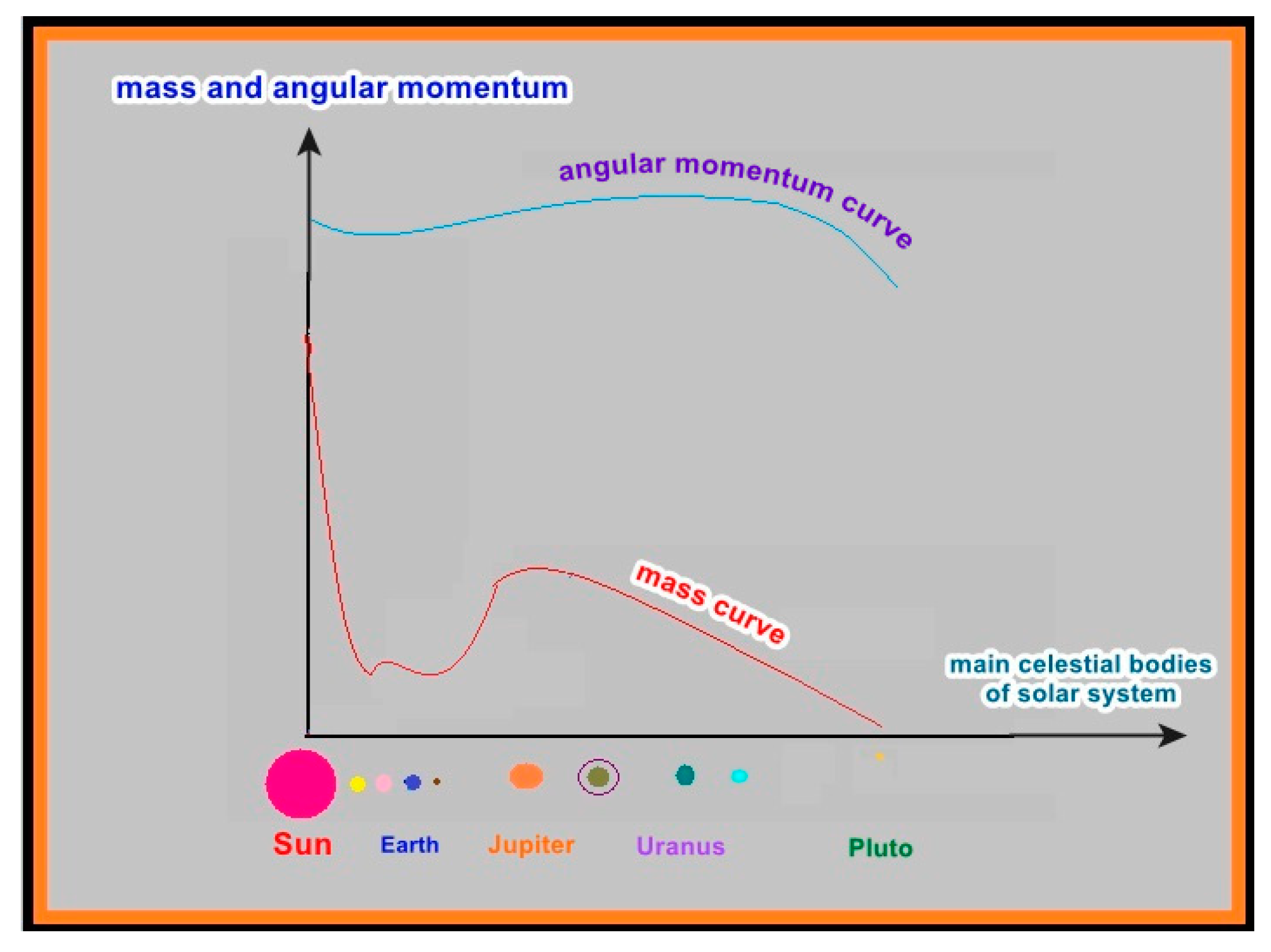
Figure 2.
The contrast extremity of the mass and angular momentum of the Sun of the solar system.
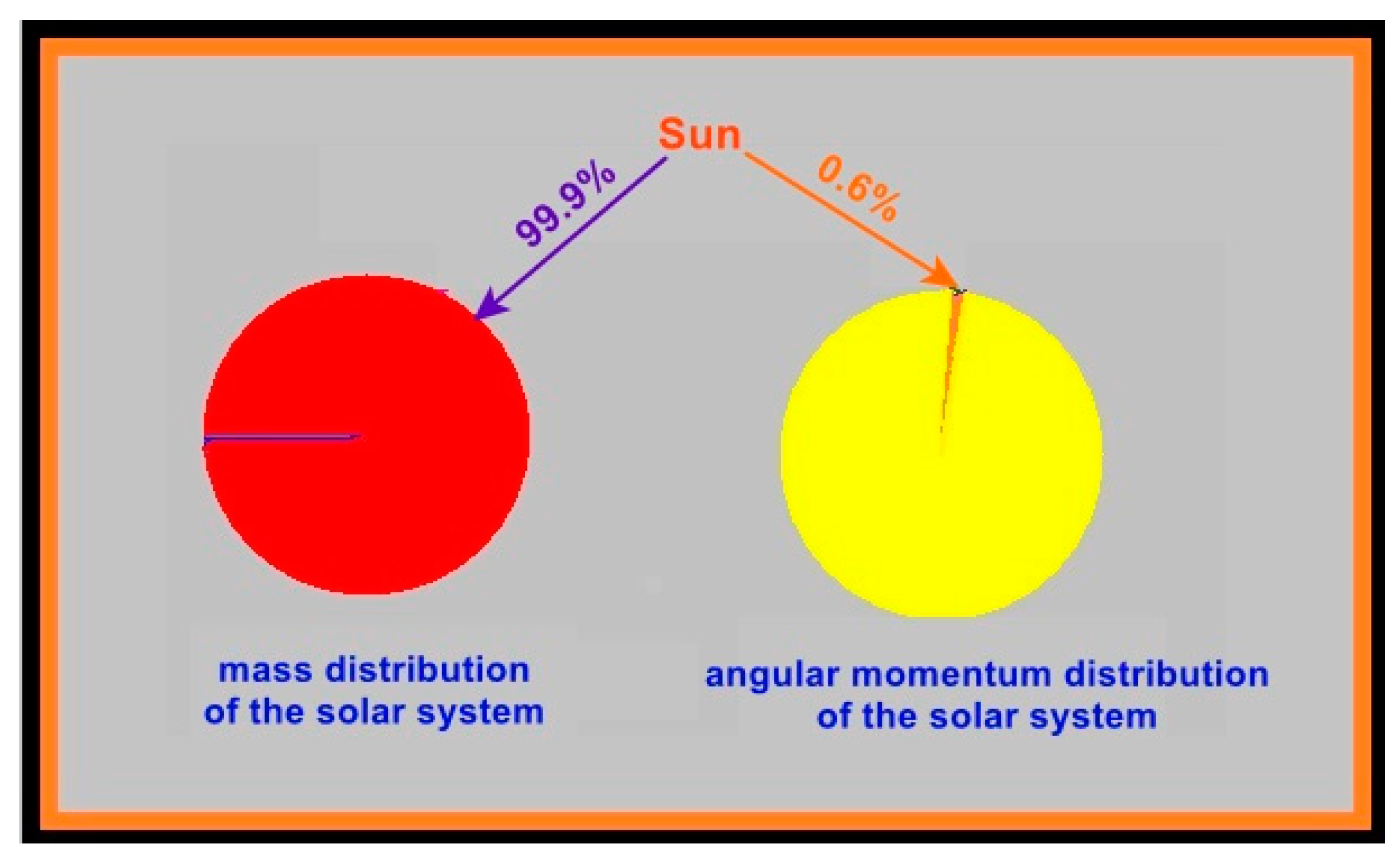
Figure 3.
the structure of the Interstellar Dirty Snow Ball Egg (IDSB Egg).
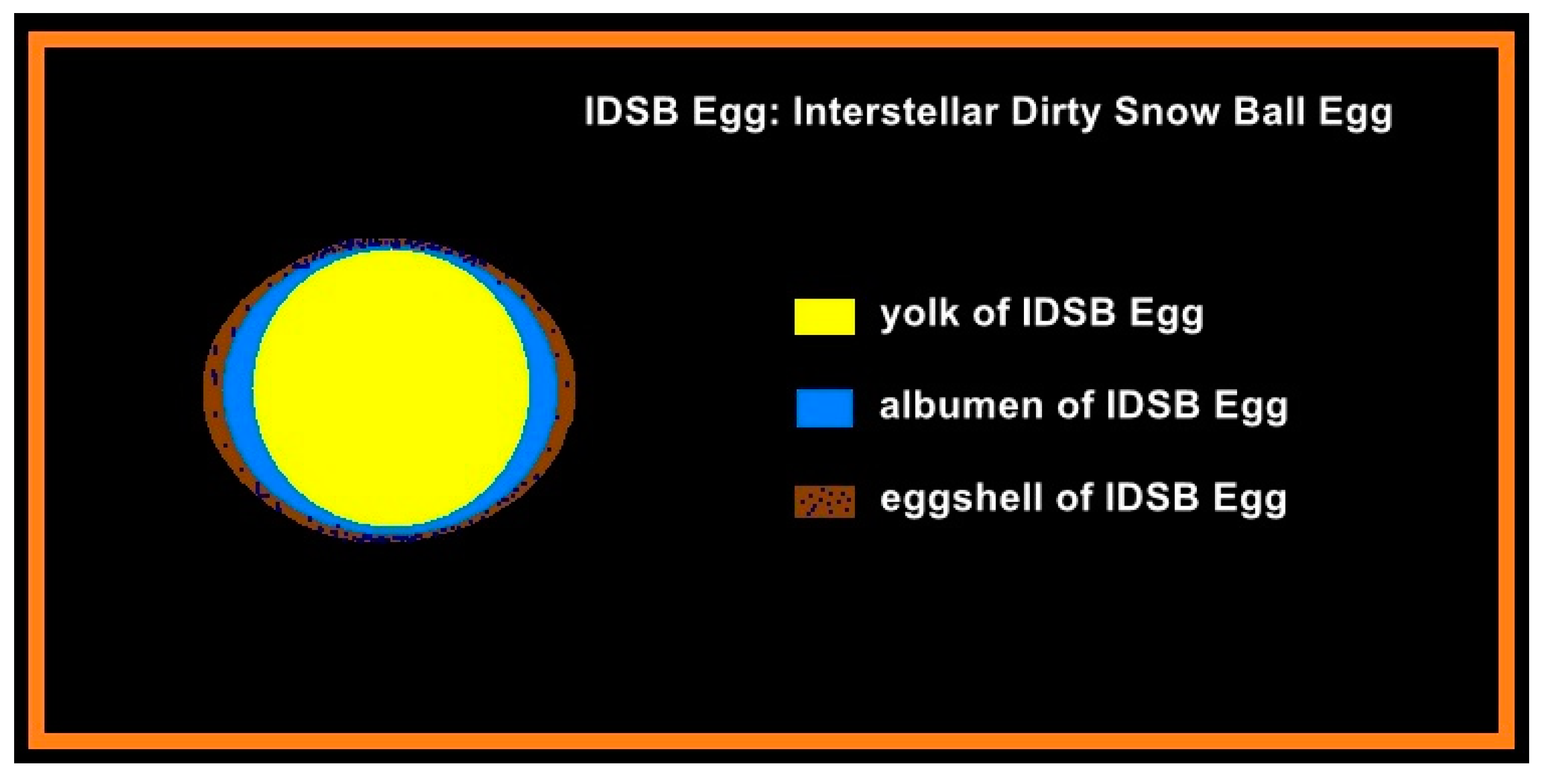
Figure 4.
The Big Bang of the IDSB Egg and the evolving of the first planet of the new born solar system.
Figure 4.
The Big Bang of the IDSB Egg and the evolving of the first planet of the new born solar system.
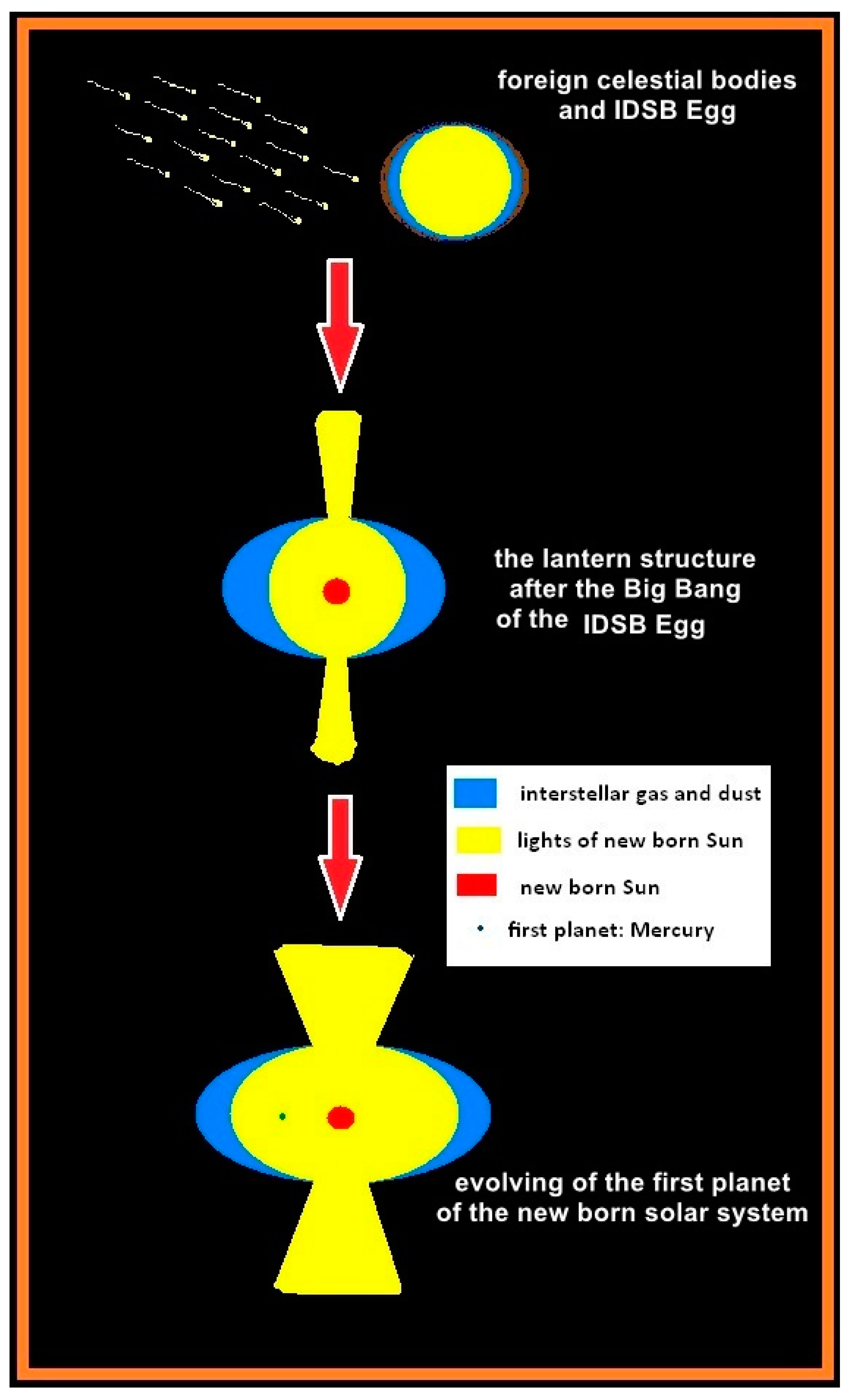
Figure 5.
the formation of the second and third planet of the new born solar system and its expanding.
Figure 5.
the formation of the second and third planet of the new born solar system and its expanding.
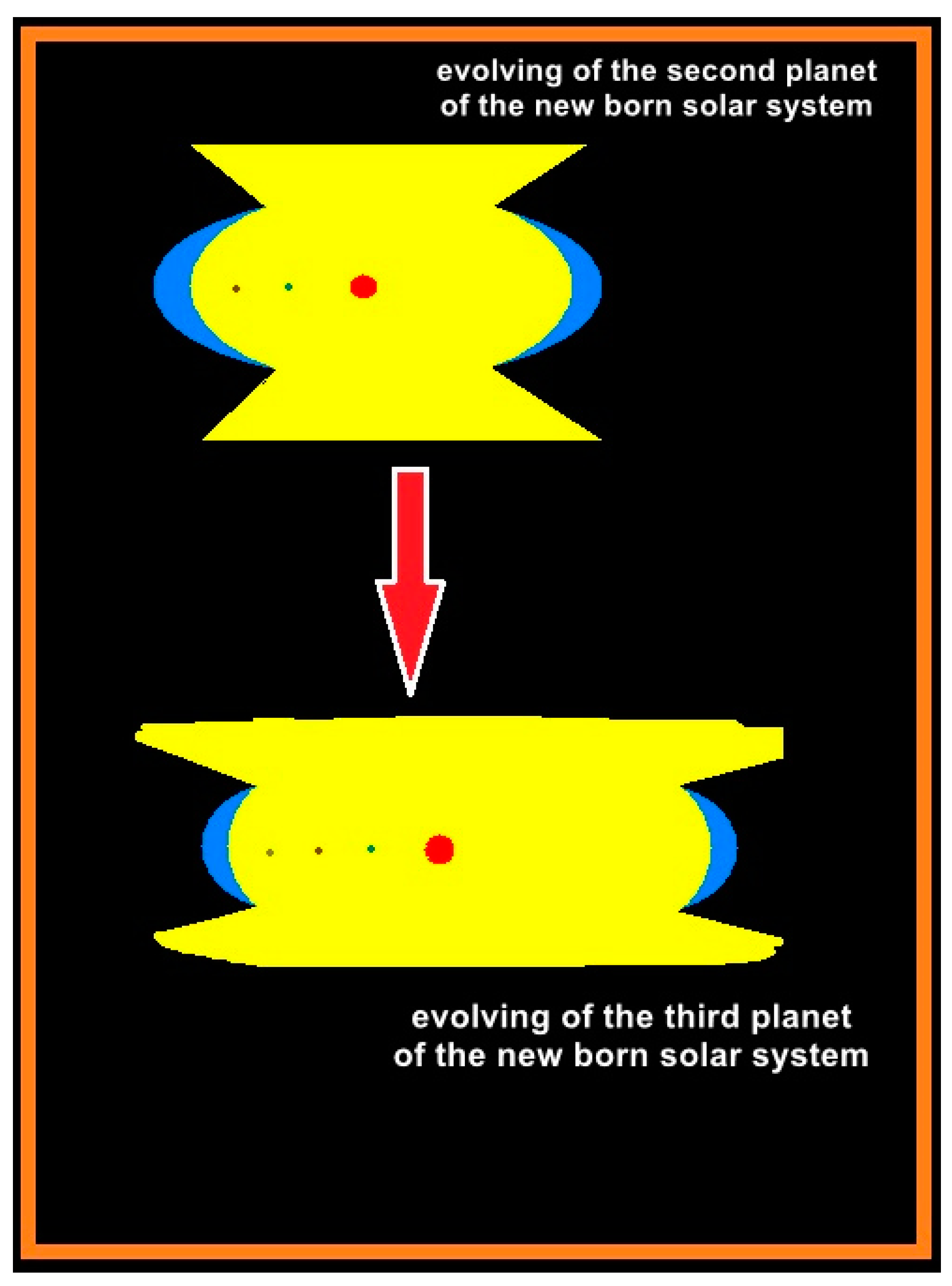
Figure 6.
the finishing of the new born solar system.
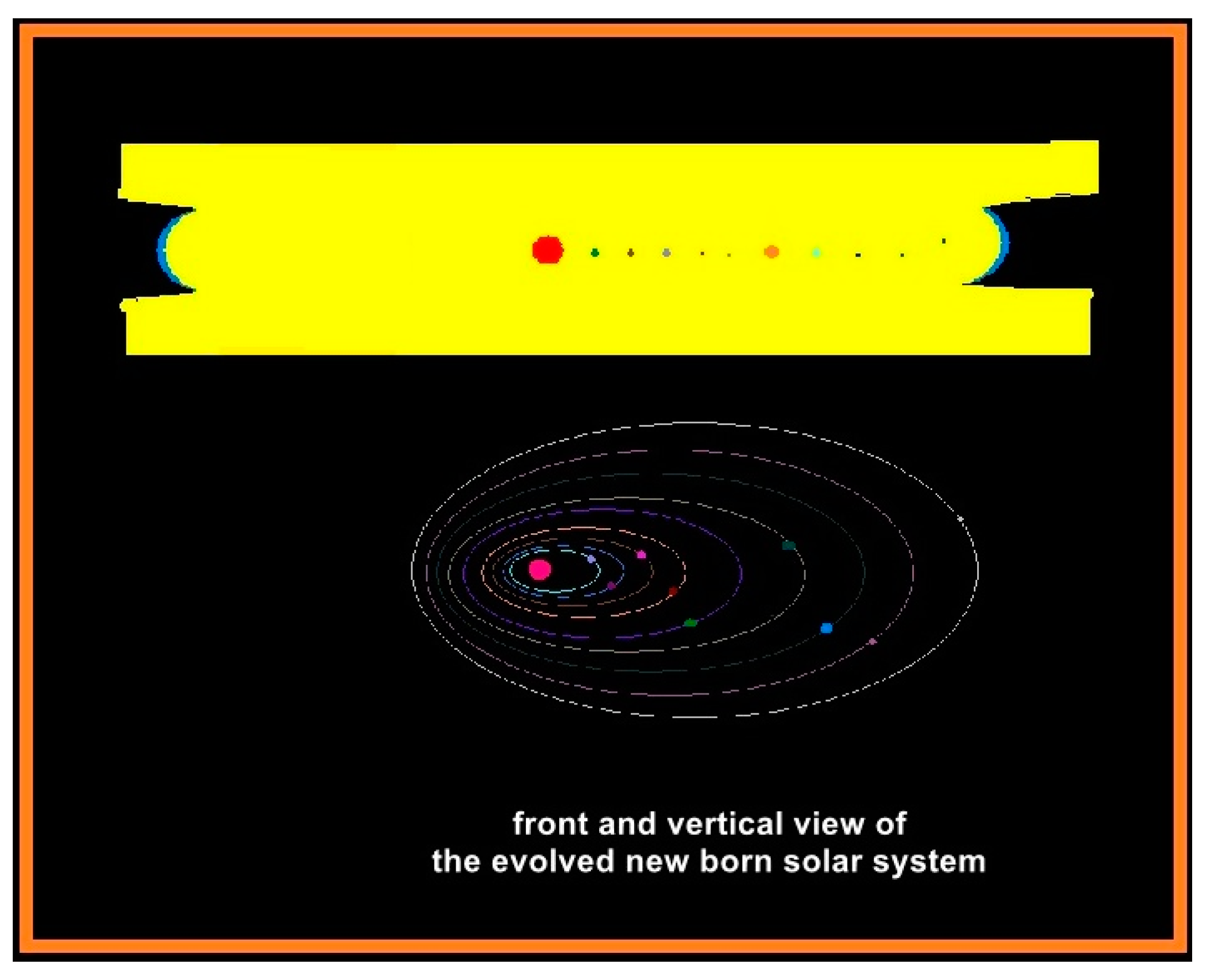
Figure 7.
The corresponding relationship between the main celestial bodies of the solar system and the ancient plates group of the Earth
Figure 7.
The corresponding relationship between the main celestial bodies of the solar system and the ancient plates group of the Earth
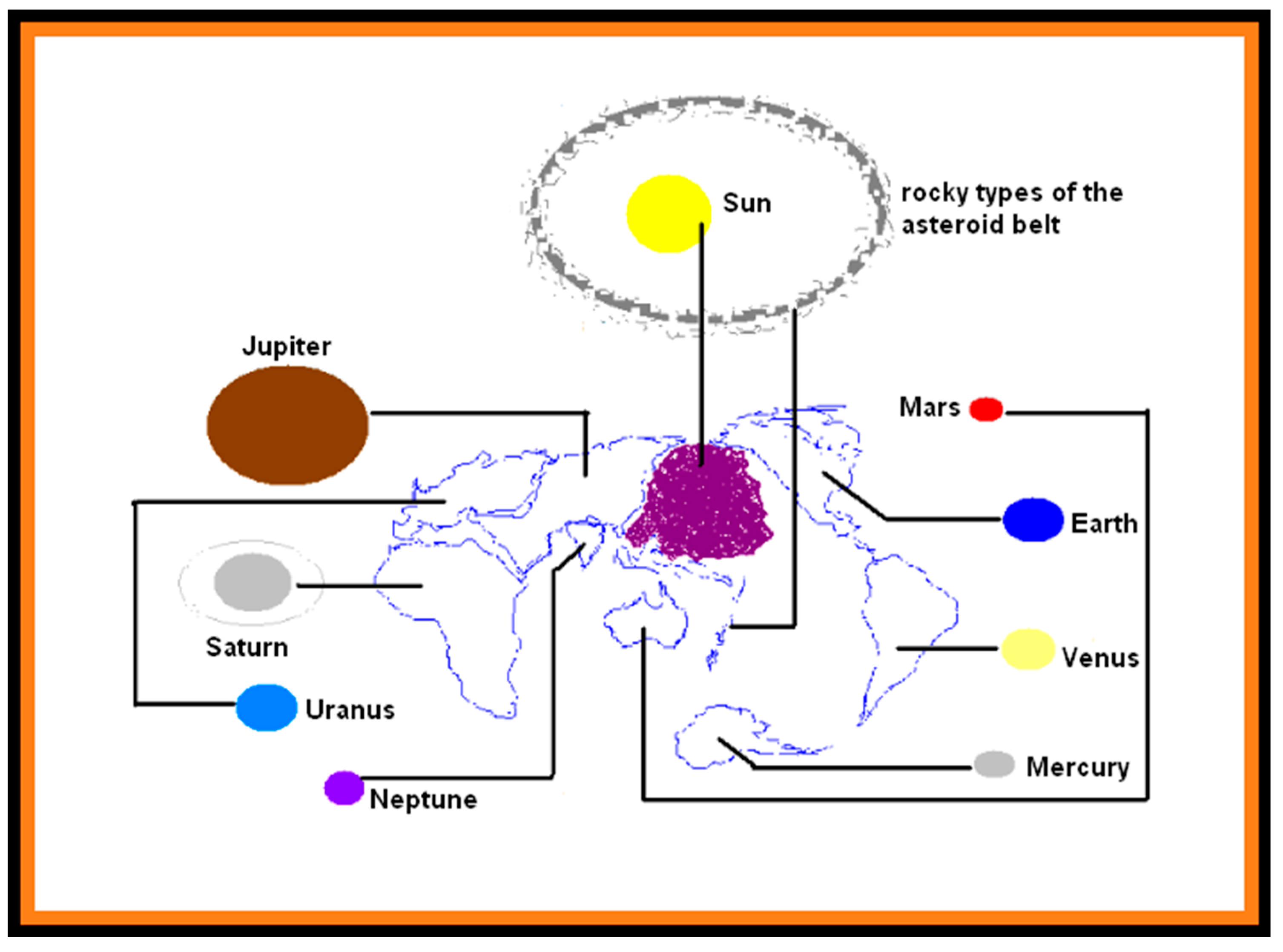
Figure 8.
The Hint Black Hole (HBH) hidden on the ocean floor of the Northwestern Pacific Ocean.
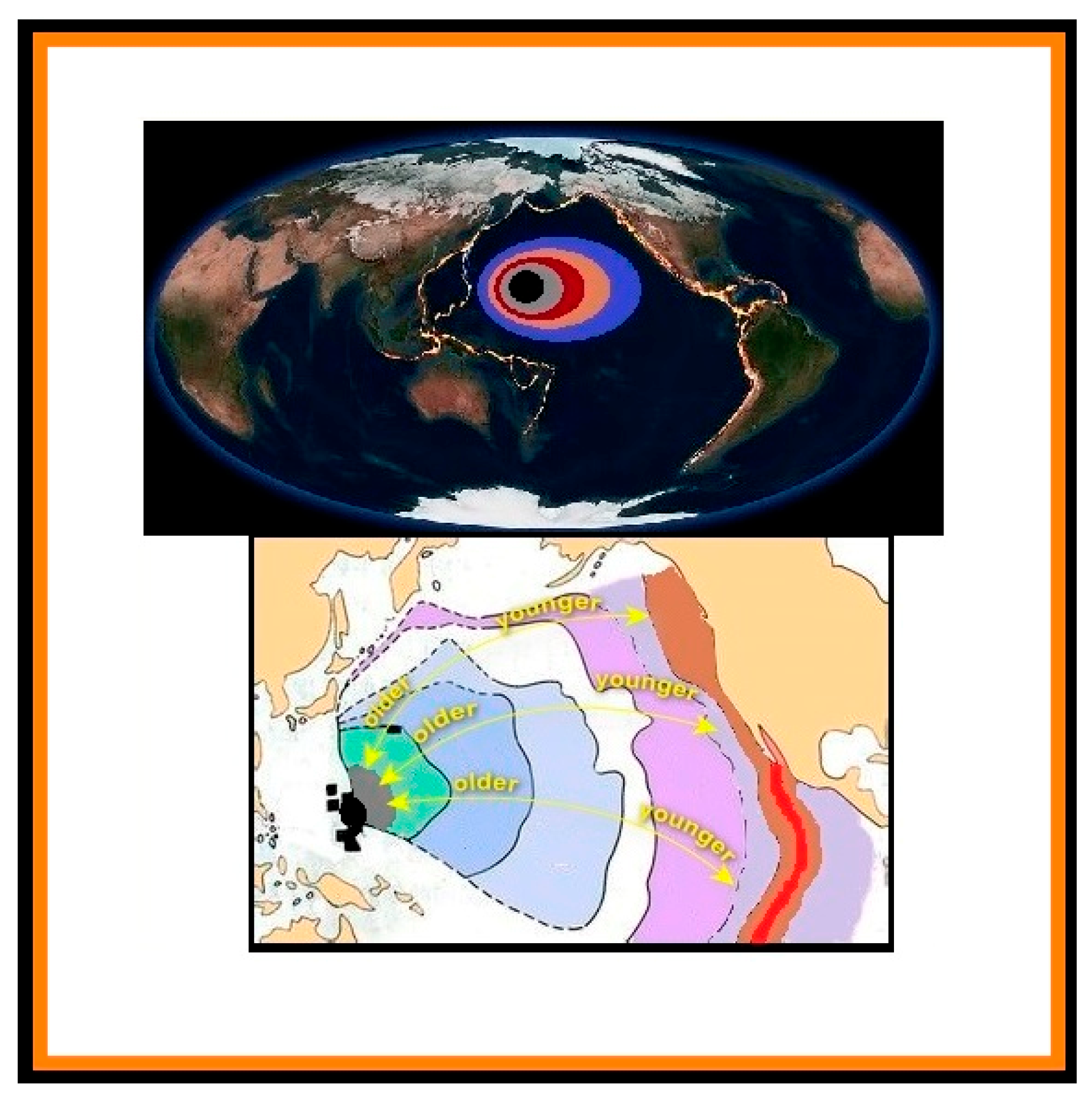
Figure 9.
The jigsaw recovery of the supercontinent of the planet Earth.
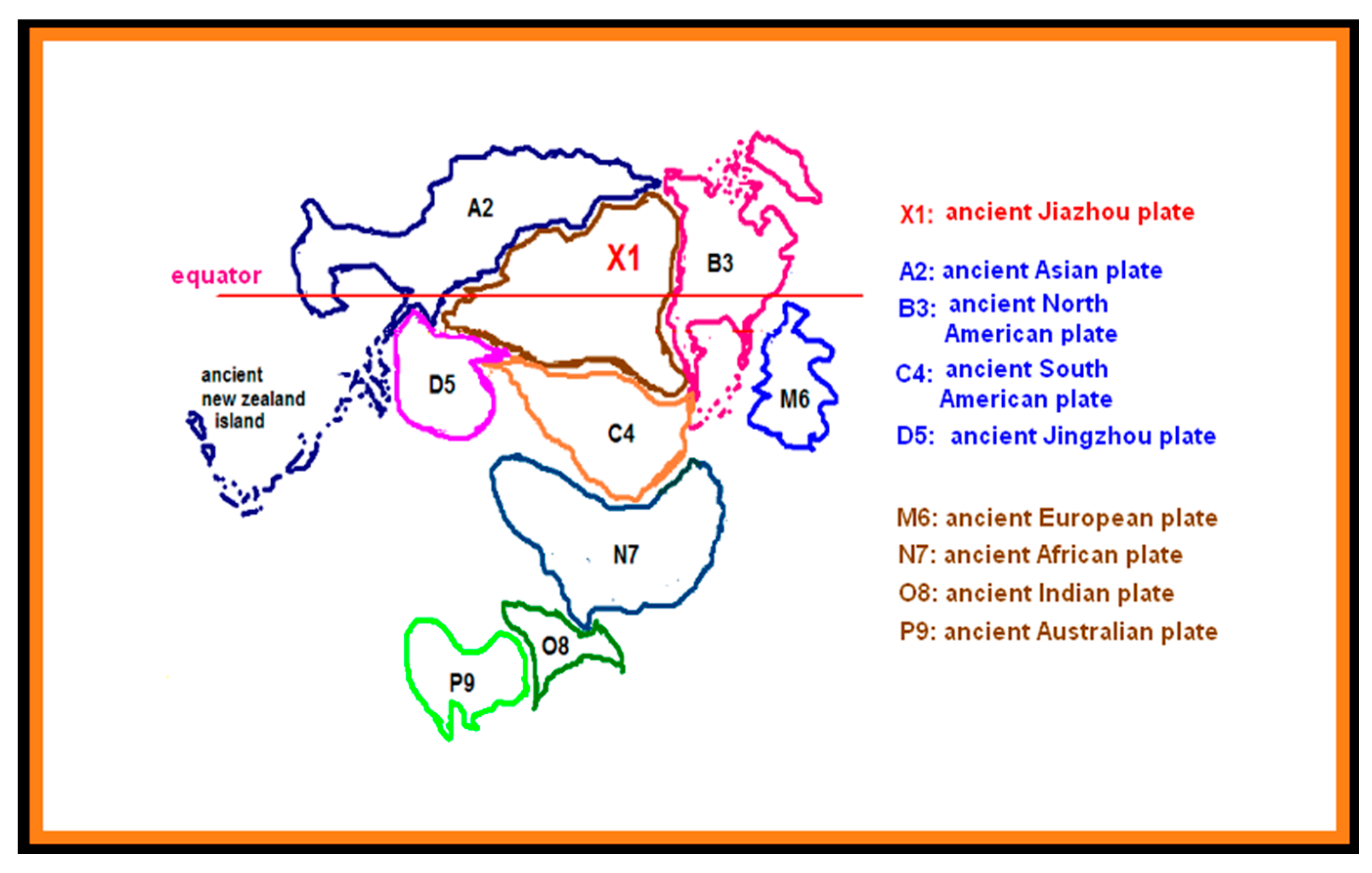
Figure 10.
The unique supercontinent surrounded by the ancient Atlantic Ocean 66 million years ago.
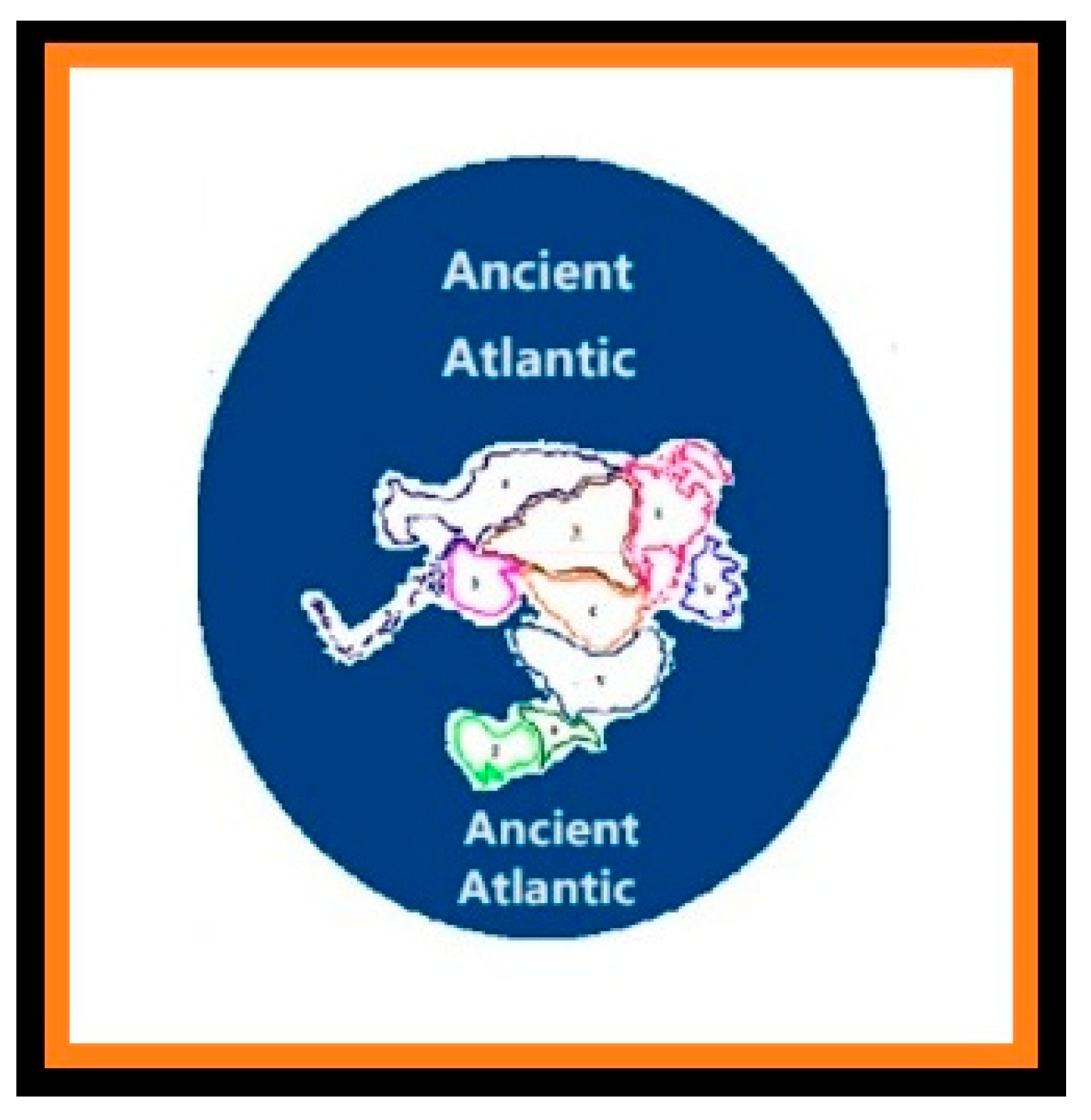
Figure 11.
the evolving process of the unique supercontinent from 66 million years before.
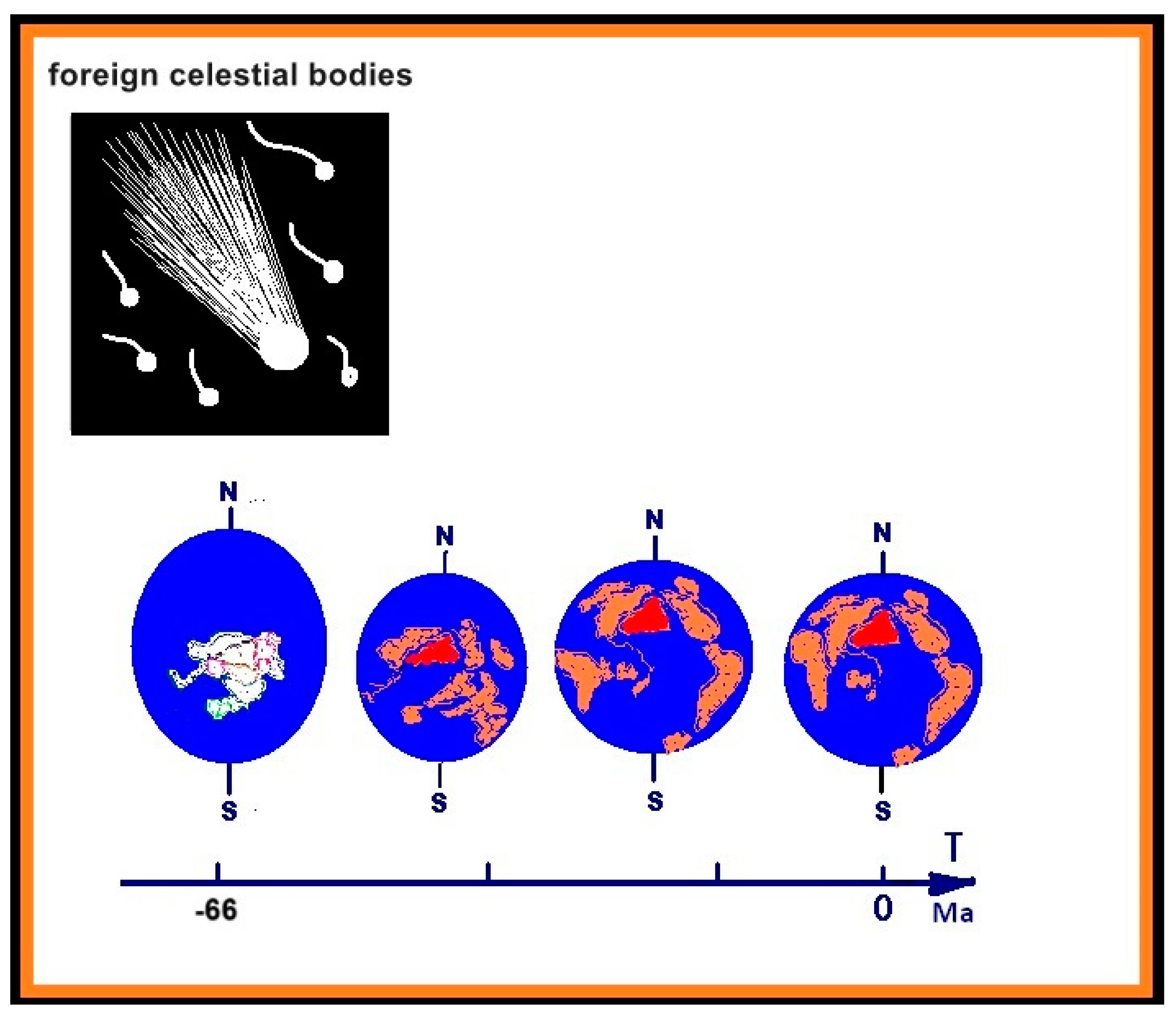
Figure 12.
the similar evolving pattern between the birth of the solar system and the ancient plates group of the Earth.
Figure 12.
the similar evolving pattern between the birth of the solar system and the ancient plates group of the Earth.

Figure 13.
the symbolizing meaning of festive fireworks in human activities.
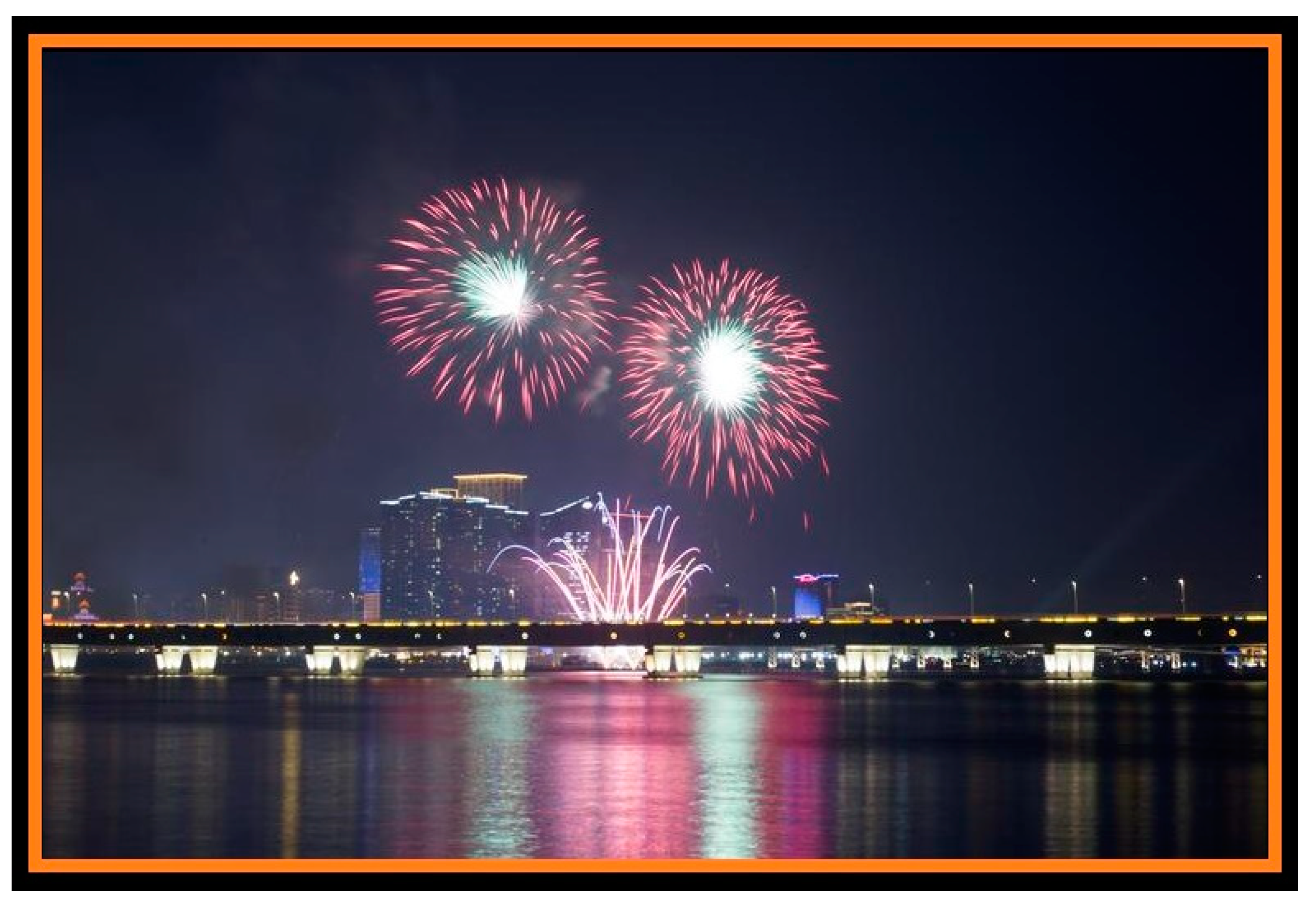
Figure 14.
The special celestial body—the Moon.
Disclaimer/Publisher’s Note: The statements, opinions and data contained in all publications are solely those of the individual author(s) and contributor(s) and not of MDPI and/or the editor(s). MDPI and/or the editor(s) disclaim responsibility for any injury to people or property resulting from any ideas, methods, instructions or products referred to in the content. |
© 2024 by the authors. Licensee MDPI, Basel, Switzerland. This article is an open access article distributed under the terms and conditions of the Creative Commons Attribution (CC BY) license (http://creativecommons.org/licenses/by/4.0/).
Copyright: This open access article is published under a Creative Commons CC BY 4.0 license, which permit the free download, distribution, and reuse, provided that the author and preprint are cited in any reuse.


