

Submitted:
09 December 2024
Posted:
11 December 2024
You are already at the latest version
Abstract
The cosmological parameters, specifically BCP(Baryon Cosmological Parameter (Telescopic Universe) )and DCP (Dark Cosmological Parameters (Lightless Universe)), are accelerating more apace than we expected. This accelerated our understanding of its functions in covariance to expansion parameters[1]. The Hubble tension is a long-familiar question in the exploration of cosmological parameters[2][3]. The measurement of the Hubble constant (H0), unveils a disparity in how apace the BCP and DCP[4]. Diametrical ways of measuring parameters yield various results, highlighting the realness that numerous questions in this domain remain unanswered[5][6]. This gap brings to light question regarding our existing cosmological parameters known(CDM) [7][8]. It suggests the necessity of incorporating new parameters, often referred to as the DPP(Dark Physics Parameters) method, to gain an understanding of the accelerated universe. This theory integrates a between the Hubble equation, both BCP and DCP are accelerating cosmological Hubble parameters. This integration pertains to how Cosmological Hubble parameters evolve across the past, present, and future dimensions. We propose that both BCP and DCP are influenced by stochastic variables in a diametrical domain characterized by dissent magnitude of matter. This theory's conjunctive mass term, volume term, and CHP provide a new perspective on BCP, specifically DCP and Hubble Tension. This theory discusses that the reevaluation of our current understanding of BCP and DCP is necessary to integrate this acceleration of Universe Expansion changes. This adjustment could help us understand one of the biggest mysteries in modern cosmology.
Keywords:
Dark Energy
; Inflation
; Accelerate Universe
; Hubble Tension
1. Introduction
The attitude of CDP8 is pivotal in the study of detectable cosmological parameter. The equation that illustrates this balance parameter looks like this:
The theory of the CDP illustrates a distinction between two categories of universe parameters. The first category, referred to as the CUP9, the second category known as the OUP10. The term “normal density” is used to refer to [9] attentiveness the underway quantity of matter latter-day in the universe.
We formally compare normal density and CDP to ascertain the value of H0:
The subsequent expression is indicative of a constant
We consider the volume to be integral to the expansion series, which is represented in the following form:
If the universe dominate a distinct magnitude of space11, within the context of cosmology, this theory intend that Ho is not a static parameter, rather fluctuates in outcome to consequence in both BCP and DCP. As the parameter of the ]AUE ; the aspect of the both attribute and mass also experience maturation, leading to stochastic variable in the ]CHP. This dynamics interplay intensify our understanding of the cosmological principles dominant the ]CHP.
Hubble equation:
The final equation pertaining to the acceleration of the universe:
Where;
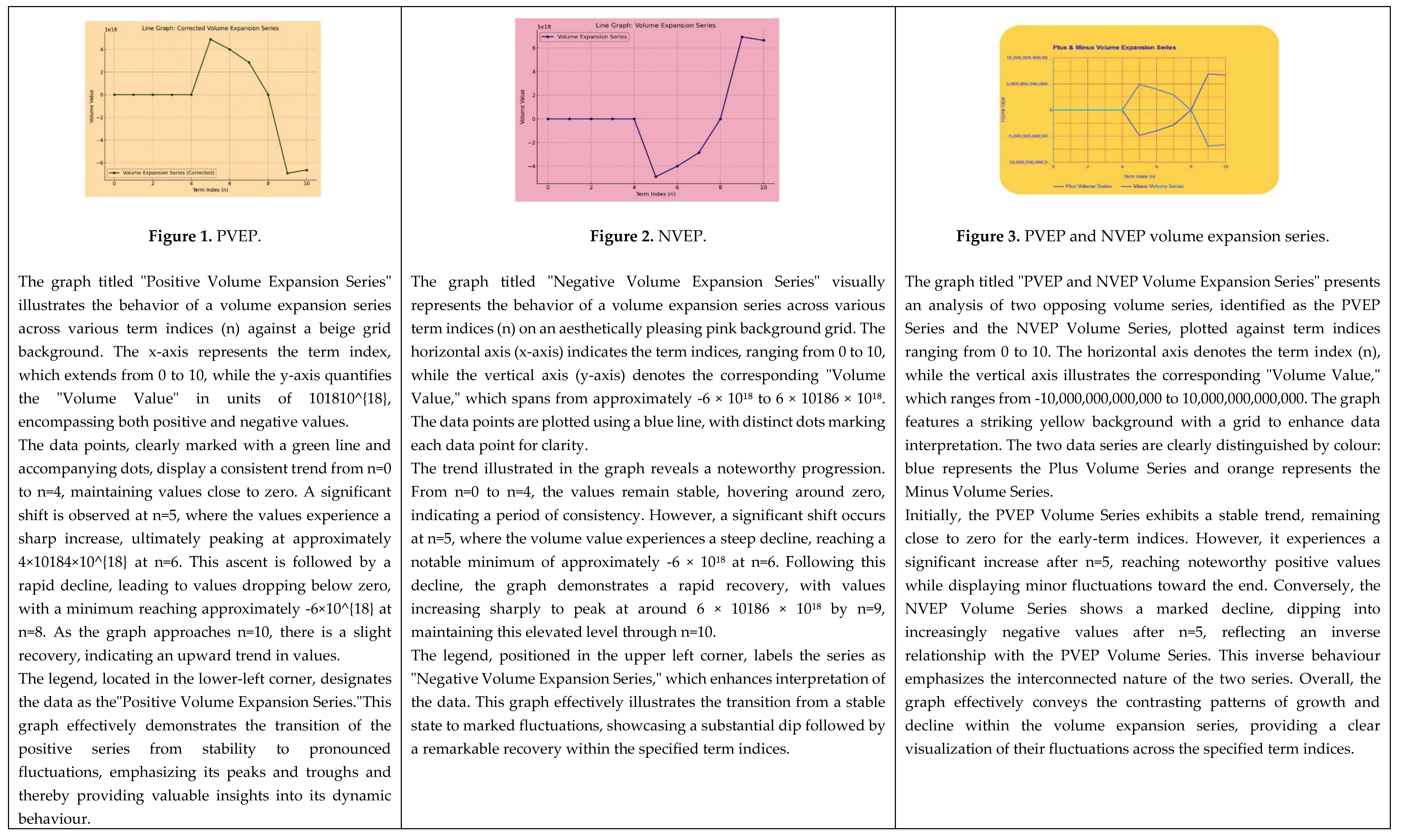
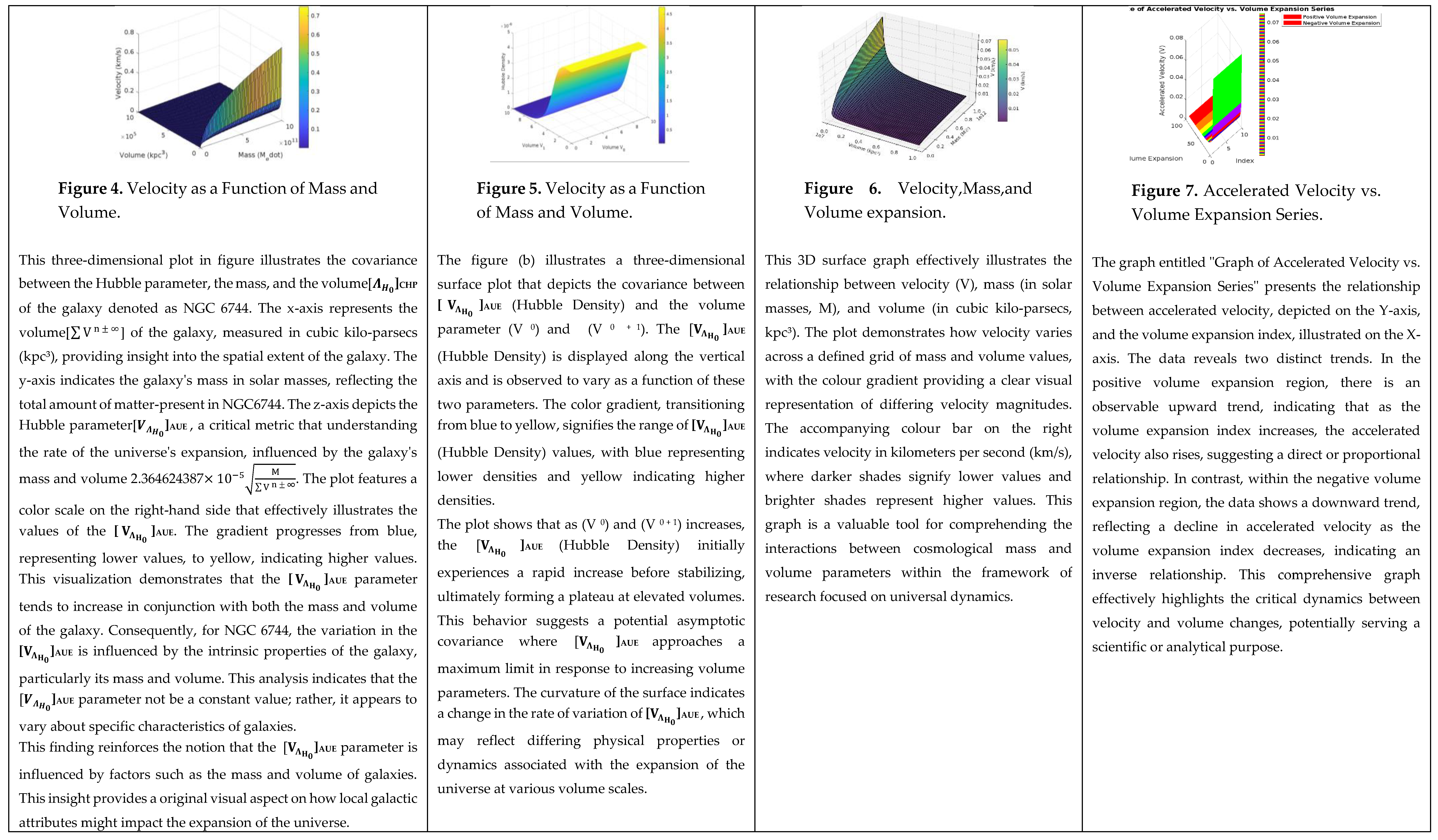
]CHP is a constant parameters that approximately; 2.3646 , M denotes the mass of body, and V refer to the volume associated with the expansion of parameters. In the terms of the expansion series, the volume parameter open up two distinct series; one represents the quantity terms associated with PVEP and the other pertaining to NVEP quantity term. ………... To begin it is advisable to set up symbolical volume for each term within the series; V0 = 1,V0 + 1= 10,V1 + 2= 100,V2 + 3= 1000, encompasses the aspects of contraction,while address the inference of accelerate.
2. Conclusions
In this theory, calculate the relationship between the BCP and DCP ranges and the []AUE . This theory's recommendation sets that utilizing a particular methodology to calculate CHP, this theory indicate that a higher CHP correlates with lower overall compactness in an accelerated universe, which theory allude to as a “continual” [CHP. However, the existing challenges associated with the BCP and DCP and Hubble tension constrain this shift.
This theory posits that there exists a particular working parameters that in a perfect field serves to minimize the proposition of extra obscure parameters. This theory analysis encompasses a comprehensive exploration of all conceivable mechanism by which the universe accelerates at an elevate pace. Theory utilizes an expression that epitomizes this concept, including a grouping of term and that work as free variables parameter.
There are inalienable parameters within data or red-shift impacts that influence some of the result. Specifically, red-sift pertains to the methods utilize to degree the DCP. A eminent thought is that the accelerating expansion of the universe can affect the parameters to measure over different separate. Should the observed patterns not be attributable to the current parameters or specific effects, it prudent to consider alternative theories, such as modification to the Hubble equation, to crystallize the observations. The existing parameters do not appear to completely account for the drift in H0, theory proposing the plausibility new type of [CHP. This parameter could differ significantly for those outlined in the standard model. This phenomena indicates the need of study diametrical cosmological parameters to pick up a clear understanding of this unforeseen observation.
This concept sets that calculation [CHP offer valuable insights into addressing the current tension associated with BCP, DCP and []AUE matric. Whereas this approach showed up promising, it is essential to recognize that it cannot serves as a conclusive structure, Numerous perceptible and theoretical parameters necessitate ongoing exploration. This theory understanding of the interplay between the early and late universe acceleration remains incomplete. This theory building up these link could yield significant advancements in the development of new theoretical equation. This hypothesis continued research is critical to achieve a coherent interpretation of later infinite parameters, which ultimately deepen our understanding of the puzzling nature of the DCP and the accelerated expansion of the universe.
Author Contributions
Rizwan Ul Hassan developed the ideas. Rizwan also worked on creating equations, collecting data, and writing the code in MATLAB. He wrote the first draft of the paper. Anfal Fatima helped with formatting the paper, managing citations, and co-writing. Shahzaib edited the manuscript and fixed any mistakes. Umar Ashraf reviewed the manuscript. All authors have read and agreed on the final version of the paper.
Funding
This research received no external funding
Data Availability Statement
This theoretical theory does not use data from specific observations. Instead, the results are based on careful thinking and models created using current ideas about the universe. No outside data are used or designed for this research. If you would like more information about the calculations and results, you can ask the main author.
Acknowledgments
I want to say a big thank you to Dr Fayyaz Ahmad and Dr Irfan Toqeer for all their help and support while, I worked on this theory. Their advice and help were very important in developing this research and helped me better understand cosmic events.
Conflicts of Interest
The authors declare no conflicts of interest.
Appendix A. Mathematical Formulation of Universe Accelerate:
The “" is the universe accelerate represents how fast the universe is expanding and “d” for the distance the universe has expanded, “M” the amount of magnitude(mass) in the universe, “" Hubble accelerate parameter describe how quickly this expansion is happening and “" represents a specific nth in a series that helps explain the volume of the universe as it grow.
- Volume Expansion Series:
Appendix B. Abbreviation
= Velocity of Universe Expansion(Red-Shift)
= 2.364624387
= Distance of Expansion Universe\
| 1 | Positive volume expansion parameters() |
| 2 | Negative volume expansion parameters() |
| 3 | Telescopic universe parameters |
| 4 | Dark universe parameters |
| 5 | Baryon Cosmological Parameter (Telescopic Universe) |
| 6 | Dark Cosmological Parameters (Lightless Universe) |
| 7 | Dark Physics Parameters |
| 8 | Critical density Parameter (Friedmann Equation) |
| 9 | Close Universe Parameters |
| 10 | Open Universe Parameters |
| 11 | Characterized as either a closed parameter indicating that it eventually curves back on itself or a flat parameter, suggesting that it extends infinitely without curvature. |
References
- Turner, M.S. The dark side of the universe: from Zwicky to accelerated expansion. Physics Reports 2000, 333, 619–635. [Google Scholar] [CrossRef]
- Krishnan, C.; Colgáin, E.; Ruchika, A.; Sen, M. Sheikh-Jabbari and T. Yang. Phys. Rev. D 2020, 102, 2002.06044. [Google Scholar]
- Coles, P.; Ellis, G.F.R. Is the universe open or closed?: The density of matter in the universe; Cambridge University Press, 1997. [Google Scholar]
- Aloni, D.; Berlin, A.; Joseph, M.; Schmaltz, M.; Weiner, N. A step in understanding the Hubble tension. Physical Review D 2022, 105, 123516. [Google Scholar] [CrossRef]
- Di Valentino, E.; Mena, O.; Pan, S.; Visinelli, L.; Yang, W.; Melchiorri, A.; Mota, D.F.; Riess, A.G.; Silk, J. In the realm of the Hubble tension—a review of solutions. Classical and Quantum Gravity 2021, 38, 153001. [Google Scholar] [CrossRef]
- Giarè, W. Inflation, the Hubble tension, and early dark energy: An alternative overview. Physical Review D 2024, 109, 123545. [Google Scholar] [CrossRef]
- Niedermann, F.; Sloth, M.S. Resolving the Hubble tension with new early dark energy. Physical Review D 2020, 102, 063527. [Google Scholar] [CrossRef]
- Tritton, D.J. Physical fluid dynamics; Springer Science & Business Media, 2012. [Google Scholar]
- Dainotti, M.; De Simone, B.; Montani, G.; Schiavone, T.; Lambiase, G. The Hubble constant tension: current status and future perspectives through new cosmological probes. arXiv 2023, arXiv:2301.10572. [Google Scholar]
Disclaimer/Publisher’s Note: The statements, opinions and data contained in all publications are solely those of the individual author(s) and contributor(s) and not of MDPI and/or the editor(s). MDPI and/or the editor(s) disclaim responsibility for any injury to people or property resulting from any ideas, methods, instructions or products referred to in the content. |
© 2024 by the authors. Licensee MDPI, Basel, Switzerland. This article is an open access article distributed under the terms and conditions of the Creative Commons Attribution (CC BY) license (http://creativecommons.org/licenses/by/4.0/).
Copyright: This open access article is published under a Creative Commons CC BY 4.0 license, which permit the free download, distribution, and reuse, provided that the author and preprint are cited in any reuse.


