

Submitted:
25 November 2024
Posted:
26 November 2024
You are already at the latest version
Abstract
The organic-inorganic hybrid (BEDT-TTF)3[Cu2(m-C2O4)3]·2CH3CH2OH (I)was synthesized using the electrocrystallization method. It composes q21-phase organic donor layer and an inorganic antiferromagnetic honeycomb lattice with the Jahn-Teller distortion. The disordered solvent molecules CH3CH2OH are present within the cavities of the honeycomb lattice. The formal charge of donor molecules was assigned to +2/3 based on bond lengths in TTF core and corresponded to Raman spectra. Jahn-Teller effect on conductivity and magnetization is studied. It is a semiconductor with srt = 0.04 S/cm and Ea = 40 meV. No long-range ordering is observed above 2 K from zero-field cooling/field cooling magnetization and confirmed by specific heat measurement. The spin frustration with f > 10 from the antiferromagnetic copper-oxalate-framework was observed. It is a candidate for quantum spin liquid.
Keywords:
Jahn-Teller effect
; Cu(II)
; oxalate
; single crystal
; conductivity
; spin frustration
; quantum spin liquid candidate
1. Introduction
In 1973, P. W. Anderson suggested that in a S = 1/2 antiferromagnetic interaction triangular lattice, the magnetic ordering or freezing is not observed due to spin frustration leading to a quantum spin liquid [1]. In 1987, he proposed that the insulating antiferromagnet La2CuO4 serves as the parent compound of the cuprate superconductor after hole doping [2,3]. Quantum spin liquids with two-dimensional lattice are suggested in the triangular lattice, Kagome lattice and the honeycomb lattice [4,5]. Quantum spin liquid has become one of the core goals of condensed matter physics due to its close relationship with magnetism and superconductivity. The organic-inorganic hybrid charge-transfer complex hosts most of the organic superconductor [5]. It also provides solid support for research into quantum spin liquid candidates. The quantum spin liquid behavior was discovered in organic-inorganic hybrid charge-transfer salts κ-(BEDT-TTF)2[Cu2(CN)3] (BEDT-TTF = bis(ethylenedithio)tetrathiafulvalene), κ-(BEDT-TTF)2[Ag2(CN)3], EtMe3Sb[Pd(dmit)2]2 (dmit = 1,3-dithiol-2-thione-4,5-dithiolate), and κ-H3(cat-EDT-TTF)2. κ-(BEDT-TTF)2[Cu2(CN)3] [6,7,8,9,10,11]. The oxalate (C2O42−) anion, as one of the most commonly used short connectors, plays a key role in superconductor and molecular magnets. The first superconductor cotaining paramagnetic metal ion βʺ-(BEDT-TTF)3[Fe(C2O4)3(H3O)·C6H5CN] [12,13]. The Jahn-Teller effect plays an important role in inorganic cuprate superconductor and copper-oxalate-framework [2,14,15]. Quantum spin liquid candidate was discovered in organic-inorganic hybrid antiferromagnetic copper-oxalate-framework. Their conductivity varies based on organic donor (cation), which can act as an insulator, semiconductor or metal [16,17,18,19]. Further research on organic-inorganic hybrid containing copper-oxalate-framework will aid in identifying molecular conductor/superconductor and quantum spin liquid candidate. An organic-inorganic hybrid θ21-(BEDT-TTF)3[Cu2(μ-C2O4)3·2CH3CH2OH] (I) was obtained and related work is presented here.
2. Experiment and Discussion
BEDT-TTF was purchased by TCI company. [(C2H5)3NH]2Cu2(m-C2O4)3 was synthesized from Cu(NO3)2·6H2O, H2C2O4·2H2O, and (C2H5)3N from CH3OH. A total of 5.0 mg of BEDT-TTF and 30.0 mg of [(C2H5)3NH]2Cu2(μ-C2O4)3 were dissolved in a mixture of 25.0 mL of distilled C6H5Cl and 5.0 mL of distilled C2H5OH, then placed in an electrocrystallization cell. The cell was subjected to a constant source of 0.20 μA at room temperature. Shiny black, thin plate crystals were obtained on the cathode after two weeks.
A piece of single crystal was selected for single crystal X-ray diffraction experiments at the Beijing Radiation Synchrony Facility using λ = 0.70 Å and a Rigaku SuperNova diffractometer with Mo radiation (λ = 0.71073 Å). Data was collected at 290 K, 180 K and 120 K. The crystal structure was solved using the direct method and refined with the full-matrix least-square of F2 using the SHELX program for nonhydrogen atoms on BEDT-TTF, Cu and oxalate anisotropically [20]. The hydrogen atoms on C and N of ammonia were found from difference Fourier map, and refined isotropically. The non-hydrogen atoms of C2H5OH were disordered and refined isotropically. It remains stable from 290 K to 120 K. The crystallographic data is listed in Table 1. The discussion is based on data collected at 120 K.
There are two and two of a half of BEDT-TTF, two Cu, three oxalate and two ethanol in an independent unit (Figure 1). It is different from θ21-(BEDT-TTF)3[Cu2(m-C2O4)3]·2CH3OH and θ21-(BETS-TTF)3[Cu2(m-C2O4)3]·2CH3OH, three donor molecules, two Cu, three oxalate and two methanol coexist in an independent unit.
The donor molecules are stacked face-to-face along the a axis to form a donor column. Donor columns are arranged side-by-side along the b axis to form a donor layer as θ21-phase, which is observed in θ21-(BEDT-TTF)3[Cu2(m-C2O4)3]·2CH3OH and θ21-(BETS-TTF)3[Cu2(m-C2O4)3]·2CH3OH (Figure 2) [16,17]. There are S…S contacts between donor molecules. One of the ethylene groups on BEDT-TTF is disorder at 290 K and order below 180 K. It is similar to [(C2H5)3NH]2[Cu2(μ-C2O4)3] with a disorder to order transition of ethylene group at 170 K [20]. There are S…S contacts between donor molecules.
Cu2+ is octahedrally coordinated by six O atoms from three bisbidentate oxalate ligands. The Cu1-O distances are 1.960(3)~2.002(3) Å in the equatorial plane, 2.239(2) Å and 2.373(3) Å from the apex. The Cu2-O distances are 1.952(2)~1.988(3) Å in the equatorial plane, 2.266(3) Å and 2.383(3) Å from the apex (Table 2). The elongated bonds on the Jahn-Teller distorted octahedron around the Cu are highlighted with blue solid lines (Figure 3). Cu1 and Cu2 are neighboring to each other. A honeycomb lattice is formed in the ab plane as observed in [(C3H7)3NH]2[Cu2(m-C2O4)3]·2.2H2O, θ21-(BEDT-TTF)3[Cu2(μ-C2O4)3]·2CH3OH and θ21-(BETS-TTF)3[Cu2(μ-C2O4)3]·2CH3OH (Figure 3 [16,17,21]). Solvent molecules occupy the cavities of the honeycomb lattice. Hydrogen bonds exist between the donor and anion, as well as between the anion and solvent molecules (Figure 4).
Considering the bond length of the TTF core with a standard deviation of 0.1 of δ, the oxidation state of BEDT-TTF aligns well with the +2/3 average charge (Table S1), remaining consistent at both 180 K and 290 K [22].
The C=C stretching frequency of the charge-transfer complexes of BEDT-TTF serves as a robust method for determining the oxidation state of BEDT-TTF [23]. In the Raman spectra (λ = 514.5 nm), the υ2 mode is at 1470~1485 cm-1 (Figure 5). This is the same as that of charge-transfer complexes with BEDT-TTF+2/3. The formal charge is deduced to be +0.66.
The conductivity measurement was conducted using a four-probe method in a Quantum Design PPMS 9 system. Gold wire was affixed to the best developed surface of a single crystal with gold paste. The room-temperature conductivity is σrt = 0.02 S/cm. This value lower than σrt = 4 S/cm of θ21-(BEDT-TTF)3[Cu2(μ-C2O4)3]·2CH3OH, but lower than σrt = 140 S/cm of θ21-(BETS-TTF)3[Cu2(μ-C2O4)3]·2CH3OH. The conductivity decreased when temperature dropped, with Eα = 40 meV as a semiconductor (Figure 6). It differs βʺ-(BEDT-TTF)3[Fe(C2O4)3·H3O·solvent], where the conductivity is primarily influenced by the organ donor [24].
The unpaired electron of Cu(II) resides in the magnetic orbital dx2-y2 on the equatorial plane. The orbital along the elongated octahedral Cu(II) is the dz2 orbital, as highlighted by blue solid line in Figure 3. The magnetic configuration is a stripy arrangement based on orbital analysis [25]. Since the antiferromagnetic interaction is stronger than the ferromagnetic interaction between oxalate-bridged Cu(II) atoms, antiferromagnetic behavior is anticipated [26].
The magnetic susceptibility measurement was carried out on Quantum Design MPMS 7XL system. Susceptibility data was corrected by the Pascal constant of sample and sample holder [27].
At 300 K, the χT value was 0.389 cm3 K mol−1 and g was 2.04. It is the same as an isolated, spin only Cu(II) ion with S = 1/2 and g = 2.00. As the temperature decreased, the χ increased smoothly, exhibiting a bend around 230 K, followed by an upturning at 22 K. The data with fits to the Curie-Weiss law yielded C = 0.503(2) cm3 mol−1, θ = −87(2) K and R = 9.6 × 10⁻⁷ above 230 K, while C = 0.405(1) cm3 mol−1, θ = −25.2(7) K and R = 1.3◊10−5 from 100 K to 230 K (Figure 7). No bifurcation is observed from zero-field-cool magnetization and field-cool magnetization (ZFCM/FCM) measurement above 2 K under 100 G. No long rang ordering is detected above 2 K. It is a spin frustrated complex with f > 12 [28].
Specific heat measurements were conducted from 2 to 120 K under 0 T and 8 T, using a Quantum Design PPMS9 system (Figure 8). No λ-peak was observed in the range of 2 to 120 K. Combining with the X-ray diffraction experiment from 280 K to 120 K, there is no long range order above 2 K.
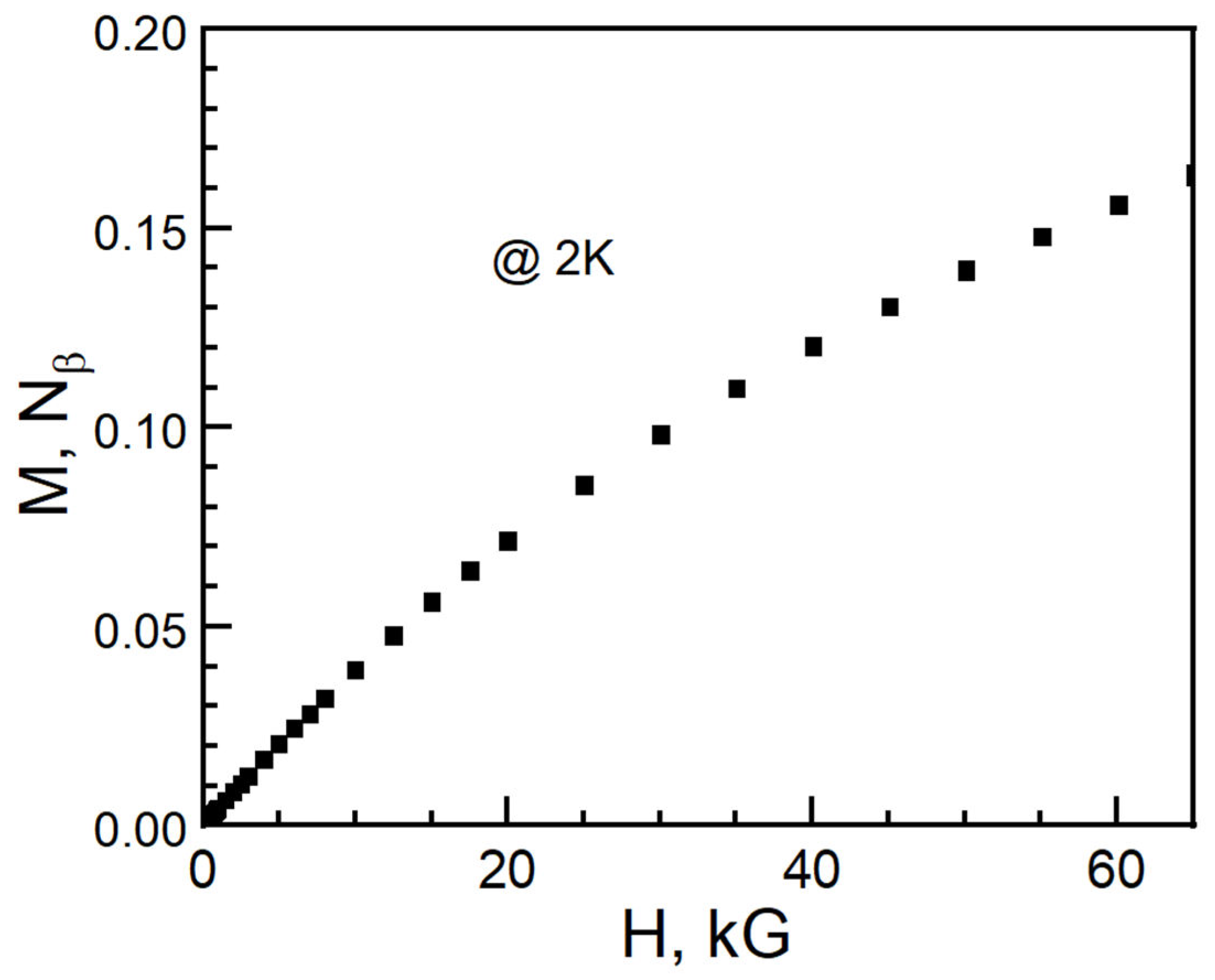
Isothermal magnetization at 2 K displayed a S-shaped curve, reaching 0.162 Nβ at 65 kG (Figure 9). This value exceeds 0.077 Nβ for θ21-(BEDT-TTF)3[Cu2(m-C2O4)3]·2CH3OH, 0.076 Nβ of θ21-(BETS-TTF)3[Cu2(μ-C2O4)3]·2CH3OH, and 0.040 Nβ of [(C3H7)3NH]2[Cu2(μ-C2O4)3]·2.2H2O at 2 K and 65 kG [16,17,18]. The solvent molecules in the honeycomb lattice play a crucial role in the magnetism of organic-inorganic hybrids.
Figure 8.
Isotheromal magnetizaion of I at 2 K.
3. Conclusions
It is an organic-inorganic hybrid charge-transfer salt made up of a θ21-phase organic donor layer and an inorganic sheet featuring a honeycomb lattice. The Jahn-Teller effect on magnetism of organic-inorganic hybrid charge-transfer salts from solvent molecules hosted in honeycomb Cu-oxalate-framework was studied. It shows semiconducting behavior with Eα = 40 meV. An antiferromagnetic interaction with the spin frustration as f > 10, and no long range order observed above 2 K. It is a semiconducting quantum spin liquid candidate.
Supplementary Materials
The following supporting information can be downloaded at the website of this paper posted on Preprints.org. Table S1: The crystallography data of θ21-(BEDT-TTF)3[Cu2(m-C2O4)3]·2CH3OH and θ21-(BETS-TTF)3[Cu2(μ-C2O4)3]·2CH3OH at 290 K. Table S2: The bond lengths of the TTF core in BEDT-TTF of I.
Author Contributions
The manuscript was written with the contributions of all authors. Funding acquisition: B.Z. B. Z. and Y. Z Synthesized the sample: G, Chang, Z. Gao, Z. Wang, T.L., Y.S. and M.L. performed the X-ray experiments and data analysis: Y.Z. performed the conductivity and magnetic measurements: D. W. performed specific heat experiment; J. Guo performed Raman experiment; F. L., Z. Z., X. Z. B. Q., P. X., J. W. performed XPS experiments. F. D. performed thin film experiment. D. Y. performed EDS experiment. Q. L., X. L., R. F., M. L., and X. Z. supported related work. B.Z. Conducted experiments: B.Z. and Z.W. Analyzed the data: B. Z., Y. Z. and Z.W. wrote the main manuscript text. All authors have read and agreed to the published version of the manuscript. B.Z. and Y.Z contributed equally to this work.
Funding
This research was funded by the National Natural Science Foundation of China: 22273109, 22073106, 21573242 and 21173230.
Institutional Review Board Statement
Not applicable.
Informed Consent Statement
Not applicable.
Data Availability Statement
Crystallographic data of θ21-(BEDT-TTF)3[Cu2(μ-C2O4)3]·2CH3OH and θ21-(BETS-TTF)3[Cu2(μ-C2O4)3]·2CH3OH at 290 K, bond lengths of Cu-O are available in the supplementary material.
Conflicts of Interest
The authors declare no conflict of interest.
References
- Anderson, P.W. Resonating Valence Bonds: A New Kind of Insulator. Mater. Res. Bull. 1973, 153–160. [Google Scholar] [CrossRef]
- Bednorz, J.G.; Muller, K.A. Possible High Tc Superconductivity in the Ba-La-Cu-O System. Z. Phys. B. Condensed Matter 1986, 64, 189–193. [Google Scholar] [CrossRef]
- Anderson, P.W. The Resonating Valence Bond State in La2CuO4 and Superconductivity. Science 1987, 235, 1197–1198. [Google Scholar] [CrossRef]
- Balents, L. Spin liquids in frustrated magnets. Nature 2010, 464, 199–208. [Google Scholar] [CrossRef]
- Broholm, C.; Cava, R.J.; Kivelson, S.A.; Nocera, D.G.; Norman, M.R.; Senthil, T. Quantum Spin Liquids. Science 2020, 367, eaay0668. [Google Scholar] [CrossRef]
- Williams, J.M.; Schultz, A.J.; Geiser, U.; Carlson, K.D.; Kini, A.M.; Wang, H.H.; Kwok, W.; Whangbo, M. Organic Superconductors – New Benchmarks. Science 1991, 252, 1501–1508. [Google Scholar] [CrossRef]
- Guionneau, P.; Kepert, C.J.; Bravic, G.; Chasseau, D.; Truter, M.R.; Kurmoo, M.; Day, P. Determining the charge distribution in BEDT-TTF salts. Synth. Met. 1997, 86, 1973–1974. [Google Scholar] [CrossRef]
- Pratt, F.L.; Baker, P.J.; Blundell, S.J.; Lancaster, T.; Ohira-Kawamura, S.; Baines, C.; Shimizu, Y.; Kanoda, K.; Watanabe, I.; Saito, G. Magnetic and non-magnetic phase of quantum spin liquid. Nature 2011, 471, 612–616. [Google Scholar] [CrossRef] [PubMed]
- Shimizu, Y.; Hiramatsu, T.; Maesato, M.; Otsuka, A.; Yamochi, H.; Ono, A.; Itoh, M.; Yoshida, M.; Takigawa, M.; Yoshida, Y.; Saito, G. Pressure-Tuned Exchange Coupling of q Quan Spin Liquid in the Molecular Triangular Lattice k-(ET)2Ag2(CN)3. Phys. Rev. Lett. 2016, 117, 107203. [Google Scholar] [CrossRef]
- Yamashita, M.; Nakata, N.; Senshu, Y.; Nagata, M.; Yamamoto, H.M.; Kato, R.; Shibauchi, T.; Matsuda, Y. Highly Mobile Gapless Excitations in a Two-Dimensional Candidate Quantum Spin Liquid. Science 2010, 328, 1246. [Google Scholar] [CrossRef]
- Isono, T.; Kamo, H.; Ueda, A.; Takahashi, K.; Kimata, M.; Tajima, H.; Tsuchiya, S.; Terashima, T.; Uji, S.; Mori. Gapless Quantum Spin Liquid in an Organic Spin-1/2 Triangular-Lattice k-H3(cat-EDT-TTF)2, H. Phys. Rev. Lett. 2014, 112, 177201. [Google Scholar] [CrossRef] [PubMed]
- Kurmoo, M.; Graham, A.W.; Day, D.; Simon, J.C.; Hursthouse, M.B.; Caufield, J.L.; Singleton, J.; Pratt, F.L.; Hayes, W.; Ducasse, L.; Guionneau, P. Superconducting and Semiconducting Magnetic Charge Transfer Salts: (BEDT-TTF)4AFe(C2O4)3·C6H5CN. J. Am. Chem. Soc. 1995, 117, 12209–12217. [Google Scholar] [CrossRef]
- Cassoux, P. A Molecular Paramagnetic Superconductor. Science 1996, 272, 1277–1278. [Google Scholar] [CrossRef]
- Jahn, H.A.; Teller, E. Stability of polyatomic molecules in degenerate electronic states-I—Orbital degeneracy. Proc. R. Soc. Lond. Ser. A Math. Phys. Sci. 1937, 161, 220–235. [Google Scholar] [CrossRef]
- Radaelli, P.G.; Cox, D.E.; Marezio, M.; Cheong, S.W.; Schiffer, P.E.; Ramirez, A.P. Simultaneous Structural, Magnetic, and Electronic Transitions in La1-xCaxMnO3 with x = 0.25 and 0.50. Phys. Rev. Lett. 1995, 75, 4488–4491. [Google Scholar] [CrossRef] [PubMed]
- Zhang, B.; Zhang, Y.; Zhu, D. (BEDT-TTF)3[Cu2(C2O4)3](CH3OH)2: an organic-inorganic hybrid antiferromagnetic semiconductor. Chem. Commun. 2012, 48, 197–199. [Google Scholar] [CrossRef]
- Zhang, B.; Zhang, Y.; Wang, Z.; Gao, S.; Guo, Y.; Liu, F.; Zhu, D. BETS3[Cu2(C2O4)3](CH3OH)2: an organic–inorganic hybrid antiferromagnetic metal (BETS = bisethylene(tetraselenfulvalene)). CrystEngComm 2013, 15, 3529–3535. [Google Scholar] [CrossRef]
- Zhang, B.; Zhang, Y.; Wang, Z.; Wang, D.; Baker, P.; Pratt, P.; Zhu, D. Candidate Quantum Spin Liquid due to Dimensional Reduction of a Two-Dimensional Honeycomb Lattice. Scientific Reports 2014, 4, 6451. [Google Scholar] [CrossRef] [PubMed]
- Zhang, B.; Baker, P.; Zhang, Y.; Wang, D.; Wang, Z.; Su, S.; Zhu, D. Quantum Spin Liquid from a Three-Dimensional Copper-Oxalate Framework. J. Am. Chem. Soc. 2018, 140, 122–125. [Google Scholar] [CrossRef]
- Sheldrick, G.M. SHELXL-2012/7, University of Göttingen, Germany, 2014.
- Zhang, B.; Zhang, Y.; Zhu, D. [(C2H5)3NH]2Cu2(C2O4)3: a three-dimensional metal-oxalato framework showing structurally related dielectric and magnetic transitions at around 165 K. Dalton Trans. 2012, 14, 8509–8511. [Google Scholar] [CrossRef]
- Guionneau, P.; Kepert, C.J.; Bravic, G.; Chasseau, D.; Truter, M.R.; Kurmoo, M.; Day, P. Determining the charge distribution in BEDT-TTD salts. Synth. Met. 1997, 1973–1974. [Google Scholar] [CrossRef]
- Wang, H.H.; Ferraro, J.R.; Williams, J.M.; Geiser, U.; Schlueter, J.A. Rapid Raman Spectroscopic Determination of the Stoichiometry of Microscopic Quantities of BEDT-TTF-based Organic Conductors and Superconductors. J. Am. Chem. Soc. Chem. Commun. 1994, 1893–1894. [Google Scholar] [CrossRef]
- Coronado, E.; Day, P. Magnetic Molecular Conductors. Chem. Rev. 2004, 104, 5419–5448. [Google Scholar] [CrossRef] [PubMed]
- Price, C.C.; Perkins, N.B. Critical Properties of the Kitaev-Heisenberg Model. Phy. Rev. Lett. 2012, 109, 187201. [Google Scholar] [CrossRef]
- Cano, J.; Alemany, P.; Alvarez; Verdaguer, M.; Ruiz, E. Exchange Coupling in Oxalato-Bridged Copper(II) Binuclear Compounds: A Density Functional Study. Chem. Eur. J. 1998, 4, 476–484. [Google Scholar] [CrossRef]
- Kahn, O. Molecular Magnetism, John Wiley & Sons Inc.; New York, 1993.
- Ramirez, A.P. Strongly geometrically frustrated magnets. Annu. Rev. Mater. Sci. 1994, 24, 453–480. [Google Scholar] [CrossRef]
Figure 1.
Atoms in an independent unit of I.
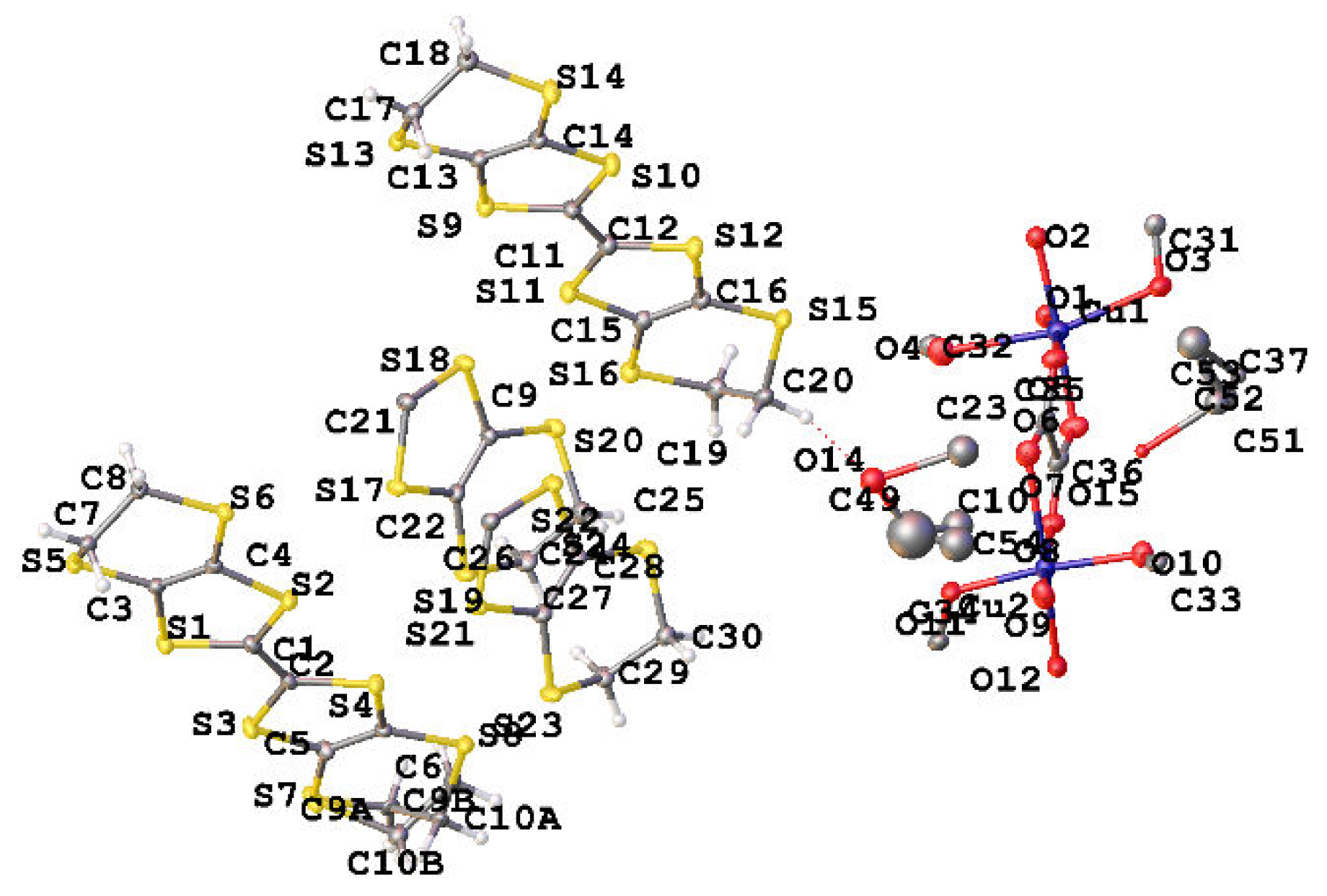
Figure 2.
Donor arrangement of I on the ab plane. Dashed yellow lines are S…S contacts. ET is an abbreviation for BEDT-TTF.
Figure 2.
Donor arrangement of I on the ab plane. Dashed yellow lines are S…S contacts. ET is an abbreviation for BEDT-TTF.
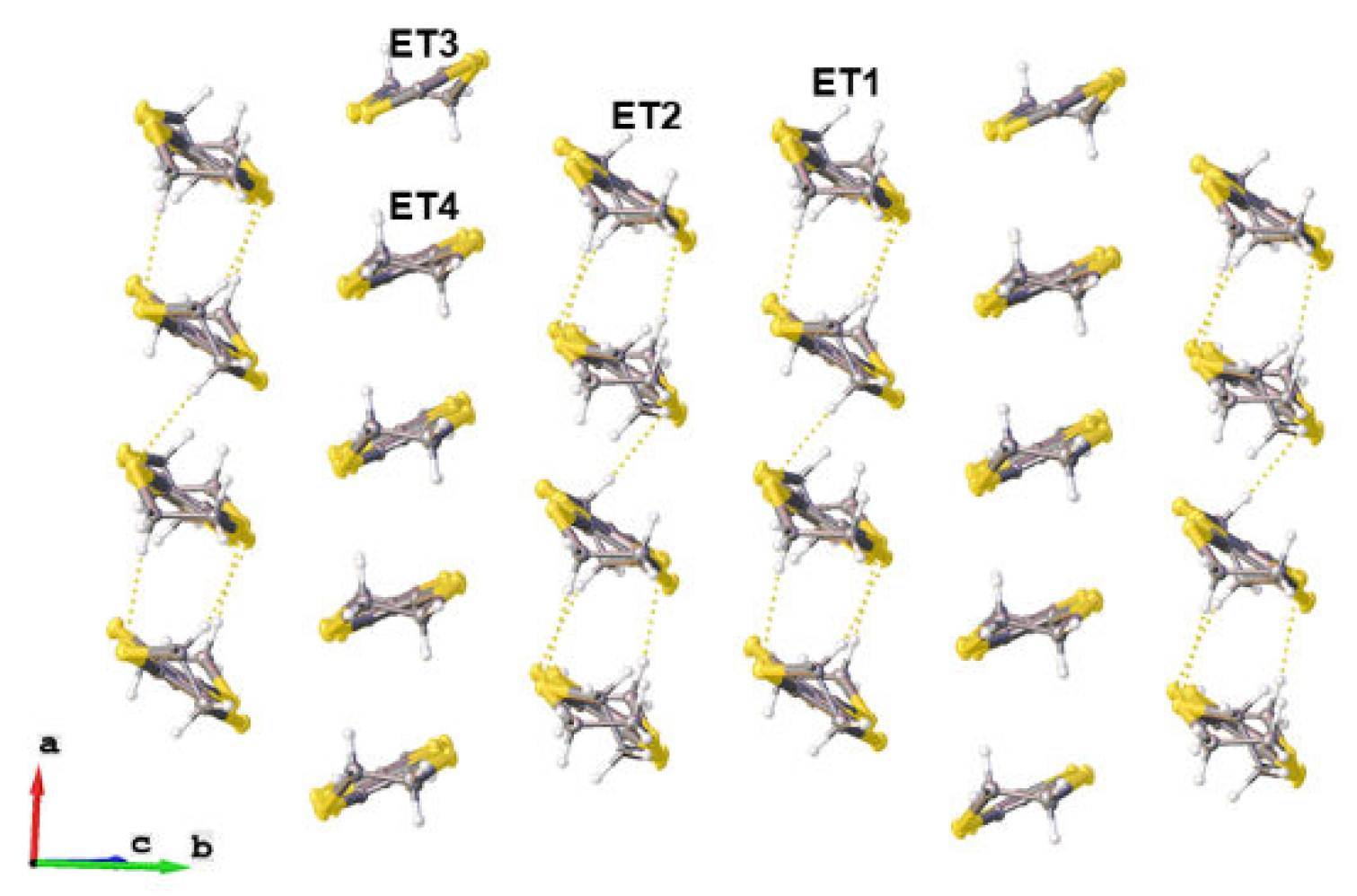
Figure 3.
Anion layer of I viewed along the c axis.
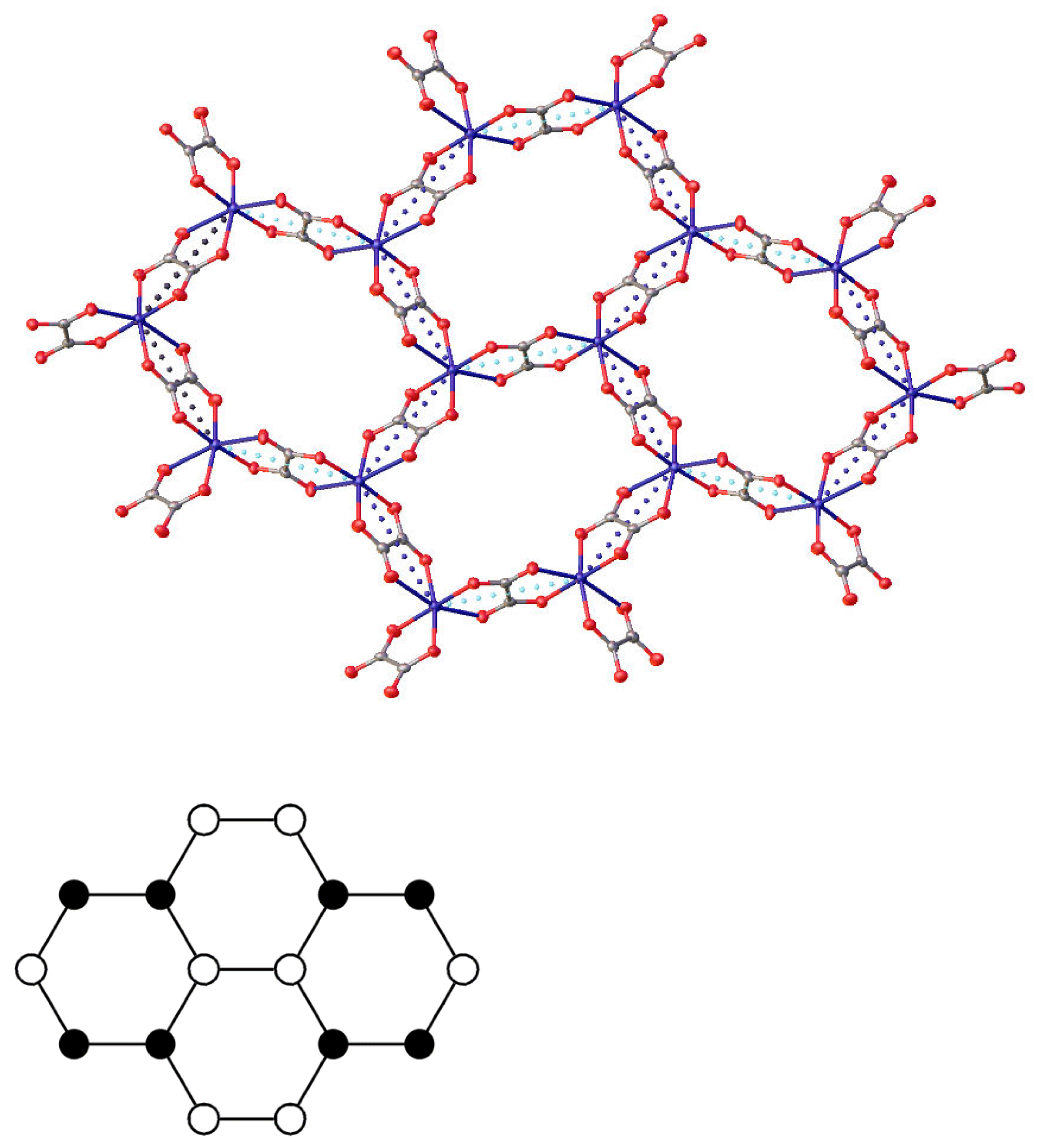
Figure 4.
Packing diagram of I viewed along the a axis. Color code: Cu, blue; O red: S, yellow; C grey. Hydrogen bond, dashed blue line.
Figure 4.
Packing diagram of I viewed along the a axis. Color code: Cu, blue; O red: S, yellow; C grey. Hydrogen bond, dashed blue line.
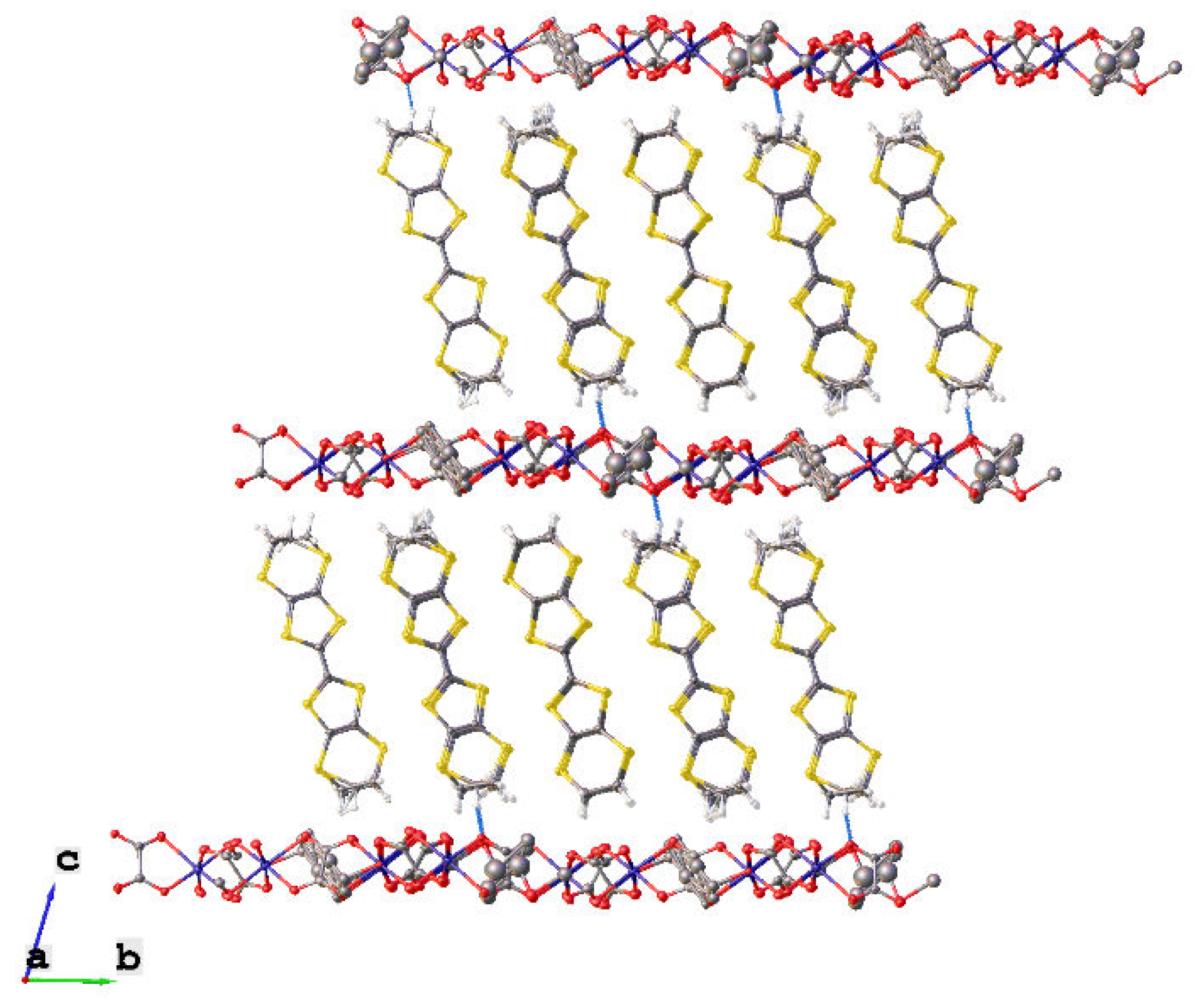
Figure 5.
Raman spectrum of I with λ = 514.5 nm.
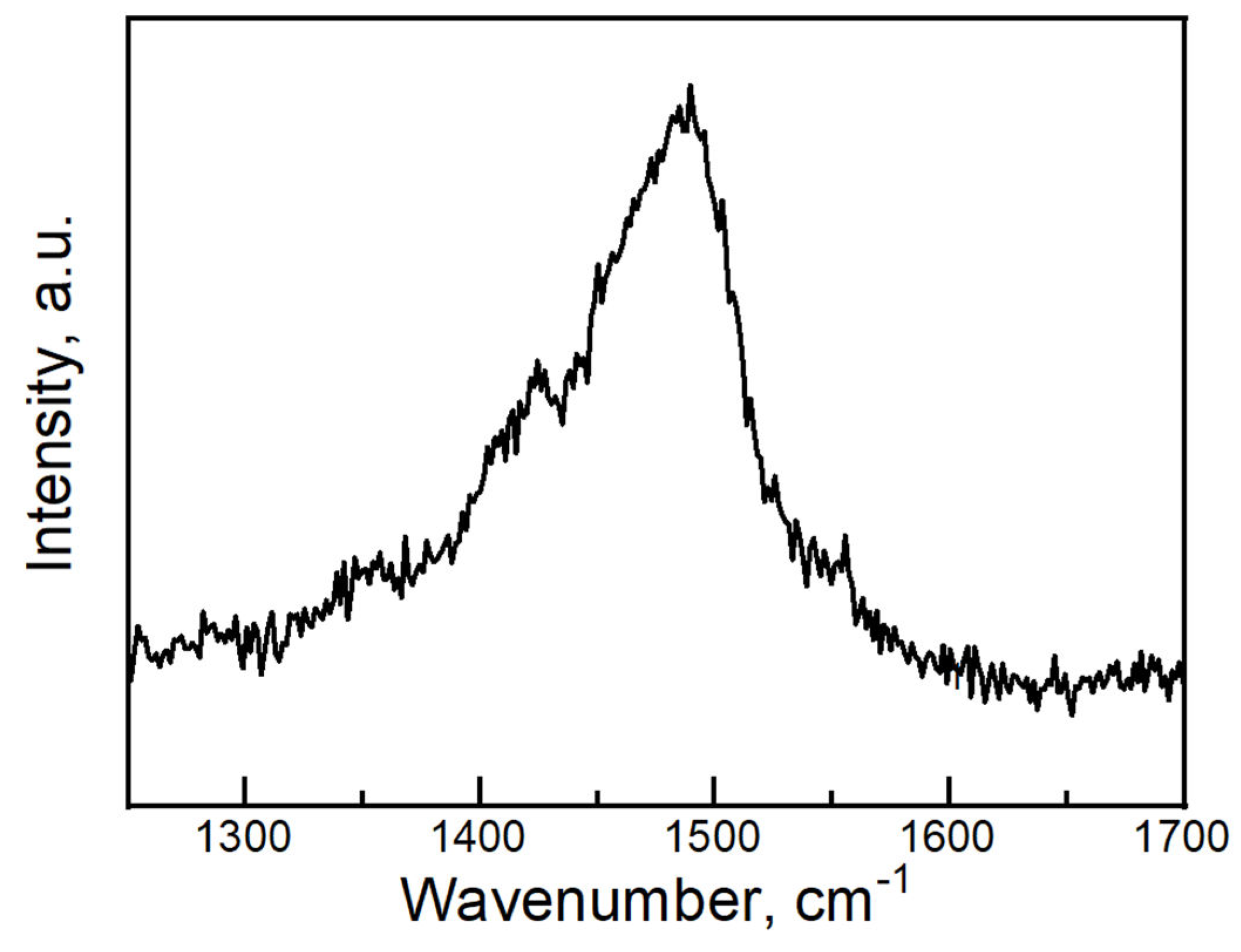
Figure 6.
Temperature-dependence resistance of I.
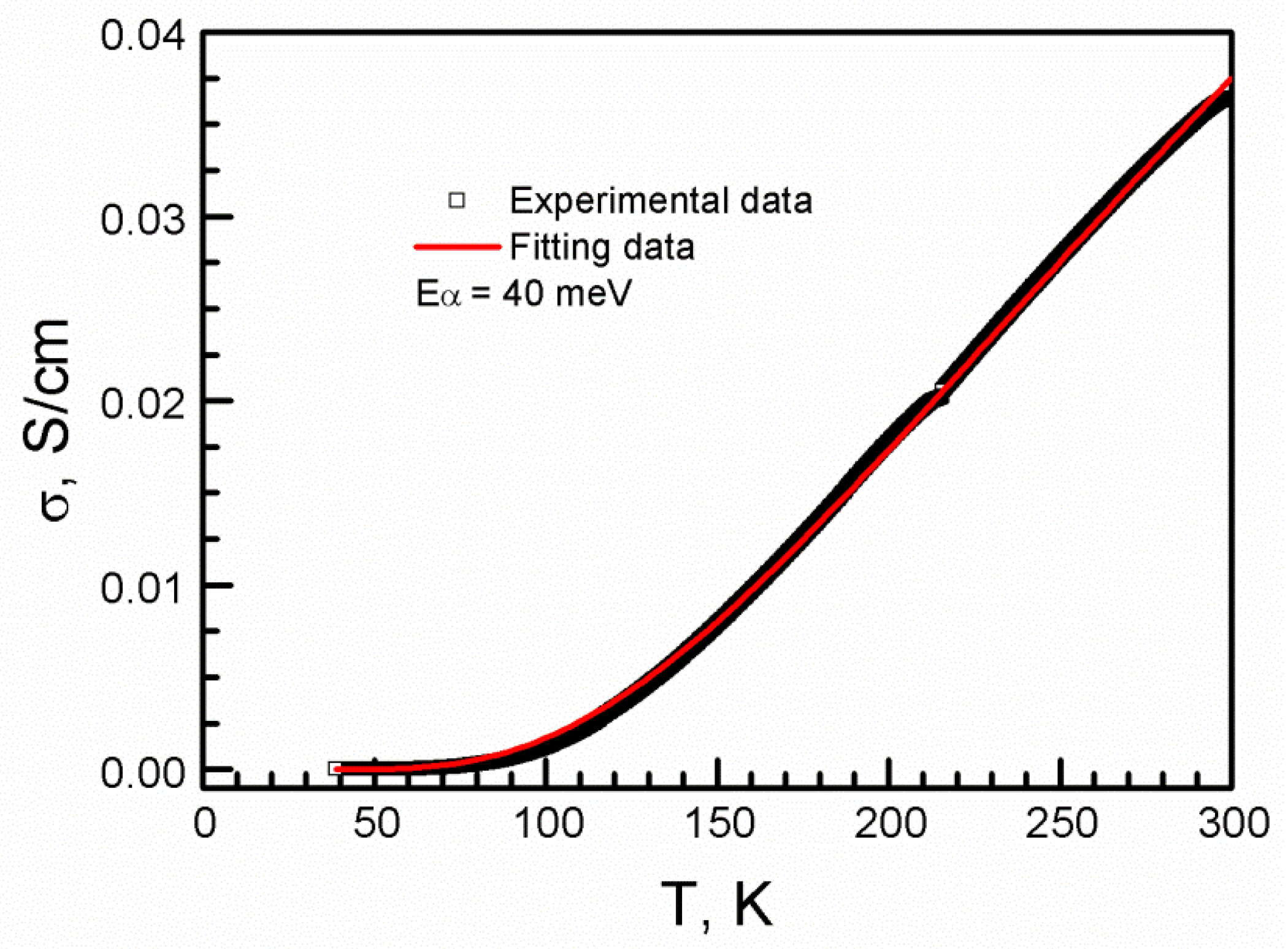
Figure 7.
χ vs. T (empty black square), χT vs. T (empty black circle) of I. The red and solid lines are fits to the Curie-Weiss law. Insert: ZFCM/FCM of polycrystal under 100 G.
Figure 7.
χ vs. T (empty black square), χT vs. T (empty black circle) of I. The red and solid lines are fits to the Curie-Weiss law. Insert: ZFCM/FCM of polycrystal under 100 G.
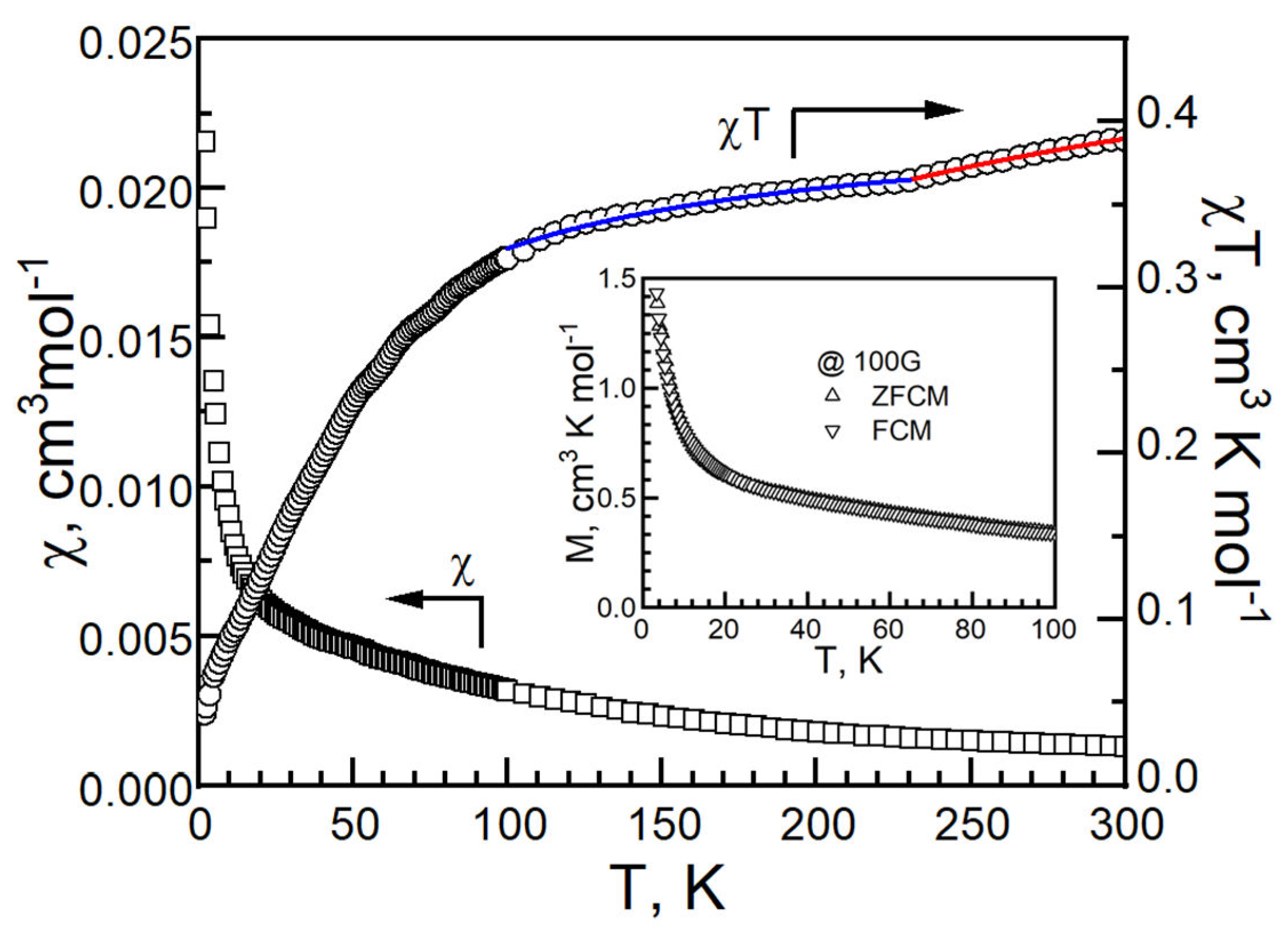
Figure 8.
Specific heat of I from 2 K to 120 K.
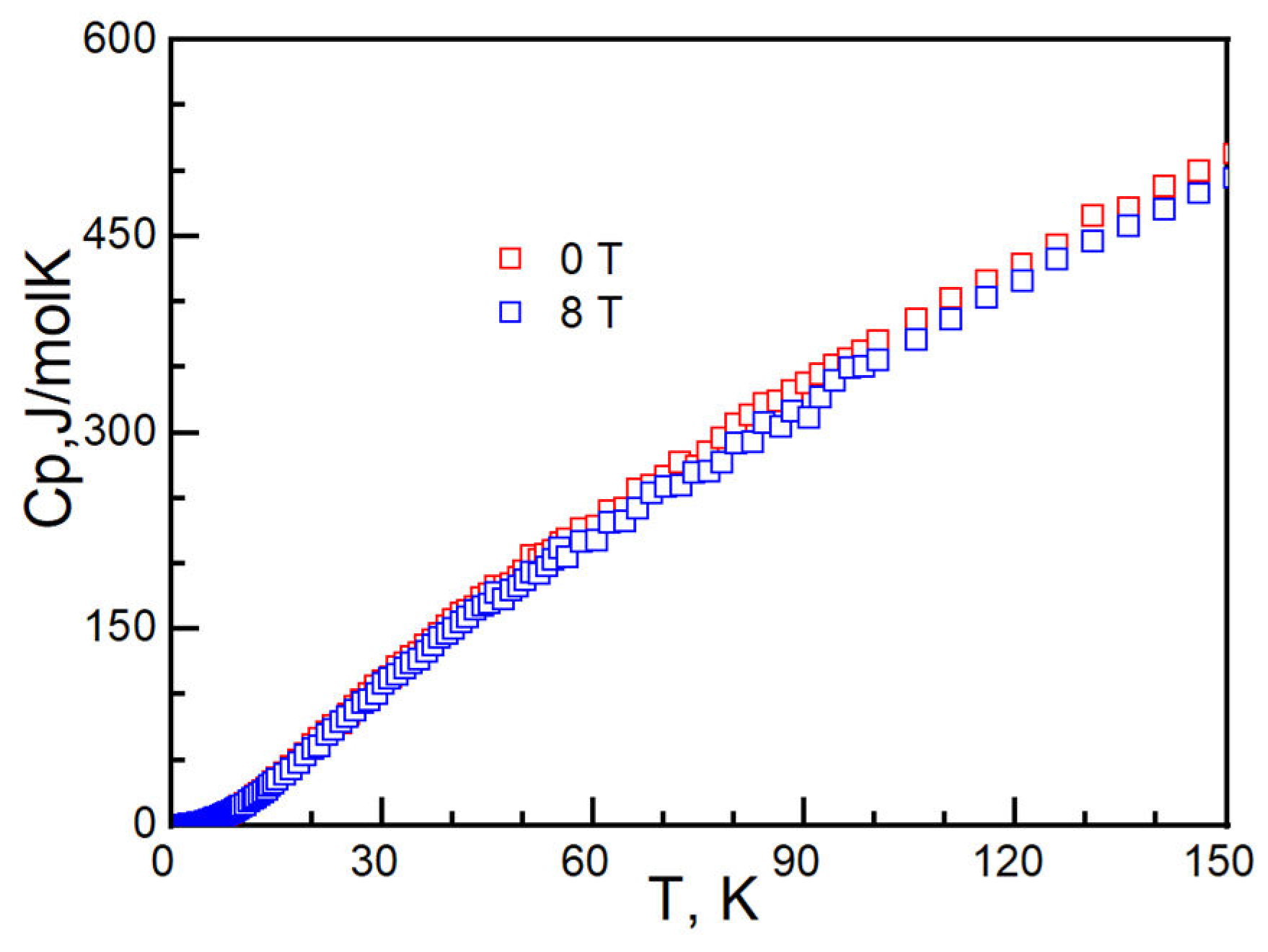

Table 1.
Crystallographic data of I.
| T, K | 290 | 180 | 120 |
|---|---|---|---|
| Cell parameters | 8.8661(5) | 8.7230(8) | 8.6836(4) |
| 16.7819(8) | 16.7838(7) | 16.8123(7) | |
| 19.4803(9) | 19.3844(4) | 19.3959(7) | |
| 74.271(4) | 74.312(4) | 74.329(3) | |
| 88.962(4) | 89.053(3) | 88.991(4) | |
| 88.022(4) | 88.347(4) | 88.420(4) | |
| 2788.2(2) | 2731.0(3) | 2725.2(2) | |
| Crystal system | Triclinic | Triclinic | Triclinic |
| Space group | P?1 | P?1 | P?1 |
| Z | 2 | 2 | 21.986 |
| Dc. g/cm3 | 1.945 | 1.986 | 1.990 |
| μ mm−1 | 1.726 | 1.762 | 1.766 |
| θ ° | 3.428, 27.877 | 3.446, 27.878 | 3.401, 27.878 |
| Completeness, % | 99.7 | 99.7 | 99.7 |
| no. total reflns | 45474 | 45148 | 44834 |
| no. unique reflns (Rint) | 13222(0.048) | 12961(0.0373) | 12934(0.0375) |
| no. obs. [I ≥ 2σ(I0)] | 8829 | 10020 | 10328 |
| no. params | 759 | 759 | 759 |
| R1, wR2 [I ≥ 2 σ(I0)] | 0.0610, 0.1488 | 0.0475, 0.1182 | 0.0469, 0.1163 |
| R1, wR2 (all data) | 0.0973, 0.1762 | 0.0669, 0.1325 | 0.0629, 0.1280 |
| GOF | 1.030 | 1.070 | 1.067 |
| Shift/error | 0.001/0.000 | 0.001/0.000 | 0.001/0.000 |
| Δρ, e/Å3 | 1.361(-0.849) | 1.017(-1.033) | 1.194(-1.156) |
| CCDC | 1431596 | 1431595 | 1431594 |
Table 2.
Bond lengths of Cu-O in I.
| T, K | 290 | 180 | 120 |
| Cu1-O, Å | 1.970, 1.976, 1.993 | 1.958, 1.967, 1.985 | 1.960, 1.971, 1.985 |
| 2.008, 2.259, 2.387 | 1.997, 2.239, 2.378 | 2.002, 2.239, 2.373 | |
| Cu2-O, Å | 1.962, 1.964, 1.979 | 1.953, 1.953, 1.974 | 1.952, 1.956, 1.975 |
| 2.010, 2.282, 2.378 | 1.991, 2.268, 2.383 | 1.988, 2.266, 2.382 |
Disclaimer/Publisher’s Note: The statements, opinions and data contained in all publications are solely those of the individual author(s) and contributor(s) and not of MDPI and/or the editor(s). MDPI and/or the editor(s) disclaim responsibility for any injury to people or property resulting from any ideas, methods, instructions or products referred to in the content. |
© 2024 by the authors. Licensee MDPI, Basel, Switzerland. This article is an open access article distributed under the terms and conditions of the Creative Commons Attribution (CC BY) license (http://creativecommons.org/licenses/by/4.0/).
Copyright: This open access article is published under a Creative Commons CC BY 4.0 license, which permit the free download, distribution, and reuse, provided that the author and preprint are cited in any reuse.


