
Submitted:
07 November 2024
Posted:
21 November 2024
You are already at the latest version
Abstract
This study explores the factors influencing the higher institution experience of African American students at Bowie StateUniversity, a historically Black College and University (HBCU). The study aims to understand the impacts of financialbarriers, academic preparedness, campus diversity, institutional support, and campus climate on the university experienceof African American students. By analyzing the responses of male and female students to a series of questions related tothese factors, the research seeks to identify key findings and implications for improving the higher education experienceof African American students. Key findings reveal that financial barriers were the most prevalent concern, with manystudents struggling with work demands and educational costs. While academic preparedness seemed less impactful, aneed for more inclusive curricula fostering diverse perspectives was identified. Institutional support had mixed results,with some students feeling well-supported and others having concerns unaddressed. The campus climate generallyfostered a sense of belonging, although some students reported incidents of discrimination. The findings of this studyprovided insights into the unique experiences of African American students and informed policy and practice to enhancetheir college experience. The study’s implications for future research highlight the necessity of examining therelationships among these variables using larger and more diverse samples across various institutions. Additionally,employing research methods that establish causal relationships is essential.
Keywords:
Financial Barriers
; Academic Preparedness
; Campus Diversity
; Institutional Support
; Campus Climate & Sense of Belonging
Introduction
1.0. Introduction
African American students may encounter various obstacles and uncertainties during their journey through higher education. The cost of higher education essentials, such as textbooks and secure living accommodations, can pose a significant financial challenge, potentially impacting their educational performance. Inequities within the pre-college education system might leave them feeling inadequately equipped for the rigors of higher institutions, leading to difficulties and a sense of isolation. Experiencing subtle racial biases or a lack of genuine inclusivity, even in ethnically varied environments, can promote feelings of estrangement. Acclimating to new social and educational realms can be an additional challenge for those attending predominantly white institutions. Nonetheless, universities that embrace cultural diversity and provide robust support networks can cultivate an environment of inclusion and community for African American students. Engaging with diverse perspectives can also enhance their outlook and better prepare them for life after college. Studies indicate that diversity can even bolster academic outcomes for some. While African American students may face hurdles in their collegiate endeavors, there is ample opportunity for personal development, community building, and scholarly success, particularly at institutions that value diversity and offer comprehensive support.
The higher institution experience could also be regarded as a critical period in the development and growth of young adults, and it can have a lasting impact on their future success. The higher institution experience of African American students is influenced by various factors that can significantly impact their academic success, sense of belonging, and overall well-being. Understanding these factors is crucial for creating an inclusive and supportive environment that fosters African American students' success in higher education. It is important to examine these factors' impact on Black American students' higher education experience to understand the barriers they face and develop strategies to support their success in pursuing higher education. By understanding the unique challenges faced by Black American students, colleges, and universities can take steps to create a more inclusive and supportive environment for all students. Bowie State University, as a historically black university, provides a unique context for studying the factors that shape the educational experience of African American students. Higher education offers African American students’ opportunities for social mobility and career advancement. However, their experiences often differ from those of their other counterparts. With their legacy of serving Black students, HBCUs provide a unique environment to understand factors shaping their college journey.
Despite higher institutions offering a rich tapestry of personal growth, intellectual exploration, and professional development for all students, the experience can be uneven for many Black American students. Historical, cultural, and institutional factors create unique challenges alongside opportunities. This research delves into those factors shaping academic achievement, social interactions, mental health, and the all-important sense of belonging. By examining financial barriers, support systems, and the broader campus climate, we aim to use evidence-based practices and advocacy to improve the college experience for Black American students. This study sheds light on their educational equity and empowerment journey, recognizing the dynamic interplay of factors that extend beyond the classroom.
While ensuring academic readiness remains paramount for the successful collegiate journey of African American students, prevailing discussions often concentrate on cultural or environmental factors that may impede their scholastic performance. Nevertheless, it is imperative to acknowledge the deficiencies and unequal allocation of resources within educational systems, particularly those serving a predominantly minority student population. Elements such as access to rigorous college-preparatory coursework, competent educators, and counseling services profoundly influence the level of preparedness among African American students for postsecondary education. Additionally, the presence of Black faculty members plays a pivotal role in fostering a more inclusive campus atmosphere, ultimately contributing to a more favorable collegiate experience for African American students. Hence, academic preparedness significantly shapes the higher education encounter of African American students, with factors like access to challenging courses, qualified instructors, and supportive racial climates playing pivotal roles in their academic success and overall collegiate journey.
1.2. Statement of the Problem
Despite the increasing enrollment of African American students in higher education, they face unique challenges that can impact their experience. Understanding these challenges is critical to improving their academic success and overall college experience.
1.3. Purpose of the Research Study
This study investigates the factors influencing the higher institution experience of African American students using Bowie State University as a case study. It focuses on financial barriers, academic preparedness, campus diversity, institutional support, campus climate, and sense of belonging.
1.4. Theoretical Framework
The theoretical framework for this study for this study is based on the Attrition Theory and Tinto’s Model of Student Departure. Both theories focus on factors contributing to student retention, graduation, or departure rates before graduation. Attrition Theory is a large umbrella. Underneath this umbrella is Tinto's Model, which includes other specific theories that explain student departure. Each theory offers a unique perspective on the factors contributing to students’ college experience. Tinto's Model of Student Departure (1975)proposes that a student's choice to persist or leave college hinges on two key factors: academic and social integration. Academic integration refers to student performance, class engagement, and feeling connected to faculty. In contrast, social integration focuses on the student's sense of belonging and connection with peers and the campus community.
On the other hand, Attrition Theory is a framework that aims to explain the factors that contribute to students leaving higher education institutions before completing their degrees. This theory can be applied to the experiences of African American students in higher education institutions, as they often face unique challenges and disparities that can lead to a higher likelihood of dropping out.
The conceptual framework for this study illustrates the expected relationships between these five key factors and how they influence the higher institution experience of African American students.
1.5. Research Questions
1. How do financial barriers influence the college experience of African American students at Bowie State University?
2. How does academic preparedness impact the academic success of African American students?
3. How does campus diversity affect the college experience of African American students?
4. How does institutional support influence African American students' academic success and overall college experience?
5. How does the campus climate and sense of belonging impact the college experience of African American students?
1.6. Significant of the Study
This study will contribute to understanding the factors that influence the higher institution experience of African American students and how they interact with each other. This understanding can inform the development of interventions, practices, and policies that better support and enhance the success and well-being of African American students in college.
1.7. Pertinent Terms
1. Financial Barriers: Economic constraints limit students' ability to enroll, persist, and achieve in higher education.
2. Academic Preparedness: This refers to a student's readiness to meet the academic expectations of college.
3. Campus Diversity: Representing many racial, ethnic, and cultural groups on campus.
4. Institutional Support: The institution's resources and services to help students achieve academic success and general well-being.
5. Campus Climate and Sense of Belonging: The perception of the social and intellectual environment on campus and students' feelings of acceptance and inclusion.
2.0. Literature Review
A systematic review of related studies on factors affecting African American students’ higher institution experience was used for this study using various databases and the Web of Science analytical tool. Scholars, domestic agencies, and international organizations have discussed issues relating to black Americans in colleges. The factors affecting black students' higher education experiences have received considerable attention over the years. The review focuses on the five key factors identified in this study:
- Access to finance
- Knowledge about available resources on campus
- Campus Diversity
- Institutional Support
- Campus Climate and Sense of Belongingness
Nunez and Cuccaro-Alamin (2018) found that first-generation college students (FGCSs) face a variety of challenges, including a lack of support from immediate family, insufficient information about college processes, low socioeconomic status, and persistent difficulties in completing degrees despite overcoming access barriers to college enrollment. The study found that the unfavorable effect persisted even for those with access to higher education. This emphasizes the significance of targeted support and interventions to increase FGCS college completion rates. On the other hand, the Lumina Foundation's 2020 study emphasizes the importance of tackling African American students' obstacles in higher education. It emphasizes the importance of creating a more inclusive, egalitarian, and supportive learning environment that addresses the unique needs of all students.
The National Center for Education Statistics (NCES) studies from 2016 to 2019 demonstrate the critical significance of financial aid in assisting African American college students with their educational goals. The findings show that such assistance leads to higher persistence and degree completion among these students. Despite this, individuals face financial constraints, such as textbook and transportation fees, which may impact their academic achievement. African American students also have a higher student loan debt burden and experience more financial hardships than their white and Asian counterparts. 72% of people who obtain Pell Grants rely heavily on financial help. Nonetheless, their college enrollment rate is 37%, lower than 60% for Asian students and 38% for White students, highlighting persistent inequities in higher education access and financial condition.
Museus and Quaye (2013) investigated the relationship between African American students' perceptions of available campus resources, retention enhancement through campus-based organizations, and the impact of campus culture (including engagement, connection, and perception) on their college experience. Furthermore, the study emphasized the significance of a sense of belonging, community, and involvement in student organizations for overall performance and pleasure. This study sheds light on the problems that minority students face, emphasizing the significance of exploring fresh views to improve their college experiences and success. Museus and Quaye's study substantially impacted higher education research and informed initiatives for aiding minority students.
The findings of Cokley et al. (2013) focused on the experiences of African American students at predominantly white schools and universities. The study discovered that these students frequently suffer difficulties due to social isolation, cultural mismatches, and a lack of support resources. These variables can lead to poor academic performance, greater stress, and a higher dropout risk. The report stressed the need to develop more inclusive campus settings and offer targeted support services to help African American students thrive in their higher education.
A growth mindset has been linked to higher levels of motivation, a stronger sense of belonging, and improved academic accomplishment, according to research by Blackwell, Trzesniewski, and Dweck (2018). According to research by Brown and Jackson (2019), financial stress has a negative impact on academic performance and campus involvement, while campus engagement can moderate the association between financial stress and academic success.
Strong social support networks, including friends, family, and mentors, have a positive impact on academic success for African American college students, according to research by Theobald et al. (2020). These networks offer support, tools, and a feeling of community, all of which can enhance academic achievement. According to Johnson and Strange (2007), mentoring programs should be customized to meet the unique needs of African American students. They contend that mentors aware of their charges' cultural background and experiences can offer more pertinent support and guidance, improving their academic performance and self-esteem. Theobald et al. (2020) conducted a study that underscored the benefits of social support networks in improving students' academic self-efficacy and engagement.
African American students can overcome any obstacles brought on by diversity and flourish in a multicultural setting by having access to resources and support networks designed to meet their requirements (Gurin et al., 2002). A meta-analysis by Denson et al. (2021) looked at the connection between diversity courses and student results. These classes prepare students to participate in an equitable society by exposing them to concerns of inequality and difference. Diversity coursework has a tiny overall correlation but a beneficial impact on several outcomes.
In a 2009 study, Perna et al. stressed the value of financial aid resources and programs in helping low-income African American students succeed in higher education. The survey discovered that many students faced serious financial difficulties. Access to resources and financial aid was essential to overcome these obstacles and succeed academically. The researchers emphasized that low-income students could receive assistance in paying for their college education through grants and scholarships, among other financial aid programs. Furthermore, they pointed out that giving students access to tools like career counseling, academic support, and mentorship can help them succeed even more in their postsecondary education.
According to research conducted in 2019 by Kim and Museus, supporting African American students' academic and professional development has a considerable positive impact on their academic success, campus involvement, and sentiments of inclusion. Additionally, the survey showed that students who had a closer sense of belonging to their university also performed better academically and expressed greater satisfaction with their time in college. For African American students to succeed in higher education, these findings emphasize how crucial providing a welcoming and encouraging environment is. This supports the conclusions of studies by Leak and Coakley (2012), Blackwell, Trzesniewski, and Dweck (2018), Perna et al. (2009), Cokley et al. (2013), and others that highlight the value of offering resources, support services, and cultivating a growth mindset to assist African American students in overcoming challenges.
The results of Allen et al. (2016) emphasize how critical it is to make campuses more inviting and inclusive of Black students. This can be accomplished by implementing programs that support racial justice, diversity, and a feeling of community among all students. A study on the effect of leadership opportunities on African American students' retention and academic progress was conducted by Williams et al. (2019). It was shown that African American students who participated in leadership roles on campus had higher GPAs and were more likely to complete their degrees than their peers who did not. This study also showed that providing African American students with leadership opportunities was essential to helping them feel connected to and a part of the campus community. It is advised that educational institutions give African American students plenty of chances to join student organizations and take on leadership positions in light of the findings of this study. Additionally, fostering a welcoming and inclusive school community that values
The research by Gbolo and Grier-Reed (2019) explored the experiences and outcomes of students who participated in a newly formed African American Student Network (AASN) at a Midwestern urban high school. The study suggests that participation in the AASN positively impacted the overall student experience for African American students. Students reported feeling a sense of safety, support, and belonging within the network. This also facilitated opportunities for students to connect with peers with similar backgrounds and experiences. This fostered a sense of community and reduced feelings of isolation. The study highlights the potential benefits of creating social and support networks for African American students within a high school setting. These networks can provide a sense of belonging, foster academic engagement, and complement broader institutional efforts to promote student success. Likewise, the research findings by Parker, E. T. (2019), indicated that establishing a chief diversity office at these research universities served as a structural response to address cultural challenges on campus.
3.0. Limitations of the Study
This study was limited to one campus (Bowie State University) to understand the degree to which these factors impact the college experience of African American students in colleges. Future studies should capture more samples regionally and nationally for more significant generalization. In addition, self-report data may be subject to biases and social desirability effects.
4.0. Methodology
This study used a mixed-methods approach, incorporating both quantitative and qualitative data. This is to gain a deeper understanding of the factors influencing the higher institution experience of these students. Using this methodology provides a more holistic picture that can inform efforts to improve the students' experience for this population.
4.1. Research Design
The research design is a case study focusing on Bowie State University. The case study design allows for an in-depth exploration of the factors influencing the college experience of African American students within a specific context.
4.2. Participants and Sample
Participants are African American students currently enrolled in Bowie State University. The samples were selected using purposive sampling to ensure diversity in terms of gender, socioeconomic status, and institutional type.
5.0. Data Analysis
5.1. Data Collection and Procedures
Data for this study was collected through questionnaires that were administered to participants.
5.2. Data Interpretations
The data presented the results from the administered questionnaires from higher institution students regarding their experiences and perceptions across five factors: Financial Barriers, Academic Preparedness, Campus Diversity, Institutional Support, and Campus Climate and Sense of Belonging. The survey uses a Likert scale with responses ranging from Strongly Agree (SA) to Strongly Disagree (SD). There are also gender demographics provided for the respondents.
Gender Distribution:
The survey included responses from 33 females and 11 males, indicating a higher participation rate among female students.
The below address the research questions
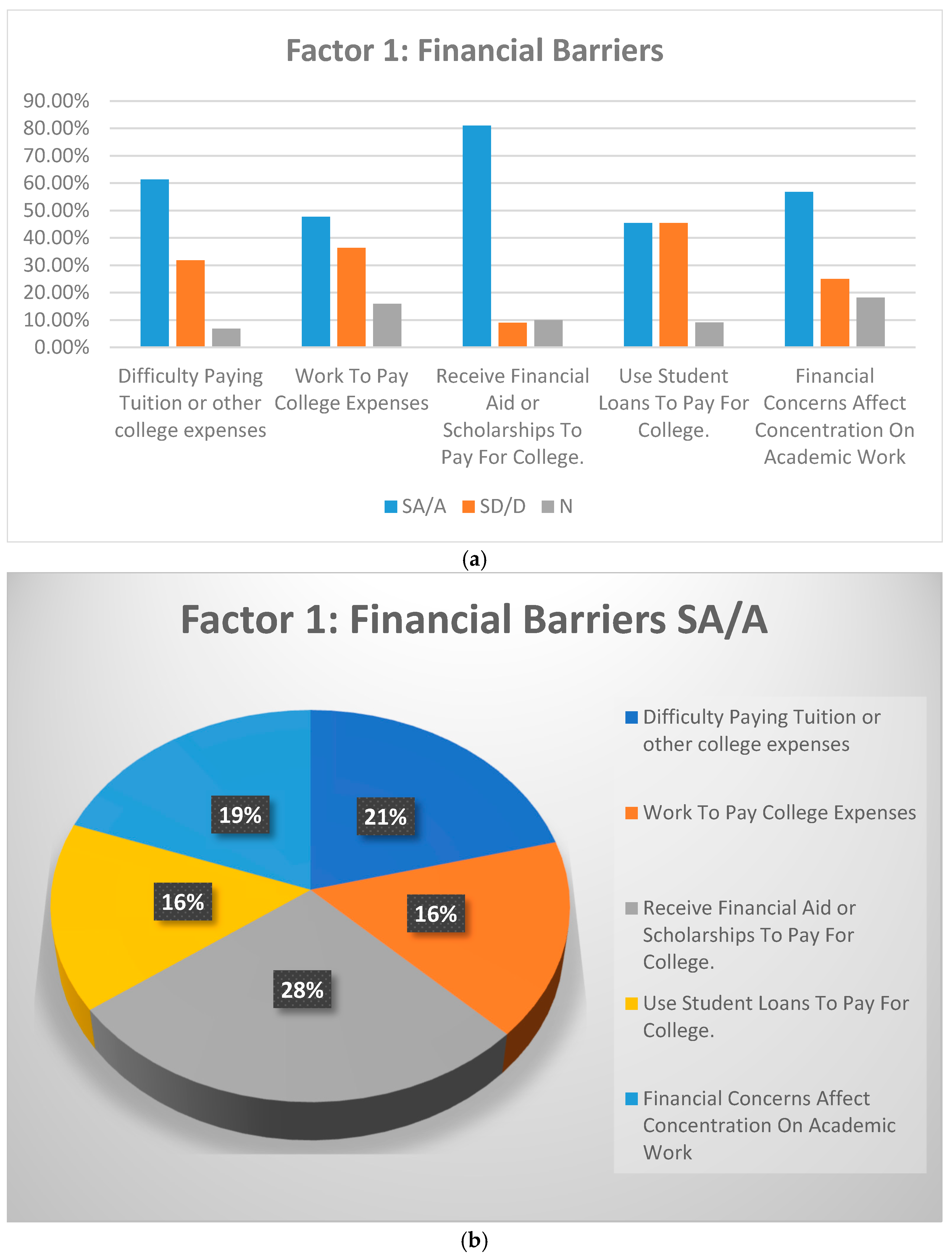
Figure 1.
a: Financial Barriers. b: Financial Barriers.
Factor 1: Financial Barriers:
Financial difficulties appear to be a significant issue for respondents, with the majority agreeing or strongly agreeing that they have had trouble paying for college expenses (27 out of 44) and that financial concerns affect their academic work (25 out of 44). Many students also rely on financial aid or scholarships (37 out of 44 agree or strongly agree) and have taken out student loans (20 out of 44 agree or strongly agree). This indicates how essential financial barriers significantly influence the college experience. Financial barriers and concerns are prevalent among students, affecting retention and academic success.
Interpretations:
Difficulty Paying for Tuition or Other College Expenses:
- ○
- The mean score indicates that, on average, respondents lean towards disagreeing that they have experienced significant financial difficulties related to college expenses.
- ○
- This suggests that financial barriers may not be a major concern for this group of students.
Working a Job During the School Year to Pay for College Expenses:
- ○
- The mean score indicates that respondents are neutral or slightly agree that they have worked during the school year to pay for college expenses.
- ○
- This implies that some students do take on employment to cover their educational costs.
Receiving Financial Aid or Scholarships to Help Pay for College:
- ○
- The high mean score (approximately 3.6) indicates that most respondents agree or strongly agree that they receive financial aid or scholarships.
- ○
- Financial aid plays a significant role in supporting these students.
Taking Out Student Loans to Pay for College:
- ○
- The mean score (approximately 2.3) suggests that respondents are neutral regarding taking out student loans.
- ○
- Some students may have taken loans, while others have not.
Financial Concerns Affecting Academic Focus:
- ○
- The mean score (approximately 2.48) indicates that, on average, financial concerns moderately affect students’ ability to focus on academic work.
- ○
- Balancing financial worries and coursework can impact academic performance.
Correlation Implications:
- Higher financial aid availability (item 3) correlates positively with reduced financial difficulties (item 1).
- Working during the school year (item 2) may relate to financial aid and loan decisions (items 3 and 4).
- Financial concerns affecting focus (item 5) highlight the importance of addressing financial stress to enhance the overall college experience.
In summary, financial factors significantly influence the higher education experience, and addressing financial barriers can improve student well-being and academic success.
Financial concerns frequently affect the ability of these students to focus on their academic work, as 58% of the respondents indicated. This highlights the importance of addressing financial barriers and providing adequate financial support for students to ensure their academic success and overall well-being.
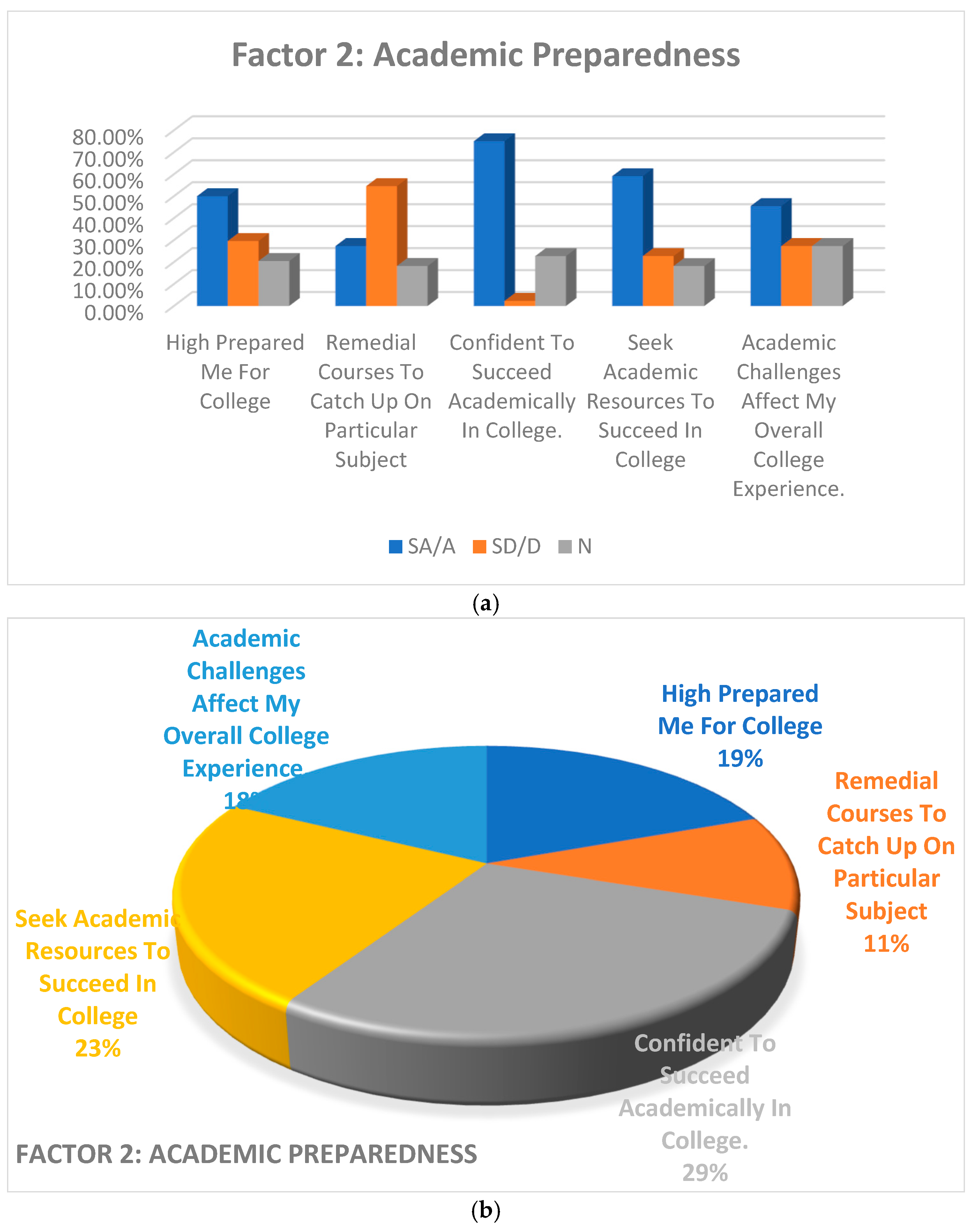
Figure 2.
a: Academic Preparedness. b: Academic Preparedness.
Factor 2: Academic Preparedness:
Respondents are somewhat split on their high school preparation for college, but more feel prepared (22 out of 44 agree or strongly agree) than unprepared (13 out of 44 disagree or strongly disagree). Confidence in academic success is relatively high (33 out of 44 agree or strongly agree). Remedial courses and academic challenges seem less of an issue but still concern many respondents. While many students feel academically prepared and supported by the institution, remedial courses and academic challenges still need to be addressed for some
Interpretations:
Based on the given responses, it can be inferred that the majority of the respondents (17 out of 25) feel confident in their ability to succeed academically in college. The second most common response is that they have taken remedial courses to catch up in a particular subject area (12 out of 25). The least common response is that academic challenges frequently affect their overall college experience (6 out of 25).
The distribution of responses indicates that the majority of the respondents have a positive attitude toward their academic preparedness for college. However, there is a noticeable gap between those who feel confident in their academic abilities and those who have taken remedial courses. This suggests that while some students may have been well-prepared for college-level work, others may have faced challenges and needed additional support to catch up.
The fact that a significant number of respondents have sought out academic resources such as tutoring or study groups to help them succeed in college indicates that they are proactive in addressing their academic needs. This highlights the importance of providing students with the necessary resources and support to ensure their academic success and overall higher institution experience.
Correlation Implications:
- Confidence (item 3) seems positively correlated with seeking academic resources (item 4).
- Academic challenges (item 5) may influence confidence and resource-seeking behavior.
In summary, academic preparedness and confidence play crucial roles in shaping the college experience. Addressing challenges and seeking support contribute to overall success.
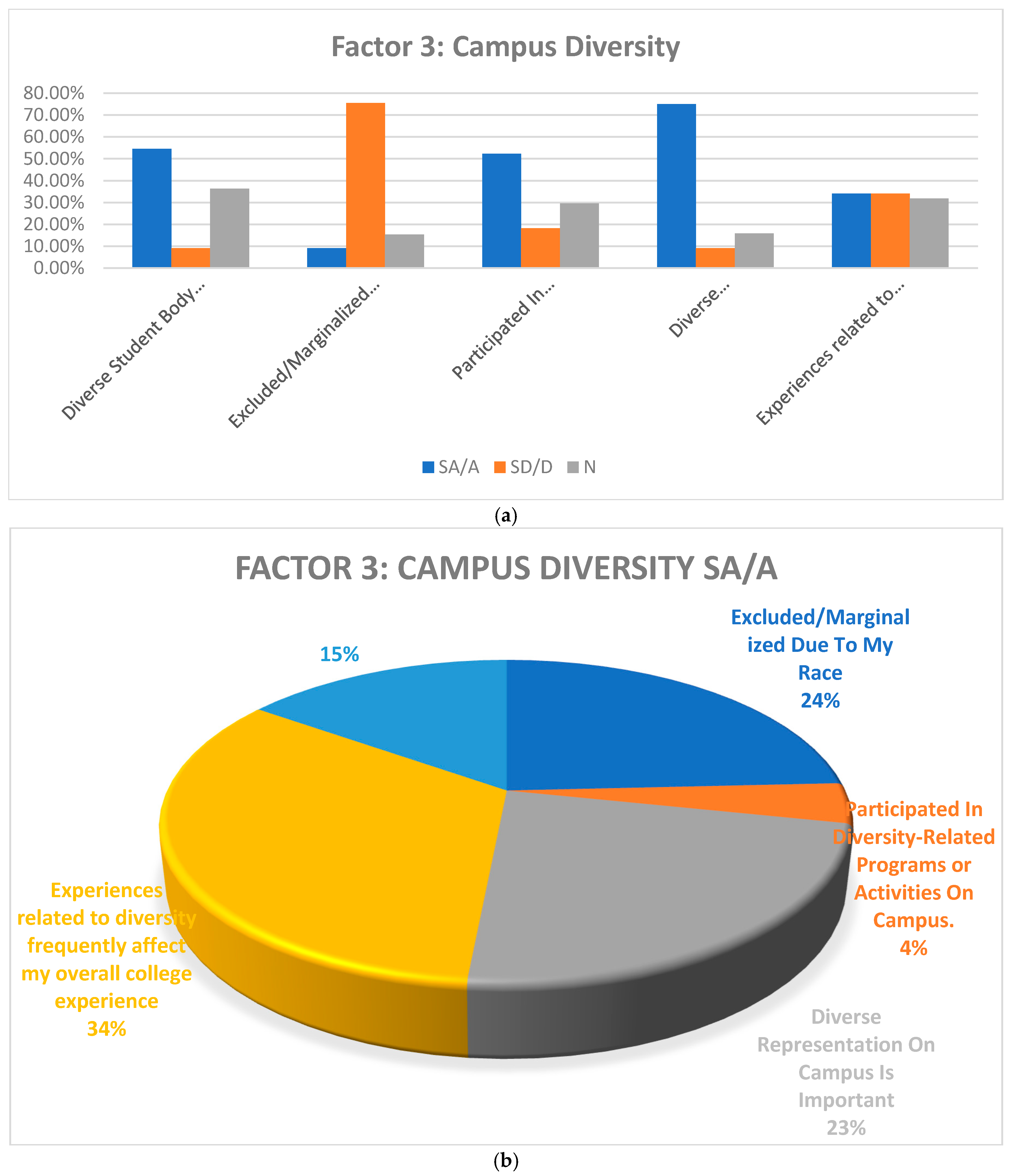
Figure 3.
a: Campus Diversity. b: Campus Diversity.
Factor 3: Campus Diversity:
Opinions on diversity are mixed, with a slight lean towards agreement that there is diversity among the student body and faculty (24 out of 44 agree or strongly agree). However, many respondents have felt excluded or marginalized (26 out of 44 disagree or strongly disagree). Participation in diversity-related programs and activities is moderate (23 out of 44 agree or strongly agree). Campus diversity is recognized, but experiences of exclusion highlight areas for improvement in inclusivity.
Interpretations:
In terms of participation in diversity-related programs or activities, the majority of the students have participated in such programs or activities, which suggests that the university has provided opportunities for students to engage with diversity-related initiatives. Bowie State University offers a seemingly diverse environment, but there is room for improvement in fostering a strong sense of inclusion for all students.
Overall, the responses indicate that the university has tried to promote diversity and inclusivity. However, there is still room for improvement in addressing instances of exclusion or marginalization experienced by some students.
Correlation Implications:
- Valuing diverse perspectives (item 4) positively correlates with participation in diversity-related programs (item 3).
- Feeling excluded or marginalized (item 2) negatively correlates with the perception of a diverse campus (item 1).
In summary, campus diversity significantly influences students’ experiences, and active engagement in diversity initiatives fosters an inclusive environment. While there is generally a positive perception of diversity within the college community, there are still challenges related to feelings of exclusion or marginalization. However, there is active engagement with diverse initiatives, and respondents highly value the representation of diverse perspectives in various aspects of college life. Nonetheless, diversity-related experiences significantly impact the overall college experience, indicating the importance of further efforts to foster inclusive environments on campus.
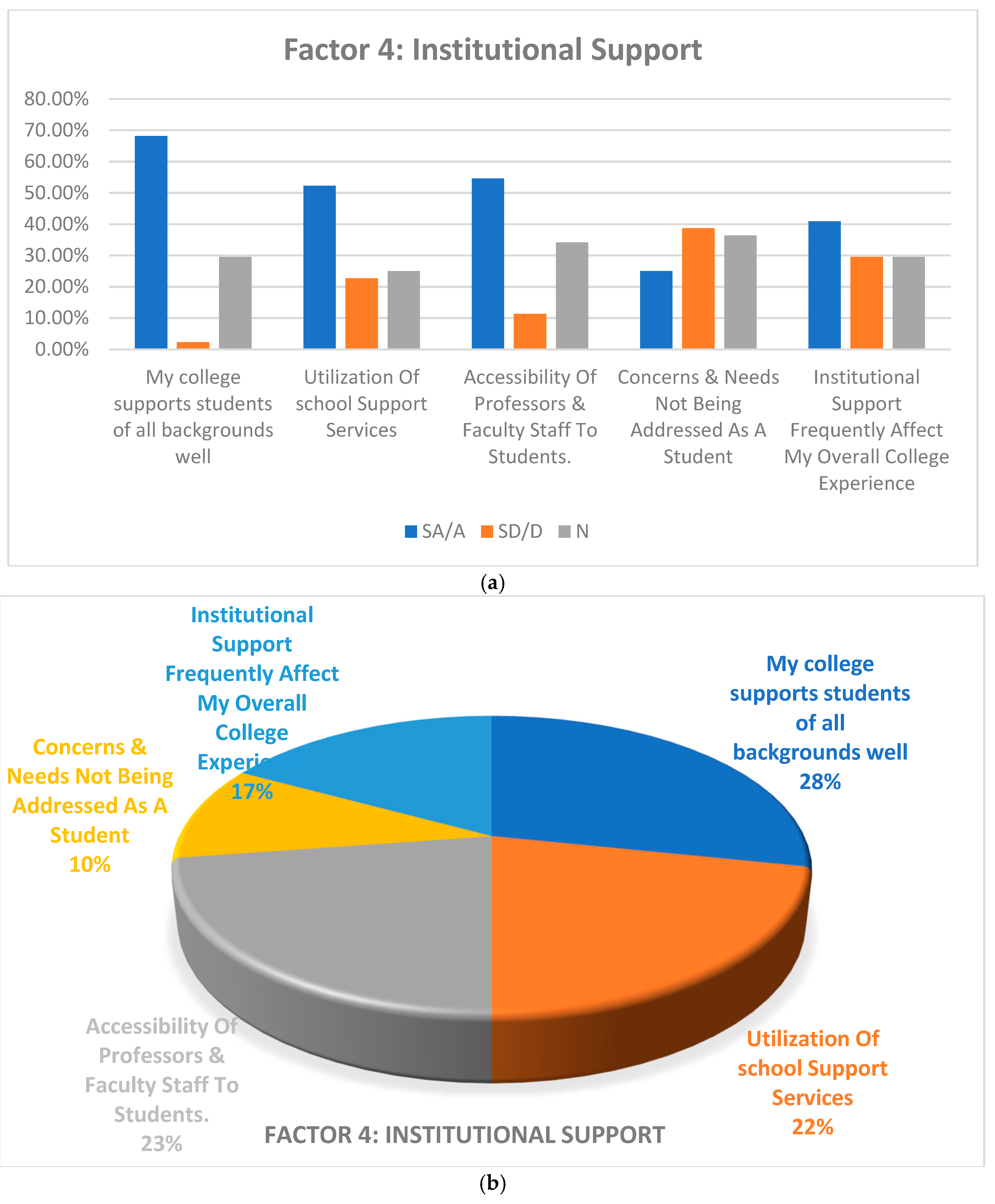
Figure 4.
a: Institutional Support. b: Institutional Support.
Factor 4: Institutional Support:
Most respondents feel that the college supports students of all backgrounds (30 out of 44 agree or strongly agree). Many have utilized support services (23 out of 44 agree or strongly agree) and find faculty/staff accessible (24 out of 44 agree or strongly agree). Institutional support appears to be effective, but some students still feel their needs must be fully addressed
Interpretations:
To analyze and interpret the data provided for institutional support, the average score for each statement based on the scale given was calculated, where Strongly Agree (SA) is 5 points, Agree (A) is 4, Neutral (N) is 3, Disagree (D) is 2, and Strongly disagree (SD) is 1 point.
-
My college supports students of all backgrounds well
- ○
- Calculation: (13 * 5) + (17 * 4) + (13 * 3) + (1 * 2) = 65 + 68 + 39 + 2 = 174
- ○
- Average (number of responses = 44): 174 / 44 ≈ 3.95
- ○
- Interpretation: The average is close to 4, which indicates that most students agree that their college supports students of all backgrounds well.
-
I have utilized support services offered by my college, such as counseling or career services
- ○
- Calculation: (8 * 5) + (15 * 4) + (11 * 3) + (7 * 2) + (3 * 1) = 40 + 60 + 33 + 14 + 3 = 150
- ○
- Average (number of responses = 44): 150 / 44 ≈ 3.41
- ○
- Interpretation: The average score suggests that a moderate number of students agree that they have utilized the support services, with some neutrality and a small number disagreeing.
-
Professors and other faculty/staff are accessible to students.
- ○
- Calculation: (8 * 5) + (16 * 4) + (15 * 3) + (4 * 2) + (1 * 1) = 40 + 64 + 45 + 8 + 1 = 158
- ○
- Average (number of responses = 44): 158 / 44 ≈ 3.59
- ○
- Interpretation: This score leans towards agreement, suggesting that faculty and staff are generally accessible, with some students remaining neutral or slightly disagreeing.
-
I have felt that my concerns or needs as a student were not being addressed by the college
- ○
- Calculation: (11 * 5) + (16 * 4) + (11 * 3) + (6 * 2) = 55 + 64 + 33 + 12 = 164
- ○
- Average (number of responses = 44): 164 / 44 ≈ 3.73
- ○
- Interpretation: The score suggests a slight agreement, indicating that some students have felt their concerns or needs were not fully addressed, but this is not a dominant sentiment.
-
Experiences related to institutional support frequently affect my overall college experience
- ○
- Calculation: (3 * 5) + (15 * 4) + (13 * 3) + (11 * 2) + (2 * 1) = 15 + 60 + 39 + 22 + 2 = 138
- ○
- Average (number of responses = 44): 138 / 44 ≈ 3.14
- ○
- Interpretation: The average score is slightly above neutral, indicating that for many students, institutional support does have some impact on their overall college experience, though it is not overwhelmingly positive or negative.
General Sentiment:
Overall, the responses skew towards the "Agree" side of the scale, with averages ranging from 3.14 to 3.95. This indicates that students generally perceive institutional support as positive, with particular strength in the college's support for students of all backgrounds. However, there are areas of improvement, as not all students feel their concerns are adequately addressed, and the use of support services is not as high as it could be. The impact of institutional support on the overall college experience is seen as somewhat significant but not strongly influential for all students.
Figure 5.
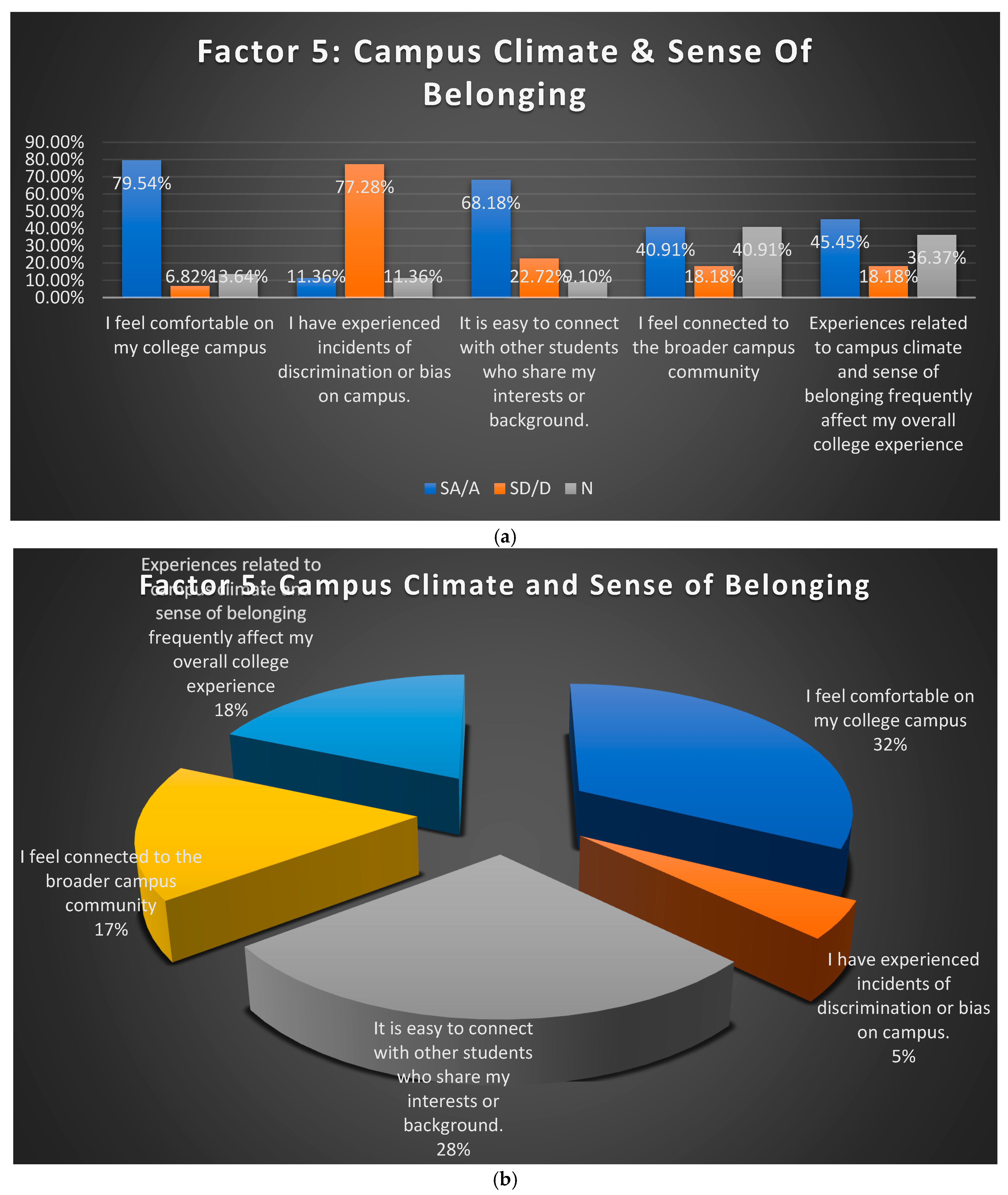
a: Campus Climate & Sense of Belonging. b: Campus Climate & Sense of Belonging.
Factor 5: Campus Climate and Sense of Belonging:
Respondents generally feel comfortable on campus (35 out of 44 agree or strongly agree). Incidents of discrimination or bias are not widely reported in this sample (27 out of 44 disagree or strongly disagree with experiencing such incidents). The sense of belonging and connection to the campus community is relatively positive (35 out of 44 agree or strongly agree). The overall campus climate is perceived positively regarding comfort and belonging, but discrimination and bias concern some students.
Interpretations:
The data for Factor 5: Campus Climate and Sense of Belonging, was analyzed using the weighted averages based on the responses provided by the questionnaires. Then, interpretations were made based on campus climate and students' sense of belonging.
-
Feeling Comfortable on Campus
- ○
- Calculation: (10 * 5) + (25 * 4) + (6 * 3) + (2 * 2) + (1 * 1) = 50 + 100 + 18 + 4 + 1 = 173
- ○
- Average (number of responses = 44): 173 / 44 ≈ 3.93
- ○
- Interpretation: Students generally feel comfortable on campus, with the average leaning towards the "Agree" side of the spectrum.
-
Experiencing Discrimination or Bias.
- ○
- Calculation: (5 * 5) + (5 * 4) + (12 * 3) + (22 * 2) + 0 = 25 + 20 + 36 + 44 = 125
- ○
- Average (number of responses = 44): 125 / 44 ≈ 2.84
- ○
- Interpretation: The average score is close to "Neutral," indicating that while some students have experienced discrimination or bias, it is not a widespread issue according to this set of responses.
-
Connecting with Other Students
- ○
- Calculation: (8 * 5) + (22 * 4) + (10 * 3) + (2 * 2) + (2 * 1) = 40 + 88 + 30 + 4 + 2 = 164
- ○
- Average (number of responses = 44): 164 / 44 ≈ 3.73
- ○
- Interpretation: There is a general agreement that it is easy to connect with other students of similar interests or backgrounds, suggesting a positive environment for forming connections.
-
Feeling Connected to the Broader Campus Community
- ○
- Calculation: (2 * 5) + (16 * 4) + (18 * 3) + (5 * 2) + (3 * 1) = 10 + 64 + 54 + 10 + 3 = 141
- ○
- Average (number of responses = 44): 141 / 44 ≈ 3.20
- ○
- Interpretation: Students are somewhat neutral towards feeling connected to the broader campus community, indicating room for improvement in fostering a stronger sense of belonging.
-
Experiences Related to Campus Climate
- ○
- Calculation: (3 * 5) + (17 * 4) + (16 * 3) + (5 * 2) + (3 * 1) = 15 + 68 + 48 + 10 + 3 = 144
- ○
- Average (number of responses = 44): 144 / 44 ≈ 3.27
- ○
- Interpretation: The impact of campus climate and sense of belonging on the overall experience is slightly above neutral, suggesting it is a factor in the students' higher education life but not overwhelmingly so.
General Sentiment:
The data collected and analyzed suggest that students generally feel comfortable on their campuses and find it relatively easy to connect with others who share their interests or backgrounds. However, there is a notable number of neutral responses regarding connection to the broader community, and a significant number of students have experienced discrimination or bias. These two points indicate that while the campus climate is somewhat welcoming, there is some dissatisfaction that could be addressed to improve the sense of belonging. The overall effect of campus climate on the college experience is moderately influential, with room for improvement in making it a more consistently positive factor.
6.0. Findings
Key findings from this study revealed that financial barriers are frequent challenges impacting students' ability to focus on academics. While most students felt academically prepared, a significant number required remedial courses. Campus diversity was viewed positively, but a desire for increased representation in the curriculum was noted. Institutional support received mixed reviews, with many utilizing services but a substantial portion feeling unheard. The campus climate fostered a sense of comfort for many, yet a concerning number of students reported experiencing discrimination. The findings are in line with other findings by various scholars.
The implications of this study highlight the need for Bowie State University, and potentially other HBCUs, to address financial hardships through increased aid programs. Additionally, efforts to strengthen academic support services, improve communication, and ensure a truly inclusive campus environment that celebrates diversity are crucial. Future research directions could explore these factors longitudinally and incorporate faculty and staff perspectives better to understand the African American student experience at HBCUs. This research contributes to understanding the unique experiences of African American students at HBCUs and informs strategies to enhance their academic success and sense of belonging.
Numerous studies have stressed the significance of offering demanding courses and support services to assist African American students in preparing for college (Inman et al., 2010; Blackwell et al., 2018). Furthermore, research has demonstrated that the presence of black faculty members has a crucial impact on shaping the campus climate and enhancing the college experiences of African American students (Harper & Hurtado, 2007; Smith, 2011). Museum and Quake (2013) also emphasized the importance of fostering a positive campus racial climate and providing social support to ensure the academic success of African American students.
Kim and Museus (2019) similarly found that supporting academic and professional development positively impacted African American students' academic success, engagement, and belonging. Campus resources, such as access to academic resources, can also alleviate some of the academic challenges faced by African American students on campus (Leak & Coakley, 2012; Allen, 1992; Museus & Quaye, 2009).
The study by Núñez and Cuccaro-Alamin (2018) explores the correlation between financial stress, social support, and well-being among African American college students. The study investigates the relationship between financial stress, social support, and well-being in African American college students. Key findings highlight that financial strain directly affects psychological symptoms and academic performance. Additionally, financial stress exacerbates challenges faced by college students, impacting their academic outcomes. Social support is identified as a crucial factor that potentially mitigates the impact of financial stress on adjustment. The well-being of African American students can be influenced by stress and coping mechanisms, particularly in the context of predominantly white institutions (PWI) and historically black colleges and universities (HBCUs). These findings are in line with the research questions and other related studies.
7.0. Recommendation & Conclusion
7.1. Recommendation
Based on our reviews, data analysis, and findings, the following are the recommendations:
This study strongly recommends that HBCUs continue to build an environment that breeds, fosters, and sustains a sense of belonging to impact the experience of the students positively. This should also be in conjunction with a mentoring program.
The study also recommends that high institutions continue to promote diversity and inclusion by promoting ethnic and cultural organizations, minority student life centers, and African American student admissions into the high institutions. We strongly recommend that the university increase the representation of African American professors in classrooms, as this can promote a sense of comfort and inspiration among students, especially in upper-division courses
This study also recommends that higher institutions increase the representation of black societal perspectives in the curriculum through more credit-earning courses surrounding African American history and culture. Regarding student engagement activities, we recommend that the university administer more ethnic and cultural events to engage students and make profound efforts to support and promote current African American organizations' events, as many happen to get significantly less promotion than other campus events.
- Institutions should prioritize addressing financial barriers and providing adequate financial support to ensure African American students can focus on their academic work.
- Academic support programs and resources should be tailored to address the specific needs and challenges African American students face in their academic journey.
- Efforts to promote campus diversity, inclusion, and a sense of belonging are crucial for creating a supportive and enriching college experience for African American students.
- Institutions should enhance institutional support services and ensure accessibility to address the diverse needs of African American students.
- Creating a positive campus climate and fostering a strong sense of belonging is essential for promoting the overall well-being and success of African American students at the university.
7.2. Conclusions
This research study provides valuable insights into the factors influencing the college experience of African American students at Bowie State University. The findings highlight the importance of addressing financial barriers, enhancing academic preparedness, promoting campus diversity and inclusion, providing institutional support, and fostering a positive campus climate to create an enriching and supportive environment for African American students in higher education. The study significantly provided answers to why all these factors are essential to the type of experience these African American students have during their study periods in higher institutions.
Research has consistently shown that African American students face various challenges and barriers in higher education, including financial constraints, lack of access to support services, and a campus environment that may not be inclusive or supportive of their needs. These factors can contribute to lower academic performance and higher dropout rates among African American students.
To address these issues, researchers and educators have emphasized the importance of providing financial aid and support services to African American students and creating a more inclusive and supportive campus environment. This can include offering mentorship programs, academic support services, and fostering a sense of belonging among African American students.
Colleges can support African American students by developing mentorship programs with alumni and professionals, incorporating culturally relevant curricula, and creating targeted financial aid programs. Expanding mental health services with culturally competent counselors, promoting diversity and inclusion initiatives, and establishing academic support programs are also crucial. Additionally, universities can create safe spaces or cultural centers that offer resources, counseling, and a sense of community while addressing racial discrimination through advocacy centers.
Future research can expand on this study by examining the role of other factors, such as socioeconomic status, gender, and campus involvement, on the college experience of African American students. Additionally, longitudinal studies can explore how these factors interact and change over time to influence the college experience of African American students. Faculty and staff perspectives can be incorporated to understand African American students’ experiences at HBCUs comprehensively. In summary, financial, academic, diversity-related, institutional, and campus climate factors collectively shape students’ overall college experience.
Appendix A
| Respondents Type | |
| Gender | |
| 33 | |
| 11 | |
| Factors | |
| Factor 1: Financial Barriers | |
| I have experienced difficulty paying for tuition or other college expenses | |
| I have had to work a job during the school year to pay for college expenses | |
| I receive financial aid or scholarships to help pay for college. | |
| I have had to take out student loans to pay for college. | |
| Financial concerns frequently affect my ability to focus on academic work | |
| Factor 2: Academic Preparedness | |
| My high school prepared me well for college-level work. | |
| I have taken remedial courses to catch up in a particular subject area | |
| I feel confident in my ability to succeed academically in college. | |
| I have sought out academic resources such as tutoring or study groups to help me succeed in college | |
| Academic challenges frequently affect my overall college experience. | |
| Factor 3: Campus Diversity | |
| The student body and faculty/staff at my college are diverse | |
| I have felt excluded or marginalized due to my racial or ethnic identity on campus | |
| I have participated in diversity-related programs or activities on campus. | |
| It is important to me to see diverse perspectives represented in the curriculum and other aspects of college life | |
| Experiences related to diversity frequently affect my overall college experience | |
| Factor 4: Institutional Support | |
| My college supports students of all backgrounds well | |
| I have utilized support services offered by my college, such as counseling or career services | |
| Professors and other faculty/staff are accessible to students. | |
| I have felt that my concerns or needs as a student were not being addressed by the college | |
| Experiences related to institutional support frequently affect my overall college experience | |
| Factor 5: Campus Climate and Sense of Belonging | |
| I feel comfortable on my college campus | |
| I have experienced incidents of discrimination or bias on campus. | |
| It is easy to connect with other students who share my interests or background. | |
| I feel connected to the broader campus community | |
| Experiences related to campus climate and sense of belonging frequently affect my overall college experience | |
| Email: tunjiworld@yahoo.com | aoduduwa@bowiestate.edu |
References
- Denson, N., Bowman, N. A., Ovenden, G., Culver, K. C., & Holmes, J. M. (2021). Do diversity courses improve college student outcomes? A meta-analysis. Journal of Diversity in Higher Education, 14(4), 544–556. [CrossRef]
- Nguyen, M. H., Chan, J., Nguyen, B. M. D., & Teranishi, R. T. (2018). Beyond compositional diversity: Examining the campus climate experiences of Asian American and Pacific Islander students. Journal of Diversity in Higher Education, 11(4), 484–501. [CrossRef]
- Lewis, K. R., & Shah, P. P. (2021). Black students’ narratives of diversity and inclusion initiatives and the campus racial climate: An interest-convergence analysis. Journal of Diversity in Higher Education, 14(2), 189–202. [CrossRef]
- Goodwill, J. R., Mattis, J. S., & Watkins, D. C. (2022). “I didn't know who to talk to”: Black college men’s sources and descriptions of social support. Psychology of Men & Masculinities, 23(2), 197–208. [CrossRef]
- Emily Tate. (2017). Digging Deeper Into Campus Diversity. https://www.insidehighered.com/news/2017/02/06/study-finds-negative-diversity-experiences-affect-student-learning.
- Parker, E. T. (2019). Structuring diversity: Chief diversity offices as structural responses to a cultural issue. Journal for the Study of Postsecondary and Tertiary Education, 4, 263-277. [CrossRef]
- Harper, S. R., & Hurtado, S. (2007). Nine themes in campus racial climates and implications for institutional transformation. New Directions for Student Services, 2007(120), 7-24. [CrossRef]
- Museus, S. D., & Dalton, J. H. (2013). Intergroup dialogue: A critical-dialogic approach to learning about difference. New Directions for Teaching and Learning, 2013(134), 55–65.
- Strayhorn, T. L. (2018). College Students’ Sense Of Belonging: A key to educational success for all students. Routledge. ISBN: 9781315297293. [CrossRef]
- Williams, S. L., Berger, J. B., & McClendon, S. A. (2005). Toward a model of inclusive excellence and change in postsecondary institutions. Association of American Colleges and Universities.
- Harper, S. R. (2012). Black male student success in higher education: A National Black Male College Achievement Study report. Philadelphia, PA: University of Pennsylvania, Center for the Study of Race and Equity in Education.
- Harwood, S. A., Dang, T. T., Yamawaki, N., Cummins, R. G., & Sánchez, B. (2017). Financial stress and social connectedness as predictors of mental health and academic performance in African American college students. Journal of American College Health, 65(4), 273–282.
- Danielle R. Adams, Steven A. Meyers & Rinad S. Beidas (2016). The relationship between financial strain, perceived stress, psychological symptoms, and academic and social integration in undergraduate students. [CrossRef]
- Núñez, A. M., & Cuccaro-Alamin, S. (2018). Exploring the relationship between financial stress, social support, and well-being among African American college students. Journal of College Student Development, 59(1), 38-45.
- Museus, S.D., Shiroma, K. (2022). Understanding the Relationship between Culturally Engaging Campus Environments and College Students’ Academic Motivation. Educ. Sci. 2022, 12, 785. [CrossRef]
- Tinto, V. (1993). Leaving college: Rethinking the causes and cures of student attrition (2nd ed.). Chicago, IL: University of Chicago Press.
- Allen, W. R. (1992). The color of success: African American college student outcomes at predominantly White and historically Black public colleges and universities. Harvard Educational Review, 62(1), 26–44. [CrossRef]
- Bennett, S. K., Shaw, L. H., & Allen, W. R. (2003). African American culture and identity: The misunderstood legacy of W. E. B. Du Bois. Journal of College Student Development, 44(6), 739–753.
- Cross, W. E., Parham, T. A., & Helms, J. E. (1991). Nigrescence reconsidered: A cognitive approach to Black identity. In R. L. Jones (Ed.), Black psychology (pp. 81–99). Cobb & Henry.
- Fleming, J. (1984). Blacks in college: A comparative study of students' success in Black and White institutions. Jossey-Bass.
- Gándara, P., & Contreras, F. (2009). The Latino education crisis: The consequences of failed social policies. Harvard University Press.
- Milem, J. F., Chang, M. J., & Antonio, A. L. (2005). Making diversity work on campus: A research-based perspective—association of American Colleges and Universities.
- Museus, S. D., & Jayakumar, U. M. (2011). Examining the impact of campus climate and intergroup dialogue on the civic outcomes of college students. Journal of College Student Development, 52(3), 342-362.
- Pascarella, E. T., & Terenzini, P. T. (1991). How college affects students: Findings and insights from twenty years of research. Jossey-Bass. [CrossRef]
- Strayhorn, T. L. (2012). College students' sense of belonging: A key to educational success for all students. Routledge.
- Strayhorn, T. L. (2018). College students’ sense of belonging: Importance, social support, and predictors. Journal of Higher Education, 89(5), 696-619.
- Tinto, V. (1975). Dropout from higher education: A theoretical synthesis of recent research. Review of Educational Research, 45(1), 89–125.
- Williams, S. L., Berger, J. B., & McClendon, S. A. (2005). Toward a model of inclusive excellence and change in postsecondary institutions. Association of American Colleges and Universities.
- Harper, S. R., & Hurtado, S. (2007). Nine themes in campus racial climates and implications for institutional transformation. New Directions for Student Services, 2007(120), 7-24. [CrossRef]
- Museus, S. D., & Dalton, J. H. (2013). Intergroup dialogue: A critical-dialogic approach to learning about difference. New Directions for Teaching and Learning, 2013(134), 55–65.
Disclaimer/Publisher’s Note: The statements, opinions and data contained in all publications are solely those of the individual author(s) and contributor(s) and not of MDPI and/or the editor(s). MDPI and/or the editor(s) disclaim responsibility for any injury to people or property resulting from any ideas, methods, instructions or products referred to in the content. |
© 2024 by the authors. Licensee MDPI, Basel, Switzerland. This article is an open access article distributed under the terms and conditions of the Creative Commons Attribution (CC BY) license (http://creativecommons.org/licenses/by/4.0/).
Copyright: This open access article is published under a Creative Commons CC BY 4.0 license, which permit the free download, distribution, and reuse, provided that the author and preprint are cited in any reuse.


