Preprint
Review

This version is not peer-reviewed.

A Scoping Review of the Critical Success Factors for Residential Building Energy Retrofitting

A peer-reviewed article of this preprint also exists.

Submitted:

19 November 2024

Posted:

20 November 2024

You are already at the latest version

Abstract

Retrofitting has been identified as a feasible way to improve energy efficiency and reduce carbon emissions. This has generated interest in researching the critical success factors (CSFs) for residential building energy retrofitting (BER). However, the fragmented and interdisciplinary nature of this research area necessitates this scoping review. Adhering to Arksey and O’Malley’s framework and the PRISMA-ScR guideline, we synthesised existing empirical studies on the CSFs for residential BER and examined how they were analysed. The analysis of the included studies revealed seven overarching themes of CSFs: project-related, contract-related, stakeholder-related, team-related, financial-related, regulation-related, and material/technology-related. Notably, stakeholder-related, project-related, regulation-related, and financial-related CSFs were the most frequently highlighted across the studies. The review also examined publication trends, types, and geographical focus, and found growing interest in this topic among authors in China, Germany, Saudi Arabia, the UK, and Europe. The proposed application of Fuzzy-set Qualitative Comparative Analysis (fs-QCA) encourages further research to understand how combinations of factors can drive retrofitting success across varied contexts. The findings can guide regulatory bodies, construction professionals, and project managers in developing customised solutions and enabling homeowners to implement retrofitting initiatives confidently, thereby advancing residential BER research and practice.

Keywords: 
;  ;  ;  ;  ;  

1. Introduction

As the world unites around similar climate targets, the construction industry holds a significant position in the global imperative to reduce its carbon footprint and help achieve the Sustainable Development Goals (SDGs), particularly those focused on affordable and clean energy (SDG 7), sustainable cities (SDG 11), and climate action (SDG 13) [1]. This imperative is further amplified by the signatures of 197 countries in the Paris Agreement, which aims to limit the global temperature rise to 1.5°C [2]. As a result, an unprecedented 124 countries have now declared intentions to achieve carbon neutrality by 2040 to 2070 [3,4,5,6], emphasising the critical need for effective carbon reduction strategies.
Within this context, improving building energy efficiency has emerged as a critical pathway to carbon neutrality because 80% of today’s buildings will still be in use by 2050, and recovering the energy lost by demolishing and replacing them with new sustainable ones could take over 65 years [7,8]. Among the many sustainable construction practices, energy-efficient retrofitting of existing buildings has gained considerable attention as a practical solution for reducing energy consumption in buildings. According to Tan et al. [9], building energy retrofitting (BER) refers to upgrading building components to enhance their environmental performance. The advantages of BER are enormous and these include reducing energy consumption by 40% and carbon emissions by more than 50% [10], while also increasing property values by 13.5% and lowering operational costs by 15-62% [11,12], enhancing indoor comfort, reducing healthcare costs, creating job opportunities, and guaranteeing socio-economic development [13].
Given these significant benefits, identifying the critical success factors (CSFs) for BER has become a growing research interest. However, while different building types consume energy, residential buildings are particularly important because they are directly tied to the daily lives and comfort of individuals, often facing a unique demand for energy. According to Liang et al. [14], residential buildings account for a significant share (over 80%) of total energy consumption during their operational phase. To address this problem, a few empirical studies have provided some useful insights into different CSFs for residential BER. For example, Xu et al. [15] focused primarily on technical factors, while later research by Jagarajan et al. [16] and Low et al. [17] expanded to include organisational and financial considerations. More recent investigations by Sang and Yao [18] and Shen et al. [19] have highlighted the importance of stakeholder engagement and policy support in successful residential BER. However, these studies appear fragmented (in scope, context location, methodology, and building type) and interdisciplinary.
The fragmentation and interdisciplinary nature of residential BER research makes it difficult to establish a unified framework of CSFs. Also given its interdisciplinary nature, a scoping review serves as an effective method to encompass the diversity and scope of the literature [20], as seen in similar efforts within construction research [21,22]. Although some studies have addressed issues related to the CSFs for BER such as retrofit tools and technologies [23,24], energy retrofit measures and benefits, and the barriers faced [25], as well as design strategies and building regulations [26,27], they tend to focus on specific elements of BER instead of offering a comprehensive perspective on CSFs.
This scoping review distinguishes itself from previous studies by synthesising current research findings, identifying critical research gaps, and providing clear directions for future research. The potential for enhancing energy efficiency spans all buildings, but residential buildings hold particular significance as they directly impact people’s daily lives and comfort [26]. These buildings often encounter specific challenges related to BER requirements and affordability. Additionally, residential BER supports global sustainability goals and is crucial for reaching carbon neutrality and lowering energy consumption in urban areas.
Beyond the fragmentation of findings, there are also methodological limitations in existing research. While traditional quantitative methods such as factor analysis, regression analysis, and structural equation modelling (SEM) dominate the literature (e.g., [28,29]), alternative approaches such as Fuzzy Set Qualitative Comparative Analysis (fs-QCA) remain underutilised, despite their potential to provide deeper insights into the complex relationships between success factors [30].
Given these gaps in our understanding of residential BER success factors, this study conducts a comprehensive scoping review guided by three key research questions: (a) What are the characteristics of the selected studies on the CSFs for residential BER? (b) What are the key themes of CSFs for residential BER implementation? and (c) What methodology does the existing literature adopt in analysing CSFs for residential BER? To answer these research questions, we specifically sought to provide different themes of CSFs for residential BER. We also highlighted the characteristics of the studies selected for this review.
By consolidating and analysing the literature on the CSFs for residential BER, this study offers several benefits to multiple stakeholders, including homeowners, contractors, government agencies, and energy service providers, not only in understanding the CSFs but also to make the best decision in the implementation of residential BER towards the achievement of net zero emissions and SDGs.
The remaining parts of this paper are structured as follows. The methodology for conducting this research is outlined in Section Two, which provides the procedure followed in selecting the studies reviewed. Sections Three and Four summarise the results and provide a discussion of key results of past studies. Section Five presents the study’s implications, and Section Six provides the conclusions and limitations of the study.

2. Materials and Methods

Several frameworks that can be used for literature reviews include systematic reviews [31,32], meta-analysis [31], integrative reviews [33], and scoping reviews [32,34]. We employed a scoping review, guided by Arksey and O’Malley’s framework [34], in selecting the selected studies and PRISMA-ScR guidelines for reporting their findings [35].
This combination proves most suitable for examining the CSFs for residential BER for several reasons. First, unlike systematic reviews which focus on narrow research questions and require high-quality empirical studies, Arksey and O’Malley’s framework [34] allows broader literature coverage necessary for mapping this emerging field where evidence is scattered across various sources [32]. Meta-analysis requires homogenous studies with comparable quantitative data, whereas the literature on the CSFs for residential BER is diverse, interdisciplinary, and often qualitative, making it unsuitable for statistical aggregation [36]. Similarly, integrative reviews lack the systematic approach needed for comprehensive literature mapping [33].
While Arksey and O’Malley’s framework [34] provides methodological rigour through its iterative and flexible approach, its reporting guidance is limited, hence the use of the PRISMA-ScR reporting guidelines. This integration particularly suits the research questions as it enables systematic identification and documentation of CSFs while ensuring transparent reporting of methodological approaches in the existing literature [37].

2.1. Definition of Research Questions

The first stage of Arksey and O’Malley’s framework [34] is the definition of research questions stated earlier. This framework allows open-ended questions that can be answered through the synthesis of past studies’ findings across a broad range of contexts and regional variations [34]. Specifically, our literature search revealed a diverse range of perspectives present in the existing literature. This led to the emergence of recurring patterns and themes.
Following Arksey and O’Malley’s iterative approach, we refined the question to align with these themes while keeping it broad enough to include various study types and geographical contexts. This refinement process allowed us to map established factors and pinpoint knowledge gaps for future research. By promoting the inclusion of studies with different methodological approaches, the framework ensured that the question remained adaptable, reflecting how CSFs for residential BER were analysed across different countries and regions. This inclusivity facilitates a meta-aggregative synthesis through systematic collation, categorisation, and results’ summarisation in a way that maintains the original meaning of the data [38].

2.2. Literature Search Strategy

After defining the research questions, we conducted an extensive literature search from three databases (Scopus, Web of Science, and Google Scholar) in September 2024, using different keywords (See Table 1). We also reviewed the reference lists of selected articles and further searched for more pertinent publications on Google. Due to the evolving nature of this research area, we did not restrict our literature search to any specific range of publication years. The search yielded 137 publications comprising academic journals, conference proceedings, and a thesis. These publications were exported to MS Excel® for further screening.

2.3. Screening and Selection of Past Studies

This section presents the screening and selection process of previous studies to identify the most suitable research papers to be selected for this review. The screening and selection process relied on predefined inclusion and exclusion criteria such as language preference and research focus. Table 2 shows information on the criteria considered for including and excluding studies in this review.

2.4. Data Charting

Following the screening and selection of past studies, we charted the selected articles. Arksey and O’Malley [34] describe data charting/mapping as a technique to synthesise and interpret qualitative data. We confirmed and extracted relevant articles based on author/publication year, the research focus, the region/country of origin, methodology, key results, and identifiable CSFs (see Table 3).

2.5. Collation, Summarisation, and Reporting of Results

The fifth stage of Arksey and O’Malley’s [34] scoping review process is the categorisation and systematic reporting of research results based on seven distinct themes: project-related, contract-related, stakeholder-related, team-related, financial-related, regulation-related, and material/technology-related CSFs. These themes were identified to reflect the diverse aspects of residential BER found in previous research. The statistical methods used by earlier studies in analysing the CSFs were also examined and organised. This categorisation provides a clear framework for understanding the CSFs for residential BER and allows for a systematic comparison.

3.1. Selection of Selected Studies

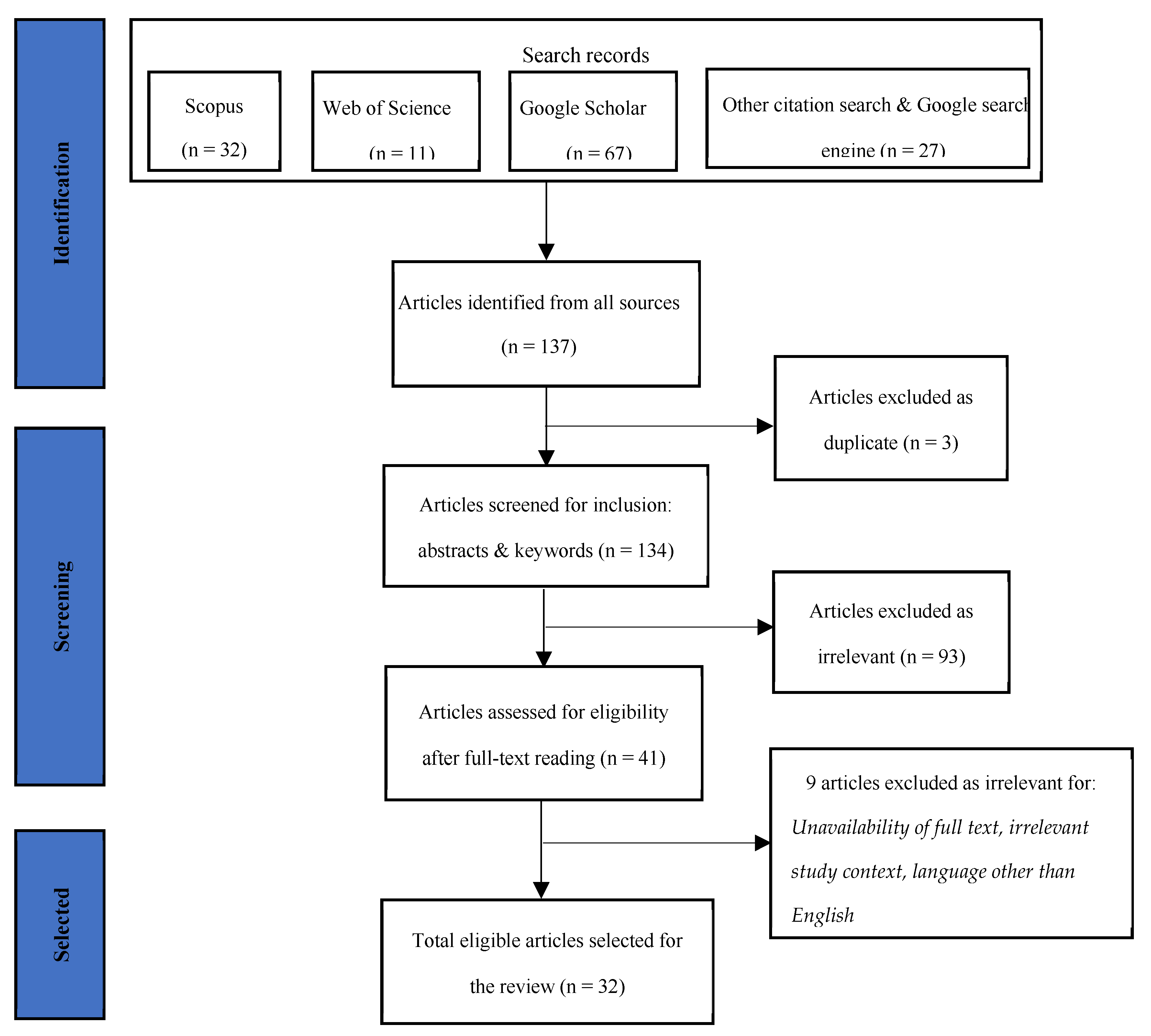
The PRISMA-ScR flowchart used in the selection of the selected articles from identification to final inclusion is presented in Figure 1, which shows that a total of 137 studies sourced from three databases (Scopus – 32, Web of Science – 11, Google Scholar – 67) and citation search (n = 27). After removing three duplicates, 93 more articles were excluded based on irrelevant titles and abstracts. The remaining 41 articles underwent full-text review, after which nine were excluded because of irrelevant contexts, inaccessible full text, and language other than English. In total, 32 studies were selected for the review. Since this total aligns with the range of studies utilised in previous related reviews (e.g., Almomani et al. [67]: n = 41; Chung-Camargo et al. [68]: n = 20; Lakhiar et al. [26]: n = 61), it is deemed acceptable for a scoping review of existing literature.
Figure 1. PRISMA-ScR flowchart of the study selection process.
Preprints 140206 g001

3.2. Characteristics of Selected Studies

In this subsection, the analysis of the characteristics of the studies included in this review was aimed at answering the first research question. The characteristics analysed include publications trend, publication type and names, country or region of focus, and research methods.

3.2.1. Annual Publications on CSFs for Residential BER

As shown in Figure 2, the publication trend shows three distinct phases, including the pre-pandemic era (2019), the pandemic era (2020), and the post-pandemic era (2021-2023). Residential BER research began to take shape slowly, with only one publication each in 2005 and 2011, indicating the early development of the research area. Moreover, building energy efficiency gained traction after the introduction of the Energy Performance of Buildings Directive by the European Union in 2002 [69]. A notable surge to four articles in 2019 reflects the increasing global focus on building energy efficiency and strategies for climate change mitigation following the Paris Agreement’s implementation.
The significant drop to just two articles in 2020 corresponds with the beginning of the COVID-19 pandemic. This decrease can be linked to various pandemic-related issues: nationwide lockdowns that limited field research and data collection in the construction sector, decreased funding for non-COVID research as global research priorities shifted to pandemic-related subjects, and interruptions in academic activities [70,71].
After the pandemic, publications increased significantly to six articles in 2023. This indicates the resumption of postponed research projects and a growing interest in BER as part of various governments’ green recovery initiatives [72]. However, the decline to three articles in 2024 could be attributed to funding availability and the usual delays between conducting studies and their eventual publication.

3.2.2. Analysis of Publication Type and Names

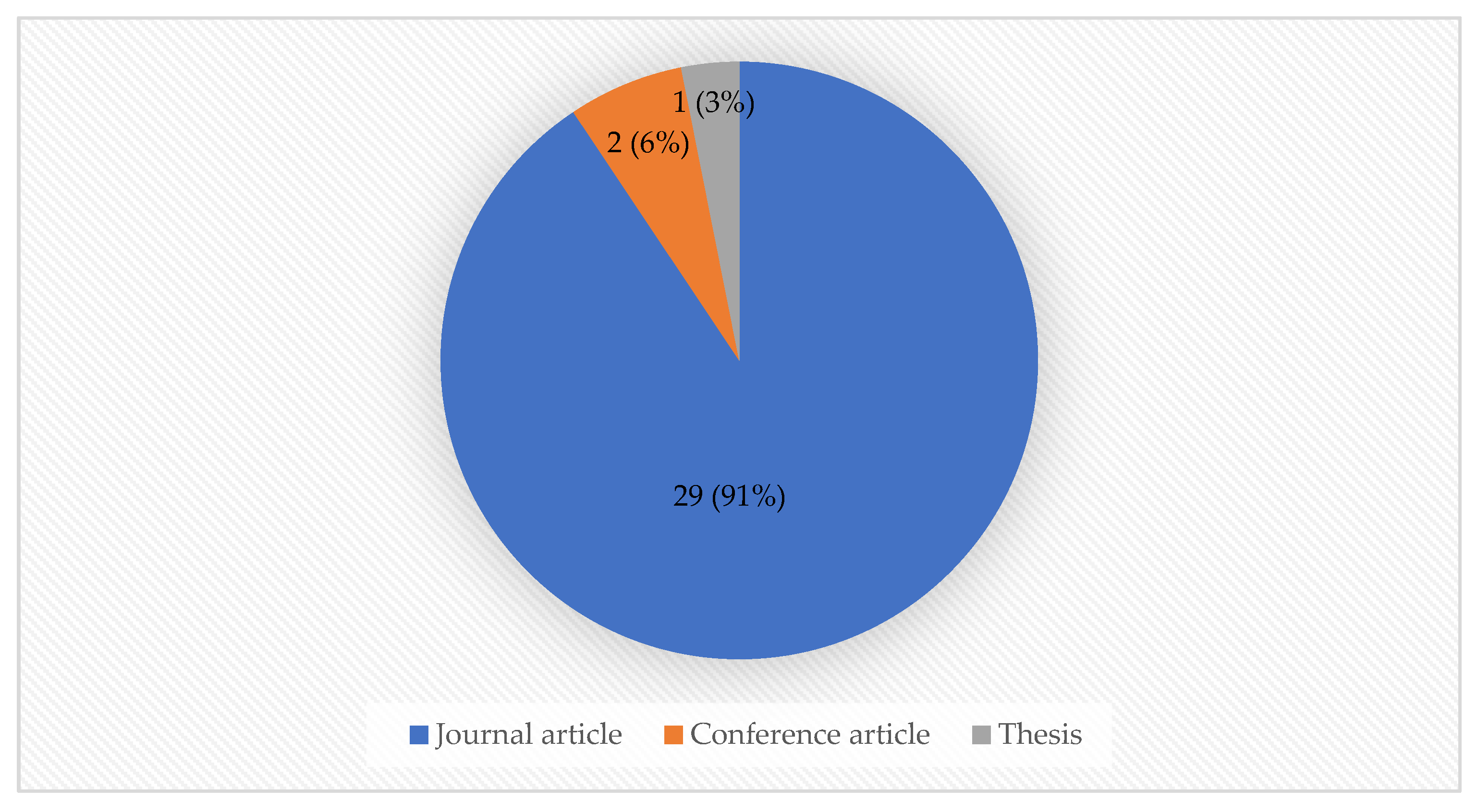
The analysis of types of publications selected for this review shows that 29 of them were peer-reviewed journal articles (91%), one was a published thesis (3%), and two were conferences (6%). This result suggests that residential BER research has moved beyond preliminary research stages to more comprehensive and validated studies worthy of journal publication.
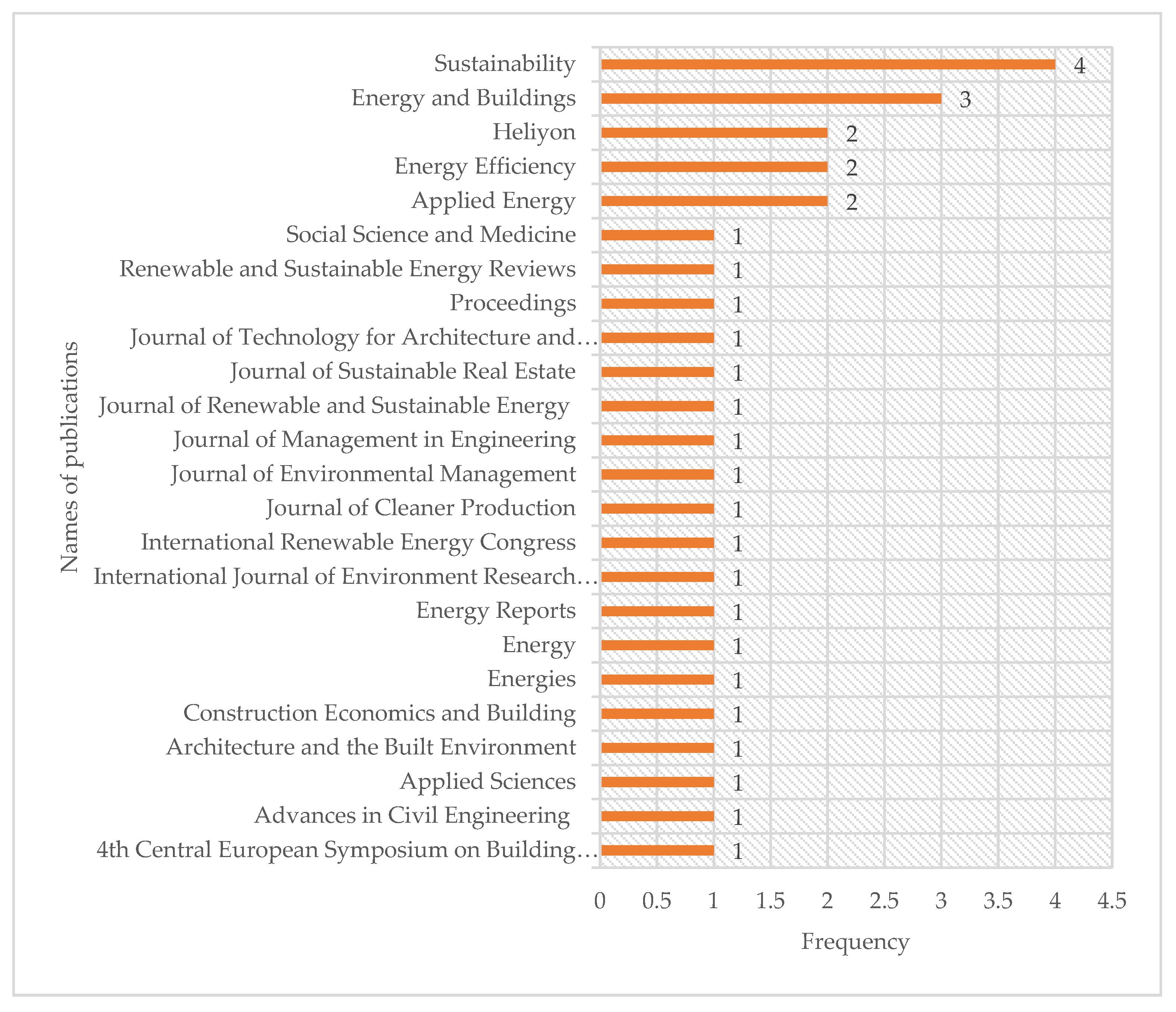
A further analysis was done to reveal the distribution of the publications according to the journal or conference in which they were published. A total of 24 publication names were recorded. The first five journals, which published the highest number of publications are Sustainability (n = 4), Energy and Buildings (n = 3), Heliyon (n = 2), Energy Efficiency (n = 2), and Applied Energy (n = 2). These journals published 13 articles (40.6%), while 16 journals (50%) published one article each. The remaining three publications (9.4%) comprised a combination of two conference articles (4th Central European Symposium on Building Physics and Proceedings) and one thesis (Architecture and the Built Environment). These details are summarised and presented in Figure 4.

3.2.3. Analysis of Selected Publications by Country or Region of Focus
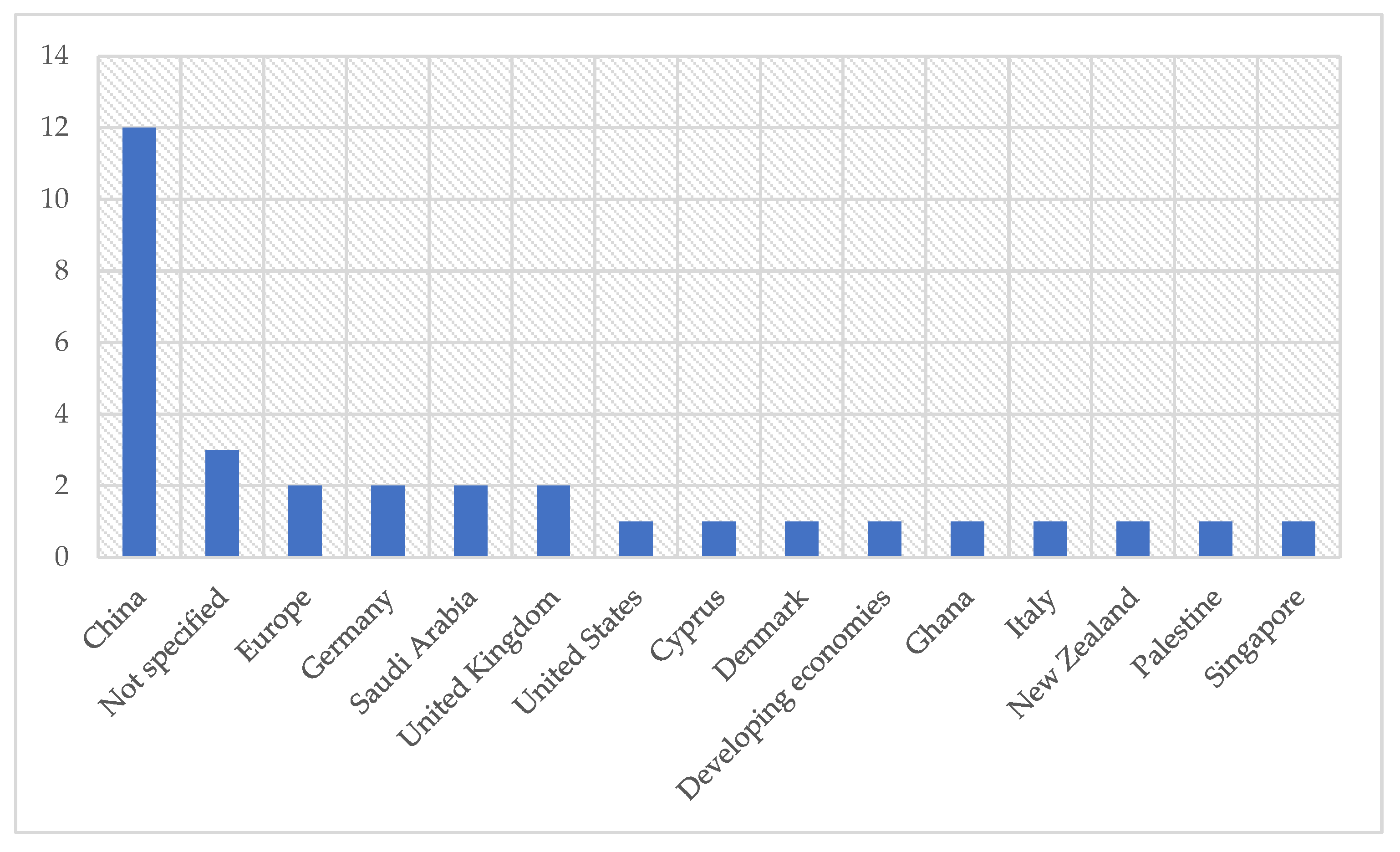
This analysis is used to have an insight into the academic and industrial practices progress in a country or region. As shown in Figure 5, we employed an elementary counting method in identifying the countries or regions that produced the most relevant publications. Publications without a clear geographical attribution were indicated as not specified (See Table 3). The highest number of publications came from China (n = 12), followed by Germany (n = 2), Saudi Arabia (n = 2), the UK (n = 2), and Europe (n = 2). China’s domination can be linked to its massive existing building stock requiring energy efficiency improvements, strict new building energy codes, ambitious carbon reduction goals, and government subsidies for residential BER programmes. On the other hand, countries with the least publications include Cyprus, Denmark, Italy, New Zealand, Palestine, Singapore, Ghana, and other developing economies each of which has one publication.
Additionally, three articles did not identify the specific country or region of focus. Although researchers have highlighted the potential of residential BER to significantly reduce global energy consumption and greenhouse gas emissions, there remains a significant gap between countries in terms of implementation rates, technical expertise, financial support mechanisms, and policy frameworks supporting residential BER.
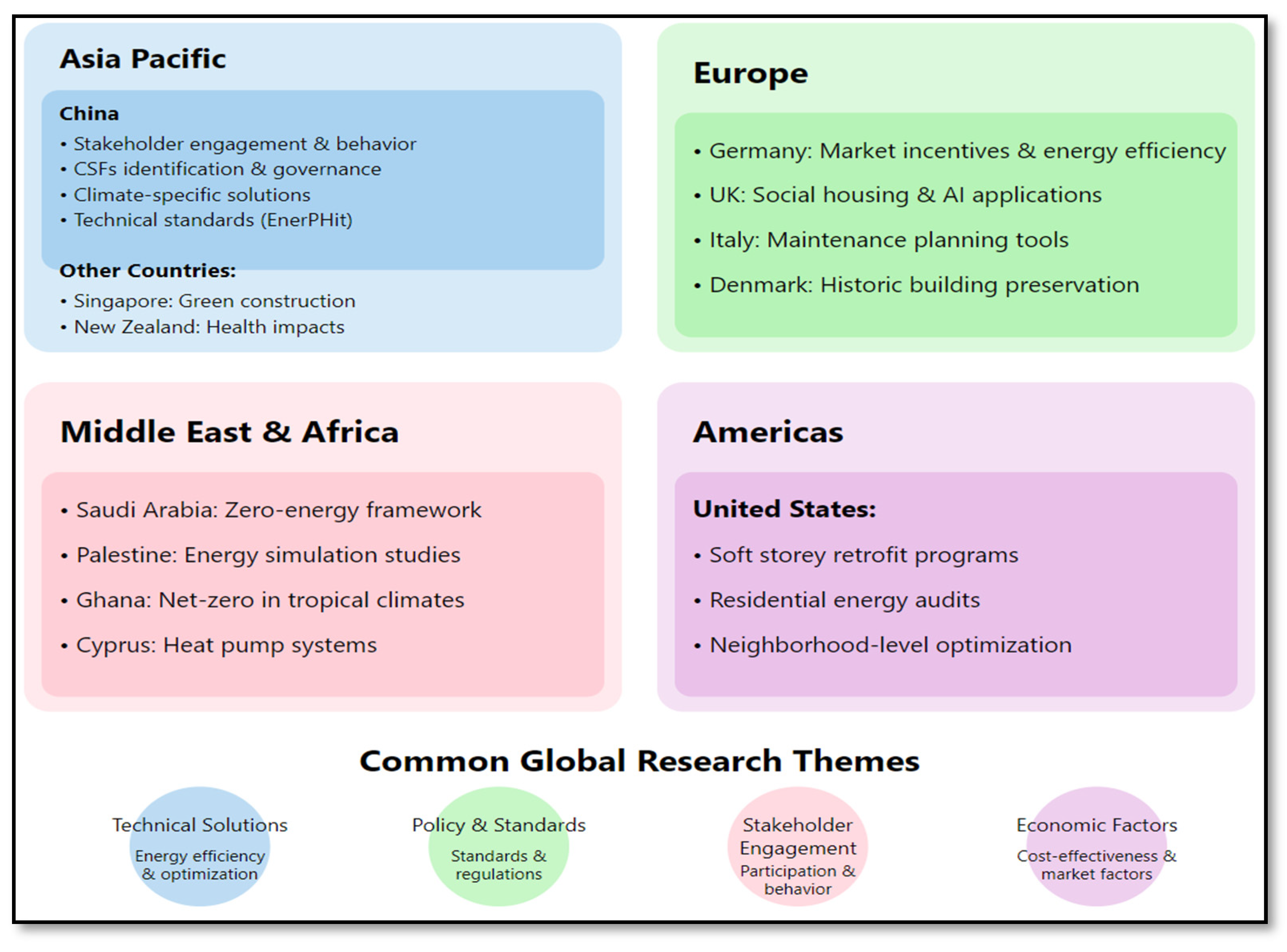
Plate 1 also shows the focus of the publications according to regions of focus. This geographical distribution reflects how regions adapt their research focus to address local climatic conditions, economic circumstances, and social priorities while contributing to the broader global knowledge base in residential BER. The global research landscape in residential BER reveals clear regional patterns and priorities. In the Asia Pacific region, China stands out as a major contributor, emphasising stakeholder engagement and behaviour, CSFs identification and governance, climate-specific solutions, and technical standards like EnerPHit. Other notable contributions from this region include Singapore’s research on green construction and New Zealand’s studies on the health impacts of BER.
Residential BER research in Europe exhibits a variety of country-specific interests. For example, research from Germany focused on market incentives and improving building energy efficiency, while the UK is exploring social housing and applications of AI. In the same vein, research was more focused on tools for maintenance planning in Italy, and preserving historic buildings is the area of focus in Denmark. In the Middle East and Africa, research directions vary significantly. While developing frameworks for zero energy was the research focus in Saudi Arabia, researchers in Palestine were interested in energy simulation studies. Research interest in Ghana centred around net-zero solutions suitable for tropical climates, while the adoption of heat pump systems as a retrofit tool was studied in Cyprus.
In the Americas, research from the US centres primarily on residential energy audits and neighbourhood-level optimisation approaches. Despite these regional variations, the global research community converges on four fundamental themes: technical solutions focusing on energy efficiency and optimisation, policy and standards development, stakeholder engagement emphasising participation and behaviour, and economic factors addressing cost-effectiveness and market considerations.
Plate 1. Publications focus according to regions.
Preprints 140206 g007

3.2.4. Analysis of Selected Publications by Research Methods

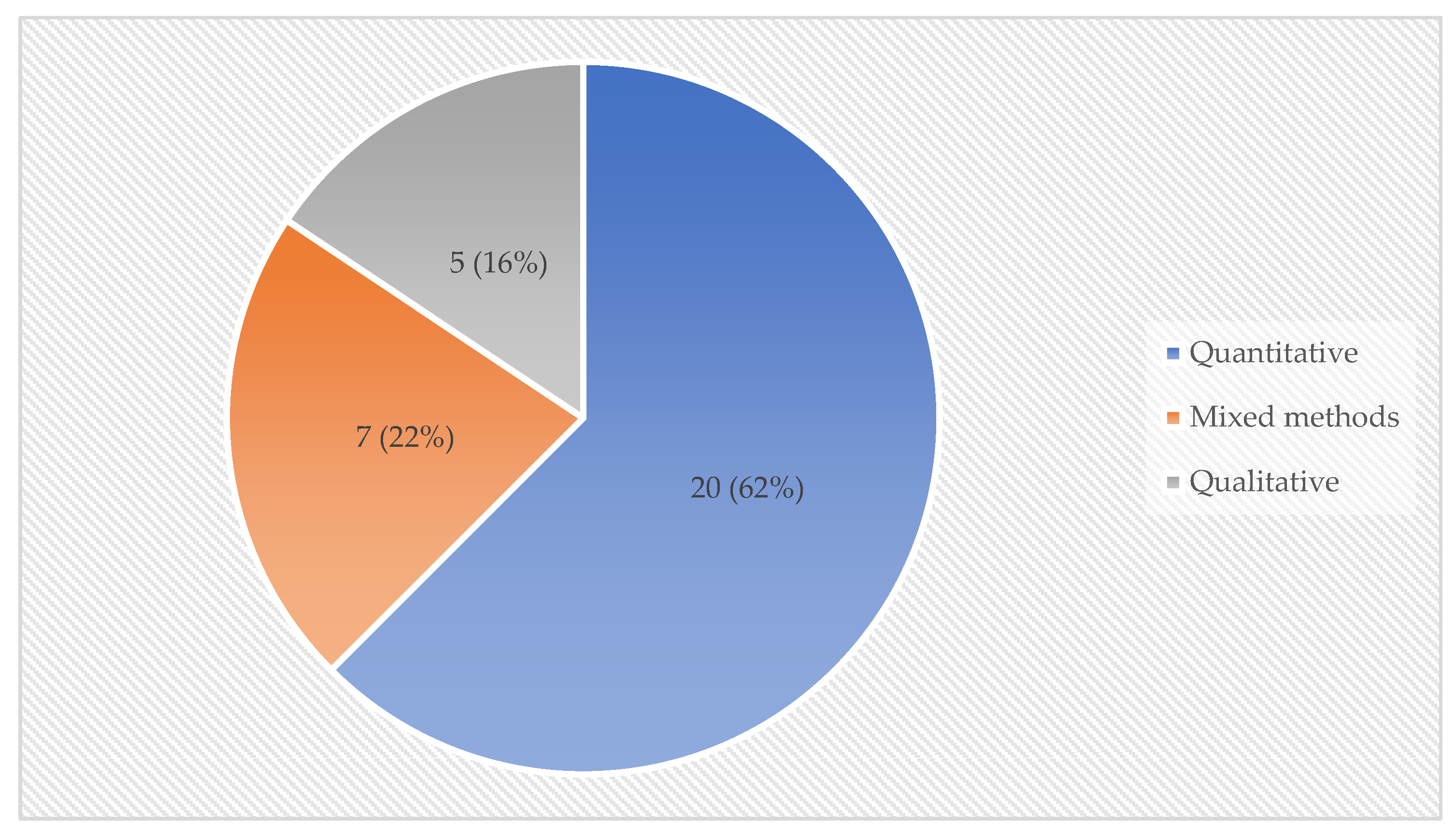
Quantitative methods (n = 20: 62%) were the most used research approach in the selected studies; this was followed by mixed methods (n = 7: 22%), and qualitative methods (n = 5: 16%). This predominance of quantitative methods reflects the technical nature of the field of study, where researchers primarily focus on measurable variables. Mixed methods research combined technical assessments with stakeholder surveys and interviews, providing insights into the CSFs for residential BER. The relatively low proportion of purely qualitative studies suggests that while these CSFs have been approached quantitatively, the qualitative approach creates a robust explanation of the factors. (see Figure 6).

4. Discussion

In the following subsections, an attempt was made to answer the second and third research questions. We discussed seven themes of CSFs (project-related, contract-related, stakeholder-related, team-related, financial-related, regulation-related, and material/technology-related), the data analysis method used in analysing the CSFs, and the research gaps.

4.1. CSFs

4.1.1. Project-Related Factors

Conducting comprehensive energy audits is a crucial first step in assessing energy consumption and identifying opportunities for energy savings and potential BER measures [64]. Energy audits provide the necessary data to inform project planning and decision-making, ensuring targeted and effective retrofit efforts [55].
Effective planning and management are foundational to the success of BER projects. Sang and Yao [18] highlight that a systematic approach to planning helps mitigate risks and set clear project objectives. Mejjaouli [54] emphasises the importance of a structured plan to ensure all BER aspects are thoroughly addressed. Additionally, detailed scheduling optimises resource utilisation and minimises delays, especially in the absence of specific cost values [47,57].
Another critical project-related factor for the success of residential BER is the selection of blueprints and designs that are tailored to the specific needs and constraints of each building. Building and site-specific factors such as geographic location, building type, size, age, local climate, orientation, and previous energy use significantly impact energy savings, making tailored audits essential for selecting effective BER measures [48,64]. Designing buildings with natural ventilation and lighting is frequently mentioned because they significantly enhance energy efficiency [56].

4.1.2. Contract-Related Factors

Contract-related factors are a major factor because the complexity of BER often necessitates detailed agreements to manage risks associated with construction disruptions and potential changes in project scope. Clear contractual agreements help mitigate misunderstandings and conflicts during BER and reduce the associated barriers, particularly in social housing contexts where stakeholders’ engagement is essential [59]. Madushika and Lu [52] note that well-structured contracts can facilitate smoother project execution by outlining performance metrics and compliance with sustainability standards. Furthermore, contracts should incorporate clauses that address potential changes in project scope due to unforeseen circumstances, which are common in BER projects [48].

4.1.3. Stakeholder-Related Factors

A successful implementation of residential BER requires collaboration among various stakeholders to facilitate the process. Past studies have identified three factors under this category: stakeholders’ active participation and collaboration, effective communication, and residential BER awareness.
Active participation from stakeholders is essential for the effective management of BER projects, as it ensures that all perspectives are considered and that the project aligns with the interests of those affected [19]. Engaging stakeholders early on increases their enthusiasm for participating in BER initiatives, enhancing the likelihood of project success by considering their diverse perspectives and needs in planning and execution [73]. In particular, the commitment of building owners to energy efficiency has a direct influence on BER success [58].
Among the important stakeholders, engaging the community plays a critical role in BER implementation. A comprehensive framework that includes stakeholder participation in decision-making can help address diverse homeowner needs and ensure BER programmes are effectively tailored to local contexts [54]. Howden-Chapman et al. [45] emphasise that effective community involvement and valued intervention by the participants are important factors for the success of retrofit action. Also, Liu et al. [51] demonstrate how different levels of public participation—before, during, and after retrofitting—impact energy savings by comparing three Beijing neighbourhoods with different BER models: a central government-led model, a local government-led model, and an old neighbourhood retrofit model.
Effective communication among stakeholders is fundamental for enhancing trust and facilitating smoother retrofit projesct execution. Clear communication of sustainability goals can enhance stakeholders’ engagement and commitment to energy-efficient practices [74]. Furthermore, communication efforts, coupled with educational initiatives, foster collaboration and encourage input from various stakeholders, leading to innovative solutions and stronger project buy-in [61]. This is particularly important for enhancing homeowner participation in energy retrofit projects [29]. By addressing the motivations and concerns of stakeholders, communication helps build a sense of ownership and commitment, and ultimately a more successful energy-saving retrofitting [52].
Raising awareness and educating stakeholders about the benefits of BER is critical for increasing participation [28]. Homeowners’ willingness to invest in BER is influenced by their understanding of the potential benefits and available financial mechanisms [29]. Therefore, proper dissemination of information could increase residential BER awareness.

4.1.4. Team-Related Factors

The expertise and technical knowledge of the project team play a critical role in the success of BER. A multidisciplinary team, including architects, engineers, and sustainability experts, is crucial for providing comprehensive insights into energy audits, conservation measures, and financing strategies for BER projects [48]. Collaborative governance and team dynamics are critical for enhancing problem-solving capabilities and fostering innovation, ultimately determining the success of BER projects and promoting sustainable development [52]. Jagarajan et al. [48] and Shen et al. [19] explain that continuous training, knowledge sharing, and the improvement of human resources, including professional knowledge, skills, and the selection of appropriate machinery and materials, are essential for overcoming BER challenges.

4.1.5. Financial-Related Factors

Financial-related factors are critical in the feasibility and adoption of BER. Cost concerns are a major hurdle for green building initiatives due to significant initial investments, but the provision of financial incentives such as grants, tax credits, and subsidies can encourage homeowners to undertake BER, particularly where high upfront costs might be prohibitive [48]. The availability of financial mechanisms—such as grants, tax credits, low-interest loans, and subsidies—can reduce retrofit costs, making them more attractive to property owners, while integrating financial strategies into planning policies is essential for facilitating residential BER [6,46].
Beyond initial investments, operational and maintenance costs are significant considerations in the decision-making process for residential BER. Cost is a crucial factor, and several strategies have been suggested to improve energy efficiency without placing excessive financial strain on building owners or occupants [75].
The prospect of increased rent from retrofitted residential buildings is a motivating factor for property owners, as highlighted by Groh et al. [42], who found that energy-efficient buildings in the German rental market can command higher rents.
Ensuring the economic viability of BER projects through a thorough cost-benefit analysis and financial planning, including accurate cost estimation and payback periods, is crucial as this can help stakeholders understand the long-term savings associated with energy-efficient upgrades, thereby justifying the upfront costs [48].
The distribution of profits among stakeholders, including property owners, tenants, and investors, can influence the attractiveness of BER projects. While tenants enjoy energy savings, property owners often struggle to recover their investments through rental premiums [40]. This dynamic necessitates careful consideration of market conditions and policy interventions to ensure that all parties are incentivised to participate in energy efficiency initiatives.

4.1.6. Regulation-Related Factors

The roles of government policies and regulations are also significant in facilitating the implementation of BER [6]. Government involvement is essential for the successful implementation of large-scale BER projects, particularly in residential buildings, as it provides the necessary guidance and encouragement for homeowners [49,50]. Given that BER does not often completely compensate for the incurred costs, Galvin [40] suggests the need for specific policy interventions to compensate for market anomalies.
Regulatory frameworks often dictate minimum energy performance standards that must be met, and failure to comply can result in penalties or project delays [53]. Understanding and integrating regulations into the project planning phase not only streamlines the BER process by ensuring compliance with current laws but also enhances the likelihood of project approval and support from governmental bodies [19,52]. Moreover, aligning project goals with regulatory objectives can enhance the likelihood of project approval and support from governmental bodies [19]. Adhering to local and international energy efficiency standards ensures that BER meets required performance levels [65].

4.1.7. Material/Technology-Related Factors

Technical aspects of BER are essential for achieving energy efficiency. Research indicates that utilising innovative technologies such as Building Information Modeling (BIM) can significantly enhance project coordination and efficiency, thereby reducing delays and cost overruns [39]. In a similar vein, installing sustainable building materials, such as advanced insulation and renewable energy technologies, can significantly enhance the energy performance of retrofitted buildings [60,62]. The integration of explainable AI in assessing BER practices can provide valuable insights into the effectiveness of different technologies and materials, helping stakeholders make informed decisions [63]. Furthermore, the adoption of energy-saving technologies must be accompanied by adequate training and support for contractors and homeowners to ensure proper implementation [41].
Overall, this analysis reveals that, although seven themes of 26 CSFs for residential BER have been identified, four themes comprising stakeholder-related, project-related, regulation-related, and financial-related CSFs are the most frequently reported, suggesting they are pivotal for successful retrofit outcomes. This concentration on a subset of CSFs highlights a critical research gap in residential BER technologies, teams, and contracts. There is also a limited exploration of the CSFs’ interdependencies and the specific ways they contribute to the success of residential BER.

4.2. Conceptual Framework of CSFs for Residential BER Implementation
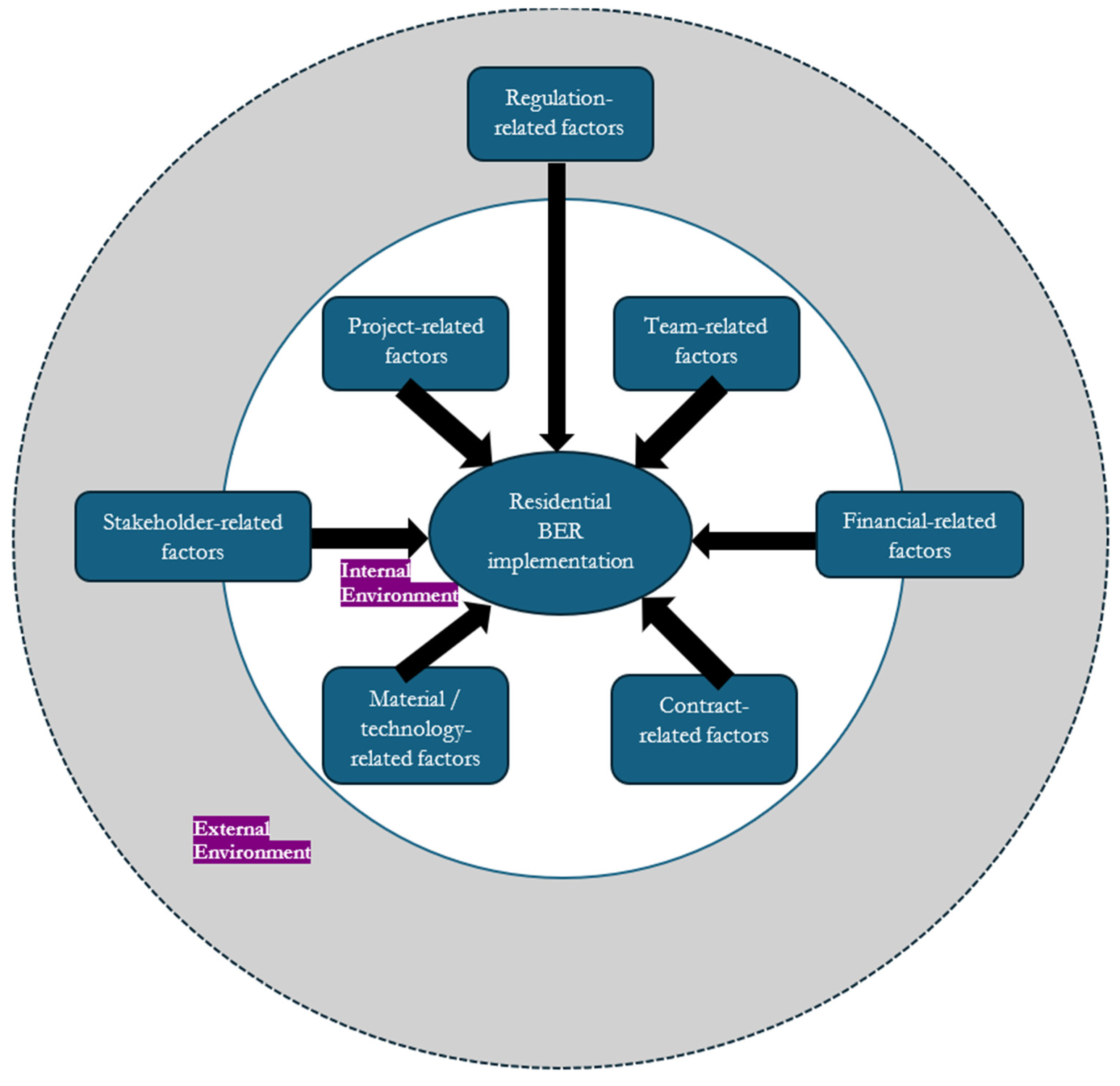
Based on these seven themes, we developed a conceptual framework of CSFs for residential BER. As shown in Plate 2, the conceptual framework illustrates the relationships between seven themes of CSFs and residential BER implementation. The framework is structured to reflect two layers of influence: external and internal CSFs. The external layer consists of regulatory factors that create the wider context influencing the other elements within the internal layers. Regulatory factors pertain to the requirements and supportive environment for residential BER initiatives.
The internal layer consists of project-specific factors that directly impact implementation. Project-related factors, including energy audits, risk management, and site characteristics, form the technical foundation. These are supported by material and technology considerations, which encompass sustainable materials selection, BIM and AI implementation, and training support systems. This layer also includes team-related and contract-related factors. In the middle of both layers, the stakeholder factors underscore the role that internal and external stakeholders play in residential BER, while financial factors reflect market-driven aspects that affect project feasibility. All these factors ultimately converge towards the central objective of residential BER implementation. The framework serves as a valuable tool for stakeholders to ensure comprehensive consideration of all CSFs for residential BER.
Plate 2. Conceptual framework of CSFs for residential BER implementation.
Preprints 140206 g008

4.3. Methodologies for CSFs Analysis

Of the 32 studies selected for this review, four focused on analysing the CSFs for residential BER [18,19,28,29]. The literature presents various statistical methods for analysing CSFs for residential BER. While these methods have their strengths, they also have limitations that may prevent them from fully capturing the complex and multi-dimensional aspects of residential BER.
Shen et al. [19] utilise the SNA method to investigate the interactions among stakeholders engaged in residential BER initiatives. The study started with a comprehensive literature review to identify potential CSFs and relevant stakeholders. This is followed by the creation of a conceptual framework that connects these CSFs to the interactions among stakeholders. Data was collected through surveys targeting various stakeholders, including homeowners, contractors, and government officials. The relationships between stakeholders and the identified CSFs were analysed using SNA techniques. While useful for mapping relationships between stakeholders, SNA focuses on network structures and lacks the depth to address how CSFs operate as complex combinations that may vary by context.
Huang et al. [29] investigate the factors influencing homeowners’ willingness to invest in residential BER. This study employed a survey-based approach for data collection, and regression analysis was utilised to assess the significance of various factors, including financial incentives and awareness of energy efficiency benefits. Sang and Yao [18] employ a mixed-methods strategy that integrated both qualitative and quantitative research methods to explore and assess the CSFs for enhancing energy efficiency in existing residential buildings across China. The research commenced with an extensive review of existing literature to pinpoint potential CSFs, which were subsequently validated through interviews with experts engaged in residential retrofitting initiatives.
After the qualitative phase, Sang and Yao [18] develop a survey rooted in the CSFs they had identified. This survey was subsequently disseminated to a broader audience of industry experts, comprising architects, engineers, and project managers. The study employs statistical methods such as factor analysis and regression analysis to ascertain the significance and relationships among the identified CSFs. Factor analysis helps to identify a relatively small number of underlying unobserved factors that could explain certain interdependencies among a larger set of observed variables [76]. However, the method assumes a uniform significance across CSFs, often neglecting the diverse contexts and interdependencies that can impact residential BER differently depending on local conditions, building types, and stakeholder priorities.
He et al. [28] examine the factors influencing residents’ intentions towards green retrofitting of existing residential buildings. The study employs a survey-based approach to collect data from residents regarding their intentions to engage in green retrofitting. The authors used SEM to analyse the relationships between the factors influencing intentions, including policy support and perceived benefits. Although SEM provides insights into causal relationships among variables, it is constrained by a reliance on pre-defined models and linear associations, limiting its ability to handle the diversity of CSF interactions that influence retrofit outcomes [77].
The complexity, context-specificity, and dynamic nature of residential BER highlight the need for more suitable analytical techniques, such as fs-QCA. Fs-QCA has garnered increasing interest lately due to its distinct advantages in merging qualitative insights with quantitative rigour. It calibrates data on a [0, 1] scale, making it attractive to qualitative and quantitative researchers seeking precise interpretations [78]. In contrast to traditional variance-based approaches that concentrate on individual net effects, fs-QCA investigates the interplay of conditions across various patterns and includes unique subsets of cases [30].
Moreover, fs-QCA is adaptable to different sample sizes and types of data, enabling researchers to work with both small samples (up to 50) and extensive datasets (in the thousands), while also allowing for the inclusion of categorical variables. This method uncovers configurations that elucidate specific segments of a sample, including cases that might be considered outliers by other methods [30]. Although fs-QCA demands a thorough understanding of the variables and context for effective calibration and analysis, this in-depth engagement significantly improves the quality of outcomes, merging qualitative and quantitative data for more comprehensive insights [79]. Consequently, utilising fs-QCA enables researchers to uncover intricate interdependencies and configurations of CSFs, which ultimately fosters the development of more effective residential BER strategies that align with sustainability goals.
This review underscores the importance of seven themes of CSFs (project-related CSFs, contract-related CSFs, stakeholder-related CSFs, team-related CSFs, financial-related CSFs, regulation-related CSFs, and material/technology-related CSFs). These results have several implications for policymaking, practice, and future research. The regulatory framework surrounding residential BER is crucial, as it underscores the necessity for substantial government backing to streamline the approval process and establish minimum energy performance benchmarks, ultimately promoting wider adoption of retrofit initiatives. To support this point, developing policies that focus on energy audits could significantly improve the effectiveness of residential BER, allowing property owners to gain a clearer understanding of their energy consumption and pinpoint suitable retrofit solutions.
Adaptable contractual frameworks highlight the potential benefits of policies aimed at standardising performance metrics, defining sustainability compliance standards, and establishing collaboration protocols among stakeholders. Such measures could help alleviate frequent disruptions and uncertainties associated with residential BER contracts. Moreover, the insights regarding stakeholders underscore the necessity of inclusive policies that foster active participation from a wide range of contributors, such as building owners, local communities, and regulatory bodies. This resonates with prior studies that suggest that participatory methods can boost community support and foster sustained engagement in residential BER. Additionally, financial policies, such as tax incentives, grants, and subsidies, play a crucial role in addressing the financial challenges associated with CSFs. These measures are essential to make residential BER more affordable and feasible for property owners burdened by significant upfront costs.
The results also have some important implications for residential BER practices. In this regard, project management teams ought to focus on incorporating energy audits and thorough planning stages in residential BER initiatives, ensuring that the retrofit solutions are customised to address the unique requirements of each building. The literature on adaptive design emphasises the importance of considering context, such as geographical and climatic elements, as retrofit strategies tailored to specific regions can greatly improve energy efficiency [80]. The findings emphasise the need for creating adaptable and resilient contracts that support retrofit projects, especially in social housing, where various stakeholders frequently have differing priorities.
Additionally, they point out the significance of a collaborative strategy that unites architects, engineers, sustainability specialists, and project managers. Continuous professional growth and teamwork across disciplines are crucial for making the most of the newest advancements in energy-efficient materials and techniques. From a financial perspective, strategies that incorporate cost-benefit analyses, precise cost assessments, and clear profit-sharing arrangements will alleviate stakeholders’ concerns about the long-term financial sustainability of residential BER.
The results of the review highlight the need for further research to enhance the understanding of residential BER, especially in environments characterised by complex stakeholder interactions and diverse project demands. Traditional statistical methods, including regression analysis and SEM, are useful for quantifying relationships among variables; however, they might not fully address the intricate and conditional aspects that determine the success of residential BER in various contexts and among different stakeholders. Given the interconnectedness of CSFs such as stakeholder collaboration, regulatory frameworks, and adaptable contract structures-utilising fs-QCA can provide deeper insights into how various factor combinations lead to successful residential BER results.
The interconnectedness of these factors implies that successful residential BER is often contingent on a blend of multiple conditions rather than solely relying on individual factors. For instance, while factors related to stakeholders, including proactive collaboration, are essential, their success often hinges on supportive financial strategies and resilient contract arrangements. In such scenarios, fs-QCA emerges as a robust methodological tool that enables researchers to examine how various combinations of factors-termed configurations-collectively influence an outcome, rather than assessing them individually. This configurational lens is particularly pertinent to research on residential BER, where significant variations in regional, social, and economic contexts may render single-factor analyses inadequate in capturing context-specific dynamics.
Moreover, fs-QCA is especially adept at tackling the qualitative aspects of the factors highlighted in this study, including variables related to projects and teams, which often require subjective evaluations and an understanding of conditional relationships. For instance, the success of a multidisciplinary team approach often depends on the characteristics of a project, such as the complexity of its scope or the level of stakeholder engagement. Fs-QCA offers a way to examine these aspects as part of a broader configuration rather than viewing them in isolation. By adopting this method, future research can delve deeper into the specific pathways that lead to successful outcomes in residential BER. This would empower policymakers and practitioners to customise their strategies based on the unique configurations found in their respective regions and projects.

5. Conclusions

This review synthesised the previous literature on the CSFs for residential BER and how these factors are analysed. To achieve the research objectives, we adopted a scoping review methodology, which allowed for a synthesis of previous studies on residential BER. The review adopted Arksey and O’Malley’s framework in the systematic search for relevant studies, selection process, data extraction and categorisation of identified CSFs.
We analysed the 32 selected studies’ characteristics, and the publication trends revealed three distinct phases: the pre-pandemic era saw a slow growth in residential BER research, the pandemic era experienced a decline, and the post-pandemic era has seen a resurgence. The publications are predominantly peer-reviewed journal articles (91%), with the top journals being Sustainability, Energy and Buildings, Heliyon, Energy Efficiency, and Applied Energy. Geographically, China dominates the research, while other regions exhibit varying research foci based on local contexts. Methodologically, quantitative research methods were mostly adopted (63%); this was followed by mixed methods (22%) and qualitative methods (16%).
Twenty-six CSFs for residential BER were identified in the selected studies. We categorised these factors into seven themes (project-related, contract-related, stakeholder-related, team-related, financial-related, regulation-related, and material/technology-related CSFs) but four of them were most frequently emphasised: stakeholder-related, project-related, regulation-related, and financial-related CSFs. This highlights the need for effective collaboration among stakeholders, strong regulatory support, and specific financial incentives to encourage the widespread implementation of retrofit initiatives. The results reveal the interconnected nature of CSFs, suggesting that isolated strategies fall short in addressing the challenges associated with residential BER. Also, the less examined themes (technology, team, and contract-related CSFs) present a critical gap that can be filled by future empirical studies.
Furthermore, a significant methodological gap was noted, as only a limited number of studies have utilised analytical approaches that effectively capture the conditional relationships between CSFs. This presents a significant opportunity for future empirical research to utilise a more suitable method, such as fs-QCA, which can delve into the complex configurations of CSFs in various contexts. Implementing fs-QCA would allow researchers to uncover specific combinations of success factors tailored to a particular climate or region, leading to more practical insights.
Additionally, this review lays the groundwork for policymakers and practitioners by emphasising the necessity of a flexible, multifaceted retrofit approach that supports energy efficiency and sustainability goals. It also stresses the importance of continued research to comprehend effective configurations of CSFs, ultimately creating a conducive environment for strategic retrofit initiatives to flourish across diverse regional and socio-economic contexts.
While this review offers valuable insights, it is not without some limitations that call for caution in the application and generalisation of its results. The review primarily relies on existing published literature, which may not capture all relevant but unpublished research, potentially affecting the completeness of the conclusions drawn. Also, differences in terminology, research focus, and methodologies among the studies reviewed created challenges in synthesising and categorising results, which might impact the accuracy of the identified themes. In addition, the review’s reliance on thematic categorisation lacks a comprehensive analysis of the interrelations among CSFs. This oversight means that the intricate and evolving nature of these elements in actual residential BER may not be adequately captured.
Furthermore, various regions possess unique residential BER requirements. Considering the limited literature on climate or region-specific criteria, we broadened the scope to incorporate more studies. As a result, the identified CSFs may not accurately represent the particularities of different climates or regions. Lastly, the study points out a significant methodological gap in existing research, indicating a restricted use of sophisticated analytical methods like fs-QCA. These techniques are essential for comprehensively grasping the configurations and interconnections among CSFs.

Author Contributions

Conceptualization, A.S.A. and R.B.A.; methodology, A.S.A. and R.B.A.; literature search and screening, A.S.A.; data extraction and analysis, A.S.A.; writing—original draft preparation, A.S.A. and R.B.A.; writing—review and editing, A.S.A., R.B.A. and R.Y.S.; visualization, R.Y.S.; supervision, R.B.A. and R.Y.S.; project Administration, A.S.A. All authors have read and agreed to the published version of the manuscript.

Funding

This research received no external funding.

Conflicts of Interest

The authors declare no conflicts of interest.

References

  1. Fei, W.; Opoku, A.; Agyekum, K.; Oppon, J.A.; Ahmed, V.; Chen, C.; Lok, K.L. The Critical Role of the Construction Industry in Achieving the Sustainable Development Goals (SDGs): Delivering Projects for the Common Good. Sustainability 2021, 13, 9112. [Google Scholar] [CrossRef]
  2. Berndes G, Abt B, Asikainen A, Cowie A, Dale V, Egnell G; et al. Forest biomass, carbon neutrality and climate change mitigation. European Forest Institute; 2016 Oct. (From Science to Policy). Available from: https://www.efi.int/publications-bank/forest-biomass-carbon-neutrality-and-climate-change-mitigation.
  3. United Nations. The race to zero emissions, and why the world depends on it. 2020. Available from: https://www.un.org/en/story/2020/12/1078612.
  4. Ogbonna, C.G.; Nwachi, C.C.; Okeoma, I.O.; Fagbami, O.A. Understanding Nigeria’s transition pathway to carbon neutrality using the Multilevel Perspective. Carbon Neutrality 2023, 2, 1–21. [Google Scholar] [CrossRef]
  5. Vaidyanathan, G. Scientists cheer India’s ambitious carbon-zero climate pledge. Nature 2021. [Google Scholar] [CrossRef] [PubMed]
  6. Zhang, M.; Zhou, S.; Wang, Q.; Liu, L.; Zhou, D. Will the carbon neutrality target impact China's energy security? A dynamic Bayesian network model. Energy Econ. 2023, 125. [Google Scholar] [CrossRef]
  7. Peiris, S.; Lai, J.H.; Kumaraswamy, M.M.; Hou, H. (. Smart retrofitting for existing buildings: State of the art and future research directions. J. Build. Eng. 2023, 76. [Google Scholar] [CrossRef]
  8. United States Environmental Protection Agency. Smart Growth and Preservation of Existing and Historic Buildings. 2023. Available from: https://www.epa.gov/smartgrowth/smart-growth-and-preservation-existing-and-historic-buildings#:~:text=A new%2C green%2C energy-efficient office building that includes, lost in demolishing a comparable existing building.
  9. Tan, Y.; Liu, G.; Zhang, Y.; Shuai, C.; Shen, G.Q. Green retrofit of aged residential buildings in Hong Kong: A preliminary study. Build. Environ. 2018, 143, 89–98. [Google Scholar] [CrossRef]
  10. Madushika, U.G.D.; Ramachandra, T.; Karunasena, G.; Udakara, P.A.D.S. Energy Retrofitting Technologies of Buildings: A Review-Based Assessment. Energies 2023, 16, 4924. [Google Scholar] [CrossRef]
  11. Mayer, Z.; Volk, R.; Schultmann, F. Analysis of financial benefits for energy retrofits of owner-occupied single-family houses in Germany. Build. Environ. 2022, 211. [Google Scholar] [CrossRef]
  12. Pivo, G. & Fisher J. Investment returns from responsible property investments: Energy efficient, transit-oriented and urban regeneration office properties in the US from 1998–2008. Responsible Property Investing Center. Boston, MA; 2009. Available from: http://www.responsibleproperty.net/assets/files/pivo_fisher_investmentreturnsfromrpi3_3_09.pdf.
  13. Payne, J. , Downy, F., & Weatherall D. Capturing the “multiple benefits” of energy efficiency in practice: The UK example. 2015, 229–238. Available from: https://energysavingtrust.org.uk/sites/default/files/reports/1-424-15_Payne.pdf.
  14. Liang, X.; Shen, G.Q.; Guo, L. Improving Management of Green Retrofits from a Stakeholder Perspective: A Case Study in China. Int. J. Environ. Res. Public Heal. 2015, 12, 13823–13842. [Google Scholar] [CrossRef] [PubMed]
  15. Xu, P.; Chan, E.H.-W.; Qian, Q.K. Success factors of energy performance contracting (EPC) for sustainable building energy efficiency retrofit (BEER) of hotel buildings in China. Energy Policy 2011, 39, 7389–7398. [Google Scholar] [CrossRef]
  16. Jagarajan R, Abdullah @ Mohd Asmoni MN, YM Lee J, Jaafar MN. An Overview of Green Retrofitting Implementation in Non Residential Existing Buildings. J Teknol. 2015, 73. https://journals.utm.my/index.php/jurnalteknologi/article/view/4324.
  17. Low, S.P.; Gao, S.; Tay, W.L. Comparative study of project management and critical success factors of greening new and existing buildings in Singapore. Struct. Surv. 2014, 32, 413–433. [Google Scholar] [CrossRef]
  18. Sang, P.; Yao, H. Exploring Critical Success Factors for Green Housing Projects: An Empirical Survey of Urban Areas in China. Adv. Civ. Eng. 2019, 2019. [Google Scholar] [CrossRef]
  19. Shen, L.; Tang, L.; Mu, Y. Critical success factors and collaborative governance mechanism for the transformation of existing residential buildings in urban renewal: From a social network perspective. Heliyon 2024, 10, e27672. [Google Scholar] [CrossRef] [PubMed]
  20. Peters, M.D.J.; Marnie, C.; Colquhoun, H.; Garritty, C.M.; Hempel, S.; Horsley, T.; Langlois, E.V.; Lillie, E.; O’brien, K.K.; Tunçalp; et al. Scoping reviews: Reinforcing and advancing the methodology and application. Syst. Rev. 2021, 10, 1–6. [Google Scholar] [CrossRef]
  21. Frimpong, S.; Sunindijo, R.Y.; Wang, C.C.; Boadu, E.F.; Dansoh, A.; Fagbenro, R.K. A scoping review of research on mental health conditions among young construction workers. Constr. Innov. [CrossRef]
  22. Hayashi, H.; Li, Y.; Sussman, D.D.; Okuzono, S.; Viswanath, K.; Kawachi, I. A Scoping Review of Interventions to Improve Occupational Safety and Health of Construction Workers. Am. J. Heal. Promot. 2023, 37, 1162–1170. [Google Scholar] [CrossRef]
  23. Dey, S.; Veerendra, G.T.N.; Aparna, O. A systematic analysis of retrofitting tools in the residential buildings to improve the energy performances by using the STAAD Pro Software. Innov. Infrastruct. Solutions 2023, 8, 1–34. [Google Scholar] [CrossRef]
  24. Kitsopoulou, A.; Ziozas, N.; Iliadis, P.; Bellos, E.; Tzivanidis, C.; Nikolopoulos, N. Energy performance analysis of alternative building retrofit interventions for the four climatic zones of Greece. J. Build. Eng. 2024, 87. [Google Scholar] [CrossRef]
  25. Weerasinghe, L.; Darko, A.; Chan, A.P.; Blay, K.B.; Edwards, D.J. Measures, Benefits, and Challenges to Retrofitting Existing Buildings to Net Zero Carbon: A Comprehensive Review. J. Build. Eng. 2024, 94. [Google Scholar] [CrossRef]
  26. Lakhiar, M.T.; Sanmargaraja, S.; Olanrewaju, A.; Lim, C.H.; Ponniah, V.; Mathalamuthu, A.D. Energy retrofitting strategies for existing buildings in Malaysia: A systematic review and bibliometric analysis. Environ. Sci. Pollut. Res. 2024, 31, 12780–12814. [Google Scholar] [CrossRef]
  27. Monis, M. , & Rastogi A. A review of passive design strategies for improving building energy performance. International Journal of Multidisciplinary Innovative Research. 2022 Aug 29;2(1):43–50. Available from: https://ijmir.org/doc/Vol-2-No-1-2022/Paper 7_Mohd Monis_Architecture_43-50_A Review of Passive Design.pdf.
  28. He, Q.; Zhao, H.; Shen, L.; Dong, L.; Cheng, Y.; Xu, K. Factors Influencing Residents’ Intention toward Green Retrofitting of Existing Residential Buildings. Sustainability 2019, 11, 4246. [Google Scholar] [CrossRef]
  29. Huang, C.; Ma, J.; Song, K. Homeowners’ Willingness to Make Investment in Energy Efficiency Retrofit of Residential Buildings in China and Its Influencing Factors. Energies 2021, 14, 1260. [Google Scholar] [CrossRef]
  30. Pappas, I.O.; Woodside, A.G. Fuzzy-set Qualitative Comparative Analysis (fsQCA): Guidelines for research practice in Information Systems and marketing. Int. J. Inf. Manag. 2021, 58. [Google Scholar] [CrossRef]
  31. Gough, D.; Oliver, S.; Thomas, J. An introduction to systematic reviews (2nd Edition). Psychol. Teach. Rev. 2017, 23, 95–96. [Google Scholar] [CrossRef]
  32. Peters, M.D.J.; Godfrey, C.M.; Khalil, H.; McInerney, P.; Parker, D.; Soares, C.B. Guidance for conducting systematic scoping reviews. JBI Evidence Implementation 2015, 13, 141–146. [Google Scholar] [CrossRef] [PubMed]
  33. Whittemore, R.; Knafl, K. The integrative review: Updated methodology. J. Adv. Nurs. 2005, 52, 546–553. [Google Scholar] [CrossRef]
  34. Arksey, H.; O’Malley, L. Scoping studies: Towards a methodological framework. Int. J. Soc. Res. Methodol. 2005, 8, 19–32. [Google Scholar] [CrossRef]
  35. Tricco, A. C.; Lillie, E.; Zarin, W.; O’Brien, K. K.; Colquhoun, H.; Levac, D.; Moher, D.; Peters, M. D. J.; Horsley, T.; Weeks, L.; et al. PRISMA Extension for Scoping Reviews (PRISMA-ScR): Checklist and Explanation. Ann Intern Med 2018, 169, 467–473. [Google Scholar] [CrossRef] [PubMed]
  36. Munn, Z.; Peters, M.D.J.; Stern, C.; Tufanaru, C.; McArthur, A.; Aromataris, E. Systematic Review or Scoping Review? Guidance for Authors When Choosing between a Systematic or Scoping Review Approach. BMC Med. Res. Methodol. 2018, 18, 143. [Google Scholar] [CrossRef] [PubMed]
  37. Daudt, H.M.; van Mossel, C.; Scott, S.J. Enhancing the scoping study methodology: A large, inter-professional team’s experience with Arksey and O’Malley’s framework. BMC Med Res. Methodol. 2013, 13, 48–48. [Google Scholar] [CrossRef]
  38. Lockwood C, Munn Z, Porritt K. Qualitative research synthesis. Int J Evid Based Healthc. 2015 Sep;13(3):179–87. Available from: https://journals.lww.com/01787381-201509000-00010.
  39. Armijo A, Elguezabal P, Lasarte N, Weise M. A Methodology for the Digitalization of the Residential Building Renovation Process through OpenBIM-Based Workflows. Applied Sciences. 2021 Nov 5;11(21):10429. Available from: https://www.mdpi.com/2076-3417/11/21/10429.
  40. Galvin, R. Do housing rental and sales markets incentivise energy-efficient retrofitting of western Germany’s post-war apartments? Challenges for property owners, tenants, and policymakers. Energy Effic. 2023, 16, 1–24. [Google Scholar] [CrossRef] [PubMed]
  41. Gaspari J, Antonini E, Marchi L. Enabling technologies to support energy transition in social housing. TECHNE - Journal of Technology for Architecture and Environment. 2023, 25, 143–152 https://oajfupressnet/indexphp/techne/article/view/13622.
  42. Groh, A.; Kuhlwein, H.; Bienert, S. Does Retrofitting Pay Off? An Analysis of German Multifamily Building Data. J. Sustain. Real Estate 2022, 14, 95–112. [Google Scholar] [CrossRef]
  43. He, Q.; Zhao, H.; Shen, L.; Dong, L.; Cheng, Y.; Xu, K. Factors Influencing Residents’ Intention toward Green Retrofitting of Existing Residential Buildings. Sustainability 2019, 11, 4246. [Google Scholar] [CrossRef]
  44. He, Q.; Hossain, U.; Ng, S.T.; Skitmore, M.; Augenbroe, G. A cost-effective building retrofit decision-making model – Example of China’s temperate and mixed climate zones. J. Clean. Prod. 2020, 280, 124370. [Google Scholar] [CrossRef]
  45. Howden-Chapman, P.; Crane, J.; Matheson, A.; Viggers, H.; Cunningham, M.; Blakely, T.; O’dea, D.; Cunningham, C.; Woodward, A.; Saville-Smith, K.; et al. Retrofitting houses with insulation to reduce health inequalities: Aims and methods of a clustered, randomised community-based trial. Soc. Sci. Med. 2005, 61, 2600–2610. [Google Scholar] [CrossRef] [PubMed]
  46. Huang, M.-Q.; Lin, R.-J. Evolutionary Game Analysis of Energy-Saving Renovations of Existing Rural Residential Buildings from the Perspective of Stakeholders. Sustainability 2022, 14, 5723. [Google Scholar] [CrossRef]
  47. Hwang, B.-G.; Zhu, L.; Ming, J.T.T. Factors Affecting Productivity in Green Building Construction Projects: The Case of Singapore. J. Manag. Eng. 2017, 33. [Google Scholar] [CrossRef]
  48. Jagarajan R, Abdullah Mohd Asmoni MN, Mohammed AH, Jaafar MN, Lee Yim Mei J, Baba M. Green retrofitting – A review of current status, implementations and challenges. Renewable and Sustainable Energy Reviews. 2017, 67, 1360–1368.
  49. Jia, L. Mitigating the Risks in Energy Retrofits of Residential Buildings in China. Arch. Built Environ. 2021, 1–252. [Google Scholar] [CrossRef]
  50. Krarti, M.; Dubey, K.; Howarth, N. Evaluation of building energy efficiency investment options for the Kingdom of Saudi Arabia. Energy 2017, 134, 595–610. [Google Scholar] [CrossRef]
  51. Liu, W.; Zhang, J.; Bluemling, B.; Mol, A.P.; Wang, C. Public participation in energy saving retrofitting of residential buildings in China. Appl. Energy 2015, 147, 287–296. [Google Scholar] [CrossRef]
  52. Madushika, U.; Lu, W. Green retrofitting application in developing economies: State of the art and future research directions. Energy Build. 2023, 301. [Google Scholar] [CrossRef]
  53. Martin, R.; Arthur, T.; Jonathan, V.; Mathieu, T.; Enora, G.; Robin, G. SHAPE: A temporal optimization model for residential buildings retrofit to discuss policy objectives. Appl. Energy 2024, 361. [Google Scholar] [CrossRef]
  54. Mejjaouli, S. Toward ZEB: A Mathematical Programing-, Simulation-, and AHP-Based Comprehensive Framework for Building Retrofitting. Applied Sciences. 2022, 12, 2241. https://www.mdpi.com/2076–3417/12/4/2241. [Google Scholar] [CrossRef]
  55. Monna, S.; Juaidi, A.; Abdallah, R.; Albatayneh, A.; Dutournie, P.; Jeguirim, M. Towards Sustainable Energy Retrofitting, a Simulation for Potential Energy Use Reduction in Residential Buildings in Palestine. Energies 2021, 14, 3876. [Google Scholar] [CrossRef]
  56. Mukhtar, M.; Ameyaw, B.; Yimen, N.; Zhang, Q.; Bamisile, O.; Adun, H.; Dagbasi, M. Building Retrofit and Energy Conservation/Efficiency Review: A Techno-Environ-Economic Assessment of Heat Pump System Retrofit in Housing Stock. Sustainability 2021, 13, 983. [Google Scholar] [CrossRef]
  57. Ohene, E.; Hsu, S.-C.; Chan, A.P. Feasibility and retrofit guidelines towards net-zero energy buildings in tropical climates: A case of Ghana. Energy Build. 2022, 269, 112252. [Google Scholar] [CrossRef]
  58. Pardo-Bosch, F.; Cervera, C.; Ysa, T. Key aspects of building retrofitting: Strategizing sustainable cities. J. Environ. Manag. 2019, 248, 109247. [Google Scholar] [CrossRef] [PubMed]
  59. Peel, J.; Ahmed, V.; Saboor, S. An investigation of barriers and enablers to energy efficiency retrofitting of social housing in London. Constr. Econ. Build. 2020, 20, 127–149. [Google Scholar] [CrossRef]
  60. Soulios, V.; Hansen, E.J.d.P.; Peuhkuri, R. Hygrothermal simulation assessment of internal insulation systems for retrofitting a historic Danish building. MATEC Web Conf. 2019, 282, 02049. [Google Scholar] [CrossRef]
  61. Su, Y.; Jin, Q.; Zhang, S.; He, S. A review on the energy in buildings: Current research focus and future development direction. Heliyon 2024, 10, e32869. [Google Scholar] [CrossRef]
  62. Wang, P.; Ji, C.; Yu, P.; Huang, L. A procedure set to construct the optimal energy saving retrofit strategy for old residential buildings in China. J. Renew. Sustain. Energy 2023, 15. [Google Scholar] [CrossRef]
  63. Wenninger, S.; Karnebogen, P.; Lehmann, S.; Menzinger, T.; Reckstadt, M. Evidence for residential building retrofitting practices using explainable AI and socio-demographic data. Energy Rep. 2022, 8, 13514–13528. [Google Scholar] [CrossRef]
  64. Wierzba, A.L.; Morgenstern, M.A.; Meyer, S.A.; Ruggles, T.H.; Himmelreich, J. A study to optimize the potential impact of residential building energy audits. Energy Effic. 2011, 4, 587–597. [Google Scholar] [CrossRef]
  65. Wu, Z.; Ding, Y.; Zhang, N.; Gong, X.; Luo, X.; Jin, Y. Feasibility analysis of retrofitting existing residential towards the EnerPHit standard in HSCW zone: A case study in Guilin, China. Energy Build. 2023, 298. [Google Scholar] [CrossRef]
  66. Xie, Y.; Liu, Y. Tripartite Evolutionary Game Analysis of Stakeholder Decision-Making Behavior in Energy-Efficient Retrofitting of Office Buildings. Sustainability 2022, 14, 11697. [Google Scholar] [CrossRef]
  67. Almomani, A.; Almeida, R.M.S.F.; Vicente, R.; Barreira, E. Critical Review on the Energy Retrofitting Trends in Residential Buildings of Arab Mashreq and Maghreb Countries. Buildings 2024, 14, 338. [Google Scholar] [CrossRef]
  68. Chung-Camargo, K.; González, J.; Austin, M.C.; Carpino, C.; Mora, D.; Arcuri, N. Advances in Retrofitting Strategies for Energy Efficiency in Tropical Climates: A Systematic Review and Analysis. Buildings 2024, 14, 1633. [Google Scholar] [CrossRef]
  69. IEA. Energy Performance of Buildings Directive - EPBD (2002/91/EC). 2019.
  70. Ayat, M.; Malikah; Kang, C. W. Effects of the COVID-19 pandemic on the construction sector: A systemized review. Eng. Constr. Arch. Manag. 2021, 30, 734–754. [Google Scholar] [CrossRef]
  71. Raynaud, M.; Goutaudier, V.; Louis, K.; Al-Awadhi, S.; Dubourg, Q.; Truchot, A.; Brousse, R.; Saleh, N.; Giarraputo, A.; Debiais, C.; et al. Impact of the COVID-19 pandemic on publication dynamics and non-COVID-19 research production. BMC Med Res. Methodol. 2021, 21, 1–10. [Google Scholar] [CrossRef] [PubMed]
  72. Global Energy Review 2021—Analysis—IEA. Available online: https://www.iea.org/reports/global-energy-review-2021 (accessed on 8 July 2021).
  73. Xie, Y.; Liu, Y. Tripartite Evolutionary Game Analysis of Stakeholder Decision-Making Behavior in Energy-Efficient Retrofitting of Office Buildings. Sustainability 2022, 14, 11697. [Google Scholar] [CrossRef]
  74. Liang, X.; Shen, G.Q.; Guo, L. Improving Management of Green Retrofits from a Stakeholder Perspective: A Case Study in China. Int. J. Environ. Res. Public Heal. 2015, 12, 13823–13842. [Google Scholar] [CrossRef] [PubMed]
  75. He, Q.; Hossain, U.; Ng, S.T.; Skitmore, M.; Augenbroe, G. A cost-effective building retrofit decision-making model – Example of China’s temperate and mixed climate zones. J. Clean. Prod. 2020, 280, 124370. [Google Scholar] [CrossRef]
  76. Mathai, A.M.; Provost, S.B.; Haubold, H.J. Multivariate Statistical Analysis in the Real and Complex Domains; Cham: Springer International Publishing; 2022. Available from: https://link.springer.com/10.1007/978-3-030-95864-0.
  77. Beran, T.N.; Violato, C. Structural equation modeling in medical research: A primer. BMC Res. Notes 2010, 3, 267–267. [Google Scholar] [CrossRef] [PubMed]
  78. Vis, B. The Comparative Advantages of fsQCA and Regression Analysis for Moderately Large-N Analyses. Sociol. Methods Res. 2012, 41, 168–198. [Google Scholar] [CrossRef]
  79. Vatrapu, R.; Mukkamala, R.R.; Hussain, A.; Flesch, B. Social Set Analysis: A Set Theoretical Approach to Big Data Analytics. IEEE Access 2016, 4, 2542–2571. [Google Scholar] [CrossRef]
  80. Sharma, S.K.; Mohapatra, S.; Sharma, R.C.; Alturjman, S.; Altrjman, C.; Mostarda, L.; Stephan, T. Retrofitting Existing Buildings to Improve Energy Performance. Sustainability 2022, 14, 666. [Google Scholar] [CrossRef]
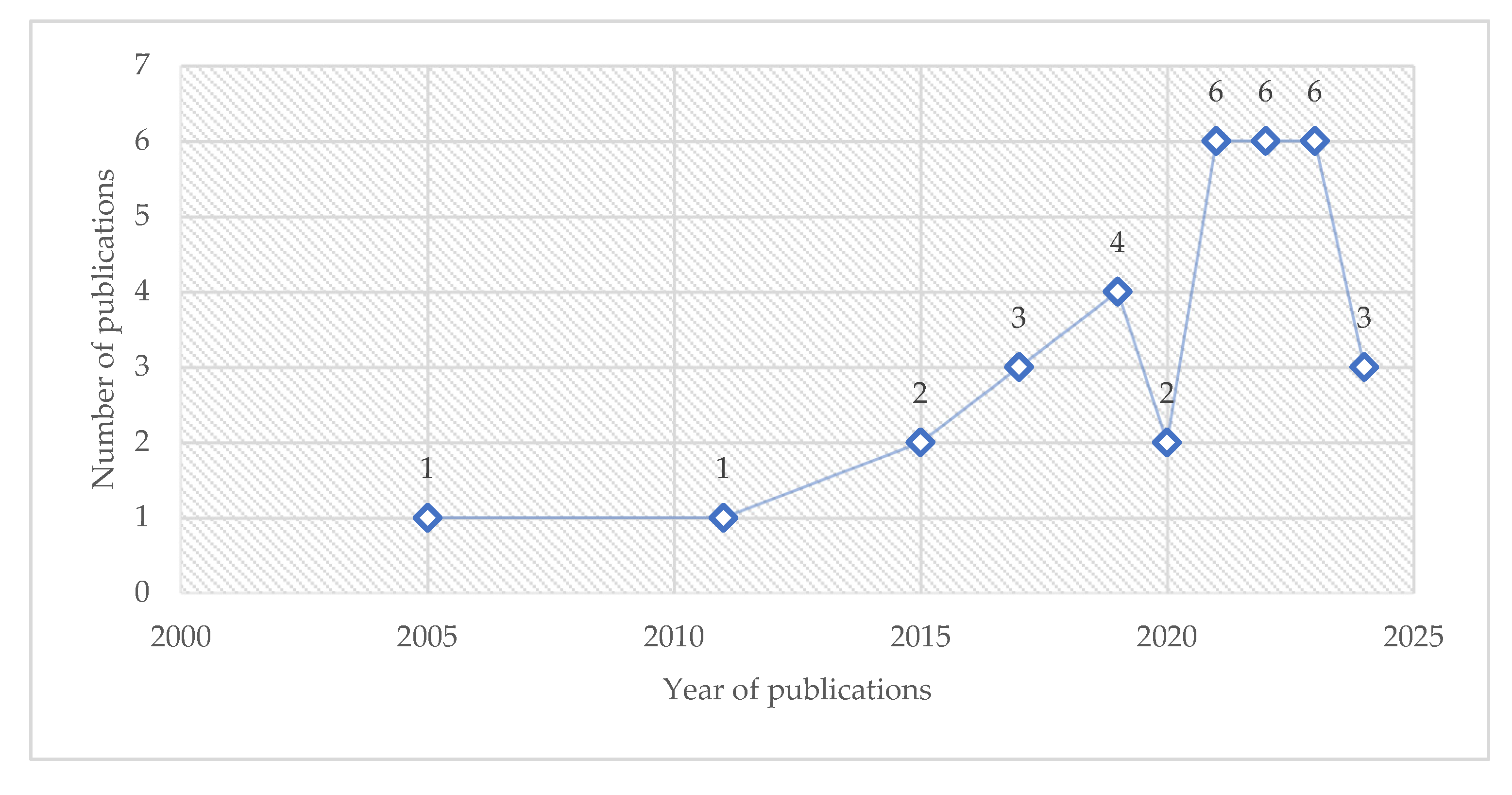
Figure 2. Annual frequency of relevant publications.
Preprints 140206 g002
Figure 3. Selected publications by type.
Preprints 140206 g003
Figure 4. Frequency of publication names.
Preprints 140206 g004
Figure 5. Publications according to country.
Preprints 140206 g005
Figure 6. Publications according to research methods.
Preprints 140206 g006
Table 1. Keywords and search strings.
Database Keywords and Search strings
Scopus (32) (ALL(“energy retrofitting” OR “energy-efficient retrofitting” OR “energy retrofit” OR “deep energy retrofit” OR “sustainable building retrofit”) AND TITLE-ABS-KEY (“residential buildings” OR “housing” OR “dwellings” OR “residence”) AND TITLE-ABS-KEY (“critical success factors” OR “csf*” OR “success factors” OR “key factors” OR “enablers”)) AND ( LIMIT-TO (LANGUAGE, “English”))
Web of Science (11) ALL=(building retrofit*) AND ALL=(“residential buildings” or “dwellings”) AND ALL=(“key factor” or “success factors” or “critical success factors” or enablers) AND ALL=(energy retrofit*)
Google Scholar (67) “Critical success factors” and “residential buildings” or “homes” or “housing” and “energy retrofit*”
Additional literature found via Google search (27) What are the CSFs for building energy retrofit implementation?
Table 2. Inclusion and exclusion criteria.
Inclusion Exclusion
Studies focused on residential BER. Studies not focused on residential buildings.
Studies that analysed CSF (quantitatively or qualitatively, or mixed methods). Research focused solely on different aspects of BER (e.g., energy conservation, energy efficiency, cost analysis) without a clear emphasis on CSFs.
Studies conducted in different climates. Viewpoints and editorials that lack empirical data or systematic analysis related to CSFs.
Studies whose full texts were available online to ensure comprehensive data extraction.
Studies written in the English Language.
Table 3. Characteristics of reviewed articles.
S/N Publication Publication type Research purpose Region / Country of origin Research method Results
1 Armijo et al. [39] Conference paper To describe the OpenBIM methodology applied to transform the implicit knowledge from the stakeholders involved in the building renovation process, not structured enough for automation, into an OpenBIM digital process based on the BIM standards. Europe Qualitative(Clustered, randomised community-based trial) Insulating houses led to improved indoor temperatures and health outcomes, reducing health inequalities among low-income communities.
2 Galvin [40] Journal article To investigate whether sales and rental markets disincentivise property owners from retrofitting these apartments to high energy efficiency standards. Western Germany Quantitative(Evolutionary game theory) Property owners who retrofit apartments often find that sales premiums for energy efficiency do not cover retrofit costs unless subsidised, and buyers face higher purchase prices that energy savings do not fully offset. Similarly, landlords recoup only a fraction of retrofit costs through rental premiums, though tenants may balance higher rents with lower energy bills.
3 Gaspari et al. [41] Journal article To provide the Social Housing Companies with a timesaving but effective supporting tool to plan maintenance and retrofit actions on the wide and heterogeneous building stock they manage. Italy Mixed methods The errors in energy performance calculations using the speedy method are acceptable due to the significant benefits in time, cost, and effort savings for social housing managers during the planning stage. For the worst-performing Azienda Casa Emilia-Romagna stock, simulations showed the potential improvements that could be achieved by applying different scenarios to the entire stock.
4 Groh et al. [42] Journal article To identify a price premium for energy efficiency within the German rental market. Germany Quantitative Current regulatory measures, such as the CO2 tax inadequately compensate landlords for retrofit costs. The marginal costs exceed the marginal benefits by far.
5 He et al. [43] Journal article To examine the factors influencing residents’ intentions towards green retrofitting of existing residential buildings. China Quantitative Among the factors, subjective norms, and perceived behavioural control have direct and significant influences on residents’ intentions. While cognition of green retrofitting does not directly impact intentions, it influences them indirectly through behaviour and subjective norms. Policy factors have the most significant impact, directly and indirectly through perceived behavioural control. Demographic characteristics and regional differences show significant variations in influence paths.
6 He et al. [44] Journal article To develop a cost-effective decision-making model for building retrofits, specifically tailored to China’s temperate and mixed climate zones. China Mixed methods In temperate zones, key measures include lighting upgrades, wall insulation, and better window glazing. In hot summer-cold winter zones, additional upgrades like heating systems and shading devices are crucial. A 40% energy saving can significantly reduce energy use by approximately USD 1.30 to 3.20 per m²/year.
7 Howden-Chapman et al. [45] Journal article To describe the purpose and methods of a single-blinded, clustered and randomised trial of the health impacts of insulating existing houses. New Zealand Quantitative(Clustered, randomised community-based trial) Large trials of complex environmental interventions can be conducted robustly with high participation rates.
8 Huang and Lin [46] Journal article To analyse stakeholders’ interests and rights and the influencing factors. China Quantitative(Evolutionary game theory) The study identified optimal strategies for stakeholders, highlighting the importance of government subsidies and fines in promoting cooperation and participation in energy-saving renovations.
9 Huang et al. [29] Journal article To investigate homeowners’ willingness to invest and analyse its influencing factors. China Mixed methods(Interviews and survey) The significant factors influencing investment willingness included financial incentives, environmental awareness, and perceived benefits. Barriers included high upfront costs and lack of information.
10 Hwang et al. [47] Journal article To identify the critical factors affecting the productivity of green building construction projects by assessing their likelihood, impact, and criticality, and comparing them with traditional projects. Singapore Mixed methods(Literature review, interviews, and survey) Workers’ experience; technologydesign changes; workers’ skill levelPlanning and sequencing of work have a significant impact on the productivity of green building projects compared to traditional projects.
11 Jagarajan et al. [48] Journal article To review the existing literature on green retrofitting, identify contemporary research trends and highlight the challenges, barriers, and CSFs for the successful implementation of green retrofit projects. Not specified Qualitative (Systematic literature review) Stakeholder engagement, policy support, and technological advancements are essential for the successful implementation of green retrofitting projects.
12 Jia [49] Thesis To identify and mitigate risks in energy retrofits of residential buildings in China’s hot summer-cold winter zone. China Quantitative(Transaction Costs Theory) The study highlights financial, organisational, and technological risks, and proposed strategies for risk mitigation, emphasising the role of government support and effective project management.
13 Krarti et al. [50] Journal article To evaluate the economic and environmental impacts of energy efficiency programmes for new and existing buildings. Saudi Arabia Quantitative(Bottom-up analysis) The study highlights the importance of government policies and incentives to encourage private-sector investment in energy efficiency measures
14 Liang et al. [14] Journal article To develop a set of CSFs for energy efficiency retrofit projects and analyse the interrelation between CSFs and stakeholders. China Qualitative (SNA and stakeholder analysis) The five significant CSFs for managing green retrofit projects are cost, stakeholder cooperation, information sharing, policy support, and technology.
15 Liu et al. [51] Journal article To assess the influence of public participation on energy-saving retrofitting of residential buildings. China Mixed methods Public participation significantly influences the success of energy-saving retrofits. Higher levels of participation before, during, and after retrofitting lead to greater energy savings.
16 Madushika and Lu [52] Journal article To review the current state of green retrofitting in developing economies and propose future research directions to enhance its application. Developing economies (with a focus on countries like China, Malaysia, and Egypt) Mixed methods(Scientometric and content analyses) The study identifies five major areas for future research in developing economies: performance evaluation, performance optimisation, adoption, policies and incentives, and stakeholder engagement.
17 Martin et al. [53] Journal article To optimise the timing and selection of retrofit measures for residential buildings to meet various policy objectives. Not specified Quantitative(SHAPE model) The study highlights the importance of strategic planning as a decision-support tool for stakeholders to make informed choices about retrofit measures.
18 Mejjaouli [54] Journal article To develop a comprehensive framework for retrofitting buildings to achieve zero-energy buildings. Saudi Arabia Quantitative(Mathematical programming, simulation, and the Analytic Hierarchy Process) The application of the framework results in a retrofitting plan that achieves a 30% annual energy savings and a payback period of 2.2 years.
19 Monna et al. [55] Journal article To analyse the potential energy savings from a suggested retrofitting programme using energy simulation for typical existing residential buildings. Palestine Quantitative The results suggest significant energy savings from the retrofitting measures. Level one measures resulted in a 19-24% decrease in energy consumption. Combining levels one and two led to a 50-57% reduction while implementing all three levels achieved a 71-80% decrease in total energy usage for heating, cooling, lighting, water heating, and air conditioning.
20 Mukhtar et al. [56] Journal article To assess the technical, environmental, and economic benefits of retrofitting housing stock with heat pump systems to improve energy conservation and efficiency. Cyprus Quantitative The retrofit project demonstrated significant energy savings, reducing electrical energy consumption by 144,825 kWh/year for heating/cooling systems and CO2 emissions by 121,592.8 kg annually. The economic analysis indicated that the retrofit is feasible.
21 Ohene et al. [57] Journal article To investigate the feasibility of achieving net-zero energy buildings in tropical climates and provides retrofit guidelines for existing buildings. Ghana Quantitative(Parametric simulation) Passive design strategies, such as natural ventilation, sun-shading, daylighting, and envelope airtightness, can significantly reduce building energy use intensity by 48-50%.
22 Pardo-Bosch et al. [58] Journal article To explore key aspects of building retrofitting to strategise the development of sustainable cities. European cities (Nantes, Hamburg, & Helsinki) Qualitative The integration of customer interface, funding and public-private-people partnership approach is key to scale-up.
23 Peel et al. [59] Journal article To investigate the barriers and enablers to energy efficiency retrofitting of social housing. UK Mixed methods(Interviews, and surveys) The study identifies seven categories of barriers and enablers: financial matters, technical issues, information technology, government policy and regulation, social factors (including awareness of the energy efficiency agenda), quality of workmanship, and disruption to residents.
24 Sang and Yao [18] Journal article To identify and assess the impact of CSFs on the development of green housing projects. China Quantitative The study identified five categories of CSFs: management factors, technical capacity factors, financial constraint factors, resource factors, and policy and regulatory factors.
25 Shen et al. [19] Journal article To identify CSFs and develop a collaborative governance mechanism for the transformation of existing residential buildings in urban renewal projects, using a social network perspective. China Quantitative The study emphasised the importance of collaborative governance, proposing nine governance mechanisms based on the relationships between 13 CSFs and their respective stakeholders.
26 Soulios et al. [60] Conference paper To assess the hygrothermal performance of internal insulation systems used in retrofitting a historic building. Denmark Quantitative (Hygrothermal simulations) Adding internal insulation increased the moisture content in the original masonry walls, which implies a higher risk of moisture-related damage such as mould growth, frost damage, and interstitial condensation.
27 Su [61] Journal article To review the current research focus on energy in buildings and to identify future development directions. Not specified Qualitative(Literature review) Most studies focused on energy analysis and conservation, including energy models for prediction, the impact of resident behaviour, building forms, and renewable energy utilisation.
28 Wang et al. [62] Journal article To develop an optimal energy-saving retrofit strategy for old residential buildings in China. China Quantitative The optimal retrofit scheme can reduce energy consumption by 18.52% in the targeted residential buildings, resulting in total energy savings of approximately 260.43 GWh.
29 Wenninger et al. [63] Journal article To investigate the use of explainable artificial intelligence (XAI) and socio-demographic data to understand and improve residential BER practices. UK Quantitative The critical factors influencing retrofitting decisions are building age, energy performance ratings, and the socio-economic status of residents.
30 Wierzba et al. [64] Journal article To optimise the impact of residential building energy audits by developing a proactive methodology that maximises the application of audit information across neighbourhoods. US Quantitative Investing USD 146,500 in retrofits could save 9.1 million kBtu of energy annually, reduce utility costs by USD 64,000, and cut 555 US tons of greenhouse gas emissions. Targeting older neighbourhoods benefits low-income families and strengthens community ties. The approach is cost-effective and supports policy initiatives for neighbourhood renewal and energy management.
31 Wu et al. [65] Journal article To assess the feasibility of retrofitting existing residential buildings in Guilin, China, to meet the EnerPHit standard, a certification for energy-efficient retrofits of existing buildings. China Quantitative Retrofitting residential buildings in Guilin, China, to the EnerPHit standard can reduce energy consumption by up to 60%. Despite high initial costs, the long-term savings and environmental benefits make it worthwhile.
32 Xie and Liu [66] Journal article To analyse the decision-making behaviour of stakeholders involved in energy-efficient retrofitting of office buildings. China Quantitative(Tripartite evolutionary game model) Stakeholders’ decisions in energy-efficient retrofitting of office buildings are heavily influenced by mutual benefits and costs. Government policies are effective when retrofit projects are profitable and public willingness is high.
Table 4. CSFs for residential BER.
Factor CSFs Identified Sources
Project-Related Factors Conducting comprehensive energy audits. [55,64]
Effective planning and management. [18,54]
Extensive pre-project planning and detailed scheduling. [47,57]
Site and building characteristics. [48,64]
Tailored design considerations. [56]
Contract-Related Factors Clear contractual agreements. [48,52,59]
Stakeholder-Related Factors Stakeholders’ active participation and collaboration. [19,73]
Building owners’ commitment to energy efficiency. [58]
Effective community involvement in BER projects. [45,54]
Public participation at different stages (before, during, and after retrofitting). [51]
Effective communication among stakeholders. [52,61,74]
Awareness-raising and educational initiatives for stakeholders. [28,29]
Team-Related Factors Expertise and technical knowledge within a multidisciplinary project team. [48]
Collaborative governance and team dynamics [52]
Continuous training and improvement in knowledge, skills, and human resources. [19,48]
Financial-Related Factors Financial incentives [46,48]
Cost-benefit analysis [48]
Financial viability through rent increase potential and reduced operational and maintenance costs. [42,75]
Profit-sharing considerations among stakeholders. [40]
Regulation-Related Factors Supportive government policies and incentives. [6,49,50]
Regulatory frameworks that set minimum energy performance standards for BER. [40,52,53]
Alignment of project goals with regulatory objectives. [19,65]
Material/Technology-Related Factors Use of sustainable materials such as improved insulation and renewable energy technologies. [60,62]
Implementation of BIM for efficient project coordination and cost control. [39]
Utilisation of AI for effective technology selection and assessment of BER practices. [63]
Training and support for contractors and homeowners. [41]
Disclaimer/Publisher’s Note: The statements, opinions and data contained in all publications are solely those of the individual author(s) and contributor(s) and not of MDPI and/or the editor(s). MDPI and/or the editor(s) disclaim responsibility for any injury to people or property resulting from any ideas, methods, instructions or products referred to in the content.
Copyright: This open access article is published under a Creative Commons CC BY 4.0 license, which permit the free download, distribution, and reuse, provided that the author and preprint are cited in any reuse.
Prerpints.org logo

Preprints.org is a free preprint server supported by MDPI in Basel, Switzerland.

Subscribe

Disclaimer

Terms of Use

Privacy Policy

Privacy Settings

© 2026 MDPI (Basel, Switzerland) unless otherwise stated