
Submitted:
10 November 2024
Posted:
11 November 2024
You are already at the latest version
Abstract
The slum upgrading of Kampung Mojo is one collaborative program aimed at improving the quality of slum settlement by supporting basic infrastructure and providing housing. This study focuses on the sustainability of settlement based on three pillars of sustainability: social, economic, and environment by exploring the usage of outdoor space following the upgrading process. The objective is to gather insights that cater to the community's needs and foster the realization of sustainable settlement. The method used in this study is qualitative descriptive with data collection techniques through observation and interviews. The findings of this study underscore a diverse array of activities in outdoor spaces that yield positive implications for raising the sense of communities, creating new economic opportunities, and productive land usage to contribute in achieving Sustainable Development Goals (SDGs).
Keywords:
Sustainability pillars
; settlements
; post-upgrading
; outdoor space usage
; community
1. Introduction
The Surakarta City Government initiated a collaborative slum upgrading program in Kampung Mojo to improve the quality of settlements that were originally slums. This project aims to transform these areas into better living environments by providing 569 certified housing units, which were originally built on illegal land (land owned by the city government, also known as HP). The project includes the provision of basic infrastructure such as access to clean drinking water, streets, drainage networks, waste management systems, domestic waste processing plants, and fire protection. The project was completed in two stages, in 2021 and 2022.
The primary objective of this upgrading program is to enhance the quality of slum settlements by improving the physical conditions of housing and basic infrastructure. This, in turn, is expected to trigger the community to improve their quality of life from both economic and social perspectives without exploiting the environment, thereby creating sustainable settlements. Settlement sustainability refers to concepts and practices that ensure residential areas can support a good quality of life for their residents now and in the future, without damaging the environment or excessively depleting natural resources, ensuring these settlements can survive and develop holistically. Since the completion of the upgrading program in 2022, observations can be made on how the residents of Kampung Mojo utilize the outdoor spaces around the settlement to support their needs, both at the individual and community levels. This background leads to the aim of this research, which is to explore the use of outdoor space and its relationship to the three pillars of sustainable development—social, economic, and environmental. The goal is to provide insights into the sustainability of a settlement after upgrading.
This research aims to contribute to the understanding of how the use of outdoor spaces can enhance the sustainability of settlements by examining the interactions between social, economic, and environmental factors. By doing so, it seeks to offer valuable insights into the improvement of urban settlements.
2. Materials and Method
2.1. Literature
2.1.1. Sustainable Architecture
Sustainability is a crucial aspect of development (Farhanawan et al., 2022). According to David Satterthwaite, an urban development expert from the Institute of Development Studies, sustainability involves creating an environmentally friendly, socially inclusive, and economically sustainable environment (Satterthwaite, 1997). In the context of architecture, sustainability refers to design approaches and practices aimed at creating buildings and environments that are environmentally, economically, and socially friendly in a balanced manner. Similarly, in the book "Planning and Design Strategies for Sustainable Architecture and Profit" by Adrian Pitts it is stated that sustainable architecture has three main components: economic sustainability, environmental sustainability, and social sustainability (Nimmo, 2005). In the context of developing a sustainable settlement, these three pillars can provide a comprehensive overview to ensure that the settlement meets sustainability criteria holistically (Putra et al., 2022).
- Economic sustainability focuses on the economic feasibility of a building or settlement, ensuring it does not harm the environment or society. This includes the impact of changes on the local economy, such as potential job opportunities, economic growth, and the empowerment of the local community.
- Environmental sustainability emphasizes the importance of reducing environmental impacts. This includes how changes in the settlement affect the surrounding environment, including increases or decreases in the consumption of natural resources such as water and energy, the use of environmentally friendly materials, waste management, and green enhancements such as tree planting or the use of renewable energy technology.
- Social sustainability highlights how these changes affect social life and the quality of life of local residents. This includes improving accessibility and security for communities and increasing access to education, health, and transportation facilities. Additionally, it is important to consider whether these changes support and strengthen community bonds.
These three sustainable development pillars above are mutually reinforcing and have a significant influence on local level planning and policy (Kusumawanto & Astuti, 2014 in Ardhi et al., 2022)
2.1.2. Outdoor Spaces
Outdoor space can be defined as areas available for use by the general public, including parks, playgrounds, streets, and other open areas (Darmawan & Utami, 2018). In a broader sense, public open space can be divided into two main categories: landscape (green open space) and built open space (Haryanti, 2008 in Darmawan & Utami, 2018). Landscape includes green spaces like parks, while built open space encompasses areas like streets, alleys, or home yards.
- Streets: These are circulation routes that connect various parts within a settlement. Streets can serve as the main access for vehicles and pedestrians, influencing the spatial layout and activities in their vicinity (Dipta, 2015).
- Alleys: Alleys are neighborhood circulation routes within urban settlement environments. The alleys are often used as both private and public spaces by residents, where they can be used as playgrounds for children, informal social interaction spaces, and venues for specific events (Karya et al., 2021).
- Terrace or Home Yards: Terrace or home yards are areas around the house that can be used for various activities, such as relaxation, playing, or gardening. Terraces or home yards can also serve as places for interacting with neighbors and fostering social relationships within the settlement (Darmawan & Utami, 2018).
The physical functions of these open spaces are diverse, serving as green areas for air circulation and water reserves, as well as centers for social activities and interactions. Public spaces facilitate daily activities like shopping or commuting, as well as leisure activities such as strolling or enjoying the scenery. Social interactions, involving individuals and groups in various contexts, are also a key part of public space utilization.
2.1.3. Usage of Outdoor Space Post-Upgrading
In the context of the upgrading of slum settlements, emphasis on the usage of outdoor space as a means to integrate and promote the three pillars of sustainability becomes crucial. Upgrading slum settlements generally involves enhancing basic infrastructure and housing with the aim of improving the quality of life for residents. In the context of sustainable urban development, there is more opportunity to strengthen the social, economic, and environmental aspects through the investigation of post-upgrading outdoor space usage. According to a study by Amin et al., (2019), the application of sustainable architecture principles in planning the Sustainable Food Village in Mojosongo has resulted in significant achievements in three main aspects: social, economic, and environmental. Community environmental activities have enhanced social interactions among residents, while economic strategies have helped improve the local economy through support for micro and small businesses. On the environmental side, the implementation of urban ecology principles and water and waste management has assisted in maintaining ecosystem balance and conserving natural resources. Furthermore, research conducted by Caesandra et al., (2020) highlights the importance of utilizing multifunctional public spaces in slum settlements. Through an analysis of the use of parks as public open spaces in slum settlements, this research emphasizes the importance of interaction, diversity, and harmony related to social and environmental aspects in designing public spaces to create inclusive and sustainable environments.
With reference to these studies, it is important to review post-development settlements with an approach that encompasses all three pillars of sustainability. This ensures that the changes made provide balanced benefits for society, the economy, and the environment. Therefore, this research will undertake such an approach, but within the context of post-upgrading planning that has been implemented in Kampung Mojo, Surakarta City, with the aim of identifying and understanding the role of post-upgrading outdoor space utilization in supporting sustainability based on the three main pillars of sustainability. Alfian & Akbar, (2020) highlights the importance of addressing the multidimensional nature of urban poverty and inequality, beyond just the technical aspects of infrastructure development. It emphasizes the need for a more inclusive and participatory approach to urban development, which takes into account the perspectives and experiences of the slum dwellers themselves.
2.2. Research Method
The data utilized in this research comprises primary data and secondary data obtained from a literature study related to slum upgrading program in Kampung Mojo. The primary data was acquired through various data collection techniques, including observation to understand physical condition and function of outdoor spaces and interviews with representatives informants to gather information about usage of outdoor spaces. The data analysis process uses a qualitative descriptive approach through describing the use of outdoor space based on the three pillars of sustainability (social, economic, and environment) to obtain the implementation of sustainable settlement in the slum upgrading program of Kampung Mojo.
3. Result and Discussion
3.1. Research Location
Kampung Mojo is one of the ‘kampung’ in Pasar Kliwon Subdistrict that is listed as a slum area, covering an area of 15,369 hectares. According to Minister of Public Works and Housing Regulation No. 14 of 2018 concerning the Prevention and Improvement of the Quality of Slum Housing and Slum Settlements, slum areas exceeding 15 hectares are under the jurisdiction of the central government for intervention.
Figure 1.
Research Location. Source: Author, 2023.
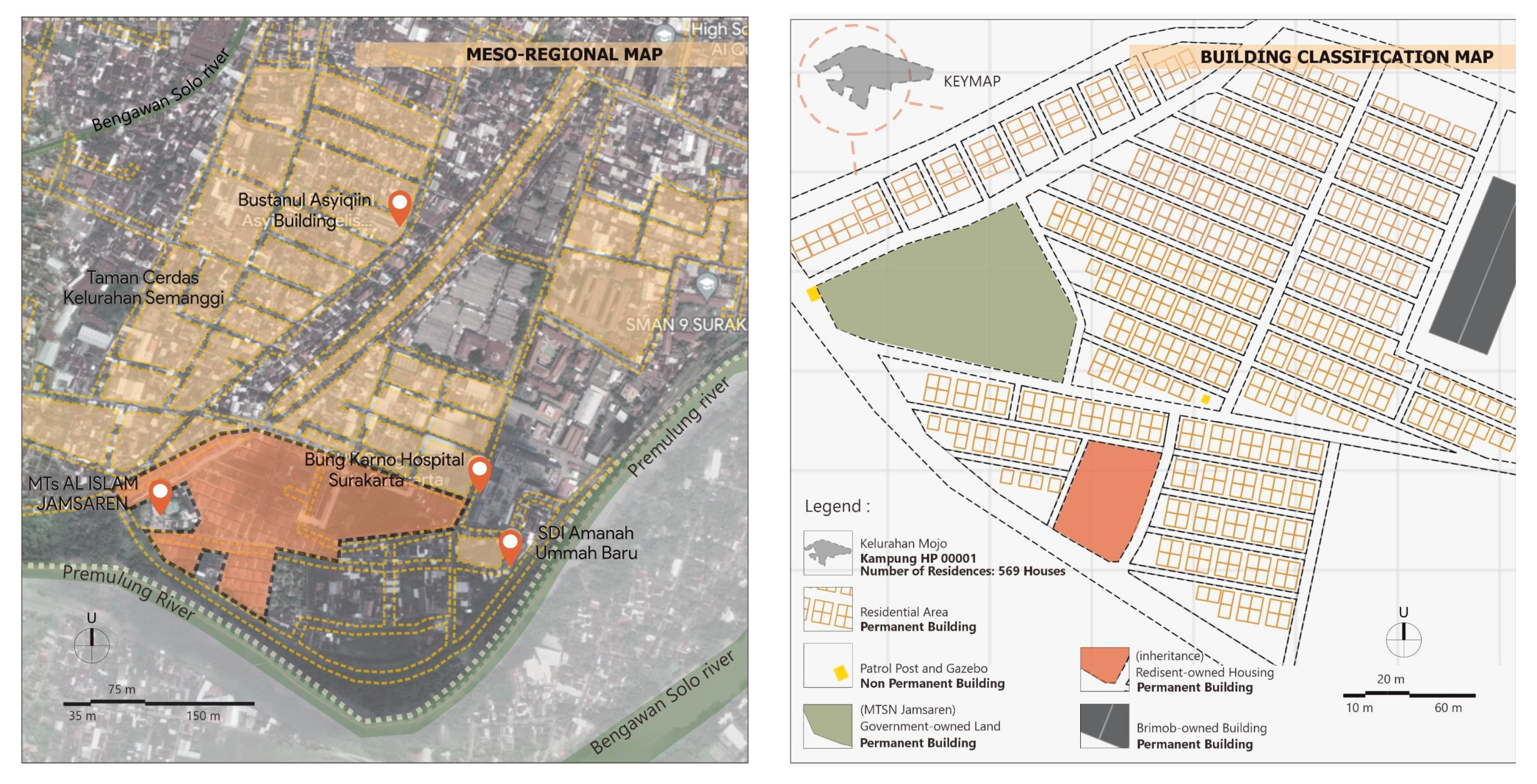
This program included providing houses with basic infrastructure facilities such as paved road networks, drainage systems, electricity networks, drinking water networks, and domestic waste management (in the form of a communal wastewater treatment plant). This program carried out in two phases has brought significant changes to the settlement area both visually and in the quality of the settlement (houses and basic infrastructure facilities) itself.
3.2. Analysis of: Outdoor Spaces Function and Their Relationship with Three Pillar of Sustainable Development
Outdoor spaces are identified in the area using these following criterias: 1) they must be situated outside of residential houses, and 2) they must be used and/or managed for social and/or economic purposes on an individual and communal level. Spatial location, form, physical conditions, and their relationship to the economic, social, and environmental pillars of sustainability are among the highlighted characteristics. These are the identification's outcomes.

Table 1.
Three Pillar of Sustainable Development Analysis.
| Outdoor Space | Physical Condition | Sustainability Pillars | ||
|---|---|---|---|---|
| Economic | Social | Environmental | ||
|
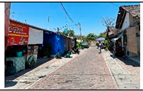
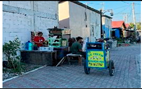
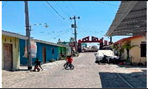
Neighborhood Street. A neighborhood street functions as Kampung Mojo's main access. Observations indicate that the neighborhood street serves as an entryway for access to the Madrasah situated in the Kampung Mojo region and is utilized by both Kampung Mojo residents and the wider community, including commuting vendors. |
 |
 |
 |
|
|
Form: square Dimension: 5.15 meters and 9.05 meters Material: Paving. This street is covered by drainage systems on both sides of the street connected to the city's sewer system. |
Economy Activities Opportunity: The economic activities found in this area include buying and selling transactions or vending activities. The potential of the street as a vending activity is its ability to attract buyers from outside Kampung Mojo. |
Social Interaction Space: Streets have the most impact on their users because the street's width creates ample leftover space. Streets are used for social interaction among residents. Playground for Children: The neighborhood street is also used as a playground for children because there is no designated space for children's play in Kampung Mojo. |
Currently, the street has no impact on the environment. However, it may be possible to redevelop it by implementing the addition of trees along the street to reduce heat from the sun for the residents | |
|
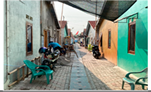
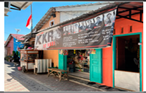
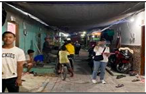
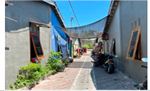
Neighborhood Alleys. Neighborhood alleys Alleys are shared spaces between community houses that are used and controlled by multiple residents. |
 |
 |
 |
 |
|
Form: linear, followed to the settlement's layout Dimension: 1.2 meters in width Materials and Structure: Paving. |
Economy Activities Opportunity: Residents using alleys as selling points create additional economic opportunities for the local community. Neighborhood alleys are used as places to put up banners or carts. |
Social Interaction Space: The usage of neighborhood alleys as places for domestic activities and community interaction among residents strengthens social relationships and enhances community cohesion. Playground for Children: Since there are no play areas for kids, they play on the neighborhood alleys. |
Gardening Place: The usage of neighborhood alleys as planting areas contributes to increased environmental sustainability by lowering carbon emissions and improving air quality. |
|
|
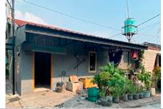
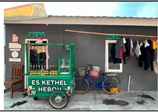
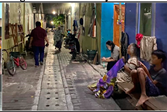
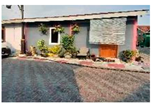
Terrace. The terrace functions as a semi-public space for the community |
 |
 |
 |
 |
|
Form: rectangle Dimension: 1x6 meters Material: ceramic, cast concrete, plaster, or paving blocks. Several residents added a canopy as a roof cover to prevent leaking when it rains |
Economy Activities Opportunity: The usage of the terrace as a place to sell by residents has created additional economic opportunities for the local community, which in turn can increase economic sustainability at the local level. |
Social Interaction Space: Using the terrace as a place for interaction between residents strengthens social relations and increases the sense of togetherness in the community. |
Gardening Place: Terraces used to grow plants in pots also have a positive impact on environmental sustainability. Potted plants not only add to the visual aesthetics of the environment but also help improve air quality by absorbing carbon dioxide and producing oxygen. |
|
|
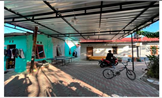
Community Meeting Space |
 |
Though no economic activity is currently underway, the space's construction leaves an opportunity for potential economic activities in the future. |
Social Interaction Space: The space was constructed through the community. The place is used by the locals as a base camp for the Kampung Mojo Youth Community in addition to being a multipurpose venue for social events including meetings and gatherings. |
Land Preservation: This area serves as a means of environmental management within a community to prevent it from being used for activities that are unsuitable or may negatively impact the environment. |
|
Form: Square Dimension: 55 meters square Materials and Structure: Iron Frame and Zinc Roof | ||||
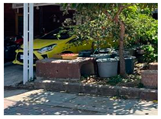
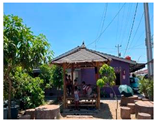
| Public Space (Multifunction Space) | 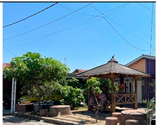 |
 |
 |
 |
|
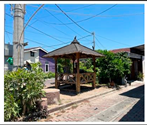
Form: Square Dimension: 38 meters square Materials and Structure:
|
Economy Activities Opportunity: There are catfish farms in this area that are owned and operated by the Kampung Mojo community. The catfish are raised and offered for sale to residents of the area. |
Social Interaction Space: Provides space for various community activities such as receiving guests, signing documents, interacting, or as a resting place for mobile vendors, etc. Playground for Children: The gazebo is utilized by children for playing (it is always bustling from morning to night). |
Land Preservation: This area serves as a means of environmental management within a community to prevent it from being used for activities that are unsuitable or may negatively impact the environment. |
|
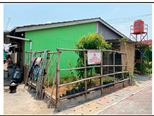
| Ngudi Lestari Garden | 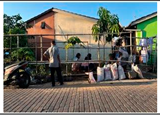 |
 |
 |
 |
|
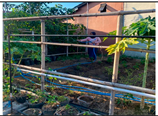
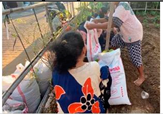
Form: Square (Productive Land) Dimension: 66 meters square Materials and Structure: land and bamboo fence |
Economy Activities Opportunity: The occupants cultivate fruits and vegetables in this garden. The relevant city department provides seedlings, which are then handled by the POKJA (Kelompok Kerja) and made available to those who want to plant them in available land. The garden's product is sold to the occupants as well as to partners that have worked with them. |
Social Interaction Space: The residents typically engage in gardening activities as a group, with some watering the plants, some loosening the soil, and others planting. |
Land Preservation: This area serves as a means of environmental management within a community to prevent it from being used for activities that are unsuitable or may negatively impact the environment. |
|
Based on the findings of the analysis, the usage of outdoor spaces in Kampung Mojo reflects a balanced integration of three pillars of sustainability: economic, social, and environmental. The diverse activities conducted within these alleys not only provide economic benefits to the community but also strengthen social relationships and support environmental sustainability within the local environment.
The function of the terraces, neighborhood alleys, and neighborhood streets is a reflection of the sustainability pillar—the economic pillar. As previously explained, the neighborhood street is accessed not only by residents of Kampung Mojo but also by people outside Kampung Mojo, making the neighborhood street a strategic location for economic activities. The selection of the neighborhood street for conducting economic activities is based on the concepts where the most important factors in selecting a business location are access, visibility and the environment to attract more customers (Hidayat & Zuliarni, 2014). The location on the neighborhood street of the settlement provides high visibility to the economic activities conducted by the community in Kampung Mojo. Simple carts owned by the community located on the neighborhood street, neighborhood alleys, and terraces are more easily seen by pedestrians and drivers, thus increasing customers' awareness of their presence. This becomes one of the factors for the people of Kampung Mojo to engage in economic activities in the neighborhood street area due to high exposure to customer traffic. This was also expressed by the people of Kampung Mojo through interviews. One of the residents mentioned that they sell in front of their house because it has started to get busy and there are no similar vendors around their house. Additionally, another resident stated that the neighborhood street is frequented by school children and outsiders from outside the kampung, resulting in a significant income. Carts located on the neighborhood street can attract customers spontaneously, thus increasing the likelihood of impulse purchases. External communities who do not reside within the Kampung Mojo area will be interested in stopping by and shopping. It is these characteristics that ultimately drive the community to expand with economic activities on the neighborhood street area.
The social and environmental pillars are the next pillar of sustainability integrated into outdoor space functions. As previously mentioned, Kampung Mojo lacks spaces designated aside expressly for social gatherings. Since human activities in the context of residence contain both personal and social needs, the necessity for space for social activities is essential. In response to the need for places for social interaction, certain communal spaces that are now in place are the product of community self-help initiatives. Interviews with the POKJA and the RT Chairman showed that Kampung Mojo is the place for several social and community organizations. These include the Posyandu (integrated health service post), associations for pregnant women, community groups, RT/RW associations, Farmers Group (POKTAN), associations for catfish farming, and exercise activities.
The rationale behind the connection between communal spaces and the growing of a sense of community is that they offer a space for social interaction to grow community ties (Tamariska et al., 2019). Both planned and unplanned communal spaces provide a social purpose (Tamariska et al., 2019). This is relevant to the Kampung Mojo case in point, where the requirement for a place to gather for social activities can be fulfilled by communal spaces that were not planned but were instead constructed through community self-help initiatives.
Various community activities, such as those related to economic, social, and cultural needs, can be accommodated in communal spaces (Darmiwati, 2000 in Widiananda, 2018). Communal spaces and multifunctional space are essential in urban settlement communities where familial ties are still strong and community activities are prevalent. Owned by the community, communal spaces will encourage a sense of responsibility to use and maintain these spaces well, strengthening the sense of community following the social pillar's principles. The creation of outdoor spaces for community activities is not only integrated into the social pillar but also the environmental pillar. One example is the establishment of a garden community. This area serves as a means of environmental management within a community to prevent it from being used for activities that are unsuitable or may negatively impact the environment. The control mechanisms implemented by the community in the Kampung Mojo area also serve as mechanisms that support environmental sustainability to prevent the settlement becoming slum again.
4. Conclusions
The outdoor spaces created following the Slum Upgrading Project in Kampung Mojo are parts of sustainable development, where the implementation of the three pillars of sustainability—social, economic, and environmental—is evident. They created a space to accommodate community activities there. In order toward sustainability, built environments must be used and managed by people and communities in ways that go beyond their physical characteristics.
Spaces for social activities are the representation of a sense of community. Urban settlements maintain strong kinship ties, and the presence of communal spaces becomes crucial for accommodating existing social activities to sustain life in the settlement. The outdoor spaces created provide new economic opportunities for individuals and the community. This indicates the emergence of economic prospects following the implementation of the upgrading program. The community’s economic activities are initiated by themselves with support from the city government. Collaboration between both parties is expected to continue sustainably and provide impact for the involved community. Environmental sustainability is an implication of the preceding social and economic pillars. Utilizing space without harming the environment, coupled with effective management by settlement overseers, endeavors to preserve the environment towards achieving sustainable settlements. Hence, achieving the three pillars of sustainability is not solely attainable through physical development but also through active community participation and a full awareness of ownership and responsibility for nurturing their settlement's environment.
References
- Alfian, F. , & Akbar, T. (2020). Upgrading Slum Area, Development and Hidden Inequality (Case Study: Kampung Warna-Warni and Kampung Tridi). Review of Urbanism and Architectural Studies. [CrossRef]
- Amin, M. N. , Winarto, Y., & Marlina, A. (2019). The Application of Sustainable Architecture Principles in the Planning of Sustainable Food Villages in Mojosongo, Jebres District, Surakarta City. Jurnal SENTHONG 2019, 2, 383–394. Available online: https://jurnal.ft.uns.ac.id/index.php/senthong/article/view/1049.
- Ardhi, P. H. , Rejeki, V. G. S., & Ardiyanto, A. (2022). Strategi Penataan Permukiman Nelayan Keberlanjutan di Tepi Sungai Kaliyasa. Review of Urbanism and Architectural Studies 2022, 20, 1–11. [Google Scholar] [CrossRef]
- Caesandra, V. , Wiranegara, H. W., & Sugihartoyo, S. (2020). Tingkat Keberlanjutan Pemanfaatan Ruang Publik Multifungsi di Permukiman Kumuh. Tataloka 2020, 22, 354–365. [Google Scholar] [CrossRef]
- Darmawan, S. , & Utami, T. B. (2018). Pola Pemanfaatan Ruang Terbuka Pada Pemukiman Kampung Kota. Vitruvian: Jurnal Arsitektur, Bangunan, Dan Lingkungan 2018, 7, 127–136. Available online: https://www.neliti.com/publications/265313/.
- Dipta, A. (2015). Karakteristik Ruang Koridor Jalan Panggung Pecinan Kembang Jepun Surabaya Sebagai Koridor Wisata Urban Heritage. 2021; 7, 1–18. Available online: http://www.joi.isoss.net/PDFs/Vol-7-no-2-2021/03_J_ISOSS_7_2.pdf.
- Farhanawan, A. , Agussaini, H., & Fuady, Z. (2022). Analisis Keberlanjutan Permukiman Nelayan Gampong Alue Naga Kota Banda Aceh. Rumoh: Journal of Architecture. [CrossRef]
- Haryanti, D. T. (2008). Kajian Pola Pemanfaatan Ruang Terbuka Publik Kawasan Bundaran Simpang Lima Semarang. [Study of Public Open Space Utilization Patterns in the Simpang Lima Semarang Roundabout], 2008; 168. Available online: https://core.ac.uk/download/pdf/11716848.pdf.
- Hidayat, R. T. , & Zuliarni, S. (2014). Pengaruh Lokasi Usaha Pada Volume Penjualan. Jurnal Ilmiah Akuntansi Dan Bisnis 9(2), 92–100.
- Karya, S. , Making, P., Muzady, F. A., Wibisono, T. K., Indonesia, U. I., & Belakang, L. (2021). Kajian Pemanfaatan Jalan Gang Sebagai Ruang Belajar Daring Selama Pandemi Covid-19 Di Bintaran Kidul, Kota Yogyakarta, 2021; 186–196. [Google Scholar]
- Kusumawanto, A. , & Astuti, Z. B. (2014). Green Urban Waterfront Management Case of Solo, Indonesia. Journal of Architecture&ENVIRONMENT, 2014; 13, 175. [Google Scholar] [CrossRef]
- Nimmo, J. (2005). Sustainabil- ity and Cities : Overcoming Automobile Dependence, Landscape and Urban Planning2 2005, 1, 76–77. [Google Scholar] [CrossRef]
- Putra, R. P. , Hendra, F. H., & Poedjioetami, E. (2022). Pendekatan Arsitektur Berkelanjutan Terhadap Bentuk Fasad Bangunan Pada Kawasan Pembudidayaan dan Pengolahan Kopi di Kota Kediri , Jawa Timur. Jurnal Lingkungan Karya Arsitektur 2022, 2, 127–137. [Google Scholar]
- Ratna Darmiwati. (2000). Studi Ruang Bersama Dalam Rumah Susun Bagi Penghuni Berpenghasilan Rendah. DIMENSI (Jurnal Teknik Arsitektur), 2000; 28, 114–122. Available online: http://puslit2.petra.ac.id/ejournal/index.php/ars/article/view/15734.
- Rossy Tamariska, S. , Lestari, A. D. E., Nungky Septania, E., & Shoful Ulum, M. (2019). PERAN RUANG KOMUNAL DALAM MENCIPTAKAN SENSE OF COMMUNITY STUDI KOMPARASI PERUMAHAN TERENCANA DAN PERUMAHAN TIDAK TERENCANA. Jurnal Koridor 2019, 10, 65–73. [Google Scholar] [CrossRef]
- Satterthwaite, D. (1997). Sustainable Cities or Cities that Contribute to Sustainable Development? Urban Studies 1997, 34, 1667–1691. [Google Scholar] [CrossRef]
- Widiananda, A. B. (2018). Peranan dan Pemanfaatan Ruang Publik Pada Permukiman Kampung Vertikal Rusun Pekunden Kota Semarang. Jurnal Pembangunan Wilayah & Kota 2018, 14, 1. [Google Scholar] [CrossRef]
Disclaimer/Publisher’s Note: The statements, opinions and data contained in all publications are solely those of the individual author(s) and contributor(s) and not of MDPI and/or the editor(s). MDPI and/or the editor(s) disclaim responsibility for any injury to people or property resulting from any ideas, methods, instructions or products referred to in the content. |
© 2024 by the authors. Licensee MDPI, Basel, Switzerland. This article is an open access article distributed under the terms and conditions of the Creative Commons Attribution (CC BY) license (http://creativecommons.org/licenses/by/4.0/).
Copyright: This open access article is published under a Creative Commons CC BY 4.0 license, which permit the free download, distribution, and reuse, provided that the author and preprint are cited in any reuse.


