

Submitted:
30 October 2024
Posted:
01 November 2024
You are already at the latest version
Abstract
Potato is among the strategic food security commodities in Ethiopia, and the country possesses the highest potential for its production across Africa. Smallholder potato farmers in Ethiopia do not realize the theoretical yield potential of the crop because they do not take the benefit and advantages of using quality seed potato of improved varieties. High disease incidence in seed potato has large implications on potato farming system since the country lacks appropriate quality assurance mechanisms. Seed potato quality assurance relies heavily on the technical support provided by the national research and extension systems than the official seed certification agency. This paper elaborates systematic challenges and opportunities of the seed systems relevant to potato and interrogates two research questions: 1) What type of seed quality assurance mechanisms (informal, quality declared, certified) are under implementation in Ethiopia? 2) How does the current seed quality assurance system operate in terms of reliability, accessibility, and quality standards to deliver quality seed potato? The data were collected through face-to-face in-depth key informant interviews with various seed regulatory laboratory managers and technicians in Oromia, SNNP and SWEP regions in the main seed and ware producing areas of Ethiopia. This was complemented by a comprehensive analysis of relevant documents. The findings show that currently there is no established procedure in place to officially certify early-generation seed potatoes. Two out of six seed quality control laboratories assessed for this study inspected seed potato fields in 2021 but as quality declared seed (QDS), and approved the fields inspected based on visual inspection alone. Our study revealed a weak linkage between early generation seed (EGS) potato producers, commercial and QDS seed potato producers and seed quality control laboratories. Seed potato quality assurance operations were carried out only by few seed regulatory laboratories with several concerns raised over the effectiveness of quality standards since seed-borne diseases such as bacterial wilt have been found at high frequency in the country’s seed potato system. Hence, the current procedures and challenges call for the necessity of upgrading current quality assurance in seed potato certification process. Our study underlines the need for policymakers, development partners, and researchers to collaborate and pool efforts to consider transforming the quality declared system to appropriate seed certification. We recommended that institutionalizing novel plant disease diagnostics into seed regulatory frameworks are needed for sustainable potato production and food security in Ethiopia.
Keywords:
Integrated seed sector development
; potato seed system
; seed quality assurance
; seed policy and regulation
; seed regulatory laboratories
1. Introduction
Agriculture is the mainstay of Ethiopia's economy accounting for 34 percent of the GDP, 75 percent of exports, 73 percent of the country's employment opportunities, major sources of 70 percent of raw materials for the agro-processing industry and market for the industrial outputs. A big share of this sector is however, is operated by smallholder farmers in subsistence farming [1,2]. Thus, rapid agricultural growth would dominate employment growth, poverty reduction and fosters urbanization [1]. With these and other multifaceted roles, agriculture is ear-marked to contribute to the United Nations` sustainable development goals. Despite this potential, the agriculture sector in Ethiopia has remained underdeveloped and cannot yet ensure food security for the second largest population in the African continent [2,3]. Among various constraints, weak market linkages, poor and inferior agricultural input supply system with limited quality assured seed is undermining the sector`s performance [4,5,6].
All these in turn have an interlinked effects on accessing quality seed at affordable price to smallholders for better yield and increased productivity [7,8,9,10].
Ethiopia has a pluralistic seed system for crops like potato comprising formal, alternative and informal schemes though scholars put different views on seed system categorization [11,12,6]. The contribution of informal seed system to planting stock in Ethiopia may be 98.3% with the remaining 1.3% from alternative and the formal sources contributing a very insignificant fraction [13]. Thus, almost all potato farmers in Ethiopia use own-saved seed tubers and seed from their social networks due to various reasons [9].
As a developing country that lacks a well-functioning seed certification system, Ethiopia adopted the quality declared seed (QDS) for many economically important crops including potato. QDS, a class below certified seed is guided by standards that are less rigorous but recognized by the regulatory bodies than ordinary seed is permitted in the Ethiopian seed potato system [13,14].
The seed sector in Ethiopia is coordinated by various state ministers under the Ministry of Agriculture (MoA). Linked to the federal government, the seed quality assurance is cascaded from Federal to Regional regulatory Authorities [15]. Since 2021, the Ethiopian Agricultural Authority (EAA) under the MoA was established to coordinate all regulatory aspects of the seed sector in Ethiopian Seed Proclamation No. 1262/2021 [16]. Functionally, the seed regulatory laboratories are located at zonal level under the regional agricultural inputs regulatory authority. Seed regulatory laboratories work mostly on seed of cereal and grain crops and rarely on VPCs which require more advanced pathogen testing facilities and skilled personnel [17] that are currently in short supply in the country [14]. The vulnerability of potato to seed-borne diseases and pests requires a strong, efficient and customized regulatory mechanism [18]. On the other hand, functional seed system must integrate efforts of research, extension, seed producers and other non-government organizations [19]. The seed regulatory laboratories have a plethora of problems including coordination and capacity bottlenecks to undertake the potato seed quality assurance within the standards set by national or international authorities to achieve the seed sector transformation goal in Ethiopia comparable to cereals and legumes [15,16].
Though the Ethiopian government established rules and regulations for seed sector transformation, the institutions allotted for the implementation are not fully functioning due to various constraints [16,20]. These may include regulations designed to restrict importation of sub-standard seed. On the other hand, seed quality is a complex trait that involve a combination of plant genetics, seed technology, seed health and molecular biology. Some of the classical methods of seed improvement include coating, pelleting, priming, and production of artificial seed [21]. The seed of VPCs, unlike cereals and pulses are very prone to latent infection by seed and soil borne pathogens such as Ralstonia solanacearum and viruses [22,23]. Central quality control systems by governments in most developing countries tend to limit market size, while more localized production systems are limited by both capacity and resources [24]. Furthermore, seed is an international commodity that is regulated by international quality standards, but the regulatory system in the country has limited capacity and effectiveness to implement this function [15].
In developing countries like Ethiopia, farmers engaged in cultivating vegetatively propagated crops (VPCs) have limited access to quality planting materials due to high costs and lack of proper quality seed supply systems [6,10]. There is various quality assurance limitations related to existing policies, institutional capacity, and markets that impact on VPC seed systems such as QA capacity or mechanisms, seed certification regulations, phytosanitary standards, poor collective action among farmers` seed cooperative groups, and other interconnected issues along the VPC seed value chain [24,25,26]. The support being provided to seed grower cooperatives is mainly focused on improving the growers` seed potato production capacity and less on building good governance and quality control in the seed potato value chain [25].
Crop production and seed system development in Ethiopia is cereal-prejudiced leaving, the seed systems of most VPCs with limited attention by policy makers. Consequently, rules, regulations, and seed laws enacted in Ethiopia are hardly implemented. Moreover, the findings of Spielman et al. [24] recommend a need for alternatives that balance a permissive regulatory regime with decentralized production systems, grassroots capacity development, market surveillance, and systems that integrate internal (producer-level) quality control with external (regulatory) quality assurance. In line with this study, the QDS system in Ethiopia permits 90% of field internal (producer-level) quality control and 10% of field external (regulatory) quality assurance approach. The 10% of field external seed quality assurance is based on visual observation only without considering the nature and the biology of the potato (susceptible to pests and disease, bulkiness, perishability, etc.) as the 90% of seed is left for internal seed quality control [14,23]. Both protocols unfortunately are a recipe for transfer of seed-borne disease particularly bacterial wilt.
Under the growing pressure to deliver quality seed potato to farmers in the country, we set out to explore the capacities, capabilities and limitations of seed potato quality assurance of seed regulatory laboratories in Ethiopia, which are dedicated to conduct quality assurance at least for 10% of field grown QDS potatoes. Our study sought to broaden the understanding of what types of seed quality assurance mechanisms (informal, quality declared, certified) are under implementation in Ethiopia. We first briefly describe the overall seed system and role of quality seed for improved crop production and productivity. The second section outlines the potato seed system in the country and the existing quality assurance mechanisms in place. The next section presents the findings followed by a discussion in the context of previous research work across institutions and regions. We conclude the paper by drawing lessons from the study to generate recommendations that will inform policy decisions and priorities for seed potato sector transformation in Ethiopia and elsewhere with similar contexts.
This paper elaborates systematic challenges and opportunities of the seed systems relevant to potato and interrogates two research questions. The two underlying research questions are formulated as follows:
1) What type of seed quality assurance mechanisms (informal, quality declared, certified) are under implementation in Ethiopia?
2) How does the current seed quality assurance system operate in terms of reliability, accessibility, and quality standards to deliver quality seed potato?
2. Methods
2.1. Description of Seed Regulatory Laboratories
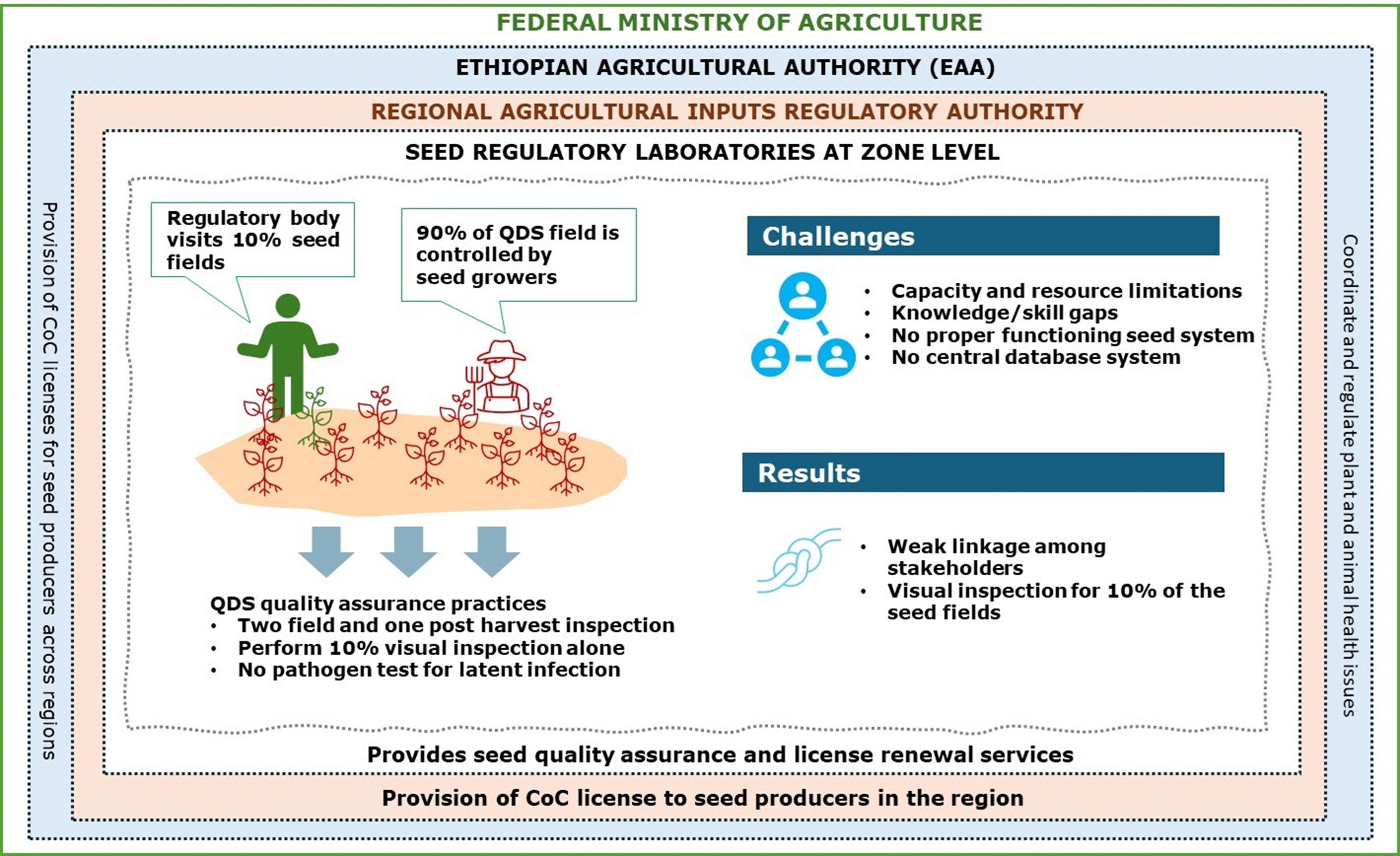
Structurally, the seed sector in Ethiopia is overseen by various state ministers within the Ministry of Agriculture (MoA) and hierarchically established from the ministry to zone seed regulatory laboratory level where the actual seed quality assurance practices are carried out (Figure 1). Regional agricultural inputs authority is managing the seed quality assurance practices with in each region, while the Ethiopian Agricultural Authority (EAA) under the Ministry has the mandate to control regional inputs authority offices in the country.
2.2. Data Collection
The data collection involved both a desktop literature review and in-depth key expert/informant interviews, targeting the seed regulatory laboratory managers and technicians to exploit information on both managerial and skill-allied points regardless of the existing seed quality assurance practices.
Literature Review
Literature review was conducted to understand and analyze the existing seed system bottlenecks, seed quality assurance mechanisms and the capacities and facilities at the seed regulatory laboratories basing on existing seed quality assurance bottlenecks. We used scientific literature and information from different databases such as Google Scholar, Web of Science, Research Gate and CGIAR web sites. The grey literature was also searched from government documents, project reports, international and national research institution documents, policy documents, seed laws, seed standardization rules and guidelines emphasizing the seed systems of VPCs and seed QA approaches.
Seed Regulatory Laboratory Managers and Technician Interviews
Qualitative data were collected from six seed regulatory laboratories, five in Oromia, Southern Nations Nationalities and Peoples`(SNNP) and Southwest Ethiopia Peoples (SWEP) regional states and one from central federal laboratory in Addis Ababa (Figure 2). These three regions were selected because of their potato production potential and their functioning seed regulatory laboratory in the country. In-depth key informant interviews and discussions with the head of each seed regulatory laboratory and a technician were conducted with semi-structured check list. The check list was aimed to pin out the capacities of the regulatory laboratories on how they are operating the seed quality assurance practices in terms of reliability, accessibility, and quality standards.
2.3. Analytical Framework
Both descriptive and content analysis [26,27] based on literature review and expert interview were used for this study. Data collection followed three themes: i.e. (i) seed QA practices, (ii) human resource capacity, (iii) physical infrastructure, logistics, and seed testing facilities of seed regulatory laboratories.
3. Results
3.1. Seed Quality Assurance Practices in Ethiopia
Among the six seed quality assurance laboratories, only Ambo in Oromia region and Welkite in SNNP region inspected about 45.3 ha seed potato in 2021 mostly as QDS and approved about 92.7% of the fields inspected (Figure 3). The rejected (7.3%) seed potato fields were mainly due to failure to meet minimum isolation distances and late submission of inspection applications by the seed producers. None of the two laboratories however, conducted latent infection tests which is important in certification of seeds of VPCs for controlling seed-borne diseases. The regional laboratories at Duramen, Shashemene, and Bonga only handled seeds of cereals and pulses.
The seed testing laboratory at Ambo attempted to conduct latent pathogen testing using classical pathological techniques by culturing tuber extracts in common agar to detect any bacterial or fungal growth. However, this method was not foolproof since any systemic bacteria or fungi can easily grow on common agar and may not be necessarily pathogenic to potato. Acceptable potato pathogen detection technologies such as serology or other more molecular based, sensitive techniques were not available at the respective laboratories.
The two laboratories that attempted to certify seed potato in 2021 did the minimum required standard of three (2 in field and 1 post-harvest) inspections (Table 1 and Figure 4). The source of seed planted for QDS was also verified by inspectors to know whether it comes from reliable seed source or not just tracing the source through grower feedback. In many cases, timely inspection of each seed field registered for seed certification was not possible due to logistical constraints resulting in seed rejection.
Seed potato quality assurance is done by visual assessment for both field inspection and postharvest control due to limited capacity in equipment, facilities, reagents, knowledge and skill. Moreover, the laboratory buildings are not suitable for the intended purpose except at Shashemene. In some laboratories like at Bonga and Durame, the laboratory facilities were prone to infestation with rodents and other insect pests that damage the seed samples collected for testing and post-harvest quality control.
3.2. Human Resource Capacity and Gender Disaggregation
The laboratory technicians were assessed on their knowledge and skills in seed quality assurance. It was found that the technicians across the assessed seed testing laboratories have knowledge and skill limitations to properly test seed potato for quality and certification. The two plant pathologists in the organization were BSc. holders had many skill gaps such as variety and disease symptom identification, disease diagnosis, seed potato inspection standards and procedures and required higher degree training. Knowledge and skill gaps they have mentioned were due to inadequate in-service/refresher trainings in their respective organizations. One seed certification staff in Shashemene laboratory had this to say, “I am not well trained and have knowledge gap in performing seed health testing both at growth out test (GOT) and laboratory level. I also have difficulties in routine seed certification because our team has no crop description guides or crop variety descriptor catalogue to identify true varieties from off-types. We lack field books for disease identification for each crop and other technical field and laboratory guides.” Similarly, the laboratory technicians indicated that they have limited knowledge on crop disease identification and testing to be able to adequately analyze seed advise next level managers or seed producers. Correspondingly, field seed inspectors had many knowledge gaps in inspecting seed potato because they mainly deal with cereals and pulses and consequently have little or no experience with vegetatively propagated crops.
In order to function the seed certification properly it needs commitment and investment in well trained human resource. The assessed laboratories together employ 138 people across all the disciplines including laborers and support staff (Table 2). Among these employees, 8.7% have MSc, 58.7% have a bachelor’s degree, 8.0% are diploma holders, 3.6% have certificates, 16.7% have completed high school, while 4.3% have primary education level (Figure 5). As far as the educational background of technical staff is concerned, about 38.4% of the field inspectors, seed laboratory technicians, certification experts, seed quality controllers, and product quality inspectors are all BSc holders. Ambo and the national seed regulatory laboratories have more MSc holders than the other centers (Figure 5). None of the laboratories has staff in management or operations with a PhD.
In terms of human resource deployment by sex disaggregation, 47 (34.1%) staff were female and 65.9% males (Table 2). Field seed inspectors, procurement officers and laboratory technicians, respectively, constituted the highest proportion of the human resource. The procurement function in any organization is very important however, in the current circumstances, it would be more appropriate to reduce the number of this staff category and recruit more field inspectors and laboratory technicians to reduce their workload considering the area and number of crop seed that need to be certified annually.
3.3. Physical Infrastructure, Logistics and Seed Testing Facilities
This study revealed that only Shashemene seed laboratory unlike others, had a standard laboratory building. The seed laboratories at Bonga, Welkite and Durame have sub-standard laboratory buildings which were constructed for office accommodation but re-purposed for seed testing. The seed testing facilities at Ambo and Addis Ababa do not have their own laboratory buildings. At Ambo, the laboratory operates in rented building and spend about 1.3 million Ethiopian Birr (dollar equivalent) annually in rental charges. The central seed testing laboratory at Addis Ababa uses a shared building with other government offices and currently does not conduct any seed certification than handling plant stock import and export regulation.
Satisfactory seed quality testing besides a skilled human resource requires minimum investment in laboratory facilities, tools and equipment. The assessed seed testing laboratories generally lack equipment and tools for scientific testing of seed potato (Table 3). The lean equipment found at the seed regulatory laboratories were mainly used for testing cereal and legume seeds. Equipment and tools specific for seed potato testing were largely missing. Seed potato testing, if any, was done by visual assessment without equipment or chemical assisted pathogen detection. Some laboratories, like documents at Ambo indicated that they are working on potato QDS and certified seed, however, there is no ground to verify that their quality assurance practices were formal particularly for seed potato in light of weaknesses in laboratory and human resources. The tools and equipment in their laboratory were not appropriate for testing pathogens in seed tubers for certification. Mismatches were observed in some laboratories for example, the federal lab at Addis Ababa had a PCR but lacked a centrifuge (Table 3). This makes the PCR machine redundant unless it has complimentary equipment.
The assessed seed quality control laboratories faced logistical and general capacity challenges. All the six laboratories have budget shortages to efficiently perform the required field inspection and laboratory tests. They also lack transport vehicles which are critical to meet the demand for seed field inspection in the mandated zones in a timely manner. Each regional seed regulatory laboratory serves 5-8 administrative zones and 1-4 special districts. It is not possible to serve these large production areas with the current limitations in human, financial and logistical resources. For example, at Durame, the seed laboratory manager of Durame Plant Seed Quality Control Centre said, “We have two functional vehicles, but we are expected to inspect seed in eight administrative zones (Kembata-Tembbaro, Alaba, Gedeo, Wolaiyta, Gamo, Goffa, Konso and South Omo) and four special woredas (Amaro, Burji, Alie and Derashe). In terms of distance by zones from the laboratory, South Omo administrative zone for instance is 750 kilometers from our station and a round trip take at least 1500 km to visit and inspect a seed field.” In a similar way, Bonga Plant Seed Quality Control Centre of Southwest Ethiopia people’s region with only one functional vehicle (Table 4) was responsible for six large administrative zones (Kaffa, Sheka, Bench Maji, West Omo, Dawro and Konta) and a single one-way trip is at least 400 km from Bonga Town excluding field visits. Laboratory managers further revealed that the certificate of competence (COC) for seed production is issued by the regional agricultural inputs regulatory authority while seed certification is handled at zonal level. The data of registered seed producers is not immediately transferred to zones. These weak linkages among administrative layers results in the delays in planning and seed certification process, putting the efficiency of each seed regulatory laboratory in question.
3.4. Challenges for Effective Seed Quality Assurance in Ethiopia
Seed quality issues originate from a number of factors including seed producers, inspectors, agricultural input dealers, the regulatory framework and the enforcement of the seed laws and regulations in each region though our study focused on seed regulatory labs, as one part of the regulatory system. The regulatory laboratories face several administrative and autonomy constraints from federal, regional, zonal and district offices of agriculture (Table 5). Moreover, there is ambiguity among offices in job description and distinct role at different hierarchies. This indicated weak coordination along the federal to smallest administrative (kebele) level along the seed regulatory system. The central regulatory laboratory at the federal level also does not have any database system to manage and coordinate the regional seed regulatory laboratories indicating less information flow across the seed regulatory authority.
4. Discussion
4.1. Seed Quality Assurance Mechanisms in Ethiopia
The availability of clean planting materials and functional seed regulatory systems is indispensable for fostering a sustainable production for vegetatively propagating crops including potato [28,29]. Hence, to realize the health standards of seed tubers, operationalizing proper quality assurance mechanisms play a pivotal role and is significant for any well-established seed system.
Ethiopia is promoting farmer seed group cooperative (FSGCs) and decentralized seed multipliers (DSMs) for seed production assuming these groups would fill the seed supply gap for smallholder farmers [14,25]. Nevertheless, the anticipated role of the seed regulatory laboratories to conduct seed quality assurance for organized seed growers and some government institutions are not yet successfully implemented due to many interlinked constraints [15,16]. The seed producers, field inspectors and laboratory technicians are the critical component of human resource that play a vital role in seed quality assurance [15]. However, the total number of field inspectors and laboratory technicians that are engaged directly in field inspection and decision making at seed laboratory level in this study were not adequate compared to the agro-geographical area to be served. In addition to this, the study by Sulle et al. [29] described that seed inspectors have knowledge gaps due to limitations to access field books and catalogues for pests and crop variety identifications. Hence, the seed regulatory laboratories should recruit more people who are knowledgeable about plant pathogens and seed quality assurance systems to be competitive across national and international standards, provide capacity building trainings to seed producers and inspectors along the value chain.
4.2. Seed Quality Assurance Standards in Ethiopia
This study revealed evidence on existing models of seed QA mechanism in three major potato growing regions of Ethiopia (Oromia, SNNP and SWEP). The major constraints challenging the seed regulatory system and possible interventions that could perhaps be used to develop reliable and accessible seed quality assurance systems in the country. In theory, there is a system in Ethiopia that evolved over years arrangements for a formal seed scheme [15]. However, the scheme is not properly working and where it exists it focuses on grain crops excluding VPCs. For the seed regulatory laboratories assessed in this study, they are equipped to conduct purity, moisture content and germination test for grain crops and none had novel pathogen testing facilities that consider latent infection with bacterial, viral or fungal diseases for any crop types [14]. Hence, the seed QA standards in seed regulatory laboratories in Ethiopia does not meet the standards of the potato seed certification for certified or quality declared seed classes due to inadequacy in human, infrastructure and logistical capabilities. In addition to logistical and capacity limitations, laboratory mangers noted that the certificate of competence (COC) for seed production is issued by the regional agricultural inputs regulatory authority while seed certification is handled at zonal level. This mismatch in role and functionality contributes to the inefficient task performance at seed regulatory laboratories in the country.
4.3. Implications for Integrated Seed Sector Development
Derived from our preliminary study and the existing seed quality assurance practices in the country, it is possible to draw some implications for government to develop an integrated seed sector for most crops grown in Ethiopia by prioritizing intervention strategies and establishing competitive seed sector in terms of reliability, accessibility, and quality standards through collaborative efforts from all stakeholders engaged in the sector.
Literature on existing seed certification process realize that both external quality assurance and internal quality control practices were being implemented below the required standard and indeed interventions on basic capacity development are very crucial [15,16]. The accessibility and reliability of seed QA system in the country is highly concealed by logistics, infrastructure and human resource capacity limitations [15,29]. While the challenges in the seed quality assurance system in the country are too diverse and unable to be address at the time, it would be important to prioritize the intervention points in stepwise manner and gradually solve the bottlenecks.
To effectively address the seed system bottlenecks in Ethiopia through integrated seed sector development, the government can prioritize several key intervention points. These steps aim to systematically overcome the challenges within the seed system:
- o
- Focus on developing high-yield, disease-resistant seed varieties that are well-suited to local conditions.
- o
- Encourage local initiatives to enhance the availability and accessibility of quality seeds within communities.
- o
- Provide comprehensive training on best practices in seed production, post-harvest handling, and storage techniques.
- o
- Improve extension services to effectively disseminate knowledge about quality assurance, seed management and innovative practices to farmers.
- o
- Ensure that policies facilitate seed access, distribution, and regulation while also safeguarding farmers’ rights.
- o
- Foster collaboration between the government, private sector, the industry, and NGOs to drive investment and innovation in potato seed systems.
5. Conclusions
This paper sought to examine the seed quality assurance mechanisms, practices, and available capacities that the seed health regulatory laboratories possess. The study shows that national coordination specifically for potato seed quality assurance is functioning poorly and not supported with central database system at Ethiopian Agricultural Authority. The seed potato quality assurance chain faces several challenges such as (i), weak organizational linkages, (ii) limited financial and lab facilities, (iii) knowledge and skills gaps among filed inspectors and lab technicians, (iv) conflict of autonomy and others that affect its functionality, reliability and accessibility along the seed value chain. Additionally, not having access to resources like vehicles and laboratory and growth out test facilities while having the burden of extra responsibilities, multiple crops inspection can have different negative consequences for most of the seed regulatory laboratories and the regulatory authority as well.
Lastly, we observe the absent of both efficient disease testing programs and functional quality assurance practices across seed regulatory laboratories, that make the scenario very difficult. Our finding suggests to strengthen the seed quality assurance systems of the country through appropriate regulatory frameworks and policy advocacy. Hence, this paper will guide and align the efforts of policymakers, development partners and practitioners to ensure improved performance of the seed potato quality assurance practices in Ethiopia and elsewhere with similar contexts by adopting: Streamlined seed certification processes; Digital regulatory platforms; Inclusive seed policies; Participatory seed development frameworks; and public awareness and education programs across the potato seed value chain.
Likewise, to ensure reliability, accessibility and affordability of seed QA approaches, interventions must be made on major system bottlenecks, including (i) human capacity building, (ii) providing adequate resources (competent personnel, funding and the necessary laboratory facilities like novel and reliable disease diagnostic tools); (iii) strengthen stakeholders linkage across the seed value chain; and (iv) formulate an entrenched policy, legal and institutional frameworks.
Author Contributions
Conceptualization, L.T., R.K. and M.M.; methodology, L.T., R.K. and M.M; validation, L.T., R.K. and M.M; formal analysis, L.T; investigation, L.T., R.K. and M.M; resources, M.M and R.K.; data curation, L.T. and R.K.; writing—original draft preparation, L.T. and R. K.; writing—review and editing, L.T., R.K. and M.M; visualization, L.T., R.K. and M.M; supervision, R.K. and M.M.; project administration, M.M. and R.K.; funding acquisition, M.M. All authors have read and agreed to the published version of the manuscript.
Funding
This work was supported by the Integrated Seed Sector Development (ISSD Africa-Main phase) project [grant number 1418-SDC0].
Data Availability Statement
The original contributions presented in the study are included in the article, further inquiries can be directed to the corresponding author.
Acknowledgments
We are thankful to Integrated Seed Sector Development (ISSD-Africa main phase) project for supporting the data collection through the International Potato Centre (CIP) Ethiopia office. We acknowledge CIP-Ethiopia office for facilitating the activity and providing us vehicles and other office facilities. Similarly, we are grateful to the International Livestock Research Institute (ILRI) Capacity Development Unit for hosting the research fellow and providing the necessary facilities. Managers and laboratory technicians at respective seed regulatory laboratories and staff at the Ethiopian Agricultural Authority are highly acknowledged for their cooperation and precious time for interviews. We are also grateful to Frezer Asfaw (CIP-Ethiopia office) for his contribution to develop the study area map. .
Conflicts of Interest
The authors declare that they have no competing interests (financial or personal relationships) that could have appeared to influence the work reported in this paper.
References
- NAIP (National Agricultural Investment Plan), 2022. National Agricultural Investment Plan 2021-2030. Federal Democratic Republic of Ethiopia, Ministry of Agriculture, Addis Ababa, Ethiopia, 105p. 20231005145754.pdf (nepad.org) [Accessed on 20 March 2024].
- Mellor, J.W., Dorosh, P., 2010. Agriculture and the economic transformation of Ethiopia. Ethiopia Strategy Support Program 2, working paper 010, 45pp.
- Worldometer, 2024. Population/Ethiopia-population/. Available at: https://www.worldometers.info/world. [Accessed on January 3, 2024].
- Diriba, G., 2020. Agricultural and Rural Transformation in Ethiopia: Obstacles, Triggers and Reform Considerations. Policy Working Paper 01/2020. Addis Ababa, Ethiopia. https://eea-et.org/wp-content/uploads/2021/01/Policy.
- Yigezu, W.G., 2021. The challenges and prospects of Ethiopian agriculture. Cogent Food and Agriculture, 7(1):1923619. [CrossRef]
- Hirpa, A., Meuwissen, M. P., Tesfaye, A., Lommen, W. J., Oude Lansink, A., Tsegaye, A., Struik, P. C., 2010. Analysis of seed potato systems in Ethiopia. Am. J. Pot Res, 87:537–552. [CrossRef]
- Tarekegn, K., Mogiso, M., 2020. Assessment of improved crop seed utilization status in selected districts of Southwestern Ethiopia. Cogent Food & Agriculture, 6(1):1816252. [CrossRef]
- Demo, P., Lemaga, B., Kakuhenzire, R., Schulz, S., Borus, D., Barker, I., Woldegiorgis, G., Parker, M.L., Schulte-Geldermann, E., 2015. Strategies to improve seed potato quality and supply in Sub-Saharan Africa: Experience from interventions in five countries. In: Low J, Nyongesa M, Quinn S and Parker M (Eds), Potato and sweet potato in Africa: Transforming the value chains for food and nutrition security. CABI, Nosworthy Way Wallingford, Oxford shire OX10 8DE, UK. Pp. 155-167. [CrossRef]
- Tadesse, Y., Almekinders, C.J.M., Schulte, R.P.O., Struik, P.C., 2019. Potatoes and livelihoods in Chencha, southern Ethiopia. NJAS-Wageningen Journal of Life Sciences, 88:105-111. [CrossRef]
- Wubet, G.K., Zemedu, L., Tegegne, B., 2022. Value chain analysis of potato in Farta District of south Gondar zone, Amhara national state of Ethiopia. Heliyon, 8:e09142. [CrossRef]
- Haug, R., Hella, J. P., Mulesa, T. H., Kakwera, M. N., Westengen, O. T., 2023. Seed systems development to navigate multiple expectations in Ethiopia, Malawi and Tanzania. World Development Sustainability, 3: 100092. [CrossRef]
- Mulesa, T. H., Dalle, S. P., Makate, C., Haug, R., Westengen, O. T., 2021. Pluralistic seed system development: a path to seed security? Agronomy, 11 (2):372. [CrossRef]
- Schulz, S., Woldegiorgis, G., Hailariam, G., Abdurahman, A., van de Haar, J., Shiferaw, W., 2013. Sustainable seed potato production in Ethiopia: from farm-saved to quality declared seed. In: Woldegiorgis G, Schulz S, Berihun B (Eds). Proceedings of the National Workshop on Seed Potato Tuber Production and Dissemination: Experiences, Challenges and Prospects, 12-14 March 2012, Bahir Dar, Ethiopia, Ethiopian Institute of Agricultural Research and Amhara Regional Agricultural Research Institute, pp. 60-71. Available at. https://hdl.handle.net/10568/57048.
- Tessema, L., Negash, W., Kakuhenzire, R., Alemu, G. B., Hussen, E. S., Fentie, M. E., 2023a. Seed health trade-offs in adopting quality declared seed in potato farming systems. Crop Science, 64(3):1340-1348. [CrossRef]
- Nigussie, M., Kalsa, K., Ayana, A., Alemu, D., Hassena, M., Zeray, T., Adam, A., Mengistu, A., 2020. "Status of Seed Quality Control and Assurance in Ethiopia: Required Measures for Improved Performance." Technical report. [CrossRef]
- Alemu, D., Bishaw, Z., Zeray, T., Ayana, A., Hassena, M., Sisay, D. T., Kalsa, K. K., 2023. National Seed Sector Coordination in Ethiopia: Status, Challenges, and Way Forward. https://www.researchgate.net/publication/377395995.
- Tessema, L., Kakuhenzire, R., Seid, E. Negash K., McEwan M., 2024. The bacterial wilt burden in the seed potato system in Ethiopia: a case of Oromia and Southern Nations’ regions. Indian Phytopathology, 77 (2). [CrossRef]
- Getnet, M., Teshome, A., Snel, H., Alemu, D., 2023. Potato seed system in Ethiopia: challenges, opportunities, and leverage points. Stichting Wageningen Research Ethiopia, Addis Ababa. SWRE-RAISE-FS-23-025.
- Etherton, B. A., Choudhury, R. A., Alcala Briseno, R. I., Mouafo-Tchinda, R. A., Plex Sula, A. I., Choudhury, M., Adhikari, A., Lei, S.L., Kraisitudomsook, N., Buritica, J.R., Cerbaro, V.A., Ogero, K., Cox, C.M., Walsh, S.P., Andrade-Piedra, J.L., Omondi, B. A., Navarrete, I., McEwan, M.A., Garrett, K. A., 2024. Disaster plant pathology: Smart solutions for threats to global plant health from natural and human-driven disasters. Phytopathology®, 114(5), 855-868. [CrossRef]
- Benson, T., Spielman, D., Kassa, L., 2014. Direct Seed Marketing Program in Ethiopia in 2013: An Operational Evaluation to Guide Seed-sector Reform. IFPRI Discussion Paper 01350, 68p. https://www.researchgate.net/publication/272300332.
- Wimalasekera, R., 2015. Role of Seed Quality in Improving Crop Yields. In: Hakeem, K. (eds) Crop Production and Global Environmental Issues. Springer, Cham. [CrossRef]
- Bentley, J. W., Andrade-Piedra, J., Demo, P., Dzomeku, B., Jacobsen, K., Kikulwe, E., Kromann, P., Kumar, P. L., McEwan, M., Mudege, N., Ogero, K., Okechukwu, R., Orrego, R., Ospina, B., Sperling, L., Walsh, S., Thiele, G., 2018. Understanding root, tuber, and banana seed systems and coordination breakdown: A multistakeholder framework. Journal of Crop Improvement, 32(5), 599–621. [CrossRef]
- Tessema, L., Kakuhenzire, R., McEwan, M., 2023b. Latent bacterial wilt and viral infection burden in the seed potato system in Ethiopia: policy implications for seed potato. Policy Brief 02. International Potato Centre. https://hdl.handle.net/10568/132185.
- Spielman, D.J., Gatto, M., Wossen, T., McEwan, M., Abdoulaye, T., Maredia, M.K., Hareau, H., 2021. Regulatory Options to Improve Seed Systems for Vegetatively Propagated Crops in Developing Countries. IFPRI Discussion Paper 02029. 55p. available at: https://papers.ssrn.com/sol3/papers.cfm?abstractid=3868901.
- Tadesse, Y., Almekinders, C.J.M., Griffin, D., Struik, P.C., 2020. Collective Production and Marketing of Quality Potato Seed: Experiences from Two Cooperatives in Chencha, Ethiopia. Forum for Development Studies, 47(1): 139-156. [CrossRef]
- Tafesse, S., Lie, R., van Mierlo, B., Struik, P.C., Lemaga, B., Leeuwis, C., 2020. Analysis of a monitoring system for bacterial wilt management by seed potato cooperativs in Ethiopia: Challenges and future direction. Sustainability, 12:3580. [CrossRef]
- Weiss, B. D., Mays, M. Z., Martz, W., Castro, K. M., DeWalt, D. A., Pignone, M. P., Hale, F. A., 2005. Quick assessment of literacy in primary care: the newest vital sign. Ann Fam Med, 2005(3):514-522. [CrossRef]
- Maroya, N., Balogum, M., Aighewi, B., Mignouna, D.B., Kumar, P.L., Asiedu, R., 2022. Transforming yam seed system in West Africa. Pp.421-452. In: G. Thiele et al. (eds.), Root, Tuber and Banana Food System Innovations. [CrossRef]
- Sulle, E., Pointer, R., Kumar, L., McEwan, M., 2022. Inventory of novel approaches to seed quality assurance mechanisms for vegetatively propagated crops (VPCs) in seven African countries. International Institute of Tropical Agriculture (IITA). International Potato Center (CIP). 48 p. [CrossRef]
Figure 1.
Description of seed regulatory laboratory and structural hierarchy for seed potato quality assurance practices in Ethiopia.
Figure 1.
Description of seed regulatory laboratory and structural hierarchy for seed potato quality assurance practices in Ethiopia.
Figure 2.
Study area map for seed quality assurance laboratories in Ethiopia.
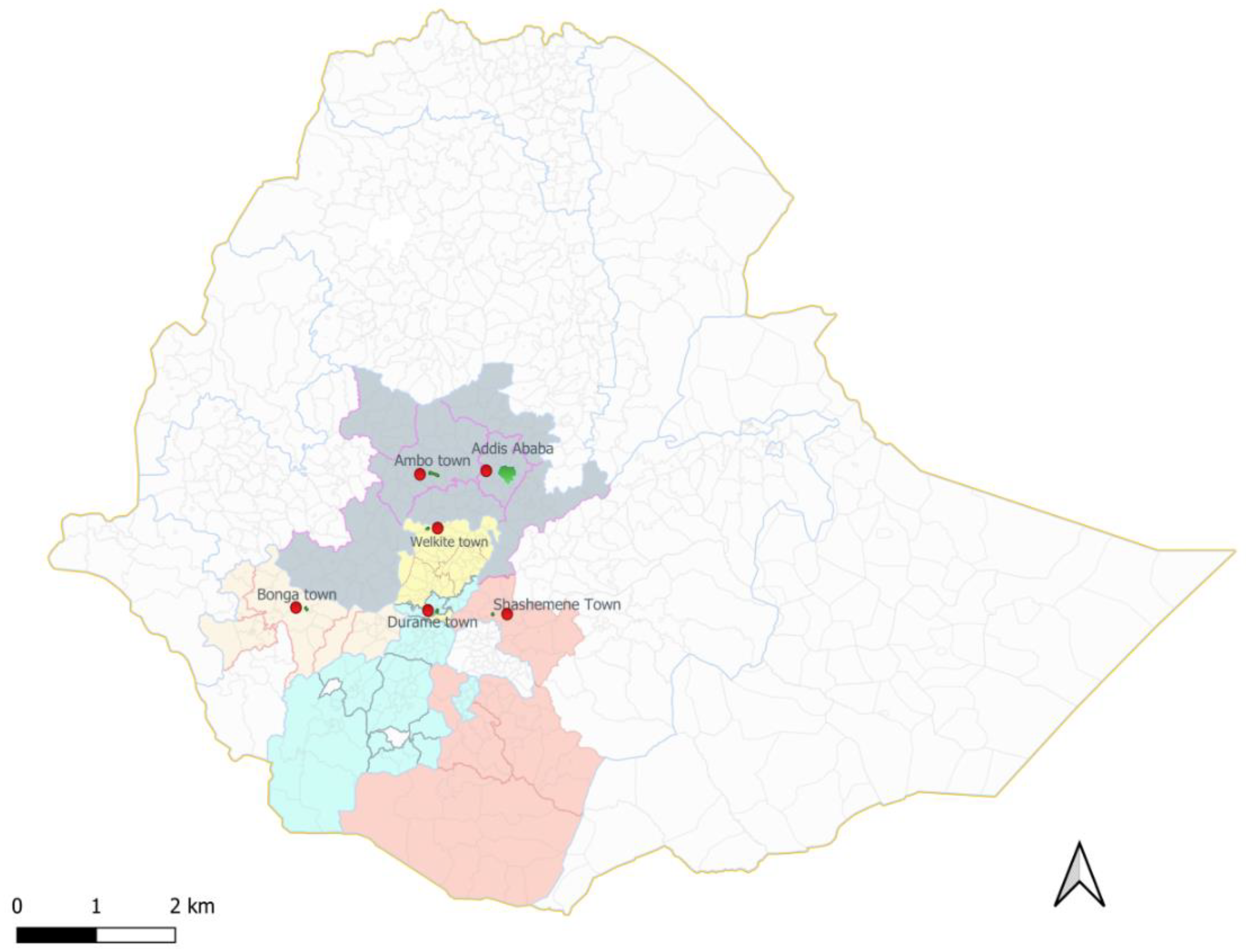
Figure 3.
Seed quality inspection and approval in Ambo and Welkite seed quality control laboratories in Ethiopia in 2021.
Figure 3.
Seed quality inspection and approval in Ambo and Welkite seed quality control laboratories in Ethiopia in 2021.
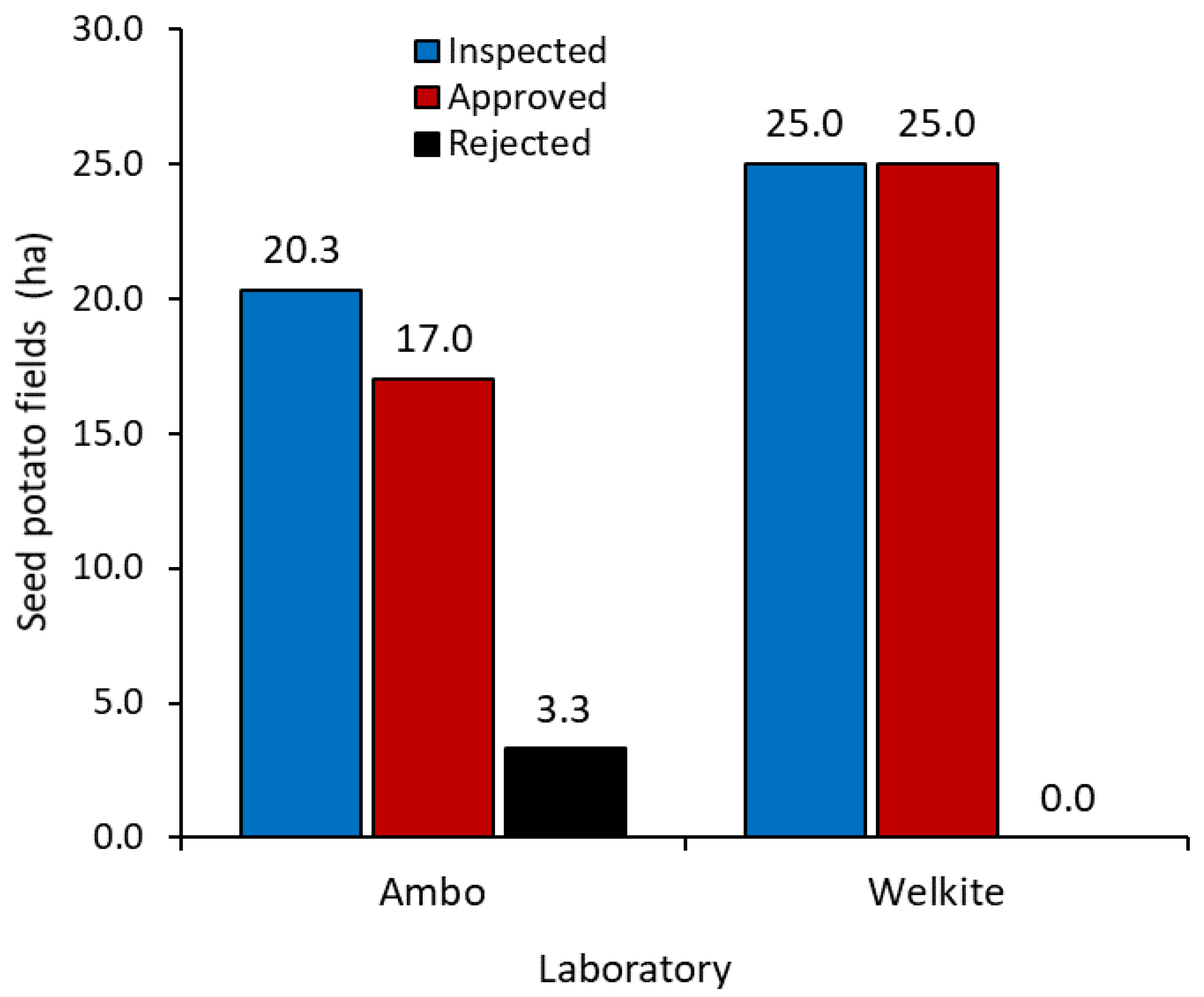
Figure 4.
Seed certification and CoC issuance or annual license renewal for seed producers in Ethiopia in April 2022.
Figure 4.
Seed certification and CoC issuance or annual license renewal for seed producers in Ethiopia in April 2022.
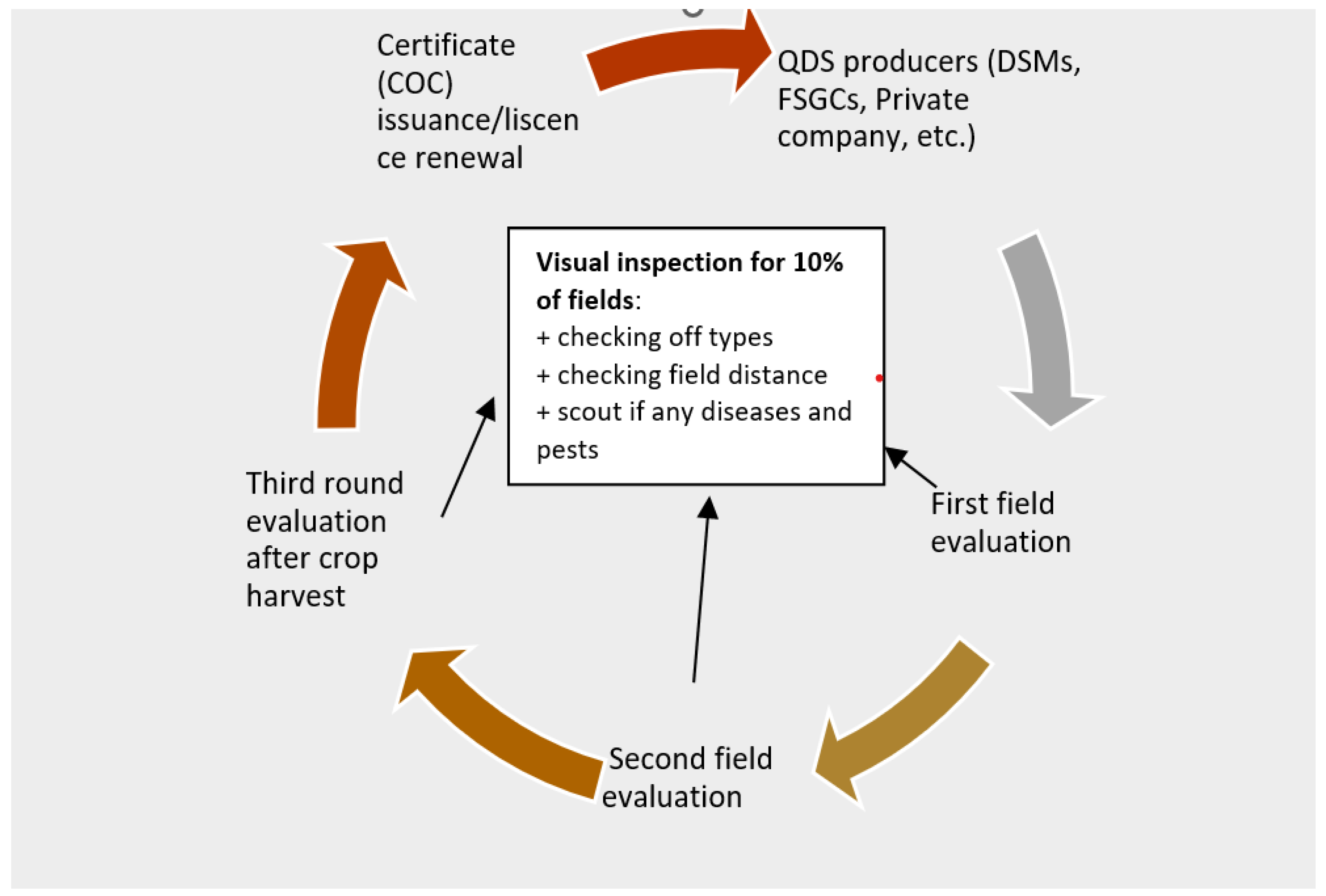
Figure 5.
Human capacity status of seed quality assurance laboratories in Ethiopia in April 2022.
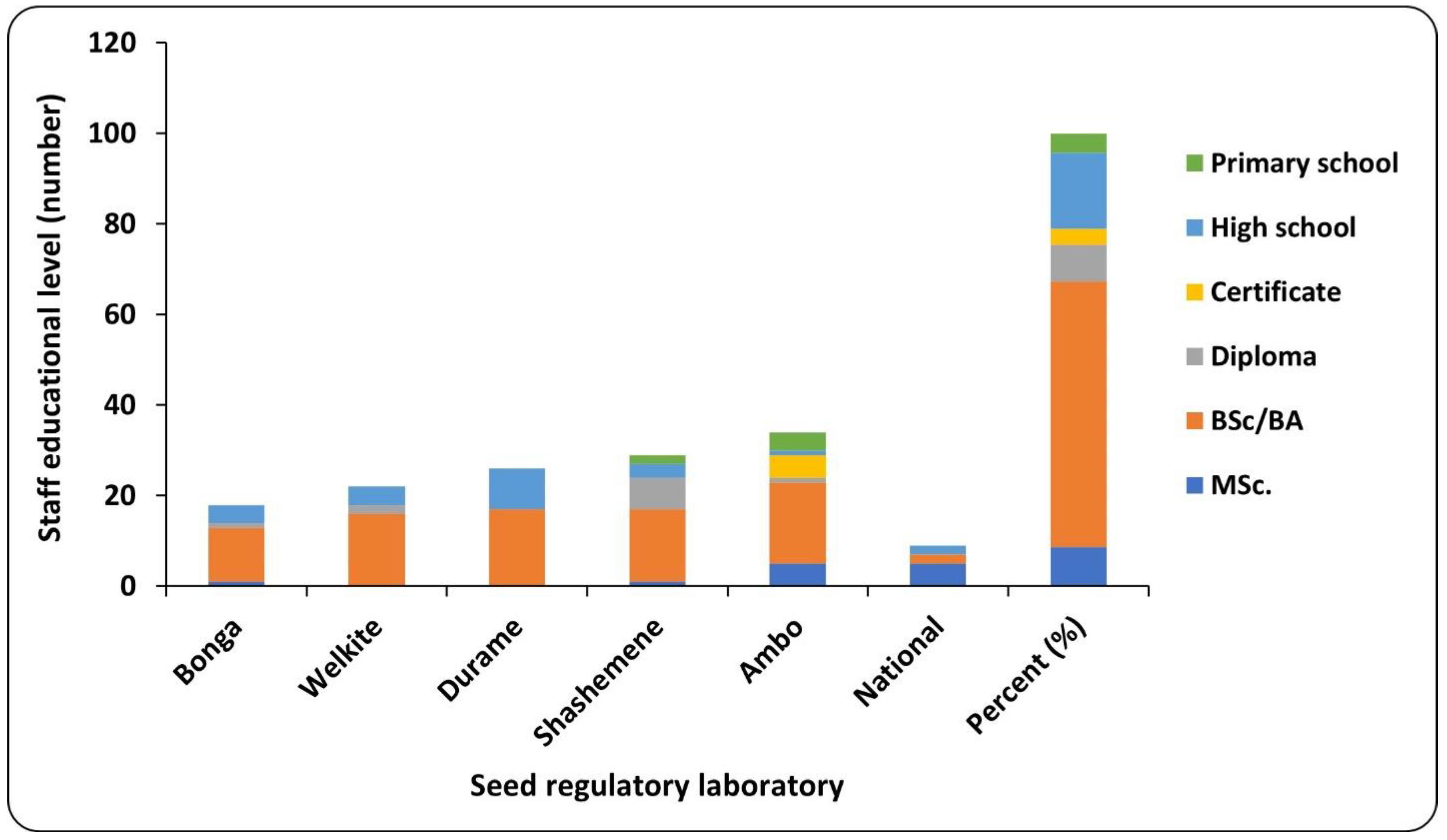

Table 1.
Major inspection activities conduct at Ambo and Welkite laboratories before seed potato is certified in 2021 crop year.
Table 1.
Major inspection activities conduct at Ambo and Welkite laboratories before seed potato is certified in 2021 crop year.
| Inspection stage | Yes/No | Reasons |
| Early vegetative (30-50 days after planting) | Yes | To check crop emergence status, isolation distance, and varietal purity |
| Flowering (55-70 days) | Yes | To check off types, insect pests, bacterial diseases, viruses, etc. |
| Postharvest (in store) |
Yes | To assess seed quality, disease presence, mechanical damage, cracking, storage conditions |
Table 2.
Human resource deployment by number in Oromia, SNNP and SWEP Regions and national seed regulatory laboratories in 2022.
Table 2.
Human resource deployment by number in Oromia, SNNP and SWEP Regions and national seed regulatory laboratories in 2022.
| Human Resource | Male | Female | Total | Percent |
| Zonal laboratory managers | 5 | 0 | 5 | 3.6 |
| Seed testing managers | 1 | 0 | 1 | 0.7 |
| Seed testing lab technicians | 10 | 7 | 17 | 12.3 |
| Field seed inspectors | 18 | 5 | 23 | 16.7 |
| Certification officers | 0 | 1 | 1 | 0.7 |
| Seed quality controllers | 5 | 2 | 7 | 5.1 |
| Product quality inspectors | 2 | 0 | 2 | 1.4 |
| Plant pathologist (BSc.) | 1 | 1 | 2 | 1.4 |
| Human resource managers | 3 | 2 | 5 | 3.6 |
| Estate managers | 2 | 0 | 2 | 1.4 |
| Planning and evaluation | 4 | 0 | 4 | 3.0 |
| Procurement assistants | 8 | 12 | 20 | 14.5 |
| Financial inspection and audit | 1 | 2 | 3 | 2.2 |
| Support staff | 6 | 6 | 12 | 8.7 |
| Records officers | 3 | 2 | 5 | 3.6 |
| ICT assistants | 1 | 0 | 1 | 0.7 |
| Security guards | 10 | 4 | 14 | 10.1 |
| Drivers | 10 | 0 | 10 | 7.3 |
| Secretaries | 1 | 3 | 4 | 3.0 |
| Total | 91(65.9) | 47(34.1) | 138 | 100 |
Table 3.
Laboratory facilities and capacities of seed quality assurance laboratories.
| Equipment | Bonga | Welkite | Durame | Shashemene | Ambo | National |
| Refrigerators | 1 | 2 | 2 | 1 | 2 | 0 |
| Deep freezers | 0 | 1 | 0 | 1 | 1 | 2 |
| Oven dries | 2 | 2(1) | 2 | 5 | 1 | 2 |
| Seed counters | 2(1) | 2(2) | 2 | 3(2) | 0 | 0 |
| Microscopes | 2 | 4(2) | 2(1) | 1 | 2(1) | 2 |
| Seed potato graders | 0 | 0 | 0 | 0 | 0 | 0 |
| PCR machines | 0 | 0 | 0 | 0 | 0 | 1 |
| Centrifuge machine | 0 | 1 | 0 | 0 | 0 | 0 |
| Shaker/incubators | 1 | 2 | 0 | 3 | 2(1) | 0 |
| ELISA plate reader | 0 | 0 | 0 | 0 | 0 | 0 |
| BW-ELISA kits | 0 | 0 | 0 | 0 | 0 | 0 |
| BW & viruses pocket testing kits | 1 | 1 | 1 | 3 | 1 | 0 |
| Magnifying lens | 0 | 0 | 2 | 2 | 0 | 0 |
| Analytical balances | 0 | 2 | 3 | 2(1) | 1 | 0 |
| Moisture testers | 0 | 1 | 1 | 2 | 1 | 0 |
| Autoclaves | 1 | 1(1) | 0 | 1 | 1(1) | 0 |
| Laminar flow hoods | 1 | 1 | 0 | 0 | 1 | 0 |
| Growth chambers | 0 | 2(2) | 0 | 1 | 0 | 0 |
| Grinding machine | 0 | 2(1) | 0 | 2(1) | 0 | 0 |
(X) Numbers in parenthesis refers to faulty and non-functional equipment.
Table 4.
Logistical and administration capacity of seed regulatory laboratories in Ethiopia in April 2022.
Table 4.
Logistical and administration capacity of seed regulatory laboratories in Ethiopia in April 2022.
| Logistics | Bonga | Welkite | Durame | Shashemene | Ambo | National |
| Own building | Yes | Yes | Yes | Yes | No | No |
| Vehicle (N) | 2(1) | 3(2) | 3(1) | 2(1) | 2(1) | 0 |
| Computer | 9(2) | 15(5) | 10 | 13(3) | 14(2) | 1 |
| Printer | 6 | 6 | 5(1) | 2 | 6(2) | 1 |
| Photocopier | 1 | 1 | 1 | 1 | 1 | 1 |
| Scanner | 0 | 0 | 0 | 1 | 2 | 0 |
| LCD projector | 0 | 0 | 0 | 0 | 1 | 0 |
(X) Numbers in parenthesis refers to faulty and non-functional equipment.
Table 5.
Operational level challenges reported and observed in the seed quality assurance mechanisms.
Table 5.
Operational level challenges reported and observed in the seed quality assurance mechanisms.
| Element of seed quality assurance | Challenges observed |
| Organization of the seed regulatory authority |
|
| Rules and standards |
|
| Data collection for seed quality assurance |
|
| Decision-making by zonal seed regulatory bodies |
|
| Enforcement of rules compliance with QDS standards |
|
| Communication across seed regulatory authority |
|
| Resource for seed quality assurance |
|
Disclaimer/Publisher’s Note: The statements, opinions and data contained in all publications are solely those of the individual author(s) and contributor(s) and not of MDPI and/or the editor(s). MDPI and/or the editor(s) disclaim responsibility for any injury to people or property resulting from any ideas, methods, instructions or products referred to in the content. |
© 2024 by the authors. Licensee MDPI, Basel, Switzerland. This article is an open access article distributed under the terms and conditions of the Creative Commons Attribution (CC BY) license (http://creativecommons.org/licenses/by/4.0/).
Copyright: This open access article is published under a Creative Commons CC BY 4.0 license, which permit the free download, distribution, and reuse, provided that the author and preprint are cited in any reuse.


