

Submitted:
27 July 2024
Posted:
30 July 2024
You are already at the latest version
Abstract
Within the European Union (EU), new plant varieties, to be included at the Common catalog of a member state, has to be registered at the national list, after plant variety testing processes to establish whether the candidate variety is distinguishable, uniform and stable (DUS) and meets the requirement of the cultivation or use value requirement (VCU). Technical development, climate change and changing consumer needs, including the detection of GMOs, necessitate the innovation of plant variety testing methods. Within the EU-funded "InnoVar" project, it has been sent out questionnaires to several countries, which were aimed at analyzing strengths, weaknesses, opportunities and threats (SWOT) of the current methods and with their help it is possible to have look for a new direction, opportunity and strategy, which can incorporate together with the innovation results into the development of the new methods. Our study confirmed that the SWOT analysis could be used to achieve the set goals; according to the answers to the questionnaires, it became necessary to introduce new characters (e.g. cold tolerance) and new test methods (molecular markers, precision techniques, organic farming) into the variety testing procedures. The development of high-yielding, disease and/or pest-resistant plant varieties with good adaptability and the accurate evaluation of genotypes play a crucial role in ensuring that farmers can access high-performing plant varieties and contribute to sustainable food production.
Keywords:
quality standards
; sustainable production
; yield performance
; SWOT strategies
; survey
1. Introduction
The development and availability of high-yielding, disease and/or pest-resistant plant varieties with good adaptability and the accurate evaluation of different genotypes play a crucial role in ensuring that farmers can access high-performing plant varieties and contribute to sustainable food production [1,2]. Within the European Union (EU), crop’s varieties must be included in a Member State's National List and/or common catalog before being marketed. This requires plant variety testing processes to evaluate whether the variety-candidate is distinct, uniform, and stable (DUS) and meet the requirement of value for cultivation or use (VCU) [3]. National Examination Offices carry out DUS trials according to Community Plant Variety Office (CPVO) protocols, which in turn align to International Union for the Protection of New Varieties of Plants (UPOV) guidelines, therefore all CPVO entrusted Examination Offices (EOs) within EU conduct DUS tests following the principals underlined in the protocols and describing the variety-candidates with the same morpho-physiological characters, so the results can be used and compared in each country [3,4].
The DUS test is based mainly on field growing tests, carried out by the authority competent for granting plant breeders’ rights or by separate institutions, such as public research institutes, acting on behalf of the authority, such as Research Centre for Plant Protection and Certification (CREA-DC; Italy), and Tystofte Foundation (Denmark). The examination generates a description of the variety, using those relevant characters (e.g. plant height, leaf shape, time of flowering), by which it can be defined as a variety according to the UPOV Convention (Article 1(vi) of the 1991 Act). The DUS protocol is essential for new varieties to make it to market after being registered on the National Lists of each country. For example, in the UK this process is managed by the Plant Variety Rights and Seeds Office (PVS), which is part of the Animal and Plant Health Agency (APHA) under the Department for the Environment, Food & Rural Affairs (DEFRA) thereby strengthening the control and harmonization of these accepted international standards.
The other main part of the variety testing process for the inclusion of agricultural plant species in the National Variety List is the test of the variety candidate’s cultivation and/or use value (value for cultivation, or use: VCU). The VCU protocols are on a national level and include rigorous rules that ensure exact evaluation of different traits such as yield, resistance/tolerance to biotic and abiotic stresses, quality traits and agronomic performance but do not consider some specificities adopted in sustainable farming systems. DUS and VCU tests are used to determine the distinct characteristics and agronomic potentials of newly developed plant varieties, however, these tests may not provide a comprehensive understanding the market viability or potential risk of varieties as well as agronomic techniques applied in farms addressed to increase the systems sustainability such as in organic farming.
SWOT (strengths, weaknesses, opportunities, and threats) analysis is one of the most widely used strategic planning tool that provides a comprehensive evaluation of enterprises, structures, specific object, activities, simple or complex processes, etc. by examining its internal strengths and weaknesses as well as external opportunities and threats of them [5,6,7]. SWOT analysis collects and efficiently presents information on internal and external factors that affect a business or specific processes. It is as a compilation of internal strengths and weaknesses of organizations derived from an assessment of its resources and capacities, alongside an inventory of external threats and opportunities identified through an analysis of its surrounding environment [8]. Evaluators typically place greater emphasis on external factors instead of internal factors [9]. It is a way of helping to build on what has been done well, to address the gaps, to minimize risks, and to maximize the chances of success. SWOT analysis is not a typical statistical data analysis or classical data elaboration, but a descriptive analysis of an object. The best solutions and ways can be found to improve and to increase the characters and properties of the studied object. The result of the SWOT analysis is an eight-field SWOT matrix. It not only enables the identification of factors, but also determines their importance and provides a comprehensive overview of a research problem [10]. More actors, such as stakeholders, participate in the SWOT analysis responses, more valuable the analysis will be. The result from the analysis can provide answers to build strengths; minimize weaknesses; seize opportunities; con-fronts threats. Strategy can be characterized as the alignment an organization establishes between its internal resources and capabilities and the opportunities and risks emerging from external factors [11].
The alignment phase within the strategy formulation framework includes five methods (SWOT Matrix, SPACE Matrix, BCG Matrix, IE Matrix, Grand Strategy Matrix) that can be applied in any order [12]. These methodologies depend on data obtained from the input stage to align external opportunities and threats with internal strengths and weaknesses. The harmonization of external and internal critical success factors is pivotal for the proficient generation of viable alternative strategies. To achieve integration and coherence between internal abilities and external factors of an organization, and specific objects, developing strategies is necessary. This involves aligning sources and skills with external factors [13]. The crucial alignment tool is the SWOT Matrix, which creates four categories of strategies [12]. ‘SO’ Strategies (Strength-Opportunity) apply internal strengths to use external opportunities, representing an ideal scenario for managers, while ‘WO’ Strategies (Weakness-Opportunity) specifically target enhancing internal weaknesses by using external opportunities. In the presence of significant weaknesses, efforts are directed towards transforming them into strengths, while confronting major threats prompts organizations to mitigate them and focus on exploiting opportunities. ‘ST’ Strategies (Strength-Threats) use strengths to either avoid or decrease the influence of external threats. Conversely, ‘WT’ Strategies (Weakness-Threats) are a defensive method aimed at mitigating internal weaknesses and prevent external threats [12]. With the help of SWOT analysis in variety testing programs, it can get not only comprehensive results about the advantages and disadvantages of the present variety testing processes (DUS and VCU), but it enables researchers and breeders to uncover valuable insights regarding market positioning, potential challenges during cultivation or commercialization stages, as well as opportunities for further improvement such as the values for the increasing of the sustainability of farming systems. After specifying the object of SWOT analysis, the experts on the object of study list the strengths and weaknesses as well as opportunities and threats. Various tools exist to guide experts on the subject through the process, often using a series of questions under each of the four elements.
The ‘InnoVar’ project improves next generation plant variety testing by developing tools and models that augment current practices, with specific objectives, such as explore the potential for phenomics and DUS characters to be used as VCU characters or opposite and determine the performance of varieties under different ‘growing scenarios’’ and agronomic management. To achieve all the objectives of the project, partners with significant expertise in various relevant fields were involved, working in cooperation throughout Europe and beyond. The project conducted a Europe-wide trial series focusing on wheat, utilizing a range of management regimes, including drought, reduced input, and organic growing scenarios. Therefore, the InnoVar project partners are a great resource to be exploited to better understand specific values and needs through a SWOT analysis. Some aspects and characteristics that needed to be clarified and understood are:
- for DUS: the protocol conformity to an internationally established standard, the character complete lists can be considered strength, the correctness of inaccurate ex-pression categories (e.g. determination of seed colour, and other), the lack of total objectivity for non-measurable characters, the use of molecular markers, etc.;
- for VCU: the quality control, the testing in organic management, the lack of international standardization on methodologies, the lack of available data in open access, the cost of post-registration tests, the costs for tests in organic management and for molecular studies supported by government, etc.
Considering one of the above-mentioned aspects such as organic management because the EU aims to significantly increase the area under organic production within the next 10 years [14]. As shown by the recent Commission Implementing Directive (EU) 2022/1647 (23 September 2022) amending Directive 2003/90/EC, as regards a derogation for organic varieties of agricultural plant species suitable for organic production, giving to the breeders the possibility to register organic varieties in the Community Catalogue.
Currently, VCU testing is generally conducted under conventional management practices only which relies heavily on synthetic inputs such as fungicides and herbicides. Thus, many important features of organic and sustainable farming are not evaluated in traditional VCU experiments. In many cases there is no information about the cultivars' ability to be cultivated under organic and sustainable conditions. The overall aim of this study is to evaluate currently used methods in DUS and VCU variety trials in different EU member states and, to obtain a comprehensive review of the strength, weakness, opportunities, and threats detected in the DUS and VCU protocols by SWOT analysis. This will help in decision-making to update the plant variety testing process.
2. Materials and Methods
2.1. Background of the Study
The adopted approach to reach the aim of this study was through a fixed process of research methodology structure defined at the work beginning (Figure 1). First, specific questionnaires relative to the testing of VCU and DUS protocols for various crops were arranged in advance. The questionnaires were circulated between the InnoVar project partners. Then, questionnaires were cir-culated to experts (examination offices, research institutes, universities) within and outside of Europe who were asked to respond for the SWOT analyses. This included also partners in InnoVar project and partners in INVITE project, which was funded under the same EC call (Research and Innovation action; SFS-29-2018).
2.2. Questionnaires Compilation
Table 1 and VCU testing (Table 2), based on previous discussions with experts. The questionnaires are plant species-specific they have been received completed questionnaires from the following 14 European countries, Italy, Estonia, Denmark, Austria, Slovakia, the Netherlands, Poland, Hungary, United Kingdom, Ireland, France, Belarus, Sweden, Finland. Additionally, 3 non-European experts sent back the filled questionnaire from Morocco, Uruguay, and South-Africa. All answers were evaluated.
The scale level of the data depends on the type of characteristic expression and the method used to capture that representation [15]. The type of scale may be nominal, ordinal, interval, or ratio. When evaluating measured or counted characters, DUS assessment relies on the observed values, which are converted into state of expression solely for distinctness analysis and describing varieties [16].
Groups of characters can be precisely defined, are derived from one genotype or genotype combination and consistent records can be repeated making the DUS characters quite robust. Also, they provide sufficient diversity in the species to be effective in identification of variety (i.e. Distinctness) (Figure 2).
3. Results and Discussion
3.1. Results of SWOT Analysis for DUS Protocols
This strategic approach provides a deep understanding of the current state of the DUS variety testing and allows for a detailed description of advancements and challenges. Consequently, it offers valuable insights into the possibilities for future developments, and internal or external influences affecting the system.
In Table 3, Table 4, Table 5, Table 6 and Table 7 the summary of SWOT analysis results for each plant species are reported.
3.1.1. Maize (Zea mays L.) DUS
Strengths:
All European countries adopted the National Guidelines for DUS test of maize, which is prepared based on UPOV Test Guidelines – TG/2/7, and CPVO Technical Protocol- TP/002/3 Date: 11/03/2010. National Guidelines for DUS test of maize conforms to an internationally accepted standard, and fulfils current requirements represented by international UPOV and community CPVO office. Although it is unanimously agreed that the scale used for expression level is defined properly, for some characters it is difficult to assign the proper expression level, particularly in the middle range values. The list of characters used for DUS test of maize is complete and this is considered as a Strength because characteristics are subject to international harmonization and updating. Moreover, characters are regularly discussed at working group meetings organized by UPOV and CPVO, to ensure their suitability for distinctness and descriptions of new varieties. Characteristics used for differentiating varieties have been found as useful grouping characteristics. Grouping characteristics can be used to organize the growing trial so that similar varieties are excluded from the trial, which has been agreed internationally. The representative from Slovakia suggested that in the near future extension of the current number of characters is needed, to include new ones for better distinctness among maize varieties.
Weaknesses:
In the case of presence of inaccurate expression categories, such as determination in the ear of coloration of silks, it is true that for some characters are very difficult to identify and assign the correct score level but the experience of the crop expert and the use of the reference varieties can help to determinate the correct note or preparation of more precise expressions could be a solution. Despite the instructions given in the CPVO protocol, and the list of the reference varieties, the lack of total objectivity for non-measurable characters (visually registered, pseudo-qualitative traits, such as shape) is potentially problematic. According to the respondents, new tools that help in the description of variety candidates or deeper explanations with illustrations or photos from characters could help to avoid this issue.
Opportunities:
EO’s are largely in agreement on the introduction of molecular markers to improve the management of the reference collection and the distinctness test, but the respondents added that the high costs should be supported by the government. Multiple respondents shared an opinion on data sharing of DUS data between European countries, the main issue is the different environmental, climatic and soil conditions. But data exchange from DUS tests is a step which would improve the management of the reference collection and the DUS test. In Europe two groups of three countries each are sharing DUS data for maize so far.
3.1.2. Lentil (Lens culinaris Medik.) DUS
Strengths:
The internationally accepted and used guidelines for DUS test of lentil is CPVO/TP-210 (Figure 3). The character scale used for expression level is appropriate, but in some cases, it is slightly subjective. In some characters the scale or aspects are not enough (e.g. determination of plant habit or seed colour). The group of character’s lists was complete, but due to the appearance of a winter type of lentil, it is necessary to consider introduction of new characters into the variety testing processes. There is an increasing demand for the breeding of overwintering legumes, so it is necessary to check and supplement the list of properties of the UPOV descriptions. The characters used for differentiating varieties are considered as Strengths.
Weaknesses:
There are only four choices on the list in the case of the determination of main seed color. In reality, line / cultivars express colours that are not included in the scale, so the expression of character categories is considered as a Weakness. In addition, the list of characters is not complete to enable variety description, and, in some cases, it is difficult to assess some characters. The use of example varieties helps the assessment work.
Opportunities:
All respondents agreed that the introduction of molecular markers in the variety testing processes is a necessity. They also agreed that this would increase the costs, so the governments should support these examinations.
3.1.3. Perennial ryegrass (PRG) (Lolium perenne L.) DUS
Strengths:
National Guidelines for DUS test of perennial ryegrass prepared based on UPOV Test Guidelines – TG/4/8 and CPVO Technical Protocol- TP/004/1. National Guidelines for DUS test of perennial ryegrass conforms to an internationally accepted standard, represented by UPOV and CPVO (Figure 4).
Scale used for expression level of characters covers all possible states of expression characters and it is one of the most logic scales to use (1-9).
Groups of characters can be precisely defined, are derived from one genotype or genotype combination and consistent records can be repeated making the DUS characters quite robust.
Characters which are used for differentiating varieties have been agreed as useful grouping characteristics. Grouping characteristics are used to organize the growing trial so that similar varieties are grouped together. According to the answer of EO of the Netherlands – (which considered both a Strength and Weakness) –it is challenging to determine distinctness of varieties with a limited set of characters, especially considering the very large reference collection. The characters cover the morphological variety identification, but because of the genetic background of perennial ryegrass and the year interaction caused by the environmental conditions makes it as Weakness.
Weaknesses:
Specific expressions are not measured in herbage DUS however, inaccurate expression categories can be a weakness. When there are potential candidates that do not meet the distinctness criteria after 2 full tests, they are usually sown alongside the reference varieties/variety it could not be distinguished from for another 2-year visual assessment comparison (i.e. no DUS testing done on these plots). This can assist the breeder in accepting the lack of distinctness in the DUS test. Equally so, they can advise on what special test might measure any visual difference that has been noted in the field but not expressed or assessed in the spaced plant tests.
According to the respondents it is not appropriate to talk about lack of “total” objectivity. Of the 22 characters scored in the herbage DUS test, only six are visually scored (or (pseudo) qualitative). These are scored by highly trained and skilled crop experts, with many years of experience, following the UPOV convention. Although it is not as objective as quantifiable characters, it still follows a defined procedure for measuring, estimating, and differentiating visual characters by experienced personnel. In the Netherlands and the UK, there are always two testers responsible for a crop and before visual observation experts starts, they calibrate themselves based on example varieties.
Opportunities:
Use of molecular markers was identified as key opportunities, with three major scientific advantages identified. Firstly, it will enable us to better understand expression of phenotypes between the genetic x environmental interaction; secondly, it will enable us to distinguish and define new varieties from one another and: thirdly, it will enable us to trace the origins of specific/interesting traits and allow better control over how these are or are not selected for in subsequent generations and/or genetically modified organisms.
Perennial ryegrass varieties are groups of individual genotypes with similar phenotypes. Use of SNPs or other genetic markers to group genotypes to identify a variety is a useful tool in safeguarding plant breeders’ rights and also to have a database which can monitor genetic diversity and drift of a species.
Introducing of new techniques like RGB/ depth camera would be also an Opportunity.
Threats:
Use of molecular markers could be a potential threat if it is not understood, regulated and governed correctly, which is why governments should be an integral part of, and constantly involved, in any new research or technology in this area. This will prevent the creation of a knowledge gap or development of fear of the innovations themselves.
Another aspect which might be considered important, is the fact that more and more farmers are selecting to grow grasses with other species for environmental reasons (e.g. with clover to reduce external nitrogen input), known as multispecies swards. Special tests could be brought forward for these types of systems. Although more aligned to the VCU rather than DUS, it may be interesting to catalogue this at the molecular level to see what happens to potential genetic expression when varieties are grown in multispecies/multivariety swards.
3.1.4. Potato (Solanum tuberosum L.) DUS
Strengths:
National Guidelines for DUS test of potato conforms to an internationally accepted standard, represented by UPOV and CPVO (UPOV Test Guidelines – TG/23/6 and CPVO Technical Protocol- TP/023/3).
The potato is a difficult species to examine for DUS. Many characters are tested on a visual basis only without the possibility of measurement. Not all the respondents agree that the scales used for expression level would be Strength. Unlike experts of Italy and Poland answered that this scale allows description of a characteristic in an effective way. According to other respondents, this is not a Strength because sometimes it is not sufficiently objective. For example: the length of axillary shoots on young light-sprout (Figure 5): short: 3; medium: 5; long: 7; and the scale of some characters is marked from 1 to 5, while some others from 1 to 9. It is recommended to standardize the scale from 1 to 9 (for example: character 24 – Inflorescence: size is 3 to 5 must be changed 1 to 9). The Slovakian EO regularly makes revisions of expression level following requests to their UPOV and CPVO working groups.
List of traits in the table of characteristics of National Guidelines for DUS test of potato is complete (total 37 characteristics), sufficient for assessment of variety distinctness and are subject to international harmonization, updating, discussion at working group meetings organized by UPOV, and CPVO. New features can always be added later when the protocol is revised in consultation with other EO’s and the CPVO.
Morphological characters of potato cultivars are very specific and can be very different. Characters which are used for differentiating varieties have been agreed as useful grouping characteristics which are used to organize the growing trial so that similar varieties are grouped together.
Weaknesses:
Experts believe that the expression categories of traits are inaccurate as some characters are very difficult to be objectively assessed. This has been discussed many times by the entrusted EO’s of potato DUS testing who agree that the lack of objectivity is problematic. Accurate expression of characters requires more up-skilling of crop experts, exchange of information and experiences between EO’s, better explanation in guidelines and use of helpful illustrations and photographs.
Lack of total objectivity for non-measurable characteristics is a Weakness and can potentially be solved by the crop expert’s experience and by using reference varieties expressing different classes. Furthermore, it could be resolved using image analysis techniques. According to the experts of the Netherlands it is not a Weakness, because in addition to the potato protocol, a calibration book can also be used in which photos are taken of every characteristic, such as the tuber shape and light sprout shape.
Even though the potato genome is complex (strongly heterozygous and autotetraploid), testing the genotype instead of the phenotype can be applied, since the propagation is done vegetatively according to the Hungarian expert.
Opportunities:
Molecular marker testing should be considered an opportunity and should be of help in case of doubts about identity and distinctness of the variety. The molecular marker information in the EU Potato Database provides an efficient DNA profiling tool to identify varieties which should be added to the national collection. Varieties, which are not in the reference collection, but with a high genetic similarity to the given candidate variety should be added to its DUS growing trial. This will decrease the risk to miss similar varieties.
The Plant Breeding and Acclimatization Institute in Poland carries out tests of virus resistance in potato varieties for the Research Centre for Cultivar Testing (COBORU). COBORU has signed an agreement on participation in the European Potato Database. Examination Offices have sent coded samples of candidate potato varieties to the laboratory in Naktuinbouw, the Netherlands to check whether a new potato variety candidate matches with an existing variety and to minimize the number of lines in the field from the reference collection. The morphological description will always exist and will not be replaces by only a DNA profile.
3.1.5. Oilseed rape (Brassica napus L.) DUS
Strengths:
National Guidelines for DUS test of oilseed rape conforms to an internationally accepted standard, represented by UPOV and CPVO (UPOV Test Guidelines – TG/036/6 and CPVO Technical Protocol- TP/036/3).
The scale used for expression level allows the description of a characteristic in an effective way; the list of characters is complete, and these characters are sufficient to describe and distinguish new varieties. In oilseed rape the expression categories are accurate, based on the international cooperation during CPVO and UPOV working groups and the currently used non-measurable characteristics are observed with an objective approach.
Weaknesses:
There is only one aspect which can be considered as a weakness. Common methodology should be developed for conducting measured characteristics and their analysis. The number of observations of measurable characteristics requires a lot of work and time to perform at the appropriate growth stages, specific for each measured characteristic. The representative of Belarus highlighted that the lack of objectivity for non-measurable characters can be a problematic because during DUS testing, the expert may inaccurately determine expression categories through of lack of experience or because of incorrect conditions for determination of expression categories (e.g. bright day light for determination of seed colour). According to an expert in South-Africa however, although total objectivity will not work for these characters and it is less time consuming than measured characteristic, good illustrations and explanations make this a Strength rather than a Weakness.
Opportunities:
Use of molecular markers is an opportunity to reduce the number of similar varieties in the DUS test; check the formula in the hybrid varieties; have more characteristics to quickly check whether a lot of seed is or not of that variety (in seed certification e.g.). All respondents agreed that the of use of molecular markers in DUS test is a strength, but according to one of the respondents it is also a Threat. The complex nature of the DUS test in oilseed rape means it can be very difficult to establish correct link between a molecular marker and a morphological characteristic. Moreover, use of molecular markers may lead to lack of one unified approach to DUS testing in all UPOV member countries. The introduction of new techniques, like image analysis with artificial intelligence with scanners (Zoom agri, for example) or drones would also be an Opportunity to assess some morphological characters such as shape, green color intensity, color of seeds, etc. to distinguish varieties.
Threats:
According to non-European respondents, lack of knowledge transfer can be a Threat and continuing education of DUS experts is important. Sharing knowledge through exchange visits to plots and laboratories would prove invaluable to develop the visual expertise, critical in this crop.
It was also highlighted that GMO innovations –specific to this Brassica genus – can be considered as a Threat and should be tested thoroughly to ensure that local natural environments and species genetic pools are not irreversibly contaminated.
3.2. Results of SWOT Analysis for VCU Protocols
One relevant aspect concerning VCU variety testing is related to the sustainable farming management and specifically to the organic certified materials. The organic certified food and farming has been growing year by year around the World and continues doing so. In Europe the total organic farmland area grew to 10.4% in 2022 [17]. Sustainable food system is an important focus and objective of European Green Deal and under the Farm to Fork strategy, the European Commission has set a target of at least 25% of the EU agricultural land under organic farming by 2030. The new organic regulation (EU) 2018/848 on "Organic production and labelling of organic products and repealing Council Regulation (EC) No 834/2007” has the objective to safeguard a high level of agricultural diversity which could be achieved by using i.e. varieties selected for organic and sustainable agriculture. Nevertheless, lack of national and international priority of characters during the VCU test is still not considered a weakness of the system for all the countries. Perhaps because the international priority is given by the directive 2003/90/EC in which are indicated the characteristic as regards the examination of the value for cultivation or use (1. Yield 2. Resistance to harmful organisms 3. Behavior with respect to factors in the physical environment 4. Quality characteristics) and, where all the actors of the sector (producers, breeders, universities and scientific profiles, regional authorities, etc.) are included.
It is known and internationally recognized that the ordinary genotypes selection under conventional management is effective for traits with high heritability. Unfortunately, the selected genotypes under conventional management tested with high inputs and intensive agronomic techniques are too often not suitable and adaptable in farms organically managed. This because in organic and sustainable farming management approach and the agronomic applied techniques are totally different to the conventional ones. In the farms organically managed the biotic and abiotic components in the systems are organized in a much more complex way to simulate and be close as much as possible to the ecosystems structure. Organic farmers use varieties bred for conventional agricultural systems by asking derogation for the sowing. So, the genotypes selection for the adoption in organic farming is necessary to take into account more complex traits and should be characterized by high genotype by environment interaction. In addition, it is essential that selected genotypes show superiority in the target environment for breeding success.
The specific plant, environment, and agronomic techniques characteristics should be combined for the evaluation testing, because of large genotype-environment-agronomic techniques interactions existing in organic and sustainable agriculture [18]. Recently the new European regulation (Directive (EU) 2022/1647) (23 September 2022) asked the Member States to adopt a derogation for organic varieties of agricultural plant species suitable for organic production because there is a big interest by the European Commission in the increasing of farming sustainability around Europe. In the variety testing system, to define the best varieties for organic and sustainable management of farms two important aspects should be considered a good genotypes selection approach. The first aspect is related to the traits (e.g., weed competitiveness, disease resistance and/or tolerance, adaptation to diverse soils, etc.) that are important for organic farmers and processors. The second aspect is connected to the trials environment for the varieties evaluation, which should give highest probability to be the best for the key traits in organic farms [19].
In Table 8, Table 9, Table 10 and Table 11 the SWOT analysis findings of VCU tests for each plant species are reported.
3.2.1. Maize (Zea mays L.) VCU
Strengths:
Reading the responses about quality control in VCU tests, the answers and opinions are divided into two parts; several countries have understood by “quality control” the “quality system” that is the management of the VCU test within a quality system. All the respondents agreed that this is Strength because it supports the process and helps to avoid or discover mistakes made during the VCU process and highlights the need for improvement. In Poland, there is a Quality Control Inspector, who has reporting responsibility to Director General. For the EOs that comprehend quality control as the quality analysis of the product, they considered the quality of the product an important characteristic to consider to the final evaluation of a new variety and provides comprehensive characterization of the variety. The quality control of seed is also considered as an Opportunity.
The questionnaire sought opinions on the necessity of variety testing under organic conditions. Among the responding EOs, Poland conducts organic variety testing, and Estonia, if needed. Even if most of the countries interviewed do not test new variety candidates under organic conditions, some of them considered taking different approaches with respect in the VCU testing, including under organic conditions, to be a way to provide better evaluation of new material. Moreover, most of the experts think that adding organic testing into VCU protocols could be a Strength, especially in the current climate change scenario where agriculture plays a key role in an environmental sustainability. There are 7 testing zones in grain maize, 3 in forage maize in France, so it is not possible to include additional organic areas for cost and experimental capacities reasons. Others outlined that nowadays the percentage of the area managed organically in Europe is still low for maize so there are no concrete plans to conduct organic VCU trials and it is also important how new organic VCU testing regulations will be agreed. Also, to test the new varieties in organic conditions it would be essential to establish more collaboration among European countries which could lead to stronger network in the future concerning different aspects of trialing. So, most of the respondents considered this as Opportunity, too.
Some countries suggested as an innovation, the introduction of characters dealing with abiotic and biotic resistance/tolerance, different laboratory analysis or quality tests.
Weaknesses:
Opinions are divided on the question of whether international standardization on methodologies and protocols is necessary. Most of those interviewed think it is not appropriate to completely standardize the VCU protocol for maize because the pedoclimatic conditions are too variable across Europe. A certain degree of flexibility in testing protocols is necessary due to the individual climatic conditions of a country and demands in production. There could be some method catalog or recommended experimental setup for testing certain varieties/characteristics. The international standardization of methodology would help the harmonization of VCU-testing, ensure a similar level of quality, and the unification of VCU results would generate comparable results.
Whilst it is not crucial to have VCU results from other countries, the interviewees believe the data of the country where the VCU test has been performed, is fundamental. From the point of view of the international market, if the data are available, international comparison of the results can be easier, and independent information about new varieties can help to better explain the differences according to the locations (Genotype x Environment interactions).
Currently, varieties are only tested under conventional cultivation in most countries. Most of the respondents do not think that it should be a Weakness, because there is limited organic maize production in several European countries, such as Denmark or Sweden, and results in conventional may predict, to some degree, organic results. There are countries where breeders are not ready to work with organic varieties. But from 2023, all European countries should follow the new directive (2022/1647/EC), which will be challenging for the future. In general, this could be an opportunity if specific disease tolerance tests or quality parameters are included. For example: tolerance to different races of downy mildew (sunflower); tolerance to foliar diseases (sugar beet); tolerance to herbicides (oilseed rape, sunflower, rice); tolerance to salinity (rice), etc. Currently, a Weakness in maize VCU protocols is related to disease characters.
Opportunities:
Involvement of special traits such as nitrogen or water use efficiency, weed competitiveness would be an opportunity from the perspective of smart agricultural with less environmental impact and it would open up opportunities for more sustainable varieties, but they lead to an increase in the cost of testing.
Regarding the decrease of post registration test fees, different answers have been collected because these tests are performed differently among countries. Although, all respondents agreed that reducing the costs can be an opportunity, but also present Weaknesses and/or Threats, as well. According to one respondent, it seems impossible decreasing the costs of the registration processes, the balance is important between the service provided and cost, and the allocation of resources to possible new efficient assessment targets.
Respondents suggested testing the behavior of new varieties under low input or dry conditions during VCU process.
Threats:
The addition of organic trials in VCU variety testing would increase the fees, mainly due to the manual labor involved to control the weeds, but it could be useful if supported by the government.
While molecular studies would increase the costs, the respondents agreed that genotyping can be used as a complementary tool to improve the knowledge in pests and diseases resistance and must be mainly based on field experiments.
3.2.2. Lentil (Lens culinaris L.) VCU
The VCU tests are performed on agricultural crops, there are no VCU test in lentils, because it is a horticultural crop. Despite this it is crucial to know if VCU tests would be a good proposition for lentils as breeders would welcome the introduction of performance testing.
The Strengths and Threats categories were not relevant, due to the lack of the VCU tests, but according to the respondents of EOs it is not a weakness, because lentil is not an important crop and has no significant economic importance. One of the respondents highlighted that if the lentil is included on the list of regulated plant species, it will almost certainly be considered as a vegetable species (like Phaseolus sp.). The opinions are uniform about its introduction due to the lack of interest in conducting VCU tests in lentil.
3.2.3. Perennial ryegrass (Lolium perenne L.) VCU
Strengths:
Respondents agreed that quality control is a strength in VCU testing programs for new grass variety candidates, it supports the process and helps to avoid or discover mistakes made during the process. For example, in the UK values (plot weights, % dry matter) are checked on data and if necessary, a field check too. If the difference is more than 10% between two replicated plots, then an explanation must be provided. This can often occur due to low growth early in the season. At a higher level, the data from a trial site is compared at the UK National List level with data from trial sites across the UK. If it is not satisfactory for any reason, possibly due to adverse weather effects etc., it is not used.
The VCU testing programs for new candidate grass varieties in Ireland emphasizes strong quality control measures to ensure reliable results. The quality control process includes first the germination test in an accredited laboratory to guarantee a minimum germination level. Then external accredited companies perform the calibration of balances utilized for weighing seed packs. All fundamental parts of the growing technology are under continuous and stringent controls (machinery, applied sowing methods and parameters, use of methods of fertilizers and plant protection products, harvesting, drying) during the growing season and post-harvesting processing. This is achieved through strict adherence to crop protocols which are reviewed annually by technical experts. An Assistant Agricultural Inspector conducts the analysis of harvest data, and its verification is performed by an Agricultural Inspector before its release, guaranteeing precision and dependability.
According to the answers quality control was found to be a Weakness, Opportunity, and a Threat. A Weakness, if not properly implemented, or if insufficient staff resources to implement it. Opportunity, whereby the VCU trialing system for grass can be improved even further. Threats, as it needs more staff resource.
Most of the countries interviewed do not test new variety candidates under organic conditions. Currently there is no commercial demand from farmers or the seed industry to test grass varieties under organic conditions, as grass varieties are evaluated for their dry matter yield and quality. The EO in Estonia has the possibility to test the variety in organic management in one site out of 3, but only if the breeder orders the trial in organic management for a specific variety. This is the reason why they think that it is a strength. Most of the respondents thought that in future, this may be an opportunity given that environmental challenges, and organic cultivation is an opportunity to produce healthy animal feed. But it can be a limitation (W), as the variation in soil mineral N fertilization from organic conditions could potentially impact variety performance, and this effect may not be directly applicable to organic conditions, according to an expert of this field.
As suggested by innovation of VCU tests, the growth of perennial ryegrass is influenced by various factors, such as temperature and soil moisture. It would be essential to document local meteorological and soil moisture data in trials, as this data can be correlated with the growth of different varieties. This correlation becomes particularly crucial, especially at regional levels, in the context of climate change. The current trialing system is conducted under high rates of nitrogen to ensure nutrients are non-limiting. Therefore, low nitrogen trials should be implemented in the future as a step towards more sustainable input use, whilst being more reflective of actual on farm grass sward management to encompass various grassland-based enterprises.
Weaknesses:
According to the respondents, the lack of international standardization is not a weakness. Although, they agreed that international standardization is important, but due to the differences between climatic conditions of counties, needs of grass production are very specific, so it would be very hard to internationally standardize some parts of methodologies. Every country has their best experience and knowledge of their conditions and possible values and should be able to set standards that are best for them. The expert from Sweden suggested determining a recommended minimum values at least for a key set of parameters, which would help the harmonization of VCU-testing. In the case of quality, although the protein content is a varietal characteristic, it is also largely determined by the time of cutting. The harvested crop of forage plants is usually not marketed. For this reason, establishing a minimum value for protein content, etc. would also not be meaningful.
Concerning the protocol standardization, most respondents think that each country needs its own protocol suited to local conditions and demands in production. From another point of view, there are fewer breeders of perennial ryegrass than of wheat, for example, and end-use is also similar in the individual countries. For this reason, it would be appropriate to partially standardize the VCU testing methodology. Moreover, if varieties were evaluated across standardized protocols, then data would be more comparable and would be less likely to be undermined or questioned by breeders and academic institutions.
Apparently, it is not crucial to have the data from other countries, but it would be useful; the interviewees consider the data of the country where the VCU test has been performed as essential.
In the case of conventional management practices used in VCU variety testing (as Weakness) the opinions are different. This is not regarded as a weakness, because conditions differ very little between organic and conventional farming. But it can also be a strength because varieties are tested for what they will be ultimately used for, which in our situation is for conventional management to achieve higher dry matter yields and higher quality. EOs, who’s opinion is that this aspect is a weakness think that it is also an opportunity. In Austria, a large portion of grassland is managed organically. The VCU test should reflect actual agricultural use. The availability of nutrients (particularly nitrogen) differs from farm manure (e.g., slurry) to inorganic mineral fertilizers.
The lack of national and international priority of characters during the VCU test is not a weakness of the system for all the countries. Priority of characters is possible on the national level, but it is very difficult on the international level.
Opportunities:
Involvement of special traits could be an opportunity – but mainly in organic conditions – but would increase the costs of VCU process. Special traits that are considered being relevant (such as stamina/persistence and winter hardiness) are already being assessed in Sweden and the UK. Nitrogen use efficiency and weed competitiveness would be seen to be more relevant in other crops, but N use efficiency will become increasingly important regarding NO2 emissions. Certain characteristics are complex and can only be examined under specific conditions that are challenging and/or costly to replicate in trials. The efforts should be evaluated in relation to the practical significance of the trait. In Denmark, special traits are assessed upon the applicant's request. More information is usually better for decision making for stakeholders.
Different answers have been collected about the possibility of reducing the cost of post-registration tests because these tests are performed differently between countries. All agree that low costs are always an advantage but some EOs are making effort to decrease the post-registration costs, for example in Denmark pre- and post-registration trials are combined which minimizes the costs. In most of the responding countries, such as Austria, no separate post-registration trials are carried out for perennial ryegrass. Instead, after variety registration, the varieties are assessed for another year to determine their persistence. The trial is only terminated after this assessment.
Threats:
Every country agreed that to implement additional organic trials are more expensive than conventional trials, which is a threat, although most of them do not conduct organic VCU trials on grass varieties. Only Estonia can conduct organic VCU test (if needed), their opinion is the price would probably be the same. If organic tests were needed, it would be important to be supported by the government.
Another aspect which should be considered is an index or score for new varieties to allow better decision making and ‘future proofing’ varietal selection, for example, combining the DUS with genotyping and ecosystem service and soil carbon capture potentials and profitability.
The countries agree that it is not important to apply any molecular studies for VCU of grasses.
3.2.4. Potato (Solanum tuberosum L.) VCU
Strengths:
Quality control, of both system and product, is important and necessary in potato VCU tests. The control of nutritional value of the potato tubers is of great importance; the role of starch and reducing sugar content determine the end use of the tuber. Testing of protein content can be an opportunity. Quality control of the system helps reduce errors and highlights process weaknesses, so it is also an opportunity. Moreover, it supports the process and helps experts to avoid or discover mistakes.
Four countries (Austria, Estonia, Poland and France) can test varieties in organic conditions. Estonia has 1 site out of 3, but only if the breeder requests the test for a specific variety. In Austria, early to medium-early maturing varieties can be placed in 2 out of 6 organic sites, while medium-late to late maturing varieties can be tested under organic conditions in 1 out of 6 trials. Most of the respondents agreed that variety testing in organic condition is an opportunity as well, because the new potato cultivars that are resistant/tolerant to several pathogens should be tested in organic condition. According to the Hungarian expert, it can be a threat due to the growing costs and sensibility of abiotic factors. The degeneration of potato in Hungary is tested, which is a strength, but in the opinion of the expert, this should be tested for longer period (W and O).
Weaknesses:
Respondents who think that the lack of standardization on methodologies and protocols is a weakness of the VCU tests justified their answer by saying that the results would be comparable and could promote the correct evaluation of different potato cultivars. Since climatic conditions are very different in Europe, it would be difficult to internationally standardize some parts of methodologies. Every country has their best experience and knowledge of their conditions and possible values and should be able to set standards that are best for them. This is the reason why most responding countries do not consider it as a weakness. The respondents agreed – except Slovakia and Hungary – that the lack of available data is not a weakness, but this is a barrier for the future development of VCU testing.
Vary opinions have been received on whether the organic test is necessary in potato VCU testing. Performance of the new (multi-resistant/tolerant) potato cultivars in organic conditions would be very valuable information for breeders, farmers, etc., but organic tests would increase the cost of the evaluation process. But results obtained in conventional conditions can predict the suitability for organic production, because conventional VCU methods contains a lot of useful disease tests; so, it is not a weakness, but strength or opportunity.
Opportunities:
Involvement of special traits are an opportunity for post-registration and organic VCU trials, and if the knowledge gained is justified, it can be an opportunity especially if breeders are willing to meet the additional costs. In addition to a better and specific evaluation of new varieties beyond the classic evaluation parameters, it is an opportunity to increase and differentiate the landscape of varieties available to farmers. Decreased cost of post-registration testing is an opportunity and low costs are always an advantage. In Denmark, trials are inherently expensive due to the amount and cost of labour involved. The demand for post-registration data is limited compared to other crops since much of the production is done on contract or the product is sold beforehand. It would be a great opportunity to support post-registration tests by farmers’ organizations and food industries, as well as by public funding. Use of molecular markers can be an opportunity to evaluate the resistance characters to pathogens, and these tests have the potential to have a big impact on identification of varieties, international trade systems and plant breeder´s right system.
Threats:
Including more trials or studies in VCU testing process would increase the cost, which is a threat, but with governmental support it would become an opportunity.
3.2.5. Oilseed rape (Brassica napus L.) VCU
Strengths:
The quality control, as with any other plant species, safeguards quality and highlights the need for improvement. Most of the respondents agreed that this is an opportunity, as well, although this may require more investment (especially in staff).
Most of the countries interviewed do not test varieties in organic conditions, there is no current need for that, but EOs can start organic tests upon request from the applicant. Organic evaluation of new varieties that do not express their potential in the traditional network may be an opportunity. Respondents highlighted that oilseed rape is a difficult crop to cultivate organically, due to the high threat from pests and diseases.
According to an expert from Italy, an international standardization would be desirable, both to evaluate the new variety with the same parameters, and to have common protocols between the various countries carrying out the trials.
Weaknesses:
Regarding the answers, the lack of international standardization on methodologies were considered to be partially a weakness, and also partially not. Not weakness, because each country has their own climatic conditions and specifics needs, international standardization for minimum values is not useful. It is hard to compare such values across Europe due to different agroclimatic conditions. Weakness, because it could be useful to share information on standard methodologies. In Austria, VCU tests are conducted to examine the oil and glucosinolate (which is harmful to both humans and animals) content and, more recently, the protein content. A variety with a very low oil content is not valuable and is not registered. It is not necessary to set a limit value. An international limit value has been set for erucic acid and glucosinolates and it should be the same in all EU countries. The opinion of the Slovakian expert coincides with this suggestion.
While the responses to the question about the international methodology were not unanimous, respondents agreed that the lack of international standardization in protocols is not a weakness. Their opinion that each country needs its own protocol suited for the local conditions and demands in production.
The opinion is also varied regarding the availability of data. Some respondents said that it is not necessary to share the agronomic data between the different countries. Agronomic data shows the potential of varieties in one country which may not necessarily be useful in another country. However, the majority of respondents believe that, for example, data on resistance/tolerance to diseases would be important and useful for comparison and would give more complete information about the variety. Sufficient data is the basis for good quality variety testing.
The opinions are also different between the countries regarding national and international priority of characters during the VCU test. Those respondents who answered that this is not a weakness, said that the priority of characters differs on the regional basis. More important and less important traits are recognized. A slightly different priority is justified (e.g. winter hardiness is more important in Northern Europe than in South-Europe). According to the Austrian expert there are plans to describe the varieties in terms of their resistance to Turnip Yellows Virus (TuYV) in the future.
Opportunities:
A better and specific evaluation of new varieties beyond the classic evaluation parameters is an opportunity to increase and differentiate the landscape of varieties available to farmers. Furthermore, it is a challenge for organic breeders to expand their portfolio of quality organic varieties and for farmers to increase organic growing areas. The respondents also gave additional opportunities, such as, using drone technology to determine phenological traits and diseases and artificial inoculation in disease studies or breeding of varieties tolerant to increasing stress factors and low nitrogen requirements.
Threats:
The cost of organic trials and molecular studies are the main threat-factors. Organic trials are expensive for oilseed rape. This is due to the substantial number of the trials not being of sufficient quality to be used due to heavy pest infestations. Molecular studies are mainly related to resistance genes and chemical properties, which could provide important information on disease resistance/tolerance etc. of varieties. Both organic trials and molecular studies should be supported by the government, but according to the expert from France, in the case of organic trials at a long term, the system of assessment for organic production should be self-financed. Organic sector could contribute to the financing.
3.3. Development of SWOT-Strategies for DUS and VCU Plant Variety Tests
3.3.1. SWOT-Strategies for DUS Protocols
Based on the results, two SWOT strategies could be established: “SO” and “WO” (Table 12). “ST” and “WT” strategies could not develop, due to the lack of threat factors. This could mean that the DUS variety testing is a well-functioning system, containing possibilities and innovations. The weakness of the system can be the lack of the objectivity for visually registered characters, but the solution is the organization of training.
3.3.2. SWOT-Strategies for VCU Protocols
Quality control considered a Strength of VCU tests, is an important part of VCU testing, with several possibilities. It has a detailed guide to the variety testing and has adequate quality control documents. Introducing more quality analysis (SO1) an application of quality inspectors (SO2), with reporting obligation (just like in Poland) can be an opportunity. Quality control can be a weakness if not properly implemented, or if insufficient staff resources to implement it (WO1). In many countries, there has been no variety testing in organic conditions so far, but this may change in the future. It could be possible to add organic trials in the network (SO3) – depending on the plant species – and determine the value of the variety by using the network's average result (mix of conventional and organic trials). Standardization of the most important characters (even few) should be defined (SO4; WO2) and then the results reported in the Catalogues and registers. In this way, the consumer could be free to choose objectively the varieties (Table 13).
Difficulty of harmonization of VCU tests is the different disease and climatic stress tolerances for the same cultivar. National multilocation variety trials and the establishment of different agro-climatic zones (ACZ) – as in the InnoVar project – are solutions to enable identification of varieties that meet diverse agronomic and consumer requirements. The most important aim of VCU trials - focusing on the benefits of the varieties – is to support farmers in achieving greater efficiency, profitably and sustainable management. During the project implementation of a harmonized VCU “InnoVar-protocol” was developed and applied in VCU trials in 14 different European trial locations across 10 countries and 5 ACZ. The results of the project would form the basis for the development of new, integrated, user-friendly systems using molecular, genomic, phenomics and machine learning techniques to increase and improve the efficiency and accuracy of European crop variety testing and on-farm decision-making.
A SWOT analysis is a method used to scan strengths, weaknesses, opportunities, and threats of businesses to establish a strategic plan or roadmap [20,21], which can help in decision making processes. Application of SWOT analysis alone or in combination with another method, such as the Technique for Order Preference by Similarity to Ideal Solution (TOPSIS) [6] or Analytic Network Process (ANP) [22] can help determine the best strategy for the studied organization. The SWOT analysis is versatile, revealing strengths and opportunities in various contexts. It's used in benchmarking to identify best practice opportunities and threats, in industry analysis to understand market opportunities, in situation analysis to evaluate customer trends, costs, and competition, and in scenario planning to contemplate potential future scenarios [23]. SWOT analysis can be successfully performed in the agricultural sector to evaluate agricultural businesses, managements, economics, farm operation systems [21,24,25,26] and it proved to be a useful tool to build different strategies analyzing the assessing the correlation between agricultural food insecurity, demand and food supply, and understanding the specific connection of this relationship to the context of the COVID-19 pandemic [27]. Conducting SWOT analysis for evaluation of the plant variety testing system is not widespread but is a useful method. Findings of a case study highlight the importance of the post-registration variety test scheme in Poland and its impact on agricultural practices, variety selection, and the overall agricultural economy. The study also emphasizes the significance of diverse funding sources and the potential for increasing the scope of variety testing to benefit farmers and agricultural productivity [3]. As a part of a European Project, LIVESEED [28] discussion on the inclusion of organic VCU testing descriptions in countries where such trials are conducted, emphasized their close connection to organic pre- and post-registration trials. Additionally, it highlights the presentation of information, including selected examples of post-registration trials, through SWOT analyses, providing a comprehensive overview.
Involvement of special traits to the variety testing process, such as weed competitiveness, nitrogen or water use efficiency clearly in link with sustainability objectives and generate more information for sustainable production. All suggested innovations and opportunities found in our study focused on the enhancing the efficiency of food and agricultural systems, supporting the resilience of agricultural systems to adapt to rapid changes and extreme conditions, and encourage and maintenance of the sustainability of agriculture.
The introduction of molecular markers in the variety testing is crucial for the accuracy and effectiveness of the tests and also, they could help to identify new characters that could be consider for both DUS and VCU tests reducing the cost of the trials and also new traits for new varieties more suitable for a regenerative agriculture.
4. Conclusions
Technical development, climate change, and changing consumer needs, including the detection of GMO organisms, necessitate the innovation of methods in plant variety testing. For the development of new methods to be even more effective, experience gained on a wider scale is necessary. The questionnaires sent to several countries help in the reaching of this aim, which looks for a new direction, opportunity, and strategy with the help of the analysis of the weakness and strength of the current methods, which is then integrated with the innovation results and the development of the new methods can be built on the basis of all the results.
As output of this study, the SWOT analysis can be adopted to achieve the stated goals, the introduction of new characters (e.g. cold tolerance) and new testing methods (molecular markers, precision techniques) became relevant. In the future, it is necessary to map the possibilities inherent in the variety testing methods of the major plant species of all EU member states, and to create the necessary financial background for this. This study displays the results on the SWOT analysis on DUS and VCU tests and provides an alternative strategy to innovate the protocols. This work contributes to better understand that the varieties well performing in organically managed farms have potential barriers in being identified if variety testing are not carried out under organic and sustainable farming rules addressed to high sustainability level. It should be shared across Europe, at different level both political and technical, as it constitutes a critical analysis by key actors of the agriculture system on the procedure to release new varieties on EU territories in force in Europe, especially in this time of changing. Indeed, recently the European Commission published a proposal for a new regulation of the European Parliament and of the Council on the production and the marketing of plant re-productive material in the Union (Brussels, 5.7.2023). In this time around Europe several institutions at different level governance are reviewing the proposal with the aim to provide their input on the new regulation.
Author Contributions
Conceptualization, N.M.D., R.M., S.M.U. and L.B.; methodology, N.M.D., R.M., S.M.U., L.B.; formal analysis, N.M.D., R.M., S.M.U., L.B., K.M.T., E.N., P.C. and T.B.; investigation, N.M.D., A.G., R.M., S.M.U., L.B., K.M.T., E.N., P.H.K., P.C., M.A., M.At., and T.B.; writing—original draft preparation, N.M.D., K.M.T., and H.B.; writing—review and editing, N.M.D., K.M.T., R.M., H.B., M.A., M.At., S.M.U., E.N., T.B., P.C., L.B., P.H.K. and A.G.; visualization, R.M., K.M.T.; supervision, N.M.D., R.M., and L.B.; project administration, H.B. All authors have read and agreed to the published version of the manuscript and have contributed substantially to the work reported.
Funding
This project has received funding from the European Union’s Horizon 2020 research and innovation programme under grant agreement No 818144.
Institutional Review Board Statement
Not applicable.
Informed Consent Statement
Not applicable.
Data Availability Statement
Data are contained within the article.
References
- Cooke RJ, Reeves JC. Plant genetic resources and molecular markers: variety registration in a new era. Plant Genetic Resources. 2003;1(2-3):81-87. [CrossRef]
- Brown D, Van den Bergh I, de Bruin S, Machida L, van Etten J. Data synthesis for crop variety evaluation. A review. Agron Sustain Dev. 2020;40(4):25. [CrossRef]
- Niedbała, G.; Tratwal, A.; Piekutowska, M.; Wojciechowski, T.; Uglis, J. A Framework for Financing Post-Registration Variety Testing System: A Case Study from Poland. Agronomy 2022, 12, 325. [Google Scholar] [CrossRef]
- Gilliland TJ, Gensollen V (2010) Review of the protocols used for assessment of DUS and VCU in Europe—perspectives. In: Huyghe C (ed) Sustainable use of genetic diversity in forage and turf breeding. Springer, Berlin, pp 261–275.
- Helms, M.M. and Nixon, J. (2010), "Exploring SWOT analysis – where are we now? A review of academic research from the last decade",Journal of Strategy and Management, Vol. 3 No. 3, pp. 215-251. [CrossRef]
- Alptekin, N. Integration of SWOT analysis and TOPSIS method in Strategic Decision Making Process. Macrotheme Rev 2013;2(7):1–8.
- Z. Mandrazhi (2021). Swot - analysis as the main tool of strategic management of agricultural enterprise. SHS Web Conf, 110 (2021), Article 04001. [CrossRef]
- Stacey, R.D. Strategic Management and Organisational Dynamics; Pitman Publishing: London, UK, 1993; ISBN 0 273 600982. [Google Scholar]
- Pickton, D.W.; Wright, S. What’s swot in strategic analysis? Strateg. Chang. 1998, 7, 101–109. [Google Scholar] [CrossRef]
- Szum, K.; Nazarko, J. Exploring the Determinants of Industry 4. 0 Development Using an Extended SWOT Analysis: A Regional Study. Energies 2020, 13, 5972. [Google Scholar] [CrossRef]
- Sevkli, M., Oztekin, A., Uysal, O., Torlak, G., Turkyilmaz, A., & Delen, D. (2012). Development of a fuzzy ANP based SWOT analysis for the airline industry in Turkey. Expert Systems With Applications, 39(1), 14-24.
- David, F. R. (2007). Strategic management concepts and cases (11th ed.). New York: Prentice Hall. p.211.
- Abd Ghani, K.D.; Nayan, S.; Mohd Ghazali, S.A.; Shafie, L.A.; Nayan, S. Critical internal and external factors that affect firms strategic planning. Int. Res. J. Financ. Econ. 2010, 51, 50–58. [Google Scholar]
- European Commission (2021). Communication From The Commission To The European Parliament, The Council, The European Economic And Social Committee And The Committee Of The Regions On An Action Plan For The Development Of Organic Production {SWD(2021) 65 final}.
- UPOV (2001). Technical working party for agricultural crops. Draft for TGP/8 “good statistical practices for DUS testing” section 4: types of characteristics and their scale levels. Thirtieth Session Texcoco, Mexico, September 3 to 7, 2001. https://www.upov.int/edocs/mdocs/upov/en/twa/30/twa_30_8.pdf.
- UPOV (2012). Technical working party for fruit crops. Revision of document TGP/8: part I: DUS trial design and data analysis. New Section 2 – Data to be Recorded. Forty-Third Session Beijing, July 30 to August 3, 2012. https://www.upov.int/edocs/mdocs/upov/en/twf_43/twf_43_16.pdf.
- FiBL Statistics, 2024. https://statistics.fibl.org/.
- Wolfe et al., 2008). [Wolfe MS, Baresel JP, Desclaux D, Goldringer I, Hoad S, Kovacs G, Löschenberger F, Miedaner T, Ostergard H, Lammerts Van Bueren ET, 2008. Develop-ments in breeding cereals for organic agriculture. Euphytica, 163, 323-346.
- Przystalski, M. , Osman, A., Thiemt, E. M., Rolland, B., Ericson, L., ̈stergård, H., Levy, L., Wolfe, M., Büchse, A., Piepho, H.-P., Krajewski, P., 2008. Comparing the performance of cereal varieties in organic andnon-organic cropping systems in different European countries. Euphyti-ca,163, 417–433.
- Gürel, E. 2017. SWOT analysis: A theoretical review. The Journal of International Social Research 2017, 10 (51), 994-1006. [CrossRef]
- Benzaghta, M. A. , Elwalda, A., Mousa, M., Erkan, I., & Rahman, M. (2021). SWOT analysis applications: An integrative literature review. Journal of Global Business Insights, 6(1), 55–73. [CrossRef]
- Cayir Ervural B., S. Zaim, O.F. Demirel, Z. Aydin, D. Delen. An ANP and fuzzy TOPSIS-based SWOT analysis for Turkey's energy planning. Renew. Sustain. Energy Rev.,2017, 82 (1), pp.1538-1550.
- Leigh, D. (2009). SWOT analysis. Handbook of Improving Performance in the Workplace, 1(3), 115-140. [CrossRef]
- Akhtar, K.; Pirzada, S.S. SWOT analysis of agriculture sector of Pakistan. J. Econ. Sustain. Dev. 2014, 5, 127–134. [Google Scholar]
- GC, A.; Ghimire, K. A SWOT Analysis of Nepalese Agricultural Policy. Int. J. Agric. Environ. Food Sci. 2018, 2, 119–123. [Google Scholar] [CrossRef]
- Kurmanalina, A.; Bimbetova, B.; Omarova, A.; Kaiyrgaliyeva, M.; Bekbusinova, G.; Saimova, S.; Saparaliyev, D. A swot analysis of factors influencing the development of agriculture sector and agribusiness entrepreneurship. Acad. Entrep. J. 2020, 26, 1–8. [Google Scholar]
- Abid, A.; Jie, S. Impact of COVID-19 on agricultural food: A Strengths, Weaknesses, Opportunities, and Threats (SWOT) analysis. Food Front. 2021, 2, 396–406. [Google Scholar] [CrossRef]
- LIVESEED Boosting organic seed and plant breeding across Europe 2017 – 2021. Deliverable 2.1 Overview on the current organizational models for cultivar testing for Organic Agriculture over some EU countries. 2019. https://orgprints.org/id/eprint/37818/1/LIVESEED-D2.1_Overview%20of%20the%20organisational%20models%20of%20cultivar%20trials%20for%20organic%20agriculture_endelig.pdf.
Figure 1.
Research methodology structure.
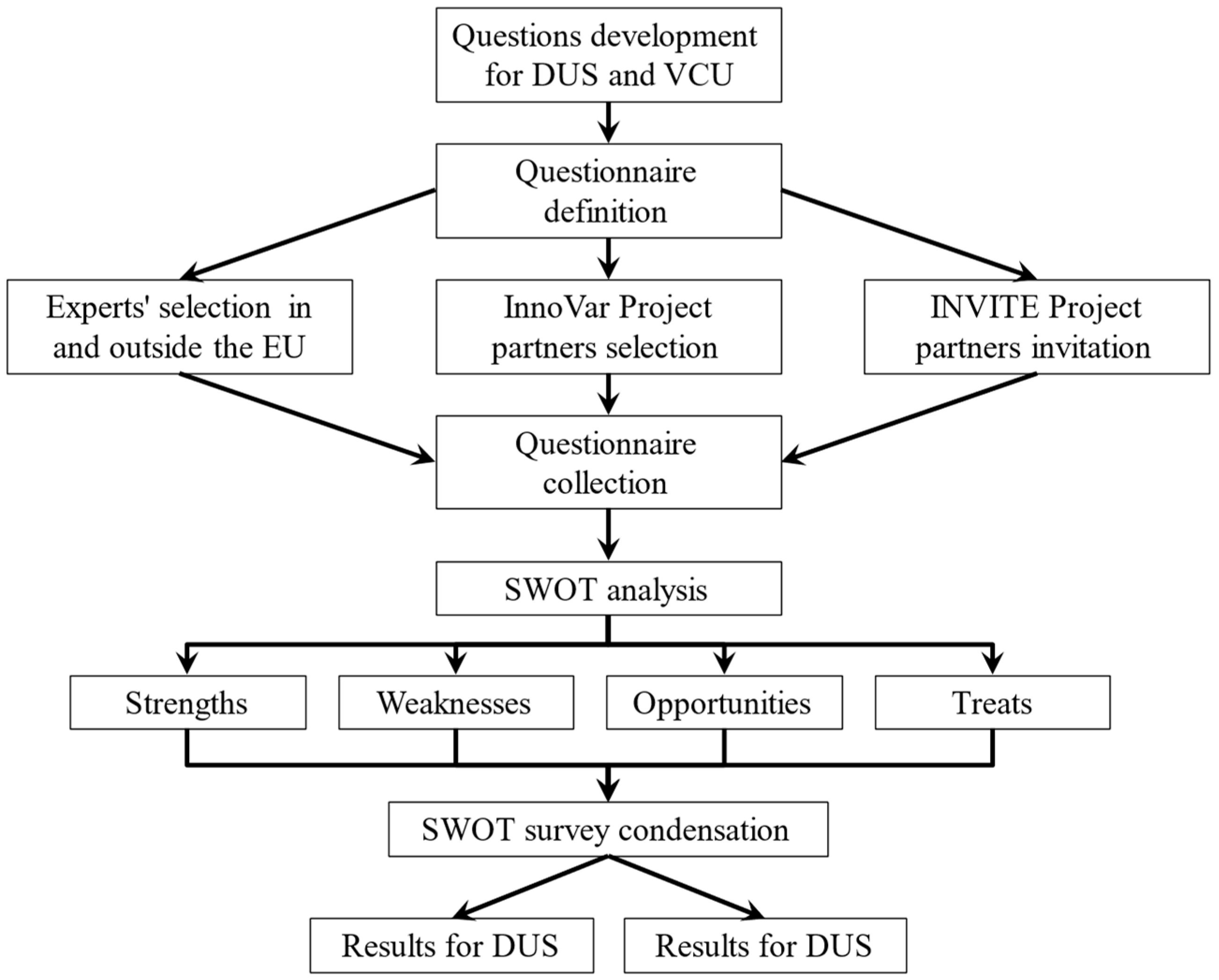
Figure 2.
The ear characters of durum wheat are important variety traits (Source ‘InnoVar’ experiment, Nyíregyháza, Hungary).
Figure 2.
The ear characters of durum wheat are important variety traits (Source ‘InnoVar’ experiment, Nyíregyháza, Hungary).
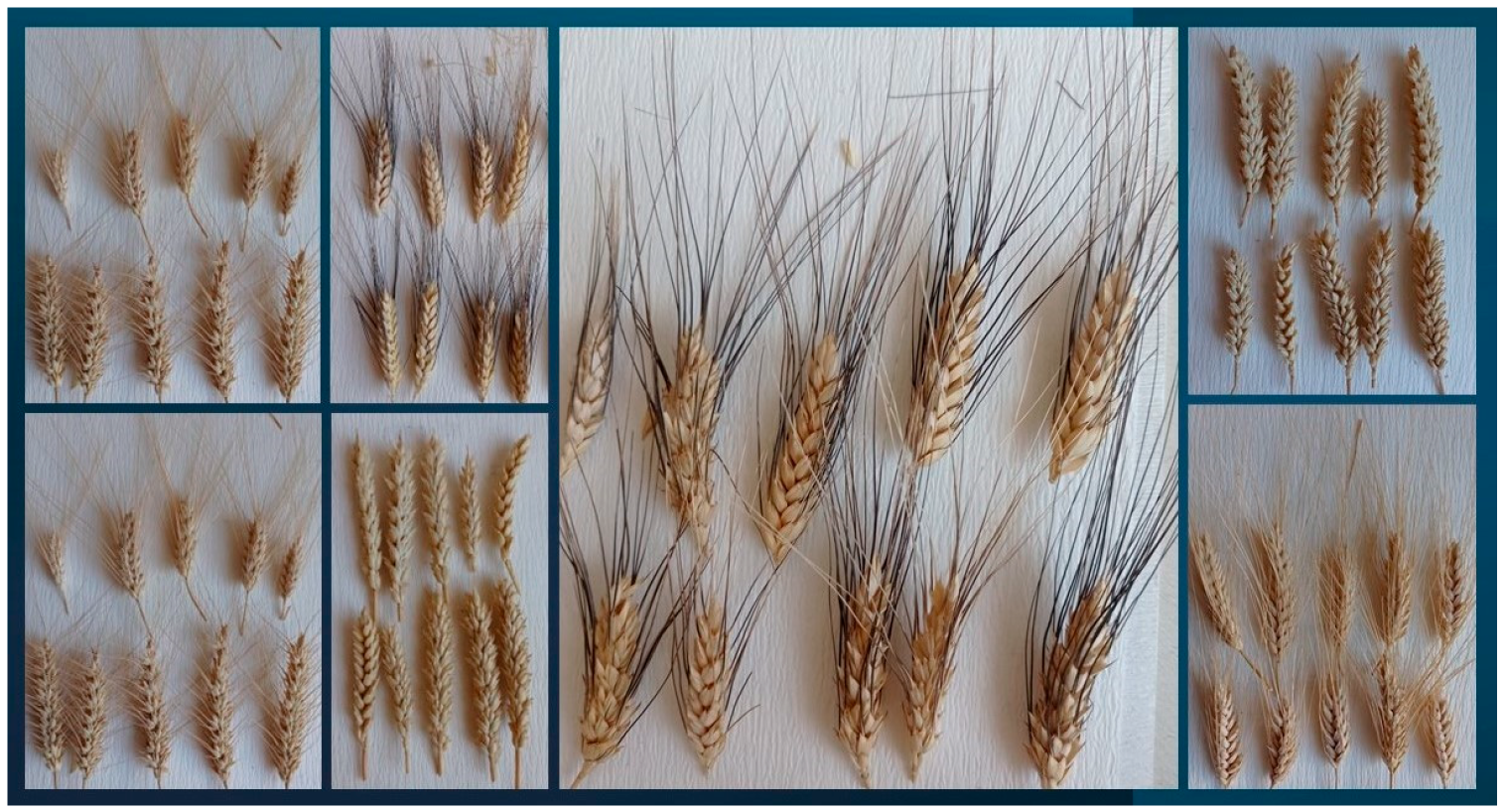
Figure 3.
Uniform and heterogenous seed colors of different lentil breeding lines (Source: photos were taken by Nóra Mendler-Drienyovszki).
Figure 3.
Uniform and heterogenous seed colors of different lentil breeding lines (Source: photos were taken by Nóra Mendler-Drienyovszki).
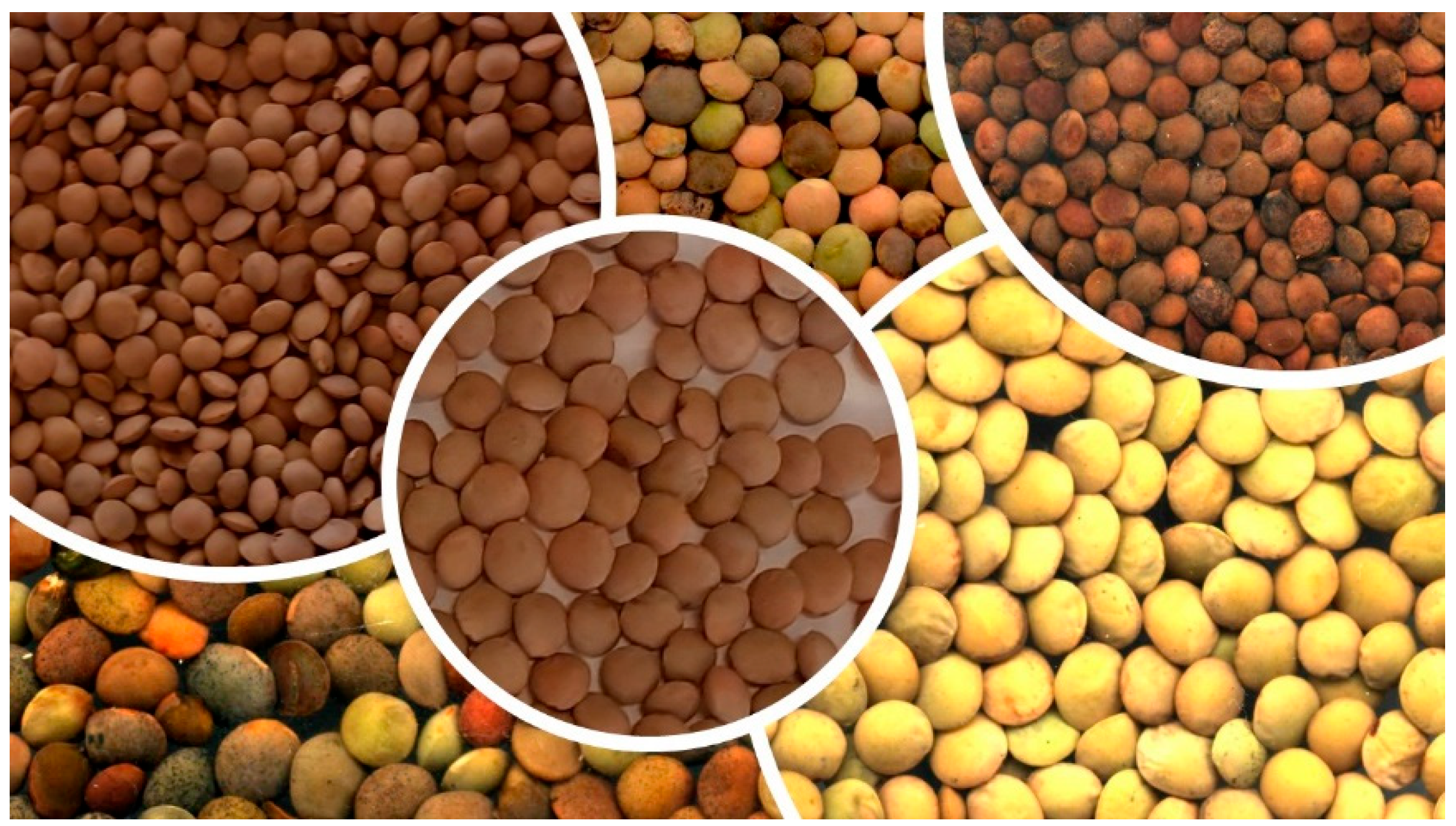
Figure 4.
DUS observations of perennial ryegrass (source: photos were taken by Lisa Black).
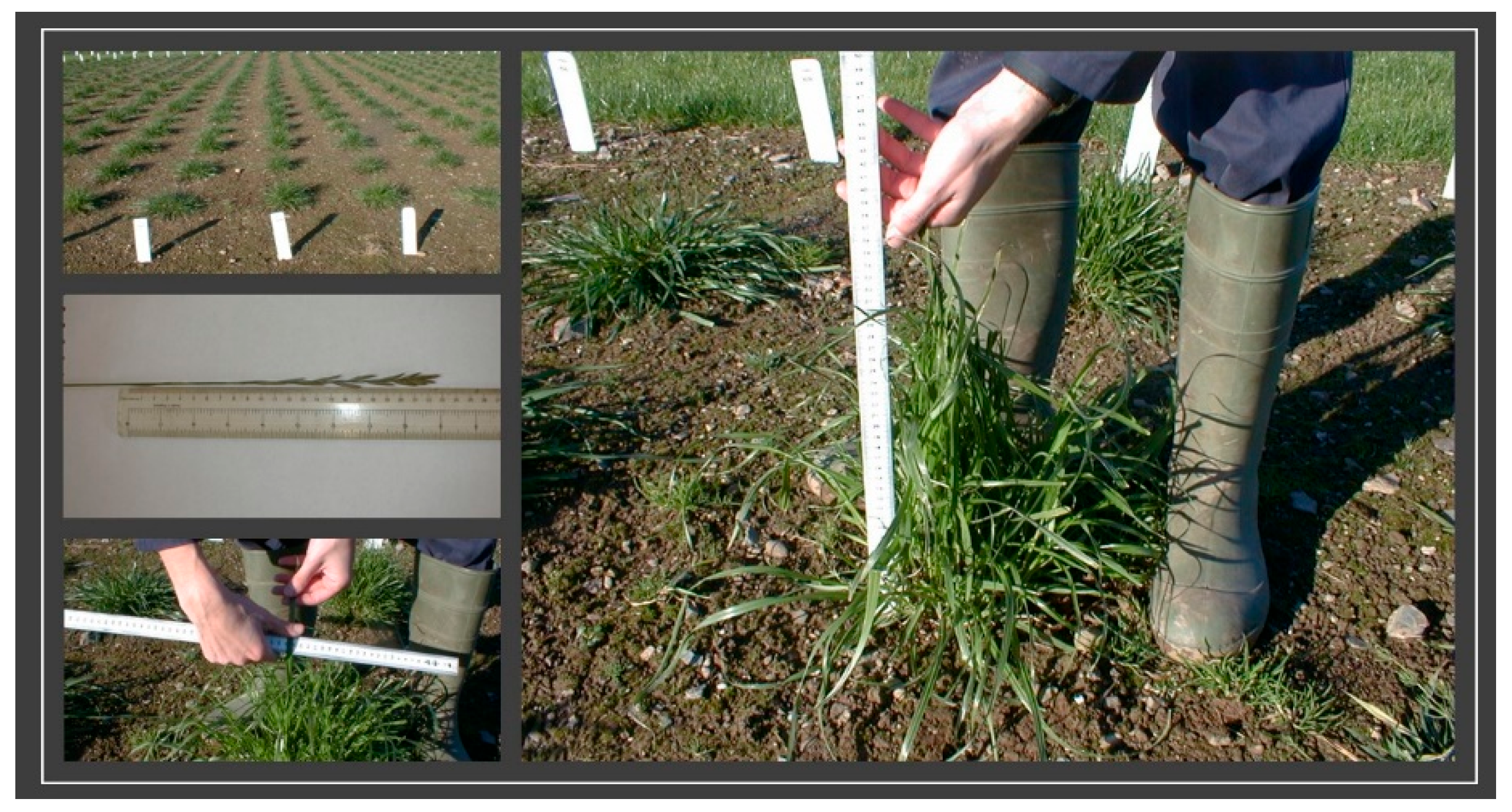
Figure 5.
Different light-sprout of potato breeding lines (Source: photos were taken by Katalin Magyar-Tábori).
Figure 5.
Different light-sprout of potato breeding lines (Source: photos were taken by Katalin Magyar-Tábori).
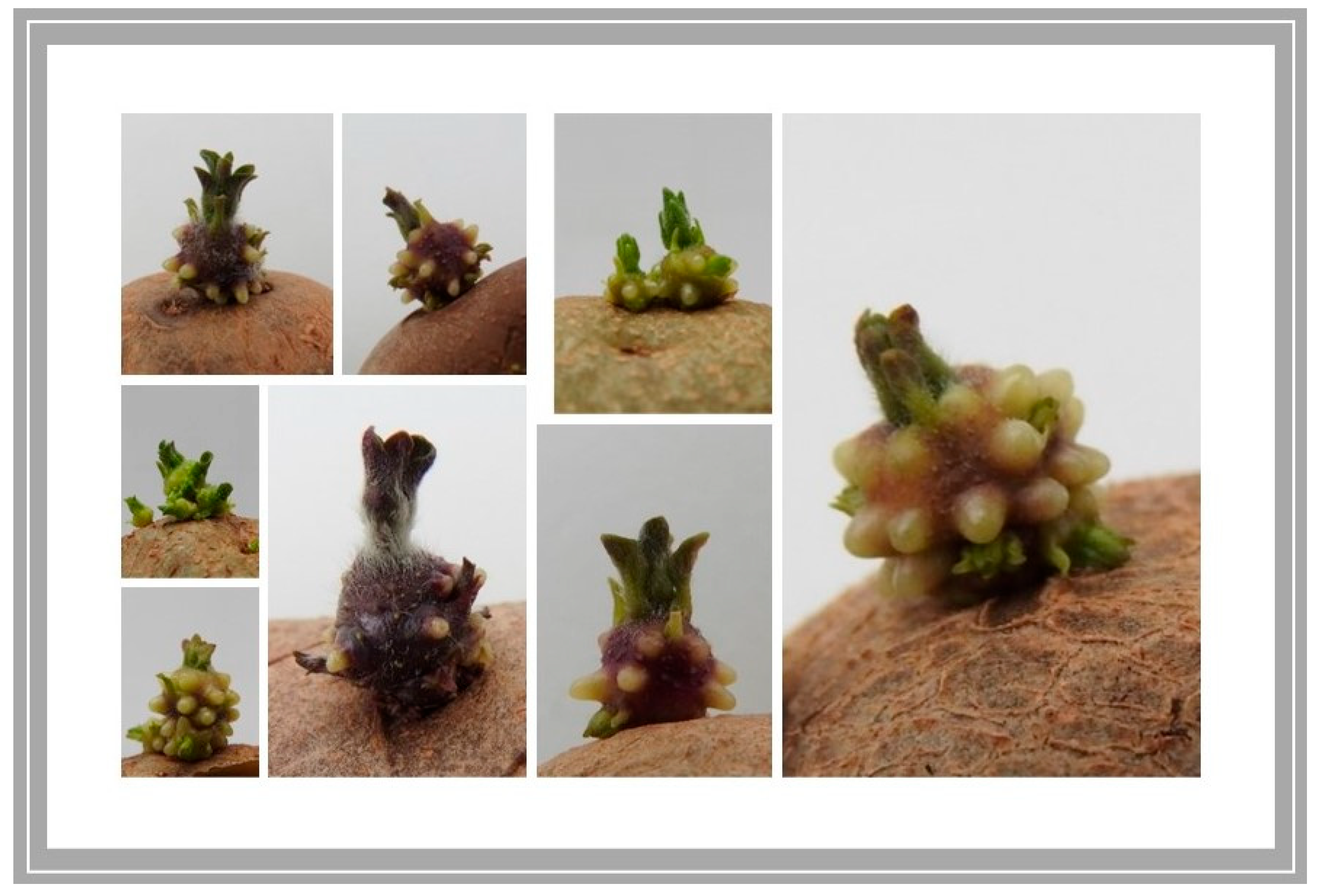

Table 1.
Questionnaire for specific aspects of DUS
| SWOT – DUS | |
|---|---|
|
S |
- Do you consider the DUS protocol used conforms to an internationally accepted standard: Please, explain your answer: - Scale used for expression level: Do you think it is a Strength? Please, explain your answer: - The groups of characters: Do you think the character lists complete and so can be considered Strength? Please, explain your answer: - The characters used for differentiating varieties: Do you think it can be considered Strength? Please explain your answer: - Do you have any other aspects/characters which can be considered? If yes, please add: |
|
W |
- Inaccurate expression categories (e.g. determination of seed colour): Do you think is it correct? Please explain your answer: - Lack of total objectivity for non-measurable characters (visually registered, pseudo-qualitative traits, such as shape, etc): Do you think is it correct? Please explain your answer: - Do you have any other aspects/characters which can be considered? If yes, please add |
|
O |
- Use of molecular markers: Does molecular marker testing to be considered an Opportunity (O) and it should be supported by the government? Please explain your answer: Is this also a Threat? - Do you have any other aspects or innovations regarding molecular markers which can be considered? If yes, please add |
| T | - Please suggest here any other aspects or innovations which can be considered |
Table 2.
Questionnaire for specific aspects of VCU.
| SWOT – VCU | |
|---|---|
|
S |
Quality control: Do you consider quality control a Strength in your scientific knowledge? Please explain your answer: Is quality control also a Weakness, Opportunity or Threat? Varieties are tested in organic conditions: Are varieties tested in organic management? Do you think add organic test could be a Strength? Is this also a Weakness, Opportunity or Threat? Do you have any other aspects or innovations which can be considered? If yes, please add |
|
W |
- Lack of international standardization on methodologies (e.g.: minimum values for content of protein, sugar, fat, etc.): Do you think this is a Weakness? Please explain you answer: - Lack of international standardization in the protocols: Do you think this is a Weakness? Please explain you answer: - Lack of available data: Do you think this is fundamental? - Varieties are tested only in conventional management: Do you think this is a Weakness? Please explain you answer: Is this also a Strength, Opportunity or Threat? - Number of organic trial locations are low: Is it correct in your Country? - Lack of national and international priority of characters during the VCU test: Do you think this is a Weakness? Do you have any other aspects or innovations which can be considered? If yes, please add: |
|
O |
- Involvement of special traits (e.g. weed competitiveness, nitrogen use efficiency, etc): Do you think is this an Opportunity? Please explain your answer: - Decrease cost of post-registration tests: Do you think is this an Opportunity if applied? If it is not applied, do you think is Weakness or Threat? - Do you have any other aspects which can be considered? If yes, please add: |
|
T |
- Organic trials are more expensive than the conventional ones: Is it correct in your Country? If yes, do you think it should be supported by the government because it could become an Opportunity? - Expensive molecular studies: Does molecular testing have a reason to be applied? If yes, do you think it should be supported by the government because it could become an Opportunity? Do you have any other aspects or innovations which can be considered? If yes, please add: |
Table 3.
Strengths, weaknesses, opportunities, and threats of DUS protocol of maize.
| Strengths | Weaknesses |
|---|---|
| - Conforms to all international accepted standards; - Scale used for expression level of characteristics (mostly) covers all possible states; - Complete character list; - The characteristics are enough to assess distinctness between varieties. |
- Lack of precise expression level of some characters; - Lack of total objectivity for non-measurable characters. |
| Opportunities | Threats |
| - Molecular marker testing; - Accessible database of the variety description. |
- No threats identified |
Table 4.
Strengths, weaknesses, opportunities, and threats of DUS protocol of lentil.
| Strengths | Weaknesses |
|---|---|
| - Conforms to all international standards; - Characteristics are sufficient for describe and distinguish new varieties. |
- Some characters are difficult to be objectively assessed; - Scale used for expression level not sufficient; - List of characters is not complete. |
| Opportunities | Threats |
| - Molecular marker testing. | - No threats identified. |
Table 5.
Strengths, weaknesses, opportunities, and threats of DUS protocol of perennial ryegrass.
| Strengths | Weaknesses |
|---|---|
| - Conforms to all international accepted standards; - Scale used for expression level of characteristics covers all possible states; - Complete character list; - Characteristics are sufficient to describe and distinguish new varieties. |
- Some characters are difficult to be objectively assessed. |
| Opportunities | Threats |
| - Authentication of seed test could be carried out by molecular markers; - Use of SNPs or other genetic markers; - Create database which can monitor genetic diversity and drift of a species. |
- Incorrect use of molecular markers and misinterpretation of results, and/or unregulated use; - disregard of potential effect of culture in multispecies/multivariety swards. |
Table 6.
Strengths, weaknesses, opportunities, and threats of DUS protocol of potato.
| Strengths | Weaknesses |
|---|---|
| - Conforms to all international accepted standards; - Scale used for expression level of characteristics (mainly) covers all possible states; - Complete character list; - Characteristics are sufficient to describe and distinguish new varieties. |
- Some characters are difficult to be objectively assessed; - Scale used for expression level not objective enough. |
| Opportunities | Threats |
| - Molecular marker testing. | - No threats identified. |
Table 7.
Strengths, weaknesses, opportunities, and threats of DUS protocol of oilseed rape.
| Strengths | Weaknesses |
|---|---|
| - Conforms to all international accepted standards; - Scale used for expression level of characteristics covers all possible states; - Complete character list; - Characteristics are sufficient to describe and distinguish new varieties. |
- Some characters are difficult to be objectively assessed. |
| Opportunities | Threats |
| - Molecular marker testing; - Introducing of new techniques. |
- GMO |
Table 8.
Strengths, weaknesses, opportunities, and threats of VCU protocol of maize.
| Strengths | Weaknesses |
|---|---|
| - Quality control of the system and product; - Add organic test. |
- Lack of international standardization on methodologies. |
| Opportunities | Threats |
| - Quality control of the system and product; - Add organic test; - International standardization on methodologies; - Introduction of characters dealing with abiotic and biotic resistance/tolerance; - Involvement of special traits; - Reducing the cost of post-registration tests; - Genotyping; - Governmental support. |
- Involvement of special traits; - Genotyping. |
Table 9.
Strengths, weaknesses, opportunities, and threats of VCU protocol of perennial rygrass.
| Strengths | Weaknesses |
|---|---|
| - Quality control of the system and product. | - Quality control of the system and product. |
| Opportunities | Threats |
| - Quality control of the system and product; - Addition of organic test; - “Limited” harmonization of VCU-testing; - Involvement of special traits; - Reducing the cost of post-registration tests; - Molecular studies; - Governmental support. |
- Quality control of the system and product; - Organic trials are more expensive than the conventional; - Expensive molecular studies. |
Table 10.
Strengths, weaknesses, opportunities, and threats of VCU protocol of potato.
| Strengths | Weaknesses |
|---|---|
| - Quality control of the system and product; - Degradation test. |
- Period of degradation test; - Varieties are tested only in conventional management. |
| Opportunities | Threats |
| - Quality control of the system and product; - Add organic test; - Degeneration test for longer period; - Involvement of special traits; - Decrease cost of post-registration tests; - Governmental support; - Use of molecular markers. |
- Organic trials are more expensive than the conventional. |
Table 11.
Strengths, weaknesses, opportunities, and threats of VCU protocol of oilseed rape.
| Strengths | Weaknesses |
|---|---|
| - Quality control of the system and product. | - Lack of international standardization on methodologies. |
| Opportunities | Threats |
| - Quality control of the system and product; - Add organic trials; - International standardization; - Data sharing on resistance/tolerance to diseases; - Increase and differentiate the landscape of varieties available; - Using drone and artificial inoculation in disease studies; - Governmental support. |
- Addition of organic trials; - Cost of organic trials and molecular studies. |
Table 12.
Established SWOT strategies for DUS protocols.
|
Internal External |
Strength: - DUS test conforms to all international accepted standards (S1); - Scale used for expression level of characteristics covers all possible states (S2); - Complete character list (S3); - Characteristics are sufficient to describe and distinguish new varieties (S4). |
Weakness: - Some characters are difficult to be objectively assessed (W1); - Scale used for expression level not objective enough (W2). |
|
Opportunities: - Data sharing of the variety description (O1); - Introducing of new techniques (O2); - Authentication of seed test could be carried out by molecular markers (O3); - Use of SNPs or other genetic markers (O4); - Create database which can monitor genetic diversity and drift of a species (O5). |
SO-strategies: - Create the conditions for the use of SNPs or other genetic markers; and innovative techniques (SO1); - Develop new regulations of the use of new tools in DUS variety testing (SO2); - New government support programs (SO3). |
WO-strategies - Provide effective and continuing training programs for DUS and crop experts and (WO1). |
|
Threats: - GMO (T1) |
ST-strategies | WT-strategies |
Table 13.
Established SWOT strategies for VCU protocols.
|
Internal External |
Strength: - Quality control of the system (S1); - Varieties are tested in organic conditions (S2); - Lack of international standardization on methodologies and protocols (depending on plant species) (S3). |
Weakness: - Quality control of the system (W1); - Lack of international standardization on methodologies and protocols (depending on plant species) (W2); - Lack of available data (W3); - Higher cost of post registration test (W4). |
|
Opportunities: - Quality analysis of grain (O1); - Varieties are tested in organic conditions (O2); - International standardization on methodologies and protocols (depending on plant species) (O3); - Involvement of special traits (O4); - Decrease cost of post-registration tests (O5); - Involvement of molecular studies (O6); |
SO-strategies: - Introduction of more characters in the grain analysis (SO1); - Quality Control inspectors (SO2); - Introduction of organic trials (SO3); - To consider the possibility of harmonization of each plant species (SO4). |
WO-strategies - Provide effective and continuing training programs for DUS and crop experts (WO1); - Standardization of some aspects of the different VCU protocol (depending on plant species) (WO2); - Post-registration test support (WO3). |
|
Threats: - Quality control of the system (T1); - Expensive molecular studies (T2). |
ST-strategies - New governmental support programs (SO3). |
WT-strategies |
Disclaimer/Publisher’s Note: The statements, opinions and data contained in all publications are solely those of the individual author(s) and contributor(s) and not of MDPI and/or the editor(s). MDPI and/or the editor(s) disclaim responsibility for any injury to people or property resulting from any ideas, methods, instructions or products rethods, instructions or products referred to in the content. |
© 2024 by the authors. Licensee MDPI, Basel, Switzerland. This article is an open access article distributed under the terms and conditions of the Creative Commons Attribution (CC BY) license (http://creativecommons.org/licenses/by/4.0/).
Copyright: This open access article is published under a Creative Commons CC BY 4.0 license, which permit the free download, distribution, and reuse, provided that the author and preprint are cited in any reuse.


