

Submitted:
30 October 2024
Posted:
31 October 2024
You are already at the latest version
Abstract
The mechanical properties and microstructure of recycled aggregate concrete (RAC) with carbon fibers (CF) and nano-SiO2 (NS) were investigated in this paper. The mechanical properties of RAC were enhanced by both single and hybrid addition of CF and NS, and the hybrid addition had a better strengthening effect. From the experimental results, it was found that the addition of CF could increase the 28d compressive strength and splitting strength of RAC by 9.05% and 22.36% respectively. Hybrid CF and NS were more conducive to improve the mechanical properties of RAC, and the enhancement effect increased first and then decreased with the increase of NS content. The optimal content of NS was 0.8wt%, which increased the 28d compressive strength and splitting strength of RAC by 20.51% and 14.53% respectively. The microstructure results indicated that the addition of CF had little effect on optimization pore structure of RAC, but the crack-inhibition action of the CF could improve the mechanical properties of RAC. The addition of NS reduced the content of CH and facilitated the formation of more (C–S–H) gel. The hydrated calcium silicate (C–S–H) gel significantly decreased the porosity and transformed harmful capillaries pores and harmful pores into harmless capillaries pores and gel pores, thus improving the mechanical properties of RAC. Therefore, the hybrid CF and NS was more conducive to enhance the performance of RAC for building materials.
Keywords:
carbon fibers
; nano-SiO2
; recycled aggregate concrete
; mechanical properties
; microscopic characteristics
1. Introduction
With the rapid development of urbanization, construction and demolition (C&D) wastes have been increased rapidly in recent years [1,2]. According to the statistics, the C&D wastes in China were about 3.5billion ton in 2021 [3]. But the utilization technology of C&D wastes is relatively poor, and the utilization rate of C&D wastes is 5%~10%, which resulted in serious environmental problem. The reuse of C&D wastes to prepare recycled coarse aggregate concrete (RAC) not only could effectively solve the problems of construction resources, energy and the environment, but also contributes to protect the environmental and resource preservation and realize the sustainable development of the construction industry [4,5]. However, the RCA particles have a significant difference with natural coarse aggregate (NCA) particles in surface structure due to the existence of adhered mortar, leading to inferior performances of RAC, such as mechanical properties, microscopic characteristics, durability, etc [6,7]. In order to improve the practical application efficiency of RAC, enhancing the strength and compactness of RAC has attracted considerable attention for a long time.
At present, the addition of fibers reinforcing materials is internationally considered to the effective measure to improve the mechanical properties of RAC, which has the function of toughening and crack resistance RCA by bridging the cracks and alleviating the rapid generation and development of microcracks in the matrix [8,9]. CF is a kind of lightweight and high-strength fiber material, which had a density of typically 1.6-2.5 g/cm3, a tensile strength of 2.2 GPa, and an elastic modulus of 200-350 GPa [10]. Meanwhile, CF is temperature stable and corrosion resistant. In addition, the active hydroxyl and carboxyl groups on the surface of CF could form a strong adsorption with the hydroxyl groups in the cementitious materials, which increased the bonding performance between CF and the cementitious materials [11,12]. Therefore, the appropriate amount of CF could improve the tensile property, flexural property and toughness of cementitious materials, and enhanced the flexural impact resistance of cementitious materials. Guo et al. [13] reported that CF could effectively improve the flexural and split tensile strength of concrete, while the effect on compressive strength was limited. The improvement effect of CF was optimal when the length of CF was 10 mm and the admixture amount was 1 wt.% of cement. Wang et al. [14] investigated the effect of CF dispersion on the mechanical properties of CF-reinforced concrete, and found that uniformly dispersed CF with a content of 0.6 wt.% increased the compressive strength by 10% and the modulus of elasticity by 26.8%. Wang et al [15] investigated the effects of CF on mechanical properties of RAC and found that CF with content of 0.35 wt.% and a length of 6 mm significantly increased tensile strength, but enhancement effect on compressive strength was not obvious. Yan et al [16] found that the CF not only played a role in carrying the load through the bridging and making the crack extension paths more complex, but also refined the pore structure of the RAC by crack-blocking effect of CF. Therefore, it can be concluded that the addition of appropriate CF was beneficial to enhance the toughness, the resistance to cracks and ductility of the cementitious materials but not significant on their compressive improvement.
To well improve the mechanical properties and durability deficiencies of cementitious materials, nanomaterials were generally regarded as an ideal reinforcing materials for reducing the defects of cement-based materials at the nanoscale [17,18]. Nanomaterials, as a new type of inorganic materials with high efficiency, such as nano-SiO2 (NS) and nano-CaCO3 (NC), are characterized by small particle size, large specific surface area, strong surface adsorption and high surface energy [17]. The nanomaterials could accelerate the hydration reaction of cementitious materials, which could significantly optimize the microstructure of cementitious materials by pozzolanic, nucleation and filling effects. Compared with the other nanomaterials, NS were the most widely used nano materials due to the chemical reaction among NS, CH and C3A, which resulted in increasing the formation of more hydration products and significantly strengthening the strength of cement-based materials [19]. Hu et al. [20] found the addition of NS facilitated the early hydration reaction of cementitious materials, and significantly improved the 28 d compressive strength. Ghafari et al. [21] illustrated that the interfacial transition zone (ITZ) was much denser and pore structure was more compact by the formation of hydrated calcium silicate (C-S-H) gel originated from pozzolanic effects, which effectively improved the mechanical properties and durability of concrete. Zaidi et al. [19] discussed the mechanism of microstructure of RAC modified by NS, and found that NS could effectively improve the compactness and permeability of RAC by optimizing the distribution of micro-pore size. Ying et al. [22] found that the high pozzolanic activity, filling and nucleation effects of NS had a substantial impact on ITZ of RCA, and reported that the chloride permeability coefficient of RAC with 2% NS decreased 25% in comparison to RAC control group. However, Sivasankaran et al. [23] found that excessive addition of NS decreased the compactness of concrete due to the agglomeration phenomenon of NS, which could not optimize the microstructure of concrete and lead to inferior mechanical properties.
At present, there were relatively more research on the effect of CF or NS on the mechanical properties of cementitious materials, while the research results on the enhancement of the mechanical properties of cementitious materials by the hybrid CF and NS were relatively limited. Since the diameters of CF and NS differ by one order of magnitude, the hybrid CF and NS could form a synergistic improvement effect on the properties of cementitious materials at both nanometer and micrometer scales. Based on previous literatures, this paper explored the enhancement effect on RAC by the incorporating CF and NS. Meanwhile, the microscopic characteristics of RAC was investigated by Thermogravimetric Analysis (TG), X-ray diffraction (XRD), Mercury intrusion porosimetry (MIP) and Scanning electron microscope (SEM). Hopefully this study could provide guidance on the effective utilization of RCA in the construction industry.
2. Experimental Program
2.1. Materials
O 42.5 Portland cement (OPC) provided by ShenYang Jidong Cement Co., Ltd. and fly ash produced by Shenyang Coal industry Co., Ltd were used to cementitious materials, whose chemical composition and physical properties are shown in Table 1. The locally available natural river sand was used as fine aggregate (FA), and its maximum particle size, apparent density and fineness modulus were 4.75 mm, 2.61 g/cm3and 2.8, respectively. The RCA was produced from Jilin Houde renewable resources Co., Ltd., and its maximum particle size, bulk density, performance density, water absorption, moisture content and crushing value were 20 mm 1568 kg·m-3, 2465 kg·m-3, 3.05%, 2.0% and 15.7%, respectively, which were compliant with the Chinese code (DB22/T 5017-2019). CF had carbon content >95 wt%, lengths of 3 mm, diameters of 7μm, densities of 1.75 g/cm3, tensile moduli of 228 GPa and tensile strengths of 3.53 GPa, and its morphology was shown in Figure 1(a). The NS was purchased from McLean Reagent Co., LTD, which possessed particle size of (20±5) nm, specific surface area of 193 m2/g, pH value of 6.9 and purity of 99.5%, as shown in Figure 1(b). NS was dispersed by HN-500 ultrasonic nanomaterial disperser in the preparation of RAC, as shown in Figure 1(c). The dispersion power and dispersion time were 600W and 15 minutes, respectively. A polycarboxylic-based superplasticizer (PBS) with water reducing rate of 30%, solid content of 40%, and alkali content of 6.5% was obtained from Jiangsu Bote New Materials Co., Ltd. The water (W) that conformed to Chinese national standards JGJ 63-2006 was used for preparing RAC specimens.
2.2. Mix Proportions
As reported in previous literatures, the appropriate fiber content is the premise to ensure the maximum performance enhancement of concrete. Refs. [17,20] suggested that 0.6 wt% is the optimal content of CF. The mechanical properties of concrete were improved with the increasing CF content, as the CF content was less than 0.6 wt % of the cement mass. However, when the CF content was more than 0.6 wt % of the cement mass, the mechanical properties improvement of concrete decreased with the increase in CF content, and the more CF content, the more obvious was the strength enhancement decreased. So, the content of CF was chosen to be 0.6 wt% of cement. Meanwhile, previous studies indicated that the addition of NS could effectively enhance the mechanical properties of concrete and the content of NS ranged from 0.2% to 1.2%. The primary objective of this paper was to study the influence of CF and NS on mechanical properties of RAC at the appropriate content to clarify the hybrid synergistic impact of CF and NS. Therefore, combined with the Chinese code (DB22/T 5017-2019) and the existing research achievements, the mixtures proportion design of RAC incorporated with CF and NS were listed in Table 2.
2.3. Specimen Preparation
To obtain RAC with uniformly dispersed NS, NS should be effectively dispersed before preparing CF/NS-reinforced RAC. The weighed NS was mixed with water in a beaker, which was dispersed by HN-500 ultrasonic nanomaterial disperser. The mixing procedure for preparing RAC was illustrated in Figure 2. The mixtures of RAC were poured into molds with a side length of 100 mm and compacted on a vibrating table. Subsequently, the RAC specimens were placed on a curing room with relative humidity of >95% and a temperature of 20 ± 2 ◦C. The RAC specimens were demoulded after 1 d and then cured in a standard curing environment (20±2 °C and relative humidity of 98%) until the day of testing.
2.4. Testing Methods
2.4.1. Mechanical Properties
The compressive strength and splitting tensile strength of RAC specimens were measured according to the Chinese standard GB/T50081-2019. After curing 7, 28 and 90 d, at least three specimens for compressive and splitting tensile strength were tested by a TYA-2000 pressure testing machine and the average value was obtained as the result to analyze the effect of CF and NS on RAC.
2.4.2. Microscopic Testing
The RAC samples for microstructural analyses were soaked in cold isopropanol to stop further hydration and then dried in an incubator at 50±2 °C for 24 h before testing. The specimens for XRD and TG was mechanically ground into powder with a small size (≤200 μm). The phase composition of sample was characterized by a Bruker D8 Advance instrument with scanning angles (2θ) ranging from 5◦ to 65◦ at a rate of 0.6 s/step. The Thermogravimetry analysis of samples were carried on STA a 449F5 thermogravimetry analyzer in a throughflow N2 atmosphere and the temperature arranges from 30°C to 900 °C at a heating rate of 10 °C/min. Samples with a size of about 3 mm in height and 5 mm in length and width were used to analyze the pore structure of RAC. The Auto Pore IV (9500) instrument was applied to determine the porosity and pore size distributions in RAC samples. The morphologies of RAC samples were observed by SEM on Model Gemini 500.
3. Results and Discussion
3.1. Effect of CF and NS on Mechanical Properties of RAC
Effect of CF/NS on the compressive strength and splitting tensile strength of the prepared RAC is shown in Figure 3. It was observed that the compressive strength of RC0.6 at 7, 28 and 90 d were 26.08MPa, 30.77MPa and 32.51MPa ,which increased by 8.35%, 9.05% and 9.32% respectively,in comparison to R; Compared with R ,the splitting tensile strength of RC0.6 increased by 21.12%, 22.36% and 23.56% respectively. The results were similar to those of [12], which showed that the addition of CF significantly increased the static splitting tensile strength and the dynamic splitting tensile strength, but not obvious in the compressive strengthThe results furtherly demonstrated that the incorporation of CF fibers to RAC was significantly in the splitting tensile strength. This may be due to that (ⅰ) the CF dispersed in RAC could form a network structure, which limited the generation and expansion of dry shrinkage cracks in early hydrated process, leading to reducing the early defects of RAC. (ⅱ) the high elastic modulus of CF fibers had a significant enhancement effect in splitting tensile strength, which had a little enhancement impact on compressive strength. (ⅲ) the friction between the CF fibers and RAC matrix could consume a certain amount of energy and then increased the toughness of RAC according to fibers spacing theory.
Compared with single-doped CF, the hybrid addition of CF and NS on mechanical properties of RAC was more remarkable. Note that the compressive strength and splitting tensile strength of RC0.6N0.8 was the highest among all the samples studied, which reached 37.08 MPa and 3.92 MPa at 28d, increased by 20.51% and 14.53%, respectively in comparison to that of RC0.6. This was attributed to the "filling effect", "nucleation effect" and "chemical reaction"of NS. The particle sizes of NS were much smaller than those of cement, which filled the pores on the surface of RCA and compacted the density of ITZ. Meanwhile, the NS could provide more nucleation points at early age, which accelerated cement hydration and facilitated the formation of C-S-H gel, resulting in improving the RAC compactness by filling the pores. In addition, NS could increase the volume fraction of high-density C–S–H gels (stacking density of 0.75) by facilitating cement hydration and linking low-density C–S–H gels [12](stacking density of 0.64). The addition of 0.2wt % NS increased the compressive strength and splitting tensile strength of RAC by 3.93%~6.08% and 3.05%~5.21%, illustrating that the content of NS below to 0.2wt % was not obvious on the compressive strength and splitting tensile strength improvement of RAC. When the content of NS increased from 0.8wt% to 1wt%, the compressive strength and splitting tensile strength of RC0.6N1.0 had a decrease of approximately 2.93%~4.43% and 2.53%~5.29% in comparison to RC0.6N0.8 at 7, 28 and 90 d, respectively. This was mainly because the small particle size and large specific surface area of NS would produce agglomeration phenomenon when the content of NS was too much. NS agglomerates wrapped in water molecules would inhibit the hydration of cement, which reduced the generation of hydration products and weakened the bond between hydration products and RA surface, leading to a reduction in the enhancement effect. Yao et al. [24] found that the addition of 0.6% NS increased the compressive strength, flexural strength and splitting strength of coal gangue concrete at 7 d by 11.8%, 12.5% and 13.4%, respectively. Fu et al. [17] previously reported that adding appropriate NS could improve the mechanical properties and durability performance of RAC by enhancing the ITZ compaction and optimizing the microstructure of RAC.As can be seen from the above discussion, NS can function as modifying the mechanical properties of RAC and the recommended dosage of NS is 0.8 wt.%.
3.2. The Relationship Between Compressive Strength and Splitting Tensile Strength of RAC
Generally, the relationship between splitting tensile strength and cube compressive strength is an important parameter in practical engineering applications. ACI Committee 318 of concrete structures proposed an equation Eq. (1) to predict the splitting tensile strength based on corresponding cube compressive strength of normal concrete. The Chinese code proposed a similar equation Eq. (2) to calculate the relation between cube compressive strength and splitting tensile strength of normal concrete. The comparison between the theoretical results and test results of the splitting tensile strength of RAC calculated by Eq. (1) and Eq. (2) was shown in Figure 4. It can be seen from Figure 4(a) and Figure 4(b) that the formulas suggested by ACI Committee 318 and Chinese code had a poor prediction accuracy for RAC owing to the internal structure and failure mechanism of RAC generally differed from the conventional concrete, resulting in overestimating its splitting tensile strength and then reducing structural reliability. So, the between splitting tensile strength and cube compressive strength of RAC should be revised. According to ACI committee 318 and Chinese code, the relation between the splitting tensile strength and compressive strength of RAC could be calculated by Eq. (3).
Where and are compressive strength and splitting tensile strength of concrete, respectively.
Eq. (3) was used to fit the relationship between the splitting tensile strength and compressive strength of experimental and available literature results of RAC samples (Figure5(a)). The coefficients α, β and correlation coefficient (R2) could be calculated by nonlinear regression analysis, which were 0.25, 0.75 and 0.92, respectively. Thus, the relationship between the splitting tensile strength and compressive strength of RAC samples with CF and NS could be displayed by Eq. (4):
Comparisons between prediction results calculated according to Eq. (4) and test results were shown in Figure 5(b). As can be seen from Figure5 (b), the ratio of prediction results and test results of the splitting tensile strength of RAC presented a positive correlation, and the error was below to ±15%, which met the error requirements, indicating a good agreement between experimental and predictions results. However, there were few investigations to study the relationship between the splitting tensile strength and compressive strength of RAC with CFs and NS, and only limited data was available. Hopefully, the equation of Eq. (4) would be checked and improved by experimental results produced from later experimental studies.
3.3. Effect of CF/NS on Hydration Products of Cement
The hydration products characteristics of cement directly determined the mechanical properties of RAC. In order to investigate the impact of CF and NS on hydration products of cement, the hydration products of RAC pastes cured for 28 d were comparatively tested by XRD and TG. As illustrated in Figure 6(a), the XRD diffraction patterns showing calcium hydroxide (Ca (OH)2, CH), ettringite (AFt, E), monosulfatealuminate (Ms), calcite (CaCO3). Some unhydrated C3S and C2S phases had also been identified detected near 2θ value of 32°-33° in the XRD patterns. The diffraction patterns of C-(A)-S-H gels did not appear in the XRD pattern due to X-ray diffraction tests could not characterize gel-like substances of C-(A)-S-H gels. The results indicated that the incorporation of CF had little effect on the hydration products. This mainly was attributed to the CF was hydrophobic, which hardly participated in the hydration reaction of cement. The diffraction patterns CH, C2S and C3S gradually decreased with the addition of NS, and the decrease was more with the content of NS increased. The results stated that the NS was favour to facilitate the dissolution of the active amorphous phases and formation of the C-(A)-S-H gels. Consequently, the inclusion of NS mainly led to accelerating the hydration reaction of cement, this attributed to that ⅰ) the pozzolanic reaction of CH and NS could promote the dissolution of the active amorphous phases of C3S, and C2S, facilitating the formation of the more C-(A)-S-H gels. ⅱ) the active of NS could create more latent reaction opportunities in the hydration of cement to form the high-density C–S–H gel and Ms by pozzolanic reaction and chemical promotion to consume C3A at the early stages. ⅲ) the C-S-H gel can be bonded to each other and then formed a network structure, which could be used as a diffusion and support medium for crystal growth, resulting in accelerating the dissolution of anhydrous phases and more pronounced expression and a higher generation rate of the C-S-H gel (including the high-density C–S–H gel), with significant contribution to the mechanical properties of RAC.
In order to quantitatively analyze the effect of CF and NS on the thermal decompositions of cement-based hydration products, the TG and derivative thermogravimetric (DTG) curves of RAC paste at 28 d were tested and displayed in Figure6(b). It was clear that there were three apparent heat absorption peaks at 50~200 °C, 400~500 °C, and 600~750 °C, respectively, which corresponded to that (I) the evaporation of water molecules and dehydration of Aft or C-S-H gel, (II)the decomposition of CH, and (III) the decomposition of produced and residual CaCO3, respectively. From the changing trends, the addition of CF had little impact on mass loss at stage I, II and III, implying that the CF did not participate in hydration reaction of cement. Compared with RC0.6, the RAC pastes containing different NS contents had a relatively higher mass loss at stage I, significantly decreased mass loss at stage II, and a small difference in mass loss at stage III. Additionally, the increasing content of NS contributed obvious impact in the mass loss at stage I and II of RAC pastes. These results illustrated that the inclusion of NS could promote more occurrences of hydration reactions, resulting in the formation of more C-(A)-S-H gels and less CH.
As commonly known, the contents of Ca (OH)2 (WP) and chemically bound water (WCBW) were parameters for evaluating the amount hydration products, which were calculated by Eq. (5), Eq. (6), and Eq. (7), respectively. To further investigate the effect of CF /NS on the amount hydration products, the contents of Ca (OH)2 and chemically bound water were calculated and shown in Figure7. As displayed in Figure 7, it could still be observed that the Ca (OH)2 and chemically bounded water content of RC0.6 were 99.52% and 99.19% of that of R, illustrating that the inclusion of CF had little influence on Ca (OH)2 and chemically bounded water content, which is consistent with the XRD results. The chemically bound water content increased as the NS content increased, whereas the content of Ca (OH)2 decreased with the more of NS. For example, the chemically bounded water content in RC0.6N0.2, RC0.6N0.4, RC0.6N0.6, RC0.6N0.8 and RC0.6N1.0 increased by 1.12%, 2.76%, 6.17%, 9.26%, and 14.21%, and the Ca (OH)2 content in RC0.6N0.2, RC0.6N0.4, RC0.6N0.6, RC0.6N0.8 and RC0.6N1.0 decreased by 2.32%, 5.36%, 8.64%, 11.26%, and 15.36%, compared to that of RC0.6, which further demonstrated that the addition of NS could facilitate the dissolution of anhydrous phases and the formation of C-(A)-S-H gels. The TG-DTG results verified the addition of NS could effectively improve the hydration reaction of cement and 0.8wt% NS was the best choice for the CF reinforced RAC, which was consistent with the mechanical properties results.
where LOI represents the loss on ignition of raw materials. The LOIC, LOIf, and LOINS are 0.015, 0.0495, and 0.0366, respectively.α and β are the substitution of fly ash and NS for cement.
3.4. Effect of CF Fibers/NS on Pore Structures of RAC Samples
Figure 8 displayed the pore size distribution curves, cumulative porosity variation curves and pore proportion distribution curves of the CF/ NS reinforced RAC. The critical pore diameter was an important parameter for evaluating concrete pore characteristic, which corresponded to the highest mercury intrusion rate per pore diameter change. As illustrated in Figure 8, the critical pore diameter and cumulative porosity of RC0.6 was 47.08 nm and 17.39%, which was close to those of R (48.06nm and 18.04%). The results indicated that the addition of CF had insignificant optimization effect on decreasing the critical pore diameter and cumulative porosity. However, the compressive strength and splitting tensile strength of RC0.6 were obviously higher than those of RAC, which was not in accordance with the law that the lower porosity and the critical pore diameter of ordinary concrete correspond to a high mechanical property. This was mainly attributed to the fact that the crack-inhibition action of the CF inhibited the generation micro-bubbles to a certain extent during the hardening process and enhanced mechanical properties. When the NS and CF were both added, the NS reduction effect on the critical pore diameter and porosity were stronger than CF optimization effect on the critical pore diameter and porosity. Noting that the critical pore diameter and porosity of RC0.6N0.8 was 12.98% and 40.25 nm, which decreased by 25.35% and 14.51% compared to those of RC0.6. The critical pore diameter and the porosity of RC0.6N1.0 were 14.74% and 42.05nm, implying that 1.0wt% NS slightly decreased the optimization effect on RAC pore structure. This result was consistent with the mechanical properties of RAC, which was because the excessive NC would result in agglomeration phenomenon and cause an insufficient hydration of cement.
To further quantitatively analyze the impact of CF /NS on the pore distribution of RAC, the pores present in cementitious materials were divided into 5 groups according to previous studies, which were gel pores(0-10 nm), harmless capillaries pores (10–50 nm), harmful capillaries pores (50–100nm), harmful pores (100 nm–10 µm) and more harmful pores( >10 µm), respectively. The percentage of gel pores, harmless capillaries pores and harmful capillaries pores in RC0.6 were 18.98%, 33.89%, 26.98%, respectively, which were close to those of R (18.58%, 33.29%, 23.84%), demonstrating that the incorporation of CF did not participate in the hydration reaction and have little effect on optimization of the pores below 100 nm in RC0.6. However, the percentage of harmful pores and more harmful pores in RC0.6 were 15.01% and 5.11%, which was increased by 16.65% and decreased 13.17%, respectively, in comparison to those of R. The results stated that the addition CF could inhibit the generation micro-bubbles to a certain extent during the hardening process, which was in agreement with Niu et al. [25] and Xu et al. [26]. Compared to the RC0.6, RAC with CF and NS had a better optimization effect on pores below 50 nm, which was caused by the transformation of harmful capillaries pores and harmful pores into harmless capillaries pores and gel pores due to the "filling effect", "nucleation effect" and "pozzolanic reaction" of NS. The percentage of pores below 50 nm in RC0.6N0.2, RC0.6N0.4, RC0.6N0.6, RC0.6N0.8 and RC0.6N1.0 increased by 6. 32%, 9.56%, 11.96%, 15.65%, and 13.42%, respectively compared to that of RC0.6. The results indicated that the addition of NS had significant optimization effect on pores below 50 nm, which was consistent with the conclusion illustrated by Chen et al. [27] that NS could effectively increase the percentage of pores below 50 nm and decrease porosity in cementitious materials.
3.5. Microstructure Analysis
To investigate the effect of CF /NS on the microstructure characteristic of RAC, the RAC samples were examined by scanning electron microscopy and displayed in Figure 9. As displayed in Figure 9(a), it could still be clearly observed that CF could bridge microscale pores and cracks in RAC matrix and restrain the further development of these defects during the hardening process, which was in accordance with the analysis in section 3.1. Meanwhile, it could be found that the interfacial regions between CF and RAC presented to be dense and the hydration products were tightly adhered to the CF surface, as shown in Figure 9(b). The results implied that the CF could form a three-dimensional network structure and strengthen the bonding strengths of interfacial regions, which was agreement with previous literatures that the appropriate CF could form a thick network skeleton in RAC and restrict the transverse deformation of RCA under compression [29,30,31,32,33]. As displayed in Figure 9(c), it could observe that NS filled the pores in RAC matrix, which not only reduced the porosity of RAC but compacted the surface the RCA. Additionally, NS could link low-density C–S–H gels [12] (stacking density of 0.64) to form high-density C–S–H gels by functioning as linking units, as shown in Figure 11(d). Lastly, the C-S-H gel (high-density C–S–H gels and low-density C–S–H gels) were strongly adhered on CF, which further improved the mechanical properties of RAC [34,35]. Owing to the aforementioned the functions of CF and NS, the microscopic characteristics and macroscopic mechanical properties of RAC can be obviously enhanced and the enhancement mechanism were summarized in section 3.6.
3.6. Action Mechanism of CF and NS
As the analysis mentioned in Section.3.5, the inhibitory effect on the initiation and expansion of cracks significantly increased when CF fibers and NS were both added. The enhancement effect of NS on RCA not only strengthened the bonding between the matrix and RCA, but also enhanced the bonding between the matrix and CF. This was attributed to that (i) the NS not only could fill the pores in ITZ, but also easily decreased the migration of relevant ions to the RCA surface, resulting in forming the “filling effect” and “side wall effect” [36,37,38], which provided numerous nucleation site and then increased the formation of more products on RCA surface. (ii) the enhancement effect of NS on RAC mainly involved four key steps, as illustrated in Figure 10. The pozzolanic reaction among NS, CH and Al2O3 (See Eq. (1) and Eq. (2) in Figure 10) could facilitated the formation of C-S-H gel and C-A-S-H gel, which significantly turned capillary pores into gel pores. The unhydrated C2S and C3S in cement was accelerated by the consumption of CH in pozzolanic reaction, which further promoted the generation of more C-S-H gel and improved the whole hydration degree of cement. More importantly, NS could link low-density C-S-H gels [12](stacking density of 0.64) to form high-density C-S-H gels by functioning as linking units. Finally, the thin hexagonal plate-like CH crystals could not provide effective mechanical strength for RAC due to CH crystals was prone to fracture and easily formed microholes under load. Consequently, the mechanical strength of RAC was enhanced by the consumption of CH in pozzolanic reaction of NS. (iii) the NS enhanced the interface between RAC matrix and CF fibers, which was more conducive to the effect of CF on crack suppression and further improved the strain rate effect of under load, as shown in Figure 11. Therefore, when CF and NS were both added, they not only inhibited the initiation and expansion of cracks in RAC matrix, but also significantly increased the resistance to crack expansion and the curvature of the crack expansion path in RAC, resulting in decreasing the crack penetration ability and improving the mechanical properties. Owing to the aforementioned the functions of CF and NS, the microscopic characteristics and macroscopic mechanical properties of RAC could be obviously enhanced, when the appropriate CF and NS are both added.
4. Conclusions
1 The addition of CF and NS increased the mechanical properties of RAC, and the improvement effect was most significant for the hybrid addition of CF and NS. The hybrid addition of 0.6wt% CF and 0.8wt%NS increased the 28d compressive strength and splitting strength of RAC by 32.38% and 29.53%, respectively, and the optimum volume content of NS was 0.8wt%.
2 The XRD and TG-DTG results confirmed that the addition of CF fibers had little effect on hydration products of cement. the chemically bounded water content increased by 9.26% and the Ca (OH)2 content decreased by 11.26% when 0.8wt%NS was added, which demonstrated that the addition of NS could facilitate the dissolution of anhydrous phases and the formation of C-(A)-S-H gels.
3 The critical pore diameter and cumulative porosity of RC0.6 was 47.08 nm and 17.39%, which was close to those of R, indicating that the addition of CF had little effect on decreasing porosity of RAC. In contrast, the critical pore diameter and porosity of RC0.6N0.8 was 12.98% and 40.25 nm, which decreased by 25.35% and 14.51% compared to those of RC0.6, demonstrating that the incorporation of NS significantly optimized the pore structure of RAC.
4 When CF and NS are both mixed, the NS could improve the bonding between the RAC matrix and CF, which was more conducive to enhance the mechanical properties of RAC and then effectively contributed the reuse of construction waste in the concrete industry.
Funding
2024 Jilin Engineering Vocational College School Fund Priority Programs ([2024]KY05).
Conflicts of Interest
No potential conflict of interest was reported by the author(s).
References
- Akhtar, A.; Sarmah, A.K. Construction and demolition waste generation and properties of recycled aggregate concrete: A global perspective. J. Clean. Prod. 2018, 186, 262–281. [Google Scholar] [CrossRef]
- Le, H.-B.; Bui, Q.-B. Recycled aggregate concretes – A state-of-the-art from the microstructure to the structural performance. Constr. Build. Mater. 2020, 257, 119522. [Google Scholar] [CrossRef]
- Liu, Y.; Ren, P.; Garcia-Troncoso, N.; Mo, K.H.; Ling, T.-C. Roles of enhanced ITZ in improving the mechanical properties of concrete prepared with different types of recycled aggregates. J. Build. Eng. 2022, 60. [Google Scholar] [CrossRef]
- Shi, C.; Li, Y.; Zhang, J.; Li, W.; Chong, L.; Xie, Z. Performance enhancement of recycled concrete aggregate – A review. J. Clean. Prod. 2016, 112, 466–472. [Google Scholar] [CrossRef]
- Bao, J.; Li, S.; Zhang, P.; Ding, X.; Xue, S.; Cui, Y.; Zhao, T. Influence of the incorporation of recycled coarse aggregate on water absorption and chloride penetration into concrete. Constr. Build. Mater. 2019, 239, 117845. [Google Scholar] [CrossRef]
- Wang, B.; Yan, L.; Fu, Q.; Kasal, B. A Comprehensive Review on Recycled Aggregate and Recycled Aggregate Concrete. Resour. Conserv. Recycl. 2021, 171. [Google Scholar] [CrossRef]
- Ortolan, T.L.P.; Borges, P.M.; Silvestro, L.; da Silva, S.R.; Possan, E.; Andrade, J.J.d.O. Durability of concrete incorporating recycled coarse aggregates: carbonation and service life prediction under chloride-induced corrosion. Constr. Build. Mater. 2023, 404. [Google Scholar] [CrossRef]
- Gu, L.; Liu, Y.; Zeng, J.; Zhang, Z.; Pham, P.N.; Liu, C.; Zhuge, Y. The synergistic effects of fibres on mechanical properties of recycled aggregate concrete: A comprehensive review. Constr. Build. Mater. 2024, 436. [Google Scholar] [CrossRef]
- Zhu, L.; Wen, T.; Tian, L. Size effects in compressive and splitting tensile strengths of polypropylene fiber recycled aggregate concrete. Constr. Build. Mater. 2022, 341. [Google Scholar] [CrossRef]
- Stynoski, P.; Mondal, P.; Marsh, C. Effects of silica additives on fracture properties of carbon nanotube and carbon fiber reinforced Portland cement mortar. Cem. Concr. Compos. 2015, 55, 232–240. [Google Scholar] [CrossRef]
- Chuang, W.; Geng-Sheng, J.; Bing-Liang, L.; Lei, P.; Ying, F.; Ni, G.; Ke-Zhi, L. Dispersion of carbon fibers and conductivity of carbon fiber-reinforced cement-based composites. Ceram. Int. 2017, 43, 15122–15132. [Google Scholar] [CrossRef]
- Fu, Q.; Zhou, Z.; Wang, Z.; Huang, J.; Niu, D. Insight into dynamic compressive response of carbon nanotube/carbon fiber-reinforced concrete. Cem. Concr. Compos. 2022, 129. [Google Scholar] [CrossRef]
- Guo, Z.; Zhuang, C.; Li, Z.; Chen, Y. Mechanical properties of carbon fiber reinforced concrete (CFRC) after exposure to high temperatures. Compos. Struct. 2020, 256, 113072. [Google Scholar] [CrossRef]
- Wang, C.; Li, K.-Z.; Li, H.-J.; Jiao, G.-S.; Lu, J.; Hou, D.-S. Effect of carbon fiber dispersion on the mechanical properties of carbon fiber-reinforced cement-based composites. Mater. Sci. Eng. A 2008, 487, 52–57. [Google Scholar] [CrossRef]
- Wang, Z.; Ma, G.; Ma, Z.; Zhang, Y. Flexural behavior of carbon fiber-reinforced concrete beams under impact loading. Cem. Concr. Compos. 2021, 118. [Google Scholar] [CrossRef]
- Yan, J.; Luo, Y.; Yu, X.T.; Wang, L.J.; Wong, W.S. Experimental study on mechanical properties and microstructure of carbon fiber reinforced nano metakaolin recycled concrete. China Measurement & Test 2023, 1–9. (in chinese).
- Fu, Q.; Zhao, X.; Zhang, Z.; Xu, W.; Niu, D. Effects of nanosilica on microstructure and durability of cement-based materials. Powder Technol. 2022, 404. [Google Scholar] [CrossRef]
- Q.F.A. B, Z.Z. A, X.Z. A, W.X. A, D.N.A. B, Effect of nano calcium carbonate on hydration characteristics and microstructure of cement-based materials: A review.
- Zaidi, S.A.; Khan, M.A.; Naqvi, T. A review on the properties of recycled aggregate concrete (RAC) modified with nano-silica. Mater. Today: Proc. 2023. [Google Scholar] [CrossRef]
- Hu, J.C.; Lv, Y.; He, H.C.; Zhou, Y. , Effect of Nano-silica on mechanical properties and hydration of foamed concrete in the cement-fly ash system. Bulletin of the chinese ceramic society 2019, 38, 1390–1394. (in chinese). [Google Scholar]
- Ghafari, E.; Costa, H.; Júlio, E.; Portugal, A.; Durães, L. The effect of nanosilica addition on flowability, strength and transport properties of ultra high performance concrete. Mater. Des. 2014, 59, 1–9. [Google Scholar] [CrossRef]
- Ying, J.; Zhou, B.; Xiao, J. , Pore structure and chloride diffusivity of recycled aggregate concrete with nano-SiO2 and nano-TiO2. Construction and Building Materials 2017, 150, 49–55. [Google Scholar] [CrossRef]
- Sivasankaran, U.; Raman, S.; Nallusamy, S. Experimental Analysis of Mechanical Properties on Concrete with Nano Silica Additive. J. Nano Res. 2019, 57, 93–104. [Google Scholar] [CrossRef]
- Yao, X.H.; Guo, X.N.; Han, R.C. Effect of nano-SiO2 and polypropylene fibers on the mechanical properties and microscopic properties of all coal gangue aggregate concrete. Acta Materiae Compositae Sinica 2024, 41, 1402–1419. (in chinese). [Google Scholar]
- Niu, D.; Su, L.; Luo, Y.; Huang, D.; Luo, D. Experimental study on mechanical properties and durability of basalt fiber reinforced coral aggregate concrete. Constr. Build. Mater. 2019, 237, 117628. [Google Scholar] [CrossRef]
- Xu, F.; Wang, S.; Li, T.; Liu, B.; Li, B.; Zhou, Y. Mechanical properties and pore structure of recycled aggregate concrete made with iron ore tailings and polypropylene fibers. J. Build. Eng. 2021, 33. [Google Scholar] [CrossRef]
- Chen, X.; Ai, Y.; Wu, Q.; Cheng, S.; Wei, Y.; Xu, X.; Fan, T. Potential use of nano calcium carbonate in polypropylene fiber reinforced recycled aggregate concrete: Microstructures and properties evaluation. Constr. Build. Mater. 2023, 400. [Google Scholar] [CrossRef]
- Wang, R.; Yu, N.; Li, Y. Methods for improving the microstructure of recycled concrete aggregate: A review. Constr. Build. Mater. 2020, 242, 118164. [Google Scholar] [CrossRef]
- Ollivier, J.P.; Maso, J.C.; Bourdette, B. , Interfacial transition zone in concrete. Advanced Cement Based Materials 1995, 2, 30–38. [Google Scholar] [CrossRef]
- Guo, H.; Shi, C.; Guan, X.; Zhu, J.; Ding, Y.; Ling, T.-C.; Zhang, H.; Wang, Y. Durability of recycled aggregate concrete – A review. Cem. Concr. Compos. 2018, 89, 251–259. [Google Scholar] [CrossRef]
- Fu, Q.; Xu, W.; Bu, M.; Guo, B.; Niu, D. Effect and action mechanism of fibers on mechanical behavior of hybrid basalt-polypropylene fiber-reinforced concrete. Structures 2021, 34, 3596–3610. [Google Scholar] [CrossRef]
- He, C.W.; Kong, X.Q.; Gao, H.D.; Liu, H.X. Research on the mechanical properties and microstructure of recycled aggregate concrete with high content polypropylene fiber. Concrete.
- Bagherzadeh, R.; Sadeghi, A.-H.; Latifi, M. Utilizing polypropylene fibers to improve physical and mechanical properties of concrete. Text. Res. J. 2011, 82, 88–96. [Google Scholar] [CrossRef]
- Ahmed, T.W.; Ali, A.A.M.; Zidan, R.S. Properties of high strength polypropylene fiber concrete containing recycled aggregate. Constr. Build. Mater. 2020, 241, 118010. [Google Scholar] [CrossRef]
- Hossain, F.Z.; Shahjalal; Islam, K.; Tiznobaik, M.; Alam, M.S. Mechanical properties of recycled aggregate concrete containing crumb rubber and polypropylene fiber. Constr. Build. Mater. 2019, 225, 983–996. [CrossRef]
- Erdem, S.; Hanbay, S.; Güler, Z. Micromechanical damage analysis and engineering performance of concrete with colloidal nano-silica and demolished concrete aggregates. Constr. Build. Mater. 2018, 171, 634–642. [Google Scholar] [CrossRef]
- Yue, Y.; Zhou, Y.; Xing, F.; Gong, G.; Hu, B.; Guo, M. , An industrial applicable method to improve the properties of recycled aggregate concrete by incorporating nano-silica and micro-CaCO3. Journal of Cleaner Production 2020, 259, 120920. [Google Scholar] [CrossRef]
- W. X., W. G., Fourie, Compressive behaviour of fibre-reinforced cemented paste backfill.
Figure 1.
Modified materials and dispersing device.
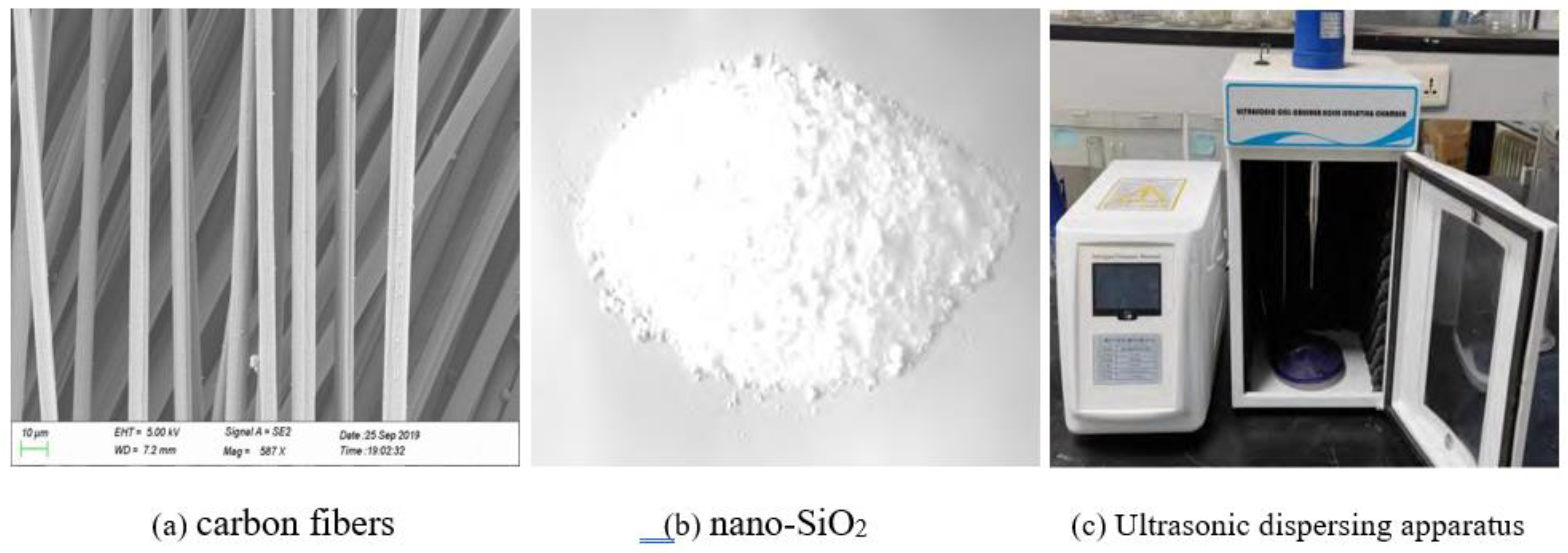
Figure 2.
Schematic diagram of the mixing procedure for RAC.
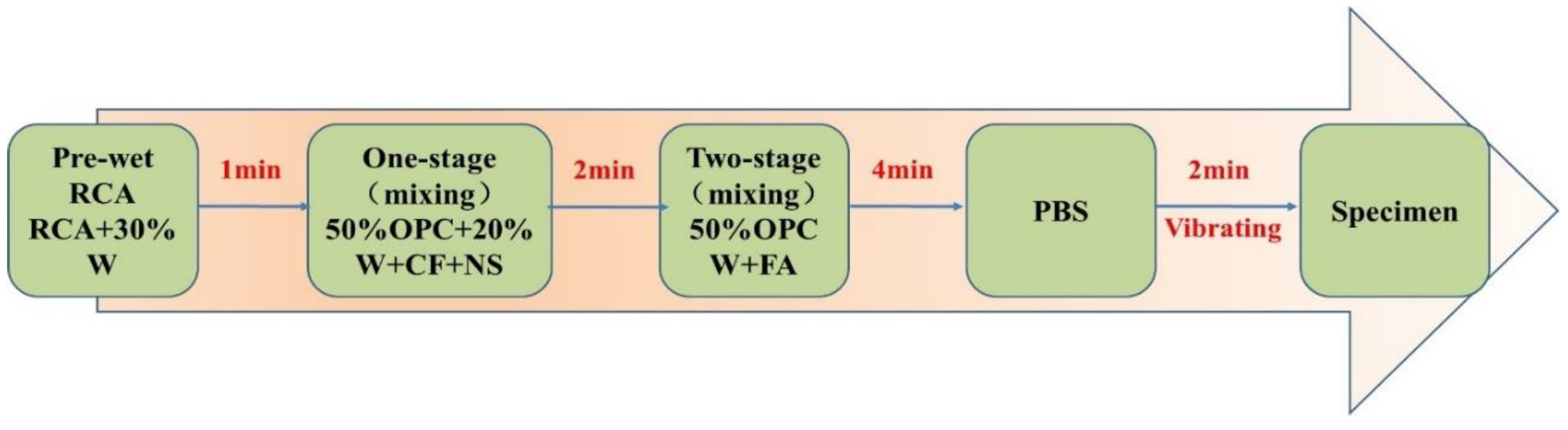
Figure 3.
compressive and splitting strength RAC with CF and NS.
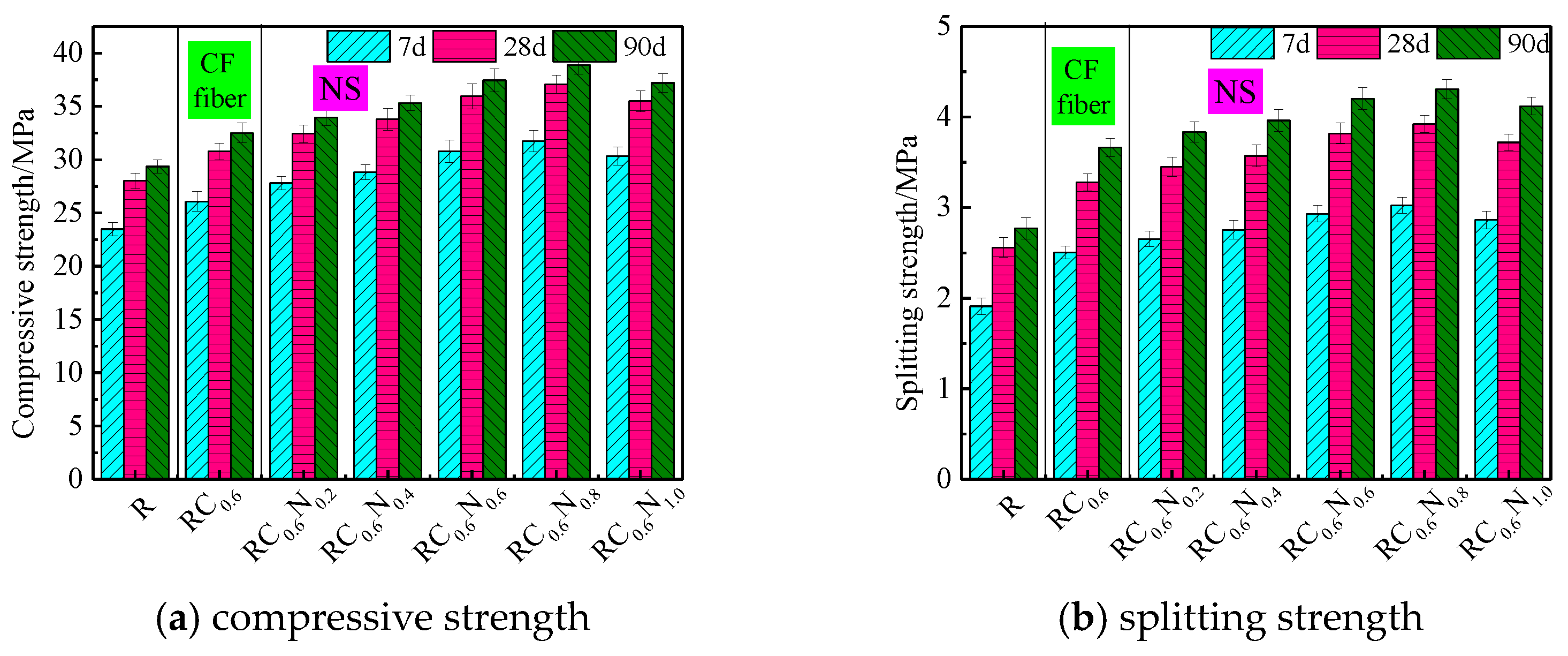
Figure 4.
comparison of experimental and predicted values.
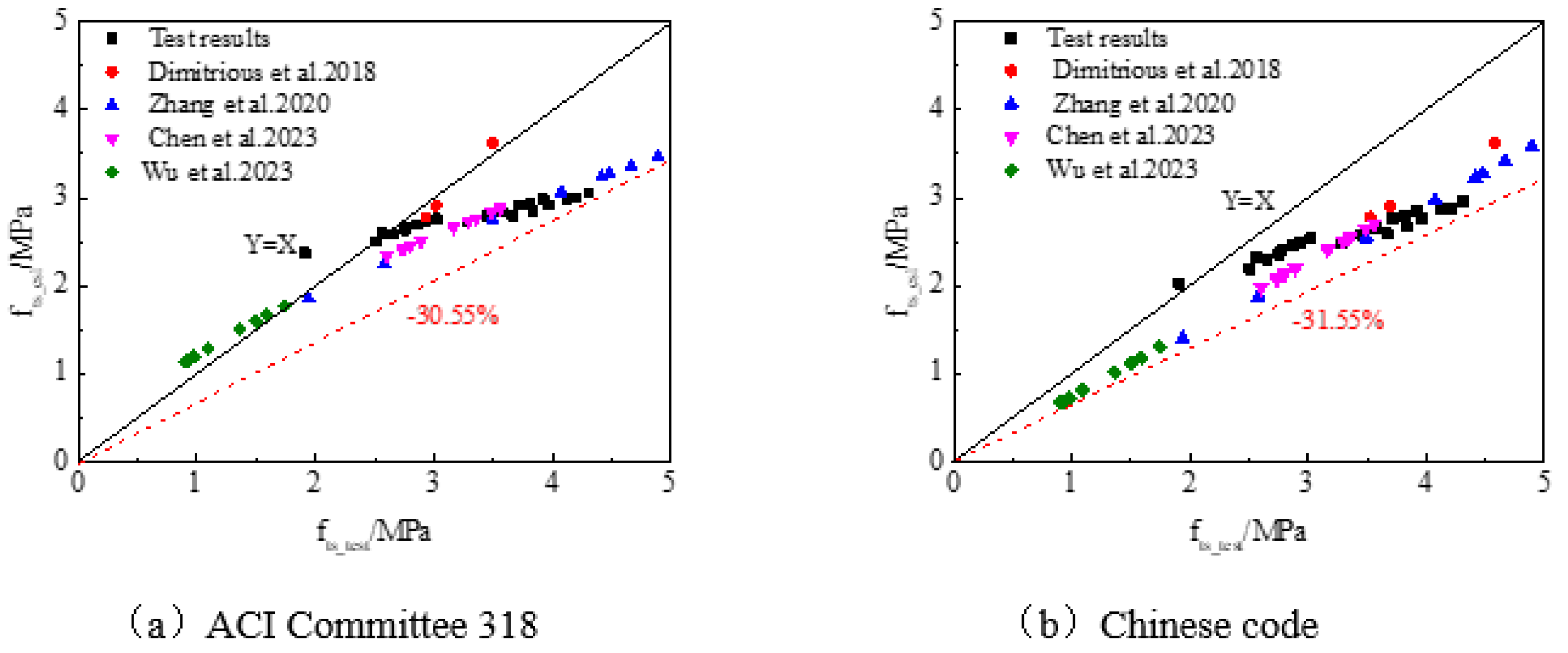
Figure 5.
relationship between compressive strength and splitting strength of RAC.
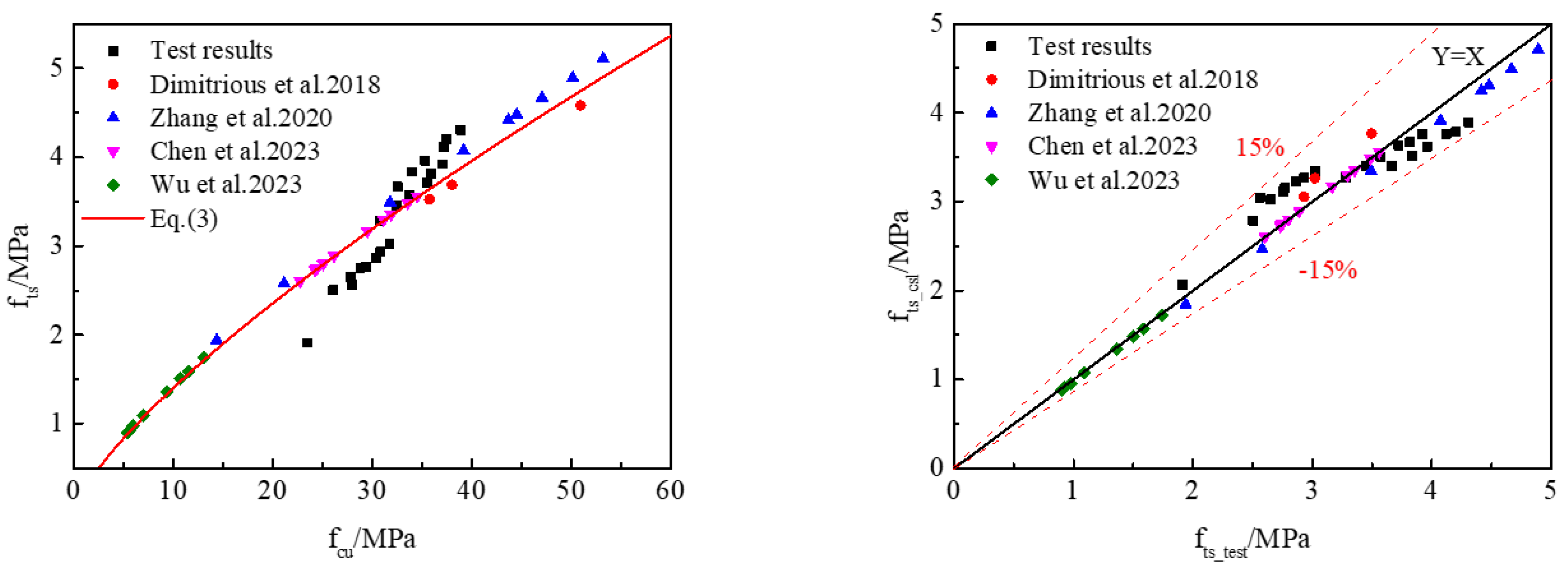
Figure 6.
effect of CF/NS on hydration products of cement.
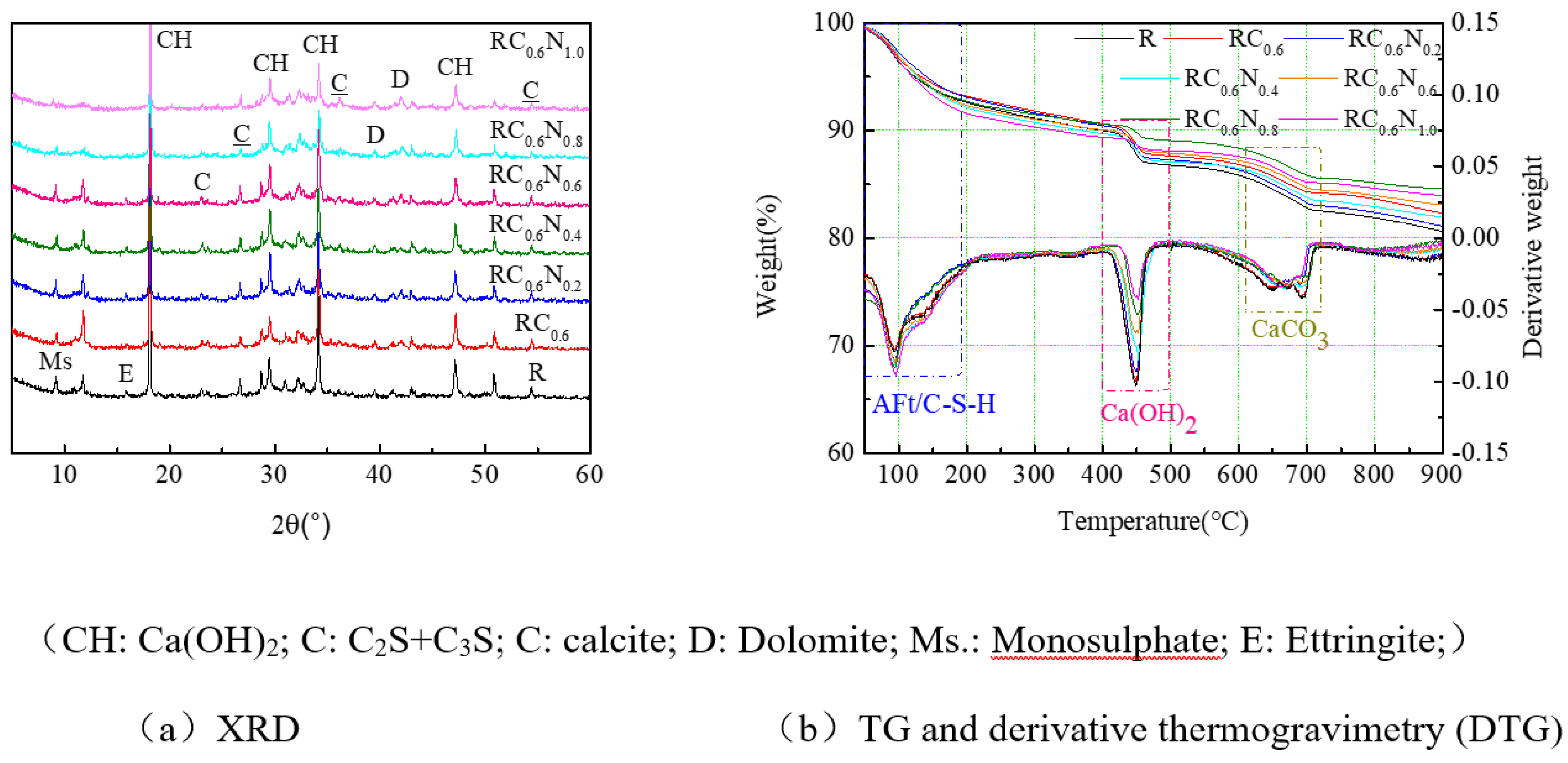
Figure 7.
the content of Ca (OH)2 and chemically bound water in RAC.
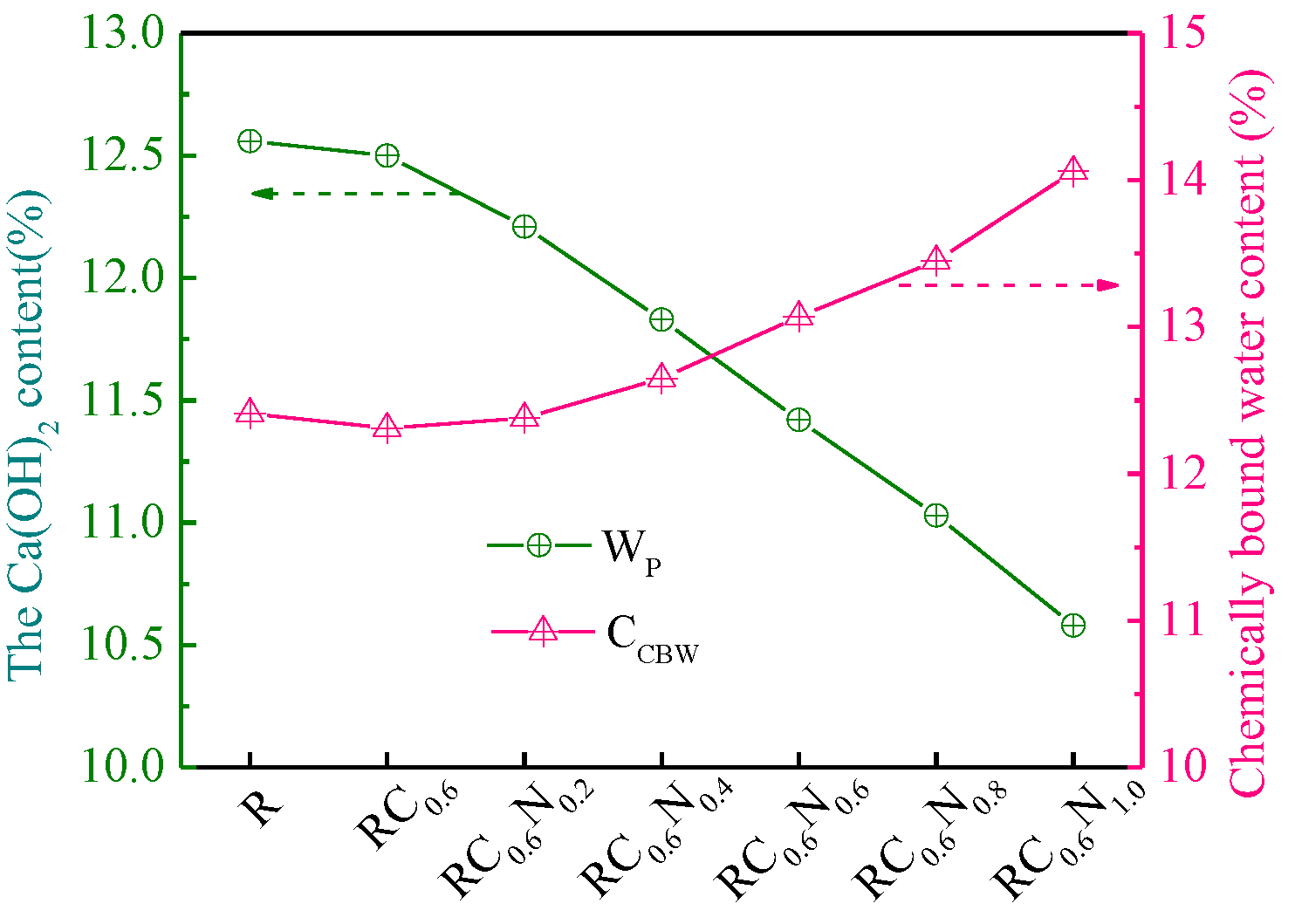
Figure 8.
effect of CF/NS on the pore size distribution , pore proportion distribution and porosity of cement paste.
Figure 8.
effect of CF/NS on the pore size distribution , pore proportion distribution and porosity of cement paste.
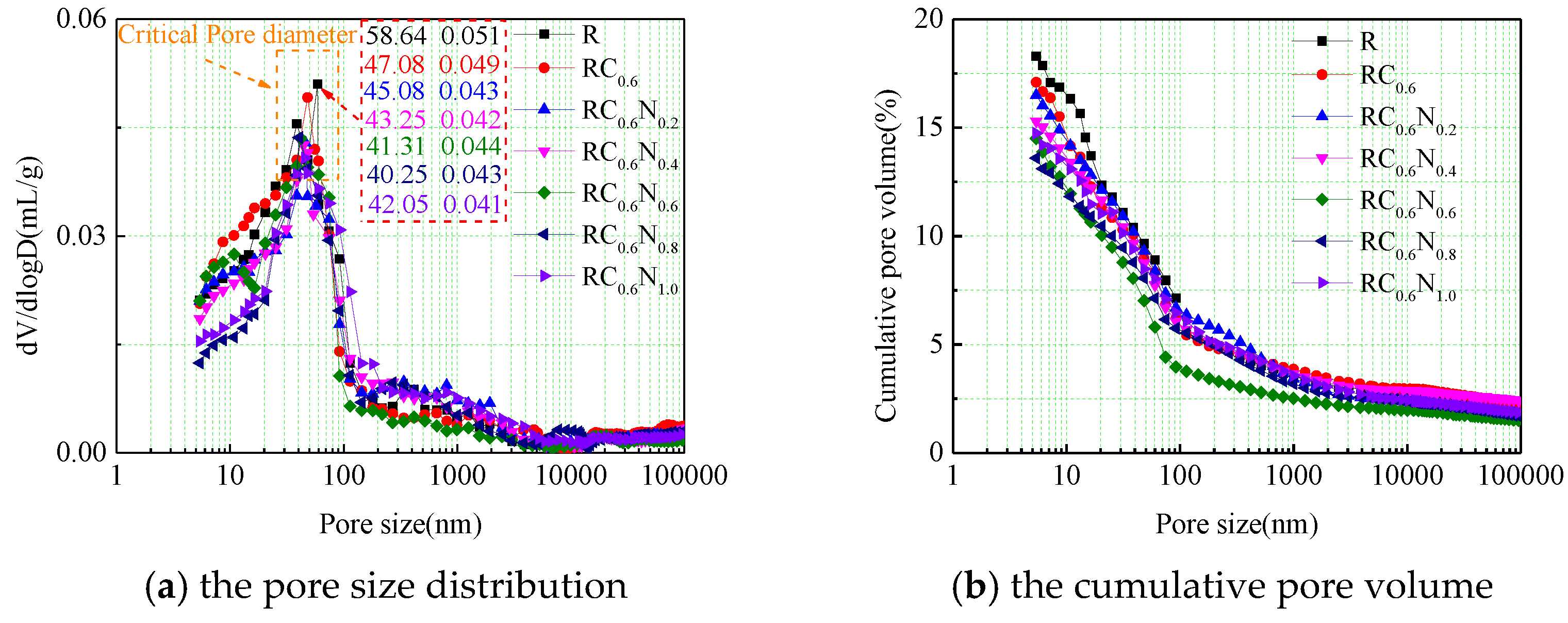
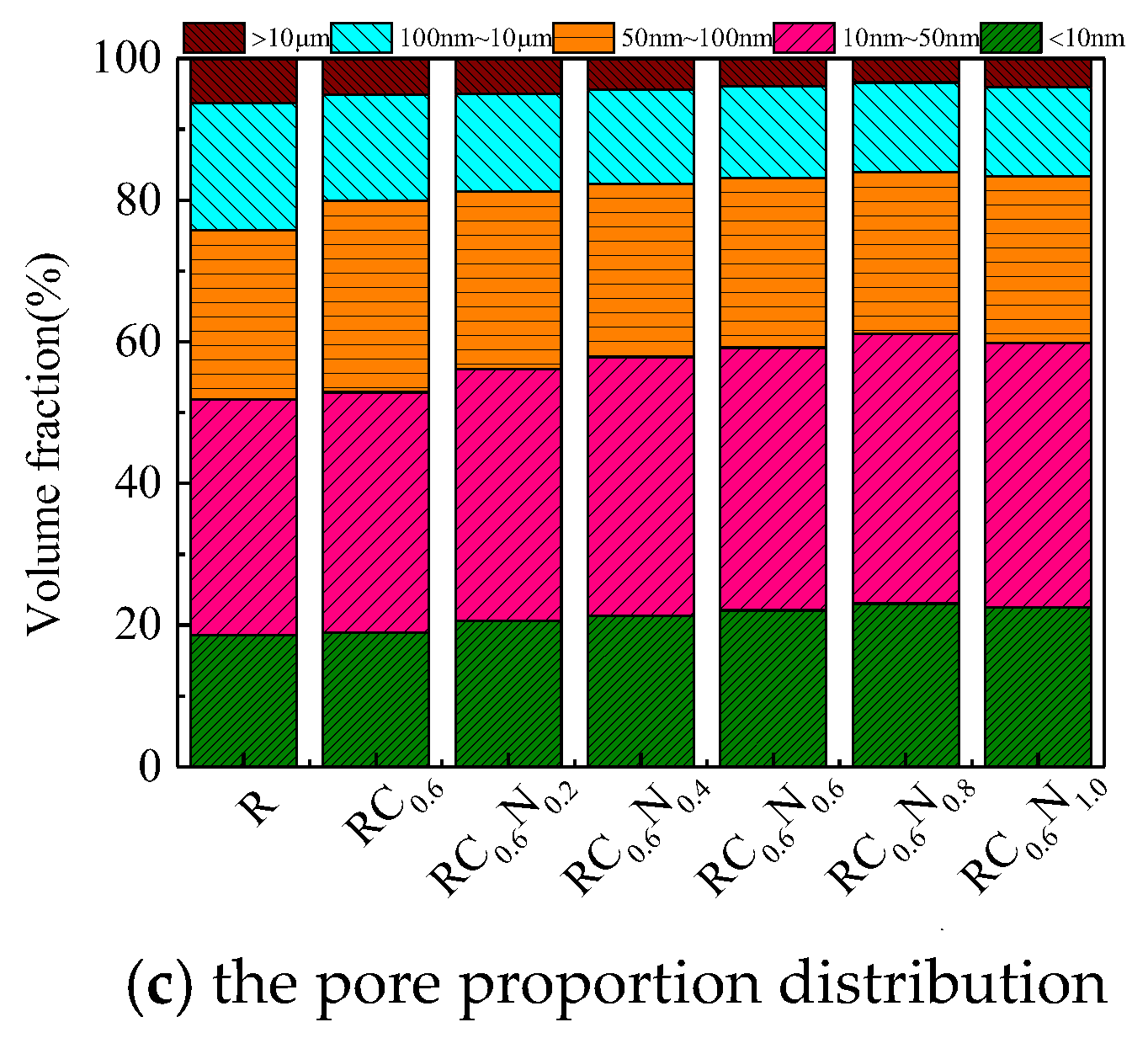
Figure 9.
the morphologies of hydration influenced by CF and NS.
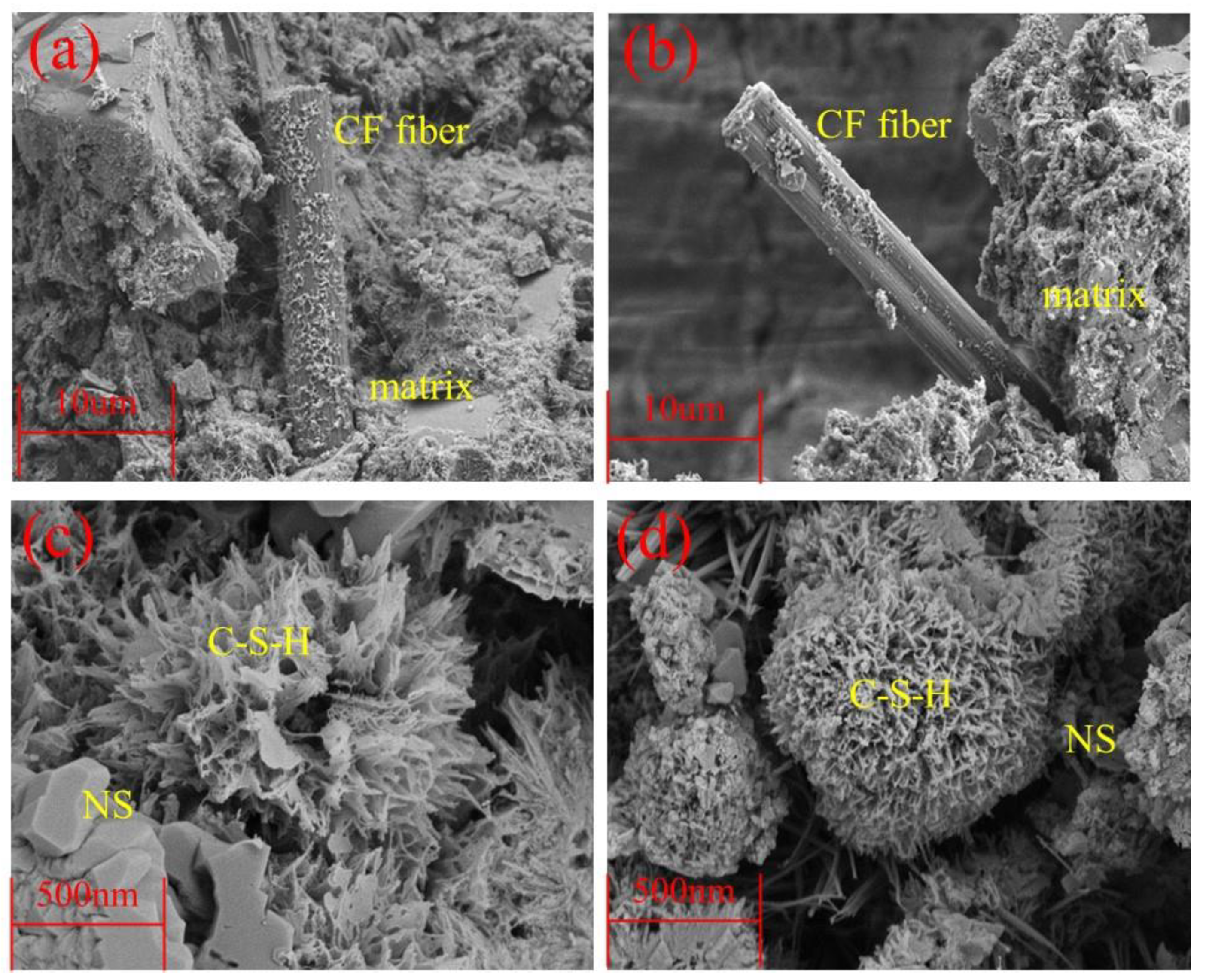
Figure 10.
Reaction processes of NS enhancing ITZs.
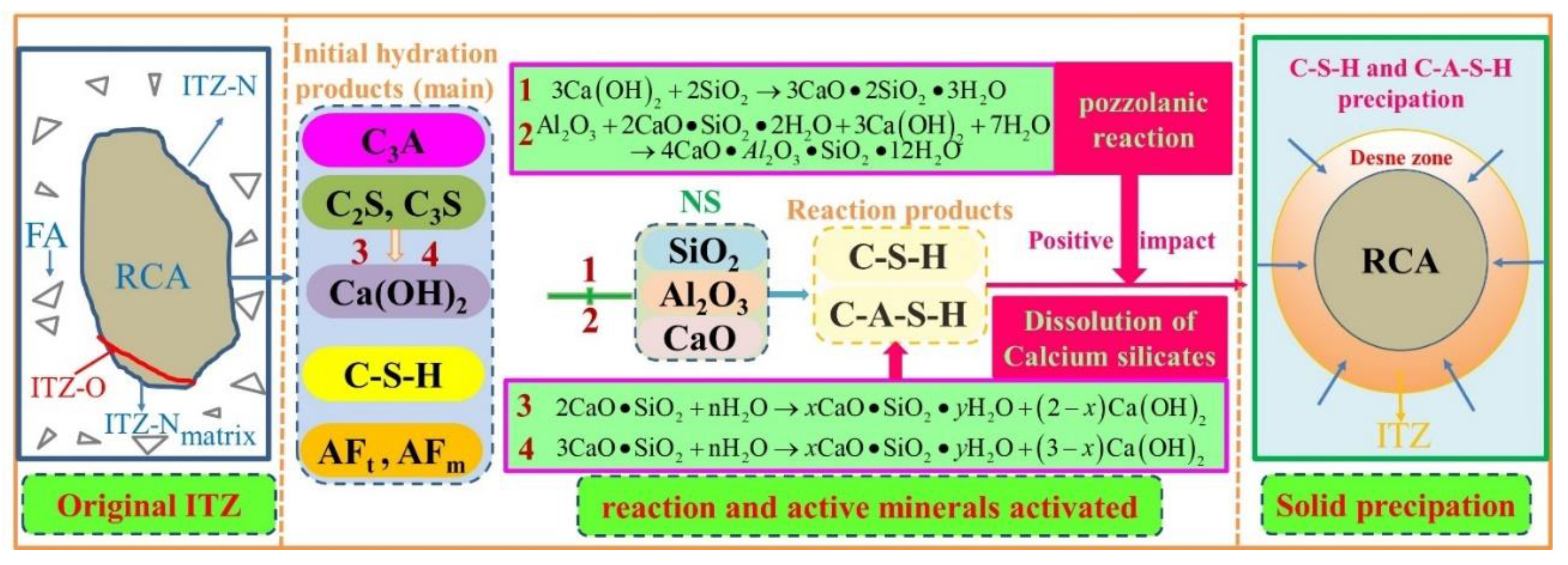
Figure 11.
Effect of NS on interface between CF and cement matrix.
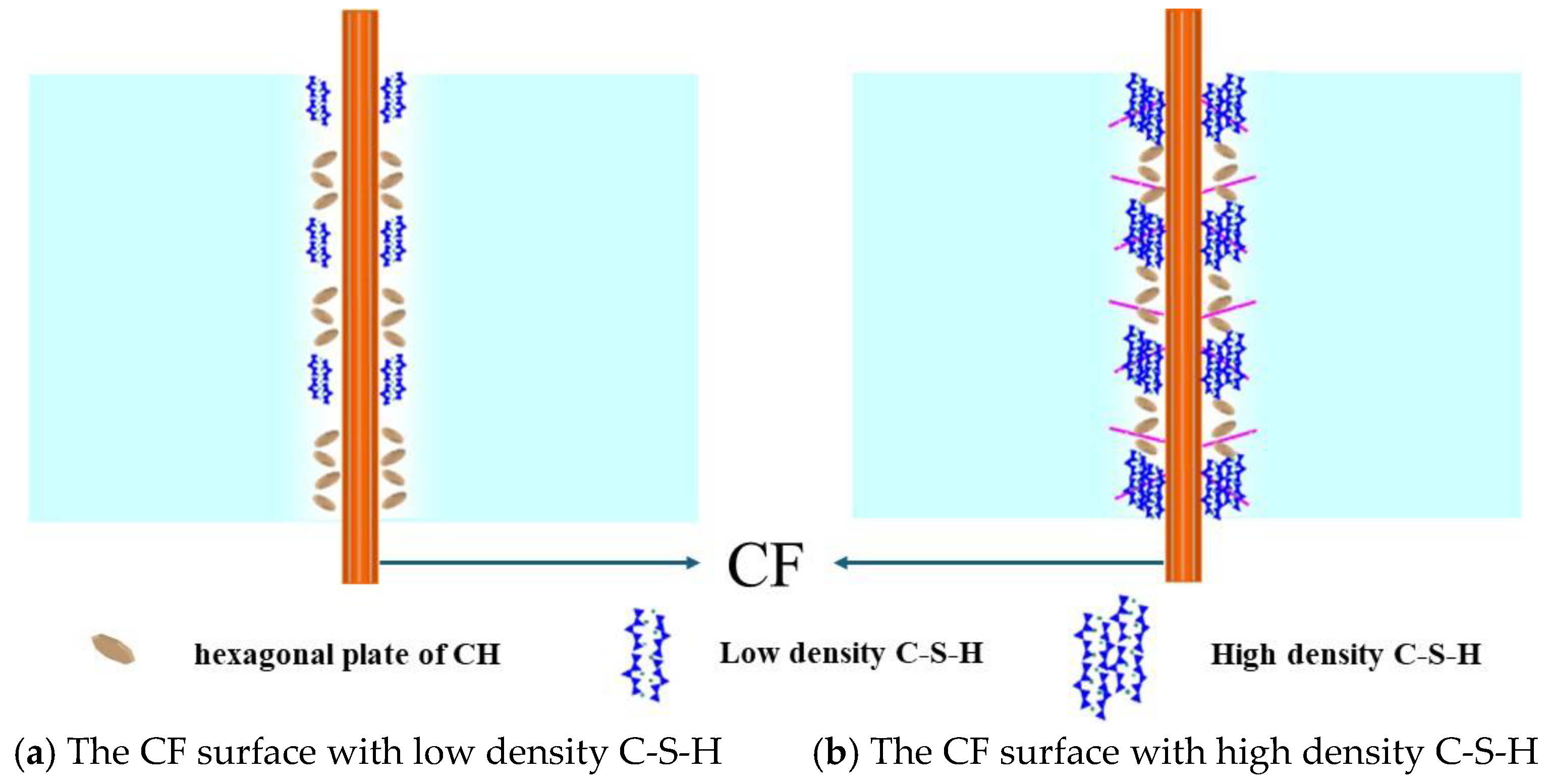

Table 1.
Chemical composition and physical properties of cement and fly ash.
| Compositions | SiO2 | Al2O3 | Fe2O3 | CaO | MgO | SO3 | SiO2 | LOI | Compressive strength/MPa | Flexural strength/MPa | ||
|---|---|---|---|---|---|---|---|---|---|---|---|---|
| Cement | 18.80 | 5.15 | 3.345 | 57.83 | 0.916 | 3.95 | 18.80 | 3.95 | 3d | 28d | 3d | 28d |
| Fly ash | 50.96 | 29.38 | 4.21 | 6.58 | 1.13 | 0.481 | 50.96 | 2.79 | 26.5 | 45.3 | 5.6 | 7.8 |
Table 2.
Mix proportions of RAC (kg/m3).
| Mixture | C | FA | W | S | CA | PBS | CF | NS |
|---|---|---|---|---|---|---|---|---|
| R | 380 | 120 | 237 | 720 | 900 | 3.8 | 0 | 0 |
| RC0.6 | 380 | 120 | 237 | 720 | 900 | 3.8 | 2.28(0.6wt%) | 0 |
| RC0.6N0.2 | 380 | 120 | 237 | 720 | 900 | 3.8 | 2.28(0.6wt%) | 0.76(0.2wt%) |
| RC0.6N0.4 | 380 | 120 | 237 | 720 | 900 | 3.8 | 2.28(0.6wt%) | 1.52(0.4wt%) |
| RC0.6N0.6 | 380 | 120 | 237 | 720 | 900 | 3.8 | 2.28(0.6wt%) | 2.28(0.6wt%) |
| RC0.6N0.8 | 380 | 120 | 237 | 720 | 900 | 3.8 | 2.28(0.6wt%) | 3.04(0.8wt%) |
| RC0.6N1.0 | 380 | 120 | 237 | 720 | 900 | 3.8 | 2.28(0.6wt%) | 3.8(1.0wt%) |
Disclaimer/Publisher’s Note: The statements, opinions and data contained in all publications are solely those of the individual author(s) and contributor(s) and not of MDPI and/or the editor(s). MDPI and/or the editor(s) disclaim responsibility for any injury to people or property resulting from any ideas, methods, instructions or products referred to in the content. |
© 2024 by the authors. Licensee MDPI, Basel, Switzerland. This article is an open access article distributed under the terms and conditions of the Creative Commons Attribution (CC BY) license (http://creativecommons.org/licenses/by/4.0/).
Copyright: This open access article is published under a Creative Commons CC BY 4.0 license, which permit the free download, distribution, and reuse, provided that the author and preprint are cited in any reuse.


