
Submitted:
21 October 2024
Posted:
23 October 2024
You are already at the latest version
Abstract
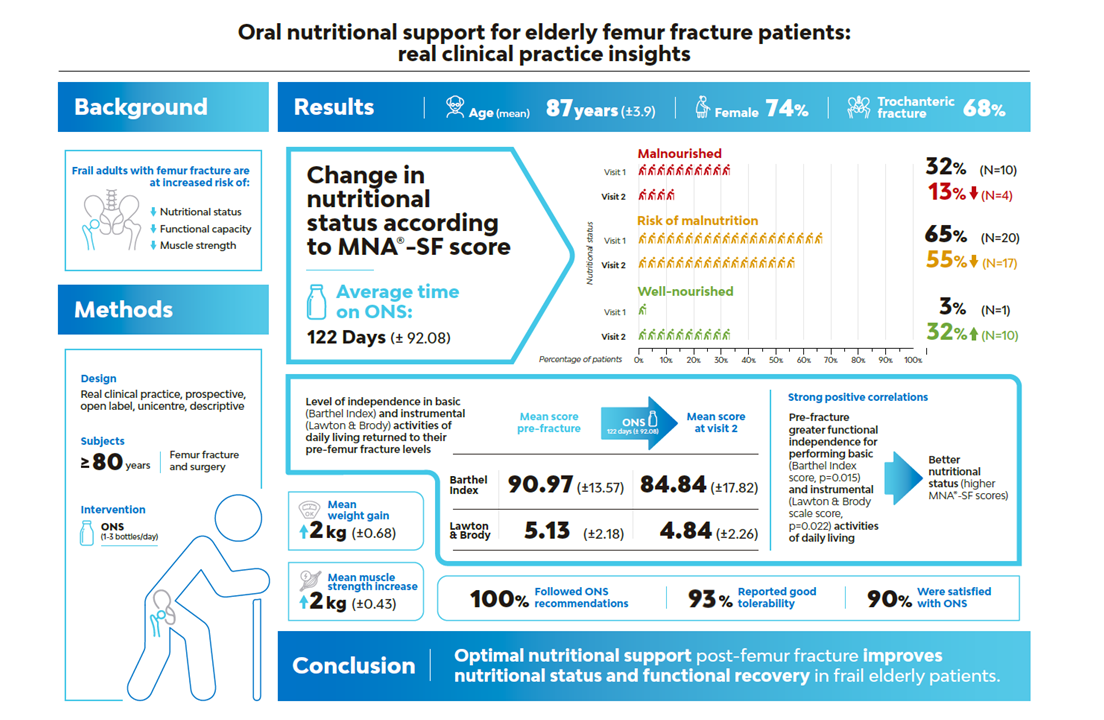
Background/Objectives: To describe the effects of muscle-targeted oral nutritional supplementation (MT-ONS) on nutrition, functional capacity, and other health outcomes in patients after femur fracture surgery; Methods: A prospective, open-label, single-center study was conducted. Patients aged 80+ post-femur fracture were recruited. They were assessed at baseline and after 90 days with MT-ONS, 100% whey protein enriched with leucine and vitamin D. Demographics, clinical and nutritional status (MNA®-SF), functional capacity [Barthel Index (BI), Lawton & Brody (LB) scale], muscle strength (dynamometry), cognition [Global Deterioration Scale (GDS)], tolerability, and satisfaction data were collected. Descriptive statistics were performed. Ethical approval was obtained; Results: Thirty-one patients (74% women, mean age 87 ± 3.99 years) were enrolled. At baseline, 32% were malnourished and 65% at risk. After ≥90 days of MT-ONS, malnutrition decreased to 13% and well-nourishment increased to 32%. Ninety percent gained weight, with significant muscle strength improvements (+2 kg, p<0.001). Eighty-one percent achieved a BI score ≥60 points [mean 84.8 (± 17.82)]. BI score improvements correlated with higher baseline muscle strength (rho=0.413, p=0.021) and better nutritional status (rho=0.464, p=0.009). LB mean score was 4.84 (± 2.26). Improvements correlated with pre-fracture BI score (rho=0.475, p=0.007). Positive correlations were noted between nutritional status, muscle strength, and functional outcomes. Cognition remained stable (GDS=1 in 67.7% patients). Tolerability and satisfaction with MT-ONS were high at 90%; Conclusions: MT-ONS, 100% whey protein enriched with leucine and vitamin D for ≥90 days, enhances nutritional status and functional recovery in patients after femur fracture surgery.
Keywords:
Muscle targeted oral nutritional supplementation
; femur fracture
; nutritional status
; functional capacity
1. Introduction
Femur fracture happens in approximately 1 individual per 1000 inhabitants in the majority of European countries [1]. In Spain, about 35,000 femur fractures occur in the aged population each year, with an incidence of 500–600 cases per 100,000 older patients-year, being much more common in women (around 750 cases/100,000 elderly women/year) than in men (around 325 cases/100,000 elderly people/year) [2].
A femur fracture causes approximately 5% to 11% of in-hospital mortality, which varies depending on the average length of stay [3]. Around 15% of patients typically die within three months, with 26%-33% succumbing within a year [4]. Further, only 50%-60% of patients who survive six months recover the same ability to walk that they previously had; only 40%-50% recover their level of independence for basic activities of daily living and 25%-30% for instrumental activities [5].
Frailty increases the risk of falls and bone fractures [1] and it is a predictor of greater pain and functional deterioration after femur fracture [6]. Several studies confirm a strong relationship between frailty, malnutrition, falls and fractures [1]. Malnutrition is suggested to be one of the main risk factors associated with physical frailty [7]. The European Society for Clinical Nutrition and Metabolism (ESPEN) classifies physical frailty as a nutrition-related condition [8]. A 2021 systemic review found the prevalence of malnutrition among patients hospitalized for femur fracture to range from 4.0% to 39.4% [9]. Providing oral nutritional supplements (ONS) is a common intervention to help meet nutritional needs postoperatively among this population [10]. The ESPEN 2022 guidelines recommend for older patients with femur fracture should be offered ONS postoperatively to improve dietary intake and reduce the risk of complications (R43, Grade A, strong consensus 100%) [11].
Specialized protein or amino acid supplements can stimulate muscle protein synthesis and improve protein nutritional status, potentially attenuating muscle mass loss, enhancing function and improving survival in older adults [12]. Leucine, an essential branched-chain amino acid, regulates muscle function [8]. Vitamin D is crucial for calcium absorption, promoting bone health, and reduced femur fracture risk[13]. Leucine-combined supplementation with vitamin D has demonstrated significant benefits for muscle strength and performance, including handgrip strength and gait speed, in older adults [14]. In this sense, research evidence shows that muscle-targeted oral nutritional supplementation (MT-ONS), alone or with exercise, is an effective first-line therapy for older patients with sarcopenia, improving clinical outcomes and reducing healthcare costs, especially for those in rehabilitation centers [15].
Postoperative oral nutritional supplementation plays a pivotal role in enhancing femur fracture outcomes by restoring nutritional status to near-optimal levels, preserving functional muscle mass, and reducing complications. However, despite its potential benefits, evidence supporting its effectiveness in routine clinical care is limited, hindering its widespread adoption [16,17]. This study aimed to assess the potential effects of MT-ONS on nutritional and functional changes in patients aged ≥80 years undergoing surgery for femur fracture, with supplementation provided for a minimum of 90 days postoperatively. Additionally, the study sought to evaluate the tolerability and satisfaction levels associated with the ONS.
2. Materials and Methods
2.1. Design
The study employed a prospective, open label, descriptive, unicenter, single arm design involving a cohort of elderly patients who were malnourished or at risk of malnutrition and had experienced femur fractures requiring surgery. These patients received MT-ONS to optimize their caloric and protein intake quality, aiming to improve their nutrition, muscle health and physical function. Patients were admitted to the Traumatology department at the 12 de Octubre University Hospital (Madrid) and referred to the Geriatric team for a comprehensive assessment.
The primary objective was to assess changes in nutritional status after a minimum of 90 days with MT-ONS from baseline. Additionally, changes in functional capacity, muscle strength, weight, and cognition were evaluated, along with tolerability and satisfaction with the MT-ONS.
2.2. Study Population
Patients accomplishing the following inclusion criteria were eligible to entry the study: age ≥ 80 years, being admitted to the Traumatology Service after femur fracture and surgery; referral to the geriatrics team for assessment, and ability to provide written consent for study participation. Exclusion criteria are detailed in Supplementary Table 1.
Recruitment and assessment
Participants were consecutively recruited following usual clinical practice and assessed at baseline (V1) and at least 90 days after initiation of the MT-ONS (V2) (Figure 1).
Baseline demographic data (age, gender, marital status, place of residence) and clinical data (type of fracture, laboratory tests, nutritional status, cognition, muscle strength, weight and physical functionality) was collected.
The nutritional status of patients was assessed using the Mini Nutritional Assessment- Short Form (MNA®-SF) [18,19]. Additionally, the Controlling Nutritional Status (CONUT®) score was calculated [20]. Patients’ ability to perform basic activities of daily living was evaluated using the Barthel Index [21,22], while skills of independent living in the community were assessed with the Lawton & Brody scale [23]. Muscle strength was measured using a Jamar hydraulic handheld dynamometer [24], and cognition was documented with the Global Deterioration Scale [25].
Tolerability and satisfaction with the ONS were determined at VParticipants rated their levels of tolerability and satisfaction on a Likert-type scale ranging from 1 to 10, with 1 indicating very low tolerance/satisfaction and 10 indicating very high tolerance/satisfaction.
2.3. Oral Nutritional Supplementation
The ONS provided was hypercaloric (151 kcal/100 ml) and hyperproteic (10.4 g/100 ml) 100% serum lactoprotein enriched with leucine and vitamin D (Supplementary Table 2). Patients were instructed to take one to three bottles (200 ml/ bottle) per day, depending on individual needs.
2.4. Statistical Analysis
Descriptive statistics were applied. Percentages, mean, standard deviation, median, interquartile range, and minimum and maximum range were calculated. The comparison of two dependent variables was carried out using Student’s t-test in the case of a normal distribution. Otherwise, the non-parametric Wilcoxon-Mann-Whitney test was employed.
The correlation of Spearman was used to assess the correlation between the nutritional status and baseline characteristics (age, Barthel Index, Lawton & Brody scale and muscle strength). The correlation between the nutritional status (MNA®-SF) and mean days of ONS was also assessed. Additionally, correlations between the change of nutritional status and the change in other outcomes (Barthel Index, Lawton & Brody scale, muscular strength, levels of albumin, cholesterol, and lymphocyte count) were also calculated.
A regression analysis, employing a decision tree based on the RPART algorithm [26], was conducted to explore the factors influencing post-ONS nutritional status based on MNA®-SF score and post-ONS independence to perform basic activities of daily living based on Barthel Index score. The potential influencing factors considered were baseline Barthel Index score, Lawton & Brody Scale score, weight, muscle strength, age, MNA®-SF score, gender, type of fracture, and mean number of days on MT-ONS. The objective was to identify groups of patients more likely to experience changes in nutritional status and independence after at least 90 days on MT-ONS based on their baseline characteristics [27]. Data was analyzed with JASP 0.18.3.
2.5. Ethical Considerations
Patients received an information sheet outlining the study's name, objectives, sponsors, data anonymization and processing, and voluntary participation. All patients signed a written consent form. The study was approved by the Clinical Research Ethical Committee of the University Hospital 12 de Octubre in Madrid, Spain (CEIm Number 21/543).
3. Results
3.1. Baseline Demographic and Clinical Characteristics at Visit 1
A total of 31 patients were recruited between 10th February 2022 and 24th August The mean age was 87 years (±Standard deviation, SD) (±3.99), 74% were women; 77% were widows; 68% had a trochanteric fracture and no cognitive decline (67.7%). Before admitted to hospital, 78% lived in their own homes, either with (36%) or without (42%) a contracted caregiver and returned home at hospital discharge (Table 1).
At V1, 32% of participants were malnourished, 65% were at risk of malnutrition, and 3% were well nourished according to the MNA®-SF score (Table 2). The mean MNA®-SF score for the entire population was 8.6 (±2.01). According to CONUT®, 3% were at high risk of malnutrition, 42% at moderate risk of malnutrition and 55% at low risk of malnutrition (Table 2). Median weight was 60.4 kg (±9.96). Albumin levels, total cholesterol levels, and lymphocyte count were at the lower limits of the normal ranges. Barthel Index mean score was 90.97 (±13.57) and 96.8% had Barthel Index ≥60 on the day before the fracture. Lawton & Brody mean score was 5.13 (±2.18). On the day before the fracture, patients were either independent (29%) or partially (35.5%) or very dependent (22.6%) to perform instrumental activities of daily living (Table 2).
3.2. Clinical Characteristics at Visit 2
The average time between V1 and V2 while on MT-ONS was 122 days (±92.08). 15 out of 31 patients improved their nutritional status according to the MNA®-SF score. The presence of malnutrition decreased to 13% while the proportion of well-nourished patients increased to 32%; 55% remained at risk of malnutrition (Figure 2). The mean score on the MNA®-SF increased 1.8 points, from 8.6 (±2.01) to 10.4 (±2.38). 97% of the patients were classified as being at low risk of malnutrition according to CONUT® at V2.
90% (28/31) experienced weight gain or maintained their weight, with a mean weight gain of 2 kg (±0.68). The mean muscle strength gain measured with dynamometry was 2kg (±0.043). Albumin levels, total cholesterol levels, and lymphocyte count increased, surpassing the inferior limits of the normal ranges (Figure 3a). Cognition remained unaltered and preserved in 67.7% of participants, as observed at V1 (Table 2).
81% of patients achieved a Barthel Index score of ≥60 after the femur fracture and while receiving MT-ONS. The Barthel Index score was almost restored to the V1 score, averaging 84.8 (±17.82) at V2 (Figure 3b). Although most activities of daily living were compromised after the femur fracture, except for the ability to bath, the item analysis of the Barthel Index revealed that the greatest decline happened in the ability to climb stairs (-1.29 ±2.61) and the ability to transfer from bed to chair and back (-1.29 ±2.32). Likewise, independence to perform instrumental activities of daily living was almost restored after an average of 122 days with MT-ONS, with a mean score on the Lawton & Brody scale of 4.84 (±2.26) at V2.
3.3. Clinical Characteristics at Visit 2
A positive association was observed between an improvement in nutritional status, as indicated by the MNA®-SF at V2, and the Barthel Index score prior to the fracture (rho= 0.432, p=0.015) (Supplementary Table 4). This suggests that patients with better nutritional status at V2 had enhanced functionality in independently performing activities of daily living before the fracture. Likewise, better nutritional status according to the MNA®-SF score was positively associated with increases in serum albumin levels (rho= 0.379, p=0.036), total cholesterol levels (rho= 0.452, p=0.011), and the Lawton & Brody score (rho= 0.410, p=0.022) at V2 (Supplementary Table 5). This implies that individuals with improved nutritional status at V2 experienced enhancements in their nutritional intake, as well as in their functionality to independently perform instrumental activities of daily living.
3.4. Factors Predicting Nutritional Improvement with MT-ONS
The regression analysis employing a decision tree based on the RPART algorithm [26], demonstrated a 77.4% precision, indicating that patients with Barthel Index score >90 and a Lawton & Brody score <5 on the day prior to the fracture were more likely to change to a group with better nutritional status after at least 90 days on MT-ONS (R2 = 0.37; accuracy = 77.4%). Approximately 37% of the variability in the outcome (changes in nutritional status assessed with the MNA®-SF) could be explained by the factors considered in the analysis (Figure 4a). This suggests that patients with better functional independence in basic and instrumental activities of daily living on the day prior to the fracture improved their nutritional status while in MT-ONS.
3.5. Drivers of Changes In Independence to Perform Activities of Daily Living
Changes in the Barthel Index score at V2 were positively correlated with baseline higher muscle strength (rho= 0.413, p= 0.021) and better nutritional status according to MNA®-SF score (rho= 0.464, p=0.009) (Supplementary Table 4). The change in muscle strength in V2 was associated with a Barthel Index total score ≥60 in V1 (rho= 0.375, p=0.038), implying that individuals with better baseline functional status experienced improvements in muscle strength with the MT-ONS. Improvements in the Lawton & Brody scale were positively associated with the total score on the Barthel Index on the day before the fracture (rho=0.475, p=0.007) (Supplementary Table 4). This suggests that patients who demonstrated greater independence in basic daily activities at V2 also exhibited higher muscle strength and better nutritional status at VSimilarly, those with better functionality in instrumental activities of daily living were more independent in basic daily living tasks before the fracture.
3.6. Factors Predicting Independent Functionality Improvement with MT-ONS
The regression analysis, utilizing a decision tree based on the RPART algorithm [26], demonstrated a 71% precision. This indicates that patients with muscle strength ≥11 kg on dynamometry and a Lawton & Brody score <7 the day prior to the fracture were more likely to experience improvement in their Barthel Index score after at least 90 days on MT-ONS (R2 = 0.34; accuracy = 71%) (Figure 4b) and to recover their Barthel Index score prior to the fracture. Approximately 34% of the variability in the improvement of Barthel Index scores can be explained by these factors. This suggests that higher muscle strength (higher scores on dynamometry) and lower capacity for performing instrumental activities of daily living before the fracture (lower scores on Lawton & Brody scale) predict positive changes in independence to perform basic self-care activities of daily living (higher Barthel Index scores).
3.7 Tolerability and satisfaction with the MT-ONS
91% of participants referred good (Likert scale score: 7 to 8) or very good (Likert scale score 9 to 10) tolerability. No nausea, vomiting, diarrhea, constipation, or reflux were reported. 90% reported high (Likert scale score 7 to 8) or very high satisfaction (Likert scale score 9 to 10) with the MT-ONS.
4. Discussion
The results of this prospective clinical study show changes in the nutritional status of elderly patients aged over 80 years who experienced femur fractures requiring surgery and were either malnourished or at risk of malnutrition. These patients received a hypercaloric and hyperproteic MT-ONS 100% whey protein enriched with leucine and vitamin D, for a minimum of 90 days to optimize their caloric and protein intake. They were referred to the Geriatric team for a comprehensive assessment at the hospital's Traumatology department as part of routine medical practice.
The results show that the frequency of malnutrition risk in this study is slightly higher compared to previously reported studies [28,29] and that a noticeable shift towards a well-nourished status (from 3% to 32%) and an increase in the percentage of patients at low risk of malnutrition (from 55% to 97%) is observed after a minimum of 90 days of MT-ONS, as assessed by the MNA®-SF and CONUT® screening tools. This suggests that MT-ONS may effectively contribute to the improvement of these patients' nutritional status. Similar results were also observed in another clinical study involving malnourished femur fracture patients receiving MT-ONS at an Orthogeriatric Unit that also showed improvements with early and continued nutritional support [30].However, 55% of patients remain at risk of malnutrition according to the MNA®-SF, highlighting the need for attention to prevent further deterioration of their nutritional status, or to continue nutritional recovery. These findings align with the conclusions of a recent systematic review, which suggested that MT-ONS administration in femur fracture patients can improve nutritional status to near-optimum levels and may reduce postoperative complications [16].
Body weight, as well as known markers of nutritional status such as albumin and total cholesterol, increase in this study population. Additionally, muscle strength show improvement, further reinforcing the positive effects of MT-ONS on patients' nutritional status, consistent with previously reported evidence [29,30,31,32]. In previous studies, higher grip strength has been linked to improved ability to perform daily activities [33], while lower handgrip strength upon admission has been associated with increased dependency in daily living [34]. In this study, greater initial muscle strength is correlated with the recovery of pre-fracture Barthel Index scores, indicating improved functional outcomes. Therefore, in the context of clinical nutrition for the elderly, these findings suggests that factors such as higher muscle strength (≥11), reflected in dynamometry scores, are associated with greater functional recovery. This implies that interventions aimed at enhancing muscle strength and promoting muscle health may contribute to improved functional recovery in elderly patients [34,35].
In this study, the MT-ONS provided 100% whey protein, a high-quality protein source enriched with essential amino acids crucial for maintaining muscle mass and function in elderly individuals [36,37]. Additionally, the inclusion of leucine, an essential amino acid known for its role in stimulating muscle protein synthesis, enhances the anabolic effect of serum lactoprotein, facilitating muscle preservation and strength maintenance in the elderly [37]. This combination may be particularly beneficial for elderly individuals susceptible to sarcopenia or muscle wasting, as preserving or restoring physical functionality is of utmost importance [38]. Recent intervention studies across various healthcare settings support muscle-targeted oral nutritional supplementation to improve muscle mass, function, and physical performance in sarcopenia patients. Greater efficacy is seen when combined with tailored resistance exercise and achieving adequate protein-calorie balance. Proactive application is also beneficial, as evidence shows maintenance or improvement in patients at risk of muscle loss [39].
Most patients demonstrated high levels of independence in daily living and instrumental activities before experiencing a femur fracture, as evidenced by their pre-fracture Barthel Index and Lawton & Brody scale scores. These high pre-fracture scores are essential for achieving complete functional recovery after fracture [40]. 81% of individuals regained their pre-fracture functional status for basic self-care tasks post-ONS, a larger proportion compared to previous studies where lower pre-fracture Barthel Index scores were associated with higher dependence and slower recovery [41,42]. The sustained lower capacity for instrumental activities of daily living, as indicated by Lawton & Brody scores (<7) maintained by more than half of patients after femur fracture and despite MT-ONS, suggests that focusing on maintaining independence in basic activities of daily living while providing assistance for more complex tasks may facilitate overall functional improvement in elderly individuals undergoing clinical nutrition interventions [43].
Furthermore, patients with better functional independence in both basic and instrumental activities of daily living prior to femur fracture were more likely to achieve greater improvements in nutritional status post-ONS. The identified factors, such as muscle strength on dynamometry, Barthel Index, and Lawton & Brody scores before the fracture, are significant predictors of basic functional independence and nutritional status post-ONS. However, the models accurately predict improvements in only about 70% of cases and explain approximately one-third of the variability in outcomes. This implies that other factors, not included in the analysis, may also contribute to the improvement in the nutritional and functional conditions of the patients. Consideration of multiple interconnected factors is essential in clinical nutrition interventions for promoting functional recovery in elderly individuals with femur fractures [44,45,46,47]. The relationship observed between these factors and functional outcomes stresses the potential effectiveness of tailored interventions aimed at preserving muscle health and independence in daily activities to optimize outcomes in this population.
The results of this study also strengthen the importance of early interventions, even in individuals with Barthel Index scores > 90 or starting as early as 65 years of age are crucial to maintain functional independence and to achieve superior recovery rates in terms of nutritional status. Interventions incorporating physical exercise with supplementation, cognitive training, or supplementation alone have yielded favorable effects on frailty indicators. Economic analyses have shown that these interventions provide better value for money compared to standard care, particularly benefiting very frail individuals living in the community. Moreover, they have demonstrated positive impacts on frailty-related outcomes in both hospital and outpatient settings, all without increasing costs or maintaining cost-effectiveness. However, individuals with acceptable functionality scores are often overlooked in frailty prevention initiatives or deemed exempt from interventions. For instance, the frailty prevention program implemented by the Community of Madrid, in Spain, for individuals aged 70 years and older excludes those with Barthel Index scores > 90 [48].
The study presents several limitations. Its descriptive design, lacking a control group, hinders drawing definitive conclusions. Conducted solely in a single hospital, its scope may limit reliability, The small sample size and difficulties in recruiting older adults with femur fracture for nutritional assessment weaken the robustness of findings, which necessitate confirmation in clinical studies with a more robust design. However, despite these limitations, the study also possesses strengths. It accurately reflects clinical practices at a tertiary hospital and stresses the beneficial effects of MT-ONS on the nutritional and functional recovery of old patients with femur fracture and surgery. Additionally, it emphasizes the importance of early and sustained intervention for optimal nutritional outcomes and for maintaining high functional independence in the elderly. The study provides preliminary evidence for further confirmatory research.
5. Conclusions
The study demonstrated improvements in nutritional status and functional outcomes among elderly patients with femur fracture and surgery who received MT-ONS 100% whey protein enriched with leucine and vitamin D for a minimum of 90 days. MT-ONS contributed to decreasing malnutrition, increasing the proportion of well-nourished individuals, and promoting weight gain. Improvements in muscle strength and functional independence correlated with baseline scores and nutritional status, suggesting the importance of early intervention. However, a high percentage of patients remained at risk of malnutrition, and the slower recovery of independence in performing instrumental activities of daily living in the community emphasizes the need for sustained support. High tolerability and satisfaction with the MT-ONS further endorse its effectiveness.
Supplementary Materials
The following supporting information can be downloaded at the website of this paper posted on Preprints.org, Table SExclusion criteria; Table SOral nutritional supplementation; Table S3: Baseline laboratory parameters; Table SSpearman correlation between changes in nutritional status, functional capacity and muscle strength and baseline characteristics; Table SSpearman correlation between changes in nutritional status and functional capacity and the change in other outcomes; Figure S1: Level of tolerability with the ONS and Figure S2: Level of satisfaction with the ONS
Author Contributions
All authors contributed to the study conception and design. Material preparation and data collection were performed by Francisco José Soria Perdomo and Sara Fernández Villaseca. All authors commented on previous versions of the manuscript. All authors read and approved the final manuscript.
Funding
Danone Nutricia SL provided financial support to develop the study and write the manuscript.
Institutional Review Board Statement
The study was conducted in accordance with the Declaration of Helsinki and approved by the Ethics Committee of the University Hospital 12 de Octubre in Madrid, Spain (CEIm Number 21/543).
Informed Consent Statement
Informed consent was obtained from all subjects involved in the study.
Data Availability Statement
Not applicable.
Acknowledgments
We thank Silvia Paz Ruiz and Lena Huck at SmartWorking4U for their support in the design of the study, data management and methodological support, interpretation of results, and writing of the manuscript; Jordi Ollé (Conceptos Claros) for the statistical analysis and Isabel Gotor Miserachs (Selenus) for the graphical design in collaboration with SmartWorking4U.
Conflicts of Interest
The authors declare no conflicts of interest.
References
- Middleton, R.; Poveda, J.L.; Pernas, F.O.; Laguna, D.M.; Perez, A.D.; Nogués, X.; Abella, C.C.; Reyes, C.; Prieto-Alhambra, D. Mortality, Falls, and Fracture Risk Are Positively Associated With Frailty: A SIDIAP Cohort Study of 890 000 Patients. Journals Gerontol. Ser. A 2022, 77, 148–154. [Google Scholar] [CrossRef] [PubMed]
- Azagra, R.; López-Expósito, F.; Martin-Sánchez, J.C.; et al. Changing trends in the epidemiology of hip fracture in Spain. Osteoporos Int a J Establ as result Coop between Eur Found Osteoporos Natl Osteoporos Found USA 2014, 25, 1267–1274. [Google Scholar] [CrossRef] [PubMed]
- Sanz-Reig, J.; Marín, J.S.; Alba, J.P.; Martínez, J.F.; Beltrán, D.O.; López, J.M. Risk factors for in-hospital mortality following hip fracture. Rev. espanola de cirugia Ortop. y Traumatol. 2017, 61, 209–215. [Google Scholar] [CrossRef]
- Sanz-Reig, J.; Marín, J.S.; Martínez, J.F.; Beltrán, D.O.; López, J.M.; Rico, J.Q. Prognostic factors and predictive model for in-hospital mortality following hip fractures in the elderly. Chin. J. Traumatol. 2018, 21, 163–169. [Google Scholar] [CrossRef] [PubMed]
- Alarcón Alarcón, T.; González-Montalvo, J.I. Fractura osteoporótica de cadera. Factores predictivos de recuperación funcional a corto y largo plazo. An Med Interna 2004, 21, 87–96. [Google Scholar] [CrossRef]
- Orive, M.; Anton-Ladislao, A.; García-Gutiérrez, S.; Hayas, C.L.; González, N.; Zabala, J.; Quintana, J.M. Prospective study of predictive factors of changes in pain and hip function after hip fracture among the elderly. Osteoporos. Int. 2016, 27, 527–536. [Google Scholar] [CrossRef]
- Kurkcu, M.; Meijer, R.; Lonterman, S.; Muller, M.; de van der Schueren, M. The association between nutritional status and frailty characteristics among geriatric outpatients. Clin. Nutr. ESPEN 2018, 23, 112–116. [Google Scholar] [CrossRef]
- Cederholm, T.; Barazzoni, R.; Austin, P.; Ballmer, P.; Biolo, G.; Bischoff, S.C.; Compher, C.; Correia, I.; Higashiguchi, T.; Holst, M.; et al. ESPEN guidelines on definitions and terminology of clinical nutrition. Clin. Nutr. 2017, 36, 49–64. [Google Scholar] [CrossRef]
- Foo, M.X.E.; Wong, G.J.Y.; Lew, C.C.H. A systematic review of the malnutrition prevalence in hospitalized hip fracture patients and its associated outcomes. J. Parenter. Enter. Nutr. 2021, 45, 1141–1152. [Google Scholar] [CrossRef]
- Rempel, A.N.; Radler, D.L.R.; Zelig, R.S. Effects of the use of oral nutrition supplements on clinical outcomes among patients who have undergone surgery for hip fracture: A literature review. Nutr. Clin. Pr. 2023, 38, 775–789. [Google Scholar] [CrossRef]
- Volkert, D.; Beck, A.M.; Cederholm, T.; Cruz-Jentoft, A.; Hooper, L.; Kiesswetter, E.; Maggio, M.; Raynaud-Simon, A.; Sieber, C.; Sobotka, L.; et al. ESPEN practical guideline: Clinical nutrition and hydration in geriatrics. Clin. Nutr. 2022, 41, 958–989. [Google Scholar] [CrossRef] [PubMed]
- Campbell, W.W.; Deutz, N.E.P.; Volpi, E.; Apovian, C.M. Nutritional Interventions: Dietary Protein Needs and Influences on Skeletal Muscle of Older Adults. Journals Gerontol. Ser. A 2023, 78, 67–72. [Google Scholar] [CrossRef] [PubMed]
- Yao, P.; Bennett, D.; Mafham, M.; et al. Vitamin D and Calcium for the Prevention of Fracture: A Systematic Review and Meta-analysis. JAMA Netw open 2019, 2, e1917789. [Google Scholar] [CrossRef] [PubMed]
- Guo, Y.; Fu, X.; Hu, Q.; Chen, L.; Zuo, H. The Effect of Leucine Supplementation on Sarcopenia-Related Measures in Older Adults: A Systematic Review and Meta-Analysis of 17 Randomized Controlled Trials. Front. Nutr. 2022, 9, 929891. [Google Scholar] [CrossRef] [PubMed]
- Cereda, E.; Pisati, R.; Rondanelli, M.; Caccialanza, R. Whey Protein, Leucine- and Vitamin-D-Enriched Oral Nutritional Supplementation for the Treatment of Sarcopenia. Nutrients 2022, 14, 1524. [Google Scholar] [CrossRef]
- Arkley, J.; Dixon, J.; Wilson, F.; Charlton, K.; Ollivere, B.J.; Eardley, W. Assessment of Nutrition and Supplementation in Patients With Hip Fractures. Geriatr. Orthop. Surg. Rehabilitation 2019, 10. [Google Scholar] [CrossRef]
- Dempewolf, S.; Mouser, B.; Rupe, M.; et al. What Are the Barriers to Incorporating Nutrition Interventions Into Care of Older Adults With Femoral Fragility Fractures? Iowa Orthop J 2023, 43, 172–182. [Google Scholar]
- Guigoz, P.Y.; Vellas, M.B.; Garry, P.P.J. Assessing the Nutritional Status of the Elderly: The Mini Nutritional Assessment as Part of the Geriatric Evaluation. Nutr. Rev. 1996, 54, S59–S65. [Google Scholar] [CrossRef]
- Molina-Luque, R.; Muñoz Díaz, B.; de la Iglesia, J.; et al. Is the Spanish short version of Mini Nutritional Assessment (MNA-SF) valid for nutritional screening of the elderly? Nutr Hosp Hosp 2019, 36, 290–295. [Google Scholar]
- Ignacio de Ulíbarri, J.; González-Madroño, A.; de Villar, N.G.P.; et al. CONUT: a tool for controlling nutritional status. First validation in a hospital population. Nutr Hosp 2005, 20, 38–45. [Google Scholar]
- Cabañero-Martínez, M.J.; Cabrero-García, J.; Richart-Martínez, M.; et al. Structured review of activities of daily living measures in older people. Rev Esp Geriatr Gerontol 2008, 43, 271–283. [Google Scholar] [PubMed]
- Mahoney, F.I.; Barthel, D.W. FUNCTIONAL EVALUATION: THE BARTHEL INDEX. Md. State Med. J. 1965, 14, 61–65. [Google Scholar] [PubMed]
- Lawton, M.P.; Brody, E.M. Assessment of older people: self-maintaining and instrumental activities of daily living. Gerontologist 1969, 9, 179–186. [Google Scholar] [CrossRef] [PubMed]
- Cruz-Jentoft, A.J.; Bahat, G.; Bauer, J.; Boirie, Y.; Bruyère, O.; Cederholm, T.; Cooper, C.; Landi, F.; Rolland, Y.; Sayer, A.A.; et al. Sarcopenia: revised European consensus on definition and diagnosis. Age Ageing 2019, 48, 16–31. [Google Scholar] [CrossRef]
- Reisberg, B.; Ferris, S.; Deleon, M.; Crook, T. The Global Deterioration Scale for assessment of primary degenerative dementia. Am. J. Psychiatry 1982, 139, 1136–1139. [Google Scholar] [CrossRef]
- Lemon, S.C.; Roy, J.; Clark, M.A.; Friedmann, P.D.; Rakowski, W. Classification and regression tree analysis in public health: Methodological review and comparison with logistic regression. Ann. Behav. Med. 2003, 26, 172–181. [Google Scholar] [CrossRef]
- Jaehn, P.; Fügemann, H.; Gödde, K.; Holmberg, C. Using decision tree analysis to identify population groups at risk of subjective unmet need for assistance with activities of daily living. BMC Geriatr. 2023, 23, 543. [Google Scholar] [CrossRef]
- Sánchez-Torralvo, F.J.; Pérez-Del-Río, V.; García-Olivares, M.; Porras, N.; Abuín-Fernández, J.; Bravo-Bardají, M.F.; García-De-Quevedo, D.; Olveira, G. Global Subjective Assessment and Mini Nutritional Assessment Short Form Better Predict Mortality Than GLIM Malnutrition Criteria in Elderly Patients with Hip Fracture. Nutrients 2023, 15, 1828. [Google Scholar] [CrossRef]
- Malafarina, V.; Uriz-Otano, F.; Malafarina, C.; Martinez, J.A.; Zulet, M.A. Effectiveness of nutritional supplementation on sarcopenia and recovery in hip fracture patients. A multi-centre randomized trial. Maturitas 2017, 101, 42–50. [Google Scholar] [CrossRef]
- Solsona Fernández, S.; Caverni Muñoz, A.; Labari Sanz, G.; et al. Preliminary Evidence on the Effectiveness of a Multidisciplinary Nutritional Support for Older People with Femur Fracture at an Orthogeriatric Unit in Spain. J Nutr Gerontol Geriatr 2022, 41, 270–293. [Google Scholar] [CrossRef]
- E Wyers, C.; Reijven, P.L.M.; Breedveld-Peters, J.J.L.; Denissen, K.F.M.; Schotanus, M.G.M.; van Dongen, M.C.J.M.; Eussen, S.J.P.M.; Heyligers, I.C.; Brandt, P.A.v.D.; Willems, P.C.; et al. Efficacy of Nutritional Intervention in Elderly After Hip Fracture: A Multicenter Randomized Controlled Trial. J. Gerontol. Ser. A 2018, 73, 1429–1437. [Google Scholar] [CrossRef] [PubMed]
- Ashkenazi, I.; Rotman, D.; Amzalleg, N.; Graif, N.; Khoury, A.; Ben-Tov, T.; Steinberg, E. Efficacy of Oral Nutritional Supplements in Patients Undergoing Surgical Intervention for Hip Fracture. Geriatr. Orthop. Surg. Rehabilitation 2022, 13. [Google Scholar] [CrossRef] [PubMed]
- Di Monaco, M.; Castiglioni, C.; Bardesono, F.; Milano, E.; Massazza, G. The handgrip strength threshold of 16 kg discriminates successful rehabilitation: A prospective short-term study of 258 women with hip fracture. Arch. Gerontol. Geriatr. 2020, 91, 104190. [Google Scholar] [CrossRef] [PubMed]
- Meskers, C.G.M.; Reijnierse, E.M.; Numans, S.T.; Kruizinga, R.C.; Pierik, V.D.; van Ancum, J.M.; Slee-Valentijn, M.; Scheerman, K.; Verlaan, S.; Maier, A.B. Association of Handgrip Strength and Muscle Mass with Dependency in (Instrumental) Activities of Daily Living in Hospitalized Older Adults -The EMPOWER Study. J. Nutr. Heal. Aging 2019, 23, 232–238. [Google Scholar] [CrossRef]
- Mithal, A.; Bonjour, J.P.; Boonen, S.; et al. Impact of nutrition on muscle mass, strength, and performance in older adults. Osteoporos Int 2013, 24, 1555–1566. [Google Scholar] [CrossRef]
- Verlaan, S.; Maier, A.B.; Bauer, J.M.; Bautmans, I.; Brandt, K.; Donini, L.M.; Maggio, M.; McMurdo, M.E.; Mets, T.; Seal, C.; et al. Sufficient levels of 25-hydroxyvitamin D and protein intake required to increase muscle mass in sarcopenic older adults – The PROVIDE study. Clin. Nutr. 2018, 37, 551–557. [Google Scholar] [CrossRef]
- Landi, F.; Calvani, R.; Tosato, M.; Martone, A.M.; Ortolani, E.; Savera, G.; D’angelo, E.; Sisto, A.; Marzetti, E. Protein Intake and Muscle Health in Old Age: From Biological Plausibility to Clinical Evidence. Nutrients 2016, 8, 295. [Google Scholar] [CrossRef]
- Baum, J.I.; Wolfe, R.R. The Link between Dietary Protein Intake, Skeletal Muscle Function and Health in Older Adults. Healthcare 2015, 3, 529–543. [Google Scholar] [CrossRef]
- Cereda, E.; Veronese, N.; Caccialanza, R. Role of muscle-targeted nutritional therapy: new data. Curr. Opin. Clin. Nutr. Metab. Care 2022, 25, 142–153. [Google Scholar] [CrossRef]
- Pita-Fernandez, S.; Seoane-Pillado, T.; López-Calviño, B.; Gonzalez-Zabaleta, J.L. Dependence for basic and instrumental activities of daily living after hip fractures. Arch. Gerontol. Geriatr. 2015, 60, 66–70. [Google Scholar] [CrossRef]
- Prieto-Alhambra, D.; Moral-Cuesta, D.; Palmer, A.; Aguado-Maestro, I.; Bardaji, M.F.B.; Brañas, F.; Bueno, G.A.; Caeiro-Rey, J.R.; Cano, I.A.; Barres-Carsi, M.; et al. The impact of hip fracture on health-related quality of life and activities of daily living: the SPARE-HIP prospective cohort study. Arch. Osteoporos. 2019, 14, 56. [Google Scholar] [CrossRef]
- Knauf, T.; Buecking, B.; Hack, J.; Barthel, J.; Bliemel, C.; Aigner, R.; Ruchholtz, S.; Eschbach, D. Development of the Barthel Index 5 years after hip fracture: Results of a prospective study. Geriatr. Gerontol. Int. 2019, 19, 809–814. [Google Scholar] [CrossRef] [PubMed]
- Motamed-Jahromi, M.; Kaveh, M.H. Effective Interventions on Improving Elderly's Independence in Activity of Daily Living: A Systematic Review and Logic Model. Front. Public Heal. 2020, 8, 516151. [Google Scholar] [CrossRef] [PubMed]
- Inoue, T.; Misu, S.; Tanaka, T.; Sakamoto, H.; Iwata, K.; Chuman, Y.; Ono, R. Pre-fracture nutritional status is predictive of functional status at discharge during the acute phase with hip fracture patients: A multicenter prospective cohort study. Clin. Nutr. 2017, 36, 1320–1325. [Google Scholar] [CrossRef]
- Dakhil, S.; Saltvedt, I.; Benth, J.; Thingstad, P.; Watne, L.O.; Wyller, T.B.; Helbostad, J.L.; Frihagen, F.; Johnsen, L.G.; Taraldsen, K. Longitudinal trajectories of functional recovery after hip fracture. PLOS ONE 2023, 18, e0283551. [Google Scholar] [CrossRef]
- Ramírez-García, E.; García de la Torre, G.S.; Rodríguez Reyes, E.J.; et al. Factors Associated with Recovered Functionality After Hip Fracture in Non-Institutionalized Older Adults: A Case-Control Study Nested in a Cohort. Clin Interv Aging 2021, 16, 1515–1525. [Google Scholar] [CrossRef] [PubMed]
- Serra-Prat, M.; Sist, X.; Saiz, A.; Jurado, L.; Domenich, R.; Roces, A.; Papiol, M. Clinical and Functional Characterization of Pre-frailty among Elderly Patients Consulting Primary Care Centres. J. Nutr. Heal. Aging 2016, 20, 653–658. [Google Scholar] [CrossRef] [PubMed]
- Consejería de Sanidad de la Comunidad de Madrid. Plan de Atención Integral a la Fragilidad y Promoción de la Longevidad Saludable en Personas Mayores de la Comunidad de Madrid 2022-2025. 2022:1–165.
Figure 1.
Study design. GDS: Global Deterioration Scale, MNA®-SF: Mini Nutritional Assessment Short Form, ONS: oral nutritional supplementation.
Figure 1.
Study design. GDS: Global Deterioration Scale, MNA®-SF: Mini Nutritional Assessment Short Form, ONS: oral nutritional supplementation.
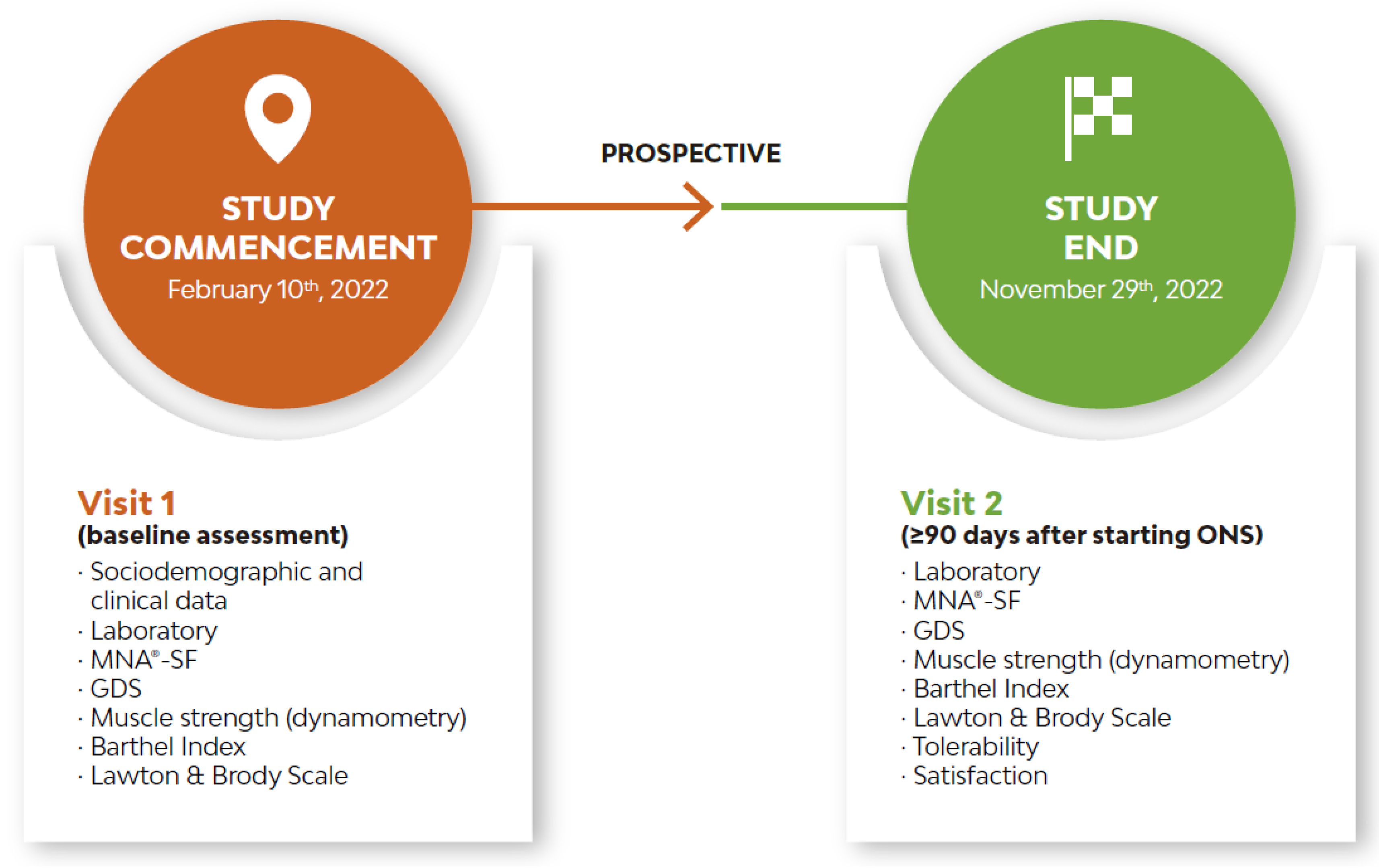
Figure 2.
Nutritional status distribution across visits: MNA®-SF scores at visit 1 (baseline) and visit 2: (a) Nutritional status distribution in percentages; (b) Number of patients in each MNA®-SF group at visit 1 and visit Shift in the number of patients in each MNA®-SF group at visit 1 and visit 2: Top line: 10 patients who were malnourished (red) at visit 1 were assessed at visit 2: 4 patients remained malnourished (red), 5 were at risk of malnutrition (yellow) and 1 well-nourished (green). Middle line: out of a total of 20 patients who were at risk of malnutrition at visit 1 (yellow), 11 remained at risk of malnutrition (yellow) and 9 were well-nourished (green). Bottom line: one patient was well-nourished (green) at visit 1 and at risk of malnutrition (yellow) at visit 1.
Figure 2.
Nutritional status distribution across visits: MNA®-SF scores at visit 1 (baseline) and visit 2: (a) Nutritional status distribution in percentages; (b) Number of patients in each MNA®-SF group at visit 1 and visit Shift in the number of patients in each MNA®-SF group at visit 1 and visit 2: Top line: 10 patients who were malnourished (red) at visit 1 were assessed at visit 2: 4 patients remained malnourished (red), 5 were at risk of malnutrition (yellow) and 1 well-nourished (green). Middle line: out of a total of 20 patients who were at risk of malnutrition at visit 1 (yellow), 11 remained at risk of malnutrition (yellow) and 9 were well-nourished (green). Bottom line: one patient was well-nourished (green) at visit 1 and at risk of malnutrition (yellow) at visit 1.
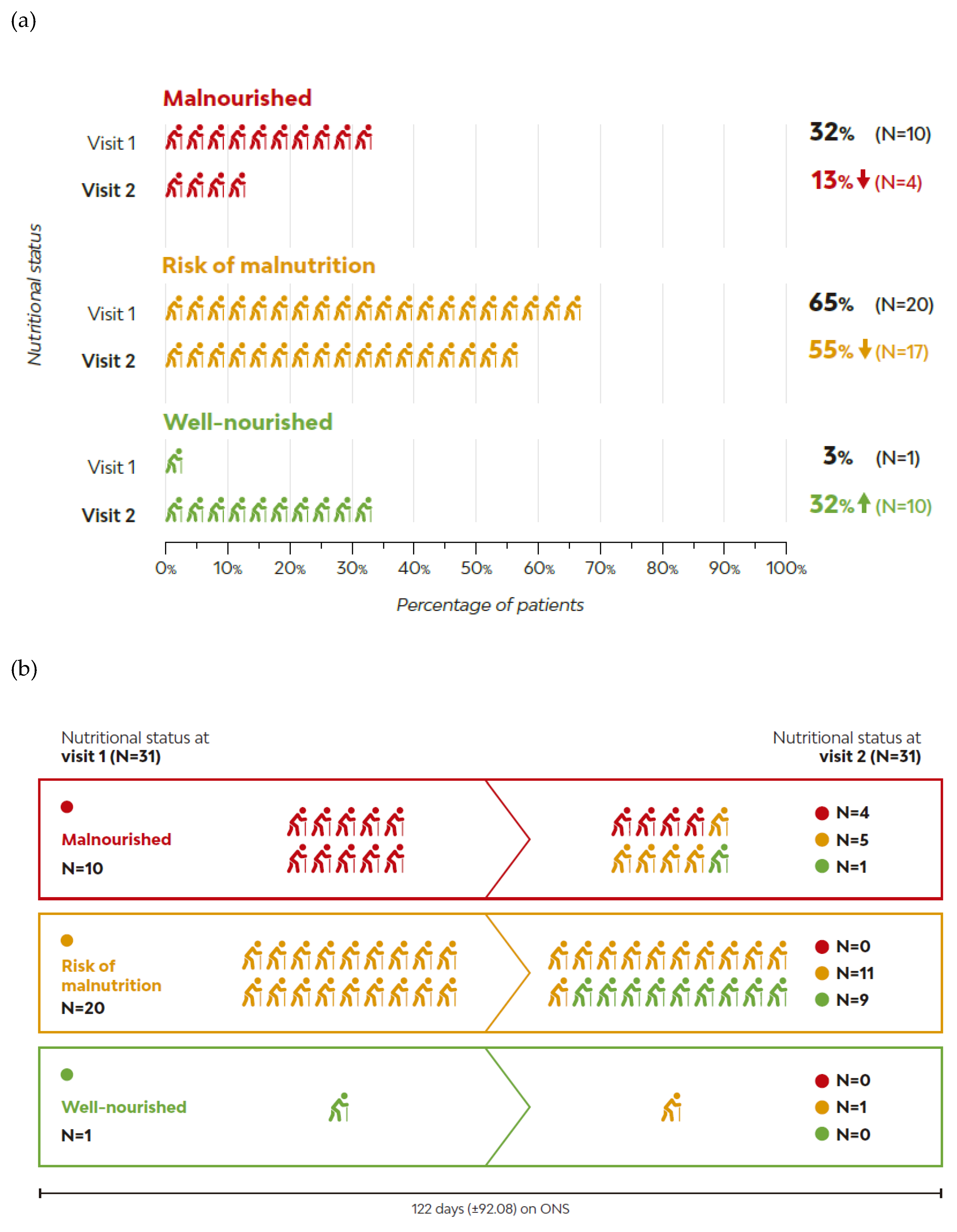
Figure 3.
Comparison of laboratory parameters, Barthel Index, and Lawton & Brody Scale scores between visit 1 or pre-fracture and visit 2: (a) Laboratory parameters; (b) Barthel Index and Lawton & Brody Scale scores.
Figure 3.
Comparison of laboratory parameters, Barthel Index, and Lawton & Brody Scale scores between visit 1 or pre-fracture and visit 2: (a) Laboratory parameters; (b) Barthel Index and Lawton & Brody Scale scores.
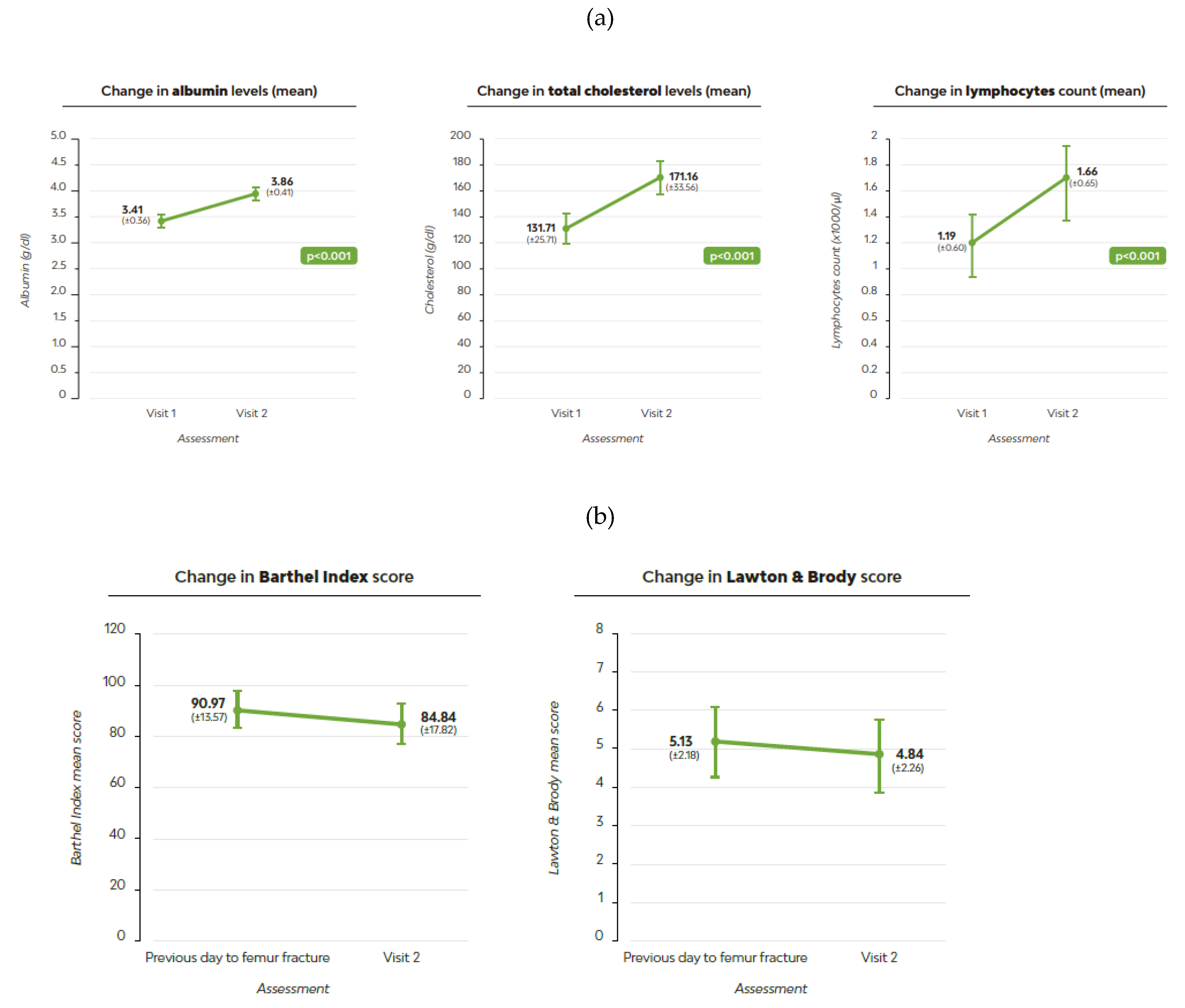
Figure 4.
Decision tree algorithms: (a) Decision tree algorithm for changes in nutritional status based on MNA®-SF scores; (b) Decision tree algorithm for the change in Barthel Index.
Figure 4.
Decision tree algorithms: (a) Decision tree algorithm for changes in nutritional status based on MNA®-SF scores; (b) Decision tree algorithm for the change in Barthel Index.
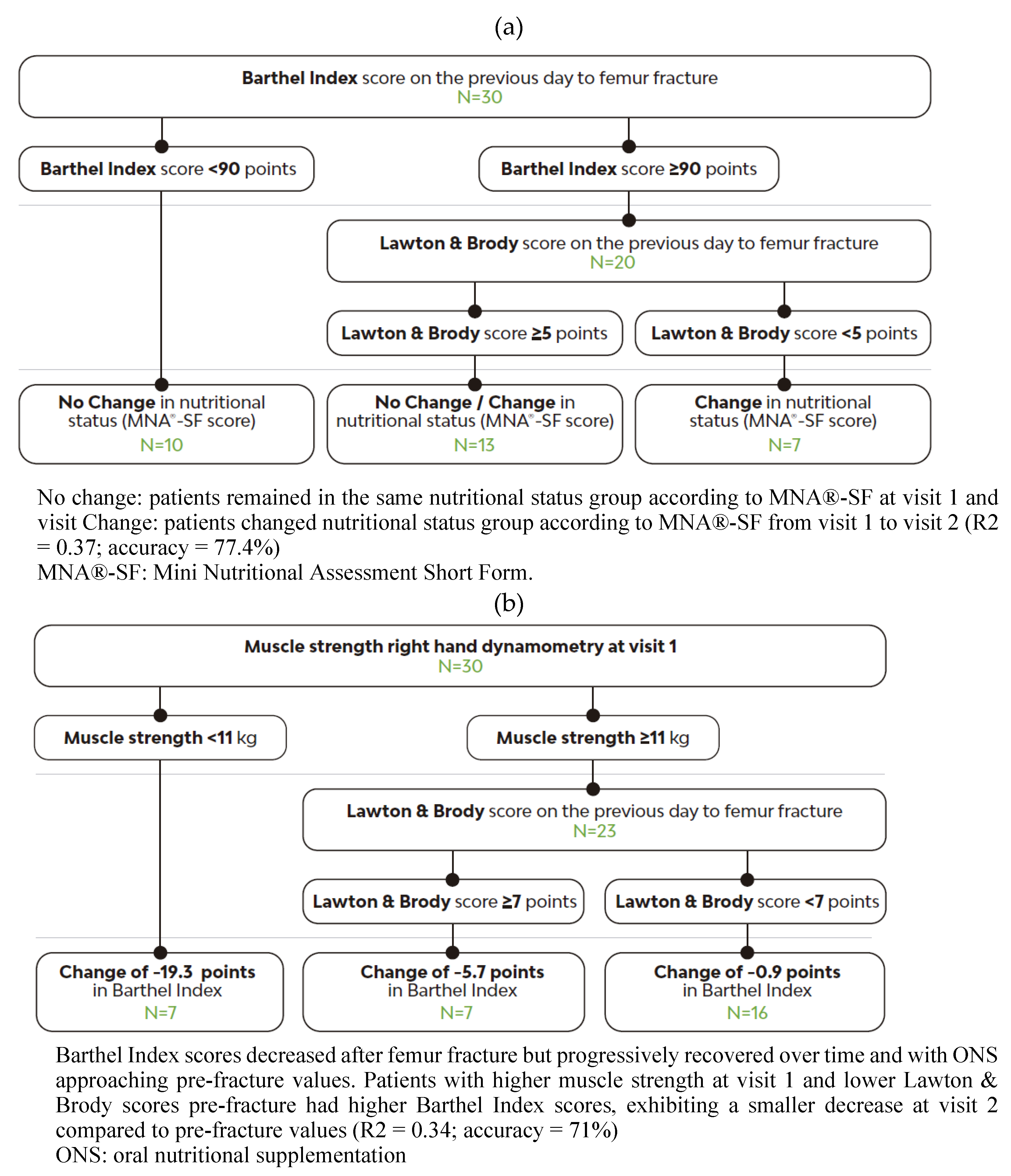

Table 1.
Baseline demographic characteristics of the study population
| Characteristics | |
|---|---|
| Age, years (±SD) | 87 (±3.9) |
| Gender | |
| Female, n (%) | 23 (74%) |
| Male, n (%) | 8 (26%) |
| Marital status | |
| Single, n (%) | 0 (0%) |
| In a relationship, n (%) | 0 (0%) |
| Married, n (%) | 7 (23%) |
| Divorced, n (%) | 0 (0%) |
| Widow, n (%) | 24 (77%) |
| Habitual residence location | |
| Home, alone without a contracted caregiver, n (%) | 13 (42%) |
| Home, alone with a contracted caregiver, n (%) | 12 (36%) |
| Home, with a family member, n (%) | 5 (16%) |
| Home, with a family member and a contracted caregiver, n (%) | 1 (3%) |
| Home of a family member, relative or friend, n (%) | 1 (3%) |
| Institution | 0 (0%) |
| Residence location at hospital discharge | |
| Habitual residence | 24 (78%) |
| Habitual institution | 1 (3%) |
| Intermediate care center | 6 (19%) |
| Nursing home | 0 (0%) |
| Others | 0 (0%) |
Table 2.
Study population clinical characteristics, at visit 1 (baseline) and visit 2
| Characteristics | Visit 1 | Visit 2 |
|---|---|---|
| Type of fracture | ||
| Trochanteric | 21 (68%) | - |
| Sub-trochanteric | 1 (3%) | - |
| Sub-capital | 9 (29%) | - |
| MNA®-SF score | ||
| 12–14 points, well- nourished, n (%) | 1 (3%) | 10 (32%) |
| 8–11 points, at risk of malnutrition, n (%) | 20 (65%) | 17 (55%) |
| 0–7 points, malnourished, n (%) | 10 (32%) | 4 (13%) |
| Laboratory parameters | ||
| Serum albumin levels (g/dl) mean (±SD) | 3.4 (±0.36) | 3.9 (±0.41) |
| Cholesterol levels (md/dl) mean (±SD) | 131.7 (±25.71) | 171.2 (±33.56) |
| Lymphocyte count (x1000/µl) mean (±SD) | 1.2 (±0.60) | 1.7 (±0.65) |
| CONUT® | ||
| 9-12 points, high risk of malnutrition, n (%) | 1 (3%) | 0 (0%) |
| 5-8 points, moderate risk of malnutrition, n (%) | 13 (42%) | 1 (3%) |
| 9-12 points, low risk of malnutrition, n (%) | 17 (55%) | 30 (97%) |
| Weight, kg (SD) | 60.4 (±9.9) | 62.4 (±9.2) |
| Muscle strength right hand, kg (SD) | 15.7 (±5.0) | 17.1 (±5.1) |
| Muscle strength left hand, kg (SD) | 14.2 (±5.1) | 15.1 (±4.2) |
| Cognitive status | ||
| GDS 1: no cognitive decline, n (%) | 21 (67.7%) | 21 (67.7%) |
| GDS 2: very mild cognitive decline, n (%) | 2 (6.5%) | 3 (9.7) |
| GDS 3: mild cognitive decline, n (%) | 5 (16.1%) | 5 (16.1%) |
| GDS 4: moderate cognitive decline, n (%) | 3 (9.7%) | 2 (6.5%) |
| GDS 5: moderately severe cognitive decline, n (%) | 0% (0) | 0% (0) |
| GDS 6: severe cognitive decline, n (%) | 0% (0) | 0% (0) |
| GDS 7: very severe cognitive decline, n (%) | 0% (0) | 0% (0) |
| Barthel Index score (previous day to femur fracture) | ||
| 100 points (independent in the daily activities), n (%) | 15 (48.4%) | 13 (41.9%) |
| 60–95 points (needs minimal help with daily activities), n (%) | 15 (48.4%) | 14 (45.2%) |
| 45–55 points (partially dependant), n (%) | 1 (3.2%) | 4 (12.9%) |
| 20–40 points (very dependant), n (%) | 0 (0%) | 0 (0%) |
| <20 points (totally dependent), n (%) | 0 (0%) | 0 (0%) |
| Lawton & Brody scale scores (previous day to femur fracture) | ||
| 0-1 points (totally dependent), n (%) | 1 (3.2%) | 0 (0%) |
| 2-3 points (very dependant), n (%) | 7 (22.6%) | 12 (38.7%) |
| 4-5 points (partially dependant), n (%) | 11 (35.5%) | 8 (25.8%) |
| 6-7 points, /low dependant), n (%) | 3 (9.7%) | 3 (9.7%) |
| 8 points (independent), n (%) | 9 (29.0%) | 8 (25.8%) |
CONUT®: Controlling Nutritional Status, GDS: Global Deterioration Scale, MNA®-SF: Mini Nutritional Assessment Short Form, SD: standard deviation.
Disclaimer/Publisher’s Note: The statements, opinions and data contained in all publications are solely those of the individual author(s) and contributor(s) and not of MDPI and/or the editor(s). MDPI and/or the editor(s) disclaim responsibility for any injury to people or property resulting from any ideas, methods, instructions or products referred to in the content. |
© 2024 by the authors. Licensee MDPI, Basel, Switzerland. This article is an open access article distributed under the terms and conditions of the Creative Commons Attribution (CC BY) license (http://creativecommons.org/licenses/by/4.0/).
Copyright: This open access article is published under a Creative Commons CC BY 4.0 license, which permit the free download, distribution, and reuse, provided that the author and preprint are cited in any reuse.


