

Submitted:
21 October 2024
Posted:
24 October 2024
You are already at the latest version
Abstract
This study investigates the shoreline evolution of the Tuscany coast (Italy) from 1878−83 to 2019. The 205 km sandy coastline, divided into 821 sectors each one 250 meters long, was analyzed to understand how human activities have altered this once-pristine coast. Sub-period analyses highlighted the impacts, both positive and negative, of various shore protection projects. Initially, regional beaches were undeveloped and accreting, except for some river deltas where alternating phases of erosion and accretion were observed. Coastal erosion began at these deltas due to reduced sediment input and expanded with the development of human settlements and tourism. Shore protection structures were quickly built to safeguard these areas: some succeeded but others increased erosion rates in downdrift sectors. Beach nourishment projects added about 1 million cubic meters of sediment since the 1980s, mostly from inland quarries. Currently, 57.8% of beaches are larger than in the 1880s, 9.4% remained the same, and 32.8% are narrower. Overall, the Tuscan coast gained 6.5 km² of beach surface with an average shoreline advancement of 32 m. Recent trends (2005-2019) show that 37.7% of the coast is eroding, 21.1% is stable, and 41.2% is accreting, with a total surface area increase of about 200,000 m². Although these changes may seem significant, from geomorphological and coastal management perspectives, they highlight that beach surface area is still increasing despite the existing reduced sediment input. This is due to the reduced loss of sediment due to the existence of morphological cells enclosed by headlands and the absence of submarine canyons directing sediments to the continental shelf.
Keywords:
Coastal anthropization
; beach tourism
; coastal evolution
; deltas
; historical cartography
; human impact
; shore protection
1. Introduction
The main purpose of this work is to highlight how the tourist development of the coast of Tuscany (Italy), which began at the end of the 18th century, has led to the uncontrolled urbanization and the occupation of many stretches of the coastal area that were already eroding and recorded an increase of erosion processes. This has triggered the construction of protection structures that shifted erosion processes downdrift, a process that induced the extension of the structures (the “Domino” effect) determining the transformation of a completely natural and resilient environment into a largely rigid one, indeed a trend commonly observed all around the world. The landscape value and the tourist-seaside usability of the coast, which was at the basis of the territorial development, were thus severely compromised. To fully understand such transformation, the evolution of the man−costal environment relationship must be analyzed since ancient times.
The allure of the coastal environment has long captivated humans due to its inherent advantages, including a mild climate, fertile lands for agriculture, facility for marine commerce and abundant leisure opportunities [1]. This enduring attraction persists despite the challenges posed by beach erosion, land subsidence, and floods from both the sea and rivers [2]. Throughout history, humans were drawn to coasts while maintaining a respectful distance from the water. Housed and shelters were rarely constructed directly on the beach, reflecting awareness of the inherent risks. Despite offering opportunities for food gathering, travel and commerce, the sea was often perceived as an unfriendly realm populated by mythical creatures. On early European maps, unknown lands and oceans were rich with these fantastic creatures but they disappeared from the land as it was explored and colonized, while in the seas, they remained even after Europeans had crossed all of them, though they ended up forming only decorative elements.
The sea was frequently viewed as a place of the dead, with rites of passage celebrated on the beach. Some wooden walkways found in marshy areas of England were interpreted as points of contact with the afterlife, complete with votive objects found at their ends [3]. Another reason for avoiding proximity to the water was the fear of enemies and pirate attacks, a concern prevalent along coastlines worldwide that still lingers. A furore Normannorum libera nos, Domine ("From the fury of the Northmen deliver us, Lord") is said to have closed prayers in monasteries along the British coasts during the High Middle Ages. In Italy and beyond, as early as the sixteenth century, governmental institutions and religious confraternities for the ransom of poor slaves developed with the aim of collecting the necessary sums to release Christians enslaved by Muslims [4].
In Tuscany (Italy, Figure 1), the population's apprehension about living too close to the shoreline is evident in the toponyms of many settlements developed over past centuries on hills facing the sea, carrying the epithet ‘Marittima’ (e.g., Castellina Marittima, Rosignano Marittimo, Monteverdi Marittimo, Massa Marittima). In those days, Tuscany effectively ended at the line of hills bordering the coastal plain, which also hosted several wetlands favoring malaria endemicity.
This did not imply avoiding all contact with the sea, but such interactions were limited to places where it was necessary to dock boats or build military outposts to anticipate the arrival of enemies and avoid clandestine landings of people and goods, which brought with them the risk of epidemic infections, primarily the plague [5]. Most of the Tuscan coast was completely deserted and in a pristine state: not what the ancients considered the kingdom of the devil, but what, for us, would be a real paradise!
Historically, beach progradation was a predominant trend facilitated by human activities within hydrographic basins, with exceptions during periods of demographic decline such as the fall of the Western Roman Empire and the Black Death [6]. This erosion, mostly affecting river deltas, had no impact on the population, as these areas were even more sparsely populated, not only due to the unsafe and unhealthy environment but also because of their very recent formation. Written documents and comparisons among ancient maps [7,8] revealed that at least until the mid-1800s, almost the entire Tuscany coast was experiencing accretion. During that time, the Grand Duke of Tuscany liberalized the cutting of woods to facilitate agricultural expansion due to a rapidly growing population and the need for wood production for home heating (it still was in the Little Ice Age). The resulting soil erosion provided the rivers with an enormous quantity of sediment to feed the coasts, even if some of it was deposited in the areas which in those years were subject to land reclamation. At that time, the primary concern for coastal evolution was not beach erosion but rather beach widening. The intense accretion led to the watchtowers moving away from the shore and the creation of dunes in front of them. This shift rendered the watchtowers ineffective, necessitating the construction of new ones close to the new shoreline. Notably, the first known coastal monitoring network consisted of three milestones placed on the northern side of the Arno River delta (at San Rossore, Figure 1), where the distance from the 'retreating' sea in the year 1829 was engraved [9].
In the second half of the 19th century, better environmental conditions resulting from marsh reclamation, relative military safety and, above all, the development of communication routes that needed to run over flat lands [10], provided the impetus for the population of the coastal zone. Hill-top villages led to new settlements at the base of the hills along the railway, often named Scalo (station), while those located near the shoreline were called Marina (different from Marittima), especially when seaside tourism began to develop. Regrettably, those developments coincided with a reversal of coastal dynamics from accretion to erosion, and the new settlements immediately had to resort to increasingly massive protection structures, transforming that paradise into a hell.
In a French nautical map surveyed in 1845-6 (scale 1:100,000), the only settlement present along the sandy coast of Tuscany was Viareggio, built in the mid-15th century at the mouth of a channel draining a wetland area. Two short jetties were constructed here in the 16th century and were further extended to prevent siltation at the channel mouth [11]. Similar rocky structures had existed since the 17th century at the mouth of the Bruna River, which receives an artificial channel draining coastal la-goons and marshes.
No other jetties or breakwaters were present on the sandy coast of Tuscany, and the only structures were watchtowers and fortresses, serving as military vanguards for small garrisons [5]. Most of those built on the beach in the 18th century are now separated from the sea by dunes formed later, at sites levelled after World War II to build houses (Figure 2).
Some piers are indicated on 19th-century maps, specifically designed for loading marble (Marina di Carrara, Marina di Massa, Forte dei Marmi) or cast iron (Follonica). After World War II, some of these piers were reconstructed, restored and repurposed as tourist attractions. Additionally, two new piers were constructed in the first decade of the 21st century at Marina di Pietrasanta and Lido di Camaiore, solely for the enjoyment of visitors. It is intriguing to note the presence of beach clubs from that time, which were constructed on platforms supported by wooden poles (Figure 3). Similar structures existed at Viareggio and Marina di Pisa (just before the establishment of the two settlements), while they were absent on the central and southern Tuscany coast, where the Sun, Sea and Sand (3S) tourism arrived later.
Even with the necessary caution when working with the earliest small-scale geodetic maps, which must be interpreted in the context of contemporary written documents, it is possible to consider the Italian topographic map surveyed in 1878-1883 (scale 1:50,000) as a representation of Tuscany at a time when no erosion was evident along any coastal stretch. From that point, the emergence and evolution of the erosion process can be traced: it was countered with a spatially and temporally limited perspective. Only a long-term historical analysis enables us to accurately contextualize current processes and formulate the best coastal management strategies.
2. Study Area
The Tuscany continental coast, NW Italy, is 397 km in length and faces the Ligurian Sea, in its northern and central part, and the Tyrrhenian Sea in its southern one, being Elba Island the separation between the two basins (Figure 4). Coastal orientation broadly varies from NNW–SSE, from R. Magra mouth to Piombino, to NW-SE, from Piombino to the southern limit of the region. Local variations in coastal orientation are observed at Follonia, Punta Ala, Albegna and Feniglia cells.
Rocky sectors, for a total of 192 km, are extend between Livorno and Rosignano, at the Piombino, Scarlino, Punta Ala, Uccellina headlands and at Monte Argentario, which is connected by two tombolos with the mainland.
It is a microtidal environment, with an astronomical tidal range of 35 cm. Beaches cover 205 km and comprise medium to fine sand, with limited sectors of mixed sand and gravel near the mouth of the rivers reaching the sea with a steep gradient or crossing a narrow coastal plain (e.g. R. Magra and R. Cecina). Sediments, rich in quartz and carbonates but containing feldspars and heavy minerals too [12], are mostly produced by the erosion of the Northern Apennine Mountains and carried to the sea by different rivers, being the Arno, 241 km in length, the most relevant. It is important to note that river sediment supply was largely reduced in the past century due to reforestation within watersheds, river bed quarrying, and construction of weirs and dams. This was the case of the River Arno, whose sediment input was approximately 9,300,000 t yr−1 during the 1500–1800 AD period and was reduced to only 1,524,000 t yr−1 in 1980s [6,13].
The coast is exposed to high energy waves from W and SW that, considering a 50 years return period, can reach 7.5, 8.5 and 6.0 m in the norther, central and southern part of the Tuscany coast (Figure 4). The longshore transport direction and the extension of the littoral cells are a consequence of the way in which the coast is arranged respect to such approaching waves fronts. There are also local inversions in longshore transport due to refraction and diffraction phenomena around islands, promontories and shoals. The depth of closure, calculated according to the formula of Hallermeier [14] for a period of 50 years ranges from -14.0 m in the most exposed coastal stretches to -5.5 in the most sheltered [15].
3. Materials and Methods
An extensive collection of documents is available for studying the evolution of the coast over the last 140 years, encompassing both morphological aspects and anthropic settlements. These documents include topographic maps with updates, cadastral maps, aerial photos, landscape prints, single building representations and vintage postcards, as well as technical and literary descriptions—all of which contribute to a comprehensive analysis of shoreline displacement. The 140−year period available for the Tuscany coast aligns with the timeframe recommended by Crowell et al. [16] as the most suitable for a comprehensive long−term study. A similar time interval was employed for analyzing the evolution of the Volturno River [17] and the Sele River [18] deltas in Italy, starting from the same late−19th century I.G.M. maps.
To facilitate the analysis, the oldest maps from the Istituto Geografico Militare (I.G.M.) dating back to 1878−1883 (hereafter referred to as ca. 1881; specifically, Versilia 1878; Livorno 1881; remaining coast 1883) were digitally acquired using a flatbed scanner and georeferenced to further digitize the shoreline. The same process was applied to subsequent editions in areas of more focused research. Since only in some coastal sectors are there fixed reference points near the shore (e.g. rocks and towers) while they are absent in most of the coast, any statistical analysis of the error, such as that present in Mićunović et al. [19] on cadastral maps of 1834, is not applicable here. It is also for this reason that we consider our data as semi-quantitative. It would be a mistake to renounce to this information, which is the only one that, on a regional scale, can give a picture of historical coastal evolution, albeit of the limited accuracy especially in the areas without settlements, of the state of the Tuscany coast immediately before the beginning of the erosion problems and urban developments.
In addition to the above-described documents, which were not specifically created for coastal monitoring aims, the Tuscany Region commissioned to the University of Florence the realization of a 1:5,000 map with the location, on the basis of air photos, the shoreline in 1938, 1954, 1967, 1978 and 1984, with an assessed accuracy of 5 meters [20]. This document was later updated by the same University, with shorelines acquired through traditional topographic surveys initially and later with GPS in RTK mode until 2010. Since 2018, the Consortium LaMMA-Regione Toscana has been updating the regional shoreline databank with synchronous data produced via satellite image processing, validated and accessible for the years 2017 and 2019 at the time of writing. The 205 km of the sandy regional coastline were divided into 821 sectors, each about 250 m long, and shoreline position changes were quantified using the Area Based System [21]. Considering only the graphic inaccuracy due to a 0.2 mm line thickness on the 1:50,000 scale of the 1881 map, a ±10 m shift in shoreline position cannot be considered substantial even if the comparison is performed with more accurate documents. Therefore, beaches that recorded changes with this variation were classified as 'stable' or in equilibrium. Considering maps obtained by photo restitution, a 'stable' beach was considered one with a shoreline shift between ±5 meters; the range of this class is ± 2 meters for shorelines directly surveyed on the beach with topographic instruments and tide correction. The different accuracy of the data obtained does not allow to normalize and report them as meters/year; therefore, they were reproduced in the pie charts of Figure 4 grouped into classes: erosion, stability and accretion, with limits defined on the basis of minus accurate data. Obviously, in shorter periods, the probability that the various coastal sectors present minor variations and, therefore, appear in equilibrium, is higher; on the contrary, the frequency of this class can be reduced in the more recent periods in which its limits shift from ±10m, to ±5 and ±2m.
In this paper it was considered this approach, even if not used by many authors, respectful of the different quality of data acquired in different times, during which acquisition techniques have changed significantly. However, as previously written, the used approach is semi-quantitative, in particular when ca. 1881 maps are used. Reconstructing the history of the first shore protection structures poses challenges, as most original projects to contrast coastal erosion are not available. In the 19th to early 20th century, slender wooden or stone structures were used to combat erosion, progressively strengthened without a defined project. As a result, establishing the date of construction and identifying various consolidation stages is nearly impossible. In many cases, an ante quem date can be determined based on their appearance on topographic maps, photo-graphs and postcards.
After a macro-scale analysis of the evolution of the entire Tuscany beaches, most relevant littoral cells (or physiographic units, Figure 1 and Figure 4), namely the Northern, the Central, Follonica and Ombrone littoral cells, will be analyzed and will be described the impact of anthropic structures that significantly influenced coastal evolution. This involves zooming into specific sectors of the coast and analyzing periods when these processes were most impactful. Because of the large quantity of protection structures built and their modifications, we are forced to concentrate on the most important projects, going into detail only in some emblematic cases.
4. Results and Discussion
4.1. A Macro−Scale Temporal Overview
Comparing the oldest (ca. 1881) shoreline position with the most recent one (2019, Figure 1 and Figure 4), it is possible to state that 56.4% of the beaches are now wider than they were in ca. 1881; 10.9% experienced an insignificant change (±10 m) and 32.7% are narrower (Figure 5 a). Overall, the Tuscan coast gained 6,143,121 m² (6.1 km²) with an average shoreline advancement of about 31 m during the considered period. During the first sub-period (ca. 1881-1954, Figure 5 b), the majority of the coast experienced beach accretion (64.1%). This can be attributed to the fact that in the late 19th and early 20th centuries, only the river mouths were experiencing erosion and sectors eroding later (e.g., due to harbor construction) lost only a portion of what had accumulated in previous decades. Shore protection structures began to be constructed but only along short coastal sectors in front of houses or roads (e.g. at Marina di Pisa and Marina di Carrara). Although this period spans more than 70 years, beach width variations greater than 10 m occurred in only 10.9% of cases, demonstrating a very dynamic environment. Additionally, some of these 'stable' beaches may have experienced a reversal of the evolutionary trend, shifting from accretion to erosion.
The condition of the Tuscan coast worsened in the following period (1954-1984, Figure 5 c), with 39.2% of the beaches eroding, despite shore protection structures expanding to larger coastal sectors (Marina di Massa, Marina di Pisa, Marina di Cecina and Follonica, Figure 1). The increase in coastal sectors experiencing erosion can also be linked to the post−war economic boom, which saw substantial building and infrastructural development in Italy, including significant riverbed dredging.
The expansion of beach protection and the cessation of riverbed dredging imposed by the Toscana Region favored the reduction in the erosion process along the coast recorded for the period 1984−2005 (34.3%) and the increase of stable sectors (43.0%, Figure 5 d). However, these data refer to a short period of twenty years and should be considered with caution. The change to a limit of ± 2 m for the stability class, used for the 2005−2019 period, is likely responsible for the reduction in stable sectors (21.6%) and the increase in eroding (37.4%) and accreting (40.9%) ones (Figure 5 e). The total surface area grew by 201,307 m², with an average beach widening of 1 m. Over the last 140 years, approximately 55 km of the coast (27%) have been stabilized by seawalls, revetments and detached emerged or submerged breakwaters, groins and jetties intercepting sediments; two kilometers of coast, where harbors have been constructed, were not taken into count.
Although not specifically addressed in this study, nearshore morphology under-went significant modifications as well. The two main deltas experienced a loss in thick-ness of more than 5 meters from the present shoreline to the 15−meter isobath [22]. Additionally, other minor cusps, such as those of the Magra River, Cecina River and Albegna River, were rectified and even lost their submerged fans. The retreat of the beach began at the mouths of major rivers and gradually expanded to the lateral coastal sectors [23], a process that was allowed to freely evolve until commenced the emplacement of shore protection structures. Interestingly, this erosion initially occurred where new settlements were established, e.g. at Marina di Pisa and Marina di Cecina, highlighting the inappropriateness of those urban choices.
4.2. The Northern Tuscany Littoral Cell
This 65-km−long coast is primarily influenced by two rivers (Figure 1 and Figure 4): the Magra River, whose sediments flow southward reaching Marina di Pietrasanta and the Arno River, at which mouth sediments diverge southward to Livorno and northward to Marina di Pietrasanta, creating a drift convergence responsible for continuous beach accretion [24,25]. On the southern margin, wave reflection on the oblique Livorno harbor breakwater triggers north−directed longshore currents, creating a convergence point near Tirrenia (Figure 6 a).
In the long−term analysis (ca. 1881 − 2019), the dominant processes are the erosion of the two deltas and the redistribution of those sediments following the longshore transport directions (Figure 6 a). However, beach surface increases suggest not only sediment redistribution but also the relevance, albeit reduced, of river input. This assumption is based on the gross hypothesis that dry beach surface is proportional to beach volume. The above-described process is disrupted by the impact of several coastal structures built in the 20th century (Figure 6 a), notably two harbors:
- Marina di Carrara Harbor, whose breakwater extends to −10 m, triggered updrift expansion where erosion should have originated from the Magra River mouth and simultaneously, it induced or exacerbated erosion to the south, i.e. at Marina di Massa.
- Viareggio Harbor is responsible for substantial accretion of the updrift beach (south) and limited expansion of the downdrift one, where sediments arrive bypassing the breakwater tip, which is at a depth of 5 m, i.e. lower than the depth of closure, approximately 8 m in this area [26]. Immediately after the breakwater extension, the downdrift beach experienced erosion and an artificial bypass became operative.
The asymmetry of erosion at the Arno River delta is attributed to the protection structures emplaced at Marina di Pisa, a process identical to that observed at the mouth of the Volturno River [17]. Minor effects are visible at Gombo, where strong erosion north of the Arno River is partially offset by the construction of five detached breakwaters in the early 1960s. The same occurs 1 km to the north due to the presence of a jetty of a channel draining part of the Pisa plain.
Protection works performed after 2005 resulted in the inversion of the evolutionary trend in some coastal sectors (highlighted in red in Figure 6 b):
- Artificial nourishment of the northern beach with sand and gravel dredged from the Magra River terminal course.
- Groins and detached breakwaters at Marina di Massa.
- Sand bypassing at Viareggio.
- Emerged groins with submerged extensions north of the Arno River mouth.
- Gravel beaches protected by submerged breakwaters at Marina di Pisa.
- Oblique jetty near Livorno sequestering sediment via wave diffraction.
Two cases studies are emblematic in this littoral cell: Marina di Carrara harbor impact, and Marina di Pisa coastal defense evolution.
4.2.1. Case Study: Marina di Carrara Harbor Impact
The northern 15 kilometers of this coastal cell could be considered a “park” of shore protection structures given the myriads of protection typologies realized and modified several times over the last 100 years. They include emerged and detached breakwaters, submerged and permeable groins, artificial islands and were constructed utilizing materials such as rocks, sandbags, geocontainers, concrete, prefabricated blocks and steel. In the following description, the discussion will be simplified, and special attention will be focused only on the main works.
Starting from the north (on the left site in Figure 7), it is possible to observe the erosion of beaches directly fed by the Magra River, with values reaching up to 400 meters on the 250−meter sector, but the delta tip retreated for more than half a kilometer. Most of such erosion occurred from 1881 to 1984 (Figure 7), before the emplacement and modification of various shore protection structures such as emerged and submerged groins, detached breakwaters and artificial rocky islands. Sediment dredged from inside the terminal river course, mostly gravel, was recently bypassed to the beaches, explaining the beach accretion in sectors 1-6 during the period 2005 – 2019 (Figure 6 b).
Beach erosion did not reach Marina di Carrara as the harbor constructed in 1920 created strong updrift beach expansion that reached an extension of 450 meters due to an estimated longshore transport of 70,000 m3/year [27]. However, this process is now interrupted because updrift sectors have been stabilized by various projects and only limited quantities of sand are able to arrive. Consequently, a project to stabilize the northern beach (sectors 8−16) was carried out in two phases (2005-2006 and 2010-2012) with a submerged geotextile T groin and artificial nourishment of approximately 110,000 m³ of sand quarried from an alluvial plain 160 km away. Just after the construction of the harbor, the downdrift beach began to experience severe erosion, leading to shore protection projects since the 1930s to safeguard the coastal road that, however, had to be abandoned in the late 1930s (Figure 8).
The limited erosion, or even accretion, observed until sector 50 when comparing the 1881 shoreline with that of 2019 (Figure 6 a), is attributed to the initial 40−year period benefitting from sediment produced by updrift erosion and the construction of hard shore protection structures. During this time, multiple projects overlapped, continually altering previously built protections. However, since that period, erosion shifted southward and beaches south of Marina di Massa, although now wider than in 1881, are experiencing severe erosion (Figure 6 b; sectors 42 − 69). Consequently, shore protection structures are migrating southward in a domino effect, now stretching over 8 kilometers downdrift of the harbor (Figure 9).
Many tourist structures, initially built on the beach just before World War I and flourishing after World War II, have been relocated several times. It was straightforward when they were simple wooden shacks, but it is impossible now since they are too large and height (to floor buildings) brick and concrete structures. Additionally, in many places, the continuous coastal retreat brought tourist structures to be emplaced at the edge of the coastal road (Figure 10), preventing further relocation and necessitating the construction of hard protections, along with beach nourishment, to preserve this vital source of income for the area. It is estimated that approximately 100,000 m³ of aggregates, sourced from quarries on the Po River alluvial plain, processing waste from marble quarries, riverbed cleaning and nearshore dredging, have been unloaded on the beach.
4.2.2. Case Study: Marina di Pisa Coastal Protection Evolution
Marina di Pisa is the result of one of the first interventions by a public administration to promote tourism development along the Italian coasts. The Municipality of Pisa purchased land on the left bank of the mouth of the Arno River in 1872 and divided it into lots, which were sometimes sold free of charge, with the aim of constructing 'decent' houses. The area developed on a regular grid, already including planned public spaces [28]. In 1878, only a watchtower was present where Marina di Pisa would later grow. However, development started immediately after, as evidenced by the 1907 map (only for the southern part of the Arno River, as a mapping of territorial transformation), where significant coastal erosion is also visible (Figure 10).
The first shore protection structures were erected at the very end of the 19th century, contemporaneously with the initial construction of houses in the area (Figure 11). Initially, palisades were constructed, both parallel and perpendicular to the coast, sometimes incorporating stone on the landward side, reminiscent of structures found in 18th−century Venice [29].
Better-engineered structures were constructed in the early 20th century and their presence is documented in the 1928 topographic map (Figure 10). Afterwards, these structures proliferated southward, and construction began with a detached breakwater, which gradually extended to its current length of 2.3 km. Works carried out between 1935 and 1940, as well as from 1965 to 1975, transformed it into a series of ten detached rubble mound breakwaters. Each element is 200−270 m in length and stands 3−4 m above mean sea level, with 15−20 m wide gaps between them, which were further closed with submerged segments with crests approximately 1.0 m above m.s.l.
The shoreline was stabilized but erosion persisted in the nearshore area, particularly in front of breakwaters initially constructed at a depth of 3 meters that subsequently increased to 7 meters. Since 2000, a structural modification project has been underway in front of the town, involving the lowering of the crest of the detached breakwaters to sea level and the construction of a gravel beach capable of absorbing wave energy (Figure 6, sectors 206−209). Importantly, this transformation was feasible because this coastal stretch had lost its sandy beach for over a century, rendering it unsuitable for tourist bathing facilities (Figure 12). Therefore, the pebble beach must be regarded primarily as coastal protection infrastructure and cannot be leased to concessionaires, despite its intensive use by bathers [30].
Similarly, a gravel beach was created south of the tenth detached breakwater, where the coastal road was protected only by a revetment [31]. This efficiently dissipates wave energy and allows the road to remain usable even during storm surges, although after twenty years, it would require a replenishment of gravel. Downstream of these structures, groins and detached breakwaters were constructed with minimal gaps, following the domino effect starting between 1978 and 1985, but without a comprehensive plan. These structures are not intended to protect housing but to support tourist amenities such as bathing facilities and sandy areas where beach umbrellas can be set up (Figure 13).
From 1881 to 2000, prior to the construction of groins with submerged extensions on the northern side of the delta [32], the shoreline retreated approximately 1,300 meters, causing the already mentioned asymmetry in the cusp. The southern lobe was the one that mostly suffered: it is a headland heavily impacted by waves that reach protection structures with much of their energy intact due to the seabed depth. Although the coastal road and the first line of houses were built on the dunes at approximately 4 m above m.s.l. the inner part of the settlement lies at a lower height and is susceptible to water that is able to overtop the revetment. Protection strategies have managed to protect the settlement, but its original purpose as a seaside resort was lost and only partially regained with the creation of the gravel beach. Future sea level rise will necessitate stronger hard protections incompatible with seaside tourism focused on Sun, Sand and Sea tourism.
Adaptation measures could salvage certain functions (e.g., raising the road, waterproofing basements and lower floors) but seawalls and dikes would need to be constructed to prevent flooding, potentially transforming the protected area into an island. Given the inland elevation of less than one meter above mean sea level, much of the land could be flooded, at least by rising water tables.
Retreating inland is a difficult, if not impossible, solution because away from the sea, the settlement loses its value and any relocation would necessitate moving houses and infrastructure far from the shoreline to areas less prone to flooding. In hindsight, locating a new town close to the shoreline in an area showing initial signs of beach instability, if not yet erosion, was unwise. Although coastal erosion became evident after the initial construction, halting further development could have been considered. However, trust in human ingenuity to defy nature was strong, and there was little opposition to reconsidering the plans. Awareness of the precarious situation grew as erosion progressed but, by then, real estate investments along the coast had increased and the option to "defend" was always preferred. Politicians have been asked about the future of Marina di Pisa in 2100, but planning for such distant times does not bring the necessary support for the upcoming elections.
4.3. The Central Tuscany Littoral Cell
The coast stretching from Rosignano Solvay to Torraccia (approximately 46 km; Figure 1 and Figure 4) is primarily influenced by the Cecina River, which empties into the northern part of this cell. However, its sediments predominantly move southward thanks to a resultant longshore potential transport of 30,000 m3/year (33,000 south – 3,000 north at the river mouth; [27]. Smaller contributions come from the River Fine, which enters near the northern border and drains a basin, mostly composed of silt-clay sediments, which is confined landward by a dam. Additionally, there are other short creeks in the southern sector, whose contribution has not now morphological evidence and was identified only through petrographic analyses [33]. However, the 1881 map depicts pronounced salients at their mouths, indicating that, at that time, their sediment input was more relevant than today. The modest or non-existent growth of the beach at those sectors (around sectors 80−90, Figure 6 b), can be explained by their reaching from the lateral beaches (Figure 14).
An anthropogenic source of sediment input is attributed to the chemical industry activity of Solvay & Cie, which releases calcium carbonate sediments (90% finer than 0.625 mm) through an industrial channel. During its peak activity, approximately 200,000 m³/year of sediment was introduced leading to a southward beach expansion of about 4.5 km (Sectors 1−22 in Figure 15 a), [34,35]. This process was later constrained and, at few sections, reversed by the construction of two groins aimed at preventing siltation at the Solvay pier in Vada. In all the watersheds of the rivers that feed this coast, sediment production has decreased due to reforestation efforts. However, at the River Cecina, the quarrying of the riverbed had a more significant impact, resulting in an average lowering of the river bed by 4 meters along its 40 km course through the plain [36].
The straightness of this coastline is interrupted by a flat headland between Vada and Marina di Cecina, formed and sustained by a Holocene beach rock platform [37]. Beach rock outcrops are also present in the nearshore of the southern part of this littoral cell, contributing to irregularities along the shoreline [38]. Longshore transport is bidirectional, predominantly moving southward along most of the coast [27].
There are two tourist ports on this coast, one north of the mouth of the Cecina River and one at San Vincenzo. The first, built in 2010−2020 period to the right of the mouth of the Cecina River, has an impact both on the southern beach (downdrift) and on the northern one (updrift). The San Vincenzo port, constructed between 2005 and 2010 in a location where a detached breakwater previously protected a few small fishing and recreational boats, has caused a moderate shoreline retreat. This process was locally mitigated by the construction of a groin, which was later connected to the harbor downdrift dike with a submerged breakwater. The impact on the coast south of this marina is moderate because of the presence of the above−mentioned beach rock. Furthermore, at the southern boundary of this littoral cell, longshore transport is reversed [27], creating a convergence point not far from the marina (Figure 15 b).
Several shore protection structures are present along the northern part of this littoral cell, i.e. from Rosignano Solvay to Marina di Cecina: linear, T and gamma groins, a few of them with submerged extension and others oblique to the coast, and emerged and submerged detached breakwaters. It is hard to assess the quantity of sand nourished since the 1970s during several years: probably half a million of cubic meters, mainly between Vada and Cecina.
4.3.1. Case Study: Marina di Cecina
The settlement at the mouth of the Cecina River, initially designated as a landing for goods destined for the villages of the interior and the adjacent coast, did not result from political or administrative decisions but rather from a spontaneous response to the emerging trend of sea bathing. This trend was embraced both by citizens living far from the coast, aspiring to a 'second home' by the sea and by small local entrepreneurs who found it advantageous to exploit this opportunity by constructing small shops, restaurants, rental houses and, later, hotels. Such urbanization process began in 1879 when a concession was granted to soldiers stationed in Villa Ginori for the use of the beach for bathing (Figure 16). In the subsequent years, other authorizations were given to private individuals to build shacks south of the Villa. In 1889, a proper beach club for the officers of the artillery regiment was authorized, stimulating the growth of this activity along the coast [39].
Starting from 1890, the village developed linearly along the shore, with the innermost strip being occupied only when the sea view did not compensate for the inconvenience of the distance from the services that had developed near the first houses (Figure 17). This model of coastal settlement development led to the occupation of the littoral as it was the case for many coastal areas in Italy [40].
As mentioned earlier, erosion within this littoral cell initially began just at the mouth of the River Cecina and gradually extended in both directions (Figure 15 a). The first shore protection structure, a short groin, appeared on the 1938 I.G.M. map, but it was surely constructed after 1920 since it is not present in an aerial photo from that period. It was very likely built after the 1935 storms that destroyed some houses on the beach. The groin effect is evident with a widening of the beach in front of the Villa (Figure 17), but it also had a negative impact on the downdrift sector, so that between 1954 and 1976, two more groins had to be constructed in front of the settlement. These divided the original linear beach into two sectors, each with a triangular shape, creating inequality among the managers of the beach concessions. They found themselves with very different beach widths: extremely wide updrift of the groins and very narrow downdrift of them.
At that time, the groins were 60, 100, and 80 meters long and spaced 600 and 500 meters apart, with an L/d ratio of approximately 1/6, which was insufficient to protect the coast [41]. In the following years, an attempt was made to reduce these differences by inserting short intermediate groins. An overall beach expansion was achieved in the early 1990s by adding submerged extensions to the three main groins and carrying out a small beach nourishment (approximately 23,000 m³) with sediments quarried from the Cecina River alluvial plain. Beach monitoring proved that, thanks to the submerged extension, 300,000 m³ of sand deposited on the nearshore [42]. When this result was achieved, a different project added a submerged breakwater in the first cell: 150,000 m³ of sediments were lost due to piling-up processes [43], triggering a rip current adjacent to the southern groin, where the crest is lower. The detached submerged breakwater was also extended in front of the Villa, where a similar piling-up induced a current that transports sediments to the north at the river mouth, where the structure is not connected to the shore (Figure 18). The final solution to the erosion problem, in response to beach concessionaires’ requests, was found by arriving to five equally spaced groins and giving them a gamma configuration to limit wave reflection on the southern side (Figure 18). Sand quarried for the construction of the new harbor (approximately 100,000 m³) was used for artificial beach nourishment.
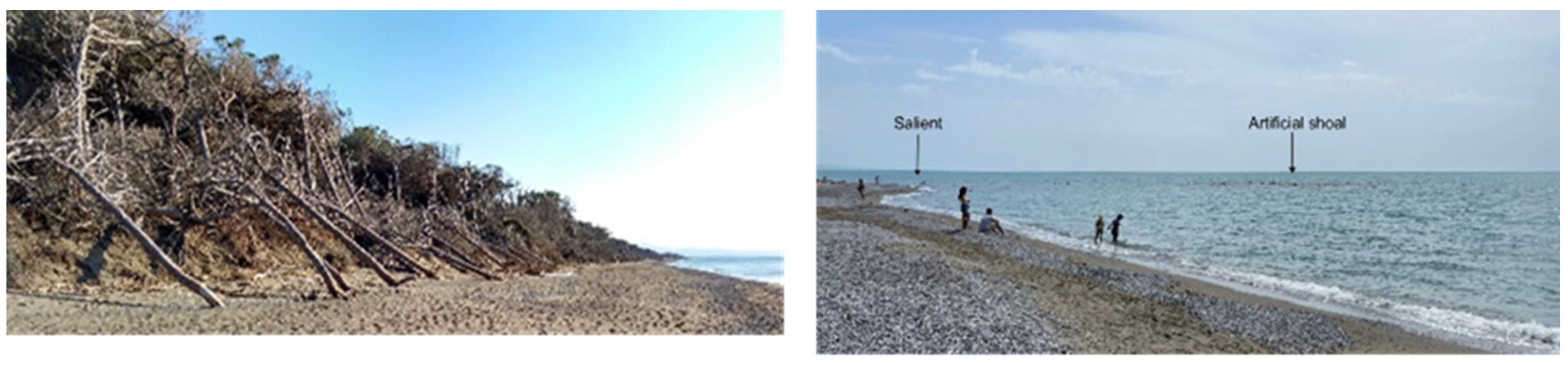
If the town beach was saved and even enlarged, on the downdrift coastal sector erosion process was accelerated: a shoreline retreat of approximately 300 m was registered since 1881 (Figure 15), with the loss of some dune ridges hosting a pine forest. The need to preserve this environment and the beach, which became more and more popular among those who could not afford or did not like the rental of deck chairs and sun umbrellas, prompted the construction of the first groins, soon followed by two more in a domino effect process. These are being transformed into offshore round shoals to reduce their sediment trapping effect. However, eight more shoals were later on constructed downdrift to combat beach and dune erosion (Figure 19), thus reducing the sediment input to the southern coastal sector, where, after 5 km of undeveloped coast, a tourist resort is present. Although gravel nourishment is carried out on their lee side to mitigate the downdrift effect of these structures, will shore protection structures soon be necessary at the tourist resort?
On the northern side of the river mouth, a recreational harbor was constructed between 2010 and 2020. This is acting as a groin thus obstructing the sediment flow to the northern beach. There, short groins were constructed in the 1990s, and 100,000 m³ of sand, gravel and pebbles were artificially deposited. After the marina construction, they had to be soon lengthened and gravel/pebble beach nourishment implemented, resulting in significant beach expansion (sectors 30−40, Figure 15). However, sediments from the river will no longer reach this area and continuous artificial nourishment will be necessary to maintain a beach intensively used for tourism purposes. The impact of the harbor will also affect the southern beach because the river mouth is now sheltered by a breakwater extending 400 meters into the sea, preventing aggregates reaching the sea from being moved to the south.
4.4. Follonica Littoral Cell
The 23-kilometer-long beach bordering the Gulf of Follonica faces southwest and is protected from the west by Elba Island (Figure 1). According to Bartolini et al. [44], its erosion started in the 19th century when the two rivers feeding this coast (the Cornia River and the Pecora River) were diverted to reclaim coastal wetlands (Figure 20). Actually, the historical evolution of the river network in the plain is more complicated and these watercourses were emptying into the coastal lagoons before the 19th century, making the identification of the causes of coastal erosion more complex, as written by Mori in 1940 [45]. After World War II, when they were directed straight to the sea, their bedload was reduced by the same processes affecting the other rivers in Tuscany. In addition, on the eastern side of the new mouth of the Cornia River, a small port serving a power plant was constructed in the early 1970s.
Longshore transport is extremely limited since waves − diffracted by the two headlands delimiting the bay and/or refracted on the mild slope nearshore − always arrive almost parallel to the shoreline; however, a prevailing westward potential transport was identified in the central portion of the gulf [27].
The first erosive hotspots occurred on the western side of the gulf (Figure 20 and Figure 21), where a long breakwater parallel to, but rooted to, the coast attracted sand due to wave diffraction, forming a large salient at the expense of the beach further east. Although the erosion rate was very low along the whole coast, the reduction of the beach in front of the town (which was converting its activity from industrial to tourism) and of two beach resorts built on the dune in the center of the gulf, led to the construction of hard structures. A few groins were built initially, but they had limited effect due to the previously mentioned low longshore sediment transport. Detached breakwaters were subsequently emplaced: initially accumulated sediments in the sheltered areas (resulting in a beach wider than in 1976) but caused an increased erosion on the adjacent sectors (Figure 21).
In 2000, a marina was built on the eastern extremity of the bay. Although it is located at the margin of the physiographic unit, it induces a significant sediment flux through wave diffraction. This has resulted in the formation of a wide beach near its breakwater and the harbor entrance is continuously silted (Figure 22). Accumulated sand is transferred to the beach a few hundred meters updrift, but not further west because it is very fine and unwelcome to beachgoers.
The money spent on the construction and maintenance of hard protection structures until 2005 was calculated to be equivalent to the cost of a beach nourishment using offshore sediments capable of maintaining the 1954 shoreline throughout the entire gulf [46], but no alternative projects have never been proposed to mitigate erosion in a more sustainable way [47].
The effects of projects carried out in the 1980s and 1990s are evident in Figure 20, showing beach accretion in the recently protected sectors and erosion spread throughout the unprotected ones. In recent years (2006 − 2013), the detached breakwaters in front of Follonica were lowered below mean sea level (approximately -0.5 m) and connected to form a continuous reef [48]. This reduced their landscape impact and improved water quality but more importantly, they proved to be more effective and promoted beach expansion. However, these works benefited beaches in areas where tourism is more developed at the expense of other sectors. This triggered requests to extend the artificial reef to the entire gulf, especially its eastern side, where tourism growth was favored by the decline of industrial activity. Several beach nourishments were performed in the last ten years, including the use of gravel (approximately 50,000 m³), particularly in locations where submerged groins were built (Figure 23).
Similarly to Marina di Pisa, urban development began when beach erosion, although modest, had just started. The need to protect newly built houses and bathing facilities led to the construction of hard structures, which in turn increased erosion rates in unprotected segments of the coast. Today, the coast features three ports (with Piombino's expanding into the gulf), 8 kilometers of detached submerged breakwaters, 7 submerged groins (each approximately 150 meters long), and 9 jetties totaling approximately 1.3 kilometers in length. This infrastructure covers more than 50% of the beach length, contrasting with its pristine state in 1883. The eastern part of the coastal plain is subsiding at a rate of up to 1 cm per year due to water extraction for industrial and agricultural use, contributing to beach erosion [49]. Eustatic sea level rise will exacerbate relative land lowering, potentially leading to the submergence of parts of the coast. Presently, there are no strategies in place by public administrations to address this issue. Instead, plans are underway to convert the power plant, which was decommissioned in 2015, into a shopping center.
4.5. Ombrone Littoral Cell
This 21 km long beach is mainly fed by the Ombrone River, which enters the sea in its southern part, with a minor contribution from the Bruna River, emptying at Castiglione della Pescaia (Figure 1). As mentioned earlier, the Ombrone delta has formed over the last 2500 years and in 1883 its mouth was approximately 6.5 km offshore from the Etruscan shoreline. Since then, the river mouth has retreated by more than a kilometer, a process initially accelerated by land reclamation efforts in the Grosseto plain, which diverted the river's floods [50]. Erosion has gradually affected the adjacent beaches, extending 2.0 km to the north and 1.5 km to the south, according to the 2019 shoreline (Figure 24). Further beaches continued their historical progradation, with sand extending 700 m in front of a cliff at the southern end of the physiographic unit (Figure 25).
Considering a beach surface expansion of 2.7 km² in the northern sectors and 1.1 km² in the southern ones, a total accretion of 3.8 km² is obtained, twofold than the 1.9 km² lost by the Ombrone delta sectors. Therefore, the overall beach surface area of the Ombrone River littoral cell increased by 1.9 km² from 1883 to 2019 demonstrating that, despite reduced sediment input, the Ombrone River still plays a crucial role in the sedimentary balance of this physiographic unit. The entire delta is part of the Parco Regionale della Maremma, and no buildings are present near the shore except for a private house north of the river mouth. Part of the sediment input to the lateral beaches is generated by erosion at the delta apex, but this process is now countered by several shore protection structures:
- On the north side, a 120−meter−long detached breakwater, connected to the coast at its northern tip with a groin (similar to a pocket breakwater), has protected the aforementioned house since 2019 and now is reached by the beach (Figure 26 a).
- On the south side, a riprap (built in the early 2000s and inland flanked by a levee constructed in 2014) stabilizes the shoreline and prevents saltwater intrusion into a brackish water wetland.
- Further south, six geotextile submerged groins (each 130 to 260 meters in length, built in 2016) stabilize a beach extensively used for free bathing (Figure 26 b).
Considering that this is a regional park, the two rocky protection structures must be considered even more negative as they have an adverse impact on the landscape and, as demonstrated in other places (e.g. [51]), constitute an obstacle to the deposition of loggerhead sea turtle eggs, which along the Tuscan coast happens in few places and this is one of them.
Approximately 6.3 km north of the river mouth, at Marina di Grosseto, a tourist port was created by transforming the outlet of an artificial channel that drains the coastal plain. Before World War II, the channel mouth was equipped with two short jetties to prevent siltation from sediments moving from south to north. These structures were gradually extended and converted into harbor breakwaters in 2003, although berths are located in a dock excavated on the beach and along the channel. The updrift beach (sections 71-73, Figure 24) expanded by approximately 20 meters in one year, causing siltation at the marina entrance. Consequently, a bypass was activated, dredging sand from the southern beach and marina entrance and depositing it on the northern beach, which is now maintained after initial erosion. Approximately 20,000 m³ of sand should be bypassed annually but the actual volume moved depends on the necessity to keep the channel mouth open (Figure 27). The potential longshore transport is approximately 30,000 m3/year [27].
At Castiglione della Pescaia, the 17th century short jetties at the mouth of the R. Bruna were progressively extended with the opening to the north to prevent siltation of the outlet. Because of wave diffraction, the structures induce a local inversion of the sediment transport creating a wide beach on the right side of the river mouth (Figure 28). A sediment transport inversion occurred also on the southern side due to wave reflection, but this induced the erosion of the beach.
On the 800−meter−long coastal segment south of the river, second house were built on the dune in the 1960s and 1970s, when the process was just active (Figure 28) and soon nine 70-meter-long low-crest detached breakwaters with gaps of 20-40 meters were constructed. Since a wide coastal strip was undeveloped at that time, a wiser location of the buildings might have obviated the need for shore protection structures.
The remaining 6 kilometers of beach to the north (sectors 1-25), protected in some places by a wide beach−rock at low tide level, although larger than in 1883, experiences modest erosion. Shore protection structures have been proposed under pressure from beach concessionaires and local stakeholders. If implemented, they could compromise one of the few remaining natural beaches in Tuscany. Unlike the delta area, which grew rapidly with low dunes and wide interdune areas following Psuty model [52] and making it susceptible to flooding with sea level rise, this area features tall, close dunes and higher ground that are less vulnerable to flooding even under severe storms. Considering that a significant source of sediment now comes from the erosion recorded at the Ombrone River delta where no human structures are present, a decision must be made whether to allow erosion of the delta possibly managed as proposed in a published report for the benefit of urbanized beaches [53].
6. Conclusions
This paper presents an analysis of the evolution of Tuscany shoreline, juxtaposed with the concurrent development of coastal settlements and various coastal protection techniques. For the early stages of the period analyzed (1880s) the accuracy of the shoreline position may be affected by survey and georeferencing errors, particularly in areas that were completely uninhabited but one cannot give up this information which refers to the period immediately preceding the development of coastal erosion and urbanization. The study illustrates how the absence of comprehensive territorial planning, which considers large−scale spatial and temporal factors, has led to the degradation of the environmental assets upon which initial development relied. Almost all Tuscan beaches were expanding until at least the late 19th century when they were in an entirely undeveloped coast. Erosion began at river mouths due to reduced sediment input, coinciding with coastal development, often in areas that were already affected by recent erosion processes.
Hard shoreline protections were quickly implemented in some areas to preserve beaches but always induced downdrift erosion, triggering a chain reaction that transformed pristine coasts into armored ones. At the onset of beach retreat, coastal development was nascent, with buildings mostly consisting of wooden shacks, cabins servicing bathing or small unauthorized houses. Despite this, the “do nothing” or “abandonment” option was never choose and shore protection structures were emplaced to counteract coastal retreat.
Even during more severe erosion phases, urbanization progressed linearly along the coast to maximize profits from advantaged coastal positions that immediately necessitated governmental investments for their protection. The total surface area of all Tuscan beaches today exceeds that of the 1880s, largely due to sand accumulation updrift of harbors and jetties and, at few places, behind detached breakwaters. The sediment budget of the Northern Tuscany littoral cell remains positive, although erosion affects 37.4% of the sandy coast, with 27% artificially protected. Most projects were designed to safeguard beach economies, with recent transformations of some structures into submerged ones reflecting demands for improved landscape and water quality. Coastal transformations, from settlement development to shore protection, have predominantly responded to local and short-term demands, lacking a long-term vision of the issues. Beach nourishment often utilized nearshore fine sediments to accommodate beach concessionaires installing sun umbrellas for short-term gains, with few using coarser aggregates (less appreciated by beachgoers) for beach stabilization.
While the rise in sea levels since the industrial era has played a minor role in beach erosion to date, future scenarios—particularly extreme but plausible ones—indicate sea level rise may become the predominant cause of coastal erosion, compounding current factors. Moreover, many coastal territories have been reclaimed in recent centuries, with elevations often at or below current sea levels. This will profoundly transform the coastal landscape, both its natural and anthropogenic components, yet political decision-makers and territorial planners lack a coherent strategy to address these challenges.
The analysis of the evolution of Tuscan beaches, until now analyzed in separate sectors or without a broad temporal perspective, allows us to highlight the errors, we can say recurring, both in urban planning interventions (or non-planning) and in those of protection of individual coastal stretches.
The awareness of the errors made attributes greater responsibility to those who today must decide the future of these coasts, on which it is no longer possible to reason with a localist vision and act only on the emergency.
The knowledge of the history of Tuscan beaches can be useful to those countries in which the development of seaside tourism is following a trajectory similar to that of the initial phase that characterized the Tuscan coast, and allows them to not repeat the same errors. For this purpose, comparative studies will be necessary, which will have to take into account the environmental and socio-economic differences of the various countries.
Author Contributions
Conceptualization, E.P.; data processing, I.C.; writing and editing, E.P. critical review, G.A. All authors have read and agreed to the published version of the manuscript.
Funding
This research received no external funding.
Data Availability Statement
Data supporting reported results can be found asking directly of the first author.
Acknowledgments
This work as a contribution to the PAI Research Group RNM-328 of Andalucía (Spain) and the PROPLAYAS Network. Authors are extremely grateful to Marco Piccardi for his help in evaluating the historical documents and for his comments on the manuscript.
Conflicts of Interest
The authors declare no conflicts of interest.
References
- Goldberg, E.D. Coastal Zone Space: Prelude to conflict? UNESCO, Paris, 1994.
- Nicholls, R.J. Rising sea levels: potential impacts and responses. In Global Environmental Changes, Hester, R.; Harrison R.M. Ed. Issues in Environmental Science and Technology, Royal Soc. of Chemistry, Cambridge, 2002, 17, 83-107.Nordstrom, K., F. Beaches and dunes of developed countries. Cambridge Universitry Press, Cambridge, UK, 2000, 338 p.
- Gillis, J.R. The human shore. Seacoast in History. The University of Chicago Press, 2012: p. 242.
- Lenci, M. Le compagnie del riscatto. Una pagina dimenticata del rapporto tra Europa e mondo musulmano. In Storia, 2015, 88: CXIX.
- Guarducci, A.; Piccardi, M.; Rombai, L. Torri e fortezze della Toscana tirrenica. DeBatte Editore, Livorno, 2014; pp. 256.
- Pranzini, E. Pandemics and coastal erosion in Tuscany (Italy). Ocean and Coastal Management 2021, 208, 105614. [Google Scholar] [CrossRef]
- Guarducci, A.; Kukavicic, M.; Piccardi, M.; Rombai, L. ; Linea di costa e torri di guardia in Toscana: il caso grossetano (dal XVII secolo ad oggi). In Atti del quarto seminario di studi storico-cartografici. Dalla mappa al GIS (D’Ascenzo A. Ed.), Genova, Brigati, 2011; p. 187-211.
- Piccardi, M.; Pranzini, E.; Rombai, L. Historical cartography and coastal dynamics of the Apuan littoral in the modern and contemporary periods: the port of Marina di Carrara (Tuscany, Italy). e-Perimetron, 2018, 13, 32–49. [Google Scholar]
- Piccardi, M.; Pranzini, E. Il monitoraggio costiero mediceo-lorenese: le torri e i capisaldi per il controllo dell‘avanzamento del litorale di San Rossore. Codice armonico 2018, Edizioni ETS, Pisa, pp. 182-188.
- Cinelli, I.; Anfuso, G.; Privitera, S.; Pranzini, E. An overview on railway impacts on coastal environment and beach tourism in Sicily (Italy). Sustainability, 2021, 13, 7068. [Google Scholar] [CrossRef]
- Cortemiglia, G.C.; Lamberti, A.; Liberatore, G.; Stura, S.; Tomasicchio, U. Effect of arbour structures on the shoreline variations along Italian coasts. XXVth International Congress PIANC, 1981, Edinburgh.
- Gandolfi, G.; Paganelli, L. Le province petrografiche del litorale toscano. Bollettino Società Geologica Italiana 1979, 96, 653–663. [Google Scholar]
- Becchi, I.; Paris, E. Il corso dell'Arno e la sua evoluzione storica. Acqua Aria 1989, 6, 645–652. [Google Scholar]
- Hallermeier, R.J. A profile zonation for seasonal sand beaches from wave climate. Coastal Engineering 1981, 4, 253–277. [Google Scholar] [CrossRef]
- De Filippi, G.L.; Duchini, E.; Pranzini, E. Closure depth estimation along the Tuscan coast aimed at short- and long-term coastal monitoring. In Pranzini, E. and Wetzel, L.; Beach rosion monitoring. Nuova Grafica Fiorentina, Florence, 2008, 33-48.
- Crowell, M.; Leatherman, S.P.; Buckley, M.K. Shoreline change rate analysis: long term versus short term data. Shore & Beach 1993, 13–20. [Google Scholar]
- Ruberti, D.; Vigliotti, M.; Di Mauro, A.; Chieffi, R.; Di Natale, M. Human influence over 150 years of coastal evolution in the Volturno delta system (southern Italy), Journal of Coastal Conservation, 2018, 22(4).
- Alberico, I.; Amato, V.; Aucelli, P.; D’Argenio, B.; Di Paola, G.; Pappone, G. Historical Shoreline Change of the Sele Plain (Southern Italy): The 1870-2009 Time Window. Journal of Coastal Research A 2012, 28, 1638–1647. [Google Scholar] [CrossRef]
- Mićunović, M.; Faivre, S. Evolution of Hvarisland pocket beaches during the last 200 years (eastern Adriatic coast, Croatia). Geomorphology, 2024, 447, 109023. [Google Scholar] [CrossRef]
- Regione Toscana, “Coste toscane", Regione Toscana, 1989, 56 p, with 14 1:5,000 scale maps.
- Anfuso, G.; Bowman, D.; Danese, C.; Pranzini, E. Transect Based Analysis versus Area Based Analysis to quantify shoreline displacement: spatial resolution issues. Environmental Monitoring and Assessment, 2016, 188, 568. [Google Scholar] [CrossRef]
- Bartolini, C.; Pranzini, E. Fan delta erosion in southern Tuscany as evaluated from hydrographic surveys of 1883 and the late '70. Marine Geol., 1984, 62, 181–187. [Google Scholar] [CrossRef]
- Pranzini, E. , A model for cuspate delta erosion. 6th Symposium on Coastal and Ocean Management/ASCE. Charleston, SC. Coastal Zone '89. 1989, pp. 4345-4357.
- Anfuso, G.; Pranzini, E.; Vitale, G. An integrated approach to coastal erosion problems in northern Tuscany (Italy): littoral morphological evolution and cells distribution. Geomorphology, 2011, 129:204-214.
- Cappucci, S.; Bertoni, D.; Cipriani, L.E.; Boninsegni, G.; Sarti, G. Assessment of the Anthropogenic Sediment Budget of a Littoral Cell System (Northern Tuscany, Italy). Water, 2000, 12, 3240. [Google Scholar] [CrossRef]
- De Filippi, G.L.; Duchini, E.; Pranzini, E. Closure Depth estimation along the Tuscan coast aimed at short- and long-term coastal monitoring. In: Beach Erosion Monitoring, Pranzini, E.; Wetzel, L. BeachMed-e/OpTIMAL Project, Nuova Grafica Fiorentina, Firenze, 2008, pp 33-50.
- DEAM-UNIFI. Il trasporto litoraneo lungo la costa toscana. Interreg BEACHMED-E report for the University of Florence. 2007.
- Ghionzoli, A. Pionieri del littorale. Pacini editore, Pisa, 2018; p. 124.
- Pranzini, E. Shore protection in Italy: from hard to soft engineering … and back. Ocean and Coastal management 2018, 156, 43–57. [Google Scholar] [CrossRef]
- Nordstrom, K. C; Pranzini, E; Jackson, N.; Coli, M. The Marble beaches of Tuscany. Geographical Review 2008, 98, 280–300. [Google Scholar] [CrossRef]
- Cammelli, C.; Jackson, N.L; Nordstrom, K.F; Pranzini, E. Assessment of a gravel-nourishment project fronting a seawall at Marina di Pisa, Italy. Journal of Coastal Research, 2004, S.I. 39, 770-775.
- Pranzini, E. L’intervento di stabilizzazione del litorale de Le Lame (Parco San Rossore Migliarino Massaciuccoli, Toscana). Studi costieri, 2008, 14, 29-42.
- Gandolfi, G.; Paganelli, L. Il litorale toscano fra Livorno e il promontorio di Piombino (Area Campione Alto Tirreno) - Composizione, provenienza e dispersione delle sabbie. Boll. Soc. Geol. It., 1976, 94, 1833–1854. [Google Scholar]
- Nordstrom, K.F. Beaches and dunes of developed coasts. Cambridge University Press, Cambridge, UK. 338 p. 2000. [Google Scholar]
- Pranzini, E. Workers of the World, Unite! … against the Groins. Journal of Coastal Research 2020, 101, 173–176. [Google Scholar] [CrossRef]
- Bartolini, C.; Berriolo, G.; Pranzini, E. Il riassetto del litorale di Cecina. Porti Mare Territorio 1982, 4, 79–87. [Google Scholar]
- Aiello, E.; Bartolini, C.; Gabbani, G.; Mazzanti, R.; Pranzini, E.; Valleri, G. Morfologia e geologia delle Secche di Vada (Provincia di Livorno). Boll. Soc. Geol. It. 1981, 100, 339–368. [Google Scholar]
- Mazzanti, R.; Pranzini, E.; Taccini, S. Studi di geomorfologia costiera: VII - Variazioni della linea di riva dal Pleistocene medio-superiore ad oggi, caratteristiche sedimentologiche e stato delle associazioni vegetali del litorale di San Vincenzo (Toscana). Boll. Soc. Geol. It 1980, 99, 341–364. [Google Scholar]
- Nencini, I. Cecina. Il sogno perduto di una città sul mare. Edizioni ETS, Pisa, 2005, p. 316.
- Pranzini, E. Italy. In Coastal erosion and protection in Europe, Pranzini, E.; Williams, A. Routledge, Abington, UK, 2013, pp. 294-323.
- French, P.V. Coastal deences. Processes, problems and solutions. Routledge, London, 2001, pp. 366.
- Cipriani, L.E.; Dreoni, A.; Pranzini, E. Nearshore morphological and sedimentological evolution induced by beach restoration: a case study. Boll. Oceanol. Teor. e Appl 1992, 2/4, 279–295. [Google Scholar]
- Dean, R.G.; Chen, R.; Albert, E. Browder, A.E.: Full scale monitoring study of a submerged breakwater, Palm Beach, Florida, USA. Coastal Engineering 1997, 3-4, 291–315. [Google Scholar] [CrossRef]
- Bartolini, C.; Pranzini, E.; Lupia Palmieri, C.; Caputo, C. Studi di geomorfologia costiera: IV - L'erosione del Golfo di Follonica. Boll. Soc. Geol. It. 1977, 96, 87–116. [Google Scholar]
- Cipriani, L.E.; Ferri, S.; Lami, G.; Pranzini, E. Human Impact on Shoreline Evolution Along the Follonica Gulf (Southern Tuscany): How Tourism May Kill the Goose That Lays the Golden Egg. In Conference Proceedings, Journal of Coastal Research, Special Issue, Micallef, A.; Publisher: MCRR3-2010, Grosseto, Tuscany, 2011; Vol 61, pp. 290 - 294. [Google Scholar]
- Mori, A. Le spiagge della Toscana meridionale fra il fiume Cornia e il Monte Argentario. In Le spiagge toscane, Tipografia del Senato; D. Albani, D.; Griselli, A.; Mori, A., Roma, 1940; pp. 87-100.
- Aminti, P.; Cipriani, L.E.; Pranzini, E. Beach erosion control along the Golfo di Follonica (Suthern Tuscany): actual hard protections vs. potential soft solutions. Littoral 2002, 6th Int. Symp., Porto, Portugall. pp.355-363.
- Pranzini, E.; Jackson, N.L.; Lami, G.; Nordstrom, K.F.; Rossi, L. Reshaping beach morphology by modifying offshore breakwaters. Ocean and Coastal Management 2018, 154, 168–177. [Google Scholar] [CrossRef]
- Bartolini, C.; Palla, B.; Pranzini, E. Studi di geomorfologia costiera: Il ruolo della subsidenza nell'erosione litoranea della pianura del Fiume Cornia. Boll. Soc. Geol. It., 1988, 108, 635–647. [Google Scholar]
- Guarducci, A.; Piccardi, M. ; Rombai, L, La maremma grossetana nel panorama delle bonifiche in Italia e nel mondo. Studio tematico comparativo. FIRENZE: ASKA, ISBN, 2021, 2021. [Google Scholar]
- Costa, L.L.; Bulhões, E.M.R.; Caetano, J.P.A.; Arueira, V.F.; de Almeida, D.T.; Vieira, T.B.; Cardoso, L.J.T. and Zalmon I.R. Do costal erosion and urban development threat loggerhead sea turtle nesting? Implications for sandy beach management. Front. Mar. Sci, 2023; 10, 1242903. [Google Scholar]
- Psuty, N.P. Spatial variation in coastal foredune development. In Coastal dunes: Geomorphology, Ecology and Management. A cura di R.W.G. Carter, T.G.F. Curtis e M.J. Sheehy-Skeffington. Balkema, Rotterdam, 1992, pp. 3-13.
- Cipriani, L.E.; Pranzini, E.; Vitale, G.; Wetzel, L. Adaptation to beach erosion at Maremma Regional Park (Tuscany, Italy). Geo-Eco-Marina, 2013, 19, 1–11. [Google Scholar]
Figure 1.
Location map of the study area (in red the coast of continental Tuscany).
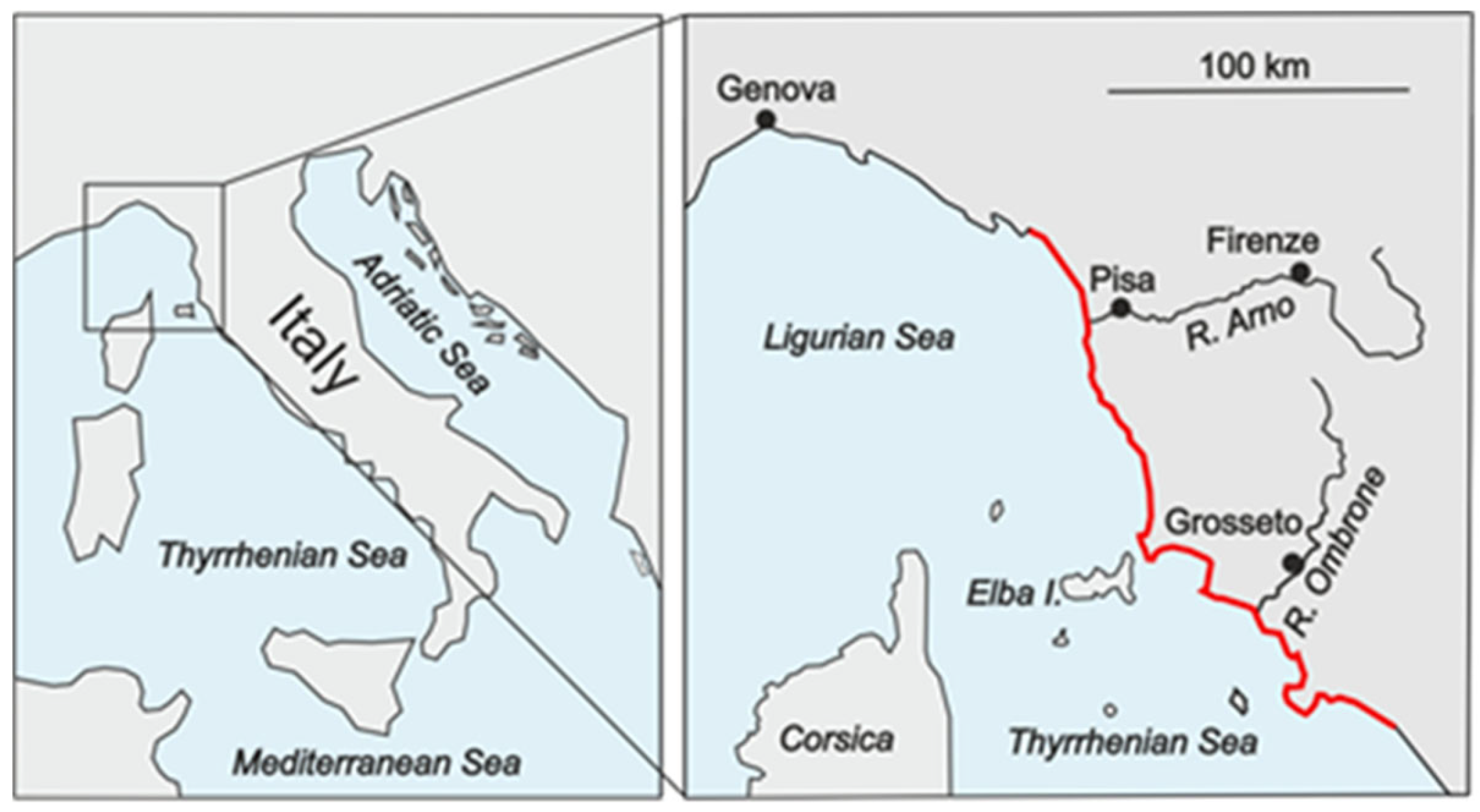
Figure 2.
San Rocco fort at the time of its building (1792) and its position today (Google Earth image 04/2022).
Figure 2.
San Rocco fort at the time of its building (1792) and its position today (Google Earth image 04/2022).

Figure 3.
The wooden pier for marble loading at Forte dei Marmi (Marble Fort) and one of the first bathing establishments present on the IGM topographic map (1878).
Figure 3.
The wooden pier for marble loading at Forte dei Marmi (Marble Fort) and one of the first bathing establishments present on the IGM topographic map (1878).
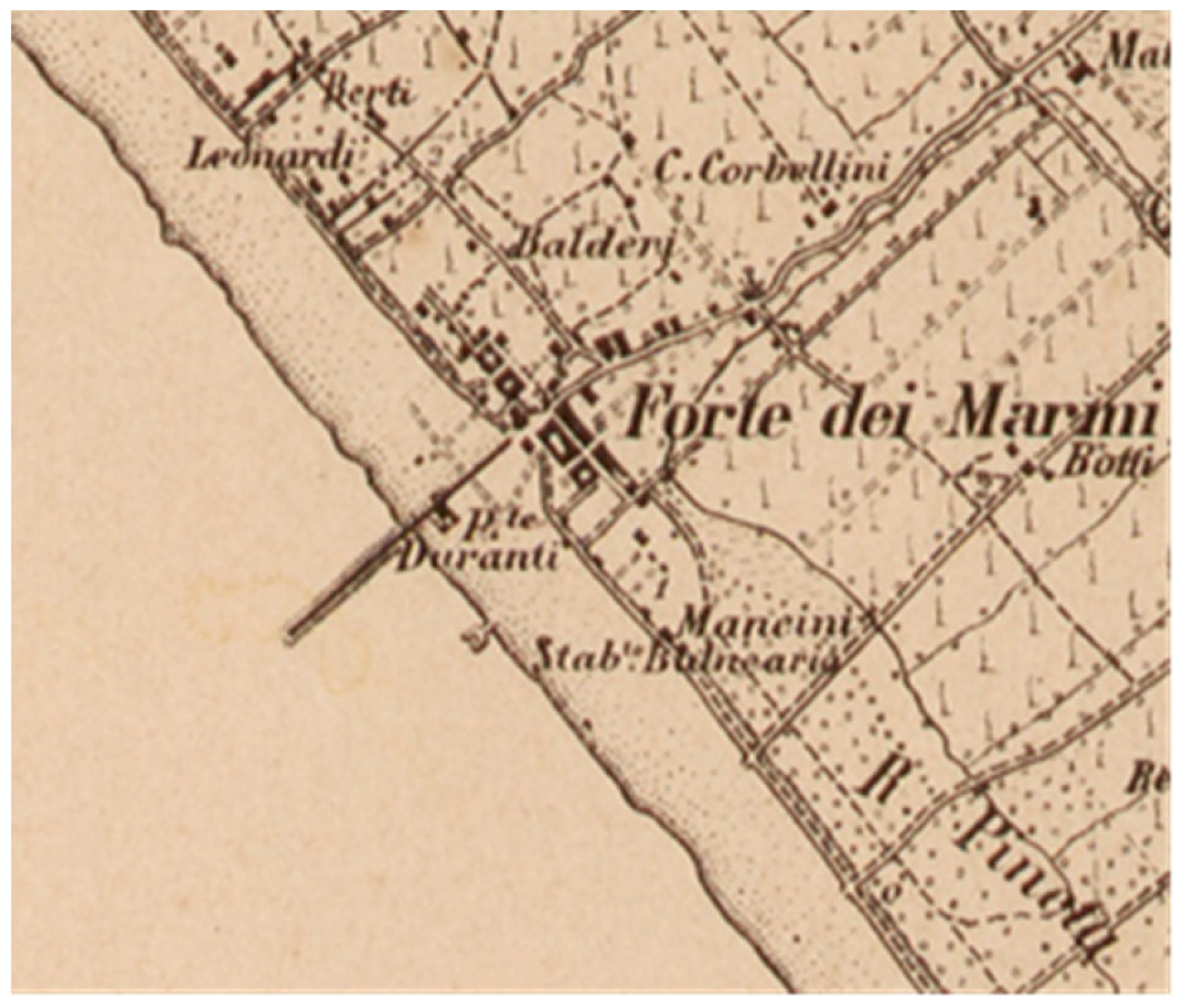
Figure 4.
Physiographic sketch of the continental Tuscany coast showing main littoral cells, longshore transport directions, long-term evolution and shore protection structures. Extreme values of offshore waves, i.e. significant wave height (Hs), associated mean period (Tm) and approaching direction values, for three European Centre for Medium-range Weather Forecast points, are also reported [15].
Figure 4.
Physiographic sketch of the continental Tuscany coast showing main littoral cells, longshore transport directions, long-term evolution and shore protection structures. Extreme values of offshore waves, i.e. significant wave height (Hs), associated mean period (Tm) and approaching direction values, for three European Centre for Medium-range Weather Forecast points, are also reported [15].
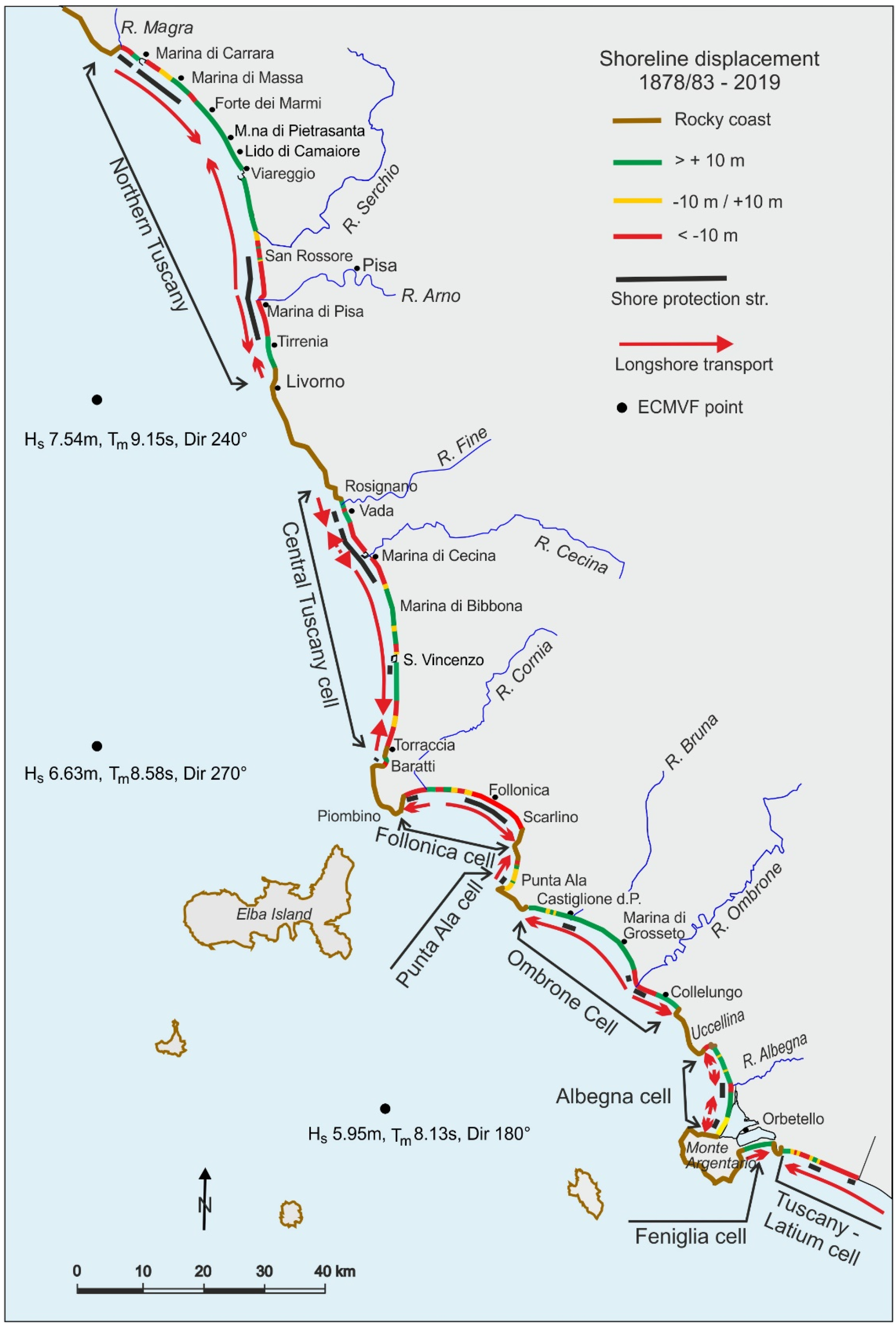
Figure 5.
Pie charts showing the percentage of beaches in erosion, stability and sedimentation based on 1881, 1954, 1984, 2005, and 2019 shoreline position. Note that the class boundaries are not the same in the five graphs but consistent with the accuracy of the data.
Figure 5.
Pie charts showing the percentage of beaches in erosion, stability and sedimentation based on 1881, 1954, 1984, 2005, and 2019 shoreline position. Note that the class boundaries are not the same in the five graphs but consistent with the accuracy of the data.
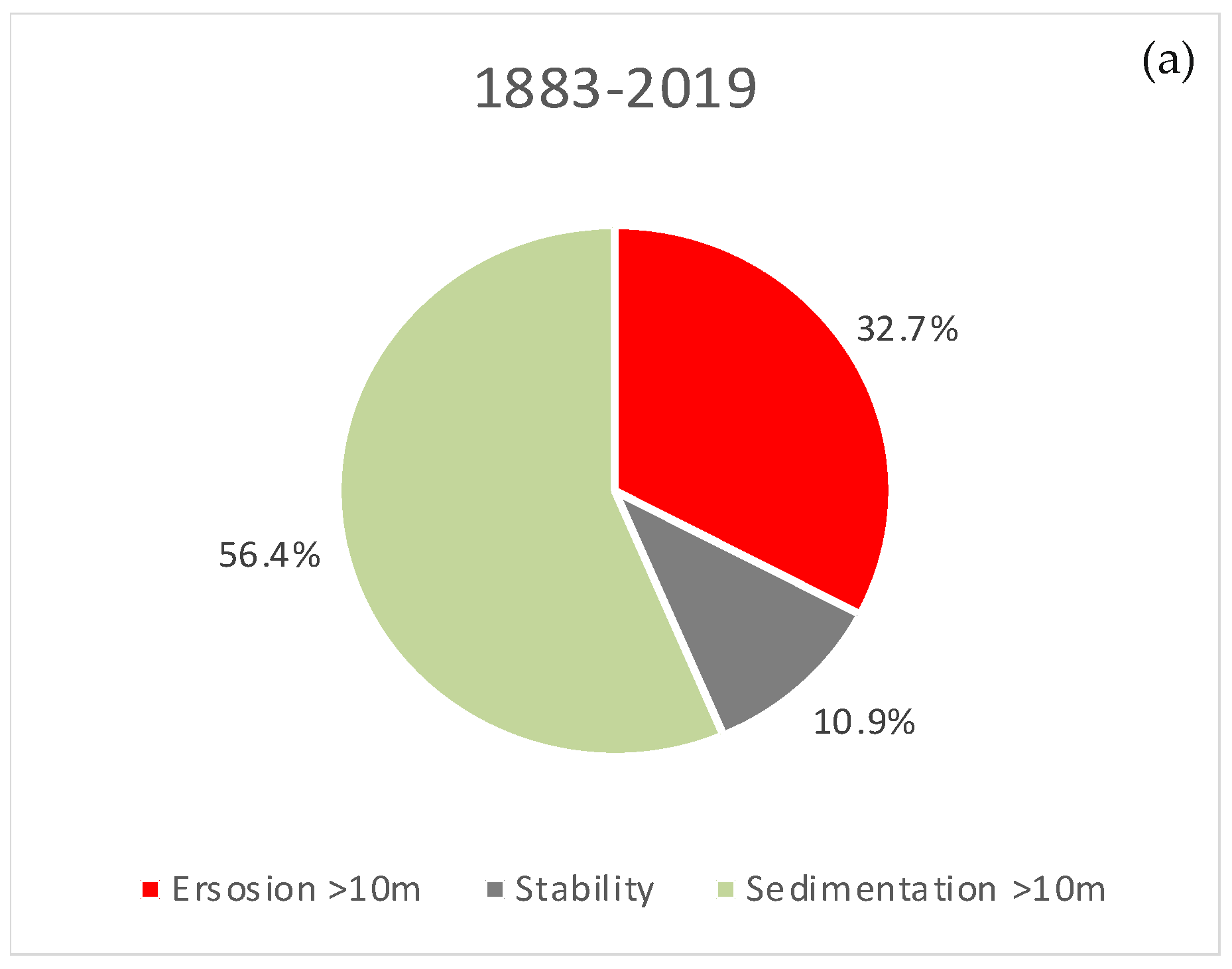
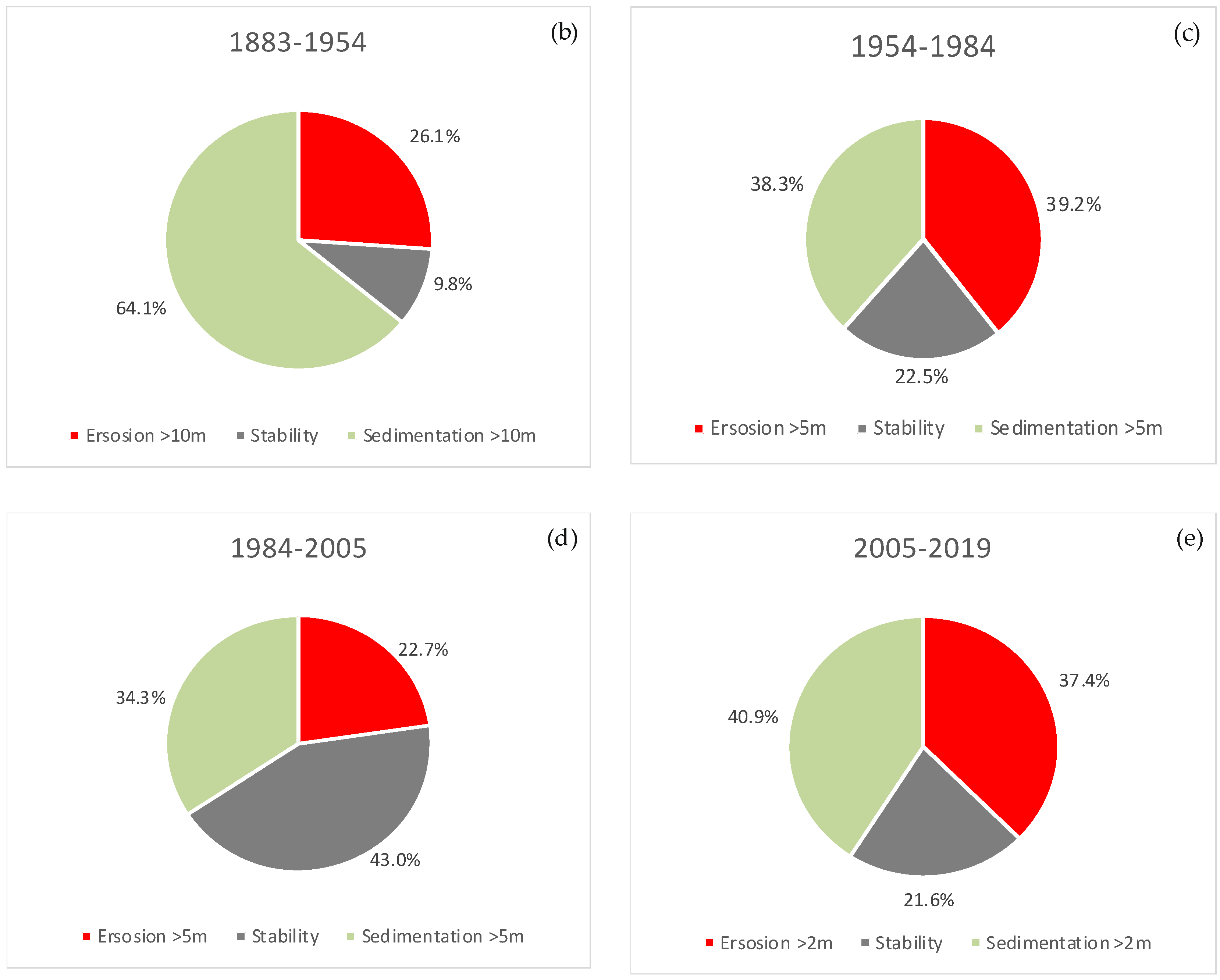
Figure 6.
Long-term (a), 1881–2019, and recent (b), 2005–2019, shoreline displacement along the Northern Tuscany cell (Figure 1 and Figure 4). Recent works that could have influenced coastal evolution are shown in red. Note: the vertical scale is different in the two graphs.
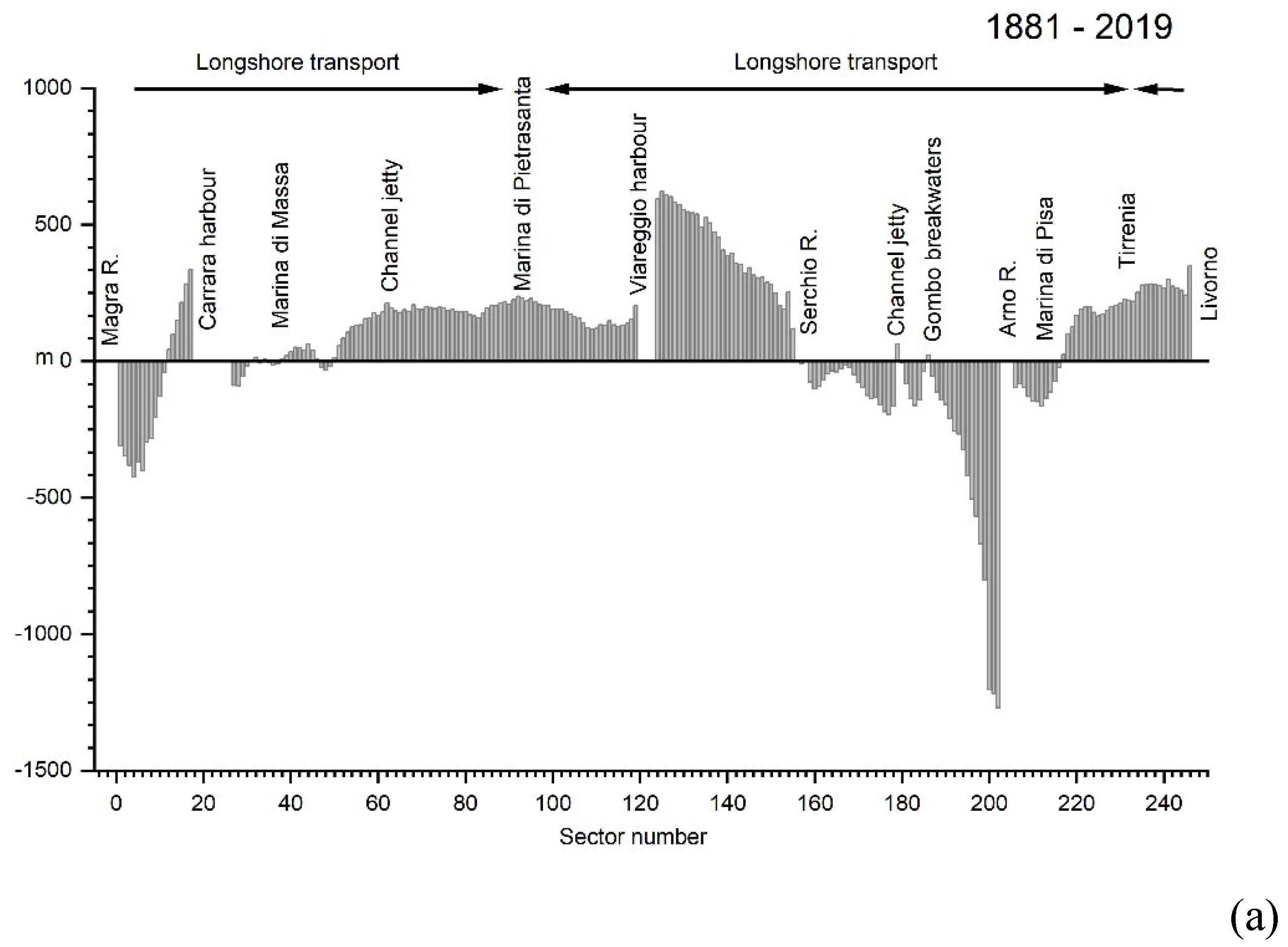
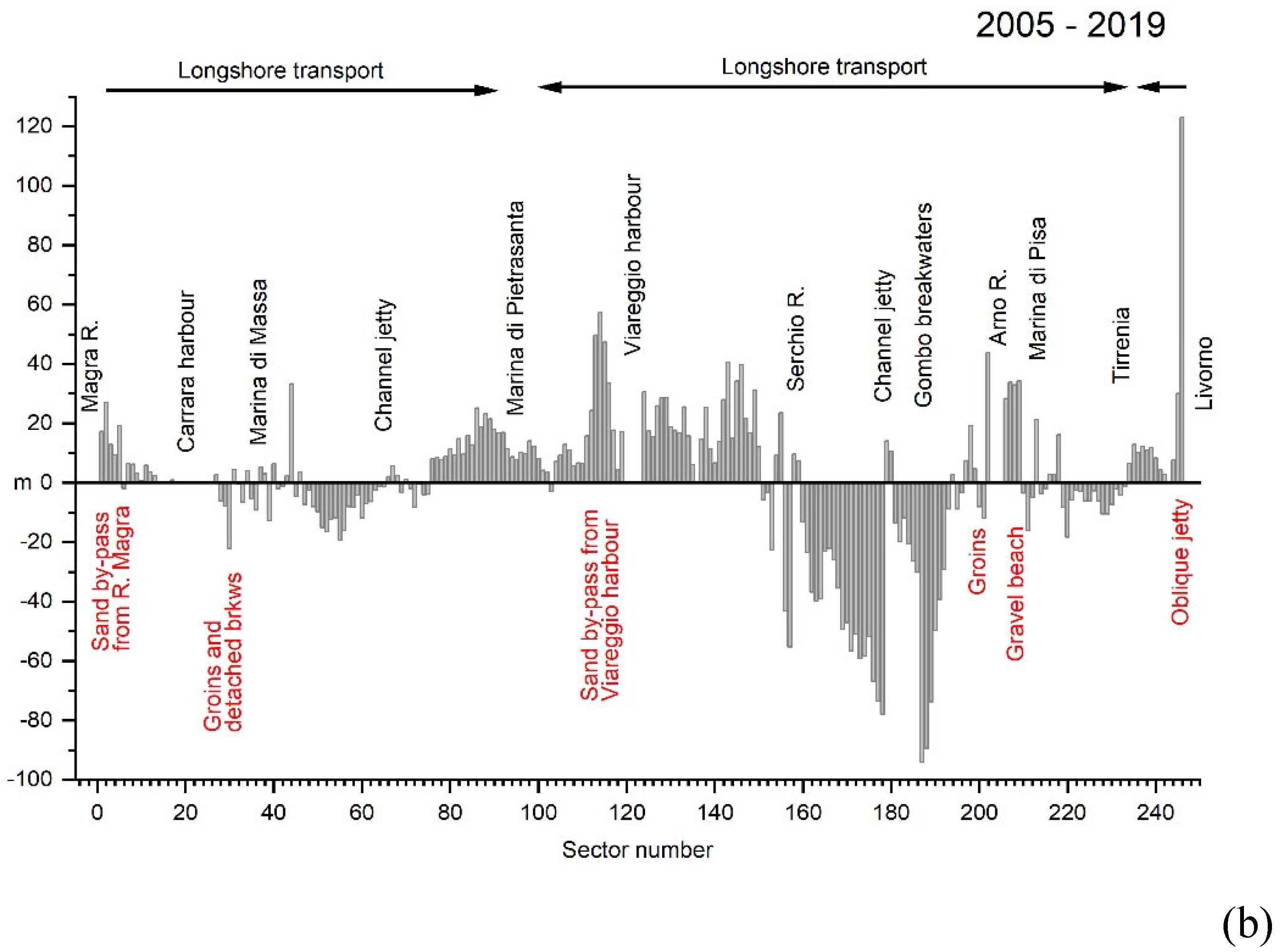
Figure 7.
Coastal evolution after the Carrara harbor construction (1880-1954) and shore protection structures construction (1954-1984).
Figure 7.
Coastal evolution after the Carrara harbor construction (1880-1954) and shore protection structures construction (1954-1984).
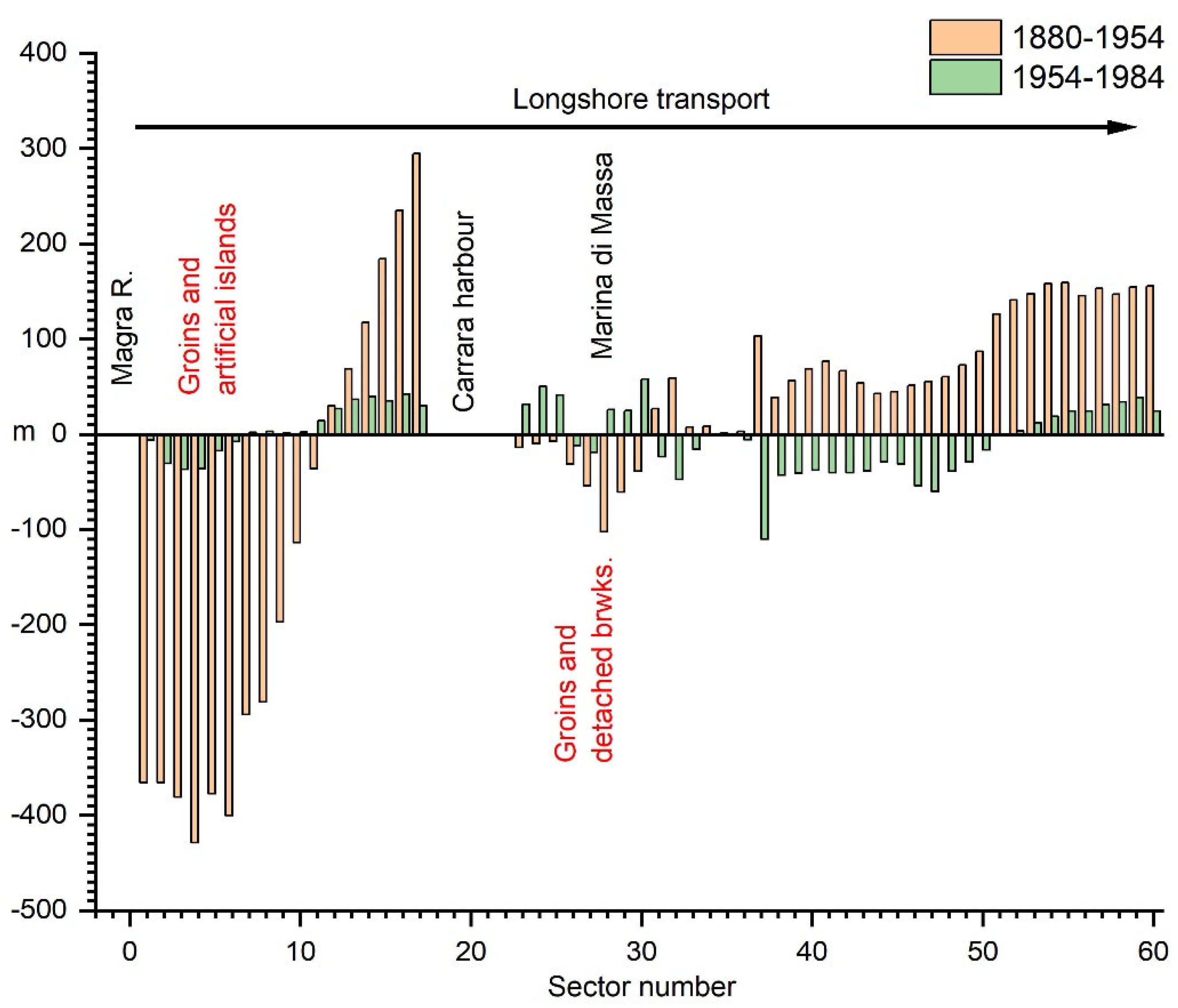
Figure 8.
The coast downdrift the Marina di Carrara harbor. The red arrow shows the coastal road that until the 1930s was running along the whole coast (authors’ photo, 08/11/2005).
Figure 8.
The coast downdrift the Marina di Carrara harbor. The red arrow shows the coastal road that until the 1930s was running along the whole coast (authors’ photo, 08/11/2005).

Figure 9.
Shore protection structures at Marina di Massa, with groins connected at their tips by a submerged (-0.5 m) detached breakwater (Photo Provincia di Livorno, 18/07/2007).
Figure 9.
Shore protection structures at Marina di Massa, with groins connected at their tips by a submerged (-0.5 m) detached breakwater (Photo Provincia di Livorno, 18/07/2007).
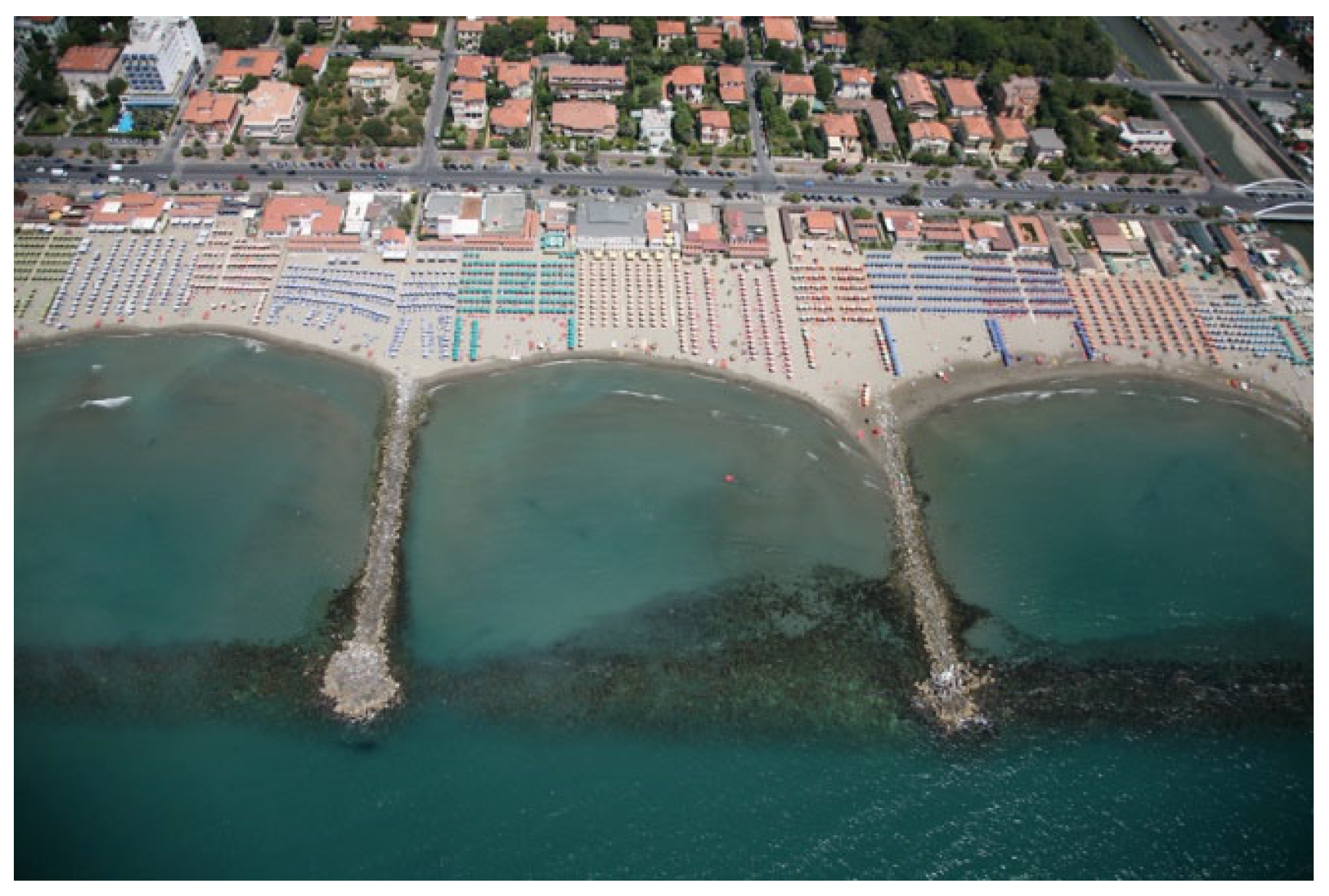
Figure 10.
Marina di Pisa was established at the end of the 19th century on the southern lobe of the Arno River delta, coinciding with the conclusion of the progradation phase (Istituto Geografico Militare, I.G.M., historical maps).
Figure 10.
Marina di Pisa was established at the end of the 19th century on the southern lobe of the Arno River delta, coinciding with the conclusion of the progradation phase (Istituto Geografico Militare, I.G.M., historical maps).
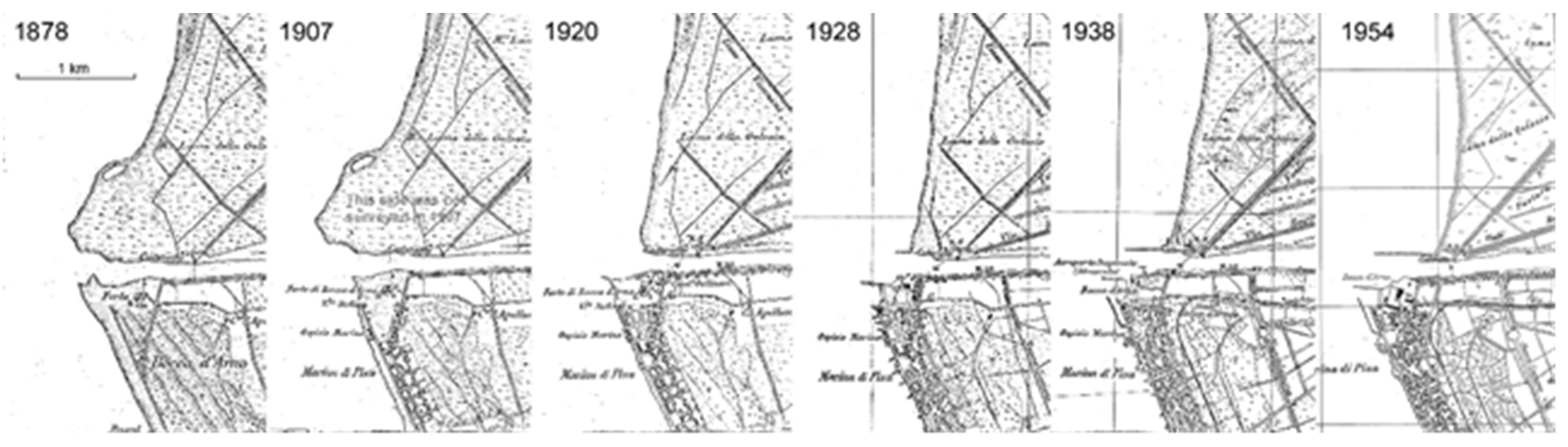
Figure 11.
Marina di Pisa: late 19th − early 20th century wooden coastal protections in an undated postcard, probably from the first decade of the 20th century.
Figure 11.
Marina di Pisa: late 19th − early 20th century wooden coastal protections in an undated postcard, probably from the first decade of the 20th century.
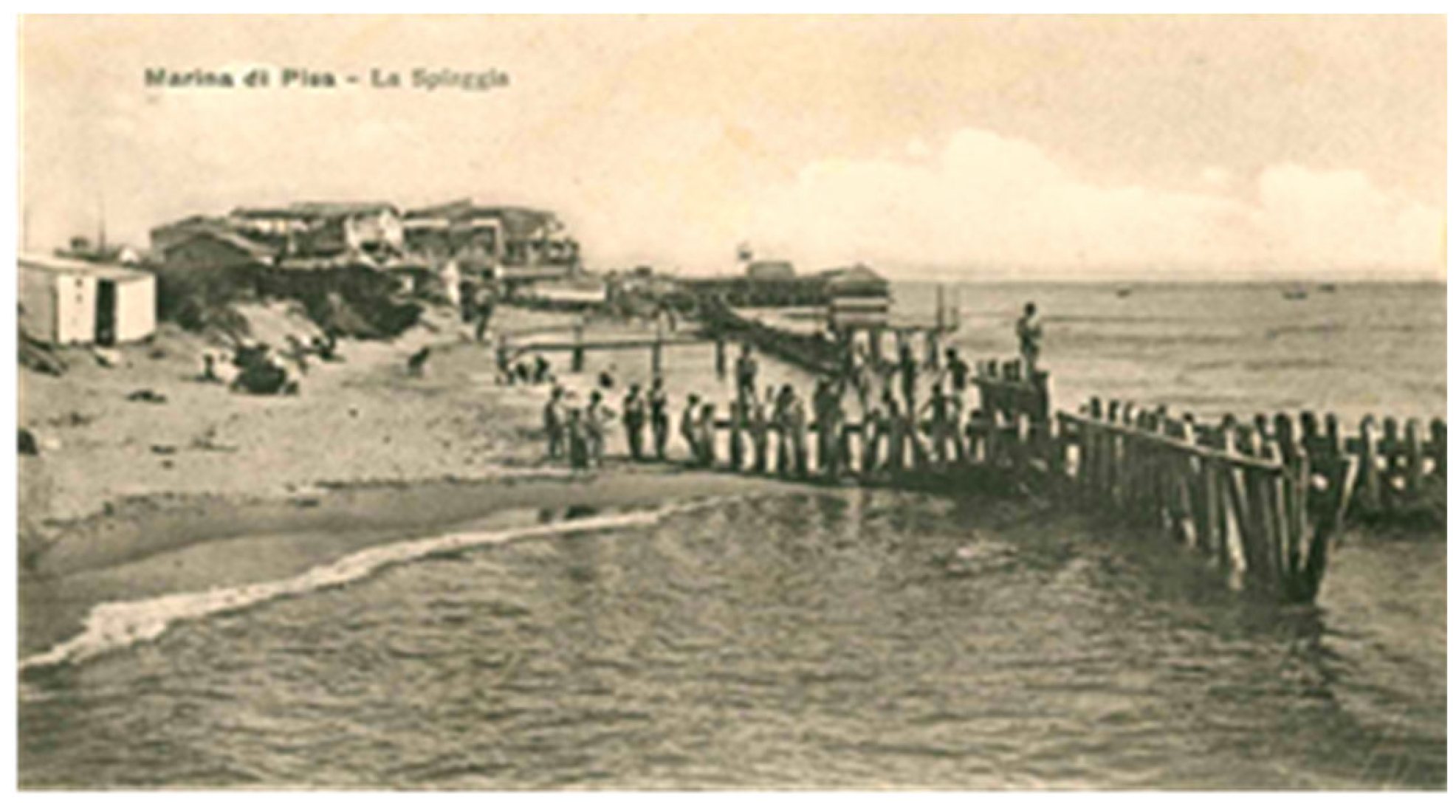
Figure 12.
Marina di Pisa: converting hard structures into gravel beaches (from 1996 to 2020; authors’ photos).
Figure 12.
Marina di Pisa: converting hard structures into gravel beaches (from 1996 to 2020; authors’ photos).
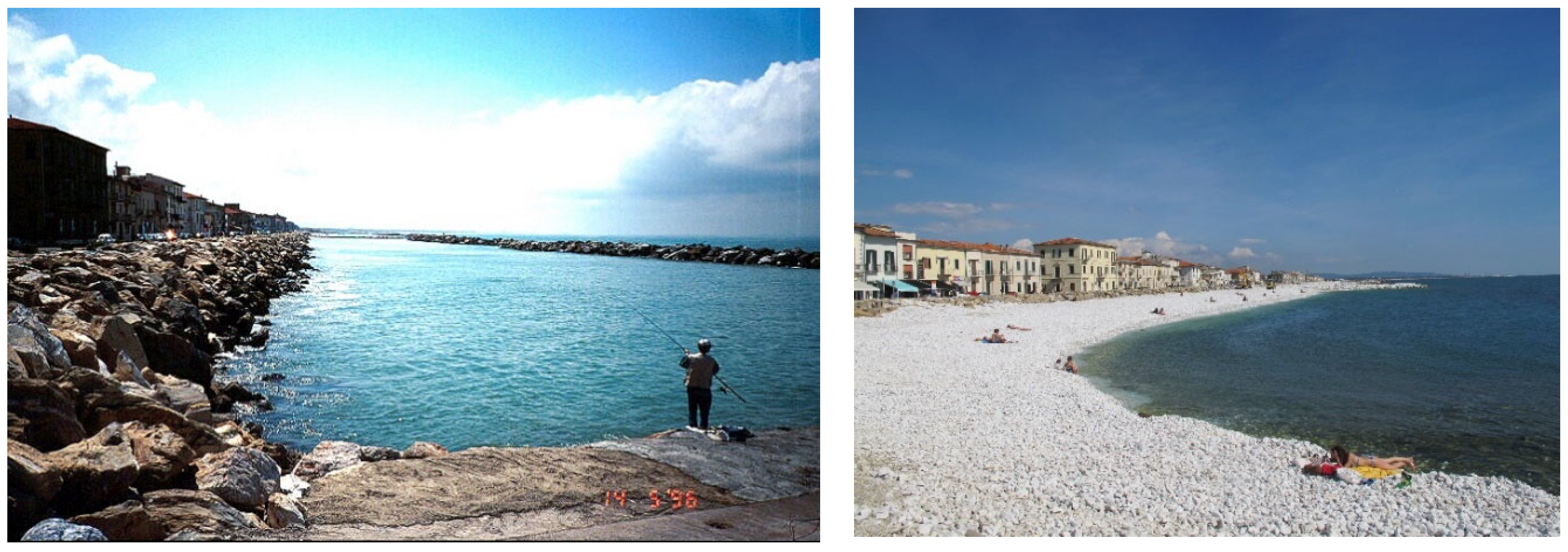
Figure 13.
The cost south of Marina di Pisa (Sectors 215-220, Figure 6 b; Google Earth image acquired on 30/04/2024 and authors’ photo, 25/06/2004).
Figure 13.
The cost south of Marina di Pisa (Sectors 215-220, Figure 6 b; Google Earth image acquired on 30/04/2024 and authors’ photo, 25/06/2004).
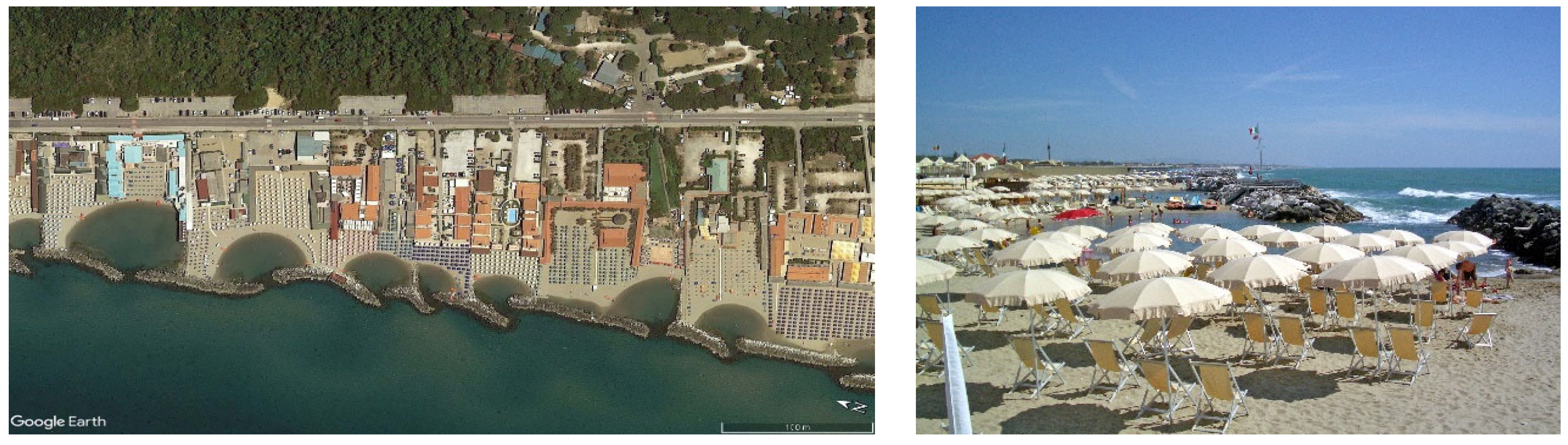
Figure 14.
The ‘low-accretion’ points in the central part of this littoral cell over the long period (sectors nos. 80 − 90) is explained by the reduction of sediment input from two small rivers but under the continuous arrival of sand from the north.
Figure 14.
The ‘low-accretion’ points in the central part of this littoral cell over the long period (sectors nos. 80 − 90) is explained by the reduction of sediment input from two small rivers but under the continuous arrival of sand from the north.
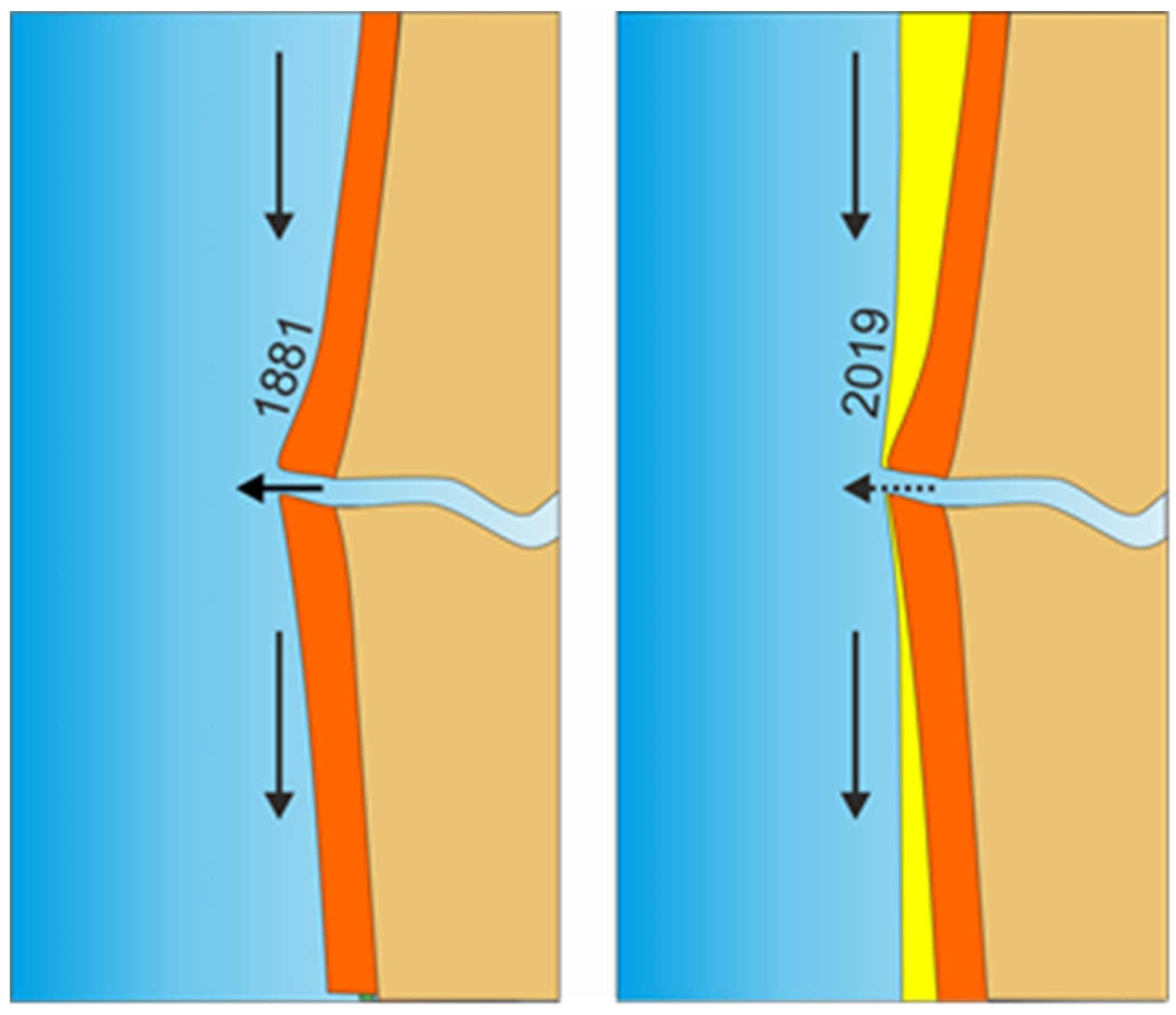
Figure 15.
Beach long term (a), 1879 – 2019 and recent (b), 2005– 2019, evolution of the Central Tuscany cell.
Figure 15.
Beach long term (a), 1879 – 2019 and recent (b), 2005– 2019, evolution of the Central Tuscany cell.
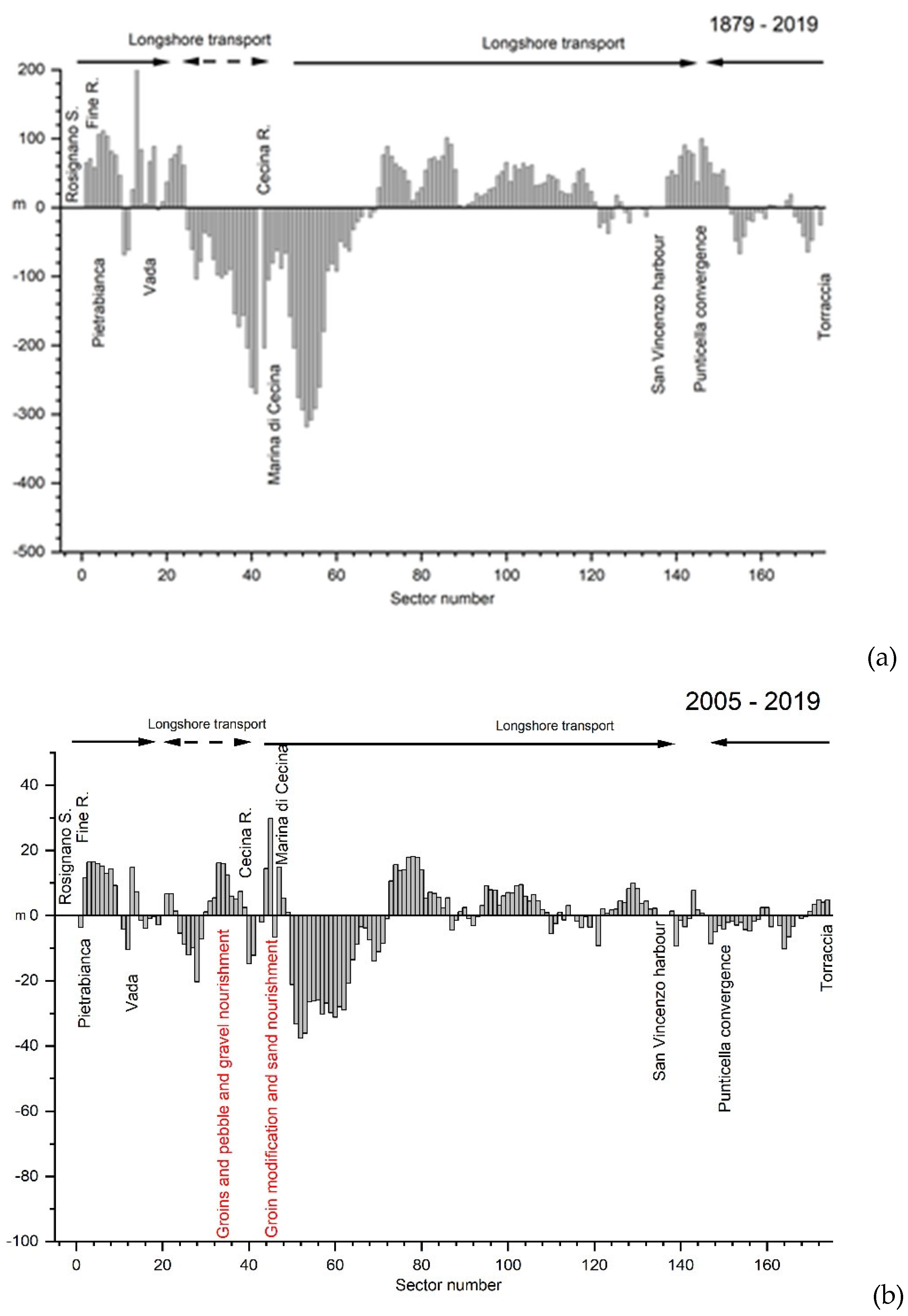
Figure 16.
Villa Ginori was built in the early 18th century at the mouth of the Cecina River to house offices, warehouses and workers with their families, essential for the development of agricultural, fishery, artisanal and industrial activities in the area. The Villa is depicted in a print by Zocchi dated 1744, and its position is shown in the 1881 topographic map, illustrating an 18th−19th century beach progradation. However, such progradation was not continuous and may have reversed as indicated by other documents.
Figure 16.
Villa Ginori was built in the early 18th century at the mouth of the Cecina River to house offices, warehouses and workers with their families, essential for the development of agricultural, fishery, artisanal and industrial activities in the area. The Villa is depicted in a print by Zocchi dated 1744, and its position is shown in the 1881 topographic map, illustrating an 18th−19th century beach progradation. However, such progradation was not continuous and may have reversed as indicated by other documents.
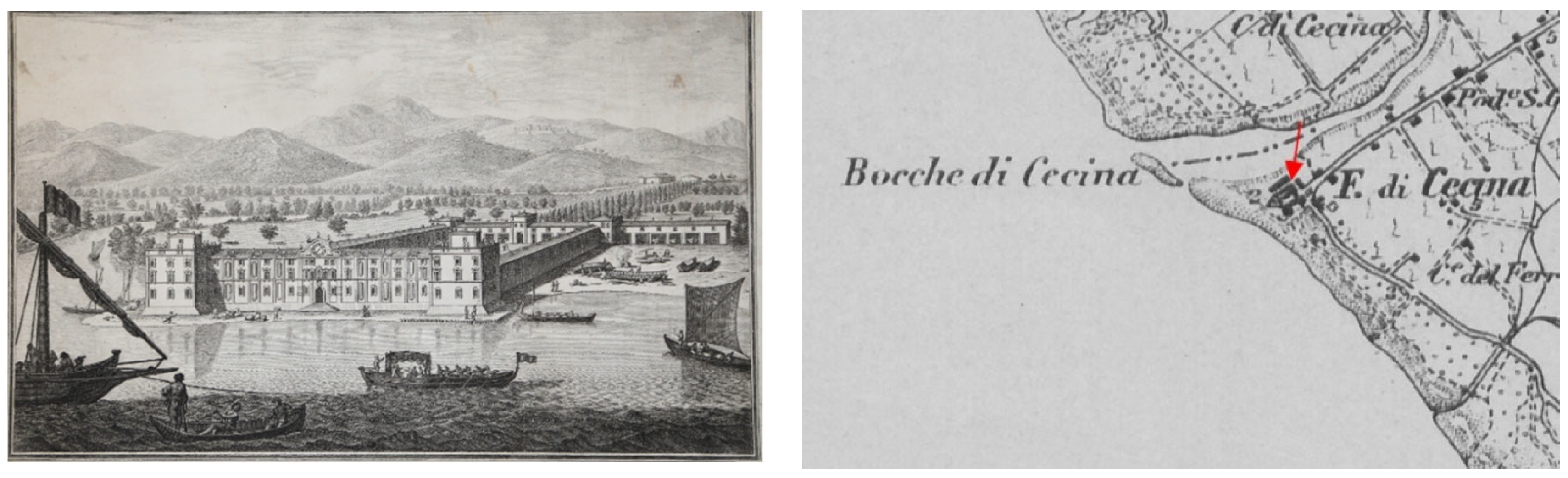
Figure 17.
The early development of Marina di Cecina according to the first editions of the I.G.M. map (1883 at 1:50,000: 1908 and 1938 at 1:25,000).
Figure 17.
The early development of Marina di Cecina according to the first editions of the I.G.M. map (1883 at 1:50,000: 1908 and 1938 at 1:25,000).
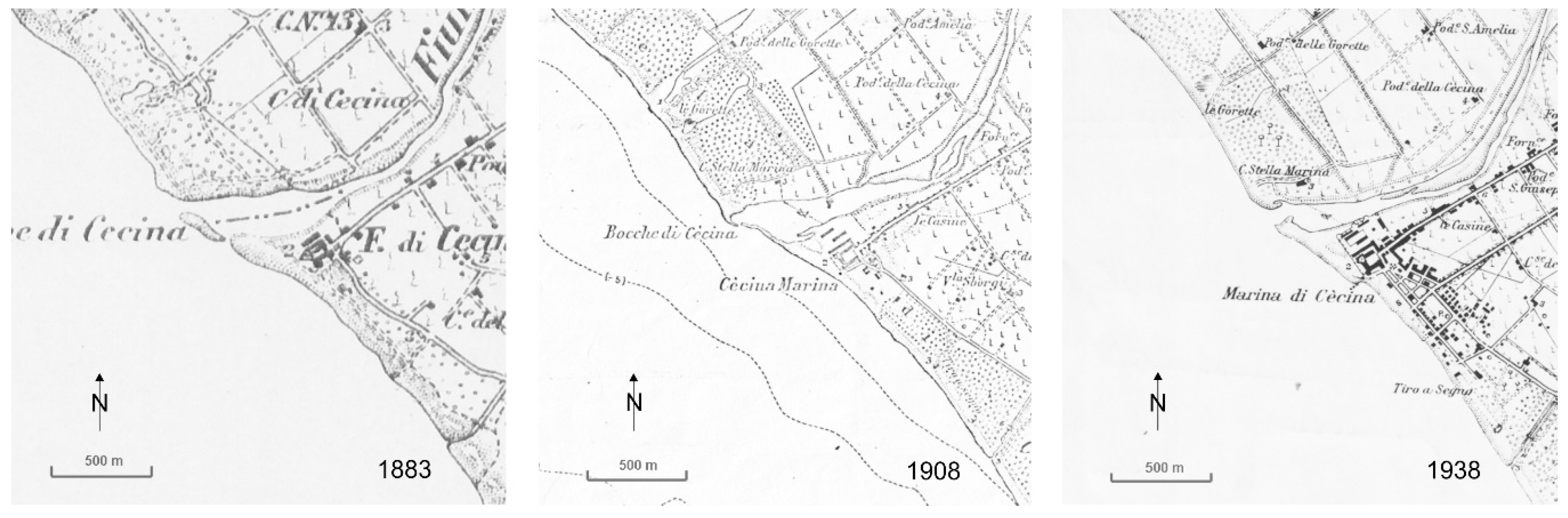
Figure 18.
The present configuration of Marina di Cecina shore protection project and the new marina (Google Earth image acquired on 05/04/2022).
Figure 18.
The present configuration of Marina di Cecina shore protection project and the new marina (Google Earth image acquired on 05/04/2022).
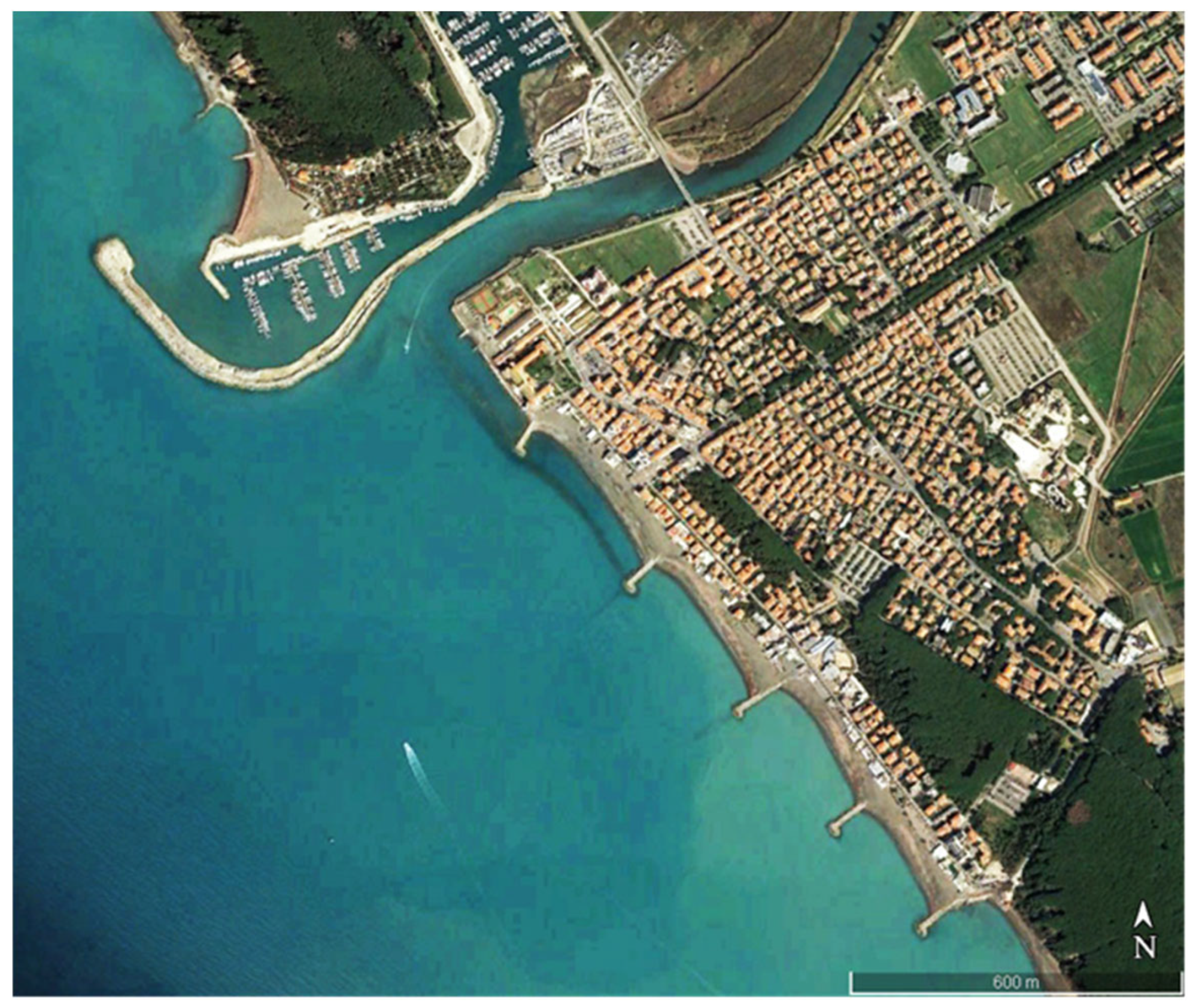
Figure 19.
(a) Authors’ photos of dune erosion and pine trees fall down south of Marina di Cecina (May, 2019) and (b) one of the eight artificial shoals under construction south of Marina di Cecina. With on the left side of the photo, the salient soon formed is visible, together with the gravel used for the beach nourishment (approx. 7.000 m3).
Figure 19.
(a) Authors’ photos of dune erosion and pine trees fall down south of Marina di Cecina (May, 2019) and (b) one of the eight artificial shoals under construction south of Marina di Cecina. With on the left side of the photo, the salient soon formed is visible, together with the gravel used for the beach nourishment (approx. 7.000 m3).
Figure 20.
Beach long term (a), 1878 – 2019, and recent (b), 1998 – 2005, evolution of the Follonica littoral cell. In red recent works that could have influenced coastal evolution. Vertical scale is different in the two graphs.
Figure 20.
Beach long term (a), 1878 – 2019, and recent (b), 1998 – 2005, evolution of the Follonica littoral cell. In red recent works that could have influenced coastal evolution. Vertical scale is different in the two graphs.
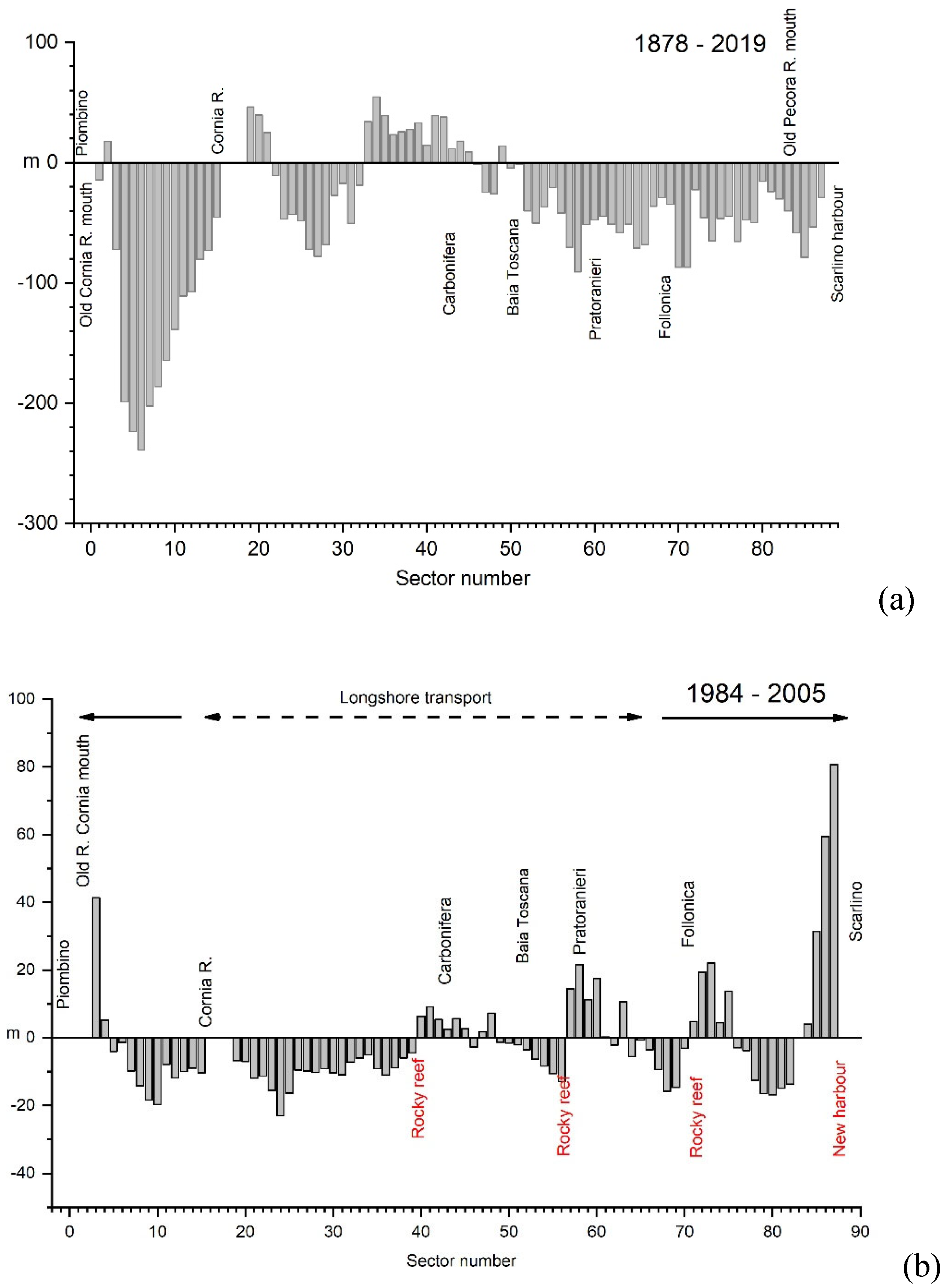
Figure 21.
Beach response to the project performed in the central part of the Follonica Gulf in the 1980s−1990s (pre− and post−work available shorelines).
Figure 21.
Beach response to the project performed in the central part of the Follonica Gulf in the 1980s−1990s (pre− and post−work available shorelines).
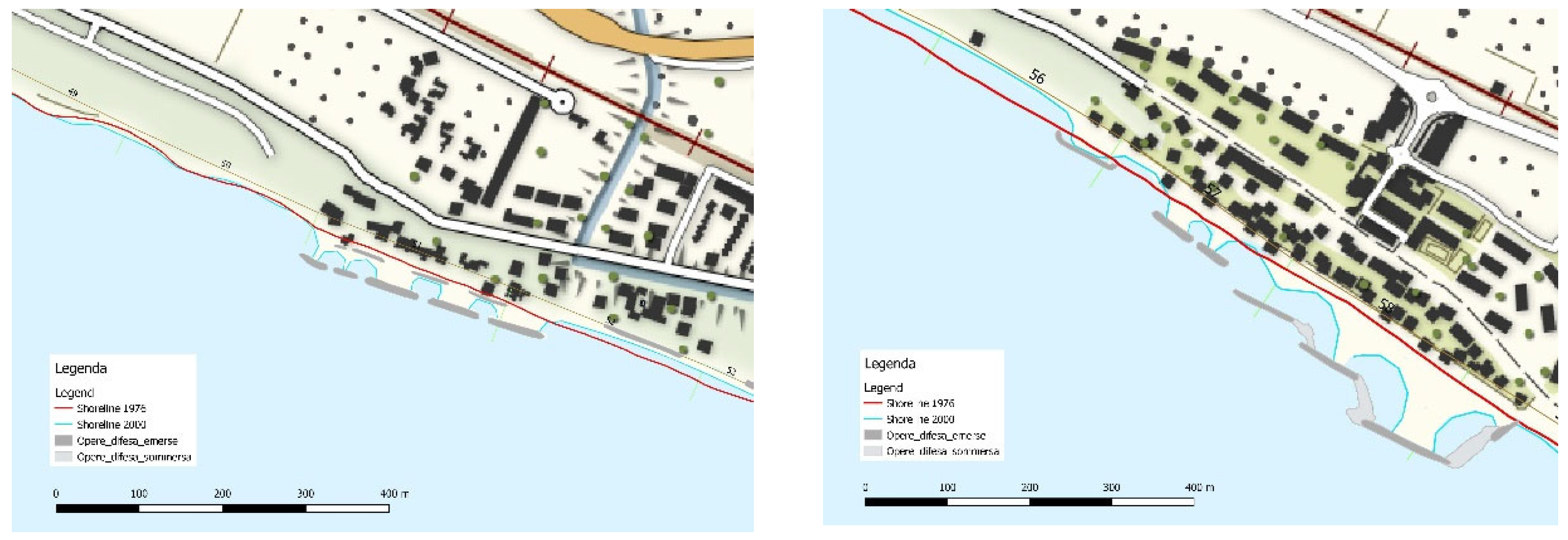
Figure 22.
Marina di Scarlino and the beach expansion from 2000 to 2004. On the dry beach, piles of sand accumulated, intended to be transported a few hundred meters further north (Basemap Google Earth image, 2004). The upper small image shows the position of the marina within the Gulf of Follonica.
Figure 22.
Marina di Scarlino and the beach expansion from 2000 to 2004. On the dry beach, piles of sand accumulated, intended to be transported a few hundred meters further north (Basemap Google Earth image, 2004). The upper small image shows the position of the marina within the Gulf of Follonica.

Figure 23.
Gravel nourishment stabilized by submerged groins. Salients are formed at the groins root. The revetment is at least twenty years older (authors’ photo, 31/05/2016).
Figure 23.
Gravel nourishment stabilized by submerged groins. Salients are formed at the groins root. The revetment is at least twenty years older (authors’ photo, 31/05/2016).
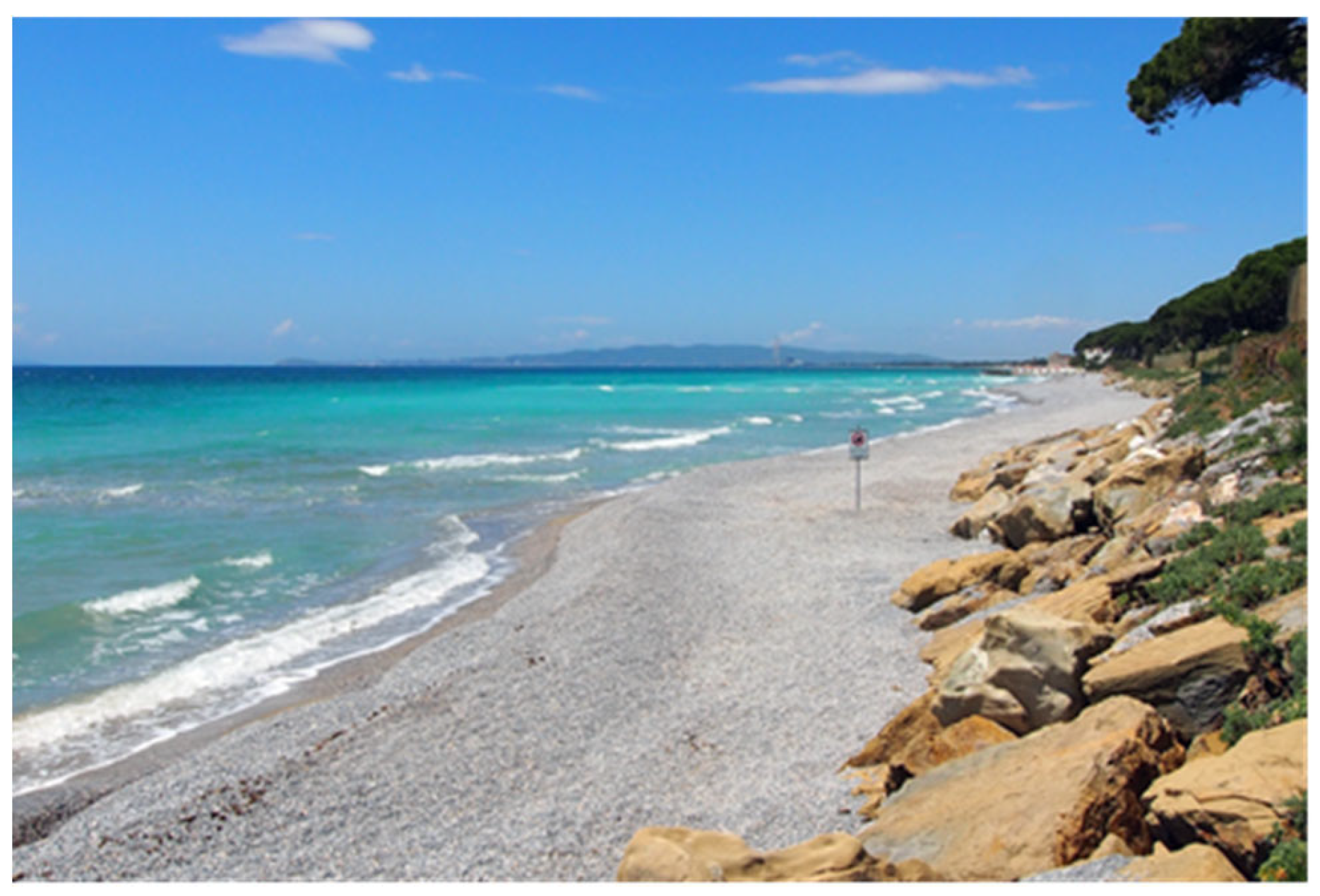
Figure 24.
Beach evolution from 1883 to 2019 in the Ombrone River littoral cell. Note that lower accretion at Collelungo is due to the fact that in 1883 is was an headland.
Figure 24.
Beach evolution from 1883 to 2019 in the Ombrone River littoral cell. Note that lower accretion at Collelungo is due to the fact that in 1883 is was an headland.
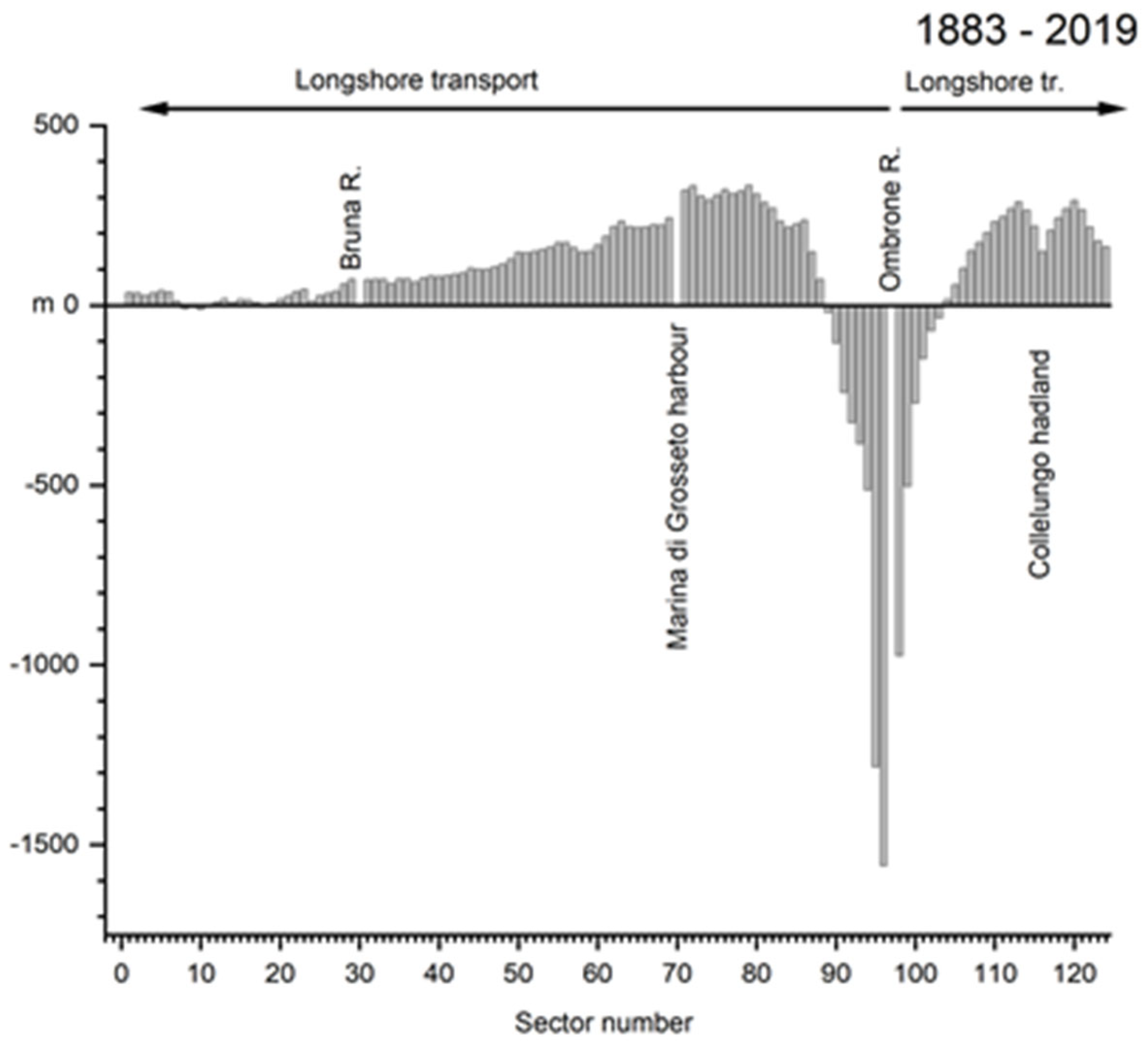
Figure 25.
Collelungo watchtower was built in the 16th century on a headland, which in 1883 I.G.M. map was still protruding out of the shoreline and working like a groin. In the 1950s it was still possible to dive from the rocks, but now it has a 70−meter−wide beach in front.
Figure 25.
Collelungo watchtower was built in the 16th century on a headland, which in 1883 I.G.M. map was still protruding out of the shoreline and working like a groin. In the 1950s it was still possible to dive from the rocks, but now it has a 70−meter−wide beach in front.
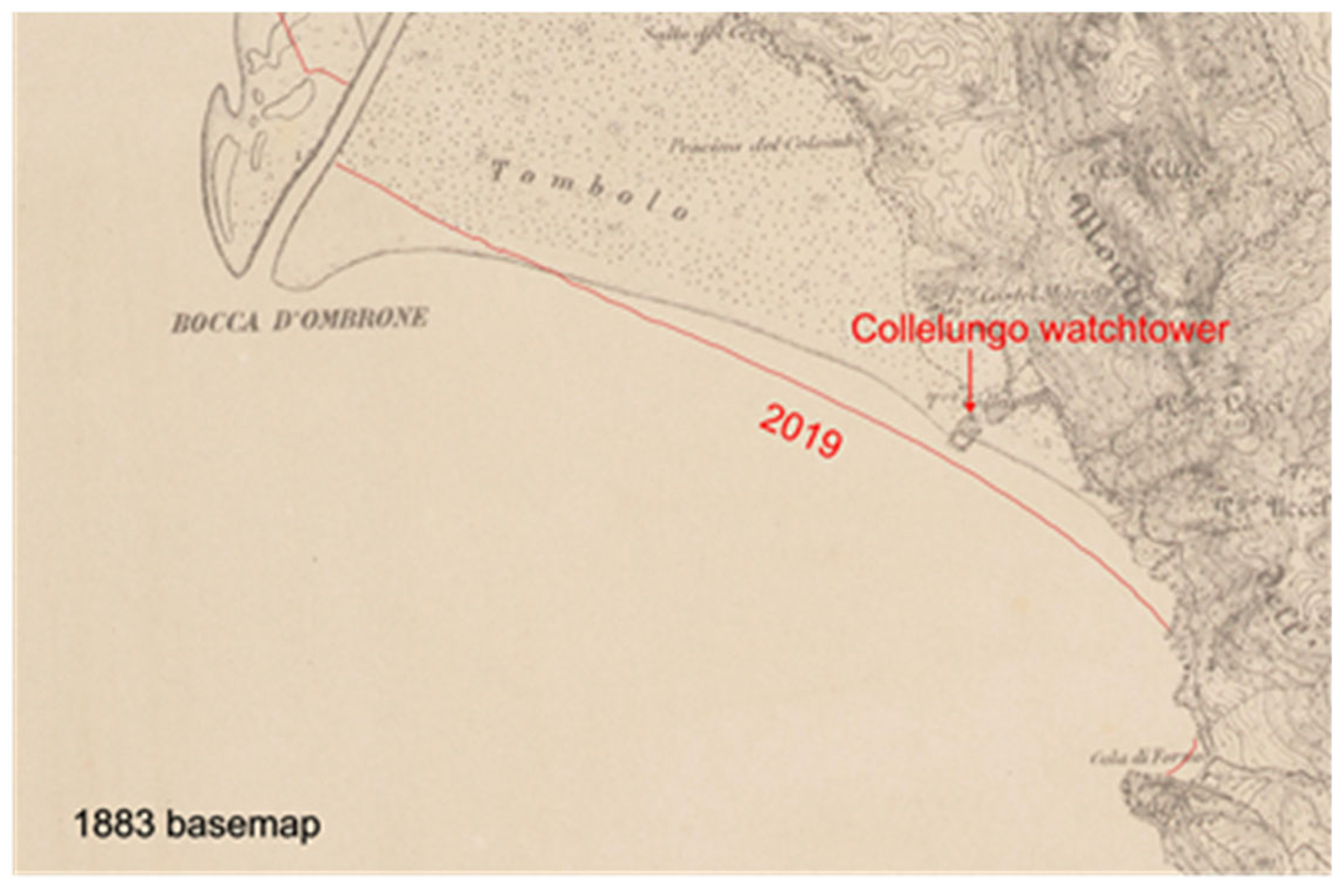
Figure 26.
Ombrone River delta in the Maremma Regional Park: (a) detached breakwater constructed to protect a house, now reached by the beach, on the northern side of the delta; (b) cusp formed by a submerged groin on the southern side of the delta. Waves breaking on the structure are visible too (authors’ photos, 22/05/2020).
Figure 26.
Ombrone River delta in the Maremma Regional Park: (a) detached breakwater constructed to protect a house, now reached by the beach, on the northern side of the delta; (b) cusp formed by a submerged groin on the southern side of the delta. Waves breaking on the structure are visible too (authors’ photos, 22/05/2020).
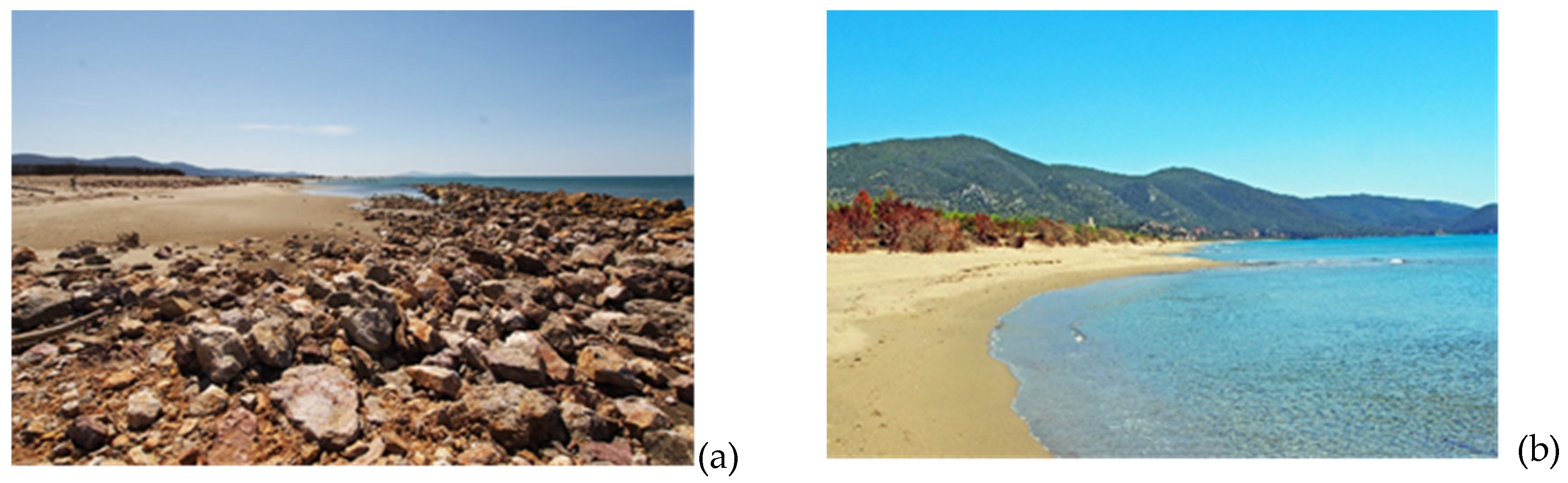
Figure 27.
The by−pass active at the port of Marina di Grosseto: pipes discharge sand on the northern side (downdrift) of the jetties (authors’ photo, 06/01/2015).
Figure 27.
The by−pass active at the port of Marina di Grosseto: pipes discharge sand on the northern side (downdrift) of the jetties (authors’ photo, 06/01/2015).
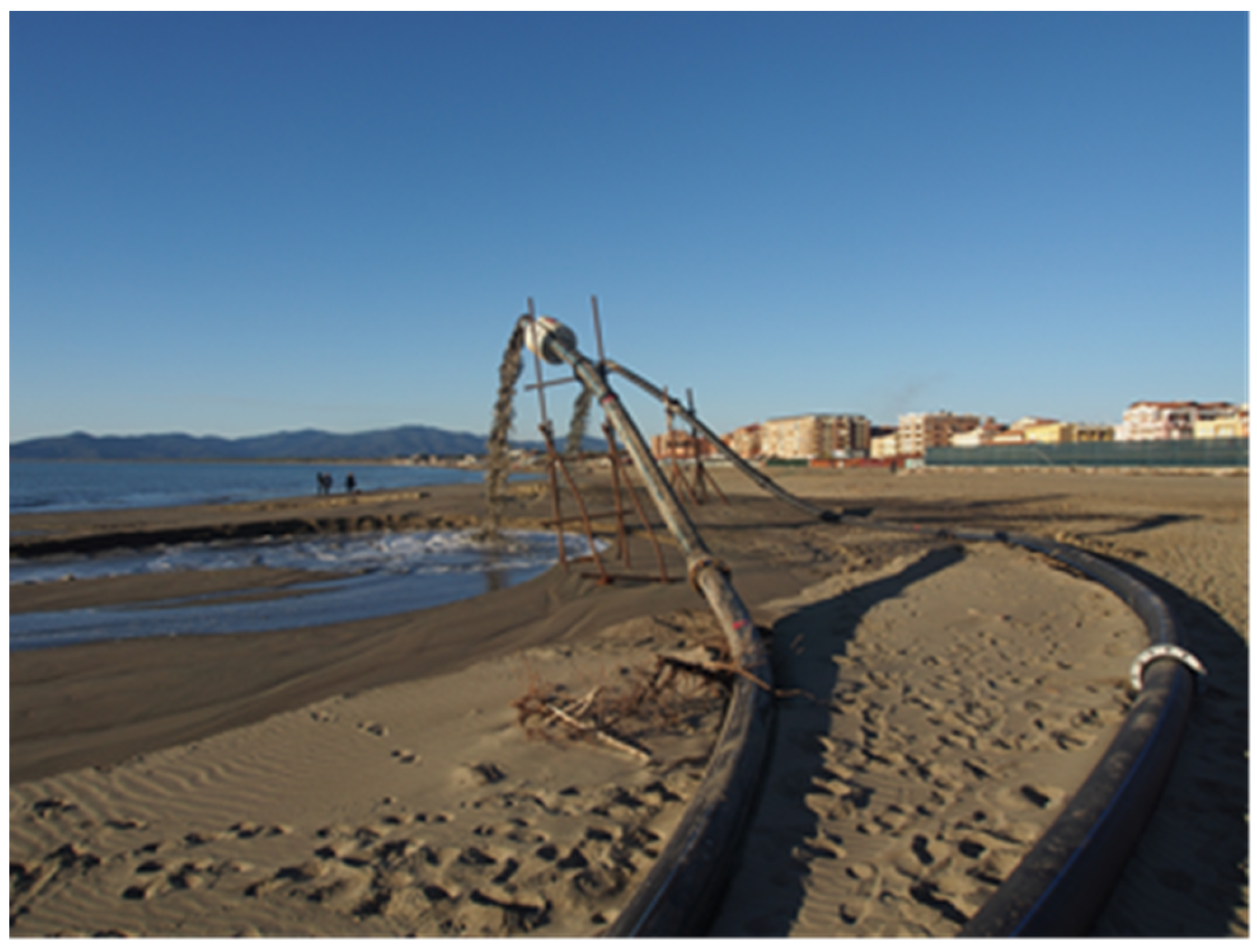
Figure 28.
Castiglione della Pescaia: longshore sediment transport inversion (yellow arrows) induced by wave diffraction and reflection (wave orthogonals in blue) on a shore oblique structure (base Google earth image acquired on 03/09/2023). In the upper right box: houses built on the dunes in the 1960s and 1970s and the detached breakwaters built for their protection (authors’ photo 06/01/2015).
Figure 28.
Castiglione della Pescaia: longshore sediment transport inversion (yellow arrows) induced by wave diffraction and reflection (wave orthogonals in blue) on a shore oblique structure (base Google earth image acquired on 03/09/2023). In the upper right box: houses built on the dunes in the 1960s and 1970s and the detached breakwaters built for their protection (authors’ photo 06/01/2015).
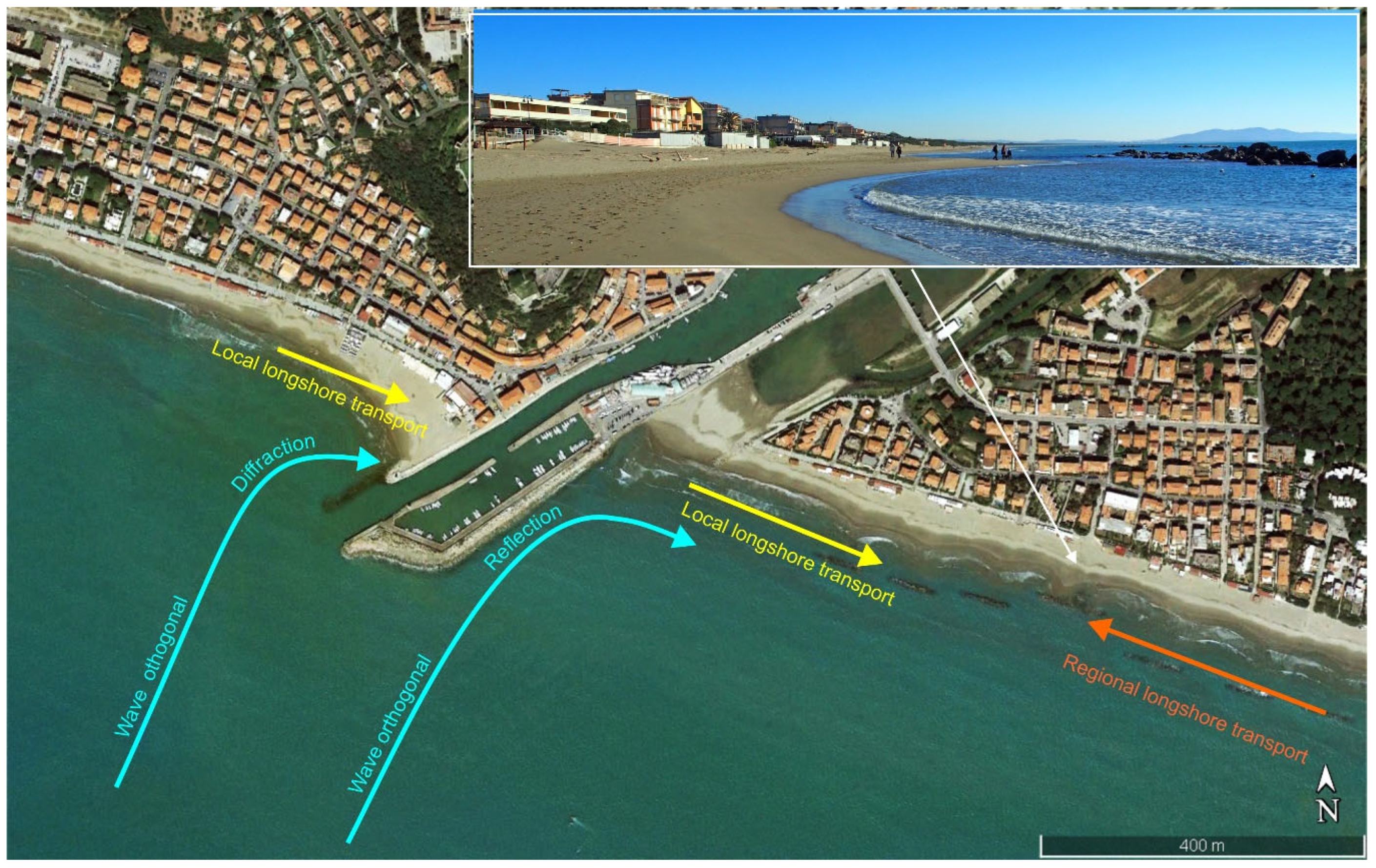
Disclaimer/Publisher’s Note: The statements, opinions and data contained in all publications are solely those of the individual author(s) and contributor(s) and not of MDPI and/or the editor(s). MDPI and/or the editor(s) disclaim responsibility for any injury to people or property resulting from any ideas, methods, instructions or products referred to in the content. |
© 2024 by the authors. Licensee MDPI, Basel, Switzerland. This article is an open access article distributed under the terms and conditions of the Creative Commons Attribution (CC BY) license (http://creativecommons.org/licenses/by/4.0/).
Copyright: This open access article is published under a Creative Commons CC BY 4.0 license, which permit the free download, distribution, and reuse, provided that the author and preprint are cited in any reuse.


