
Submitted:
14 October 2024
Posted:
15 October 2024
You are already at the latest version
Abstract
This paper presents a comprehensive review of the integration and optimization of smart grid (SG) technologies, distributed generation (DG), electric vehicles (EVs), and cybersecurity in the context of modern energy systems. As global energy systems transition towards decentralization and increase reliance on renewable energy, the interplay between these technologies offers significant opportunities to enhance grid flexibility, resilience, and sustainability. The integration of DG systems, supported by advanced battery and fuel cell (FC) technologies, plays a pivotal role in stabilizing the grid and facilitating the adoption of renewable energy. Through vehicle-to-grid (V2G) technologies, EVs provide dynamic solutions for energy storage and demand response (DR), contributing to efficient energy management and peak shaving. A critical focus of this paper is the growing importance of cybersecurity, as the digitization of energy infrastructures creates new vulnerabilities to cyber-attacks. Novel strategies, including artificial intelligence (AI)-driven automation, blockchain-based security for energy transactions, and quantum-resistant encryption, are explored to safeguard the future of energy systems. Drawing from global case studies, this review also addresses key challenges such as grid congestion, regulatory barriers, and interoperability, providing a roadmap for optimizing and securing the next generation of energy infrastructures.
Keywords:
Artificial intelligence
; Blockchain
; Cybersecurity
; Distributed generation
; Electric vehicles
; Energy system optimization
; Smart grid
; Vehicle-to-grid
1. Introduction
The global energy sector is undergoing a significant transformation driven by rising electricity demand and the need to mitigate greenhouse gas (GHG) emissions to address climate change. Traditional power systems, which depend heavily on fossil fuels, are increasingly challenged to maintain grid stability while integrating larger shares of renewable energy sources (RES). The shift to more sustainable energy systems requires modern infrastructure, and international policy efforts to decarbonize energy security and resilience are accelerating this transition [1,2]. The integration of technologies such as smart grids (SG), distributed generation (DG), energy storage, and electric vehicles (EVs) is crucial to overcoming these challenges. SGs enable real-time monitoring, automation, and bidirectional communication between producers and consumers, improving energy management and reliability. Decentralizing power production through DG reduces transmission losses and enhances energy autonomy [3,4]. Advances in energy storage technologies and EV infrastructure are critical to managing the intermittency of RES and increasing system flexibility [5,6]. However, cybersecurity has become an essential but often overlooked element of this transition. As energy systems become more digitized and interconnected, they are increasingly vulnerable to cyberattacks that can disrupt operations or damage infrastructure [7]. This paper examines the convergence of SGs, DG, energy storage, and EVs, emphasizing cybersecurity. It also explores how emerging technologies such as artificial intelligence (AI), machine learning (ML) and blockchain can improve grid optimization and security.
1.1. Overview of Modern Energy Systems and Their Challenges
Traditional grids were designed for centralized power plants transmitting electricity to consumers through unidirectional flows, but the emergence of RES has strained this system. Conventional networks were built for consistent and controllable energy flows but must now reconcile intermittent renewable energy generation with constant demand [8,9,10]. Solar and wind power, the most prominent RES, are inherently variable: solar generation peaks during the day when residential demand is low, and wind power depends on erratic weather patterns. These fluctuations present challenges in ensuring a consistent power supply. Additionally, the increased electrification of transportation through EVs contributes to higher energy consumption, especially during peak charging times that coincide with residential demand surges. Without significant upgrades to grid infrastructure, this increased load could lead to congestion and reliability issues [11]. SGs address these problems by incorporating advanced sensors, automation, and control technologies, allowing for more dynamic responses to changes in energy supply and demand. SGs also facilitate the integration of DG systems and energy storage solutions, both of which are essential for managing the variability of RES [12,13].
1.2. The Role of Smart Grids in Future Energy Infrastructures
SGs represent a significant shift in power distribution by enabling two-way flows of both information and electricity between utilities and consumers. In contrast to traditional grids, which have limited communication capabilities, SGs utilize advanced technologies such as smart meters, sensors, and real-time data analytics to monitor and optimize energy flows [14,15].
This real-time capability is crucial for mitigating the fluctuations of RES and ensuring grid reliability. SGs also enable demand response (DR) programs, allowing utilities to adjust consumer demand during peak periods to reduce grid strain. SGs provide the necessary infrastructure for integrating DG systems as more consumers adopt rooftop solar photovoltaics (PVs), wind turbines (WTs) and other RES [16]. Additionally, SGs support microgrids (MGs), which can operate independently or in coordination with the main grid, increasing resilience during emergencies. SGs also facilitate the widespread adoption of EVs through vehicle-to-grid (V2G) technology, which allows EVs to act as mobile energy storage systems (ESSs), returning electricity to the grid during peak demand [17,18]. This capacity to manage complex charging and discharging patterns makes SGs indispensable to the future of energy infrastructures [19].
Figure 1 illustrates a smart energy management system integrating various energy sources, storage, and loads, focusing on electric and hydrogen vehicles. It shows the interaction between the power grid (GR), RES, and battery energy storage systems (BESS). The system allows electricity to flow between these components, with different pathways highlighted for importing and exporting electricity. Electric and hydrogen vehicles (EVs and hydrogen fuel cell vehicles) act as both energy consumers and storage units, providing V2G and vehicle-to-load (V2V) functionalities. Energy management systems (EMS) and cloud storage also enable real-time data exchange and system optimization. Information flows are represented by dotted lines, ensuring smooth energy distribution between the GR, renewables, vehicles, and local loads (LD). Also, other clarifications of the abbreviations are as follows:
- G2LD: Grid to Load (electricity flowing from the grid to the load)
- LD2G: Load to Grid (electricity being sent from the load back to the grid, possibly through energy storage or local generation)
- V2G: Vehicle to Grid (electricity being exported from electric vehicles back to the grid)
- LD2V: Load to Vehicle (electricity being imported from load to electric vehicles for charging)
- RES2G: Renewable Energy Source to Grid (electricity flowing from renewable energy sources to the grid)
- RES2V: Renewable Energy Source to Vehicle (electricity flowing from renewable energy sources to charge vehicles)
- RES2LD: Renewable Energy Source to Load (electricity flowing from renewable energy sources to load directly)
- BESS2LD: Battery Energy Storage System to Load (electricity flowing from battery storage to the load)
- BESS2G: Battery Energy Storage System to Grid (electricity flowing from battery storage back to the grid)
- BESS2RES: Battery Energy Storage System to Renewable Energy Source (for energy balance or storage)
- FT2LD: Fuel Tank to Load (electricity generated from hydrogen used to supply load)
- FT2V: Fuel Tank to Vehicle (hydrogen being used to refuel hydrogen vehicles)
- V2FT: Vehicle to Fuel Tank (hydrogen vehicles potentially sending energy back to hydrogen storage or conversion)
- FT2BESS: Fuel Tank to Battery Energy Storage System (energy generated from hydrogen used to charge batteries)
- BESS2FT: Battery Energy Storage System to Fuel Tank (electricity from battery storage being used to generate hydrogen)
- Cloud Storage: Data storage related to the energy management system and vehicle-to-grid communications, possibly for real-time energy usage data and forecasts.
1.3. Distributed Generation: Decentralizing Power Supply
DG is swiftly emerging as an essential part of contemporary energy systems, providing a decentralized method of power generation that differs from conventional, centralized approaches. DG systems generate electricity near consumption sites, primarily utilizing RES, such as PVs, WTs, biomass, and small-scale hydropower [20]. This localized generation diminishes transmission losses and enhances energy security by diversifying energy sources and reducing dependence on large, centralized power facilities [21]. A key benefit of DG is the decrease in transmission and distribution losses. Conventional power systems transfer electricity over extensive distances, resulting in considerable energy losses, especially in rural or isolated regions [22]. DG mitigates these losses by generating power on-site, enhancing the energy system's overall efficiency [23,24,25]. DG significantly contributes to improving grid resilience. Decentralizing power generation through DG systems mitigates the effects of interruptions on the overall grid, whether natural disasters or technical breakdowns. In a grid outage, localized DG systems, especially when integrated with energy storage, can persist in providing electricity to essential loads. This is especially advantageous in MGs, designed to function autonomously from the primary grid during emergencies [26]. Moreover, DG systems are pivotal in the shift towards a low-carbon energy future. By utilizing RES, DG contributes to reducing GHG emissions and mitigating climate change effects [27]. The decentralized characteristic of DG facilitates enhanced community involvement in energy production, enabling individuals and enterprises to establish their renewable energy systems and augment the local energy supply [28].
Despite the various advantages, integrating DG into existing energy infrastructure presents some challenges. One of the most significant challenges is the intermittency of RES. Solar and wind energy, the primary forms of DG, depend on environmental conditions, making them inherently variable. PV panels create power solely during daylight hours, and meteorological circumstances influence their output, whereas WTs depend on stable wind patterns for energy production. Energy storage technologies are essential for alleviating these difficulties. ESSs, including lithium-ion batteries, flow batteries, and hydrogen FCs, accumulate surplus energy produced during high-generation periods and discharge it when demand surpasses supply [29]. These systems mitigate the fluctuations of RES, so ensuring a more stable and dependable power supply. Battery energy storage systems (BESSs) have emerged as a crucial facilitator of DG integration, offering rapid-response energy storage capabilities suitable for both household and utility applications [30]. Grid management presents an additional problem related to DG. With the decentralization of electricity generation, conventional grid management methods are inadequate. DG necessitates sophisticated distribution networks capable of accommodating bidirectional power flows, wherein electricity is transmitted both from the grid to consumers and from prosumers back to the system. This requires using SG technologies, including advanced distribution management systems (ADMS), DR programs, and dynamic pricing models to maintain grid stability and efficiency [31,32,33].
The execution of DG relies upon surmounting numerous regulatory and economic obstacles. In many regions, energy markets and regulatory structures persist in favoring centralized power generation, obstructing the competitiveness of small-scale DG systems. Net metering rules, permitting prosumers to sell surplus electricity to the grid, have facilitated the deployment of DG systems. The implementation of net metering significantly differs among jurisdictions, and in certain instances, legislative obstacles and varied pricing frameworks may deter the adoption of DG systems. Economic factors are crucial, as the initial capital expenditures for installing DG technologies, such as rooftop PV panels or small WTs, may be prohibitive for many users. Despite the substantial reduction in prices associated with renewable energy technology in recent years, additional financial incentives, such as tax credits, rebates, and feed-in tariffs, are frequently required to render DG economically feasible for residential and business consumers [34,35,36].
1.4. Contributions of This Paper
- Comprehensive review of SGs and DG: The paper provides an extensive review of the integration of SG technologies, DG, EVs, and ESS in the modern energy systems. It highlights how these technologies create more flexible, resilient, and sustainable energy infrastructures.
- Analysis of energy system optimization: The study explores how the convergence of SGs, DG, and EVs offers opportunities to optimize energy systems. It discusses technologies such as battery storage and FCs that help stabilize grids, reduce transmission losses, and promote the adoption of RES.
- Focus on cybersecurity: One of the paper's key contributions is its in-depth focus on the growing importance of cybersecurity in digitized energy systems. The paper reviews vulnerabilities that arise as energy infrastructures become more interconnected and digital and explore advanced cybersecurity strategies such as AI-driven threat detection, blockchain-based security, and quantum-resistant encryption to protect these systems.
- Exploration of Emerging Technologies: The paper also investigates the role of emerging technologies, including AI and ML, blockchain, and quantum computing, in enhancing the security and performance of modern energy systems. These technologies are presented as key enablers for grid optimization and future-proofing against cyber threats.
2. Smart Grids: A Catalyst for Energy System Transformation
The energy landscape is swiftly transforming due to the rising demand for cleaner, more efficient, and resilient energy systems. SGs have arisen as a vital technical advancement that mitigates the deficiencies of conventional power systems. These intelligent systems employ advanced sensors, meters, communication networks, and automation to enhance electricity generation, distribution, and consumption. By integrating distributed energy supplies and renewable energy, SGs are essential in changing contemporary energy systems into more efficient, adaptable, and sustainable frameworks [37,38,39].
2.1. Evolution and Key Components of Smart Grids
The development of SGs over the past two decades has been driven by rising energy
demand, concerns about climate change, and the increasing complexity of energy infrastructures. Traditional power grids, designed for centralized power generation and unidirectional power flows, are no longer adequate to handle the dynamic and decentralized nature of modern energy systems, particularly with the growth of DG and RES [11]. SGs offer improved control, communication, and optimization capabilities essential for managing these challenges. Key components of SGs include advanced meters, which provide real-time data on energy usage and generation, enabling bidirectional communication between utilities and consumers. This allows for dynamic pricing, DR programs, and real-time monitoring of energy consumption [40]. Additionally, advanced sensors continuously assess grid conditions, enabling automatic adjustments in energy distribution to ensure optimal operation. These sensors also detect anomalies such as voltage fluctuations or equipment malfunctions, enhancing the grid’s self-recovering capabilities [41]. The robust communication networks that underline SGs facilitate seamless data transmission between meters, sensors, and control systems, enabling real-time decision-making and grid optimization. Distributed energy resource management systems (DERMS) play a critical role in integrating and regulating distributed energy resources (DERs) such as PV panels, WTs, and ESSs, helping to manage fluctuations in RES and balance supply and demand [42]. These components collaborate to establish a more responsive, efficient, and secure energy system capable of effectively managing the difficulties of contemporary electricity consumption and renewable energy integration.
2.2. Benefits of Integrating Renewable Energy with Smart Grids
As shown in Figure 2, integrating RES into SGs brings several key advantages, particularly in addressing the inherent variability of these energy sources. SGs are designed to manage the
fluctuations of RES through real-time monitoring, DR programs, and ESS, enabling more flexible and reliable energy systems [43]. SGs are especially designed to manage this variability through real-time monitoring, DR, and the integration of ESSs, resulting in several significant advantages:
- Improved Grid Flexibility: SGs increase adaptability in regulating energy supply and demand. They can dynamically regulate electricity flows by utilizing real-time data from DERs, including PV panels and WTs, thereby maintaining grid stability despite variations in renewable supply [44]. This adaptability diminishes the necessity for traditional backup generation and aids in stabilizing the system among fluctuating RES.
- Enhanced Energy Efficiency: Integrating renewable energy with smart networks improves overall energy efficiency by minimizing transmission losses and optimizing locally generated electricity. Distributed renewable energy technologies, along with rooftop solar panels, produce electricity near consumption sites, hence reducing the necessity for long-distance transmission and limiting energy losses [45]. SGs enhance efficiency by modifying energy consumption patterns based on real-time grid circumstances, so ensuring optimal energy utilization.
- Decarbonization and Sustainability: Transitioning to renewable energy via SG integration is crucial for diminishing GHG emissions and advancing towards a low-carbon energy future. SGs facilitate increased integration of renewable energy into the grid by supplying the necessary infrastructure to manage its unpredictability and intermittency. This aids decarbonization initiatives and enhances global climate objectives by diminishing dependence on fossil fuel-based energy production [46].
- Energy Resilience and Dependability: With SG technology, RES enhances grid resilience by diversifying the energy portfolio and diminishing reliance on a singular energy source. SGs may swiftly redirect electricity from DERs during natural disasters or grid disruptions, assuring a more dependable and resilient energy supply. Furthermore, the capacity of SGs to regulate ESS devices facilitates backup power during outages, hence augmenting grid resilience [47].
2.3 The Role of Advanced Sensors, Meters, and Two-Way Communication in Grid Optimization
SGs depend significantly on advanced sensors, smart meters, and bidirectional communication networks to enhance the functionality of contemporary energy systems. These technologies are essential for real-time grid operation monitoring, control, and adjustment to guarantee efficient and reliable electricity delivery in Figure 3.
- Advanced Sensors: Sensors installed across the grid deliver real-time data on voltage levels, power flows, and system performance. They can identify anomalies, such as voltage fluctuations or equipment malfunctions, and notify operators of possible problems before they intensify. These sensors are crucial for the self-recovering functions of SGs, enabling the system to detect defects and redirect electricity to reduce downtime autonomously [48].
- Smart meters are essential components of SG infrastructure, facilitating bidirectional communication between consumers and utilities. These meters not only record energy consumption but also transmit real-time data to grid operators, facilitating dynamic pricing models, DR initiatives, and enhanced load management. Consumers can benefit from smart meters by obtaining enhanced control over their energy consumption, receiving comprehensive feedback on their usage patterns, and modifying their consumption to decrease expenses [49].
- Two-Way Communication: Two-way communication is a defining characteristic of SG systems, facilitating real-time data interchange across the GR and users. This connection enables grid operators to dynamically adapt to fluctuations in energy demand, optimize energy distribution, and integrate RES more efficiently. Integrating all energy system components facilitates bidirectional communication, ensuring real-time balance between supply and demand, averting interruptions and improving overall grid efficiency [50].
- Grid Optimization: These technologies collectively provide real-time grid optimization, guaranteeing maximal efficiency in power generation, distribution, and consumption. Through constant monitoring of grid conditions and the corresponding adjustment of operations, SGs can minimize transmission losses, avert energy waste, and enhance the integration of RES. This results in a more sustainable, dependable, and economical energy system [51,52].
3. Distributed Generation and Its Impact on Grid Stability
DG is transforming traditional power networks by decentralizing electricity generation, enhancing grid resilience, and reducing reliance on large, centralized power plants. DG systems generate electricity close to where it is consumed, minimizing transmission losses and improving overall energy efficiency [16,53]. However, integrating DG into existing grids presents challenges, particularly in terms of grid stability. Unlike conventional power plants, many renewable DG technologies are variable and intermittent, depending on environmental conditions such as sunlight or wind. This variability can lead to grid instability, especially when DG represents a large share of the power supply [35]. Additionally, DG introduces bidirectional power flows, allowing consumers to generate their own electricity and feed surplus power back into the grid. This shift from unidirectional to bidirectional flows complicates traditional grid management and necessitates advanced technologies along with SGs to maintain grid stability. Despite these challenges, DG contributes to greater energy autonomy and resilience. By generating electricity locally, DG systems reduce dependence on the centralized grid, providing communities with more reliable power, especially during outages or grid failures [54]. As the share of DG continues to grow, the role of SGs in managing these systems and ensuring grid stability will become increasingly important.
3.1. Integrating Solar, Wind, and Other RES
Solar and wind power are two of the most commonly used RES in DG systems, and their integration into the grid presents both opportunities and challenges. Solar power, generated by PV panels, is variable, producing electricity only during daylight hours and fluctuating with weather conditions. Similarly, wind energy depends on wind speeds, which can vary dramatically over short periods [55]. ESSs, such as BESSs, are often integrated with DG systems to manage these fluctuations. These storage solutions allow excess energy generated during high-output periods to be stored and released when demand exceeds supply, ensuring a more stable power supply. Wind power is a significant renewable resource and requires careful management due to its intermittency. By combining wind energy with ESS and DR programs, grid operators can mitigate the variability of wind generation and maintain grid stability [28]. Other renewable sources like biomass, geothermal, and small hydropower offer more consistent energy output and are often used to complement the variability of solar and wind power. Biomass, for example, can provide continuous electricity by using organic materials as fuel, while small hydropower systems harness the steady flow of water to generate reliable power. Integrating multiple RES into DG systems enhances the sustainability of energy supplies, but effective management of these diverse sources is critical for maintaining grid stability [56].
3.2. DG’s Role in Supporting Decentralized Energy Management
DG is an essential element of decentralized energy management, wherein electricity generation, storage, and consumption occur near the end user. This method differs from the conventional centralized grid, wherein substantial power stations generate and transmit electricity over extensive distances. DG facilitates decentralized energy management through various significant means in Figure 4:
- Energy Independence: A principal advantage of DG is its capacity to enhance energy autonomy for local communities, enterprises, or people. By producing electricity on-site or in proximity, users depend less on the central grid. This is especially beneficial in rural regions with restricted grid access or during natural catastrophes when the centralized grid may be disrupted [57].
- Resilience and Reliability: DG systems, particularly when integrated with MGs, can enhance the resilience of energy systems. MGs are localized electrical networks capable of functioning autonomously from the primary grid. During a grid outage or blackout, MGs powered by DG can maintain energy supply to critical loads, including hospitals, emergency services, and essential enterprises. This skill is essential for improving the reliability of electricity supply amid escalating climate-related disruptions and grid vulnerability [58].
- Demand Response and Energy Storage: DG and ESS technologies significantly contribute to DR tactics. DR schemes incentivize consumers to alter their energy consumption during peak demand periods or when grid stability is at risk. By generating or storing their electricity, DG users can diminish their reliance on the primary grid and contribute to balancing the overall supply-demand dynamic. This action not only aids in stabilizing the grid but also alleviates peak loads, potentially postponing or eliminating the necessity for expensive grid infrastructure enhancements [59].
- Decarbonization and Sustainability: DG aids decarbonization initiatives by advocating for adopting clean energy sources. The shift to renewable DG mitigates GHG emissions by replacing fossil fuel-based power generation. Furthermore, DG systems that utilize local resources, such as solar or wind, enhance the sustainability of energy supply by diminishing reliance on imported fuels and mitigating the environmental impact of extensive energy infrastructure [60].
4. Energy Storage Solutions: Battery and Fuel Cell Technologies
With an increasing number of DG systems and RES, the demand for efficient energy storage solutions has become increasingly essential. ESS technologies, especially batteries and FCs, are essential for improving contemporary power networks' flexibility, reliability, and general stability. These systems accumulate surplus energy produced during low-demand periods and discharge it at peak use, mitigating the issues posed by the intermittent nature of RES. Energy storage equips grid operators with the means to more efficiently balance supply and demand, thereby alleviating the volatility associated with renewable energy output and facilitating the seamless integration of these resources into the grid [61].
4.1 Advances in Battery Technologies for Grid and EV Applications
BESSs have experienced substantial progress recently, with lithium-ion batteries in the forefront owing to their elevated energy density, rapid response times, and extended cycle life. Lithium-ion batteries are extensively utilized in grid stabilization and EV infrastructure, making them essential for managing variable power output from RES [62]. Their capacity to rapidly store and discharge energy enables them to function as buffers, mitigating power swings and enhancing the stability of a grid increasingly dependent on renewable sources. Alongside lithium-ion technology, emerging developments, such as solid-state and flow batteries, present intriguing solutions for large-scale energy storage. Solid-state batteries offer superior energy densities, enhanced safety, and extended operational lifespans relative to conventional lithium-ion batteries, making them appeal for grid-scale and EV applications. They also promise to address several safety issues related to liquid electrolytes, including overheating and flammability [63]. Flow batteries have been designed specifically for long-duration energy storage and are scalable for grid-level applications. Their utilization of liquid electrolytes in external reservoirs enables substantial energy storage over prolonged durations, making them especially appropriate for scenarios requiring a continuous energy supply, such as industrial and grid-scale storage [64]. The emergence of V2G technology, enabling EVs to return electricity to the grid, illustrates the synergy between battery storage and grid flexibility. With the rising prevalence of EVs, the capacity for EV batteries to function as DERs also escalates, enhancing grid stability, particularly during peak demand intervals [65]. Incorporating EVs into grid operations increases energy storage capacity and improves demand-side management (DSM), facilitating more responsive and robust grid operations, as shown in Figure 5.
4.2 Fuel Cells as an Alternative for Long-Duration Energy Storage
Batteries are very efficient for short- to medium-term energy storage. However, FCs present a persuasive alternative for long-term energy storage requirements. FCs convert chemical energy from fuels, such as hydrogen, into electricity via an electrochemical process. This renders them exceptionally efficient, with the advantage of generating zero emissions when fueled by green hydrogen. FCs are ideally suited for grid applications due to their capacity to deliver continuous power over prolonged durations, making them vital for stable, long-term energy storage [66]. Hydrogen and FCs have garnered significant interest in recent years as part of extensive initiatives to decarbonize the energy sector. Hydrogen can be generated via electrolysis using renewable electricity, stored, and subsequently employed in FCs to provide electricity during periods of low renewable generation. This approach addresses a primary difficulty associated with renewable energy integration: the seasonal fluctuations of wind and solar resources [67]. Hydrogen produced during excess PV generation in summer can be stored and employed to supply energy in winter when PV generation is often reduced [68]. The capacity for long-term energy storage makes hydrogen and FCs a feasible choice for grid stabilization and backup power systems, as demonstrated in Figure 5. Furthermore, the ability of FCs to deliver constant and dependable power for extended periods makes them suitable for remote locations and essential infrastructure where grid connectivity is limited or power reliability is crucial, such as hospitals and data centers. FCs facilitate the shift to cleaner energy systems by providing an alternative to traditional fossil-fuel-based backup generators, thereby diminishing carbon emissions and improving the sustainability of energy storage solutions [69].
4.3 Impact of Energy Storage on Grid Flexibility and Reliability
The extensive adoption of ESS technologies, encompassing both batteries FCs, significantly enhances grid flexibility and reliability. These systems are essential for peak shaving, as they provide energy storage during low demand or excess generation and subsequent discharge at peak demand, thereby alleviating grid strain and mitigating the danger of power disruptions during periods of elevated electricity consumption [28]. This capability is crucial as the integration of renewable energy into the grid increases, given that the fluctuation of solar and wind power can result in both surplus and deficit-generating periods [70]. Besides facilitating peak shaving, energy storage devices enhance grid dependability by mitigating the variations characteristic of renewable energy generation. Batteries and FCs offer the grid rapid-response capabilities, preventing power outages from abrupt declines in generation, such as after sunset or decreased wind speeds [71]. This stabilizing function is crucial for maintaining a consistent electrical supply, especially when the integration of variable RES escalates. Furthermore, energy storage strengthens the resilience of power systems by supplying backup power during outages or emergencies [72]. For instance, after a natural disaster interrupts grid operations, energy storage devices can sustain power delivery to essential infrastructure, such as hospitals and emergency services, until grid restoration occurs [53]. This capability enhances public safety and mitigates the economic repercussions of grid outages. Moreover, energy storage devices facilitate the more efficient utilization of renewable energy by capturing surplus production from wind and solar sources during peak output periods and retaining it for consumption during times of diminished generation. This optimizes the use of renewable resources and reduces the need for curtailment, which occurs when renewable energy production surpasses demand. ESSs enhance the integration of renewable energy, fostering a more sustainable and dependable energy infrastructure that diminishes dependence on fossil fuels and decreases carbon emissions [73].
5. Electric Vehicles as Dynamic Energy Resources
The potential of EVs to function as dynamic energy resources that contribute to grid stability and efficiency is not limited to their use as transportation solutions. With the rising prevalence of EVs, their capacity to serve as mobile energy storage units expands, providing substantial advantages to electric grids, especially in regulating demand variations and assimilating RES. The advancement of V2G technologies allows EVs to both extract power from the grid and return electricity to it, transforming them into essential assets for grid stabilization, DR initiatives, and load management. V2G integration also provides a solution for balancing energy supply and demand during peak periods, making EVs instrumental in stabilizing the grid during fluctuations in renewable energy output [74]. Furthermore, harnessing EV batteries as decentralized energy resources enhances overall grid resilience, offering backup power during emergencies and contributing to the more efficient use of renewable energy [75].
5.1. V2G Technologies and Their Role in Grid Stabilization
V2G technology enables EVs to interface with the grid and supply stored energy from their batteries during periods of elevated demand. The bidirectional energy flow converts EVs into DERs, enhancing grid stability, especially during peak demand periods or when renewable energy production varies. By releasing energy stored in EV batteries back into the grid during peak demand, V2G technology can alleviate grid strain, thereby mitigating the risk of blackouts or other disturbances [76]. V2G solutions help grid operators optimize the integration of intermittent RES. EVs can accumulate surplus energy during elevated renewable generation and diminished demand, thereby averting curtailment. Conversely, during diminished renewable generation coupled with elevated demand, EVs can release stored energy to balance the grid. This capacity offers an extra layer of grid flexibility, facilitating real-time supply and demand balance. Furthermore, V2G can assist with frequency regulation, an essential service for sustaining grid stability. EVs linked to the grid can react within seconds to directives from grid operators, either charging or discharging, to assist in maintaining the grid's frequency within acceptable parameters. The fast reaction capability of V2G drivers is an invaluable asset for auxiliary services, hence augmenting grid resilience [77].
5.2. EVs: DR and Load Management Opportunities
EVs possess significant potential for participation in DR programs, allowing for the adjustment of charging based on grid circumstances. DR programs enable utilities to redistribute energy consumption from peak hours, characterized by high electrical demand and significant system strain, to off-peak periods, when demand is reduced and energy is more affordable and plentiful. Due to their adaptable charging schedules, EVs are optimal candidates for these schemes, especially when included in SGs. By synchronizing the charging schedules of EVs, utilities may mitigate peak demand, circumvent costly system enhancements, and achieve a more equitable distribution of electricity [78]. Besides grid advantages, EV users can take advantage of dynamic pricing, incurring reduced fees for charging during off-peak periods. The coordination of EV charging enhances the grid's overall efficiency by mitigating demand spikes and optimizing the utilization of renewable energy when accessible [79]. EVs provide prospects for load control with intelligent charging systems that enable the postponement or acceleration of charging in accordance with real-time grid conditions. These solutions can be incorporated into the comprehensive energy management framework, allowing utilities and grid operators to remotely regulate the timing and method of EV charging, thereby improving load distribution and further strengthening grid resilience. This feature is crucial as EV usage increases, guaranteeing that the grid can support the rising number of EVs without compromising energy supply stability [80].
5.3. Infrastructure Requirements for EV Integration into SGs
Integrating EVs into SGs necessitates establishing resilient infrastructure to facilitate bidirectional energy flows, real-time communication, and enhanced energy management. The essential elements of this infrastructure comprise charging stations, sophisticated communication networks, and energy management systems (EMSs) that provide successful interaction between EVs and the grid [81].
- Charging Stations: A comprehensive and dependable network of intelligent charging stations is crucial to fully exploit EVs' capabilities as dynamic energy resources. These stations must be equipped to charge EVs and facilitate bidirectional energy transfers to support V2G technologies. Furthermore, charging stations must be optimally situated to conveniently charge EVs at residences, businesses, or public areas. Fast-charging stations are essential for minimizing charge durations and increasing flexibility for EV users [82].
- Communication Networks: SGs necessitate a resilient communication infrastructure to enable real-time data transmission among EVs, grid operators, and utility companies. Advanced metering infrastructure (AMI) and Internet of Things (IoT) technologies are crucial for facilitating the seamless integration of EVs with the grid. These systems enable grid operators to observe EV charging and discharging trends, regulate energy flows, and react to grid circumstances instantaneously. Efficient and dependable communication networks are essential for effectively integrating V2G technologies and other SG applications [83].
- Energy Management Systems: Effective EMSs are essential for maximizing the charging and discharging of EVs inside smart networks. EMS technologies facilitate dynamic management of energy flows, enabling grid operators to prioritize energy allocation according to grid demand, renewable generation, and EV availability. EMS platforms enhance grid efficiency by including EVs in comprehensive DR and load management methods while simultaneously addressing the energy requirements of EV owners [84].
The extensive incorporation of EVs into the grid would necessitate governmental and regulatory backing to guarantee establishing and maintaining standards for V2G technologies, data privacy, and grid security. This encompasses incentives for EV owners to engage in V2G programs, DR initiatives, and investment in the requisite infrastructure to facilitate widespread EV adoption [84].
6. Cybersecurity in SGs and DG
As SGs and DG systems continue to develop, they substantially benefit the energy sector by improving efficiency, reliability, and sustainability. Nonetheless, these computerized and networked systems increasingly serve as targets for hackers. The growing dependence on real-time data sharing, automation, and remote control in contemporary energy infrastructures has escalated the potential for cyber threats that could jeopardize grid operations, interrupt energy supplies, and threaten national security. Research indicates that SGs face vulnerabilities from data manipulation, false data injection attacks, and unauthorized access, among other risks [85]. Additionally, the complexity of interconnected energy networks introduces challenges in securing every point of entry, which increases the likelihood of cyberattacks. To mitigate these threats, energy systems are integrating advanced cybersecurity measures, such as encryption, anomaly detection systems, and blockchain technology, to strengthen grid security and enhance the resilience of digital grids [86].
Figure 6 illustrates the interaction between power and data flows within a smart grid system, integrating renewable energy (RE) generation, energy storage, and various customers and service providers.
- Power Flows: Power generated from renewable energy sources (such as wind and solar) is transmitted to the grid and distributed to customers. Energy is also sent to and from a BESS and electric/hydrogen vehicles, enabling energy flexibility and resilience in the grid.
- Data Flows: Data flows are managed through a network of routers and gateways, which transmit real-time operational information between key grid components, such as renewable energy generation, battery storage, and customers. The data is essential for optimizing grid operations, including balancing supply and demand, ensuring stability, and integrating DERs.
- Service Provider and Operations: Service providers and operational systems receive data from the grid to monitor, analyze, and manage the system's performance. This helps in demand response, predictive maintenance, and overall grid optimization.
6.1. Emerging Cybersecurity Threats in Energy Systems
The transition to SGs and DG has presented numerous potential cybersecurity vulnerabilities. Conventional grids, however, susceptible to cyberattacks, functioned within a more sequestered environment, featuring restricted access points for cyber-attacks. Conversely, SGs, characterized by their massive deployment of IoT devices, smart meters, and advanced communication networks, are significantly more vulnerable to cyber threats owing to their highly interconnected and digital framework. Prominent developing cybersecurity threats in energy systems encompass data breaches, malware, denial-of-service (DoS) attacks, ransomware, and supply chain vulnerabilities.
- Data Breaches: Implementing AMI and smart meters generates and transmits substantial quantities of data among utilities, consumers, and grid operators. This data contains sensitive information regarding consumer usage patterns, which, if breached, could result in privacy infringements or exploit weaknesses in grid management systems. Data breaches provide a substantial threat, as nefarious individuals may acquire essential operational information that might be utilized to undermine energy services or implement more advanced assaults [87].
- Malware: Malware assaults entail the penetration of energy systems by malicious software intended to incapacitate or compromise operational technology (OT) systems. A notable instance is the BlackEnergy malware assault on the Ukrainian power grid in 2015, which resulted in extensive power disruptions by penetrating the control systems of electricity distribution companies. Analogous assaults on SGs may result in severe service interruptions by undermining control systems that regulate electricity distribution across decentralized generation networks [88].
- Denial-of-Service Attacks: In a DoS attack, cybercriminals inundate network systems with excessive traffic, incapacitating them from addressing legitimate requests. Such attacks might severely compromise SG control centers, which depend on continuous connection with grid elements such as smart meters and DERs. By saturating these communication channels, DoS attacks may inhibit grid controllers from monitoring or regulating energy flows, potentially resulting in extensive outages [89].
- Ransomware: The proliferation of ransomware in vital infrastructure sectors has also impacted the energy sector. Ransomware attacks entail the encryption of essential systems or data, making them inoperable until a ransom is remitted. Within the framework of a SG, such an assault might disrupt grid operations, leading to significant economic and societal consequences. The 2021 Colonial Pipeline ransomware assault showed the catastrophic impact such incidents may inflict on essential infrastructure, leading to major fuel shortages and financial losses. An analogous assault on a SG could yield similarly catastrophic outcomes [90].
- Supply Chain Vulnerabilities: The intricate supply chains associated with the production and deployment of SG technology provide a notable risk. Supply chain assaults entail integrating harmful components or software at multiple phases of the technology manufacturing and distribution process. Such attacks may be challenging to identify and can jeopardize the security of entire systems by introducing weaknesses before the deployment of the equipment. Ensuring the supply chain protection for SG technologies is a paramount problem as assaulters increasingly focus on upstream suppliers [91].
6.2. Challenges of Securing Interconnected Energy Networks
Ensuring the security of interconnected energy networks, including SGs and DG systems, poses distinct challenges owing to contemporary energy infrastructures' complexity, scale, and real-time operational demands. Unlike conventional grids that operate in relative isolation, SGs rely on digital communication across multiple nodes, including substations, smart meters, DERs, and control centres. The heightened interconnectedness expands the attack surface and intensifies the possible consequences of cyberattacks.
- Decentralization and Distributed Generation: The decentralization of energy production, facilitated by the emergence of DG systems such as PV panels, WTs, and energy storage units, enhances the complexity of grid security. Every DG unit represents a potential vulnerability to hackers, and safeguarding the extensive network of devices, communication channels, and control systems that oversee these units poses a considerable problem. In contrast to centralized power plants, which a singular, strong security perimeter may safeguard, DG systems necessitate a decentralized cybersecurity strategy wherein each individual node must be secured [87].
- Interoperability with Legacy Technologies: A significant problem in safeguarding SGs is the compatibility between legacy and contemporary technologies. Numerous utilities continue to depend on conventional grid infrastructure not designed initially with cybersecurity considerations. Integrating legacy systems with contemporary SG technologies introduces dangers from disparities in security standards, software compatibility, and operational procedures. Maintaining secure communication and control across many systems without jeopardizing grid stability or performance presents a significant problem [92].
- Real-time Operations and Availability: The instantaneous nature of grid operations poses an additional challenge. SGs and DERs necessitate immediate communication and decision-making to equilibrate energy supply and demand, regulate voltage levels, and stabilize the grid. Delays resulting from security procedures—such as authentication or encryption—may result in operational inefficiencies or even power outages. Consequently, cybersecurity systems must be designed to deliver robust protection while maintaining the availability and performance of the grid [93].
- Human Factor and Insider Threats: The human element continues to provide a significant barrier in cybersecurity. Insider threats, whether stemming from malicious intent or inadvertent mistakes, present considerable risks to energy systems. Employees possessing access to essential systems may unintentionally facilitate cyberattacks via phishing attempts, inadequate passwords, or misconfigured systems. Furthermore, dissatisfied personnel or contractors with knowledge of grid operations and access to control systems might inflict significant disruptions if not adequately managed. Training all people in cybersecurity best practices and implementing appropriate access controls to mitigate these threats is essential [94].
6.3. Strategies for Enhancing Cybersecurity in Digitized Grids
To mitigate the escalating cybersecurity threats in SGs and DG systems, a variety of measures must be employed, emphasizing both technology solutions and policy frameworks. These tactics include implementing sophisticated encryption, applying AI for threat detection, enhancing resilience in grid operations, and promoting international collaboration on cybersecurity standards. The application of AI and ML plays a crucial role in detecting anomalies and responding to emerging threats in real-time [95]. Furthermore, advancements in encryption techniques provide enhanced protection of data across distributed networks [96]. Promoting resilience through redundancy in grid infrastructure and real-time monitoring, along with international cooperation on standardized cybersecurity protocols, is critical to ensuring the long-term security of interconnected energy systems.
- Robust Encryption and Authentication: Implementing stringent encryption and authentication procedures is a highly effective method of safeguarding SG communication channels against cyberattacks. By encrypting data during its transmission between smart meters, substations, and control centres, grid operators may safeguard important operational information from illegal access. Multifactor authentication (MFA) is a crucial security measure, guaranteeing that only authorized individuals can access vital systems. Public key infrastructure (PKI) and digital certificates can be utilized to authenticate devices communicating within the grid [97].
- AI for Threat Detection: AI is increasingly vital for identifying and addressing cyber risks within SGs. By analyzing extensive data produced by grid operations, AI systems can detect real-time irregularities that may signify a cyberattack. AI algorithms can identify behavioural patterns that diverge from the norm, signalling possible hazards before they escalate into more substantial disruptions. AI-driven threat detection improves the capacity to address emerging and dynamic attack vectors, facilitating more adaptable and proactive cybersecurity strategies [98].
- Resilience and Redundancy in Grid Architecture: Incorporating resilience into the architecture of SGs is essential for alleviating the effects of cyberattacks. This can be accomplished by redundancy in essential grid components and self-repairing functionalities. Redundant systems guarantee that if one grid component fails, other components can maintain operation, hence averting complete system failure. Integrating sophisticated sensors and automation, self-recovering grids may autonomously identify and isolate faults, reinstating electricity and safeguarding the larger grid from cascading failures [99].
- Zero Trust Architecture (ZTA): Implementing a ZTA entails assuming that any device, user, and system within the SG may be hacked until validated. This method necessitates ongoing verification and surveillance of all activities conducted within the grid. ZTAs enhance security by eliminating implicit trust, hence diminishing the danger of unwanted access and insider threats [100].
- Worldwide Collaboration and Standards: Due to the global characteristics of energy systems and supply chains, worldwide cooperation is essential for formulating cybersecurity standards and best practices. Cooperative initiatives involving governments, utilities, and technology providers can facilitate the establishment of uniform security measures, sharing threat intelligence, and formulating coordinated responses to cyber-attacks. Entities like the International Electrotechnical Commission (IEC) and the National Institute of Standards and Technology (NIST) play a crucial role in formulating recommendations for the security of SGs and DG systems [101].
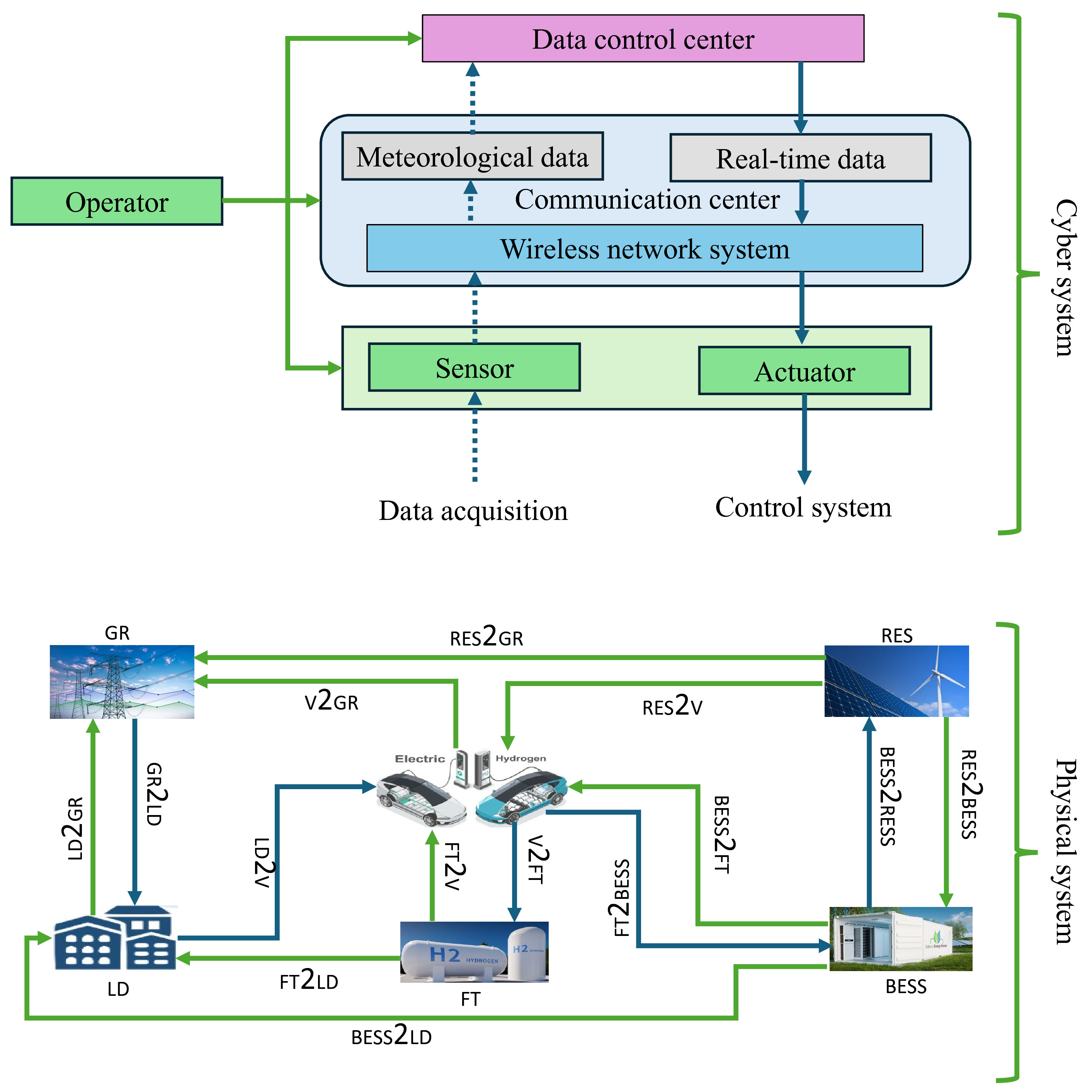
Figure 7 illustrates the integration of a cyber system and a physical system within a smart grid infrastructure. The cyber system consists of a data control center, communication center, sensors, actuators, wireless network systems that gather real-time data, including meteorological information, to monitor and control the physical grid. Operators interact with the system to make decisions and optimize grid operations. The physical system comprises GR, RES, BESS, LD, and electric and hydrogen vehicles, all interconnected for efficient energy flow and management. The cyber system monitors and manages energy flows between the physical components, ensuring real-time control, grid stability, and effective integration of renewable energy, storage systems, and V2G capabilities.
7. Emerging Technologies for Grid Optimization
Emerging technologies are crucial for optimizing grid performance as power networks grow through integrating RES and DG systems. These technologies facilitate the management of the intricacies of modern energy systems, enhance grid resilience, and optimize resource utilization. AI, ML, blockchain, and advanced data analytics are progressively utilized to optimize energy distribution, improve grid security, and enable the integration of decentralized energy systems. This section examines the function of these advanced technologies in enhancing grid performance and security [11,102,103,104,105].
7.1. The Role of AI in Grid Security
AI has become an effective instrument for addressing the intricacies of modern power grids, especially in improving grid security and operational efficacy. The growing digitization of grid infrastructure enables AI to surpass traditional grid management techniques through real-time analysis, predictive maintenance, and automated danger identification.
- Predictive Maintenance and Fault Detection: AI algorithms may evaluate extensive data from sensors integrated into SGs to identify anomalies that may signify probable equipment failure or operational inefficiency. AI-driven predictive maintenance anticipates faults prior to their occurrence, hence minimizing downtime and maintenance expenses while enhancing overall grid reliability. AI models can be trained to identify patterns that precede equipment failures, enabling utilities to implement preventive measures to avert expensive interruptions [81,106,107].
- Automated Threat Detection: As cyberattacks on energy systems grow increasingly complex, AI is essential in cybersecurity for real-time identification and response to threats. AI algorithms can identify anomalous activity patterns that may indicate a cyber intrusion, like abrupt increases in the data flow, unauthorized access attempts, or atypical behaviour from grid-connected devices. By analyzing historical instances, AI systems might enhance their threat detection capacities over time, allowing grid operators to react more promptly to emergent cyber threats [108].
- Grid Load Forecasting and Energy Demand Management: AI enhances load forecasting and regulates energy demand. AI algorithms can evaluate previous grid data and meteorological circumstances to forecast future energy consumption patterns with improved precision. These projections enable grid managers to enhance energy distribution, distribute resources more efficiently, and minimize energy waste. In renewable energy systems, AI can predict solar and wind generation patterns, enabling grid operators to control the fluctuation of RES effectively [109,110].
7.2. Blockchain for Securing Distributed Energy Transactions
The demand for secure and transparent energy transactions has increased with the rising prevalence of DG systems and peer-to-peer (P2P) energy trading. Blockchain technology provides a decentralized and immutable ledger system that guarantees the integrity of energy transactions, rendering it an optimal choice for safeguarding distributed energy networks. Blockchain enhances the security and transparency of energy markets by establishing an immutable record of energy generation, distribution, and consumption, especially in systems where prosumers and DERs are key contributors.
- Decentralized Energy Markets: In decentralized energy markets, prosumers—individuals or entities that simultaneously produce and consume energy—can engage in direct transactions of electricity with one another using blockchain-enabled platforms. These platforms obviate the necessity for centralized intermediaries, such as utility corporations, by facilitating P2P energy transactions recorded on a blockchain. Every transaction is authenticated using a consensus method, guaranteeing that all participants can access a safe, transparent, and immutable record [111]. This decentralized method enhances energy trading efficiency, diminishes transaction expenses, and encourages increased involvement in renewable energy generation.
- Ensuring the Security of Distributed Energy Systems: Blockchain is crucial in safeguarding distributed energy systems by offering a robust and immutable framework for documenting energy transactions and regulating access to grid resources. In a blockchain-enabled grid, each transaction between DERs and the grid is cryptographically secured, thereby diminishing the possibility of fraud or tampering. Moreover, smart contracts self-executing agreements with stipulations encoded directly into software—can facilitate the automation of energy trading procedures and guarantee that specified criteria are satisfied before exchanging energy [112].
- Improving Grid Transparency and Efficiency: Blockchain technology ensures exceptional transparency in energy systems by documenting all transactions in a public or restricted-access ledger available to authorized entities. This transparency enhances confidence among market participants and enables regulators to oversee energy markets more efficiently. Moreover, blockchain might enhance grid efficiency by facilitating automated DR systems, allowing energy consumption to be modified according to real-time pricing signals. This adaptability is particularly advantageous in reconciling supply and demand in grids with significant renewable energy integration [113].
7.3. Leveraging Advanced Data Analytics for Grid Management
The extensive data produced by SGs, IoT devices, and DERs offers valuable insights that can be utilized to enhance grid operations. Advanced data analytics tools enable grid operators to utilize this data for superior decision-making, optimized resource allocation, and enhanced grid performance. Advanced analytics provide profound insights into energy consumption patterns, asset performance, and grid health by processing real-time data from sensors, smart meters, and other grid components.
- Real-time Grid Surveillance and Visualization: Sophisticated data analytics provide real-time observation of grid conditions, offering grid operators actionable knowledge regarding the energy system's state. Analytics platforms can pinpoint grid regions experiencing congestion, voltage imbalances, or equipment breakdowns by displaying data from several sensors. This real-time insight facilitates expedited responses to operational challenges, minimizing downtime and enhancing overall grid resilience [40].
- Enhancing DER Management: The increasing prevalence of DG and RES presents a significant challenge for grid operators in managing the variability of these resources. Advanced data analytics offer instruments for optimizing the allocation of DERs, guaranteeing that energy is distributed precisely when and where it is most required. Analytics solutions can predict solar or wind generation utilizing weather data and historical trends, enabling operators to prepare more effectively for variations in energy supply and demand [114].
- Predictive Analytics in Asset Management: Predictive analytics employs AI models and statistical methods to forecast the potential failure of grid assets, including transformers and energy storage devices. Through the analysis of historical performance data, predictive models can anticipate the condition of grid infrastructure, facilitating condition-based maintenance and diminishing the probability of unforeseen failures. This proactive asset management strategy prolongs the lifespan of essential grid components and decreases maintenance expenses [115].
- Energy Efficiency and DSM: Advanced data analytics are essential for enhancing energy efficiency by pinpointing opportunities for DSM. By analyzing consumption data from smart meters, utilities can identify opportunities for enhancing energy efficiency, such as optimizing heating, ventilation, and air conditioning (HVAC) systems in commercial structures or encouraging consumers to alter their energy usage to off-peak periods. These insights facilitate a reduction in overall energy usage, decrease costs for users, and alleviate the strain on the grid during peak demand periods [116].
9. Case Studies: Global Perspectives on Integration
The effective integration of SGs and DG systems into current energy infrastructures differs markedly throughout areas, influenced by distinct policy frameworks, technological progress, and cybersecurity issues. This section examines international case studies that illustrate how other countries and regions have implemented these technologies, encompassing their triumphs, problems, and insights gained. It also analyzes how regional disparities in cybersecurity strategies influence safeguarding essential energy infrastructure [11,117].
9.1. Successful Implementation of SGs and DG Systems Worldwide
The necessity to improve energy efficiency, integrate RES, and enhance grid resilience has motivated numerous countries worldwide to make substantial progress in implementing SGs and DG systems.
- United States: The U.S. has led in SG advancement, notably through the SG Investment Grant (SGIG) program, which allocated $4.5 billion for grid modernization. Incorporating AMI and DG systems, particularly solar energy, has resulted in substantial enhancements in grid efficiency and the integration of renewable energy. The Pacific Gas and Electric Company (PG&E) exemplifies the implementation of SG technologies to monitor grid performance in real-time, enhance outage management, and facilitate the integration of solar energy. The efficacy of PG&E's SG and DG integration initiatives illustrates the merit of governmental investment in grid modernization and underscores the significance of utilizing public-private partnerships [118,119,120].
- Germany is a global leader in DG, notably with its Energiewende plan, which seeks to attain 80% renewable energy by 2050. The nation has effectively incorporated substantial quantities of solar and wind energy into its system through the implementation of decentralized energy models and the improvement of grid flexibility. The Smart Region Pellworm project is significant, as it is an island characterized by a substantial integration of solar and wind energy. Incorporating energy storage and SG technology has allowed the island to equilibrate supply and demand in real-time, diminishing its dependence on fossil fuels and exemplifying renewable energy integration [100]. Germany's strategy for SG implementation highlights the significance of adaptable ESS technologies to facilitate elevated renewable generation levels [121,122].
- Japan: Following the Fukushima Daiichi nuclear disaster in 2011, Japan altered its energy policy to prioritize renewable energy and SGs. The nation has executed MG initiatives, including the Sendai MG, which employs DG and energy storage devices to improve resilience against natural catastrophes. This project was developed to sustain power for essential facilities during grid failures, demonstrating the capabilities of SGs and DG systems in disaster recovery. Japan's experience underscores the significance of MGs in enhancing energy security and reliability, especially in areas susceptible to natural disasters [123,124].
- Denmark: Denmark is a leader in implementing SG and DG systems, especially in integrating wind energy. As of 2021, more than 50% of Denmark's electricity is derived from wind power, and the nation has implemented sophisticated SG systems to regulate this fluctuating energy source. The Cell Controller Pilot Project is a pivotal endeavour in Denmark, designed to incorporate wind energy and CHP plants into the grid using advanced control mechanisms. This study has illustrated how distributed control systems may equilibrate fluctuating energy supply and demand, facilitating the efficient utilization of renewable energy while preserving grid stability [125,126].
9.2. Regional Variations in Cybersecurity Approaches for Energy Systems
With the growing digitization of energy systems, cybersecurity has become a vital issue for grid operators globally. Nonetheless, methods for safeguarding energy systems varied by region, indicating variations in legal frameworks, technology capabilities, and the perceived danger environment.
- Europe: European nations, especially those inside the European Union (EU), have implemented extensive cybersecurity rules for vital infrastructure, including energy systems. Ref. [103] establishes fundamental security criteria for critical service operators, such as energy firms, and enforces incident reporting and risk management protocols. Countries like Germany have implemented further measures to enhance the security of their SGs by mandating utilities to adopt advanced encryption technologies and perform regular security assessments. The Federal Office for Information Security, Germany's national cybersecurity organization, is essential in establishing cybersecurity standards for energy systems, exemplifying the nation's proactive strategy in safeguarding critical infrastructure [127,128].
- United States: The United States' strategy for energy cybersecurity is influenced by a blend of federal and state policies. The North American Electric Reliability Corporation (NERC) establishes cybersecurity guidelines for the electricity sector, notably the Critical Infrastructure Protection (CIP) standards, which delineate rules for safeguarding bulk power networks against intrusions. The U.S. prioritizes public-private partnerships via initiatives such as the Electricity Subsector Coordinating Council (ESCC), which promotes information exchange between governmental entities and utility firms [129,130]. The decentralized structure of the U.S. energy sector, comprising multiple commercial utilities and regulatory bodies, can hinder the establishment of common cybersecurity requirements.
- Asia-Pacific: In Asia-Pacific, nations such as Japan and South Korea have concentrated on establishing comprehensive cybersecurity frameworks to safeguard their SGs and DG systems. Japan has implemented rigorous cybersecurity protocols for energy infrastructure after the Fukushima accident. The Cybersecurity Strategy Headquarters in Japan supervises safeguarding vital infrastructure, including energy systems, by collaborating with industry stakeholders and advocating for using AI in threat detection. Simultaneously, South Korea has invested substantially in SG security by initiating the K-SG Cybersecurity Program to protect its advanced energy systems from possible cyber assaults [131,132].
- The Middle East: The Middle East is progressively investing in SG technologies; nevertheless, cybersecurity measures are inconsistent. Countries such as the United Arab Emirates (UAE) and Saudi Arabia have advanced in establishing cybersecurity guidelines for their energy sectors. The UAE's Cybersecurity Strategy seeks to bolster key infrastructure security, particularly energy systems, through capacity building, incident response, and public-private collaboration. Nonetheless, the region encounters distinct problems, including geopolitical tensions that elevate the probability of assaults on energy infrastructure [133,134].
9.3 Lessons from Leading SG and Distributed Energy Projects
The effective execution of SGs and distributed energy initiatives globally provides significant insights for other areas aiming to upgrade their energy infrastructures.
- Significance of Public-commercial Partnerships: The efficacy of SG and DG initiatives frequently depends on the cooperation between governmental bodies and commercial organizations. Public financing and regulatory assistance have been crucial in promoting SG technologies in the United States and Germany. These collaborations mitigate financial and technological obstacles linked to extensive grid upgrading initiatives.
- Integration of Energy Storage: Significant incorporation of renewable energy necessitates efficient ESSs to address unpredictability and ensure grid stability. Case studies from Denmark and Japan illustrate the essential function of storage in facilitating the retention and utilization of surplus renewable energy when required. This lesson emphasizes the significance of integrating energy storage into SG systems to enhance reliability and resilience.
- Cybersecurity by Design: Given the continual evolution of cyber threats, it is evident that cybersecurity must be incorporated into the design of SGs from the beginning. Regions such as Europe and Japan, where cybersecurity is regarded as a fundamental component of energy infrastructure, offer examples of how other nations may emphasize security. These instances underscore the necessity of formulating cybersecurity guidelines in conjunction with SG technology.
- Flexibility in Grid Operations: Flexibility is essential for controlling the dynamic characteristics of DG systems. Initiatives such as Denmark’s Cell Controller Pilot Project demonstrate that decentralized control systems can enhance grid stability via real-time balancing of variable RES. This lesson is especially pertinent for areas with elevated wind and solar energy, where adaptable grid management is crucial for integrating renewables.
10. Challenges and Opportunities in Future Energy Systems
The continuous evolution of the global energy environment poses considerable problems and promising prospects as nations incorporate DG, EVs, and additional RES into the grid. The transition to decentralized, sustainable energy systems necessitate updated infrastructure, conducive legislative frameworks, and technical advancements. Primary issues encompass mitigating grid congestion, surmounting legislative obstacles, and guaranteeing interoperability among diverse energy technologies. This section examines these difficulties while suggesting the potential to optimize energy systems and improve sustainability [11,135].
10.1. Overcoming Grid Congestion and Bottlenecks
With the rise of RES and DG, grid congestion and bottlenecks have become prominent problems. Grid congestion arises from an imbalance between power supply and demand, resulting in congested transmission lines and subsequent inefficiencies. This problem is widespread in regions with a significant concentration of renewable energy output, such as solar and wind farms, where electricity production may surpass the grid's capacity for effective distribution.
- Limitations of Transmission Infrastructure: The inadequate capacity of the current transmission infrastructure is a significant cause of grid congestion. Renewable energy generation frequently occurs in isolated locations (e.g., offshore wind farms or extensive solar installations in rural areas), necessitating the transmission infrastructure to transport electricity across considerable distances to urban centers, where demand is greatest. Insufficient transmission infrastructure can generate bottlenecks, obstructing renewable energy from reaching consumers and resulting in curtailment (i.e., the reduction of renewable energy production to prevent system overload) [136].
- Energy Storage as a Solution: A significant opportunity to mitigate grid congestion is implementing ESS technology. By accumulating surplus electricity during periods of elevated generation, such as during sunny or windy conditions, storage devices can mitigate the strain on transmission networks and discharge the stored energy when demand escalates. BESS, pumped hydro storage (PHS) and hydrogen storage (HS) are essential for mitigating supply-demand discrepancies and alleviating grid congestion [137]. Utilizing DR algorithms enables grid operators to modify consumption patterns during peak generation periods, alleviating congestion.
- Enhancing Transmission Networks: In addition to storage alternatives, enhancing transmission networks with SG technology can markedly alleviate congestion. SGs provide real-time surveillance of energy flows, employing sophisticated sensors and automated control systems to regulate electricity distribution dynamically. These technologies enhance grid performance by allocating electricity to areas of greatest need and managing supply and demand changes more efficiently [138].
10.2. Navigating Regulatory Barriers in the Integration of DG and EVs
The substantial implementation of DG systems and EVs provides significant advantages for sustainability and grid adaptability. However, regulatory frameworks established for conventional, centralized energy systems can create substantial obstacles to incorporating new technologies. Addressing these regulatory obstacles necessitates a holistic strategy addressing concerns regarding interconnection requirements, market involvement, and incentive frameworks.
- Interconnection Standards: A key regulatory problem in integrating DG systems is clear and consistent interconnection requirements. These standards regulate the connection of DERs to the grid. Inconsistent or excessively intricate connectivity requirements might impede project development and deter investment in DG systems. Optimizing interconnection procedures and establishing standardized protocols can markedly diminish entrance barriers for prosumers and small-scale renewable energy producers [107].
- Incentives for DG: Regulatory frameworks must adapt to offer suitable incentives for implementing DG systems. In numerous areas, obsolete electricity tariffs and net metering rules must sufficiently remunerate prosumers for the energy they produce, resulting in financial disincentives for adopting renewable technologies. Policymakers can resolve this issue by revising tariffs to represent the value that DG systems accurately contribute to the grid, including reducing transmission losses and improving grid resilience. Feed-in tariffs (FiTs) and renewable energy certificates (RECs) offer financial incentives to energy companies that supply renewable electricity to the grid [139].
- EV Integration: The swift expansion of EVs presents supplementary regulatory problems, especially concerning charging infrastructure and V2G technology. In some areas, laws governing the installation of charging stations, particularly public charging networks, are inconsistent or insufficient, hindering the extensive adoption of EVs. Governments can enhance EV integration by providing subsidies for charging infrastructure development, establishing standardized charging protocols, and promoting grid-interactive charging technologies such as V2G, which allow EVs to function as energy storage assets for the grid [130].
- Market Access for Prosumers: Regulatory frameworks must facilitate increased prosumer participation in energy markets. Prosumers—entities that produce electricity—encounter obstacles in selling surplus energy to the grid because of restrictive market frameworks. P2P energy trading platforms, facilitated by technology such as blockchain, provide a novel solution to this issue by allowing prosumers to transact electricity directly with other customers, circumventing conventional utilities. Nonetheless, these platforms necessitate conducive legislative frameworks facilitating decentralized energy trade [140].
10.3. Enhancing Interoperability Between Different Energy Systems
With the diversification of the energy landscape by incorporating DG, EVs, ESSs, and RES, establishing interoperability among various systems is essential for sustaining grid stability and efficiency. Interoperability denotes the capacity of diverse energy systems, technologies, and market actors to communicate and collaborate effortlessly. This is especially significant when energy systems become increasingly decentralized, with various stakeholders—including utilities, grid operators, prosumers, and EV owners—engaging in energy generation and consumption.
- Standardization of Communication Protocols: A primary obstacle in achieving interoperability is the absence of established communication protocols for SG components and DERs. Devices like smart meters, solar inverters, EV chargers, and ESSs sometimes employ disparate communication standards, complicating the ability of grid operators to monitor and manage these resources cohesively. Establishing and implementing international communication standards, such as Open Automated Demand Response (OpenADR) and IEC 61850, can enhance interoperability among energy systems and guarantee the successful operation of devices from various manufacturers [141].
- Data Management and Cybersecurity: The escalating digitization of energy systems has resulted in a significant surge in the volume of data produced by SGs, IoT devices, and DERs. Effectively managing this data while ensuring cybersecurity is a significant problem for improving interoperability. Advanced data analytics tools assist grid operators in processing and analyzing data in real-time, facilitating more efficient grid management and decision-making. The development of linked devices expands the attack surface for cyber threats, requiring stringent cybersecurity measures to safeguard data integrity and grid operations [142,143].
- Integrated EMS: Integrated EMSs are crucial for coordinating the operation of various energy resources to address the complexity of modern energy systems. EMSs utilize real-time data to enhance energy generation, storage, and consumption across many assets, including PV panels, WTs, EVs, and BESSs. By consolidating these resources into a unified platform, grid operators may more effectively balance supply and demand, augment grid resilience, and decrease energy expenses. EMS platforms facilitate dynamic engagement in energy markets, permitting distributed resources to react instantaneously to price signals or grid conditions [134].
- Grid Flexibility and Resource Coordination: Incorporating renewable energy, DG, and EVs into the grid necessitates improved flexibility to manage variable energy production and changing demand. The interoperability of these systems facilitates enhanced resource coordination, permitting grid managers to react to fluctuations in supply and demand instantaneously. During elevated renewable energy generation moments, grid operators can direct EVs to charge or employ distributed storage to capture surplus electricity. During periods of peak demand, EVs with V2G technology can release stored energy back into the grid, serving as a crucial resource for grid stability [144].
11. Future Directions for Securing and Optimizing Energy Systems
The energy sector is transforming significantly as DG, electric mobility, and RES reshape traditional grid dynamics. However, these advances also introduce new complexities and vulnerabilities. SGs, cybersecurity, DERs, and EVs are expected to play increasingly prominent roles in future energy systems, offering new opportunities for optimization and security. This section outlines the future directions for innovation in SGs, cybersecurity, and distributed energy while presenting a roadmap for building resilient and secure energy infrastructures.
11.1. Predicting the Next Wave of Innovation in SGs and Cybersecurity
As SGs continue to evolve, the next wave of innovation will likely focus on enhanced automation, AI, and cybersecurity. These advances will not only optimize grid performance but also address the growing cyber threats posed by the increasing digitization of energy systems.
- AI-Driven Automation and Autonomous Grids: The future of SGs will be shaped by the deployment of AI-driven automation, enabling the grid to operate autonomously with minimal human intervention. Autonomous grids can automatically adjust to fluctuations in supply and demand, manage DG systems, and respond to grid emergencies in real-time. AI algorithms will play a key role in predictive maintenance, identifying potential failures before they occur, and enhancing overall grid reliability. Furthermore, self-recovering grids, equipped with advanced sensors and AI, will be able to isolate faults and restore power without human intervention, reducing the duration of outages and improving resilience.
- Enhanced Cybersecurity with Quantum Computing: As cyberattacks become more sophisticated, future cybersecurity innovations will likely involve using quantum computing and quantum cryptography to protect critical infrastructure. Quantum cryptography offers the potential to create unbreakable encryption, which could safeguard energy systems from cyber intrusions. This technology will be crucial as energy grids become more interconnected and reliant on digital communication. Post-quantum cryptography solutions will also be needed to defend against the emerging threats of quantum computing, ensuring that grid communications remain secure even as computational power increases exponentially.
- Blockchain and Decentralized Security Protocols: Blockchain technology is poised to play a significant role in future energy systems, particularly in enhancing the security of distributed energy transactions. Blockchain provides a tamper-proof ledger that can be used to securely track energy generation, distribution, and consumption across decentralized energy systems. Future innovations will likely involve the integration of blockchain with smart contracts, which will automate energy transactions and ensure that energy flows are secure and transparent. This will be particularly important for managing P2P energy trading, where prosumers (both producers and consumers of energy) exchange electricity directly.
11.2. Preparing for the Expansion of Distributed Generation and Electric Mobility
The growth of DG and electric mobility presents both opportunities and challenges for future energy systems. To fully realize the potential of these technologies, it is crucial to address grid flexibility, infrastructure development, and regulatory barriers.
- Scalable Distributed Generation Systems: The expansion of DG systems, including rooftop PVs, WTs, and small-scale hydropower, will require scalable solutions that can be seamlessly integrated into both urban and rural grids. Future developments will likely focus on optimizing the dispatchability of DG resources by integrating them with ESS technologies, enabling real-time grid balancing. Moreover, modular MGs will emerge as a key solution, providing localized energy generation and storage capabilities that can operate independently or in conjunction with the larger grid. These MGs will be essential in areas prone to natural disasters, offering reliable power in times of crisis.
- EV Infrastructure and V2G Expansion: As the adoption of EVs accelerates, future energy systems will need to accommodate the growing demand for EV charging infrastructure. The widespread deployment of smart charging stations will allow for the optimized charging of EVs based on grid conditions, minimizing strain during peak demand periods. Additionally, V2G technology will become more prevalent, enabling EVs to discharge electricity back into the grid when needed. This will turn EVs into mobile energy storage units, capable of supporting grid stability during periods of high demand or low renewable energy generation. Governments and utilities will need to develop policies and standards that encourage the deployment of V2G systems while ensuring grid reliability [43].
- Hybrid Renewable-Energy-and-EV Systems: As distributed renewable energy systems and electric mobility become more interconnected, hybrid energy systems will emerge as a key component of future energy infrastructure. These systems combine renewable energy generation, energy storage, and EVs to create fully integrated solutions to balance supply and demand in real-time. For example, PV panels can power EV charging stations, while surplus energy can be stored in batteries for later use. This integrated approach will maximize the use of renewable energy, reduce reliance on fossil fuels, and enhance the overall resilience of energy systems.
11.3. A Roadmap for Building Resilient and Secure Energy Infrastructures
As the energy landscape continues to evolve, building resilient and secure energy infrastructures will require a coordinated approach that integrates technology, policy, and industry collaboration. The following roadmap outlines key strategies for achieving these goals.
- Investment in SG Technologies and Infrastructure: A resilient energy infrastructure starts with modernizing the grid by deploying SG technologies. Governments and utilities must invest in upgrading transmission and distribution networks to handle the increased complexity of integrating DG, renewable energy, and electric mobility. This includes deploying real-time monitoring systems, automated control mechanisms, and advanced communication networks to optimize energy flows and prevent bottlenecks. Ensuring these scalable and flexible systems will be critical as energy demands grow and diversify.
- Regulatory Frameworks and Policy Support: Effective regulatory frameworks will be crucial for supporting the growth of DG, EVs, and SG technologies. Governments must establish clear interconnection standards that facilitate the integration of DERs into the grid. Additionally, policies that promote renewable energy adoption, such as feed-in tariffs and renewable portfolio standards, will provide financial incentives for investment in clean energy. Cybersecurity regulations must also evolve to address the growing threat of cyberattacks on energy infrastructure, ensuring that grid operators comply with the latest security standards and best practices.
- Resilience through Decentralization and Redundancy: One of the key strategies for enhancing grid resilience is decentralization. DG systems, MGs, and ESS solutions provide a more resilient energy system by reducing dependence on large, centralized power plants. In a natural disaster or cyberattack, decentralized systems can operate independently, ensuring that critical facilities such as hospitals, emergency services, and data centres remain powered. Redundancy, including the deployment of backup power systems and diversified energy sources, will further enhance resilience by ensuring that the failure of one component does not lead to a widespread outage.
- Collaborative Cybersecurity Initiatives: Given the increasing complexity of energy systems, collaboration between industry stakeholders, government agencies, and international organizations will be essential for addressing cybersecurity challenges. Initiatives such as the Electricity Information Sharing and Analysis Center in the United States and the European Union Agency for Cybersecurity in Europe provide platforms for sharing information about emerging threats, vulnerabilities, and best practices. Strengthening these collaborations will improve the ability to detect and mitigate cyberattacks on energy infrastructure, reducing the risk of widespread disruptions.
- Public-Private Partnerships and Innovation Hubs: Public-private partnerships will play a vital role in fostering innovation and driving the deployment of new energy technologies. Governments should establish innovation hubs that bring together academic institutions, technology companies, and energy providers to develop next-generation solutions for grid optimization, cybersecurity, and renewable energy integration. These hubs will accelerate the commercialization of emerging technologies such as solid-state batteries, FCs, and AI-driven grid management systems, ensuring that the energy sector remains at the forefront of technological innovation.
12. Conclusion
Integrating SGs, DG, EVs, and cybersecurity radically transforms the global energy landscape. These interrelated technologies promise to develop energy systems that are more efficient, resilient, and sustainable. SGs improve the flexibility and dependability of energy distribution by utilizing real-time data, advanced communication networks, and decentralized energy resources. At the same time, DG diminishes reliance on centralized power plants and facilitates the incorporation of renewable energy. EVs, capable of functioning as mobile energy storage units using V2G technology, enhance these systems by delivering both transportation and grid functions. As energy systems become increasingly digitized and decentralized, comprehensive cybersecurity solutions are necessary to safeguard vital infrastructure from escalating cyber-attacks.
12.1. Summary of the Synergies Between Smart Grids, DG, EVs, and Cybersecurity
The synergies of SGs, DG, and EVs reside in their capacity to create a more decentralized, flexible, and responsive energy system. SGs enable the real-time management of energy flows, effectively integrating DERs. Simultaneously, DG technologies enhance a more localized, greener, and robust energy supply. When integrated with V2G technology, EVs provide more flexibility by functioning as DERs, capable of charging during periods of low demand and releasing stored energy back to the grid when required. This synergy promotes energy efficiency and facilitates the transition to a low-carbon economy by augmenting the integration of renewable energy. Cybersecurity is the essential component that integrates various technologies, safeguarding data transfers, grid operations, and distributed assets from progressively advanced cyberattacks. Inadequate cybersecurity safeguards may compromise the advantages that interconnected energy systems are designed to provide due to their inherent vulnerabilities.
12.2. The Role of Advanced Technologies in Future-Proofing Energy Systems
The future of energy systems will depend significantly on modern technologies such as AI, blockchain, and quantum computing. AI will be crucial in enhancing grid operations via predictive maintenance, load forecasting, and autonomous grid management. These technologies will facilitate better-informed decision-making and expedited reactions to disturbances, aiding in the preservation of grid stability despite the increasing variability of the energy mix due to the expansion of renewable sources. Blockchain will facilitate secure and transparent energy transactions in decentralized energy markets, creating a trustless environment for P2P energy trading and ensuring data flow integrity across DERs. Quantum computing is anticipated to transform cybersecurity by facilitating the creation of unbreakable encryption to protect essential energy infrastructure from the escalating risk of cyberattacks. These technologies are crucial for safeguarding energy systems against the difficulties of escalating complexity, cyber threats, and the fluctuating dynamics of energy supply and demand.
12.3. Final Thoughts on a Secure, Sustainable, and Optimized Energy Future
As the world moves toward a more sustainable energy future, integrating SGs, DG, and EVs will be central to transforming energy systems. These innovations provide the foundation for cleaner, more efficient, and resilient grids that adapt to changing climate demands and evolving energy needs. At the same time, the role of cybersecurity cannot be overstated—securing energy infrastructures will be a top priority as cyber threats become more prevalent and sophisticated. Governments, utilities, and technology providers must work together to create resilient, secure, and interoperable energy systems that can withstand both physical and digital disruptions. By embracing advanced technologies, fostering collaborative partnerships, and adopting forward-looking policies, we can build an energy future that is not only sustainable but also secure and optimized for generations to come.
Author Contributions
Conceptualization, M.C.; methodology, M.C.; investigation, M.C.; resources, M.C.; writing—original draft preparation, M.C.; writing—review and editing, M.C.; visualization, M.C. The author has read and agreed to the published version of the manuscript.
Funding
This research received no external funding.
Conflicts of Interest
The author declares no conflicts of interest.
Abbreviations
GHG – Greenhouse gas
RES – Renewable energy sources
SG – Smart grids
DG – Distributed generation
EV – Electric vehicle
AI – Artificial intelligence
ML – Machine learning
V2G - Vehicle-to-grid
PV – Photovoltaic
WT - Wind turbine
MG – Microgrid
ESS – Energy storage system
FC – Fuel cell
ADMS - Advanced distribution management systems
DR – Demand response
BESS – Battery energy storage system
DERMS - Distributed energy resource management systems
DER - Distributed energy resource
DSM - Demand-side management
EMS – Energy management system
AMI - Advanced metering infrastructure
IoT – Internet of things
OT - Operational technology
DoS – Denial-of-service
PKI - Public key infrastructure
MFA - Multifactor authentication
ZTA - Zero Trust Architecture
IEC - International Electrotechnical Commission
NIST - National Institute of Standards and Technology
P2P – Peer-to-peer
HVAC - Heating, ventilation, and air conditioning
PG&E - Pacific Gas and Electric Company
SGIG - Smart Grid Investment Grant
EU - European Union
CHP – Combined heat power
NERC - North American Electric Reliability Corporation
CIP - Critical Infrastructure Protection
ESCC - Electricity Subsector Coordinating Council
UAE - United Arab Emirates
PHS - Pumped hydro storage
HS - Hydrogen storage
FiT - Feed-in tariff
REC - Renewable energy certificate
OpenADR - Open Automated Demand Response
IEC – International Electrotechnical Commission
References
- Allahham, A.; Greenwood, D.; Patsios, C. INCORPORATING AGEING PARAMETERS INTO OPTIMAL ENERGY MANAGEMENT OF DISTRIBUTION CONNECTED ENERGY STORAGE. In Proceedings of the 25th International Conference on Electricity Distribution; Madrid; 2019. [Google Scholar]
- Hosseini, S.H.R.; Allahham, A.; Adams, C. Techno-economic-environmental Analysis of a Smart Multi-energy Grid Utilising Geothermal Energy Storage for Meeting Heat Demand. IET Smart Grid 2021, 4, 224–240. [Google Scholar] [CrossRef]
- Vahidinasab, V.; Nikkhah, S.; Allahham, A.; Giaouris, D. Boosting Integration Capacity of Electric Vehicles: A Robust Security Constrained Decision Making. International Journal of Electrical Power & Energy Systems 2021, 133, 107229. [Google Scholar] [CrossRef]
- Pazhoohesh, M.; Allahham, A.; Das, R.; Walker, S. Investigating the Impact of Missing Data Imputation Techniques on Battery Energy Management System. IET Smart Grid 2021, 4, 162–175. [Google Scholar] [CrossRef]
- Allahham, A.; Greenwood, D.; Patsios, C.; Taylor, P. Adaptive Receding Horizon Control for Battery Energy Storage Management with Age-and-Operation-Dependent Efficiency and Degradation. Electric Power Systems Research 2022, 209, 107936. [Google Scholar] [CrossRef]
- Nikkhah, S.; Alahyari, A.; Allahham, A.; Alawasa, K. Optimal Integration of Hybrid Energy Systems: A Security-Constrained Network Topology Reconfiguration. Energies (Basel) 2023, 16, 2780. [Google Scholar] [CrossRef]
- Chiaramonti, D.; Maniatis, K. Security of Supply, Strategic Storage and Covid19: Which Lessons Learnt for Renewable and Recycled Carbon Fuels, and Their Future Role in Decarbonizing Transport? Appl Energy 2020, 271, 115216. [Google Scholar] [CrossRef] [PubMed]
- Rajini, K. Integrating Renewable Energy into Existing Power Systems: Challenges and Opportunities. ournal of Advanced Research in Management Architecture Technology & Engineering (IJARMATE) 2018. [Google Scholar]
- Allahham, A.; Greenwood, D.; Patsios, C.; Taylor, P. Adaptive Receding Horizon Control for Battery Energy Storage Management with Age-and-Operation-Dependent Efficiency and Degradation. Electric Power Systems Research 2022, 209, 107936. [Google Scholar] [CrossRef]
- Yi, J.; Pages, C.; Allahham, A.; Giaouris, D.; Patsios, C. Modelling and Simulation of a Smartgrid Architecture for a Real Distribution Network in the UK. The Journal of Engineering 2019, 2019, 5415–5418. [Google Scholar] [CrossRef]
- Khalid, M. Smart Grids and Renewable Energy Systems: Perspectives and Grid Integration Challenges. Energy Strategy Reviews 2024, 51, 101299. [Google Scholar] [CrossRef]
- Seward, W.; Chi, L.; Qadrdan, M.; Allahham, A.; Alawasa, K. Sizing, Economic, and Reliability Analysis of Photovoltaics and Energy Storage for an Off-grid Power System in Jordan. IET Energy Systems Integration 2023, 5, 393–404. [Google Scholar] [CrossRef]
- Nikkhah, S.; Alahyari, A.; Rabiee, A.; Allahham, A.; Giaouris, D. Multi-Port Coordination: Unlocking Flexibility and Hydrogen Opportunities in Green Energy Networks. International Journal of Electrical Power & Energy Systems 2024, 158, 109937. [Google Scholar] [CrossRef]
- Javaid, C.J.; Allahham, A.; Giaouris, D.; Blake, S.; Taylor, P. Modelling of a Virtual Power Plant Using Hybrid Automata. The Journal of Engineering 2019, 2019, 3918–3922. [Google Scholar] [CrossRef]
- Nikkhah, S.; Allahham, A.; Giaouris, D.; Bialek, J.W.; Walker, S. Application of Robust Receding Horizon Controller for Real-Time Energy Management of Reconfigurable Islanded Microgrids. In Proceedings of the 2021 IEEE Madrid PowerTech; IEEE, June 28 2021; pp. 1–6.
- Salkuti, S.R. Challenges, Issues and Opportunities for the Development of Smart Grid. International Journal of Electrical and Computer Engineering (IJECE) 2020, 10, 1179. [Google Scholar] [CrossRef]
- Nikkhah, S.; Allahham, A.; Royapoor, M.; Bialek, J.W.; Giaouris, D. Optimising Building-to-Building and Building-for-Grid Services Under Uncertainty: A Robust Rolling Horizon Approach. IEEE Trans Smart Grid 2022, 13, 1453–1467. [Google Scholar] [CrossRef]
- Allahham, A.; Greenwood, D.; Patsios, C.; Walker, S.L.; Taylor, P. Primary Frequency Response from Hydrogen-Based Bidirectional Vector Coupling Storage: Modelling and Demonstration Using Power-Hardware-in-the-Loop Simulation. Front Energy Res 2023, 11. [Google Scholar] [CrossRef]
- Dileep, G. A Survey on Smart Grid Technologies and Applications. Renew Energy 2020, 146, 2589–2625. [Google Scholar] [CrossRef]
- Arunachalam, K.; Pedinti, V.S.; Goel, S. Decentralized Distributed Generation in India: A Review. Journal of Renewable and Sustainable Energy 2016, 8. [Google Scholar] [CrossRef]
- Chicco, G.; Mancarella, P. Distributed Multi-Generation: A Comprehensive View. Renewable and Sustainable Energy Reviews 2009, 13, 535–551. [Google Scholar] [CrossRef]
- Razavi, S.-E.; Rahimi, E.; Javadi, M.S.; Nezhad, A.E.; Lotfi, M.; Shafie-khah, M.; Catalão, J.P.S. Impact of Distributed Generation on Protection and Voltage Regulation of Distribution Systems: A Review. Renewable and Sustainable Energy Reviews 2019, 105, 157–167. [Google Scholar] [CrossRef]
- Shayeghi, H.; Alilou, M. Distributed Generation and Microgrids. In Hybrid Renewable Energy Systems and Microgrids; Elsevier, 2021; pp. 73–102.
- Khawaja, Y.; Qiqieh, I.; Alzubi, J.; Alzubi, O.; Allahham, A.; Giaouris, D. Design of Cost-Based Sizing and Energy Management Framework for Standalone Microgrid Using Reinforcement Learning. Solar Energy 2023, 251, 249–260. [Google Scholar] [CrossRef]
- Khawaja, Y.; Qiqieh, I.; Alzubi, J.; Alzubi, O.; Allahham, A.; Giaouris, D. Design of Cost-Based Sizing and Energy Management Framework for Standalone Microgrid Using Reinforcement Learning. Solar Energy 2023, 251, 249–260. [Google Scholar] [CrossRef]
- Yap, K.Y.; Chin, H.H.; Klemeš, J.J. Blockchain Technology for Distributed Generation: A Review of Current Development, Challenges and Future Prospect. Renewable and Sustainable Energy Reviews 2023, 175, 113170. [Google Scholar] [CrossRef]
- Jafarizadeh, H.; Yamini, E.; Zolfaghari, S.M.; Esmaeilion, F.; Assad, M.E.H.; Soltani, M. Navigating Challenges in Large-Scale Renewable Energy Storage: Barriers, Solutions, and Innovations. Energy Reports 2024, 12, 2179–2192. [Google Scholar] [CrossRef]
- Prakash, K.; Ali, M.; Siddique, M.N.I.; Chand, A.A.; Kumar, N.M.; Dong, D.; Pota, H.R. A Review of Battery Energy Storage Systems for Ancillary Services in Distribution Grids: Current Status, Challenges and Future Directions. Front Energy Res 2022, 10. [Google Scholar] [CrossRef]
- Oskouei, M.Z.; Şeker, A.A.; Tunçel, S.; Demirbaş, E.; Gözel, T.; Hocaoğlu, M.H.; Abapour, M.; Mohammadi-Ivatloo, B. A Critical Review on the Impacts of Energy Storage Systems and Demand-Side Management Strategies in the Economic Operation of Renewable-Based Distribution Network. Sustainability 2022, 14, 2110. [Google Scholar] [CrossRef]
- Johansson, P.; Vendel, M.; Nuur, C. Integrating Distributed Energy Resources in Electricity Distribution Systems: An Explorative Study of Challenges Facing DSOs in Sweden. Util Policy 2020, 67, 101117. [Google Scholar] [CrossRef]
- Khawaja, Y.; Allahham, A.; Giaouris, D.; Patsios, C.; Walker, S.; Qiqieh, I. An Integrated Framework for Sizing and Energy Management of Hybrid Energy Systems Using Finite Automata. Appl Energy 2019, 250, 257–272. [Google Scholar] [CrossRef]
- Lam, D.H.C.; Lim, Y.S.; Wong, J.; Allahham, A.; Patsios, C. A Novel Characteristic-Based Degradation Model of Li-Ion Batteries for Maximum Financial Benefits of Energy Storage System during Peak Demand Reductions. Appl Energy 2023, 343, 121206. [Google Scholar] [CrossRef]
- Nikkhah, S.; Rabiee, A.; Soroudi, A.; Allahham, A.; Taylor, P.C.; Giaouris, D. Distributed Flexibility to Maintain Security Margin through Decentralised TSO–DSO Coordination. International Journal of Electrical Power & Energy Systems 2023, 146, 108735. [Google Scholar] [CrossRef]
- Shadid, R.; Khawaja, Y.; Bani-Abdullah, A.; Akho-Zahieh, M.; Allahham, A. Investigation of Weather Conditions on the Output Power of Various Photovoltaic Systems. Renew Energy 2023, 217, 119202. [Google Scholar] [CrossRef]
- Royapoor, M.; Allahham, A.; Hosseini, S.H.R.; Rufa’I, N.A.; Walker, S.L. Towards 2050 Net Zero Carbon Infrastructure: A Critical Review of Key Decarbonization Challenges in the Domestic Heating Sector in the UK. Energy Sources, Part B: Economics, Planning, and Policy 2023, 18. [Google Scholar] [CrossRef]
- Nikkhah, S.; Allahham, A.; Bialek, J.W.; Walker, S.L.; Giaouris, D.; Papadopoulou, S. Active Participation of Buildings in the Energy Networks: Dynamic/Operational Models and Control Challenges. Energies (Basel) 2021, 14, 1–28. [Google Scholar] [CrossRef]
- Habibi, M.; Vahidinasab, V.; Sepasian, M.S.; Allahham, A.; Giaouris, D.; Taylor, P.; Aghaei, J. Stochastic Procurement of Fast Reserve Services in Renewable Integrated Power Systems. IEEE Access 2021, 9, 30946–30959. [Google Scholar] [CrossRef]
- Muhsen, H.; Allahham, A.; Al-Halhouli, A.; Al-Mahmodi, M.; Alkhraibat, A.; Hamdan, M. Business Model of Peer-to-Peer Energy Trading: A Review of Literature. Sustainability 2022, 14, 1616. [Google Scholar] [CrossRef]
- Nikkhah, S.; Sarantakos, I.; Zografou-Barredo, N.-M.; Rabiee, A.; Allahham, A.; Giaouris, D. A Joint Risk- and Security-Constrained Control Framework for Real-Time Energy Scheduling of Islanded Microgrids. IEEE Trans Smart Grid 2022, 13, 3354–3368. [Google Scholar] [CrossRef]
- Panda, S.; Mohanty, S.; Rout, P.K.; Sahu, B.K.; Parida, S.M.; Kotb, H.; Flah, A.; Tostado-Véliz, M.; Abdul Samad, B.; Shouran, M. An Insight into the Integration of Distributed Energy Resources and Energy Storage Systems with Smart Distribution Networks Using Demand-Side Management. Applied Sciences 2022, 12, 8914. [Google Scholar] [CrossRef]
- Ali, A.O.; Elmarghany, M.R.; Abdelsalam, M.M.; Sabry, M.N.; Hamed, A.M. Closed-Loop Home Energy Management System with Renewable Energy Sources in a Smart Grid: A Comprehensive Review. J Energy Storage 2022, 50, 104609. [Google Scholar] [CrossRef]
- Rehmani, M.H.; Reisslein, M.; Rachedi, A.; Erol-Kantarci, M.; Radenkovic, M. Integrating Renewable Energy Resources Into the Smart Grid: Recent Developments in Information and Communication Technologies. IEEE Trans Industr Inform 2018, 14, 2814–2825. [Google Scholar] [CrossRef]
- Hasan, M.; Mifta, Z.; Salsabil, N.A.; Papiya, S.J.; Hossain, M.; Roy, P.; Chowdhury, N.-U.-R.; Farrok, O. A Critical Review on Control Mechanisms, Supporting Measures, and Monitoring Systems of Microgrids Considering Large Scale Integration of Renewable Energy Sources. Energy Reports 2023, 10, 4582–4603. [Google Scholar] [CrossRef]
- Couraud, B.; Andoni, M.; Robu, V.; Norbu, S.; Chen, S.; Flynn, D. Responsive FLEXibility: A Smart Local Energy System. Renewable and Sustainable Energy Reviews 2023, 182, 113343. [Google Scholar] [CrossRef]
- Li, P.-H.; Pye, S. Assessing the Benefits of Demand-Side Flexibility in Residential and Transport Sectors from an Integrated Energy Systems Perspective. Appl Energy 2018, 228, 965–979. [Google Scholar] [CrossRef]
- Khanna, S.; Becerra, V.; Allahham, A.; Giaouris, D.; Foster, J.M.; Roberts, K.; Hutchinson, D.; Fawcett, J. Demand Response Model Development for Smart Households Using Time of Use Tariffs and Optimal Control—The Isle of Wight Energy Autonomous Community Case Study. Energies (Basel) 2020, 13, 541. [Google Scholar] [CrossRef]
- Nikkhah, S.; Allahham, A.; Alahyari, A.; Patsios, C.; Taylor, P.C.; Walker, S.L.; Giaouris, D. Building-to-Building Energy Trading under the Influence of Occupant Comfort. International Journal of Electrical Power & Energy Systems 2024, 159, 110041. [Google Scholar] [CrossRef]
- Kabalci, E.; Kabalci, Y. Introduction to Smart Grid Architecture. In; 2019; pp. 3–45.
- Avancini, D.B.; Rodrigues, J.J.P.C.; Martins, S.G.B.; Rabêlo, R.A.L.; Al-Muhtadi, J.; Solic, P. Energy Meters Evolution in Smart Grids: A Review. J Clean Prod 2019, 217, 702–715. [Google Scholar] [CrossRef]
- Rekik, S.; Baccour, N.; Jmaiel, M.; Drira, K. Wireless Sensor Network Based Smart Grid Communications: Challenges, Protocol Optimizations, and Validation Platforms. Wirel Pers Commun 2017, 95, 4025–4047. [Google Scholar] [CrossRef]
- Sarantakos, I.; Nikkhah, S.; Peker, M.; Bowkett, A.; Sayfutdinov, T.; Alahyari, A.; Patsios, C.; Mangan, J.; Allahham, A.; Bougioukou, E.; et al. A Robust Logistics-Electric Framework for Optimal Power Management of Electrified Ports under Uncertain Vessel Arrival Time. Cleaner Logistics and Supply Chain 2024, 10, 100144. [Google Scholar] [CrossRef]
- Sarantakos, I.; Bowkett, A.; Allahham, A.; Sayfutdinov, T.; Murphy, A.; Pazouki, K.; Mangan, J.; Liu, G.; Chang, E.; Bougioukou, E.; et al. Digitalization for Port Decarbonization: Decarbonization of Key Energy Processes at the Port of Tyne. IEEE Electrification Magazine 2023, 11, 61–72. [Google Scholar] [CrossRef]
- Howell, S.; Rezgui, Y.; Hippolyte, J.-L.; Jayan, B.; Li, H. Towards the next Generation of Smart Grids: Semantic and Holonic Multi-Agent Management of Distributed Energy Resources. Renewable and Sustainable Energy Reviews 2017, 77, 193–214. [Google Scholar] [CrossRef]
- Saxena, V.; Manna, S.; Rajput, S.K.; Kumar, P.; Sharma, B.; Alsharif, M.H.; Kim, M.-K. Navigating the Complexities of Distributed Generation: Integration, Challenges, and Solutions. Energy Reports 2024, 12, 3302–3322. [Google Scholar] [CrossRef]
- Lehtola, T.; Zahedi, A. Solar Energy and Wind Power Supply Supported by Storage Technology: A Review. Sustainable Energy Technologies and Assessments 2019, 35, 25–31. [Google Scholar] [CrossRef]
- Kumar, A.; Meena, N.K.; Singh, A.R.; Deng, Y.; He, X.; Bansal, R.C.; Kumar, P. Strategic Integration of Battery Energy Storage Systems with the Provision of Distributed Ancillary Services in Active Distribution Systems. Appl Energy 2019, 253, 113503. [Google Scholar] [CrossRef]
- Naseri, N.; Aboudrar, I.; El Hani, S.; Ait-Ahmed, N.; Motahhir, S.; Machmoum, M. Energy Transition and Resilient Control for Enhancing Power Availability in Microgrids Based on North African Countries: A Review. Applied Sciences 2024, 14, 6121. [Google Scholar] [CrossRef]
- Wallsgrove, R.; Woo, J.; Lee, J.-H.; Akiba, L. The Emerging Potential of Microgrids in the Transition to 100% Renewable Energy Systems. Energies (Basel) 2021, 14, 1687. [Google Scholar] [CrossRef]
- Trivedi, R.; Patra, S.; Sidqi, Y.; Bowler, B.; Zimmermann, F.; Deconinck, G.; Papaemmanouil, A.; Khadem, S. Community-Based Microgrids: Literature Review and Pathways to Decarbonise the Local Electricity Network. Energies (Basel) 2022, 15, 918. [Google Scholar] [CrossRef]
- Fuchs, I.; Rajasekharan, J.; Cali, Ü. Decentralization, Decarbonization and Digitalization in Swarm Electrification. Energy for Sustainable Development 2024, 81, 101489. [Google Scholar] [CrossRef]
- Worku, M.Y. Recent Advances in Energy Storage Systems for Renewable Source Grid Integration: A Comprehensive Review. Sustainability 2022, 14, 5985. [Google Scholar] [CrossRef]
- Kebede, A.A.; Kalogiannis, T.; Van Mierlo, J.; Berecibar, M. A Comprehensive Review of Stationary Energy Storage Devices for Large Scale Renewable Energy Sources Grid Integration. Renewable and Sustainable Energy Reviews 2022, 159, 112213. [Google Scholar] [CrossRef]
- Sokmen, K.F.; Cavus, M. Review of Batteries Thermal Problems and Thermal Management Systems. Journal of Innovative Science and Engineering (JISE) 2017, 1, 35–55. [Google Scholar]
- Ahmad Hamdan; Cosmas Dominic Daudu; Adefunke Fabuyide; Emmanuel Augustine Etukudoh; Sedat Sonko Next-Generation Batteries and U.S. Energy Storage: A Comprehensive Review: Scrutinizing Advancements in Battery Technology, Their Role in Renewable Energy, and Grid Stability. World Journal of Advanced Research and Reviews 2024, 21, 1984–1998. [CrossRef]
- Uddin, K.; Dubarry, M.; Glick, M.B. The Viability of Vehicle-to-Grid Operations from a Battery Technology and Policy Perspective. Energy Policy 2018, 113, 342–347. [Google Scholar] [CrossRef]
- Elberry, A.M.; Thakur, J.; Veysey, J. Seasonal Hydrogen Storage for Sustainable Renewable Energy Integration in the Electricity Sector: A Case Study of Finland. J Energy Storage 2021, 44, 103474. [Google Scholar] [CrossRef]
- Blanco, H.; Faaij, A. A Review at the Role of Storage in Energy Systems with a Focus on Power to Gas and Long-Term Storage. Renewable and Sustainable Energy Reviews 2018, 81, 1049–1086. [Google Scholar] [CrossRef]
- Widera, B. Renewable Hydrogen Implementations for Combined Energy Storage, Transportation and Stationary Applications. Thermal Science and Engineering Progress 2020, 16, 100460. [Google Scholar] [CrossRef]
- Maestre, V.M.; Ortiz, A.; Ortiz, I. Challenges and Prospects of Renewable Hydrogen-Based Strategies for Full Decarbonization of Stationary Power Applications. Renewable and Sustainable Energy Reviews 2021, 152, 111628. [Google Scholar] [CrossRef]
- Elalfy, D.A.; Gouda, E.; Kotb, M.F.; Bureš, V.; Sedhom, B.E. Comprehensive Review of Energy Storage Systems Technologies, Objectives, Challenges, and Future Trends. Energy Strategy Reviews 2024, 54, 101482. [Google Scholar] [CrossRef]
- Baldinelli, A.; Barelli, L.; Bidini, G. Progress in Renewable Power Exploitation: Reversible Solid Oxide Cells-Flywheel Hybrid Storage Systems to Enhance Flexibility in Micro-Grids Management. J Energy Storage 2019, 23, 202–219. [Google Scholar] [CrossRef]
- Farivar, G.G.; Manalastas, W.; Tafti, H.D.; Ceballos, S.; Sanchez-Ruiz, A.; Lovell, E.C.; Konstantinou, G.; Townsend, C.D.; Srinivasan, M.; Pou, J. Grid-Connected Energy Storage Systems: State-of-the-Art and Emerging Technologies. Proceedings of the IEEE 2023, 111, 397–420. [Google Scholar] [CrossRef]
- Dugan, J.; Mohagheghi, S.; Kroposki, B. Application of Mobile Energy Storage for Enhancing Power Grid Resilience: A Review. Energies (Basel) 2021, 14, 6476. [Google Scholar] [CrossRef]
- Habib, S.; Kamran, M.; Rashid, U. Impact Analysis of Vehicle-to-Grid Technology and Charging Strategies of Electric Vehicles on Distribution Networks – A Review. J Power Sources 2015, 277, 205–214. [Google Scholar] [CrossRef]
- Cavus, M. Maximizing Microgrid Efficiency: A Unified Approach with Extended Optimal Propositional Logic Control. Academia Green Energy 2024. [Google Scholar] [CrossRef]
- Brooks, A.N. Vehicle-to-Grid Demonstration Project: Grid Regulation Ancillary Service with a Battery Electric Vehicle; 2002.
- Yang, Y.; Wang, W.; Qin, J.; Wang, M.; Ma, Q.; Zhong, Y. Review of Vehicle to Grid Integration to Support Power Grid Security. Energy Reports 2024, 12, 2786–2800. [Google Scholar] [CrossRef]
- Mohanty, S.; Panda, S.; Parida, S.M.; Rout, P.K.; Sahu, B.K.; Bajaj, M.; Zawbaa, H.M.; Kumar, N.M.; Kamel, S. Demand Side Management of Electric Vehicles in Smart Grids: A Survey on Strategies, Challenges, Modeling, and Optimization. Energy Reports 2022, 8, 12466–12490. [Google Scholar] [CrossRef]
- Mansouri, S.A.; Paredes, Á.; González, J.M.; Aguado, J.A. A Three-Layer Game Theoretic-Based Strategy for Optimal Scheduling of Microgrids by Leveraging a Dynamic Demand Response Program Designer to Unlock the Potential of Smart Buildings and Electric Vehicle Fleets. Appl Energy 2023, 347, 121440. [Google Scholar] [CrossRef]
- Rasheed, M.B.; Awais, M.; Alquthami, T.; Khan, I. An Optimal Scheduling and Distributed Pricing Mechanism for Multi-Region Electric Vehicle Charging in Smart Grid. IEEE Access 2020, 8, 40298–40312. [Google Scholar] [CrossRef]
- Cavus, M.; Allahham, A.; Adhikari, K.; Giaouris, D. A Hybrid Method Based on Logic Predictive Controller for Flexible Hybrid Microgrid with Plug-and-Play Capabilities. Appl Energy 2024, 359, 122752. [Google Scholar] [CrossRef]
- Tan, K.M.; Ramachandaramurthy, V.K.; Yong, J.Y. Integration of Electric Vehicles in Smart Grid: A Review on Vehicle to Grid Technologies and Optimization Techniques. Renewable and Sustainable Energy Reviews 2016, 53, 720–732. [Google Scholar] [CrossRef]
- Alsharif, A.; Tan, C.W.; Ayop, R.; Dobi, A.; Lau, K.Y. A Comprehensive Review of Energy Management Strategy in Vehicle-to-Grid Technology Integrated with Renewable Energy Sources. Sustainable Energy Technologies and Assessments 2021, 47, 101439. [Google Scholar] [CrossRef]
- Das, H.S.; Rahman, M.M.; Li, S.; Tan, C.W. Electric Vehicles Standards, Charging Infrastructure, and Impact on Grid Integration: A Technological Review. Renewable and Sustainable Energy Reviews 2020, 120, 109618. [Google Scholar] [CrossRef]
- Butun, I.; Lekidis, A.; Santos, D. Security and Privacy in Smart Grids: Challenges, Current Solutions and Future Opportunities. In Proceedings of the Proceedings of the 6th International Conference on Information Systems Security and Privacy; SCITEPRESS - Science and Technology Publications, 2020; pp. 733–741.
- Unsal, D.B.; Ustun, T.S.; Hussain, S.M.S.; Onen, A. Enhancing Cybersecurity in Smart Grids: False Data Injection and Its Mitigation. Energies (Basel) 2021, 14, 2657. [Google Scholar] [CrossRef]
- Ding, J.; Qammar, A.; Zhang, Z.; Karim, A.; Ning, H. Cyber Threats to Smart Grids: Review, Taxonomy, Potential Solutions, and Future Directions. Energies (Basel) 2022, 15, 6799. [Google Scholar] [CrossRef]
- Faquir, D.; Chouliaras, N.; Sofia, V.; Olga, K.; Maglaras, L. Cybersecurity in Smart Grids, Challenges and Solutions. AIMS Electronics and Electrical Engineering 2021, 5, 24–37. [Google Scholar]
- Yeboah-Ofori, A.; Islam, S.; Lee, S.W.; Shamszaman, Z.U.; Muhammad, K.; Altaf, M.; Al-Rakhami, M.S. Cyber Threat Predictive Analytics for Improving Cyber Supply Chain Security. IEEE Access 2021, 9, 94318–94337. [Google Scholar] [CrossRef]
- Savin, V.D.; Raluca, N.A. Cybersecurity Threats and Vulnerabilities of Critical Infrastructures. American Research Journal of Humanities Social Science (ARJHSS) 2021, 4, 90–96. [Google Scholar]
- Paul, B.; Sarker, A.; Abhi, S.H.; Das, S.K.; Ali, Md.F.; Islam, M.M.; Islam, Md.R.; Moyeen, S.I.; Rahman Badal, Md.F.; Ahamed, Md.H.; et al. Potential Smart Grid Vulnerabilities to Cyber Attacks: Current Threats and Existing Mitigation Strategies. Heliyon 2024, 10, e37980. [Google Scholar] [CrossRef]
- Faheem, M.; Shah, S.B.H.; Butt, R.A.; Raza, B.; Anwar, M.; Ashraf, M.W.; Ngadi, Md.A.; Gungor, V.C. Smart Grid Communication and Information Technologies in the Perspective of Industry 4.0: Opportunities and Challenges. Comput Sci Rev 2018, 30, 1–30. [Google Scholar] [CrossRef]
- Haji Mirzaee, P.; Shojafar, M.; Cruickshank, H.; Tafazolli, R. Smart Grid Security and Privacy: From Conventional to Machine Learning Issues (Threats and Countermeasures). IEEE Access 2022, 10, 52922–52954. [Google Scholar] [CrossRef]
- Abdelkader, S.; Amissah, J.; Kinga, S.; Mugerwa, G.; Emmanuel, E.; Mansour, D.-E.A.; Bajaj, M.; Blazek, V.; Prokop, L. Securing Modern Power Systems: Implementing Comprehensive Strategies to Enhance Resilience and Reliability against Cyber-Attacks. Results in Engineering 2024, 23, 102647. [Google Scholar] [CrossRef]
- Mohamed, N.; Oubelaid, A.; Almazrouei, S. khameis Staying Ahead of Threats: A Review of AI and Cyber Security in Power Generation and Distribution. International Journal of Electrical and Electronics Research 2023, 11, 143–147. [Google Scholar] [CrossRef]
- Mengidis, N.; Tsikrika, T.; Vrochidis, S.; Kompatsiaris, I. Blockchain and AI for the Next Generation Energy Grids: Cybersecurity Challenges and Opportunities. Information & Security: An International Journal 2019, 43, 21–33. [Google Scholar] [CrossRef]
- Zhang, L.; Tang, S.; Jiang, Y.; Ma, Z. Robust and Efficient Authentication Protocol Based on Elliptic Curve Cryptography for Smart Grids. In Proceedings of the 2013 IEEE International Conference on Green Computing and Communications and IEEE Internet of Things and IEEE Cyber, Physical and Social Computing; IEEE, August 2013; pp. 2089–2093.
- Priyanka, C.N.; Ramachandran, N. Analysis on Secured Cryptography Models with Robust Authentication and Routing Models in Smart Grid. International Journal of Safety and Security Engineering 2023, 13, 69–79. [Google Scholar] [CrossRef]
- Doh, I.; Lim, J.; Chae, K. Secure Authentication for Structured Smart Grid System. In Proceedings of the 2015 9th International Conference on Innovative Mobile and Internet Services in Ubiquitous Computing, IEEE, July 2015; pp. 200–204. [Google Scholar]
- Yan, Y.; Qian, Y.; Sharif, H. A Secure and Reliable In-Network Collaborative Communication Scheme for Advanced Metering Infrastructure in Smart Grid. In Proceedings of the 2011 IEEE Wireless Communications and Networking Conference, IEEE, March 2011; pp. 909–914. [Google Scholar]
- Wang, W.; Huang, H.; Zhang, L.; Su, C. Secure and Efficient Mutual Authentication Protocol for Smart Grid under Blockchain. Peer Peer Netw Appl 2021, 14, 2681–2693. [Google Scholar] [CrossRef]
- Cavus, M.; Allahham, A.; Zangiabadi, M.; Adhikari, K.; Giaouris, D. Energy Management of Microgrids Using a Flexible Hybrid Predictive Controller. In Proceedings of the In Proceedings of the 2nd World Energy Conference and 7th UK Energy Storage Conference; Birmingham, 2022.
- Pamulapati, T.; Cavus, M.; Odigwe, I.; Allahham, A.; Walker, S.; Giaouris, D. A Review of Microgrid Energy Management Strategies from the Energy Trilemma Perspective. Energies (Basel) 2022, 16, 289. [Google Scholar] [CrossRef]
- Akbulut, O.; Cavus, M.; Cengiz, M.; Allahham, A.; Giaouris, D.; Forshaw, M. Hybrid Intelligent Control System for Adaptive Microgrid Optimization: Integration of Rule-Based Control and Deep Learning Techniques. Energies (Basel) 2024, 17, 2260. [Google Scholar] [CrossRef]
- Cavus, M.; Ugurluoglu, Y.F.; Ayan, H.; Allahham, A.; Adhikari, K.; Giaouris, D. Switched Auto-Regressive Neural Control (S-ANC) for Energy Management of Hybrid Microgrids. Applied Sciences 2023, 13, 11744. [Google Scholar] [CrossRef]
- Strielkowski, W.; Vlasov, A.; Selivanov, K.; Muraviev, K.; Shakhnov, V. Prospects and Challenges of the Machine Learning and Data-Driven Methods for the Predictive Analysis of Power Systems: A Review. Energies (Basel) 2023, 16, 4025. [Google Scholar] [CrossRef]
- Cavus, M.; Allahham, A. Enhanced Microgrid Control through Genetic Predictive Control: Integrating Genetic Algorithms with Model Predictive Control for Improved Non-Linearity and Non-Convexity Handling. Energies (Basel) 2024. [Google Scholar] [CrossRef]
- Nayak, A.; Kamble, R. Artificial Intelligence and Machine Learning Techniques in Power Systems Automation. In Artificial Intelligence Techniques in Power Systems Operations and Analysis; Taylor & Francis, 2023.
- Cavus, M.; Allahham, A.; Adhikari, K.; Zangiabadia, M.; Giaouris, D. Control of Microgrids Using an Enhanced Model Predictive Controller. In Proceedings of the 11th International Conference on Power Electronics, Machines and Drives (PEMD 2022); Institution of Engineering and Technology, 2022; pp. 660–665.
- Cavus, M.; Allahham, A.; Adhikari, K.; Zangiabadi, M.; Giaouris, D. Energy Management of Grid-Connected Microgrids Using an Optimal Systems Approach. IEEE Access 2023, 11, 9907–9919. [Google Scholar] [CrossRef]
- Esmat, A.; de Vos, M.; Ghiassi-Farrokhfal, Y.; Palensky, P.; Epema, D. A Novel Decentralized Platform for Peer-to-Peer Energy Trading Market with Blockchain Technology. Appl Energy 2021, 282, 116123. [Google Scholar] [CrossRef]
- Tkachuk, R.-V.; Ilie, D.; Robert, R.; Kebande, V.; Tutschku, K. Towards Efficient Privacy and Trust in Decentralized Blockchain-Based Peer-to-Peer Renewable Energy Marketplace. Sustainable Energy, Grids and Networks 2023, 35, 101146. [Google Scholar] [CrossRef]
- Afzal, M.; Li, J.; Amin, W.; Huang, Q.; Umer, K.; Ahmad, S.A.; Ahmad, F.; Raza, A. Role of Blockchain Technology in Transactive Energy Market: A Review. Sustainable Energy Technologies and Assessments 2022, 53, 102646. [Google Scholar] [CrossRef]
- Onile, A.E.; Petlenkov, E.; Levron, Y.; Belikov, J. Smartgrid-Based Hybrid Digital Twins Framework for Demand Side Recommendation Service Provision in Distributed Power Systems. Future Generation Computer Systems 2024, 156, 142–156. [Google Scholar] [CrossRef]
- Ahmad, T.; Madonski, R.; Zhang, D.; Huang, C.; Mujeeb, A. Data-Driven Probabilistic Machine Learning in Sustainable Smart Energy/Smart Energy Systems: Key Developments, Challenges, and Future Research Opportunities in the Context of Smart Grid Paradigm. Renewable and Sustainable Energy Reviews 2022, 160, 112128. [Google Scholar] [CrossRef]
- Borges, Y.G.F.; Schouery, R.C.S.; Miyazawa, F.K.; Granelli, F.; da Fonseca, N.L.S.; Melo, L.P. Smart Energy Pricing for Demand-side Management in Renewable Energy Smart Grids. International Transactions in Operational Research 2020, 27, 2760–2784. [Google Scholar] [CrossRef]
- Khan, K.A.; Quamar, M.M.; Al-Qahtani, F.H.; Asif, M.; Alqahtani, M.; Khalid, M. Smart Grid Infrastructure and Renewable Energy Deployment: A Conceptual Review of Saudi Arabia. Energy Strategy Reviews 2023, 50, 101247. [Google Scholar] [CrossRef]
- Cooper, A.; Shusterr, M.; Lash, J. Electric Company Smart Meter Deployments: Foundation for a Smart Grid; 2021.
- Liu, X.; Marnay, C.; Feng, W.; Zhou, N.; Karali, N. A Review of the American Recovery and Reinvestment Act Smart Grid Projects and Their Implications for China; 2017.
- Cooper, A. Electric Company Smart Meter Deployments: Foundation for A Smart Grid; 2016.
- Resch, M.; Bühler, J.; Klausen, M.; Sumper, A. Impact of Operation Strategies of Large Scale Battery Systems on Distribution Grid Planning in Germany. Renewable and Sustainable Energy Reviews 2017, 74, 1042–1063. [Google Scholar] [CrossRef]
- Hendrik, Z. Neue Energienetzstrukturen Für Die Energiewende; 2020.
- Berre, M. The Energy Storage Landscape in Japan; Tokyo, 2016.
- Tsuchiya, Y. Smart Cities for Recovery and Reconstruction in the Aftermath of a Disaster. In; 2019; pp. 261–275.
- Gabderakhmanova, T.; Marinelli, M. Multi-Energy System Demonstration Pilots on Geographical Islands: An Overview across Europe. Energies (Basel) 2022, 15, 3908. [Google Scholar] [CrossRef]
- Madueke, D.O. Integration of Renewable Energy Sources (Wind & Solar PV) into Energy Grids in Smart Cities, Technische Hochschule Ingolstadt, 2021.
- Kamsamrong, J.; Siemers, B.; Attarha, S.; Lehnhoff, S.; Valliou, M. State of the Art, Trends and Skill-Gaps in Cybersecurity in Smart Grids; 2022.
- Goel, S.; Hong, Y.; Papakonstantinou, V.; Kloza, D. Smart Grid Security; Springer London: London, 2015; ISBN 978-1-4471-6662-7.
- Johnson, J. Roadmap for Photovoltaic Cyber Security; Albuquerque, NM, and Livermore, CA (United States), 2017.
- Stephan, R.; Ridge, T.G. A Review of Power Industry’s Supply Chain Security Risks; 2020.
- Insiders, A. Renewable Integration Is the Next Step for Korean Smart Grid Success. Available online: https://asianinsiders.com/2024/06/04/next-steps-korean-smart-grid-success/ (accessed on 5 October 2024).
- Unsal, D.B.; Ustun, T.S.; Hussain, S.M.S.; Onen, A. Enhancing Cybersecurity in Smart Grids: False Data Injection and Its Mitigation. Energies (Basel) 2021, 14, 2657. [Google Scholar] [CrossRef]
- Venkatachary, S.K.; Prasad, J.; Samikannu, R. Economic Impacts of Cyber Security in Energy Sector: A Review. International Journal of Energy Economics and Policy 2017, 7, 250–262. [Google Scholar]
- Chandra*, G.R.; Sharma, B.K.; Liaqat, I.A. UAE’s Strategy Towards Most Cyber Resilient Nation. International Journal of Innovative Technology and Exploring Engineering 2019, 8, 2803–2809. [Google Scholar] [CrossRef]
- Norouzi, F.; Hoppe, T.; Elizondo, L.R.; Bauer, P. A Review of Socio-Technical Barriers to Smart Microgrid Development. Renewable and Sustainable Energy Reviews 2022, 167, 112674. [Google Scholar] [CrossRef]
- Transmission Grids to Foster High Penetration of Large-Scale Variable Renewable Energy Sources – A Review of Challenges, Problems, and Solutions. International Journal of Renewable Energy Research 2022. [CrossRef]
- Rezaeimozafar, M.; Monaghan, R.F.D.; Barrett, E.; Duffy, M. A Review of Behind-the-Meter Energy Storage Systems in Smart Grids. Renewable and Sustainable Energy Reviews 2022, 164, 112573. [Google Scholar] [CrossRef]
- Petinrin, O.J.; Shaaban, M. Overcoming Challenges of Renewable Energy on Future Smart Grid. TELKOMNIKA Indonesian Journal of Electrical Engineering 2012, 10. [Google Scholar] [CrossRef]
- Amanda, A.; Ahl, A.; Yarime, M.; Chopra, S.S.; Kumar, N.M.; Tanaka, K.; Sagawa, D. Exploring Blockchain and New Ways Forward in the Energy Sector: A Case Study in Japan. In Proceedings of the Applied Energy Symposium: MIT A+B; Boston, USA; 2019. [Google Scholar]
- Zhou, Y. Worldwide Carbon Neutrality Transition? Energy Efficiency, Renewable, Carbon Trading and Advanced Energy Policies. Energy Reviews 2023, 2, 100026. [Google Scholar] [CrossRef]
- Azar, A.G.; Madsen, H.; Vardanyan, Y.; Ebrahimy, R.; Dzamarija, M. Smart TSO-DSO Interaction Schemes, Market Architectures and ICT Solutions for the Integration of Ancillary Services from Demand Side Management and Distributed Generation; 2016.
- Smith, E.J.; Robinson, D.A.; Elphick, S. DER Control and Management Strategies for Distribution Networks: A Review of Current Practices and Future Directions. Energies (Basel) 2024, 17, 2636. [Google Scholar] [CrossRef]
- Mateen, S.; Amir, M.; Haque, A.; Bakhsh, F.I. Ultra-Fast Charging of Electric Vehicles: A Review of Power Electronics Converter, Grid Stability and Optimal Battery Consideration in Multi-Energy Systems. Sustainable Energy, Grids and Networks 2023, 35, 101112. [Google Scholar] [CrossRef]
- Khalaf, M.; Ayad, A.; Tushar, M.H.K.; Kassouf, M.; Kundur, D. A Survey on Cyber-Physical Security of Active Distribution Networks in Smart Grids. IEEE Access 2024, 12, 29414–29444. [Google Scholar] [CrossRef]
Figure 1.
Integrated SG management system with electric and hydrogen vehicles, RES, and BESS.
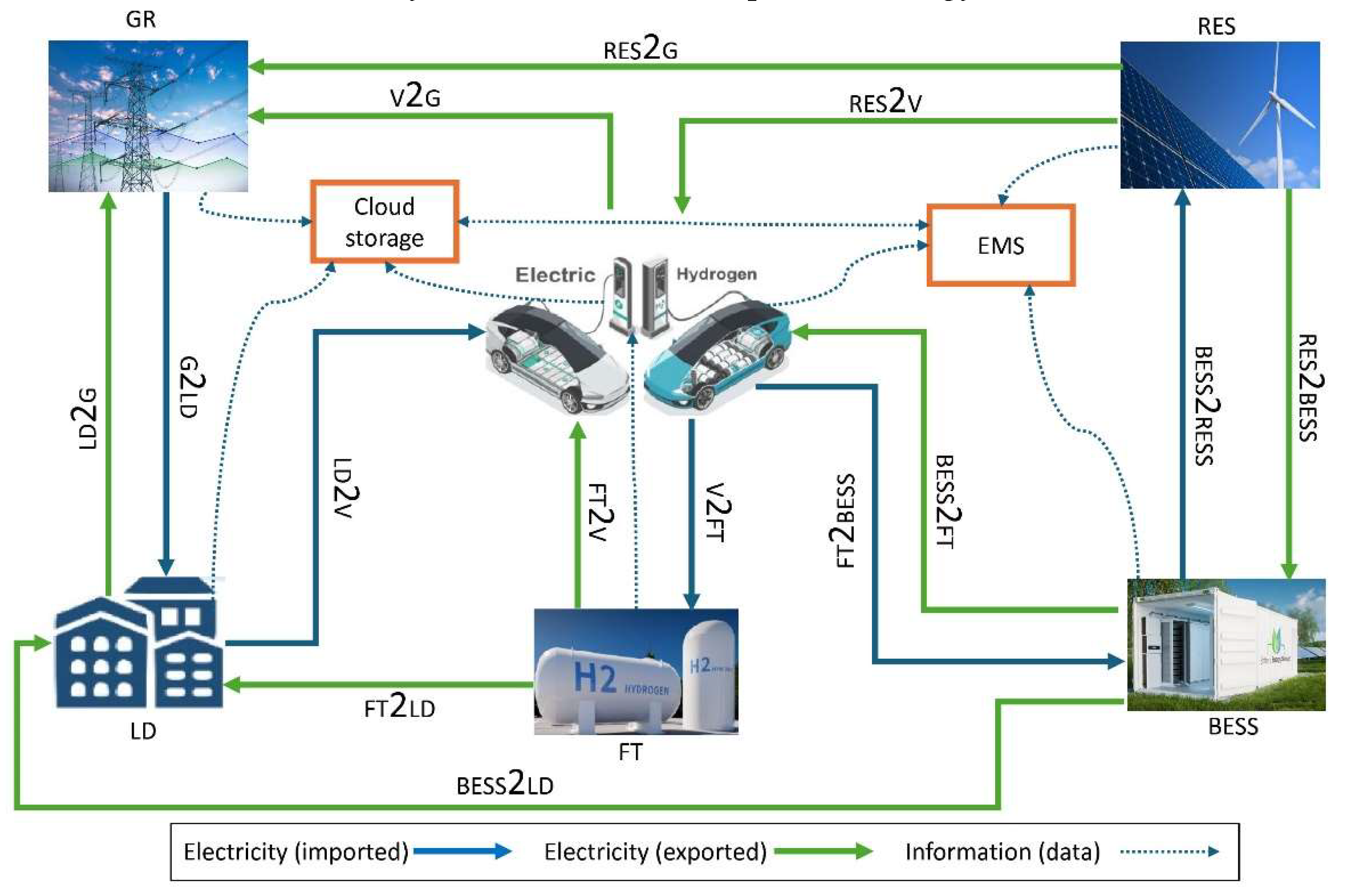
Figure 2.
The key features of an SG system are divided into five categories: complexity, adaptability, efficiency, DR program, and DG system.
Figure 2.
The key features of an SG system are divided into five categories: complexity, adaptability, efficiency, DR program, and DG system.
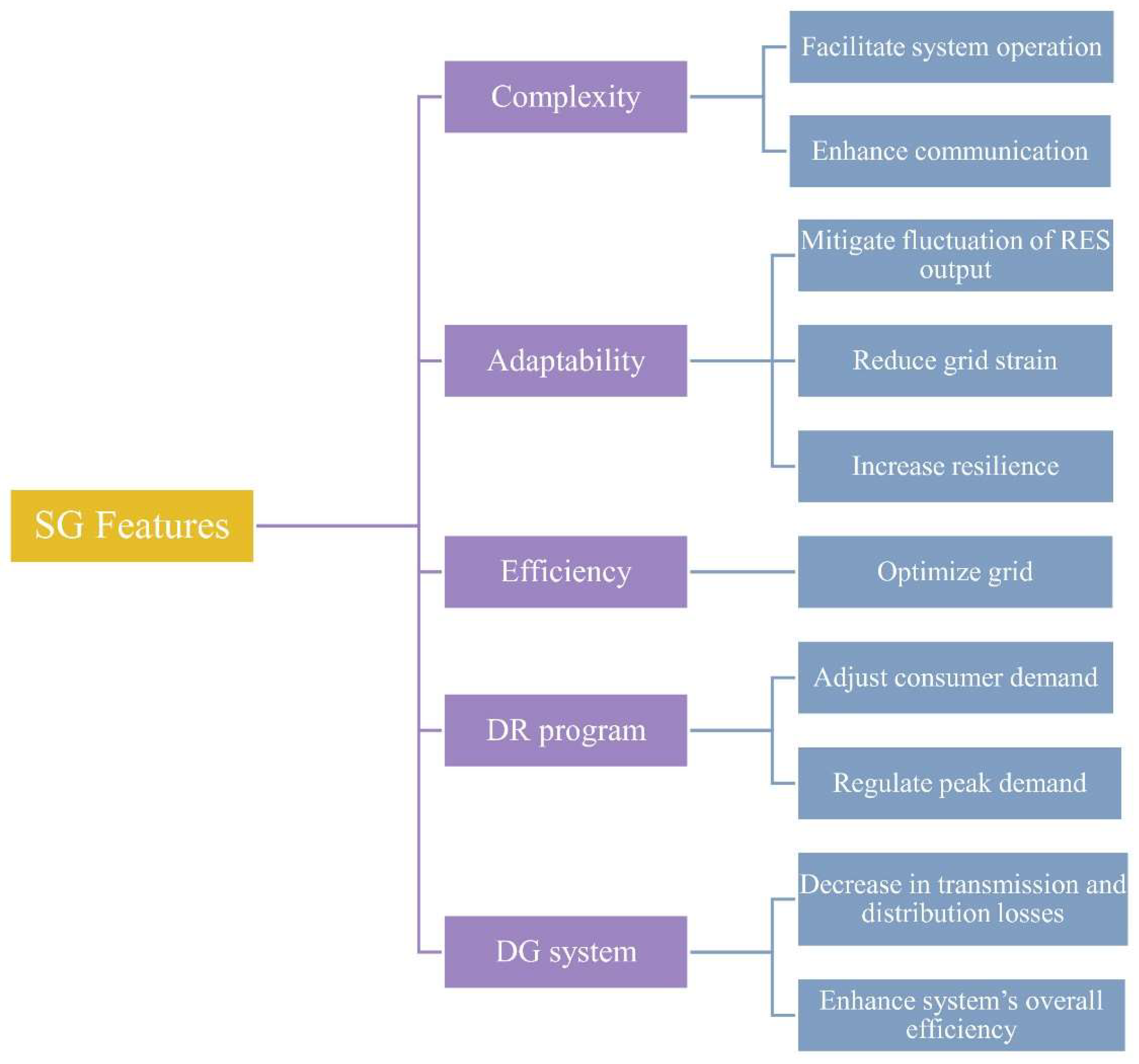
Figure 3.
Role of sensors in smart grid operations and distributed energy resource management.
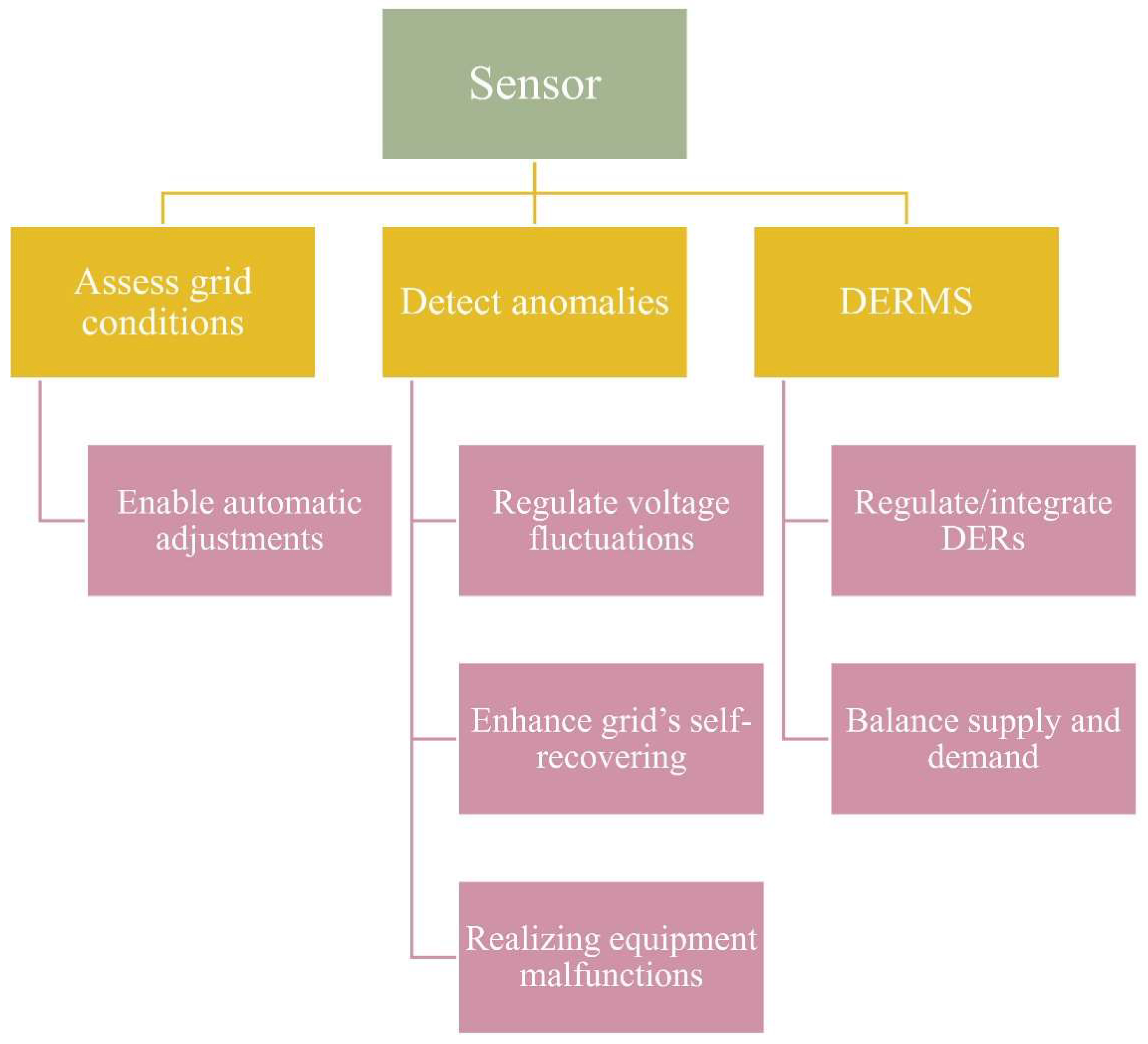
Figure 4.
Key benefits of DG in energy systems.
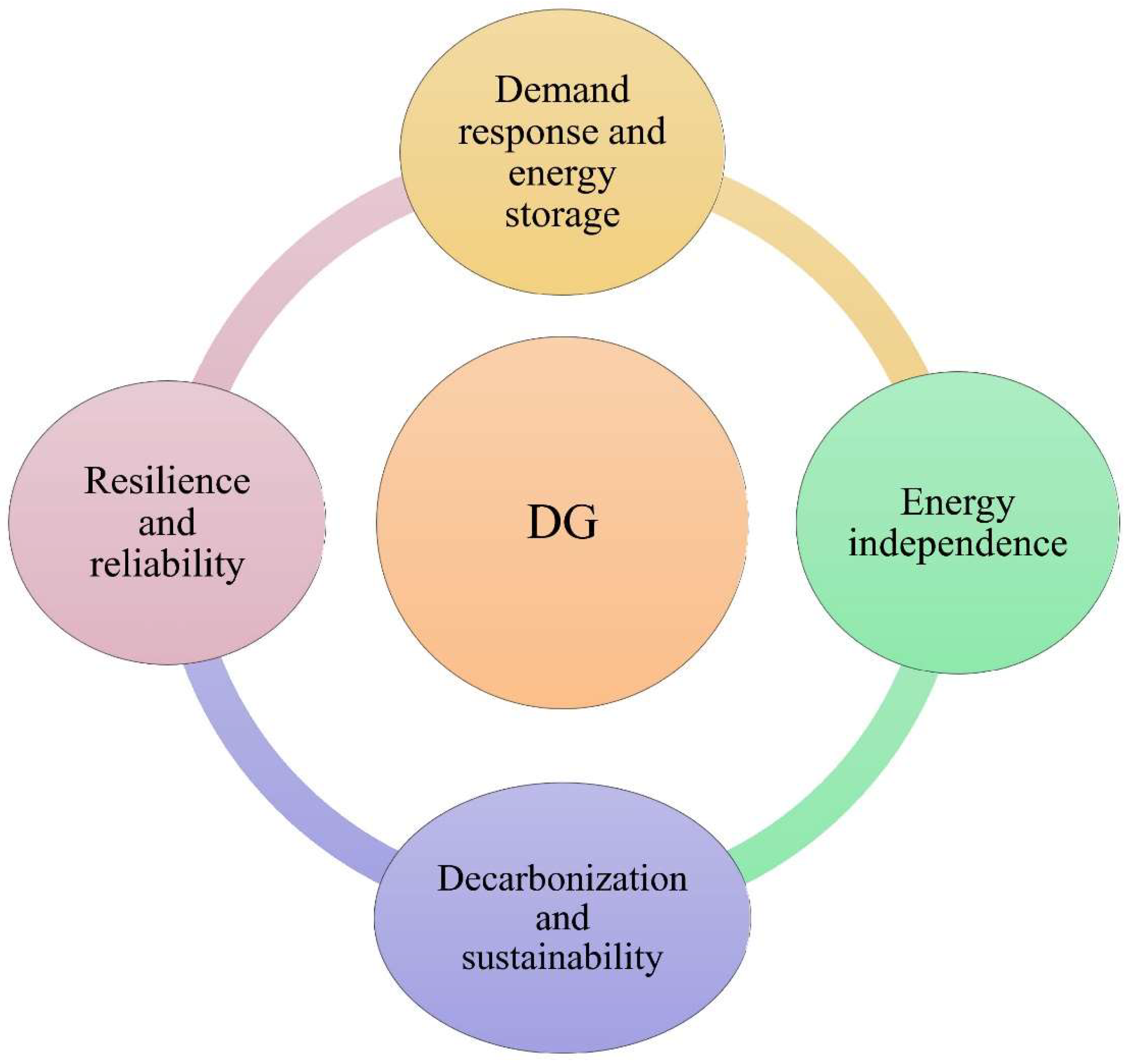
Figure 5.
V2G integration of li-ion and FC vehicles with renewable energy systems.
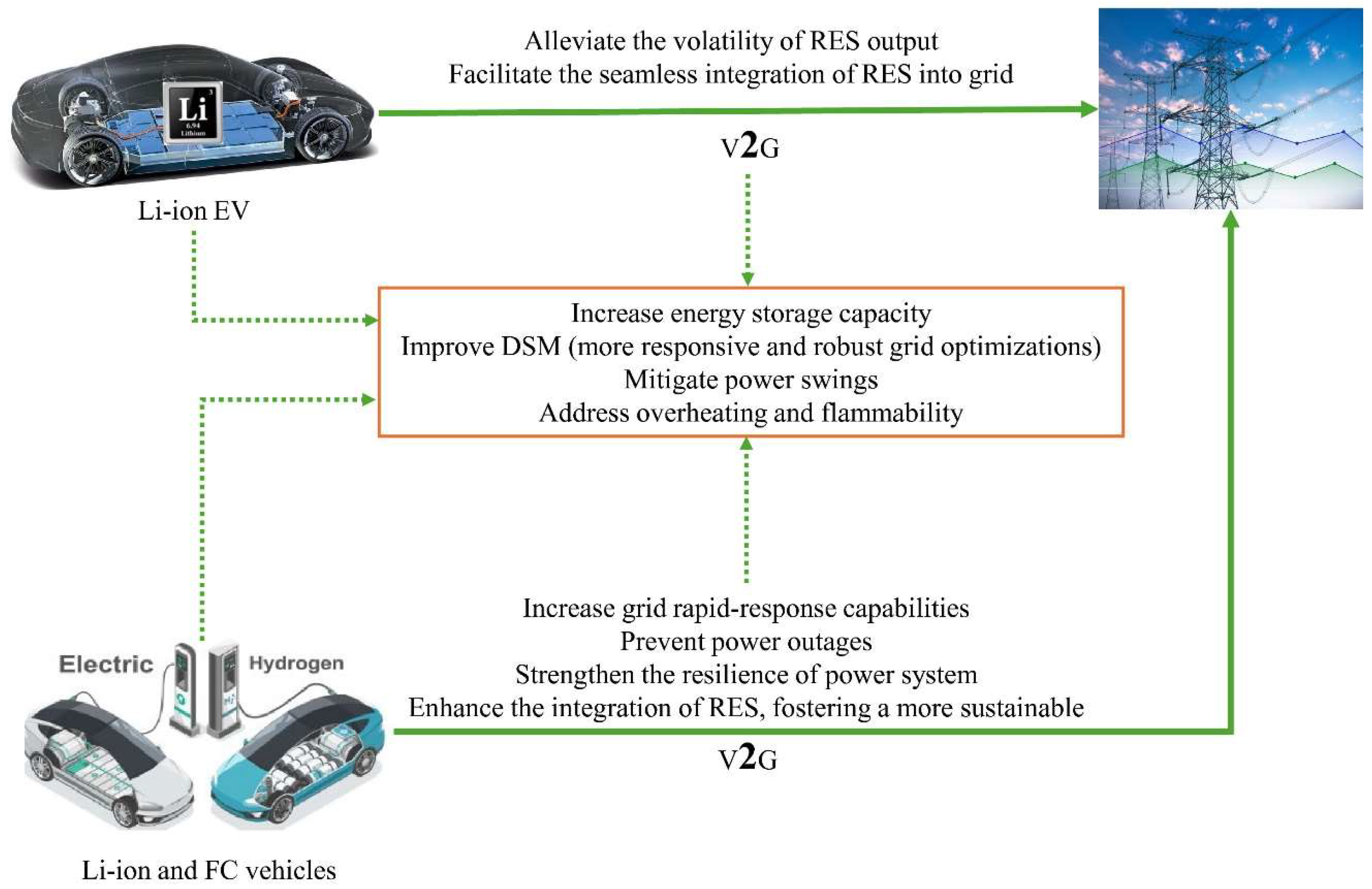
Figure 6.
Data and power flow in SG infrastructure with renewable energy integration.

Figure 7.
Interaction between a cyber system and a physical system within a SG infrastructure.
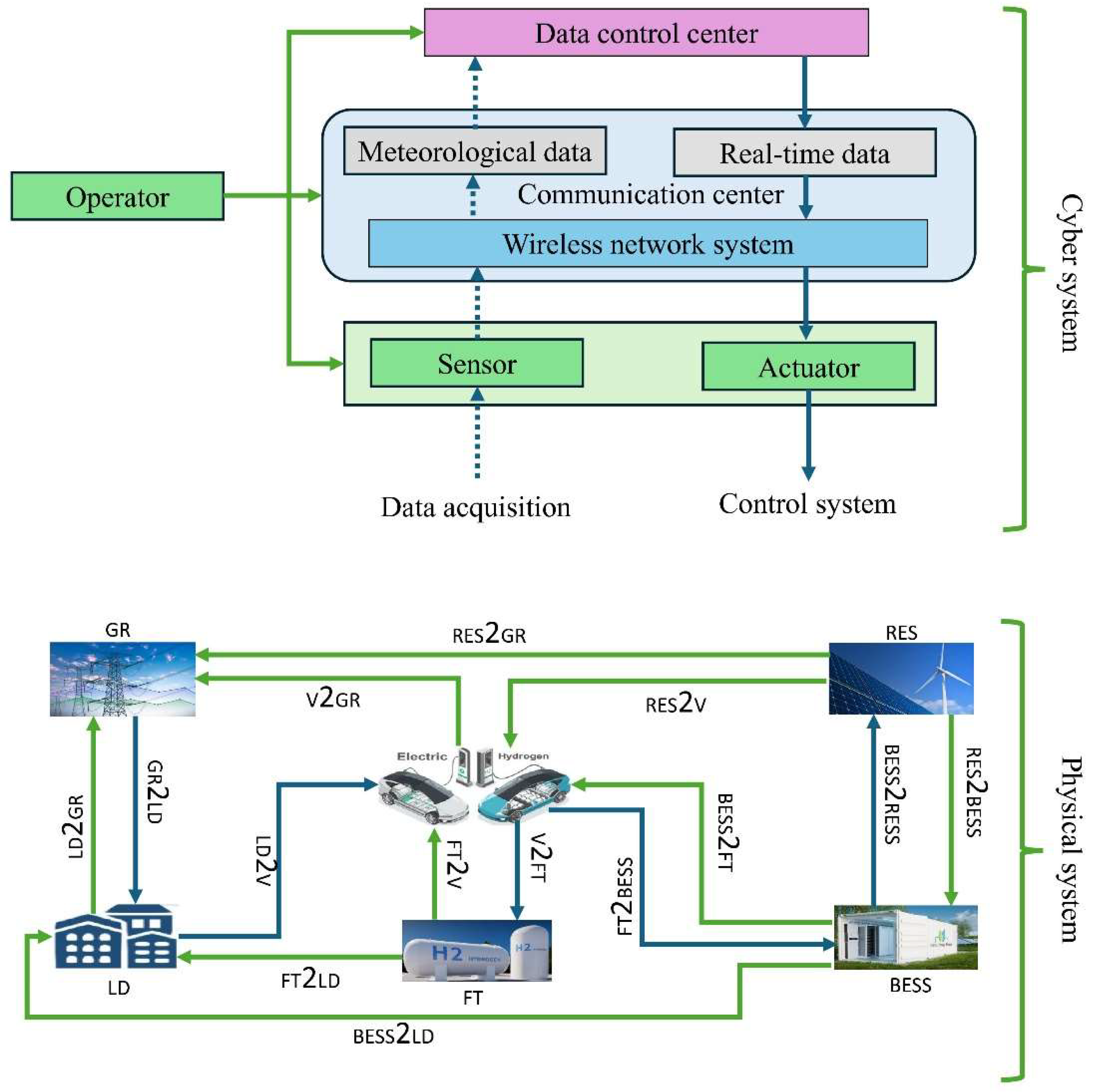
Disclaimer/Publisher’s Note: The statements, opinions and data contained in all publications are solely those of the individual author(s) and contributor(s) and not of MDPI and/or the editor(s). MDPI and/or the editor(s) disclaim responsibility for any injury to people or property resulting from any ideas, methods, instructions or products referred to in the content. |
© 2024 by the authors. Licensee MDPI, Basel, Switzerland. This article is an open access article distributed under the terms and conditions of the Creative Commons Attribution (CC BY) license (http://creativecommons.org/licenses/by/4.0/).
Copyright: This open access article is published under a Creative Commons CC BY 4.0 license, which permit the free download, distribution, and reuse, provided that the author and preprint are cited in any reuse.


