

Submitted:
09 October 2024
Posted:
10 October 2024
You are already at the latest version
Abstract
Enterprise Architecture (EA) development with an Agile approach is believed to be an alternative solution to various current EA development challenges. Agile Enterprise Architecture (EA) is an EA development that applies Agile principles and focuses on collaborative and incremental de-velopment, adaptation, and sharing information about business and IT modes to guide the ef-fective implementation of Agile projects. There have been many discussions of literature related to EA management, but literature review studies that specifically describe Adaptive or Agile EA management are still rare. The research method of this study follows two consecutive phases: bibliometric analysis and content based analysis. First, bibliometric analysis utilizing the VOSviewer software to identify the state of the field and global research patterns in Agile EA from 2012 to 2023, including author and institutional distributions, frequent categories and keywords, contributions from journals and authors, and highly cited works. Next, thematic analysis and meta-analysis to reveal various frameworks or models used in agile EA implementation and its dimensions. The extracted bibliometric and content data from 59 selected articles were processed using the VOSviewer tool for identifying and understanding the relationships between main concepts through network mapping. There are several Agile-based EA frameworks based on empirical research found in EA development, such as Adaptive Enterpise Architecture, Adaptive Integrated Digital Architecture Framework (AIDAF), Lean Enterprise Architecture Frameowrk (LEAF), Scrum for EA, and several other Agile EA frameworks developed that have been ob-served. Various agile methods have been adopted in developing the agile EA framework, in-cluding its application in various industrial sectors in several countries, the risks faced and future research opportunities to increase the effectiveness of agile EA implementation in Digital Transformation.
Keywords:
adaptive
; agile
; enterprise architecture
; framework agile
; model
; bibliometric analysis
; digital transformation
; literature review
1. Introduction
Digital transformation (DT) refers to the use of innovative digital technologies to drive substantial business enhancements, whether by enhancing customer experiences, optimizing operations, or creating new business models [1]. This process includes identifying organizational needs and either designing new processes or reconfiguring existing ones to deliver value to customers, businesses, and other critical stakeholders through the integration of digital technologies[2].
EA is a planning and governance approach used to help organizations manage complexity and constant change, and to align their resources towards a common goal [3]. Although many companies are embarking on broad transformation initiatives, where Enterprise Architecture (EA) is responsible for designing and overseeing the transformational journey, EA is often considered a laborious exercise, with most EA initiatives failing to create visible impact. Organizations need an EA that is Agile and responsive to business dynamics [4,5,6].
Agile Enterprise Architecture (AEA) is an EA development that applies Agile principles and focuses on collaborative and incremental development, adaptation, and sharing information about business and IT modes to guide the effective implementation of Agile projects [6,7]. AEA, recognized as a possible answer to the complexities of Enterprise Architecture, is gaining attention and proposals in the industrial and professional sectors [6,8,9]. In recent years, Agile Enterprise Architecture has attracted attention from global scholars as solution to answer complex EA program problems that have an impact on the success of digital transformation ([4,5,6,8,10,11,12,13]).
The implementation of EA using an agile approach has been carried out by many researchers in the last 10 years. For example, Gill et al. are researchers who have actively explored Agile methods in EA development over the past 10 years. Some of their research related to adaptive EA includes the Adaptive Enterprise Service System (AESS) model [14], managing adaptive enterprise architecture that supports cloud technology [7], identifying standard Agile EA artifacts [15] and measuring the effectiveness of communication in Geographically Distributed Agile Development [13]. Research using agile methods in designing and implementing EA was also conducted by Hosiasislouma uses a pragmatic approach to apply Agile methods in EA management in the public sector in Finland [11]. Masuda et al., used the Agile method to answer problems in the EA program in the health sector by proposing AIDAF and claiming that the AIDAF approach had advantages compared to TOGAF which was considered too complex and a big up front architecture in the planning phase [16]. The above contributions enhance the literature in the EA field, posing challenges for researchers to discern trends and developments in research. With the significant increase in publications in recent years, understanding the progress of Agile EA research has become challenging. TOGAF, as an organization that is widely known and adopted as a method for developing EA, has published a publication discussing the application of Scrum in developing EA [17].
There have been many discussions of literature review related to EA management, for example, a review of critical success factors for implementing EA [18,19]. Pekkoka et al. reviewed EA in the public sector [20]. Gill et al. conducted a review of IoT architectural concerns [21], while Felix et al. specifically carried out a literature review on Enterprise Reference Architecture. Alsufyani et al. [22] reviewed the Digital Maturity Model from the perspective of Adaptive EA. Daniel et al. [23] conducted a review on the effect of Artificial Intelligence on Enterprise Architecture. In the last two years, Atencio et al. [24] conducted a literature review on the EA approach for project management and project-based organizations. Additionally, Alsufyani et al. [25] has conducted a systemic review of digitalization performance assessment and Adaptive EA. However, there is no single literature review study that specifically describes EA management with an agile approach. Consequently, a systematic review of Agile EA literature is essential. Such a review would not only offer a detailed understanding of current research developments regarding Agile EA but also provide valuable insights to guide and inspire future research aimed at enhancing Agile EA practices during the digital transformation era. considering that Agile EA has received widespread attention.
In this regard, we believe it is essential to review recent research on Agile EA. The main objective of this paper is to systematically identify and summarize the research context related to Enterprise Architecture and Agile approaches from 2012 to 2023. This study evaluates various characteristics of published documents, including journals, research topics, fields, highly cited academics, papers, countries, and affiliations, among others. To achieve this, bibliometric analysis methods were employed. Additionally, thematic analysis was used for the synthesis and evaluation of the final documents obtained. Furthermore, to narrow the scope of the study, the following research questions were posed:
- 1.
- What are the publication trends in Adaptive/Agile EA research? (Annual quantitative distribution of studies, quantitative analysis of publications, and journals that publish adaptive/Agile EA research)
- 2.
- What is the context of published Agile EA research? (Including countries represented, productive authors, relationships among terms or concepts, and classification of studies by methodology)
- 3.
- What are the existing Agile EA frameworks and their application in digital transformation? (To understand the existing Agile EA framework and its implementation in organizational and industry sectors related to digital transformation)
- 4.
- What are the risks in Agile EA practices? (To identify the risks involved in implementing the Agile EA)
Additionally, based on the analysis of these published Agile EA papers, potential research directions and trends in Agile EA will also be projected. This paper is structured as follows: Section 2, offers an outline of the research methodology used 3. In Section 3 involves a discussion and analysis of the research results, where research topics, research gaps, and trends in Agile EA will be identified and summarized. The final section concludes the paper and outlines the limitations.
2. Methodology
2.1. Bibliometric Analysis Method
Bibliometrics consist of research techniques that analyze bibliometric features and document systems, serving as an effective mechanism for quantitative analysis within a particular field of study. These methods utilize mathematical and statistical approaches to examine different attributes of documents such as their distributed structure, interrelationships, and evolving trends. As a prominent and comprehensive quantitative tool, bibliometric analysis can assess the impact of various components on a specific research topic.
Bibliometrics technology has been used extensively to carry out review-based studies in recent years, For example, Cai et al. [26] employed the bibliometric techniques to Analysis of Energy Performance Contracting; Lin Shi et al. [27] conducted a bibliometric analysis on Digital Transformation. In addition, bibliometric technology has also been used in other enterprise architecture research fields, such as Enterprise Architecture Approach for Project Management and Project-Based Organizations [24].
2.2. Literature Screening
A holistic study was adopted to summarize the latest research outputs (2012–2023) in the domain of Enterprise Architecture and Agile Approach published in electronic database SCOPUS. First, we entered the topic Enterprise Architecture and Agile Approach into the Scopus database and restricted the publication period to the years 2012 to 2023. Key String used ( lean OR Agile OR adaptive ) AND "enterprise architecture", database found 235. Next, apply the following filtering criteria:
- Inclusion Criteria:
- Papers written in English
- Journals, conferences, theses/dissertations, and book chapters published between 2012-2023
- Papers related to the use of Agile approach for the implementation of EA programs in the context of digital transformation
Exclusion Criteria:
- Studies not in English
- Redundant or duplicate studies
- Studies unrelated to this research
- Studies published in magazines
After going through the stages of inclusion and exclusion criteria, we identified 83 relevant papers spanning various disciplines, including science, technology, social sciences, and arts and humanities. Finally, using the 83 screened papers, we conducted a second round of literature screening by carefully reading the titles, abstracts, and contents of the papers related to the research question topic. Finally, using the 83 screened papers, we conducted a second round of literature screening by carefully reading the titles, abstracts, and contents of the papers related to the research question topic. Quality assessment criteria were applied to evaluate the studies selected for this research, adopting the method used by Dybå & Dingsøyr [28]. The criteria are outlined in Table 1, and all 59 studies met the established quality standards for further discussion and analysis.
Based on the selected studies, to answer RQ 1 and RQ2 using meta-perspectives taken from dataset fields such as title, authors, year, country, type of publication, and citation count processed with the VOSviewer tool. The visualization results are interpreted based on the statistics generated. While to answer RQ3 and RQ4 using a content-based perspective approach by reading the abstract and contents of the publication in depth. Additionally, meta-ethnographic methods were applied to synthesize the data gathered from the primary studies [29]. Noblit and Hare’s seven-step process for conducting meta-ethnography is as follows: 1. Getting Started; 2. Deciding what is relevant to the initial interest; 3. Reading the studies; 4. Determining how the studies relate to each other; 5. Translating the studies to each other; 6. Synthesizing the translations; and 7. Expressing the synthesis.
2.3. The Analysis Tool: VOSviewer Software
VOSviewer, a software created by Van and Waltman[30], is widely utilized for the analysis and visualization of bibliometric networks, and was also used in this research. The software offers distance-based visualizations of bibliometric networks, enabling the display of bibliometric visualization networks and text mining capabilities [30]. Utilizing bibliographic data, VOSviewer is capable of generating several types of visualization maps, including maps for co-authorship, keyword co-occurrence, citations, bibliographic coupling, and co-citation [30]. The bibliometric method will also be used in this paper for carrying out a review of EA and Agile Approach research.
3. Results
This section explains the results of processing with bibliometric analysis, then explains the results of the content-base analysis, and discusses them further with a discussion that answers the research questions.
3.1. Addressing Research Question 1: What Are the Publication Trends of Agile EA Research?
3.1.1. Annual Quantitative Distribution of Studies
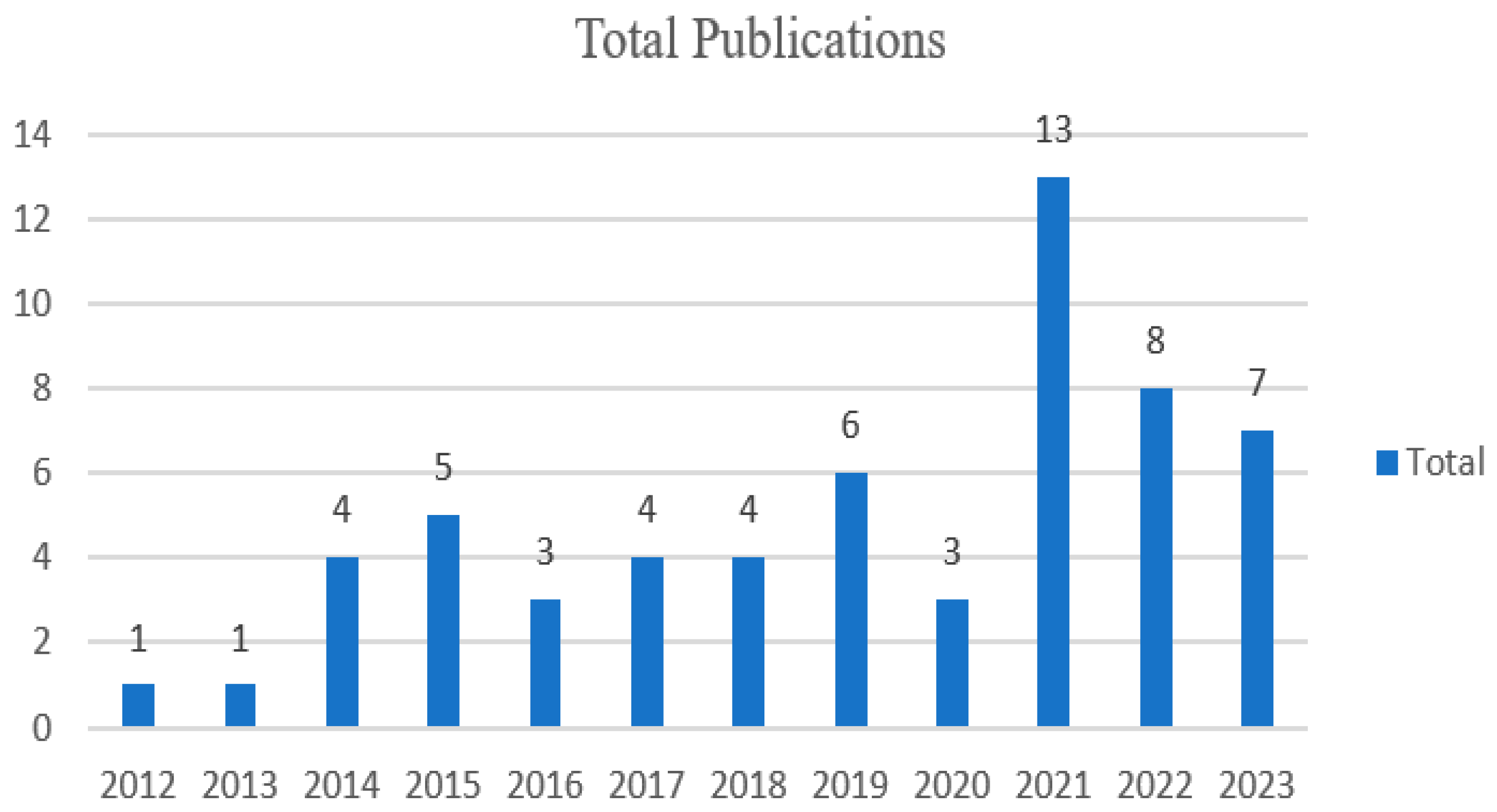
Meta-perspective findings for the bibliometric analysis were summarized using descriptive statistics. Figure 3 displays the distribution of the 59 selected articles by year. The earliest article dates back to 2012 and employs an Agile approach for EA . The years with the highest productivity were 2015 (5 publications), 2019 (6 publications), 2021 (13 publications), 2022 (8 publications) and 2023 (7 publications). Publications appear to be constant from 2016 to 2018, with the number of publications between 3 and 4. However, in 2021 there will be a contrast of 13 publications, this shows that Agile EA is one of the EA methodologies that attracts the attention of researchers in digital transformation.
Figure 1.
Number of relevant studies published from 2012 to 2023.
3.1.2. Quantitative Analysis of Publications
Of the 59 articles, the majority are conference papers, 42 of which are conference papers, with 14 articles being journal papers, as illustrated in Figure 2. In addition, 2 book chapter and 1 book are also included. These 59 papers come from different publications, mainly from the fields of Enterprise Information Systems, computer science, and industrial management. Table 2 lists the journals that contain articles. The remaining sources are conference papers concentrating on computer engineering.
It can be seen that journals publishing research on the Agile approach in EA management come from various sources, with the International Journal of Enterprise Information Systems being the most frequent publisher.
3.2. Addressing Research Question (2) What Is the Context of Agile EA Research Published?
3.2.1. Country or Regions Active in Agile EA Research
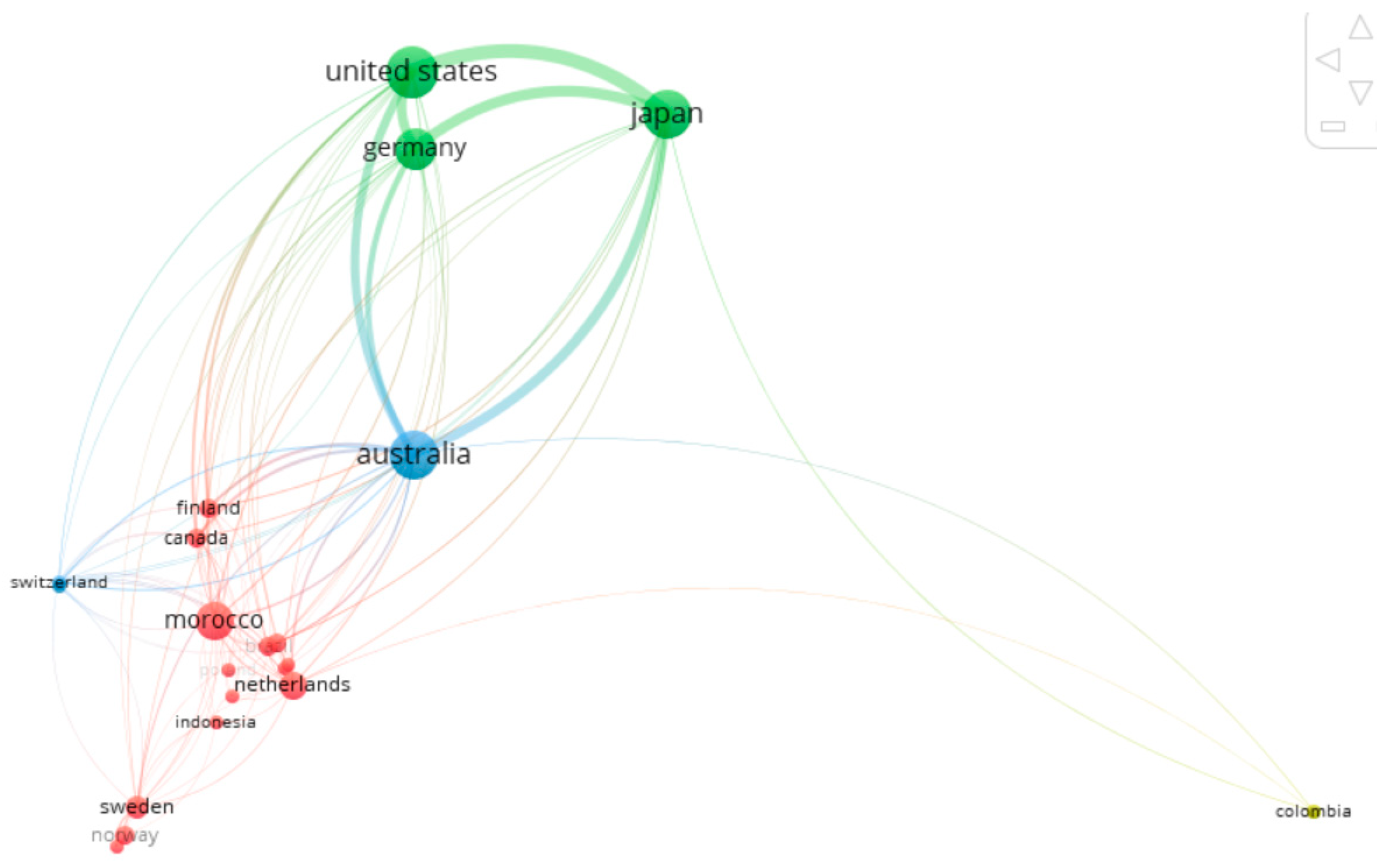
Table 3 below shows Countries or Regions Active in Agile EA Research.
United States and Japan have the highest number of documents (14 and 13 respectively) and exhibit the highest total link strengths (1500 and 1622 respectively), indicating a strong impact and interconnectedness in the research community. Australia has the highest number of citations (298) among the listed countries, reflecting the high impact and recognition of its research contributions. Germany shows a substantial total link strength (908) and a notable number of citations (134), suggesting its research is well-integrated and influential.
Countries like Morocco, Netherlands, and Sweden have fewer documents and citations, indicating either emerging research activities or smaller research communities. Canada and Finland, despite having only 2 documents each, show relatively high citation counts (76 and 51) and strong total link strengths (151 each), highlighting the significant impact of their limited publications. Norway, China, and Portugal have moderate total link strengths and lower citation counts, suggesting active but less influential research contributions compared to the top-ranking countries. Other countries such as Columbia, Indonesia, Iran, Peru, Lithuania,Poland, Singapore, Switzerland, Taiwan, Thailand, UAE, United Kingdom, found only 1 study related to Agile EA. This shows that EA research using Agile methods is still emerging and has not yet received widespread attention from both researchers and practitioners. Network visualization can be seen in Figure 3.
Figure 3.
Network visualization of main countries or regions in Agile EA research.
3.2.2. Analysis of Productive Authors
Through an analysis of the authors of the 59 papers, the most productive authors and their co-author networks were identified. An author’s productivity can reflect the dedicated efforts of that researcher. For this analysis, the minimum number of papers published by an author was set at one, and minimum number of citations of an author was set as 2. In total, 26 authors met this criterion. The top five authors were Masuda, Gill A.Q, Doudi W, Alsufyani, and anwar mj, each with 13 papers, 6 papers, 5 papers ,2 papers, and 2 papers.
Figure 4.
Coupling map of highly productive authors.
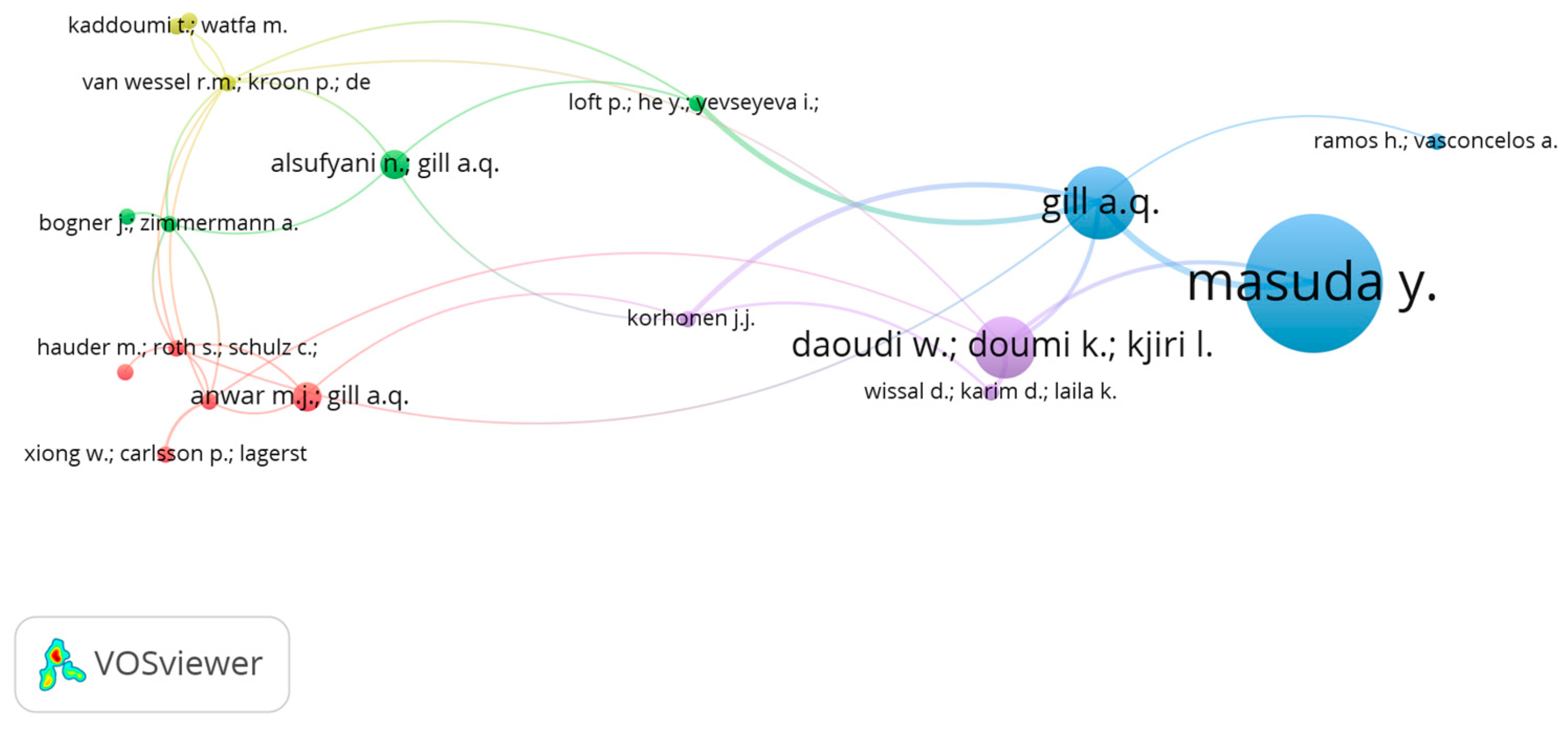

Table 4.
Summaries Varous Author Contributions.
| No | Author | Papers | Citations | Total link strength |
|---|---|---|---|---|
| 1 | Masuda Y. | 13 | 162 | 14 |
| 2 | Gill A.Q. | 6 | 149 | 29 |
| 3 | Bogner J.; Zimmermann A. | 1 | 49 | 5 |
| 4 | Korhonen J.J. | 1 | 49 | 10 |
| 5 | Alsufyani N.; Gill A.Q. | 2 | 37 | 4 |
| 6 | Yu E.; Deng S.; Sasmal D. | 1 | 27 | 0 |
| 7 | Zimmermann A. Et All | 1 | 22 | 1 |
| 8 | Canat M. Et All | 1 | 20 | 7 |
| 9 | Hauder M. Et All | 1 | 20 | 6 |
| 10 | Anwar M.J.; Gill A.Q. | 2 | 19 | 3 |
| 11 | Liao M.-H.; Wang C.-T. | 1 | 17 | 0 |
| 12 | Daoudi W.; Doumi K.; Kjiri L. | 5 | 16 | 16 |
| 13 | Werewka J.; Spiechowicz A. | 1 | 11 | 1 |
| 14 | Van Wessel R.M.; Kroon P.; De Vries H.J. | 1 | 10 | 8 |
Table 3 summarizes various author contributions to specific research domains, showing the number of documents published, citations received, and total link strength for each author with more than 10 citations. Masuda Y. is the most prolific author, with 13 documents and the highest number of citations (162), indicating significant impact and recognition in the research community. The total link strength of 14 suggests a moderate level of collaboration or influence within the co-authorship network. Gill A.Q. has published 6 documents with a high citation count (149), indicating substantial influence. The total link strength of 29, the highest among all authors, suggests that Gill A.Q. has a strong collaborative network and significant integration into the research community.
With a single document, Korhonen J.J. has received 49 citations, showing the document’s high impact. The total link strength of 10 indicates decent collaboration despite having only one publication. Other notable contributors, such as Bogner J. et al., each have a single document, with 49 and 37 citations respectively. Their total link strengths (5 and 4) suggest they have moderate collaborative influence. Yu E., Deng S., and Sasmal D., despite having 27 citations, have a total link strength of 0, indicating no significant collaborative influence or co-authorship network. Zimmermann A., Schmidt R., and Jugel D. have a single document with 22 citations and minimal collaborative network influence.
From a collaboration and co-authorship perspective, Gill A.Q. appears multiple times, indicating collaborations with various co-authors, such as Alsufyani N. and Anwar M.J., highlighting Gill A.Q.'s extensive collaborative reach and influence in the field. Van Wessel R.M., Kroon P., and De Vries H.J. have a good balance of citations and link strength, indicating both influence and collaborative activity.
3.2.3. Keyword Co-Occurance Analysis
Co-occurrence analysis is a statistical method used to identify relationships between entities within a dataset. In text analysis, this technique focuses on examining how frequently certain terms or concepts appear together within a given corpus of text. Keywords serve to emphasize the focus of a paper, aiding readers in understanding its primary research contexts [31]. The generated map displays five clusters, represented by green, purple, blue, red, and yellow, as seen in Figure 5. Larger labels and circles signify a higher element weight. The proximity between two keywords roughly reflects their co-occurrence relationship, with closer keywords indicating a stronger connection [31]. Consequently, the keywords in the sample were examined and analyzed using VOS-Viewer software to highlight those with high frequency and to illustrate keyword relationships. A frequency threshold of 2 was set, resulting in the filtering of the 184 author keyword, 36 meet the threshold, as shown in Figure 5.
Figure 4.
Co-Occurance Analysis.
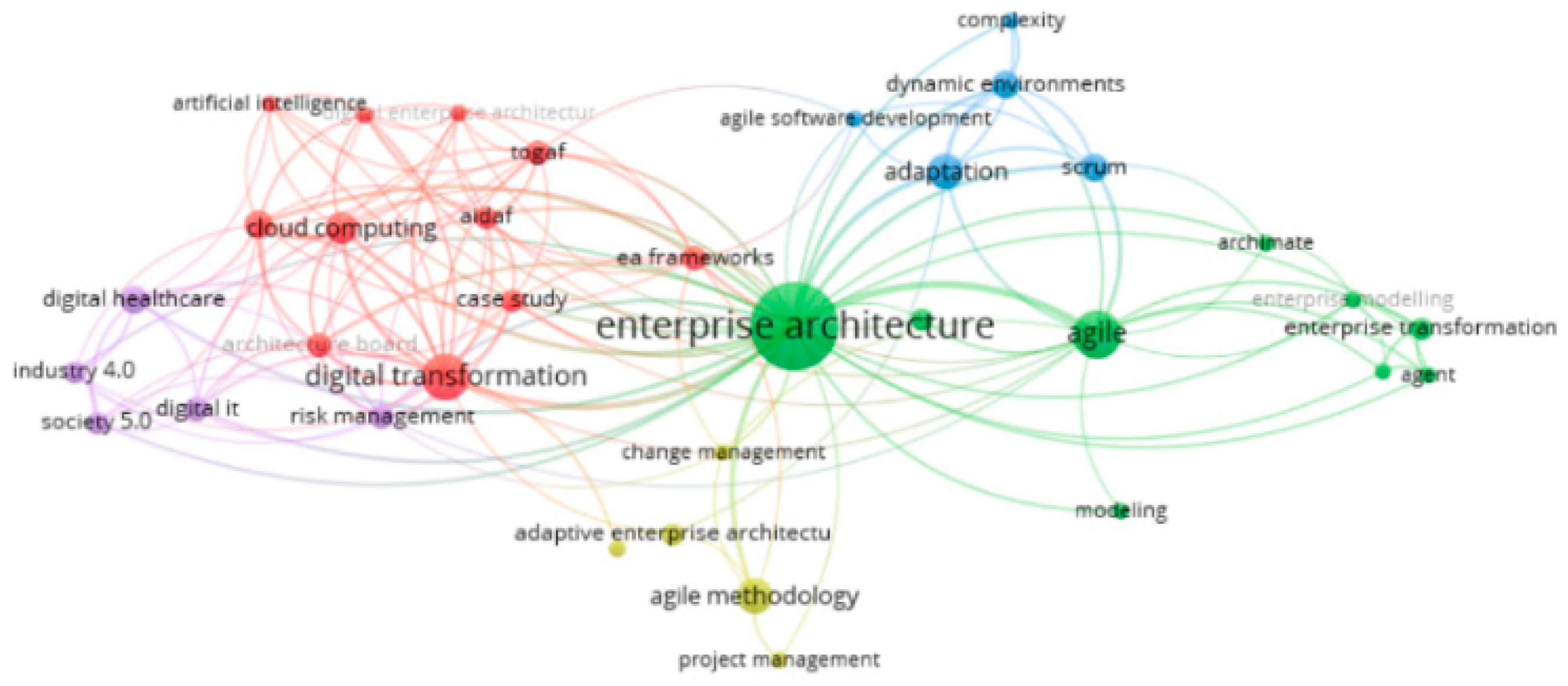
The core keyword of the sampled papers is clearly enterprise architecture. The results also highlight several key topics that have garnered significant attention, spanning various dimensions. such as Agile (i.e., adaptation, scrum, archimate), digital transformation (i.e., cloud computing, case study, ea framework, togaf, aidaf), Agile methodology (i.e., project management, adaptive enterprise architecture, change management), and digital IT (digital healthcare, risk management, industry 4.0, society 5.0). The connections between these keywords are also illustrated in figures, which are valuable for understanding and analyzing Agile EA research topics from the past decade.
3.2.4. Classification of Studies by Methodology
The collection of articles was also analyzed regarding the main methodology applied. It was found that the majority of studies, 27 (46%) applied Case Study Research, where researchers implemented Agile / adaptive frameworks designed on real cases to explore or test the framework. In addition, Theoretical analysis research was used to build a model or framework or compare with a certain theory in a total of 17 (29%) studies. Empirical survey research was used in 7 (12%) studies, to obtain opinions from a certain group of variables being tested. Design Science Research was found in 6 (10%) studies. While Literature review studies in 2 (3%) studies. Table 5 classifies studies based on research methodology.
However, the research methods are primarily focused on case studies and theoretical analysis, and are largely part of exploratory design studies. Researchers explore the adoption of the Agile EA Framework in various industry sectors through case studies that implement the framework for the first time. This analysis suggests that a greater diversity of methodologies is needed in this research field to achieve a deeper and more comprehensive understanding of the use of the Agile EA Framework in EA management.
3.3. Addressing Research Question (3) What Are the Existing Agile EA Frameworks and Their Application in Digital Transformation?
From selected studies during the period 2012 - 2023, it was found that EA development efforts with an Agile or adaptive approach were carried out by Gill [32]. In his research, Gill proposed an Adaptive / Agile EA Framework developed with action-design research with well-known multi-disciplinary disciplines such as enterprise requirements, strategy, architecture, service, and project management disciplines. This framework has two main layers: the outer layer and the inner layer. The outer layer displays five adaptation capabilities (context awareness, assessment, rationalization, realization, and un-realization) to guide the continuous adaptation of adaptive enterprise architecture as an adaptive enterprise system service in response to internal and external changes. The inner layer helps in defining, operating, managing, and supporting complex enterprises as adaptive enterprise service systems in response to changes or needs from the outer layer. In another study, Gill et al. developed an Adaptive Enterprise Service System (AESS) model [14], which extends the definition process and focuses on the emerging service-centric view, as opposed to the traditional product-centric view, to establish adaptive enterprise architecture capabilities for handling complex enterprise transformations. The application of adaptive EA in the case of cloud government in the Australian government , but evidence of its success has not been presented. One perceived drawback of the adaptive enterprise architecture approach is that it necessitates comprehensive government-wide coordination and governance. To model Agile EA artifacts, Gill has also conducted research on Agile EA modeling using six modeling standards such as BPMN (Business Process Model and Notation), UML (Unified Modelling Language), FAML (FAME [Framework for Agent-Oriented Method Engineering] Language), SoaML (Service Oriented Architecture Modelling Language), and BMM (Business Motivation Model). Its called as the Hybrid EA Modeling (HEAM) approach [15]. However, due to its application to a single case study, this model cannot be generalized.
Ramos, et al. [33], to deal with uncertain environments caused by constant changes in requirements, they proposed a framework for developing EA projects by adopting an Agile approach used in software development, such as Extreme Programming and Scrum to the domain enterprise architecture. The framework is called Extreme Enterprise Architecture Planning which consists of values & principles, business macro-process model, data architecture, application architecture, components that are worked on in the first iteration. Furthermore, the business process model, current system & technology, data architecture, application architecture, and technology architecture components are worked on in the second iteration. Third iteration continues by working on the business sub-processes model, current system & technology, data architecture, application architecture, technology architecture, and implementation / migration plan. It can be seen that the EA work process is carried out iteratively for the business architecture, data architecture, application architecture, and technology architecture layers. The framework is applied in a case study whose results are claimed to be faster than using popular methodologies, however, the role of actors and collaboration between them is not explained. In addition, quantitative evaluation has not been shown in this study.
Masuda et al [8], proposed an “Adaptive Integrated EA framework” (AIDAF) for fitting to the strategy of promoting cloud/mobile IT. The process begins with the Context Phase, where architecture design guidelines, consistent with the IT strategy, are referenced to meet the needs of business divisions. In the next phase, the architecture committee reviews the conceptual design of the IT project's initiation documents. During the Rationalization Phase, stakeholders and the Architecture Board determine which existing information systems will be replaced or discontinued. Finally, in the Realization Phase, the project team implements the agreed-upon IT project. This approach allows the organization to adopt an EA framework that can flexibly adapt to ongoing cloud and mobile IT projects, structured around these four phases. To verify this “Adaptive Integrated EA framework” toward the requirements in the era of cloud/mobile IT/digital , He has evaluated with the case study of a Global Healthcare Enterprise (GHE), which is a research-based global company with a primary focus on pharmaceuticals. The Element of Agility is adopted from the Gill Framework, namely: “speed,”, “leanness,” "flexibility", and “learning”. From the results of his research, he claims that AIDAF has better performance compared to TOGAF from qualitative and quantitative aspects. AIDAF has been applied in several cases, such as risk mitigation by the Architecture Board in a global healthcare enterprise [34], electronic health records (EHR) in Australia [35], and digital transformation for new medicines in the healthcare industry, including aspects of Artificial Intelligence (AI) [36]. However, several criticisms have been raised regarding AIDAF and its various case studies. First, it relies too heavily on the role of the Architecture Board, while other Agile EA teams do not explain how their collaboration contributes to producing MVA (Minimum Viable Architecture) and MVP (Minimum Viable Product), which are key characteristics of Agile EA deliverables. Second, AIDAF, in its adaptive cycle, adopts TOGAF ADM, which contradicts the initial rationale for developing AIDAF, as it was intended to serve as an alternative solution to the weaknesses of TOGAF [8]. Additionally, the aspect of EA governance, crucial for ensuring the sustainability of EA work, has not been adequately explored in AIDAF. Third, AIDAF seems to be designed specifically according to the cases encountered by its researchers, without incorporating other theories for developing EA capabilities , see Kotusev’s research related to theories in EA [37]. Finally, KPIs to measure the success of AIDAF in the context of digital transformation have not yet been developed.
Another study of Agile EA is found in the paper by Hosiaislouma et al [11] , who proposed the Lean Enterprise Architecture Framework (LEAF), as an effort to overcome the EA methods currently used which in practice are considered rigid, difficult to understand, and their implementation and use requires a lot of resources. LEAF incorporates Lean management as a value chain-based operating model and Agile practices into EA. The implementation of LEAF was carried out through a case study in Vantana Finland, in the lesson learned they argued that the concept seems to be working. However, this study was not widely cited and its claims of success were also not accompanied by empirical survey evidence.
Daody et al. [38], proposed an Adaptive Enterprise Architecture model inspired by Scrum and its sprint model, the proposed model was illustrated through a case study in a manufacturing company. They explained how each component of their model functions, as well as the roles and responsibilities of the teams. However, its success was not evaluated using any specific criteria. Another critique is that this model places too much emphasis on application solutions, even though digital transformation includes many other solutions, such as the use of advances in artificial intelligence and cognition, biometrics, robotics, blockchain, 3D printing, and edge computing [39] . Therefore, this model still needs to be expanded to incorporate more holistic dimensions in the context of digital transformation [40].
While many researchers discuss the implementation of Agile EA across various sectors, in contrast Khaddoumi et al. [5] proposes a foundational Agile EA Framework and develops a quantitative method to evaluate the Agile index based on this framework. The framework can be used to assess an organization’s readiness to adopt an Agile approach in its implementation.
Based on the descriptions of various Agile EA frameworks mentioned in the studies above, the Table 6 below is a summary that synthesizes the main dimensions contained in the Agile / Adaptive EA framework designed by researchers.
In addition, to better understand the agile methods used in the above studies, research focus, limitation, and empirical validation can be seen in the synthesis results in Table 7 below.
Based on the synthesis of the table above, it can be concluded that: Agile EA that has been compiled by researchers cannot be generalized for all types of industry, the focus of research is mostly on the design and implementation of a framework, aspects of verification and evaluation of the success of implementing the framework in real cases are still rare, particularly in relation to the Digitalisation performance [23] ,remain scarce.
In terms of organization sectors, the healthcare sector dominates with 14 studies, followed by the government sector with 7 cases, higher education institutions with 2 case, small and medium enterprises with 2 cases, service companies with 2 cases, manufacturing with 1 cases, and. The composition can be seen in the Table 8 below.
It has been shown that industry sector characteristics and the organizational environment are crucial in promoting Agile EA practices.
3.4. Addressing Research Question (4) What Are the Risks in Agile EA Practices?
Similar with other types of projects, uncertainties widely exist in EA projects and bring project risks. The uncertainties may be related to various aspects, such as technical dept while promoting IT strategy with Cloud/Mobile IT, current digital enterprise architecture approaches are not well-established, and the potentials have not yet been realized, and leading to the loss of profits because of less strategic alignments and non-standardization in application, technology and data in Digital Transformation. Studies dealing with the risks of EA projects is rare, however some of studies cover various dimensions, including the obstacles risks that prevent EA from being Agile are, risks in Adaptive EA projects, and CAESAR8 (Continuous Agile Enterprise Security Architecture Review in 8 domains).
Obstacles that prevent EA from becoming Agile were found in Khaddoumi's empirical research, it was revealed that before implementing Agile EA, organizations must pay attention to the risks that come from barriers in the organization in implementing Agile EA which are called blockers, including waterfall-based methodology, unfamiliarity with agility, Perception of conflict [6].
Masuda et al. [34] identified the main risks in Adaptive EA projects from the dimensions of Enterprise level conformance , Functional aspect , Operational aspect, and Viability . The revealed risk categories for Digital IT are presented, with percentages of each category indicated in parentheses: [1] Security (23%), [2] Architecture Conformance (17%), [3] Technology Architecture (12%),[4] Project Management (11%),[5] Compliance and Validation (8.5%), [6] Application Architecture (8%), [7] Data Architecture (8%), [8] Application Rationalization (8%), [9] Strategic Alignment (5%), [10] System Development (1%).
In the research of Loft et al. [46], the EA domain which is part of 8 domains in CAESAR8, based on an empirical survey, there are 5 risk aspects related to the EA domain including: stakeholders not directly engaging with the project, lack of collaboration across separate teams, limiting understanding of the wider effects of change, project impact on current business process not fully considered, and not understanding the effect of a new system on all personnel.
4. Discussion and Recommendations
In addition to the aforementioned scientometric and statistical analyses, this paper discusses in detail to answer the research questions and examine potential future research areas.
4.1. Agile EA Frameworks and Their Application in Digital Transformation
For a decade, it has been seen that researchers have tried to develop and apply Agile EA Frameworks to several cases of digital transformation. Several identified Agile EA Frameworks were developed for almost the same reasons, namely that the existing framework has weaknesses such as the Open Group Architecture Framework (TOGAF) which is criticized for its size, lack of agility, and complexity [9]. Additional, existing EA frameworks are not suitable for achieving digital transformation [6,8].
Although various Adaptive/Agile EA frameworks have been developed over a period of 10 years in different forms and applications across various organizational sectors in several countries. However, empirical studies related to measuring the success of Agile EA framework implementation are still scarce. In addition, the Agile EA frameworks that have been developed have not considered the dimensions of organizational culture [5,47,49] and evaluating how well Agile EA aligns with the success indicators of digital transformation programs in specific countries [11,25,48].
Not all organizations are ready to implement the agile EA framework. Therefore, the aspect of organizational readiness in adopting the existing agile EA framework needs further development to help organizations implement it successfully. This effort was undertaken by Kaddoumi et al. [6]; however, due to the research approach chosen and the small sample size, the study's results may be less generalizable. In addition, the EA Agility Index (EAAI) that has been designed has not been thoroughly tested. Therefore, it is necessary to expand the dimensions of the EAAI by incorporating system theories, organizational theories, and other related theories to make it more comprehensive [37].
4.2. The Risks in Agile EA
Risks associated with implementing Agile EA in practice have been identified by researchers which can be documented as follows: (1) Risks before implementing Agile EA include waterfall-based methodologies, unfamiliarity with agility, and perception of conflict. (2) Risks during the implementation of Agile EA include security, architecture compliance, technology architecture, project management, compliance and validation, application architecture, data architecture, application rationalization, strategic alignment, and system development. Although researchers have identified risks in implementing Agile EA, how to manage risks holistically related to enterprise risk management has not been developed [50].
5. Conclusions
Given the increasing focus on Agile and EA, this paper offers a comprehensive overview of Agile or adaptive EA research over the past decade. The analysis is primarily drawn from a bibliometric study of 59 papers published between 2012 and 2023. The scientometric analysis indicated that influential mainstream journals, such as the International Journal of Enterprise Information Systems, International Journal of Intelligent Information Technologies, Computers and Security, International Journal of e-Collaboration, Sustainability (Switzerland), International Journal of Lean Six Sigma, Technology in Society, and IEEE Transactions on Engineering Management, have primarily published research on Agile or Adaptive EA.
Furthermore, the analysis of countries and regions active in Agile EA research revealed that the United States and Japan lead in the number of publications, followed by Australia and Germany. This suggests that digital transformation efforts and the implementation of Agile-based EA are prominent in these regions, while other countries exhibit lower adoption rates.
In terms of productive authors, Masuda Y. and Gill A.Q. emerge as the most prolific and influential, with significant citations and strong collaborative networks. Masuda Y. et al. dominate Agile EA research through their numerous implementation case studies. Interestingly, the analysis also shows that some less prolific authors have achieved considerable impact, highlighting the importance of quality over quantity. The total link strength metric emphasizes the strength of an author’s co-authorship network, which enhances their influence and integration within the research community.
An examination of high-frequency keywords revealed a consistent focus on terms such as Agile, adaptive EA, adaptation, Agile methodology, Scrum, cloud, change management, IT alignment, and project management. The Co-Occurance of keywords also highlighted emerging trends and directions for future Agile EA research, including topics like Agile EA frameworks, Industry 4.0, Society 5.0, artificial intelligence, and change management. Additionally, the health sector emerged as a key area for the application of Agile or adaptive EA, suggesting that other business domains still offer significant opportunities for further research.
Various Adaptive/Agile EA frameworks have been developed over a period of 10 years in different forms and applications across various organizational sectors in several countries. However, empirical studies related to measuring the success of Agile EA framework implementation are still scarce. Future research and practice should continue to explore and refine the Agile EA framework by considering the dimensions of organizational culture and evaluating how well Agile EA aligns with the success indicators of digital transformation programs in specific countries
Although Agile EA project risks have been exposed by researchers over the past decade, a research gap still exists on how to effectively address risks. Therefore, it is recommended that further research be conducted to develop more effective methods and perspectives for identifying, evaluating, and managing risks in Agile EA projects by implementing Machine learning techniques for Agile EA project risk prediction model. This approach would enable early mitigation of project risks.
The main limitations of our study pertain to the review process. We concentrated on retrieving data from the SCOPUS database, as its dataset can be processed for bibliometric analysis using VOSviewer. The search was restricted to the terms (lean OR Agile OR adaptive) AND "enterprise architecture," which may have limited the scope of the selected literature. Additionally, our review focused on articles published in the past decade and only in English, potentially excluding other relevant studies. Furthermore, some reviewed articles lacked detailed descriptions of their methodology and interventions, while others did not include information about demographics or the cultural context of the organization, which also limits the findings of our study.
Author Contributions
Conceptualization, M.; writing—original draft preparation, M.; writing—review and editing, R.R.S; supervision, E.K.B. All authors have read and agreed to the published version of the manuscript.
Funding
This research received no external funding.
Acknowledgments
This research was supported by the Reliable Software Engineering Laboratory, E-Government and E-Business Laboratory, Faculty of Computer Science, Universitas Indonesia.
Conflicts of Interest
The authors declare no conflict of interest.
References
- Warner, K.S.R.; Wäger, M. Building dynamic capabilities for digital transformation: An ongoing process of strategic renewal. Long Range Plann. 2018, Volume 52,.
- Mergel, I.; Edelmann, N.; Haug, N. Defining digital transformation: Results fromexpert interviews. Procedia Comput. Sci. 2018.
- Tamm, T.; Seddon, P.B.; Shanks, G.; Reynolds, P. How does enterprise architecture add value to organisations?. Commun. Assoc. Inf. Syst. 2011, Volume 28, pp. 141–168. [CrossRef]
- Stefan Bente, U.B. Collaborative Enterprise Architecture: Enriching EA with Lean, Agile, and Enterprise 2.0 Practices. 2012.
- Duijs, R.; Ravesteijn, P.; van Steenbergen, M. Adaptation of enterprise architecture efforts to an agile environment. 31st Bled eConference Digit. Transform. Meet. Challenges, BLED 2018. 2018 pp. 389–400. [CrossRef]
- Kaddoumi, T.; Watfa, M. A foundational framework for agile enterprise architecture. Int. J. Lean Six Sigma. 2022, Volume 13, pp. 136–155. [CrossRef]
- Alzoubi, Y.I.; Gill, A.Q. An Empirical Investigation of Geographically Distributed Agile Development: The Agile Enterprise Architecture is a Communication Enabler. IEEE Access. 2020, Volume 8, pp. 80269–80289. [CrossRef]
- Masuda, Y.; Shirasaka, S.; Yamamoto, S.; Hardjono, T. An adaptive enterprise architecture framework and implementation: Towards global enterprises in the era of cloud/mobile IT/digital IT. Int. J. Enterp. Inf. Syst. 2017, Volume 13, pp. 1–22. [CrossRef]
- Gill, A.Q.; Smith, S.; Beydoun, G.; Sugumaran, V. Agile enterprise architecture: A case of a cloud technology-enabled government enterprise transformation. Proc. - Pacific Asia Conf. Inf. Syst. PACIS 2014. 2014.
- Gill, A.Q. Adaptive Enterprise Architecture Driven Agile Development. Int. Conf. Inf. Syst. Dev. ISD 2015. 2015.
- Hosiaisluoma, E.; Penttinen, K.; Mustonen, J.; Heikkilä, J. Lean enterprise architecture method for value chain based development in public sector. Proc. Eur. Conf. e-Government, ECEG. 2018, Volume 2018-Octob, pp. 86–94.
- Kapella, O. A Lean Enterprise Architecture Approach as an Enabler for Organizational Agility Case: Metso Outotec. 2016.
- Sararuch, S. Dimensions of Agile Enterprise Architecture. 2022 pp. 304–309.
- Gill, A.Q. Towards the development of an adaptive enterprise service system model. 19th Am. Conf. Inf. Syst. AMCIS 2013 - Hyperconnected World Anything, Anywhere, Anytime. 2013, Volume 5, pp. 3669–3677.
- Gill, A.Q. Agile enterprise architecture modelling: Evaluating the applicability and integration of six modelling standards. Inf. Softw. Technol. 2015, Volume 67, pp. 196–206. [CrossRef]
- Masuda, Y.; Viswanathan, M. Enterprise Architecture for Global Companies in a Digital IT Era: Adaptive Integrated Digital Architecture Framework (AIDAF). 2019.
- TOGAF 10 Applying the TOGAF ADM using Agile Sprints. 2022.
- Nikpay, F.; Selamat, H.; Rouhani, B.D.; Nikfard, P. A review of critical success factors of enterprise architecture implementation. Proc. - 2013 Int. Conf. Informatics Creat. Multimedia, ICICM 2013. 2013 pp. 38–42. [CrossRef]
- Ansyori, R.; Qodarsih, N.; Soewito, B. A systematic literature review: Critical Success Factors to Implement Enterprise Architecture. Procedia Comput. Sci. 2018, Volume 135, pp. 43–51. [CrossRef]
- Dang, D.D.; Pekkola, S. Systematic Literature Review on Enterprise Architecture in the Public Sector. Electron. J. e-Government. 2017, Volume 15, pp. 132–154.
- Gill, A.Q.; Behbood, V.; Ramadan-Jradi, R.; Beydoun, G. IoT architectural concerns: A systematic review., in ‘ACM International Conference Proceeding Series’ Association for Computing Machinery 2017. [CrossRef]
- Alsufyani, N.; Gill, A.Q. A Review of Digital Maturity Models from Adaptive Enterprise Architecture Perspective: Digital by Design. Proc. - 2021 IEEE 23rd Conf. Bus. Informatics, CBI 2021 - Main Pap. 2021, Volume 1, pp. 121–130. [CrossRef]
- Rittelmeyer, J.D.; Sandkuhl, K. Effects of Artificial Intelligence on Enterprise Architectures - A Structured Literature Review. Proc. - IEEE Int. Enterp. Distrib. Object Comput. Work. EDOCW. 2021 pp. 130–137. [CrossRef]
- Atencio, E.; Bustos, G.; Mancini, M. Enterprise Architecture Approach for Project Management and Project-Based Organizations: A Review. Sustain. 2022, Volume 14. [CrossRef]
- Alsufyani, N.; Gill, A.Q. Digitalisation performance assessment: A systematic review. Technol. Soc. 2022, Volume 68. [CrossRef]
- Cai, X.; Zhou, C.; Zhou, L.; Xu, Q. A bibliometric analysis of IL-35 research from 2009 to 2018. PeerJ. 2019, Volume 2019. [CrossRef]
- Lin Shi;Yingping Mai Digital Transformation. J. Organ. End User Comput. 2022, Volume 97, pp. 10–11. [CrossRef]
- Dybå, T.; Dingsøyr, T. Empirical studies of agile software development: A systematic review. Inf. Softw. Technol. 2008, Volume 50, pp. 833–859. [CrossRef]
- G.W. Noblit, R.D.H. Meta-Ethnography: Synthesizing Qualitative Studies. Sage Publ. 1988.
- van Eck, N.J.; Waltman, L. Software survey: VOSviewer, a computer program for bibliometric mapping. Scientometrics. 2010, Volume 84, pp. 523–538. [CrossRef]
- van Eck, N.J.; Waltman, L. VOSviewer Manual version 1-6-19. Leiden: Univeristeit Leiden. 2023 p. 54.
- Gill, A.Q. Applying Agility and Living Service Systems Thinking to Enterprise Architecture. Int. J. Intell. Inf. Technol. 2014. [CrossRef]
- Ramos, H.; Vasconcelos, A. EXtreme enterprise architecture planning. Proc. ACM Symp. Appl. Comput. 2014 pp. 1417–1419. [CrossRef]
- Masuda, Y.; Shirasaka, S.; Yamamoto, S.; Hardjono, T. Risk Management for Digital Transformation in Architecture Board: A Case Study on Global Enterprise. Proc. - 2017 6th IIAI Int. Congr. Adv. Appl. Informatics, IIAI-AAI 2017. 2017 pp. 255–262. [CrossRef]
- Masuda, Yoshimasa;Shepard, Donald S; Yamamoto, S. Adaptive Governance on Electronic Health Record in a Digital IT era., in Association for Information Systems 2019.
- Masuda, Y.; Zimmermann, A.; Viswanathan, M.; Bass, M.; Nakamura, O.; Yamamoto, S. Adaptive enterprise architecture for the digital healthcare industry: A digital platform for drug development. Inf. 2021, Volume 12, pp. 1–26. [CrossRef]
- Kotusev, S.; Kurnia, S. The theoretical basis of enterprise architecture: A critical review and taxonomy of relevant theories. J. Inf. Technol. 2021, Volume 36, pp. 275–315. [CrossRef]
- Daoudi, W.; Doumi, K.; Kjiri, L. An approach for adaptive enterprise architecture. ICEIS 2020 - Proc. 22nd Int. Conf. Enterp. Inf. Syst. 2020, Volume 2, pp. 738–745. [CrossRef]
- Ross, J.W.; Beath, C.M.; Mocker, M. Designed for Digital. How to Architect Your Business for Sustained Success. The MIT Press: Cambridge, MA, USA 2019.
- Aras, A.; Büyüközkan, G. Digital Transformation Journey Guidance: A Holistic Digital Maturity Model Based on a Systematic Literature Review. Systems. 2023, Volume 11, pp. 1–32. [CrossRef]
- Gampfer, F. Investigation on the Future of Enterprise Architecture in Dynamic Environments. 2019.
- Banaeianjahromi, N. Where Enterprise Architecture Development Fails. 2018 12th Int. Conf. Res. Challenges Inf. Sci. 2018 pp. 1–9.
- Liao, M.H.; Wang, C.T. Using enterprise architecture to integrate lean manufacturing, digitalization, and sustainability: A lean enterprise case study in the chemical industry. Sustain. 2021, Volume 13. [CrossRef]
- Narjes Farzi Investigation the Place of BIAN Standard in Digital Banking Enterprise Architecture. Tech. Soc. Sci. J. 2022, Volume 6, pp. 101–105.
- Mejia-cabrera; Tuesta-monteza, V.A. New Agile Enterprise Architecture Methodology for Small Latin American Organizations. ICAT 2020, CCIS 1388, pp. 604–617, 2021. 2021, Volume 1, pp. 604–617.
- Loft, P.; He, Y.; Yevseyeva, I.; Wagner, I. CAESAR8: An agile enterprise architecture approach to managing information security risks. Comput. Secur. 2022, Volume 122, p. 102877. [CrossRef]
- Canat, M.; Pol Català, N.; Jourkovski, A.; Petrov, S.; Wellme, M.; Lagerström, R. Enterprise Architecture and Agile Development: Friends or Foes?. Proc. - IEEE Int. Enterp. Distrib. Object Comput. Work. EDOCW. 2018, Volume 2018-Octob, pp. 176–183. [CrossRef]
- Mirsalari, S.R.; Ranjbarfard, M. A model for evaluation of enterprise architecture quality. Eval. Program Plann. 2020, Volume 83, p. 101853. [CrossRef]
- Kim, T.Y.; Lee, S.; Kim, K.; Kim, C.H. A modeling framework for agile and interoperable virtual enterprises. Comput. Ind. 2006, Volume 57, pp. 204–217. [CrossRef]
- Bogodistov, Y.; Wohlgemuth, V. Enterprise risk management: a capability-based perspective. J. Risk Financ. 2017, Volume 18, pp. 234–251. [CrossRef]
Figure 2.
Distribution of papers by type.
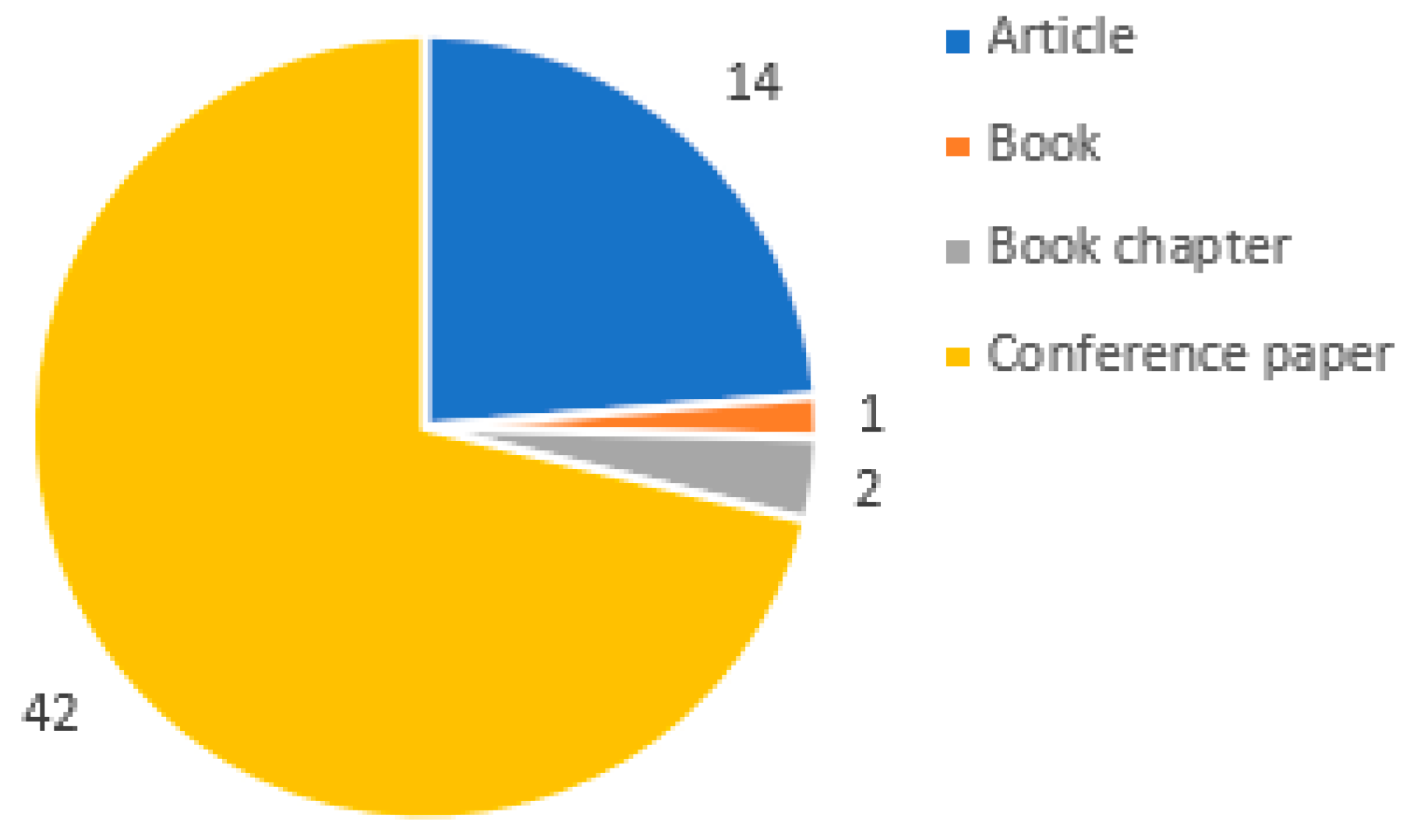
Table 1.
Quality Criteria.
| Quality Criteria | Consider |
|---|---|
| Q1. Is the paper based on research? | To identify whether this study is based on research or experts reporting lessons learned. |
| Q2. Is there a clear statement of the aims of the research? | To identify whether this study is used Agile method or Agile Approach on Enterprise Architecture Management |
| Q3 Was the research design appropriate to address the aims of the research? | To identify research design and data analysis method used |
| Q4. Is there an acceptable description of the context in which the research was carried out? | A clear description of the industry and nature of the organisation in which the study was conducted |
| Q5. Is there a clear statement of findings? | An explicit description and discussion of research findings including the credibility of those findings, limitations, relevance to research questions and justification for conclusion. |
| Q6. Is the study of value for research or practice? | The value is identified by the study’s contribution to current practice or literature including the identification of new research directions |
Table 2.
Number of selected studies per study type.
| Source (Journal) | Number of Papers |
|---|---|
| International Journal of Enterprise Information Systems | 3 |
| Computers and Security | 1 |
| CrossTalk | 1 |
| IEEE Transactions on Engineering Management | 1 |
| Information (Switzerland) | 1 |
| International Journal of e-Collaboration | 1 |
| International Journal of Intelligent Information Technologies | 1 |
| International Journal of Lean Six Sigma | 1 |
| Journal of Computer Science | 1 |
| Journal of Industrial Integration and Management | 1 |
| Sustainability (Switzerland) | 1 |
| Technology in Society | 1 |
Table 3.
Country or Regions Active in Agile EA Research.
| No | Country | Publications | Citation | Total Link Strength |
|---|---|---|---|---|
| 1 | United States | 14 | 224 | 1500 |
| 2 | Australia | 13 | 298 | 946 |
| 3 | Japan | 13 | 162 | 1622 |
| 4 | Germany | 9 | 134 | 908 |
| 5 | Morocco | 8 | 24 | 40 |
| 6 | Netherlands | 4 | 20 | 18 |
| 7 | Sweden | 3 | 30 | 55 |
| 8 | Brazil | 2 | 1 | 40 |
| 9 | Canada | 2 | 76 | 151 |
| 10 | Finland | 2 | 51 | 150 |
| 11 | Norway | 2 | 3 | 48 |
| 12 | Portugal | 2 | 6 | 41 |
| 13 | China | 1 | 3 | 48 |
| 14 | Colombia | 1 | 0 | 21 |
| 15 | Indonesia | 1 | 0 | 5 |
| 16 | Iran | 1 | 1 | 0 |
| 17 | Lithuania | 1 | 1 | 0 |
| 18 | Peru | 1 | 0 | 21 |
| 19 | Poland | 1 | 11 | 1 |
| 20 | Switzerland | 1 | 6 | 69 |
| 21 | Taiwan | 1 | 17 | 1 |
| 22 | Thailand | 1 | 1 | 2 |
| 23 | United Arab Emirates | 1 | 5 | 4 |
| 24 | United Kingdom | 1 | 6 | 69 |
Table 5. Summaries Varous Author Contributions
| Research Methods | Number of studies | Percentage |
|---|---|---|
| Case Study | 27 | 46% |
| Theoritical analysis | 17 | 29% |
| Empirical Survey | 7 | 12% |
| Design Science | 6 | 10% |
| Literature review | 2 | 3% |
| Total Studies | 59 |
Table 6.
Summaries that synthesizes the main dimensions in the Agile / Adaptive EA framework.
| Main Dimensions | Descriptions | Reference |
| Agile EA Enablers | Factors that support the implementation of EA with an Agile approach such as Agile manifesto, visualization, SOA, communication, collaboration, and EA Tools. | [6,41,42] |
| Agile EA Process | The process or activities for conducting Agile EA are adopted from Agile methods such as SCRUM, LEAN, KANBAN, and the principles of the Agile Manifesto. | [11,13,16,43,44,45] |
| Agile EA Deliverable | Artifacts produced from the EA process in four domains (Business, Data, Application, Technology) that are delivered incrementally (in terms of both content and iterations) according to the priorities in the architecture backlog. | [11,13,15,16,38,43,44,45] |
| Agile EA Actors | The role of the team involves working on and performing their tasks in agile ways. | [16,38,45] |
| Agile EA Governance | Agile EA governance to ensure the sustainability of architecture work that meet agile principles includes policies, top management support, EA team organization and competencies, and monitoring and evaluation methods. | [11,13,14,16,43,44,45] |
| Agile EA Measurement | Criteria for measuring the success of implementing the Adaptive/Agile EA Framework. | [8,25] |
Table 7.
Summaries of research focus, limitations, and empirical validation.
| No | Agile EA Framework by Reseacher | Agile method used in the studies | Research focus | Limitations | Empirical Validation |
|---|---|---|---|---|---|
| 1 | Adaptive EA [10] | General, adopting some of Agile principles | Design and development Framework | requires comprehensive coordination and governance across government | Explorative Case Study |
| 2 | Extreme Enterprise Architecture Planning [33] | General, adopting some of Agile principles | Development and Implementation | The proposed framework has been applied to a case study, but has not presented the final results. | Explorative Case Study |
| 3 | AIDAF [8] | General, adopting some of Agile principles (iterative and incremental, early delivery, respons to change) | Implementation and evaluation | Research in the healthcare industry, so it cannot be generalized to all types of organizations, also Architectural frameworks related to Industry 4.0 (RAMI4.0) and Society 5.0 have not been explored yet. | Explorative Case Study |
| 4 | LEAF [11] | SCRUM and KANBAN | Development and Implementation | More research is needed from other cases, to be able to thoroughly evaluate the proposed framework. | Explorative Case Study |
| 5 | Adaptive Enterprise Architecture [38] | SCRUM | Development and Implementation | Not yet defining some standard KPIs and exploring the use of data driven analysis on To-Be architectures | Explorative Case Study |
| 6 | Foundational Agile EA Framework [6] | General, Adopting some of Agile principles | Design and development | the research results may lack generalizability, and Enterprise Architecture Agility Index (EAAI) designed was not thoroughly tested. | Empirical Survey |
| 7 | Sararuch [13] | General, Adopting some of Agile principles | Design and development | the specific roles of Enterprise Architecture not yet discusiion | No empirical validation |
Table 8.
Number of studies based on organization sectors.
| Organization Sectors | Number of studies | Percent |
|---|---|---|
| Not specified | 29 | 49% |
| Healthcare | 14 | 24% |
| Government | 7 | 12% |
| Higher Education institutions | 2 | 3% |
| Service Companies | 2 | 3% |
| Small Medium Enterprise | 2 | 3% |
| Banking | 1 | 2% |
| Chemical | 1 | 2% |
| Manufacture | 1 | 2% |
Disclaimer/Publisher’s Note: The statements, opinions and data contained in all publications are solely those of the individual author(s) and contributor(s) and not of MDPI and/or the editor(s). MDPI and/or the editor(s) disclaim responsibility for any injury to people or property resulting from any ideas, methods, instructions or products referred to in the content. |
© 2024 by the authors. Licensee MDPI, Basel, Switzerland. This article is an open access article distributed under the terms and conditions of the Creative Commons Attribution (CC BY) license (http://creativecommons.org/licenses/by/4.0/).
Copyright: This open access article is published under a Creative Commons CC BY 4.0 license, which permit the free download, distribution, and reuse, provided that the author and preprint are cited in any reuse.


