

Submitted:
07 October 2024
Posted:
08 October 2024
You are already at the latest version
Abstract
Achieving the energy and climate goals of sustainable development, declared by the UN as an imperative and relevant for the upcoming Society 5.0 with its human-centricity of technological development, requires ensuring a “seamless” Fourth Energy Transition, preserving, but at the same time modifying the role of fossil fuels in economic development. In this regard, the pur-pose of this Review is to analyze the structure of publications in the field of technological plat-form for the energy of the future (Energy 5.0), with digital human-centric modernization and investment of the fossil fuel extraction in the context of the Fourth Energy Transition. To achieve this goal, this Review presents a comprehensive overview of research in the field of determining the prospects of fossil fuels within the Energy 5.0, characterized not only by the dominance of renewable energy sources and the imperative of zero CO2 emissions, but also by the introduc-tion of human-centric technologies of Industry 5.0 (Industrial Internet of Everything, collabora-tive artificial intelligence, digital triples, etc.). It was concluded that further research in such are-as of Energy 5.0 development as the human-centric vector of modernization of fossil fuel extrac-tion and investment, achieving energy and climate goals of sustainable development, reducing CO2 emissions in the minerals extractive sector itself, and developing CO2 capture and utiliza-tion technologies are important and promising for “seamless” Fourth Energy Transition.
Keywords:
Energy 5.0
; Fossil Energy Sources
; Society 5.0
; Industry 5.0
; Fourth Energy Transition
; Sustaina-ble Development Goals
1. Introduction
The full refusal from fossil fuels and the accelerated transition to zero carbon emissions would lead to a rollback of humanity by 40 thousand years and the death of its significant part. Even today, we cannot but note the failure of the Net-Zero policy, confirmed with increase in the use of fossil coal in Germany, the budget problems in Sri Lanka in 2022 due to the refusal to produce and use chemical fertilizers within the framework of ESG policy, political turbulence in the Netherlands in 2023 due to the reduction of livestock by a third in order to reduce nitrogen emissions [1]. The complexity and contradictions of the Fourth Energy Transition (to renewable energy) are evidenced by the need for changes not only in energy technologies, but also in the broader economic and social aspects [2], mentioned in the United Nations Sustainable Goals (Goal 7. Affordable and clean energy; Goal 9. Industry, innovation and infrastructure; 1 Goal 1. Sustainable cities and communities; Goal 12. Responsible consumption and production; Goal 13. Climate action [3]). The coming Fifth Industrial Revolution (Industry 5.0) is expected to be human-centric not only in the creation of material goods, but also in providing society with cheap energy sufficient to meet the expanded needs of the “digital society” [4], without shocks in energy production and consumption.
Such a “seamless” energy transition is expected due to Energy 5.0. The latter, being an effect of Industry 5.0, promises to bring human-centric technologies (the Internet of Things and the Internet of Everything, artificial intelligence, Big Data, blockchain, etc.) not only to the production of energy from renewable sources, but also to the extraction of fossil fuels and the capture of greenhouse gases, in order to make their symbiosis possible for the benefit of humanity [5,6].
Overall, the challenges associated with global climate change due to the use of fossil fuels suggest that the available natural resources are suitable for the energy transition [7], if it is accompanied by the latest advances in digital technologies of Industry 4.0, which, striving for human-centricity and collaboration between people and machines, will allow energy production and consumption to reach an unprecedented level of efficiency within the framework of Energy 5.0 [8].
The case of Indonesia shows that in order to reduce carbon emissions by 41% in 2030, the national energy sector has to move to a new technology platform (Industry 5.0) faster than expected. It may be achieved through investments in “greening” fossil fuel and thermal energy production, as well as interactive modelling of the competitiveness of wind power plants compared to coal-fired power plants in more remote areas [9].
The energy transition corresponding to the technological level of Industry 5.0 should be associated not only with low carbon emissions, but also with fair access to energy (“fair energy transition”). The principles of the energy justice framework include procedural, distributive, restorative, recognition and globalistic, which consistent with the paradigm of Energy 5.0 [10]. Even at the level of individual digital systems (such as Bluetooth data transmission), the energy efficiency of Industry 5.0 level does not call into question technical aspects (such as data transfer speed), which requires maintaining the current level of the energy production [11].
In addition, the harmony of renewable and fossil energy sources – the basis of a “seamless” Fourth Energy Transition – is also considered in terms of intelligent transport systems, Smart Cities and Society 5.0, which are taking the place of the main energy consumers in the Energy 5.0 concept [12]. However, today we can already see the limitations of energy efficiency growth in such areas as smart healthcare, industrial production, transport and agriculture, which widely implement the Internet of Things (IoT) and digital technologies of Industry 4.0. In particular, due to high energy requirements, the mass transition to 6G networks is slowing down [13], which is activating the discussion of preserving the prospects of fossil fuels and decarbonization of the economy [14].
The synchronization of the development of renewable and fossil energy sources in the concept of Society 5.0 – the basis of Industry 5.0 – affects not only their extraction (Energy 5.0), but also their sales, which are being transformed within the framework of Marketing 5.0 concept [15] – Figure 1.
In general, the synergy of non-renewable energy production and radical reduction of environmental impact within the framework of Industry 5.0 seems to be quite achievable, thanks to the sustainability and human-centricity of technologies such as Big Data, cloud computing, smart robots, the Internet of Things, artificial intelligence, which will be transformed towards human-centric collaboration with machines with the inevitable increase in energy consumption [16].
The technology platform for the Fourth Energy Transition – Energy 5.0 – provides new opportunities for the fossil fuel extraction and utilization sector by combining human creativity and robotic productivity in the transition from artificial to augmented intelligence, from digital twins to digital triples, from smart to collaborative robots, from 4G and 5G networks to 6G [17].
Collaborative technologies of Industry 5.0, used to achieve the Sustainable Development Goals dictated by Society 5.0, are capable of ensuring a “seamless” Fourth Energy Transition, taking into account the realities of the global energy market – with the competition between fossil and renewable energy sources producers for supplies and investments, for political preferences and subsidies, as well as the requirement for equal access to energy from developing countries [18]. We agree that without the integration of physical and cyberspace (Society 5.0) in Energy 5.0, it is impossible to build energy systems of the future in which the exponentially growing demand for energy will be met on the basis of a balance of fossil and renewable energy sources [19]. This is the human-centric nature of Energy 5.0, since it is people, not robots, who are the end consumers of energy, and their energy and environmental needs, including climate stability, must be taken into account when designing smart cities and houses, and organizing solar and wind farms on the territory of abandoned mining enterprises [20].
Thus, research on fossil fuel prospects in Energy 5.0 can create a bridge from theory to practice of a “seamless” Fourth Energy Transition, in which human-centric technologies of Industry 5.0 will allow maintaining and increasing the level of energy consumption while simultaneously reducing greenhouse gas emissions.
2. Methodology
The main part of the publications reviewed is related to the analysis of the prospects for the fossil fuels use within the framework of Energy 5.0 to ensure a “seamless” Fourth Energy Transition, with the dominance of renewable energy sources and quasi-zero greenhouse gas emissions.
The purpose of this Review is a quantitative and qualitative analysis of publications’ structure in the field of energy sector technological platform of the future society (Society 5.0) – Energy 5.0, digital human-centric modernization of the fossil fuel extraction industries (Mining 5.0, Oil and Gas 5.0) and its investment, to determine the main directions of their further research.
The context of this Review is a constructive criticism of selected research papers, the reliance on which will allow us to determine the prospects of fossil fuels in the Fourth Energy Transition, which are associated with the implementation of human-centric technologies of Energy 5.0.
In accordance with this goal, the tasks set in the Review include identifying key areas of interest for researchers in fossil fuel extraction technologies, development of human-centric technologies of Industry 5.0, the focus on which in the future will allow us to determine the principles and conditions for using hydrocarbons for a “seamless” Fourth Energy Transition and achieving sustainable development goals (providing cheap energy and eliminating the negative impact on the climate).
To achieve this goal, this Review was organized into six sections.
The Introduction section describes the problem of determining the prospects of fossil fuels in ensuring a seamless Fourth Energy Transition and the expansion of the Energy 5.0 platform to achieve Sustainable Development Goals in the scientific literature.
Section 2 “Methodology” describes the goal, objectives, and structure of the study, as well as a quantitative assessment of the range of studies reviewed.
Section 3 “Energy 5.0 as a Legacy of Energy 4.0” provides an overview of works that reveal the specifics of the transition from the Energy 4.0 to 5.0 platform in the context of meeting the energy needs of Society 5.0, taking into account the differences between Energy 5.0 and 4.0.
Section 4 “Fossil Energy Sources in the Transition to Energy 5.0” contains an analysis of publications in the field of hydrocarbons prospects in the Fourth Energy Transition and the impact of the expansion of human-centric digital technologies of Industry 5.0 on it.
Section 5 “Prospects for Investing in Energy Production in Energy 5” considers the issues of funds’ sources in these industries, reduction of investment risks against the background of fluctuations in prices for non-renewable energy sources, the role of public policy in their regulation.
Section 6 “Conclusions and Prospects” is devoted to the conclusions made on the results of publications’ review, identification of limitations in the study of fossil energy prospects in the transition to Energy 5.0 and possible ways to overcome them.
The selection of sources for this Review was made using such bibliometric databases as Google Scholar, GeoRef, Springer Link, Science Direct, Clarivate (Web of Science), PubMed, Scopus. The keywords were: Industry 5.0, Energy 5.0, Fossil Energy Sources, Society 5.0, Oil and Gas 5.0, Mining 5.0, Human-Centricity, Sustainable Development Goals, Renewable Energy, Internet of Everything, Artificial Intelligence, Digital Twins and Triplets.
Figure 2 shows the distribution of publications analyzed in this Review by areas and year.
The data in Figure 2 indicate that articles in scientific journals and monographs (108 and 28 from 145 in total) present the majority of publications considered in this Review. They represent a reserve for future research in modification of the role of fossil fuels in the transition to Energy 5.0 (the platform of Society 5.0). The structure of the research area in terms of keywords for searching sources for the Review is shown in Figure 3.
As it can be seen in Figure 3, since 2023 there has been an increase in the interest of researchers in the problems of Energy 5.0 and energy transition, as well as Society 5.0. A similar picture is observed for the analysis of the place of fossil fuels in ensuring the energy transition and its investment. In turn, the interest of researchers in the analysis of the Oil and Gas and Mining 5.0 technological platforms seems to be quite stable.
Thus, there is a growing interest of the scientific community in finding ways to ensure a safe and “seamless” transition to renewable energy, in which the industry platform of human-centered technologies Industry 5.0 (Energy 5.0) radically changes the prospects for the use of fossil fuels to achieve sustainable development goals.
3. Energy 5.0 as a Legacy of Energy 4.0
3.1. Energy 5.0—A Platform for Meeting the Energy Needs of Society 5.0
The movement towards Society 5.0 with its human-centricity and post-abundance, including energy intensity, poses a dilemma between technological progress and public well-being associated with the elimination of energy industry negative impact on the climate and ecosystems of large cities, and actualizes the problems of job displacement and data privacy [21]. At the same time, there is a fact that in Industry 5.0 a balance must be maintained between providing machines with energy, and people with super-affordable goods and a safe environment [22]. It suggests that the weaknesses in energy production associated with the discontinuous nature of the transition from fossil to renewable energy sources and their limited availability for developing countries should be eliminated.
This means a certain shift in the paradigm of industrial development, when the fusion of digital and manufacturing technologies should promote sustainable communication and cooperation between industries based on the Internet of Things and artificial intelligence, at the center of which should be electrical energy as the most important resource for society [23]. Providing the post-information society with the necessary amount of energy while reducing greenhouse gas emissions requires new ways of making political, managerial and engineering decisions, relying not only on human but also human-machine intelligence [24] as a new function of scientific and technological progress for long-term solutions to environmental and social problems [25].
As Society 5.0 is built around Industry 5.0 technologies, the principles of economic development will change towards the priority production of public goods (such as affordable energy) and the reduction of the anthropogenic impact of basic industries on the environment (Figure 4) [26]
Definitely, the Fourth Energy Transition implies using the full potential of human-centric Industry 5.0 technologies to protect the environment, but it raises energy supply issues that national governments must address together with businesses and citizens to move towards a “fully sustainable society” [27].
In general, it is necessary to distinguish between approaches to understanding the concepts of Society 5.0, which originated in Japan, and European Industry 5.0. This difference lies in the fact that in the first case, industry must adapt to the growing demands of society, including placing energy at the center of the future structure of industry. On the contrary, in the case of Industry 5.0, Energy 5.0 is one of the platforms for the sustainable development of industrial production [28]. At the same time, digital transformation to the level of Industry 5.0 equally affects both society and economy, which allows concluding that the leading role of energy in meeting public needs in the future is associated with the diffusion of such technologies as artificial intelligence, the Internet of Everything, machine learning (Figure 5).
This vision of Energy 5.0 technological platform as the basis for the sustainable functioning of Society 5.0 can be supplemented by digital twins and triples of physical processes (Figure 6), the widespread use of which is necessary for balanced use of renewable and fossil energy sources [29].
Furthermore, it is worth noting the “core” of the transition from Industry 4.0 to Industry 5.0 – the collaborative interaction between humans and robots, as well as between digital twins and triples (collaborative interactive cyber-physical systems is shown in Figure 7).
In relation to Energy 5.0, this means that the collaboration of robots and people engaged in the extraction and combustion of fossil fuels must have the same technological level as the interaction of renewable energy systems and electrical grids. It means the use of full potential of Industry 5.0, accumulated during the evolution of digital technologies of Industry 4.0 (Figure 8) [30].
Industry 4.0 and Industry 5.0 have introduced many innovative technologies in industrial enterprises, turning them into complex digital systems. On the other hand, the importance of energy management in the industry is growing for both sustainability and economic reasons; however, the potential of Industry 4.0/5.0 technologies in improving energy management systems is not fully understood.
The future collaboration of humans and robots in the energy sector, carried out today on the basis of Industry 4.0, and from the mid-21st century – on the basis of Industry 5.0, allows us to perceive Energy 5.0 as a new “energy landscape”. It is a paradigm shift in energy production and consumption towards adaptability, efficiency and sustainability, due to intelligent automation and decentralization, and the widespread use of human-machine interfaces [31]. It is expected that the connection of centralized and decentralized energy systems using collaborative artificial intelligence will help avoid “black swans” – shocks in energy supply – and their dramatic consequences for increasingly energy-dependent society [32] and reduce the risks associated with the transition from Industry 4.0 to 5.0 [33].
In detail, the Energy 5.0 technology platform is a “cross-section” of Industry 5.0, with an emphasis on Big Industrial Data, virtualization and modeling of production processes, the Internet of Things for applications in automation, real-time monitoring and HMI/GUI, intelligent manufacturing and industrial cyber-physical systems, microgrids of smart enterprises, houses and cities [34], next-generation additive manufacturing with intelligent robotic [35]. With regard to the energy production and consumption, the problems of cybersecurity, management of supply chains and networks, the influence of the human factor on the stability of networks (features of the Energy 4.0) should be solved by means of technological integration. In turn, Industry 5.0 (Energy 5.0) should bring predictive maintenance by cyber-physical smart systems and collaborative robots [36].
At the same time, at the level of Industry 4.0, there remain unresolved problems of equal and fair access to cheap energy, which harms, first of all, developing countries. Their solution is expected from Energy 5.0 [37] through the integration of artificial intelligence into the resource supply, production and distribution of energy, as well as its pricing and investments [38], modification of business interests by giving them social significance and responsibility in the new digital world of Society 5.0 [39]. Since Society 5.0 implies the integration of technologies and human life outside of society, it is expected that the energy industry will be able to quickly adapt to technological advances in terms of meeting the growing needs for sustainable energy throughout the world (including countries completely dependent on the fossil sources), while reducing the negative impact on the environment, primarily on the climate [40]. Within the framework of the national economy as a system in-tegrating various industries and types of human activity, a more holistic approach to the creation of values, including those related to energy, the transition to Industry 5.0 as interactive relations between humans and machines is presented in Figure 9 [41].
Thus, it can be argued that the upcoming transition to Industry 5.0, also called “… the formation of a new landscape of digital technologies and automation” [42], will entail deep changes in energy production and its resource provision. That is why it is important to ensure a “seamless transition” from the digital energy systems of Energy 4.0 to the human-centric cyber-physical systems of Energy 5.0.
3.2. Differences between Energy 5.0 and Energy 4.0
The connection between the Fourth Energy Transition, the tightening of greenhouse gas emission requirements, the growth of fossil fuel costs, and the emergence of new environmental technologies – all this is reflected in the concern of G20 countries about the prospects for economic growth in the context of growing energy demand as Industry 4.0 technologies expand [43].
It is clear that economic growth accelerates the consumption of fossil fuels and increases CO2 emissions, while urbanization reduces them [44]. The shift of the center of gravity of energy consumption – from industry to smart cities – has expanded the understanding that the transition to renewable energy will require the development of smart grid technology and its infrastructure, which will make them an important condition for the transition from Energy 4.0 to 5.0, with its characteristic mitigation of the cumulative effects of climate change [45]. The integration of solar and wind energy, artificial intelligence and the Internet of Everything within the framework of Energy 5.0 is possible with the provision of intelligent energy management. This makes it possible to overcome the contradiction between the need to reduce the impact of fossil energy sources on the environment and at the same time meet the growing energy needs of the new digital society in the transition from Energy 4.0 to 5.0 [46]. An important role in this transition is given to generative models of artificial intelligence, which can give the production and transmission of energy on the Energy 5.0 platform the property of adaptability, security and high productivity of machine-to-machine communications, which distinguishes it from Energy 4.0 [47].
It should be noted that the transition to Energy 5.0 platform with its human-centric technologies and concern for the environment does not mean one-time refusal from fossil fuels, since cyber-social systems in the mining and oil and gas sectors are designed to fill the energy deficit and ensure its fair distribution between developed and developing countries [48]. Thus, the UK currently produces only 28.1% of its electricity from renewable energy sources, Brazil installed 2.0 GW of photovoltaic systems by 2018 (6% of total energy production), Dubai plans to increase its renewable capacity to 5.0 GW by 2030 (40% of total generation) [49]. In turn, the horizons of renewable energy in Energy 5.0 are determined by the prospect of its integration with artificial intelligence and Big Data analytics [50], which makes progress focused on people and their needs truly sustainable (in the context of achieving the UN Sustainable Development Goals) [51].
The change in the value paradigm of energy development in the transition from Energy 4.0 to 5.0 is associated with a radical step forward in terms of economical production of energy and its sources [52], as well as with the competition of renewable and fossil sources in the long term [53], with integrated digitalization and greening of energy production [54]. At the same time, the difference between Energy 5.0 and 4.0 is a higher dependence on digital technologies, which explains the need for more reliable cybersecurity measures [55], especially in the context of the conceptualization of Industry 5.0 as a whole as human-oriented, flexible production and environmentally sustainable [56].
The technological differences between Energy 5.0 and 4.0 are determined by the differences in the “core” of Industry 5.0 and 4.0, in particular, the use of digital cognitive clones of processes, people and equipment (technologically empowered entities that imitate the operation of machines and human behavior when making operational decisions), which are used within the framework of intelligent manufacturing [57]. In addition, the use of quantum computing, 6G networks within Energy 5.0 can increase the efficiency of human-machine interaction by 400%, reduce the probable number of errors by 133% compared to Energy 4.0 [58].
4. Fossil Energy Sources in the Transition to Energy 5.0
The world’s proven reserves of oil, gas and coal are 1,688 billion barrels, 6,558 trillion cubic feet and 891 billion tons respectively, which are consumed at the rate of 0.092, 0.329 and 7.89 per day respectively. At the same time, the growth of proven reserves of oil, gas and coal is increasing at the rate of 600 million barrels, 400 billion cubic feet and 19.2 gigatons of oil equivalent per year respectively. The annual consumption growth rate is 1.4 billion barrels of oil, 4.5 cubic feet of gas and 3.1 million tons of coal. Global annual energy demand of over 12 billion tons of oil equivalent results in emissions of 39.5 gigatonnes of CO2, and by 2050 energy demand could grow by 25%-50%, with annual CO2 emissions reaching 75 gigatonnes. Therefore, renewable energy sources should help to solve the dual problem of meeting energy demand and preserving the climate, which predetermines initially high investments. The transition to renewable energy requires investments in producing 150 petawatt-hours (PWh) of energy. Therefore, the most likely path for energy production development by the end of the 21st century seems to be an energy mix consisting of fossil fuels, hydrogen, biofuels and renewable energy sources [59].
For a “seamless” Fourth Energy Transition, additional renewable capacity in order to completely eliminate fossil fuels should be 37,670.6 TWh. This means that in order to maintain global energy supply at the 2018 level, 221,594 new renewable power plants and 574.3 TWh of stationary storage capacity would need to be built in one month, which looks fantastic [60].
The transition to Energy 5.0 forces us to consider not only coal, peat, oil shale, natural gas and oil as fossil fuels, but also hydrogen produced from coal and gas [61]. Biogas is also considered along with them (as a more environmentally sustainable energy source, more in line with the imperative of decarbonization) [62]. In 1960-2021, only partial substitution of fossil fuels occurred, while developing countries are replacing fossil fuels at an average higher rate compared to technologically advanced countries [63]. One of the trends in the development of the fossil energy extraction sector has been a decrease in the share of oil in the global energy balance from 50% in the 1970s to 29% in the 2020s, largely due to its replacement by natural gas [64].
The point is that in order to phase out fossil fuels by 2050, renewable energy production will need to increase, according to various estimates, by 6 or 8 times if energy demand remains at the 2020 level, but the most likely growth is 500-100%. Therefore, the required 15-18-fold increase in renewable energy production does not seem possible, given that the transition to Industry 5.0 can increase energy consumption by 1.5% per year, and therefore energy efficiency should grow at an accelerated rate [65]. Based on national low-carbon energy development plans, the use of fossil gas is likely to grow by 86% in the cities of forty developed countries by 2035, while it should be reduced by 30% within the framework of a number of energy strategies and charters [66].
In general, the transition from fossil fuels to renewable energy in the context of achieving the above-mentioned sustainable development goals occurs within the framework of a certain business cycle of the industry (Figure 10), in which the roles of different types of energy carriers change, the need for carbon capture and the use of natural gas as a “bridge” fuel increases, as well as the use of fossil fuels for non-energy (chemical) purposes [67], which provides certain prospects for the parity use of fossil energy carriers in the future [68].
When analyzing the cycle of renewable energy expansion and restructuring of fossil sources, a number of authors draw attention to their higher profitability – using the example of a 181 MW floating photovoltaic system in Taiwan, which is one of the largest similar systems in the world [69]. Other authors emphasize the importance of the technological transformation of fossil energy production to the level of Industry 5.0 (Mining 5.0 and Oil and Gas 5.0 [70]), arguing that in order to effectively replace 1% of fossil fuels, a 1.15% increase in renewable energy generation is necessary, which is currently achievable through hydropower, which is developing at a comparable rate to thermal energy (Figure 11 and Figure 12), but in 10 times smaller volumes [71].
That is, the largest renewable energy sectors, such as wind and solar energy, must demonstrate high growth rates through integration with digital technologies of Industry 5.0, in order to successfully parity with cheap thermal energy [72]. It should be considered, that the last 25 years the increase in the share of emissions from coal to natural gas (the share of coal has been declining in many countries) has been observed [73]. Despite the obstacles, there is growing momentum towards integrating renewable and non-renewable energy sources to achieve energy goals for sustainable development and reduce climate risks [74].
In turn, the uncertainty of the success of the transition to Energy 5.0 is associated with the volatility of production and prices of electricity and natural gas, as well as investments in new renewable energy facilities, which remain high without new breakthroughs in production and design technologies, assigned to Industry 5.0 [75]. Digital, production and environmental innovations in the energy sector significantly affect the investment attractiveness of fossil fuels [76]. Investment decisions in the context of uncertainty in the timing of the Fourth Energy Transition should be based on taking into account numerous factors, including the market price of electricity, the cost of fossil fuels, the price of carbon dioxide, investment costs [77].
Furthermore, the implementation of digital human-centric technologies of Industry 5.0 provides proactive and effective measures for the integrated management of renewable and non-renewable energy production to achieve its widespread availability, security and decarbonization [78], which is consistent with the opinion that it is impossible to completely abandon the use of fossil fuels and the desirability of measures to mitigate the effects of climate change, including carbon capture, utilization and storage, as well as the use of hydrogen produced from coal and natural gas [79]. The development of advanced CO2 capture and storage technologies can ensure a zero balance of its emissions at lower costs, which means that the mining complex, as the main beneficiary of high prices for fossil energy, can play an important role in solving the greenhouse gas problem, while reducing the risk of depreciation of its assets [80].
In particular, local communities in the United States are entirely dependent on fossil fuel industries to provide high-paying jobs and essential public services [81]. In the energy balance of the Kingdom of Morocco, traditional energy sources account for 80%, which is motivated by their uninterruptible nature and the lack of complete control over renewable energy technologies obtained from outside [82]. Factors accelerating the transition to renewable energy, along with the expansion of Industry 5.0 technologies, are the development of short-term electricity storage systems for photovoltaic installations and electrolysis systems for wind power plants [83], as well as methane hydrates, wave, tidal energy and biomass – a “bridge” or rapid replacement for fossil energy sources [84]. Biological and thermochemical technologies for the conversion of biomass and agricultural waste are preferable for the production of biofuels [85]. Energy from forest biomass is currently the most widely used renewable energy source in Finland [86]. There is also positive experience in using bio-resources to produce aviation fuel [87].
Although biomass is more renewable than fossil fuels, its Energy Return on Investment (EROI) is lower and its replacement will not reduce CO2 emissions [88], and a 40% reduction in global thermal coal production will reduce the earth’s temperature by maximum 1.5 °C (with a 50% probability), which will have catastrophic consequences for 2 billion people on Earth [89]. However, fossil fuel companies can develop green innovations and enter renewable industries by implementing human-centered lean manufacturing technologies of Industry 5.0 [90], which is consistent with the goals of a circular economy and sustainable development [91].
It should be noted that a number of authors have argued that nuclear energy consumption increases fossil fuel consumption in the United States, but reduces fossil fuel consumption in Africa. Therefore, the abandonment of fossil fuels in favor of nuclear energy is not capable of compensating for the “failure” in energy supply for developing countries, even in the short term [92]. A number of countries are currently developing a self-sustaining thermonuclear reaction of “burning plasma,” which carries both unprecedented breakthroughs for energy and critical environmental risks [93].
Unlike nuclear fuel, which has been considered as an alternative to fossil fuels since the 1960s, the latest electronic fuel (e-fuel) is a truly modern analogue of environmental pollutants. It is produced using modern technologies of water electrolysis using renewable electricity and carbon dioxide (CO2) captured at industrial sites or from the air (CCUS, DAC). As a result, it is possible to obtain carbon-neutral synthetic fuel with an emphasis on electro-hydrogen (e-H2), which can be converted into various types of electronic fuel (e-methane, e-methanol, e-gasoline, etc.). Accordingly, Industry 5.0 technologies (generative artificial intelligence, collaborative robots, digital triples, etc.) are capable of almost completely automating the process of e-fuel production, the growth of which will reduce its cost [94]. It is undeniable that renewable energy sources (solar, wind and wave) should diversify the energy balance of countries, and also develop alternatives, but their intermittent nature requires significant costs for storing energy for its continuous supply, which cannot be compensated for by anything other than fossil sources for decades [95]. This correlates with the idea that parity in the use of renewable and non-renewable energy sources is impossible without the widespread implementation of local intelligent networks based on collaborative robotics and generative artificial intelligence [96].
Digital collaborative technologies of Industry 5.0 allow increasing the productivity of Energy 5.0 platform. However, they do not provide an alternative to decarbonization in themselves. The experience of Romania shows the successful reduction of emissions into the atmosphere and the increase in energy production when replacing coal with natural gas – one fossil fuel with another [97]. At the same time, the advantage of renewable energy sources in achieving the goal of sustainable development related to access to cheap energy for all countries is the possibility of their uniform distribution in the world, which, however, is constrained by the high cost of wind and photovoltaic equipment with high specific power [98]. That is, it is precisely investment and market problems that can today act as an obstacle to a massive and final transition to renewable energy sources [99]. Therefore, in order to increase the investment attractiveness and reduce the production price of renewable energy compared to the use of fossil energy, subsidies and price interventions are used, which in fact work “in favor of the rich” and should be replaced by an alternative policy of supporting Energy 5.0 green technologies [100].
In addition, the modern mining industry is aimed at benefiting from the Fourth Energy Transition, gradually replacing profits from the extraction of fossil fuels with the extraction of “transition” minerals – copper, nickel, manganese, lithium, cobalt, etc., used for the production of photovoltaic cells, wind turbines, and long-term energy storage devices (Figure 13) [101].
As for natural gas production, it can retain an important role in the energy balance, first as a “bridge” fuel and then as a means of gradual transition to decarbonized energy sources, provided that carbon dioxide removal technologies, an integral part of Energy 5.0, are developed [102].
5. Prospects for Investing in Energy Production in Energy 5.0
The structure of renewable energy as an investment object in 2023 looked like this: solar energy – 36.67%, hydropower – 32.76%, wind energy – 26.29%; bioenergy – 3.88%, geothermal energy – 0.38%, tidal energy – 0.01% of the world’s renewable capacity [103].
The growing world population and the expansion of digital technologies of Industry 4.0, and in the future – Industry 5.0, are driving an exponential increase in energy demand. This requires additional investment in renewable energy sources that can meet global demand without harming the environment. However, investments in solar, wind and hydropower remain highly volatile in terms of returns and market value of portfolios [104]. In turn, the unconditional implementation of ESG principles in a number of EU countries has led to a reduction in long-term investments in the exploration and production of fossil energy sources, which in turn has led to a sharp increase in prices on the world markets [105]. Along with this, the most critical risks in the energy sector today are equipment aging and adaptation to the requirements of climate change and decarbonization, including the abandonment of coal. Despite this, fossil fuels still provide over 60% of the world’s electricity production, and investing in their production is critical to global energy security [106].
In general, the fundamental idea of achieving zero greenhouse gas emissions by 2050 requires investments of more than $7 trillion per year, while the total of national programs and strategies includes less than $2 trillion per year [107]. Moreover, there is an opinion that for developed countries, the growth of investments in renewable energy slows down economic growth – an increase in income from investments in renewable energy by 1% in developed countries reduces the rate of economic growth by 0.0001%, and in developing countries it increases it by 0.001% [108].
The growth of investments in renewable energy can be explained by the strengthening of state regulation, the reduction of specific investment costs for renewable energy technologies, which have recently become attractive to venture funds and public markets [109], and the declared compromise between zero CO2 emissions and a “seamless” energy transition [110]. Investments in renewable energy as an alternative to capital investments in the extraction and combustion of fossil hydrocarbons are spurred by the accelerated new – digital – industrialization of the G7 countries [111], in which subsidies are gradually being redistributed in favor of environmental investments in industries that are the slowest to switch to renewable energy sources and reduce greenhouse gas emissions (steel, cement, etc.) [112]. As a number of authors have written, in developing countries governments are also gradually internalizing direct and indirect subsidies to prevent fossil fuel industries from gaining a comparative advantage in capital markets [113].
The potential of ESG investments in the context of the Fourth Energy Transition can be characterized as “co-evolutionary and convergent”, which means promoting economic growth in the context of the penetration of Industry 5.0 technologies into various sectors of economy and the Fourth Energy Transition [114]. Within the Fourth Energy Transition itself, the return on investment in renewable energy goes through several stages, at each of which their energy efficiency (Energy Return on Investment, EROI) is not the same, and the use of renewable energy sources competes with non-renewable ones (Figure 14) [115]. The acceleration of the Fourth Energy Transition leads to an acceleration of the decline in EROI, which stabilizes after the use of 100% renewable energy sources [116].
In turn, subsidizing the transition to renewable energy sources is a new direction within the climate agenda, since the externalities from this are significant and do not fall under subsidies, especially in developing countries [117]. For example, the energy deficit in sub-Saharan Africa is due to high and extremely high international energy prices, so most countries introduce energy subsidies to increase its availability. However, these subsidies are focused on fossil fuels, and the negative effect of such subsidies is higher in countries at the very beginning of the Fourth Energy Transition [118]. In contrast, “green cryptocurrencies”, which can serve as an alternative to subsidies, have shown significant hedging effectiveness against fossil fuels [119].
In general, the growth of investment in renewable energy projects in 2010-2022 was accompanied by an increase in the production of fossil hydrocarbons, which is due to economic growth in developing countries based on expansion of energy consumption (Figure 15) [120].
At the same time, it is important to note the idea that fossil energy sources are depleted over time and, after passing the peak of production, lose their prospects for providing an uninterrupted and reliable source of cheap energy [121]. The specificity of the Fourth Energy Transition here is seen in the lack of alternative to using the Energy 5.0 platform for the gradual replacement of its fossil sources (Figure 16).
Delaying massive investment in renewable energy sources and Industry 5.0 technologies to manage their use leads to more complex externalities of the negative impact of fossil fuels on the climate, in particular, less equitable access to cheap energy [122]. Therefore, investments in technological breakthroughs in renewable energy will allow extending the period of fossil fuel deposits’ exploitation and, thus, keep natural resources in the ground longer [123]. In addition, investments in nuclear energy do not allow reducing the consumption of fossil fuels and moving on to effective measures in reducing the industry’s impact on the climate, which is proven by the example of the USA [124]. The focus of investors on the production of hydrogen and methanol will contribute to the expansion of alternative energy sources in the form of fuel for marine transportation [125], as well as ammonia as an alternative to heavy fuel oil [126].
Investment in renewable sources should cover all three areas of this energy segment: development of digital collaborative technologies of Energy 5.0; production of relatively cheap photovoltaic, wind, and tidal energy systems; development of CO2 capture and energy saving technologies [127]. Therefore, it is extremely important to increase the efficiency of fossil fuel use through the introduction of digital technologies of Mining 4.0 [128,129] in order to accelerate the reduction of greenhouse gas emissions [130], which is confirmed by the economies of ASEAN countries [131].
An alternative to investing in fossil fuel extraction could be investing in thermochemical energy recovery technologies from municipal solid waste, which does not eliminate the negative impact on the atmosphere in the form of CO2 emissions, but allows replacing hydrocarbons that are in short supply for many countries. This is confirmed by the positive experience of the Asokore Mampong Municipality in Ghana, where the use of municipal solid waste for energy production yields 4.24×10⁴ kWh/day and 1.6×10⁴ MWh/year, which is equivalent to 1.33 kilotons of oil equivalent (8.2% of the municipality’s electricity needs in 2021) [132]. Indonesia’s commitment to the Paris Agreement is not adequately reflected in significant CO2 emissions in the energy sector, despite the huge potential of renewable energy sources in the country [133].
Institutional investors –various funds and banks – controlling $154 trillion, are interested in the development of production, distribution and consumption of fossil fuels, subject to the transition to Mining 5.0 as a component of the Energy 5.0 platform [134], financed in developing countries (promising consumers of fossil fuels) through foreign investment and urbanization [135]. At the same time, dependence on the extraction and combustion of fossil hydrocarbons is much less sensitive to government policy; in particular, the politically driven deployment of renewable energy sources in China should lead to a 36% decrease in electricity prices in the period 2021-2100, but without government intervention, lower electricity prices could lead to a 42% reduction in investment in hydropower by 2050 [136]. In Jordan, the attempt to join the Fourth Energy Transition was driven by the imperative of national energy security [137]. Iterative modeling of fossil fuel transition demonstrates the risk of unprecedented volatility in global, American and Japanese stock indices [138]. Accordingly, investment strategies in the context of the Fourth Energy Transition include diversification of capital investments into and within fossil and renewable energy sources, increased investment in R&D for the Energy 5.0 platform, and the implementation of innovative energy mix management business models [139]. A number of studies have found that investment risks for companies engaged in fossil fuel extraction do not differ significantly from the risks and returns of non-renewable energy companies [140].
National specifics of energy investment regulation in the transition to Energy 5.0 include a “push” towards a phased refusal of fossil fuels (France, the Netherlands, Germany) and a policy of encouraging investment in renewable energy sources (Spain and the Czech Republic) [141]. Environmental issues have pushed the government of the Republic of Guinea, which has traditionally relied on the development of fossil fuel production as the main source of energy, to introduce innovative technologies for the efficient extraction of hydrocarbons and the conservation of produced energy [142].
In general, the adoption by developed countries of strict commitments to move towards zero CO2 emissions have failed to stop the influx of capital into fossil fuel production, largely due to the innovative development of the oil, gas and coal industries to the level of Industry 5.0, which makes them partially compliant with the requirements of Energy 5.0 [143]. Thus, although the predicted impact of the transition to electric vehicles on reducing CO2 emissions in the UK has been sufficiently studied, there is a partial understanding of the potential socio-macroeconomic effects – the impact on GDP and jobs [144], taking into account the inertia of thinking of both politicians and the masses of civil society [145].
6. Conclusions and Prospects
The upcoming Fourth Energy Transition – from the dominance of fossil fuels to renewable energy sources – is based on the assumption that global carbon emissions can be reduced to zero. The use of fossil fuels – a source of greenhouse gas emissions – was limited by the Paris Agreement COP21 of 2015. In many ways, this ran counter to the achievement of the UN Sustainable Development Goals, such as ensuring affordable energy and preserving the climate, especially for developing countries that do not have large investment resources and depend on energy production by burning fossil hydrocarbons. Therefore, a “seamless” energy transition – without a drop in energy supply and increasing inequity in access to it – is possible within the framework of innovative development of both renewable and non-renewable energy segments – Energy 5.0 as the platform of Industry 5.0.
This Review highlights the results of research by international scientific teams, which reflect the role and prospects for the use of fossil fuels on the Energy 5.0 platform for a “seamless” and safe the Fourth Energy Transition. Since Energy 5.0 is associated with expectations of sustainable satisfaction of the energy needs of the peoples of the world, a thorough scientific examination and a wide range of discussions are needed regarding the prospects for increasing energy supply in response to the rapid implementation of digital technologies of Industry 4.0, and in the future – Industry 5.0 – in all spheres of human life, as well as the catch-up industrialization of developing countries.
Based upon the reviewed works, it was noted, first of all, that the need for the use of fossil fuels will remain for the next decades, largely due to the contradiction between the imperative of zero CO2 emissions and the achievement of Sustainable Development Goals related to fair access to cheap energy, as well as due to the reduction of tolerance to nuclear energy. Also, the development of collaborative technologies of robotics, the Internet of Everything, characteristic of the upcoming Industry 5.0, are capable of bringing technological platforms for the extraction of fossil fuels (Mining 5.0, Oil and Gas 5.0) to a new level of environmental efficiency and lean production. It allows them taking a place on the platform of Energy 5.0 – the energy of the future. In addition, Energy 5.0 includes technologies of generative artificial intelligence, digital twins and triples, which allow increasing energy efficiency in smart enterprises, cities and entire industries, which will further reduce the burden on the use of fossil fuels.
Restrictions on the use of fossil fuels in the transition to Energy 5.0 are due to the presence of both objective and subjective limitations, mainly related to investment in their extraction – subsidies, legislative and public pressure. At the same time, reliance on human-centric ultra-high-performance cyber systems of Industry 5.0 in the implementation of projects to modernize existing and develop new hydrocarbon deposits will allow us to closely approach the standards of low greenhouse gas emissions and avoid growing cybersecurity risks as artificial intelligence systems, collaborative robots, and digital triples become more complex. Also, the introduction of generative artificial intelligence in the planning and management systems of single enterprises, clusters, and entire industries for the extraction of fossil fuels in the transition to Energy 5.0 will reduce the impact of price fluctuations on investment decisions.
Thus, the answers to the challenges and limitations of the use of fossil hydrocarbons in the transition to Energy 5.0 as a platform for meeting the growing needs of the future society (Society 5.0) for cheap and sustainable energy lie in the intensification of research in the field of Energy 5.0 technologies and the related platforms Mining 5.0 and Oil and Gas 5.0. These promising studies are expected to deepen the understanding of the impossibility of a “seamless” Fourth Energy Transition without a radical modernization of the fuel segment of the energy sector, the disclosure of its potential in terms of lean production and rational energy consumption, as well as integration into the ESG investment system. In general, from the transition of the segment of the fossil fuels’ extraction and combustion to the human-centric platform Energy 5.0 we should expect the removal of the industry from the list of critical threats to the environment, as well as a long-term solution to the problem of access to cheap energy on a global scale.
Author Contributions
Conceptualization, methodology, supervision, F.A-A.; formal analysis, investigation, writing—review and editing, S.Z. All authors have read and agreed to the published version of the manuscript.
Funding
This research received no external funding.
Institutional Review Board Statement
The study was conducted according to the guidelines of the Declaration.
Informed Consent Statement
Not applicable.
Data Availability Statement
Not applicable.
Conflicts of Interest
The authors declare no conflict of interest.
References
- Shanmugam, G. 200 Years of Fossil Fuels and Climate Change (1900-2100). Journal of the Geological Society of India 2023, 99, 1043–1062. [Google Scholar] [CrossRef]
- Gladkykh, G.; Pellegrini-Masini, G.; D’Oliveira, R.T.; Bouman, D.; Almeida, V. White Paper: A Just Energy Transition in the EU; EERA: London, UK, 2024. [Google Scholar]
- The UN Sustainable Development Goals. Available online: https://sdgs.un.org/goals (accessed on 10 September 2024).
- Aleshina, O.G. The concept of neo-industrial structural shifts under external shocks. Economics and Innovation Management 2024, 2, 4–11. [Google Scholar] [CrossRef]
- Skripko, V.E. Formation of the concept of network transformation of the economy and its digital platform. Economics and Innovation Management 2023, 4, 4–10. [Google Scholar] [CrossRef]
- Isupova, O.A.; Pimonov, A.G. The impact of economy decarbonization on the development of integration associations in the commodity-dependent region. Economics and Innovation Management 2023, 3, 64–75. [Google Scholar] [CrossRef]
- Ideki, O. , Barikor, B.; Ajoku, O. Assessment of natural resources for energy transition in Rivers state, Nigeria. Discover Energy 2024, 4, 39. [Google Scholar] [CrossRef]
- Gerasimova, N.V. ESG in Russia: corporate strategies – problems and prospects. Economics and Innovation Management 2023, 2, 62–75. [Google Scholar] [CrossRef]
- Wong, R.; Dewayanti, A. Indonesiaʼs energy transition: Dependency, subsidies and renewables. Asia and the Pacific Policy Studies 2024, e391, 1–22. [Google Scholar] [CrossRef]
- Hasan, Q.; Heffron, R.J.; Mohtadi, S.; Urpelainen, J. Stepping into the just transition journey: The energy transition in petrostates. Energy Research & Social Science 2024, 113, 103553. [Google Scholar] [CrossRef]
- Murugalakshmi, S. Evolution and performance analysis of bluetooth low energy 5.0. Journal on Mobile Applications and Technologies 2022, 10, 31. [Google Scholar] [CrossRef]
- Mahat, D.; Agrawal, R. Smart Cities can Benefit from Energy Savings Made Possible by Spending on Intelligent Transportation System for Society 5.0. International Journal of Applied and Advanced Multidisciplinary Research 2024, 2, 87–102. [Google Scholar] [CrossRef]
- Taneja, A.; Rani, S.; Raza, S.; Sefat, S.M. Energy efficient IRS assisted 6G network for Industry 5.0. Scientific Reports 2023, 13, 12814. [Google Scholar] [CrossRef] [PubMed]
- Shuvalova, G.A. Risks and bankruptcy of a mining enterprise. Economics and Innovation Management 2024, 1, 68–80. [Google Scholar] [CrossRef]
- Bakator, M.; Cockalo, D.; Makitan, V.; Stanisavljev, S.; Nikolic, M. The three pillars of tomorrow: How Marketing 5.0 builds on Industry 5.0 and impacts Society 5.0? Heliyon 2024, 10, e36543. [Google Scholar] [CrossRef] [PubMed]
- Yadav, S.; Jaiswal, P. Transition to a Greener Era with Industry 5.0 and Sustainability. SMS Journal of Enterpreneurship & Innovation 2024, 10, 60–70. [Google Scholar] [CrossRef]
- Yadav, R.; Parwez, Z.; Parimala, S.; Priya, U.; Rathore, S.; Deepak, S.S.K. Analysis and Prediction of Future Research Trends in the State of Industry 5.0. Social Science Journal 2023, 13, 2330–2340. [Google Scholar]
- Meena, M.; Sharafuddin, M.A.; Wangtueai, S. Impact of Industry 5.0 Readiness on Sustainable Business Growth of Marine Food Processing SMEs in Thailand. Administrative Sciences 2024, 14, 110. [Google Scholar] [CrossRef]
- Maddikunta, P.K.R.; Pham, Q.-V.; Ba, P.; Deepa, N.; Dev, K. Industry 5.0: A Survey on Enabling Technologies and Potential Applications. Journal of Industrial Information Integration 2021, 8, 257. [Google Scholar] [CrossRef]
- Sharma, M.; Tomar, A.; Hazra, A. Edge Computing for Industry 5.0: Fundamental, Applications, and Research Challenges. IEEE Internet of Things Journal 2024, 11, 19070–19094. [Google Scholar] [CrossRef]
- Rahim, S.; Qureshi, M.A. Navigating the Nexus between Industry 5.0 and Society 5.0: Objectives, Compatibility, and Challenges. In Powering Industry 5.0 and Sustainable Development through Innovation; IGI Global: Hershey, PA, USA, 2024. [Google Scholar] [CrossRef]
- Panneerselvam, S. Industry 4.0/5.0 Significant Difference-Overview. Archives of Computational Methods in Engineering 2023, 8, 1–11. [Google Scholar]
- Tyagi, A.; Arumugam, S.K.; Prasad, P.R.; Sharma, A. The Position of Digital Society, Healthcare 5.0, and Consumer 5.0 in the Era of Industry 5.0; IGI Global: Harrisburg, 2024. [Google Scholar] [CrossRef]
- Muravskyi, V.; Zarudna, N.; Muravskyi, V.; Prokipchuk, L. Accounting in the new generation society and Industry 5.0. Herald of Economics 2024, 02, 177. [Google Scholar] [CrossRef]
- Mahat, D. Society 5.0: A Bibliometric Analysis from Management Approach. NPRC Journal of Multidisciplinary Research 2024, 1, 1–19. [Google Scholar] [CrossRef]
- Mladineo, M.; Celent, L.; Milkovi’c, V.; Veža, I. Current State Analysis of Croatian Manufacturing Industry with Regard to Industry 4.0/5.0. Machines 2024, 12, 87. [Google Scholar] [CrossRef]
- Petrescu, M.; Neacsa, A.; Laudacescu, E.; Tanase, M. Energy in the Era of Industry 5.0 – Opportunities and Risks. In Industry 5.0; Springer: New York, 2023. [Google Scholar]
- Akman, A.Z.; Erdirençelebi, M. A Human-Centered Digital Transformation: A Bibliometric Analysis of Society 5.0 and Industry 5.0. Istanbul Management Journal 2024, 96, 1–16. [Google Scholar] [CrossRef]
- Yitmen, I.; Almusaed, A. Synopsis of Industry 5.0 Paradigm for Human-Robot Collaboration. In book: Industry 4.0 Transformation towards Industry 5.0 Paradigm – Challenges, Opportunities and Practices. IntechOpen: London, UK, 2024. [CrossRef]
- Introna, V.; Santolamazza, A.; Cesarotti, V. Integrating Industry 4.0 and 5.0 Innovations for Enhanced Energy Management Systems. Energies 2024, 17, 1222. [Google Scholar] [CrossRef]
- Sundaram, A.; Nandakishore, L.V. Collaborate and Energize: Human-Machine Synergy in Advanced Energy Industries (AEI) Within the Framework of Industry 5.0. In book: Human-Machine Collaboration and Emotional Intelligence in Industry 5.0. IGI Global: Hershey, PA, USA, 2024. [CrossRef]
- Apostu, S.A.; Hysa, E.; Mirela, P. Digitalization, Sustainable Development, and Industry 5.0. Emerald Publishing: Bingley, 2023. [CrossRef]
- Shankar, R.; Gupta, S.L. Modelling risks in transition from Industry 4.0 to Industry 5.0. Annals of Operations Research 2024, March, 9. [Google Scholar] [CrossRef]
- González, I.; Calderón, A.J.; Folgado Gaspar, F.J.; Calderón, D. Advanced Industry 4.0/5.0: Intelligence and Automation. Electronics, 2024. Preprint.
- Rodríguez, M.; Domingo, M.R.; Ribeiro, J. Mapping and prospective of additive manufacturing in the context of Industry 4.0 and 5.0. Rapid Prototyping Journal 2024, 30, 0410. [Google Scholar] [CrossRef]
- Shadravan, A.; Parsaei, H.R. The Paradigm Shift from Industry 4.0 Implementation to Industry 5.0 Readiness. Proceedings of AHFE International Conference, Orlando, Florida, 2023. [CrossRef]
- Ghobakhloo, M.; Mahdiraji, H.A.; Iranmanesh, M.; Sadeghi, V.J. From Industry 4.0 Digital Manufacturing to Industry 5.0 Digital Society: a Roadmap toward Human-Centric, Sustainable, and Resilient Production. Information Systems Frontiers 2024, February. [CrossRef]
- Bansal, K.; Anjimoon, S.; Revathi, V.; Gupta, M.; Sharma, A. The Evolution from Digital Production to Digital Society in Industry 4.0 towards Industry 5.0. In book: Powering Industry 5.0 and Sustainable Development through Innovation. IGI Global: Hershey, PA, USA, 2024. [CrossRef]
- Taş, A. An Entrepreneurial Perspective on Industry 4.0 and Industry 5.0. In Empowering Entrepreneurial Mindsets with AI; IGI Global: Hershey, PA, USA, 2024. [Google Scholar] [CrossRef]
- Putra, A.; Muslim, M.A. The Literature Review Analysis of The Human Resources Development in The Industry Era 4.0 towards the Era of society 5.0. Technium Romanian Journal of Applied Sciences and Technology 2024, 20, 16–24. [Google Scholar] [CrossRef]
- Xu, X.; Lu, Y.; Vogel-Heuser, B.; Lihui, W. Industry 4.0 and Industry 5.0-Inception, Conception, Perception. Journal of Manufacturing Systems 2021, 61(April 2), 530-53. [CrossRef]
- Pasupuleti, M.K. Smart Industry 4.0: Transformative Innovations and Advanced Technologies. In book: Transformative Innovations in Smart Manufacturing. IGI Global: Hershey, PA, USA, 2024. [CrossRef]
- Bashir, M.F.; Shahbaz, M.; Ma, B.; Alam, K. Evaluating the roles of energy innovation, fossil fuel costs and environmental compliance towards energy transition in advanced industrial economies. Journal of Environmental Management 2024, 351, 119709. [Google Scholar] [CrossRef]
- Otim, J.; Watundu, S.; Mutenyo, J.; Bagire, V. Fossil Fuel Energy Consumption, Economic Growth, Urbanization, and Carbon Dioxide Emissions in Kenya. International Journal of Energy Economics and Policy 2023, 13, 457–468. [Google Scholar] [CrossRef]
- Niesenbaum, R. Energy: From Fossil Fuels to a Sustainable Future. In book: Sustainable Solutions. Science Trove-Oxford University Press: Oxford, 2024. [CrossRef]
- Pramanik, S. Industry 5.0: Blue Wind Energy for Sustainable Urbanization and Intelligent Control of Energy. In book: ESG and Ecosystem Services for Sustainability. IGI Global: Hershey, PA, USA, 2024. [CrossRef]
- Rane, N.L. ChatGPT and similar generative artificial intelligence (AI) for smart industry: role, challenges, and opportunities for Industry 4.0, Industry 5.0, and Society 5.0. Innovations in business and strategic management 2024, 21, 10–17. [Google Scholar] [CrossRef]
- Solar and wind to supply over a third of global power by 2030. Available online: https://news.energyjobline.com/renewables/solar-and-wind-to-supply-over-a-third-of-global-power-by-2030/ (accessed on 10 August 2024).
- Sayigh, A. Solar and Wind Energy Will Supply More than 50% of World Electricity by 2030. In Transition Towards a Carbon Free Future; Springer: Cham, Switzerland, 2024. [Google Scholar]
- Singh, B.; Kaunert, C.; Vig, K.; Riswandi, B.A.; Lal, R. Blue Wind Energy for Sustainable Urbanization and Smart Energy Management in Industry 5.0. In book: Eco-Innovation and Sustainable Development in Industry 5.0. IGI Global: Hershey, PA, USA, 2024. [CrossRef]
- Ray, S.; Varma, A.; Pal, R.P.; Korchagina, E. Current State Analysis of Indian Manufacturing Industry with Regards to Industry 4.0/5.0. IBMRD’s Journal of Management and Research 2024, 13, 37–48. [Google Scholar]
- Fani, V.; Bucci, I.; Rossi, M.; Bandinelli, R. Lean and industry 4.0 principles toward industry 5.0: a conceptual framework and empirical insights from fashion industry. Journal of Manufacturing Technology Management 2024, 35, 122–141. [Google Scholar] [CrossRef]
- Leng, J.; Guo, J.; Xie, J.; Wang, L. Review of manufacturing system design in the interplay of Industry 4.0 and Industry 5.0 (Part I): Design thinking and modeling methods. Journal of Manufacturing Systems 2024, 76, 158–187. [Google Scholar] [CrossRef]
- Argilovski, A.; Vasileska, E.; Tuteski, O.; Boban, K.; Jovanoski, B.; Tomov, M. Bridging the gap: Qualitative comparative analysis of Industry 4.0 and Industry 5.0. Mechanical Engineering 2024, 42, 61–66. [Google Scholar] [CrossRef]
- Moeti, M. The Impact of Cybersecurity on Industrial Operations Caused by Digital Transformation from Industry 4.0 to Industry 5.0. In book: The Role of Cybersecurity in the Industry 5.0 Era. IntechOpen: London, UK, 2024. [CrossRef]
- Madhavan, M.; Sharafuddin, M.A.; Wangtueai, S. Measuring the Industry 5.0-Readiness Level of SMEs Using Industry 1.0–5.0 Practices: The Case of the Seafood Processing Industry. Sustainability 2024, 16, 2205. [Google Scholar] [CrossRef]
- Keshari, A.; Singh, P. Analysis of Industry 4.0 and Industry 5.0, Investigating their Evolution and Collaboration. Interdisciplinary Journal of Contemporary Research 2023, 10, 21–28. [Google Scholar]
- Dmitrieva, E.; Balmiki, V.; Lakhanpal, S.; Lavanya, G.; Bhandari, P. AI Evolution in Industry 4.0 and Industry 5.0: An Experimental Comparative Assessment. BIO Web of Conferences 2024, 86, 01069. [Google Scholar] [CrossRef]
- Abas, N.; Kalair, A.; Khan, N. Review of Fossil Fuels and Future Energy Technologies. Futures 2015, 69, 31–49. [Google Scholar] [CrossRef]
- Michaux, S.P. Calculation of the Extra Capacity Required of Non-Fossil Fuel Power Generation Systems to Completely Phase Out Fossil Fuels. March Austin Environmental Sciences 2022, 7. [Google Scholar] [CrossRef]
- Shilovskiy, A. On the Nature of Fossil Fuel. In book: Recent Research on Sedimentology, Stratigraphy, Paleontology, Geochemistry, Volcanology, Tectonics, and Petroleum Geology. Springer: New York, 2024. [CrossRef]
- Dusssan, K.; Eftim, G. Advancing Sustainable Energy Practices: The Transition from Fossil Fuels to Biogas. Conference: The 4th World Conference “Waste Management” (Online), 2024. [CrossRef]
- Sikirica, A. Where are Fossil Fuels Displaced by Alternatives? World-Systems and Energy Transitions. Journal of world-systems research 2024, 30, 27. [Google Scholar] [CrossRef]
- Bahgat, G. Renewable Energy and the Politics of Fossil Fuels. Gulf International Forum, 2024, Jeddah, Kingdom of Saudi Arabia. Available online: https://gulfif.org/renewable-energy-and-the-politics-of-fossil-fuels/.
- Holechek, J.L.; Geli, H.M.E.; Sawalhah, M.N.; Valdez, R. A Global Assessment: Can Renewable Energy Replace Fossil Fuels by 2050? Sustainability 2022, 14, 4792. [Google Scholar] [CrossRef]
- Nicolletti, M.; Berensson, M.; Myllyvirta, L.; Cui, R.Y. The Cost of Fossil Gas: Policy Recommendations for a Clean Energy Transition and a Swift Gas Phase-out in Cities. Journal of City Climate Policy and Economy 2023, 2, 77–94. [Google Scholar] [CrossRef]
- Rößler, E.; Schmeckel, T.; Kesselheim, U.; Arning, K. Driving towards sustainability: exploring risk perceptions of fossil fuels, e-fuels, and electric drives in individual transport. Frontiers in Energy Research 2024, 12. [Google Scholar] [CrossRef]
- Rahman, A.; Woahid Murad, S.M.; Mohsin, A.K.M.; Wang, X. Does renewable energy proactively contribute to mitigating carbon emissions in major fossil fuels consuming countries? Journal of Cleaner Production 2024, 452, 142113. [Google Scholar] [CrossRef]
- Chen, C.F.; Fan, C.M. Are Fossil Fuels Superior to Floating Photovoltaic on Energy Return? Smart Grids and Sustainable Energy 2024, 9. [Google Scholar] [CrossRef]
- Lukyanenok, P.P.; Zhironkina, O.V. Factors of innovative development of oil and gas industry in transition to Industry 4.0. Economics and Innovation Management 2023, 4, 77–85. [Google Scholar] [CrossRef]
- Pata, S.K.; Balcilar, M. Decarbonizing energy: Evaluating fossil fuel displacement by renewables in OECD countries. Environmental Science and Pollution Research 2024, 31, 31304–31313. [Google Scholar] [CrossRef]
- Bagga, B. The Future of Fossil Fuels: Renewable Energy – Wind and Solar. In book: Sustainability in the Oil and Gas Sector. Palgrave Macmillan: London, UK, 2024. [CrossRef]
- Hefner, M.; Marland, G.; Oda, T. The changing mix of fossil fuels used and the related evolution of CO2 emissions. Mitigation and Adaptation Strategies for Global Change 2024, 29, 56. [Google Scholar] [CrossRef]
- Lawani, E. Evaluating the prospect of large-scale integration of renewable energy sources and how it can replace the need for fossil fuels. Journal of Research and Education 2024, 2, 01–07. [Google Scholar]
- Lindroos, T.J.; Mäki, E.; Koponen, K.; Hannula, I.; Kiviluoma, J.; Raitila, J. Replacing fossil fuels with bioenergy in district heating – Comparison of technology options. Energy 2021, 231, 120799. [Google Scholar] [CrossRef]
- Dias, R.T.; Chambino, M.; Alexandre, P.M. Strength in Transition: Resilience of Sustainable Energy vs. Fossil Energy. Papers of the 7th International Scientific Conference on IT, Tourism, Economics, Management and Agriculture. Zagreb, Croatia, 2023, pp. 102. [CrossRef]
- Zhang, M.M.; Wang, Q.; Wang, D.; Zhou, H.; Hao, D. Evaluating uncertain investment decisions in low-carbon transition toward renewable energy. Applied Energy 2019, 240. [Google Scholar] [CrossRef]
- Zhao, P.; Gu, C.; Cao, Z.; Li, S. Integrated Energy System: A Low-Carbon Future Enabler. Wiley: New York, 2022.
- Goh, T. Decarbonization of the Fossil Fuel Sector. In book: The 4Ds of Energy Transition. Wiley: New York, 2022. [CrossRef]
- Jenkins, S.; Kuijper, M.; Helferty, H.; Girardin, C. Extended producer responsibility for fossil fuels. Environmental Research Letters 2023, 18, 18–011005. [Google Scholar] [CrossRef]
- Clarke, L.; Curtis, M.; Eisenberg, A.; Grubert, E.A. A research agenda for economic resilience in fossil fuel–dependent communities. Environmental Research: Energy 2024, 1. [CrossRef]
- Nasreddin, D.; Abdellaoui, Y.; Cheracher, A.; Aboutaleb, S. Regression and Machine Learning Modeling Comparative Analysis of Morocco’s Fossil Fuel Energy Forecast. In book: Artificial Intelligence and Industrial Applications. Springer: New York, 2023. [CrossRef]
- Gaafar, N.; Jürgens, P.; Schweiger, J.S.; Kost, C. System flexibility in the context of transition towards a net-zero sector-coupled renewable energy system –case study of Germany. Environmental Research: Energy 2024, 1. [Google Scholar] [CrossRef]
- Friedemann, A.J. Life after Fossil Fuels: A Reality Check on Alternative Energy. Lecture Notes in Energy 2021, 81, 23. [Google Scholar] [CrossRef]
- Malik, K.; Capareda, S.C.; Kamboj, B.R.; Malik, S.; Singh, K.; Arya, S.; Bishnoi, D.K. Biofuels Production: A Review on Sustainable Alternatives to Traditional Fuels and Energy Sources. Fuels 2024, 5, 157–175. [Google Scholar] [CrossRef]
- Proskurina, S. Carbon neutrality in the Finnish energy sector: prospects for a fossil fuel phase out. Biofuels, Bioproducts and Biorefining 2024, 18. [Google Scholar] [CrossRef]
- Merceron, L.; Boissonnet, G.; Maréchal, F. Climate neutrality of the French energy system: overview and impacts of sustainable aviation fuel production. Front. Energy Res. 2024, 12, 1359641. [Google Scholar] [CrossRef]
- Schäfer, W. Energy efficiency of fossil and renewable fuels. Proceedings of Conference: Maataloustieteen päivät: Viikki, 2016.
- Trout, K.; Muttitt, G.; Lafleur, D.; Van de Graaf, T.; Mendelevitch, R.; Mei, L.; Meinshausen, M. Existing fossil fuel extraction would warm the world beyond 1.5°C. Environmental Research Letters 2022, 17, 064010. [Google Scholar] [CrossRef]
- Hermundsdottir, F.; Bjørgum, Ø.; Eide, A.E. Transition from fossil fuels to renewable energy: Identifying the necessary dynamic capabilities for a transition among Norwegian oil and gas companies. Business Strategy and the Environment 2024, May, 1–20. [Google Scholar] [CrossRef]
- Ramos, J.L.; Segura, A. Microbial biotechnology and beyond: A roadmap for sustainable development and climate mitigation in the transition from fossil fuels to green chemistry. Microbial Biotechnology 2024, 17, e14434. [Google Scholar] [CrossRef]
- Tsai, B.-H.; Huang, Y.-M. Comparing the Substitution of Nuclear Energy or Renewable Energy for Fossil Fuels between the United States and Africa. Sustainability 2023, 15, 10076. [Google Scholar] [CrossRef]
- Carayannis, E.G. l Draper, J.l Bhaneja, B. Towards Fusion Energy in the Industry 5.0 and Society 5.0 Context: Call for a Global Commission for Urgent Action on Fusion Energy. Journal of the Knowledge Economy 2021, 12, 1891–1904. [Google Scholar] [CrossRef]
- Dell’Aversano, S.; Villante, C.; Gallucci, K.; Vanga, G.; Di Giuliano, A. E-Fuels: A Comprehensive Review of the Most Promising Technological Alternatives towards an Energy Transition. Energies 2024, 17, 3995. [Google Scholar] [CrossRef]
- Cavalcanti, J.T.F.; De Lima, J.G.; Melo, M.R.N.; Monteiro, E.C.B.; Campos-Takaki, G.M. Fossil fuels, nuclear energy and renewable energy. Seven Editora 2023, June. Available online: https://sevenpublicacoes.com.br/editora/article/view/1693.
- Mazur, L.; Cie´slik, S.; Czapp, S. Trends in Locally Balanced Energy Systems without the Use of Fossil Fuels: A Review. Energies 2023, 16, 4551. [Google Scholar] [CrossRef]
- Hebda, W. Fossil fuels in the energy transition – the case of Romania. Mineral Resources Management 2023, 39, 85–106. [Google Scholar]
- Overland, I.; Juraev, J.; Vakulchuk, R. Are renewable energy sources more evenly distributed than fossil fuels? Renewable Energy 2022, 200, 379–386. [Google Scholar] [CrossRef]
- Xia, S. The link and spillovers between clean energy and fossil fuels market: a systematic literature review. Journal of Accounting Literature 2022, 44, 177–191. [Google Scholar] [CrossRef]
- Khatibi, S.R.; Moradi-Lakeh, M.; Karimi, S.M.; Kermani, M.; Motevalian, S.A. Catalyzing healthier air: the impact of escalating fossil fuel prices on air quality and public health and the need for transition to clean fuels. Biofuel Research Journal 2024, 42, 2099–2104. [Google Scholar] [CrossRef]
- Barbesgaard, M.; Whitmore, A. Smoke and minerals: How the mining industry plans to profit from the energy transition. Mining Network: London, UK, 2022.
- von Hirschhausen, C.; Kemfert, C.; Präger, F. Fossil Natural Gas Exit – A New Narrative for European Energy Transformation towards Decarbonization Fossil natural gas exit. DIW Berlin Discussion Paper 2020, 1892, 1–52. [Google Scholar] [CrossRef]
- Saeed, S.; Siraj, T. Global Renewable Energy Infrastructure: Pathways to Carbon Neutrality and Sustainability. Solar Energy and Sustainable Development 2024, 13, 183–203. [Google Scholar] [CrossRef]
- Sikandar, A.Q.; Al-Motairi, H.; Tahir, F.; al-Fagih, L. Incentives and strategies for financing the renewable energy transition: A review. Energy Reports 2021, 7, 3590–3606. [Google Scholar] [CrossRef]
- Perskaya, V.V. ESG Strategies and Business Energy Transition in Modern Conditions. Economic Strategies 2022, 152, 76–85. [Google Scholar] [CrossRef]
- Komljenovic, D.; Kozarevic, E.; Avdic, H.; Suljić, N.; Softic, A.; Markovic, O.; Maric, D. Asset Management as a Framework for Energy Transition of Power Utilities in Developing Countries. Proceedings of conference: CIGRE Session, 2022, Paris, France.
- Shirizadeh, B.; Lévêque, C.; Carty, C.; Pradeep, P.; Jacamon, V.; Trüby, J.; Lorentz, B. Financing the green energy transition: A US$50-trillion catch. Deloitte: New York, 2023, 52 p.
- Kudryavtseva, O.V.; Chernyavskiy, S.V.; Utkina, A.V. Economic growth in developed and developing countries in the context of the transition to renewable energy sources. Economics and Mathematical Methods 2024, 60, 40–49. [Google Scholar] [CrossRef]
- Li, B. The role of financial markets in the energy transition: an analysis of investment trends and opportunities in renewable energy and clean technology. Environmental Science and Pollution Research 2023, 30. [Google Scholar] [CrossRef]
- Saraji, S.; Akindipe, D. The Role of the Oil and Gas Industry in the Energy Transition. In book: Sustainability in the Oil and Gas Sector. Palgrave Macmillan: London, UK, 2024. [CrossRef]
- Usman, M.; Jahanger, A.; Makhdum, M.S.A.; Radulescu, M.; Lorente, D.B.; Jianu, E. An Empirical Investigation of Ecological Footprint Using Nuclear Energy, Industrialization, Fossil Fuels and Foreign Direct Investment. Energies 2022, 15, 6442. [Google Scholar] [CrossRef]
- Khmyz, O.V. Problems of financing the global energy transition. Economics and Management 2023, 29, 621–629. [Google Scholar] [CrossRef]
- Van de Putte, A.; Campbell-Holt, A.; Littlejohn, G. Financing the Sustainable Energy Transition. Lecture Notes in Energy 2020, 73, 157–177. [Google Scholar] [CrossRef]
- Babkin, A.B.; Shkarupeta, E. Co-evolutionary-convergent potential of ESG 5.0 as a driver of industrial growth of the Russian economy in a multipolar world. Economics and Management 2024, 30. [Google Scholar] [CrossRef]
- Aramendia, E.; Brockway, P.E.; Taylor, P.G.; Norman, J.B. Estimation of useful-stage energy returns on investment for fossil fuels and implications for renewable energy systems. Nature Energy 2024, 9. [Google Scholar] [CrossRef]
- Sahin, H.; Asfaw, S.A.; Aghahosseini, A.; Breyer, C. Systemwide energy return on investment in a sustainable transition towards net zero power systems. Nature Communications 2024, 15. [Google Scholar] [CrossRef]
- . Biryukov, E.; Kolpakov, A. Fossil Fuel Subsidy Reform as Western Trade and Climate Initiative. World Economy and International Relations 2024, 68, 45–56. [Google Scholar] [CrossRef]
- Diallo, S.; Ouoba, Y.; Gatete, C. Effect of Fossil Fuel Subsidies on Renewable Energy Transition in Sub-Saharan African Countries. In Energy Regulation in Africa; Springer: Cham, Switzerland, 2024. [Google Scholar] [CrossRef]
- Umar, Z.; Choi, S.Y.; Teplova, T.; Sokolova, T. , Dynamic spillovers and portfolio implication between green cryptocurrencies and fossil fuels. PLOS ONE 2023, 18, e0288377. [Google Scholar] [CrossRef] [PubMed]
- Korobka, R.V. The Global Dimension of Environmental Investment: Between Renewable Energy and Fossil Fuels. Business Inform 2023, 12, 144–150. [Google Scholar] [CrossRef]
- Michaux, S. Assessment of the Extra Capacity Required of Alternative Energy Electrical Power Systems to Completely Replace Fossil Fuels. Report number: 42/2021. Geological Survey of Finland: Espoo, 2021. [CrossRef]
- Fitzgerald, L.M. Tracing the development of Anti-Fossil Fuel Norms: insights from the Republic of Ireland. Climate Policy 2023, 23, 1101–1114. [Google Scholar] [CrossRef]
- Barreto, R. Fossil fuels, alternative energy and economic growth. Economic Modelling 2018, 75, 196–220. [Google Scholar] [CrossRef]
- Tsai, B.H. Modelling Energy Consumption and Carbon Dioxide Emissions of Fossil Fuels And Nuclear Energy Using Lotka-Volterra Equations. Applied Ecology and Environmental Research 2022, 20, 1435–1455. [Google Scholar] [CrossRef]
- van de Ketterij, R.G.; Geertsma, R.; Grasman, A.; Pothaar, M.; Coraddu, A. Alternative Fuels, Propulsion and Power Systems for the Future Navy – A Route Towards Reduced Emissions and Signatures, and Fossil Fuel Independence. In Climate Security and the Military: Concepts, Strategies and Partnerships; Leiden University Press: Leiden, 2023. [Google Scholar]
- Jesus, B.; Ferreira, I.A.; Carreira, A.; Erikstad, S.O.; Godina, R. Economic framework for green shipping corridors: Evaluating cost-effective transition from fossil fuels towards hydrogen. International Journal of Hydrogen Energy 2024, 83, 1429–1447. [Google Scholar] [CrossRef]
- Halkos, G.E.; Gkampoura, E.-C. Assessing Fossil Fuels and Renewables’ Impact on Energy Poverty Conditions in Europe. Energies 2023, 16, 560. [Google Scholar] [CrossRef]
- Gasanov, M.A.; Gasanov, E.A.; Ashvanyan, S.K.; Zhavoronok, A.V.; Zhironkin, S.A. Digital structural shift: an approach to analysis in modern economy. Economics and Innovation Management 2024, 2, 23–34. [Google Scholar] [CrossRef]
- Zhironkina, O.; Zhironkin, S. Technological and Intellectual Transition to Mining 4.0: A Review. Energies 2023, 16, 1427. [Google Scholar] [CrossRef]
- Onifade, T.T. Fossil Fuel Subsidies in Canada: Governance Implications in the Net-Zero Transition. Canada Climate Law Initiative: Toronto, 2022.
- Syed Ali, S.A.; Abdul Rahman, A.S.; Mohamad, M.F.N.; Supian, L.S.; Mohd Zahari, H.; Razali, M. Assessing the energy efficiency of fossil fuel in ASEAN. International Journal of Renewable Energy Development 2023, 12, 1008–1017. [Google Scholar] [CrossRef]
- Owusu, P.A.; Borkloe, J.K.; Mahamud, Y. Challenges towards Sustainable Energy as a Substitute for Fossil Fuels for the Case of Municipal Waste Management. Journal of Earth Energy Science, Engineering, and Technology 2024, 7. [Google Scholar] [CrossRef]
- Hersaputri, L.D.; Yeganyan, R.; Cannone, C.; Plazas-Niño, F.; Osei-Owusu, S.; Kountouris, Y.; Howells, M. Reducing Fossil Fuel Dependence and Exploring Just Energy Transition Pathways in Indonesia Using OSeMOSYS (Open-Source Energy Modelling System). Climate 2024, 12, 37. [Google Scholar] [CrossRef]
- McDonnell, C.; Gupta, J. Beyond divest vs. engage: a review of the role of institutional investors in an inclusive fossil fuel phase-out. Climate Policy 2023, 24, 1–18. [Google Scholar] [CrossRef] [PubMed]
- Alam, M.M.; Destek, M.A.; Haque, A.; Khudoykulov, K. Can undergoing renewable energy transition assist the BRICS countries in achieving environmental sustainability? Environmental Science and Pollution Research 2024, 31, 1–13. [Google Scholar] [CrossRef]
- Li, X.S.; Liu, L. Energy transition paradox: Solar and wind growth can hinder decarbonization. Renewable and Sustainable Energy Reviews 2024, 192. [Google Scholar] [CrossRef]
- Benjamin, S.; Hussein, H. The geopolitical economy of an undermined energy transition: The case of Jordan. Energy Policy 2023, 180, 113655. [Google Scholar] [CrossRef]
- Durani, F. Time-varying Relationship between Fossil Fuel-Free Energy Indices and Economic Uncertainty: Global Evidence from Wavelet Coherence Approach. International Journal of Energy Economics and Policy 2024, 14, 663–672. [Google Scholar] [CrossRef]
- Alagoz, E.; Yaser, A. The Energy Transition: Navigating the Shift towards Renewables in the Oil and Gas Industry. Journal of Energy and Natural Resources 2023, 12, 21–24. [Google Scholar] [CrossRef]
- Plantinga, A.; Scholtens, B. The financial impact of fossil fuel divestment. Climate Policy 2021, 21, 107–119. [Google Scholar] [CrossRef]
- Gicquello, M.; Webster, E. The Investment Treaty Regime and the Clean Energy Transition. In European Yearbook of International Economic Law; Springer: Cham, Switzerland, 2022. [Google Scholar] [CrossRef]
- Kolie, B.; Elshkaki, A.; Sunahara, G.; Diakite, M.L.; Sangare, M. Energy and water infrastructures management under energy transition pressure in mineral extraction urban and rural areas: A case study of the Republic of Guinea. The Extractive Industries and Society 2024, 17, 101433. [Google Scholar] [CrossRef]
- Nikolaeva, R.; Field, S.; Tskhay, A. Decarbonizing an energy-hungry world: the dilemma of investing in fossil fuels. Management Decision 2024, 62, 1105–1113. [Google Scholar] [CrossRef]
- Nieto, J.; Brockway, P.E.; Sakai, M.; Barrett, J. Assessing the energy and socio-macroeconomic impacts of the EV transition: A UK case study 2020-2050. Applied Energy 2024, 370, 123367. [Google Scholar] [CrossRef]
- Uusitalo, N. Coming off fossil fuels: Visual recollection of fossil fuel dependency. Visual Studies 2022, 37, 184–192. [Google Scholar] [CrossRef]
Figure 1.
Marketing 5.0 model in Industry 5.0 and Society 5.0, as applied to Energy 5.0 concept and the new level of its production and consumption [15].
Figure 1.
Marketing 5.0 model in Industry 5.0 and Society 5.0, as applied to Energy 5.0 concept and the new level of its production and consumption [15].
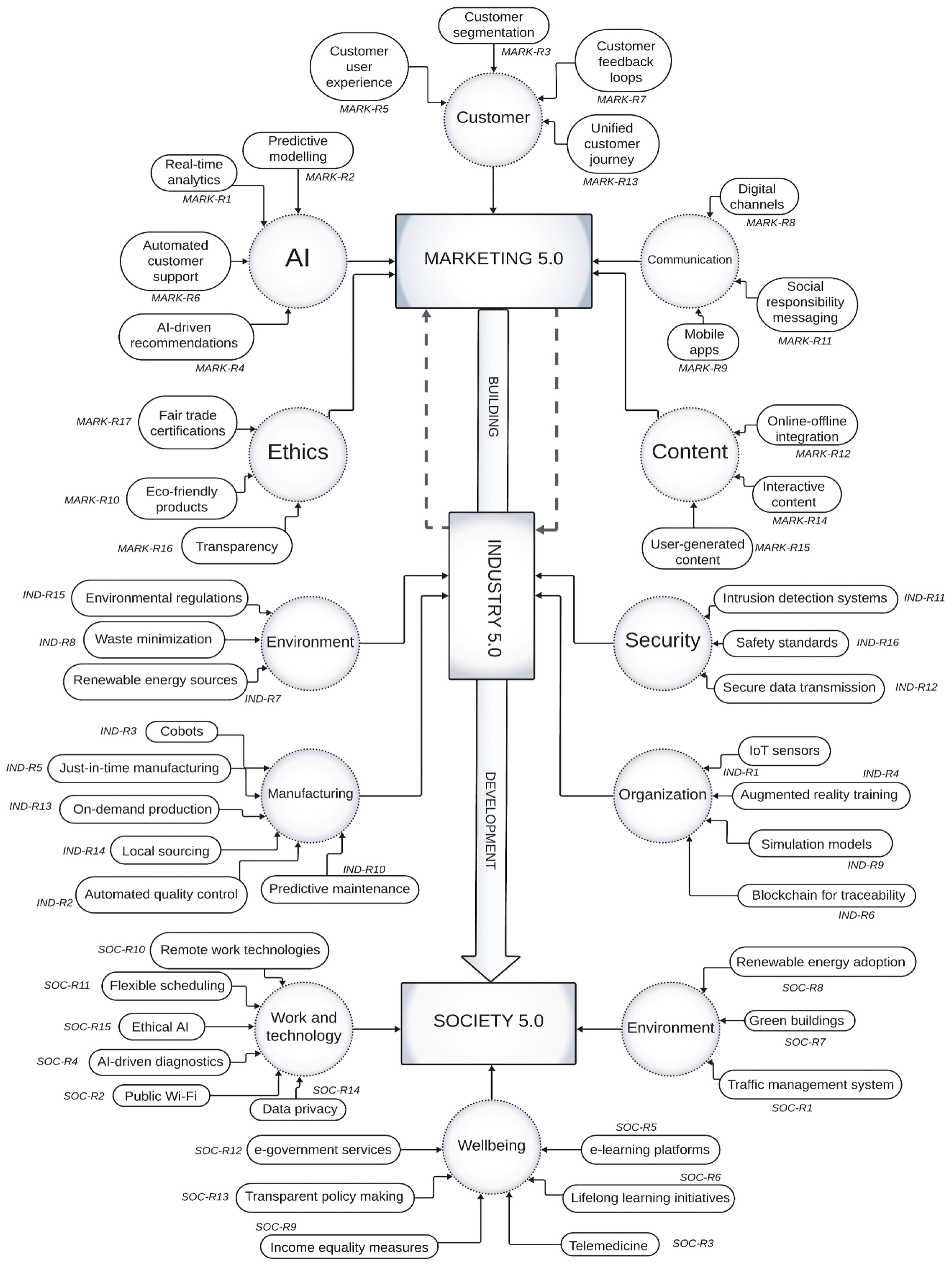
Figure 2.
The distribution of publications Review by source type.
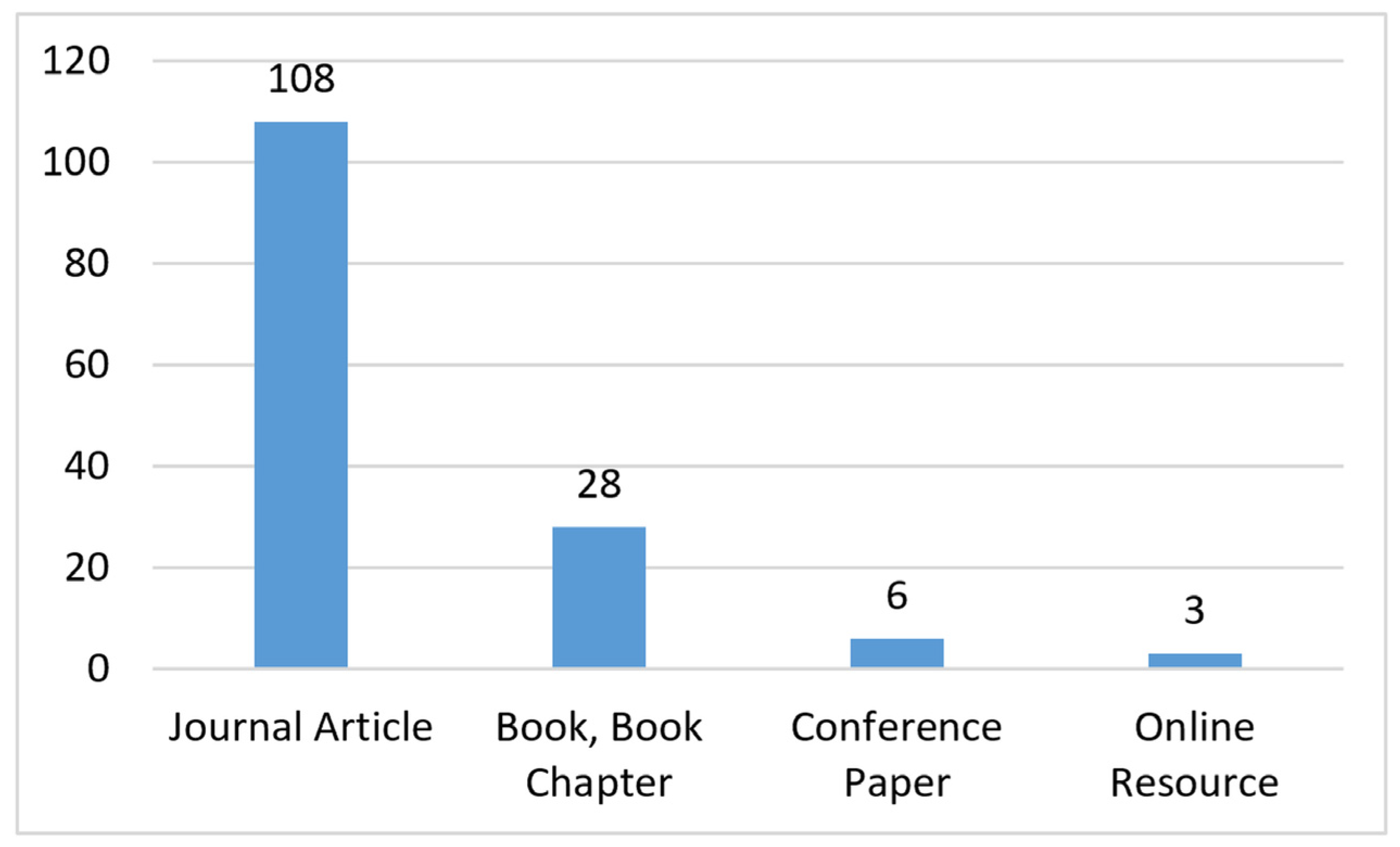
Figure 3.
The distribution of areas of the Review by years.
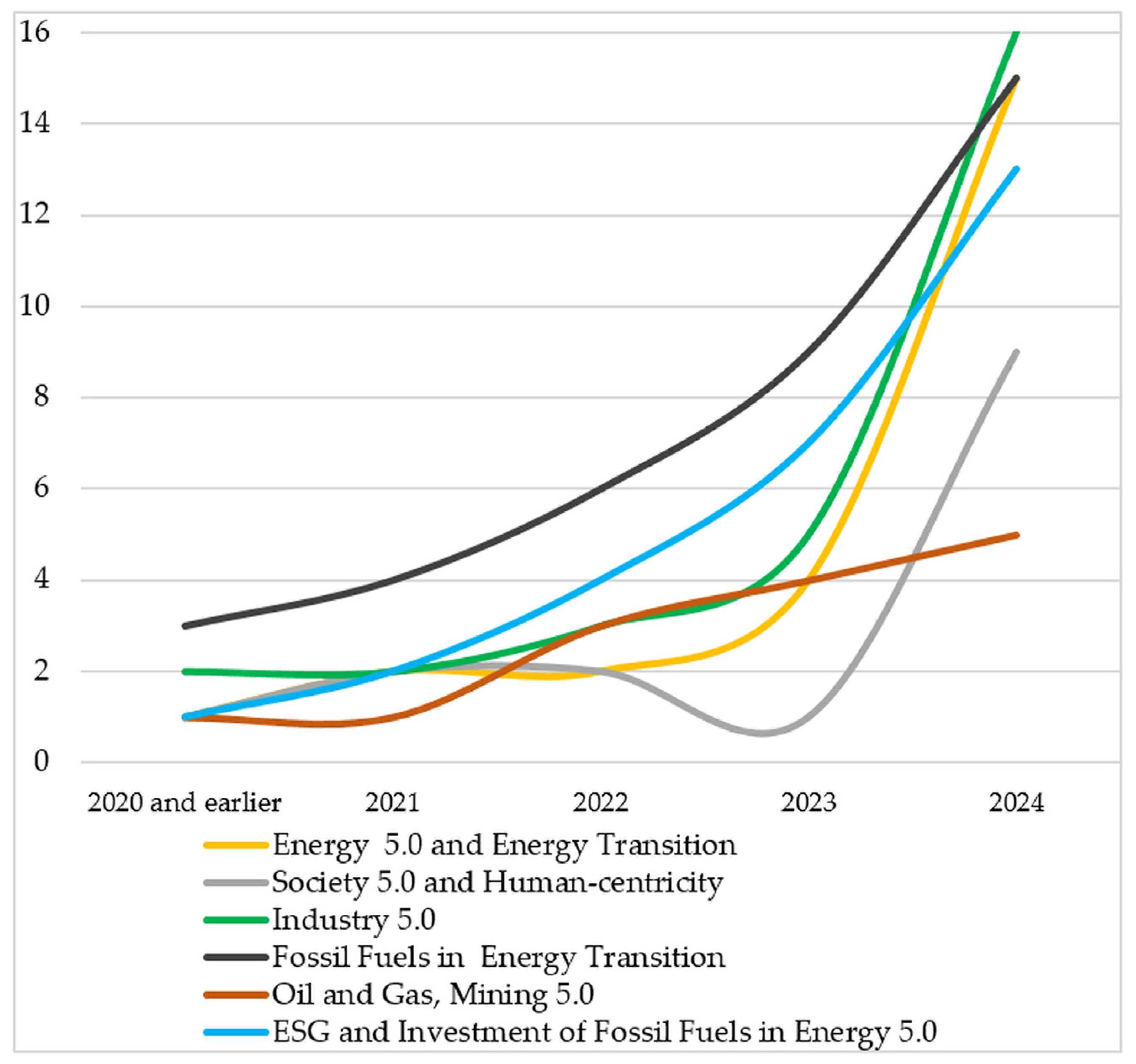
Figure 4.
Changing the principles of industrial development in the context of the long-term transition from Industry 1.0 to Industry 5.0 [26].
Figure 4.
Changing the principles of industrial development in the context of the long-term transition from Industry 1.0 to Industry 5.0 [26].
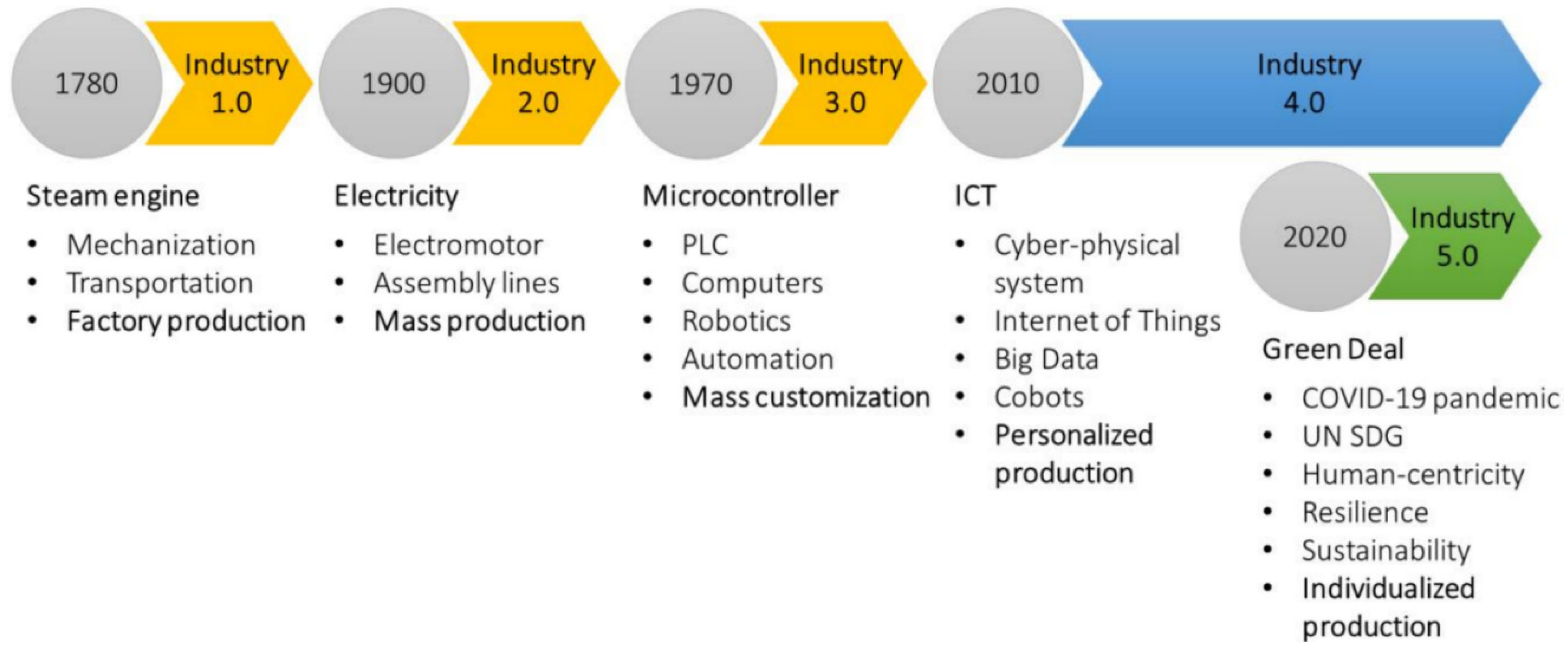
Figure 5.
Common features in the concepts of Society and Industry 5.0 [28].
Figure 5.
Common features in the concepts of Society and Industry 5.0 [28].
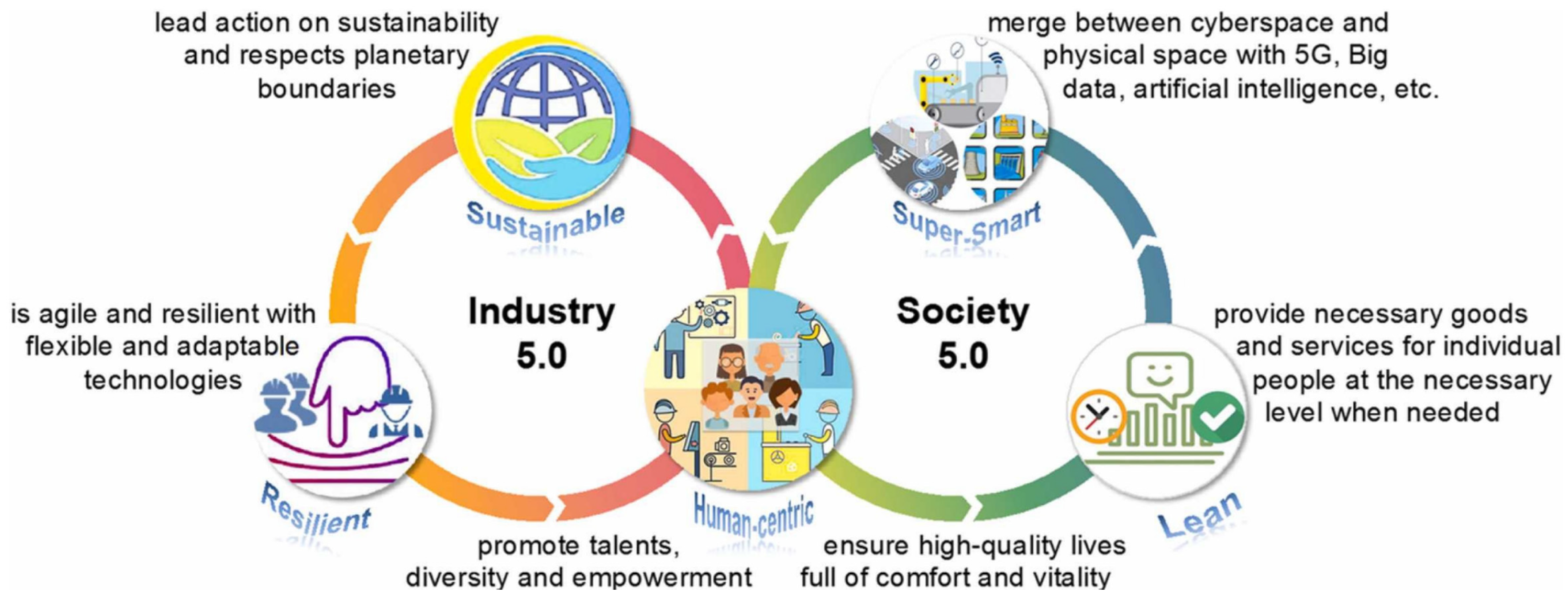
Figure 6.
Fundamental basis for the transition from physical objects to digital twins in Industry 5.0 [29].
Figure 6.
Fundamental basis for the transition from physical objects to digital twins in Industry 5.0 [29].
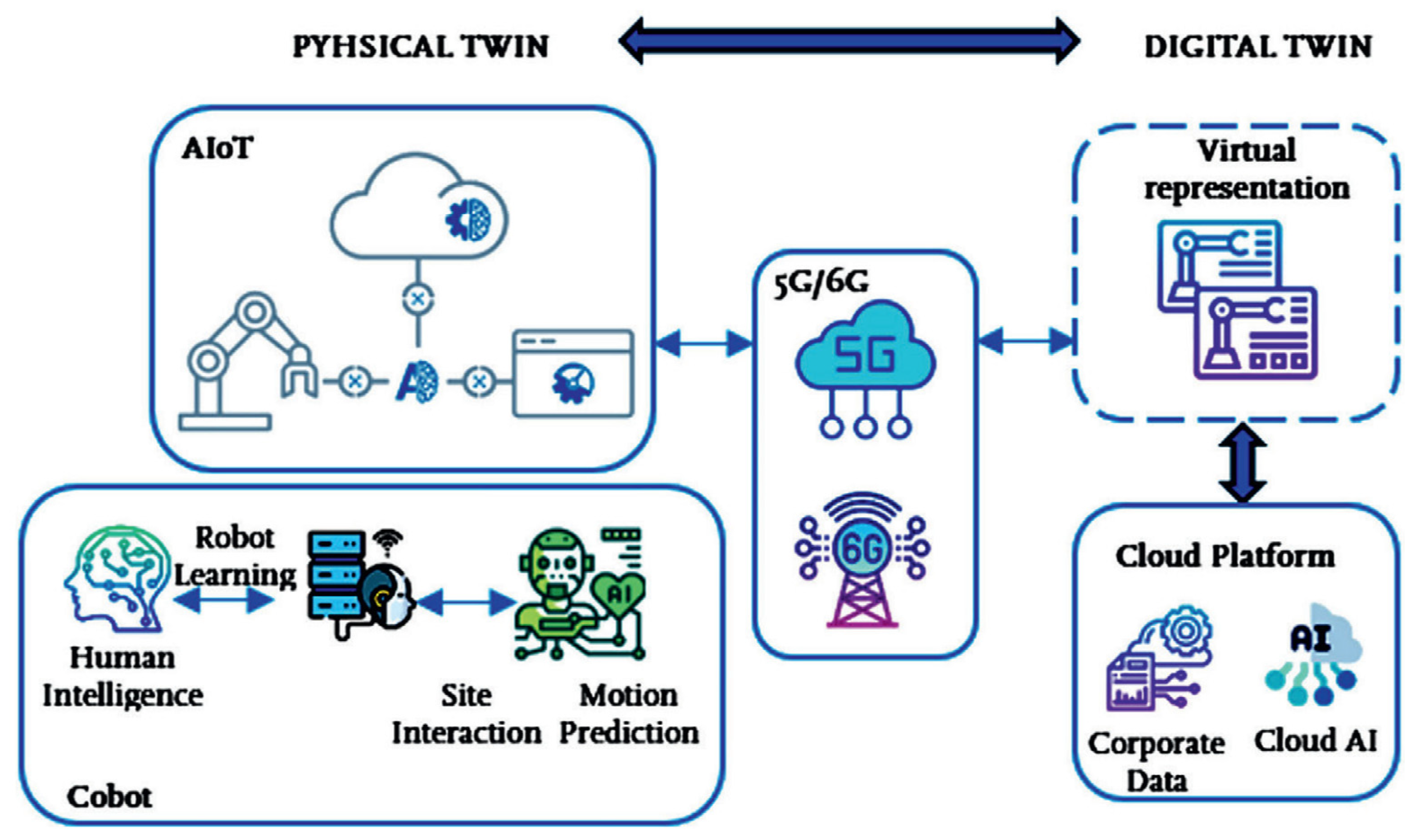
Figure 7.
Differences between the digital concept of Industry 4.0 and the human- centric concept of Industry 5.0 [29].
Figure 7.
Differences between the digital concept of Industry 4.0 and the human- centric concept of Industry 5.0 [29].
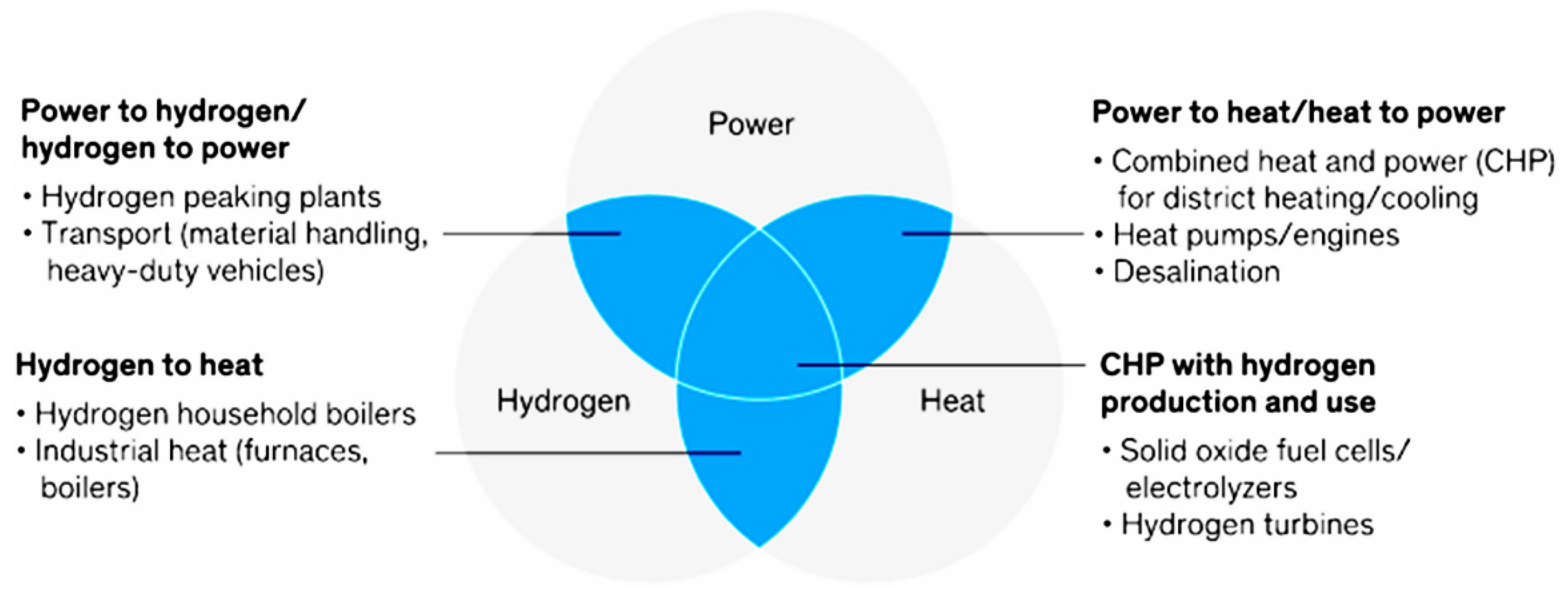
Figure 8.
Diffusion of Industry 5.0 technologies in the energy sector [30].
Figure 8.
Diffusion of Industry 5.0 technologies in the energy sector [30].
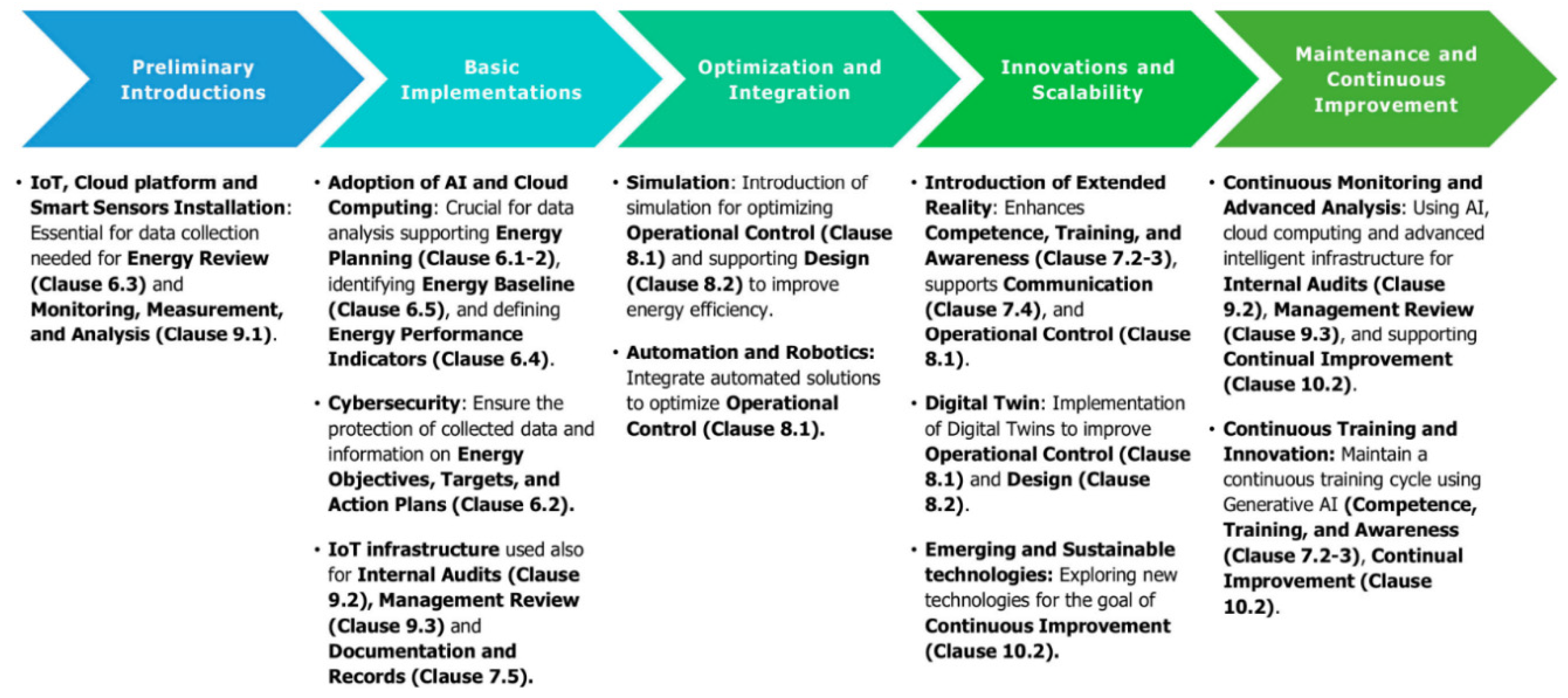
Figure 9.
Value creation in the transition to Industry 5.0 [41].
Figure 9.
Value creation in the transition to Industry 5.0 [41].
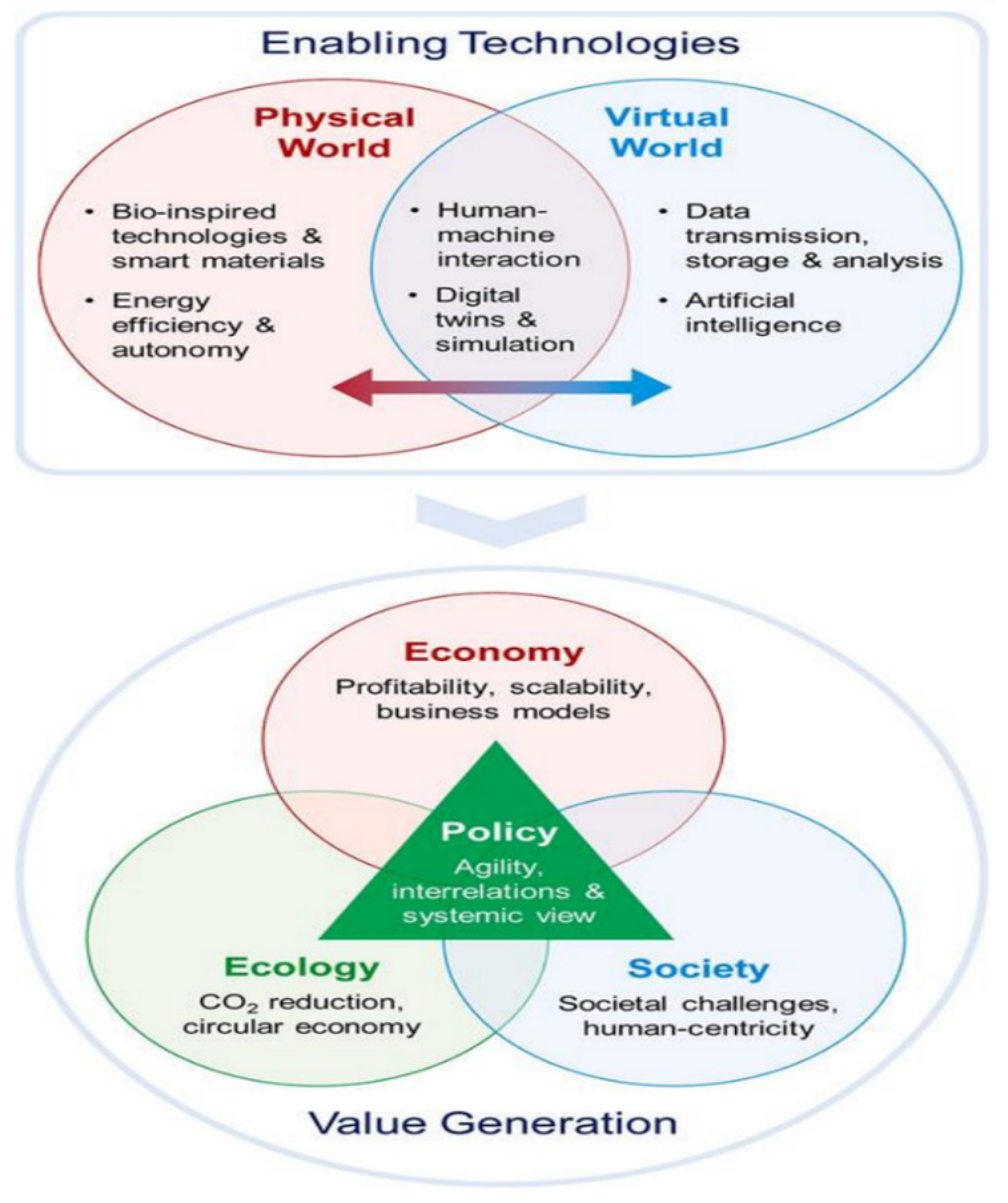
Figure 10.
Phases of future energy cycle [68].
Figure 10.
Phases of future energy cycle [68].
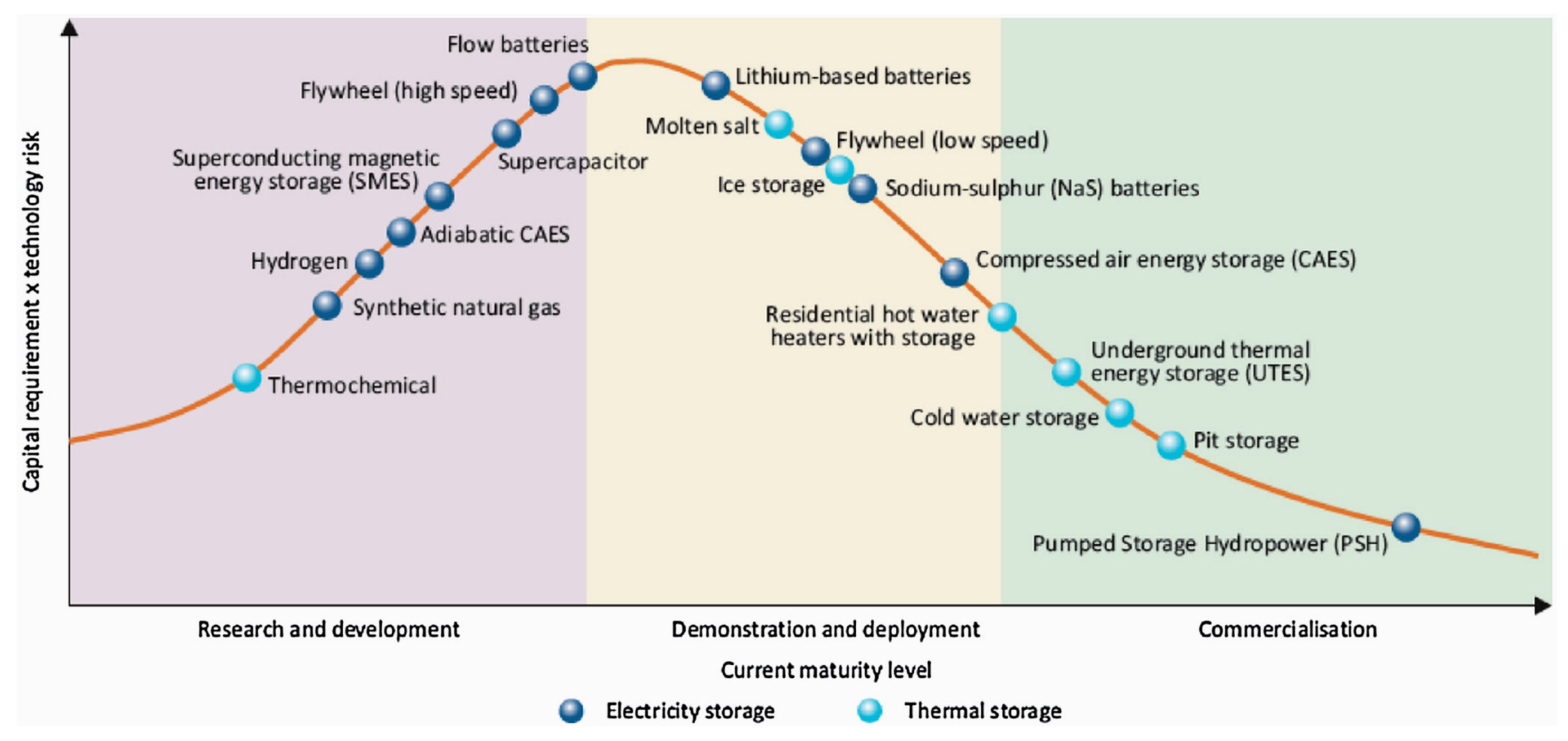
Figure 11.
Non-renewable energy generation in OECD countries (Twh) [71].
Figure 11.
Non-renewable energy generation in OECD countries (Twh) [71].
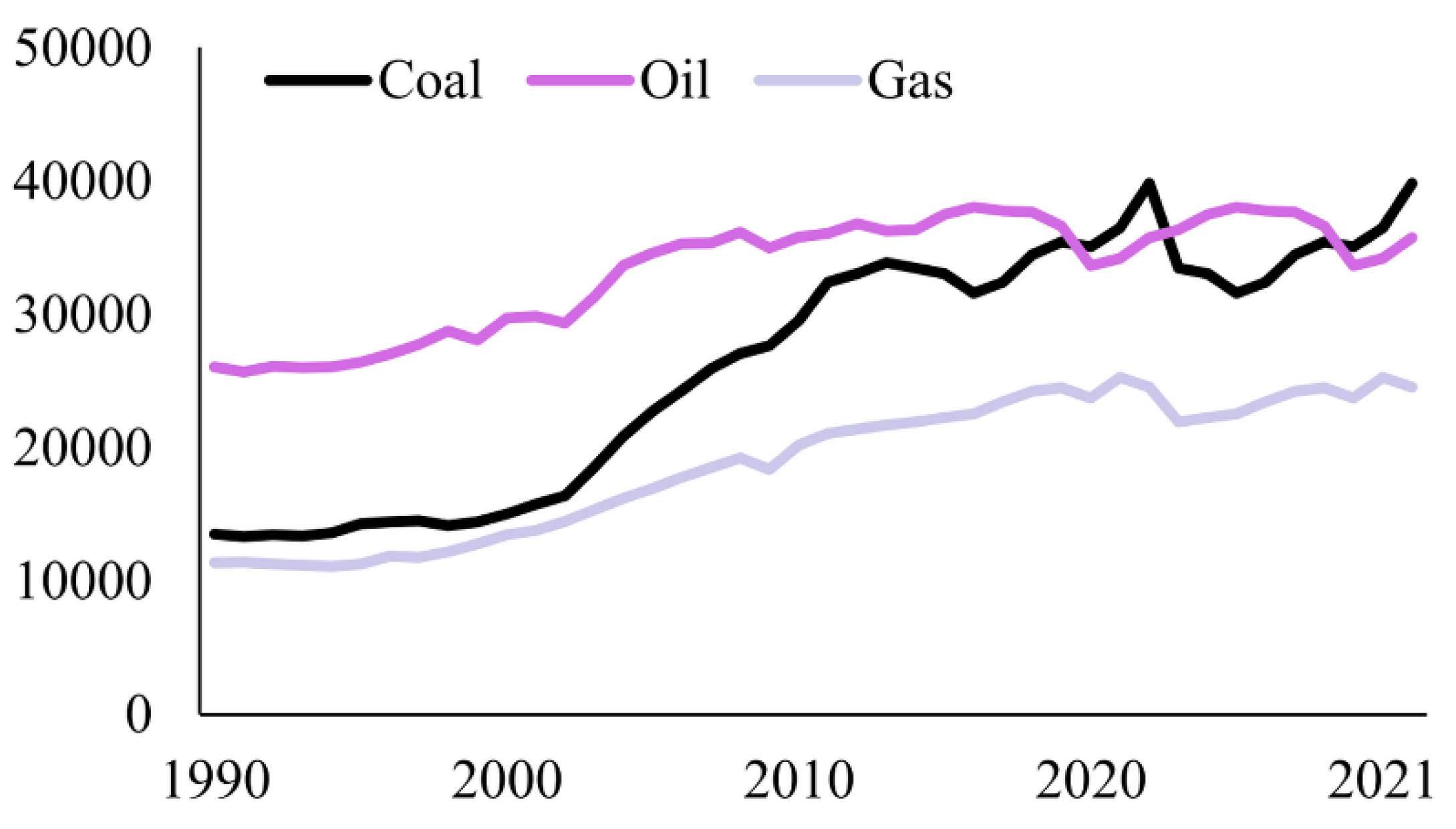
Figure 12.
Renewable energy generation in OECD countries (Twh) [71].
Figure 12.
Renewable energy generation in OECD countries (Twh) [71].
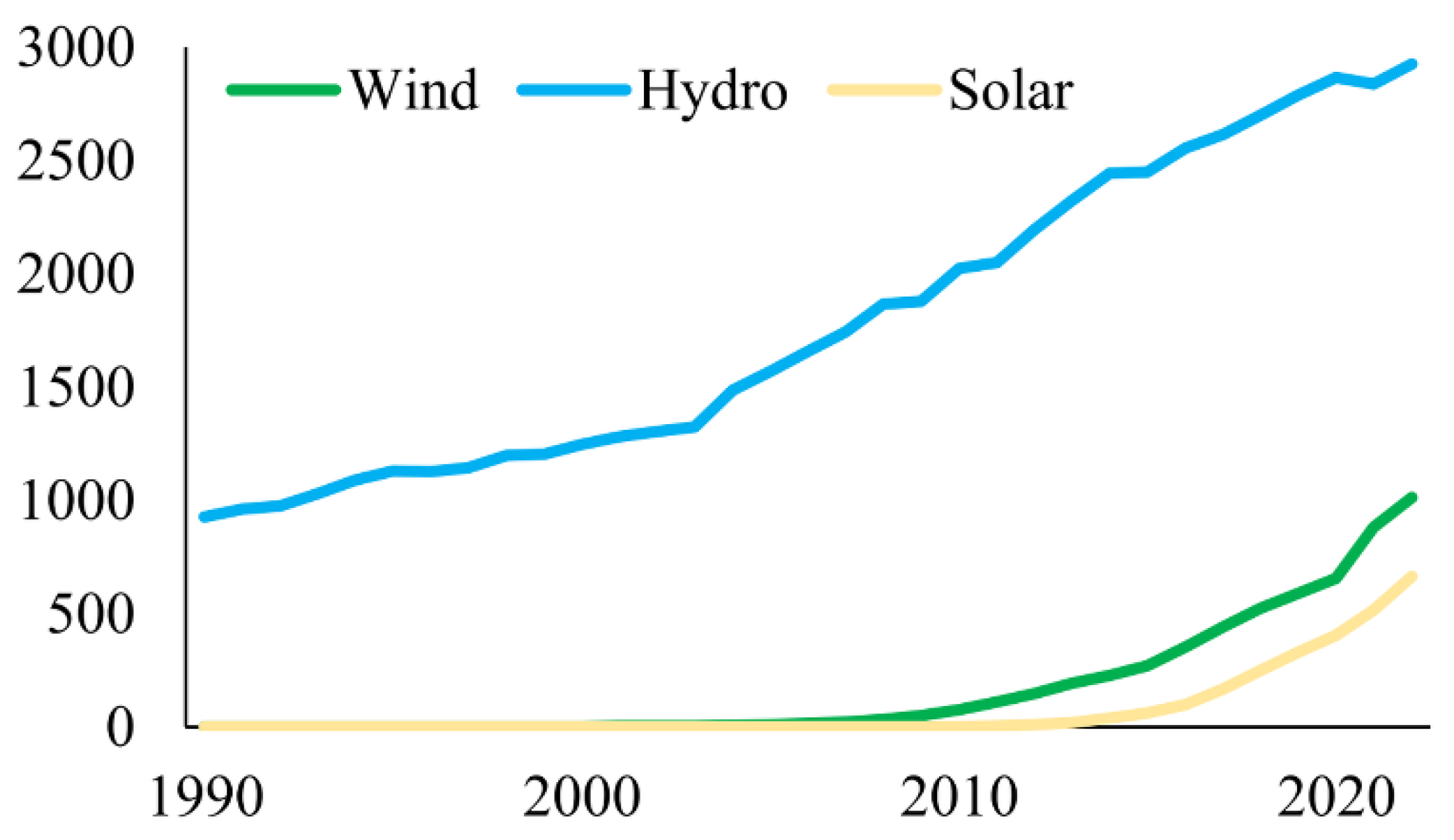
Figure 13.
Total mineral demand for clean energy technologies by scenario, 2010-2040 [101].
Figure 13.
Total mineral demand for clean energy technologies by scenario, 2010-2040 [101].
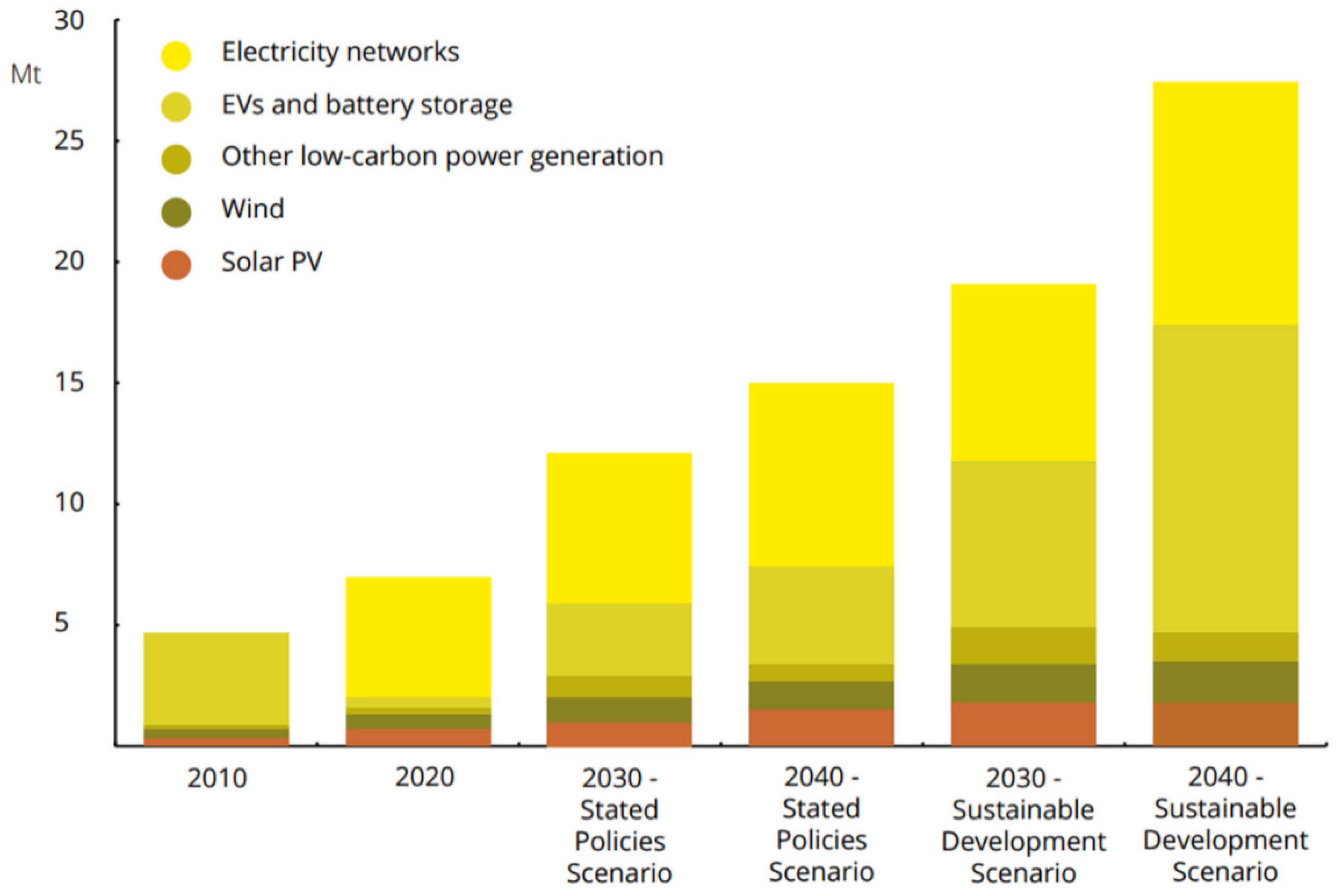
Figure 14.
The stages within the Fourth Energy Transition and the boundaries of their analysis [117].
Figure 14.
The stages within the Fourth Energy Transition and the boundaries of their analysis [117].
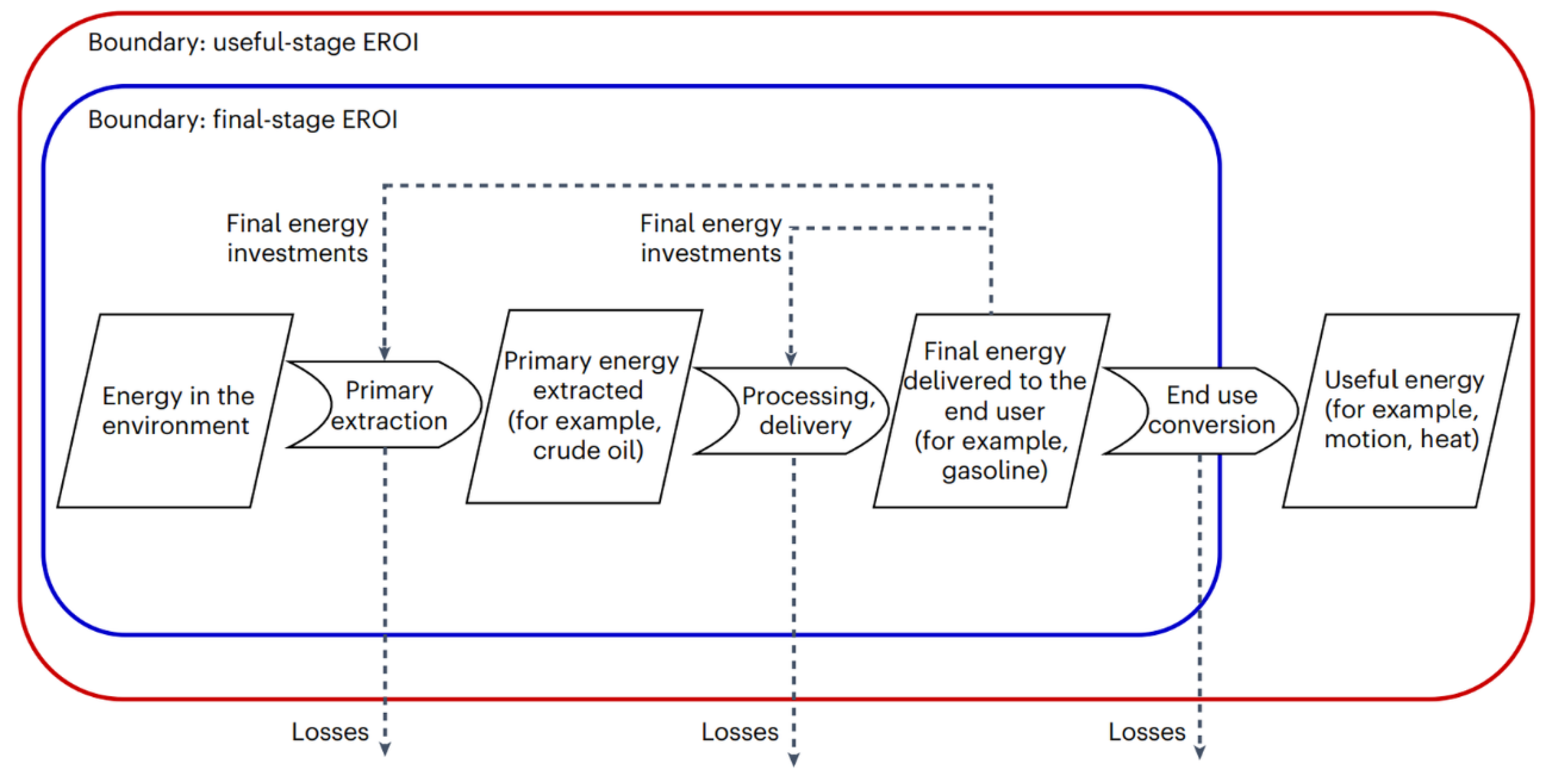
Figure 15.
Energy mix in OECD countries (2019) [120].
Figure 15.
Energy mix in OECD countries (2019) [120].
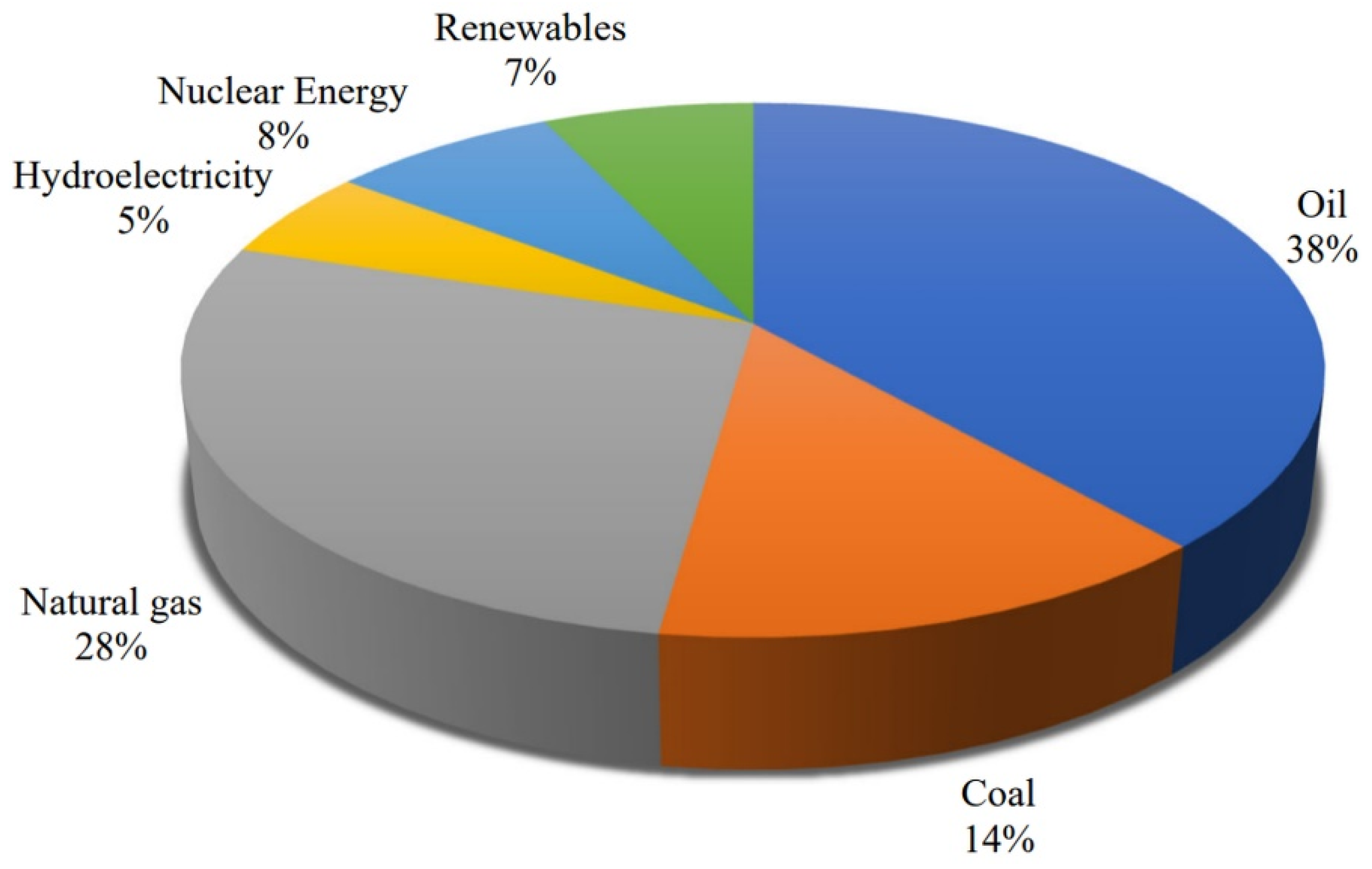
Figure 16.
The Fourth Energy Transition in industry [121].
Figure 16.
The Fourth Energy Transition in industry [121].
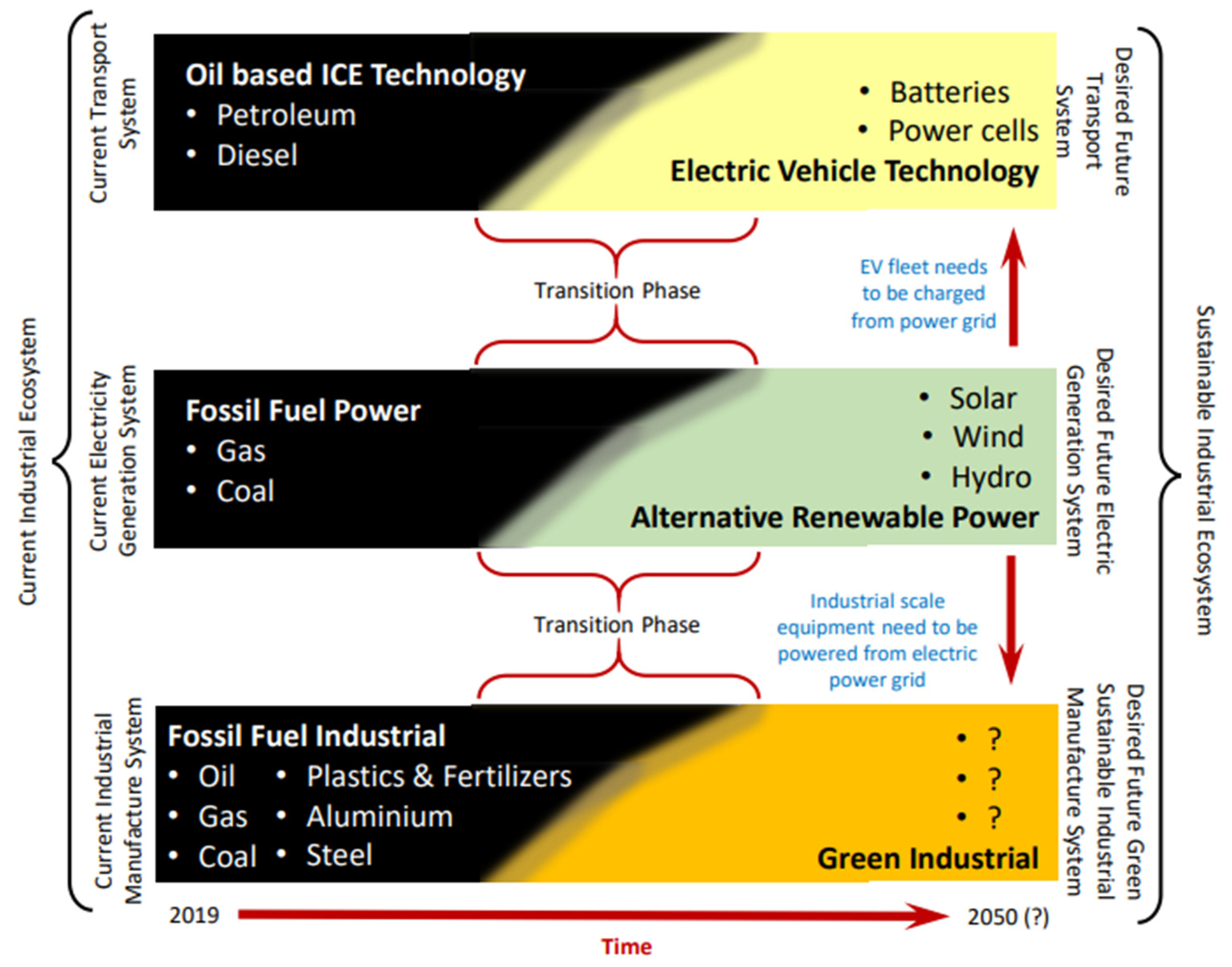
Disclaimer/Publisher’s Note: The statements, opinions and data contained in all publications are solely those of the individual author(s) and contributor(s) and not of MDPI and/or the editor(s). MDPI and/or the editor(s) disclaim responsibility for any injury to people or property resulting from any ideas, methods, instructions or products referred to in the content. |
© 2024 by the authors. Licensee MDPI, Basel, Switzerland. This article is an open access article distributed under the terms and conditions of the Creative Commons Attribution (CC BY) license (http://creativecommons.org/licenses/by/4.0/).
Copyright: This open access article is published under a Creative Commons CC BY 4.0 license, which permit the free download, distribution, and reuse, provided that the author and preprint are cited in any reuse.


