
Submitted:
03 October 2024
Posted:
03 October 2024
You are already at the latest version
Abstract
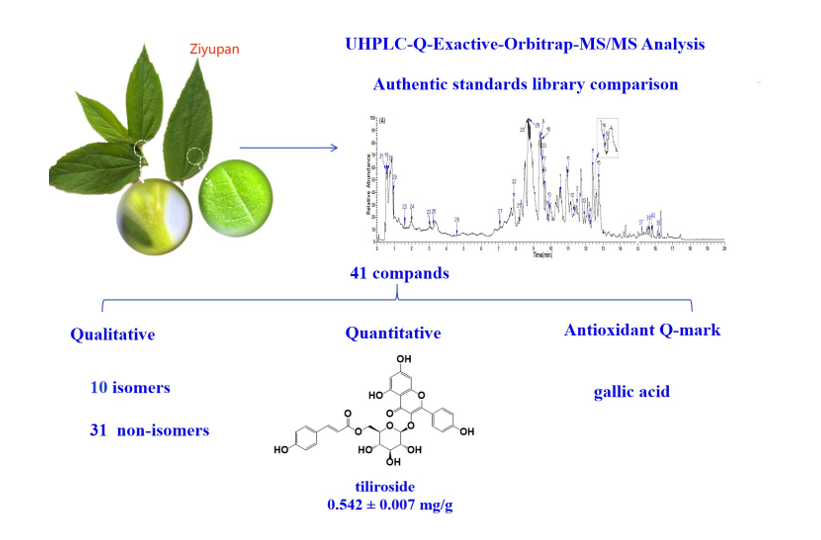
No study has focused on Uvaria macrophylla leaves with various traditional efficiencies. This paper therefore applied a database-affinity ultra-high-performance liquid chromatography with quadrupole orbitrap tandem mass spectrometry (UHPLC‑Q‑Orbitrap‑MS/MS) strategy, to analyze the lyophilized aqueous extract of U. macrophylla leaves. Through database comparison and MS fragment elucidation, the study has putatively identified 41 constituents belonging to flavonoid, phenolic acid, steroid, saccharide natural product classifications. Significantly, 4 groups of isomers (liquiritigenin vs isoliquiritigenin vs pinocembrin; oroxylin A vs wogonin vs galangin 3-methyl ether; isoquercitrin vs hyperoside; protocatechuic acid vs 2,5-dihydroxybenzoic acid) have been successfully distinguished from each other. All of 41 constituents were then subjected to a quantitative analysis based on linear regression equation established by the above UHPLC‑Q‑Orbitrap‑MS/MS strategy, and an ABTS+•-scavenging antioxidant assay. Finally, the chemical content was multiplied by the corresponding ABTS+•-scavenging percentage to calculate the antioxidant contribution. It was shown that the chemical contents of 41 constituents varied from 0.003 ± 0.000 to 14.418 ± 1.041 mg/g, and gallic acid showed the highest antioxidant contribution. Gallic acid is considered as a suitable antioxidant quality-marker (Q-marker) of U. macrophylla leaves. These findings have scientific implications for resource development and quality-control of U. macrophylla leaves.
Keywords:
Uvaria littoralis leaves
; UHPLC‐Exactive‐Q‐Orbitrap‐MS/MS
; quantitation
; isomer differentiation
1. Introduction
Uvaria macrophylla Roxburgh(Figure 1A) is a shrub in the annonaceae family and also nominated as Uvaria littoralis. It is mainly distributed in low-altitude hilly regions of Eastern Asia, such as Chinese Hainan, Guangdong, and Guangxi provinces [1]. The plant mainly contains polyoxy-substituted, annonaceous acetogenins, flavonoids, alkaloids, and other constituents. In traditional Chinese medicine (TCM), its leaves (Figure 1B) are used [2] for the treatment of cancer, anemia, and inflammation [3,4].
Possibly owing to their traditional effects, three plant species, U. macrophylla, U. microcarpa, and U. Kurzii, have attracted interests from pharmacists and chemists. However, a substantial proportion of studies focused on U. microcarpa. For example, in 2009, Yang has systematically studied the chemical constituents of different parts of U. macrocarpa [4,5]. Liu explored the chemical constituents of U. microcarpa leaves [2]. Lv obtained 19 chemical constituents from another species U. Kurzii, by means of conventional phytochemical approaches [3].
By contrast with U. microcarpa, U. macrophylla has received less attention from chemists. To our knowledge, only Wang’s team has focused on the constituents in recent two decades [6,7,8]. However, Wang’s work only involved in the root and stem of U. macrophylla. Therefore, there is a limitations regarding chemical studies of U. macrophylla, that is, no study has focused on the U. macrophylla leaves, which have also been documented to the resource of Ziyupan [9].
This study thereby attempted to analyze U. macrophylla leaves using a novel chemical strategy, i.e., database-affinity ultra-high-performance liquid chromatography with quadrupole orbitrap tandem mass spectrometry (UHPLC-Q-Orbitrap-MS/MS) strategy. The strategy has been proven to be highly reliable and effective, for it could completely elucidate MS fragments and strictly discriminate different isomers [10,11,12], Meanwhile, this novel strategy was able to fulfill the quantification for these constituents [13]. Such simultaneous qualitative and quantitative analyses would bring about an in-depth understanding of U. macrophylla leaves, from the angle of chemistry. The in-depth chemical understanding is believed to lead to three scientific implications, i.e., clarification of substance basis of traditional herbal medicine Ziyupan, promotion of resource development of U. macrophylla plant, and establishment of quality-control method for U. macrophylla leaves.
2. Results and Discussion
Sample solutions of U. macrophylla leaves were analyzed for constituent identification using UHPLC-Q-Orbitrap-MS/MS strategy. Constituent identification however was accomplished by comparison with authentic standards in the database and subsequent MS/MS fragment elucidation. The identification results were intuitively shown in the total ion current (TIC) diagram (Figure 2); while the structures of all identified constituents were detailed in Figure 3. The main information for constituent identification was listed in Table 1, including R.T. values, molecular ion peak, MS/MS fragments, observed m/z value, theoretical m/z value, and error between observed m/z value and theoretical m/z value.
In negative ion mode, the aqueous extract of U. macrophylla leaves was shown to enrich 36 constituents, most of which were flavonoids and phenolic acids. In positive ion mode, 5 constituents were identified as D-fructose (17), cholesteryl acetate (34), (+)-4-cholesten-3-one (35), betulin (36), and L-(-)-proline (41). All 41 constituents have been elucidated for their MS/MS spectra in Suppls. 1–41. For example, the MS elucidation spectra of tiliroside 11 were shown in Figure 4.
Significantly, the constituent identification has successfully discriminated 4 groups of isomers. The discrimination of isomers group i (1, 2, and 3) is representative of the process. As seen in Figure 5, when formula C15H11O4- was extracted by Xcalibur in negative ion mode, the chromatograph was observed to show three peaks with m/z 255. Nevertheless, their MS/MS profiles were quite different from each other because the three isomers (1, 2, and 3) formed a group of hybridized isomers rather than simple positional isomers (or functional group isomers or steric isomers). Thus, they displayed quite different fragmenting pathways, according to our previous study [14]. Isoliquiritigenin 2, for example, underwent α-fragmentation to give two strong MS/MS peaks, m/z 135 and 119 (Eq. 1). Another two constituents liquiritigenin 1 and pinocembrin 3 did not give rise to these MS/MS peaks. Through comparison of these characteristic MS/MS peaks, as well as the different R.T. values in the database, the members in isomers group i were readily distinguished from each other. The identification processes and fragmentation process was detailed in Suppls. 1-3.

Similarly, three members (4, 5, and 6) in isomers group ii constructed positional isomerism and were differentiated by their different R.T. values (Figure 2A, and (Suppls. 4-6). Isomers group iii (7 and 8, Figure 3) however included two hybridized isomers. Isomers group Ⅳ (23 and 24, Figure 3) were positional isomerism too. Nonetheless, all these members have been completely differentiated by means of comparisons of their different R.T. values and MS/MS profiles. Their MS/MS fragments have been elucidated in Suppls. 4-8, 23-24. The success in differentiation of these isomers has implied that the database-aided UHPLC-Q-Orbitrap-MS/MS was a reliable strategy.
Using the reliable database-aided UHPLC-Q-Orbitrap-MS/MS strategy, the study has putatively identified 41 constituents in U. macrophylla leaves. Subsequently, the contents of all 41 identified constituents (1-41) were also quantitatively analyzed using the database-aided UHPLC-Q-Orbitrap-MS/MS strategy. As seen in Table 1, their chemical contents varied from 0.003 ± 0.000 to 14.418 ± 1.041 mg/g. One steroid cholesteryl acetate (34) displayed the highest chemical content while another steroid (+)-4-cholesten-3-one (35) exhibited the lowest chemical content.
From the angle of pharmacology, these constituents showed various beneficial effects, such as anti-tumor (e.g., pinocembrin), anti-inflammatory effect (e.g., wogonin), neuroprotection (e.g., gallocatechin gallate), cardiovascular protection (e.g., citric acid). Especially, five constituents are actually nutrients which can improve anemia [15], including sucrose, 2,5-dihydroxybenzoic acid, 4-hydroxybenzaldehyde, and L-(-)-proline. Nine constituents have been reported to be natural antioxidants [15], such as gallic acid and ellagic acid (Table 1). These beneficial effects are relevant to the aforementioned traditional efficiencies of Ziyupan. Nevertheless, there is not a certain bioactivity to effectively characterize the traditional efficiencies of Ziyupan. Thereby, the study had to comparatively evaluate their relative antioxidant abilities, because antioxidation plays an indispensable role in these traditional efficiencies and bioactivities [16,17,18].
To guarantee the comparability, all 41 constituents were individually analyzed by ABTS+•-scavenging antioxidant assay at the same dose (3 μL × 0.5 μg/μL). As seen in Figure 6A, these constituents showed different antioxidant levels in ABTS+•- scavenging assay. Some constituents (e.g., 34-41) exhibited negligible ABTS+•- scavenging percentages; while 6 constituents (e.g., 18, 22, 24, 29, 32, and 33) exhibited 100% ABTS+•- scavenging percentage. However, the six showed different chemical contents, as indicated in Table 1. Therefore, the study defined a new formula (Eq. 2), to calculate the antioxidant contribution and then to characterize the role of one antioxidant constituent in whole U. macrophylla leaves.
Antioxidant contribution = relative contribution level × chemical content
In line with the calculation, gallic acid (29) possessed the highest antioxidant contribution value, which was also much higher than the sum of antioxidant contribution values of other constituents (Figure 6B). Therefore, gallic acid (29) was considered as the most antioxidant contributor in U. macrophylla leaves.
Herein the study used a novel database-aided UHPLC-Q-Orbitrap-MS/MS strategy, to simultaneously qualitatively and quantitatively analyze 41 constituents in U. macrophylla leaves. These constituents covered several natural product classifications, including flavonoid, phenolic acid, steroid, and saccharide. Particularly, the qualitative analysis has successfully discriminated 10 isomeric constituents, to accomplish a putative identification of all 41 constituents. Thereafter, all 41 constituents were quantitatively analyzed using the above database-aided UHPLC-Q-Orbitrap-MS/MS strategy. Finally, these constituents were evaluated for the relative antioxidant level using ABTS+-scavenging assay, to calculate their individual antioxidant contribution. One phenolic acid gallic acid showed substantial chemical content and extremely high antioxidant contribution towards U. macrophylla leaves. Therefere, it was recommended as the antioxidant quality-marker (Q-marker) of U. macrophylla leaves. Apparently, all these in-depth chemical understandings have not only facilitated the resource development and quality-control of U. macrophylla leaves, but also helped to clarify the substance basis of traditional herbal medicine Ziyupan.
3. Materials and Methods
3.1. Plant Materials and Chemicals
The U. macrophylla leaves (10 g) were clipped at Yaowang Mountain, Guangzhou University of Chinese Medicine (23.039º N, 113.388º E, altitude 20 m, Guangzhou, China) on July 12, 2023. Samples were identified as genuine by Professor Wang Xifang of Shaanxi University of Chinese Medicine, were dried at low temperature, were placed into a self-sealing bag and labeled as "Uvaria macrophylla Roxburgh", and were refrigerated (2-8 ℃). The methanol and water used for the preparation and analysis of the sample solution were of MS purity (Merck Sigma-Aldrich, Shanghai, China).
3.2. Authentic Standards
Liquiritigenin (CAS 578-86-9, C15H12O4, MW 256.25, 98%), isoliquiritigenin (CAS 961-29-5, C15H12O4, MW 256.25, 98%), pinocembrin (CAS 480-39-7, C15H12O4, MW 256.25, 98%), oroxylin A (CAS 480-11-5, C16H12O5, MW 284.26, 98%), wogonin (CAS 632-85-9, C16H12O5, MW 284.26, 98%), galangin 3-methyl ether (CAS 6665-74-3, C16H12O5, MW 284.26, 98%), isoquercitrin (CAS 21637-25-2, C21H20O12, MW 464.38, 98%), and hyperoside (CAS 482-36-0, C21H20O12, MW 464.38, 98%) were obtained from Shanghai Maclin Biochemical Technology Co., Ltd. Quercetin 3-O-β-D-glucuronide (CAS 22688-79-5, C21H18O13, MW 478.36, 98%), phloridzin (CAS 60-81-1, C21H24O10, MW 436.13, 98%), tiliroside (CAS 20316-62-5, C30H26O13, MW 594.52, 98%), kaempferol (CAS 520-18-3, C15H10O6, MW 286.24, 98%), 7-hydroxyflavone (CAS 6665-86-7, C15H10O3, MW 238.24, 98%), chrysin (CAS 480-40-0, C15H10O4, MW 254.24, 99%), galangin (CAS 548-83-4, C15H10O5, MW 270.24, 98%), myricetin (CAS 529-44-2, C15H10O8, MW 318.24, 98%), D-fructose (CAS 57-48-7, C6H12O6, MW 180.16, 98%), and 1,2,3,4,6-penta-O-galloyl-β-D-glucopyranose (CAS 14937-32-7, C41H32O26, MW 940.68, 98%) were obtained from Merck-Sigma Co., Ltd. (Shanghai, China). Sucrose (CAS 57-50-1, C12H22O11, MW 342.3, 99.5%), quinic acid (CAS 77-95-2, C7H12O6, MW 192.17, 98%), salicylic acid (CAS 69-72-7, C7H6O3, MW 138.12, 99.5%), methyl gallate (CAS 99-24-1, C8H8O5, MW 184.15, 99%), protocatechuic acid (CAS 99-50-3, C7H6O4, MW 154.12, 99%), 2,5-dihydroxybenzoic acid (CAS 490-79-9, C7H6O4, MW 154.12, 99%), 4-hydroxybenzaldehyde (CAS 123-08-0, C7H6O2, MW 122.12, 98%), and caffeic acid (CAS 331-39-5, C9H8O4, MW 180.16, 99%) were purchased from Sichuan Weikeqi Biological Technology Co., Ltd. (Chengdu, China). Cis-4-Hydroxycinnamic acid (CAS 4501-31-9, C9H8O3, MW 164.16, 99%), ferulic acid (CAS 1135-24-6, C10H10O4, MW 194.18, 98%), gallic acid (CAS 149-91-7, C7H6O5, MW 170.12, 98%), ellagic acid (CAS 476-66-4, C14H6O8, MW 302.19, 98%), citric acid (CAS 77-92-9, C6H8O7, MW 192.12, 99.5%), gallocatechin gallate (CAS 4233-96-9, C22H18O11, MW 458.37, 99%), epicatechin gallate (CAS 1257-08-5, C22H18O10, MW 442.37, 99%), cholesteryl acetate (CAS 604-35-3, C29H48O2, MW 428.69, 98%), (+)-4-cholesten-3-one (CAS 601-57-0, C27H44O, MW 384.64, 98%), betulin (CAS 473-98-3, C30H50O2, MW 442.72, 98%), oleanolic acid (CAS 508-02-1, C30H48O3, MW 456.7, 98%), ethyl stearate (CAS 111-61-5, C20H40O2, MW 312.53, 98%), oleic acid (CAS 112-80-1, C18H34O2, MW 282.46, 98%), stearic acid (CAS 57-11-4, C18H36O2, MW 284.48, 98%), and L-(-)-proline (CAS 147-85-3, C5H9NO2, MW 115.13, 98%) were obtained from Shanghai Yuanye Biotechnology Co., Ltd.
3.3. Preparation of Sample and Authentic Standard Solutions
3.3.1. Preparation of Lyophilized Aqueous Extract and Sample Solutions
The extraction process is depicted in Figure 7. To avoid possible insoluble impurities and solvent effects [64], 10.0 g U. macrophylla leaves powder was accurately weighed and placed in a round-bottomed flask with a stopper. After soaking for 5 minutes in 50 mL water, boiling extraction was carried out twice, the first time for 2 h, the second for 1 h. After cooling and filtering, the filtrates were lyophilized according to a previous report [65], to yield 0.3 g brown lyophilized powder. The powder was re-dissolved using 80% methanol at 30 mg/mL concentration. The methanolic solution was filtered using a 0.45 μm organic filter membrane to afford the sample solution which was stored in the refrigerator at 2−8 ℃ for further analysis.
3.3.2. Preparation of Authentic Standard Solutions
All authentic standards listed in Section 2.2 were dissolved in methanol at 30 μg/mL concentration and filtered through a 0.45 μm membrane. Filtrates were stored at 2−8 ℃ for further analysis [66].
3.4. Simultaneous Qualitative and Quantitative Analyses Using Database-Affinity UHPLC-Q-Orbitrap-MS/MS
The main operations of injection, data acquisition, and analysis were controlled by the Xcalibur 4.1 package (Thermo Fisher Scientific Inc., Waltham, MA, USA) comprising TraceFinder, mzVault, and FreeStyle viewing softwares with the UHPLC-Q-Exactive Orbitrap-MS apparatus. Before data acquisition, the background sign was zeroed using blank solvent. The acquired data were then exported to TraceFinder for m/z extraction and to afford the corresponding MS spectra [67]. The main parameters were set as follows: mass range 100−1500 Da; mass tolerance 10 ppm; S/N threshold 5; and isotopic pattern fit threshold 90%. The MS spectra and corresponding top 5 secondary spectra were screened using Xcalibur 4.1. By comparing 4 parameters with authentic standards (retention time, molecular ion peak, MS/MS profile, and characteristic fragments), the constituents were preliminarily nominated by TraceFinder and were putatively identified manually [15].
Quantitative analysis of the 41 identified constituents was carried out according to a published method with minor modifications [68]. In brief, linear regression equations were first established using authentic standard solutions. TraceFinder and Xcalibur 4.1 software offered peak area parameters for these authentic standard solutions. U. macrophylla leaves sample solutions were subsequently analyzed under the same chromatography and MS spectra conditions. In line with the linear regression equations and the peak areas of the identified constituents, the contents of the U. macrophylla leaves constituents were quantified and expressed as mean ± SD (standard deviation).
3.5. Relative Antioxidant Level Evaluation Experiment
Relative antioxidant level was evaluated using ABTS+•-scavenging assay [69], with some modifications. ABTS+• was produced by mixing 700 μL (NH4)2ABTS aqueous solution (7.4 mmol/L) with 700 μL of K2S2O8 aqueous solution (2.6 mmol/L). The mixture was incubated in the dark at room for 12 h. Thereafter, the incubated mixture was diluted with methanol (at a ratio of approximately 1: 15) so that its absorbance at 734 nm was measured to be 0.65 ± 0.01 using a microplate reader (Multiskan FC, Thermo Scientific, Shanghai, China). Then 3 μL sample solution (0.5 μg/μL) was added to 17 μL of methanol and treated with 80 μL of ABTS+• reagent to determine the scavenging activity. The absorbance at 734 nm was measured using the above microplate reader after initial mixing. After a 6-minute incubation, the absorbance at 734 nm was measured The ABTS+•-scavenging percentage was calculated as Eq. 3.
where A0 was the absorbance at 734 nm of the control (reaction system without sample) and A is the absorbance at 734 nm of the reaction mixture with the sample. Methanol was used as the blank group.
3.6. Statistical Analysis
Each quantitative analysis experiment and each ABTS+•-scavenging assay experiment were performed in triplicate. The data are shown as the mean ± SD from three independent measurements. Correlation coefficients (R values) were calculated by linear analysis using Origin 6.0 professional software (Origin-Lab Corporation, Northampton, MA, USA).
4. Conclusions
U. macrophylla leaves contain at least 41 constituents (including 10 isomers). These constituents belong to several natural product classifications, such as flavonoid, phenolic acid, steroid, and saccharide. They show different chemical contents and antioxidant contributions. Gallic acid has the highest antioxidant contribution and is applicable to act as the antioxidant Q-marker of U. macrophylla leaves.
Supplementary Materials
The following supporting information can be downloaded at the website of this paper posted on Preprints.org, Suppls. S1–S41: UHPLC-Q-Orbitrap MS spectra and identification of 1–41.
Author Contributions
XL and XX contributed to the project design and paper writing. RC and SC contributed to chemical analysis methodology. CZ and YL contributed to extraction and analysis experiments. XX and YL contributed to data analyses. XL contributed to the paper revision. All authors read and approved the final manuscript.
Funding
This research was funded by the National Nature Science Foundation of China (82374485) and the science and technology talent special plan of Pingliang City 2023 (PL-STK-2023A-039).
Ethics approval and consent to participate
Not applicable.
Data Availability Statement
All the data used to support the findings of this study are available from the corresponding author upon request.
Acknowledgements
We are grateful for the permission to collect 10 g Uvaria macrophylla Roxb. leaves from Yaowang Hill preservation garden by the Office of Medicinal Plant Outdoor Teaching Base, Guangzhou University of Chinese Medicine.
Conflicts of Interest
The authors declare that they have no competing interests.
References
- Chen, Z.; Liu, X.R.; Liu, Y.L.; Xu, Q.M.; Yang, S.L. ChemInform Abstract: Two New Flavones from Uvaria macrophylla Roxb. var. microcarpa and Their Cytotoxic Activities. ChemInform. 2012, 43. [Google Scholar] [CrossRef]
- Liu, X.; Chen, Z.; Li, X.; Xu, Q.; Yangy, S. Chemical constituents from leaves of Uvaria microcarpa (in Chinese). Zhong Cao Yao. 2011, 42, 2197. [Google Scholar]
- Lv, Z.; huang, L.; Chen, R.; Yu, D. Chemical constituents of Uvaria Kurzii (in Chinese). Zhongguo Zhong Yao Za Zhi. 2009, 34, 2203. [Google Scholar] [PubMed]
- Yang, X.N. Study on the chemical constituents of Uvaria microcarpa Champ. ex Benth (in Chinese). Second Military Medical University Master Dissertation. 2009, 1, 1. [Google Scholar]
- Yang, X.-N.; Chen, H.-S.; Jin, Y.-S.; Liu, H.; Yang, X.-W. Chemical Constituents from the Stems of Uvaria microcarpa. Chinese Journal of Natural Medicines. 2009, 7, 287–289. [Google Scholar] [CrossRef]
- Wang, S.; Zhang, P.-C.; Chen, R.-Y.; Dai, S.-J.; Yu, S.-S.; Yu, D.-Q. Four new compounds from the roots of Uvaria macrophylla. Journal of Asian Natural Products Research. 2006, 7, 687–694. [Google Scholar] [CrossRef]
- Wang, S.; Chen, R.-Y.; Yu, S.-S.; Yu, D.-Q. Uvamalols D-G: Novel polyoxygenated seco-cyclohexenes from the roots ofUvaria macrophylla. Journal of Asian Natural Products Research. 2003, 5, 17–23. [Google Scholar] [CrossRef]
- Wang, S.; Zhang, P. A Novel Dihydroflavone from the Roots of Uvaria Macrophylla. Chin Chem Lett. 2002, 13, 857–858. [Google Scholar]
- Pan, Y.; Wang, D. Summary of studies of ZIyupan (in Chinese). Guangxi TCM. 2006, 29, 5–7. [Google Scholar]
- Chen, S.; Li, X.; Zeng, J.; Cai, R.; Li, C.; Chen, C.B. Library-based UHPLC-Q-Exactive-Orbitrap-MS Putative Identification of Isomeric and Non-isomeric Bioactives from Zibushengfa Tablet and Pharmacopoeia Quality-marker Chemistry. J Liq Chromatogr Relat Technol. 2023. [Google Scholar] [CrossRef]
- Liu, S.; Li, X.; Cai, R.; Chen, B.; Zeng, J.; Li, C.; Zhou, X.; Li, Y. UHPLC-Quadrupole-Exactive-Orbitrap-MS/MS-based Putative Identification for Eucommiae Folium (Duzhongye) and its Quality-marker Candidate for Pharmacopeia. J Sep Sci. 2023, 46, 00. [Google Scholar] [CrossRef] [PubMed]
- Zeng, J.; Li, X.; Cai, R.; Li, C.; Chen, S. Jinhua Qinggan Granule UHPLC-Q-extractive-Orbitrap-MS assay: Putative identification of 45 potential anti-Covid-19 constituents, confidential addition, and pharmacopoeia quality-markers recommendation. J Food Drug Anal. 2023. [Google Scholar] [CrossRef]
- Xican Li; Jingyuan Zeng; Chunhou Li; Hanxiao Chai; Shaoman Chen; Nana Jin; Tingshan Chen; Xiaohua Lin; Sunbal Khan; Cai, R. Simultaneous Qualitative and Quantitative Determination of 33 Compounds from Rubus Alceifolius Poir Leaves Using UHPLC-Q-Orbitrap-MS Analysis. Curr Anal Chem. 2024; 20. [Google Scholar]
- Li, X.C.; Zeng, J.; Cai, R.; Li, C. New UHPLC-Q-Orbitrap MS/MS-based Library-comparison Method Simultaneously Distinguishes 22 Phytophenol Isomers from Desmodium styracifolium. Microchem J. 2023, 190, 108938. [Google Scholar] [CrossRef]
- Li, X.C.; Chen, S.M.; Zeng, J.Y.; Cai, R.X.; Liang, Y.L.; Chen, C.B.; Chen, B.; Li, C.H. Database-aided UHPLC-Q-orbitrap MS/MS Strategy Putatively Identifies 52 Compounds from Wushicha Granule to Propose Anti-counterfeiting Quality-markers for Pharmacopoeia. Chin Med. 2023, 18. [Google Scholar] [CrossRef]
- Behl, T.; Mehta, K.; Sehgal, A.; Singh, S.; Sharma, N.; Ahmadi, A.; Arora, S.; Bungau, S.J.C.R.i.F.S. Exploring the role of polyphenols in rheumatoid arthritis. Nutrition 2022, 62, 5372–5393. [Google Scholar] [CrossRef]
- La, X.; He, X.; Liang, J.; Zhang, Z.; Li, H.; Liu, Y.; Liu, T.; Li, Z.; Wu, C.J.N. Gastroprotective Effect of Isoferulic Acid Derived from Foxtail Millet Bran against Ethanol-Induced Gastric Mucosal Injury by Enhancing GALNT2 Enzyme Activity. 2024, 16, 2148. [Google Scholar] [CrossRef]
- Long, Z.; Feng, G.; Zhao, N.; Wu, L.; Zhu, H.J.M.M.R. Isoferulic acid inhibits human leukemia cell growth through induction of G2/M-phase arrest and inhibition of Akt/mTOR signaling. 2020, 21, 1035–1042. [Google Scholar] [CrossRef]
- Yu, J.Y.; Ha, J.Y.; Kim, K.M.; Jung, Y.S.; Jung, J.C.; Oh, S. Anti-Inflammatory activities of licorice extract and its active constituents, glycyrrhizic acid, liquiritin and liquiritigenin, in BV2 cells and mice liver. Molecules 2015, 20, 13041–13054. [Google Scholar] [CrossRef]
- Lee CH, Tsai HY, Chen CL, et al. Isoliquiritigenin Inhibits Gastric Cancer Stemness, Modulates Tumor Microenvironment, and Suppresses Tumor Growth through Glucose-Regulated Protein 78 Downregulation. Biomedicines 2022, 10, 1350. [Google Scholar] [CrossRef]
- Parolia A, Kumar H, Ramamurthy S, et al. Effect of Propolis Nanoparticles against Enterococcus faecalis Biofilm in the Root Canal. Molecules 2021, 26, 715. [Google Scholar] [CrossRef]
- Liao, H.; Ye, J.; Gao, L.; Liu, Y. The main bioactive constituents of Scutellaria baicalensis Georgi. for alleviation of inflammatory cytokines: A comprehensive review. Biomed Pharmacother. 2021, 133, 110917. [Google Scholar] [CrossRef] [PubMed]
- Jang, J.Y.; Im, E.; Kim, N.D. Therapeutic Potential of Bioactive Components from Scutellaria baicalensis Georgi in Inflammatory Bowel Disease and Colorectal Cancer: A Review. Int J Mol Sci. 2023, 24, 1954. [Google Scholar] [CrossRef] [PubMed]
- Xin M, Guo S, Zhang W, et al. Chemical Constituents of Supercritical Extracts from Alpinia officinarum and the Feeding Deterrent Activity against Tribolium castaneum. Molecules 2017, 22, 647. [Google Scholar] [CrossRef] [PubMed]
- Owczarek-Januszkiewicz, A.; Magiera, A.; Olszewska, M.A. Enzymatically Modified Isoquercitrin: Production, Metabolism, Bioavailability, Toxicity, Pharmacology, and Related Molecular Mechanisms. Int J Mol Sci. 2022, 23, 14784. [Google Scholar] [CrossRef] [PubMed]
- Shingnaisui, K.; Dey, T.; Manna, P.; Kalita, J. Therapeutic potentials of Houttuynia cordata Thunb. against inflammation and oxidative stress: A review. J Ethnopharmacol. 2018, 220, 35–43. [Google Scholar] [CrossRef]
- Perera, M.M.N.; Dighe, S.N.; Katavic, P.L.; Collet, T.A. Antibacterial Potential of Extracts and Phytoconstituents Isolated from Syncarpia hillii Leaves In Vitro. Plants (Basel) 2022, 11, 283. [Google Scholar] [CrossRef]
- Liu, C.; Yuan, C.; Ramaswamy, H.S.; Ren, Y.; Ren, X. Antioxidant capacity and hepatoprotective activity of myristic acid acylated derivative of phloridzin. Heliyon 2019, 5, e01761. [Google Scholar] [CrossRef]
- Ahmed SS, Rahman MO, Alqahtani AS, et al. Anticancer potential of phytochemicals from Oroxylum indicum targeting Lactate Dehydrogenase A through bioinformatic approach. Toxicol Rep. 2022, 10, 56–75. [Google Scholar]
- Luo, Z.; Morgan, M.R.; Day, A.J. Transport of trans-tiliroside (kaempferol-3-β-D-(6"-p-coumaroyl-glucopyranoside) and related flavonoids across Caco-2 cells, as a model of absorption and metabolism in the small intestine. Xenobiotica 2015, 45, 722–730. [Google Scholar] [CrossRef]
- Dabeek, W.M.; Marra, M.V. Dietary Quercetin and Kaempferol: Bioavailability and Potential Cardiovascular-Related Bioactivity in Humans. Nutrients 2019, 11, 2288. [Google Scholar] [CrossRef]
- Soliman, M.S.M.; Abdella, A.; Khidr, Y.A.; Hassan, G.O.O.; Al-Saman, M.A.; Elsanhoty, R.M. Pharmacological Activities and Characterization of Phenolic and Flavonoid Constituents in Methanolic Extract of Euphorbia cuneata Vahl Aerial Parts. Molecules 2021, 26, 7345. [Google Scholar] [CrossRef] [PubMed]
- El-Seedi HR, Yosri N, Khalifa SAM, et al. Exploring natural products-based cancer therapeutics derived from egyptian flora. J Ethnopharmacol. 2021, 269, 113626. [Google Scholar] [CrossRef] [PubMed]
- Jin Y, Yang P, Wang L, et al. Galangin as a direct inhibitor of vWbp protects mice from Staphylococcus aureus-induced pneumonia. J Cell Mol Med. 2022, 26, 828–839. [Google Scholar] [CrossRef] [PubMed]
- Ditano-Vázquez P, Torres-Peña JD, Galeano-Valle F, et al. The Fluid Aspect of the Mediterranean Diet in the Prevention and Management of Cardiovascular Disease and Diabetes: The Role of Polyphenol Content in Moderate Consumption of Wine and Olive Oil. Nutrients 2019, 11, 2833. [Google Scholar] [CrossRef]
- Ito, T.; Totoki, T.; Takada, S.; Otsuka, S.; Maruyama, I. Potential roles of 1,5-anhydro-D-fructose in modulating gut microbiome in mice. Sci Rep. 2021, 11, 19648. [Google Scholar] [CrossRef]
- Ma LJ, Hou XD, Qin XY, et al. Discovery of human pancreatic lipase inhibitors from root of Rhodiola crenulata via integrating bioactivity-guided fractionation, chemical profiling and biochemical assay. J Pharm Anal. 2022, 12, 683–691. [Google Scholar] [CrossRef]
- Lajnef I,Khemiri S,Yahmed B N, et al. Straightforward extraction of date palm syrup from Phoenix dactylifera L. byproducts: application as sucrose substitute in sponge cake formulation. Journal of Food Measurement and Characterization 2021, 15. [Google Scholar]
- Santana-Gálvez, J.; Cisneros-Zevallos, L.; Jacobo-Velázquez, D.A. Chlorogenic Acid: Recent Advances on Its Dual Role as a Food Additive and a Nutraceutical against Metabolic Syndrome. Molecules 2017, 22, 358. [Google Scholar] [CrossRef]
- El-Esawi, M.A.; Elansary, H.O.; El-Shanhorey, N.A.; Abdel-Hamid, A.M.E.; Ali, H.M.; Elshikh, M.S. Salicylic Acid-Regulated Antioxidant Mechanisms and Gene Expression Enhance Rosemary Performance under Saline Conditions. Front Physiol. 2017, 8, 716. [Google Scholar] [CrossRef]
- Choi HW, Tian M, Song F, et al. Aspirin's Active Metabolite Salicylic Acid Targets High Mobility Group Box 1 to Modulate Inflammatory Responses. Mol Med. 2015, 21, 526–535. [Google Scholar] [CrossRef]
- Roh, C.; Jung, U.; Jo, S.K. Screening of anti-obesity agent from herbal mixtures. Molecules 2012, 17, 3630–3638. [Google Scholar] [CrossRef] [PubMed]
- Lebaka, V.R.; Wee, Y.J.; Ye, W.; Korivi, M. Nutritional Constituent and Bioactive Constituents in Three Different Parts of Mango Fruit. Int J Environ Res Public Health. 2021, 18, 741. [Google Scholar] [CrossRef] [PubMed]
- Rodriguez-Mateos A, Feliciano RP, Boeres A, et al. Cranberry (poly)phenol metabolites correlate with improvements in vascular function: A double-blind, randomized, controlled, dose-response, crossover study. Mol Nutr Food Res. 2016, 60, 2130–2140. [Google Scholar] [CrossRef] [PubMed]
- Liu X, Wu D, Liu J, et al. Characterization of xanthine oxidase inhibitory activities of phenols from pickled radish with molecular simulation. Food Chem X 2022, 14, 100343. [Google Scholar] [CrossRef]
- Nile, S.H.; Nile, A.S.; Keum, Y.S.; Sharma, K. Utilization of quercetin and quercetin glycosides from onion (Allium cepa L.) solid waste as an antioxidant, urease and xanthine oxidase inhibitors. Food Chem. 2017, 235, 119–126. [Google Scholar] [CrossRef]
- de Araújo FF, de Paulo Farias D, Neri-Numa IA, Pastore GM. Polyphenols and their applications: An approach in food chemistry and innovation potential. Food Chem. 2021, 338, 127535. [Google Scholar] [CrossRef]
- Wen CC, Shyur LF, Jan JT, et al. Traditional Chinese medicine herbal extracts of Cibotium barometz, Gentiana scabra, Dioscorea batatas, Cassia tora, and Taxillus chinensis inhibit SARS-CoV replication. J Tradit Complement Med. 2011, 1, 41–50. [Google Scholar] [CrossRef]
- Li Z,Niu L,Chen Y, et al. Recent advance in the biological activity of chlorogenic acid and its application in food industry. International Journal of Food Science & Technology 2023, 58. [Google Scholar]
- Ramos B A P,Ferro M A,Oliveira M M, et al. Biosynthesis and bioactivity of Cynara cardunculus L. guaianolides and hydroxycinnamic acids: a genomic, biochemical and health-promoting perspective. Phytochemistry Reviews 2019, 18. [Google Scholar]
- Sharifi-Rad J, Quispe C, Castillo CMS, et al. Ellagic Acid: A Review on Its Natural Sources, Chemical Stability, and Therapeutic Potential. Oxid Med Cell Longev. 2022, 2022, 3848084. [Google Scholar]
- Zeng, X. T., Chen, Y. Y., Yue, S. J., Xu, D. Q., Fu, R. J., & Tang, Y. P. Zhongguo Zhong yao za zhi = Zhongguo zhongyao zazhi = China journal of Chinese materia medica. 2022, 47, 5193–5202. [Google Scholar]
- Chojnacka, K.; Witek-Krowiak, A.; Skrzypczak, D.; Mikula, K.; Młynarz, P. Phytochemicals containing biologically active polyphenols as an effective agent against Covid-19-inducing coronavirus. J Funct Foods. 2020, 73, 104146. [Google Scholar] [CrossRef] [PubMed]
- Ketsuwan, N.; Leelarungrayub, J.; Kothan, S.; Singhatong, S. Antioxidant constituents and activities of the stem, flower, and leaf extracts of the anti-smoking Thai medicinal plant: Vernonia cinerea Less. Drug Des Devel Ther 2017, 11, 383–391. [Google Scholar] [CrossRef] [PubMed]
- Ketsuwan, N.; Leelarungrayub, J.; Kothan, S.; Singhatong, S. Antioxidant constituents and activities of the stem, flower, and leaf extracts of the anti-smoking Thai medicinal plant: Vernonia cinerea Less. Drug Des Devel Ther. 2017, 11, 383–391. [Google Scholar] [CrossRef]
- Rzepka, Z.; Bębenek, E.; Chrobak, E.; Wrześniok, D. Synthesis and Anticancer Activity of Indole-Functionalized Derivatives of Betulin. Pharmaceutics 2022, 14, 2372. [Google Scholar] [CrossRef]
- Lin AS, Engel S, Smith BA, et al. Structure and biological evaluation of novel cytotoxic sterol glycosides from the marine red alga Peyssonnelia sp. Bioorg Med Chem. 2010, 18, 8264–8269. [Google Scholar] [CrossRef]
- Sousa, J.L.C.; Freire, C.S.R.; Silvestre, A.J.D.; Silva, A.M.S. Recent Developments in the Functionalization of Betulinic Acid and Its Natural Analogues: A Route to New Bioactive Constituents. Molecules 2019, 24, 355. [Google Scholar] [CrossRef]
- Baer-Dubowska, W.; Narożna, M.; Krajka-Kuźniak, V. Anti-Cancer Potential of Synthetic Oleanolic Acid Derivatives and Their Conjugates with NSAIDs. Molecules 2021, 26, 4957. [Google Scholar] [CrossRef]
- Ye S, Zhong J, Huang J, et al. Protective effect of plastrum testudinis extract on dopaminergic neurons in a Parkinson's disease model through DNMT1 nuclear translocation and SNCA's methylation. Biomed Pharmacother. 2021, 141, 111832. [Google Scholar] [CrossRef]
- Fernández del Río, L.; Gutiérrez-Casado, E.; Varela-López, A.; Villalba, J.M. Olive Oil and the Hallmarks of Aging. Molecules 2016, 21, 163. [Google Scholar] [CrossRef]
- Dhulipalla, H.; Syed, I.; Munshi, M.; Mandapati, R.N. Development and Characterization of Coconut Oil Oleogel with Lycopene and Stearic Acid. J Oleo Sci. 2023, 72, 733–743. [Google Scholar] [CrossRef] [PubMed]
- Zhang X, Sun L, Zhao D, et al. Adenosine and L-proline can possibly hinder Chinese Sacbrood virus infection in honey bees via immune modulation. Virology 2022, 573, 29–38. [Google Scholar] [CrossRef] [PubMed]
- Li, X.C. Solvent effects and improvements in the deoxyribose degradation assay for hydroxyl radical-scavenging. Food Chem. 2013, 141, 2083–2088. [Google Scholar] [CrossRef] [PubMed]
- Jiang, Q.; Li, X.C.; Tian, Y.G.; Lin, Q.Q.; Xie, H.; Lu, W.B.; Chi, Y.G.; Chen, D.F. Lyophilized aqueous extracts of Mori Fructus and Mori Ramulus protect Mesenchymal stem cells from *OH-treated damage: bioassay and antioxidant mechanism. BMC Complement. Altern. Med. 2017, 16, 423. [Google Scholar] [CrossRef]
- Li, X.C.; Wang, T.T.; Liu, J.J.; Liu, Y.L.; Zhang, J.; Lin, J.; Zhao, Z.X.; Chen, D.F. Effect and mechanism of wedelolactone as antioxidant-coumestan on •OH-treated mesenchymal stem cells. Arab. J. Chem. 2020, 13, 184–192. [Google Scholar] [CrossRef]
- Cai, R.; Li, X.; Li, C.; Zhu, J.; Zeng, J.; Li, J.; Tang, B.; Li, Z.; Liu, S.; Yan, Y. Standards-Based UPLC-Q-Exactive Orbitrap MS Systematically Identifies 36 Bioactive Compounds in Ampelopsis grossedentata (Vine Tea). Separations 2022, 9, 329. [Google Scholar] [CrossRef]
- Chen, S.; Li, X.; Li, C.; Cai, R.; Chen, B.; Jiang, G.; Liang, Y.; Chen, X. Identification and Semi-quantification of 36 Compounds from Violae Herba (Zihuadiding) via UHPLC-Q-Orbitrap-MS/MS as well as Proposal of Anti-counterfeiting Quality-marker for Pharmacopeia. Chromatographia. 2024, 87. [Google Scholar] [CrossRef]
- Chen, B.; Li, X.; Liu, J.; Qin, W.; Liang, M.; Liu, Q.; Chen, D. Antioxidant and Cytoprotective effects of Pyrola decorata H. Andres and its five phenolic components. BMC Complement Altern Med. 2019, 19, 275. [Google Scholar] [CrossRef]
Figure 1.
Uvaria macrophylla Roxb plant (aboveground, A) and its leaves (B). The inserted images are enlarged views (40 ×). All photos were taken by Xican Li in Guangzhou.
Figure 1.
Uvaria macrophylla Roxb plant (aboveground, A) and its leaves (B). The inserted images are enlarged views (40 ×). All photos were taken by Xican Li in Guangzhou.
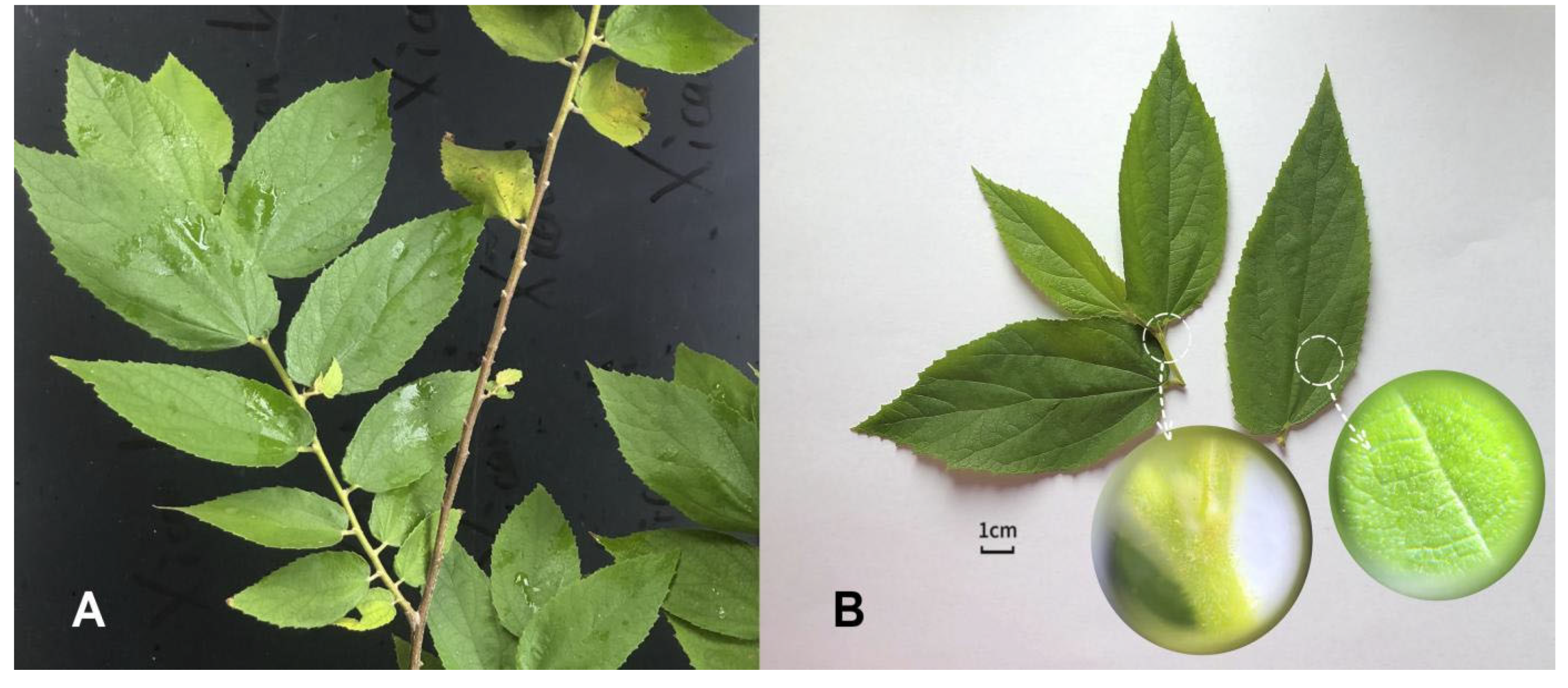
Figure 2.
Total ion current (TIC) chromatograms of U. macrophylla leaves in the UHPLC-Q-Orbitrap-MS/MS analysis: (A) negative ion mode; (B) positive ion mode.
Figure 2.
Total ion current (TIC) chromatograms of U. macrophylla leaves in the UHPLC-Q-Orbitrap-MS/MS analysis: (A) negative ion mode; (B) positive ion mode.
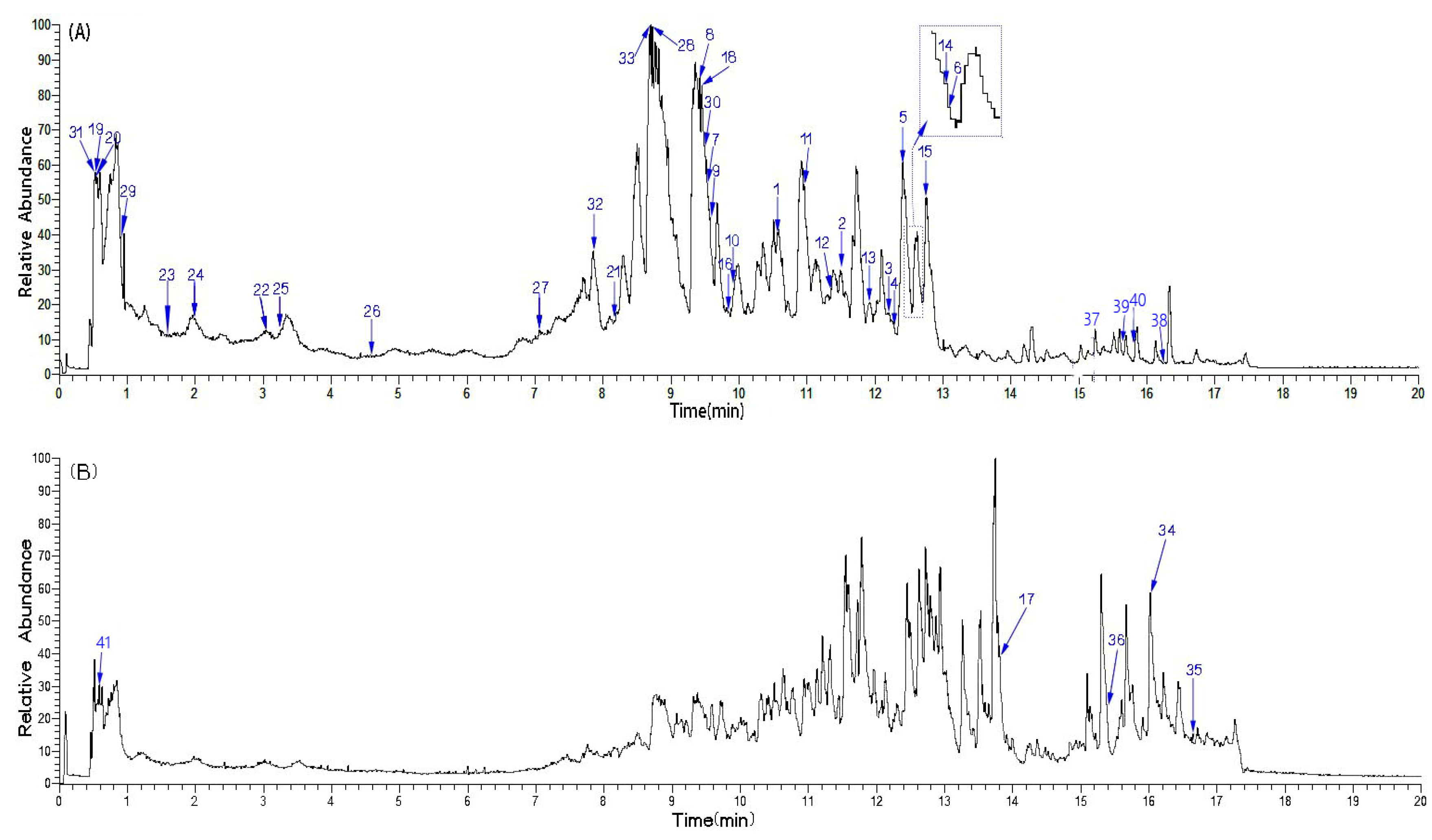
Figure 3.
Structures and configurations of 41 identified constituents (1-41).
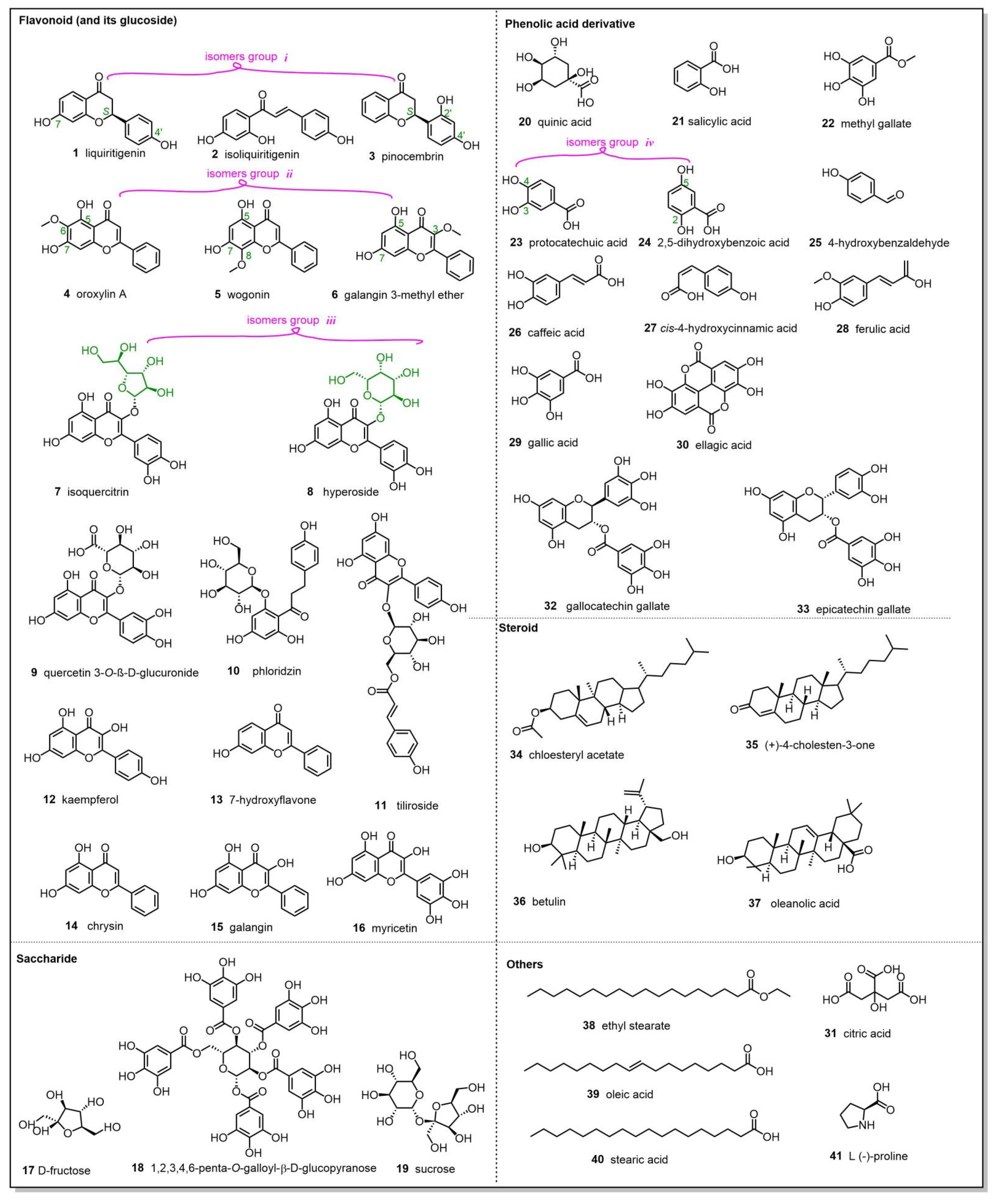
Figure 4.
The typical MS fragments of tiliroside: (A) for an authentic standard of tiliroside; and (B) for tiliroside in U. macrophylla leaves sample solution (R.T. 10.96 min). The m/z values in purple are calculated based on the relative atomic masses of C (12.0000), H (1.007825), and O (15.994915).
Figure 4.
The typical MS fragments of tiliroside: (A) for an authentic standard of tiliroside; and (B) for tiliroside in U. macrophylla leaves sample solution (R.T. 10.96 min). The m/z values in purple are calculated based on the relative atomic masses of C (12.0000), H (1.007825), and O (15.994915).
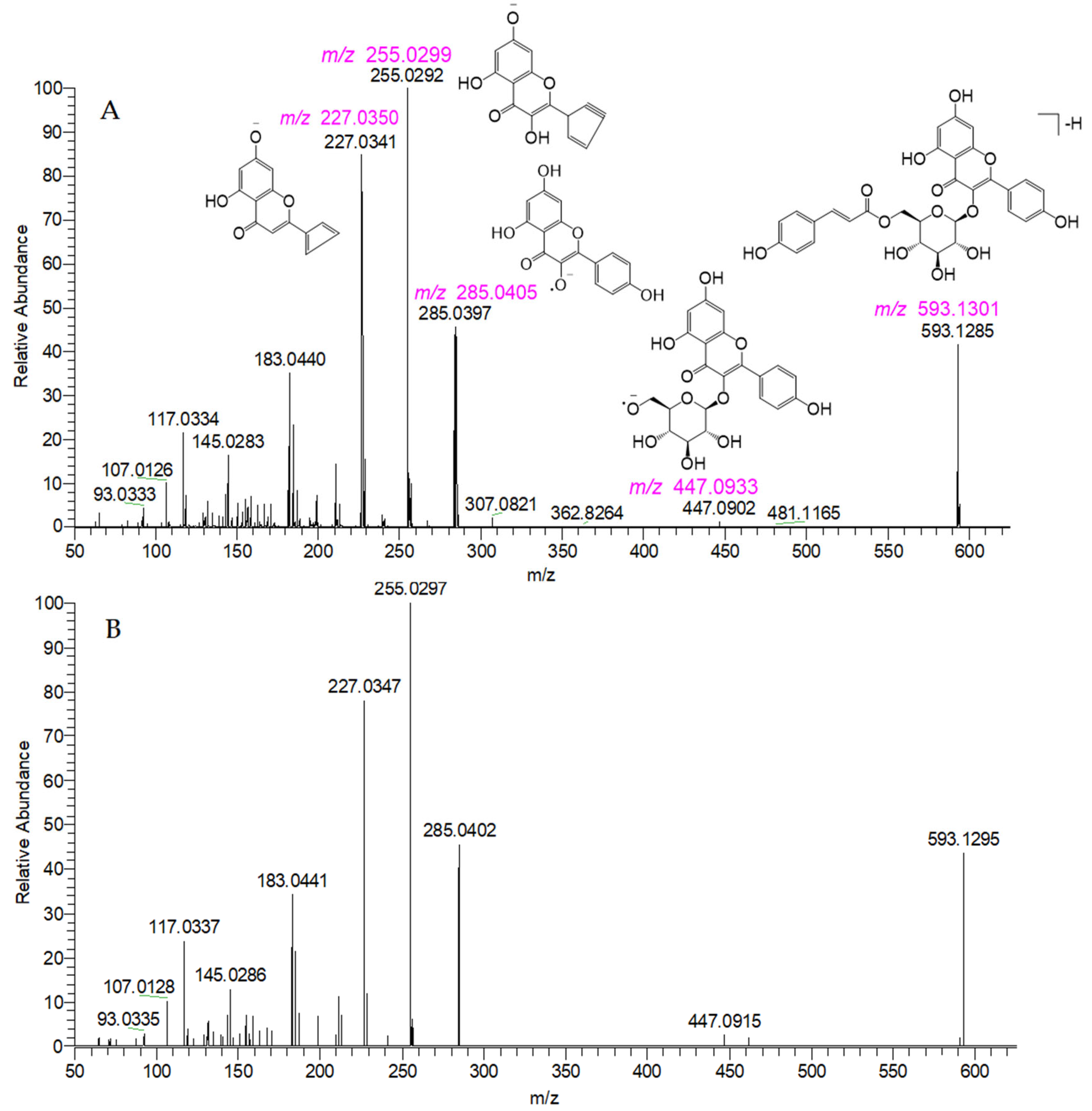
Figure 5.
The discrimination of three isomers (liquiritigenin, isoliquiritigenin, and pinocembrin): (A) chromatograph for C15H11O4- extracted by Xcalibur in negative mode; (B) MS/MS of peak at 10.56 min; (C) MS/MS of peak at 11.50 min; and (D) MS/MS of peak at 12.20 min.
Figure 5.
The discrimination of three isomers (liquiritigenin, isoliquiritigenin, and pinocembrin): (A) chromatograph for C15H11O4- extracted by Xcalibur in negative mode; (B) MS/MS of peak at 10.56 min; (C) MS/MS of peak at 11.50 min; and (D) MS/MS of peak at 12.20 min.
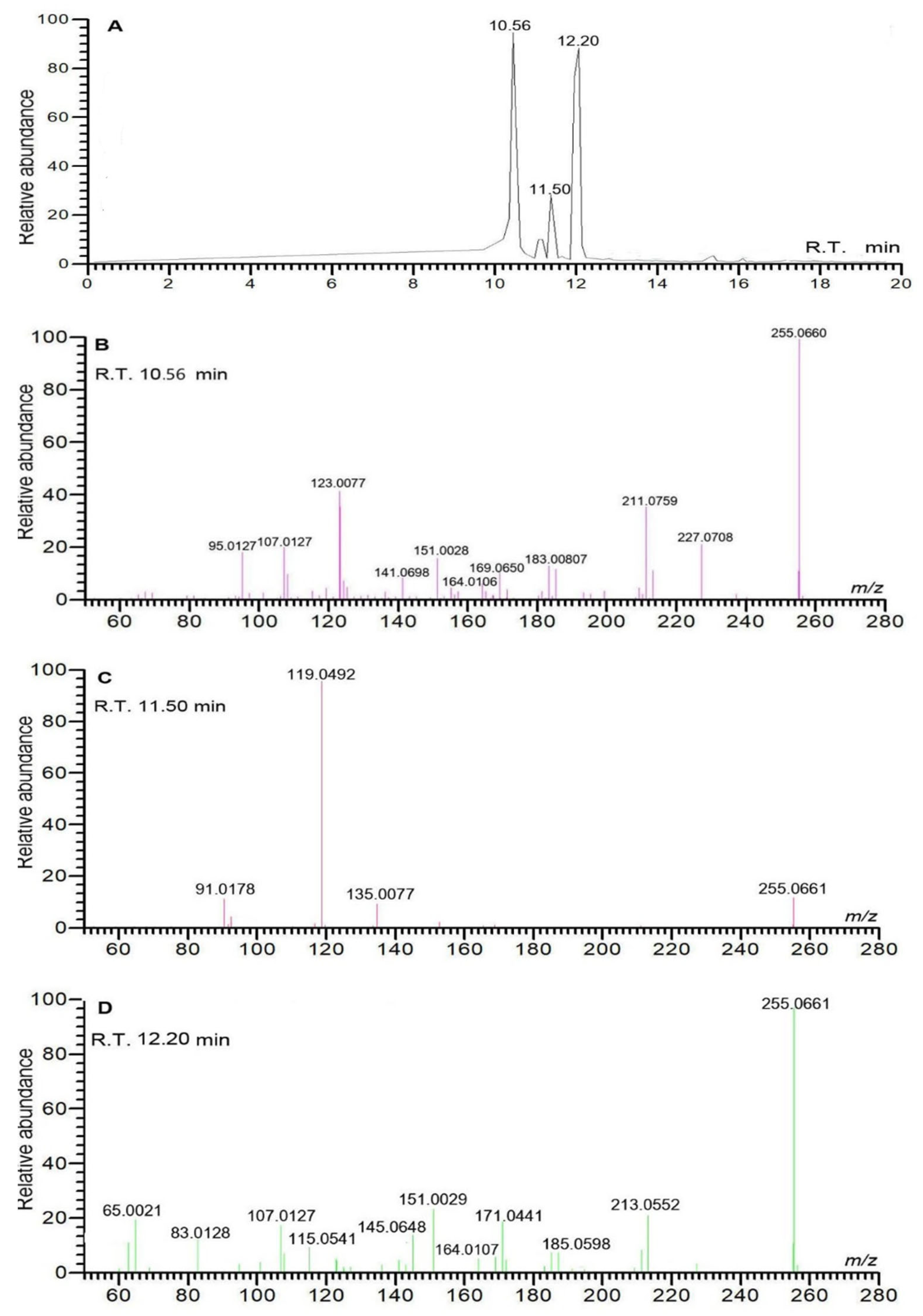
Figure 6.
The relative antioxidant levels of 41 components (1-41, A) and corresponding antioxidant contributions (B). The relative antioxidant level was evaluated using ABTS+-scavenging assay.
Figure 6.
The relative antioxidant levels of 41 components (1-41, A) and corresponding antioxidant contributions (B). The relative antioxidant level was evaluated using ABTS+-scavenging assay.
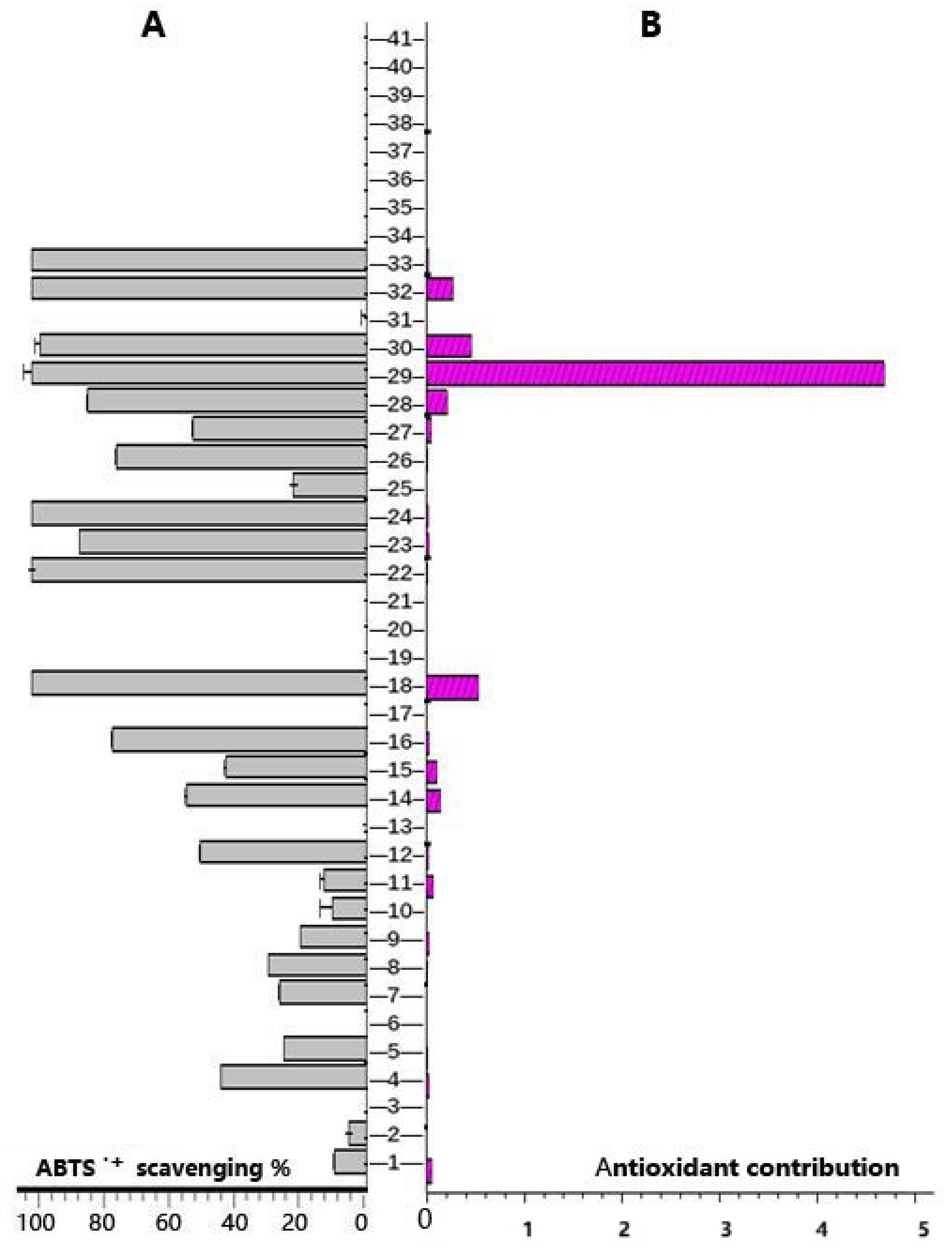
Figure 7.
Flow chart for preparation of lyophilized aqueous extract of U. macrophylla leaves.
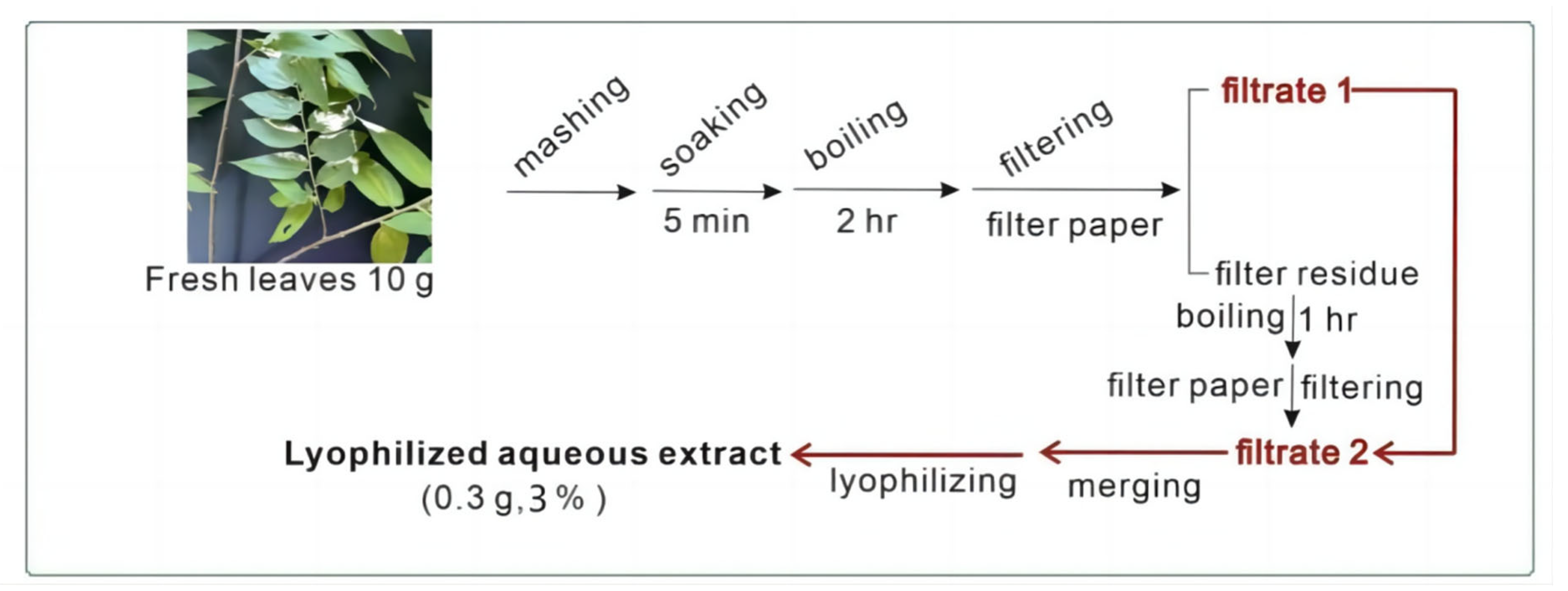

Table 1.
The main experimental data and documental bioactivity of 41 constituents (1-41) in U. macrophylla leaves
Table 1.
The main experimental data and documental bioactivity of 41 constituents (1-41) in U. macrophylla leaves
| No. | RTmin | Name | Molecular ion | Observedm/z value | Theoreticalm/z value | Error(δ ppm) | Content (mg/g)n=3 | Characteristic MS/MS fragment peak m/z | Bioactivity |
|---|---|---|---|---|---|---|---|---|---|
| 1 | 10.56 | liquiritigenin | C15H11O4- | 255.0661 | 255.0663 | 0.7843 | 0.577±0.013 | 255.0659, 119.0492, 91.0178 | anti-inflammatory [19] |
| 2 | 11.50 | isoliquiritigenin | C15H11O4- | 255.0661 | 255.0663 | 0.7843 | 0.012±0.000 | 255.0661, 119.0492, 91.0178 | antitumor [20] |
| 3 | 12.20 | pinocembrin | C15H11O4- | 255.0662 | 255.0663 | 0.3921 | 0.072±0.000 | 255.0661, 213.0552, 151.0029 | antitumor [21] |
| 4 | 12.29 | oroxylin A | C16H11O5- | 283.0612 | 283.0612 | 0 | 0.048±0.002 | 283.0611, 268.0377 | antioxidant [22] |
| 5 | 12.35 | wogonin | C16H11O5- | 283.0611 | 283.0612 | 0.3533 | 0.026±0.001 | 283.0611, 163.0027, 268.0374 109.9998 | anti-inflammatory [23] |
| 6 | 12.52 | galangin 3-methyl ether | C16H11O5- | 283.0612 | 283.0612 | 0 | 0.012±0.000 | 239.0346, 211.0395, 167.0494 | antibiotic [24] |
| 7 | 9.54 | isoquercitrin | C21H19O12- | 463.0873 | 463.0882 | 1.9438 | 0.017±0.002 | 463.0874, 300.0273, 271.0247 255.0298 | anti-inflammatory [25] |
| 8 | 9.43 | hyperoside | C21H19O12- | 463.0875 | 463.0882 | 1.5118 | 0.025±0.002 | 463.0874, 300.0273, 271.0247 | anti-inflammatory [26] |
| 9 | 9.57 | quercetin 3-O-β-D-glucuronide | C21H17O13- | 477.0674 | 477.0675 | 0.2096 | 0.138±0.005 | 301.0353, 151.0028, 109.0284 | antimicrobial [27] |
| 10 | 9.93 | phloridzin | C21H23O10- | 435.1280 | 435.1297 | 3.9080 | 0.034±0.001 | 273.0770, 167.0341, 123.0442, 119.0492 | antioxidant [28,29] |
| 11 | 10.96 | tiliroside | C30H25O13- | 593.1298 | 593.1301 | 0.5059 | 0.542±0.007 | 285.0397, 255.0292, 227.0341 | antioxidant [30] |
| 12 | 11.36 | kaempferol | C15H9O6- | 285.0405 | 285.0405 | 0 | 0.033±0.000 | 285.0405, 117.0335, 93.0334 | anti-inflammatory [31] |
| 13 | 11.93 | 7-hydroxyflavone | C15H9O3- | 237.0553 | 237.0557 | 1.6877 | 0.027±0.000 | 237.0553, 208.0524, 91.0178 | antibacterial [32] |
| 14 | 12.51 | chrysin | C15H9O4 - | 253.0504 | 253.0506 | 0.7905 | 0.267±0.002 | 251.0500, 209.0598, 143.0491 | antitumor [33] |
| 15 | 12.67 | galangin | C15H9O5- | 269.0456 | 269.0455 | 0.3717 | 0.247±0.001 | 269.0456, 169.0650 | anti-inflammatory [34] |
| 16 | 9.86 | myricetin | C15H9O8- | 317.0301 | 317.0303 | 0.6309 | 0.036±0.005 | 317.0301, 151.0028, 137.0234, 109.0284 | antioxidant [35] |
| 17 | 13.82 | D-fructose | C6H13O6+ | 181.0715 | 181.0707 | 4.4198 | 0.247±0.000 | 163.0385, 149.0229, 65.0393 | antioxidant [36] |
| 18 | 9.46 | 1,2,3,4,6-penta-O-galloyl-β-D-glucopyranose | C41H31O26- | 939.1146 | 939.1109 | 3.9403 | 0.547±0.700 | 169.0134, 125.0234, 107.0127, 95.0126 | antioxidant [37] |
| 19 | 0.53 | sucrose | C12H21O11- | 341.1086 | 341.1089 | 0.8797 | 0.986±0.048 | 341.1086, 179.0553, 161.0448, 89.0233 | sweetening agent [38] |
| 20 | 0.55 | quinic acid | C7H11O6- | 191.0555 | 191.0561 | 3.1413 | 0.377±0.003 | 191.0555, 93.0335, 85.0283 | anti-oxidant [39] |
| 21 | 8.18 | salicylic acid | C7H5O3- | 137.0234 | 137.0244 | 7.2992 | 0.056±0.001 | 137.0234, 93.0333 | anti-inflammatory[40,41] |
| 22 | 3.06 | methyl gallate | C8H7O5- | 183.0291 | 183.0299 | 4.3715 | 0.007±0.000 | 183.0291, 124.0156, 78.0099 | anti-inflammatory [42] |
| 23 | 1.6 | protocatechuic acid | C7H5O4- | 153.0186 | 153.0193 | 4.5751 | 0.026±0.006 | 153.0186, 109.0285, 108.0206 | antimicrobial [43] |
| 24 | 2 | 2,5-dihydroxybenzoic acid | C7H5O4- | 153.0186 | 153.0193 | 4.5751 | 0.015±0.003 | 153.0182, 109.0284, 108.0206 | improvements in vascular function [44] |
| 25 | 3.22 | 4-hydroxybenzaldehyde | C7H5O2- | 121.0285 | 121.0295 | 8.2644 | 0.006±0.001 | 121.0285, 92.0257 | improvements in vascular function [45,46] |
| 26 | 4.6 | caffeic acid | C9H7O4- | 179.0339 | 179.0350 | 6.1452 | 0.012±0.000 | 179.0345, 136.0474,135.0441,133.0282 | antibacterial [47] |
| 27 | 7.11 | cis-4-Hydroxycinnamic acid | C9H7O3- | 163.0392 | 163.0401 | 5.5214 | 0.094±0.005 | 119.0492 | anti-SARS [48] |
| 28 | 8.71 | ferulic acid | C10H9O4- | 193.0496 | 193.0506 | 5.1813 | 0.258±0.301 | 193.0136, 178.0262, 134.0364 | antibacterial [49,50] |
| 29 | 0.86 | gallic acid | C7H5O5- | 169.0133 | 169.0142 | 5.3254 | 4.800±0.103 | 169.0133, 125.0234 | antioxidant [51] |
| 30 | 9.5 | ellagic acid | C14H5O8- | 300.9989 | 300.9990 | 0.3333 | 0.485±0.000 | 300.9990, 145.0286, 117.0335 | antioxidant [52] |
| 31 | 0.52 | citric acid | C6H7O7- | 191.0189 | 191.0197 | 4.1884 | 0.757±0.007 | 111.0078, 87.0076, 85.0248 | improvements in vascular function [53] |
| 32 | 7.98 | gallocatechin gallate | C22H17O11- | 457.0736 | 457.0776 | 8.7527 | 0.274±0.004 | 169.0133, 125.0234 | antiviral [54] |
| 33 | 8.68 | epicatechin gallate | C22H17O10- | 441.0831 | 441.0827 | 0.9070 | 0.020±0.000 | 289.0715, 169.0134, 125.0234, 109.0285 | antioxidant [55] |
| 34 | 16.03 | cholesteryl acetate | C29H49O2+ | 429.3706 | 429.3727 | 4.8951 | 14.418±1.041 | 429.3706, 165.0912, 91.0545, 81.0705, | antitumor[56] |
| 35 | 16.67 | (+)-4-cholesten-3-one | C27H45O+ | 385.3459 | 385.3465 | 1.5584 | 0.003±0.000 | 385.3454, 109.0649, 97.0650, 91.0545 | antitumor[57] |
| 36 | 15.38 | betulin | C30H51O2+ | 443.3878 | 443.3884 | 1.3544 | 0.130±0.005 | 443.3497, 105.0700, 91.0547, 81.0705 | antitumor[58] |
| 37 | 15.18 | oleanolic acid | C30H47O3- | 455.3531 | 455.3531 | 0 | 0.026±0.004 | 455.3531 | antitumor [59] |
| 38 | 16.22 | ethyl stearate | C20H39O2- | 311.2956 | 311.2956 | 0 | 0.209±0.013 | 311.1682, 183.0114, 119.0492 | antioxidant [60] |
| 39 | 15.62 | oleic acid | C18H33O2- | 281.2487 | 281.2486 | 0.3558 | 0.046±0.000 | 281.2487 | antioxidant [61] |
| 40 | 15.8 | stearic acid | C18H35O2- | 283.2643 | 283.2643 | 0 | 0.197±0.002 | 283.2643, 92.1626 | antioxidant [62] |
| 41 | 0.54 | L-(-)-proline | C5H10NO2+ | 116.0708 | 116.0706 | 1.7241 | 0.940±0.045 | 116.0706, 70.0657 | immune modulation [63] |
Note: m/z values below 50 were also found by the Xcalibur 4.1 software package, despite the scan mode range of m/z 100-1500. m/z values in square brackets are the molecular ion peaks. Nominal level (NL) values were obtained by the Xcalibur 4.1 software package. Five compounds (17, 34, 35, 36, and 41) annotated with “+” under Molecular ion were identified in positive ion mode. All other compounds were identified in negative ion mode.
Disclaimer/Publisher’s Note: The statements, opinions and data contained in all publications are solely those of the individual author(s) and contributor(s) and not of MDPI and/or the editor(s). MDPI and/or the editor(s) disclaim responsibility for any injury to people or property resulting from any ideas, methods, instructions or products referred to in the content. |
© 2024 by the authors. Licensee MDPI, Basel, Switzerland. This article is an open access article distributed under the terms and conditions of the Creative Commons Attribution (CC BY) license (http://creativecommons.org/licenses/by/4.0/).
Copyright: This open access article is published under a Creative Commons CC BY 4.0 license, which permit the free download, distribution, and reuse, provided that the author and preprint are cited in any reuse.


