

Submitted:
30 August 2023
Posted:
31 August 2023
You are already at the latest version
Abstract
Culinary herbs and spices are widely used in daily diets. Pakistan flora is enriched with phytochemicals due to a diverse range of land. Phytochemicals, including volatile and non-volatile compounds, have captured much interest due to their numerous health advantages and significance in daily diet. The present study aimed to conduct in-depth metabolomic profiling of Pakistani-grown fenugreek leaves (Trigonella foenum-graecum), fennel seeds (Foeniculum vulgare), mint leaves (Mentha royleana), coriander seeds (Coriandrum sativum) and basil leaves (Ocimum basilicum) by using liquid chromatography–mass spectrometry (LC-MS/MS) and gas chromatography–mass spectrometry (GC-MS). The first study was conducted to optimize extraction using different solvents (methanol, ethanol, chloroform, acetone, and water). Total phenolic content (TPC), total flavonoid content (TFC), and total condensed tannins (TCT) were quantified along with the antioxidant and anti-diabetic activities. The highest TPC (125.42 ± 10.89 mg GAE/g) and the highest antioxidant and anti-diabetic potential were quantified in mint. Seventy-one phytochemical metabolites were identified using LC-MS/MS, while forty-nine volatile constituents were identified using the GC-MS. A positive correlation was identified between phenolic contents and their biological activities. Furthermore, molecular docking helped to find drug molecules with more excellent anti-diabetic activity based on their binding affinities. This study suggests that selected medicinal herbs from Pakistan have significant nutraceutical and phytopharmaceutical potential. This study could further help in drug discovery.
Keywords:
herbs
; spices
; flavonoids
; antioxidants
; diabetes
; volatile compounds
; drug discovery
; phytochemicals
; human health
1. Introduction
High blood glucose levels are a hallmark of diabetes mellitus, which ranks among the leading causes of death worldwide. The major enzyme that plays a substantial role in the absorption, hydroxylation, as well as digestion of sugars in the body of a human being, is alpha-glucosidase (α-glucosidase). Because of this, α-glucosidase inhibition is useful for managing type 2 diabetes. Utilizing natural resources to treat diabetes is becoming more popular [1,2]. To manage or suppress the consequences of diabetes, several bioactive compounds as well as nutraceuticals have been studied. Eliminating the frequency of pre- or post-diabetic diseases using phenolic metabolites is an effective treatment [2]. Because of this, understanding the important function of polyphenols in food and human health requires thorough identification and phenolic metabolites characteristic evaluation. Due to their potent antioxidant and antimicrobial qualities, culinary herbs and spices are gaining more attention from industry and research. Since prehistoric times, people have regularly used culinary herbs and spices as food ingredients. Herbs along with spices, have also been discovered to enhance the flavor owing to preservative, sensory as well as organoleptic characteristics [3]. Because of their flavor, therapeutic color, and aroma effects, culinary herbs and spices, are frequently employed in the industry as nutritional supplements or fortification or enrichment of various products like snacks, candies, biscuits, pickles, jams, and syrups. Due to their positive effects on health, bioactive phenolic compounds found in plant-based products are presently receiving significant consideration. Other scholars have become more interested in studying the antioxidant properties and the phenolic composition of herbs and spices that are frequently used due to numerous studies citing culinary herbs and spices as a source of food which are supposed to be naturally occurring antioxidant phenolic compounds [4,5]. In recognition of numerous possible health benefits, phenolic compounds have been a desirable target in the hunt for phytochemicals believed to be advantageous for human health. It is known that culinary spices as well as herbs have been employed to address a range of illnesses, including joint inflammation, aches, bone fractures, and sprains. Additionally, they are utilized in the cosmetic, pharmaceutical, culinary, and feed industries. The widespread use of herbs and spices has increased global output.
They are frequently used as components in products that promote health, including anti-diabetic, anti-hypertensive, anti-carcinogenic, antioxidant, anti-inflammatory, anti-depressant, anti-HIV, antimicrobial, and antipyretic [6,7]. The health-promoting properties of bioactive compounds, primarily phenolics, are widely found in herbs, spices, vegetables, fruits, and various other therapeutic plant species are likewise referred to as secondary metabolites in phytochemistry. Recent studies have investigated and determined the crucial role in the prevention of disease and the promotion of wellbeing. Phenolic compounds, for instance flavonoids, phenolic acids, other polyphenols, stilbenes, and lignans, gained much attention from food experts and nutritionists because of their numerous possible health effects. Polyphenols are currently being explored as potential antioxidants to increase the shelf life of meals that are high in lipids. Additionally, herbs' phenolic antimicrobial components have properties that help preserve food. These bioactive have various valuable attributes, including metal chelation, free radical scavenging capacity, enzymatic activity, modulation of signal transduction pathways, and inhibition of cellular proliferation [3]. Therefore, culinary herbs as well as spices high in antioxidants have been praised and recommended for their use in human nutrition to promote health and well-being.
In addition to their elevated reactivity in biological systems, free radicals have the capability to damage or change DNA biomolecules, whereas endogenous antioxidants can reduce or eliminate their activity in the body [3]. The use of antioxidants that exist naturally in herbs, vegetables, fruits, and spices has garnered considerable attention as a potential substitute and less costly to synthetic antioxidants in conventional and contemporary therapy owing to pertains related to the negative consequences of artificially produced antioxidants. Numerous studies published recently found a link between the intake of herbs as well as spices and the prevalence of chronic illness in people.
Culinary herbs as well as spices comprise of natural antioxidants known to lessen oxidative stress brought by increased free radical levels in tissues as well as cells [3,8]. The effect of oxidative stress which is supposed to be chronic has been connected to several illnesses, including heart disease, cancer, and, most significantly, accelerated aging. As a result, culinary herbs as well as spices have the potential to be used to avoid a variety of health issues that result from oxidative stress and different metabolic disorders in one's body. Owing to the phenolic compounds as well as antioxidant activity of culinary herbs and spices, numerous studies have been done on their recognition, characterization, and investigation [2,9]. Due to their complex nature, framework, and widely used cultivars in different parts of the globe, and mainly because there aren't any commercial standards for precisely identifying and validating the bioactives in the system, comprehensive characterization of culinary herbs as well as spices, not yet available. A professional analytical method called liquid chromatography-mass spectrometry (LC-MS) is used in conjunction with quadrupole time of flight (QTOF) for the purpose of identifying the unidentified bioactive chemicals in diverse samples of plants, including culinary spices as well as herbs.
The goal of the present investigation was to research the frequently used spices and herbs (basil, mint, fennel, coriander, and fenugreek) for antioxidant potential, volatile as well as non-volatile compounds. That is why liquid chromatography-mass spectrometry – quadrupole time of flight (LC-MS/MS-QTOF) and gas chromatography – mass spectrometry (GC-MS) was used to distinguish and separate 71 phenolic compounds from selected culinary spices and herbs. Moreover, TPC, TCT, TFC, •OH-RSA, ABTS, FRAP, PMA, and FICA were conducted to determine the antioxidant and total polyphenol contents. Alpha-glucosidase inhibition activity was measured to investigate the anti-diabetic potential of selected herbs. In-silico molecular docking further helped to investigate the role of these herbs in human health and drug discovery. This research will offer essential and precious knowledge about the powerful impact of phenolic compounds belonging to herbs on human health. Additionally, because of their potential antioxidant constituents, they will promote the utilization of culinary herbs along with spices in numerous food and feed businesses.
2. Materials and Methods
2.1. Preparation of samples and optimization of extraction for phenolic compounds
Culinary spices and herbs were collected grown in Rawalpindi Division. Fennel and coriander were purchased in dried whole form from the local market of Islamabad, that were also grown in Rawalpindi Division. Samples were re-confirmed and identified from the Department of Plant Sciences, Quaid-i-Azam University, Islamabad. Sweet basil, mint and fenugreek were dried in oven at 50 °C for four days. A lab grinder was used to grind each sample. The method used for phenolic compounds extraction from culinary spices and herbs was as follows; to prepare the extracts, 2g sample was taken and mixed with 30 milliliters of 80% methanol, ethanol, chloroform, acetone in Milli-Q water. The mixture was agitated for 16 hours in an orbital shaker at 4 °C and 150 rpm to extract the phytochemicals. Using a Hettich Refrigerated Centrifuge, at 4 °C the samples were then centrifuged for about 20 minutes at 8000 rpm. The resulting supernatant was then filtered via a 0.45 μm syringe filter, which was then chilled to −20 °C for up to seven days for further analysis. In triplicate, this procedure was completed.
2.2. Quantification of phenolic contents in selected medicinal plants
2.2.1. Determination of Total Phenolic Content
The phenolic compound profile of samples was analyzed using the previously described method by Bashmil et al. [10] with some modifications. 25 µl of Folin Ciocalteu reagent (25% v/v) was taken with 200 µl of distilled water. 25µl of sample extracts were added and incubated at 27 °C for 5 min. At last, 25 µl of sodium carbonate (10% v/v) was added to the reaction mixture and placed in incubation again in the dark at 27 °C for 1 hour. Absorbance of the samples was recorded at 760 nm. Quantification of the total phenolic content was carried out by making a standard curve against gallic acid that ranged from 0-200 µl/mL in methanol. Results were recorded using units of GAE (milligram gallic acid equivalents) per gram of samples.
2.2.2. Total Flavonoid Content
Flavonoid contents of the samples were analyzed using the method described by Ali et al. [11], with some modifications. Aluminium chloride colourimetric method was used to determine the TFC. 80 µl of the sample extract was taken in 96-well plates and mixed with 80 µl of AlCl3 solution and 120 µl of sodium acetate aqueous solution (50%). After preparation of the reaction mixture and sample was incubated in the dark at 27 °C for 2.5 hours and absorbance was recorded on the spectrophotometer at 440 nm. For the quantification of flavonoid content, a standard curve (R2= 0.999) was constructed against 0-50 µg/ml of quercetin in methanol. The milligram quercetin equivalents per gram of the samples unit was used to express the results.
2.2.3. Total Tannin Content
TTC was carried out using an alteration of the Ali et al. [12] technique. 150 µL of vanillin solution (4%), along with 25 µL of the sample solution, were added. 25 µL of 32% H2SO4 was then poured into the mixture. Then, it was incubated at 25 °C for 15 minutes. The absorbance was determined at 500 and the standard catechin curve (0-1000 µg/mL) was constructed. The data was given as mg CE/g.
2.3. Measurement of antioxidant and anti-diabetic potential of selected plants
The ABTS assay was conducted using the method of Ali et al. [13] and Sharifi-Rad et al. [14] while the FICA and FRAP activity were conducted using the methods of Ali et al. [3]. The PMA and OH-RSA assays were also conducted using the methods of Ali et al. [3], Bashmil et al. [10] and Chou et al. [15]. The alpha-glucosidase inhibition activity was conducted using the methods of Ali et al. [1,2].
2.4. LC-ESI-QTOF-MS/MS analysis
Following our previously established procedures, we were able to precisely identify and measure the phenolic metabolites from mint, coriander, fenugreek, sweet basil as well as fennel [9,16]. Both negative and positive modes were applied using Accurate-Mass QTOF Agilent 6520. The same equipment conditions as described in [17] applied to the column gradient, chromatographic, and other areas. Phytochemicals were extracted and identified using the MassHunter Workstation Software (version B.06.00) from Agilent, Santa Clara, California, USA using Personal Compound Database Library (PCDL) with library score more than 80 and less than 10 ppm error of MS/MS spectra. Furthermore, the mass spectra of twenty-four external standards were collected, and standard equations reported by Ali et al. [18].
2.5. GC-HS-SPME-MS analysis of volatile compounds
Headspace-solid phase microextraction (HS-SPME - PAL RSI 120 Switzerland) coupled with gas chromatography-mass spectrometry 6850 series II Network GC-system (Agilent technologies, USA) and a mass spectrometer (5973Network Mass Selective Detector, Agilent Technologies, USA). A 30-meter-long DB wax capillary column from Agilent technologies with 0.25 um film thickness and 0.25 mm international diameter in combustion with 65 um PDMS/DVB fibre of fused silica (Sigma Aldrich was used in this method. Helium with 60kPa column head pressure was used as a carrier gas. The incubation time (15 minutes) for samples was set at 60 °C prior to extraction for 15 minutes and 6 minutes for desorption. Following that, a GC oven programme was devised. With a starting temperature of 40 °C for almost 5 minutes, followed by an increase in temperature (190 °C ) of 5 °C per minute for 8 minutes, followed by an increase in temperature of 10 °C per minute for about 10 minutes, to reach a temperature of 240 °C. The mass acquisition (m/z 40-360) and two minutes solvent delay time were used. One-gram dried powder with 25 μL 4-Octanol (100 mg/L) as an internal standard was used and injected according to the procedure mentioned above. The linear retention index (LRI) of selected compounds were calculated with alkane standards (C7-C20) through the following equation.
LRI (selected compounds) = 100 × (RTx − RTn/RT(n+1) – RTn) + n
It contrasts the retention times of the chosen compound (RTx) and alkanes (n) with n and n+1 carbons that were eluted prior to and following the chosen compound (RTn). The retention index of compounds found in particular spices and herbal products was compared to information from the NIST mass spectra database and the NIST Chemistry WebBook spectral Library (NIST 2017). By quantifying the peak area percentage of compounds, the semi-quantified was culminated.
2.6. Molecular docking of the most abundant phenolic compounds
2.7. Statistical analysis
Minitab Program Version 18.0 (Minitab, LLC, State College, PA, USA) and XLSTAT-2019.1.3 (Addinsoft Inc. New York, NY, USA) were used for correlation, biplot analysis (PCA) and one-way analysis of variance (ANOVA). Heatmap were conducted by using the MetaboAnalyst (5.0).
3. Results and Discussion
3.1. Optimization of extraction process of total phenolic content from the selected plants
Different solvents are used to extract phenolic compounds from the selected herbs and spices. The results are given in Table 1.
Five different solvent systems were used: water, 80% acetone, 80% chloroform, 80% methanol, and 80% ethanol. The highest extraction of the total phenolic content of mint leaves in terms of 80% methanol was found to be 125.42 ± 10.89. As opposed to fennel seeds, which had a minimum extraction of 9.90 ± 0.27 for total phenolic content. All the treatments and various solvent extracts showed significant differences in the total phenolic contents. The study's findings also revealed important interactions between the solvents and spices. The levels of TPC obtained from fennel seeds in both solvents—ethanolic and aqueous were in the range of 1020.3 ± 11.40 to 1257.8 ± 19.0 µg GAE/g and 1114.0 ± 6.11 to 1208.3±21.36µgGAE/g respectively. Similar to this, the maximum TPC for peppermint was discovered in the aqueous extract of treatment P1 (2094.7 ± 55.36 µg GAE/g), whereas the least TPC was discovered in the ethanolic extract of treatment P1 (1824.2 ± 30.40 µg GAE/g) [19]. According to Zheng et al. [20] spices and herbs have significant phenolic contents. Fennel water extracts have a higher phenolic content than ethanolic extracts, according to Aliakbarlu et al. [21].
3.2. Estimation of polyphenols from culinary herbs and spices
Culinary spices as well as herbs are rich sources of phenolic compounds. The polyphenols quantification in different herbs (Table 2) was performed through TPC, TCT and via TFC.
Nowadays, herbs and spices have increased attention because of their potential bioactive compounds, including phenolic acids, tannins and flavonoids bearing immense antioxidant potential and may have advantageous effects on human health. The Folin-Ciocalteu reagent was used to determine the TPC and among the samples tested, mint leaves exhibited the highest TPC value of 125.42 ± 10.89 mg GAE/g, followed by basil leaves with a value of 26.99 ± 1.28 mg GAE/g, coriander seeds with 23.02 ± 1.53 mg GAE/g, and fennel seeds with 9.90 ± 0.27 mg GAE/g. Fenugreek leaves showed the lowest TPC value of 7.17 ± 0.10 mg GAE/g. Shan et al. [22] have also visualized a similar trend showing TPC values for Basil, Fennel, and Fenugreek leaves are found to be comparable to previously reported TPC of basil (26.5), parsley (13.6), and thyme (71.7) respectively. The higher values of TPC for mint were observed owing to improved extraction. These improved extractions could be due to methanol (80 %) and formic acid (0.1%).
This assistance was likely due to variations in the choice of herbs or cultivars selected for extraction and quantification of different compounds from current and other studies. The vast difference among TPC values calculated in our research depicts the variety of compounds of phenolic as well as their variety capacity to decrease Folin-Ciocalteu Reagent. Different factors, for instance, temperature combinations for extractions, solvent-to-sample ratio, as well as solvent concentration plus type can credit the change in values of TPC affecting extraction [23], and also include the geographical and cultivar differences in the origin of herbs.
The highest flavonoid content was observed in mint leaves, which had a value of 31.72 ± 1.22 mg QE/g. Basil leaves followed with a value of 9.35 ± 0.16 mg QE/g, while fenugreek leaves had a value of 4.41 ± 0.08 mg QE/g. Fennel and coriander seeds had the lowest flavonoid concentrations, with values of 3.35 ± 0.26 mg QE/g and 2.48 ± 0.21 mg QE/g, respectively. When compared to previously reported TFC values of nutmeg (2.22) and black cumin (1.73), the TFC values of fenugreek leaves, fennel seeds, and coriander seeds were found to resemble [1]. Herbs possess phenolic acids as well as flavonoids in higher proportions in comparison with other phenolic compounds. In contrast, the TCT value of coriander seeds (11.51 ± 1.68 mg QE/g) was noticeably greater than other mentioned culinary spices and herbs for instance, TCT value for basil leaves (3.97 ± 0.10 mg QE/g), mint leaves (3.31 ± 0.08 mg QE/g) , fennel seeds (2.88 ± 0.10 mg QE/g) and the lowest TPC value were observed to be of fenugreek leaves (1.36 ± 0.08 mg QE/g). The two most significant subgroups of phenolic compounds are flavonoids along with tannins. Among phenolic compounds, flavonoids have earned more consideration due to their potential as antioxidants and function as a nutritional indication for many food items. Therefore, Herbs' characterization with modern analytical techniques for instance LC-ESI-QTOF-MS/MS can offer more reliable, accurate, and useable information on bioactive compounds, including polyphenols for applications in animal feed and human food and cosmetic industries that belong to pharmaceutical.
3.2. Antioxidant and anti-diabetic activities of seleted medicinal plants
The antioxidant activity of herbs was further analyzed on the bases of different mechanisms, which includes the radical scavenging as well as reducing power ability of the sample. Different tests such as ABTS, FICC, FRAP, •OH-RSA, PMAP and RPA were performed, and results are stated in Table 3.
The human diet uses fruits, veggies, herbs, and spices as antioxidant chemical components source that can neutralize free radicals. Phenolic compounds are typically regarded as the active antioxidant components in culinary spices as well as herbs which are supposed to provide various health benefits. Mainly, they are taken as multifunctional compounds and act as reducing agents, hydrogen ion donators, metal chelators, free radical scavengers in biological systems [3]. A parameter used to describe the advantages of culinary spices and herbs that are eaten as food is their antioxidant ability. Numerous elements found in medicinal plants have been proposed to act as antioxidants. Numerous bioactive substances, mainly phenolic compounds like flavonoids, , tannins, procyanidins, coumarins, phenolic acids, stilbenes, xanthones, lignans, as well as other polyphenols have been mentioned as potential therapeutic agents for neutralizing free radicals [24].
The ABTS, FICA, FRAP, •OH-RSA and PMA assays have been utilized to determine the free radical scavenging activity of various bioactive compounds, especially those of polyphenols [25]. The ABTS assay is generally considered to be the least expensive. This is because the ABTS assay uses a synthetic chromogenic substrate, which is relatively inexpensive to produce compared to the other assays. The ABTS (2,2'-azino-bis(3-ethylbenzothiazoline-6-sulfonic acid)) assay is also considered to be a versatile and reliable method for evaluating the antioxidant potential of a variety of samples, including foods, dietary supplements, and biological samples. The ABTS assay is also relatively simple to perform as the ABTS assay is based on the reaction between ABTS and a substance that has antioxidant activity. This reaction produces a blue-green color, which can be measured spectrophotometrically. The antioxidant activity of the substance being evaluated is inversely correlated with the color intensity. From Table 1, ABTS values of Mint leaves (74.62 ± 0.77 mg AAE/g), Basil Leaves (34.70 ± 1.55 mg AAE/g), Coriander seeds (19.17 ± 0.57 mg AAE/g), Fennel seeds (9.43 ± 0.35 mg AAE/g), Fenugreek leaves (16.23 ± 0.13 mg AAE/g) are estimated significantly higher at p < 0.05 than other listed herbs. Mint, fennel, and fenugreek values of ABTS were found to be close to those of sage (73.78), cumin (9.34), and black cardamom (6.41), which had previously been reported Ali et al. [3,8]. Previously, many researchers have looked into the phenolic components and antioxidant potential of several spices and herbs that includes Patra, et al. [26] , Wojdyło, et al. [4], Przygodzka, et al. [27], Dvorackova, et al. [23], Muhammad, et al. [28]. A higher value of ABTS (2,2'-azino-bis(3-ethylbenzothiazoline-6-sulfonic acid)) represents a greater antioxidant capacity of the tested sample. In other words, a higher ABTS value indicates that the sample has a more remarkable ability to prevent oxidative damage and neutralise free radicals. The ABTS values for the mint were found to be greater in other studies [4].
The results of the study reveal that mint leaves had the greatest FRAP value of 4.35 ± 0.05 mg AAE/g, which is being followed by basil leaves with a value of 2.43 ± 0.22 mg AAE/g. In contrast, fennel, coriander, and fenugreek leaves exhibited the lowest FRAP values with measurements of 0.54 ± 0.20 mg AAE/g, 1.71 ± 0.33 mg AAE/g, and 0.14 ± 0.05 mg AAE/g, respectively. The FRAP values obtained from coriander, fennel, and fenugreek leaves were found to be in line with the FRAP values reported for black pepper (0.10), cardamom (0.15), cumin (0.21), fennel (0.53), and nutmeg (0.81) [3]. flavonoids and antioxidant activity have a favourable association which indicates that the primary components that act as antioxidants are flavonoids [3].
The FICA numbers of fennel leaves (0.70 ± 0.01 mg AAE/g), fenugreek leaves (0.75 ± 0.07 mg AAE/g) and coriander seeds (1.88 ± 0.03 mg AAE/g) had the lowest FICA value, followed by higher FICA values for mint leaves (4.25 ± 0.05 mg AAE/g), basil (1.24 ± 0.08 mg AAE/g). It was discovered that the FICA values derived in this study from basil, coriander, fennel, and fenugreek leaves were quite similar to the FICA values reported for cinnamon (1.32), cumin (1.13), fennel (1.17), nutmeg (1.05), and star anise (0.63) [3].The herbal compound's FICC is essential because it lowers the quantity of transition metals needed to catalyze lipid peroxidation during that process. To stabilize the oxidized form of metal ions, chelating agents, which are secondary antioxidants create s-bonds together with metal during the reaction [16, 18]. This reduces the redox potential. By converting hydrogen as well as lipid peroxides to free radicals through the Fenton reaction, it is thought that ferrous ions enhanced lipid peroxidation. Ferrous ions' breakdown of lipid hydroperoxides into alkoxyl and peroxyl radicals resulted in a rise in lipid peroxidation. In this test, ferrozine and ferrous ion create a complex bond, but the herbal extracts inhibit the formation of the complex. Thus, herbal extracts offer a defense against oxidative harm by reducing ferrous ions.
The scavenging capacity of herbs extract was calculated from the analysis of •OH-RSA. The maximum value of •OH-RSA was detected in mint leaves (61.87 ± 2.85 mg AAE/g), followed by basil leaves (52.17 ± 3.46 mg AAE/g), fennel seeds (23.89 ± 0.17 mg AAE/g), and fenugreek leaves (19.62 ± 0.46 mg AAE/g), while the minimum was found in coriander seeds (17.25 ± 1.36 mg AAE/g). The •OH -RSA values found in the leaves of basil, coriander, fennel, and fenugreek leaves were identical to those found in all-spice (52.17), cinnamon (17.25), nutmeg (23.89), and cumin (9.62). Among the most reactive species, hydroxyl radicals (•OH), attack nearly every molecule in the biological system, resulting in lipid peroxidation, significant biological damage, and DNA damage. As a result, herbal extracts' ability to scavenge •OH radicals could offer a significant defense against biological damage caused by these free radicals. The molybdenum (VI) to molybdenum (V) reduction capacity by an antioxidant phenolic compound and the resulting development of a green molybdenum (V)/phosphate complex is measured using the Phosphomolybdenum antioxidative power assay (PMAP assay). According to the PMA assay findings, mint leaves (8.64 ± 1.84 mg AAE/g), basil leaves (8.39 ± 0.35 mg AAE/g) and coriander seeds (8.04 ± 0.55 mg AAE/g) have considerably greater total antioxidant activity than the other listed spices and herbs, while fennel seeds, fenugreek and basil leaves have considerably lower total antioxidant activity (3.21 ± 0.93, 3.44 ± 0.32 mg AAE/g, respectively). The present study found that the PMA values of all five herbs and spices examined were equivalent to those previously reported for clove (8.45), fennel (8.16), allspice (8.08), thyme (7.93 mg AAE/g), fenugreek (7.61 mg AAE/g), cardamom (6.48 mg AAE/g), and black cardamom (5.72 mg AAE/g).
Alpha-glucosidase IC50 (μg/mL) is a measure of the concentration of an inhibitor required to inhibit 50% of the activity of the enzyme α-glucosidase. The lower the IC50 value, the more potent the inhibitor is in inhibiting the activity of the enzyme. In this present study comparing the inhibitory activity of selected five herbs and spices against α-glucosidase, results showed that among all mentioned herbs and spices extracts, mint leaves showed stronger and more potent inhibition activity with IC50=2.04 ± 0.03 µg/ml in comparison with the selected herbs and spices, then comes basil leaves which also exhibited strong inhibitory activity against αglucosidase with IC50 values of 3.32 ± 0.47 µg/ml. The IC50 values for α-glucosidase inhibitory activities of coriander seeds, fenugreek leaves and fennel seeds 9.41 ± 1.82, 15.83 ± 1.13 and 31.92 ± 2.07 µg/ml respectively that were referred to as moderate α-glucosidase inhibitory properties. According to Alqahtani et al. [29], whom conducted α-glucosidase inhibitory activities of fenugreek and coriander seeds which showed low α-glucosidase inhibitory activity with IC50 value lied in the range of 6.05 ± 0.67 µg/ml to 17.86 ± 2.22 µg/ml for fenugreek and 19.31± 1 µg/ml to 42.57± 2.13 µg/ml for coriander seeds.
Antioxidants in culinary spices and herbs are vital for the disabling ROS through impeding their generation [30]. According to reports, antioxidant activity varies in selected spices and herbs because of their complex makeup of bioactive compounds, which predominantly depend on the extraction method. Depending on the cultivar type, area, and climatic conditions, the bioactive compounds, mainly polyphenols, are in each herb and spice. There is a collection of techniques to determine the antioxidant potential of culinary spices and herbs, each with advantages and disadvantages. No method is developed that accurately depicts phenolic compounds' nearly equal antioxidant capacity because of their complex nature, multiple reactions, and mechanisms. In the past, different studies have determined the radical scavenging abilities of different spices and herbs [31-36]. The results from that analysis depicted that spices and herb extracts possess various scavenging abilities subject to their capability to bind reactive herbs in the biological systems.
Our findings revealed that the antioxidant activity of each spice and herb has varying tendencies depending upon the polyphenols concentration and method chosen for its quantification. Numerous in-vitro assays can be utilized to assess the selected antioxidant potential of selected spices and herbs, whereas the recognition and characterization of these specific antioxidant or phenolic compounds can be attained by using LC-MS. Total polyphenols in herbs and their antioxidant capacities are abundantly apparent. More thorough investigation is necessary to determine and confirm the polyphenols' fundamental role in antioxidant potential while reducing or eliminating the influence of non-phenolic compounds.
3.3. Correlation of biological activities and phenolics
A Pearson's association test was performed to estimate the correlation between the obtained results of conducted assays and phenolic contents in spices and herbs (Table 4).
It had been reported that total phenolics as well as total flavonoids are believed to be accountable for antioxidant activities. Since polyphenols are vital antioxidant agents in spices and herbs, this study considered TFC TPC, and TCT in selected spices and herbs. The value of TPC was identified ranging from 9.90 to 125.42 mg GAE/g (Table 2). TFC and antioxidant activities (FRAP, ABTS, FICA, and •OH-RSA) showed a highly significant correlation (p ≤ 0.01), but TPC and ABTS showed a substantial correlation having r2 = 0.97 (p ≤ 0.05). Surprisingly TCT and TPC showed a negative correlation. Previously, Kam et al. [37] also reported flavonoids have greater antioxidant capability than tannins. It is recorded that total phenolic and flavonoids are major players for antioxidant values of plant foods [22,38,39]. Numerous variables, such as the variety of samples analyzed, the values, and the various antioxidant assessments, have an impact on the correlation. In the current study, the ABTS was highly correlated with FRAP, FICA, •OH-RSA and alpha-glucosidase, while •OH-RSA was highly correlated with alpha-glucosidase inhibition activity. Similar trend was stated by Kim et al. [40] when it was discovered that flavonoids, which are phenolic compounds, are the key contributors to antioxidant activity. Previously, a positive correlation had been stated between antioxidant, total flavonoids and total polyphenols contents of herbs [39].
After analyzing the findings, it is suggested that non-phenolic components in herbal extracts may be the cause of the antioxidant activity. Simple phenols interact with the Folin-Ciocalteu reagent even though they have no significant antioxidant effects. Along with many other compounds found in each spice and herb extract, various phenolic compounds also display varying antioxidant potentials depending on their structural makeup, as well as antagonistic and synergistic behavior.
A biplot analysis (PCA, Figure 1) demonstrates that phenolic acids and flavonoids positively correlate with antioxidant activities (ABTS, FRAP, •OH- RSA and FICA) and anti-diabetic activity (alpha-glucosidase inhibition activity). Overall, biplot shows a variety of bioactive compounds in herbs.
Results of this study exhibited an increase in the concentration of phenolic compounds in spices and herbs with notable antioxidant activity. Furthermore, LC-ESI-QqQ-MS/MS can better quantitatively analyze various phenolic constituents in spices and herbs. They can deliver better knowledge about the relationship among phenolic compounds, their antioxidant activities, and their structure.
3.4. LC-MS Characterization of Phenolic Compounds from Culinary Spices and Herbs
The phenolic compounds from culinary herbs and other spices were screened, characterized, and verified using the LC-ESI-QTOF-MS/MS. The behavior of these phenolic compounds as antioxidants and their potential health advantages are gaining more and more attention. Remarkably, the interest in phenolic compounds from culinary spices and herbs received a lot of attention because of their powerful health benefits. For this purpose, 71 phenolic compounds were recognized using LC-ESI-QTOF-MS along with their accurate mass, retention times (RT), mass error and the molecular formula (Table 5). The MS spectra of each compound were analyzed by referring to retention times and comparing them with published libraries. Peaks were also authenticated and validated from masses and chemical formulas. The given compounds depict different classes, including phenolic acid derivatives (hydroxycinnamic and hydroxybenzoic acids), flavonoids, other polyphenols, lignans, and stilbenes. LC-MS/MS spectra of 3-Caffeoyl quinic acid (A) and quercetin (B) are given in Figure 2.
3.4.1. Flavonoids
Flavonoids are bioactive compounds which belong to the most prevalent group of secondary metabolites found in herbs as well as spices, with various health benefits. Due to its anti-mutagenic, anti-inflammatory, anti-carcinogenic, anti-cancer, anti-microbial, and antioxidative capabilities, it is the most prevalent group of secondary metabolites and a necessary component of functional, nutraceutical, cosmetics, medicinal, and pharmaceutical uses [41]. In addition to their health benefits, flavonoids contribute to the sensory properties of herbs and spices, providing unique flavors and colors. The diversity of flavonoids found in herbs and spices ensures that there are many options for incorporating these beneficial compounds into the diet. Our study identified 28 flavonoids, including 05 flavanols, 04 flavanones, 07 flavones, 05 flavonols, and 07 Isoflavonoids.
Flavanols
A subclass of flavonoids known as flavanols is present in a variety of plant-based foods, particularly spices and other herbs. They are renowned for their antioxidant properties and have been associated with various health benefits, such as improving heart health and cognitive function. Flavanols are also found in herbs and spices such as cinnamon, parsley, and thyme [42]. (+)−Gallocatechin (compound 3), (+)−Catechin (compound 2) are the most abundant flavanols in nature [43]. All compounds from 1 to 5 are detected in negative modes of ionization ([M − H]−). The compound 1 (−)−Epigallocatechin 3'-O-glucuronide, C21H22O13) was tentatively recognized at m/z 481.0987 in basil and fenugreek leaves which was confirmed through MS [44]. (−)−Epigallocatechin 3'-O-glucuronide (EGCG-3'G) has been shown to increase beneficial gut bacteria while reducing harmful bacteria, improving gut health and potentially reducing the risk of diseases for instance inflammatory bowel disease and colorectal cancer [45]. It also has anti-cancer as well as anti-inflammatory properties, inhibiting the growth and proliferation of cancer cells and potentially preventing certain types of cancer. While primarily found in green tea [46,47]. (+)−Gallocatechin (compound 3, C15H14O7) was putatively characterized in coriander seeds, and basil leaves at m/z 305.0659 and 305.0667. (+)-Gallocatechin is a flavonoid that aids in shielding cells from oxidative stress and free radical damage, which can contribute to the development of chronic diseases such as cancer, heart disease, as well as neurodegenerative disorders [48]. Additionally, research has suggested that (+)−Gallocatechin may have anti-cancer along with anti-inflammatory properties [49]. Compound 2 was characterized as (+)−Catechin having chemical formula C15H14O6 at m/z 289.0701 in basil, coriander, fenugreek, and mint leaves. (+)−Catechin is a flavonoid compound found in various herbs and spices extensively studied for its potential health-promoting effects. This compound possesses potent antioxidant properties that aids in shielding cells from oxidative stress and free radical damage [50]. Additionally, (+)−Catechin has been observed to exhibit anti-inflammatory effects and may also enhance cognitive function and positively impact brain health [51].
Procyanidin dimer B2 and trimer C1 are tannins that may protect the heart and cardiovascular system due to their significant antioxidant potential [52]. Compound 4 was putatively identified in basil, fennel, and mint leaves at m/z 865.1972 and designated as Procyanidin trimer C1. Procyanidin dimer B2 (compound 5, C30H26O12) was tentatively known at m/z 577.1313 in negative ionization mode in basil, fenugreek, and mint leaves [53].
Flavanones
Compounds 6,7,8,9 were also detected with the negative mode of ionization. The compound 6 (Hesperidin, C28H34O15) was found at m/z 609.1805 in basil, mint, coriander and fennel leaves extract [54]. In addition to its anti-inflammatory along with antioxidant properties, hesperidin has anti-allergic effects that can help reduce symptoms of allergies [55]. Furthermore, some studies have suggested that hesperidin may positively impact cognitive function, have beneficial neuro-pharmacological effects, and have potential benefits for cardiovascular health by reducing inflammation and improving blood flow [56]. Compound 7 was identified at m/z 595.1629 in negative mode and putatively categorized as Neoeriocitrin in mint, fenugreek, and basil leaves. In addition to Neoeriocitrin research on its potent antioxidant properties, it also exhibits anti-inflammatory effects, making it a potential natural remedy for conditions for instance inflammatory bowel disease as well as arthritis [57]. This compound has also been shown to positively affect cardiovascular health, reducing blood pressure and cholesterol levels. Furthermore, Neoeriocitrin has been suggested to have neuroprotective effects, potentially reducing the risk of cognitive decline and neurodegenerative diseases [58,59]. A precursor ion of compound 8 (m/z 593.1872 and 593.1876) was identified in basil, fennel and mint leaves as Didymin in negative mode [60]. A flavonoid compound called didymin is present in a variety of citrus fruits, herbs, and spices that offers unique health benefits. This compound has neuroprotective effects and antioxidant, anti-inflammatory, and anti-diabetic properties [61]. Additionally, Didymin has been shown to have advantageous effects on blood sugar levels, making it a potential natural remedy for managing diabetes. Studies have also suggested that Didymin may benefit skin health, because it has been demonstrated to shield against UV-induced harm [62]. 6-Geranylnaringenin (compound 9) was characterized in coriander, basil, and fennel leaves at m/z 407.1878 and 407.1864. Previously, Lemon and mint were said to have significant antioxidant potential [15].
Flavones
Five flavones (Compounds 10, 11, 12, 13, 14, 15, 16) were detected in this study with negative ionization mode. Compound 10 was characterized as Diosmin (C28H32O15) at m/z 607.1697 in fennel, fenugreek, basil, and mint leaves [63]. With its potent antioxidant properties, Inflammation and oxidative stress can be reduced by diosmin, potentially lowering down the chronic diseases risk for instance heart disease, cancer, and diabetes. Additionally, diosmin has been shown to have advantageous effects on venous and skin health and analgesic and anti-inflammatory effects [64]. Compound 11 (Apigenin 6,8-di-C-glucoside, m/z 593.1525) was identified in fenugreek, coriander, mint, and basil leaves. Compound 12 (m/z 577.1524) was putatively recognized as Rhoifolin in the negative mode in basil, fenugreek, and mint leaves extract [65]. Rhoifolin unique health benefits include reducing inflammation, protecting against cardiovascular diseases, improving cognitive function, and aiding in the prevention and treatment of cancer [66]. It has also been found to have potential therapeutic effects in diabetes and skin disorders. Some studies also suggested its potential to improve liver function, alleviate symptoms of allergies, and have a protective effect on the skin, also have anti-inflammatory effects. Compound 13 was identified in fennel, fenugreek, and mint leaves with a precursor ion at [M − H]− m/z 445.0740 and was designated as (Apigenin 7-O-glucuronide – C21H18O11) [67,68]. Compound 14 was identified at m/z 431.1001 and 431.0983 in negative mode as well as tentatively categorized as Apigenin 6-C-glucoside in fenugreek leaves extract only. Compound 15 with [M − H]− at m/z 461.1085 was putatively designated as Chrysoeriol 7-O-glucoside which was detected in only fennel, fenugreek and basil leaves. Cirsilineol (compound 16, C18H16O7) was only tentatively known at m/z 343.0802 in negative ionization mode in fennel seeds. Cirsilineol is a flavone found in several plants, including the popular herb thyme. This compound has been found to have numerous possible health advantages, for instance antioxidant, anti-inflammatory as well as antimicrobial properties [69]. Cirsilineol has been demonstrated to lessen inflammation in the body, which may aid in lowering the chance of developing chronic illnesses including cancer and cardiovascular disease. Some studies have suggested that Cirsilineol acts as a natural insecticide and exhibits nootropic effects, which means it may help enhance cognitive function.
Flavonols
In this current study, (Compounds 17, 18, 19, 20, 21, 22 & 23) were identified in basil, fenugreek, coriander, and mint leaves, which are considered to fall under Flavonols in negative as well as positive ionization mode ([M − H]−/[M + H]+). Compound 17 with [M + H]+ at m/z 479.0801 was putatively designated as Quercetin 3'-O-glucuronide, which was detected in only basil leaves. Quercetin 3'-O-glucuronide is a metabolite of quercetin, a flavonoid that is found in many plant-based foods. Quercetin 3'-O-glucuronide has potent antioxidant and anti-inflammatory properties, immune-boosting properties, and potential therapeutic effects in the treatment of diabetes [70]. It may also have unique benefits in improving exercise performance and recovery and protecting the liver against damage caused by toxins [71]. Compound 18 was characterized as Rutin (C27H30O16) at m/z 609.1466 in fenugreek, basil, and mint leaves. Compounds 19 was identified in basil, coriander and mint leave with a precursor ion at M − H]− m/z 463.0887 and 483.0882 was designated as Myricetin 3-O-rhamnoside (C21H20O12). Prior reports noted the remarkable antioxidant properties of mint and lemon [15]. Compound 20 was identified at m/z 433.0756 in the negative mode which was tentatively categorized as Quercetin 3-O-arabinoside (C20H18O11) in basil, mint and fenugreek leaves only. Compound 21 was characterized as Isorhamnetin (C16H12O7) at m/z 609.1466 in mint leaves. Isorhamnetin has potent anti-cancer and anti-inflammatory properties, cardiovascular benefits, reduced inflammation, and oxidative stress, and improve blood pressure and cholesterol levels. Isorhamnetin may also have neuroprotective effects and may help in the treatment of neurological disorders for instance Alzheimer's disease. Additionally, It has been discovered to control blood sugar levels and has skin-protective properties, potentially preventing premature aging and protecting against UV damage [72]. Compound 22 (Quercetin, m/z 301.0332) was identified in mint, basil, and fenugreek leaves. The compound 23 (m/z 329.0658 – 3, 7-Dimethylquercetin) was identified in basil leaves only in the negative mode of ionization.
3.4.2. Isoflavonoids
Based on MS/MS data, seven isoflavonoid compounds (from 24-30) were discovered in this investigation in the negative mode of ionization. Compounds 24 & 25 showed [M − H]− at m/z 417.1191 and 271.0964 were putatively identified as Equol 4'-O-glucuronide and 3'-O-Methylequol, respectively in mint leave only. The compound 26 (6''-O-Acetylglycitin, m/z 487.1278) was identified in mint and fenugreek leaves. A precursor ion of compound 27, 29, 30 (m/z 285.0418, 271.0611, 315.0866) was identified in mint leaves as 3'-Hydroxygenistein, 3',4',7-Trihydroxyisoflavanone and Violanone respectively in negative mode. A previous study also reported about this compound as Violanone has been found to have specific properties that make it potentially valuable for medicines, for instance, its anti-inflammatory and antimicrobial effects. Its chemical structure also allows it to readily bind to another molecule, which may have implications for potential use in drug development [73]. Compound 28, having chemical formula C15H10O5 was identified at m/z 269.0450 in the negative mode, which was tentatively categorized as 3'-Hydroxydaidzein in fenugreek seeds and basil plus mint leaves.
3.4.3. Phenolic acids
They are widely distributed secondary aromatic plant compounds with potential health benefits [74]. In our research, 25 phenolic acids were identified using LC-ESI-QTOF-MS/MS. Phenolic substances are classified as phenolic acids if they contain a carboxyl group. In-depth research has been done on the phenolic acids' antioxidant, anti-bacterial, anti-cancer, anti-inflammatory along with cardiovascular qualities. Both herbs As well as spices contain phenolic acid species. This study discovered the two phenolic acid subclasses, hydroxybenzoic acids (11) and hydroxycinnamic acids (14).
Hydroxybenzoic and hydroxycinnamic acids are potent phenolic compounds in various herbs and spices that offer unique health benefits [75]. These compounds exhibit strong antioxidant properties, helping to reduce oxidative stress as well as inflammation in the body, which can lead to chronic diseases. Moreover, hydroxybenzoic acids and hydroxycinnamic acids have anti-inflammatory effects, which may help to further lower the chance of developing chronic illnesses.
Hydroxybenzoic acids
In the present work, we characterized ten hydroxybenzoic acids. The compound 31 (Gallic acid 4-O-glucoside) was characterized in negative mode at m/z 331.0666 in mint, fenugreek, basil leaves, and coriander seeds [76]. Yisimayili et al. [77] also mentioned this compound gallic acid in their study [77]. The compounds 32 (gallic acid, C7H6O5), 40 (p-Hydroxybenzoic acid, C7H6O3) with M − H]− at m/z 169.0144 and 137.0242 respectively were commonly identified in basil, mint, fenugreek leaves, fennel, and coriander seeds. Gallic acid is one of the nature's most pervasive phytochemicals with strong anti-cancer, anti-allergic, anti-inflammatory, anti-asthmatic, anti-mutagenic, and neuroprotective properties [78]. The compounds 33 (m/z 197.0459) & 36 (m/z 153.0197) were discovered as Syringic acid and Protocatechuic acid found commonly in fennel seeds, fenugreek leaves, mint, and basil leaves. Syringic acid is considered to be a phenolic acid that occurs naturally in fruits, vegetables, and herbs like grapes, strawberries, walnuts, and rosemary. It has potential health benefits, including antioxidant and anti-inflammatory properties, and may improve heart health via lowering blood pressure, minimising the danger of blood clots, and enhancing lipids levels [79]. Syringic acid may also have anti-cancer, anti-bacterial, and antiviral effects and has the potential as a natural food preservative [80]. Two more compounds 34, 35 were characterized at m/z 315.0727, 183.0292, which were tentatively detected as Protocatechuic acid 4-O-glucoside, 3-O-Methylgallic acid in the negative mode in basil, mint, and fenugreek leaves. While compound 38 (Ellagic acid, C14H6O8) was identified in fennel seeds, basil, and mint leaves with M − H] − at m/z 300.9977. It possesses various potent health advantages, for instance anti-cancerous, anti-inflammatory, antioxidant, anti-aging, antimicrobial, antiulcerogenic, and anti-depressant qualities [81]. Additionally, it has cardio-protective and neuro-protective properties. Some research suggests that ellagic acid may enhance insulin sensitivity and assist in controlling blood sugar levels, potentially benefiting people with diabetes or those at risk of developing the disease. The compound 37 (m/z 299.0786– 4-Hydroxybenzoic acid 4-O-glucoside) was identified in coriander seeds and fenugreek basil leaves. Compound 40 (Valoneic acid dilactone, C21H10O13) was identified in the negative mode at m/z 469.0052 and found only in mint leaves. It has potential health benefits, for instance anti-inflammatory effects, antioxidant activity and antimicrobial properties [82]. Valoneic acid dilactone has been studied for its potential to prevent cellular damage and chronic diseases like cancer, diabetes, and heart disease. It may have hepatoprotective effects via lowering oxidative stress and inflammation in the liver, which can help to prevent liver injury and disease [83].
Hydroxycinnamic acids:
In this study, Compound 42-55 belongs to the class of hydroxybenzoic acids. The compound 42 was tentatively identified as Ferulic acid predominantly found in fennel and coriander seeds, basil, fenugreek, and mint leaves. Ferulic acid has been studied for its potential to improve cardiovascular health by reducing blood pressure, inhibiting the formation of blood clots, and improving lipid levels in the blood [84]. Additionally, some research suggests that ferulic acid may have anti-cancer, antioxidant, anti-inflammatory, and antimicrobial properties [85]. Ferulic acid has been shown to have photoprotective effects, helping to protect the skin from UV damage and reduce the risk of skin cancer [86]. Compound 44, 52 and 54 with M − H]− at m/z 294.0631, 473.0736, and 359.0776 were putatively designated as Caffeoyl glucose, Chicoric acid and Rosmarinic acid, respectively, which was detected in basil and mint leaves. Chicoric acid and Rosmarinic acid have potential health benefits, including antioxidant, anti-inflammatory, antimicrobial, and anti-diabetic effects. It can reduce inflammation in the body, improve blood sugar levels, improve digestion, and protect against cellular damage caused by oxidative stress. Additionally, some research suggests that chicoric acid may help to improve cognitive function and protect against neurodegenerative diseases like Alzheimer's and Parkinson's [87]. Rosmarinic acid may have the potential as a natural allergy treatment by reducing inflammation in the airways and improving respiratory function [88]. While four more Compounds 46, 47, 49 and 50 were detected in fenugreek, basil and mint leaves identified to be 3-Feruloylquinic acid, Caffeic acid, p-Coumaric acid 4-O-glucoside, 3-p-Coumaroylquinic acid with the negative mode of ionization at m/z 367.1062, 179.0346, 325.0923, 337.0939 respectively. Caffeic acid has several potential health benefits, including anti-cancer, antioxidant, anti-inflammatory, anti-diabetic and antimicrobial properties [89]. The compound 45 (m/z 294.0631– Caffeoyl aspartic acid) was determined in mint leaves only in negative mode of ionization. The Compound 42 (m/z 353.0867), 53 (m/z 515.1165), 48 (m/z 223.0626) and 55 (m/z 147.0460) was putatively recognized as 3-Caffeoylquinic acid, 1,5-Dicaffeoylquinic acid, Sinapic acid and Cinnamic acid respectively in fennel seeds and basil, fenugreek, and mint leaves extract in negative mode. Cinnamic acid has several potential health advantages including anti-cancer, antioxidant, anti-diabetic, anti-inflammatory, and antimicrobial properties [90]. Some studies have suggested that cinnamic acid may have potential as a natural sunscreen ingredient, as it can help to absorb UV radiation and protect the skin from damage [91]. p-Coumaric acid (compound 47) was found in M − H]− mode at m/z 163.0405.
3.4.5. Other compounds
Eleven additional other compounds (compounds 55-71) were identified from different culinary herbs and spices. Scopoletin (compound 55) was found in [M − H]− mode at m/z 147.0438. It has several potential health benefits, including antioxidant, anti-depressant, anti-diabetic, anti-inflammatory, antimicrobial, natural pain reliever, and anxiety reliever properties. Scopoletin may also have the potential as a natural treatment for skin conditions like eczema and psoriasis, as it has been shown to have anti-inflammatory effects on the skin [92]. Compound 58 (Trigonelline) an alkaloid was tentatively identified in mint and fenugreek. Previously, it was identified in coffee arabica [75]. Diosgenin (compound 60), a steroidal saponin was putatively identified in fenugreek. Diosgenin has several pharmacological benefits as reported by Jesus et al. [93]. Four more compounds, Esculin (Compound 62 – C15H16O9), esculetin (Compound 62 – C9H6O4), pyrogallol (Compound 56 – C6H6O3), 3,4,5,4'-Tetramethoxystilbene (Compound 70 – C26H44N4O2S) was identified commonly in fenugreek, basil, and mint leaves at m/z 339.0738, 177.0196, 127.0383 and 477.3279 respectively in the negative mode of ionization. Esculin and esculetin are natural compounds found in several herbs and plants, including horse chestnut, chicory, and celery. They have several potential health benefits, including anti-inflammatory, anti-diabetic, antioxidant, and anti-tumor properties. Additionally, some research suggests that Esculin might be useful as a natural remedy for venous insufficiency, a condition characterized by the improper functioning of vein valves in the legs, as it can help to improve blood flow and reduce swelling [94]. Some research suggests that esculetin may have the potential as a natural treatment for osteoporosis [95]. The compound 66 was tentatively known as umbelliferone by the precursor ion [M−H]− at m/z 161.0242 in basil, mint leaves, plus in fennel seeds. The compound 58 (p-Anisaldehyde) was considered at m/z 135.0445 in negative mode from basil and fenugreek [96]. The compounds 67 and 68, rosmanol (C20H26O5 – m/z 347.1847) and carnosic acid (C20H28O4 – m/z 331.1903) were tentatively characterized from fennel and basil, respectively. In the past, cinnamon, oregano, rosemary, and thyme were all said to contain carnosic acid [97]. In addition, carnosol, rosmanol, and carnosic acid were found in culinary herbs and spices with substantial antioxidant potential [98]. Carnosic acid has several potential health benefits, including antioxidant, anti-diabetic, anti-inflammatory, and antimicrobial properties. Additionally, some research suggests that carnosic acid might be useful as a natural remedy for Alzheimer's disease, as it has been shown to protect against beta-amyloid plaques that accumulate in the brain, alongside plays role in contributing to the development of the disease [99]. Furthermore, it might have value as a natural remedy for obesity, because it may aid in reducing deposits of fat and enhancing metabolic process [100]. While some of the health benefits of rosmanol are shared with in addition to the natural compounds present in herbs and spices, such as its antioxidant, anti-diabetic, antimicrobial, and anti-inflammatory properties, some potential unique benefits are explicitly associated with rosmanol. For example, some research has suggested that rosmanol may have potential as a natural treatment for hair loss, as it can help to stimulate hair growth by promoting the proliferation of hair follicle cells [101]. Additionally, Rosmanol could possess the ability to function as an all-natural remedy for ageing skin [102]. The compound 65 was identified at m/z 121.0292 in negative mode as well as putatively categorized as 2-Hydroxybenzaldehyde in fenugreek, basil leaves and in coriander seeds. In negative mode, the compound 71 ([6]-Gingerol) was described at m/z 299.2222 in fennel and fenugreek leaves. There are various potential health advantages including anti-diabetic, anti-inflammatory, anti-cancer, antioxidant, as well as antimicrobial properties. Ovarian cancer, Breast cancer, as well as pancreatic cancer are just a few forms of the cancers that [6]-gingerol may be able to treat naturally [103].
3.5. Quantification and Semi-quantification of volatile and non-volatile compounds
A heatmap was generated for the most abundant volatile compounds (Figure 3A) while twenty-eight phenolic compounds were quantified using LC-MS/MS (Figure 3B). GC-MS analysis was conducted for the detailed profiling for volatile constituents from selected culinary spices and herbs (sweet basil, mint, fenugreek, fennel, and coriander) and 49 compounds were identified.
The highest number of phenolic compounds were quantified in basil (twenty-four compounds), mint (twenty-one compounds), fennel and fenugreek (fourteen compounds), and coriander (twenty-one compounds) respectively. The three major compounds (Caffeic acid, p-Coumaric acid, and Chlorogenic acid are almost found in all 5 selected culinary spices and herbs but in different quantity. For instance, the highest amount of p-Coumaric acid and Chlorogenic acid were quantified in basil (144.63 ± 4.72 μg/g) and (384.07 ± 12.39 μg/g) respectively while the lowest amount of p-Coumaric acid was found in coriander (22.43 ± 1.07 μg/g) and the least amount of chlorogenic acid was observed to be in fennel (29.07 ± 0.98 μg/g). The highest amount of Caffeic acid was quantified in mint (157.82 ± 8.62 μg/g) and lowest in fenugreek (11.66 ± 0.58 μg/g). Moreover, the highest amount of Rosmarinic Acid and 3-Sinapoylquinic acid was quantified in mint (416.16 ± 19.13 μg/g) and (114.73 ± 2.41μg/g) respectively and least values for these compounds were observed in fennel as (16.49 ± 2.04 μg/g) and (8.93 ± 0.30 μg/g) respectively. 5-Feruloylquinic acid and Epicatechin gallate are the phenolic compounds observed to be quantified only in basil with values (80.20 ± 5.11 μg/g) and (17.41 ± 1.73 μg/g) respectively. Gallic acid was quantified in the range of 7 to 74 μg/g in basil, fennel, coriander, and fenugreek. Following phenolic compounds (Rosmanol, Umbelliferone, Sagerinic acid, Syringic acid and Gallocatechin) are only observed and quantified in Mint and Basil. Rosmanol, Sagerinic acid, Syringic acid and Gallocatechin have shown higher quantification values for mint as (26.52 ± 0.88 μg/g), (402.63 ± 16.81 μg/g), (44.82 ± 3.83 μg/g), (430.61 ± 19.62 μg/g) respectively and lower quantification values for basil as (16.45 ± 6.03 μg/g), (113.31 ± 9.29 μg/g), (14.91 ± 0.62 μg/g), (25.03 ± 2.41 μg/g). While umbelliferone showed the opposite trend as it has higher quantification value for basil as (102.63 ± 24.94 μg/g) and lower quantification value for mint as (52.41 ± 4.62 μg/g). p-Hydroxybenzoic acid and kaempferol-3-glucoside were quantified only in basil and fennel and the highest amount for these two compounds were quantified in basil (124.83 ± 15.83 μg/g) and (19.09 ± 0.83 μg/g) while the lowest was measured in fennel (73.39 ± 5.74 μg/g) and (2.59 ± 0.18 μg/g) respectively. On the other hand, Cinnamic acid was quantified in mint (22.40 ± 1.68 μg/g), basil (36.87 ± 3.20 μg/g), coriander (14.08 ± 1.24 μg/g) and fenugreek (125.13 ± 13.81μg/g). Syringic acid, kaempferol, Caffeic acid, protocatechuic acid, Gallic acid, coumaric acid, rosmarinic acid, Cinnamic acid, carnosic acid, Gallocatechin and other flavonoids have previously been measured in a variety of herbs. While GC-MS analysis of culinary spices and herbs for volatile compounds indicates that menthol, citral, p-menthone and methyl cinnamate were found in higher concentration in mint. The highest concentration of linalool was found in fenugreek, coriander, and basil. Anethol, alpha-copaene, eugenol, eucalyptol was measured in higher concentration in fennel (Figure 3A).
3.6. Distribution of phytochemicals in selected herbs and spices
Venn diagram is a power tool to investigate the distribution of diverse range of phytochemicals in various samples. We conducted Venn diagrams of volatile (A) and non-volatile phytochemicals (B) in basil (B), mint (M), fenugreek (F), fennel (Fe), and coriander (Co).
A total of six volatile compounds (Eucalyptol, o-Cymene, linalool, Caryophyllene, Anethole, and Eugenol) were identified in all five herbs and spices (Figure 4A). Only two unique volatile compounds were identified in basil and fennel while three, four and six unique compounds were identified in fenugreek, mint, and coriander, respectively. Four compounds (β-Phellandrene, α-Copaene, D-Carvone and Benzaldehyde, 4-methoxy-) were overlapped in basil, mint, fennel, and coriander. Mint was shown to have the greatest, most distinct non-volatile chemical compounds (Figure 4B). One, two and four distinct non-volatile substances were identified in fennel, basil, and fenugreek, respectively. Four compounds (hesperidin, gallic acid, p-hydroxybenzoic acid, as well as ferulic acid) were identified in all these five herbal plants. The highest number of compounds (19) are overlapped in sweet basil, mint, and fenugreek.
3.7. Molecular docking of abundant phenolic compounds
The functions of various phenolic compounds in α-glucosidase inhibitory activities were predicted by employing in silico molecular docking. Using computational methods, such as molecular docking, it is possible to accurately forecast the affinities as well as modes of binding of a target molecule (or ligand) to a specific protein (or receptor). Figure 5A and Figure 5B shows the predicted 2D and 3D binding geometries of chlorogenic acid (A) and punicafolin (B) in the α-glucosidase protein (5NN8), respectively.
Punicafolin was docked to the protein structure of 5NN8. During the molecular docking process, Punicafolin was placed in the binding site of 5NN8 and allowed to interact with the surrounding amino acid residues. PHE 649, which is considered to be a hydrophobic amino acid. Punicafolin also established hydrophobic bonds with the amino acid residues, such as PHE 525, ALA 284, and TRP 481. Chlorogenic acid (Figure 5A) created a single hydrogen bond with each of the ASP 404 as well as ASP 518, another one with a molecule of water, two hydrogen bonds with ASP 282, and one with the hydrophobic PHE 649 which refers to as π–π staking with this same compound. Quercetin 3-(2-galloylglucoside) formed hydrogen bonds with water molecules, the positively charged ARG 600, the negatively charged ASP 518, the negatively charged ASP 282, ASP 616 (negatively charged), the negatively charged ASP 404, and two hydrophobic bonds with PHE 525 and ALA 284; and PHE 525, TRP 481, as well as PHE 649 connecting with Pi-Pi bonding. Myricitrin in addition to quercitrin formed one hydrogen bond association with hydrophobic ALA 284, negatively charged ASP 616, and EDO 1024, while two bonds of hydrogen with the negatively charged ASP 282. They possessed a single Pi-Pi binding with TRP 481 and a kind of double Pi-Pi stacking hydrophobically associated with PHE 525. Specifically, Rutin formed collective four hydrogen bonds: one with ASP 404, two with ASP 616, and a final one with ASP 518. Additionally, it interacted with one amino acid residue, i.e., TRP 481, via pi-pi stacking. Twelve hydrogen bonds were formed by acarbose: two with ASP 404, ASP 518, SER 523, and ASP 282; also forms three OH groups taken from molecules of water, that additionally formed hydrogen bonds with ASP 281 as well as ASP 645. Naringin formed hydrogen bonding associations with EDO 1024, PHE 525, ASP 282, LEU 678, as well as ARG 281, along with one Pi-Pi stacking contact with TRP 481. Additionally, diosmin formed four hydrogen connections with ASP 282, which is negatively charged, and one with the similarly negatively charged ASP 616. The binding energies of punicafolin, Rutin, Acarbose, Procyanidin B2, Punicalagin, Myricitrin, 3-Feruloylquinic acid, Taxifolin, Diosmin, Chlorogenic acid, Quercetin-3-O-arabinoside, Naringin, 3-p-Coumaroylquinic acid, Myricetin, Apigenin 8-C-glucoside, Quercetin, Kaempferol, Ellagic acid, Carnosic acid, Isorhamnetin, Luteolin, Hesperetin, (-)-Epicatechin, Gallic acid, Protocatechuic acid, 3-O-Sinapoylquinic acid, Isorhamnetin, Caffeic acid, Pyrogallol, p-Hydroxybenzoic acid, p-coumaric acid and Cinnamic acid in 5NN8 were calculated as – 12.16, –11.14, –10.56, –10.05, –9.95, –9.59, –9.32, –9.13, –8.77, –8.17, –7.59, –7.58, –7.38, –6.92, –6.44, –6.01, –5.94, –5.91, –5.68, –5.67, –5.47, –5.36, – 5.10, –4.96, –4.91, –4.89, –4.87, –4.80, –4.30, –3.80, and –3.04 respectively. Punicafolin is expected to have a higher binding affinity than the other chosen phenolic compounds. Rutin and procyanidin B2 have a stronger ability of α-glucosidase-inhibition than other non-anthocyanin flavonoids. It's interesting to note that 3-feruloylquinic acid has a greater affinity for binding than diosmin, taxifolin, quercetin, naringin, chlorogenic acid, myricetin, isorhamnetin, as well as luteolin. Comparatively, quercetin, hesperetin, myricetin, luteolin, and isorhamnetin, along with (-)-epicatechin, have lower binding affinities than 3-p-coumaroylquinic acid. The calculated Glide energy of Myricitrin, punicafolin, Rutin, Chlorogenic acid, Acarbose, Procyanidin B2, Punicalagin, 3-Feruloylquinic acid, Diosmin, Quercetin-3-O-arabinoside, Naringin, 3-p-Coumaroylquinic acid, Myricetin, Apigenin 8-C-glucoside, Quercetin, Kaempferol, Ellagic acid, Carnosic acid, Isorhamnetin, Luteolin, Hesperetin, (-)-Epicatechin, Protocatechuic acid, 3-O-Sinapoylquinic acid, Isorhamnetin, Caffeic acid, Pyrogallol, p-Hydroxybenzoic acid, Taxifolin, p-coumaric acid, Gallic acid and Cinnamic acid in 5NN8 were observed as 63.23, – 71.81,− 69.71, −58.68, −58.26, −56.13, −72.90, 59.38, −54.35, 51.48, −55.25, −46.44, −43.43, −40.31, −39.43, −33.74, −24.60, −32.63, −31.91, −36.15, −25.08, 31.65, -29.18, 30.62, −34.55, −30.58, −23.12, 22.92, −62.84, 21.38,−30.17 and 19.21 kcal/mol, respectively.
3.9. Chemometrics analysis of abundant metabolites
Phytochemicals in selected medicinal plants were analyzed to locate their abundance and relationship with each other. Chemometrics analysis is given in Figure 8.
Debiased Sparse Partial Correlation Network Figure (8A) clearly indicates a strong networking of rosmarinic acid, sagerinic acid and carnosol with all other abundant phytochemicals. Spearman’s correlation (Figure 8B) and correlation coefficients (Figure 8D) indicate that rosmarinic acid has strongest interaction with 3-caffeoyolquinic acid, caffeic acid, syringic acid, rosmanol and catechin. Figure 8C indicates the concentration and VIP score of individual phytochemicals in selected medicinal plants. Gallocatechin has the highest VIP score and observed in higher concentration in mint. It is observed that selected medicinal plants contain a diverse range of phytochemicals that are beneficial for human health.
4. Conclusions
These selected medicinal plants have a considerable concentration of phenolic contents having predominant antioxidant potential. Moreover, these five herbal plants have different antioxidant activities, total phenolic as well as total flavonoid content. A total of 71 polyphenols have been reported in our study and advanced analytical techniques such as LC-ESI-QTOF-MS/MS were performed both identifications along with characterization of these polyphenols. We believe it is the first study that comprehensively conducted for metabolomic profiling of selected plants. The comprehensive screening and identification of polyphenols through LC-ESI-QTOF-MS/MS in selected herbs is a significant contribution of this work. Chlorogenic acid, p-hydrobenzoic acid, rosmarinic acid, sagerinic acid, and gallocatechin are supposed to be the most prevalent phenolic compounds. A novel steroidal saponin (diosgenin) was also identified in this study. Molecular docking helped us to clear that condensed tannins (punicafolin and punicalagin) have greater anti-diabetic activity. A significant boost to human wellness as well as nutrient intake may come from the widespread use of these herbs and medicinal plants. Herbs are recommended for use in the human and animal diet, as well as in the pharmaceutical and nutraceutical industries, because of their extensive anti-radical characteristics. Awareness should be carried out for its bioavailability used for medicinal and nutritional values. The studies on in-vivo bioavailability as well as bio accessibility must be directed to industrialize the secondary metabolites. This study will help to explore these phytochemicals in drug discovery.
Author Contributions
Conceptualization and methodology, H.S.K., B.A. and A.A.; software, A.A., formal analysis, Investigation; H.S.K.; validation, B.A., A.A.; resources, H.A.O., M.K.A.S.; data curation, visualization, H.S.K., A.A.; writing—original draft preparation, H.S.K.; writing—review and editing, A.A., H.A.O., M.K.A.S.; supervision, B.A., A.A. H.A.O., M.K.A.S.; project administration and funding source, H.A.O., M.K.A.S. All authors have read and agreed to the published version of the manuscript.
Funding
Supported by Researchers Supporting Project Number (RSP2023R410), King Saud University, Riyadh, Saudi Arabia.
Institutional Review Board Statement
Not applicable.
Informed Consent Statement
Not applicable.
Acknowledgments
The authors would like to extend their sincere appreciation to the Researchers Supporting Project Number (RSP2023R410), King Saud University, Riyadh, Saudi Arabia.
Conflicts of Interest
The authors declare no conflict of interest.
References
- Ali, A.; Cottrell, J.J.; Dunshea, F.R. Antioxidant, alpha-glucosidase inhibition activities, in silico molecular docking and pharmacokinetics study of phenolic compounds from native australian fruits and spices. Antioxidants 2023, 12, 254. [Google Scholar] [CrossRef] [PubMed]
- Ali, A.; Cottrell, J.J.; Dunshea, F.R. Identification and characterization of anthocyanins and non-anthocyanin phenolics from australian native fruits and their antioxidant, antidiabetic, and anti-alzheimer potential. Food Research International 2022, 162, 111951. [Google Scholar] [CrossRef]
- Ali, A.; Wu, H.; Ponnampalam, E.N.; Cottrell, J.J.; Dunshea, F.R.; Suleria, H.A.R. Comprehensive profiling of most widely used spices for their phenolic compounds through lc-esi-qtof-ms2 and their antioxidant potential. Antioxidants (Basel) 2021, 10, 721. [Google Scholar] [CrossRef]
- Wojdyło, A.; Oszmiański, J.; Czemerys, R. Antioxidant activity and phenolic compounds in 32 selected herbs. Food Chem. 2007, 105, 940–949. [Google Scholar] [CrossRef]
- Hinneburg, I.; Dorman, H.J.D.; Hiltunen, R. Antioxidant activities of extracts from selected culinary herbs and spices. Food Chem. 2006, 97, 122–129. [Google Scholar] [CrossRef]
- Leja, K.B.; Czaczyk, K. The industrial potential of herbs and spices? A mini review. Acta Scientiarum Polonorum Technologia Alimentaria 2016, 15, 353–365. [Google Scholar] [CrossRef]
- Gupta, M. Pharmacological properties and traditional therapeutic uses of important indian spices: A review. International Journal of Food Properties 2010, 13, 1092–1116. [Google Scholar] [CrossRef]
- Ali, A.; Bashmil, Y.M.; Cottrell, J.J.; Suleria, H.A.R.; Dunshea, F.R. Lc-ms/ms-qtof screening and identification of phenolic compounds from australian grown herbs and their antioxidant potential. Antioxidants (Basel) 2021, 10, 1770. [Google Scholar] [CrossRef]
- Ali, A.; Kiloni, S.M.; Cáceres-Vélez, P.R.; Jusuf, P.R.; Cottrell, J.J.; Dunshea, F.R. Phytochemicals, antioxidant activities, and toxicological screening of native australian fruits using zebrafish embryonic model. Foods 2022, 11, 4038. [Google Scholar] [CrossRef]
- Bashmil, Y.M.; Ali, A.; BK, A.; Dunshea, F.R.; Suleria, H.A.R. Screening and characterization of phenolic compounds from australian grown bananas and their antioxidant capacity. Antioxidants 2021, 10, 1521. [Google Scholar] [CrossRef]
- Ali, A.; Wu, H.; Ponnampalam, E.N.; Cottrell, J.J.; Dunshea, F.R.; Suleria, H.A.R. Comprehensive profiling of most widely used spices for their phenolic compounds through lc-esi-qtof-ms(2) and their antioxidant potential. Antioxidants (Basel, Switzerland) 2021, 10. [Google Scholar]
- Ali, A.; Bashmil, Y.M.; Cottrell, J.J.; Suleria, H.A.R.; Dunshea, F.R. Lc-ms/ms-qtof screening and identification of phenolic compounds from australian grown herbs and their antioxidant potential. Antioxidants (Basel, Switzerland) 2021, 10. [Google Scholar] [CrossRef]
- Ali, A.; Ahmadi, F.; Cottrell, J.J.; Dunshea, F.R. Comprehensive metabolite fingerprinting of australian black and green olives and their antioxidant and pharmacokinetics properties. Separations 2023, 10, 354. [Google Scholar] [CrossRef]
- Sharifi-Rad, J.; Song, S.; Ali, A.; Subbiah, V.; Taheri, Y.; Suleria, H.A.R. Lc-esi-qtof-ms/ms characterization of phenolic compounds from pyracantha coccinea m. Roem. And their antioxidant capacity. Cellu. Molec. Biol. 2021, 67, 201–211. [Google Scholar] [CrossRef] [PubMed]
- Chou, O.; Ali, A.; Subbiah, V.; Barrow, C.J.; Dunshea, F.R.; Suleria, H.A.R. Lc-esi-qtof-ms/ms characterisation of phenolics in herbal tea infusion and their antioxidant potential. Fermentation 2021, 7, 73. [Google Scholar] [CrossRef]
- Ali, A.; Cottrell, J.J.; Dunshea, F.R. Characterization, antioxidant potential, and pharmacokinetics properties of phenolic compounds from native australian herbs and fruits. Plants 2023, 12, 993. [Google Scholar] [CrossRef] [PubMed]
- Ali, A.; Cottrell, J.J.; Dunshea, F.R. Characterization, antioxidant potential, and pharmacokinetics properties of phenolic compounds from native australian herbs and fruits. Plants 2023, 12, 993. [Google Scholar] [CrossRef]
- Ali, A.; Zahid, H.F.; Cottrell, J.J.; Dunshea, F.R. A comparative study for nutritional and phytochemical profiling of coffea arabica (c. Arabica) from different origins and their antioxidant potential and molecular docking. Molecules 2022, 27, 5126. [Google Scholar] [CrossRef] [PubMed]
- Murtaza, M.A.; Ashraf, S.; Mahmood, S.; Hafiz, I.; Rehman, A.U.; Hussain, H.I.; Zakria, H.M.; Dilbar, G.H.; Riaz, M. Antioxidant and antibacterial potential of cinnamon bark, fennel seeds and peppermint leaves. PROGRESS IN NUTRITION 2021, 23. [Google Scholar]
- Zheng, W.; Wang, S.Y. Antioxidant activity and phenolic compounds in selected herbs. Journal of Agricultural and Food Chemistry 2001, 49, 5165–5170. [Google Scholar] [CrossRef]
- Aliakbarlu, J.; Mohammadi, S.; Khalili, S. A study on antioxidant potency and antibacterial activity of water extracts of some spices widely consumed in iranian diet. Journal of Food Biochemistry 2014, 38. [Google Scholar] [CrossRef]
- Shan, B.; Cai, Y.Z.; Sun, M.; Corke, H. Antioxidant capacity of 26 spice extracts and characterization of their phenolic constituents. J Agric Food Chem 2005, 53, 7749–7759. [Google Scholar] [CrossRef] [PubMed]
- Dvorackova, E.; Snoblova, M.; Chromcova, L.; Hrdlicka, P. Effects of extraction methods on the phenolic compounds contents and antioxidant capacities of cinnamon extracts. Food Sci. Biotec. 2015, 24, 1201–1207. [Google Scholar] [CrossRef]
- Chen, H.-Y.; Lin, Y.-C.; Hsieh, C.-L. Evaluation of antioxidant activity of aqueous extract of some selected nutraceutical herbs. Food Chem 2007, 104, 1418–1424. [Google Scholar] [CrossRef]
- Yang, D.; Dunshea, F.R.; Suleria, H.A.R. Lc-esi-qtof/ms characterization of australian herb and spices (garlic, ginger, and onion) and potential antioxidant activity. Journal of Food Processing and Preservation 2020, e14497. [Google Scholar] [CrossRef]
- Patra, K.; Jana, S.; Mandal, D.P.; Bhattacharjee, S. Evaluation of the antioxidant activity of extracts and active principles of commonly consumed indian spices. Journal of Environmental Pathology, Toxicology and Oncology 2016, 35. [Google Scholar] [CrossRef]
- Przygodzka, M.; Zielińska, D.; Ciesarová, Z.; Kukurová, K.; Zieliński, H. Comparison of methods for evaluation of the antioxidant capacity and phenolic compounds in common spices. LWT-Food Science and Technology 2014, 58, 321–326. [Google Scholar] [CrossRef]
- Iqbal, M.J.; Butt, M.S.; Saeed, I.; Suleria, H.A.R. Physicochemical and antioxidant properties of pizza dough-base enriched with black cumin (nigella sativa) extracts. Current Nutrition & Food Science 2019, 15, 508–516. [Google Scholar]
- Alqahtani, Y.S.; Mahnashi, M.H.; Alyami, B.A.; Alqarni, A.O.; Huneif, M.A.; Nahari, M.H.; Ali, A.; Javed, Q.; Ilyas, H.; Rafiq, M. Preparation of spice extracts: Evaluation of their phytochemical, antioxidant, antityrosinase, and anti-α-glucosidase properties exploring their mechanism of enzyme inhibition with antibrowning and antidiabetic studies in vivo. Biomed Res Int 2022, 2022, 9983124. [Google Scholar] [CrossRef]
- Adjimani, J.P.; Asare, P. Antioxidant and free radical scavenging activity of iron chelators. Toxicology Reports 2015, 2, 721–728. [Google Scholar] [CrossRef]
- Yang, W.-J.; Li, D.-P.; Li, J.-K.; Li, M.-H.; Chen, Y.-L.; Zhang, P.-Z. Synergistic antioxidant activities of eight traditional chinese herb pairs. Biological and Pharmaceutical Bulletin 2009, 32, 1021–1026. [Google Scholar] [CrossRef]
- Yoo, K.M.; Lee, C.H.; Lee, H.; Moon, B.; Lee, C.Y. Relative antioxidant and cytoprotective activities of common herbs. Food Chemistry 2008, 106, 929–936. [Google Scholar] [CrossRef]
- Tsai, M.-L.; Lin, C.-C.; Lin, W.-C.; Yang, C.-H. Antimicrobial, antioxidant, and anti-inflammatory activities of essential oils from five selected herbs. Biosci. Biotechnol. Biochem. 2011, 1108312632–1108312632. [Google Scholar] [CrossRef] [PubMed]
- Lin, C.-C.; Yang, C.-H.; Wu, P.-S.; Kwan, C.-C.; Chen, Y.-S. Antimicrobial, anti-tyrosinase and antioxidant activities of aqueous aromatic extracts from forty-eight selected herbs. J. Med. Plants Res. 2011, 5, 6203–6209. [Google Scholar]
- Garg, D.; Muley, A.; Khare, N.; Marar, T. Comparative analysis of phytochemical profile and antioxidant activity of some indian culinary herbs. Research Journal of Pharmaceutical, Biological and Chemical Sciences 2012, 3, 845–854. [Google Scholar]
- Chen, I.-C.; Chang, H.-C.; Yang, H.-W.; Chen, G.-L. Evaluation of total antioxidant activity of several popular vegetables and chinese herbs: A fast approach with abts/h2o2/hrp system in microplates. Journal of Food and Drug Analysis 2004, 12. [Google Scholar] [CrossRef]
- Kam, A.; Li, K.M.; Razmovski-Naumovski, V.; Nammi, S.; Chan, K.; Li, G.Q. Variability of the polyphenolic content and antioxidant capacity of methanolic extracts of pomegranate peel. Nat. Prod. Commu. 2013, 8, 707–710. [Google Scholar] [CrossRef]
- Liu, H.; Qiu, N.; Ding, H.; Yao, R. Polyphenols contents and antioxidant capacity of 68 chinese herbals suitable for medical or food uses. Food Research International 2008, 41, 363–370. [Google Scholar] [CrossRef]
- Lu, M.; Yuan, B.; Zeng, M.; Chen, J. Antioxidant capacity and major phenolic compounds of spices commonly consumed in china. Food Res. Int. 2011, 44, 530–536. [Google Scholar] [CrossRef]
- Kim, I.S.; Yang, M.R.; Lee, O.H.; Kang, S.N. Antioxidant activities of hot water extracts from various spices. Int J Mol Sci 2011, 12, 4120–4131. [Google Scholar] [CrossRef]
- Panche, A.N.; Diwan, A.D.; Chandra, S.R. Flavonoids: An overview. Journal of Nutritional Science 2016, 5, e47. [Google Scholar] [CrossRef]
- Embuscado, M.E. Spices and herbs: Natural sources of antioxidants–a mini review. Journal of functional foods 2015, 18, 811–819. [Google Scholar] [CrossRef]
- Khoo, H.E.; Azlan, A.; Tang, S.T.; Lim, S.M. Anthocyanidins and anthocyanins: Colored pigments as food, pharmaceutical ingredients, and the potential health benefits. Food & nutrition research 2017, 61, 1361779. [Google Scholar]
- Gülçin, İ.; Gören, A.C.; Taslimi, P.; Alwasel, S.H.; Kılıc, O.; Bursal, E. Anticholinergic, antidiabetic and antioxidant activities of anatolian pennyroyal (mentha pulegium)-analysis of its polyphenol contents by lc-ms/ms. Biocatalysis and agricultural biotechnology 2020, 23, 101441. [Google Scholar] [CrossRef]
- Tang, J.; Dunshea, F.R.; Suleria, H.A.R. Lc-esi-qtof/ms characterization of phenolic compounds from medicinal plants (hops and juniper berries) and their antioxidant activity. Foods 2019, 9, 7. [Google Scholar] [CrossRef] [PubMed]
- Plumb, G.W.; de Pascual-Teresa, S.; Santos-Buelga, C.; Rivas-Gonzalo, J.C.; Williamson, G. Antioxidant properties of gallocatechin and prodelphinidins from pomegranate peel. Redox Rep. 2002, 7, 41–46. [Google Scholar] [CrossRef]
- Kuban-Jankowska, A.; Kostrzewa, T.; Musial, C.; Barone, G.; Lo-Bosco, G.; Lo-Celso, F.; Gorska-Ponikowska, M. Green tea catechins induce inhibition of ptp1b phosphatase in breast cancer cells with potent anti-cancer properties: In vitro assay, molecular docking, and dynamics studies. Antioxidants 2020, 9, 1208. [Google Scholar] [CrossRef]
- Valdés, A.; Mellinas, A.C.; Ramos, M.; Burgos, N.; Jiménez, A.; Garrigós, M.d.C. Use of herbs, spices and their bioactive compounds in active food packaging. RSC advances 2015, 5, 40324–40335. [Google Scholar] [CrossRef]
- Plumb, G.W.; de Pascual-Teresa, S.; Santos-Buelga, C.; Rivas-Gonzalo, J.C.; Williamson, G. Antioxidant properties of gallocatechin and prodelphinidins from pomegranate peel. Redox Report 2002, 7, 41–46. [Google Scholar] [CrossRef] [PubMed]
- Grzesik, M.; Naparło, K.; Bartosz, G.; Sadowska-Bartosz, I. Antioxidant properties of catechins: Comparison with other antioxidants. Food chemistry 2018, 241, 480–492. [Google Scholar] [CrossRef]
- Wang, Y.F.; Shao, S.H.; Xu, P.; Yang, X.Q.; Qian, L.S. Catechin-enriched green tea extract as a safe and effective agent for antimicrobial and anti-inflammatory treatment. African Journal of Pharmacy and Pharmacology 2011, 5, 1452–1461. [Google Scholar] [CrossRef]
- Zhang, L.; Wang, Y.; Li, D.; Ho, C.-T.; Li, J.; Wan, X. The absorption, distribution, metabolism and excretion of procyanidins. Food & function 2016, 7, 1273–1281. [Google Scholar]
- Makita, C.; Chimuka, L.; Steenkamp, P.; Cukrowska, E.; Madala, E. Comparative analyses of flavonoid content in moringa oleifera and moringa ovalifolia with the aid of uhplc-qtof-ms fingerprinting. South African Journal of Botany 2016, 105, 116–122. [Google Scholar] [CrossRef]
- Ledesma-Escobar, C.A.; Priego-Capote, F.; Robles-Olvera, V.J.; De Castro, M.D.L. Changes in the composition of the polar fraction of persian lime (citrus latifolia) during fruit growth by lc–qtof ms/ms analysis. Food chemistry 2017, 234, 262–268. [Google Scholar] [CrossRef]
- Nardarajah, D. Hesperidin-a short review. Research Journal of Pharmacy and Technology 2014, 7, 78–80. [Google Scholar]
- Hajialyani, M.; Hosein Farzaei, M.; Echeverría, J.; Nabavi, S.M.; Uriarte, E.; Sobarzo-Sánchez, E. Hesperidin as a neuroprotective agent: A review of animal and clinical evidence. Molecules 2019, 24, 648. [Google Scholar] [CrossRef] [PubMed]
- Domínguez-Avila, J.A.; Villa-Rodriguez, J.A.; Montiel-Herrera, M.; Pacheco-Ordaz, R.; Roopchand, D.E.; Venema, K.; González-Aguilar, G.A. Phenolic compounds promote diversity of gut microbiota and maintain colonic health. Digestive diseases and sciences 2021, 66, 3270–3289. [Google Scholar] [CrossRef]
- Barreca, D.; Gattuso, G.; Bellocco, E.; Calderaro, A.; Trombetta, D.; Smeriglio, A.; Laganà, G.; Daglia, M.; Meneghini, S.; Nabavi, S.M. Flavanones: Citrus phytochemical with health-promoting properties. BioFactors 2017, 43, 495–506. [Google Scholar] [CrossRef]
- Cirmi, S.; Ferlazzo, N.; Lombardo, G.E.; Ventura-Spagnolo, E.; Gangemi, S.; Calapai, G.; Navarra, M. Neurodegenerative diseases: Might citrus flavonoids play a protective role? Molecules 2016, 21, 1312. [Google Scholar] [CrossRef]
- Hussain, F.; Jahan, N.; Rahman, K.-u.; Sultana, B.; Jamil, S. Identification of hypotensive biofunctional compounds of <i>coriandrum sativum</i> and evaluation of their angiotensin-converting enzyme (ace) inhibition potential. Oxidative Medicine and Cellular Longevity 2018, 2018, 4643736. [Google Scholar]
- Gandhi, G.R.; Vasconcelos, A.B.S.; Wu, D.-T.; Li, H.-B.; Antony, P.J.; Li, H.; Geng, F.; Gurgel, R.Q.; Narain, N.; Gan, R.-Y. Citrus flavonoids as promising phytochemicals targeting diabetes and related complications: A systematic review of in vitro and in vivo studies. Nutrients 2020, 12, 2907. [Google Scholar] [CrossRef] [PubMed]
- Yao, Q.; Lin, M.-T.; Zhu, Y.-D.; Xu, H.-L.; Zhao, Y.-Z. Recent trends in potential therapeutic applications of the dietary flavonoid didymin. Molecules 2018, 23, 2547. [Google Scholar] [CrossRef]
- Guijarro-Díez, M.; Nozal, L.; Marina, M.L.; Crego, A.L. Metabolomic fingerprinting of saffron by lc/ms: Novel authenticity markers. Anal Bioanal Chem 2015, 407, 7197–7213. [Google Scholar] [CrossRef]
- Sebghatollahi, Z.; Ghanadian, M.; Agarwal, P.; Ghaheh, H.S.; Mahato, N.; Yogesh, R.; Hejazi, S.H. Citrus flavonoids: Biological activities, implementation in skin health, and topical applications: A review. ACS Food Science & Technology 2022, 2, 1417–1432. [Google Scholar]
- Kumar, S.; Singh, A.; Kumar, B. Identification and characterization of phenolics and terpenoids from ethanolic extracts of phyllanthus species by hplc-esi-qtof-ms/ms. J Pharm Anal 2017, 7, 214–222. [Google Scholar] [CrossRef] [PubMed]
- Saini, R.K.; Ranjit, A.; Sharma, K.; Prasad, P.; Shang, X.; Gowda, K.G.M.; Keum, Y.S. Bioactive compounds of citrus fruits: A review of composition and health benefits of carotenoids, flavonoids, limonoids, and terpenes. Antioxidants. 2022; 11 (2): 239. s Note: MDPI stays neu-tral with regard to jurisdictional claims in …: 2022.
- Zhang, L.; Tu, Z.-c.; Wang, H.; Fu, Z.-f.; Wen, Q.-h.; Chang, H.-x.; Huang, X.-q. Comparison of different methods for extracting polyphenols from ipomoea batatas leaves, and identification of antioxidant constituents by hplc-qtof-ms2. Food Res. Int. 2015, 70, 101–109. [Google Scholar] [CrossRef]
- Zhong, B.; Robinson, N.A.; Warner, R.D.; Barrow, C.J.; Dunshea, F.R.; Suleria, H.A.R. Lc-esi-qtof-ms/ms characterization of seaweed phenolics and their antioxidant potential. Marine drugs 2020, 18, 331. [Google Scholar] [CrossRef]
- Silva, A.S.; Tewari, D.; Sureda, A.; Suntar, I.; Belwal, T.; Battino, M.; Nabavi, S.M.; Nabavi, S.F. The evidence of health benefits and food applications of thymus vulgaris l. Trends in Food Science & Technology 2021, 117, 218–227. [Google Scholar]
- Lesjak, M.; Beara, I.; Simin, N.; Pintać, D.; Majkić, T.; Bekvalac, K.; Orčić, D.; Mimica-Dukić, N. Antioxidant and anti-inflammatory activities of quercetin and its derivatives. Journal of Functional Foods 2018, 40, 68–75. [Google Scholar] [CrossRef]
- Muñoz-Reyes, D.; Casanova, A.G.; González-Paramás, A.M.; Martín, Á.; Santos-Buelga, C.; Morales, A.I.; López-Hernández, F.J.; Prieto, M. Protective effect of quercetin 3-o-glucuronide against cisplatin cytotoxicity in renal tubular cells. Molecules 2022, 27, 1319. [Google Scholar] [CrossRef] [PubMed]
- Gong, G.; Guan, Y.-Y.; Zhang, Z.-L.; Rahman, K.; Wang, S.-J.; Zhou, S.; Luan, X.; Zhang, H. Isorhamnetin: A review of pharmacological effects. Biomedicine & Pharmacotherapy 2020, 128, 110301. [Google Scholar]
- Ali, A.; Cottrell, J.J.; Dunshea, F.R. Lc-ms/ms characterization of phenolic metabolites and their antioxidant activities from australian native plants. Metabolites 2022, 12, 1016. [Google Scholar] [CrossRef] [PubMed]
- Kiani, H.S.; Ali, A.; Zahra, S.; Hassan, Z.U.; Kubra, K.T.; Azam, M.; Zahid, H.F. Phytochemical composition and pharmacological potential of lemongrass (cymbopogon) and impact on gut microbiota. AppliedChem 2022, 2, 229–246. [Google Scholar] [CrossRef]
- Ali, A.; Zahid, H.F.; Cottrell, J.J.; Dunshea, F.R. A comparative study for nutritional and phytochemical profiling of coffea arabica (c. Arabica) from different origins and their antioxidant potential and molecular docking. Molecules 2022, 27, 5126. [Google Scholar] [CrossRef]
- Singh, A.; Bajpai, V.; Kumar, S.; Sharma, K.R.; Kumara, B. Profiling of gallic and ellagic acid derivatives in different plant parts of terminalia arjuna by hplc-esi-qtof-ms/ms. Nat Prod Commun 2016, 11, 239–244. [Google Scholar] [CrossRef]
- Yisimayili, Z.; Abdulla, R.; Tian, Q.; Wang, Y.; Chen, M.; Sun, Z.; Li, Z.; Liu, F.; Aisa, H.A.; Huang, C. A comprehensive study of pomegranate flowers polyphenols and metabolites in rat biological samples by high-performance liquid chromatography quadrupole time-of-flight mass spectrometry. Journal of Chromatography A 2019, 1604, 460472. [Google Scholar] [CrossRef] [PubMed]
- Lescano, C.H.; Freitas de Lima, F.; Caires, A.R.L.; de Oliveira, I.P. Chapter 25 - polyphenols present in campomanesia genus: Pharmacological and nutraceutical approach. In Polyphenols in plants (second edition), Watson, R.R., Ed. Academic Press: 2019; pp 407-420.
- Złotek, U.; Szymanowska, U.; Jakubczyk, A.; Sikora, M.; Świeca, M. Effect of arachidonic and jasmonic acid elicitation on the content of phenolic compounds and antioxidant and anti-inflammatory properties of wheatgrass (triticum aestivum l.). Food chemistry 2019, 288, 256–261. [Google Scholar] [CrossRef] [PubMed]
- Srinivasulu, C.; Ramgopal, M.; Ramanjaneyulu, G.; Anuradha, C.M.; Kumar, C.S. Syringic acid (sa)‒a review of its occurrence, biosynthesis, pharmacological and industrial importance. Biomedicine & Pharmacotherapy 2018, 108, 547–557. [Google Scholar]
- Ríos, J.-L.; Giner, R.M.; Marín, M.; Recio, M.C. A pharmacological update of ellagic acid. Planta medica 2018, 84, 1068–1093. [Google Scholar] [CrossRef] [PubMed]
- Chroho, M.; Bouymajane, A.; Oulad El Majdoub, Y.; Cacciola, F.; Mondello, L.; Aazza, M.; Zair, T.; Bouissane, L. Phenolic composition, antioxidant and antibacterial activities of extract from flowers of rosa damascena from morocco. Separations 2022, 9, 247. [Google Scholar] [CrossRef]
- Bakr, R.O.; El-Naa, M.M.; Zaghloul, S.S.; Omar, M.M. Profile of bioactive compounds in nymphaea alba l. Leaves growing in egypt: Hepatoprotective, antioxidant and anti-inflammatory activity. BMC Complementary and Alternative Medicine 2017, 17, 1–13. [Google Scholar] [CrossRef]
- Zhang, X.-X.; Zhao, D.-S.; Wang, J.; Zhou, H.; Wang, L.; Mao, J.-L.; He, J.-X. The treatment of cardiovascular diseases: A review of ferulic acid and its derivatives. Die Pharmazie-An International Journal of Pharmaceutical Sciences 2021, 76, 55–60. [Google Scholar]
- Zduńska, K.; Dana, A.; Kolodziejczak, A.; Rotsztejn, H. Antioxidant properties of ferulic acid and its possible application. Skin pharmacology and physiology 2018, 31, 332–336. [Google Scholar] [CrossRef] [PubMed]
- Peres, D.D.A.; Sarruf, F.D.; de Oliveira, C.A.; Velasco, M.V.R.; Baby, A.R. Ferulic acid photoprotective properties in association with uv filters: Multifunctional sunscreen with improved spf and uva-pf. Journal of Photochemistry and Photobiology B: Biology 2018, 185, 46–49. [Google Scholar] [CrossRef] [PubMed]
- Hassan, S.M.; Zulfiqar, S.; Naeem, N.; Ibrahim, A.; Hassan, S.K.; Majeed, A.; Siddiqi, S.A. Cinnamon: A multifunctional medicinal plant. Lahore Garrison University Journal of Life Sciences 2017, 1, 196–202. [Google Scholar] [CrossRef]
- Alagawany, M.; Abd El-Hack, M.E.; Farag, M.R.; Gopi, M.; Karthik, K.; Malik, Y.S.; Dhama, K. Rosmarinic acid: Modes of action, medicinal values and health benefits. Animal Health Research Reviews 2017, 18, 167–176. [Google Scholar] [CrossRef]
- Magnani, C.; Isaac, V.L.B.; Correa, M.A.; Salgado, H.R.N. Caffeic acid: A review of its potential use in medications and cosmetics. Analytical Methods 2014, 6, 3203–3210. [Google Scholar] [CrossRef]
- Deng, H.; Xu, Q.; Guo, H.-Y.; Huang, X.; Chen, F.; Jin, L.; Quan, Z.-S.; Shen, Q.-K. Application of cinnamic acid in the structural modification of natural products: A review. Phytochemistry 2022, 113532. [Google Scholar] [CrossRef]
- Gunia-Krzyżak, A.; Słoczyńska, K.; Popiół, J.; Koczurkiewicz, P.; Marona, H.; Pękala, E. Cinnamic acid derivatives in cosmetics: Current use and future prospects. International Journal of Cosmetic Science 2018, 40, 356–366. [Google Scholar] [CrossRef]
- Gurib-Fakim, A. Medicinal plants: Traditions of yesterday and drugs of tomorrow. Molecular aspects of Medicine 2006, 27, 1–93. [Google Scholar] [CrossRef]
- Jesus, M.; Martins, A.P.; Gallardo, E.; Silvestre, S. Diosgenin: Recent highlights on pharmacology and analytical methodology. J Anal Methods Chem 2016, 2016, 4156293. [Google Scholar] [CrossRef]
- Sirtori, C.R. Aescin: Pharmacology, pharmacokinetics and therapeutic profile. Pharmacological Research 2001, 44, 183–193. [Google Scholar] [CrossRef]
- Zhang, L.; Xie, Q.; Li, X. Esculetin: A review of its pharmacology and pharmacokinetics. Phytotherapy Research 2022, 36, 279–298. [Google Scholar] [CrossRef] [PubMed]
- Ammar, S.; del Mar Contreras, M.; Belguith-Hadrich, O.; Bouaziz, M.; Segura-Carretero, A. New insights into the qualitative phenolic profile of ficus carica l. Fruits and leaves from tunisia using ultra-high-performance liquid chromatography coupled to quadrupole-time-of-flight mass spectrometry and their antioxidant activity. RSC Advances 2015, 5, 20035–20050. [Google Scholar] [CrossRef]
- Vallverdú-Queralt, A.; Regueiro, J.; Martínez-Huélamo, M.; Alvarenga, J.F.R.; Leal, L.N.; Lamuela-Raventos, R.M. A comprehensive study on the phenolic profile of widely used culinary herbs and spices: Rosemary, thyme, oregano, cinnamon, cumin and bay. Food Chem. 2014, 154, 299–307. [Google Scholar] [CrossRef]
- Peixoto, J.A.B.; Álvarez-Rivera, G.; Alves, R.C.; Costa, A.S.G.; Machado, S.; Cifuentes, A.; Ibáñez, E.; Oliveira, M. Comprehensive phenolic and free amino acid analysis of rosemary infusions: Influence on the antioxidant potential. Antioxidants 2021, 10, 500. [Google Scholar] [CrossRef] [PubMed]
- Satoh, T.; Trudler, D.; Oh, C.-K.; Lipton, S.A. Potential therapeutic use of the rosemary diterpene carnosic acid for alzheimer’s disease, parkinson’s disease, and long-covid through nrf2 activation to counteract the nlrp3 inflammasome. Antioxidants 2022, 11, 124. [Google Scholar] [CrossRef]
- Bahri, S.; Jameleddine, S.; Shlyonsky, V. Relevance of carnosic acid to the treatment of several health disorders: Molecular targets and mechanisms. Biomedicine & pharmacotherapy 2016, 84, 569–582. [Google Scholar]
- Miraj, S. An evidence-based review on herbal remedies of rosmarinus officinalis. Pharm. Lett 2016, 8, 426–436. [Google Scholar]
- Rubió, L.; Motilva, M.-J.; Romero, M.-P. Recent advances in biologically active compounds in herbs and spices: A review of the most effective antioxidant and anti-inflammatory active principles. Critical reviews in food science and nutrition 2013, 53, 943–953. [Google Scholar] [CrossRef]
- Wang, S.; Zhang, C.; Yang, G.; Yang, Y. Biological properties of 6-gingerol: A brief review. Natural product communications 2014, 9, 1934578X1400900736. [Google Scholar] [CrossRef]
Figure 1.
Figure 1. Biplot analysis of the phenolics (TPC, TFC, TCT) and their antioxidant capacities (ABTS, FRAP, •OH-RSA, PMA, and FICA) of selected culinary herbs and spices.
Figure 1.
Figure 1. Biplot analysis of the phenolics (TPC, TFC, TCT) and their antioxidant capacities (ABTS, FRAP, •OH-RSA, PMA, and FICA) of selected culinary herbs and spices.
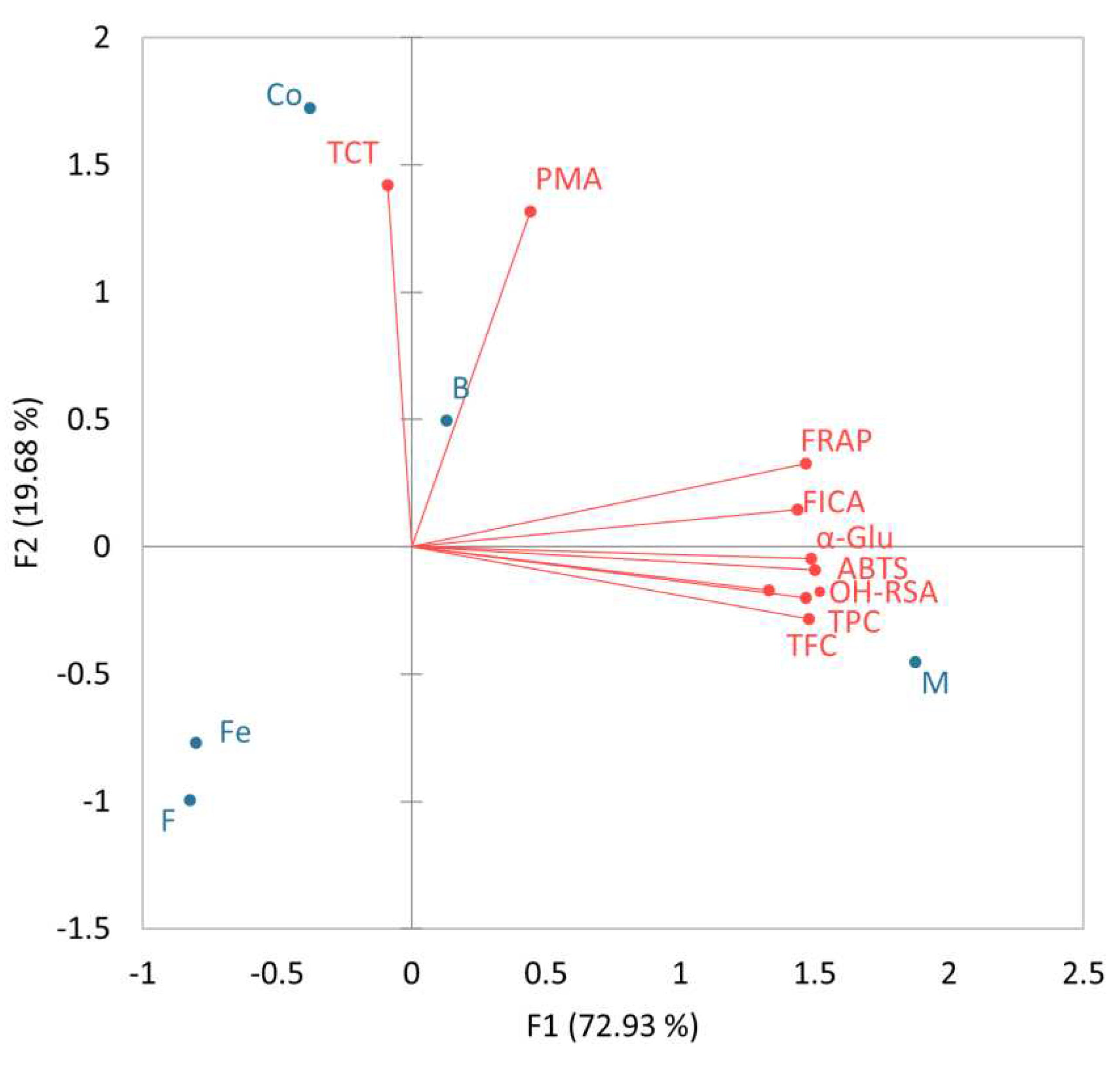
Figure 2.
LC-MS/MS spectra of 3-caffeyolquinic acid (A) and quercetin (B).
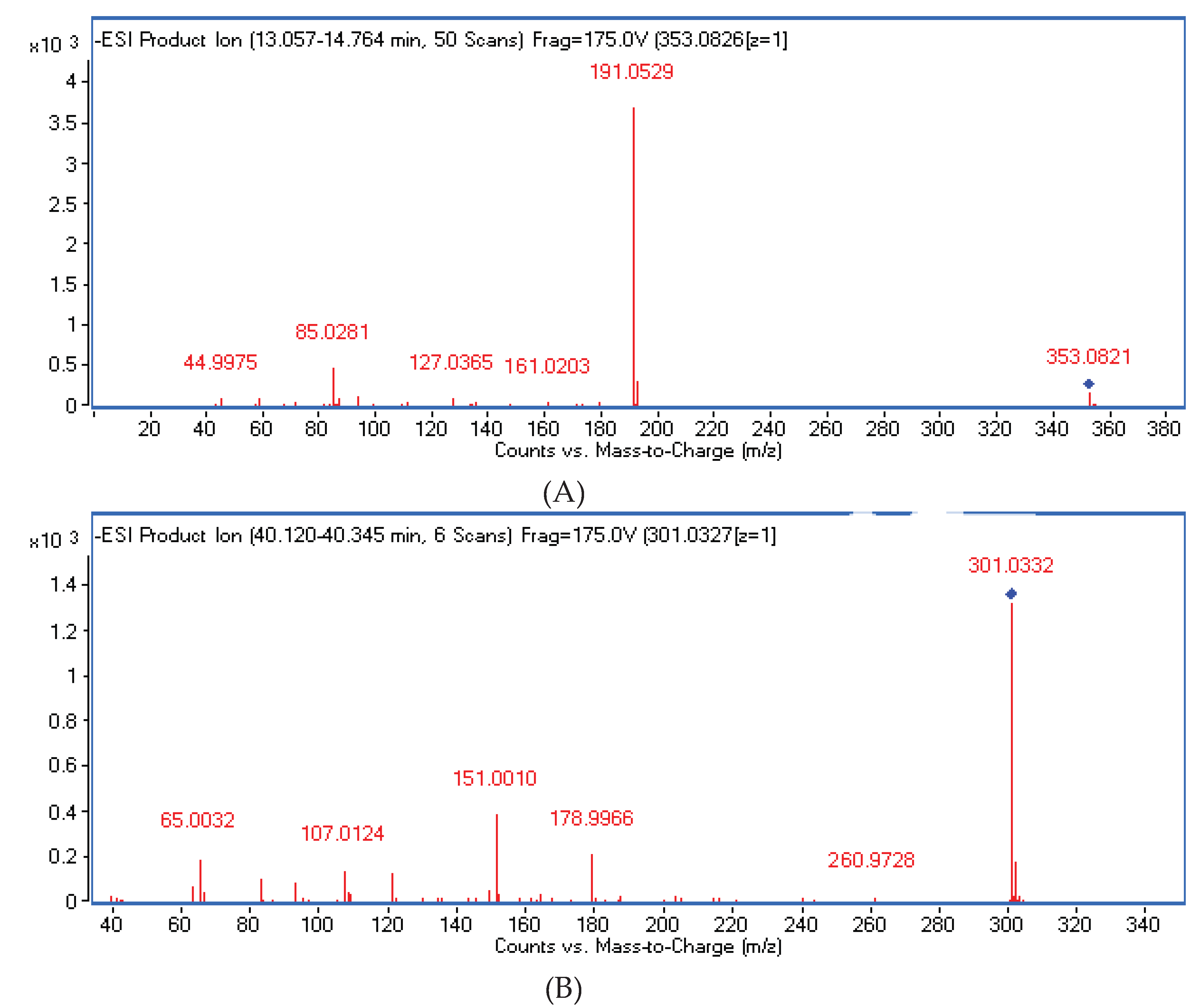
Figure 3.
Heatmap analysis of the concentration of volatile (A) and non-volatile components in basil (B), mint (M), fenugreek (F), fennel (Fe), and coriander (Co).
Figure 3.
Heatmap analysis of the concentration of volatile (A) and non-volatile components in basil (B), mint (M), fenugreek (F), fennel (Fe), and coriander (Co).
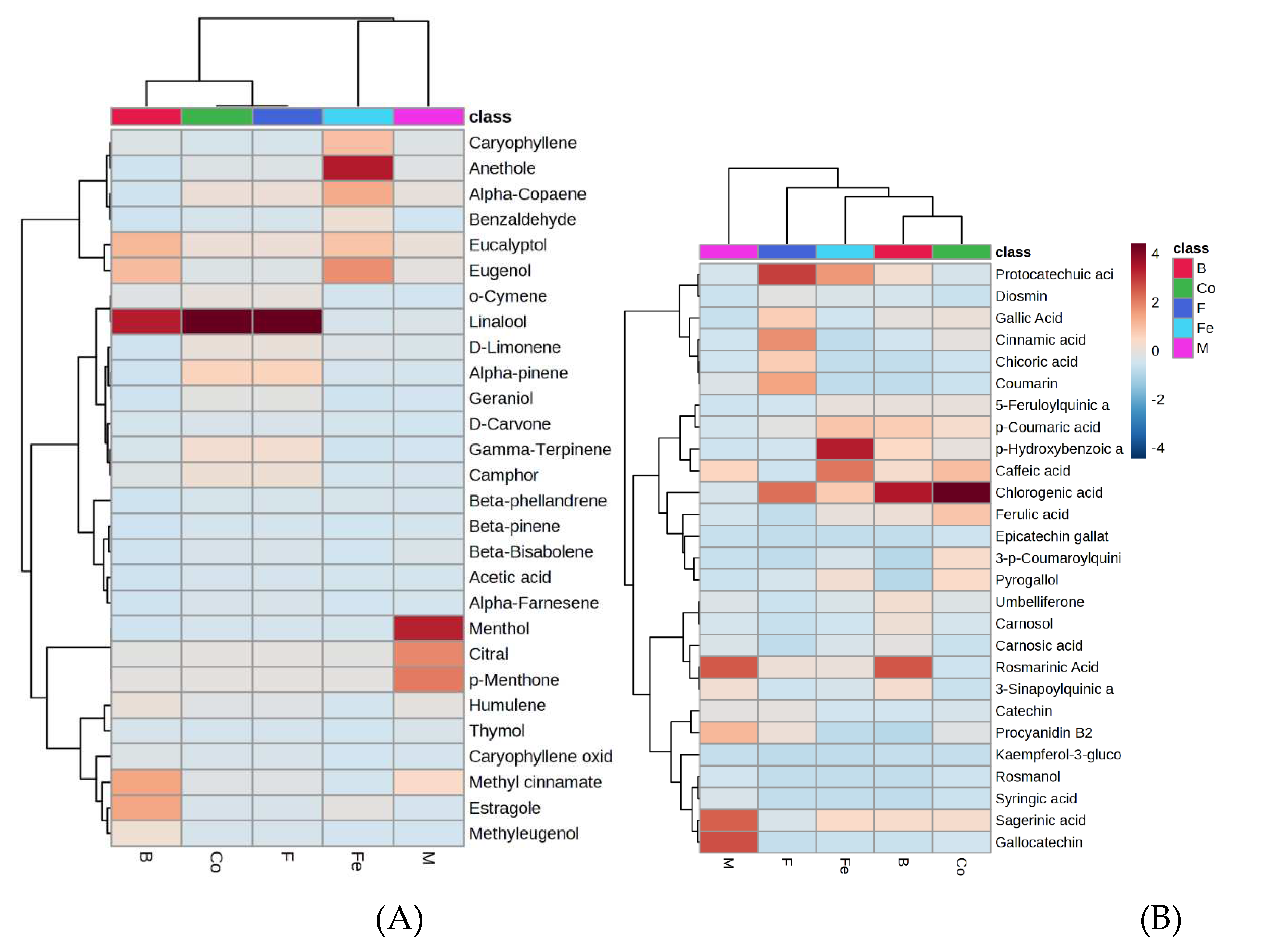
Figure 4.
Distribution of volatile (A) and non-volatile phytochemicals (B) in basil (B), mint (M), fenugreek (F), fennel (Fe), and coriander (Co).
Figure 4.
Distribution of volatile (A) and non-volatile phytochemicals (B) in basil (B), mint (M), fenugreek (F), fennel (Fe), and coriander (Co).
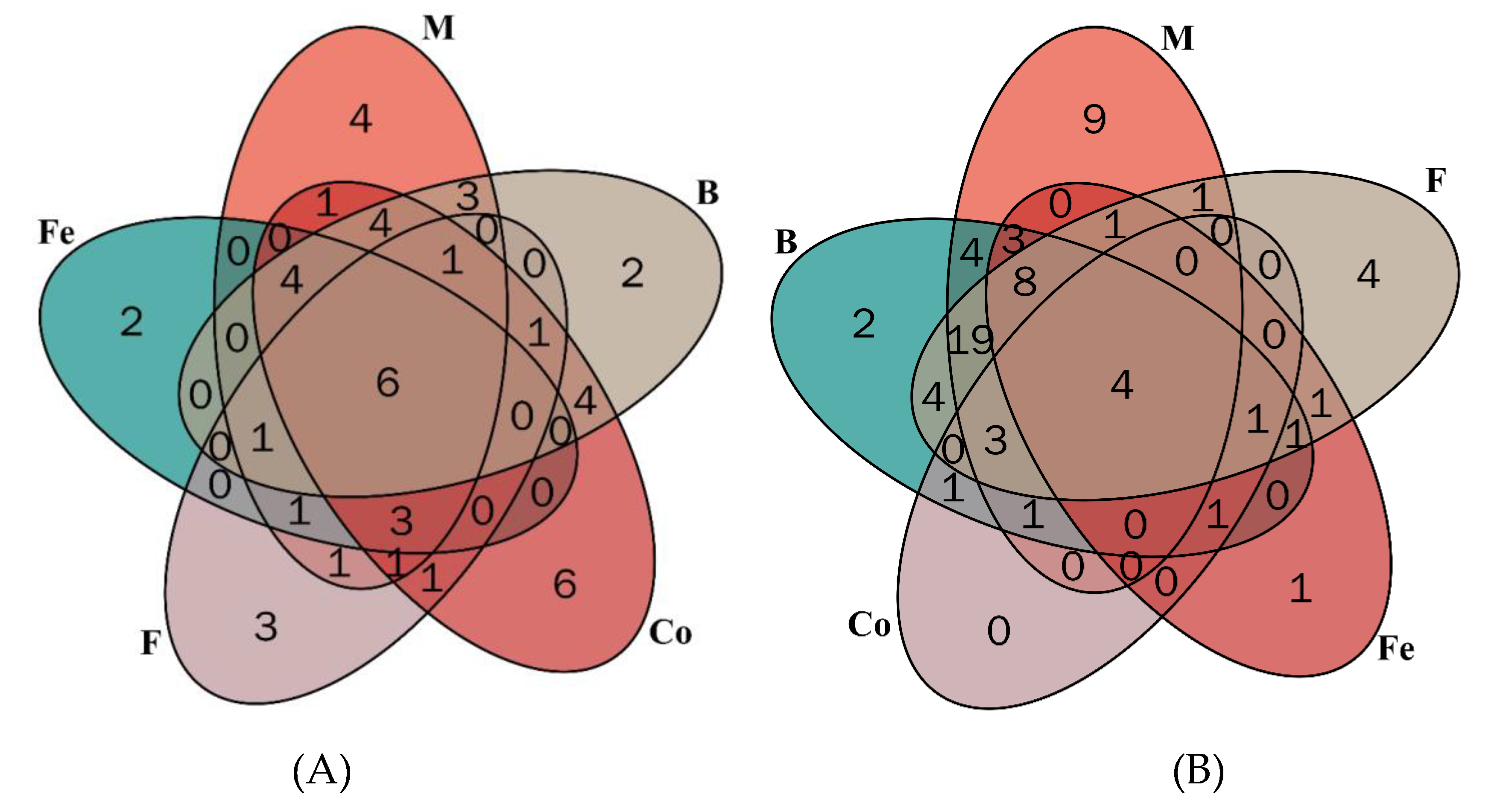
Figure 5.
Molecular docking 2D and 3D view of chlorogenic acid (A) and punicafolin (B).
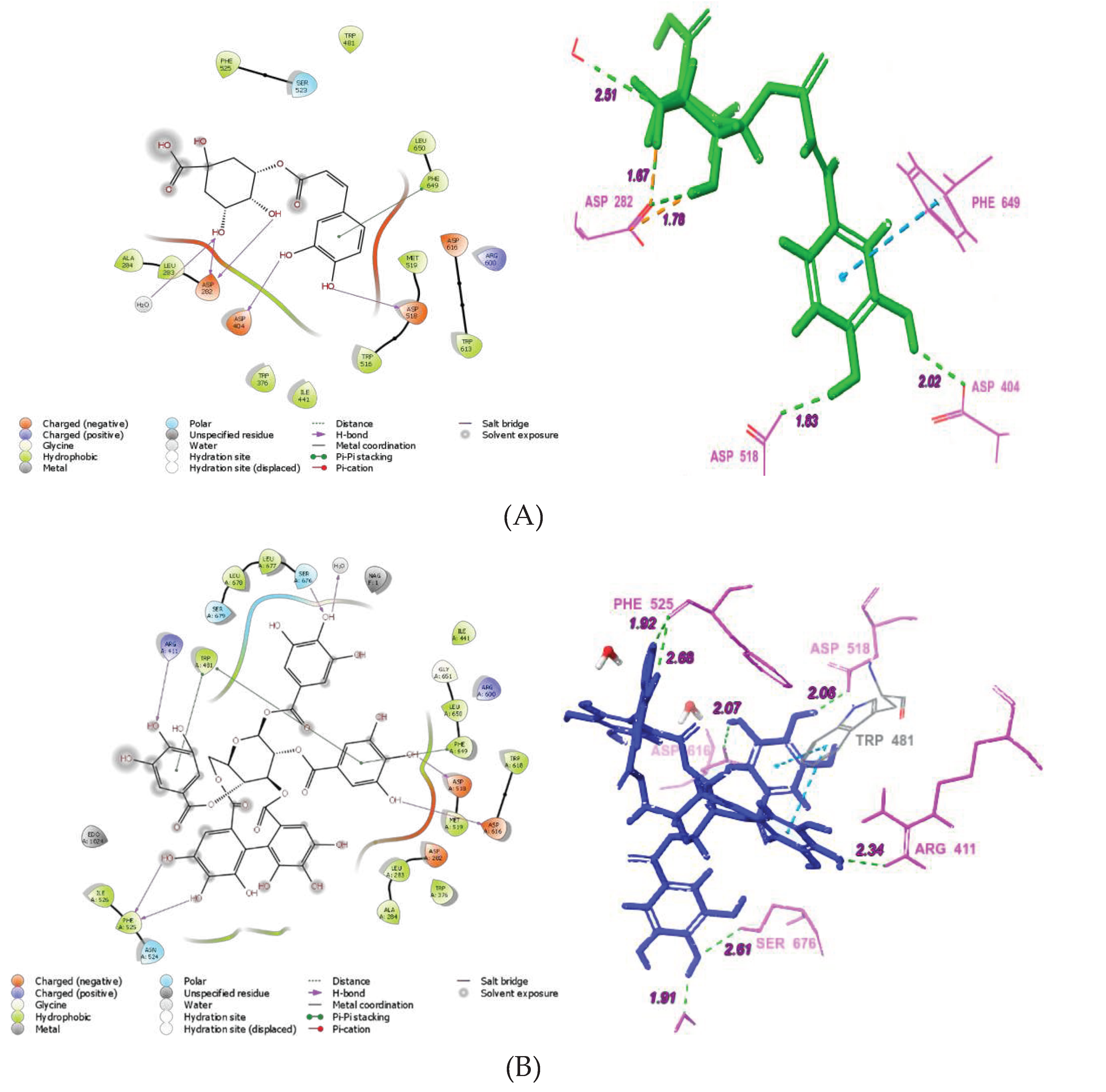
Figure 8.
Chemometrics analysis of phytochemicals in selected medicinal plants (basil (B), mint (M), fenugreek (F), fennel (Fe), and coriander (Co). Debiased Sparse Partial Correlation Network (A), Spearman’s correlation heatmap (B), Partial Least Squares Discriminant Analysis VIP score (C), Correlation coefficients between rosmarinic acid (D).
Figure 8.
Chemometrics analysis of phytochemicals in selected medicinal plants (basil (B), mint (M), fenugreek (F), fennel (Fe), and coriander (Co). Debiased Sparse Partial Correlation Network (A), Spearman’s correlation heatmap (B), Partial Least Squares Discriminant Analysis VIP score (C), Correlation coefficients between rosmarinic acid (D).
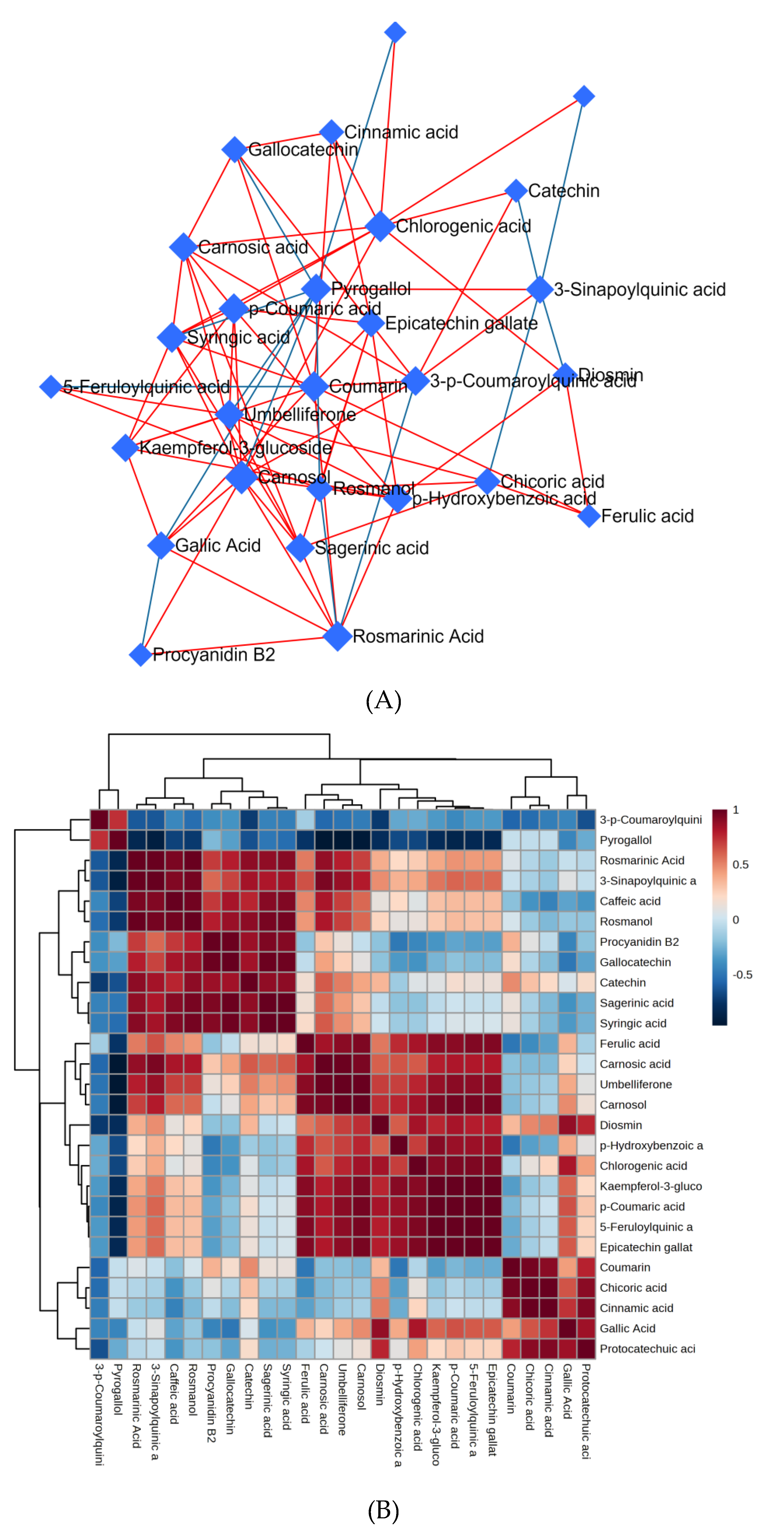
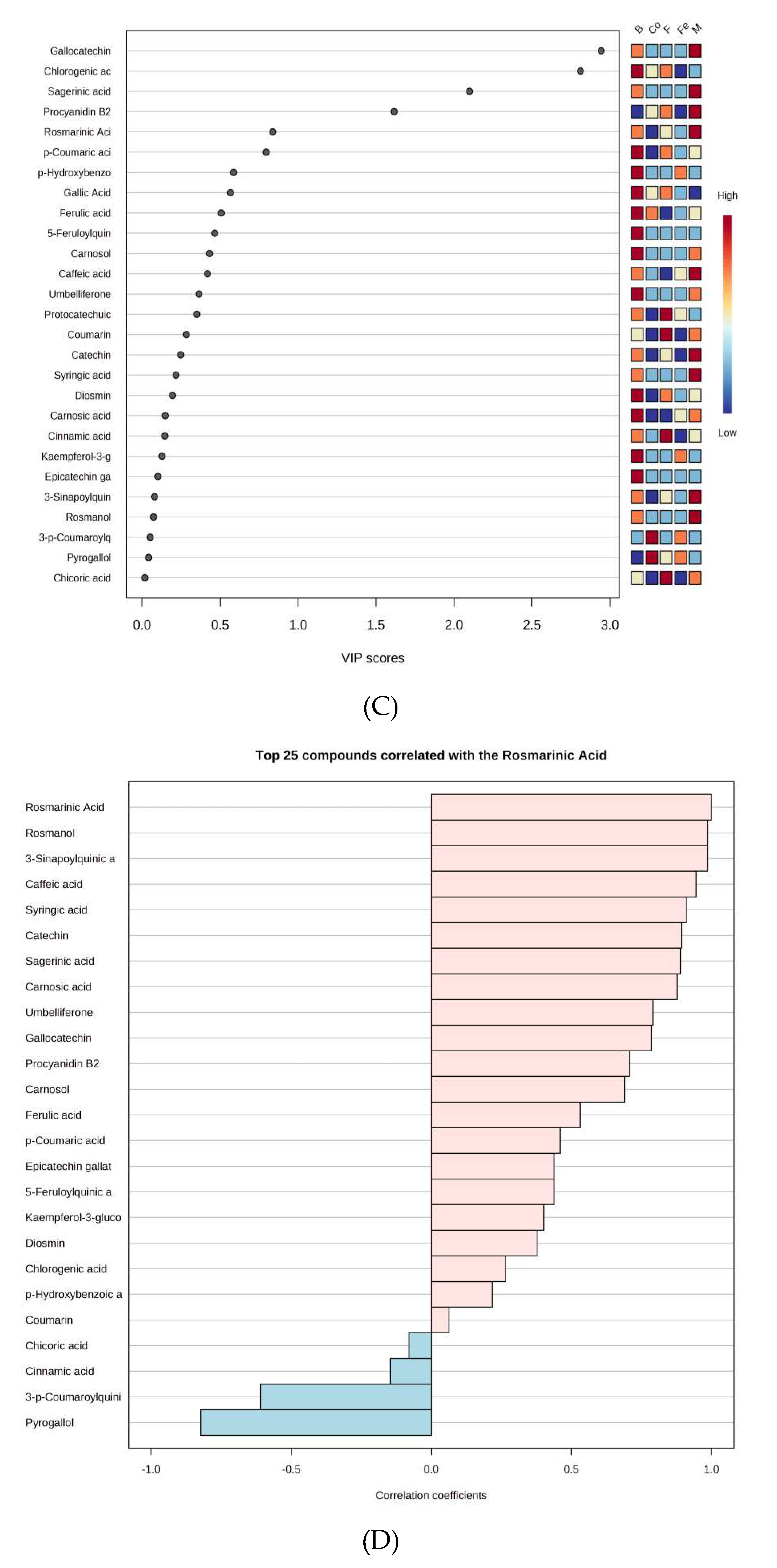

Table 1.
TPC of different extracts of the selected medicinal plants
| Variables | Basil leaves | Fennel seeds | Coriander seeds | Mint leaves | Fenugreek leaves |
|---|---|---|---|---|---|
| 80% Methanol | 26.99 ± 1.28 a | 9.90 ± 0.27 a | 23.02 ± 1.53 a | 125.42 ± 10.89 a | 17.21 ± 1.08 a |
| 80% Ethanol | 23.02 ± 1.53 b | 9.61 ± 0.76 a | 21.39 ± 1.91 ab | 116.84 ± 8.47 a | 15.43 ± 1.21 a |
| 80% Chloroform | 17.02 ± 1.01 c | 6.33 ± 0.22 b | 19.32 ± 1.14 c | 88.98 ± 7.32 B | 7.86 ± 0.19 a |
| 80% Acetone | 25.02 ± 2.61 a | 9.32 ± 0.52 a | 22.15 ± 1.28 a | 123.47 ± 11.04 a | 17.01 ± 0.32 a |
| Water | 3.15 ± 0.03 d | 1.01 ± 0.01 c | 3.02 ± 0.04 d | 15.53 ± 1.37 c | 1.52 ± 0.02 a |
According to table 1, given values mean ± S.D per dried weight where number of replicates per sample was 3 (n=3). Values in each column having different superscript letters (a-d) are profoundly distinct to one another at p < 0.05.
Table 1.
TPC, TFC and TCT of selected culinary herbs and spices.
| Variables | TPC (mg GAE/g) | TFC (mg QE/g) | TCT (mg CE/g) |
|---|---|---|---|
| Basil leaves | 26.99 ± 1.28 b | 9.35 ± 0.16 b | 3.97 ± 0.10 b |
| Fennel seeds | 9.90 ± 0.27 d | 2.48 ± 0.21 d | 2.88 ± 0.10 bc |
| Coriander seeds | 23.02 ± 1.53 b | 3.35 ± 0.26 de | 11.51 ± 1.68 a |
| Mint leaves | 125.42 ± 10.89 a | 31.72 ± 1.22 a | 3.31 ± 0.08 c |
| Fenugreek leaves | 17.21 ± 1.08 c | 4.41 ± 0.08 c | 1.36 ± 0.08 d |
According to Table 2, given values mean ± S.D per dried weight where number of replicates per sample was 3 (n=3). Values in each column having different superscript letters (a-d) are profoundly distinct to one another at p < 0.05.
Table 3.
Antioxidant activities of selected culinary spices and herbs.
| Variables | Basil leaves | Fennel seeds | Coriander seeds | Mint leaves | Fenugreek leaves |
|---|---|---|---|---|---|
| ABTS (mg AAE/g) | 34.70 ± 1.55 b | 9.43 ± 0.35 e | 19.17 ± 0.57 c | 74.62 ± 0.77 a | 16.23 ± 0.13 d |
| FICA (mg EDTA/g) | 1.24 ± 0.08 bc | 0.70 ± 0.01 c | 1.88 ± 0.03 b | 4.25 ± 0.05 a | 0.75 ± 0.07 c |
| FRAP (mg AAE/g) | 2.43 ± 0.22 b | 0.54 ± 0.20 d | 1.71 ± 0.33 c | 4.35 ± 0.09 a | 0.14 ± 0.05 de |
| •OH-RSA mg (AAE/g) | 52.17 ± 3.46 b | 23.89 ± 0.17 c | 17.25 ± 1.36 de | 61.87 ± 2.85 a | 19.62 ± 0.46 d |
| PMA (mg AAE/g) | 8.39 ± 0.35 ab | 3.21 ± 0.93 c | 8.04 ± 0.55 ab | 8.64 ± 1.84 a | 3.44 ± 0.32 c |
| α-glucosidase inhibition activity IC50 (μg/mL) | 3.32 ± 0.47 d | 31.92 ± 2.07 a | 9.41 ± 1.82 c | 2.04 ± 0.03 e | 15.83 ± 1.13 b |
According to the above table, given values mean ± S.D per gram powder weight where the number of replicates per sample were three (n=3). Values in a row with different superscript letters (a-e) are profoundly distinct at p-value < 0.05. ABTS (2,2-azio-bis-3-ethylbenzothiazoline-6-sulfonic acid assay); DPPH (2,2-diphenyl-1-picrylhydrazyl assay); FICA-ferrous ion chelating activity); FRAP (ferric reducing antioxidant power assay); •OH-RSA-hydroxyl-radical scavenging activity); PMAP (Phosphomolybdate antioxidant power assay); RPA (reducing power assay); AAE (ascorbic acid equivalents); CE (catechin equivalents); EDTA (ethylenediaminetetraacetic acid); GAE (gallic acid equivalents), QE (quercetin equivalents).
Table 4.
Pearson’s correlation between phenolic contents and antioxidant activities.
| Variables | TPC | TFC | TCT | ABTS | FICA | FRAP | •OH-RSA | PMA |
|---|---|---|---|---|---|---|---|---|
| TFC | 0.99 | |||||||
| TCT | -0.12 | -0.22 | ||||||
| ABTS | 0.97 | 0.99 | -0.13 | |||||
| FICA | 0.97 | 0.93 | 0.13 | 0.93 | ||||
| FRAP | 0.89 | 0.90 | 0.12 | 0.95 | 0.92 | |||
| •OH-RSA | 0.78 | 0.85 | -0.30 | 0.89 | 0.69 | 0.87 | ||
| PMA | 0.10 | 0.11 | 0.67 | 0.26 | 0.25 | 0.50 | 0.32 | |
| α-Glu | 0.98 | 0.97 | -0.04 | 0.96 | 0.96 | 0.95 | 0.83 | 0.21 |
Values in bold are different from 0 with a significance level alpha=0.1.
Table 5.
LC-MS/MS characterization of phytochemicals in selected plants.
| No. | Proposed compounds | Molecular Formula | RT (min) | ESI +/- | Theoretical (m/z) | Observed (m/z) | MS/MS | Mass error (ppm) | Samples |
|---|---|---|---|---|---|---|---|---|---|
| Flavonoids | |||||||||
| Flavanols | |||||||||
| 1 | (-)-Epigallocatechin 3'-O-glucuronide | C21H22O13 | 7.331 | [M−H]− | 481.0987 | 481.0989 | 305 | 0.4 | F, B |
| 3 | (+)−Catechin | C15H14O6 | 14.158 | [M−H]− | 289.0717 | 289.0701 | 245 | −4.5 | B, Ci, F, M |
| 2 | (+)−Gallocatechin | C15H14O7 | 16.244 | [M−H]− | 305.0667 | 305.0659 | 245 | −2.5 | M, Co, B |
| 4 | Procyanidin trimer C1 | C45H38O18 | 24.969 | [M−H]− | 865.1985 | 865.1972 | 739, 713, 695, 577, 451 | −1.5 | B, M, Fe |
| 5 | Procyanidin B2 | C30H26O12 | 27.396 | [M−H]− | 577.1351 | 577.1353 | 451, 425, 407, 289 | 0.3 | B, M, F |
| Flavanones | |||||||||
| 6 | Hesperidin | C28H34O15 | 31.486 | [M−H]− | 609.1825 | 609.1805 | 301 | −3.3 | B, M, Co, Fe, F |
| 7 | Neoeriocitrin | C27H32O15 | 36.849 | [M−H]− | 595.1668 | 595.1665 | 459, 287, 151 | −0.6 | M, F, B |
| 8 | Didymin | C28H34O14 | 41.407 | [M−H]− | 593.1876 | 593.1872 | 447, 285, 151 | −0.7 | Fe, M, B |
| 9 | 6-Geranylnaringenin | C25H28O5 | 54.360 | [M−H]− | 407.1864 | 407.1878 | 287, 243, 159, 119 | 3.4 | Co, B, Fe |
| Flavones | |||||||||
| 10 | Diosmin | C28H32O15 | 17.572 | [M−H]− | 607.1668 | 607.1697 | 300, 299 | 4.8 | Fe, F, B, M |
| 11 | Apigenin 6,8-di-C-glucoside | C27H30O15 | 21.708 | [M−H]− | 593.1512 | 593.1525 | 449, 287 | 2.2 | F, Co, M, B |
| 12 | Rhoifolin | C27H30O14 | 26.583 | [M−H]− | 577.1563 | 577.1554 | 431, 269 | −1.6 | B, M, F |
| 13 | Apigenin 7-O-glucuronide | C21H18O11 | 32.733 | [M−H]− | 445.0776 | 445.0770 | 269 | −1.8 | F, M, Fe |
| 14 | Apigenin 6-C-glucoside (Isovitexin) | C21H20O10 | 33.72 | [M−H]− | 431.0983 | 431.1001 | 269 | 4.2 | F |
| 15 | Chrysoeriol 7-O-glucoside | C22H22O11 | 35.196 | [M−H]− | 461.1089 | 461.1085 | 299 | −0.9 | F, B, Fe |
| 16 | Cirsilineol | C18H16O7 | 37.596 | [M−H]− | 343.0823 | 343.0815 | 327, 255, 241 | −2.3 | Fe, M |
| Flavonols | |||||||||
| 17 | Quercetin 3'-O-glucuronide | C21H18O13 | 17.998 | [M+H]+ | 479.0820 | 479.0801 | 303 | −4.5 | B |
| 18 | Rutin | C27H30O16 | [M−H]− | 609.1461 | 609.1466 | 301, 300, 271 | 0.9 | F, M, B | |
| 19 | Myricetin 3-O-rhamnoside | C21H20O12 | 28.52 | [M−H]− | 463.0882 | 463.0887 | 317 | 1.1 | B, M, Co |
| 20 | Quercetin 3-O-arabinoside | C20H18O11 | 30.94 | [M−H]− | 433.0776 | 433.0756 | 301 | −4.6 | B, M, F |
| 21 | Isorhamnetin | C16H12O7 | 36.254 | * [M−H]− | 315.0510 | 315.0523 | 300, 151, 107 | 4.1 | M |
| 22 | Quercetin | C15H10O7 | 40.120 | [M−H]− | 301.0349 | 301.0332 | 179, 151 | −4.2 | F, B, M |
| 23 | 3,7-Dimethylquercetin | C17H14O7 | 43.569 | * [M−H]− | 329.0667 | 329.0658 | 314, 299, 271 | −2.7 | B |
| Isoflavonoids | |||||||||
| 24 | Equol 4'-O-glucuronide | C21H22O9 | 17.955 | [M−H]− | 417.1191 | 417.1191 | 399, 241 | 0.0 | M |
| 25 | 3'-O-Methylequol | C16H16O4 | 18.413 | [M−H]− | 271.0976 | 271.0964 | 255, 149, 121 | −4.4 | M |
| 26 | 6''-O-Acetylglycitin | C24H24O11 | 26.07 | [M−H]− | 487.1246 | 487.1248 | 283, 267, 59 | 0.6 | F, M |
| 27 | 3'-Hydroxygenistein | C15H10O6 | 32.762 | * [M−H]− | 285.0404 | 285.0418 | 267, 251, 201, 177 | 4.9 | M |
| 28 | 3'-Hydroxydaidzein | C15H10O5 | 36.949 | [M−H]− | 269.0455 | 269.045 | 241, 224, 213, 181 | −1.9 | B, F, M |
| 29 | 3',4',7-Trihydroxyisoflavanone | C15H12O5 | 47.982 | [M−H]− | 271.0612 | 271.0611 | 239, 135, 121 | −0.4 | M |
| 30 | Violanone | C17H16O6 | 48.32 | [M−H]− | 315.0874 | 315.0866 | 300, 285, 135 | −2.5 | M |
| Phenolic Acids | |||||||||
| Hydroxybenzoic acids | |||||||||
| 31 | Gallic acid 4-O-glucoside | C13H16O10 | 10.099 | [M−H]− | 331.067 | 331.0666 | 169, 125 | −1.2 | M, Co, F, B |
| 32 | Gallic acid | C7H6O5 | 10.544 | * [M−H]− | 169.0142 | 169.0144 | 125 | 1.2 | B, M, F, Fe, Co |
| 33 | Syringic acid | C9H10O5 | 12.284 | * [M−H]− | 197.0455 | 197.0459 | 182, 163, 138, 123, 95 | 2 | B, F, M, Fe |
| 34 | Protocatechuic acid 4-O-glucoside | C13H16O9 | 12.569 | [M−H]− | 315.0721 | 315.0727 | 153 | 1.9 | F, M, B |
| 35 | 3-O-Methylgallic acid | C8H8O5 | 14.587 | * [M−H]− | 183.0299 | 183.0292 | 139, 123 | −3.8 | M, F, B |
| 36 | Protocatechuic acid | C7H6O4 | 14.784 | * [M−H]− | 153.0193 | 153.0197 | 109 | 2.6 | F, M, B, Fe |
| 37 | 4-Hydroxybenzoic acid 4-O-glucoside | C13H16O8 | 16.589 | * [M−H]− | 299.0772 | 299.0786 | 255, 137 | 4.7 | *F, Ci, B |
| 38 | Punicafolin | C41H30O26 | 20.341 | [M−H]− | 937.0952 | 937.0967 | 169, 125 | 1.7 | F, B, M |
| 39 | Ellagic acid | C14H6O8 | 23.790 | [M−H]− | 300.999 | 300.9977 | 284, 257 | −4.3 | Fe, M, B, F |
| 40 | Valoneic acid dilactone | C21H10O13 | 30.649 | [M−H]− | 469.0048 | 469.0052 | 425, 301, 139 | 0.9 | M |
| 41 | p-Hydroxybenzoic acid | C7H6O3 | 37.172 | * [M−H]− | 137.0244 | 137.0242 | 93 | −1.5 | F, Co, B, M, Fe |
| Hydroxycinnamic acids | |||||||||
| 42 | 3-Caffeoylquinic acid | C16H18O9 | 13.005 | * [M−H]− | 353.0878 | 353.0867 | 191, 179, 161 | −3.1 | Fe, B, F, M |
| 43 | Ferulic acid | C10H10O4 | 13.817 | [M−H]− | 193.0506 | 193.0504 | 178, 149, 134 | −1.0 | Fe, Co, F, B, M |
| 44 | Caffeoyl glucose | C15H18O9 | 14.764 | [M−H]− | 341.0878 | 341.0878 | 179 | 0.0 | B, M |
| 45 | Caffeoyl aspartic acid | C13H13NO7 | 17.247 | [M−H]− | 294.0619 | 294.0631 | 179 | 4.1 | M |
| 46 | p-Coumaric acid 4-O-glucoside | C15H18O8 | 17.313 | [M−H]− | 325.0929 | 325.0923 | 163 | −1.8 | B, F, M |
| 47 | p-Coumaric acid | C9H8O3 | 18.32 | * [M−H]− | 163.04 | 163.0405 | 119 | 3.1 | F, Co, B, M |
| 48 | Caffeic acid | C9H8O4 | 21.084 | [M−H]− | 179.035 | 179.0346 | 135 | -2.2 | B, F, M |
| 49 | Sinapic acid | C11H12O5 | 21.339 | * [M−H]− | 223.0612 | 223.0615 | 193, 179, 149, 134 | 1.2 | M, Fe, F, B |
| 50 | 3-p-Coumaroylquinic acid | C16H18O8 | 23.499 | [M−H]− | 337.0929 | 337.0939 | 191, 119 | 3.0 | F, B, M |
| 51 | 3-Feruloylquinic acid | C17H20O9 | 24.897 | [M−H]− | 367.1034 | 367.1030 | 193, 191 | −1.6 | F, M, B |
| 52 | Chicoric acid | C22H18O12 | 30.115 | * [M−H]− | 473.0725 | 473.0736 | 293, 311 | 2.3 | B, M |
| 53 | 1,5-Dicaffeoylquinic acid | C25H24O12 | 30.921 | [M−H]− | 515.1195 | 515.1197 | 191, 179, 135 | 0.7 | B, F, M, Fe |
| 54 | Rosmarinic acid | C18H16O8 | 33.313 | [M−H]− | 359.0772 | 359.0776 | 197, 179, 161, 135 | 1.1 | M, B, F |
| 55 | Cinnamic acid | C9H8O2 | 38.22 | [M−H]− | 147.0451 | 147.046 | 103 | 6.1 | F, B, M, Fe |
| Other compounds | |||||||||
| 56 | Scopoletin | C10H8O4 | 8.681 | [M−H]− | 191.035 | 191.035 | 175, 147 | 0.0 | M |
| 57 | Pyrogallol | C6H6O3 | 8.573 | [M−H]− | 125.0244 | 127.0256 | 107, 97, 79 | 2.1 | B, M, F |
| 58 | Trigonelline | C7H7NO2 | 14.621 | [M−H]− | 138.0549 | 138.0553 | 120, 94, 92 | 5.0 | M, F |
| 59 | p-Anisaldehyde | C8H8O2 | 15.526 | * [M−H]− | 135.0451 | 135.0445 | 122, 109 | 1.7 | B, F, M |
| 60 | Diosgenin | C27H42O3 | 16.716 | [M+H]+ | 415.3212 | 415.3212 | 271, 253, 157 | 0.0 | F |
| 61 | Sagerinic acid | C36H32O16 | 26.198 | [M−H]− | 719.1612 | 719.1610 | 359, 197, 179, 161 | −1.2 | B, M, Fe |
| 62 | Esculin | C15H16O9 | 20.426 | [M−H]− | 339.0721 | 339.0728 | 177 | 2.2 | F, M |
| 63 | Esculetin | C9H6O4 | 20.473 | [M−H]− | 177.0193 | 177.0196 | 133, 105 | −4.4 | F, B |
| 64 | Coumarin | C9H6O2 | 22.521 | [M+H]+ | 147.0441 | 147.0441 | 103 | 0.0 | M, B, F |
| 65 | 2-Hydroxybenzaldehyde | C7H6O2 | 24.656 | * [M−H]− | 121.0295 | 121.0292 | 92, 77 | −2.5 | Ci, F, B |
| 66 | Umbelliferone | C9H6O3 | 26.399 | * [M−H]− | 161.0244 | 161.0242 | 133 | −1.6 | F, M |
| 67 | Rosmanol | C20H26O5 | 26.775 | [M−H]− | 345.1707 | 347.1708 | 301 | 0.2 | F, Fe |
| 68 | Carnosic acid | C20H28O4 | 44.680 | [M−H]− | 331.1915 | 331.1903 | 287 | −4.5 | B, M, F |
| 69 | Carnosol | C20H26O4 | 46.724 | [M−H]− | 329.1758 | 329.1760 | 285 | 0.6 | B, M |
| 70 | 3,4,5,4'-Tetramethoxystilbene | C26H44N4O2S | 47.334 | [M−H]− | 475.3112 | 475.3112 | 475 | 0.0 | M |
| 71 | [6]-Gingerol | C17H32O4 | 49.633 | [M−H]− | 293.1758 | 293.1769 | 299 | 3.6 | B, M |
| 72 | Carvacrol | C10H14O | 58.621 | [M−H]− | 149.0972 | 149.0966 | 131, 105 | 4.4 | B, M, F |
RT stands for “retention time”. Culinary herbs and spices were presented with abbreviations; Basil leaves (B), Mint leaves (M), Fennel seeds (Fe), Fenugreek leaves seeds (F), and Coriander seeds (Co). Compounds with an asterisk (*) were found in negative and positive modes.
Disclaimer/Publisher’s Note: The statements, opinions and data contained in all publications are solely those of the individual author(s) and contributor(s) and not of MDPI and/or the editor(s). MDPI and/or the editor(s) disclaim responsibility for any injury to people or property resulting from any ideas, methods, instructions or products referred to in the content. |
© 2023 by the authors. Licensee MDPI, Basel, Switzerland. This article is an open access article distributed under the terms and conditions of the Creative Commons Attribution (CC BY) license (http://creativecommons.org/licenses/by/4.0/).
Copyright: This open access article is published under a Creative Commons CC BY 4.0 license, which permit the free download, distribution, and reuse, provided that the author and preprint are cited in any reuse.


