

Submitted:
30 September 2024
Posted:
02 October 2024
You are already at the latest version
Abstract
Lithraea molleoides fruit gum (LMFG) is a valuable product obtained from the total hydrolysis of the fruit. The hydrolysis process involves three methods: thermal (LMFGT), basic (LMFGB), and acid (LMFGA). Through these methods, the aim is to break bonds and de-esterify polysaccharides, resulting in increased solubility and decreased molecular weight. The resulting hydrolysates are then combined with pectins in a 1:2 ratios to form films. In this study, the focus is on utilizing the hydrolysates of Lithraea molleoides gums for film applications, with an evaluation of their structural and physicochemical characteristics. The films produced exhibit excellent mechanical properties and low water vapor permeability, as well as exceptional thermal stability. These properties make them highly suitable for industrial films in pharmaceutical and food applications. This research highlights the potential of LMFG-based films as a viable solution for various industrial needs due to their outstanding performance across multiple parameters.
Keywords:
Lithraea molleoides fruit gum
; hydrolysis
; films
1. Introduction
The packaging in the food industry uses synthetic plastics. The thermoplastic as polystyrene, polyethylene, poly(ethylene terephthalate), and polypropylene use for packaging and are disposable, generating waste, entering the environment and undergoing degradation processes [1]. The disposal of nondegradable packaging waste of synthetic polymers is a global issue, the scientific community seeks to develop biodegradable packaging from renewable sources to reduce environmental impact [2]. Water-soluble gums are valuable in many fields, including adhesives, agriculture, biotechnology, ceramics, cosmetics, explosives, food, paper, textiles and texturization, among many others [3,4,5]. The edible films and coatings, which are still used today, help prevent oxidative rancidity, preserve sensory qualities, maintain pigments, delay ripening, and extend the shelf life of various food products [6]. The proteins, polysaccharides, and their blends are used to make edibles films/coatings containing antimicrobials, which demonstrated to be a useful tool as a stress factor to protect foodstuff against spoilage flora and to decrease the risk of pathogen growth [7].
Carrageenan, cornstarch, and Gelatin are analyzed for their chemical, physical, and mechanical properties how biodegradable alternatives from renewable sources to produce films [8]. Starch formulations with a protein that show synergy because protein has characteristics that can form a flexible film and do not tear easily and rectify the physical characteristics of the polysaccharide film [9]. Edible films and coatings enhance the quality of food products, protecting them from physical, chemical, and biological deterioration [10].
The edible films and coatings with polysaccharides, proteins and lipids. – their sources, properties and possible application - substantially improve its all properties [11]. In addition, need improvements in structural and barrier limitations for better performance [12,13,14]. The coatings and films from polysaccharides, proteins and lipids with the addition of surfactants and plasticizers are used barrier and mechanical properties which in turn depend its formation process and film composition. For the edible coatings, the method of application on the product, and the capacity of the coating to adhere to the surface are the most important parameters [15,16,17,18]. The advancements in edible films or coatings composed from natural plant compounds, highlighting their mechanical and physicochemical characteristics and promotes sustainable practices in the packaging industry [19]. The importance of assessing the preformed matrix of edible films quantifies various parameters such as antimicrobial properties, mechanical and optical since this envelope creates a modified atmosphere for straightening the gases transfer (CO2, O2) and aromatic compounds barrier [20].
The native or modified chitosans and chitooligosaccharides are associated with bioadhesive applications, adsorption, antimicrobial activities, and chelation in the wine industry [21]. The potential of coatings based on xylan derivatives and chitosan to provide barrier properties and antimicrobial protection for packaging food [22]. The study show developing functional properties of taro starch-reinforced polysaccharide-based films for active packaging, fabricating films containing chitosan, pullulan, and taro starch extracted from Colocasia esculenta tubers using the wet-milling process [23]. Papers covered with poly-vinyl alcohol and biodegradable cellulose nanocrystals were also used for the purpose of biopackaging aqueous foods [24]. Algal polysaccharides like galactans, alginates, and ulvan, detailing structure, properties, and applications in foods packaging [25]. Biodegradable packaging films incorporating purple cauliflower-extracted anthocyanins into fucoidan and alginate/carboxymethyl chitosan matrices with Ca2+ and Zn2+ crosslinker [26,27]. Gracilaria chouae polysaccharide food packaging applied with carboxymethyl cellulose and lysozyme [28].
Films derived from cellulose and its derivatives, pectin, starch, alginate, chitosan, pullulan reducing water vapor permeability [29]. Agroindustrial waste as a cost-effective starting material for bioprocessing, to enhance efficiency and reduce fermentation costs [30]. Advances in green solvents for production of polysaccharide-based packaging films: Insights of ionic liquids and deep eutectic solvents [31,32]. κ-carrageenan/starch with zinc oxide nanoparticles films [33]. Films of Aloe vera in β-hydroxy-β-methylbutyrate calcium and nanocellulose films for blueberry freshness preservation [34]. Policaju and Tween 80 edible coatings/films for Golden apples protection [35]. Kraft paper with cellulase impregnating with essential clove oil and cold-pressed grape seed oil films [36]. Propolis with cellulose, starch, chitosan, and alginate used for composite biodegradable active packaging [37]. Bionanocomposite films with plasticized whey protein isolate-jujube polysaccharide/starch nanocrystal blends for packaging fresh-cut carrots [38]. Characterization of Zizania latifolia polysaccharide-corn starch composite films and their application in the postharvest preservation of strawberries [39]. The study developed a polysaccharide-based composite film with antimicrobial properties to extend the shelf life of fresh-cut watermelon. Packaging tests demonstrated its potential for prolonging shelf life and showed excellent barrier and heat-sealing properties [40]. Xanthan gum/pullulan with grape seed extract (GSE) composite films extended the shelf life of fresh-cut apples [41]. Soluble soybean polysaccharide and Malva sylvestris extract to extend food shelf life and detect shrimp spoilage [42]. Extracts of Pinus brutia bark were aded in chitosan-polyvinyl alcohol films [43]. Auricularia auricula polysaccharide-based films and application in meat preservation [44]. Starch, chitosan, sodium alginate, and cellulose, focusing on improving hydrophilic barrier, and mechanical properties [45]. Silver nanoparticles (PCP-AgNPs) using Poria cocos polysaccharide films exhibited excellent antibacterial activity and extended the shelf life of strawberries [46]. Carboxymethyl cellulose films enhanced with mulberry leaf polysaccharides [47]. Soluble soybean polysaccharide, grape skin anthocyanin extract, and graphene oxide to monitor food freshness (pH sensitivity and a color change indicating spoilage) for smart packaging [48]. Biodegradable, antimicrobial, and antioxidant packaging from chitosan, hyaluronic acid, and chondroitin sulfate [49]. Citric acid to crosslink glycerol-plasticized soybean polysaccharide films, enhancing their water resistance, mechanical, UV-barrier, water vapor barrier, antioxidant, thermal, and antibacterial properties [50]. Renewable and biodegradable fiber-based packaging materials are being developed to replace nonbiodegradable plastics. We created waterborne barrier coatings from natural polysaccharides, achieving a highly crosslinked polymer network that forms uniform, effective barrier layers on paperboard and molded pulp. These coatings offer excellent oil and grease resistance, reduced water sensitivity, and maintain recyclability [51,52,53].
Lithraea molleoides (Vell.) Engl. (Anacardiaceae) is a polygamous dioecious tree with persistent and dense foliage, also known as "molle de beber," It is distributed in northern and central Argentina, Bolivia, Brazil, and Uruguay. It is a tree that grows 3–8m tall, with a globose crown, shiny leaves, and dark branches. The leaves are evergreen, alternate, shiny green, compound, with 3–5 lanceolate leaflets that come to a sharp point. The prominent secondary veins run parallel to each other. The small yellowish flowers are clustered in compound axillary racemes. The fruit is a globose drupe, with a greenish or white epicarp. It appears juicy when ripe, but is dry and breaks to release the seeds. The fruit is a globose drupe, 6–8 mm in diameter, whitish-green and shiny. It blooms from October to November and bears fruit from January onwards. These are edible; the indigenous Tehuelche people favored the fruits and also made chicha from the crushed seeds [54].
In this study Lithraea Molleoides fruit Gum (LMFG) is obtained from hydrolysis of the fruit. The hydrolysis used are three: thermal (LMFGT), basic (LMFGB) and acid (LMFGA). The LMFG are analyzed by Proximate Analysis of Biomass, Antioxidant Activity Assays (Reducing Power, Hydroxyl Radical Scavenging, DPPH Scavenging Activity, Total Polyphenol Content), Fourier Transform Infrared Spectroscopy, X-ray Diffraction (XRD), Differential Scanning Calorimetric Analysis (DSC), Thermogravimetric Analysis—Differential Thermogravimetric Analysis. The aim of hydrolysis is bond breaking and de-esterification of polysaccharide, with the consequent increase in solubility and decrease in molecular weight. Blend films with pectins are prepared from these gums LMFGTf (Thermal), basic LMFGBf and acid LMFGAf. These films were characterized by Scanning Electron Microscopy–Electron Dispersive X-ray Spectroscopy (SEM-EDX), Mechanical Tests, Water Vapor Permeability and Biodegradability.
2. Materials and Methods
2.1. Raw Material
The Lithraea molleoides fruit, LMF, (voucher number: UNSL # 533 [54]) was collected in the countryside located in San Francisco del Monte de Oro (32°36’00” S, 66°07’30” W) in San Luis, Argentina, in January 2022. The fruit was selected and washed with distilled water, placed in a polypropylene container and dried at 60°C for 24 hours. All fruit (husk and seed) was ground and separate to 50 mesh obtaining flour from LMF. All hydrolysis was performed at 80°C for 6h, at a concentration of 0.1M NaOH (Anhedra, Argentina) or HCl (Ciccarelli, Argentina). The soluble fraction was precipitated with ethanol/distilled water 70/30 and separated by filtration, the filtrate was concentrated at 60°C for 8h, and dried at 60°C for 24h. The synthesis of films was carried out by adding 2g of pectin (MAC, Argentina) as a polymer matrix, 1 gram of the different hydrolysates and 1mL of glycerin used as a plasticizer. The nomenclature for the different films that contain hydrolysates were as follows: LMFGTf for thermal hydrolysis, LMFGBf for basic hydrolysis and LMFGAf for acid hydrolysis [55]. The pectin film (Pec2.5) was made by the casting method from 2.5 g of pectin (MAC, Argentina), then follows the same procedure as the rest of the films.
2.2. Lithraea Molleoides Fruit Gum Flour (LMFG)
2.2.1. Proximate Analysis of Biomass
In accordance with standard methods, the sample was macerated to a powder and subjected to proximate analysis (AOAC, 2012). The nitrogen content was determined using the Kjeldahl-Arnold-Gunning method, and total proteins were calculated using a factor of 6.25 (AOAC. 920.12). Protein productivity was also calculated and expressed as milligrams of protein produced per liter of culture per hour. Total fats were determined using the Soxhlet gravimetric method with petroleum ether (Sigma Aldrich) (AOAC 945.39), while crude fiber was determined using the digesting sample method with H2SO4 and NaOH (Sigma Aldrich) (AOAC 962.09). Ashes were determined using the weight difference method after calcining the sample (AOAC 945.46), and moisture content was determined through heating under reduced pressure (AOAC 945.46). Carbohydrates were indirectly calculated as, Total carbohydrates = 100 – (Proteins + Total Fat + Moisture + Ash). Following these established methods ensures accuracy and consistency in our analysis, providing valuable information for further research or application within various industries [56].
2.2.4. Antioxidant Activity Assays
Reactive oxygen species (ROS) are known to cause liver-damaging oxidation and loss of bodily functions. Among these ROS, superoxide anion radicals (O2−•), hydroxyl radicals (•OH), and DPPH radicals are particularly detrimental to the body. Therefore, the determination of these ROS is crucial in the study of novel polysaccharides. Understanding the impact of ROS on the body’s functions is essential for developing effective treatments for liver damage and oxidative stress-related conditions. By studying how novel polysaccharides interact with and potentially neutralize these harmful free radicals, researchers can advance our understanding of their potential therapeutic benefits. Investigating the effect of novel polysaccharides on reactive oxygen species could lead to breakthroughs in medical treatment and preventive care. The determination of ROS is a key step in this research process, laying the groundwork for potential advancements in healthcare and wellness [57]. The role that reactive oxygen species play in liver damage underscores the importance of studying novel polysaccharides as potential countermeasures. The determination of these harmful free radicals serves as a critical starting point for further advancements in medical research and treatment options.
2.2.5. Reducing Power
The reducing power assay, as described by reference [57], involved several steps to determine the reducing power of polysaccharide solutions. This method required precise measurements and careful incubation to ensure accurate results. The addition of reagents such as phosphate buffer (2M, pH 6.6), potassium ferricyanide (1% w/v), trichloroacetic acid (2.5ml 10% w/v), and ferric chloride (0.2mL) were crucial in stopping the reaction and measuring the absorbance at 700 nm. The procedure was conducted in triplicate to ensure reliability, with ascorbic acid serving as a positive control for comparison. This meticulous approach allowed for a thorough assessment of the reducing power of polysaccharide solutions, demonstrating the importance of precision in scientific methodologies.
2.2.6. Hydroxyl Radical Scavenging
The hydroxyl radical assay was conducted following the salicylic method outlined by reference [58], with some adjustments. In a test tube, 2 mL polysaccharide solution (0.1–1 mg/mL) was combined with 2 mL FeSO4 (4 mM), 2 mL salicylic acid hydroalcoholic solution (4 mM), and 2 mL H2O2 (4 mM) in a test tube. The mixture was then agitated and incubated at 37 °C for 30 minutes before being centrifuged at 300 g for 5 minutes, and the absorbance of the supernatant was measured at a wavelength of 510 nm. The hydroxyl scavenging rate (r%) was determined using the formula:
where Ac0 is the absorbance of the control, prepared with H2O replacing the sample; Am is the sample absorbance, and Ab0 is the blank absorbance, prepared for each sample with H2O replacing H2O2. The procedure was carried out in duplicate, and ascorbic acid served as a positive control. Results were expressed in mg/L equivalents of ascorbic acid. This modified method provides an accurate means of measuring hydroxyl radical scavenging activity in various solutions, allowing researchers to effectively assess antioxidant capabilities within their samples.
2.2.7. DPPH Scavenging Activity
DPPH radical scavenging activity was assessed using a method described by reference [57] with some adjustments. The process involved adding 0.5 mL of polysaccharide solution (0.1–1mL) to a 90% ethanolic solution of DPPH (0.15M) and incubating it in darkness for 30 minutes before measuring absorbance at 517 nm. The total antioxidant content was calculated as a percentage of antioxidant activity (% AA) using the formula:
where Ac is the absorbance of the control, Am is the sample absorbance, and Ab is the blank absorbance. The procedure was conducted in triplicate, and ascorbic acid was used as a positive control. A calibration curve for ascorbic acid was also prepared and measured to express the results in mg/L equivalents of ascorbic acid. These meticulous measurements and calculations provide valuable insights into the antioxidant properties of polysaccharides, contributing to our understanding of their potential health benefits.
2.2.8. Total Polyphenol Content
The determination of total phenolic compounds was conducted in accordance with the Folin–Ciocalteu method [59,60], with some modifications to ensure accuracy and precision. A 5 mL aliquot of the sample was carefully measured and combined with 1.5 mL of Folin–Ciocalteu reagent (2 N) and 15 mL of Na2CO3 solution (15%) in a volumetric flask, resulting in a final volume of 25 mL that was completed with distilled water. The resulting mixture was allowed to stand in a location shielded from light, at room temperature for a duration of 2 hours to facilitate the reaction. Following completion of the reaction, the absorbance was measured at 760 nm using appropriate instrumentation. The quantity of total phenolic compounds present in the sample was then expressed as gallic acid equivalents for standardization purposes. In order to establish calibration curves and ensure accuracy, six concentrations ranging from 1–6 mg/L were prepared using gallic acid as a reference standard. To validate results, this entire procedure was meticulously performed twice in order to confirm reproducibility and reliability.
2.2.9. Fourier Transform Infrared Spectroscopy
In the field of analytical chemistry, Fourier-transform infrared (FTIR) spectroscopy is a widely used technique for identifying and analyzing chemical compounds. In this study, FTIR spectra were obtained using two different modes - diffuse reflectance (DRIFTS) and transmission - with the use of a Nicolet PROTEGE 460 Spectrometer. The operational range for the spectra collection was set from 700 to 400 cm−1, allowing for comprehensive analysis of the samples. Furthermore, each sample was scanned 64 times to ensure accuracy and reliability in the results. The choice of using both DRIFTS and transmission modes provides valuable insight into the chemical composition and structure of the samples under investigation. This comprehensive approach allows for a thorough understanding of the molecular vibrations present in the samples across a wide range of wavelengths. Overall, this study showcases meticulous attention to detail in experimental design and execution, aiming to provide high-quality data for further analysis and interpretation. The use of advanced instrumentation coupled with precise scanning parameters ensures that the FTIR spectra obtained are robust and reliable, laying a solid foundation for meaningful insights into the chemical nature of the samples [61].
2.2.10. X-ray Diffraction (XRD)
X-ray diffraction (XRD) studies were conducted utilizing state-of-the-art Rigaku equipment, specifically the model ULTIMA IV type II, manufactured in Tokyo, Japan. This equipment was equipped with a Cu Kα lamp with a wavelength (λB) of 1.54 Å and a nickel filter to ensure accurate and precise measurements. The operational range for the 2θ angle was set from 3° to 60°, with the instrument being operated at 30 kV and 20 mA. A sweep rate of 3° per minute with a reading step of .02° was utilized in continuous mode to ensure comprehensive data collection. The dspacing, or average intercatenary distance, was determined by applying Bragg’s equation:
where dspacing represents the intercatenary distance, n is an integer value determined through analysis, λB denotes the X-ray wavelength used, and θB refers to Bragg’s angle [61].
Moreover, the crystalline index (ICR) was calculated from the normalized diffractogram using peak intensities at lattice plane reflection indices such as 110 lattices (Imax), which is observed at an angle of approximately 21° corresponding to maximum intensity. Additionally, amorphous diffraction data Iad at an angle of approximately 15° was utilized in determining ICR following methods outlined in previous literature [62,63,64].
2.2.11. Differential Scanning Calorimetric Analysis (DSC)
Differential scanning calorimetry (DSC) was conducted using the STA 449F3-Jupiter equipment manufactured by Selb, Germany. To begin the analysis, approximately 5 mg of the biopolymer sample was carefully placed in an alumina crucible. The sample was then subjected to a controlled heating process, starting from an initial temperature of 25 °C and steadily increasing to a maximum temperature of 400 °C. This heating process was carried out at a constant rate of 5 °C per minute under a dynamic nitrogen atmosphere with a flow rate set at 25 mL per minute [65]. These specific parameters were chosen in order to accurately measure and analyze the thermal behavior and properties of the biopolymer sample, allowing for precise determination of its characteristic transitions and thermal stability under these controlled conditions.
2.2.12. Thermogravimetric Analysis—Differential Thermogravimetric Analysis
The thermal stability of the polysaccharides films was assessed through a comprehensive thermogravimetric analysis (TGA). Utilizing a TG 295 analyzer from TA Instruments, Inc., located in New Castle, DE, USA, the TGA determinations were carried out. The analytical conditions included a heating rate of 10 °C/min in a N2 (99.99%) atmosphere with a flow rate of 50 mL/min, which had been pre-filtered. Moreover, the temperature axes for thermogravimetric analysis were calibrated using indium (99.99%, with a melting point of 156.60 °C) and the Curie point of Ni (353 °C). Empty aluminum pans (40 mL) were utilized as reference materials and polysaccharide samples weighing approximately 8 mg were employed [65].
2.3. Lithraea Molleoides Fruit Gum Films (LMFGf)
2.3.1. Scanning Electron Microscopy–Electron Dispersive X-ray Spectroscopy (SEM-EDX)
The film’s morphology was meticulously analyzed using a state-of-the-art scanning electron microscope, the LEO 145VP, located in Los Altos, CA, USA. Additionally, the energy dispersion X-ray analysis was conducted using the highly advanced EDS Genesis 200 by EDAX, also based in Los Altos, CA, USA. Prior to the surface analysis with SEM, the samples underwent a preparation process involving immersion in liquid nitrogen and subsequent coating with gold. The observations of biopolymer samples were carried out under high vacuum conditions, and the resulting EDAX spectrums were obtained with an acceleration voltage of 120 kV [65], ensuring precise and accurate data collection for thorough investigation.
2.3.2. Mechanical Tests
The mechanical properties of the materials were assessed using a Brookfield CT3 instrument from the USA, in accordance with the ASTM D882 requirements, at a consistent traction speed of .1 mm/min. The experimental procedure for determining these properties was conducted at a temperature of 25 °C and relative humidity of 40%, with each test performed in triplicate. Test samples measuring 40 mm in length by 10 mm wide were utilized, with thickness measurements taken for each film using a micrometer. Data on force (F) and deformation (Δl) were collected until the breaking point was reached. Tensile strength (σ) was calculated by dividing the maximum load by the specimen’s initial cross-sectional area (A). Percentage elongation at break (% ε) was determined as a percentage change from the specimen’s initial length (l = 40 mm) at failure. Lastly, elastic modulus, or Young’s modulus (E), was derived from the slope of stress (σ) vs strain (ε) curve in the elastic region, which represents the linear part of the curve [65,66].
2.3.4. Water Vapor Permeability
The equipment used for determining water vapor permeability was Electrotech Systems, Chicago, IL, USA, which operates as a closed system controlled by sensors for temperature and humidity measurements. The weight change was obtained by a RADWAG balance (Radom, Poland), with a precision of 0.1 mg, and a Kölfe thickness micrometer (Munchen, Germany), with an accuracy of 0.1 m. The film samples of 25 mm in diameter were cut, their thicknesses were measured, and they were placed in the perforated caps of the bottles with 20 g of silica gel inside each one. Each bottle with silica gel was weighed and the cap was put on before starting the experiment. Then, they were placed in the equipment which must be at 30 °C and 85% humidity; during the first hour they were weighed every five minutes. After this initial hour, the weight of each bottle was measured every fifteen minutes until the third hour when it was then measured at one-hour intervals until reaching twenty-four hours (ASTM E96). The mechanism can be described for a homogeneous polymer film of thickness permeant pressure p (with p1 > p2) and permeant concentrations c throughout the film (with c1 > c2):
where τ is transmission speed (ng/m2s), Q is permeating mass (ng), λ is thickness of film(m), A is area of cell (m2), t is measurement time(s), and ∆P pure water vapor pressure (4238 .605 Pa) [65,66,67].
2.3.5. Biodegradability
The process of biodegradation is a complex and crucial aspect of the life cycle of biopolymers. It involves the breakdown and transformation of these materials through the enzymatic action of microorganisms such as bacteria, yeasts, and fungi. This process can result in total or partial degradation, with partial degradation leading to changes in chemical composition and loss of specific properties. The complete degradation of a material occurs when it is entirely consumed by microorganisms, resulting in the production of methane or CO2 depending on the conditions. In a recent study, a covered container was filled with moistened soil samples at 85% relative humidity, and samples were monitored over a 120-day period under mesophilic conditions at 30°C to assess biodegradation rates [66,67,68]. The findings from this study shed light on the intricate mechanisms involved in biodegradation processes and their potential implications for sustainable waste management practices.
3. Results
3.1. Lithraea Molleoides Fruit Gum Flour (LMFG Flour)
3.1.1. Proximate Analysis of Biomass and Antioxidant Capacity
The percentage yield of the gum obtained was calculated from 10 g of dried fruit, where Re% is the ratio between what was obtained and the sample. The yield is determined after filtration of the solution and the soluble filtrate is precipitated with ethanol/water in a 70/30 ratio. There is no information about the type and structure of the polysaccharide obtained, which will be studied in future publications. This means that thermal hydrolysis is more efficient in extracting polysaccharide, while thermal hydrolysis is less efficient. The yield for the LMFGB flour is 33.88%, for the LMFGA 15.43% and for the LMFGT 11.11%. This means that basic hydrolysis is more efficient in extracting polysaccharide, while thermal hydrolysis is less efficient. Taking into account the fiber analysis, a similar but numerically greater trend can be seen, this is because the technique performs a total hydrolysis, with the amount of sample being much higher than the yield. The amount of protein is tiny and less than 0.1%. Ashes give mixed results, but the interesting fact is that untreated flour (HLM) is similar to thermal flour, repeating the pattern in total fats. As for total fats, these are partially eliminated during basic or acid hydrolysis in a similar way. Moisture is similar to all flours. For proximate analysis of biomass see Table 1.
However, not all polysaccharides exhibit high antioxidant activity, as is the case with LMFGT, LMFGA, and LMFGB. Some studies have shown that certain types of polysaccharides have limited antioxidant activity, meaning that their ability to protect cells from oxidative stress is lower compared to other compounds, see Table 2. This limited antioxidant activity may be due to several factors. First, the chemical structure of the polysaccharide can influence its ability to act as an antioxidant agent. For example, some polysaccharides may have side chains or functional groups that make it difficult for them to interact with free radicals. Furthermore, the degree of branching and the chain length of the polysaccharide can also affect its antioxidant activity. Longer polymers tend to have a greater ability to trap and neutralize free radicals due to their greater molecular surface available to interact with them. On the other hand, external factors such as hydrolysis processing can also decrease the antioxidant activity of polysaccharides. During these processes, adverse conditions such as high temperatures or exposure to oxygen can cause modifications in the chemical structure of the compound, reducing its effectiveness as a protective agent against oxidative stress. In summary, although polysaccharides are known for their various biological and nutritional benefits, not all of them have high antioxidant activity. It is important to take these aspects into account when choosing natural or supplemental sources of polysaccharides for therapeutic purposes.
3.1.3. DRX
Amorphous polysaccharides are an essential component of many natural and synthetic materials. Understanding their structural properties is crucial for various fields, including pharmaceuticals, food science, and material engineering. One method of analyzing these polysaccharides is through X-ray diffraction (DRX) data. The DRX data of amorphous polysaccharides provides valuable insights into their molecular arrangement. In this particular case, the 2θ values for LMFGT, LMFGA, and LMFGB are 20.18, 20.62, and 20.34, respectively. Additionally, the dspacing values for LMFGT, LMFGA, and LMFGB are recorded as 4.39 nm, 4.30 nm, and 4.36 nm respectively (see Table 3). These numerical values serve as a foundation for further analysis of the amorphous polysaccharides’ structure and characteristics and comparing the different peaks in the X-ray diffraction pattern with standard references or known structures of similar compounds or polymers can provide valuable information about the arrangement at atomic level.
Figure 1.
DRX of gums.
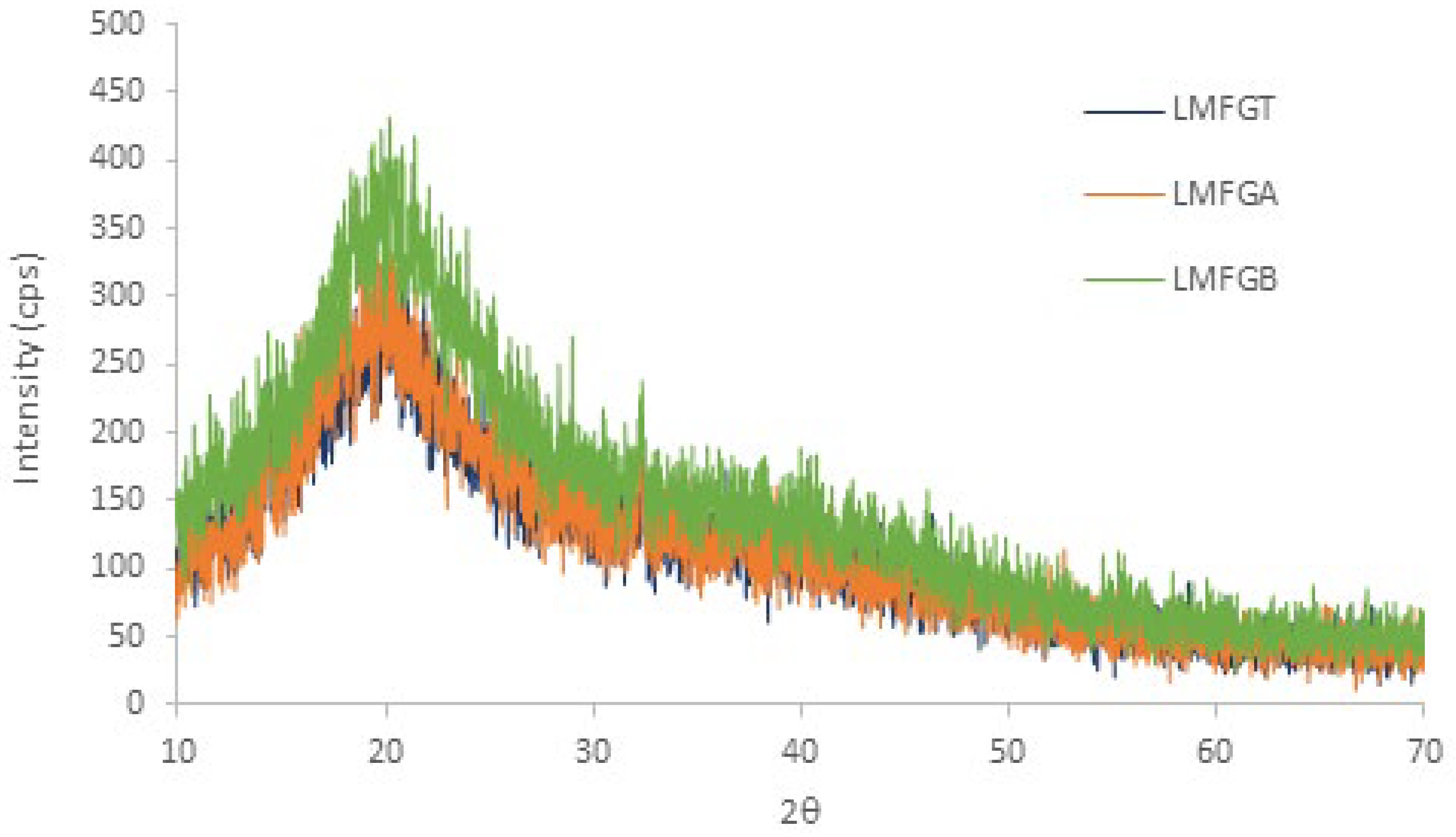
This data can be used to deduce important information about these amorphous polysaccharides such as intermolecular distances between chains or structural modifications due to environmental changes like moisture content or temperature fluctuations. Furthermore, these findings could help in developing new materials with enhanced functionalities by modulating their structure at molecular level hence improving applications on packaging industry to achieve better barriers properties against gases like oxygen which will improve shelf life on food products in contact with it. The ICr data are lower compared to those obtained by chitosan and its performance in an active film with quercetin and Phaseolus polyanthus starch [69]. While similar results are observed in chitosan with 2θ of 20.07 corresponding to the crystallographic planes (110) with ICr of 40–42% [70]. In reference [71], the objective was to determine the physicochemical characteristics of Sac-Beh corn starch obtained and Delonix regia galactomannan and use them to produce films with vanillin had potential use as edible film material for coating on climacteric fruits preservation, obtaining crystallographic data similar to this paper. Similar case is for properties of galactomanan bioplastics from Prosopis juliflora with citric acid [72].
3.1.4. FTIR
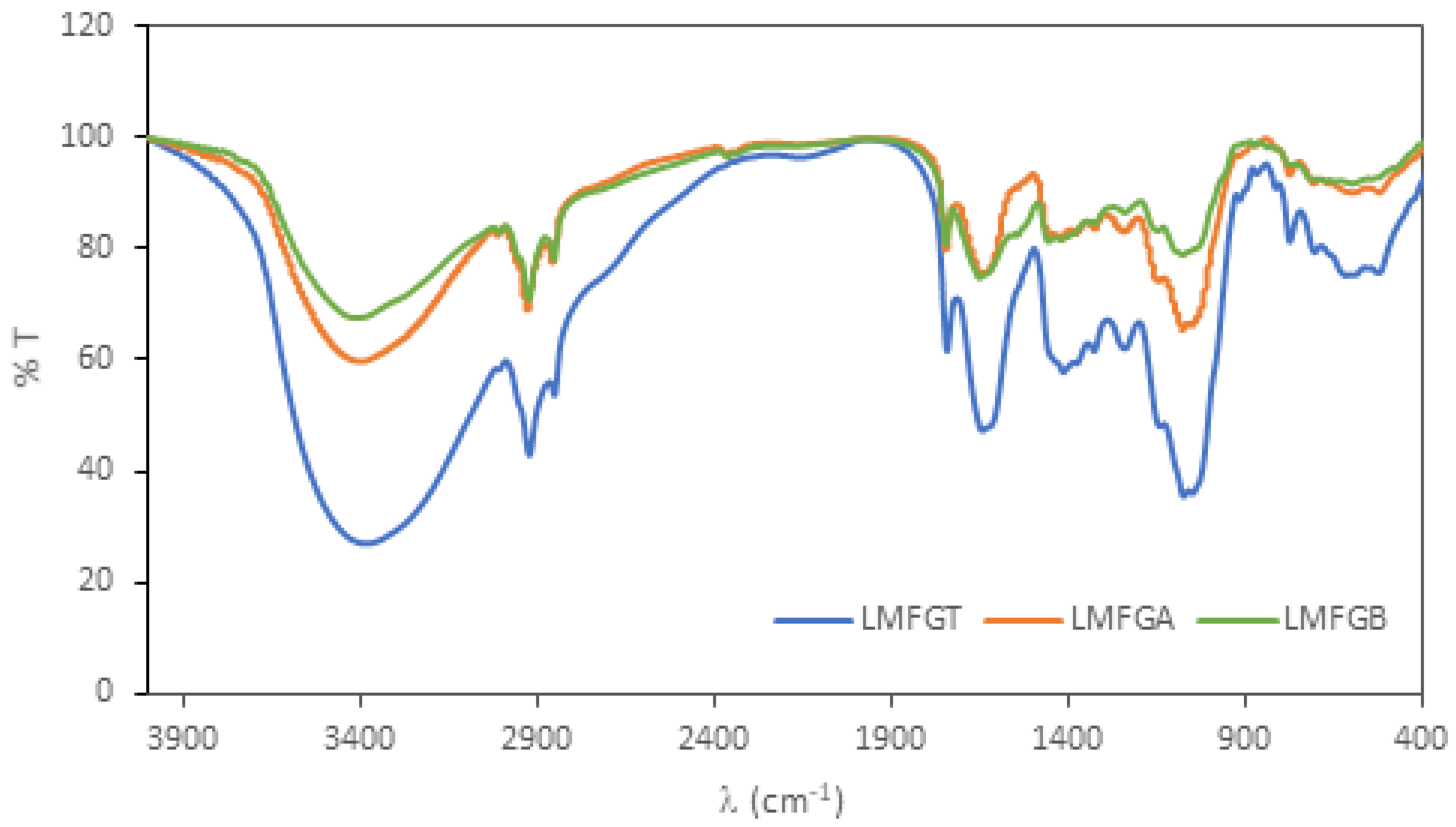
The infrared spectrum of the compound shows several prominent absorption bands. The –OH stretching is observed at 339 cm-1, indicating the presence of hydroxyl groups. The C-H band is located at 2927 cm-1, and the carbonyl band is seen at 1743 cm-1. Furthermore, the carboxylate group displays a distinct carbonyl band at 1621 cm-1 (C=O from –COO-). The C−H side-chain bending -CH2OH exhibits multiple bands at 1413 cm-1, 1375 and 1327 cm-1. Additionally, a strong absorption peak is observed at 1242 cm-1 corresponding to C−O−C stretching. Furthermore, the absorption peaks in the range of 1074 cm-1 to 1047 cm-1 are assigned to C−O glucopiranosic bending. Lastly, signals out-of-plane bending C−O are noted at frequencies of 781–777 and 704 cm–1 [69,70,71,72,73]. This comprehensive analysis provides valuable insight into the molecular structure and composition of the compound under investigation.
Figure 2.
FTIR of gums.
3.1.5. DSC
The glass transition temperature (Tg) is a critical property of polymeric materials, as it marks the onset of significant molecular motion and can have a profound effect on the material’s mechanical and thermal properties. In the case of three particular films, it has been found that the Tg falls within a range of 40 to 50°C. This broad range highlights the difficulty in pinpointing an exact Tg for these films, as it is not a sharply defined transition. On the other hand, the melting temperatures (Tm) are more readily observable and have been determined to be 134°C for LMFGT, 143°C for LMFGA, and 132°C for LMFGB. The relatively close proximity of Tm values for LMFGT and LMFGB indicates similarities in their molecular structures and bonding interactions. However, the higher Tm value for LMFGA suggests that its molecular structure possesses stronger intracatenary hydrogen bonding. This difference in melting temperatures can be attributed to variations in molecular packing arrangements within the films.
Figure 3.
DSC of gums.
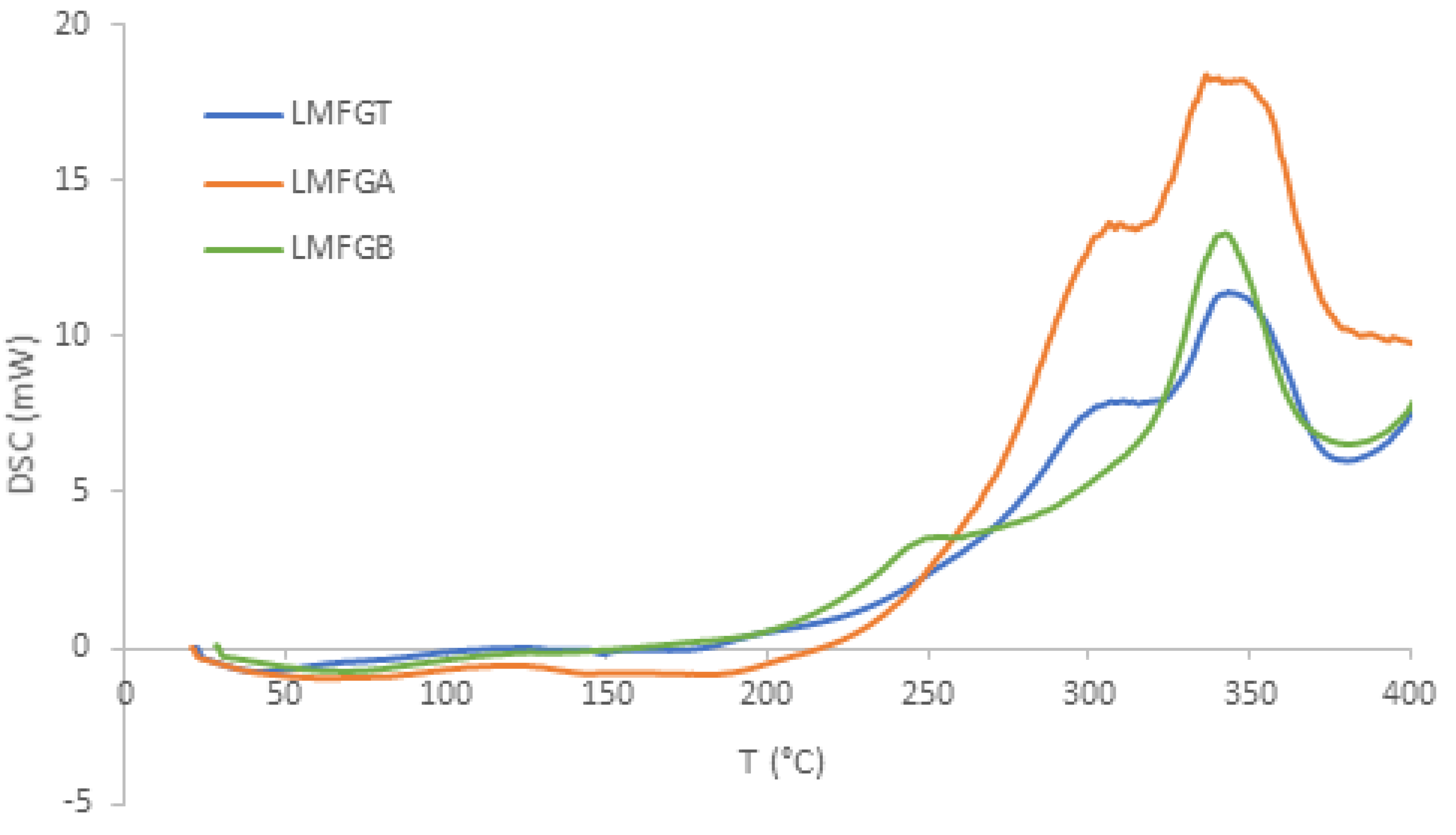
The stronger intermolecular interactions present in LMFGA result in a higher energy barrier required to disrupt these bonds and initiate melting. Understanding these thermal properties is crucial for predicting how these films will behave under different processing conditions or when subjected to varying environmental factors such as temperature changes. By elucidating how molecular structure influences thermal behavior, researchers can better tailor these materials for specific applications. The glass transition temperature may prove elusive due to its diffuse nature, melting temperatures offer insight into the differences in molecular packing and strength, for example, the case is carrageenan 2%/PVA8% films with Tg of 217.57 °C [73]. According to reference [74], the Tg of pectin is 70.8°C and the Tm is 119.5°C. This explains that the 1:2 ratio of pectin and LMFG at different hydrolysis is predominant over pectin, mainly due to the presence of LMFG.
In studying the intrinsic viscosity and molecular weight data, see reference [55], it becomes evident that basic hydrolysis is the most energetically favorable process. This conclusion is drawn from the decrease in these parameters compared to thermal and acid hydrolysis. The nature of the biopolymer, a polysaccharide rich in hydroxyl and carboxyl groups, plays a significant role in this phenomenon. The incorporation of Na+ by the carboxyl group increases solubility and promotes greater bond breaking during basic hydrolysis. Conversely, acid hydrolysis leads to greater unwinding of the polysaccharide, resulting in increased solubilization of groups and subsequent higher values for hydrodynamic radius and hydration value. These findings shed light on the intricate behavior of biopolymers under different hydrolytic conditions.
3.1.6. TGA
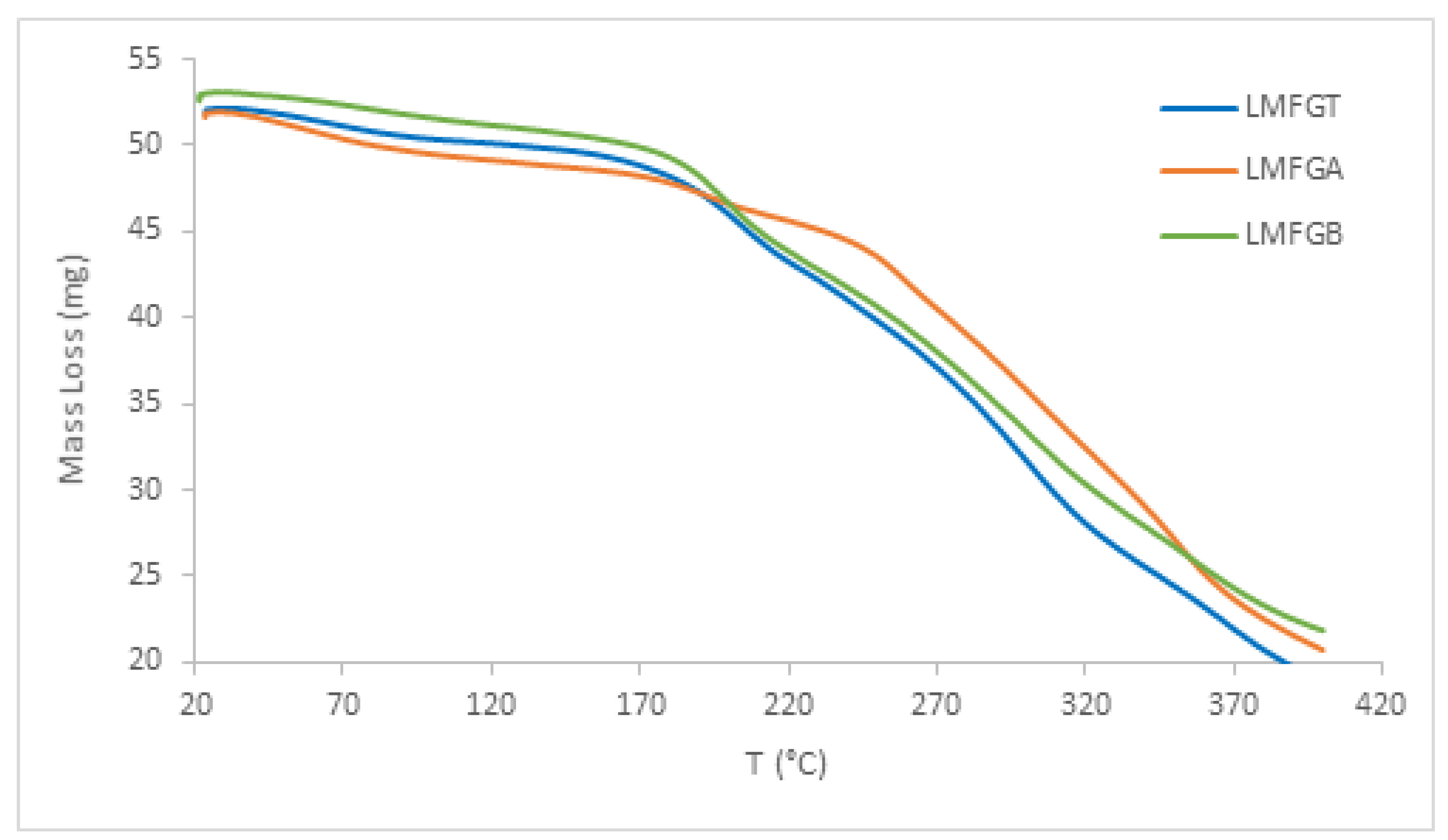
The thermal stability of LMFGT, LMFGA, and LMFGB has been determined to be 184.7°C, 200°C, and 186.4°C, respectively [73]. This data confirms the effect of intrachain hydrogen bonds on the thermal stability of these films, with LMFGA exhibiting the highest stability due to the presence of these bonds. These findings are significant in understanding the properties and potential applications of these materials in various industries. The identification of specific factors contributing to thermal stability will aid in further research and development efforts aimed at enhancing the performance of these films for practical use. The thermal stability of pectins is up to 215°C [74], although this is greater than those with LMFG, this may be due to the fact that they have fewer functional groups that can be oxidized.
Figure 4.
TGA of gums.
3.2. Lithraea Molleoides Fruit Gum Films (LMFG Films)
3.2.1. SEM-EDX
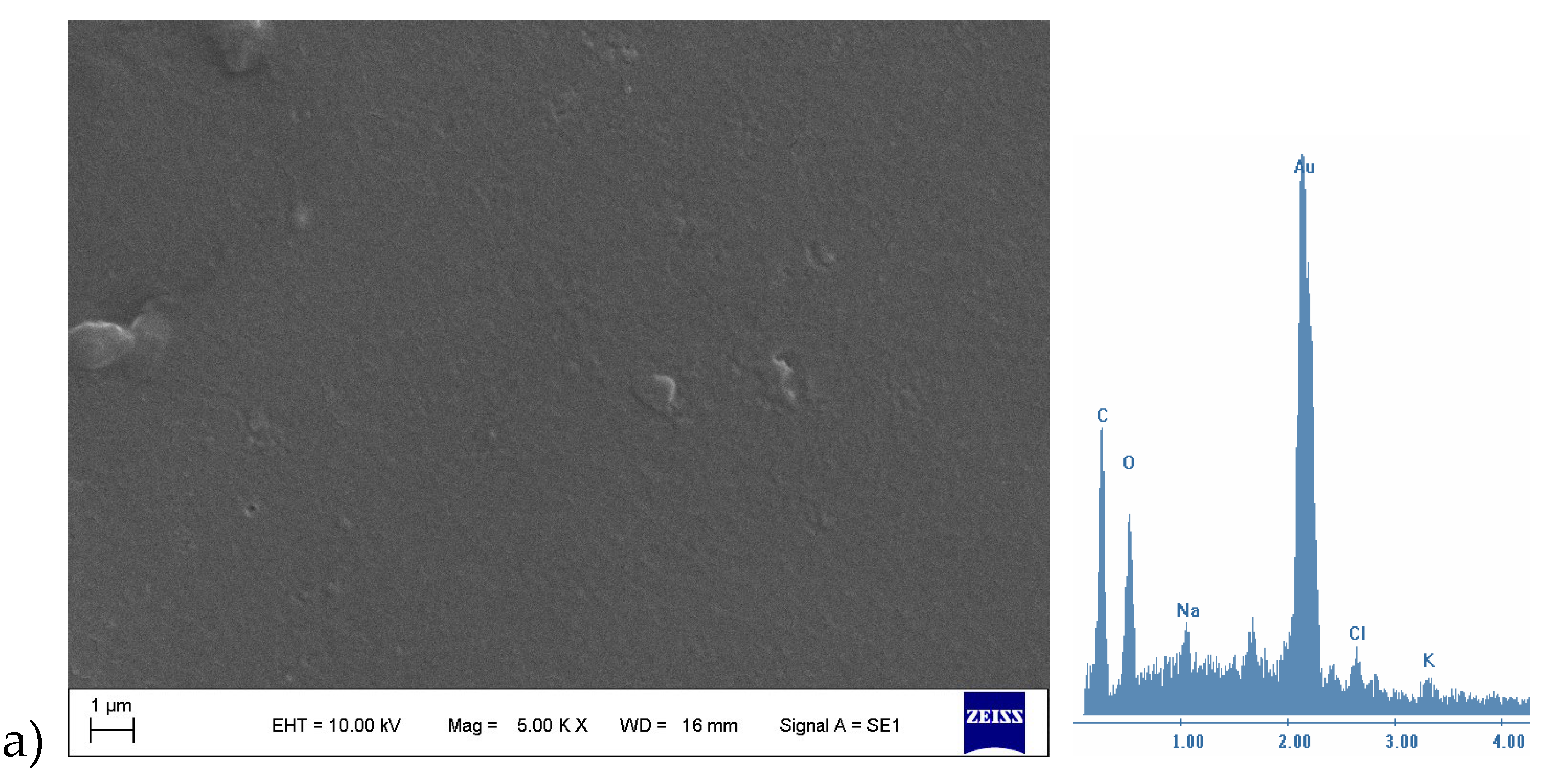
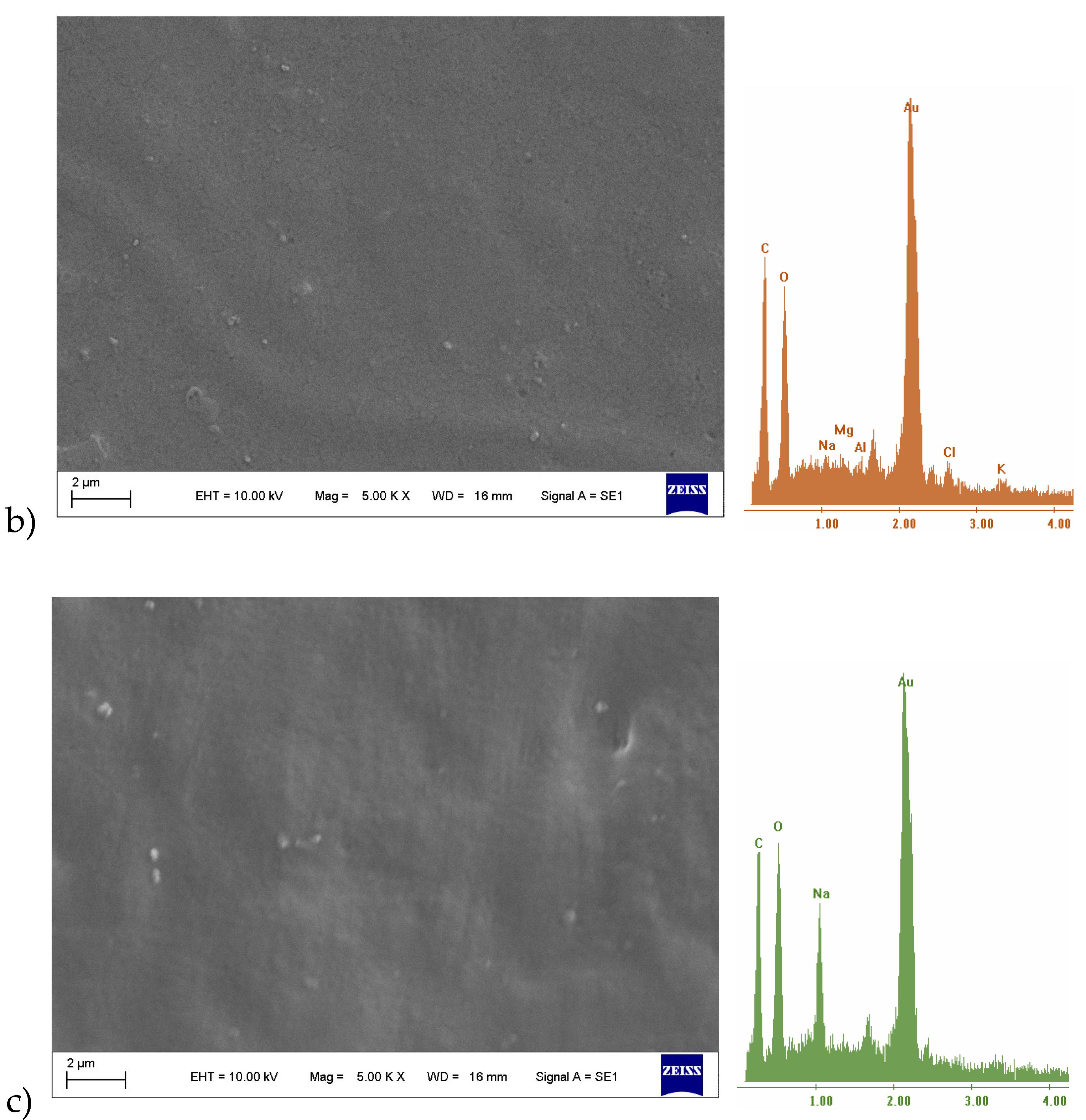
The surface images show a slight undulation type of low mountains and shallow valleys. There are also certain isolated particles that are cellulosic remains that do not affect permeability. The surface image in LMFGTf is smooth while the undulations are more marked in the LMFGBf surface image. Regarding the presence of sodium on the surface of the films, it is LMFGBf > LMFGTf > LMFGAf. The presence of sodium accounts for an increase in the rigidity of the film due to the presence of –COONa, a phenomenon evidenced in the mechanical tests, discussed later [70]. The pectin films appear homogeneous on the surface except for some particles and imperfections in minor quantities and a morphology similar to craters, valleys, and peaks (not acute) [74].
Figure 5.
SEM surface images of a) LMFGTf, b) LMFGAf
and c) LMFGBf. Each with its corresponding elemental analysis by EDX.
Figure 5.
SEM surface images of a) LMFGTf, b) LMFGAf
and c) LMFGBf. Each with its corresponding elemental analysis by EDX.
3.2.2. Mechanical Test, WVP-Water Vapor Sorption (WVS)
Water vapor transport from the atmosphere through the packaging to the product is assessed by the WVP. High or low water vapor permeability of packaging is prescribed for fresh or dehydrated vegetable products, as this case from 0.97–2.06 ng.m/ m2 s Pa. However, highly water permeable materials may limit their use as food packaging, as Pec2.5 with 0.55 ng.m/ m2 s Pa, because undesirable reactions promoted by water and the contained carbohydrates, lipids and proteins of the food may occur, decreasing its shelf life [34,67,68].
WVP in films with glycerol at 25°C of pectins (without glycerol) of 1.6–4.7, chitosan 2% with 4.8–7.3, starch/chitosan 0.15–3.3, sago starch/alginate at 20.7–34.6, cassava starch 5% at 54–139, gellan 0.5% at 18–23, alginate 1.5% at 7–14 [7]. Where the units of WVP are similar to that of this paper according to reference [7]. In the case of κ-carrageenan/starch/ZnONPs based films [34], these have a lower WVP compared to those made in this paper, this is because these films have a greater affinity for water due to the greater amount of hydrogen bonds. The same can be observed in films of Pectin/chitosan with noni fruit extract where values range from 1.1 to 2.3 ng m/m2 Pa s [75].

Table 4.
Mechanical properties and water vapor permeation of gums (e, is thickness).
| Films | e (µm) | εmax% | σmax (MPa) | E (MPa) | WVP P (ng.m/ m2 s Pa) |
|---|---|---|---|---|---|
| Pec2.5 | 207.8 ± 9.2 | 20.08 ± 0.90 | 23.79 ± 0.97 | 32.85 ± 1.1 | 0.55 |
| LMFGTf | 224.4 ± 8.1 | 24.47 ± 0.78 | 8.44 ± 0.34 | 19.65 ± 0.91 | 0.97 |
| LMFGAf | 264.6 ± 6.5 | 25.58 ± 0.06 | 21.87 ± 0.87 | 47.23 ± 0.82 | 1.52 |
| LMFGBf | 221.9 ± 5.8 | 19.40 ± 0.88 | 13.37 ± 0.56 | 26.05 ± 0.89 | 2.06 |
Mechanical tests account for the physical integrity of the material under study, including its stability when applied to a force. The films have a dissimilar response to the applied force, for example, LMFGTf and LMFGBf have a low maximum stress at break and a similar maximum elongation at break between 19–25%, with a Young’s modulus of 19–26MPa; The LMFGAf film has similar maximum elongation at break at 25.58%, σmax of 21.87MPa with an E of 47.23MPa, that is to say, the film is more rigid, perhaps its high molecular weight of 589000 g/mol causes this response in the film. For thermal and basic hydrolysis, the fruit of Lithraea molleoides responds in a similar way, which causes the pectin polymer matrix to have a similar response and does not show synergism. However, acid hydrolysis compromises the polymer matrix, improving the rigidity of the material, this is due to a greater interaction between the pectin polymer matrix and LMFGAf through an improvement in hydrogen bond interactions. Another factor to take into account is the thickness of the film, which shows different mechanical properties due to the greater force to be applied. Where the mechanical tests are practically similar to those observed below. As for the mechanical test data of Pec2.5, εmax is 20.08%, σmax is 23.8MPa and E is 32.85MPa. These data of pure pectin are similar to those of LMFAf where the interactions are not very marked, which means they are structurally and chemically similar. As for the mechanical tests for reference [7], the εmax for pectins (without glycerol) was 0.8–1.2, chitosan 2% with 18–106, starch/chitosan with 61–152, sago starch/alginate with 3.7–13.2, cassava starch 5% with 39–164, alginate 1.5% between 5–20. While σmax (MPa) for pectins (without glycerol) was 13–25, chitosan 2% with 5.5–21.3, starch/chitosan with 61–152, sago starch/alginate with 13–16, cassava starch 5% with 1–4.7 and alginate 1.5% with 23–160 [7].
3.2.3. Biodegradability
The biodegradability of the films under study indicates a rapid decomposition process, with almost total breakdown occurring within ten days and Pec2.5 in 8 days. This phenomenon is attributed to the consumption of these polysaccharide materials by microorganisms at a temperature of 30°C and with a relative humidity of 85%. These findings suggest that the films proceed in a similar and efficient manner, with significant degradation taking place over a short timeframe [65].
The use of algal polysaccharides for film forming are biodegradable, such as galactans, alginates, and ulvan, have shown tremendous potential in the development of novel packaging materials with improved barrier, mechanical, antioxidant, and antimicrobial properties [10,18,25]. In a recent study [40], metalloanthocyanin-inspired biodegradable packaging films were developed by incorporating purple cauliflower extracted anthocyanins into alginate/carboxymethyl chitosan hybrid polymer matrices. The addition of fucoidan further enhanced the mechanical and antibacterial activity of the films. These complexation processes also resulted in improved storage stability and antioxidant capability while reducing the release rate of anthocyanins. The development of edible films and coatings has seen substantial growth in recent years and is expected to significantly impact the quality of food products in the future. Additionally, research into polysaccharide-based films with ionic inclusion liquids (ILs) and deep eutectic solvents (DESs) as potential replacements for conventional solvents/plasticizers has shown promising results [10,18,32]. The great potential for active films based on commercial polysaccharides incorporating ZnONPs given they provide improved functionality compared with conventional packing materials but more research needs be conducted especially concerning safety issues before widespread adoption in commercial applications occurs [34]. Blended films consisting of sodium carboxymethylcellulose (CMC), chitosan (CS), sodium alginate (SA), glycerol, CaCl2 as plasticizer/crosslinker enriched with monobasic ammonium phosphate have also demonstrated increased water resistance and thermal stability while enhancing biodegradability [76].
4. Discussion
Lithraea molleoides fruit gum (LMFG) is a valuable product obtained from the total hydrolysis of the fruit. The hydrolysis process involves three methods: thermal (LMFGT), basic (LMFGB), and acid (LMFGA). The yield for the LMFGB flour is 33.88%, for the LMFGA 15.43% and for the LMFGT 11.11%. This means that basic hydrolysis is more efficient in extracting polysaccharide, while thermal hydrolysis is less efficient. In reference [55] where molecular weight for LMFGB is 85000 g/mol, followed in ascending order by LMFGT with a value of 195000 g/mol and ending with LMFGA with 589000 g/mol. These molecular weight values largely justify the behavior of the resulting films. The resulting hydrolysates are then combined with pectins in a 1:2 ratio to form films. In this study, the focus is on utilizing the hydrolysates of Lithraea molleoides gums for films applications, with an evaluation of their structural and physicochemical characteristics. The films produced exhibit excellent mechanical properties y comparables al film de pectin (Pec2.5) and low water vapor permeability, as well as good thermal stability less than 200°C. The films blends are biodegradability in ten days, but pectin film are seven days, this may be due to the presence of antioxidants providing protection against soil microorganisms [77].
5. Conclusions
The films obtained by the different hydrolysis give good yields and contributions in polysaccharides that can be mixed with pectins and form films with good mechanical characteristics and water vapor permeability and at the same time resistant to microorganisms. Thermal stability is up to 200°C with Tg between 40 and 50°C and Tm from 132 to 143°C, which indicates an excellent material that can be extruded and is also thermally resistant. The packaging capacity is strengthened since it has a certain protection due to its antioxidant capacity.
Author Contributions
Conceptualization, F.B. and M.M.; methodology, F.B.; validation, M.G., G.M.; formal analysis, F.B. and G.M.; investigation, M.G.; resources, M.M.; writing—original draft preparation, F.B. and M.M.; writing—review and editing, F.B., M.G. and M.M. All authors have read and agreed to the published version of the manuscript.
Funding
PICT-2020-SERIEA-00895 (RAICES). Title: “Obtención de Polisacáridos a partir de Vegetales y Microorganismos de la Región del Semiárido de San Luis. Aplicaciones: Alimentarias, Geles y Bioempaque”, 2. PROICO 2-3423, UNSL: “Bioprospección de Recursos Autóctonos Vegetales y Microbianos de la Provincia de San Luis con Potencial Uso Biotecnológico” and 3. PIP 2021/2023, IF-2021-85081432-APN-DCP#CONICET, “Valorización biotecnológica de efluentes de destilería para la obtención de productos microbianos”.
Acknowledgments
The authors thank the following institutions in Argentina. Instituto de Física Aplicada (INFAP-UNSL-CONICET) and Laboratorio de Investigación y Servicios de Química Física (LISeQF-UNSL). The authors also thank Javier Rigau from the Instituto de Investigación en Tecnología Química (INTEQUI-UNSL-CONICET) for their determinations of the FTIR, TGA, and DSC; and Ariel Ochoa from the Laboratorio de Membranas y Biomateriales del INFAP-CONICET-UNSL for their contributions to the mechanical test and water vapor permeability results.
Conflicts of Interest
The authors declare no conflicts of interest.
References
- Kadac-Czapska, K.; Knez, E.; Gierszewska, M.; Olewnik-Kruszkowska, E.; Grembecka, M. Microplastics derived from food packaging waste—Their origin and health risks. Materials 2023, 16(2), 674. [Google Scholar] [CrossRef] [PubMed]
- Ferreira, M.S.; Linhares, R.; Martelli, M. Films and Coatings from Agro-Industrial Residues. Chapter 11, In Edible films and Coatings; CRC Press: London, UK, 2016; pp. 211–232. [Google Scholar]
- Nussinovitch, A. Biopolymer films and composite coatings. In Modern Biopolymer Science; Academic Press: London, UK, 2009; pp. 295–326. [Google Scholar]
- da Silva, M.A.; Bierhalz, A.C.K. Biopolymer Films and Composite Coatings: Applications. In Handbook of Biopolymers; Springer Nature: Singapore, 2023; pp. 1229–1261. [Google Scholar]
- Lopez, O.V.; Garcia, M.A.; Zaritzky, N.E. Novel sources of edible films and coatings. Stewart Postharvest Review 2010, 3, 2, 1–8. [Google Scholar]
- Beyza, H.; Fatma, K.; Hecer, C. Edible films coatings: A good idea from past to future technology. J. Food Technol. 2018, 5, 28–33. [Google Scholar]
- Campos, C.A.; Gerschenson, L.N.; Flores, S.K. Development of edible films and coatings with antimicrobial activity. Food and Bioprocess Technology 2011, 4, 849–875. [Google Scholar] [CrossRef]
- Dyshlyuk, L.; Babich, O.; Belovа, D.; Prosekov, A. Comparative analysis of physical and chemical properties of biodegradable edible films of various compositions. Journal of Food Process Engineering 2017, 40(1), e12331. [Google Scholar] [CrossRef]
- Subroto, E.; Indiarto, R.; Pangawikan, A.D.; Prakoso, F. Production and Characteristics of Composite Edible Films Based on Polysaccharides and Proteins. International Journal of Emerging Trends in Engineering Research 2021, 9(2), 42–48. [Google Scholar]
- Han, J.H. Edible films and coatings: A review. Chapter 9. In Innovations in food packaging; Academic Press: San Diego, CA, USA, 2014; pp. 213–255. [Google Scholar]
- Šuput, D.Z.; Lazić, V.L.; Popović, S.Z.; Hromiš, N.M. Edible films and coatings: Sources, properties and application. Food and Feed Research 2015, 42(1), 11–22. [Google Scholar] [CrossRef]
- Liyanapathiranage, A.; Dassanayake, R.S.; Gamage, A.; Karri, R.R.; Manamperi, A.; Evon, P.; Merah, O. Recent developments in edible films and coatings for fruits and vegetables. Coatings 2023, 13(7), 1177. [Google Scholar]
- Drevet, R.; Benhayoune, H. Advanced Biomaterials and Coatings. Coatings 2022, 12(7), 965. [Google Scholar] [CrossRef]
- Marangoni Júnior, L.; Coltro, L.; Dantas, F.B.H.; Vieira, R.P. Research on food packaging and storage. Coatings 2022, 12(11), 1714. [Google Scholar] [CrossRef]
- Dhanapal, A.; Sasikala, P.; Rajamani, L.; Kavitha, V.; Yazhini, G.; Banu, S. Edible films from polysaccharides. Food Science and Quality Management 2012, 3, 9–17. [Google Scholar]
- Kocira, A.; Kozłowicz, K.; Panasiewicz, K.; Staniak, M.; Szpunar-Krok, E.; Hortyńska, P. Polysaccharides as edible films and coatings: Characteristics and influence on fruit and vegetable quality—A review. Agronomy 2021, 11(5), 813. [Google Scholar] [CrossRef]
- Nieto, M.B. Structure and Function of Polysaccharide Gum-Based Edible Films and Coatings. Chapter 2. In Edible Films and Coatings for food Applications; Springer-Nature: Berlin, Germany, 2009; pp. 57–112. [Google Scholar]
- Galus, S.; Arik Kibar, E.A.; Gniewosz, M.; Kraśniewska, K. Novel materials in the preparation of edible films and coatings—A review. Coatings 2020, 10(7), 674. [Google Scholar] [CrossRef]
- Avramescu, S.M.; Butean, C.; Popa, C.V.; Ortan, A.; Moraru, I.; Temocico, G. Edible and functionalized films/coatings—Performances and perspectives. Coatings 2020, 10, 687. [Google Scholar] [CrossRef]
- Falguera, V.; Quintero, J.P.; Jiménez, A.; Muñoz, J.A.; Ibarz, A. Edible films and coatings: Structures, active functions and trends in their use. Trends in Food Science Technology 2011, 22(6), 292–303. [Google Scholar] [CrossRef]
- Brasselet, C.; Pierre, G.; Dubessay, P.; Dols-Lafargue, M.; Coulon, J.; Maupeu, J.; Delattre, C. Modification of chitosan for the generation of functional derivatives. Applied Sciences 2019, 9(7), 1321. [Google Scholar]
- Roman, M.; Nechita, P.; Vasile, M.A.; Cantaragiu Ceoromila, A.M. Barrier and Antimicrobial Properties of Coatings Based on Xylan Derivatives and Chitosan for Food Packaging Papers. Coatings 2023, 13(10), 1761. [Google Scholar] [CrossRef]
- Pinto, J.P.; D’souza, O.J.; Hiremani, V.D.; Dalbanjan, N.P.; Kumar, S.P.; Narasagoudr, S.S.; Chougale, R.B. Functional properties of taro starch reinforced polysaccharide based films for active packaging. Food Bioscience 2023, 56, 103340. [Google Scholar] [CrossRef]
- Tarnowiecka-Kuca, A.; Peeters, R.; Bamps, B.; Stobińska, M.; Kamola, P.; Wierzchowski, A.; Mizielińska, M. Paper Coatings Based on Polyvinyl Alcohol and Cellulose Nanocrystals Using Various Coating Techniques and Determination of Their Barrier Properties. Coatings 2023, 13(11), 1975. [Google Scholar]
- Thiviya, P.; Gamage, A.; Liyanapathiranage, A.; Makehelwala, M.; Dassanayake, R.S.; Manamperi, A.; Madhujith, T. Algal polysaccharides: Structure, preparation and applications in food packaging. Food Chemistry 2023, 405, 134903. [Google Scholar] [CrossRef]
- Huang, H.L.; Tsai, I.L.; Lin, C.; Hang, Y.H.; Ho, Y.C.; Tsai, M.L.; Mi, F.L. Intelligent films of marine polysaccharides and purple cauliflower extract for food packaging and spoilage monitoring. Carbohydrate Polymers 2023, 299, 120133. [Google Scholar] [CrossRef] [PubMed]
- Kokkuvayil Ramadas, B.; Rhim, J.W.; Roy, S. Recent Progress of Carrageenan-Based Composite Films in Active and Intelligent Food Packaging Applications. Polymers 2024, 16(7), 1001. [Google Scholar] [CrossRef] [PubMed]
- Chang, S.; Zou, X.; Zhu, B.; You, L.; Zhao, Z.; Hileuskaya, K. The characteristics of polysaccharide from Gracilaria chouae and its application in food packaging with carboxymethyl cellulose and lysozyme. Food Hydrocolloids 2023, 135, 108109. [Google Scholar] [CrossRef]
- Long, J.; Zhang, W.; Zhao, M.; Ruan, C.Q. The reduce of water vapor permeability of polysaccharide-based films in food packaging: A comprehensive review. Carbohydrate Polymers 2023, 121267. [Google Scholar] [CrossRef] [PubMed]
- Ferreira, D.C.M.; Dos Santos, P.N.; Santos, F.H.; Molina, G.; Pelissari, F.M. Sustainability approaches for agrowaste solution: Biodegradable packaging and microbial polysaccharides bio-production. Science of The Total Environment 2023, 886, 163922. [Google Scholar] [CrossRef] [PubMed]
- Yu, J.; Liu, X.; Xu, S.; Shao, P.; Li, J.; Chen, Z. ;... Renard, C.M. Advances in green solvents for production of polysaccharide-based packaging films: Insights of ionic liquids and deep eutectic solvents. Comprehensive Reviews in Food Science and Food Safety 2023, 22(2), 1030–1057. [Google Scholar] [CrossRef]
- Wang, H.; Cao, Z.; Yao, L.; Feng, T.; Song, S.; Sun, M. Insights into the Edible and Biodegradable Ulvan-Based Films and Coatings for Food Packaging. Foods 2023, 12(8), 1622. [Google Scholar] [CrossRef]
- da Silva Bruni, A.R.; Friedrichsen, J.D.S.A.; de Jesus, G.A.M.; da Silva Alves, E.; da Costa, J.C.M.; Souza, P.R.; Bonafe, E.G. Characterization and application of active films based on commercial polysaccharides incorporating ZnONPs. International Journal of Biological Macromolecules 2023, 224, 1322–1336. [Google Scholar] [CrossRef]
- Tang, H.; Han, Z.; Zhao, C.; Jiang, Q.; Tang, Y.; Li, Y.; Cheng, Z. Preparation and characterization of Aloe vera polysaccharide-based packaging film and its application in blueberry preservation. Progress in Organic Coatings 2023, 177, 107445. [Google Scholar] [CrossRef]
- Carneiro-da-Cunha, M.G.; Cerqueira, M.A.; Souza, B.W.; Souza, M.P.; Teixeira, J.A.; Vicente, A.A. Physical properties of edible coatings films made with a polysaccharide from Anacardium occidentale, L. Journal of Food Engineering 2009, 95(3), 379–385. [Google Scholar] [CrossRef]
- Irimia, A.; Popescu, C.M. Bioactive Paper Packaging for Extended Food Shelf Life. Coatings 2023, 13(9), 1658. [Google Scholar] [CrossRef]
- Salama, A.; El-Sakhawy, M. Polysaccharides/propolis composite as promising materials with biomedical and packaging applications: A review. Biomass Conversion and Biorefinery 2024, 14(4), 4555–4565. [Google Scholar] [CrossRef]
- Gharibzahedi, S.M.T.; Ahmadigol, A.; Khubber, S.; Altintas, Z. Bionanocomposite films with plasticized WPI-jujube polysaccharide/starch nanocrystal blends for packaging fresh-cut carrots. Food Packaging and Shelf Life 2023, 36, 101042. [Google Scholar] [CrossRef]
- Huang, J.; Wu, W.; Niu, B.; Fang, X.; Chen, H.; Wang, Y.; Gao, H. Characterization of Zizania latifolia polysaccharide-corn starch composite films and their application in the postharvest preservation of strawberries. LWT 2023, 173, 114332. [Google Scholar] [CrossRef]
- Song, X.; Wang, X.; Zhang, H.; Zhang, D.; Li, Z.; Yu, J. Characterization of polysaccharide-based antibacterial films properties of loaded with Nisin and preservation of fresh-cut watermelon. Food Science and Technology 2023, 43, e127522. [Google Scholar] [CrossRef]
- Zheng, M.; Zhu, Y.; Zhuang, Y.; Tan, K.B.; Chen, J. Effects of grape seed extract on the properties of pullulan polysaccharide/xanthan gum active films for apple preservation. International Journal of Biological Macromolecules 2023, 241, 124617. [Google Scholar] [CrossRef]
- Jafarian, M.; Taghinia, P.; Sedaghati, S. Development and characterization of a new active and intelligent packaging system based on soluble soybean polysaccharide-Malva sylvestris extract. Journal of Food Science and Technology 2023, 60(7), 1944–1951. [Google Scholar] [CrossRef]
- Şahin, S.; Eyüboğlu, S.; Karkar, B.; Ata, G.D. Development of bioactive films loaded with extract and polysaccharide of Pinus brutia bark. Journal of Food Science 2024. [CrossRef]
- Yu, T.; Wu, D.; Liang, B.; Wang, J.; Shang, X.; Wu, Q. Preparation, characterization of Auricularia auricula polysaccharide-based films and application in meat preservation. International Journal of Biological Macromolecules 2023, 244, 125242. [Google Scholar] [CrossRef]
- Janik, W.; Jakubski, Ł.; Kudła, S.; Dudek, G. Modified polysaccharides for food packaging applications: A review. International Journal of Biological Macromolecules 2023, 128916. [Google Scholar] [CrossRef]
- Yang, X.; Niu, Y.; Fan, Y.; Zheng, T.; Fan, J. Green synthesis of Poria cocos polysaccharides-silver nanoparticles and their applications in food packaging. International Journal of Biological Macromolecules 2024, 269, 131928. [Google Scholar] [CrossRef] [PubMed]
- Akhtar, H.M.S.; Ahmed, S.; Olewnik-Kruszkowska, E.; Gierszewska, M.; Brzezinska, M.S.; Dembińska, K.; Kalwasińska, A. Carboxymethyl cellulose based films enriched with polysaccharides from mulberry leaves (Morus alba L.) as new biodegradable packaging material. International Journal of Biological Macromolecules 2023, 253, 127633. [Google Scholar] [CrossRef] [PubMed]
- Kafashan, A.; Joze-Majidi, H.; Kazemi-Pasarvi, S.; Babaei, A.; Jafari, S.M. Nanocomposites of soluble soybean polysaccharides with grape skin anthocyanins and graphene oxide as an efficient halochromic smart packaging. Sustainable Materials and Technologies 2023, 38, e00755. [Google Scholar] [CrossRef]
- Sarkar, S.; Manna, S.; Das, S.; De, S.; Paul, P.; Dua, T.K.; Nandi, G. Current Status of Marine Animal Derived Polysaccharides in Sustainable Food Packaging. ACS Food Science Technology 2023, 3(11), 1877–1889. [Google Scholar]
- Liu, J.; Dong, Y.; Zheng, X.; Pei, Y.; Tang, K. Citric acid crosslinked soluble soybean polysaccharide films for active food packaging applications. Food Chemistry 2024, 438, 138009. [Google Scholar] [CrossRef]
- Chi, K.; He, J.; Lin, W.S.; Bokhari, S.M.; Catchmark, J.M. Electrostatically complexed natural polysaccharides as aqueous barrier coatings for sustainable and recyclable fiber-based packaging. ACS Applied Materials Interfaces 2023, 15(9), 12248–12260. [Google Scholar] [CrossRef]
- Kaya, E.C.; Yucel, U. Advances in cellulose-based packaging films for food products. In Cellulose-Fundamentals and Conversion into Biofuel and Useful Chemicals; Intech Open: London, UK, 2023; pp. 1–21. [Google Scholar]
- Dong, Y.; Li, Y.; Ma, Z.; Rao, Z.; Zheng, X.; Tang, K.; Liu, J. Effect of polyol plasticizers on properties and microstructure of soluble soybean polysaccharide edible films. Food Packaging and Shelf Life 2023, 35, 101023. [Google Scholar] [CrossRef]
- Garro, M.F.; Salinas Ibáñez, A.G.; Vega, A.E.; Arismendi Sosa, A.C.; Pelzer, L.; Saad, J.R.; Maria, A.O. Gastroprotective effects and antimicrobial activity of Lithraea molleoides and isolated compounds against Helicobacter pylori. Journal of Ethnopharmacology 2015, 176, 469–474. [Google Scholar] [CrossRef]
- Becerra, F.; Garro, M.F.; Masuelli, M. Influence of the Type of Hydrolysis on the Intrinsic Viscosity of Lithraea Molleoides Fruit Gum, J. Mate. Poly. Sci. 2023, 3(2), 1–6. [Google Scholar]
- Rulli, M.M.; Villegas, L.B.; Barcia, C.S.; Colin, V.L. Bioconversion of sugarcane vinasse into fungal biomass protein and its potential use in fish farming. Journal of Environmental Chemical Engineering 2021, 9(5), 106136. [Google Scholar] [CrossRef]
- Deng, C.; Hu, Z.; Fu, H.; Hu, M.; Xu, X.; Chen, J. Chemical analysis and antioxidant activity in vitro of β-d-glucan isolated from Dictyophora indusiate. Int. J. Biol. Macromol. 2012, 51, 70–75. [Google Scholar] [CrossRef]
- Du, X.; Mu, H.; Zhou, S.; Zhang, Y.; Zhu, X. Chemical analysis and antioxidant activity of polysaccharides extracted from Inonotus obliquus sclerotia. Int. J. Biol. Macromol. 2013, 62, 691–696. [Google Scholar] [CrossRef] [PubMed]
- Kaur, R.; Arora, S.; Singh, B. Antioxidant activity of the phenol rich fractions of leaves of Chukrasia tabularis A. Juss. Bioresour. Technol. 2008, 99, 7692–7698. [Google Scholar] [CrossRef] [PubMed]
- Ainsworth, E.A.; Gillespie, K.M.J.N.P. Estimation of total phenolic content and other oxidation substrates in plant tissues using Folin–Ciocalteu reagent. Nat. Protoc. 2007, 2, 875–877. [Google Scholar] [CrossRef] [PubMed]
- Zanon, M.; Masuelli, M. Purification and characterization of alcayota gum. Biopolym. Res. 2018, 2, 105. [Google Scholar]
- Beppu, M.M.; Vieira, R.S.; Aimoli, C.G.; Santana, C.C. Crosslinking of chitosan membranes using glutaraldehyde: Effect on ion permeability and water absorption. J. Membr. Sci. 2007, 301, 126–130. [Google Scholar] [CrossRef]
- Al Sagheer, F.A.; Al-Sughayer, M.A.; Muslim, S.; Elsabee, M.Z. Extraction and characterization of chitin and chitosan from marine sources in Arabian Gulf. Carbohydr. Polym. 2009, 77, 410–419. [Google Scholar] [CrossRef]
- Barbosa, H.F.; Francisco, D.S.; Ferreira, A.P.; Cavalheiro, É.T. A new look towards the thermal decomposition of chitins and chitosans with different degrees of deacetylation by coupled TG-FTIR. Carbohydr. Polym. 2019, 225, 115232. [Google Scholar] [CrossRef]
- Zanon, M.; Masuelli, M.A. Alcayota gum films: Experimental reviews. J. Mater. Sci. Chem. Eng. 2018, 6, 11–58. [Google Scholar] [CrossRef]
- Lazo, L.; Melo, G.M.; Auad, M.L.; Filippa, M.; Masuelli, M.A. Synthesis and characterization of Chañar gum films. Colloids and Interfaces 2022, 6(1), 10. [Google Scholar] [CrossRef]
- Illanes, C.O.; Takara, E.A.; Masuelli, M.A.; Ochoa, N.A. pH-responsive gum tragacanth hydrogels for high methylene blue adsorption. Journal of Chemical Technology Biotechnology 2024, 99(1), 31–39. [Google Scholar] [CrossRef]
- Masuelli, M.A.; Lazo, L.; Becerra, F.; Torres, F.; Illanes, C.O.; Takara, A. ;... Bercea, M. Physical and Chemical Properties of Pachycymbiola brasiliana Eggshells—From Application to Separative Processes. Processes 2024, 12(4), 814. [Google Scholar] [CrossRef]
- Zapata-Luna, R.L.; Davidov-Pardo, G.; Pacheco, N.; Ayora-Talavera, T.; Espinosa-Andrews, H.; García-Márquez, E.; Cuevas-Bernardino, J.C. Structural and physicochemical properties of bio-chemical chitosan and its performing in an active film with quercetin and Phaseolus polyanthus starch. Revista Mexicana de Ingeniería Química 2023, 22(2), 1–11. [Google Scholar] [CrossRef]
- Acosta-Ferreira, S.; Castillo, O.S.; Madera-Santana, J.T.; Mendoza-García, D.A.; Núñez-Colín, C.A.; Grijalva-Verdugo, C.; Villa-Lerma, A.G.; Morales-Vargas, A.T.; Rodríguez-Núñez, J.R. Production and physicochemical characterization of chitosan for the harvesting of wild microalgae consortia. Biotechnology Reports 2020, 28, e00554. [Google Scholar] [CrossRef] [PubMed]
- Chel-Guerrero, L.; Betancur-Ancona, D.; Aguilar-Vega, M.; Rodríguez-Canto, W. Films properties of QPM corn starch with Delonix regia seed galactomannan as an edible coating material. International Journal of Biological Macromolecules 2024, 255, 128408. [Google Scholar] [CrossRef]
- Leite, K.; Nascimento, J.; Neto JH, L.; Gomes, K. (2024) Influence of citric acid on the properties of galactomanan bioplastics from Prosopis juliflora (Sw) DC: Influência do ácido cítrico nas propriedades dos bioplásticos de galactomanana de Prosopis juliflora (sw), D.C. Concilium, 24.
- Meng, F.; Zhang, Y.; Xiong, Z.; Wang, G.; Li, F.; Zhang, L. Mechanical, hydrophobic and thermal properties of an organic-inorganic hybrid carrageenan-polyvinyl alcohol composite film. Composites Part B: Engineering 2018, 143, 1–8. [Google Scholar] [CrossRef]
- Ruano, P.; Lazo Delgado, L.; Picco, S.; Villegas, L.; Tonelli, F.; Aguilera Merlo, M.E.; Rigau, J.; Diaz, D.; Masuelli, M. Extraction and Characterization of Pectins from Peels of Criolla Oranges (Citrus sinensis). Experimental Reviews. Chapter 1. In Pectins - Extraction, Purification, Characterization and Applications; Masuelli, M., Ed.; Intech Publishers: London, UK, 2020. [Google Scholar]
- Lin, X.; Chen, S.; Wang, R.; Li, C.; Wang, L. Fabrication, characterization and biological properties of pectin and/or chitosan-based films incorporated with noni (Morinda citrifolia) fruit extract. Food Hydrocolloids 2023, 134, 108025. [Google Scholar] [CrossRef]
- Ciaramitaro, V.; Piacenza, E.; Paliaga, S.; Cavallaro, G.; Badalucco, L.; Laudicina, V.A.; Chillura Martino, D.F. Exploring the Feasibility of Polysaccharide-Based Mulch Films with Controlled Ammonium and Phosphate Ions Release for Sustainable Agriculture. Polymers 2024, 16(16), 2298. [Google Scholar] [CrossRef]
- Li, H.; Li, Z.; Wang, P.; Liu, Z.; An, L.; Zhang, X.; Gao, W. Evalua-tion of citrus pectin extraction methods: Synergistic enhancement of pectin’s antioxi-dant capacity and gel properties through combined use of organic acids, ultrasoni-cation, and microwaves. International Journal of Biological Macromolecules 2024, 266, 131164. [Google Scholar] [CrossRef]
Table 1.
Proximate analysis of biomass.
| Moisture (%wt.) | Ash (%wt.) | Total Grass (g/100g) | Proteins (%wt.) | Fibers (%wt.) | |
|---|---|---|---|---|---|
| HLM | 10.60 ± 0.25 | 1.84 ± 0.02 | 9.92 ± 0.33 | 0.0454 | 15.22 ± 0.53 |
| LMFGT | 2.40 ± 0.74 | 1.45 ± 0.03 | 7.30 ± 0.31 | 0.0851 | 28.49 ± 1.24 |
| LMFGA | 3.12 ± 0.18 | 0.82 ± 0.01 | 3.40 ± 0.14 | 0.0189 | 27.78 ± 1.55 |
| LMFGB | 3.25 ± 0.17 | 0.84 ± 0.01 | 2.84 ± 0.13 | 0.0330 | 42.20 ± 1.89 |
Table 2.
Antioxidant activity of the different gums obtained.
| Reducing Power (µeq gal/mL) | Antioxidant Activity (µeq AA/ml) | Total Polyphenols (µeq garl/mL) | |
|---|---|---|---|
| HLM | 4.04 ± 0.22 | 14.78 ± 0.55 | 13.13 ± 0.39 |
| LMFGT | 1.91 ± 0.17 | 3.48 ± 0.22 | 28.58 ± 0.62 |
| LMFGA | 3.49 ± 0.33 | 2.71 ± 0.37 | 11.96 ± 0.48 |
| LMFGB | 9.91 ± 0.42 | 9.46 ± 0.45 | 41.82 ± 1.06 |
Table 3.
DRX data of gums.
| Flour | 2θ | dspacing (nm) | ICr % |
| LMFGT | 20.18 ± 0.81 | 4.39 ± 1.03 | 47.75 ± 1.23 |
| LMFGA | 20.62 ± 0.79 | 4.30 ± 0.98 | 48.10 ± 1.01 |
| LMFGB | 20.34 ± 0.84 | 4.36 ± 0.95 | 48.83 ± 0.98 |
Disclaimer/Publisher’s Note: The statements, opinions and data contained in all publications are solely those of the individual author(s) and contributor(s) and not of MDPI and/or the editor(s). MDPI and/or the editor(s) disclaim responsibility for any injury to people or property resulting from any ideas, methods, instructions or products referred to in the content. |
© 2024 by the authors. Licensee MDPI, Basel, Switzerland. This article is an open access article distributed under the terms and conditions of the Creative Commons Attribution (CC BY) license (https://creativecommons.org/licenses/by/4.0/).
Copyright: This open access article is published under a Creative Commons CC BY 4.0 license, which permit the free download, distribution, and reuse, provided that the author and preprint are cited in any reuse.


