

Submitted:
26 September 2024
Posted:
27 September 2024
You are already at the latest version
Abstract
The global textile industry is undergoing a significant transformation fueled by digital advancements, shifts in consumer behavior, and evolving market dynamics. This study investigates how digital platforms, such as e-commerce and customer relationship management (CRM) systems, can enhance operational efficiency, customer engagement, and market positioning for textile companies. Through the integration of primary data from focus groups and surveys, as well as secondary data from industry reports, this research identifies key strategies for digital adoption and market competitiveness. Using Company A as a case study, this paper explores how digital tools can address current industry challenges and foster growth in a competitive landscape. The findings reveal that implementing CRM systems significantly improves customer retention and personalized services, while adopting e-commerce platforms reduces operational inefficiencies and expands market reach. These results contribute to understanding the role of digital transformation in traditional industries, particularly with respect to customer engagement, branding, and operational optimization.
Keywords:
1. Introduction
1.1. Research Aim and Objectives
- Analyse current barriers and challenges faced by textile wholesalers in adopting digital technologies.
- Evaluate the operational and competitive benefits of CRM, e-commerce, and digital marketing platforms.
- Provide actionable recommendations for textile wholesalers to enhance their market positioning through digital transformation.
2. Industry Overview
3. Literature Review
3.1. Digital Transformation in the Textile Industry
3.2. Customer Relationship Management in Textiles
3.3. E-Commerce and Digital Platforms
3.4. Brand Identity and Digital Marketing
3.5. Challenges of Digital Adoption in the Wholesale Sector
4. Theoretical Background
4.1. Technology Acceptance Model (TAM)
4.2. Diffusion of Innovations Theory (DOI)
4.3. Resource-Based View (RBV)
4.4. Application of Theories in This Study
5. Research Methodology Overview
5.1. Primary and Secondary Research Methods
5.2. Case Study: Company A
5.3. Sampling and Data Collection
5.4. Qualitative Insights: Focus Groups and Observations
5.5. Quantitative Insights: Questionnaires and Statistical Analysis
6. Data Analysis and Interpretation
6.1. Questionnaire Analysis
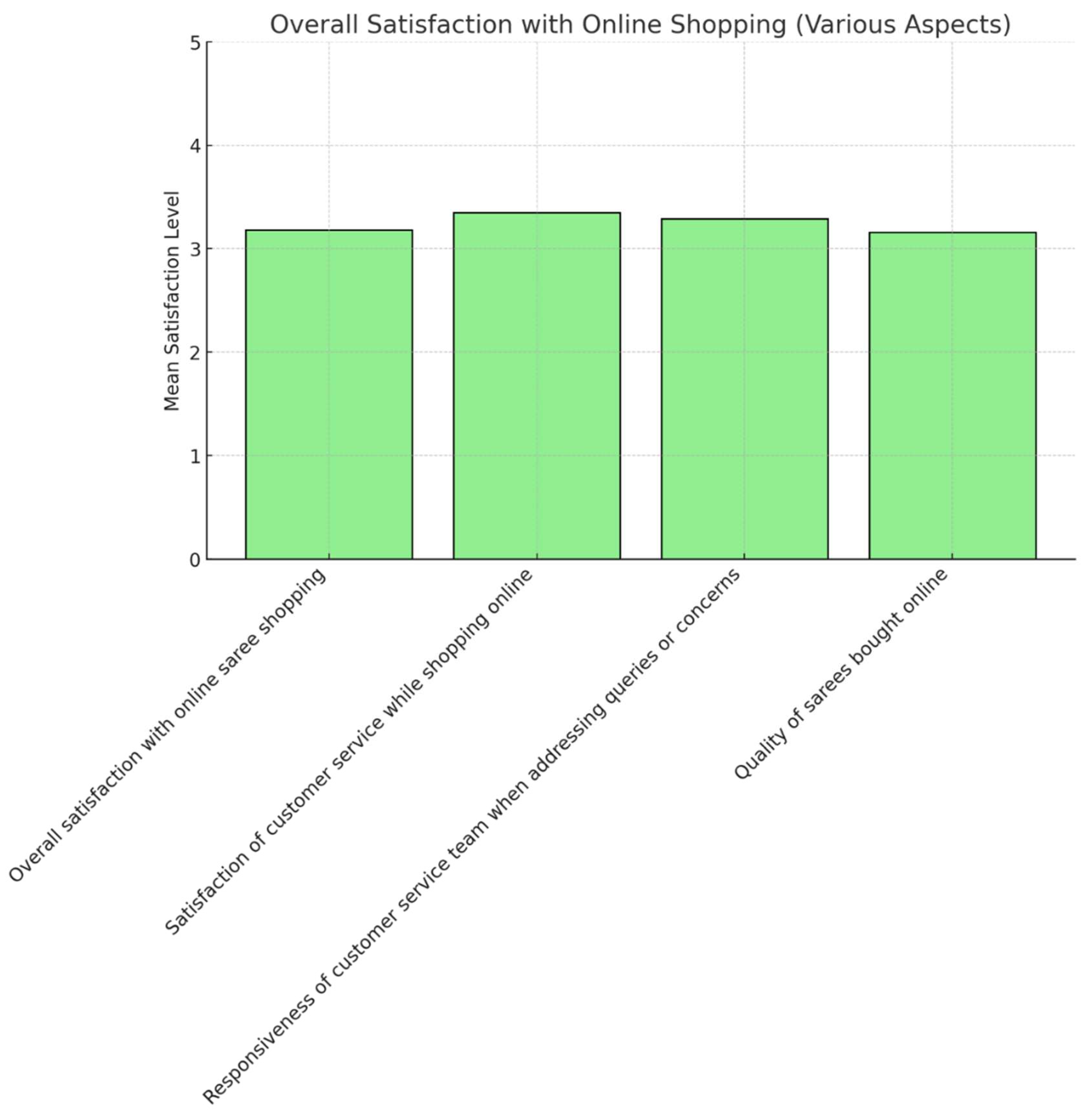
- Satisfaction with Services: The analysis measures consumer satisfaction across key dimensions such as product quality, delivery time, ease of use, and customer support. These metrics offer insights into areas where businesses excel and where improvements are necessary to enhance the overall customer experience.
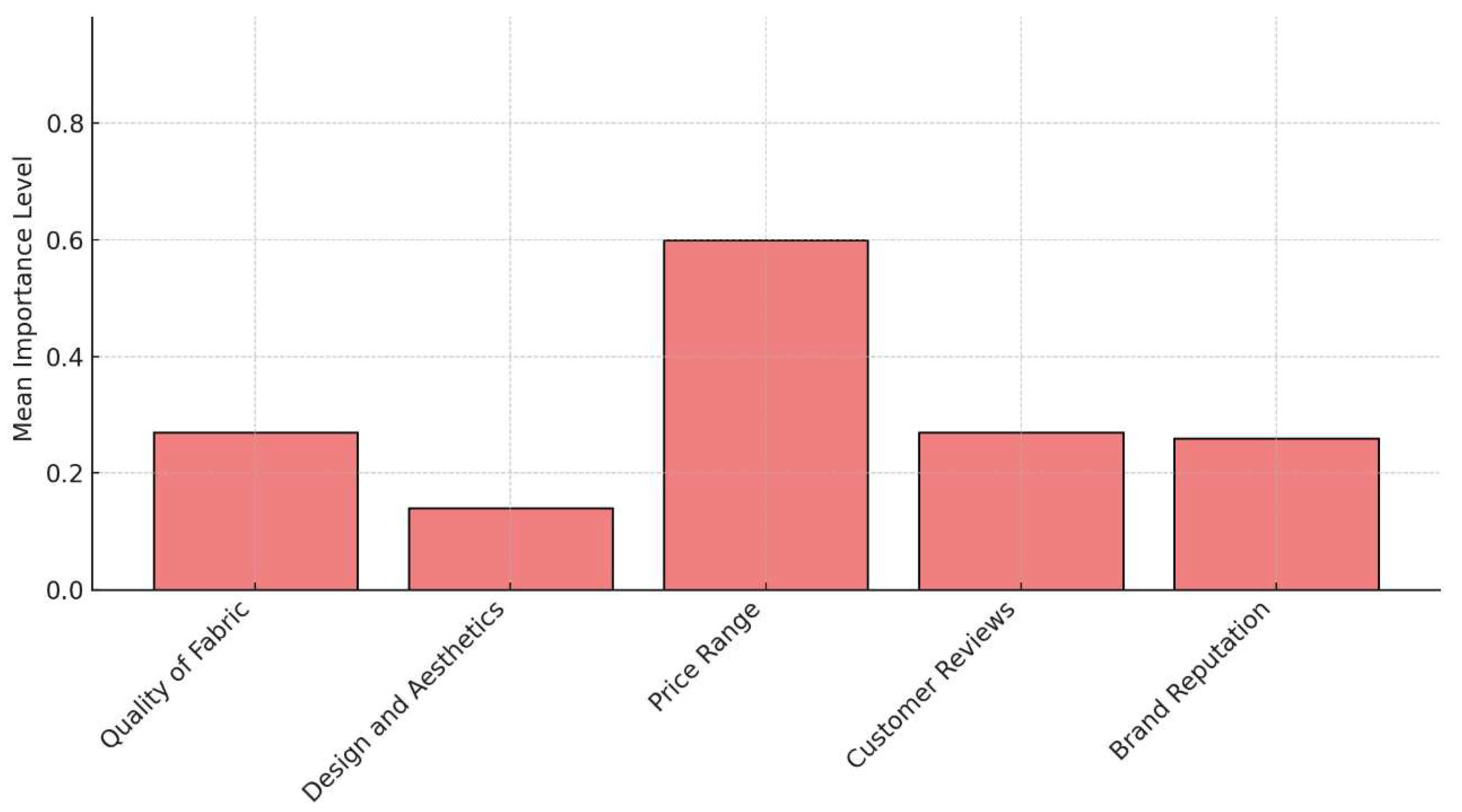
- Factors Influencing Purchase Decisions: The data highlights the primary drivers of consumer purchasing behaviour, such as pricing, product reviews, ease of website navigation, and payment security. Understanding these factors helps businesses fine-tune their strategies to better align with consumer expectations.
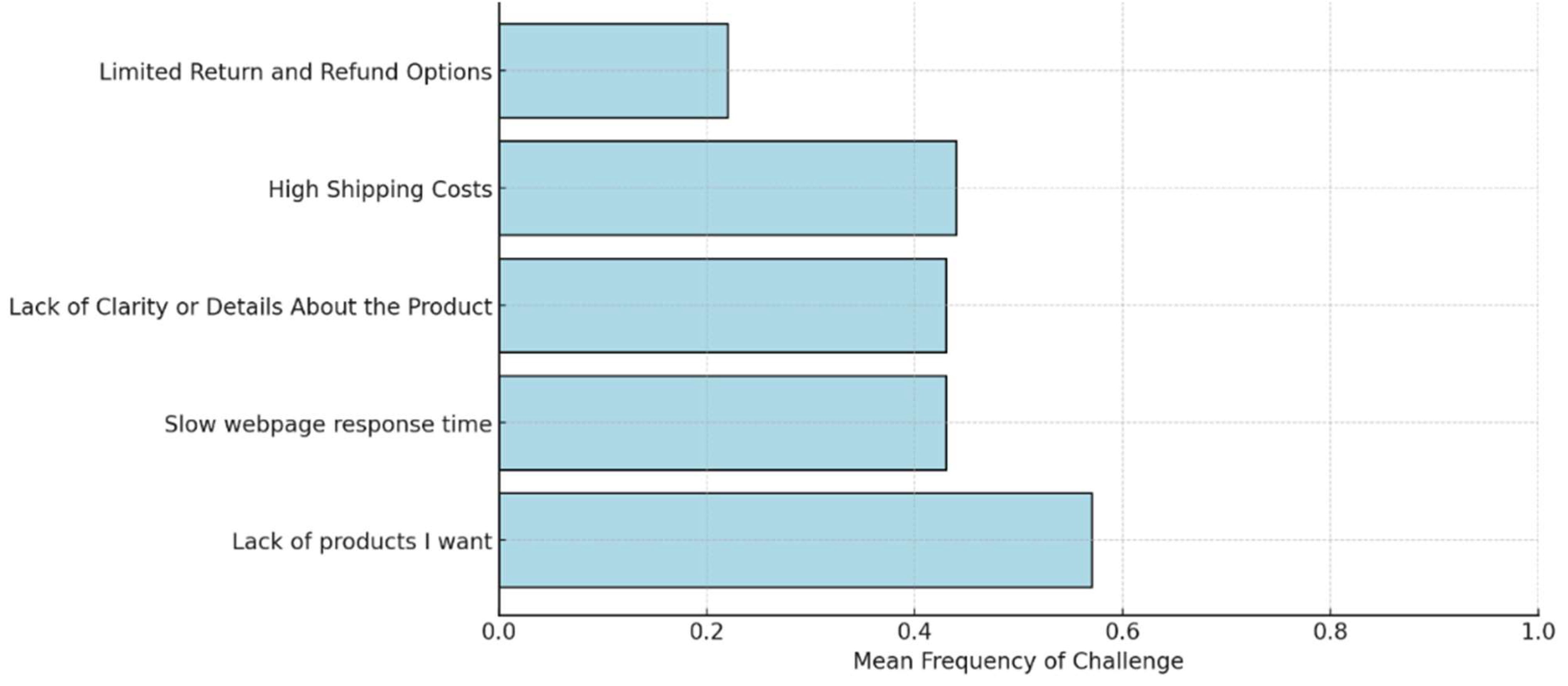
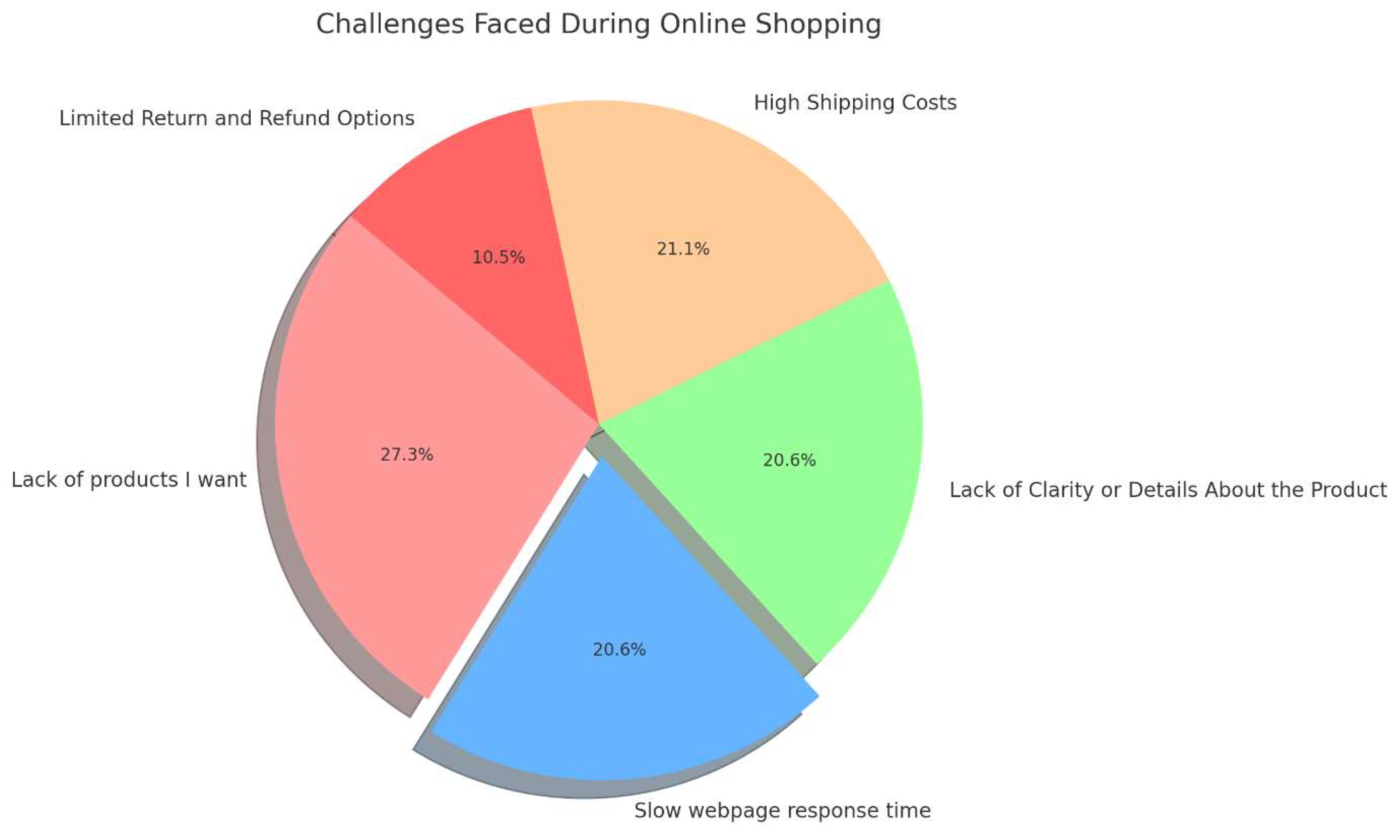
- Challenges in Online Shopping: The analysis identifies common issues faced by consumers, including technical glitches, product misrepresentation, shipping delays, and inadequate customer service. These insights reveal the pain points that businesses must address to improve customer retention and satisfaction.
6.1.1. Satisfaction Levels with Online Shopping
6.1.2. Factors Influencing Consumer Perceptions
6.1.3. Challenges Faced During Online Shopping
6.2. Focus Group Insights
7. Recommendations and Practical Implications
- Improving Product Availability through Advanced Inventory Management
- Enhancing Product Quality through Robust Quality Control Measures
- Transparency in Shipping and Pricing
- Leveraging Digital Marketing and Customer Reviews for Trust and Engagement
- Enhancing CRM Systems for Personalization and Customer Retention
8. Conclusion
References
- Aaker, D. A. (2009). Managing Brand Equity: Capitalizing on the Value of a Brand Name. The Free Press. [CrossRef]
- Afinia, S., & Tjahjaningsih, E. (2024). Customer Satisfaction’s Influence on Repurchase Intention in Indonesia’s E-commerce Sector. Jurnal Informatika Ekonomi Bisnis. [CrossRef]
- Akhtar, W. H., Watanabe, C., Tou, Y., & Neittaanmäki, P. (2022). A New Perspective on the Textile and Apparel Industry in the Digital Transformation Era. Textiles, II(4), 633-656. [CrossRef]
- Andam, Z. R. (2020). E-commerce in the global marketplace: Strategies for textile wholesalers. Journal of Global Business Strategies, 14(2), 67-78.
- Baines, P., Fill, C., & Page, K. (2012). Essentials of Marketing. OUP Oxford.
- Baur, C., & Wee, D. (2015). Industry 4.0: How to navigate digitization of the manufacturing sector. McKinsey & Company.
- Berwal, R. (2020). Global aspect of Indian textile industry and their challenges and opportunities: A review. International Journal of Home Science, 6(1), 292-297.
- Bhattacharya, A., & Singh, K. (2022). Digital transformation in the textile industry: Adoption and challenges. Journal of Textile Technology, 35(2), 142-158.
- Bharadwaj, N., Badrinarayanan, V., & Groening, C. (2021). Adapting to E-Commerce in the Wholesale Textile Sector: Barriers and Opportunities. Journal of Business & Industrial Marketing, 36(5), 245-263.
- Buttle, F., & Maklan, S. (2019). Customer Relationship Management: Concepts and Technologies. Routledge.
- Carter, C. R., & Easton, L. (2023). Reducing supply chain friction through innovative pricing and delivery models. Journal of Supply Chain Management, 59(1), 45-63.
- Chopra, S., & Sodhi, M. S. (2022). Leveraging predictive analytics for better inventory management. Operations Management Research, 15(2), 123-137.
- Enache, M. C. (2024). The Cognitive Principles Influencing Online Consumer Behavior in E-Commerce Platforms. Economics and Applied Informatics. [CrossRef]
- Enache, M. C. (2024). The role of digital marketing in building brand equity in the textile industry. Digital Business Review, 11(1), 44-58.
- Erevelles, S., Fukawa, N., & Swayne, L. (2016). Big Data consumer analytics and the transformation of marketing. Journal of Business Research, 69(2), 897-904. [CrossRef]
- Fatorachian, H. (2012). A critical investigation of electronic supply chain practice among SMEs. International Journal of Advanced Innovations, Thoughts and Ideas, 1(4).
- Fatorachian, H. (2013). Role of Internet in supply chain integration: Empirical evidence from manufacturing SMEs of the UK. In Proceedings of the 9th European Conference on Management Leadership and Governance (ECMLG 2013), Austria.
- Fatorachian, H. (2013). Understanding the success factors of electronic supply chain management: Empirical evidence from manufacturing SMEs. In Proceedings of the 16th TOULON-VERONA Conference, Excellence in Services, Slovenia.
- Fatorachian, H. (2023). Leveraging digital platforms in the wholesale textile industry: Case study insights. Journal of Textile Industry Studies, 22(4), 33-50.
- Fatorachian, H. (2024). Sustainable Supply Chain Management and Industry 5.0. In Atiku, S. O., Jeremiah, A., Semente, E., & Boateng, F. (Eds.), Eco-Innovation and Sustainable Development in Industry 5.0. IGI Global. [CrossRef]
- Fatorachian, H., & Kazemi, H. (2018). A critical investigation of Industry 4.0 in manufacturing: Theoretical operationalization framework. Production Planning & Control, 29(8), 633-644. [CrossRef]
- Fatorachian, H., & Kazemi, H. (2021). Impact of Industry 4.0 on supply chain performance. Production Planning & Control, 32(1), 63-81. [CrossRef]
- Fatorachian, H., & Smith, C. (2022). Impact of CPS on enhancing supply chain resilience, with a focus on solutions to pandemic challenges. In Semwal, T., & Faiz, I. (Eds.), Cyber-Physical Systems: Solutions to Pandemic Challenges (pp. 109-125). CRC Press.
- Fatorachian, H., & Smith, C. (2023). COVID-19 and Supply Chain Disruption Management: A Behavioural Economics Perspective and Future Research Direction. Journal of Theoretical Applications and Electronic Commerce Research, 18(4), 2163-2187. [CrossRef]
- Hagberg, J., Sundstrom, M., & Egels-Zanden, N. (2016). The digitalization of retailing: An exploratory framework. International Journal of Retail & Distribution Management, 44(7), 694-712. [CrossRef]
- Hecklau, F., Galeitzke, M., Flachs, S., & Kohl, H. (2023). Holistic implementation of Industry 4.0 in SMEs: A study on success factors. Journal of Manufacturing Systems, 57(2), 74-84.
- Invest India (2023). India - Knitting the Future: Market Insights and Growth Projections for the Textile Sector. Invest India Report. Available at: https://www.investindia.gov.in.
- Kagermann, H., Wahlster, W., & Helbig, J. (2020). Securing the future of German manufacturing industry: Recommendations for implementing the strategic initiative INDUSTRIE 4.0. Working Paper.
- Khan, M., Bashir, R., & Ali, S. (2023). Leveraging digital marketing tools in the textile wholesale industry. Journal of Textile Management, 19(3), 89-105.
- Kirthiga, K. S., & Suganya, M. (2024). The Role of Marketing Strategies to Attract Consumers Towards E-Commerce Platform. Mayas Info.
- Ko, H. C., & Ho, S. Y. (2024). Continued Purchase Intention in Live-Streaming Shopping: Roles of Expectation Confirmation and Ongoing Trust. Cogent Business & Management. [CrossRef]
- Kumar, R., & Gilovich, T. (2022). The thrill of customizing: How product personalization shapes consumer decisions and satisfaction. Journal of Consumer Research, 48(1), 63-78.
- Kumar, S., Jain, V., & Patel, R. (2022). The impact of digitalization on the global textile industry: Challenges and opportunities. International Journal of Textile and Fashion Technology, 13(1), 45-61.
- Li, D., & Ni, Y. (2022). Adoption of Digital Platforms in the Textile Wholesale Industry: Challenges and Solutions. Journal of Digital Transformation, 6(2), 95-112.
- Martín-Peña, M. L., Díaz-Garrido, E., & Sánchez-López, J. M. (2018). The digitalization and servitization of manufacturing: A review on digital business models. Strategic Change, 27(2), 91-99. [CrossRef]
- Matthyssens, P., & Vandenbempt, K. (2008). Moving from basic offerings to value-added solutions: Strategies, barriers and alignment. Industrial Marketing Management, 37(3), 316-328. [CrossRef]
- Mollenkopf, D. A., Stolze, H., & Golicic, S. L. (2023). Quality management in e-commerce: Best practices for enhancing customer satisfaction. Journal of Operations & Production Management, 43(4), 256-278.
- OECD (2019). Skills for the Digital Transformation. OECD Publishing, Paris. [CrossRef]
- Pine, B. J., & Gilmore, J. H. (1999). The experience economy: Work is theatre & every business a stage. Harvard Business School Press.
- Rachbini, W., & Soeharso, S. Y. (2024). From Boomers to Millennials: Unraveling the Complexities of Online Shopping Behavior in Indonesia. Business Perspectives. [CrossRef]
- Rahmadhan, I., Yusuf, M., & Hidayat, T. (2023). Leveraging digital platforms in the wholesale industry: A case study of textile SMEs. Journal of Digital Business Strategies, 11(3), 34-50.
- Ray, S., & Sun, Q. (2019). Digital Transformation of Legacy Systems: A Case for Rejuvenation. IEEE Software, 36(2), 103-109. [CrossRef]
- Sanders, N. R., & Ganeshan, R. (2021). Improving order management in global supply chains: A digital transformation. Journal of Supply Chain Management, 57(1), 45-60.
- Savastano, M., Anagnoste, S., & Biclesanu, I. (2024). The Impact of E-Commerce Platforms’ Quality on Customer Satisfaction and Repurchase Intention in Post COVID-19 Settings. The TQM Journal. [CrossRef]
- Schmidt, C., Zimmermann, S., & Aßmann, H. (2022). Innovation diffusion in manufacturing: Application of Rogers’ theory in Industry 4.0. Journal of Innovation Studies, 15(4), 123-136.
- Sharma, P., Verma, R., & Gupta, S. (2021). Digital retail transformation: Implications for supply chain management. Retail Management Review, 9(4), 199-215.
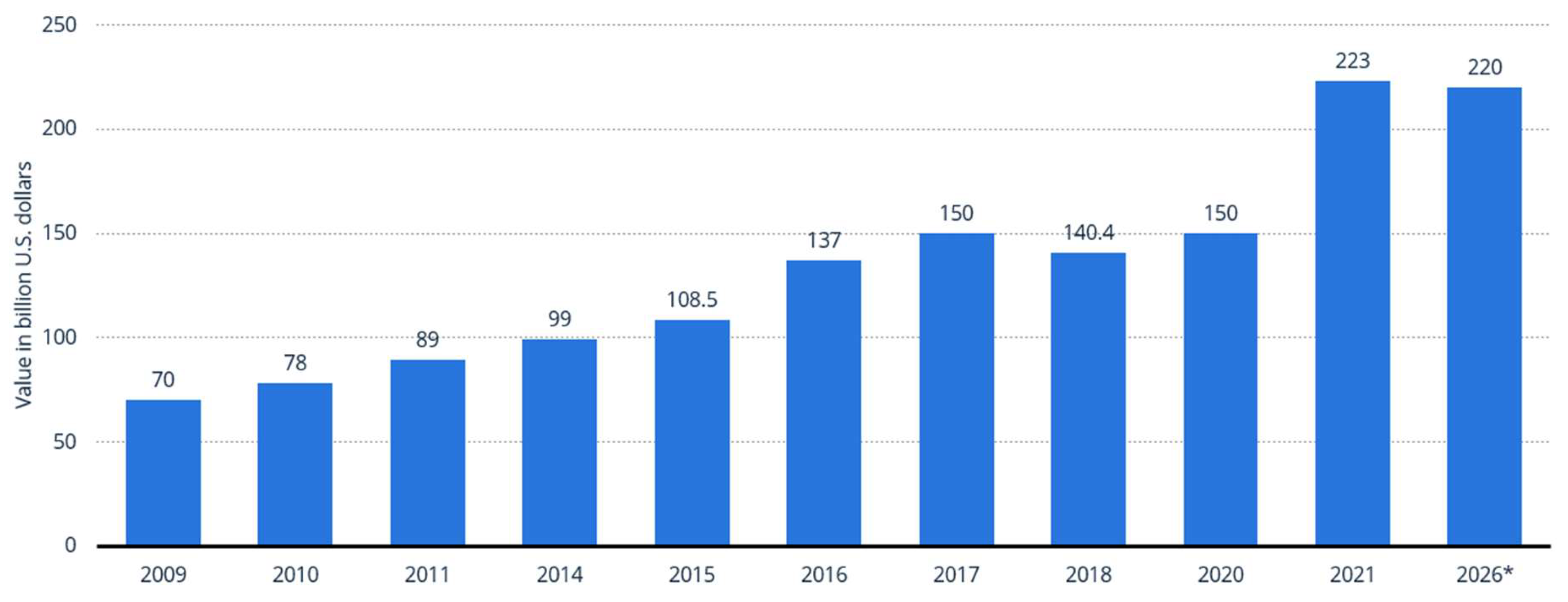
- Statista (2021). Market size of the textile industry in India from 2009 to 2021, with an estimate for 2026 (in billion U.S. dollars). Statista Report.
- Sundström, P., & Törnroos, J. (2021). Customer relationship management in B2B markets: The role of technology. European Journal of Marketing, 55(2), 315-334.
- Tornatzky, L., & Fleischer, M. (1990). The Processes of Technological Innovation. Lexington Books.
- Verhoef, P. C., Broekhuizen, T., Bart, Y., Bhattacharya, A., Qi Dong, J., Fabian, N., & Haenlein, M. (2021). Digital transformation: A multidisciplinary reflection and research agenda. Journal of Business Research, 122, 889-901. [CrossRef]
- Venkatesh, V., & Bala, H. (2008). Technology acceptance model 3 and a research agenda on interventions. Decision Sciences, 39(2), 273-315. [CrossRef]
- Wang, Y., Chen, M., & Lee, J. (2024). The role of customer reviews in shaping online purchasing behavior. E-Commerce Research and Applications, 58(1), 33-50.
- Wernerfelt, B. (2022). The resource-based view of the firm: Ten years after 1991. Strategic Management Journal, 45(1), 123-136.
- Wollan, R., Smith, N., & Zhou, C. (2016). The Social Media Management Handbook: Everything You Need to Know to Get Social Media Working in Your Business. Wiley.
- Xu, H., & Li, D. (2020). Impact of product availability on customer satisfaction and loyalty in e-commerce. Journal of Retailing and Consumer Services, 53, 101983.
- Zeng, X., Wang, H., & Chen, Z. (2023). CRM systems and personalized marketing: A pathway to customer retention. Journal of Marketing Management, 29(2), 81-96.
- Zhu, Y., Zhang, X., & Peng, Y. (2021). Digital transformation in manufacturing: An innovation diffusion approach. Journal of Industrial Engineering, 30(3), 221-233.

| Data Collection | Analysis | Expected outcomes |
|---|---|---|
| Group interviews with internal stakeholders | Thematic analysis of interview data | Insights into internal processes, challenges, and opportunities |
| Open-ended questions for detailed responses | Categorize responses into key themes | Employee perspectives on customer relations and strategies |
| Record and transcribe focus groups | Summarize key findings and quotes | Identify areas for improvement based on stakeholder opinions |
| Observe customer interactions and operations | Analyse patterns in behaviour and efficiency | Insights into customer behaviour and operational inefficiencies |
| Take structured field notes | Integrate with other data for full analysis | Contextual insights into shopping behaviours and process improvements |
| Online questionnaire with a representative sample | Use SPSS/Excel for quantitative analysis | Metrics on customer preferences and satisfaction |
| Closed-ended questions with rating scales | Descriptive and inferential statistics | Insights into customer feedback and patterns for targeted improvements |
| Industry Reports & Market Analyses | Analyse trends, challenges, and benchmarks | Understanding trends, challenges, and performance benchmarks |
| News Articles | Identify industry changes and opportunities | Awareness of industry changes and emerging opportunities |
| Government Statistical Websites | Analyse economic and regulatory data | Data on economic indicators and regulatory compliance |
Disclaimer/Publisher’s Note: The statements, opinions and data contained in all publications are solely those of the individual author(s) and contributor(s) and not of MDPI and/or the editor(s). MDPI and/or the editor(s) disclaim responsibility for any injury to people or property resulting from any ideas, methods, instructions or products referred to in the content. |
© 2024 by the authors. Licensee MDPI, Basel, Switzerland. This article is an open access article distributed under the terms and conditions of the Creative Commons Attribution (CC BY) license (http://creativecommons.org/licenses/by/4.0/).