

Submitted:
16 September 2024
Posted:
18 September 2024
You are already at the latest version
Abstract
This research is dedicated to a comprehensive examination of the strengths and weaknesses inherent in the legal and institutional measures designed to protect cultural heritage in the Republic of Serbia from the adverse effects of natural disasters, including earthquakes, landslides, rockfalls, floods, torrents, storms, hail, and forest fires. The study aims to identify the primary challenges and shortcomings within the existing legal and institutional framework, while also pinpointing and analyzing best practices and potential improvements for the protection system. This research posits a preliminary hypothesis suggesting that challenges may exist within the legal and institutional framework for the protection of cultural heritage in the Republic of Serbia, potentially limiting effective response and recovery following natural disasters. This hypothesis will be further developed and adapted based on the analysis of available data. Data collection for this research was conducted through semi-structured interviews with experts and an in-depth analysis of existing documentation. By conducting interviews with experts in the field, the research seeks to gather critical data and insights that will enhance the understanding of these issues and contribute to formulating viable solutions. The analysis and processing of data were carried out using ATLAS.ti software, which facilitated a comprehensive and systematic examination of the collected qualitative information. Furthermore, an assessment of the current capacity of institutions to respond rapidly and effectively to natural disasters that pose a threat to cultural heritage is a key component of the study. The ultimate goal is to develop recommendations that will fortify the legal and institutional framework, thereby bolstering the resilience of cultural heritage sites in Serbia against future natural disasters. The results of the research, highlight significant deficiencies in the legal framework, inadequate institutional capacities and resources, as well as a lack of proper training for crisis response. The need for improved inter-institutional cooperation and the development of technical-logistical resources is emphasized. This paper represents a significant contribution to the understanding and enhancement of the cultural heritage protection system, providing a foundation for further research and strategy development in this area.
Keywords:
disasters
; hazards
; cultural heritage
; protecting
; qualitative research
; interview
; Serbia
1. Introduction
Cultural heritage represents a collection of tangible and intangible assets acquired and passed down by a community through generations [1]. These assets include architectural structures, historical monuments, works of art, as well as traditions, customs, languages, and knowledge that form part of a collective identity [2]. The preservation of cultural heritage is not only a sign of respect for the past but also a responsibility toward future generations, who will come to understand the historical and cultural roots of their community through these treasures [3]. A review of the literature reveals that there isn’t a universally accepted definition of cultural heritage, which underscores how complex and multifaceted the concept is [4,5]. Broadly speaking, cultural heritage encompasses all the values passed down from the past that are of special importance to a specific community or nation [6,7]. These values represent every aspect of a nation’s cultural and historical identity, making them unique and irreplaceable [8]. Once lost, cultural heritage cannot be recreated, emphasizing its immense significance and irreplaceable nature [9,10,11].
Immovable cultural heritage includes buildings, monuments, archaeological sites, and other structures that possess cultural, historical, or artistic value and cannot be relocated [12,13,14]. This type of heritage is crucial for preserving specific communities’ collective memory, cultural identity, and history. Historical monuments represent tangible evidence of historical events, figures, and periods [15]. They hold immense significance for historical memory and cultural identity. For example, the Colosseum in Rome, Italy, is one of the most famous historical monuments, symbolising ancient Roman civilisation and its achievements in architecture and engineering [16]. Additionally, monuments such as the Pyramid of Giza in Egypt and the Statue of Liberty in New York City [17], United States, are significant symbols of national history and cultural heritage. The Pyramid of Giza testifies to the engineering accomplishments of ancient Egypt and its religious and funerary practices [18].
Conversely, movable cultural heritage includes items that can be transported and hold cultural, historical, artistic, or scientific value [19,20]. This encompasses artworks, archaeological artefacts, historical documents, manuscripts, furniture, weapons, and other objects that are essential for understanding and preserving culture and history [21]. Artworks such as paintings, sculptures, prints, and photographs form a significant part of movable cultural heritage [22]. These works not only showcase artistic achievements but also reflect the cultural context in which they were created.
Intangible cultural heritage refers to the non-material dimensions of culture, including elements like language, customs, rituals, folklore, music, dance, crafts, and other cultural expressions [23]. These aspects of heritage are typically passed down through generations via oral traditions and practices. Intangible cultural heritage is vital for preserving the cultural identity and collective memory of a community [24]. Language serves as the bedrock of cultural identity and is a core element of intangible cultural heritage. Oral traditions, such as fairy tales, legends, and epic poems, are key ways in which cultural narratives are transmitted across generations [25]. In Serbia, oral tradition has been instrumental in preserving the nation’s cultural identity. The collection of Serbian folk songs by Vuk Stefanović Karadžić in the 19th century provides a rich repository of folk creativity, offering insight into the history and traditions of the Serbian people [26]. Rituals and customs, which embody the beliefs and values of a community, also hold an important place in cultural heritage. A prime example is the Japanese tea ceremony (Sado or Chado), a highly ritualized form of tea preparation that reflects the aesthetics of Zen Buddhism and Japanese culture [27]. In Serbian culture, wedding customs are a significant part of the intangible cultural tradition. These customs include a series of rituals and celebrations that span the preparation, the ceremony, and post-wedding festivities. They reflect the strong ties between family, community, and religious beliefs, highlighting the social and cultural values of the region [28,29].
Beyond its historical significance, cultural heritage offers substantial potential for a community in scientific, social, and economic areas. It can inspire new research, serve as a foundation for social cohesion, and act as an economic resource, particularly through cultural tourism and other related activities [30]. According to the Law on Cultural Property (Official Gazette of the Republic of Serbia, 6/2020), cultural property refers to both material and spiritual cultural objects that are considered of general interest and are thus afforded special protection. These cultural assets are categorized into three types: immovable, movable, and intangible cultural goods.
Cultural heritage faces numerous threats, both human-made (such as looting, devastation, and armed conflicts) and natural, including disasters like earthquakes, floods, storms, landslides, and extreme weather events [31,32]. These threats pose significant challenges to the preservation of cultural heritage, necessitating appropriate protective and preventive measures [33]. Disasters, such as earthquakes, floods, fires, storms, and terrorist attacks pose a serious threat to cultural heritage [34,35,36]. These disasters can destroy or significantly damage cultural assets, leaving communities bereft of important parts of their history and culture [37,38]. Therefore, it is essential to develop and implement protective measures that will safeguard cultural heritage in the face of different natural and man-made disasters [39,40,41].
Protecting cultural heritage involves a range of measures and strategies, which can be divided into structural and non-structural approaches [42]. Structural measures include physical interventions, such as the reinforcement of buildings and the application of modern technologies for early detection and prevention of damage [43,44]. Non-structural measures involve legal and institutional frameworks, public education, and international cooperation [45].
Given the complexity and importance of cultural heritage to the community, the need for its legal and institutional protection has become evident [46]. In Serbia, the legal safeguarding of cultural heritage began as early as 1844, when the “Decree on the Protection of Ruins of Certain Old Towns and Castles in Serbia as Monuments of Antiquity” was [47] passed [48,49]. This decree was a key moment, establishing a framework for the systematic protection of cultural heritage in the country. At the same time, the institutional protection of cultural heritage was initiated with the founding of the National Museum of Serbia on May 10, 1844, then known as the Serbian Museum, which took on the responsibility of preserving antiquities for future generations [50].
Several institutions, in Serbia, are tasked with the protection of cultural heritage [51,52]. The Institutes for the Protection of Cultural Monuments manage immovable cultural assets, while museums handle movable ones. Archives preserve important documents, libraries safeguard literary works, and the Yugoslav Film Archive along with other archives ensures the preservation of film materials. These institutions play a critical role by addressing threats that develop slowly and may not become apparent for decades or even centuries [53]. Alongside them, state bodies such as emergency response teams, civil protection units, and firefighting services—under the Ministry of the Interior—work to reduce risks and mitigate the impact of natural disasters [54,55].
History provides several examples of cultural heritage damaged or destroyed by natural disasters [56,57,58]. These include the Serbian medieval Žiča Monastery, damaged in the 2010 earthquake [59], the fire that ravaged Hilandar Monastery [60], the collapse of part of the Vinča – Belo Brdo archaeological site due to a landslide in 2004 [61], and the destruction of archival material during the 2014 floods in Obrenovac [62]. On a global scale, notable incidents include the loss of over 90% of the National Museum of Brazil’s collection in a 2018 fire [63,64], the destruction of Nepal’s cultural heritage during the 2015 earthquake [65,66], and the near-destruction of Notre-Dame Cathedral in a 2019 fire [67]. These cases illustrate that the threat to cultural heritage from natural disasters is not hypothetical, but very real.
Protecting cultural heritage in Serbia from different natural and man-made disasters requires genuine collaboration between institutions responsible for heritage protection and those managing disaster risk reduction [68,69]. Legal and institutional protection remains essential for preserving cultural heritage. This protection is implemented through various laws and regulations, which outline the criteria for safeguarding cultural assets, registration procedures, and protection measures [70,71]. Institutions are tasked with enforcing these laws, researching and documenting cultural assets, and executing conservation plans. Moreover, they work to raise public awareness of cultural heritage’s significance. Collaboration between institutions protecting cultural heritage and those managing disaster risks is crucial for its continued preservation [33,72]. This cooperation enables the sharing of knowledge, the coordination of activities, and the planning and execution of protective measures. Furthermore, partnerships between these institutions also allow for more efficient use of resources and better disaster response. Additionally, collaboration with international organizations provides further support in protecting cultural heritage.
This research is dedicated to a comprehensive examination of the strengths and weaknesses inherent in the legal and institutional measures designed to protect cultural heritage in the Republic of Serbia from the adverse effects of disasters, including earthquakes, landslides, rockfalls, floods, torrents, storms, hail, and forest fires. The study aims to identify the primary challenges and shortcomings within the existing legal and institutional framework, while also pinpointing and analyzing best practices and potential improvements for the protection system.
Literary Review
Numerous studies and expert reports stress that the increasing frequency of natural disasters poses a serious threat to the preservation of cultural heritage [73,74,75,76,77,78,79]. These works call for the development of strategies to better protect cultural heritage from such events.
Due to climate change, the risk of wildland-urban interface fires [80] is increasing, especially in the cold season, as winters are becoming less snowy. The vegetation merging with human infrastructure therefore tends to be drier and can serve as fire material [81]. In this way, places where cultural assets are kept can also be more at risk. Furthermore, in one study, authors Cacciotti et al. [82] dive into the increasing dangers tied to climate change—things like rising sea levels and extreme weather—that are threatening cultural landscapes and historic sites in Central Europe. Their research points out how urgent it is to adopt more flexible and sustainable management practices to protect these treasures. In contrast, Papakonstantinou et al. [83] propose a cumulative index to evaluate how vulnerable these sites are to environmental risks. Besides that, armed conflicts and urban expansion are also putting cultural heritage at risk. Bandarin et al. [84] discuss how cultural sites have been deliberately targeted in war zones, citing the heartbreaking destruction of monuments in places like Syria and Iraq. They argue that stronger international laws and more cooperation between the military, humanitarian groups, and heritage experts are crucial to safeguarding cultural property during conflicts. On a different note, Lattig [76] explores how rapid urban growth is endangering heritage sites, especially when cities expand nearby. It found that lattice calls for better integration of heritage conservation into urban planning to avoid irreversible damage.
Many studies highlight the importance of developing risk management frameworks specifically designed to protect cultural heritage [84,85,86]. Gizzi and Porrini [87] make a case for the role insurance can play in minimizing the risks from natural and human-made disasters. They delve into the economic challenges of protecting heritage and advocate for specialized insurance products tailored to these sites, instead of relying on standard policies. Also, they found that public-private partnerships are also seen as key to ensuring effective recovery plans are in place [87].
Also, Jigyasu et al. [40] push for a comprehensive disaster risk management approach that combines modern tech with traditional knowledge, and actively involves local communities. They highlight how tricky it is to reduce disaster risks in places prone to hazards like floods, earthquakes, and fires. Also, they found that collaboration across various sectors—heritage institutions, governments, and international organizations—is critical to building long-term resilience [40]. Looking at specific examples, Pastrana-Huguet et al. [88] focus on Japan’s Bosai culture, which successfully blends disaster preparedness with heritage conservation. This model, which mixes cutting-edge technology with traditional practices, offers useful lessons for other countries dealing with similar risks. In India, Majumdar and Das [77] examine how the country’s disaster risk reduction policies impact heritage buildings. While policies are in place, they found that poor enforcement and low public awareness hinder proper protection. They argue that more disaster preparedness training is needed for both heritage managers and local communities to shield these assets from both natural and human-made disasters [77].
Still, managing disaster risks while balancing the pressures of modern development isn’t easy. Convery et al. [75] believe that protecting cultural heritage isn’t just about physically preserving sites. They argue that heritage conservation should also focus on the broader societal values these places hold, like their social, economic, and spiritual importance. Instead of just focusing on technical solutions, they push for a more holistic approach that includes community identity and resilience [75]. Besides that, Rahman [89] backs this up by emphasizing the need for cultural sensitivity in disaster recovery efforts. He stresses that preserving cultural heritage should be a core part of humanitarian responses to both natural and human-made disasters [89]. Very important is that experts express diverse perspectives on whether existing national and international regulations sufficiently protect cultural heritage from disasters. While many recognize the value of legal frameworks like UNESCO conventions and domestic laws, their enforcement is frequently criticized as inadequate [78,90,91]. According to Jigyasu et al. [40], numerous countries, especially in developing regions, lack the necessary resources or political motivation to implement these regulations effectively. From another perspective, Majumdar and Das [78] similarly argue that despite international agreements and national legislation in countries like India, enforcement remains problematic. This is largely due to the complexities of coordinating between heritage authorities and emergency response agencies. They recommend better integration of disaster risk management (DRM) strategies with cultural heritage policies to enhance protection. Also, they often criticize the institutional frameworks for safeguarding cultural heritage as insufficient [78]. Similarly, Bandarin et al. [84] highlight structural deficiencies in the collaboration between cultural institutions and disaster management agencies, which results in slow emergency responses. This issue is particularly concerning in areas with limited disaster response capacity, leaving cultural heritage sites especially vulnerable.
Another significant challenge experts emphasize is the shortage of disaster risk management professionals within cultural heritage organizations. Lattig [76] notes that many institutions lack the expertise and resources required to conduct thorough risk assessments or develop effective emergency response plans, rendering them poorly equipped for major disasters. Training among staff at cultural institutions is also a critical concern. Conversely, Rahman [89] points out that many cultural heritage workers receive insufficient training in disaster preparedness, which undermines the resilience of heritage sites. Additionally, the lack of standardized training programs across institutions exacerbates this vulnerability. To address these issues, Jigyasu et al. [40] suggest integrating ongoing training and disaster drills into the operational structures of cultural institutions to improve preparedness. They further advocate for cross-sector collaboration between heritage professionals and emergency responders to ensure effective coordination during disaster responses. However, experts like Pastrana-Huguet et al. [88] argue that the technical resources available to cultural institutions for disaster response are often inadequate. While some institutions may have access to basic emergency tools, many lack advanced technologies for risk assessment, monitoring, and post-disaster recovery, which limits their capacity to protect and salvage cultural assets during disasters.
Preserving cultural heritage calls for a comprehensive approach that strengthens legal protections, utilizes new technologies, involves local communities, and addresses the challenges of climate change [92,93,94]. Experts suggest enhancing international agreements, like the Hague Convention, by weaving them into national legislation and encouraging deeper international partnerships, particularly with organizations such as UNESCO [95]. Technological innovations, including 3D scanning and drones, have become essential tools in documenting and monitoring heritage sites, helping assess risks and plan restoration efforts after damage [96,97,98]. Engaging local communities and raising awareness about the importance of cultural heritage are also key to ensuring long-term protection [99,100]. In conflict zones, it is advised to create specialized heritage protection units and integrate them into peacekeeping operations [101]. Finally, with the increasing impact of climate change, conservation strategies must evolve to focus on resilience and adaptability [102,103].
Experts also stress the necessity of scenario planning, including the development of action plans for the immediate post-disaster period [104,105]. Rahman [89] found that many institutions are ill-prepared for the critical first 72 hours after a disaster, during which significant damage to cultural heritage can occur. The absence of predefined scenarios or response protocols often delays recovery efforts, leading to greater losses. Collaboration between cultural institutions and disaster risk reduction (DRR) entities is widely recognized as essential, but it remains underdeveloped. Different studies [76,88] show that while some institutions have formed partnerships with emergency management agencies, these collaborations are often informal and lack proper institutionalization. Cultural institutions that work closely with national or regional disaster management bodies, such as civil protection units or fire and rescue services, tend to be better equipped to respond to disasters [106,107]. However, many studies emphasize the need for more formalized networks that include joint training and resource-sharing initiatives to ensure effective disaster preparedness and response [108,109].
Regarding methodolgical framewor and results, this study has several limitations: a) the research focuses exclusively on Serbia, which limits the ability to apply its findings to other regions with different environmental or cultural backgrounds; b) the reliance on qualitative data, such as interviews, introduces a degree of subjectivity, making it harder to conduct in-depth statistical analysis; c) the absence of longitudinal data prevents a long-term assessment of how effective the protective measures are over time; d) emerging technologies, like remote sensing or AI, are not fully explored, despite their potential role in mitigating risks to cultural heritage; e) input from a wider range of stakeholders—local communities, NGOs, and heritage visitors—was not included, missing valuable perspectives; f) while financial constraints faced by cultural heritage institutions are mentioned, potential solutions like public-private partnerships or international funding are not explored in depth; g) although the study examines existing legal frameworks, it lacks detailed recommendations for improving enforcement, particularly in rural or underdeveloped areas; h) climate change is acknowledged as a risk factor, but the study does not delve into future climate scenarios and their specific impacts on heritage sites; i) the methodology does not incorporate quantitative risk assessments, like cost-benefit analysis or disaster probability modeling, which could offer a more comprehensive risk evaluation; j) there is limited discussion on how cultural heritage protection can be coordinated with disaster management agencies, leaving room for further exploration of institutional collaboration in crisis management.
2. Methods
This research is dedicated to a comprehensive examination of the strengths and weaknesses inherent in the legal and institutional measures designed to protect cultural heritage in the Republic of Serbia from the adverse effects of natural disasters, including earthquakes, landslides, rockfalls, floods, torrents, storms, hail, and forest fires. The study aims to identify the primary challenges and shortcomings within the existing legal and institutional framework, while also pinpointing and analyzing best practices and potential improvements for the protection system. By conducting interviews with experts in the field, the research seeks to gather critical data and insights that will enhance the understanding of these issues and contribute to formulating viable solutions.
Experts for the semi-structured interviews are selected based on clearly defined criteria outlined in the document. These individuals represent key institutions that are pivotal in the management of Serbian cultural heritage. The criteria used for their selection include:
- Institutional affiliation: experts are associated with organizations that are vital to the preservation and protection of Serbia’s cultural heritage. This includes entities such as the Republic Institute for the Protection of Cultural Monuments, the National Museum of Serbia, the National Library of Serbia, among others.
- Professional background: each expert brings extensive experience in cultural heritage protection, with a minimum number of years (to be confirmed) spent working in the field. This ensures the interviewees have significant expertise in the preservation and management of cultural assets.
- Role specificity: the selected experts hold positions that directly involve safeguarding cultural heritage, particularly addressing risks related to natural disasters.
These interviews play a crucial role in collecting expert insights on the vulnerabilities of cultural assets, disaster preparedness, and the capacities of institutions. The interview guide was carefully designed to ensure that important topics, such as legal frameworks, disaster response training, and institutional coordination, were thoroughly covered.
Furthermore, an assessment of the current capacity of institutions to respond rapidly and effectively to disasters that pose a threat to cultural heritage is a key component of the study. A key element of this study is the evaluation of institutional capacity, which involves examining response times, resource availability, inter-agency collaboration, and the effectiveness of disaster recovery strategies. This assessment was carried out through expert interviews, qualitative analysis using ATLAS.ti software, and a review of institutional risk assessments and emergency protocols. The focus was on identifying gaps in resources, training, and coordination, as well as evaluating the institutions’ ability to effectively mobilize during the critical first 72 hours after a disaster.
The ultimate goal is to develop recommendations that will fortify the legal and institutional framework, thereby bolstering the resilience of cultural heritage sites in Serbia against future natural disasters. Through this detailed evaluation, the research aspires to propose practical improvements that will significantly enhance the protection and preservation of Serbia’s cultural heritage.
2.1. Hypothetical Framework
The central hypothesis of this research posits that the legal and institutional framework for the protection of cultural heritage in the Republic of Serbia is inadequately prepared to ensure an effective response and recovery following natural disasters. To explore this overarching hypothesis, several specific hypotheses have been formulated.
Firstly, it is hypothesized that significant deficiencies exist within the legal framework governing the protection of cultural heritage in Serbia, which adversely impacts the effectiveness of disaster protection efforts. This hypothesis rests on the assumption that existing laws and regulations are either outdated or insufficiently enforced in practice. Secondly, the study hypothesizes that the institutional capacities and resources available for disaster response and recovery are inadequate. This suggests that institutions may lack the financial, human, and technical resources necessary for a swift and effective response, as well as comprehensive plans for such emergencies.
A third hypothesis concerns the technical and logistical resources allocated for the protection and recovery of cultural heritage, suggesting that they are underdeveloped and insufficient for rapid deployment in the event of disasters caused by natural or technological hazards. This highlights the need for more advanced equipment and technological solutions.
Additionally, it is hypothesized that the staff within cultural heritage protection institutions may not be adequately trained to respond to disasters, which could diminish the effectiveness of protective measures. This assumption points to the necessity for continuous education and training programs.
Finally, the research proposes that the effectiveness of inter-institutional cooperation is limited, which negatively affects coordination and joint action in safeguarding cultural heritage. This hypothesis underscores the importance of improving collaboration and communication among various institutions involved in heritage protection.
Together, these hypotheses aim to identify critical areas within the current framework that require enhancement, providing a basis for strengthening the resilience and preparedness of Serbia’s cultural heritage protection systems against natural disasters.
2.2. Research Instruments
We conducted expert interviews to modify our hypothesis and to develop and discover a theory in terms of our field of investigation. This specific form of guideline-based interviews focuses on experts’ specific knowledge [110], particularly in their technical, processual, and interpretative knowledge, regarding their professional field of action [111]. The interviews were conducted with a carefully selected sample of experts from relevant institutions, ensuring the validity and reliability of the data collected. The interviewees therefore represent a certain organization or institution that is primarily responsible for the conservation and protection of cultural assets.
The interview guide was meticulously structured to facilitate a thorough exploration of the research topics. It ensured that each interview comprehensively addressed all relevant aspects, such as the vulnerability of cultural assets to disasters, the evaluation of the legal and institutional protection framework, disaster response training, technical and logistical resources, planning documentation development, prevention methodologies, response and recovery plans, and the effectiveness of inter-institutional cooperation. In addition to this hypothetical framework, an open question at the end of the interview offered the opportunity to name further necessary protective measures and perceived challenges that were not previously discussed. The semi-structured design of our interview allowed conversational flexibility and ensured that all key topics were thoroughly explored. This approach enabled interviewers to adapt to the flow of the conversation without missing essential points.
Guide for Semi-Structured Interview with Questions:
- Do you consider that the cultural assets preserved by your institution are at risk from natural disasters such as earthquakes, fires, floods, torrents, storms, heavy rains, lightning, hail, drought, landslides or soil erosion, snowdrifts and avalanches, and extreme air temperatures?
- How would you evaluate the domestic and internationally ratified regulations related to the protection of cultural assets?
- Do you believe that the institutional framework for the protection of cultural assets is adequate for the needs of the Republic of Serbia?
- How would you assess the level of training for emergency response to natural disasters among employees in institutions that are responsible for the protection of cultural assets?
- How would you evaluate the technical resources available in your institution for responding to emergencies caused by natural disasters?
- Has your institution developed a risk assessment by Article 15 of the Law on Disaster Risk Reduction and Emergency Management (“Official Gazette of RS”, No. 87/18)?
- How does your institution address prevention and mitigation of the consequences if a natural disaster were to threaten the cultural assets it preserves?
- If a natural disaster were to threaten the cultural assets preserved by your institution, do you have developed scenarios for actions during and immediately (within 72 hours) after the natural disaster?
- Does your institution collaborate with disaster risk reduction and emergency management entities, such as emergency management headquarters, civil protection units, firefighting and rescue units, the Firefighting Association of Serbia, the Sector for Emergency Management of the Ministry of Interior, the Red Cross of Serbia, the Mountain Rescue Service, the Serbian Radio Amateurs Association, and others? From which institutions were your colleagues?
- In what ways and with what measures would you improve the current state of protection of cultural assets from the consequences of natural disasters in the Republic of Serbia?
2.3. Study Area
Serbia boasts a rich cultural heritage that spans centuries, encompassing both immovable and movable assets, along with an extensive collection of written and audiovisual materials. Protecting these cultural treasures from natural disasters—such as earthquakes, floods, fires, and landslides—is crucial. This study focuses on five key institutions in Serbia that are central to safeguarding the country’s cultural heritage. Each institution is responsible for preserving specific types of assets, facing unique challenges in disaster preparedness and response due to factors like resource constraints, legal frameworks, and coordination between institutions.
Interviews were conducted with employees from the following institutions, all of which play a vital role in the protection of Serbia’s cultural heritage (Figure 1): a) the Republic Institute for the Protection of Cultural Monuments, b) the National Museum of Serbia, c) the National Library of Serbia, d) the State Archives of Serbia, and e) the Yugoslav Film Archive. Each institution has a distinct role in preserving cultural assets, from immovable monuments to historical documents and cinematic history. Below is a breakdown of each institution and its role in the study.
The Republic Institute for the Protection of Cultural Monuments is a leading authority responsible for the protection, conservation, and restoration of Serbia’s immovable cultural heritage, including historical buildings, archaeological sites, and other significant monuments. It designs and implements strategies to protect these assets from natural disasters, ensuring that both legal frameworks and technical expertise are applied to preserve Serbia’s cultural identity (Interviewee 1);
As Serbia’s largest and most prominent museum, the National Museum is entrusted with preserving a vast array of cultural assets, including artworks, archaeological discoveries, and historical artefacts. The museum plays a crucial role in protecting movable cultural heritage, which is particularly vulnerable to disasters like floods, fires, and theft. Its mission also extends to educating the public about the importance of cultural preservation (Interviewee 2);
The National Library preserves Serbia’s written cultural heritage, including rare manuscripts, historical documents, and books. With the high vulnerability of paper materials to disasters such as fires and floods, the library works to develop comprehensive disaster prevention and response strategies. Preserving this form of heritage is vital to maintaining the nation’s intellectual and cultural history (Interviewee 3);
The State Archives are responsible for the long-term preservation of documents with historical, legal, or administrative value. The archives house invaluable government records and historical documents essential to maintaining a complete record of Serbia’s political and social history. Protecting these materials from environmental threats is a central part of their mission (Interviewee 4);
As one of the largest film archives in the region, the Yugoslav Film Archive is dedicated to preserving cinematic history. The archive safeguards thousands of films, which are sensitive to environmental factors and disasters like fires and floods. Preserving these audiovisual materials requires specialized techniques and continuous monitoring to prevent deterioration (Interviewee 5).
As mentioned, Serbia boasts a rich cultural heritage, encompassing numerous historical monuments, archaeological sites, and religious buildings of exceptional importance. Among the most significant of these are monasteries, fortresses, and medieval towns that reflect the long and tumultuous history of the region [112]. Also, Serbia is particularly renowned for its medieval monasteries, which serve not only as centres of spiritual significance but also as important cultural and historical landmarks [113]. One of the most notable examples is the Studenica Monastery, founded in the 12th century. This monastery is a prime example of Serbian medieval architecture and art, renowned for its frescoes, which are considered masterpieces of Byzantine painting [114].
In addition to its religious monuments, Serbia is home to a wealth of archaeological heritage [51,115]. The Vinča site, located near Belgrade, stands out as one of the most significant Neolithic sites in Europe. Artifacts such as ceramic figures and tools unearthed at this site offer valuable insights into the life and culture of one of Europe’s oldest civilizations [116,117]. Another key historical monument in Serbia is the Kalemegdan Fortress in Belgrade. This fortress, which has witnessed numerous historical events, is now a major cultural and tourist attraction. It comprises remnants of Roman, Byzantine, Ottoman, and Austro-Hungarian fortifications, making it a uniquely rich historical site [118].
Besides that, the Đerdap National Park, located on the border with Romania, is not only one of Serbia’s most beautiful natural sites but also holds great cultural significance due to its archaeological findings. These discoveries indicate human presence in the region since prehistoric times. The most renowned site within the park is Lepenski Vir, which is one of Europe’s oldest settlements and a major archaeological landmark [119]. Serbia’s long history of warfare and military tradition is vividly reflected in the many preserved examples of medieval weapons and armour. Items such as swords, spears, and battle armour used in the struggles against the Ottoman Empire are significant artefacts of Serbia’s military heritage [120,121]. The National Museum in Belgrade, the oldest and most prominent museum in Serbia, houses an extensive collection of artistic, archaeological, and historical artefacts that are crucial for understanding Serbian and Balkan history and culture [122].
In Serbia and globally, the protection of cultural heritage is governed by various legal frameworks designed to preserve cultural assets for future generations. In Serbia, the key legal document overseeing this area is the Law on Cultural Heritage, established in 2009 (as published in the Official Gazette of the Republic of Serbia, No. 71/94, 52/2011 - other laws, 99/2011 - other law, 6/2020 - other law). This law outlines the definitions, classifications, registration procedures, and protection measures for cultural assets. Under this legislation, cultural goods are categorized as either movable or immovable, encompassing items such as works of art, historical artifacts, architectural landmarks, archaeological sites, and other objects of cultural importance.
In the central register of Serbia, there are currently a total of 2,657 immovable cultural properties, including 2,277 cultural monuments, 97 spatial cultural-historical units, 203 archaeological sites, and 80 sites of outstanding value (https://heritage.gov.rs, Accessed date 6 August. Also, preserving these sites is essential for safeguarding their historical and cultural significance. However, the existing legal framework for their protection is inadequate, leaving many critical issues unaddressed. Conversely, certain regulations are ambiguous and outdated, leading to challenges in their effective implementation. Institutes tasked with the protection of cultural monuments, including the Republic Institute and 13 regional institutes, face challenging conditions [123]. This situation directly affects the state of many immovable cultural properties, with some suffering from neglect or deterioration. On the other side, the absence of a robust regulatory framework further hinders the effective operation of the protection system for these sites. Despite recognizing the need for more comprehensive legal regulation in this field since 2016, a specific law has yet to be enacted. Besides that, a national strategy for the protection of immovable cultural properties has not been developed, even a decade past the deadline for its creation [123].
2.2. Sample Characteristics
Experts for the guideline-based interviews were selected based on several criteria (Table 1): a) extensive professional experience in cultural heritage protection, ranging from 10 to over 20 years; b) specific responsibilities, such as the legal and technical protection of immovable heritage, the preservation of movable and written assets, and safeguarding audiovisual materials; c) active participation in disaster response efforts, particularly in coordinating recovery activities and implementing preparedness measures; and d) substantial contributions to policy development in disaster risk reduction and heritage protection.
Table 1 summarizes the expertise of five professionals chosen for their extensive experience in cultural heritage protection, averaging 15 years of work across various institutions. These experts collectively represent organizations tasked with preserving immovable, movable, written, and audiovisual cultural assets, spanning a wide range from historical monuments to national film archives. Their roles involve significant responsibilities, addressing the legal, technical, and practical aspects of protecting cultural heritage from natural disasters. On average, each expert has been involved in at least three major disaster response efforts, facing challenges like limited funding for structural protection, safeguarding fragile materials, and conducting risk assessments in rural regions.
All five experts have contributed to policy development, with four actively advising on disaster risk reduction strategies for cultural heritage. Their work includes local and national initiatives, and over half have played a key role in shaping digital archiving policies to enhance the long-term protection of Serbia’s cultural heritage. In terms of disaster response, all five experts have taken part in preparedness drills, and three of their institutions are directly involved in coordinating recovery efforts after major disasters. This table highlights their pivotal contributions to developing national strategies and frameworks, ensuring the resilience and protection of Serbia’s cultural heritage.
Furthermore, the sample of interviewees in this study consists of five participants, each bringing a diverse set of demographic and socio-economic characteristics to the research. Gender representation within the sample includes three men (60%) and two women (40%), offering a balanced perspective that incorporates insights from both genders. The participants’ ages range from 39 to 58 years, with an average age of approximately 48 years, capturing a broad spectrum of generational experiences relevant to the research focus.
In terms of educational background, the sample includes two participants with secondary education (40%) and three with higher education (60%). This mix allows the study to explore viewpoints across different levels of formal education. Income among participants varies from €420 to €600, with an average income of around €504. The highest income of €600 is reported by a participant with higher education from Belgrade, while the lowest income of €420 is earned by a participant with secondary education from Kragujevac. The interviews were conducted in various locations, including Nikšić, Belgrade, Novi Sad, Kragujevac, and Niš, ensuring geographical diversity and capturing a range of regional perspectives.
The interviews lasted between 35 to 45 minutes, with an average duration of about 39 minutes, reflecting the depth and engagement of the discussions. All participants are employed, indicating a stable economic status within the sample. Regarding marital status, the majority of participants are married (60%), with one participant being divorced (20%) and another being single (20%). This structured and diverse sample provides valuable insights into the demographic and socio-economic characteristics of the interviewees, enriching the study’s understanding of their perspectives and experiences within the research context (Table 2).
2.3. Data Collection
Data collection for this research was conducted through semi-structured interviews with experts and an in-depth analysis of existing documentation by applying qualitative content analysis [124]. The interviews followed a carefully designed interview guide, ensuring that all relevant topics were thoroughly addressed.
In addition to these interviews, the research relied on several secondary sources to gather comprehensive data. Documents such as reports, legal acts, and protection plans were systematically analyzed to provide a comprehensive understanding of the current framework for cultural heritage protection. These documents served as the foundation for understanding the existing legal framework and the institutional mechanisms in place. This analysis encompassed a range of materials from key organizations responsible for safeguarding cultural heritage, including various reports, legal regulations, and preservation plans. These include the Republic Institute for the Protection of Cultural Monuments, the National Museum of Serbia, the National Library of Serbia, the State Archives of Serbia, and the Yugoslav Film Archive.
Reviewing these documents was crucial for understanding the current state of cultural heritage and the measures in place to safeguard it. They provided valuable insights into existing legal frameworks and institutional mechanisms, helping researchers identify major challenges and pinpoint the strengths and weaknesses within the current system.
This analysis was done alongside semi-structured interviews, offering a deeper look into the legal and institutional setups. While the interviews brought in expert perspectives and experiences, the document review gave practical context and specific examples of how laws and protection strategies are put into action. Therefore, these documents don’t just match the interview data; they add to it, creating a more comprehensive picture of the research question.
Fife expert interviews were held with employees from central cultural heritage protection institutions, including the Republic Institute for the Protection of Cultural Monuments, the National Museum of Serbia, the National Library of Serbia, the State Archives of Serbia, and the Yugoslav Film Archive.
Interviewees were asked a consistent set of core questions, organized around pre-defined thematic areas taking into account the literature review and the underlying hypothetical framework: the vulnerability of cultural assets to disasters, evaluation of the legal and institutional framework for protection, training for disaster response, availability of technical and logistical resources, development of planning documentation, prevention methodologies, response and recovery plans, and the effectiveness of inter-institutional cooperation. The conversations were guided with attention to the participants’ levels of interest, sincerity, and engagement, ensuring that the discussion remained focused and productive.
These interviews aimed to provide a deep understanding of the legal and institutional frameworks, alongside the current challenges and best practices in the field of cultural heritage protection from the expert’s perspective. The discussions covered a range of topics, including the vulnerability of cultural assets to natural disasters, the evaluation of legal and institutional regulations, the level of preparedness and training for disaster response, as well as the availability and adequacy of technical and logistical resources, and the effectiveness of inter-institutional cooperation.
Moreover, reports and studies from institutions like the Republic Institute for the Protection of Cultural Monuments, the National Museum of Serbia, the National Library of Serbia, the State Archives of Serbia, and the Yugoslav Film Archive were invaluable. These reports provided critical insights into the current state of cultural heritage and the protective measures being undertaken.
Additionally, a review of relevant scientific literature on the topic of cultural heritage protection from natural disasters was conducted. This literature not only helped in formulating the research hypotheses but also provided a robust theoretical framework for the study. By combining these diverse data sources, the research was able to conduct a comprehensive investigation, ensuring the validity and reliability of the results. These findings were instrumental in developing recommendations and proposals aimed at improving the cultural heritage protection system in the Republic of Serbia.
2.4. Analyses
The ATLAS.ti software was used for the systematic analysis of the collected data, which facilitated the qualitative processing of the interviews. The use of ATLAS.ti further enhanced the depth and quality of the analysis as it enabled detailed coding and contributed to the robustness of the study’s findings.
The data underwent a careful coding process using a combination of summary and structuring qualitative content analysis. Each of these methodological approaches contributed uniquely to the examination of the data and provided multiple insights into the challenges and dynamics of cultural heritage protection. We used summary content analysis to reduce the essential content of the textual material to a manageable corpus of texts. Through this process, we identified the most important themes emerging from the data. We also quantified the most common key terms in the data. Terms such as “scenarios”, “response” and “coordination” were coded and their frequency was analyzed using the ATLAS.ti word frequency tool. In this way, a quantitative overview of the key areas of disaster preparedness and response was obtained, providing insight into which concepts were most emphasized by respondents and thus offering a complementary numerical perspective to the qualitative results.
Using structured qualitative content analysis, data was semi-inductively semi-deductively coded and carefully categorized, which allowed for easier identification of key aspects of the research, including the vulnerability of cultural assets to natural disasters, assessment of the legal and institutional protection framework, disaster preparedness training, technical and logistical resources, development of planning documents, prevention methods, and the effectiveness of inter-institutional cooperation. This qualitative coding process uncovered significant patterns and trends and identified interrelationships and influencing factors.
The results of this analysis helped formulate conclusions about the benefits and shortcomings of the current heritage protection system. These conclusions enabled the precise identification of areas in need of improvement and highlighted specific measures and strategies that could improve the protection of cultural heritage from natural disasters. This process not only serves to develop strategies for better protection in the future but also forms the basis for further research.
2.4.1. Methodological Framework for the Pearson Correlation Analysis
This methodological framework outlines the steps undertaken to perform Pearson correlation analysis and significance testing on survey data collected from institutions involved in cultural heritage protection in Serbia. The process followed several key stages, starting from data collection to statistical analysis, ensuring a systematic approach to understanding the relationships between institutional factors and disaster preparedness:
- (a)
- Data collection: the survey was designed with 10 core questions aimed at investigating factors that influence institutional preparedness and response to natural disasters. These questions covered areas such as risk perception (Q1), institutional frameworks (Q3), employee preparedness (Q4), technical resources (Q5), and collaboration with disaster risk reduction entities (Q9). Since the responses were qualitative, additional steps were required to enable quantitative analysis;
- (b)
- Coding and quantification: to convert qualitative responses into a format suitable for statistical analysis, a coding system was implemented. Open-ended responses were assigned numerical values. Most questions used a Likert scale (1-5), while binary yes/no questions were coded as 0 or 1. This conversion ensured uniformity, allowing for effective comparison and correlation analysis across the data set;
- (c)
- Data organization: the coded data was structured into a matrix, with each row representing a respondent’s answers and each column corresponding to one of the survey questions (Q1 to Q10). This tabular organization facilitated the clear presentation of the data and prepared it for subsequent statistical procedures, ensuring all variables were aligned for correlation calculations.
Pearson correlation coefficients (r) were calculated to assess the strength and direction of linear relationships between pairs of variables (survey questions). The coefficient values range from -1 (perfect negative correlation) to 1 (perfect positive correlation), with r = 0 indicating no relationship. This analysis helped identify how various factors, such as employee preparedness and technical resources, were interrelated. To determine the reliability of the observed correlations, significance testing was performed using p-values. A p-value of less than 0.05 indicated statistical significance, while values below 0.01 pointed to highly significant correlations. This step ensured that only meaningful relationships were highlighted, allowing for a more focused interpretation of how institutional practices and preparedness levels were connected.
3. Results
The results include the following sections and their respective subheadings: a) Pearson correlation matrix for cultural heritage protection; b) Comprehensive qualitative analysis of risk perception for cultural heritage in natural disaster contexts: a thematic content and discourse approach; and c) Descriptive analysis of the perceived vulnerability of cultural heritage to disasters: key risks and institutional challenges.
3.1. Pearson Correlation Matrix for Cultural Heritage Protection
Pearson’s correlation analysis highlights several statistically significant relationships (p < 0.05) between variables, providing insight into how different factors related to the protection of cultural heritage assets interact. This analysis is particularly relevant for key personas involved in cultural heritage protection, including Cultural Heritage Managers, Disaster Risk Reduction Experts, and Policy Makers. These personas play a crucial role in shaping disaster preparedness strategies and responding to the correlations identified in the study (Table 3).
For Cultural Heritage Managers, the positive correlation between Q7 (Preventive Measures) and Q1 (Risk Perception) (r = 0.65, p = 0.04) is especially important. It indicates that institutions taking proactive steps in prevention tend to have a heightened awareness of disaster risks. This suggests that managers who emphasize prevention are more attuned to potential threats, enabling them to better safeguard cultural heritage assets.
Similarly, Disaster Risk Reduction Experts would benefit from the relationship observed between Q9 (Collaboration) and Q4 (Employee Preparedness) (r = 0.61, p = 0.05). While slightly significant level, this correlation shows that better collaboration with disaster risk entities leads to more prepared staff. For these experts, the findings underscore the importance of fostering partnerships to improve institutional readiness and ensure employees are well-trained to respond to disasters.
In addition, the correlation between Q9 (Collaboration) and Q5 (Technical Resources) (r = 0.60, p = 0.07) is highly relevant for both Cultural Heritage Managers and Policy Makers. Institutions with stronger technical resources are better positioned to collaborate with other disaster management entities. This implies that policy decisions focusing on enhancing technical capabilities could lead to more effective partnerships and, ultimately, better disaster preparedness.
Finally, the relationship between Q10 (Suggested Improvements) and Q7 (Preventive Measures) (r = 0.60, p = 0.05) indicates that institutions that have already implemented preventive measures are more likely to push for further improvements. This is particularly significant for policymakers, as it highlights the need for continuous investment in disaster prevention strategies. These proactive institutions serve as advocates for ongoing policy reforms, pushing for stronger frameworks that enhance cultural heritage protection. Overall, these findings offer actionable insights for the key personas involved in cultural heritage protection. The correlations suggest that Cultural Heritage Managers, Disaster Risk Reduction Experts, and Policy Makers who emphasize collaboration, preventive measures, and technical resources are better equipped to protect cultural assets from disasters (Table 3).
3.2. Comprehensive Qualitative Analysis of Risk Perception for Cultural Heritage in Natural Disaster Contexts
This section presents the results of additional qualitative analyses that quantify respondents’ views on the risks and challenges related to protecting cultural heritage in Serbia. Table 4 offers a detailed analysis of the risks posed by natural disasters and resource constraints that challenge the safeguarding of cultural heritage. It identifies six key factors—earthquakes, floods, fires, climate change, preventive measures, and limited resources—along with their frequency, impact, readiness levels, and proposed mitigation strategies.
Earthquakes and floods are highlighted as the most common threats, each accounting for 21.05% of the total risk. Although both present significant dangers to cultural sites, the level of preparedness varies. Earthquake readiness is rated as inadequate, while flood preparedness is deemed moderate. To address these risks, recommendations include strengthening infrastructure in earthquake-prone areas and implementing early warning systems to better manage flood hazards.
Fires and climate change, each comprising 10.53% of the risks, also present notable challenges. Fires have a moderate impact, with preparedness considered insufficient. To reduce this risk, the use of fire-resistant materials is suggested. Similarly, climate change, seen as an escalating threat, faces low preparedness levels. Developing strategies to adapt to climate change is recommended to mitigate its growing impact.
Table 4 also emphasizes the critical role of preventive measures, which are currently hindered by inadequate preparedness. Enhancing training programs is identified as a key step to improving disaster response capabilities. Lastly, limited resources are recognized as a significant barrier. While no specific preparedness rating is assigned to this issue, securing additional funding is seen as essential for improving overall disaster management strategies.
Table 5 categorizes the findings into four main factors: legal frameworks, institutional coordination, technology adoption, and resource limitations. Each factor is analyzed in terms of its importance, the specific challenges involved, and suggested solutions.
Legal frameworks are identified as the most significant challenge, with an importance rating of 32.15%. The primary issues stem from outdated legislation, poor enforcement, and a lack of alignment with international standards. To address these, the recommended solutions include updating legal regulations to reflect modern disaster risk management principles and strengthening enforcement mechanisms to ensure more effective protection.
Institutional coordination is ranked second, with a 22.00% importance rating. The main challenge here is the weak communication between cultural heritage institutions and disaster management agencies, which hampers efficient preparedness and response. To improve this, the table suggests establishing formal collaboration protocols between agencies and organizing joint training exercises to enhance cooperation.
Technology adoption, rated at 20.00%, faces obstacles due to the limited use of tools like GIS, drones, and digital archiving systems, which are crucial for effective disaster risk management. The proposed solution involves investing in these technologies and providing staff with the necessary training to utilize them effectively.
Lastly, the lack of resources is highlighted as a critical issue, with a 25.00% importance rating. Insufficient funding and human resources hinder effective cultural heritage protection in Serbia, making it difficult to implement disaster risk strategies. Securing additional funding through public-private partnerships and international grants is recommended as a way to support both financial and staffing needs.
Table 6 provides an in-depth analysis of key terms relevant to disaster risk management in the context of safeguarding cultural heritage. It highlights five essential terms—Scenarios, Response, Coordination, Plans, and Damage—examining their frequency, significance, associated challenges, and proposed solutions. The most frequently cited term is “Scenarios”, accounting for 20.00%, underscoring the importance of preparing for a variety of potential disaster events. The primary challenge noted is the lack of comprehensive planning for all possible risks. To address this, it is recommended that detailed, scenario-based planning exercises be developed to improve preparedness for different disaster situations.
In addition, the term “Response,” representing 16.00% of the frequency, is pivotal for minimizing the impact of disasters. However, the analysis reveals issues with inefficient response procedures and delays in action. Enhancing response protocols and providing targeted training to speed up reaction times are suggested as solutions to these problems. Similarly, “Coordination,” cited at 12.00%, emphasizes the importance of collaboration among agencies to ensure a unified disaster response. Poor communication between stakeholders is a significant challenge. To mitigate this, Table 6 suggests establishing clear communication pathways and conducting inter-agency drills to strengthen coordination. Also at 12.00%, “Plans” focuses on the importance of preparedness during disaster events. The primary issue is that many disaster plans are either incomplete or outdated. Regularly updating and testing these plans is proposed to ensure readiness.
Lastly, “Damage,” accounting for 8.00%, highlights the critical role of quick and effective damage assessments in recovery efforts. The challenge lies in the delays often encountered in damage assessment after a disaster. To streamline recovery, faster assessment protocols, supported by modern technology, are recommended (Table 6).
Table 7 provides an analysis of the protection of cultural heritage in Serbia, focusing on three main areas: National Treasure, Vulnerability, and Global Cooperation. It examines the frequency of these terms, key themes, challenges, and proposed solutions.
Dominating the discourse with 50% of the mentions, “National Treasure” reflects the deep connection between Serbia’s cultural heritage and its national identity. The primary challenge identified is the insufficient protection mechanisms at the national level. The recommendations in Table 7 propose enhancing legal frameworks and increasing public awareness to ensure stronger protection for cultural heritage sites. At 30% of the discussion, “Vulnerability” highlights concerns about the fragility of cultural heritage, especially in the face of both natural disasters and human activities. The major challenge is the high risk of damage to these sites. To reduce these risks, implementing comprehensive risk assessments and preventive measures is recommended.
Meanwhile, “Global Cooperation,” mentioned 20% of the time, emphasizes the importance of international collaboration in safeguarding cultural heritage. Limited cooperation and resource-sharing across borders are identified as significant obstacles. The proposed solution is to foster stronger international partnerships and exchange best practices to enhance global efforts in cultural heritage preservation (Table 7).
3.3. Descriptive Analysis of Perceived Vulnerability of Cultural Heritage to Disasters: Key Risks and Institutional Challenges
The analysis of respondents’ views on the vulnerability of cultural heritage assets to natural disasters offers a detailed overview of the primary risks and challenges that institutions in Serbia face in preserving cultural heritage. Earthquakes and floods emerged as the most frequently mentioned concerns, accounting for 21.05% of all key terms, signalling that these two disasters are perceived as the greatest threats. This is particularly evident in rural areas where underdeveloped infrastructure exacerbates the situation. These findings underscore the urgent need to enhance protection systems, especially in the country’s less developed regions.
Fires were also identified as a significant risk, but with a frequency of 10.53%, they are mentioned less often than earthquakes and floods. While relatively common, fires are not viewed as posing the same level of danger. However, when combined with climate change—also mentioned with a frequency of 10.53%—fires could become a much more serious challenge, particularly in areas where resources and infrastructure for risk management are lacking. Climate change was further highlighted as a contributing factor to the vulnerability of cultural assets, particularly regarding flood risks and damage to documentation. Respondents stressed the need for preventive measures, which were also noted with a frequency of 10.53%, and emphasized the importance of better planning and institutional organization to mitigate these risks.
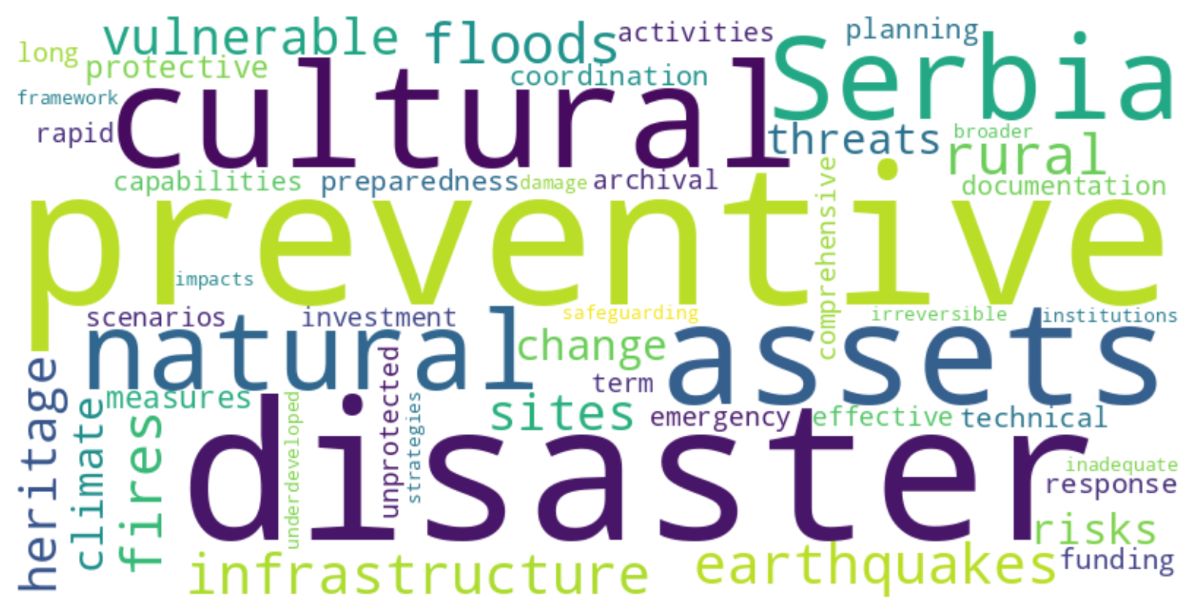
Additionally, the lack of resources was singled out as a key issue, with a frequency of 10.53%. This indicates that institutions in Serbia often face financial and technical limitations, which hinder their ability to respond effectively to natural disasters. This resource shortage complicates the implementation of preventive strategies and limits the capacity for swift action during emergencies. The results point to the need for increased investment in employee education and training, as well as the development of modern technologies that enable early disaster detection and response. Moreover, the analysis emphasizes the importance of better coordination between local and national institutions and the involvement of local communities in cultural heritage protection efforts. Improving infrastructure and regularly updating protection plans are critical steps toward strengthening protective measures for cultural assets in Serbia (see Table 8 and Figure 2).
The analysis of respondents’ views on domestic and international regulations for the protection of cultural assets in Serbia highlights several key factors that influence the effectiveness of these measures. A significant portion of respondents (32.15%) stressed the importance of both domestic and international regulations, but identified implementation as the main challenge. Specifically, 17.86% pointed to issues with law enforcement, primarily due to a lack of resources and capacity. This shortage of resources, which limits the effectiveness of the prescribed measures, was cited by 10.71% of respondents, underscoring the need for greater investment in infrastructure and human resources (Table 9 and Figure 3).
Moreover, 14.29% of respondents emphasized the need for improved coordination between institutions and international organizations to enhance the protection of cultural heritage and ensure compliance with global standards. An equal 14.29% highlighted the importance of international cooperation, seeing it as essential for integrating Serbia into the global framework for heritage protection. Additionally, 10.71% of respondents identified a lack of oversight in the enforcement of regulations, particularly in rural areas, which points to the need for regular monitoring and supervision of law enforcement efforts. These findings suggest that while Serbia’s legal framework for protecting cultural assets is robust, significant improvements are needed in its implementation and in fostering better coordination at both national and international levels.
The analysis of respondents’ views on the adequacy of Serbia’s institutional framework for protecting cultural assets reveals several critical challenges in the application of existing legal and institutional measures. While most respondents agree that the framework is solid in theory, they point to significant issues in its practical implementation. Approximately 35% of respondents highlight the need to strengthen institutional capacities to improve cultural heritage protection, particularly in rural areas where resources are scarce, leaving cultural assets more exposed to risks.
Additionally, 22% of respondents emphasize the need for better cooperation between institutions at both the national and local levels, specifically citing the lack of coordination between the National Institute for the Protection of Cultural Monuments and its regional branches. This lack of collaboration, they argue, hinders the effective implementation of protective measures and the sustainable management of cultural assets.
About 18% of respondents indicate that the institutional framework lacks the necessary flexibility to respond swiftly to emergencies and urgent situations. They suggest that current regulations should be amended to better address the protection of cultural assets during natural disasters and unforeseen disasters. These respondents believe that the laws should include provisions that enable institutions to take decisive and effective action during emergencies, especially when dealing with hazards caused by natural or technological disasters.
While the institutional framework is generally regarded as satisfactory in theory, 15% of respondents believe that poor resource management and inadequate planning are major barriers to effective cultural heritage protection, particularly in the face of natural disasters. They advocate for more proactive planning, comprehensive risk assessments, and the development of contingency measures to ensure that cultural assets are safeguarded.
Finally, 10% of respondents stress that insufficient cooperation between institutions and other relevant organizations undermines the effectiveness of the current framework. Although the institutional setup is considered adequate, respondents highlight the importance of stronger partnerships between governmental bodies, non-governmental organizations (NGOs), and international institutions. They believe that fostering these collaborations would lead to a more comprehensive and effective approach to protecting Serbia’s cultural heritage (see Table 10 and Figure 4).
The analysis of respondents’ views on employee preparedness for emergencies caused by natural disasters reveals a broad agreement on the need to enhance current training programs. Although training sessions are regularly conducted, 40% of respondents believe that there is a lack of practical exercises and simulations, which would better equip employees to handle disasters. Respondents point out that the existing training sessions are not held frequently enough and primarily cover basic topics, leaving employees underprepared for more complex disasters.
Approximately 20% of respondents stress the need for additional, more advanced training focused on specific risks like fires and earthquakes. They acknowledge that employees in cultural institutions are trained to use basic equipment, but emphasize that further investment in training programs is necessary to prepare staff for real-life crisis scenarios. Another 20% of respondents highlight the importance of continuous education and training that covers more complex disasters. They underscore the need for improved coordination with other institutions and emphasize the critical role of teamwork during disasters.
The remaining 20% of respondents identify insufficient training for responding to natural disasters and call for more frequent and intensive sessions, with a focus on practical exercises and simulations. They believe that this gap in training diminishes employee preparedness for emergencies. Overall, the findings suggest that while emergency response training does exist, significant improvements are required. More frequent and comprehensive training sessions, particularly those that offer practical experience, would enhance employee readiness for disasters (Table 11 and Figure 5).
The analysis of respondents’ perspectives regarding the technical resources of institutions for responding to emergencies caused by natural disasters indicates significant deficiencies in equipment. The majority of respondents (40%) highlight that technical resources are limited and underdeveloped for effective emergency response. While basic equipment, such as fire extinguishers and document protection systems, is generally available, more advanced technologies and specialized tools that would enable rapid response and damage assessment are lacking.
Around 20% of respondents state that the equipment is often outdated and that institutions lack sufficient funds to acquire new devices. These respondents believe that the current technical capacities are insufficient to cope with major natural disasters, such as floods and earthquakes, and emphasize the need for modernization of protection systems. Additionally, another 20% of respondents point out that the technical equipment of institutions is relatively adequate for daily activities, but that there are insufficient resources for effective intervention in disasters. These respondents particularly stress the need for equipment that would allow for quick damage assessment and the protection of endangered cultural heritage in disasters.
The remaining 20% of respondents believe that the technical resources of institutions are insufficient for immediate response, especially in the context of natural disasters. They emphasize the need to improve technical capacities to ensure the effective protection of cultural heritage during disasters and suggest that institutions should be equipped with modern devices and equipment, including early warning systems and specialized tools for rapid response. These results indicate that investment in the modernization and improvement of technical resources is necessary to ensure the efficient protection of cultural heritage in Serbia, particularly in the context of emergencies caused by natural disasters (Table 12 and Figure 6).
The analysis of respondents’ perspectives toward risk assessment following Article 15 of the Law on Disaster Risk Reduction and Emergency Management highlights the importance of this law as a crucial step towards improving disaster risk management in Serbia. However, the majority of respondents (40%) emphasize that the implementation of this law in practice is insufficient and that the procedures for risk assessment are often overly complex. Respondents stress the need for better coordination among various institutions to ensure effective enforcement of regulations.
About 25% of respondents point out the importance of continuous training for staff in institutions to ensure that risk assessment is conducted appropriately. Although current procedures are partially implemented, respondents believe that more resources and effort should be invested in training and practical application of these procedures. An additional 20% of respondents consider the law to be well-designed but note that there are challenges in its implementation at the local level. These respondents highlight the need for better tools and methodologies for risk assessment, especially concerning natural disasters (Table 13 and Figure 7).
The remaining 20% of respondents state that it is necessary to improve coordination and provide additional resources for conducting risk assessments, particularly in less developed regions. The lack of resources and coordination affects the effectiveness of implementing the law and risk assessments in practice. These results indicate a need for enhancing the practical application of Article 15 of the Law on Disaster Risk Reduction and Emergency Management through better coordination, continuous training, and the provision of additional resources and tools for risk assessment across institutions throughout Serbia (Table 13 and Figure 7).
Keywords identified in respondents’ views on preventive measures for protecting cultural heritage from natural disasters show that preventive measures are the most frequently mentioned, appearing in 20.83% of cases. This indicates that respondents view prevention as a key factor in safeguarding cultural heritage. Cultural heritage itself, as the subject of protection, is mentioned in 16.67% of cases, highlighting its importance within the context of protective activities.
Technologies are mentioned in 8.33% of cases, suggesting that respondents feel there is a lack of modern technological solutions for protecting cultural heritage. Training and education of staff are highlighted in 12.50% of cases, indicating the need for continuous education to improve preventive measures. Additionally, local coordination and infrastructure are also mentioned in 8.33% of cases, emphasizing the importance of collaboration with local authorities and the need for improved infrastructure for better protection. Financial resources represent a significant challenge, as evidenced by their mention in 12.50% of cases, pointing to the need for increased investment in this area. Finally, international cooperation, mentioned in 12.50% of cases, underscores the importance of global support and knowledge exchange for enhancing preventive measures (Table 14 and Figure 8).
The analysis of respondents’ perspectives toward response scenarios during and after natural disasters threatening cultural heritage shows that concepts such as scenarios, response, coordination, and plans are key in this area. The most frequently mentioned keyword, “scenarios,” appears in 20% of cases, indicating that respondents consider the development and elaboration of response scenarios crucial for protecting cultural heritage in the event of natural disasters. However, although scenarios are important, respondents highlight that current scenarios are not sufficiently detailed and lack specific plans that would enable effective intervention, particularly in cases of floods and earthquakes.
The keyword “response,” appearing in 16% of cases, emphasizes the importance of timely and organized responses by institutions to natural and technological hazards. Respondents believe that current preparedness is inadequate and that more effort is needed to improve response processes to protect cultural heritage from natural disasters. This lack of adequate preparation is linked to underdeveloped scenarios and insufficient practical training.
On the other hand, “coordination” and “plans” are also significant keywords, appearing in 12% of cases. Respondents stress that coordination between different institutions is crucial for ensuring effective response during disasters. Without clear coordination and protocols, the protection of cultural assets remains insufficient, highlighting the need for improved communication and collaboration among relevant actors. Simultaneously, developing specific response plans is necessary for institutions to adapt to real conditions during disasters.
Additionally, terms such as “intervention,” “damage,” and “drills,” mentioned in 8% of cases, indicate the importance of organizing regular practical drills to prepare staff for emergencies and enable quick intervention when cultural heritage is threatened. Respondents also emphasize the need for damage assessment plans after disasters, especially in rural areas where resources are limited.
This analysis shows that institutions need to pay more attention to developing detailed and specific response scenarios for various types of disasters, improving coordination with other institutions and services, and conducting regular drills to ensure staff are prepared for emergency interventions. This would enable more effective protection of cultural assets and reduce damage during natural disasters (Table 15 and Figure 9).
The analysis of respondents’ perspectives towards collaboration with disaster risk reduction and emergency management systems shows that this collaboration is recognized as a key element in the risk reduction process and effective response during disasters. The term “collaboration” is the most frequently mentioned, appearing in 40% of cases, indicating the importance of better integration of activities among various services, such as civil protection, firefighters, and rescue units. Respondents believe that collaboration should be regular and systematic to achieve greater preparedness for disasters.
Respondents also emphasize the importance of coordination and communication between institutions, mentioned in 32% of cases. The lack of coordination and communication among different actors represents an obstacle to effective collaboration and preparedness for disasters. Respondents suggest that better mechanisms for information exchange and joint training should be developed to enhance operational collaboration during disasters. In 20% of cases, respondents highlighted the importance of drills and simulations as a key element in improving collaboration and preparedness for emergencies. They propose that regular drills be organized to better prepare staff for emergencies and enable different services to respond more effectively.
The term “resources” is mentioned in 8% of cases, indicating the need for additional resources and trained personnel to support collaboration and the protection of cultural heritage in emergencies. Respondents highlight the importance of investing in training and developing joint activities with different system forces to ensure better protection of cultural assets. These results show that strengthening collaboration between institutions and various services, improving coordination and communication, and organizing regular drills are necessary to enhance disaster preparedness. Investment in resources and training remains a crucial factor for ensuring effective response and protection of cultural heritage in emergencies (Table 16 and Figure 10).
The analysis of respondents’ perspectives towards measures for improving the protection of cultural heritage from the impacts of natural disasters in Serbia highlights several key areas that require attention. The most frequently mentioned aspect is the education and training of personnel, which appears in 40% of cases. Respondents emphasize the importance of continuous education on new methods and technologies for preventing and mitigating the effects of disasters on cultural assets. It is suggested that more investment be made in training staff within cultural institutions to better prepare them for responding to disasters caused by natural and technological hazards.
Technologies and modernization of equipment are mentioned in 20% of cases, underscoring the need for the development of modern technologies and specialized early warning systems that would enable timely protection of cultural heritage. Respondents highlight that modernization is essential for institutions to adequately respond to natural disasters and reduce risks. International cooperation is identified as a crucial factor in 20% of cases. Respondents recommend enhancing collaboration with international organizations and engaging in global programs that support the protection of cultural assets from disasters. This cooperation is important for both obtaining financial support and exchanging knowledge and experiences with other countries.
In 16% of cases, respondents emphasize the importance of coordination between institutions, particularly at the local and national levels. Better coordination of activities and regular review of existing protection plans are needed to ensure more effective protection of cultural heritage. Disaster-resistant infrastructure is mentioned in 8% of cases. Respondents recommend building disaster-resistant infrastructure, especially in rural areas where resources are often limited. These results indicate that education, technology modernization, international cooperation, institutional coordination, and the development of resilient infrastructure are key elements for enhancing the protection of cultural heritage from natural disasters in Serbia (Table 17 and Figure 11).
4. Discussion
The research identified critical challenges and gaps in the protection of cultural heritage in Serbia, particularly concerning natural disasters. It provided valuable insights into the legal, institutional, and technical areas that require improvement. The study revealed that while Serbia’s legal framework formally addresses cultural heritage protection, it remains insufficiently comprehensive and is not tailored to the specific challenges posed by natural disasters. Current regulations do not offer detailed guidance for managing disaster consequences at cultural heritage caused by natural or man-made (technological) disasters, consistent with prior research suggesting that similar legal frameworks in other countries also lack clear measures for disaster response [125,126].
The findings reveal that the main challenges confronting cultural heritage institutions include insufficient funding, outdated technical infrastructure, and a lack of formal inter-institutional collaboration. To tackle these issues, the government needs to strengthen the legal framework for cultural heritage protection by mandating regular risk assessments and ensuring that institutions have access to modern technologies for disaster prevention and recovery [127]. Expanding training programs and creating formal networks for collaboration between institutions would also significantly enhance disaster preparedness [128,129,130].
A significant regulatory gap identified is the absence of specific protocols for safeguarding movable cultural heritage, such as museum collections and archival materials. In comparison, countries like Italy and Greece, which face similar risks, have developed more precise legal frameworks for protecting cultural assets during disasters [131,132]. This discrepancy underscores the urgent need for legislative reforms in Serbia to bring its policies in line with international standards.
The study also highlighted the limited capacity of Serbian institutions to effectively implement measures for protecting cultural heritage. Institutions like the Institutes for the Protection of Cultural Monuments and Museums face significant challenges, particularly in terms of staffing and resources, a limitation corroborated by findings from similar studies [133,134]. Many institutions lack specialized teams for emergency interventions or the necessary equipment for rapid response during natural disasters.
Moreover, inadequate staff training exacerbates these institutions’ ability to respond to both natural and technological disasters. When compared with countries like Japan and New Zealand, which have implemented advanced training programs, it becomes evident that better training significantly enhances disaster management in the field of cultural heritage [135]. This finding emphasizes the need for greater investment in training programs and the establishment of specialized teams within Serbian institutions.
The research also pointed out that Serbia’s use of modern technologies for cultural heritage protection remains underdeveloped. Technologies such as 3D scanning, digitization, and early warning systems—are widely recognized as essential tools for preventing damage to cultural assets [136]—are not sufficiently utilized in Serbia. The study underlines the importance of increased investment in these technologies to enhance the resilience of cultural heritage against natural disasters. Early warning systems, in particular, are critical for enabling timely responses and preventive measures before disasters strike. Countries like Italy and Greece have successfully implemented advanced early warning systems [137], while Serbia continues to lag in this area [138,139].
Another significant issue revealed by the research is the lack of inter-institutional cooperation within Serbia. National-level coordination between institutions tasked with cultural heritage protection and those responsible for disaster risk management is weak, often resulting in uncoordinated responses during disasters. This problem has been observed in other studies, which stress that the successful protection of cultural heritage frequently depends on effective collaboration between different institutions [140,141,142].
In parallel, the study emphasizes the importance of strengthening international cooperation, particularly with organizations like UNESCO and ICOMOS, which offer crucial resources and expertise in cultural heritage protection. Serbia’s current level of collaboration with these bodies is relatively low compared to other countries, highlighting a need for more engagement to access cutting-edge techniques and technologies for cultural asset preservation [143]. A positive finding from the research, however, is the role local communities can play in heritage protection. These communities often possess a deep connection to their cultural heritage, which can be instrumental in implementing protective measures. This aligns with previous research indicating that involving local populations is vital for the long-term preservation of cultural assets [144].
Furthermore, the research advocates for intensifying efforts to educate and engage local communities in heritage protection processes, as their involvement can significantly improve the preservation of cultural heritage during natural and technological disasters [145]. This strategy has been recognized as a critical success factor in various international studies [146]. On the other hand, the study uncovered a notable deficiency in the disaster protocols used by Serbian institutions responsible for cultural heritage protection. While a legal framework exists, it is not sufficiently developed to include detailed procedures for responding to natural disasters. This is particularly concerning, as research from other countries has shown that clearly defined disaster protocols can drastically reduce damage to cultural assets during disasters [147]. For example, research in Italy demonstrated that museums and archives with well-established disaster protocols experienced far fewer losses during recent earthquakes [148]. This highlights the urgent need for Serbia to develop comprehensive disaster protocols addressing all aspects of cultural asset protection, evacuation, and restoration.
Modern technologies such as 3D scanning, GIS systems, and digitization have been recognized as essential tools in preventive cultural heritage protection. However, the research found that the application of these technologies in Serbia remains underutilized. This is consistent with global trends, where countries with limited resources often fall behind in adopting advanced technologies, impacting their ability to protect cultural heritage from natural disasters [149]. For instance, 3D scanning has proven to be an invaluable tool for documenting cultural assets, allowing for their restoration even when the originals are destroyed during disasters [150]. The integration of such technologies in Serbia could substantially improve the protection of cultural heritage, facilitating rapid responses and the digital preservation of valuable artefacts.
Early warning systems are another vital element for the protection of cultural heritage, enabling timely actions that can mitigate damage from natural and man-made disasters [151]. However, the research revealed that Serbia is lagging in this area, particularly in the protection of cultural heritage. This finding supports previous studies showing that countries with similar resource constraints often lack sufficient early warning systems [137,152,153,154]. Japan provides a notable example of how effective early warning systems can be, as they have allowed for timely evacuations and preventive actions that minimized damage to cultural heritage during earthquakes [155]. Implementing similar systems in Serbia could significantly strengthen the capacity of institutions to respond to disasters and protect cultural assets before severe damage occurs.
Another key finding from the research is the insufficient training and education of staff in Serbian institutions responsible for cultural heritage protection. This limitation significantly weakens their ability to respond effectively during natural disasters [156]. The findings echo the literature, which highlights the importance of regular training and simulations in enhancing staff capacity to execute crisis protocols and protective measures effectively [157]. For instance, studies from New Zealand have shown that museums conducting regular staff training achieved markedly better outcomes in protecting their collections during earthquakes [158,159]. This underscores the need for ongoing training programs to enhance the resilience of cultural heritage in Serbia.
The research also emphasizes the critical role of local communities in cultural heritage protection. Communities often have a unique connection to their cultural assets and can provide vital information and resources for their preservation. This finding is consistent with earlier research, which shows that involving local populations is essential for the successful implementation of protective measures, particularly in rural and remote areas [160].
An illustrative example of effective community involvement can be found in Spain, where local communities played a key role in preserving historic buildings during floods [161,162]. Applying a similar approach in Serbia could significantly enhance the preservation of cultural assets, particularly in regions where institutional capacities are limited. While this research provides important insights into cultural heritage protection in Serbia, several limitations affected its scope and outcomes.
Recognizing these limitations is essential for understanding the challenges faced by researchers in this field and opens opportunities for further research and methodological development. One significant limitation of the study relates to the availability and quality of data. The research relied on both primary and secondary data sources, including an analysis of the legal framework, interviews with institutional representatives, and a review of relevant literature. However, the absence of comprehensive and up-to-date data on the state of cultural heritage and its vulnerability to natural disasters made it difficult to draw precise conclusions. Many institutions lack detailed records of past protective measures or damage to cultural assets, limiting the ability to assess the effectiveness of existing practices.
Another limitation concerns the research’s time frame. The study was conducted over a relatively short period, which restricted the amount of data that could be gathered and analyzed. Although the research addressed key aspects of cultural heritage protection, there is a need for longitudinal studies to track changes in legal and institutional frameworks over time. Such research would offer deeper insights into the effects of legislative reforms and the practical adaptation of protective measures. Additionally, the research’s geographic focus on Serbia provides a detailed view of a specific context but limits its generalizability. Cultural heritage protection is a global issue, and natural disasters do not respect national borders. Therefore, comparative studies involving multiple countries and regions are needed to identify best practices and develop international standards for cultural heritage protection. Such research could explore different approaches and evaluate the effectiveness of protective strategies across various disaster contexts.
A methodological limitation of this research is its reliance on qualitative methods, such as interviews and document analysis. While these methods offered valuable insights into current practices and expert opinions, future research should incorporate quantitative methods to more precisely assess the impact of different factors on cultural heritage protection. Surveys or statistical analyses of data on disaster-related damage to cultural heritage could provide a clearer picture of the effectiveness of various protective measures. Given these limitations, future research should focus on several key areas. First, comprehensive studies are needed to analyze existing protection measures in detail, with an emphasis on collecting quantitative data about their effectiveness during past disasters. This could include using geographic information systems (GIS) to map risks and analyze the vulnerability of cultural assets. Additionally, longitudinal studies should be conducted to observe how legal and institutional frameworks evolve and adapt over time, particularly in response to new challenges like climate change and the increasing frequency of natural disasters.
Expanding the geographic scope of future research is also recommended. Comparative studies across different countries and regions would help identify best practices and contribute to the creation of international guidelines for cultural heritage protection. Comparing protection strategies in countries affected by similar natural disasters, such as earthquakes or floods, would provide valuable insights into effective approaches. Finally, advancing research methodologies in this field is essential. Combining qualitative and quantitative methods would provide a more comprehensive understanding of the complex dynamics of cultural heritage protection. Future studies could include surveys, statistical analyses, and policy evaluations, enabling a more nuanced assessment of the impact of various protective measures.
5. Recommendations
The study highlights several key actions needed to better protect Serbia’s cultural heritage from various disaster risks. These steps emphasize enhancing legal frameworks, boosting institutional capabilities, refining disaster response strategies, improving staff training, and embracing modern technologies. The importance of stronger cooperation between institutions, increased community involvement, and enhanced international partnerships is also underscored. Additionally, it stresses the need for investments in early warning systems, disaster-resistant infrastructure, and financial resources to safeguard cultural heritage during disasters. Given the current gaps in protecting heritage from natural disasters, the following recommendations are designed to strengthen both preventive and reactive strategies. They aim to help cultural heritage institutions become more resilient and capable of defending valuable assets during emergencies:
- (a)
- First, Serbia’s legal framework around cultural heritage needs updating to specifically address natural disasters. At present, there’s a lack of clear protocols, especially for movable assets like museum collections and archives, which are particularly vulnerable. By embedding disaster response measures within the legal system, institutions will have a clearer path to protecting heritage assets when emergencies arise;
- (b)
- Institutions, particularly those in rural areas, are often understaffed and underfunded. More financial support and staff are crucial to ensuring these institutions can handle disaster situations effectively. Increasing their capacity will lead to faster decision-making, better crisis coordination, and stronger protection of cultural heritage in emergencies. These efforts will help bridge the gap between legal frameworks and on-the-ground responses;
- (c)
- Another key issue is the absence of disaster-specific protocols, which weakens Serbia’s current system for protecting heritage. Developing tailored plans for different types of disasters will give institutions a clear set of guidelines to follow in emergencies, from evacuation procedures to post-disaster recovery efforts. This level of preparation will help reduce delays and confusion, ensuring cultural assets are better protected;
- (d)
- Training programs are also essential. Many institutions currently lack the readiness needed for emergencies. Regular scenario-based training will ensure staff are prepared to respond effectively when a crisis hits. These programs should cover disaster preparedness, crisis management, and collaboration with external emergency responders—each of which is critical for safeguarding heritage sites. Emergency response training should be tailored to the specific needs of those responsible for the protection of cultural property. At present, they are both too general and not offered regularly, so those responsible do not consider themselves sufficiently qualified to protect cultural assets from natural hazards in an emergency;
- (e)
- Investing in modern technology like 3D scanning, GIS mapping, and digitization can significantly enhance heritage protection. These tools allow for accurate documentation of assets and offer real-time assessment of damage. For instance, 3D scans can create digital replicas of monuments and artefacts, which are invaluable for restoration efforts. Embracing these technologies will modernize Serbia’s approach to preserving its heritage. Probably the most important precautionary measure is resources for risk assessment qualification. Experts understand risk assessments to be important but complex. Tools, technologies and the necessary expertise must be made available. International exchange and cooperation is also an added value in the context of risk assessment;
- (f)
- Also, an injection of funds will be fundamentally necessary to provide both theoretical and practical knowledge on the protection of cultural assets. This knowledge ranges from primary risk assessment to the correct behaviour in disasters. Of particular importance is the investment in cooperation at global and local levels within and between cultural institutions, authorities and emergency organisations. It can be recommended to increase funding for the implementation of existing regulations and, in addition, sanctions or secondary controls would be necessary to ensure compliance with the regulations, which are good in themselves. International cooperation on legal questions and how they could become implemented would require human resources but also allow to draw on the experience of other countries and achieve the global standard of cultural heritage protection;
- (g)
- Early warning systems are also critical for disaster preparedness. Serbia currently lacks adequate systems for its heritage sites, leaving them exposed to sudden disasters. Implementing these systems would allow for timely emergency responses, including evacuations and reinforcement of protective measures, greatly reducing potential damage;
- (h)
- Collaboration between various institutions is another crucial element of disaster management. Right now, cooperation between heritage preservation agencies and disaster response teams in Serbia isn’t always seamless. Strengthening these partnerships will lead to better coordination, enabling institutions to share resources, information, and expertise, which is vital for both preventive and emergency efforts. Also, cooperation must take place between the emergency services, such as the fire brigade and civil defence organization, and those responsible for the protection of cultural assets. As the saying goes, in a crisis, people need to know people, so the flow of information can only be successful if regular joint training sessions are held before an incident occurs;
- (i)
- Serbia’s cultural heritage institutions should also expand their collaboration with international organizations like UNESCO and ICOMOS. These partnerships can provide resources, funding, and expertise, helping Serbia adopt best practices for heritage protection. Engaging in global networks will also give Serbia access to advanced technologies and methodologies that may not be readily available locally;
- (j)
- Local communities, who often have a deep connection to their cultural heritage, can play a key role in protecting it. Involving them in disaster preparedness efforts not only raises awareness but also provides additional resources and manpower during emergencies. Communities can act as first responders, helping to protect heritage assets until institutional teams arrive. Empowering local populations in this way will enhance long-term preservation efforts. Concerning the expert’s perspective towards preventive measures, the recommendation on networking stands out in particular. On the one hand, the need to fall back on municipal authorities and community involvement at the local level and, on the other hand, to utilise global/international networking to be able to access best practice examples and experience;
- (k)
- Many of Serbia’s cultural heritage sites are in rural areas where infrastructure is insufficient to withstand natural disasters. Investments in disaster-resistant infrastructure, like reinforced buildings and protective barriers, are necessary to shield cultural assets. Improving infrastructure around vulnerable sites—especially those at risk of earthquakes, floods, or fires—will minimize damage and speed up recovery efforts;
- (l)
- Response scenarios must be designed more efficiently, and require standardised protocols and improved coordination between the responsible actors and organizations. Evacuation plans or emergency plans must be customized to specific hazards (flood, earthquake, fire, etc.). The higher vulnerability in rural areas must also be considered here in particular, due to fewer resources for protective measures;
- (m)
- Finally, securing adequate funding is essential. Protecting cultural heritage requires sustained investment in technology, training, and infrastructure to ensure assets are safeguarded during disasters. Ongoing financial support from both national and international sources is needed to maintain and expand disaster preparedness measures, enabling institutions to respond effectively when emergencies strike.
By following these recommendations, Serbia can create a more resilient system for protecting its cultural heritage, ensuring that these priceless assets are preserved for future generations.
6. Conclusions
The study delves into the complexities of safeguarding Serbia’s cultural heritage, especially in the context of natural disasters. It becomes clear that, although there is a basic legal and institutional structure in place, significant shortcomings exist in putting these into practice. The research points out that the current regulations are somewhat vague and not particularly adaptable, particularly regarding the protection of movable cultural assets like museum collections. Furthermore, a lack of coordination between different institutions and limited use of advanced technologies—such as 3D scanning and early warning systems—contribute to the vulnerability of cultural heritage sites.
A major contribution of this research lies in highlighting the necessity for a more forward-thinking and cohesive strategy for cultural heritage protection. This means not only updating legal frameworks to include specific disaster protocols but also boosting collaboration between institutions and actively engaging the community. By encouraging a shared sense of responsibility within local communities and forming international partnerships, Serbia can work towards creating a more robust system to preserve its cultural assets.
The study also suggests multiple paths for future exploration and action. One of the primary needs is for thorough, quantitative analyses that evaluate how effective current protective measures are and how different factors impact the vulnerability of cultural heritage. Long-term studies to monitor changes in institutional frameworks and disaster preparedness could provide valuable insights into the progression of disaster management practices. Moreover, integrating modern technologies and training programs into the everyday operations of cultural heritage institutions is crucial for fostering long-term resilience.
From a wider perspective, the research emphasizes the importance of cultural heritage as a key element of community identity and resilience. Protecting these assets goes beyond legal and technical efforts; it involves building a societal commitment to their preservation. By involving local communities and raising public awareness, initiatives to protect cultural heritage can be made more sustainable and effective against future threats.
In summary, the study advocates for a multidisciplinary and comprehensive approach to cultural heritage protection in Serbia. Addressing gaps in legal frameworks, enhancing institutional coordination, adopting new technologies, and involving the community can collectively strengthen the resilience of cultural heritage sites. This research lays the groundwork for developing thorough strategies that could be applied not only in Serbia but also in other regions facing similar challenges.
From a scientific perspective, this study adds to the growing conversation about disaster risk management by offering concrete data on how vulnerable Serbia’s cultural heritage really is. It highlights the importance of taking an interdisciplinary approach—blending heritage conservation with cutting-edge disaster preparedness techniques. This approach not only opens doors for future research but also encourages exploring innovative technologies that could safeguard both the tangible and intangible aspects of cultural heritage.
On a more social level, the research underscores that protecting cultural heritage isn’t just about laws and technology—it’s about people. The involvement of local communities, who hold deep connections to these cultural landmarks, is crucial. By raising awareness and educating the public on the importance of preserving heritage, a stronger sense of responsibility can be fostered, ensuring these efforts endure. This, in turn, will help strengthen both the cultural and social resilience of communities across Serbia, building a deeper commitment to preparing for and responding to disasters when they strike.
Funding
This research was funded by the Scientific–Professional Society for Disaster Risk Management, Belgrade (https://upravljanje-rizicima.com/, accessed on 16 September 2024), and the International Institute for Disaster Research (https://idr.edu.rs/, accessed on 16 September 2024), Belgrade, Serbia.
Data Availability Statement
Data are contained within the article.
Conflicts of Interest
The authors declare no conflicts of interest.
References
- Ruggles DF, Silverman H. From tangible to intangible heritage. Intangible heritage embodied 2009:1-14. [CrossRef]
- Konsa K. Heritage as a socio-cultural construct: problems of definition. Baltic Journal of Art History 2013;6:125-51. [CrossRef]
- Blake J. On defining the cultural heritage. International & Comparative Law Quarterly 2000;49:61-85.
- Пиляк СА. Пoнятие oбъекта культурнoгo наследия (терминoлoгический oбзoр). Филoсoфская мысль 2023:78-86.
- Niglio O. Inheritance and Identity of Cultural Heritage. Advances in Literary Study 2014;2:1-4. [CrossRef]
- Tural A. Social studies teacher candidates’ perceptions of cultural heritage. RumeliDE Dil ve Edebiyat Araştırmaları Dergisi 2023:421-33. [CrossRef]
- Maroevic I. The phenomenon of cultural heritage and the definition of a unit of material. Nordisk museologi 1998:135-. [CrossRef]
- Labadi S. Representations of the nation and cultural diversity in discourses on World Heritage. Journal of Social Archaeology 2007;7:147-70. [CrossRef]
- Hall CM. World heritage and tourism. Taylor & Francis; 2001:1-3. [CrossRef]
- Devidze E, Gigauri L. Promotion of Cultural Heritage Tourism in Chokhatauri District in Georgia. 2015: Springer. p. 113-9.
- Singh A. Digital preservation of cultural heritage resources and manuscripts: An Indian government initiative. IFLA journal 2012;38:289-96. [CrossRef]
- Labadi S. UNESCO, cultural heritage, and outstanding universal value: Value-based analyses of the World Heritage and Intangible Cultural Heritage Conventions. 2013.
- Dinstein Y, Dahl AW, Dinstein Y, Dahl AW. Section XV: Cultural Property. Oslo Manual on Select Topics of the Law of Armed Conflict: Rules and Commentary 2020:125-31.
- Rajangam K, Rajani MB. Applications of geospatial technology in the management of cultural heritage sites–potentials and challenges for the Indian region. Current Science 2017:1948-60. [CrossRef]
- Caporaso A. Art, monument, and memory: An introduction. Journal of Maritime Archaeology 2020;15:251-60.
- Hopkins K, Beard M. The Colosseum: Profile Books; 2011.
- Sutherland C. The statue of liberty: Barnes & Noble Publishing; 2003.
- Hemeda S, Sonbol A. Sustainability problems of the Giza pyramids. Heritage Science 2020;8:8. [CrossRef]
- Colomer L. Heritage on the move. Cross-cultural heritage as a response to globalisation, mobilities and multiple migrations. International journal of heritage studies 2017;23:913-27.
- Netzer D. Tax policies and cultural heritage. Economic Perspectives on Cultural Heritage: Springer; 1997:170-82.
- Szczepanowska HM. Conservation of cultural heritage: key principles and approaches: Routledge; 2013.
- Baca M. Cataloging cultural objects: A guide to describing cultural works and their images: American Library Association; 2006.
- Кананoвiч С. Representation of non-material cultural heritage by a contemporary museum. Искусствo и культура 2011:85-90.
- Lenzerini F. Intangible cultural heritage: The living culture of peoples. European Journal of International Law 2011;22:101-20. [CrossRef]
- McCormick CT, White KK. Folklore: An Encyclopedia of Beliefs, Customs, Tales, Music, and Art:[3 volumes]: Bloomsbury Publishing USA; 2010.
- Holton M, Mihailovich VD. Songs of the Serbian People: From the Collections of Vuk Karadzic: University of Pittsburgh Press; 2014.
- Varley P, Isao K. Tea in Japan: Essays on the history of Chanoyu: University of Hawaii Press; 1995.
- Simić Ž. Wedding as a general pattern of celebration in Serbs. FACTA UNIVERSITATIS-Philosophy, Sociology, Psychology and History 2019;18:105-13. [CrossRef]
- Pavićević A. The Wedding Act in Serbia in the Light of Social Changes–A Study of Traditional and Contemporary Ceremony. Гласник Етнoграфскoг института САНУ 2018;51:75-82. [CrossRef]
- Alexandrakis G, Manasakis C, Kampanis NA. Economic and societal impacts on cultural heritage sites, resulting from natural effects and climate change. Heritage 2019;2:279-305. [CrossRef]
- Falk MT, Hagsten E. A threat to the natural World Heritage site rarely happens alone. Journal of Environmental Management 2024;360:121113. [CrossRef]
- Menegazzi C. Disaster Risk Management of Cultural Heritage. 2010.
- Bonazza A, Maxwell I, Drdácký M, Vintzileou E, Hanus C. Safeguarding Cultural Heritage from Natural and Man-Made Disasters: A comparative analysis of risk management in the EU. Publications Office of the European Union; 2018.
- Cvetković VM, Dragašević A, Protić D, Janković B, Nikolić N, Milošević P. Fire safety behavior model for residential buildings: Implications for disaster risk reduction. International Journal of Disaster Risk Reduction 2022:102981. [CrossRef]
- Cvetković VM, Renner R, Aleksova B, Lukić T. Geospatial and Temporal Patterns of Natural and Man-Made (Technological) Disasters (1900–2024): Insights from Different Socio-Economic and Demographic Perspectives. Applied Sciences 2024;14:8129. [CrossRef]
- Cvetković V, Nikolić N, Lukić T. Exploring Students’ and Teachers’ Insights on School-Based Disaster Risk Reduction and Safety: A Case Study of Western Morava Basin, Serbia. Safety 2024;10:2024040472. [CrossRef]
- Feilden BM. Between two earthquakes: cultural property in seismic zones: Getty Publications; 1987.
- Barakat S. Postwar reconstruction and the recovery of cultural heritage: critical lessons from the last fifteen years. Cultural heritage in postwar recovery 2007;2:26-37.
- De Silva N. Preparedness and response for cultural heritage disasters in developing countries. 2003. p. 23-7.
- Jigyasu R, Murthy M, Boccardi G, et al. Heritage and resilience: issues and opportunities for reducing disaster risks. 2013.
- Jigyasu R. Reducing disaster risks to urban cultural heritage: global challenges and opportunities. Journal of Heritage Management 2016;1:59-67. [CrossRef]
- Cvetković V. Disaster Risk Management. Belgrade: Scientific-Professional Society for Disaster Risk Management.; 2024.
- Chakraborty J, Katunin A, Klikowicz P, Salamak M. Early crack detection of reinforced concrete structure using embedded sensors. Sensors 2019;19:3879.
- Cruz AM, Krausmann E, Kato N, Girgin S. Reducing Natech risk: structural measures. Natech risk assessment and management: Reducing the risk of natural-hazard impact on hazardous installations: Elsevier; 2017:205-25.
- Kang S-J, Lee S-J, Lee K-H. A study on the implementation of non-structural measures to reduce urban flood damage focused on the survey results of the experts. Journal of Asian architecture and building engineering 2009;8:385-92. [CrossRef]
- Hengl M. Legal Regulation of Cultural Heritage: Hungary-Serbia-Slovenia. Regional L Rev 2023:403.
- Krivošejev V, Ristanović R. Prilog proučavanju razvoja muzejske delatnosti tokom Drugog svetskog rata u okupiranoj Srbiji. Issues in Ethnology Anthropology 2022;17.
- Traparić D. Legal framework for management, protection and preservation of cultural heritage in the Republic of Serbia. Thematic Proceedings, 155.
- Canolli A, Jerliu F. Between “conservation” and “reconstruction”: facets of cultural heritage protection in Kosova. Folk Life 2024;62:18-38.
- Martinovi D. Cultural Policy of National Museums in Serbia. KULTURNA POLITIKA 2011:330.
- Dobričić M, Ristić SK, Josimović B. The spatial planning, protection and management of world heritage in Serbia. Spatium 2016:75-83. [CrossRef]
- Jović-Lazić A. Protection of cultural heritage in Kosovo and Metohija. Medjunarodni problemi 2004;56:465-89. [CrossRef]
- Niković A, Manić B. The challenges of planning in the field of cultural heritage in Serbia. Facta Universitatis, Series: Architecture and Civil Engineering 2019:449-63. [CrossRef]
- Gajinov T, Vig Z. Protection of Immovable Cultural Heritage Properties in Terms of Climate Change-Legal and Strategic Framework of Adaptation: Europa Law Publishing; 2017.
- Ćurčić A, Petronijević AM, Ćurčić GT, Keković A. An approach to building heritage and its preservation in Serbia and surrounding areas. Facta Universitatis, Series: Architecture and Civil Engineering 2020:015-31.
- Cvetković V. Essential Tactics for Disaster Protection and Rescue. Belgrade: Scientific-Professional Society for Disaster Risk Management; 2022.
- Cvetković VM, Öcal A, Ivanov A. Young adults’ fear of disasters: A case study of residents from Turkey, Serbia and Macedonia. International Journal of Disaster Risk Reduction 2019:101095.
- Cvetković V, Šišović V. Understanding the Sustainable Development of Community (Social) Disaster Resilience in Serbia: Demographic and Socio-Economic Impacts. Sustainability 2024;16:2620. [CrossRef]
- Ristić S, Polić-Radovanović SR. IR thermography in moisture and earthquake damage detection performed in the Žiča monastery, Serbia. International Journal of Conservation Science 2013;4:387-96.
- Vidaković M. Fire at Hilandar Monastery. Časopis za Teoriju i Praksu Osiguranja, 73.
- Tasić NN. Interdisciplinary Approach in Archaeology: Case Study Vinča. Interdisziplinaere Forschungen zum Kulturerbe auf der Balkanhalbinsel Humboldt Koleg 2011:53-72.
- Gačić J, Jakovljević V, Cvetković V. Floods in the Republic of Serbia-vulnerability and human security. Twenty years of human security: theoretical foundations and practical applications 2015:275-87.
- Da Costa Oliveira TL. Lost Objects, Hidden Stories: On the Ethnographic Collections Burned in the National Museum of Rio de Janeiro. Latin American Antiquity 2020;31:256-72.
- Brulon-Soares B. Rise and Fall of the National Museum? Reflections for Museums of Tomorrow. Museum Worlds 2019;7:218-25.
- Bhagat S, Samith Buddika HAD, Kumar Adhikari R, et al. Damage to cultural heritage structures and buildings due to the 2015 Nepal Gorkha earthquake. Journal of Earthquake Engineering 2018;22:1861-80. [CrossRef]
- Shrestha S, Shrestha B, Shakya M, Maskey PN. Damage assessment of cultural heritage structures after the 2015 Gorkha, Nepal, earthquake: A case study of Jagannath temple. Earthquake Spectra 2017;33:363-76. [CrossRef]
- Date N, Sato A, Takeuchi K, et al. Fire at Notre Dame Cathedral and lead materials in the environment. Fire Science and Technology 2020;39:17-37. [CrossRef]
- Cvetković VM, Tanasić J, Ocal A, Kešetović Ž, Nikolić N, Dragašević A. Capacity Development of Local Self-Governments for Disaster Risk Management. International Journal of Environmental Research and Public Health 2021;18:10406.
- Jigyasu R. Mainstreaming cultural heritage in disaster risk governance. Strengthening Disaster Risk Governance to Manage Disaster Risk: Elsevier; 2021:21-6.
- Cvetković V, Čaušić L. Zbirka propisa iz oblasti vanrednih situacija. Naučno-stručno društvo za upravljanje rizicima u vanrednim situacijama; 2022.
- Cvetković VM. In-Depth Analysis of Disaster (Risk) Management System in Serbia: A Critical Examination of Systemic Strengths and Weaknesses. 2024.
- Pica V. Beyond the Sendai framework for disaster risk reduction: Vulnerability reduction as a challenge involving historical and traditional buildings. Buildings 2018;8:50. [CrossRef]
- Sesana E, Gagnon AS, Bertolin C, Hughes J. Adapting cultural heritage to climate change risks: perspectives of cultural heritage experts in Europe. Geosciences 2018;8:305. [CrossRef]
- Machat C, Ziesemer J, Petzet M. Heritage at risk: ICOMOS world report 2008/2010 on monuments and sites in danger: Hendrik Bäßler Verlag; 2010.
- Convery I, Corsane G, Davis P. Displaced heritage: responses to disaster, trauma and loss: Boydell & Brewer Ltd.; 2014.
- Lattig JW. Calamities, Catastrophes and Cataclysms: Current Trends in International Disaster Risk Management Practices for Cultural Heritage Sites. 2012.
- Majumdar M, Das S. Disaster Risk Reduction Policies for Public Heritage Building. 2023 2023: Routledge. p. 234-47.
- Majumdar M, Das S. Disaster Risk Reduction Policies for Public Heritage Building. In Fifth World Congress on Disaster Management (pp 1-20) Taylor & Francis Retrieved from https://wwwtaylorfranciscom/chapters/edit/104324/9781003342090-25/disaster-risk-reduction-policies-public-heritage-building-moumita-majumdar-sutapa-das; 2023 2023: Routledge. p. 234-47.
- Wang J-J. Flood risk maps to cultural heritage: Measures and process. Journal of Cultural Heritage 2015;16:210-20. [CrossRef]
- Manzello SL. Encyclopedia of wildfires and wildland-urban interface (WUI) fires: Springer; 2020.
- Scherllin MA. Auswirkungen von Vegetations-bränden auf die Vulnerabilität von Wildland-Urban Interfaces in der Steiermark. . Montanuniversität, Leoben. Institut für Thermopro-zesstechnik. 2024.
- Cacciotti R, Kaiser A, Sardella A, et al. Climate change-induced disasters and cultural heritage: Optimizing management strategies in Central Europe. Climate Risk Management 2021;32:100301. [CrossRef]
- Papakonstantinou GFD, Papadopoulou MP. Geohazard Prevention Framework: Introducing a Cumulative Index in the Context of Management and Protection of Cultural and Natural Heritage Areas. Land 2024;13:1239. [CrossRef]
- Bandarin F, Eloundou Assomo L, Anthony Appiah K, et al. Protecting Cultural Property in Armed Conflict: The Necessity for Dialogue and Action Integrating the Heritage, Military, and Humanitarian Sectors. Cultural Heritage and Mass Atrocities: Getty Publications; 2022:664-88.
- Adetunji OS, MacKee J. Frameworks for climate risk management (CRM) in cultural heritage: A systematic review of the state of the art. Journal of Cultural Heritage Management and Sustainable Development 2023. [CrossRef]
- Romão X, Paupério E, Pereira N. A framework for the simplified risk analysis of cultural heritage assets. Journal of Cultural Heritage 2016;20:696-708. [CrossRef]
- Gizzi FT, Porrini D. Policy Choice and Insurance System for Catastrophic Risks: The Case of Cultural Heritage. Journal of Multidisciplinary Research (1947-2900) 2017;9.
- Pastrana-Huguet J, Casado-Claro M-F, Gavari-Starkie E. Japan’s culture of prevention: How bosai culture combines cultural heritage with state-of-the-art disaster risk management systems. Sustainability 2022;14:13742. [CrossRef]
- Rahman F. Save the world versus man-made disaster: A cultural perspective. 2019 2019: IOP Publishing. p. 012071. [CrossRef]
- Macalister F. Preparing for the future: Mitigating disasters and building resilience in the cultural heritage sector. Journal of the Institute of Conservation 2015;38:115-29. [CrossRef]
- Zin NM, Ismail FZ. Cultural Heritage protection from disaster impacts: A review of global disaster risk reduction frameworks. 2023 2023: IOP Publishing. p. 012004.
- Fatorić S, Seekamp E. Are cultural heritage and resources threatened by climate change? A systematic literature review. Climatic change 2017;142:227-54. [CrossRef]
- Dastgerdi AS, Sargolini M, Pierantoni I. Climate change challenges to existing cultural heritage policy. Sustainability 2019;11:5227. [CrossRef]
- Sulaj A, Kadiu B, Terpollari A. The need to safeguard cultural heritage against climate change. Technical Annals 2023;1. [CrossRef]
- Blake J. Preserving cultural and biological diversity under international law: Bringing cultural heritage, human rights and environmental law together. Les approches intégrées de la protection de la culture et de la nature en droit international et national: un état des lieux (sous presse) Presses de l’Université Laval 2022.
- Themistocleous K, Danezis C, Frattini P, Crosta G, Valagussa A. Best practices for monitoring, mitigation, and preservation of cultural heritage sites affected by geo-hazards: the results of the PROTHEGO project. 2018 2018: SPIE. p. 325-35.
- Kallas J, Napolitano R. Image-based 3D modelling as a damage prioritization tool for historic buildings in post-disaster areas: The case of the 2020 Beirut blast. Journal of Cultural Heritage 2023;62:314-21.
- Agosto E, Ardissone P, Bornaz L, Dago F. 3D Documentation of cultural heritage: Design and exploitation of 3D metric surveys. Applying Innovative Technologies in Heritage Science: IGI Global; 2020:1-15.
- Li Y, Hunter C. Community involvement for sustainable heritage tourism: a conceptual model. Journal of Cultural Heritage Management and Sustainable Development 2015;5:248-62.
- Jelinčić DA, Tišma S. Ensuring sustainability of cultural heritage through effective public policies. Urbani izziv 2020;31:78-87. [CrossRef]
- Ebner G, Höfler G, Lechner J. Protection of Cultural Heritage in Peace Operations. Directorate General for Security Policy of the Austrian Ministry of Defence 2019;197.
- Lawler JJ. Climate change adaptation strategies for resource management and conservation planning. Annals of the New York Academy of Sciences 2009;1162:79-98. [CrossRef]
- McClanahan TR, Cinner JE, Maina J, et al. Conservation action in a changing climate. Conservation Letters 2008;1:53-9. [CrossRef]
- Kondo T, Takemoto S. Scenario planning approach to pre-event planning for post-disaster recovery: the case of the future mega-tsunami striking Kushimoto, Japan. Journal of disaster research 2022;17:541-5. [CrossRef]
- Finucane ML, Acosta J, Wicker A, Whipkey K. Short-term solutions to a long-term challenge: Rethinking disaster recovery planning to reduce vulnerabilities and inequities. International journal of environmental research and public health 2020;17:482. [CrossRef]
- Clareson T, Frellsen A, Duhl S, Herro H, Lee V. Building a community of resilience and response—development of disaster response and training programmes. Journal of the Institute of Conservation 2023;46:241-52. [CrossRef]
- Sheikhi RA, Seyedin H, Qanizadeh G, Jahangiri K. Role of religious institutions in disaster risk management: A systematic review. Disaster medicine and public health preparedness 2021;15:239-54. [CrossRef]
- Bdeir F, Crawford JW, Hossain L. Informal networks in disaster medicine. Disaster medicine and public health preparedness 2017;11:343-54.
- Song M, Jung K. Filling the gap between disaster preparedness and response networks of urban emergency management: Following the 2013 Seoul Floods. Journal of Emergency Management 2015;13:327-38.
- Gläser J, Laudel G. Experteninterviews und qualitative Inhaltsanalyse: Springer-Verlag; 2010.
- Bogner A, Littig B, Menz W. Interviews mit Experten: eine praxisorientierte Einführung: Springer-Verlag; 2014.
- Ognjević T. Transformation of cultural identity, tourism and intercultural dialogue: medieval world heritage sites in Serbia between cultural monuments and shrines. Tourism, pilgrimage and intercultural dialogue: interpreting sacred stories: CAB International Wallingford UK; 2019:121-9.
- Medojević JM, Milosavljević SA. Уништавање српских цркава и манастира на Кoсoву и Метoхији oд 1999. дo 2022. гoдине: културнo-геoграфске детерминанте. Збoрник радoва Филoзoфскoг факултета у Приштини 2022;52.
- Burns AD. Church of the Mother of God in Studenica: analysis of the architectural decoration. Serbian Studies: Journal of the North American Society for Serbian Studies 2006;20:95-120.
- Luke C. Heritage interests: Americanism, Europeanism and Neo-Ottomanism. Journal of Social Archaeology 2018;18:234-57.
- Spasić M. A group find of Neolithic figurines of the Vinča culture from Stubline, Serbia. Les Carnets de l’ACoSt Association for Coroplastic Studies 2014.
- Filipovic D, Maric M, Challinor D, Bulatovic J, Tasic N. Natural environment and resources, and the long life of the Neolithic settlement at Vina, southeast Europe. Archaeological and Anthropological Sciences 2019;11:1939-60.
- Alessio D. Britain and Cyprus. Key Themes and Documents Since World War II. Taylor & Francis; 2012.
- Stanković S. The Đerdap National Park: The polyfunctional tourist region. Bulletin of the Serbian Geographical Society 2003;83:43-56.
- Татјана К, Драгана А. Дарoви за oсманску вoјску: прилoг истoрији материјалне културе Беoграда у 16. веку. Bulletin of the Institute of Ethnography of the Serbian Academy of Sciences & Arts/Glasnik Etnografskog Instituta SANU 2016;64.
- Molloy B. Conflict at Europe’s crossroads: Analysing the social life of metal weaponry in the Bronze Age Balkans. Prehistoric warfare and violence: quantitative and qualitative approaches 2018:199-224.
- Milošević D. The National Museum in Belgrade: a brief overview. Museum International (Edition Francaise) 1981;33:72-4.
- State Audit I. Report on the audit of business performance: Protection of immovable cultural properties. Belgrade2021.
- Mayring P. Qualitative Inhaltsanalyse: Grundlagen und Techniken [Qualitative content analysis: basics and techniques]. Landsberg: Beltz 2010.
- Marrion CE. More effectively addressing fire/disaster challenges to protect our cultural heritage. Journal of Cultural Heritage 2016;20:746-9. [CrossRef]
- De Paoli RG, Di Miceli E, Giuliani F. Disasters and Cultural Heritage: planning for prevention, emergency management and risk reduction. 2020: IOP Publishing. p. 012084. [CrossRef]
- Sevieri G, Galasso C, D’Ayala D, et al. A multi-hazard risk prioritisation framework for cultural heritage assets. Natural Hazards and Earth System Sciences 2020;20:1391-414. [CrossRef]
- National Research C, Division on E, Life S, Board on Earth S, Geographical Sciences C, Committee on Private-Public Sector Collaboration to Enhance Community Disaster R. Building community disaster resilience through private-public collaboration: National Academies Press; 2011.
- Twigg J. Disaster risk reduction: mitigation and preparedness in development and emergency programming: Overseas Development Institute (ODI); 2004.
- Cvetković VM, Grozdanić G, Milanović M, Marković S, Lukić T. Seismic Hazard Resilience in Montenegro: A Comprehensive Qualitative Analysis of Local Preparedness and Response Mechanisms. 2024.
- Dimacopoulou A, Lapourtas A. The Legal Protection of Archaeological Heritage in Greece in View of the European Union Legislation: A Review. International journal of cultural property 1995;4:311-24. [CrossRef]
- Petrillo PL, Scovazzi T, Ubertazzi B. The legal protection of intangible cultural heritage in Italy. The Legal Protection of the Intangible Cultural Heritage: A Comparative Perspective 2019:187-227.
- Owley J. Cultural heritage conservation easements: Heritage protection with property law tools. Land Use Policy 2015;49:177-82. [CrossRef]
- Merryman JH. Protection of the Cultural Heritage. Am J Comp L Supp 1990;38:513.
- Bosher L, Kim D, Okubo T, Chmutina K, Jigyasu R. Dealing with multiple hazards and threats on cultural heritage sites: an assessment of 80 case studies. Disaster Prevention and Management: An International Journal 2019;29:109-28. [CrossRef]
- Jagielska-Burduk A, Pszczyński M, Stec P. Cultural heritage education in UNESCO cultural conventions. Sustainability 2021;13:3548. [CrossRef]
- Picozzi M, Zollo A, Brondi P, Colombelli S, Elia L, Martino C. Exploring the feasibility of a nationwide earthquake early warning system in Italy. Journal of Geophysical Research: Solid Earth 2015;120:2446-65. [CrossRef]
- Cvetković V. Innovative solutions for disaster early warning and alert systems: a literary review. XI International scientific conference Archibald Reiss days, November 9-10, 2021At: Belgrade, University of Criminal Investigation and Police Studies; 2021.
- Vibhas S, Adu GB, Ruiyi Z, Anwaar MA, Rajib SJIJoDRM. Understanding the barriers restraining effective operation of flood early warning systems. 2019;1:1-17.
- Baarveld M, Smit M, Dewulf G. Planning and commitment in cultural heritage projects. Journal of Cultural Heritage Management and Sustainable Development 2013;3:163-74.
- Knudsen LV. Ways of relating: museum–municipality collaborations for safeguarding built heritage. Museum Management and Curatorship 2020;35:247-63. [CrossRef]
- Li J, Krishnamurthy S, Roders AP, Van Wesemael P. Community participation in cultural heritage management: A systematic literature review comparing Chinese and international practices. Cities 2020;96:102476. [CrossRef]
- Mendoza MAD, De La Hoz Franco E, Gómez JEG. Technologies for the preservation of cultural heritage—a systematic review of the literature. Sustainability 2023;15:1059. [CrossRef]
- Gražulevičiūtė I. Cultural heritage in the context of sustainable development. Environmental Research, Engineering & Management/Aplinkos Tyrimai, Inžinerija ir Vadyba 2006;37.
- Castro DAT. Community organization for the protection of cultural heritage in the aftermath of disasters. International Journal of Disaster Risk Reduction 2021;60:102321. [CrossRef]
- Loulanski T. Cultural heritage in socio-economic development: local and global perspectives. Environments: a journal of interdisciplinary studies 2006;34.
- Taboroff J. Cultural heritage and natural disasters: incentives for risk management and mitigation. Managing disaster risk in emerging economies 2000;2:71-9.
- Brokerhof AW, Bülow AE. The QuiskScan—A quick risk scan to identify value and hazards in a collection. Journal of the Institute of Conservation 2016;39:18-28.
- Chang Y, Wilkinson S, Brunsdon D, Seville E, Potangaroa R. An integrated approach: managing resources for post-disaster reconstruction. Disasters 2011;35:739-65.
- Gomes L, Bellon ORP, Silva L. 3D reconstruction methods for digital preservation of cultural heritage: A survey. Pattern Recognition Letters 2014;50:3-14. [CrossRef]
- Khankeh HR, Hosseini SH, Farrokhi M, Hosseini MA, Amanat N. Early warning system models and components in emergency and disaster: a systematic literature review protocol. Systematic reviews 2019;8:1-4. [CrossRef]
- Yang T-H, Yang S-C, Ho J-Y, Lin G-F, Hwang G-D, Lee C-S. Flash flood warnings using the ensemble precipitation forecasting technique: A case study on forecasting floods in Taiwan caused by typhoons. Journal of Hydrology 2015;520:367-78. [CrossRef]
- Sättele M. Quantifying the Reliability and Effectiveness of Early Warning Systems for Natural Hazards: Technische Universität München; 2015.
- Chatfield AT, Brajawidagda U. Twitter early tsunami warning system: A case study in Indonesia’s natural disaster management. System sciences (HICSS), 2013 46th Hawaii international conference on; 2013: IEEE. p. 2050-60.
- Quansah JE, Engel B, Rochon GL. Early warning systems: a review. Journal of Terrestrial Observation 2010;2:5.
- Ivović SP. Requests of Modern Archives in Serbia and Training of Experts in the Field of Presentation of the Cultural Heritage. Atlanti 2017;27:189-97. [CrossRef]
- Gaba DM, Howard SK, Fish KJ, Smith BE, Sowb YA. Simulation-based training in anesthesia crisis resource management (ACRM): a decade of experience. Simulation & gaming 2001;32:175-93. [CrossRef]
- Righi E, Lauriola P, Ghinoi A, Giovannetti E, Soldati M. Disaster risk reduction and interdisciplinary education and training. Progress in Disaster Science 2021;10:100165. [CrossRef]
- Kusabs A, Dalen J. Earthquake Mitigation Solutions for Collections-Experience from New Zealand’s National Museum. Biodiversity Information Science and Standards 2018. [CrossRef]
- Cvetković V, Radonjić S. Ugrožavanje bezbednosti lokalnih zajednica u vanrednim situacijama izazvanim poplavama. Politika nacionalne bezbednost 2022;22:81-105. [CrossRef]
- Heredia-Carroza J, Palma Martos L, Aguado LF. How to measure intangible cultural heritage value? The case of flamenco in Spain. Empirical Studies of the Arts 2021;39:149-70. [CrossRef]
- Huete-Alcocer N, López-Ruiz VR, Grigorescu A. Measurement of satisfaction in sustainable tourism: A cultural heritage site in Spain. Sustainability 2019;11:6774. [CrossRef]
Figure 1.
Geographical Map of the Study Area in Serbia (elevtion in m).
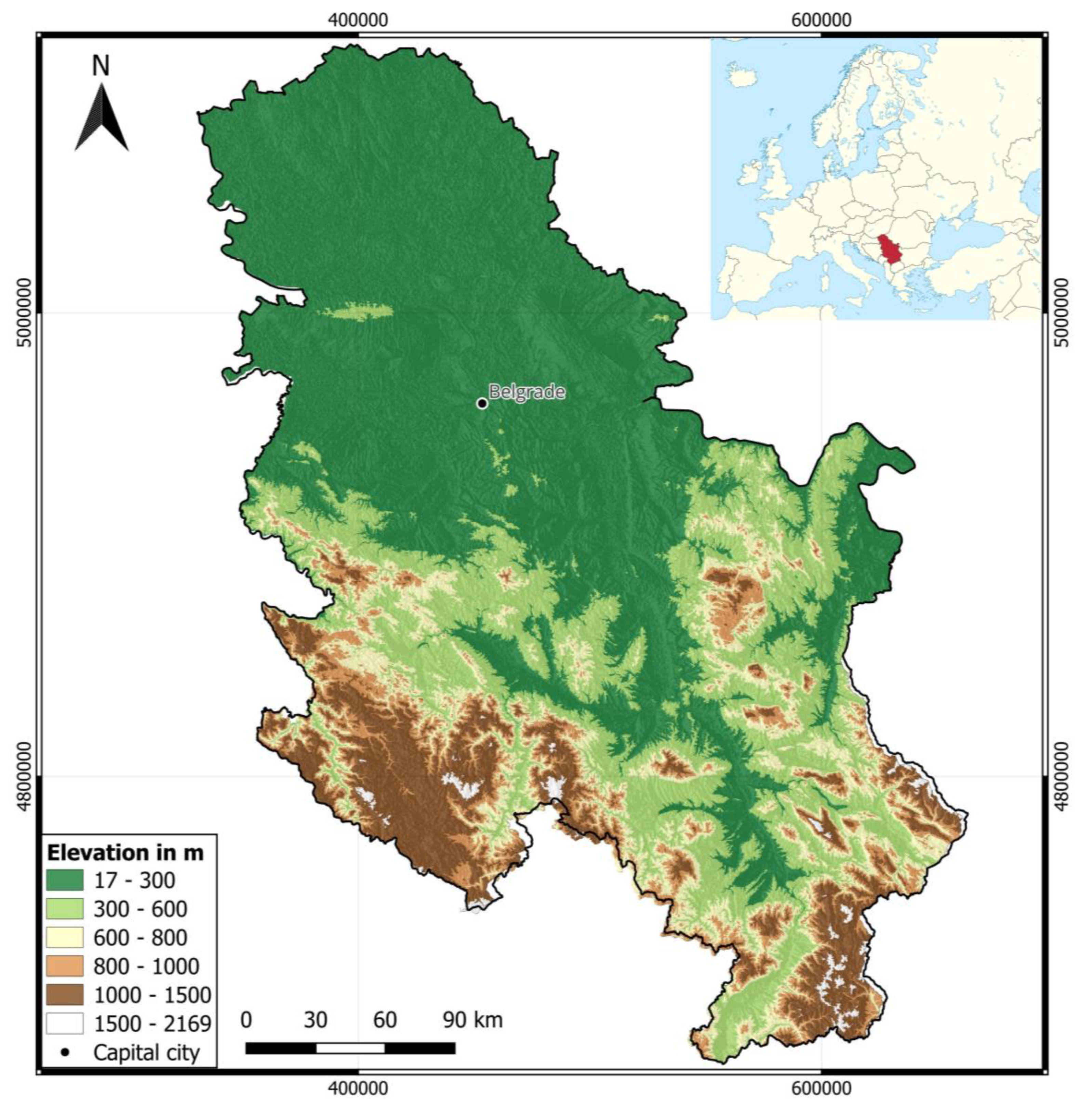
Figure 2.
Visualization of key term frequencies in respondents’ answers concerning the vulnerability of cultural heritage to natural disasters.
Figure 2.
Visualization of key term frequencies in respondents’ answers concerning the vulnerability of cultural heritage to natural disasters.
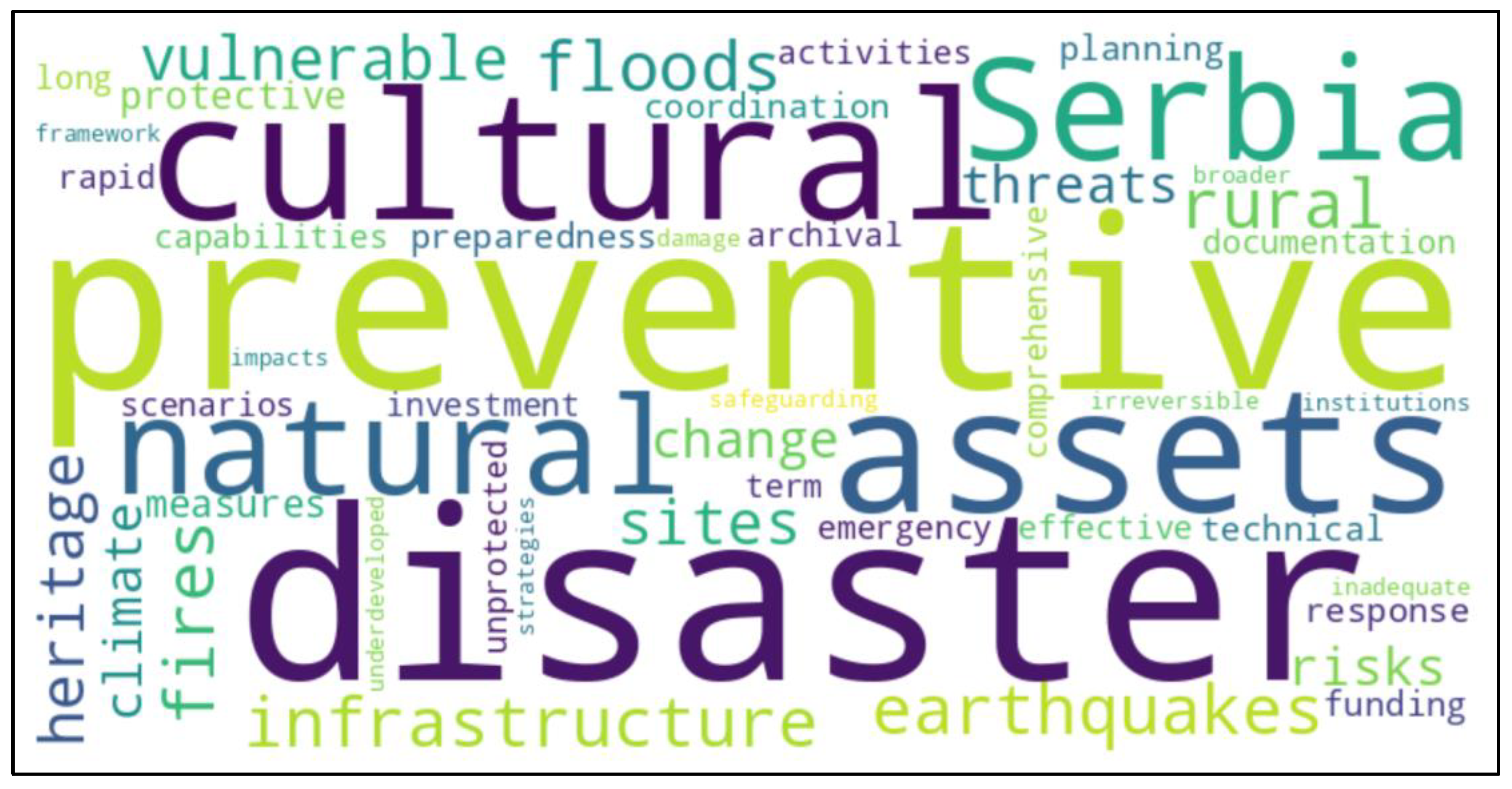
Figure 3.
Visualization of key term frequencies in respondents’ answers concerning domestic and international ratified regulations on the protection of cultural assets.
Figure 3.
Visualization of key term frequencies in respondents’ answers concerning domestic and international ratified regulations on the protection of cultural assets.
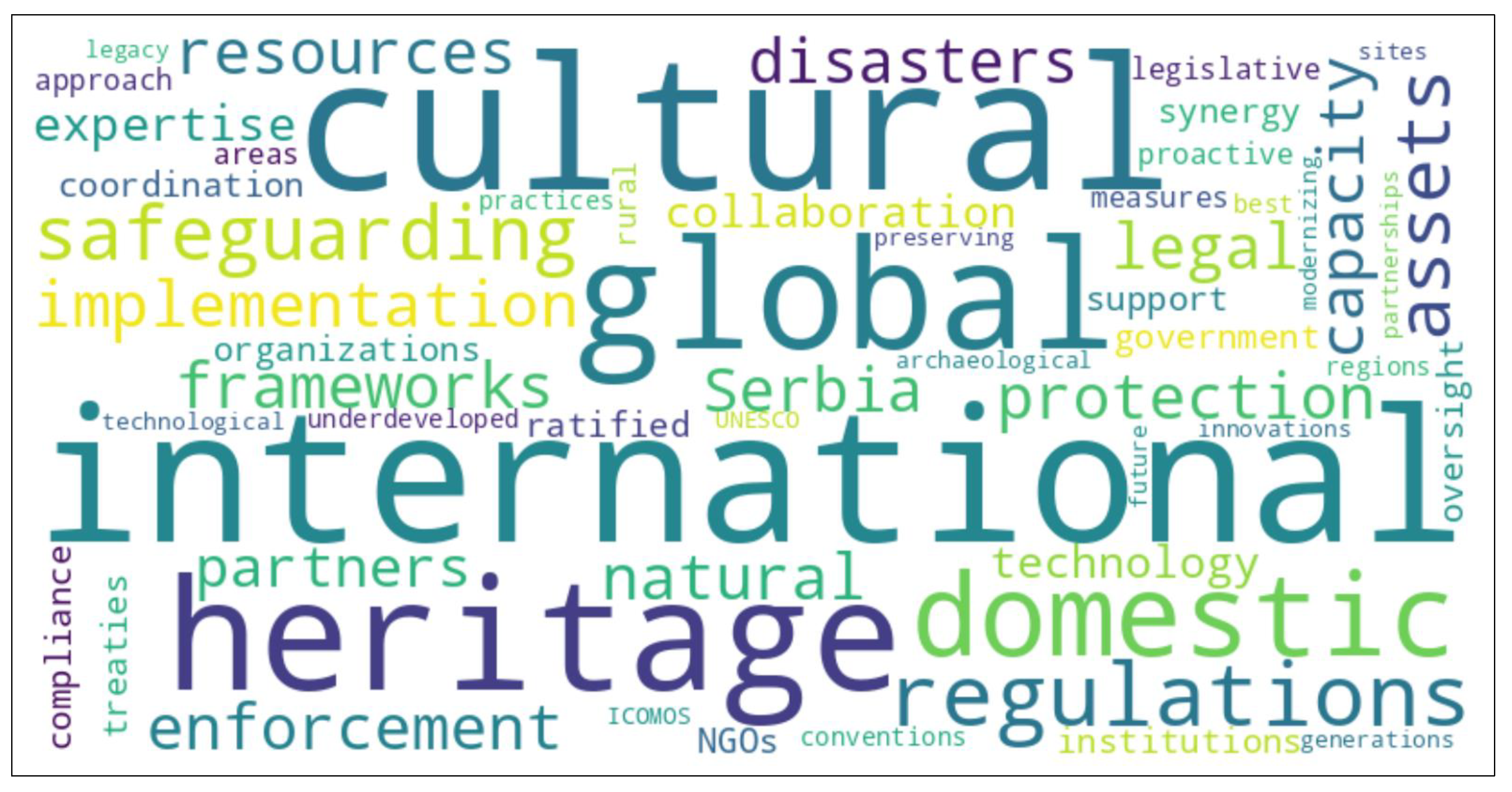
Figure 4.
Visualization of key term frequencies in respondents’ answers concerning the adequacy of the institutional framework for the protection of cultural property in the Republic of Serbia.
Figure 4.
Visualization of key term frequencies in respondents’ answers concerning the adequacy of the institutional framework for the protection of cultural property in the Republic of Serbia.
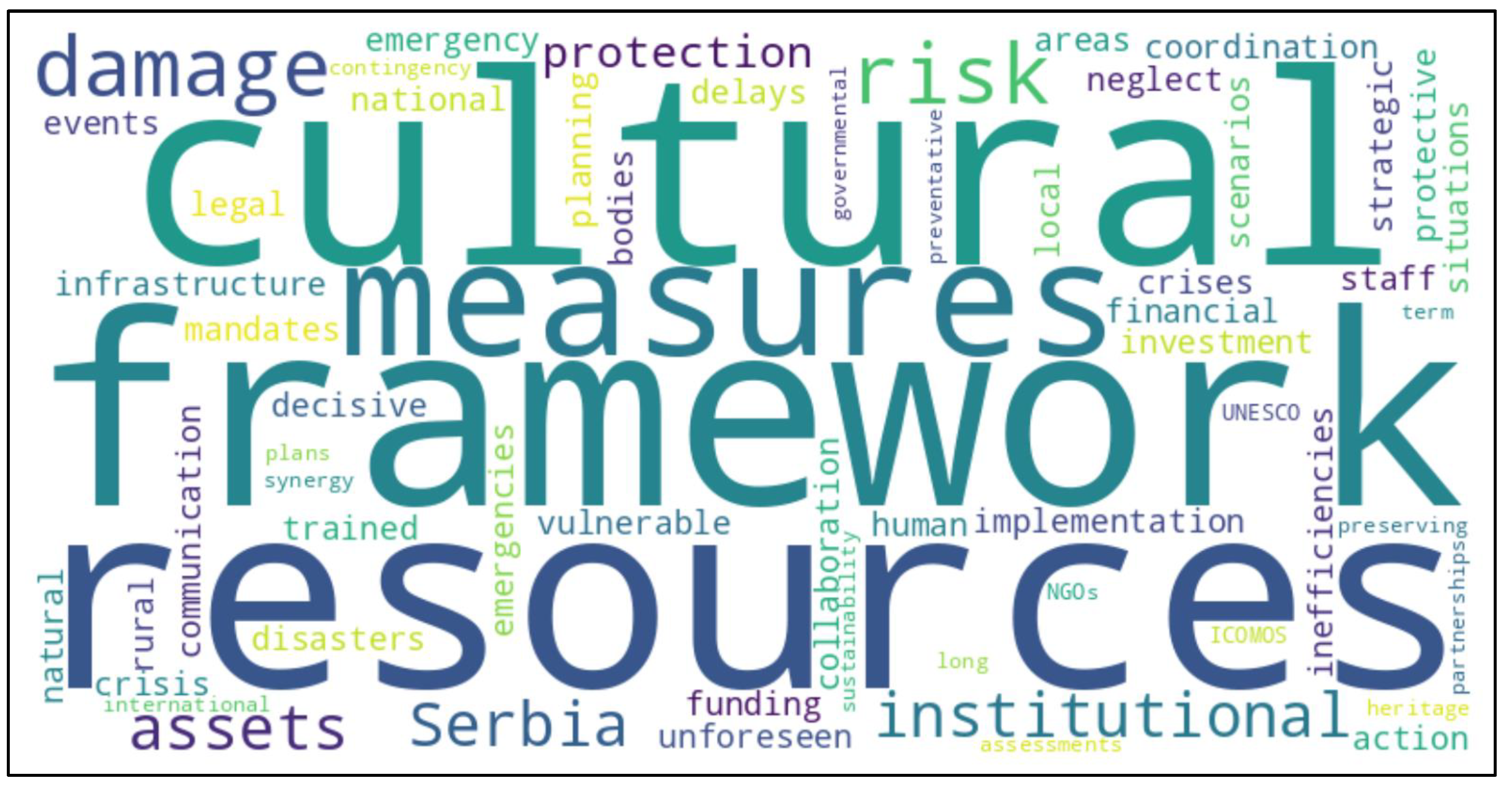
Figure 5.
Visualization of key term frequencies in respondents’ answers concerning the employee preparedness for responding to natural disasters.
Figure 5.
Visualization of key term frequencies in respondents’ answers concerning the employee preparedness for responding to natural disasters.
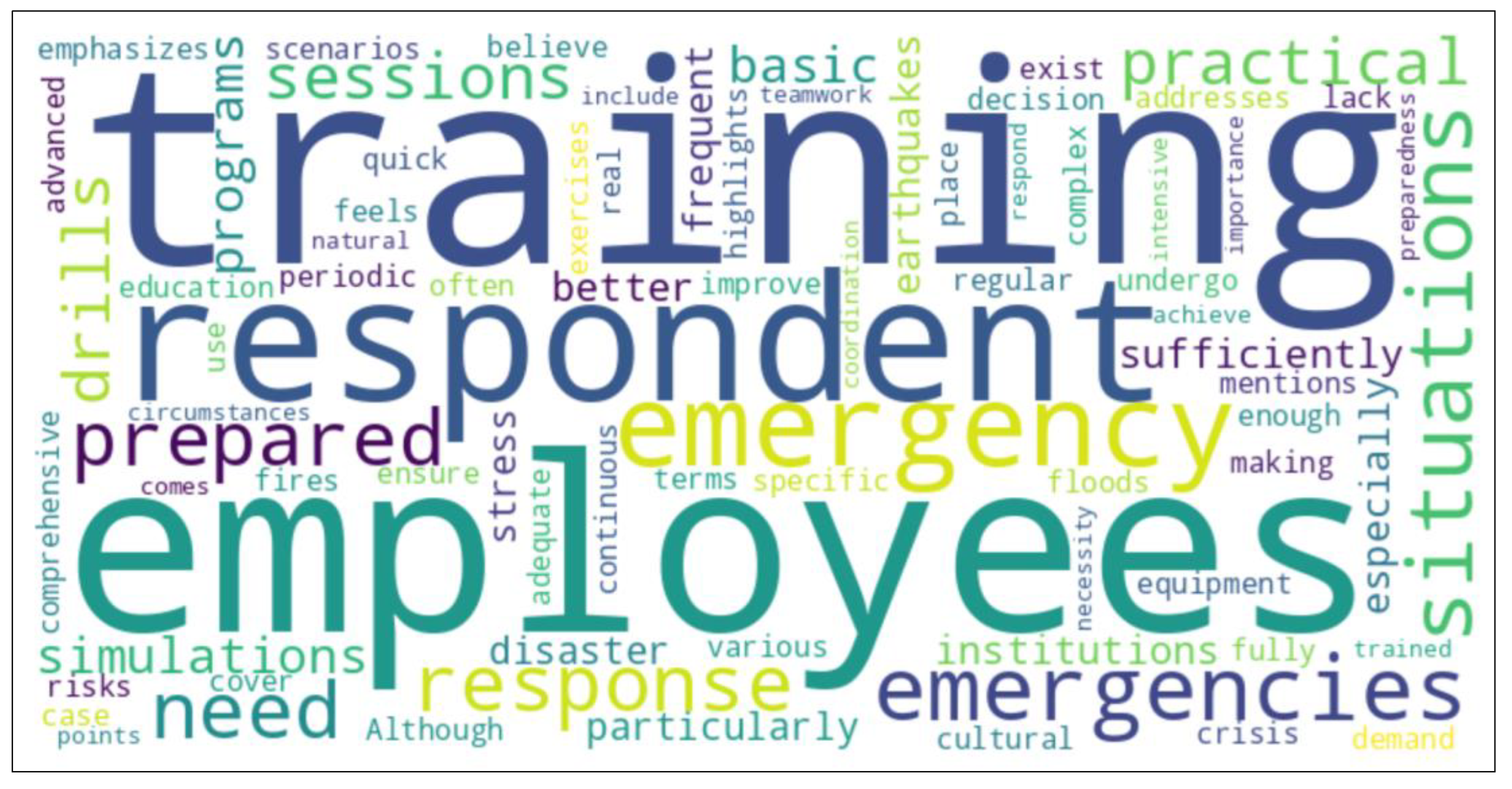
Figure 6.
Visualization of key term frequencies in respondents’ answers concerning technical resources of institutions for responding to disasters.
Figure 6.
Visualization of key term frequencies in respondents’ answers concerning technical resources of institutions for responding to disasters.
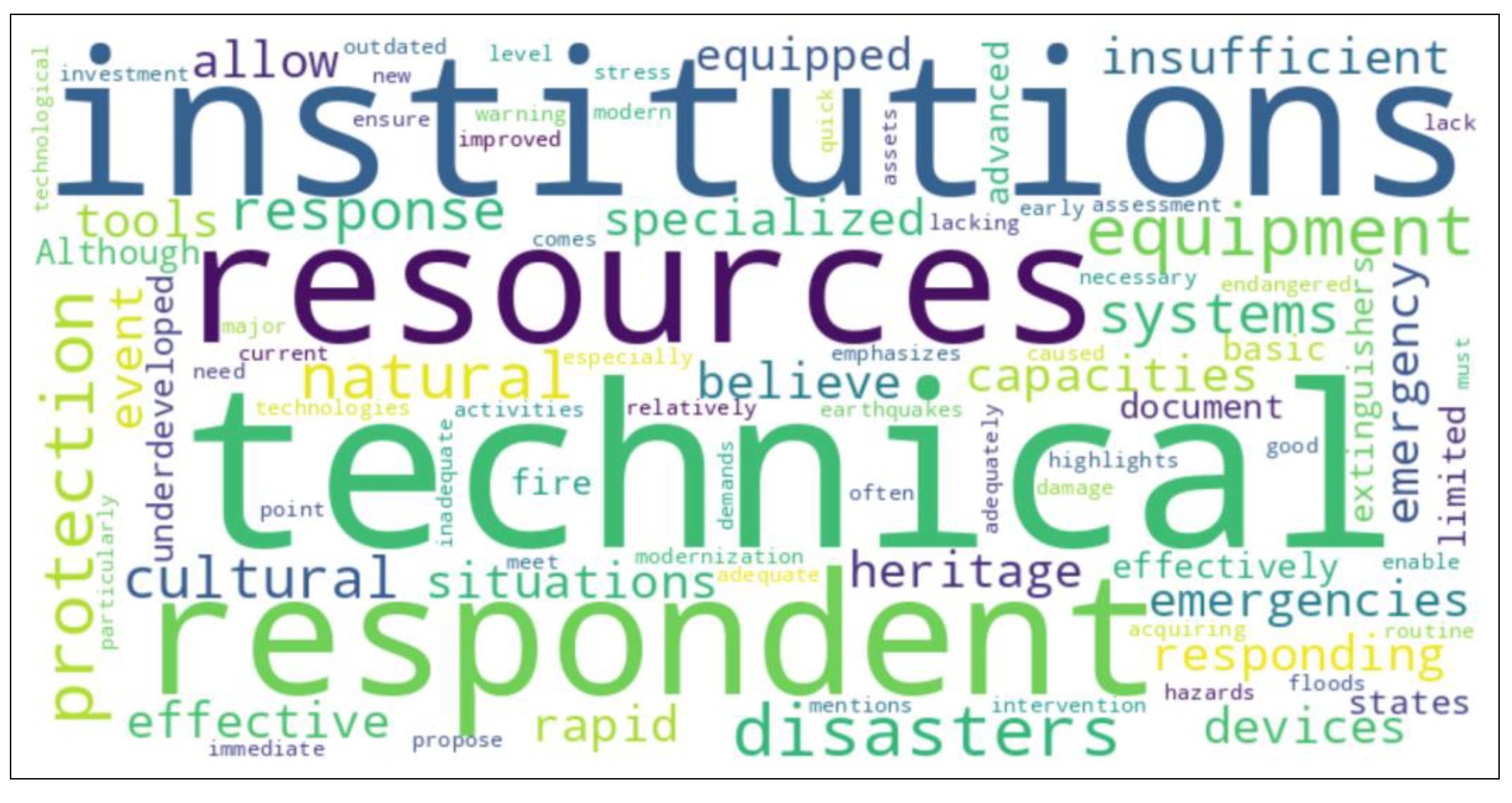
Figure 7.
Visualization of key term frequencies in respondents’ answers concerning perspectives on risk assessment following Article 15 of the Law on Risk Reduction and Emergency Management.
Figure 7.
Visualization of key term frequencies in respondents’ answers concerning perspectives on risk assessment following Article 15 of the Law on Risk Reduction and Emergency Management.
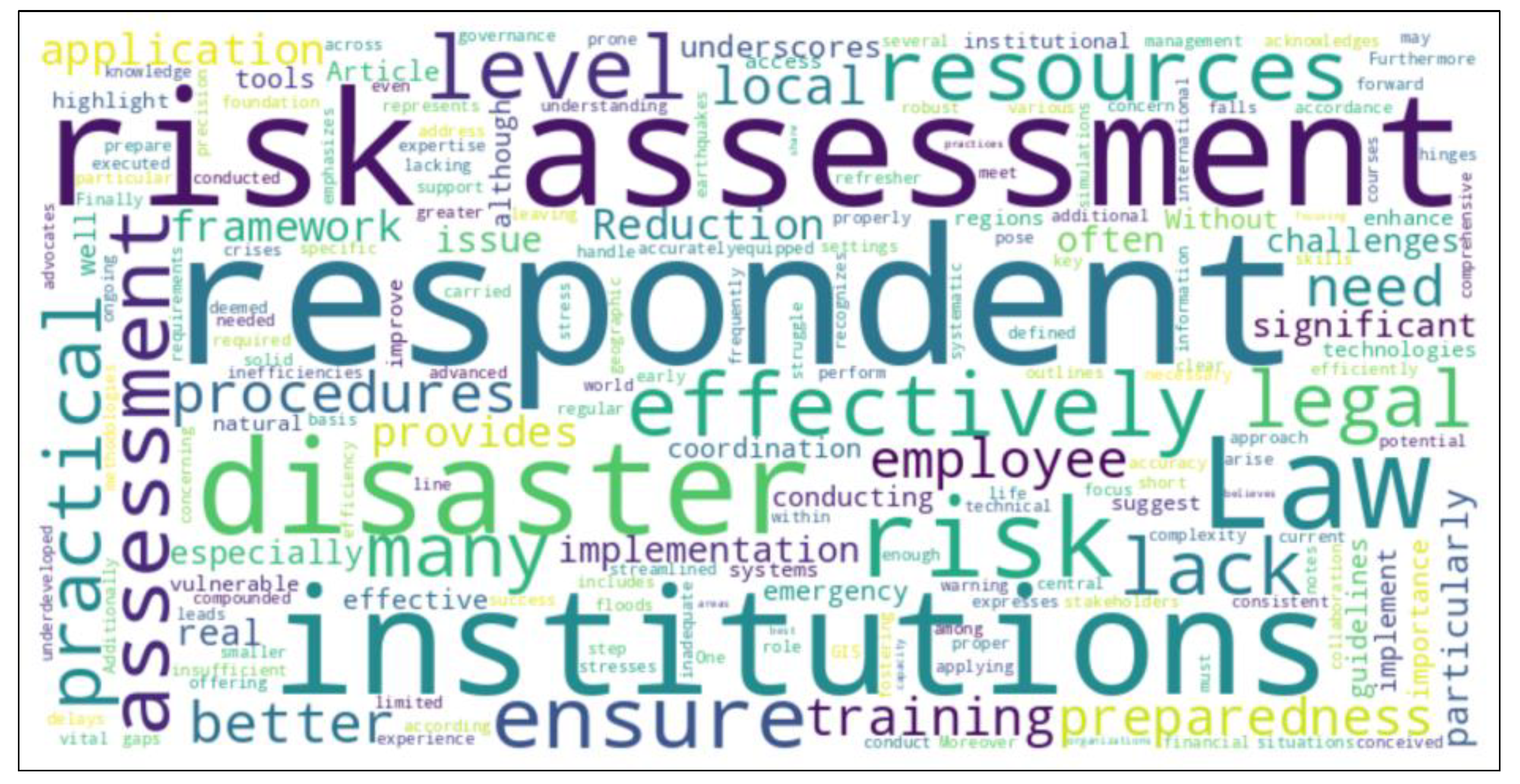
Figure 8.
Visualization of key term frequencies in respondents’ answers concerning perspectives on preventive measures by institutions to mitigate the impact of natural disasters on cultural heritage.
Figure 8.
Visualization of key term frequencies in respondents’ answers concerning perspectives on preventive measures by institutions to mitigate the impact of natural disasters on cultural heritage.
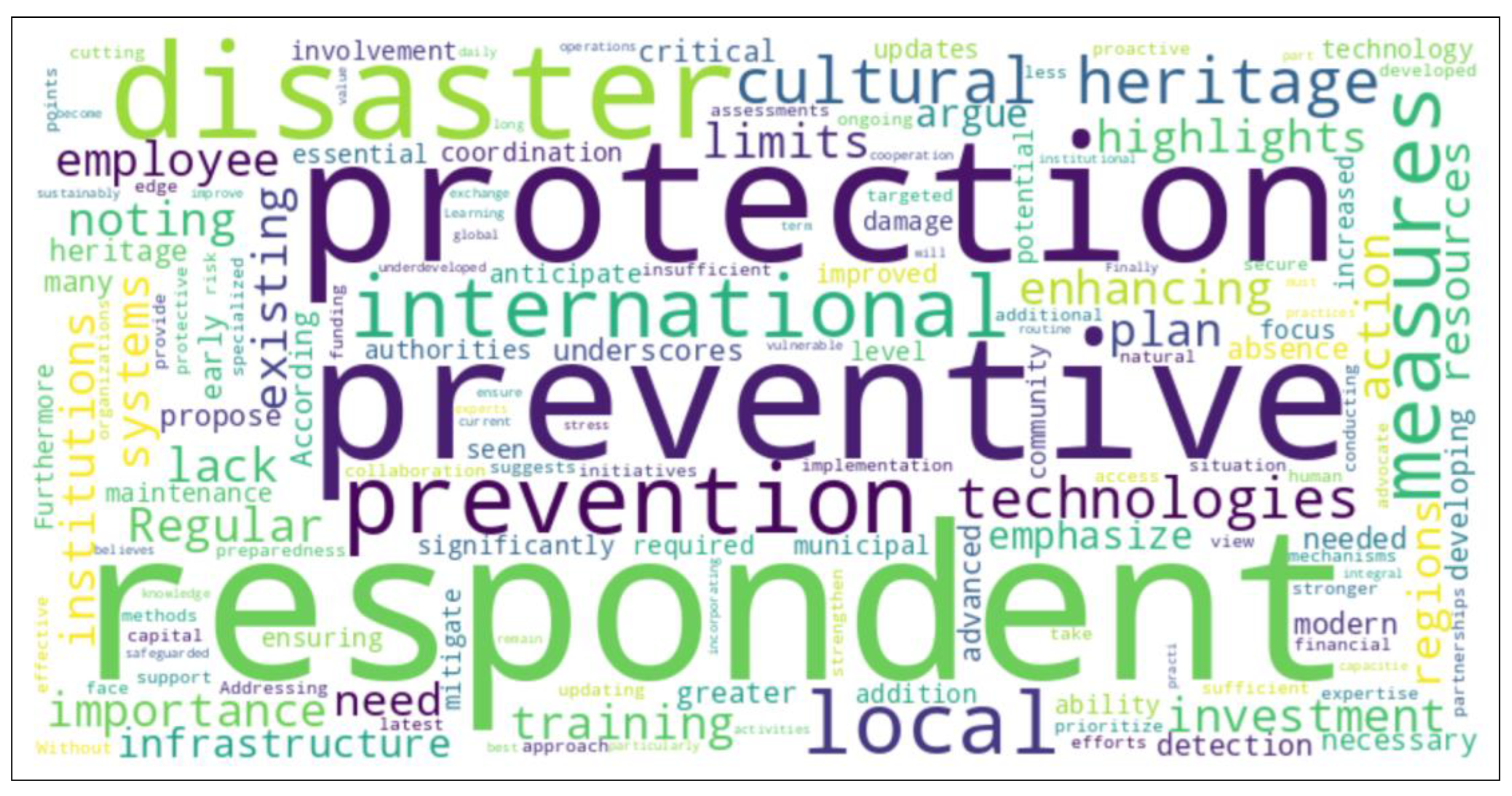
Figure 9.
Visualization of key term frequencies in respondents’ answers concerning response scenarios during and after natural disasters that threaten cultural heritage.
Figure 9.
Visualization of key term frequencies in respondents’ answers concerning response scenarios during and after natural disasters that threaten cultural heritage.
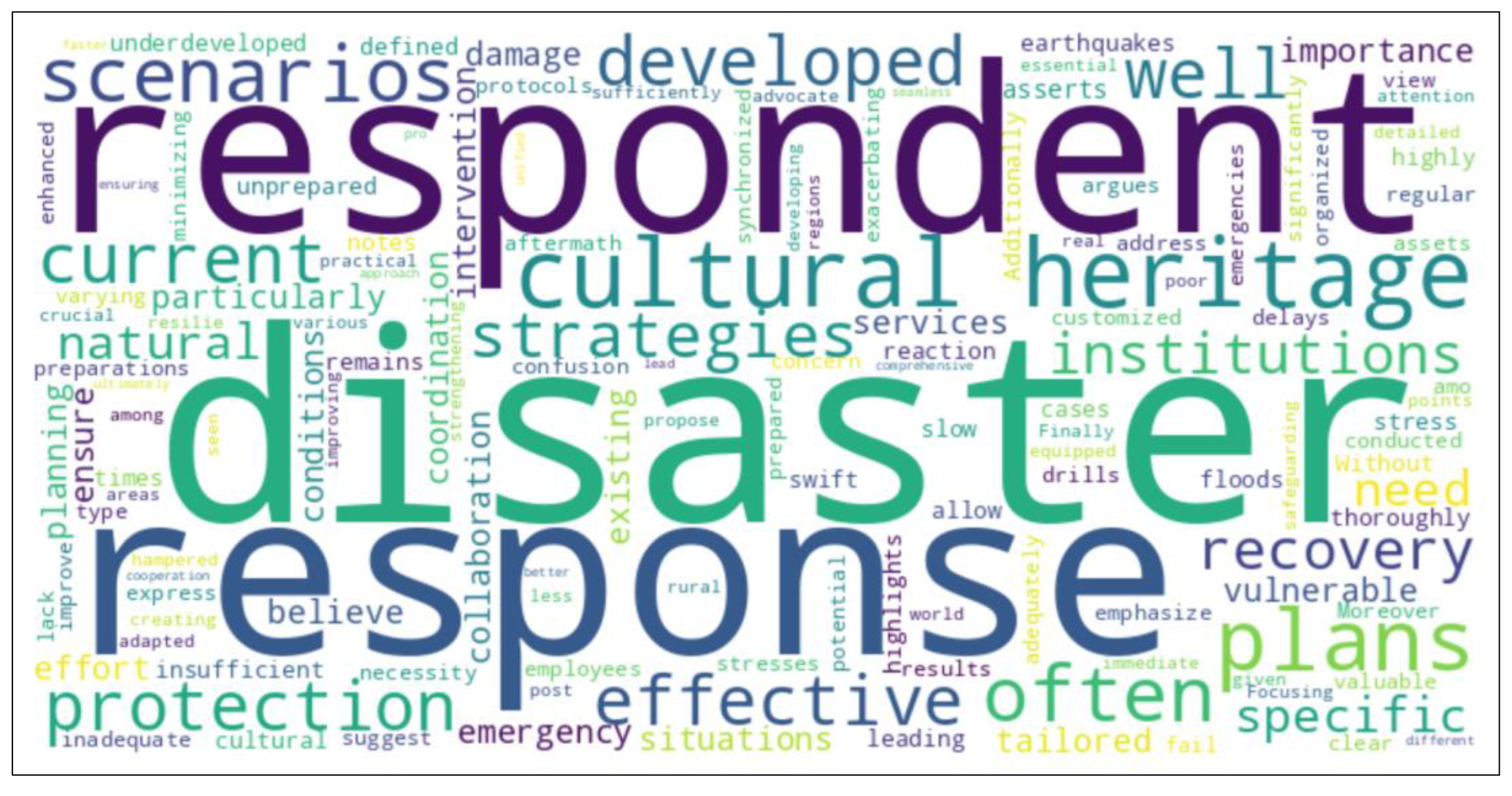
Figure 10.
Visualization of key term frequencies in respondents’ answers concerning cooperation with system forces involved in disaster risk reduction.
Figure 10.
Visualization of key term frequencies in respondents’ answers concerning cooperation with system forces involved in disaster risk reduction.
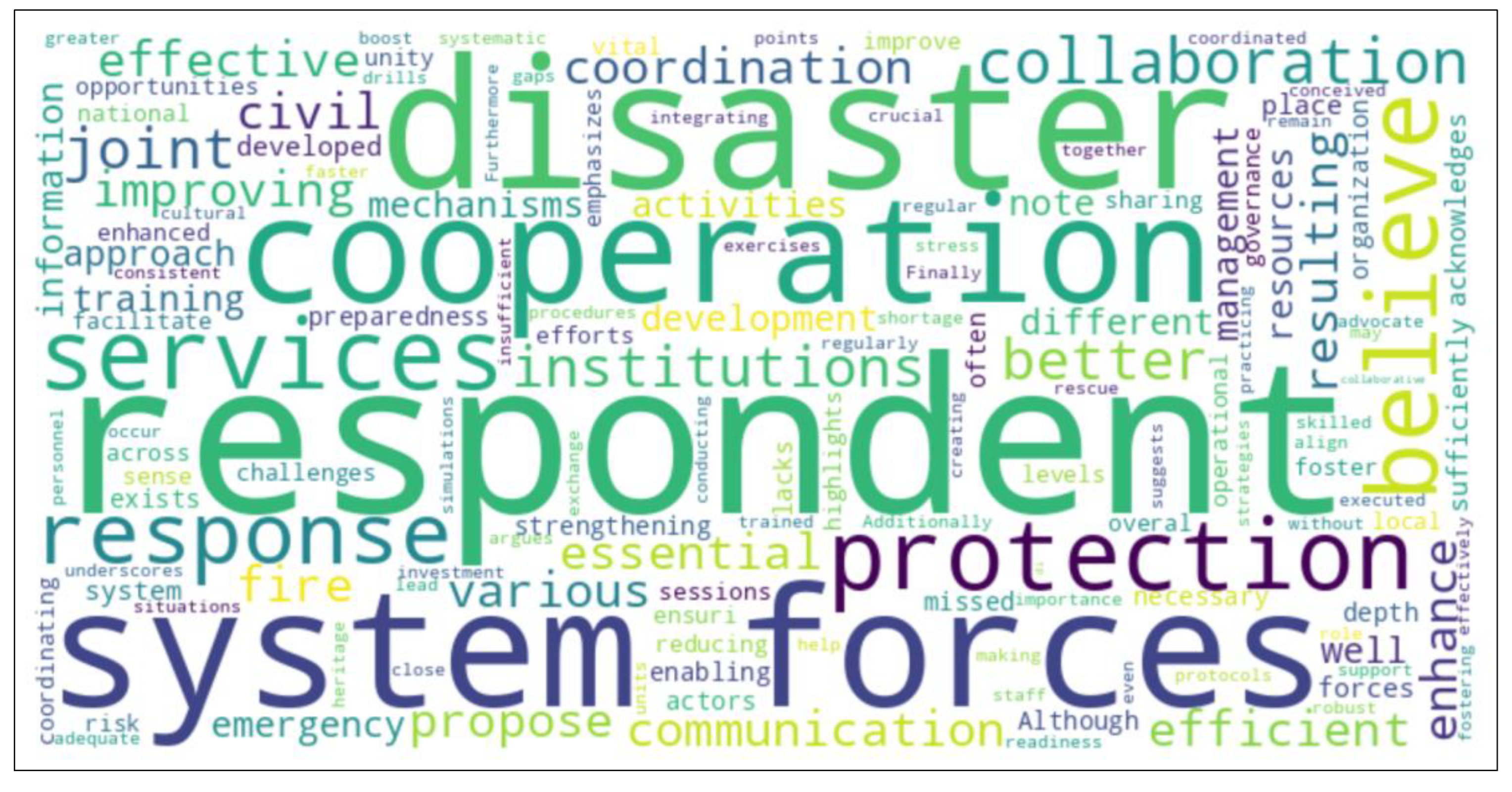
Figure 11.
Visualization of key term frequencies in respondents’ answers concerning cooperation with system forces involved in disaster risk reduction.
Figure 11.
Visualization of key term frequencies in respondents’ answers concerning cooperation with system forces involved in disaster risk reduction.
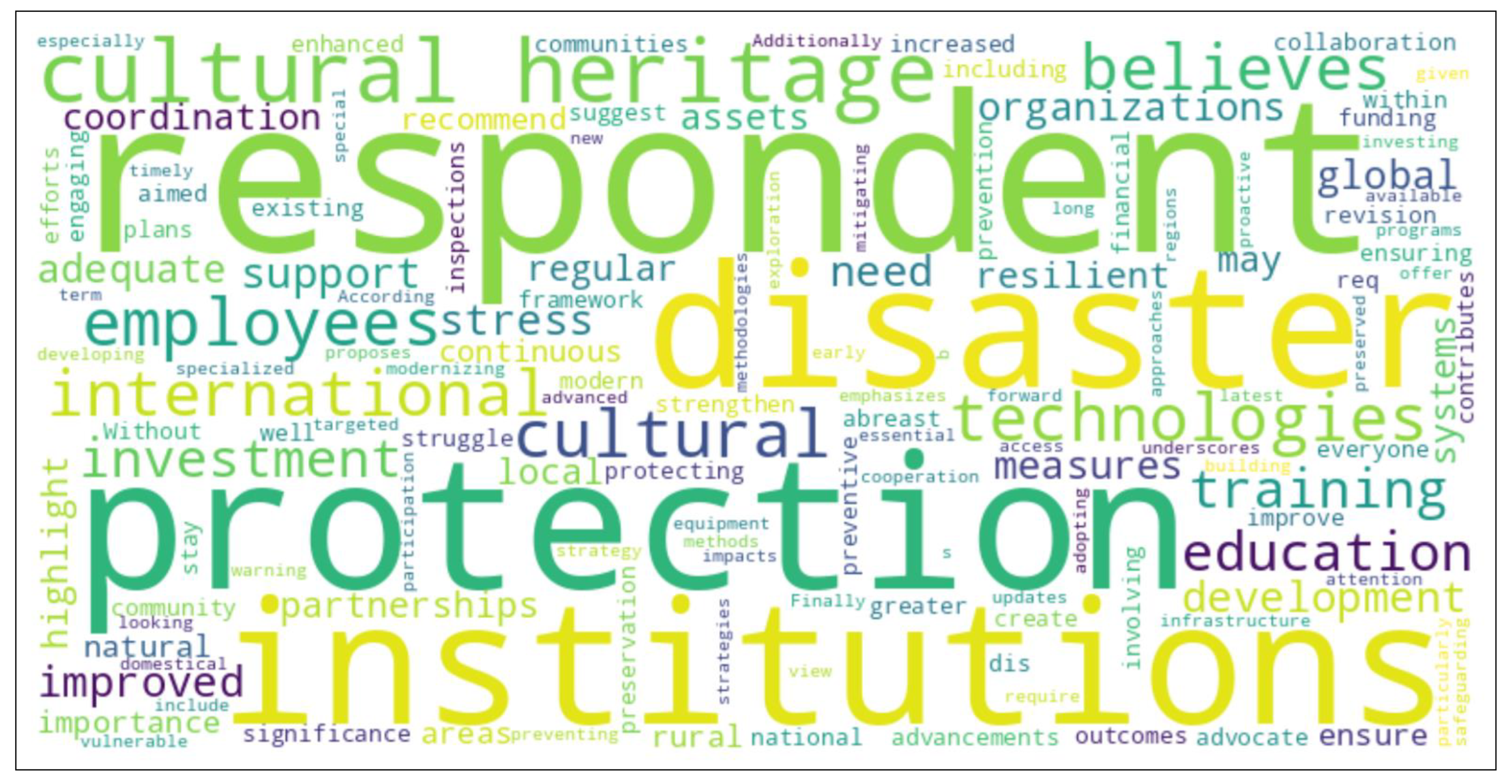

Table 1.
Detailed Profile of Interviewed Experts: Experience, Responsibilities, and Contributions to Cultural Heritage Protection and Disaster Preparedness.
Table 1.
Detailed Profile of Interviewed Experts: Experience, Responsibilities, and Contributions to Cultural Heritage Protection and Disaster Preparedness.
| ID | Organisation | Experience | Specific area of responsibility |
Involvement in Disaster Response | Contribution to Policy Development |
|---|---|---|---|---|---|
| 01 | Republic Institute for the Protection of Cultural Monuments | 15+ years | Responsible for the legal and technical protection of immovable cultural heritage, including historical buildings and archaeological sites. | Direct involvement in coordinating disaster response and recovery efforts for immovable heritage. | Provides critical input on policy development for heritage protection in disaster contexts. |
| 02 | National Museum of Serbia | 12 years | Safeguarding movable cultural heritage, including valuable artefacts and archaeological finds. | Engaged in emergency evacuation and recovery of valuable artefacts during disasters. | Advises on disaster risk reduction strategies for museum collections and cultural tourism. |
| 03 | National Library of Serbia | 10 years | Preservation of written cultural heritage, including manuscripts and historical documents. | Participates in disaster planning for the protection of valuable books and documents. | A key player in the development of digital archiving policies to ensure cultural continuity. |
| 04 | State Archives of Serbia | 18 years | Long-term preservation of governmental and historical documents, vulnerable to environmental hazards. | Involved in disaster preparedness drills and coordination with emergency services. | Contributes to the legal framework surrounding archive preservation in disasters. |
| 05 | Yugoslav Film Archive | 20 years | Preservation of Serbia’s audiovisual heritage, using both modern and traditional methods. | Coordinates with international film preservation bodies for disaster prevention. | Provides insight into modernizing Serbia’s audiovisual heritage policies and disaster risk reduction. |
Table 2.
Demographic and Socio-Economic Profiles of Interviewees.
| ID | Gender | Age | Education | Income | Interview Location | Interview Duration |
Employment Status | Marital Status |
|---|---|---|---|---|---|---|---|---|
| 01 | Male | 58 | Secondary education | 450€ | Nikšić | 37 minutes | Employed | Married |
| 02 | Female | 45 | Higher education | 600€ | Belgrade | 40 minutes | Employed | Married |
| 03 | Male | 39 | Higher education | 500€ | Novi Sad | 35 minutes | Employed | Single |
| 04 | Female | 52 | Secondary education | 420€ | Kragujevac | 38 minutes | Employed | Divorced |
| 05 | Male | 47 | Higher education | 550€ | Niš | 45 minutes | Employed | Married |
Table 3.
Pearson Correlation Matrix for Cultural Heritage ProtectionVariables.
| Questions | Q1 | Q2 | Q3 | Q4 | Q5 | Q6 | Q7 | Q8 | Q9 | Q10 |
|---|---|---|---|---|---|---|---|---|---|---|
| Q1: Risk Perception | 1.00 (0.00) | |||||||||
| Q2: Regulations | 0.32 (0.37) | 1.00 (0.00) | ||||||||
| Q3: Institutional Framework | 0.24 (0.50) | 0.52 (0.12) | 1.00 (0.00) | |||||||
| Q4: Employee Preparedness | 0.55 (0.10) | 0.38 (0.28) | 0.43 (0.21) | 1.00 (0.00) | ||||||
| Q5: Technical Resources | 0.11 (0.75) | 0.48 (0.16) | 0.39 (0.27) | 0.31 (0.39) | 1.00 (0.00) | |||||
| Q6: Risk Assessment | 0.07 (0.84) | 0.26 (0.46) | 0.35 (0.32) | 0.21 (0.56) | 0.29 (0.42) | 1.00 (0.00) | ||||
| Q7: Preventive Measures | 0.65 (0.04) | 0.39 (0.27) | 0.48 (0.16) | 0.47 (0.17) | 0.42 (0.22) | 0.20 (0.58) | 1.00 (0.00) | |||
| Q8: Scenarios Preparedness | 0.30 (0.40) | 0.41 (0.24) | 0.42 (0.22) | 0.40 (0.25) | 0.28 (0.45) | 0.41 (0.24) | 0.45 (0.19) | 1.00 (0.00) | ||
| Q9: Collaboration | 0.41 (0.24) | 0.51 (0.13) | 0.55 (0.10) | 0.61 (0.05)* | 0.65 (0.04)* | 0.32 (0.37) | 0.51 (0.13) | 0.51 (0.13) | 1.00 (0.00) | 0.55 (0.10) |
| Q10: Suggested Improvements | 0.25 (0.48) | 0.45 (0.19) | 0.50 (0.13) | 0.38 (0.29) | 0.50 (0.13) | 0.33 (0.35) | 0.60 (0.07)* | 0.49 (0.15) | 0.55 (0.10) | 1.00 (0.00) |
Table 4.
Analysis of perceived natural disaster risks and resource challenges affecting cultural heritage.
Table 4.
Analysis of perceived natural disaster risks and resource challenges affecting cultural heritage.
| Natural Disaster | Frequency (%) | Impact Level |
Preparedness Level |
Mitigation Measures |
| Earthquakes | 21.05 | High | Inadequate | Structural reinforcements |
| Floods | 21.05 | High | Moderate | Early warning systems |
| Fires | 10.53 | Medium | Inadequate | Fire-resistant materials |
| Climate Change | 10.53 | Growing | Inadequate | Climate adaptation plans |
| Preventive Measures | 10.53 | Essential | Low | More training required |
| Lack of Resources | 10.53 | Critical | N/A | Increase funding |
Table 5.
Key challenges in cultural heritage protection in Serbia.
| Factor | Importance (%) | Challenges Identified | Proposed Solutions |
|---|---|---|---|
| Legal Frameworks | 32.15 | Outdated or insufficient enforcement of laws; lack of alignment with international standards. | Update laws to include modern disaster risk management principles; improve enforcement mechanisms. |
| Institutional Coordination | 22.00 | Poor communication between cultural heritage institutions and disaster management agencies. | Establish inter-agency collaboration protocols and joint training exercises. |
| Technology Adoption | 20.00 | Limited use of advanced technologies such as GIS, drones, and digital archiving. | Invest in new technologies and provide training for staff on their use. |
| Lack of Resources | 25.00 | Insufficient funding and human resources to implement effective disaster risk management. | Secure additional funding through public-private partnerships and international grants. |
Table 6.
Content Analysis of Key Terms and Their Relevance to Disaster Risk Management in Cultural Heritage Protection.
Table 6.
Content Analysis of Key Terms and Their Relevance to Disaster Risk Management in Cultural Heritage Protection.
| Key Term | Frequency (%) | Relevance | Challenges Identified | Proposed Actions |
|---|---|---|---|---|
| Scenarios | 20.00 | Scenarios are vital for planning responses to different disaster types. | Lack of comprehensive scenario planning for all risks. | Develop detailed scenario-based planning exercises. |
| Response | 16.00 | Effective disaster response is critical for minimizing damage. | Inefficient response mechanisms and delayed actions. | Improve response protocols and training for quicker action. |
| Coordination | 12.00 | Coordination between agencies ensures a unified disaster response. | Poor communication between agencies and stakeholders. | Establish clear communication channels and inter-agency drills. |
| Plans | 12.00 | Preparedness plans outline essential actions during disasters. | Incomplete or outdated disaster plans in various regions. | Regularly update and test disaster plans. |
| Damage | 8.00 | Assessing and addressing damage is key to effective recovery. | Delayed damage assessments post-disaster. | Implement rapid damage assessment protocols with modern tools. |
Table 7.
Focus Areas in Cultural Heritage Protection in Serbia.
| Focus Area | Mentions (%) | Key Themes | Challenges Identified | Proposed Solutions |
|---|---|---|---|---|
| National Treasure | 50 | Cultural heritage is seen as vital to national identity. | Insufficient protection mechanisms at the national level. | Strengthen legal frameworks and raise public awareness. |
| Vulnerability | 30 | Emphasis on the fragility of heritage sites to disasters. | High susceptibility to natural and human-made disasters. | Implement risk assessment programs and preventive measures. |
| Global Cooperation | 20 | Importance of international collaboration to protect heritage. | Limited collaboration and shared resources across borders. | Foster international partnerships and exchange best practices. |
Table 8.
Qualitative analysis of interviewees’ views on the vulnerability of cultural assets to natural disasters.
Table 8.
Qualitative analysis of interviewees’ views on the vulnerability of cultural assets to natural disasters.
| Interviewee code | Key Segments |
|---|---|
| 01 | The interviewee notes that cultural assets in Serbia face considerable risks from natural disasters such as earthquakes, floods, and fires. Although Serbia is not categorized as a high-risk country for seismic activity, the dangers posed by floods and fires remain particularly significant, especially in rural regions where the infrastructure is often lacking. This lack of development leaves cultural heritage sites more vulnerable to the destructive forces of these disasters. |
| 02 | In discussing specific threats, the interviewee emphasizes that cultural assets, particularly archival documentation, are at risk not only from natural disasters but also from the broader impacts of climate change. They point out that climate change exacerbates the frequency and intensity of flooding events, further endangering vulnerable cultural assets. To address these challenges, the interviewee underscores the importance of developing and implementing comprehensive protective measures that include preventive activities, enhanced planning, and coordination at the institutional level. By doing so, Serbia can mitigate the effects of climate change and other disaster-related threats. |
| 03 | Earthquakes and fires, in particular, are cited as two of the most significant threats to the preservation of Serbia’s cultural heritage. The interviewee expresses concern that rural areas, where protective infrastructure is often underdeveloped or absent, are especially susceptible to these hazards. They stress that cultural heritage sites in these regions are exposed to heightened risks due to the lack of emergency response mechanisms and inadequate preparedness for disaster scenarios. |
| 04 | The interviewee further elaborates on the specific dangers posed by floods and earthquakes, which they believe represent the most severe risks to the safeguarding of cultural heritage. However, they also highlight a critical gap in Serbia’s current disaster response systems: the lack of sufficient resources, both in terms of funding and technical capabilities, to enable a rapid and effective response when disasters strike. This lack of preparedness, they argue, leaves many cultural assets unprotected and vulnerable to irreversible damage in the event of a disaster. |
| 05 | Overall, the interviewee believes that the current framework for protecting cultural heritage in Serbia from natural disasters is underdeveloped and inadequate. While the risks posed by earthquakes and floods are widely recognized, existing protection systems do not fully address the scale of these challenges. The interviewee advocates for a more robust approach, emphasizing the need for greater investment in infrastructure, improved coordination between institutions, and the implementation of long-term preventive strategies that can better shield cultural assets from future disasters. |
Table 9.
Qualitative analysis of respondents’ views on domestic and foreign ratified regulations regarding the protection of cultural assets.
Table 9.
Qualitative analysis of respondents’ views on domestic and foreign ratified regulations regarding the protection of cultural assets.
| Interviewee code | Key Segments |
|---|---|
| 01 | The respondent emphasizes the significance of both domestic and international regulations in safeguarding cultural assets but identifies a key issue in their implementation. While institutions may have strong legal frameworks in place, they often lack the resources and capacity necessary to effectively enforce protective measures. According to the respondent, this disconnect between regulation and practical application presents a critical challenge for preserving cultural heritage in Serbia, particularly in regions vulnerable to natural disasters. |
| 02 | They believe that while domestic regulations are generally well-designed, stronger collaboration with international organizations is crucial for improving cultural heritage protection. By aligning with global partners and tapping into their expertise and resources, Serbia could address the gaps in its current protective infrastructure. In addition to domestic regulations, the respondent highlights the importance of ratified foreign policies and international treaties, which they see as key for Serbia’s integration into global cultural heritage protection standards. This integration, in their view, would allow Serbia to gain greater access to international support, expertise, and technology—factors that are essential for advancing protective measures in response to growing challenges like climate change and more frequent natural disasters. |
| 03 | The respondent also underscores that, while the domestic legal framework for cultural asset protection is solid, its implementation could be significantly enhanced through better coordination between government institutions and non-governmental organizations (NGOs). The lack of synergy between these actors is seen as a major obstacle to effectively protecting cultural heritage, especially in response to natural disasters. Moreover, they stress the importance of international conventions ratified by Serbia, noting that these agreements offer crucial support in safeguarding cultural heritage on a global scale. According to the respondent, such conventions enable Serbia to benefit from international expertise and adopt best practices in heritage protection. |
| 04 | They further note that while domestic regulations provide a foundational level of protection for cultural assets, there is insufficient oversight in enforcing these regulations. This lack of enforcement, in the respondent’s opinion, undermines the effectiveness of the legal framework and leaves cultural heritage vulnerable, particularly in rural areas where institutional capacity and infrastructure are limited. They argue that additional legislative measures are necessary to strengthen protections against natural disasters, especially in underdeveloped regions. Enhancing oversight mechanisms, they suggest, would improve compliance with existing laws and encourage a more proactive approach to heritage preservation. |
| 05 | Finally, the respondent highlights the importance of international regulations, particularly in protecting archaeological sites and cultural assets of exceptional significance. While Serbia’s legal framework for heritage protection is generally strong, they believe that enhancing cooperation with international partners is essential for ensuring more effective protection. International partnerships, the respondent argues, bring valuable expertise and technological innovations that are critical for modernizing Serbia’s approach to cultural heritage protection. This is especially important for safeguarding assets that not only hold national value but are also recognized as part of the global cultural heritage. By strengthening ties with organizations such as UNESCO and ICOMOS, Serbia could significantly improve its ability to preserve its rich cultural legacy for future generations. |
Table 10.
Qualitative analysis of respondents’ views on the adequacy of the institutional framework for the protection of cultural assets in Serbia.
Table 10.
Qualitative analysis of respondents’ views on the adequacy of the institutional framework for the protection of cultural assets in Serbia.
| Interviewee code | Key Segments |
|---|---|
| 01 | The respondent believes that while the institutional framework for protecting cultural assets in Serbia is fundamentally sound, significant issues arise in its practical implementation. The main obstacles identified include a lack of financial resources and insufficiently trained staff. This lack of investment undermines institutions’ ability to fulfill their mandates, especially when it comes to enforcing protective measures. According to the respondent, strengthening institutional capacities is crucial for improving the overall system of cultural heritage protection. This is particularly important in rural areas, where infrastructure is weaker and resources even more limited, leaving cultural assets more vulnerable to neglect and damage. Without increased funding and human resources, the institutional framework, despite its theoretical soundness, will continue to fall short of its potential. |
| 02 | The respondent further emphasizes that, although the institutional framework technically provides the necessary mechanisms for cultural asset protection, its effectiveness is hindered by a lack of collaboration between institutions. They stress the need for stronger and more systematic cooperation between national and local bodies, arguing that improved communication and coordination could significantly enhance the efficiency of protective efforts. In particular, the respondent points to the need for better coordination between the National Institute for the Protection of Cultural Monuments and its regional branches, which are responsible for preserving cultural heritage. Currently, these institutions often work in isolation, leading to delays and inefficiencies in the implementation of protective measures. The respondent suggests that fostering a more integrated approach between national and regional bodies could lead to more coherent and timely interventions, especially when swift action is required to prevent damage to cultural assets. |
| 03 | In the respondent’s view, while the current institutional framework is adequate in scope, it lacks the necessary flexibility to deal with emergencies. This rigidity becomes especially problematic in situations that demand urgent interventions, such as natural disasters. The respondent notes that although laws exist to protect cultural heritage, they do not fully account for the unique challenges posed by disasters and unforeseen events. As such, they argue that the legal framework should be amended to include specific provisions for managing disasters and protecting cultural assets during natural disasters. These additional regulations would enable institutions to act more decisively and efficiently in crisis scenarios, reducing the risk of irreversible damage to cultural heritage. |
| 04 | The respondent also highlights serious deficiencies in the practical application of protective measures, despite the institutional framework being theoretically adequate. They argue that many of these issues stem from poor resource management and a lack of strategic planning, particularly when it comes to preparing for natural disasters. The respondent suggests that more proactive planning and a more efficient allocation of resources are needed to ensure cultural heritage is adequately protected. For example, developing contingency plans and conducting regular risk assessments could help institutions prepare more effectively for potential disasters. Additionally, they emphasize that more focus should be placed on long-term sustainability in the management of cultural assets, ensuring that protective measures are not only reactive but also preventative. |
| 05 | Finally, the respondent underscores the importance of a robust institutional framework for cultural heritage protection but also points to a lack of cooperation between the relevant institutions and other organizations involved in heritage conservation. They argue that while the existing framework is theoretically sufficient, it suffers from poor implementation and a lack of synergy between governmental institutions, non-governmental organizations (NGOs), and international bodies. The respondent believes that fostering partnerships and collaboration across different sectors is crucial for improving the effectiveness of heritage protection efforts. Closer cooperation with international organizations like UNESCO and ICOMOS, as well as local NGOs, could provide Serbia with access to additional resources, expertise, and best practices, ensuring that cultural assets are preserved and protected to a higher standard. |
Table 11.
Qualitative analysis of respondents’ perspectives on employee preparedness for responding to natural disasters.
Table 11.
Qualitative analysis of respondents’ perspectives on employee preparedness for responding to natural disasters.
| Interviewee code | Key Segments |
|---|---|
| 01 | The respondent mentions that emergency response training sessions are regular, but there is a need for more practical drills and simulations. Although basic training programs exist, employees are often not sufficiently prepared for emergencies, especially in situations that demand quick decision-making. |
| 02 | The respondent emphasizes that employees in cultural institutions undergo periodic training on how to use equipment in case of emergencies. However, they believe there is a need for more advanced training that addresses specific risks such as fires and earthquakes to ensure employees are better prepared for real disasters. |
| 03 | The respondent feels that while emergency response training is in place, it is not frequent or comprehensive enough. There is a need to improve the training programs, particularly in terms of response to earthquakes and floods, so that employees can be fully prepared for various disaster scenarios. |
| 04 | The respondent highlights that the training for employees is adequate for basic situations, but there is a lack of continuous education and exercises that cover more complex emergency circumstances. They particularly stress the importance of teamwork and coordination with other institutions during emergencies. |
| 05 | The respondent points out that employees are not sufficiently trained to respond to emergencies, especially when it comes to natural disasters. They stress the necessity for more frequent and intensive training sessions that include practical drills and simulations to achieve better preparedness for disasters. |
Table 12.
Qualitative analysis of respondents’ perspectives on the technical resources of institutions for responding to disasters.
Table 12.
Qualitative analysis of respondents’ perspectives on the technical resources of institutions for responding to disasters.
| Interviewee code | Key Segments |
|---|---|
| 01 | The respondent states that the technical resources in institutions are limited and underdeveloped for effectively responding to disasters. Although there is basic equipment, such as fire extinguishers and document protection systems, more advanced technologies and specialized tools for quick response are lacking. |
| 02 | The respondent emphasizes that the equipment in institutions is often outdated and that there are insufficient resources for acquiring new devices. They believe that the current technical capacities are inadequate to meet the demands in the event of major natural disasters, such as floods and earthquakes, and that investment in the modernization of protection systems is necessary. |
| 03 | The respondent highlights that the technical equipment of institutions is relatively good for routine activities, but that there is a lack of resources to enable effective intervention during emergencies. They particularly stress the need for equipment that would allow for rapid damage assessment and the protection of endangered cultural heritage in the event of disasters. |
| 04 | The respondent believes that the technical resources of institutions for responding to emergencies are insufficient, especially when it comes to natural disasters. They point out that institutions are not adequately equipped for immediate response and that the technical capacities must be improved to ensure effective protection of cultural heritage in disasters caused by both natural and technical-technological hazards. |
| 05 | The respondent mentions that the technical resources in institutions are not at a level that would allow for adequate protection of cultural assets in disasters. They propose that institutions should be equipped with modern devices and equipment, such as early warning systems and specialized tools for rapid response to natural disasters. |
Table 13.
Qualitative analysis of respondents’ perspectives on risk assessment under Article 15 of the Law on Risk Reduction and Emergency Management.
Table 13.
Qualitative analysis of respondents’ perspectives on risk assessment under Article 15 of the Law on Risk Reduction and Emergency Management.
| Interviewee code | Key Segments |
|---|---|
| 01 | The respondent acknowledges that the Law on Disaster Risk Reduction represents a vital step forward but expresses concern over the insufficient practical application of risk assessments within institutions. While the legal framework provides a solid foundation, its implementation often falls short, particularly in real-world settings. Many institutions, according to the respondent, lack a clear understanding of how to perform these assessments effectively. This issue is compounded by the complexity of the procedures, which can pose significant challenges, especially for smaller institutions with limited resources. Furthermore, the respondent underscores the need for better coordination among various stakeholders to ensure a more streamlined and effective approach across all levels of governance. |
| 02 | The respondent highlights the importance of conducting risk assessments in line with Article 15 of the Law, which outlines specific guidelines for risk management. However, they stress the need for ongoing and systematic employee training to ensure that these assessments are carried out accurately and efficiently. The current training levels are deemed inadequate, with many employees lacking the necessary skills and knowledge to implement the procedures properly. To address this, the respondent suggests that institutions focus on offering regular refresher courses and simulations of real-life disasters, which would better prepare employees to handle potential disasters. Without consistent training and practical experience, even the most well-defined risk assessment procedures may not be executed effectively. |
| 03 | Additionally, the respondent notes that although Article 15 provides a robust legal basis for risk assessments, several challenges arise in applying these guidelines at the local level. In particular, local institutions often lack the required tools, technologies, and expertise to conduct comprehensive assessments, which is especially concerning in disaster-prone regions such as those vulnerable to floods or earthquakes. The respondent emphasizes that having a legal framework is not enough; local institutions must be equipped with the resources needed to implement the law effectively. This includes access to advanced methodologies and technologies that enhance the precision of risk assessments. |
| 04 | While the respondent recognizes the importance of conducting risk assessments per the Law to ensure preparedness for natural disasters, they also highlight significant gaps in the practical application of these assessments. One key issue is the lack of proper coordination between institutions, which frequently leads to inefficiencies and delays. Moreover, the respondent stresses the need for additional financial and technical resources to ensure that risk assessments are conducted effectively, particularly in underdeveloped regions. Without such support, many institutions struggle to meet the requirements of the law, leaving them vulnerable to disaster risks. |
| 05 | Finally, the respondent underscores the central role of risk assessment in emergency preparedness. Although the Law on Disaster Risk Reduction is well-conceived, its success hinges on its effective implementation at the institutional level. The respondent advocates for better access to tools and resources, such as early warning systems and geographic information systems (GIS), which can improve the accuracy and efficiency of risk assessments. They also suggest fostering greater collaboration with international organizations to share best practices and enhance institutional capacity. By focusing on these areas, the respondent believes that Serbia can significantly improve its preparedness for both natural and technological disasters. |
Table 14.
Qualitative analysis of respondents’ perspectives on preventive measures by institutions to mitigate the impact of natural disasters on cultural heritage.
Table 14.
Qualitative analysis of respondents’ perspectives on preventive measures by institutions to mitigate the impact of natural disasters on cultural heritage.
| Interviewee code | Key Segments |
|---|---|
| 01 | The respondent underscores the critical importance of preventive measures for the protection of cultural heritage while noting that many institutions lack the necessary modern technologies for early detection and disaster prevention. They propose that greater investment is needed in developing protection systems and enhancing employee training. According to the respondent, the absence of advanced technology significantly limits the ability to anticipate and mitigate potential damage. In addition to acquiring modern equipment, they emphasize that continuous education on new technologies and methodologies is equally vital for improving institutional preparedness. |
| 02 | Furthermore, the respondent argues that more preventive actions are required at the local level, with a focus on improved coordination with municipal authorities and increased community involvement in heritage protection. Regular maintenance and updates to existing protection plans are seen as essential for ensuring preparedness in the face of natural disasters. The respondent suggests that local institutions should take a proactive approach by conducting regular risk assessments and updating action plans based on evolving environmental conditions, which would enhance resilience and reduce the potential impact of disasters on cultural assets. |
| 03 | The respondent highlights the need to prioritize preventive measures for cultural heritage, noting that a lack of sufficient financial resources limits the effective implementation of these initiatives. They advocate for stronger collaboration with international organizations to secure additional support and resources for disaster prevention efforts. Such international partnerships, in their view, could provide access to cutting-edge technologies, specialized expertise, and funding that would otherwise be unavailable to local institutions. This collaboration is seen as key to improving disaster prevention strategies. |
| 04 | Addressing the situation in less developed regions, the respondent points out that existing prevention systems are insufficient and highlights the need to strengthen local infrastructure and protective mechanisms. They emphasize the importance of ongoing training for employees on the latest disaster prevention methods and technologies. Without targeted investment in both infrastructure and human capital, they argue that underdeveloped regions will remain particularly vulnerable. Enhancing local capacities is viewed as crucial for establishing a more uniform and effective national disaster prevention framework. |
| 05 | Finally, the respondent emphasizes that preventive measures must become an integral part of daily institutional operations to ensure the long-term protection of cultural heritage. They stress the value of international cooperation and knowledge exchange with global experts to improve current disaster prevention measures. By incorporating preventive practices into routine activities, the respondent believes that cultural heritage can be more sustainably safeguarded. Learning from international best practices, they suggest, could provide valuable innovations that could be adapted to local contexts, further strengthening resilience against disasters. |
Table 15.
Qualitative analysis of respondents’ perspectives on response scenarios during and after natural disasters that threaten cultural heritage.
Table 15.
Qualitative analysis of respondents’ perspectives on response scenarios during and after natural disasters that threaten cultural heritage.
| Interviewee code | Key Segments |
|---|---|
| 01 | The respondent asserts that current response scenarios for natural disasters are underdeveloped, leading to slow reaction times and insufficient protection of cultural heritage. They stress the need for specific plans that would allow for swift and effective interventions, particularly in cases of floods and earthquakes. Without well-defined and thoroughly developed response strategies, the respondent believes that cultural heritage remains highly vulnerable, as institutions are often unprepared to respond quickly in emergencies. |
| 02 | Additionally, the respondent highlights the importance of planning tailored response scenarios for disaster situations but notes that existing preparations are inadequate. They emphasize the necessity of clear protocols and enhanced coordination between institutions to ensure the protection of cultural heritage during emergencies. In their view, the lack of collaboration often results in confusion and delays, exacerbating damage to valuable cultural assets. A well-organized and synchronized effort among institutions is viewed as critical for improving disaster response. |
| 03 | The respondent also argues that current disaster response scenarios often fail to address the specific needs of cultural heritage. They suggest that customized plans should be developed for each type of disaster and that regular drills should be conducted to ensure employees are adequately prepared for disasters. Tailored response strategies, they believe, would significantly improve the protection of cultural heritage under varying disaster conditions, minimizing potential damage. |
| 04 | Moreover, the respondent stresses the importance of having well-developed recovery plans for the aftermath of natural disasters, but they express concern that existing plans are not sufficiently adapted to real-world conditions. They propose that more attention should be given to creating practical and detailed recovery strategies, particularly in rural areas, which are often more vulnerable and less equipped for disaster recovery. Focusing on these regions is seen as essential to strengthening resilience and reducing long-term damage to cultural heritage. |
| 05 | Finally, the respondent points out that effective planning for both immediate and post-disaster scenarios is crucial for safeguarding cultural heritage, but current efforts are hampered by poor coordination among various services. They advocate for improving collaboration and developing comprehensive emergency intervention plans. A more unified approach, with seamless cooperation between different institutions and services, would lead to faster and more effective responses, ultimately ensuring better protection of cultural heritage during disasters. |
Table 16.
Qualitative analysis of respondents’ perspectives on cooperation with system forces involved in disaster risk reduction and emergency management.
Table 16.
Qualitative analysis of respondents’ perspectives on cooperation with system forces involved in disaster risk reduction and emergency management.
| Interviewee code | Key Segments |
|---|---|
| 01 | The respondent acknowledges that while cooperation with system forces, such as civil protection and fire services, is in place, it is not sufficiently developed. They believe that strengthening coordination and communication between various actors is essential for improving preparedness and enabling a more efficient response to disasters. Although collaboration exists, the respondent notes that it often lacks the necessary depth and organization, resulting in missed opportunities to enhance overall disaster management. Strengthening these connections could significantly improve the ability of institutions to respond effectively to emergencies. |
| 02 | The respondent emphasizes that effective cooperation with system forces is vital for reducing disaster risk, but highlights challenges in coordinating efforts between local and national institutions. They propose the development of enhanced mechanisms for information sharing, as well as joint training sessions, to improve operational collaboration during disasters. This approach would not only facilitate better communication but also foster a sense of unity across different levels of governance, ensuring a more cohesive and synchronized response in times of crisis. |
| 03 | Additionally, the respondent believes that collaboration with system forces, such as fire and rescue units, should be both regular and systematic. They stress the importance of integrating the activities of various services through consistent drills and simulations to boost readiness for disasters. By practicing together regularly, the respondent argues, different services can better align their procedures and protocols, resulting in faster and more coordinated responses when disasters occur, thus minimizing potential damage. |
| 04 | Furthermore, the respondent points out that while cooperation with system forces is essential for effective disaster management, there is a shortage of resources and trained personnel. They advocate for greater investment in training and the development of joint activities with civil protection and other forces to enhance the protection of cultural heritage. The respondent believes that without adequate resources and skilled staff, even well-conceived strategies may not be effectively executed, making capacity-building initiatives a priority. |
| 05 | Finally, the respondent underscores the crucial role of cooperation with system forces in emergency management, but they also note that coordination and support between institutions remain insufficient. They propose creating a more robust system for information exchange and conducting joint exercises, which would lead to better disaster response. The respondent suggests that improving these mechanisms would help close gaps between institutions, fostering a more collaborative and efficient approach to disaster management, ultimately resulting in better protection of both human life and cultural heritage. |
Table 17.
Qualitative analysis of respondents’ perspectives on measures to improve the protection of cultural heritage from the consequences of natural disasters in the Republic of Serbia.
Table 17.
Qualitative analysis of respondents’ perspectives on measures to improve the protection of cultural heritage from the consequences of natural disasters in the Republic of Serbia.
| Interviewee code | Key Segments |
|---|---|
| 01 | The respondent recommends increased investment in the education and training of employees within cultural institutions, as well as the development of modern technologies aimed at protecting cultural heritage. They stress the need for greater financial support and improved collaboration with international organizations to strengthen disaster protection measures. Without adequate funding and global partnerships, the respondent believes institutions may struggle to stay abreast of the advancements required for the effective safeguarding of cultural heritage. |
| 02 | The respondent highlights the significance of preventive measures, including regular inspections and the revision of existing protection plans. They advocate for enhanced coordination between local and national institutions and suggest involving the community in preservation efforts to improve disaster prevention outcomes. By engaging local communities and ensuring everyone contributes to the protection of cultural assets, the respondent believes institutions can create a more resilient framework for disaster prevention. |
| 03 | Additionally, the respondent emphasizes that investing in modernizing equipment and developing specialized early warning systems is essential for the timely protection of cultural heritage. They also highlight the importance of international cooperation and participation in global programs that support the protection of cultural heritage from natural disasters. According to the respondent, international partnerships offer access to advanced technologies and methodologies that may not be available domestically. |
| 04 | The respondent proposes that special attention be given to building infrastructure that is resilient to natural disasters, particularly in rural areas. They also stress the need for continuous education of employees on the latest methods and technologies for preventing and mitigating disaster impacts on cultural heritage. Rural areas, in the respondent’s view, are especially vulnerable and require targeted investment to ensure adequate protection of cultural assets in these regions. |
| 05 | Finally, the respondent underscores the importance of continuous training for employees and improved coordination with other institutions and organizations. They recommend the development of long-term strategies that include regular updates to protection systems and the exploration of new approaches to safeguarding cultural heritage from disasters. By adopting a proactive and forward-looking strategy, the respondent believes institutions can ensure that cultural heritage is not only preserved but also better protected from future disasters. |
Disclaimer/Publisher’s Note: The statements, opinions and data contained in all publications are solely those of the individual author(s) and contributor(s) and not of MDPI and/or the editor(s). MDPI and/or the editor(s) disclaim responsibility for any injury to people or property resulting from any ideas, methods, instructions or products referred to in the content. |
© 2024 by the authors. Licensee MDPI, Basel, Switzerland. This article is an open access article distributed under the terms and conditions of the Creative Commons Attribution (CC BY) license (http://creativecommons.org/licenses/by/4.0/).
Copyright: This open access article is published under a Creative Commons CC BY 4.0 license, which permit the free download, distribution, and reuse, provided that the author and preprint are cited in any reuse.


