

Submitted:
15 September 2024
Posted:
17 September 2024
You are already at the latest version
Abstract
Nature-based solutions (NbS) have gained global attention for addressing societal challenges, benefiting biodiversity, and promoting human well-being. NbS have been increasingly recognized for their role in mitigating climate change impacts, such as coastal flooding. However, despite their integration into policy frameworks in Europe and parts of Africa, there remains limited empirical evidence regarding their effectiveness. This study seeks to address this gap by exploring the factors influencing perceptions and awareness of the effectiveness of NbS in coastal communities. A structured survey questionnaire was administered in three coastal communities—Kula, Oyorokoto, and Bonny—examining how perception, knowledge, and socio-economic factors affect the effectiveness of NbS. Results show that socio-economic factors such as age, education, and occupation significantly influence the perceived effectiveness of NbS. Additionally, awareness was found to have a stronger impact on effectiveness than perception. The study concludes that awareness-raising initiatives, particularly those focused on the protective benefits of mangroves, are crucial for enhancing the effectiveness of NbS. Conservation, afforestation, and restoration of coastal ecosystems are recommended as key strategies for promoting NbS and their role in climate resilience.
Keywords:
coastal ecosystems
; disaster risk reduction
; perceptions
; awareness
; nature-based solutions
; effectiveness
1. Introduction
Perceptions are shaped by societal influences, and they significantly affect how individuals and communities respond to various challenges. This interplay between perception and behavior is particularly important in addressing societal and environmental issues, as previous studies have shown [47,62,81]. Perceptions are not only crucial for understanding behavioral responses but also serve as tools to evaluate the sustainability and effectiveness of innovations, including nature-based solutions (NbS). Perception studies have been widely applied to evaluate innovations across various fields, providing insights into their effectiveness and social acceptance [17,21,34,38,61]. Moreover, perceptions play a critical role in understanding how communities assess and respond to disasters, further emphasizing their importance in societal resilience [65].
Nature-based solutions (NbS), which leverage natural systems to address environmental and societal issues, have gained prominence in recent years. A study by [69] highlighted the significance of securing the full engagement and consent of indigenous communities to ensure the long-term sustainability of NbS interventions. This emphasis on community participation has resulted in a growing awareness of disaster risks and has spurred stakeholders to consider more holistic approaches to disaster risk reduction [11,49,51,70].
As an umbrella concept, NbS encompasses a wide range of strategies aimed at addressing societal challenges, particularly those related to environmental degradation and climate change. NbS have been framed as win-win solutions due to their adaptive capacity and cost-effectiveness [15,20,39]. They offer significant co-benefits, such as enhancing biodiversity, improving human well-being, and fostering sustainable livelihoods, while simultaneously addressing issues like flood risk [48] and coastal erosion [41,46,64,77]. However, the successful implementation of NbS is highly dependent on the involvement of local and indigenous communities throughout the design, implementation, and monitoring phases [5,9,28,57]. This underscores the need for local knowledge, trust-building, and collaborative decision-making to ensure the long-term success of NbS initiatives.
One of the primary challenges in the widespread adoption of NbS is the negative perceptions that can arise from misconceptions or a lack of understanding. These negative perceptions can create barriers to implementation, particularly when communities do not fully grasp the benefits or feel disconnected from the decision-making processes [33,60]. Another significant challenge is the limited public participation in NbS projects, which is a key principle for their success [40,82]. Public participation is essential for fostering a sense of ownership and ensuring that the solutions are tailored to the needs and values of the local communities. However, public misconceptions, especially regarding the effectiveness and sustainability of NbS, often hinder this participation [44,59,78]. Therefore, there is a need for stakeholders to enhance awareness and communication about the co-creational benefits of NbS, which could shift public preferences away from traditional “grey” infrastructure solutions [25,50,66].
Perception is deeply influenced by various factors, including an individual’s understanding of risk, awareness of natural co-benefits, and beliefs about the effectiveness of solutions [7,33,52]. Despite the growing global awareness of NbS as integrated approaches to addressing societal challenges, there remains a lack of concrete evidence on their effectiveness in different contexts. While NbS have been incorporated into policy and practice in regions like Europe and parts of Africa, there is still a significant gap in understanding how well these solutions work in practice, particularly in vulnerable communities [28,43,67,76]. This gap in evidence on the effectiveness of NbS has necessitated the need for further research and case studies, such as this study.
The Sendai Framework for Disaster Risk Reduction 2015-2030, which emphasizes the importance of public engagement and participation, also recognizes the need for integrating societal perspectives into disaster risk management [16]. Similarly, the European Union Water Framework Directive advocates for public participation in water management to enhance environmental sustainability [24]. However, despite these frameworks, there remains a disparity between the engagement of indigenous stakeholders in NbS projects and their involvement in more conventional grey infrastructure measures [75]. This could be due to the limited evidence on the effectiveness of NbS and the insufficient public dialogues with indigenous communities, which have been noted as critical knowledge gaps in previous studies [1,6,43,45,54]. Further barriers to the success of NbS include inadequate institutional capacity, resource limitations, and poor public communication, which were also highlighted in a study by [5].
Various factors influence the perception and effectiveness of NbS, including demographic variables such as education, income level, marital status, and family size, as well as structural or geographical factors like length of residence, the natural environment, and exposure to hazard risks. Psychosocial factors, such as hazard awareness, knowledge, and individual risk perception, also play a crucial role [36]. These factors determine how communities perceive the risks they face and their willingness to adopt innovative solutions like NbS.
Flooding is a particularly relevant issue in this context. Globally, floods are the second most frequent disaster, causing widespread damage to both people and property [16]. The frequency and severity of floods are expected to increase due to climate change, with projections from the Intergovernmental Panel on Climate Change (IPCC) indicating more intense rainfall and rising sea levels [35,55]. Additionally, increased land use and land cover changes, such as deforestation and urbanization, have exacerbated flood risks in many regions [74]. Rivers State, Nigeria, is no exception to these trends, as it has experienced severe flooding in recent years, with devastating impacts on local communities [3,71].
Against this backdrop, the United Nations declared the Ocean Decade (2021-2030) as the Decade of Ecosystem Restoration, acknowledging the role that healthy ecosystems play in disaster risk reduction. The success of ecosystem restoration efforts, including NbS, depends heavily on local perceptions and their integration into decision-making processes. The role of perceptions in solving environmental challenges has been widely documented [47,62,80]. Thus, this study aims to assess the perceptions and awareness of the effectiveness of NbS in three selected coastal communities—Kula, Oyorokoto, and Bonny—within Rivers State, Nigeria. By focusing on these communities, this research seeks to fill the existing knowledge gaps and provide valuable insights into how NbS can be effectively implemented in regions facing significant environmental challenges. Through this study, we hope to contribute to the growing body of literature on NbS and support efforts to foster greater public engagement and resilience in the face of climate-induced risks.
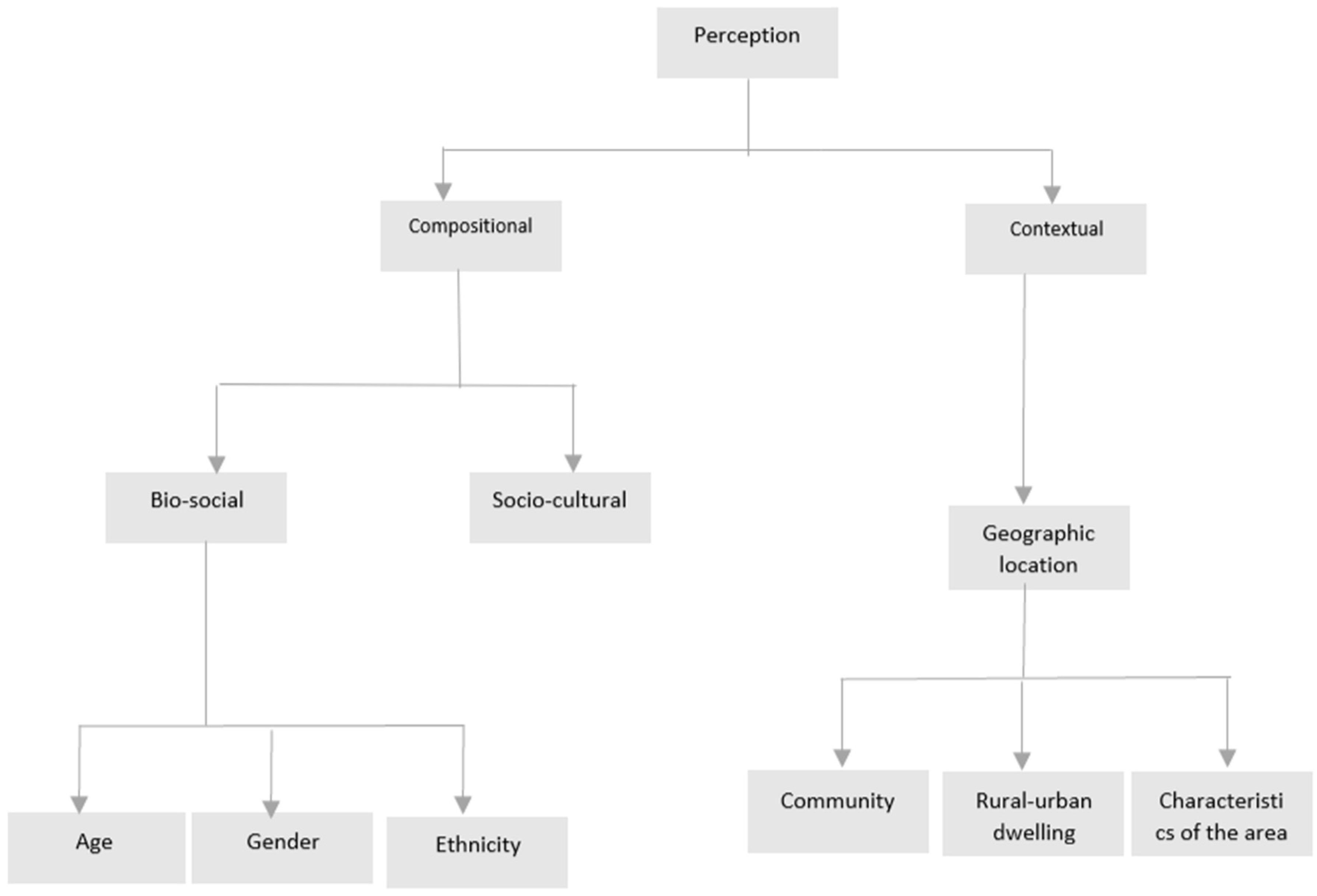
Figure 1.
Factors that affect perception [8].
Figure 1.
Factors that affect perception [8].
2. Materials and Methods
Study Area
The study was carried out in Kula, Oyorokoto and Bonny communities in Rivers State.
Figure 2.
Map of Nigeria showing Rivers State and the study area.
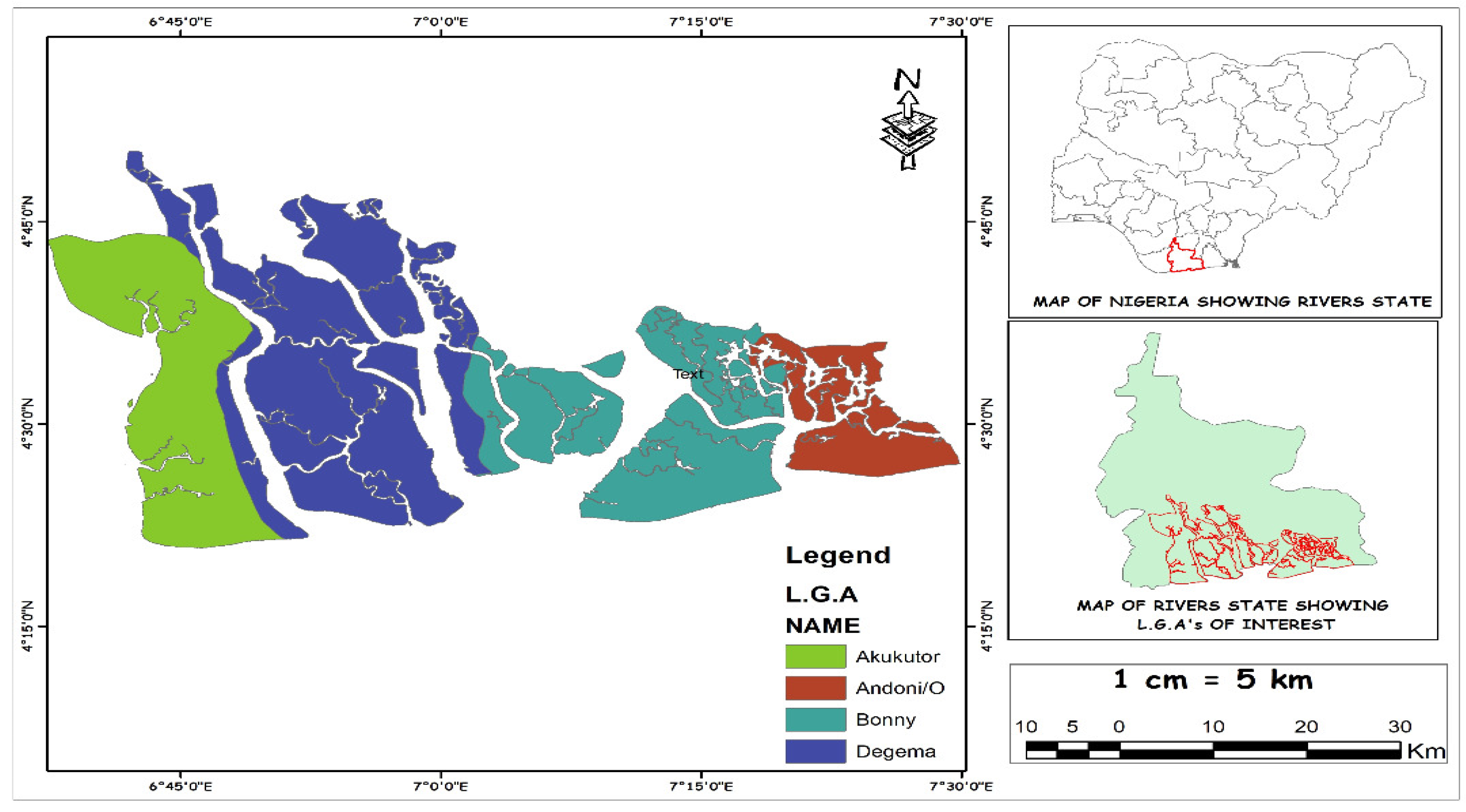
The coastal communities were purposively selected as a result of their proximity to the Atlantic Coast. The Niger Delta is known to be a biodiversity hub of marshland, creeks, tributaries, and lagoons that drain the Niger River into the Atlantic at the Bight of Biafra and houses the second-largest mangrove forest, which is fragile, covers around one-third of the total area.
Research Design
This study employed a qualitative research approach, utilizing survey methodology to gain a deeper understanding of local communities’ perceptions regarding the effectiveness of nature-based solutions (NbS) as a flood reduction measure. The qualitative approach was chosen to explore how communities perceive and experience these solutions, allowing the researchers to “see through the eyes” of the participants [14]. Surveys are a commonly used tool for assessing perceptions because they provide comparability, reproducibility, and ease of implementation [28,58,73]. They can be administered both in-person and online, offering flexibility in data collection [13].
The study specifically targeted adults aged 30 to 70, as individuals within this age range are more likely to have observed notable changes in the climate and local environment over time. A simple random sampling method was employed to ensure that every individual within this demographic had an equal chance of participating in the survey. The survey instrument was structured into four distinct sections, each containing approximately 10 questions. These sections focused on gathering demographic information, socio-economic data, and the participants’ perceptions and awareness of climate change, flooding, and nature-based solutions. A total of 1,224 responses were collected.
The primary objective of this study was to identify and analyze the factors that influence local communities’ perceptions and awareness of the effectiveness of NbS in reducing flood risks. By addressing the research question, “What factors affect perceptions and awareness of the effectiveness of nature-based solutions?”, the study aimed to shed light on the underlying drivers of community attitudes toward NbS. The literature review provided the theoretical foundation for the study, while primary data was collected through questionnaire surveys and field observations.
Data collection was carried out using Kobo Toolbox, an Open Data Kit (ODK) system developed by the Harvard Humanitarian Initiative and the United Nations Office for the Coordination of Humanitarian Affairs (OCHA). The survey questions were designed based on insights gathered from the literature review and an exploratory survey conducted during a reconnaissance visit to the study sites. The reconnaissance survey, carried out in May 2022, identified several logistical, socio-cultural, and economic factors that helped refine the survey questions and guided the planning of subsequent field trips.
To ensure the reliability of the survey instrument, it was pre-tested in a similar environment to identify and address any inconsistencies or irregularities in the questions. Following this, an electronic version of the survey was developed using Kobo Collect software, which allowed the research team to test the form and make necessary improvements. The research assistants were trained on the use of the electronic form to ensure accurate data collection.
Data collection took place between July 2022 and November 2023, during which 1,224 responses were recorded. The data was securely stored on the Kobo Toolbox platform and subsequently exported into a Microsoft Excel format for further analysis. Data analysis was conducted using the IBM Statistical Package for the Social Sciences (SPSS) software, version 27, allowing for the systematic examination of the factors influencing perceptions and awareness of the effectiveness NbS in reducing flood risks in the selected communities.
This methodological framework provided a robust means of investigating community perspectives on NbS, enabling the study to contribute valuable insights into the factors that shape public understanding and acceptance of nature-based flood reduction measures.
3. Results
Measurement of Variables
Age Distribution across the Communities
The results in Table 1 show that most of the respondents are between the age range of 31 to 40 years (44.0%), followed by 41 to 50 years (36.3%) across the three communities. The least number of respondents were between the ages of 20 to 30 years (7.5%) and 61 to 70 (2.5%).
| Characteristics | Kula | Oyorokoto | Bonny | Pooled | ||||||||
| Freq. | % | Freq | % | Freq | % | χ2 | Cramer’s V test | Freq | % | |||
| Age | < .001 | .296 | ||||||||||
| 20-30 | 9 | 10.0 | 1 | 4.3 | 82 | 7.4 | 92 | 7.5 | ||||
| 31-40 | 25 | 27.8 | 8 | 34.8 | 505 | 45.5 | 538 | 44.0 | ||||
| 41-50 | 18 | 20.0 | 7 | 30.4 | 419 | 37.7 | 444 | 36.3 | ||||
| 51-60 | 22 | 24.4 | 6 | 26.1 | 92 | 8.3 | 120 | 9.8 | ||||
| 61-70 | 16 | 17.8 | 1 | 4.3 | 13 | 1.2 | 30 | 2.5 | ||||
| Gender | ||||||||||||
| Male | 55 | 61.1 | 14 | 60.9 | 670 | 60.3 | 739 | 60.4 | ||||
| Female | 35 | 38.9 | 9 | 39.1 | 441 | 39.7 | 485 | 39.6 | ||||
| Marital Status | .234 | .065 | ||||||||||
| Single | 16 | 17.8 | 2 | 8.7 | 80 | 7.2 | 98 | 33.7 | ||||
| Separated | 0 | 0.0 | 0 | 0.0 | 5 | 0.5 | 5 | 0.5 | ||||
| Widow/widower | 1 | 1.1 | 1 | 4.3 | 25 | 2.3 | 27 | 7.7 | ||||
| Divorced | 0 | 0.0 | 0 | 0.0 | 2 | 0.2 | 2 | 0.2 | ||||
| Married | 73 | 81.1 | 20 | 87.0 | 999 | 89.9 | 1092 | 57.9 | ||||
| Occupation | < .001 | .215 | ||||||||||
| Fishing | 47 | 52.2 | 8 | 34.8 | 245 | 22.1 | 300 | 24.5 | ||||
| Trading | 16 | 17.8 | 8 | 34.8 | 426 | 38.3 | 450 | 36.8 | ||||
| Framing | 2 | 2.2 | 0 | 0 | 35 | 3.2 | 37 | 3.0 | ||||
| Government Employee | 8 | 8.9 | 1 | 4.3 | 146 | 13.1 | 155 | 12.7 | ||||
| Students | 2 | 2.2 | 1 | 4.3 | 32 | 2.9 | 35 | 2.9 | ||||
| Fish processor | 3 | 3.3 | 3 | 13.0 | 83 | 7.5 | 89 | 7.3 | ||||
| Other | 12 | 13.3 | 2 | 8.7 | 144 | 13.0 | 158 | 12.8 | ||||
|
|
||||||||||||
| Educational attainment | < .001 | .434 | ||||||||||
| No Education | 19 | 21.1 | 1 | 4.3 | 83 | 7.5 | 103 | 8.4 | ||||
| Primary School Leaving Certificate (PSLC) | 10 | 11.1 | 9 | 39.1 | 202 | 18.2 | 221 | 18.1 | ||||
| Junior School Leaving Certificate (JSCE) | 4 | 4.4 | 0 | 0 | 211 | 19.0 | 215 | 17.6 | ||||
| Senior School Leaving Certificate (SSCE) | 31 | 34.4 | 8 | 34.9 | 288 | 25.9 | 327 | 26.7 | ||||
| OND/HND | 11 | 12.3 | 3 | 13.0 | 259 | 23.3 | 273 | 22.3 | ||||
| Tertiary (BSc/ MSc/PhD) | 15 | 16.7 | 2 | 8.7 | 68 | 6.1 | 85 | 6.9 | ||||
| Ethnic distribution | < .001 | .232 | ||||||||||
| Igbo | 1 | 1.1 | 1 | 4.4 | 192 | 17.3 | 194 | 15.8 | ||||
| Hausa | 2 | 2.2 | 0 | 0 | 73 | 6.5 | 75 | 6.1 | ||||
| Yourba | 29 | 32.3 | 1 | 4.4 | 89 | 8.0 | 119 | 9.7 | ||||
| Niger Deltans | 58 | 64.4 | 21 | 91.2 | 715 | 64.4 | 794 | 65.0 | ||||
| Others | 0 | 0 | 0 | 0 | 42 | 3.8 | 42 | 3.4 | ||||
| Religious Affiliation | .202 | .049 | ||||||||||
| Christianity | 89 | 98.9 | 23 | 100.0 | 1034 | 93.0 | 1146 | 93.6 | ||||
| Islamic | 0 | 0 | 0 | 0 | 72 | 6.5 | 72 | 5.9 | ||||
| Traditionalist | 1 | 1.1 | 0 | 0 | 5 | 0.5 | 6 | 0.5 | ||||
| Number of Children of the respondents | .733 | .108 | ||||||||||
| <9 | 82 | 92.1 | 18 | 81.8 | 1106 | 99.5 | 1206 | 98.8 | ||||
| 10-19 | 5 | 5.6 | 4 | 18.2 | 0 | 0.0 | 9 | 0.7 | ||||
| 20-29 | 2 | 2.2 | 0 | 0.0 | 0 | 0.0 | 2 | 0.2 | ||||
| 30-39 | 0 | 0.0 | 0 | 0.0 | 1 | 0.1 | 1 | 0.1 | ||||
| 40-49 | 0 | 0.0 | 0 | 0.0 | 2 | 0.2 | 2 | 0.2 | ||||
| Annual Income of the Respondents | < .001 | .719 | ||||||||||
| 50000-9040001 | 89 | 98.9 | 21 | 91.3 | 1108 | 99.7 | 1218 | 99.5 | ||||
| 9040002-18030001 | 0 | 0.0 | 0 | 0.0 | 2 | 0.2 | 2 | 0.2 | ||||
| 36010002-45000001 | 1 | 1.1 | 2 | 8.7 | 1 | 0.1 | 4 | 0.3 | ||||
| N= 1224 (Source: Author’s field data). | ||||||||||||
Most respondents were from Bonny as a result of the concentration of economic activities in the area resulting in significant migration into the area. Moreover, the average age of respondents for the study was 42 years (SD-8.09). This shows that majority of the population in the study area are made up of youths. This bares a similarity to the census by the Nigeria National population statistics that show that majority of Nigeria’s population are within the youthful population bracket [53,79]. The chi-square test of independence was statistically significant, χ2 (1, N = 1224) = 231.98, p < .001. Cramer’s V value of 0.296 means that the age of the respondents has an appropriately small moderate effect on the effectiveness of NbS. In other words, the effectiveness of NbS is dependent on the age of the respondent.
Gender Distribution of the Respondents
Kula had about 61.1% male and 38.9% female; Oyorokoto had about 60.9% male and 39.1% female while Bonny had 60.3% male and 39.7% female. The pooled male population had a frequency of 739 and 60.4% while the female had a frequency of 485 and 39.6%. The results show that the respondents used for the study were mainly males. These results agree with the 2006 Bureau of Statistics on River State, which indicates that there are more males than females [53,79]. The chi-square test was not statistically significant relationship, χ2 (1, N = 1224) =11, p = .004. Cramer’s V value of 0.095 means that the gender of the respondents has an appropriately small moderate effect on the effectiveness of NbS. In other words, the effectiveness of NbS is dependent on the gender of the respondent.
Marital Status
Most of the respondents were married (57.9%), this was followed by the singles (33.7%) with a few being divorced (0.2%). This is similar across individual communities. Additionally, the results indicated that Kula and Oyorokoto had no respondents being separated or divorced. This could be attributed to the tribal regulations which prevents separation and divorce. Furthermore, the high number of separations and divorces in Bonny could also be due to the influx of non-natives into the area. The chi-square test was not statistically significant relationship, χ2 (1, N = 1224) =12.98, p > .113. Therefore, the Cramer’s V value was not reported.
Occupation Distribution of the Respondents
The result shows that most of the respondents are traders (36.8%) and fishermen (24.5%). The individual community distribution shows that fishing (52.2%) was the common occupation among respondents in Kula, while Bonny was trading (38.3%). However, for Oyorokoto, respondents were into both fishing and trading (34.8%). This is in line with the fact that the communities used for the study were coastal communities, hence fishing. However, as respondents sought alternative livelihoods to supplement their fishing activities and generate income, trading emerged as a more favored option than fishing. The high percentage of traders recorded in Bonny (38.3%) could also be a result of the influx of non-natives into the area who engage in either fish trading or petty trading. A previous study by [79] reported farming (34.7%) and fishing (21.0%) as major source of livelihood in some flood-prone communities in the Niger Delta. [79] also outlined some impacts of flood which interestingly affects means of livelihood of the residents. Furthermore, previous studies have reported that the population is highly dependent on the land and water resources for their livelihoods, in addition to subsistence farming and fishing. The preference of farming and trading over fishing is unlikely for a coastal area. However, further studies can be explored to discover the type of trading carried out by natives and non-natives in these communities. The chi-square test was statistically significant, χ2 (1, N = 1224) =112.68, p < .001 with a Cramer’s V value of 0.215 means occupation of the respondents that has an appropriately small moderate effect on the effectiveness of NbS. In other words, the effectiveness of NbS is dependent on occupation of the respondents.
Educational Attainment of the Respondents
Kula had the highest number of respondents with no formal education (21.1%), followed by Bonny (7.5%) and Oyorokoto community (4.3%). Oyorokoto had the highest number of respondents (39.1%) who have had Primary School Leaving Certificate (PSLC), this was followed by Bonny (18.2%) and then Kula community (11.1%). Bonny had the highest number of respondents with a Junior School Leaving Certificate (JSCE) (19.0%), this was followed by Kula community (4.4%) while Oyorokoto had no respondents who had a Junior School Leaving Certificate (JSCE). Additionally, Oyorokoto had the highest number of respondents with Senior School Leaving Certificate (SSCE) (34.9%), this was followed by Kula (34.4%) and then Bonny (25.9%). Bonny had the highest number of respondents with OND/HND, this is followed by Oyorokoto (13.0%) and Kula (12.3%). Kula had the highest number of respondents who have had a university education (16.7%), this could be from the natives of the community who do not reside in this community but partook of this survey. This was followed by Oyorokoto (8.7%) and then Bonny (6.1%). Overall, most of the respondents have had secondary education (26.7%) and OND/HND (22.3%). This is corroborated by the results from [79] on the assessment of Flood-prone Communities in the Core Niger Delta, Nigeria who recorded respondents with WAEC/SSCE; 15.5%; OND/HND educational qualification; 13.1%. The chi-square test was statistically significant, χ2 (1, N = 1224) =460.98, p < .001 with a Cramer’s V value of .434 means that the educational attainment of the respondents has an appropriately large effect on the effectiveness of NbS. In other words, the effectiveness of NbS is dependent on the educational attainment of the respondents.
Ethnic Distribution of the Respondents
The result shows that most interviewed respondents were Niger Deltans across the three communities (65.0%). The result is not surprising as the study area is native to the Niger Delta people. Other ethnic groups found in the area were Igbos (15.8%), Hausas (6.1%), Yorubas (9.7%) and other sub-ethnic groups (3.4%). Additionally, in Kula, Yourubas were found to be the second major ethnic group (32.3%), while Igbos were mostly found in the Bonny area (17.3%). Oyorokoto was a transitory area for both Igbos and Yourbas (4.4%). The number of Igbos found in Bonny (17.3%) justifies the validity of the high number of traders recorded in Bonny as the Igbos are primarily known as traders. The chi-square test statistically significant, χ2 (1, N = 1224) =143.98, p < .001 with a Cramer’s V value of .232 means that the ethnicity of the respondents has approximately a medium effect on the effectiveness of NbS. In other words, the effectiveness of NbS is dependent on the ethnicity of the respondents.
Annual Income of the Respondents
The highest earners annually were respondents from Bonny (99.7%), this is followed by respondents in Kula (98.9 %) and then Oyorokoto (91.3 %). The results show that the respondents in Kula have the highest annual income (98.9%), this is followed by respondents in Bonny (99.7%) and Oyorokoto (91.3%). The chi-square test was statistically significant, χ2 (1, N = 1224) =1470, p < .001 with a Cramer’s V value of .719 means that the annual income of the respondents has an appropriately large effect on the effectiveness of NbS. In other words, the effectiveness of NbS is dependent on the annual income of the respondents.

Table 2.
Logistic Regression of the influence of Perception and Awareness on the Effectiveness of NbS (Source: Author’s field data).
Table 2.
Logistic Regression of the influence of Perception and Awareness on the Effectiveness of NbS (Source: Author’s field data).
| Odds Ratio | SE | p-values | 95% CI | |
| Awareness | 0.06 | 0.17 | <.001 | 0.04 - 0.08 |
| perception 0 | 0.15 | 0.17 | <.001 | 0.11 - 0.21 |
| perception 1 | 0.59 | 0.4 | .196 | 0.27 - 1.31 |
| Constant | 0.15 | <.001 |
Table 3 shows the logistic regression analysis was performed to examine the influence of Knowledge 1, perception 0 and perception 2 on variable Effectiveness to predict the value “Green measures”. Logistic regression analysis shows that the model is significant (χ2 (3) = 657.96, p <.001, n = 1224).
The coefficient of the variable Awareness 1 is b = -2.85, which is negative. This means that if the value of the variable is Knowledge 1, the probability of the dependent variable being “Green measures” decreases. The p-value of <.001 indicates that this influence is statistically significant. The odds ratio of 0.06 means that if the variable is Knowledge 1, the probability that the dependent variable is “Green measures” increases by 0.06 times.
The coefficient of the variable perception 0 is b = -1.89, which is negative. This means that if the value of the variable is perception 0, the probability of the dependent variable being “Green measures” decreases. The p-value of <.001 indicates that this influence is statistically significant. The odds ratio of 0.15 means that if the variable is perception 0, the probability that the dependent variable is “Green measures” increases by 0.15 times.
The coefficient of the variable perception 2 is b = -0.52, which is negative. However, the p-value of .196 indicates that this influence is not statistically significant.
Perception of the Respondents about the Effectiveness of Nature-Based Solutions
Table 5 shows the perception of the respondents about the Effectiveness of NbS. This was to measure the influence of perception on effectiveness. The indicators on perception were focused on mangrove relevance to the respondents. The indicators include; “do mangroves protect your community from flooding” and “would you cut down mangroves if you know they can protect your community?”
Table 4.
Perception of the Respondents about the Effectiveness of Nature-based Solutions.
| Perception (Yes) | Kula | Oyorokoto | Bonny | Pooled | ||||
| Freq. | % | Freq. | % | Freq. | % | Freq. | % | |
| Mangroves protect your community from flooding | 84 | 93.3 | 22 | 95.7 | 446 | 40.1 | 552 | 45.1 |
| Would you cut down mangroves if you know they can protect your community? | 20 | 22.2 | 1 | 4.3 | 43 | 3.9 |
64 | 5.2 |
Table 5.
Socio-economic variables of the Respondents.
| Characteristics | Kula | Oyorokoto | Bonny | Pooled | ||||
| Freq. | % | Freq. | % | Freq. | % | Freq. | % | |
| Age | ||||||||
| 20-30 | 9 | 10.0 | 1 | 4.3 | 82 | 7.4 | 92 | 7.5 |
| 31-40 | 25 | 27.8 | 8 | 34.8 | 505 | 45.5 | 538 | 44.0 |
| 41-50 | 18 | 20.0 | 7 | 30.4 | 419 | 37.7 | 444 | 36.3 |
| 51-60 | 22 | 24.4 | 6 | 26.1 | 92 | 8.3 | 120 | 9.8 |
| 61-70 | 16 | 17.8 | 1 | 4.3 | 13 | 1.2 | 30 | 2.5 |
| Gender | ||||||||
| Male | 55 | 61.1 | 14 | 60.9 | 670 | 60.3 | 739 | 60.4 |
| Female | 35 | 38.9 | 9 | 39.1 | 441 | 39.7 | 485 | 39.6 |
| Marital Status | ||||||||
| Single | 16 | 17.8 | 2 | 8.7 | 80 | 7.2 | 98 | 33.7 |
| Separated | 0 | 0.0 | 0 | 0.0 | 5 | 0.5 | 5 | 0.5 |
| Widow/widower | 1 | 1.1 | 1 | 4.3 | 25 | 2.3 | 27 | 7.7 |
| Divorced | 0 | 0.0 | 0 | 0.0 | 2 | 0.2 | 2 | 0.2 |
| Married | 73 | 81.1 | 20 | 87.0 | 999 | 89.9 | 1092 | 57.9 |
| Occupation | ||||||||
| Fishing | 47 | 52.2 | 8 | 34.8 | 245 | 22.1 | 300 | 24.5 |
| Trading | 16 | 17.8 | 8 | 34.8 | 426 | 38.3 | 450 | 36.8 |
| Framing | 2 | 2.2 | 0 | 0 | 35 | 3.2 | 37 | 3.0 |
| Government Employee | 8 | 8.9 | 1 | 4.3 | 146 | 13.1 | 155 | 12.7 |
| Students | 2 | 2.2 | 1 | 4.3 | 32 | 2.9 | 35 | 2.9 |
| Fish processor | 3 | 3.3 | 3 | 13.0 | 83 | 7.5 | 89 | 7.3 |
| Other | 12 | 13.3 | 2 | 8.7 | 144 | 13.0 | 158 | 12.8 |
| Fishing | 47 | 52.2 | 8 | 34.8 | 245 | 22.1 | 300 | 24.5 |
| Educational attainment | ||||||||
| No Education | 19 | 21.1 | 1 | 4.3 | 83 | 7.5 | 103 | 8.4 |
| Primary School Leaving Certificate (PSLC) | 10 | 11.1 | 9 | 39.1 | 202 | 18.2 | 221 | 18.1 |
| Junior School Leaving Certificate (JSCE) | 4 | 4.4 | 0 | 0 | 211 | 19.0 | 215 | 17.6 |
| Senior School Leaving Certificate (SSCE) | 31 | 34.4 | 8 | 34.9 | 288 | 25.9 | 327 | 26.7 |
| OND/HND | 11 | 12.3 | 3 | 13.0 | 259 | 23.3 | 273 | 22.3 |
| Tertiary (BSc/ MSc/PhD) | 15 | 16.7 | 2 | 8.7 | 68 | 6.1 | 85 | 6.9 |
| Ethnic distribution | ||||||||
| Igbo | 1 | 1.1 | 1 | 4.4 | 192 | 17.3 | 194 | 15.8 |
| Hausa | 2 | 2.2 | 0 | 0 | 73 | 6.5 | 75 | 6.1 |
| Yourba | 29 | 32.3 | 1 | 4.4 | 89 | 8.0 | 119 | 9.7 |
| Niger Deltans | 58 | 64.4 | 21 | 91.2 | 715 | 64.4 | 794 | 65.0 |
| Others | 0 | 0 | 0 | 0 | 42 | 3.8 | 42 | 3.4 |
| Religious Affiliation | ||||||||
| Christianity | 89 | 98.9 | 23 | 100.0 | 1034 | 93.0 | 1146 | 93.6 |
| Islamic | 0 | 0 | 0 | 0 | 72 | 6.5 | 72 | 5.9 |
| Traditionalist | 1 | 1.1 | 0 | 0 | 5 | 0.5 | 6 | 0.5 |
| Number of Children of the respondents | ||||||||
| <9 | 82 | 92.1 | 18 | 81.8 | 1106 | 99.5 | 1206 | 98.8 |
| 10-19 | 5 | 5.6 | 4 | 18.2 | 0 | 0.0 | 9 | 0.7 |
| 20-29 | 2 | 2.2 | 0 | 0.0 | 0 | 0.0 | 2 | 0.2 |
| 30-39 | 0 | 0.0 | 0 | 0.0 | 1 | 0.1 | 1 | 0.1 |
| 40-49 | 0 | 0.0 | 0 | 0.0 | 2 | 0.2 | 2 | 0.2 |
| Perception (Yes) | ||||||||
| Mangroves protect your community from flooding | 84 | 93.3 | 22 | 95.7 | 446 | 40.1 | 552 | 45.1 |
| Would you cut down mangroves if you know they can protect your community? | 20 | 22.2 | 1 | 4.3 | 43 | 3.9 | 64 | 5.2 |
| Mangroves protect your community from flooding | 84 | 93.3 | 22 | 95.7 | 446 | 40.1 | 552 | 45.1 |
| Awareness of Flooding (Yes) | ||||||||
| Awareness of Flooding | 83 | 92.2 | 20 | 87.0 | 1099 | 98.9 | 1202 | 98.2 |
| Awareness of Climate Change | 89 | 98.9 | 23 | 100.0 | 1088 | 97.9 | 1200 | 98.0 |
| Awareness of Nature-based Solutions | 27 | 30.0 | 1 | 4.3 | 432 | 38.9 | 460 | 37.6 |
Dependent Variable: Effectiveness of NbS, N= 1224.
The result revealed that (95.7%) of the respondents from Oyorokoto responded in the affirmative, followed by respondents from Kula (93.3%) and the respondents from Bonny (40.1%). When respondents were asked if they would cut down mangroves if they know it can protect their community, (22.2%) of the respondents in Kula answered in the affirmative, followed by (4.3%) of the respondents from Oyorokoto while the least was Bonny, (3.9%). The result indicates in overall that respondents did not think NbS were effective in controlling floods. Although the respondents believe in the protective ability of mangroves against flooding, they would still cut down mangroves (see Table 9). This could be a result of the numerous benefits derived from mangroves by the communities which includes food, timber, and source of income. Previous studies have outlined the benefits of mangroves as a source of livelihood and in fish smoking [2,19,22].
The result also reveals a low perception of respondents towards mangroves as more than 50% of the respondents do not perceive nature-based solutions to be effective in flood reduction (see Table 9). While most respondents believe risk can be reduced through NbS however a range of attitudes between careful optimism and absolute doubt were expressed, this could have originated from lack of evidence-base and its co-creational benefits [7]. A study by [23] had reported low perception of flood risk in the area.
Factors that Affect the Perceptions and Awareness of the Effectiveness of Nature-Based Solutions
Socio-economic characteristics such as age, marital status, gender, educational attainment, occupation, ethnic distribution, religious affiliation, number of children and annual income of the respondents were measured. Occupation, age, educational attainment, ethnic distribution and annual income of the respondents were significant (p < 0.001) as well as “awareness” and “perception 0” category. Logistic regression model was used to assess the relationship between respondent’s perceptions and awareness on the effectiveness of NbS, chi-square was used to measure the significance between the variables while Cramer’s V test was used to measure the effect size where age, occupation, educational attainment and ethnic distribution showed positive relationships and varying degrees of strengths signifying that an increase in these demographic variables will lead to an increased perception and awareness on the effectiveness of NbS. The study findings showed that there is a positive relationship between “awareness,” “perception 0” category, “age” and “educational attainment”.
4. Discussion
This study found that NbS was perceived as effective by respondents with some form of formal education. The result agrees with a previous study by [7]. This shows the role of formal education in influencing perception while imparting knowledge. It is therefore necessary to make formal education accessible to more indigenes while also considering the peculiarity of their geographic location which will serve in building a holistic resilience. Most respondents believed flood risk could be reduced using NbS however, a display of attitudes ranging from cautious optimism to outright skepticism was expressed by the respondents. This could be as a result of the complexity and lack of its combined benefits [68,69] and the duration of implementation which is dependent on its effectiveness [5,43,72]. Other factors include climate change and hazard history in the area [7]. Increased research on the evidence-based of effectiveness of NbS is a calculated attempt to increase public acceptance [18,26] thereby increasing awareness and perception. However, a more effective way to provide an evidence-base would be through participatory engagements [37] not just as a flood reduction measure but in biodiversity conservation [21,56].
A positive relationship between perception and age in logistic regression analysis shows that as age increases, the likelihood or probability of having a certain perception also increases. In other words, older individuals are more likely to have a positive perception of the effectiveness of NbS compared to younger individuals. A positive relationship between perception and educational level indicates that as the level of education increases, the perception also tends to increase. In other words, individuals with higher educational levels have a more positive perception compared to those with lower educational levels. This suggests that education plays a significant role in shaping one’s perception and that higher levels of education may contribute to more positive perceptions on certain topics or variables being studied.
5. Conclusions
This study identified several key factors influencing the perceptions and awareness of the effectiveness of nature-based solutions (NbS), including age, educational attainment, and occupation. By examining the relationship between perception and awareness, it was found that awareness has a stronger influence on the perceived effectiveness of NbS, using logistic regression analysis. Specifically, awareness was shown to have a significant impact on the effectiveness of NbS, indicating that when community members have limited awareness of the benefits of NbS, they may be more likely to oppose such projects.
[70] emphasized that the full engagement and consent of local communities is a critical prerequisite for the success of NbS projects. Additionally, previous studies [10,12,31] has underscored the connection between perceptions and behavior in addressing societal challenges, a linkage also highlighted by the [62,80]. This study’s findings suggest that for NbS interventions to succeed, it is essential to enhance the knowledge and perception of indigenous communities regarding these solutions.
To foster the successful implementation of NbS, it is recommended that targeted sensitization programs be developed to raise awareness and shift perceptions, particularly regarding the protective role of mangroves. Conservation efforts, such as afforestation, restoration projects, and the enforcement of relevant environmental laws, should be prioritized to protect mangrove ecosystems and support the long-term sustainability of NbS initiatives.
Author Contributions
Chinomnso, C. Onwubiko.: conceptualization, writing - original draft, review and editing, methodology, data curation, visualization, formal analysis. Denis, W. Aheto.: conceptualization, review and editing, resources, supervision.
Funding
This research is part of the doctoral thesis of the first author which was funded by the World Bank through the African Centre of Excellence in Coastal Resilience (ACECoR), Centre for Coastal Management, University of Cape Coast, Ghana. Grant Number is credit number 6389-G.
Institutional Review Board Statement
This study was approved by the Institutional Review Board of the University of Cape Coast (UCCIRB/CANS/2022/03).
Informed Consent Statement
Informed consent was obtained from all subjects involved in the study.
Data Availability Statement
Suggested Data Availability Statements are available in section “MDPI Research Data Policies” at https://www.mdpi.com/ethics.
Acknowledgments
The author are grateful to the World Bank through the African Centre of Excellence in Coastal Resilience (ACECoR), Centre for Coastal Management and the Department of Fisheries and Aquatic Science, University of Cape Coast, Ghana, for providing funds for this study.
Conflicts of Interest
The authors declare no conflicts of interest.
References
- Acreman, M., Smith, A., Charters, L., Tickner, D., Opperman, J., Acreman, S., ... & Chivava, F. (2021). Evidence for the effectiveness of nature-based solutions to water issues in Africa. Environmental Research Letters, 16(6), 063007.Author 1, A.; Author 2, B. Title of the chapter. In Book Title, 2nd ed.; Editor 1, A., Editor 2, B., Eds.; Publisher: Publisher Location, Country, 2007; Volume 3, pp. 154–196. [CrossRef]
- Adeyemo, O. K., Ubiogoro, O. E., & Adedeji, O. B. (2009). Oil exploitation, fisheries resources and sustainable livelihood in the Niger Delta, Nigeria. Nat Faune, 24, 56-61.
- Akukwe, T. I., Krhoda, G. O., & Oluoko-Odingo, A. A. (2018). Principal component analysis of the effects of flooding on food security in agrarian communities of southeastern Nigeria. International Journal of Hydrogen Energy, 2(2), 205-212. [CrossRef]
- Anderson, C. C. (2022). Public acceptance of nature-based solutions: towards sustainable natural hazard risk reduction (Doctoral dissertation, University of Glasgow).
- Anderson, C. C., & Renaud, F. G. (2021). A review of public acceptance of nature-based solutions: The ‘why’, ‘when’, and ‘how’ of success for disaster risk reduction measures. Ambio, 50(8), 1552-1573. [CrossRef]
- Anderson, C. C., Renaud, F. G., Hanscomb, S., & Gonzalez-Ollauri, A. (2022). Green, hybrid, or grey disaster risk reduction measures: What shapes public preferences for nature-based solutions? Journal of Environmental Management, 310, 114727. [CrossRef]
- Anderson, C. C., Renaud, F. G., Hanscomb, S., Munro, K. E., Gonzalez-Ollauri, A., Thomson, C. S., ... & Stefanopoulou, M. (2021). Public acceptance of nature-based solutions for natural hazard risk reduction: Survey findings from three study sites in Europe. Frontiers in Environmental Science, 9, 678938. [CrossRef]
- Armah, F. A., Odoi, J. O., Yawson, D. O., Yengoh, G. T., Afrifa, E. K., & Pappoe, A. N. (2010). Mapping of noise risk zones derived from religious activities and perceptions in residential neighborhoods in the Cape Coast metropolis, Ghana. Environmental Hazards, 9(4), 358-368. [CrossRef]
- Bark, R. H., Martin-Ortega, J., & Waylen, K. A. (2021). Stakeholders’ views on natural flood management: Implications for the nature-based solutions paradigm shift? Environmental Science & Policy, 115, 91-98. [CrossRef]
- Batel, S., Devine-Wright, P., & Tangeland, T. (2013). Social acceptance of low carbon energy and associated infrastructures: A critical discussion. Energy Policy, 58, 1-5. [CrossRef]
- Begg, C., Callsen, I., Kuhlicke, C., & Kelman, I. (2018). The role of local stakeholder participation in flood defense decisions in the United Kingdom and Germany. Journal of Flood Risk Management, 11(2), 180-190. [CrossRef]
- Bempah, S. A., & Øyhus, A. O. (2017). The role of social perception in disaster risk reduction: Beliefs, perception, and attitudes regarding flood disasters in communities along the Volta River, Ghana. International journal of disaster risk reduction, 23, 104-108. [CrossRef]
- Brace, I. (2018). Questionnaire design: How to plan, structure and write survey material for effective market research. Kogan Page Publishers.
- Bryman, A., (2012). Social Research Methods, vol. 4, Oxford Univ. Press, Oxford [u.a].
- CBD, (2019). Voluntary guidelines for the design and effective implementation of EbA to climate change adaptation and disaster risk reduction and supplementary information. In: CBD Technical Series No. 93. Secretariat of the Convention on Biological Diversity (93). https://www.cbd.int/doc/publications/cbd-ts-93-en.pdf.
- Center, A. D. R. (2015). Sendai framework for disaster risk reduction 2015–2030. United Nations Office for Disaster Risk Reduction: Geneva, Switzerland.
- Chambers, R. (1994). The origins and practice of participatory rural appraisal. World development, 22(7), 953-969. [CrossRef]
- Chausson, A., Turner, B., Seddon, D., Chabaneix, N., Girardin, C. A., Kapos, V., ... & Seddon, N. (2020). Mapping the effectiveness of nature-based solutions for climate change adaptation. Global Change Biology, 26(11), 6134-6155. [CrossRef]
- Chima, U. D., & Larinde, S. L. (2016). Deforestation and degradation of mangroves in the Niger Delta Region of Nigeria: Implications in a changing climate. In 38th Annual Conference of the Forestry Association of Nigeria (Vol. 38).
- Cohen-Shacham, E., Walters, G., Janzen, C., & Maginnis, S. (2016). Nature-based solutions to address global societal challenges. IUCN: Gland, Switzerland, 97, 2016-2036.
- Davenport, M. A., Bridges, C. A., Mangun, J. C., Carver, A. D., Williard, K. W., & Jones, E. O. (2010). Building local community commitment to wetlands restoration: A case study of the Cache River wetlands in southern Illinois, USA. Environmental management, 45, 711-722. [CrossRef]
- Eleanya, K., Agbeja, B. O., & Ijeomah, H. M. (2015). Socio-Economic Importance of Mangrove Forests in Akassa Island of Niger Delta, Nigeria. PAT Journal, (11), 1-11.
- Elum, Z.A. & Lawal, O., (2022). ‘Flood risk perception, disaster preparedness and response in flood-prone urban communities of Rivers State’, Jàmbá: Journal of Disaster Risk Studies 14(1), a1303. [CrossRef]
- European Commission, (2000). Directive 2000/60/EC of the European Parliament and of the Council of 23 October 2000 establishing a framework for community action in the field of water policy. Official Journal of the European Communities L 327: 1–72.
- Ewalt, J. D. (2017). Coastal residents’ perceptions of the function of and relationship between engineered and natural infrastructure for coastal hazard mitigation. Ocean & coastal management. [CrossRef]
- Faivre, N., Sgobbi, A., Happaerts, S., Raynal, J., & Schmidt, L. (2018). Translating the Sendai Framework into action: The EU approach to ecosystem-based disaster risk reduction. International journal of disaster risk reduction, 32, 4-10. [CrossRef]
- Ferreira, V., Barreira, A. P., Loures, L., Antunes, D., & Panagopoulos, T. (2021). Stakeholders’ perceptions of appropriate nature-based solutions in the urban context. Journal of Environmental Management, 298, 113502. [CrossRef]
- Ferreira, V., Barreira, A. P., Loures, L., Antunes, D., & Panagopoulos, T. (2020). Stakeholders’ engagement on nature-based solutions: A systematic literature review. Sustainability, 12(2), 640. [CrossRef]
- Ferreira, V., Barreira, A. P., Loures, L., Antunes, D., & Panagopoulos, T. (2020). Stakeholders’ engagement on nature-based solutions: A systematic literature review. Sustainability, 12(2), 640. [CrossRef]
- Giordano, R., Pluchinotta, I., Pagano, A., Scrieciu, A., & Nanu, F. (2020). Enhancing nature-based solutions acceptance through stakeholders’ engagement in co-benefits identification and trade-offs analysis. Science of the Total Environment, 713, 136552. [CrossRef]
- Guo, H., Callaway, J. B., & Ting, J. P. (2015). Inflammasomes: mechanism of action, role in disease, and therapeutics. Nature medicine, 21(7), 677-687. [CrossRef]
- Hagedoorn, L.C., Bubeck, P., Hudson, P., Brander, L.M., Pham, M., & Lasage, R., (2021). Preferences of vulnerable social groups for ecosystem-based adaptation to flood risk in Central Vietnam. World Dev. 148, 105650. [CrossRef]
- Han, S., & Kuhlicke, C. (2019). Reducing hydro-meteorological risk by nature-based solutions: What do we know about people’s perceptions? Water, 11(12), 2599. [CrossRef]
- Hermans, T. D., Smith, H. E., Whitfield, S., Sallu, S. M., Recha, J., Dougill, A. J., ... & Meshack, C. (2023). Role of the interaction space in shaping innovation for sustainable agriculture: Empirical insights from African case studies. Journal of Rural Studies, 100, 103012. [CrossRef]
- Hirabayashi, Y., Mahendran, R., Koirala, S., Konoshima, L., Yamazaki, D., Watanabe, S., ... & Kanae, S. (2013). Global flood risk under climate change. Nature Climate Change, 3(9), 816-821. [CrossRef]
- Hoffmann, R., & Muttarak, R. (2017). Learn from the past, prepare for the future: Impacts of education and experience on disaster preparedness in the Philippines and Thailand. World Development, 96, 32-51. [CrossRef]
- Holstead, K. L., Kenyon, W., Rouillard, J. J., Hopkins, J., & Galán-Díaz, C. (2017). Natural flood management from the farmer’s perspective: criteria that affect uptake. Journal of Flood Risk Management, 10(2), 205-218. [CrossRef]
- Hopkins, T. S., Bailly, D., Elmgren, R., Glegg, G., Sandberg, A., & Støttrup, J. G. (2012). A systems approach framework for the transition to sustainable development: potential value based on coastal experiments. Ecology and Society, 17(3). [CrossRef]
- IPCC, (2012). In: Field, Christopher B. (Ed.), Managing the Risks of Extreme Events and Disasters to Advance Climate Change Adaptation. A Special Report of Working Groups I and II of the Intergovernmental Panel on Climate Change (Vicente Barros, Thomas F. Stocker, Qin Dahe, David Jon Dokken, Kristie L. Ebi et al. New York, N.Y).
- IUCN. (2020). Global Standard for Nature-based Solutions. A User-Friendly Framework for the Verification, Design and Scaling up of NbS.
- Jongman, B. (2018). Effective adaptation to rising flood risk. Nature communications, 9(1), 1986. [CrossRef]
- Kabisch, N., Frantzeskaki, N., Pauleit, S., Naumann, S., Davis, M., Artmann, M., ... & Bonn, A. (2016). Nature-based solutions to climate change mitigation and adaptation in urban areas: perspectives on indicators, knowledge gaps, barriers, and opportunities for action. Ecology and society, 21(2). [CrossRef]
- Kabisch, N., Frantzeskaki, N., Pauleit, S., Naumann, S., Davis, M., Artmann, M., ... & Bonn, A. (2016). Nature-based solutions to climate change mitigation and adaptation in urban areas: perspectives on indicators, knowledge gaps, barriers, and opportunities for action. Ecology and society, 21(2). [CrossRef]
- Kabisch, N., Frantzeskaki, N., Pauleit, S., Naumann, S., Davis, M., Artmann, M., ... & Bonn, A. (2016). Nature-based solutions to climate change mitigation and adaptation in urban areas: perspectives on indicators, knowledge gaps, barriers, and opportunities for action. Ecology and society, 21(2). [CrossRef]
- Kabisch, N., Korn, H., Stadler, J., & Bonn, A. (2017). Nature-based solutions to climate change adaptation in urban areas: Linkages between science, policy, and practice. Springer Nature. [CrossRef]
- Kaufmann, M., Priest, S., Hudson, P., Löschner, L., Raška, P., Schindelegger, A., ... & Vleesenbeek, T. (2021). Win–win for everyone? Reflecting on nature-based solutions for flood risk management from an environmental justice perspective. In Nature-Based Solutions for Flood Mitigation: Environmental and Socio-Economic Aspects (pp. 399-423). Cham: Springer International Publishing. [CrossRef]
- Kinzig, A. P., Ehrlich, P. R., Alston, L. J., Arrow, K., Barrett, S., Buchman, T. G., ... & Saari, D. (2013). Social norms and global environmental challenges: the complex interaction of behaviors, values, and policy. BioScience, 63(3), 164-175. [CrossRef]
- Kundzewicz, Z. W., & Menzel, L. (2005). Natural flood reduction strategies–a challenge. International Journal of River Basin Management, 3(2), 125-131. [CrossRef]
- Lambert, S., & Scott, J. (2019). International disaster risk reduction strategies and indigenous peoples. The International Indigenous Policy Journal, 10(2), 1-21. [CrossRef]
- Loos, J. R., & Rogers, S. H. (2016). Understanding stakeholder preferences for flood adaptation alternatives with natural capital implications. Ecology and Society, 21(3). [CrossRef]
- Macherera, M., & Chimbari, M. J. (2016). A review of studies on community based early warning systems. Jàmbá: journal of disaster risk studies, 8(1). [CrossRef]
- Mallette, A., Smith, T. F., Elrick-Barr, C., Blythe, J., & Plummer, R. (2021). Understanding preferences for coastal climate change adaptation: a systematic literature review. Sustainability, 13(15), 8594. [CrossRef]
- Mberu, B. U., & Reed, H. E. (2014). Understanding subgroup fertility differentials in Nigeria. Population review, 53(2), 23. [CrossRef]
- Monty, F., Murti, R., & Furuta, N. (2016). Helping nature help us: Transforming disaster risk reduction through ecosystem management. IUCN. [CrossRef]
- Olanrewaju, L., & Umeuduji, J. E. (2017). Exploration of hydro-geomorphological indices for coastal floodplain characterization in Rivers State, Nigeria. Ghana Journal of Geography, 9(1), 67-87.
- Pueyo-Ros, J., Ribas, A., & Fraguell, R. M. (2019). A cultural approach to wetlands restoration to assess its public acceptance. Restoration Ecology, 27(3), 626-637. [CrossRef]
- Puskás, N., Abunnasr, Y., & Naalbandian, S. (2021). Assessing deeper levels of participation in nature-based solutions in urban landscapes–A literature review of real-world cases. Landscape and Urban Planning, 210, 104065. [CrossRef]
- Raaijmakers, R., Krywkow, J., & van der Veen, A. (2008). Flood risk perceptions and spatial multicriteria analysis: An Exploratory Research for hazard mitigation. Natural Hazards, 46(3),307-322. [CrossRef]
- Ramírez-Agudelo, N. A., Porcar Anento, R., Villares, M., & Roca, E. (2020). Nature-based solutions for water management in peri-urban areas: barriers and lessons learned from implementation experiences. Sustainability, 12(23), 9799. [CrossRef]
- Raymond, C. M., Frantzeskaki, N., Kabisch, N., Berry, P., Breil, M., Nita, M. R., ... & Calfapietra, C. (2017). A framework for assessing and implementing the co-benefits of nature-based solutions in urban areas. Environmental Science & Policy, 77, 15-24. [CrossRef]
- Reed, M. S. (2008). Stakeholder Participation for Environmental Management: A Literature Review. Biol. Conservation. 141 (10), 2417–2431. [CrossRef]
- Reid, A. E., Cialdini, R. B., & Aiken, L. S. (2010). Social norms and health behavior. Handbook of behavioral medicine: Methods and applications, 263-274.
- Reid, W. V., Chen, D., Goldfarb, L., Hackmann, H., Lee, Y. T., Mokhele, K., ... & Whyte, A. (2010). Earth system science for global sustainability: grand challenges. Science, 330(6006), 916-917. [CrossRef]
- Renaud, F. G., Sudmeier-Rieux, K., Estrella, M., & Nehren, U. (Eds.). (2016). Ecosystem-based disaster risk reduction and adaptation in practice (Vol. 42). Cham: Springer International Publishing. [CrossRef]
- Renn, O., Laubichler, M., Lucas, K., Kröger, W., Schanze, J., Scholz, R. W., & Schweizer, P. J. (2022). Systemic risks from different perspectives. Risk analysis, 42(9), 1902-1920. [CrossRef]
- Ruangpan, L., Vojinovic, Z., Di Sabatino, S., Leo, L. S., Capobianco, V., Oen, A. M., ... & Lopez-Gunn, E. (2020). Nature-based solutions for hydro-meteorological risk reduction: a state-of-the-art review of the research area. Natural Hazards and Earth System Sciences, 20(1), 243-270. [CrossRef]
- Santoro, S., Pluchinotta, I., Pagano, A., Pengal, P., Cokan, B., & Giordano, R. (2019). Assessing stakeholders’ risk perception to promote Nature Based Solutions as flood protection strategies: The case of the Glinščica river (Slovenia). Science of the total environment, 655, 188-201. [CrossRef]
- Schernewski, G., Schumacher, J., Weisner, E., & Donges, L. (2018). A combined coastal protection, realignment, and wetland restoration scheme in the southern Baltic: planning process, public information, and participation. Journal of coastal conservation, 22, 533-547. [CrossRef]
- Seddon, N., Chausson, A., Berry, P., Girardin, C. A. J., Smith, A., & Turner, B. (2020). Understanding the Value and Limits of Nature-Based Solutions to Climate Change and Other Global Challenges. Phil. Trans. R. Soc. B. 375 (1794), 20190120. [CrossRef]
- Seddon, N., Smith, A., Smith, P., Key, I., Chausson, A., Girardin, C., ... & Turner, B. (2021). Getting the message right on nature-based solutions to climate change. Global change biology, 27(8), 1518-1546. [CrossRef]
- Shafique, M., Kim, R., & Kyung-Ho, K. (2018). Green roof for stormwater management in a highly urbanized area: The case of Seoul, Korea. Sustainability, 10(3), 584. [CrossRef]
- Shah, M. A. R., Renaud, F. G., Anderson, C. C., Wild, A., Domeneghetti, A., Polderman, A., ... & Zixuan, W. (2020). A review of hydro-meteorological hazard, vulnerability, and risk assessment frameworks and indicators in the context of nature-based solutions. International journal of disaster risk reduction, 50, 101728.
- Terpstra, T. (2011). Emotions, trust, and perceived risk: Affective and cognitive routes to flood preparedness behavior. Risk Analysis: An International Journal, 31(10), 1658-1675. [CrossRef]
- Thieken, A. H., Cammerer, H., Dobler, C., Lammel, J., & Schöberl, F. (2016). Estimating changes in flood risks and benefits of non-structural adaptation strategies-a case study from Tyrol, Austria. Mitigation and adaptation strategies for global change, 21, 343-376. [CrossRef]
- Triyanti, A., & Chu, E. (2018). A survey of governance approaches to ecosystem-based disaster risk reduction: Current gaps and future directions. International journal of disaster risk reduction, 32, 11-21. [CrossRef]
- Triyanti, A., Bavinck, M., Gupta, J., & Marfai, M. A. (2017). Social capital, interactive governance, and coastal protection: The effectiveness of mangrove ecosystem-based strategies in promoting inclusive development in Demak, Indonesia. Ocean & Coastal Management, 150, 3-11. [CrossRef]
- van Wesenbeeck, B. K., de Boer, W., Narayan, S., van der Star, W. R., & de Vries, M. B. (2017). Coastal and riverine ecosystems as adaptive flood defences under a changing climate. Mitigation and Adaptation Strategies for Global Change, 22, 1087-1094. [CrossRef]
- Waylen, K. A., Holstead, K. L., Colley, K., & Hopkins, J. (2018). Challenges to enabling and implementing Natural Flood Management in Scotland. Journal of Flood Risk Management, 11, S1078-S1089. [CrossRef]
- Wizor, C. H., & Week, D. A. (2020). Geospatial mapping and assessment of flood-prone communities in the core Niger Delta, Nigeria. Asian Journal of Advanced Research and Reports, 9(3), 6-20. [CrossRef]
- World Bank, (2015). World Development Report 2015: Mind, Society, and Behavior. Washington, DC: World Bank Group.
- World Bank, (2015). World Development Report 2015: Mind, Society, and Behavior. Washington, DC: World Bank Group.
- Zingraff-Hamed, A., Hüesker, F., Lupp, G., Begg, C., Huang, J., Oen, A., ... & Pauleit, S. (2020). Stakeholder mapping to co-create nature-based solutions: who is on board? Sustainability, 12(20), 8625. [CrossRef]
Table 3.
Classification table showing the predictions of the observed variables.
| Predicted | ||||
| others | Green measures | Correct | ||
| Observed | others | 653 | 96 | 87.18 % |
| Green measures | 114 | 361 | 76 % | |
| Total | 82.84 % | |||
Disclaimer/Publisher’s Note: The statements, opinions and data contained in all publications are solely those of the individual author(s) and contributor(s) and not of MDPI and/or the editor(s). MDPI and/or the editor(s) disclaim responsibility for any injury to people or property resulting from any ideas, methods, instructions or products referred to in the content. |
© 2024 by the authors. Licensee MDPI, Basel, Switzerland. This article is an open access article distributed under the terms and conditions of the Creative Commons Attribution (CC BY) license (http://creativecommons.org/licenses/by/4.0/).
Copyright: This open access article is published under a Creative Commons CC BY 4.0 license, which permit the free download, distribution, and reuse, provided that the author and preprint are cited in any reuse.


