
Submitted:
12 September 2024
Posted:
13 September 2024
You are already at the latest version
Abstract
This review highlights recent innovations in food packaging, emphasizing the shift from conventional petroleum-based materials to bio-based alternatives and smart packaging systems. Bio-based materials, such as starch, cellulose, and polyhydroxyalkanoates (PHA), offer sustainable solutions due to their biodegradability and reduced environmental impact. These materials are positioned as eco-friendly alternatives to traditional plastics, but face challenges related to production costs and scalability. Additionally, advancements in smart packaging technologies, including sensor and indicator systems, provide real-time food quality monitoring, enhancing food safety and reducing waste. Active packaging technologies, incorporating natural antioxidants and moisture control, extend product shelf life and improve food preservation. Also, these biopolymers usually present lower CO2 footprint, energetic cost, and water consumption during their production, in comparison to traditionally used synthetic plastics. The review identifies critical challenges, such as regulatory barriers and technological limitations, but also outlines significant opportunities for future research and innovation in the food packaging sector, aiming for more efficient, safer, and environmentally sustainable packaging solutions.
Keywords:
Bioplastics
; Intelligent packaging
; sustainable packaging
; lifetime cycle
1. Introduction
The food industry has experienced exponential growth in packaging usage over the past decades, driven by the demand for more durable, safer, and convenient products for the end consumer. It is estimated that more than 40% of the packaging materials used globally are allocated to the food sector [1], reflecting the critical importance of this component in the food value chain. Packaging is fundamental in protecting food, ensuring that products retain their sensory and nutritional qualities until they reach consumers [2]. This underscores the importance of developing new packaging solutions that address market needs and growing environmental challenges.
Historically, cardboard, paper, and plastic have dominated the food packaging landscape. While cardboard and paper are recyclable, they face limitations regarding moisture and gas barriers, critical factors for preserving many types of food. On the other hand, plastic offers versatile properties such as lightness, strength, and flexibility, making it the standard material of choice for various packaging applications. However, the high stability of these materials also makes them resistant to natural degradation, leading to their accumulation and causing environmental problems [2]. Recent data indicate that approximately 8 million tons of plastics enter the oceans annually, much of which originates from non-biodegradable food packaging waste, significantly contributing to solid waste accumulation [3].
Food packaging serves various functions, from physical product protection against mechanical impacts and microbiological contamination to ensuring an extended shelf life through barriers against oxygen, light, and moisture [4]. Additionally, packaging is an important means of communication with consumers, providing information about the product, such as ingredients, usage instructions, and expiration dates, and serving as a platform for marketing strategies [5]. In this context, it is important to produce packaging that is efficient, informative, and environmentally friendly [6,7].
The evolution of food packaging is not limited to increased production quantity. There is a growing trend towards innovation in the materials used, with the development of biodegradable, compostable, and recyclable packaging gaining prominence in corporate sustainability agendas [8,9,10]. Additionally, the production of intelligent packaging has also been extensively studied and has attracted the attention of the scientific community due to its efficiency in food preservation and as a means of communication with consumers [11,12,13]. These technologies have the potential to enhance food safety and quality, reduce waste, and facilitate real-time monitoring of product status throughout the supply chain, enabling the removal of non-compliant products before they reach the end consumer.
These intelligent packaging systems can be divided into indicator, sensor, and radio frequency identification (RFID) packaging subgroups. Indicator packaging is related to the quality of the food, indicating, for example, pH changes, which cause perceptible color changes when the food is no longer suitable for consumption [12,14]. Sensor packaging indicates the presence or level of certain substances or physical properties, such as monitoring gases, humidity, microorganisms, or temperature changes [15]. RFID technologies are integrative, allowing packaging to respond to specific conditions indicated by indicator/sensor packaging [16]. RFID-enabled packaging transmits real-time data to producers, such as humidity, temperature, light exposure, and gas formation. This allows for actions like discarding material, adjusting storage conditions, or adopting adaptive packaging that modifies its characteristics to better food [17].
Given this dynamic scenario, the present review article aims to analyze recent advancements and emerging trends in food packaging, focusing on transitioning from traditional materials to bio-based materials and integrating smart systems. This study evaluates the functional properties, environmental impacts, economic implications, and the role of intelligent technologies in packaging innovations. It also identifies key challenges and opportunities for large-scale adoption in the food industry. Understanding these trends can guide future research and technological innovations and assist policymakers and industries in making informed decisions. These decisions are fundamental for developing and implementing new packaging solutions that meet the demands of a global market that is increasingly aware of the environmental impacts of their consumption choices.
2. Bio-Based Materials
Bio-based materials are derived from biological resources such as plants [18], algae [19], organic waste [20], bacteria [21], fungi [22], and even insects [23], which can be used as substitutes for conventional petroleum-based materials. The use of bio-based materials reduces dependence on fossil resources, decreases greenhouse gas emissions, and promotes a circular economy where materials can be recycled or composted at the end of their life cycle [24].
Additionally, these materials, often biodegradable, naturally decompose in the environment, reducing plastic pollution and minimizing environmental impact. While a petroleum-based plastic, such as PET, can take approximately 400 to 1,000 years to decompose, PLA, for example, can take only 3 to 6 months under industrial composting conditions [25,26]. The production of bio-based materials, although currently more expensive due to emerging technology, has the potential to make processes more sustainable [27]. Furthermore, unlike petroleum-based plastics, bio-based materials tend to generate less negative social impact and can even create economic opportunities in rural areas [28,29] (Figure 1).
These materials also align better with increasingly stringent environmental regulations, offering a competitive advantage in markets that value sustainability (Song et al., 2022). Table 1 provides a detailed analysis of the critical differences between bio-based materials and petroleum-derived plastics, highlighting characteristics such as biodegradability, environmental impact, and production cost.
Bio-materials have applications in various fields, such as agriculture, the pharmaceutical industry, cosmetics, and the packaging sector. For example, in the field of agriculture, they are used to develop biodegradable films and mats that help protect crops from pests, retain soil moisture, and even gradually release fertilizers, naturally decomposing after use [31,32]. They are also used in biodegradable planting pots that can be planted directly into the soil, reducing plant stress during transplantation. In logistics and transportation, bio-based packaging creates lightweight, durable, and flexible solutions that minimize waste, protect products during transit, and are easier to recycle or compost.
In the pharmaceutical industry, these materials have been used for drug encapsulation, where biodegradability is required for the controlled release of active compounds in the human body. Additionally, they are employed in disposable medical devices, such as sutures and temporary implants, which biodegrade after fulfilling their function. In the cosmetic sector, bio-based materials are used in personal care products, such as creams, lotions, and soaps, standing out for their reduced environmental impact, protection of sensitive active ingredients, and ability to create innovative and attractive packaging that reflects the brand's ecological values.
In the food industry, these materials are particularly valuable for food packaging, as they offer significant potential to reduce the environmental impact associated with plastic waste. Their biodegradability and sustainable origins help minimize pollution and carbon footprint, making them an attractive choice for brands committed to sustainability. These materials are also applied in electronic product packaging, where moisture protection and the demand for more eco-friendly materials drive the adoption of bio-based alternatives, which combine efficiency in protecting devices with a lower environmental burden.
In addition to the applications already mentioned, advances in research and development of bio-based materials have enabled the creation of advanced composites that combine superior mechanical properties with environmental sustainability. These composites, formed by combining bio-based polymers with natural fibers, such as coconut, bamboo, and sisal fibers, are used to manufacture automotive parts, such as interior panels and seat supports, due to their high strength and durability, making them ideal for use in sectors such as construction, the automotive industry, and the production of durable consumer goods [33]. For example, interior parts and structural components made from bio-based composites can reduce the vehicle's overall weight in the automotive industry, contributing to greater energy efficiency and lower CO2 emissions [34].
As bio-based materials evolve in their functional properties, they synergize with emerging technologies, such as intelligent packaging. This combination of sustainability with technological innovation transforms how we approach food packaging, integrating functionality with positive environmental impact. Bio-based materials are also being explored in emerging sectors, such as developing biodegradable electronic devices. These devices, which include sensors and flexible circuits, use bio-based conductive polymers to replace heavy metals and other non-renewable materials [35]. This innovation enhances the sustainability of electronic devices and opens up new possibilities for creating disposable technologies that naturally degrade the environment, eliminating the need for complex recycling processes.
In addition to innovations in the electronics sector, bio-based materials are also being widely used in the renewable energy sector for the manufacturing of solar cell components and batteries, where the need for lightweight, durable, and environmentally friendly materials is crucial [36,37]. These materials reduce the environmental impact of the production and disposal of energy storage devices, aligning with global carbon emission reduction goals and promoting a circular economy.
Bio-based materials represent a promising frontier for sustainable innovation across multiple sectors. Their ability to replace conventional materials, reduce carbon footprints, and minimize environmental impacts is significant. In addition to their positive environmental impact, these materials also enable sustainable economic development. With the continuous advancement of technology and the growing demand for eco-friendly solutions, bio-based materials are poised to play a central role in global sustainability strategies. It is essential to continue investing in research and development to ensure their impact, addressing challenges such as production costs and manufacturing scale [38].
Bio-based materials are classified as natural and biodegradable, offering a sustainable alternative to synthetic polymers. Natural polymers found in living organisms can be sourced directly from biological materials such as cellulose, starch, and proteins. Microorganisms in the environment degrade these materials, allowing them to re-enter natural cycles without leaving toxic residues. Biodegradability is a key characteristic that distinguishes bio-based materials from synthetic polymers, which generally persist in the environment for long periods and contribute to plastic pollution [24]. Additionally, bio-based materials can be compostable, meaning they decompose under specific conditions, such as those found in industrial composting facilities, resulting in harmless products like water, carbon dioxide, and biomass [51].
The classification of bio-based materials can be based on the origin of the polymers, their biodegradable properties, and their ability to be composted or recycled. These criteria help determine the potential applications of the materials, as well as their sustainability and environmental impact. Natural polymers occur naturally and can be directly extracted from biological sources. Examples include bacterial cellulose, extracted from microbial cultures; starch, derived from various plants such as corn and potatoes; and chitosan, obtained from crustaceans. These polymers are generally biodegradable and have a variety of applications in packaging due to their ecological properties (Babu, O’Connor, and Seeram, 2013).
Polymers derived from biomass are synthesized from renewable biomass through chemical or biotechnological processes. Examples include polylactic acid (PLA), produced from the fermentation of plant sugars, and polyhydroxyalkanoates (PHA), produced by certain bacteria through the fermentation of organic substrates. These polymers combine the advantage of being bio-based with the ability to be biodegradable or compostable [53].
Bio-based composites and blends refer to materials that combine bio-based polymers with other compounds or polymers to optimize their functional properties. Blends can include natural polymers with biodegradable synthetic polymers or additives that enhance mechanical, thermal, or barrier properties. These mixtures allow for creating materials with superior performance in specific applications while maintaining the environmental advantages of the bio-based components.
3. Performance and Functional Properties of Polymers in Food Packaging
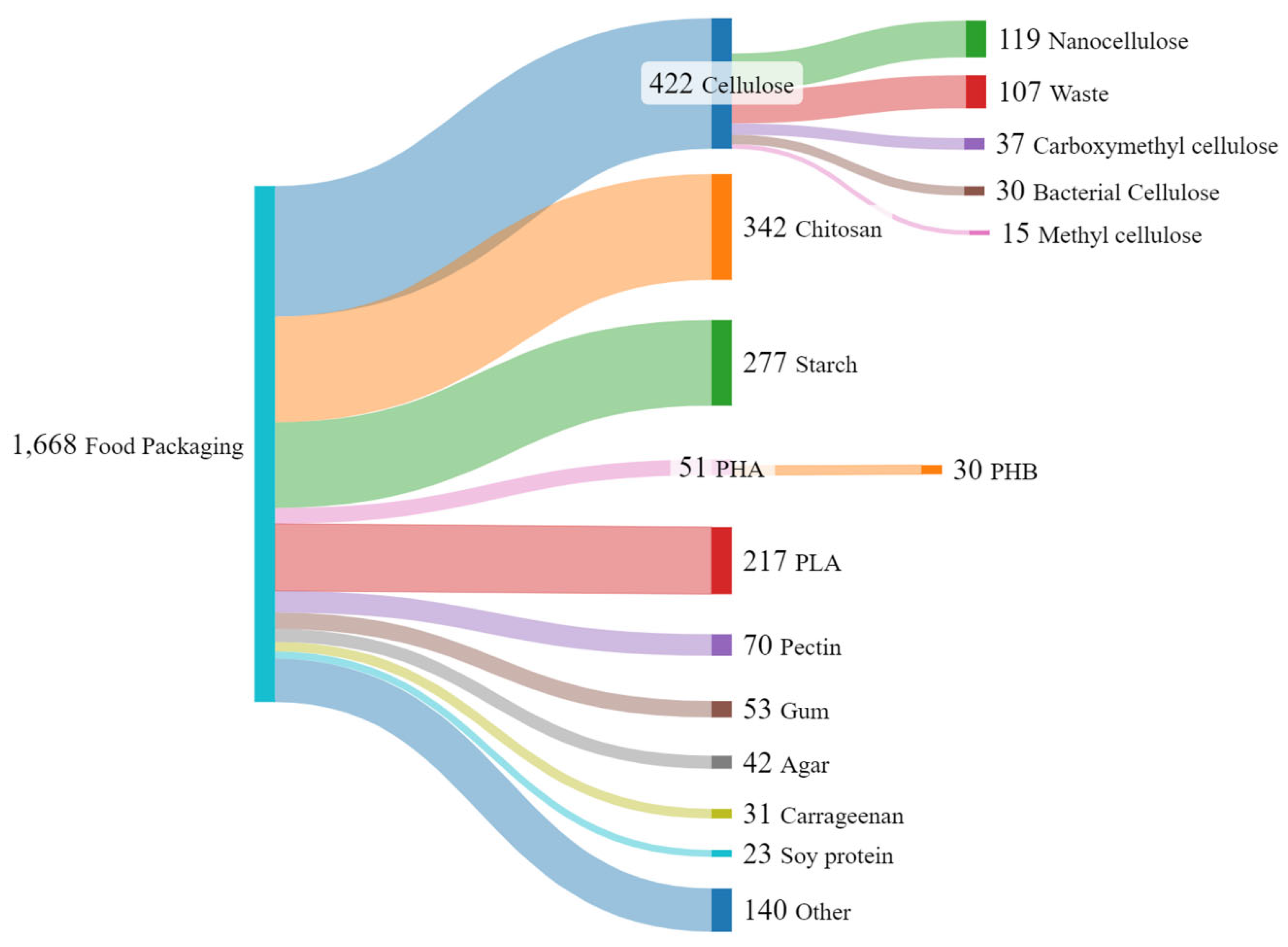
Several reports have presented the application of biomaterials in the production of packaging. Cellulose is one of the most reported polymer, represented by 422 published papers. Chitosan, starch and PLA also have high representation, usually being applicable as hybrid composites. Other materials have been emerging as new alternatives, such as PHB and pectin.
Figure 2.
Most reported biomaterrials for packaging production in the last ten years (2014-2024).
3.1. Cellulose
Cellulose, one of the most abundant polymers on Earth, is primarily sourced from plants. Cellulose is widely used in packaging for its biodegradability and oxygen barrier properties, although modifications or coatings are necessary to enhance its moisture barrier capabilities. Bacterial cellulose, a form of cellulose produced by microorganisms, is noted for its purity and superior mechanical strength, making it ideal for applications requiring high structural integrity. Its derivation from renewable sources and biodegradability make it a promising choice for replacing traditional plastics in food packaging.
Shi et al. (2024) [12] developed collagen nanocomposite films reinforced with curcumin-loaded laponite nanoplatelets (LAP NPs), intended as freshness indicators for shrimp packaging. The films exhibited high hydrophobicity, with a water contact angle of 133°, and a water vapor permeability of 0.62 g mm/m² h kPa. The antioxidant activity was significantly high (77.5%), and the material showed sensitivity to pH and NH3, changing color from yellow to reddish brown with increasing shrimp spoilage. After 5 days of storage, the color change of the films was visible to the naked eye, confirming their potential as an efficient visual indicator for monitoring seafood freshness in intelligent and sustainable packaging.
Gao et al. (2024) [45] developed a green and renewable chitosan/poly(vinyl alcohol) (CS/PVA) composite film reinforced with a Z-scheme heterojunction of carbon graphite nitride (g-C3N4) and titanium dioxide (TiO2) for fruit packaging. This composite showed exceptional photocatalytic properties, particularly under LED light, with significant antibacterial efficacy and the ability to preserve strawberries for up to 120 h. The film also exhibited excellent mechanical strength, low water vapor permeability (from 152 to 126 g Pa-1 s-1 m-1), and improved UV barrier properties, contributing to the longer shelf-life of packaged foods. Additionally, the film exhibited good recyclability and renewability, underscoring its potential for sustainable fruit packaging applications as an efficient and economical alternative to conventional materials, contributing to environmental protection.
Koreshkov et al. (2024) [54] explored the use of bacterial nanocellulose derived from kombucha, modified with oligo-lactic acid (OLLA-g-BC), as a filler in biodegradable biopolymers like PLA and PHBV for food packaging. The incorporation of 5% OLLA-g-BC reduced oxygen permeability by approximately 23% in PLA and 45% in PHBV while increasing water vapor permeability by 12% in PLA. The modification of the nanocellulose significantly improved the dispersion of particles within the polymer matrix, as observed through scanning electron microscopy. Additionally, the biodegradability of the composites was accelerated under thermophilic conditions due to the accelerated hydrolysis of short OLLA chains. However, mechanical properties, such as Young's modulus, varied, with a 12% increase in PLA and a 14% decrease in PHBV. This study demonstrates the potential of OLLA-g-BC nanocomposites to replace fossil-based plastics in food packaging, promoting a circular and sustainable economy.
3.2. Chitosan
Chitosan, a biopolymer derived from chitin found in crustacean shells, is valued for its inherent antimicrobial properties, making it ideal for food packaging aimed at extending shelf life. Chitosan is also utilized to produce flexible, transparent films with effective gas barrier properties. Due to its biodegradability and natural origin, chitosan is gaining recognition as an eco-friendly alternative in the food packaging industry.
Fang et al. (2024) [55] developed edible films composed of chitosan and nisin, incorporating perilla essential oil emulsions and glycerol monolaurate, for application in ready-to-eat fish meatball. The film formulation was optimized using response surface methodology, resulting in a composition of 6 μL/mL of perilla essential oil, 18.4 μg/mL of glycerol monolaurate, 14.2 mg/mL of chitosan, and 11.0 μg/mL of nisin. This formulation exhibited an inhibition rate against Staphylococcus aureus of 99.94%. The films proved to be highly effective in reducing the total bacterial count and total volatile elemental nitrogen (TVB-N) levels in the fish meatballs, maintaining the freshness of the products for up to 12 days with minimal changes in appearance during storage. These results suggest that the edible films exhibit ideal antimicrobial and physical properties for aquatic food packaging, presenting a promising solution for preserving ready-to-eat products.
Ton-That et al. (2025) [56] developed a chitosan film incorporated with silver nanoparticles (AgNPs) synthesized from dragon fruit stem using an environmentally friendly method. The resulting film, C4E3Ag3, demonstrated remarkable mechanical and biological properties. The film demonstrated a tensile strength of 24.85 ± 0.21 MPa, a significant improvement compared to the control. Additionally, the C4E3Ag3 film showed high antioxidant activity, with a free radical scavenging capacity of 89.28 ± 1.18%. The antimicrobial activity was particularly effective, eliminating more than 99.99% of Staphylococcus aureus and Escherichia coli after 6 hours of exposure. In strawberry preservation tests, the film reduced weight loss to 44.58 ± 0.56% and extended the shelf life of the fruit to up to 5 days. These characteristics indicate that the chitosan film decorated with AgNPs is a promising option for application in food packaging, offering antioxidant and antimicrobial protection and being biodegradable and compliant with EFSA and ECHA regulatory standards for silver migration in food.
3.3. Starch
Starch, a widely used biopolymer derived from sources such as corn, potatoes, and tapioca, is commonly employed in the production of biodegradable films and packaging. However, its effectiveness as a barrier against moisture and gases is limited, frequently necessitating the addition of other materials or chemical treatments to improve performance. Despite these challenges, starch remains an economical choice due to its abundance and versatility, although continued innovation is required to overcome its technical limitations.
Pech-Cohuo et al. (2024) investigated the development of thermoplastic starch (TPS)-based bioplastics derived from Melicoccus bijugatus (huaya) seeds and reinforced with bentonite clay. The study aimed to explore the sustainable use of unconventional starch sources and improve the properties of bioplastics through clay incorporation. The results demonstrated a significant increase in the tensile strength of the biofilms, from 2.5 MPa in pure TPS to 5.0 MPa with the addition of 5% clay. The elastic modulus also increased from 25 MPa to 60 MPa with the same concentration of clay. The thermal stability of the bioplastics improved as the initial degradation temperature increased from 110°C in pure TPS to 130°C with the addition of 5% clay. Additionally, the water vapor permeability (WVP) of the biofilms decreased from 4.11 × 10⁻¹⁰ g·m-1·s-1·Pa-1 to 2.09 × 10⁻¹⁰ g·m-1·s-1·Pa-1 with the incorporation of 5% clay, demonstrating a significant barrier effect. These results indicate that huaya starch-based bioplastics reinforced with bentonite clay have great potential for applications in sustainable food packaging, offering improvements in mechanical and barrier properties.
Tekin et al. (2024) [57] focused on developing active and biodegradable packaging films based on thermoplastic starch (TPS) and poly(butylene adipate-co-terephthalate) (PBAT) incorporated with grape seed oil, α-tocopherol, and rice husk. Using response surface methodology, the study optimized the concentrations of these antioxidants to achieve optimal mechanical and antioxidant properties. The optimized film containing 2.38% grape seed oil and 80.76% TPS exhibited antioxidant activity of 40.90% and tensile strength of 51.30 MPa. The optimized film with α-tocopherol (2.08% concentration) showed an antioxidant activity of 90.12% but a lower tensile strength of 4.89 MPa. Although the rice husk films exhibited good antioxidant properties, they faced significant challenges in terms of homogeneity and mechanical performance, with a tensile strength of 6.03 MPa. These results suggest that TPS/PBAT films with grape seed oil and α-tocopherol have considerable potential for active food packaging, offering a combination of antioxidant protection and adequate mechanical properties.
3.4. PLA (Polylactic Acid)
PLA is a thermoplastic polyester synthesized from renewable sources, such as corn and sugarcane. PLA is one of the most widely used bioplastics due to its industrial compostability and properties, comparable to PET in terms of transparency and mechanical strength. However, PLA's low heat resistance limits its applications in high-temperature environments. Although PLA is biodegradable, it requires specific conditions, such as those found in industrial composting facilities, to decompose efficiently [25].
The study by ŞEN (2024) [58] developed polylactic acid (PLA) films reinforced with Leonardite (LEO) and boric acid (BOR) for food packaging applications. Films with up to 4% LEO significantly improved tensile strength (28.7 MPa) and elastic modulus (1463 MPa) while increasing hydrophobicity, as indicated by a contact angle of 92.45º. In contrast, although BOR improved tensile strength at low concentrations, its addition led to particle agglomeration, reduced compatibility with PLA, and increased oxygen transmission rate, diminishing the film’s effectiveness as a gas barrier. These results suggest that Leonardite has the potential to enhance the mechanical and barrier properties of PLA films, but the addition of BOR must be carefully controlled.
Lawal et al. (2024) [59] developed polylactic acid (PLA) films reinforced with amine-functionalized mesoporous silica (GMS) for food packaging applications. The incorporation of GMS significantly increased the antioxidant properties of the film, with a free radical scavenging efficiency of 78%, and improved antibacterial activity, reducing the growth of Staphylococcus aureus and Escherichia coli by more than 90%. Additionally, the PLA/GMS films exhibited a reduction in oxygen transmission rate (OTR) by approximately 45% compared to pure PLA, enhancing their food preservation capabilities. The film extended the shelf life of apple slices by up to seven days, highlighting its potential as an active and sustainable material for food packaging.
Kowalczyk et al. (2024) [60] evaluated sustainable packaging materials for vacuum-packed beef steaks, comparing biodegradable polylactide (NAT/PLA) and Mater-Bi® (NAT/MBI) films with synthetic polyamide/polyethylene (PA/PE) films. The results showed that steaks packaged in NAT/PLA exhibited lower exudate loss (3.0%) and less expressed water after 14 and 21 days than those packaged in PA/PE. Regarding color, steaks packaged in NAT/MBI exhibited the most favorable appearance after blooming, with the highest values for L, a*, C*, and the R630/580 ratio, indicating a higher oxymyoglobin content and a lower proportion of metmyoglobin. All steaks, regardless of film type, maintained acceptable lipid oxidation during the 28-day aging period, with TBARS values below 0.25 mg MDA/kg, ensuring the preservation of the sensory quality of the meat.
3.5. Pectin
Pectin, a complex polysaccharide primarily found in the cell walls of fruits, is well-known for its gelling properties and capacity to form edible films. In food packaging, pectin-based edible coatings are used to extend the shelf life of perishable products, such as fruits and vegetables, by forming a barrier that reduces moisture loss and inhibits microbial growth. Owing to its biodegradability and non-toxic nature, pectin is particularly suitable for applications where the packaging must be safely consumed or degrade rapidly in the environment, offering a sustainable solution for food preservation.
Han et al. (2024) [61] developed multifunctional pectin-based films containing Schiff bases synthesized from γ-aminobutyric acid (GABA) and syringaldehyde (SA), designed to monitor freshness and preserve fresh-cut papayas. These films exhibited excellent texture density, water resistance, UV light-blocking capacity, and partially visible light blocking. Additionally, the films demonstrated high antioxidant activity, with ABTS and DPPH free radical scavenging rates of 90.19% and 85.37%, respectively. The films also exhibited effective antimicrobial activity against E. coli, S. aureus, and B. cinere. They were sensitive to color changes according to pH, allowing the freshness of papayas to be monitored based on color change. The application of these films effectively delayed the ripening of fresh-cut papayas, highlighting their potential as intelligent and active packaging materials for fruit preservation.
Li et al. (2024) [62] investigated the development of a pectin film fortified with zein nanoparticles and Fe³⁺-encapsulated propolis extract for fruit preservation. The film demonstrated an approximately 46% reduction in moisture content and a 19% decrease in water vapor permeability compared to pure pectin. The tensile strength nearly doubled, and the antioxidant activity was significantly enhanced, along with robust antibacterial properties. Moreover, the dual encapsulation system improved the release characteristics of the propolis extract, prolonging the preservation efficacy of strawberries during storage. These results indicate that the film has great potential as an active and sustainable packaging material for fruit preservation.
3.6. Gum
Natural gums, such as xanthan gum, are polysaccharides recognized for their rheological properties, including thickening and gelling capabilities. In packaging applications, these gums are commonly incorporated to enhance the consistency, texture, and mechanical strength of edible coatings.
Yar et al. (2024) [63] developed an intelligent film composed of carboxymethylcellulose, xanthan gum, and citric acid, enriched with blackcurrant anthocyanins, for monitoring beef freshness. The film showed high sensitivity to ammonia and pH changes, with notable color shifts as meat spoilage progressed. In tests conducted at 4°C, 25°C, and 35°C, the film effectively detected spoilage, with color shifts from red to pink, black to brown, and yellow, corresponding to increased levels of total volatile basic nitrogen (TVB-N) and pH in the meat. Additionally, the films exhibited biodegradation rates ranging from 37.16% to 51.49%, depending on the anthocyanin concentration, suggesting their potential as a sustainable solution for intelligent packaging to monitor meat freshness.
Liu et al. (2024) [64] presented a stepwise reinforcement strategy to enhance the properties of guar gum (GG) and sodium alginate (SA)-based films. The addition of 12% carboxylated cellulose nanofibers (CCN) significantly increased the tensile strength of the films, from 23.16 MPa to 39.4 MPa with the mixing method and to 43.8 MPa with the layer-by-layer (LBL) assembly method. Water vapor permeability (WVP) was reduced from 26.07 × 10⁻¹¹ g·m⁻¹·s⁻¹·Pa⁻¹ to 15.31 × 10⁻¹¹ g·m⁻¹·s⁻¹·Pa⁻¹ with calcium ion (Ca²⁺) crosslinking treatment. Additionally, the water solubility of the films was drastically reduced after crosslinking, from nearly 100% to 23.66%–28.62%, depending on the method and CCN concentration used. These results suggest that the combination of CCN and Ca²⁺ treatment can produce films with significantly enhanced mechanical and barrier properties, making them suitable for food packaging applications.
3.7. Agar
Agar is a polysaccharide derived from seaweed recognized for its ability to form rigid gels. It is widely used in the food industry as a gelling agent and shows great potential in biodegradable packaging, particularly in edible films or coatings for food. Its biodegradability and natural origin make agar a promising option for applications where sustainability and food safety are key priorities.
Khan et al. (2024) [65] nvestigated the effect of incorporating carbon dots doped into titanium metal-organic frameworks (CD@Ti-MOF) into carboxymethylcellulose (CMC) and agar-based films for active packaging of fruits, specifically cherry tomatoes. The incorporation of CD@Ti-MOF increased the film's tensile strength by 17.4% and provided strong antioxidant activity, with free radical scavenging efficiencies of 100% for ABTS and 57.8% for DPPH. The film also exhibited high UV light-blocking capacity, blocking 95.7% of UV-B radiation and 84.7% of UV-A, and demonstrated effective antimicrobial activity, inhibiting E. coli growth by up to 8.2 Log CFU/mL and eliminating Listeria monocytogenes after 12 hours. During storage at 4°C for 24 days, the CMC/Agar/CD@Ti-MOF film effectively extended the shelf life of cherry tomatoes, preserving their visual quality and delaying degradation. These results demonstrate the potential of this material for active packaging to prolong the freshness of fruits during storage.
Riahi et al. (2024) [66] xplored the use of an iron-based metal-organic framework hybridized with carbon dots (CD@MOF) in agar/gelatin films for fruit preservation, focusing on cherry tomatoes. The addition of CD@MOF to the film significantly increased the tensile strength to 75.1 MPa and elongation at break to 15.7%, demonstrating improved mechanical properties compared to the control. The films exhibited excellent antioxidant activity, with free radical scavenging rates of 71.9% for DPPH and 100% for ABTS, and demonstrated strong antibacterial activity, inhibiting E. coli growth by 2.4 log and eliminating Listeria monocytogenes after 12 hours. During storage at 4°C for 24 days, the CD@MOF films effectively preserved cherry tomatoes by minimizing weight loss and maintaining firmness and pH, suggesting their strong potential as an active packaging material to extend the shelf life of fresh fruits.
3.8. PHB (Polyhydroxybutyrate)
PHB is a polyester produced by bacteria as part of their metabolic processes. It is fully biodegradable and has mechanical properties similar to polypropylene, a widely used plastic. However, PHB is more expensive to produce, which limits its large-scale adoption. Nonetheless, its environmental profile and physical properties make it a viable alternative in food packaging applications, especially where biodegradability is crucial.
Kumari et al. (2024) [67] investigated the use of active poly(3-hydroxybutyrate) (PHB) nanocomposites reinforced with grape seed oil (GS) and magnesium oxide nanoparticles (MgO NPs) to extend the shelf life of cherry tomatoes. The PHB/5GS/0.7MgO film demonstrated superior mechanical properties, with a 1.4-fold increase in tensile strength (27.89 MPa) and 30 times greater elongation at break (14.74%) compared to pure PHB. Additionally, the film showed a 90% improvement in oxygen barrier properties and a 79% improvement in water vapor barrier properties. During 23 days of storage at room temperature, the tomatoes packaged with PHB/5GS/0.7MgO exhibited minimal weight loss (4.45%) and better firmness retention (15.77 N on day 21) compared to other storage methods. The film also displayed excellent antioxidant activity (65.25% DPPH radical scavenging). It completely inhibited the growth of E. coli and S. aureus, demonstrating its potential as a promising and environmentally friendly solution for active packaging.
The study by Palmieri et al. (2024) [68] focused on the development of biodegradable multilayer films using poly(butylene succinate) (PBS) and poly(hydroxybutyrate) (PHB) reinforced with Cloisite® 30B nanoclay, aiming for food packaging applications. The addition of 5% Cloisite® to PHB resulted in a significant improvement in the films' mechanical and barrier properties. The film exhibited increased stiffness, with a significantly higher elastic modulus than pure PHB, and a reduction in oxygen permeability by up to 55%, depending on the functional layer thickness. Additionally, water vapor permeability was also reduced as the concentration of nanofillers increased, demonstrating the effectiveness of Cloisite® in enhancing tortuosity and reducing free volume in the film matrix. These results indicate that multilayer films with PHB and nanoclay have strong potential to replace conventional plastics in food packaging, offering better barrier and mechanical properties.
Mittal et al. (2024) [69] developed poly(hydroxybutyrate) (PHB) nanocomposites reinforced with silver (Ag) and zinc oxide (ZnO) nanoparticles for active food packaging, specifically bread. The optimized film containing 3% ZnO showed significant improvements in mechanical properties, with tensile strength increasing to 22.11 MPa compared to 9.14 MPa in pure PHB and elongation at break reaching 7.06%, representing a substantial improvement over pure PHB. The film also demonstrated a reduction in water vapor permeability (WVP) to 0.22 g mm/m² kPa·day, along with excellent antimicrobial activity, inhibiting the growth of Escherichia coli, Staphylococcus aureus, and Aspergillus niger. The use of this film extended the shelf life of packaged bread from 4–5 days (with PHB/Ag film) to 8–10 days (with PHB/Ag-ZnO 3% film). These improvements highlight the potential of these nanocomposites for active food packaging applications, combining antimicrobial efficacy with enhanced mechanical and barrier performance.
3.9. Hybrid Composites
Hybrid composites, which combine natural and synthetic polymers with functional additives, have emerged as a promising solution to address these challenges. These materials not only offer biodegradability and reduced environmental impact but also improve mechanical properties, barrier performance, and active functionality, such as antimicrobial protection and the ability to monitor food freshness. The following studies explore different approaches to developing hybrid composites for food packaging, focusing on enhancing the efficiency and sustainability of these materials.
Mavai et al. (2024) [46] discuss the development of a ternary bioplastic based on polylactic acid (PLA), gum, and cellulose, highlighting significant improvements in the material’s properties. The addition of gum increased the composite’s flexibility. At the same time, cellulose enhanced its structural integrity, resulting in a 53.87% increase in tensile strength and a 61.46% improvement in elongation at break compared to pure PLA. Additionally, the bioplastic exhibited up to a 51% reduction in oxygen transmission rate (OTR) and a 48% reduction in water vapor transmission rate (WVTR) due to the presence of cellulose nanocrystals (CNCs), creating a tortuosity effect within the film matrix. The study also reports that the addition of gum increased the material’s hydrophobicity by 14%, which, along with the high crystalline density achieved through hot extrusion of functionalized PLA with gum, resulted in a UV barrier effect of 95%. These results indicate that the developed ternary composite has suitable characteristics for food packaging applications, providing better protection against oxygen, moisture, and UV light and enhancing the durability and quality of packaged food.
The study by Vázquez et al. (2024) [70] investigates the application of laminated films composed of bacterial cellulose (BC) and chitosan, enriched with grape pomace extract (GE) and glycerol, as active separators for Havarti cheese slices. The films demonstrated significant antioxidant capacity, reducing lipid oxidation in the cheese by up to 67.3% after 60 days of storage compared to traditional polyamide/polyethylene (PA/PE) films. Additionally, the incorporation of GE and glycerol improved the films' mechanical properties, increasing tensile strength to 59.18 MPa and elongation to 8.63%, compared to the initial values without these additives. Thermal tests indicated that the films maintained good stability up to 100°C, making them suitable for thermal treatments, such as pasteurization applications. These results suggest that the BC-chitosan laminated films enriched with GE and glycerol are promising as active packaging materials, contributing to the extension of food shelf life and environmental sustainability.
Li et al. (2024) [39] developed a dual-layer film using a copigmentation strategy with tannic acid and anthocyanins, combined with reduced silver nanoparticles (AgNPs), for the preservation and freshness monitoring of beef. The film demonstrated excellent antioxidant properties, with a DPPH scavenging rate of over 88% and significant antimicrobial activity, effectively inhibiting the growth of Escherichia coli and Staphylococcus aureus. The film also exhibited high hydrophobicity, a water contact angle (WCA) greater than 100°, and adequate UV barrier protection, with nearly 0% transmission between 200-320 nm. Additionally, the film displayed noticeable color changes in response to pH variations (from pink to yellow between pH 2 and 12) and sensitivity to volatile amines, enabling freshness monitoring of the meat throughout storage and extending its shelf life by one day. The digital color analysis of the films, using a smartphone application to quantify RGB values, allowed for a quick and accurate assessment of meat freshness, demonstrating the potential of this material for intelligent and active packaging applications.
The study by Priyanka et al. (2024) [71] developed an active nanocomposite for food packaging using a blend of starch, chitosan, and taro mucilage, doped with zinc oxide nanoparticles (ZnO NPs). This film showed significant improvements in mechanical properties, with tensile strength increasing to 1.29 MPa and elongation at break to 23.52%, compared to 0.28 MPa and 18.76%, respectively, in the film without ZnO. The water contact angle also increased, indicating lower hydrophilicity and higher water resistance. The film demonstrated complete biodegradability (100%) after 15 days in soil and intense antibacterial activity, with inhibition zones of 26 mm against Bacillus sp. and 30 mm against Pseudomonas sp. These results suggest that the nanocomposite is a promising material for active food packaging, combining antimicrobial efficacy with environmental safety.
Yousefi et al. (2024) [72] investigate the effects of temperature, azodicarbonamide (AZ) as a foaming agent, and boron nitride (BN) as a reinforcement agent in PHA/PLA composites, using a design of experiments (DoE) approach. The addition of 1% BN to the composite resulted in a significant improvement in mechanical properties, increasing tensile strength to 8.46 MPa and modulus to 164 MPa. The study also identified the optimal concentration of AZ (0.25%) to maintain good mechanical properties while allowing the formation of porous structures, resulting in a 20-21% reduction in density. Additionally, higher AZ concentrations led to faster crystallization, with the cold crystallization temperature reduced to 92.7°C and crystallinity of 32.6% during the second DSC heating. These results suggest that using AZ and BN can effectively enhance the properties of PHA/PLA composites while reducing material costs and density, making them more competitive for industrial applications.
4. Comparison of Bio-Based and Conventional Materials in Packaging
The analysis of Table 2 reveals critical aspects regarding the environmental and functional properties of bio-based materials compared to conventional plastics, highlighting both the benefits and limitations associated with the use of biopolymers in packaging. These materials, such as PLA, PHA, bacterial cellulose, and chitosan, stand out for their lower CO₂ emissions than petroleum-based polymers such as PET and PP. For example, PLA has emissions of only 0.9 g CO₂-eq/kg, a fraction of the emissions associated with PET, which reaches 28.3 g CO₂-eq/kg [53,73,74]. This difference underscores a significant environmental advantage of bio-based materials, particularly in the growing demand for solutions minimizing carbon footprint. Replacing conventional polymers with biopolymers can, therefore, represent a relevant contribution to reducing greenhouse gas emissions throughout the life cycle of the materials.
However, the high energy consumption of some biopolymers is still a point of concern. For example, PHA, with an energy consumption of 79.0 MJ/kg, is close to the consumption of plastics such as PP (76.7 MJ/kg), which suggests that, although these biopolymers are environmentally advantageous in terms of CO₂ emissions, the impact of energy consumption still needs to be optimized. This high energy demand is partly related to the fermentation and purification processes inherent to the production of biopolymers, highlighting the need for technological advances to increase the efficiency of these processes. This implies that, although PHA offers advantages in biodegradability and functionality, its energy efficiency needs to be improved to achieve a more balanced economic and environmental viability [75].
In addition, water consumption varies substantially between materials. While materials such as thermoplastic starch and paper consume large volumes of water during production (5.0 liters/kg and 15.9 liters/kg, respectively), which can pose a challenge in water-stressed regions, PP and PLA consume significantly less (1.9 liters/kg and 2.5 liters/kg) [73]. Although the use of renewable raw materials such as corn and potatoes for thermoplastic starch is positive in terms of resource sustainability, high water consumption may limit the potential application of these materials in geographic contexts where water is a scarce resource. Therefore, it is essential to consider the water balance as a critical criterion when assessing the global sustainability of biopolymers.
In terms of biodegradability, biopolymers significantly outperform conventional plastics, such as PET, PP, and LDPE, which have decomposition times of over 100 years [46,76]. Materials such as PLA, PHA, bacterial cellulose, and thermoplastic starch have considerably shorter biodegradation times, ranging from 1 to 5 years, making them ideal for disposable packaging, especially in locations where recycling infrastructure is limited. PLA may present high biodegradability, as its hardness decreases after 3 months [25]. Faster biodegradability is a crucial advantage in reducing the environmental impact of plastic waste and preventing the accumulation of waste in landfills or the environment.
There is considerable variation between the different biopolymers in terms of mechanical properties. Bacterial cellulose, for example, is recognized for its high tensile strength, which makes it a viable alternative to replace conventional plastics such as PP in applications that require high structural integrity [77]. In contrast, PLA has greater rigidity and brittleness, limiting its application in packaging and requiring flexibility and deformation resistance [25]. However, this limitation can be mitigated by adding nanocomposites, such as nanocellulose or zinc oxide nanoparticles, which improve mechanical resistance and give greater versatility to these materials.
The barrier properties of biopolymers also vary widely. PHA stands out for its good barrier properties to gases and water vapor, making it competitive with conventional plastics. In contrast, thermoplastic starch has greater permeability to gases and moisture, requiring additional treatments or the addition of compounds to improve its performance in this regard. Bacterial cellulose, with the incorporation of nanocrystals, shows great potential to overcome these limitations, significantly improving resistance to water vapor, as evidenced in Table 2, which presents different life cycle CO2 emissions, energy and water consumption of different bipolymer production in comparison to traditionally used plastic. It may be observed that bipolymer usually present a minor CO2 emission and energy consumption rate in comparison to petroderivates, also being significantly more biodegradable. This indicates that combining biopolymers with functional additives can transform the barrier properties of these materials, bringing them closer to the performance of petroleum-based plastics.
The thermal stability of biopolymers is another essential factor to be considered, particularly for applications involving exposure to temperature variations. PLA, with a relatively low melting temperature, may not be suitable for packaging requiring high-temperature resistance, limiting its use in specific contexts such as microwave packaging. On the other hand, PHA and bacterial cellulose offer greater thermal stability, making them more suitable for applications involving temperature variations or exposure to heat [78,79].
The high production cost of biopolymers remains a significant barrier to their widespread adoption. The production process, which often involves complex steps such as fermentation and chemical modification, increases costs than conventional plastics such as PET and PP. For biopolymers to become competitive, investing in optimizing production processes, including building more efficient biorefineries and using agricultural waste as a raw material source, is necessary. In addition, expanding composting and recycling infrastructure is essential to ensure that these materials are genuinely sustainable at all stages of their life cycle, from production to final disposal.

Table 2.
Comparison of bio-based and conventional materials regarding CO₂ emissions, energy consumption, water consumption, biodegradation time, and renewability.
Table 2.
Comparison of bio-based and conventional materials regarding CO₂ emissions, energy consumption, water consumption, biodegradation time, and renewability.
| Material | CO₂-eq Emissions (kg/kg) | Energy Consumption (MJ/kg) | Water Consumption (liters/kg) | Biodegradation (years) | Source/ Renewability | Ref. |
|---|---|---|---|---|---|---|
| PET (Polyethylene terephthalate) | 2.15-3.0 | 109.2-115.2 | 5.9 | >100 | Non-renewable (petroleum) | [80,81,82] |
| PP (Polypropylene) | 1.75-2.3 | 73 | 59 | >100 | Non-renewable (petroleum) | [80,81,83] |
| PLA (Polylactic Acid) | 1.8 | 46 | 15-23 | 2-5 | Renewable | [82,84] |
| PHA (Polyhydroxyalkanoates) | 0.49 | 78-88 | 268 | 2-5 | Renewable | [85,86] |
| Bacterial Cellulose | 16.1 | 31.6 | 460 | 2-4 | Renewable | [87] |
| Thermoplastic Starch | 1.8-3.7 | 33-72 | 10 | 1-3 | Renewable | [88,89] |
| Chitosan | 1.64 | 31.0 | 250 | 2-4 | Renewable | [90] |
5. Intelligent Packaging Technologies
Innovative packaging represents an innovation in the food industry, integrating additional functionalities beyond the simple physical protection of products. This concept encompasses a variety of technologies that enable active or informative interaction between the packaging and its contents or between the packaging and the consumer. There are two main types of intelligent packaging: active and innovative packaging with sensors. Active packaging is designed to interact with the internal environment of the packaging, controlling factors such as humidity and oxygen. On the other hand, packaging with sensors monitors and provides information on the conditions of the product, such as freshness and temperature, during transportation and storage. In addition, tracking and identification technologies, such as RFID and QR codes, are increasingly integrated to ensure the traceability and quality of products throughout the supply chain (Figure 3).
5.1. Active Packaging
The evolution of active packaging has led to the development of innovative solutions to extend the shelf life of perishable food products while maintaining their microbiological and sensory quality. Various studies have demonstrated the potential of bioactive materials and natural compounds, such as nanofibers, essential oils, and metal-organic frameworks (MOFs), to create packaging that interacts directly with the food environment. These advancements offer functionalities such as moisture control, gas absorption, and controlled release of antimicrobial compounds.
A noteworthy example is the study by Sethunga et al. (2024) [91], which developed cellulose acetate nanofibers (CANFs) infused with essential oils of cinnamon and clove (CNO and CBO) through electrospinning. These active membranes demonstrated excellent antioxidant and antimicrobial properties and controlled the release of bioactive compounds. When applied to fresh grapes and tomatoes, the CANFs extended the shelf life of the produce to over 30 days, compared to just 15 days for the control group, while maintaining the microbiological safety and sensory quality of the fruits.
Fu et al. (2024) [92] developed a multi-active packaging material made from chitosan and pectin containing epigallocatechin gallate (EGCG) and natamycin (NATA). This packaging demonstrated significant effectiveness in protecting strawberries from UV radiation and microbial contamination, delaying spoilage and extending the fruit's shelf life. Similarly, Benlloch-Tinoco et al. (2025) [93] explored the use of alginate films loaded with green tea polyphenols, which showed a controlled release of bioactive compounds, improving their bioavailability during digestion and enhancing the functionality of the packaging.
Another significant development is the application of metal-organic frameworks (MOFs) in active packaging, as Fu et al. (2023) [94]described. MOFs, known for their high porosity and gas adsorption properties, control ethylene levels and are a critical factor in the ripening and degradation of fruits and vegetables after harvest. MOF-based packaging has been shown to extend the post-harvest shelf life of produce by regulating ethylene concentrations, making it a promising solution for reducing food waste.
Lee et al. (2020) [95] introduced an active packaging film with insect-repellent properties, incorporating star anise essential oil (SAEO) into a multilayer PET-based film. The film effectively repelled insects and proved practical in natural food systems, such as bread packaging, by preventing insect infestations. The release of SAEO was controlled through various laminations, ensuring long-lasting insect-repellent activity while maintaining the sensory properties of the packaged food.
These advancements highlight the considerable potential of active packaging technologies in preserving perishable foods while offering various functionalities, such as antimicrobial protection, gas regulation, and insect repellency. The combination of nanocomposites, electrospinning techniques, and bioactive compounds like essential oils provides innovative and sustainable solutions for the food packaging industry, enhancing both food safety and quality while addressing environmental challenges.
5.2. Food Packaging with Sensors
The integration of sensors into intelligent packaging has revolutionized the food industry by introducing innovative methods for ensuring safety and real-time monitoring of product quality, particularly for perishable goods. These advanced technologies offer crucial data on food conditions such as freshness, gas presence, and environmental factors, allowing consumers and distributors to supervise product integrity throughout the supply chain effectively.
Ammonia detection has gained projection as an indicator of spoilage, especially in protein-rich foods like meat and fish. As noted by Chia et al. (2022) [96], starch/polyaniline (PANI) biopolymeric films have shown significant potential for intelligent packaging. These films serve as colorimetric sensors, changing color in response to ammonia, a byproduct of protein degradation. Specifically, the starch/PANI films change from green to blue when exposed to ammonia vapor, providing a simple and effective method for visually monitoring food spoilage.
Building on this, Musaev et al. (2024) [97] developed an inexpensive cellulose fiber-based sensor for detecting ammonia and other volatile compounds. Tested with fish fillets, this sensor effectively tracked food deterioration over 11 hours at 25°C, performing comparably to traditional microbiological methods. This low-cost and disposable technology offers a promising solution for real-time monitoring perishable foods, enhancing the practical application of intelligent packaging in everyday use.
Oxygen regulation within food packaging is another critical aspect of spoilage prevention. Oxygen can accelerate lipid oxidation and encourage the growth of aerobic microorganisms, both of which lead to food degradation. Won & Won (2021) [98] introduced a self-powered oxygen sensor that requires no external power sources, making it adaptable and cost-effective. This sensor's ability to control oxygen levels helps prevent oxidation-related spoilage, ensuring extended product freshness.
In addition to these innovations, assessing spoilage-related compounds such as biogenic amines has proven an effective strategy for freshness detection. Calabretta et al. (2023) [99] developed a colorimetric paper sensor for detecting biogenic amines, including putrescine, which are byproducts of microbial spoilage in meat and fish. The sensor, integrated directly into intelligent packaging, enabled real-time evaluation of chicken meat quality through visible color changes, demonstrating its precision in detecting spoilage markers.
Moreover, pH sensors have also shown potential in freshness monitoring. Kuswandi et al. (2020) [100] designed an edible pH sensor based on anthocyanins extracted from red cabbage and immobilized onto a bacterial cellulose membrane. This sensor responded quickly and reliably to pH variations, with good color stability over time, making it suitable for monitoring the freshness of foods like milk and dairy products.
While these advancements in intelligent packaging are promising, challenges remain, particularly regarding large-scale commercialization. As discussed by Dodero et al. (2021) [101], the high production costs of sensors and the complexity of integrating them with existing packaging systems are critical barriers to widespread adoption. Furthermore, the need for sophisticated instrumentation limits the use of some advanced solutions. However, like those used in colorimetric detection, optical sensors offer a more accessible and user-friendly alternative, increasing the likelihood of their adoption in commercial settings.
Intelligent packaging with sensors represents a critical innovation for ensuring the quality and freshness of perishable foods. Technologies based on colorimetric, oxygen, and pH sensors have proven effective in real-time monitoring, offering enhanced food safety while reducing food waste. Continued research is crucial to overcoming cost and integration challenges, facilitating the broader application of these sustainable and effective packaging solutions.
5.3. Tracking and Identification Systems
Traceability is a crucial component in intelligent packaging, playing a key role in ensuring food safety and the efficient management of supply chains. Technologies such as RFID (Radio-Frequency Identification) and QR codes are widely used to monitor the location and condition of products, such as temperature and humidity, throughout the distribution chain. This real-time monitoring enables the early identification of logistical issues, such as breaks in the cold chain, thereby preventing the compromise of food quality.
In addition to these technologies, the emergence of blockchain has provided an even more robust solution for traceability. Blockchain is a decentralized, distributed ledger technology that records transactions securely and immutably, meaning that it cannot be altered once data is entered. This characteristic makes blockchain an ideal tool for ensuring transparency and trust throughout the supply chain.
According to Singh et al. (2023) [102], blockchain can revolutionize Food Safety Traceability Systems (FSTS) by enabling the tracking of products from farm to consumer. Transactions are visible to all stakeholders, promoting greater trust in data integrity. When combined with technologies such as RFID and IoT (Internet of Things), blockchain enables real-time monitoring of food conditions, improving data quality and responsiveness during supply chain failures.
In the restaurant sector, Yele and Litoriya (2024) [103] demonstrated the benefits of blockchain in ensuring food safety and transparency in traceability. By combining blockchain with IoT devices and smart contracts, their system allows real-time tracking of food ingredients, building greater consumer confidence in food safety practices.
RFID UHF technology has also emerged as a particularly effective tool for food traceability, especially in the meat industry. Qiao et al. (2023) [104] developed a traceability system for meat products using UHF RFID, allowing accurate data collection at every stage of production and distribution. This technology enables monitoring in extreme conditions and allows for the simultaneous reading of multiple tags, streamlining the tracking process.
Despite these advancements, challenges remain. Singh et al. (2023) [105] point out issues such as scalability and interoperability that still need to be addressed before these technologies can be widely adopted. However, the potential to transform the food industry by ensuring better safety and transparency is evident, and ongoing research will be vital to overcoming these challenges.
6. Integration of Bio-Based Materials and Smart Packaging
The integration of bio-based materials with innovative packaging technologies is emerging as one of the most promising advances in the search for sustainable solutions in the food sector. The use of biopolymers derived from renewable sources, such as starch, cellulose, and polyhydroxyalkanoates (PHA), offers environmentally friendly alternatives to conventional plastics, which have contributed significantly to environmental pollution. These biodegradable and compostable materials reduce the carbon footprint and plastic waste and have functional properties that, when combined with smart technologies, offer innovative solutions for food safety and preservation.
Bio-based materials, mainly starch and cellulose, are widely used in producing biodegradable films that can serve as a basis for integrating intelligent sensors. These materials are particularly suitable for food packaging due to their high biodegradability and compatibility with advanced technologies. Kumar et al. (2024) [106] highlight that incorporating pH-sensitive natural pigments, such as anthocyanins, into starch and cellulose-based biopolymers allows the creation of films that change color in response to pH variations associated with food degradation. For example, when the food begins to deteriorate and the pH increases, the anthocyanins integrated into the film react with the change in acidity, providing a visual indication of the product's freshness. This feature makes it possible to monitor the quality of perishable foods, such as meat and dairy products, in real-time, offering greater safety to the consumer and reducing food waste.
In addition, intelligent nanofibers produced from anthocyanin-rich agricultural waste, such as those developed by Oliveira Filho et al. (2024) [107], are another notable innovation. These nanofibers, composed of a polyester and cellulose matrix, react to pH changes and ammonia's presence. These substances accumulate during the decomposition of perishable foods such as fish. The use of agricultural waste to extract anthocyanins further increases the sustainability of this type of packaging, as it uses by-products from other production chains. The rapid production of these nanofibers via Solution Blow Spinning (SBS) offers an efficient and scalable approach to manufacturing smart packaging, which can be adapted for different types of food.
Another relevant aspect in the evolution of intelligent bio-based packaging is the integration of active functionalities. Active packaging is not passive like traditional wrappers; instead, it interacts directly with food, helping to maintain its freshness for longer. An example is the work of Gao et al. (2024) [108], who developed starch films combined with propyl gallate, a natural antioxidant. These films can release the antioxidant in a controlled manner, slowing down the oxidation of food. This technology is particularly effective for high-fat products, such as peanut butter, susceptible to oxidation. The gradual release of antioxidants extends the shelf life of food products while using starch, a natural and renewable material, ensuring that the packaging is biodegradable.
This active functionality can be further enhanced using bio-based materials that control oxygen and moisture permeability. In addition to being biodegradable, PHA and starch-based films can be designed to absorb or release moisture, creating an optimized environment for preserving fresh food. This is essential to prevent the proliferation of microorganisms that accelerate food spoilage, particularly in perishable products such as fruits and vegetables.
In addition to active functionality, integrating traceability technologies into bio-based packaging can provide an additional layer of security and control. Monitoring systems that use blockchain, as highlighted by Sandeep et al. (2024) [109], allow for precisely tracking each stage of the supply chain, from production to consumption. This ensures product integrity and allows consumers and distributors access to detailed information about the origin of food, transportation conditions, and cold chain maintenance. These systems can be combined with intelligent sensors that monitor food quality, providing real-time product freshness and safety information.
One of the main advantages of intelligent bio-based packaging is its biodegradability. Materials such as cellulose and PHA are compostable, meaning they can decompose under appropriate conditions without leaving any harmful residues in the environment. Studies such as that by Al-Qahtani and Al-Senani (2024) [110] show that packaging made from delignified wood reinforced with cellulose nanocrystals and natural pigments is highly effective in detecting food spoilage and is biodegradable. The color change in response to pH changes provides a visual solution for monitoring while using natural materials, ensuring that the packaging can be disposed of sustainably after use.
The combination of bio-based materials with innovative packaging technologies offers a promising solution to address today’s environmental and food safety challenges. In addition to improving sustainability using biodegradable materials, these packages offer advanced functionalities such as freshness detection and traceability, which are essential to ensuring food quality throughout the supply chain. As these technologies evolve, they are expected to create a more sustainable and safe future for the food industry.
7. Perspectives and Conclusions
The widespread adoption of bio-based and intelligent packaging systems presents significant opportunities for innovation, sustainability, and food safety improvements. However, several technological, regulatory, and market challenges must be addressed for these innovations to become mainstream.
From a technological perspective, scaling the production of bio-based materials, such as PLA, PHA, and cellulose-based films, continues to pose challenges. The large-scale adoption of bio-based materials and smart packaging in the food sector faces significant challenges, such as high cost, the need to improve material properties, and the lack of clear regulations. The production process must become more cost-effective, and improvements in the materials’ mechanical and barrier properties are essential to match the performance of conventional plastics. Moreover, the integration of intelligent systems, such as sensors and tracking technologies, requires further miniaturization and compatibility with bio-based materials. Developing biodegradable sensors is essential to ensure that these technologies do not compromise the compostability and sustainability of the packaging.
On the regulatory side, the lack of harmonized standards and guidelines for using bio-based materials and intelligent packaging in the food industry creates uncertainty for manufacturers and consumers. Issues such as compostability certification, food safety concerns related to new materials, and waste management strategies for packaging that combines biodegradable materials with electronic components require clear and consistent regulations. These regulatory challenges are compounded by the need to meet stringent environmental requirements while ensuring the safety and effectiveness of the packaging.
Market factors also play a crucial role. The relatively higher cost of bio-based materials compared to conventional plastics represents a significant barrier to widespread adoption, especially in cost-sensitive industries like food production. While consumer demand for sustainable solutions is growing, traditional plastics dominate the market due to their affordability and well-established supply chains. Furthermore, the current infrastructure for recycling and composting bio-based materials remains limited, particularly in regions lacking adequate waste management systems.
The future of packaging in the food industry is poised for significant advancements. As technology evolves, the costs of bio-based materials are expected to decrease, making them more competitive with conventional plastics. Nanotechnology and material science advances will likely improve the mechanical strength, gas barrier properties, and overall functionality of bio-based materials, expanding their applications in high-demand areas such as packaging for perishable goods.
On the regulatory front, international standards are anticipated to evolve to support the use of sustainable materials. Stricter regulations on traditional plastics, including bans on certain non-recyclable packaging types, will likely accelerate the adoption of bio-based alternatives. Governments and policymakers must collaborate with industry stakeholders to establish clear frameworks that facilitate the adoption of bio-based and smart packaging.
Technological innovations and advanced sensor systems are expected to revolutionize the packaging landscape. Future packaging solutions may go beyond simply protecting food; they will likely provide real-time data on product quality, environmental conditions, and supply chain integrity. These innovations will enhance food safety, reduce waste, and meet growing consumer expectations for transparency and sustainability.
The transition toward bio-based materials and innovative packaging represents a critical step in addressing both environmental concerns and the evolving needs of the global food industry. While challenges remain, ongoing research and development efforts will be key to overcoming technical, regulatory, and market barriers. These innovations can lead to a more sustainable, efficient, and resilient food system through academia, industry, and government collaboration. The integration of bio-based materials and intelligent technologies offers a promising path forward, providing long-term solutions that align with the principles of a circular economy and sustainable development.
Author Contributions
The authors have contributed equally
Data Availability Statement
Data will be available at request.
Conflicts of Interest
The authors declare no conflicts of interest.
References
- Arfelli, F.; Roguszewska, M.; Torta, G.; Iurlo, M.; Cespi, D.; Ciacci, L.; Passarini, F. Environmental Impacts of Food Packaging: Is It All a Matter of Raw Materials? Sustain. Prod. Consum. 2024, 49, 318–328. [Google Scholar] [CrossRef]
- Acharyya, P.P.; Sarma, M.; Kashyap, A. Recent Advances in Synthesis and Bioengineering of Bacterial Nanocellulose Composite Films for Green, Active and Intelligent Food Packaging. Cellulose 2024. [Google Scholar] [CrossRef]
- Jambeck, J.R.; Geyer, R.; Wilcox, C.; Siegler, T.R.; Perryman, M.; Andrady, A.; Narayan, R.; Law, K.L. Plastic Waste Inputs from Land into the Ocean. Science (80-. ). 2015, 347, 768–771. [Google Scholar] [CrossRef] [PubMed]
- Bian, Z.; Li, X.; Zhang, J.; Shi, M.; Xin, Z.; Wang, H.; Komarneni, S.; Zhang, K.; Ni, Z.; Hu, G. Intelligent Double-Layer Films Based on Gellan Gum/Mica Nanosheets/Anthocyanin/Konjac Glucomannan/Carrageenan for Food Real-Time Freshness Monitoring. Food Hydrocoll. 2024, 151, 109767. [Google Scholar] [CrossRef]
- Zafar, M.Z.; Shi, X.; Yang, H.; Abbas, J.; Chen, J. The Impact of Interpretive Packaged Food Labels on Consumer Purchase Intention: The Comparative Analysis of Efficacy and Inefficiency of Food Labels. Int. J. Environ. Res. Public Health 2022, 19, 5098. [Google Scholar] [CrossRef]
- Doğan, N. Native Bacterial Cellulose Films Based on Kombucha Pellicle as a Potential Active Food Packaging. J. Food Sci. Technol. 2023, 60, 2893–2904. [Google Scholar] [CrossRef]
- Yu, F.; Fei, X.; He, Y.; Li, H. Poly(Lactic Acid)-Based Composite Film Reinforced with Acetylated Cellulose Nanocrystals and ZnO Nanoparticles for Active Food Packaging. Int. J. Biol. Macromol. 2021, 186, 770–779. [Google Scholar] [CrossRef]
- Abdelkader, R.M.M.; Hamed, D.A.; Gomaa, O.M. Red Cabbage Extract Immobilized in Bacterial Cellulose Film as an Eco-Friendly Sensor to Monitor Microbial Contamination and Gamma Irradiation of Stored Cucumbers. World J. Microbiol. Biotechnol. 2024, 40, 1–15. [Google Scholar] [CrossRef]
- Palanisamy, S.; Selvaraju, G.D.; Selvakesavan, R.K.; Venkatachalam, S.; Bharathi, D.; Lee, J. Unlocking Sustainable Solutions: Nanocellulose Innovations for Enhancing the Shelf Life of Fruits and Vegetables – A Comprehensive Review. Int. J. Biol. Macromol. 2024, 261, 129592. [Google Scholar] [CrossRef]
- D’Almeida, A.P.; de Albuquerque, T.L. Coconut Husk Valorization: Innovations in Bioproducts and Environmental Sustainability. Biomass Convers. Biorefinery 2024. [Google Scholar] [CrossRef]
- Abekoon, T.; Buthpitiya, B.L.S.K.; Sajindra, H.; Samarakoon, E.R.J.; Jayakody, J.A.D.C.A.; Kantamaneni, K.; Rathnayake, U. A Comprehensive Review to Evaluate the Synergy of Intelligent Food Packaging with Modern Food Technology and Artificial Intelligence Field. Discov. Sustain. 2024, 5. [Google Scholar] [CrossRef]
- Shi, J.; Sheng, L.; Chen, M.; Wu, X.; Li, X.; Tan, Y.Q. PH-Responsive Collagen Nanocomposite Films Reinforced by Curcumin-Loaded Laponite Nanoplatelets for Dynamic Visualization of Shrimp Freshness. Food Hydrocoll. 2024, 157, 110447. [Google Scholar] [CrossRef]
- Fan, L.; Chen, Y.; Zeng, Y.; Yu, Z.; Dong, Y.; Li, D.; Zhang, C.; Ye, C. Application of Visual Intelligent Labels in the Assessment of Meat Freshness. Food Chem. 2024, 460, 140562. [Google Scholar] [CrossRef] [PubMed]
- Cheng, M.; Yan, X.; Cui, Y.; Han, M.; Wang, X.; Wang, J.; Zhang, R. An Eco-Friendly Film of PH-Responsive Indicators for Smart Packaging. J. Food Eng. 2022, 321, 110943. [Google Scholar] [CrossRef]
- Mohammadian, E.; Alizadeh-Sani, M.; Jafari, S.M. Smart Monitoring of Gas/Temperature Changes within Food Packaging Based on Natural Colorants. Compr. Rev. Food Sci. Food Saf. 2020, 19, 2885–2931. [Google Scholar] [CrossRef]
- Das, P.P.; Prathapan, R.; Ng, K.W. Advances in Biomaterials Based Food Packaging Systems: Current Status and the Way Forward. Biomater. Adv. 2024, 164, 213988. [Google Scholar] [CrossRef]
- Miao, F.; Han, Y.; Tian, P.; Tao, B.; Zang, Y.; Chu, P.K. Integrated Sensor for Humidity, Temperature, Light, and Carbon Dioxide Based on Passive RFID. Sensors Actuators B Chem. 2023, 390, 133913. [Google Scholar] [CrossRef]
- Yong, Y.; Ahmad, H.N.; Gu, Y.; Zhu, X.; Wen, Y.; Guo, L.; Zhu, J. The Synergistic Effect of Polyphenols and Polypeptides for Plant-Based Bioplastic Film – Enhanced UV Resistance, Antioxidant and Antibacterial Performance. Food Chem. 2024, 460, 140746. [Google Scholar] [CrossRef]
- Laranjeiro, F.; Rotander, A.; López-Ibáñez, S.; Vilas, A.; Södergren Seilitz, F.; Clérandeau, C.; Sampalo, M.; Rial, D.; Bellas, J.; Cachot, J.; et al. Comparative Assessment of the Acute Toxicity of Commercial Bio-Based Polymer Leachates on Marine Plankton. Sci. Total Environ. 2024, 946, 174403. [Google Scholar] [CrossRef]
- Swielam, E.M.; Hussien, Z.M.; Hasanin, M.S. Design, Characterizations, and Antimicrobial Activity of Sustainable Home Furnishing-Based Waste Fabric Treated Using Biobased Nanocomposite. Bioresour. Bioprocess. 2024, 11, 75. [Google Scholar] [CrossRef]
- Miao, W.; Gu, R.; Shi, X.; Zhang, J.; Yu, L.; Xiao, H.; Li, C. Indicative Bacterial Cellulose Films Incorporated with Curcumin-Embedded Pickering Emulsions: Preparation, Antibacterial Performance, and Mechanism. Chem. Eng. J. 2024, 495, 153284. [Google Scholar] [CrossRef]
- Lindh, A.; Wijayarathna, E.R.K.B.; Ciftci, G.C.; Syed, S.; Bashir, T.; Kadi, N.; Zamani, A. Dry Gel Spinning of Fungal Hydrogels for the Development of Renewable Yarns from Food Waste. Fungal Biol. Biotechnol. 2024, 11, 9. [Google Scholar] [CrossRef] [PubMed]
- Weng, S.; Marcet, I.; Rendueles, M.; Díaz, M. Insect-Derived Materials for Food Packaging-A Review. Food Packag. Shelf Life 2023, 38, 101097. [Google Scholar] [CrossRef]
- Rosenboom, J.-G.; Langer, R.; Traverso, G. Bioplastics for a Circular Economy. Nat. Rev. Mater. 2022, 7, 117–137. [Google Scholar] [CrossRef] [PubMed]
- de Albuquerque, T.L.; Marques Júnior, J.E.; de Queiroz, L.P.; Ricardo, A.D.S.; Rocha, M.V.P. Polylactic Acid Production from Biotechnological Routes: A Review. Int. J. Biol. Macromol. 2021, 186, 933–951. [Google Scholar] [CrossRef]
- Luo, Y.; Lin, Z.; Guo, G. Biodegradation Assessment of Poly (Lactic Acid) Filled with Functionalized Titania Nanoparticles (PLA/TiO2) under Compost Conditions. Nanoscale Res. Lett. 2019, 14, 56. [Google Scholar] [CrossRef]
- Ramchuran, S.O.; O’Brien, F.; Dube, N.; Ramdas, V. An Overview of Green Processes and Technologies, Biobased Chemicals and Products for Industrial Applications. Curr. Opin. Green Sustain. Chem. 2023, 41, 100832. [Google Scholar] [CrossRef]
- Marting Vidaurre, N.A.; Vargas-Carpintero, R.; Wagner, M.; Lask, J.; Lewandowski, I. Social Aspects in the Assessment of Biobased Value Chains. Sustainability 2020, 12, 9843. [Google Scholar] [CrossRef]
- Moshood, T.; Nawanir, G.; Mahmud, F.; Mohamad, F.; Ahmad, M.; Abdul Ghani, A. Expanding Policy for Biodegradable Plastic Products and Market Dynamics of Bio-Based Plastics: Challenges and Opportunities. Sustainability 2021, 13, 6170. [Google Scholar] [CrossRef]
- Song, X.; Tang, Z.; Liu, W.; Chen, K.; Liang, J.; Yuan, B.; Lin, H.; Zhu, X.; Fan, Y.; Shi, X.; et al. Biomaterials and Regulatory Science. J. Mater. Sci. Technol. 2022, 128, 221–227. [Google Scholar] [CrossRef]
- Martín-Closas, L.; Costa, J.; Pelacho, A.M. Agronomic Effects of Biodegradable Films on Crop and Field Environment. In; 2017; pp. 67–104.
- Chiaregato, C.G.; Souza, C.F.; Faez, R. The Fertilizer Release into Water and Soil as the Biodegradation Process in the Sustainable Material Enhancing the Fertilizer Efficiency. Environ. Technol. Innov. 2021, 22, 101417. [Google Scholar] [CrossRef]
- Carvalho, D.; Ferreira, N.; França, B.; Marques, R.; Silva, M.; Silva, S.; Silva, E.; Macário, D.; Barroso, L.; Silva, C.J.; et al. Advancing Sustainability in the Automotive Industry: Bioprepregs and Fully Bio-Based Composites. Compos. Part C Open Access 2024, 14, 100459. [Google Scholar] [CrossRef]
- Khan, F.; Hossain, N.; Mim, J.J.; Rahman, S.M.; Iqbal, M.J.; Billah, M.; Chowdhury, M.A. Advances of Composite Materials in Automobile Applications – A Review. J. Eng. Res. 2024. [Google Scholar] [CrossRef]
- Teixeira, S.C.; Gomes, N.O.; Oliveira, T.V. de; Fortes-Da-Silva, P.; Soares, N. de F.F.; Raymundo-Pereira, P.A. Review and Perspectives of Sustainable, Biodegradable, Eco-Friendly and Flexible Electronic Devices and (Bio)Sensors. Biosens. Bioelectron. X 2023, 14, 100371. [Google Scholar] [CrossRef]
- Villarreal, C.C.; Monge, S.; Aguilar, D.; Tames, A.; Araya, N.; Aguilar, M.; Ramakrishna, S.; Thavasi, V.; Song, Z.; Mulchandani, A.; et al. Bio-Sensitized Solar Cells Built from Renewable Carbon Sources. Mater. Today Energy 2022, 23, 100910. [Google Scholar] [CrossRef]
- Dalwadi, S.; Goel, A.; Kapetanakis, C.; Salas-de la Cruz, D.; Hu, X. The Integration of Biopolymer-Based Materials for Energy Storage Applications: A Review. Int. J. Mol. Sci. 2023, 24, 3975. [Google Scholar] [CrossRef]
- Bell, J.; Paula, L.; Dodd, T.; Németh, S.; Nanou, C.; Mega, V.; Campos, P. EU Ambition to Build the World’s Leading Bioeconomy—Uncertain Times Demand Innovative and Sustainable Solutions. N. Biotechnol. 2018, 40, 25–30. [Google Scholar] [CrossRef]
- Li, R.; Feng, H.; Wang, S.; Zhuang, D.; Wen, Y.; Zhu, J. A Double-Layer Film Based on the Strategy of Tannic Acid-Anthocyanin Co-Pigmentation and Tannic-Crosslinked-Gelatin/−reduced Ag Nanoparticles for Beef Preservation and Monitoring. Food Chem. 2024, 460, 140642. [Google Scholar] [CrossRef]
- Souza, E.; Gottschalk, L.; Freitas-Silva, O. Overview of Nanocellulose in Food Packaging. Recent Pat. Food. Nutr. Agric. 2019, 11, 154–167. [Google Scholar] [CrossRef]
- Han Lyn, F.; Ismail-Fitry, M.R.; Noranizan, M.A.; Tan, T.B.; Nur Hanani, Z.A. Recent Advances in Extruded Polylactic Acid-Based Composites for Food Packaging: A Review. Int. J. Biol. Macromol. 2024, 266, 131340. [Google Scholar] [CrossRef]
- Chen, G.; Wang, K.; Chen, P.; Cai, D.; Shao, Y.; Xia, R.; Li, C.; Wang, H.; Ren, F.; Cheng, X.; et al. Fully Biodegradable Packaging Films for Fresh Food Storage Based on Oil-Infused Bacterial Cellulose. Adv. Sci. 2024, 11. [Google Scholar] [CrossRef] [PubMed]
- Vikman, M.; Vartiainen, J.; Tsitko, I.; Korhonen, P. Biodegradability and Compostability of Nanofibrillar Cellulose-Based Products. J. Polym. Environ. 2015, 23, 206–215. [Google Scholar] [CrossRef]
- In Kim, T.; Lee, S.J.; Chathuranga, K.; Lee, J.S.; Kim, M.H.; Park, W.H. Multifunctional and Edible Egg White/Amylose-Tannin Bilayer Film for Perishable Fruit Preservation. Int. J. Biol. Macromol. 2024, 274, 133207. [Google Scholar] [CrossRef] [PubMed]
- Gao, X.; Cao, L.; Wang, L.; Liu, S.; Zhang, M.; Li, C.; Waterhouse, G.I.N.; Fan, H.; Xu, J. International Journal of Biological Macromolecules Alcohol ) Film : Efficient and Recyclable for Fruit Packaging. 2024, 268.
- Mavai, S.; Bains, A.; Sridhar, K.; Rashid, S.; Elossaily, G.M.; Ali, N.; Chawla, P.; Sharma, M. Formulation and Application of Poly Lactic Acid, Gum, and Cellulose-Based Ternary Bioplastic for Smart Food Packaging: A Review. Int. J. Biol. Macromol. 2024, 268, 131687. [Google Scholar] [CrossRef] [PubMed]
- Dórame-Miranda, R.F.; Gámez-Meza, N.; Medina-Juárez, L.; Ezquerra-Brauer, J.M.; Ovando-Martínez, M.; Lizardi-Mendoza, J. Bacterial Cellulose Production by Gluconacetobacter Entanii Using Pecan Nutshell as Carbon Source and Its Chemical Functionalization. Carbohydr. Polym. 2019, 207, 91–99. [Google Scholar] [CrossRef]
- Gupta, D.; Lall, A.; Kumar, S.; Patil, T.D.; Gaikwad, K.K. Plant-Based Edible Films and Coatings for Food-Packaging Applications: Recent Advances, Applications, and Trends. Sustain. Food Technol. 2024. [Google Scholar] [CrossRef]
- Carniel, A.; Ferreira dos Santos, N.; Buarque, F.S.; Mendes Resende, J.V.; Ribeiro, B.D.; Marrucho, I.M.; Coelho, M.A.Z.; Castro, A.M. From Trash to Cash: Current Strategies for Bio-Upcycling of Recaptured Monomeric Building Blocks from Poly(Ethylene Terephthalate) (PET) Waste. Green Chem. 2024, 26, 5708–5743. [Google Scholar] [CrossRef]
- Pérez-Bassart, Z.; Reyes, A.; Martínez-Abad, A.; López-Rubio, A.; Fabra, M.J. Feasibility of Agaricus Bisporus Waste Biomass to Develop Biodegradable Food Packaging Materials. Food Hydrocoll. 2023, 142. [Google Scholar] [CrossRef]
- Moshood, T.D.; Nawanir, G.; Mahmud, F.; Mohamad, F.; Ahmad, M.H.; AbdulGhani, A. Sustainability of Biodegradable Plastics: New Problem or Solution to Solve the Global Plastic Pollution? Curr. Res. Green Sustain. Chem. 2022, 5. [Google Scholar] [CrossRef]
- Babu, R.P.; O’Connor, K.; Seeram, R. Current Progress on Bio-Based Polymers and Their Future Trends. Prog. Biomater. 2013, 2, 8. [Google Scholar] [CrossRef]
- Naser, A.Z.; Deiab, I.; Darras, B.M. Poly(Lactic Acid) (PLA) and Polyhydroxyalkanoates (PHAs), Green Alternatives to Petroleum-Based Plastics: A Review. RSC Adv. 2021, 11, 17151–17196. [Google Scholar] [CrossRef] [PubMed]
- Koreshkov, M.; Takatsuna, Y.; Bismarck, A.; Fritz, I.; Reimhult, E.; Zirbs, R. Sustainable Food Packaging Using Modified Kombucha-Derived Bacterial Cellulose Nanofillers in Biodegradable Polymers. RSC Sustain. 2024, 2, 2367–2376. [Google Scholar] [CrossRef]
- Fang, Z.; Yang, Y.; Lin, S.; Xu, L.; Chen, S.; Lv, W.; Wang, N.; Dong, S.; Lin, C.; Xie, Y.; et al. Development and Antimicrobial Activity of Composite Edible Films of Chitosan and Nisin Incorporated with Perilla Essential Oil-Glycerol Monolaurate Emulsions. Food Chem. 2025, 462, 141006. [Google Scholar] [CrossRef] [PubMed]
- Ton-That, P.; Dinh, T.A.; Thanh Gia-Thien, H.; Van Minh, N.; Nguyen, T.; Huynh, K.P.H. Novel Packaging Chitosan Film Decorated with Green-Synthesized Nanosilver Derived from Dragon Fruit Stem. Food Hydrocoll. 2025, 158, 110496. [Google Scholar] [CrossRef]
- Tekin, İ.; Ersus, S. Development of Thermoplastic Starch/Poly(Butylene Adipate-Co-Terephthalate) Biobased Active Packaging Films and Potential Usage in the Food Industry. J. Appl. Polym. Sci. 2024, 141, 1–17. [Google Scholar] [CrossRef]
- ŞEN, İ. Preparation and Characterization of the Leonardite and Boric Acid Added Polylactic Acid Films for Food Packaging Applications. Ind. Crops Prod. 2024, 222. [Google Scholar] [CrossRef]
- Lawal, U.; Kumar, N.; Samyuktha, R.; Gopi, A.; Robert, V.; Pugazhenthi, G.; Loganathan, S.; Valapa, R.B. Poly (Lactic Acid)/ Amine Grafted Mesoporous Silica-Based Composite for Food Packaging Application. Int. J. Biol. Macromol. 2024, 277, 134567. [Google Scholar] [CrossRef]
- Kowalczyk, M.; Domaradzki, P.; Skałecki, P.; Kaliniak-Dziura, A.; Stanek, P.; Teter, A.; Grenda, T.; Florek, M. Use of Sustainable Packaging Materials for Fresh Beef Vacuum Packaging Application and Product Assessment Using Physicochemical Means. Meat Sci. 2024, 216. [Google Scholar] [CrossRef]
- Han, P.; Sun, J.; Mao, S.; Li, F.; Yan, X.; Zhang, T.; Lu, C. Multifunctional Pectin-Based Films Containing Schiff Base Triggered by PH Microenvironment for Freshness Monitoring and Preservation of Fresh-Cut Papayas. Food Hydrocoll. 2024, 157, 110417. [Google Scholar] [CrossRef]
- Li, X.; He, J.; Zhang, W.; Khan, M.R.; Ahmad, N.; Tian, W. Pectin Film Fortified with Zein Nanoparticles and Fe3+-Encapsulated Propolis Extract for Enhanced Fruit Preservation. Food Hydrocoll. 2024, 157, 110405. [Google Scholar] [CrossRef]
- Yar, M.S.; Ibeogu, I.H.; Bako, H.K.; Alnadari, F.; Bilal, M.; Rehman, F.; Zhu, J.; Zhou, T.; Zhao, Z.; Li, C. A Novel Carboxymethyl Cellulose/Gum Xanthan and Citric Acid-Based Film That Enhances the Precision of Blackcurrant Anthocyanin-Induced Color Detection for Beef Spoilage Tracking. Food Chem. 2024, 461, 140905. [Google Scholar] [CrossRef] [PubMed]
- Liu, Z.; Liu, Q.; Lin, L.; Wang, Q.; Ma, W.; Cheng, Q.; Yang, J.; Tang, F.; Xu, M.; Yang, X.; et al. Stepwise Reinforcement Strategy for Guar Gum/Sodium Alginate Based Films: Introduction of Carboxylated Cellulose Nanofibers by Different Methods and Further Calcium Ion Crosslinking. Food Hydrocoll. 2024, 156, 110266. [Google Scholar] [CrossRef]
- Khan, A.; Riahi, Z.; Kim, J.T.; Rhim, J.W. Effect of Carbon Dot-Doped Ti-MOF on CMC/Agar Film and Active Packaging Application on Storage Quality of Fruits. Food Chem. 2024, 455, 139911. [Google Scholar] [CrossRef] [PubMed]
- Riahi, Z.; Khan, A.; Rhim, J.W.; Shin, G.H.; Kim, J.T. Synergistic Effect of Iron-Based Metal-Organic Framework Hybridized with Carbon Quantum Dots in Agar/Gelatin Films for Fruit Preservation. Food Packag. Shelf Life 2024, 45, 101330. [Google Scholar] [CrossRef]
- Venu Gopala Kumari, S.; Pakshirajan, K.; Pugazhenthi, G. Application of Active and Environment-Friendly Poly (3-Hydroxybutyrate)/Grapeseed Oil/MgO Nanocomposite Packaging for Prolonging the Shelf-Life of Cherry Tomatoes (Solanum Lycopersicum L. Var. Cerasiforme). Sustain. Chem. Pharm. 2024, 41, 101681. [Google Scholar] [CrossRef]
- Palmieri, F.; Nii, J.; Tagoe, A.; Maio, L. Di Development of PBS / Nano Composite PHB-Based Multilayer Applications. 2024.
- Mittal, M.; Ahuja, S.; Yadav, A.; Arora, S.; Aggarwal, N.K. Production of Environmentally Benign Poly(Hydroxybutyrate)/Silver Bionanocomposites Reinforced with ZnO for Active Packaging of Bread. Iran. Polym. J. (English Ed. 2024, 33, 787–798. [Google Scholar] [CrossRef]
- Vázquez, M.; Flórez, M.; Cazón, P. A Strategy to Prolong Cheese Shelf-Life: Laminated Films of Bacterial Cellulose and Chitosan Loaded with Grape Bagasse Antioxidant Extract for Effective Lipid Oxidation Delay. Food Hydrocoll. 2024, 156. [Google Scholar] [CrossRef]
- Priyanka, S.; Namasivayam, S.K.R.; Kennedy, J.F.; Moovendhan, M. Starch-Chitosan-Taro Mucilage Nanocomposite Active Food Packaging Film Doped with Zinc Oxide Nanoparticles – Fabrication, Mechanical Properties, Anti-Bacterial Activity and Eco Toxicity Assessment. Int. J. Biol. Macromol. 2024, 277, 134319. [Google Scholar] [CrossRef]
- Yousefi, A.M.; Wnek, G.E.; Jimenez, H.G.; Ghassemi, H.; Zhang, J. Investigating the Effects of Temperature, Azodicarbonamide, Boron Nitride, and Multilayer Film/Foam Coextrusion on the Properties of a Poly(Hydroxyalkanoate)/Poly(Lactic Acid) Blend. Polym. Environ. under review. 2024. [Google Scholar] [CrossRef]
- Morão, A.; de Bie, F. Life Cycle Impact Assessment of Polylactic Acid (PLA) Produced from Sugarcane in Thailand. J. Polym. Environ. 2019, 27, 2523–2539. [Google Scholar] [CrossRef]
- Taib, N.-A.A.B.; Rahman, M.R.; Huda, D.; Kuok, K.K.; Hamdan, S.; Bakri, M.K. Bin; Julaihi, M.R.M. Bin; Khan, A. A Review on Poly Lactic Acid (PLA) as a Biodegradable Polymer. Polym. Bull. 2023, 80, 1179–1213. [Google Scholar] [CrossRef]
- Shan, C.; Pandyaswargo, A.H.; Onoda, H. Environmental Impact of Plastic Recycling in Terms of Energy Consumption: A Comparison of Japan’s Mechanical and Chemical Recycling Technologies. Energies 2023, 16, 2199. [Google Scholar] [CrossRef]
- Li, S.; Liu, R.; Zhao, J.; Zhang, S.; Hu, X.; Wang, X.; Gao, Z.; Yuan, Y.; Yue, T.; Cai, R.; et al. Enzymatically Green-Produced Bacterial Cellulose Nanoparticle-Stabilized Pickering Emulsion for Enhancing Anthocyanin Colorimetric Performance of Versatile Films. Food Chem. 2024, 453, 139700. [Google Scholar] [CrossRef] [PubMed]
- Chen, X.; Lan, W.; Xie, J. Characterization of Active Films Based on Chitosan/Polyvinyl Alcohol Integrated with Ginger Essential Oil-Loaded Bacterial Cellulose and Application in Sea Bass (Lateolabrax Japonicas) Packaging. Food Chem. 2024, 441, 138343. [Google Scholar] [CrossRef] [PubMed]
- Cerrutti, P.; Roldán, P.; García, R.M.; Galvagno, M.A.; Vázquez, A.; Foresti, M.L. Production of Bacterial Nanocellulose from Wine Industry Residues: Importance of Fermentation Time on Pellicle Characteristics. J. Appl. Polym. Sci. 2016, 133, 1–9. [Google Scholar] [CrossRef]
- Torres-Giner, S.; Hilliou, L.; Melendez-Rodriguez, B.; Figueroa-Lopez, K.J.; Madalena, D.; Cabedo, L.; Covas, J.A.; Vicente, A.A.; Lagaron, J.M. Melt Processability, Characterization, and Antibacterial Activity of Compression-Molded Green Composite Sheets Made of Poly(3-Hydroxybutyrate-Co-3-Hydroxyvalerate) Reinforced with Coconut Fibers Impregnated with Oregano Essential Oil. Food Packag. Shelf Life 2018, 17, 39–49. [Google Scholar] [CrossRef]
- Marczak, H. Energy Inputs on the Production of Plastic Products. J. Ecol. Eng. 2022, 23, 146–156. [Google Scholar] [CrossRef]
- Inemesit Ukpanah Is Polypropylene Bad For The Environment? Statistics, Trends, Facts & Quotes. Available online: https://www.greenmatch.co.uk/polypropylene-environmental-impact (accessed on 9 July 2024).
- Kim, T.; Bhatt, A.; Tao, L.; Benavides, P.T. Life Cycle Analysis of Polylactic Acids from Different Wet Waste Feedstocks. J. Clean. Prod. 2022, 380, 135110. [Google Scholar] [CrossRef]
- Korol, J.; Hejna, A.; Burchart-Korol, D.; Chmielnicki, B.; Wypiór, K. Water Footprint Assessment of Selected Polymers, Polymer Blends, Composites, and Biocomposites for Industrial Application. Polymers (Basel). 2019, 11. [Google Scholar] [CrossRef]
- Benavides, P.T.; Lee, U.; Zarè-Mehrjerdi, O. Life Cycle Greenhouse Gas Emissions and Energy Use of Polylactic Acid, Bio-Derived Polyethylene, and Fossil-Derived Polyethylene. J. Clean. Prod. 2020, 277, 124010. [Google Scholar] [CrossRef]
- Yu, J.; Chen, L.X.L. The Greenhouse Gas Emissions and Fossil Energy Requirement of Bioplastics from Cradle to Gate of a Biomass Refinery. Environ. Sci. Technol. 2008, 42, 6961–6966. [Google Scholar] [CrossRef] [PubMed]
- Saavedra del Oso, M.; Nair, R.; Mauricio-Iglesias, M.; Hospido, A. Comparative Life Cycle Analysis of PHA-Based Consumer Items for Daily Use. Resour. Conserv. Recycl. 2023, 199, 107242. [Google Scholar] [CrossRef]
- Forte, A.; Dourado, F.; Mota, A.; Neto, B.; Gama, M.; Ferreira, E.C. Life Cycle Assessment of Bacterial Cellulose Production. Int. J. Life Cycle Assess. 2021, 26, 864–878. [Google Scholar] [CrossRef]
- Broeren, M.L.M.; Kuling, L.; Worrell, E.; Shen, L. Environmental Impact Assessment of Six Starch Plastics Focusing on Wastewater-Derived Starch and Additives. Resour. Conserv. Recycl. 2017, 127, 246–255. [Google Scholar] [CrossRef]
- Tran, T.; Da, G.; Moreno-Santander, M.A.; Vélez-Hernández, G.A.; Giraldo-Toro, A.; Piyachomkwan, K.; Sriroth, K.; Dufour, D. A Comparison of Energy Use, Water Use and Carbon Footprint of Cassava Starch Production in Thailand, Vietnam and Colombia. Resour. Conserv. Recycl. 2015, 100, 31–40. [Google Scholar] [CrossRef]
- Muñoz, I.; Rodríguez, C.; Gillet, D.; M. Moerschbacher, B. Life Cycle Assessment of Chitosan Production in India and Europe. Int. J. Life Cycle Assess. 2018, 23, 1151–1160. [Google Scholar] [CrossRef]
- Sethunga, M.; Gunathilake, K.D.P.P.; Ranaweera, K.K.D.S.; Munaweera, I. Antimicrobial and Antioxidative Electrospun Cellulose Acetate-Essential Oils Nanofibrous Membranes for Active Food Packaging to Extend the Shelf Life of Perishable Fruits. Innov. Food Sci. Emerg. Technol. 2024, 97, 103802. [Google Scholar] [CrossRef]
- Fu, X.; Chang, X.; Xu, S.; Xu, H.; Ge, S.; Xie, Y.; Wang, R.; Xu, Y.; Luo, Z.; Shan, Y.; et al. Development of a Chitosan/Pectin-Based Multi-Active Food Packaging with Both UV and Microbial Defense Functions for Effectively Preserving of Strawberry. Int. J. Biol. Macromol. 2024, 254, 127968. [Google Scholar] [CrossRef]
- Benlloch-Tinoco, M.; Gentile, P.; Taylor, L.; Girón-Hernández, J. Alginate Edible Films as Delivery Systems for Green Tea Polyphenols. Food Hydrocoll. 2025, 158, 110518. [Google Scholar] [CrossRef]
- Fu, Y.; Yang, D.; Chen, Y.; Shi, J.; Zhang, X.; Hao, Y.; Zhang, Z.; Sun, Y.; Zhang, J. MOF-Based Active Packaging Materials for Extending Post-Harvest Shelf-Life of Fruits and Vegetables. Materials (Basel). 2023, 16, 3406. [Google Scholar] [CrossRef]
- Lee, J.-S.; Chang, Y.; Park, M.A.; Oh, J.; Han, J. Insect-Repellent Activity of PET-Based Film with Star Anise Essential Oil and Its Pilot-Scale Production for Food Packaging. Food Packag. Shelf Life 2020, 25, 100539. [Google Scholar] [CrossRef]
- Chia, M.-R.; Ahmad, I.; Phang, S.-W. Starch/Polyaniline Biopolymer Film as Potential Intelligent Food Packaging with Colourimetric Ammonia Sensor. Polymers (Basel). 2022, 14, 1122. [Google Scholar] [CrossRef] [PubMed]
- Musaev, E.; Cantù, E.; Soprani, M.; Serpelloni, M.; Sardini, E.; Ponzoni, A.; De Angelis, C.; Baratto, C. Paper Sensors for Advanced Smart Packaging: Route to Detection on the Shelf and in Real Ambient. IEEE Sens. J. 2024, 1–1. [Google Scholar] [CrossRef]
- Won, S.; Won, K. Self-Powered Flexible Oxygen Sensors for Intelligent Food Packaging. Food Packag. Shelf Life 2021, 29, 100713. [Google Scholar] [CrossRef]
- Calabretta, M.M.; Gregucci, D.; Desiderio, R.; Michelini, E. Colorimetric Paper Sensor for Food Spoilage Based on Biogenic Amine Monitoring. Biosensors 2023, 13, 126. [Google Scholar] [CrossRef]
- Kuswandi, B.; Asih, N.P.N.; Pratoko, D.K.; Kristiningrum, N.; Moradi, M. Edible PH Sensor Based on Immobilized Red Cabbage Anthocyanins into Bacterial Cellulose Membrane for Intelligent Food Packaging. Packag. Technol. Sci. 2020, 33, 321–332. [Google Scholar] [CrossRef]
- Dodero, A.; Escher, A.; Bertucci, S.; Castellano, M.; Lova, P. Intelligent Packaging for Real-Time Monitoring of Food-Quality: Current and Future Developments. Appl. Sci. 2021, 11, 3532. [Google Scholar] [CrossRef]
- Singh, A.K.; Deeba, F.; Kumar, M.; Kumari, S.; Wani, S.A.; Paul, T.; Gaur, N.A. Development of Engineered Candida Tropicalis Strain for Efficient Corncob-Based Xylitol-Ethanol Biorefinery. Microb. Cell Fact. 2023, 22, 201. [Google Scholar] [CrossRef]
- Yele, S.; Litoriya, R. Blockchain-Based Secure Dining: Enhancing Safety, Transparency, and Traceability in Food Consumption Environment. Blockchain Res. Appl. 2024, 5, 100187. [Google Scholar] [CrossRef]
- Qiao, J.; Hao, M.; Guo, M. Design of Meat Product Safety Information Chain Traceability System Based on UHF RFID. Sensors 2023, 23, 3372. [Google Scholar] [CrossRef]
- Singh, A.; Gutub, A.; Nayyar, A.; Khan, M.K. Redefining Food Safety Traceability System through Blockchain: Findings, Challenges and Open Issues. Multimed. Tools Appl. 2023, 82, 21243–21277. [Google Scholar] [CrossRef] [PubMed]
- Kumar, Y.; Bist, Y.; Thakur, D.; Nagar, M.; Saxena, D.C. A Review on the Role of PH-Sensitive Natural Pigments in Biopolymers Based Intelligent Food Packaging Films. Int. J. Biol. Macromol. 2024, 276, 133869. [Google Scholar] [CrossRef]
- de Oliveira Filho, J.G.; Silva, C.d.O.; do Canto, R.A.; Egea, M.B.; Tonon, R.V.; Paschoalin, R.T.; de Azeredo, H.M.C.; Mattoso, L.H.C. Fast and Sustainable Production of Smart Nanofiber Mats by Solution Blow Spinning for Food Quality Monitoring: Potential of Polycaprolactone and Agri-Food Residue-Derived Anthocyanins. Food Chem. 2024, 457, 140057. [Google Scholar] [CrossRef] [PubMed]
- Gao, S.; Li, M.; Zhai, X.; Wang, W.; Hou, H. Starch as a Smart, Cheap, and Green Gatekeeper for the Controlled Release of Propyl Gallate from Antioxidant Biodegradable Packaging Films. Food Chem. 2024, 453, 139627. [Google Scholar] [CrossRef] [PubMed]
- Sandeep, D.H.; Krushna, B.R.R.; Navya, N.; Santhosh, D.B.; Sharma, S.C.; Krithika, C.; Sridhar, C.; Nirmal Coumare, V.; Nagabhushana, H. Sustainable Fabrication of Fluorescent Carbon Quantum Dots as an Optical Amplifier in Modern Agriculture, Anti-Counterfeiting, Food Packing and Intelligent PH Detection. Mater. Today Sustain. 2024, 27, 100855. [Google Scholar] [CrossRef]
- Al-Qahtani, S.D.; Al-Senani, G.M. Green and Sustainable Smart Wooden System Integrated with Cellulose Nanowhiskers-Supported Polyvinyl Alcohol and Anthocyanin Biomolecules to Monitor Food Freshness. Spectrochim. Acta Part A Mol. Biomol. Spectrosc. 2024, 318, 124497. [Google Scholar] [CrossRef]
Figure 1.
Usually reported biomaterials applicable in the production of primary and secondary packaging.
Figure 1.
Usually reported biomaterials applicable in the production of primary and secondary packaging.
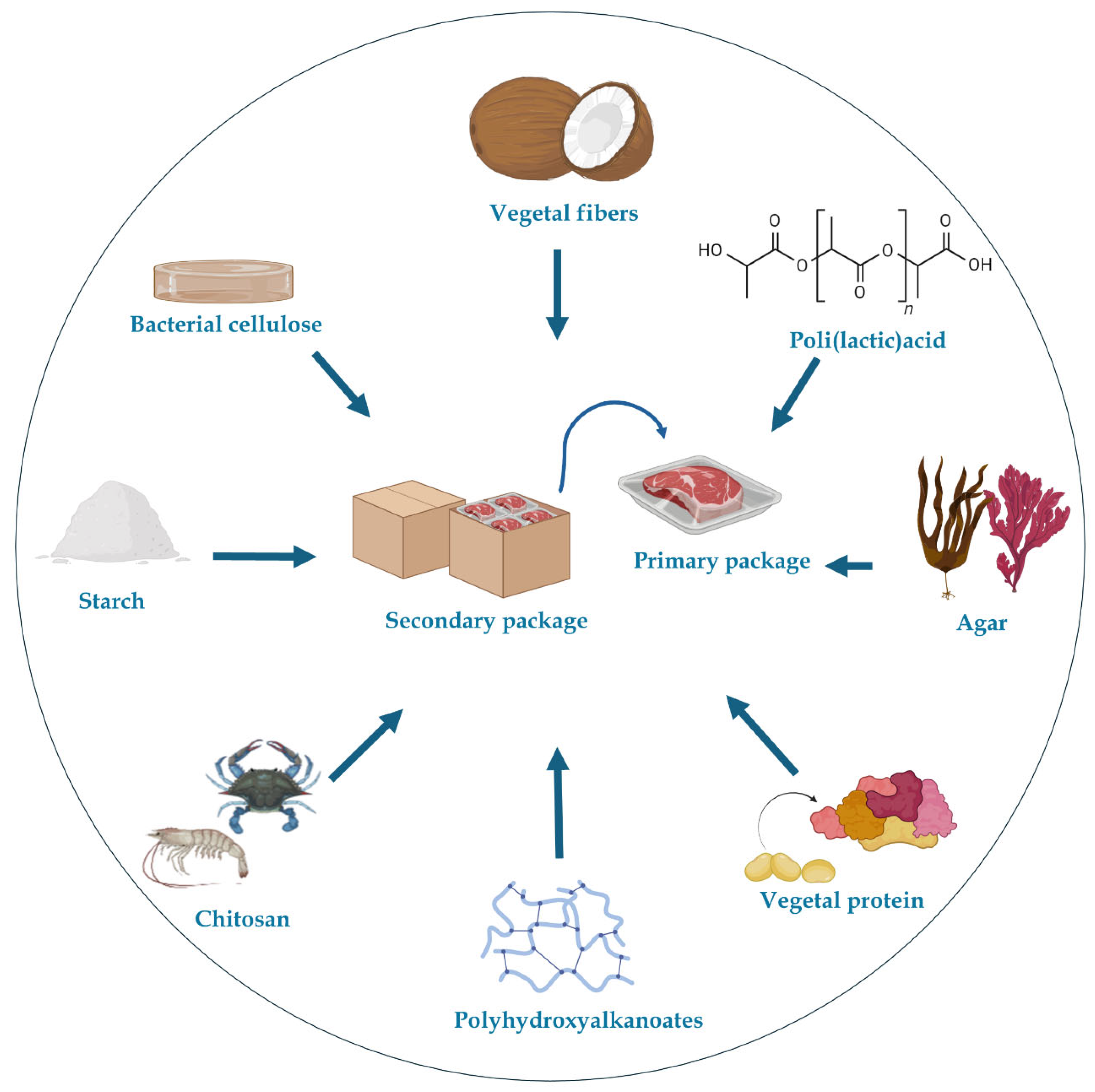
Figure 3.
Intelligent packaging potential for parameters indication and food quality enhancement.
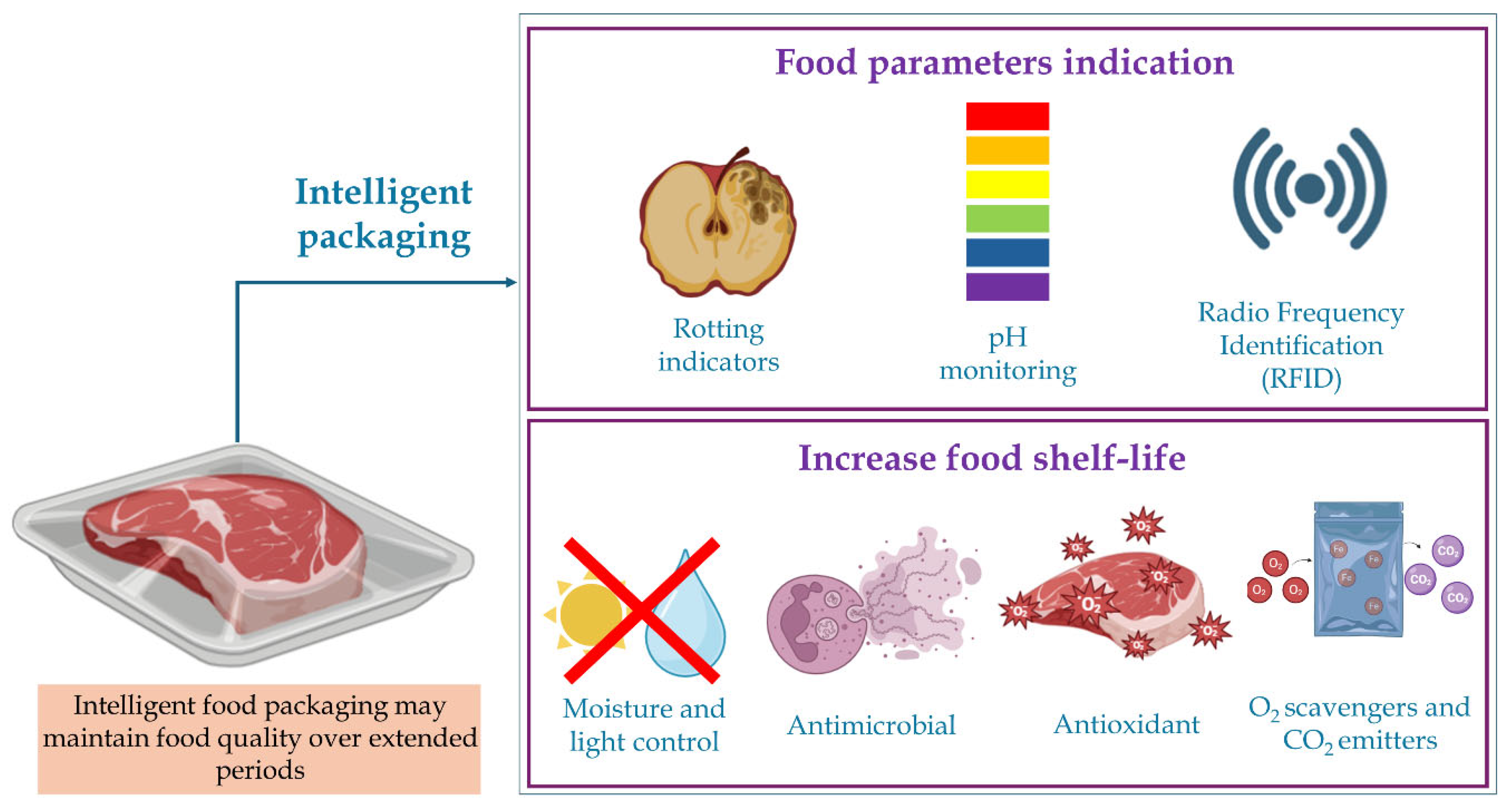
Table 1.
Comparative analysis of bio-based materials and petroleum-derived plastics: characteristics, environmental impacts, and technological applications.
Table 1.
Comparative analysis of bio-based materials and petroleum-derived plastics: characteristics, environmental impacts, and technological applications.
| Characteristic | Bio-Based Materials | Petroleum-Derived Materials (Plastics) | References |
|---|---|---|---|
| Origin | Biological resources (plants, algae, organic waste, etc.) | Fossil resources (petroleum, natural gas) | [39] |
| Sustainability | High (renewable, lower carbon footprint) | Low (non-renewable, high carbon footprint) | [40,41] |
| Biodegradability | Generally biodegradable under specific conditions | Generally non-biodegradable, persists for centuries | [42] |
| Compostability | Many are compostable (such as PLA in industrial composting) | Rarely compostable, requires special processes | [43] |
| Decomposition time | Months to a few years (depending on conditions) | 400 to 1,000 years for plastics like PET | [43] |
| Greenhouse gas emissions | Reduced (during production and decomposition) | High (during both production and decomposition) | [44] |
| Environmental impact | Lower impact (less pollution, sustainable life cycle) | High impact (pollution, microplastics, long-lasting waste) | [2] |
| Recyclability | Variable (some are recyclable, but with limitations) | High recyclability for some plastics (like PET), but depends on infrastructure | [45] |
| Production cost | Can be higher currently (emerging technologies) | Generally lower, due to established production scale | [46] |
| Availability of raw materials | Depends on agriculture, waste, and biotechnology; generally more available in agricultural regions | Dependent on petroleum reserves, limited and concentrated in specific geographic regions | [47] |
| Technological innovation | Rapidly growing area with investments in biotechnology and new production processes | Mature technology, less innovation in new raw materials, focus on recycling and energy efficiency | [46,48] |
| Social impact | Can generate jobs in rural areas, stimulating local economies | Concentration of wealth in regions with petroleum reserves, negative impacts on local communities due to extraction | [49] |
| Compatibility with environmental regulations | Generally compliant with stricter environmental regulations, aligned with carbon reduction goals | Subject to strict regulations due to pollution and carbon emissions | [9] |
| Life cycles and embedded energy | Lower embedded energy in some cases, especially if produced locally; energy used in composting or biodegradation | High embedded energy from extraction to processing, along with energy costs for recycling or final disposal | [50] |
| Examples of products and brands | Packaging by “Natura,” PLA utensils, biodegradable starch-based bags | Coca-Cola bottles (PET), Tupperware food containers (PE), supermarket plastic bags (PE) | - |
| Waste reduction potential | Greater potential for waste reduction due to compostability and biodegradability | Lower waste reduction potential, but recyclability in established waste management chains | [42,43] |
| Impact on human health | Generally perceived as safer, but studies are ongoing to understand all effects | Potential migration of chemical additives to food and beverages, concerns about microplastics | [9] |
| Functional performance | Boa barreira ao oxigênio e umidade (varia conforme o tipo) | Excellent barrier to oxygen and moisture | [15] |
| Mechanical Strength | Good, but may be inferior compared to traditional plastics | Generally superior, high durability and strength | [12,15] |
| Consumer perception | Positive (associated with sustainability) | Negative in terms of environmental impact, but reliable in functionality | [9,48] |
Disclaimer/Publisher’s Note: The statements, opinions and data contained in all publications are solely those of the individual author(s) and contributor(s) and not of MDPI and/or the editor(s). MDPI and/or the editor(s) disclaim responsibility for any injury to people or property resulting from any ideas, methods, instructions or products referred to in the content. |
© 2024 by the authors. Licensee MDPI, Basel, Switzerland. This article is an open access article distributed under the terms and conditions of the Creative Commons Attribution (CC BY) license (http://creativecommons.org/licenses/by/4.0/).
Copyright: This open access article is published under a Creative Commons CC BY 4.0 license, which permit the free download, distribution, and reuse, provided that the author and preprint are cited in any reuse.


