

Submitted:
05 September 2024
Posted:
06 September 2024
You are already at the latest version
Abstract
The susceptibility of seven species of chestnuts to the orchid leafminer was studied in the arboretum of the Main Botanical Garden of the Russian Academy of Sciences (MBG RAS), taking into account their interspecific characteristics. Using pheromone delta traps, the highest number of moths was shown for A. hippocstanuam and the lowest for A. chinensis. A number of anatomical parameters of leaves were investigated, such as the thickness of the epidermal cell wall and the thickness of the palisade and spongy parenchyma layers. As a result, it was shown that the most infected chestnut species had a greater thickness of the nutritious parenchyma tissue. No de-pendence was found between the degree of susceptibility to the Ohrid leaf miner and such indi-cators as the content of chlorophyll a + b and carotenoids in the leaves of seven species of chestnuts. Nevertheless, resistance of different species of the genus Aesculus to C. ohridella under increased tannin content in leaves has been shown. Evaluation of phenolic compounds and flavonoids has not established their reliable role as repellents. The high levels of carbohydrates found during the study contributed to increased susceptibility to the Ohrid leaf miner.
Keywords:
Cameraria ohridella
; Aesculus spp.
; infestation patterns
; leaf miner
; leaves
; organic component analysis
1. Introduction
Aesculus L. is a genus of the family Hippocastanaceae, consisting of 12 species distributed throughout the northern hemisphere and divided into five sections: Aesculus L., Calothyrsus (Spach) K. Koch, Pavia (Mill.) Persoon, Macrothyrsus (Spach) K. Koch and Parryanae Wiggins [1]. Some species of Aesculus are used in Europe as ornamental trees. In particular, horse chestnut (Aesculus hippocastanum L.) has been cultivated since 1576 [2]. Moreover, A. hippocastanum is the only species of the genus Aesculus of European (Balkan) origin and the main host plant of the horse chestnut leaf miner Cameraria ohridella, which was first recorded in Macedonia in the 1970s and described as a new species in 1986 [3,4]. In 1989, C. ohridella was revealed in Austria, and since then the leaf miner has spread rapidly and penetrated into most European countries. In Russia, C. ohridella was first registered in 2003 in the Kaliningrad region [5,6]. Currently, the species is found in 13 central regions of the European part of Russia, as well as in the south of Russia, in particular, in the Krasnodar region, where it produces impressive outbreaks in resort areas [6,7]. In the north of the European part of Russia, C. ohridella was noted in St. Petersburg in 2013. The Volga region is known as the extreme eastern limit of detection of C. ohridella [7]. The species was found here in 2018, indicating its expansion from the western regions of the European part of Russia.
A study of horse chestnut leaf miner populations in European Russia by Kirichenko et al. [6] identified only two haplotypes (A and B) of C. ohridella out of 44 known leaf miner haplotypes in the natural range of A. hippocastanum [6]. At the same time, haplotype A was absolutely dominant and was present in all studied populations, while haplotype B was rare.
Early observations in European countries confirm the ability of C. ohridella to switch to other species in areas with heavily infested horse chestnut trees [8,9]. Several previous studies have reported that different Aesculus species differ in their susceptibility to C. ohridella [10,11]. Thus, for 11 species from the chestnut collection at the Royal Botanic Gardens, Kew (RGB), D'Costa et al. [1]. assessed the susceptibility of individual chestnut species based on infestation levels, leaf miner egg density, larval survival and consequent leaf damage caused by the leaf miners [1]. They found that C. ohridella laid eggs on all studied species, but the highest egg density was recorded on A. hippocastanum and A. turbinata.
Certainly, botanical gardens provide an ideal opportunity to compare the ability of C. ohridella to grow on different chestnut species growing under similar environmental conditions. Thus, phytophage mines were found on A. hippocastanum trees in the arboretum of the Main Botanical Garden of the Russian Academy of Sciences (MBG RAS) and were first discovered in 2005, so several generations of C. ohridella had the opportunity to interact with a variety of species in the collection of representatives of the genus Aesculus in the MBG RAS [5]. This fact made it possible to study in more detail the biology of the development of the Ohrid leaf miner, taking into account the interspecific characteristics of individual species of chestnuts. It is known that each type of chestnut has its own composition of multifunctional phenolic compounds, which are one of the main factors protecting the plant from pathogens and pests [12,13]. In particular, hydrolyzable tannins act as inhibitors and thus reduce the digestibility of plant tissues, especially deciduous trees [14].
In addition, an important role is played by the anatomical features of the chestnut leaf, such as the presence of cuticle and hairs, and the thickness of the outer cell wall. Since the location of stomata in the abaxial epidermis, one layer of palisade parenchyma, and the larger cell size of the adaxial epidermis compared to the abaxial epidermis may be a physiological and mechanical barrier to the nutrition of C. ohridella larvae [15].
Thus, the size of the pest population depends on a number of factors. For example, Sefrova and Lastuvka [16] evaluated the distribution of C. ohridella in Europe over a 10-year period and found that the transfer of the pest by air currents is the most important factor in the spread of this species [16]. Female C. ohridella also attract males for mating using a sex pheromone, the main component of which has recently been identified [17,18]. Its synthetic analogue is successfully used in monitoring systems with high efficiency. Among the known trap systems, delta traps are characterized by low cost and ease of operation, but their sticky surface may lose its stickiness over time [19]. Thus, the aim of our work was to determine the morphological and biochemical characteristics of leaves of representatives of the genus Aesculus L. in relation to the damage of the chestnut leaf miner.
2. Materials and Methods
2.1. Place of Research and Plant Material
The object of study was a collection of Aesculus species on the territory of the Main Botanical Garden of the Russian Academy of Sciences in Moscow (55.838° N, 37.588° E). Trees infected with the Ohrid leaf miner were selected for the study. In 2023 (first year) and 2024 (second year), phytomonitoring of plants was carried out, including an analysis of the number of the first generation (from mid-June to early July) of the Ohrid miner. Pheromone traps were used, as well as a cytological and biochemical analysis of leaves from adult trees with signs of damage by the moth during the period of active feeding was performed.

| Section | Species | GPS | Accession number, MB RAS | Description |
|---|---|---|---|---|
| Aesculus L. | A. hippocastanum L. | 55.845042 37.599364 |
1950-149710; 1953-149713; 1954-3327; 1959-49734 | Endemic to the Balkan Peninsula, can be found in Bulgaria, Greece and Albania. Widely cultivated in Europe and North America. 25-30 m in height, it has dense white flowers and 5 or 7 cuneate-obovate leaflets. Since 1941, 22 accessions were grown in MBG RAS from seeds obtained from various botanical gardens. |
| Pavia (Mill.) Persoon | A. glabra Willd | 55.845399 37.599918 |
1950- 3448; 1954-3448/45; 1965- 3448/65; 1965- 149712 | 10-30 m tall, can be found in Pennsylvania, Iowa, Arkansas, Tennessee and Alabama. It has yellow flowers. 5-7 leaflets, oblong-obovate or elliptic-obovate. In dendroculture since 1809, it is widespread in botanical gardens of Europe, Central Asia and North America. Three accessions were grown from seeds obtained from botanical gardens, there are also plants of the GBS reproduction. |
| A. flava Aiton | 55.844902 37.599790 |
1953- 4182; 1961- 95638 | Distributed in North America, it is 20-30 m tall, has yellow flowers. Leaves have 5 or 7 leaflets. Three accessions were grown from seeds obtained from different botanical gardens, but there were also plants of GBS reproduction. | |
| A. pavia L. | 55.844942 37.599865 |
1961- 95641; 1965- 31217 | North American species up to 10 m tall, has red flowers. Leaves have 5 or 7 leaflets, oblong obovate and narrowly elliptic. Since 1950, one accession has been grown in the MBG from seeds obtained from the Trostyanets Arboretum (Ukraine). |
|
| A. × carnea Hayne | 55.845133 37.599836 |
1960- 86340 1964-87325 | Tree up to 15(25) m tall. The hybrid was obtained in culture in 1818. It is found quite often in the south of Europe and North America. In GBS since 1989. Three accessions were grown from seeds received from Holland. | |
| Macrothyrsus (Spach) K. Koch | A. parviflora Walter | 55.845166 37.555798 |
No data | North American species, up to 5 m tall. Leaves have 5 or 7 leaflets; elliptic to oblong-obovate. It has white flowers. |
| Calothyrsus (Spach) K. Koch | А. chinensis Bunge | 55.844902 37.555798 |
No data | Distributed in China, up to 25 m tall and has white flowers. Leaves have 5-7 leaflets, oblong-lanceolate or oblongoblanceolate |
2.2. Estimation of Orchid Miner Abundance Using Pheromone Traps
Delta sticky pheromone traps with dispensers impregnated with the synthesized sex pheromone of female moths (Pheromon, Russia), were hung on horse chestnut trees in different parts of the crown. The first generation of adults in the chestnut collection was counted from mid-June to early July. Traps in two biological replicates on two trees were attached to horizontal branches of the outer part of the chestnut crown at a height of 1.5–2 m from the ground [5].
2.3. Scanning Electron Microscopy
Fragments of the leaf middle part with a size of 2–3 mm were fixed during the day at a +4 °C in a 2.5% solution of glutaraldehyde (Merck, Germany) prepared in 0.1 M phosphate buffer (pH is 7.2) with the addition of 1.5% sucrose. Then, the samples were dehydrated at +4 °C for 30 min in each alcohol solution with successively increasing concentration: 30%, 50%, 70%, 96%, and in three changes of absolute ethanol. After that, the samples were transferred to liquid CO2 under pressure in the device for drying at the “critical point” and slowly heated under pressure. When the pressure and temperature together passed the so-called “critical point” (31 °C and 74 bar), the pressure was reduced, thus drying the samples without any damage. Next, a thin (from 1 nm and more) metal layer was deposited onto the samples to enhance conductivity and add mechanical strength to the sample (sputtering unit SPI supplies, SPI, Santa-Clara, CA, USA). The photographs were obtained using a JSM-6380LA scanning electron microscope (JEOL Ltd., Tokyo, Japan) [5].
2.4. Determination of Dry Matter of Leaves
The dry matter content in the leaves of species chestnuts was determined according to the generally accepted method the National Standard of the Russian Federation (GOST 31640-2012) [23].
2.5. Determination of Leaf Pigment Content
The content of chlorophyll a, chlorophyll b, and the sum of carotenoids in fresh chestnut leaves were determined spectrophotometrically using a Spekol 1300 spectrophotometer (Analitik Jena AG, Jena, Germany) due to Lichtenthaler method [24].
2.6. Determination of Tannin Content
The tannins content in terms of tannin was determined according by the method described in OFS. 1.5.3.0008.18 GF XIV “Determination of the content of tannins in medicinal plant materials and medicinal plant preparations” by the permanganatometry method [25].
2.7. Determination of Phenolic Compounds and Flavonoids
Total polyphenol content was measured spectrophotometrically on a Spekol 1300 spectrophotometer (Analitik Jena AG, Jena, Germany) using the Folin–Ciocalteu reagent according to the method described in detail in [26]. Gallic acid (25–300 mg/L; R2 = 0.998) was used as a standard. The results were expressed as mg/g gallic acid equivalent DW (dry weight) [26].
Total flavonoid content was determined using a modified method described in [27]. A 1 ml aliquot of each sample was mixed with 2 ml of a 2% (w/v) ethanol solution of aluminum chloride, 0.5 ml of 1 M hydrochloric acid, and 6.5 ml of ethanol (96%). After 20 and 40 min in the dark, the absorbance at 415 nm was measured using a Spekol 1300 spectrophotometer (Analitik Jena AG, Jena, Germany). Quercetin (1–400 mg/L; R2 = 0.9977) was used as standard. The results were expressed as mg/g quercetin equivalent on a DW (dry weight) basis [27].
2.8. Statistical Analysis
The thickness of the leaf blade was calculated using the Image J program with an accuracy of 0.1 µm. At least 300 cells of the above tissues from three independent leaves were analyzed for each experimental treatment. To compare the arithmetic means, ANOVA was used, with the Bonferroni correction. The measurements were performed in the Statistica v. 12.0 PL (StatSoft, Tulsa, OK, USA) program. The abundance of chestnut leaf miner was measured in 2-fold biological and 2-fold analytical replicates. All measurements and determinations of biochemical parameters in the leaves of species chestnuts were performed in 2-fold biological and 3-fold analytical replicates, and average values were used in the calculations. The thickness of the leaf blade was calculated using the Image J program with an accuracy of 0.1 µm. At least 300 cells of the above tissues from three independent leaves were analyzed for each experimental treatment. To compare the arithmetic means, ANOVA was used, with the Bonferroni correction. The measurements were performed in the Statistica v. 12.0 PL (StatSoft, Tulsa, OK, USA) program.
3. Results
The pest population in the MBG RAS was estimated using delta traps, in which a synthetic analogue of the female sex pheromone was used to attract males of the Ohrid leaf miner. The study revealed differences in the abundance of this pest on different chestnut species (Figure 1). In the first year, the highest number of C. ohridella was found on A. hippocastanum plants (380 moths on average in a trap), and the lowest number of moths (11 moths on average in a trap) was shown in the A. chinensis species, with a difference 12 times smaller than in A. hippocastanum. Next in the abundance of the Ohrid leaf miner were the species A. glabra and A. flava (187 and 173 moths, respectively), which did not significantly differ from each other in the number of moths in the trap. Even less populated by the pest were the species A. pavia (65 moths), A. × carnea (89 moths) and A. parviflora (63 moths), between which no differences were found either. In the second year, the trend in the number of the first generation of moths generally remained. However, the number of moths in traps for some species was several times greater than in the first year. Thus, this parameter was 1.6 times greater for A. flava, 2.5 times greater for A. pavia, 2.1 times greater for A. × carnea, 3.1 times greater for A. parviflora, and 7 times greater for A. chinensis.
The characteristic features of the leaves of different species of horse chestnut were studied using morphological assessment of the leaf cross-section (Figure 2). And this analysis was carried out only in the first year of observation. These Aesculus species showed a structure typical for mesomorphic leaves, caused by the climatic conditions of the environment. The leaves, regardless of the species, have thin outer cell walls of the epidermis, one palisade and spongy parenchyma.
The thickness of the cell wall of the upper epidermis was significantly higher in A. glabra and A. flava plants (2.7 and 3 μm, respectively). In A. chinensis and A. parviflora, the cell wall thickness was the smallest of all the studied species in the collection and amounted to 1.6 μm (Figure 3a). Thus, in A. сhinensis plants, this indicator was 2 times smaller than in A. flava.
A similar trend was characteristic of the thickness of the palisade parenchyma of chestnut leaves (Figure 3b). In the species A. glabra and A. flava, this indicator was the largest and did not statistically differ from each other (42.8 and 46.3 μm, respectively). The palisade parenchyma thickness was smaller in A. hippocastanum (37.4 μm) and A. × carnea (35.8 μm), and the smallest value was recorded in A. pavia (23.9 μm) and A. chinensis (23.2 μm).
A. flava also had the greatest thickness of spongy parenchyma, equal to that of A. hippocastanum, which were not statistically different from each other (38.3 and 35.1 μm, respectively). The thickness of spongy parenchyma, as in the case of columnar parenchyma, was the smallest in A. pavia (24.7 μm) and A. chinensis (19.4 μm).
The pigment composition is the main indicator characterizing the functioning of the photosynthetic apparatus. And in turn, photosynthesis is the most important process that ensures the resistance of plants to biotic and abiotic stress. During the first year of observation, it was revealed that in the leaves of most of the analyzed chestnuts, the sum of chlorophylls Cchla+Cchlb was 0.37-0.45 mg/g DW, and only in the leaves of A. parviflora this indicator was significantly higher—0.76 mg/g DW. No significant differences in chlorophyll content were recorded between species (R2=0.15) (Figure 4a). In this case, chlorophyll b in four species (A. hippocastanum, A. pavia, A. flava, A. × carnea) was 31-38% of Cchla+Cchlb, and, consequently, the ratio of chlorophyll a: chlorophyll b was significantly higher. This indicated a rearrangement of the photosynthetic apparatus in the leaves of these species towards an increase in the proportion of Photosystem I. In the leaves of A. glabra, A. parviflora and A. сhinensis, chlorophyll b was 54-56% of Cchla+Cchlb. The high level of chlorophyll b resulted in lower Cchla/Cchlb values and may indicate that the relative amount of Photosystem II increased in the structure of the chlorophyll complex of the leaves of these species. In the second year of observation, the total chlorophyll content increased in six species of chestnuts (0.42–0.60 mg/g DW) and decreased slightly in the leaves of A. parviflora—0.68 mg/g DW. No significant differences in chlorophyll content between species were also recorded (R2=0.35) (Figure 4b). Only two chestnut species (A. hippocastanum and A. × carnea) had a high chlorophyll a : chlorophyll b ratio—3.46 and 3.00, respectively. For the remaining species, the Cchla/Cchlb ratio ranged from 2.15 to 2.59. No significant differences were revealed between species for this indicator in either the first or second year of observation (R2=0.06 and R2=0.43, respectively).
The ratio of chlorophyll a : chlorophyll b to the sum of carotenoids (a+b)/(x+c) is an indicator of the normal functioning of the photosynthetic apparatus of plants or the so-called greenness of plant leaves. In the first year of observation, the ratio (a+b)/(x+c) in the leaves of 4 species of chestnuts fluctuated from 4.2 to ~5, which indicates a high degree of illumination of the tree crowns (Figure 4c). Higher values of this indicator recorded in the leaves of A. parviflora and A. chinensis—6.2 and 6.9, respectively, indicated that these plants grow in more shaded conditions. And only in the most affected species (A. hippocastanum) this indicator was 3.5, which is an indicator of aging, stress and damage to the plant and its photosynthetic apparatus. This can be manifested in a faster breakdown of chlorophylls than carotenoids. In the second year of observation, a generally similar picture was recorded. However, in the leaves of A. hippocastanum this indicator was higher—4.02, which indicates a more favorable state of the photosynthetic apparatus of the leaves of this species.
In the first year of observation, the minimum amount of tannins (2.09% DW) was recorded in the leaves of A. hippocastanum, the species most susceptible to C. ohridella (Figure 5a). In two other species (A. glabra, A. flava) with a high degree of susceptibility to orchid leaf miner, the tannin content was 1.4 times higher. In three species partially infected with C. ohridella, tannin content also increased compared to A. hippocastanum. And the maximum amount of tannins (4.77% DW) in the leaves of the orchid leaf miner-resistant A. chinensis was revealed. It is possible that the high concentrations of tannins in the leaves explain the greater resistance of A. chinensis to C. ohridella pests. It should be noted that the content of these compounds significantly decreased with an increase in the degree of susceptibility of plants to the orchid leafminer—R2 = 0.75. In the second year of observation, the tannin content in the leaves of 5 chestnut species was almost the same—3.08-3.52% DW. And only in two species, A. parviflora and A. chinensis, it was slightly higher—4.02 and 5.12% DW, respectively. No significant differences were found between species in this indicator.
The total content of phenolic compounds in the leaves of 7 species of chestnuts in the first year of observation varied significantly in plants with different degrees of susceptibility to the Ohrid leaf miner (Figure 5c). The phenolic content in A. hippocastanum leaves was 5.35 mg/g DW. In contrast, the concentration of polyphenolic compounds in uninfected leaves of A. chinensis was significantly lower and reached 1.97 mg/g DW. In the second year of observation, the total phenolic compounds fluctuated less significantly. Thus, in three species susceptible to the orchid leafminer, it varied from 3.8 to 3.3 mg/g DW, while in the remaining species it varied from 2.9 to 2.1 mg/g DW. Reliable differences were noted between the species for this indicator—R2=0.85 and R2=0.80 in the first and second years of observation, respectively.
The total content of quercetin series flavonoids in the leaves of 7 species of chestnuts also differed significantly in plants with different degrees of susceptibility to the Ohrid leaf miner in the first year of observation (Figure 5c). A. hippocastanum leaves contained 0.66 mg/g DW quercetin, which was 2.4 times higher than that of A. chinensis. In the second year of observation, the difference in the total flavonoids in the leaves of these species, although preserved, was not so significant—1.5 times. Reliable differences between species for this indicator were also recorded—R2=0.77 and R2=0.95 in the first and second years of observation, respectively.
In general, it should be noted that in the leaves of chestnut species affected by the attack of the leaf miner, the concentration of polyphenolic compounds and quercetin flavonoids was higher than in species less infected with C. ohridella.
Analysis of the main substances contained in the methanol extract prepared from the leaves of seven species of chestnuts was carried out only in the first year of observation. Thirty-five metabolites were identified by gas chromatography-mass spectrometric (GC-MS) analytic technique. Their peak heights were at least 0.1% of the instrument scale (Table 2).
The metabolites were divided into three main groups: polyphenolic compounds (10 compounds); organic acids (7 compounds) and sugars and their derivatives (22 compounds).
The proportion of polyphenolic compounds ranged from 20.1% (A. pavia) to 36.2% (A. hippocastanum) of the total composition of leaf metabolites. Three sugar alcohols dominated among the polyphenolic compounds: Glycerol, 1,5-Angidroglucitol, and Galactinol. Among secondary metabolites, the proportion of organic acids varied from 16.8% (A. hippocastanum) to 57.6% (A. chinensis). Four organic acids dominated: Glucopyranuronic acid, Butanedioic acid, Quininic acid, and Gluonic acid, and in some cases individual species of this class of compounds accumulated in very large quantities: Glucopyranuronic acid in the leaves of A. pavia and A. chinensis—up to 20.2 and 22.3%, Quininic acid—up to 22.5% in the leaves of A. parviflora. Butanedioic acid was also present in the leaves of all chestnut species, with its content in the leaves of A. hippocastanum being 3.5 times lower than in the leaves of A. parviflora.
The proportion of carbohydrates in the leaves of 7 species of chestnut ranged from 54.1% to 27.5%. It should be noted that the maximum amount of carbohydrates was found in the leaves of three species of chestnuts—A. hippocastanum, A. glabra and A. flava that are most susceptible to the orchid leaf miner,—54.1, 46.3 and 42.7%, respectively. In species with reduced susceptibility to C. ohridella, the carbohydrate content in leaves was reduced to 33.0–35.0%. And the minimum amount of carbohydrates was observed in the leaves of A. chinensis, a species resistant to the Ohrid leaf miner. It was 1.97 times less than the content of these compounds in the leaves of A. hippocastanum.
4. Discussion
The most damaged and preferred species in the collection can be considered the common horse chestnut. Earlier, during the monitoring of the population of the chestnut leaf miner on the horse chestnut collection, severe damage to A. hippocastanum was revealed [5]. This species is the first to be populated by the leaf miner and is most severely damaged during the growing season. Other species, such as A. glabra and A. × carnea, are either not damaged or have traces of caterpillar penetration into the leaf parenchyma [28]. On species such as A. × hybrida, A. pavia, the caterpillars, although they begin to feed, die at an early stage of development. According to the results of other studies of the damage of various chestnut species, it was found that A. hippocastanum and A. turbinate are most damaged by C. ohridella. Finally, species of the Pavia section of North American origin show less susceptibility to the leaf miner. Some individuals in this section were slightly infested or not infested at all [29]. Our study also showed that the highest number of first generation moths was observed on A. hippocastanum plants, while the lowest number of moths was shown on A. chinensis, A. pavia and A. parviflora. The trend was the same in both years, with the only difference being that in some species the miner abundance increased in 2024 compared to 2023 (A. flava, A. pavia, A. × carnea, A. parviflora and A. chinensis).
This may be related to the phylogeny of the genus. Insect activity on non-native host plants is often found to be related to the phylogeny of the host plant [29]. C. ohridella females may be unable to differentiate between some Aesculus species and therefore oviposit on less suitable hosts. Insects often oviposit on plants that are chemically similar to suitable ones [1]. A study by Johne et al. [30] found that infestation of plants with C. ohridella resulted in a change in the volatile profile of A. hippocastanum leaves. Johne et al. [30] also showed that C. ohridella responds to volatiles in A. hippocastanum that increase with leaf damage. Finally, another explanation for this result may be that C. ohridella has not coevolved with most of the studied species [31].
The cell walls of the epidermis are a mechanical barrier that protects the plant from pathogens and herbivores [32]. The thickness of the outer wall, the presence of cuticle and hairs play an important role. Many authors emphasize that the cuticle layer on the epidermis of plant organs is an important barrier for pathogens and herbivores [33]. Such structural elements of these leaves can serve as a physiological and mechanical barrier for C. ohridella larvae feeding in their parenchyma. In the case of horse chestnut leaves, the phytophagous insect can easily overcome the external mechanical barrier consisting of the upper layer of the epidermis and its products [15]. Small cuticular grooves are visible on the cell walls of the adaxial epidermis, but they do not prevent the hatching of C. ohridella larvae. Since trichomes on the leaves of A. hippocastanum are few and occur only on the veins of the abaxial leaf surface, they probably do not play any role in protection against C. ohridella [15]. According to the results of our study, the cell wall thickness was the smallest in the least populated species of the leaf miner A. chinensis and A. parviflora, while it was significantly thicker in A. glabra Willd and A. flava Sol. In this regard, it seems that the thickness of the epidermal cell wall is not a serious obstacle to infestation by the pest.
Subsequently, the C. ohridella larvae, emerging from the eggs laid on the surface of the chestnut leaf, gnaw through the epidermal layer and reach the palisade parenchyma. In species, the palisade parenchyma layer with thin-walled cells containing a large number of chloroplasts is a valuable food source, easily accessible to herbivores [34]. In our work, it was shown that the chestnut species most populated by the moth (A. hippocastanum, A. glabra, A. flava) had the greatest thickness of the palisade and/or spongy parenchyma. At the same time, the species least populated by the pest (A. pavia and A. chinensis) had a smaller thickness of both types of parenchyma. Thus, the greater susceptibility of some chestnut species to attack than others may be due to the greater thickness (and, consequently, greater food availability for feeding larvae) of the parenchyma.
Photosynthesis is one of the processes most vulnerable to biotic and abiotic stress. Chlorophyll levels change not only during plant vegetation, but also as a result of interactions between host plants and insects, such as the Ohrid leaf miner. Changes in chlorophyll content in plant tissues can be useful for assessing the possibility of using photosynthetic pigments as markers of plant resistance to a particular pathogen. However, according to the available literature, changes in chlorophyll levels do not have a constant pattern and vary depending on the plant species and the type of harmful agent causing stress [35]. Changes in the parameters of chlorophyll fluorescence induction in A. hippocastanum leaves depending on the degree of damage to leaf blades by C. ohridella caterpillars have been shown in a number of studies [35,36,37], but it remains unclear whether these changes are reliable. Our results indicate that there is no connection between the chlorophyll content in the leaves of individual chestnut species and their susceptibility to the Ohrid leaf miner. It is possible that the Cchla/Cchlb ratio can be used as one of the markers of plant resistance to this phytophage. Low values of this indicator indicate an increase in the structure of the chlorophyll complex of light-harvesting complexes of photosystem II, the stability of which ensures the adaptive potential of a number of species to the influence of various strains of pathogens. In the first year of observation, the lowest Cchla/Cchlb value was revealed in two chestnut species resistant to the Ohrid leaf miner. However, our data from the second year of observation no longer provide such an unambiguous answer to this question. In our opinion, the environmental conditions of the growing season have a greater effect on the state of the photosynthetic apparatus of plants.
The chemical composition of host plants has a significant impact on insect behavior [38]. They affect the olfactory, tactile, and gustatory receptors of herbivores, and their impact on herbivores is often toxic.
In a number of studies, tannins have been described as powerful protective agents that have a significant effect on suppressing the negative activity of pests, which is consistent with our results. However, at the same time, there is evidence of no difference in the content of tannins in asymptomatic and infected leaves [39].
Among secondary metabolites, plant phenolic compounds represent a very important group of defense compounds that play an important role in resistance to herbivorous insects [14,15,40]. In our study, the concentration of phenols in the leaf blades of species susceptible to the Ohrid leaf miner was higher, which can be considered as a manifestation of chemical defense. Our studies also showed that during two years of observation, the concentration of phenolic compounds in the leaf blades of susceptible species (A. hippocastanum, A. glabra and A. flava) was higher than in resistant A. chinensis. This is generally consistent with the results obtained by D’Costa et al. [41]: higher levels of phenolic compounds were observed in the leaves of species susceptible to C. ohridella than in the leaves of resistant species.
Flavonols are compounds with anti-nutritional activity and inhibition of insect development. Increased levels of quercetin-type flavonols were observed in A. hippocastanum leaves, especially in the first year of observation. An important factor stimulating larval feeding is the abundance of nutrients in the leaves [11]. Insects prefer leaves rich in carbohydrates. The results of our study confirm the important role of carbohydrates in stimulating C. ohridella feeding. Susceptible chestnut species, and especially A. hippocastanum, had significantly higher levels of carbohydrates in the leaves compared to resistant A. chinensis. Similar results were obtained by Paterska et al. [38]and in our previous studies[5],but contradict the data of D’Costa et al.[41].
The obtained results show that the chemical composition of chestnut leaves is very complex and the individual biochemical parameters we determined do not fully define the multifaceted interaction of C. ohridella with the studied trees of the genus Aesculus and do not provide a complete description of the relationships of this pest with different species of the genus Aesculus. Probably, at the initial stage of protection, rapid synthesis of phenolic compounds is included, but this turns out to be ineffective, as shown in a number of works and in our research [13,14,39,42]. In addition to the above-described insufficient plant protection strategy associated with the synthesis of phenolic compounds and flavonoids of the quercetin series, high levels of nutrients, in particular carbohydrates, in their leaves play a certain negative role in reducing the resistance of a number of chestnut species to the Ohrid leaf miner. And only an increased content of tannins presumably explains the greater resistance of individual chestnut species to C. ohridella. Therefore, monitoring even tannin content alone can be a reliable indicator/predictor of plant resistance to orchid leaf miner.
5. Conclusions
When taking into account the population size of the first generation of the Ohrid leaf miner in the territory of the MBG RAS, differences were found between different species of chestnut. The thickness of the cell wall of the upper epidermis does not affect susceptibility to the orchid leaf miner. However, the greater degree of infestation of Aesculus species by this pest may be due to the greater thickness of the parenchyma, since this provides more food for the feeding larvae.
The content of chlorophyll a + b and carotenoids in the leaves of 7 chestnut species did not depend on the degree of their susceptibility to the orchid leaf miner. To a greater extent, changes in the state of the pigment system depended on the environmental conditions of the growing season and specific properties of plants. The resistance of different species of the genus Aesculus to C. ohridella is largely due to the increased content of tannins in the leaf blade. Phenolic compounds and flavonoids of the quercetin series do not perform a repellent function, and high levels of nutrients, in particular carbohydrates, contribute to increased susceptibility to the orchid leaf miner.
Author Contributions
Conceptualization, I.V.M., O.V.S. and E.H.B.; methodology, O.B.T.; formal analysis, A.A.G.; resources, L.R.B., O.V.S., L.N.K., O.B.T., A.A.G., and E.N.B. ; writing—original draft preparation, O.V.S and L.R.B.; writing—review and editing, O.V.S., L.R.B., E.H.B.; visualization, L.N.K.; supervision, I.V.M. All authors have read and agreed to the published version of the manuscript.
Funding
The reported study was supported by assignments 124030100058-4 (MBG RAS) and FGUM-2022-0003 (ARRIAB RAS) of the Ministry of Science and Higher Education of the Russian Federation. The APC was funded by the authors.
Data Availability Statement
Not applicable.
Acknowledgments
The authors thank Anatoly Bogdanov and the Center for Electron Microscopy in the Life Sciences, a unique scientific installation for three-dimensional electron microscopy and spectroscopy (Biological Faculty of Lomonosov Moscow State University).
Conflicts of Interest
The authors declare no conflict of interest.
References
- D’Costa, L.; Koricheva, J.; Straw, N.; Simmonds, M.S.J. Oviposition Patterns and Larval Damage by the Invasive Horse-Chestnut Leaf Miner Cameraria Ohridella on Different Species of Aesculus: Oviposition Patterns and Larval Damage. Ecol. Entomol. 2013, 38, 456–462. [Google Scholar] [CrossRef]
- Chanon, A.M. Studies on the Reproductive Capacity of Aesculus parviflora and Aesculus pavia: Opportunities for Their Improvement through Interspecific Hybridization. Ph.D. Thesis, The Ohio State University, Columbus, OH, USA, 2005; p. 264. [Google Scholar]
- Simova-Tosic, D.; Filev, S. Contribution to the Horse Chestnut Miner. Zast. Bilja 1985, 36, 235–239. [Google Scholar]
- Deschka, G.; Dimić, N. Cameraria ohridella n. sp. aus Mazedonien, Jugoslawien (Lepidoptera, Lithocelletidae). Acta Entomol. Jugosl. 1986, 22, 11–23. [Google Scholar]
- Bogoutdinova, L.R.; Tkacheva, E.V.; Konovalova, L.N.; Tkachenko, O.B.; Olekhnovich, L.S.; Gulevich, A.A.; Baranova, E.N.; Shelepova, O.V. Effect of Sun Exposure of the Horse Chestnut (Aesculus hippocastanum L.) on the Occurrence and Number of Cameraria ohridella (Lepidoptera: Gracillariidae). Forests 2023, 14, 1079. [Google Scholar] [CrossRef]
- Kirichenko, N.I.; Karpun, N.N.; Zhuravleva, E.N.; Shoshina, E.I.; Anikin, V.V.; Musolin, D.L. Invasion genetics of the horse-chestnut leaf miner, Cameraria ohridella (Lepidoptera: Gracillariidae), in European Russia: A case of successful involvement of citizen science in studying an alien insect pest. Insects 2023, 14, 117. [Google Scholar] [CrossRef]
- Anikin, V.V. Present day bio-invasions in the Volga-Ural Region: From the South to the North or from the East to the West? Cameraria ohridella (Lepidoptera: Gracillariidae) in the Lower and Middle Volga. Zootaxa 2019, 4624, 583–588. [Google Scholar]
- Freise, J.; Heitland, W.; Tosevski, I. Parasitism of the horse chestnut leafminer, Cameraria ohridella Deschka and Dimić (Lep., Gracillariidae), in Serbia and Macedonia. Anz. Schädlingskunde 2002, 75, 152–157. [Google Scholar] [CrossRef]
- Shvydenko, I.M.; Stankevych, S.V.; Zabrodina, I.V.; Bulat, A.G.; Pozniakova, S.I.; Goroshko, V.V.; Matsyura, A.V. Diversity and distribution of leaf mining insects in deciduous tree plantations. A review. Ukrainian Journal of Ecology 2021, 11, 399–408. [Google Scholar]
- Bačovský, V.; Vyhnánek, T.; Hanáček, P.; Mertelík, J.; Šafránková, I. Genetic diversity of chestnut tree in relation to susceptibility to leaf miner (Cameraria ohridella Deschka & Dimič). Trees 2017, 31, 753–763. [Google Scholar]
- Zdravković-Korać, S.; Milojević, J.; Belić, M.; Ćalić, D. Tissue Culture Response of Ornamental and Medicinal Aesculus Species—A Review. Plants 2022, 11, 277. [Google Scholar] [CrossRef]
- Kulbat, K. The role of phenolic compounds in plant resistance. Biotechnol. Food Sci. 2016, 80, 97–108. [Google Scholar]
- Oszmiański, J.; Kalisz, S.; Aneta, W. The content of phenolic compounds in leaf tissues of white (Aesculus hippocastanum L.) and red horse chestnut (Aesculus carea H.) colonized by the horse chestnut leaf miner (Cameraria ohridella Deschka & Dimić). Molecules 2014, 19, 14625–14636. [Google Scholar] [CrossRef] [PubMed]
- Oszmiański, J.; Kolniak-Ostek, J.; Biernat, A. The Content of Phenolic Compounds in Leaf Tissues of Aesculus glabra and Aesculus parviflora Walt. Molecules 2015, 20, 2176–2189. [Google Scholar] [CrossRef] [PubMed]
- Weryszko-Chmielewska, E.; Haratym, W. Leaf micromorphology of Aesculus hippocastanum L. and damage caused by leaf-mining larvae of Cameraria ohridella Deschka and Dimic. Acta Agrobot. 2012, 65, 25–33. [Google Scholar] [CrossRef]
- Sefrova´, H.; Lastˇuvka, Z. Dispersal of the horse-chestnut leafminer, Cameraria ohridella Deschka et Dimi´c, 1986, in Europe: its course, ways and causes (Lepidoptera: Gracillariidae). Entomol. Z. (Stuttgart) 2001, 111, 194–197. [Google Scholar]
- Svatos, A.; Kalinová, B.; Hoskovec, M.; Kindl, J.; Hrdy, I. Chemical communication in horse-chestnut leafminer Cameraria ohridella Deschka & Dimic. Plant. Prot. Sci. 1999, 35, 10–13. [Google Scholar]
- Svatos, A.; Kalinova, B.; Hoskovec, M.; Hovorka, O.; Hrdy´, I. Identification of a new lepidopteran sex pheromone in picogram quantities using an antennal biodetector: (8E,10Z)- Tetradeca-8,10-dienal from Cameraria ohridella. Tetrahedron Lett. 1999, 40, 7011–7014. [Google Scholar] [CrossRef]
- Cardé, R.T.; Elkinton, J.S. Field trapping with attractants: Methods and interpretation. In Techniques in Pheromone Research; Springer: New York, NY, USA, 1984; pp. 111–129. [Google Scholar]
- Hardin, J.W. A Revision of the American Hippocastanaceae-II. Brittonia 1957, 9, 173–195. [Google Scholar] [CrossRef]
- Hardin, J.W. Studies in the Hippocastanaceae, V. Species of the Old World. Brittonia 1960, 12, 26–38. [Google Scholar] [CrossRef]
- D’Costa, L.E. Resistance and susceptibility to the invasive leaf miner Cameraria ohridella within the genus Aesculus. Thesis (Ph. D), University of London, 2014; pp. 495–505. [Google Scholar]
- Feed. Methods for determining dry matter content: GOST 31640-2012. Introduced 01.07.2013, M.: Standartinform, 2012, 11 p.
- Lichtenthaler, H.K.; Buschmann, C. Chlorophylls and Carotenoids: Measurement and Characterization by UV-VIS Spectroscopy. Curr. Protoc. Food Anal. Chem. 2001, 1, F4.3.1–F4.3.8. [Google Scholar] [CrossRef]
- State Pharmacopoeia of the Russian Federation. 14th ed.: in 4 volumes. Moscow: Ministry of Health of the Russian Federation, 2018, Access mode: https://femb.ru/femb/ (date of access: 06/27/2024).
- Bogoutdinova, L.R.; Khaliluev, M.R.; Chaban, I.A.; Gulevich, A.A.; Shelepova, O.V.; Baranova, E.N. Salt Tolerance Assessment of Different Tomato Varieties at the Seedling Stage. Horticulturae 2024, 10, 598. [Google Scholar] [CrossRef]
- Krasnyuk, I.I. Modifikatsiya metodiki kolichestvennogo opredeleniya flavonoidov v trave zolotarnika kanadskogo (Solidago canadensis). Vestn. Mosk. Univ. Ser. 2 Khimiya 2019, 60, 49–54. [Google Scholar]
- Kashtanova, O.A.; Tkachenko, O.B.; Kondratieva, V.V.; Voronkova, T.V.; Olekhnovich, L.S. Resistance of horse chestnut species (Aesculus L.) to ohrid miner or chestnut miner moth (Cameraria ohridella Deschka & Dimic). Bull. Moscow Soc. Natur. Biol. Ser. 2020, 125, 45–51. (In Russian) [Google Scholar]
- Jaenike, J. Host specialization in phytophagous insects. Annual Review of Ecology and Systematics, 1990, 21, 243–273. [Google Scholar] [CrossRef]
- Johne, A.B.; Weissbecker, B.; Schutz, S. Volatile emissions from Aesculus hippocastanum induced by mining of larval stages of Cameraria ohridella influence oviposition by conspecific females. J. Chem. Ecol. 2006, 32, 2303–2319. [Google Scholar] [CrossRef] [PubMed]
- Desurmont, G.A.; Donoghue, M.J.; Clement, W.L.; Agrawal, A.A. Evolutionary history predicts plant defense against an invasive pest. Proc. Natl. Acad. Sci. USA 2011, 108, 7070–7074. [Google Scholar] [CrossRef]
- Underwood, W. The plant cell wall: A dynamic barrier against pathogen invasion. Front. Plant Sci. 2012, 3, 85. [Google Scholar] [CrossRef]
- Evert, R.F. Esau’s Plant Anatomy, Meristems, Cells, and Tissues of the Plant Body: Their Structure, Function, and Development, 3rd ed.; John Wiley & Sons, Inc.: Hoboken, NJ, USA, 2006; pp. 323–355. [Google Scholar]
- Weryszko-Chmielewska, E.; Haratym, W. Changes in Leaf Tissues of Common Horse Chestnut (Aesculus Hippocastanum L.) Colonised by the Horse-Chestnut Leaf Miner (Cameraria Ochridella Deschka and Dimić). Acta Agrobot. 2011, 64, 11–22. [Google Scholar] [CrossRef]
- Holoborodko, K.; Seliutina, O.; Alexeyeva, A.; Brygadyrenko, V.; Ivanko, I.; Shulman, M.; Pakhomov, O.; Loza, I.; Sytnyk, S.; Lovynska, V.; et al. The Impact of Cameraria ohridella (Lepidoptera, Gracillariidae) on the State of Aesculus hippocastanum Photosynthetic Apparatus in the Urban Environment. Int. J. Plant Biol. 2022, 13, 223–234. [Google Scholar] [CrossRef]
- Łukasiewicz, S. The influence of urban environment factors on the growth of horse chestnut Aesculus hippocastanum L. Acta Scientiarum Polonorum. Formatio Circumiectus 2022, 21. [Google Scholar] [CrossRef]
- Tyapkina, A.; Shiryaeva, N.A.; Silaeva, Zh.G. Assessment of the condition of horse chestnut (aesculus hippocastanum l.) plantings at some landscaping sites in orel. Vestnik agrarnoj nauki 2022, 1, 38–44. [Google Scholar] [CrossRef]
- Paterska, M.; Bandurska, H.; Wysłouch, J.; Molińska-Glura, M.; Moliński, K. Chemical composition of horse-chestnut (Aesculus) leaves and their susceptibility to chestnut leaf miner Cameraria ohridella Deschka and Dimic. Acta Physiol. Plant. 2017, 39, 105. [Google Scholar] [CrossRef]
- Materska, M.; Pabich, M.; Sachadyn-Król, M.; Konarska, A.; Weryszko-Chmielewska, E.; Chilczuk, B.; Staszowska-Karkut, M.; Jackowska, I.; Dmitruk, M. The Secondary Metabolites Profile in Horse Chestnut Leaves Infested with Horse-Chestnut Leaf Miner. Molecules 2022, 27, 5471. [Google Scholar] [CrossRef] [PubMed]
- Bielarska, A.M.; Jasek, J.W.; Kazimierczak, R.; Hallmann, E. Red horse chestnut and horse chestnut flowers and leaves: A potential and powerful source of polyphenols with high antioxidant capacity. Molecules 2022, 27. [Google Scholar] [CrossRef] [PubMed]
- D'Costa, L.; Simmonds, M.S.; Straw, N.; Castagneyrol, B.; Koricheva, J. Leaf traits influencing oviposition preference and larval performance of Cameraria ohridella on native and novel host plants. Entomologia Experimentalis et Applicata, 2014, 152, 157–164. [Google Scholar] [CrossRef]
- Menkis, A.; Povilaitiene, A.; Marciulynas, A.; Lynikiene, J.; Gedminas, A.; Marciulyniene, D. Occurrence of common phyllosphere fungi of horse-chestnut (Aesculus hippocastanum) is unrelated to degree of damage by leafminer (Cameraria ohridella). Scand. J. For. Res. 2019, 34, 26–32. [Google Scholar] [CrossRef]
Figure 1.
Total number of first-generation male C. ohridella in 2023 (first year) and 2024 (second year). Standard deviations are given as the margin of error. 1—A. hippocastanum; 2—A. glabra; 3—A. flava; 4—A. pavia; 5—A. × carnea; 6—A. parviflora; 7—A. chinensis.
Figure 1.
Total number of first-generation male C. ohridella in 2023 (first year) and 2024 (second year). Standard deviations are given as the margin of error. 1—A. hippocastanum; 2—A. glabra; 3—A. flava; 4—A. pavia; 5—A. × carnea; 6—A. parviflora; 7—A. chinensis.
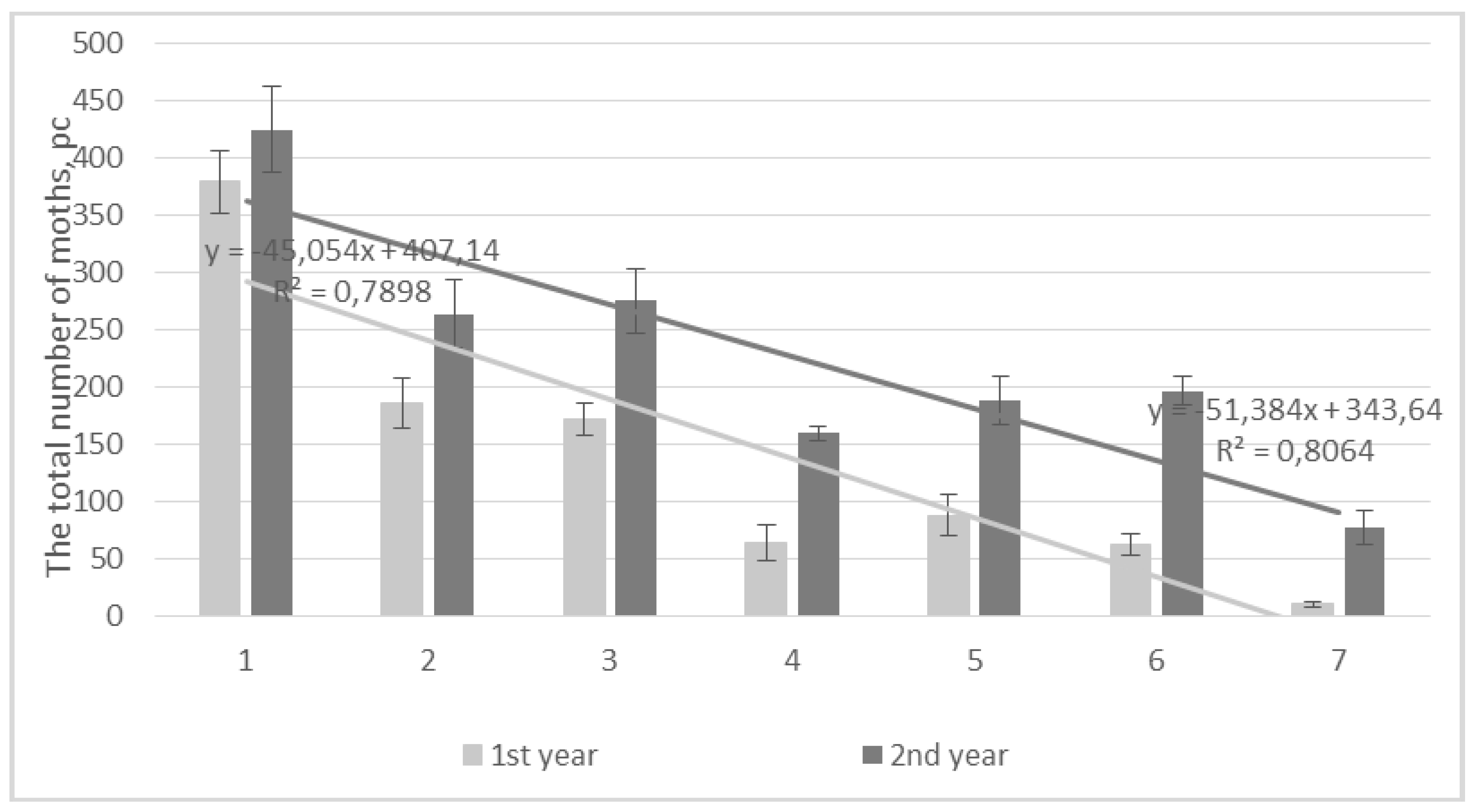
Figure 2.
Cross sections of C. ohridella-infested Aesculus sp. using scanning electron microscopy. Abbreviations: ue—upper epidermis, le—lower epidermis, pp—palisade parenchyma, sp—spongy parenchyma. 1—A. hippocastanum; 2—A. glabra; 3—A. flava; 4—A. pavia; 5—A. × carnea; 6—A. parviflora; 7—A. chinensis.
Figure 2.
Cross sections of C. ohridella-infested Aesculus sp. using scanning electron microscopy. Abbreviations: ue—upper epidermis, le—lower epidermis, pp—palisade parenchyma, sp—spongy parenchyma. 1—A. hippocastanum; 2—A. glabra; 3—A. flava; 4—A. pavia; 5—A. × carnea; 6—A. parviflora; 7—A. chinensis.
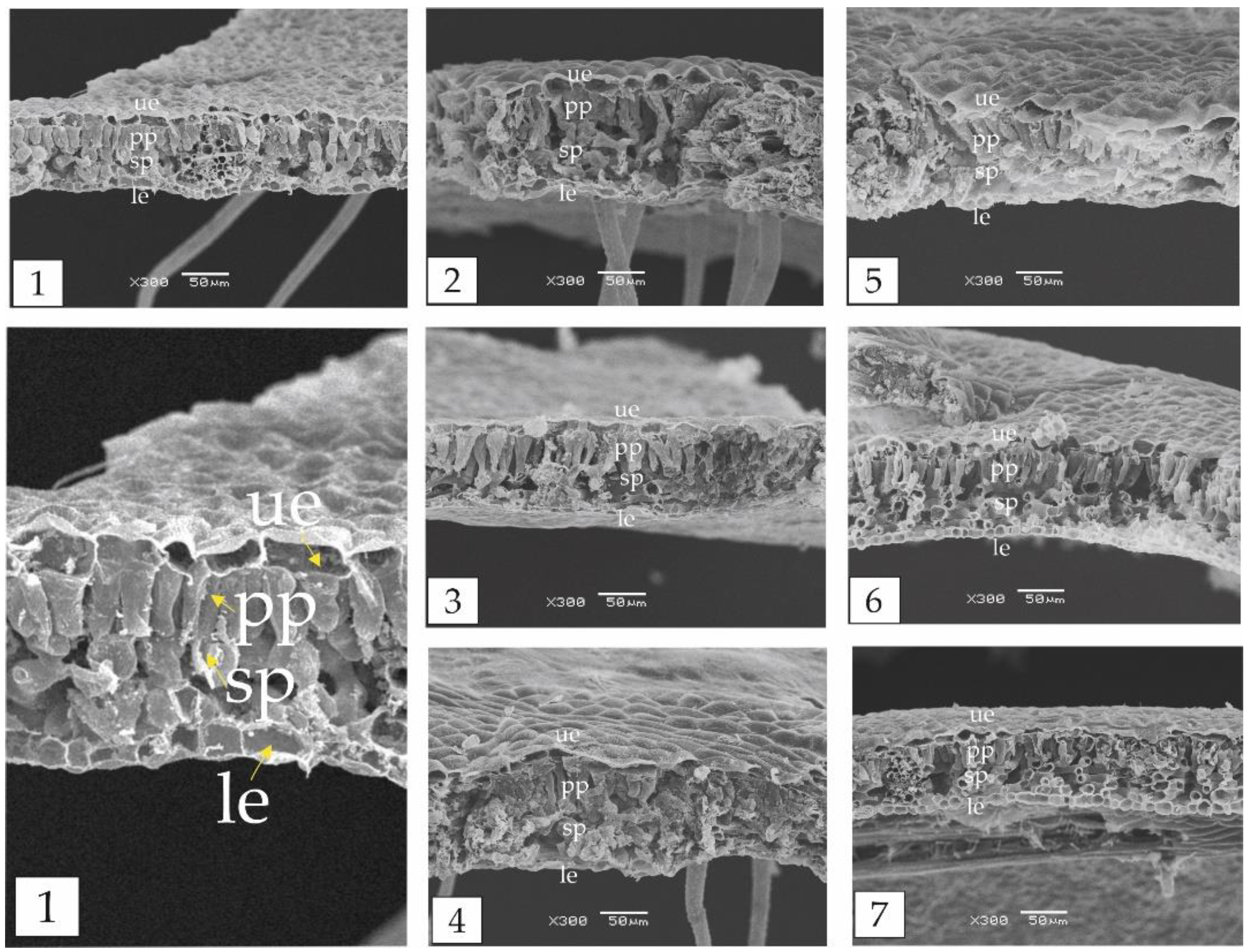
Figure 3.
Morphometric characteristics of anatomical differences in leaf blade mesophyll cuts of horse chestnut leaf. Cross sections of Cameraria ohridella-infested Aesculus leaves. Standard deviations are given as the margin of error. Abbreviations: a – thickness of the cell wall of upper epidermis; b – height of parenchyma. 1—A. hippocastanum; 2—A. glabra; 3—A. flava.; 4—A. pavia; 5—A. × carnea; 6—A. parviflora; 7—A. chinensis.
Figure 3.
Morphometric characteristics of anatomical differences in leaf blade mesophyll cuts of horse chestnut leaf. Cross sections of Cameraria ohridella-infested Aesculus leaves. Standard deviations are given as the margin of error. Abbreviations: a – thickness of the cell wall of upper epidermis; b – height of parenchyma. 1—A. hippocastanum; 2—A. glabra; 3—A. flava.; 4—A. pavia; 5—A. × carnea; 6—A. parviflora; 7—A. chinensis.
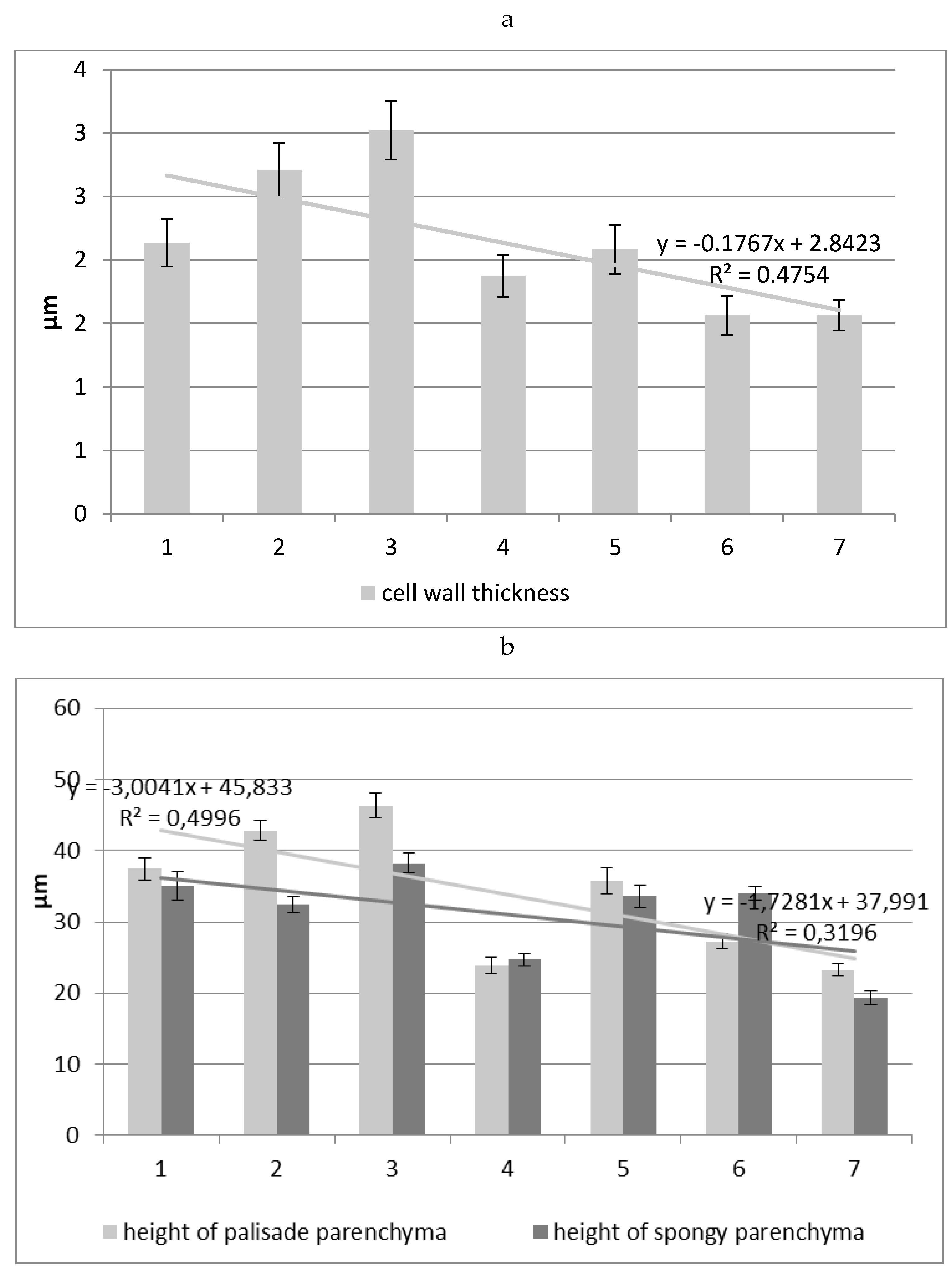
Figure 4.
Content of total chlorophylls (a), ratio Cchla/Cchlb (b) and ratio of chlorophyll a: chlorophyll b to total carotenoids (c) in different species of chestnut. 1—A. hippocastanum; 2—A. glabra; 3—A. flava; 4—A. pavia; 5—A. × carnea; 6—A. parviflora; 7—A. chinensis.
Figure 4.
Content of total chlorophylls (a), ratio Cchla/Cchlb (b) and ratio of chlorophyll a: chlorophyll b to total carotenoids (c) in different species of chestnut. 1—A. hippocastanum; 2—A. glabra; 3—A. flava; 4—A. pavia; 5—A. × carnea; 6—A. parviflora; 7—A. chinensis.
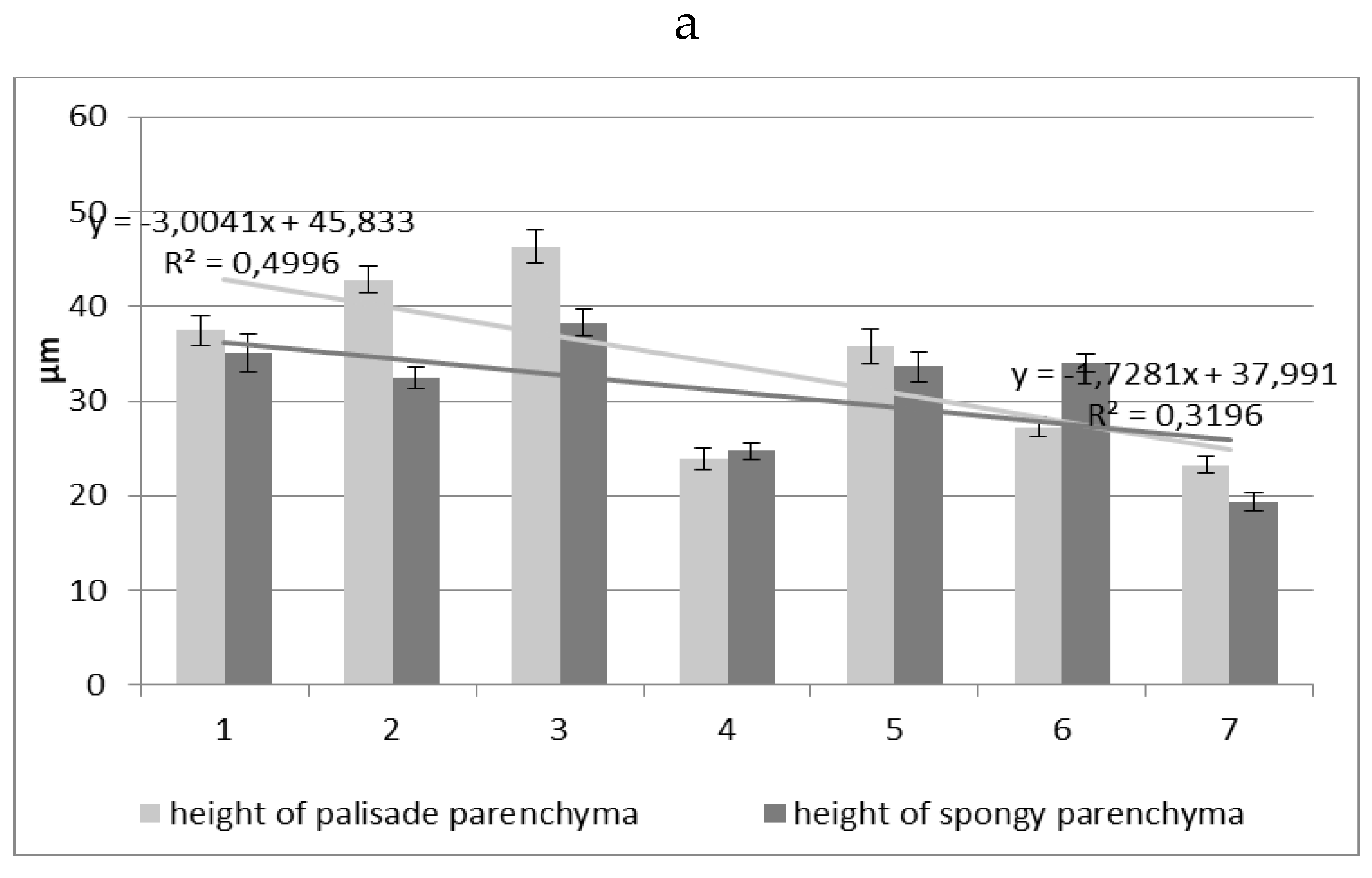
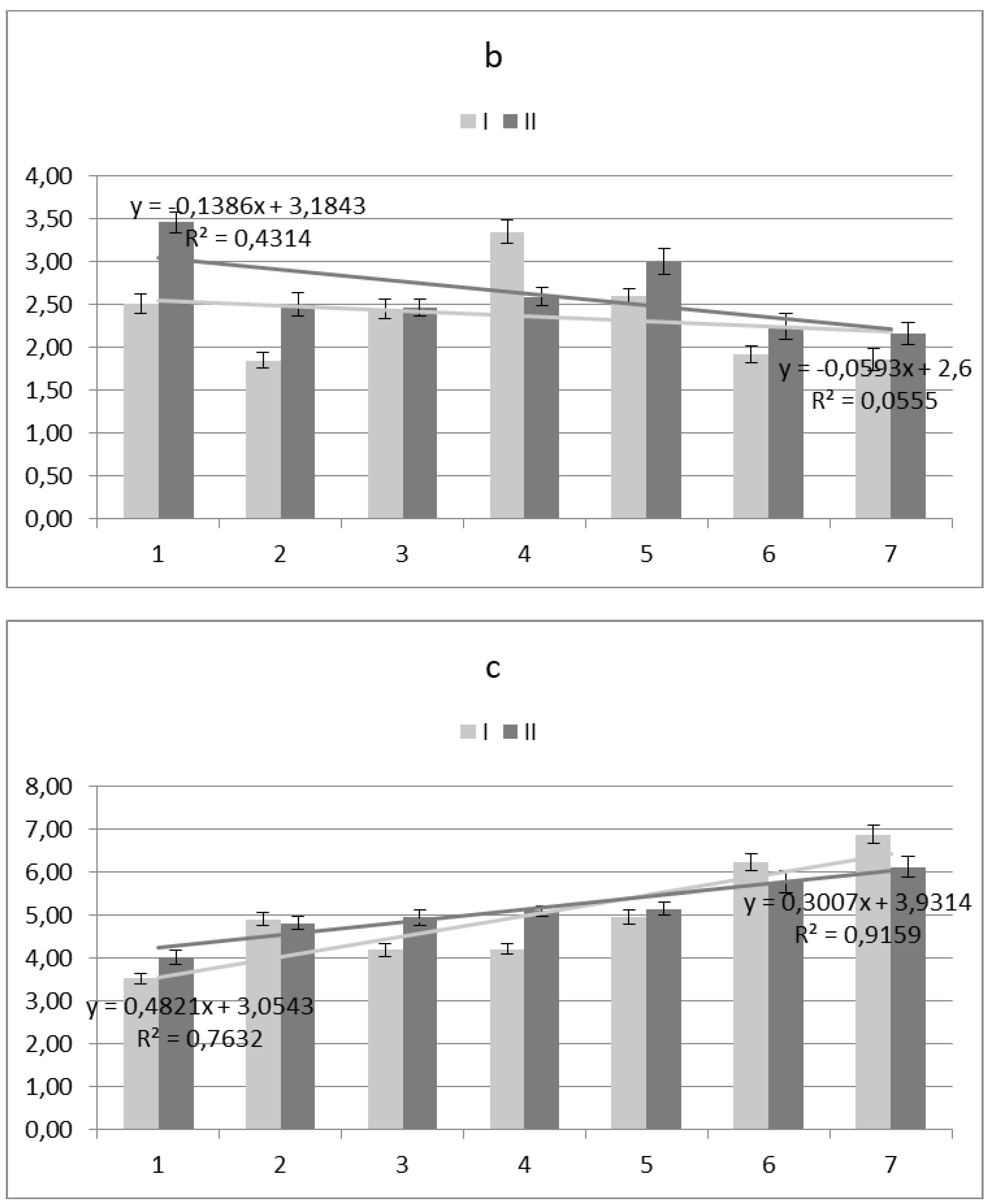
Figure 5.
The amount of tannins (a), phenolic compounds (b) and flavonoids (c) in different chestnut species. 1—A. hippocastanum; 2—A. glabra; 3—A. flava; 4—A. pavia; 5—A. × carnea; 6—A. parviflora; 7—A. chinensis.
Figure 5.
The amount of tannins (a), phenolic compounds (b) and flavonoids (c) in different chestnut species. 1—A. hippocastanum; 2—A. glabra; 3—A. flava; 4—A. pavia; 5—A. × carnea; 6—A. parviflora; 7—A. chinensis.
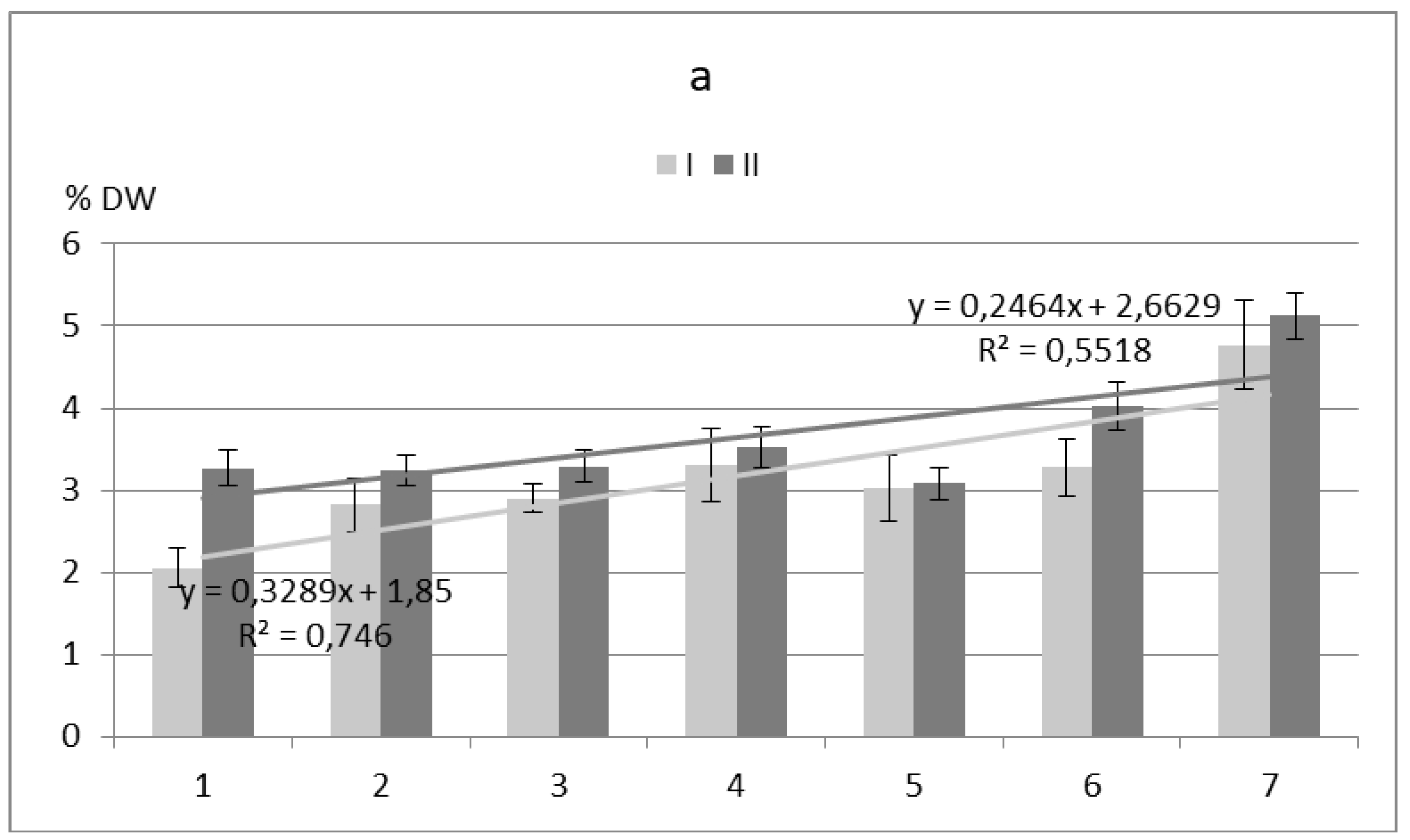
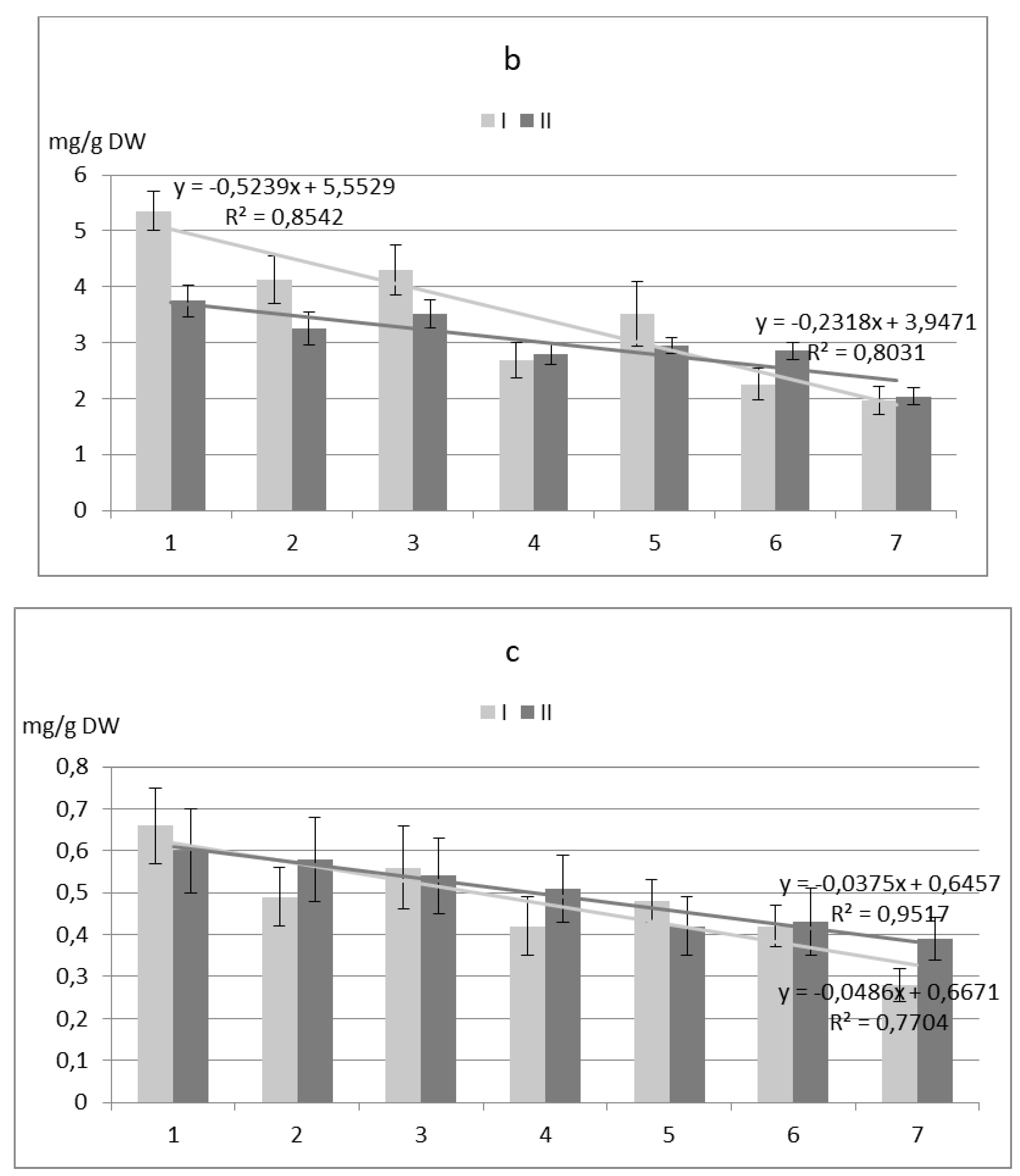
Table 2.
Composition of organic components in the leaves of seven species of chestnuts (% mass. of the extract).
Table 2.
Composition of organic components in the leaves of seven species of chestnuts (% mass. of the extract).
| 1 | 2 | 3 | 4 | 5 | 6 | 7 | |
| polyphenols | |||||||
| Glycerol | 1.91 | 3.92 | 12.03 | 5.17 | 4.45 | 14.49 | 0.01 |
| 1,2,2-3-Butanetriol | 0.27 | 0.62 | 0.01 | 0.79 | 0.01 | 0.01 | 7.80 |
| L-(-)-Arabitol | 1.87 | 4.38 | 8.81 | 0.01 | 2.6 | 3.41 | 0.64 |
| D-Fucitol | 0.89 | 0.01 | 0.01 | 6.35 | 0.41 | 2.30 | 4.77 |
| D-Mannotol | 0.45 | 0.52 | 0.01 | 0.01 | 0.01 | 0.01 | 2.02 |
| 1,5-Angidroglucitol | 11.04 | 11.67 | 8.75 | 4.62 | 2.13 | 0.01 | 5.35 |
| Scillo-Inositol | 1.75 | 1.72 | 0.00 | 0.20 | 0.95 | 0.01 | 0.01 |
| Galactinol | 14.19 | 5.96 | 1.91 | 0.60 | 2.84 | 0.60 | 0.44 |
| D-Glucitol | 0.95 | 0.74 | 2.35 | 2.38 | 0.01 | 0.01 | 0.01 |
| Maltitol | 2.85 | 2.05 | 0.57 | 0.01 | 0.01 | 0.01 | 0.01 |
| Adonitol | 0.01 | 0.01 | 0.01 | 0.01 | 14,11 | 0.01 | 0.01 |
| Organic acid | |||||||
| Glucopyranuronic acid | 0,38 | 3,97 | 0.01 | 23,22 | 4,45 | 0.01 | 22,26 |
| Butanedioic acid | 4,92 | 9,91 | 11,69 | 12,87 | 14,98 | 17,29 | 13,27 |
| Quininic acid | 6,18 | 3,65 | 0,78 | 0,12 | 7,47 | 22,50 | 4,96 |
| Gluonic acid | 4,09 | 4,67 | 1,30 | 5,07 | 6,63 | 1,70 | 5,10 |
| Gallic acid | 0,54 | 0,84 | 0,29 | 0.01 | 0.01 | 0.01 | 6,37 |
| Ribonic acid | 0,25 | 0.01 | 1,94 | 0.01 | 1,27 | 0.01 | 0.01 |
| D-(+)-Galacturonic acid | 0,45 | 2,29 | 10,35 | 0.01 | 0.01 | 1,05 | 5,64 |
| Sugar deriva0.01ives | |||||||
| D-erythro-2-pentulose | 0.62 | 22.23 | 0.59 | 1.11 | 1.62 | 8.54 | 7.42 |
| Methyl-a-D-glucofuranoside | 0.75 | 1.42 | 3.37 | 0.28 | 6.87 | 13.07 | 7.29 |
| D-Psicofuranose | 9.30 | 3.72 | 6.43 | 0.01 | 0.82 | 0.25 | 3.37 |
| D-(-)-Tagatofuranose | 1.45 | 0.02 | 13.58 | 24.49 | 2.84 | 3.01 | 4.05 |
| DL- Arabinofuranoside | 3.05 | 0.01 | 0.01 | 4.33 | 4.86 | 2.97 | 0.42 |
| Methyl galactoside | 6.04 | 0.01 | 4.87 | 1.33 | 3.38 | 1.47 | 0.84 |
| b-D-(+)-Talophyranose | 2.15 | 0.01 | 2.99 | 0.84 | 0.22 | 0.05 | 0.01 |
| Talofuranose | 1.57 | 1.57 | 0.61 | 0.09 | 1.03 | 0.07 | 1.11 |
| Deoxyglucose | 0.60 | 13.92 | 0.78 | 0.12 | 2.25 | 0.10 | 0.09 |
| a-D-Ribofuranose | 0.25 | 0.99 | 0.01 | 0.05 | 0.77 | 0.05 | 0.01 |
| Glucosylspingosine | 6.55 | 0.01 | 0.01 | 0.01 | 1.75 | 3.21 | 1.15 |
| D-Turanose | 2.98 | 0.06 | 2.75 | 1.11 | 1.28 | 0.22 | 0.20 |
| Methyl-a-N-acetyl-D-galactoside | 4.89 | 0.01 | 3.18 | 0.01 | 0.64 | 0.01 | 0.37 |
| D-(-)-Sorbofuranose | 1.68 | 0.01 | 2.63 | 0.01 | 0.75 | 0.01 | 0.18 |
| b-Arabinopyranose | 2.07 | 0.01 | 0.01 | 0.01 | 1.63 | 0.01 | 0.01 |
| 1-c-Octylhexopyranose | 7.31 | 1.01 | 0.94 | 1.21 | 1.16 | 0.01 | 0.11 |
| DL-Arabinopyranose | 2.78 | 1.38 | 0.01 | 0.01 | 1.57 | 0.01 | 0.63 |
Disclaimer/Publisher’s Note: The statements, opinions and data contained in all publications are solely those of the individual author(s) and contributor(s) and not of MDPI and/or the editor(s). MDPI and/or the editor(s) disclaim responsibility for any injury to people or property resulting from any ideas, methods, instructions or products referred to in the content. |
© 2024 by the authors. Licensee MDPI, Basel, Switzerland. This article is an open access article distributed under the terms and conditions of the Creative Commons Attribution (CC BY) license (http://creativecommons.org/licenses/by/4.0/).
Copyright: This open access article is published under a Creative Commons CC BY 4.0 license, which permit the free download, distribution, and reuse, provided that the author and preprint are cited in any reuse.


