

Submitted:
26 August 2024
Posted:
27 August 2024
Read the latest preprint version here
Abstract
Type 2 Diabetes mellitus (T2DM) and cancer share common risk factors including obesity, in-flammation, hyperglycemia, and hyperinsulinemia. High insulin levels activate PI3K/Akt/mTOR signaling pathway promoting cancer cell growth, survival, proliferation, metastasis, and an-ti-apoptosis. The inhibition of PI3K/Akt/mTOR signaling pathway for cancer remains a promising therapy, however, the combination of therapeutic inhibitors may solve the resistance to such agents. Understanding the metabolic link between diabetes and cancer can assist in improving the therapeutic strategies used for the management of cancer patients with diabetes and vice versa. This review provides an overview of shared molecular mechanisms between diabetes and cancer as well as discusses established and emerging therapeutic anti-cancer agents targeting the PI3K/Akt/mTOR pathway in cancer management.
Keywords:
Cancer
; Diabetes
; Obesity
; Inflammation
; Apoptosis
; Akt inhibitors
; mTOR inhibitors
; PI3K/Akt/mTOR signaling
1. Introduction
Cancer is a major cause of mortality and a significant health problem worldwide [1]. Type 2 Diabetes mellitus (T2DM) is a chronic metabolic disorder characterized by persistent hyperglycemia due to impaired insulin secretion and resistance to peripheral actions of insulin [2,3]. According to the International Diabetes Federation (IDF), approximately 537 million adults (20-79 years) worldwide are living with diabetes in 2021 [4]. T2DM accounts for over 90% of the global diabetes [5]. It has been reported that T2DM is associated with an increased risk of various types of cancer such as the esophagus, liver, lung, colorectal, and pancreas cancers [5,6,7,8]. Cancer cells accelerate their glucose uptake during tumor progression to support tumor growth [9]. According to epidemiological studies, diabetic individuals are at higher risk of cancer with 8%-18% of cancer patients having diabetes [10,11]. The relationship between T2DM and cancer is well-established; however, the exact underlying mechanisms are not fully understood. Both T2DM and cancer share common risk factors including obesity and inflammatory process, hyperglycemia, and hyperinsulinemia [13,14]. These shared risk factors contribute to the development and progression of both diseases, highlighting the importance of maintaining a healthy lifestyle, and early screening for detection and prevention. Additionally, certain signaling pathways associated with both T2DM and cancer including PI3K/AKT/mTOR are used as therapeutic targets for various types of cancers [15,16]. In this review, we summarize the intricate association between T2DM and cancer exploring the most updated evidence of the underlying mechanisms and targeted therapy drugs used in the management of cancer patients with diabetes.
2. Obesity-Associated Diabetes and Inflammatory Process in Cancer
Obesity is a well-known risk factor for the development of T2DM and can synergistically increase the risk of cancer [17,18,19]. It has been reported previously that excess body weight is linked to tumorigenesis through various mechanisms involving chronic inflammation, hyperinsulinemia, and anti-hyperglycemic medications [20]. Commonly reported cancers concerning obesity and diabetes include liver, colorectal, pancreas, endometrial, and postmenopausal breast cancers [21]. Moreover, obesity-linked insulin resistance and hyperglycemia lead to an increased level of unbound insulin growth factor-1 (IGF-1) protein in the blood, activating insulin and IGF-1 receptor signaling pathways that ultimately promote tumor growth [22]. Several studies proposed the link between high levels of serum C-peptide, a stable marker of insulin secretion, and high risk of various types of cancer including breast, colorectal, and postmenopausal endometrial cancers [23]. Additionally, obese men with high C-peptide levels are at four times higher risk of mortality from prostate cancer than those with normal C-peptide levels [24]. Furthermore, adipose tissue with impaired adipokine enzymes in obesity-associated T2DM releases factors that promote tumor growth [25]. These factors include adiponectin, leptin, resistin, interleukin-6 (IL-6), phosphoribosyltransferase, and tumor necrosis factor- α (TNF-α) [25]. Obesity-related cancer development occurs due to an imbalance in adipokines, characterized by increased production of leptin (oncogenic adipokine) and reduced release of adiponectin (anti-oncogenic adipokine) [1,26]. Notably, adiponectin, a crucial adipokine produced by fat cells, can activate various signaling pathways including mitogen-activated protein kinase (MAPK), adenosine monophosphate-activated protein kinase (AMPK), and phosphoinositide-3-kinase (PI3K)/ protein kinase B (Akt) leading to the suppression of tumor formation induction [27,28]. Additionally, adiponectin triggers tumor suppressor gene liver kinase B1, inhibiting cell invasion, migration, and metastasis, while inducing cytotoxic autophagy [29,30,31]. Moreover, leptin as a key regulator of energy metabolism and the immune system contributes to obesity-linked inflammation as well as influences molecules involved in angiogenesis, proliferation, migration, invasion, and adhesion, particularly in breast carcinogenesis [32]. It has been also found that high leptin levels are associated with an increased risk of colon and breast cancers [33,34,35,36]. The increased expression of leptin receptor has been reported in various cancer types suggesting its impact on cancer progression [37]. Furthermore, it has been reported that cells experience stress due to nutrient excess associated with obesity, leading to reactive oxygen species (ROS) production beyond physiological requirements [38]. The production of ROS may play a role in promoting cancer by enhancing DNA mutation, regulating signaling transduction, and inducing inflammation [38]. Furthermore, obesity-related inflammation enhances the production of various systemic molecules involved in inflammatory responses including interleukin (IL)-1, IL-6, tumor necrosis factor (TNF)-α, and C-reactive protein which may impact tumorigenesis by promoting tumor cell survival and progression [39,40].
3. Hyperglycemia and Cancer
Hyperglycemia can lead to the formation of advanced glycated end products (AGEs) and oxidative stress which occur in both T1DM and T2DM [1,10,41]. T2DM is the inability of the body’s cells to absorb and use insulin, leading to the accumulation of glucose in the blood, which is defined as insulin resistance [42,43]. The incidence of hyperglycemia indirectly influences tumor cells by inducing the production of insulin-like growth factor-1 (IGF-1) and inflammatory cytokines in circulation [44]. Furthermore, studies suggest that hyperglycemia has a direct impact on cancer development by promoting cell proliferation, enhancing tumor cell invasion, and inducing resistance to apoptosis [44].
3.1. Cancer Cells Proliferation
Increased glucose metabolism in cancer cells is a well-established characteristic known as the Warburg effect (aerobic glycolysis) which leads to enhanced glucose uptake by cancer cells [45,46]. This phenomenon provides high levels of glucose to support cancer cells’ rapid proliferation [44]. In vitro studies using cancer cell lines have revealed that elevated levels of glucose lead to increased expression of genes associated with promoting cancer cell proliferation, invasion, and migration [47]. Various proteins have been reported to be implicated in hyperglycemia and cancer cell proliferation [44]. The expression of glucose transporters (GLUTs) including insulin-independent GLUT-1 and GLUT-3 is found to be regulated under hyperglycemic conditions leading to elevation of glucose uptake which therefore promotes cell proliferation [48]. Additionally, high glucose levels induce epidermal growth factor (EGF) expression and epidermal growth factor receptor (EGFR) transactivation, a well-known oncogenic pathway, in pancreatic cancer cell lines which may increase pancreatic cancer cell proliferation [49]. Furthermore, high glucose also induces an aggressive phenotype by stimulating the levels of protein kinase C (PKC) and peroxisome proliferator-activated receptor gamma (PPARγ) [50,51,52]. The overproduction of ROS is a key factor in hyperglycemic complications which can lead to cellular DNA mutations and may play a significant role in cancer initiation and progression [53]. Furthermore, ROS generation is essential for Kras-induced anchorage-independent growth via regulation of the ERK MAPK mitogenic signaling pathway [54]. Moreover, long-term hyperglycemia leads to the production of pro-inflammatory factors such as IL-6, TNF- α, and cyclooxygenase-2 (COX-2 which may play a role in cancer development by stimulating oncogene expression, regulating cell cycle, and promoting cancer cell proliferation [55,56]. Furthermore, hyperglycemia plays a role in promoting breast cancer progression by changing leptin/IGFR1 and Akt/mTOR signaling [57]. Additionally, it contributes to pancreatic cancer progression stimulated by ROS through the suppression of the JNK and c-Jun pathways [58].
3.2. Apoptosis and Cancer
Apoptosis is a programmed cell death that is essential to maintain homeostasis [50]. This process is dysregulated in cancer cells leading to uncontrolled cellular growth [57]. In normal cells, elevated levels of glucose trigger apoptosis [60,61]. However, recent studies suggest that cancer cells benefit from glucose metabolism which protects them from Cytochrome c-mediated apoptosis [62]. In vitro studies have indicated that the upregulation of transmembrane glucose transporters enhances glucose metabolism in cancer cells [63]. Glucose metabolism is altered in various tumors leading to an increased lactate production, in a transition from aerobic to anaerobic glucose utilization known as the Warburg effect [64,65,66]. Furthermore, cancer cells alter glucose metabolism when exposed to low oxygen levels (hypoxia) due to rapid cell proliferation [67]. Tumors adapt to these changes by stabilizing hypoxia-inducible factor-1α (HIF1α) and translocating it into the nucleus. This process leads to the up-regulation of genes associated with metabolism, angiogenesis, cell survival, and anti-apoptosis [68,69]. At normal oxygen levels, HIF1α is degraded by the HIF proly1 hydroxylases (PHDs) enzyme to maintain its activity at normal levels [69]. Notably, hyperglycemia interferes with this degradation process leading to an elevated HIF1α level which enhances cancer cell survival and promotes apoptotic resistance [70].
3.3. Cancer Metastasis
The spread of cancer cells to other parts of the body is considered a vital step in cancer progression and a significant challenge in cancer treatment, contributing to 90% of cancer-associated deaths [71,72,73,74]. Studies have shown that hyperglycemia plays a role in assisting cancer cell migration and transforming them into secondary sites [41]. Cancer patients with hyperglycemia have a higher rate of metastasis and worse outcomes when compared to non-hyperglycemic patients [44]. Previous reports showed that hyperglycemia led to a 27% increase in lymph node metastasis and a 14.3% increase in liver metastasis and pancreatic cancer, respectively, when compared to patients without hyperglycemia [75]. Furthermore, hyperglycemia decreases the levels of epithelial cell marker E-cadherin and increases the PKC-α pathway leading to a more invasive phenotype [47]. Thus, it is plausible that epithelial-mesenchymal transition (EMT) is stimulated by high glucose levels resulting in increased cancer cell invasiveness and migration [76]. This process could induce reactive oxygen species (ROS) production which ultimately promotes cancer cells motility and invasiveness [76]. Several studies suggest that hyperglycemia promotes metastasis by EMT induction and vascular destruction through oxidative stress [77]. Additionally, high glucose levels induce multiple signaling pathways known to enhance tumor invasion such as TGF-β and PI3K/AKT, and increase the migratory effect by impairing the secretion of granulocytes colony-stimulating factor (G-CSF) and inhibiting the mobilization of anti-tumor neutrophils [78,79].
4. Hyperinsulinemia and Cancer
Excessive levels of insulin in the blood as a result of insulin resistance are referred to as hyperinsulinemia. The incidence of insulin resistance leads to impaired consumption of glucose by the cells which therefore results in the accumulation of glucose levels in the blood leading to T2DM [42,43]. Elevating circulating insulin is believed to be a major factor linking diabetes and cancer [80]. Several studies have shown that hyperinsulinemia is a potential risk factor for various types of cancer including pancreatic, colon, prostate, breast, liver, and kidney cancers, and was associated with a 2-fold risk of cancer mortality [14,81,82,83,84,85,86,87]. Insulin receptor (IR) plays a crucial role in cancer biology [88]. In a hyperinsulinemia state, elevated insulin levels lead to increased production of IGF-1 due to upregulated growth hormone receptor (GHR) signaling [10,89]. The insulin signaling pathway is a crucial intracellular signaling pathway that is responsible for regulating many metabolic processes in the body including growth, survival, and glucose homeostasis [90]. The process is initiated by the binding of insulin and IGF to their respective receptors (IR and IGFR) on the cell surface [90]. Upon binding, IR is activated and subsequently auto-phosphorylates tyrosine residues which serve as docking sites for downstream effectors including Src homolog 2 domain-containing (SHC), insulin receptor substrate (IRS), Growth factor receptor-bound protein 2 (GRB2), SH2B adaptor protein 2 (SH2B2/APS) and Growth factor receptor-bound protein 10 (GRB10) [90]. This binding and subsequent signaling pathway triggered by insulin and its substrates regulates several cellular signaling pathways for metabolism and mutagenesis [91]. Furthermore, the insulin signaling cascade contains key components including RAS, RAF, PI3K, and AKT which are frequently mutated in different types of cancer [92,93]. Thus, alteration in genes involved in the insulin signaling pathway (Figure 1) can influence cancer development [14].
4.1. PI3K/AKT/mTOR Signaling Pathway in Cancer
The Phosphoinositide 3-kinase (PI3K) pathway plays an important role in regulating metabolic homeostasis and insulin sensitivity [94,95]. IRS interaction with heterodimers of PI3K, regulatory subunit with SH2 domain (p85), and catalytic subunit (p110), stimulates glucose transport within cells [96,97]. p85 plays an effective role in the insulin-mediated PI3K pathway by acting as an adaptor for IRS proteins facilitating the downstream signaling by stabilizing the catalytic activity of the p110 subunit of PI3K [95]. Subsequently, PI3K converts phosphatidylinositol 4,5-bisphosphate (PIP2) to phosphatidylinositol 3,4,5-triphosphate (PIP3) [95,98]. Moreover, High levels of PIP3 are regulated and converted back to PIP2 by phosphatase and tensin homolog deleted on chromosome 10 (PTEN), a tumor suppress gene frequently mutated in cancer [90,99]. PIP3 triggers the recruitment of proteins containing plekstrin homolog (PH) domain to the plasma membrane, such as phosphoinositide-dependent kinase 1 (PDK1) and protein kinase B (AKT) [95]. Consequently, PDK1 phosphorylates AKT on the Thr308 residue which further activates the downstream AKT-mediated pathways resulting in phosphorylation and inhibition of Glycogen Synthase Kinase 3β (GSK3β), which in turn activates glycogen synthesis in hepatocytes [95,98,100]. Furthermore, AKT phosphorylates of AS160 which plays a key role in the translocation of glucose transporter GLUT4 to the cell membrane in muscle cells and adipocytes [95,101]. This process increases glucose inflow into the cell. Moreover, AKT directly phosphorylates BAD (BCL-2 associated agonist of cell death) and caspase 9, inhibiting the mitochondrial apoptosis pathway and promoting cell survival [93,102]. Additionally, forkhead family box O (FOXO) phosphorylation and inhibition by AKT can indirectly inhibit apoptosis, because FOXO can promote bcl-2-like protein 11 and induce the expression of pro-apoptotic cytokine Fas ligand [14,102]. The murine double minute 2 (MDM2) proto-oncogene plays a crucial role in cancer development including promoting cell proliferation, apoptosis evasion, metastasis, and chemotherapy resistance [103,104]. MDM2 is phosphorylated by AKT and can inhibit tumor suppressor TP53, allowing cancer cells to evade cell cycle arrest and apoptosis [14,105]. Additionally, when the mammalian target of rapamycin (mTOR) is phosphorylated by AKT, activates substrates such as S6 kinase 1 and eIF4E binding protein 1 [106]. These substrates play a crucial role in regulating mRNA translation initiation and controlling protein synthesis and cell growth [106]. Thus, hyperinsulinemia may contribute to cancer progression by enhancing the translocation of glucose transporters to the cell surface allowing more glucose to enter the cell which in turn supports rapid tumor growth.
4.2. RAS/MAPK/ERK Signaling Pathway in Cancer
Hyperinsulinemia can also promote cancer progression through the mitogenic pathway known as MAPK/ERK which plays a crucial role in cancer cell proliferation [93,107]. MAPK/ERK pathway is triggered by the binding between IR and SHC protein [90]. This binding plays a key role in recruiting GRB2-SOS (Growth factor receptor-bound 2- son of sevenless) complex [90]. SOS regulates the conversion of GTP to GDP specifically when Rat sarcoma (Ras) is associated with the plasma membrane [90,108]. Consequently, SOS-mediated GTP loading activates Ras protein which is farnesylated and translocated to the cell surface [14]. Ras protein initiates the cascade signals by activating Raf protein which subsequently activates mitogen-activated protein kinase (MAPK) [90]. Activated MAPK, also known as an extracellular signal-regulated kinase (ERK1/2), plays a key role in transmitting signals in the mitogenic pathway that promotes cell division, growth, migration, and apoptosis [108,109]. Therefore, hyperinsulinemia enhances farnesylated Ras for GTP loading in response to other growth factors. This effect can promote cancer progression and prevent apoptosis through PI3K/AKT/mTORC and MAPK/ERK signaling pathways [14]. However, the intricate insulin signaling network involves extensive cross-talk between its major components as well as cross-talk with other signaling networks.
5. Insulin-Mediated PI3K Pathway Inhibition in Cancer
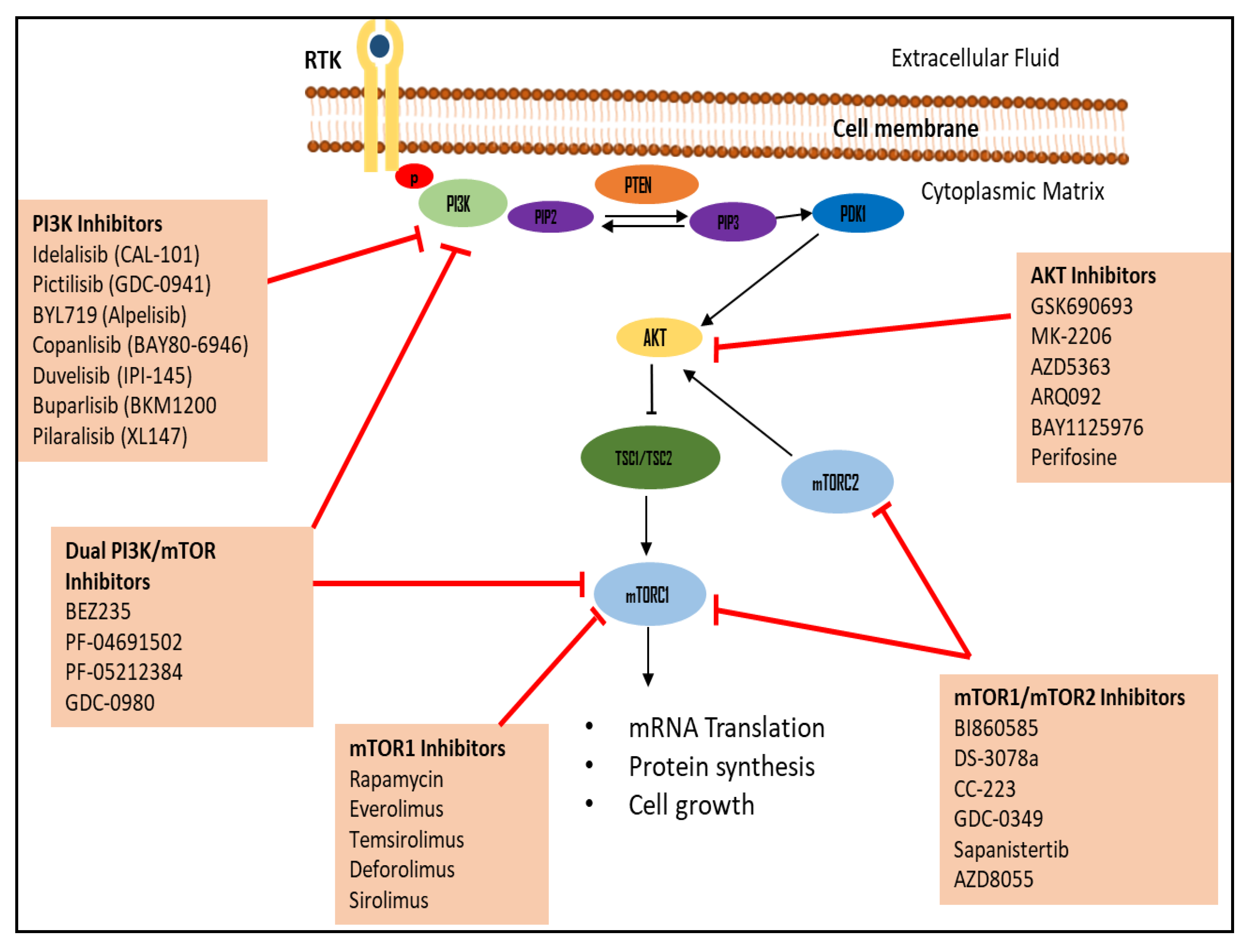
For the inhibition of progressive tumors, specific signaling pathways involved in cancer development are targeted to inhibit cell proliferation, regulate the cell cycle or induce apoptosis [110]. Targeted genes such as PI3K/AKT/mTOR are commonly activated in solid tumors and associated with insulin resistance in diabetes conditions resulting in hyperglycemia [57,111]. The drugs targeting PI3K/AKT/mTOR are shown in Table 1 and Figure 2.

Table 1.
PI3K/AKT/mTOR Inhibitors in Clinical Trials.
| Target | Inhibitor | Disease Condition | Sample Size | Clinical Phase | Clinical Trial ID* |
|---|---|---|---|---|---|
| PI3K | Idelalisib (CAL-101) | Non-Hodgkin’s Lymphomas | 125 | II | NCT01282424 |
| PI3K | Pictilisib (GDC-0941) | Non-Hodgkin's Lymphoma | 60 | I | NCT00876122 |
| PI3K | BYL719 (Alpelisib) | Advanced Solid Malignancies | 221 | I | NCT01219699 |
| PI3K | Copanlisib (BAY80-6946) | Advanced Cancer | 57 | I | NCT00962611 |
| PI3K | Duvelisib (IPI-145) | Advanced Hematologic Malignancies | 210 | I | NCT01476657 |
| PI3K | Buparlisib (BKM120) | Relapsed or Refractory Non-Hodgkin Lymphoma | 7 | I | NCT01719250 |
| PI3K | Pilaralisib (XL147) | Endometrial Carcinoma | 67 | II | NCT01013324 |
| Dual PI3K/mTOR | BEZ235 | Advanced Solid Tumors | 33 | I | NCT01343498 |
| Dual PI3K/mTOR | PF-04691502 PF-05212384 |
Recurrent Endometrial Cancer | 67 | II | NCT01420081 |
| Dual PI3K/mTOR | GDC-0980 | Refractory Solid Tumors or Non-Hodgkin's Lymphoma | 121 | I | NCT00854152 |
| mTOR | AZD8055 | Gliomas | 22 | I | NCT01316809 |
| mTOR | Temsirolimus | Breast Neoplasms | 108 | II | NCT00062751 |
| mTOR | Sirolimus | Advanced Cancers | 40 | I | NCT00707135 |
| mTOR | BI860585 | Advanced and/or Metastatic Solid Tumors | 90 | I | NCT01938846 |
| mTOR | DS-3078a | Advanced Solid Tumors or Lymphomas | 32 | I | NCT01588678 |
| mTOR | GDC-0349 | Advanced or Metastatic Solid Tumors or Non-Hodgkin’s Lymphoma | 10 | I | NCT01356173 |
| mTOR | Sapanisertib(MLN0128) | Advanced Malignancies | 198 | I | NCT01058707 |
| mTOR | CC-223 | Advanced Solid Tumors, Non-Hodgkin Lymphoma or Multiple Myeloma | 226 | I/II | NCT01177397 |
| mTOR | Everolimus | Advanced solid tumors | 30 | II | NCT02201212 |
| mTOR | Ridaforolimus | Refractory or Advanced Malignancies | 147 | I | NCT00112372 |
| mTOR | Deforolimus (AP23573) | Relapsed or Refractory Hematologic Malignancies | 57 | II | NCT00086125 |
| AKT | GSK690693 | Solid Tumors and Lymphoma | 70 | I | NCT00493818 |
| AKT | MK-2206 | Metastatic Neuroendocrine Tumors | 11 | II | NCT01169649 |
| AKT | AZD5363 | Advanced Solid Tumors | 12 | I | NCT03310541 |
| AKT | ARQ092 | Advanced Solid Tumors and Recurrent Malignant Lymphoma | 120 | I | NCT01473095 |
| AKT | BAY1125976 | Neoplasm | 79 | I | NCT01915576 |
| AKT | Perifosine | Recurrent/Progressive Malignant Gliomas | 32 | II | NCT00590954 |
*Data obtained from ClinicalTrials.gov Database.
Figure 2.
The PI3K/AKT/mTOR pathway and associated inhibitors. The PI3K/AKT/mTOR is a major intracellular pathway that promotes cell growth, proliferation, and migration and inhibits apoptosis in tumor cells. Upon the activation by RTK binding, PIP2 is converted to PIP3 via phosphorylation by PI3K. This process is negatively regulated by PTEN. AKT and PDK1 are then recruited to the plasma membrane which leads to the phosphorylation of AKT by PDK1. This phosphorylation of AKT subsequently inactivates TSC2 leading to the degradation of TSC1/TSC2 and activation of mTOR leading to mRNA translation, protein synthesis, and cell growth. The activation of these molecules promotes tumorigenesis. PI3K, AKT, and mTOR are therapeutic targets by inhibitors.
Figure 2.
The PI3K/AKT/mTOR pathway and associated inhibitors. The PI3K/AKT/mTOR is a major intracellular pathway that promotes cell growth, proliferation, and migration and inhibits apoptosis in tumor cells. Upon the activation by RTK binding, PIP2 is converted to PIP3 via phosphorylation by PI3K. This process is negatively regulated by PTEN. AKT and PDK1 are then recruited to the plasma membrane which leads to the phosphorylation of AKT by PDK1. This phosphorylation of AKT subsequently inactivates TSC2 leading to the degradation of TSC1/TSC2 and activation of mTOR leading to mRNA translation, protein synthesis, and cell growth. The activation of these molecules promotes tumorigenesis. PI3K, AKT, and mTOR are therapeutic targets by inhibitors.
5.1. PI3K Inhibitors
PI3K contains several isoforms such as PI3Kα, β, δ, and γ which contribute to different cancer subtypes at various rates [112,113]. Therefore, various inhibitors targeting these isoforms have been synthesized and clinically studied in several clinical trials [114]. Pan-Class I-PI3K inhibitors are a class of targeted agents that were synthesized to inhibit all four PI3K isoforms [115]. This class of medical drugs, such as buparlisib and pictilisib, have shown modest clinical efficacy in clinical trials due to their cellular toxicities which limit the clinical utility of these agents [116,117,118]. Therefore, it is essential to investigate more tolerable treatment options, such as isoform-selective PI3K inhibitors that particularly target specific PI3K isoforms. For instance, BYL719 (Alpelisib) is an oral selective inhibitor that is designed to inhibit PI3Kα (PIK3CA) [118,119]. Preclinical studies revealed that Alpelisib inhibits PI3K signaling and prevents AKT phosphorylation in cell lines with PIK3CA mutations and blocks tumor growth in xenograft models [120]. The first-in-human phase Ia revealed a tolerable safety profile and promising preliminary activity [121]. This supports the use of Alpelisib as a selective PI3Kα inhibitor in combination with other agents for the treatment of tumors harboring PIK3CA mutation [121]. On the other hand, Idelalisib (CAL-101) is an oral specific for the inhibition of PI3Kδ isoform which has been approved by the Food and Drug Administration (FDA) [122,123]. It has shown an independent inhibition for PI3Kδ isoform activity without affecting PI3K signaling essential for the normal function of healthy cells [124,125]. Idelalisib is the first FDA-approved inhibitor used in combination with rituximab in patients with relapsed or refractory chronic lymphocytic leukemia (CLL) [122,123]. Additionally, it is recommended as a monotherapy for relapsed small lymphocytic lymphoma (SLL) and follicular lymphoma patients who have previously received at least two systemic therapies [126]. Furthermore, Copanlisib is a PI3K α and γ isoforms inhibitor that has been approved by the FDA for the treatment of adult patients with relapsed follicular lymphoma (LF) who were previously treated with two or more systemic therapies [127]. This approval provides an additional option to treat patients with this slow-growing type of non-Hodgkin lymphoma by blocking enzymes that promote cell growth [127]. Moreover, Duvelisib is a PI3K δ and γ isoforms inhibitor that has been also approved for the treatment of adult patients with CLL and SLL, typically after two or more prior systemic therapies [128]. Despite the clinical development of many PI3K inhibitors, most of these inhibitors were not successfully implemented due to poor clinical response as a result of sub-optimal levels of the drugs when used as monotherapies [113]. Additionally, resistance to these inhibitors can be initiated from parallel signal activation or PI3K pathway reactivation [119]. Inhibition of AKT leads to feedback-mediated regulation of RTK, while the inhibition of mTOR accelerates AKT activity by removing the negative feedback on IRS1 leading to the release of PI3K inhibition through GRB10 [94]. Furthermore, PTEN negatively regulates PI3K signaling, and its loss of expression can lead to resistance to PI3K inhibitors [129]. However, dual inhibitors targeting both PI3K and mTOR can be beneficial to overcome PI3K inhibitor resistance and maximize the efficacy of these inhibitors by suppressing parallel signaling pathways [113,119]. However, dual inhibitors targeting both PI3K and mTOR can be beneficial to overcome feedback loop, and PI3K inhibitor resistance and block PI3K-independent mTOR activation [113,114,119]. Several PI3K selective and dual PI3K/mTOR inhibitors are being clinically evaluated. BEZ235 (Dactolisib) is a dual inhibitor targeting PI3K and mTOR which is currently undergoing clinical trials [126]. BEZ235 inhibitor selectively inhibits class I PI3K, mTOR1, and mTOR2 by binding to the ATP-binding kinases and inhibits their catalytic activities and signaling [130]. BEZ235 dual PI3K/mTOR inhibitor has been reported to exhibit excellent anticancer effects in many types of cancer including melanoma, colorectal, lung, renal, breast, and prostate cancer [131,132,133,134,135,136]. Furthermore, and PF-04691502 and PF-05212384 (Gedatolisib) are potent ATP-competitive dual class I PI3K/mTOR kinases inhibitors [135,136,137,138]. Preclinical studies showed that blocking PI3K/mTOR with PF-04691502 can enhance TP53/p73 expression and significantly inhibit tumor growth in head and neck squamous cell carcinoma [141]. Moreover, the PF-04691502 inhibitor reduced AKT and S6RP phosphorylation leading to the inhibition of cell proliferation in cancer cells harboring PI3Kα mutations and PTEN deletion [142]. Additionally, preclinical studies showed that PF05212384 inhibitors targeting PI3K and mTOR can reduce AKT/mTOR signaling and induce antitumor activity [139]. It has also been reported that PF05212384 inhibitor prevents negative feedback loop mediated by mTORC2 resulting in MEK/ERK over-activation in pancreatic cancer [143]. In neuroendocrine tumor cells, treatment with PF05212384 inhibitor led to cell cycle arrest and induced apoptosis [144]. Therefore, PI3K/mTOR dual inhibitors are promising therapeutic approaches and may exert a more efficient therapeutic effect due to their effective inhibition of the PI3K pathway [126].
Furthermore, blocking PI3K pathway disrupts insulin signaling which can have a significant impact on insulin resistance [145,146]. PI3K plays a crucial role in the downstream signaling that induces glucose inflow into the cells [147]. The inhibition of PI3K/AKT signaling pathway could interrupt insulin-mediated glucose uptake and may also lead to systemic hyperglycemia due to the resulting dysregulation in glucose metabolism in multiple tissues including the liver, muscle, and fat [148]. PI3K inhibitors such as pilaralisib and copanisib have shown a 28%-30% incidence of hyperglycemia in clinical trials, while other drugs that target the same pathway such as idelalisib did not cause hyperglycemia [145,149]. Understanding the epidemiology and clinical progression of drug-induced diabetes is essential to enhance the efficacy of these inhibitors and manage their clinical complications.
5.2. Akt Inhibitors
Akt is essential for various cellular functions including cell growth, survival, proliferation, and glucose metabolism [150,151]. Akt inhibitors are mostly pan-Akt inhibitors due to their three isoforms, Akt-1, 2, and 3 [152]. Genetic alterations in the Akt signaling pathway are frequently observed in many human cancers. Akt overexpression leads to the activation of Akt signaling which was found to be associated with therapy outcomes and resistance to chemotherapy and radiotherapy [153]. Moreover, AKT inhibitors, such as MK-2206 and AZ5363, are currently being evaluated in clinical trials [113,151]. MK-2206 is an allosteric pan-AKT inhibitor that has shown promising in vitro effects, including cell cycle arrest, promotion of apoptosis, and inhibition of cell proliferation in HCC cell lines [154]. Additionally, the MK-2206 inhibitor demonstrates a synergistic activity with cytotoxic compounds such as docetaxel, carboplatin, doxorubin, and gemcitabine in lung cancer [155]. MK-2206 inhibits Akt phosphorylation mediated by gemcitabine and carboplatin, enhancing the therapeutic efficacy by suppressing tumor survival [156]. Additionally, recent preclinical studies showed the effectiveness of MK-2206 on acute myeloid leukemia (AML), supporting its use in subsequent clinical trials [157]. MK-2206 also exhibits efficacy in nasopharyngeal carcinoma and PTEN-deficient pancreatic cancer [158]. Furthermore, AZD5363 is a kinase inhibitor that targets all three Akt isoforms [159]. In vitro studies showed that AZD5363 inhibitor suppresses cancer cell proliferation [151,160]. Preclinical studies suggest that the sensitivity of AZD5363 inhibitor is associated with the presence of PIK3CA mutation, consistent with other inhibitors in the PI3K/Akt/mTOR signaling pathway [161]. Laboratory investigations have shown that the combination of Akt inhibitors and traditional anticancer drugs has improved the therapeutic outcome [113]. However, the complexity of cellular functions of Akt has shifted the interest in Akt inhibitors as monotherapy to combined therapy which has become a major research focus. Furthermore, MK-2206 and AZD5363 inhibitors target AKT which is a key protein in the insulin signaling pathway which can lead to insulin resistance [155,162]. Studies have reported that MK-2206 inhibitors can inhibit insulin-mediated glucose metabolism and protein synthesis in skeletal muscles by blocking the phosphorylation of AKT and its downstream targets [163]. Moreover, the inhibition of AKT by AZD5363 has been found to cause a reversible increase in blood glucose levels indicating its impact on insulin sensitivity [162]. This suggests that MK-2206 and AZD5363 inhibitors can induce insulin resistance by interfering with the insulin signaling pathway that regulates glucose metabolism.
5.3. mTOR Inhibitors
Rapamycin and other rapalogs (everolimus, temsirolimus, and deforolimus) are the first generation of mTOR inhibitors which act as allosteric inhibitors targeting mTOR complex 1 (mTORC1) [164,165]. While these rapalogs have been approved for treating various cancers, Rapamycin is primarily used as an immunosuppressant to prevent transplant rejection [113,166,167]. Rapamycin inhibits the phosphorylation of the mTORC1 protein kinase S6K1 by binding with the protein FKBP-12 to form a complex that can bind with the FKB region of mTOR resulting in the inhibition of mTORC1 activity [165,167]. This inhibition leads to the suppression of protein synthesis, cancer cells growth, and induces autophagy in tumor cells [168]. Second-generation inhibitors of mTOR targeting mTORC1 and mTORC2 such as BI860585, DS-3078a, GDC-0349, Sapanisertib, and CC-223 are currently undergoing clinical trials [169,170,171,172,173]. ATP-competitive mTOR inhibitors are small molecule analogs that compete with ATP to occupy mTOR kinase active sites and provide full blockade of mTORC1 and mTORC2 [165]. This blockade inhibits Akt phosphorylation caused by mTORC2 and observed resistance to rapamycin analogs [165]. For instance, AZD8055 inhibitor prevents Akt phosphorylation subsequently induces autophagy in cancer cells, and inhibits tumor growth in vivo [174]. However, mutations in the mTOR gene, as well as loss of function mutation in TSC1, TSC2 (Tuberous sclerosis proteins 1 and 2), or STK11 (Serine/threonine kinase 11) make cancer cells sensitive to mTOR inhibitors [175,176]. Nevertheless, mutations in the FKBP domain of mTOR lead to resistance to allosteric mTOR inhibitors [177]. Although these mutations in the FKBP domain are relatively uncommon in most cancer subtypes, they remain sensitive to ATP-competitive mTOR kinase inhibitors [178]. Preclinical studies have shown that mTOR kinase inhibitors are more effective against both acquired and intrinsic rapamycin-resistant cancer cells [179]. Studies indicate that downstream signaling pathways like RAF/MEK/ERK may compensate for the loss of mTOR activity, highlighting the need for combination therapies [180,181]. Thus, comprehending these resistance mechanisms and the sensitivity to existing PI3K/AKT/mTOR pathway inhibitors is essential to enhance the effectiveness of these inhibitors and patient selection as well as improve the success of combined therapies. Additionally, mTOR inhibitors are associated with a high incidence of hyperglycemia and new-onset diabetes with 13%-50% of patients treated with these inhibitors [182]. The mechanisms leading to hyperglycemia are believed to be caused by impaired insulin secretion and insulin resistance [182]. In vivo studies have shown that treatment with rapamycin decreased insulin sensitivity in parallel with AKT phosphorylation and enhanced GSK3β activity leading to a reduction in glycogen synthesis [183,184]. It has also been reported that rapamycin inhibitor increases JNK activation, suggesting that rapamycin might induce insulin resistance via the JNK pathway [152]. Moreover, the selective mTOR kinase inhibitor AZD8055 has been associated with hyperglycemia and insulin resistance in animal studies [184,185]. It was found that AZD8055 decreases insulin-stimulated glucose uptake by 30% in muscle tissues without affecting GLUT4 translocation [185]. Furthermore, hyperglycemia caused by mTOR inhibitors can also result from reduced insulin secretion [182]. Since mTORC1 has been shown to improve insulin secretion, it is plausible that mTOR inhibition may decrease insulin secretion by β-cells [186,187]. Further studies showed that mTOR inhibition by rapamycin resulted in decreased glucose-induced insulin secretion by 33% in β-cells [183]. It was reported that treatment with rapamycin significantly reduced β-cell mass by 50% in diabetic animals as a result of increased β-cell apoptosis induced by JNK activation in islets by mTOR inhibition [183]. These findings indicate that mTOR inhibitors can disrupt insulin production by β-cells resulting in decreased glucose-induced insulin secretion which may ultimately cause hyperglycemia.
6. Antidiabetic Drugs and Their Anti-Cancer Effects
Antidiabetic drugs can reduce cancer risk by directly affecting the metabolism in cancer cells and indirectly by impacting risk factors associated with malignancy [188]. Numerous clinical studies have shown that anti-diabetic drugs are linked to a significant reduction in cancer incidence and mortality [10,189,190]. Although there are many antidiabetic drugs are currently available, certain medications such as biguanides (metformin), thiazolidinediones (TZDs), and sulfonylureas (SUs) have shown anti-proliferative effects on various cancer cell types [191,192]. Metformin is the most commonly used biguanides drug prescribed for T2DM [193,194]. Several studies have reported that metformin has reduced cancer progression and mortality in T2DM patients [195,196,197,198]. Furthermore, metformin helps in lowering the risk of cancer incidence in patients treated with SUs or insulin [191]. The potential mechanism for metformin’s anti-cancer properties may include the inhibition of mTOR signaling by activating adenosine monophosphate (AMP)-activated protein kinase (AMPK) dependent pathway which disturbs protein synthesis and suppresses cell growth and proliferation by reducing insulin levels and glucose uptake [199,200,201]. AMPK activation may also lead to p53 phosphorylation which prevents cell invasion and metastasis [202]. Additionally, metformin can exert anti-cancer properties through the AMPK-independent pathway by inducing autophagy and apoptosis [203]. It also reduces ROS production by suppressing mitochondria complex 1 resulting in the reduction of DNA damage which inhibits cancer development [204]. TZDs (pioglitazone, rosiglitazone, and troglitazone) are approved drugs for T2DM patients and found to exhibit anti-cancer properties in preclinical and clinical studies [205,206]. TZDs promote insulin sensitivity by activating peroxisome proliferator-activated receptors gamma (PPAR-γ) which have been found to suppress tumor growth in various types of tumor cells by the downregulation of proliferation and insulin resistance, and induction of apoptosis [1,207,208]. In vitro study found that the PPAR-γ activation leads to the inhibition of the PI3K/AKT pathway which induces cell cycle G2 arrest and inhibits cell proliferation in bladder cancer [209]. Furthermore, pioglitazones have shown anti-tumor effects through the inhibition of MAPK/AKT cascade resulting in the reduction of cell proliferation and invasiveness as well as induction apoptosis in NSCLC cells [210]. Glibenclamide is a sulfonylurea drug for T2DM patients that targets sulfonylurea receptors (SURs) on pancreatic β cells [211,212]. SURs are subunits of adenosine triphosphate-sensitive potassium channels (KATP channels) [212]. Upon glibenclamide binding, it blocks these receptors leading to cell depolarization which subsequently opens voltage-gated calcium channels [213,214]. This allows calcium to enter the cell, and ultimately insulin secretion through exocytosis [214,215]. Several studies have suggested that glibenclamide may inhibit tumor growth in different types of cancer, but the exact mechanism remains unclear [216,217,218,219]. SUR belongs to the adenosine triphosphate-binding cassette (ABC) protein superfamily which utilizes ATP to transport various substances across cell membranes such as metabolic products, lipids, and drugs [212,220]. Multidrug-resistant proteins (MRPs) are a subgroup of ABC transporters found overexpressed in tumor cells leading to chemotherapy resistance, making it a potential target for anticancer therapies [212,221,222]. Glibenclamide have been found to cause accumulation of calcein, MRP1 substrate, with overexpressed MRP1 in lung cancer cells, indicating its inhibitory role for MRP1 [212,223]. It was reported that glibenclamide suppresses cell growth, cell cycle progression, EMT, and cell migration in NSLC expressing SUR [224]. Moreover, it was also reported that glibenclamide exerts anti-cancer properties in gastric cancer cells expressing the KATP ion channel through the induction of ROS production and apoptosis of the cells by activating pro-apoptotic c-Jun N-terminal kinase and inhibiting the anti-apoptotic kinase AKT kinases activity [212,225]. These findings highlight the potential of glibenclamide in cancer therapy. Furthermore, recent studies showed that sodium-glucose transporter 2 (SGLT2) inhibition through uridine medication can reduce the risk of prostate cancer [226]. Additionally, Glucagon-like peptide 1 receptor agonists (GLP-1RAs), relatively new injectable anti-diabetes agents, were found to be associated with a reduction in colorectal cancer in drug-naive patients with T2DM [227].
7. Conclusions
T2DM and cancer are complex diseases that share common mechanisms including obesity, inflammatory stress, hyperglycemia, and hyperinsulinemia. These mechanisms are involved in the association with tumor development and progression by promoting cell growth, proliferation, migration, and invasion as well as inhibiting apoptosis in tumor cells. Understanding these mechanisms linking both diseases is crucial for developing effective methods for diagnosis, prevention, and treatment. Furthermore, certain pathways such as the PI3K/AKT/mTOR pathway, which are associated with glucose metabolism, frequently exhibit molecular alterations in various cancer subtypes. Targeting these specific pathways could provide a promising intervention strategy to reduce the burden impact in both diseases. However, the inhibition of PI3K/AKT/mTOR by small molecule inhibitors may lead to insulin resistance in cancer cells, posing a significant challenge that could worsen disease outcomes. Identifying predictive biomarkers for effective treatments involving PI3K/AKT/mTOR inhibitors is essential to anticipate potential complications. Moreover, antidiabetic drugs appear to reduce cancer risk. Understanding the precise mechanism by which these treatments prevent cancer may help identify novel strategies to treat cancer patients and prevent the disease’s incidence. Further research into the cellular and molecular interactions driving the intricate relationship between T2DM and cancer is essential. This will enhance our understanding and improve the clinical outcomes of patients affected by both diseases.
Author Contributions
Conceptualization, A.A., A.A.A. and A.B.; writing—original draft preparation, A.A. and A.B.; writing—review and editing, A.A., A.A.A. and A.B.; visualization, A.A. and A.B.; supervision, A.B.; project administration, A.A. and A.B.; funding acquisition, A.A. All authors have read and agreed to the published version of the manuscript.
Funding
This work was funded by King Abdullah International Medical Research Center (KAIMRC), grant number SF24/001/A (Start-up Fund to Dr. Abutaleb Asiri, Postdoctoral Researcher).
Institutional Review Board Statement
Not applicable.
Informed Consent Statement
Not applicable.
Data Availability Statement
All data used are drawn from the literature and available in PubMed and/or ClinicalTrials.gov.
Acknowledgments
We are truly grateful to King Abdullah International Medical Research Center (KAIMRC) for the financial support.
Conflicts of Interest
The authors declare no conflicts of interest.
References
- Olatunde, A. et al. (2021) ‘Cancer and diabetes: The interlinking metabolic pathways and repurposing actions of Antidiabetic Drugs’, Cancer Cell International, 21(1). [CrossRef]
- Goyal, R. (2023) Type 2 diabetes, StatPearls [Internet]. Available at: https://www.ncbi.nlm.nih.gov/books/NBK513253/ (Accessed: 19 February 2024).
- Sameer, A., Banday, M. and Nissar, S. (2020) ‘Pathophysiology of diabetes: An overview’, Avicenna Journal of Medicine, 10(4), p. 174. [CrossRef]
- Facts & figures (2024) International Diabetes Federation. Available at: https://idf.org/about-diabetes/diabetes-facts-figures/ (Accessed: 19 February 2024).
- Ling, S. et al. (2020) ‘Association of type 2 diabetes with cancer: A meta-analysis with bias analysis for unmeasured confounding in 151 cohorts comprising 32 million people’, Diabetes Care, 43(9), pp. 2313–2322. [CrossRef]
- Abudawood, M. (2019) ‘Diabetes and cancer: A comprehensive review’, Journal of Research in Medical Sciences, 24(1), p. 94. [CrossRef]
- Tsilidis, K.K. et al. (2015) ‘Type 2 diabetes and cancer: Umbrella Review of Meta-analyses of observational studies’, BMJ, 350(jan02 1). [CrossRef]
- Hu, Y. et al. (2020) ‘Incident type 2 diabetes duration and cancer risk: A prospective study in two US cohorts’, JNCI: Journal of the National Cancer Institute, 113(4), pp. 381–389. [CrossRef]
- Ediriweera, M. K., & Jayasena, S. (2023). The Role of Reprogrammed Glucose Metabolism in Cancer. Metabolites, 13(3), 345. [CrossRef]
- Zhu, B. and Qu, S. (2022) ‘The relationship between diabetes mellitus and cancers and its underlying mechanisms’, Frontiers in Endocrinology, 13. [CrossRef]
- Suh, S. and Kim, K.-W. (2019) ‘Diabetes and cancer: Cancer should be screened in routine diabetes assessment’, Diabetes & Metabolism Journal, 43(6), p. 733. [CrossRef]
- Livingstone, S.J. et al. (2015) ‘Estimated life expectancy in a Scottish cohort with type 1 diabetes, 2008-2010’, JAMA, 313(1), p. 37. [CrossRef]
- Xu, C.-X. (2014) ‘Diabetes and cancer: Associations, mechanisms, and implications for medical practice’, World Journal of Diabetes, 5(3), p. 372. [CrossRef]
- Zhang, A.M.Y. et al. (2021) ‘Hyperinsulinemia in obesity, inflammation, and cancer’, Diabetes & Metabolism Journal, 45(4), pp. 622–622. [CrossRef]
- Jiang, N. et al. (2020) ‘Role of PI3K/Akt pathway in cancer: The framework of malignant behavior’, Molecular Biology Reports, 47(6), pp. 4587–4629. [CrossRef]
- Shahid, R.K. et al. (2021) ‘Diabetes and cancer: Risk, challenges, management and outcomes’, Cancers, 13(22), p. 5735. [CrossRef]
- Renehan, A.G. and Howell, A. (2005) ‘Preventing cancer, cardiovascular disease, and diabetes’, The Lancet, 365(9469), pp. 1449–1451. [CrossRef]
- Lega, I.C. and Lipscombe, L.L. (2019) ‘Review: Diabetes, obesity, and cancer—pathophysiology and clinical implications’, Endocrine Reviews, 41(1), pp. 33–52. [CrossRef]
- Chandrasekaran, P. and Weiskirchen, R. (2024) ‘The role of obesity in type 2 diabetes mellitus—an overview’, International Journal of Molecular Sciences, 25(3), p. 1882. [CrossRef]
- Becker, S., Dossus, L. and Kaaks, R. (2009) ‘Obesity related hyperinsulinaemia and hyperglycaemia and cancer development’, Archives of Physiology and Biochemistry, 115(2), pp. 86–96. [CrossRef]
- Mesquita, L. de, et al. (2023) ‘Obesity, diabetes, and cancer: Epidemiology, Pathophysiology, and potential interventions’, Archives of Endocrinology and Metabolism, 67(6). [CrossRef]
- Nam, S. et al. (1997) ‘Effect of obesity on total and free insulin-like growth factor (IGF)-1, and their relationship to IGF-binding protein (BP)-1, IGFBP-2, IGFBP-3, insulin, and Growth Hormone’, International Journal of Obesity, 21(5), pp. 355–359. [CrossRef]
- Renehan, A.G., Frystyk, J. and Flyvbjerg, A. (2006) ‘Obesity and Cancer Risk: The role of the insulin–igf axis’, Trends in Endocrinology & Metabolism, 17(8), pp. 328–336. [CrossRef]
- Ma, J. et al. (2008) ‘Prediagnostic body-mass index, plasma C-peptide concentration, and prostate cancer-specific mortality in men with prostate cancer: A long-term survival analysis’, The Lancet Oncology, 9(11), pp. 1039–1047. [CrossRef]
- Gallagher, E.J. and LeRoith, D. (2015) ‘Obesity and diabetes: The increased risk of cancer and cancer-related mortality’, Physiological Reviews, 95(3), pp. 727–748. [CrossRef]
- Kim, J.W., Kim, J.H. and Lee, Y.J. (2024) ‘The role of adipokines in tumor progression and its association with obesity’, Biomedicines, 12(1), p. 97. [CrossRef]
- Renehan, A.G., Zwahlen, M. and Egger, M. (2015) ‘Adiposity and cancer risk: New mechanistic insights from epidemiology’, Nature Reviews Cancer, 15(8), pp. 484–498. [CrossRef]
- Parida, S., Siddharth, S. and Sharma, D. (2019) ‘Adiponectin, obesity, and cancer: Clash of the bigwigs in health and disease’, International Journal of Molecular Sciences, 20(10), p. 2519. [CrossRef]
- Taliaferro-Smith, L. et al. (2009) ‘LKB1 is required for adiponectin-mediated modulation of AMPK–S6K axis and inhibition of migration and invasion of breast cancer cells’, Oncogene, 28(29), pp. 2621–2633. [CrossRef]
- Saxena, N.K. and Sharma, D. (2010) ‘Metastasis suppression by adiponectin’, Cell Adhesion & Migration, 4(3), pp. 358–362. [CrossRef]
- Chung, S.J. et al. (2017) ‘ADIPOQ/adiponectin induces cytotoxic autophagy in breast cancer cells through STK11/LKB1-mediated activation of the AMPK-ulk1 axis’, Autophagy, 13(8), pp. 1386–1403. [CrossRef]
- Sánchez-Jiménez, F. et al. (2019a) ‘Obesity and breast cancer: Role of leptin’, Frontiers in Oncology, 9. [CrossRef]
- Mhaidat, N. et al. (2020) ‘High levels of leptin and non-high molecular weight-adiponectin in patients with colorectal cancer: Association with chemotherapy and common genetic polymorphisms’, Biomedical Reports, 14(1), pp. 1–1. [CrossRef]
- Stattin, P. et al. (2003) ‘Obesity and colon cancer: Does leptin provide a link?’, International Journal of Cancer, 109(1), pp. 149–152. [CrossRef]
- Pan, H. et al. (2018) ‘Association between serum leptin levels and breast cancer risk’, Medicine, 97(27). [CrossRef]
- Gui, Y. et al. (2017) ‘The association between obesity related adipokines and risk of breast cancer: A meta-analysis’, Oncotarget, 8(43), pp. 75389–75399. [CrossRef]
- Stone, T.W., McPherson, M. and Gail Darlington, L. (2018) ‘Obesity and cancer: Existing and new hypotheses for a causal connection’, eBioMedicine, 30, pp. 14–28. [CrossRef]
- Wellen, K.E. and Thompson, C.B. (2010) ‘Cellular metabolic stress: Considering how cells respond to nutrient excess’, Molecular Cell, 40(2), pp. 323–332. [CrossRef]
- Lee, J.Y. et al. (2001) ‘Saturated fatty acids, but not unsaturated fatty acids, induce the expression of cyclooxygenase-2 mediated through toll-like receptor 4’, Journal of Biological Chemistry, 276(20), pp. 16683–16689. [CrossRef]
- Ramos, E.J.B. et al. (2003) ‘Is obesity an inflammatory disease?’, Surgery, 134(2), pp. 329–335. [CrossRef]
- Ramteke, P. et al. (2019) ‘Hyperglycemia associated metabolic and molecular alterations in cancer risk, progression, treatment, and mortality’, Cancers, 11(9), p. 1402. [CrossRef]
- Galicia-Garcia, U. et al. (2020) ‘Pathophysiology of type 2 diabetes mellitus’, International Journal of Molecular Sciences, 21(17), p. 6275. [CrossRef]
- Ruze, R. et al. (2023) ‘Obesity and type 2 diabetes mellitus: Connections in epidemiology, pathogenesis, and treatments’, Frontiers in Endocrinology, 14. [CrossRef]
- Ryu, T.Y., Park, J. and Scherer, P.E. (2014) ‘Hyperglycemia as a risk factor for cancer progression’, Diabetes & Metabolism Journal, 38(5), p. 330. [CrossRef]
- Hanahan, D. and Weinberg, R.A. (2011) ‘Hallmarks of cancer: The next generation’, Cell, 144(5), pp. 646–674. [CrossRef]
- Warburg, O. (1956) ‘On the origin of Cancer Cells’, Science, 123(3191), pp. 309–314. [CrossRef]
- Masur, K. et al. (2010) ‘Diabetogenic glucose and insulin concentrations modulate transcriptom and protein levels involved in tumour cell migration, adhesion and proliferation’, British Journal of Cancer, 104(2), pp. 345–352. [CrossRef]
- Hahn, T. et al. (1998) ‘Hyperglycemia regulates the glucose-transport system of clonal choriocarcinoma cellsin vitro. A potential molecular mechanism contributing to the adjunct effect of glucose in tumor therapy’, International Journal of Cancer, 78(3), pp. 353–360. [CrossRef]
- Han, L. et al. (2011) ‘High glucose promotes pancreatic cancer cell proliferation via the induction of EGF expression and transactivation of EGFR’, PLoS ONE, 6(11). [CrossRef]
- Duan, W. et al. (2014) ‘Hyperglycemia, a neglected factor during cancer progression’, BioMed Research International, 2014, pp. 1–10. [CrossRef]
- Okumura, M. et al. (2002) ‘Leptin and high glucose stimulate cell proliferation in MCF-7 human breast cancer cells: Reciprocal involvement of PKC-α and PPAR expression’, Biochimica et Biophysica Acta (BBA) - Molecular Cell Research, 1592(2), pp. 107–116. [CrossRef]
- Ways, D.K. et al. (1995) ‘MCF-7 breast cancer cells transfected with protein kinase C-alpha exhibit altered expression of other protein kinase C isoforms and display a more aggressive neoplastic phenotype.’, Journal of Clinical Investigation, 95(4), pp. 1906–1915. [CrossRef]
- Yu, T., Robotham, J.L. and Yoon, Y. (2006) ‘Increased production of reactive oxygen species in hyperglycemic conditions requires dynamic change of mitochondrial morphology’, Proceedings of the National Academy of Sciences, 103(8), pp. 2653–2658. [CrossRef]
- Weinberg, F. et al. (2010) ‘Mitochondrial metabolism and Ros generation are essential for Kras-mediated tumorigenicity’, Proceedings of the National Academy of Sciences, 107(19), pp. 8788–8793. [CrossRef]
- Li, W. et al. (2019) ‘Effects of hyperglycemia on the progression of tumor diseases’, Journal of Experimental & Clinical Cancer Research, 38(1). [CrossRef]
- Pothiwala, P., Jain, S.K. and Yaturu, S. (2009) ‘Metabolic syndrome and cancer’, Metabolic Syndrome and Related Disorders, 7(4), pp. 279–288. [CrossRef]
- Lopez, R. et al. (2013) ‘Hyperglycemia enhances the proliferation of non-tumorigenic and malignant mammary epithelial cells through increased leptin/IGF1R signaling and activation of AKT/mTOR’, PLoS ONE, 8(11). [CrossRef]
- Luo, J. et al. (2018) ‘High glucose-induced ROS production stimulates proliferation of pancreatic cancer via inactivating the JNK pathway’, Oxidative Medicine and Cellular Longevity, 2018, pp. 1–10. [CrossRef]
- Hanahan, D. and Weinberg, R.A. (2011) ‘Hallmarks of cancer: The next generation’, Cell, 144(5), pp. 646–674. [CrossRef]
- Allen, D.A. et al. (2003) ‘High glucose-induced oxidative stress causes apoptosis in proximal tubular epithelial cells and is mediated by multiple caspases’, The FASEB Journal, 17(8), pp. 1–21. [CrossRef]
- Ho, F.M. et al. (2006) ‘High glucose-induced apoptosis in human vascular endothelial cells is mediated through NF-ΚB and C-jun NH2-terminal kinase pathway and prevented by PI3K/AKT/enos pathway’, Cellular Signalling, 18(3), pp. 391–399. [CrossRef]
- Vaughn, A.E. and Deshmukh, M. (2008) ‘Glucose metabolism inhibits apoptosis in neurons and cancer cells by redox inactivation of cytochrome c’, Nature Cell Biology, 10(12), pp. 1477–1483. [CrossRef]
- Rudlowski, C. et al. (2004) ‘Glut1 mRNA and protein expression in ovarian borderline tumors and cancer’, Oncology, 66(5), pp. 404–410. [CrossRef]
- Walenta, S. and Mueller-Klieser, W.F. (2004) ‘Lactate: Mirror and motor of tumor malignancy’, Seminars in Radiation Oncology, 14(3), pp. 267–274. [CrossRef]
- Kim, J. and Dang, C.V. (2006) ‘Cancer’s molecular sweet tooth and the Warburg effect’, Cancer Research, 66(18), pp. 8927–8930. [CrossRef]
- Kondoh, H. (2008) ‘Cellular life span and the Warburg effect’, Experimental Cell Research, 314(9), pp. 1923–1928. [CrossRef]
- Gatenby, R.A. and Gillies, R.J. (2004) ‘Why do cancers have high aerobic glycolysis?’, Nature Reviews Cancer, 4(11), pp. 891–899. [CrossRef]
- Semenza, G.L. (1999) ‘Regulation of mammalian O2 homeostasis by hypoxia-inducible factor 1’, Annual Review of Cell and Developmental Biology, 15(1), pp. 551–578. [CrossRef]
- Lee, J.-W. et al. (2004) ‘Hypoxia-inducible factor (hif-1)α: Its protein stability and biological functions’, Experimental & Molecular Medicine, 36(1), pp. 1–12. [CrossRef]
- Catrina SB, Okamoto K, Pereira T, Brismar K, Poellinger L. Hyperglycemia regulates hypoxia-inducible factor-1alpha protein stability and function. Diabetes 2004;53:3226-32.
- Wu, Y. and Zhou, B.P. (2008) ‘New insights of epithelial-mesenchymal transition in cancer metastasis’, Acta Biochimica et Biophysica Sinica, 40(7), pp. 643–650. [CrossRef]
- Kauppi, J. et al. (2013) ‘Cause of death during long-term follow-up for superficial esophageal adenocarcinoma’, Annals of Surgical Oncology, 20(7), pp. 2428–2433. [CrossRef]
- Walters, S. et al. (2013) ‘Lung cancer survival and stage at diagnosis in Australia, Canada, Denmark, Norway, Sweden and the UK: A population-based study, 2004–2007’, Thorax, 68(6), pp. 551–564. [CrossRef]
- Walters, S et al. (2013) ‘Breast cancer survival and stage at diagnosis in Australia, Canada, Denmark, Norway, Sweden and the UK, 2000-2007: A population-based study’, British Journal of Cancer, 108(5), pp. 1195–1208. [CrossRef]
- Li, W. et al. (2018) ‘Hyperglycemia aggravates microenvironment hypoxia and promotes the metastatic ability of pancreatic cancer’, Computational and Structural Biotechnology Journal, 16, pp. 479–487. [CrossRef]
- Li, W. et al. (2011) ‘Hyperglycemia enhances the invasive and migratory activity of pancreatic cancer cells via hydrogen peroxide’, Oncology Reports, 25(5). [CrossRef]
- Li, W. (2012) ‘Hyperglycemia as a mechanism of pancreatic cancer metastasis’, Frontiers in Bioscience, 17(1), p. 1761. [CrossRef]
- Kang, X. et al. (2015) ‘High glucose promotes tumor invasion and increases metastasis-associated protein expression in human lung epithelial cells by upregulating heme oxygenase-1 via reactive oxygen species or the TGF-β1/PI3K/akt signaling pathway’, Cellular Physiology and Biochemistry, 35(3), pp. 1008–1022. [CrossRef]
- Pickup, M.W. et al. (2017) ‘Development of aggressive pancreatic ductal adenocarcinomas depends on granulocyte colony stimulating factor secretion in carcinoma cells’, Cancer Immunology Research, 5(9), pp. 718–729. [CrossRef]
- Gallagher, E.J. and LeRoith, D. (2020) ‘Hyperinsulinaemia in cancer’, Nature Reviews Cancer, 20(11), pp. 629–644. [CrossRef]
- Gunter, M.J. et al. (2015) ‘Breast cancer risk in metabolically healthy but overweight postmenopausal women’, Cancer Research, 75(2), pp. 270–274. [CrossRef]
- Hirose, K. et al. (2003) ‘Physical exercise reduces risk of breast cancer in Japanese women’, Cancer Science, 94(2), pp. 193–199. [CrossRef]
- Ma, J. et al. (2004) ‘A prospective study of plasma C-peptide and colorectal cancer risk in men’, JNCI Journal of the National Cancer Institute, 96(7), pp. 546–553. [CrossRef]
- Hammarsten, J. and Högstedt, B. (2005) ‘Hyperinsulinaemia: A prospective risk factor for lethal clinical prostate cancer’, European Journal of Cancer, 41(18), pp. 2887–2895. [CrossRef]
- Gunter, M.J. et al. (2008) ‘A prospective evaluation of insulin and insulin-like growth factor-I as risk factors for endometrial cancer’, Cancer Epidemiology, Biomarkers & Prevention, 17(4), pp. 921–929. [CrossRef]
- Loftfield, E. et al. (2016) ‘Higher glucose and insulin levels are associated with risk of liver cancer and chronic liver disease mortality among men without a history of diabetes’, Cancer Prevention Research, 9(11), pp. 866–874. [CrossRef]
- Walraven, I. et al. (2013) ‘Fasting proinsulin levels are significantly associated with 20 year cancer mortality rates. The Hoorn Study’, Diabetologia, 56(5), pp. 1148–1154. [CrossRef]
- Frasca, F. et al. (2008) ‘The role of insulin receptors and IGF-I receptors in cancer and other diseases’, Archives of Physiology and Biochemistry, 114(1), pp. 23–37. [CrossRef]
- BAXTER, R.C., BRYSON, J.M. and TURTLE, J.R. (1980) ‘Somatogenic receptors of rat liver: Regulation by insulin*’, Endocrinology, 107(4), pp. 1176–1181. [CrossRef]
- Le, T.K. et al. (2023) ‘Insulin signaling and its application’, Frontiers in Endocrinology, 14. [CrossRef]
- Petersen, M.C. and Shulman, G.I. (2018) ‘Mechanisms of insulin action and insulin resistance’, Physiological Reviews, 98(4), pp. 2133–2223. [CrossRef]
- Gallagher, E.J. and LeRoith, D. (2010) ‘The proliferating role of insulin and insulin-like growth factors in cancer’, Trends in Endocrinology & Metabolism, 21(10), pp. 610–618. [CrossRef]
- Boucher, J., Kleinridders, A. and Kahn, C.R. (2014) ‘Insulin receptor signaling in normal and insulin-resistant states’, Cold Spring Harbor Perspectives in Biology, 6(1). [CrossRef]
- Savova, M.S. et al. (2023) ‘Targeting PI3K/akt signaling pathway in obesity’, Biomedicine & Pharmacotherapy, 159, p. 114244. [CrossRef]
- Tsay, A. and Wang, J.-C. (2023) ‘The role of PIK3R1 in metabolic function and insulin sensitivity’, International Journal of Molecular Sciences, 24(16), p. 12665. [CrossRef]
- Brachmann, S.M. et al. (2005) ‘Phosphoinositide 3-kinase catalytic subunit deletion and regulatory subunit deletion have opposite effects on insulin sensitivity in mice’, Molecular and Cellular Biology, 25(5), pp. 1596–1607. [CrossRef]
- Clarke, J.F. et al. (1994) ‘Inhibition of the translocation of GLUT1 and GLUT4 in 3T3-L1 cells by the phosphatidylinositol 3-kinase inhibitor, Wortmannin’, Biochemical Journal, 300(3), pp. 631–635. [CrossRef]
- Asano, T. et al. (2007) ‘Role of phosphatidylinositol 3-kinase activation on insulin action and its alteration in diabetic conditions’, Biological and Pharmaceutical Bulletin, 30(9), pp. 1610–1616. [CrossRef]
- Carracedo, A. and Pandolfi, P.P. (2008) ‘The PTEN–PI3K pathway: Of feedbacks and cross-talks’, Oncogene, 27(41), pp. 5527–5541. [CrossRef]
- Stokoe, D. et al. (1997) ‘Dual role of phosphatidylinositol-3,4,5-trisphosphate in the activation of protein kinase B’, Science, 277(5325), pp. 567–570. [CrossRef]
- Mîinea, C.P. et al. (2005) ‘AS160, the AKT substrate regulating GLUT4 translocation, has a functional Rab GTPase-activating protein domain’, Biochemical Journal, 391(1), pp. 87–93. [CrossRef]
- Manning, B.D. and Cantley, L.C. (2007) ‘AKT/PKB signaling: Navigating downstream’, Cell, 129(7), pp. 1261–1274. [CrossRef]
- Okoro, D.R., Rosso, M. and Bargonetti, J. (2012) ‘Splicing up MDM2 for cancer proteome diversity’, Genes & Cancer, 3(3–4), pp. 311–319. [CrossRef]
- Zafar, A., Khan, M.J. and Naeem, A. (2023) ‘Mdm2- an indispensable player in tumorigenesis’, Molecular Biology Reports, 50(8), pp. 6871–6883. [CrossRef]
- Cheng, X. et al. (2010) ‘Activation of murine double minute 2 by Akt in mammary epithelium delays mammary involution and accelerates mammary tumorigenesis’, Cancer Research, 70(19), pp. 7684–7689. [CrossRef]
- Haeusler, R.A., McGraw, T.E. and Accili, D. (2017) ‘Biochemical and cellular properties of insulin receptor signalling’, Nature Reviews Molecular Cell Biology, 19(1), pp. 31–44. [CrossRef]
- Trajkovic-Arsic, M., Kalideris, E. and Siveke, J.T. (2013) ‘The role of insulin and IGF system in pancreatic cancer’, Journal of Molecular Endocrinology, 50(3). [CrossRef]
- Draznin, B. (2009) ‘Mitogenic action of insulin: Friend, foe or “frenemy”?’, Diabetologia, 53(2), pp. 229–233. [CrossRef]
- Bedinger, D.H. and Adams, S.H. (2015) ‘Metabolic, anabolic, and mitogenic insulin responses: A tissue-specific perspective for insulin receptor activators’, Molecular and Cellular Endocrinology, 415, pp. 143–156. [CrossRef]
- Padma, V.V. (2015) ‘An overview of targeted cancer therapy’, BioMedicine, 5(4). [CrossRef]
- Huemer, F., Bartsch, R. and Gnant, M. (2014) ‘The PI3K/AKT/MTOR signaling pathway: The role of PI3K and AKT inhibitors in breast cancer’, Current Breast Cancer Reports, 6(2), pp. 59–70. [CrossRef]
- Vanhaesebroeck, B. et al. (2010) ‘The emerging mechanisms of isoform-specific PI3K signalling’, Nature Reviews Molecular Cell Biology, 11(5), pp. 329–341. [CrossRef]
- Alzahrani, A.S. (2019) ‘PI3K/AKT/mtor inhibitors in cancer: At the bench and bedside’, Seminars in Cancer Biology, 59, pp. 125–132. [CrossRef]
- Courtney, K.D., Corcoran, R.B. and Engelman, J.A. (2010) ‘The PI3K pathway as drug target in human cancer’, Journal of Clinical Oncology, 28(6), pp. 1075–1083. [CrossRef]
- Pons-Tostivint, E., Thibault, B. and Guillermet-Guibert, J. (2017) ‘Targeting PI3K signaling in combination cancer therapy’, Trends in Cancer, 3(6), pp. 454–469. [CrossRef]
- Akinleye, A. et al. (2013) ‘Phosphatidylinositol 3-kinase (PI3K) inhibitors as cancer therapeutics’, Journal of Hematology & Oncology, 6(1). [CrossRef]
- Pirali, T. et al. (2017) ‘Identification of a potent phosphoinositide 3-kinase PAN inhibitor displaying a strategic carboxylic acid group and development of its prodrugs’, ChemMedChem, 12(18), pp. 1542–1554. [CrossRef]
- Ando, Y. et al. (2019) ‘Phase I study of alpelisib (BYL719), an α-specific PI3K inhibitor, in Japanese patients with advanced solid tumors’, Cancer Science, 110(3), pp. 1021–1031. [CrossRef]
- Fruman, D.A. and Rommel, C. (2014) ‘PI3K and cancer: Lessons, challenges and opportunities’, Nature Reviews Drug Discovery, 13(2), pp. 140–156. [CrossRef]
- Fritsch, C. et al. (2014) ‘Characterization of the novel and specific pi3kα inhibitor NVP-BYL719 and development of the patient stratification strategy for clinical trials’, Molecular Cancer Therapeutics, 13(5), pp. 1117–1129. [CrossRef]
- Juric, D. et al. (2018) ‘Phosphatidylinositol 3-kinase α–selective inhibition with Alpelisib (BYL719) in pik3ca-altered solid tumors: Results from the first-in-human study’, Journal of Clinical Oncology, 36(13), pp. 1291–1299. [CrossRef]
- Lampson, B.L. and Brown, J.R. (2017) ‘Pi3kδ-selective and PI3Kα/δ-combinatorial inhibitors in clinical development for B-cell non-Hodgkin Lymphoma’, Expert Opinion on Investigational Drugs, 26(11), pp. 1267–1279. [CrossRef]
- Nagaraj, G. et al. (2012) ‘A phase I study of BKM120, a novel oral selective phosphatidylinositol-3-kinase (PI3K) inhibitor, in combination with fulvestrant in postmenopausal women with estrogen receptor positive metastatic breast cancer.’, Journal of Clinical Oncology, 30(15_suppl). [CrossRef]
- Gopal, A.K. et al. (2014) ‘PI3Kδ inhibition by Idelalisib in patients with relapsed indolent lymphoma’, New England Journal of Medicine, 370(11), pp. 1008–1018. [CrossRef]
- Herman, S.E. et al. (2010) ‘Phosphatidylinositol 3-kinase-δ inhibitor CAL-101 shows promising preclinical activity in chronic lymphocytic leukemia by antagonizing intrinsic and extrinsic cellular survival signals’, Blood, 116(12), pp. 2078–2088. [CrossRef]
- Yang, J. et al. (2019) ‘Targeting PI3K in cancer: Mechanisms and advances in clinical trials’, Molecular Cancer, 18(1). [CrossRef]
- Commissioner, O. of the (2017) FDA approves new treatment for adults with relapsed follicular lymphoma, U.S. Food and Drug Administration. Available at: https://www.fda.gov/news-events/press-announcements/fda-approves-new-treatment-adults-relapsed-follicular-lymphoma (Accessed: 23 July 2024).
- Center for Drug Evaluation and Research (2018) Duvelisib (COPIKTRA, Verastem, inc.) for adult patients with relapsed, U.S. Food and Drug Administration. Available at: https://www.fda.gov/drugs/resources-information-approved-drugs/duvelisib-copiktra-verastem-inc-adult-patients-relapsed-or-refractory-chronic-lymphocytic-leukemia (Accessed: 23 July 2024).
- Juric, D. et al. (2014) ‘Convergent loss of PTEN leads to clinical resistance to a PI(3)KA inhibitor’, Nature, 518(7538), pp. 240–244. [CrossRef]
- Haddadi, N. et al. (2018) ‘PTEN/PTENP1: “regulating the regulator of RTK-dependent PI3K/Akt signalling”, new targets for cancer therapy’, Molecular Cancer, 17(1). [CrossRef]
- Aziz, S.A. et al. (2010) ‘Vertical targeting of the phosphatidylinositol-3 kinase pathway as a strategy for treating melanoma’, Clinical Cancer Research, 16(24), pp. 6029–6039. [CrossRef]
- Calero, R. et al. (2017) ‘Synergistic anti-tumor effect of 17AAG with the PI3K/mtor inhibitor NVP-bez235 on human melanoma’, Cancer Letters, 406, pp. 1–11. [CrossRef]
- Wang, Y. et al. (2014) ‘Activation of AR sensitizes breast carcinomas to NVP-bez235’s therapeutic effect mediated by PTEN and KLLN upregulation’, Molecular Cancer Therapeutics, 13(2), pp. 517–527. [CrossRef]
- Martinelli, E. et al. (2013) ‘Antitumor activity of pimasertib, a selective MEK 1/2 inhibitor, in combination with PI3K/mtor inhibitors or with multi-targeted kinase inhibitors in pimasertib-resistant human lung and colorectal cancer cells’, International Journal of Cancer, 133(9), pp. 2089–2101. [CrossRef]
- YANG, X. et al. (2016) ‘Autophagy inhibition enhances colorectal cancer apoptosis induced by dual phosphatidylinositol 3-kinase/mammalian target of rapamycin inhibitor NVP-bez235’, Oncology Letters, 12(1), pp. 102–106. [CrossRef]
- Cho, D.C. et al. (2010) ‘The efficacy of the novel dual PI3-kinase/mtor inhibitor NVP-Bez235 compared with rapamycin in renal cell carcinoma’, Clinical Cancer Research, 16(14), pp. 3628–3638. [CrossRef]
- Cheng, H. et al. (2010) ‘Discovery of the highly potent PI3K/mtor dual inhibitor PF-04691502 through structure based drug design’, MedChemComm, 1(2), p. 139. [CrossRef]
- Yuan, J. et al. (2011) ‘PF-04691502, a potent and selective oral inhibitor of PI3K and mTOR kinases with antitumor activity’, Molecular Cancer Therapeutics, 10(11), pp. 2189–2199. [CrossRef]
- [137] Mallon, R. et al. (2011) ‘Antitumor efficacy of PKI-587, a highly potent dual PI3K/mtor kinase inhibitor’, Clinical Cancer Research, 17(10), pp. 3193–3203. [CrossRef]
- Colombo, I. et al. (2021) ‘Phase I dose-escalation study of the dual PI3K-mtorc1/2 inhibitor Gedatolisib in combination with paclitaxel and carboplatin in patients with advanced solid tumors’, Clinical Cancer Research, 27(18), pp. 5012–5019. [CrossRef]
- Herzog, A. et al. (2013) ‘PI3K/mtor inhibitor PF-04691502 antitumor activity is enhanced with induction of wild-type TP53 in human xenograft and murine knockout models of head and neck cancer’, Clinical Cancer Research, 19(14), pp. 3808–3819. [CrossRef]
- Yuan, J. et al. (2011a) ‘PF-04691502, a potent and selective oral inhibitor of PI3K and mTOR kinases with antitumor activity’, Molecular Cancer Therapeutics, 10(11), pp. 2189–2199. [CrossRef]
- Soares, H.P. et al. (2015) ‘Dual PI3K/mTOR inhibitors induce rapid overactivation of the MEK/ERK pathway in human pancreatic cancer cells through suppression of mtorc2’, Molecular Cancer Therapeutics, 14(4), pp. 1014–1023. [CrossRef]
- Freitag, H. et al. (2016) ‘Inhibition of mtor’s catalytic site by PKI-587 is a promising therapeutic option for gastroenteropancreatic neuroendocrine tumor disease’, Neuroendocrinology, 105(1), pp. 90–104. [CrossRef]
- Shariff, A.I. et al. (2019) ‘Novel cancer therapies and their association with diabetes’, Journal of Molecular Endocrinology, 62(2). [CrossRef]
- Hopkins, B.D. et al. (2018) ‘Suppression of insulin feedback enhances the efficacy of PI3K inhibitors’, Nature, 560(7719), pp. 499–503. [CrossRef]
- Świderska, E. et al. (2020) ‘Role of PI3K/Akt pathway in insulin-mediated glucose uptake’, Blood Glucose Levels [Preprint]. [CrossRef]
- Goncalves, M.D., Hopkins, B.D. and Cantley, L.C. (2018) ‘Phosphatidylinositol 3-kinase, growth disorders, and cancer’, New England Journal of Medicine, 379(21), pp. 2052–2062. [CrossRef]
- Nair, K.S. and Cheson, B. (2016) ‘The role of idelalisib in the treatment of relapsed and refractory chronic lymphocytic leukemia’, Therapeutic Advances in Hematology, 7(2), pp. 69–84. [CrossRef]
- Staal, S.P. (1987) ‘Molecular cloning of the AKT oncogene and its human homologues akt1 and AKT2: Amplification of AKT1 in a primary human gastric adenocarcinoma.’, Proceedings of the National Academy of Sciences, 84(14), pp. 5034–5037. [CrossRef]
- He, Y. et al. (2021) ‘Targeting PI3K/AKT signal transduction for cancer therapy’, Signal Transduction and Targeted Therapy, 6(1). [CrossRef]
- Nunnery, S.E. and Mayer, I.A. (2019) ‘Management of toxicity to isoform α-specific PI3K inhibitors’, Annals of Oncology, 30, pp. x21–x26. [CrossRef]
- West, K.A., Sianna Castillo, S. and Dennis, P.A. (2002) ‘Activation of the PI3K/Akt pathway and chemotherapeutic resistance’, Drug Resistance Updates, 5(6), pp. 234–248. [CrossRef]
- Wilson, J. M., Kunnimalaiyaan, S., Gamblin, T. C., & Kunnimalaiyaan, M. (2014). MK2206 inhibits hepatocellular carcinoma cellular proliferation via induction of apoptosis and cell cycle arrest. Journal of Surgical Research, 191(2), 280–285. [CrossRef]
- Papadimitrakopoulou, V. (2012) ‘Development of PI3K/AKT/mtor pathway inhibitors and their application in personalized therapy for non–small-cell lung cancer’, Journal of Thoracic Oncology, 7(8), pp. 1315–1326. [CrossRef]
- Hirai, H. et al. (2010) ‘MK-2206, an allosteric AKT inhibitor, enhances antitumor efficacy by standard chemotherapeutic agents or molecular targeted drugsin vitroandin vivo’, Molecular Cancer Therapeutics, 9(7), pp. 1956–1967. [CrossRef]
- Konopleva, M.Y. et al. (2014) ‘Preclinical and early clinical evaluation of the oral akt inhibitor, MK-2206, for the treatment of acute myelogenous leukemia’, Clinical Cancer Research, 20(8), pp. 2226–2235. [CrossRef]
- Yap, T.A. et al. (2010) ‘First-in-class phase I trial of a selective AKT inhibitor, MK2206 (MK), evaluating alternate day (QOD) and once weekly (QW) doses in Advanced cancer patients (PTS) with evidence of target modulation and antitumor activity.’, Journal of Clinical Oncology, 28(15_suppl), pp. 3009–3009. [CrossRef]
- Davies, B.R. et al. (2012) ‘Preclinical pharmacology of AZD5363, an inhibitor of AKT: Pharmacodynamics, antitumor activity, and correlation of monotherapy activity with genetic background’, Molecular Cancer Therapeutics, 11(4), pp. 873–887. [CrossRef]
- ZHANG, Y. et al. (2016) ‘A novel AKT inhibitor, AZD5363, inhibits phosphorylation of Akt downstream molecules, and activates phosphorylation of mTOR and SMG-1 dependent on the liver cancer cell type’, Oncology Letters, 11(3), pp. 1685–1692. [CrossRef]
- Li, J. et al. (2013) ‘The AKT inhibitor AZD5363 is selectively active in PI3KCA mutant gastric cancer, and sensitizes a patient-derived gastric cancer xenograft model with PTEN loss to taxotere’, Journal of Translational Medicine, 11(1). [CrossRef]
- Davies, B.R. et al. (2012) ‘Preclinical pharmacology of AZD5363, an inhibitor of AKT: Pharmacodynamics, antitumor activity, and correlation of monotherapy activity with genetic background’, Molecular Cancer Therapeutics, 11(4), pp. 873–887. [CrossRef]
- Lai, Y.-C. et al. (2012) ‘A novel PKB/AKT inhibitor, MK-2206, effectively inhibits insulin-stimulated glucose metabolism and protein synthesis in isolated rat skeletal muscle’, Biochemical Journal, 447(1), pp. 137–147. [CrossRef]
- Laplante, M. and Sabatini, D.M. (2012) ‘MTOR signaling in growth control and disease’, Cell, 149(2), pp. 274–293. [CrossRef]
- Popova, N.V. and Jücker, M. (2021) ‘The role of mTOR signaling as a therapeutic target in cancer’, International Journal of Molecular Sciences, 22(4), p. 1743. [CrossRef]
- Liu, Y. et al. (2019) ‘Rapamycin: A bacteria-derived immunosuppressant that has anti-atherosclerotic effects and its clinical application’, Frontiers in Pharmacology, 9. [CrossRef]
- Edwards, S.R. and Wandless, T.J. (2007) ‘The rapamycin-binding domain of the protein kinase mammalian target of rapamycin is a destabilizing domain’, Journal of Biological Chemistry, 282(18), pp. 13395–13401. [CrossRef]
- Stanfel, M.N. et al. (2009) ‘The tor pathway comes of age’, Biochimica et Biophysica Acta (BBA) - General Subjects, 1790(10), pp. 1067–1074. [CrossRef]
- de Braud, F. et al. (2020) ‘A phase 1 study of mtorc1/2 inhibitor BI 860585 as a single agent or with Exemestane or paclitaxel in patients with advanced solid tumors’, Cancers, 12(6), p. 1425. [CrossRef]
- Capelan, M. et al. (2013) ‘Abstract C173: A first-in-human phase I study of DS-3078A, an oral torc1/2 inhibitor, in patients with advanced solid tumors: Preliminary results.’, Molecular Cancer Therapeutics, 12(11_Supplement). [CrossRef]
- Yang, H. et al. (2020) ‘GDC-0349 inhibits non-small cell lung cancer cell growth’, Cell Death & Disease, 11(11). [CrossRef]
- Voss, M.H. et al. (2020) ‘Phase 1 study of mtorc1/2 inhibitor sapanisertib (TAK-228) in advanced solid tumours, with an expansion phase in renal, endometrial or bladder cancer’, British Journal of Cancer, 123(11), pp. 1590–1598. [CrossRef]
- Wolin, E. et al. (2019) ‘A phase 2 study of an oral mtorc1/mtorc2 kinase inhibitor (CC-223) for non-pancreatic neuroendocrine tumors with or without carcinoid symptoms’, PLOS ONE, 14(9). [CrossRef]
- Chresta, C.M. et al. (2010) ‘AZD8055 is a potent, selective, and orally bioavailable ATP-competitive mammalian target of rapamycin kinase inhibitor with in vitro and in vivo antitumor activity’, Cancer Research, 70(1), pp. 288–298. [CrossRef]
- Murugan, A.K., Liu, R. and Xing, M. (2019) ‘Identification and characterization of two novel oncogenic mTOR mutations’, Oncogene, 38(26), pp. 5211–5226. [CrossRef]
- Kwiatkowski, D.J. et al. (2016) ‘Mutations in TSC1, TSC2, and MTOR are associated with response to Rapalogs in patients with metastatic renal cell carcinoma’, Clinical Cancer Research, 22(10), pp. 2445–2452. [CrossRef]
- Wagle, N. et al. (2014) ‘Response and acquired resistance to Everolimus in anaplastic thyroid cancer’, New England Journal of Medicine, 371(15), pp. 1426–1433. [CrossRef]
- Murugan, A.K. et al. (2015) ‘Absence of somatic mutations of the mTOR gene in differentiated thyroid cancer’, Meta Gene, 6, pp. 69–71. [CrossRef]
- Hassan, B. et al. (2014) ‘Catalytic mTOR inhibitors can overcome intrinsic and acquired resistance to allosteric mTOR inhibitors’, Oncotarget, 5(18), pp. 8544–8557. [CrossRef]
- Bahar, M.E., Kim, H.J. and Kim, D.R. (2023) ‘Targeting the RAS/RAF/MAPK pathway for cancer therapy: From mechanism to clinical studies’, Signal Transduction and Targeted Therapy, 8(1). [CrossRef]
- Li, Q. et al. (2022) ‘Targeting the PI3K/AKT/mtor and RAF/MEK/ERK pathways for cancer therapy’, Molecular Biomedicine, 3(1). [CrossRef]
- Vergès, B. and Cariou, B. (2015) ‘MTOR inhibitors and diabetes’, Diabetes Research and Clinical Practice, 110(2), pp. 101–108. [CrossRef]
- Fraenkel, M. et al. (2008) ‘MTOR inhibition by rapamycin prevents β-cell adaptation to hyperglycemia and exacerbates the metabolic state in type 2 diabetes’, Diabetes, 57(4), pp. 945–957. [CrossRef]
- Yim, C. et al. (2021) ‘Current cancer therapies and their influence on glucose control’, World Journal of Diabetes, 12(7), pp. 1010–1025. [CrossRef]
- Chresta, C.M. et al. (2010) ‘AZD8055 is a potent, selective, and orally bioavailable ATP-competitive mammalian target of rapamycin kinase inhibitor with in vitro and in vivo antitumor activity’, Cancer Research, 70(1), pp. 288–298. [CrossRef]
- Kleinert, M. et al. (2014) ‘Acute mtor inhibition induces insulin resistance and alters substrate utilization in vivo’, Molecular Metabolism, 3(6), pp. 630–641. [CrossRef]
- Rachdi, L. et al. (2008) ‘Disruption of TSC2 in pancreatic β cells induces β cell mass expansion and improved glucose tolerance in a torc1-dependent manner’, Proceedings of the National Academy of Sciences, 105(27), pp. 9250–9255. [CrossRef]
- Asahara, S. et al. (2022) ‘Roles of mtor in the regulation of pancreatic β-cell mass and insulin secretion’, Biomolecules, 12(5), p. 614. [CrossRef]
- Dąbrowski, M. (2021) ‘Diabetes, antidiabetic medications and cancer risk in type 2 diabetes: Focus on SGLT-2 inhibitors’, International Journal of Molecular Sciences, 22(4), p. 1680. [CrossRef]
- Soranna, D. et al. (2012) ‘Cancer risk associated with use of metformin and sulfonylurea in type 2 diabetes: A meta-analysis’, The Oncologist, 17(6), pp. 813–822. [CrossRef]
- Noto, H. et al. (2012) ‘Cancer risk in diabetic patients treated with metformin: A systematic review and meta-analysis’, PLoS ONE, 7(3). [CrossRef]
- Currie, C.J., Poole, C.D. and Gale, E.A. (2009) ‘The influence of glucose-lowering therapies on cancer risk in type 2 diabetes’, Diabetologia, 52(9), pp. 1766–1777. [CrossRef]
- Evans, J.M. et al. (2005) ‘Metformin and reduced risk of cancer in diabetic patients’, BMJ, 330(7503), pp. 1304–1305. [CrossRef]
- Nathan, D.M. et al. (2008) ‘Medical management of hyperglycaemia in type 2 diabetes mellitus: A consensus algorithm for the initiation and adjustment of therapy’, Diabetologia, 52(1), pp. 17–30. [CrossRef]
- Bailey, C.J. (2017) ‘Metformin: Historical overview’, Diabetologia, 60(9), pp. 1566–1576. [CrossRef]
- Quinn, B.J. et al. (2013) ‘Repositioning metformin for cancer prevention and treatment’, Trends in Endocrinology & Metabolism, 24(9), pp. 469–480. [CrossRef]
- Alimova, I.N. et al. (2009) ‘Metformin inhibits breast cancer cell growth, colony formation and induces cell cycle arrest in vitro’, Cell Cycle, 8(6), pp. 909–915. [CrossRef]
- Buzzai, M. et al. (2007) ‘Systemic treatment with the antidiabetic drug metformin selectively impairs p53-deficient tumor cell growth’, Cancer Research, 67(14), pp. 6745–6752. [CrossRef]
- Zakikhani, M. et al. (2006) ‘Metformin is an AMP kinase–dependent growth inhibitor for breast cancer cells’, Cancer Research, 66(21), pp. 10269–10273. [CrossRef]
- Heckman-Stoddard, B.M. et al. (2017) ‘Repurposing metformin for the Prevention of Cancer and cancer recurrence’, Diabetologia, 60(9), pp. 1639–1647. [CrossRef]
- Morgillo, F. et al. (2013) ‘Metformin in lung cancer: Rationale for a combination therapy’, Expert Opinion on Investigational Drugs, 22(11), pp. 1401–1409. [CrossRef]
- Zhou, G. et al. (2001) ‘Role of AMP-activated protein kinase in mechanism of metformin action’, Journal of Clinical Investigation, 108(8), pp. 1167–1174. [CrossRef]
- Cerezo, M. et al. (2013) ‘Metformin blocks melanoma invasion and metastasis development in AMPK/p53-dependent manner’, Molecular Cancer Therapeutics, 12(8), pp. 1605–1615. [CrossRef]
- Lv, Z. and Guo, Y. (2020) ‘Metformin and its benefits for various diseases’, Frontiers in Endocrinology, 11. [CrossRef]
- Algire, C. et al. (2012) ‘Metformin reduces endogenous reactive oxygen species and associated DNA damage’, Cancer Prevention Research, 5(4), pp. 536–543. [CrossRef]
- Soccio, R.E., Chen, E.R. and Lazar, M.A. (2014) ‘Thiazolidinediones and the promise of insulin sensitization in type 2 diabetes’, Cell Metabolism, 20(4), pp. 573–591. [CrossRef]
- Fröhlich, E. and Wahl, R. (2015) ‘Chemotherapy and chemoprevention by thiazolidinediones’, BioMed Research International, 2015, pp. 1–14. [CrossRef]
- Nath, M., Nath, S. and Choudhury, Y. (2021) ‘The impact of thiazolidinediones on the risk for prostate cancer in patients with type 2 diabetes mellitus: A review and meta-analysis’, Meta Gene, 27, p. 100840. [CrossRef]
- Xiao, Y. et al. (2010) ‘3T3-L1 adipocyte apoptosis induced by thiazolidinediones is peroxisome proliferator-activated receptor-γ-dependent and mediated by the caspase-3-dependent apoptotic pathway’, The FEBS Journal, 277(3), pp. 687–696. [CrossRef]
- Lv, S. et al. (2019) ‘PPARΓ activation serves as therapeutic strategy against bladder cancer via inhibiting PI3K-akt signaling pathway’, BMC Cancer, 19(1). [CrossRef]
- Ciaramella, V. et al. (2019) ‘Activity and molecular targets of pioglitazone via blockade of proliferation, invasiveness and bioenergetics in human NSCLC’, Journal of Experimental & Clinical Cancer Research, 38(1). [CrossRef]
- Sola, D. et al. (2015) ‘State of the art paper sulfonylureas and their use in clinical practice’, Archives of Medical Science, 4, pp. 840–848. [CrossRef]
- Pasello, G. et al. (2013) ‘Effects of sulfonylureas on tumor growth: A review of the literature’, The Oncologist, 18(10), pp. 1118–1125. [CrossRef]
- Payen, L. et al. (2001) ‘The sulphonylurea glibenclamide inhibits multidrug resistance protein (MRP1) activity in human lung cancer cells’, British Journal of Pharmacology, 132(3), pp. 778–784. [CrossRef]
- Avery, M. et al. (2008) ‘Type 2 diabetes and oral antihyperglycemic drugs’, Current Medicinal Chemistry, 15(1), pp. 61–74. [CrossRef]
- Ashcroft, F.M. (2005) ‘ATP-sensitive potassium channelopathies: Focus on insulin secretion’, Journal of Clinical Investigation, 115(8), pp. 2047–2058. [CrossRef]
- Núñez, M. et al. (2013) ‘Glibenclamide inhibits cell growth by inducing G0/G1 arrest in the human breast cancer cell line MDA-MB-231’, BMC Pharmacology and Toxicology, 14(1). [CrossRef]
- Wondergem, R. et al. (1998) ‘Membrane potassium channels and human bladder tumor cells: II. growth properties’, Journal of Membrane Biology, 161(3), pp. 257–262. [CrossRef]
- Abdul, M. and Hoosein, N. (2002) ‘Expression and activity of potassium ion channels in human prostate cancer’, Cancer Letters, 186(1), pp. 99–105. [CrossRef]
- Malhi, H. et al. (2000) ‘KATP channels regulate mitogenically induced proliferation in primary rat hepatocytes and human liver cell lines’, Journal of Biological Chemistry, 275(34), pp. 26050–26057. [CrossRef]
- Schneider, E. (1998) ‘ATP-binding-cassette (ABC) Transport Systems: Functional and structural aspects of the ATP-hydrolyzing subunits/domains’, FEMS Microbiology Reviews, 22(1), pp. 1–20. [CrossRef]
- Zhang, Y.-K. et al. (2015) ‘Multidrug resistance proteins (mrps) and cancer therapy’, The AAPS Journal, 17(4), pp. 802–812. [CrossRef]
- Lautier, D. et al. (1996) ‘Multidrug resistance mediated by the multidrug resistance protein (MRP) gene’, Biochemical Pharmacology, 52(7), pp. 967–977. [CrossRef]
- Xu, K. et al. (2019) ‘Glibenclamide targets sulfonylurea receptor 1 to inhibit p70s6K activity and upregulate KLF4 expression to suppress non-small cell lung carcinoma’, Molecular Cancer Therapeutics, 18(11), pp. 2085–2096. [CrossRef]
- Qian, X. et al. (2008) ‘Glibenclamide exerts an antitumor activity through reactive oxygen species–C-jun nh(2)-terminal kinase pathway in human gastric cancer cell line MGC-803’, Biochemical Pharmacology, 76(12), pp. 1705–1715. [CrossRef]
- Lin, Y. et al. (2024) ‘Pharmacological targets of SGLT2 inhibition on prostate cancer mediated by circulating metabolites: A drug-target Mendelian randomization study’, Frontiers in Pharmacology, 15. [CrossRef]
- Wang, L. et al. (2024) ‘GLP-1 receptor agonists and colorectal cancer risk in drug-naive patients with type 2 diabetes, with and without overweight/obesity’, JAMA Oncology, 10(2), p. 256. [CrossRef]
Figure 1.
Schematic overview of mechanisms underlying the association between diabetes mellitus and cancer.
Figure 1.
Schematic overview of mechanisms underlying the association between diabetes mellitus and cancer.
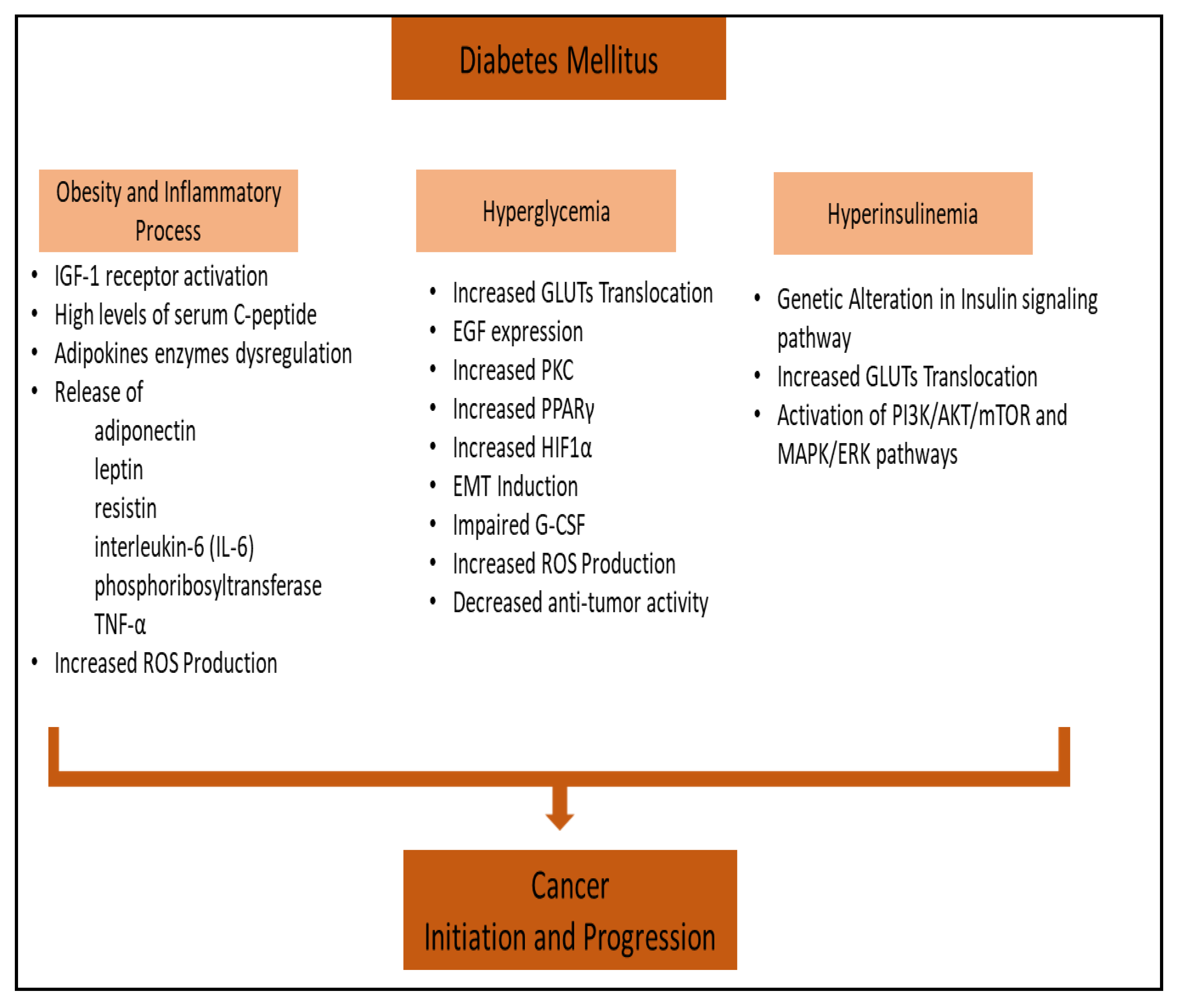
Disclaimer/Publisher’s Note: The statements, opinions and data contained in all publications are solely those of the individual author(s) and contributor(s) and not of MDPI and/or the editor(s). MDPI and/or the editor(s) disclaim responsibility for any injury to people or property resulting from any ideas, methods, instructions or products referred to in the content. |
© 2024 by the authors. Licensee MDPI, Basel, Switzerland. This article is an open access article distributed under the terms and conditions of the Creative Commons Attribution (CC BY) license (http://creativecommons.org/licenses/by/4.0/).
Copyright: This open access article is published under a Creative Commons CC BY 4.0 license, which permit the free download, distribution, and reuse, provided that the author and preprint are cited in any reuse.