
Submitted:
21 August 2024
Posted:
23 August 2024
You are already at the latest version
Abstract
The coal mining process generates wastes such as overburden and tailings, the disposal of which is a significant environmental challenge. The circular economy model of eliminat-ing waste and regenerating the economy and ecosystems can minimise the impact of coal mining wastes. Another resource-intensive industry is the construction industry, which is responsible for significant resource consumption, waste generation, and emissions. Reus-ing and recycling coal mining wastes as secondary or value-added building materials in the construction industry per circular economy principles will help minimise the impact and have environmental and economic benefits. Several studies have demonstrated the use and reuse of coal mining wastes in the construction industry. This article conducts a systematic literature review to understand the state-of-the-art utilisation of coal mining waste in the construction industry. After a series of refinements using the PRISMA approach, 54 articles were included in the review. The articles were further divided based on using coal mining wastes in the construction industry as end products/application areas. The review results show that coal mining waste has been successfully used to make bricks and aggregates (fine and coarse), replace cement, and develop geopolymers, concrete, roads, and embankments. The studies suggest the utilisation of coal mining waste primarily in non-structural components, with very few studies suggesting using coal mining waste in structural applications. The systematic literature review helped in understanding the knowledge development related to the possible application of coal mine wastes in the construction industry, identifying the gap in the field, and suggesting future research directions.
Keywords:
coal mine overburden
; coal mine wastes
; construction industry
; R principles
; circular economy
1. Introduction
The fossil fuel industry is one of the primary pollution sources across the globe. Among fossil fuels, coal is the prime source of electricity generation [1]. As per the increasing population and people living in cities, the demand for energy and resources is increasing tremendously, which stresses the existing coal mining countries to increase production to meet the demand. By 2035, coal mines are expected to account for almost 27% of global energy [2]. The international scientific community has recognized the importance of resource optimization in meeting the growing demand for a sustainable future [3].
Considering the significant contribution of the coal mining industry to meet the demand, increased production results in large amounts of waste in different forms. Natural resource consumption and waste generation are global economic and environmental problems, and the coal mining industry is a significant contributor [4]. Coal extraction, processing, and utilisation from open-cast or underground mines generate different forms of waste ranging from overburden, tailings, fly ash, bottom ash, coal dust, etc [2,5,6]. Coal waste accounts for nearly 46% of the total annual waste from leading coal-producing countries, i.e., the USA, India, China, and Australia [7]. Globally, 5.5 billion tonnes of coal are produced annually, and almost half are disposed of as waste [8,9]. One of the significant wastes from the coal mines is the coal mine overburden. In most cases, the stripping ratio of coal is above 2, as in India, a leading coal-producing country, in 2022-23, it was 2.88 [10]. The amount of overburden is very high, and it lies on the coal mine site in the external pit boundary in the overburden dump yard, causing environmental, economic, and social problems [11]. Further, raw coal is processed in the washery, resulting in rejects (tailings) that account for an average of 30% of the total raw coal [12]. Finally, with the utilisation of coal at thermal power plants, coal gangue, fly ash, and bottom ash are produced in the form of waste [2]. These wastes are stored at the site and disposed of at some economic cost, resulting in serious environmental issues like pollution, fire hazards, ground deformation, slope failure, groundwater contamination, loss of biodiversity, etc. [13,14,15,16].
The possible solution to the problem is recycling and reusing the coal mine wastes in some valuable form, which prevents their disposal and has environmental and economic benefits. The best waste management practices lie in using the waste in different industries [17]. Several authors have explored the use of coal mining wastes in the construction industry. The coal mine overburden, which consists of rocks such as shale, sandstone, and clay, has mainly been used as backfilling material [14]. Other than backfilling, it has the potential to be recycled and reused as bricks [18] and as sand and aggregates in concrete [11]. [19] explored the recycling of different forms of coal mining waste in China, ranging from gangue piles into parks, fly ash used in building materials, recycling and reusing of coal mining water, coal bed methane for power generation, etc. The wastes from the coal mining activity are generated at different levels and through various activities, and the same may be utilised as valuable products like bricks, aggregates, and sand in the construction industry, thus contributing towards zero waste through material circularity and responsible resource utilisation [17]. [20] explored coal mining waste’s physical and chemical properties. They concluded that it has the potential to be reused and recycled as valuable secondary raw material in the construction industry. In a study conducted by [13] through a comprehensive literature review of the structural, geotechnical, and geochemical properties of coal mining waste, it was found that coal mining waste can be reused and recycled as aggregates and binders in concrete and cementitious composites. Using industry rejects in the construction industry can suffice the need for 40% of the virgin raw materials required and reduce cost by 30% compared to natural raw materials [21,22].
With the coal mining industry as one of the significant contributors to global environmental problems, the other resource-intensive industry is the construction industry, which is responsible for significant resource consumption, greenhouse gas emissions, energy consumption, and waste generation [23,24]. This study aims to present the understanding of utilising wastes from the coal industry in the construction industry and thus contribute towards the objective of a circular economy. The circular economy is a model that has received significant global attention and aims to eliminate waste from the system and regenerate the natural ecosystems and economy [25]. The widely promoted 10R principles of the circular economy are “refuse, rethink, reduce, reuse, repair, refurbish, remanufacture, repurpose, recycle, and recover” [26,27]. Of all the R principles of the circular economy, the most widely discussed are reduce, recycle, reuse, repair, repurpose, and recover. The advent of circular economy principles will help achieve the objective of responsible resource consumption and utilisation in both the construction and coal mining industries. Several studies have presented the use and reuse of wastes in the construction industry to promote circular construction [28,29,30]. The literature suggests that the global scientific community has paid significant attention to circular economy integration in the construction and coal mining industry. [31] explored the possibility of integrating the principles of circular economy in the coal mining industry to achieve the goal of zero waste by reusing all the possible resources, such as power plant waste, into building blocks, road construction, etc.
We conduct a systematic literature review to identify state-of-the-art methods of using coal mining waste in the construction industry. We analysed the global literature on using coal mining waste in the construction industry. We identified the possible application of the waste by integrating the R principles by dividing them based on application areas/end-products:
The study answers the following research question:
What are the different end products/application areas in the construction industry developed from coal mining waste that will help achieve a circular economy in the coal mining and construction industry?
The article is further divided into five sections. Section 2 presents the methodology adopted for the study; Section 3 presents the results/findings of the systematic literature review as descriptive analysis and content analysis; Section 4 discusses the results; and Section 5 highlights the conclusion drawn from the study.
2. Methodology
The methodology adopted is a systematic literature review to present the state-of-the-art utilising coal mine waste in the construction industry. The systematic literature review helps identify the need for research and development of a protocol to replicate and update the literature in the field [32,33]. The study adopted the systematic literature review method, including eight stages described by [34], which are systematic, transparent, and can be replicated.
The authors used the PRISMA approach to review the literature conducted in the field (see Figure 1) in the last two decades. The systematic literature review started with understanding the “Application of coal mining waste in the construction industry integrating circular economy principles.” This was followed by identifying the studies that could be included in the systematic literature review, which created a network of studies focusing on utilising coal mining waste in the construction industry. In the second step, relevant research articles were identified in the two databases (Scopus and Web of Science) using the combination of: “Coal Mine Waste” AND “Construction Industry” AND “Circular Economy” AND “Sustainability” (“Coalmine Overburden” OR “Coal Mine Tailings” in Scopus and Web of Science electronic databases. This search found 54 articles in the Web of Science database and 82 in Scopus. After removing the repetitions from both databases, 83 were selected further for analysis.
Further, the authors filtered the articles based on Title, resulting in 73 articles. After the content analysis of the abstracts, 56 articles were selected (see Figure 1) to be included in the review, including two conference papers related to the subject area. In the last step, all the selected articles were read thoroughly, and two articles were removed as they were not directly related to the application of coal mine waste in the construction industry. Finally, 54 articles were selected to be included in the review.
3. Results
In the study, the systematic literature review is presented in two ways. One, growth in literature on the use of coal mining wastes in the construction industry is discussed through descriptive analysis based on the number of publications, geographical region, and journal type. Second, we discuss the state of understanding concerning the existing literature through content analysis. For this, the papers were divided based on the end-product/application areas: a) Bricks, b) Aggregates (Fine and Coarse) and Sand, c) Cement, d) Concrete, e) Geo-polymers, f) Roads, Embankments, and Backfill, and g) Others. The end products are the use of coal mining wastes in the construction industry, resulting in a new product, and the application areas are the use of coal mining waste as a substitute for an existing natural material in construction composites.
3.1. Descriptive Analysis
Firstly, the analysis of the selected articles was based on the number of publications per year, as shown in Figure 2 in the research domain. With the increase in the number of publications year by year, the research area of utilisation of coal mining wastes, thus achieving the aim of a circular economy both in the construction and coal mining industry, has gained the attention of the global scientific community.
Further, analysis was based on the location of the research and the journals of the selected research articles. The maximum publication in the research area was from the “Construction and Building Materials” and “Journal of Cleaner Production” (see Figure 3). The journals are “Q1” in the “Scimago Journal and country rank”, which indicates the presence of research areas in important research sources across the globe.
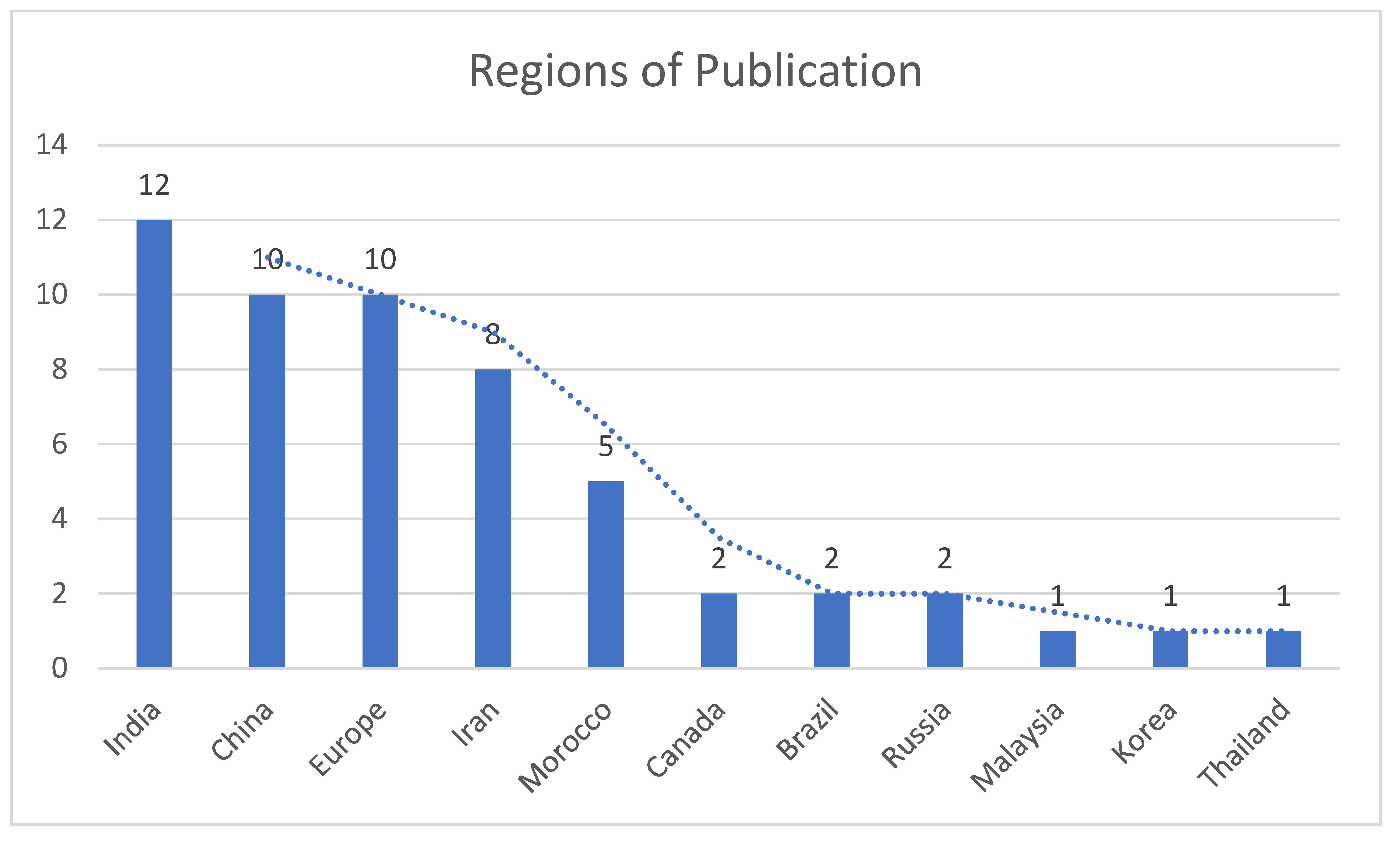
As per Figure 4, the maximum number of publications is from leading coal-producing nations India, China, and Europe. Concerning leading coal-producing countries globally, it is evident that the research area has found its significance. One of the other highlights is from the Asian and African sub-continent, respectively, where the research area has found its importance.
3.2. Content Analysis
The content analysis of the selected article presents state-of-the-art information about the utilisation of coalmine overburden/wastes in the construction industry, integrating R principles of circular economy. To simplify the results, the articles are divided based on using coal mining wastes as end-product/ application areas in the construction industry. The end-product/application areas of the coal mine wastes in the construction industry are discussed under the following heads with the number of articles mentioned: Bricks (07), Aggregates (Fine and Coarse) and Sand (10), Cement (16), Geopolymers (06), Concrete (04), Road, Embankments, and Backfill (08), Others (03).
3.2.1. Bricks
This group of seven (07) articles presents the use of coal mine waste as bricks in the construction industry (see Table 1). Brick is one of the significant components of construction, and several authors have explored the possibility of using coal mine waste in brick manufacturing [18,35,36]. The literature suggests varied forms of coal mining waste used in making bricks, such as overburdened clay [35], overburdened rocks [21,37], coal waste dust, coal gangue powder, and coal mine tailings [18,36,38].
The use of coal mine overburden clay in making different specimens of compressed stabilized earth brick using varying percentages of sand and clay is explored by [35]. It was found that the texture of coal mine overburden clay was poor, resulting in high water absorption, which was improved further by the addition of coal mine overburden sand by 57%. Thus, the compressive strengths of compressive stabilised earth blocks were improved. [39] made clay bricks of desired Korean standards using coal mining wastes in different percentages and found that with increasing coal waste, water absorption increased. Still, compressive strength decreased, and a 30% mix was suitable for standard Korean clay brick. In a study by [40], coal mine overburden was used to make bricks and pavement around the coal mine site. They found that the overburdened bricks were better than burnt clay bricks on all the parameters except specific gravity. Specific gravity being insignificant makes it suitable for use in low-cost housing and low-height structures around mining sites.
In another study by [36], sintered bricks were developed using iron-ore tailings, coal-gangue powder bonded with sewage sludge, and shale. The composite sintered bricks have the desired properties of a Chinese-bearing brick and thus contribute towards a circular economy, eliminating waste and having environmental and economic benefits. [38] prepared bricks using coal dust waste produced at thermal power stations in Korba, Chhattisgarh, and found that coal dust waste bricks were economical and suitable for replacing conventional clay bricks.
[21] explored the production of defect-free ceramic bricks for walls using overburden rocks and waste coals from coal mining sites in Siberia. They were found to be 1.5 times better than traditional brick. [18] recovered coal from coal mine waste rocks, and with further treatment of this coal, treated coal mine tailings were used in making fired bricks, which have better properties than traditional bricks. At the same time, the process helps reduce greenhouse gas emissions by 70%, thus contributing to a circular economy.

Table 1.
Coal Mining Wastes in making “Bricks” for the Construction Industry as per SLR.
| S. No. | Type of Coal-Mining Waste | Application in Construction | Region | “R principle” integration | References |
| 01 | Coal Mine Overburden Clay | Compressed Stabilized Earth Brick | India | Reduce, Reuse, & Replace | [35] |
| 02 | Coal Gangue Powder from tailings and Shale (overburden) replacing natural clay | Sintered Bricks | China | Recycle, Replace & Reuse | [36] |
| 03 | Coal Mine Overburden | Clay Bricks | Korea | Recycle & Reuse | [39] |
| 04 | Coal Mine Overburden Rocks and waste coals | Ceramic Bricks | Russia | Recycle & Reuse | [21] |
| 05 | Coal Dust Waste at thermal power plants | Bricks | India | Recycle & Reuse | [38] |
| 06 | Coal Mine Overburden Rocks | Bricks | India | Recycle & Reuse | [37] |
| 07 | Coal Mine Waste Rocks and Treated coal mine tailings | Fired Bricks | Canada Morocco | Recycle & Reuse | [18] |
| 08 | Coal Mine Overburden (Rocks and Clay) | Bricks and Pavement Material | India | Recycle & Reuse | [40] |
3.2.2. Aggregates (Fine and Coarse) and Sand
This group of ten (10) articles highlights the use of coal mine wastes replacing sand and fine and coarse aggregates for different concrete-based composites (see Table 2). The literature suggests using coal mine waste as fine and coarse aggregates and sand, replacing conventional and virgin materials in different construction composites.
A study by [41] found that using coal mines overburden to replace natural sand with up to 60% in concrete will enhance its strength and durability. [11,42] demonstrated the use of coal mine overburden rocks (sandstone) in making fine aggregates for concrete with desired properties. In another study by [43], coal mining waste was used as fine aggregates and sand, replacing natural and conventional sand in making concrete paver blocks. In another study by [44], the environmental impacts of coal mine overburden sand and manufactured sand (crushed granite) were compared using life cycle assessment. They found that coal mine overburden sand has lesser impact and is an environment-friendly sustainable alternative to river sand in the construction industry.
[45] explored using coal mine overburden to replace natural aggregates in mortar and concrete. The author proposed a 100% replacement of natural aggregate with fine aggregate derived from coal mine overburden in a mortar and a 100% replacement of coarse and fine aggregates derived from coal mine overburden in concrete. The replacement was found to be suitable as per standards. Further, the mortar and concrete with replaced aggregates were tested for corrosion and were found to be comparable with river sand. [9] explored the use of untreated coal waste as aggregates in concrete. They found that 5% of the natural aggregates can be replaced by untreated coal waste, which resulted in increased physical and mechanical properties of the concrete.
In another study, [2] used a systematic literature review to understand the knowledge development based on the mechanical and durability properties of coal mining and processing waste as a secondary aggregate in the pavement sub-base and base layers. It was found that coal mining waste in the sub-base and base layers of pavement helps in waste utilisation and responsible resource consumption, thus contributing to the circular economy.
In a few other studies, the coal mine wastes have been used as aggregates in other construction composites such as [22] coal mine waste rocks were used as fine aggregates in a fly ash-based geopolymer, and the developed geocomposites were within the limit of non-hazardous waste. [8] explored using coal waste powder to replace natural aggregate fillers in a micro-surfacing mixture. The results showed that using coal waste powder enhanced the performance of the micro surfacing.
Table 2.
Use of Coal Mining Wastes replacing “Aggregates and Sand” in the Construction Industry as per SLR.
Table 2.
Use of Coal Mining Wastes replacing “Aggregates and Sand” in the Construction Industry as per SLR.
| S. No. | Type of Coal-Mining Waste | Application in Construction | Region | “R principle” integration | References |
| 01 | Coal Mine Overburden Rocks and Clay | Sand, Fine and Coarse Aggregates in Concrete | India (3) | Reduce, Reuse, & Replace | [11,42,45] |
| 02 | Coal Mine Overburden | Fine Aggregates and Sand | India (2), Brazil | Replace & Reuse | [41,43,44] |
| 03 | Coal Mine Overburden Rocks | Fine Aggregates in fly ash-based geopolymer | Italy | Replace & Reuse | [22] |
| 04 | Coal Mining and Processing Waste (Overburden, Tailing, Fly Ash, Bottom Ash) | Secondary aggregates in the base and sub-base layer of pavement | India | Recycle, Replace & Reuse | [2] |
| 05 | Coal Waste Powder (Coal Extraction and Washing Process) | Replacing natural aggregate filler | Iran | Recycle, Replace & Reuse | [8] |
| 06 | Untreated Coal Waste (Raw Coal) | Aggregates in concrete | Iran | Replace & Reuse | [9] |
3.2.3. Cement
The third category, wherein the maximum number of studies (sixteen articles) have been conducted, is coal mine waste, which was appropriate for construction based on its pozzolanic properties. The global literature highlights the use of coal mining waste in untreated and treated forms to replace cement in the construction industry (see Table 3).
Several studies have demonstrated using thermally activated coal mining waste to replace cement in the construction industry [46,47,48]. [47] used thermally activated coal mining waste to replace cement by almost 20% in making blended cement with chemical, physical, and mechanical requirements per European standards. In a study conducted by [48], partial cement replacement with activated coal waste replacement increases the mechanical performance of cement-based composites. [49] demonstrated using thermally activated coal mining waste as a cementitious material, replacing cement by up to 20% in a cement-based blended binder. [50] used thermally activated coal mining waste replacing cement from 10 to 50% and further assessed the chloride permeability of the blended cement. The results revealed better chloride diffusion, refinement of the capillary network through decreased pore size, and increased electrical resistivity. [46] explored the use of shale from coal mines in Poland in natural and thermally activated forms. After the analysis, the results suggest that the thermally activated shale can be used as a partial cementitious substitute up to 20%.
In the study conducted by [51,52] in Spain, the coal mine tailings have kaolinite content, which, on thermal activation, is converted to meta kaolinite having pozzolanic properties. [53] explored the possibility of replacing cement with activated coal mine waste by 20% in a mortar. They found it suitable per strength and durability standards through the freeze-thaw test. These tailings can replace traditional cement in the construction industry and thus contribute to the circular economy.
[54], explored the potential of coal-washing waste ash as a replacement for blended cement. Upon thermal activation, the produced coal-washing waste ash demonstrates cementitious properties. Further, using coal-washing waste ash, geo-polymer concrete was developed, which has higher compressive and mechanical strength, resistance to acidic conditions, and low water absorption capacity. [55] tested coal mine wastes from the washery. They found that the major components of the waste are silica, alumina, and iron oxide, which can be used in cement clinker production in Spain. [55] took six samples of coal mine wastes from different locations in Spain and further prepared cement clinker samples, demonstrating Class I cement’s properties in Europe, making it a sustainable and economical alternative to cement.
In a study by [56], the properties of coal gangue as a raw material for sustainable alkali-activated binder alternatives were explored. [57] suggested that mineral waste, including coal-rich alumina, silica, iron oxide, and calcium oxide, can replace cement and alkali-activated binders.
[58] conducted a literature review to understand the utilization of coal bottom ash replacing cement based on their physical, chemical, and mechanical properties. The results suggest that coal bottom ash is a sustainable alternative to cement in mortar and concrete up to a specific ratio. [59] suggested using coal fly ash to make fly ash fibres for fibre-reinforced cement composites. [60] explored using coal waste powder, coal waste ash, and limestone powder to replace cement in roller-compacted concrete pavement partially. They found that 5% of cement replacement bears the same strength as desired per standards. [61] studied the use of red mud and coal industry by-products in manufacturing cementitious material per mechanical and durability ASTM (American Society for Testing and Materials) standards and met the EPA (Environmental Protection Agency) regulation.
[62] explored the use of coal mining waste to replace cement, which helps in soil stabilization. They concluded that up to 5% of coal mine waste (by weight of cement) can improve the mechanical properties of cement sand containing 6% cement (by dry weight of used sand).
Table 3.
Use of Coal Mining Wastes replacing “Cement” in the Construction Industry as per SLR.
| S. No. | Type of Coal-Mining Waste | Application in Construction | Region | “R principle” integration | References |
| 01 | Thermally activated coal mining waste | Replacing Cement | Czech Republic (2), Spain (4), Brazil | Recycle, Replace & Reuse | [46,47,48,49,50,51,53] |
| 02 | Coal Washing Waste Ash | Blended cement | Iran | Recycle, Replace & Reuse | [54] |
| 03 | Coal Mining Wastes from Washery | Cement Clinker Production | Spain | Recycle & Reuse | [55] |
| 04 | Coal Gangue | Alkali-activated binder alternatives | Morocco | Recycle & Reuse | [56] |
| 05 | Coal Bottom Ash | Replacing Cement | Malaysia | Recycle & Reuse | [58] |
| 06 | Coal Fly Ash | Fly ash fibers for fiber-reinforced cement composites | Thailand | Recycle & Reuse | [59] |
| 07 | Coal Waste Powder, Coal Waste Ash, Limestone Powder | Replacing cement in roller-compacted concrete pavement | Iran | Recycle, Replace & Reuse | [60] |
| 08 | Coal Industry by-products and red mud | Cementitious Material | China | Recycle & Reuse | [61] |
| 09 | Coal Mine Waste | Replacing Cement, which helps in soil stabilisation | Iran | Recycle & Reuse | [62] |
3.2.4. Geopolymers
The global scientific community has witnessed a recent trend in research development related to using geopolymers in the construction industry to foster sustainability [63]. The research has established that coal mining waste is rich in alumina and silica, making it a good alternative for developing geopolymers and composites. This group of six (06) articles presents the use of coal mining wastes as geopolymers in the construction industry (see Table 4).
Different mine wastes have been used for making geopolymers, and several authors discuss their use in concrete, including coal mine gangue [64]. [14] demonstrated using coal mine overburden (Shale) and tailings to make two geopolymers. They found that the geopolymer developed using tailings was a promising material and could be used for lightweight structural and non-structural applications. [65] used aggregates from open-pit mines, ground granulated blast furnace slag, and coal fly ash to synthesise geopolymers used in constructing open-pit mine roads.
[54] demonstrated the use of coal-washing waste, a rich alumino-silicate source, as a replacement to cement by 15% in developing geopolymer concrete. Further, with the thermal activation of coal-washing waste ash, the properties of geo-polymer concrete were enhanced significantly. In a study by [66], the geo-polymeric materials derived from mining wastes, including coal, had better physical, mechanical, and durability properties than Portland cement. [67] developed a geopolymer-based grouting material using coal gangue, fly ash, bentonite, and other additives for repairing the cracks in the critical strata of aquiclude, which protects the aquifer during underground coal mining.
3.2.5. Concrete
The wastes from coal mines are physically and chemically heterogeneous and have been utilized successfully in many structural applications (Haibin & Zhenling, 2010). The studies discussed above illustrate the use of coal mining wastes in developing value-added materials used in concrete directly or indirectly. This group of four (04) articles presents the use of coal mining waste in developing concrete compared to traditional concrete (see Table 4).
A study by [69] found that the concrete developed using coal gangue replacing 25% and 15% of gravel and fly ash replacing 10% and 15% of cement has better water permeability than standard concrete. The developed concrete has a high subsurface drainage modulus, making it suitable for farmland drainage in high groundwater-level areas. [70] developed foam concrete using coal mining waste in Poland. Further, they studied the developed concrete’s early-age hydration behaviour through air and water curing. [71] explored the possibility of creating an optimal mix proportion of concrete mixtures using coal waste based on the independent variables of water-cement ratio, cement content, gravel volume, and coal waste responding to compressive strength and water absorption percentage. The results show that the optimal coal waste concrete mix is a step towards sustainability and is a circular approach. [72] developed a concrete using crushed non-activated coal gangue replacing natural aggregates, and it was found that as the percentage replacement of aggregates increased, the workability and tensile strength of the concrete decreased, and as the maximum size of coarse non-activated coal gangue aggregates increased, the compressive strength of the concrete increased.
Table 4.
Use of Coal Mining Wastes in “Geopolymers” and “Concrete” in the Construction Industry as per SLR.
Table 4.
Use of Coal Mining Wastes in “Geopolymers” and “Concrete” in the Construction Industry as per SLR.
| S. No. | Type of Coal-Mining Waste | Application in Construction | Region | “R principle” integration | References |
| 01 | Coal Mine Waste | Geopolymers in light-weight structural and non-structural applications | Poland | Recycle & Reuse | [14] |
| 02 | Aggregates from open-pit mines, GGBS, and coal fly ash | Geopolymers in road construction | China | Recycle & Reuse | [65] |
| 03 | Coal-washing Waste | Replacing cement in geopolymer concrete | Iran | Recycle, Replace & Reuse | [54] |
| 04 | Coal-mining waste | Geo-polymeric materials replacing cement | Morocco | Recycle, Replace & Reuse | [66] |
| 05 | Coal Gangue, Fly ash, Bentonite | Geo-polymer-based grouting material | China | Recycle & Reuse | [67] |
| 06 | Coal Gangue | Replacing Gravel in concrete for farmland drainage | China | Recycle & Reuse | [69] |
| 07 | Coal Mine Waste replacing natural sand | Foam Concrete | United Kingdom | Recycle, Replace & Reuse | [70] |
| 08 | Coal Mine Waste (Coal Washing Plant) | Concrete | Iran | Recycle & Reuse | [71] |
| 09 | Non-activated coal gangue aggregates | Replacing Natural aggregates in concrete | China | Recycle & Reuse | [72] |
3.2.6. Road, Embankments and Backfill
The other important area where coal mine waste has been extensively used is road construction. This group of eight (08) articles highlights the use of coal mine waste in backfill, roads, and embankment construction (see Table 5). Several authors have demonstrated using coal mine waste as a filler material in road construction [73] and as aggregates for road embankment applications [74].
[75] explored the use of coal waste ash derived from washery after incineration. They were found suitable for filling hot mix asphalt in constructing roads and pavements, which had higher water resistance, toughness index, and flexibility than the reference mix. [76] explored the use of coal gangue wastes as fillers in asphalt binders, replacing limestone, which is economical and protects the environment.
In another study by [77], the chemical, mineralogical, geotechnical properties, and economic feasibility of coal mine waste rocks were explored. They concluded that coal mine waste rocks in weathered form can be used alone to construct embankments. Further, stabilising agents and hydraulic binders can be used to construct road sub-base layers of high-traffic pavements. Using coal mine waste rocks to construct embankments and roads is environmentally friendly and economically beneficial if used locally [77].
[78,79] studied the mechanical properties and damage evaluation of coal-based solid waste cemented backfill. The wastes from the coal industry, such as coal gangue, coal bottom ash, and fly ash, were stabilized with cement to use as pavement base materials [80]. [81] demonstrated using coalmine overburden as a sub-ballast in railway tracks, an environmentally sound solution for coal mine waste management.
3.2.7. Others
This group of three (03) articles explores a few other coal mining waste application areas (see Table 5). The other uses of coal mining waste include coal mining waste in making ceramic tiles for construction [82]. After a corresponding treatment, they found that coal mining waste is a promising ceramic material.
Another study explored the use of coal fly ash and plant fibres in developing lightweight gypsum composites for temperature and moisture control in the building [83]. It was suitable for passive thermal and humidity control, thus contributing to energy efficiency and sustainability.
Another application area is the use of coal mine waste in structural elements. [16] demonstrated the use of coal mine overburden (Shale) in making controlled low to medium-strength composites in the construction industry using Shale as the base material and fly ash and cement as cementitious material. The developed material was found to be an effective sustainable construction material.
Table 5.
Use of Coal Mining Wastes in Roads, Embankments, Backfill, and Other Applications as per SLR.
Table 5.
Use of Coal Mining Wastes in Roads, Embankments, Backfill, and Other Applications as per SLR.
| S. No. | Type of Coal-Mining Waste | Application in Construction | Region | “R principle” integration | References |
| 01 | Coal Mining Waste | Aggregates for Road Embankment | Canada | Recycle & Reuse | [74] |
| 02 | Coal Waste Ash from Washery | As filler in hot mix asphalt used in road and pavement construction | Iran | Recycle & Reuse | [75] |
| 03 | Coal Gangue Waste | As fillers in asphalt replacing limestone | China | Recycle, Replace & Reuse | [76] |
| 04 | Coal Mine Waste Rocks (Weathered Form) | Construction of Embankments | Morocco | Recycle & Reuse | [84] |
| 05 | Coal Mine Waste (Coal Thermal Power Plant), Coal Gangue | Cemented Backfill | China (2) | Recycle & Reuse | [78,79] |
| 06 | Coal Gangue, Coal Bottom Ash, Fly Ash | Stabilized with cement to use as pavement base materials | China | Recycle & Reuse | [80] |
| 07 | Coal Mine Overburden | Sub-ballast in railway tracks | India | Recycle & Reuse | [81] |
| 08 | Coal Mine Waste (Power Plants) | Ceramic Tiles | Russia | Recycle & Reuse | [82] |
| 09 | Coal Fly Ash | Light-weight Gypsum Composites | Morocco | Recycle & Reuse | [83] |
| 10 | Coal Mine Overburden (Soft Shale) | Medium-strength composites | India | Recycle & Reuse | [16] |
4. Discussion and Conclusion
This article presents a systematic literature review of different uses of coal mine wastes, such as overburden, tailings, coal dust, coal ash, etc., in the construction industry. The studies and examples show that coal mining waste can be successfully used as a value-added building material in the construction industry, integrating the ‘R’ principles of circular economy. Several environmental issues are related to coal mine waste disposal globally. The circular economy concept impacts the construction and coal mining industries by having environmental and economic benefits through waste use, reuse, and regeneration.
The article presents an overview of the use of coal mining waste in the construction industry as end products/ application areas. The first end-product, as presented above, is bricks. The coal mine waste, which contains 40-45% of overburden, has clay as one of the constituents. This overburdened clay has been used in making bricks, integrating the “Reduce” principle of circular economy, which is in the upper hierarchy of the circular economy principle. Other forms, such as tailings, coal dust from thermal power plants, and overburdened rocks, are also used to make bricks of the desired standard for reuse, recycling, repurposing, and replacing per circular economy principles. Although studies exist on using coal wastes in the construction industry to make bricks, the certification and policy for using waste-derived bricks in the construction industry will help make a more significant impact and thus achieve the goal of the circular economy.
Further, the article presents coal mining waste replacing fine and coarse aggregates and sand in construction composites. The coal mining waste in its different forms, especially overburden, was suitable for replacing sand and fine aggregates in mortar and concrete. Replacing river sand with coal mining waste-derived sand has environmental benefits, as river sand mining has severe environmental implications [85]. However, there are limited studies on replacing coarse aggregates using coal mining waste, with only one study conducted by [45] highlighting the same.
The literature review suggests maximum studies conducted on coal mining waste replacing cement in the construction industry. As per the review, the presence of oxides of iron, silica, alumina, and calcium [57] in coal mining waste, such as tailings, overburden, coal gangue, etc., demonstrates pozzolanic properties. The study highlights coal mining waste replacing cement, cement clinker, cement-based blended binder, alkali-activated binders, and cement-based composites. Most of the studies highlight the use of coal mining wastes as cement upon thermal activation. The studies on using coal mining waste in its natural form to replace cement are limited, with only one study by [46] included in the review. This suggests future research in this direction as the activation process is under the “Recycle” and then “Replace” principle of circular economy, which is at a lower hierarchy as recycling is resource-consuming.
The study also highlights the use of coal mining waste in making geopolymers because it has alumina and silica as significant elements. These geopolymers are a sustainable alternative in the construction industry, which helps achieve the circular economy’s aim. The study presents the use of coal mining waste in making geo-polymer concrete, aggregates, and grouting material. With extensive studies highlighting the use of coal mining wastes in the construction industry, the studies presenting the application in structural components are meagre, with only one, as explored by [14], using coal mine waste in developing geopolymers that can be used as a lightweight structural material.
The use of coal mining wastes in developing green concrete, foam concrete, concrete for pavement, etc., is also presented in the literature review findings. With a very limited understanding of the use of coal mining wastes in the structural components, [16] highlighted the use of coal mine overburden in low to medium-strength composites. The literature also highlighted the use of coal mining wastes in road and embankment construction and backfilling in and around the coal mining site, whether underground or open pit. In the last section, a few other application areas of coal-derived waste, such as ceramic tiles and lightweight gypsum composites for temperature and humidity control, are highlighted in the review.
The literature review presents the state of the art of using coal mine waste in the construction industry. As highlighted in the above section, several environmental issues are related to coal mining wastes. Also, the resource-intensive construction industry has severe environmental and economic impacts. Using waste will mitigate the impact and help achieve a circular economy in the coal mining and construction industry. The following gaps in the study exist:
- The studies related to using coal mining wastes in the construction industry in the untreated form are limited. Waste treatment through the “R principle” of recycling or recovery is at a lower hierarchy in the circular economy. Therefore, to achieve the aim of a circular economy of waste elimination and regenerating ecosystems, the study proposes further research into using coal mining wastes in construction in untreated form.
- With extensive studies in the area, implementing the same in the construction industry is challenging. This requires a ready digital database of the amount and properties of the coal mining waste, which can help the construction stakeholders use them in the industry as applicable.
- One of the prime concerns on the coal mining site (open cast and underground) is overburden disposal because of the high stripping ratio. Although the literature suggests the usage of coal mine overburden in construction, a large amount of the same lie on the site. Further, more studies can be conducted using coal mine overburden directly into the construction industry, aiming towards zero waste on the coal mining site.
- Coal mining waste in the end products/ application areas mainly focuses on non-structural components. The use of the same in high-performance concrete and structural concrete is where further studies can be conducted.
- Several studies above demonstrate coal mine waste’s pozzolanic properties in its raw, heat-treated, or thermally activated form. This is mainly due to iron, silica, alumina, and calcium oxides. Therefore, further research can be conducted on elements of high performance and binding, such as nano silica from coal mine waste, which can be used in concrete with healing and high durability properties.
- While there is strong evidence of coal mine wastes replacing sand and fine aggregates in concrete and mortar, the evidence of using the same replacing coarse aggregates in concrete products is limited.
- Using the latest tools, such as life cycle analysis, material flow analysis, and material passport (details of the end-product), can help derive better results and a more significant impact in the construction and coal mining industry.
- Another gap highlighted by [2] is the method for decreasing the high-water absorption properties of coal mining waste to make it more suitable for the construction industry.
Despite the growing research on the reuse and recycling of coal mine wastes, the amount of waste is very high and still lies on the site for disposal [22]. The systematic literature review reveals the knowledge of the end products/application areas of varied coal mining wastes in the construction industry. While the literature review reveals that the global scientific community has paid due attention to coal mining waste reuse and recycling in the construction industry, the realisation and adaptation of the same face challenges, and there is resistance to their usage from the construction stakeholders [13]. Also, the study highlights the knowledge gap (presented above) in the field based on the construction industry’s current state. This needs to be addressed through wide-scale promotion, policy-level interventions, regulatory framework, and financial support through institutions. The growing research area, in alignment with circular economy principles, will benefit the construction and coal mining industries.
Author Contributions
Rizwn Kazmi1: Conceptualization, Literature Review, Methodology, Analysis and Results, Conclusions, Writing- Original draft and preparation; Dr. Manjari Chakraborty2: Discussion and Validation, Writing- review and editing.
Funding
The authors are grateful for the financial support Coal India Limited, the Ministry of Coal, India, extended for this research.
Institutional Review Board Statement
Not applicable.
Informed Consent Statement
Not applicable.
Data Availability Statement
Scopus and Web of Science (Electronic database: cited), Reports and Documents (cited).
Acknowledgements
Not applicable.
Conflicts of Interest
The authors declare no competing interests.
References
- I. Energy Agency, “World Energy Outlook 2020,” 2020. [Online]. Available: www.iea.org/weo.
- M. Mohanty, D. R. Biswal, and S. S. Mohapatra, “A systematic review exploring the utilization of coal mining and processing wastes as secondary aggregate in sub-base and base layers of pavement,” Mar. 03, 2023, Elsevier Ltd. [CrossRef]
- T. B. Johansson et al., “Global Energy Assessment Toward a Sustainable Future.”.
- A. N. Ally, M. M. Blanche, U. J. P. Nana, M. M. Grâce, N. François, and C. Pettang, “Recovery of Mining Wastes in Building Materials: A Review,” Open Journal of Civil Engineering, vol. 11, no. 04, pp. 379–397, 2021. [CrossRef]
- J. Weiler, B. A. Firpo, and I. A. H. Schneider, “Coal waste derived soil-like substrate: An opportunity for coal waste in a sustainable mineral scenario,” J Clean Prod, vol. 174, pp. 739–745, Jan. 2018. [CrossRef]
- I. A. Straupnik, “An overview of the environmental impact of coal industry waste,” in IOP Conference Series: Earth and Environmental Science, Institute of Physics, 2022. [CrossRef]
- A. Sokratidou, C. Roumpos, N. Paraskevis, A. Servou, and F. Pavloudakis, “Extractive Waste Management in Coal Surface Mining Projects—A Circular Economy Approach,” MDPI AG, Oct. 2023, p. 13. [CrossRef]
- H. Ziari, M. Zalnezhad, M. Ali Ziari, and E. Nasiri Amiri, “Substitution of the natural aggregate filler by coal waste powder (CWP) in microsurfacing surface treatment: Mix design and performance evaluation,” Constr Build Mater, vol. 354, Nov. 2022. [CrossRef]
- M. Karimaei, F. Dabbaghi, A. Sadeghi-Nik, and M. Dehestani, “Mechanical performance of green concrete produced with untreated coal waste aggregates,” Constr Build Mater, vol. 233, Feb. 2020. [CrossRef]
- “PROVISIONAL COAL STATISTICS 2022-23 GOVERNMENT OF INDIA MINISTRY OF COAL COAL CONTROLLER’S ORGANISATION DELHI.”.
- A. S. Rathore, M. Pradhan, and S. V Deo, “Assessment of Coal Mine Overburden Sand for Use in Concrete Making as Fine Aggregate,” International Journal of Advanced Research in Engineering and Technology, vol. 11, no. 9, pp. 368–379, 2020. [CrossRef]
- B. Indraratna, C. Rujikiatkamjorn, and G. Chiaro, “Characterization of compacted coal wash as structural fill material,” 2012.
- T. Liem Vo et al., “Coal mining wastes valorisation as raw geomaterials in construction: A review with new perspectives 2 3.”.
- N. Paszek and M. Górski, “Defining the optimal mixture composition of geopolymers based on the coal mine waste and the shale.,” MATEC Web of Conferences, vol. 274, p. 01002, 2019. [CrossRef]
- N. Adibee, M. Osanloo, and M. Rahmanpour, “Adverse effects of coal mine waste dumps on the environment and their management,” Environ Earth Sci, vol. 70, no. 4, pp. 1581–1592, Oct. 2013. [CrossRef]
- S. K. Das, M. Mahamaya, and K. R. Reddy, “Coal mine overburden soft shale as a controlled low strength material,” Int J Min Reclam Environ, vol. 34, no. 10, pp. 725–747, Nov. 2020. [CrossRef]
- Y. Taha, A. Elghali, M. Derhy, M. Amrani, R. Hakkou, and M. Benzaazoua, “Towards an integrated approach for zero coal mine waste storage: solutions based on materials circularity and sustainable resource governance,” Mineral Processing and Extractive Metallurgy Review, vol. 44, no. 6, pp. 375–388, 2023. [CrossRef]
- Y. Taha, M. Benzaazoua, R. Hakkou, and M. Mansori, “Coal mine wastes recycling for coal recovery and eco-friendly bricks production,” Miner Eng, vol. 107, pp. 123–138, Jun. 2017. [CrossRef]
- L. Haibin and L. Zhenling, “Recycling utilization patterns of coal mining waste in China,” Resour Conserv Recycl, vol. 54, no. 12, pp. 1331–1340, 2010. [CrossRef]
- U. Nazarbek, P. Abdurazova, S. Nazarbekova, M. Kambatyrov, and Y. Raiymbekov, “Coal mining waste is a valuable secondary raw material,” Rasayan Journal of Chemistry, vol. 14, no. 4, pp. 2171–2176, 2021. [CrossRef]
- A. Y. Stolboushkin, A. I. Ivanov, G. I. Storozhenko, V. A. Syromyasov, and D. V. Akst, “Use of overburden rocks from open-pit coal mines and waste coals of Western Siberia for ceramic brick production with a defect-free structure,” in IOP Conference Series: Earth and Environmental Science, Institute of Physics Publishing, Sep. 2017. [CrossRef]
- I. Capasso et al., “Reuse of mining waste as aggregates in fly ash-based geopolymers,” J Clean Prod, vol. 220, pp. 65–73, May 2019. [CrossRef]
- R. Kazmi and M. Chakraborty, “Identification of parameters and indicators for implementing circularity in the construction industry,” Dec. 01, 2023, Institute for Ionics. [CrossRef]
- R. Kazmi and M. Chakraborty, “Status and probable direction of circular economy in the construction industry in India through a systematic literature review,” 2024.
- “Founding Partners of the Ellen MacArthur Foundation 2013 CIRCULAR ECONOMY TOWARDS THE Economic and business rationale for an accelerated transition.”.
- M. P. Hekkert and E. Worrell, “The effects of incubation on the networks and performance of clean-tech startups View project LICCER View project José Potting.” [Online]. Available: https://www.researchgate.net/publication/319314335.
- Ö. Çimen, “Construction and built environment in circular economy: A comprehensive literature review,” Jul. 10, 2021, Elsevier Ltd. [CrossRef]
- D. Kazmi, M. Serati, D. J. Williams, S. Qasim, and Y. P. Cheng, “The potential use of crushed waste glass as a sustainable alternative to natural and manufactured sand in geotechnical applications,” J Clean Prod, vol. 284, Feb. 2021. [CrossRef]
- M. Smol, J. Kulczycka, A. Henclik, K. Gorazda, and Z. Wzorek, “The possible use of sewage sludge ash (SSA) in the construction industry as a way towards a circular economy,” May 15, 2015, Elsevier Ltd. [CrossRef]
- S. K. Kaliyavaradhan, T. C. Ling, and K. H. Mo, “Valorization of waste powders from cement-concrete life cycle: A pathway to circular future,” Sep. 20, 2020, Elsevier Ltd. [CrossRef]
- K. Pactwa, J. Woźniak, and M. Dudek, “Coal mining waste in Poland in reference to circular economy principles,” Fuel, vol. 270, Jun. 2020. [CrossRef]
- G. L. F. Benachio, M. do C. D. Freitas, and S. F. Tavares, “Circular economy in the construction industry: A systematic literature review,” Jul. 01, 2020, Elsevier Ltd. [CrossRef]
- Y. Xiao and M. Watson, “Guidance on Conducting a Systematic Literature Review,” Mar. 01, 2019, SAGE Publications Inc. [CrossRef]
- R. B. Briner and D. Denyer, “Systematic Review and Evidence Synthesis as a Practice and Scholarship Tool,” in The Oxford Handbook of Evidence-Based Management, Oxford University Press, 2012. [CrossRef]
- A. S. Rathore, M. Pradhan, S. V. Deo, and A. K. Dash, “Coal Mine Overburden As Resource Material For Making Brick,” International Journal of Engineering Trends and Technology, vol. 70, no. 1, pp. 118–125, Jan. 2022. [CrossRef]
- L. Luo, K. Li, F. Weng, C. Liu, and S. Yang, “Preparation, characteristics and mechanisms of the composite sintered bricks produced from shale, sewage sludge, coal gangue powder and iron ore tailings,” Constr Build Mater, vol. 232, Jan. 2020. [CrossRef]
- S. K. Singh, “Manufacturing of Bricks From Coal Mine Overburden Dump of Korba, Chhattisgarh, India,” 2020. [CrossRef]
- R. Agrawal, D. Garg, and P. Gour, “Springer Professional Utilization of Coal Dust Waste in Bricks an Experimental Approach Highlight text sections to discover more relevant content with AI-assisted Search.”.
- J. W. Yoo, J. H. Jung, and H. T. Kim, “Synthesis and Characterization of Clay Brick Using Coal Wastes,” Materials Science Forum, vol. 486–487, pp. 403–406, Jun. 2005. [CrossRef]
- A. Jamal and S. Sidharth, “Value added constructional bricks from overburden of opencast coalmines,” 2008.
- B. Jena, N. P. Zade, P. Sarkar, and S. K. Karak, “Sustainable integration of coal mine overburden as a substitute for natural sand in concrete to enhance its mechanical and durability properties,” Constr Build Mater, vol. 411, Jan. 2024. [CrossRef]
- K. R. Chandar, B. C. Gayana, and V. Sainath, “Experimental investigation for partial replacement of fine aggregates in concrete with sandstone,” Advances in concrete construction, vol. 4, no. 4, pp. 243–261, Dec. 2016. [CrossRef]
- C. R. dos Santos, J. R. do A. Filho, R. M. C. Tubino, and I. A. H. Schneider, “Use of Coal Waste as Fine Aggregates in Concrete Paving Blocks,” Geomaterials, vol. 03, no. 02, pp. 54–59, 2013. [CrossRef]
- A. Mishra, S. K. Das, and K. R. Reddy, “Life cycle assessment of processing alternate sands for sustainable construction: Coal mine overburden sand versus manufactured sand,” Journal of Building Engineering, vol. 75, Sep. 2023. [CrossRef]
- A. Mishra, S. K. Das, and K. R. Reddy, “Valorization of Coalmine Overburden Waste Rock as Fine and Coarse Aggregate of Mortar and Concrete: Corrosion Resistance Evaluation,” Waste Biomass Valorization, 2023. [CrossRef]
- Z. Pavlík et al., “Utilization of extracted carbonaceous shale waste in eco-friendly cementitious blends,” Constr Build Mater, vol. 394, Aug. 2023. [CrossRef]
- I. Vegas, M. Cano, I. Arribas, M. Frías, and O. Rodríguez, “Physical-mechanical behavior of binary cements blended with thermally activated coal mining waste,” Constr Build Mater, vol. 99, pp. 169–174, Nov. 2015. [CrossRef]
- J. Eduardo Mejia-Ballesteros, L. Rodier, R. Filomeno, H. Savastano, J. Fiorelli, and M. Frias Rojas, “Effect of activated coal waste and treated Pinus fibers on the physico-mechanical properties and durability of fibercement composites,” Constr Build Mater, vol. 392, Aug. 2023. [CrossRef]
- M. Záleská et al., “Thermally treated coal mining waste as a supplementary cementitious material – Case study from Bogdanka mine, Poland,” Journal of Building Engineering, vol. 68, Jun. 2023. [CrossRef]
- L. Caneda-Martínez, M. Frías, C. Medina, M. I. S. de Rojas, N. Rebolledo, and J. Sánchez, “Evaluation of chloride transport in blended cement mortars containing coal mining waste,” Constr Build Mater, vol. 190, pp. 200–210, Nov. 2018. [CrossRef]
- S. Yagüe, I. Sánchez, R. V. De La Villa, R. García-Giménez, A. Zapardiel, and M. Frías, “Coal-mining tailings as a pozzolanic material in cements industry,” Minerals, vol. 8, no. 2, Feb. 2018. [CrossRef]
- R. García Giménez, R. Vigil de la Villa, and M. Frías, “From coal-mining waste to construction material: a study of its mineral phases,” Environ Earth Sci, vol. 75, no. 6, Mar. 2016. [CrossRef]
- R. García-Giménez, M. Frías, I. Arribas, I. Vegas, R. V. de la Villa, and V. Rubio, “Freeze-thaw effect on the durability of binary cements containing activated coal-mining waste,” Constr Build Mater, vol. 190, pp. 140–149, Nov. 2018. [CrossRef]
- A. B. Moradikhou, M. Safehian, and E. M. Golafshani, “High-strength geopolymer concrete based on coal washing waste,” Constr Build Mater, vol. 362, Jan. 2023. [CrossRef]
- B. Malagón, G. Fernández, J. M. De Luis, and R. Rodríguez, “Feasibility study on the utilization of coal mining waste for Portland clinker production,” Environmental Science and Pollution Research, vol. 27, no. 1, pp. 21–32, Jan. 2020. [CrossRef]
- “Effect of Alkali-activation on Elaboration of a Binder Based on Ground Coal Gangue,” NanoWorld J, vol. 9, Sep. 2023. [CrossRef]
- S. Maruthupandian, A. Chaliasou, and A. Kanellopoulos, “Recycling mine tailings as precursors for cementitious binders – Methods, challenges and future outlook,” Dec. 20, 2021, Elsevier Ltd. [CrossRef]
- M. I. Al Biajawi, R. Embong, K. Muthusamy, N. Ismail, and I. I. Obianyo, “Recycled coal bottom ash as sustainable materials for cement replacement in cementitious Composites: A review,” Jul. 04, 2022, Elsevier Ltd. [CrossRef]
- P. Chakartnarodom et al., “Upcycling low-grade coal fly ash for the production of fly ash fibers and their applications in fiber-reinforced cement composites,” Constr Build Mater, vol. 414, Feb. 2024. [CrossRef]
- S. Hesami, A. Modarres, M. Soltaninejad, and H. Madani, “Mechanical properties of roller compacted concrete pavement containing coal waste and limestone powder as partial replacements of cement,” Constr Build Mater, vol. 111, pp. 625–636, May 2016. [CrossRef]
- Y. Yao, Y. Li, X. Liu, S. Jiang, C. Feng, and E. Rafanan, “Characterization on a cementitious material composed of red mud and coal industry byproducts,” Constr Build Mater, vol. 47, pp. 496–501, 2013. [CrossRef]
- M. Taslimi Paein Afrakoti, A. Janalizadeh Choobbasti, M. Ghadakpour, and S. Soleimani Kutanaei, “Investigation of the effect of the coal wastes on the mechanical properties of the cement-treated sandy soil,” Constr Build Mater, vol. 239, Apr. 2020. [CrossRef]
- M. Nawaz, A. Heitor, and M. Sivakumar, “Geopolymers in construction - recent developments,” Nov. 10, 2020, Elsevier Ltd. [CrossRef]
- K. Korniejenko, P. Bazan, B. Figiela, B. Kozub, and M. Łach, “CHARACTERIZATION OF MINE TAILINGS AS RAW MATERIALS FOR GEOPOLYMER SYNTHESIS-MINERALOGICAL COMPOSITION.” [Online]. Available: https://paginas.fe.up.pt/~m2d/proceedings_m2d2022/-1081-.
- X. Lu et al., “Innovate geopolymer synthesis for green mine road construction: Analysis of efflorescence behavior and strength analysis,” Constr Build Mater, vol. 401, Oct. 2023. [CrossRef]
- S. Mabroum, S. Moukannaa, A. El Machi, Y. Taha, M. Benzaazoua, and R. Hakkou, “Mine wastes based geopolymers: A critical review,” Dec. 01, 2020, Elsevier Ltd. [CrossRef]
- Y. Guo et al., “Preparation of the geopolymer grouting material by coal-based solid wastes for the aquiclude key strata and its application,” Constr Build Mater, vol. 408, Dec. 2023. [CrossRef]
- L. Haibin and L. Zhenling, “Recycling utilization patterns of coal mining waste in China,” Resour Conserv Recycl, vol. 54, no. 12, pp. 1331–1340, 2010. [CrossRef]
- J. Wang, Q. Qin, S. Hu, and K. Wu, “A concrete material with waste coal gangue and fly ash used for farmland drainage in high groundwater level areas,” J Clean Prod, vol. 112, pp. 631–638, Jan. 2016. [CrossRef]
- E. J. Foghi, T. Vo, M. Rezania, M. Mousavi Nezhad, and L. Ferrara, “Early age hydration behaviour of foam concrete containing a coal mining waste: novel experimental procedures and effects of capillary pressure,” Constr Build Mater, vol. 414, Feb. 2024. [CrossRef]
- H. Amiri, S. Azadi, M. Karimaei, H. Sadeghi, and Farshad Dabbaghi, “Multi-objective optimization of coal waste recycling in concrete using response surface methodology,” Journal of Building Engineering, vol. 45, Jan. 2022. [CrossRef]
- M. Xiao, F. Ju, and Z. quan He, “Research on shotcrete in mine using non-activated waste coal gangue aggregate,” J Clean Prod, vol. 259, Jun. 2020. [CrossRef]
- B. Indraratna, I. Gasson, and R. N. Chowdhury, “Utilization of compacted coal tailings as a struct6i+al fih.” [Online]. Available: www.nrcresearchpress.com.
- P. Segui, A. el M. Safhi, M. Amrani, and M. Benzaazoua, “Mining Wastes as Road Construction Material: A Review,” Jan. 01, 2023, MDPI. [CrossRef]
- A. Modarres and M. Rahmanzadeh, “Application of coal waste powder as filler in hot mix asphalt,” Constr Build Mater, vol. 66, pp. 476–483, Sep. 2014. [CrossRef]
- F. Li, X. Zhao, and X. Zhang, “Utilizing original and activated coal gangue wastes as alternative mineral fillers in asphalt binder: Perspectives of rheological properties and asphalt-filler interaction ability,” Constr Build Mater, vol. 365, Feb. 2023. [CrossRef]
- M. Amrani, Y. Taha, Y. El Haloui, M. Benzaazoua, and R. Hakkou, “Sustainable reuse of coal mine waste: Experimental and economic assessments for embankments and pavement layer applications in morocco,” Minerals, vol. 10, no. 10, pp. 1–17, Oct. 2020. [CrossRef]
- J. Zhang et al., “Study on mechanical properties and damage characteristics of coal-based solid waste cemented backfill,” Constr Build Mater, vol. 368, Mar. 2023. [CrossRef]
- Z. Qin et al., “Insights into mechanical property and damage evaluation of a novel waste-based coal gangue-filled backfill,” Constr Build Mater, vol. 389, Jul. 2023. [CrossRef]
- P. Yan, Z. Ma, H. Li, P. Gong, M. Xu, and T. Chen, “Laboratory tests, field application and carbon footprint assessment of cement-stabilized pure coal solid wastes as pavement base materials,” Constr Build Mater, vol. 366, Feb. 2023. [CrossRef]
- L. Banerjee, S. Chawla, and S. Kumar Dash, “Application of geocell reinforced coal mine overburden waste as subballast in railway tracks on weak subgrade,” Constr Build Mater, vol. 265, Dec. 2020. [CrossRef]
- V. G. Lemeshev, I. K. Gubin, Y. A. Savel’ev, D. V Tumanov, and D. O. Lemeshev, “UTILIZTION OF WASTE UTILIZATION OF COAL-MINING WASTE IN THE PRODUCTION OF BUILDING CERAMIC MATERIALS,” 2004.
- M. Charai et al., “Lightweight waste-based gypsum composites for building temperature and moisture control using coal fly ash and plant fibers,” Constr Build Mater, vol. 393, Aug. 2023. [CrossRef]
- M. Amrani, Y. Taha, Y. El Haloui, M. Benzaazoua, and R. Hakkou, “Sustainable reuse of coal mine waste: Experimental and economic assessments for embankments and pavement layer applications in morocco,” Minerals, vol. 10, no. 10, pp. 1–17, Oct. 2020. [CrossRef]
- E. S. Rentier and L. H. Cammeraat, “The environmental impacts of river sand mining,” Sep. 10, 2022, Elsevier B.V. [CrossRef]
Figure 1.
Steps of Systematic Literature Review (Source: The authors, http://www.prisma-statement.org/).
Figure 1.
Steps of Systematic Literature Review (Source: The authors, http://www.prisma-statement.org/).
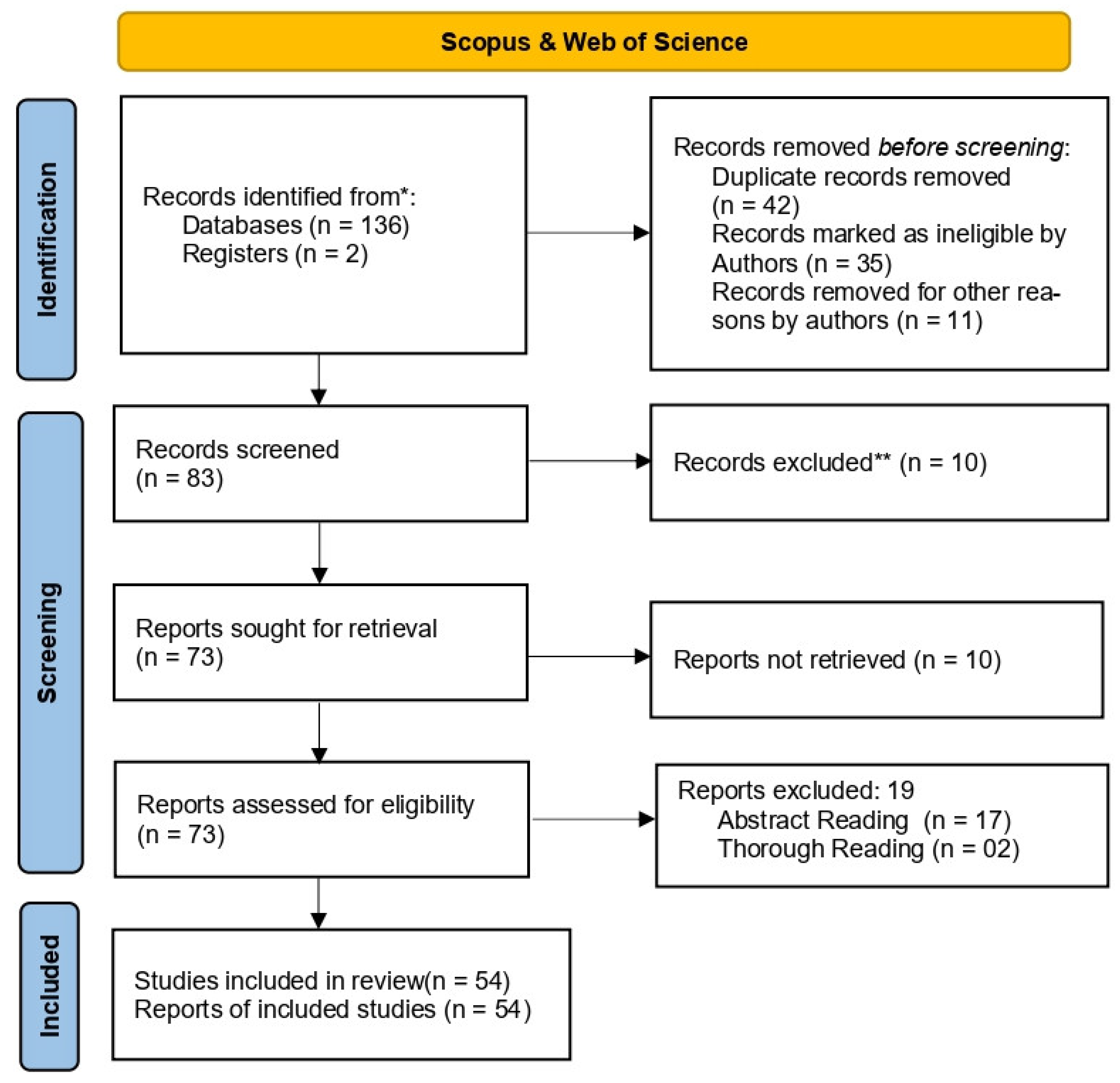
Figure 2.
Number of Publication per year (Source: The Authors).
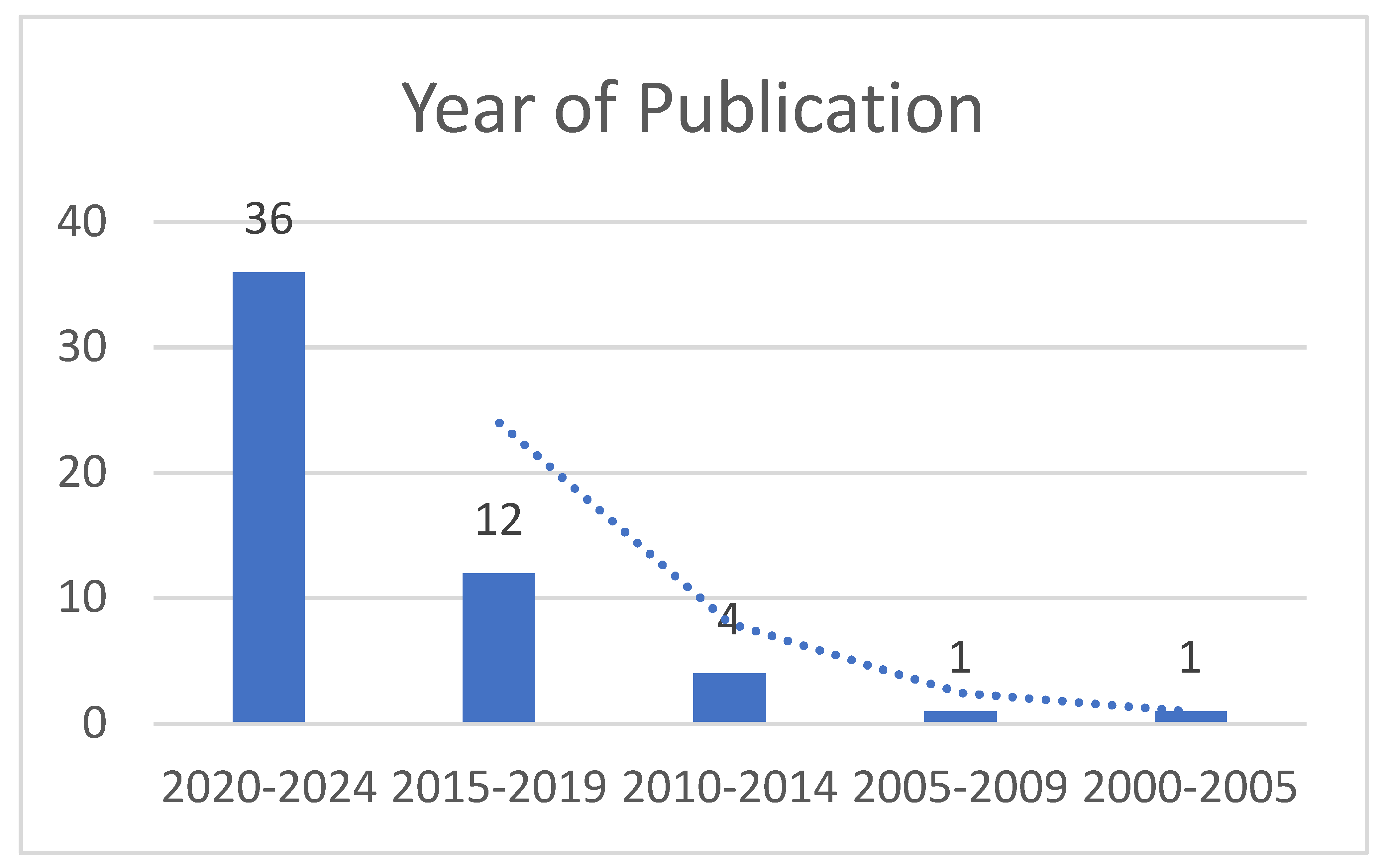
Figure 3.
Places of Publications (Source: The Authors).
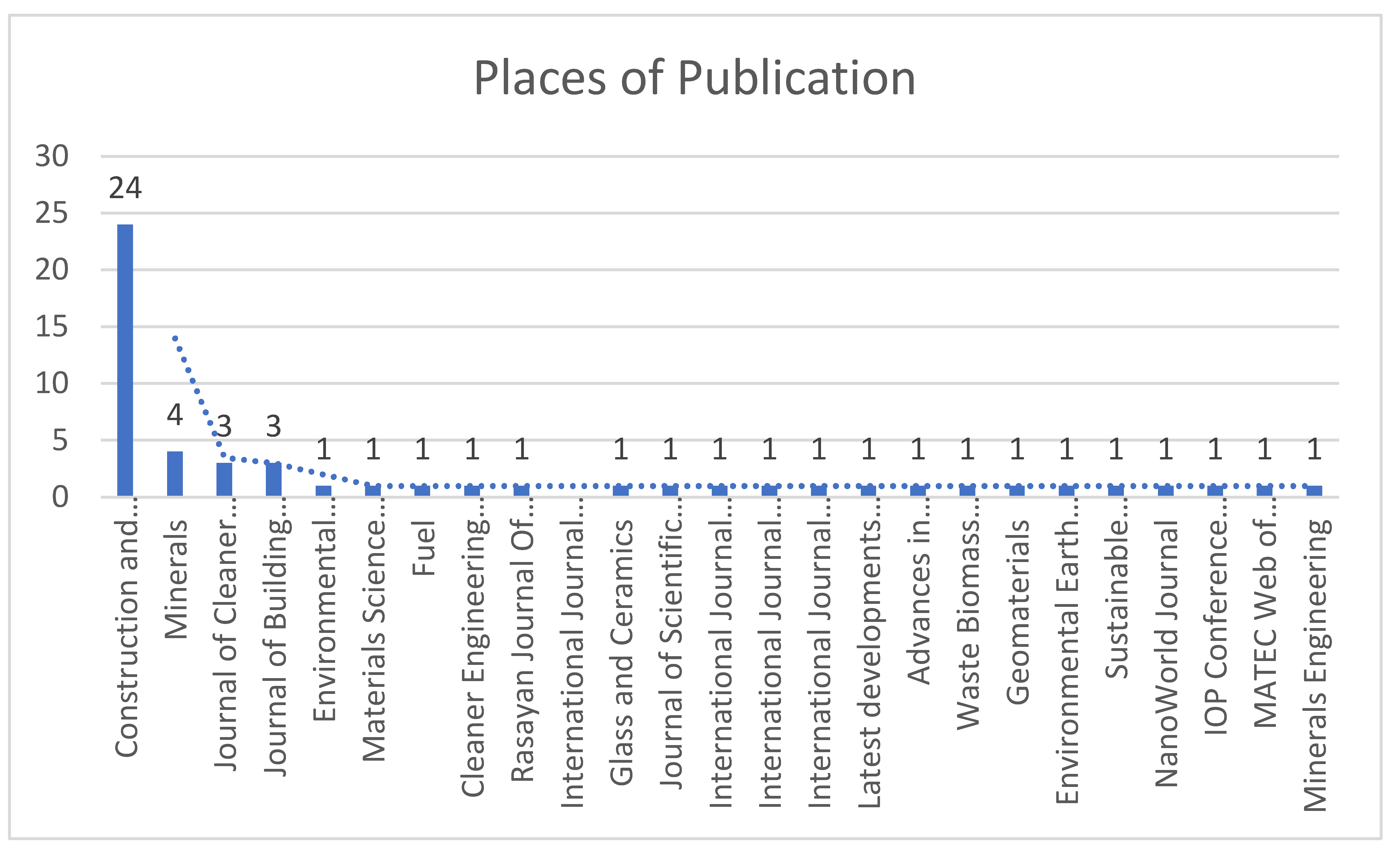
Figure 4.
Countries of Publication (Source: The Authors).
Disclaimer/Publisher’s Note: The statements, opinions and data contained in all publications are solely those of the individual author(s) and contributor(s) and not of MDPI and/or the editor(s). MDPI and/or the editor(s) disclaim responsibility for any injury to people or property resulting from any ideas, methods, instructions or products referred to in the content. |
© 2024 by the authors. Licensee MDPI, Basel, Switzerland. This article is an open access article distributed under the terms and conditions of the Creative Commons Attribution (CC BY) license (http://creativecommons.org/licenses/by/4.0/).
Copyright: This open access article is published under a Creative Commons CC BY 4.0 license, which permit the free download, distribution, and reuse, provided that the author and preprint are cited in any reuse.


