

Submitted:
16 August 2024
Posted:
20 August 2024
You are already at the latest version
Abstract
Due to its intriguing applications across a wide range of industries, nanotechnology is generating a lot of interest globally. Titanium dioxide (TiO2) nanoparticles are one type of nanoparticle (NP) that is commonly utilised in everyday use and can be produced using a variety of physical, chemical, and environmentally friendly techniques. Green synthesis is an economical, environmentally benign, and non-toxic method of synthesising NPs. Under normal circumstances, the application of TiO2 greatly enhanced the plants' shoot length, leaf area, and root dry weight. These growth-promoting factors coincided with elevated proline, soluble sugar, and chlorophyll B levels as well as improved antioxidant enzyme activity. Thus, higher levels of proline and other metabolites played a role in osmo-protection, while increased antioxidant enzyme activities helped to explain the observed decrease in hydrogen peroxide and malondialdehyde contents. Taken together, these factors significantly improved plant growth under salinity. TiO2 nanoparticles have demonstrated efficacy in treating contaminated water and have been shown to positively impact plant physiology, particularly in response to abiotic stresses. However, the reaction to these nanoparticles varies depending on characteristics such as metal species, type, size, shape, dose, duration of exposure, and other variables. One of the most popular nanomaterials in customer goods, agricultural, and energy industries is TiO2 NPs. Therefore, harm to ecosystems and living things will unavoidably result from high demand and widespread usage. Gaining more knowledge about the toxicity of TiO2 NP to living things could help with risk assessments and safe handling procedures for these nanoparticles. The synthesis of titanium oxide, its many uses, the toxicity of titanium dioxide nanoparticles, and their mode of toxicity are all summarised in this paper.
Keywords:
Titanium dioxide
; nanoparticle
; growth-promoting factors
; toxicity
1. Introduction
Among the most significant areas of contemporary research is nanotechnology, which is concerned with matter manipulation at the nanoscale. It is a multidisciplinary discipline with multiple applications in industries like agriculture, energy, textiles, medicine, and autos [1]. Nanoparticles (NPs) are defined as particles with a size between 1 and 100 nm; however, depending on their possible application, particles larger than 100 nm may potentially fall into this material class. Numerous metallic nanomaterials, such as those composed of copper (Cu), titanium dioxide (TiO2), silver (Ag), zinc (Zn), iron (Fe), and others, appear to have both helpful and detrimental effects on plants, according to recent studies; nevertheless, more thorough investigation is needed to obtain more information [2]. As the main producers in food webs, plants provide important pathways for the bioaccumulation of engineered nanomaterials (ENMs). When ENMs are used excessively or inappropriately, they can have negative impacts on the air, water, and soil, which can lead to the creation of main environmental reservoirs [3]. In recent years, TiO2 NP has become one of the most commonly used nanomaterials in commerce [4]. In 2014, the United States Geological Survey (2015) estimated that 1.31 million tonnes of TiO2 pigment were produced domestically worldwide. An approximate of 10,000 tonnes of TiO2 NP are utilised annually in the paint, coatings, solar cell, cosmetic, and cement industries [4] whereas an estimated 1.1 million tonnes of TiO2 pigment were produced domestically in 2021. The US was a net exporter of TiO2 pigments despite being mostly dependent on imports of titanium mineral concentrates. Titanium pigment exports rebounded greatly in 2021, following a multiyear low in 2020. It was predicted that 3.7 million tonnes of TiO2 pigment will be produced in China (U.S. Geological Survey, Mineral Commodity Summaries, January 2022). Because of its strong oxidation properties, high refractive index, low cost, remarkable chemical stability, and oxygen vacancies in its lattice, titanium oxide (TiO2) nanoparticles are produced annually and are considered to be one the most versatile and prominent oxides. One of the most important characteristics of titanium dioxide nanoparticles (TiO2-NPs) for their usage as semiconductors in optical industrial applications is their broadband gap. TiO2-NPs have special electrical and/or ionic properties that allow for further customisation for use in sensors and electronic devices. They can be utilised as a pigment in the paint industry and are a white, water-insoluble powder with a very high refractive index (n = 2.4). Three polymorphic forms of TiO2 are found in nature: rutile, anatase, and brookite. These forms have crystalline structures and are widely employed in the gemstone industry. TiO2-NPs also have a wide range of practical uses in the food additive industry, cosmetics, anti-bacterial and anti-microbial agents, photocatalysts to break down wastewater pollutants, and sensors [5]. Everyday use involves the functionalization of numerous items with TiO2 NPs. TiO2 NPs are found in household items like toothpaste, shaving creams, sun protection creams, shampoos, and conditioners [6]. Titanium dioxide nanoparticles are also frequently employed as food additives to improve the flavour, colour, and brightness of a range of food items [7]. TiO2 NPs are widely used in industry and as a result, they are discharged into the air, water, and soil. As a result, it is urgent to ascertain any potential effects on individuals and the biosphere. Numerous investigations have demonstrated that NPs have harmful impacts on higher plants, invertebrates, and microbes. Numerous types of plants have been studied in relation to TiO2 NP interactions; depending on a variety of circumstances, the effects may be beneficial or detrimental [8]. TiO2 NPs produced elevated amounts of reactive oxygen species, which rendered the marine microalga Nitzschia closterium hazardous [9]. In maize, too, harmful impacts from TiO2 NPs have been documented. Nonetheless, TiO2 NPs have produced positive effects on a variety of plant species, including Vicia faba, Spinacia oleracea, and Vigna radiata [10,11,12,13]. A collection of current resources about Titanium dioxide NPs and their interactions with plants has been developed, with consideration to the sometimes contradictory roles that these particles play.
2. Synthesis of TiO2
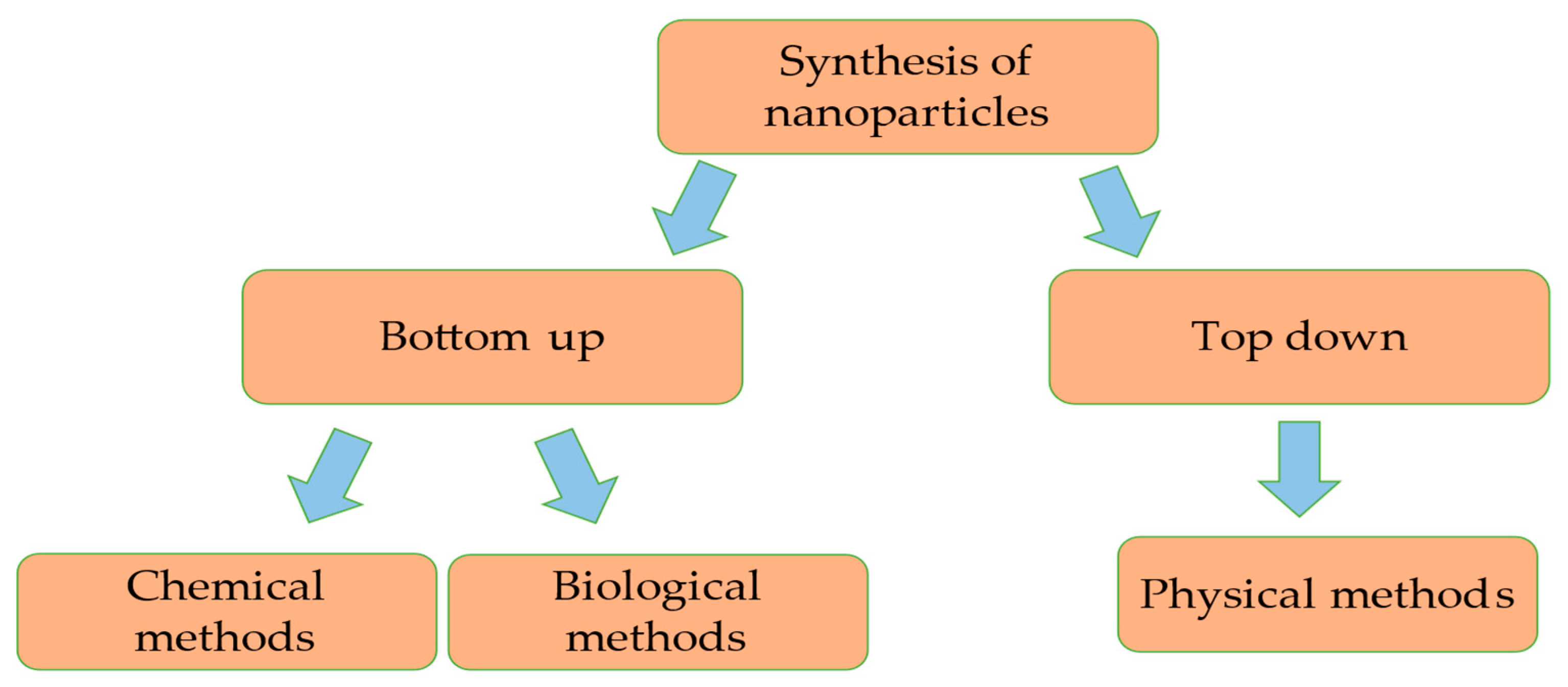
Conventional techniques for synthesising metal oxides can be classified into two categories: top-down and bottom-up. In the top-down method, a variety of physical techniques, including etching, sputtering, pulse laser ablation, evaporation-condensation, and milling, are used to break down bulk macroscopic particles into nanoscopic particles [14,15]. On the other hand, in a bottom-up method, many techniques and procedures such as chemical vapour deposition, sol-gel process, flame spraying, sonochemical, spinning, hydrothermal, green synthesis, etc., are used to generate nanosized particles after the atomic nuclei are brought together by a self-assembly process. The bottom-up technique has garnered attention because it offers size and structural control over NP synthesis. Although chemical processes are less expensive, they have limitations in terms of mass manufacturing, high energy, temperature, and pressure requirements, as well as the use of volatile and poisonous chemicals that endanger human health and the environment. Therefore, scientists have investigated a novel biological way of synthesising NPs, which is non-toxic, safe for the environment, takes less energy for cost-effective production, and employs less expensive chemicals.
Figure 1.
Classification of synthesis of nanoparticles.
2.1. Chemical Synthesis of Titanium Dioxide Nanoparticles
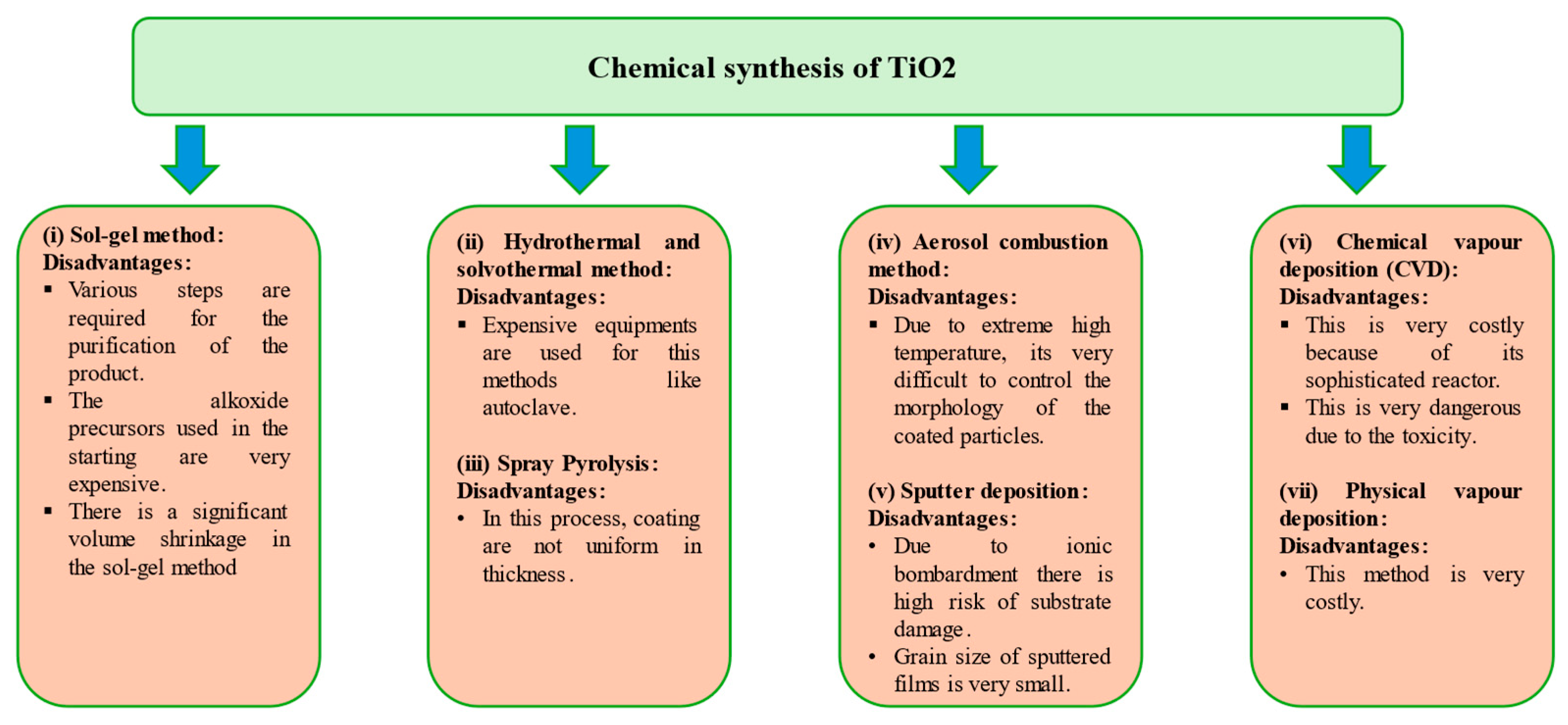
NPs TiO2 nanoparticles are synthesised using a variety of chemical synthesis methods, including the co-precipitation method [16], sol-gel process [17], solvo-thermal method [18], hydrothermal method [19]. Although the chemical method of creating titanium dioxide nanoparticles is popular because it is simple to use and allows for control over the size and form of the NPs, there are drawbacks, including high energy costs, high temperature and pressure, ecotoxicity, and environmental sustainability. This also restricts their ability to be produced in large quantities and used in a variety of industries [20]. Numerous investigations on chemically synthesised TiO2 NPs have been conducted, and their drawbacks and limits have also been discussed. The synthesis of nanoparticles (NPs) using both hydrothermal and solvo-thermal techniques requires the use of a autoclave, that operates at high pressure and temperature. However, the solvo-thermal process uses non-aqueous solvents and the hydrothermal method uses aqueous solvents. According to Nasirian and Mehrvar (2018), the hydrothermal approach to producing TiO2 nanoparticles is expensive since it requires a lot of energy as well as higher temperatures and pressures. Furthermore, it is a labor-intensive procedure that produces less titanium dioxide nanoparticles [21]. Similar to this, Solvo-thermal systems operate at high temperature and pressure (above the water's boiling point; pressure < 1 atm). Additionally, the procedure takes a lot of time and requires expensive equipment, such as the autoclave's high maintenance costs [22]. Additionally, the process becomes more difficult due to the use of surfactants, which also introduce impurities [23]. Because it employs organic solvents, solvo-thermal is seen to be the least hazardous method in terms of environmental toxicity, whereas hydrothermal uses surfactants, which have been shown to be harmful to ecosystems, particularly aquatic life. Titanium dioxide nanoparticles are created by various deposition procedures, which include electrophoretic, thermal plasma, and spray pyrolysis methods for synthesis. This spray pyrolysis method is frequently used to synthesise powders and dense, uniform films, but it has drawbacks in terms of lowcost effectiveness because it necessitates sustaining low temperature, which is an expensive and energy-intensive procedure. Furthermore, it has been determined that this limits the ability to control the characteristics of powders and prevents the manufacturing of TiO2 using spray pyrolysis at large scale [24]. Environmental issues relating to particulate matter emissions require costly equipment for control. Similarly, it is known that the electrophoretic synthesis of TiO2 is simple and saves time, but it is rigid in its choice of solvent—water [25]. Furthermore, these non-aqueous solvents' evaporation pollutes the air and endangers people's health [26]. Similar to this, it has been reported that the microwave assisted method for TiO2 synthesis is a widely accepted technique. This is because the reaction mixture is heated uniformly and quickly to the required temperature, saving time. However, the microwave assisted methods are not cost-effective because they require high power microwave heating, which is also energy-intensive. Furthermore, the growth of titanium dioxide particles in relation to time cannot be monitored using this method. Furthermore, mass manufacturing of TiO2 particles is not possible with microwave assisted synthesis [27]. For the purpose of creating highly crystalline nanoparticles (NPs), the sol-gel production process for titanium dioxide has been extensively studied. It entails sol formation, gelation, and solvent removal [17]. However, the sol-gel procedure is notoriously costly because of the high cost of raw materials and the volume loss and cracking of the produced TiO2 during the drying process used to remove organic material [28].
Figure 2.
Various methods of chemical synthesis of TiO2 and their disadvantages.
2.2. Biological Synthesis of TiO2 NPs
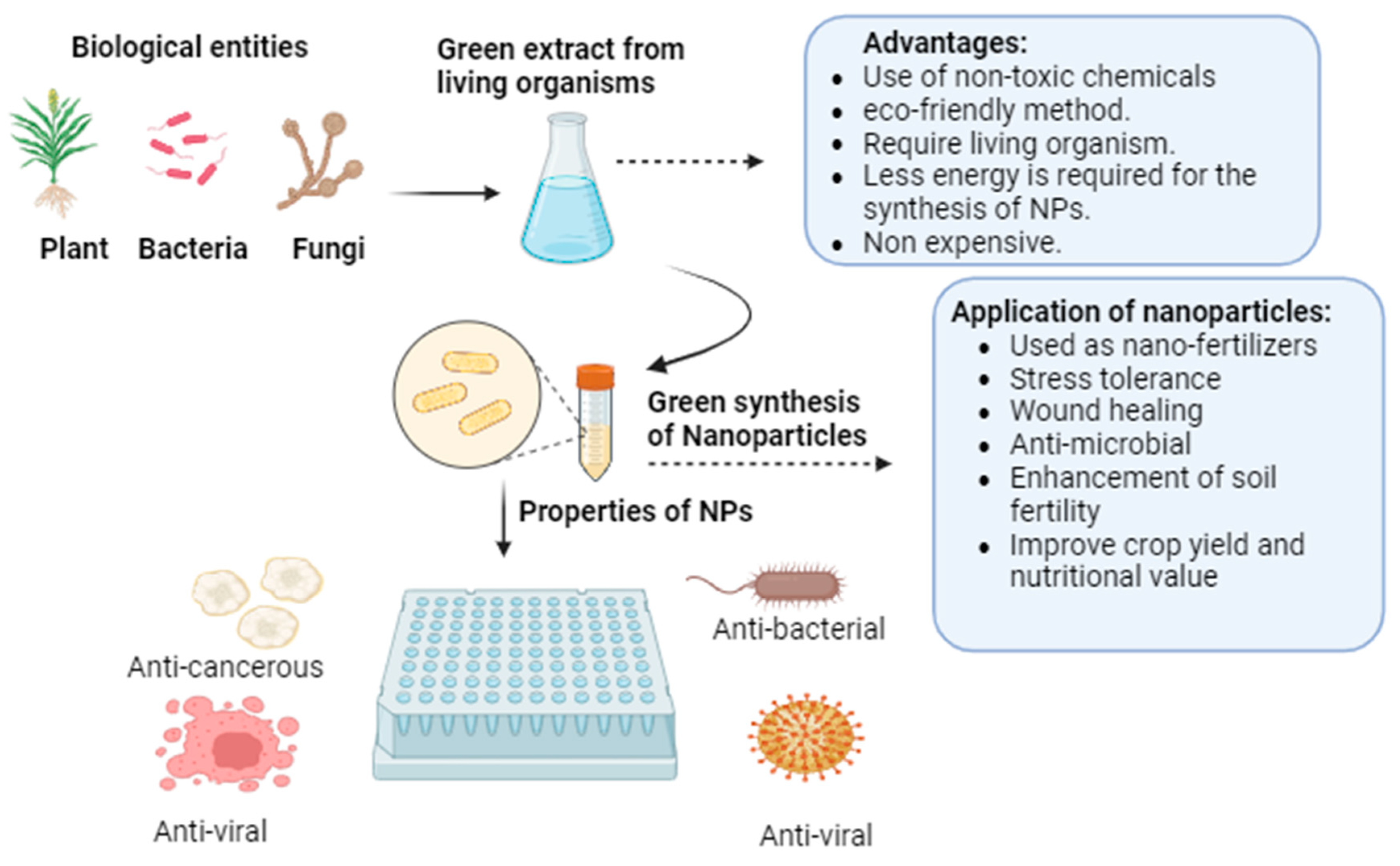
The production of TiO2 nanoparticles using chemical methods has been found to be environmentally hazardous due to the high temperature and pressure involved, which also limits the amount of TiO2 that can be produced in large quantities. Since green nanotechnology uses reducing agents sourced from biological sources and may be used to synthesis numerous metallic compounds, it has been investigated as an eco-friendly and alternative method for the synthesis of TiO2 NPs [29]. Additionally, less harmful and costly chemicals are employed in the synthesis because plants, their fruit extracts, waste products, and microorganisms are used [30]. Additionally, it can be used to produce TiO2 NPs on a large scale at a reasonable cost [20]. To create stable, appropriately sized, and easily dispersed NPs with little energy use, green synthesis techniques are essential [31]. Using the green approach, TiO2 was synthesised and examined using FTIR, TEM, SAED, EDS, XRD, UV–vis, and SEM [29].
2.2.1. Synthesis from Green Plants Extract NPs
Plant extract is typically the most important ingredient in the synthesis of TiO2 NPs due to its benefits in safety and feasibility. Different shaped and sized nanoparticles (NPs) are derived from plants and their diverse sections, including the stem, leaves, latex, flowers, seeds, and roots. The majority of studies have been done on plant components like leaves, seeds, and flowers. The primary reason they are favoured is their great ability to lower metal ions [32]. Plant accessibility and handling safety are further benefits. Polysaccharides, Alkaloids, diterpenoids, salicylic acids, lactones, glycosides, amino acids, steroids, etc., are examples of bioactive substances derived from plant sources that function as reducing and stabilising agents. Green chemistry has been effectively used to synthesise nanoparticles such as aluminium, iron, zinc, manganese, copper, titanium and cobalt. Green synthesis is becoming more and more popular over chemical approaches due to its many benefits, including affordability, reduced toxicity, environmental friendliness, and improved uses. Green synthesis can be divided into three primary groups: a) Making use of microorganisms such as bacteria, yeast, and fungus; b) Making use of plant components and the extracts of plants; and c) Making use of templates such as viruses and DNA. Plant and their extracts have become more and more popular over time. Numerous uses resulting from the effective biosynthesis of TiO2 NPs are investigated. Because leaves are a rich source of metabolites, they are used for extracts more frequently. It is more practical to extract them without creating any harmful substances [14]. For example, Nabi et al. (2019) observed TiO2 NPs made with a cinnamon powder extract utilising the green synthesis approach. It was determined that the synthesis procedure was simple, workable, and economical. Additionally, it was discovered that the synthesised nanoparticles (NPs) were the anatase phase of TiO2, including spherical particles with O2 vacancies and self-trapped excitons for photocatalytic activity in applications related to solar cells, in addition to being band gap functional under visible light [33]. In a further investigation, Syzygium cumini leaf extract was utilised to create spherical and irregularly aggregated TiO2 particles [34]. It was found that the process was affordable, non-toxic, simple to use, and good for the environment. It was used with 82.53% efficiency to remove lead from wastewater [34]. Similarly, extract from Moringa oleifera was used to synthesise tetragonal TiO2, which was found to be a simple, inexpensive, eco-friendly, and time-saving synthesis technique [14]. The biological method was used by [35] to synthesise TiO2 NPs from orange peel extract. Compared to chemically generated NPs, it was reported to be a more environmentally friendly method with better outcomes in antibacterial, humidity, and cytotoxicity sensors. Similarly, [36] reported on the biosynthesis of tetragonal TiO2 NPs using Cucurbita pepo seed extract. Titanium dioxide NPs were synthesised and used to cleanse water sources without causing environmental harm [37]. It has been observed that the synthesis of TiO2 from Trigonella foenum-graecum leaf extract is faster and cleaner. Furthermore, it was found that TiO2 NPs produced using an affordable and environmentally acceptable method might be used to produce TiO2 on a big scale [31]. Moreover, the application of Cynodon dactylon leaf extracts demonstrated the benefits of ease of use, economy, and suitability for medical usage. The synthesised TiO2 nanoparticles had good light absorption and refractive index, were non-toxic, and were less expensive [38]. Moreover, the authors described the biological techniques for mass-producing titanium dioxide nanoparticles as Trigonella foenum-graecum [31]. Rod-shaped titanium dioxide nanoparticles synthesised using aloe extract for photocatalytic applications. It was determined that the synthesis technique was simple, environmentally benign, and highly active. Pomegranate peel was also employed in the manufacture of TiO2 NPs, which were used to purify water sources without harming the environment. For the first time, a green and environmentally friendly process was utilised to biosynthesize titanium dioxide quantum dots (TiO2Qds) from watermelon peel waste. Full characterization of the biosynthesized TiO2Qds was performed with UV-visible, FTIR, XRD, SEM, EDX, mapping, TEM, and TGA. The synthesised TiO2Qds has an average particle size of 7 nm and a polycrystalline crystal structure, according to the characterisation of the material. Watermelon peel waste is used to biosynthesize TiO2Qds, which exhibit strong biocompatibility and antibacterial, antioxidant, and anticancer properties [39]. Various sizes of titanium dioxide nanoparticles are synthesized from different plant species, as shown in Table 1.
2.2.2. Synthesis from Microbial Extract
Microbes are significant nanofactories with enormous promise as economical and environmentally benign instruments that eliminate the need for hazardous chemicals and the high energy required for physicochemical synthesis. Both intracellular and extracellular manufacturing of metal oxide nanoparticles has been accomplished using a variety of microorganisms, including bacteria, fungi, and yeast. Transporting the metal ions into the microbial cell and creating the NPs while the enzyme, coenzymes, and other biomolecules are present within the cell are the two steps of intracellular synthesis. Metal ions are trapped on the surface of the microbial cell during extracellular production.
In addition to lowering the metal ions, the surface-available proteins and enzymes stabilise the nanoparticles. Extracellular synthesis, on the other hand, has several advantages over the intracellular pathway, including the ability to produce huge amounts of NPs and the elimination of several synthesis stages needed for NP recovery [49]. But, this approach has a number of shortcomings: (a) The microorganisms must be screened; (b) the culture broth and the entire process must be closely monitored; and (c) it is challenging to control the size and morphology of the NPs. Because of their inherent metabolic processes and enzyme activity, not all bacteria are able to synthesise nanoparticles. Because of this, selecting the right bacteria carefully is essential to producing NPs with precise size and morphology [49]. TiO2 NPs have been discovered to exist in a range of sizes and forms due to the fact that fungus include metabolites and enzymes that allow them to break down bulk salts into particular ions [20]. Baker's yeast was used as a low-cost way to synthesise anatase tiny sized titanium dioxide nanoparticles with excellent purity and stability when using bacteria to produce TiO2. Effective antibacterial activity of baker's yeast was discovered [50]. In a different research, clean, eco-friendly, less poisonous, and costlier TiO2 nanoparticles were created using the Streptomyces sp. bacterium. It was noted that the procedure for antimicrobial antibiofilm activity was quick and easy [51]. In order to improve photocatalytic dye treatment with 78% efficiency in a short length of time using only 0.3 g TiO2, a cost-effective biosynthesis approach was investigated for Acinetobacter baumannii, Bacillus subtilis, and Aeromonas hydrophila, and Lactobacillus sp. bacteria were among those whose mass production of TiO2 was shown to be simple, easy, repeatable, and economical to synthesise. Planomicrobium sp. biomass was shown to be useful for the environmentally benign and less expensive synthesis of titanium dioxide nanoparticles in a different investigation on green synthesis. Additionally, the protein from the employed bacterium added to the stability of titanium dioxide nanoparticles
2.2.3. Synthesis from Other Biological Sources
TiO2 nanoparticles are synthesised using a variety of biological sources besides plants and microbes. Although they have not been well studied, biological derivations for synthesis have been found to have advantages in terms of NP production that are both environmentally friendly and cost-effective. For example, it has been reported that starch may be used to easily synthesise green TiO2 with good photocatalytic capabilities and environmental friendliness [52]. In a similar manner, consistent TiO2 nanowire efficiency was synthesised using cellulose fibres. It also demonstrated the benefits of recovering cellulose fibres without altering their shape. Additionally, as a benefit of green synthesis, biological material like eggshell was utilized for a straightforward and biomimetic approach to create an organised tube network of TiO2. Moreover, the particles' high surface area and porosity made them useful for a variety of applications using green synthetic TiO2. Additionally, using egg albumen was thought to be a reproducible, affordable, and environmentally friendly way to synthesise TiO2. In a different investigation, egg albumen served as a dependable and affordable gelling agent for the synthesis of TiO2 [53]. TiO2 was synthesised utilising two polymers made of amino acids, following a bioinspired approach. It was discovered to be a gentle method that changed TiO2's anatase phase into rutile, which was advantageous for its application [54]. TiO2 NPs were created by utilising the inexpensive, easy, and straightforward starch synthesis method. It was discovered that the synthesised rutile phase has use in UV light protection. In a similar manner, TiO2 particles were synthesised using lysozyme. Compared to TiO2 particles that are manufactured normally, Lyzome is a simple method that has effective photocatalytic capacity and has assisted in reducing agglomeration [55]. Rice straw has been used for titanium dioxide synthesis due to its advantages as a soft, simple, and environmentally friendly template. Similarly, gelatin was thought to be a biological source for the easy and straightforward production of titanium dioxide nanoparticles, which had a higher surface area and better capacity to store hydrogen thanks to the usage of gelatin. Similarly, the application of peptides [56], According to reports, arginine and protamine can be used in the environmentally friendly synthesis of TiO2, thanks to their affordability and ease of use.
Figure 3.
Biological synthesis of TiO2 and their applications.
3. Applications of Titanium Dioxide
3.1. Environmental Stresses and Effect of TiO2 NPs on Crop Production
In agriculture, the main determinants of crop yield and fruit quality are the environmental conditions. Numerous abiotic challenges, including heat, drought, nutrition, and salt stresses, were brought on by these environmental changes. Crop damage caused by environmental pressures is far more severe than crop damage caused by physiochemical, mechanical, and biochemical causes combined. In response to these types of adverse environmental conditions, plants initiate a range of physiological responses and develop the ability to biosynthesize distinct phenolics, which fully release increased antioxidant capacity and ultimately enhance plant performance in difficult environments [57]. There are various conflicting reports about the effects of TiO2 nanoparticle treatment on plant performance. Lipid peroxidation and the ensuing decrease in development have also been seen in Nitzschia closterium treated with TiO2 nanoparticles [58,59]. Furthermore, it was revealed that TiO2 NPs inhibited the growth and decreased the phenolic compound contents of two microbe species, while increasing the phenolic compound contents of other species. An increase in the amount of phenolic compounds, antioxidant capacity, and essential oil content in cotton, dragonhead and Vitex plants treated with TiO2 NPs [60]. There have also been reports of titanium dioxide nanoparticle exposure having mitigating effects on chickpea membrane damage [61,62,63]. Titanium dioxide nanoparticles have recently demonstrated a successful rise in thymoquinone concentrations in black cumin by enhancing the expression of the relevant metabolic gene pathways [64]. The concentration and kind of nanoparticles, as well as abiotic and biotic parameters that have been evaluated, could all be responsible for these inconsistent outcomes. Strong irradiance exposure of TiO2 NPs caused a multitude of morphological and physiological effects in tomato plants, including increased fruit and blossom output, enhanced the carotenoids as well as anthocyanin and also increased the activity of enzyme. The most notable finding with nano TiO2 were high production of fruit, which was caused due to stress-induced reaction accelerating propagation [65]. In addition to the impacts of external stressors on agricultural yields, heavy metals present unfavourable circumstances for soil and plants alike. The need for NPs to reduce the amount of metals that plants take up when they are planted in contaminated soil that contains heavy metals is growing. Numerous investigations have shown that metal oxide nanoparticles may be a more effective way to prevent agricultural plants from absorbing metals [66,67]. Among the other known NPs, TiO2 nanoparticles have been proven to be effective and can be used in agriculture, especially for the treatment contaminated soils due to heavy metals. Previous investigations show that the NPs have both positive and negative effects on plant development under different environmental circumstances [68,69]. Few studies, meanwhile, have shown how TiO2 NPs affect plants' ability to absorb heavy metals. TiO2 NPs have impacts on crop physiological parameters that are dose-dependent, dependent on experiment type, size, and targeted heavy metals [70]. TiO2 NPs' accumulation of heavy metals in plants is dependent on the types of soil [71], which supports the application of these particles through hydroponic culture, foliar route seed priming, and field experiments. In the end, it is beneficial to implement on a large scale where there is this kind of environmental issue because it has been demonstrated to be successful in lowering the targeted heavy metal through crops at a variety of concentrations and particle sizes. Seedling growth parameters of Origanum majorana L. were improved with the help of seed primming with concentration of 20mg/l and 40mg/l of the bulk and titanium dioxide nanoparticles by improving the scavenging activity of free radicles in salinity stress [72]. By upregulating ABC transporters and the synthesis of phenylpropanoid pathway products such flavones, isoflavones, flavonols, and anthocyanins, which contribute to plant defense against environmental stressors, TiO2 NPs also improve intracellular sequestration [73]. TiO2-NPs improved the production of proline, an osmatic regulator that helps reduce the toxicity of Cd in plants. Therefore, TiO2-NPs may reduce the negative effects of Cd stress and increase coriander yield [74]. Osmotic stress caused by PEG and Ni was countered by the increase in proline and carbohydrates levels, which helped the seedlings maintain their optimal level of hydration. TiO2 enhanced the biosynthesis of H2S and K+ retention via regulating cys biosynthesis and H+-ATPase activity. In brief, TiO2 maintains redox homeostasis and normal functioning of N and carbohydrates metabolism, which resulted in the protection of cucumbers. The intake of the stressed seedlings with TiO2 improved the accumulation of phytochelatins and activity of the glyoxalase system enzymes that provided further defense against the metal and toxic methylglyoxal [75]. In another study, it was found that titanium dioxide treated tomato plants have increased relative water content and decreased proline and malondialdehyde content under drought conditions [76]. Titanium dioxide nanoparticles have great potential under environmental stress, as shown in Table 2 and Table 3.
3.2. Impact of Titanium Dioxide Nanoparticles on Sorption of Heavy Metals from Wastewater
One of the main causes of water pollution in the world is thought to be due to heavy metals in sewer water. The main source of water contamination, particularly with regard to heavy metals, are home sewage sludge and industrial effluents. Concerns about water pollution are growing quickly, and they are having an impact not only on human health but also on the global economy and sustainable development. They affect both the local living biota and human health because of their nonbiodegradable impacts. Because heavy metals bind to the same places as essential metal ions do, they induce the destabilisation of structures and biomolecules, which in turn contributes to mutagenesis, tumours, and genetic diseases [59]. The heavy metal ions found in wastewater that are particularly concerning are As, Cr, Cd, Hg and Pbsince they are highly harmful to living things. These heavy metals can enter the body through food, drink, and the air. Even minute concentrations of these substances can have harmful consequences that can last for a long time [101,102]. Furthermore, heavy metals have an impact on crop quality, yield, and growth. The development of efficient techniques for wastewater treatment takes into account a number of techno-economic, environmental, and social factors. As heavy metals are difficult to remove by biological, physical, or chemical processes, removal of these contaminants requires both immersion and isolation [66]. Plant-based degradation, conventional approaches, microbiological treatments, and wastewater treatment and heavy metal remediation using nanomaterials are some of the remediation techniques. Several researchers have reported on a variety of metallic and metal oxide [103].
In treatment methods, heavy metals from residential, or industrial wastewater can be sorbent thanks to the unique and appealing features of nanoparticles. Nanomaterials excel in separation technology due to their small size, high specific surface area, and distinctive morphological features. Furthermore, the large surface area and increased surface to volume ratio of the nanoparticles create more sites on the sorbent's surface, boosting its sorption capacity [104]. To remove heavy metal ions from water or wastewater, a variety of nano-sized materials have been used as adsorbents, including a metal oxide, carbon-based nanoparticles, nano-clays, and nanocomposites. TiO2 NPs have attracted a lot of attention because of their remarkable chemical and physical properties, which include their strong reducing and oxidizing capability, high permeability, and distinctive optical and electrical properties. It is an excellent semiconductor with a wide range of uses that is mostly known in light research. In addition, TiO2 NPs find extensive use in the food sector, personal hygiene products, wastewater treatment for pathogen inactivation, and a wide range of building materials, including paints, plasters, and tiles [105]. Hence, TiO2 NPs are a material that is naturally safe and has very little photocatalytic activity in visible light and a strong one in UV light [106]. TiO2 NPs have the potential to alter the toxicity and bioavailability of pollutants, such as Cd, through interactions [107]. the nanosheet made from TiO2 has a potential to absorb photo light and able to restore its infusion flux in situ when applied under visible light treatment.
3.3. Photolytic Properties of Titanium Dioxide Nanoparticles
Numerous industrial and residential wastewater systems may contain hazardous colours and nitroarene chemicals, among other toxic water contaminants. They will be able to stay in the environment for a long time and threaten aquatic life in various ways due to their poor solubility and great persistence. As of right now, metallic NPs' unique shapes and potent catalytic capabilities have been proven. Because of their large surface area, some metal nanoparticles (NPs) can offer the best heterogeneous catalytic activity. Many scientists have documented the high-quality photocatalytic activity of green synthesized NPs made from titanium dioxide to destroy various colours and other organic compounds in wastewater [Muniandy 2017]. The greatest aquatic pollutant that causes eutrophication in different water bodies, phosphate, was successfully removed utilising phytochemical-mediated TiO2 NPs mediated by Prunus yedoensis [108]. Functional groups included in leaf extracts have been identified using FTIR spectroscopy. The produced TiO2 NPs exhibited a spectrum with changes in the 1,082 and 1,377 cm1 bands, a peak at 655 cm1, and the stretching of the C–H bending mode of the remaining butyl group, which were attributed to the bonding of metals. As evidenced by the 1626 cm1peak, the absorbed water molecules' O-H stretching vibration effectively increased the photocatalytic activity [108]. In a more recent development, TiO2 NPs were synthesised using Jatropha curcas leaf extract and utilised in the photocatalytic degradation of effluent from tanneries. Additionally, FT-IR spectroscopy was utilised to determine the potential biomolecules through the examination of chemical groups present in a Jatropha curcas leaf extract that are responsible for the reduction or capping of metallic ions (Ti+4) precursor, which are essential for the synthesis of nanoparticles [109]. Moreover, a wide band at 3495 cm1 indicated the presence of hydroxyl groups, which may have resulted from the leaf extract's phenol content. The polyphenolic tannins in the leaf extract, which might cap the surface of the green synthetic TiO2 NPs, are probably what caused the phenolic group to emerge. This study successfully constructed a self-designed solar-photo catalytic parabolic trough reactor; chromium removal was reported to be 76%–82%, and considerable COD reduction was also noted [109]. Their results indicate that TiO2 NPs have extraordinary activity in the realm of photocatalysis. Recalcitrant organic and inorganic pollutants can be effectively removed, degraded, and detoxified from industrial wastewater using a photocatalytic treatment method that uses nanosized TiO2. TiO2 is known for its valence band and conduction band, two distinct band types. Additionally, its band gaps for the anatase, brookite, and rutile phases are 3.0, 3.4, and 3.3 eV, respectively. When a specific wavelength of radiation is applied to TiO2, it can cause an electrical excitation that results in the creation of electron-hole pairs. These pairs, when combined with oxygen and water, form oxidative species like OH, O2-, H2O2, O2, that can efficiently degrade organic contaminants. TiO2's very low band gap energy allows it to easily produce OH species when exposed to UV or visible light [110]. Excitation of TiO2 electrons from the valence band to the conduction band starts the process, which is followed by a number of further reaction steps as the light energy overcomes the band gap energy. These investigations showed that green synthesised TiO2 NPs had a greater tendency to absorb light than chemically synthesised ones because of the addition of phytochemicals in the crystal lattice. In light of these elements, it is also beneficial to correlate the catalytic behaviours of TiO2 NPs synthesised utilising plant extracts with their physical and chemical properties in order to clarify the photocatalytic activity of these nanoparticles. These encouraging results may support future studies that show these compounds' catalytic properties in the breakdown of other pollutant classes, including amines, polyaromatic hydrocarbons, pesticides, and phenols.
3.4. Antimicrobial Activity of Titanium Dioxide Nanoparticles
Plants and microorganisms, such as bacteria, fungus, and algae, which function as effective reducing and capping agents for the production of NPs, are used to manufacture biosynthesized NPs. Numerous metal nanoparticles' effects on distinct bacterial strains have been documented in the literature. Similarly, because of their strong oxidising potential, TiO2 NPs might exhibit biocidal properties that are beneficial to the environment. Every year, dangerous bacteria such as Clostridium difficile, Staphylococcus aureus, Escherichia coli, Burkholderia cepacia, Pseudomonasa aeruginosa, and Klebsiella pneumoniae cause microbial infections that can cause severe diseases in human beings. The main tools for solving this issue are antimicrobials, antifungals, and antibiotics. However, a number of bacterial strains are now far more resistant to these drugs, which is why researchers are currently focusing on finding new antimicrobial compounds. The antibacterial characteristics of metal oxide nanoparticles (NPs) in particular have been extensively studied due to their advantageous effects, yielding positive findings. TiO2 NPs are among the antibacterial NPs that have been the subject of extensive research recently in this regard. Reactive oxygen species (ROS) are created when TiO2 NPs come into contact with microbial cells [6]. Furthermore, because of phospholipid oxidation, it lowers adhesion and disturbs the ion balance, these ROS have the ability to effectively eliminate bacteria by impairing the cohesion of their cell walls. It also modifies the morphologies of macromolecules and suppresses the cytosol's respiratory cytosolic enzymes, which significantly impacts cellular integrity and gene expression. Furthermore, it lessens cellular contact amongst cells and the use of phosphate [6]. Both chemically and biologically manufactured TiO2 NPs have the same ability to eradicate microorganisms. TiO2 NPs were created using Psidium guajava plant extract. The synthesised TiO2NPs' XRD pattern demonstrated the presence of both rutile and anatase forms. The primary functional groups of the NPs were identified by the FTIR peaks of the leaf extract. The alcohols (free -OH) peak is located at 3,420 cm1, the intramolecular bonded (weak) peak is at 3,410 cm1, the strong intramolecular bonded peak is at 3,425 cm1, the alkenes peak is at 2,922 cm1, the carboxylic acid peak is at 2,917 cm1, and the nitro compound (symmetrical stretch) peak is at 1,659 cm1. The bioreduction of TiO(OH)2 to TiO2NPs produced these functional groups. With an average size of 32.58 nm, the plant-synthesised TiO2NPs were highly polydisperse in terms of particle size. The produced TiO2NPs showed the highest inhibitory zone against Staphylococcus aureus (25 mm) and Escherichia coli (23 mm) [111]. Consequently, NPs produced biologically typically have far more antimicrobial activity. In a process that is still being investigated, the remarkable antibacterial activity of plant extracts is thought to be due to the capping agent they create. Because some extracts are used in the synthesis process to produce desired qualities, it is necessary to conduct a systematic investigation of the catalytic behaviour to determine how these properties relate. The plant extract-derived nanoparticles showed a comparatively smaller and more defined crystalline form (about 17.30 nm) as compared to the chemically synthesised nanoparticles (particle size 21.61 nm) [112]. When the antibacterial activity was measured, the more environmentally friendly nanoparticles (NPs) demonstrated more bactericidal activity than the chemically synthesised nanoparticles against both Gram-negative and Gram-positive bacteria. Mansoor et al. claim that titanium dioxide derived from Bacillus subtilis exhibits remarkable promise for the management of dental conditions [113]. Both procedures produced anatase crystalline structures. It was determined that the antibacterial activity of NPs was significantly influenced by their structures, the biochemical composition of the microbial membrane, and the bacterial shape. When compared to the conventional antibiotic disc, the TiO2 NPs appeared to have greater antibacterial action [114].
4. Use of Titanium Dioxide as Nanofertilizers
The use of conventional fertilisers such nitrogen, phosphorous, and potassium (NPK) fertilisers and mineral fertilisers is one of these techniques; nevertheless, reports of their efficacy indicate that it is approximately 25% and below 30%, respectively. Using materials with sizes ranging from 1 to 100 nm, nanotechnology is typically applied in agriculture to enhance the growth and functionality of plants and crops [115]. Because of their superior characteristics, such as increased surface area, reactivity, and smaller particle sizes, engineered nanoparticles can be used as fungicides, germicides, and nanofertilizers [1116]. Advantages of nano-fertilizers over traditional fertilisers have been explored, including improvements in plant growth and nutrient availability. Nanoparticles that comprise fertiliser (also known as nanoscale fertiliser), conventional fertilisers coated with nanoparticles (also known as nanoscale coating), and conventional fertilisers with nanoscale additives (also known as nanoscale additives) are examples of nano-fertilizers created via nanotechnology. Research on nanofertilizers has shown that plant roots and leaves may absorb and transfer nanoparticles (NPs). After the NPs are absorbed by the leaf cuticle, they go to the palisade and spongy mesophyll cells through the plant's epidermal cell layer, where they are subsequently taken up by the vascular bundles. On the other hand, NPs pass via the xylem and phloem and enter the epidermal cell layer of plant roots after being absorbed by root hairs. Aside from this, symplastic and apoplastic channels enable their translocation to the cortex of roots [117]. The most common type of nanoparticles (NPs) is bio-synthesized titanium dioxide (TiO2), which is also known to be an efficient nanofertilizer with biochemical, physiological, and morphological effects on metabolic activity of plant due to increased biomass production [118,119]. Based on the stability, photoactivity, biocompatibility, structure, and tunable hydrophilicity of TiO2 NPs, using them to overcome concerns related to environment and agriculture is a viable and sustainable alternative. Because porous absorbent NPs that make up carbon and metallic NPs that are unstable in water are less desirable, TiO2 NPs make better nanofertilizers [120,121]. Furthermore, plants may withstand abiotic challenges by applying TiO2 nanoparticles, which start a defence mechanism in the plants. Additionally, plant species, the quantity of titanium dioxide nanoparticles applied, the size and form of titanium dioxide nanoparticles, and environmental conditions all affect how tolerant a plant is to stressors. TiO2 NPs help boost photocatalysis because they increase plants' ability to absorb sunlight, which encourages the light energy converted into chemical energy as well as in active electrons. However, there have also been reports of time- and dose-dependent toxicity associated with TiO2 NPs [121]. Titanium dioxide nanoparticles, for example, have been shown to promote the red bean (Vigna angularis L.) growth. After one to three weeks of exposure to TiO2 NPs, there were negligible adverse physiological effects and an improvement in the transport and uptake of nutrients. The study reported on the individual and cumulative exposure of red beans to ZnO and TiO2. The results indicated that a single exposure to TiO2 was more beneficial in mitigating oxidative stress, enhancing chlorophyll, promoting translocation, and promoting root growth as well as photosynthesis [122,123,124]. Conversely, Zinc oxide was found to have minimal effects on improving root growth, even in conjunction with TiO2 [125]. Similarly, in a different investigation, the Aspergillus flavus TFR 7 fungus was used to biosynthesize mung beans via extracellular enzyme secretions. Likewise, the length of shoots and roots as well as the quality of wheat grains were enhanced by TiO2 NPs (50 mg/kg). Furthermore, absorption and bioavailability of micronutrients like Cu, Al, Fe and Zn were enhanced, as was phosphorous (P) absorption even in the absence of P-containing fertiliser [126]. Titanium dioxide NPs applied topically at a concentration of 10 ppm has been shown to promote shoot development and the quantity of essential oils under typical circumstances. Furthermore, it was observed that applying TiO2 minimised membrane damage and reduced oxidative stress in situations where there was insufficient water [127]. Similarly, under cold stress, or 4 °C, licorice was investigated for the physiological and biochemical effects of titanium dioxide nanoparticles (2 and 5 ppm). Because of this, licorice showed improved resilience to cold stress and significantly lower levels of malondialdehyde and hydrogen peroxide, which resulted in less oxidative damage [128]. The effects of exposure to titanium dioxide (TiO2) on lowering tetracycline (TC) toxicity in rice plants were investigated using rice (Oryza Sativa L.). Furthermore, because TC sorbs on TiO2, the toxicity of Tetracycline in rice roots and shoots was reduced, and this allowed nutrients that were lacking in the presence of TC to be recovered. The phytotoxicity of TC was reduced by the positive and negative effects of titanium dioxide and tetracycline, whereby titanium dioxide nanoparticles abnormally minimised the phytotoxicity [129]. TiO2 NP application was also investigated for cowpea plants since it was thought to be helpful in raising the amount of chlorophyll in the plants while they were under a cadmium stress. NPs shown the ability to reduce plant Cd level, which may be the cause of plant stress. Rather, the application of TiO2 NPs increased the activity of stress-related enzymes and increased the availability of micronutrients in plants [130]. Additionally, the application of titanium dioxide nanoparticles in tomato plants enhanced the plants' capacity to withstand stress and produced fruits, biomass, and chlorophyll. It also activated enzymes [131] and also used as an alternative for nematicides [132].
5. Nanotoxicity of Titanium Dioxide
Various research has been done which shows the negative as well as the positive effect of titanium dioxide on the growth and development of crops which refers to the phenomenon of hormesis. This concept of hormesis shows the dual effect based on the concentrations, as at low concentration- nanoparticles shows stimulatory effect whereas at high concentration, nanoparticles shows inhibitory effects [133]. Based on actual evidence and computer models, NPs have been introduced into ecosystems in substantial quantities, which has sparked worries about possible effects on plant development. TiO2 nanoparticles are dispersed into the soil as nano-pesticides and fertilisers, as well as through irrigation and land application of sewage sludge [134]. Because they are producer organisms and are essential to food webs, higher plants are especially important. Numerous research have looked into the possible harm that TiO2 NPs could cause to plants. Numerous parameters, including NP size, crystal phase, surface coating presence, ambient conditions, and plant physiological factors, influence toxicity [121]. According to preliminary research, TiO2 nanoparticles may be harmful to plants' cells and genes [135]. TiO2 nanoparticles have been shown to have genotoxic effects in Allium cepa, where nanoparticles at varying concentrations interact with DNA to harm meristematic cells in roots [136]. When titanium dioxide nanoparticles were applied to onions, malondialdehyde levels rose and root development decreased [137]. There was discovered chromosomal abnormality, which may be related to elevated lipid peroxidation. When TiO2 NPs were applied to the roots of Arabidopsis thaliana, the microtubular networks were disrupted, causing the root cells to develop isotropically [138]. TiO2 NPs were found to have detrimental effects on Allium cepa in a dose-dependent manner by [139]. In A. cepa root tips treated with 12.5–100 μg/mL TiO2 NPs, the particles enhanced the amount of chromosomal aberrations and decreased the mitotic index. likewise, Fellmann and Eichert (2017) [140], found that dose-dependent reductions in TiO2 NP treatment resulted in lower rates of germination and root and shoot growth in maize. According to Korenkova et al. (2017) [140], TiO2 NPs have a negative impact on Hordeum vulgare root development at increasing concentrations. It was proposed that the hormetic effects of TiO2NPs on N. arvensis's homeostasis would alter the synthesis of proline and the amounts of soluble sugar and chlorophyll [133]. Furthermore, TiO2 NPs concentrations were observed to positively correlate with luteolin content structural change; in the presence of 100 ppm TiO2 NPs, over 20% of luteolin structure was purportedly affected. Lutein was adsorbed onto the surface of TiO2NPs, as evidenced by the increase in NP diameter (about 70 nm) and prominent peaks in the Raman spectra [142]. The physicochemical properties of nanomaterials are contingent upon several environmental factors, such as salinity, temperature, light, and biological contact. Consequently, they have the potential to gradually alter the environment, which could have a harmful impact on the zoea larvae of A. lanipes that varies [143]. Apart from these research study, TiSiO4 NPs significantly increased the levels of progesterone, testosterone, luteinizing hormone (LH), acetylcholine esterase (AChE), lactate dehydrogenase (LDH) activity, lactate dehydrogenase (LDH) activity, and follicle-stimulating hormone (FSH) when exposed to rat serum. Conversely, alanine aminotransferase (ALT), aspartate aminotransferase (AST) activity, urea level, immunoglobulins (IgG and IgM) concentrations, progesterone, and testosterone levels were significantly decreased. Seven days following exposure, there was a significant increase in the liver comet assay indices. Additionally, the buildup of Si and Ti in the liver, kidney, spleen, and lung tissues of the treated rats was noted, as well as histological alterations [144,145].

Table 3.
Toxic effect of Titanium dioxide nanoparticles in different plant species.
| Plant species | Particle size | concentration | Toxic effects |
|---|---|---|---|
| Lepidium sativum | Greater than 50 nm | Above 100mg/kg | Inhibition of root growth and no effect on seed germination |
| Lycopersicum esculentum | 25-29 nm | 80 mg/l | Reduction in the concentration of chlorophyll and increased SOD enzymatic activity |
| Oryza sativa | 10-30 nm | 2000mg/l | Inhibit microbial symbiosis around roots |
| Zea mays | Less than 100 nm and 5 nm | Above 4% in distilled water | Reduction in root growth and delay seed germination |
| Allium cepa | Less than 100 nm | Above 5 mg/l | Reduction in chlorophyll synthesis and seed germination |
| Pisum sativum | 15-20 nm, 10nm | Above 250 mg/l | Increase in concentration of chlorophyll and enzymatic activity like CAT and APOX in roots and leaves |
| Brassica sp. | Less than 500 nm | Above 1000 mg/l | Decrease in seed growth and increase in antioxidants |
6. Mechanism of Nanotoxicity
Several investigations have been carried out to enhance comprehension of the toxicity mechanism of nanoparticles and their relationship with the surroundings [146]. The reactivity of nanoparticles differs from that of the bulk form, as was previously documented, and one of their primary disadvantages is that we don't fully understand the potential toxicity these particles may generate. One of the most challenging research topics is how nanoparticles might interact and bind to biological systems. Recent research has demonstrated that cells are capable of absorbing nanoparticles with ease; nevertheless, the internal mechanisms involved in this process remain unclear [147]. Nanotoxicology and Ordinary toxicology vary primarily in that the former uses a generic approach with established guidelines for safer use of nanoparticles, while the latter includes a standardised process for the suitable treatment of nanoparticles [148]. Many in-vitro and in-vivo models, such as Eudrilus eugeniae, Daphnia magna, etc., have been used to assess the toxicity of nanoparticles such as silver, magnetite, copper oxide, titanium oxide, etc. [149]. Diverse nanoparticles demonstrated distinct harmful attributes and ways of operation. One of the main mechanisms behind nanotoxicity is reactive oxidative species (ROS) induction, which results in DNA strand breakage and nucleic acid alteration, oxidative protein modification to create radicals, and gene expression modification that reduces a cell's defence mechanism, genotoxic effect, and cell death. There are various mechanisms by which nanoparticles induce reactive oxygen species (ROS), and these mechanisms can be surprising at times. Silver nanoparticles were discovered to facilitate ROS generation under various environmental conditions [150]. Titanium dioxide nanoparticles altered the potential of the mitochondrial membrane by photo-catalyzing an early build-up of ROS in cells. Typically, oxidative enzymatic pathways are activated either directly or indirectly by nanoparticles due to their physicochemical reactivity, which generates reactive oxygen species (ROS) such as hydroxyl radicals and superoxide radical anions [151] primarily the oxidative stress brought on by the subsequent 1. contaminants, such as catalyst-derived transition metals from the production of non-metal nanoparticles, 2. redox-active groups produced when nanoparticles are functionalized; 3. characteristics of the particles alone that produce oxidants. In a different publication, Sahu et al. (2014) [152] stated that they discovered that while HepG2 and Caco2 cells were not under any oxidative stress, silver nanoparticles were cytotoxic. Another significant factor that results in toxicity is the cytotoxic effect of nanoparticles, which is contingent upon the quality of the nanoparticles, the mode of delivery, and the site of deposition [153]. In reaction to titanium dioxide and silicon dioxide nanoparticles, Sohaebuddin et al. (2010) [154] discovered that three cell lines—RAW 264.7 macrophages, telomerase-immortalized bronchiolar epithelial cells, and 3T3 fibroblasts—exhibited a potential cytotoxic mechanism. They deduced that the degree of toxicity and intracellular reactivity are influenced by concentration and size. A 2007 study by Patra et al. [155] found that the physical and chemical properties of the nanoparticles as well as the kind of cell line influence how hazardous gold nanoparticles are. Cell lines from human liver and lung cancer have also demonstrated differences in toxicity [156]. Zinc oxide nanoparticles have been shown to have potent harmful effects on both mammalian and cells [157]. Shao et al. (2013) [158] report that increased damage and oxidative stress to cell membranes are the most common detrimental impacts of zinc-based nanoparticles on various mammalian cell lines. These findings imply that the nanoparticles might be cytotoxic. According to the aforementioned studies, cytotoxicity and the production of ROS may be one underlying mechanism underpinning the harmful effects of nanomaterials [151]. Damage to cell membranes results from the interaction of nanomaterials in both situations. Even if the toxicity mechanism is the subject of numerous studies, a deeper comprehension could help reduce the toxic effects of nanoparticles.
7. Gene Toxicity of Nanoparticles
Nanoparticles have the ability to alter DNA by piercing cell membranes. Gene-toxicity mechanisms can be classified into two basic categories: primary and secondary processes. Single-cell DNA and nanoparticles interact with one another either directly or indirectly in the main process. Direct interactions between a nanoparticle and a chromosome occur during the interphase or mitotic phase. After attaching itself to DNA, the nanoparticle prevents chromosomal breakage and loss (aneugenic effect), transcription, and replication. The intermediates of the nanoparticle process release dangerous substances and generate reactive oxygen species (ROS) during the indirect interaction. These substances block proteins needed for DNA repair, replication, or transcription. This results in genotoxicity [159,160]. Furthermore, the free radicals cause oxidised base lesions that come from purines and pyrimidines. These lesions mispair during replication and can lead to dangerous mutations. Furthermore, indirect nanoparticle contact may cause the protein kinases that regulate cell cycle events and division to become inactive, interfering with cell cycle checkpoint functions [161]. The cytotoxicity of zinc, iron, and silicon at varying doses was assessed by Chaand Myung (2007) using cell lines from the stomach (MKN-1), liver (Huh7), kidney (HEK293), brain (A-172), and lung (A-549). There was a noticeable decline in mitochondrial activity and DNA content in the brain and liver cells. The second mechanism of genotoxicity is the excessive production of reactive oxygen species (ROS) by activated phagocytes, such as neutrophils and macrophages, as a result of a persistent in vivo inflammatory response [160]. This inflammatory reaction affects the surrounding cells by encouraging oxidative stress. These genotoxic pathways have the potential to promote mutagenesis and carcinogenesis as well as chromosomal fragmentation, DNA mutations, and changes in the expression of gene profiles [162,163]. Some of the main elements that affect the genotoxicity produced by nanoparticles include solubility, physicochemical parameters (temperature, pH, etc.), surface coating, and particle shape, composition, and size [164]. The composition of the NPs is the main element raising the possibility of genotoxicity; for example, the constitution of Cd Se NPs renders them exceedingly dangerous, irrespective of their size, shape, or route of exposure. Another significant element that influences genotoxicity is particle size. It has a direct impact on the nanoparticles' reactivity with biological entities, surface to volume ratio, solubility, and exposure duration. Smaller nanoparticles are more reactive, interfere more with biological systems, generate more reactive oxygen species (ROS), and exhibit enhanced genotoxicity as a result [165]. For instance, a 2010 study by Park and Choi discovered that the freshwater crustacean Daphnia magna suffered more DNA damage when exposed to silver nanoparticles.
8. Disposal Methods of Nanoparticles
The environment could become contaminated by nanoparticles if they are handled and disposed of improperly since they may have negative effects on biological systems. Additionally, it's critical to understand the various disposal methods because nanoparticles are being exposed to the environment at an increasing rate. Three strategies can be used to minimise exposure to nanoparticles: personal protective equipment, management strategies, and engineering techniques. Most countries have implemented laws that control how nanoparticles are used, handled, and disposed of. When managing nanoparticles, researchers have adopted a number of criteria that must be adhered to. For example, Purdue University's "Nanoparticle Safety and Health Guidelines" support the use of only normal lab clothing, which includes goggles, lab coats, closed-toe shoes, latex or nitrile gloves, and maybe respiratory protection. As to the Swiss government, it is imperative to regulate appropriate safety criteria to enable the prompt and continuous implementation of effective nano-specific protection [166]. The "Guidelines and Best Practices for Safe Handling of Nanomaterials in Research Laboratories and Industries" are equally comprehensive and were released by the Indian government and The Centre for Knowledge Management of Nanoscience and Technology. That study concluded that, in the hazard region designated by the relevant authorities, milligramme ranges of nanomaterials should be disposed of in sealed containers that are properly identified and removed using the standard process (Centre for Knowledge Management of Nanoscience and Technology, 2016). The use of precautions when handling nanoparticles, disposing of trash, and cleaning processes. Several research have proposed several strategies to lower the possibility of environmental contamination caused by NPs. To prolong the life cycle of engineered nanoparticles, for instance, Saravanan et al. (2017) propose that splitting nanowaste into two categories—"Intentionally produced engineered nanomaterials (ENMs)" and "Incidentally produced"—is a workable and environmentally responsible approach. Better guidelines for the reuse of nanoparticles can be established as a result. By combining the required ingredients, factory-produced nanowaste (produced via a dry process) can be collected, separated, and applied externally [167]. In a similar vein, ascorbic acid can be added to cells exposed to nanoparticles to reduce the generation of reactive oxygen species (ROS). Vitamin C, or ascorbic acid, is an antioxidant that has the ability to scavenge free radicals. To reduce nanotoxicity, nanoparticle surfaces can also be modified [168]. Currently, a number of techniques are being investigated to improve the waste management process and stop any possible environmental discharge of NPs.
8.1. Recycling of Waste Nanomaterials
Owing to the growing need for tailored nanoparticles, researchers are attempting to recover and reuse nanoparticles in goods. To establish a nanoparticle recycling operation, it is necessary to look into the recyclability of qualities, including mechanical, chemical, and thermal properties as well as any potential changes in the characteristics of the nanoparticles after recycling. The mechanisms involved in recycling, such as the nanoparticles' affinity for solid, liquid, and gaseous phases, the process's temperature, and the matrix's hardness, all affect recycling [169]. Many technological advancements are suggested to enable the recycling of nanoparticles, such as the recovery of catalysts made of gold nanoparticles that can be reused after a reaction cycle [170]. The effects of product contamination or residue from recycled materials on the environment are the primary issues with the recycling process [171]. According to predictions, leftover nanoparticles may be released into the environment and have an impact on the surrounding area [172]. Magnetic ferrite nanoparticles were rendered homogenously dispensable, thermally stable, and extremely efficient during the hydroformylation reaction of olefins upon application of a Rh-based cationic complex. This led to a straightforward recovery process. For simple recycling, magnetic nanoparticles were employed as a catalyst [173]. When combined with cloud point extraction, non-ionic surfactants such as Triton X-114 and Triton X-100 made it simple to separate, recover, and recycle palladium and gold nanoparticles [174]. Using a microemulsion method, Mdlovu et al. (2018) [175] reclaimed nanoparticles of Cu from printed circuit board (PCB) wastes. As these consequences have not been fully investigated, more research is required to better understand the implications and impact of recycling NPs.
8.2. Nanomaterial Disposal by Incineration
One extremely promising method of waste management is incineration, which aims to get rid of nanoparticles by altering or managing them through a range of procedures that affect their physio-chemical characteristics or release into the environment [176]. Burning can be used to dispose of pollutants from sewage sludge waste wastewater treatment plants that manage nanoparticles in water, medical wastes, consumer product disposal as municipal solid waste (MSW), and wastes created from nanotechnology research and development [177]. It is imperative to comprehend the behaviour of NPs during the cremation procedure, as their conversion into harmful forms may result in unpredictable consequences. A few investigations have been conducted to learn more about how burning affects the nanoparticles. According to a study, depending on the temperature at which they burn and the individual nanoparticles' melting and boiling temperatures, the designed nanoparticles may be destroyed by full combustion. These temperatures have an impact on how nanoparticles are distributed in the gaseous and solid phases, which determines how much of the material is destroyed [178]. Therefore, it is anticipated that carbon nanotubes can burn entirely while NPs like ZnO, AgO, and TiO2 will reach the gas phase during combustion and turn into bottom ash [179]. The size, oxidation state, and chemical composition of the nanoparticles are some of the variables that can impact how successful the incineration process is. For instance, depending on their size and aggregation state, reduced particles like aluminium may burn at high temperatures [177]. Nonetheless, some research indicates that some nanoparticles, such carbon nanotubes and fullerenes, may be able to survive through the combustion zone, which may have an effect on the development of other pollutants. As a result, extra handling and caution are needed to ensure that waste nanoparticle residues do not leak into the environment.
9. Conclusion
The fields of biotechnology, biomedical sciences, agriculture, medicine, and the environment have all seen significant advancements in nanotechnology in recent years. Their contribution to the world's technological advancements has been significant, and as a result, there is a potential risk of environmental exposure from the expanding usage of nanoparticles in commercial products. Previous research has made it clear that practically all nanoparticles are highly hazardous and have been proved to harm both plants and animals. It has been demonstrated that nanotoxicity can result in cytotoxicity, malignancy, and damage to DNA. The main focus of study in recent years has been the need for improved evaluation of nanotoxicity and the application of strategies to lower their levels in the environment. The hazards posed by metal nanoparticles have been mitigated with the introduction of biodegradable and biocompatible nanoparticles. The creation of nanoparticles with improved environmental interaction and less harmful effects is currently the main emphasis.
Author Contributions
Conceptualization, I.S.; methodology, V.S. and R.J.; writing—original draft preparation, R.C.; writing—review and editing, S.S.; R.J. and I.S.; visualization, V.S. and I.S..; supervision, V.S. and I.S. All authors have read and agreed to the published version of the manuscript.
Funding
This research received no external funding.
Data Availability Statement
The data are available within the review.
Acknowledgments
The KU Research Professor Program of Konkuk University supported this paper.
Conflicts of Interest
The authors declare no conflict of interest.
References
- Chandran, S.P.; Chaudhary, M.; Pasricha, R.; Ahmad, A.; Sastry, M. Synthesis of gold nanotriangles and silver nanoparticles using Aloe vera plant extract. Biotechnol. Prog. 2006, 22, 577–583. [Google Scholar] [CrossRef] [PubMed]
- Faraz, A.; Faizan, M.; Fariduddin, Q.; Hayat, S. Response of Titanium Nanoparticles to Plant Growth: Agricultural Perspectives. Sustain. Agric. Rev. 2020, 41, 101–110. [Google Scholar] [CrossRef]
- Batley, G.E.; Kirby, J.K.; McLaughlin, M.J. Fate and risks of nanomaterials in aquatic and terrestrial environments. Acc. Chem. Res. 2012, 46, 854–862. [Google Scholar] [CrossRef] [PubMed]
- Piccinno, F.; Gottschalk, F.; Seeger, S.; Nowack, B. Industrial production quantities and uses of ten engineered nanomaterials in Europe and the world. J. Nanoparticle Res. 2012, 14, 1109. [Google Scholar] [CrossRef]
- Habib, S.; Rashid, F.; Tahir, H.; Liaqat, I.; Latif, A.A.; Naseem, S.; Khalid, A.; Haider, N.; Hani, U.; Dawoud, R.A.; et al. Antibacterial and Cytotoxic Effects of Biosynthesized Zinc Oxide and Titanium Dioxide Nanoparticles. Microorganisms 2023, 11, 1363. [Google Scholar] [CrossRef]
- Racovita, A.D. Titanium Dioxide: Structure, Impact, and Toxicity. Int. J. Environ. Res. Public Health 2022, 19, 5681. [Google Scholar] [CrossRef] [PubMed]
- Peters, R.J.B.; van Bemmel, G.; Herrera-Rivera, Z.; Helsper, H.P.F.G.; Marvin, H.J.P.; Weigel, S.; Tromp, P.C.; Oomen, A.G.; Rietveld, A.G.; Bouwmeester, H. Characterization of titanium dioxide nanoparticles in food products: Analytical methods to define nanoparticles. J. Agric. Food Chem. 2014, 62, 6285–6293. [Google Scholar] [CrossRef] [PubMed]
- Mukherjee, A.; Majumdar, S.; Servin, A.D.; Pagano, L.; Dhankher, O.P.; White, J.C. Carbon nanomaterials in agriculture: A critical review. Front. Plant Sci. 2016, 7, 172. [Google Scholar] [CrossRef]
- Xia, B.; Chen, B.; Sun, X.; Qu, K.; Ma, F.; Du, M. Interaction of TiO2 nanoparticles with the marine microalga Nitzschia closterium: Growth inhibition, oxidative stress and internalization. Sci. Total Environ. 2015, 508, 525–533. [Google Scholar] [CrossRef]
- Raliya, R.; Biswas, P.; Tarafdar, J.C. TiO2 nanoparticle biosynthesis and its physiological effect on mung bean (Vigna radiata L.). Biotechnol. Rep. 2015, 5, 22–26. [Google Scholar] [CrossRef]
- Yang, F.; Hong, F.; You, W.; Liu, C.; Gao, F.; Wu, C.; Yang, P. Influence of nano-anatase TiO2 on the nitrogen metabolism of growing spinach. Biol. Trace Elem. Res. 2006, 110, 179–190. [Google Scholar] [CrossRef] [PubMed]
- Abdel Latef, A.A.H.; Srivastava, A.K.; El-Sadek, M.S.A.; Kordrostami, M.; Tran, L.S.P. Titanium Dioxide Nanoparticles Improve Growth and Enhance Tolerance of Broad Bean Plants under Saline Soil Conditions. Land Degrad. Dev. 2018, 29, 1065–1073. [Google Scholar] [CrossRef]
- Omar, S.A.; Elsheery, N.I.; Pashkovskiy, P.; Kuznetsov, V.; Allakhverdiev, S.I.; Zedan, A.M. Impact of Titanium Oxide Nanoparticles on Growth, Pigment Content, Membrane Stability, DNA Damage, and Stress-Related Gene Expression in Vicia faba under Saline Conditions. Horticulturae 2023, 9, 1030. [Google Scholar] [CrossRef]
- Sagadevan, S.; Imteyaz, S.; Murugan, B.; Anita Lett, J.; Sridewi, N.; Weldegebrieal, G.K.; Fatimah, I.; Oh, W.C. A comprehensive review on green synthesis of titanium dioxide nanoparticles and their diverse biomedical applications. Green Process. Synth. 2022, 11, 44–63. [Google Scholar] [CrossRef]
- Alabdallah, N.M.; Alluqmani, S.M.; Almarri, H.M.; Al-Zahrani, A.A. Physical, chemical, and biological routes of synthetic titanium dioxide nanoparticles and their crucial role in temperature stress tolerance in plants. Heliyon 2024, 10, e26537. [Google Scholar] [CrossRef] [PubMed]
- Horti, N.C.; Kamatagi, M.D.; Patil, N.R.; Nataraj, S.K.; Sannaikar, M.S.; Inamdar, S.R. Synthesis and photoluminescence properties of titanium oxide (TiO2) nanoparticles: Effect of calcination temperature. Optik 2019, 194, 163070. [Google Scholar] [CrossRef]
- Sharma, R.; Sarkar, A.; Jha, R.; Kumar Sharma, A.; Sharma, D. Sol-gel–mediated synthesis of TiO2 nanocrystals: Structural, optical, and electrochemical properties. Int. J. Appl. Ceram. Technol. 2020, 17, 1400–1409. [Google Scholar] [CrossRef]
- Ramakrishnan, V.M.; Natarajan, M.; Santhanam, A.; Asokan, V.; Velauthapillai, D. Size controlled synthesis of TiO2 nanoparticles by modified solvothermal method towards effective photo catalytic and photovoltaic applications. Mater. Res. Bull. 2018, 97, 351–360. [Google Scholar] [CrossRef]
- Wang, Z.; Ali Haidry, A.; Xie, L.; Zavabeti, A.; Li, Z.; Yin, W.; Lontio Fomekong, R.; Saruhan, B. Acetone sensing applications of Ag modified TiO2 porous nanoparticles synthesized via facile hydrothermal method. Appl. Surf. Sci. 2020, 533, 147383. [Google Scholar] [CrossRef]
- Nadeem, M.; Tungmunnithum, D.; Hano, C.; Abbasi, B.H.; Hashmi, S.S.; Ahmad, W.; Zahir, A. The current trends in the green syntheses of titanium oxide nanoparticles and their applications. Green Chem. Lett. Rev. 2018, 11, 492–502. [Google Scholar] [CrossRef]
- Nasirian, M.; Mehrvar, M. Photocatalytic degradation of aqueous Methyl Orange usingnitrogen-doped TiO2 photocatalyst prepared by novelmethod of ultraviolet-assisted thermal synthesis. J. Environ. Sci. 2018, 66, 81–93. [Google Scholar] [CrossRef] [PubMed]
- Jensen, M.P.; Patterson, D.R. Hypnotic approaches for chronic pain management: Clinical implications of recent research findings. Am. Psychol. 2014, 69, 167–177. [Google Scholar] [CrossRef] [PubMed]
- Ebnalwaled, A.A.; Essai, M.H.; Hasaneen, B.M.; Mansour, H.E. Facile and surfactant-free hydrothermal synthesis of PbS nanoparticles: The role of hydrothermal reaction time. J. Mater. Sci. Mater. Electron. 2017, 28, 1958–1965. [Google Scholar] [CrossRef]
- Falcony, C.; Aguilar-Frutis, M.A.; García-Hipólito, M. Spray Pyrolysis Technique; High-K Dielectric Films and Luminescent Materials: A Review. Micromachines 2018, 9, 414. [Google Scholar] [CrossRef] [PubMed]
- Boccaccini, A.; Keim, S.; Ma, R.; Li, Y.; Zhitomirsky, I. Electrophoretic deposition of biomaterials. J. R. Soc. Interface 2010, 7, S581–S613. [Google Scholar] [CrossRef] [PubMed]
- Joshi, D.R.; Adhikari, N. An overview on common organic solvents and their toxicity. J. Pharm. Res. Int. 2019, 28, 1–18. [Google Scholar] [CrossRef]
- Grewal, A.S.; Kumar, K.; Redhu, S.; Bhardwaj, S. Microwave assisted synthesis: A green chemistry approach. Int. Res. J. Pharm. Appl. Sci. 2013, 3, 278–285. [Google Scholar]
- Rahimi, H.-R.; Doostmohammadi, M. Nanoparticle synthesis, applications, and toxicity. In Applications of Nanobiotechnology; IntechOpen: London, UK, 2019. [Google Scholar] [CrossRef]
- Ngoepe, N.M.; Mathipa, M.M.; Hintsho-Mbita, N.C. Biosynthesis of titanium dioxide nanoparticles for the photodegradation of dyes and removal of bacteria. Optik 2020, 224, 165728. [Google Scholar] [CrossRef]
- Singh, J.; Kumar, S.; Alok, A.; Upadhyay, S.K.; Rawat, M.; Tsang, D.C.W.; Bolan, N.; Kim, K.-H. The potential of green synthesized zinc oxide nanoparticles as nutrient source for plant growth. J. Clean. Prod. 2019, 214, 1061–1070. [Google Scholar] [CrossRef]
- Subhapriya, S.; Gomathipriya, P. Green synthesis of titanium dioxide (TiO2) nanoparticles by Trigonella foenum-graecum extract and its antimicrobial properties. Microb. Pathog. 2018, 116, 215–220. [Google Scholar] [CrossRef]
- Sunny, N.E.; Mathew, S.S.; Chandel, N.; Saravanan, P.; Rajeshkannan, R.; Rajasimman, M.; Vasseghian, Y.; Rajamohan, N.; Kumar, S.V. Green synthesis of titanium dioxide nanoparticles using plant biomass and their applications—A review. Chemosphere 2022, 300, 134612. [Google Scholar] [CrossRef] [PubMed]
- Nabi, G.; Raza, W.; Tahir, M.B. Green Synthesis of TiO2 Nanoparticle Using Cinnamon Powder Extract and the Study of Optical Properties. J. Inorg. Organomet. Polym. Mater. 2019, 30, 1425–1429. [Google Scholar] [CrossRef]
- Sethy, N.K.; Arif, Z.; Mishra, P.K.; Kumar, P. Green synthesis of TiO2 nanoparticles from Syzygium cumini extract for photo-catalytic removal of lead (Pb) in explosive industrial wastewater. Green Process. Synth. 2020, 9, 171–181. [Google Scholar] [CrossRef]
- Amanulla, A.M.; Sundaram, R. Green synthesis of TiO2 nanoparticles using orange peel extract for antibacterial, cytotoxicity and humidity sensor applications. Mater. Today Proc. 2019, 8, 323–331. [Google Scholar] [CrossRef]
- Abisharani, J.M. , Devikala, S., Kumar, R.D., Arthanareeswari, M., Kamaraj, P. Green synthesis of TiO2 nanoparticles using Cucurbita pepo seeds extract. Mater. Today Proc. 2019, 14: 302–307. [CrossRef]
- Abu-Dalo, M.; Jaradat, A.; Albiss, B.A.; Al-Rawashdeh, N.A.F. Green synthesis of TiO2 NPs/pristine pomegranate peel extract nanocomposite and its antimicrobial activity for water disinfection. J. Environ. Chem. Eng. 2019, 7, 103370. [Google Scholar] [CrossRef]
- Hariharan, D.; Srinivasan, K.; Nehru, L.C. Synthesis and Characterization of TiO2 Nanoparticles Using Cynodon Dactylon Leaf Extract for Antibacterial and Anticancer (A549 Cell Lines) Activity. J. Nanomed. Res. 2017, 5, 00138. [Google Scholar] [CrossRef]
- Ali, O.M.; Hasanin, M.S.; Suleiman, W.B.; Helal, E.E.-H.; Hashem, A.H. Green biosynthesis of titanium dioxide quantum dots using watermelon peel waste: Antimicrobial, antioxidant, and anticancer activities. Biomass-Convers. Biorefinery 2024,14:6987-6998. [CrossRef]
- Rao, K.G.; Ashok, C.; Rao, K.V.; Chakra, C.S.; Tambur, P. Green Synthesis of TiO2 Nanoparticles Using Aloe Vera Extract. Int. J. Adv. Res. Phys. Sci. 2015, 2, 28–34. [Google Scholar]
- Velayutham, K.; Rahuman, A.A.; Rajakumar, G.; Santhoshkumar, T.; Marimuthu, S.; Jayaseelan, C.; Bagavan, A.; Kirthi, A.V.; Kamaraj, C.; Zahir, A.A. Evaluation of Catharanthus Roseus Leaf Extract-mediated Biosynthesis of Titanium Dioxide Nanoparticles Against Hippobosca Maculata and Bovicola Ovis. Parasitol. Res. 2012, 111(6), 2329–2337. [Google Scholar] [CrossRef] [PubMed]
- Rao, K.G.; Ashok, C.; Rao, K.V.; Chakra, C.S.; Rajendar, V. Synthesis of TiO2 Nanoparticles from Orange Fruit Waste. Synthesis 2015, 2, 1. [Google Scholar]
- Sahu, N.; Soni, D.; Chandrashekhar, B.; Sarangi, B.K.; Satpute, D.; Pandey, R.A. Synthesis and Characterization of Silver Nanoparticles Using Cynodon Dactylon Leaves and Assessment of Their Antibacterial Activity. Bioproc. Biosyst. Eng. 2013, 36, 999–1004. [Google Scholar] [CrossRef]
- Rajakumar, G.; Rahuman, A.A.; Priyamvada, B.; Khanna, V.G.; Kumar, D.K.; Sujin, P. Eclipta Prostrata Leaf Aqueous Extract Mediated Synthesis of Titanium Dioxide Nanoparticles. Mater. Lett. 2012, 68, 115–117. [Google Scholar] [CrossRef]
- Kumar, P.S.M.; Francis, A.P.; Devasena, T. Biosynthesized and Chemically Synthesized Titania Nanoparticles: Comparative Analysis of Antibacterial Activity. J. Environ. Nanotechnol 2014, 3, 73–81. [Google Scholar]
- Sivaranjani, V.; Philominathan, P. Synthesize of Titanium Dioxide Nanoparticles Using Moringa Oleifera Leaves and Evaluation of Wound Healing Activity. Wound Med. 2016, 12, 1–5. [Google Scholar] [CrossRef]
- Chatterjee, A.; Nishanthini, D.; Sandhiya, N.; Abraham, J. Biosynthesis of Titanium Dioxide Nanoparticles Using Vigna Radiata. Asian J. Pharm. Clin. Res. 2016, 9, 1–4. [Google Scholar]
- Hunagund, S.M.; Desai, V.R.; Kadadevarmath, J.S.; Barretto, D.A.; Vootla, S.; Sidarai, A.H. Biogenic and Chemogenic Synthesis of TiO2 NPs via Hydrothermal Route and Their Antibacterial Activities. RSC Adv. 2016, 6, 97438–97444. [Google Scholar] [CrossRef]
- Gebreslassie, Y.T.; Gebretnsae, H.G. Green and Cost-Effective Synthesis of Tin Oxide Nanoparticles: A Review on the Synthesis Methodologies, Mechanism of Formation, and Their Potential Applications. Nanoscale Res. Lett. 2021, 16, 97. [Google Scholar] [CrossRef]
- Peiris, M.; Guansekera, T.; Jayaweera, P.; Fernando, S. TiO2 nanoparticles from baker’s yeast: A potent antimicrobial. J. Microbiol. Biotechnol. 2018, 28, 1664–1670. [Google Scholar] [CrossRef]
- Ağçeli, G.K.; Hammachi, H.; Kodal, S.P.; Cihangir, N.; Aksu, Z. A novel approach to synthesize TiO2 nanoparticles: biosynthesis by using Streptomyces sp. HC1. J. Inorg. Organomet. Polym. Mater. 2020, 30, 3221–3229. [Google Scholar] [CrossRef]
- Muniandy, S.S.; Kaus, N.H.M.; Jiang, Z.-T.; Altarawneh, M.; Lee, H.L. Green synthesis of mesoporous anatase TiO2 nanoparticles and their photocatalytic activities. RSC Adv. 2017, 7, 48083–48094. [Google Scholar] [CrossRef]
- Bagheri, S.; Shameli, K.; Hamid, S.B.A. Synthesis and characterization of anatase titanium dioxide nanoparticles using egg white solution via sol-gel method. J. Chem. 2013, 2013, 848205. [Google Scholar] [CrossRef]
- Yan, Y.; Hao, B.; Wang, X.B.; Chen, G. Bio-inspired synthesis of titania with polyamine induced morphology and phase transformation at room-temperature: Insight into the role of the protonated amino group. Dalton Trans. 2013, 42, 12179–12184. [Google Scholar] [CrossRef]
- Mulmi, D.D.; Dahal, B.; Kim, H.-Y.; Nakarmi, M.L.; Panthi, G. Optical and photocatalytic properties of lysozyme mediated titanium dioxide nanoparticles. Optik 2018, 154, 769–776. [Google Scholar] [CrossRef]
- Li, Q.; Zhang, J.; Wang, Y.; Qi, W.; Su, R.; He, Z. Peptide-Templated Synthesis of TiO2 Nanofibers with Tunable Photocatalytic Activity. Chem. A Eur. J. 2018, 24, 18123–18129. [Google Scholar] [CrossRef] [PubMed]
- Li, P.; Xia, Y.; Song, K.; Liu, D. The Impact of Nanomaterials on Photosynthesis and Antioxidant Mechanisms in Gramineae Plants: Research Progress and Future Prospects. Plants 2024, 13, 984. [Google Scholar] [CrossRef]
- Burke, D.J.; Pietrasiak, N.; Situ, S.F.; Abenojar, E.C.; Porche, M.; Kraj, P.; Lakliang, Y.; Samia, A.C.S. Iron oxide and titanium dioxide nanoparticle effects on plant performance and root associated microbes. Int. J. Mol. Sci. 2015, 16, 23630–23650. [Google Scholar] [CrossRef] [PubMed]
- Zhou, L.; Zhuang, W.-Q.; De Costa, Y.; Xia, S. Potential effects of suspended TiO2 nanoparticles on activated sludge floc properties in membrane bioreactors. Chemosphere 2019, 223, 148–156. [Google Scholar] [CrossRef]
- Farahi, S.M.M.; Yazdi, M.E.T.; Einafshar, E.; Akhondi, M.; Ebadi, M.; Azimipour, S.; Iranbakhsh, A. The effects of titanium dioxide (TiO2) nanoparticles on physiological, biochemical, and antioxidant properties of vitex plant (Vitex agnus-Castus L). Heliyon 2023, 9, e22144. [Google Scholar] [CrossRef]
- Breadmore, M.C.; Wuethrich, A.; Li, F.; Phung, S.C.; Kalsoom, U.; Cabot, J.M.; Tehranirokh, M.; Shallan, A.I.; Abdul Keyon, A.S.; See, H.H.; et al. Recent advances in enhancing the sensitivity of electrophoresis and electrochromatography in capillaries and microchips (2014–2016). Electrophoresis 2017, 38, 33–59. [Google Scholar] [CrossRef] [PubMed]
- Comotti, A.; Castiglioni, F.; Bracco, S.; Perego, J.; Pedrini, A.; Negroni, M.; Sozzani, P. Fluorinated porous organic frameworks for improved CO2 and CH4 capture. Chem. Commun. 2019, 55, 8999–9002. [Google Scholar] [CrossRef] [PubMed]
- Mohammadi, A.; Faraji, M.; Ebrahimi, A.A.; Nemati, S.; Abdolahnejad, A.; Miri, M. Comparing THMs level in old and new water distribution systems; seasonal variation and probabilistic risk assessment. Ecotoxicol. Environ. Saf. 2020, 192, 110286. [Google Scholar] [CrossRef]
- Kahila, M.M.H.; Najy, A.M.; Rahaie, M.; Mir-Derikvand, M. Effect of nanoparticle treatment on expression of a key gene involved in thymoquinone biosynthetic pathway in Nigella sativa L. Nat. Prod. Res. 2018, 32, 1858–1862. [Google Scholar] [CrossRef] [PubMed]
- Dekkers, S.; Wagner, J.G.; Vandebriel, R.J.; Eldridge, E.A.; Tang, S.V.Y.; Miller, M.R.; Römer, I.; de Jong, W.H.; Harkema, J.R.; Cassee, F.R. Role of chemical composition and redox modification of poorly soluble nanomaterials on their ability to enhance allergic airway sensitisation in mice. Part. Fibre Toxicol. 2019, 16, 39. [Google Scholar] [CrossRef]
- Hussain, A.; Ali, S.; Rizwan, M.; Zia ur Rehman, M.; Javed, M.R.; Imran, M.; Chatha, S.A.S.; Nazir, R. Zinc oxide nanoparticles alter the wheat physiological response and reduce the cadmium uptake by plants. Environ. Pollut. 2018, 242, 1518–1526. [Google Scholar] [CrossRef] [PubMed]
- Kaneko, N.; Kuo, H.-H.; Boucau, J.; Farmer, J.R.; Allard-Chamard, H.; Mahajan, V.S.; Piechocka-Trocha, A.; Lefteri, K.; Osborn, M.; Bals, J.; et al. Loss of Bcl-6-Expressing T Follicular Helper Cells and Germinal Centers in COVID-19. Cell 2020, 183. [Google Scholar] [CrossRef] [PubMed]
- Da Silva, E.B.; Mussoline, W.A.; Wilkie, A.C.; Ma, L.Q. Anaerobic digestion to reduce biomass and remove arsenic from as-hyperaccumulator Pteris vittata. Environ. Pollut. 2019, 250, 23–28. [Google Scholar] [CrossRef] [PubMed]
- Lian, W.; Yang, L.; Joseph, S.; Shi, W.; Bian, R.; Zheng, J. Utilization of biochar produced from invasive plant species to efficiently adsorb Cd (II) and Pb (II). Bioresour. Technol. 2020, 317, 124011. [Google Scholar] [CrossRef]
- Rafique, R.; Zahra, Z.; Virk, N.; Shahid, M.; Pinelli, E.; Park, T.J.; Kallerhoff, J.; Arshad, M. Dose-dependent physiological responses of Triticum aestivum L. to soil applied TiO2 nanoparticles: Alterations in chlorophyll content, H2O2 production, and genotoxicity. Agric. Ecosyst. Environ. 2018, 255, 95–101. [Google Scholar] [CrossRef]
- Liu, A.; Contador, C.A.; Fan, K.; Lam, H.M. Interaction and regulation of carbon, nitrogen, and phosphorus metabolisms in root nodules of legumes. Front. Plant Sci, 2018; 1, 1860. [Google Scholar] [CrossRef]
- Jafari, L.; Abdollahi, F.; Feizi, H.; Adl, S. Improved Marjoram (Origanum majorana L.) Tolerance to Salinity with Seed Priming Using Titanium Dioxide (TiO2). Iran. J. Sci. Technol. Trans. Sci. 2022, 46, 361–371. [Google Scholar] [CrossRef]
- Huang, Y.; Cai, S.; Ying, W.; Niu, T.; Yan, J.; Hu, H.; Ruan, S. Exogenous titanium dioxide nanoparticles alleviate cadmium toxicity by enhancing the antioxidative capacity of Tetrastigma hemsleyanum. Ecotoxicol. Environ. Safe. 2024, 273, 116166. [Google Scholar] [CrossRef]
- Sardar, R.; Ahmed, S.; Yasin, N.A. Titanium dioxide nanoparticles mitigate cadmium toxicity in Coriandrum sativum L. through modulating antioxidant system, stress markers and reducing cadmium uptake. Environ. Pollut. 2022; 292 , 118373. [Google Scholar] [CrossRef]
- Khan, M.N.; Siddiqui, M.H.; Alhussaen, K.M.; El-Alosey, A.R.; AlOmrani, M.A.M.; Kalaji, H.M. Titanium dioxide nanoparticles require K+ and hydrogen sulfide to regulate nitrogen and carbohydrate metabolism during adaptive response to drought and nickel stress in cucumber. Environ. Pollut. 2023, 334, 122008. [Google Scholar] [CrossRef]
- Cevik, S. TiO2 nanoparticles alleviates the effects of drought stress in tomato seedlings. Bragantia 2023, 82, e20220203. [Google Scholar] [CrossRef]
- Katiyar, P.; Yadu, B.; Korram, J.; Satnami, M.L.; Kumar, M.; Keshavkant, S. Titanium nanoparticles attenuates arsenic toxicity by up-regulating expressions of defensive genes in Vigna radiata L. J. Environ. Sci. 2020, 92, 18–27. [Google Scholar] [CrossRef] [PubMed]
- Omar, S.A.; Elsheery, N.I.; Pashkovskiy, P.; Kuznetsov, V.; Allakhverdiev, S.I.; Zedan, A.M. Impact of Titanium Oxide Nanoparticles on Growth, Pigment Content, Membrane Stability, DNA Damage, and Stress-Related Gene Expression in Vicia faba under Saline Conditions. Horticulturae 2023, 9, 1030. [Google Scholar] [CrossRef]
- Nourozi, E.; Hosseini, B.; Maleki, R.; Abdollahi Mandoulakani, B. Inductive effect of titanium dioxide nanoparticles on the anticancer compounds production and expression of rosmarinic acid biosynthesis genes in Dracocephalum kotschyi transformed roots. Plant Physiol. Biochem. 2021, 167, 934–945. [Google Scholar] [CrossRef]
- Liu, H.; Ma, C.; Chen, G.; White, J.C.; Wang, Z.; Xing, B.; Dhankher, O.P. Titanium dioxide nanoparticles alleviate tetracycline toxicity to Arabidopsis thaliana (L.). ACS Sustain. Chem. Eng. 2017; 5, 3204–3213. [Google Scholar] [CrossRef]
- Wei, J.; Zou, Y.; Li, P.; Yuan, X. Titanium Dioxide Nanoparticles Promote Root Growth by Interfering with Auxin Pathways in Arabidopsis thaliana. Phyton-Int. J. Exp. Bot. 2020; 89, 883–891. [Google Scholar] [CrossRef]
- Ghouri, F.; Shahid, M.J.; Zhong, M.; Zia, M.A.; Alomrani, S.O.; Liu, J.; Sun, L.; Ali, S.; Liu, X.; Shahid, M.Q. Alleviated lead toxicity in rice plant by co-augmented action of genome doubling and TiO2 nanoparticles on gene expression, cytological and physiological changes. Sci. Total Environ. 2024, 911, 168709. [Google Scholar] [CrossRef]
- Perez-Zavala, F.G.; Atriztan-Hernandez, K.; Mart´ınez-Irastorza, P.; Oropeza-Aburto, A.; Lopez-Arredondo, D.; Herrera-Estrella, L. Titanium nanoparticles activate a transcriptional response in Arabidopsis that enhances tolerance to low phosphate, osmotic stress and pathogen infection. Front. Plant Sci. 2022, 13, 994523. [Google Scholar] [CrossRef]
- Al-Huqail, A.A.; Alghanem, S.M.S.; Alhaithloul, H.A.S.; Saleem, M.H.; Abeed, A.H.A. Combined exposure of PVC-microplastic and mercury chloride (HgCl2) in sorghum (Pennisetum glaucum L.) when its seeds are primed titanium dioxide nanoparticles (TiO2–NPs). Environ. Sci. Pollut. Res. 2024; 31, 7837–7852. [Google Scholar] [CrossRef]
- Kiany, T.; Pishkar, L.; Sartipnia, N.; Iranbakhsh, A.; Barzin, G. Effects of silicon and titanium dioxide nanoparticles on arsenic accumulation, phytochelatin metabolism, and antioxidant system by rice under arsenic toxicity. Environ. Sci. Pollut. Res. 2022, 29, 34725–34737. [Google Scholar] [CrossRef]
- Abyari, M. The effect of titanium oxide nanoparticles on the gene expression involved in the secondary metabolite production of the medicinal plant periwinkle (Catharanthus roseus). J. Crop Breed. 2023, 15(46), 198–206. [Google Scholar] [CrossRef]
- Szymańska, R.; Kołodziej, K.; Ślesak, I.; Zimak-Piekarczyk, P.; Orzechowska, A.; Gabruk, M.; Zadło, A.; Habina, I.; Knap, W.; Burda, K.; et al. Titanium dioxide nanoparticles (100-1000 mg/l) can affect vitamin E response in Arabidopsis thaliana. Environ. Pollut. 2016, 213, 957–965. [Google Scholar] [CrossRef] [PubMed]
- Silva, S.; de Oliveira, J.M.F.; Dias, M.C.; Silva, A.; Santos, C. Antioxidant mechanisms to counteract TiO2-nanoparticles toxicity in wheat leaves and roots are organ dependent. J. Hazard. Mater. 2019, 380, 120889. [Google Scholar] [CrossRef]
- Mustafa, N.; Raja, N.I.; Ilyas, N.; Ikram, M.; Mashwani, Z.U.R.; Ehsan, M. Foliar applications of plant-based titanium dioxide nanoparticles to improve agronomic and physiological attributes of wheat (Triticum aestivum L.) plants under salinity stress. Green Process. Synth. 2021, 10, 246–257. [Google Scholar] [CrossRef]
- Satti, S.H.; Raja, N.I.; Javed, B.; Akram, A.; Mashwani, Z.-u.-R.; Ahmad, M.S.; Ikram, M. Titanium dioxide nanoparticles elicited agro-morphological and physicochemical modifications in wheat plants to control Bipolaris sorokiniana. PLoS ONE 2021, 16, e0246880. [Google Scholar] [CrossRef] [PubMed]
- Satti, S.H.; Raja, N.I.; Ikram, M.; Oraby, H.F.; Mashwani, Z.-U.-R.; Mohamed, A.H.; Singh, A.; Omar, A.A. Plant-Based Titanium Dioxide Nanoparticles Trigger Biochemical and Proteome Modifications in Triticum aestivum L. under Biotic Stress of Puccinia striiformis. Molecules 2022, 27, 4274. [Google Scholar] [CrossRef] [PubMed]
- Mustafa, N.; Raja, N.I.; Ilyas, N.; Abasi, F.; Ahmad, M.S.; Ehsan, M.; Mehak, A.; Badshah, I.; Proćków, J. Exogenous Application of Green Titanium Dioxide Nanoparticles (TiO2 NPs) to Improve the Germination, Physiochemical, and Yield Parameters of Wheat Plants under Salinity Stress. Molecules 2022, 27, 4884. [Google Scholar] [CrossRef]
- Abdalla, H.; Adarosy, M.H.; Hegazy, H.S.; Abdelhameed, R.E. Potential of green synthesized titanium dioxide nanoparticles for enhancing seedling emergence, vigor and tolerance indices and DPPH free radical scavenging in two varieties of soybean under salinity stress. BMC Plant Biol. 2022, 22, 560. [Google Scholar] [CrossRef] [PubMed]
- Badshah, I.; Mustafa, N.; Khan, R.; Mashwani, Z.-u.-R.; Raja, N.I.; Almutairi, M.H.; Aleya, L.; Sayed, A.A.; Zaman, S.; Sawati, L.; et al. Biogenic Titanium Dioxide Nanoparticles Ameliorate the Effect of Salinity Stress in Wheat Crop. Agronomy 2023, 13, 352. [Google Scholar] [CrossRef]
- Metwally, R.A.; Soliman, S.A.; Abdalla, H.; Abdelhameed, R.E. 2024. Trichoderma cf. asperellum and plant-based titanium dioxide nanoparticles initiate morphological and biochemical modifications in Hordeum vulgare L. against Bipolaris sorokiniana. BMC Plant Biol. 2024, 24, 118. [CrossRef]
- Kumar, D.; Mariyam, S.; Gupta, K.J.; Thiruvengadam, M.; Ghodake, G.; Xing, B.; Seth, C.S. Comparative investigation on chemical and green synthesized titanium dioxide nanoparticles against chromium (VI) stress eliciting differential physiological, biochemical, and cellular attributes in Helianthus annuus L. Sci. Total Environ. 2024, 930, 172413. [Google Scholar] [CrossRef]
- Zomorrodi, N.; Rezaei Nejad, A.; Mousavi-Fard, S.; Feizi, H.; Tsaniklidis, G.; Fanourakis, D. Potency of Titanium Dioxide Nanoparticles, Sodium Hydrogen Sulfide and Salicylic Acid in Ameliorating the Depressive Effects of Water Deficit on Periwinkle Ornamental Quality. Horticulturae 2022, 8, 675. [Google Scholar] [CrossRef]
- Trang, P.T.; Ngoc, D.B.; Khang, D.T. Effects of Titanium Dioxide nanoparticles on salinity tolerance of rice (Oryza sativa L.) at the seedling stage. CTU Journal of Innovation and Sustainable Development, 2023, 15, 60–67. [CrossRef]
- Jahan, A.; Khan, M.M.A.; Ahmad, B.; Ahmed, K.B.M.; Sadiq, Y.; Gulfishan, M. Influence of titanium dioxide nanoparticles on growth, physiological attributes and essential oil production of Mentha arvensis L. Braz. J. Bot. 2023, 46, 1–13. [Google Scholar] [CrossRef]
- Shahzad, R.; Harlina, P.W.; Khan, S.U.; Ihtisham, M.; Khan, A.H.; Husain, F.M.; Karuniawan, A. Physio-biochemical and transcriptomics analyses reveal molecular mechanisms of enhanced UV-B stress tolerance in rice induced by titanium dioxide nanoparticles. J. Plant Interact. 2024, 19, 2328713. [Google Scholar] [CrossRef]
- Hozzein, W.N.; Al-Khalaf, A.A.; Mohany, M.; Ahmed, O.M.; Amin, A.A.; Alharbi, H.M. Efficacy of two actinomycete extracts in the amelioration of carbon tetrachloride–induced oxidative stress and nephrotoxicity in experimental rats. Environ. Sci. Pollut. Res. 2019, 26, 24010–24019. [Google Scholar] [CrossRef]
- Shakoor, M.B.; Niazi, N.K.; Bibi, I.; Shahid, M.; Sharif, F.; Bashir, S.; Rinklebe, J. Arsenic removal by natural and chemically modified watermelon rind in aqueous solutions and groundwater. Sci. Total Environ. 2018, 645, 1444–1455. [Google Scholar] [CrossRef] [PubMed]
- Jyoti, J.; Kaur, R.; Sharma, J.; Tripathi, S.K. Synthesis and characterization of TiO2 nanoparticles for memory device application. AIP Conf. Proc. 2020, 2220, 020056. [Google Scholar] [CrossRef]
- Aghapour, M.; Binaeian, E.; Pirzaman, A.K. Synthesis and surface modification of hexagonal mesoporous silicate–HMS using chitosan for the adsorption of DY86 from aqueous solution. J. Water Wastewater. 2019, 30, 86–100. [Google Scholar]
- Edmiston, P.L.; Gilbert, A.R.; Harvey, Z.; Mellor, N. Adsorption of short chain carboxylic acids from aqueous solution by swellable organically modified silica materials. Adsorption 2018, 24, 53–63. [Google Scholar] [CrossRef]
- Hamedani, G.G.; Rasekhi, M.; Najibi, S.M.; Yousof, H.M.; Alizadeh, M. Type II general exponential class of distributions. Pak. J. Stat. Oper. Res. 2019, XV, 503–523. [Google Scholar] [CrossRef]
- Deng, H.; Lei, H.; Luo, Y.; Huan, C.; Li, J.; Li, H.; Sun, A. The effects of titanium dioxide nanoparticles on cadmium bioaccumulation in ramie and its application in remediation of cadmium-contaminated soil. Alex. Eng. J. 2024, 86, 663–668. [Google Scholar] [CrossRef]
- Manikandan, V.; Velmurugan, P.; Jayanthi, P.; Park, J.H.; Chang, W.S.; Park, Y.J.; Cho, M.; Oh, B.T. Biogenic synthesis from Prunus × yedoensis leaf extract, characterization, and photocatalytic and antibacterial activity of TiO2 nanoparticles. Res. Chem. Intermed. 2018, 44, 2489–2502. [Google Scholar] [CrossRef]
- Goutam, S.P.; Saxena, G.; Singh, V.; Yadav, A.K.; Bharagava, R.N.; Thapa, K.B. Green synthesis of TiO2 nanoparticles using leaf extract of Jatropha curcas L. for photocatalytic degradation of tannery wastewater. Chem. Eng. J. 2018, 336, 386–396. [Google Scholar] [CrossRef]
- Reda, G.M.; Fan, H.; Tian, H. Room-temperature solid state synthesis of Co3O4/ZnO p–n heterostructure and its photocatalytic activity. Adv. Powder Technol. 2017, 28, 953–963. [Google Scholar] [CrossRef]
- Santhoshkumar, T.; Rahuman, A.A.; Jayaseelan, C.; Rajakumar, G.; Marimuthu, S.; Kirthi, A.V.; Velayutham, K.; Thomas, J.; Venkatesan, J.; Kim, S.-K. Green synthesis of titanium dioxide nanoparticles using Psidium guajava extract and its antibacterial and antioxidant properties. Asian Pac. J. Trop. Med. 2014, 7, 968–976. [Google Scholar] [CrossRef]
- Marimuthu, S.; Rahuman, A.A.; Jayaseelan, C.; Kirthi, A.V.; Santhoshkumar, T.; Velayutham, K.; Bagavan, A.; Kamaraj, C.; Elango, G.; Iyappan, M.; et al. Acaricidal activity of synthesized titanium dioxide nanoparticles using Calotropis gigantea against Rhipicephalus microplus and Haemaphysalis bispinosa. Asian Pac. J. Trop. Med. 2013, 6, 682–688. [Google Scholar] [CrossRef]
- Mansoor, A.; Khan, M.T.; Mehmood, M.; Khurshid, Z.; Ali, M.I.; Jamal, A. Synthesis and Characterization of Titanium Oxide Nanoparticles with a Novel Biogenic Process for Dental Application. Nanomaterials 2022, 12, 1078. [Google Scholar] [CrossRef] [PubMed]
- Albukhaty, S.; Al-Bayati, L.; Al-Karagoly, H.; Al-Musawi, S. Preparation and characterization of titanium dioxide nanoparticles and in vitro investigation of their cytotoxicity and antibacterial activity against Staphylococcus aureus and Escherichia coli. Anim. Biotechnol 2022, 33, 864–870. [Google Scholar] [CrossRef]
- Duhan, J.; Kumar, R.; Kumar, N.; Kaur, P.; Nehra, K.; Duhan, S. Nanotechnology: the new perspective in precision agriculture. Biotechnol. Rep. 2017, 15, 11–23. [Google Scholar] [CrossRef] [PubMed]
- Elmer, W.; White, J.C. The future of nanotechnology in plant pathology. Annu. Rev. Phytopathol. 2018, 56, 111–133. [Google Scholar] [CrossRef]
- Mikkelsen, R. Nanofertilizer and Nanotechnology: A quick look. Better Crops Plant Food 2018, 102, 18–19. [Google Scholar] [CrossRef]
- Gohari, G.; Mohammadi, A.; Akbari, A.; Panahirad, S.; Dadpour, M.R.; Fotopoulos, V.; Kimura, S. Titanium dioxide nanoparticles (TiO2 NPs) promote growth and ameliorate salinity stress effects on essential oil profile and biochemical attributes of Dracocephalum moldavica. Sci. Rep. 2020, 10, 912. [Google Scholar] [CrossRef]
- Raliya, R.; Franke, C.; Chavalmane, S.; Nair, R.; Reed, N.; Biswas, P. Quantitative understanding of nanoparticle uptake in watermelon plants. Front. Plant Sci. 2016, 7, 1288. [Google Scholar] [CrossRef]
- Kaphle, A.; Navya, P.; Umapathi, A.; Daima, H.K. Nanomaterials for agriculture, food and environment: applications, toxicity and regulation. Environ. Chem. Lett. 2018, 16, 43–58. [Google Scholar] [CrossRef]
- Tan, W.; Peralta-Videa, J.R.; Gardea-Torresdey, J.L. Interaction of titanium dioxide nanoparticles with soil components and plants: Current knowledge and future research needs—A critical review. Environ. Sci. Nano 2018, 5, 257–278. [Google Scholar] [CrossRef]
- Ma, J.; Hua, Z.; Zhu, Y.; Saleem, M.H.; Zulfiqar, F.; Chen, F.; Abbas, T.; El-Sheikh, M.A.; Yong, J.W.H.; Adil, M.F. Interaction of titanium dioxide nanoparticles with PVC-microplastics and chromium counteracts oxidative injuries in Trachyspermum ammi L. by modulating antioxidants and gene expression. Ecotoxicol. Environ. Safe. 2024, 274, 116181. [Google Scholar] [CrossRef] [PubMed]
- Kumar, D.; Dhankher, O.P.; Tripathi, R.D.; Seth, C.S. Titanium dioxide nanoparticles potentially regulate the mechanism (s) for photosynthetic attributes, genotoxicity, antioxidants defense machinery, and phytochelatins synthesis in relation to hexavalent chromium toxicity in Helianthus annuus L. J. Hazard. Mater. 2023, 454, 131418. [Google Scholar] [CrossRef] [PubMed]
- Skiba, E.; Pietrzak, M.; Michlewska, S.; Gruszka, J.; Malejko, J.; Godlewska-Żyłkiewicz, B.; Wolf, W.M. , Photosynthesis governed by nanoparticulate titanium dioxide. The Pisum sativum L. case study. Environ. Pollut. 2024, 340, 122735. [Google Scholar] [CrossRef]
- Jahan, S.; Alias, Y.B.; Bakar, A.F.B.A.; Yusoff, I.B. Toxicity evaluation of ZnO and TiO2 nanomaterials in hydroponic red bean (Vigna angularis) plant: physiology, biochemistry and kinetic transport. J. Environ. Sci. 2018, 72, 140–152. [Google Scholar] [CrossRef]
- Ullah, S.; Adeel, M.; Zain, M.; Rizwan, M.; Irshad, M.K.; Jilani, G. Physiological and biochemical response of wheat (Triticum aestivum) to TiO2 nanoparticles in phosphorous amended soil: a full life cycle study. J. Environ. Manag. 2020, 263, 110365. [Google Scholar] [CrossRef] [PubMed]
- Mohammadi, H.; Esmailpour, M.; Gheranpaye, A. Effects of TiO2 nanoparticles and water-deficit stress on morpho-physiological characteristics of dragonhead (Dracocephalum moldavica L.) plants. Acta Agric. Slov. 2016, 107, 385–396. [Google Scholar] [CrossRef]
- Ghabel, V.K.; Karamian, R. Effects of TiO2 nanoparticles and spermine on antioxidant responses of Glycyrrhiza glabra L. to cold stress. Acta Bot. Croat. 2020, 79, 137–147. [Google Scholar] [CrossRef]
- Ma, C.; Liu, H.; Chen, G.; Zhao, Q.; Eitzer, B.; Wang, Z.; Cai, W.; Newman, L.A.; White, J.C.; Dhankher, O.P.; et al. Effects of titanium oxide nanoparticles on tetracycline accumulation and toxicity in Oryza sativa (L.). Environ. Sci. Nano 2017, 4, 1827–1839. [Google Scholar] [CrossRef]
- Ogunkunle, C.O.; Odulaja, D.A.; Akande, F.O.; Varun, M.; Vishwakarma, V.; Fatoba, P.O. Cadmium toxicity in cowpea plant: Effect of foliar intervention of nano-TiO2 on tissue Cd bioaccumulation, stress enzymes and potential dietary health risk. J. Biotechnol. 2020, 310, 54–61. [Google Scholar] [CrossRef]
- Lyu, S.; Wei, X.; Chen, J.; Wang, C.; Wang, X.; Pan, D. Titanium as a beneficial element for crop production. Front. Plant Sci. 2017, 8, 597. [Google Scholar] [CrossRef]
- Khan, A.; Raza, A.; Hashem, A.; Dolores Avila-Quezada, G.; Fathi Abd_Allah, E.; Ahmad, F.; Ahmad, A. Green fabrication of titanium dioxide nanoparticles via Syzygium cumini leaves extract: characterizations, photocatalytic activity and nematicidal evaluation. Green Chem. Lett. Rev. 2024, 17, 2331063. [Google Scholar] [CrossRef]
- Chahardoli, A.; Sharifan, H.; Karimi, N.; Shiva Najafi Kakavand, S.N. Uptake, translocation, phytotoxicity, and hormetic effects of titanium dioxide nanoparticles (TiO2NPs) in Nigella arvensis L. Sci. Total Environ. 2022, 806, 151222. [Google Scholar] [CrossRef] [PubMed]
- Simonin, M.; Richaume, A.; Guyonnet, J.P.; Dubost, A.; Martins, J.M.F.; Pommier, T. Titanium dioxide nanoparticles strongly impact soil microbial function by affecting archaeal nitrifiers. Sci. Rep. 2016, 6, 33643. [Google Scholar] [CrossRef]
- Cox, A.; Venkatachalam, P.; Sahi, S.; Sharma, N. Reprint of: Silver and titanium dioxide nanoparticle toxicity in plants: A review of current research. Plant Physiol. Biochem. 2017, 110, 33–49. [Google Scholar] [CrossRef] [PubMed]
- Demir, E.; Kaya, N.; Kaya, B. Genotoxic effects of zinc oxide and titanium dioxide nanoparticles on root meristem cells of Allium cepa by comet assay. Turk. J. Biol. 2014, 38, 31–39. [Google Scholar] [CrossRef]
- Ghosh, M.; Bandyopadhyay, M.; Mukherjee, A. Genotoxicity of titanium dioxide (TiO2) nanoparticles at two trophic levels: plant and human lymphocytes. Chemosphere 2010, 81, 1253–1262. [Google Scholar] [CrossRef]
- Tianyi, W.; Haitao, J.; Long, W.; Qinfu, Z.; Tongying, J.; Bing, W.; Siling, W. Potential application of functional porous TiO2 nanoparticles in light-controlled drug release and targeted drug delivery. Acta Biomater. 2015, 13, 354–363. [Google Scholar] [CrossRef]
- Pakrashi, S.; Jain, N.; Dalai, S.; Jayakumar, J.; Chandrasekaran, P.T.; Raichur, A.M.; Chandrasekaran, N.; Mukherjee, A. In vivo genotoxicity assessment of titanium dioxide nanoparticles by Allium cepa root tip assay at high exposure concentrations. PLoS ONE 2014, 9, e87789. [Google Scholar] [CrossRef]
- Fellmann, S.; Eichert, T. Acute Effects of Engineered Nanoparticles on the Growth and Gas Exchange of Zea mays L.—What are the Underlying Causes? Water Air Soil Pollut. 2017, 228, 176. [Google Scholar] [CrossRef]
- Kořenková, L.; Šebesta, M.; Urík, M.; Kolenčík, M.; Kratošová, G.; Bujdoš, M.; Vávra, I.; Dobročka, E. Physiological response of culture media-grown barley (Hordeum vulgare L.) to titanium oxide nanoparticles. Acta Agric. Scand. 2017, 67, 285–291. [Google Scholar] [CrossRef]
- Frazier, E.A.; Patil, R.P.; Mane, C.B.; Sanaei, D.; Asiri, F.; Seo, S.S.; Sharifan, H. Environmental exposure and nanotoxicity of titanium dioxide nanoparticles in irrigation water with the flavonoid luteolin. RSC Advances 2023, 13, 14110–14118. [Google Scholar] [CrossRef]
- Cruz-Rosa, S.; Pérez-Reyes, O. Titanium Oxide Nanoparticles as Emerging Aquatic Pollutants: An Evaluation of the Nanotoxicity in the Freshwater Shrimp Larvae Atya lanipes. Ecologies 2023, 4, 141–151. [Google Scholar] [CrossRef]
- Ghareeb, S.; Ragheb, D.; El-Sheakh, A.; Ashour, M.-B.A. Potential Toxic Effects of Exposure to Titanium Silicon Oxide Nanoparticles in Male Rats. Int. J. Environ. Res. Public Health 2022, 19, 2029. [Google Scholar] [CrossRef] [PubMed]
- Duan, Y.; Yang, Y.; Zhang, Z.; Xing, Y.; Li, H. Toxicity of Titanium Dioxide Nanoparticles on the Histology, Liver Physiological and Metabolism, and Intestinal Microbiota of Grouper. Mar. Pollut. Bull. 2023, 187, 114600. [Google Scholar] [CrossRef] [PubMed]
- Gupta, R.; Xie, H. Nanoparticles in Daily Life: Applications, Toxicity and Regulations. J. Environ. Pathol. Toxicol. Oncol. 2018, 37, 209–230. [Google Scholar] [CrossRef]
- Behzadi, S., Serpooshan, V., Tao, W., Hamaly, M.A., Alkawareek, M.Y., Dreaden, E.C., Brown, D., Alkilany, A.M., Farokhzad, O.C., Mahmoudi, M. Cellular uptake of nanoparticles: journey inside the cell. Chem. Soc. Rev. 2017, 46, 4218–4244. [CrossRef]
- Maurer-Jones, M.A.; Gunsolus, I.L.; Murphy, C.J.; Haynes, C.L. Toxicity of engineered nanoparticles in the environment. Anal. Chem. 2013, 85, 3036–3049. [Google Scholar] [CrossRef]
- Samrot, A.V.; Saipriya, C.; Agnes, L.A.; Roshini, S.M.; Cypriyana, J.; Saigeetha, S.; Raji, P.; Kumar, S. Evaluation of nanotoxicity of Araucaria heterophylla gum derived green synthesized silver nanoparticles on Eudrilus eugeniae and Danio rerio. J. Clust. Sci. 2019, 30, 1017–1024. [Google Scholar] [CrossRef]
- Vankayala, R.; Kuo, C.-L.; Sagadevan, A.; Chen, P.-H.; Chiang, C.-S.; Hwang, K.C. Morphology dependent photosensitization and formation of singlet oxygen (1 Δ g) by gold and silver nanoparticles and its application in cancer treatment. J. Mater. Chem. B 2013, 1, 4379–4387. [Google Scholar] [CrossRef]
- Rashid, M.M.; Forte Tavčer, P.; Tomšič, B. Influence of Titanium Dioxide Nanoparticles on Human Health and the Environment. Nanomaterials 2021, 11, 2354. [Google Scholar] [CrossRef]
- Sahu, S.C.; Zheng, J.; Graham, L.; Chen, L.; Ihrie, J.; Yourick, J.J.; Sprando, R.L. Comparative cytotoxicity of nanosilver in human liver HepG2 and colon Caco2 cells in culture. J. Appl. Toxicol. 2014, 34, 1155–1166. [Google Scholar] [CrossRef] [PubMed]
- Li, X.; Wang, L.; Fan, Y.; Feng, Q.; Cui, F. Biocompatibility and Toxicity of Nanoparticles and Nanotubes. J. Nanomater. 2012, 2012, 1–19. [Google Scholar] [CrossRef]
- Sohaebuddin, S.K.; Thevenot, P.T.; Baker, D.; Eaton, J.W.; Tang, L. Nanomaterial cytotoxicity is composition, size, and cell type dependent. Part. Fibre Toxicol. 2010, 7, 1–17. [Google Scholar] [CrossRef]
- Patra, H.K.; Banerjee, S.; Chaudhuri, U.; Lahiri, P.; Dasgupta, A.K. Cell selective response to gold nanoparticles. Nanomedicine 2007, 3, 111–119. [Google Scholar] [CrossRef]
- Schiewe, M.H.; Hawk, E.G.; Actor, D.I.; Krahn, M.M. Use of a bacterial bioluminescence assay to assess toxicity of contaminated marine sediments. Can. J. Fish. Aquat. Sci. 1985, 42, 1244–1248. [Google Scholar] [CrossRef]
- Huang, Z.; Zheng, X.; Yan, D.; Yin, G.; Liao, X.; Kang, Y.; Yao, Y.; Huang, D.; Hao, B. Toxicological effect of ZnO nanoparticles based on bacteria. Langmuir 2008, 24, 4140–4144. [Google Scholar] [CrossRef] [PubMed]
- Shao, W.; Arghya, P.; Yiyong, M.; Rodes, L.; Prakash, L.R.A.S. Carbon Nanotubes for Use in Medicine: Potentials and Limitations. Synth. Appl. Carbon Nanotub. Their Compos. 2013, 13, 285–311. [Google Scholar] [CrossRef]
- Sengul, A.B.; Asmatulu, E. Toxicity of metal and metal oxide nanoparticles: A review. Environ. Chem. Lett. 2020, 18, 1659–1683. [Google Scholar] [CrossRef]
- Mahaye, N.; Thwala, M.; Cowan, D.A.; Musee, N. Genotoxicity of metal based engineered nanoparticles in aquatic organisms: A review. Mutat. Res. 2017, 773, 134–160. [Google Scholar] [CrossRef] [PubMed]
- Wang, F.; Gao, F.; Lan, M.; Yuan, H.; Huang, Y.; Liu, J. Oxidative stress contributes to silica nanoparticle-induced cytotoxicity in human embryonic kidney cells. Toxicol. In Vitro 2009, 23, 808–815. [Google Scholar] [CrossRef]
- Sizochenko, N.; Syzochenko, M.; Fjodorova, N.; Rasulev, B.; Leszczynski, J. Evaluating genotoxicity of metal oxide nanoparticles: Application of advanced supervised and unsupervised machine learning techniques. Ecotoxicol. Environ. Saf. 2019, 185, 109733. [Google Scholar] [CrossRef]
- Mehrian, S.K.; De Lima, R. Nanoparticles cyto and genotoxicity in plants: mechanisms and abnormalities. Environ. Nanotechnol. Monit. Manag. 2016, 6, 184–193. [Google Scholar] [CrossRef]
- Magdolenova, Z.; Collins, A.; Kumar, A.; Dhawan, A.; Stone, V.; Dusinska, M. Mechanisms of genotoxicity. A review of invitro and in-vivo studies with engineered nanoparticles. Nanotoxicology, 2014, 8, 233–278. [CrossRef]
- Egbuna, C.; Parmar, V.K.; Jeevanandam, J.; Ezzat, S.M.; Patrick-Iwuanyanwu, K.C.; Adetunji, C.O.; Khan, J.; Onyeike, E.N.; Uche, C.Z.; Akram, M.; et al. Toxicity of Nanoparticles in Biomedical Application: Nanotoxicology. J. Toxicol. 2021, 2021, 9954443. [Google Scholar] [CrossRef] [PubMed]
- Boverhof, D.R.; Bramante, C.M.; Butala, J.H.; Clancy, S.F.; Lafranconi, M.; West, J.; Gordon, S.C. Comparative assessment of nanomaterial definitions and safety evaluation considerations. Regul. Toxicol. Pharmacol. 2015, 73, 137–150. [Google Scholar] [CrossRef]
- Saravanan, J.; Karthickraja, R.; Vignesh, J. Nanowaste. Int. J. Civ. Eng. Technol. 2017, 8, 483–491. [Google Scholar]
- Khanna, P.; Ong, C.; Bay, B.H.; Baeg, G.H. Nanotoxicity: An Interplay of Oxidative Stress, Inflammation and Cell Death. Nanomaterials 2015, 5, 1163–1180. [Google Scholar] [CrossRef]
- Živković, D.; Balanović, L.; Mitovski, A.; Talijan, N.; Štrbac, N.; Sokić, M.; Manasijević, D.; Minić, D.; Ćosović, V. Nanomaterials Environmental Risks and Recycling: Actual Issues. Reciklaza I Odrziv. Razvoj 2015, 7, 1–8. [Google Scholar] [CrossRef]
- Oliveira, R.L.; Kiyohara, P.K.; Rossi, L.M. High performance magnetic separation of gold nanoparticles for catalytic oxidation of alcohols. Green Chem. 2010, 12, 144–149. [Google Scholar] [CrossRef]
- Andersen, L.; Christensen, F.M.; Nielsen, J.M. (Eds.). Nanomaterials in Waste: Issues and New Knowledge. Danish Ministry of the Environment, Environmental Protection Agency. 2014.
- OECD. Nanomaterials in Waste Streams: Current Knowledge on Risks and Impacts; OECD Publishing: Paris, France, 2016; ISBN 9789264240612. [Google Scholar] [CrossRef]
- Yoon, T.-J.; Lee, W.; Oh, Y.-S.; Lee, J.-K. Magnetic nanoparticles as a catalyst vehicle for simple and easy recycling. New J. Chem. 2003, 27, 227–229. [Google Scholar] [CrossRef]
- Nazar, M.F.; Shah, S.S.; Eastoe, J.; Khan, A.M.; Shah, A. Separation and recycling of nanoparticles using cloud point extraction with non-ionic surfactant mixtures. J. Colloid Interface Sci 2011, 363, 490–496. [Google Scholar] [CrossRef]
- Mdlovu, N.V.; Chiang, C.; Lin, K.; Jeng, R. Recycling copper nanoparticles from printed circuit board waste etchants via a microemulsion process. J. Clean. Prod. 2018, 185, 781–796. [Google Scholar] [CrossRef]
- Cypriyana, P.J.J.; Saigeetha, S.; Samrot, A.V.; Ponniah, P.; Chakravarthi, S. Overview on toxicity of nanoparticles, it’s mechanism, models used in toxicity studies and disposal methods–A review. Biocatal. Agric. Biotechnol. 2021, 36, 102117. [Google Scholar] [CrossRef]
- Holder, A.L.; Vejerano, E.P.; Zhou, X.; Marr, L.C. Nanomaterial disposal by incineration. Environ. Sci. Process. Impacts 2013, 15, 1652–1664. [Google Scholar] [CrossRef] [PubMed]
- Mueller, N.C.; Buha, J.; Wang, J.; Ulrich, A.; Nowack, B. Modeling the flows of engineered nanomaterials during waste handling. Environ. Sci. Process. Impact. 2013, 15, 251–259. [Google Scholar] [CrossRef]
- Boldrin, A.; Heggelund, L.; Hundebøll, N.; Hansen, S.F. Guidelines for Safe Handling of Waste Flows Containing NOAA. Deliverable Report 7.6 for the EU-FP7 Project “SUN– Sustainable Nanotechnologies”, Grant Agreement Number 604305. 2016. [CrossRef]
Table 1.
Titanium dioxide nanoparticles synthesis from different plant species.
| Plant species | Plant parts | Morphological shape | Size of the particles | Characterization of titanium dioxide nanoparticle | References |
| Aloe vera (L.) | leaf | Irregular shape | 60nm | UV, PSA, XRD, TEM and TGA | [40] |
| Catharanthus | leaf | Cluster form | 25nm | SEM, XRD and FTIR | [41] |
| Citrus sinensis | Peel | Tetragonal shape | 19nm | PSA, XRD, TEM and TGA | [42] |
| Cynodon dactylon | leaf | Hexagonal shape | 13-34nm | SEM, XRD and FTIR | [43] |
| Eclipta prostrate | leaf | Spherical shape | 36-68nm | AFM, FTIR, FESEM and XRD | [44] |
| Hibiscus rosa-sinensis | Flower | Spherical shape | - | SEM, XRD and FTIR | [45] |
| Moringa oleifera | leaf | Spherical shape | 100nm | SEM and UV | [46] |
| Vigna radiate | Legume | Oval shape | - | FTIR and SEM | [47] |
| Piper betle | leaf | Spherical | 7nm | XRD, SEM, UV and FTIR | [48] |
Table 2.
Effect of titanium nanoparticles in various plant species and their gene expression.
| TiNPs source | size | Concentration | Effect | Gene expression | Reference |
|---|---|---|---|---|---|
| Chemical Green |
53.18 nm 64.28 nm |
0.25% 0.1% |
Reduced arsenic toxicity in Vigna radiata. | Up-regulated SOD and CAT. | [77] |
| Rhawn Company | 5–10 nm | 10 or 20 ppm | Mitigated the harmful effects of salinity in Vicia faba. | Up-regulated heat shock protein (HSP17.9 and HSP70) genes. | [78] |
| Nanosany Company |
20 nm | 10, 20, 30 or 50 ppm | Enhanced the rosmarinic acid content in Dracocephalum kotschyi transformed roots. | Up-regulated phenylalanine ammonia-lyase (pal) and rosmarinic acid synthase (ras) genes. | [79] |
| US Research Nanomaterials, Inc. |
5–15 nm | 50, 100, or 200 ppm | Alleviated tetracycline toxicity in Arabidopsis thaliana. | Up-regulated adenylytransferase (APT), adenosine-5′-phosphosulfate reductase (APR), and sulfite reductase (SiR). | [80] |
| Macklin Co. | >20 nm | 100, 250, 500 or 1000 ppm | Promoted root growth in Arabidopsis. | Up-regulated auxin biosynthesis (YUC8), transport (PIN2) and signaling (TIR1) related genes. | [81] |
| Shanghai Chaowei Nanotechnology Co., Ltd. | 70–90 nm | 15 ppm | Alleviated lead (Pb) toxicity in rice. | Down-regulated metal transporters such as OsHMA9, OsNRAMP5, and OsHMA6. | [82] |
| Sigma-Aldrich | 21 nm | 0.1–8 mM | Enhanced resistance to Botrytis cinerea infection, drought and salt stresses in Arabidopsis. | Activated the expression of genes involved in ROS detoxification/signaling, abscisic acid, and salicylic acid signaling pathways. | [83] |
| The source is not mentioned. | 30–80 nm | 5 ppm | Alleviated cadmium toxicity in Tetrastigma hemsleyanum. | Down-regulated Cd transporter genes (HMA2 and Nramp5). | [73] |
| Sigma-Aldrich | <100 nm | 50 or 100 µg/ml | Alleviated PVC–microplastics + mercury toxicity in Pennisetum glaucum. | Upregulated antioxidant enzymes (APX, CAT, POD, and SOD) genes expressions. | [84] |
| USA-Nano | 20–30-nm | 25 or 50 ppm | Alleviated arsenic toxicity in Oryza sativa. | Down-regulated GSH1, PCS, and ABC1 genes. | [85] |
| Sigma | 25 nm | 50 or 100 ppm | Increased indole alkaloids content in Catharanthus roseus. | Up-regulated STR, SGD, DAT, and PRX. | [86] |
| Sigma-Aldrich | >20 nm | 100–1000 µg/ml | Increased tocochromanol content in Arabidopsis thaliana. | Up-regulated 2-methyl-6-phytylbenzoquinone methyltransferase (vte5). | [87] |
| Sigma Aldrich | 21 nm | 5, 50 or 150 ppm | Reduced shoot growth of Triticum aestivum. | Up-regulated SOD. | [88] |
Table 3.
Effects of Titanium nanoparticles in the abiotic and biotic stress.
| TiNPs source | size | Concentration | Effect | Mechanism | Reference |
|---|---|---|---|---|---|
| Green | 30–111 nm | 20, 40, 60 or 80 ppm | Mitigated the harmful effects of salinity in Triticum aestivum. | Not reported. | [89] |
| Green | 10–100 nm | 20, 40, 60 or 80 ppm | Reduced the severity of spot blotch disease in Triticum aestivum. | Altered agro-morphological characteristics, chlorophyll content, membrane stability, relative water content, and non-enzymatic metabolites. | [90] |
| Green | <100 nm | 20, 40, 60 or 80 ppm | Reduced the severity of yellow stripe rust disease in Triticum aestivum. | Altered enzymatic and non-enzymatic antioxidants. Upregulated stress-related proteins. | [91] |
| Green | 30–95 nm. | 20, 40, 60 or 80 ppm | Under salinity stress, enhanced seed germination, metabolites content, and yield in Triticum aestivum. | Enhanced SOD activity and decreased MDA content. | [92] |
| Green | 10–25 nm | 30 or 50 ppm | Under salinity stress, enhanced seed germination in Glycine max. | Decreased H2O2 and MDA content. | [93] |
| Green | 25–110 nm | 25, 50, 75, or 100 µg/ml | Under salinity stress, enhanced seed germination and seedling growth in Triticum aestivum. | Enhanced activities of POD and SOD and increased free amino acids and proline contents. | [94] |
| Green | 10–25 nm | 50 ppm | Improved tolerance against spot blotch disease in barley. | Enhanced chlorophyll content, CAT, POX, and PAL activities, and decreased content of H2O2 and MDA. | [95] |
| Green Sigma-Aldrich |
8–30 nm 15 nm |
15, 30 or 60 ppm | Green TiNP was better than Sigma-Aldrich TiNP in mitigating Cr (VI) toxicity in Helianthus annuus. | Improved photosynthetic efficiency and antioxidant enzyme activity, decreased oxidative indicators, and modified the AsA-GSH cycle's functionality. | [96] |
| Iranian Nanomaterial Pioneers Company | 15–20 nm | 0.5 or 1.0 mM | Improved ornamental quality of Catharanthus roseus under drought. | Enhanced carotenoid content, CAT and POD activities, and reduced MDA content. | [97] |
| Thermo Fisher Scientific | 32 nm | 100 ppm | Improved drought tolerance in Lycopersicon esculentum. | Decreased contents of proline and MDA and enhanced photosynthesis-related proteins, plasma membrane intrinsic protein, and relative water contents. |
[76] |
| Degussa GmbH Company | 21 nm | 20, 40 or 80 ppm | Improved growth characteristics of Origanum majorana under salinity stress. | Enhanced free radical scavenging activity. | [72] |
| XFNano company |
15–25 nm |
25, 50, 75 or 100 ppm | Improved salinity tolerance in rice. | Increased CAT and POD activities. | [98] |
| Aligarh Muslim University | 22 nm | 50, 100, 150 or 200 ppm | Enhanced growth and essential oil content in Mentha arvensis. | Enhanced photosynthesis, carbonic anhydrase, and nitrate reductase activities. | [99] |
| Sigma-Aldrich | 21 nm | 15 ppm | Improve drought and Ni stress tolerance in Cucumis sativus. | Enhanced biosynthesis of potassium, hydrogen sulfide and antioxidant (CAT, POX and SOD) enzymes. | [75] |
| Sigma-Aldrich | 21 nm | 100 ppm | Enhanced UV-B stress tolerance in Oryza sativa. | Regulates varied biological and metabolic pathways. | [100] |
| Sigma-Aldrich | <100 nm | 40, 80 or 160 ppm | Mitigated the harmful effects of Cd stress and enhanced the yield of Coriandrum sativum. | Enhanced the content of proline and antioxidative (APX, CAT, GPX, and SOD) enzyme activities. | [74] |
Disclaimer/Publisher’s Note: The statements, opinions and data contained in all publications are solely those of the individual author(s) and contributor(s) and not of MDPI and/or the editor(s). MDPI and/or the editor(s) disclaim responsibility for any injury to people or property resulting from any ideas, methods, instructions or products referred to in the content. |
© 2024 by the authors. Licensee MDPI, Basel, Switzerland. This article is an open access article distributed under the terms and conditions of the Creative Commons Attribution (CC BY) license (http://creativecommons.org/licenses/by/4.0/).
Copyright: This open access article is published under a Creative Commons CC BY 4.0 license, which permit the free download, distribution, and reuse, provided that the author and preprint are cited in any reuse.