

Submitted:
09 August 2024
Posted:
12 August 2024
You are already at the latest version
Abstract
One of the most crucial attributes of emulsions is their particle size, which has implication on the stability, rheology as well as sensory properties in different food applications. Homogenization speed is an important parameter that disrupts fat globules into desirable particle sizes. The effect of emulsification composition and homogenization parameters on particle size distribution of palm stearin oil-in-water emulsion was investigated. A palm stearin oil-in-water emulsion was homogenized at different speed (10k-25k rpm) and the particle size distribution was investigated. When the homogenization speed was increased above >10k rpm, the particle size distribution decreased. Increasing concentration of surfactant from 1 wt.% to 3wt.%, in the emulsion showed a decrease in particle size distribution for all homogenisation speed. Oil droplet size could also be minimized by increasing the concentration of sugar in continuous phase.
Keywords:
Homogenisation
; Emulsion
; Particle size distribution
; palm stearin
1. Introduction
Currently, there is a huge demand in the food industries for the utilization of emulsions such as nano emulsions as a medium for delivering specific compounds such a s bioactive peptides, lipids, and aroma compounds (Kesisoglou et al., 2007; Weiss et al., 2008). Emulsions are thermodynamically unstable system containing liquids that are immiscible with each other, in which the dispersed phase is dispersed in the dispersion medium (Jafari et al., 2008). One major attribute characterizing emulsion is their droplet size distribution due to its relatability to other food functionalities such as sensory properties (mainly texture, consistency, and taste), rheological properties and stability during storage (Cruz et al., 2022). Oil-in-water emulsions are composed of oil droplets distributed in an aqueous phase, with each droplet stabilised by an emulsifier (Acosta, 2009; Qian & McClements, 2011). These emulsions are used extensively in the food sector. Several natural and processed foods like milk, butter, margarine, fruit juices, soups, cake batters, mayonnaise, sauces, desserts, and salad creams, are partially or entirely comprised of emulsion. Emulsions may separate into two phases during storage through coalescence, creaming, Ostwald ripening and flocculation (Dai et al., 2018), which may be delayed or even avoided using different methods for stabilization of these systems. The shelf stability of a finished food product is significantly influenced by the stability of the emulsion (Juttulapa et al., 2016). Stability of emulsions, their physicochemical properties and functionalities can be controlled by modifying their composition and processing parameters to form emulsions with desired droplet size, and interfacial properties as well as rheological properties (McClements, D. J. et al., 2009). The final particle size and distribution of many emulsions are influenced by several variables, such as the choice of the oil phase, aqueous phase, and emulsifier agent. (Wei et al., 2013). A finely distributed droplet size and narrow size distribution can be achieved using a high amount of emulsifier, energy, or a combination.
Different approaches have been proposed to prepare emulsions which can be categorized as energy intensive and less energy intensive-energy techniques (Acosta, 2009; Leong et al., 2009). The application of energy intensive methods employs mechanical devices that generate intensive disruptive forces that create tiny oil droplets by breaking up aqueous and oil phases, such as sonication techniques, high-pressure homogenizers, and microfluidizers (Leong et al., 2009; Wooster et al., 2008). These are the commonly used methods for emulsion preparation within the food sector. Low-energy techniques involves controlling interfacial phenomena at the oil-water interface (Date et al., 2010).Various studies have indicated that less intensive energy techniques are frequently effective at creating tiny droplets than high-energy ones. Phase inversion temperature, phase inversion composition, and spontaneous emulsification are examples of low-energy techniques commonly used to produce emulsions (Anton et al., 2008; McClements, D. J. & Rao, 2011). Each method has a different threshold of droplet size that it can produce. Previous studies have demonstrated that the minimum particle size that may be achieved using the intensive-energy method depends on the type of homogenizer, the operational parameters of the homogenizer, the sample formulation (such as the type of oil, and type of emulsifier), and the physico-chemical properties of the phases (Qian & McClements, 2011). In emulsion production, it is commonly efficient to generate emulsions in two stages: first, a rotor-stator device is used to combine distinct oil and water phases into a coarse emulsion, then high-pressure systems are used to generate the final fine emulsion. The ultimate particle size distribution achieved by a particular homogenizer has impact on the end product’s stability, rheological and organoleptic properties,(Acosta, 2009). Hence understanding the major variables affecting droplet size generated by various homogenizer is crucial. This study examines the impact of homogenisation speed, emulsifier concentration, and continuous phase viscosity on the droplet size and distribution of oil-in water emulsion was investigated.
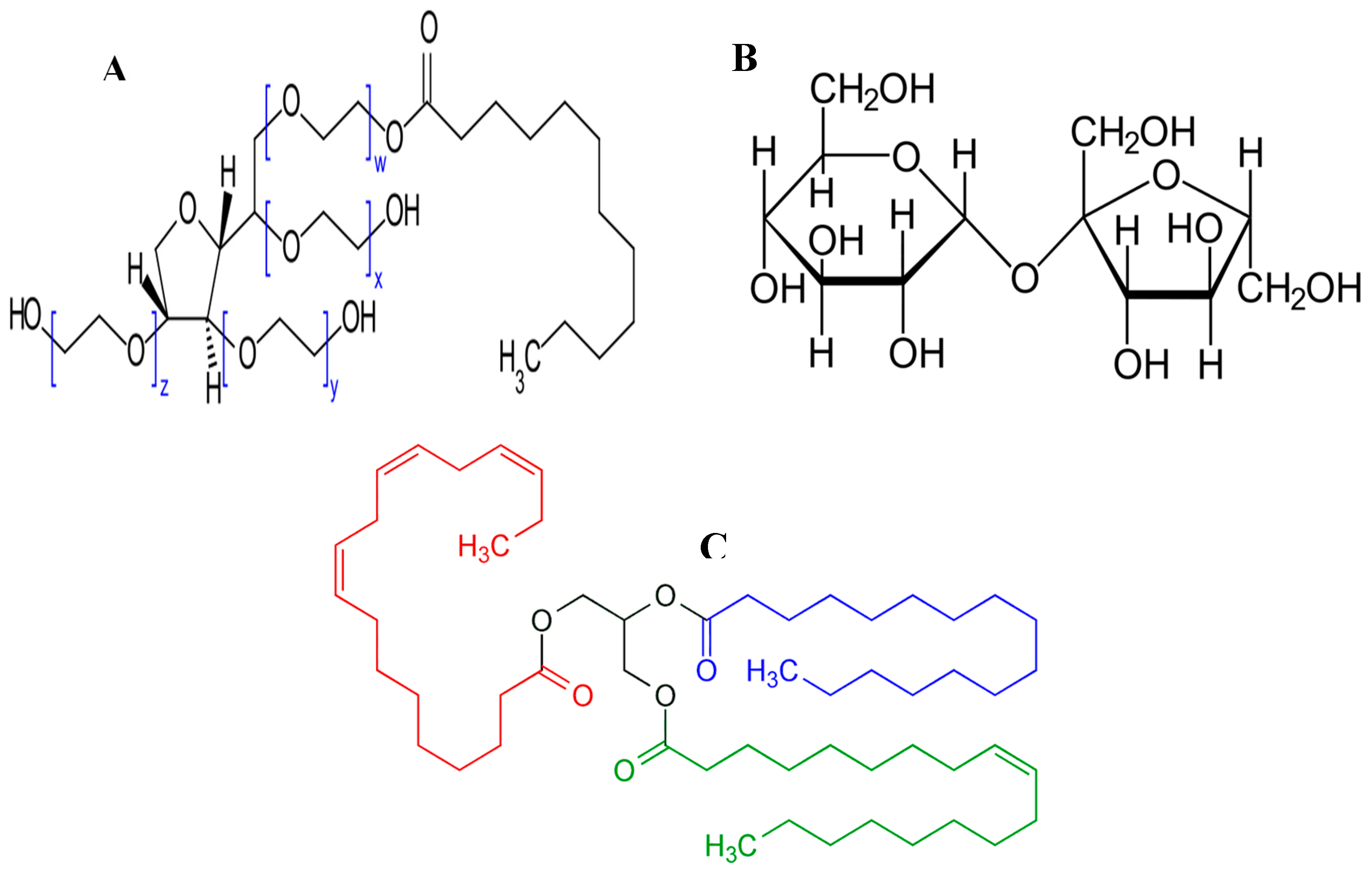
Figure 1.
Chemical structures of (A)Tween®20 (a representative non-ionic surfactant), (B) sucrose and (C) palm stearin (a representative medium-chain triglyceride).
Figure 1.
Chemical structures of (A)Tween®20 (a representative non-ionic surfactant), (B) sucrose and (C) palm stearin (a representative medium-chain triglyceride).
2. Materials and Methods
2.1. Materials
High-purity food-grade palm stearin was purchased from AAK Limited (United Kingdom) as a fat source for emulsion formation, and Tween® 20 (HLB = 16.7) was purchased from Sigma-Aldrich (United Kingdom) as a surfactant. Sugar (99.8 wt.%) was obtained in local supermarkets in Sheffield (United Kingdom). Distilled water was used for the preparation of all emulsions.
2.2. Preparation of Emulsions
The oil phase containing (contain 20 wt. % w/w) was prepared from palm stearin. To improve the stability of the emulsion, tween 20 was added to the oil mixture (1 % w/w). The oil was heated at 55-60z until it was completely dissolved in a water bath. The aqueous phase was maintained at 55-60℃. The oil phase was then added to the aqueous phase followed by pre-homogenisation using high-speed mixer (a rotor-stator system, Silverson Ltd., UK) at 5,000 rpm for 30 s and increasing the speed to 10,00 rpm for 60 s to form a coarse emulsion. Coarse emulsions were then homogenised using a colloidal mill (IKA® magicLAB®, WERKE GMBH & Co. KG, UK) at different rotary speeds from 10,000 to 25,000 rpm for only one cycle. After homogenisation, the emulsions were cooled in an ice-bath at 5 ℃. Different formulations with Tween® 20 at 3%(w/w) and different concentrations of sugar (10-65%) in the aqueous phase homogenised at different speeds and durations were also compared. Sugar at different concentration was added to aqueous phase to investigate the impact of viscosity on emulsion particle size distribution.
2.3. Characterization of Fat Emulsion
Droplet Size Distribution
3. Results and Discussion
3.1. Impact of Crystallization on Particle Size Distribution
The effect of immediate crystallisation on the stabilisation of submicron fat is shown in Figure 2. The surface-weighted mean diameter (D [3,2]) of the immediately crystallised fat emulsion at 5℃ was 1.75μm while crystallization after 10 min of waiting time showed larger values of D [3,2] 2.14. Surface mean diameter increased by 0.4μm for 10 minutes waiting time. The distribution of particles observed in this study (Figure 3) was between 0.1 and 20μm with a monomodal distribution. The tendency of fat droplets to coalesce with each other during the waiting time increases, resulting in larger particle sizes. This result indicates that waiting for 10 min before crystallization produces larger droplets due to coalescence (as can be observed from the increasing peak from 2.5 to 5μm) compared to the control, which has smaller fat globules. For 10 min, the wait time before homogenisation resulted in a larger particle size, which could be considered as ageing, fat crystallization, and reorganisation of the fat droplet surface may have taken place, resulting in the widening of particle size towards the right (Goff, 1997). Thus, it is crucial to consider the waiting time during crystallization as this affects the particle size distribution.
3.2. Impact of Different Homogenisation Speed and Quick Run (One Cycle) Particle Size Distribution
The effects of homogenisation speed and quick run on the average particle size were investigated for 20 wt.% palm stearin oil-in-water emulsion containing 1 wt. % tween 20 (Figure 4). Optimization of the homogenisation speed allows process efficiency to produce emulsions of different qualities. The efficiency of the homogeniser in producing emulsions with different particle size distribution was investigated by subjecting the oil-in-water emulsions to several homogenisation speed. It should be noted that the coarse emulsion had a larger particle size the homogenised emulsions. For many real-world emulsion applications, the total droplet size distribution is more crucial than the average droplet diameter. Overall, there was an observed decrease in droplet particle size with increasing homogenisation speed for a once cycle pass, with similar observations for a homogenisation run time of 50min. These findings indicate that increasing homogenisation speed is very efficient in generating tiny fat droplet sizes in an emulsion. The particle size distribution of the homogenised emulsions as a function of homogenisation speed shows a shift toward the left of the distribution as the homogenised speed increased, with a similar observation for an extended duration of homogenisation. A lower homogenisation speed and 50 min of homogenisation resulted in a relatively broad distribution. The lower homogenised speed 10k rpm showed a relatively larger droplet size distribution compared to the other homogenisation speeds. The particle size became narrower as the homogenisation speed increased from 10k to 25k rpm. The droplet particle size continued to decrease as the emulsion was homogenised at a high pressure. In addition, homogenisation for 50 min resulted in a smaller droplet size compared with one cycle run at all homogenisation speed. For instance, at 25k rpm, the droplet particle size decreased from 0.1-100μm to 0.1-10μm. Decrease in oil droplet size with increasing homogenisation speed and duration could be due to the increase in intensity of the disruptive forces produced inside the homogenisation chamber. According to some authors, high-pressure homogenization produces more turbulence, which in turn causes more particle collisions and, as a result, has a better coalescence efficiency (Jafari et al., 2008). The combination of turbulence, cavitation, and shear forces during homogenisation as well as increasing temperature may lead to the dissociation of fat globules and reduce the formation of fat clusters. This may be applicable in different food applications to utilise higher homogenisation speed and duration to obtain lower particle droplet sizes and reduce the fraction of larger droplet fat. For instance, to avoid the development of a noticeable circle at the surface of beverage emulsions as a result of creaming a higher homogenisation speed and duration could be useful.
3.3. Impact of Surfactant Concentration and Homogenisation Speed on Particle Size Distribution
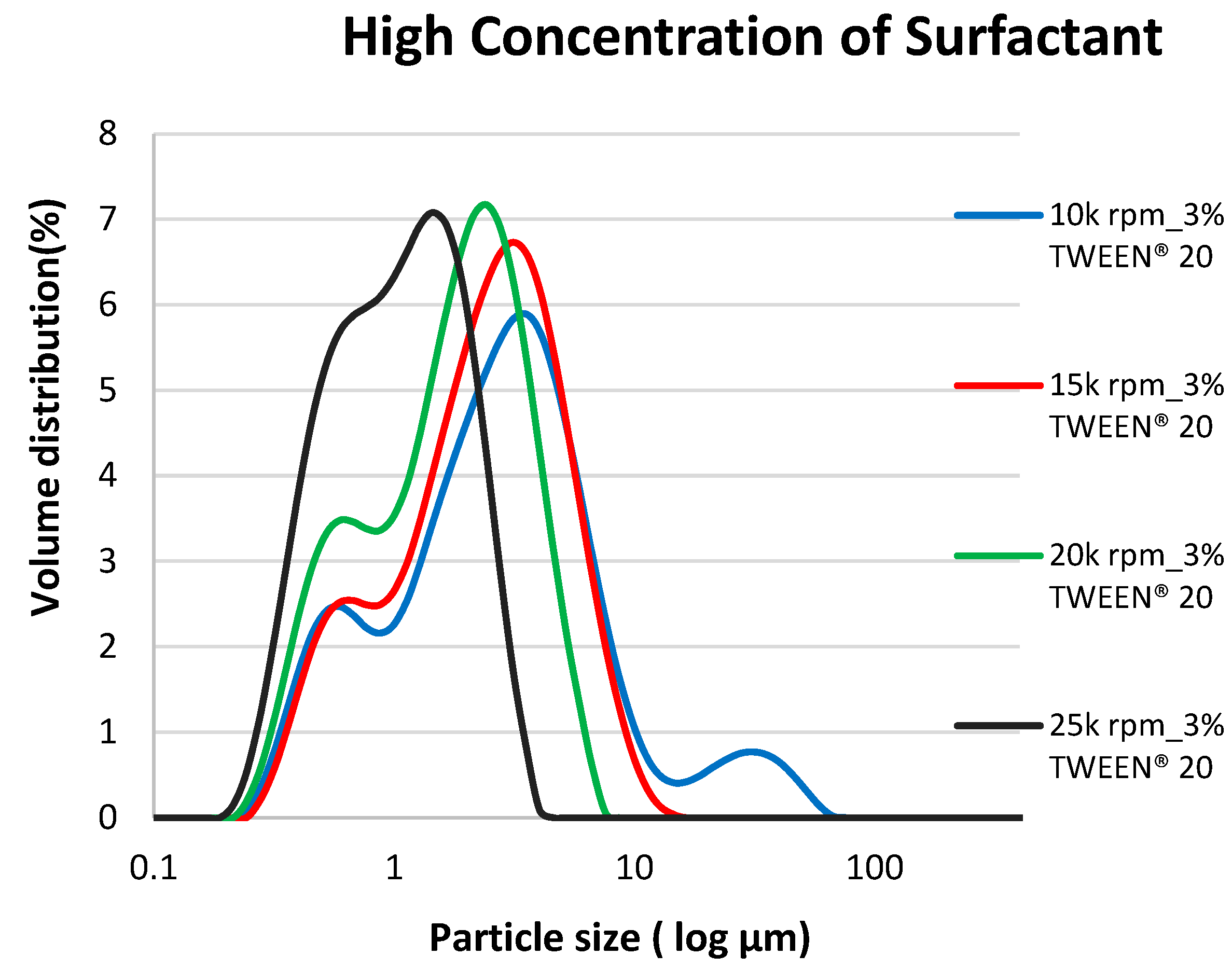
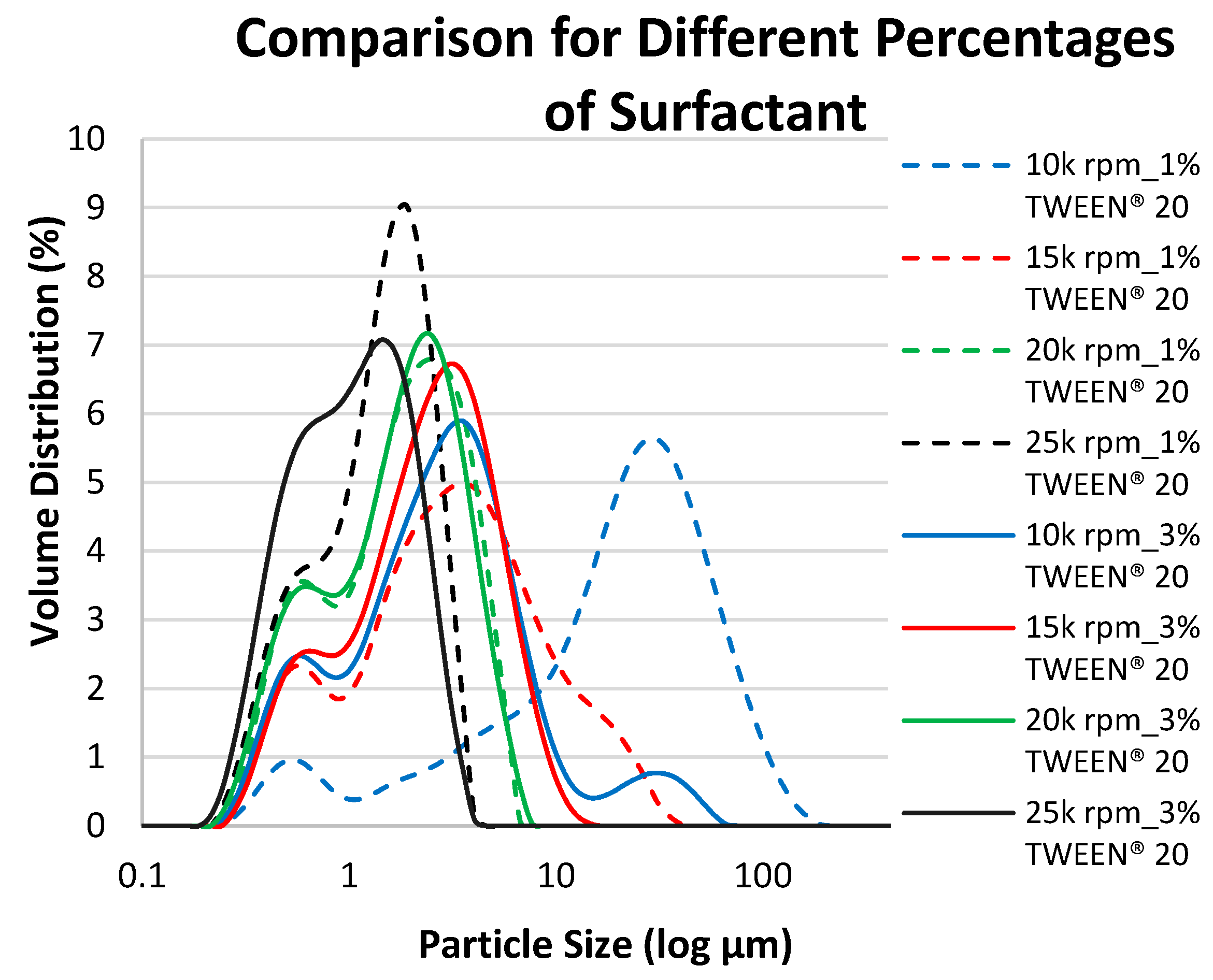
The food industry offers a wide variety of emulsifiers, including surface-active agents, polysaccharides, proteins, and phospholipids (Cox et al., 2021; Douglas Goff, 2004). Therefore, it is important to investigate the impact of surfactant concentration on emulsion production using a colloidal mill. In this study, the impact of surfactant concentration and homogenisation speed on droplet size of different oil in water emulsions containing palm stearin in the oil phase and a surfactant (Tween 20) was investigated. 20 wt. % palm stearin oil-in-water emulsions containing different emulsifier concentrations (1 and 2wt%) were produced using different homogenisation speed (10k -25k rpm) and then their particle size measured. The amount of emulsifier present before homogenisation has a substantial influence on the droplet size of the particle generated. The emulsifiers at both concentrations showed a bimodal distribution except for the emulsion containing 3 wt. % emulsifier at 10k rpm homogenisation speed which showed a trimodal distribution. The particle size distribution decreased as the concentration of emulsifier increased (3 wt. %) for all homogenisation speed which agrees with similar studies (Anton & Vandamme, 2009). This trend may be expected as there are more emulsifiers available to cover any new surface formed during homogenisation. This observation can be attributed to several physicochemical phenomena. This is due to an increase in the surfactant molecule ability to adsorb at the interface of the oil-in-water emulsion which results in a reduction in the interfacial tension and promotes the creation of smaller oil droplets (Lamaallam et al., 2005). In addition, the development of finer droplets at the interface has also been linked to a greater quantity of emulsifying agent molecule migration from the oil phase to the water phase (Anton & Vandamme, 2009). It should be noted that emulsifier at concentration of 1-3 wt. % was used since in practice industrial beverage processing apply minimal amount of emulsifier due to regulatory reasons, economic as well as sensory implications.
Figure 5.
Particle size distribution of 20 wt. % palm stearin oil-in-water emulsions containing 3 wt.% tween 20 in conjunction with homogenisation speed (in rpm).
Figure 5.
Particle size distribution of 20 wt. % palm stearin oil-in-water emulsions containing 3 wt.% tween 20 in conjunction with homogenisation speed (in rpm).
3.4. Impact of Viscosity (Different Sugar Concentration) and Homogenisation Speed on Particle Size Distribution
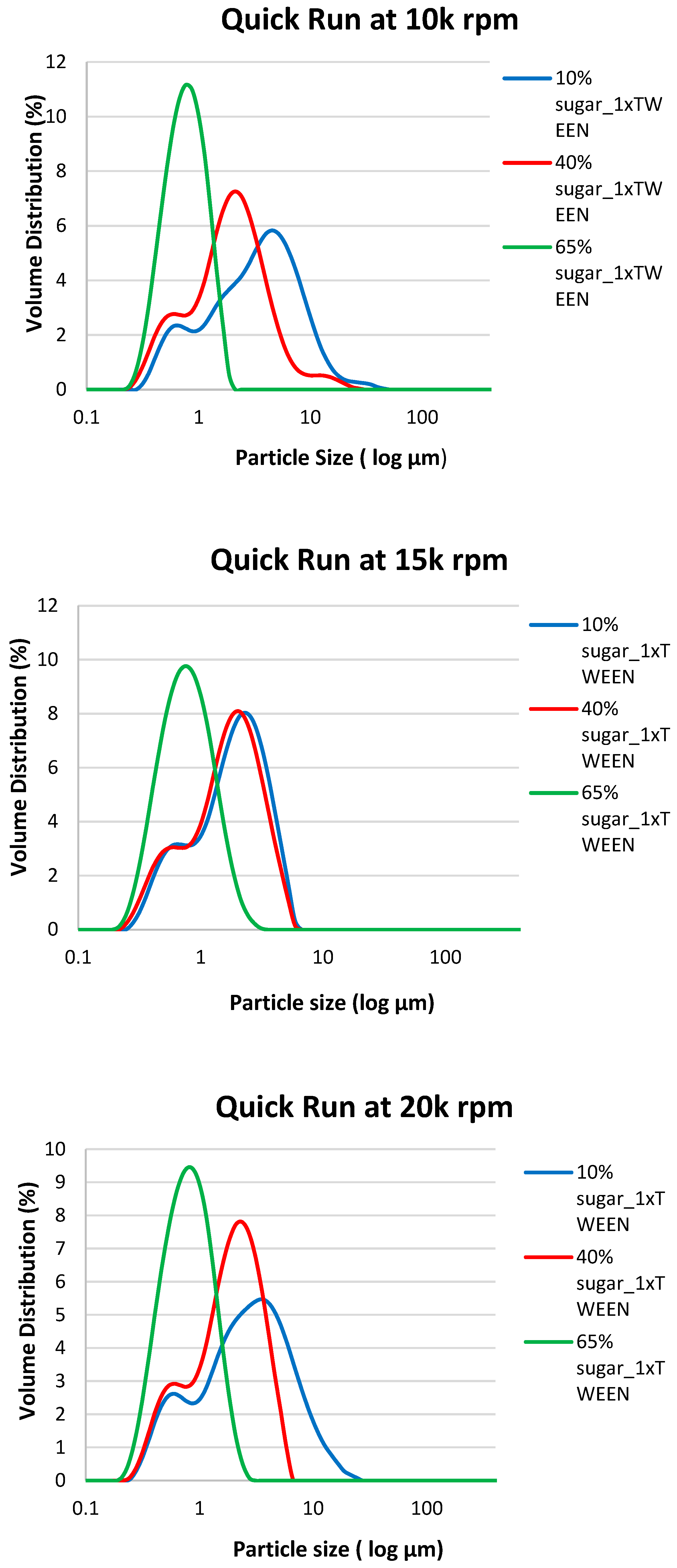
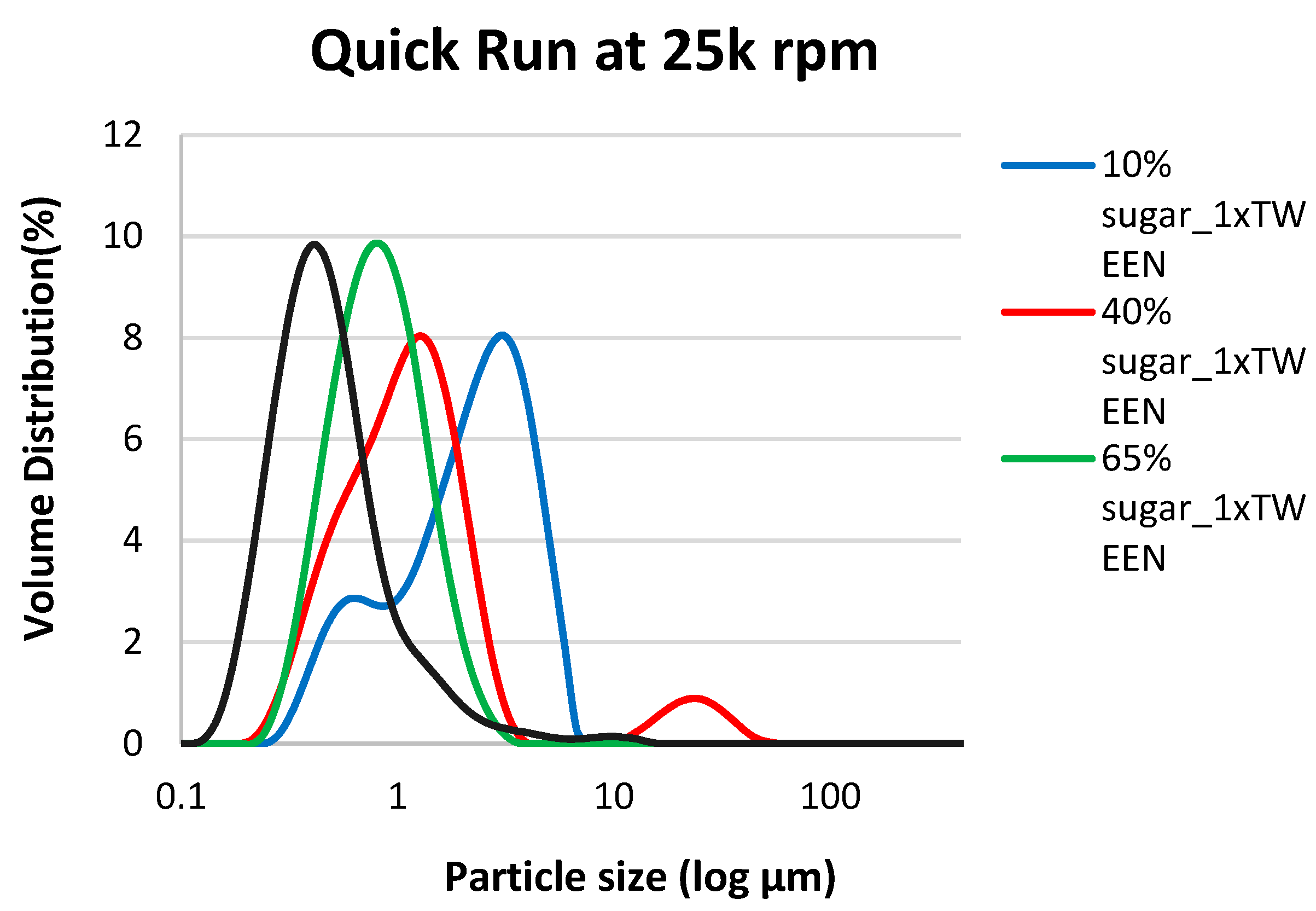
The viscosity of dispersed oil phase and water phase utilised during the preparation of oil-in water emulsions in the food industry usually vary considerable due to formulation composition. For instance, incorporation of a solute such as biopolymer or sugar to aqueous solutions tend to have higher viscosities compared to flavour or oils. Experimental and theoretical studies have indicated that viscosities of either dispersed phase or aqueous phase greatly affect droplet disruption, thus the resulting droplet size that can be achieved within different types of homogenisers will vary considerably (Jafari et al., 2008). Hence it will be useful to investigate the impact of the changes in viscosity of the continuous phase during the formation of palm stearin nano emulsions. This information can be applied during optimization processes to form stable emulsions using colloidal mill. A series of 20 wt.% palm stearin oil-in water containing 1 wt.% tween 20 was produced with varying aqueous phase composition homogenised at different speed (10k-25k rpm). The continuous phase viscosity was modified by adding varying amount of sugar solution (10-65 wt.%). In general, increasing the amount of sugar solution in the continuous phase resulted in a lower particle size distribution. Lower concentration of sugar solution in the oil-in water emulsion shows a shift towards the right as shown in Figure 6. Addition of 65 wt.% in oil-in water emulsion showed a monomodal distribution (0.1-4μm) for all homogenisation speed which yielded nano emulsions. However,10 wt.% and 40 wt.% sugar solution in the emulsion showed a bimodal distribution across all homogenisation speed and shifted to the right of distribution. Changes in continuous phase viscosity could potentially have an impact on droplet size because of a variety of mechanisms, including heightened droplet disruption brought on by shear stresses and reduction in re-coalescence of droplets (McClements, 2005). These parameters' relative relevance is very system-dependent and is influenced by homogenizer design and operational parameters (Haakansson et al., 2009). It is hypothesised that droplet size does not depend heavily on continuous phase viscosity in homogenizers where turbulence is the primary cause of droplet breakup (Schultz et al., 2004). However, when shear forces significantly contribute to droplet disruption in homogenizers, the droplet size should decrease as the viscosities of the continuous phase increase (Haakansson et al., 2009). Shear forces may have had a significant impact on droplet disruption in the laboratory-scale colloidal mill homogenizer based on the noticeably smaller droplet diameter that was found for the oil in water emulsions in this study with increasing continuous phase viscosity.
4. Conclusions
This study explored the influence of palm stearin oil-in-water emulsion composition and homogenisation conditions on the droplet size distribution produced using a colloidal mill. Oil droplets were found to increase after allowing a wait time of 10 minutes before crystallization, hence crystallization immediately after homogenisation is recommended to fix fat droplets size. The influence of homogenisation speed on droplet size distribution revealed that higher homogenisation speed results in a narrow particle size distribution. In addition, incorporation of moderately high concentration of sugar solution to the continuous phase before homogenisation can also decrease particle size distribution independent of homogenisation speed. Overall, the homogenisation speed from 10k-25k rpm with oil-in water emulsion containing 65 wt.% sugar solution is favourable to create smaller oil droplets ranging from 0.1-4μm. Optimization of the composition and homogenization operational parameters is very important to create food-grade nano emulsions in the food industry.
Authorship Contribution Statement
Conceptualization, Bipro Dubey, Samsun Nahar; methodology, Abraham Badjona, Bipro Dubey, Samsun Nahar; investigation Bipro Dubey,; writing—original draft preparation, Abraham Badjona, Bipro Dubey, Samsun Nahar; project administration, Abraham Badjona, Bipro Dubey, Samsun Nahar. All authors have read and agreed to the published version of the manuscript.
Declaration of Competing Interest
The authors declare that they have no known competing financial interests or personal relationships that could have appeared to influence the work reported in this paper.
Data Availability Statement
The data generated during the current study are available upon reasonable request.
References
- Acosta, E. (2009). Bioavailability of nanoparticles in nutrient and nutraceutical delivery. Current Opinion in Colloid & Interface Science, 14(1), 3-15. [CrossRef]
- Anton, N., Benoit, J., & Saulnier, P. (2008). Design and production of nanoparticles formulated from nano-emulsion templates—A review. Journal of Controlled Release, 128(3), 185-199. [CrossRef]
- Anton, N., & Vandamme, T. F. (2009). The universality of low-energy nano-emulsification. International Journal of Pharmaceutics, 377(1), 142-147. [CrossRef]
- Cox, S., Sandall, A., Smith, L., Rossi, M., & Whelan, K. (2021). Food additive emulsifiers: a review of their role in foods, legislation and classifications, presence in food supply, dietary exposure, and safety assessment. Nutrition Reviews, 79(6), 726-741. [CrossRef]
- Cruz, C., Fonte, C. P., Simone, A. D., Oppong, F. K., Jeatt, W., & Rodgers, T. L. (2022). Effect of homogenisation on fat droplets and viscosity of aged ice cream mixes. Chemical Engineering Science, 260. [CrossRef]
- Dai, L., Sun, C., Wei, Y., Zhan, X., Mao, L., & Gao, Y. (2018). Formation and characterization of zein-propylene glycol alginate-surfactant ternary complexes: Effect of surfactant type. Food Chemistry, 258, 321-330. [CrossRef]
- Date, A. A., Desai, N., Dixit, R., & Nagarsenker, M. (2010). Self-nanoemulsifying drug delivery systems: formulation insights, applications and advances. Nanomedicine (London, England), 5(10), 1595-1616. [CrossRef]
- Douglas Goff, H. (2004). . Elsevier BV. [CrossRef]
- Goff, H. D. (1997). Colloidal aspects of ice cream—A review. Elsevier Ltd. [CrossRef]
- Haakansson, A., Traegaardh, C., & Bergenstaahl, B. (2009). Dynamic simulation of emulsion formation in a high pressure homogenizer. Chemical Engineering Science, 64(12), 2915-2925. [CrossRef]
- Jafari, S. M., Assadpoor, E., He, Y., & Bhandari, B. (2008). Re-coalescence of emulsion droplets during high-energy emulsification. Food Hydrocolloids, 22(7), 1191-1202. [CrossRef]
- Juttulapa, M., Piriyaprasarth, S., Takeuchi, H., & Sriamornsak, P. (2016). Effect of high-pressure homogenization on stability of emulsions containing zein and pectin. Elsevier BV. [CrossRef]
- Kesisoglou, F., Panmai, S., & Wu, Y. (2007). Application of Nanoparticles in Oral Delivery of Immediate Release Formulations. Current Nanoscience, 3(2), 183-190. [CrossRef]
- Lamaallam, S., Bataller, H., Dicharry, C., & Lachaise, J. (2005). Formation and stability of miniemulsions produced by dispersion of water/oil/surfactants concentrates in a large amount of water. Elsevier BV. [CrossRef]
- Leong, T. S. H., Wooster, T. J., Kentish, S. E., & Ashokkumar, M. (2009). Minimising oil droplet size using ultrasonic emulsification. Ultrasonics Sonochemistry, 16(6), 721-727. [CrossRef]
- McClements. (2005). Food emulsions: Principles, practice, and techniques (2nded.). Boca Raton: CRC Press.
- McClements, D. J., Decker, E. A., Park, Y., & Weiss, J. (2009). Structural Design Principles for Delivery of Bioactive Components in Nutraceuticals and Functional Foods. Critical Reviews in Food Science and Nutrition, 49(6), 577-606. [CrossRef]
- McClements, D. J., & Rao, J. (2011). Food-Grade Nanoemulsions: Formulation, Fabrication, Properties, Performance, Biological Fate, and Potential Toxicity. Critical Reviews in Food Science and Nutrition, 51(4), 285-330. [CrossRef]
- Qian, C., & McClements, D. J. (2011). Formation of nanoemulsions stabilized by model food-grade emulsifiers using high-pressure homogenization: Factors affecting particle size. Food Hydrocolloids, 25(5), 1000-1008. [CrossRef]
- Schultz, S., Wagner, G., Urban, K., & Ulrich, J. (2004). High-Pressure Homogenization as a Process for Emulsion Formation. Chemical Engineering & Technology, 27(4), 361-368. [CrossRef]
- Wei, L., Yu, H. ;., Chang, W. ;., Lin, C. ;., Chen, Y. ;., & Wu, J. (2013). Effect of container on the physicochemical stability of propofol injectable emulsion after being diluted with 0.9% NaCl for intravenous infusion. The Journal of Food and Drug Analysis (JFDA), Food and Drug Administration, Taiwan (TFDA). [CrossRef]
- Weiss, J., Decker, E. A., McClements, D. J., Kristbergsson, K., Helgason, T., & Awad, T. (2008). Solid Lipid Nanoparticles as Delivery Systems for Bioactive Food Components. Food Biophysics, 3(2), 146-154. [CrossRef]
- Wooster, T. J., Golding, M., & Sanguansri, P. (2008). Impact of Oil Type on Nanoemulsion Formation and Ostwald Ripening Stability. Langmuir, 24(22), 12758-12765. [CrossRef]
Figure 2.
Schematic representation for formation of fat-based submicron emulsion.
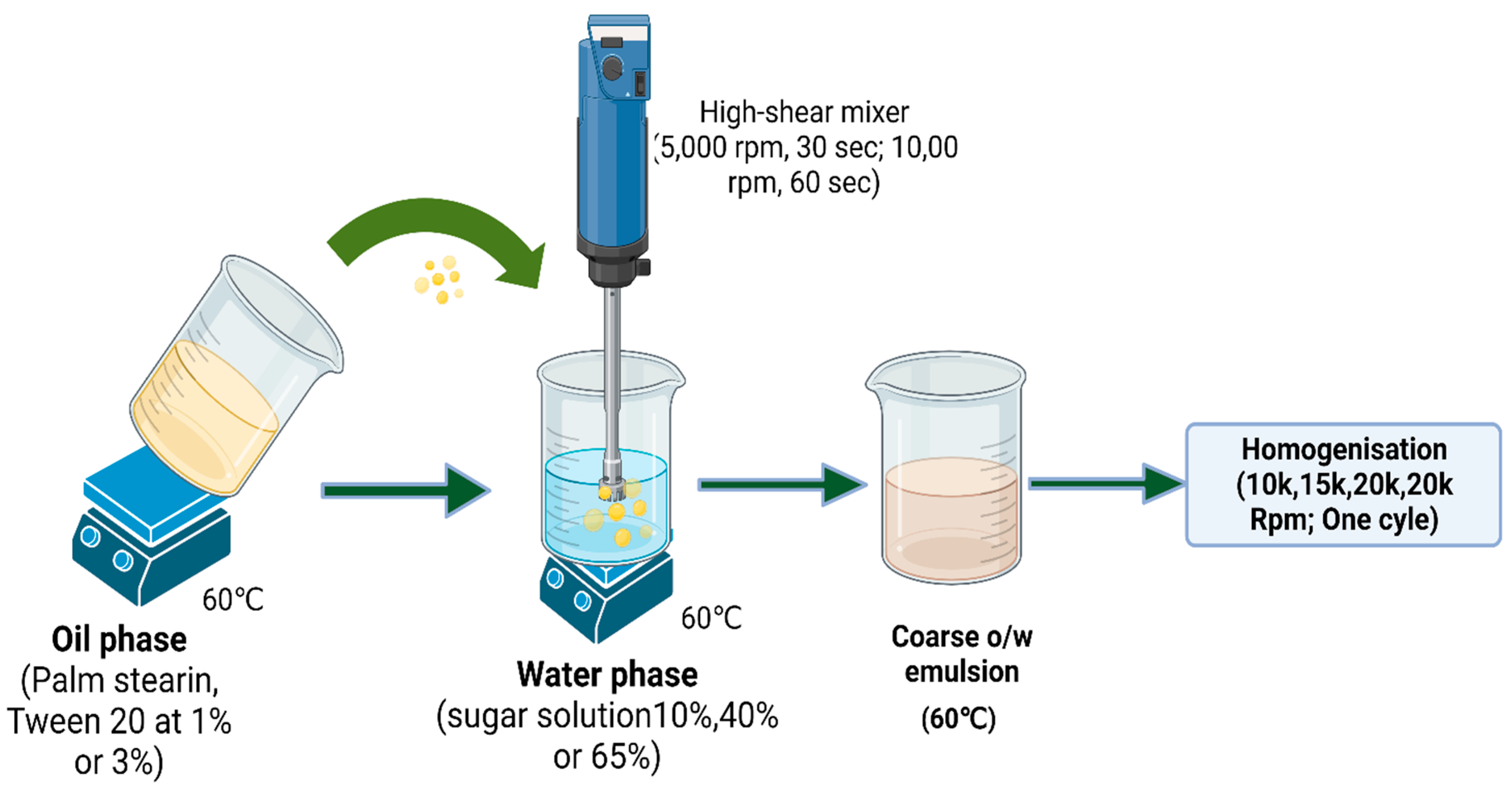
Figure 3.
Droplet size distribution of fat-based submicron emulsion crystallized immediately after homogenisation and crystallized 10 minutes after homogenisation.
Figure 3.
Droplet size distribution of fat-based submicron emulsion crystallized immediately after homogenisation and crystallized 10 minutes after homogenisation.
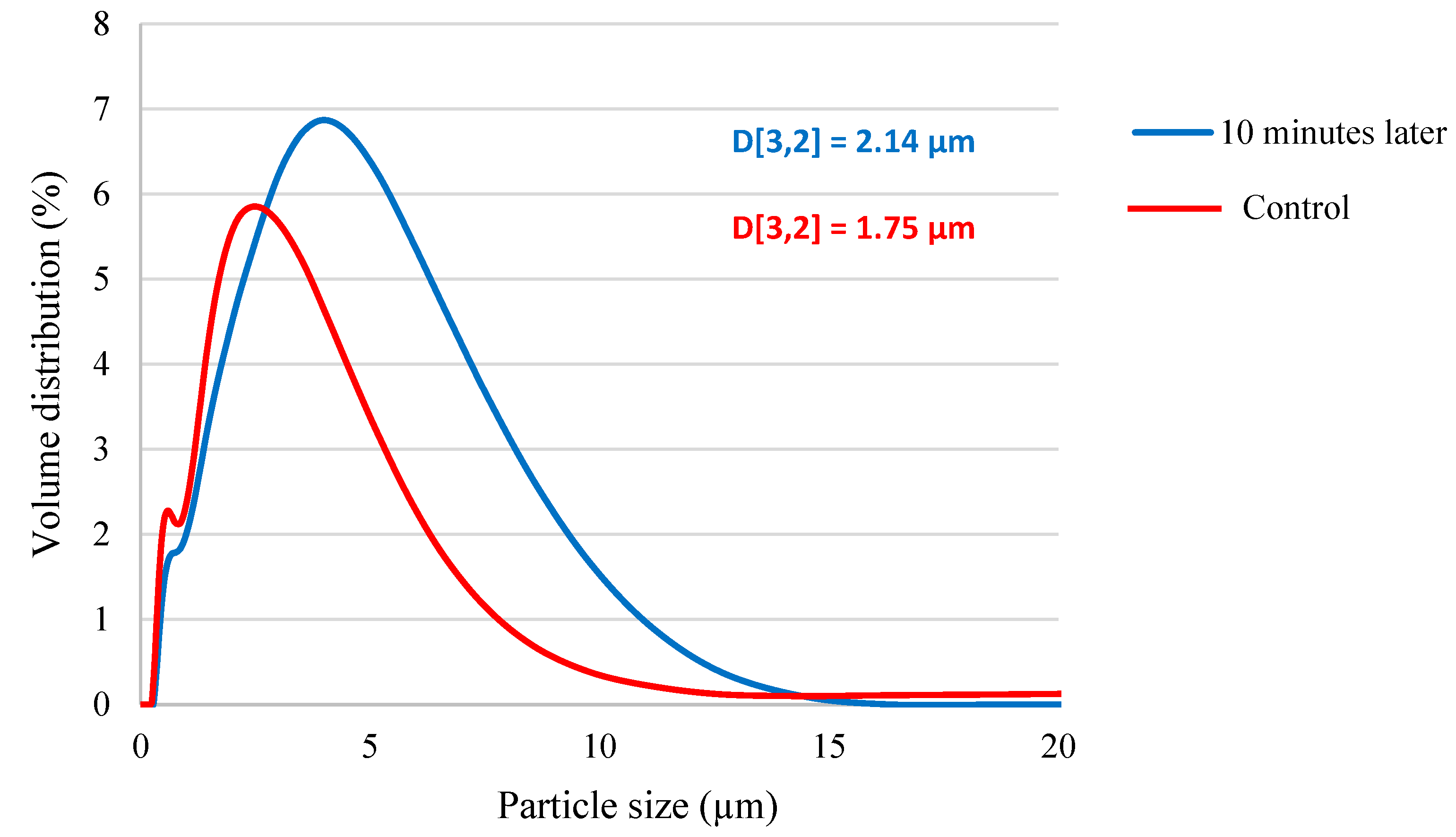
Figure 4.
Impact of homogenisation speed (in rpm) and duration of quick run on droplet particle size generated in 20 wt.% palm stearin oil-in-water emulsion containing 1 wt.% tween 20 (a) with 50 minutes homogenisation run time under the same conditions (b) with a single cycle of homogenisation under the same conditions (c) combination of 50minutes homogenisation and one cycle together.
Figure 4.
Impact of homogenisation speed (in rpm) and duration of quick run on droplet particle size generated in 20 wt.% palm stearin oil-in-water emulsion containing 1 wt.% tween 20 (a) with 50 minutes homogenisation run time under the same conditions (b) with a single cycle of homogenisation under the same conditions (c) combination of 50minutes homogenisation and one cycle together.
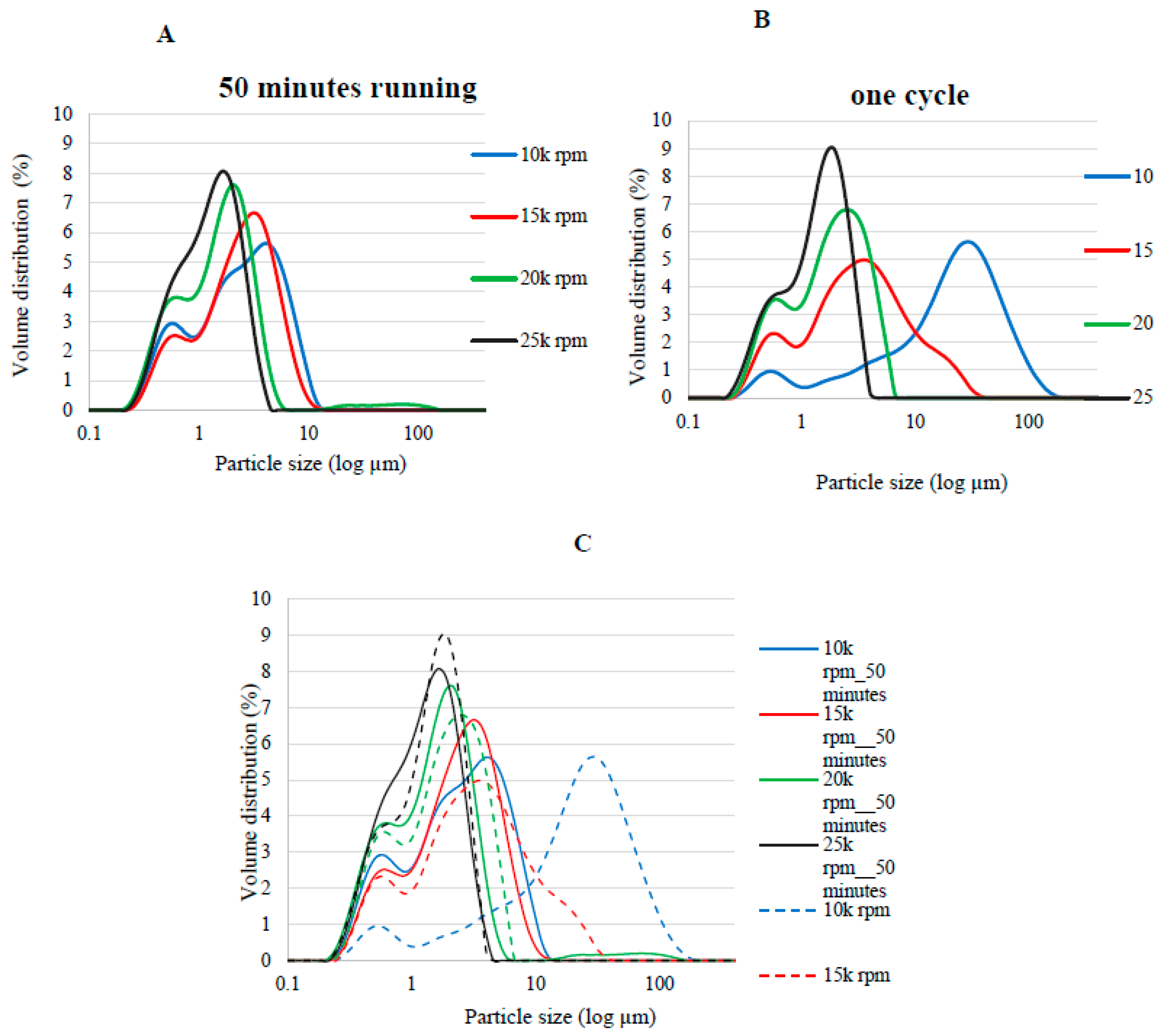
Figure 6.
Effect of homogenisation speed on droplet particle size was investigated for 20 wt.% palm stearin oil-in-water emulsion stabilized with 1 wt.% tween 20. Continuous phase viscosity was modified by adding varying concentration of sugar solution.
Figure 6.
Effect of homogenisation speed on droplet particle size was investigated for 20 wt.% palm stearin oil-in-water emulsion stabilized with 1 wt.% tween 20. Continuous phase viscosity was modified by adding varying concentration of sugar solution.
Disclaimer/Publisher’s Note: The statements, opinions and data contained in all publications are solely those of the individual author(s) and contributor(s) and not of MDPI and/or the editor(s). MDPI and/or the editor(s) disclaim responsibility for any injury to people or property resulting from any ideas, methods, instructions or products referred to in the content. |
© 2024 by the authors. Licensee MDPI, Basel, Switzerland. This article is an open access article distributed under the terms and conditions of the Creative Commons Attribution (CC BY) license (http://creativecommons.org/licenses/by/4.0/).
Copyright: This open access article is published under a Creative Commons CC BY 4.0 license, which permit the free download, distribution, and reuse, provided that the author and preprint are cited in any reuse.


