

Submitted:
08 August 2024
Posted:
09 August 2024
You are already at the latest version
Abstract
This study investigates the impact of vertical greenery systems (VGS) applied to heavyweight walls on indoor thermal conditions in a building module situated in the Mediterranean climate of Catania, Italy. Using dynamic simulations in TRNSYS, the research compares the thermal behavior of walls constructed from hollow clay blocks (Poroton) and lava stone blocks with a lightweight wall setup already in place at the University of Catania. The primary focus is on evaluating the VGS’s effect on reducing peak inner surface temperatures and moderating heat flux fluctuations entering the building. The findings indicate that adding a vertical greenery layer to heavyweight walls can decrease the peak inner surface temperature by up to 1.0°C compared to the same wall without vegetation. However, the greenery’s impact on mitigating heat flux fluctuations is less pronounced than in the case of the lightweight wall. This research underscores the potential of green facades in enhancing indoor thermal comfort in regions with climates similar to the Mediterranean, providing valuable insights for sustainable building design and urban planning.
Keywords:
Green façade
; dynamic simulations
; thermal inertia
; indoor thermal comfort
; TRNSYS
; heavyweight wall
1. Introduction
The architectural landscape of the Mediterranean basin is characterized by a significant presence of traditional buildings constructed from local stones. These structures, prevalent in various urban residential areas across European cities, only occasionally gain recognition as part of the valuable historical heritage [1]. Typically, these buildings are built with load-bearing massive masonry walls, known for their considerable thermal mass. This characteristic allows them significant thermal inertia, which aids in regulating indoor temperatures. However, the main drawback of this construction technique is its lack of adequate thermal insulation, leading to substantial thermal losses and thus diminishing the buildings’ energy efficiency [2]. In light of modern energy efficiency standards, especially those detailed in the latest European Directive on Energy Performance of Buildings (EPBD) [3], contemporary Italian construction practices have shifted towards using hollow clay Poroton blocks for creating opaque vertical enclosures in new developments. This shift is driven by the material’s advantageous properties, including reduced thermal conductivity and greater density compared to conventional hollow bricks, thereby enhancing dynamic thermal performance and contributing to overall building energy efficiency.
Recent decades have also seen growing interest in green facades as an architectural strategy to enhance building-scale thermal benefits. These benefits stem mainly from the shading effect provided by the foliage layer and the evapotranspiration process of the leaves, which together help reduce the heat flux through building surfaces [4]. Studies focusing on green facades, particularly those using alveolar and hollow brick constructions, have emphasized their effectiveness in improving thermal performance under free-running conditions. Such studies often measure the outer wall surface temperature behind the vegetation to quantify the shading benefits provided by the green facade [5]. Despite these advancements, the literature contains relatively few papers that employ thermal dynamic simulations to explore the impact of massive masonry equipped with green facades on indoor thermal conditions. This gap presents an opportunity for further research [6]. Indeed, one notable study in the literature is a numerical analysis of green facades installed on the southern and western facades of a brick masonry house in Lille, France. This study used TRNSYS simulations to assess their impact and found that green facades could lower peak indoor temperatures by over 1.3°C compared to non-vegetated walls [7]. The integration of vertical greenery systems (VGS) in building design has gained substantial attention for its potential to enhance thermal comfort and energy efficiency. VGS, encompassing green facades and living walls, offer numerous environmental benefits, such as improved air quality, enhanced biodiversity, and aesthetic value. The primary focus, however, remains on their ability to mitigate urban heat island effects and improve building energy performance. Green facades, through shading and evapotranspiration, significantly influence the thermal performance of buildings. Studies have shown that green facades can reduce the surface temperatures of building walls, thereby lowering the heat flux entering the building. A comprehensive review by Pérez et al. [8] highlighted that green facades could reduce wall temperatures by 5-20°C, depending on the plant species and local climate conditions. Dynamic thermal simulations are essential for understanding the performance of VGS under varying climatic conditions. Software tools like TRNSYS and EnergyPlus are widely used for such analyses. For example, a study by Perini [9] employed EnergyPlus to simulate the impact of green facades on the thermal performance of buildings in different European climates. The study found that green facades could lead to significant energy savings for cooling in the summer, particularly in Mediterranean climates. Heavyweight walls, such as those made from masonry or stone, are characterized by their high thermal mass, which can dampen temperature fluctuations and contribute to indoor thermal comfort. Research by Gagliano et al. [2] demonstrated that buildings with heavyweight walls exhibit better thermal inertia, aiding in stabilizing indoor temperatures. However, the traditional heavyweight walls’ lack of insulation often results in high thermal losses, necessitating supplementary strategies like VGS to improve their thermal performance. The Mediterranean climate, marked by hot, dry summers and mild, wet winters, poses unique challenges for building design. High solar radiation and temperature fluctuations require buildings to be well-insulated and capable of dissipating heat effectively. Traditional Mediterranean architecture, with its massive stone walls and narrow streets, offers valuable insights into passive cooling strategies. However, modern buildings need to integrate these traditional techniques with contemporary materials and technologies to meet current energy efficiency standards. Recent studies have explored various configurations and plant species for VGS to maximize their thermal benefits. For instance, a study by Fioretti et al. [10] examined the cooling effects of different plant species on green roofs and facades in an urban context. Similarly, research by Sternberg et al. [11] investigated the impact of VGS on thermal performance and energy savings in Mediterranean climates, emphasizing the importance of plant selection and maintenance. Experimental setups and case studies provide valuable data for validating simulation models like that of Detommaso et al. [12] at the University of Catania which involved an experimental setup of insulated lightweight sandwich panels with and without green facades. This research paper aims to explore the effects of an indirect green facade, specifically utilizing the “Trachelospermum Jasminoides” species, on the indoor thermal environment of an experimental setup located at the University of Catania campus. The analysis is conducted using a rigorously validated thermal dynamic simulation model under free-running conditions [12]. The study compares three distinct wall types: insulated lightweight sandwich panels (the actual configuration), Poroton blocks, and lava stone blocks, the latter chosen for its emblematic representation of local construction traditions. The primary focus is on evaluating the VGS’s impact on reducing peak inner surface temperatures and moderating heat flux fluctuations entering the building. By comparing the thermal behavior of these different wall types, the study aims to provide a comprehensive understanding of how VGS can enhance indoor thermal comfort and contribute to sustainable building design in Mediterranean climates. This paper is structured as follows:
- Section “Materials and Methods “explains the research methodology, detailing the green facade’s characteristics, the thermal simulation model employed, and the specific wall configurations under investigation.
- Section “Results and Discussions” presents the study’s findings, offering recommendations and highlighting the limitations encountered, thereby setting the stage for future research directions in this field.
2. Materials and Methods
This methodology section outlines the comprehensive approach adopted to evaluate the potential of vertical greenery systems (VGS) in enhancing indoor thermal comfort. By examining various wall materials and configurations, this study aims to provide valuable insights into sustainable architectural practices suited for Mediterranean climates. The primary objective is to assess the impact of heavyweight masonry walls, integrated with vertical greenery layers, on the indoor thermal environment during a typical Mediterranean summer week. The study investigates the thermal behavior of three distinct wall configurations:
- Walls made of insulated lightweight sandwich panels (W_LW) which represents the physical experimental mock-ups currently in place at the University Campus of Catania.
- Walls constructed with Poroton blocks (W_POR) which is a theoretical scenario explored solely within the simulation environment.
- Walls built from lava stone blocks (W_LST) which is another theoretical scenario investigated within the simulation environment.
The inclusion of W_POR and W_LST configurations, alongside the W_LW setup, broadens the study’s scope and applicability, allowing for a comparative analysis across different material properties and their interactions with VGS. The research utilizes a rigorously calibrated and validated thermal model of the experimental setup, conducting dynamic thermal simulations under free-running conditions. The simulations were carried out using the TRNSYS software tool [11], which is particularly suited for accommodating a specialized module designed for transient regime simulations. This choice was motivated by TRNSYS’s capability to accurately simulate the complex interactions between building components and environmental factors. The simulation of the green facade was intricately modeled using the Vertical Foliage Component (VFC) within TRNSYS [13]. This component provides a detailed representation of the vegetative layer’s influence on the building’s thermal dynamics, including the shading effect and the evapotranspiration process. The VFC module’s parameters were meticulously defined to reflect the specific characteristics of the chosen vegetation, “Trachelospermum Jasminoides”, known for its suitability in Mediterranean climates. The dynamic thermal simulations were conducted over a typical Mediterranean summer week to capture the peak thermal loads and evaluate the VGS’s performance under extreme conditions. Key performance indicators (KPIs) such as peak inner surface temperatures, heat flux fluctuations, and indoor air temperature variations were monitored and analyzed. Indeed, Peak Inner Surface Temperatures were measured to determine the maximum temperature reached by the inner wall surfaces. Heat Flux Fluctuations was used to assess the variation in heat transfer through the walls, providing insights into the thermal buffering capacity of each configuration. Indoor Air Temperature Variations was used to evaluate the overall impact of VGS on indoor thermal comfort. To ensure the accuracy of the simulation results, the thermal model was calibrated against empirical data obtained from the physical experimental setup (W_LW) at the University Campus of Catania. This involved adjusting the model parameters until a satisfactory match between the simulated and observed data was achieved. The validated model was then used to simulate the theoretical configurations (W_POR and W_LST). A sensitivity analysis was conducted to evaluate the impact of various parameters on the thermal performance of the VGS. This included varying the foliage density, leaf area index (LAI), and the thickness of the greenery layer. The sensitivity analysis helped identify the most critical factors influencing the system’s effectiveness and provided insights into optimizing the design of VGS for maximum thermal benefit. The simulation outcomes were analyzed to compare the thermal performance of the three wall configurations. The results highlighted the differences in peak inner surface temperatures, heat flux fluctuations, and indoor air temperature variations. This comparative analysis provided a comprehensive understanding of how VGS can enhance indoor thermal comfort and contribute to sustainable building design in Mediterranean climates.
2.1. Case Study
The experimental framework for this study involves two full-scale mock-ups, each consisting of prefabricated modules. One module is equipped with a green facade, while the other serves as a control without the greenery. These modules are stationed at the University Campus of Catania, located at latitude 37°30’ North and longitude 15°04’ East. Catania’s position in Southern Italy subjects it to a warm and temperate climate, classified as Csa according to the Köppen-Geiger climate categorization.
Both modules are identical in shape, size (2.50 m x 2.50 m x 3.00 m), and construction materials, with the only difference being the incorporation of a Vertical Greenery System (VGS) on the western facade of one module. This strategic orientation ensures that each module faces all four cardinal directions, providing comprehensive exposure to varying sun angles and environmental conditions. These modules are designed as single-room structures without any air conditioning systems to simulate typical indoor conditions. Figure 1a,b provide planimetric and 3D views of the modules, highlighting their placement and the distinct presence of the VGS. The structural envelope of these modules is constructed from self-supporting lightweight walls (W_LW), utilizing sandwich panels that include an insulated polystyrene core and external layers made of oriented strand board (OSB). This configuration is consistent across the walls, roof, and floor, ensuring uniform thermal properties throughout the structure. The construction details and material specifications were provided by the company responsible for fabricating these prefabricated modules. The thermal performance of these components, indicated by U-values of 0.50 W/m²K for both walls and roofs, was rigorously assessed through thermoflow measurements conducted by the “thermozig “device with the respect of the ISO9869 standard [14]. The green facade element of this study, installed on the western wall of one module, features an indirect VGS utilizing “Trachelospermum Jasminoides,” an endemic and evergreen climbing plant species also known as false jasmine or rhincosperma. This choice of vegetation is significant, as the Jasminoides species exhibits a dynamic Leaf Area Index (LAI), fluctuating between 2.0 to 4.0 m²/m² over the year [15], potentially offering varying degrees of shading and cooling effects. The design and materials of the VGS support structure, along with further details on the selected plant species, are elaborated upon in the referenced literature [12].
2.2. Features of Thermal Simulation Model and Modeling Assumptions
The experimental setup, consisting of two prefabricated modules, was modeled using the TRNSYS software tool [11]. The simulation was based on the principles of energy equilibrium for a multi-zone building, designated as Type 56 in the TRNSYS software. This approach enabled a comprehensive analysis of the thermal interactions within and across the building spaces. Central to our simulation was the incorporation of the Vertical Greenery System (VGS), represented by the Vertical Foliage Component (VFC), or Type 9644. This component, drawing on the theoretical framework established by Susorova [16], simulates the complex energy exchanges within a control volume that encompasses both the vertical vegetation layer and the adjacent bare wall surface of the multi-zone building model [13]. The energy balance in the simulation accounted for several factors:
- Shortwave Solar Radiation: Direct and diffuse solar radiation impacting the vegetation and wall surfaces.
- Longwave Radiation: Interactions between the wall, vegetation, ground, and sky.
- Radiant Exchanges: Between the vegetation and the wall surface.
- Heat Transfer Processes: Including convection and evapotranspiration.
These factors were crucial for accurately simulating the thermal performance of the VGS. Specific input parameters reflecting the vegetative characteristics and environmental conditions were required for the VFC. These included weather data and detailed vegetative data such as Leaf Area Index (LAI), leaf solar absorptance (αl), emissivity (εl), stomatal conductance (gs), characteristic dimensions (D), and the radiation attenuation coefficient (k). Additionally, the model required inputs for the ground temperature (Tg) and the external surface temperature (Tw) of the wall beneath the vegetation [13,16]. The chosen parameters for the VFC, fundamental for the accuracy of our simulation, are summarized in Table 1.

Table 1.
| Parameter | Name | Unit | Value |
|---|---|---|---|
| Leaf Area Index | LAI | m²/m² | 4.0 [15] |
| Leaf absorptance | αl | - | 0.54 [15] |
| Leaf stomatal conductance | gs | mol/m²s | 0.40 [16] |
| Leaf typical dimension | D | m | 0.11 [17] |
| Leaf radiation attenuation coefficient | k | - | 0.70 [18] |
| Leaf emissivity | εl | - | [15] |
From the VFC, the primary outputs were the total radiant heat flux (QR) impacting the external surface of the wall under the foliage and the convective heat transfer coefficient (h) calculated for the same wall surface. These outputs were fundamental in understanding the thermal modulation effects of the green facade. The initial assumptions and limitations inherent to the VFC modeling approach are thoroughly discussed in the referenced literature [16,19]. Given the study’s focus on assessing indoor thermal conditions under varying wall configurations in free-running scenarios, certain simplifications were made in the modeling process:
- Unoccupied Interior Space: The interior space was treated as unoccupied, devoid of internal heat gains, and lacking any active heating or cooling systems.
- Adiabatic Surfaces: To isolate the thermal effects of the green facade, all external opaque surfaces of the prefabricated modules were modeled as adiabatic, except for the west-facing wall equipped with the VGS. This was achieved by setting the “boundary=identical” option for the external components in the TRNSYS model, ensuring equal air temperatures on both sides of the roof, floor, and walls, thus prventing them from contributing to thermal exchanges.
- Air Infiltration Rate: Standardized at a constant rate of 0.5 h⁻¹.
- Simulations were conducted over a typical summer week, from the 8th to the 14th of July, using a one-hour timestep. The initial conditions for the simulation, including the temperature and relative humidity of the indoor air, were based on measurements recorded at 1:00 a.m. on the 8th of July during the experimental campaign.
2.3. Investigated Wall Configurations
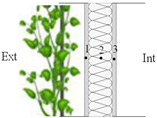
The thermal performance of three distinct wall configurations was evaluated in this study, detailed in Table 2, Table 3 and Table 4. These configurations include a lightweight wall (W_LW), a wall constructed with Poroton 850 blocks (W_POR) [20], and a wall built with squared lava stone blocks (W_ST) [2]. Each configuration was analyzed for its thermophysical properties, such as thermal conductivity (λ), density (ρ), specific heat capacity (Cp), and layer thickness (s), to understand their impact on the building’s thermal behavior. The composition and thermal attributes of the lightweight wall (W_LW) are outlined in Table 2.
This wall comprises an outer and inner layer of oriented strand board (OSB) panels sandwiching a core of polystyrene insulation. This configuration is designed for minimal thermal mass and high insulation efficiency, reflected in the properties of its constituent materials.
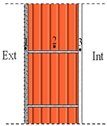
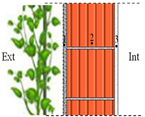
Table 3 presents the stratigraphy and thermal characteristics of the wall made from Poroton blocks (W_POR).
This wall type features a sandwich structure with lime and cement mortar layers encasing the Poroton block core. Notably, no additional insulation layer was introduced in the W_POR configuration to maintain a comparable U-value to the lightweight wall (W_LW), accepting the intrinsic insulative properties of Poroton blocks.
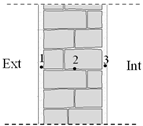
Table 4 describes the structure and thermal features of the wall constructed with lava stone blocks (W_ST). This configuration, representative of traditional building practices, employs lime-based mortars with lava stone, offering high thermal mass but without the inclusion of modern insulation materials. This approach preserves the authenticity of historical construction methods while presenting a challenge in terms of thermal insulation.
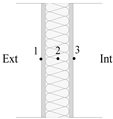
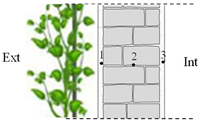
The thermal transmittance (U) and surface mass (SM) values for each wall configuration, both with and without the incorporation of a green façade, are summarized in Table 5. These values highlight the comparative thermal performance of each wall type under different conditions, offering insights into the efficacy of green façades in enhancing thermal insulation.
3. Results and Discussion
This section presents the results of the dynamic thermal simulations performed for the three different wall configurations: lightweight wall (W_LW), wall with Poroton blocks (W_POR), and wall with lava stone blocks (W_ST). The performance of these walls was evaluated both with and without the inclusion of a vertical greenery system (VGS). The focus is on the daily variations in inner surface temperature (Tis) and the heat flux towards the interior (Qis) of the west-facing wall during a typical Mediterranean summer week. The inner surface temperature (Tis) of the west-facing wall is a crucial indicator of indoor thermal comfort. Figure 2a,b illustrate the daily variations in Tis for each wall configuration over the simulation period from 8th to 14th July.
The analysis of Figure 2 reveals significant insights into the thermal performance of the investigated wall configurations under the influence of a green façade:
- Lightweight Wall (W_LW): The lightweight wall exhibits the highest fluctuations in Tis, with temperatures peaking during the day and dropping at night. From July 11th to 14th, Tis oscillates between a minimum of 25.9°C and a maximum of 28.9°C. The addition of the VGS (W_LW_GF) results in a marked reduction in peak Tis, moderating it to a narrower range between 25.0°C and 26.9°C, effectively reducing the peak temperature by up to 1.9°C. This indicates an enhanced buffering capacity against external temperature swings, showcasing the VGS’s significant impact on improving thermal comfort.
- Poroton Wall (W_POR): The Poroton wall shows moderate fluctuations in Tis, indicative of its higher thermal mass compared to the lightweight wall. The temperature fluctuations are significantly dampened, with Tis ranging between 26.0°C and 27.5°C. The incorporation of the VGS (W_POR_GF) further reduces the peak Tis by around 1.0°C, highlighting the combined effect of the wall’s inherent insulation and the green façade.
- Lava Stone Wall (W_ST): The lava stone wall presents the most stable Tis profile, with peak values marginally exceeding 27.0°C, reflecting the substantial thermal inertia of the material. The VGS (W_ST_GF) results in a slight reduction in peak Tis, demonstrating a modest improvement due to the already high thermal inertia of the lava stone.
Heat flux towards the interior (Qis) is another critical measure of thermal performance, indicating the amount of heat entering the building through the walls. Figure 3a,b present the daily variations in Qis for each wall configuration, both with and without the VGS.
The Analysis of Qis Trends highlights that:
- Lightweight Wall (W_LW): The lightweight wall configuration shows significant daily variations in Qis, with the peak heat flux aligning with periods of maximum solar irradiation. This suggests a quick response to external temperature changes due to the wall’s low thermal mass. The VGS (W_LW_GF) significantly reduces the peak value and amplitude of Qis fluctuations, lowering the peak heat flux by approximately 15 W, demonstrating the VGS’s efficacy in shielding against solar radiation and enhancing thermal stability.
- Poroton Wall (W_POR): The Poroton wall exhibits a reduced amplitude in heat flux fluctuations compared to the lightweight wall, indicating a more gradual response to thermal inputs from the outdoors. The peak heat flux occurs about 10 hours later than in the lightweight wall, illustrating the delayed response associated with its higher thermal mass. The addition of the VGS (W_POR_GF) further dampens the heat flux, reducing the peak values by around 3 W.
- Lava Stone Wall (W_ST): The lava stone wall exhibits the smallest fluctuations in Qis, with a nearly flat profile and a substantially delayed peak heat flux by about 10 hours. This underscores the ability of lava stone blocks to absorb and slowly release heat, buffering the building’s interior from extreme outdoor temperatures. The VGS (W_ST_GF) adds a layer of thermal protection, further enhancing the wall’s ability to mitigate the effects of external thermal variations.
The results indicate that the integration of vertical greenery systems significantly enhances the thermal performance of different wall configurations, albeit to varying degrees. The lightweight wall (W_LW) benefits the most from the VGS due to its low thermal mass and high insulation properties, which are further amplified by the shading and cooling effects of the VGS. The reduction in peak Tis and Qis highlights the substantial impact of the green façade on thermal comfort. The Poroton wall (W_POR) shows notable improvements with the VGS, leveraging its inherent insulation and the added benefits of the green façade to moderate temperature fluctuations and reduce heat flux. The lava stone wall (W_ST), despite its high thermal mass and already stable thermal behavior, gains additional benefits from the VGS. The green façade enhances the wall’s ability to buffer against external thermal variations, though the overall impact is less pronounced compared to the other configurations. These findings underscore the potential of VGS as a sustainable architectural solution for improving indoor thermal comfort in Mediterranean climates. By reducing peak inner surface temperatures and heat flux towards the interior, VGS not only enhances occupant comfort but also contributes to energy savings by lowering the demand for mechanical cooling systems. Definitely, the study highlights several important implications for sustainable building design:
- Combining VGS with modern insulated materials like lightweight panels or Poroton blocks yields significant thermal comfort benefits, suggesting a synergistic approach to sustainable building design.
- The application of VGS on traditional heavy masonry walls, such as those made from lava stone, can provide measurable thermal improvements, making it a viable retrofitting strategy for enhancing the energy efficiency of historical buildings.
- The effectiveness of VGS in reducing heat ingress and stabilizing indoor temperatures makes it particularly suitable for Mediterranean climates, where high solar radiation and temperature fluctuations are common.
5. Conclusions
The study of the thermal effects of various wall configurations, both with and without green façades, yields significant insights related to this sustainable architectural practice. The simulation results underline the considerable impact that both wall material properties and green façades can have on the thermal dynamics of a building. The addition of a Vertical Greenery System (VGS) consistently moderates the heat flux across all wall types, with the most significant effect observed in the lightweight wall configuration (W_LW). This configuration, coupled with a green façade (W_LW_GF), demonstrates a remarkable reduction in the peak internal surface temperature by approximately 2 °C and a decrease in the incoming peak heat flux by about 15 W, underscoring the VGS’s effectiveness in enhancing thermal comfort. For the Poroton block wall (W_POR_GF) and the lava stone wall (W_ST_GF), the integration of a green façade shows less pronounced reduction in temperature fluctuations (up to 1.0°C) and incoming heat flux (about 3 W). These results highlight the complementary nature of green façades and building materials with high thermal mass, pointing to a synergistic approach to passive thermal regulation. This effect is in line with the overall aim of green façades to offer a natural solution for energy-efficient building design. While the effects of a VGS on heavyweight walls are less pronounced than on lightweight walls, VGS offers several additional environmental benefits, such as mitigation of the urban heat island effect. These benefit encourage the strategic incorporation of green façades in building design, especially in climates similar to the Mediterranean. Future research should focus on the long-term performance of VGS under varying climatic conditions. This includes studying the seasonal variations in VGS effectiveness and its impact on building energy consumption over different seasons.
Author Contributions
Conceptualization, F.N., V.C. and G.E.; methodology, F.N., V.C. and G.E.; software, F.N., V.C. and G.E.; validation, F.N., V.C. and G.E.; formal analysis, F.N., V.C. and G.E.; investigation, F.N., V.C. and G.E.; resources, F.N., V.C. and G.E.; data curation, F.N., V.C. and G.E.; writing—original draft preparation, F.N., V.C. and G.E.; writing—review and editing, F.N., V.C. and G.E.; visualization, F.N., V.C. and G.E.; supervision, F.N., V.C. and G.E.; project administration, F.N., V.C. and G.E.; funding acquisition, V.C. Simulations were performed by M.D. All authors have read and agreed to the published version of the manuscript.
Acknowledgments
This research was made possible through the generous support of the FUD-OF-SITHY project—“Favor the Urban Development OF Sustainable agriculture Through HYdroponics”—P2022F9HEW, funded under the National Recovery and Resilience Plan (PNRR) with the identifier CUP E53D23017150001. We would also like to express our profound appreciation to the SECA laboratory for their invaluable contributions to the research.
References
- Mazzella, L.: Energy retrofit of historic and existing buildings. The legislative and regulatory point of view. Energy and Buildings 95, 23-31 (2015).
- Gagliano, A., Nocera, F., Patania, F., Moschella, A., Detommaso, M., Evola, G.: Synergic effects of thermal mass and natural ventilation on the thermal behaviour of traditional massive buildings. International Journal of Sustainable Energy, 2014.
- European Parliament, Directive 2010/31/EU of the European Parliament and of the Council of 19 May 2010 on the Energy Performance of Buildings (Recast), Official Journal of the European Union, 18 June 2010.
- Caponnetto, R., Cuomo, M., Detommaso, M., Giuffrida, G., Lo Presti, A., Nocera, F.: Performance assessment of Giant Reed-based building components. Sustainability 15, 2114 (2023).
- Assimakopoulos, M.N., De Masi, R.F., de Rossi, F., Papadaki, D., Ruggiero, S.: GreenWall Design Approach Towards Energy Performance and Indoor Comfort Improvement: A Case Study in Athens, Sustainability 12, 3772 (2020).
- Coma, J., Solé, C., Castell, A., Cabeza, L.F.: New green facades as passive systems for energy savings on buildings. Energy Procedia 57, 1851-1859 (2014).
- Vox, G., Blanco, L., Schettini, E.: Green façades to control wall surface temperature in buildings, Building and Environment 129, 154-166 (2018).
- Peng, Y., Huang, Z., Yang, Y., Wang, P., Hou, C.: Experimental Investigation on the Effect of Vertical Greening Facade on the Indoor Thermal Environment: A Case Study of Dujiangyan City, Sichuan Province. Earth and Environmental Science 330, 032068 (2019).
- Flores Larsen, S., Filippin, C., Lesino, G.: Modeling double skin green facades with traditional thermal simulation software. Solar Energy 121, 56-67 (2015).
- Kenai, M.A., Libessart, L., Lassue, S., Defer, D.: Impact of green walls occultation on energy balance: Development of a TRNSYS model on a brick masonry house. Journal of building Engineering 44, 102634 (2021).
- Transient System Simulation program (TRNSYS), University of Wisconsin, Madison, USA. Available online: https://www.trnsys.com/index.html#2 (accessed on 1 March 2024).
- Detommaso, M., Costanzo, V., Nocera, F., Evola, G.: Evaluation of the cooling potential of a vertical greenery system coupled to a building through an experimentally transient model. Building and Environment 244, 110769 (2023).
- Trnsys component Type 9644. Green façade - vertical foliage - VFC. CIM-mes Projekt Sp. z o.o. Warsaw, February 2022.
- UNI ISO 9869-1:2015. Isolamento termico - Elementi per l’edilizia - Misurazioni in situ della resistenza termica e della trasmittanza termica - Parte 1: Metodo del termoflussimetro.
- Convertino, F., Schettini, E., Blanco, I., Bibbiani, C., Vox, G.: Effect of Leaf Area Index on Green Facade Thermal Performance in Buildings. Sustainability 14, 2966 (2022).
- Susorova, I., Angulo, M., Bahrami, P., Stephens, B.: A model of vegetated exterior façades for evaluation of wall thermal performance. Building and Environment 67, 1-13 (2013).
- Campbell, G.S., Norman, J.M.: An introduction to environmental biophysics. Springer, New York, 1998.
- Levitt, J.: Responses of plants to environmental stresses: chilling, freezing, and high temperature stresses, Academic Press, San Diego,1980.
- Grabowiecki, K., Jaworski, A., Niewczas, T., Belleri, A.: Green solutions- climbing vegetation impact on building - energy balance element. Energy Procedia 111, 377 - 386 (2017).
- POROTON® P800 30X25X19. https://t2d.it/prodotti/poroton-p800-30x25x19-2/. Available online: https://t2d.it/prodotti/poroton-p800-30x25x19-2/ (accessed on 2 February 2024).
Figure 1.
Full scale experimental mock-ups. a) Planimetric view; b) 3D views of the prefabricated modules from north-west.
Figure 1.
Full scale experimental mock-ups. a) Planimetric view; b) 3D views of the prefabricated modules from north-west.
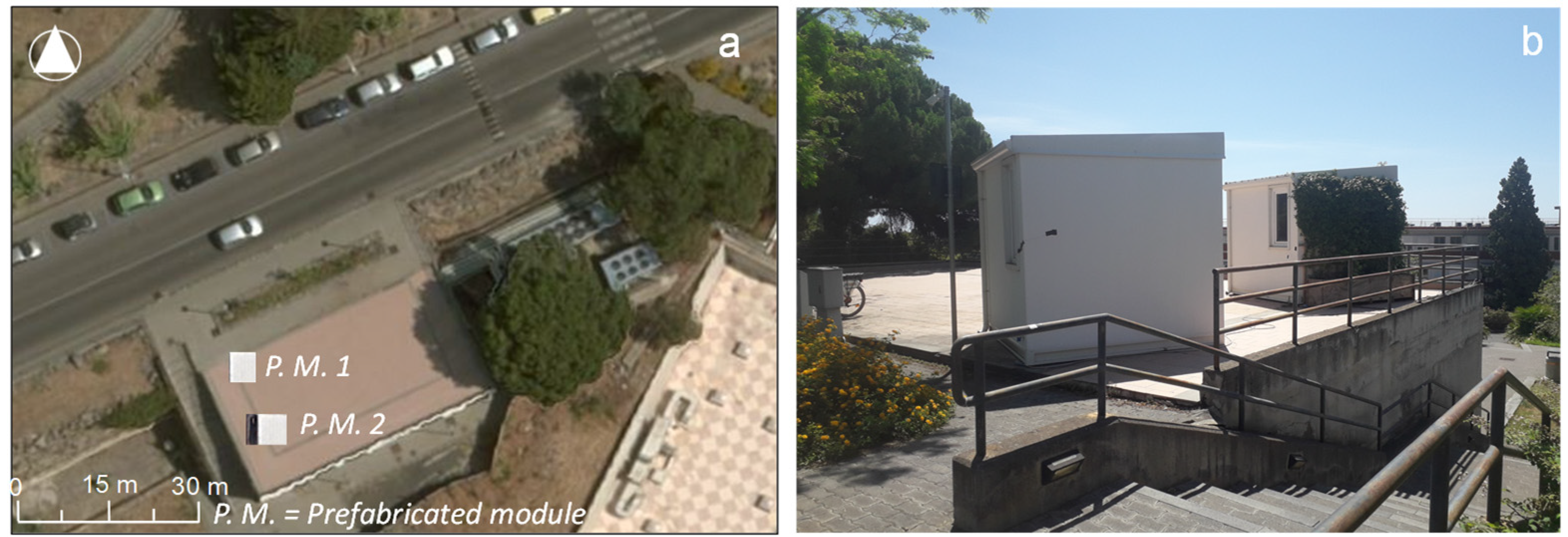
Figure 2.
Simulated daily profile of indoor air temperature (Tis) during the period 8th-14th July. a) Bare wall configurations; b) Green façade configurations.
Figure 2.
Simulated daily profile of indoor air temperature (Tis) during the period 8th-14th July. a) Bare wall configurations; b) Green façade configurations.
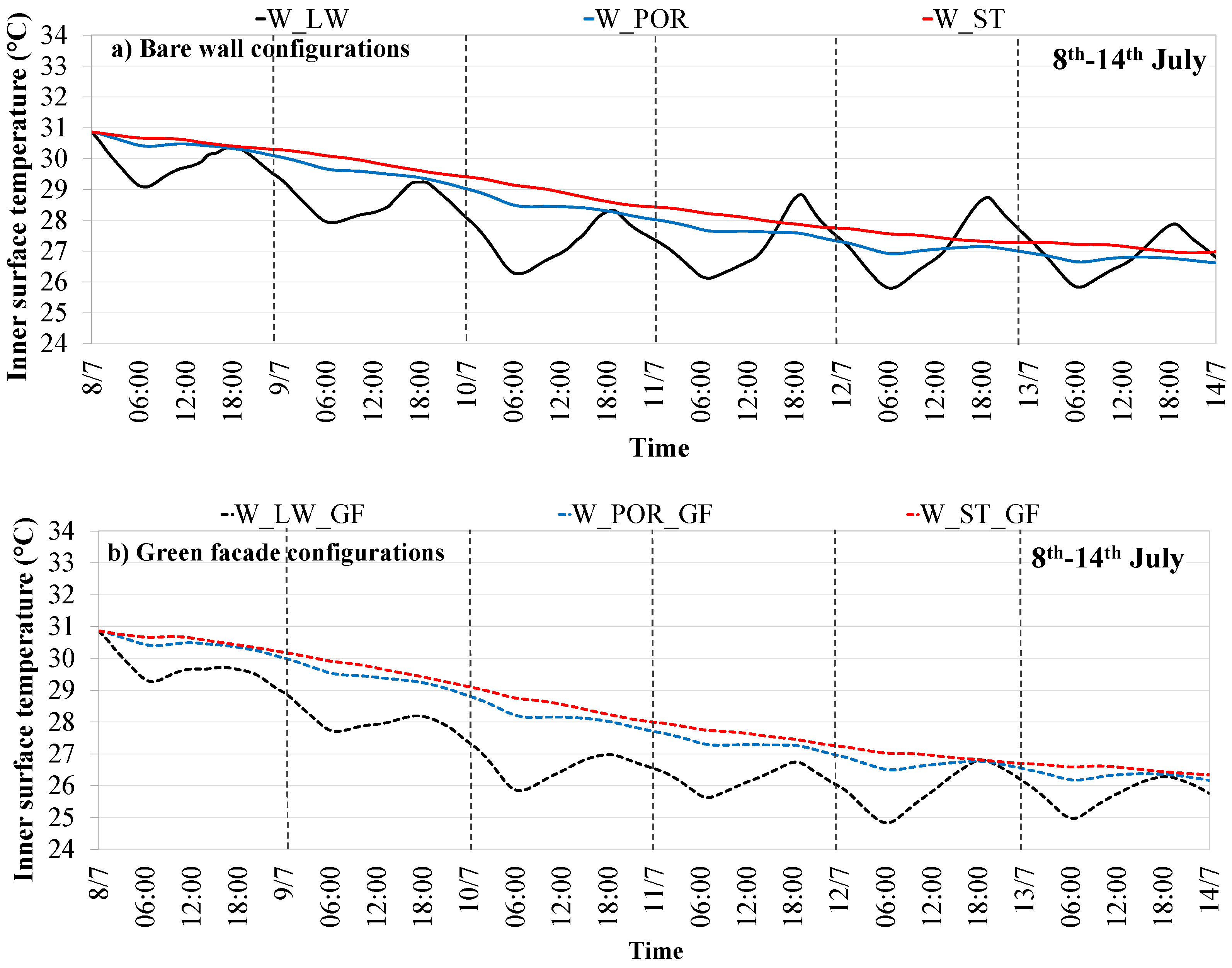
Figure 3.
Simulated daily profile of heat flux through the west oriented wall (Qis) during the period 8th-14th July. a) Bare wall configurations; b) Green façade configurations.
Figure 3.
Simulated daily profile of heat flux through the west oriented wall (Qis) during the period 8th-14th July. a) Bare wall configurations; b) Green façade configurations.
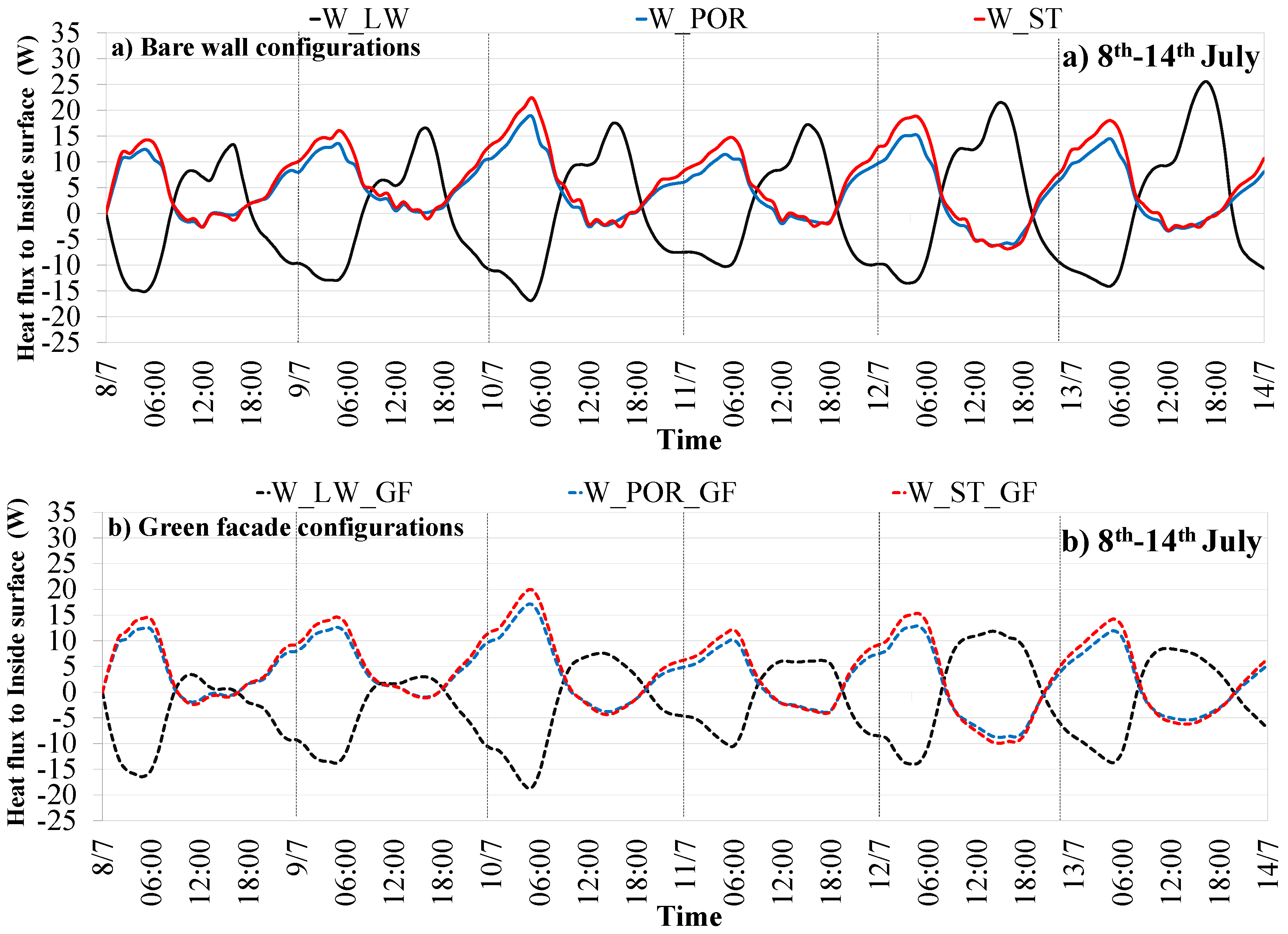
Table 2.
Stratigraphy and thermal features of the lightweight wall (W_LW).
| No | Layer | s (m) | λ (W/m2K) | ρ (kg/m3) | Cp (J/kgK) |
|---|---|---|---|---|---|
| 1 | OSB panel (Outer plaster) |
0.009 | 0.12 | 650 | 1700 |
| 2 | Polystirene | 0.065 | 0.04 | 15 | 1450 |
| 3 | OSB panel (Inner plaster) |
0.006 | 0.12 | 650 | 1700 |
Table 3.
Stratigraphy and thermal features of the wall made up of Poroton blocks (W_POR).
| No | Layer | s (m) | λ (W/m2K) | ρ (kg/m3) | Cp (J/kgK) |
|---|---|---|---|---|---|
| 1 | Lime and cement mortar (Outer plaster) | 0.03 | 0.90 | 1800 | 1000 |
| 2 | Hollow clay block-POROTON850 [20] | 0.30 | 0.18 | 850 | 1000 |
| 3 | Lime and cement mortar (Inner plaster) | 0.03 | 0.90 | 1800 | 1000 |
Table 4.
Stratigraphy and thermal features of the wall made up of lava stone blocks (W_ST).
| No | Layer | s (m) | λ (W/m2K) | ρ (kg/m3) | Cp (J/kgK) |
|---|---|---|---|---|---|
| 1 | Lime mortar (Outer plaster) | 0.03 | 0.90 | 1800 | 1000 |
| 2 | Lava stone block and lime mortar [2] | 0.30 | 1.70 | 2200 | 1000 |
| 3 | Lime and gypsum mortar (Inner plaster) | 0.03 | 0.70 | 1800 | 1000 |
Table 5.
Thermal transmittance (U), Surface Mass (SM), and thickness values of the investigated wall configurations.
Table 5.
Thermal transmittance (U), Surface Mass (SM), and thickness values of the investigated wall configurations.
| W_LW | W_POR | W_ST | |
 |
 |
 |
|
| W_LW_GF | W_POR_GF | W_ST_GF | |
 |
 |
 |
|
| U (W/m2K) | 0.52 | 0.52 | 1.85 |
| SM (kg/m2) | 13 | 255 | 1100 |
| s (m) | 0.08 | 0.36 | 0.56 |
| DF (-) | 0.99 | 0.13 | 0.07 |
| TL (h) | 1 | 15 | 15 |
Disclaimer/Publisher’s Note: The statements, opinions and data contained in all publications are solely those of the individual author(s) and contributor(s) and not of MDPI and/or the editor(s). MDPI and/or the editor(s) disclaim responsibility for any injury to people or property resulting from any ideas, methods, instructions or products referred to in the content. |
© 2024 by the authors. Licensee MDPI, Basel, Switzerland. This article is an open access article distributed under the terms and conditions of the Creative Commons Attribution (CC BY) license (https://creativecommons.org/licenses/by/4.0/).
Copyright: This open access article is published under a Creative Commons CC BY 4.0 license, which permit the free download, distribution, and reuse, provided that the author and preprint are cited in any reuse.


